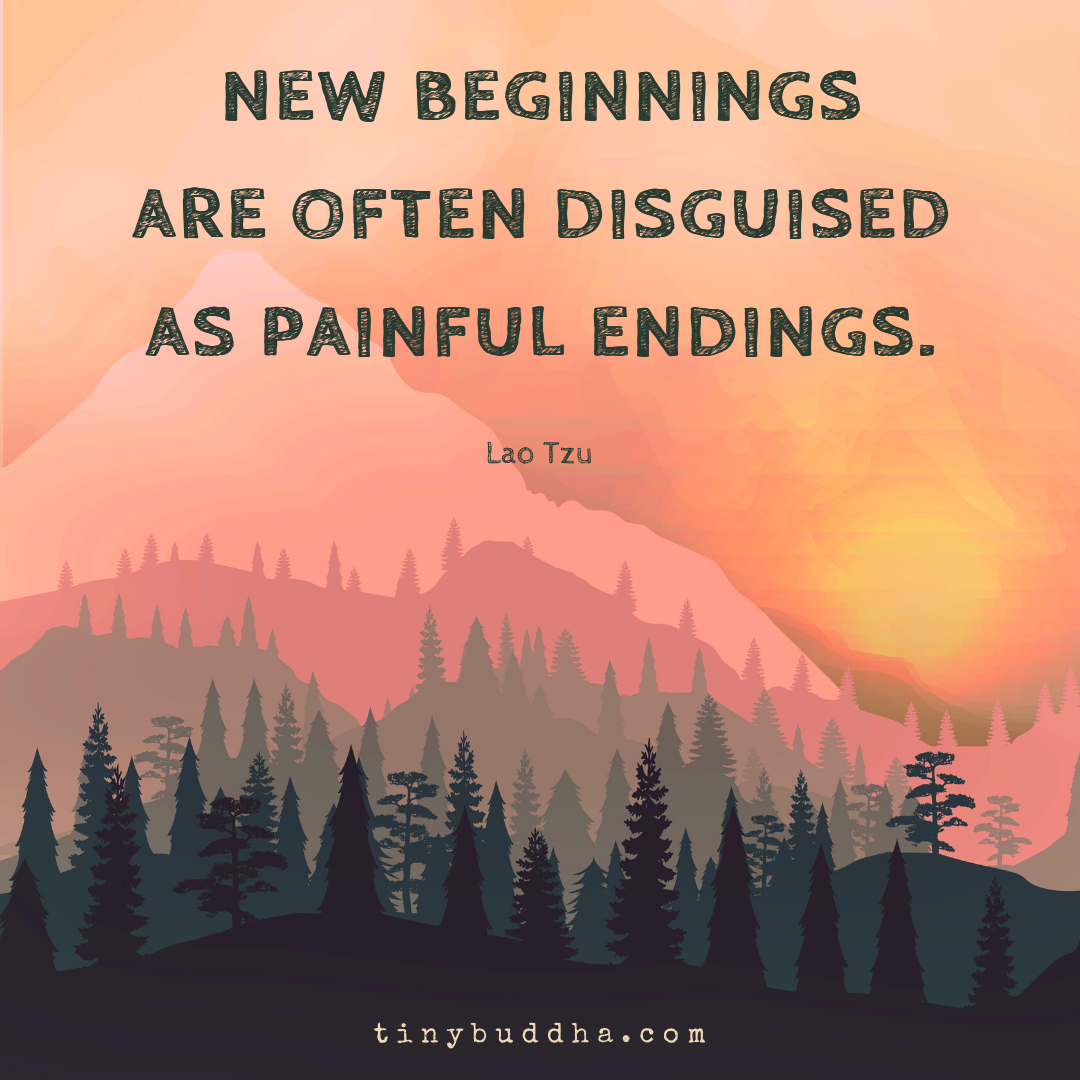
“New beginnings are often disguised as painful endings.” ~Lao Tzu
Life has a way of pushing us into the unknown, often through experiences that initially seem devastating. These moments of profound loss and confusion, however, can lead to transformative new beginnings. My journey is a testament to this truth, and I want to share some pivotal experiences that illustrate how painful endings can become gateways to new paths.
Years ago, Steve Jobs gave a commencement speech at Stanford University, where he shared three stories from his life, highlighting how it’s only through looking back that we can connect the dots. Inspired by his speech, I want to share three stories from my life, showing how new beginnings have become apparent as I stepped into the liminal space, embraced the unknown, and accepted endings.
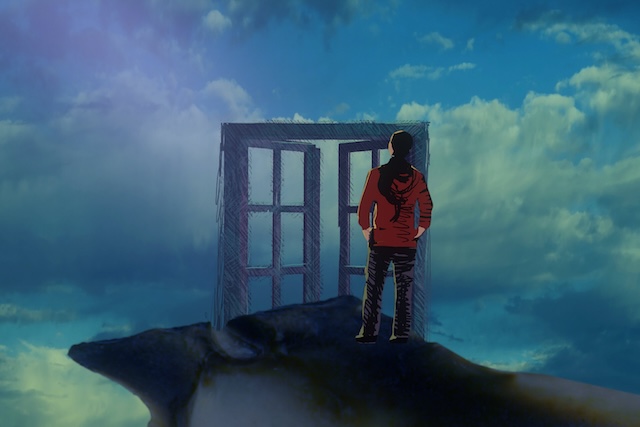
Liminal spaces are those in-between moments when one phase of life ends, and the next has not yet begun. These are periods of uncertainty and discomfort, but they are also filled with potential for profound transformation. It’s in these spaces that we can let go of the past and open ourselves to new possibilities, even if the transition feels unsettling.
From Failure to Triumph in Music Technology
As a teenager, I was deeply passionate about music technology. I received good feedback from my teachers and was considered one of the top students in my class. My predicted grades were excellent, and I felt confident about my future in this field.
However, when the AS (advanced) level results came in, I was devastated to see a U in music technology. My teachers had not adequately prepared us for the curriculum, leading to unexpectedly low grades across the board.
This setback forced me to reconsider my future plans. It was a crushing blow; all my dreams seemed to crumble in an instant. The frustration of feeling let down by my teachers, combined with my own sense of failure, was overwhelming.
I vividly remember sitting in my room, staring at the results, feeling a mix of anger and despair. The thought of giving up on my passion crossed my mind more than once.
I remember feeling so lost. I was at my friend Mike’s house, chatting with him and his girlfriend, trying to figure out my next steps. I had given up on music technology and was looking at other courses at the local college—anything to get a qualification worth something.
I considered health and social care, thinking, “I’m quite good with people; maybe I could do something like that.” But it wasn’t what I wanted to do—it was just a desperate attempt to find something, anything, that felt achievable. I was at such a low point, feeling completely devastated.
Mike sat me down and reminded me of my strengths. He said, “Gord, you’re one of the best sound engineers I know. You run the production at our church better than anyone else. You can’t give up on this.”
His words hit me hard. I had been running sound at our church and playing in one of the worship bands, alternating between playing drums and managing the sound. Mike’s belief in me reignited a spark of hope.
Encouraged by Mike’s words, I decided not to give up on my dreams. Instead, I enrolled in a music technology course at a local college. The difference was striking—the course was far more comprehensive and practical.
Unlike the largely theory-based classes in school, where the teacher read from a textbook and we copied answers, this course was hands-on. We used the equipment, practically making music, running shows, and recording albums.
Being able to tangibly use a reverb unit or a compressor, rather than just listening to the same audio file and being told what it sounded like, provided immense benefit to my learning. The practical experience with up-to-date equipment was a game-changer.
I thrived in this new environment, pouring my heart and soul into my studies. After two years, I graduated with a triple distinction, equivalent to three A’s at the A level. This achievement was a direct result of the painful ending of my initial school experience, which pushed me toward a more suitable and enriching path.
Reflecting on this journey, I am reminded that, at the time, the failure felt like the end of the world. But looking back, it was the catalyst that pushed me to where I needed to be. It’s often in these moments of despair that we find our true path.
A Crisis of Faith and a Spiritual Awakening
Five years later, I found myself deeply entrenched in the evangelical Christian church. My journey began with a strong interest in production, which led me to volunteer in the production team at a much bigger church. My skills in sound engineering grew, and I started getting freelance work managing sound at events.
This exposure led a pastor to suggest I join their leadership course—a gap year in preaching and pastoral leadership. During this gap year, I picked up numerous skills in leading groups, mentoring, coaching, and pastoring people. I also delved deeply into theology, finally having the resources to explore all the questions I had been harboring.
After completing the leadership course, I began working for the church, doing marketing for one of their programs. I introduced new initiatives and received positive feedback from my managers.
Despite the positive feedback and new initiatives I’d introduced, during my probation meeting after six months, my line manager’s manager told me I had not met my targets. This came as a shock because I knew it wasn’t true, which my line manager (who was shocked at the decision) privately confirmed. It coincided with a period when the church hadn’t met its financial goals from a recent giving service. I strongly suspect I was let go due to budget constraints, but they couldn’t admit that, so they blamed my performance.
Despite being let go, I took on a leadership position, pastoring a graduate connect group of about forty people, and continued freelancing in production for the church. I was also in the discernment process for becoming a vicar—a two-year journey I had started at the beginning of my gap year. This process involved deep reflection, guidance from mentors, and assessments to determine my suitability for ordained ministry.
During a weekend retreat, while leading a worship session, the weight of my doubts and questions came crashing down on me. I found myself on my knees, desperately seeking divine guidance. In that moment of vulnerability, I had a profound realization.
I had confined my understanding of the divine to the walls of the church, limiting my spiritual growth. As I looked around, it felt as though my faith was in ruins, but beyond those ruins, I saw a beautiful expanse of possibility.
This epiphany led me to leave the church and embark on a new spiritual journey. I moved to a different city, took a job in the charity sector, and began exploring different spiritual practices. I started meditating, reading about various spiritual traditions, and connecting with nature in a way I never had before.
This painful ending of my conventional faith was the gateway to a broader and more fulfilling spiritual path. I discovered a spirituality that was personal, expansive, and deeply resonant with who I was becoming.
Leaving the church was one of the hardest decisions I ever made. It felt like I was betraying a part of myself and my community. But in that liminal space, I found a new understanding of the divine that was more inclusive and expansive. This taught me that faith is not about rigid adherence to doctrines but about a personal and evolving relationship with the divine.
Rediscovering Myself During the Pandemic
Two years ago, during the lockdown, I was working for a large technology company in one of their shops. It was a well-paying job, and I excelled at it.
This was my dream job since I was a kid, and it provided security and stability. However, the lockdown provided an unexpected opportunity to reconnect with my spirituality.
Before the pandemic, I attended a meditation retreat in Valencia. Seeking to make meditation a more integral part of my life, I spent time at a spiritual center in the mountains, learning transcendental meditation, Tai Chi, and yoga. I also learned to use a pendulum to connect with my intuition, which became an immensely helpful practice.
During the pandemic, between the first and second lockdowns, I was at a friend’s house, and they offered to give me a tarot reading. I’d always been taught to avoid tarot due to its links to the occult and predicting the future, which didn’t interest me, but my friend explained over some libations that it could be used to understand the present and gain insights into current situations. Reassured and feeling confidently inebriated, I accepted.
After the reading, they asked if I would give them one in return. I agreed, and to my surprise, they found my reading insightful, noting that I provided more depth than the guidebook interpretations. Encouraged, they gifted me the tarot deck, and I began practicing earnestly.
When the second lockdown began, I found myself with ample free time. I practiced tarot readings tirelessly, offering free readings on social media and dating profiles. The response was overwhelming, and I conducted hundreds of readings for strangers, honing my skills, deepening my connection to the practice, and helping people find clarity in the here and now.
However, as I returned to work, my mental health began to deteriorate. The demands of the job, combined with the unresolved issues I had been exploring, became too much to bear. I experienced a severe mental health breakdown and was signed off sick.
During this time, I pursued an autism diagnosis, which brought a new level of understanding and acceptance into my life. The diagnosis was a turning point; it explained so much about my experiences and struggles, and it opened up new ways to approach my life and work.
While I was signed off, my sister and I went to a Reiki session, and she mentioned my tarot reading skills to the practitioner. This led to an invitation to participate in a Mind Body Spirit event organized by someone the Reiki practitioner knew. This opportunity sparked the idea of turning my passion into a profession.
I realized that I could help others with the insights and guidance that tarot provided. Starting my own business has been challenging and rewarding, offering me job satisfaction and the flexibility to manage my autism. I might not be making as much money as I did in my previous job, but the fulfillment and alignment with my true self are priceless.
This experience underscored the importance of listening to one’s inner voice and having the courage to pursue a path that aligns with one’s true self. It also highlighted that sometimes external circumstances, like a global pandemic, can force us into introspection and significant life changes.
Embracing the Liminal Space
These experiences taught me the value of the liminal space—the in-between moments when one phase of life ends and the next has not yet begun. It’s a space filled with uncertainty and discomfort, but also with the potential for profound transformation.
When we fail our exams, question our faith, or face a mental health crisis, we are thrust into this liminal space. It’s only by letting go of what was and embracing the unknown that we can see new paths and opportunities. These transitions, though painful, are necessary for growth and new beginnings.
In each of these moments, I felt lost and unsure. But it was in these depths that I discovered new aspects of myself and new directions for my life. It’s like Indiana Jones taking a leap of faith into the unknown—the path only becomes visible once we commit to moving forward.
Reflecting on these experiences, I’m reminded of Steve Jobs’ Stanford commencement speech. He said, “You can’t connect the dots looking forward; you can only connect them looking backwards.”
This couldn’t be truer for my life. At the time, these failures and challenges felt like the end of the world. But looking back, they were the catalysts that pushed me to where I needed to be.
Each phase of my journey, from music technology to church leadership to personal spiritual growth, has contributed invaluable skills and insights. Although I didn’t become a sound engineer or a vicar, the skills I developed continue to shape my current work and life.
The guidance, empathy, and leadership techniques I honed are invaluable in my tarot practice. Similarly, my sound engineering skills are utilized in creating recorded readings, guided meditation sessions, and potentially a podcast.
All these experiences, which seemed devastating at the time, are the reason I’m here today, doing what I love. I’m able to help people, work for myself, set my own boundaries, and create a fulfilling life. This wouldn’t have happened if I hadn’t been thrust into the liminal space.
So, when life pushes you into the liminal space, embrace it. Let go of the past and open yourself up to the possibilities that lie ahead. New beginnings are often disguised as painful endings, and it’s in these moments of transition that we find our true path.