Tag: beauty

  • The Beauty of Being Different

    The Beauty of Being Different

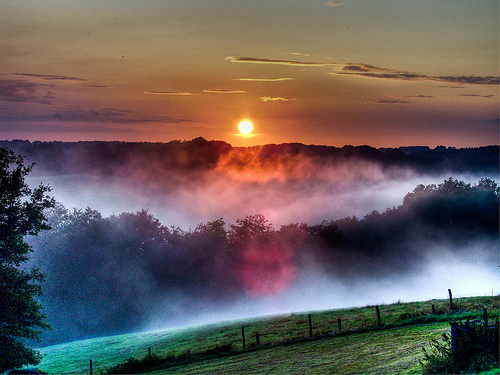
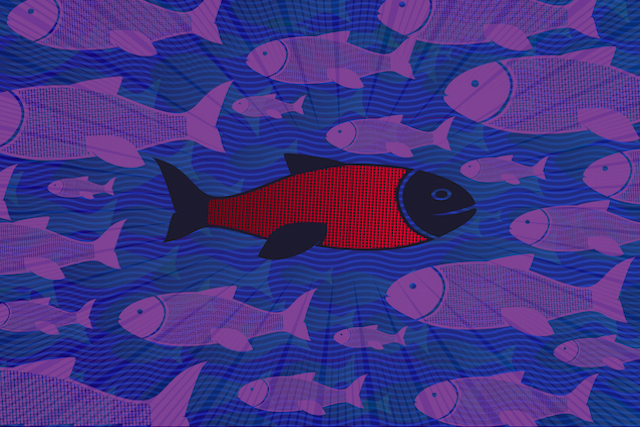
    Fish Swimming Against the Stream

    “We must never be afraid to be a sign of contradiction for the world.” ~Mother Teresa

    I’ve felt like I was different ever since I was in elementary school, when my personality started to settle and I came to realize I didn’t look, think, feel, learn, or act like my peers.

    Back in the eighties and early nineties it seemed that there weren’t many labels to catalog people by, but still I knew I was different, and teachers and classmates made sure I knew it. “Freak” or “weirdo” were two of their favorite names.

    In current times there would be many labels to identify me with: ADD, ADHD, dyslexic, depressive, and antisocial, among other medical terms. Socially, there are many other labels to box me in: problematic, troublemaker, weird, crazy, and dramatic, among others.

    Labels seemed to be used to put me into boxes so shrinks, teachers, and the world could try to understand me.

    The world tends to see what is different as something ugly and wrong, as if anything “abnormal” is something needing to be fixed.

    If I were to see myself through the eyes of the world, I’d be frightened to look at myself in the mirror.

    As the years went by the bullying didn’t stop. Everyone knew me by a thousand different names, except the one my mother had given me. I didn’t mind; I actually preferred for them not to use my name. I didn’t want them to taint it with their harsh voices.

    In high school, I wanted to have friends and be a part of something; I wanted to feel like I wasn’t a freak. I tried really hard to fit in, but trying to be something I wasn’t became emotionally draining.

    My father could see this and told me, “Ducks fly in flocks and eagles fly alone.”

    I didn’t want to be an eagle. I wanted to be a duck, because they had company.

    I started smoking to fit in with the “cool” group, dating boys I wasn’t even interested in (it was what girls my age did), and I learned to laugh and keep my mouth shut when I saw any injustice being done.

    I once screamed and burst into tears when I saw one of my “friends” kill a bee out of fun. I couldn’t understand how someone could take away the life of such an innocent being intentionally.

    After being bullied for my reaction, they started calling me “crazy” and so… what did I do? I started killing bees.

    I loathed myself. I had turned into this person I didn’t like for the sole purpose of “fitting in.” But at the same time I hated what I was, I hated being oversensitive, stupid, a daydreamer, rebellious, and sad.

    I wasn’t happy with my physical appearance either. The body I had at twelve years old remained the body I would have for the rest of my life—extremely skinny and no curves.

    People, assuming I had an eating disorder, would thoughtlessly say, “Eat something. Skinny girls are not pretty.” It was just my anatomy, different to that of the voluptuous Mexican bodies women have in this part of the world.

    Then, a boy came my way. We became good friends, and because he didn’t want to hurt my feelings and lead me on, he asked if I could pretend to be his girlfriend.

    Marcus was gay. He couldn’t stand the idea of being different and showing it to the world. He needed a fake girlfriend to take home to his parents, to brag about to his friends, and to walk around town with, showing he was “normal.”

    We were teenagers, and our self-esteem was determined by the acceptance of society.

    He knew how I felt for being different and not being able to fit in. I had a different mindset and he had a different sexual orientation. It was in our differences where we found a unity that forged a beautiful friendship.

    A few years later Marcus found the courage to “come out.” His parents supported him. He lost many friends but made new ones and could be entirely himself around them.

    There was no more pretending. He found acceptance within his heart, even if the world around him shamed him. He became comfortable within his own skin, and that to him was happiness.

    I came to understand that the criticism came, not because we were wrong (we weren’t horrible human beings), but because we were different to them (society). In their mind, their way of thinking and acting was right, so anything that navigated away from that was wrong.

    It was their limited mindset that created in them an inability to accept other people’s differences. But that wasn’t our problem; we weren’t what they saw.

    Our problem came from the fact that we had given them the power to control our self-esteem instead of finding that acceptance and love within ourselves.

    As more years passed, experience taught me a deeper understanding about my place in this world.

    I came to forgive and love myself because I was never ugly, stupid, antisocial, or psychotic, as the world saw me. I felt like that because I was looking at myself through their eyes instead of my own.

    Even through university I had to deal with the stigma of being considered stupid by my peers, for having bad grammar and spelling mistakes. To them my intellectual capacity was determined by my writing skills instead of the content of my writing.

    Fortunately, professors admired the intellectual content of my papers and the different perspective I had for connecting the dots and analyzing issues. I graduated top of my class, because dyslexia is not a disability; it’s a different perspective to what ordinary learning offers.

    ADD or ADHD have never existed in my mind. I simply block out lame and boring lectures I’m not interested in, and when I find myself in an environment I dislike, my mind travels away to the beautiful world of my imagination.

    I am selective with my friends, not antisocial. I don’t wish to surround myself with people that undervalue me or with whom I don’t feel comfortable.

    I am not a troublemaker, but I refuse to stand by while I see any injustice being done. I am not rebellious; I just refuse to follow rules that go against my values. I’m not dramatic, I am passionate.

    Yes, I cry a lot. I was born crying and I’ve never stopped. However, it is not because I have chronic depression (I have battled depression and it is a term I wouldn’t use lightly).

    It is because I am oversensitive, and even as a child I could see what people rarely saw or simply didn’t care about: corruption, poverty, injustice, and cruelty, among other issues. This affected me profoundly, and still does. I am empathetic toward others’ suffering.

    I wasn’t a duck, and even if being an eagle can be lonely, the view from the top gives life a wider perspective and a deeper understanding. Although my journey hasn’t been entirely lonely, it is definitely a less traveled one.

    I’ve met wonderful people with whom I can be myself, and even if I don´t have thousands of friends, I have a few who are worth the world.

    Different is what I’ll always be, because I don’t match with the preferred educational, economic, religious, and social systems that want to shape me into a predesigned mold that I can’t fit into.

    Everyone wants you to be what is best for them, not what is best for you. Wanting to please everyone and be what is socially acceptable stole my personality away.

    However, by accepting myself, I came to realize that I am absolutely beautiful. Not because I am better or worse than anyone else, but because I am exactly what I am supposed to be.

    Everyone is different in some way or another, but only a few dare to show it to the world. The majority try to fit into a mold that is too tight to feel free in.

    Marcus is feeling incredibly comfortable in his amazing homosexual being. He has a wonderful partner and they have recently adopted a beautiful baby girl.

    Once I asked him, “What would you like her to be when she grows up?

    He replied: beautifully different.

    Fish swimming against the stream image via Shutterstock
  • The Art of Pain: Why the Dark Times Make Life Beautiful

    The Art of Pain: Why the Dark Times Make Life Beautiful

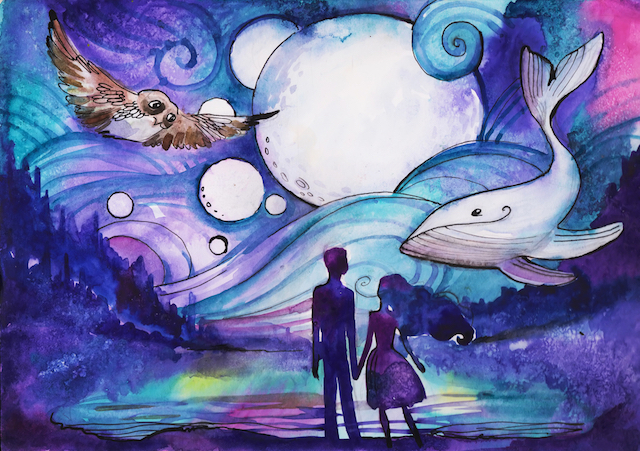
    Couple on the Beach Painting

    “In each of us lie good and bad, light and dark, art and pain, choice and regret, cruelty and sacrifice… No one can live in the light all the time.” ~Libba Bray

    Happiness, and the quest for it, is not all it’s cracked up to be. What I mean is that I think we’re making a mistake in reaching only for happiness, lightness, good days, and good moods.

    I think that we’re restricting ourselves.

    We’re fishing in an ocean of emotions, looking to only reel in one or two kinds, throwing back the ones we don’t want without even noticing how shockingly beautiful they can be in their strange, confusing way, much like the fascinatingly mysterious fish of the deep sea.

    There was a long time in my life when I wanted happiness, so I avoided pain. I wanted to call myself brave, so I didn’t admit I was afraid.

    In my search for joy, I pushed away the other emotions I didn’t like, thinking I’d be left with only happiness.

    But something was still wrong. I wasn’t full. By denying myself the plethora of emotions and feelings we, as human beings, are supposed to experience, I was only connecting with myself on a surface level.

    I spent many of my days trying to achieve a persistent state of peace and happiness, and I wasn’t being honest with myself.

    How could I just be happy when my heart was broken in two? When my own dad wouldn’t talk to me anymore? When I was uncertain and afraid of the future and the path I decided to take.

    Yet all I wanted was happiness, and I kept pushing away anything else I felt that wasn’t “good.”

    It took me a while to realize that I didn’t feel like myself anymore. And that was because I wasn’t. I was pretending to be a flat placard of peace and joy, which isn’t very real, is it?

    I realized I was robbing my soul of all the emotions and feelings and desires it should have.

    Every feeling and all the changes we go through become precious when we realize they are all necessary, and they create contrasting beauty in our lives.

    Would you rather be happy, or would you rather be full inside?

    Happiness is fleeting. It flits in and out of our days like a bird, singing a beautiful song that we want to revel in all our life, for one moment while the sky is blue, not to be found on the days with dark clouds, heavy winds, and gray skies.

    But fullness—that is deep in our soul. When we have that, it never leaves. Fullness encompasses everything. It’s what allows us to be fully human in all the raw, real ways.

    We need the contrasts that fullness, not just happiness, provides us. How else can we know true joy if we have never known sorrow? How can we feel and trust the deepest kind of love if we have never felt heartbreak?

    In art, this is called chiaroscuro. It’s the play of light and dark within a picture, the idea that you need dark shading on one side in order to notice where the light is supposed to hit on the other.

    I believe that art reflects life.

    I think that by suppressing emotions we don’t like, such as fear and uncertainty and pain, we are taking away the shading of our own image. We’re denying ourselves the beautiful picture that needs the contrasts and shadows in order to be complete.

    Sometimes, two seemingly conflicting emotions can fit together and coexist. Have you ever felt that? Maybe you have pain inside you that you suppressed, and suddenly another person finds a way to gently bring it to the surface.

    That person and their kind eyes bring warmth to your heart, even while the pain is being laid bare.

    Happiness can fill your chest and sadness can well in your eyes until they are entwined in a beautifully poignant harmony. This is chiaroscuro in its most desired form—the shadow contrasting with the brilliant light, creating a depth and fullness that couldn’t be reached any other way.

    Don’t ever think that being so paralyzed by fear you don’t know how to take a step, or feeling angry and betrayed, or sobbing while your heart is in shreds, or feeling lonely or confused or uncertain or whatever you feel, is wrong or not good.

    It’s your shading, your shadows, making up the complete, beautifully exquisite image of your soul and your life.

    Couple on the beach painting via Shutterstock

  • 3 Steps To Embrace Your Beauty and Smile More Every Day

    3 Steps To Embrace Your Beauty and Smile More Every Day

    Smiling Woman

    “Because of your smile, you make life more beautiful.” ~Thich Nhat Hanh

    Is there anything more beautiful than a person smiling, or better yet, laughing? I don’t think so. It’s almost contagious.

    You’ve likely seen the YouTube videos of babies laughing and couldn’t help but smile.

    And there’s probably a special person in your life that only needs to smile and you feel your heart lift. Maybe it doesn’t even need to be someone you know. I’ve had this happen to me with a complete stranger.

    When you see someone smiling from ear to ear, filled with joy, you can’t help but smile too. Am I right?

    I live in a walk-able city, so I walk a lot. Sometimes I catch myself trying not to smile or laugh as I walk down the street remembering something funny. But then I’m reminded of this quote.

    Why would I ever want to stifle my happiness and joy? Why would I ever want to hide my happiness?

    One Sunday afternoon I was rollerblading along the beach path, feeling the sunshine on my face, listening to my favorite Spotify playlist, feeling good and smiling for these reasons, when a guy on a bike coming at me from the opposite direction reached out and high-fived me.

    Seriously, how fun is that?

    When my boyfriend calls me on my cell phone, I have it programmed so this silly, grinning picture of him pops up on my screen. It makes me smile every time I see it (which also makes it really tough to stay mad at him on the rare occasion that I am, because who can stay mad when they are smiling?).

    Smiles breed more smiles.

    Life is just better when you approach it with a smile. Plus, you really don’t know how much you can brighten someone else’s day with something so simple.

    We tend to be so serious all of the time. We chart our course based on our to-do lists and we spend so much time worrying about the past or the future.

    We set standards that we believe we need to measure up to in order to be beautiful, successful, important—and the bottom line of it all—to feel good enough.

    When really, all any of us want is to feel like we matter. So, what if it’s not really about measuring up to any arbitrary yardstick?

    What if the secret to feeling like we matter is as simple as looking for reasons to smile no matter what?

    Your smile has the power to transform someone’s day, light up the room, change the vibe, and open you up to opportunities, love, connection, and the present moment.

    Your smile can redirect your entire day toward possibility, fun, adventure, and being carefree.

    I think smiling is the key to letting go and embracing how beautiful we (and life) are right now.

    Here are three steps to embrace your beauty and smile more every single day.

    1. Begin and end with you.

    Most people open their eyes in the morning, roll out of bed, and just start banging away at all the stuff that needs to get done until they eventually climb back into bed exhausted, close their eyes, and then get up the next day to do it all over again.

    Let’s not do this.

    It sounds hokey, but what if you started your day with a smile… at yourself? Yes. Look at yourself in the mirror—into your own eyes—and smile.

    Your smile has superpowers. So why not give that gift to yourself first thing when you start your day and right before you go to bed? It’s like setting an intention, only with action instead of words.

    For the next week, give it a try. Look into the mirror, into your own eyes, and smile. Feel the love and the worthiness wash over you.

    You are good enough. You are smart, beautiful, radiant, stunning, and your smile is a gift to anyone that gets the opportunity to witness it.

    2. Beauty has nothing to do with perfection.

    Especially here in the U.S., we have this very skewed perception of what beauty looks like. Thank goodness that is changing and we are beginning to understand that not one person on this planet is perfect. In fact, our flaws and imperfections are what make us special. They are endearing.

    I’ll be the first to tell you that I’m imperfect. My nose is crooked, I have stretch marks, and I will spare you the rest of the boring details that you will probably say, “whoop-di-do” about because to you, they don’t seem like that big of a deal.

    Let me tell you, for a long time, they were a big deal to me. My point is this: we all think our problems and imperfections are so noticeable or huge, when in reality, they really aren’t to anyone else but ourselves.

    We are our own worst critics. People love you—all of you—including your imperfections.

    3. Embrace what is while being eager for more.

    That being said, it’s okay to want what you want. You want to lose twenty pounds, cut your hair, improve your wardrobe, make more money, buy a bigger house, or find the love of your life?

    Go for it!!

    It’s human nature to have desires, to want to expand and experience more.

    But here’s the catch: do it from a place of inspiration and excitement, not from a place of fear or lack.

    Life is not suddenly going to be puppy dogs and sunshine when you “get there.”

    Look for every opportunity to smile and fall in love with life right now, while you are on your way to any goal that you have set for yourself, and I promise, life will be so much more fun and rewarding. Chasing after something in order to fill a void never pans out.

    Being happy with what is, looking for things to appreciate, seeing the silver lining right here and now, smiling and laughing every day as much as you can, and being eager for more at the same time is the name of the “true happiness and fulfillment” game.

    There are not many situations in life where a smile wouldn’t make things better. So look for reasons to smile.

    Let your light shine. Smile at your loved ones, coworkers, friends, neighbors, and strangers on the street. Smiling breeds smiling, which brings more joy, and who doesn’t want more of that?

    Give it a try and see how much lighter and happier you feel. Your smile is a beautiful gift. Share it.

    Which of these steps are you most excited to practice first?

    Smiling woman image via Shutterstock
  • Finding Beauty After Tragedy: Bad Things Can Lead to Good

    Finding Beauty After Tragedy: Bad Things Can Lead to Good

    “Behind every exquisite thing that existed, there was something tragic.” ~Oscar Wilde

    Have you ever had one of those moments when something devastating happens in your world and it feels like the rug has been ripped out from under you? I know I certainly did last year.

    I thought my life was moving along wonderfully. I had a well-paying job and was slowly growing my dream business on the side. I was happily married and the mother of an adorably cheeky toddler.

    I was only weeks away from moving into our new family home, which had taken us years of drama and a scary amount of money to build. Despite living so far away from my family, my life felt full of friendship, love, and joy.

    Life was progressing along nicely, and my husband and I were confident that we were on track for reaching the dreams we had envisioned for ourselves and our family. We weren’t living the dream yet, but we thought we could see its promise on the far horizon.

    Then we got the devastating news. My father, the man who had been a hero in both of our lives, was suddenly diagnosed with an incurable brain tumor.

    He was one day a healthy and fit fifty-seven year old man. Then the next day, he was suddenly having seizures and losing his sight, only to then be told that he had an aggressive cancer with an average prognosis of one year of life with treatment.

    This news understandably shook our world, and the ripples were felt long and far by many. We were obviously devastated.

    We couldn’t imagine what our lives would look like without him in our corner. And to be honest, I still haven’t allowed myself to fully lean into this, to feel it, or to process it completely. I know this moment will come eventually and it will be messy.

    One thing that we have noticed since the moment the rug was ripped out from under us is that so much beauty and wonder can appear during tragic times.

    It doesn’t detract from the awfulness. At the end of the day, it is still awful. It still hurts. And it’s still tragic. However, it has also brought about so much goodness.

    It caused my husband and me to stop and reflect on our lives. Were we really living the dream? Or were we playing it safe and residing within our comfort zone? Were our decisions and actions really aligned with our values and how we wanted to feel? What was most important to us?

    Before we knew it, we changed our lives dramatically. I quit the well-paying job to pursue my dream business full time. We sold the brand new so-called dream home. We moved interstate to be by the beach and near our family again. My dad’s terminal illness gave us permission to turn our five-year plan into a now plan.

    With my dad’s encouragement, I also started writing about my experiences. People connected to what I shared. It helped people. I could hold a light for others in our darkness.

    Family, friends, and strangers came out of the woodwork from every direction to offer support and love—going above and beyond what I could have ever expected from them.

    I learned so many lessons about myself and others, all this in a short three months. I can only imagine what is still to come.

    Throughout this time, I have also heard of others who have experienced tragedy and, despite this, can see so much beauty in the lessons and life events that followed.

    A friend of mine still suffering from the hurt of losing her brother years ago could recall the good things that came out of this tragedy, including the incredible people that stepped up in support of her and her family.

    Another friend who traveled to Cambodia recently told me about the absolute atrocities the people had experienced but how wonderful and giving they were.

    A client of mine spoke of a job she had thoroughly disliked but how much she had gained from it and how it ultimately contributed to her now being able to successfully follow her dream career.

    We can often hear stories on the news that demonstrate beauty in tragedy also.

    Just recently, when two hostages lost their life in a Sydney cafe, people rallied together to support and protect the Muslim community from revenge attacks with the #illridewithyou hashtag.

    Denise and Bruce Morcombe, the parents of Daniel Morcombe, who was abducted and murdered in 2003, have since dedicated their lives to increasing awareness and teaching children how to be safe. There have already been children who have used these skills to protect themselves in dangerous situations.

    After learning that she had cancer, Jane McGrath and her husband Glenn founded the McGrath Foundation to raise money to increase awareness of breast cancer and fund more breast care nurses in rural and regional Australia. This foundation has achieved so much since its establishment in 2002.

    Now of course these events are still tragic. They still hurt like all hell. And there is still seemingly no reason or purpose behind them. It still seems unfair and unjust how bad things happen to good people.

    But I personally take some comfort in the fact that so much goodness can stem from traumatic events like these.

    What lessons did your tough moments teach you about life, yourself, or others? Did any good things come from them? Can you take any comfort in the fact that they gifted you or others with something that may not have eventuated otherwise?

  • Unlearning the Self-Loathing That’s Passed Down by Generations

    Unlearning the Self-Loathing That’s Passed Down by Generations

    “Embrace and love your body. It is the most amazing thing you will ever own.” ~Unknown

    The first time I made myself throw up to feel skinny, I was five years old. My grandmother still loves to tell this story—she thinks it’s funny.

    The story goes like this: I tell my grandmother my stomach feels sick. She rubs my belly. I tell her it still hurts. She asks me if I want to try the “potion.” I say, “Yes.”

    The “potion,” as I realized in an unrelated context in my early twenties, was syrup of Ipecac—a strong vomit inducer. I should mention this was back in the Ukraine. My grandmother uses no such potion now and neither does most of the populace—I hope.

    So, there I go drinking a whole glass. I vomit. Ten minutes later, I’m in front of the mirror, hiking up my dress to look at my stomach, saying, “Don’t I look pretty? Don’t I look thin?”

    My grandmother almost rolls onto the floor laughing. She’s laughing because this little kid pulled the wool over her eyes, because my stomach didn’t really hurt. Because I’d conned her.

    How could this woman, who’s from the old country, who had to share a loaf of bread with nine of her siblings, possibly understand the reasoning or the danger of throwing up your food on purpose?

    Fast forward ten years, I’ve got a full blown eating disorder. I just wonder what my grandmother would have said if she’d have walked in on me, sitting on my bedroom floor, at age fifteen, surfing a pro-mia website, shoving a salt-covered wooden spoon down my throat to see if it made me gag easier.

    Never in a million years would she imagine what I’d been doing and why.

    My mother, however, is a different story. And so am I.

    I remember, when I was about four, my mom dropping me off on my grandmother’s step warning her not to feed me too much. That would have been the worst thing—if I gained weight. My mother took many precautions to make sure this did not happen.

    Of course, my grandmother didn’t listen.

    And so, the precautions turned to problems. My mother’s worst fear had become a reality.

    I still remember the fury with which she scolded me when she found stashed food in my room, the anger in her eyes as she tried grabbed onto my fat and my senses, trying desperately to make me understand—she was trying to help me.

    No one wants a fat girl.

    I remember watching her go on and off diets. I remember watching from around the corner as she put on her makeup, her creams, her mask. I remember the way she’d talk about herself as if she were an old house that she was trying to renovate, although the wood had rotten and fallen through the cracks.

    I found out later much later that, although my one grandmother wouldn’t know a thing about that kind of thinking, my late grandmother, my mom’s mom, was like my mother and me. She had learned the ways of self-loathing.

    It was like something happened to the women on my mom’s side of the family that didn’t happen to my dad’s side, like a program had been downloaded into our heads that said: “No one likes a fat, ugly girl, and you are one.”

    In her TED talk about lexicography, Erin McKean mentions something she calls “The Ham Butt Problem.”

    The Ham Butt Problem goes something like this: a woman’s cooking a ham for her family and she cuts a huge piece of butt off and throws it out. Her son sees her doing it and asks, “Why do you do that?” She answers, “Well, I don’t know, I guess because my mother always did it this way.”

    So, woman calls her mother and asks her, “Mom, why’d you cut the butt off the ham when you made it?” The mother says, “Well, I don’t know, my mother did it this way.” So, both women, full of curiosity now, call grandma and ask her the same question.

    Grandma laughs and says, “My pan was too small.”

    And so, I learned to put on makeup, fret over my blemishes, buy creams for my face, creams for my thighs, and creams for my arms.

    I learned to go on and off diets. I learned to feel ugly all the time, except when I’d put on my mask and protect myself from my horrible, natural appearance. I did what I saw done. I cut the butt off my ham because my mother cut the butt off hers.

    By the time I was twenty-three, I had dyed hair, dyed eyebrows, and a whole closet full of shape-altering clothes. I had problems with addiction, co-dependent relationships, anxiety, and self-hatred so serious that it ended me up hearing voices and feeling suicidal.

    Cutting the butt off my ham almost killed me.

    As I picked up the broken pieces of my life, trying to put them back together, I realized that everything was too broken to glue back together. I had to start over.

    And as I looked at those broken pieces lying there, I realized suddenly that all of the pain and self-destruction I had brewed in my life for almost twenty years had the same source. It was that program—that self-loathing thinking that I’d inherited from at least two generations.

    As I learned to see myself in a different light, I realized the pure ignorance of that kind of thinking. How ungrateful is it to say that nature doesn’t know how to make beauty? Doesn’t nature make sunsets and rainbows and beaches? Nature made me. How could I say that was ugly? Who was I to judge?

    And so, I learned to fall deeply in love with my reflections, not because of my flaws and not despite them, but because this body is a gift, because beauty is the signature of all living thing, because I am a tiny piece of the universe; how can that not be beautiful?

    The more I’ve liberated myself from this programming, the more I’ve looked around at the women in my generation and felt a deep yearning to heal their pain.

    They, too, are carrying the burdens of this cultural programming on their shoulders, never realizing that they’re only suffering because they were taught to suffer. There is no good reason to hate our bodies, no matter how they look.

    There is no reason to spend our lives in this kind of desperate, self-hating pain.

    I think that self-acceptance is the modern-day revolution, because self-loathing is modern-day oppression. I honestly believe that each person who realizes his or her own beauty changes the world.

    I already know I’ve changed the world. I know because, one day, I’ll have a daughter who will watch me looking at myself in the mirror. And when she spies on me from behind the corner, as I once spied on my mother, she will not learn to be upset at her backside and to nitpick at her blemishes. She’ll learn to smile, look in her eyes, and greet her best friend.

    And that, more than anything else, is what really makes a difference.

  • Finding Beauty in Unexpected Places: A Video from Soul Pancake

    Finding Beauty in Unexpected Places: A Video from Soul Pancake

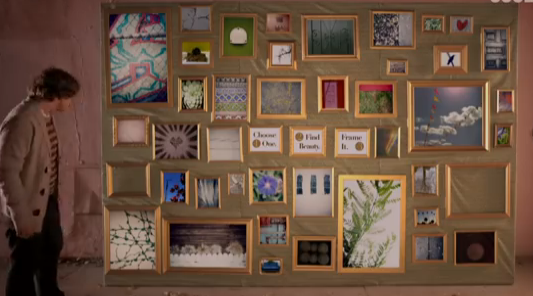
    Soul Pancake handed out a bunch of frames to people on the street and asked them to find beauty in the world around them. As one very wise participant shared, “I think that if we took some time, if we looked up, we looked down, we looked at each other, we would find that there is beauty everywhere around us.”

  • To This Day: An Inspiring Video About Pain, Loneliness, and Beauty

    To This Day: An Inspiring Video About Pain, Loneliness, and Beauty

    If you’ve ever been bullied, if you’ve ever felt ugly, if you’ve ever felt lonely, or unworthy, or unlovable, then you and I can relate. We are graduating members from the class of “we made it.” And like me, you may find this video powerful, moving, and beautiful.

  • How to Stop Feeling Inadequate and Embrace Your Imperfect Self

    How to Stop Feeling Inadequate and Embrace Your Imperfect Self

    “The thing that is really hard, and really amazing, is giving up on being perfect and beginning the work of becoming yourself.” ~Anna Quindlen

    As I sit in bed typing this, all cozied up with a hot cup of tea and my fuzz ball Maestro relaxing at my feet, I feel happy and at ease.

    I scan the room and see a couple of stacks of laundry that need to be put away. I recall that my daughter’s toys are still strewn across the house because I didn’t feel much like stopping to pick them up prior to my retreat to writing, my happy place. I realize that I have an inbox full of emails to answer. That can all wait.

    Sounds kind of normal, right? But, for me, this maintained mellowness in a sea of what could be perceived as chaos is a pretty big deal.

    You see, I’m a recovering perfectionist. There was a time in my life when uncleaned messes, unanswered emails, and other various untied loose ends would have gnawed at my very core and robbed me of my peace until I finally cried mercy, giving them the attention they demanded.

    But at some point I realized that the stacks of certificates and awards collecting dust inside a drawer in my perfectly clean house weren’t doing much for me. In fact, they were only temporary fixes to fill the voids of my spirit, as I desperately avoided being completely honest with myself and opening up to my truth and vulnerability.

    I would take on one project after the other and work myself to the bone until they were executed perfectly.

    Putting in more than fifty hours a week at the office and hitting the gym six days a week was, once upon a time, my norm.

    I remember days of changing my outfit a dozen times before leaving the house and then doing fifty sit-ups for good measure. The voice in my head was telling there was room for improvement, to reach perfection.

    I hid behind my straight A’s in school, my top sales awards as an employee, and the recognition and accolades I fought for as I dove head first into my entrepreneurial adventures. They were my mask, my shield.

    What’s wrong with all of that, some might ask? The pursuit of excellence is a good thing, right? Aren’t hard work and dedication admirable traits? Yes, and no.

    Following your passion and making a difference in the world are certainly high up on the list of things to do for a happy life. But, when you are coming from a place of lack instead of a place of love and when you get so caught up in the end results that you totally miss out on the journey, that’s a recipe for burnout and a life unfulfilled.

    So, what is the difference between perfection and excellence? It’s quite subtle, actually, but they feel very different.

    Perfect feels constrictive, judgmental, painful (especially when the mark is missed), and is fueled by feelings of lack, of wanting to be accepted and liked. Excellence, on the other hands, feels warm, honorable, accepting, and is fueled by feelings of love and pure intentions of being in service and becoming a little bit better version of yourself each day.

    When you come up a bit short of excellence, you still win. When you strive for perfect, you’re never quite good enough. It’s like being in an abusive relationship—with yourself.

    Simply put: In the pursuit of perfect, we miss out on much of the beauty around us in our everyday lives. Nobody is actually perfect, so it’s really like living a lie. The truth is buried under all the “perfect” walls that we put up.

    Perfectionism is a cozy little blanket we try to wrap ourselves in. But, while we trick ourselves into believing it is keeping us safe and warm, in reality, it’s just a shield to hide what’s really going on inside.

    Becoming “mommy” six years ago was the catalyst in my life that finally helped me to see past my crutch.

    I believe that our actions are our strongest teacher, and I didn’t want my daughters to learn through mine how to torture themselves and feel inadequate by striving for the delusional ideal of being perfect.

    Plus, it feels pretty amazing to just relax and enjoy the journey of life moment by moment. Basking in my children’s laughter, sharing with them my presence and genuine goofiness. No outside validation or approval required.

    If you can relate to this at all and are ready to peel back some of your own layers, here are a few things to think about. These really helped me along my road to accepting my perfectly imperfect authenticity.

    1. Remember: You are enough!

    Ask yourself this: Whose approval are you after, anyway? You don’t need to impress anybody! Think about it. What does outside approval even get you? Other people think you are cool? They give you the “thumbs up”? You’re living your life in a way that somebody else agrees with? Hmmm.

    Well, at the end of the day, if you are not living your own truth and doing things that are in alignment with your own soul’s calling, then you will be left feeling unfulfilled and always grasping for that outside validation.

    Instead, remember this: Everything you need is already inside of you. Learn to drown out all that outside noise and just celebrate your unique beauty. A good self-check is to ask, “Am I doing this for the cause or the applause?”

    2. Perfection is an illusion.

    There is simply no such thing. We’re not meant to be perfect—by design, humans make mistakes. (Otherwise, we’d be called robots).

    We all have good days and bad days. Plus, one person’s definition of “perfect” can be completely different from the next. So, why act like a crazy person and give yourself a hard time over something that is delusional? Stop the madness!

    3. Think “Wabi-Sabi.”

    No, not the spicy green horseradish-like stuff you eat with sushi! It’s a Japanese aesthetic that describes beauty as imperfections. It celebrates cracks and crevices and other marks of time. Yes, it is, in fact, our imperfections that make us beautiful. Embrace them.

    4. Consider: What is the impression you want to leave on the world?

    In pursuit of perfection, we can seem aloof, despondent, closed in. It’s because by being so focused on the end result, we put some serious blinders on and miss out on beautiful connections with others. People will much more closely connect with your truth (especially the right connections for you). No need to hide. Let your soul shine!

    5. There is pure joy and love in truth and vulnerability.

    Allowing ourselves to be real and vulnerable is not always easy. However, living a life hiding from our true identity is even more painful.

    Living your truth means embracing and accepting all aspects of you—bumps, bruises, and all. This is, after all, the meaning of life. Unlock the potential of unlimited happiness in your life by letting go.

    Our existence here on earth is too short to live it under the neurotic premises of doing everything perfectly. Throw caution to the wind, embrace your imperfections, celebrate your authenticity, breathe in each precious moment, and give vulnerability and acceptance a try.

    You might just discover the glorious freedom that exists within, underneath the “perfect” armor.

    Once you peel back all those layers and discover the breathtaking beauty of self, you might even find yourself tilting your head back toward the sky and allowing a giant smile come across your lips. You are home. Enjoy, enjoy, enjoy. Namaste.

  • Rediscover The Beauty Of Life Instead of Just Getting By

    Rediscover The Beauty Of Life Instead of Just Getting By

    Peaceful

    “If we look at the world with a love of life, the world will reveal its beauty to us.” ~Daisaku Ikeda

    As kids, we are beings of wonder. Spending hours inspecting blades of grass, hoping to discover lady beetles, rocking fairy wings or a cape at the shops because we feel like it, laughing for the silliest reasons, and finding unadulterated happiness in special treats, our favorite cartoon, or a game of hide and seek.

    As teenagers, we often become too cool to find joy in the simplest things but still manage it hanging out with friends, falling in love with celebrities, and listening to that one song over and over again.

    But, by the time we reach full-blown adulthood, those whimsical childhood traits may be as forgotten as an invisible friend.

    As grown ups we’re allowed to do all the fun things we spent high school wishing we could do, and yet, we get caught up in jobs we hate, paying bills, sitting in traffic, and sometimes ‘just getting by.’

    I know this feeling, because I’ve been there.

    And then, one day, I decided it was time to stop for a second and find a way to get back to a time when life was more joy-filled. Rediscovering the beauty of life, instead of focusing on the ugliness, the negativity, or the laborious pains of just getting by.

    The Beginning Of Change

    Since I was fifteen, I wanted to work in film and television. I did my high school work experience at a post-production company and decided I would work there one day.

    I graduated top of my class studying film and TV in high school, I was (and still am) a total film geek, I studied it at university. And then landed by dream job at the company I’d experienced five years earlier.

    I could not believe it.

    From that point onward, I went from contract to contract working some crazy hours (like 2PM to 2AM shifts for an entire month).

    I went through periods of no work between contracts (and, as a result no money), being morally torn between staying true to myself and doing what it takes to butter people up for the good jobs, working on shows I hated, working with people who made my skin crawl, getting praised by my superiors but being ignored by those doing the promoting, and continuing to strive for a dream job that felt like it was never going to happen.

    Of course, the perks of the job were fantastic—working with some great people, every day being interesting and unexpected, traveling, and working in what I still consider to be a really fun industry.

    But when something stops serving you, it becomes so much harder to see the good from the downright terrible.

    This all culminated when I landed the producing job I’d been working toward. Oh, what an achievement! You can imagine my excitement after so many years of working my way up to the job I’d always wanted. The celebration that followed the promotion was…non-existent.

    I was earning good money. I had the job title. I was finally getting somewhere. And I didn’t even stop to acknowledge it because all I could see was that I still wasn’t happy.

    A friend rang to congratulate me and I didn’t even notice.

    I was so overwhelmed by the anticlimax of it all. And that’s when I knew something needed to change.

    It’s Time To Do More of What Makes Me (and You) Happy

    It may seem like a ridiculous notion to some, but I honestly and truly believe that when you see these habits of what feels like never ending complaining, whining, and frustration then it’s time to make some changes.

    Some people are totally cool to accept that this is all there is, but not me. (And maybe not you, either).

    When I realized that too much of my time was spent unhappy, I decided to do whatever I could to change that.

    I changed jobs as soon as possible. I started working with people who meant the world to me in a role that was much better suited to me. This gave me room to breathe and come up for air after ten years on a career path that I decided I hated.

    I started to see what I loved again.

    And even if I was still trying to decide what to do, this made it easier to finally be happy. And I became aware of how I could do more of this on an everyday basis.

    I set dinner dates with friends on Monday nights to make the beginning of the week oh-so-enjoyable. I took advantage of coffee runs at work and turned them into glorious sun walks. I found joy in the simple pleasure of sitting in the park on the weekend just chatting or reading.

    I noticed I was changing. Sure sometimes stress still popped it’s head up and challenges arose, but I was becoming better equipped to handle the unknown because I had simply brought more joy into my life. The unexpected inconveniences became less frustrating, and the simplest pleasures became more obvious.

    The power of needing to change allowed me to find ways of doing more of what made me happy.

    Rediscover the Beauty of Life

    I’ll be completely honest with you: this is not something that just happened to me overnight. I’m still working toward my new career path and finding what I really want out of life. I still get frustrated or upset sometimes, and I still have a lot of work to do.

    But something changed the day I decided to take life into my own hands and seek out the beauty of life.

    I became more aware.

    I started attracting more happy moments and wonderful people to me because I actively sought them out, and what I put out came back to me tenfold.

    I seek out the good stuff instead of dwelling on the not-so-good.

    And, through this, I’ve learned that the more we search for beauty of life, the more we invite it in. As kids we noticed it with ease, exploring to our heart’s content but, as adults, we sometimes forget to pay attention.

    We get caught up with the mundane, we focus on the negative, and we love joining in on a mutual whine-fest with others. But imagine how much we could gain from our day if we took a moment to soak in the bliss of being alive.

    Lying in the grass, laughing with a loved one, being recognized at work for doing a great job, swapping out things we don’t like with things we love, acknowledging someone else and seeing their joy, and just embracing the moments that make up our day-to-day lives is the key to finding the extraordinary in each day.

    It may not always seem that simple but, I promise, if you’re willing to give it a shot, try it out, and be intentional when seeking out wondrous moments, it will make a significant difference to your life. And, the more you practice, the easier it will be to see.

    I invite you to be aware of what you might need to change and seek out possibilities for joy in the coming week.

    Find ways to bring the fun in and keep your eyes wide open for special moments or people that can make your life even more beautiful. Or, even better, take time to be grateful for what you’ve already got.

    Try it out, see how you go, and then leave me a comment and tell me how it went!

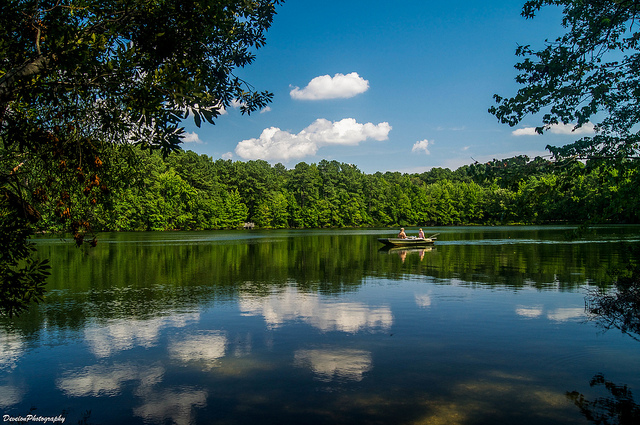
    Photo by deveion acker

  • Burn Away Your Barriers to Love: 7 Ways to Live a Beautiful Life

    Burn Away Your Barriers to Love: 7 Ways to Live a Beautiful Life

    Hand Heart

    “Your task is not to seek love, but merely to seek and find all the barriers within yourself that you have built against it.” ~Rumi

    My grandmother is nearing the end. She’s had a good life, a family, a loving husband, dancing and singing, growing things, running a business.

    There are some skeletons in the closet though; her early life had some very heavy experiences that made her afraid and may have held her back. On balance, a great life, but there were challenges.

    Right now, she’s slipped into a dream world and she is often still there when her eyes are open. There are lucid moments but her short-term memory is gone. She wakes and wonders who you are.

    But if you don’t push her to be in your time zone, she is happy to have her hand held, to sing the old songs, to laugh, to tell you what’s what. Her personality hasn’t changed.

    What she’s doing, we think, is sorting through the various stages of her life, coming to terms with the things that need to be understood with the heart. She seems to be burning away the old memories, the old feelings.

    Maybe she’s also looking forward to joining my grandfather for a dance, as they always did. They met at a dance.

    I don’t really know what it’s like for her but I see her returning to a kind of innocence, burning off the barriers to love. I see her life and all our lives as a gift of learning how to love.

    This has me thinking: How can we remove the barriers to love now? How can we burn off what doesn’t serve and let the best of us shine through?

    1. Practice forgiveness.

    Let go of the poisons of resentment. Let them wash away in a cool mountain stream meditation. Simply say, I forgive NAME and I forgive myself. I send love to both of us.

    2. Try to understand.

    Play act being that other person. What could have made them do the things they did? Were they in pain themselves? Were they just naive and oblivious?

    3. Change your beliefs.

    The limitations and barriers to love (and to anything else we want in life) are really about the beliefs we hold. The past is gone; it’s only our beliefs that live on to affect our current life. What belief is stopping you feeling love? Is this belief really true? Could you believe otherwise?

    4. Change your story.

    Change the way you see it and tell it. What did you learn?

    Your story might be: “I am lonely because I was treated harshly as a child and can’t trust others.” You could change this to: “My early life taught me to crave and seek healthy connections.”

    If you lived in fear as a child, did it teach you courage? Your story could be: “Being afraid taught me to stand up for what I believe in.” Change your story if you need to. Your story about before runs your life now, and now is what really matters.

    5. Create from the darkness.

    Play with the raw materials of life. Creativity transforms experience. Write, draw, paint, sculpt, bake, cartoon, collage, or just laugh about the hard stuff with a good friend. Get it out.

    In the movie Something’s Gotta Give, the heartbroken playwright (Diane Keaton) writes madly, alternately sobbing and laughing with delight as she “nails” a great comic scene. At some point, the terrible truth may become hilariously funny. Get creative.

    6. Give love to feel love.

    Love lives in my heart when I give it. Giving love makes us feel love. How do you best give love? What does your beloved like most? Do they love hugs, a talk, good food, flowers, car movies? Feel love in the act of giving. You may not have to actually watch the car movies.

    7. Appreciate this miraculous life.

    List your gratitude. List your small and simple pleasures. Indulge in them. For all the dark and light, life is a beautiful gift.

    I want to talk about that last point. Often, someone nearing the end is reluctant to let go of this life. I get that feeling watching my grandmother now. Whatever life has held, we want more of it, even when it’s time to say goodbye.

    Years ago, I saw an achingly beautiful contemporary dance performance called Fallen Angels. In the last moment, the stage filled with a thin layer of water. All but one had climbed to heaven. One dancer was left flipping and struggling like a fish in shallow water, holding on desperately to a difficult and beautiful life.

    In that scene, letting go of life was so hard. Despite all the mess and confusion, the pain and heartbreak, this last dancer did not want to leave, even for heaven.

    For all its contrasts, life is beautiful. At the end of our lives, I think we may want to hold on to all of it, the good and the bad. I have a feeling our souls wouldn’t change a thing.

    Let’s embrace the beauty as much as possible right now and burn off the barriers to love. We can only do our best, learning to love as we go, living and loving all of it.

    Photo by Jenny Starley

  • How to Embrace Your True Beauty (Not the Media’s Ideal)

    How to Embrace Your True Beauty (Not the Media’s Ideal)

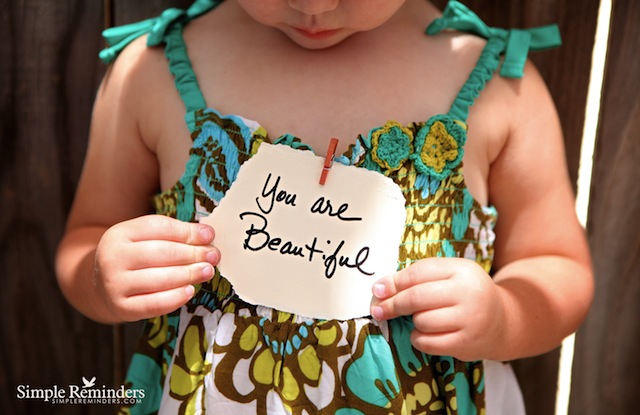
    simplereminders.com-you-are-beautiful-scottlynn-withtext-displayres

    “Beauty is not in the face; beauty is a light in the heart.” ~Kahlil Gibran

    A few years shy of my fiftieth birthday, I went on a road trip with one of my best friends from high school. We’d taken some version of this trip many times during our teens and twenties, but as we started raising young children, we didn’t have much time for getaways.

    But on this occasion, our kids were old enough to fend for themselves, and we hit the road with same excitement and silliness that characterized all of our youthful adventures.

    We spent the next few hours talking, laughing, listening to music, singing, and generally feeling like carefree teenagers again.

    At some point along the way, we had to stop for gas and snacks and pulled into a Citgo. We went inside the store still laughing, singing, and acting silly, and as we walked back out to the car, I caught a glimpse of a middle-aged woman in the mirrored glass windows of the store.

    She was laughing and talking with another woman, and for just a moment I thought, “Who is that woman? Doesn’t she know how ridiculous she looks?”

    It only took a nanosecond to realize the woman was me. For just that moment, I was perceiving myself as an outsider, and the judgment came down hard and fast.

    Even though I was feeling young and beautiful and carefree on the inside, my own distorted self-perceptions around aging and appearance quickly brought me back to the reality of who I was on the outside and how I was supposed to behave.

    Of course, this glimpse of myself at the Citgo wasn’t my first reminder that my once youthful attractiveness was fading. I’d been carefully monitoring every new wrinkle and added pound for years.

    I’d stared in the mirror many times pulling the skin back on my face to see how many years a facelift might remove. But the Citgo event was the first time I realized the subtle toll my self-perceptions were taking on my psyche and self-confidence.

    Somewhere inside of me I believed middle-aged women didn’t sing and laugh and act silly. That was reserved for the young and beautiful.

    The Messages Around Us

    In our youth and beauty-obsessed culture, every time we open a magazine, turn on the TV, or drive past a billboard, we see how far our personal reality is from the standard perpetuated by the media. These messages were obviously entrenched in me, but I didn’t truly wake up to it until I applied the harsh judgment to myself.

    Was I really going to allow these messages to keep me from feeling beautiful and carefree? And more importantly, as my physical appearance continues to change, is my self-worth going to diminish more and more over time because society tells me I’m no longer relevant?

    These images and messages don’t just affect those pushing forty or beyond. Young women in today’s culture see more images of exceptionally beautiful women in one day than our mothers saw throughout their entire teenage years. It’s no wonder that eight out of ten women are dissatisfied with their appearance.

    And it’s not just a female issue. A survey from the Centre of Appearance Research at the University of West England reveals that men also have high levels of anxiety about their bodies with some resorting to compulsive exercise, strict diets, laxatives or making themselves sick in an attempt to lose weight or get toned.

    Simply put, we are obsessed with beauty and appearance. And it’s not just an issue of aging. Nearly all of us are impacted by feelings of unworthiness related to our looks. The levels of attractiveness promoted by the media are achievable by less than 2% of the population. The beauty elite are dictating the standards for the masses.

    A Beauty Revolution

    But what if we started a beauty revolution? What if we pushed back against the brainwashing of Hollywood and the media and proclaimed a new definition of beauty?

    What if true beauty were defined by who we are rather than how we look?

    My own internal revolution began one summer day in the parking lot of a Citgo somewhere in south Alabama. I was feeling young and happy, and I almost allowed my self-judgment to steal the joy from the day. But truthfully, I was beautiful that day.

    Were I to look back at the reflection of the woman in the Citgo window, I’d see someone brimming with aliveness and fun. And that’s who I really am, in spite of my changing appearance.

    What if our true beauty rested in simply being who we are, with the face and body we own, and joyfully embracing that every day?

    What if it was okay to have flaws, to be less-than-perfect—not only okay but actually preferred and even celebrated?

    When the focus is removed from our faces and bodies and how we don’t measure up to impossible standards, then we’re emotionally and psychologically free to express and explore who we are authentically, our true selves and our true beauty.

    Of course, from an individual perspective, this true beauty revolution is easier said than internalized. It is still a work in progress for me. We spend years focusing on all of our physical flaws, and it takes a real mind shift to reject all of the cultural messages and embrace that beauty is expressed from the inside out.

    If you accept the premise that “true beauty” is much more than having a model-perfect appearance, there are ways to begin retraining your thinking and igniting your own internal beauty revolution. Here are some thoughts that helped me release self-judgment and embrace my true beauty . . .

    Look Around You

    Take a good look at the people in your life that you love—your spouse, your children, your parents, your siblings, and your close friends. It’s likely the majority of these loved ones aren’t model beautiful, and yet, are they not beautiful to you?

    The familiar faces, the twinkling smiles, the kind gestures, the comforting bodies and arms that embrace you. Each person has an inner beauty, a unique character and light that makes them who they are.

    You see them as truly beautiful—and these people view you the same way. Remind yourself every day that the people who truly count recognize your beauty and try to validate their good opinion by believing it yourself.

    Stop Struggling

    This was a huge shift for me that has led to self-acceptance. Yes, there are some elements of our faces and bodies we simply cannot change. Rather than resisting and struggling against these things, relax into them and accept them with love.

    Struggle and resistance do nothing but push us further away from recognizing our true beauty. Acknowledge and accept those parts of your appearance you have grown to hate. View them as children who long for and deserve your love and acceptance.

    Take Care

    As I’ve gotten older, I realize how much more beautiful I feel when I take care of my body.

    Sometimes we become so disconnected from our true beauty that we neglect and mistreat our bodies, further entrenching us in low self-confidence. But as you begin to treat your body more lovingly, you will feel better mentally and physically, affording the clarity to recognize your true inner and outer beauty.

    Feed your body with whole, nutritious foods. Move your body through exercise every day for at least twenty to thirty minutes. Acknowledge the bad habits that are harming your body, and work to release those habits over time.

    Acknowledge

    This is an exercise I love. For a moment, mentally step outside of yourself and pretend you are your most loving, best friend. From the perspective of this friend, write down all of the personality traits, skills, behaviors, and qualities that you think are beautiful. Don’t allow your negative voice to intrude on this exercise.

    Also ask this friend to write down the physical traits that are beautiful—your eyes, your hands, the curve of your neck. Remember, you have a choice about where you want to place your mental focus.

    Keep this list nearby whenever you find yourself focusing on your flaws. Read the list and remember you have more positive qualities than negative—so choose to focus on the positive.

    Redirect

    As I’ve grown older, I’ve consciously redirected my focus away from dwelling on my appearance. Yes, I still do what I can to look attractive and presentable. I exercise and eat a healthy diet. But I try not to obsess about the changes my face and body are undergoing.

    Instead, I focus on my passions for helping others through personal development, writing, and teaching courses. I recognize that my true beauty shines from expressing my authentic self, from the joy I experience in daily life, and from my interactions with loving friends and family.

    For me, true beauty comes from living fully, being who I am, and experiencing the beauty all around me.

    When you find yourself doubting your own true beauty, please remember, as Khalil Gibran so eloquently reminds, “Beauty is not in the face; beauty is a light in the heart.”

    Allow the light in your heart to shine for yourself and others, and in so doing, your entire being will glow with a fire of beauty. You will be a beacon of attractiveness to everyone you encounter.

    Photo by Simple Reminders

  • 35 Simple Ways to Be Beautiful

    35 Simple Ways to Be Beautiful

    Beautiful

    “Beauty is how you feel inside, and it reflects in your eyes. It is not something physical.” ~Sophia Loren

    Even though I got Joey McIntyre from The New Kids on the Block to sign my scoliosis back brace in the sixth grade, I still felt ugly wearing it.

    I didn’t realize the irony back then, but in retrospect it seems a little funny that I grew crooked considering I convinced myself I was wilting in my sister’s shadow. (I also had braces and headgear, but that’s another story.)

    I was a kid who wanted to be beautiful, but more desperately wanted to feel loved. My self-esteem increased through the years, but I never quite shook the sneaking suspicion I’d never be beautiful enough. Or maybe lovable enough.

    It would be easy to blame it all on society and the Kate Moss era of modeling, but I think it’s more than that. I just never learned to notice and appreciate all the beautiful things about myself. The stuff that had nothing to do with my waistline, skin tone, or eye lashes and everything to do with who I am.

    I never learned to give myself the credit for all the good I do in the world. I was too busy cataloging my weaknesses, mistakes, and flaws to recognize it.

    It seems like such a cliché to say that pretty is as pretty does, but the truth is, physical beauty is subjective. And even if someone perfectly matches your ideal of physical perfection, their looks will eventually fade. What endure are the qualities, passions, and habits we nurture.

    That’s what makes us beautiful—and believe me when I say there is something beautiful in everyone. If you’ve done any of the following lately, you are absolutely beautiful: (more…)

  • A Beautiful Thing Is Never Perfect

    A Beautiful Thing Is Never Perfect

    “A beautiful thing is never perfect.” ~Proverb

    There are so many reasons to think that we, as humanity, have far to go to reach a certain stage of happiness. Yet with every step we take toward a “golden future,” we seem to take two steps backward.

    Our demand for technological advancement causes great stress upon the Earth: Medical achievements aim to eliminate ailments, but serve as crutches for our poor health choices; and we push ourselves to reach great heights of “success,” which then fuels our self-rejection because we think we aren’t good enough.

    In this sense, our progress tricks us into always wanting something else to cure our unhappiness. I know this because I feel it and live it every day, as many of us do.

    I, too, am guilty of wanting a picture-perfect prosperous future—two dogs, a classy and purposefully minimalist apartment in the perfect area of a snazzy city, and a really awesome electric car.

    In fact, I have become so entrenched with figuring out how to become rich using my creative skills that I’ve begun to forget the very goal that fueled my original desire for success.

    I wanted to get rich and help others live—at the very least—comfortably and happily.

    I’ve forgotten my dream, the original dream, in response to my desire for “the good life.”

    I’ve forgotten that my life is already beautiful and amazing as it is. My desire for things that I thought would make me feel happier actually made me lose sight of the one thing that really would help me feel happy and fulfilled.

    In the same way, humanity thinks it needs to constantly evolve so that maybe someday, old age and sickness will be eradicated from existence. However, our folly isn’t the goal of a life without suffering; it’s our assumption that life can exist without suffering.

    In other words, we can never not suffer. (more…)

  • The Key to Beauty and Acceptance Is You

    The Key to Beauty and Acceptance Is You

    “To be beautiful means to be yourself. You don’t need to be accepted by others. You need to accept yourself.” ~Thich Nhat Hanh

    I read this quote the other day, and I have to say, nothing has shaken me to the core more.

    I was diagnosed with a rare form of muscular dystrophy at the age of two, and ever since, I’ve struggled with loving myself and with having self-confidence.

    For the most part, you wouldn’t know I have a serious physical disability aside from my visible limp, my difficulty getting up and down stairs, and my tendency to fall when I get weak. I was never able to do sports growing up like my friends and often had to enroll in special Adaptive Phys Ed classes in school.

    I always felt my disability separated me from my peers growing up, so I put up an emotional wall and convinced myself that I had to wear the latest clothes, have perfect skin, and have the perfect body in order to “blend in” with everyone around me—in order to be truly loved. Then maybe I would be considered beautiful.

    Then maybe no one would notice I was different. If I just looked like those Victoria’s Secret models, then someone would accept and love me.

    So often we look to external things to define our beauty, most commonly, our physical appearance. We think that if we just fit into the mold that society has told us is “good looking” then we’ll feel good about ourselves and will gain acceptance.

    I put a lot of value in being in a relationship too. Because of my disability, I was extremely shy for a long time and very insecure. All I wanted was a guy to come along, sweep me off my feet, and fall in love with me.

    Then I thought I would truly be like everyone else, because I would have someone (other than friends and family) there all the time telling me that I was loved and valued. (more…)

  • The Courage to Accept Your Own Beauty

    The Courage to Accept Your Own Beauty

    “To be beautiful means to be yourself. You don’t need to be accepted by others. You need to accept yourself.” ~Thich Nhat Hanh

    As I was looking in the mirror, I was feeling the soft curves of my body, all the way down to the flesh on my belly to where it met my hips. I was frowning at my “belly pooch” as I pinched my skin between my fingers. I had a name for my belly pooch and the other not so desirable places on my body.

    I called those places “my chubs.”

    My partner and I like to play fight. As we often chased each other around the apartment, he would playfully tease me about “my chubs.” I would always squeal back at him with a “don’t touch my chubs” as I tried to tickle him.

    It was all fun and games. However, there was a small part of me that the detested how I felt when my “chubs” would get tickled or playfully grabbed.

    You may be thinking, “Why don’t you just ask him to stop tickling you?” Being tickled is a symptom of a problem, rather than a problem in itself.

    The problem is that I was more frustrated at myself because I allowed other people’s words and actions to feed my worst enemy—my inner critic.

    There are days when my inner critic can be extra cruel.

    Like countless people out there, I’ve put my body through a lot with all the latest diet trends. From keeping track of my calories, to the slow-carb diet, the no carb diet, vegetarianism to even eating only one meal a day. I was constantly looking for something to help me feel beautiful on the outside.

    No matter how much weight I lost, I still couldn’t see the beauty my lover saw. Even when I was making progress, the friendly tickle fights with my lover or a quick glimpse of my reflection in a window would stir up negative emotions.

    Whenever this happened, my inner critic would often hurl me down the depths of despair and a sea of self-loathing.

    I could easily blame the media’s portrayal of what a beautiful woman looks like by picking up a magazine, turning on the television or looking at a billboard. (more…)

  • Giveaway and Interview: Cultivating Radiance by Tamara Gerlach

    Giveaway and Interview: Cultivating Radiance by Tamara Gerlach

    Note: The winners for this giveaway have already been chosen. Subscribe to Tiny Buddha to receive daily or weekly emails and learn about future giveaways!

    The winners:

    Have you ever wondered how authors live their messages—if writers who explore mindfulness are generally present and peaceful, or if others who research happiness are predominately upbeat and joyful?

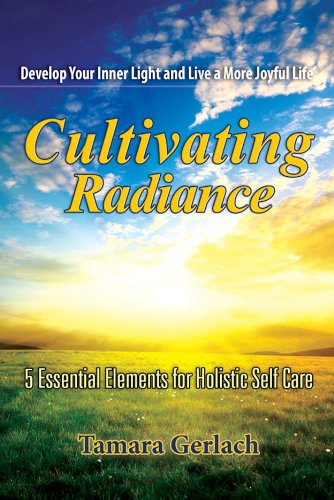
    This often goes through my mind when I read a book that inspires me. I didn’t have to wonder this as I read Cultivating Radiance: 5 Essential Elements for Holistic Self-Care. I’d recently met the book’s lovely author, Tamara Gerlach, who appears to glow from the inside out.

    Owner of Encore Gymnastics, Dance, and Climbing, Tamara formerly served as a National Team Coach for USA gymnastics. Since 2001, she’s worked as a life and business coach, empowering people to change their lives and have fun doing it.

    In her new book, Tamara offers a number of action-oriented suggestions for a positive attitude and a joyful life. With easily digestible chapters, each jam-packed with insight, Cultivating Radiance reminds us to nurture our inner beauty—and shows us how.

    The Giveaway

    To win one of 5 free autographed copies:

    • Leave a comment on this post.
    • Tweet: RT @tinybuddha Giveaway and Interview: Cultivating Radiance by Tamara Gerlach http://bit.ly/pNsJUf

    You can enter until midnight PST on Tuesday, October 11th. If you don’t have a Twitter account, you can still enter by completing the first step. (more…)

  • Tiny Wisdom: On Being Vulnerable

    Tiny Wisdom: On Being Vulnerable

    “What makes you vulnerable makes you beautiful.” ~Brené Brown

    To be vulnerable is to be free.

    It gives you a break from trying to pretend you’re always right and you don’t have any flaws. It gives you permission to show your authentic self and stop taking responsibility for the way other people perceive you. It allows you to try new things and take the risk of feeling awkward or uncomfortable.

    It also opens you up to the possibility of pain. We never know when we let our guard down that other people won’t hurt us, unintentionally or otherwise.

    We can know, however, that the pain of closing ourselves off to people and possibilities is far more dangerous than the potential risks of opening up. We’re just not meant to be isolated. We need to really connect with each other.

    Today, if you feel tempted to shut down and retreat into yourself, ask yourself : What’s the best thing that could happen today if I decided instead to move outside this place that feels safe?

    Photo by Thomas Euler