Source: Spirit Science
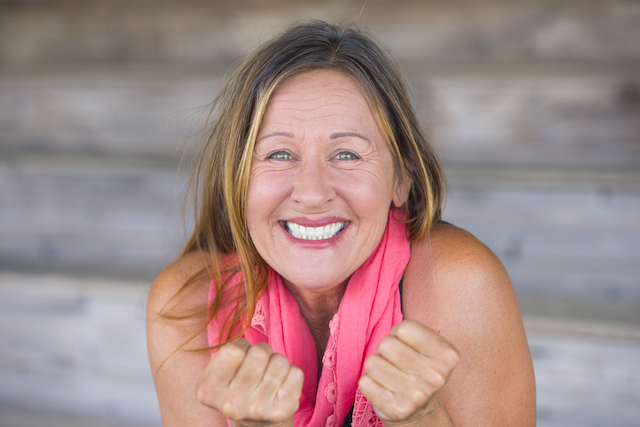
“Kindness and awareness work together. Through awareness we understand the underlying beauty of everything and every being.” ~Amit Ray
We were in Yorkshire—my brother, sister, and I—driving along narrow, windy roads. Sometimes we would come up a steep incline and be unable to see the rest of the road until we got to the crest. It was a little bit scary.
It could have been worse, but that night it was a full moon and even though it was almost midnight, there was a great deal of light in the darkness. We were not normally out that late but had been to an evening theater show in Harrogate, which was about an hour and a half drive from where we were staying.
My sister and I were playing CDs and talking to keep my brother awake, although between the bright moonlight and the difficulty of the route, I imagine sleep was the last thing on his mind! Possibly it was just knowing he was uncomfortable with that type of driving that was really motivating us to stay awake ourselves.
We were chatting about the day’s events and planning what we would do for the rest of the week. Then, as we slowed down and came round a bend, right in front of us was the shell of an old abbey. We appeared to be in the middle of nowhere, so we were truly surprised by the fact that it was there.
Gazing at it for just a few moments, the three of us were awed by the underlying beauty in the remnants of the ancient building.
Eventually we made it home, after midnight. All of us exhausted, but happy to be finding our way to our respective beds. As I lay there in the dark, I couldn’t help thinking how magical the ruins of that old abbey had seemed.
Maybe it was the moonlight shining through what was left of the priory windows, or the sheer height of the building. Or perhaps it was the unexpectedness of encountering it so far away from a town or village.
Whatever it was, as I fell asleep I remained enchanted with the picture in my mind—the image of that dilapidated abbey, which still retained so much of its original majesty and beauty.
In the morning as I meditated alone in my room, I started thinking about perfection, about beauty, and the obsession that seems prevalent in our culture today.
I wondered why so many people go to such extraordinary lengths to stay looking young, to reject any signs of aging, and to “fix” those aspects of themselves that do not conform to what is considered beautiful.
I thought about the magnificence of the abbey—that despite the deterioration, the building was still exquisite. I recalled that there in the moonlight, it was easy to see the graceful lines, the lovely arches, the grandness of what it had once been. Yes, the stained glass windows I imagine it once had were long gone, but for me it did not need to be perfect; its loveliness still touched my heart.
How much more true must this be for those we know, care about, and love? Does anyone really need to hold on to what time and loving has altered? Do wrinkles need to be removed, teeth whitened, or bodies lifted and tucked?
Surely the beauty of who we are does not diminish in the eyes of those around us, because we look a little, or even a lot older?
It’s not that I am against anything anyone does. I don’t feel it is wrong to try and improve your looks. It is more that I believe it is not necessary.
Through awareness, I have learned that everything and everyone has an underlying beauty.
For a long time I was very focused on beauty. I only saw beauty on the outside, was critical and judgmental. I used the word ugly. But with spiritual awareness, I now look at things and people differently. I have become kinder—more willing to observe from my heart.
I know that true beauty does not lie in perfection, or in only looking as young as possible. I have no desire to hold onto or create an illusion of youth. I am happy to accept my face, my body the way it is, knowing this is a natural part of the experience of living.
Here in my heart is the sum of the learning I have gained and the wisdom I have acquired, from all I have gone through. Here in my heart is the peace that has come from knowing myself, from loving myself. Here too, is the love I hold—the memories I have—for all the gentle souls I have known, who touched my life in the most beautiful of ways.
These days, what I see in those I know and love are not flaws or signs of aging, but the beauty that shines through—the result of tears we have cried, smiles we have shared, and the love that binds us together.
Though my eyes may take in what time or illness has altered, my heart looks with loving kindness at the person before me. And, noticing only what has always been there—a loving, caring, supportive, accepting being—my soul acknowledges and marvels at the underlying beauty of the person I see.
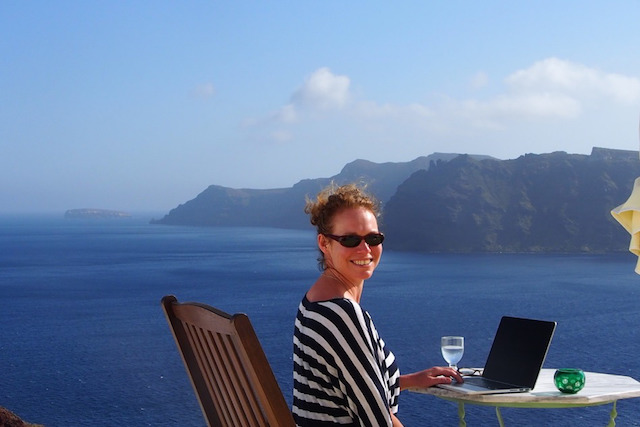
Happy mature woman image via Shutterstock
“Beauty is not in the face; beauty is a light in the heart.” ~Kahlil Gibran
Does a loved one have a favorite photo of you? A photo by their bedside or on their screensaver that reminds them of a special time and place and memory?
Can I also hazard a guess that this isn’t your favorite photo of yourself? I bet you look at yourself critically and dislike how your face looks, or maybe your body is not cast in its most flattering light. I was reminded of this recently, and it made me think of how I view photos of myself in a whole new way.
My husband and I met in beautiful Byron Bay a long, long time ago. Since we lived in different cities, and we were both young, wild (in the hair department, at least), and free, we would often meet up and spend our holidays there.
This was always a wonderful time, as my love and I reconnected and spent many happy days hiking, surfing, swimming, and discovering the things we enjoyed about each other.
I look back on these days at Byron as some of the most fun and carefree of my life. In my mind there are few better feelings than being young and in love, walking down a beautiful beach at sunset with nowhere to be and nothing to do.
Wow, I was good at practicing mindfulness without even knowing what it was!
Now, this was an era well before the age of selfies and sticks that take photos of both sides of your body. In fact, we didn’t even have digital cameras back then. (Someone pass me a stick of the walking variety—I’m so ancient!)
Therefore, there are only a few photos in existence from this time, and those I do have are all stuck in photo albums sitting at the top of my cupboard gathering dust.
However, there is one photo of me from that time that my husband has always loved. I am sitting on the beach against the rocks, and I’m not more than twenty-two. I am in my favorite purple Mambo swimsuit, with hubby’s trusty old Malibu surfboard right next to me.
I am sure if I asked him, he’d say that this photo invokes memories of some of the happiest days of his life. What’s better than being at one of your favorite spots in the whole world, enjoying the freedom of surfing the waves with your beloved, then happily sitting on the beach under the glorious Australian sun?
It will come as no surprise to you that I have never really liked this photo (hello, inner mean girl). I’ve always felt like I had a silly look on my face and my hair (which is crazy enough, at the best of times) was looking particularly wild and windswept.
However, there is no doubt that it invokes great memories, and over the ensuing twenty or more years, my hubby every now and then looks at me with love in his eyes and says, “Hey, my beautiful Mambo girl. ”
You probably just read that and thought, “Aw, how sweet.” But me, the object of such affection and love, would typically roll my eyes and sarcastically say something along the lines of “Yeah, yeah, whatever,” while feeling nothing like that young, carefree girl relaxing on the beach.
You see, I felt that somewhere along the way of getting older and becoming a mother, with the many responsibilities that entails, I had somehow lost the essence of that young girl sitting there, full of love and hope for the future.
However, I can honestly say that as a woman who is now on the other side of forty, with a newly renewed sense of self-belief and self-love (and who still has crazy hair but maybe not those long slender legs) I can look at myself a bit differently. This is what I would say to that young girl:
Hey, you beautiful Mambo girl. In this photo you are young and carefree and in love, and guess what? That nature-loving, long-haired surfie boy taking this photo will go on to be your husband and the amazing father of your three wonderful children, and you won’t believe what else. He still sees you exactly the same way all these years later. Can you believe it?
I can believe it now.
The next time you look at a photo that someone else loves of you, I encourage you to remove your self-judgment and look at it with eyes of love and acceptance. You might be amazed by what you see.
“We must never be afraid to be a sign of contradiction for the world.” ~Mother Teresa
I’ve felt like I was different ever since I was in elementary school, when my personality started to settle and I came to realize I didn’t look, think, feel, learn, or act like my peers.
Back in the eighties and early nineties it seemed that there weren’t many labels to catalog people by, but still I knew I was different, and teachers and classmates made sure I knew it. “Freak” or “weirdo” were two of their favorite names.
In current times there would be many labels to identify me with: ADD, ADHD, dyslexic, depressive, and antisocial, among other medical terms. Socially, there are many other labels to box me in: problematic, troublemaker, weird, crazy, and dramatic, among others.
Labels seemed to be used to put me into boxes so shrinks, teachers, and the world could try to understand me.
The world tends to see what is different as something ugly and wrong, as if anything “abnormal” is something needing to be fixed.
If I were to see myself through the eyes of the world, I’d be frightened to look at myself in the mirror.
As the years went by the bullying didn’t stop. Everyone knew me by a thousand different names, except the one my mother had given me. I didn’t mind; I actually preferred for them not to use my name. I didn’t want them to taint it with their harsh voices.
In high school, I wanted to have friends and be a part of something; I wanted to feel like I wasn’t a freak. I tried really hard to fit in, but trying to be something I wasn’t became emotionally draining.
My father could see this and told me, “Ducks fly in flocks and eagles fly alone.”
I didn’t want to be an eagle. I wanted to be a duck, because they had company.
I started smoking to fit in with the “cool” group, dating boys I wasn’t even interested in (it was what girls my age did), and I learned to laugh and keep my mouth shut when I saw any injustice being done.
I once screamed and burst into tears when I saw one of my “friends” kill a bee out of fun. I couldn’t understand how someone could take away the life of such an innocent being intentionally.
After being bullied for my reaction, they started calling me “crazy” and so… what did I do? I started killing bees.
I loathed myself. I had turned into this person I didn’t like for the sole purpose of “fitting in.” But at the same time I hated what I was, I hated being oversensitive, stupid, a daydreamer, rebellious, and sad.
I wasn’t happy with my physical appearance either. The body I had at twelve years old remained the body I would have for the rest of my life—extremely skinny and no curves.
People, assuming I had an eating disorder, would thoughtlessly say, “Eat something. Skinny girls are not pretty.” It was just my anatomy, different to that of the voluptuous Mexican bodies women have in this part of the world.
Then, a boy came my way. We became good friends, and because he didn’t want to hurt my feelings and lead me on, he asked if I could pretend to be his girlfriend.
Marcus was gay. He couldn’t stand the idea of being different and showing it to the world. He needed a fake girlfriend to take home to his parents, to brag about to his friends, and to walk around town with, showing he was “normal.”
We were teenagers, and our self-esteem was determined by the acceptance of society.
He knew how I felt for being different and not being able to fit in. I had a different mindset and he had a different sexual orientation. It was in our differences where we found a unity that forged a beautiful friendship.
A few years later Marcus found the courage to “come out.” His parents supported him. He lost many friends but made new ones and could be entirely himself around them.
There was no more pretending. He found acceptance within his heart, even if the world around him shamed him. He became comfortable within his own skin, and that to him was happiness.
I came to understand that the criticism came, not because we were wrong (we weren’t horrible human beings), but because we were different to them (society). In their mind, their way of thinking and acting was right, so anything that navigated away from that was wrong.
It was their limited mindset that created in them an inability to accept other people’s differences. But that wasn’t our problem; we weren’t what they saw.
Our problem came from the fact that we had given them the power to control our self-esteem instead of finding that acceptance and love within ourselves.
As more years passed, experience taught me a deeper understanding about my place in this world.
I came to forgive and love myself because I was never ugly, stupid, antisocial, or psychotic, as the world saw me. I felt like that because I was looking at myself through their eyes instead of my own.
Even through university I had to deal with the stigma of being considered stupid by my peers, for having bad grammar and spelling mistakes. To them my intellectual capacity was determined by my writing skills instead of the content of my writing.
Fortunately, professors admired the intellectual content of my papers and the different perspective I had for connecting the dots and analyzing issues. I graduated top of my class, because dyslexia is not a disability; it’s a different perspective to what ordinary learning offers.
ADD or ADHD have never existed in my mind. I simply block out lame and boring lectures I’m not interested in, and when I find myself in an environment I dislike, my mind travels away to the beautiful world of my imagination.
I am selective with my friends, not antisocial. I don’t wish to surround myself with people that undervalue me or with whom I don’t feel comfortable.
I am not a troublemaker, but I refuse to stand by while I see any injustice being done. I am not rebellious; I just refuse to follow rules that go against my values. I’m not dramatic, I am passionate.
Yes, I cry a lot. I was born crying and I’ve never stopped. However, it is not because I have chronic depression (I have battled depression and it is a term I wouldn’t use lightly).
It is because I am oversensitive, and even as a child I could see what people rarely saw or simply didn’t care about: corruption, poverty, injustice, and cruelty, among other issues. This affected me profoundly, and still does. I am empathetic toward others’ suffering.
I wasn’t a duck, and even if being an eagle can be lonely, the view from the top gives life a wider perspective and a deeper understanding. Although my journey hasn’t been entirely lonely, it is definitely a less traveled one.
I’ve met wonderful people with whom I can be myself, and even if I don´t have thousands of friends, I have a few who are worth the world.
Different is what I’ll always be, because I don’t match with the preferred educational, economic, religious, and social systems that want to shape me into a predesigned mold that I can’t fit into.
Everyone wants you to be what is best for them, not what is best for you. Wanting to please everyone and be what is socially acceptable stole my personality away.
However, by accepting myself, I came to realize that I am absolutely beautiful. Not because I am better or worse than anyone else, but because I am exactly what I am supposed to be.
Everyone is different in some way or another, but only a few dare to show it to the world. The majority try to fit into a mold that is too tight to feel free in.
Marcus is feeling incredibly comfortable in his amazing homosexual being. He has a wonderful partner and they have recently adopted a beautiful baby girl.
Once I asked him, “What would you like her to be when she grows up?
He replied: beautifully different.
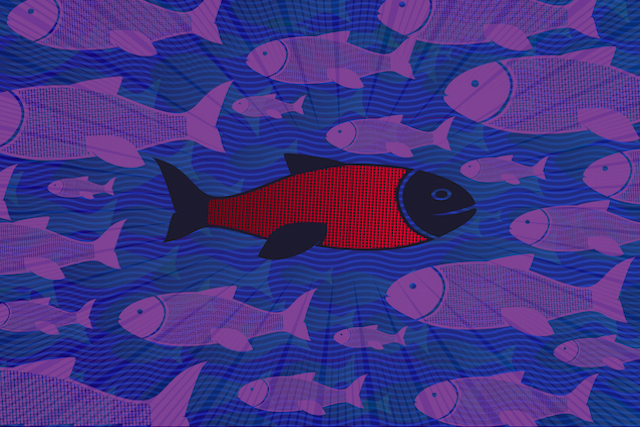
Fish swimming against the stream image via Shutterstock
“A smile is happiness you’ll find right under your nose.” ~Tom Wilson
I smile a lot.
In fact, yesterday I smiled eighty-seven times (I counted).
These aren’t fake smiles. They’re big, toothy, open-mouthed grins. And they’ve become a regular feature of my everyday life because I’ve been overcome with an immense happiness.
Everything I see, touch, breathe, and taste brings me delight.
It’s totally spontaneous and outrageously fun, and I want to share with you how it’s done.
It could be the subtle texture of construction grating.
It could be the way a flower pops out of the background at an unforeseen moment.
It could be the way the sunlight glints off the window in the early morning.
But the thing that’s powering all these smiles is very simple.
Gratitude.
Most people smile when they get something.
We all like to smile when we receive a compliment, a surprise visit from a friend, or a big paycheck.
In other words, we’re happy when we receive a direct benefit.
But the way I see it, I’m the direct benefiter of everything happening around me.
The caw of a crow, the taste of a mandarin orange, the sound of a truck passing.
All of these things have made me smile today. I receive all of these things and am glad because of them.
So how can you smile more?
It’s simple really.
It’s amazing what positive effects we experience once we begin to say, “Thank you!” for everything.
Thanks for the gift of life. Thanks for a delicious meal. Thanks for the smile of a stranger.
But the weird (and powerful) change I invite you to make is this:
Give thanks for even the seemingly negative things that come into your life.
Illness, pain, and loss are some of the most powerful teachers we have available. They reflect back to us the ways in which we need to grow. They show us the power that’s within us.
And they show us that life is incredibly precious.
For a few years I was in a really dark place. No home, no friends, no money. I slept outdoors in unfamiliar towns. I ate food stolen from dumpsters. I went days without talking to a single soul.
There were frigid nights when I would sleep in a construction site. I would curl up in the cab of an unlocked bulldozer because my body heat could warm the tiny compartment just enough to sleep a few hours before the crew came in at 6AM.
I was low.
But I appreciate this experience because it gave me fortitude to live anywhere. I no longer worry that I’ll be able to survive without food or shelter, because in tough situations, you get creative. You get resourceful. And you stop being afraid to ask for help.
Right now I’m staring into the red of my ceramic coffee cup and just smiling my ears off. It’s too perfect not to.
But the coffee cup isn’t really just red.
As I look closer, I see infinite shades glancing off the glaze.
It’s reflecting the candy-cane stripes on a packet of sugar lying in the dish.
It’s reflecting a page of notes I’ve got in front of me.
And it’s following all the laws of light and shading, showing its brightest fire-truck vermillion face to the sun on one side, and a shadowy, murky maroon on the other.
Truly a glorious thing.
These details of experience are accessible to us everywhere, and they show us that no two things are alike.
Even things that we find offensive are opportunities for thankfulness once we begin to appreciate their details.
Plastic bottles on the street or decaying fruit, for example.
They all contain such marvellous detail that when you stop and pay attention, you can’t help but smile in thanks.
Thousands of great things happen to us every day but we only seem to remember a few, while we remember most of the dull, unfortunate, or painful things that happen to us.
That’s not our fault; it’s just the way our brains are wired.
But we can overcome it.
That’s why it can be helpful to keep a notebook to jot down all the great things that happen to you daily.
Reflect on it when you’re feeling down. You’ll notice that even on your lowest days, things happened that touched you, that blessed you.
Don’t forget them!
Every time I look around, I think, “Wow, I’ve got a great life.”
I don’t have a lot. And yet, I live the happiest life imaginable because I’m looking at what is, not what isn’t.
Oftentimes we get caught up in worries about the future, giving substance to our negative thoughts.
We think, “If only I had a bit more money to pay the bills.”
“If only I didn’t have to worry about these aches and pains.”
“If only I had a little more time to spend with my family.”
Life isn’t the fantasies you have in your head—it’s what’s happening right now! All the great things around you are yours.
The sunshine hitting your face.
The smile of your kids and grandkids.
The exhilaration of going for a run and feeling your blood rush about in your marvellous arms and legs.
That’s all for you. And it makes me smile.
What made you smile today?
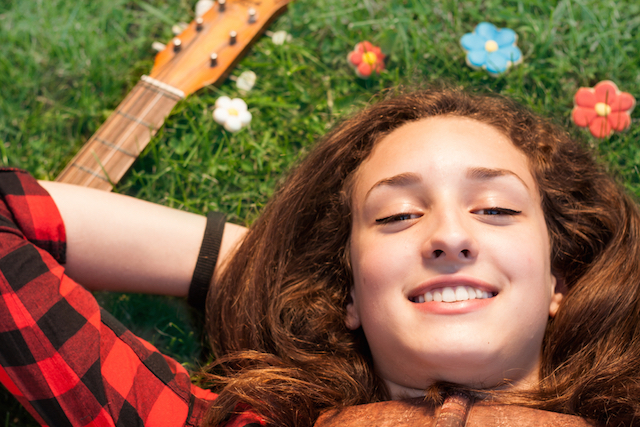
Smiling girl image via Shutterstock
I saw this in my Facebook feed the other day along with the words “Life goes by so fast,” and while that was precisely what I thought when watching this, it also struck me how beautiful this woman looks at every age.
It’s not physical beauty I’m referring to, though she’s attractive. It’s the light in her eyes that never dims. If there’s one thing I wish for myself, and others, it’s to maintain that light through every stage, and through every change, knowing we are beautiful.
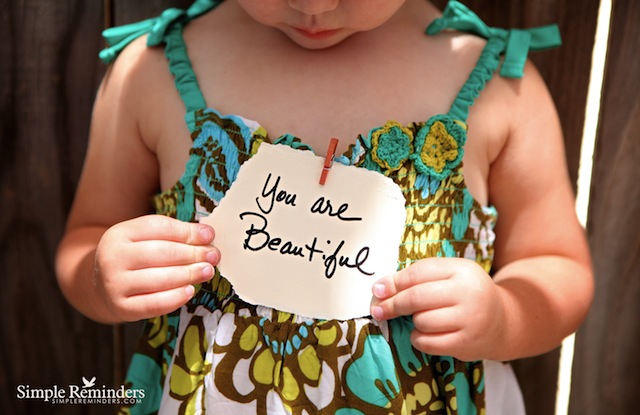
“Beauty is not in the face; beauty is a light in the heart.” ~Kahlil Gibran
A few years shy of my fiftieth birthday, I went on a road trip with one of my best friends from high school. We’d taken some version of this trip many times during our teens and twenties, but as we started raising young children, we didn’t have much time for getaways.
But on this occasion, our kids were old enough to fend for themselves, and we hit the road with same excitement and silliness that characterized all of our youthful adventures.
We spent the next few hours talking, laughing, listening to music, singing, and generally feeling like carefree teenagers again.
At some point along the way, we had to stop for gas and snacks and pulled into a Citgo. We went inside the store still laughing, singing, and acting silly, and as we walked back out to the car, I caught a glimpse of a middle-aged woman in the mirrored glass windows of the store.
She was laughing and talking with another woman, and for just a moment I thought, “Who is that woman? Doesn’t she know how ridiculous she looks?”
It only took a nanosecond to realize the woman was me. For just that moment, I was perceiving myself as an outsider, and the judgment came down hard and fast.
Even though I was feeling young and beautiful and carefree on the inside, my own distorted self-perceptions around aging and appearance quickly brought me back to the reality of who I was on the outside and how I was supposed to behave.
Of course, this glimpse of myself at the Citgo wasn’t my first reminder that my once youthful attractiveness was fading. I’d been carefully monitoring every new wrinkle and added pound for years.
I’d stared in the mirror many times pulling the skin back on my face to see how many years a facelift might remove. But the Citgo event was the first time I realized the subtle toll my self-perceptions were taking on my psyche and self-confidence.
Somewhere inside of me I believed middle-aged women didn’t sing and laugh and act silly. That was reserved for the young and beautiful.
In our youth and beauty-obsessed culture, every time we open a magazine, turn on the TV, or drive past a billboard, we see how far our personal reality is from the standard perpetuated by the media. These messages were obviously entrenched in me, but I didn’t truly wake up to it until I applied the harsh judgment to myself.
Was I really going to allow these messages to keep me from feeling beautiful and carefree? And more importantly, as my physical appearance continues to change, is my self-worth going to diminish more and more over time because society tells me I’m no longer relevant?
These images and messages don’t just affect those pushing forty or beyond. Young women in today’s culture see more images of exceptionally beautiful women in one day than our mothers saw throughout their entire teenage years. It’s no wonder that eight out of ten women are dissatisfied with their appearance.
And it’s not just a female issue. A survey from the Centre of Appearance Research at the University of West England reveals that men also have high levels of anxiety about their bodies with some resorting to compulsive exercise, strict diets, laxatives or making themselves sick in an attempt to lose weight or get toned.
Simply put, we are obsessed with beauty and appearance. And it’s not just an issue of aging. Nearly all of us are impacted by feelings of unworthiness related to our looks. The levels of attractiveness promoted by the media are achievable by less than 2% of the population. The beauty elite are dictating the standards for the masses.
But what if we started a beauty revolution? What if we pushed back against the brainwashing of Hollywood and the media and proclaimed a new definition of beauty?
What if true beauty were defined by who we are rather than how we look?
My own internal revolution began one summer day in the parking lot of a Citgo somewhere in south Alabama. I was feeling young and happy, and I almost allowed my self-judgment to steal the joy from the day. But truthfully, I was beautiful that day.
Were I to look back at the reflection of the woman in the Citgo window, I’d see someone brimming with aliveness and fun. And that’s who I really am, in spite of my changing appearance.
What if our true beauty rested in simply being who we are, with the face and body we own, and joyfully embracing that every day?
What if it was okay to have flaws, to be less-than-perfect—not only okay but actually preferred and even celebrated?
When the focus is removed from our faces and bodies and how we don’t measure up to impossible standards, then we’re emotionally and psychologically free to express and explore who we are authentically, our true selves and our true beauty.
Of course, from an individual perspective, this true beauty revolution is easier said than internalized. It is still a work in progress for me. We spend years focusing on all of our physical flaws, and it takes a real mind shift to reject all of the cultural messages and embrace that beauty is expressed from the inside out.
If you accept the premise that “true beauty” is much more than having a model-perfect appearance, there are ways to begin retraining your thinking and igniting your own internal beauty revolution. Here are some thoughts that helped me release self-judgment and embrace my true beauty . . .
Take a good look at the people in your life that you love—your spouse, your children, your parents, your siblings, and your close friends. It’s likely the majority of these loved ones aren’t model beautiful, and yet, are they not beautiful to you?
The familiar faces, the twinkling smiles, the kind gestures, the comforting bodies and arms that embrace you. Each person has an inner beauty, a unique character and light that makes them who they are.
You see them as truly beautiful—and these people view you the same way. Remind yourself every day that the people who truly count recognize your beauty and try to validate their good opinion by believing it yourself.
This was a huge shift for me that has led to self-acceptance. Yes, there are some elements of our faces and bodies we simply cannot change. Rather than resisting and struggling against these things, relax into them and accept them with love.
Struggle and resistance do nothing but push us further away from recognizing our true beauty. Acknowledge and accept those parts of your appearance you have grown to hate. View them as children who long for and deserve your love and acceptance.
As I’ve gotten older, I realize how much more beautiful I feel when I take care of my body.
Sometimes we become so disconnected from our true beauty that we neglect and mistreat our bodies, further entrenching us in low self-confidence. But as you begin to treat your body more lovingly, you will feel better mentally and physically, affording the clarity to recognize your true inner and outer beauty.
Feed your body with whole, nutritious foods. Move your body through exercise every day for at least twenty to thirty minutes. Acknowledge the bad habits that are harming your body, and work to release those habits over time.
This is an exercise I love. For a moment, mentally step outside of yourself and pretend you are your most loving, best friend. From the perspective of this friend, write down all of the personality traits, skills, behaviors, and qualities that you think are beautiful. Don’t allow your negative voice to intrude on this exercise.
Also ask this friend to write down the physical traits that are beautiful—your eyes, your hands, the curve of your neck. Remember, you have a choice about where you want to place your mental focus.
Keep this list nearby whenever you find yourself focusing on your flaws. Read the list and remember you have more positive qualities than negative—so choose to focus on the positive.
As I’ve grown older, I’ve consciously redirected my focus away from dwelling on my appearance. Yes, I still do what I can to look attractive and presentable. I exercise and eat a healthy diet. But I try not to obsess about the changes my face and body are undergoing.
Instead, I focus on my passions for helping others through personal development, writing, and teaching courses. I recognize that my true beauty shines from expressing my authentic self, from the joy I experience in daily life, and from my interactions with loving friends and family.
For me, true beauty comes from living fully, being who I am, and experiencing the beauty all around me.
When you find yourself doubting your own true beauty, please remember, as Khalil Gibran so eloquently reminds, “Beauty is not in the face; beauty is a light in the heart.”
Allow the light in your heart to shine for yourself and others, and in so doing, your entire being will glow with a fire of beauty. You will be a beacon of attractiveness to everyone you encounter.
Photo by Simple Reminders
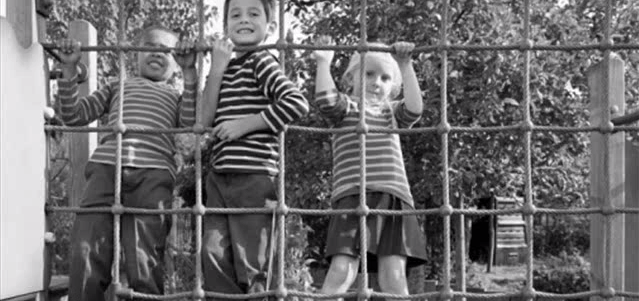
You wouldn’t think a song that repeatedly references our fragility could be uplifting, but I find myself returning to Breakable, and this video in particular, again and again.
Maybe it’s the clever use of evocative images. Maybe it’s the innocence behind those joyful smiles. Or maybe it’s that even the broken images seem somehow beautiful.
We are fragile. We are vulnerable. Every one of us. Every now and then, we all fall into broken hopes, broken dreams, and broken hearts. And while it’s hard and sometimes painful, we push ourselves again and again, willing to hurt, heal, and repeat.
It’s not because we’re masochists. It’s because somewhere between the leap and the stumble, we find new pieces of ourselves and learn how they fit into the puzzle of the whole. We find new pieces of each other and realize we’re better together than apart. And with every landing, we break a little less and become a whole lot stronger.
But it’s not the kind of strength that prevents us from breaking ever again. It’s the strength that allows us to live and love fully, knowing it’s worth the risk.
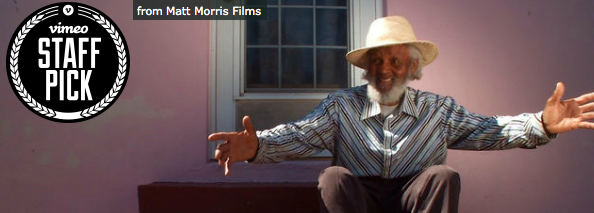
Eighty-eight-year-old Johnny Barnes spends six hours every day telling people on the side of the road “I love you!” and “Have a great day!” Rain or shine, he makes it his mission to share joy and kindness with everyone who passes.
Following Johnny’s lead: Happy Monday, I love you, and have a great day! Now go and pass it on. 🙂
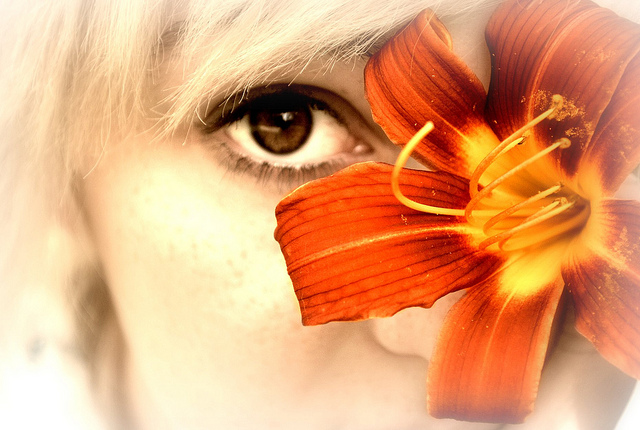
“Beauty is how you feel inside, and it reflects in your eyes. It is not something physical.” ~Sophia Loren
Even though I got Joey McIntyre from The New Kids on the Block to sign my scoliosis back brace in the sixth grade, I still felt ugly wearing it.
I didn’t realize the irony back then, but in retrospect it seems a little funny that I grew crooked considering I convinced myself I was wilting in my sister’s shadow. (I also had braces and headgear, but that’s another story.)
I was a kid who wanted to be beautiful, but more desperately wanted to feel loved. My self-esteem increased through the years, but I never quite shook the sneaking suspicion I’d never be beautiful enough. Or maybe lovable enough.
It would be easy to blame it all on society and the Kate Moss era of modeling, but I think it’s more than that. I just never learned to notice and appreciate all the beautiful things about myself. The stuff that had nothing to do with my waistline, skin tone, or eye lashes and everything to do with who I am.
I never learned to give myself the credit for all the good I do in the world. I was too busy cataloging my weaknesses, mistakes, and flaws to recognize it.
It seems like such a cliché to say that pretty is as pretty does, but the truth is, physical beauty is subjective. And even if someone perfectly matches your ideal of physical perfection, their looks will eventually fade. What endure are the qualities, passions, and habits we nurture.
That’s what makes us beautiful—and believe me when I say there is something beautiful in everyone. If you’ve done any of the following lately, you are absolutely beautiful: (more…)
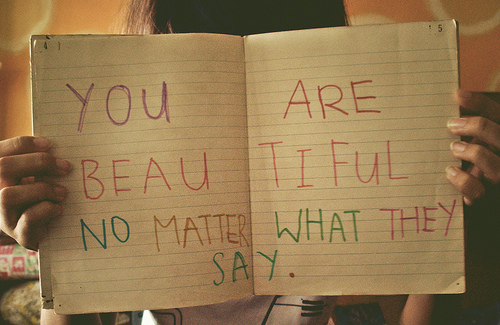
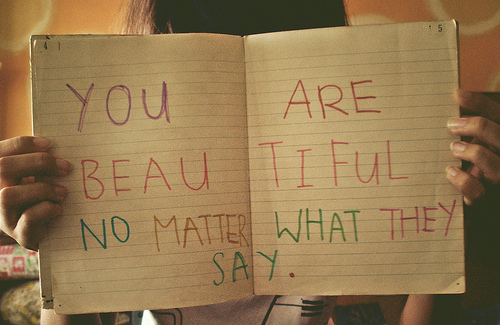
“To be beautiful means to be yourself. You don’t need to be accepted by others. You need to accept yourself.” ~Thich Nhat Hanh
I read this quote the other day, and I have to say, nothing has shaken me to the core more.
I was diagnosed with a rare form of muscular dystrophy at the age of two, and ever since, I’ve struggled with loving myself and with having self-confidence.
For the most part, you wouldn’t know I have a serious physical disability aside from my visible limp, my difficulty getting up and down stairs, and my tendency to fall when I get weak. I was never able to do sports growing up like my friends and often had to enroll in special Adaptive Phys Ed classes in school.
I always felt my disability separated me from my peers growing up, so I put up an emotional wall and convinced myself that I had to wear the latest clothes, have perfect skin, and have the perfect body in order to “blend in” with everyone around me—in order to be truly loved. Then maybe I would be considered beautiful.
Then maybe no one would notice I was different. If I just looked like those Victoria’s Secret models, then someone would accept and love me.
So often we look to external things to define our beauty, most commonly, our physical appearance. We think that if we just fit into the mold that society has told us is “good looking” then we’ll feel good about ourselves and will gain acceptance.
I put a lot of value in being in a relationship too. Because of my disability, I was extremely shy for a long time and very insecure. All I wanted was a guy to come along, sweep me off my feet, and fall in love with me.
Then I thought I would truly be like everyone else, because I would have someone (other than friends and family) there all the time telling me that I was loved and valued. (more…)
“No one can make you feel inferior without your consent.” ~Eleanor Roosevelt.
I have a very bad habit.
It pokes me when I stop to browse newspapers and magazines.
It slaps me when I’m watching TV.
It punches me hard at the gym.
It knocks me down when I am walking down the street.
I compare myself to other women.
I’ve suffered from depression at points in my life, and I’ve suffered from low self-esteem pretty much always.
It’s not an uncommon trait, comparing ourselves to others. But it seems to be a particularly bad habit for me. Perhaps because my brain is terrifically inventive; at my worst, I can find literally anything as proof that another woman is better than me.
She’s beautiful. She’s slim. She has a successful career. She has money. She’s married. She has nice clothes. She has brown eyes. She has blue eyes. She has smaller hands. She has a red top. She can walk faster than me.
I don’t always do it. If I’m feeling good about me, I can see a pretty woman while my boyfriend is with me and, although I do feel a slight pinch at my heartstrings, I’m able to disregard it fairly well.
But when I’m feeling low in confidence, seeing that pretty woman rips into my heart and brings tears to my eyes.
I look at her face, hair, body, success, and I think, “I can’t compare to her.” I torture myself with thoughts that if my boyfriend ever meets such a woman, I will be, as we say in Britain, yesterday’s news and today’s fish ’n’ chip paper!
It’s not just when I’m with him. I used to work in the fashionable Soho region of London, and I couldn’t take more than a few steps before a young, pretty, slim, effortlessly cool lady would glide past.
My thoughts would be, one: How does she have the money for those clothes? Two: How does she have the energy to make herself look so nice? I barely remember to brush my hair. Three: Thank goodness my boyfriend isn’t here to see her; he’d push me into that puddle over there and go running after her! And four: I look awful. (more…)
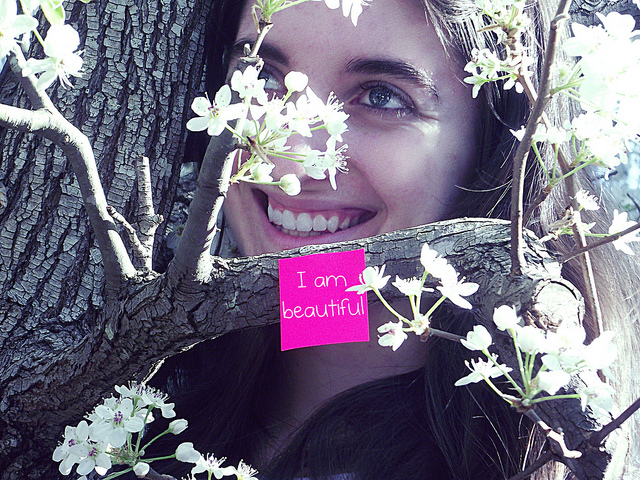
“To be beautiful means to be yourself. You don’t need to be accepted by others. You need to accept yourself.” ~Thich Nhat Hanh
As I was looking in the mirror, I was feeling the soft curves of my body, all the way down to the flesh on my belly to where it met my hips. I was frowning at my “belly pooch” as I pinched my skin between my fingers. I had a name for my belly pooch and the other not so desirable places on my body.
I called those places “my chubs.”
My partner and I like to play fight. As we often chased each other around the apartment, he would playfully tease me about “my chubs.” I would always squeal back at him with a “don’t touch my chubs” as I tried to tickle him.
It was all fun and games. However, there was a small part of me that the detested how I felt when my “chubs” would get tickled or playfully grabbed.
You may be thinking, “Why don’t you just ask him to stop tickling you?” Being tickled is a symptom of a problem, rather than a problem in itself.
The problem is that I was more frustrated at myself because I allowed other people’s words and actions to feed my worst enemy—my inner critic.
There are days when my inner critic can be extra cruel.
Like countless people out there, I’ve put my body through a lot with all the latest diet trends. From keeping track of my calories, to the slow-carb diet, the no carb diet, vegetarianism to even eating only one meal a day. I was constantly looking for something to help me feel beautiful on the outside.
No matter how much weight I lost, I still couldn’t see the beauty my lover saw. Even when I was making progress, the friendly tickle fights with my lover or a quick glimpse of my reflection in a window would stir up negative emotions.
Whenever this happened, my inner critic would often hurl me down the depths of despair and a sea of self-loathing.
I could easily blame the media’s portrayal of what a beautiful woman looks like by picking up a magazine, turning on the television or looking at a billboard. (more…)
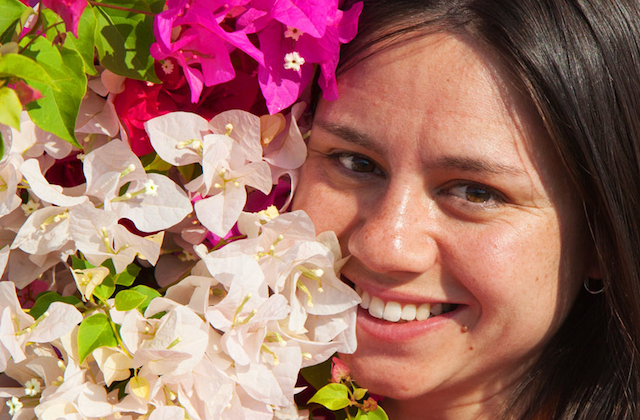
“Be what you are. This is the first step toward becoming better than you are.” ~Julius Charles Hare
I admit, I have a beautiful life. I don’t mean to brag, but I love the life I have and there is no other life I’d rather live. This wasn’t always my truth.
Many years ago, I didn’t think I would one day have a beautiful life. I had a terrible attitude, a soul-sucking job that I occasionally enjoyed, superficially at best, and I pursued things that would always leave me feeling empty. It took me a long time and a lot of work to get to where I am.
Today, like everyone, I have my own struggles.
I have personal deficits that I’m aware need fine-tuning (or major overhaul). I’m susceptible to sadness, negative energy from others, and occasional feelings of helplessness about the troubles of the world. But I focus more on laughter, celebration, and the depths of life. Overall, life is beautiful.
I’m not talking about aesthetic beauty, although a beautiful environment can contribute to a beautiful life.
I’m talking about a deeper kind of beauty. One that you can’t buy from a store. One that makes you feel excited about being alive, that allows you to be inspired and be an inspiration, that shows your connectedness to other human beings.
I would imagine that many of you who are already living a beautiful life have your own formula for getting there. But for those who are curious, here are my seven key steps:
It sounds simple. In reality, it’s challenging to do. It requires focused introspection, which can be difficult, as most of us have built layers of denial about ourselves. I suggest having a really honest assessment of yourself.
Explore all areas: your passions; your deepest desires and fears; what makes you proud, insecure, and ashamed; what work you’d love to do even without getting paid.
Learning about yourself can be a hugely emotional process, but if you approach it with honesty, you will find it cleansing and therapeutic. A good place to start is the Myers-Briggs test.
I would also suggest engaging someone you trust to help with this process. This person needs to be someone who knows you well, who understands your strengths and weaknesses and whose opinion you respect.
This person can help you determine whether what you believe to be true about yourself comes through to the outside world.
Maybe you love connecting with others, but others find you aloof. This exercise will help point to truths about yourself that aren’t readily visible to the outside world as well as universal truths you may not be ready to accept.
Let’s assume we all know it’s not material things that will lead us to a beautiful life. This is the part where you ask yourself what’s missing in your life. Is it love? Is it happiness? Is it inspiration?
Here are some other suggested questions:
What am I filling my life with that I’d rather replace with other things? What is preventing me from taking action? Is it fear? Do I think I don’t deserve it? Are these reasons good enough to get in the way of building a beautiful life? If you’re being honest with yourself, your answer will be a resounding “no.”
Think about ways to attain what’s missing or eliminate what’s unnecessary. This is where all the adventures take place.
It will take some work as you step out of your comfort zone, but it can be a lot more fun than you ever imagined. Adventures are exhilarating. If you commit to this step, you will no doubt feel how exciting life can be.
For example, if you’re looking for love, perhaps you’ll let a trusted friend know that you would love to meet someone incredible. Maybe you’ll consider online dating. Maybe you’ll go out on blind dates or try speed-dating. It can be scary at first but most likely it will get easier with practice.
Another example, say, your life is filled with way too much activity. You’d like to scale back and have some breathing room. Start by saying “no” a little bit at a time. If you’d rather go to a yoga class, you should do so instead of going out for drinks with co-workers.
Building a beautiful life can be a tough process at first. There will be starts, stops, and lots of tension along the way. But, as with anything, beginning is half the battle. If you’ve gone this far, you have made progress.
Go ahead and allow yourself to feel good about being at the halfway point to living a beautiful life!
The funny thing about being an active participant in building your beautiful life is that it’s full of surprises. You may find that things you’ve determined to be true about steps one, two, three, and four have changed. By this time, you’ve likely gotten a taste of how beautiful life can be through adventures and new experiences.
If you find that this process is leading you somewhere different from what you envisioned, ask yourself if you want to refocus or continue down this path. Whatever you decide to do at this point, it’s likely that you have learned a lot about what living a beautiful life means to you.
This is a step that can be inserted at any part in this process. Chances are, if you remember to count your blessings, you’re already living a beautiful life. What’s also true is that once you count your blessings, you’ll realize that life is, indeed, beautiful.
Go ahead. You deserve it.
*Disclaimer: There are countless people who lack basic material needs such as food, shelter, and clothing, and I believe that every human being should have their basics met before they can seize their chance to live a beautiful life. I also believe that helping them is an integral part of living a beautiful life.