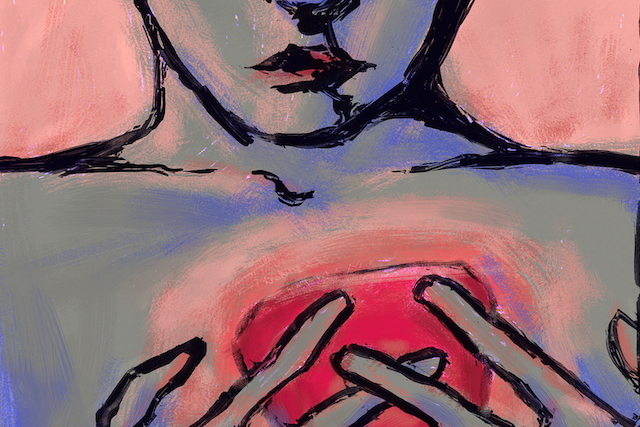
Tag: battle

  • How Our Addiction to Struggle Holds Us Back

    How Our Addiction to Struggle Holds Us Back

    Held Back

    “Happiness is the absence of striving for happiness.” ~Chuang Tzu

    Do you feel, on some level, that your life is hard work? That you need to struggle in order to improve things in your world? Do you feel that you even need to struggle to reach a desired goal, to overcome adversity before achieving something worthy?

    Our addiction to struggle is an impediment to us feeling the joy of quiet and the now, the place from which subtle and natural development can occur.

    This addiction to struggling—the addiction to striving, always trying to achieve—used to hold me back from experiencing the whole of life.

    My awareness dawned slowly. Once an over-achieving lawyer working sixty-hour weeks (and then ducking off to volunteer my time for another cause), I am now much more relaxed, and able to give from a place of increased abundance and energy. But hey, it’s taken time, and it’s still a work in progress.

    I’ve dabbled in meditation for years and had a daily practice for three years. But it’s not just all about the cushion—getting out and having fun, dancing, enjoying life is what helped me see that I was actually trapped in a pattern of thinking that I had to work hard and reach (and overcome) a crisis point to be successful.

    The more I meditate, the more present I am, even off the cushion. I can even catch the moment at which I start being run by my own subconscious beliefs that life involves struggle.

    Some mornings, in the liminal state between sleeping and waking, I can catch an almost imperceptible shift, where my mind switches from the ease of a sweet dream to a battle with consciousness and being awake.

    Oh really, do I have to get up now?

    (And the deeper revelation: how subtly and consistently I struggle with reality itself.)

    The point at which I am able to accept my current reality is the point at which I surrender to that experience.

    Funnily enough, this is usually the point at which life becomes easier. Not because I have won a battle against my mind, but because I have allowed myself to stop resisting what just is.

    I get up. I go about my day. No big deal; in fact, I enjoy it.

    So, how is this addiction to struggle holding us back? After all, I’ll be the first to put my hand up to say how much I’ve learned from those with the strength of character, creativity, and resilience to overcome the most trying of times. Survivors inspire us and bring us hope when we can only see darkness.

    Yet, it seems that overcoming adversity has become the primary narrative arc in some corners of the spirituality and personal development online worlds.

    Our relationship with mind and ego are often phrased in ‘battle’ terms, and having a gruelling experience has become the necessary precondition to success.

    This is so subtle. But this preoccupation with overcoming struggle holds us back in many ways. It conceals other paths to growth. It even may cause us to devalue presence and surrender.

    Overcoming struggle is only one way to grow and to learn.

    Some of my most significant advancements in my thinking and changes in my life have been the result of product of gentle, consistent effort. In this way, old holding patterns have dissolved quite naturally.

    My decision not to drink alcohol is one example. Upon finding out that I’m a teetotaller, people often assume that my self-destruction precipitated a crisis with booze, followed by hard-won sobriety.

    Of course, I celebrate those who have overcome alcoholism, but I don’t have a victory-over-struggle story with alcohol. Once upon a time, I enjoyed a drink. Years of enjoyable meditation changed my brain, and I now happily don’t drink alcohol because I don’t feel a desire to drink. (And as it turns out, the benefits are innumerable!)

    Accepting that it’s possible to be ripe when you are ripe, that you may not be following a familiar path of overcoming adversity, doesn’t make a riveting story in the manner to which we’ve become accustomed.

    Perhaps we can track the predominance of the struggle trope back to the popularity of the hero’s journey: the tale of the swashbuckling hero confronting and triumphing over symbolic dragons and ogres on the transformational journey.

    To be clear: the hero’s journey is, of course, inspirational. We all have periods of darkness. We all love to win our battles. We all love to be inspired by others who can lead the way.

    My point is that only some journeys are punctuated by ordeals. On other paths, there is no dragon. There may just be a path to walk—even a playground in which to frolic!

    Moreover, we definitely do not need to manufacture a challenging transformation if there was no such ordeal. Our experience is not less worthy or true as a result.

    Noticing my own addiction to struggle has been humbling and revealing. Releasing my own tendency to slip into struggle means that I am more present. (And I have more fun!)

    Our addiction to struggle can lead us to devalue the gentle and humble evolution that can accompany development without drama. It can lead us to miss the happiness that can be found in the here and now, regardless of the circumstances.

    My question for you is: where in your life are you struggling? How are you playing out this subconscious script yourself?

    And what would your life be like if you were able to notice and celebrate your consistent and gentle evolution?

    Would this, in fact, be a quiet liberation?

    Photo by Daniel Lee

  • 3 Lessons to Help You Find Peace When Fighting a Hard Battle

    3 Lessons to Help You Find Peace When Fighting a Hard Battle

    “He who has health has hope, and he who has hope has everything.” ~Proverb

    August 3, 2001. I still remember it like it was yesterday. It was around six o’clock in the evening when she sat us down. Luther Vandross was singing in the background on the radio: “And it’s so amazing and amazing, I can stay forever and forever. Here in love and no, leave you never.”

    Quite ironic when you think about the news I would soon receive.

    I had just finished summer school and my sister had just returned from an internship on the East Coast. My mother had such a pensive, yet positive look on her face when she asked us to come into the living room.

    “This is hard for me to say, so I am just going to say it: I have cancer.”  

    Immediately, my sister and I  broke into tears because, up until that point, every single relative or friend who had battled cancer lost. And in my shocked state, I thought it was perhaps time to start saying goodbye because I was already feeling quite defeated.

    The person who had always been the anchor in our family would soon become lighter due to weekly radiation and chemotherapy appointments. Although she physically grew weaker, her actions taught me a few lessons I will never forget.

    Today, I would like to share three of them with you:

    Learn to Let Go

    Impermanence. Everything fades away and nothing lasts forever.

    My mom used to have long, beautiful black hair with a sheen that many envied.

    Unfortunately, the type of chemotherapy she was being treated with slowly killed her hair cells. As for many women, this was very hard for her to accept because it was a part of her identity, her femininity, and it’s generally what society deems to be beautiful.

    But as the appointments stacked up and the strands dwindled away, she had to face a reality that was quite sobering: most of her hair was gone, and she needed to find the courage to ask my father to completely shave her head.

    Then the day finally came.

    As the remaining hair fell to the ground, Black Rapunzel was replaced by a cancer patient who learned to be grateful for what was instead of trying to hold on to something that no longer existed.

    As Steve Maraboli wrote, “The truth is, unless you let go, unless you forgive yourself, unless you forgive the situation, unless you realize that the situation is over, you cannot move forward.”

    My mother learned to let go and finally made the decision to move forward.

    Inspire Yourself with Your Journey

    “That it will never come again is what makes life so sweet” is something my mother would say. “So write it all down—the victories, the setbacks, the magical moments, the not so loving moments, and the moments of complete loneliness. Write it all down to serve as a reminder.”

    Each day we awaken, we are given a pen with 86,400 seconds of ink to write with.

    During her first week of treatments, my mother picked up a journal to write about her fight with the Big C and how she planned to defeat it, even though she was sometimes the one knocked down for a while. Nevertheless, she persisted.

    Sure, she wrote about her hair loss, the pain at night, and the sadness she sometimes felt. But she also wrote about the joys of raising her children, the extra energy she could sometimes muster up to walk a bit further, and the faith and hope that was keeping her grounded.

    She saw her journal as a way to inspire herself when she wanted to look back and see how far she had come on her journey thus far.

    Love Well and Far

    Cancer woke us up to the fact that nothing lasts forever, and words that go unsaid may never be spoken.

    After my mother’s diagnosis, my close family got even closer as she expressed her desire for us to show more love to each other, and to be grateful not only for the fun, easy times, but also for the tougher times.

    That’s what it means to love well and far: loving unconditionally even when it’s hard. Sharing your love even when it’s difficult. Being there for the people you love when they need you the most.

    So I ask you these three important questions: Is there anything in your life that you feel you need to let go of? Are you recording the magic moments from your life? Are you reaching far with your love?

    I wanted to share these three lessons not only to pay tribute to my mother, who has been in remission for the past twelve years, but also to serve as a beacon of hope for those who may be dealing with something similar right now. It’s hard and it hurts, but now is the time to be stronger and more loving than ever.

    Now is the time to love well and far.

    Photo here

  • 4 Ways to Be Kind When You Don’t Feel Like It

    4 Ways to Be Kind When You Don’t Feel Like It

    “Be kind, for everyone you meet is fighting a hard battle.” ~Plato

    I used to have a horrible boss.

    I worked as a trainer in a big corporation. I can remember him coming into one of my training sessions and telling me off about something in front of my whole group.

    He talked to me as if I was five years old and I’d done something terrible. When someone talks to you like that it’s difficult not to start feeling you are five years old and you’ve done something terrible. I wanted to sink into the ground.

    He treated other people badly, too. He frequently criticized people and talked down to them. He set unreasonable deadlines. He didn’t trust us to get on with our jobs.

    Plato suggests that we be kind, for everyone we meet is fighting a hard battle.

    Some people are very easy to be kind to.

    If my friend is having a bad time in her relationship, my instinct is to call her and ask her if she’s okay. If we see an elderly person trip over on the street, our instinct is to go over and see if we can help them up. It is easy to be kind.

    But what about my boss? Was I kind to him? And why should I be kind anyway? (more…)