Tag: balance

  • How to Live in Peace and Balance: 6 Things to Let Go

    How to Live in Peace and Balance: 6 Things to Let Go

    “All the art of living lies in a fine mingling of letting go and holding on.” ~Havelock Ellis

    Imagine that you have to move in two days. Would you be able to pack all your possessions in that time and clean out your house completely?

    How about your mental baggage? If you have only two days left to finish all the important projects in your life, would you be able to do it?

    Three years ago I left the country where I was born and raised and moved permanently to a different place half way around the globe.

    Packing was not easy because there were so many things that were meaningful to me, but of course I couldn’t take them all. But even more difficult was the part of leaving my friends and family behind. I couldn’t put my friends in a suitcase and smuggle them across the border.

    However, the hardest part was still ahead. Soon after I got to the US I realized that I had to let go of a lot of habits and even my lifestyle. Everything was so different from where I grew up.

    I had two choices: to hold on to my past, complain, and be completely miserable, or let go of everything that was no longer relevant and start a new life while still holding on to my authentic self.

    You may not have had to go through such drastic changes in life. However, we all face the dilemma of letting go and holding on.

    A lot of times if we are not forced to let go of something we keep dragging ten, twenty, forty years of mental and physical baggage behind us. At some point that baggage becomes so unbearably heavy that we just decide to stop moving forward and start living in the past.

    We stop having new goals and dreams. We stop meeting new people. We stop trying new things. We stop learning. But ironically, we still keep buying and acquiring more physical clutter to fill our homes and closets.

    Of course, on the other hand if you throw away everything you love and enjoy, then suddenly you lose your personality. Frankly speaking, you cease to know yourself then.

    So, quoting Havelock Ellis again, how do you mingle letting go and holding on? The answer to this question will give you the ultimate inner peace and balance. (more…)

  • 5 Ways to Find Your Center When Life Feels Overwhelming

    5 Ways to Find Your Center When Life Feels Overwhelming

    “Within you, there is a stillness and a sanctuary to which you can retreat at any time and be yourself.” ~Hermann Hesse

    We’ve all had moments when life’s demands left us feeling stressed and scattered. In these moments, it’s helpful to have some simple tools to help us gain composure and come back to our center.

    Let me paint a picture for you of a scene from my daily life at its most overwhelming.

    On a recent Tuesday, I drafted my evening’s “to-do” list, which contained the following items: Go clothes shopping for my son, get groceries, cook up some dog food, cook dinner, give my son a bath, put laundry away, walk the dog, and prepare for a workshop that I was to present that weekend.

    Like most working parents, I have to fit a lot of tasks into a brief period of time on weeknight evenings.

    Clearly all of those items weren’t going to get accomplished. But I felt compelled to try.

    And then, mid-afternoon, a feeling of illness began to creep over me, starting with a headache and progressing into nausea and profound fatigue. By the time I got home, I had revised my list, and whittled it down to: Bathe my son.

    I felt incapable of anything else.

    Still, even with a truncated list, my evening became chaotic very quickly. Our newly-acquired dog was dripping blood all over the house, including the white slipcover. She was not sick—she was in heat.

    As I tried to attend to the mess, my son called to me from the kitchen. He held his cupped hand out to me, and proudly exclaimed, “I caught it so it wouldn’t fall on the kitchen floor!”

    I will allow you to draw your own conclusions about what his hand held, but I’ll give you a hint: He’s potty training.

    In the mean time, my head was throbbing, my stomach was retching, dishes from the previous day were piled up in the sink, laundry from the week sat haphazardly on my bedroom chair, and the workshop I was to present in four days had not been planned or prepared for. Not to mention, I had a hungry child and dog to attend to.

    Sometimes, when external factors like these seem overwhelming, we feel unable to remove ourselves from the situation long enough to gain perspective and compose ourselves in order to move forward.

    Very often, these external factors become internalized, and our minds start reeling. “I’ll never get it all done, my life is spiraling out of control, I can’t get myself together…” The internal loop can be loud, persistent, and ultimately paralyzing. And once it begins, it is hard to stop. (more…)

  • Balanced Living: How to Stay on Track

    Balanced Living: How to Stay on Track

    “Continuous effort—not strength or intelligence—is the key to unlocking our potential.” ~Winston Churchill

    I declared myself a mess a long time ago. I lived in a constant, dull state of fear and anxiety. My emotions were more volatile than hurricane season, and not even I could predict how any given situation would affect me.

    I may not have known it at the time, but I was miserable. I was trying to be someone I wasn’t and fit into a fast-paced life that I just wasn’t made for.

    I was constantly overwhelmed by just about everything—being stuck in traffic, waiting in lines, driving long distances, folding the laundry, working a full day, even doing my hair.

    It seemed like life was a struggle and a whole lot of effort that didn’t really get me anywhere.

    Apparently over time, I had conditioned myself to react to the activity and obligations of my life with worry, anxiety, and exponential stress.

    I didn’t crave the life I was living. I craved balance. And I lacked passion. Something had to give.

    It did, almost by mistake. I found myself poking around Tiny Buddha about a year ago, and the rest was history. Over time I discovered newfound energy by changing my internal perspective on daily living.

    I challenged my toxic thoughts and actions and found peace in the present moment.  I uncovered new ways to look at emotions, relationships, and situations in my life.

    Instead of continuing to fight it, I made a decision to accept and flow with the monotony, bustle, and pressure of life. I made a list of what was truly important to me instead of living by someone else’s rules. Also, I stopped sabotaging my body with distorted eating habits.

    I realized that I was okay, that I was enough, and it was actually pretty cool to be me.

    As a result, I feel more settled. I also feel more direction and balance than ever before in my life. I still get wound up, but my lows are nowhere near as low as before. (more…)

  • 5 Easy Ways to Get into Yoga this Spring

    5 Easy Ways to Get into Yoga this Spring

    “Letting go isn’t the end of the world; it’s the beginning of a new life.” ~Unknown

    As we welcomed the Spring Equinox on March 20th, with it came a sense of lightness in the air—in our bodies with healthier food options, in our minds as we flirt with the idea of summer on the horizon, and in our spirits as we are able to enjoy later sunsets with loved ones.

    Spring also welcomes change and renewal, creating an opportunity to cleanse ourselves of hibernating winter habits and find inspiration in nature as wildflowers bloom all around us.

    What better time to introduce (or reintroduce!) yourself to the ancient practice of yoga. Let’s face it: Yoga has stood the test of time, enduring over 5000 years, consistently providing a physical, mental, and spiritual outlet for its practitioners.

    Now more than ever, yoga seems the perfect escape from our increasingly complex, technology-driven, distracted modern lives.

    Finding peace and contentment in the present moment is one of the most challenging things to do, and yoga provides the tools we need to find that much-desired stillness.

    As a yoga instructor, my proudest moment is not when a student who once struggled with Chaturanga perfects a forearm handstand. Well, that is a pretty sweet moment! But, by far, it is watching new students unwrap their first yoga mat. Typically of the drug store, super slippery variety, but still exciting nonetheless!

    This moment resonates with me because I know, in that moment, that yoga will be a part of their world (whether in a big or small way) for the rest of their lives.

    You see, yoga is a lot like chocolate. If you live your whole life never tasting chocolate, you can lead a perfectly content existence, as there is nothing to miss. But, once you have had that first taste, there really is no turning back.

    Sure, you might stray from your cravings as you dabble into non-chocolate permitting diets. But the pleasure induced by that familiar taste always lingers somewhere in the back of your mind, until you finally find your way back home, onto your mat.

    In honor of that joy we all receive from unwrapping our very first yoga mat, I compiled a list of five rather simplistic (and fun!) ways to integrate yoga into your life this spring. (more…)

  • Dealing with Stress: 2 Steps to Create Harmony and Balance

    Dealing with Stress: 2 Steps to Create Harmony and Balance

    Balance

    “Happiness is not a matter of intensity but of balance, order, rhythm and harmony.” ~Thomas Merton

    “If you have aspirin, please take it now. It might be bitter, but if you’re having a heart attack, it will help.”

    If I wasn’t already anxious, hearing this advice the nurse gave me certainly didn’t help. Fifteen minutes later, I was in the emergency room—a 34-year-old, physically-fit, overachieving, workaholic, enabling control freak—having the classic symptoms of a heart attack.

    As I sat on the hospital bed, breathing as deeply as I could into what was happening, my mind started to race: Was it being unwittingly thrust into the role of referee between my Dad and brother last weekend?

    Was it yet another significant transition in an already fast-paced and changing work environment?

    Was it worrying about where to get the money for my uninsured mother to get the health care she needed for her pre-existing condition?

    What was to blame? (more…)

  • 6 Tips: Work/Life Balance for People with Big Dreams

    6 Tips: Work/Life Balance for People with Big Dreams

    “Happiness is not a matter of intensity but of balance, order, rhythm and harmony.” ~Thomas Merton

    The vast majority of people I know have two different types of work: the kind that pays the bills and the kind they wrap their heart around.

    For some people, those are one and the same, but often that takes time, dedication, and a willingness to blur the traditional boundaries that separate work and social life.

    Because let’s face it: It’s not always easy to make a living doing something you love.

    The first challenge is to figure out what that is, and it’s often complicated by what we think we should do based on what other people think and what we’ve done up until now.

    The next step is to figure out how to do it smart. It’s all good and well to decide to you want to run an online fitness, beauty, or personal development empire, but unless you have a unique value proposition and a solid idea of who needs your services and why, you could end up just spinning your wheels.

    And then there’s the easiest part, which is simultaneously the hardest: the choice to work on your dream every day, knowing there are no guarantees and that it may take a long time to make the kind of progress that allows you to devote your full-time energy to your passion.

    This has been my experience with Tiny Buddha, and it’s the same with people who have contacted me for help with their blogs. Everyone wants the freedom to do more of what they enjoy and less of what they don’t.

    What makes this kind of complicated is that turning a passion into work can sometimes strip the joy out of it, particularly when you give up freedom now in the pursuit of freedom tomorrow.

    Really, that’s what we’re doing when cram our hours full of tasks that leave little time for play and decompression: We’re deciding tomorrow’s possibilities are more important than today’s.

    So, what’s the balance, then?

    How do you allow yourself sufficient time to create that thing you visualize—whatever it may be—while also allowing space for relaxation, spontaneity, connection, and the simple act of being?

    I recently asked on the Tiny Buddha Facebook page, “How do you create work/life balance?” I’ve chosen the responses that resonated the most strongly with me and used them in shaping this post: (more…)

  • How to Create a Balanced Life: 9 Ways to Feel Calm and Grounded

    How to Create a Balanced Life: 9 Ways to Feel Calm and Grounded

    “Happiness is not a matter of intensity but of balance, order, rhythm and harmony.” ~Thomas Merton

    As a Libra, my sign is the scale, which signifies balance. I’m not sure how much my “signage” plays into my desire to live a balanced life, but I do know that the more balanced I feel, the more free I feel.

    In my work I am often reminded that what works for some people does not necessarily work for others, and that one person’s idea of balance may not constitute anything remotely balanced from another person’s perspective.

    So I wanted to address the various elements of life that can require balancing and offer some suggestions to find the mix that works best for you.

    To start, what does it mean to be balanced?

    To me, it means that you have a handle on the the various elements in your life and don’t feel that your heart or mind are being pulled too hard in any direction. More often than not, you feel calm, grounded, clear-headed, and motivated.

    How do you find your balance?

    The elements in life that require the most balancing can be divided into two categories: internal and external. Oftentimes, people focus on one more than the other.

    For example, you may find that you focus on external things, like work, relationships, and activities, and that you pay very little attention to what is going on inside your heart and mind.

    On the other hand, you may find that you spend so much time being self reflective that you sometimes miss out on the experience of living.

    Other people may be fairly balanced between the two but might want to balance out some specific elements within each category, so I created this little outline to help us better understand the beneficial components on both ends of each spectrum.

    Internal (Mind, Heart, Health)

    • Mind: Challenging yourself intellectually vs. creating opportunities for your mind to rest
    • Heart: Giving love vs. receiving love
    • Health: Eating, drinking, exercising properly vs. resting. and treating yourself to some extra yummies

    External (Work, Social, Family, Fun)

    • Work: Pushing yourself to achieve goals vs. seeing the bigger picture and enjoying the ride
    • Social: Satisfying your social desires vs. taking time for yourself
    • Family: Fulfilling your familial responsibilities vs. creating healthy boundaries
    • Fun: Allocating time for things you enjoy doing vs. making sure you don’t overdo it

    As you can see, both ends of each spectrum are actually positive; but if either side is taken to an extreme, something that is intended to be positive can end up being detrimental.

    It’s helpful to check in with yourself to see if you feel balanced.

    If you feel pulled in any one direction and uneasy about it, these steps may help you get your life aligned:

    1. Acknowledge.

    Take some time to really look at your life, your state of mind, and how you’re feeling. Be honest with yourself and notice the areas of your life that you’re neglecting.

    2. Examine.

    Notice if you’re leaning more toward an internal or external focus, or if there are areas within each category that you would like to be more balanced.

    3. Set Goals.

    Look at the outline to help you decide which ways you want to balance your life. Make a list.

    4. Plan Tasks.

    Make a list of daily, weekly, and monthly tasks that you will need to do to achieve each of these goals. What have you tried in the past? Did it work? If not, what can you do differently?

    5. Reflect.

    What is the most important thing you’ve accomplished in the past? How did you stay focused toward this goal? How did you handle your fears, doubts, anxieties, worries, and negative self-talk? How does it feel to know that you accomplished the goal in spite of these parts of yourself?

    6. Prepare.

    What is your inner “stuff” that will try to keep you from sticking to your plan (fears, worries, doubts, negative self talk)? Can you specify the things you will say to yourself to push you off track? (For example: “Just one more bite, I’ll start eating better tomorrow.”) Make a list.

    7. Empower.

    What do you need to remember in those times? What are things you can say to that self-sabotaging part of yourself? Be kind to yourself. Balance won’t feel good if you’re cruel to yourself in creating it!

    8. Connect.

    Is there a person or a tactic you can use to keep yourself supported, motivated, and focused in those hard times? I highly recommend connecting and sharing your inner process with someone. Find someone who can help you challenge your inner demons, and celebrate your little accomplishments.

    Just like accomplishing any goal in life, it takes time and effort to overcome your habitual patterns and create new ones. If you stay on track with this detailed and intentional process for three whole months, then there is a good chance you will create new habits to enjoy a more balanced life going forward!

  • How to Develop a Strong Morning Practice to Start Your Day Well

    How to Develop a Strong Morning Practice to Start Your Day Well

    “Smile, breathe, and go slowly.” ~Thich Nhat Hanh

    Your mornings set the tone for the rest of the day. We all know this. If you get off to a bad start, oftentimes the rest of your day follows suit.

    The best way to combat this is to come up with a meaningful morning practice that acts as a buffer between getting up and starting your day, and puts you in the right headspace to go out and face the world. (Or do whatever it is you do, on a day-to-day basis.)

    It gives you a space in the morning where you know you can be mindful to help you strive for mindfulness for the rest of your day, and it also kick starts your body and mind.

    What is a Morning Practice?

    It can be as simple or as involved as you want it to be. I like to think of mine as a set of rituals. I get up, drink some water, and then do yoga and Shiva Nata. After that, I ground, center, and then meditate for five to ten minutes.

    Then I shower, get dressed, sit down at my desk, and do a daily one card tarot draw, recording it in my journal. After all of that, I can boot up the computer and write my words for the day.

    It sounds awfully involved when it’s listed like that. In actuality, it only takes thirty to sixty minutes, and it has enough factors that it can be tweaked depending on how I’m feeling in the morning and how much time I have to spend on it.

    You might notice that it includes not only physical activities, and not solely mental activities, either; it’s a good blend of both. It doesn’t do a lot of good to start the day mentally awake but with a stiff and sluggish body, and it doesn’t do any good to start the day with your body warmed up but your mind not. (more…)

  • 5 Ways to Find Your Balance

    5 Ways to Find Your Balance

    “Happiness is not a matter of intensity but of balance, order, rhythm and harmony.” ~Thomas Merton

    The yoga class I attended yesterday included a number of balance posts, from simple tree pose to a “floating” ardha chandrasana. I am not certain why, but I was struggling to find a steady balance on one side.

    I arrived late feeling flustered, and my mind was spinning and worrying as we worked our way into the flow. I had to struggle to make my gaze steady, and I was starting to beat myself up for the wobbling on my left leg.

    Then I had a realization: This is really the whole point of balancing poses, if not yoga itself. The point is simply to be with yourself, no matter where you are at that moment. Or, as Thich Nhat Hanh said, “Smile, breathe, and go slowly.”

    Later, I thought a lot about balance and how we are always trying to find it in our lives. I talk with patients about it almost every day, and no one seems to feel they have it under control. (more…)

  • Book Review & Giveaway: You Cannot Be Serious (Tips for Balance)

    Book Review & Giveaway: You Cannot Be Serious (Tips for Balance)

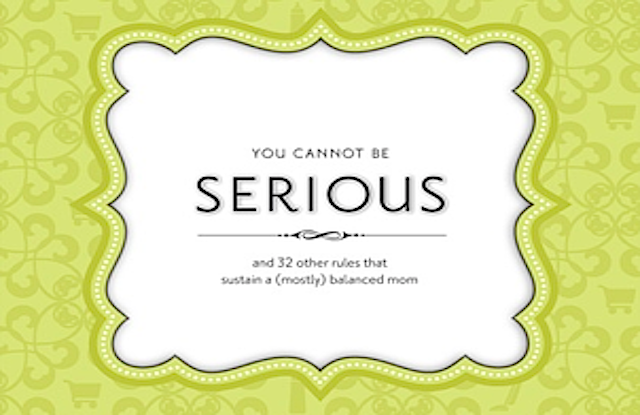
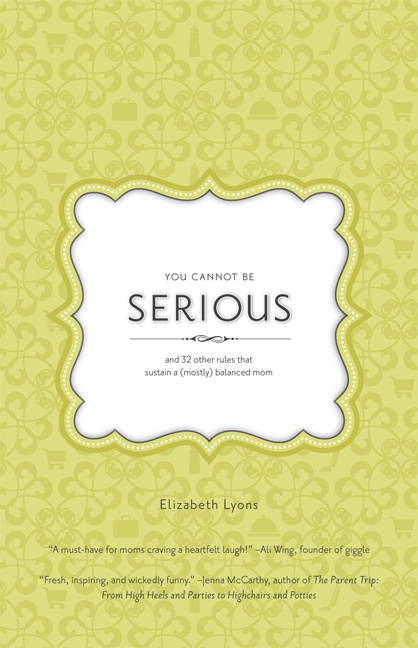
    You Cannot Be SeriousUpdate: The winners for this giveaway have already been chosen:

    • Laurie from Cuddle Hugs
    • Cyndi from So Much More Than a Mom

    I have the utmost respect for mothers.

    Their daily lives require an aptitude for all the qualities that make us good people: love, kindness, patience, generosity, and, perhaps most importantly, a sense of balance. If anyone knows chaos, it’s a mom.

    With this in mind, I was thrilled to read Elizabeth Lyons’ book You Cannot Be Serious and 32 Other Rules That Sustain a (Mostly) Balanced Mom.

    Make no mistake: I don’t have any children. Or friends with children. Or even access to children—there appear to be none in a fifteen-mile radius.

    What I do have is a need for balance in a world that is never predictable and rarely calm.

    Elizabeth’s book provides just the right anecdote, and it was so easy to relate to her reading it.

    She’s not the high-waisted jeans kind of mom who fills her days with baking and gardening (through she does both). She’s the mom who runs her own business, writes her own rules, and still manages to run a household without any hired help. (more…)

  • 10 Tips to Balance Self-Interest & Sacrifice for a Wonderful Life

    10 Tips to Balance Self-Interest & Sacrifice for a Wonderful Life

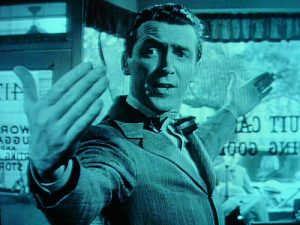
    George Bailey

    “It’s really important to be able to receive love and receive compassion. It is as important as being able to give it.” ~Pema Chodron

    Yesterday morning two of the correspondents on the news in Boston (where I’m home for the holidays) had an interesting conversation about the classic It’s a Wonderful Life.

    One of them said he’s not a big fan of the movie, which instilled a sense of complete outrage in me.

    How dare he take George Bailey’s name in vain! It’s such an inspirational film! From saving Harry’s life to finding Zuzu’s petals, every scene gets my little heart aflutter with renewed hope in our ability to make a difference and find happiness.

    When the initial offense faded, I listened to what clearly-heartless news guy was saying—and he actually had a point.

    The main character, George Bailey, sacrificed everything he wanted in life for the people around him. If he continued to operate in a constant state of self-sacrifice, he’d likely always have regrets where other men have dreams.

    And why should he not have the chance, at some point, to feel satisfaction that isn’t hinged upon having saved someone else’s life?

    At the end of the movie he receives the ultimate assurance that his life is best lived with everyone else’s interests before his own: a party where he receives all the gratitude and admiration he clearly felt had been lacking prior.

    The implication seems to be that he should continue on this path because everyone’s life would have fallen apart if he didn’t come to their rescue.

    The movie critique got me thinking about the sacrifices we make for other people. If you know me, you may find it off that I, ever the eternal optimist, have chosen to dissect the act of selflessness right before a holiday that often inspires it.

    This is precisely why I have.

    Holidays generally bring out the best in people. When we pull out the tear jerkers that remind us people care and miracles happen, we’re motivated to be the change we want to see in the world. To express and show our feelings. To care in action.

    But what’s more important than an epiphany shouted from a balcony on Christmas morning is an understanding of healthy giving—both to others and ourselves—that’s sustainable all year long.

    I, for one, would find this information invaluable, as I’m somewhat of a George Bailey, ever willing to consider someone else’s feelings and interests before my own.

    On some level it’s because I want to be kind, but often I’m motivated by the desire to feel important and useful. Or to please other people. Or even to avoid facing my own needs.

    If you can relate on any level, consider these reasons to find a balance between doing for others and yourself:

    Too much sacrifice can harm relationships.

    According to Ted Hagen, PhD, “The give and take between two people creates mutual respect. It strengthens a relationship.”

    Excessive giving can create internal resentment.

    If you continually put everyone else first, you may eventually resent everyone for expecting so much of you, when in all reality, you had the choice to give less at any time.

    Sacrificing is not always helpful.

    We often give because we think it’s the right thing to do, but sometimes it’s just plain not. People (children especially) need to learn to take care of themselves and to accept the world won’t always meet their every wish, whim, and need.

    To truly give yourself, you need to take care of yourself.

    Your daily car ride may make someone’s life easier, but your bond as a healthy, happy person is far more valuable. You can only offer that if you take care of your own needs, as well.

    WonderfulLife2

    We all deserve a life that involves doing and resisting, and giving and taking, and being selfish and selfless at times. I recommend the following steps to find a balance with all of the above:

    1. Identify your current give/take ratio.

    If you’d like to find a balance you have to know how off-balance you currently are. Is it fifty-fifty? Or seventy-thirty?

    2. Establish your reason for imbalance.

    Are you overextending yourself to feel powerful? Or to please everyone? You need to figure this out to address the next part.

    3. Find an alternative plan.

    If your goal is to feel powerful and helpful, start mentoring a child on the weekend. If you’d like to be well-liked, nurture qualities and skills that attract people to you—other than your tendency to say yes. This is a far better approach to gaining respect anyway.

    4. Take a piece of the pie.

    You can’t give everyone in your life 100%, so you likely give your parents, friends, and significant other a percentage of your energy. Consider a piece of that your own, and honor that in your choices.

    5. Think of taking as another form of giving.

    Everything you get from giving, the people who love you will get the same if you give them a chance to reciprocate. Why not allow them the opportunity to feel helpful and important, too?

    6. Take a drama-free look at your relationships.

    Do some people take more than give? The goal isn’t to blame, attack, or make yourself a victim, but rather to establish which relationships need to change.

    7. Make attempts to repair unbalanced relationships.

    If the give/take ratio is off-kilter, you need to address this, either by asking for what you need when you need it or initiating a constructive conversation. If the bond is worth saving, the other person will be at least a little receptive.

    8. Make a habit of expressing your needs.

    People won’t always anticipate them and step up to the plate, even if you operate that way. If you state your expectations, it will be easier for people to meet them. (Trust that they’ll want to! That’s how healthy relationships work.)

    9. Check in without an even-Steven philosophy.

    You don’t need to keep an internal scorecard of how much people are doing for you, but you should feel that, on the whole, they’re there for you physically and emotionally as much as you’re there for them.

    10. Ask yourself, “Would I need a George Bailey moment of gratitude and admiration to justify all I’ve sacrificed?”

    If the answer is yes, you know you’re not living a completely fulfilling life—one in which you look out for yourself, and honor your wants and needs as much as other people’s.

    This makes now the perfect time to ask yourself: How can I accept where the choices I’ve made have taken me, but make more balanced choices from here on out for a truly wonderful life?

    Photo by mrlerone.