Tag: balance
-
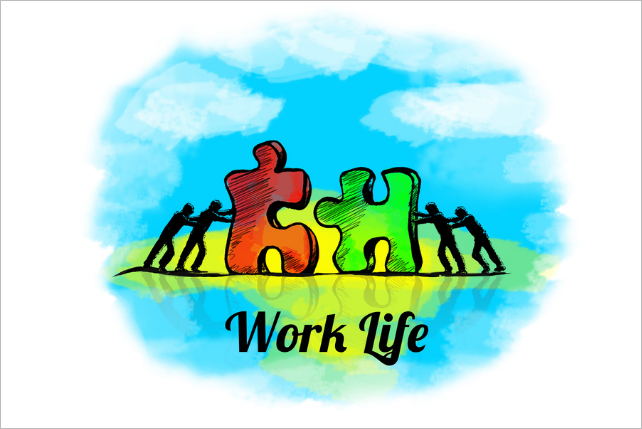
How to Improve Your Work/Life Balance and Reclaim Your Time
“You will never feel truly satisfied by work until you are satisfied by life.” ~Heather Schuck
When I was two years old, my parents got divorced.
In other words, I’ve never seen my biological parents spending loving time with each other. I never had the chance to experience the small things most children take for granted.
For example…
- I don’t remember my mom and dad ever sharing a loving kiss after a long day at work
- I don’t remember ever having both parents around to tuck me in at night
- And I never overheard simple “how was your day?” conversations between my parents in the kitchen
As a kid who didn’t know any different, I thought this was normal. I’d stay with my mom during the week and visit my dad on the weekends. No big deal, that was that.
Looking back, I’m lucky that even though my biological parents were separated, both my parents loved me unconditionally, and supported me whenever I needed it. (And I’m happy to say they still do!)
But, truthfully, the reason for the divorce still saddens me to this day.
The primary reason my parents divorced is because my father was a workaholic.
Because I’m expecting to be a first-time father myself in a few months, “workaholic” is a word that’s at the top of my mind. I’ve thought deeply about how to avoid being labeled a workaholic, especially in today’s world where being a workaholic is synonymous with success.
The biggest question I’ve asked myself recently is, “Should I spend more time with family or should I focus more on my career?”
But, as I’ve thought about it more, I realized that’s the close-minded, dualistic way of looking at things. My shift in mindset from an “either/or” to a “how can I be creative to incorporate both?” has been the first step.
And, as I’ve continued to grow and reframe my limiting beliefs, there have been a few more realizations about maintaining a work-life balance. Here’s what I’m learning.
Making My Time on This Planet Count the Most
No matter how I slice it, I only have twenty-four hours in my day.
In the past, I’ve naturally gravitated toward being as efficient as possible during work hours and doing everything myself. This approach has been supported by an endless amount of tactics to maximize my productivity during the day—tactics that, if I’m being honest, only marginally approve my efficiency.
Efficiency only carries us so far. Even if we’re the most productive person the world, we have a limit to the energy we can spend and a limit on our output.
As I’ve learned, focusing entirely on efficiency and trying to do everything is the wrong approach.
In reality, the people who have figured out how to integrate their family and professional success have done one thing very well: letting go.
Caring for Ourselves Means Saying No
One of my idols, Warren Buffett once said, “The difference between successful people and really successful people is that really successful people say ‘no’ to almost everything.”
A couple of years ago, I had reached out to a mentor of mine asking him for advice. He was a highly respected, gregarious person and was pivotal in my early career.
And even though we had an established relationship, he told me, “No, I can’t meet then. Evenings are reserved for my wife and daughter.”
I was blown away. It stung a little, but after a bit I realized his “no” made me respect him even more.
Instead of talking in the evening, he had asked me to call him in the morning, or to email my questions and he would get back to me within a couple of hours. He defined his boundaries and “let go” of having to please me (and sacrifice time with his wife and kids).
In another example, Caryn Seidman Becker, the chairman and CEO of CLEAR, said: “You can have it all, but each person needs to define their personal ‘all’ because you can’t have everything.”
For my mentor, having it “all” meant saying “no” so he could have a successful career during the day and cherished family time in the evening. He knows his time is limited, and reduces his obligations to the core of what he wants to accomplish.
“Letting go” Also Means Letting Other People Help
One of my favorite theories is the law of diminishing returns. Sometimes, this shows up when I work more than fifty hours at my day job and seeing my output decline. Other times, when I say “yes” to too many people and can’t spend quality time with my family.
In other words, when I reach a point where the benefit gained is less than the amount of energy invested, it means I’m doing too much.
At a certain point for all of us, we need to stop exerting effort to maintain our balance, health, and important relationships, even if it means we’ll stop short of perfection.
When we understand the law of diminishing returns we favor progress and learning over perfection.
The metric for balance varies too. Sometimes the optimal level of effort is when we’ve achieved “good enough” on a project at work, which allows us to focus our energy on family. Or, other times, it’s achieving “good enough” with family so we can focus more energy on a massive project we’re excited about at work.
And once you know what your “good enough” is, you have the ability to ask others to support you so you can free up time and energy for more important things. Whether it’s hiring someone to help you grow a business, having your laundry done for you, or even getting someone to come change the oil on your car at work so you don’t have to waste time driving around.
It’s important to note the goal isn’t laziness—it’s effectiveness. For example, there might be times when we have to put in extra hours to get the job done. The differentiating factor is recognizing when to do something ourselves, and when to delegate.
The Power of Using Deadlines
Have you ever noticed the power of deadlines?
In college, when I had professors set a project deadline, I knew it had to get done. I could cram all I wanted the night before, but no matter what it needed to be finished on the due date. On the other hand, when I have something I need to do “eventually” it gets pushed off…again…and again…and again.
When we use deadlines strategically, we’re following Parkinson’s Law. Here’s an excerpt from Tim Ferriss’ 4-Hour Body on what the Law means:
“Parkinson’s Law dictates that a task will swell in (perceived) importance and complexity in relation to the time allotted for it’s completion. It is the magic of the imminent deadline. If I give you 24 hours to complete a project, the time pressure forces you to focus on execution, and you have no choice but to do only the bare essentials. I give you a week to complete the same task, it’s six days of making a mountain out of a molehill. If I give you two months, God forbid, it becomes a mental monster. The end product of a shorter deadline is almost inevitably of equal or higher quality due to greater focus.”
In short, Parkinson’s Law pushes us to take action and focus exclusively on the most important items, and nothing is wasted.
And when we use Parkinson’s Law (or ask for help, or say “no”) we’re making sure to spend our energy and time in the places that matter the most to us.
-
How to End Your Stress and Live a Life of Peace and Balance
“To experience peace does not mean that your life is always blissful. It means that you are capable of tapping into a blissful state of mind amidst the normal chaos of a hectic life.” ~Jill Botte Taylor
I used to be a stress bunny. Something was always driving me to want to do better—to be more, to have more, to compete and win at everything.
I thrived on pushing myself, thinking achievement was a great thing.
I was also restless. I always had to be going somewhere—doing something—never sitting still. I was bored, frustrated, and trying to find happiness outside myself.
One day after I graduated from college, I became totally paralyzed by a rare syndrome and landed in the hospital. The doctors couldn’t tell me when or if I would ever walk again.
I soon understood why I pushed myself so hard. I was running from myself so I didn’t have to face all the inner thoughts that were fueling my stress.
Suddenly I couldn’t even walk away. I still wanted to run, but I was forced to lie there—tortured by my own racing thoughts.
Talk about stress! This frightening experience taught me many valuable life lessons. One of them is that stress has no redeeming value. You can live a much happier, more successful life by transforming your stressful inner thoughts.
Tying Our Emotions to Specific Outcomes Trips Us Up
We’re all striving for certain things in life. Security, love, happiness, purpose, success, and independence are among our top goals, however we define these for ourselves.
We live our lives trying to find happiness. But, as John Lennon sang, “Life is what happens while we’re busy making other plans.”
Sometimes our disappointments can be extremely jarring, like when I landed in the hospital. Other times life is on a roll, and we become elated. But then things turn, and we’re headed for a crash landing. Life’s ups and downs can be so distressing.
When we feel like we’re being torn apart, we learn to protect ourselves by not getting our hopes up about anything. But then we’re living a life of resignation, which isn’t fulfilling, either.
Tying our emotions to all the ups and downs is like stepping onto a perpetual roller coaster, riding through multiple dips every day. Why live with that kind of stress when a better alternative exists?
How to End Stress and Achieve a Life of Peace and Balance
Wayne Dyer said, “Peace is the result of retraining your mind to process life as it is, rather than as you think it should be.”
If that sounds like giving up or giving in, that’s not what Dyer meant. He was referring to the flow of life. We can train ourselves to take advantage of this flow and stay in balance regardless of any temporary elation or dismay.
1. Loosen up on expectations and attachments.
When we expect something great to happen, we begin to set ourselves up for the roller coaster. We’ll be disappointed if it doesn’t happen, or happy if it does. Pair that with being emotionally attached to the outcome and wham—there’s an even bigger charge. You just stepped onto life’s roller coaster.
If you realize every situation offers growth and opportunity, you can more easily live without expectations. You can feel confident being open to whatever happens, knowing that you can appreciate good events and accept the challenge of things you feel are negative.
Some of us have a general fear that bad things might be just around the corner. Try to detach yourself from fear of what might happen and experience life as it unfolds.
2. Remember, nothing is permanent.
When life is great, we hope it continues forever. When we’re in a dip, we can’t wait until it ends. But nothing is permanent. That’s hard to remember when we’re stuck in a bad situation and hard to accept when life is good.
Reminding yourself that all things must end (and new situations will replace them) is a great way to begin detaching, and maintaining balance no matter what.
Being paralyzed and not knowing what was in store was terrifying. But I faced each day with hope that the paralysis would stop progressing. When it did, my doctor told me I had actually willed it out of myself because nothing he had given me had the power to stop it.
3. Catch yourself when you’re judging and evaluating.
Life just is. It’s easier to relax and meet it with a smile when you can. If you practice living and being in the moment, rather than evaluating how everything is affecting you, events will lose their grip.
Human beings experience physical pain differently than animals do. We exaggerate pain by thinking about how bad it is and how much we don’t want it. But we can get control of our pain by focusing on the actual size of the area it covers and how it truly feels. Observing instead of judging can help us see reality.
The same applies to events we label as bad. Next time, try to take your focus off of feeling bad long enough to assess the reality. Then shift your mind to finding a positive aspect of the experience or thinking about something good that is also happening.
For example, when I was still adjusting to being paralyzed and in the hospital, coworkers and neighbors who I thought were just acquaintances came to see me. I was amazed that so many people I hardly knew cared about what was happening to me. Experiencing this was a great comfort.
4. Use the signs life provides to guide you.
Life is like a flowing river. We can do three things when we jump in: We can go with the natural flow, letting the current carry us forward; we can try to go upstream; or we can hang onto a rock to try to stay put.
If we go with the flow, we’ll be carried along peacefully. If we try to go upstream, we’ll have a real battle on our hands. If we hang onto a rock, we’ll risk being battered against that rock.
Why not take the easy route and go with the flow? This doesn’t mean you can’t shoot for your goals. It means be aware of signs that your chosen path is on or off target. If you’re struggling too hard, try a different approach.
For instance, if you’re beating your head against the wall trying to convince someone to love you and it’s not happening, try finding a different wall with an open door.
5. Find the natural flow of life.
With more practice, you’ll begin to see solid evidence of the flow of life. Experiment to find it so you can really trust and let go.
Maybe you have far too much on your plate for one person to handle, and you always end up completely stressed over not being able to get things done. This is so common today.
Stress further slows your progress as you worry about whether you can ever catch up.
Try stepping back, relaxing, and taking a bigger view. Focus on believing that everything will get done in its own time if you take one step at a time. When you do this, you’ll find that things will fall into place with less effort on your part. You’ll experience the flow of life.
Every day, give yourself a simple list of two important things you want to work on that day. This will ensure that you get to those two important items, which likely isn’t happening if you’re reacting to all the little distractions. Doing so also allows time to handle most of those little items too.
I’ve done this for several years, and I’m amazed at how much more I accomplish, with less stress.
Ending your stress is in your power—what a relief!
—
I survived my ordeal with paralysis and healed perfectly in a few months. This experience was a wake-up call that taught me to stop stressing so much, appreciate life, and live it to the fullest. To do that, I slowed way down and learned what a gift it is to live in the moment, open to whatever life brings.
Like any major challenge, the experience showed me how strong I can be. This helped me reduce general fears of what might happen in the future.
It was a great reminder that even horrible situations are only temporary, and since I can learn so much from them, it’s better to look for the lessons than to focus on how bad things seem.
Life can’t always be just the way we want it. But if we go with the flow and work with each situation as it is, we will often be surprised that things turn out better than we wanted.
A balanced life that is far less stressful makes everything more enjoyable.
-

10 Ways to Seize the Day and Achieve Greater Work-Life Balance
“Seize the day, trusting little in the future.” ~Horace
Don’t you hate it when you think of the perfect comeback to someone’s comment way too late? One that really sticks out for me happened a couple years ago.
I was midway through a cross-Canada speaking tour, sharing about my journey with cancer and what it taught me about work-life balance and embracing life’s simple pleasures.
After giving my talk to a Rotary Club in Alberta, one of the audience members approached me.
“You know what balance is?” he gruffly demanded, jabbing a finger at me. “Working hard the first half of your life so you can enjoy the second half. That’s balance!”
Taken aback, my mind went blank. It wouldn’t have mattered. He was out the door before I had a chance to speak.
Strictly speaking, the man wasn’t wrong. In the left-side-equals-right-side sense of things, spending the first half of your life focused on work and the latter half focused on leisure is a form of balance.
It was only some time later, on the long, lonely road to Regina, Saskatchewan that I thought of what I should have said. Sure, the man’s definition of balance might technically be accurate. But it’s also quite a gamble.
Life’s Curveballs
As I drove along the Trans-Canada Highway through the prairies, my thoughts turned to a conversation I had with my dying uncle a few months earlier. I was on my way to visit my dad, who had been diagnosed with early onset dementia, and the hospital my uncle was being treated at was on the way. So I stopped in to say hello.
It was a short visit, but a good one. Though the cancer had ravaged my uncle’s body, his mind was as sharp as ever.
“This isn’t how your dad or I planned on spending our retirement,” he said.
If my uncle’s death, dad’s diagnosis, and my experience with cancer at age twenty-seven have taught me anything, it’s that life is full of curveballs. And while there’s nothing wrong with planning for the future and having goals, pinning all your hopes for happiness on something “down the road” is risky.
Because whether it’s a drunk driver, bolt of lightning, collapsed roof, or massive heart attack, life can change in the blink of an eye.
Carpe Diem
Memento mori: Remember that you will die. It’s a Latin expression that some might consider morbid and depressing; one that makes you want to curl up in a ball and cry. I don’t.
Instead, I see it as an empowering reminder of the short time we have in life and an awesome motivation to make the most of it. This video by spoken word artist Prince Ea communicates this idea beautifully.
But sure, you’re thinking, that all sounds well and good, but how exactly do I go about grabbing life by the horns? I barely have time to grab it by the tail and hang on for dear life as it goes charging past me.
Of course, there’s no one-size-fits-all solution. Every situation and everybody is different. But to get your creative juices flowing, here are ten ideas for how to seize the day and enjoy greater work-life balance:
1. Remember what’s important.
Keep yourself grounded and aware of your priorities with tangible reminders.
That might mean a picture of your kids on your desk to remind you to be home for dinner. Or an inspirational quote you hang on your wall.
For example, next to my bedroom door, I have a quote by Henry David Thoreau that says, “Go confidently in the direction of your dreams! Live the life you’ve imagined.”
2. Take your vacation.
There’s an alarming trend in Western culture (particularly in North America) where an increasing number of employees don’t use all their vacation days. I get it. Sometimes taking time off can feel like it adds more stress and work to life.
But holidays are important opportunities to recharge and spend quality time with loved ones. Check out Forbes’ “How to Take a Stress-Free Vacation From Your Stress Job” for some helpful tips.
3. Mind your “mibs” (the “moments in between”).
Whether it’s stressing about an urgent deadline or brooding about an argument you had with a friend last week, it’s easy to live in your head instead of being present in the moment.
Take time every couple hours to focus on your breathing or to make a mental note of five things you can hear, smell, or see in your immediate surroundings. Ground yourself in the moment to appreciate the little things around you.
4. Set boundaries.
In the age of emails and smartphones, the line between work and home life is a blurry one.
It takes strictly enforced rules and discipline to keep your boss’ texts away from the dinner table or your upcoming presentation from encroaching on Monopoly night. Carve out regular gadget-free times and stick to them.
5. Switch off the TV.
Balance isn’t always a tension between work and home. It’s also about how we spend our leisure time.
Don’t let the world pass you by as you watch re-runs of The Big Bang Theory. Enforce screen-free nights and get outside. Nobody on their deathbed ever wished they spent more time in front of the boob tube.
6. Choose fear over regret.
This one may seem odd, but bear with me. For as long as I can remember, I had a personal policy: when confronted with a choice between fear and regret, always choose fear.
Yes, that white water rafting trip seems terrifying. But if I don’t go, will I regret it? Yes? Then hand me that paddle. Will I kick myself for not asking that woman out on a date? Yes? Time to steel those nerves and take a chance.
Fear is fleeting. Regret is sticky. Choose to face fear.
7. Let go of grudges.
Life’s too short to hang onto old hurts. As Buddha said, “Holding on to anger is like grasping a hot coal with the intent of throwing it at someone else; you are the one who gets burned.”
Many people live with the regret of not mending fences with a loved one while they had the chance. Extend an olive branch with an email or coffee date invitation.
8. Find time for hobbies.
Always wanted to write a book or do more camping? Don’t wait until retirement. Start now.
Find an activity that you do just for you and nurture it. No agenda. No purpose beyond having fun. Give yourself permission to engage in a fulfilling pastime.
9. Be clear.
Spend more time with my family. Have a healthier lifestyle. Achieve better work-life balance.
Don’t be satisfied with vague goals. Get down to the nuts and bolts of your ambitions with clear, actionable plans.
Thursday—movie night with the kids; Monday, Wednesday, Friday—go for a run; June 5-12—vacation. Be specific. Make a list of activities and add them to your calendar.
10. Start an “I’ve Never” Club.
As the late great Dr. Seuss penned, “If you never have, you should. These things are fun and fun is good.”
One way to seize the day is to formalize it. Start a mini social club with a few friends where you try something new every week. Send out a list of ideas, vote on a favourite, get together, and do it!
Take a cooking class, geocache, hike a new trail, try a new board game, go to a karaoke bar—the possibilities are endless.
By all means plan and hope for a bright and awesome future. But don’t forget to embrace life along the way.
As my experience with cancer showed me—and the road to Regina reminded me—life is full of unexpected twists and turns. So memento mordi, carpe diem. Remember you will die, so seize the day.
Seize the day image via Shutterstock
-
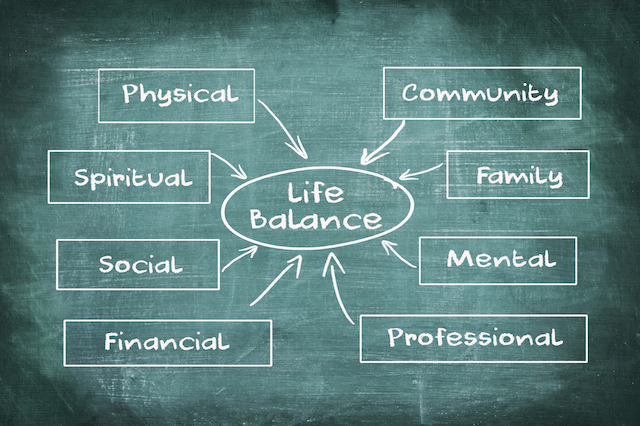
4 Tips to Live a Balanced, Happy Life with Fewer Regrets
“Happiness is not a matter of intensity but of balance and order and rhythm and harmony.” ~Thomas Merton
Balance has become an ever-elusive thing these days. The onslaught of technological breakthroughs, aimed at making life easier, has given way to a societal expectation that we are available around the clock.
This has bled into our careers, where our employers have ever increasing expectations that we can do more in less time. We have 168 hours in our week to sleep, work, rest, be with our loved ones, and pursue personal interests.
Unfortunately, the majority of people in the world today complain that they aren’t able to keep up with the competing commitments that steal much of their precious time.
It’s no longer enough to contemplate how this happened and talk about the “good ole days” when life was easier and the days were longer.
We need to identify what balance looks like for us (as it differs from person to person), work on regaining some of our time, and find more balance so we can truly show up and be present in all the different areas of our lives.
My wake-up call about my imbalanced life came when I lost my best friend to suicide a few years ago.
When you experience a sudden loss of this magnitude, you most certainly find yourself in a place of deep contemplation and restructuring. I recognized my own mortality in a way I hadn’t before.
As a result, I had to do some housekeeping in order to get my life “up to snuff,” so I took an honest and meaningful inventory of all the different parts of my life.
I looked at the people I was spending my time with, the activities I engaged in, and the places I dwelled. I asked myself if these people, activities, and places were feeding my soul, supporting my journey, and providing love and support.
It was through this inventory I realized how out of balance my life was. It’s also how I came up with the action plan I am sharing with you now
1. Start with a values inventory.
You want to sit down, grab a pen and a piece of paper, and list all of the values that are important to you. You’ll also want to put them in order of importance.
Some of my top life values include happiness, love, fellowship, integrity, and spirituality. It’s important to note that your top values are defined only by you and carry their own power and placement in your life.
For example, I define spirituality as my connection to, and relationship with, the source of all things. I honor that value through daily meditation, prayer, and my efforts to make the world a better place through my work and my charity fund. I also honor that value by ensuring I live a life full of generosity, gratitude, respect, and compassion.
2. Look at your life domains and identify the imbalances present in each area.
When I speak about life domains, I’m talking about self, career, relationships, and community.
Self: This domain includes you, your time, your interests, and your self-care.
Career: This domain speaks to your current job and your employer.
Relationships: This domain speaks to your loved ones, both friends and family.
Community: This domain speaks to your participation in your local community (volunteer work, belonging to a religious or spiritual institution, coaching your child’s little league team, etc.)
Again, you want to grab a pen and a piece of paper. For each of your four life domains, identify what the ideal balance would be. Be detailed in your description of each life domain.
For example, in the relationships domain, identify those people you would want to see on a regular basis. What frequency would you like to see them and under what circumstances? What would you need to do in order to make that happen?
You should also weave in your top values to better understand how they should support your efforts in each life domain.
For example, I would talk about the importance of my value around love and how it plays out in the relationship domain. I would write about my choice to surround myself only with kind, loving people who support me and I support in return.
The goal here is to create an ideal vision of balance in each domain.
3. Write about the current status of each life domain.
If your life domains are imbalanced, write down the details surrounding the imbalances and what you’ll need to do to get them in alignment.
For example, if your career domain is imbalanced because you’re working too many hours for a demanding supervisor, think about the steps you’ll need to take to regain your balance.
Maybe it’s talking to your boss about getting you some help or working fewer hours. If your work environment isn’t conducive with this type of dialogue, maybe looking for a better job is a consideration.
If some of your life domains are in balance, write about the steps you are committing to in order to prevent them from being compromised. It’s important to be clear on your approach to living, and maintaining, a balanced life.
4. Begin implementing the changes you want to see in a realistic and bite size manner.
You want to focus on one domain at a time, and tackle one change at time. Pick a domain and implement your first change.
Once you have grown comfortable with this change and it is now part of your “new normal,” you can move on to the next change.
When you have implemented all of the changes in your first domain, and reached the balance you desire, you can move to the next domain. I would suggest starting with the easiest changes first.
Start to build momentum with the changes that will help you create more balance right away. Maybe that’s turning off your work computer at 8:00 every night so you can be with your family, eating healthier, or committing to visiting your parents every Sunday morning.
These are small changes that can have a big impact on your life!
—
At the end of the day, this is all about you living a regret-free existence. Later in life, you don’t want to look back and feel regret for neglecting certain parts of your life (children, health, career aspirations, etc.) because you didn’t take the steps necessary to make things better.
Balance isn’t easy to achieve, but it is well worth the effort. Make a commitment to find your balance today!
Life balance image via Shutterstock
-

We Are More Than What We Do for Work
“I’ve learned that making a living is not the same things as making a life.” ~Maya Angelou
My friend Nick and I were talking one day about our plans for after graduation. We talked about marriage and whether our religious beliefs would factor into our weddings when the time came, or whether our mothers would just run the whole show. Then the question came that grounded me.
“Do you think that you’ll be a workaholic?” Nick asked.
I chuckled and said I could practically guarantee it, as workaholism has always been part of my identity—and a proud part, at that. Nick then followed my response by saying, “You know, it’s worse than alcoholism.”
After laughing off the comment, he continued to make his point. He expressed how he had seen it destroy families and lives. He finished with how it can even be spirit crushing, as the individual loses their sense of passion and uses work to fuel their addiction.
Although I firmly believe that Nick was misguided in the brevity of his statement, he did have a point.
Being a workaholic is a problem. It can destroy relationships with those you care about, as well as your body through health issues that accompany stress and overuse, and even your spirit through soul crushing tasks and long hours.
What seemed like an offhand comment really struck me, and at a good time too, as I was graduating from college and about to start my first adult job.
I took a little time after Nick left that evening to reflect on my relationship with work and how it had almost become synonymous with my identity over the years.
In the culture of the United States, it almost seems like what we do is actually who we are. After all, there are many jobs that you can’t turn off, such as being a doctor or a mother—jobs where you’re always on-call.
And tied with that, so many people have a burning desire to be successful and good at what they do, which seems to involve throwing yourself into your occupation full force.
When people strive for success in what they do and do not strive for balance, workaholics are created.
My number one goal has always been to be successful, which I defined as having a steady, challenging, well-paying career. Although my family and friends are important to me, I often put them on the backburner, putting my career and goals ahead of them.
Reflecting back on Nick’s comment, I have begun to realize how much work has hindered my close relationships. And it has slowly but surely crushed the spirit of those close to me that have workaholic traits. Sometimes they seem so worn down that they appear to have lost their identity and passion.
I now know that I don’t want to be a shell of a person. I know that there are more important things and that I want to live a full and balanced life, with varied interests and strong relationships. This epiphany-inspired reflection could not have come at a better time in my life.
As I get ready to start my first real job in the upcoming weeks, I will remember these four things, which I believe anyone can do to have a more fulfilling and balanced life.
1. Know yourself and your limitations.
I know myself and I know that work will be a large part of my life because it is a core part of who I am. However, I will remember that, although I want to be successful, I need to maintain balance my life. This means that I will go in and stay for my shift and work hard, but I will not burn myself out.
I will understand that my health and wellness are an important part of who I am and that, without proper health and wellness, I cannot act as the best employee that I can be.
2. Focus on overall healthy decisions, mentally and physically.
In the upcoming weeks as I start my new position, I will focus on health and wellness outside of work. I’ll make overall healthy decisions, not solely working out, but taking the time to relax and re-energize at the end of a long day.
I will also focus on my mental and relational health by making time for my family and friends and by sharing fun activities with them that help balance me out.
3. Foster high priority relationships.
As I get older and progress further in my career, I, like many others, will become constrained by time and resources. In order to maintain the delicate work-life balance that I am striving for, I will take time to foster relationships that matter to build a support system.
When the time comes and you need a helping hand, your support network will be strong enough to get you through the tough times.
4. Remember that who you are, not what you do, makes you special.
Just being me makes me special, and a valuable asset to both my family and friends. Who I am also plays into my career, as it designates my goals and achievements, but I am a multidimensional person with thoughts, beliefs, and interests outside of my employment status, and so are you.
—
The key to making all of these four thoughts and reflections a reality is balance. I now know that I need to make time to not only work, but to play as well. I need to know myself, and how I handle relationships, and make them a priority.
These tips will help guide my life and decisions, as I hope they will guide yours, as well.
Workaholic image via Shutterstock
-
How to Find Peace and Balance When Dealing with Change
“Change is the only constant.” ~Heraclitus
Have you ever noticed how many transitions we go through all day?
The transition from waking up to getting out of bed, from PJs (or au natural) to clothes, from red light to green light, from inhale to exhale. Every waking moment is a transition.
Why, then, are we, as humans, so uncomfortable with change?
We want everything to stay the same, but at the same time, crave variety. We grasp so tightly to how we think things should be (did she not hear that I wanted extra foam on my latte?) and, simultaneously, admire and want innovation.
We are walking transitions. We chase the next thing, trying to fill this underlying void of “not enough.” We so desperately grasp at everything to stay the same, and when change comes, we are scared.
Fear exists with change. When we can accept that fear is there, though, we can also ask at the same time “What do I have to do to get to where I need to be? How do I create the life I want?”
If change is the only thing we can count on as guaranteed, the question presents itself: How can we use it to our advantage to grow, transform, and evolve?
One major lesson I’ve learned through the experience of going from the severe imbalance of Stage IV cancer at age twenty-nine, to feeling an ongoing (yet fluid) state of balance, not only in body but also mind and spirit, is that taking care of ourselves in the midst of change is as crucial to our health as breathing.
Cancer, or any other life-threatening illness, leaves its survivors different. The entire experience is life-altering change and an extraordinary opportunity to find healing.
While there is not a cure for every disease out there, everyone can find healing. Whether survivor or not, we can nurture ourselves through any change at the soul level by asking the following five questions.
1. What am I feeding the mind?
By becoming aware of what we tell our body, and choosing nourishing thoughts and food and granting it stillness, we can sustain any change that may arise. And then, truly, whatever arises in life becomes the right material for our growth and the growth of those around us, as Marcus Aurelius said.
2. How can I find balance in every part of my life?
When I would have a jam-packed go-go-go day as a headhunter in the corporate world, my transition strategy to “calm down and balance out” was to do a fast-paced sweaty vinyasa class.
Yet, I’d get out of yoga and someone would cut me off and I’d blow up, yell something, and (maybe) flip the bird! Where is the zen in that?!
I did not realize at that point in my life that the antidote to the stress of my day job would’ve been a balanced yoga flow or, even a slower, gentle yin class. Balancing out our lives in each area is necessary.
3. Am I following my desires?
This is an area that our souls long for, but most of us experience resistance. The ego, driven to survive, is always telling us that what we truly want is not something we should go after for whatever reason, usually the money. But the money is not the core reason. When we really want something, we find ways to get it.
Danielle LaPorte says that we’re not chasing a goal, we’re chasing a feeling we think the goal will give us. In knowing this, we can get in touch with our core desired feelings. I thought for so long that the anxiety is what drove me to get what I want. But our core desired feelings are our true navigator and anxiety is just a “witless liar,” as Martha Beck says.
4. Are the people I am surrounded by bringing me light?
Being around people who uplift and support us makes us uplifting and supporting.
When I was going through my cancer healing program, I had only about three hours where I had energy to engage with people. The rest of the time, I would be extremely fatigued and exhausted.
I found that when I was around others who were negative or complained, the three hour block of energy turned into one. It literally sucked the vitality and life out of me, making a life-altering situation that much more difficult. Choosing to surround ourselves with life-giving, uplifting people feeds and heals the soul.
5. Do I spend time every day in stillness?
I would skip stillness, thinking, I’ll just pray as I send emails. (Yes, I was this crazy). Then I would get so burnt out, sick of working, and indulge in junk food and alcohol to make myself feel better.
These days, when I feel the tension coming, I stop, breathe deeply, and stay still (for at least five minutes). Each and every time, I feel clearer, and am much more productive than when I’d push through. Stillness is the consistent anchor to sustain any kind of change life can throw at you.
—
This is the paradox of transition—that although we are always changing (in circumstance around us, in emotion, even our cells are constantly regenerating), who we really are never changes. Who we are houses the divine and this powerful universal energy, which is a place we can call upon at any time. It is home.
-

4 Questions to Ask Yourself When You’re Unhappy with Your Work
“What you do today is important, because you are exchanging a day of your life for it.” ~Unknown
In my working lifetime, I have been the poster child for seeking work-life balance. I have spent hundreds of hours curled into complex yoga asanas, breathing into the resistance and unexpected openness.
I have meditated sincerely, flowering into a quieter mind. Add to that a happy, growing relationship, stable social connections, and purposefully cultivated hobbies, and you would think that I go humming and beaming to work each morning.
The startling truth is that for every minute that I have spent meditating in my entire life, I have cried in my car coming to or from my job.
When I first started working, it seemed normal—if you have a bad day, I reasoned, you let off a little emotional steam in the car on the way home.
As a teacher, I often experience my most tumultuous classroom situations during the last part of the day, and the result is that as a new teacher, I often climbed into my car shell-shocked and fragile, barraged by a hailstorm of chaotic situations.
My first year, the answer was mindfulness, and therefore I pursued yoga and meditation with the doggedness of a shipwrecked sailor swimming for shore. My mental image of stress reduction was that mindfulness techniques were a counterweight for stressful situations.
In the process, I took responsibility for my tranquility, but not for the situations that were causing me so much angst.
My second year, I switched jobs and kept doing yoga avidly, but I also gravitated towards the philosophy of “no”—that if I could protect my boundaries more skillfully, that I could weaken the thick net of sadness that I tangibly felt tightly wrapped around my job and schedule.
Again, this was a wonderful, positive technique; by reducing my activities, I narrowed and strengthened my channel of energy. However, I continued to perform that defeating ritual of the occasional “afternoon cry,” and was adding morning weep sessions to my repertoire.
No simple solutions, regardless of their wisdom or usefulness, warded off the constant worrying about work situations, and by the end of that year, I was understandably burned out and confused.
Branching out into more hobbies, my final attempt to achieve that elusive “work-life balance,” had only succeeded in diluting my passion instead of re-awakening it, and I came to a skidding stop in the educational field. I quit my job.
Now, I am thankful for this burnout—running out of quick answers and clever solutions dropped me onto the bedrock of humility with a resounding thud.
I finally realized that work-life balance is elusive because it is always a shining horizon—if I see my work as something to “balance,” I run in the opposite direction as soon as I clock out for the day, and my energies are pulled in different directions.
In the end, my many attempts to achieve that golden standard of “balance” resulted in a hollowness—an inability to “go deep” in any direction. As long as I made these techniques the locus of my attention, I was distracted from the core issues that resulted in my desperate frustration.
Although at the time I thought that another career—any other career—was the answer, I didn’t realize that I wasn’t even asking the right questions. I am thankful now that I was serendipitously brought back into alignment with teaching, and that I have had an opportunity to heal my wounds as an educator in a beautiful way.
In the process, these are the four questions that I have developed for use in times of career unhappiness, which provoke honest self-evaluation and authentic action. These questions open the heart of the matter.
1. What are the separate issues?
When I hit my bottom in my vocation of teaching, I forced myself, in an unlooked-for burst of clarity, to create a chart that outlined my distinct issues with my job.
In my current position at the time, the problems ranged widely from my personal safety all the way to poor administration. I could do nothing about many of the issues, I realized, but one of my unmet needs, getting a masters degree, was entirely within my realm of control.
By separating the issues, I was able to define the “deal-breakers” and bring distinctness to what was before an overwhelming amalgam of bad feelings.
2. What can I do differently right now?
Once you have separated the issues, you can then decide which of the problems within your control you can transform immediately.
Some changes must wait—they are within your power, but they are necessarily time-bound. However, there are other issues that can be addressed right away, and change can bring immediate relief even if you plan on eventually leaving your job.
Positive strategies such as asking for help and reaching out for healthy social connections at work can help make you happier right now, regardless of your ultimate employment decision. Sometimes you just need to clear the spiritual fog by mitigating acute stress before you can move in any direction.
3. How can I disconnect my effort from my expectations?
Possibly the most powerful agent of burnout in any profession is the lack of tangible results. For me, my heart was broken every time I couldn’t see a project through to completion, and once I broke that arrow that connected effort to results, my expectations were far more realistic.
I am now able to plunge in—and back out—of projects with more abandon, understanding that sometimes trying is the same as doing. When you truly feel connected to the purpose of your work, the endeavor or effort is an end unto itself, and the results are secondary.
This question makes the important assumption that you strongly believe in what you are doing, even if the outcomes are sometimes disappointing. However, if even the process is draining, you may not be living in alignment with your mission.
4. What is my mission?
Recognizing and celebrating your unique voice, which will never be spoken by any other human being, is an important part of the journey to peace with your work.
Your mission is not intertwined with your job—your mission is completely internal. You are the archetypal hero, accomplishing your life’s work, and the job or the career is simply an outer manifestation of the spiritual odyssey.
Your inner mission may be in alignment with your job, or your career may at least have the potential to exist in service of your calling.
But because your mission is not something that you have to generate, it creates unrest when you ignore it. If you’re feeling stifled and limited by your current job, you need to do the gentle but courageous work of discerning your deepest purpose, and take the necessary actions to follow that expansion.
—
I still do yoga daily. Setting appropriate boundaries and saying “no” to people is truly a part of my spiritual practice.
The hobbies that I have developed over the years are still integral to my routines and add color and joy to my life. However, until I could ask myself those four questions, I was only re-dressing the surface issues and leaving the core dilemmas unresolved—and I kept crying in the car.
But ultimately, I found myself irresistibly pulled through my discontent to a deeper connection with my great work.
There are no quick fixes. Work-life balance, if it is even possible, is certainly not achievable if you are turning a deaf ear to the call of your most urgent and aligned life’s work.
Clarify those longings and answer them, and then make all the changes that you need to make, no matter how large or small. Go deep in that direction.
When you are firmly grounded in the passion of creatively discovering your vocation one day at a time, you will absorb that energy. Then, instead of creating the storms in your life, you will have the deep, healthy roots to weather the challenges that will inevitably arrive when you are fully engaged with life.
-
The Power of Poise: How to Stop Losing Your Cool
“Poise is an unseen power, and this unseen power is always ready to come to the aid of the outer action.” ~Sri Chinmoy
Poise is the seeker’s goal because poise is our highest state of consciousness. Poised, we are in a state of balance, composure, and equanimity, all of our powers at our disposal.
When I am able to achieve poise, I am present, connected, grateful, creative, and light-hearted. Poised, my love flows.
Like most of us, I have been poised much of the time, especially when life was easy, absent any major challenge. But I have also lost my poise too many times to remember.
Every time I lost my poise, I was upset, angry, impatient, resentful, critical, and—a couple of times—even violent.
A History of Lost Poise
To figure out how to sustain my poise, no matter what challenges life presented to me, I spent several months recapitulating every time I had became unglued in my life.
I wrote down every incident of lost poise I could remember, starting with the most recent and working back to childhood.
Meditating about each uncomfortable memory, I wrote down the details of what had happened when I lost my poise—what my state of mind was, how I explained my craziness to myself at that time, how I had affected others, and what common themes surfaced that might give me some insight into how I could sustain my poise in the future.
By the time I finished, I had enough pages for a book—a book that might have been entitled, Swinging Back and Forth Between Consciousness and Unconsciousness.
Some examples of lost poise from my recapitulation:
I was impatient with my wife, Mary, and said something critical.
There were so many of these with Mary and other people in my life that I cut off my work trying to remember them all: the pattern was obvious.
My self-importance was pricked by someone who didn’t show me proper respect.
Pages and pages of these. Once, in my early days as a high school teacher, I slapped a student who gave me the finger and was lucky not to lose my job.
Decades ago, as a teenager recently married, my young bride and I stood on a street curb watching saddle horses go by in a parade.
Suddenly one of the horses bolted and charged straight at us on the curb. I darted back, leaving my wife to fend for herself. I hadn’t been poised enough to protect her.
The Deep Elements of a Poised Consciousness
Much later, I became CEO of a large non-profit organization, a leadership position that required that I sustain my poise every day. We want our leaders to be poised, and even with the large challenges I faced, I was able to sustain my poise most of the time.
One of the biggest challenges I encountered involved employees who lost their poise, reducing their effectiveness, lowering morale of their units, and sometimes diminishing the reputation and performance of our organization.
Even top executives who reported to me, men and women with a great deal of self-awareness, lost their poise at times, reducing their credibility with me, with their reports, and with organizational partners.
When employees lost their poise, they:
- Were unable to stay present, looking inappropriately into the past or future
- Lost their connection to others and to their own life purposes
- Could not maintain their gratitude
- Abandoned their normal creativity
- Became heavy, losing their usual light-heartedness and becoming overly earnest
The Universal Cause of Lost Poise
Later, as a coach to other leaders, including Presidential appointees and other top executives, I finally saw clearly the universal cause of lost poise: self-pity.
I saw that we all lose our poise every time we feel sorry for ourselves.
Self-pity is often our response when something happens that we don’t like. We say “no” to something, as if it shouldn’t be in our life. Then we create a victim story to explain why we feel bad.
The story always blames someone else. Someone is doing something to me. I am a victim. I tell sympathetic people my victim story, and they oblige by saying the equivalent of ”Oh, you poor thing.”
Then we obsess and hope that divine justice or our own acts of revenge will bring our tyrants down.
As long as we are capable of feeling sorry for ourselves, we will lose our poise. Our potential will be blocked, and our lives will remain trapped in an eddy as we go round and round, feeling as if we’re on the move, but actually going nowhere.
Living a Life of Sustained Poise
The student’s goal is poise, because when poised, we are able to embrace everything life brings to us. Poised, we can see how to use challenges to our advantage. Everything becomes grist for the mill of learning.
Poised, I say yes to life.
When I finally understood that my self-pity was the culprit, the bad explanation I created around certain situations, and the cause of my lost poise, I set out to erase it. This turned out to be very difficult work.
Self-pity is part of the warp and woof of our current stage of evolution, and only a small percentage of our human community is free of it.
At this point in my learning, I only lost my poise in subtle, hard-to-detect ways, so I had to go looking for my self-pity and victimhood in each case, even though my lost poise might not have been visible to others.
It was painful to locate the self-pity lurking inside my rationalizations every single time. But I learned to recognize self-pity when it arose in the moment, cut it off, laugh, and say yes to whatever was happening.
I learned how to sustain my poise.
A Poise Checklist
I used my poise checklist to find my way back to poise when I was upset in any way:
- Am I in the present right now?
- Am I connected to others in love, and am I connected with my values, my mission, and myself?
- Am I grateful right now?
- Do I have access to my creativity, improvising, refusing to be trapped?
- Is my heart light, unburdened by my own heaviness and self-absorption?
I still lose my poise once in a while, but I know what to do—get back into the present, reconnect, give thanks, improvise, and laugh at myself.
No matter what is happening, poise is the ultimate cool.
Photo by h.koppdelaney
-
How I Found My Inner Balance When I Was Tired of Feeling Anxious
“Within you there is a stillness and a sanctuary to which you can retreat at any time and be yourself.” ~Hermann Hesse
As a child in ballet I was chastised for my inability to capture attitude or arabesque. With only one foot planted on the ground I reached for anything to prop myself up—the barre, the instructor, an unsuspecting fellow tutu-wearing classmate who would then lose balance herself.
My days at ballet were short lived, but my trouble balancing was not. This persisted for decades, through college and into the early years of my marriage.
Now I was no longer just hoping to stand steadily and gracefully on one foot, but instead was trying endlessly to balance hopes with expectations, mental energy with physical willingness, yearning and desire with fatigue and dread.
Fast-forward through my short-lived childhood aspirations of becoming a ballerina to my first yoga class. Walking into the classroom I instinctively stretched out my mat at the end of the room, right up against the wall. Without thinking about it I created a safety net to hold onto. In case of a fall, the wall would be right there. In case I lost my balance.
About midway through the practice my instructor set up a metaphor that stuck with me. “Your mat is your world, and you are here, present in the midst of it,” she said. “We all have areas of our life that need attention. Start applying that attention here and now.”
As she guided us into a new pose she concluded, “If you require strength, then push yourself harder. If you require peace, then take a deep breath.”
That is when I toppled over—as if on cue, and the wall didn’t catch me either. A sign could not have struck me more clearly. My mat is my world, and I need to find balance.
But the mat wasn’t actually my world, and outside of the yoga studio there were things calling to me. There were questions I had to answer, decisions I needed to make, people I had to talk to. With two feet planted firmly on the ground I was still in danger of losing balance.
This lack of balance stretched far beyond my physical abilities. It poured over into my personal life, academic endeavors, and career choices. Imbalance seemingly seeped into every action I attempted.
I developed an all-or-nothing mentality. I either had a calendar packed with things to do at every waking moment or I let every bit of it go and spent long days in bed, wondering if anyone would call. I was either overconfident in my abilities or completely unsure of myself; I felt loved or I felt hated.
This perpetual imbalance left me in a constant state of anxiety. I didn’t know what to expect out of myself. So I took a step back, evaluated the role I was playing in my own life, and I found my center.
In my journey to finding inner balance, I found that there are five fundamental changes I had to make:
1. Stop being busy.
Busyness isn’t a packed to-do list; it’s a mentality. If you want to be busy, things you love to do and even otherwise relaxing activities can grow overwhelming as you turn them into tasks.
Busyness can quickly become a mask to hide behind. I wanted people to think I was busy more than I wanted to do the tasks I had taken on. I let go of the need to be busy and learned to accept and appreciate downtime as space for self-development.
2. Learn when to let chances pass.
Opportunities knock, but not all of them are right for you. Job offers will come, friendships will be formed, and investments will be proposed. Not all of them need to be taken. There are things that I have thought I wanted, and when finally faced with the chance to act I felt more obligated than interested.
Continuing down this road isn’t helping anyone and is only going to drive you towards greater imbalance. Learn to cut your losses and listen to your gut.
3. Recognize external pressure.
Not every problem you face is your problem to solve. Friends, family members, and co-workers may inadvertently push their problems onto your shoulders to bear, but you do not need to accept it. External pressure can drive you to make decisions you aren’t comfortable with and can cause you to second-guess yourself.
Listen to yourself first, and reassert your personal control over your own actions.
If there was no pressure there would be no need for finding balance. Part of maintaining balance in your life is finding the will to continue in the face of pressure, and learning when it is okay to let it go.
4. Stop rushing.
I once grew pestered with my husband for taking so long to get ready for a day at the beach, and then became flustered by the traffic on our way there. He found it hilarious that I could grow so stressed in this situation. “Hurry up to wait” is what he called it, and he was right.
I created a deadline where there wasn’t one and forced my desire to rush onto him.
No one has the right to dictate how anyone else spends their time. You move at your own pace and I, at mine. We all have destinations we are striving to reach, whether they are physical, emotional, or even in our career.
There are things to learn along the way, so don’t rush the process.
5. Accept the present.
The past is loaded with anxiety and thoughts about things you should have or could have done. The future is packed with unknowns and ideals of what should happen. Constantly struggling between the past and future will leave anyone unbalanced.
The present is the center. To find balance you have to accept the moment you are living in now. The past has already played out, and the future will unravel as it comes. The time worth thinking about is now.
There are things in life that are going to knock you off your feet, and there are times that you are going to lose balance. Maintaining inner balance isn’t just learning how to stay grounded. It involves finding the strength to get back up after you fall and to try again.
-
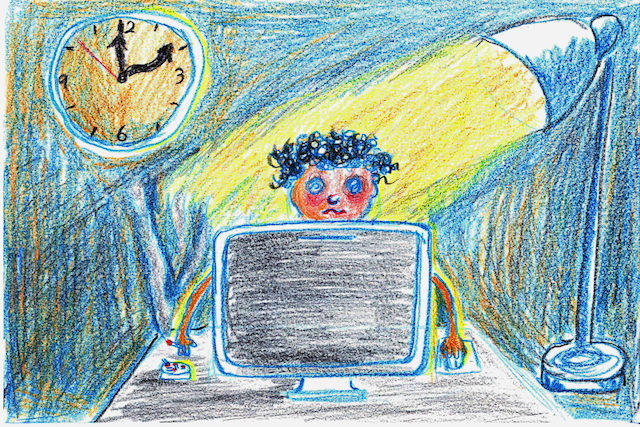
Are You Too Busy? 5 Signs of Chronic Stress
“Beware the barrenness of a busy life.” ~Socrates
A few years ago, the focal point of my life was my work. It took up and made up a huge portion of my life. In retrospect, I would even say that work became a sort of obsession. I became so obsessed with being productive that I set aside almost every minute of my waking hours for some work-related activity.
I even coupled meals with work; toilet breaks meant mentally drafting reports and traffic jams signaled the start of phone meetings. You may look at this picture and think of me as an efficient multi-tasker. I honestly hope I was that, but no. I was nothing but a person trapped inside “too busy” cycle.
Some people perceive being “too busy” as a sign of success or a flourishing career. Although this can be true, being constantly overworked and overwhelmed has more detrimental than positive effects. Being crazy-busy implies stress, and our body can only take so much pressure before it activates its stress response and runs on “survival or panic mode.”
Stress can be helpful and motivating to some degree, but substantial evidence shows that chronic exposure to high levels of stress prompts the body to release hormones called glucocorticoids, which can potentially damage several body systems.
When I learned about the gravity of chronic stress and my overly busy life, I made an effort to change my habits and keep everyday stress to a minimum. There are so many ways to effectively manage stress, but you can do so only after you actually notice and admit that you are indeed too busy and too stressed out.
I have listed below some of the things that have made me realize that my “busyness” was out of hand.
1. I was always looking for something.
Searching for my car keys, phone, wallet, jewelry, eyeglasses, and documents became a part of my daily routine. Things seemed to be misplaced or lost all of the time.
Cortisol, the hormone released when you are stressed, damages the brain over time and can lead to memory problems. But aside from that, when we are stressed out, our thoughts tend to be all over the place, and this lack of focus and the disorganized thoughts could very well cause us to lose track of things. (more…)
-
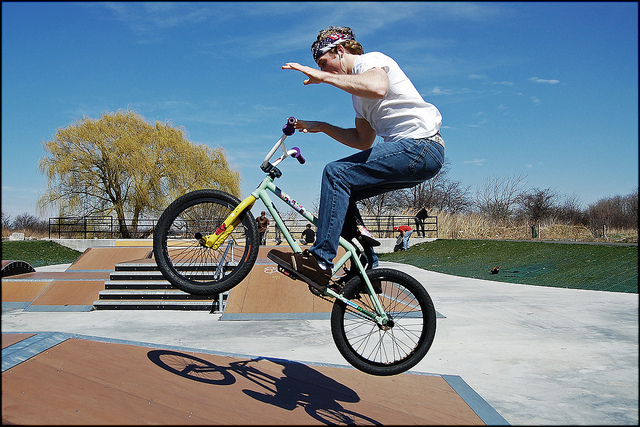
Embrace Fear and Find Your Center: Riding With No Hands
“Some people think it’s holding that makes one strong—sometimes it’s letting go.” ~Unknown
My mom leaned in and gave me a goodnight kiss. The only light illuminating her face was coming from the hallway. I looked up at her, and in the confidence of the dark confessed, “I saw it.”
“It” was my birthday present, waiting patiently for me to wake up in the morning and claim it from its place in the garage. “It” was a turquoise blue Stingray bicycle with a white pleather banana seat and an extra tall sissy bar.
I’d seen it by chance, tucked back in a dark corner, and knew instantly it was for me.
I couldn’t stop myself from ruining my mom’s surprise. I just couldn’t contain my joy. That bike was the answer to my 10 year-old dreams.
And I wasn’t disappointed.
My new bike was the coolest mode of freedom I could imagine. It took me to the local pharmacy for candy and back to the school playground to meet up with my friends. Like an addict, I lusted for the feeling I got from riding past the Skerkoske’s house, Marcia Brady hair blowing in the breeze, singing “I Think I Love You” at the top of my lungs.
Riding something so beautiful gave me all kinds of cocky confidence. I was fearless. Within days, I was pedaling through the neighborhood, arms waving madly in the air, shouting “Look at me world! I’m riding with no hands!”
I let go without ever calculating the risks involved.
Fear crept up on me gently, a part of the ever expanding feeling of responsibility that came along with growing up.
Or maybe I’d heard “Hold on to that bike young lady! Do you want to end up in the hospital?!” one too many times. Whatever the cause, the magic of my turquoise blue Stingray was no longer enough to make me feel invincible.
I grew afraid of falling off. (more…)
-

Everyone in Your Life Is You
“You validate people’s lives by your attention.” ~Unknown
When my husband and I lived in New Providence, the capital island of the Bahamas, we rented a charming wooden cottage with a sweeping vista of the ocean from a sweet, elderly man who was 88 years old.
Our landlord Leslie lived alone in an elegant house next door to our cottage and I made it a habit to visit him each day, after arriving home from teaching at a local high school.
Leslie was lonely and my heart would ache for him. Having lost his wife a few years earlier, he was a sad, wistful figure, who would spend the day sitting with the front door open, gazing out at traffic and wondering where all his friends had gone.
While I felt sorry for his situation, I was acutely aware of why people had stopped coming by. Leslie could barely hear a word anyone said and, as a consequence, my visits would consist of raising my voice to the highest level possible, which would leave me hoarse and physically drained.
One afternoon after making tea and settling down to attempt to communicate, Leslie started by labeling himself “a silly old fool” and then related an incident I will never forget.
Over the years I have recalled it many times as a way of highlighting the importance of being attentive and present.
As the story goes, Leslie flew to Grand Bahama Island to spend the weekend with his son Derek. When it was time to leave, Derek took Leslie back to the airport, checked him in, and said goodbye.
In the departure area, Leslie was unable to fully hear an announcement. Rather than making inquiries, Leslie followed a group of people moving toward the gate and, relying on a steward to correctly check his ticket, he boarded the plane.
However, much to his acute embarrassment and dismay, Leslie later realized the plane was touching down in Miami, rather than New Providence.
At different times in my life, I have been each character in this story, deaf to what others have been trying to tell me, unable to articulate my needs, and woefully inattentive and distracted. (more…)
-
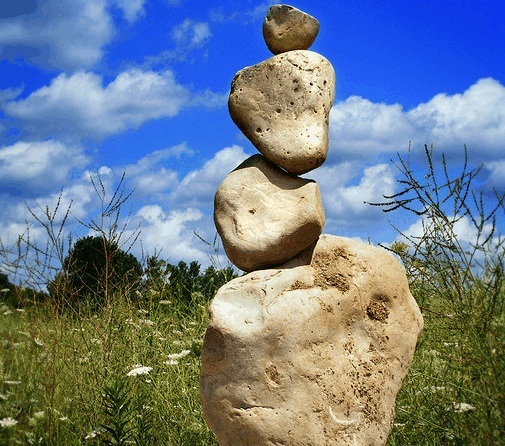
Balancing Home and Work: When Life Is in the Distractions
“It is not hard to make decisions when you know what your values are.” -Unknown
My son has chickenpox.
It started a few days ago and today is his third day at home.
As a work at home mom who is her own boss, I’m fortunate that I can be at home with my son instead of having to ask my employer for time off work.
I have been working from home for the past five years with three young children, and it was only just a few weeks ago that my youngest child started school full-time.
I felt that I had reached some sort of milestone, having all three children at school full-time now. But I must say, I was also looking forward to having uninterrupted time at home.
Ever since I was laid off five years ago, I have been struggling to find a good balance with spending time on my home business and raising three children.
Now with my youngest finally off at school, it felt as though I had finally crossed that threshold where I was reclaiming my time back.
Not to become a lady of leisure. Not to go to the gym. Not to go shopping in search of retail therapy.
But I finally felt as though I had the time, free from the demands of children, to spend on my own business. I had finally reached that point that I was always trying to get to: being able to work non-stop and to gain the momentum that would hopefully let me move forward in my business.
On discovering that my son had chickenpox a few days ago, I knew I’d have to keep him at home for the rest of this week. It would—temporarily—be a return back to juggling work and childcare for a few days.
Today trying to snatch snippets of time to myself to work, I was reminded only too well how I’d really struggled, especially when the three of my children were at home during the long, long summer break. I would barely sit down at my computer only to have to go and break up a fight or find something or help them with something within thirty minutes.
After lunch today I told my four-year-old son that I had to go upstairs to work for a while and could he please watch Mickey Mouse Clubhouse for a little while until I got back.
My four-year-old son then said, “I wish I was you Mommy and you were me.” (more…)