Tag: balance

  • How I’ve Eased My Anxiety by Being More Present: 4 Practices to Try

    How I’ve Eased My Anxiety by Being More Present: 4 Practices to Try

    “Breathe. Let go. And remind yourself that this very moment is the only one you know you have for sure.” ~Oprah Winfrey

    In 2012, during my community college years, I began to experience mild anxiety.

    I assume it was the stress and fear that came with maintaining a good GPA in hope of transferring to a well-known university, alongside deciding what I wanted to do for the rest of my life. Or perhaps it was because of the time I knew I’d wasted slacking in high school to fit in with what I was surrounded by and to preserve my loud-mouthed drama-seeking status.

    The next few years, I thought about the past and future a lot, cried, and grasped for many breaths during anxiety attacks near the campus pond.

    In late 2016 I faced my first severe anxiety attack in the laundry room of my parents’ home while sitting against the washing machine and holding onto my legs curled up against my chest.

    For the first time ever, I felt a heavy pain in the core of my body as if there were rocks piling up all the way to my throat and closing my airway to breathe. I had never felt so disheartened, lost, empty, and hopeless.

    Soon, my anxiety attacks got to the point where I faced numbing and tingling sensations in my head, face, hands, and feet.

    It wasn’t until countless severe anxiety attacks in that I had a glimpse of awareness behind my ongoing stream of thoughts. I found that I was experiencing stress and fear about what had happened in the past or would happen in the future and realized that I’d lost the present moment.

    Many of us face day-to-day suffering through anxiety. We worry about progressing in our careers, getting an education, making a decent income, being there for our families, putting food on the table, and always working toward a means to an end.

    I realized that many of us are constantly on the run to the future trying to be certain about what’s next, and if we slip and fall along the way, we worry about why it happened, which takes us into the past—eventually emerging from an egoic-state of fears, wants, needs, and expectations. That was me.

    There’s always going to be something new that we’ll want, need, and expect while trying to stay up to par with the people and situations that surround us. We’ll spend a lot of time sulking over setbacks, failures, and loss. Ultimately, suffering from stress and anxiety will bury what we’re meant to experience, learn, and grow from in this moment, the present moment. Because we can’t fully immerse ourselves in this moment if we’re worrying about the next or regretting the one prior.

    I’ve spent the last few years exploring, reading, learning, and practicing how to heal stress and anxiety with the simple, yet profound practice of being present, conscious, and aware.

    With this practice, I’ve strengthened my ability to acknowledge and allow suffering to take its course when facing life’s inevitable difficulties and challenges.

    The following are a handful of ways I practice presence, which has not only dissolved my anxiety, but also awakened my gratitude for the great joy and peace we can experience once we become conscious and aware in this moment.

    4 Ways to Practice Presence

    1. Practice non-judgment, non-attachment, and non-resistance.

    You can lose yourself into the past and future when you’re judging, getting attached to, and resisting what is. This is because we become fixated on our wants, needs, and expectations of the moment instead of fully experiencing it. If we want to minimize our suffering, we need to be here in the present moment and allow what is to be and pass.

    I know this practice is easier said than done.

    I’ve had days where I was over the moon with immense joy during moments of achievements, when sharing laughs with family, and while celebrating milestones like my wedding. I also became attached, wanting the moments to last forever and feeling saddened that they had to come to an end.

    On the contrary, I’ve also had days where I felt gutted and devastated over the loss of my dad, and I couldn’t help but judge and resist the experience of losing him. I had expected him to be around for future milestones and heartfelt moments.

    Yet, I’ve learned that moments are undeniably and inevitably temporary. Joy doesn’t last forever, but neither does pain. Allow the painful moments to be and pass and truly savor the good ones with your presence and full attention.

    Practice being and experiencing this moment as it is without judgment, attachment, and resistance. Enjoy the good moments and learn and grow from the ones that aren’t that great.

    This will allow you to surrender to and accept the process and flow of life, which is the key to decreasing your suffering.

    2. Focus on your breath.

    Realize that you have no control over your past or future breath, only the one in this moment right now. Similarly, you have no control over what happened in the past and can never be certain of the future.

    In many experiences in life, from meditation, yoga, exercise regimes, and sports to childbirth and even suffering, we’re always reminded to just breathe. It’s the breath that guides us into the present moment where the actual being and doing is.

    Try your best to concentrate on the inhaling and exhaling momentum at a gentle and patient pace throughout your day. It’s a form of meditation that can be done anywhere and anytime to dissolve any stress and anxiety you face.

    I practice this throughout my day all the time whether I’m at work or on the couch, just to redirect my focus into the now, especially when I become aware of nonstop thoughts, which can set the stage for suffering.

    This practice brings you out of your head and into your body and allows you to immediately shift your focus away from your worries, fears, and regrets.

    3. Immerse yourself in nature.

    Have you ever felt immense peace while looking at the sunrise or sunset and a calmness when around trees, flowers, plants, rivers, lakes, and waterfalls?

    When you’re with nature, you instantly become connected to its stillness, silence, and simplicity.

    Even during the roughest storms, nature reminds us to become in sync with what is to allow the storm to take its course and pass.

    To be in nature, you don’t have to go far. Step into the backyard or take a walk around the block. Pay attention to the beauty of the flowers or the rustling wind in the trees and embrace the peace and joy that arises from it.

    You’ll find that nature truly has a way of reconnecting you to this moment.

    4. Be grateful and trust what is.

    So grateful, I whispered to myself as I stood outside in the backyard watching my puppy Oakley running back and forth on the grass, my husband playing with him and the sun setting.

    It would have been easy to lose myself to thoughts about what’s next and why I still at times feel lost and hopeless, but those thoughts never resolve how I feel and only ignite my anxiety. I decided to instead be grateful for the blessings in that moment, trust that what’s next will get here when it does, and for now, practice being present with what is.

    Be grateful for what is right now, even if you’re going through challenging times. Let your trust for the process be bigger than your fear, stress, and anxiety. When you trust the process, you tell life that you are one with its flow and allow the experience to make you stronger, teach you something new, and guide you onto a path of growth.

    Take a breath to recenter yourself into this moment and look around to see what you can appreciate. Perhaps it’s this blog, a family member, your pet, a plant, a cup of coffee, or a meal. Maybe it’s the sun or rain.

    It’s easier to let go of the past and stop trying to control the future when you’re fully immersed in the now. Whatever your life entails in this moment, be present with it, because that is the ultimate path to healing and finding your power in life.

  • Living Without a Grand Purpose: Why I Find Meaning in the Little Things

    Living Without a Grand Purpose: Why I Find Meaning in the Little Things

    “Ironically enough, when you make peace with the fact that the purpose of life is not happiness, but rather experience and growth, happiness comes as a natural byproduct. When you are not seeking it as the objective, it will find its way to you.” ~Unknown

    I have always enjoyed helping others. Ever since I can remember, my empathic nature has led me to feel what others are feeling and to try and assist them to the best of my ability. Serving others has always been a point of pride for me.

    I have built my entire life around the idea that my life serves a greater purpose in the universal machine. My suffering and the life experiences I’ve had are leading me toward a grand destination, where I can look back and finally make sense of everything that’s happened and feel fulfilled. I’ve held this belief for so long and internalized this message so deeply that to think of any alternatives seems insane.

    Can I share a secret with you? I am terrified that I might be wrong about all of it. Maybe my life didn’t align to fulfill some sense of greater purpose. Maybe my experiences, good and bad, held no other significance other than to propel me forward into the unknown.

    Nothing I have ever set out to do has worked out in the way I imagined it would. And now I am in my thirties, and I have no idea what I’m doing. What do you do when you have no sense of direction or purpose? Why has the universe left me this way? I’d like to share my story with you…

    I joined the Air Force in my early twenties to get away from my small town. The military paid for my education, and I was able to start a career while I was young. I wasn’t excited about my career field in the slightest though. I was a communications officer, and I hated computers.

    I wanted to connect with people and help them. I also wanted to assist my faith group in sponsoring the first Pagan chaplain in the Department of Defense. I asked the universe for guidance, and I received what I thought was an unequivocal ‘yes.’ So, I attended seminary and trained to become an ordained minister.

    Fast forward several years, and my health changes after I give birth to my son. I can no longer serve on active duty, so I decide to change goals to become a chaplain for the Department of Veteran’s Affairs. I serve two years in two separate VA hospitals as a student chaplain; supporting people in crisis, teaching groups, learning about mental health care, and serving veterans of all walks of life. I apply to many chaplain jobs within the VA, and none of them work out.

    My family and I relocate several times. I apply to chaplain jobs wherever we go, and nothing works out. It is now two years after I finished my time at the VA hospitals. I ask the universe for guidance again, completely stumped as to why my efforts to be a chaplain have not panned out despite my best efforts.

    I hear about life coaching, and research acquiring a life coaching certification. The skills are similar to what a chaplain does, and if I start my own business, I can focus on a specific population to serve. In my time at the hospitals, I have realized I connect with and love helping veterans. I create my own coaching business aimed at helping veterans with trauma and post-traumatic stress disorder (PTSD).

    A year goes by. I have attended business seminars, marketing classes, hired my own coach as a mentor, and created all of my social media accounts and a website. I put out content and throw myself into networking with non-profits and influential people. I end up with one paying client and I am burnt out emotionally and professionally after nine months of consistent effort.

    My emotional health starts to deteriorate. I feel dejected, useless, and I feel like a failure. I am so good at helping people when given the chance, but it feels like the universe is conspiring against me. In other words, I have internalized the notion that my self-worth is dependent on what I can do for others rather than my inherent worth.

    Where did this come from? Why do I feel this way? I sit down and unpack this. I realize after some reflection that my tendencies to want to help everyone else is deeply rooted in the idea that I am not worthy. Many times throughout my life I was unwanted and abandoned (I have a history of abuse), and that sets up a shame spiral within me that I have perpetuated by my need to feel loved and wanted.

    I feel if I am not serving some purpose, or giving to others in some way, then I am not fulfilling my duty in life and I am worth nothing. How many of us can relate to these feelings? And what can we do about them?

    I had a heart-to-heart with my friend about this, and she made me realize several things. How do we truly know what the purpose of our life is? How do we know we weren’t meant to be kind to one person, or to step in at the right time to say something and then our lives are complete to be enjoyed till the end of our days? Do we really know what life is about, or is it a complex web of experiences and feelings with no designated plan?

    I’ve given thought to these questions, and I find comfort in the answers I find in the little things: Coffee in the morning on my back porch. Helping my son with his homework. Cooking a nutritious meal for my family. Having a conversation with a friend when they are in need of support.

    I have to be intentional about not letting my mind wander to the “what if?” and “am I doing enough?” narratives in my head and take each day as it comes with what I can do in the now.

    I am slowly warming up to the realization that my worth is not dependent on what I do for people. My only responsibility is to live my life to the best of my ability, with experiences and personal growth being my primary focus. I don’t actually know if my life has a grand purpose, and for now that is okay. I find meaning in the little things.

  • Why Your Anger Is the Key to Maintaining Your Boundaries

    Why Your Anger Is the Key to Maintaining Your Boundaries

    “Boundaries define us. They define what is me and what is not me. A boundary shows me where I end and someone else begins, leading me to a sense of ownership. Knowing what I am to own and take responsibility for gives me freedom.” ~Henry Cloud

    Late last night, I once again found myself unable to sleep, and boy was I angry. So, in order not to disturb my other half, who is always asleep the moment his head touches the pillow, I dragged myself off to the sofa. Once there, sat seething in the dark, I listened to my emotion and asked it to speak to me, and guess what it screamed?! Boundaries!

    Now please bear in mind that I have been on this journey for a while and had also been discussing boundaries earlier in the day, so my inner knowing came out loud and clear. For you this may not be the case, and that’s okay.

    Practical Tip 1: When you feel angry, take yourself away and write down all those racing thoughts. No judgment, just get pen to scrap piece of paper and write it all down. Do not, I repeat DO NOT, take it out on the person you feel has caused this anger.

    So, where was I? Oh yes, boundaries! Those joyful and challenging rules. That is what they are after all, rules.

    If you think back to being a child, when you broke a rule, an adult got cross. Therefore, it’s hardly surprising that anger is a messenger for when you have overstepped your boundaries, or you have let someone else break a boundary you consciously or unconsciously set.

    This is probably where I should explain the difference between internal and external boundaries.

    Internal boundaries are the rules and limits that you set for yourself. They don’t have to be shared with anyone else, but they are for you to follow. They may sound like:

    • When I finish work for the day I will take ten minutes to meditate/for myself.
    • I respect my body, so today is a non-chocolate or non-alcohol day.
    • To protect my time and mental health, I will limit time scrolling through social media to one hour a day.
    • Because I value my family, I will not take on any projects that require me to work nights or weekends.
    • To help myself let go and move on, I will do something healthy for myself every time I start dwelling on my ex and our breakup.

    External boundaries are the ones you set with the outside world. These do need to be shared, unfortunately, and can be challenging in that respect. They outline how you will allow others to treat you. They may sound like:

    • I would love to help you with this project; however, I can only give you one hour a week.
    • Please give me ten minutes when I get in from work for me to settle before we start chatting or planning dinner.
    • I enjoy seeing you, but it’s important to me that you call before coming over.
    • This topic is upsetting to me, so I would rather not discuss it with you.
    • I hate to see you two fighting, but I can no longer be the middleman in your arguments.

    Practical Tip 2: Take that page of anger thoughts and identify any boundaries, internal or external, that have been messed with.

    Have you let yourself down in some way? Or did you let someone break a boundary without gently reminding them it was there?

    Strong boundaries help us protect our time, our energy, and our physical and mental health, so it makes sense we’d feel angry when they’re violated. But oftentimes our boundaries are unclear or fuzzy, or we negotiate them without conscious awareness because we’re tempted to give in to our impulses or we don’t want to make other people feel uncomfortable.

    This is why we need to practice self-awareness and recognize which boundaries we’ve allowed to be crossed and why.

    Seething on the sofa, there I was, scolding myself for breaking a boundary that I have set and reset many times over the past few years—allowing myself at least thirty minutes of quiet wind down time before bed, with no distractions, no talk of work or anything that might get my highly sensitive nature all stimulated, making it hard to sleep.

    Practical Tip 3: Once you understand the boundaries that were crossed, the first step is forgiveness. You are a human being doing the best you can right now, and it’s okay that at times you forget to uphold boundaries with others or yourself.

    Thank the anger for drawing it to your attention, forgive yourself and resolve to do a little better each time. If you are alone, I recommend doing this out loud a few times.

    This first stage is powerful and really calmed me down, enough that I could crawl back into bed with a snoring partner and finally drift off. However, that is not the end of this lesson, dear reader. In the morning light, sat at my desk, I reviewed the boundary I’d crossed and asked myself a few questions, just like the ones in the next tip.

    Practical Tip 4: Time to review your boundaries and ask yourself:

    • Is this an internal or external boundary? Did I let myself down, or did I not uphold a boundary with someone else?
    • Why did I not maintain this boundary? How did neglecting it negatively impact me?
    • Is this a boundary I want to have? Is it time to set a different boundary? Or is there something I need to change or address to better maintain this boundary?
    • If internal, what is the purpose for this boundary? Is it in alignment with who I want to be?
    • If external, have I communicated my boundaries clearly to this person? What kind things can I say to remind them of my boundaries when they start to cross the line?

    The results of my review were that I want a balance around this boundary, as I love staying up late into the night chatting with my partner or watching TV, yet sleep is crucial to my well-being. Therefore, I have resolved that Monday to Thursday I will uphold my boundary, and the weekend is the time to relax the boundary a little.

    Over dinner I will discuss this with my partner and get his buy-in and most importantly ask for his support in helping me to uphold the boundary during the week, just until it becomes a new habit!

    Remember:

    Boundaries are just rules we set ourselves.

    Boundaries are yours to uphold regardless of if they are external or internal.

    Anger is a great messenger for boundaries you have allowed to be crossed.

    Communicate why you have a boundary with others and ask for their support.

    It is all within your control.

  • Why Rest is the Ultimate Protective Gear in a Busy, Chaotic World

    Why Rest is the Ultimate Protective Gear in a Busy, Chaotic World

    “The time to relax is when you don’t have time for it.” ~Sydney J. Harris

    No matter what airline you fly, there are safety instructions at the start of every flight that the flight crew goes over with everyone on the plane.

    The important ones are also listed out on a card or brochure located in the seat back pocket in front of you. Besides letting you know where the exits are, there is always some version of the following statement: “In the event of a change in cabin pressure, oxygen masks will automatically drop from the ceiling. Put your own oxygen mask on before helping others.”

    Many times, there’s no further explanation about this particular safety feature and procedure. I suppose that if there were, it would necessarily sound a bit dark. Something along the lines of “There’s no use ub you starting to help someone else and failing, and then both of you passing out.”

    The phrase “put your own oxygen mask on first” is so commonplace that people use it in other contexts. Medical personnel or counselors say it to caretakers when they mean to remind those people to take care of themselves; some bosses say it to their harried employees who are in the process of burning out.

    On the one hand, it’s similar to the advice given by the Six-Fingered Man, Count Rugen, to Prince Humperdinck in the movie The Princess Bride. “Get some rest. If you haven’t got your health, you haven’t got anything.” It is a way of advocating that the listener engage in basic self-care by maintaining their health.

    On the other hand, it can sound puzzling or even contrary to what we believe. What’s so bad about putting the needs of others first? Isn’t it selfish of us to prioritize ourselves when other people need us to care for them? How can we rest when there is so much to be done?

    I know I used to scoff at the idea of putting my own oxygen mask on first, but I learned the hard way to pay attention to this particular platitude.

    A little more about me, so you know where I’m coming from: I have rheumatoid arthritis (RA) and fibromyalgia. I came down with RA almost twenty years ago, when I was a single mom taking care of my two young daughters, working a full-time job as an attorney, taking care of my own house and yard, cooking, cleaning, and doing ALL THE THINGS.

    I almost never asked for help, and on the one occasion that I asked my mom to watch the kids for a weekend just so I could get a break, she turned me down. Her message, and the one I had already internalized, was that mothers don’t get to rest.

    I put my kids first, my job second, and the house third, and to be honest, I am not sure I was even on the list of my top five priorities. In the end, I paid for it with my long-term health.

    After my diagnosis with RA in 2002, I ended up on long-term disability (because I was fortunate to have good disability coverage at work). It’s been nearly twenty years, and I still can’t commit to a “regular job” outside my home because (a) stress causes my conditions to flare and (b) even if I can show up for a day or week, there’s no guarantee I can do it longer than that without my symptoms acting up.

    The link between stress and the onset of RA is fairly well-documented, and I had stress of all sorts back then. Also, and I tell you this to make it clear, I ignored myself.

    I ignored my health, my need for sleep, and my mounting stress levels. To the extent that I thought of myself and my own needs, my self-talk was a nonstop negative inner critic, constantly telling me what I was doing wrong, etc. It quickly shut down any thoughts that I deserved a break or any assistance.

    I was so low on my own list that I ran myself down when all the caution lights were flashing. I now have chronic health issues and am considered immune-compromised due to the medications I take for my RA. I no longer practice law since a full-time job or even any regular work outside my home is out of the question.

    In the context of my own life, “putting my own oxygen mask on first” might have looked like asking for some help or hiring some help. It might have looked like reducing how many hours I was working. It might have looked like me putting myself to bed at a decent hour every night instead of burning the midnight oil to do client work, sew Halloween costumes, and clean the house.

    It most certainly would have looked like getting more rest. Since I did none of those things, it is little wonder that my health took a beating until I was forced to slow down and rest.

    These days, I know to listen to my body when it sends out a warning. To take a rest the first time I notice things starting to act up, because if I don’t, a flare is certain to follow. I schedule recovery days for the day after travel, or the day after an infusion treatment.

    Over the years, I’ve arrived at an analogy that I prefer to the oxygen mask one. It has to do with firefighters. If you like, they can be hot, hunky firefighters, although that part doesn’t really matter.

    As I think about things, I picture two firefighters who go about things in very different manners.

    The first of these two firefighters sees that your house is on fire, so he runs toward the house in his T-shirt and shorts. He grabs a garden hose that he sees lying nearby and has to run close to the house in order to get the water in that garden hose to reach the flames.

    He is now very close to the house. If the flames explode or the wall falls down, he will be injured or killed, and others will have to rush in to rescue him.

    He runs a serious risk of smoke inhalation. His garden hose might be helping, but only a little. Due to the heat, smoke, and flames, he has to back away after only a few minutes. The house continues to burn.

    The second firefighter grabs her helmet and respirator. She puts on her flame-retardant suit and her boots and gloves. As a result, it takes her longer to get to the house, but she is now fully prepared to take the high-pressure hose and use it, and can hang in there and work until the flames are out.

    If your house is on fire, which firefighter would you rather be? The one who rushes in without thinking or taking care of themselves, or the one who takes the time to ensure that she is protected and prepared?

    Our natural instinct is to rush in and help, to do all we can right away.

    But sometimes, it is better for us to take just a bit of time away from that burning house so that we can take care of ourselves and our bodies—our own equipment—so that we can hang in there and be of assistance much longer.

    It is not selfish if you take time to preserve or improve your physical and mental health. Under either the oxygen mask or the firefighter analogy, it’s using the proper equipment for you to be able to continue to do all the things that need to be done to take care of the others who depend on you.

    Of course you want to do the best you can under whatever circumstances you face. Taking care of yourself, taking breaks, asking for help: all of those things will allow you to hang in there a bit longer and do the job a bit better. You deserve nothing less.

  • Movement, Stillness, and Insight: My 3 Daily Non-Negotiables for a Busy World

    Movement, Stillness, and Insight: My 3 Daily Non-Negotiables for a Busy World

    “Put yourself at the top of your to-do list every single day and the rest will fall into place.” ~Unknown

    We live in a busy world. There is always something, or someone, fighting for our attention. It’s easy to feel overwhelmed. It’s easy to lose the time we need for ourselves. The white space in our days is often the first thing to get squeezed out as demands on our time escalate.

    To combat this pull to overwhelm, I decided to create a list of daily non-negotiables.

    Having a list of non-negotiables means I get to control at least a portion of my day. I can ensure some of what is important to me keeps its space when everything else is at risk of being crowded out.

    The Daily Three

    My daily three, as I have coined it, includes time for the following.

    1. Movement
    2. Stillness
    3. Insight

    Let’s break each down.

    Movement

    This is time for either a formal movement practice (most often bodyweight strength work, some weights, or yoga), an informal mobility flow and stretching what is tight, or just a long walk. Some days will include a combination of all.

    I believe deeply in the power of a physical practice. Regular movement is good for the mind and body. It energizes and nourishes us. It can also boost our mood, reduce chronic pain, and help us sleep better at night. All good reasons to make movement a priority in our days.

    And this time doesn’t have to be something we dread, like an early morning trip to the gym (personally, I love these). We can also introduce an element of play. Discovering movement on a deeper level. Rediscovering that childlike quality of just enjoying being in our bodies and seeing what they can do, whether that means dancing, tumbling, hula hooping, playing frisbee, or running down a hill, arms flailing, like we did as kids.

    There are many ways we can settle on what works best for us but also experiment, peppering our day with mini-movement breaks.

    Stillness

    Time to reflect, to ponder. Time to absorb. Time to reset and replenish. Time to be.

    Some will use this time for a seated meditation. I prefer long walks (which, along with writing and yoga, are as close as I get to a formal meditation practice).

    This is also my time for listening to music. Music settles my mind on the busiest of days, bringing me back to myself. For others, it may have the reverse effect, but this works for me.

    Less frequently, this space will also mean time for a more indulgent self-care routine (massage, sauna, steam, etc.). Time to switch off and be pampered. We all deserve some pampering occasionally.

    Time in stillness can often mean thinking of how I can be of service to others and the world around me in some small but meaningful way. This could be a random act of kindness or something more substantial. While self-care and time inside our own heads is important, so is time spent thinking on how we can make the world a little better for those around us.

    This is also the time for a gratitude practice. Thinking of one to three things I’m grateful for today. Big or small, they all count.

    Making space for a gratitude practice is one of the most powerful changes anyone can make to their lives. It shifts the lens through which we see the world. When we feel gratitude, true appreciation, and joy for something, it’s hard to stay in a negative space. When I think about being grateful for something (or someone), my mind clears; it focuses purely and simply on the act of being grateful.

    Too often in life, our mind wants to zig and zag. Striving for the next thing and the next. Planning and plotting ahead. Dwelling on the negative, what we are missing, what we did wrong, how far we are from our goals, how we dealt with a situation in a less than optimal way. This negative bias and future-creep do not serve us well. We suffer.

    Instead, we need to be a little kinder to ourselves and detach from our expectations of what could or should be. Making time in our day for stillness acts as an anchor to bring us back to ourselves. It’s grounding.

    Insight

    Time to learn something new or dig deeper into an area of interest.

    This will usually involve reading (or re-reading) a book, listening to a podcast, or listening to someone smart.

    Sometimes it might be a passage from a favorite book I come back to or a quote that speaks to me. I collect quotes for my writing, but there are several favorites I return to over and over. They always provide me with inspiration and are a source of energy.

    This can also be a time to go deeper on a subject in a more expansive way. A course, workshop, or some time with a coach of some sort. Doubling down on a subject we are passionate about.  Investing in our knowledge.

    Why Have a List of Non-Negotiables?

    Your non-negotiables may be different than mine, depending on your needs and values. Regardless, this practice ensures we prioritize the things that serve us (or we need) amongst other priorities. Writing them down and having them in our mind’s eye keeps them present.

    This can be time for self-development and self-care. Time to grow, time to reset, time to reflect. Time to slow down.

    This is positive fuel that we can run on. A foundation to launch from.

    Why Daily?

    A daily frequency is particularly important when establishing a new habit. Once ingrained, you may wish to revert to a less frequent practice.

    A better question might be, if it’s important, why not daily?

    Why Three?

    Because it’s not too many or too few. Three is doable. You might prefer more or less if you give a similar practice a proper go. Experiment and keep what works for you. As my examples have shown, I have been liberal in what my three encompass, I encourage you to do similar.

    The Time Conundrum: Doing What You Can, When You Can

    When life gets busy, it can be tough to find any free time in your days, especially if you have young children (or babies) to see to, or elderly dependents that count on you.

    The good news is you can work your non-negotiables into the time you have available. A short five minutes here or there, between other responsibilities, adds up.

    If you have trouble making time for half an hour of seated meditation every morning, perhaps you could reduce the pressure and instead allow five to ten minutes before you go to bed (or even in bed) each night instead. Or use a meditation app on your phone for your day while walking from work to home. As I write this, in our home, we are currently experimenting with some Yoga Nidra time just before bed.

    You can even look for opportunities to combine some of these non-negotiables with your other daily activities—for example, dancing with your kids so you get the benefits of movement while bonding with your little ones.

    The important thing is that we make at least some time for things that are important to us and for us, a promise to ourselves and form of self-care. Some days we might have more time, some days less.

    There is no right way to do this. We all work from where we are and with what we have. These non-negotiable elements should add to the quality of our lives, not create an additional stressor.

    So long as we make a little time for the things that nourish and energize us, we will reap the benefits.

    Experiment, make your own list of daily non-negotiables, and feel the power of this simple habit.

  • Afraid to Say No Because You Might Miss Out on a Big Opportunity?

    Afraid to Say No Because You Might Miss Out on a Big Opportunity?

    “What you do today is important because you are exchanging a day of your life for it.” ~Unknown

    Are you afraid of saying no in your professional life because you think you’ll miss out on a big opportunity? I’ve learned that a quick yes can sink a lot of ships. God only knows I’ve taken on too much at times because I feared I’d miss out on something life changing.

    We view opportunities as golden nuggets that are few and far between, so we snatch them up before someone else does, even if they don’t really excite us. But many of them are nothing more than fool’s gold—a superficial resemblance to what we actually want.

    It’s just so damn hard to pass on something that sounds promising like a new role at work, a chance to join an exciting new project, or an invitation to pitch your business idea (even if it’s hats for cats). And we’d be stupid to say anything but yes because it’s now or never, right?

    This is a sh*t storm brewing up a triple threat of overcommitted, overwhelmed, and overloaded, when all those exciting opportunities start feeling more like burdens.

    Grace Bonney is an author, blogger, and entrepreneur who knows a thing or two about this struggle. Bonney wrote The New York Times bestseller In the Company of Women, a book featuring more than 100 stories about women entrepreneurs who overcame adversity.

    Bonney had this to share on saying no:

    “The biggest fear most of us have with learning to say no is that we will miss an opportunity. An opportunity that would have catapulted us to success, or that will never come again. And most of the time, that simply isn’t true. I’ve found that the first part of learning to say no is learning to accept that offers and opportunities are merely an indication that you’re on the right path—not that you’ve arrived at a final destination you can never find again. If someone is choosing you, it means you’re doing something right. And that is the biggest opportunity you can receive—the chance to recognize that your hard work is paying off. And if you continue to do good work, those opportunities will continue—and improve—over time.”

    I know what she’s talking about because I used to put myself in this situation at least once a year. I would ignore this lesson and believe that this time would be different (and it never is).

    I remember one time I was sitting on the edge of my bed feeling like I had been kicked out of an airplane without a parachute. I could hear a violent whoosh sound in my ears as my boss picked up. “I don’t think I’m going to be able to come in today, I’m…”

    It was too late. I was already freefalling. I was experiencing my first panic attack. I couldn’t finish the sentence. The tears started coming as I blurted out, “I’m sorry, I’ve taken on too much and it’s hitting me all at once.”

    I was in a full-time job I loved, I had returned to school to become a certified coach, and I was attempting to start a business. As if all of that wasn’t enough, I’d also accepted an invitation to kick off a new innovation team because I thought it would look good on my resume and I was afraid I might never get an opportunity like that again.

    It’s sad to say, but my partner was left with a burned-out, easily agitated shadow of support. In an attempt to give us a better life, I had made life miserable.

    I sucked all the fun out of these exciting opportunities by pushing myself to a limit that clearly wasn’t sustainable.

    But then I did something magical. I started to say no.

    From then onward, I used three questions to help me filter possible opportunities in order to gain clarity.

    What does this opportunity mean to me?

    Why is this opportunity important to me?

    What does this opportunity give me?

    Answering these questions helped me see that I’d put zero thought into a lot of stuff I was saying yes to because I was trying to create a “successful” life.

    But I knew what I wanted my days to look like and what “success” actually meant to me. And more importantly, I understood that success without fulfillment is the ultimate failure.

    My north star of success is freedom. Having the freedom to invest my focus in the things that matter to me. Which means I need to do less so I can enjoy more.

    Now I’m not willing to accept an opportunity unless it truly excites me and I take something else off my plate. I’m unwilling to sacrifice my values. I trust that bigger and better opportunities will continue to come my way (if I keep improving and honing my craft).

    This gives me a measuring stick I can reference before I take on any new opportunities. Because a big part of saying no is the power it gives you to go all-in on something awesome when it comes across your plate (without being overcommitted, overloaded, and overwhelmed by sh*t you don’t care about).

    Bonney shifted my thinking of how I view opportunities. Rather than see an offer as a one-off that I need to jump on, it’s a sign that I’m on the right path. If someone wants to partner with me, it means I’m doing something right. As long as I continue to do what got me noticed in the first place, the opportunities will continue and improve in the future.

    Life is too damn short to be overcommitted, overloaded, and overwhelmed by a schedule of projects and people that bring you no joy. In the words of philosopher Ralph Waldo Emerson, “Nothing great was ever achieved without enthusiasm.”

    Don’t see saying no as letting people down. You’re actually letting people down when you say yes, but don’t have the capacity or the enthusiasm to knock it out of the park. If you won’t say no for yourself, say it for the rest of us, because the world is a better place when you’re working on things you love.

  • 19 Techniques to Calm a Highly Sensitive Nervous System

    19 Techniques to Calm a Highly Sensitive Nervous System

    “You can’t calm the storm, so stop trying. What you can do is calm yourself. The storm will pass.” ~Timber Hawkeye

    The sun is setting, and the cold wind is gently blowing in my face. I’m sitting on a rock that’s about ten feet tall, overlooking the Peruvian city of Cuzco. I can hear dogs barking, groups of teenagers laughing, the low hum of traffic, and the music blaring from cars in the distance. As it goes dark, the lights of thousands of houses begin to flicker on like fireflies.

    I should be enjoying this picturesque scene, but I’m not. My mind is racing too fast for me to make sense of anything that I’m thinking.

    The only thing I’m able to fixate on is the intense ball of worry that sits in the top of my chest. Every thought introduces a new problem and a restless attempt to solve it. But the thoughts themselves aren’t that important. They’re really just a manifestation of a physical tension that I’ve been holding onto for far too long.

    This was my life with relentless anxiety.

    For years I didn’t understand why I would get anxious, nor did I have the capacity to relax my body when the physical symptoms came to visit. Was I just born with a sensitive nervous system? Had life experiences conditioned me to be that way? Was it both? Ultimately, it didn’t matter. Anxiety was there, and it was making itself heard, loud and clear.

    Fortunately, I learned, slowly but surely, in both my work with others and my own personal experience, that anxiety could be tamed and reversed. But it was only after I was able to bring greater awareness to my body and progressively convince my nervous system that I was safe and it was okay to be calm that I was able to make any lasting change.

    Calming your body and mind doesn’t happen overnight. It takes practice, but it’s a real possibility.

    Here are nineteen ways to calm a highly sensitive nervous system.

    1. Focus on the calmest part of your body.

    Instead of sitting directly with uncomfortable feelings, sensations, and tensions, we can place our attention on wherever in our body we find a sense of calm. By doing that, we can familiarize ourselves with relaxation and sit with it until it deepens. For example, your legs may be twitching, but perhaps you feel stillness at the back of your neck. Draw your attention there.

    2. Set boundaries and manage your energy wisely.

    If you’re dealing with anxiety, then you’re burning more energy than you usually would. And when your energy is low, it’s more difficult to regulate your feelings. That’s why it’s important to manage your energy wisely and not be afraid to set boundaries and say no to things that you don’t feel are in your best interest.

    3. Self-soothe through affirmations.

    Affirmations are only useful if they’re having a helpful impact on your state of being. Repeating positive phrases that you don’t truly believe in can actually have the opposite effect. So instead, choose an affirmation that feels true to you, such as “I am strong enough to survive this panic.” And try experimenting with how you talk to yourself—the tone of voice, pace, care behind the words—instead of just focusing on the words you are saying. A slow, calm, and reassuring internal voice can be a great tool to calm the body.

    4. Journal from the perspective of your stress.

    Sometimes your anxious thoughts just need to be respected and expressed coherently by getting them out of your head and down on a piece of paper. Writing from the perspective of stress, exploring what’s fueling it and what it wants us to know, also helps us take a step back from our worries.

    5. Journal from the perspective of your calm.

    When you’ve written down your stressful thoughts, you can dialogue (and reason) with it from the perspective of a calmer and wiser voice.

    6. Try Taoist Inner Smile Meditation.

    This meditation is one where you feel a smiling energy in your body. Most people find this easiest to do by visualizing a smile or bringing a slight smile to their face. The effect of the inner smile meditation is cumulative, and it can be an effective way to signal to your brain that you’re not under any threat.

    7. Finish the sentence “My nervous system wants to…”

    This is another journal exercise that helps connect your thoughts to your feelings so you can take a step back from your thoughts. You may discover that your nervous system wants you to take a break, rest, or get some fresh air.

    8. Create compassionate imagery.

    Like the inner smile meditation, compassionate imagery is a way to tell your brain that you’re safe and it’s okay to relax. You might want to visualize a person or a place, either real or fictitious, where you’d feel the most calm, safe, and connected.

    9. Increase bodily awareness.

    Anxiety can feel like it comes out of nowhere, but that’s rarely the case. By increasing bodily awareness, either through meditation, yoga, or just regularly checking in with how you’re feeling, you can catch the early signs of tension in your body before they get too difficult to manage.

    10. Slow down to six breaths a minute.

    Studies have shown that six breaths a minute seems to be the number at which we get the most benefits in terms of relaxation. As most of us breathe a lot quicker than this, any attempt to reduce the rate at which we breathe—with a focus on extending the exhalation—is a useful practice.

    11. Play around with your body language.

    How we position our bodies and physically move through the world has a big impact on our emotional state. Bringing more awareness to how you’re holding your body from moment to moment—how you sit, stand, communicate, etc.—can help you to address habits of tension.

    12. Establish a mindful movement practice.

    It can be hard to remember to be aware of our bodies, which is why a daily or weekly embodiment practice is useful. You might want to try yoga, qigong, or tai chi, the Feldenkrais method or the Alexander Technique, or any other practice. Just try to find something you enjoy and that works for you.

    13. Dance.

    Dancing is a great way to reduce stress and increase your bodily awareness. If you don’t like the idea of a formal practice, then this might be for you. And the good thing is you don’t need to get any special training or even leave your house—you can just blast your favorite song and get moving.

    14. Visualize a future calm self.

    Our minds are largely predictive machines, so when we expect to be anxious, that’s what will happen. We can begin to disrupt this cycle by visualizing a future state of calm, which sets a more useful expectation.

    15. Imagine your mind in slow motion.

    This is just another trick to break out of unhelpful patterns. An anxious mind will move rapidly, whereas a mind that is intentionally moving slowly will start to move us out of a state of anxiety.

    16. Laugh (even if it’s forced).

    Laughter is another great way to take our body out of a state of stress. In fact, the reason we laugh might be an evolutionary signal that everything is okay and that a perceived threat has been averted. It doesn’t matter if it feels forced; your brain will still get the message, and you might even find that you end up really laughing anyway.

    17. Try chanting or singing meditation.

    Both chanting and singing slow your breathing down and stimulate the vagus nerve, which is another quick way to transition from a state or fight-or-flight to rest-and-digest.

    18. Hum.

    Some people don’t like to chant or sing, but luckily humming does pretty much the same thing.

    19. Visualize healthy and rewarding social situations.

    A lot of bodily tension comes from an unconscious perceived threat in the world—particularly the social world. By visualizing healthy relationships and positive social situations, either real or imagined, we are convincing the social part of our brain that we’re connected and safe.

    If my experience with anxiety and my work as a therapist have taught me anything, it’s that there is no best way to manage our nervous systems. There is only the way that works for you. By permitting yourself to experiment and play around with different techniques, you’ll be better positioned to uncover the most effective way to calm your highly sensitized nervous system.

    Let us know in the comments which techniques have worked for you and if there are any that we might have missed!

  • The Simple Path to a More Fulfilling, Far Richer Life

    The Simple Path to a More Fulfilling, Far Richer Life

    “Let us prepare our minds as if we’d come to the very end of life. Let us postpone nothing. Let us balance life’s books each day. The one who puts the finishing touches on their life each day is never short of time.” ~Seneca

    Many of us say we want a simpler life, but we don’t make any changes because that would require us to make hard choices that go against the flow. We say we want to be less busy and enjoy more of our days, but it feels easier to do what everyone else is doing, even if it’s actually harder.

    The path of least resistance is a well-paved six-lane highway that barrels forward in one direction. The constant hum of traffic tricks you into thinking it’s the best way to get where you want to go. If you’re interested in a simpler life, take the next exit because I’d like to share a new route with you.

    But first, a few important questions…

    Why do we accept rules, expectations, or beliefs forced on us as adults? If this comes at a cost that consumes our soul and leaves us questioning life, why do we view this as a fair trade-off?

    Why do we subject ourselves to the torture of leading chaotic lives? Do we think our sacrifices are worthy and just because they’ll enable our kids to live better lives? Does our reality really reflect the life we want to pass on to our kids? Or are we passing the torch to a relay they don’t actually want to be a part of?

    At some point, we forgot why we work. And the forty-hour work week is something no one questions. It is what it is. How is it that every job needs the same length of time to complete its tasks in a week?

    You need to have a source of income to put a roof over your head, food in your belly, and clothes on your back. I won’t debate you on that. After we fulfill these necessities of life, we start to get lost with everything we think we need to be happy.

    We live in a consumerist culture. As a result, we’ve come to believe that our wants and needs are the same thing. This requires us to make far more money than we really need for a happy life. It traps us in jobs we don’t want. And it forces us to spend our most precious resource (our time) on things that don’t make us happier.

    I know, I’ve been there myself. In my mid-twenties, I was in a job I hated, living with someone who deserved better, in a city I didn’t want to be in. Rather than address the root of my unhappiness, I bought a brand-new shiny sports car. I was depressed and I wanted a car to fulfill an emotional need. Spoiler alert: All I got in return was more depression and a bank-draining monthly payment to remind me you can’t buy happiness.

    I don’t want to spend my life endlessly consuming in an attempt to avoid my feelings and needs. I want to be present in every moment and enjoy as much as I can, like my niece, who’s coming up to her third birthday. She’s already the world’s greatest mindfulness teacher.

    Like a penguin marching through the Antarctic, she waddles forward with purpose. She stops to let that grass tickle her toes. She laughs as the feeling of a breeze kisses her cheeks. She is present with every ounce of her being. I’m with her, but a moment before I’m whisked away by the thought of upcoming projects and emails I “need” to respond to.

    Modern society squashes the whimsical out of you like a fat June bug under a careless foot. The decades of school and meaningless work are like buckets of water drowning a campfire. Only the embers remain. The fire that burned within your soul waits for oxygen to stoke it back to life.

    To reach the simple life you have to make the hard choice to carve your own path. It’s that voice that says don’t settle and points you in the opposite direction of everyone else. It’s the words of Dr. Seuss who urges, “Why fit in when you were born to stand out?”

    Getting started with a simpler life doesn’t require anything you don’t already have. It only requires you to focus on everything worth appreciating in your life as it is right now.

    The purí tribe lived along the northern coast of South America and in Brazil. Philosopher Henry David Thoreau modeled his life after their ability to live simply, present, and fulfilled. Their way of living was in the presence they gave each moment: “For yesterday, today, and tomorrow they have only one word, and they express the variety of meaning by pointing backward for yesterday, forward for tomorrow, and overhead for the passing day.”

    While we can’t all uproot our lives and live in the woods like Thoreau, and modern life is decidedly more complicated than life in the time of the purí, their commitment to presence offers a simple solution to the chaos of an ever-connected life.

    By doing less and being more engaged in everything we do, we’re able to enjoy our lives now instead of waiting and hoping we’ll find happiness and fulfillment sometime in the future, when we’ve accomplished or earned enough.

    But this requires us to tune out the noise of the world, an ever-present buzzing that drowns out the voice of our soul as the years add up.

    As a kid, that voice whispered to us about exploration and adventure. We were driven by curiosity and refused to be idle.

    Everything was exciting.

    Everything was magical.

    Everything was a gift.

    Living this kind of life comes back to our ability to be present like the purí tribe.

    It’s in these moments of presence that we get a chance to listen and hear what our soul is saying. We know deep down that material things will not make us happier. We know deep down that all the promotions in the world will not fill the void of missing out on life. We know deep down that the rat race is a game we don’t need to be a part of.

    Being present with these uncomfortable feelings is the beginning of a new and rich life.

    Left unchecked the rat race crushes your soul like the grass beneath an elephant stampede. This way of living is toxic for the mind, body, and soul. It’s a disease that fills you with stress, destroys your family, and gives you little to hope for.

    This is the reality I was facing when I was forty pounds heavier and had hit rock bottom with my mental health. I often found myself drinking with the hope that I wouldn’t wake up.

    It wasn’t until I was present with this pain that I could see that I needed help. And it wasn’t until I faced my feelings that I was able to strip away the things that didn’t fulfill me so I could      make space to enjoy the now.

    If you’re living like I once did—distracting yourself from your discontent and missing out on your life as a result—know that things don’t have to continue this way.

    At any time, you can choose to be honest with yourself, let go of the things that drain your spirit, and allow yourself to find joy in the simplicity of the now.

    At any time, you can tune into life’s simple pleasures—the excitement of your dog’s wagging tail, the unexpected smile of a passing stranger, or the way your son’s eyes light up when he smiles—and recognize that this is happiness. And It’s available at any time if you’re not too busy or caught up in your head to appreciate it.

    The purí tribe would point overhead to the passing day as a reminder that this is the only day we have. There’s no sense looking backwards unless that’s the direction you want to go. Each and every day carries a new opportunity to be present and live a rich life.

  • How I Overcame My Debilitating Gut Issues by Digesting My Emotions

    How I Overcame My Debilitating Gut Issues by Digesting My Emotions

    “I do not fix problems. I fix my thinking. Then problems fix themselves.” ~Louise Hay

    Here’s my secret: In order to fully heal over a decade of debilitating digestive disorders, I had to stop trying to heal. Instead, I had to do nothing. What, do nothing? Yes, that’s exactly right—I had to let go of the search for the perfect cure. Let me explain.

    I developed chronic gut problems at age fourteen—such a precious age! After being dismissed by doctors (“It’s all in your head; it’s a girl problem”), overprescribed antibiotics for years on end, or just given hopelessly ambiguous, catch-all diagnoses like IBS, gastroparesis, candida, h. pylori, and leaky gut (as any sufferer of gut problems can relate to!), I became my own wellness warrior.

    For twelve years, I was on a crusade to find the “right” answer: the right elimination diet, the right supplements, the right doctor, the right healer, the right yoga poses, the right amount of water for my body weight, the right breathing techniques, the right blogger, the right retreat, the right fix that would heal my gut once and for all.

    In truth, I was stuck in a healing loop, and healing became my identity. Sound familiar? I let myself believe that I could never be truly healed, so that I would always be chasing the next popular protocol or promise—paradoxically, it was almost easier that way. “Healing,” which is one of the most profound inner transformations we can undergo, had become a completely disembodied, intellectual exercise.

    I have to be gentle with myself. My quest was not deliberate self-sabotage. You see, I was desperate to get better.

    To not be afraid that any given food, no matter how “healthy,” could set off a land mine of symptoms. To not keep living small so that I could be close to a bathroom and heating pad at a moment’s notice. To stop being defined by my “stomach problems,” and start living fully, or living at all. Until the gut problems led to a cascade of other health problems, and I had to wake up.

    In my healing loop, I was cut off from my inner voice, from my inner guidance, my compass. No wonder I couldn’t get off the loop to a place of true equanimity, balance, and wholeness, in all areas of my life.

    I had no access to my gut intuition.

    Now, I can’t say for sure what came first: suppression of this intuition, which led to gut issues, or the onset of my gut issues themselves, which led to further suppression of my intuition.

    Either way, indigestion, in any form, is literally the inability to let go of the past, of experiences and events that are transient, but that we choose to let define us. Our guts are where our will, personal power, and courage reside. Or, when imbalanced or compromised, our guts are where fear, inaction, and indecision take hold.

    We know this on the same instinctual level that leads us to say, “She’s got guts; trust your gut; I have a bad gut feeling about him; be more gutsy!” But what if we actually listened and trusted our guts? What does that even mean?

    Similarly, we’ve all heard about the mighty microbiome—how we are basically superorganisms composed of trillions of gut bacteria that support everything from immunity to serotonin production. But how does this information translate into the beautiful unification of mind, heart, and belly that leads to quantum healing?

    Sure, we know to take probiotics and eat fermented foods to feed our good gut bugs, but how often do we hear about the metaphysical roots of gut problems—fear, dread, anxiety—and how to weed them out?

    Beginning to Digest My Emotions

    Eventually, when I was twenty-six, I became so depleted from outsourcing my healing powers to “experts,” that the only wounded healer I was left with was myself. Sicker than ever, I realized that no elimination diet would ever work, because there was something else eating away at me.

    What was I not digesting? After twelve years of gut problems, I began to ask myself this question. A wonderful massage therapist told me to start talking to my belly, to ask her what she needed.

    Every day, I lay down with my hands resting on my stomach, and I simply said, “I am willing to feel what is ready to be felt. I am ready to digest my emotions.” That’s all I did. I lay there and waited for my emotions to arise.

    My belly was so tightly contracted, so afraid of herself, that at first, nothing came up at all. I felt completely detached from my entire digestive tract. After all, I’d been beating her up for years, admonishing her for making me sick, feeling completely helpless and victimized in the face of symptoms.

    So I just kept my hands on my belly and trusted. I spoke to her softly. “I am well. What I need to heal is already within. I am willing to feel what is ready to be felt.”

    Little by little, tears came. I imagined the pain was dissolving as black smoke and floating out of my body. Days passed, then weeks. My belly began to give in. I began to digest. And when I did, my whole body shook with the emotion I was most afraid of, fear itself.

    Fear—of failure, of success, of my power, of my weaknesses, of not being enough, of being too much, of the future, of the past, of what was not and what would never be.

    I was holding a lifetime of fear in my stomach, and my stomach was contracting around it, protecting that fear like my life depended on it. My life did depend on it—as a defense mechanism from the vulnerability and open-hearted living that lies beyond fear.

    That fear was slowly depleting me of my life force, of my ability to assimilate anything positive, from nutrients to joy.

    At first, facing a fear so elemental and ingrained can literally seem like dying. And a death of sorts is taking place.

    A deeply somatic, cellular release is underway. All the body needs is support to let the process unfold. S/he needs love, rest, and compassion. S/he needs to know she is safe—and s/he will do the rest.

    It was in that space of not trying to heal, of doing nothing, where healing really began. Because ‘nothing’ is where the little voice of gut intuition can take form. That little voice, what I call the Inner Wise Woman (or Man), can emerge—first quiet, wounded, and confused, and then a little more resilient each day.

    Begin to recognize that voice. Listen to its timbre, its intonations. Learn to trust it. S/he is never wrong. And beyond that voice is where true healing, and true living, begins.

    How to Practice Emotional Digestion

    How do you digest fear? How do you sit with a belly full of fearful thoughts long enough to witness and dissolve them?

    This is the process of emotional digestion that healed my gut after twelve years of incessant pain and discomfort. It is a powerful practice of learning to trust yourself and your intuition, and, if done regularly, will transform much more than just physical pain.

    1. Listen

    Each symptom is a sign, a messenger, of an inner imbalance at play. You have to get quiet enough to listen to the messages.

    Lie on your back in a comfortable position where you can fully relax and release. Place your hands on your belly. Don’t do anything—don’t think about the pain, or what could be causing it, or how to fix it.

    Just breathe and be. Trust that the information you need will surface at the perfect moment, when the body is ready to impart his or her wisdom.

    After you have brought your mind-body into a state of peace and coherence, send your body a signal of safety by repeating an affirmation:

    “I am well. I am whole. I love you and I’m listening.”

    You may lie here for half an hour, or for hours. You may be ready to tune in after a few minutes, or you may need to repeat this practice every day.

    Know that wherever you are is perfect, and everything you need to heal is already within. All you have to do is listen.

    2. Ask

    Once you have become comfortable with the practice of simply listening to your body, you are ready to ask him or her what s/he needs. Tell your belly (or whichever part of your GI tract is in pain), either aloud or in your head:

    I am fully ready and willing to feel what needs to be felt.

    And just see what comes up. Breathe into the answer.

    It may be a resounding voice in your head, or a wellspring of emotion, or a very subtle shift in perception. The more you practice, the more refined your intuition will become. Once feelings have begun to arise, ask your belly:

    What messages are you sending me through these symptoms?

    What feelings can I release from my gut, so I can receive what I need in this moment?

    What information do I need to know to heal?

    Meditate on the answers. Again, depending on the duration of your symptoms, this process may take months or years for answers to fully reveal themselves.

    Don’t worry. Everything is unfolding in perfect time.

    3. Shift

    You have listened to your body’s innate wisdom and asked for answers. Now it is time to shift this knowledge into deep healing. You are literally transmuting the pain so you can make space for more beauty, grace, health, harmony, and peace in your life.

    If you have been storing fear in your belly, call upon courage and belief.

    If you have been storing scarcity mindset and inaction, call upon abundance and willingness.

    If you have been storing low self-worth, call upon gratitude and peace.

    There are many ways to shift a physical manifestation of a metaphysical imbalance—both somatic and emotional. Here are some potent and practical ideas.

    Write through whatever answers arose in your emotional digestion, meditation, and self-inquiry practices. Ask your belly to write what s/he really needs to you/through you. Then, do not judge the words—just let them flow. You may be surprised what comes up.

    Repeat a positive, present-tense statement daily for a month. For indigestion, author and healer Louise Hay suggests the following: “I digest and assimilate all new experiences peacefully and joyously.”

    Move the energy through you. Dancing, shaking, and yoga are among the many powerful ways to literally shift your energy by moving it out of your body, and calling in more refreshing, open, and higher vibrations.

    Try energy healing. Sometimes, the support of an intuitive energy healer, reiki practitioner, or bodyworker is fundamental to releasing stored psychospiritual blockages from the body.

    Once you have listened, asked, and shifted the energy of fear, pain, indecision, lack of will, or whatever arises from your gut, you make space for a radical, new capacity: your intuition. Your inner knowing. Your Inner Wise Woman or Man.

    Next time pain arises, instead of trying to heal, ask your intuition: What does my body need to heal?

    And listen as s/he tells you the perfect medicine for your unique body vessel.

  • Why We Need to Be Present to Enjoy Our Lives, Not Just Productive

    Why We Need to Be Present to Enjoy Our Lives, Not Just Productive

    “Presence is far more intricate and rewarding an art than productivity. Ours is a culture that measures our worth as human beings by our efficiency, our earnings, our ability to perform this or that. The cult of productivity has its place, but worshipping at its altar daily robs us of the very capacity for joy and wonder that makes life worth living.” ~Maria Popova

    I was high on productivity. I had one full-time job, two part-time jobs, and a side hustle. I was getting everything done. Sounds perfect, right?

    Then I started hating my life.

    I had read enough books and articles to tell me how I was not doing enough. Enough self-help gurus had told me that what I needed to do was max out every single hour I had to be minutely close to being “successful.”

    My co-workers often got intimidated by my jam-packed calendar. I don’t exaggerate when I say that every minute of my life was scheduled. Sheldon-level scheduled, with dedicated “bathroom breaks” and everything.

    I ran three to-do lists: daily, weekly, monthly. This was my way of setting out for maximum efficiency. I said “yes” to my boss so often I had become his favorite. Work-life balance, what’s that?

    Tasks were flying off my list like never before—so many horizontal breakthroughs! I wore this as my badge of honor for a while, this art of getting it all done. And why not? I was rewarded for it in money, praise, promotions, awe.

    But then it didn’t feel so great. Instead, I became downright miserable.

    Why Busyness-Productivity Is A Mirage

    I don’t claim that productivity is bad. Doing fulfilling work by minimizing distractions and getting deep focus is truly rewarding.

    But it is crucial to stop and question why you’re doing what you’re doing. It is necessary to pause and reflect on the value of your tasks and actions. Otherwise, productivity translates to useless busyness.

    When I became this productivity freak, I never stopped to ask if any of the things I was doing were giving my life meaning. I was doing a demanding full-time job that didn’t provide me any purpose. My days became a blur of mindless task completions. My mind, heart, and soul were absent from my work. Any given Monday didn’t look so different from a Tuesday three weeks prior.

    And it wasn’t even like I was happy.

    I was meeting all my deadlines, but I was spending no time with my family. There were enough accolades to prove all my achievements but not enough art to fulfill my soul. I answered every email I received within twenty-four hours, but I hardly focused on long-term self-growth.

    On the outside, my life never looked better. But on the inside, I was worse than I had ever been. Distraction, schedules, irritability, and deadlines were the monsters that ruled my life.

    After a month-long burnout, I hit the problem nail in the head. I knew I needed to move on. But how? I resolved to take a calculated leap of faith. I found a client willing to pay me for my freelancing services for at least two to three months and made a thick emergency fund by cutting out on expenses. Then, I quit the unfulfilling full-time job and gave my heart to work that I truly found meaning in. I stopped making productivity my goal. I opted to choose presence instead.

    Presence > Productivity

    I read Annie Dillard’s, The Writing Life, in which she memorably wrote, “how we spend our days, is of course, how we spend our lives.”

    After reading this book, I realized that productivity would only be fruitful when coupled with presence. I knew then that presence was what would make my rewards meaningful.

    What is presence? Presence is the art of being in the moment, the luxury of pausing, the virtue of stillness. It is being alert, aware, and alive to this moment.

    There’s a reason why our culture runs for productivity instead of presence. Productivity helps us shut away from reality. It keeps us “busy” into a future that is yet to manifest.

    It is so much easier and convenient to take the shield of productivity against the beautiful, buoyant, and sometimes disruptively painful present.

    Performing one task after next gives us an excuse to not fully live, not completely concentrate, not unbiasedly accept.

    I used to be that way—trying to avoid the truth that I was not finding my work meaningful. I wouldn’t accept that this job was emptying me slowly, living in denial of a reality I was living. Was I not getting things done? I was, more than ever before. But was I happy? I had never been more unhappy with my own choices.

    Being productive every minute of every day meant I could avoid the fact that many of my friendships were depleting, toxic, and unhealthy. I was lying to myself that it was all to have a good social life. In reality, I would go out of my way to avoid being alone, to avoid answering the big questions pertaining to my life that can only be answered in solitude.

    But coupling our actions with productivity and presence can have an astounding effect on our lives. It can make every task we do driven with intention, purpose, and meaning. Presence is what helps us reap the internal rewards that come with doing fulfilling work.

    Choosing Presence

    If you are anything like me, choosing presence over productivity can take some practice. Productivity was my normal mode of operation. It was easy; it came naturally. But opting for presence in my actions wasn’t so simple.

    The art of being present and intentional in all my tasks was like writing with my non-dominant left hand. I searched for help and stumbled upon Tim Ferris. He often says to think of your epitaph to cut through all the noise and maze of productivity. It is a way to find out what truly matters to you by getting a super-zoomed out version of your life.

    As morbid as it sounds, that is what I did. I imagined what I would like to carve on my epitaph, and the important stuff came into a laser-sharp focus:

    I needed to write. I needed to make time for solitude, for serendipity, for hobbies. I wanted to create more memories with my family. I wanted to let go of draining friendships and put all my energy into relationships that filled me with fulfillment, meaning, and growth. Taking it one step at a time, I decided to hand in my resignation. I landed my first writing gig in under two weeks.

    And hey, it’s not like I don’t struggle to write with my left hand anymore. But I am growing each day. It takes some practice and effort to make room in your calendar to “be present.” I am learning to be uncomfortable by turning the volume down of “getting things done.”

    I have noticed that it is the minor changes that count. It is taking a little more time to craft that email mindfully. It is that courageous “no” to a project that can help you surpass your quarterly KPIs but take away from your family time. It is choosing to take a soothing fifteen-minute walk break over checking off another mindless to-do list task.

    Presence is a process. It requires the discipline to focus on the present moment when productivity pushes you to see a non-existent future. Presence is your un-busy existence of utterly unadulterated joy. It is your creativity’s cradle. It is your time to just be.

    So do it. Make the hard choice. Live your life with presence to help you find joy in the now instead of pushing toward some destination in the future. None of us really know where the future will bring us, but we can all choose to enjoy the scenery along the way.

  • How 10 Minutes of Daily Meditation Can Calm Your Mind and Relax Your Body

    How 10 Minutes of Daily Meditation Can Calm Your Mind and Relax Your Body

    “Peace. It does not mean to be in a place where there is no noise, trouble or hard work. It means to be in the midst of these things and still be calm in your heart.” ~Unknown

    I began the morning with a meditation. After taking my dog out and brewing the coffee, I sat in my sunny living room, my little dog Frankie nestled beside me. I perched cross-legged, a blue pillow on my lap for warmth. I closed my eyes and began to focus on my breath.

    When ten minutes passed, I raised my hands in appreciation. “Thank you for this day. Thank you for my family and for our health. Give me strength, wisdom, and love.” Then I extended my hands forward, “So that I may give strength, wisdom, and love.” Finally, I stretched both arms out sideways, wiggling my fingers in my peripheral vision, a reminder to be fully aware. This is how I start every day.

    It wasn’t always this way. My older brother Marc tried to get me to meditate when I was fourteen. Although he was a patient teacher, I didn’t understand the point of the exercise.

    “Let’s sit together. Close your eyes and concentrate on your breath.”

    “Why do I have to do this?

    “Just sit, Lise. It’s good for you to learn. We will do it together.”

    “OK, but why?”

    Marc tried, but I resisted. I stopped meditating as soon as he went back to college.

    Years later, as part of my psychology training, I took classes which touted meditation as a stress-reducing technique. During the classes, there were demonstrations which I always enjoyed. I sat back, breathed deeply, and felt a deep flow of relaxation inside me. But, back home, I had no follow-through. Once the classes were over, so was my meditation.

    My breakthrough into daily meditation happened in 2020, one of the few good things that arose from that dreadful year. I was home, virtually every minute of my life. I didn’t have to dash from of the house, brave traffic, and arrive at the office by 9:00. Mornings stretched more languidly. It was easier to find those ten minutes to breathe every morning.

    Now I sit every day. I scan through my body, noting points of tension, areas of pain and pressure. Simple awareness of the tension shifts any pain, and my body settles.

    My mind, free from my constant to-do lists, drifts along, as if floating on the waves of a gentle sea. I hear the sounds of the house around me, the heater outside, working mightily to warm our home; Frankie the dog beside me, sighing. My stomach muscles unclench. I notice thoughts drifting in. I don’t attend to them. The thoughts fade away. Peace.

    Of course, that’s when meditation goes well. Sometimes every minute slogs on. My scalps itches. “I forgot to return that phone call,” I think, and my body tenses into high alert. “Oh no, I have to write that woman back!” My throat tightens. “What if that editor doesn’t like my submission?” My stomach jams into a knot. I cannot let these thoughts go. “I suck at meditation. Why can’t I just breathe? When will these ten minutes be over?”

    Sometimes meditation goes like this. It isn’t always peaceful, and it doesn’t always feel good. The key, I’m told, is to keep at it. Like any skill, the more we practice, the better we get at it. It is no accident that we say one “practices meditation.” I didn’t get decent at writing in one year either.

    If you are like the fourteen-year-old me, you might be asking, why meditate at all? There are so many benefits I don’t even know where to begin; here is a partial list. Meditation…

    • Soothes anxiety: When you learn to focus the mind, your thoughts don’t spin off into anxious “what-ifs,” spiraling into anxious ruminations.
    • Calms anger: Focusing on breathing calms the mind, stopping our internal tirades over people who have wronged us.
    • Improves the immune system: The body is not designed to be in a constant “fight or flight” mode. When we are tense, our immune system works poorly. When we relax, our immune system resumes its work.
    • Lowers blood pressure: Meditation is a proven technique for improving hypertension.
    • Manages emotional reactivity: This is a big one. It is easy for me, sensitive soul that I am, to feel hurt and wounded by other people. Meditation allows me to detach from the provocations of the moment, and to tap into inner peace. Once I have calmed myself, I find freedom from reacting emotionally. I can bring more thoughtfulness and wisdom to my relationships.

    Happily, the benefits of meditation extend past the ten minutes into the whole day.

    Now that I practice regularly, I notice when my shoulders leap to attention. With mindfulness, I can lower those shoulders down.

    I notice when my stomach tenses up, and I can breathe that tension away.

    I notice when my mind anxiously swirls around my to-do list and I can tell my mind to relax.

    The awareness that comes from a regular ten-minute mediation follows me throughout my day, helping me stay calmer and more serene.

    A while ago, I was getting ready for a radio interview, as part of my recent book promotion. I had an hour to spare, and I thought I’d make a quick phone call to an insurance company.

    This “quick” phone call dragged into an infuriating forty minutes. I was on hold, listening to inane music, on some incessant torture loop. Finally, the customer service rep came on, but we had with a terrible connection. I could barely hear her, as she was undoubtedly on another continent, and I couldn’t understand her either.

    After a brief exchange, which I barely fathomed, she declared she couldn’t help me. I got off the phone in disgust.

    “I’m so aggravated! I just wasted an hour on the phone with this stupid company and now I have an interview in fifteen minutes. What a colossal waste of time! I have this radio interview and I am so upset I can barely think!”

    My husband gazed at me. “Why don’t you do your meditation thing?”

    I glared at him. I really just wanted to righteously complain. But my husband was right; I was a wreck.

    I sat in my bedroom and closed my eyes, focusing on my breath. Immediately I sensed my body’s distress. My heart rate was elevated. I breathed rapidly. My shoulders were raised and my stomach was in spasm.

    “My god,” I thought. “My body is completely dysregulated, all from one stupid phone call.”

    Quietly, I focused. I felt my muscles relaxing and my heart rate slowing. I ended the meditation, feeling like a different woman, and started the interview with a smile on my face.

    That is the power of a regular ten-minute meditation practice.

    Let’s be clear. Everyone, no matter how busy, has ten minutes to spare. You can do this, and build yourself a calmer, more peaceful life, in a healthier body.

    One final tip: it is best to find a regular time of day for your meditation practice. Do your breathing every morning, or every bedtime, or every evening after work. Otherwise, you will keep putting it off until later. If you are like me, you might even put it off for forty years.

  • How I Overcame the Stress of Perfectionism by Learning to Play Again

    How I Overcame the Stress of Perfectionism by Learning to Play Again

    “What, then, is the right way of living? Life must be lived as play…” ~Plato

    I am a recovering perfectionist, and learning to play again saved me.

    Like many children, I remember playing a lot when I was younger and being filled with a sense of openness, curiosity, and joy toward life.

    I was fortunate to grow up in Oregon with a large extended family with a lot of cousins with whom I got to play regularly. We spent hours, playing hide-and-seek, climbing trees, drawing, and building forts.

    I also attended a wonderful public school that encouraged play. We had regular recess, and had all sorts of fun equipment like stilts, unicycles, monkey bars, and roller skates to play with. In class, our teachers did a lot of imaginative and artistic activities with us that connected academics with a sense of playfulness.

    I viewed every day as an exciting opportunity and remember thinking, “You just never know what is going to happen.” My natural state was to be present with myself, enjoying the process of play

    Unfortunately, my attitude began shifting from playfulness to perfectionism early on. Instead of being present and enjoying process, I started focusing on performance (mainly impressing people) and product (doing everything right). The more I did this, the less open, curious, and joyful I was.

    Instead, I grew anxious, critical, and discouraged.

    I first remember developing perfectionist tendencies when I was in elementary school and taking piano lessons. For some reason, I got the idea that I had to perform songs perfectly, or else I was a failure.

    Eventually I became so anxious, I would freeze up while playing in recitals. I started hating piano, which I once had loved, and eventually quit.

    My perfectionism spread into other areas of my life, too. In school, I pushed myself to get straight A’s, and if I earned anything less, I felt like a failure. I often missed out on the joy of learning because I was so worried about getting things right.

    My perfectionism also negatively impacted my relationship with myself. I believed I had to look perfect all the time. As a result, I often hated the way I looked, rather than learning to appreciate my own unique appearance and beauty. I also remembering turning play into exercise at this time of my life and using it to pursue the “perfect” body.

    Movement, which I loved when I was a child, began to feel exhausting and punishing.

    Perfectionism also hurt my relationships with other people. I felt like I had to be smooth and put together and that I always had to put everyone else’s needs above my own. Not surprisingly, I often felt unconfident, anxious, and exhausted around other people.

    At this time in my life, I believed that if I tried and worked hard enough, I could do everything right, look perfect, and make everyone happy.

    My perfectionism increased in young adulthood until eventually it became unsustainable. In my early thirties, I became the principal of a small, private middle school where I had taught for eight years. I loved the school and was devoted to it.

    In many ways, I was the ideal person to do the job. But I was also young and inexperienced, and I made some big mistakes early on. I also made some decisions that were good and reasonable decisions that, for various reasons, angered a lot of people.

    To complicate matters, the year I became middle school principal, the school underwent a massive change in our school’s overall leadership, and we suffered a tragic death in the community. I worked as hard as I could to help my school through this difficult time, but things felt apart.

    My school, which had largely been a happy and joyful place, suddenly became filled with fighting, suspicion, and stress. These events were largely beyond my control and were not the fault of any one person, but I blamed myself. For someone who had believed her whole life that if she worked hard enough, she could avoid making mistakes and could make people happy, my job stress felt devastating.

    I felt like my life was spinning out of control and that all the rules that once worked no longer applied. I crashed emotionally, and I remember telling my husband at this time, “I will never be happy again.”

    That was one of the darkest times of my life.

    It took me several years to find happiness again. One of the major things that helped me to do so was recovering a sense of playfulness.

    After my emotional crash, I decided I was done with perfectionism. I understood clearly that focusing so much on avoiding mistakes and pleasing-people was the source of much of my suffering. 

    I realized I needed a different way to approach life.

    About this time, my friend Amy and I started taking fencing lessons together. I was quite bad at it, but it didn’t matter. Because I had given up perfectionism, I didn’t care anymore about impressing people at fencing class or performing perfect fencing moves.

    Instead, I cared about being present with myself in the process and staying open and curious, and focusing on joy.

    I had a blast. I felt free and alive, and something flickered to life inside me that had felt dormant for many years. I felt playful again. And I realized that I had been missing playfulness for many years, and that it was part of what had caused me to become so perfectionistic.

    Playfulness is the attitude we take toward life when we focus on presence and process with attitudes of openness, curiosity, and joy. Perfectionism, on the other hand, makes us focus on performance and product and encourages anxiety, criticalness, and discouragement.

    Fencing helped me rediscover play and leave perfectionism behind.

    I fully embraced my newfound playful attitude. It touched every area of my life, and I hungered for new adventures. I began reconnecting with dreams I had put on hold for a while. Eventually I decided to leave my job as a middle school principal and return to graduate school to earn my PhD in philosophy, a goal I’d had since seventh grade.

    Earning a PhD in philosophy may not seem like a very playful thing to do, but it was for me. For six years, I immersed myself in the ideas of great thinkers like Plato, Aristotle, Kant, Hegel, Rousseau, Herbert Marcuse, and Paulo Freire.

    It felt like I was playing on a big, philosophical playground. But I also faced some significant challenges.

    I was thirty-seven when I returned to grad school and was a good ten to fifteen years older than most of my colleagues. Most of them had a B.A. and even an M.A. in philosophy, while I had only taken one philosophy course in college. I had a lot of catching up to do, and I faced some major challenges.

    One of the biggest challenges I faced early on was our program’s comprehensive exams. We had two major exams over thousands of pages of some of the hardest philosophical works ever written. The exams were so difficult that at one point, they had over a fifty percent fail rate. If students didn’t pass them by the third time, the graduate school kicked them out of the program.

    I was determined to pass these comps and spent all my Christmas and summer breaks studying for them for the first several years of graduate school. But I still failed both exams the first time I took them, and I failed my second exam twice.

    It isn’t surprising I failed them, given the high fail rate for the exams and the fact that I was still learning philosophy. But it was painful. I had worked so hard, and I was afraid of getting kicked out of the program.

    I was tempted to revert to my old perfectionist habits because they had once given me a sense of control. But I knew that would lead me down a dead-end road. So, I began applying all the lessons I had learned about playfulness to the comprehensive exams.  

    Rather than focusing on performance and the product, I focused on presence and process. I also focused on practicing habits of openness, curiosity, and joy. Mentally, I compared the comps to shooting an arrow into the bull’s eye of a target. Every test, even if I failed it, was a chance to check my progress, readjust, and get closer to the bull’s eye.

    This turned the comprehensive exams into a game, and it lessened the pain of failing them. It helped me accept failure as a normal part of the process and to congratulate myself every time I made progress, no matter how small it was. This attitude also helped me focus on proactive, constructive steps I could take to do better, like meeting with faculty members or getting tutoring in areas I found especially challenging. (Aristotle’s metaphysics, anyone?)

    I also taught myself to juggle during this time. Juggling not only relieved stress, it was also a playful bodily reminder to me that progress takes time. Nobody juggles perfectly the first time they try. Juggling takes time and patience, and the more we focus on openness, curiosity, and the joy of juggling, the more juggling practice feels like a fun game. 

    I began thinking of passing my comps like juggling, and it helped me be more patient with the process. I eventually mastered the material and passed both my comps.

    Studying for the comps taught me to bring playfulness into all my work in graduate school.

    Whenever I felt stressed out in my program, I reminded myself that perfectionism was a dead-end road, and that playfulness was a much better approach. Doing this helped me relax, be kind to myself, accept failures as part of the learning process, and to take small consistent steps to improve.

    This playful attitude kept me sane and helped me make it to the finish line.

    Playfulness was so helpful for me in graduate school that I have tried to adopt this spirit of playfulness in all areas of my life, including the college classrooms in which I teach. I have noticed that whenever I help students switch from perfectionism to playfulness, they immediately relax, are kinder to themselves, and increase their ability to ask for help.

    I am dedicated now to practicing playfulness every day of my life and to help others do the same. Playfulness isn’t something we must leave behind in childhood. It is an attitude we can bring with us our whole life. When we do so, life becomes an adventure, even during difficult times, and there is always something more to learn, explore, and savor.

  • Conscious Escapism: The Benefits of a Spiritual Cheat Day

    Conscious Escapism: The Benefits of a Spiritual Cheat Day

    “The road to excess leads to the palace of wisdom… You never know what is enough until you know what is more than enough.” ~William Blake

    Many people discover spirituality through suffering. I found the path due to years of depression, anxiety, and psychosis. Part of the awakening process is identifying behaviors, traits, habits, or thoughts that don’t serve you. As your behavior changes, so does your diet. Not just what you eat, but everything you consume, including what you listen to, watch, read, and pay attention to.

    Orthorexia is the term given to an unhealthy focus on eating in a healthy way. This sounds like a paradox, as a healthy diet improves overall health. However, there’s a tipping point—eating well can become an obsession. You might develop anxiety around eating junk food, and your desire to eat well influences your social life, or you feel guilty for the times you indulge.

    Your spiritual diet isn’t free from its own form of orthorexia. A healthy spiritual diet—such as a practice of meditation, reading spiritual texts, spending time in nature, serving others—boosts your spiritual health. But there is a tipping point.

    What if you guilt yourself for wanting to spend an evening watching Netflix? Or eating without being mindful? Or being distracted and unfocused? Or not having the energy to serve? Or not catching yourself before reacting in anger?

    What if when you feel anxiety, you don’t want to journal or meditate or unpick and dissect its root cause? What if you don’t want to spend the energy to “raise your vibration” or reframe your thoughts? What if all you want is to eat ice cream or go out with friends or have a glass of wine or watch the Champions League?

    The time will come where you no longer crave junk food, for the nourishment of the path itself satiates you more than anything. Until this point, rather than trying too hard to resist, it’s much more beneficial to allow yourself to indulge, and give yourself the occasional treat, without guilt or shame.

    Unconscious Escapism vs. Conscious Escapism

    In psychology, escapism is defined as a behavior or desire to avoid confronting reality. I place escapism into two categories: unconscious and conscious. This is an important distinction, because most people who practice meditation and mindfulness are, to some degree, aware of when they are engaging in unhelpful behavior.

    Unconscious escapism lacks self-awareness. It is a default, auto-pilot reaction to certain uncomfortable feelings. It’s not wrong, or bad, it’s just a way we learn how to cope. But in the context of spiritual growth and healing, unconscious escapism perpetuates suffering. It distracts us from discomfort and ultimately distracts us from ourselves.

    However, conscious escapism explores and acknowledges underlying emotions with compassion, before choosing to indulge. Maybe you’re just tired or require a feeling of comfort, or simply want to enjoy a movie. All of these options are okay, and don’t make you any less “spiritual.” Quite the opposite: choosing to do a mindless activity can be a great act of self-compassion.

    Conscious Escapism Is the Cheat Meal

    Conscious escapism is choosing conventional distractions, knowing the occasional cheat meal doesn’t reflect your overall diet. It’s acknowledging where you’re at and allowing yourself to lean on mechanisms behaviors that provide temporary solace, fully aware this isn’t the ideal solution.

    To get physically fit, a manageable and balanced routine and diet are better than an extreme, high-intensity routine and crash diet. Start off with high intensity, you’ll likely burn out and return to old habits. Instead, as you progress and form new habits, you might increase the intensity, or find that eating well becomes easier.

    There’s no reason the spiritual path has to be any different. Over the years, I’ve experienced the extremes of depriving myself due to the belief around a spiritual person wouldn’t… (get angry, eat nachos or other unhealthy food, binge watch Netflix when feeling down, argue with their partner, enjoy buying new clothes, curse, procrastinate on tackling their finances…)

    It’s only when I allowed conscious escapism that I’ve discovered what really benefits me.

    Mostly, I was encouraged to try this route by supportive friends and family who could tell I needed time off. I’ve always pushed myself, I’ve always placed high standards on myself, and these traits of perfectionism were absorbed into my spiritual practice.

    Over time my need for conventional escape has reduced. But that doesn’t mean I won’t skip a meditation session or watch a few episodes of Community to lighten my mood if it feels right to do so. Going too far in the other direction creates a feeling of stress or even resentment towards my practice, a result of spiritual orthorexia.

    The Spiritual Diet and Discernment

    A word of warning: Conscious escapism isn’t an excuse to choose the path of least resistance. The ego can hijack this concept, too, weaving a narrative of deceit that finds excuses and reasons as to why you deserve to not meditate, or why your unique spiritual path is finding enlightenment through Game of Thrones.

    Be cautious of this and apply the principle of a standard diet. Understand which foods are good and which aren’t. I know that a healthy diet requires me to eat well most of the time. I know that if I always indulge in high-fat, high-sugar junk food, it’ll lead to reduced health. But I know the occasional treat is fine.

    Knowing when to indulge and when to do the work is a matter of trial and error. It takes time, practice, and self-honesty. It requires self-compassion for the moments you over-indulge, knowing sometimes the road to excess leads to the palace of wisdom.

    When you find momentum with your practice, you might experience a tendency to go all-in. The joy and inspiration that comes from meditation, or spiritual discussions, or insights, or noticing areas of growth or healing, create a sense of wanting more. You might feel the spiritual path is your life’s calling, and you’ll do all you can to honor it.

    This is beautiful, and it’s worth appreciating the innocence of this intrinsic motivation. However, I’m here to tell you—you can take the day off. You can breathe, pause, and take time away from growth or development.

    You can, unashamedly, give yourself permission to indulge in conscious escapism.

  • The Joy and Power of Realizing I Am More Than My Job

    The Joy and Power of Realizing I Am More Than My Job

    “Authenticity is a collection of choices that we have to make every day. It’s about the choice to show up and be real. The choice to be honest. The choice to let our true selves be seen.” ~Brené Brown

    “What do you want to be when you grow up?”

    “It’s so nice to meet you. What do you do?”

    These are the questions we are asked our entire life. When we’re children, everyone always asks about the future. They excitedly ask, “What will you do?” The subtext of this questions is:

    “How will you be productive in society? How will you contribute?”

    Being asked those questions all the time as children turned us into the adults that ask them. We are in the same cycle and do not seem to know to ask instead, “Who are you?”

    For a long time, my focus and self-identity was tied up in what I did. I would tell people, “I am a filmmaker.” When I was young, I knew I wanted to make films. I loved to tell stories. “I want to be a movie director!”

    When I grew up and actually got jobs in Hollywood, I realized that most people are not movie directors. Most people are not even filmmakers. They work in film. It takes many people to make one, but only a handful of people get any recognition or able to consider themselves filmmakers.

    “What do you do?” people would ask. I would struggle to figure out how to explain that I was a production assistant who worked on films. I was basically a glorified secretary, a personal assistant. But I was not a filmmaker.

    I worked on other filmmaker’s films. I personally had not made any art or films for over six years. I was so busy and tired of trying to work in the industry I wanted to work in that I forgot about myself.

    When I could no longer define myself as a filmmaker, I became disillusioned. If I wasn’t one, then what was I? People always got excited when I said I worked on movies. Their eyes would light up, and they would pester me with questions about the famous people I knew or inside secrets.

    They never wanted to know how much sleep I missed or how many friends and family events I sacrificed for the bragging rights of Hollywood. They didn’t want to know what excited me about life or who I was. They only wanted to know “what I did.”

    This discontentment grew. I became angrier and angrier at the film industry as a whole. I felt used. Worthless. The world was nothing but egos and money. I would never be them unless I sold myself and played their game.

    I wasn’t willing to play the game, find the back doors, penny pinch, or be downright cruel. I was beginning to see that the industry was soulless. The art and stories were being dictated by companies that wanted to earn as much as possible.

    The stories were not chosen for their value and need in the world, but by which would make the most money. They profited on these stories and off the handwork and sacrifices of the below-the-line workers that were seen as disposable.

    Celebrities made millions, and I made minimum wage, but I didn’t have the luxury of a free jet ride back home and an apartment for my girlfriend. I was reprimanded for refusing to work on a Saturday after only five hours off.

    Slowly, I began to question if this was who I was. If this “works in the film industry” was really. me. And I felt guilty! I felt like I was being ungrateful. I was working on big movies! How could I not be happy? I had “made it.”

    I could only go up from here. I could get to be the next Stephen Spielberg, the next Tarantino, the next Lucas? Then I worked for one of these types of famous guys. He was just a human. He wasn’t the god I held him up to be. He was flawed.

    Sure, he got the adrenaline rush of making art, but at my expense. I was lucky to have my name in the credits. I wasn’t part of the golden ones, the actors and producers who were the “real” movie.

    If I didn’t want to play the “Hollywood” game I could go independent. But I felt guilty that I called myself a filmmaker when I hadn’t made a film in years! I didn’t even have any desire to even come up with one.

    I had friends who were making films on the weekends. They dedicated every free second to it. All I did was sleep. Then drag myself for dinner or a date and pretend I had a social life before I had to be back at work. I felt guilty and afraid that if left the industry I would be seen as a failure.

    I was afraid that I would be seen as weak or people would think that I couldn’t hack it. The more angst I felt, the more I turned to my unhelpful habit of Googling advice.  There is nothing helpful about hours of reddit and self-help blogs. They are all contradictory.

    This Googling, however, led to some articles with actual facts. This is when I started to read about Americans’ tendency to identify with our jobs. Our self-worth and identity are wrapped up in what we do.

    We say things like, “I am a lawyer.” “I am a physicist.” “I am a teacher.” We don’t say, “I practice law.” “I study physics. “I teach.” We put the emphasis on the job and not the I.

    I started the long, tedious process of separating myself, the me, from the filmmaker and the woman who worked in film. I realized that I was uncomfortable calling myself a filmmaker because I wasn’t one.

    I struggled to define my title to other because I didn’t really believe that it was who I was. I am a woman who enjoys movies and stories. More importantly, I am energized by stories.

    Filmmaking was just a job. The intense zealotry aspect of the film industry had always sat wrong with me. Now I know why. I am not a job. I am more than the work I do.

    Through this process I came to slowly accept that I wasn’t happy with the work I was doing. There was a disconnect between it and the way I saw myself in life. I needed to walk away for a bit and allow myself to heal from the harm I and the toxic industry had infected upon my soul.

    It is not just the film industry that is toxic. American work culture is. We have created an environment where work has to be our passion. Confucius said, “Choose a job you love, and you’ll never have to work a day in your life.” I disagree. Work is work.

    You might enjoy it, but as long as you are giving your time for money you are participating in a business transaction, and it is work. Just accept it as work and accept that you can be a whole person outside of your job. Your job is only a small sliver of the much larger person.

    Our work culture throws around the phrase “We are like a family.” It is encouraged and suggested that your team members and colleagues are family. They aren’t.

    You can get along with them, be friends with them, but by labeling them as family there is a pressure to feel loyal and not let them down. Our alliances are manipulated to be given first and foremost to work. Any time spend doing something for yourself or your actual family is seen as selfish.

    A year after my last film job I still struggle to see myself outside these identities. I am now enrolled in grad school and I want to label myself as a student. But I am not. I am Dia. I study mythology.

    Sometimes I am a storyteller, but that title does not and cannot encompass the whole and vastness that I am as a person.

    Identifying ourselves by our work is like trying to fill a mug with the ocean. At some point the ocean will overpower the mug, and we will be left wet and feeling bad about ourselves.

    The next time you are at a party, after the pandemic, and you meet someone new, maybe don’t ask, “What do you do?” Instead ask, “Who are you?” Create the space to meet the real, whole person; the person who is vast, deep, and full of wonder for the world.

  • You Can Have a Tender Heart and Still Be Fierce

    You Can Have a Tender Heart and Still Be Fierce

    “Life is a balance between what we can control and what we cannot. I am learning to live between effort and surrender.” ~Danielle Orner

    For too long, I felt myself pulled between two shores of my identity. On one side was my yoga teacher, meditator, healer identity—my tender side. On the other side was my activist, change-maker role—my fierce side.

    I always felt like I was too tender for some and too fierce for others. It made me feel like I didn’t fit in anywhere.

    Definitely the soft-hearted “woo” person in my activist circles. And I was definitely the one talking about structural oppression and other activist ideas in my yoga teacher trainings. (The ahimsa lecture was always a sticky one.)

    What I now know is that both of these sides of myself are valid. Both are necessary for living in the world, whether you want to bring healing, love, and light—or whether you want to really shake things up.

    The problem is not that both of these exist (both do, in all of us). The problem is what happens when they are out of balance.

    When we favor our tender side too much, we might succumb to heartbreak and collapse. If we let our fierce side get too strong, our anger might consume us until we flame out. Either option is a recipe for burnout and exhaustion.

    This is your official permission slip to embrace both of these sides of yourself.

    When I became a mom, my perspective shifted dramatically. While I aimed to be a tender, safe container for my baby, I also had to be a warrior-advocate for him on a number of fronts.

    New motherhood was also a time when I had to admit vulnerabilities in myself like I never had before, while having less access to outlets for my fierce activism. I had to admit that I had no idea what I was doing; that I needed help; and that I needed to take a step back from certain areas of life.

    It was tender. And it was an act of fierce self-love. I learned that we needed both, not just within us, but at the same time.

    My self-care also shifted. I couldn’t procrastinate or be wishy-washy anymore. I had to clearly (sometimes fiercely communicate) my needs.

    I also had to slow way down and shift my expectations for myself. I had to invite a sense of tenderness into my days, even when it would have been much easier to push harder. I incorporate a sense of flow into my days, even when it feels challenging to allow myself that.

    That looks like taking dedicated, structured time for myself and my work when my energy is high. And it looks like easing off a little bit when my energy is lower. This requires clear communication with those around me, and a lot of grace for myself.

    It takes both the fierce side and the tender side, working together.

    Now, I’ll be honest: Society is sometimes not wild about folks being fierce and tender. It can be very gendered: men are expected to be tough and fierce; women are expected to be sweet and tender. So we’re breaking the rules.

    But trust me when I say that it’s worth it. It’s worth it to embrace your whole self. Ultimately, those around you (and the world!) will benefit from you showing up as your complete self.

    Yes, our fiery side will make some folks uncomfortable, just the way our vulnerabilities will. Everyone will survive that discomfort. Just remember that your tender heartbreak is valid—as is your fierce desire to create transformation.

    Sometimes it feels as though nuance is no longer welcome—that we’re reduced to what we can fit into an Instagram caption. But you are allowed to be complicated.

    There’s a myth that being fierce isn’t spiritual—that we’re all supposed to be perfectly calm all the time. That just isn’t true. Our fierce side—or any other reaction to oppression or the state of the world—is just a set of conditions we’re working with.

    Anger is simply another part of our experience. In fact, it offers us grist for our practice. Beyond our own individual practice, our fierce side is a lamp to illuminate injustice and show the path forward.

    On the other hand, there’s a misconception that if we’re “too” tender, then we’ll crumple when the going gets tough. It’s true that we don’t want to become victim to our emotions. It is a gift to be able to work with them skillfully.

    Our tenderness, though, is actually an asset. Tenderness allows us to perceive our interconnection more easily—to recognize ourselves in others, and vice versa. It is the foundation of a more compassionate world.

    This is why I (and we) need both. When there’s too much of one, we fall out of balance. There are gifts to embracing both, of being somewhere in the middle.

    To create more of this balance, it’s important to know your tendencies. Do you tend toward the fierce side or the tender side? With that information, you can navigate ways to create more equilibrium and communication between those two sides.

    If you tend more toward the fierce side, practice getting in touch with the feelings underneath any anger or reactivity. Remind yourself that it’s okay to feel tender and vulnerable. Place your hands over your heart and breathe, if you’re having trouble getting in touch with your tenderness.

    If your natural state is more tender, practice taking action in service of what breaks your heart. Getting into action creates a sense of empowerment. Taking action (even small actions) regularly may help you release the feelings of helplessness you might be feeling.

    Above all, remember the root of your caring. Whether it comes from a place of fierce protection or tender nurturance, these feelings are reminders that you care.

    We are all allowed to hold all of our parts, all at the same time, even if some of them don’t seem to fit at first.

  • How I Learned to Stop Pushing So Hard and Enjoy the Moment

    How I Learned to Stop Pushing So Hard and Enjoy the Moment

    “Life is a balance between what we can control and what we cannot. I am learning to live between effort and surrender.” ~Danielle Orner

    Over a year ago, I boarded a plane and found myself on the beautiful beaches of southeast Asia. My dream was to travel the world, indefinitely, while working independently and living out of a suitcase. I had worked hard in my life to come to this place, and there couldn’t have been a moment that was more positive for me.

    However, as I enjoyed sunbathing on the beautiful beaches, I started to feel weary. It’s hard to describe really, but I slowly started to slip into a deep apathy and restlessness. Everything was perfect, or at least it should have been, and yet I was becoming unsatisfied.

    In a day I would travel to unknown waterfalls, go hiking, and explore mysterious secret beaches, but I was stagnating on the inside and I couldn’t understand why.

    In time, I realized the problem: Before, when I had fought so hard to get to this place, that had been my purpose, and now that I was here in this beautiful paradise I felt purposeless. I had nothing to push for, only something to enjoy, and that wasn’t something I knew how to do.

    To combat the monotony I tried to change things up. One trip found me driving through an Indonesian island weaving in and out of mountain passes with my girlfriend, who I’d met there, on a scooter. It was a complete rush, and I should have been lost in the moment, yet I felt nothing.

    During that day I remember her being completely full of passion. She was exuberant and full of energy. We arrived at the extravagant water temple in the middle of a lake. I was calm and distracted trying to find how things could feel right for me, trying to understand how I could find that purpose again.

    Times before, when I had been deeply challenged, taught me that to overcome such obstacles I just needed to put forth more effort and try harder. Staying true to that pattern, even with all signs telling me not to, I made the decision to drive us back through the mountain pass with the ever dark grey skies clearly delineated.

    Sure enough it started raining lightly on the way back as I drove the scooter through the cliffs. Staying on the same course, I kept driving and pushing forward no matter the obstacles telling me clearly to stop and regain balance. Even the sweet girl’s cough in the rain couldn’t get me to pause for a moment.

    I was a jerk. Arriving back at my home, I knew something was out of place. My beautiful girlfriend’s sneezing and coughing made me feel even worse, though I still didn’t quite get what was right in front of me.

    You see, most things were never easy for me, and what I had learned to be an exceptional strategy was to always push forward. No matter what was standing in my way, I had learned over and over again that I could overcome those obstacles through pure willpower and force.

    I had a lot to learn, and it would be a painful lesson.

    In the following weeks instead of pacing myself, I pushed myself even harder. I went to work earlier, I worked harder, and I exhausted myself. Out of my awareness, my girlfriend started to distance herself from me. She was taking trips by herself, relaxing on beaches and enjoying her time, while I felt like I was running through quicksand.

    At first, it was difficult for me to notice when she was gone completely, but it came hard and fast. I tried to block it out entirely by doing more, but I couldn’t. I recall a half hug one evening that left me feeling empty, but everything else seemed vague and blurry, as I had managed to shut out those feelings.

    As you may have guessed, I continued my same pattern of trying even harder in life; whether that was in my relationships or my work, I believed that was the solution. I increased my working hours, and when that didn’t work, I did the complete opposite and didn’t work at all. Instead, I tried harder in my love life, going on too many dates and exhausting myself.

    Soon I came to look for healing with all my force. I read articles and tried to take better care of myself. I saw a therapist and tried to force the problems to go away with all my will, but it was all too elusive.

    I felt broken down and completely lost when a good friend offered to take me out for a surfing lesson.

    It was a fine day with beautiful weather, and we had just finished applying sunscreen when I looked out and saw all the surfers, young and old, having success on the waves. One that stood out to me and warmed my heart was a child, about eight years old, gliding along the waves so effortlessly.

    On the first run, I paddled out and got ready for the wave to come. I could see the white ripples coming, and excitement filled my untired chest, as I knew this moment was coming for me and I would be ready for it.

    I propelled myself as hard as I could; viciously, I accelerated as the wave came up behind me, and I knew that this was my moment. Looking up and with perfect form, I did exactly as my instructor had taught me. I put my leg in a star against my other leg, kept my arms firm, and pulled up to stand.

    I got on one leg and, with waves all around me, I was doing it. I started to bring my other leg up so I could stand, and just like that, another wave came out of nowhere and knocked me off my board and into the roar of the current. I flailed around just as if I had been a floundering fish.

    I’d almost had it. I was so close. All I had to do was get off of my one knee and onto my other foot, and I would have been standing there, firmly surfing this beautiful wave on this gorgeous day in Southeast Asia.

    You can probably imagine what I did after this. I tried even harder, over and over again, yet it felt like the waves kept hitting me harder and harder.

    I didn’t take the rejection easily either. I kept getting back up and throwing myself into the rough water. The same result kept happening. Over and over I got thrashed by the ocean, beaten down by a bully that I couldn’t defeat.

    After a while, my friend and instructor looked over at me knowing that I had probably had enough, but I wasn’t ready to quit. He watched on as we both saw the biggest wave coming that had been there the whole day. Again, I used the form he had taught me and again I got bombarded by the waves and thrown violently into the dark blue ocean.

    That one hurt. Feeling beat and exhausted, I looked up just in time to see my surfboard smack me squarely in the face, to the point of almost knocking me unconscious. This was the first time the lesson would finally hit me hard enough for me to recognize it.

    Meekly, I found my surfboard and paddled back to the shore. On the way I saw the younger children gliding along the friendly waves and enjoying the thrill of winning. Me, I felt complete exhaustion and utter defeat.

    Collapsing onto my surfboard on the shore of the sandy beach, I took a moment, actually probably many moments, to collect my breath. It would take me even longer to collect my thoughts, but I had taken away something significant from the moment that had came, bombarded me, and left me to think about things.

    Over and over again, I had tried to will myself to victory in every area of my life. My solution was always to try even harder, to be more, and to do more. I had finally realized that the key to life is balance—which means learning when to surrender.

    This same drive that had helped me become so successful in life was the thing that was causing me the most pain and preventing me from appreciating life. Always in a hurry to accomplish the next thing or make the next goal, I had adopted a sense of inadequacy that caused constant misery for me on a paradise island that was full of beauty I couldn’t see.

    This being out of balance and trying harder at everything finally made me have a complete breakdown. Most of the time when we lose our balance it’s too late, and we’re already on the floor before we notice it. This is what happened to me.

    I finally got to see through the illusions that I had been putting up all around me. I understood that I had been hiding my feelings of inadequacy with the hope that they would go away if I just tried harder. I realized that I had shut everyone else out, and most importantly all of these realizations opened me up to feeling again.

    A week later on the plane ride back home I put very black sunglasses on. It was a bright morning, but for the first time in a long while I let myself go and allowed myself to feel again. Most likely no one except for me truly knows how painful that airplane ride was, but after you lose your balance and fall it often hurts.

    My next challenge would be to restore my balance and regain a firmer foundation. This time, however, I would not have to try harder, because often life isn’t even about how hard you try.

    On that sunny day in the ocean surfing, it wouldn’t have mattered how hard I was trying to surf. Nearby an eight-year-old was hardly trying at all, and he was having the time of his life coasting on the waves. Ultimately, we were both going to end up eating water—just as we all fall in life at times—but he was going to be fulfilled and laughing while I was trying to force an outcome and causing myself to be unbalanced.

    Floating is natural, just as the waves in the ocean, and the chaos in life. I now have the ability to let go and find stillness so that I can regain my balance and move forward in life. This all came from having that complete breakdown and teaching myself that it was okay to go slow and take care of myself. I had to.

    I haven’t yet made it back out to the ocean or traveled since then, but I know that when I do I will be able to let go and relax into balance.

    Whatever challenges you are facing, consider that you still have the room to pause, relax, and take care of yourself. You don’t always have to be pushing, achieving, and succeeding. Sometimes it’s just as important to reflect, recharge, and simply be in the moment. With nothing to do or prove.

    When I feel myself trying harder or pushing too much, this is what I do now. Instead of stuffing my feelings down, I slow down, let myself feel them, and learn from them what I need.

    I also remind myself that I don’t have to fight the current so hard to force things to happen. Sometimes it’s far wiser to surrender, relax, and enjoy the ride. When we embrace peace and balance we still move forward in life—just with far less stress and a greater appreciation for everything around us.

  • Why “Focus on the Bright Side” Isn’t Helpful Advice

    Why “Focus on the Bright Side” Isn’t Helpful Advice

    There are so many memes and quotes out there that say, “Be positive, not negative. Focus on the bright side.” I’ve never been very good at ignoring the negatives and focusing on the positives.

    Call me a critical, over-analytical over-thinker if you want, but at no point in my journey of self-love and self-discovery have I learned to ignore all my flaws, all my mistakes, all my regrets. At no point in my journey of compassion have I learned to ignore all the times that someone has hurt me or all the destruction caused by abuse. That never felt right to me. And you know something? It hasn’t actually been necessary.

    Rewind to six years ago when I was staring at my makeupless face in the mirror. My thoughts said, “Ugly. Horrible. Pale. Look at those blemishes. Look at those hairs. Disgusting. Revolting. Put a bag over your head and hide.” But I kept looking.

    I couldn’t unsee those blemishes. There they were. I couldn’t unsee those hairs. There they were too. Plain as day. I also couldn’t stop myself from thinking that these were disgusting and revolting. Those thoughts were certainly there too! And no amount of positive self-talk was going to make them go away.

    What happened next was fascinating. In addition to observing those hairs, those blemishes, and those thoughts, I saw something else. I saw my face as pure visual information—the way I’d perceive the colors and shapes in an abstract painting. I was giving my face meaning, and I was seeing it as something meaningless.

    Those moments revolutionized my relationship with myself. I didn’t erase my negative self-image. I just added a new perspective. That new perspective balanced my view of myself.

    I think balance is a key word. What bothers me about the whole “be positive, ignore the negatives” idea is that I was abused by some very mentally unstable people in my childhood who did that very thing. They refused to see how they hurt others. They focused only on their good intentions.

    A certain amount of self-criticism, self-judgment, and self-doubt is absolutely essential. It’s what makes us apologize for hurting someone. It’s what makes us improve the areas of our lives that are lacking. It’s what makes us question idealistic, romanticized notions of the world and see things clearly. The so-called “dark side” is essential. It isn’t bad at all.

    A few years ago, my partner and I were in an argument. He was very angry, and the way he was expressing his anger to me was extremely triggering. I felt victimized, oppressed, disgusted. I thought, “I would never do this to you.”

    But then, something happened. Beneath his unhelpful delivery, I saw something. I saw him trying to communicate something about my behavior toward him. Something that hurt me to see. A huge blow to my ego. And he was trying to tell me about it. He was trying to say, “I don’t do this to you.”

    Sure, he wasn’t communicating about it well. But he was communicating something important. We ended the conversation temporarily and went to our separate corners.

    Alone, shame and self-hatred suddenly returned to me, like old friends who don’t bother to knock. My thoughts said, you’re a horrible human being. Look what you’ve done to your boyfriend. Look at how patient he’s been all this time with your intolerable actions, and look at how you treated him for trying to tell you about it.

    Extreme. It was all so extreme. And I couldn’t delete the extremism! I couldn’t remove my self-judgment, and I couldn’t remove my resentment for his angry words. All I could do was find balance.

    I told myself that just because I had made mistakes doesn’t mean I’m a horrible person. I told myself that I could acknowledge that I had room to grow and also respect myself as a human being. I could do both.

    As for him, I could admit that he had something valuable to say and that his communication needed some work. I could see our argument as something that contained pain alongside valuable feedback. It wasn’t good or bad. It was both. It was neither. It just was.

    These moments pop up for me all the time. Last month, when I was travelling, I had something stolen. I felt betrayed, angry, lost. I didn’t try to stop all those feelings, but I also didn’t stop with feeling them. I continued to explore my experience until I found new perspectives on the situation. So being robbed turned into an amazing learning experience! Not because I ignored the pain but because I balanced that pain with lessons.

    Life is paradoxical. Where there’s joy, there’s sadness. Where there is control, there is surrender. Where there is speech, there is silence. Where there’s destruction, there is growth. We do not need to ignore the so-called dark side. It’s an essential part of the way things are. We only need to add an awareness of the other side: what we call the “light.”

    I think this is especially important in these times of political and social unrest. When we try to replace darkness with light, red with blue, wrong with right, we create war. Because what we call dark and wrong exists for a reason. Sometimes, it exists because it is meant to serve us in some way. Sometimes, it exists because it’s a symptom of some bigger issue.

    No matter how much we try to triumph over and defeat our enemies (including our inner enemies), if we do not understand where they come from, they will keep returning in different forms. We need to wage peace, not war, and peace comes from understanding.

    My perfectionism, which destroyed me for many years, was not a malignant tumor to cut out of my experience. It is a helpful pattern. Sure, it doesn’t help when I’m looking at my face or my mistakes. But as I’ve learned to embrace the art of continuously perfecting something (without ever expecting it to be perfect), I’ve become a better writer and a better editor.

    My self-judgment, which almost brought me to an early death, was not a disease. It was overgrown, but it wasn’t unnecessary. My ability to look critically at things helps me expand my perspectives, open my mind, and understand people better. My ability to look critically at myself helps me work on myself, admit my mistakes, and constantly improve.

    My bouts of intense, debilitating self-loathing weren’t useless either. They always had a message. Sometimes, I hadn’t taken a break in months. Sometimes, I was ignoring my own needs while codependently following the desires of the people around me. Sometimes, I had allowed my anxiety to spiral endlessly for weeks and weeks, and my mind had just become tired. I realize now that, in my suicidal moments, I didn’t really want to die. I just wanted to rest. I wanted a break from it all.

    I’ve learned that there is no good or bad. There is only what is most helpful and useful at the time. The answers, as they say, are all within you. They are. And this also means that, in any given situation, some of your inner answers will be more appropriate than others. Everything has its time and place. Everything is a valuable part of your experience.

    This doesn’t mean we should condone rape, murder, or violence. But this attitude can help us understand these tragic occurrences more than judgment can. Why do some people feel like the right answer is to hurt someone else? I think this line of questioning will bring us to a more helpful place than calling those people heartless monsters. It can actually help us work toward solving those social issues.

    And learning to look at ourselves and, instead of asking, “How can I get rid of this horrible part of me? How can I stop doing this unhelpful thing?” We can instead ask, “What could this mean? Which needs might I be meeting with my actions, and how could I meet those needs in a way that serves me more?” We can focus on holistically understanding why something has happened and allowing ourselves to explore different, new solutions to the puzzles of our existence.

    I suppose what I’ve learned over the past six years has been more than self-love. I’ve learned balance. I’ve learned that real happiness is being unafraid of my emotions. I can be sad, angry, happy. I can feel it all, whenever it comes, and know that I won’t get stuck on it. I will let myself experience all the available emotions, and then I will come to peace.

    Instead of trying to focus on the bright side, my task is to let myself see all the sides, remove my judgment about what they mean, and try to appreciate the complexity of my experiences.

    That is the power we have as human beings. We can let ourselves be curious instead of always fearful. We can choose to work on understanding who we are instead of always trying to be who we think we should be. We can let ourselves see what is there and not only what we are used to seeing. We can choose to understand better. We can choose to be aware.

  • There’s More to Life Than Work: Goodbye Hamster Wheel, Hello Balance

    There’s More to Life Than Work: Goodbye Hamster Wheel, Hello Balance

    “Most of us try to do too much because we are secretly afraid we will not be able to do anything at all.” ~Rick Aster

    I’m standing in my art studio. My palette is loaded with paint. My canvas has been prepped and ready. There is a paintbrush in my hand, but I can’t move. I don’t know what color to pick or what shape to make. I start questioning my color selection, the size of my canvas… and everything else under the sun.

    A few months ago, I wrote myself a reminder to allow my art to flow through me. Making art is a refuge for my mind—a mind that struggles with anxiety, depression, and “Hamster Wheel Syndrome.” You’re not familiar with that malady? Let me explain it to you with an example of what my brain sounds like when hamster wheel syndrome kicks in:

    “Do people really like pinks and greens together? Is it too feminine? Should I make my shapes big and bold to contrast against the girlie palette? Maybe I should do a test on a smaller canvas first? Maybe I should just pick a different pallet. It’s cold in here. I’ll get a hoodie. I think I need more coffee… Man, this art table is messy. I’ll organize it first… I only have three hours until my dentist appointment… The grocery is near by the dentist. I’ll plan on going there too…” And on and on it goes.

    According to UrbanDictionary.com, hamster wheel syndrome is “when someone just keeps running in circles (and making the same mistakes) in their life instead of progressing.”

    I believe that this only really scratches the surface about what it truly means to feel my wheels spinning, with no break in sight, for days at a time.

    When I’m in my studio, brush in hand and ready to go but I can’t move forward due to my brain throwing ten different options at me every three seconds, I feel paralyzed.

    I am a highly efficient person with a creative mind. I’m an abstract painter, essay writer, and fastidious business owner. I can get more done in two hours than many get done in a day. And I’m not saying this to brag. It is a blessing and a curse.

    If you’re like me, you know how exhausting this type of hamster wheel efficiency can be. IT NEVER STOPS. If I’m not checking things off my to do list, I’m compiling them into spreadsheets, using new methods of organization that I thought of while I was trying to sleep at 3am.

    I am addicted to efficiency. It makes me feel productive and useful. But as there can be too many cooks in the kitchen, there can also be too many ideas and tasks to process at once.

    When the multitude of ideas leads to overwhelm, paralysis is the result, and for a person like me, when I’m stagnant, I get even more anxious. If I stay in that state for too long, depression kicks in. Then I’m really in trouble.

    I begin to feel guilty that I’m not getting enough done; like rest is a failure. Sometimes it’s hard for me to sit down at the end of the day, so the pace continues until bedtime, even though I know where it will lead.

    Now I’m no psych major, but I believe hamster wheel syndrome is a compulsive disorder that at first makes me feel efficient, but then yields the same negative result every time—an inability to move.

    I’m so addicted to coming up with things that will keep me busy in order to have a feeling of accomplishment and, more importantly, for others to see me as accomplished. I put a lot of pressure on myself!

    I am a wonder of time management and productivity. I get up early in order to exercise before making breakfast and getting everyone off to work and school. Then I’m in my office at 8:00am, checking off tasks from my to-do list, and yes, I’m the type that if I’ve done something not on the list, I’ll add it just so I can cross it off.

    Then, when I’m nauseated because I forgot to eat, I shove food down my throat and move to the art studio where I now have to flip into thoughtful and creative mode, and there I stay until 5:00pm.

    The problem is that when I’m not moving at that horrendously cray cray pace, I’m comatose, lying on the sofa, binge watching Law & Order and denying the fact that I will, indeed, have to get up and be productive again. And if I get to this point I’m happy, because it means that hamster wheel syndrome hasn’t reduced me into a tornado of indecision, just that it has made me too tired to function.

    I have two speeds: To-Do List Annihilator and DEAD.

    After just coming out of about a four-month depressive period due to over working myself, I realize that this pace isn’t healthy or sustainable. So, what do I do? Well, I’m way too fired up about my art and my business to slow down. I think the solution is to be rigid about both my work time and my relax time.

    I work with a business coach and recently, she has put us into three-people “accountability groups.” These groups are meant to help us stay on task. I realize that a common problem for artists is that they just can’t get themselves out of the art studio to give their art business attention. This is not my problem.

    At first, the others in my accountability group were proposing only evenings and weekends for our weekly meetings. Since diving into my own business, I’ve heard many people say that I’ll now be working twenty-four hours a day and through the weekends. That entrepreneurs have to work longer hours to yield any sort of progress. That we are supposed to eat and breathe our work all the time.

    I have one thing to say about that: SCREW THAT.

    I didn’t start my own business to hamster wheel myself into a constant, walking panic attack.

    I am passionate about my art and I want it out there, but I also love my family. I love to surf and hike. I love to watch movies and lollygag at coffee shops. What I don’t like is the exhaustion that hamster wheeling causes and the expectation that in order to be successful, I don’t have a choice in the matter. I’ll say it again: SCREW THAT.

    So, in an effort to calm the rodent, here are five ways to slow the hamster wheel down:

    1. Exercise, yoga, get outside and play

    This really is on every single list I write. It is so important for me that when I don’t get up to do something active four or five days a week, I can feel myself getting wound up internally and eventually depressed. Just moving my body releases the bound-up thoughts and allows more grace to seep into my day-to-day life.
    It’s easy to get caught up in our heads when we spend all our time staring at work or screens. Getting outside and being active transfers all that energy from our brains to our bodies so we can feel energized and balanced.

    2. Meditation

    I would think that due to my hamster wheel, seated meditation would be hard for me, but it’s not. I relish in the fifteen minutes when I sit, breathe, and be still. I’m pretty good about being consistent with it, but I’m also human, so I try not to be hard on myself when time goes by and I haven’t been active in this practice. I’ll start to notice that wound up feeling after a few weeks and start a daily meditation practice again.

    The beautiful thing about meditation is that we can do it many different ways. If not seated meditation, try walking meditation or deep breathing exercises, even painting or gardening.  Any mindfulness practice can help pull us from big picture overwhelm to a present state of calm and relaxation.

    3. Lists, lists, and more lists

    It helps me go into my day with less anxiety by simply knowing what I would like to accomplish in the next eight hours.

    I have a huge master to-do list that I update on Mondays. Each morning when I get up, I make a daily list from that list.

    Now, before you roll your eyes at me, hear me out: My daily to-do list is only time-sensitive items that need to be accomplished that day and pieces of larger projects that I’ll give some attention to knowing that it won’t be completed as a whole. The result is a slow and steady progress.

    It’s so easy for us to get overwhelmed by the litany of to do’s associated with the big picture.  By breaking it down into smaller pieces, we are able to look at projects in more manageable baby steps.

    4. Stick to a realistic work week.

    My workday is from 8:00am to 5:00pm. I put everything down at 5:00pm, with few exceptions. My weekends are my own. I shut down the computer on Friday evening and don’t turn it back on until Monday morning.

    I simply refuse to allow my business to take over my whole life. My art is my work and I’m lucky I feel so passionate about it. When I stop on the weekends, it allows excitement to build for Monday morning. Plus, playtime is an important recharge!
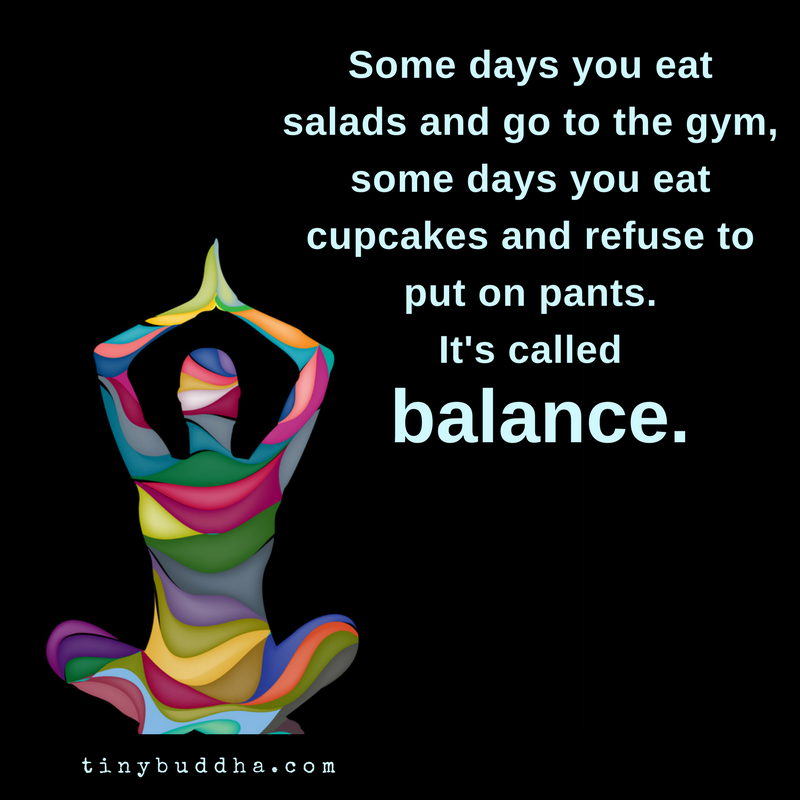
    Being passionate about our work is a gift, but when that passion takes over everything else, our self-care, family, and friends tend to get neglected. Playtime is important to recharge and we should all prioritize it as much as we prioritize our work.

    5. Judge progress in years, not weeks.

    For a while, I was thinking about growth in terms of what I’ve accomplished in the past month or two, and I felt a need to cram as much as possible into my days because it didn’t seem like much. As a result, I was living in a constant state of fear, overwhelm and a feeling of failure.  It wasn’t until I compared my current situation to where I was at this time last year, that I realized how far I’ve come.

    We don’t need to work ourselves to the bone to see progress. Slow and steady wins the race, and it’s much easier to see accomplishments built over long periods of time than in the seeds planted over just the past couple of weeks.

    I think that the above can be applied to anyone, in any type of work.

    In the end, we all want the same things: success in our work life and a healthy, happy home life. I have absolutely no doubt that stay-at-home moms, lawyers, restaurant workers—really anyone—can fall prey to hamster wheel syndrome. We must take care of ourselves, mind, body, and soul. Otherwise, we fall out of balance and fall prey to anxiety, depression, and a host of physical ailments.
    I yearn for the day that I don’t have to give so much attention to being a balanced person. However, I also want a career, to spend time with my loved ones, to go surfing and skiing, to cook my own meals, and to be able to tend to all the errands that come with life. That’s a lot to want, and so I have to put equal attention to the activities that will feed my energy.

    I have to remember that the hamster is not in charge! The wheel doesn’t have to spin twenty-four hours a day. In fact, it isn’t reasonable to think that it can. The hinges that support that wheel will burn out quickly if they don’t get a break and some oil.

    While I like to burn bright, I must remember that fires need to be fed. And with that, I’ve just reminded myself that I’m hungry, and so I stop. To be nourished so I can nourish.