Tag: balance

  • The Difference Between Easy and Hard Self-Care and Why Both Matter

    The Difference Between Easy and Hard Self-Care and Why Both Matter

    “Sometimes you’ve got to look straight into the tired eyes of the woman staring back at you in the mirror and tell her that she deserves the best kind of love, the best kind of life, and devote yourself to giving it to her all over again.” ~S.C. Lourie

    Self-care. An important concept that has become a buzzword. What does it mean? The answer… that depends on you. Google and you will find lists, articles, and suggestions for self-care tasks. These can be helpful as inspiration, but self-care is something that’s unique to you.

    I work in suicide prevention and mental health promotion. I talk about self-care a lot. I encourage others to engage in self-care regularly. I have them make lists with self-care tasks that are meaningful to them. You’d imagine I’d be an expert in self-care. Am I?  No. But I’m working on it. And I’m way better than I used to be.

    How did I get better? I started doing the hard self-care.

    What’s the difference between easy and hard self-care?

    Easy self-care for me is things like a hot bath or shower. Hiking with my family on the weekends. Texting my sister about daily frustrations. Baking sourdough. Practicing meditation.

    The easy self-care is doing the things that fill your bucket, the things you make time for without excuses and that make you feel better in the moment.

    This is the first type of self-care I focused on when I was feeling burnt out. Most of my twenties consisted of my working several jobs at a time, filling my unpaid time with volunteer work and seeing friends, going out, staying so busy that I didn’t realize I was worn out. I was known to use the mantra “I’ll sleep when I’m dead.”

    It was when my thirties hit that the mantra started to feel too real.

    I had my first child at thirty and my second child at thirty-four, and the go-go-go lifestyle started catching up to me. Working full-time, volunteering, seeing friends, never saying no, and staying busy hit different with two kids and a partner who worked shifts.

    I was tired—all the time. The kind of tired that sleep doesn’t touch. The kind of tired that had me sobbing at the dinner table because I didn’t know where I’d find the energy to do the bedtime routine. The kind of tired that had me begging my doctor for tests and wishing he would find something wrong so that I could fix whatever was sucking my energy.

    I was getting strep throat every other month. I was having stomach issues. I was burnt out and not well.  I would be so exhausted that I didn’t have energy for my kids at the end of the workday. The kind of exhausted that no number of hot showers or meditation was fixing.

    I had been to my doctor several times in eight years, explaining my symptoms, and was turned away with the rationale that I had young kids; I should expect to be tired.

    At some point, I decided that this was unacceptable. I declared 2019 to be the year of health for myself and booked an appointment with a naturopath. In my first appointment, she asked me to rate my energy levels on average each day from a scale of one to ten.

    I told her that on average, my energy levels were at a two, but sometimes I would be a three on a good day.

    She looked at me in shock and clarified: “You are a two on average, on a daily basis?”

    I said, “Yes.”

    She told me, “Honey, this is not normal.”

    I burst into tears: I felt validated; I felt seen and not ignored. Fast forward to a few rounds of bloodwork, and I was diagnosed with Hashimoto’s Thyroiditis, which explained many of the symptoms I had been struggling with, including the crushing fatigue that left me in tears most days.

    This is where the hard self-care kicked in. Hot baths, meditation, baking sourdough—all things that continue to fill my bucket and that help me to feel better—were important. But the self-care I needed to feel better in the long run, to have energy for my family, to live life instead of getting through life—the hard stuff—this is where I shifted.

    Knowing that I could make changes to how I was taking care of myself was empowering. I finally felt like I had some control over how I was feeling. And shifting my perspective to see this as a part of self-care helped me to prioritize the hard stuff.

    Advocating to my healthcare providers, changing my diet and how I exercise, changing how I rest and recharge my body, setting boundaries, choosing what I use my energy for—these are necessary choices to alter my symptoms and help me to feel better, but they do not come easily for me. Yet, they are all a part of my own self-care. If I wanted to feel well, I needed to start doing these things—and continue to do them if I wanted to continue feeling better.

    And I do feel better. I am now on thyroid medication. I know that dairy makes me feel not great. I can now feel when I’m going into a Hashimoto’s flare, and I know when I need to rest more.

    I know what exercise is helpful for me, and what makes me feel worse.

    I am honest with my partner when I need him to take on more so I can rest.

    I know the difference in my body when I am tired vs. fatigued, and I can take action for both of those feelings.

    Doing the hard self-care over the last three years has been worth the work for how I feel overall.  

    The hard self-care will likely always be something that I’m working on. Some of the hardest things have become much easier as I practice them.

    I’m much more likely to advocate for my health with my doctor than I was three years ago. I am much more confident to set boundaries at work with my hours and my capacity. I am much better at listening to my body and accepting the need for rest.

    I still have internal arguments with myself in terms of pushing myself to be productive (my trick is writing “rest” on my to-do list—it helps me reframe rest as productive instead of lazy!), but where I am now is vastly different from where I was just a few years ago.

    When I talk to others about self-care, I encourage them to think about the self-care that’s easy for them, and to also consider the harder self-care. Both are important and necessary to make sure you are honoring yourself.

    How?

    Start today.

    1. Think of one easy self-care task you can do right now (or today) that fills your bucket, and will help you to feel good, or better, in this moment.

    2. Think of one hard self-care task that you want to take on. It could be something like making an appointment you’ve been putting off or considering how to set a boundary that’s been difficult for you. It could even be something like drinking more water—that can be so difficult for some people, while it sounds easy.

    3. Be kind to yourself. Know that everyone’s journey is different. What’s hard for you might be easy for others, and vice versa. Self-care is individual, and some of us have privilege to prioritize self-care in some ways that others do not.

    It might not be easy, but you will start to see how things can start to change when you put yourself on your to-do list.
  • Alone Doesn’t Have to Mean Lonely: How to Be Happy by Yourself

    Alone Doesn’t Have to Mean Lonely: How to Be Happy by Yourself

    “Sometimes, you need to be alone. Not to be lonely, but to enjoy your free time being yourself.” ~Unknown

    First, let’s be clear, being alone is different than feeling lonely. The feeling of loneliness can arise even if you are not alone, or you can be alone and not feel lonely. It all comes down to the meaning your mind creates at that moment in time.

    In my twenties being alone was something so triggering that I would find any distractions I could come up with to avoid it: partying, unhealthy relationships, constantly being on the go and busy… Being alone meant not being good enough—not good enough to have friends, not good enough to be in a relationship, not good enough to be loved…

    I have learned over the years to truly enjoy my own company and now find being alone rejuvenating—most of the time. However, during the time of isolation and disconnection we have all lived in the past couple years, my old patterns and limiting beliefs around being alone have brought back that old, familiar discomfort with solitude on a couple of occasions.

    Even if you’ve gotten to a point where you enjoy being alone most of the time, solitude can trigger some discomfort. Let’s explore ways to stop the mind from creating unnecessary pain, and learn how to enjoy being alone in those triggering moments.

    1. Honor those feelings.

    First and foremost, listen to what is happening within. As soon as you feel that a situation triggers difficult emotions (sadness, discomfort, anxiety…), take a breath and observe what the trigger was.

    Maybe you came home from work to an empty apartment. Maybe you saw a happy family on the street, and you are going through a divorce. Maybe you spent some time on social media and saw families reunited for holidays, whereas you are away from family.

    2. Do not distract yourself.

    Take a breath and choose not to turn to whatever habits you might have developed to distract yourself from those uncomfortable feelings. Maybe you tend to open the fridge and eat, maybe you tend to turn on your mobile phone and scroll on social media, maybe you numb with alcohol, TV, or anything else.

    Just pause.

    Take a breath. Or two. Or three.

    3. Trust.

    Trust that you can handle the emotions that are there to be felt.

    Observe the emotions’ flow, the movement of energy, with no resistance. Observe with curiosity and kindness the sensations within the body. Where are they located? Do they have a certain texture or color? What type of sensations arise? Tightness? Contraction? Sweating? Your heart beating faster?

    4. Observe the thoughts and beliefs that make the feeling worse.

    Observe where you mind goes.

    Maybe you equate being alone with being miserable.

    Maybe you think being alone means “nobody loves me.”

    Maybe you equate being alone with being a failure or a burden.

    Maybe you think being alone means “I will always be alone.”

    As I mentioned before, I associated being alone with not being good enough.

    All our beliefs come from what we’ve experienced or learned in the past. Maybe your grandmother was alone and perceived as a burden because everyone had to take care of her. Maybe in your family there was a big emphasis on being social, outgoing, and fun, going out and having friends around, and being alone meant being some type of loser.

    Maybe your expectations are coming from the culture of the society you live in, expecting you to be married, having kids; and if this is not the model you are living, you might feel disappointed or you might think others might be.

    Maybe it’s the optics that bother you most. “What would people think if I spend New Year’s Eve alone? What would people think if I am not married by thirty-five?”

    5. Reframe what being alone means to you.

    Once you observe those thoughts and beliefs and the negative impact they have on your state of being, give yourself permission to choose different beliefs.

    Are those beliefs absolute truth? Or are they a construct of your mind and society? Are those constructs serving you well? Do you know someone who is single and happy? Do you know someone who chose to be alone for New Year’s Eve and enjoyed it? Are any of your single friends happy and free? Don’t you long sometimes to be alone, quiet, at peace

    Are you ready to let go of those beliefs? If so, take a breath and make the decision that those beliefs are gone for good. Visualize them dissipating into the air as you breathe out.

    Maybe reframe being alone as being free. Doing anything you would like to do, when you want to do it. Maybe being alone means being strong and independent.

    Maybe being alone means being quiet, being at peace. Maybe being alone is simply giving yourself time to rest and rejuvenate.

    The truth is that being alone only has the meaning you create for it, so choose a better belief. A belief that serves you right here, right now.

    6. Do more of the things that energize you.

    Now that you’re not attaching a meaning to being alone, learn to enjoy your own company by doing things you love to do, on your own.

    • Go for a walk in nature. Nature has a way of bringing you back to your true self, your natural self, to a state of balance and peace. Nature is non-judgmental. Nature is beautiful. And you are nature. So spend time outside. In winter, in summer, on a rainy or sunny day. Breathe, look, observe, feel.
    • Read an inspiring book from one of your favorite authors or spiritual teachers.
    • Listen to the music you love and give yourself permission to dance.
    • find a guided meditation that you truly enjoy and cultivate a peaceful, elevated state of being.
    • Move your body. Yoga is one of my favorites because it is a full mind-body-spirit practice, but anything from rock climbing to dancing could work—or any type of exercise you enjoy. Get the energy flowing.
    • Sign up for something you always wanted to do or learn, online or offline, like painting classes or singing lessons.

    Being alone doesn’t have to mean being lonely if you stop judging yourself and let yourself enjoy your solitude.

  • Feeling Burnt Out? How to Slow Down and Reclaim Your Peace

    Feeling Burnt Out? How to Slow Down and Reclaim Your Peace

    “Burnout is a sign that something needs to change.” ~Sarah Forgrave

    Fifteen years ago, my doctor informed me I was in the early stages of adrenal exhaustion. In no uncertain terms, she warned that if I failed to address the stress I was under, my adrenals might not recover. This was hard to hear, but it forced me to face the fact that eating well, exercising religiously, and keeping up with the latest research on wellness was not enough.

    I had to ask myself a defining question that day: Am I ready to go down with the ship?

    At the time, I was teaching an average of fourteen classes a week at my wellness studio. I had been exceeding my threshold for so long that I had pain in every joint and muscle in my body. I was completely exhausted, physically, mentally, and emotionally, but slowing down or cutting back was just not an option.

    Or so I believed.

    The problem was that every time I would even begin to consider addressing the reality of my situation, my head would instantly fill with all the reasons I couldn’t possibly stop.

    There was the dream for a business I couldn’t imagine giving up. The huge amounts of time and money I had invested in realizing that dream. And most of all, there were the clients I was serving, a community of amazing women I loved working with and didn’t want to let go.

    Meanwhile, my thirty-year marriage to a man struggling with an opioid addiction was falling apart. My kids were distressed. My body was completely breaking down, and my life had become a tangled mess of fears, conflicted feelings, and obligations I just didn’t have the heart for anymore.

    As the growing pressure to do something about my situation increased, my anxiety increased right along with it. Talk about a pressure cooker!

    I couldn’t even imagine the courage I would need to tell my husband I wanted a divorce. And whenever I got anywhere close to that courage, my mind would flood with anxiety over the uncertainty.

    How would he react?

    How would it affect my children?

    Where would I live?

    How would I ever rebuild my life?

    It felt as if I was being buried alive under a growing mountain of complexity with no way out. So, the pain continued to get worse, and I kept trudging forward, blindly hoping against hope that somehow it would all work itself out (without changing anything about the way I was living).

    Growing up, I had learned to take the offensive and power through obstacles. I had always seen myself as someone who could do anything she put her mind to. Now I found myself stuck between the person who thought she was responsible for everyone’s experience but her own and the person I might actually become if I started making self-valuing, authentic choices.

    Then one morning, the dam broke.

    I was walking up to the door of my studio to teach the 6:00 a.m. class, asking myself (like I did every morning) how I was going to get through the day with all the pain I was in.

    As I turned the key in the lock of the business I had dreamed of creating for over a decade—the business I had built out of everything I believed in and everything I knew I wanted to offer to the world—I could see the consequences of my resistance to change about to swallow me whole. I could see that my fear of change was completely blocking my ability to see anything past that.

    And suddenly… everything went quiet. All the reasons for not stopping that typically flooded my mind just fell away.

    The only thought I had in that moment was, The way you stop… is you stop.

    I didn’t just hear these words; I felt an absolute acceptance of them. One minute it was impossible to stop; the next, it felt like the simplest thing in the world.

    In the quiet of this moment, I became so aware of my own breath that I felt it everywhere in my body. For the first time in as long as I could remember, I stopped. And when I did, I found the courage to listen to my aching heart.

    I felt a depth of longing for peace I had never allowed myself to experience before. I stood there breathing and felt an acceptance of the reality of everything that was happening wash over me. The pressure to control it all was gone!

    My mind was clear, and my body felt relaxed even as I faced the same facts of my situation, but without all the usual stories and justifications overwhelming me. It felt like a miracle.

    Suddenly the door to my studio, which I had been walking through for years, felt like the door to an entirely new way. Standing there with my key in my hand, in the profound quiet of that moment, I was flooded with a new sense of possibility.

    As I set up for the 6:00 a.m. class, I stayed focused on my breathing and continued to listen to my body. It became clear to me that when I wasn’t being honest with myself, my body responded by restricting my breath. And I was able to see how all the years of unaddressed tension were expressing themselves as escalating physical pain.

    A New Direction

    That morning, I didn’t just take a first step toward interrupting the old way. I began heading in a new direction.

    But it still took me a year and a half to wind down my commitments and extricate myself from the studio. This was a massive transformation involving every aspect of my life, but it began with just one step—accepting that the old way was broken. Once I accepted this wholeheartedly, I moved to the next step.

    I had a friend who had moved back to town to take care of her aging mother. She was looking for a place to establish her yoga school and had already been teaching a couple of classes a week at my studio while she looked for a more permanent place. On that pivotal morning, after I taught the 6:00 a.m. class, I called my friend and told her that I was stepping down and that she could hold all her classes there.

    I continued to pull back, one step at a time, constantly asking myself, “What can I let go of today?” (One day, the answer to this question was “my hair”!) Eventually my friend bought out my lease and took over completely.

    This is not to say I did not continue to wrestle with self-doubt. But my intention to slow down and to stop ignoring my tension became my guiding compass point.

    In the years that followed, I relied on this compass to dive more deeply into the mind-body connection and what it truly means to take care of myself and be happy. My primary tool was the simple mindfulness practice of paying attention to my posture (whether it was tense or at ease) and my breath (restricted or free). I found strong community for this priority in the study and practice of Qigong, Tai Chi, and Continuum.

    In the process, it became clear to me that to access the wisdom within, the first thing I had to do was slow down and calm down. This priority allowed me to be honest about the pressure I was putting on myself to keep doing things I no longer had the heart for and to recognize the emotional reasons I was hanging onto them.

    We all come to thresholds in our lives, times when we’re faced with tremendous pressure to change (or go down with the ship). When we refuse to change, the only other option is to increase our tolerance for suffering while convincing ourselves that it’s not affecting us as much as it really is. In this fantasy we tell ourselves we’ll make it (somehow) if we just keep powering through.

    I’ve come to realize that it’s not about avoiding stress. It’s about increasing your ability to remain present and functional while stressful events are happening. The calmer you can be in the face of stress, the more resilient you’ll be and the less likely you’ll be to end up teetering on the edge of complete burnout like I was.

    When we practice being present, we’re able to make more accurate moment-to-moment choices. We’re able to slow down and take an honest look at what needs to change. Which isn’t to say that it’s going to change in a minute, or a day, or a week, or even a year. The truth is that lasting change can often be a very gradual process.

    How to Stop

    I was able to stop by establishing new priorities. I made it a point to slow down, calm down, and really be honest about what I could eliminate. My process was essentially as follows:

    1. Stop. (For the moment, anyway.) Acknowledge that before a new way can show itself, you have to find a way to stop the old way.

    2. Acknowledge the pain you are in—emotional and physical.

    3. Ask what you can let go of now and in the near future. (If the answer is “nothing,” then ask again.)

    4. With “something has to give” as your mantra, what can you let go of next?

    • Consider what you are physically and mentally capable of doing right now. (If the answer is “everything, if I push myself,” then ask again.)
    • Consider your life priorities and what you need to make room for.
    • Consider what you no longer have a heart for.
    • Consider that what you are holding on to tightest might be what really needs to go. Letting go of smaller things first often helps to relax your grip on even your strongest (and often unhealthy) attachments.

    5. When the “yes, but…” voice shows up, be aware of it and do your best not to listen or take action based on what this voice says. This is the voice of your attachment to keeping an unsustainable system on life support. It’s fueled by your fear of uncertainty because if you stop what you’re doing, you’re not sure what will happen (and your “yes, but…” voice is certain it will be awful!).

    6. Gather tools to help yourself detach enough from this voice to move toward accepting reality and make the changes needed to live a more authentic and satisfying life. (The Serenity Prayer is a good one.)

    7. Remember that change is a process, not a single event. Start small, then graduate to bigger things that need to go.

    I hope you’ll continue to play with the concept of stopping (the old way) to start (a better way). Every meaningful change hinges on your ability to interrupt the old pattern. You’ll learn to rely on this ability the more you practice using it.

    Also keep in mind that you won’t necessarily know anything about the new way when you stop the old one. Change usually happens very slowly, and patience can be the hardest thing.

    Good luck, and feel free to reach out with questions or comments!

  • 3 Things I Realized When I Stopped People-Pleasing and Let Myself Receive

    3 Things I Realized When I Stopped People-Pleasing and Let Myself Receive

    “Until we can receive with an open heart, we are never really giving with an open heart.” ~Brene Brown

    The honest truth about needing to please is that we do it to make other people happy. We will sacrifice everything and anything to put a smile on another’s face and lighten their load, while ours keeps building.

    The only problem is that while helping others makes us feel good, it’s almost addictive until we are burnt out. And giving and pleasing others starts to come from a place of resentment.

    I’ve been there!

    There was a time when I used to come up with a thousand reasons why I couldn’t leave the house. I was desperate to get to a yoga class and claim an hour away from being a mum, wife, friend, and entrepreneur.

    But instead, I prioritized keeping my kids happy and did everything I could to avoid the onset of a tantrum and also made sure my husband sat down to a delicious, home-cooked meal each night. And when the kids were napping, I would use that time to do a little work.

    The routine started to get boring. I complained daily. I was grumpy and irritable.

    Yet the days kept coming and I started to drag my feet. The tasks were mundane and never-ending, and they started to get on my nerves. I’d lash out at the washing machine or slap together a half-assed attempt at dinner. And I wasn’t just overextended and resentful in my home life. My clients were taking advantage of me, and my friends sucked my energy dry.

    I kept showing up for everyone around me—striving to keep the peace, to keep them happy, while I was worried that I might let them down or wasn’t living up to their expectations. Yet with a whole lot of hindsight, I discovered that I had placed all this pressure on my shoulders myself.

    Denying myself a sixty-minute yin yoga class was the stupidest thing I had ever done. It still sounds ridiculous now. But at the time, I couldn’t see any solutions. I had tunnel vision and it didn’t revolve around me.

    I felt like I didn’t deserve the break.

    I felt responsible for everyone around me.

    I was unsure what would happen if I left our house for an hour and what I would walk back into after leaving my two young kids alone with my husband.

    Each afternoon, I was an emotional wreck by the time my husband came home. Being the problem solver that he is, he encouraged me to go and find a class—as if it was that simple. I thought, “What does he know anyway? He has no idea about all the things I still have to do.”

    But I eventually realized he was right. I needed a break, and I had to get out of my own way and take it.

    Finding a class was easier than I had imagined. There were loads to choose from and all kinds. I settled on a 4:30 p.m. class on a Friday, that was only a five-minute bike ride away.

    I remember walking through those yellow doors to find only me, two other people, and a smiley yoga teacher.

    Ahhh, I relaxed. I rolled out my mat and lay down because it was a yin restorative practice. We lay there for what seemed a lifetime. I spent it fighting with my mind to not think about what might be happening at home, my to-do list, my kids, the grocery list, my work… Thankfully, we finally got moving and I started to tune into the music.

    The class was literally six poses of deep stretching and rest, and it was a challenge to surrender instead of extending each pose.

    My mind focused on how to allow my limbs to soften even in a standing pose that we held for a good five minutes. Not collapsing took every ounce of concentration I had.

    I took big belly breaths, in to fill my lungs and out to gently soften.

    In the final fifteen minutes we had a deep meditation (savasana), with the yoga teacher coming around to us individually, massaging the back of our necks to the bottom of our skulls. She finished it off by pressing her two warm hands down on my shoulders as if she was pushing me back into the ground. Tears began streaming down my face as she walked away.

    I had fully surrendered and left my mind to be in the present moment, and her touch released the stress and burden I was carrying. It was an intense moment, and I felt joyful and at peace. I had literally forgotten that I had to return to my family only minutes later.

    That class changed me as a mother and a wife.

    I went back every week religiously after that. I saw the power of connecting with my breath and myself. Because that one hour reset each week was enough to fill up my cup and change how I was showing up for myself and others.

    My daily chores didn’t bother me anymore. I had more love to give my kids and partner. I had a renewed sense of energy. When someone asked for help, I had the capacity to give because I wanted to instead of seeing it just as another task I had to do.

    Once I learned to receive, which meant surrendering my responsibility and need to control and allowing myself a little love, I discovered that I often denied myself other things, like going out for walk or catching up with friends. And this is where I had to lean in deeper and question what it means to receive. Here is what I realized.

    Accepting Help

    It is not a sign of weakness to ask for help or receive it, and I don’t need to prove myself or my worth through giving.

    I really felt like I was doing life alone, taking on the responsibility of everyone around me and driving myself into the ground. People would make kind gestures to help, but I would often shut them down with an “I’ve got it covered, thanks.”

    The day my husband stepped in to wash the dishes after I shared that I had a looming deadline, he practically threw me out of the kitchen. I felt so guilty, like I should be the one doing them, not him.

    What I thought was a one-time deal has now lasted three years. It has lightened my load, and our relationship has been better because I no longer feel like I’m the one doing all the things.

    Accepting help is receiving an energetic exchange with someone that wants to offer support. So take it.

    Acknowledging Compliments

    Too often, I would deflect when someone would say something nice to me. I found it uncomfortable, and it made me question their ability to see what was really happening.

    I didn’t feel like I deserved a compliment because I didn’t see myself like others did. I didn’t feel worthy of being praised, so I brushed it off with, “No worries, it was nothing,” “I would do it for anyone,” or “This old thing? I bought it on sale five years ago.”

    Learning to receive a compliment showed me that I could be honored and celebrated for who I am and that there was nothing to be ashamed of. I thought that people who received compliments looked nothing like me and were doing more important work than little old me. But I learned that compliments are praise, and we all deserve to feel seen, heard, and acknowledged.

    Realizing I’m Not Responsible for Everything

    Here was my greatest lesson, which was letting go of my need to control all situations. The responsibility I carried, because I felt it was my job to make everyone happy, was costing me my physical and mental health along with my relationships.

    When I released the control, it created space for things to happen without my interference. It provided space for me to see how others could step up and take responsibility, for mutual needs and their own. It gave me permission to invest in my own well-being.

    Instead of over-giving, fixing, and manipulating, I stood back. From here I could see that life is a two-way street where we exchange our energy with one another. This allows us to give from a full, nourished heart, and this is much more satisfying than giving from a sense of fear and obligation.

    Opening our hearts to receive eliminates our tendency to over-give. When we give without our full presence, we are not showing up fully for ourselves or for other people.

    We all love to support the people we care about, but we need to receive just as much as we give, creating a balance that never leaves us feeling drained or that we “should” be doing something.

    Do you find it hard to receive? What helps you let go of control and fill your own cup?

  • Why It’s So Hard to Just Rest and Why We Need to Do It

    Why It’s So Hard to Just Rest and Why We Need to Do It

    “If you don’t give your mind and body a break, you’ll break. Stop pushing yourself through pain and exhaustion and take care of your needs.” ~Lori Deschene

    In November of 2021, my autoimmune issues flared up. My doctor and I are still unsure which of my conditions—rheumatoid arthritis or fibromyalgia—was the culprit, or if they were acting in cahoots, but the overall achiness and debilitating fatigue were a solid indication that something was more active than usual.

    I woke up tired, needed naps, and often ran out of spoons—a phrase familiar to many with chronic conditions, based on a gorgeous essay called “The Spoon Theory” written by Christine Miserandino.

    While I may not know the reason, the one thing that was certain was that my body was demanding rest.

    Do you have any idea how hard it is to just rest?

    I mean it.

    Knowing that I needed rest did not grant me the immediate ability to actually pull it off.

    I would sit down to watch a show and find myself trying to multitask. Or I would attempt to put off a nap like a recalcitrant toddler. Instead of throwing myself on the floor in a tantrum, I was trying to “push through” so I could finish typing an email or move a load of laundry into the dryer.

    Even with a body and brain that were crying out for rest, it was difficult to allow myself to do it. In the end, I had to reparent myself in order to be able to rest, enforcing stopping times and rest periods.

    Those of us in the western world, especially here in the United States where I live, are programmed to be productive. We are told—and we tell ourselves—all of the things that we “should” be doing in order to be busy. Work in all its forms, from job tasks to errands to chores, is what we are “supposed” to do.

    We are conditioned to be productive and to stay busy from the time we are young. We hear people say things like “I’ll rest when I’m dead” and “no rest for the weary.” We are exhorted to “pay our dues” and “put in the work.”

    If we were somehow fortunate enough to avoid the overt messaging about staying busy and working hard, most of us received those messages indirectly by watching the people in our lives.

    We watched our parents come home from work with arms full of grocery bags, only for them to fix dinner while putting groceries away. Or we were asked what we were doing and made to feel wrong if our answer to the question was a child’s honest “nothing.”

    Long after dinner, once everything was cleaned up or tidied and it was “time to relax,” we watched our parents do additional work, both paid and unpaid. Or we watched them knitting, ironing, or puttering around the house.

    We have been told that we have to “work hard” in order to succeed. That “nothing good comes easy.” That we shouldn’t stop when we are tired, but only when we are “done.”

    Sitting down and resting is not prioritized. Those who decide to rest often must justify it: they have to have earned the right to rest.

    Rest doesn’t only mean sleep, although sleep is a large part of it. It also includes sitting comfortably doing not much of anything at all.

    It could mean listening to music or watching TV or meditating. Or perhaps working quietly on a jigsaw puzzle or craft or reading a book or article. Maybe playing solitaire, or looking out the window, or journaling.

    In the fall, as I was struggling with my autoimmune flare, it occurred to me that I should rest more. I was so accustomed to overriding my body’s signals that I hadn’t realized how far I’d pushed myself.

    When I tapped into how my mind and body were truly feeling, I was shocked to find that my mind and body were almost buckling, on the edge of collapse.

    I waited to notice what was happening until I’d reached the point where I was unable to do many tasks in the day at all. A banner day during that time might have involved doing a single load or laundry or cooking dinner for my husband and me.

    I was so fixated on staying busy that I could no longer assess my need for busyness in an honest manner. I had lost the ability to tune into my body to find out if it needed to move and stretch, or even to stretch out and sleep.

    Had I continued to push ahead for much longer, I’m certain that I would have fallen ill. As it was, I was dealing with brain fog, fatigue, and both joint and muscle pain, all of which made life unpleasant.

    It is easy to see now that I should never have allowed things to get to that state, but fatigue and pain and brain fog have a way of teaming up on you so that you can’t clearly assess much of anything. Nevertheless, when I hit the edge of collapse and burnout, I realized that some serious rest was in order.

    I essentially cleared my calendar for at least three weeks. I cleared my work calendar of appointments, scheduled some brief blog posts and emails, and took time off.

    It was torture at first.

    For one thing, my husband was still getting up and heading out into the world to teach tai chi and qigong classes, so he was modeling “proper” work behavior. For another, I discovered that I was incapable of “just resting.”

    I had to relearn how to listen to my body to discover what it needed. 

    I also had to reprogram my thoughts about rest as being an inherent right that we all hold, and not a reward for productivity.

    I also had to learn how to actually do it.

    I did all of the things I listed earlier as forms of rest, from naps to puzzles to sitting quietly. It was ridiculously difficult.

    I had to almost force myself to limit myself to single-tasking, which is doing one task at a time. That was especially hard if the task was mechanically simple, such as watching a television show. My inner monologue would kick up, chastising me for “just sitting there,” urging me to “be productive.”

    In those moments when I decided that rest meant watching a movie on TV, I sometimes sat on my hands to make sure that I didn’t pick up my phone or a crossword puzzle or something else. I often put my phone on silent and deliberately left it in another room, just to reduce temptation.

    Full disclosure: Even with taking affirmative steps to single-task, I didn’t always manage. I did, however, learn through reinforcement that there was nothing likely to arise in an hour or two of time that required me to give up on resting and take immediate action.

    I realized that in many ways, I was retraining my nervous system to allow itself to relax. It was so used to being in a state of alertness that resting and allowing it to have some time off took some getting used to.

    What I learned when I started to budget rest into my days was that I could start to tell more easily what signals my body was sending. It became easier to converse with my brain and body to find out how they were feeling and what they needed.

    It sounds a bit dissociated when put that way, but I have never felt more integrated than I do now. At any given moment, I can pause, tap into what I am feeling (mentally and physically), and act on my own needs in ways that are more nurturing and caring than before.

    When I realize that I am losing focus on a project—perhaps while typing a blog post or planning a workshop—I no longer push through. Instead, thanks to months of practice, I pause and check in with my brain and body. Thanks to practice, I can quickly ascertain whether I need to take a simple break, to get up and walk around for a bit, to take a walk outdoors, or to stop for the day.

    I am learning to embrace the idea that rest is an inherent right, not something that needs to be earned. It is no longer something that occurs only once I have pushed myself until the point of collapse. 

    As it turns out, the more I lean into rest and build it into my days, the more energy I have to actually accomplish all the things I want to get done in life.

    When I add time off or breaks during the day, I find I have better focus when I need to be working on a task. When I include rest in my days, I have the energy to exercise in the morning and also make a good meal for dinner.

    I invite you to join me in adding actual breaks into your day, where you do nothing “productive” at all. No catching up on phone calls or emails or texts—just rest. I’d love to hear if and how it works for you.

  • Obsessed with Healthy Eating? 9 Things I’ve Learned Since Recovering from Orthorexia

    Obsessed with Healthy Eating? 9 Things I’ve Learned Since Recovering from Orthorexia

    “Sending love to everyone who’s doing their best to heal from things they don’t discuss.” ~Unknown

    I used to obsess over healthy eating, and I mean OB-SESSSSS. I spent virtually every waking moment thinking about food. What should I eat today? Is there too much sugar in that? What will I eat when we go out next week? Should I claim that I’m allergic to gluten?

    Although I didn’t know it at the time, I was suffering from orthorexia (that is, an unhealthy obsession with healthy eating). Yes, I fully agree that eating nutritious food is good for you—there’s few who would deny that—but when you are thinking about food non-stop, something has definitely gone awry.

    It all started innocently enough. My daughter (who’s my youngest) was about a year old, and I was ready to “get back in shape” and reclaim my pre-pregnancy weight. However, since I was against the idea of fad diets, I was looking for something else.

    That “something else” turned out to be wellness culture, and I absorbed it all. I followed several influencers who said we must eat in a certain way for ideal health, which often meant organic, gluten-free, dairy-free, and absolutely no sugar. The influencers also used a lot of pseudoscience to support their ideas, and I totally fell for it.

    With the idea of eating in a certain way for optimum health swirling round my brain, I decided to follow a thirty-day kick-starter healthy eating plan. It was all about focusing on health (and not weight loss). Easy enough, hey?

    There was no counting calories, macros, or weighing food. No points. It was just about eating nutritious, wholesome food and having a protein shake for breakfast. What could be the harm in that?

    Well, it was probably the long list of “not allowed” foods that you cut for thirty days (such as sugar, dairy, gluten, and soy)—essentially an elimination diet. The idea being that after thirty days you reintroduce the foods to help you identify your food intolerances. See? It’s all for health! Or so I thought…

    And, as my “clean eating” regime was underway, I started to get a lot of positive feedback.

    You’re so disciplined! How do you eat so healthy? Wow, you look really well.

    It was alluring.

    This was my slippery slope and the beginning of an unhealthy obsession with food.

    Three years in, my life looked something like this: I claimed a gluten and dairy intolerance and was experimenting with being vegan, all for the sake of my health. Unfortunately, there’s not much food left to eat on this kind of restrictive diet.

    Every few months I would follow an elimination diet (again) and would cut out all sugar, alcohol, caffeine, and soy (alongside the dairy and gluten that I was no longer eating). I started avoiding social events because the list of “safe foods” was getting so complicated; it often seemed easier to stay home.

    All of this in the name of “health.” Except that it wasn’t healthy.

    I was missing social events and avoided spending time with friends, my mental health was suffering, and I was developing an extremely disordered relationship with food.

    While orthorexia isn’t classified as an eating disorder according to the Diagnostic and Statistical Manual of Mental Disorders, some healthcare professionals believe that it should be. And, personally speaking, my relationship with food was starting to remind me of the time when I’d suffered from an eating disorder back in my twenties.

    I had a series of aha moments that finally woke me up to the fact that my behavior was not at all healthy and my extreme approach to food was doing me more harm than good.

    It was when I started feeling embarrassed going to someone’s house for dinner and sending a long list of foods I couldn’t eat.

    It was when I started to notice bingeing behavior: I’d binge on five sweet potato brownies because they were supposedly “healthy.” I’m sure that if I’d just had access to a chocolate brownie, I might have only eaten one

    It was when I was doing my elimination diet so frequently, I had to make lots of excuses about why I couldn’t join evenings out.

    Eventually I realized that my old eating disorder had morphed into orthorexia.

    Thankfully, I had the resources to make a quick recovery, and my relationship with food has done a full 180 turn… In hindsight I can see clearly how very disordered my thinking, feelings, and behavior were.

    With that in mind, here are nine lessons I learnt from my brush with orthorexia. My hope is that if you question some of your own food behaviors, you seek help before too much damage is done.

    #1 There is no need to restrict food groups from your diet.

    Unless you have a medical reason to do so (like coeliac disease), restricting food groups from your diet is unnecessary. Nope, you don’t need to be carb free; in fact, research shows that in the long term, a low-carb diet is actually bad for you.

    #2 A flexible approach to eating is best.

    You just don’t need overly rigid food rules. My food rules were too rigid, and I tried to eat perfectly all the time. Perfectly to me was organic, gluten-free, dairy-free, and absolutely no processed sugar. Alongside that, I stopped eating fruit because it has sugar in it. So, for a while, the only fruits I would eat were berries. Bananas, red apples, grapes, and tropical fruits were totally out of the question.

    The problem with rigid rules is that all the fun things in life become stressful, like holidays, eating out, and going to a friend’s house, so flexibility is key.

    #3 If you get overly upset when food rules are broken, something’s wrong.

    I felt compelled to stick to my food rules, and I would feel emotional, distraught, and upset if I broke them. Like I had failed. I remember once crying in a French supermarket on holiday because I couldn’t buy the organic and gluten-free versions of food I wanted. It’s kind of missing the point of a holiday, isn’t it?

    #4 Food is NOT just fuel.

    Have you heard the quote “food is fuel”? It’s bandied around everywhere in the wellness and fitness spheres. But food isn’t just fuel. It’s about so much more, and this kind of thinking limits our potential to enjoy food to its fullest potential.

    Food can be comforting; it can be a time to connect with friends and family. It’s nourishing for our bodies, and also nourishing for our souls; it can be nostalgic or related to our culture. A cup of tea and a biscuit can remind you of your granny, while a single meal can take you back to your childhood.

    #5 All foods can fit in a balanced diet.

    Yes, even sweets, chocolate, and pastries. It’s totally unsustainable to cut out “bad” foods for the rest of your life. I’ve also found that you’re more likely to crave these “bad” foods if you tell yourself you can never eat them again. When all foods fit, the ice cream comes off the pedestal and you can keep it in the house without bingeing. It’s a total revelation.

    #6 It’s worse for your health to stress about sugar in food than to actually eat a damn cookie.

    I used to stress about the sugar in food constantly. I would read every food label when shopping; I would calculate grams of sugar in things like raisins; I would only eat a green apple and not a red apple (too much sugar, apparently). Yup, I was one of those mums who cooked gluten-free, dairy-free, and sugar-free cakes for the kids’ birthdays. Yuk! Poor kids.

    I’ve learned the stress of worrying about food is way worse than just eating the food itself. So relax, and enjoy that cookie.

    #7 “Health” is more than just the food we eat.

    Health is not just about what we eat; it’s way more than that. It’s about your genetics and your access to nutritious food and decent healthcare, which means it’s associated with your income level.

    Also, what you consider “healthy” is different to what I consider “healthy.” Maybe my “health” is about being able to run around after my kids without feeling breathless, or improving my flexibility to keep my body feeling supple.

    Your health might be about improving stamina and strength to run a marathon, or about sleeping seven to eight hours a night.

    #8 Social events shouldn’t be awkward.

    Quite the opposite. Social events should be fun, or relaxing and enjoyable. Not fraught and stressful. I had many an awkward conversation with hosts about things that I couldn’t eat.

    I would avoid events when doing my cleanse, or re-arrange things around these months. And if I did venture out, I would endlessly worry about what I’d eat, sometimes calling the restaurant ahead to see what they had on the menu to fit my rigid rules. Or I would claim allergies so I could work out what was gluten-free and dairy-free. #awkward

    And finally, if you are a parent…

    #9 Your kids are watching you.

    You might not say anything to your kids, but they are watching you. They notice what you do, reading those labels, and how you talk about food. They see when you skip the fun meals or cook something separate for yourself. They see when you are down on yourself and your body.

    They are watching. Everything.

    If I’m truly honest, this was the biggest driver for me to heal my relationship with food. The last thing I wanted to do was pass my disordered eating down to my kids.

    Finding food freedom was the best thing that happened to me. I no longer fall to pieces in a restaurant or on holiday. Eating is no longer a stressful experience. I love food for all the things the eating experience gives us—connection, chats, family, and friends. I hope you can too.

  • The Two Sides of Gratitude: When It Helps Us and When It Hurts Us

    The Two Sides of Gratitude: When It Helps Us and When It Hurts Us

    “When life is sweet, say thank you and celebrate. When life is bitter, say thank you and grow.” ~Shauna Niequist

    Imagine if you had a tool that, with no effort or change on your part, could cast a glow around you, exposing hidden gems within your everyday life.

    You do! It’s called gratitude.

    It has the power to light your way through tough times. And it can multiply the good. Of the many tools I use daily, I love gratitude the most. It is so simple to implement and immediately effective. It’s a powerful way to change the world—through seeing, not doing.

    I’ve invested a lot of thought, time, and deliberate action into creating the life I want. But building a life is one thing; relishing it is another.

    Having gratitude allows me to squeeze every last bit of joy from what already exists around me and within me, creating more with no extra effort. Few things in life are simple, practical, and magical.

    Without gratitude, our tendency is to focus on what’s missing. Life is what we choose to see. Without gratitude, we might waste a lifetime searching instead of enjoying.

    Using this practice keeps me out of dark places. There are days when I find myself in an emotional fog for reasons I cannot explain. I used to dwell in those moments, or days, weighted down and powerless. Though I wanted to feel like myself again, I would retreat within rather than allow myself to engage with the world and resurface.

    Gratitude has forever changed that. I possess a knowing (stemming from a consistent gratitude practice) that gifts are all around me, and I use them like a ladder to climb out of my hole. Gratitude shows me I always have choice.

    I choose to want to feel better and then I ask for what I need—a hug, time, inspiration—and then I allow myself to move on. Spending so much time in awe and appreciation for life allows me to see beyond my temporary state. I no longer confuse my present state with my true state of being—joyful, grateful.

    Gratitude doesn’t eliminate all the icky feelings and thoughts, but it absolutely makes me more resilient. It is my springboard. Not only am I aware of my shifting mood, but I actually take the action I need to take in order to come back to my true self.

    Gratitude and I go way back. As a first generation South Asian, it was instilled in me to always see the blessings around me. My family worked hard to give me a leg-up in life: a life with love, education, and opportunity.

    Gratitude also complements my positive nature. But it took me years to realize gratitude also appealed to my younger self because I was a pleaser, a peacemaker, a don’t-rock-the-boater. It turns out gratitude was also a great tool to keep me small. I used it as a ceiling.

    As my dream job turned into a nightmare, I confused fear for gratitude. I could not bring myself to seek a solution because it felt ungrateful. I was so thankful for the opportunity that I endured a hostile work relationship with a superior that belittled and disrespected me. I am not a complainer, I told myself. This is the price I pay for my dream, I thought.

    Gratitude allowed me to settle for less.

    I have avoided conflict by exercising gratitude. In difficult situations, it gave me an out. Have you ever said or thought the following?

    “It could be worse.”

    “At least they didn’t …”

    “I’m so grateful for this job/partner/friend. Who am I to complain?”

    In all of these scenarios, I wasn’t wrong to see the upside. Things absolutely could’ve been worse. But they also could have been opportunities to practice enforcing boundaries, to see my own self-worth, and to imagine new possibilities.

    I wasn’t able to see it then, but it’s clear now. Gratefulness is a powerful tool, but it should never be a way of accepting less than we deserve. It should amplify us, not diminish us. It should be our springboard.

    Gratitude is a way for each of us to find joy, not a way to make excuses for others.

    Yes, I have a loving family, but that’s no excuse to allow or accept disrespectful behavior. Yes, I work for an amazing company, but no, I don’t have to accept a toxic work environment. Yes, I love my partner, but I am worthy of a healthy relationship and love.

    It can be so easy to slip into limiting beliefs, tricking ourselves into thinking we are grateful when we are actually unhappy. Many of us have more than we need and are aware of how many are in need in our communities, near and far. But we serve no one by making ourselves small.

    How do you know when gratitude is limiting or a springboard? Know this: More is never made from less. Putting yourself below someone won’t create lasting joy, love, peace, or happiness.

    Practicing true gratitude requires understanding that we are equals. No one is better. If you hold yourself to the same (not higher or lower) standards as someone else, then gratitude will be your springboard.

    Gratitude is also a way to find what you’re looking for within your current life. It often requires little to no change. When we’re unhappy or unfulfilled we often think we need to get rid of things, maybe start from scratch somehow.

    But the truth is, what we’re looking for is often already in our lives. We must simply possess (or practice) the ability to see it.

    Gratitude also slows things down for me which, in this day and age, is precious. Being able to identify the gifts I have means knowing what’s important to me and taking the time to cherish them. It’s the ability to find my why—why I work hard, why I sacrifice and give of myself… why I am here.

    That’s a lot to gain from one simple act of seeing. How grateful I am to gain so much from a simple practice.

  • A Guide to Saying No Without Guilt: 7 Steps for People-Pleasers

    A Guide to Saying No Without Guilt: 7 Steps for People-Pleasers

    “You can be a good person with a kind heart and still say no.” ~Unknown

    Why is it so hard to say no? The uncomfortable buildup of emotion I felt while contemplating dropping the ‘n’ word used to have me rushing around town, home, and work for the people I loved in a heartbeat.

    I remember one day I was on the cusp of complete overwhelm with the responsibility of being a mother, wife, sister, daughter, friend, and business owner. Hanging up the phone with a potential new client who was keen to work with me, I was wired. I had jumped the gun and said yes, when I knew all too well that this was a bad idea.

    I jumped in my car to go pick up my kids from school, slightly perplexed at what had just unfolded in that thirty-minute conversation. It went from me asking questions to see if we were a good fit, to things being turned around when the potential client questioned my ability, to being locked in to meet in person a week later.

    Yet, something didn’t feel right. Still, the thought of landing them as a client was exciting, as it brought in a sizeable paycheck. And it gave me a sense of purpose knowing that I could help them, especially since they’d had bad luck in the past. My past track record of helping people is pretty expansive; I will do just about anything for anyone if I can.

    Sending over the invoice and contract with my two kids running around me wildly meant that a fifteen-minute task required an hour. Finally hitting send made my stomach drop. I questioned “How did this all happen?”

    Reality hit when one of my kids fell to the floor with a flood of tears—I now needed to get back to my day-to-day tasks.

    My life was busy, and I was desperate to get to my yin yoga class. My hubby was running late from work, the kids’ dinner was on the go, while my mate was on speaker phone.

    I shared with her how this new client wanted me to drive an hour for our sessions at no extra charge, and that somehow, I had agreed. I felt totally taken advantage of and my alarm bells were going off, but I wanted the extra income.

    She asked me, “How would you feel if you didn’t say yes?”

    I replied simply, “Bad, because I know I can help them.”

    Resting my head on my pillow that night, my mind whirled with thoughts about “what if?”. Is it too late to change my mind? What if they’re amazing people and I’m just scared because I felt a little resistance? I don’t really want to have to drive. Why did I agree to that? It’s my whole day out the window.

    The day before our meeting, I noticed that the invoice and contract still had not been paid or signed.

    Then my kids’ school decided they were throwing a last-minute sports day, which I really didn’t want to miss. My heart was loud and clear. My daughter won. I decided to call it. These people had not paid or signed, and it was twenty-four hours until their meeting.

    I emailed them to cancel our meeting and suggested they find someone else for the job. It took me a good hour to write that short, to-the-point email, and it took me another hour to hit send because I felt so guilty for letting them down. I wished I had just said no at the beginning. Instead, I took a week to stew.

    Within five minutes, our phone rang. I had forgotten that they had our number, which I never give out, but they’d insisted that we speak that way. I was completely caught off guard as a woman’s voice started questioning why I would do this at such late notice.

    Considering her tone, I felt under attack.

    I explained about the unpaid invoice and unsigned contract and then shared how I wanted to be there for my daughter’s unexpected sports day. She grilled me for ten minutes. The only thing I could say was “I apologize,” which I had to repeat over and over until she abruptly hung up the phone.

    Rattled, I sobbed while my body slowly stopped shaking. I realized that I had just asserted my boundaries by prioritizing my family first. Still, I felt guilty about what I had just done. But I also felt guilty for not wanting to say no in the first place.

    When we continually say yes to things we don’t really want, we are saying no to ourselves. We are confirming that other people matter more than we do.

    This is why it’s so important to embrace saying no and practice it with grace instead of guilt. If I had done that from the beginning, I would have saved myself—and my client—a lot of stress.

    Here’s how I now practice saying no without guilt, and how you can do it too.

    7 Practices to Embrace Saying No Without the Guilt

    1. Resist the urge to justify or overexplain yourself.

    The fear of saying no is just one part of the puzzle. The second is that we often feel we need a legitimate reason to say no, like we have to prove that our no is completely justifiable. Otherwise, of course we would help, right?

    Wrong. Overly explaining or justifying why we are saying no reinforces our need to please others—as if we need them to confirm that our reasoning is valid. That we’re still good people even if we can’t do what they’re requesting. A simple “no, I can’t” is actually enough, so get straight to the point.

    Try: Thanks, but I’ll have to pass. Or: I can’t today. Or simply: No, thank you.

    2. Give yourself more time to respond.

    Not all situations are created equally, but if you can buy yourself some extra time to respond it might save you from jumping right in with a big ole yes to save the day.

    Now this doesn’t mean giving yourself permission to ghost someone with an “I’ll see” or “I’m not sure” and then leaving them hanging. What you’re trying to do here is stop yourself from reacting impulsively so you have time to make an informed decision. Give yourself a little time to think it through and realize, for example, that staying at work for an extra couple of hours and missing your weekly yoga class is not worth the overtime in your pocket.

    Try: Can I let you know in {insert timeframe of choice}? Or: I’ll put some thought into it and get back to you.

    3. Refer them.

    The need to please often leaves us wanting to do all the things for everyone. We might not have the exact right skill but will throw ourselves into a task to help someone out.

    Over the years I’ve learned that I can only work with my skill set, and if I can’t do something, that doesn’t mean I’m letting someone else down. This simple way to say no is honestly my lifesaver. It doesn’t mean I’m palming off a task but redirecting where to find the right person for the job. I no longer need to be a jack of all trades

    If you’re broken down on the highway, you call roadside assistance; if you need your bathroom sorted, you call a plumber. Everyone has a skill set unique to them, so let’s all honor that.

    Try: Unfortunately, I can’t; however, you could try {insert person for them to contact}. Or: I know someone who would be perfect for this.

    4. Know your limitations.

    This is drawing a line in the sand according to our boundaries, and it requires us to learn more about who we are and what we value so we can understand our priorities around time, finances, relationships, home, family, and even our environment. Respecting our priorities means saying no when we realize we are not honoring our values. Each time we let one of our values drop, we are devaluing ourselves.

    These limitations can be simple, like not going out because you’ve got a big meeting the next day and want to be well-rested. Here, the importance of work outweighs socialization.

    Try: Unfortunately, I don’t have time for that today. Or: I’d like to help, but I can’t manage that at the moment.

    Negotiating solutions that work for both parties will help curb the pattern of always saying yes first. Here we already understand our limitations, so now it’s about supporting others in a way that feels good for us instead of just caving into what we’ve been asked.

    For example, perhaps a friend needs your help doing something on Saturday, but you have a full day planned out with your family. Instead of saying yes in a heartbeat and moving your family day, you could suggest that you can help on Sunday instead. Think of this as offering what you can do instead of what you can’t.

    Try: I can’t help you with that, but I can do *this* for you instead.

    6. Be persistent.

    If you’re anything like me, I bet the people around you think you’re superhuman. It’s almost like they expect you to help because you have never said no before.

    Here is an opportunity to get a little uncomfortable and stand your ground by practicing persistence with that one person who won’t take no for an answer, or keeps going and going until you break. It will bring up a lot of mixed feelings, especially if the other person doesn’t listen and  throws all kinds of accusations and emotional tidings your way.

    Reinforcing your response over and over again until they get it takes courage, and it might be tempting to start offering excuses if they keep it up. But hold on in there.

    Them: “Can you help me get to work?”

    You: “Unfortunately, I can’t.”

    Them: “You can pick me up whatever time suits you?”

    You: “I can’t today.”

    Them: “What if I give you gas money?”

    You: “Unfortunately, I still can’t.”

    Try: Holding your ground. Eventually they’ll get the message.

    7. Write yourself a permission slip.

    It’s okay to honor ourselves and respect our priorities. And if this is the permission slip you need today, then here it is: There is absolutely no need to do all things for everyone around you. It’s okay to say no. You are not responsible for anyone else but yourself. Remember that. It’s okay to turn down your best friend for a Friday night dinner when you’re exhausted. Or decline a work opportunity when there’s something you’d rather do. Or say no to anything when it’s not in your best interest.

    Try: I’m honored you’ve asked, but I can’t. Or: Thank you so much for thinking of me, but not today.

    Saying no was challenging at first, but it became easier with practice. I no longer feel like I have to be the one to save the day all the time—and this has saved my sanity.

    Do you find it hard to say no? And how are you tackling it?

  • How to Prevent Burnout: 15 Simple Self-Care Ideas to Help You Recharge

    How to Prevent Burnout: 15 Simple Self-Care Ideas to Help You Recharge

    “It’s okay if you fall apart sometimes. Tacos fall apart, and we still love them.” ~Unknown

    Do you often find yourself saying, “I just have to get through this week…” and then that turns into every week? I know I do.

    Between work responsibilities, chores, and spending time with family and friends the calendar can start to fill up quickly. Unfortunately, there was a time in my life where I let those activities push self-care off my to-do list, leaving me constantly feeling exhausted and burned out.

    Before this experience, I always thought burnout was predominantly mental, not necessarily physical. But then I experienced a major wake up call.

    Recognizing the Signs of Burnout

    A couple of years ago, I was working long hours and filling my hours after work with hobbies, chores, and time with my significant other. This constant activity started to take a physical toll on my body.

    I felt tired all the time.

    I had gained ten pounds in a short amount of time. I was experiencing constant joint pain and headaches several times a week. Sometimes I would even get chest pain and a fever.

    Naturally, these physical symptoms were alarming, so I went to see my doctor. She thought I may have some kind of serious issue, so she sent me to get some bloodwork.

    As I waited for the results, I felt nervous. The prospect of facing a serious health issue in the midst of all of the other overwhelm I was experiencing felt like more than I could handle.

    When I got the email notifying me that my test results had come in, I took a deep breath and opened it.

    Everything was all clear. At first, I felt confused. How could nothing be wrong when I felt so sick?

    My diagnosis? Stress and burnout.

    After talking it over with my doctor, we determined that my lack of time to relax was causing me to feel so burned out that I was feeling physical symptoms in addition to the mental symptoms. I felt a little stunned. Could stress really cause me to feel that physically sick?

    Overcoming Burnout and Finding Relief Through Self-Care

    I knew then that I needed to change my lifestyle.

    Previously, I often turned to unhealthy ways of coping with stress like treating myself to fast food for dinner… every night.

    I would also have trouble falling asleep because it was difficult to turn my mind off at the end of the day. I wasn’t getting enough sleep and compensating with caffeine throughout the day instead of improving my sleep habits.

    As I started investing more time on self-care, I started to feel more like myself again. I was feeling rested, and those physical symptoms of burnout started to go away.

    If you’re also feeling burned out…

    Take items off your to-do list.
    Because burnout often stems from feeling overwhelmed by our schedule and how much we need to get done, I started by taking non-essential tasks off my to-do list and leaning on my support system. For example, asking my significant other to take care of dinner.

    Downsizing my to-do list allowed me to set a more realistic schedule for myself, so I was able to lower my expectations on how much I should accomplish every day.

    I learned to forgive myself for not completing everything on my to-do list. When feeling burned out, it’s important for us to be gentle with ourselves if the quality and quantity of what we accomplish isn’t up to our usual standards.
    It can be difficult to say no to people at first, but the more we do it the more comfortable we start to feel with letting others know we don’t have the bandwidth to support them right now.

    It’s also important to be realistic about time frames and what needs to be accomplished every day. When creating a to-do list and schedule, also estimate how long it will take to complete each task to avoid agreeing to too much.

    Take time to rest and relax.

    When feeling burned out, it is so important to give ourselves space to rest and recover.

    If we are feeling sick or experiencing physical pain from burnout, we need to take time and care to treat these ailments.

    It’s also important to mentally rest and recover. It can be easy to fall into a habit of coming home from work and watching Netflix on the couch all night. I used to drown out the stressful thoughts of everything I needed to get done by distracting my mind with TV shows and social media.

    Now, instead of binge-watching shows or scrolling, I make sure to spend some quiet time relaxing.

    Sleep is also really important in preventing burnout and exhaustion. If we find ourselves cutting back on sleep to make room for items on our to-do list, that tells us that we might be biting off a little more than we can chew.

    Find the right self-care activities.

    Self-care activities help us mentally decompress from the stressful impact of our daily schedule. Self-care isn’t just about relaxing, it’s about caring for yourself physically, mentally, and emotionally so you feel energized and strong enough to handle whatever the next day throws at you.

    Physical self-care ideas:

    • Do some yoga to stretch your muscles, reduce body aches, and help you get a better night’s sleep.
    • Get a massage to ease muscle tension and relax your body.
    • Hydrate to increase your energy and flush out toxins.
    • Eat a healthy meal to aid your digestion and boost your immunity.
    • Schedule a check-up with your doctor to stay on top of potential health issues.

    Mental self-care ideas:

    • Read a book to get lost in a story and give your mind a break from worries.
    • Take a mental health day to reconnect with yourself.
    • Unplug from technology for a while to find peace and stillness in the present.
    • Do a craft to boost your mood and get into a state of flow (research has shown crafting is a natural antidepressant!)
    • Listen to a podcast for inspiration, education, entertainment, or all three.

    Emotional self-care ideas:

    • Journal to identify and process your emotions.
    • Meditate to create space between your thoughts, emotions, and reactions.
    • Talk to a therapist to work through feelings you find difficult to address on your own.
    • Make a list of five things you are grateful for to boost your hope and optimism.
    • Set healthy boundaries for yourself to ensure you’re not taking on other people’s feelings.

    The key is finding self-care activities that are enjoyable and leave us feeling recharged and refreshed. That means getting clear on what works for you, knowing that may change on a day-to-day basis.

    Don’t choose activities that might be mentally or physically draining when you’re already feeling burned out. Today you might feel like running, tomorrow you might feel like walking, the next day you might feel like napping. Ask yourself what you need right now, then honor what you find, without judgment.

    There Is Hope

    We all feel burned out at times, because we all go through phases when life gets busier than usual. Just know there’s a light at the end of the tunnel if you release your high expectations of yourself, set boundaries around your time, and give yourself permission to put your well-being at the top of your priority list.
  • 4 Ways to Save Your Sanity When Life Gets Hard and Overwhelming

    4 Ways to Save Your Sanity When Life Gets Hard and Overwhelming

    “You can’t stop the waves, but you can learn to surf.” ~Jon Kabat Zinn

    In December of 2020, we noticed Mom’s speech seemed difficult. Like she had stuffed cotton balls in her mouth, and someone was restraining her jaw from moving. We asked her about it, she said it was nothing.

    We hadn’t seen each other since we got together over the holidays. On New Year’s Day 2020, we clinked glasses filled with sparkling wine and shared bold predictions about how this was going to be our best year yet (spoiler alert, it wasn’t).

    With every passing week and conversation, it got worse. We brought it up many times, my sister and I. We pleaded with her to see a doctor. We were separated by thousands of miles and a closed border. My sister in Virginia, me in California, Mom in Canada.

    She said no, it wasn’t a big deal, it was getting better (spoiler alert again, it also wasn’t). She insisted she was fine. She could eat, drink, work, and speak. It was all good. She repeated this message as our worries grew. We felt powerless to help, especially in the face of her denial and refusal to get care.

    In March of 2021, I got an odd message on Facebook messenger. It was from a woman who said she worked with my mother, asking me to call her. She had taken my mother to the hospital the night before, where she was admitted for extreme dehydration and exhaustion.

    Her symptoms made no sense to them either, so she endured a battery of tests. Ultimately, it was revealed that what ailed her was amyotrophic lateral sclerosis, also known as ALS or Lou Gehrig’s disease. A horrible progressive nervous system disease that causes loss of muscle control. It is always fatal, with no known cure.

    Her disease first attacked her ability to speak and swallow, an unusual first set of symptoms. When she was hospitalized, she finally admitted she hadn’t eaten a real meal in thirty days and had been able to drink less and less.

    My sister and I are both career women with young families. I work for a tech company. The work is fast moving, complex, and nuanced. I used to pride myself on my “meeting endurance.” I often tackled days with ten to fourteen meetings, with enough energy left to crank out work deliverables, do an intense workout, and spend time with my six-year-old twins.

    With my mother’s diagnosis and the new responsibilities of caregiving during a pandemic, I had to revisit many of my previous beliefs and assumptions. Here’s what I learned. I hope it helps you too.

    Lesson 1: Out with stretch goals, in with baseline goals.

    I’m a (sometimes) recovering overachiever. I have a history of establishing huge stretch goals and basking in satisfaction when I smash them. For years I was motivated by the striving to do more, be better.

    Until I wasn’t.

    With my mother’s diagnosis and the challenges of parenting and working in a pandemic, overwhelm swallowed me whole. It felt like I was surrounded by fuzzy darkness. Like I was moving through molasses.

    I wasn’t alone, of course; mental health issues skyrocketed globally. Rates of depression and anxiety are rising. The term “languishing” was introduced to express the lack of thriving many more experienced.

    I had to rethink my relationship to accomplishment.

    I have given myself a break from stretch goals. I now set what I call baseline goals. Baseline goals are super small, completely achievable objectives. They are daily or weekly practices that have compounding impact when practiced consistently over years. Simply put, baseline goals are the smallest possible thing you can commit to that will support your well-being.

    Instead of an overwhelming big picture, you create a concrete short-term focus.

    Instead of a lengthy, high-intensity fitness routine or a stretch goal (let’s train for a marathon!), the baseline goal is fifteen minutes or more of movement six days a week. Walking counts. Slow yoga counts. Dancing in the living room definitely counts. I can do fifteen minutes.

    Instead of kicking off a complex transformation project (let’s reinvent how we interact with our customers!), the baseline goal is each morning to determine the biggest priority for the day, and the absolute minimum action that needs to be taken. Then do that thing first. I can figure out one priority. I can do one thing.

    It turns out that when you’re super clear on your minimums, it frees up a lot of the capacity used up by trying to do it all. It releases the guilt from impossibly high standards.

    Lesson 2: Separate your future problems from your current problems.

    It has become almost a mantra for me to say, “That’s not a problem I need to solve today.” There are SO. MANY. PROBLEMS. So many decisions to make.

    I had to learn to be discerning about which problems I needed to tackle now and acknowledge that there were many I didn’t have enough information to figure out, so it made no difference to think about them.

    When my sister and I moved my mother into an assisted living community, our minds were invaded by the “what ifs,” and “what will we do when?”.

    “What if she needs more care than they can give?”, “What if we can’t support the costs?”, “What if we need to move her again?”, “What if they close the borders?”, “What if they disallow visitors?”.

    We started asking ourselves, “What problems do we need to solve right now?”.

    The only problem we needed to solve was immediate care and needs. We didn’t need to know the future. We could respond to new needs as they emerged.

    It’s clearly not a healthy long-term behavior to ignore the future, but in crisis, clarifying where action and decisions are needed has been helpful in deescalating anxiety.

    Lesson 3: Self-compassion is the new black.

    There are many days when I feel like I’m failing in every dimension. No matter where I am or what I’m doing, I am racked with guilt and self-criticism because I’m not somewhere else, doing more.

    Self-compassion is when we give ourselves the same kindness we’d extend to a good friend. When the guilt comes (and I haven’t yet figured out how to keep it at bay), and the self-critical talk starts, I pretend I’m talking to a dear friend. I’m doing my best. That’s all I can do.

    Lesson 4: Embrace the suck.

    It’s easy to become overwhelmed. To let my thoughts spiral into fear, worrying about the future in anticipation of what’s to come. I’ve now come to realize that when I do this, I am borrowing problems from the future. I am suffering in anticipation of things that may or may not come to pass.

    All I have to do is be here, now. That’s all. I don’t need to live the future yet; I just need to live the present.

    Jon Kabat-Zinn said, “Give yourself permission to allow this moment to be exactly as it is, and allow yourself to be exactly as you are.”

    And right now, there are many moments that are difficult and painful. And I am often sad, depleted, and upset. That’s okay.

    I can’t skip the hard parts; I have to experience them. And only by experiencing the most excruciating parts can I also fully experience the joyful moments.

    You only ever have to deal with the moment you’re in right now. We can do hard things.

  • 5 Ways to Be Productive with Chronic Illness: How I Built a Business from Bed

    5 Ways to Be Productive with Chronic Illness: How I Built a Business from Bed

    “The master leads by weakening their ambition and toughening their resolve.” ~Tao Te Ching

    How much of productivity advice is ableist? Sure, there are lots of good ideas and concepts in there, but most of it is healthy-body-focused.

    Advice like:

    “Be sure to exercise in the morning.”

    “Get up early before anyone else.”

    “Keep a consistent morning routine of meditation, journaling.”

    “Set aside fixed times in the day to do deep work.”

    “Get dressed and do your hair even if you work from home.”

    “Set goals and stick to them.”

    “Work harder than anyone else around you.”

    I have built a business entirely from bed, entirely from my pajamas, without ever getting up early, without knowing what time my body is willing to get up and function each day, with no schedule at all due to daily changing physical and schedule needs.

    I set goals, but they only get done when they can; I cannot force my body to make anything happen. I might have a few hours a day average of usable time, some days it’s barely usable at all.

    I’m 95-99% bedbound and have been for the last eight years since I started my business. Two of those years I was homeless living in tents, and I spent three more moving from B&B to B&B or hotel to hotel.

    My illness threatens to end everything on a biweekly basis, sending me into a few days of complete inability to function, followed by a trauma shutdown state for a day or two more.

    This is how I have been able to build a successful business in the midst of that, while learning from productivity teachers and adjusting the advice to these circumstances of chronic illness.

    1. Let go of the stress.

    The stress of working is one of the main things that prevents people with serious chronic illness from holding a job or running a business. Having a job that is super flexible has been key to my survival and success. Being able to take on tasks on my own time when I am able, without a deadline, is definitely central.

    But still, it’s been vitally important that I’ve worked on letting go of stress around my work.

    I was very much influenced by a video by Eckhart Tolle on how our thoughts make the situation what it is. It’s the thoughts and engrained associations with those tasks that create stress in the body making some of those tasks more difficult.

    For example, typing a letter to a friend versus typing an easy email for work is technically the same job. Watching a movie that takes concentration versus watching an educational video for work is technically the same job. By remembering this, work-related tasks feel less daunting.

    This is the most difficult item on the list for me, but I’ve made progress. I am still working on it!

    2. Let go of perfectionism.

    Banish this to outer space immediately! This was the best thing I ever did. I don’t have to keep going on a task until it’s done or until it’s perfect. I can keep many moving parts going without needing to do them all perfectly.

    I do focus on excellence in the research and writing for my job, but anything that doesn’t need to be done perfectly, I don’t. If it’s good enough then it’s done.

    You can’t be super productive in very little time and get caught up on anything that isn’t needed.

    3. On that note, let go of any and every task that isn’t necessary.

    This is the only way I have found time to work and is another big thing that can hold someone back.

    Emails that don’t 100% need to be sent or replied to? I don’t do it.

    PMs and messages? I don’t reply to almost all of them.

    Social events (online or even emails) that I can’t make it to, I don’t.

    Keeping up with email newsletters? I don’t.

    Keeping up with the news, nope, can’t do that either.

    Any task that comes my way regarding an account issue, to an order I need to put in, to something I need to clear up or fix with a company or provider, I ask myself if not doing it will not have any consequence. If not, it’s not getting done.

    I have faced the most misunderstanding on the point of not responding to messages. But it’s a matter of survival. I cannot do all of those things and also make enough money to eat and pay my enormous illness-related bills.

    4. Make time in a way that makes sense for you.

    I don’t have very much control over my schedule, but I do have some. I don’t know if my body will function on a given day; I often urgently need to arrange getting medical appointments, medication, or other items needed for survival, and these things can throw off so many of my days.

    But I still arrange my weeks in a way that allows for the best chance of streamlining my schedule and creating time for deep work.

    I ask my caregivers to either come every second day, or at worst, take one day off per week. Some of those off days will coordinate with a “good day” for my body and will result in some time to dig into the larger chunks of work.

    5. Organize tasks by ability.

    I can’t know what my abilities will be like on any given day, so I always have a running tally of at least ten tasks that need to be done that vary in their length, cognitive ability required, concentration ability needed, and stress or annoyance level.

    I usually have about three that are at the top of the list ready to go for good days. My best moments are reserved for deep research and writing, with the smallest tasks reserved for the sickest days, the days with the least amount of concentration ability, or days where I know I will be interrupted a lot.

    I always do something, though, even if it’s just a ten-minute task that day. My entire business success is based on this “just do what I can approach.” But I never choose not to do anything just because it’s a day when I don’t feel great or have good cognitive ability.

    I take some time to think through the tasks at night in the bath and in the morning before I get up from bed.

    Those are my secrets to building a business from bed, and most of these strategies are a far cry from the conventional advice on how you need to schedule your day to be successful.

    A “productive” schedule is one where you can accomplish what you want to in any way or at any speed that you need to.

  • 45 Work Self-Care Ideas for Your Physical, Emotional, and Mental Health

    45 Work Self-Care Ideas for Your Physical, Emotional, and Mental Health

    “Self-care equals success. You’re going to be more successful if you take care of yourself and you’re healthy.” ~Beth Behrs

    Does your job ever seem to take over your life?

    Mine has, more than once, despite some drastic changes to stop it each time.

    For twelve years I worked a sixty-hour-a-week consulting job in London, UK. I loved my team, and much of my work, but I wasn’t good at switching off.

    Whiplash from a minor car accident initiated a chronic pain condition that grew worse and worse with each passing day.

    I didn’t think I was allowed to take care of myself at work. At work, I felt my focus should be on being productive, getting more done, being the best, getting promoted, earning more—on success.

    But my definition of success wasn’t bringing me happiness.

    Breaking Point(s)

    The moment when my chronic pain was such agony that I spent an entire conversation with a beloved team member holding back tears, not hearing anything they said, was a wake-up call.

    I told myself what a bad manager I was, piling negative feelings on in addition to the grinding, constant physical hurt.

    I created suffering on top of the pain.

    After a lot of soul searching, I took a sabbatical where I planned to “lie on a beach and rest.”

    But I took my personality with me. I never went back to my job, but within a few years, I’d created a new life, that I also loved, but I worked in 25 countries and took 100 flights a year.

    Oh, and I caught strep throat seven times in that same year.

    This time, when I realized what was happening, my suffering was a little less. I was frustrated, but at this point, I had developed a self-care practice. I had more tools, more self-kindness, more self-compassion.

    Last year, another busy year when I wrote a book about work wellness and ran an international consulting practice, I went to the emergency room several times.

    What I thought was my chronic pain had gotten so bad I admitted I needed help.

    At the hospital, they decided to do exploratory surgery. And found endometritis, which had caused a 6cmx4cm cyst and spread infection throughout my abdomen. It took the removal of the cyst and a further eight days of intravenous antibiotics before they’d send me home.

    I took some time off….

    Now while I can’t say I’m never going to go through this loop again, what these experiences have taught me is that in order to be the best version of ourselves, it’s as critical to take care of ourselves at work as is it as at home.

    It’s not just okay to take care of yourself at work, it’s obligatory.

    Despite the fact our job often takes up a third of our waking hours or more, most of us feel it’s inappropriate to think about ‘fluffy’ concepts like work wellness, or self-care, while we’re working.

    We’re wrong.

    If we neglect habits of kindness to ourselves in this arena, our thoughts, feelings, and behaviors at work can lead to burnout, resentment, anger, or exhaustion.

    Be Intentional

    Bringing an attitude of self-kindness and self-compassion to work is likely to make you a better employee. You’ll have more energy to work with the difficult customers and challenging employees, or on the complex and confusing tasks that are dumped on you.

    The following are ideas you can try at work to ensure you nourish yourself in that context. They are designed to be small and inexpensive. Leave those that don’t speak to you, but make the choice to include several in each week—and start today.

    Simple Self-Care for Physical Work Wellness

    1. Clean your tech mindfully. Take three minutes to wipe down your phone, laptop, screen, anything technological you use for work. As you do, be grateful for what these technologies add to your life.

    2. Sit up straight. We all have a tendency to slump over our keyboards. Adjust your posture: pull your shoulders back and align your head with your spine.

    3. Take one deep breath. Just one. But make it a good, long one. Breathe out and imagine that breath flushing through your body and going into the earth to ground you.

    4. Plot a route. Plan a short (20-minute) easy walk you can take at lunch or during breaks at least twice a week. Put it in your diary.

    5. Stand up. Use a box or books to lift your keyboard and screen so you can stand up to work. Vary your position during the day between standing and sitting.

    6. Scents memory. Find an essential oil or item that you can smell at your desk to energise you, like mint or citrus—especially useful in that post-lunch slump.

    7. Light up. Ensure your lighting is sufficient and as natural as possible, and your screen is at an appropriate brightness.

    8. Step up. Take the stairs. If you work on the 30th floor, you don’t have to take every flight. Try one flight for a week, then add in more over time.

    9. Add color. Wear one small item of your favourite color to work. A tie, pantyhose, socks, cufflinks, lipstick, a hairband, a necklace, earrings, bag etc.

    10. Pre-plan health. Identify three healthy meals at your three most-visited lunch places. At least once a week, don’t even look at the menu, order one of those.

    11. See green. Spend a few minutes a day looking at something green and alive. If you can’t see out of a window, get a plant.

    12. Return to neutral. At the end of the day take two minutes to tidy clutter away and wipe the surface down. This will make the next morning a nicer experience.

    13. Stretch while sitting. Roll your shoulders back, straighten each leg and point your toes, lift your arms above your head, and point your fingers to the sky. Move your body for a few seconds in a way that feels good.

    14. 20:20:20. Every 20 minutes, look at something for 20 seconds, 20 feet away, to help prevent eye strain.

    15. Object of solace. Bring to work an item that brings you physical comfort. A soft sweater, a smooth pebble, a stress ball—anything that grounds you in your senses and can bring you secret consolation on a difficult day.

    Simple Self-Care for Emotional Work Wellness

    16. Choose a soundtrack. Find a song that energises you, and play it just before you start work (on headphones!) or on your commute to put you in the right mood.

    17. Focus on others. When you interact with colleagues (or suppliers, clients, other freelancers) ask them a couple of questions about themselves before you talk about you.

    18. Be vulnerable. Share something small about your personal life—a hope, fear, dream, wish, desire—with a work colleague. Ask them about theirs.

    19. Build connection. Ask someone new to lunch or for a coffee.

    20. Take notice. Say happy birthday or congratulate someone on something they achieved on one of their tasks or projects.

    21. Know your personal brand. Write down the five words (qualities, behaviors, knowledge, etc.) others are most likely to associate with you at work.

    22. Push through a small emotional discomfort. Take an action you find mildly uncomfortable—talking more in a meeting, talking less, sharing a mistake etc. It will then be easier to do later when you don’t have a choice.

    23. Deepen a workplace relationship. Identify someone at work you want to know better. Increase the quality and quantity of your interactions.

    24. Connect to a positive memory. Choose a physical item to go on your desk that uplifts you because of its associations (e.g., a foreign coin from a holiday, a special photo).

    25. Celebrate. Take a moment to celebrate (privately or with colleagues) a small work win before you rush on to the next task.

    26. Create a workplace tradition. Connect colleagues with “Pizza Friday/; or “morning-coffee-and-catch-up,” even if it’s through Zoom.

    27. Look forward. Always have something at work you’re looking forward to. Create that thing yourself, if necessary.

    28. Build a positive attitude. Think of three things that make work great for you (a friend, a project, a client, a café you visit in your lunch hour), and write a list of these over time. Include one in each week.

    29. Take the long view. When upset about a mistake you made, or something that happened, ask yourself, will this still matter to me in five years?

    30.What matters? Take a helicopter view, and think about—what do I gain from this job? What does it bring me? Is there a balance between the rewards and the work?

    Simple Self-Care for Mental Work Wellness

    31. Use physical boundaries. Help your brain switch off via “thresholding” at the bookends of your day. Step through the door that leads into your workspace and tell yourself “I am at work’ “Step out of your workspace and tell yourself “I have left work.”

    32. Find your values. Write down the things that are important to you at work and circle the top three to four. Use these to guide decisions.

    33. Get feedback. Ask five people who know you well what they see as your top three strengths and development areas.

    34. Improve one thing. Choose a behavior that is not working for you and experiment with doing it differently.

    35. Have a walking meeting. Ask a colleague with whom you have a meeting planned if you can do this while outside and moving.

    36. Get unstuck. When working on a creative challenge, set a timer and free write for five minutes on the problem.

    37. Expand your perspective. Ask a colleague to talk you through how they approach a common issue you both experience.

    38. Use a timer. Choose a task you do regularly where you know roughly how long it takes, and set a timer for 10% less than that. Complete the task in less time.

    39. Learn something. Listen to a podcast, read a blog article or several pages of a non-fiction book at the start or end of your day.

    40. Know where you’re going. Pick a small career goal and write down three actions that would get you closer to it. Complete one action.

    41. Be curious. Always have something you’re learning or developing relevant to your work—a book, course, discussions, professional development etc.

    42. Distance self-talk. Create some objectivity in your thoughts by talking to yourself using your name, or second or third person.

    43. Make a “small pleasures at work” list. Write down the smallest behaviours (e.g., smile at a friend) you can do that bring you joy in the workplace. Include one in every day.
    44. Determine a downer. What one activity do you find most draining at work? What small action can you take to make that activity just a fraction easier for yourself?

    45. Enjoy the process as much as the outcome. Achieving a goal can bring delight, but the journey to get there is likely to take longer, so find ways to make the process just as enjoyable.

    We Are What We Do Every Day

    In the end, the actions we do most often are those that make up who we are.

    If we’re going to be our best self, we need to keep self-compassion and self-care in mind at work as well as outside it.

    Treat your work as an integral piece of who you are as a whole.

    Break out of your loop. Pay attention to your work wellness.

    Pick one of the ideas and try it today.

    **Ellen has generously offered five copies of her new book, Your Work Wellness Toolkit: Mindset Tips, Journaling, and Rituals to Help You Thrive at Work, to Tiny Buddha readers. Offering 100 simple and super-effective exercises, Your Work Wellness Toolkit is a practical guide to nurturing yourself at work so you can feel calmer, more productive, and more energized, every day.

    To enter to win a copy, leave a comment below sharing which self-care exercise above resonated with you most strongly, then email the link to your comment to Ellen at ellen@ellenbard.com with “Tiny Buddha Giveaway” in the subject line.

    You can enter until midnight PST on Friday, February 18th. She’ll choose the winners at random and contact them soon after! 

  • How Single-Tasking Can Decrease Your Stress and Improve Your Mood

    How Single-Tasking Can Decrease Your Stress and Improve Your Mood

    “The shortest way to do many things is to do only one thing at once.” ~Samuel Smiles

    I am a recovering multitasker.

    I’m sure you know what multitasking is—it is the performance of more than one task at a time. For me it can look like this: “Watching TV” might include scanning social media on my phone, playing a game on my laptop, and/or doing some knitting or embroidery. Sometimes I switch back and forth between all of those things.

    “Writing a blog post” might include doing a load of laundry, including moving it from washer to dryer, or folding it. It might also include research, social media, fixing a snack or meal, checking email, texting my kids, and more.

    I not only used to multitask my way through each day, but I also used to pride myself on it. I would run multiple errands while making phone calls to schedule appointments, which meant I had to open the calendar on my phone as well. I’d cook dinner while scrolling social media while listening to the evening news, while also writing a grocery list.
    “I am so productive,” I’d think. “Just look at all the things I am doing.”

    Only I’d forget to move the clothes from the washer to the dryer, so they sat overnight and started to smell funky. Or I’d forget one of the most important parts of an errand or a phone call. Or I’d get distracted by reading something on my phone and the onions I was meant to be browning would burn.

    Asking your conscious mind to do multiple things at once is more difficult. The human brain can’t do all that many things simultaneously. It’s good at the stuff controlled by the autonomic nervous system—keep breathing, keep the blood flowing, etc.

    Essentially what happens when you multitask is that your brain toggles rapidly between two or more tasks. The more you try to do things simultaneously, the more likely it is that something will be lost or dropped as your brain tries to switch focus.

    If you’ve ever tried something like listening to the weather forecast for tomorrow while reading an email, it’s not uncommon to realize you missed tomorrow’s weather because you were reading and not listening, or you have to go back to re-read some or all of the email because you were listening and not reading.

    When trying to process two different types of information—say, an in-person conversation while watching a television show—things get messier. Maybe you lose track of the show and what’s going on, or you lose track of the story that the person in the room with you is sharing. Maybe it’s a bit of both.

    The same goes for switching tasks at work, about which there are many, many articles. It’s not unheard of to be writing an email or memo, but be interrupted by phone calls, people stopping by your desk, and other emails or texts. Every single interruption requires you to switch your focus, then return to the writing.

    Each time you switch your focus, whether it’s due to an interruption or multitasking, it takes your brain time to reorient itself and get back on task. It can take seconds sometimes, but often requires minutes. The more you switch tasks, however briefly, the more time you spend getting back on track.

    Multitasking can reduce your productivity by as much as 40% according to an article in Forbes. It’s not efficient, either in time or output levels.

    But that’s not the real danger. Multitasking is not good for your brain processes or mental health. It can lead to increased frustration, irritability, and stress.

    Studies show that media multitasking in particular, such as scrolling social media while watching something on a separate screen, or switching between social media sites, can lead to social anxiety and even depression.

    The more we “multitask,” or switch between tasks, the more we distract ourselves and interrupt our thought processes. It can cause us to become anxious, as we worry that time is slipping away from us.

    In November of 2021, faced with an ongoing pandemic in the world and a sudden bout of fatigue at home due to my autoimmune issues, I began to try to single-task as much as possible.

    My thought process, having read all sorts of articles on brain health and multitasking, was that maybe it would be better if I didn’t ask quite so much from my brain. Due to fatigue, my thinking was often fuzzy or foggy to begin, so I reasoned that focusing on one thing at a time might feel like self-kindness. It yielded some interesting results.

    I was right about single-tasking being kinder to myself. If I only expected myself to do one thing at a time, it was easier to focus and to see the task through. I applied single-tasking to rest, as well as to household chores and work.

    I found that single-tasking allowed me to pay more attention to whatever I was doing. If I was writing a blog post, I was able to write it more quickly by “just writing” than when I was writing the post, jumping to create graphics for it, coming back to write more, hopping to a different site to do some research, then returning to write some more, etc.

    Single-tasking also led to me breaking complex tasks into smaller, more manageable pieces, each of which got their own allotted time. So I would come up with an idea, then research it. Write the blog post, then go create the graphics I needed. And so on.

    On the one hand, I was doing all the usual tasks needed to create a blog post, only instead of multitasking by hopping between them, I did them one at a time. I was shocked when I found that I saved as much as an hour of my time by compartmentalizing those components, then single-tasking.

    In addition, I realized that when I focused on one task at a time, I gained the sense of satisfaction at being able to actually complete my projects. I felt more accomplished. And if I had to take a break, it was much easier to see where I needed to pick things back up.

    Instead of having five open, “in progress” items on my to-do list, I had one at a time. There is tremendous satisfaction in crossing things off the list and moving on. On days when my fatigue was particularly bad, I was also more likely to tackle something when I knew it was a smaller piece that could be completed quickly.

    In addition to feeling more productive, my overall stress levels fell. I was able to see daily progress, and celebrate it. I started to get a better handle on how much I was capable of realistically accomplishing.

    It felt so much easier, especially once I worked out that I would get as many—or more—tasks done in a day by single-tasking as I did when I multitasked. By focusing on one task at a time, I cut down on how many times I interrupted myself with additional items. I found that I often finished sooner, giving me more free time and breaks between tasks.

    These days, I try hard to move to single-task whenever I possibly can. To do one thing at a time, or focus on one task at a time, rather than trying to accomplish multiple things at once.

    Some days, that is easier than others to accomplish. But always I find that when I succeed, my stress levels decrease. My ability to focus and finish things increases.

    And just as the studies report, the amount of stuff I get done actually increases, too.

    Here are some tips to help you try this for yourself:

    1. Put your cellphone on silent when you are trying to do computer work.

    2. Use a social media blocker app such as Freedom if you need to. It allows you to set time limits on your usage, and to prevent you from “just checking one thing,” only to get sucked down a rabbit hole.

    3. Create a to-do list for yourself each day with no more than three priorities on it. Tackle them in order, one at a time. Once they are done, you can relax your boundaries if you want, or continue on to another task.

    4. Set a timer to focus on a task. Allow yourself a break, or even to be done with that task for the day, when the timer goes off.

    5. Challenge yourself to put your phone and laptop away when watching a movie or television show, allowing yourself to focus only on what it is you are watching.

    6. Set up a reward system for yourself to encourage single-tasking behavior.

    7. Don’t get upset or throw in the towel if you “catch” yourself multi-tasking. It took you a long time to develop that habit, and it will take a while to unlearn it.

    As I said at the start of this post, I am a recovering multi-tasker, so I don’t yet have this all down pat. If you need me, I’ll be over here practicing how to focus on just one thing at a time.

  • How Shifting Your Attention Can Be the Cure for Anxiety

    How Shifting Your Attention Can Be the Cure for Anxiety

    “Anxiety was born in the very same moment as mankind. And since we will never be able to master it, we will have to learn to live with it—just as we have learned to live with storms.” ~Paulo Coelho

    “Am I focusing too much on my anxiety?”

    This very question weighed heavily on my mind as I found myself in yet another bout of anxiety. I was playing professional baseball at the time, and I just couldn’t seem to free myself from the constant and unending worrisome thoughts racing through my head.

    A lot of these thoughts centered around how I would perform the next game. What my teammates were thinking of me, whether they saw me as a valuable part of the team. I often thought about why I was playing baseball and if I was wasting my time.

    All of these worries did nothing but lead to further thoughts, centering around much of the same, leading to a terrible cycle.

    This was not the first time I realized the presence of anxiety in my life. It has been something I’ve dealt with for as long as I can remember.

    In college, I even worked with a sport psychologist who taught me coping mechanisms to alleviate the anxiety I felt surrounding baseball.

    We addressed my self-talk, with him generating a routine I could use the night before games. He also focused heavily on process goals. As focusing on the process, rather than the outcome, is a major way to reduce anxious thinking.

    After completing a master’s in psychology and beginning work as a mental performance coach, I felt as though I had a solid understanding of how to cope with anxiety. Why was it then that I once again found myself in its grasp?

    Well, the truth is, no matter how strong you build your mind and how much work you put in, anxiety will still find its way into your life. Some time or another, those pesky worrisome thoughts will enter your head.

    What matters is how long you allow those thoughts to stick around. And what’s interesting is, sometimes the more we try to rid ourselves of anxiety, the more we invite it to stay.

    That is the mistake I made, and why, after all my years of work and learning, I found myself faced with great difficulty.

    Energy Flows Where Attention Goes

    Have you ever heard this saying before?

    I’ve heard different interpretations of its meaning, but one I really resonate with is, wherever we place our attention will be amplified.

    This means the more we focus on our anxiety, the greater the strength we give it.

    So if we want to not feel anxious, one of the worst things we can do is try to not feel anxious.

    When I recognized I was giving my anxiety too much attention, I realized what needed to happen instead. The decision I made involved the same techniques I’m going to show you later in the article.

    For now, I want to address just a little bit about why we focus so much on anxiety in the first place.

    Can’t I Just Will It Away?

    I’m the first to admit to having fallen into this type of thinking in the past.
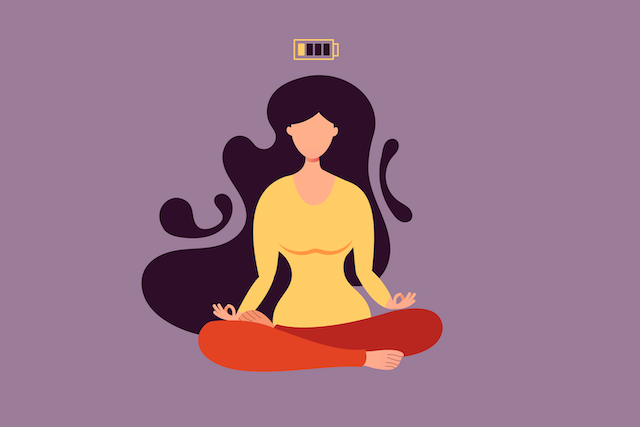
    Whenever I would grow overly anxious before a game or experience anxiety in my daily life (which was all too often), my natural response was to try and force the anxiety out.
    But that only worsened the problem. I remember feeling the anxiety actually grow within the more I tried to get it out.

    So why do we continue to believe we can rid ourselves of anxiety through focusing on it?

    The main reason is due to the fact we are anxious people in the first place. Do you know how hard it is to stop thinking about something? Especially when that which has captured your attention is as powerful an emotion as anxiety.

    So, one, the easiest option is to grow anxious over the anxiety, thus focusing on trying to will it away. Two, anxiety is a scary feeling. Having uncontrollable thoughts that lead to a dizzying feeling of dread is not fun.

    As a result, we try to get rid of it as quickly as we can. Removing our attention from the anxiety and trusting in some other technique does not feel as safe as simply focusing on how terribly we feel and hoping the anxiety will go away.

    But as I already said, giving too much attention to our anxiety only makes it worse. So, what can we do instead? The answer lies in attention, the shifting of attention that is.

    The Power of Shifting Your Attention

    Since we know where we place our attention is where our energy will be directed, a shift in focus can drastically improve our mental state.

    When I questioned whether I was focusing too much on my anxiety, it became clear to me that I was obsessing over why I experienced it, where it came from, and how I could get rid of it.

    So, I decided to make a switch and instead, give my attention to how I wanted to feel. This meant focusing on ways to feel confident, relaxed, and so on.

    Do you see the major difference? Understanding that everything is heightened based on how much attention we give it, you realize it’s only hurting you further to focus on what you don’t want.

    Once you accept the anxiety you feel, it’s now time to turn your attention onto how you wish to feel instead. Always focus on things in the affirmative rather than the negative. Pay attention to how you want to feel, not how you don’t want to feel.

    To become more relaxed and confident I employed the use of meditation and visualization.

    Using Meditation and Visualization to Train Focus

    I sit for mindfulness meditation twice a day and just relish in the moment.

    I have found the practice so powerful in training my mind to focus on the present moment. Not only has it taught me to give attention to feeling relaxed and calm, but the more present I am, the less anxiety I feel.

    That’s because anxiety, by definition, is a child of the future. To feel anxious means you are worried about what may happen or something not happening the way you wish.

    To practice mindfulness meditation, simply follow these steps:

    1. Get into a comfortable position with your back straight. I prefer sitting on my knees, but feel free to sit in a chair if that’s more comfortable.

    2. Set your timer. You do not want to be wondering if you’ve meditated long enough. Give yourself five to ten minutes if you’re a beginner. Choose a calming alarm, as you don’t want to be startled out of your mindful state.

    3. Close your eyes and begin breathing deeply and rhythmically. Focus on your breath and as your mind wanders, simply return your focus, without judgment. Thoughts will keep coming. The goal isn’t to stop them. It’s to allow and observe them, then let them pass.

    I also use mindfulness is during the day. Whenever I feel anxious, I’ll pause and take a few breaths to center myself in the present.

    I usually add some count breathing into this—breathing in for a count of five and out for ten.

    Visualization has been an equally powerful tool in training my mind to manage worrisome thoughts.

    After my meditation is complete and I’m relaxed, I visualize myself full of confidence, calm, and relaxed in different scenarios where I typically feel anxious.

    Once again, I am not seeing myself as not anxious, but rather as the way I wish to be.

    Usually, I’ll decide on one situation each day and visualize it in detail—what’s going on in my environment, who’s around me, what they’re doing. This allows me to mentally practice facing these situations with ease.

    Throughout the day, whenever I feel anxious, I bring this image back into my mind, reminding myself to operate off my ideal vision of myself rather than my past conditioning.

    These techniques have been tremendously helpful in shifting my attention off anxiety. And the less attention I give to feeling anxious, the less hold anxiety has on my life.

    If you are struggling with anxiety, I encourage you to ask yourself the same question I did, “Am I focusing too much on my anxiety?” You might be surprised by how your anxiety eases when you stop giving it so much attention.

  • The Areas of Our Lives We Need to Balance to Find Peace and Contentment

    The Areas of Our Lives We Need to Balance to Find Peace and Contentment

    “Happiness is not a matter of intensity but of balance, order, rhythm and harmony.” ~Thomas Merton

    Balance is everything and is really what we are striving to find in life. Balancing work and play. Balancing food and exercise. Balancing a social life and solitude. Balancing being and doing. Finding balance is finding freedom.

    Once I was truly able to comprehend this it was a game changer on my healing journey. Any suffering you experience in life can be attributed to a lack of balance.

    What is balance? The ancient Chinese philosopher Lao Tzu speaks of The Dao, which means “the way.” It is essentially the balance of the yin and yang energies. The masculine and the feminine. The dark and the light.

    Everything has two extremes, and the Dao lies in the middle. It is where there is no energy pushing in either direction. It is where harmony lies. The only thing we are doing wrong in life is doing too much of one thing and not enough of something else. It takes all your energy to do the extremes.

    “The inefficiency of your actions is determined by how many degrees off center you are. You will be that much less able to use your energy for living life because you are using it to adjust to the pendulum swings.” ~Michael Singer

    Balance. That’s it. That is the key.

    Food, exercise, and relationships are core areas where I have spent many years living off balanced. You may be able to relate.

    Food. I’ve wasted an incredible amount of energy with my pendulum falling to the extremes when it comes to food. What to eat, when to eat, how much to eat… all comes back to balance.

    I spent years swinging to the extremes of excess or deprivation. Overeating and binging to starving and fasting. Eating a sh*t ton one day to eating nothing the next. Eating too much junk food to only eating healthy food. Neither of which are necessary.

    I wasted an exorbitant amount of energy living in these extremes.

    When I was overeating, my body was having to spend all its energy digesting large amounts of unnecessary food, robbing me of precious energy I could have used elsewhere like developing a passion and connecting deeper with others, which I came to realize were the underlying reasons as to why I was overeating. I was off balance with my personal connections and was using food as a replacement for the nourishment and love I really needed from other humans.

    Remember that every single thing we do takes energy, and we only have so many energy units in a day, so it’s imperative to become conscious of where you are using up energy in order to make sure you are using it wisely.

    Another predominant area that I found myself living purely in the extremes was with exercise. Unlike food, where I consciously knew that eating too much and starving myself wasn’t good for me or what I needed, it remained unconscious for quite some time that too much exercise is most definitely a thing.

    I spend many years chronically exercising with extreme HIIT workouts, running, intense vinyasa yoga classes, and weight training. The endorphin rushes I got post-workout felt too good to be bad for me, plus we are told again and again how important exercise is, so I sincerely didn’t see anything wrong with my relationship to exercise. However, I lived in a state of complete exhaustion unconsciously, not realizing the balance needed between exercise and rest.

    If you are doing extreme workouts, you must also create space for recovery.

    I was holding onto an extreme amount of stress in my body due to this lack of balance, which impacted my sleep. It took me many years to become conscious of this habit and realize that me not sleeping was directly correlated to me overexercising. I was addicted to exercise without realizing it.

    Once I stopped working out six days a week and started incorporating gentler exercises like yin yoga and walking instead of running, my body was able to let go of the chronic stress hormones it was addicted to, and I was finally able to find rest.

    So yes, exercise is a good thing, but you can definitely overdo it. Many people live in the other extreme of never exercising, which is equally as unhealthy and depleting of your energy. Balance, it’s all about balance.

    The last predominant area where balance is essential is in our relationships.

    Are you spending too much time with your boyfriend and not enough time with friends? Or maybe you have too many surface friendships and not enough deep connections with the same people. Maybe you don’t have enough relationships at all and it’s keeping you in a state of chronic loneliness. Or living in the other extreme and don’t have enough alone time to recollect your energy, as solitude is also essential to our health.

    Furthermore, you can lack balance inside relationships themselves. Too much sex, not enough sex. Too much giving, not enough receiving. Too much talking, not enough communication… Where do you lack balance in your relationships?

    The examples of where you can be off center can be applied to every single area of your life, the list is endless. Not spending enough time in nature vs. spending too much time in the sunshine and getting sun damage. Not spending enough time engaging in self-care vs. obsessing about self-care and not using your energy elsewhere. Not taking enough time off from work to relax and enjoy life vs. not working at all and giving back to humanity in some way, which leads to a lack of fulfilment and purpose in life.

    The tricky thing about balance is that it differs for everyone. There is no exact formula that everyone must follow in order to find the balance they need. It’s really just about tuning into your body and listening to what needs aren’t being met in your life and where you are hurting yourself by engaging in an extreme.

    So stop and ask yourself: Where in my life do I lack balance? How can I create more balance in order to find a place of beautiful harmony and flow in my life?

    Confucius said that balance feels like the perfect state of still water. Let’s settle our water and find a level of deep peace and contentment that will naturally arise as a result.

  • The Benefits of Solitude and How to Get the Most from Your Alone Time

    The Benefits of Solitude and How to Get the Most from Your Alone Time

    “Understand that healing and growing can distance you from people who you once had a bond with, and it can also bring you closer to those who will heal and grow with you. The time in between can be difficult, but there is so much to learn in solitude.” ~ @themoontarot

    There have been many occasions in my life where I’ve felt lonely. Some of these times I remember as incredibly painful; other times, I’ve relished in my solitude.

    During some periods, I’ve even forced myself into seclusion, which comes easily to me as an introvert.

    One thing all of these solo experiences have taught me is that it’s okay to be alone. In fact, with solitude, there’s a lot of self-growth to be had.

    In today’s day and age, we’re expected to be social creatures. With the rise of instant messaging and social media, it’s easy (and addicting) to stay connected all the time.

    This doesn’t mean it’s healthy, though. In fact, I’ve come to realize that solitude can be incredibly rewarding in a vast number of ways.

    The Benefits of Solitude

    Many nights of solitude have brought me epiphany moments. Ones where I have figured out what I actually want to do with my life. Ones where I’ve realized my spiritual path, and ones that have fueled new, exciting creative ideas.

    Many authors, artists, musicians, and philosophers have attributed their best work to time spent in solitude. As Aldous Huxley once said, “The more powerful and original a mind, the more it will incline towards the religion of solitude.”

    We need time alone because…

    1. We can gain a deeper sense of self-knowledge when we are alone and can see what is important for us as well as what we need.
    2. We are better able to acknowledge our feelings and deep desires when nothing external, such as other people’s thoughts, perceptions, or expectations, stands in our way.
    3. We get space to quietly reflect and reassess, asking ourselves the questions that truly matter.
    4. We recuperate and recharge (especially necessary for introverts) when alone, which allows us to be more present with others when socializing.
    5. We can tap into our intuition and learn to trust ourselves and our decision-making.

    By no means am I encouraging isolation. It’s not healthy to spend all our time alone.

    However, I do want to challenge those feelings of discomfort that often arise when thinking of solitude.

    Why Are So Many People Fearful of Solitude?

    There’s no denying that for some, the idea of spending a day alone, without interaction, isn’t appealing whatsoever. Why is this?

    Being busy, out and about with others, is a good distraction technique. When we’re surrounded by people, engaged in activity, we don’t face to face ourselves or our feelings.

    Are you the type of person who has to be on the phone with others when walking to the store? Or, perhaps you feel a strong sense of disconnection after a few hours of no in-person interaction. Either way, you’re not alone.

    Many people fear solitude because it’s unfamiliar. We don’t know what will happen when we finally face ourselves and are left alone with our thoughts and feelings, so we avoid it. But when we avoid being alone, we miss out on all the growth, healing, and creative inspiration that solitude can facilitate.

    So, how do we move away from a place of fear when thinking about solitude to embracing its possibilities?

    My Own Experience of Solitude

    As a child, I was often content spending time alone drawing, writing, reading, and exploring the great outdoors.

    During my school years I leaned into spending time with others, growing neglectful of my time with myself. The pressures of friendship groups, being sociable, and even ‘normal’ all took over my love for being alone.

    By the time I’d graduated from university and stepped into the working world, I was so accustomed to spending time surrounded by people, I barely knew who I was anymore.

    Coupled with confusion surrounding my career, a few failed relationships, and trauma from my childhood, I found myself in my mid-twenties reaching a pit of despair.

    Following a messy breakup after a toxic relationship, living back at my parents’ house with no money, no job, and no self-love, I was forced into solitude.

    I found myself alone in one of the darkest periods of my life, and it led to what I believed at the time to be an inescapable depression.

    Each morning I’d wake up and lock myself away in my parents’ spare bedroom. I had few friends in town since I’d previously moved away to London, and I didn’t reach out to those I was still connected with because I was afraid they’d judge me.

    It was just me and my cat spending hours alone in a small, dark bedroom. I cried a lot and I continually isolated myself. I hated the feeling of being alone, but in hindsight I needed solitude.

    I was about to discover something magical—my inner strength and an infinite love of the universe.

    What Solitude Brought into My Life

    My story of the most profound period of solitude in my life isn’t a necessarily pleasant one, but I now recognize it as a turning point in my life.

    When my depression hit rock bottom and I was feeling suicidal, I was overwhelmed with this inner strength that seemed to come from nowhere. It urged me to listen to what solitude was trying to teach me and helped me reconnect with my true self.

    I had a new determination to pull myself out of my current state of despair and step into new territory. Unbeknown to me, I was about to enhance my spiritual journey and discover peace.

    It was during a meditation session one night that I felt a warmth and deep love within me. I knew that there was a way out of my sadness, that being alone had the potential to teach me more than any book could.

    In the days following my realization and connection with a power I still can’t describe to this day, I gained the courage to step outside the house.

    I started noticing things around me on my solo walks like the vividness of nature’s colors, the soothing sounds of the river, and the tangible beauty everywhere around me.

    I also noticed for the first time that everything is connected. All that is in the universe, is the universe itself.

    How to Embrace Solitude

    Even if you live with family, a partner, or roommates, there is always an opportunity to implement some intentional alone time.

    For the most experienced spiritual folk, silence and solitude go hand in hand. However, for the sake of accustoming yourself to the intentional practice of solitude, you can start with the basics.

    Here are three practices that can heighten your alone time:

    1. Meditation

    Meditating in solitude can be an extraordinary experience. It enhances your ability to be present as you focus on just being.

    Sitting in silence and stillness can also decrease your stress, boost your mental health, increase your self-awareness, help you foster self-acceptance, and deepen your self-compassion.

    For me, meditation has been an ongoing practice, though not always consistent, that has brought about a deeper connection with myself and the universe.

    2. Journaling

    Daily writing is a wonderful practice to enhance your solitude. Writing leads to self-awareness and personal insight and facilitates creativity because inspiration often arises during quiet moments of reflection.

    Writing allows you to listen to the quiet voice inside your head, and it encourages you to ask yourself questions about what you truly want.

    Journaling continues to be one of the biggest tools I use in my moments of solitude. I gain creative insights and feel attuned to my emotions thanks to penning my journal each day.

    3. Connect with nature

    Taking a meditative walk in nature is soothing for the soul and a guaranteed way to perk up our mood.

    It may also lead to a greater sense of spiritual connection as you consider the larger, powerful natural force behind everything within the universe.

    A lot of my inner happiness is dependent on the time I spend outdoors alone. I find I’m at my most peaceful when walking in the woods or by the sea.

    However you choose to practice solitude, I encourage you to do the following.

    1. Get rid of distractions

    When you choose to spend time alone, really commit to your solitude. It’s tempting to grab your phone and mindlessly scroll social media or watch a YouTube video, but be disciplined and keep distractions at bay.

    Your time in solitude won’t be valuable if you’re just distracting yourself. Instead, lean into spending time on your own and what the space can teach you.

    2. Make it a priority.

    Everyone has the time to dedicate to themselves. Even if it feels uncomfortable, or you feel strange rejecting a social invitation, don’t make excuses to avoid being with yourself.

    The more comfortable you get with spending time alone doing things you love and reconnecting with yourself, the more connected you’ll feel to others. Self-love comes from solitude and with this love, you can give more to those you want to share it with.

    I Challenge You to Spend Time Alone Intentionally

    It probably won’t feel great the first time, and you’re likely to look for a way out of it, but spending time alone is one of the greatest gifts you can give yourself.

    There is so much self-growth to be had when you spend time nourishing the relationship you have with yourself.

    I’m sending you the warmest wishes and all the good vibes as you embark upon spending (and loving) your time in solitude.

  • How to Better Manage Stress So Little Things Don’t Set You Off

    How to Better Manage Stress So Little Things Don’t Set You Off

    “It’s not stress that kills us, it’s our reaction to it.” ~Hans Selye

    I was driving home from work, minding my own business, when a car cut in front of me.

    Pretty common in Sydney traffic, right? Normally, I would just brush it off.

    But not today. For some reason I couldn’t explain, that simple event set me off. I got so irritated that I pressed both my hands on the horn and started shouting at the other driver—who just gave me the finger and continued on his merry way.

    That’s when I lost it. How dare he do something like this?

    I was determined to get even. To teach him a lesson.

    I was so immersed in rage that I almost caused an accident just to prove a point.

    Not my proudest moment, I know.

    Have you ever been through something like this? Something trivial suddenly escalating to a new level of crazy?

    Well, the other day I witnessed my neighbor screaming from his balcony at a dude passing by, just because he had gangster rap blasting out of a speaker. Okay, I can understand that you don’t agree with his musical preferences, but is this a reason to pick a fight with a stranger?

    Or, one Christmas Eve at a crowded parking lot of the local supermarket, I had a lady lash out at me for touching her car door with mine, when I was trying to hop in while holding a couple of grocery bags. I had to use all my self-control not to jump down her throat.

    I guess this sort of things happen to all of us. You know, you lose your cool and end up shouting at your kids in the food court of the shopping center. Or, you snap at your partner for loading the dishwasher the “wrong way.”

    It is as if we all have a Mr. Hyde waiting to come out.

    But why does this happen? And most importantly, how can we control the impulse to kill someone?

    The thing is that the “event” in itself is never the root cause of a rage fit. It is just the last drop on a very full cup.

    For instance, the day of my road rage episode, I was going home from a day that didn’t go as planned. While driving, I was ruminating on the things that didn’t work and I was already on edge.

    So, when the other driver cut me off, it just unleashed something that was already in the making. And if it wasn’t this event, it would have been something else.

    I was simply stressed out and unable to be my best self.

    And you know what? All of us are continually exposed to stressors. From our worries and anxieties, relationship conflicts, existential crises, and poor lifestyle choices to background noises, overstimulation, and information overload.

    Which means that our cups are constantly full. And if we don’t deal with it, we’ll always be one drop away from overflow.

    But is it realistic to think that you can completely eliminate stress from your life?

    Heck no. This type of expectation would only create more stress. You’d be stressing about not getting stressed.

    So what can we actually do to live better?

    Well, you have two options: you can empty your cup on regular basis, or you can upgrade your cup size (if you work on both, even better).

    Emptying your cup is what is known as stress-relief strategies. Those are the things you do on regular basis to blow off steam, like going for a jog or taking a bubble bath.

    These activities help you take your mind off your problems, creating space for your body to calm down. During this time, your body shifts from “fight or flight” to “rest and digest” mode, which is necessary to replenish your energy and recover from stress.

    But the key word here is REGULAR.

    Because these strategies are not likely to work when you are already bursting at the seams (you know what I mean if you ever tried meditating when you had a lot in your mind).

    Nope. They need to be part of your daily self-care routine. My suggestion is to create the habit of blocking off space in your calendar for a little “me time.”

    I know what you’re thinking. “Are you kidding? I don’t have time for that.”

    Seriously, self-care is not a luxury. It is a necessity. For your sanity, and the safety of others around you.

    Now, there will be times in which you may not be able to relax even after a whole hour of deep tissue massage. Those are the times you get restless, lose sleep, and can’t function properly. That’s why you need to build a bigger cup (or a bucket) so that you’re better able to tolerate potential stressors.

    Upgrading your cup simply means investing time in building mindset skills. Skills to help you manage stress, deal better with adversity, and become a problem solver. As a result, you’ll be able to take more on without going cuckoo.

    It’s like developing a superpower.

    How? Here’s a little framework that can help you respond more wisely to stressful situations and minimize unnecessary stress.

    1. Becoming aware

    Awareness means noticing (without judgment) what is going on in your mind and body. It’s learning to identify emotions and feelings, thought patterns, and responses (how you react when something happens).

    This way you’ll be able to discover what sets you off and put a stop on knee-jerk reactions that you may have on autopilot.

    For instance, noticing that you get irritated when you feel disrespected, which leads to an acid remark from your part. Awareness gives you the opportunity to pause and choose a better way to respond.

    2. Practicing mental hygiene

    Mental hygiene means going through our mental rules and deciding on what is useful and what only causes us stress.

    The mind creates mental rules based on array of past experiences. The thing is that these mental rules end up defining how you’ll respond to an event in the future. That’s how we get stuck in vicious cycles.

    We create rules about how things “should” be done, how people “should” act, how they “should” respond in certain situations, how the world “should” work… With so many ideas of how things should be, we end up living in defense mode, constantly fighting against everything our mind judges as “wrong.”

    To move on, you’ll need to learn to let go.

    For example, I made a rule in my head that said that things needed to be neat all the time after growing up with a neat father. This was totally fine while I lived on my own. But when I moved in with my partner, it became a constant source of attrition. My Mr. Hyde often came out when my partner’s behaviors went against my internal rules. So, I decided to let go of this rule in order to have a peaceful home life.

    3. Rewriting the rules

    The truth is that all beliefs serve a purpose. They are the code of conduct that guides our behaviors. So when we decide to get rid of a rule, we need to make sure that the unconscious need behind is being met in another way.

    For instance, to be able to let go of the rule I mentioned above, I had to ask myself why it was so important to have things organized. With a little bit of soul searching, I came to realize that when my environment was neat and orderly, I could process thoughts and emotions more efficiently, which meant that I felt more in control of my life. This helped me put things into perspective and develop new guidelines.

    Now, I allow myself to make things neat, but I don’t obsess about it anymore. That means that I don’t get upset when my husband leaves a dirty sock here and there. I just remind myself that having a peaceful environment is more important. And I developed other ways to feel in control of my mind and body like adopting a meditation practice and building an exercise routine.

    So now I ask you, how full is your cup? And most importantly, what can you do to prevent spillage?

    If this’s all very new to you, you could start by creating a self-care routine that helps you empty your cup on regular basis. And if you already have one, then work on upgrading your cup. This way you’ll be less likely to explode over little things.

    Oh, and don’t get put off if you have slip-ups. Keep in mind that stress management is a skill that gets better (and easier) with practice.

  • Feeling Burnt Out? Meet Toxic Productivity & Grind Culture with Rest

    Feeling Burnt Out? Meet Toxic Productivity & Grind Culture with Rest

    “Caring for myself is not self-indulgence, it is self-preservation, and that is an act of political warfare.” ~Audre Lorde

    When you hear the word “productive,” you likely think of something positive: busting through that work assignment, making your house sparkly clean, or crushing your hobby.

    Productivity is what we all aim for, right? On workdays and even on our days off, we seek to make something happen.

    Grinding and hustling are seen as admirable, and something to work toward, always.

    If we fall short, we beat ourselves up, and sometimes even drag ourselves off the couch to force ourselves into productivity. We feel if we don’t complete all of the tasks, we’ve failed. We set crazy high expectations for ourselves then hate ourselves when we don’t meet them.

    What would happen if we scaled back, even just a little? What if we included rest in our practice?

    It seems we’d fall apart, we’d become piles of mush, not contributing to society or our own lives. This is bullsh*t. Toxic productivity grinds us down, not forward.

    The need to be productive all the damn time impedes our ability to enjoy life and take a breather once in a while.

    I’m not saying that all productivity and hustle are bad. I’m saying the culture around needing to be a robot of a human, producing 24/7, is what gets us into trouble.

    I’m guilty of it myself. When I got my first big girl job out of college, I worked for a fancy tech start-up. I was amped to be given so much responsibility at age twenty-three, so I worked all the hours I could to prove I was capable.

    The “work hard, play hard” culture was pushed at my job. After all, we had a ping pong table, avocados in our snack room, and bean bag chairs to nap on. Who needs an apartment when you’ve got everything at work?

    That was my mindset. I grinded, early mornings and late nights, extra coffee and minimal sleep. It was almost cool to be working in the office on a Saturday.

    I had a coworker who slept at the office multiple nights a week. We all thought she was crazy, but I wasn’t far off.

    On top of all my work, I had a gazillion hobbies. I was running a blog, playing hockey, volunteering at my meditation center, attending twelve-step meetings, and trying to date.

    The grind never ended. When did I rest? Never. Rest was for the wicked.

    It all eventually caught up to me when, one dreary winter evening, I sat in my therapist’s office sobbing about how I didn’t want to be alive anymore. I had burned the candle at both ends for too long, and it had all become too much.

    I was sent to a mental hospital, and my whole life came crashing down. I had been institutionalized for two whole weeks when I began to reconsider my life.

    “Is this what I want for myself?” I thought. “Can I even keep going like this?”

    The answer was no. My work and life patterns were not sustainable. I couldn’t keep “yes-ing” everything and everyone.

    Something had to give. I was bursting at the seams, with no coping skills to tie me together again. With no choice, I had to give up my job and submit to my healing.

    For a year, I didn’t work a full-time job. It was very unlike me. I was privileged to get on disability and was able to take the time to pick apart my life to find what wasn’t working.

    What I found to be toxic was the grind, or the pursuit of always needing to be doing something. It ate away at me and my perfectionist tendencies, always wanting to be the best.

    Instead, I embraced rest. I know I’m privileged in this because not everyone has the same chance to do such a thing. Some have no choice but to work forty-plus hours a week.

    Still, even now, with a full-time job, in grad school, in a relationship, and with several hobbies, I carve out space for rest. I know how important it is to my overall well-being.

    I do this by giving myself some space on a certain day of the week to just do nothing. I have full permission to kick back and do whatever I please: nap, read a book, watch tv, lay in the grass. The point is to not have to be productive for some time.

    Not only do I give myself an entire day, I try to carve out moments all throughout the week where I can just take a deep breath and be. Whether that’s getting up for a stretch or walk from my work computer or cuddling with my roommate’s cat for a moment, I enjoy life.

    Life isn’t just about how much I can produce. Being able to rest is essential to being the best human I can be and enjoying this short amount of time I have on Earth.

    The way that I suggest to drop the grind culture and toxic productivity is to examine your life. Ask yourself these questions:

    • Am I pushing myself beyond my limits?
    • Do I have too much on my plate?
    • How am I beating myself up?
    • What can I prioritize?
    • Where can I include more rest?

    Take a look at your life and see where you fall victim to toxic productivity. But don’t be overscrupulous! The point is to peek, not scour.

    With this information, you can make informed choices that intentionally include rest. Rest is the way out of this mess. Sometimes my productive brain even tells me, “If you rest, you’ll be able to work harder!” Maybe, but that’s not the point.

    The point is we need to recharge. There’s a reason why we sleep almost a third of our lives; we need the respite. Look at working out, one needs to rest in order to rebuild.

    Our bodies are sending us cues left and right that it’s what we need to do, but we often don’t listen until it’s too late and our gauge is past empty.

    You don’t need to wait until you’ve been hospitalized to rest. You can choose it today, in whatever increment makes sense for you. I promise it’s worth it.

  • Why I Stopped Measuring My Self-Worth and Trying to Prove Myself

    Why I Stopped Measuring My Self-Worth and Trying to Prove Myself

    “You alone are enough. You have nothing to prove to anyone.” ~Maya Angelou

    How do you measure your self-worth? By the salary you make each year? By the length of your resume? By the number of people who follow you on social media?

    Now what if you never had to measure your self-worth again? That is what I want to do.

    I grew up as a gifted kid with high expectations to boot, always pushing myself to meet them. I earned the best grades I could, secured a full-ride scholarship to a local university, and soon enough ended up at one of the top law schools in the country.

    Thanks to all the achievements, my self-worth was high. I believed I was outshining my peers, boosting my ego. I felt safe in this comfort zone I’d created. 

    Law school drastically changed my perspective of the world. My peer group became some of the smartest and most talented people in the country. I tried competing against them to prove myself, but I struggled more than ever to stand out and feel accomplished.

    In just a few months, my ego began crumbling apart, taking my once lofty feelings of worth down with it. I was out of my comfort zone and felt invisible.

    I turned to strangers online in an attempt to put the pieces back together and resurrect my worth. I relied heavily on social media to put myself out there for superficial likes and comments. I turned lifelong hobbies into side hustles, trading content I cared about for bits of validation here and there.

    I was desperate to find some new measure of success on which I could rely. But I never noticed the damage that desperation was doing to my psyche until it had already taken its toll.

    My ego had protected me for so long from doubt that as soon as it was gone, I never felt good enough. Once I believed I was a failure, I only kept confirming my demoralizing feelings by pushing myself to excel immediately in new areas. I compared myself to the best of the best and treated myself like the worst of the worst.

    I was trapped in a downward spiral leading to worthlessness. It was only when I slowed down to reflect on my mental health that I realized my life looked like an endless rat race to find some proverbial cheese. I strained to earn my worth and ended up empty-handed.

    If you always chase after self-worth, you never stop to see if you have found any.  

    How is it so many of us believe our worth is conditional? I believe it is a long, grueling process.

    Many of us learned growing up to associate self-worth with achievement of some kind. As we discovered authority figures gave us the most positive feedback and attention when we were doing a great job, we linked our worth to excelling. Without that encouragement, we were lost.

    The world around us exploits this correlation on a daily basis. To some extent, it makes the world go round.

    Western culture, in particular, thrives on permanently tying worth to achievement: the more people pursue success in what they do, the more productive they are and the more money that flows. Accordingly, society constantly tries to push the idea that hard work is sacred and will ultimately lead us to a life of achievement, ergo worth.

    Western culture does not reward those happy to just be. Instead, we are expected to keep laboring away until we can do something well. Even then, some types of work are highly valued over others, so we have to find the right work to do just to get by. 

    So, if you do not feel happy and fulfilled, do you not just have to work harder?

    Yet, not all hard workers reap the benefits. After all, achievement requires meeting a certain standard, inevitably doing better than someone else. Only significant time and effort may lead to a worthy triumph.

    There will inevitably be haves and have-nots because the system at play rewards a limited number of people who play the system best, who achieve the most success. The more limited the rewards, the more everyone forces themselves to try harder day in and day out.

    Unfortunately for us, the reward is merely the validation we apparently need to go about our lives. If our worth is dependent solely on our achievements, we have no choice but to compete with one another over a limited, essential resource. Achievements are only as valuable as they are rare.

    But this competition cannot be won. There will always be more to do. And someone will always do more.

    External validation never makes you content. It only keeps you hungry for more.

    In my struggles, I have had a difficult time understanding how to view my worth.

    How much worth do I have? How does it compare to other people’s worth? Does it go up and down?

    When am I finally worthy once and for all?

    To answer these questions, I vehemently tried to attach a number to my worth whenever possible. After all, a number is a concrete, self-explanatory concept. I could tell when I had more or less than someone.

    Thus, using numbers allowed me to measure my worth and other people’s worth with ease. This gave me a way to understand my place in the world.

    Using numbers also allowed me to gauge how my worth was changing. For example, if I received more likes than usual, I was happier than usual since I must have been doing something right. If I received less, I was in need of quick improvement.

    Except numbers are hollow. They have no value unless we agree to give them value, but our obsessive nature often gives extraordinary value to the benign.

    We use shortcuts like numbers to explain concepts we have a hard time comprehending. Self-worth certainly seems to be one of those trying concepts, always just out of reach like an elusive fruit hanging above us or a receding pool of water.

    Breaking away from society’s expectations provided me the room to realize self-worth is only as complicated as I make it.

    If self-worth need not exist conditionally, it can exist inherently. In fact, it exists now without exception.

    Your worth cannot be assigned a value. It simply is. 

    By virtue of the fact that you are alive, you are just as worthy as anyone else who has lived before, lives now, or will live after.

    We all come into the world the same, and we all leave the same way. Our lives may differ widely in content, but not in value. Nothing separates us at the most fundamental level.

    And none of us start out deficient in worth. We need not go on a lifelong journey to earn our worth by moving up in the world. Our worth remains steadfast regardless of how our lives take shape.

    Work does not shape our worth. No matter how you decide to share your skills and talents, the world will be better off, even if you alone trust the value in what you do and who you are.

    Society may try to tell us how we should view and feel about ourselves, but we are not obligated to listen. Fighting those ingrained ideas of what others think we should do is never an easy battle, but it is worth the independence.

    No matter how one does or does not measure worth, it does not vary, and it does not waver.

    We are all enough as is, right now.

    There exist millions of ways to compare ourselves to others, but we owe it to ourselves to make light of differences and revel in our shared humanity.

    So how do we move forward knowing that we cannot improve or reduce our worth?

    Well, the possibilities are endless. The doors open up to a life where you can be you unabashedly. And more importantly, you can be a part of something bigger than yourself without feeling small.

    Waiting for others to prove you are worthy is time better spent sharing your true self. 

    After spending the last few years of my life trying to prove myself without ever reaching the level of success I wanted, I realized my definition of success kept changing until I made it impossible to feel fulfilled. I stopped myself from being happy unless I was universally revered.

    I lived thoughtlessly, spending what free time I had attempting to make myself look accomplished rather than enjoying the time. I conformed to what I thought people would like rather than let myself flourish.

    My true self was suffocated. Receiving even the most primitive criticism felt like being stabbed in the chest. I was more distanced from others than ever before because I did not feel like I deserved to be liked anymore.

    But I do deserve to be me, to take up space, to contribute to the world in my own way. And you do too.  

    Knowing that what you do cannot change who you are promotes freedom in how you want to live, freedom not just from others, but also from expectations and doubt.

    Knowing you always have worth allows you to connect with the people around you more deeply, empathize with them, and support their journeys through life.

    It is with this knowledge you can find and share true joy.

    You can pursue what you love instead of what you feel you ought to do. You can work at your pace to be the person you want to be. You can stay present knowing neither praise nor disapproval affects your worth.

    Many will struggle to agree with you, though, that you can exist in peace without having to fight to prove your value. Even I still struggle to keep not just naysayers, but also my inner, learned uncertainties at bay in regard to whether I offer anything worthwhile.

    Learning more about your inherent worth means unlearning those harsh, ingrained principles of life as we have known it. These principles will never fade away completely, but we can make a choice every day to drown them out.

    Take it from me, your life will not immediately change in discovering your own worth, but it can improve a little day after day the more you take your discovery to heart. As is the case with any transition, there will be ups and downs. I still have doubts creeping in when I least expect them.

    But the more you live openly and share yourself with others, the more those principles will take hold and the stronger you will be in challenging what life throws your way. Instead of seeking achievement and improvement, you will be content, one with the universe.

    You will be free.

  • The Simplest Ways to Find Calm in the Middle of Life’s Constant Chaos

    The Simplest Ways to Find Calm in the Middle of Life’s Constant Chaos

    “When you are resting because you are worn out, you need to remember that you are not wasting time. You are doing exactly what you need to do. You are recovering.” ~Unknown

    I woke up at 3am when I heard my alarm ring. I slowly pulled my arm away from my son, who was half holding my arm and half lying on it, so that he didn’t wake up. I tip-toed out of bed while my husband and my son were sleeping.

    My eyes ached and were blurry from sleep deprivation. My head felt like I was floating in the air. But even so, I couldn’t sleep any longer.

    Knowing that just in a few hours, I would have another fully busy day at work, with deadlines all over my head, and I’d have to deal with all the mails marked “urgent” yesterday before getting to today’s mail.

    My sleepiness went away quickly as I started to feel butterflies in my stomach. Not in a good way.

    The deadlines, the rush and anxiety, all kicked in. I felt like I wanted to cry. And so I did a little.

    But I felt like I shouldn’t feel that way, that I should be grateful instead.

    The whole pandemic gave people hell. And I am so lucky that my family is safe, and we are doing fine.

    My husband could not work for six months, and I have been the sole provider since. But I am lucky that I still have a job.

    Compared with how other people go through their days, I should be grateful.

    But on a wild thought, I just wanted to open my laptop and send a resignation mail right away.

    Because I was tired.

    I was tired of being the sole provider.

    I was tired of trying and pushing so hard.

    I was tired of taking care of other people.

    I was tired of getting tired but not being able to sleep.

    I was tired of getting up so early alone.

    I was tired of working at different jobs all the time.

    I was tired of not getting enough breaks or not saying “screw it.”

    But I can’t. I have a family to take care of, I have a little boy to worry about.

    Being strong, being resilient is the only choice I have.

    So I turn on some music when feeling lonely, wipe my own tears when having a mental breakdown. Tell myself to stay strong, and always keep going forward.

    But today, I woke up and realized, I don’t have to feel that way.

    Life gives me responsibilities not to break me down. Responsibilities are the sublimation of love.

    Because of love, I wake up early and work while others are still sleeping.

    Because of love, I agree to do different jobs to be able to take care of my loved ones.

    Because of love, I need to take care of myself first.

    Because not only do I love them, but they also love me and want me to be happy.

    I realize I am not a superhero that never makes a mistake. I am a human being. I screw up sometimes. I oversleep sometimes. I miss deadlines sometimes. I act stupidly sometimes. I get lazy sometimes.

    And it is okay.

    It is okay for me to slow down and take a deep breath.

    It is okay to take a break so that I don’t get burnt out.

    It is okay to make mistakes and say “I don’t know” with pride.

    It is okay to know that I cannot control every single aspect in my life, and the good thing is I don’t have to.

    Because that’s how unexpected things happen. That’s the fun of life.

    And I know there is always a place that I belong and find peace: my home, my family, my heart.

    If you are like me, feeling the world is fighting against you, here are a few simple ways to find calm in the chaos.

    1. Stop what you are doing and take a deep breath.

    I learned this technique through one of Louise Hay’s books. You take a deep breath, tense your body as hard as you can, and hold it for a few seconds. Then release and exhale.

    Do it a few times whenever you feel worried or stressed. The butterflies-in-the-stomach feeling quickly dissolves.

    2. Find a peaceful place.

    No, you don’t have to call your boss to ask for an immediate vacation on a beach, nor do you have to go to the bathroom and cry (though you can do either if you think it would help).

    Look inside yourself and find your peaceful place—or person.

    Who do you love? Who do you do this for? Remember, responsibility is the sublimation of love.

    When I’m at work and I am about to have a panic attack, after taking a few deep breaths, I pull out my son’s videos and pictures. I remind myself that I love him, and he loves me no matter what.

    He gives me a reason to believe that I am worthy and I am loved and gives me the strength and motivation to keep going.

    3. Meditate daily, even just for five minutes.

    I learned that meditation is not about clearing your mind and thinking of nothing; it is about accepting who you are and not letting your wild thoughts control you.

    Don’t worry about learning how to meditate, just sit down in stillness as an act of love for yourself. Be present, aware of your thoughts.

    You will soon realize that meditation helps to untangle your thoughts so you don’t feel controlled by the chaos in your life.

    4. Thank yourself.

    Have you done it today? Have you thanked yourself for all the good you do and stopped to think about how proud of yourself you are?

    Look at how amazing you are taking care of your loved ones, how their lives are much better because of you, or how brave you are in all the things you do, or even how you are aware of this moment. There are thousands of reasons to be proud of yourself.

    Most of us focus more on what we think we’re doing wrong than all the things we’re doing right, and this creates a constant sense of anxiety. If you give yourself a little credit instead, you’ll likely feel instant relief. So remember to thank yourself at every chance you get.

    When life gets busy and overwhelming, it’s tempting to think you can’t relax until everything gets easier. That you need to escape or make it all stop, which generally isn’t an option. Fortunately, we don’t have to make major life changes or run away to find a little peace.

    Calm is not when you are at the beach enjoying a drink. Calm is right there in the middle of the storm. Calm is in your heart.