Tag: balance

  • Be Like a Paddle Ball: How to Bounce Back to Yourself

    Be Like a Paddle Ball: How to Bounce Back to Yourself

    “Come back to yourself. Return to the voice of your body. Trust that much.” ~Geneen Roth

    I may be showing my age, but here goes… It has come to my attention that I’m like a paddle ball.

    To anyone born in the 21st century: for context, before handheld devices ruled the world, kids entertained themselves with simple analog toys—such as the paddle ball.

    Picture a small flat paddle (like a small ping-pong paddle) with a rubber ball attached to the center by an elastic string. The goal was to hit the ball with the paddle, watch it fly out and then back, and keep this going for as long as possible, until the ball returns wildly and goes rogue, missing the paddle altogether.

    Recently, while I was flossing my teeth, much to my surprise, my dental crown popped off in my mouth. (I’ll connect these things together; stay with me.) I was fortunate enough that my dentist was able to get me in to fix it the next day, but this unexpected mishap added to an already incredibly hectic month.

    Other notable events this month included a vacation with a six-hour time change (I find that the older I get, the more challenging it becomes to travel across time zones), a broken (on the second day of vacation) phone that the day after returning home required an entire day of driving back and forth all over town to resolve, my son’s new used car (that we just purchased a month prior) broke down and required towing, and now my errant crown, just to name a few.

    Like I said, it’s been quite a month.

    I arrived at the dentist’s office half an hour early (because I had other unavoidable obligations that morning as well) and decided to use this time for my daily meditation. I could feel that the gentle tug to slow down had turned into a more forceful pull.

    Side note: I’ll admit that even though I have a daily meditation practice, I go through periods where I successfully carve time out earlier in the day for longer, more intentional practices, and other times when I barely squeeze in a quickie at the last minute of the day. If it’s not obvious, this was a last-minute-meditation kind of month.

    Once in the office, while reclining in the long black chair waiting for the dentist, I resisted the urge to distract myself with my phone and instead did some box breathing to give myself space to slow down. And again, while waiting for the anesthetic to take effect, I decided to just be with myself.

    There was no rushing this. I had nothing else to do, nowhere else to go. It was a welcomed pause.

    With my mouth pried open, I reflected on all the life stuff I’ve been trying to keep up with and wondered if I would ever find balance. Why don’t I come back to myself more often? Why don’t I just stay put, centered all the time?

    Well, as the saying goes, everything in moderation, right? If all I did was sit and meditate or pause indefinitely, I wouldn’t be dealing with these stressors, but I also wouldn’t be able to fulfill my purpose, help others, connect with family, or enjoy all the incredible experiences life has to offer.

    Just “being” feels nice, but “doing” also has its advantages and is required for me to be the person I want to be.

    So then it requires balance, yes? Coming back to myself often but also going out in the world to “do life.”

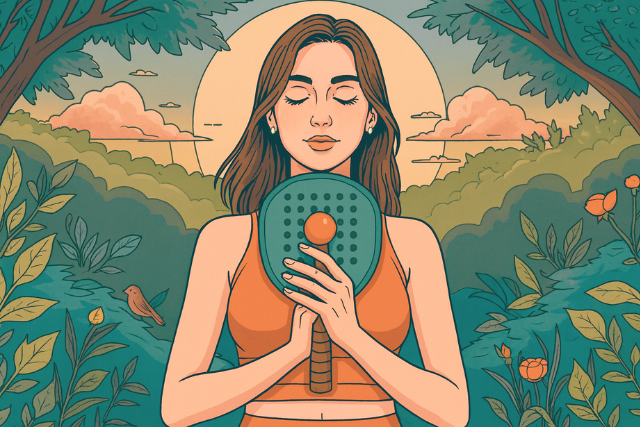
    And that’s when my likeness to a paddle ball dawned on (or hit?) me. I am the paddle, and the rubber ball is all the stuff I’m doing—chasing lofty ambitions, checking off long to-do lists, slogging through mundane obligations, cherishing time with family, and so on… and taking time to center myself.

    Just as the ball springs back to the paddle when the elastic stretches too far, I keep getting pulled back to myself, which then gives me the energy I need to catapult myself out into the world again, and off I go to do all the meaningful (and not so meaningful) things again.

    In reflecting on this (my mouth is still pried open, but they’re close to finishing up), I realize that at least now in my forties, my ball keeps coming back to lightly tap the paddle, and that’s a win. In contrast, my earlier years were mostly spent with the ball flying around erratically, rarely making contact with the paddle at all.

    These days, there’s a gentler rhythm to it—although I do still find myself going off course more often than I would like. But even this is softer, as I’m at peace with this truth, and I have confidence that I’ll continue to learn and adjust in ways that serve my highest self.

    Driving home, I reflect on how grateful I am to have my crown re-cemented and that I took this opportunity to slow down and center. And I vow to keep making time to return to myself in a steady rhythm amid the chaos of a meaningful life.

    You see, the key with paddleball is to maintain an even force and steady pace to keep the game going. If you slow down too much, it loses momentum, and if you try to go too fast or hit the ball too hard, you’re sure to lose control of it.

    Similarly in life, a steady, balanced flow is achieved by keeping a gentleness and returning to yourself consistently, methodically even. When we push ourselves too fast or too hard or just against the natural grain of our being, we lose control, and it becomes harder to return to ourselves.

    The crown is back in place, and so am I (for the moment). Tomorrow will bring its own pull outward, in the form of opportunity, lessons, and/or chaos. But I’ll approach it with confidence in my elastic tether, knowing that I’ll keep coming back to center myself when needed. After all, it’s not about staying centered all the time but rather always returning home.

  • Finding Balance Through the Full Spectrum of Emotion

    Finding Balance Through the Full Spectrum of Emotion

    “As a solid rock is not shaken by the wind, the wise are not shaken by praise or blame.” ~The Dhammapada, Verse 81

    Some moments lift you like moonlight. Others break you like a wave. I’ve lived through both—and I’ve come to believe that the way we move through these emotional thresholds defines who we become.

    By thresholds, I mean the turning points in our lives—experiences so vivid, painful, or awe-filled that they pull us out of our usual routines and bring us face to face with something real. Some come in silence, others with sound and light, but they all leave a mark. And they ask something of us.

    The Night the Frogs Were Singing

    Years ago, I was in San Ignacio, Baja California Sur—a small town nestled in the middle of a vast, harsh desert. But this desert hid a secret: a spring-fed river winding quietly through thick reeds and groves of towering palms.

    One night, I walked alone along the water. The full moon lit everything in silver. The town was asleep, but the frogs were wide awake—thousands of them—and their voices filled the night.

    It sounded like a million. A strong, unstoppable chorus rising into the sky, as if they were singing to the gods in heaven.

    Insects danced in the air like sparks. The river shimmered. I stood in the stillness, listening.

    And then, something in me lifted.

    My breath slowed. My thoughts stopped. I felt unbound—present, light, completely inside the moment.

    I felt like I could fly.

    Not in fantasy—but in my body. As if for one rare instant, the weight of everything had fallen away. I wasn’t watching the world. I was part of it. Connected to the frogs, the moonlight, the pulse of life itself.

    That was a threshold I crossed without knowing. Not a dramatic one, but sacred. A moment of wholeness so complete it continues to echo, years later.

    Not All Thresholds Are Joyful

    That night by the river was one edge of the spectrum. The other is something far harder.

    I recently read about a mother who lost her entire family in the span of a year. Her husband died unexpectedly. Then her son, in a car crash. Then, her only surviving daughter was swept away in the Texas floods.

    From a full home to unbearable silence—in just twelve months.

    I can’t imagine the depth of that grief. But I recognize it as a threshold too—a point from which there is no going back. Loss like that doesn’t just wound—it transforms. It alters the shape of time and identity. It demands a new way of living.

    And it reminds me: thresholds aren’t always moments we choose. Sometimes, they choose us.

    The Man in Ermita

    I also think of a man I used to see every day on a busy street corner in Ermita, Metro Manila. The intersection was chaotic—taxis, vendors, honking horns, kids weaving through traffic. And there, beside the 7-Eleven, was a man rolling back and forth on a small wooden board with wheels.

    He had no legs. His arms were short and deformed. That wooden platform was his only home, his only transportation, his only constant.

    He didn’t shout or beg loudly. He just moved. Quietly. Present. Enduring.

    And I often wondered: What are thresholds for him? What brings him joy? What pain does he carry that none of us see?

    His life taught me something. That some thresholds are lived every single day—without drama, without noise. Some are carved into the body. Into the street. Into the act of continuing on, no matter who notices.

    We each live on our own spectrum of experience. And his presence helped me recognize that my own joys and struggles don’t exist in isolation—they live alongside countless others, equally deep, equally human.

    The Emotional Spectrum We All Move Through

    These three stories—the night of the frogs, the mother’s loss, the man in Ermita—might seem unrelated. But they’re not.

    They’re all thresholds.

    • One is a threshold of awe.
    • One is a threshold of grief.
    • One is a threshold of silent resilience.

    They represent different points on the same emotional spectrum. And the deeper I reflect, the more I understand that we are all moving along that spectrum—back and forth, again and again.

    What Balance Really Means

    We’re often told to seek balance. But I don’t think balance means calm neutrality, or avoiding emotional extremes.

    To me, balance is the ability to stay grounded while being stretched. To remember joy even in sorrow. To hold stillness even when life is loud. To feel everything—and not shut down.

    Wisdom isn’t the absence of intensity. It’s the willingness to stay with whatever life brings—and keep walking.

    Writing has been my way of staying grounded.

    Therapy helped me find the words. But writing gave me a place to live them. It helps me remember what I’ve felt—and understand what it meant. It’s how I make peace with the past. It’s how I reach forward toward something whole.

    When I write, I return to that night in San Ignacio. I also return to the man in Ermita, and to the countless thresholds I’ve passed through quietly—some with joy, some with pain.

    Writing helps me stay with what is real, even when it’s hard. Especially when it’s hard.

    An Invitation to You

    Maybe you’ve had your own version of that river night—an unexpected moment of beauty or clarity. Or maybe you’re sitting with a threshold you didn’t choose—grief, fear, change, uncertainty. Maybe you’re surviving silently, like the man on the wooden board.

    Wherever you are on the spectrum, I want to say this: The thresholds we pass through don’t make us weaker. They shape us. They wake us up. They teach us presence—not perfection—if we choose to stay with our experience, even when it hurts.

    If you’re writing, reflecting, or simply breathing through it all—you’re already on the path.

    And that path will one day lead you to another threshold somewhere else on the spectrum. So stay open to each transformative moment, and let them shape you into someone more alive, more resilient, and more balanced.

  • What Happened When I Stopped Saying Yes to Everything

    What Happened When I Stopped Saying Yes to Everything

    “Daring to set boundaries is about having the courage to love ourselves, even when we risk disappointing others.” ~Brené Brown 

    I used to believe that if someone was in need and I had the ability to help, it was my duty to step in. Whether it was managing caregiving responsibilities for family, fielding crisis calls from friends, or stepping up at work when no one else would, I said yes without hesitation. For me, helping seemed to be the measure of a “good person.”

    But what I didn’t realize is that many of us confuse obligation with responsibility.

    Obligation feels like it’s inherently ours to do, regardless of choice. Responsibility feels like something we voluntarily take on—sometimes because of what we believe is expected or what others have convinced us is ours to carry. The distinction between the two is subtle, but the effects of misunderstanding them are profound.

    The truth is, we’re taught early on that helping others is the right thing to do. And for women, in particular, the world emphasizes that stepping up for others is what defines us as strong, capable, and valuable. So I did. I said yes to nearly every pull on my time, energy, and peace—until my body stopped me.

    The Wake-Up Call: The Day My Body Stopped Me

    You don’t realize how much you’ve given—how much you’ve carried—until your body asks you to stop.

    For me, that wake-up call came in the form of an ulcer. At the time, I couldn’t fathom why my body was failing me. I ate healthily, exercised, and generally lived a balanced lifestyle—or so I thought.

    But what I hadn’t realized—what so many of us fail to see—is that ulcers, burnout, and other stress-related conditions don’t come from what we eat. They come from what’s eating away at us.

    What had been quietly eating away at me were all the pulls on my time and spirit, pulls I had allowed to continue because of my inability to recognize the damage and deliver an emphatic no. Caregiving, crisis management, being the go-to problem solver—these were the things that slowly consumed me as I ignored the whispers of my body and spirit, telling me to pause.

    The ulcer wasn’t just a physical issue—it was a wake-up call. It forced me to confront the weight of my yeses and how they came at the cost of my peace and wellbeing.

    The Power of the Pause: How I Learned to Reassess My Yes

    Healing took time, and it wasn’t just about recovering physically. It was about rebuilding my habits and, more importantly, my mindset.

    I began to understand that every pull on my energy—a friend’s distress signal, a family member’s caregiving need, or even an opportunity at work—wasn’t necessarily mine to answer. I needed to stop operating on autopilot and start responding with awareness. I called this practice the pause.

    Before I gave my yes, I learned to pause and ask myself:

    1. Is this truly mine to do?
    2. What will this cost me in time, energy, and peace?
    3. What is motivating me to say yes—guilt, duty, or an honest desire to help?

    The pause gave me clarity. Sometimes, the answer was obvious:

    • “I’ll think about it and let you know.”
    • “I can help with this part, but I won’t be able to take on the rest.”
    • “No, I can’t. You should ask around to find someone else.”

    Other times, the pause forced me to confront patterns I’d ignored—like over-helping to avoid discomfort or defaulting to yes because I thought no would disappoint someone. Each time I paused, I learned something new about why I was saying yes, and each answer helped me protect my energy more thoughtfully.

    The Pull of Expectations: How Societal Conditioning Shapes Our Yes

    One of the hardest parts of reassessing my yeses was confronting the power of societal expectations.

    Helping others is often framed as the ultimate virtue—that “good people” step up, solve problems, and make sacrifices when others can’t or won’t. For women, this idea takes on an even sharper edge. We’re taught that caregiving and emotional labor come naturally to us, that putting others first is what makes us valuable.

    The world celebrates women who “do it all,” often without asking what it’s costing them.

    As I reflected on my incessant yeses, I realized how much of this cultural messaging I’d internalized.

    I thought of my younger self, watching the women in my life extend themselves without pause—my mother, my grandmother, my mentors. They juggled caregiving, work, and family without ever asking whether it was sustainable. I thought of the messages I’d absorbed as a child, like the idea that refusing to help when you’re able is selfish, or that good people sacrifice no matter the cost.

    These beliefs shaped how I approached every ask. It wasn’t guilt that pulled me toward yes—it was the weight of these expectations, handed down through generations without question.

    But here’s what I’ve learned: these expectations might shape us, but they don’t have to define us. Balance isn’t selfish—it’s necessary. Redefining responsibility isn’t about rejecting others but about making sure the cycle of overextension stops with us.

    Reassessing and Reconnecting: How Thoughtful Yeses Changed Everything

    Pausing didn’t just help me recover physically—it reconnected me to what mattered most.

    By becoming intentional about my yeses, I was able to show up fully for the people I love without losing myself in the process. Instead of saying yes to everything, I started saying yes to what aligned with my values, what honored my peace, and what made my energy sustainable.

    Thoughtful yeses gave me something I hadn’t had in years—balance. And with that balance came clarity, purpose, and freedom. I let go of obligations that weren’t truly mine, found strength in saying no, and started living in a way that felt authentic rather than automatic.

    It wasn’t just my time and energy that transformed—it was me.

    Closing Reflection: Your Own Litmus Test for Balance

    If you’ve ever felt the pull to say yes without pausing first, I want to encourage you to stop—just for a moment. Ask yourself:

    • Is this truly mine to do?
    • What will saying yes cost me?
    • What is motivating this choice, and does it align with what I value most?

    We’re often told that saying yes is the ultimate virtue. But the truth is, balance is the measure of alignment. It’s not about doing everything; it’s about doing what truly serves both who you are and what the situation requires.

    With every pause, you ask the most important question of all: Does this honor the person I’m becoming?  And from that space of clarity, your yes—when you give it—becomes not just an answer but a gift.

  • What I Learned When My Brain and Body Shut Down

    What I Learned When My Brain and Body Shut Down

    “Almost everything will work again if you unplug it for a few minutes, including you.” ~Anne Lamott

    I used to believe that success meant always being available. Always saying yes. Always responding immediately to emails, Slack pings, texts, whatever was thrown my way. Because if I stopped—even for a second—I might fall behind. And if I wasn’t working harder than everyone else, was I even working hard enough?

    For years, that mindset worked. Or so I thought. Every win, every promotion, every new milestone felt like adding fuel to the fire. The more I ‘succeeded’ by society’s standards—the title, the career, the financial stability—the more I pushed myself to do more, to be more.

    My perfectionism kicked in, too. I didn’t just want to succeed; I wanted to be perfect at everything—career, leadership, motherhood, marriage, friendships. And I never removed anything from my plate—I just kept stacking it higher.

    I climbed the corporate ladder, became the first female VP in a 300-person marketing org at a Fortune 500 company, and checked every success box that should have made me feel accomplished. But instead of feeling fulfilled, I felt… empty. Exhausted. Like I was running on fumes but too scared to stop.

    And then one day, my body gave me no choice but to stop. It wasn’t a slow fade or a warning sign I could ignore—it was like someone pulled the plug. I went from a high-functioning overachiever to someone who couldn’t even form a sentence without feeling mentally drained.

    Not just stress. Not just exhaustion. A full-body, full-brain shutdown. Emails didn’t make sense. Conversations felt like static. I couldn’t process thoughts.

    My brain hit the off switch, and I didn’t know how to turn it back on. I sat at my desk, staring at my screen, and for the first time in my life, I physically couldn’t push through.

    That moment scared me more than anything.

    Five years before my full breakdown, I had already been on a collision course. In that short span of time, I became a mother, got promoted to director, took on more teams and responsibilities, lost my sister and grandmother, and moved into a new house—which promptly caught fire.

    But I still kept pushing, still kept performing, because slowing down wasn’t an option. Until my body made it one.

    I remember sitting in my car after work, gripping the steering wheel, staring blankly ahead. I had nothing left.

    It wasn’t just exhaustion; it was something deeper, something that made me feel like I had lost control over my own mind and body. I had built my entire identity on being productive, on being the go-to person, the one who always delivered.

    But now I had nothing left to give. And I had no idea how to fix it.

    What I Learned from My Breaking Point

    But how did I get to that point?

    How did I go from thriving on the hustle to completely shutting down?

    Looking back, the signs were all there—I just ignored them.

    The late nights, the skipped meals, the creeping exhaustion I kept brushing off as ‘just part of the job.’ My body had been warning me for years, and I didn’t listen. Until I had no choice.

    That breaking point forced me to ask myself something I had spent my whole life avoiding:

    What am I chasing, and at what cost?

    Here’s what finally made me realize I couldn’t keep going like this (and what I wish I had figured out before I hit rock bottom):

    1. Rest isn’t a reward. It’s a requirement.

    For the longest time, I thought sleeping more would fix everything. I watched a MasterClass with Dr. Matt Walker (a sleep expert) and learned all about chronotypes—morning larks vs. night owls. I knew I was a morning lark, so I figured, Great, I’ll just get to bed earlier, and that should do it!

    Except, it didn’t.

    I’d lie there at night, my body still, but my brain running marathons.

    • Did I give my kiddo his medication?
    • Did someone feed the dog?
    • Is my team member feeling better after being out sick?
    • Crap, I forgot to move the laundry. Now I have two choices: leave it and deal with the stink tomorrow, or drag myself out of bed to fix it.

    That’s when I realized that rest isn’t just about sleep. It’s about giving your mind and body a real reset.

    I found that when I spent time in my garden, I had more patience with others.

    I picked up crocheting for the first time in twenty-five years, making beanies like my life depended on it. They were adorable—and it brought me a peace I hadn’t felt in years.

    I started playing board games with my kids, laughing around the table instead of rushing them to bed just so I could jump back online and “get ahead.”

    For years, I treated parenting like a responsibility (which, to be fair, it is), but I never just let time be. Everything had been a task to complete, a schedule to follow. But slowing down, being present, laughing with my family—THAT felt like true rest.

    Rest isn’t just about stopping. It’s about resetting in a way that actually fuels you.

    2. Ambition and balance can co-exist.

    Let’s be real—I’m still a work in progress when it comes to boundaries. But one of the biggest shifts I made was realizing that everything in life is a season.

    I used to overthink every decision. Saying no felt heavy, like I was closing a door forever. But once I started thinking in seasons, everything changed.

    • Instead of “no,” I started saying “not right now.” This made boundaries feel lighter and easier to stick to.
    • I got clear on my non-negotiables. If something filled my cup, it got priority time. If something drained me? It was time to let it go.

    For years, I was the kind of leader who said things like “I support your decision” when someone needed time off—but the undertone was always “but we really need you here.” The unspoken pressure to overwork was real.

    Now, I build my life around people who encourage me to invest in myself—not just support it, but push me to do it. And that makes all the difference.

    3. If stopping feels scary, that’s a sign you need to stop.

    I was terrified to slow down. I had built my entire reputation on:

    ✔ Always being available (Praised!)
    ✔ Always performing at the top (Praised!)
    ✔ Living every aspect of hustle culture (Praised!).

    It was my identity. So, if I stopped… who even was I?

    What if I had worked my butt off for nothing?
    What if people stopped seeing me as “successful”—would they think I was a failure?

    I’m still in this transition, and honestly, it’s still scary. But leaning into the unknown is part of redefining success. That’s what makes it feel less terrifying.

    I used to believe success = status, power, money.
    Now, I see success as something bigger—health, joy, presence.

    And while I won’t pretend it’s easy, I can tell you this: it’s worth it.

    What This Means for You

    If you’re reading this, wondering why—despite all your effort—you still feel exhausted, stuck, or empty… I get it. I’ve sat in that same place, running on fumes, convinced that pushing harder was the answer. But it’s not. It never was.

    You don’t have to break before you start making changes. Small shifts—pausing, setting boundaries, rethinking what success actually means—can save you from ever reaching that breaking point.

    Take the break now. Reclaim your energy now. Redefine success now. Because the life you want isn’t waiting on your next achievement—it’s waiting on you to stop running long enough to actually live it.

  • Why I Quit Beast Mode and How I Traded Burnout for Peace and Balance

    Why I Quit Beast Mode and How I Traded Burnout for Peace and Balance

    “Beast mode.” Sounds pretty badass, doesn’t it?

    It’s like an adrenaline-fueled battle cry, a call to arms. It’s a way of life that’s all about giving every single thing you’ve got to every single thing you do.

    For most of my life, I lived this mantra—and prided myself for living this way.

    In fact, I had a sticker on my bathroom mirror with the words “beast mode” that I stared at all the time. It was my constant reminder to be all in, every single day, pushing harder, reaching further.

    But here’s the reality check: Life isn’t supposed to be a non-stop action flick or an eternal Olympic sprint.

    When you live that way, you’re always running on empty.

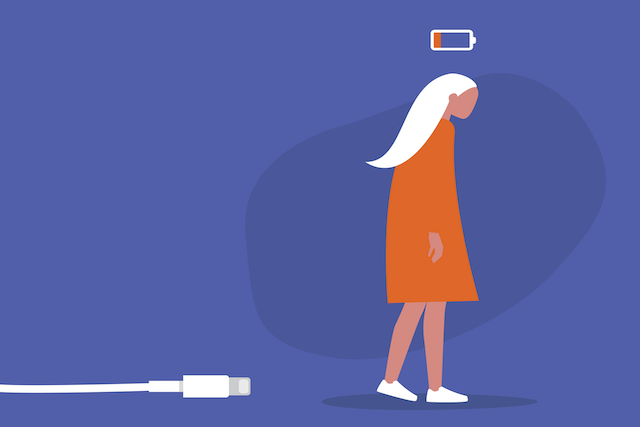
    In fact, I felt like I was a smartphone on 1% battery all the freaking time.

    And I’m not just talking about feeling physically wiped out. I was mentally and emotionally zonked, too. I knew there had to be something better than living in permanent beast mode… running on fumes… sputtering through my days.

    Eventually, it all just clicked for me. I realized that I had become so caught up in the hustle, so obsessed with the “how much,” that I’d lost sight of the “why” … for what purpose?

    After all, busyness should not equate with worthiness!

    And that’s when I decided to shift gears, from the non-stop grind of beast mode… to the thoughtful pacing of what I now call my “best mode.”

    Beast Mode vs. Best Mode

    Beast Mode is like running on full throttle all the time. It’s all about maximum effort, maximum speed, maximum output. It can be incredibly effective in the short-term but can also lead to burnout and loss of direction in the long run.

    Best Mode is about finding a sustainable, balanced, and intentional way of living. It’s about setting mindful, meaningful goals and pursuing them at a thoughtful pace. It’s an approach that values self-care, reflection, and mindful action as much as achievement and productivity. In best mode, you’re not just achieving, you’re enjoying the journey. You’re living your best life, not just a busy one.

    Now, I’m here to share my journey from beast mode to best mode, my transition from being a human-doing to a human-being. And let me tell you, it’s not only enriched my life,  it’s made it infinitely more fulfilling, and, dare I say, significantly more enjoyable.

    The Appeal of Beast Mode

    We live in a world where the common refrain is always: “Do more! Be more! Achieve more!”

    And beast mode fits snugly into this ethos.

    It’s not just a mindset. It is a state of being.

    It’s about relentlessly striving for success, pushing past limits, and breaking barriers.

    Admittedly, it gives you a buzz, a rush. I remember the thrill, the allure of being in beast mode. The feeling that I was invincible, a juggernaut, an unstoppable force. There was something intoxicating about it, something that drew me in and held me in its grip.

    The Downsides of Constant Beast Mode

    But here’s the kicker: Living in beast mode is like running on a treadmill that’s always cranked up to max speed. It’s exhausting, draining.

    You’re sprinting at breakneck speed, but where are you going?

    What are you really achieving?

    And at what cost?

    Because in the midst of this relentless pursuit, you start to lose sight of what’s really important.

    Relationships, peace of mind, the simple joys of life. They all get left in the dust.

    Plus, often beast mode leads to a more beastly mood. You feel on edge a lot of the time. Or simply exhausted.

    Basically, beast mode is a relentless grind that leads you straight down a one-way street to Burnoutsville. Trust me, it’s a place you don’t want to visit.

    The Value of Balance over Burnout

    Over time, as I got older, I began to see through the illusion.

    I started to realize that life is more than a marathon, more than a series of boxes to check off.

    A good life is about appreciating the moments in between, the simple pleasures, the quiet joys.

    It’s about my kid’s laughter echoing through our home, a shared meal with my family, a good book on a lazy afternoon.

    These simple moments are the essence of a good life. They’re the threads that weave the tapestry of our existence.

    And these threads started to matter more to me, more than any achievement or accolade.

    So one morning I peeled that “beast mode” sticker off my bathroom mirror, and began to try to live differently.

    How I Quit Beast Mode and Burnout 

    Breaking up with beast mode was no easy feat. It was like trying to sever ties with a toxic friend who just doesn’t want to let go.

    But once I managed to break free, it was like a breath of fresh air. I found peace… tranquility… balance.

    And I discovered that balance trumps beast mode any day.

    The calm mornings, the shared stories, the unhurried afternoons, the dancing to music in the middle of the day—these became my new triumphs.

    These simple, peaceful, intimate moments became my new improved yardstick for success.

    And they became the milestones that truly mattered most.

    5 Tips to Quit Beast Mode and Embrace Best Mode Instead

    Now, if you’ve managed to stick with me so far, here’s some straight-shooting advice, fresh from my own experience.

    Coming up now are my top tips for quitting beast mode—and thereby quitting burnout mode too!

    1. Embrace the Joy of Missing Out (JOMO).

    It’s perfectly okay to say ‘no’ to things. The world won’t come crashing down if you miss a meeting or skip a gym session. You’re not the fulcrum of the universe, even though it can feel like it sometimes. Relax, let go, and savor the joy of missing out.

    2. Redefine Success.

    Success doesn’t always have to mean grinding 24/7. It’s about finding balance, achieving contentment, and enjoying peace. It’s not a one-size-fits-all concept. Define success on your own terms and let the world be damned.

    3. Cultivate Mindfulness.

    Be present. Bask in the moment. Not the one that’s waiting around the corner or the one that’s five years down the line. I’m talking about the moment that’s happening right now, this very instant. It’s fleeting, ephemeral, and it’s worth your attention.

    4. Prioritize Relationships.

    Remember, it’s the people in your life that matter. Not your achievements, not your work, not the number of zeros in your bank account. People, relationships, these are the things that enrich your life. So make time for them. Even if it means putting your beast mode persona on hold.

    5. Balance, Balance, Balance.

    I can’t stress this enough. Life isn’t a sprint; it’s a marathon. It’s a journey that’s meant to be savored, not rushed through. It’s about finding equilibrium, maintaining stability, juggling different aspects of your life so that you’re not just running blindly toward an ever-receding finish line. Balance, my friend, is the key to a fulfilling life.

    Conclusion: Quit Beast Mode and Burnout

    So there you have it. That’s my story of why I ditched beast mode and chose the best mode life of balance.

    And I have zero regrets. In fact, I couldn’t be happier.

    So, take a moment to reflect, to think about where you’re at… and where you’re heading.

    What would your life look like if you decided to give beast mode the boot and embraced a life of balance instead?

  • Releasing Fascia: A Simple Way to Reduce Tension, Pain, and Disease

    Releasing Fascia: A Simple Way to Reduce Tension, Pain, and Disease

    “Take care of your body, it’s the only place you have to live.” ~Jim Rohn

    I hear this happens to so many, but when it happens to you, it’s unsettling. I didn’t know what was going on with me, and I wasn’t getting any satisfying answers either.

    Most days were good, and I felt fine and went about my regular routine wearing my many hats: mother of two young kids, human mom to three fur babies, a household-manager-of-all-the-things and full-time dental hygienist. And then out of the blue, it could hit me like a ton of bricks… the backache, neck pain, jaw pain, tension headaches, and even migraines.

    I would wake up in the morning with tension or pain in my body, but I had no idea how it got there! Sometimes it was pretty intense too, It would drive me bananas because I couldn’t put my finger on the reason why.

    Didn’t do any yard work yesterday. Didn’t hurt myself. Didn’t trip or fall. Didn’t shovel snow the last few days either. It was so strange. I had no idea what was going on.

    I remember that the first time it happened, I was about thirteen years old. It was a summer morning, and I wasn’t able to get out of bed to go to my babysitting job. Another time, in my late twenties, my lower back seized as I was bent down shaving my legs, so I dropped to the floor unable to get back up. There were many times like these.

    When I had one of those unexplained episodes, I would feel off for a few days and then it would settle. Luckily for me, most days I just felt my regular minimal tension at night. It wasn’t intense, but it was enough for me to notice.

    Other times, I’d have migraines or tension headaches that would last for days at a time. It wasn’t fun for anyone, including my young family. I also felt guilty and stressed out with my list of errands getting longer by the minute. I wanted to avoid this at all costs because it would stop me in my tracks when it happened, and everyone around me suffered.

    During medical visits I was told I had muscle spasms, tension headaches, or migraines. And was told to relax (right!) or prescribed something for the pain or given a topical cream to rub on the affected area. It helped, but I still didn’t understand why it would happen out of the blue like that.

    In my circle, I was hearing things like: “Wait till you hit thirty or forty, that’s when all the problems start!” or “Wait ‘til you’re my age!’ or ‘Welcome to the club!” or my favorite one: “You ain’t seen nothing yet!” To be honest, it was upsetting and depressing to hear that things would get worse as I aged.

    Ever have an ultrasound, scan, or MRI only to be told that everything looked normal? That it must be muscular, or even worse, it’s all in your head? It’s a very frustrating diagnostic for most people, as they are left feeling puzzled and still looking for answers. They’re hoping to find anything that could help, to alleviate some of the pain and tension. They’ve done many things, but nothing seems to help…

    As it turns out, it’s all about fascia!

    What is FA-SH-EE-AH? It is a connective tissue in our body. Picture one continuous piece of a three-dimensional spider web, from head to toe. It’s a semi-opaque membrane, thicker in some areas.

    This tissue does not only wrap or divide our organs, muscles, and other body parts, like previously thought, but it actually interconnects every single one of our cells, all 100 trillion of them! Fascia is everywhere! It protects us, it supports surrounding tissues, and communicates with our entire being. It is the only system in the body that connects to every other system in our body.

    The magic of our precious fascia doesn’t stop here, as it also has a memory! It records our entire life, but it’s the traumatic events—the physical, repetitive, and emotional stresses (every fall, burn, bruise, surgery, repetitive movement), the viruses (hello, Covid!), and infections… plus unprocessed emotions, negative thoughts, limiting beliefs, and unhealthy habits and behaviors—that affect it the most. From the 3rd trimester in the uterus to our last breath, our fascia keeps track and memorizes everything.

    Our beautiful body does have the potential to auto-regulate, and so does our fascia. But we live in a world where productivity is a sport, our to-do lists are never-ending, and our over-scheduling is a badge of honor. This absolutely takes a toll on our body and mind! Therefore, our fascia doesn’t always release like it’s supposed to, and it starts accumulating tensions.

    Tight fascia, that is unreleased, clamps down on its surrounding tissues and gets worse with time. Left unreleased, it can get rock hard. Plus, since it’s like a 3D blanket, it starts affecting and pulling other parts of the body… just like when you tug or pull on a corner of a blanket, it pulls on the entire thing. The fascia in our body is the exact same!

    This is why the root cause of our symptoms may be coming from a completely different place in our body. And it explains why many therapies don’t work, as they treat the location of the symptom and not the cause.

    Bound fascia creates havoc on our health and wellness and has a domino effect on our body and mind. It impacts all our cells (every tissue that makes up the muscles, organs, bones/joints, and all the other systems).

    As an example, clamped fascia that is tight around and inside an organ (remember, fascia is in every cell) will affect this organ so much that it won’t be able to function properly.

    The pain in your neck that keeps coming back, your tight shoulder blades and digestive issues, could all be from tight fascia from that time when you fell off your bike when you were learning to ride at the age of five years old. Your fascia protected you in the fall, but it’s been tight all this time and is now pulling on your 3D fascia blanket.

    The TMJ issues you’ve been experiencing, the acid reflux, and reduced range of motion in your shoulder could be from when you had your appendix removed as a child. With scars, we only see a tiny scar on the skin, but inside, it’s an iceberg of adhesion and it’s pulling constantly!

    That nagging hip tension that’s been around for ages, the ringing in your left ear, and your weak bladder could all be from your high-risk pregnancy and stressful delivery. Those babies take up a lot of room, and our tissues should go back to their original place, but sometimes they don’t, and that starts pulling too! Not to mention the impact of all that stress of having a high-risk delivery; this too could very well be the root cause of your issues!

    Healthy fascia is the missing piece to health and wellness! A holistic approach is needed to release this complex tissue, which impacts us in so many ways. For optimal health, gentle movements are best to release bound fascia and relax your nervous system, which go hand-in-hand.

    If your intention is to release your fascia, you’ll want to avoid anything that is too intense or that jacks it up like HIIT, spinning, and marathons.

    Other than body work (osteopathy, energy work, massage), walking, swimming, yoga, and meditation are great options that you can do without an appointment. Every bit counts! Here are some things you can add to your daily routine to keep your fascia happy and pliable:

    First, stay hydrated! Drink water throughout the day. The general rule of thumb is to drink your weight in pounds, divided by two. That’s the number of ounces your body requires daily to function properly. Therefore, someone that weighs 200 pounds could benefit from drinking 100 ounces of water per day. Some exceptions apply, but for most people this is a good guideline. Remember, we are mostly water, and that includes our fascia!

    Stretching is a must! To stretch a muscle, it takes twenty to thirty seconds, but to stretch and release one layer of our dysfunctional fascia, it can take around three to five minutes, sometimes more.

    Yoga is a great fascia therapy, as it’s wonderfully designed around fascia lines; for example, downward dog stretches the posterior line of fascia. Thread the needle pose stretches the arm line. Fish pose stretches the anterior line.

    Hatha is the style of yoga that most of us think of when we picture yoga. Downward dog, warrior pose, child’s pose, lotus, to name a few poses, are all great options to try.

    In yin yoga, we hold the poses longer, about three to five minutes, which is long enough to release the fascia. That’s when all the magic happens! These poses are gentler. As we hold them, we can feel a little flutter or a soft release somewhere else in the body. It’s all connected!

    Another kind of yoga that is great for our fascia health is restorative yoga. This one is a very passive yoga done with many props. It’s all about supporting the body and feeling safe. This creates immense healing, as it activates the parasympathetic nervous system. It’s incredibly powerful and utterly relaxing! So, let’s not discredit this type of yoga because it’s more passive than the others. The benefits are exponential!

    EFT/Tapping Meditation is also a great option to release tension in our fascia. As we tap on specific acupressure points on meridians in the body (hint: meridian and fascia lines are in the same places!), we release stored unprocessed emotions, limiting beliefs, and negative thought patterns, which all impact our fascia.

    It’s an amazing body-mind release technique! Tapping also activates the vagus nerve, promoting rest and relaxation, which is what we want, as the happiness of your fascia depends on the state of your nervous system, and vise-versa.

    Fascia health is a journey, and it’s so worth it! Do yourself a favor and start releasing your fascia today. Caring for it has the best return on investment and undeniably impacts your health and well-being. You totally deserve it, and your future self will thank you!

  • Workaholics: Why Staying Busy Feels Safe and How It Takes a Toll

    Workaholics: Why Staying Busy Feels Safe and How It Takes a Toll

    “The ego desperately wants safety. The soul wants to live. The truth is, we cannot lead a real life without risk. We do not develop depth without pain.” ~Carol S. Pearson

    Workaholism is the body’s wisdom in action, literally.

    Some people develop workaholic tendencies because they crave to be seen as the best through their accomplishments.

    But I’m not here to talk about people who’re obsessed over their image.

    The particular strain of “workaholism” that isn’t talked about enough is a perfectionist’s addiction to productivity.

    It has little to do with being recognized for your brilliance or achievements in the outer world, and much more to do with your own unattainably high standards for yourself and others.

    It’s not about winning a shiny trophy at the end of the day so everyone will know you’re the real deal, but knowing that you’ve improved yourself, others, or the environment around you–even if it’s just neurotically reorganizing your closet.

    It’s knowing that you made the world a better place and that you didn’t cut any corners to get there.

    Whether it’s your career, community projects, or personal to-do lists that consume your everyday life, your addiction to activity is problematic for many reasons. Once you get a dose of completing a job, an impulsive urge to drown yourself in more activity immediately creeps in. Without it, you experience a profound sense of worthlessness.

    You struggle with accepting your work as it is, and your inner critic never settles for okay enough.

    This kind of “improvement” workaholism is about self-worth and a felt sense of safety. Because idleness feels unsafe in the body of a workaholic, non-activity is misconstrued as uselessness, which feels like a gaping hole in your beingness. The wisdom of a workaholic’s body knows that not creating, producing, or improving oneself or the environment is on par with being an unlovable sack of garbage.

    So your body keeps you busy.

    Addiction to activity shows up in myriad ways. Doing your coworker’s job for them because they’re not meeting your standards. Working long hours to perfect a project that you logically know doesn’t need to be perfect. Cleaning the house when it’s not dirty. Pouring more energy than is necessary into helping your kids with their homework. An inability to rest, relax, or experience pleasure unless it’s “earned”–and even then, it’s a fleeting and rare occurrence.

    When the Body Goes to War

    My workaholic perfectionism took a toll on my body starting in my mid-twenties. It’s common for people fixated on perfectionism and activity to chronically hold tension in their bodies. I was so armored in my muscles that I injured my neck from stiffness, leading to some of the worst pain I’ve ever had.

    I was living in rural Japan at the time. Desperate for help, I drove forty-five minutes through snowy conditions down a country road to see specialists who spoke no English, and to this day I have no idea what their area of specialty is called–I’ve never seen it anywhere else. But they treated me in their home on a regular basis to bring me the relief I needed to keep my sanity.

    And that was just the beginning.

    From that point onward, I continued to injure my neck several times a year. After returning to the U.S., I saw chiropractors, physical therapists, and massage therapists on a recurring basis. They certainly treated my symptoms, but I didn’t understand why I was so chronically rigid and injury-prone.

    And then came the injury that changed the course of my life.

    In my early thirties, I developed tendonitis and a repetitive motion injury in my right arm from using the computer in my office job. I worked hard, perfecting every task, email, and spreadsheet that came across my desk. I continued to hold tension in my body, and I rarely took breaks. Desperate to keep working despite the pain in my right arm, I compensated with my left arm and injured it too.

    Different parts of my body were at war with each other–one part guilting me to stay in the hustle cycle, another part sending smoke signals to get me to slow down and rest.

    I ended up on disability for eight months.

    I struggled to take care of myself. Bathing, cooking, cleaning, and doing laundry were no longer feasible. I could not hold open a book to read. It took months to be able to return to normal activities. For someone who’s historically been addicted to staying busy, it was a nightmare to not be able to work per doctor’s orders.

    Two years later, my doctors agreed that I have a permanent partial disability. I am no longer able to work in any eight-hour desk job. A throbbing hand reminds me when it’s time to rest, and now I know to listen.

    Sprinkled through my late twenties and early thirties I also experienced episodes of suicidal ideation and general depressive states. I felt profoundly worthless even though I had my dream job in a beautiful coastal town of California.

    My monkey mind was full of chatter. I fixated on how to feel better, but I was just clinging to the same old habits of endless mental and physical activity.

    Through that difficult passage of time, I believe my psyche was taking me down the dark path of individuation, the transformative process of integrating one’s unconscious and conscious mind-body.

    It’s everyone’s birthright to return to wholeness—a magical reunion of parts that were separated and abandoned in the process of childhood. I discovered that I had banished lazy self-indulgence deep into my shadow.

    Jungian depth psychology and pole dancing opened me up. I healed through embodied sensual movement, accessing my creative inner guidance, making time for spontaneous play with no agenda, and finding peace in my deep stillness.

    Today I move with ease in my body. I find pleasure in places where I could not before. I know how to be in my deep stillness, and I have what feels like true, sustainable joy.

    It doesn’t mean I never slip into old habits. In fact, I still find new iterations of old patterns as I move through life, but I know how to work through them. It’s become my superpower.

    The Unconscious Driver in Your Mind and Body

    Often, we glorify hard work, refusing to admit the destruction it does to our minds and body when it’s become a habit.

    Many workaholics see their patterns as justified, always armed with a list of reasons why they must deliver the much-needed improvement or task despite the obvious sacrifices being made. They do not respond well to being told that they need to slow down or prioritize their well-being.

    Best case scenario, they agree that they work too hard but don’t know how to be any other way.

    If this resonates, maybe you beat yourself up for not being more present with yourself or your loved ones. And maybe you have a tendency to be your own worst critic due to your sky-high internal standards, so you’re particularly sensitive to critical feedback from others.

    The good news is that there’s nothing “wrong” with you. You’re not a bad person because you’re too busy to show up for others. You’re not a self-sabotaging idiot because you worked so hard that you injured yourself. You’re not broken because you can’t sit still.

    Just like any other addiction, workaholism is a coping strategy.

    Workaholism is a learned behavior that serves to protect you from feeling the pain and discomfort of being completely tuned in to your deep stillness without the activity. A work-oriented perfectionist unconsciously harbors a belief that they’re unworthy unless they’re busy fixing themselves or the world.

    Your workaholic tendencies have an incredible intelligence. Your body is brilliant, much more than your conscious mind and ego-persona, which think they know better. But they’re vastly mistaken.

    Five percent of your cognitive activity is conscious and the other 95% is unconscious.

    The 95% largely drives your actions, non-actions, urges, and beliefs. Your endless activity isn’t coming from your conscious thinking mind. You might be convinced that your sheer willpower and self-discipline are the reasons you’re so productive. But that’s simply not the case. You’re the result of unconscious conditioned patterns that influence your behavior in the world.

    If that isn’t humbling, then I don’t know what is.

    The urge to work longer and harder than is good for you is a felt sense in your body. Your impulses—if you pay really close attention—are a reaction to not wanting to feel a certain way. Ultimately, it’s to avoid the discomfort of being fully present to your perceived worthlessness in the midst of being idle, non-productive, and undisciplined.

    It’s so sneaky that you often never feel the first dose of discomfort because your body is so well programmed to keep you busy that it knows exactly how to keep you from feeling like a useless waste of space.

    Your body in its wholeness is so much smarter than your tiny fraction of conscious thoughts.

    It’s not your fault that you’ve never learned how to be any other way. It’s not your fault that most therapists, mentors, educators, and caregivers have no clue how to actually help you change your patterns.

    The great news is that you can change. Your mind-body is not permanently wired this way.

    Science and many different proven techniques tell us how we can change ourselves in ways that seem unimaginable. Unfortunately, these methods lag behind in formal education and the knowledge base of many healers. But, there are many entry points to working with your mind and body to transform how you show up.

    Mind-Body Practice

    While it’s not your fault that you’ve been conditioned to stay perpetually busy, it is your responsibility to do the inner work if you want to enjoy life as your best self who doesn’t need to work to feel worthy.

    If you have a conditioned tendency to avoid stillness because your body misconstrues it as dangerous, then you have to prove to yourself that endless activity is not the way to live fully in your pleasure, presence, and peace.

    Partner with your body and get lovingly curious about yourself.

    The precise activity that you avoid most, idleness, is one way to get acquainted with your inherent, non-negotiable worthiness. This will inevitably dredge up anxiety, depression, and other uncomfortable feelings.

    Learn to be in touch with what you’re feeling in your body, known as interoception. This alone is a practice that will pay you back tenfold in overall well-being, decision-making, and trusting your inner guidance.

    Observe where you’re holding any physical tension. Pay attention to places where discomfort begins to stir and notice what your first impulse is. Often, the urges that arise have a positive intention of squashing the discomfort. For someone with workaholism, that urge is productive activity.

    The body is excellent at reacting at warp speed to these signs of discomfort. Notice where the unease is showing up in your body and develop a practice of sitting with it–another practice that’s worth learning if you want to take the risk of being a human in a world of uncertainties. The treasures of life are found in the unknown.

    Over time, you will learn when your activity is exiting the healthy, productive realm and entering the unhealthy, self-sacrificing realm–so you can intervene.

    You’re incredibly capable of healing and changing your life. You’re not broken, no matter what your struggles are. Trust me, every practice I preach is one that I’ve used to transform my own life.

    Remember that you’re a beautiful creature who’s learning to exist exactly as you are—magnificent, perfect, and worthy.
  • Stay in the Right Lane: Let Yourself Slow Down and Enjoy Life

    Stay in the Right Lane: Let Yourself Slow Down and Enjoy Life

    “I don’t want to get to the end of my life and find that I lived just the length of it. I want to have lived the width of it as well.” ~Diane Ackerman

    Wow! My last weeks of my career. Though many days and weeks over the last thirty-four years have seemed to last forever, it truly is astonishing how fast time goes. And don’t we often try to make it go even faster?

    Our jobs are stressful. We are often under tight time constraints and deadlines. We have clients and associates who want and need things yesterday.

    We work in jobs we have very little control over. Add that to our daily responsibilities as parents, spouses, partners, friends, children to aging parents and—not to be forgotten—ourselves. It’s a lot.

    Maybe you are like me. When I was younger, I too often:

    • wanted to fast-forward to a new day, a new week, or a new season of life
    • wished time away
    • focused on that vacation that was months away
    • couldn’t wait until my kids were older
    • had my eye on that next job
    • sought to get through tough circumstances I was facing, or
    • desired to be where someone else was in life

    What did it cost me? Memories and opportunities. I don’t remember many details of when my kids were growing up because I was always thinking ahead. I was not in the moment.

    I missed opportunities to learn and grow because I was always focused on that next thing instead of learning what could help me in that next thing.

    I missed all the beauty this earth has to offer because I was driving too fast.

    It cost me time. I wished away something I can never get back. It cost me the fun of simply living life, my life.

    It has taken me sixty-five years on earth to figure out how to make every moment count. And, if I’m honest, it’s something I must work at every day.

    “Don’t focus on making each moment perfect, focus on the perfection each moment provides, be it a good one, or not so good one.” ~Jenna Kutcher

    Notice that I didn’t say “make every moment happy, productive, or memorable.” Just make it count. Be in it. Live it.

    There are many moments that aren’t happy. In fact, they can be downright sorrowful or exhausting. But, at the same time, they help shape you and enable you to grow.

    I missed many good moments in my life because I was too focused on making the ending happy or perfect to enjoy what was happening right before my eyes.

    A few years ago, my son and I met up with a good friend of mine. We started talking about our kids and what fun it was to go to all of their events when they were younger. I was pounding my chest by bragging about being at all of their events.

    My son, to his credit, challenged me. He said I was there physically, but I wasn’t really there. He told my friend I was always on my phone, or otherwise preoccupied. He was right. I was there but I can’t tell you about the goals they scored, the amazing moves they made, or the songs they sang. It was like a dagger went through my heart. But it was true.

    My dear friend Doug told me a great way he is trying to live right now. He said, “stay in the right lane.” I love that. We often want to get somewhere fast, so we pull into the left lane and zoom past everything to get to the destination. 

    I did that most of my life, in all areas of my life. As I start to live in the right lane, I am having an easier time being more in the moment. I am being intentional.

    I start my day with a routine of praying, journaling, exercising, and setting my focus to not be on one or two things, but to be awed by the wonder of what I might encounter. I intentionally set aside days where I do not have a set schedule.

    As I am more in the moment, I am experiencing all sorts of beauty, joy, amazement, clarity, purposefulness, happiness, and opportunity.

    When you look at my photo library, you will see mostly pictures of bugs, birds, flowers, and trees from my walks. My mind has space to be creative and I am finding clarity on the things I want to do in this season of life, for me. My relationships are flourishing because I am actually there, truly experiencing another person.

    Being present has also allowed me to see myself for more of who I am. I have often said I never felt I was good enough. I felt I had to do more in order to be enough. Now that I have more clarity on who I am, I want to do more, because I am enough. I realize that no matter what I do from here on out, I am good enough. Because of who I am, not what I do.

    Many have asked what I will do in retirement. Like, retirement is the end, so how will you live to the end? I am looking at it more as a transition into the next leg of my journey.

    I am going to continue to live in the right lane, enjoy every moment, create and experience new moments, and focus on the journey itself, not the destination. I plan to live as Laurie Santos puts it, “be happy in my life, and with my life.”

    “The most dangerous risk of all…is the risk of spending your life not doing what you want, on the bet you can buy yourself the freedom to do it later.” ~Randy Komisar

    So how do you do that? It isn’t always easy.

    Have good self-awareness (know yourself and trust yourself). Be intentional. Make time for the people and things that matter. Make the time to think about what you really want in life.

    And slow yourself down.

  • 5 Meditation Retreat Practices to Try at Home for a More Mindful Life

    5 Meditation Retreat Practices to Try at Home for a More Mindful Life

    “Meditation is the ultimate mobile device; you can use it anywhere, anytime, unobtrusively.” ~Sharon Salzberg

    It was the fifth night of my first silent retreat, and 100 of us spilled out of the meditation hall into darkness, flashlights swinging as we made our way along the path to our dorms and sleep.

    Suddenly the wind picked up and quiet excitement rippled through the group as we looked up to see a bank of clouds move and reveal a full moon, beaming a bright white light from the night sky. We stopped and stood, some of us for hours, gazing upwards.

    This is a painfully obvious metaphor, I wanted to say to someone.

    Despite my natural cynicism, despite the sleepiness and agitated thinking that had haunted my meditation for days, as I looked up at the moon I thought: In a world this beautiful, how can I not pay attention?

    Days later, when my weeklong retreat ended and I came home, I was reminded that being on a retreat is a lot different from regular life.

    I can’t see the sky let alone the moon from my house, and my time is punctuated by the sound of email notifications instead of gongs. But is it possible to recapture some of the mindfulness you can cultivate on a meditation retreat? Here are five strategies I am trying, and you can try too.

    1. Enjoy a daily meditative meal (or snack).

    On the first day of our retreat one of the teachers gave an inspiring talk just before lunch. Every mealtime is an opportunity to practice, he said. Try smelling each spoonful of food before you put it in your mouth. Put your silverware down between each bite.

    Lunch that day was the longest meal I have ever experienced. We considered each bite of salad, noting the whiff of vinegar in the dressing and the crunch of the greens. I grew to know the subtle flavor of plain brown rice, and the multisensory experience of holding a mug of hot tea to my lips and inhaling the lightly scented steam before sipping.

    It was reinforcing to be in such a large group enjoying meals together so slowly and quietly, but everyday life presents multiple mindful eating opportunities as well.

    Post-retreat, I try for at least one meditative meal. Where I would once wolf down lunch while scrolling through Twitter, I create space to experience the flavor of the food and note the texture. It works for snacks too—you can really taste the salt on your lips from the first bite of a chip. An added bonus: All that chewing is great for digestion.

    2. Ground yourself by walking.

    Much of the retreat schedule can be summed up as “seated meditation followed by walking meditation.” The sitting-walking pattern helps break up the day and ideally prevents us from dozing off on the meditation cushion.

    Slow meditative walking, with its noting of the “lift, move, step” motions of our feet, felt like a close cousin of seated meditation. Normally paced walking in the hills of the retreat center was still more inspiring, as I tried to tune into each step connecting me to the earth.

    At home, where sitting at a desk dominates my awake time, I am incorporating periods of mindful walking—even if it is just down the hall. Between meetings or projects, I get up and feel the floor under my feet with each step, noting the swinging of my arms, and the way the fabric of my pants moves across my legs.

    Longer walks, taking in the sights of the neighborhood without a distracting podcast, is also part of my new routine. With or without the mental noting of “lift, move, step,” walking can effectively bring our minds back into our bodies.

    3. Befriend a tree.

    One retreat teacher encouraged us to select a tree from the surrounding forests and forge a connection with it. We each considered our tree’s solidity, the sap running through it, the wind in its branches bringing constant change, and the co-arising circumstances that led to its growth. It was common to round a path in the woods and come across someone standing looking up at a tree, seated at its roots, or even swaying in rhythm to its movements.

    Back in the city, I can simply sit on my front steps and contemplate the river birch in the yard without alarming my neighbors. I pay attention to the subtle grays and whites of its bark, the way its leaves almost shimmer in the breeze. I have lived with it for years, but this tree is now a brilliant object of meditation in my daily life. Cheesy as it sounds, the tree has become a friend I greet with a smile every morning.

    4. Embrace mindful chores.

    Just like the summer camp I attended as a kid, my retreat required us all to sign up for a job. My work meditation was to chop vegetables in the afternoon. It became a highlight of my day to carefully peel parsnips or work my way through a box of eggplants, guiding the knife into the flesh to create slices then cubes I would eventually see in the evening meal.

    In everyday life, chopping vegetables can feel like a boring imposition, something to rush through between more exciting activities. But when you have been meditating all day the subtle pleasures of chores become clearer.

    I try to invoke some of that mindfulness at home, feeling the weight of the knife in my hand as I chop, and taking the time to focus all my attention on removing the peel from a carrot. Using vegetables as my gateway I am now experimenting with mindful dishwashing. Soap bubbles can be a revelation if you really pay attention.

    5. Take a break from needing to “be” someone.

    When you are on silent retreat, you’re not just quiet, you’re existing anonymously within a large group of people. It was enormously relaxing not needing to “be” someone for a week—and eye-opening to recognize how much effort goes into conjuring up the ideal “me” to present in social situations.

    In not speaking to one another, or even looking each other in the eye, my fellow retreatants and I could co-exist, focusing on our experiences in the moment instead of mentally rehearsing what we would say at dinner.

    I admit to secretly pondering the backstories of my fellow retreatants, and I was certain that people were judging me whenever I forgot to take off my shoes inside or made other newbie mistakes. But overall, our shared silence created much more space to do what we were doing without extra mental labor.

    The relaxation of silent co-existence can be harder to achieve in the regular world, where our work and family lives can hinge on being visible and vocal.

    Taking “non-being” home for me has meant noticing the relaxing qualities of being alone, rather than looking for distractions, and recognizing the temptation to needlessly make an impression in passing interactions as I go about my day. That jokey comment to the barista might be less about being friendly and more about being noticed.

    I’ve also brought a new kind of attention to gathering places like the grocery store or library, asking myself: Can I navigate among people without comparing, judging, fixing, or asserting an ego that demands attention?”

    As Sharon Salzberg so wisely says, we can use meditation anywhere. I had the privilege of dropping out of the daily grind for a weeklong retreat, and literally saw the clouds part for a moment of insight. In the time since returning, however, I see that many of the retreat’s greatest gifts were the less flashy moments—the practices that provide tools for the other fifty-one weeks of the year.

  • Emotionally Imbalanced? How Qigong Can Help You Heal Your Mind and Body

    Emotionally Imbalanced? How Qigong Can Help You Heal Your Mind and Body

    “In order to move on, you must understand why you felt what you did and why you no longer need to feel it.” ~Mitch Albom

    The marble tile felt cold and hard against the side of my body as I lay sobbing and shaking on the floor. Some part of my mind nudged me to get to the couch, but I couldn’t. What did it matter?

    Tears kept flowing as my moans of “Why? Why? Why?” echoed through the room. Despite the discomfort, I curled into a tighter fetal position on the floor, continuing to sob and whimper. Every once in a while, I would cough and gag, a familiar side effect of crying so hard.

    After ten minutes, I had the clarity and energy to get up. I wiped my tears, blew my nose, and took several deep breaths, each one shaky and ragged.

    This moment mirrored dozens of other similar moments over the past two years. The severity had lessened, perhaps due to therapy or simply the passing of time. However, I never knew the deep sorrow would hit again and bring me down, literally.

    Most people experience this type of loss at some point. Mine resulted from a dearly loved and close family member telling me they never wanted to talk to me again and wanted me out of their life, in words much harsher and more hurtful.

    Deeply rooted feelings of insecurity from a childhood filled with physical and emotional abuse rose to the surface (that’s a story for another time), compounding my feelings of wretchedness, unworthiness, and loss.

    As I mentioned above, time and an incredible estrangement therapist had begun to heal some of the pain. I gravitated to therapy because I have my master’s and part of my PhD in Psychology. My clients found relief and recovery with me through cognitive behavioral, narrative, and art therapy methods. I did feel better talking with my skilled and experienced therapist.

    However, I continually felt unstable. Imagine having to walk on a balance beam all the time. You get used to it and feel more competent, but you never have the same stability as walking on solid ground. I knew I had to get my emotions on firm footing.

    I had used Traditional Chinese Medicine (TCM) as my primary healthcare model for eight years. I know the acupuncture and herbs eased some of the extreme sadness. However, after this bout of waterworks and wailing, I realized I needed to learn more about what TCM says about the emotions. So I began to research, and my life changed forever.

    According to TCM, imbalanced emotions cause disease and mental health problems. Each organ relates to a pair of emotions, and when they are healthy you let go of the imbalanced emotions and retain a balanced state.

    • Lungs: Imbalanced = loss, grief, and sorrow; Balanced = dignity, integrity, and courage
    • Kidneys: Imbalanced = fear, loneliness; Balanced = self-confidence and inner strength
    • Liver: Imbalanced = anger, frustration, impatience; Balanced = kindness and compassion
    • Heart: Imbalanced = nervousness, excessive joy, and anxiety; Balanced = joy, contentment, and tranquility
    • Spleen: Imbalanced = overthinking, obsessiveness, and worry; Balanced = trust and openness

    I felt a significant shift in how I viewed emotions. Clarity arose about how my state of mind harmed or healed my body and vice versa.

    The good news from my research was that people can skillfully balance their feelings.

    One of the most powerful tools to do so is qigong.

    Two Chinese characters comprise qigong: qi 气and gong 功. You can roughly translate qi to mean energy or life force. It’s more complicated than that, but that imagery works for this discussion. Gong means work or skill. Therefore, qigong means developing skill in working with energy.

    Qigong originated from primitive people’s efforts to nurture their health. In fact, in 1957, when archaeologists excavated graves from over 5,000 years ago, they found a colored ceramic basin painted with a figure doing various qigong movements.

    Qigong in ancient China was also called tuna (adjustment of breathing), daoyin (moving the body and breathing), zuochan (sitting in meditation), or neigong (internal exercise). These translations emphasize the importance of breathing and using the mind when doing qigong exercises.

    A nice description of qigong for today is the skill of physical and mental training that weaves together the functions of the body, breathing, and the mind. When you integrate these three elements, you adjust the yin and yang balance in your body to prevent and reverse physical and mental disease.

    The key to remember is that, just as with any other skill, you need to practice.

    Living in Shanghai, China at the time of my exploration, I joined qigong classes at the parks near my home. At the time I wasn’t immersed in the theory, just the movements. This level of practice brought a sense of relief. I didn’t feel on the verge of falling off the balance beam at any given moment.

    Nevertheless, the shaky foundation persisted. So, I dove deeper into medical qigong theory and completed my qigong teacher certification to broaden my insights. During these studies, the healing power of sounds, colors, finger mudras, and walking patterns emerged as tools for balancing the emotions.

    For example, as you read above, my sorrow and sadness related to my lungs. The lungs tie to the metal element, the season of fall, the color white, and the emotional healing sound “ssss.” The annual respiratory illnesses each autumn, the anniversary of the estrangement, finally made sense.

    Another medical qigong concept I found affirmed that the initial willingness to cry served a purpose.

    To illustrate, my study of qigong taught me that feeling and expressing emotions helps clear stagnant energy so the body can rebalance. For instance, there is an expression of long-term physical ailments being caused by “unshed tears.” Puffiness under the eyes is one symptom of this sub-health condition. Crying as needed serves as an important role in healing, and I had definitely done plenty of crying.

    Having said that, lingering in this state slows recovery. Qigong exercises help focus the mind and release the imbalanced aspects of emotions from the body. Through qigong, the stagnant energy returns to the earth for recycling, and you live in a balanced state.

    Perhaps the most efficacious tool for qigong practice is nature.

    Qigong practitioners learn how to gather qi from plants, water, soil, sand, canyons, mountains, oceans, rivers, etc., as well as how to use this qi for regeneration and repair. You might have seen the plethora of new “forest bathing” books in bookstores. This healing modality stems from the same ancient roots as qigong and demonstrates the effectiveness of nature to heal.

    You focus on the present moment, fully immersed in the sensations surrounding you and your breath.

    As I’ve practiced and applied the curative tools of qigong, my literal and figurate feet are planted on the ground. Instead of balancing precariously on a thin beam of wood, I experience the ebbs and flows of life like a tree. My roots run deep into the earth creating a solid foundation, and my trunk serves as a stable core. From this position of solidity, my branches and leaves blow with the wind, experiencing the world. The tree remains stable and strong yet lives and enjoys life.

    Whether extreme happiness (the birth of my grandson) or broken heartedness (my continued estrangement) come my way, I use the tools and mindset of qigong to rebalance. I learn the lessons each emotion teaches me and come back to center, rooted in nature and the present moment.

    I no longer crumple to the floor. Now, when the subtle energy shifts that occur when thinking of my estrangement surface, they nudge me instead of assailing me.

    The greatest gift from this experience is the opportunity to teach others about qigong for emotional healing.

    Your body wants to partner with you to heal and balance your emotions. Whether with me or other skilled qigong practitioners, you now have another tool to add to your toolbox of emotional well-being.

  • How I Stopped Carrying the Weight of the World and Started Enjoying Life

    How I Stopped Carrying the Weight of the World and Started Enjoying Life

    “These mountains that you are carrying, you were only supposed to climb.” ~Najwa Zebian

    During a personal development course, one of my first assignments was to reach out to three friends and ask them to list my top three qualities. It was to help me see myself the way others saw me.

    At the time, my confidence was low and I couldn’t truly see myself. I didn’t remember who I was or what I wanted. The assignment was a way to rebuild my self-esteem and see myself from a broader perspective.

    As I vulnerably asked and then received the responses, I immediately felt disappointed. All three lists shared commonalties, specifically around responsibility. The problem was, I didn’t see responsibility as a positive trait. In fact, I didn’t want to be responsible; I wanted to be light, fun, and joyful.

    Though I understood that my loved ones shared this trait in a positive light—as in I was trustworthy and caring—intuitively, I knew responsibility was my armor. I used it to protect and control while, deep down, I wanted to be free and true to myself.

    I didn’t trust life. I found myself unable to let go out of fear of what may or may not happen to myself and others. I let my imagination run loose in dark places and believed if I thought my way out of every bad scenario or was on guard, I could somehow be prepared to meet the challenges that arose.

    I thought that if I oversaw everything, it would get taken care of correctly and then I’d be safe from the pain of life. The pain in life was not only my own, but my family’s, the local community’s, and the world’s. I wanted to plan and plot a way to fix everything so that everything would be perfect.

    I saw myself as a doer—a person that takes actions and makes stuff happen. I relied heavily on pushing myself and coming up with solutions and, at times, took pride in my ability to work hard, multi-task, and be clever. With time, however, I felt resentful and exhausted.

    Over the years it became too heavy a burden. My shoulders could no longer carry the weight of the world, and I was incapable of juggling so many balls. I had to let go.

    There were so many things that were out of my control, including situations that had nothing to do with me, and yet there were so many people I loved and so many dangerous possibilities.

    Living in a state of constant responsibility meant I had to be alert; I had to be on guard. I was never present and thus unable to have fun. I didn’t understand how to enjoy life while being responsible. I saw these as competing desires and ended up avoiding joy totally.

    I believed I could save joy for a vacation or that wedding coming up next month. I always postponed joy until later so that I could resume being responsible.

    However, being a doer and taking responsibility for things that were not in my direct control had consequences. I was unhappy and drained, constantly wondering why I couldn’t just relax and enjoy life.

    Even when I went away on a vacation, I was unable to calm my mind and have fun. I told myself once x,y,z was taken care of, then I’d feel calm, but then something new would come up and I’d be thinking about that instead of enjoying my trip.

    This left me with a powerful realization: I felt safer feeling anxious and tense than I did feeling happy.

    In some twisted way, it served me. At the time, being happy was too vulnerable, while being on guard for the next catastrophe felt safer. This was not how I wanted to continue living life.

    I wanted to remove the armor. I wanted to trust and enjoy life, and I wanted to believe that whether or not I was on top of everything, things would work out.

    I knew that I could be responsible without carrying the weight of the world on my shoulders. That I could be dependable and caring without being stressed or serious. Those were expectations I had falsely placed on myself, and it was up to me to remove them.

    Once I realized that solving the world’s problems was harming my health and that I was choosing fear over joy out of a false sense of security, I decided to give myself permission to feel the discomfort and vulnerability of happiness. In doing so I found the courage to let go, trust, play, and love life.

    I began setting boundaries with myself. The person that had placed the badge of responsibility on my shoulders was me, and I had chosen to do it out of fear, not love. I had to let go of knowing everything that was going on in other people’s lives and the world and take space from social media, friends, and family to make space for me.

    I began to cultivate joy by practicing presence daily and taking the time to do things I enjoyed doing.

    I took yoga classes, watched comedy shows, went to the beach, and continued personal development courses.

    I learned that although I was great at multi-tasking and pushing through, it wasn’t what I wanted. I wanted to courageously follow my dreams and enjoy my precious life.

    That meant that I had to feel the uncertainty, sadness, and danger of life’s circumstances without jumping in to fix anything. I had to take a step back and bring awareness to my thoughts so I wouldn’t unconsciously join the merry-go-round of solving problems.

    I was a beginner at all these things, but the more I practiced, the more joy I experienced, and this spread onto others. Surprisingly, friends would tell me how I inspired and helped them—not by solving their problems but by being bold enough to enjoy my life.

    If you want to enjoy your life but stress yourself out trying to save everyone from pain, begin to set boundaries with yourself. Stay in your lane and focus on the areas you have direct control over—your attitude, your daily activities, and your perspectives.

    Try slowing down, investing time and energy into activities that light you up. You can’t protect anyone from what’s coming in the future, but you can enjoy your present by letting go and opening up to joy.

  • What Happiness Means and How I’m Boosting My Day-to-Day Joy

    What Happiness Means and How I’m Boosting My Day-to-Day Joy

    “Don’t let this silly world trick you into starving your soul for material things. Cause someday you’re gonna be sitting out under the sun and realize how little you actually need to be truly happy.” ~Brooke Hampton

    Three years ago, at the height of pandemic, I made many pitchers of lemonade from scratch. This newfound ritual was one of the better things about being on lockdown.

    I’d hand squeeze a big bag of lemons for about one-third cup of juice, and experiment by adding vanilla extract, mint, and tablespoons of honey. I’d bring my drink outside, where I sat for as long as I dared in a lawn chair, sipping the elixir and daydreaming. It made me oddly happy, and even after a return to normal, I still like to indulge myself this way.

    My family wanders outside to check on me when I burn up a Saturday—and sometimes dinner—doing this. I’m just as annoyed as they are by the intrusion, little decorated paper straw sticking out of my glass, open book from Target on my lap.

    Isn’t that kind of expensive, my mother asked me once, and I had to laugh because the answer to that question is both yes and no.

    Does self-care cost the same as going out to a really nice meal, a vacation, clothes shopping? No. Then again, sitting for long periods, with a cold drink in your hand and doing absolutely ‘f-ck all’ as my teenaged son would say, isn’t how you’re going to afford a full and active lifestyle.

    I began to wonder if having fun and happiness are the same thing.

    I interviewed about a half dozen people on the subject, from therapists to friends—most were of the opinion that having fun and being happy are not mutually exclusive.

    “We don’t talk about our happiness. When we’re happy we’re busy being happy, and the unimportant things fade away. I never could keep a journal outside of the bad periods, because I forgot to write it down when the good was happening,” wrote a friend on Twitter.

    Dr. Sigmund Freud boiled happiness down to instant gratification:

    “What we call happiness, in the strictest sense, comes from the (preferably sudden) satisfaction of needs which have been dammed up to a high degree.”

    I think when I was a kid, I embodied Freud’s words. At age ten, I was the proverbial lab rat, pressing again and again on the same bar, hoping instant gratification would come out.

    Benny’s Oyster Bar in 1983 was that pellet. My family didn’t have much money at the time, so it was a real treat when we ate out.

    A hole in the wall, Benny’s was about two blocks from my Dad’s office, yet I can’t remember if we walked there or drove. In my unsophisticated mind, that restaurant—now a bike repair shop—was the best place on earth for hotdogs and crinkle cut fries drenched in ketchup that you squeezed from a bottle, while listening to a jukebox that competed (and lost) to noisy air-conditioning.

    We always chose to go there on a whim, and it only happened about four out of every ten times we were dragged to my dad’s place of business.

    He sold insurance, relying on my mom for clerical help. If we went to Benny’s, it usually meant my dad was having a good day.

    Thinking back on Benny’s makes me see that one of the main components to happiness is feeling safe and loved in equal measure.

    It didn’t have to be a trip to Benny’s Oyster Bar to make me practically swoon with happiness as a kid. Sometimes it was pretending to be mermaids in my friend’s pool, binge watching The Smurfs, or spending time with my cat.

    As an adult, my happiest moments remain just as uncomplicated.

    I’m a good guinea pig for this happiness experiment since I’ve never actually been depressed. That being said, I’ve only been “truly happy” a handful of times—my it doesn’t get any better than this moments slipping through my fingers before I’m aware they ever happened.

    I asked a psychologist, who works for a Florida county school board, how he’d define happiness.

    “Happiness can be one of the four core emotions. It involves dopamine hits to your hypothalamus. Easy. Then you have the cerebral cortex interpreting that which makes humans more of a pain in the ass to understand,” he said.

    What I took from this is that human happiness can be as unique as our thumbprints. It’s difficult to define, no matter who you are or where you come from.

    An artist I know put it this way:

    “Personally, I believe happiness is fleeting. I’m trying on using the idea of contentment instead. Am I content? Are there ways I can work on aspects to be more content in my life?”

    She may be on to something.

    I’m sure we’ve all heard expectation is the root of suffering, so maybe instead of expecting anything to make us happy all the time, we just need to prioritize the things that bring us joy—even if they look like “wasting time” to everyone else. Then we could visit our happy places more often and stay as long as we like when we get there.

  • 5 Simple Yet Essential Self-Care Tips That Can Change Your Life

    5 Simple Yet Essential Self-Care Tips That Can Change Your Life

    “Never be ashamed to say, ‘I’m worn out. I’ve had enough. I need some time for myself.’ That isn’t being selfish. That isn’t being weak. That’s being human.” ~Topher Kearby

    Years ago, my extended family, who I am very close with, migrated from Vietnam to America as permanent residents. Four separate families had a couple of kids in each family. They are nice, kind, and loving people, and their kids were super cute and respectful.

    My relationship with my extended family has taught me a lot of lessons throughout my life so far, but this was one of the most impactful ones to date.

    Throughout the first few years of their residency here in the USA, they struggled with the language barrier and navigating an unfamiliar setting. As with most people who choose to migrate to another country, it was challenging for them to learn how to adapt to their new normal here in the United States.

    I couldn’t bear seeing them struggle, so I decided to step in to help them through this huge transition they were facing. I took them to most of their doctor’s appointments, brought them to work on time, helped them out with school conferences for their kids, and supported them in the completion of other tasks that they weren’t able to do on their own.

    I didn’t see this as a burden at all. In fact, I was having fun helping them because I love them so much.

    If you’re like me, you will understand this. When I am helping people that I care about, I tend to forget about taking care of myself. Slowly, this began to be the case.      

    The love I have for my family fueled my energy, which made me overlook the importance of caring for myself. Sure enough, after a while of supporting and caring for my family through their transition, I started to feel emotionally depressed and physically drained.

    I couldn’t find an explanation for why I was feeling this way, so I decided to check in with my doctor. My doctor explained that I had nothing to worry about regarding my physical health.

    After determining that I was healthy, I realized that there must have been a deeper explanation for why I was feeling that way. That’s when I knew my exhaustion was coming from overly helping and caring for my family. After all, I was taking on responsibility for everything in their lives from the little things to the important things.

    At this point, there was a little voice inside my head saying that it was time to sit down with myself and re-evaluate how I was spending my time and energy. Deep down I knew that this would be the only way for me to feel healthier and happier.

    For the sake of my well-being, I decided to implement positive change in my life, Once I did, I was amazed at how my physical and emotional well-being began to improve.

    I didn’t want to leave my family hanging, so I made sure that I took the time to show their kids what they needed to know so that they could help their parents and themselves. I knew that they had other family members that were willing to step in when they needed assistance with tasks.

    It took me a while to make this decision because I didn’t want to leave them without ensuring that they would be cared for. Thankfully, their children were confident taking over some of the tasks and helping their parents and their own families with the transitions that they were making.

    Sometimes, setting healthy boundaries with the people you care about also comes with setting a boundary with yourself.

    You cannot control how other people will react to your choices, no matter how badly you would like to be able to. With that said, it will bring you comfort knowing that you are doing what is best for you.

    In my case, I knew I needed to take better care of myself. I also took comfort in knowing that the choices I made for myself wouldn’t bring harm to anyone else. In time, I hope that my family will come to understand; but if they don’t, that’s okay too.

    I will always be wishing the best for them and sending them the brightest blessings in their life, regardless of if it is from a distance or up close.

    It was through this experience that I learned that the best way to care for others is to begin with caring for yourself. This may seem selfish or unnatural at first. However, with time, you will find that you are more capable of adequately caring for others when you are well cared for yourself.

    Once you master the art of self-care, you will find that you have more time and positive energy to put toward caring for those around you. Here are a few tips on where to begin on your journey toward self-care.

    1. Stay in touch with your feelings.

    If you’re honest with yourself about how you feel, you’ll be better able to meet your needs. It can be a challenge to be truthful with yourself and others about your feelings, but if you don’t, you’ll end up burnt out and resentful. This was my first step toward taking care of myself: telling my family I was feeling depleted.

    Ask yourself: How do I feel about how I currently spend my time? Am I honoring my needs and priorities? How do I feel about how much I give in my relationships? Am I overextending myself or giving more than I receive?

    2. Spend time with others.

    You can’t spend all of your time alone and remain emotionally healthy. Part of self-care is surrounding yourself with people who uplift, encourage, and support you.
    The ideal amount of human contact varies greatly from one person to another. No matter how much of a loner you might be, though, spending time with others matters because human connection brings happiness, joy, and belonging.

    When I realized I needed more time for reciprocal relationships, I set out a schedule to hang out with some of my closest friends.

    Call some of your friend or relatives to catch up, and ask them to get together. You’ll feel more connected, and if you open up about what’s going on in your life, you’ll be able to receive support instead of always being the one who gives it.

    3. Spend quality time alone.

    When you spend time alone, you’re able to get in touch with yourself on a deeper level. You get to reflect, introspect, and make a plan for anything that needs to change in your life. This will help you accomplish your goals, and you’ll feel more grounded as a person.

    Again, how much time you need to spend alone is an individual preference. It can be hard to refuse requests or say no to gatherings, but if you find the right balance for you, you can stay connected to other people while keeping up with your personal goals.

    4. Exercise regularly.

    When I decided to prioritize myself, I committed to keeping myself active and in shape. I personally enjoy weight training, pilates, dancing, and taking long walks by the lake. Not only do I feel physically stronger, I have more energy and get a boost of feel-good chemicals every time I exercise.

    Any physical activity is better than nothing, but you’ll feel a lot better if you can devote thirty minutes each day to movement, whether you play a sport, dance, or participate in a group exercise class. Your body is designed to move, so when it’s not using its potential, it creates stagnation.

    5. Manage stress.

    Take frequent breaks throughout the day to relieve tension and restore your energy before tackling your next task. Check in with yourself regularly to look for signs of stress, including physical exhaustion, getting irritated easily, having a lack of focus, and mindlessly eating junk food.

    When you notice your stress level rising, practice deep breathing or utilize any other relaxation methods that work for you.

    I generally like to get a massage, go for a walk, meditate, and journal. I like to write out all the stress on paper and burn it away.

    Another stress relief practice that I often do is chanting. It’s a healing method to help you clear any worries, stress, fears. When I chant for a period of time, my energy always shifts, bringing me back to a more grounded state.

    If you take on other people’s energy, you may want to practice energy cord cutting. This can be as simple as visualizing yourself detaching a cord connecting you to someone who drains you.

    Practicing forgiveness for yourself and others is also a powerful stress-release method. I highly recommend the Ho’opononopo practice; if you’re not familiar with it, you can go on YouTube and look it up.

    The quality of your self-care is a great barometer of your overall well-being, and it can keep you firing on all cylinders. If you’re feeling down and out, give extra attention to your self-care. You deserve the time and attention. A regular self-care practice also demonstrates that you truly recognize your own worth.

  • 5 Ways to Start Valuing Your Time and Making the Most of It

    5 Ways to Start Valuing Your Time and Making the Most of It

    “It is the time you have wasted for your rose that makes your rose so important.” ~Antoine de Saint-Exupéry, The Little Prince

    Oh, how I loved sleeping when I was a teenager. I would sleep for twelve hours, just as babies do.

    And guess what else?

    Another favorite activity of mine was taking selfies until I finally had a perfect one, editing it, posting it on social media, and waiting for likes. And scrolling through the feed.

    Wow. So unusual nowadays.

    I didn’t care what I was doing with my life. I chose a university degree just for fun and finished it just because I started it. I don’t even like what I chose. I had no goals, no ambitions. I was just drifting through life.

    But then adult life got in the way. Suddenly, I was married and had a child.

    What a turn.

    Now I don’t even have Instagram.

    Do you know why? Because I started valuing my time.

    And I am here to tell you that you need to do it too if you want to live a fulfilling life.

    Why should you value every second of your life?

    When I became a mom, I barely had time to brush my teeth. I didn’t have time to do anything that wasn’t related to my son.

    I started regretting all the time I’d wasted before.

    But let’s be clear: It’s not about productivity. It’s about living your life to the fullest.

    You see, when you value your time, you start valuing your life. You set your priorities straight and start doing things that matter to you. And that’s when life gets really good.

    Although my situation might be different from yours, time is one thing we have in common. And you’ve heard it a million times, but time is our most precious commodity.

    It is non-negotiable. You can’t buy more time, no matter how rich you are. And you can’t save time either. You can only spend it.

    Time waits for no one. So the sooner you start valuing your time, the better.

    Here are a few things that have helped me start valuing my time and life more that might help you too.

    1. Set your priorities straight.

    Oh, priorities. They are so important, yet we often forget about them.

    If you want to start valuing your time, you need to set your priorities straight. Ask yourself what is really important to you and start making time for those things.

    Ask yourself:

    • What do I want to do, achieve, and experience in life?
    • Who and what matter most to me?
    • What makes me happy?
    • Where do I see myself in five years?

    For me, the answer to these questions was simple: I want to value time with my son more. And I want to find a way to balance work and life.

    What I don’t want is to be glued to my phone while my son is next to me, or to watch movies instead of making small steps toward having my own business.

    Self-care is on my list of priorities too. I make sure to have enough time for myself. Even if it’s just ten minutes a day (to have a cup of coffee in silence), it makes all the difference.

    Self-care keeps me sane and happy. And when I am happy, I can give my best to my family.

    2. Realize the importance of limited time.

    We all have limited time on this earth, and we need to make the most of it.

    The idea of limited time gives so much magic to this life. It makes things more precious. And when you start realizing life is precious, time becomes more valuable to you.

    On top of that, it makes you more aware of your mortality. It might sound depressing, but it’s not. It’s actually very liberating. Just think about it: If you knew you’re going to die soon, what would you do differently?

    Do it now so you don’t end up with regrets about how you spent your time.

    I think about death every day. I accept it. And I thank the universe for being mortal.

    We never know when we are going to die, so the best thing we can do is to live each day as if it’s our last.

    3. Notice what your distractions are and eliminate (or at least minimize) them.

    We all have our own distractions. It can be social media, Netflix, video games, or anything else.

    Here is how I deal with my distractions.

    • My main distraction was Instagram. I deleted it.
    • Then, movies. I decided to watch only one movie per week. No TV series (all they did was make me escape my reality).
    • Internet surfing is another one. I decided to use the internet only for work and research. No more browsing without a purpose.
    • I open the app only if I want to relax for twenty minutes and watch something. Otherwise, it’s a huge time waster (I used to open the app and scroll through it for five minutes with no purpose).

    Once I did that, I noticed that sometimes I even got bored. And I love that feeling of not picking up my phone every time I have a free minute. I just enjoy it.

    4. Consciously choose to do one thing despite countless other activities you could be doing.

    You know those moments when you’re about to do something, but then you wonder, “Should I really be doing this? I could be doing something else.”

    This is a common feeling. We often have so many options that it’s hard to choose just one. But simply do that. Choose one activity and stick to it.

    It doesn’t matter if it’s the “right” choice or not. There’s no such thing as “right” when it comes to how you spend your time.

    I recently listened to a podcast by Oliver Burkeman. He said that we don’t want to make choices. We don’t want to decide. We want to let all the options remain available to us. This is also why we love dreaming about the future. Because all the options are open.

    But we need to make a choice. It is so liberating to make a choice. It gives you a sense of control over your life and your time and it keeps you moving forward instead of standing still.

    So, choose one thing and do it. You will feel so much more in focus because you know where you are going.

    For instance, I am writing this article. I could be doing a million other things, but I choose to do this. And it feels great. I am all in. And I am focused because I am not thinking about other things that I could do.

    5. Know that failure is a sign you’re using your time well.

    When we start a project or an activity, we want to do it perfectly. We need to be the best. Otherwise, we think it’s a waste of time.

    In reality, it is life itself. You can’t prevent failure. You will fail. A lot.

    And that’s a good thing. Failure is a sign that you’re trying something new; that you’re pushing your limits, learning, and growing.

    How can we make the most of our failures?

    • First, accept them. Don’t try to bury your failures or pretend they never happened. Acknowledge them and learn from them.
    • Second, put things in perspective. This one opportunity didn’t work out, but it’s not the last you’ll get.
    • Finally, focus on the successes in your failure. Odds are something good came from it, even if you can’t see it just yet.

    Oh, I failed so many times. I lost years of my life in failure. But I am grateful for every single one of them because they made me grow and become better, maybe even wiser.

    My biggest failure is probably my university degree. It’s three years of my life. I was so naive thinking that I can succeed no matter what bachelor’s I choose. And I chose the easiest one.

    Turns out, there is nothing I can do with my bachelor’s degree. It’s useless.

    I could have spent those three years better, but I am not regretting it. Because if I didn’t fail, I wouldn’t be so motivated today to start my own business and to create something that has meaning.

    As I said in the introduction, I was once horrible at valuing my time. But I am glad to say that I have changed. It certainly wasn’t easy. And I am not an expert at this. I still must remind myself to value my time. To cherish every moment.

    But my alarm doesn’t annoy me when it wakes me up in the morning anymore. It’s a reminder that I get to wake up and enjoy my time on this earth.

    I am grateful to still be alive.

    The time that you took reading this article is valuable. I hope it will make you value your time even more.

    Remember that time waits for no one.

    Remember that it’s non-negotiable.

    Remember that you can’t save it.

    You can only spend it wisely.

  • Confessions of an Extrovert: Why I Now Love My Alone Time

    Confessions of an Extrovert: Why I Now Love My Alone Time

    “Allow yourself to grow and change. Your future self is waiting.” -Unknown

    Not to be dramatic, but I really mean it when I say that solitude changed my life. I am an extrovert who loves humans, socializing, and learning from people and experiences. I’ve always enjoyed being around others, and don’t get me wrong, I still thrive this way. But when I got Covid in 2021, life completely changed, and it’s not the only way I thrive now.

    Before Covid, I’d been living my life in a way that wasn’t serving me. I was partying a lot, not eating well, and living in chaos, with very little rest. I constantly had my schedule booked, leaving no time for self-care. I felt like I was living life for others, ignoring what I needed.

    I made mistakes, like blowing off my priorities because I was in a terrible headspace, and I continued living an unhealthy lifestyle until I finally had a talk with myself and realized this wasn’t right for me (then Covid came along, and sh*t got serious).

    I didn’t immediately enjoy quarantining and being stuck at home, away from friends and family, but before I got sick, I knew change was coming. And though I felt a lot of resistance, I also felt that a new version of myself was on the way.

    While I’m usually not one to fight change, there was so much going on at once, and it was a lot. I also learned that I was one of the people who suffered from panic attacks and anxiety as a side effect of Covid. The aftermath was worse than having the virus itself.

    This lasted almost a year. I felt so bad for myself; I couldn’t believe that this is what life had come to for me. I was even losing my hair. Some days I’d wonder if this dark tunnel would ever come to an end and show me light. Things felt very heavy, but I also had some of the most beautiful things going on at the same time, like living in the city with my now fiancé, so it was all very confusing.

    I began to lose sleep, which was unusual for me. My inner world felt like chaos. There were lots of tears and weekly therapy sessions (which also changed my life). Therapy and journaling became my safe spaces to release and understand myself.

    Throughout the year of that inner chaos, what did I learn? Surrender. I was trying to maintain full control of my life and keeping busy while actively avoiding working through suppressed emotions from times when younger Naila would over-extend for others, and completely forget to take care of herself. I didn’t want to listen because I was afraid. And that’s human nature, to fear the unknown.

    So, here’s a reminder that the Universe forces you to slow down and redirect when you’re not listening. This also means it may hurt more since we didn’t consciously welcome the change.

    Over time, I have gone through so many phases and such inner growth. I began working with my wonderful therapist and quit a job that was not working out for me as expected (which hurt). I’ve lost people and my relationships changed, thankfully most of them for the better.

    As soon as I let go of control and put in the hard work, things got better, and I saw results—even if they were just small victories. I was starting to see that light I’d been waiting for. My body felt lighter as I began to release dead weight from my body and I began to feel like myself again, but this time, better than ever.

    I chose watering myself over destructive behaviors. Instead of focusing on the anxiety attacks and trying to force myself back to sleep at night, I meditated. I chose solitude over socializing. This was the peak of my growth. 

    Sometimes, we get lost in the chaos of this busy world. We get sucked into conversations and company we don’t actually enjoy. Society tells us to be productive 24/7. Our worth is based off money, accomplishments, and what social media sees. Conversations are about what we are instead of who we are.

    Long before this journey, I was used to overbooking my schedule, always very busy. I would work two jobs, scheduling anything I could in between and going to school at the same time. I enjoyed it then.

    Solitude and self-reflection taught me what I truly care about: genuine connections, giving and receiving love, nurturing myself just as I do others, and living, not just surviving.

    My higher self told me that the world’s expectations are not my own, and that it’s okay to choose a different path than I once wanted (or society told me I wanted). As I’ve learned in therapy, I am my own worst critic, so my new path is all about letting life unfold naturally, without constantly criticizing myself for where I thought I’d be in life, especially in my career.

    I began to reflect on my life, my inner child, and current self. Most importantly, I began to heal from things I’d stored away from childhood pains and days long ago during an abusive relationship. I let go of self-sabotaging behaviors and decided to finally listen and release, then the inner turmoil started to calm.

    Because I was spending much more time alone, I learned a lot about myself. Solitude helps us build trust with ourselves and teaches us about our true desires. We begin to tolerate less and prioritize differently. I value very different things now than I once did. I’m getting to know my true self, and that’s something no one can teach you or prepare you for. 

    I also want to emphasize that solitude is possible while you’re in a healthy relationship.

    Throughout my dark days, I had my now-fiancé supporting me through it all while letting me heal and grow. Him supporting my solitude made me that much more successful on my journey. When someone around you offers love, respect, and support, it makes it easier. Their company becomes a bonus and not a burden. Previous Naila didn’t think this was possible, and I’m grateful things panned out differently.

    Overall, I have learned that the “dark” times were actually just lessons and periods that catapulted my growth and healing. The tough times are temporary, and there is strength and clarity in solitude. As of today, I cherish my solitude; it’s a vital part of my being. I also learned that there is light at the end of the dark tunnel. Yes, even when it’s long and scary.

    In this new chapter of my life, rest is high on my priority list, not overworking and overbooking. I am much pickier about who/what I surround myself with, much more productive, and still growing and ever-changing.

    My life is much more peaceful and calm, and my boundary-setting skills are much stronger. These are lessons I couldn’t learn as an unbalanced extrovert. I’m a better version of myself now.

    So, if you’re an extrovert who forgets to prioritize yourself, someone who’s going through a dark tunnel, or someone who avoids change, this post is for you. Instead of being afraid of solitude and change, learn to accept them and watch how they transform your life for the better.

    As my dad once told me, change is the only constant in life, so get comfortable with the uncomfortable.

    I believe in you. ♥

  • How to Be a Lot Happier: A Simple Solution

    How to Be a Lot Happier: A Simple Solution

    “Simplicity is the ultimate sophistication.” ~Leonardo da Vinci

    There’s a funny thing with us humans.

    We spend our lives trying desperately to find happiness, and yet we don’t even know what it is. We can’t explain, describe, or define it. We just know that we want it because it’ll make everything peachy. Time and time again, though, studies have shown that our never-ending quest for happiness is quite often the very thing that makes us miserable.
    Trying to find happiness is an exercise in futility. This is a truth I did not easily come to realize. It took a succession of major depressive episodes, the sudden death of my father, a cross-country move, a broken heart, and countless hours reading airy-fairy, self-help nonsense for me to understand that instead of trying to find happiness, I should consciously take steps that let happiness find me.
    Suffice it to say, you will no longer find me spinning my wheels, dejectedly searching for answers and chasing the abstract. You will no longer find me on a never-ending quest for happiness.

    But given my endless fascination with the subject, my work as a coach, and my ever-present desire for more street cred, I recently found myself immersed in a year-long Psychology of Happiness certification program created by best-selling author and former Harvard professor Dr. Tal Ben-Shahar.

    During the program, we were asked:

    What was one of the happiest periods of your life?
    What did you do during that period that made it so good?
    How can you generate more happiness in your life?

    I had a profoundly difficult time answering these questions, particularly the first two. But the more I scanned through my mental scrapbook, the more I kept thinking about the months between ninth and tenth grade—my last romp as a camper at the sleepaway camp I’d been going to for six consecutive summers.

    It wasn’t so much what I did—or what we­ did—that made it so good. I think, perhaps, it was what we didn’t do.

    There were no smartphones. So, there were no screens to stare at, no calls to make, no messages to check, no constant dinging notifications.

    There was no social media. There were no Facebook rants, no Twitter trolls, no outlandishly phony Instagram influencers to drum up our insecurities.

    We weren’t constantly comparing ourselves to others while looking at the carefully curated highlight reels from their lives.

    No, we were making our own highlight reels in the middle of nowhere—or, more accurately, in the middle of northern Wisconsin. We hadn’t the slightest idea what anyone else was doing, and we didn’t care.

    There were no dating apps, no heads to swipe on for hours at a time. There was no ghosting, no haunting, no orbiting, no zombieing, no submarining, no breadcrumbing, no roaching. These hyper-specific subtypes of appalling human behavior simply didn’t exist.

    And despite our raging hormones, there was no palpable desperation. You either “hooked up” with someone the night before or you didn’t. Then, you moved on with your life.

    Nobody gave a damn who was president, either. We just knew it was some old, white guy just like it was the year before, and the year before that, and the year before that. He sat in his office, and signed some papers, and maybe spoke to the country every few months and that was it.

    There was nobody on the far left trying to ruin the life of anyone who’s ever made a mildly offensive quip. There was nobody on the far right trying to accelerate conflict and build some kind of white ethnostate. There were no conspiracy theorists trying to convince the world that celebrities run pedophile rings out of pizza parlors or that Jewish folks crisscross the country to start wildfires with space lasers.

    Oh, but Tony, you might be saying to yourself. There were definitely people like that back then! And you get no argument from me.

    But we never heard from them. They didn’t have public platforms. There were no 24/7/365 news channels, there were no online news magazines, and there was no YouTube; so, they just kind of kept their crazy crap to themselves.

    It’s no wonder that one of the happiest periods of my life was the summer of 1997, in the middle of nowhere in northern Wisconsin. We spent all of our time in nature, laughing and singing and bonding and playing frisbee.

    One could theorize that we were happier purely because we were kids, but I’m not so sure. From what I can tell, kids today are lost, distracted, and isolated. They spend most of their time indoors, glued to their devices. They are overstimulated, oversensitive, and overprotected. They are riddled with anxiety and depression as they deal with the psychological trappings of growing up in a technological world.

    Twenty-five years ago, during the summer of 1997, life was just…simpler.

    That’s what made it so good.

    And I don’t think that life in general will ever be that simple again.

    But every time I simplify my own life, even just a little bit, I’m a little bit happier.

    Every time I de-clutter, I’m a little bit happier.

    Every time I delete a dating app, I’m a little bit happier.

    Every time I forgo watching the news or sign off social media, I’m a little bit happier.

    Every time I turn my phone on Do Not Disturb, I’m a little bit happier.

    Every time I have a real conversation in real life with a real person I really care about, I’m a little bit happier.

    Every time I go outside and walk around and do nothing but look at the sky, and the trees, and the architecture, I’m a little bit happier.

    Every time I sit in silence and meditate and let my thoughts pass by like the weather, I’m a little bit happier.

    So, how can you generate more happiness in your life?

    Well, I don’t have a whole lot of street cred. But if I had to take a stab at it: Stop doing the things that cause you unhappiness. Simplify, simplify, simplify. And maybe find a summer camp for adults.

  • How to Get Comfortable Being Alone and Get the Most Out of Solitude

    How to Get Comfortable Being Alone and Get the Most Out of Solitude

    “The act of sitting down is an act of revolution. By sitting down, you stop that state of being: losing yourself, not being yourself. And when you sit down, you connect to yourself. And you don’t need an iPhone or a computer to do that. You just need to sit down mindfully and breathe in mindfully.” ~Thich Nhat Hanh

    The day my ex-wife moved out was also the day when our dog moved out and when I was laid off from my bankrupt ex-company. It felt like everything around me had suddenly died. Many of our common friends and loved ones distanced themselves from me, and I felt abandoned.

    As I took my first few steps through the rubble, I felt the full force of this new solitude that was now forced upon me. And it wasn’t going anywhere soon.

    I immediately lost my appetite and my desire to cook. I started taking irresponsibly long hot showers and baths till my skin burned. I decluttered. I threw away pictures and memorabilia, love notes and cutlery, teabags and cushion covers. I stopped vacuuming.

    But I continued running. I started reading. I read anything that looked like it held a secret to end my suffering.

    I lost interest in my job. I’d wake up every morning with dread, sometimes not sleeping entire nights.

    I kept running. I got faster and stronger. I also got injured and had to stop. The darkness stayed even as the days started to get longer. While I lived abroad, the second wave of covid had just hit back home. One of my best friends from childhood died. Also a cousin. A friend lost his father and never saw the body. My dad got very sick and almost died. I sank further.

    But I kept meditating in solitude. Every time the void of existence hit me with boredom, anxiety, and restlessness, something deep within forced me to continue sitting through it. It started feeling familiar. And I slowly started to come back to life. My sense of taste returned. I started cooking again. I started having friends over.

    Still, some days I would collapse on the floor and cry till I got thirsty. Then I’d hydrate and go back to my laptop to run the next zoom meeting, smiling through it.

    I realized what a shell of a person I was now that my ex-wife had left me. At the same time, I continued to befriend the solitude and get comfortable with my aching heart—to sit with it, have a conversation with it, and see what it had to say and what it had learned.

    I was starting to get to know myself from a brand new perspective. It was almost like getting to know this new person who had been living in the basement all these years and I had no idea! And this person sure was interesting!

    The solitude soaked in all my tears so I could laugh again with people. It became my duvet in the winters, my picnic blanket in the summer. The solitude and I would often do karaoke at 7:00 on a Sunday morning till the neighbors started complaining. We went on bike trips together, dipped in cold lakes, went to eat at buffets, and sat through boring dates.

    It became my best friend when there was no one around. It taught me to write, to read, to think, to philosophize, to know what’s good for me, to love everyone unconditionally, and to be kind.

    It showed me things as they truly are and caught me when I was being judgmental. It took away my anger and my desperation. It carried my dreams and filled me with hope.

    Solitude has the power to teach us about ourselves. It is the gym where we must go to train.

    A century ago, people would look forward to solitary periods of relaxation on their porch after a long day of work. But today, we devote most of our conscious time to the pursuit of feeling connected with other people, either offline or online. A simple notification instantly pulls us away from the present moment. We are constantly everywhere but here and now. But our true self lives in the here and now, though we seem to spend less and less time with it.

    In the raw moments of loneliness that succeed a breakup or a bereavement, when we have nowhere to run, we encounter our true self. Like I did. And it was scary. It felt like sitting in the corner of a dungeon with a chain locked around my ankle as a stranger towered over me. I wanted to run away, but there was nowhere good enough to run to. I went scuba diving in the tropics, but my broken, ghost-of-a-self found me under water too.

    The key to cultivating fearlessness in these moments is getting to know yourself through solitude. It means deliberately taking time out to sit alone so you feel comfortable with yourself, connected to yourself, and at peace with yourself.

    To practice solitude, try this.

    1. Think of your favorite meditative activity.

    Ideally, it should involve interaction with physical objects, not digital ones. And definitely not a phone or something with a screen. It should be mundane and not involve rational thinking. This provides the ideal setting for your true self to emerge. An example is doing the dishes, focusing on your breath, or just sitting out in the garden, hearing and seeing what’s around you.

    2. Set aside a fixed time during the day.

    This is especially important if you are just starting out, because a strict regime is helpful to cultivate a habit. A good time is early in the morning. A recent study showed that early morning is the ideal time for alpha wave activity in the brain, which is associated with restful attentiveness. But depending on your schedule or your routine, any other time of the day is good enough to start with. Start with ten minutes and slowly make your way up to an hour. There’s no right or wrong duration, but the more the better.

    3. Start with an intention.

    Make a decision to consciously choose solitude. Embrace it like it’s your best friend. Know that it is good for you, that it is the right thing for you. That there is nothing better you’d rather do right now, and no one more important to talk to than yourself.

    Most importantly, don’t get too serious. Develop a sense of joy, a sense of humor about the whole thing.

    Sometimes it all may seem impossible, especially when painful memories and a sense of loss come back with profound pain. It may feel hopeless as the thoughts and feelings overwhelm you. But believe that those thoughts and feelings are like a movie playing in your head. They do not define your reality in the present moment. Do not let them consume you.

    Believe you are the mountain in the storm. And when the thoughts and feelings eventually pass, which they will, come back to your practice. Develop almost a blind devotion to it in the beginning, because it may take many sittings to feel the first signs of solidity and bliss coming back.

    If you are finding it tough to start by yourself, go to a local yoga or meditation class and work on your basic form. Then come back and try it again.

    4. Start enjoying your company whenever the opportunity arises.

    As you start building a regiment for solitude, you will start to appreciate moments to yourself. While you wait for your friend at the subway before you head to that party together. While you wait for your favorite burger to arrive after deciding to eat out by yourself.

    Think of those fleeting minutes as a gift, as an opportunity to see if you can appreciate the world around you. Wait before you flip out your phone or put on your music. Can you see how solid and calm you feel now, compared to before? How rich the world around you is? Give yourself a high-five for putting in all those hours of solitude practice.

    And if by chance that solitude is forced upon you by a tragedy or unforeseen event, even better! Because when your heart is broken it’s the most open, and ripe for new wisdom and the richness of the world to take root. Acclaimed author and Buddhist nun Pema Chödrön says, “To stay with that shakiness—to stay with a broken heart, with a rumbling stomach, with the feeling of hopelessness and wanting to get revenge—that is the path of true awakening,”

    Be deliberate. Be disciplined. And you will soon get to know the most interesting person you have ever met! One who will always be with you, no matter what else you lose.

  • Why I Broke Down Mentally While Striving for Work/Life Balance

    Why I Broke Down Mentally While Striving for Work/Life Balance

    “Maybe it’s time for the fighter to be fought for, the holder to be held, and the lover to be loved.” ~Unknown

    I was breastfeeding my infant son when he bit me. That bite set the stage for a deeper unraveling then I could have ever imagined.

    I unlatched him, handed him to my husband, and got in my car. As I was driving I began to lose the feeling in my hands and feet. My vision started to blur, and my breathing was fast and shallow. I was terrified I was not going to make it back home. I pleaded with the powers that be to allow me to safely pull over to the side of the road.

    I was about a mile away from our house, but that mile felt like eternity. My vision continued to blur and my whole body was starting to tingle.

    When I got home, a miracle not lost on me, I couldn’t shake this fear. I couldn’t be left alone. I was afraid if I was alone, I would take my life.

    I couldn’t reconcile this. How could I so badly want to live and be afraid I’d end my life at the same time? What an interesting, terrifying place to be in: a place where you can no longer trust yourself to keep you safe and alive.

    Turns out what I had in the car was a panic attack, and what I was feeling at home was suicidal ideation.

    My sister and brother-in-law drove down to Southern California in the middle of the night to be with me and insisted I seek help that next morning. I was incredibly reluctant because I had a huge project due at work and didn’t want to let my team down. They didn’t care.

    I went to see a doctor the next day, and that landed me in a treatment center for mental illness. I reluctantly admitted myself into an inpatient program.

    I had to go on medical leave, just three weeks after returning to work from maternity leave. I was so afraid of how that would impact my career. What would people think? Would my boss resent me?  Would I ever be able to get promoted? Even though this was truly a choice of life or death, it was still one of the hardest decisions I’ve ever made. I was terrified of the outcome.

    What I received in treatment, albeit begrudgingly, was more than just mental health support. I also gained a healthy dose of perspective and clarity. This wasn’t just postpartum anxiety. This was trying to balance work and life and leaving myself out of the mix. Not only that, but I didn’t feel worthy of taking time for myself.

    I realized I no longer knew who I was. I had become everything to everyone and there was no space for me. I felt empty and defeated. I had exchanged every last piece of me to fulfill the roles that were prescribed to a woman of my age. 

    This was a shocking realization, as I’m a self-proclaimed feminist. I spent most of my life keenly aware of the loss of identity that mothers often face once they have children. I didn’t want kids for that exact reason. When I met my partner, that piece changed, but I was dead set on making sure I didn’t lose myself in the process.

    It’s funny how that works. You can be acutely aware of what you don’t want in life and still end up smack dab in the middle of the exact situation you swore would never happen to you.

    When I thought of work/life balance I always thought of it as making sure I was showing up as a career woman and mother in the most balanced way possible. But where was the room for me in that?  Where did my needs and desires come into play?

    After treatment, I began working with a life coach in addition to continuing to take care of my mental health (it’s important to note that life coaches are not medical professionals). In working with my coach, I was able to integrate more of myself into my day and reconnect with my needs and desires.

    I was held, supported, and cared for, and that empowered me to care for myself and feel worthy of taking up more space in my life.

    I took the time to reconnect with who I was before I became a parent, and I brought that version of me into the fold.

    I created a list of non-negotiables that I would implement in my daily life. For instance, I go for a walk daily. No matter what. Movement is a literal life saver for my mental wellness. It doesn’t matter what is going on at home. It’s happening. And, I do it guilt-free!

    I also keep a journal by my bedside. Every night, before I lay my head down on the pillow, I write out what I got “right” that day. It’s so easy to focus on all the ways I came up short that day. For me, my mind defaults on the negative, so having to come up with a list of at least three ways I showed up for myself is a powerful way to end my night thinking of the positive.

    Do I think that we can do all of the things all of the time? Absolutely not. I feel work/life balance is a bit misleading. I don’t think we can evenly split work, life, and self-care. One will constantly outweigh the other, even if just by a small margin.

    But what we can do is try our best to fulfill our needs and desires so that we can show up for each aspect of our life as grounded in our authenticity as possible. If we can remain grounded, we can remain fully present. And for me, being fully present is balance.

  • How I’m Honoring My Values Even Though I Have Conflicting Priorities

    How I’m Honoring My Values Even Though I Have Conflicting Priorities

    “No matter what kind of stuff you tell the world, or tell yourself, your actions reveal your real values. Your actions show you what you actually want.” ~Derek Sivers

    I need to be a productivity rockstar if I stand a chance of accomplishing everything important to me.

    There’s a book I want to write, a course I want to create, and a chance to work with an award-winning author that has given me endless projects I want to pursue.

    These are exciting, but they’re creating a ton of anxiety in my life.

    Why?

    Because they’re at odds with being the kind of dad I want to be.

    Time is your most valuable resource as an entrepreneur.

    Time is also your most valuable resource as a present, attentive, and loving parent.

    When I look at the progress I’m making on my work projects, I can’t help but feel like a failure at the end of the week.

    It feels like I’m slacking.

    It feels like I’m being lazy.

    I’ve worked my ass off to get to this point, and now I’m letting it slip through my fingers.

    But what’s most important to me?

    My daughter, Willow.

    It’s a harsh realization to wrestle with because I find my work meaningful. My work gives me purpose. I don’t have some bullshit job I don’t care about anymore. I wake up feeling like I have something to offer the world. That feels light years away from the guy who didn’t care if he lived or died in his twenties.

    I’m not failing to get things done because I’m lazy. I say this, but holy hell, is it ever hard for me to internalize. I feel like a failure for not making progress on opportunities I would have killed for a few years ago.

    Except I’m not experiencing failure, am I?

    I’m experiencing what it means to battle with the beast that is priorities.

    I might not be crushing it as an entrepreneur, but I’m damn proud of the dad I am.

    And even though I feel like I “should” be doing more with my business, it’s not predictive of what I’ll be able to do in the future.

    Willow won’t be a kid forever.

    Whenever I read a particular Cherokee proverb, it stings with the bite of a rattlesnake because it serves as a reminder of what steals my happiness: “Don’t let yesterday eat up too much of today.” It speaks to where I find myself when I drift back into feeling like I’ll never be productive again.

    Whenever I start thinking about what I was able to accomplish in the past and how little it feels like I’ve done since becoming a father, it reminds me that my priorities are different now. But it’s also bringing about a shift in what I think it means to accomplish something with my day.

    Every day we go in and out of emotions based on the thoughts consuming us. Focusing on what we can’t do creates hopelessness; when we focus on what we can do, it creates motivation and a sense that the world is full of possibility. This is why our emotions are such a rollercoaster.

    It wasn’t until I noticed that I was putting entrepreneurship and being a dad at odds that I recognized I was the one creating the painful emotions I was struggling with.

    The better I can learn to manage my fears rather than react to what scares me, the better I can handle these moments when I feel feel like I’m a failure.

    My fear is justified. It makes sense that I’m fearful that I won’t be able to support my family if the business disappears.

    But is the fear based on fact? Not at all.

    All of my clients have expressed that they love working with me. The author I mentioned before said one of the things she admires about me most is my willingness to live true to my values.

    It’s okay to be fearful. It’s a natural part of life that keeps us alive. But if we don’t bring awareness to our fearful thought patterns, they will continue to haunt us.

    If I don’t admit that I have competing priorities, I can’t possibly expect to experience peace of mind in either area of my life. And calmness is the elixir that makes me a creative, innovative entrepreneur and a present and engaged dad. A far cry from the stress case focused on expectations and outcomes, putting me in a position to base my worth on how busy I am.

    We’re all farmers in the business of planting seeds. The more pressure we put on growth, the less we’ll see development because we’ll be too anxious to do anything effectively—and we also won’t enjoy any of it. We’ll be so busy worrying about our wants for the future that it will be impossible to appreciate what we have in the present.

    It’s a life-changing approach for work and an even more powerful way to parent when we remove the pressure of outcomes tied to a timeline. The results you experience in either area are far less important than the commitment to fully showing up, aligned with what you value. Then we’re not racing and stressing but creating a sustainable approach that honors all the things that give us a meaningful life.

  • 3 Painful Consequences to Overgiving and People-Pleasing

    3 Painful Consequences to Overgiving and People-Pleasing

    People-pleasing, overhelping, overgiving—we can give it lots of different names, but the consequences of putting yourself last all the time are generally the same.

    You may have been raised to see giving and helping as virtuous things. And hear me say, they are. I believe wholeheartedly that it’s a beautiful thing to serve, support, and help others. However, people-pleasers don’t always know when to draw the line; they give and give almost as if they have an endless supply of time, energy, and resources.

    Surprisingly, people-pleasing is often about control. It’s rooted in your need to try and boost your own self-esteem, avoid conflict, and manipulate the environment into what you need it to be to feel at ease.

    But I can assure you, there are vast and detrimental consequences to working so hard to please and appease others. I know firsthand. My overgiving, overhelping ways were rooted in my deep need to be seen, supported, and cared for. I’ve experienced fried adrenal glands not once, but twice from pushing so hard to say yes to everything but me.

    Let me share with you some of the costs of overgiving and people-pleasing now.

    Deep Resentment

    The more you try to please those around you, the less time you have for yourself and the things you need and desire, which then leads to feeling resentful.

    If your needs aren’t being met by those around you (because, let’s face it, most people-pleasers aren’t being honest and telling our people what we need), it can cause deep hurt and anger.

    It’s not other people’s job to read our minds. It’s our job to speak our truth and be honest, but often, we fail to do so. So when they don’t intuit or “just know” our needs, we start becoming resentful toward them too. “Arghhh, how can they be so uncaring?”

    Anger then takes hold. Resentment is what happens when we stuff or suppress that anger (common for the people-pleaser—remember, we need to keep the harmony at all costs, so speaking on behalf of our anger is major a taboo!).

    And once resentment kicks in, that’s when the illness of bitterness seeps in and festers. Resentment is what leads to long marriages and relationships of contempt, rolling eyes, and “staying together for the kids.” It leaks out as criticism, defensiveness, and snarky side comments. It explodes in the kitchen at a random comment (that actually isn’t random—it simply pressed on the already existing wound).

    Loss of Identity

    People-pleasers spend a great deal of time editing themselves—so much so that they lose sight of who they really are.

    When you’re always trying to please other people, you often hide yourself or morph into behaving like other people to get what you want. You’re a master chameleon, an expert at being anyone… other than you.

    This was my ammo 100%. I didn’t know who I was because I had spent decades trying to be what I thought others wanted me to be. It was the only way I knew how to keep myself safe. I had spent years feeling like I was unlikable, didn’t fit in, or that I wasn’t smart enough. So I simply bought into the notion that I had to go along to get along.

    This led me straight down a path to never understanding what I enjoyed, liked, disliked, or needed because I rarely made any choices for myself. I didn’t put aside time for myself and explore new things because I had no idea what those things might be. So I just didn’t. I continued in my pattern of pleasing and appeasing to my own detriment.

    Loss of Intimacy/Loss of Relationships

    For a typical people-pleaser, their relationships often look one-sided.

    Let me guess, you’re the one that:

    • Plans outings
    • Is the listening ear
    • Is the shoulder to cry on
    • Everyone calls when they need something
    • Is always “holding space for others”

    This makes you feel needed, wanted, valued, and important. But when you stop to think about it, you realize you’re not getting the same in return.

    It’s not hard to see how this leads to short-lived relationships following a set pattern:

    Joy and fun at first, then you start to feel exhausted, then resentment creeps in, followed by mild confrontation and the inevitable parting of the ways. (And I know because this is a pattern I followed more times than I care to confess).

    There came a point where I had to get honest about the depth of my friendships. Yes, many were fun. But they lacked the support and intimacy that I longed for. No one ever asked about me and what I had going on. No one ever held space for my hurts and frustrations in life. I often felt emptier when I came home from spending an evening together than I did when I left.

    Fear kept me in those relationships long past their expiration dates. I didn’t walk away sooner because I was too scared to be alone.

    I noticed that I held back from being honest and sharing myself with them. I didn’t think I could be intimate or vulnerable, so at some point, the relationship simply expired. Just like a carton of yogurt that gets pushed to the back of the refrigerator, it saw its final date.

    As I was growing and healing, I began to see that the people I had chosen to be in relationships with were no longer healthy for me. My soul was healing, and I was learning to align with relationships that felt honest and authentic.

    Speaking your truth and asking for what you need doesn’t make you a selfish person. It makes you a real person with real needs, and real relationships are only formed when we are willing to be… you guessed it, real.

    It’s okay to want to help and support people. I’m not telling anyone to be a jerk and to never lend a helping hand. However, you need to know where to draw the line; you need to find a balance of helping them and you.

    We all matter. We all have needs that matter. And the only way to get our needs met is to be honest about them—and to set healthy boundaries that honor them.

    Boundaries are not about saying no all the time and demanding things of other people. Boundaries are about knowing where the line is for you and communicating that line in a way that is firm and compassionate so you can flourish and thrive.

    When set correctly, boundaries give both people a choice as to what happens next in the relationship. It’s okay sometimes to walk away. But it’s also okay to stay in the relationship and practice honesty and intimacy if that feels right. When you start to become familiar with boundary-setting, your intuition will guide your next steps.

    Trust yourself. I know from being a recovering people-pleaser that this step alone can be so challenging, as we don’t really know who we are, so how do we trust ourselves? But that small, still voice within has always been there, guiding and leading. The difference is, now you’re listening.