Tag: bad

  • Rethinking Mistakes and Recognizing the Good in “Bad” Choices

    Rethinking Mistakes and Recognizing the Good in “Bad” Choices

    Thinking Woman

    “Sometimes the wrong choices bring us to the right places.” ~Unknown

    For most of my life, I’ve seen the world in black and white, and I’ve felt constricted and pained as a result.

    When I was a young girl, I believed there were good people and bad people, and I believed I was bad.

    When I was an adolescent, I believed there was good food and bad food, and because everything tasty fell into the latter category, I channeled the shame from feeling bad into bulimia.

    And when I grew into adulthood, I believed there were good decisions and bad decisions, which may sound like a healthy belief system, but this created extreme anxiety about the potential to make the “wrong” choice.

    When you see life as a giant chess game, with the possibility of winning or losing, it’s easy to get caught up in your head, analyzing, strategizing, and putting all your energy into coming out victorious.

    Back then, I thought for sure that if I made a misstep, I’d end up unhappy and unfulfilled, not to mention unworthy and unlovable—because there was a right path and a wrong path, and it was disgraceful to not know the difference.

    One pointed toward success and bliss (which I desperately wanted to follow), and one led to certain doom.

    With this in mind, I thought long and hard before moving to Spokane, Washington, at twenty-two. To live with a stranger I’d met on the Internet. And had only known for two months and met in person once.

    Okay, so I didn’t really think long and hard. But I felt in my gut, when we first connected, that this was the right choice for me.

    In fact, I felt certain, something I rarely felt about anything (except my innate bad-ness).

    He told me we were soul mates, which was exactly what I wanted to hear, especially after spending six months bouncing from hospital to hospital, trying find the worth and substance locked somewhere within my cage of bones.

    It made sense to me that, if I had a soul mate, he wouldn’t live right next door.

    Disney may tell us it’s a small world, but it’s not; and I thought for sure there was something big awaiting me 3,000 miles from my hometown near Boston.

    People told me I was making a mistake when I shared the details of my plan.

    Some said I was too fragile to move out of my parents’ house, even if I’d planned to move close to home.

    Some said I was a fool to think this man was my soul mate, or that I had one at all.

    Some said I’d one day regret this choice and that they’d have to say “I told you so.”

    But I felt absolutely confident in my decision—until he came to Massachusetts, two weeks before I was scheduled to move, to meet me for the first time.

    I knew right then it was wrong, somewhere in my gut. I didn’t feel even the slightest spark, but my “soul mate” and I had already planned a new life together. Before we’d even met.

    And I didn’t want to admit I’d made the wrong choice—not to him, who I was sure would be devastated, and not to the others, who I feared would be smug and self-righteous.

    So I moved across the country anyway, thinking that maybe I’d feel differently after getting to know him better.

    If you’ve ever seen a movie, you know exactly how things didn’t pan out. Since life isn’t a romantic comedy, I didn’t eventually realize he was my soul mate and fall madly in love.

    Instead, our individual demons battled with each other, we fought for the better part of six months, and we eventually broke each other’s spirits, broke down, and then broke up.

    You could say, after reading this, that I had made the wrong choice—especially knowing that I knew, the day I met him, that he wasn’t the man for me.

    You could say I’d chosen a bad path, running away from home in a misguided attempt to outrun who I had been.

    These are things I assumed I’d think if I ever decided it was time to leave.

    And yet I didn’t think these things at all. In fact, this was the very first time I broadened my vision to see not just shades of grey, but a whole rainbow of vibrant colors.

    Yes, I’d made an impulsive choice, largely driven by fear and fantasy. Yes, I’d acted against my instincts. And yet I knew, beyond a shadow of a doubt, that it had not been the “wrong” choice.

    Because right then, I realized that, despite things not working out as I planned, I’d learned and grown through the experience, and it had served a purpose, even if not the one I originally envisioned.

    Our demons colliding was a blessing, not a curse, because it forced us both to more closely examine how our issues affected our relationships—mine being toxic shame and destructive tendencies, and his being his business, and not for public consumption.

    Moving so far away was valuable, not shameful, because it taught me the difference between running away from what I didn’t want and running toward what I did—a lesson I struggled to apply for many more years, but, nonetheless, now understood.

    And acting against my instinct was a good thing, not a bad thing, because it taught me to listen to my intuition in the future, even if I might disappoint someone else—a lesson I may never have fully embraced without having had this experience.

    That’s the thing about “wrong” choices; they usually teach us things we need to know to make the right choices for ourselves going forward, things we can only learn in this way.

    Notice that I wrote “the right choices for ourselves”—not the “right choices.” Because the thing is, there are no right choices.

    There isn’t one single way that we should live our lives, or else we’ll be unhappy. There isn’t one path that will lead us to success, bliss, and fulfillment.

    There isn’t a straight ladder we’re meant to climb, hitting milestone after milestone until we emerge at the top, victorious, with the view to show for it.

    There’s just a long, winding road of possibilities, each with lessons contained within it—lessons that can help us heal the broken parts of ourselves and find beautiful pieces we never knew existed. Pieces we couldn’t know existed until we made choices and saw how we felt.

    If there’s one thing I’ve learned since that very first move, over a decade ago, it’s that life never offers any guarantees. And it can also be incredibly ironic.

    Sometimes the people who seem to make all the right choices are the least happy with the people they’re being and the lives they’re leading.

    We could spend our whole lives looking for external validation that we’re following a path that’s “good”—living in a narrow, black-and-white world, feeling terrified of making mistakes.

    Or, we could commit to finding something good in every step along the way, knowing that the only real mistake is the choice not to grow.

    I don’t know if this is right for everyone. But I know this is right for me.

    On this Technicolor journey of unknown destination, I am not good nor bad, not right nor wrong, but most importantly, not restricted. In this world of infinite possibility, at all turns, I am free.

    Thinking woman image via Shutterstock

  • Try Not to Become Bitter: There Is More Good Than Bad

    Try Not to Become Bitter: There Is More Good Than Bad

    Man Silhouette

    “We must accept finite disappointment, but never lose infinite hope.” ~Martin Luther King Jr.

    A few years ago, when my younger son was about ten, the reality of the losses that go with living in this beautiful but flawed world suddenly hit him.

    I’ll never forget the conversation. This was a child born two months before 9/11, and since we live in a New York suburb and my husband worked across the street from the Twin Towers, what was a loss for so many has been my son’s reality his whole life. Both of my sons are in the generation of children who live in a forever-changed United States.

    My sons have also grown up with me as a mother, a person forever changed by two monumental personal losses when I was twenty and twenty-one.

    I am the youngest of five. Above me were two brothers, then my two sisters. Both of my brothers died in the same year when they were just twenty-three and twenty-seven years old. One brother died by his own hand after several years of battling mental illness. My other brother died in a plane crash in Pakistan with fifty-three other people just ten months later.

    What my son really wanted to know that day was “Why?” Why do we live in a world like this, where people we love die? What is the reasoning behind human life including such extraordinary pain? Why?

    The why of loss is the ultimate question, isn’t it? I can tell you that after twenty-five years of living with the loss of my brothers, the two people I was closest to in the world, I have no answers. Yet, that is the answer.

    We don’t know why these things happen. We can’t possibly fathom why terrible things have happened in human history, over and over, both in big ways and in small.

    How could our limited human brains possibly come up with a justification for the most horrific losses, the greatest pains? They can’t. It is beyond mere human understanding. It is a waste of precious time while we who are still here try to go on with our lives.

    So what do we do? How do we go on when we are faced with excruciating loss?

    I was a senior in college when my first brother died, and a professor (who was also a minister) gave me a crucial bit of advice that I took to heart. He simply said, “Try not to become bitter.”

    It is so easy to go the route of anger, resentment, self-pity, and the should-have mentality. It is worth fighting against, because it will eat you alive. Nothing is gained. The loss happened.

    I was so sad for years, and I still cry sometimes about them, but there is no undoing my brothers’ deaths. Trust me, I often thought time-travel would be the perfect answer to bring my brothers back because it would allow me to do something different to save them. It’s ridiculous and yet the brain will go there.

    The biggest load off my shoulders, and it took years, was complete acceptance that they were gone.

    Then, my college professor’s sage advice kicked in. Don’t become bitter. It happened, so now what? I’m still here. My brothers loved me so much; the last thing they would want is for me to not live my life to the fullest. I can hear them now: Live. Love. Be here now. Marvel at life. See the good in everything. It is there.

    So that is what I said to my son. They weren’t just words; it is how I live my life now. Life is good. There is beauty all around us. There is devastation and pain and people who hurt others, but who knows why?

    We can help others deal with pain, we can comfort others; we should do this: we are all in this crazy, beautiful world together.

    Just always remember: ‘bad’ things will happen, but there is more good than bad. There is more happiness than sorrow. There’s more life than death. It is all around us, as long as we are open to it.

    The why of loss does not have an answer. The why of life has an infinity of answers. I am not bitter. I am a believer that life is a mystery, but it’s amazing. I am here, so I will enjoy every precious moment. It’s what my brothers would want. I accept life, and I am in awe of it.

    Man silhouette via Shutterstock

  • You’re Not Bad; You’re Crying Out for Help

    You’re Not Bad; You’re Crying Out for Help

    Help

    “A kind gesture can reach a wound that only compassion can heal.” ~Steve Maraboli

    My fourth grade teacher was named Mrs. King, and she was a no-nonsense, fairly stern presence who enforced the rules and kept us kids in line. I was a timid kid who wouldn’t have dared to break rules anyway, and I assumed that Mrs. King didn’t like any of us, especially not me.

    The only time we left Mrs. King’s classroom was to have our hour a week of “Music,” which meant trouping off to a downstairs room that contained a piano and a slightly manic woman who played us old folk songs to sing along with, like “Waltzing Matilda” and “Sixteen Tons.”

    One day in music class I transformed into a bad kid. Instead of quietly following the rules, I made cat noises during the songs. I poked other girls in the ribs. I loudly whispered forbidden things, like “Linda is a peepee head.”

    I don’t remember even wondering why this transformation had happened to me. It just happened.

    As we trouped back upstairs I felt defiant, but when I heard several of my classmates telling Mrs. King about my behavior, I began to deflate. “Ann was bad in music class,” one of them said. “She was meowing in the songs,” added another.

    “Ann,” said Mrs. King, “please come with me.”

    I was struck dumb with terror. Now I was going to discover what happened to bad kids. I didn’t know what it would be, but I was sure I wasn’t going to like it. Shaking, I followed Mrs. King out into the hall, and into the tiny teacher’s lounge. We sat down.

    “Ann,” she said. I didn’t dare look at her. My heart was pounding. What was she going to say about my misbehavior? What was my punishment going to be?

    The silence stretched on, and I realized she was waiting for me to look at her. I dared to peek at Mrs. King’s face, and I was astonished. I had never seen such compassion.

    She said, “I know your dog died…”

    It was true. A few weeks before, out on a walk with my beloved dog Trixie, I had let her off the leash, and she had been hit by a car when running across a street to rejoin me. My parents had quickly bought me another pet.

    There were no models in my family for allowing feelings to emerge. I remember being mystified when I saw my brother briefly weep for Trixie—and he hadn’t even been there when she was killed. I hadn’t been aware of feeling anything at all.

    In the teacher’s lounge with Mrs. King, under her kind gaze, my eyes filled up with tears. I nodded. Yes, my dog had died.

    “Maybe you would like to write a story about your dog. I know you like to write. Maybe you could give it a different ending if you want.”

    I did write that story, but even before I began, the shift had already happened. I had my self back. It was okay to feel sadness and shock.

    There was room in the world for my feelings, because someone with compassion had seen them.

    Having feelings in response to events is normal. When we can share those feelings with caring family and friends, it allows the feelings to go through a natural cycle of change.

    Understandings surface: “Oh, now I see what bothered me so much.” Our circle of support strengthens. After a while we feel refreshed, stronger, ready to go on.

    Many people, though, grow up, as I did, in a family and a culture where feelings are not welcome. Feelings are embarrassing, or they show we are weak, or they are something we “just don’t do” and nobody talks about.

    In some kinds of families, feelings are actually dangerous. “Stop crying or I’ll give you something to cry about.”

    When we repress and deny our feelings, we cut off a natural process of healing and self-understanding. When that avenue is closed, what is left to us is “acting out”—being “bad,” being depressed, addictive behavior of all kinds.

    Many of us deaden our feelings with unhealthy food, drugs and alcohol, video games, overwork. At some level we feel deeply out of balance, but we suppress that too.

    This can lead to a feeling of being inwardly at war, trying to stop whatever it is, feeling ashamed, yet finding ourselves still doing what we don’t want to do.

    What can change this is a process of bringing compassionate understanding to our warring parts, a process I call Inner Relationship Focusing.

    First, slow down. Pause and make contact with your body.

    Use this kind of language to describe the inner war: “Something in me wants to eat potato chips, and something in me says that that is disgusting.”

    Then say hello to each of the parts you have identified. “Hello, I know you are there.” (Notice how that already shifts how all this feels.)

    Next, assume, as Mrs. King did with me, that there is some life-serving reason why each part is behaving as it is.

    Lastly, ask each one: “What might you be wanting to help me with?” Wait for the answer to come from inside. When an answer comes, let it know you hear it. Don’t try to make it change. Change comes when something you feel is deeply heard with compassion.

    I am so grateful for all the ways that compassion shows up in my life. I have learned that every part of me is trying to save my life. And in bringing compassionate inner listening to my warring parts, I have healed from writer’s block, addictions, and social anxiety, to name just a few.

    And I never cease being grateful to Mrs. King, who showed me that day long ago that someone can look past outer “bad” behavior to the worthwhile person inside. A deep bow to you, Mrs. King.

    Helping hand image via Shutterstock
  • Why We Don’t Need to Feel Bad About Feeling Bad

    Why We Don’t Need to Feel Bad About Feeling Bad

    “Feelings are just visitors. Let them come and go.” ~Mooji

    I once thought that the goal of meditation was to reach a state of constant positivity, a natural euphoria in which a person simply does not get angry or depressed.

    I think that a lot of people begin practicing meditation thinking that their teacher has reached this euphoric state of being. I have learned, though, that these negative feelings are never permanently banished from anyone’s mind.

    As someone that has been struggling with anxiety and depression disorders since early childhood, I turned to meditation as a teenager as a means of treatment.

    I assumed that one day I would master meditation and never feel depressed or overly anxious again. I have been practicing on an off for eight years and have completed a meditation teacher certification course, and guess what. I am still human. I still get angry, depressed, and anxious.

    What meditation has taught me is that there is no such thing as a negative feeling. All feelings are natural and necessary, no matter how unpleasant they may be.

    Instead of resisting your feelings and the circumstances leading up to them, accept them. Only after you accept your feelings can you let go and move on. Resisting and stifling your feelings only keeps them with you longer.

    I realized this after reading The Secret by Rhonda Byrne.

    I tried to do everything that the book said to do. Making lists of things that I was grateful for was easy, and so was saying “thank you” all of the time. One thing that I could not agree with, though, was the author’s assumption that negative feelings are a result of being ungrateful.

    Even on my worst days, I am grateful for the life that I have. I am grateful for who I am and the people around me. My negative feelings are caused by a chemical imbalance in my brain, and listing things that I am grateful for doesn’t help because I already know that my life is good.

    For some people, depression comes the same way a headache would, and accepting the feeling and letting it go is much more effective than trying to stifle, resist it, or act like it isn’t there.            

    Look at the Earth, for example. Should the Earth try to resist winter, simply because summer is more pleasant? Wouldn’t it serve the Earth better to accept winter, trusting that summer will come again?

    If we weren’t meant to feel anything that is unpleasant, winter would not exist.

    Nature is beautiful; think of blue skies, flowers, beaches, and hot summer days. Nature can also be scary. For example, volcanos, hurricanes, tornadoes, typhoons, thunder and lightning destroy towns and cities and kill thousands of people.

    There is good and bad in everything and every person on this planet. You, like the Earth, are a Yin Yang. Do not feel bad about being angry or upset. Instead, celebrate the good things about you.

    Accepting your feelings and letting them swallow you whole are two different things, though. That is where meditation comes in.

    You sit there and focus on your breath, the sounds around you, and the present moment. If feelings of sadness arise, notice them, let them be, but do not attach yourself to the feeling.

    Do not think, “I feel sad. I should not feel sad.” Instead, simply let the feeling exist, and before you know it, it will be gone. You are not your thoughts and feelings; they are simply experiences. Just because it is happening in your mind that doesn’t mean that it is a part of you.

    Before I came to realize all of this, I felt bad about myself for not being able to reach this superhuman state of constant positivity that a lot of yoga and meditation teachers seem to purposely project in order to glorify their practice and attract new customers.

    Your teachers get angry and upset sometimes, too; some of them just don’t want you to know it. The standard of constant positivity that I was trying to reach actually hindered my progress and made me feel worse after a meditation session.

    If you are experiencing this, stop trying to be perfectly positive. It’s impossible. There’s no reason to resist your “negative” feelings, or feel bad for having them. You are a Yin Yang, as we all are—and there’s nothing wrong with that.

  • Why Self-Pity is Harmful and How to Let It Go

    Why Self-Pity is Harmful and How to Let It Go

    Letting Go of Self Pity

    “Bad things do happen; how I respond to them defines my character and the quality of my life. I can choose to sit in perpetual sadness, immobilized by the gravity of my loss, or I can choose to rise from the pain and treasure the most precious gift I have—life itself.” ~Walter Anderson

    Some of us experience more adversity and painful events in our lives than others. We wonder why our difficulties don’t happen to the “bad” people out there instead of us. Unfortunately, life is not fair.

    Awful things happen. Dreadful circumstances or tragedies will affect most of our lives at some point. It’s okay to cry and feel sorry for yourself and your circumstances, mope around, or get angry. But at some point you must shake it off, let go of the past, and choose to not let it consume you entirely. Otherwise, you won’t be able to learn from the experience and move forward in a constructive way.

    Now, I am not addressing true clinical depression here. I am talking about self-pity, defined by Merriam-Webster dictionary as “a self-indulgent dwelling on your own sorrows or misfortunes.”

    My Own Pity Party

    When I was young, I moved from Florida to Minnesota for a new job. I met a guy there and thought I was in love.

    Then the guy got a new job across the country in Oregon and asked me to move there with him. Thinking I was in love, I got a job transfer as close as possible to his new city (two-and-a-half-hour drive each way) to live with him in his new house. I thought we would get married.

    A few months later, we broke up. (I bet you saw that coming, right?) I had nowhere to live, no friends in that state, and I was stuck all the way across the country from anyone else I knew. I felt alone, abandoned, and unloved. I was also trapped with no money, as I’d put everything I had into his house.

    I was a hapless victim of love, and I played my part like Shakespeare had written it for me. I gave in completely to self-pity. I cried in public for the poor cashier at the grocery store. I wore my swollen eyes like a badge of honor.

    Kind and compassionate coworkers found me a roommate with a twenty-minute commute instead of two and a half hours. They gave me solid proof that I was not alone, not abandoned, and not unloved, yet I refused to be consoled. I allowed self-pity to consume me and held tightly to my belief of being alone and unloved. Poor me, UGH!

    I’m sure there were other people around me who were also in pain, struggling with homelessness, sickness, financial difficulties, bereavement, worries over children. But I didn’t see them or notice them. I didn’t care about them. I only cared about myself and my broken heart. I fed on my own misery.

    When I look back on that time, I see how fortunate I was that I didn’t marry that guy, and I am amazed that I didn’t give more consideration to the kind people who helped me. Self-pity also made me less gracious toward my friends.

    Self-Pity is a Choice

    When we fall into the depression of self-pity, we allow it to take control of our lives. We become completely self-absorbed. It is destructive to dwell on negative events and carry that bitterness and resentment forward. When we keep our focus on the hurt, we aren’t focused on taking control of our lives.

    If we blame negative circumstances for our place in life, we are giving up responsibility and control.

    We whine and feel sorry for ourselves. We can choose to spread our misery, or we can choose to rise above our circumstances.

    Self-pity is a form of selfishness. It makes us less aware of the needs and suffering of others. Our own suffering is all we think or care about in our self-absorbed state.

    The Story of Tony Melendez

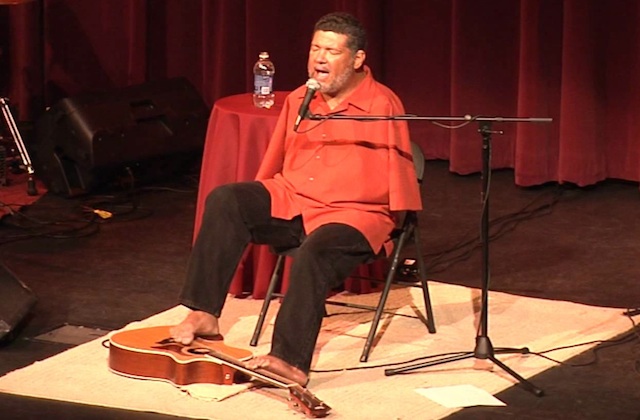
    Tony Melendez

    Tony Melendez was born with no arms and a clubfoot. Despite his misfortune, Tony chose to control his own life and happiness. He improved his circumstances as far as he could control them. He made positive choices and took responsibility for his own future.

    As stated in the biography page of his website, Tony is “a man who has spent his life putting personal confidence above his handicap.” How? By learning to play the guitar with his toes!

    He began his career in Los Angeles. Tony is a musician and vocalist with several successful albums. He is also a composer, motivational speaker, and writer.

    In 1987 Tony played for Pope John Paul II in Los Angeles. The Holy Father was so moved that he approached Tony on the stage and commissioned him “to give hope to all the people.”

    Tony took the pope’s words to heart. Tony Melendez Ministries is a non-profit organization that helps people throughout the world, bringing them hope, compassion, scholarships, and other funding.

    Tony Melendez and the Toe Jam Band have a busy tour schedule. There is no room for self-pity in Tony’s busy life because he does not focus on himself. He unselfishly gives to others he feels are less fortunate.

    But don’t expect Tony to play at your pity party. He will give you an example to overcome self-pity and inspire you to achieve a wonderful life.

    You can choose to lift yourself up and enjoy life! You are in charge of your own happiness. It is your personal responsibility.

    So go ahead and cry and mope and feel sorry for yourself and stay in bed all day. Feel the pain and the hurt. Live your reality and misery. It’s okay and even healthy to do that. But then let it go!

    Don’t let it consume your life. You are not alone or unloved. Remember there are other people in your life who need you. There are people you haven’t even met yet who need you! You can’t help anyone else if you only see yourself.

    You cannot change the past, but you can change your future.

    Photo by jeronimo sanz

  • Why Life Is More Joyful When We Let Go of “Good” and “Bad”

    Why Life Is More Joyful When We Let Go of “Good” and “Bad”

    Happy

    “Love is the absence of judgment.” ~Dalai Lama

    If judgment is the act of labeling something as good or bad, then it seems we humans do it thousands of times a day. Those of us on a spiritual path even label judgment as a bad thing. We know that pain comes from judgment, but it’s such a part of our culture that there seems to be no way around it.

    The Dalai Lama says, “Love is the absence of judgment.” And if that’s true, how do we get there?

    From the time I wake up and ask myself if I slept too late to my nightly inquiry hoping that I made the best use of my day, I am in constant analysis of my choices. Did I eat enough, did I say the right thing, did I steer my client in the right direction?

    It would seem that this constant judgment is the opposite of living in the moment—and I’m a pretty Zen person!

    One of the problems of judgment is how it’s hidden in our society and labeled as responsibility. We are supposed to use metrics to track our progress, income, and effectiveness. We are supposed to learn new strategies and always be striving to be better.

    When we judge ourselves as being “not there yet” or as a work in progress, then we’re missing the joy and perfection that exists in the moment. 

    I think that’s what the Dalai Lama had in mind with his statement that I referenced above.

    I often catch myself doing the opposite of that in shower. I’ll notice that my shoulders are up to my ears and then ask myself, what is causing this? The answer always turns out to be a judgment. When I take a conscious breath and release the thoughts I have already projected on to the day, I naturally relax.

    When I started noticing how insidious this natural reaction to judge is, and how it is linked to being responsible, I started asking some serious questions about what it means to let this go.

    Would I be a bad person if I started planning my days from a feeling of curiosity and excitement instead of right and wrong? Why do I always think I know what the best answer is anyway?

    I knew that I would be more effective, have more energy, and be a happier person if I let go of all this labeling. How would I do it, you ask? Simple.

    The pain came from labeling something as good or bad. To rectify my anxiety producing ways, I just pulled into the neutral lane.

    I stopped analyzing whether what I was experiencing was good or bad. I just let whatever came into my life exist.

    I dealt with circumstances as they arose, and even if slow traffic or an unexpected bill threw me off, I did my best to observe and not to label. Who is to say that the person slowing me down wasn’t doing me a favor anyway?

    After several weeks of conscious no-judgment, I was actually feeling more creative. I had a lot more mental energy to use in fun and productive ways. I could even see a difference in the way my friends and clients interacted with me.

    Getting through my to-do list was easier, too. Instead of dreading certain tasks, I breezed through most of my list in the morning without much hesitation. I realized how unfairly I had treated certain things like returning emails and phone calls. Taking the emotion and labels off of these tasks actually made them go smoother and get better results.

    Looking back on my experiment in non-judgment, I can wholeheartedly say that it was worth the effort.  Besides, all I did was:

    1. Notice where I was making a judgment. (What was I labeling as either good or bad?)

    2. Stay neutral instead of applying one of those two labels. 

    And it may seem that this only benefited things that I had previously labeled as bad. That’s not entirely the case. I actually ended up receiving more “good” when I stopped judging.

    For example, if I signed up two new clients in one week I may have stopped my marketing for the entire month. Now, I just keep going, as I’m inspired to do so. I also willingly accept more praise and affection.

    It’s silly to think about how much we deny ourselves because we feel we’ve had “enough.” Letting life happen truly does reveal more love.

    There are some moments in life when we are thrown to our limits. You have to decide for yourself how far to take this in the case of death, illness, layoff, or other life changing events. Some people find their brightest clarity when faced with the worst circumstances, but it’s truly a personal thing.

    If you are used to using judgment at work or to make important decisions in your life, you may find it easier to start your experiment slowly. It can feel irresponsible to jump into this way of looking at things, and this isn’t about knocking you off balance.

    To do that, simply bring awareness to where you are placing labels. Then decide if you’d like to keep doing so. There is no wrong way to go about this.

    Just remember, when you’re not labeling something as good or bad, there simply “is.” Life is filled with truly awesome moments that we can enjoy when we’re using our energy to observe instead of analyze.

    Photo by Vladimir Yaitskiy

  • Why Letting Ourselves Feel Bad Is the Key to Feeling Better

    Why Letting Ourselves Feel Bad Is the Key to Feeling Better

    “The more you hide your feelings, the more they show. The more you deny your feelings, the more they grow.” ~Unknown

    For as long as I can remember, I have been on a quest to heal myself. From a very young age I can remember feeling different from my peers. I was always painfully shy and paralyzed with insecurity and fear, which left me in a constant state of self-criticism.

    Hardships in my young life, including the suicide of my father, left me with the belief that life was just hard.

    Unfortunately, I also thought that it wasn’t supposed to be and that something was wrong with me because I had so much pain in my life. My head swirled with shame wondering, “What’s wrong with me? Why can’t I get over this, or that?”

    My solution to the pain I felt was to basically wage war on myself and conquer all of the difficult feelings I experienced.  

    I truly believed that I just needed to figure out the right formula, accomplishments, and milestones, and then I wouldn’t have these painful feelings and I would finally feel okay in my skin.

    Along the way, I hit all of the targets I had identified: I lost weight, I earned degrees, I made money, I did lots of therapy; I created a life for myself where everything looked the way it was supposed to, but I still struggled with fears and insecurity.

    This mission I was on to fix myself only added insult to injury, because my primary thought process was that something was seriously wrong with me and if I wanted to be happy, like I thought everyone else was, then I needed to stop having what I had deemed “bad” feelings.  

    Rather than giving myself a break, I found the path of greatest resistance.

    I was in a constant battle with myself, where every time I had an uncomfortable feeling I jumped on myself for feeling that way and immediately set out to change that feeling. I couldn’t distinguish the difference of “I’m having a ‘bad’ feeling,” from “I am bad.”

    When we react negatively to our own negative emotions, treating them as enemies to be overcome, eliminated, and defeated, we get into trouble. Our reactions to unhappiness can transform what might just be a brief, passing sadness into a persistent dissatisfaction and overall unhappiness.

    Unfortunately, no matter how hard we try to avoid emotional pain, it follows us everywhere. Difficult emotions, like shame, anger, loneliness, fear, despair, confusion, are a natural part of the human experience. It’s just not possible to avoid feeling bad.

    However, we can learn how to deal with difficult emotions in a new, healthier way, by practicing acceptance of our emotions, embracing them fully as they are, moment to moment. For me, this has meant creating space in my life for all of the parts of experience, the ups and the downs.

    Unfortunately, in Western culture very few of us have been given the tools to tolerate our own difficult feelings, or those of another person. Not only do we want to avoid feeling pain at all costs, we want to prevent the people we care about from feeling their own pain.

    Recently I found myself in a situation where I was confronted with a past loss, and although it has been two years since the loss, I found myself emotionally wrecked, as though it had just happened yesterday.

    In my sadness, I reached out to a few friends for comfort and was surprised at how difficult it was for them to tolerate my difficult emotions.

    In an effort to help, they wanted to battle the sadness and told me things like I was sitting in self-pity and feeling sorry for myself; that I needed to practice more gratitude in that moment.

    Again, they weren’t trying to be hurtful; they were just trying to help me stop feeling sad.

    Thankfully, I’ve done enough work on this path to know that that was not what I needed. In that moment, I simply needed to allow myself to feel sad.  

    I knew the feeling wasn’t going to last forever and I had a choice, I could either drag it out by waging war on myself, or I could recognize that, for whatever reason, in that moment, I just felt sad.

    Again, our reactions to our difficult emotions can transform what may have been just a brief, passing sadness (as was the case for me in this situation) into persistent dissatisfaction and unhappiness (two decades of my life).

    By learning to bear witness to our own pain and responding with kindness and understanding, rather than greeting difficult emotions by fighting hard against them, we open ourselves up to genuine healing and a new experience of living; this is self-compassion.

    If you’re someone who is used to beating yourself up for feeling sad or lonely, if you hide from the world whenever you make a mistake, or if you endlessly obsess over how you could have prevented the mistake in the first place, self-compassion may seem like an impossible concept. But it is imperative that we embrace this idea if we are to truly live freely.

    When we fight against emotional pain, we get trapped in it. Difficult emotions become destructive and break down the mind, body, and spirit. Feelings get stuck, frozen in time, and we get stuck in them.

    The happiness we long for in relationships seems to elude us. Satisfaction at work lies just beyond our reach. We drag ourselves through the day, arguing with our physical aches and pains.

    Usually we have no idea how many of these daily struggles lie rooted in how we relate to the inevitable discomfort of life. The problem is not the sadness itself, but how our minds react to the sadness.

    Change comes naturally when we open ourselves to emotional pain with uncommon kindness. Instead of blaming, criticizing, and trying to fix ourselves when things go wrong or we feel bad, we can start with self-compassion. This simple, although definitely not easy, shift can make a tremendous difference in your life.

    It’s important to remember that embracing your strengths and well-being does not mean ignoring your difficulties. We are measured by our ability to work through our hardships and insecurities, not avoid them.

    We are all fighting some sort of battle, and when we accept this truth for ourselves, and others, it becomes a lot easier to say, “I’m struggling right now and that is okay.”

    Not being okay all the time is perfectly okay.

  • Why Bad Things Happen to Good People: How Is This Supporting You?

    Why Bad Things Happen to Good People: How Is This Supporting You?

    Mourning Woman

    “This being human is a guest house. Every morning a new arrival… Be grateful for whatever comes. Because each has been sent
 as a guide from beyond.” ~Rumi

    Yesterday my boyfriend’s father told me that he doesn’t believe that everything happens for a reason. He explained, “Where I can’t get on board is, if that’s true, then why do bad things happen to good people?”

    It touches close to home for their entire family because not only does one of their sons’ girlfriends have a rare and terminal form of cancer, she met their son because he successfully removed a melanoma (a fast acting, lethal cancer).

    His girlfriend is in her late twenties, and she’s one of the sweetest young women I know. While she beat it into remission last year, it’s just come back. She’s living with constant fatigue, a broken rib that won’t heal, and the harsh reality is that she could die.

    His father and I began to connect over this age-old conundrum: Why do “bad” things happen to anyone—especially the kind-hearted, ourselves, or the ones we love?

    Hundreds of thousands of years of religion, philosophy, and artistic expression have sought to grasp: why are we truly here and why is there suffering?

    Certain chapters of my own life have seemed ruthless or even tragic as they were happening.

    As a child, I was often disappointed by my father, a person in my life who I loved dearly and who disappeared on my birthdays and holidays. sometimes without so much as a call.

    As a young adult, I learned that he battled his own demons with drugs, alcohol, and a traumatic past, which helped comfort me for why he wasn’t around when I was a child, but it broke my heart in a different way. I have often asked myself, “Why is there so much pain in the world?”

    Asking this question led me to realize it was more about my own pain within. My suffering drove me to search for happiness and freedom within myself. In fact, it’s been through the most challenging and darkest experiences that I’ve cultivated the greatest connection with the light of my heart.

    Have you ever heard how when someone has a near-death experience, they begin to realize what’s truly important to them in their lives? It’s said they often begin spending time with the ones they love, and ticking off items from their bucket list to do what they love.

    A really dark experience can be like a metaphorical near-death experience. Through the most painful life circumstances, I’ve discovered what’s most important to me.

    I’ve realized what’s most important for me is feeling free to do what I love, write, speak what is true from my heart, and cultivate a deep connection with love inside and outside myself.

    With love as my intention, I’ve overcome circumstantial challenges to realize that connection, authenticity, and freedom doesn’t depend on what happens in your life as much as how you respond to what happens.

    But how do you overcome challenging life-circumstances rather than falling victim to them?

    The question I ask myself in times of resistance is:

    “How is this supporting me?”

    Not everyone believes that certain things are “meant to be,” but opening yourself to how a negatively perceived experience could be supporting you is a powerful way to stop resisting what is and create space for acceptance.

    When you fall into a state of acceptance, you naturally connect with your being-ness: the now.

    When you are truly in the now, this present moment, is there ever anything actually wrong?

    Rumi must have known this about non-resistance, as his words remind the world to embrace everything that happens as a gift, a gift to support you.

    If you want an end to pain, resist nothing you feel in the present moment. When you open your heart to feeling, rather than responding with “why” or “why me?” you have a great opportunity to transform your circumstances into your destiny.

    Difficulty and challenge aren’t inherently bad. The difficulty of running that marathon, working to chase your dreams, or overcoming challenges—including the failures and disappointments—aren’t they part of the stuff that makes our lives meaningful?

    While it may be easier to say this about marathons and dreams than to say it to the little girl who felt more and more betrayed by life with each birthday missed by a father who seemed to cause a hole in her heart, or to the young woman who perceives to be losing her dreams because of a debilitating illness, it doesn’t mean there isn’t a purpose in what is being experienced.

    It’s not for me to understand why she is facing this twist in her life story, or what’s true about circumstances that have touched the lives of your family, friends, or those who you feel connected with during tragedies that may hit another part of the world.

    I can only say that by embracing every emotion caused by my own life stories, every perceived tragedy, and asking life with an open heart, “How is this supporting me?” I’ve reached acceptance and neutralized my own judgments time and time again.

    I have spent a lot of time reminding myself, “This is how I’ve asked it to be, so what is it trying to teach me?”

    Sometimes the answer was just to feel helpless, to let go of control, cultivate patience, know a deeper compassion, or just realize that no matter what, I love my father, despite the role that he has played in my life.

    I love life, despite the challenges I face.

    I’ve learned to keep my heart open to feel. And now I’m not so afraid of feeling. It is through feeling the depth of all my pain that I’ve created more space for love—and now I just feel more alive.

    So why do “bad” things happen to “good” people?

    When you stop resisting, start feeling, and ask how life is supporting you, you get out of your own way. This is what it means to surrender. And from seeing life that way, bad things stop happening; or rather, it’s not that “bad” things stop happening, you just stop seeing them as such.

    For example, if I hadn’t experienced so much pain and suffering in my life, I would have never gone on a journey to connect with my heart at such a deep level.

    How can I label pain and suffering as “bad” after realizing it’s what has supported me to expand, to experience more intimacy and love, and become more authentic? True acceptance subtly transforms “bad” into “meant to be” and slowly life naturally becomes less painful and more fun.

    The truth is, life doesn’t always give you what you think you want; life gives you what’s perfect. But perfection only becomes your experience depending on how you choose to respond to what happens.

    Did Nelson Mandela stop believing in a vision of freedom in jail? No. Do you think Mandela would have felt free stifling what he felt so strongly on the inside even if it kept him outside of jail? In fact, do you feel it’s possible Mandela felt freer even within the confines of that prison cell? Why would that be true? Because he was free in his heart.

    He transformed his circumstances into his destiny, and he transformed the world. He was just a man; he is no different from you or me. He chose to transform his circumstances into his destiny.

    Freedom and happiness have nothing to do with your circumstances, and everything to do with your level of connection with the truth that you feel in your soul and express to the world.

    As my boyfriends’ father and I sat there, he said in an afterthought, “I suppose if that kind of disease happened to me, I would just do my best to stand up as a living example to my children of how to face such an experience with ease and grace, so they would also know that it’s possible.”

    And isn’t that all anyone can do, face our own individual challenges with as much ease and grace to discover what we’re meant to do: be our selves, follow our destiny, and realize what’s truly important—love.

    For when you transform what happens “to you” into your life destiny, you become the change you wish to see in the world.

    Photo by Mitya Ku

  • How to Be Hurt Less by So-Called Evil People

    How to Be Hurt Less by So-Called Evil People

    Protected by Light

    Every sweet has its sour; every evil its good.” ~Ralph Waldo Emerson

    There were monsters in my closet—or so my five-year-old self believed. As soon as my mother kissed me goodnight and flipped the lights off, they would appear.

    See, in my room, the sliding closet doors were kept open, and on the top three shelves, monsters would magically appear in the darkness. Their wide mouths closely resembled folded towels and their eyes looked like the buttons of my sweaters, but I was too scared to notice.

    I could only see evil creatures staring at me, and after a few minutes of terrorizing myself, I would run out of my room and jump in my parents’ bed. Then, one night, I closed the closet doors and the monsters went away.

    Years later, another monster would haunt me in the middle of the night.

    This monster had a name, and one of those facial expressions that made her look as she was perpetually frowning. This monster had had an affair with my husband, and had repeatedly attempted to thwart all of my efforts to forgive and to save my marriage.

    “That woman is evil,” friends of mine who knew her would say. “She’s plain evil.”

    I believed she was evil, and when she assumed the role of a monster in my head, anger and fear settled themselves comfortably in my heart.

    As I did when I was little, I tried to close the doors of my awareness to send this new monster away. When a thought about what had happened came to me, I would push it out of my mind, but the thought would eventually return with renewed intensity.

    Then, one day, as life as I knew it crumbled before my eyes, I started to awaken. I knew that unless I let go of the fear and anger, I wouldn’t be able to move forward into love and happiness. I loved myself too much to remain stuck in this dark place.

    Messages about oneness and compassion seemed to come to me from books, podcasts, live lectures, the Internet, and people I met. Life was calling me back.

    I understood that I had the power to free myself from this “monster” and from all the “evil” people that might try to come into my life. I’d like to share what I learned with you. 

    “Evilness” is a judgment.

    When you label people as “evil” or as “bad,” you block your ability to see that they come from the same source that created you. Removing judgment allows you to extend compassion not only to them, but also to yourself. Through compassion, you can heal.

    You can choose not to give power to so-called evil people.

    You might have given the evildoers starring roles in your life drama, but to them, you might just be someone who got in their way. They pursued their goal without considering the damage caused by their actions.

    They probably rationalized what they did in a way that made them feel they weren’t doing anything wrong, or that they had no option but to do what they did.

    By realizing this, taking the actions of others less personally, and changing your thoughts about these actions, you can choose not to give your power away to other people. You can lessen the negative impact that hurtful actions have on your emotional state.

    “Bad” people can become your greatest teachers.

    My adult-life “monster” taught me to deal with adversity like no one else. Whoever has come into your life has done so for a reason. Ask yourself what lesson you can learn from the negative behavior of other people.

    It’s okay to reject “evil.”

    Once the worst of my situation was over, I learned I had the choice to simply not let myself be bothered by what anyone had done to me.

    When people were verbally attacking him in public, Buddha responded, “If you have a gift to give a friend, but the friend refuses to accept the gift, who then does the gift belong to?”

    Limit your time with those who tend to bring negativity into your life and choose not to place your attention on the detrimental actions of others.

    “Evil” dissolves when you bring light into it.

    If I had just turned on the light in my room when I was little, the monsters in my closet would’ve disappeared.

    Usually, when others attack you, they are subconsciously seeking to bring up negative emotions in you. Their pain needs to feed on your pain to continue existing. If you decide to not give in to the negative emotions, they’ll have less incentive to attack. Light nullifies darkness.

    Bring the light of your love and kindness to everyone around you, and watch the “bad” people in your life retreat or even change their actions.

    “Evil” people don’t know better.

    People who hurt you act out of ignorance. They justify their harmful behavior by thinking they are doing what they need to do given the circumstances in their lives.

    Also, people who harm others are usually in dreadful emotional states. They are under such pain that all they have to give to others is pain. Realizing this truth will help you advance on the road to compassion and forgiveness.

    There are no evil people.

    However, the world is filled with people thinking evil thoughts. If you become prey to anger and hatred, you’ll join the ranks.

    Send love to everyone around you, including those who’ve hurt you. Love will open the door for goodness to come into your life, and will close the door to those evil monsters in the closet who are people just like you and me, doing what they think is best at a certain moment in their lives.

    Photo by Jenny Poole

  • Good News: Bad Moods Don’t Have to Be So Bad

    Good News: Bad Moods Don’t Have to Be So Bad

    “Most of the shadows in life are caused by standing in our own sunshine.” ~Ralph Waldo Emerson

    How many times have you heard “Follow your heart” or “Let emotion be your guide”?

    Too many to count, I’d bet.

    It’s generally good advice; it’s certainly wiser to follow your own feelings than to blindly do what other people think you should do.

    But reading into your emotions can also lead you astray.

    You see, you are always feeling your thinking. You are not necessarily always feeling “the truth,” or even your own personal truth.

    Every emotion, feeling, or mood you experience follows directly from the thinking you are experiencing. That thinking is not always accurate or important. It does not always indicate what’s best for you.

    In reality, your feelings are nothing more than feedback about your thinking.

    Feelings are not feedback about your mental health, the state of your life, or whether you have the “right” job, partner, or dietary habits.

    I used to think they were. When something in my environment seemingly aroused negative emotion in me, I’d jump into action. Life became a game of adding in the “right stuff” and subtracting out the “wrong stuff” in order to feel as good as possible.

    I thought this was very enlightened; after all, I was no longer willing to put up with what didn’t feel good and I was consciously choosing more of what did.

    I’d notice some negative feelings about my job and immediately start looking for a new one. Clearly, my job wasn’t a good fit. I deserved a job where I could be nearly-always happy, I reasoned.

    Predictably (in hindsight), the moment I decided the job wasn’t a good fit, a million examples of how it wasn’t perfect would show up—things I had never noticed before. I took those as “signs”—further evidence that I had better focus on that exit strategy, and fast.

    Since I decided that my job was the cause of my distress and that I’d feel much better when I found a new one, that naturally led to the conclusion that that I wouldn’t feel better until I was in that new job.

    I innocently set things up so that I couldn’t possibly be happy until I made the change that was supposed to fix everything.

    I also did this in reverse, by the way, adding in more of the good-feeling “stuff” that I thought were the source of the positive emotions I craved.

    Although I thought this an enlightened way to be, hunting and gathering good-feeling “stuff” and playing whack-a-mole with bad-feeling “stuff,” it was based on the gigantic illusion that my feelings were based on my surroundings.

    In truth, my feelings were simply feedback about my thinking, and my thinking was not dictated by my job or anything else outside of myself.

    Thinking isn’t dictated by anything. It just arises, with emotion tagging along, and we hold on to it and tell stories about it.

    Or we don’t.

    Nothing needs to be done.

    Rather than jumping into addition or subtraction action, relax. There is nothing to do with or about bad feelings. Because thoughts are transitory, impersonal, and always in motion, feelings are too.

    The word emotion means in motion, as in always moving.

    From the time you woke up this morning to right now, you’ve probably had a few hundred thousand thoughts and feelings to which you paid virtually no attention. Paid no attention, they promptly floated away—in motion—and were replaced by new thoughts and feelings.

    Each time your mind drifts from the morning staff meeting to your lunch plans and back to the meeting again, it’s happening. Each time you cycle through, “I’m having a fantastic hair day” to “Did I clean the cat hair off this jacket?” to “I hope it’s warm enough to go without a jacket tonight,” it’s happening.

    Thoughts and feelings change all day every day with absolutely no effort or fanfare.

    This would be true of all thoughts and feelings if you treated them all the way you treat the ones about meetings, lunch, and hair.

    But since you’re human, you don’t treat them all the same. You hold on to some thoughts and spin them around in your mind. You give them importance and meaning. You imbue them with emotion and attention, which are the equivalent of mental superglue.

    Thoughts are like breath—when you stop holding your breath, new breath rushes in. When you stop holding your thoughts, new ones rush in, bringing new feelings in tow.

    All you ever have “to do” is nothing. The only position you ever have to take is of non-interference.

    What’s Possible

    Nearly everyone I talk to wants bad feelings to go away. Even when they intellectually understand that bad feelings aren’t meaningful or harmful, and even when they intellectually get that feelings are always in motion, they feel down and instantly try to feel better.

    They think I’m naive or unrealistically spiritual when I tell them that bad feelings don’t have to be a big deal. They don’t have to feel so “bad.”

    “You don’t understand my emotions,” they say. “Mine hit harder than others’.”

    Or, “But everyone knows shame is the hardest to handle,” or “I’ve had these since birth, so they’re more real than most.”

    I still say they don’t have to be so bad.

    The more you understand that your experience of life is entirely thought-created and that “you” aren’t what you think you are, your attachment to feelings—good and bad—begins to shift.

    You connect and identify with something deeper, something beyond fleeting feelings.

    It becomes obvious that bad feelings are only your surface psychology; they can’t touch who you truly are. You can rest in your true self which is always stable and always there.

    As it turns out, much of the negative experience of emotions is the cover-up. It’s when you resist, hide, or try to change those emotions that you experience them as painful.

    When you do that, you’re playing with mental superglue again. You’re putting so much pressure and focus on those emotions that they are held in place. Remember, when you don’t hold on to thought and emotion, new thought and emotion rushes in.

    I can honestly say that my experience of bad feelings is drastically different than it once was. This may sound insane, but I don’t mind feeling “bad” so much anymore.

    In fact, sometimes it’s kind of nice to settle into a bad mood. It’s a little like the comfort you might find in a rainy day once you accept that the rain is a reality and stop wanting it to change.

    I find myself deciding to just lay low and ride out the mood, just like I would the rain. I know it will change. Paradoxically, when I approach bad moods in this way they end up changing before I have a chance to experience them as “bad.”

    Emotions are naturally in motion. There is an awareness and distance that prevents me from being taken down by them.

    This is completely possible for anyone, even you.

  • People We Don’t Like: When Others Push Our Buttons

    People We Don’t Like: When Others Push Our Buttons

    I have a confession to make: there’s someone I know who I really don’t like.

    I know this isn’t exactly front-page news. It’s not like I’m the first person to ever dislike someone else. But this situation has brought me face to face with all my strongest relationship triggers.

    I find it incredibly difficult to do all the things I’ve written about when it comes to this person. Let’s call him Harry. (I’ve never in my life met a single person named Harry, but let’s just roll with it.)

    I regularly find myself wanting to judge Harry before giving him the benefit of the doubt—even though I know I’d want that courtesy if I did the things he did. But that line of thought brings me back to judgment, because I remind myself, “I would never do the things he does.”

    I find it easy to suspect him of poor intentions and conclude that maybe “he’s just a jerk,” even though I know that I get to decide what meaning to give his actions, and I also know that things are rarely black and white.

    In dealing with Harry—and perhaps more importantly, my reactions to him—I’ve found myself considering three important questions:

    • We’re always talking about letting go of judgments; is it possible that sometimes, someone is just a jerk?
    • Is it judgmental to decide someone’s actions are “wrong” when you feel strongly opposed to them?
    • Just because we know there are emotional triggers influencing our response to someone, does that mean they shouldn’t be accountable for their actions?

    I’ve decided to break these down, one by one, to see what there is to learn in this situation.

    We’re always talking about letting go of judgments; is it possible that sometimes, someone is just a jerk?

    I’ve wanted to use this label for Harry because of assumptions I’ve formed about his behavior: that he thinks he’s better than other people; that he’s really selfish, despite pretending to be caring and well-intentioned; and that all of this amounts to unfairness.

    When I break this down, I realize the “he thinks he’s better than me” assumption goes back to my childhood experiences with being bullied, when I felt inferior to most of my peers—and their actions seemed to reinforce that.

    The “he’s selfish” belief is a projection of my own fear that I’m actually a selfish person (something I’ve wrestled with all my life, no matter how giving I try to be).

    And the conclusion about “unfairness” relates to my life-long aversion to all things unjust—both a response to my childhood and a natural human reaction.

    When I pull it all apart like this, I realize I’m having a strong emotional reaction based on lots of things that aren’t solely related to him.

    So my desire to sum my feelings up with one harsh label isn’t only about his actions. It’s also about my past experience.

    And when I really think about it, whenever I’ve wanted to label anyone as a “jerk” (or something stronger), I’ve dealt with these same (and other related) triggers.

    That doesn’t mean no one has ever done anything to justify my anger. It’s just that usually, when I feel unable to access even a shred of understanding or compassion, it’s because there are strong layers of resistance, reinforced by years of my own pain, in the way.

    I suspect that’s true for most of us: the more tempting it feels to give someone one reductionist label, the deeper and more complex the triggers.

    This brings me to the next question…

    Is it judgmental to decide someone’s actions are “wrong” when you feel strongly opposed to them?

    While I realize there’s a lot more contributing to my feelings than his actions, that doesn’t change that I don’t agree with everything he says and does.

    Once I peel away the layers of my complex response to him, I can then objectively ask myself, “Which of the choices he makes don’t feel right for me?”

    This isn’t judgment—it’s discernment. It’s forming an assessment without the emotional weight behind it. And it’s essential to maintaining my own moral compass and forming boundaries within my relationships.

    That means I don’t need to label him anymore. Instead I can say, “I wouldn’t make the choices as he makes, and I don’t want someone in my life who makes them.”

    It’s not about me deciding he’s a “bad person” and, therefore, feeling better than him; it’s about me realizing he’s a bad match for a friendship and then feeling better about the situation.

    The positive consequence: I give him far less power over me and my emotions. He’s not wrong—just wrong for me.

    And then that brings me to the last question…

    Just because we know that someone’s actions trigger us, does that mean they shouldn’t be accountable for their actions?

    Now that I’ve accepted responsibility for my reaction to him, and acknowledged that his choices can make him “wrong” for a friendship with me without making him universally “wrong,” I no longer need to “hold him accountable.”

    But if I were to want to maintain a friendship with him, I’d have two choices: accept him as he is, or share my reactions to his choices and let him into my process.

    I know from past experience that people rarely respond well when they feel judged or attacked.

    But people sometimes surprise us when we explain how we feel in response to the things they do—not because they’re responsible for our feelings, but because they care about them.

    And if they don’t care, well, this brings us back to the first two parts: It doesn’t make them jerks. It just gives us a reason to be discerning about whether or not we want to care about them.

    So where has all this left me? I’m going to continue peeling away the layers of my issues around others “being better than me” and my fears of “being selfish.” And I’m going to silently thank Harry for reminding me to continue doing this work.

    Then I’m going to stop communicating with him. Because as much as I value the gifts he’s given me, I value myself enough to realize he’s given a lot more that I don’t want to receive.

    Have you ever felt a strong reaction to someone else and realized it had a lot to do with your own triggers?

  • Make a Tough Situation Good: One Question That Changes Everything

    Make a Tough Situation Good: One Question That Changes Everything

    Thinking Man

    “The last of one’s freedoms is to choose one’s attitude in any given circumstance.” ~Viktor E. Frankl

    For my livelihood, I lead workshops on how to let go of stress and experience deeper happiness. My occupation makes my occasional meltdowns all the more embarrassing. Fortunately, a meltdown I had last year led me to a question that completely changed how I view difficult situations in my life.

    As I was checking in at the airport a few months ago, I was told I did not have a ticket for my cross-country flight. Fortunately, I had my confirmation number with me—which I promptly gave to the agent.

    “I’m sorry,” she said. “Although you have a confirmation number, you’re not in our system. You can’t board this flight.”

    A wave of self-pity, anger, and anxiety seared through my body. Fifty people were expecting me in New York City the next morning to talk about how to be happier. Yet, here I was fully stressed out and making this situation mean I’m an unlucky hypocrite.

    I asked the ticket agent if there were any more tickets available.

    “Yes,” she said enthusiastically as she typed away on her keyboard.

    “Okay,” I thought. “Maybe it’s not going to be such a bad day after all. I’ve been saved.”

    She continued, “But if you buy the same ticket you had before, instead of $600 round trip, it will cost you $3200.”

    “I was right the first time,” I thought. “This means I’ve been totally screwed.”

    I needed to get to New York ASAP, so I reluctantly, angrily, and self-righteously bought the stupid ticket.

    The irony of the situation did not escape me. Here I was feeling self-pity and totally stressed out while buying a ticket to lead a workshop on happiness. The universe definitely has a sense of humor.

    For a long time I’ve known I can choose my attitude and the meaning I give the events in my life. Yet, there is a difference between knowing something intellectually and knowing it when the crap hits the fan.

    Fortunately, the “ticket fiasco” I went through that day led me to create a simple question I can ask myself that has greatly impacted my daily life.

    To make a long story short, I got to New York on time and led the workshop the next morning. That night I talked to the folks at United Air Lines and they confessed that my not “being in the system” was totally their fault.

    In fact, they decided to refund the $3200 fare I had paid that day plus what I had previously paid for my ticket.

    I actually ended up making $600. Now I was feeling like life is a bowl of cherries and everything works out for the best. It seemed like I had gone through a lot of bad feelings for nothing.

    Then it hit me. I realized I often get “worked up” about things that frequently end up working out for the best. I wondered if there was a way to short-circuit this process so I didn’t spend so much time being unnecessarily stressed. 

    As I pondered this situation, I wondered, “What question could I ask myself that would help me when faced with difficult situations?” I saw that when things occur that I don’t like, I’m basically asking myself “What could be bad about this?”

    Since I ask that question, my brain feels obliged to give me many reasons why something sucks.

    So I wondered what it would be like to ask myself, “What could (potentially) be good about this?” when facing challenging situations.

    In retrospect, I realized that had I asked this question when finding out I had no ticket, I might have come up with a couple of good answers.

    I might have guessed it would ultimately lead to a good story, or a new technique—or even a refund beyond what I had paid. Of course, that’s what ended up happening, but it would have saved me a lot of grief had I imagined that outcome while in the ticket line.

    Of course, no one knows what the future holds. Yet, it seems we habitually make the challenging events of our life mean things that lead to bad feelings.

    If you’re going to make up things about the future, you may as well come up with a meaning that empowers you—rather than stresses you out.

    For better or worse, over the next few weeks I had plenty of opportunities to practice this simple method. For example, when my tax bill was unexpectedly high, I asked, “What could be good about this?”

    That answer was easy. It could mean I’m making more money than ever before; it could mean I get to help contribute to the government so they can provide services to people less fortunate than I.

    When I got sick, I asked, “What could potentially be good about this?”

    Begrudgingly I answered, “It’s a helpful wake up reminder that I need to take my vitamins and not work too many hours.” Though still sick, I immediately felt better now that I had attached an empowering meaning to my illness.

    The ability to quickly create a positive meaning to the events in our life is a great aid to being happy. Yet, this is the exact opposite of what our mind normally does. We normally create negative, disempowering meanings whenever things seemingly “go wrong.”

    The question, “What could (potentially) be good about this?” is a simple way to change how we interpret each situation in our life. So when you get in an argument with your partner, you can see that disagreement as a doorway to deeper intimacy—rather than a doorway to depression.

    When the argument is over, you don’t really know what the future holds. You may as well create a meaning that empowers you. Through such empowerment, you’ll feel better and you’ll be more likely to act in a helpful manner.

    Nowadays, I frequently ask myself, “What could be good about this?” I always come up with at least two answers, even if I don’t believe them. I find that it immediately makes me feel better—and more empowered.

    Instead of life feeling like a battle I need to put up with, it feels like I’m being given useful challenges that will eventually lead to a happy ending. It’s a much better way to live than being the victim of a mind that always delivers bad news.

    Photo by wesleynitsckie

  • 3 Ways to Feel Good When Things Seem Bad

    3 Ways to Feel Good When Things Seem Bad

    “It isn’t what happens to us that causes us to suffer; it’s what we say to ourselves about what happens.” ~Pema Chodron

    Have you ever had something happen in your life that completely changed everything?

    Wham. Suddenly you haven’t left your bedroom in days, you can’t remember what it feels like to shower, and it’s clear the only friend you can really count on is your cat. 

    And whether it’s a major life-suck event or a minor one, the question is: How can I feel contented and calm when things don’t go to plan?

    That is what this post is about. Because a while back I had a M. A. J. O. R. Major event. It went like this:

    I’d just graduated from college. I had a Masters Degree. In science. Human nutrition science, in case you’re wondering. I was excited about life!

    Sure, I had a ridiculous door-to-door research job and my roommate was annoying, but I had plans—I’ll move in with my boyfriend, get a better job, travel, start a family, hang out with all my amazing friends, and live an awesome life.

    But then I got sick. The kind of sick where raising your arms above your head makes you want to take a nap. And instead of starting the amazing life I’d planned, I moved home with my parents.

    It was a shock, to say the least. Before that, I was tough. I hiked. My friends liked me. I stayed up late. I wasn’t a sick person.

    And while my parents are sweet and kind, living in their basement in small town New Zealand, watching daytime re-runs of Dr Quinn Medicine Woman, and hanging out with a fluffy cat called Whisky was not the plan.

    It wasn’t so bad at first. But months went by, then years, and it seemed no matter what I did, I was still sick.

    I thought, why did this happen to me?

    I cried. A lot. For seemingly no reason. And if someone asked why I was crying, I’d say, “I’m just so tired.” I cried so much some days that I’d go home and laugh with my sister on the phone over who I’d cried in front of that day. It was comical.

    That was a few years ago now. And, of course, the whole experience turned out to be a huge gift. They often are, in my experience, anyway, but that’s getting ahead of things.

    Here are three insights that helped during those “you’ve got to be freaking kidding me” times:

    1. There’s a healing side to pain.

    When a challenging event happens—a breakup, a sickness, or having your leopard pink car seat covers stolen—the human mind, being what it is, thinks this is why you feel badly.

    You hear it all the time: “Oh, you poor thing for losing your car seat covers.” Or, “She’s such a rat to do this to you.”

    The truth is, it’s your perception of the situation that makes you feel bad. This means that no matter how crumpled-in and dysfunctional you feel, you’re not. It’s just your thoughts that are a bit wonky. And actually, your thoughts on this were always wonky; the situation just exposed them.

    Take my situation. Everything I’d based my self-esteem on was gone: work, grades, friends, boyfriend, the ability to sit up straight for more than half an hour.

    I thought I was upset because I was sick, when the truth was, my situation had triggered every negative belief I had about myself. Things like:

    “I’m only lovable if people like me.” “I’m only worthwhile if I’m busy doing things.”

    I so strongly identified with all the things I did that when you took them away, I felt miserable. I’d been given the opportunity to see what I really thought about myself.

    Someone could have told me “you’re worthy and lovable,” and I might have intellectually known this, but I didn’t feel it.

    What I began to realize was that behind the pain, over time, my faulty beliefs were shifting. My sense of self-worth was beginning to heal by itself.

    The pain is the faulty belief system being ripped out by its roots. You feel like you’re losing something dear. The trick is to understand that it’s just a faulty belief going away. And beneath it lays a pocket of self-love that you haven’t previously been able to access.

    As poet Kahlil Gibran says, “Your pain is the breaking of the shell that encloses your understanding. Even as the stone of the fruit must break, that its heart may stand in the sun, so must you know pain.”

    2. Pain fades when we let go of expectations.

    Most of us live in an intellectual way. We make plans for our life and then we try and follow them through. We think we know the best way for our life to proceed.

    The truth is, a large part of our pain is caused by an attachment to our expectations.

    For example, one of the reasons I felt so bone achingly sorry for myself was because I had a plan for how to have a good life—and it didn’t include Dr. Quinn.

    I thought success came from going to college, getting a good job, and having a family. No one said anything about spending all this time in bed. But actually, it was the best thing for me.

    To illustrate you how powerful your expectations are, try this exercise:

    First, imagine you’re me.

    Now, imagine you’d grown up thinking the best way to have an awesome life was to spend five years in bed cross-stitching cushions. That it was something everyone did.

    “Oh yeah,” you’d say to your friend, “I’m just off to do my five-years-in-bed years.”

    And they’d be like, “Oh cool. I hear you learn such amazing things, like how to feel self-assured, and you get clarity on your life direction, and you start to feel that inner calm we’re always reading about.”

    Seriously.

    Now think about your current situation and imagine that for your whole life, you believed that what is happening to you was going to happen. And not only that, but it’s the absolute best thing to happen.

    So much of the pain we feel is because we can’t let go of how we think life should look. Your mind thinks it knows the best way for your life to work out—but simply put, it doesn’t; the plan it had was flawed in the first place.

    Your mind can only see your life as it’s showing up right now. There is a bigger picture.

    3. You’re doing fine.

    Learning about personal awareness and healing can be such a helpful thing, but remember, there’s no right or wrong way to feel.

    Feeling grateful and “being positive” and so on is perfectly fine, and sure, it can be helpful, but if you don’t feel like it all the time, don’t worry about it.

    Instead of attaching a judgment to how you’re feeling or what you’re thinking, try just noticing it.

    I believe the act of simply noticing and accepting how things are, right now—no matter how messy and dysfunctional they seem—is the most powerful, healing thing you can do.

    Photo by Dahl-Face Photography

  • Wanting to Feel Good and Look Good: Why Do We Do What We Do?

    Wanting to Feel Good and Look Good: Why Do We Do What We Do?

    Sun Goddess

    “Nothing is either good or bad, but thinking makes it so.” ~Shakespeare

    Have you ever stopped to question why you do what you do? Or how it looks to other people?

    I’ve done this pretty much all through my life. In fact, an outsider might say that I’ve spent more time analyzing my place in the world than experiencing it.

    In some ways, this is true, and not uncommon for someone who’s chosen to be a writer.

    As a young child I used to silently mouth the words of what I’d just said after every sentence I uttered.

    Even as a kid, I felt this need to rethink my thoughts after speaking them, and because I was too young to realize it looked strange, I did this while moving my lips.

    I wondered why I’d said what I’d said, and how others might have heard it.

    This followed me through life, and later manifested in a desire to not only say the “right” thing, but also to do it.

    Never was this more important to me than in my mid-twenties, after I’d spent the majority of my adolescent and young adult life self-destructing and unintentionally hurting others—something that, I feared, confirmed that I was a bad, selfish person (ironically, the same fears that led me to self-destruct).

    I wanted so badly to be good. To do good. To look good. I imagined and hoped that this was the key to feeling good.

    I didn’t want to be selfish—that was bad. So I concluded that I needed to be selfless.

    I didn’t want to crave so much attention—that was bad. So I concluded that I needed to be humble.

    I didn’t want to be or be seen as manipulative—that was bad. So I concluded that I needed to prove that I had good intentions.

    In retrospect, I can see that these realizations and conclusions sparked my initial interest in the personal development industry six years back, and they informed how I did what I did. (more…)

  • Waking Up and Forgetting a Bad Day

    Waking Up and Forgetting a Bad Day

    “Life is inherently risky. There is only one big risk you should avoid at all costs, and that is the risk of doing nothing.” ~Denis Waitley

    Yesterday was a bad day.

    My husband and I got really close to buying a car before we walked away—again. This time it was because it was above our budget (with taxes), because the current owners didn’t have the title (their bank did), and because our own car broke down on the way to trying to buy the new car (didn’t see that one coming).

    I was fine about the ordeal yesterday, seeing the whole thing as one big adventure toward the right car in the end. But this morning I woke up angry and fearful. Angry about the time we’ve invested so far without results and fearful that another almost there deal might fall through again.

    After three days negotiating on the last fall-through deal, it felt like the failure of failures and just wanted to stay in bed so I could avoid more of them.

    Of course I knew rationally that my feelings didn’t reflect reality, that yesterday’s annoyances are small change in the scheme of things, and that I’m fortunate to be even looking for a (second) car let alone have so many choices for which one to buy.

    The real problem was that my feelings weren’t staying within the boundaries of the car-shopping situation. They were infecting how I felt about everything from my business to my past choices, to my body image, to my mental health image.

    I was flooded within minutes of being awake, and I didn’t know how I was going to coax my mental strength back from cowering in the corner.

    So I did what every procrastinating person does these days: I went on Facebook. And after seeing a bunch of uninteresting stuff, my eye caught on the most courageous thing I’ve seen in a long time: a picture of my five-year-old nephew Caleb leaving home for his very first day of school. (more…)

  • Non-Dual Thinking: There Are Things We Don’t Know

    Non-Dual Thinking: There Are Things We Don’t Know

    “Nothing is either good or bad but thinking makes it so.” ~Shakespeare

    It is not possible to grasp the infinite from a position that is finite. Seems like a good place to start.

    “Dual” thinking, as I understand it, is the idea that something has to be “either/or.” That it’s either good or bad. Right or wrong.

    Here’s another way describing it: The concept of up and down seems to make sense from an earthly or gravitational perspective, but if you are somewhere out in space, it suddenly makes no sense at all. There is no up or down.

    The list of these polar opposites goes on and on, but they all have one thing in common—they are often laced with judgment, and the need for resolution.

    I find myself doing it all the time—making judgments or assumptions about the people I come into contact with on a daily basis.

    The waiter who doesn’t treat me as I deserve to be treated. The inconsiderate driver who cuts me off in traffic. The rude person on the phone that is completely unreasonable. My wife who has her own way of navigating through life.

    Why don’t they see things my way, the way they are?

    The fact is that dual thinking has become integrated in how I process things, and it is rooted in fear—fear of what I don’t know, fear of what I don’t understand, and fear of what I can’t control. A feeling of lack. Being right seems to quiet the screaming monkeys, at least temporarily.

    And when I think in black and white, I miss all the shades of grey in between. Someone has to be wrong for me to be right. My relationships have suffered because they are stuck in “defending a position” mode.

    I am so concerned about being right, of making sure that my viewpoint is heard, that I miss all the magic, learning, wisdom, and connection that are waiting to be discovered.

    And if my relationships are based in this “either/or” way of thinking, is it any wonder that I continue to feel separate and isolated, from myself and others?

    How can dual thinking represent “truth” when something can be right for one person, but wrong for another?

    Truth is simply a matter of perspective, and no one person can be the judge and jury on that.

    It is a very narrow, disrespectful, arrogant, and un-evolved way of thinking that I know does not serve me, or any of us.  (more…)

  • Life Isn’t Good or Bad; It Just Is

    Life Isn’t Good or Bad; It Just Is

    Ankh scale

    “Freedom is instantaneous the moment we accept things as they are.” ~Karen Maezen Miller

    Seemingly for months now, upon learning anything new, my seven-year-old daughter has asked me, “Is it good or bad?”

    Not brushing at night—good or bad? One hundred degree temperatures—good or bad? Water leak in the furnace—good or bad?

    Some things are more obvious than others, but it’s the stuff in the middle that requires a more subtle explanation, especially as I go through life with the stress and anxiety of trying to both deal with uncertainty and figure out life in the “new normal” called chaos.

    I wrestled with trying to make her understand that sometimes life is neither good nor bad—it just is.

    But like any child trying to adjust the settings on her moral compass, she had difficulty in trying to understand that there can be some things that fall neither in the good nor the bad category.

    Recently something happened that tested this notion and, in some strangely profound way, might have helped me find a way to explain life (as I understand it) to my seven-year-old.

    My wife’s grandmother passed away.

    Having been raised by her grandmother for most of her young life in India, my wife was distraught and sad. Although my daughter had very little contact with her great-grandmother, given the vast ocean that separated them, she could tell that her passing affected her mom deeply.

    At first we didn’t know how to explain the passing to our chirpy and inquisitive child. So we didn’t, for a day. We avoided it. But then, as seven-year-olds do, she overheard me on the cell phone explaining to someone what had happened.

    Almost instantly, a happy-go-lucky child became eerily quiet upon hearing that her mom’s grandmother died. She didn’t have to ask if it was good or bad. It was bad.

    But is it? (more…)

  • Aid for a No-Good, Terrible, Very Bad Day

    Aid for a No-Good, Terrible, Very Bad Day

    “The outer teacher is merely a milestone. It is only your inner teacher that will walk with you to the goal, for he is the goal.” ~Sri Nisargadatta Maharaj

    Recently, I had a very bad day. It was a day when certain life events made me so scared, so panicked I felt like I was floating in a dark void with no connection to anyone or anything, certainly not myself.

    It wasn’t one bad thing that happened, just an accumulation of family stresses, worries, questions, uncertainty, and self-doubt that flooded my spirit. I had been going-going for many days and lost touch with myself and it caught up with me—just like that. It spun me right off my center.

    Although I know as humans we are imperfect, I judged myself as a fraud.

    I’ve devoted myself to my inner-work for decades. I have a counseling psychology degree, published a self-help book and card deck set, and write articles with lessons about being peaceful, content, and happy.

    But on this day, I needed to figure out how to help myself.

    I tried to remember the amount of teachings spiritual, psychological, and creative I have collected in my toolbox over the many years.

    I thought about the great teachers of the world that offer incredible valuable assistance to one’s growth and discovery. And remembered that without the application of the teachings, we remain a head full of knowledge rather than a being who is at peace and free.

    I needed to be my own teacher in the moment, but I felt so weak and vulnerable I couldn’t connect to any of the teachings. This was a red flag of an emergency for me.

    Lying on my bed in a temporary freeze, I thought about common emergency instructions we are given in case of disaster. The building’s sign: “In case of fire, take the stairs not the elevator.” The flight attendants: “Cover your own mouth first, then your child’s.” When a tsunami hits: “Run to higher ground.” The tornado: “Open the windows so that they will not shatter” or “Go to the nearest shelter” Even for the addict, “Pick up the phone and call your sponsor.” (more…)