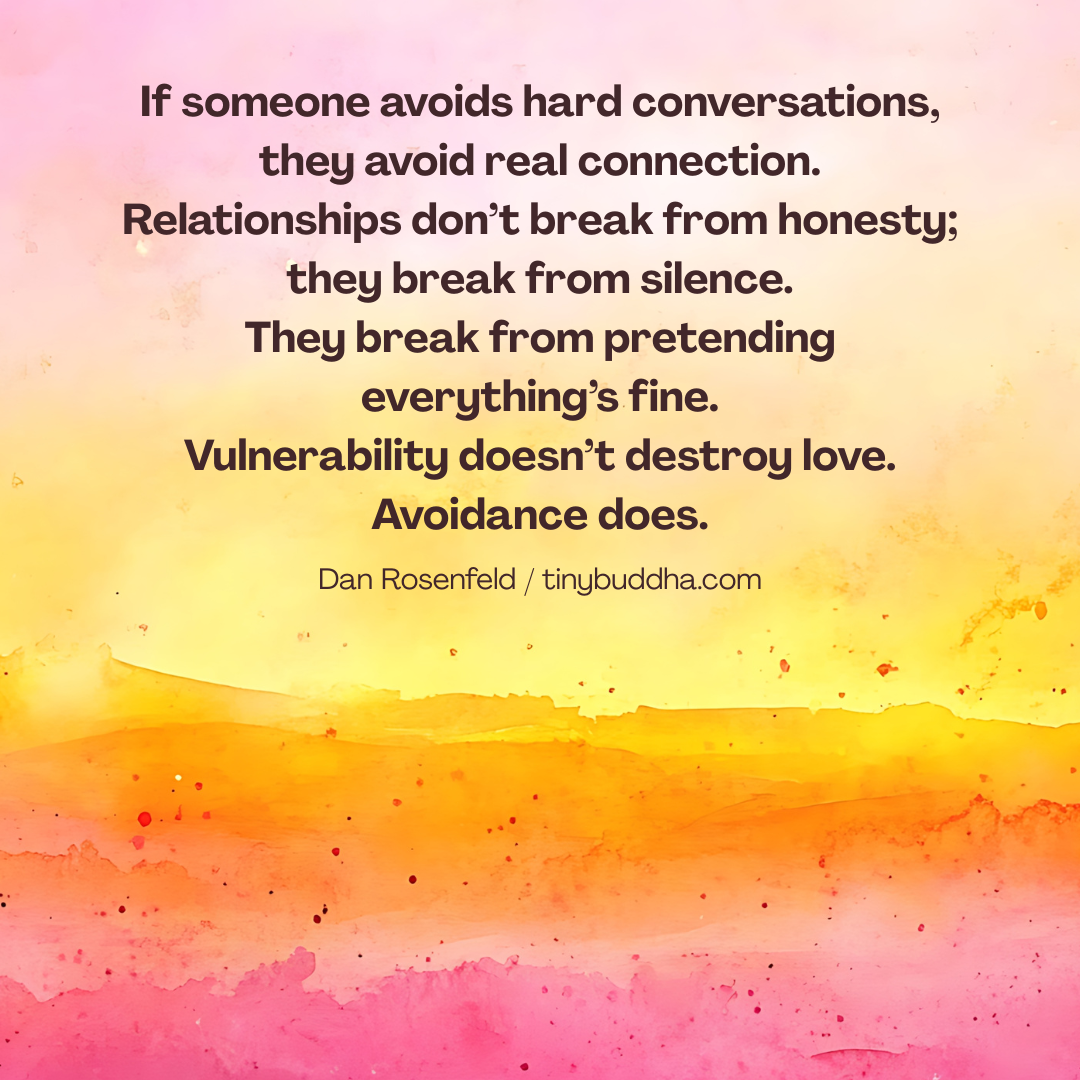
Tag: avoidance
-
The Truth About Why I’ve Ghosted People (and What I’ve Learned)
“Ghosting is cruel because it denies a person the chance to process, to ask questions, or to get closure. It’s emotional abandonment, masquerading as protection.” ~Dr. Jennice Vilhauer
I never set out to ghost anyone.
In fact, I used to hate ghosting with the burning fury of a thousand unread dating app notifications. I told myself I’d never be that person—the one who disappears mid-conversation, fails to reply after a good date (or sends a very bland thank you message), or silently vanishes like a breadcrumb trail to nowhere.
And yet… here I am. Writing a post about how I’ve ghosted people.
Not because I’m proud of it. Not because I think it’s defensible. But because I’ve come to understand why I’ve done it—and what that says about dating culture, emotional patterns, and my own very human flaws.
So, if you’ve ever been ghosted and wondered what was going through the other person’s head—or if you’ve ghosted and don’t quite understand your own behavior—this is for you.
Because behind every silence is a story.
A Pattern Primed by the Past
Let’s start with this: I didn’t begin my dating journey with cynicism. I started like many people— hopeful, curious, wide-eyed.
But after a few rounds of being ghosted myself, misled, or strung along by people who said all the right things but meant none of them, my hope began to erode. Slowly, subtly, like a stone smoothed down by constant friction.
Over time, the pattern looked like this:
- Match with someone promising.
- Exchange funny, thoughtful messages.
- Maybe go on a date or two.
- Then, suddenly… nothing. Silence. A flatline.
It wasn’t always dramatic. Sometimes the conversations just faded. Other times, it was abrupt. I’d be mid-conversation and—boom—gone. No explanation, no closure. Just another digital ghost in the machine.
And while I knew intellectually that this was “part of online dating,” it still landed. It primed me to expect disappointment. To approach each new match not with optimism, but with quiet dread.
Eventually, I started thinking:
What’s the point? They’ll probably flake anyway.
Ghosting as a Defense Mechanism
So, where does my ghosting come in?
At first, it was subtle. Maybe I’d take a little longer to reply. Or I’d go silent on someone who seemed nice but who I didn’t feel an immediate spark with.
I’d tell myself:
- “I don’t owe them anything.”
- “They probably don’t care.”
- “It’s better to fade than force it.”
But the truth is, my ghosting wasn’t about them. It was about me.
It was a reflection of my fear of disappointing someone, my lack of emotional bandwidth to explain myself, and my protective instinct kicking in when I sensed something familiar—and not in a good way.
I had been ghosted so many times that I began to preemptively disengage before anyone could do it to me.
If you leave first, at least you’re not the one being left.
It’s a faulty logic, but when you’ve been conditioned by repeated negative experiences, you start to default to protection over connection. And ghosting—silent and sudden—is the ultimate form of emotional self-preservation.
Cynicism in the Profile Scroll
Online dating is like a mental rollercoaster of judgments, hope, disappointment, and the occasional serotonin spike when someone has a dog and knows how to use punctuation.
But over time, I noticed something about how I was engaging with profiles:
I wasn’t curious—I was critical. I wasn’t open—I was braced for disappointment. I’d read bios looking for reasons to notengage, rather than to connect.
Somewhere along the line, dating apps stopped being exciting and started feeling like a parade of micro-rejections—even when I was the one doing the rejecting.
I became a dating cynic in a world that rewards detachment. I looked at profiles and thought:
“This guy probably lives with his ex and/or is married.”
“He looks like a player and lacks authenticity—even though I was going on very little evidence.”
“He’ll definitely tell me he’s ‘not looking for anything serious’ but still want attention and the accompanying ego boost.”
And even if someone seemed genuinely kind, I’d think: What’s the catch?
That mindset doesn’t just hurt others. It corrodes your ability to be present, vulnerable, or sincere.
Ghosting as Avoidance, Not Malice
Here’s what I’ve realized through self-reflection and a few too many red wines while watching reruns of “Love at First Sight”: ghosting is not about cruelty. It’s about avoidance.
Ghosting feels easier than:
- Crafting a rejection message
- Sitting in the discomfort of someone else’s disappointment
- Risking an awkward reply, or worse, an argument
It’s quick. It’s clean. It’s also emotionally lazy.
But when your emotional reserves are running low—especially from repeated rejection, indifference, or burnout—ghosting can feel like the only viable exit strategy.
That doesn’t make it right. But it makes it understandable.
And often, people ghost not because they don’t care but because they’re overwhelmed by the possibility of caring and not knowing what to do with it.
The Cycle of Ghosting
When ghosting becomes the norm, we all lose. It creates a culture where:
- We dehumanize the people we talk to.
- We second-guess our self-worth.
- We become afraid of emotional exposure.
- We settle into half-hearted connections because we don’t expect real ones to last.
It breeds mutual distrust, and that, ironically, makes ghosting more likely.
I started to see it like a self-perpetuating loop:
Get ghosted → become jaded → ghost others → deepen the culture of avoidance.
And yet, I also realized something else: If I wanted to break the loop, someone had to go first.
What I’ve Learned (That Might Help You Too)
Here’s what’s shifted for me over time:
1. Avoidance doesn’t spare feelings. It just delays discomfort.
Telling someone you’re not feeling a connection is awkward. But not telling them leaves them confused, maybe even hurt. And it leaves you carrying emotional clutter.
2. Emotional boundaries are not the same as emotional withdrawal.
It’s okay to not continue a conversation. It’s okay to end things after a date. But doing so with clarity and kindness (even a single line) is far more respectful than silence.
3. Ghosting devalues human connection, even in small ways.
When you ghost someone, you’re subtly reinforcing the idea that people are disposable. And in doing so, you chip away at your own sense of connection.
4. Cynicism protects, but it also prevents.
Expecting the worst can be a shield, but it also blocks the good. Staying open, curious, and kind—even after heartbreak—is the bravest thing you can do.
What I Try to Do Now
These days, I approach online dating differently. Not perfectly. But more intentionally.
If I’m not interested, I’ll say something like:
“Thanks for the chat. I don’t think this is a match, but I wish you well!”
Simple. Kind. Closure. Done.
And if I’m feeling overwhelmed and don’t have the bandwidth to connect, I pause. I take a break. I don’t keep conversations going just for the dopamine or out of obligation.
Because being honest and respectful, even online, feels a lot better than the lingering guilt of another message left unanswered.
Final Thoughts: Honesty and Authenticity Over Evasion, Always
Ghosting may be common, but it’s not benign. And while I’ve done it (more than once), I’ve also learned that it’s often a reflection of internal burnout, fear, or cynicism—not cruelty.
But we can do better. We can date better.
Not by being perfect, but by being aware. By choosing clarity over comfort. By remembering that every profile we swipe on is a real person with hopes, fears, and a heart that deserves kindness. Ultimately, we are looking for love, appreciation and a sense of connection.
So, to everyone I’ve ghosted, I’m sorry. Not just for the silence, but for assuming you wouldn’t care. For using detachment as protection. For forgetting the humanity behind the screen.
And to anyone struggling with the messy world of online dating: you’re not alone. And you’re not broken. You’re just trying to find something real in a world that often rewards pretending and external validation.
Keep showing up. Keep being honest. Keep being you.
Even when it’s awkward.
Even when it’s scary.
Especially then.
-
How Avoiding Painful Emotions Can Lead to a Smaller Life
“Being cut off from our own natural self-compassion is one of the greatest impairments we can suffer.” ~Gabor Mate
Most of us avoid experiences not necessarily because we don’t like them or want them, but because we don’t want to feel how we will feel when we go through that experience.
Our lives become altered by the emotions we don’t want to feel because we don’t want to move toward the thing that could bring strong emotions like fear, shame, sadness, or disappointment.
We don’t want to go to that party because we’ll probably feel awkward and embarrassed.
We don’t want to chase that work opportunity in case we feel disappointed if it doesn’t work out.
We don’t want to take that trip because it might feel scary.
We don’t want to slow down our busy lives because it feels too terrifying to contemplate emptiness and quiet.
And then we get this idea about ourselves that this is just who we are. We are just:
- People who don’t like parties
- People who don’t travel
- People who are fearful
- People who are procrastinators
- People who are just busy but intensely stressed
We have this idea that this is just who we are, and therefore, this is how we should live. Perhaps we feel an anger or an anguish at being “this type of person.” Or maybe it just feels so unconscious, so embedded in our personality, that we don’t do certain things, that we accept it as just the way we are.
For most of my life I thought I was a nervous, cautious, fearful person. That was just how I was born. I thought I couldn’t change it, just like I couldn’t change my hair color or my deep love for mashed potatoes. It felt biological. Some people were brave and courageous; I was fearful and afraid of almost everything.
I carried this with me, this idea about who I was, until I learned that emotions like fear and terror, anger and rage, and despair or sadness are just emotions that we need to learn how to be with. And if we don’t learn how to be with them, they can create an outsized influence on our lives—creating this idea about who we are and what kind of personality we have and causing us to avoid things that trigger these feelings.
But what we are actually avoiding is not the experience, people, or things but the feelings we feel when we think about that thing or try to do it. The feelings around meeting new people, starting a new work project, being in the thick of the uncertainty of traveling, etc.
It’s the feelings that are so difficult for us, not the experiences. So we start to make choices on what we are prepared to do and what we are not. We mold our lives around the things that generate emotions we don’t know how to be with. And we don’t head toward things we don’t like because of how we will feel and what we think will happen when we walk toward that feeling.
Because our body isn’t used to really being with the emotion we are avoiding, or it has proved problematic in the past.
This is because a lot of our emotions activate our survival network. And when our survival network has been activated, things feel urgent, maybe even dangerous, unsafe.
Maybe we have sweaty palms, a feeling of doom in our bodies, a racing heart, a desire to escape quickly, panic, or even an abundance of uncontrollable rage.
So our brain starts to associate this emotion with survival being activated. It’s like it labels “new work opportunity” or “traveling” as an undesirable or unsafe experience because of the emotions that generate around that experience.
We just don’t know what to do with these emotions.
Our brains say, “Don’t go near that! It’s dangerous!”
So we become like a player in a video game, running around avoiding falling boulders, jumping over pits of snakes, maneuvering out of the way of giant fireballs.
But what our brain perceives as threats are not actually threats but emotions it doesn’t know what to do with.
The pits of snakes aren’t snakes but fear around traveling. Or the boulders are the fear of disappointment or despair. Avoiding the fireballs is trying to avoid shame.
The harsh thing, though, is that even though we are trying to sensibly avoid these emotions, these survival reactions, we don’t get to avoid them completely.
The shame, the fear, the rage, the terror—they are there in our body and popping up in other places. We can’t avoid them completely, and by trying to avoid them, we simply make our lives smaller and smaller and smaller.
Are we doomed to spend our lives in avoidance mode?
Do we just have to accept that some things are just “too hard,” “too stressful,” “not for people like us”?
No. Way.
That is the really exciting thing about our brains. We have learned to be this way because of how we learned to deal with emotions. But that doesn’t mean we can’t learn a new way. That we can’t ‘rewire’ the responses we have learned.
By working with my own fear, by learning how to be with it, I stopped feeling so scared about everything in my life. I totally changed how I saw myself. I no longer believe myself to be a fearful, overly cautious person.
I gave myself time to learn to be with the energy of the fear in a way that was so gentle and slow that it helped me to feel safe around the emotion in a way I never had before.
I realized that the problem is not that we are avoiding our emotions on purpose; it’s that we don’t understand them.
This is what is so hard about how so many of us learn to live our lives.
We aren’t given the tools to work with our emotions (most of us aren’t anyway), and then we are cast out into the world to just ‘make a life.’
Have good relationships!
Be successful! Get a good job!
Cope with work colleagues / clients / stressed-out bosses.
Deal with grief, aging, health problems, loved ones dying!
Be a good parent, even if your parents were a little shoddy, absent, authoritarian, unloving.
How are we supposed to navigate the world when it generates so much emotion for us and we never learned how to deal with emotion? When we feel constantly pushed hither and thither either by our emotional reactions or other people’s?
Awakening the act of self-compassion and empathy for the emotions we struggle with is one of the most powerful steps we can take when we start this journey.
Deciding: Wow, I wasn’t given the tools to navigate the whole myriad of emotions that I encounter every day! And that is tough!
Giving ourselves a little grace, a little tenderness, a little understanding around this is such a powerful step away from how we normally respond to emotional activation.
Can we offer ourselves some kindness and understanding instead of blame and judgment? It makes sense I feel like this—I haven’t learned how to deal with emotions like shame, fear, grief, etc.
Offering compassion in the face of strong emotional reactions is a powerful step because normally we are in the habit of trying to dismiss/justify/vent our feelings: I shouldn’t feel like this! It’s all their fault! I am such a terrible person! Everything is so terrifying! They made me angry!
Instead, can we decide to start walking toward being on our own side? Can we accept the challenges we have faced with emotions? And instead of blaming and shaming ourselves, can we decide instead to move toward kindness, understanding, empathy, and compassion?
When we allow our emotions to exist and meet them with empathy, creating a sense of internal safety around them, it’s much easier to support ourselves through experiences that might activate them.
-
How I’ve Learned to Stop Running from Things That Scare Me
“The beautiful thing about fear is when you run to it, it runs away.” ~Robin Sharma
At the age of eighteen, I started running. It was a rainy night, and to get home quicker from the gym, I began to run. As I approached a park about a mile from my house, I decided to run around it rather than going straight home.
It wasn’t a conscious decision but felt natural and necessary.
The rain had gotten a bit heavier, but I wasn’t worried. All I could focus on was the lack of internal heaviness as I ran. That lack began to change to lightness with each stride. I had a walkman with me, so I put on a tape and my pace quickened even more.
The lightness became openness, and visions of possibilities entered my mind. Solutions seemed simple. And awe at the newness of my mind opening made its way into my body.
On my third loop, my pace quickened even more, and I began to sing along (out loud) to the tape in my walkman. It was dark, and I was soaked. I could feel the water pouring on my head, and I relished this feeling of being bathed by the sky.
I stuck out my tongue to taste it, and with heavy soaked clothes at the end of my third loop, I stopped and began walking the mile toward my house. Noticeable was how slowly I was walking in a downpour, and how completely at ease, open, and elated I felt.
On this dark, rainy night, I discovered a way out of myself: running.
Yesterday my head began to ache, my body became weak, and nausea set in. I sat on my floor crying for my mother and vomiting. The thought underlying all of this was “I have to get out of here.” I had not felt these symptoms in two years since healing from chronic issues, but here I was, suddenly in a relapse, with one thought running through my mind: “I have to leave.”
“Leaving” was a pattern I knew well.
As a child, I could not get out of situations I wanted to flee, so I did so only in my mind. Daydreaming, being quiet, and withdrawing were all methods of escape for me both in school and daily life.
I “ran” from bullies, from friends, from friends I was afraid were turning into bullies, from teachers, and I “ran” from family.
Running in an active way was not available to me, so, as I said, my escape was withdrawing internally, or avoiding.
In my all-girls high school, lunchtime was a source of angst because I did not have one set group of friends. Girls usually sat at the same table, same spot each day. It was with a group they had something in common with—the jocks, the rebels, the popular girls, the artists, etc.
I floated to whichever table allowed me to. But I didn’t stay long. The next day, I would find a different table, exposing myself only minimally. When I had exhausted the cycle, I started to eat lunch alone near my locker.
It was after high school that I started to physically run outside. From the first day of experiencing the ability to leave myself, I was hooked. Running became my top priority, and anything else, whether it was time with friends or family, came second.
I completed half marathons, marathons, and even ultramarathons. It satisfied my desire to flee, but also helped me access emotions like joy and a state of calm I could not reach otherwise.
As I began having intimate relationships, I withdrew anytime I sensed something was off, anytime I became uneasy based on a perception or reality. It was easier to run than to communicate my fears. It would be easier to run than to even acknowledge that there were fears.
Sometimes, I ran after the person, but eventually, it would be me fleeing.
At work, I started out with a group of friends and would spend lunch with them. But it wasn’t long before I found myself “running” from group to group. When absolutely no one felt safe anymore, I started to take my sneakers to school and run outside by myself.
Eventually, because I started to get overwhelming symptoms from chronic issues, my running became shutting off the lights in my classroom and sleeping at my desk. The same occurred even after work.
Any movement I enjoyed began to dissipate, and my running turned into a state of freeze. I slept more and more. I was still “getting out of here” in a different way.
I hung onto running as much as I could, traveling any time I could, because it felt better to be away. Traveling, like daydreaming and avoiding, was another way to flee.
When I finally completely crashed in 2018, there was no longer a way to run. I spent a lot of time in bed, sometimes unable to walk. The desire to flee showed up many times in the years I spent trying to heal, and once in a while I dragged myself outside, exhausted and in pain, and tried to run to satisfy the part of me needing this.
It would end with walking slowly, but a part of me felt relief.
I now had no choice but to listen to the sensations inside and notice the thoughts running in my mind.
As much as I loved running, as much as it helped me, it was time to learn how to walk.
I learned to listen to this part longing to flee to see what she needed. Just closing my eyes and observing the sensations, I began a dialogue with a part of me I had not really listened to. Safety is what she asked for over and over.
During this time of illness, I learned a way back into myself, being present with my inner sensations and the thoughts running behind them.
Each day, I went inward and sent messages of safety to this very scared part of me. This fear began long ago, and now, as I could no longer run away, I began “running” to it. I met this trapped fear inside with love and compassion, or at least I slowly learned to.
Along with these messages of love, safety, and compassion, I provided real evidence to this part of myself to prove that we were indeed safe, and I would always do my best to keep us so. My conversation with this part of me went something like this:
“I understand, and I am sorry that you are scared, and you have every reason to feel this way. It was hard; it wasn’t your fault. You shouldn’t have been treated as you were. You are a very special little girl. You deserved better. I love you and I will keep us safe now. I have kept us safe. Look at all the times I made good decisions for us. We live in a safe house. I cooked breakfast for us this morning. I make good money, I took a break from some things you are afraid of, and I am proud of you for letting go of some of that fear. You are safe and loved.”
The physical responses were of release and a deeper sense of ease. Before, these feelings were only accessible through running.
Slowly, I exposed myself to the things I was afraid of. I let go of those who didn’t want to stay. I made amends with those I’d wronged, as much as I was ready to. I forgave, as much as I was ready to. I faced the child inside asking me to keep moving and learned to nurture her instead of always giving into her. And I gave in to her, as much as I felt aligned with the desire.
I learned to reframe my thinking and decided that in the future I would no longer run from; I would only run to.
When I could, I walked slowly and mindfully, noticing each step. I spoke to flowers along the way. I watched clouds run across the sky before the rain. I watched sunsets. I spent time being still.
I spent time connecting to all the different parts of me, all speaking through emotions and beliefs, and acknowledged and validated them.
I gave myself grace.
This morning, after that momentary relapse, I woke up fine. It was raining. Memories flooded me, and I heard this part of me whispering, “Let’s go, I have to get out of here” again. In that moment, I spoke to this part of me who still longs to run when things are difficult and reminded her we were safe.
And I reframed: “We are not running away, but sure, let’s run to…“
So I put on my sneakers and running clothes and headed out, stopping once in a while to walk slowly, notice the flowers, watch the clouds running above, and relish in being bathed by the sky.
-
How Pain Can Be a Teacher and Why We Need to Stop Avoiding It
“The strongest hearts have the most scars.” ~Unknown
I always hated pain when growing up. For as long as I can remember I tried to avoid it. Physical pain was uncomfortable, but emotional pain was the real torture. It was sometimes easier to have a fight and stop communicating than to have a challenging conversation.
Disconnecting emotionally and withdrawing from painful experiences was my de facto subconscious strategy. I still pursued goals and succeeded, but this didn’t feel painful to me because I used my passion and bravado to drive through the long hours and grueling work.
If I wasn’t avoiding pain, I was in denial. It cost me. Ignoring a painful feeling made me numb all over. Denying an unpleasant emotion made me oblivious to the whole spectrum of sensations.
Avoiding dentists created more issues and massive bills down the road. Dodging challenging scenarios and boredom cost me passions and hobbies that could have led to a different career or a creative outlet.
This continued until one day I found myself without busy work and distractions when taking a career break. Not being able to hide behind time fillers, a whole army of emotions and feelings came at once. The bottled-up monster escaped, the dam broke, and the castle fell under attack.
It was overwhelming and frightening. Remembering from my coaching training that sensory adaptation will kick in at some point, I let it all play out. I meditated for hours observing the emotions rising and falling like an ocean tide. Eventually, the monster deflated and the flood dried out.
Recognizing that there is an issue is the first step to resolving it. I realized that this was not the way I wanted to continue living. After learning more about mind machinery, I became aware of my behavioral patterns. Enneagram type 7, called Enthusiast or Epicurian, perfectly described how I ran “Me”—motivated by a desire to be happy and avoid discomfort.
Before that, I accepted my pain avoidance patterns as an unchangeable status quo. I did not see reality in any different way. With time, I learned that pain was not the bogeyman to be afraid of.
Pain became my teacher, an early alarm that something was not going well, and a motivator. Getting praise and encouragement for good behavior isn’t the only way to learn. Our participation prizes-driven society creates a false sense of entitlement, preventing us from personal growth.
Teacher pain can fix unproductive behavior or an issue almost instantaneously. As cruel as they can be, these lessons are long remembered and followed sometimes our whole lives. A perfect example of this is how Tony Robbins made his early mark as a quit smoking coach by making clients associate nausea and fear of his booming voice with cigarettes.
To be clear, I’m not suggesting we should knowingly hurt ourselves or others as a teaching tool; just that we need to stop avoiding pain and discomfort because they can both lead to growth.
When I became appreciative and respectful of pain, I was able to slow down and learn more about what it taught me.
Our bodies communicate through sensations. Pain is one of the common languages that the body uses to make us understand in a split second that something isn’t right. It also can speak for both your body and mind, as our emotional and physical circuitry is interconnected. Taking Panadol can ease the pain of social rejection in the same way it can fix your headache.
It is the language that bonds us with other humans. Shared painful experiences do not need to be explained. They are understood on a deeper level. Compassion is born from the language of pain, as it makes us appreciate what another person is going through.
What would our lives be like if we never experienced pain? Without an early alarm system, a broken bone would not hurt, eventually causing a deadly infection. A serious illness would go unnoticed until a person perished. Congenital insensitivity to pain is a very rare condition affecting 1 out of 25,000 newborns. It is also very dangerous, and most affected people do not survive their childhood.
When we strip away pain from its emotionally excruciating quality, it is essentially a sensation. Experienced meditators can attest that knee and back pain during long seated meditation sessions eventually lead to the emotional context fading away, showing pain for what it really is.
It took time to learn the language of pain. Running out of breath, having sore muscles, or feeling anxiety before a performance is good pain. Sharp pain in joints or feeling of discomfort, leading to a crippling flight-or-fight response, is a different animal.
Good pain keeps us wanting more of the experience. It motivates incremental growth by forming a habit of seeking that familiar feeling. Its bad cousin will cripple us if left unnoticed or overwhelm us, teaching hopelessness.
The school of pain can’t be skipped. We can’t call in sick or cheat our way out of it. The teacher pain will keep calling our names until we show up for the lesson. Avoiding it would eventually cost more. It is feeding a bottled-up monster that one day turns into a formidable Godzilla.
It’s pointless to hide from it. Just like Buddha found out about death, sickness, and old age despite his parents’ best efforts to shield him, we will all have to accept that it is ever-present in our lives.
Walking a life journey made me realize that sometimes there is no other option but to face pain. As uncomfortable and frightening as it may be, if I don’t square up to the monster, it will never go away.
The saying “the only way out is through” holds true. The next level of personal growth has to happen through discomfort. Though these victories may be invisible to everyone else, they are uniquely valuable to us.
It may sound like I’ve mastered the art of facing the uncomfortable and I am no longer concerned about pain. That is not true. The lessons I get from pain are still challenging.
As much as I don’t want to sit through hard lessons, I’ve learned to respect and heed pain’s presence. Knowing that becoming invincible to it is impossible, I’ve learned to recognize the challenge and see it as a catalyst for growth.
Anticipating pain keeps me motivated to avoid its visits and learn on my own. I will probably never tolerate pain as some people do. I am probably wired that way. But nature can always be complemented by nurture. Resilience, acceptance, and embracing the suck make it valuable learning.
In her influential book The Upside of Stress, psychologist Kelly McGonigal challenged conventional thinking that stress kills. The research shows that how we perceive stress can turn a negative into positive. Pain can be seen in the same way.
We can’t pick and choose which parts of human experience we want to face. As tempting as it is to only eat the cherry on top of life’s cake, this will never make us appreciate life wholly. We need to accept all of it. Without pain, we do not know pleasure. Without the discomfort of ignorance, there is no bliss of knowledge.
-
All the Ways I Tried to Numb My Loneliness and What Actually Helped
“A season of loneliness and isolation is when the caterpillar gets its wings.” ~Mandy Hale
I feel so alone right now. Like, crawling out of my skin, I’ll do anything I can do to not feel this way alone.
I haven’t felt this way in a long time. Thank goodness I have tools to take care of myself. Let me explain.
My earliest childhood memory is my mother’s empty bed. The sheets are white, untucked, and messy. The duvet cover is loose and hanging halfway on the floor. The room is quiet, there’s no sign of mom, and I am all alone.
That’s when I met loneliness for the first time. When I was three-and-a-half years old and my mom had just passed away.
Loneliness came upon me before I could understand what was going on. It came upon me when I was unprotected and exposed, when I was vulnerable and needy, and it pierced me to my core.
As I got older, loneliness made me feel unworthy and different—as if I was the only person in the world that felt that way. It made me feel flawed and defective, and it liked to catch me off guard.
Being in this headspace was so intense and overwhelming, I would do anything I could to make it go away. I would binge watch television, emotionally eat, play video games, and watch pornography (yes, I just admitted that).
I didn’t have the emotional tools to ride out the discomfort of feeling alone, so I made myself feel better the only way I knew how—by numbing out.
If I had a tough day at work, I’d come home and “escape” my feelings with television. If a girl I was interested in didn’t show interest in me, I’d watch porn so I didn’t have to deal with my fear of abandonment and loneliness.
Upon first look, the solution seemed simple: learn to be comfortable in solitude. Ha! That’s like telling someone who wants to lose weight “Just eat less and move more.”
If letting go of our patterns were that easy, none of us would suffer. This is why healing and self-intimacy aren’t for the faint of heart.
It’s called inner work for a reason. I digress.
What I discovered was that my “pattern” of escaping was actually a coping mechanism. I was trying to help myself, albeit in a not-so-healthy way.
My fear of being alone felt too big to meet, so instead, I used television, food, video games, and porn to help manage it. To squelch the inner anxiety going on inside of me.
And it wasn’t even conscious. I didn’t wake up each day thinking, “I’ll watch porn today to escape my feeling of loneliness.”
In fact, it was the opposite. I would go to bed each night saying I was done with this type of behavior only to repeat the pattern the next day.
It was default programming that was running on its own—until I slowed down to be with what was running it. As soon as I courageously did this, my patterns shifted.
With the help of a mentor, I’ve developed a practice where I connect with loneliness rather than run away from it. After all, loneliness is part of the cast of characters that live inside each and every one of us.
Any time I feel this way, I come up with a list of five to ten questions, like: Why are you here? What are you here to teach me? Will I be okay if I just sit in the discomfort of what’s coming up for me? I then invite loneliness to pull up a chair next to me and I interview my greatest fear. I work on the relationship rather than running away from it.
When I sit with my loneliness I remember I am whole and complete, just the way I am. I often think about my mom during this time and have gone back to that place as a little boy to let him know that he is okay and remind him that his mother loves him very much.
In the beginning I shed many tears, but after a while I was no longer plagued by a constant sense of longing. In fact, I began to enjoy being alone. Go figure!
This got me thinking—what if our patterns of binge watching TV, checking out on social media, watching pornography, etc. are well-intentioned? What if they are here for us?
We humans play this game all the time. We try to manage our feelings through acts of busyness, distraction, overwhelm, food, alcohol, pornography, work, and more. We use something outside of us in order for us to feel better on the inside.
What I’ve realized is that management is a defense—a protector trying to help. It’s innocent and wonderful in its own way. Yet, real help only comes when we go within and meet what’s going on inside of us.
Loneliness doesn’t go away. It’s a part of who we are.
It’s a normal human emotion and can teach us a lot about ourselves. It can teach us patience and the importance of self-love.
Building a relationship with this part of you takes time. It’s a process.
So the next time you feel the twinge of loneliness creeping in, don’t try and run from it. Rather, lean into it and see how your life changes for the better.
Loneliness created the urge to numb my emotions. Learning to be comfortable in solitude strengthened my esteem.
It’s your choice. Self-pity or self-love.
Today I intentionally shift this relationship. Take the beginning of this article for example.
My wife is away on a work trip for the next twelve days, and I’m feeling isolated and alone. Rather than binge watch television or escape via porn, I’m going to reconnect with loneliness by simply sitting with it and see what it has to teach me.
Where are you managing your fears and feelings? And how can you meet them instead?
-
The Childhood Wounds We All Carry and How to Heal Our Pain
“As traumatized children, we always dreamed that someone would come and save us. We never dreamed that it would, in fact, be ourselves as adults.” ~Alice Little
Like most people, I used to run away from my pain.
I did it in lots of different and creative ways.
I would starve myself and only focus on what I could and couldn’t eat based on calories.
I would make bad choices for myself and then struggle with the consequences, not realizing that I had made any choice at all. It all just seemed like bad luck. Really bad luck.
Or I would stay in unhealthy relationships of any kind and endure the stress that was causing. Again, I didn’t see what I was contributing or how I was not only keeping my pain going but actually adding to it.
These are just a few examples of the many ways I ran away from my pain. The real pain. The one below it all. The one that started it all. The core wound.
The wound of unworthiness and unlovability.
The wound that stems from my childhood.
And my parents’ childhoods.
And their parents’ childhoods.
But this is not a piece on how it all got started or who is to blame.
No. This is about me wanting to share how I got rid of my pain.
Because discovering how to do that changed my life in ways I never thought possible.
It is something I would love for you to experience too because life can be beautiful no matter what has happened in the past. I don’t want you to miss out on this opportunity. Especially because I know it is possible for you too.
Hands on the table, I am a psychotherapist and I have been for almost ten years. I also train and supervise other psychotherapists, so I should know what I’m talking about.
But, let me fill you in on this: There are plenty of professionals who haven’t done ‘the work’ on themselves. I know, I’ve met them.
And I have met hundreds of people who don’t have any qualifications, but they have done the work on themselves. I know, I’ve felt them.
Doing the work, in the shortest possible summary, is all about facing your pain. It’s when you stop—or when you’re forced to stop, which is so often the case—and you’re done with running away from it.
It’s when you finally give up.
Sounds like a bad thing, right? But it isn’t.
To heal, you have to see the pain.
We all think we see it or feel it or know it, but we don’t.
We know what it feels like to run away from it and the pain and stress that causes. The constant anxiety, the pressure, the breathlessness, the numbness. That’s what we know.
But that’s not the pain, not the pain of the core wound. Those are the symptoms of not dealing with the wound, of not healing it because you’re too afraid to even look.
It’s fear that stops us from healing.
It’s not the process of healing itself that scares us; it’s what we imagine healing means. And it usually is nothing like we imagine it to be!
Healing just means facing the pain.
Let me try to make it more practical:
Do you remember a time when you were very little, maybe three or five, or maybe a little older?
Do you remember, in your body, how it felt to be misunderstood? How to want something and then not get it? How to be punished for something you didn’t do? How to be shouted at for no reason at all just because someone else was stressed out and couldn’t control themselves?
Do you remember how that felt?
I do.
That’s the origin. All those little incidents when we were too young to understand what was going on, but we made it mean something negative about ourselves.
Because what was reflected back to us by the world, by the people we loved the most, was that something was wrong with us, that in some way we were flawed, wrong, or bad.
Our brains were too young to take a different perspective, to defend ourselves from unfair judgments and punishments, and so we took it all in.
And believing something horrible about yourself that isn’t true hurts. Believing that you’re not good enough hurts. Believing that you’re unlovable hurts.
It also scares us, and so we no longer feel safe.
Safe to be ourselves. Safe to love. Safe to be loved.
We start to hide from ourselves and our pain. We start to hide our truth and inhibit the great humans that we actually are.
Because in those moments, those moments of misunderstanding, we receive the wrong message—that we are not worthy of being heard, trusted, held, or loved.
We are pushed away, through being ignored, threatened, or punished.
And then we start doing that to ourselves.
We want or need something—just like we needed it then when it was inconvenient to a parent who shouted at us and invalidated what we wanted or needed—and we deny it or minimize it.
We want to say “enough” and set a boundary with someone—just like we wanted to when we were little but were told we didn’t know what was good for us—but we don’t do it.
We want to choose what we like or are excited by—just like we tried to when we were young but were told we were being stupid, childish, or silly—but then go for the boring, reasonable option instead.
We carry the pain on.
We don’t stop to ask ourselves whether that’s actually what we should be doing.
We try to avoid re-experiencing the pain from our childhood by treating ourselves in exactly the same ways as we were treated back then.
We don’t realize that we’re keeping that usually unconscious pattern going.
The most obvious example I can give you from my life is that I didn’t grow up surrounded by emotionally available adults. So obviously I didn’t become one either. I wasn’t emotionally available to myself, and I didn’t choose emotionally available partners in my relationships.
As a result, I got to relive my childhood experiences over and over again while not understanding why I kept feeling so depressed, unloved, and worthless.
I kept the pain going by being closed off to how I was feeling and by choosing partners who would shame, reject, or ignore me and my feelings the same way my parents had.
But I broke that cycle.
I broke it when I faced my pain.
I broke it when I stayed within myself when I felt something, no matter what it was.
When I felt disappointed that I didn’t get the grade I wanted on an important university assignment, I stayed with that disappointment.
I didn’t talk myself out of it. I didn’t talk down to myself and tell myself what a useless waste of space I was. I didn’t pity myself or blame my lecturer. I didn’t numb myself by binge-watching Netflix and eating chocolate.
No, I stayed with the disappointment.
It was like I was sitting opposite my disappointed three-year-old self, and I stayed with her.
I didn’t shout, mock her, invalidate her, leave her, or make her wrong for feeling how she was feeling.
I stayed with her. I saw her disappointment. I saw her pain. I knew what she was making it mean and I stayed with her.
I didn’t push her away. I didn’t push the pain away.
And guess what happened?
It started to speak to me! And it made sense!
It wasn’t scary or weird or awkward or crazy! It made complete sense.
And it needed me to hear it, to understand it, and to parent it.
Just like I parent my children.
“Of course, you feel disappointed. You have put so much work into this, and you didn’t get the result you wanted. I get it. I’m here to listen to you. I want to understand you.”
Do you know what that does? It calms you down. Truly.
It calms you down. It’s such a relief!
Finally, someone wants to listen! Finally, someone doesn’t turn away from me like I am the biggest threat they have ever encountered. Finally, someone looks at me with understanding and compassion.
This is what I do with all of my feelings.
If there is jealousy, I am there for it. I’m not shaming it, not judging it—I’m just here to listen, to soothe, to understand, and to act on it if it feels like that’s what it needs.
So I turn toward the pain, the feeling; I try to understand what it’s all about and see if there is anything it needs from me, something more practical.
Does my disappointment need me to ask my lecturer for feedback to improve my work for the next assessment?
Does my jealousy need me to remind myself how worthy and lovable I am? Or does it need me to choose something beautiful for me to wear because I’ve not really paid that much attention to my appearance recently? Or does it need to speak to my partner because he’s much friendlier with other women than he is with me?
A lot of the time the pain tries to alert us to doing something we need to do for ourselves.
By not facing the pain, by not tending to it, we can’t know what it is that it needs us to do—and it’s always something that’s good for us.
And so we go without what we want and need, and the pain only grows bigger and louder like the tantruming toddler that is only trying to express herself in an attempt to be heard, held, soothed, and taken care of by their parent.
It’s time to stop doing that to ourselves.
I did many years ago, and I feel like a different person. The way I live my life is different. The way I feel about myself is different. I no longer go without what I want and need.
That can’t happen as long as you use up all your energy to run away from the pain.
The pain is your invitation to do the healing work. It invites you to stay and listen, to find out what’s really going on below all distractions and symptoms.
What is the feeling that needs to be felt?
What is the pain that needs to be witnessed and understood?
And what does it need you to do for it so the core wound can finally heal?
You have the power to heal it. You are the only one you need to heal it. But you have got to stay and learn to be there for it, learn to be there for yourself.
That’s it.
Unlike other people, you don’t walk away. You don’t say no to yourself. You don’t go against yourself and make yourself wrong.
You stay. You feel it. You give it what it needs.
And that’s when it heals.
-
My Dad Died From Depression: This Is How I Coped with His Suicide
“Grief is really just love. It’s all the love you want to give, but cannot. All that unspent love gathers up in the corners of your eyes, the lump in your throat, and in that hollow part of your chest. Grief is just love with no place to go.” ~Jamie Anderson
When I was seventeen, my dad died from depression. This is now almost twenty-two years ago.
The first fifteen years after his death, however, I’d say he died from a disease—which is true, I just didn’t want to say it was a psychological disease. Cancer, people probably assumed.
I didn’t want to know anything about his “disease.” I ran away from anything that even remotely smelled like mental health issues.
Instead, I placed him on a pedestal. He was my fallen angel that would stay with me my whole life. It wasn’t his fault he left me. It was the disease’s fault.
The Great Wall of Jessica
But no, my dad died by suicide. He chose to leave this life behind. He chose to leave me behind. At least, that’s what I felt whenever the anger took over.
And boy, was I angry. Sometimes, I’d take a towel, wrap it up in my hands, and just towel-whip the shit out of everything in my room.
But how can you be angry with a man who is a victim himself? You can’t. So I got angry at the world instead and built a wall ten stories high. I don’t think I let anyone truly inside, even the people closest to me.
How could I? I didn’t even know what “inside” was. For a long time, my inside was just a deep, dark hole.
Sure, I was still Jessica. A girl that loved rainbows and glitter. A girl that just wanted to feel joyful.
And I was. Whenever I was out in nature. I didn’t realize it at the time, but whenever I was on the beach, in a forest, or even in a park, I’d be content and calm.
Whenever I was inside between four walls, however, I felt restless, lonely, and agitated. This lasted for a very long time. I’d say for about twenty years—which, according to some therapists, is a pretty “normal” timespan for some people to really make peace with the traumatic death of a parent.
But during that time, alcohol and partying were my only coping mechanisms. I partied my bum off for a few years. I’d drink all night until I puked, and then continue drinking. Couldn’t remember half of the time how I got home or what happened that night.
Hello Darkness, My Old Friend
Unfortunately, all that alcohol came with a price. I had the world’s worst hangovers—not only physically but also mentally. At twenty-one, hungover and alone at home, I had my first panic attack. Many more followed, and I developed a panic disorder.
I became afraid of being afraid. I didn’t tell anyone, because I was scared they would think I was crazy.
Those periods of anxiety never lasted longer than a few months. But they were usually followed by a sort of winter depression. In my worst moments, I felt like the one and only person that understood me was gone. I felt like nobody loved me, not as much as my dad did. And I did think about death myself. Not that I actually wanted to die, but at times, it seemed like a nice “break” from all the pain.
Acceptance and Spiritual Healing
Finally, in my mid-twenties, I went to see a therapist. She helped me tremendously and made me realize that the panic attacks were nothing more than a physical reaction to stress. Yet, it wasn’t until I did a yoga teacher training a few years later that I finally learned how to stop those panic attacks for good.
Wanting to know more about the mechanisms of the body and mind, I dove into mental and physical well-being, and started researching and writing about mental health.
I understand now that self-love, or at least self-acceptance, and a solid self-esteem are crucial for our mental health. And I know that people with mental health issues find it so, so hard to ask for help. Their lack of self-love makes them think they are a burden.
I understand that, at that moment, my dad didn’t see any other solution for his suffering than stepping out of this life. It did not mean that he didn’t love me or my family.
The pain from losing my dad actually opened the door for me to spiritual healing. It brought me to where I am now. It taught me to live life to the fullest.
It taught me to follow my heart because life is too precious to be stuck anywhere and feel like crap. And it made me want to help others by sharing my story.
I have accepted myself as I am now. I know that I’m enough. I’ve learned what stability feels like, and how to stay relaxed, even though my body is wired to stress out about the smallest things due to childhood trauma.
Let’s Share Our Demons and Kill Them Together
But honestly, the pain from losing him will stay with me for the rest of my life. And sometimes it’s as present as it was twenty years ago. I don’t feel like covering that up with some positive, “unicorny” endnote.
I feel like being raw, honest, and open instead. Depression and suicide f@cking suck. What I do want to do, however, is to help open up the conversation about this topic. I want to make it normal to talk about our mental health, as normal as it is to talk about our physical health.
There are way too many people living in the dark, due to stigmatization and fear. Life is cruel sometimes. And every single human on this planet has to deal with shit. It would be so good if we could be real about it and share our stories so other people can relate and find solace.
I do hope that my story helps in some way.
-
The Two Sides of Gratitude: When It Helps Us and When It Hurts Us
“When life is sweet, say thank you and celebrate. When life is bitter, say thank you and grow.” ~Shauna Niequist
Imagine if you had a tool that, with no effort or change on your part, could cast a glow around you, exposing hidden gems within your everyday life.
You do! It’s called gratitude.
It has the power to light your way through tough times. And it can multiply the good. Of the many tools I use daily, I love gratitude the most. It is so simple to implement and immediately effective. It’s a powerful way to change the world—through seeing, not doing.
I’ve invested a lot of thought, time, and deliberate action into creating the life I want. But building a life is one thing; relishing it is another.
Having gratitude allows me to squeeze every last bit of joy from what already exists around me and within me, creating more with no extra effort. Few things in life are simple, practical, and magical.
Without gratitude, our tendency is to focus on what’s missing. Life is what we choose to see. Without gratitude, we might waste a lifetime searching instead of enjoying.
Using this practice keeps me out of dark places. There are days when I find myself in an emotional fog for reasons I cannot explain. I used to dwell in those moments, or days, weighted down and powerless. Though I wanted to feel like myself again, I would retreat within rather than allow myself to engage with the world and resurface.
Gratitude has forever changed that. I possess a knowing (stemming from a consistent gratitude practice) that gifts are all around me, and I use them like a ladder to climb out of my hole. Gratitude shows me I always have choice.
I choose to want to feel better and then I ask for what I need—a hug, time, inspiration—and then I allow myself to move on. Spending so much time in awe and appreciation for life allows me to see beyond my temporary state. I no longer confuse my present state with my true state of being—joyful, grateful.
Gratitude doesn’t eliminate all the icky feelings and thoughts, but it absolutely makes me more resilient. It is my springboard. Not only am I aware of my shifting mood, but I actually take the action I need to take in order to come back to my true self.
Gratitude and I go way back. As a first generation South Asian, it was instilled in me to always see the blessings around me. My family worked hard to give me a leg-up in life: a life with love, education, and opportunity.
Gratitude also complements my positive nature. But it took me years to realize gratitude also appealed to my younger self because I was a pleaser, a peacemaker, a don’t-rock-the-boater. It turns out gratitude was also a great tool to keep me small. I used it as a ceiling.
As my dream job turned into a nightmare, I confused fear for gratitude. I could not bring myself to seek a solution because it felt ungrateful. I was so thankful for the opportunity that I endured a hostile work relationship with a superior that belittled and disrespected me. I am not a complainer, I told myself. This is the price I pay for my dream, I thought.
Gratitude allowed me to settle for less.
I have avoided conflict by exercising gratitude. In difficult situations, it gave me an out. Have you ever said or thought the following?
“It could be worse.”
“At least they didn’t …”
“I’m so grateful for this job/partner/friend. Who am I to complain?”
In all of these scenarios, I wasn’t wrong to see the upside. Things absolutely could’ve been worse. But they also could have been opportunities to practice enforcing boundaries, to see my own self-worth, and to imagine new possibilities.
I wasn’t able to see it then, but it’s clear now. Gratefulness is a powerful tool, but it should never be a way of accepting less than we deserve. It should amplify us, not diminish us. It should be our springboard.
Gratitude is a way for each of us to find joy, not a way to make excuses for others.
Yes, I have a loving family, but that’s no excuse to allow or accept disrespectful behavior. Yes, I work for an amazing company, but no, I don’t have to accept a toxic work environment. Yes, I love my partner, but I am worthy of a healthy relationship and love.
It can be so easy to slip into limiting beliefs, tricking ourselves into thinking we are grateful when we are actually unhappy. Many of us have more than we need and are aware of how many are in need in our communities, near and far. But we serve no one by making ourselves small.
How do you know when gratitude is limiting or a springboard? Know this: More is never made from less. Putting yourself below someone won’t create lasting joy, love, peace, or happiness.
Practicing true gratitude requires understanding that we are equals. No one is better. If you hold yourself to the same (not higher or lower) standards as someone else, then gratitude will be your springboard.
Gratitude is also a way to find what you’re looking for within your current life. It often requires little to no change. When we’re unhappy or unfulfilled we often think we need to get rid of things, maybe start from scratch somehow.
But the truth is, what we’re looking for is often already in our lives. We must simply possess (or practice) the ability to see it.
Gratitude also slows things down for me which, in this day and age, is precious. Being able to identify the gifts I have means knowing what’s important to me and taking the time to cherish them. It’s the ability to find my why—why I work hard, why I sacrifice and give of myself… why I am here.
That’s a lot to gain from one simple act of seeing. How grateful I am to gain so much from a simple practice.
-
5 Life-Changing Pieces of Advice I Would Give to My Younger Self
“I’d go back to my younger self and say, ‘Lighten up. Take it easy. Relax. Don’t be so anxious about everything. Try not to have today stolen from you by anxiety about yesterday or tomorrow.’” ~Bill Nighy
I believe there is great power in looking back at our past to learn from our experiences, mistakes, and regrets.
The Spanish philosopher George Santayana remarked, “Those who do not learn history are doomed to repeat it.” I might add that the history we need to study the most is our personal history so that we don’t keep making the same mistakes over and over again in our lives.
If I had the option to go back to my past, this is the advice I would give my younger self.
1. Express yourself freely and work to overcome your shyness.
In the past, there were many opportunities that I didn’t take and many friendships that I failed to make because I was shy and often felt uncomfortable and self-conscious. Some people would interpret my shyness as rudeness, so it was crippling to me in many ways.
Advice to myself:
Make a conscious effort to interact and express yourself freely around others, no matter how uncomfortable it may make you feel in the moment. If you struggle, take deep breaths to relax yourself and calm your irrational thoughts.
Nobody is judging you and analyzing you as thoroughly as you may think. Everybody is too absorbed in their own world to spend time caring about every little thing you say and do.
Try to do the opposite of what a shy person would do in any given situation. Easier said than done, I know, but if you do that long enough, you’ll start creating a new identity for yourself in your mind. That’s really all you have to do to overcome being shy. The more you do it, the easier it gets and the more confident you’ll become, and soon it will feel natural.
2. Stop fighting your negative feelings.
For the longest time, I would try to resist and battle my negative emotions, like anxiety, hoping they would go away somehow. If I felt that familiar knot in my stomach and started thinking anxious thoughts, I’d tell myself I should be positive because our thoughts create our reality.
A couple of years ago, I finally realized that the way to free yourself of negative emotions, as counter-intuitive as it sounds, is to accept them.
The more we try to fight our feelings with the underlying thought “I shouldn’t be feeling this way,” the worse we feel. However, these feelings pass much faster when we allow ourselves to feel them without judging them or thinking that they shouldn’t be happening.
Advice to myself:
Let go of the need to try and fix your negative emotions with your mind.
Accept your unpleasant feelings and focus your attention fully on the sensations these emotions invoke instead of thinking thoughts like “I shouldn’t be feeling this way,” “This shouldn’t be happening.”
When you do this, you will find that the unpleasant feelings dissolve much more quickly, and you will stop making things worse by feeding them with more energy.
View your feelings as visitors, for they always come and go. Like most visitors, all they want is your attention and acknowledgement, and once you give them what they want, they will be on their way.
3. Embrace uncertainty.
In college, I spent a long time desperately trying to figure out my future, wishing for clarity on what I should be doing with my life.
Many of us have a compelling need to have our whole lives all figured out. We hate not knowing where life may take us, and we seek the comfort of knowing what the future has in store for us.
But no amount of mental analysis of our future can provide us with the answers. And that’s okay, because we don’t always need to know what we will be doing a year from now.
Sometimes the only thing you can do is trust in life. Because when we are not trusting, we automatically start worrying, because that’s our mind’s default tendency.
Advice to myself:
Know that it’s okay to be confused and not have all the answers. Learn to be okay with not knowing and make room for surprise and mystery, because that’s a big part of what makes life exciting and interesting.
Most of your fears and worries about the future, if you closely examine them, are nothing more than mental fabrications and do not exist anywhere else than in your mind. Most of the things you worry about won’t actually happen, and even if they do, you might learn and grow from those experiences. Hence there is no need to take your fears so seriously and get worked up over them.
4. Stop trying to run away from discomfort.
Our mind tends to prefer the known and comfortable and likes to seek out the easiest way to feel good.
We’re often hesitant to do things that require effort or make us feel uncomfortable, since our natural tendency is to avoid feeling any discomfort.
But many of the things that are beneficial for us and worth doing in life will require enduring some kind of discomfort. To run away from discomfort is to run away from growing and evolving as a person.
That’s exactly what I did for most of my life. I avoided meditating, exercising, journaling, and spending time alone without technology—habits that have all had a positive impact on my life—during the times when I would have benefited from them the most because I felt resistance whenever I tried to get started.
I also avoided being vulnerable with other people. But I’ve noticed over the last two years that if I stay with the discomfort of interacting with new people instead of running away, as I used to do, the interactions ultimately become rewarding and enjoyable.
This is true of most things—reward lies on the other side of discomfort, but first we have to push through.
Advice to myself:
The mind can be very persuasive and convincing and come up with an endless list of reasons to procrastinate or avoid feeling any discomfort. But don’t let your mind deceive you.
Discomfort often points toward what you should be doing, not what you should be avoiding. Be willing to dive deep into discomfort and learn to embrace it. It will help you more than you know.
5. Accept yourself and stop judging yourself.
When I was in college, I used to judge myself a lot because many of my interests, such as spirituality and metaphysics, were very different from all my friends’ interests.
It was a few years later that it finally dawned on me that I needed to stop looking outside for validation and permission to accept myself.
Once you learn to accept yourself, it doesn’t matter what others may or may not think. Other people’s opinions may bother you fleetingly, but you will need to live with what you think about yourself every day, so don’t make it hard by judging yourself.
Advice to myself:
You don’t need to judge yourself or feel embarrassed about wanting to spend your free time journaling, meditating, reading books, or enjoying spending time alone by yourself.
Don’t feel compelled to be like everyone else, and there is absolutely no reason to be apologetic for following and doing what lights you up.
Because the truth is, it’s okay to be different and unique. Imagine how boring the world would be if we were all the same.
—
If you could talk with your younger self, what would you say? What do you think you would have done differently? What advice would you have for them?
-
How I Reclaimed My Life When I Felt Numb and Unhappy
“All appears to change when we change.” ~Henri-Frédéric Amiel
The biggest life-changing moment in my life would have looked unremarkable to an outsider looking in.
I was at a point in my life (my late twenties) where everything seemed to look good on paper. I had a great job, I was living in downtown Seattle, and I enjoyed the live music scene. Aside from not being in a relationship, I thought I had “arrived.”
The only problem was, I was miserable, and I barely acknowledged it. A part of me knew that I wasn’t happy, but I tried to run away from that feeling by playing guitar, writing, or watching live music as much as I could.
My other avoidance tactics were working long hours at my day job or socially drinking at “hip” bars in the city.
But every time I came home, there I was. Still grappling with my feelings and trying to understand why happiness was so fleeting.
I had also recently broken up with someone that I cared about but knew was not healthy for me. She was a heavy drinker, and because I tended to just blend in with my partners, my drinking had increased substantially when I was with her, and I felt horrible (physically and emotionally).
It was a messy ending, and it left me even more confused. I should be so happy. “Why aren’t I?” This nagging thought haunted me for several months.
Moment of Awareness and Choice
One afternoon, I came home from work and mindlessly went through my routine. Dropped my bag off by the door. Changed into comfort clothes. Went to the refrigerator and opened a beer.
I then plopped on the sofa and turned on the television. This was my routine for several mind-numbing months.
When I reflect back on this moment, I can see that I was absently flipping through every channel available through the cable box. Interested in absolutely nothing. I would take a tug on the beer in one hand without even tasting it while changing channels with the remote in another hand.
I was literally in a trance and not really processing anything. I was running on autopilot, without any conscious awareness, as channel after channel flipped by.
And that’s when it happened. It was like the background noise in one part of my mind suddenly became amplified. I could hear thought after thought running through my mind like a CNN news crawl.
The shocking part, for me, was how negative these thoughts were. “You’re no good. Nobody loves you. You’re a failure. You’ll never find someone who loves you. You’re not worth it.”
I also had the realization that I’d heard these thoughts before but had chosen to stuff them down or mute the volume through distraction.
But here they were. Loud and blaring. I was forced to face them once again.
I was in a state of disbelief for several minutes while some choice expletives escaped my lips.
Once the shock wore off, there was an overwhelming sense that I had reached a huge fork in the road.
One choice led to stuffing these thoughts back down to wherever they came from and going back to sucking down a beer mindlessly watching television.
And then, magically, a second choice came out of nowhere. Stop everything and just sit with these thoughts.
I remember simply saying, “Huh!” out loud. I never realized that I had choices. I was programmed to run and hide.
I became aware that this was a prodigious moment for me. I could feel chills run through my entire body.
The choice was: Go to sleep again or just be present and experience these thoughts.
Something deep within me knew which path to choose. It was the strongest sense of knowing I had ever experienced. I also knew that if I didn’t get on this train right now, I may be lost forever. It almost felt like a life-or-death decision.
It was in that moment of choice that I finally gave in. I stopped resisting and avoiding. I chose to sit in the discomfort and not run away and hide anymore.
The Choice to Pursue “Better”
As soon as I made the choice to stay and be with these negative thoughts, my body jumped into action. As if someone else was not at the controls.
In one long, swooping motion, I turned off the television, went over to the kitchen sink, and dumped out the rest of my beer. I then took a deep breath, walked to my living room, and sat cross-legged on the floor.
I’d never meditated before but had heard of it. I was strongly interested in Buddhism when I was in college but never took the steps to explore what it was all about. I figured there was no better time than now to just try it.
All I know was, in that moment, I made the firm decision that I was just going to sit and be with my thoughts. No matter how intense of a ride it would be or how crazy just sitting in silence seemed to be.
I still remember those first moments of being in silence. It was a bittersweet experience. The bitter side was experiencing all of the mean and nasty thoughts running through my mind at full volume. There didn’t seem to be an end to it.
But there was also a sweetness in the silence that was bathing my experience. There was a peace here that I had never experienced before. It was like being cuddled in a warm bosom, and I soon felt the negative words less scary to be with.
I can’t remember how long I sat in silence on that first day, but it was at least a couple of hours. I remember opening and closing my eyes several times. I was checking to make sure I was still in my living room.
It was like figuring out if you can trust wading into a lake you’ve never been to. Slowly, step by step. And certain moments I needed to take open my eyes and just allow myself to feel comfortable before going further.
There were also moments where I felt “myself” leave my body, which honestly scared the H-E-Double-Hockey-Sticks out of me. It was such a foreign experience. Even though I could feel some sort of a chord holding me to my body, I had never experienced being able to pop out and look down at my cross-legged self below. I was both intrigued and a bit freaked out at the same time.
But I then started to hear a different voice coming in. A gentler voice. One assuring me that everything was okay.
I was guided to just be with the process and that I would eventually get comfortable and not need to pop out of my body. And for the first time in a long time, I started to relax.
Eventually, I noticed that by letting my thoughts just float through, they would start to fade away until there was just sweet silence, and then more thoughts would come back at a lower volume. I still had no idea what I was doing, but I was feeling better and that was all that mattered.
I didn’t realize it, but just sitting with my thoughts was making a statement. I was now broadcasting, “I want to learn how to be happy and more loving. I am not going to run away anymore.”
From that moment on, I came home from work every day and just meditated. I got rid of my cable box and allowed myself to be open to new opportunities. I was guided by a friend to hire a life coach and started to address things in my life that prevented me from experiencing happiness.
For example, I realized that I’d deadened my ability to tap into emotions because I worked in the aerospace industry, where it was all about facts and data.
By using my new friend, awareness, I started to identify emotions that I had never really processed, examined, or tried to heal. One particular healing moment was visiting the anger I held from going to an all-boys Catholic high school. I was one of the smallest kids and got picked on from time to time.
I didn’t even realize how much anger was simmering below the surface. It wasn’t until I was aware of it and then had permission to express my feelings, that I was finally free of my long-held anger about being teased and bullied.
I also faced the fear I’d developed after being in an airplane crash at nineteen and had a beautiful moment of release with tears flowing like the Nile. It never occurred to me that I held onto to so much trauma and that it was begging to be released.
The more I became aware of my past and released it, the lighter and happier I naturally became. I caught myself whistling to work one day, something that I hadn’t done in years!
I also got into Buddhism and energy healing and soaked in all forms of spirituality that interested me. It was a joyous time of learning and trying.
But ultimately, I knew that just learning was not enough. I needed to practice the ideas of love, healing, and forgiveness in the world.
“Leveling Up” with Awareness and Choice
When I look back on that moment where I finally stopped and chose a different way to be in the world, I recognize that was the most defining moment in my life.
Sure, I have attended many spiritual workshops, retreats, and trainings and have had “mountaintop” experiences. But they never would have happened if I hadn’t made the choice stop and be completely present with my thoughts.
Our minds are constantly in and out of awareness (awake) and unawareness (asleep). It takes diligence and practice to stay awake and to make loving choices.
Think about how much of your day you’re actually aware of your thoughts or habits vs. when you are on “automatic pilot” doing tasks or zoning out over social media.
Here are some ways to remain aware and at choice throughout your day:
- Set a goal for the day. Something like: “I want to be aware of my thoughts at work and think lovingly.” Set an hourly reminder on your phone to check in throughout the day.
- Put a post-it note with the words “Awareness and Choice” next to your work space or area where you spend most of your time to remind yourself to be present with your internal experience. Place it where you will see it often.
- Schedule meditation “dates” throughout your day. See if you can sneak in five five-minute meditations throughout the day. Set reminders if you need to.
- Pick someone in your life that you have a hard time being with (especially at work). Have a conversation with that person and watch your thoughts. Choose to see them differently in the moment (as best as you can).
- At the end of the day, review the thoughts you had about yourself or others. Go back to times in the day where you were hard on yourself or someone else. Replace those thoughts with ones you would rather have said to yourself.
Awareness and choice are a powerful duo that can change your life for the better. Both are needed. Awareness is taking in what’s present. Choice is taking steps to move your awareness in your intended direction.
Look to see where you can benefit from awareness and choice in your life. Then set your compass toward happiness and enjoy the journey!
-
How to Stop Procrastinating When Things Feel Hard or Scary
“You’ve been criticizing yourself for years and it hasn’t worked. Try approving of yourself and see what happens.” ~Louise L. Hay
I dreamed of starting my own business for years. Ten years, exactly.
While there are a few reasons it took so long to take the plunge, procrastination is at the top of the list.
It’s hard work to change careers, uncomfortable to leave a steady paycheck, and nerve-wracking to think of failure.
Even after spending months and years learning, studying, and getting certified, when it was no longer a matter of having the skills, the uncertainty of success was enough for me to keep kicking the can down the road to start marketing myself.
I was afraid of failing. I was afraid of not being perfect. I was afraid that people would think I was a joke. And I was afraid that I wasn’t going to be capable of all the work it entailed.
So I dragged my feet and kept passing my work off to “Future Me.”
I did this for everything, though.
“Tomorrow Sandy” can do the dishes. She’ll take care of scheduling that doctor’s appointment. Oh, and sign her up for that tough conversation I need to have with my mom too.
At one point I recognized that I often procrastinated because I needed everything to be perfect.
- I wouldn’t work on a craft project or cook a new recipe unless I knew it would come out flawless.
- Or I would keep tweaking projects at work up to the last second and beyond, at the sacrifice of getting more work done.
- Or I would agonize over every text and email I sent, often opting not to send any message unless I knew exactly what to say.
But, as you can see, I’ve come a long way from that version of me.
I’ve since started my own business (and I’m loving it!), and I’ve pulled my best tools together on paper for how to stop procrastinating—even though I actually procrastinated on writing this post (ironic, I know!).
Today, I didn’t let my fear of “good enough” hold me back from sharing actual, helpful advice and mindset shifts to get moving and stop staying stuck.
Because when we’re stuck, we start telling ourselves stories. So that’s where we’ll start, with this story we tell ourselves about why we procrastinate.
What We Think Procrastination Is
We have this misconception that procrastination is laziness.
But procrastination is an active process. You choose to do something else instead of the task that you know you should be doing.
In contrast, laziness is not caring. It’s apathy, inactivity, and an unwillingness to act. It’s an “I could, I just don’t wanna” kind of attitude.
But when you’re procrastinating, you feel even more stressed because you do care about getting the task done. You’re just avoiding stress and having difficulty with motivation.
Because that is why we procrastinate.
What Procrastination Really Is and Why We Do It
Procrastination is a stress-avoidance technique. It is an active process to temporarily avoid discomfort.
We subconsciously are saying, “Present Me is not willing to experience this discomfort, so I will pass it on to Future Me.”
(We do this as though we’re asking a stranger to do the work for us. Researchers have seen on fMRI that when we think about our future selves, it lights up the same part of the brain as when we think about strangers.)
The really cool news is that by working toward overcoming your procrastination habit, you’re building your overall resilience to distress.
That is how I define resilience: a willingness to experience discomfort.
Examples of Procrastination
Procrastination is tricky. Sometimes it’s obvious that we’re doing it. Sometimes we don’t quite realize it (like when I had to water the plants right then and there instead of writing this blog post).
So here are some examples:
- Scrolling through Instagram instead of getting started on important tasks
- Putting off work assignments until the last minute
- Wanting to start a new positive habit (dieting, exercising, or saving money), but repeatedly delaying it while telling yourself that “I’ll start soon”
- Wanting to start a business but wasting time in “research mode” instead of taking action
- Doing an easy, less important task that “needs to be done” before getting started
- Waiting until you’re “in the mood” to do the task
5 Steps to Stop Procrastinating
Now that we know what it is and why we do it, let’s look at how to stop.
1. Motivate yourself with kindness instead of criticism.
What really holds us back from moving forward is the language we use when talking to ourselves.
Thoughts like:
- I don’t want to.
- It will be hard.
- I don’t know how to do it.
- It might not come out as good as I want it to.
- I’ll probably fail.
- This will be so boring.
This is what we think that drives us to procrastinate. I mean, really, when you read those thoughts, they just feel so demotivating, right?
This negative self-talk has a good intent. It is trying to save us from discomfort.
Unfortunately, it’s achieving the opposite because it adds to the stress by making us feel bad.
If you speak to yourself with kindness, just as you would a friend, it will feel so much more motivating.
So think about what you would say to that friend. It might sound like:
- I get it, it will be uncomfortable, but you’ll be done soon and then you can relax.
- Once you get started, it will be easier.
- You can do it!!
- If it doesn’t come out perfect, at least you’ll have practiced more.
- If you fail, you’ll have learned so much.
2. Create a pattern interrupter.
That negative self-talk has simply become part of your procrastination habit.
Because that is what procrastination becomes—a habit—and habits are comprised of a cue, a routine, and a reward.
- The cue is thinking about a task that needs to be done.
- The routine is to speak that negative self-talk that leads to procrastination.
- The reward is less stress. (Not no stress, because avoiding the task is still somewhat stressful because we know it eventually needs to be done.)
In order to break the habit and create a new one, you need to introduce a pattern interrupter.
Mel Robbins has a great one she calls the 5 Second Rule. When you think “I should do this,” before the negative self-talk starts in, count backwards, “5-4-3-2-1-GO” and move.
I find this helpful when I’m having a hard time getting out of bed in the morning.
If I’m having trouble getting motivated to do something difficult like write a post about procrastination, my pattern interrupter is “I can do hard things.” Not only am I interrupting the pattern, I’m motivating myself positively as well.
If I’m having trouble doing a boring and tedious task like my taxes, I use something like “I’m willing to be uncomfortable now so that Future Me can be at peace.”
3. Break down the task.
One of the big drivers of procrastination is overwhelm. Overwhelm happens when we’re looking at a project in full scope, either not knowing where to start or feeling like all the work involved will be too much.
If the next task at hand is too big, or if you don’t know where to start, your first task really is to either 1) make a list, or 2) figure out the smallest thing you can do first.
The whole house is a mess? I bet you know where that one sock goes!
Another example, I had social anxiety and going to the gym was overwhelming to me.
So I broke it down into:
- I just need to put gym clothes in my car, that’s it.
- I just need to drive to the gym. I can turn around if I want once I get there.
- I just need to walk in the door. I can always leave.
- I just need to get changed in the locker room I can do that.
Honestly, I never turned around and went home. Because once I’d taken the small, easy step, the next small easy step was doable.
Which leads me to the next step…
4. Just commit to five minutes.
Studies show that if we commit to five minutes only, 80% of us are likely to continue with the task.
Five minutes is nothing. You can do anything for five minutes.
There is an 80% chance you’ll continue working once you put in those five minutes, but even if you don’t, you’re still five minutes closer to your goal.
And, you’ve taken one more step to breaking the old habit of not starting.
It’s a big win-win!
5. Reward yourself or make the task more enjoyable.
Another problem with looking at a big task in scope instead of the next five minutes is that the reward is too far away or not satisfying enough.
When you’re trying to lose weight, twenty pounds is weeks and months away.
Or, when you’re putting off your taxes, if you aren’t expecting a return then the reward is “not going to jail.”
So bringing in more rewards sooner will fast track creating the new habit of getting started.
But also, making the task itself more pleasant will make it a less monotonous task.
- To write this post, I put on my softest bathrobe and grabbed my baby’s tub from when he was an infant to make an Epsom salt foot bath under my desk while I write.
- I’ll be starting my taxes in the next few weeks, and I already plan to have a glass of wine and super fancy cheese and crackers while I sit down to do them.
- I save listening to super nostalgic nineties music for when I’m exercising just so that it makes that time extra special and fun.
What Would Open Up for You If You Stopped Procrastinating?
We spend so much more time avoiding the discomfort of a task than we do stepping into what it will be like once the task is complete.
If you were to stop procrastinating, what would open up in your life?
- Would you start your business because you’re no longer afraid of experiencing any discomfort if you “fail”?
- Would you simply enjoy life more if you weren’t in a perpetual state of stress because there is a list of things you’re putting off?
- Would you finally lose weight or get in shape and feel good once you push through being able to get started?
The Bottom Line
Procrastination is an active process to temporarily avoid discomfort (it is not laziness!)
By overcoming your procrastination habit, you are building your emotional resilience.
Notice the negative, demotivating self-talk and motivate yourself with kindness over criticism.
Create a pattern interrupter before the negative self-talk starts weighing you down.
Commit to just five minutes and you’ll either keep going to do more, or you’ll at least be five minutes closer to done.
Reward yourself or make the task more enjoyable so there is less discomfort to avoid.