Tag: authenticity

  • Embrace Who You Are (Not What People Expect You to Be)

    Embrace Who You Are (Not What People Expect You to Be)

    Man with Arms Up in the Air

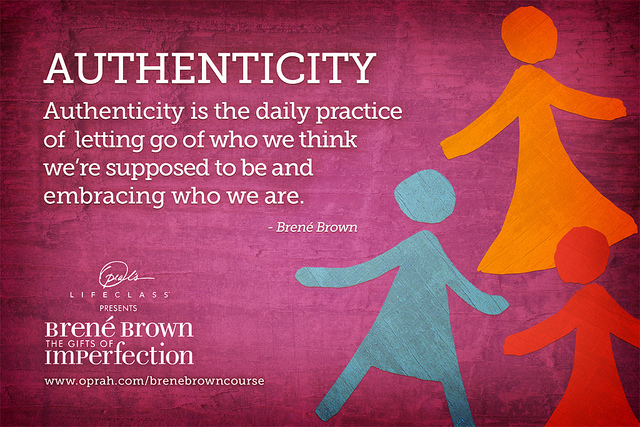
    “Authenticity is the daily practice of letting go of who we think we’re supposed to be and embracing who we are.” ~Brené Brown

    Now that the fog of what everyone else wanted for me has lifted, it seems so clear to me that we need to be who we truly are—not what society expects us to be. But it wasn’t always this way.

    For decades, I bought into a model of success that belonged to someone else. I was studying for my MBA, but I didn’t want my friends to think I was weird, so I didn’t reveal that I was a yogi. I didn’t want them to not take me seriously, to laugh at the thought of me doing yoga while wearing a business suit.

    And I wouldn’t tell my yoga students that I liked heavy metal because I feared it would make me look less spiritual. When was the last time you heard the Dalai Lama talk about Ozzy Osbourne?

    I didn’t delve into the artistic sides of my spirit—the parts that painfully wanted to celebrate music, art, or poetry—because I was led to believe it was a distraction from my professional career. I was caught in a catch-22 where I couldn’t be one thing because I was another. Society would only accept me as one.

    Reality Doesn’t Bite

    In fact, I have seen the exact opposite. The more I practice finding, being, and expressing myself, the more prosperity I experience and the better I perform in business. Most importantly, I’m living the advice we give our kids: be yourself.

    By finding our true selves, we can express ourselves internally and to those around us, and that’s when we become aware of this symphony. Today, we often get trapped in the little “self,” or the pain body, as Eckhart Tolle calls it. It’s the false mask we put on to protect ourselves and fit in with others’ expectations.

    Connecting with our true selves is challenging—we often feel a great deal of pressure to meet societal demands of who we should be or what we should look like, often in direct conflict with authenticity. Yet we have the great potential to unveil our true selves and rock the universe.

    Break Past Societal Demands

    Societal demands know no bounds—they impact both men and women, but they affect them in different ways.

    I’ve found that, while self-expression is difficult for everyone, men often put up a different façade of who they think they need to be at work and home; then, they pretend that it’s not a façade. Women, on the other hand, are more aware of this façade.

    Women are also more reluctant to express all the facets of their personalities until they’re comfortable with a group. Men will often put up a façade and stay in it longer. Women need a sense of trust to open up, which takes time. In both cases, inauthenticity can lead to dysfunction, stress, disease, and distance from your highest potential.

    Uncover Your True Identify

    That’s not to say that you must express all facets of who you are at all times for all people. As humans, we must be authentic and true with the aspects of ourselves that we do express in each context. Letting only certain facets of the diamond in you shine in various settings is perfectly fine as long as it’s a facet of the true you—not a false mask.

    Here are some actions you can take to tap into spirit by tapping into your authentic self:

     1. Do yoga.

    I strongly recommend Kundalini Yoga, which works at all levels—physical, psychological, emotional, and spiritual. It gets you out of your head and helps you uncover your unique vibrations without letting your brain or fear take over.

     2. Sit in silence for a few minutes.

    I do this every day. Sit in the space of your greatness and spirit. Do nothing, chant nothing, and don’t worry about how you sit; just be. Sounds easy, right? Try it. It’s one of the hardest things for many people to do, yet it’s the most powerful way to get connected to your true source.

     3. Self-reflect.

    When you think, “I can’t be that way” or “What will they think?” ask yourself where this voice is coming from. Is it fear, the need to be liked, or a need to fit in? Then, adjust your strategy and take a few risks. Find a way to be authentically present and engaged, and let that part of you speak, act, or even stay silent.

     4. Put pen to paper.

    Ask yourself for details of who you are, and write them down. Ask yourself, “Am I authentic in my expression and experience of each of these roles? What is one thing I can do to move closer to my authentic expression in each facet of who I am—my words, my appearance, and my actions?” If you journal first thing in the morning, it propels you to another whole level of self-realization.

    5. Tune out the negativity.

    When you’re watching TV or reading a magazine or a website and you hear the message “you’re not good enough as you are,” turn it off or simply say, “I reject that.” You’re a powerful and divine expression of spirit back to spirit—perfect and complete. The more authentic you are, the more you will know and experience this.

     6. Take action.

    Take one action that’s a true expression of your unique self or your unique note in the symphony of the universe. Just speak or act authentically in a small way when you’re tempted to stay quiet or pretend you’re something else, and see how it feels. Keenly observe how you feel afterward. Are you breathing deeper? Smiling more? Feeling less tense?

    You have the potential to shape a new reality as you discover your true self. You must tune in to the incredibly unique and beautiful kaleidoscope of who you are and let it shine. Experiment a bit, especially around your closest friends and family.

    Embrace your authentic self, and in enacting this positive change, you’ll enact a powerful change in the world around you.

    Man with hands in air image via Shutterstock
  • How to Stop Feeling Inadequate and Embrace Your Imperfect Self

    How to Stop Feeling Inadequate and Embrace Your Imperfect Self

    “The thing that is really hard, and really amazing, is giving up on being perfect and beginning the work of becoming yourself.” ~Anna Quindlen

    As I sit in bed typing this, all cozied up with a hot cup of tea and my fuzz ball Maestro relaxing at my feet, I feel happy and at ease.

    I scan the room and see a couple of stacks of laundry that need to be put away. I recall that my daughter’s toys are still strewn across the house because I didn’t feel much like stopping to pick them up prior to my retreat to writing, my happy place. I realize that I have an inbox full of emails to answer. That can all wait.

    Sounds kind of normal, right? But, for me, this maintained mellowness in a sea of what could be perceived as chaos is a pretty big deal.

    You see, I’m a recovering perfectionist. There was a time in my life when uncleaned messes, unanswered emails, and other various untied loose ends would have gnawed at my very core and robbed me of my peace until I finally cried mercy, giving them the attention they demanded.

    But at some point I realized that the stacks of certificates and awards collecting dust inside a drawer in my perfectly clean house weren’t doing much for me. In fact, they were only temporary fixes to fill the voids of my spirit, as I desperately avoided being completely honest with myself and opening up to my truth and vulnerability.

    I would take on one project after the other and work myself to the bone until they were executed perfectly.

    Putting in more than fifty hours a week at the office and hitting the gym six days a week was, once upon a time, my norm.

    I remember days of changing my outfit a dozen times before leaving the house and then doing fifty sit-ups for good measure. The voice in my head was telling there was room for improvement, to reach perfection.

    I hid behind my straight A’s in school, my top sales awards as an employee, and the recognition and accolades I fought for as I dove head first into my entrepreneurial adventures. They were my mask, my shield.

    What’s wrong with all of that, some might ask? The pursuit of excellence is a good thing, right? Aren’t hard work and dedication admirable traits? Yes, and no.

    Following your passion and making a difference in the world are certainly high up on the list of things to do for a happy life. But, when you are coming from a place of lack instead of a place of love and when you get so caught up in the end results that you totally miss out on the journey, that’s a recipe for burnout and a life unfulfilled.

    So, what is the difference between perfection and excellence? It’s quite subtle, actually, but they feel very different.

    Perfect feels constrictive, judgmental, painful (especially when the mark is missed), and is fueled by feelings of lack, of wanting to be accepted and liked. Excellence, on the other hands, feels warm, honorable, accepting, and is fueled by feelings of love and pure intentions of being in service and becoming a little bit better version of yourself each day.

    When you come up a bit short of excellence, you still win. When you strive for perfect, you’re never quite good enough. It’s like being in an abusive relationship—with yourself.

    Simply put: In the pursuit of perfect, we miss out on much of the beauty around us in our everyday lives. Nobody is actually perfect, so it’s really like living a lie. The truth is buried under all the “perfect” walls that we put up.

    Perfectionism is a cozy little blanket we try to wrap ourselves in. But, while we trick ourselves into believing it is keeping us safe and warm, in reality, it’s just a shield to hide what’s really going on inside.

    Becoming “mommy” six years ago was the catalyst in my life that finally helped me to see past my crutch.

    I believe that our actions are our strongest teacher, and I didn’t want my daughters to learn through mine how to torture themselves and feel inadequate by striving for the delusional ideal of being perfect.

    Plus, it feels pretty amazing to just relax and enjoy the journey of life moment by moment. Basking in my children’s laughter, sharing with them my presence and genuine goofiness. No outside validation or approval required.

    If you can relate to this at all and are ready to peel back some of your own layers, here are a few things to think about. These really helped me along my road to accepting my perfectly imperfect authenticity.

    1. Remember: You are enough!

    Ask yourself this: Whose approval are you after, anyway? You don’t need to impress anybody! Think about it. What does outside approval even get you? Other people think you are cool? They give you the “thumbs up”? You’re living your life in a way that somebody else agrees with? Hmmm.

    Well, at the end of the day, if you are not living your own truth and doing things that are in alignment with your own soul’s calling, then you will be left feeling unfulfilled and always grasping for that outside validation.

    Instead, remember this: Everything you need is already inside of you. Learn to drown out all that outside noise and just celebrate your unique beauty. A good self-check is to ask, “Am I doing this for the cause or the applause?”

    2. Perfection is an illusion.

    There is simply no such thing. We’re not meant to be perfect—by design, humans make mistakes. (Otherwise, we’d be called robots).

    We all have good days and bad days. Plus, one person’s definition of “perfect” can be completely different from the next. So, why act like a crazy person and give yourself a hard time over something that is delusional? Stop the madness!

    3. Think “Wabi-Sabi.”

    No, not the spicy green horseradish-like stuff you eat with sushi! It’s a Japanese aesthetic that describes beauty as imperfections. It celebrates cracks and crevices and other marks of time. Yes, it is, in fact, our imperfections that make us beautiful. Embrace them.

    4. Consider: What is the impression you want to leave on the world?

    In pursuit of perfection, we can seem aloof, despondent, closed in. It’s because by being so focused on the end result, we put some serious blinders on and miss out on beautiful connections with others. People will much more closely connect with your truth (especially the right connections for you). No need to hide. Let your soul shine!

    5. There is pure joy and love in truth and vulnerability.

    Allowing ourselves to be real and vulnerable is not always easy. However, living a life hiding from our true identity is even more painful.

    Living your truth means embracing and accepting all aspects of you—bumps, bruises, and all. This is, after all, the meaning of life. Unlock the potential of unlimited happiness in your life by letting go.

    Our existence here on earth is too short to live it under the neurotic premises of doing everything perfectly. Throw caution to the wind, embrace your imperfections, celebrate your authenticity, breathe in each precious moment, and give vulnerability and acceptance a try.

    You might just discover the glorious freedom that exists within, underneath the “perfect” armor.

    Once you peel back all those layers and discover the breathtaking beauty of self, you might even find yourself tilting your head back toward the sky and allowing a giant smile come across your lips. You are home. Enjoy, enjoy, enjoy. Namaste.

  • Eliminate Proxies for a More Authentic, Present Life

    Eliminate Proxies for a More Authentic, Present Life

    On the web, there is something called a proxy server. It often sits in between a request (for example, let me watch YouTube!) and what is requested (in this case, the YouTube video file) and “passes” the request, and the result, back and forth between two computers.

    In the early days of the Internet, it was created as a way to make easier and more efficient the incredible complexity of so much information and so many people wanting to access it. There are other benefits, too—security, speed, protecting identities and information. But, it’s still an intermediary between Thing A and Thing B.

    There is, however, another kind of proxy. Whenever I hear the word, I think of Afghanistan and the notion of a “proxy war.”

    The USA and USSR might not have faced each other in battle, but in Afghanistan and so many other places, fought a “proxy war” by taking different sides in a different conflict and letting others fight it out on their behalf.

    I’ve reflected on the notion of proxies as relates to the human experience, and wanted to share some observations from my own life.

    Let’s say work is stressful; I’m facing the reality that I am, in fact, middle age; I’m out of shape and not happy with what my lack of exercise says about my discipline or, given the history of heart disease in my family, my priorities.

    We’re late for school, and my son is slow to put on his shoes.

    “Son!” I yell. “Come ON! Put on your shoes. We’re late for school. This is NOT ACCEPTABLE BEHAVIOR!”

    Valid points. My son needs to learn responsibility, and understand the importance of commitments—in this case, the implicit contract between him and his school, as to his obligations and what he gets in return in the form of an education.

    But, he’s only 6. A clear and direct, but supportive and loving, reiteration of why he should remain mindful of the time would be more appropriate. Losing my temper makes my son an unwitting proxy for other things.

    These proxies are not productive. I try to keep an eye out for them—whether I’m the proxier or the proxied—and I try not to let people, situations, or things become transformed into something that they aren’t. (more…)

  • The Path to Living Authentically

    The Path to Living Authentically

    “Don’t think you’re on the right road just because it’s a well-beaten path.” ~Unknown

    Growing up in Appalachia, women always had grace, class, and sweet iced tea in the refrigerator for unexpected visitors. They smiled when called ma’am or darling and kept an immaculate home.

    Many Appalachian women also abided by two rules: It’s impolite to say no, and (my mother’s favorite adage), be as nice as you possibly can and everyone will realize you’re the better person.

    For me, this translated as always say yes and play nice. I thought this equated to being compassionate and sensitive.

    You’re stranded on the side of the road four hours away during an ice storm? I’ll get you. You want to be intimate on the first date? I don’t want you to dislike me, so okay. You think I’m hateful, unworthy, and a crybaby? You’re probably right.

    Yet, I played nice for so long that laughter turned to appeasement, confidence turned to harassment and verbal abuse, kindness turned to obligation. 

    As I allowed others to treat me unkindly and without respect, somewhere living soulfully became nonexistent. I always thought that I kept everyone at arm’s length with a smile on my face because I didn’t want to be hurt.

    In reality, I was so angry at myself for those specific moments of being run over that I willingly began playing the victim.

    It became easier to sabotage myself and continue down that road than to work hard and become a strong, outspoken, and vivacious woman again, which wouldn’t unfold until years later when I spent the night in the middle of nowhere. (more…)

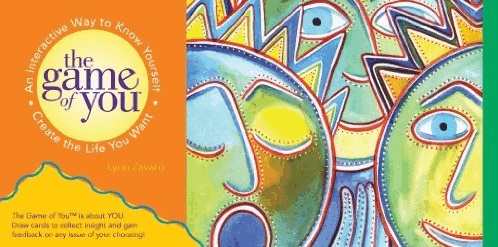
  • Interview and Giveaway: The Game of You by Lynn Zavaro

    Interview and Giveaway: The Game of You by Lynn Zavaro

    Update: The winners for this giveaway have already been chosen. Subscribe to Tiny Buddha for free daily or weekly updates and to learn about future giveaways!

    The winners:

    Lynn Zavaro has very quickly become one of my greatest role models.

    When she first submitted a post to Tiny Buddha (50 Creative Questions to Help You Create the Life You Want) I felt like she was living inside my head.

    Lynn realizes that the most important factor for our happiness is coming to know ourselves—and she also understands the internal blocks that hold us back from living the lives we dream about. Why? Because she’s human and imperfect, just like everyone else, and she’s lived a bold life of self-discovery, authenticity, and adventure.

    An artist, writer, and teacher, Lynn holds a Masters degree in Counseling Psychology. This combination of experience gives her a unique insight into human nature—and she leveraged it to create a fun, creative book and card deck set called The Game of You.

    I received my set a few weeks back, and I’ve become addicted. The Game of You provides a simple, enjoyable way to understand and stretch yourself, little by little, every day.

    I’m excited that Lynn took some time to share a little about herself and her work, and also that she’s generously offered to give away 5 sets of The Game of You.

    The Giveaway

    To win 1 of 5 free sets of The Game of You:

    • Leave a comment on this post.
    • Tweet: RT @tinybuddha Giveaway and Interview: The Game of You by Lynn Zavaro http://bit.ly/tEit98

    You can enter until midnight PST on Friday, November 4th. If you don’t have a Twitter account, you can still enter by completing the first step.

    The Interview

    1. Many Tiny Buddha readers may know you as an insightful, giving writer and artist, as you’ve contributed a wide range of inspiring, thought-provoking posts to the site! Can you tell us a little more about yourself?

    First off I have to say what an honor it is to contribute to Tiny Buddha. I have personally received so much from it–so a big thank you to you Lori and to the Tiny Buddha community! (more…)

  • How to Be a Leader without Really Trying

    How to Be a Leader without Really Trying

    “A leader leads by example whether he intends to or not.” ~Unknown

    Ever since I can remember, I have always wanted to “be somebody.” For the majority of my life, I worked very hard at being whatever I thought I needed to be in order to be a great leader amongst my peers.

    I wanted so deeply to inspire and move others, and to make a difference in a way that was unforgettable. I thought being a leader meant that I had to constantly prove that I was good enough to win the acknowledgment and appreciation of others.

    For the first 25 years of my life, I exhausted myself trying to be the smartest, the prettiest, the most outgoing, the coolest, the sexiest, the fittest, the most fun, the most envied, the most desirable, and the most popular.

    As a result of my inner passion and desire to be a light for others, I ended up destroying many parts of myself. I sacrificed my authenticity, my intuition, my self-respect, my self-love—all for the sake of “being somebody” in the eyes of other people.

    I allowed myself to stay in relationships that were toxic for me, I treated my body like a human garbage can, and I sabotaged myself in the face of opportunity because deep down, I felt like a fraud. (more…)

  • Finding Strengths in Weaknesses

    Finding Strengths in Weaknesses

    Woman Leaping in the Air at the Beach

    “Our strength grows out of our weaknesses.” ~Ralph Waldo Emerson

    After writing my last post for Tiny Buddha, 5 Steps to Accept your Weaknesses, I had an intense few days involving an extremely spiritually and emotionally significant relationship that has recently ended, or at least ended in one form.

    I found myself sobbing so uncontrollably in my kitchen that I was choking. Each day, there seemed to be another upwelling of grief. When I saw that my beloved ex-partner was potentially interested in someone else, that grief broke through with renewed intensity. These feelings are all normal and to be expected, of course.

    But I noticed that when I let full vent to my emotions, without trying to be strong or stoic, I felt better. I still felt grief and sadness, but they felt right, somehow—not like suffering, not like something I had to overcome or escape.

    This started me thinking about this characteristic I have of feeling emotions—and expressing them—very intensely.

    In conversations with my ex, I often stressed how much love I had inside that I had wanted to give him.

    Every time I expressed this, I felt a sensation like the love inside me was pressing up against my ribcage, wanting to get out, like a trapped bird. Expressing this feeling felt right, even within the pain of the breakup.

    I realized that for my whole life I have felt emotions intensely, and in relationships, even the short-lived ones, I have always given of myself 100%. Though it always hurts to not get the same reception from someone you love, I got to thinking: This characteristic I have of giving love so totally—is this a strength or a weakness? (more…)