Tag: authentic

  • Mind Over Melodrama: 5 Lessons on Self-Awareness and Healing

    Mind Over Melodrama: 5 Lessons on Self-Awareness and Healing

    Healing

    “Be what you are. This is the first step toward becoming better than you are.” ~Julius Charles Hare

    In a few months it will be the two and a half year anniversary of my mental breakdown.

    I don’t really celebrate the date, partially because I don’t know it—it’s not the sort of thing that you remember to mark on your calendar—and partially because my entire life since then has been a celebration of what I began to learn that night.

    I began to learn about myself.

    It’s been a wild ride of healing, helplessness, forgetting, and remembering. Many times, I felt like giving up and running back to drugs and alcohol, but I didn’t.

    Many times, I felt like bottling my emotions or lashing them out onto the closest victim, but I didn’t. Many times, I felt disgusted by my reflection and compelled to stop eating again, just for a day or two, so I could feel the sick freedom of an empty stomach, but I didn’t.

    I guess after you almost kill yourself, you just can’t go back to being the way you were. There’s something in your mind that says, “No, that didn’t work for ten years, and it won’t work now.”

    Honestly, self-awareness saved my life, and I have no doubt that this simple, consistent practice is as essential as exercising and eating well. I like to dream sometimes about what the world would look like if we all committed to knowing ourselves, and it’s beautiful. It really is. We’re beautiful.

    Without further ado, here are five life lessons I’ve learned from two years of healing my mind and reconnecting with myself.

    1. Self-awareness is self-love.

    About two weeks after I broke down, I was flipping through stacks of old journals, feverishly looking for patterns. What I found amazed me: epiphany after epiphany that I needed to love myself, to be my own best friend, to treat myself better.

    Those epiphanies never translated into action until I was forced to look at my reflection, raw and real. When I saw her, I loved her immediately.

    You cannot love someone you don’t know. In the end, that’s why so many people in our society don’t love themselves, or each other. Not because they don’t try, but because they don’t know themselves.

    Once you find who you are—who you really are—self-love is not an option. And neither is unconditional human love, for that matter, because once you find that spark of magic inside of you that makes your heart beat, you find that magic in all of us.

    2. Believing all your thoughts is a dangerous thing.

    I used to believe everything I thought. For a while, my thoughts told me that I was fat and ugly. Believing them destroyed my confidence. Then, my thoughts told me I needed drugs, alcohol, and cigarettes. Believing them destroyed my body.

    One day, my thoughts told me to kill myself. Believing them was almost the last thing I ever did.

    As human beings, we have this amazing capacity to conceptualize, analyze, and create stories in our heads. That capacity can be used to build spaceships and save the world. That same capacity can be used to harm ourselves and others.

    It’s not that I don’t think toxic thoughts anymore. Sometimes, I still get anxious, fearful, and insecure thoughts just like anyone else. The difference is that I constantly observe and question what I think.

    I make choices about what I believe is true. And that makes all the difference.

    3. There is no quick fix (and you don’t want one anyway).

    When I was in elementary school, I tried praying for a few months. I wasn’t sure if God existed, but I was willing to give it a try.

    I said, “Dear God, please make me wake up tomorrow having lost forty pounds, with no pimples, and my stretch marks disappeared. If you do, I’ll start going to church. Okay, thanks. I mean… Amen.”

    Needless to say, it never happened. About fifteen years later, I’m telling this story to someone and they point out how, if that did happen, my life would have been much worse. Showing up to school suddenly forty pounds lighter is a sure-fire one-day ticket to being a “Freak” (much faster than just being forty pounds overweight).

    I was amazed. How could I not have seen this?

    Now I know; back then, I only wanted a quick fix because I wasn’t doing anything about my problems. We only crave miraculous, effortless change when we’re not helping real change happen.

    I used to tell myself stories about how I didn’t want to change because it would hurt too much. Honestly, healing has hurt more than I can possibly relate, but you know what? It’s not the same pain.

    The pain of enduring obstacles on a path that you’ve decided to walk is absolutely nothing like the pain of being trapped in a situation you have no plan to escape. Nothing hurts like helplessness and stagnation. That’s what we actually don’t want.

    4. People who adored your mask probably won’t like your authentic self.

    This just baffled me when it first happened. When I was self-destructive, rude, jaded, and fake, people couldn’t get enough. When I showed my vulnerable, inspiration-hungry, sparkly-eyed self, most of those same people recoiled in horror.

    My first months of healing, I spent alone in an empty room watching TED talk after TED talk eating chocolate chips right out of the bag. I was alone, but somehow, I wasn’t lonely anymore.

    Nothing is lonelier than being with people who don’t understand you. Those who love a person in a mask are wearing their own masks. They’re putting on a play for everyone to see—terrified of who they are underneath.

    A person who chooses to be authentic around the masked will always be rejected, because the masked reject that part of themselves.

    Don’t worry. There are authentic, open, loving people waiting to meet someone just like you in your raw, vulnerable state. They’re just waiting for you to get off that stage.

    5. You are the world’s foremost expert on yourself.

    For a long time, I was looking for someone to tell me exactly what to do. I’d read a book and it would have an inspiring idea, but then the implications of that idea would make me feel uncomfortable. Still, I’d try it on. After months of struggling, I realized it just wouldn’t fit.

    This happened again and again.

    I thought there was something wrong with me because other people’s frameworks didn’t fit me like a glove. It wasn’t until I started helping other people that I realized, they’re not supposed to.

    Other people’s words can inspire us, inform us, and, at best, give us valuable frameworks within which to place our experiences. But how we fill in those gaps and connect those dots—that’s still up to us.

    Self-discovery is supposed to be messy and confusing. You’re supposed to feel like no one has the answers for you, because they don’t. You have the answers. At most, you need a guide to help you find those answers, and even then, you always have the final say.

    These five lessons all came to me as epiphanies at first, but I never stop learning them. These truths continue to come to me in different words and different forms, as I apply them to myself and others, as I forget them just to remember them again and again.

    It’s not always sunshine and rainbows, but I always know there’s a way out of any darkness and I know that, even if I forget, everything is going to be okay. And that makes it all worth it.

    Woman in Tree Position image via Shutterstock

  • Finding Kindred Spirits by Honoring Your Inner Misfit

    Finding Kindred Spirits by Honoring Your Inner Misfit

    Friends

    “The thing that is really hard, and really amazing, is giving up on being perfect and beginning the work of becoming yourself.” ~Anna Quindlen

    It should theoretically be simple but being authentic is not easy. It takes gumption to assert with courageous conviction “This is me!” and grace to accept what comes after.

    From my first discordant bear cry in a nursery full of normally crying babies, I was different, quirky. My own way of doing things—dresses over jeans, art over sports—made me an early outcast. Nothing I naturally did fit me within my particular society.

    For a while, during a specific section of years, in order not to be misfit, I conformed completely. I lost not only the misfit but also myself, and with each false friendship, however popular, my spirit gradually disintegrated.

    I forgot the organic, things that for me bring me into alignment—nature, certain family members, words, a childhood best friend—while weekend hazes fizzled my concept of identity. In a fog of boozy, belligerent moments, I grasped for something substantial, some shred of tenderness, but nothing was there.

    Various events cleared the fog enough so I could see the way out—alternative schooling, a trip abroad, college. And out I ran. In the clearing of my twenties I realized popularity was the false idol of an insecure twelve year old. Older, I felt free to reject others and accept myself.

    I have devoted this decade to the integration of all my fractured shards. The process of authentic self-resurrection is like solving a puzzling mystery—examine the evidence, look for clues, decipher what is real and what has falsely been accepted to cover up excruciating truths, reach a conclusion.

    My conclusion is that I am most decidedly a misfit. I have not, do not, will not fit.

    I want winnowed “friend” lists, not 1,000+ and counting, a core group of loved ones, where reciprocity is the foundation—of kindness, respect, intimacy, and sharing. I want Saturday night curled up on a chaise with a stack of board games and a bowl of pasta, Sunday brunch with the seagulls.    

    I am an adult who likes stickers, who prefers a bird call to the drone of a machine. I am more comfortable in the company of older people, Disney still makes me smile, and I never feel more alive than when I am dancing with the wind.

    Energy and time are precious gifts. We do not all get a hundred years; some of us die before we take our first breath, others at six, twelve, thirty-one, fifty-eight, or seventy-four. I have bargained with Death during decades of ill health, so I know how precarious Life is. How brief.

    I do not want to misspend on dangerous entanglements what little time I have, to invest where there is little or no reciprocity, or where I feel unsafe. There are enough worthy recipients; I have especially learned that this year, so it is on these nourishing relationships that I focus.

    During a crippling period of sickness, one where I was completely dependent on others—for a bath, or a sandwich—I was humbled. It is easy to take for granted the use of legs, that we have twenty-eight teeth and five senses.

    I have learned this lesson repeatedly but when I literally could not move without collapsing, my days spent almost entirely alone, inside, I had little else I could to but consider not only the why my circumstances were such but also the who, as it was me I had for company.

    What helped me clarify my authentic self during this time of healing? A notepad and pen. These household items helped me synthesize into simple lists decades of self-examination:

    • Who unyieldingly matters to me?
    • Who do I feel cares deeply about me (during the light and shadow times, when I am healthy and sick)?
    • What do I most and least enjoy?
    • What dreams am I passionate about enough to pursue?
    • What are my flaws?
    • What are my strengths?
    • If this were my last day, moment, would I be sad or happy with my choices?

    The lists, because they were succinct, showed me essential truths.

    I saw someone who dreams sometimes more than they act, who around certain types of people gets weak, someone who can be melancholy, who agonizes, who needs to laugh more. But I also saw empathy, intelligence, a free spirit, a musical, imaginative, loving explorer.

    I saw real—shadowy and flawed, light and strong. I saw popular—with myself.

    I also saw a letter writer. Since I’m an old-fashioned soul, who still listens to records, who prefers the twitter of birds, it is no surprise the unfettered scrawl of my pen to an eager recipient excites and nourishes me. Others say this is a flaw; that I need to catch up with modern culture. I say not.

    Before last year this desire was dormant. I had stashes of stationary stored high on closet shelves, stickers and stamps collected and unused, scattered in drawers and stuffed into boxes. I feel more complete since owning and passionately pursuing this previously invalidated aspect of myself.

    Because I prioritized reflection, and went within to my most gnarly corners, I found something hidden, something incandescent, a forgotten romance, a creative reservoir for deep connection.

    My lists showed me the way to myself, then to a community of like-spirited souls. I listened with my pen, I recorded the words, and I heeded their wisdom. Via Interpals and the Letter Writer’s Alliance, I found in places as diverse as England, New Zealand, Russia, Austria, Slovenia, Canada, and Denmark, others who wanted authentic connection.

    These snail mail relationships are based on reciprocity, on honest, open exchanges. To with the hand intimate the what, where, why, when, and how, to take the time to stamp into an envelope a careful selection of thoughts, sorrows, and hopes, is not only to harken back to a time when this practice was regular, but to decipher profoundly what it means to live, and to connect.

    The status of a person cannot be confined to a certain number of words on a briefly scanned page. We are more complex than that. We deserve more attention, and to attend more thoroughly to others.

    Letters taken seriously are generous that way. We ask questions in letters, and lazy words like “I don’t know,” “Anyways,” “It is what it is,” and “Fine” do not merit a stamp, nor do they fill a page.

    My friend asks me to sum myself up in one word and I have to stop and consider not only the genesis and evolution of my story, but the magnificent supply of words I have to choose from. When “quirky” proudly surfaces it fits. And I am no longer misfit in her company.

    My grandpa said we should consider ourselves lucky if, at the end of our lives, we can count on one hand our genuine relationships. These are soul-level authentic connections, those we can be imperfect and honest with, the people who do not want our tears hidden or our smiles false.

    Use your imagination to honor the misfit within. List your truths, make them visible, and see what parts of your honest identity you have stashed away on high shelves. I might be a quirky letter writer, you an eccentric dancer, but as long as we are real with ourselves and others, how can we be wrong?

    Happy people dancing image via Shutterstock

  • When You Want More Love and Support in Relationships

    When You Want More Love and Support in Relationships

    “You’re imperfect, and you’re wired for struggle, but you are worthy of love and belonging.” ~Brené Brown

    For years, I felt unfulfilled in my relationships. I often felt drained, and as if I was the only one giving and doing things for others.

    I couldn’t quite understand what I was doing wrong and why relationships were so challenging for me. All I wanted to do was to feel loved and supported. Why couldn’t I get that?

    Then, nearly three years ago, after a bad breakup and a ton of other relationship challenges, I reached a breaking point. I knew I had to make some serious changes, so I found myself a therapist, a ton of self-help books, and a few other self-development professionals.

    Through this journey, I’ve learned several lessons that have helped me find and create the fulfilling relationships that I have today. Here are four lessons I learned.

    1. We have to accept people where they are.

    Even though I wanted more depth, intimacy, and support in my relationships, I had to learn to accept that others didn’t always want the same things I did; or, they did want the same things, but they were simply not ready for them at that point in time.

    In learning this lesson, I was able to let go of idealistic dreams that some people would one day change and appreciate those relationships for what they were.

    Many times we are unfulfilled in relationships because we are lying to ourselves. We choose to reject what is while clinging to our own idealistic dream of what could be.

    When we accept relationships as they are, we open the door to connecting with others who are able to give us what we know we deserve.

    2. Love begins on the inside, not the outside.

    One of my all-time favorite passages on love begins, “Love is patient, love is kind. It does not envy, it does not boast, it is not proud.” When I was younger I interpreted this as though I had to find someone who was patient and kind, not jealous or boastful, and so on.

    I thought it was telling me that I had to judge other people according to that criteria to determine if it was truly “love” or not. I thought it was about seeking it in the external world.

    Then, when I heard this verse a couple years ago at a friend’s wedding, I had a huge “ah ha” moment: This verse has nothing to do with looking for these traits in other people. It’s telling us that this is the love that we can find within ourselves. 

    It is the love that makes this universe exist and keep it together. It is a love that we all possess.

    We are not meant to seek love externally in the world but to connect to it within so that we can create even more of that love in the world around us.

    The love that we seek is something that we already have. When we make the conscious effort to tap into that inner love and express it in the world, we can then begin to see all the love around us.

    3. It’s more painful to fear being authentic then to actually be authentic.

    I always held back my inner truth in relationships because I feared rejection. Deep down, I felt that I wasn’t good enough or worthy.

    I feared that others would automatically reject me if I expressed my unique, genuine interests and talents. I felt that by blending in with people, I’d guarantee acceptance.

    The reality, though, is that it took so much more effort, more strain, and more heartache to hold on to this fear.

    As I have gradually learned how to simply express my authentic truth in relationships, it has not only made my relationships better, it has also given me more energy that I can put into more proactive things.

    4. We get what we give.

    Even though I often felt like I was giving a lot in my relationships, what I was giving wasn’t necessarily healthy. I often gave to others in order to be accepted and avoid rejection, because I feared being vulnerable. I was giving out of fear, not from a place of inner love.

    If you want others to be more real and vulnerable, then you have to be more real and vulnerable. If you want others to openly discuss feelings, then you have to openly discuss feelings. This doesn’t guarantee they’ll reciprocate, but it opens the door for the type of relationship you’d like to have.

    Many of us know what we desire in our relationships, but we don’t realize the importance of our part. We have the ability to create the tempo. If we are willing to set the example, others will be more likely to follow and reciprocate.

    The more we realize the power of our own actions and align them to our heart’s true desires, the closer we’ll get to creating relationships filled with love, support, authenticity, and fulfillment.

  • How to Redefine Yourself by Letting Go of the Past

    How to Redefine Yourself by Letting Go of the Past

    Freedom

    “You may not control all the events that happen to you, but you can decide not to be reduced by them.” ~Maya Angelou

    When I was eight years old, my mom had her first mental breakdown. The illusion of a typical suburban family shattered as the household descended into chaos. When the counselors and child protective services stepped in, I knew: I was undeniably different.

    When you’re a child, family life is the classroom through which you learn how the world works. Once my mom was hospitalized, I realized how very different my lessons were.

    Mortified, I retreated into a world of my own, one in which I wouldn’t have to try to formulate responses to questions I couldn’t possibly know the answers to.

    As the years passed, family life grew more chaotic. Addiction and mental illness sunk their teeth deep into the flesh of my family, wrenching apart the bonds that held us together.

    By the time I graduated high school, I felt like my family life had completely imploded and my sense of self imploded with it.

    I moved out of my parents’ home as soon as I was able to and quickly set to work creating a “normal” life. I bought a car, then a house, and earned my degree. I spent more than six years in an unhealthy relationship for the sake of stability.

    I can’t pinpoint the moment I realized that I was acting out a story that did not belong to me.

    I had buttressed myself with stability and material comforts not because they were the things I truly wanted, but because they were the things that I could hold as evidence that I had survived my tumultuous past and developed into a responsible adult.

    I didn’t know it at the time, but I was driven by shame. I was ashamed of my family and I was ashamed of myself. In a culture where addiction and mental illness are stigmatized, I couldn’t bear the fact that those two illnesses, in some ways, shaped the framework through which I viewed the world.

    So I hid myself behind the story I had created of who I was. The narrative I shaped began with a girl who was victimized, then broken. Eventually, I began to identify as a survivor, but for many years, I didn’t realize that I was much more than that.

    Shame is insidious. It disguises itself as a desire to be a better person, a commitment to moving on. Meanwhile, it burrows deep into your soul and makes a home there until the day that you break open and expose it to the light.

    It was heart-wrenching to uncover the truth. I had labeled myself a survivor because I was unwilling to acknowledge the pain that I carried within me. I defined myself by my experiences, and so created a life where every action was driven by my past.

    I had to let go of the lies I told myself in order to become my most authentic self.

    All of my past experiences have certainly contributed to my perception of life, but I know now that those experiences do not have to shape my present.

    I can acknowledge the pain of past experiences while still choosing to experience the present from a place of joy. That choice was made simple by taking just one step: I let go of the labels I had given myself.

    I could choose to live life as any number of things: a victim of abuse, an adult child of an addict, a survivor; or I could choose to live my life free of labels: a person who has lived a wide variety of experiences and is open to all of the new experiences that life has to offer.

    I found so much freedom in becoming myself.

    I no longer make decisions out of fear. Rather than analyze every situation through a framework created by years of dysfunctional relationships, I trust my instincts. I take care to notice the stories I tell myself and I consciously choose whether or not to believe them.

    Take a moment to listen to your own narrative. How do you define yourself? Write down a short description of who you are and where you come from. Then, take an honest look at your narrative and decide if that is the person you want to be.

    We are all poised to create the lives we want, but we must first uncover and discard the beliefs that no longer serve us. Let go of your labels and greet each day open to the possibilities of who you might be. Your potential is limitless.

    Photo by Jesus Solana

  • Why Self-Compassion Is the Key to Being Our Authentic Selves

    Why Self-Compassion Is the Key to Being Our Authentic Selves

    Arms Outstretched

    “To be beautiful means to be yourself. You don’t need to be accepted by others. You need to accept yourself.” ~Thich Nhat Hanh

    I was raised in a family where outward appearance and reputation were important. Standing out was only encouraged if it was within the bounds of what was considered “normal.”

    No one ever explicitly told me, “What other people think of you is more important than being your true self,” yet that’s what I learned to believe. It became my mission to be accepted by others, because I thought that only then would I be worthy of love.

    I spent most of my middle school and high school years pretending to be somebody that I wasn’t. I would “chameleon” to blend in with people around me.

    I suspect that due to my less-than-stellar acting skills, a lot of people could tell that I was being phony and didn’t want to hang out with me. This only increased my hunger for external validation and acceptance.

    At the age of thirteen, I attended my first personal development seminar.

    It was an incredible experience for me, and when I was in the seminar room, something inside of me came alive. Being in that space awakened my passion for personal development, a passion that has only grown over the last fifteen years.

    In the next decade that followed, I’d spent more than 350 hours participating in personal development seminars, and in July 2009, I finally received the honest feedback that would change my life forever:

    I showed up as arrogant, selfish, self-righteous, superior, and judgmental.

    The feedback hit me like a ton of bricks. I was simultaneously composed and totally shocked.

    I was composed because I knew that people experienced me in those ways: I was a condescending know-it-all with judgment by the boatload, and little tolerance for people “doing it the wrong way” (not my way). My demeanor was often cold and closed off, and I could easily insult people where I knew it would hurt.

    I was shocked, because when I received that feedback from somebody that I’d met less than six hours earlier, I felt completely vulnerable. I didn’t know what to do with myself in that moment of being completely exposed.

    The walls that I’d created to “protect” my authentic self were only pushing (or rather, shoving) everyone else away. I finally decided to make a change. And thus began my journey of rediscovering my true self.

    To say that it was a battle would be a grave understatement. The little voice inside my head had gotten really good at convincing me of “truths” that were actually just thoughts based in my false beliefs about reputation and acceptance.

    Lying to myself had become such a subconscious process for me that bringing it into my consciousness on a daily basis was a struggle.

    Right after receiving the feedback, I’d keep “be authentic” on the forefront of my mind for a few days at a time. But more often than not, my commitment to being authentic would slowly fade behind my decades of pretending to be somebody else, and I often wouldn’t even notice the shift.

    When I’d realize that I wasn’t being perfectly authentic, every moment of every day, I’d go into beat-up mode and would berate myself for being a failure.

    My new awareness seemed like a game of lose-lose: if I ventured out into authentic living and slipped back into my old ways, I’d go into beat-up mode; if I acted like I was okay with being my pretending old self, I’d feel sick to my stomach about who I was pretending to be. I didn’t know how to win that game.

    I spent a couple of years on the rollercoaster ride of stepping out and being authentic, slipping back into my old ways, and beating myself up about it; it was exhausting. But then I learned that personal development isn’t a switch, it’s a journey.

    I couldn’t just turn off my old behaviors and turn on some new authentic behaviors.

    Creating lasting change would take commitment, practice, and most importantly self-compassion.

    Commitment meant truly committing myself to being authentic, and doing it for nobody else but me. And practice meant making conscious choices to set my authentic self free instead of staying in the box I’d built for myself.

    The self-compassion piece was the most important because it determined whether or not I wanted to pick myself back up, dust myself off, and give it another go.

    If making a mistake was only going to end in me beating myself up about it, then I’d rather not have even attempted it. But if making a mistake was met with a desire to learn, and then re-approach my ways of being in a new way, it was a much easier choice to make.

    Throughout my journey of discovering and living as my authentic self, I have experienced moments of immense joy and freedom, which have encouraged me to continue moving forward.

    One of my most impactful experiences of letting my authentic self shine took place at the end of November 2013, when I shaved half my head.

    One of my friends shaved part of her head in mid-2013, and I loved how it looked. I thought it was a perfect combination of sexy and tough. I immediately wanted to shave my own head, but hesitated…for six months.

    I thought, “What are other people going to think when they see you? Everyone is going to judge you. People are going to think that you’re weird.”

    The little voice in my head was going crazy. My head and my heart weren’t coming to an agreement because that little voice was repeating phrases I’d heard my entire life.

    But one day—and I can’t remember exactly when it happened—I just decided to do it. I knew that deep down in my heart I wanted to, so I refused to let that little voice stop me anymore. If people were going to think that being my authentic self was “weird” then so be it!

    I wish I could say “and then I shut the little voice up forevermore and lived happily ever after,” but that wouldn’t be true. My little voice was screaming when I finally sat down to get my head shaved. But I just chose to acknowledge the screaming and shave it anyways.

    After it was all done and I looked in the mirror, I fell in love. I fell in love with me! For the first time in my life, I felt completely aligned in my outward appearance and my inner authentic self. I felt free.

    Sure, people stare at me in public. But I just smile and walk on by. Everyone has an opinion about my hairstyle, but there’s only one opinion that matters—mine. And I love it!

    That was one of the biggest and most tangible steps that I’ve taken toward letting my authentic self truly shine. Now, if I start letting to the voice inside my head get to me, I can just look in the mirror or touch the shaved part of my head to remind myself of who I really am.

    One of my biggest lessons throughout my head-shaving experience was this: when I limit myself because of my fear of what others might think of me, I’m limiting what I think of me. When I truly embrace my authentic self, I am free.

    Abraham Maslow said, “What is life for? It is for you.” I’m finally living my life for me, and I’ve never felt more empowered, joyful, or authentic.

    How are you holding yourself back?

    Would you be making different choices in your life if you weren’t worried about the acceptance of others?

    How different do you think your life would be if you stepped outside of your comfort zone one time every day?

    I encourage you to get uncomfortable and to let your authentic self shine. You might be surprised at how freeing it can be.

    I certainly was.

    Photo by AJ Leon

  • Peeling Back the Mask: Reconnect With Your Authentic Self

    Peeling Back the Mask: Reconnect With Your Authentic Self

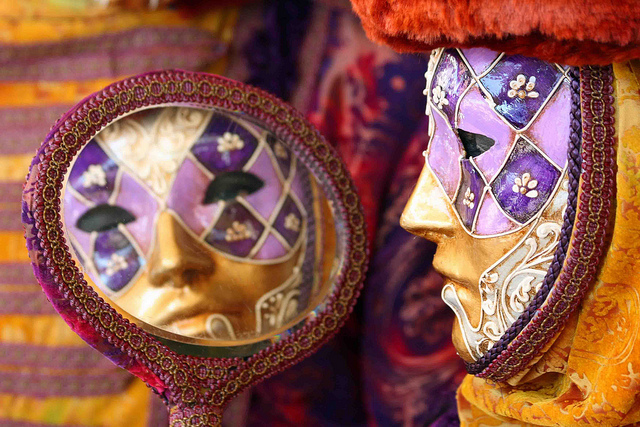
    Wearing a Mask

    “You cannot find yourself by going into the past. You can find yourself by coming into the present.” ~Eckhart Tolle           

    It was 3PM on a Wednesday and I had nothing to do. An empty schedule with limitless potential. 

    I was miles from home in the freezing fog of San Francisco. The bustle of traffic reminded me of my hectic life back home, but I wasn’t bothered. I had nowhere to be and nobody to answer to, just like the day before and the next day. I was free.

    I brought my favorite travel companion along with me to aid in my journey of self-discovery: me. Not the busy Account-Manager-me. My true self.

    Last year was painful for me. Like many others, I found myself ebbing and flowing with the tide that is the nine-to-five. Living for the weekend so I could escape the grind and live outside the snow globe even if just for a moment.

    Life is more than clocking in and out with dead eyes and a slack jaw while counting the milliseconds as they fade toward your Friday night. I’m on this earth to be—not to be someone else for a paycheck.

    In recognizing that I needed a vacation, I downed a bottle of wine and booked a two-week trip to my city by the bay. Fourteen days of sweet liberation.

    Maybe you can relate to my reality.

    Back home, Rebecca in accounting is a constant complainer. She brings you down like an iron pair of boots. You’ve got to grin and bear it because she processes your expense reports and you see her every day. You’ve gotten so adept at feigning interest that you’re losing sight of what’s underneath the mask.

    Rebecca gets the sympathy mask. Your boss gets the I’m-passionate-about-my-job mask. Jackie in distribution gets the I-like-politics-because-you-like-politics mask. We wear whichever we have to in order to make things easier. Nathaniel Hawthorne said it best: 

    “No man, for any considerable period, can wear one face to himself and another to the multitude, without finally getting bewildered as to which may be the true.” ~The Scarlet Letter

    Two psychological terms stand out as they relate to being someone you’re not: cognitive dissonance and the act of compartmentalization.

    They go together like a cerebral peanut butter and jelly sandwich. To understand our challenges, we must first define them. Enter Merriam-Webster:

    Cognitive Dissonance: Psychological conflict resulting from incongruous beliefs and attitudes held simultaneously

    Compartmentalization: Isolation or splitting off of part of the personality or mind with lack of communication and consistency between the parts

    When was the last time you spent an entire day doing exactly what you wanted to do? Said exactly what you wanted to say? You have a belief system, a rule set. Stuffing these things in a box and being someone else makes you exactly that. Someone else. This is compartmentalization.

    It’s a defense mechanism to combat the cognitive dissonance you feel when you have conflicting personalities—when there’s a difference between who you are and who you become in certain situations.

    When faced with a challenging situation, a compartmentalized person has to decide how to act. Quelling the reaction most natural to their authentic self, they respond inauthentically because they’ve developed a completely separate personality.

    We must be mindful of who we really are—and we get to decide who that is.

    “We are our thoughts” isn’t just Eastern voodoo wisdom. The word “brainwashing” has a negative connotation, so let’s call it brain painting. Painting your mind with things you love is a surefire way to become a happy you. This is nothing more than surrounding yourself with people, books, subjects, and thoughts that make you smile. Be selective and consistent with what you allow in.

    It’s important to take time to foster your own well-being in a world that demands so much. Almost two thousand years ago, stoic philosophers like Seneca and Marcus Aurelius told us to retire into ourselves. Frequent self-examination has been a practice for thousands of years.

    Being comfortable with and conscious of what you find is the definition of knowing who you are. Constantly look within and connect with your mask-less you. We can nurture our inner authenticity by being mindful every day.

    • Meditate. You don’t have to have an Om tattoo and a stick of incense to find a quiet place to look inside. Take a twenty-minute vacation inside your own soul. Be cognizant of what you find.
    • Observe. Take a walk and leave your phone at home. Look at everything around you with child’s eyes. Notice the beauty in the trees or the vastness of space. Be a living part of your surroundings.
    • Create. Doodle something while your coffee brews in the morning. Take a few minutes to write something meaningful. It doesn’t matter what you do as long as it comes from your own creativity. Exercise your mind, amigo. You’ll be surprised at how out of shape its gotten.

    Traveling solo isn’t an escape. It’s a small opportunity to delete distraction. Lucius Seneca said, “All of your problems are with you.” Running away from them is impossible. But we can, for a time, run away inside our own soul.

    I spent my favorite day in San Francisco walking through the residential Noe Valley and Dolores Heights. A simple stroll down sidewalk after sidewalk, without a boss barking orders or my phone buzzing with e-mails. Just me and my smile to enjoy the cool breeze.

    It wasn’t so much the city I enjoyed, as it was the chipping away at my mask. Each footstep, a small victory at finding myself underneath it all. I remembered not who I was, but who I am.

    Though I’m back to the doldrum routine of my everyday life, I’m still the same human I was in San Francisco. Underneath the demands of a challenging career lies the same person that wandered those sidewalks so many weeks ago. A smiling nomad. He who digs coffee shops. The one who loves wine.

    We have the tools and presence of mind to make our journey for authenticity a daily practice. Recognizing when we’ve strayed from our true selves is the first step to staying the course. No one can be you better than you can. Look inside, befriend yourself, and be free.

    Photo by Frank Kovalchek

  • Live Your Life for You: 5 Benefits of Embracing Who You Really Are

    Live Your Life for You: 5 Benefits of Embracing Who You Really Are

    “Live your life for you, not for anyone else. Don’t let the fear of being judged, rejected or disliked stop you from being yourself.” ~Sonya Parker

    I have struggled with my different-ness since I was young. I grew up trying to change the things that made me different in order to fit in. At home, my parents were doing their best to raise three young children, which I can imagine would’ve been very hard.

    I can still remember the first time I asked myself, “What is wrong with me?” I loved to take my time and have everything neat and tidy; my family, on the other hand, was the complete opposite.

    Being neat and tidy reflected in the way I would dress myself. One morning, when I was getting ready for my first day of school, my parents gave me socks to wear that didn’t match. I got very upset, and although they tried to understand what the problem was, they couldn’t help but be frustrated with me, as I was making the morning more difficult.

    We were also running late. I wanted to take my time and not be hurried. This caused us to run even later and made my parents even more stressed. I felt so guilty to have made them feel like this. 

    I wanted to belong and feel loved by them, so I tried my hardest to change the things about me that seemed to cause them stress.

    Trying to change these things that were a big part of who I was created inner conflict, and I would have big tantrums as a result. This would cause my parents stress as well, so eventually I stopped expressing my feelings.

    I became ashamed of the things that made me different. I was shy. I loved lots of time on my own. I had dark skin.

    I wanted to be accepted to avoid judgment and rejection. During school, other kids teased me for not having many friends. I felt so hurt and alone that I started a constant battle within myself to change my different-ness.

    I forced myself to be more social. I searched for ways to change the color of my skin. I stopped giving myself the alone time I wanted. I stopped expressing how I was feeling.

    This went on for the next twenty years. Since I spent my whole life trying to fit in, I never really got to know my true self. It was incredibly exhausting and I was very unhappy.

    It took having kids to wake me up. The love I had for my two boys gave me the drive to search for another way to live.

    I wanted my boys to love and accept themselves for who they were, differences and all, but how was I to teach them if I didn’t even know how? I needed to be the example.

    I finally discovered some things that empowered me to embrace my differences. I was amazed at the life changing effect it had on me. 

    When you embrace who you are:

    1. You stop living in fear.

    The choices I make in life are no longer dependent on what other people will think and whether I will be judged, disliked, or rejected. I just focus on being me.

    In the past, I feared what people would think of me for choosing to have a few close friends instead of a huge social circle and spending a lot of time on my own. Now that I accept that this is me, I feel a sense of freedom.

    Trying to be someone you’re not is exhausting. Being your true self is a courageous thing to do in a world that is constantly trying to change you. When you realize that living the life you want is more important than pleasing other people, suddenly you feel free.

    2. You form deeper, more connected relationships.

    In the past, I’ve had my fair share of not-so-good relationships. People would connect to the fake me, so they were never genuine relationships.

    I was able to sift through my relationships by loving my differences and being myself. This allowed the right people to come into my life who loved the real me. My relationships are now all fulfilling and genuine.

    If you want people to accept you for who you are, you first have to show them who that is.

    3. You treat yourself more kindly.

    I saw myself as weird so I would constantly put myself down and beat myself up. The negative self-talk was painful.

    In accepting my “weirdness,” I went from telling myself, “Because of my differences, I’m worthless and no one will ever love me,” to “I have to be true to myself. The people who really matter will accept me for who I am.”

    It was so liberating, I started to feel the happiest I’ve ever felt.

    4. You’re better able to find your passion.

    When hiding my true self, I could never know my strengths. I’m a compassionate person, which makes me good at helping people. I found that this is what I love to do and it’s my passion.

    After learning this about myself, I was able to offer my friends and family advice when they needed help. I also branched out and started my own blog, which is my main creative outlet where I can combine my passion for writing and helping people.

    Once you allow yourself to be who you are, you’re free to find what you’re good at and what you love to do.

    5. You start appreciating yourself.

    When you truly embrace your differences, you begin to find reasons to appreciate them. I’ve always been ashamed of my introverted nature, thinking it was a weakness. Only recently have I started to embrace it. I now appreciate that it allows me to enjoy time on my own, which is where I’m the most creative.

    I’ve finally discovered my strengths and weaknesses. I own them and I am grateful for them both because they make me who I am.

    When you start seeing your “weaknesses” as potential strengths, you develop a whole new sense of appreciation for yourself.

    I hope these lessons can help you learn to embrace your differences without having to become a parent to do it—and if you are already a parent, then I hope this can inspire you so you too can pass on self-acceptance to your children.

  • 3 Questions To Ask Yourself Before You Enter A Relationship

    3 Questions To Ask Yourself Before You Enter A Relationship

    Kissing Couple

    “Love does not obey our expectations; it obeys our intentions.” ~Lloyd Strom

    Recently, I did something radical; I entered into a relationship with the intention of extending love. I consciously set the goal of peace.

    It’s with the intention to experience more peace than ever before that the relationship began, and it’s with that same intention that we decided to end the relationship. In between it all, I felt deeply connected, heard, and loved.

    What did I do differently this time that allowed me to experience a new level of peace and love? What about this relationship created the space for us to peacefully “break up”?

    Unlike other relationships I had that seemed to pull me deeper into fear, this relationship accomplished the complete opposite—helped to release me from it.

    Whatever I did differently with this one, I wanted to bottle it up! As I took some time to reflect, I realized that what I did differently comes in the form of three simple miracle-minded questions that I asked myself before I even entered the relationship.

    The three questions below helped me step away from fearful relationships based on getting and filling my perceived voids and instead, helped me step into a loved-based relationship built on extending the love and completeness I found within myself first.

    And what a difference this shift made in my experience!

    The next time you find yourself getting ready to join with someone in a relationship (or even a friendship) ask yourself these questions first:

    1. What is this relationship for?

    In the past, I would just jump into relationships without any real intention set at the beginning. I wanted the attention and for someone to prove I was lovable. I wanted to get more than I wanted to extend. I was motivated by ego fears and desires to fill my perceived voids.

    The way we move beyond these ego fears is by stopping and asking ourselves, “What is this relationship for?”

    Without a clear goal set at the beginning, it’s easy to get lost and stuck in a fearful place. So with my last relationship, we decided that our goal would be peace, and that we wanted to help each other remember the truth about ourselves instead of getting lost in the illusions about ourselves. What is this relationship for? To extend peace.

    And this makes all the difference. When you do find yourself in a disagreement, you can remember that your goal is peace and then act accordingly.

    The value of setting a goal in advance is that it will pull you through the tough times. Without the goal, it’s easy to get caught up in the ego’s drive to be right or justified. Having a common goal in mind allows you to move forward together instead of working against each other. In my last relationship I found that a shared goal connected us and gave us something to focus on.

    2. What limiting beliefs are blocking me from authentically connecting?

    A lot of times when we don’t experience something we say we want, it’s because we have some underlying fear associated with getting it.

    For example, if you say you want to experience a deeply loving relationship and it hasn’t shown up yet, it might be because deep down you’re scared of it. I know for me, I said I wanted to have a loving relationship, but when I got honest with myself, I realized I was actually scared of falling in love.

    Somewhere along the line I decided that being in love would make me weak and vulnerable. When I went even deeper, I noticed that I had the belief that I wasn’t good enough yet to be loved. I didn’t think I was skinny enough, successful enough, or funny enough, and deep down I was scared that other people might find that out, too.

    So what do you do when you realize you’re scared of what you want? What do you do with the belief that you’re not good enough? You simply become willing to move beyond the fears. Often times the awareness of our fearful patterns is enough for them to be released.

    Sometimes I will even say to myself “I hear you fear, but I’m not going to let you determine my actions right now.” Instant personal power.

    This opens the way for you to step beyond the limiting beliefs you carry about yourself. The truth is, you’re good enough right now in this very moment. There is nothing to prove. Become curious about your beliefs and behaviors. Invite them in, question them, and watch as they melt away.

    3. Am I focusing on the content or the frame?

    Fear-based relationships often start with a strong attraction to a body. I don’t know about you, but I’ve definitely been sucked into relationships because the frame was lookin’ good. I paid no attention to the content, aka the mind.

    But at the end of the day, it’s important to remember that you’re always getting in a relationship with a mind. If the content is not engaging and exciting, circle back to the first question: What is this for?

    When we put all our focus on the content and not the frame, we simultaneously release our expectations and allow ourselves to experience peace and love in ways that we might not have thought possible. The frame will shift and change, but lasting fulfilling connection starts and ends with the content, not the labels and clothes we place around it.

    Ultimately, within others you can either lose yourself or remember yourself, because from a spiritual perspective, everyone is a reflection of you. And with that idea, relationships become a miraculous teaching device.

    You decide if you want fear or love based on the intention you set at the beginning. I’ve both lost myself and remembered myself in relationships, but I prefer the latter.

    The three questions above are how you open the doorway for a love-based relationship to enter your life.

    By setting the goal of peace, becoming willing to move past our beliefs of not being good enough, and focusing on the content, not the frame, we can experience a deep connection and trust, which is perhaps one of the most miraculous things you can share with another human being.

  • Are You in Love with the Idea of Being in Love?

    Are You in Love with the Idea of Being in Love?

    Love

    “When we can no longer change a situation, we are challenged to change ourselves.” ~Viktor Frankl

    “But no. We can give it another chance; I know we can. We just have to try harder…” were my desperate words to him as he was breaking up with me for the second time.

    As I am reading those words out loud, I feel a little sting in my heart. It’s been a while since I revisited this experience and for some reason, it feels bittersweet.

    It’s been about nine months since he told me that he didn’t see a future for us, that he felt like he was pretending when he was with me, and that sometimes he just didn’t want to be around me.

    But I didn’t hear those words. I heard it, but I thought knew that I could change his mind if I just tried a little harder to convince him that he did want to be with me; he just didn’t know it yet.

    I felt beaten when he firmly said no. I was even more devastated after suggesting that we remain friends when he again said that he didn’t think it would be a good idea, since he didn’t think I could handle it.

    That’s when I knew it was over and I knew that there was no way in this lifetime that I could change his mind.

    A flood of thoughts and emotions ran across my mind and body:

    What could I have done that was so horrible that he couldn’t even stand the sight of me anymore? How could I have missed the warning signs during the last three months that we were together? If he wasn’t happy, why didn’t he just say so?

    There were countless questions that just would not stop.

    I finally realized he’d been telling me all along that he didn’t want to be with me. His actions spoke loud and clear, but I was so involved in trying to change the situation that I didn’t see the reality. And that reality was: He just did not want to be with me.

    Ouch.

    Unfortunately, this wasn’t the first relationship that I allowed myself to get lost in. So how in the world did this happen to me? Again?

    The idea of being in love happened. That’s what.

    I wanted that romance, that fairytale. I wanted to finally know what it was like to be in real. Grown up love and not kiddie, high school love. I wanted all of that.

    I was so tired of always being the bridesmaid and never the bride. I was starting to feel like maybe it just wasn’t in the cards for me.

    And that scared me.

    When I finally woke up from this, I started to ask myself, “Who the hell are you, and why did you allow yourself to go through that?”

    I used to think I was this strong, independent woman who knew exactly what she wanted in life and wouldn’t tolerate any BS from anyone.

    I was always so proud to list all hundred qualities that my future husband would definitely have, and I told every one that I was never, ever going to settle. I was all talk but never walked the walk.

    After much soul searching, I finally had the courage to put my foot down and say enough is enough. That was when the real challenge began.

    Who am I again? I don’t even know anymore…

    I had to find a quiet spot and re-evaluate me.

    I figured out that I’m one person with friends and family but the complete opposite when I’m in a relationship. I try a lot harder to please; I’m less outspoken, less confident, and less of myself. I was scared to let the real me out in fear that maybe they wouldn’t like me.

    I was too scared to say no to something that I knew I was against.

    I felt like I had to create this façade of someone that was fun, loving, and patient, and what I thought was “perfect” in someone else’s eyes. Not saying that I’m not fun or loving or patient; I just tried too hard to be seen that way.

    Far enough that I even agreed to hang out with his ex, who he was good friends with, if that’s what he wanted.

    Don’t get me wrong, many people are still friendly with their exes and their current significant other is fine with it, but I was never fine with their relationship.

    They had a history—friends before dating, four years as a couple, and three years living together. I knew about this from the beginning of our relationship and I was absolutely fine with it.

    In my mind, I thought they broke up on good terms and talked to each other occasionally. I didn’t know about the late night phone calls, meeting each other for dinner, going to the vet together when “their” dog had appointments, and the fact that she still had a key to “their” condo.

    He made an effort in the beginning and assured me that they were just friends and that I didn’t have anything to worry about, and of course I made myself be okay with it.

    I made myself okay with anything if it meant that it would make me the person he always wanted to be with.

    What I didn’t realize was that it was slowly killing my spirit.

    She always came up in conversation, not because I brought her up, but because he wanted to share his past. I put on a brave face and would listen and laugh at some of the stories, but it made me feel like I had to live up to what they had.

    And what I had just wasn’t good enough.

    I’ve come a long way from where I was nine months ago. I’m admitting that I have made huge relationship mistakes, but my biggest mistake wasn’t that I tried too hard or that I would’ve given anything for my relationship.

    My mistake was not being true to myself—not standing up for myself, not keeping true to my morals, and not loving myself enough to just say no when I wanted to.

    I’ve discovered that I am not flawless and that it’s okay to not be perfect. But most importantly, I’ve learned that it’s okay to love yourself first, and if you have to lower your standards to get the love that you think you want from someone else, then it’s not worth it.

    These challenges haven’t been easy but if it’s challenging me to define my true self then why not jump feet first and go all in? I have made a promise to myself that I will love myself first and not be in love with the idea of love.

    Sometimes letting go of someone or something is the best thing that you can do for your soul. Write the last chapter and tuck it away. It’s time to start a brand new book.

    Photo by Chrismatos

  • Dare to be Different: Why It’s Okay to Break the Mold

    Dare to be Different: Why It’s Okay to Break the Mold

    Be Different

    “Criticism is something you can easily avoid by saying nothing, doing nothing, and being nothing.” ~Aristotle

    Who am I? This is a question that haunts us all at some point, especially when the people around us are trying to constantly answer this question for us.

    How do we remain true to ourselves in a world that is constantly trying to make us something else?

    I can tell you that it isn’t easy.

    I work as a full-time police officer in a busy department. In police work, everything is supposed to fit in its right place, and there is an established value system in place. In my experience the police system is founded on one major theme, and everyone is expected to conform to this mold:

    Command is valued over communication.

    This is an area where I have done a great job making myself an outcast.

    You see, I chose to join a career where the belief system of the work is contradictory to my own.

    I genuinely care for people, and I value communication above all else in my work. I prefer to talk instead of yell, and ask instead of tell.

    My way of doing the job greatly differs from almost everyone else in my profession.

    I have also noticed that I tend to get a lot further when I am dealing with people, and get in a lot less confrontational situations than my co-workers. Coincidence?

    The truth is that people will do everything they can to make you conform to their “rules.” Because the police world is such a strong subculture, there is a lot of pressure to conform and breaking the established “rules” is even more taboo.

    It can be exhausting sometimes to remain true to yourself in an environment where everyone expects you to be something else.

    We have established that it is difficult and uncomfortable to be different, so why not just conform? The mold is there for a reason, right?

    I can’t answer that question for you, but I can tell you that the mold didn’t work for me.

    Let me explain why.

    The reason I do things the way I do is because there are people that need and depend on me to be true to myself. The last thing the world needs is one more stereotypical burnt out cop.

    Don’t be so afraid to color outside of the lines that you never pick up your crayon!

    You have a unique perspective to offer that no one else does, so share it!

    I can’t tell you how many thank you’s and phone calls I have received for my openness and helpfulness at work. All because I choose to do things differently.

    I have helped to change people’s lives simply by being true to myself. I have gotten through to people that other officers haven’t been able to by because I don’t fit the mold. I promise you, nothing feels better than following the path in your heart.

    Realize I am not saying that my way is better than any other way. I am simply sharing that the different approach that I bring to work has proven to be invaluable to others.

    Also it is important to realize that being true to yourself means you might bump heads with other people. That is okay!

    If there isn’t any conflict in human interaction it usually means one person is compromising their beliefs in some way. A little bit of conflict is natural; accept it and learn from it.

    There is a sort of catch that comes with breaking the mold though.

    It definitely isn’t the easy road and you are going to face some difficulties. At least I know that I have.

    What can you expect if you choose to break the mold?

    Will you be mocked? You bet

    Misunderstood? Count on it.

    Outcasted? Most likely

    And all of it will be worth it. To the people you help and to your happiness in life, there is no alternative. You have to be true to yourself, against all odds.

    I have had insulting posters made about me and posted up at work and I have been openly mocked for my way of doing things by other officers. I have been told on multiple different occasions walking up to a scene with violent individuals “Why don’t you just go give them a hug”… as if I don’t understand that the world isn’t that simple.

    This is the price I pay for staying true to myself, and I grin and bear it. Because every time someone tells me I was the only person on the scene who really listened to them, and that I made a difference in their life, it makes it all worth it.

    My way of living has been difficult, but also equally rewarding for me. I chose not to compromise my beliefs just to fit in, and I would gladly do it again.

    The choice of who you will be is ultimately up to you.

    If you choose to break the mold, I offer some advice to help you find your way:

    1. Intimately get to know who you are and what you represent.

    Without a crystal clear view of your identity, it will be difficult to survive the pressure and ridicule. Get to know yourself more. Spend time meditating, writing out your feelings, and organizing your thoughts before you make any big decisions.

    2. Try not to take things personally.

    What you need to realize is that humans attack what they don’t understand. It isn’t that they dislike or disapprove of you; it is that they don’t understand what you represent.

    Realize that the attacks are not personal, no matter how they sound. The people attacking you are really just protecting their own ideals, because what you represent makes them question their values.

    3. Realize that you are unique and important, despite what the people around you may say.

    Your opinion and approach matters just as much as everyone else’s!

    Once you start walking your own path, never turn back. Walk through life with your head held high knowing that you never comprised what is in your heart.

    Being true to yourself will eventually earn you respect among many of your peers. I have had this happen to me, and I have more than a few co-workers who understand my approach and respect it. Coincidentally, these co-workers are the officers I always looked up to. We handle situations differently, but we respect each other’s methods. This type of support will go a long way to keeping you on course.

    Even a few of the officers who initially gave me the hardest time have started to be more respectful. It takes time, but it does get easier.

    If you ever feel alone on your path, realize that you are in good company. Almost all the great people in history chose to break the mold and to walk their own path.

    Starting right now, I challenge you walk your own path and don’t compromise your beliefs for anyone.

    Take the first step and never turn back.

    Photo here

  • 6 Simple Personal Commitments to Overcome Low Self-Esteem

    6 Simple Personal Commitments to Overcome Low Self-Esteem

    “Everything that happens to you is a reflection of what you believe about yourself. We cannot outperform our level of self-esteem. We cannot draw to ourselves more than we think we are worth.”  ~Iyanla Vanzant

    You’re smart, funny, and genuinely good at heart.

    You have ideas that could solve many of the problems you see around you. You could regale people with interesting stories that crack them up. You could be the perfect partner, parent, or friend.

    But you don’t always live up to that potential.

    Something holds you back.

    Something tells you that your ideas are not worth announcing in public. Something keeps you from sharing your interesting stories. Something stops you from giving all you’ve got and taking all you need from your closest relationships.

    Even though you know that you can be so much more, deep down you have a nagging feeling that you are not worthy of greatness, accolade, pure joy, and happiness.

    Low self-esteem is keeping you from living your life to the fullest.

    Who Suffers More from Low Self Esteem—a Shy Person or a Gregarious One?

    I’ve always been gregarious, outspoken, and very extroverted. My husband, on the other hand, is very quiet and introverted.

    When I met him, I used to think he was shy and maybe lacked the confidence to speak up, like I did. Fifteen years of being together has shown me how very wrong I was.

    While I have always bounced back and forth between lack of confidence and overconfidence, my husband has been very even keeled, almost unnaturally so. He doesn’t get fazed by what people say. His decisions are not dependent on what others think. He has such a deep-seated sense of self-worth that nothing seems to affect him.

    Slowly, I’ve come to realize that self-esteem has nothing to do with being gregarious/extroverted or shy/introverted. It comes from a place much deeper, from within yourself.

    As a consequence, there are no quick fix solutions or magic pills that can improve self-esteem overnight.

    On the other hand, if you consciously commit to conduct yourself right, no matter what the situation is, you can permanently increase your sense of self-worth.

    I’ve been putting this theory to test over the past couple of years and have started noticing a much more deep-seated sense of calm within, from which a strong sense of self-worth has emerged.

    Here is a list of six simple commitments that have made the biggest difference to me:

    1. Stop pretending in an attempt to please other people.

    Have you heard the quote “You can fool some of the people all of the time, and all of the people some of the time, but you cannot fool all of the people all of the time”? Knowing that someday you will be “found out” is what kills the self-esteem.

    Hard as it is and vulnerable as you will feel, let go of your pretenses. Just be your authentic self. At first, the fear is crippling, but if you manage to get past the initial fear and take the plunge, it’s so liberating. And that freedom to be who you are, without excuses or pretenses, paves the way for a much healthier self-esteem.

    2. Learn to say no. Say what you mean and mean what you say.

    Often we say yes because of the fear of authority, the fear of hurting someone’s feelings, or worries that we will let someone down. But every time you say a yes that you don’t mean, you’ll end up doing a half-hearted job. And then you are unhappy that you said what you didn’t want to say, and you are unhappy that you did such a lousy job of what you said you would do.

    Break out of that habit. Instead, just say what you mean and mean what you say. You don’t have to be rude about it; just be firm and decisive. Developing the ability to speak your mind in a kind but firm manner, and to really deliver on your promises, will go a long way in building lasting self-esteem.

    3. Grant yourself the permission to make mistakes, and see them as opportunities for growth.

    You can beat yourself up over a failure, or you can give yourself the permission to make mistakes and vow to learn from them. Let’s face it, whichever route you take, you will still make some mistakes in your life. One approach chips away at your self-esteem; the other helps you become a better person. Which sounds like a better choice to you?

    4. Take responsibility for your actions.

    Again, at some point or the other in your life, intentionally or accidentally, you will let others down. When that happens, quit making excuses and accept them as a consequence of your choices. Quit the regret and focus on repair.

    Always be prepared to say “I’m sorry” followed by “How can I fix it?” and make sure you put in genuine effort to fix things in a way that is acceptable to everyone involved. It takes a lot of effort, but a healthy self-esteem is rooted in knowing that you always do the right thing.

    5. Help others.

    No amount of fortune, fame, success, beauty, intelligence, or strength can give you the same sense of personal gratification or a sense of purpose as a genuine “thank you” from someone you help.

    When you stop being so wrapped up in your own worries, sorrows, and melodrama and start being a part of the bigger picture, with a role to play in this universe, your sense of self-worth and self-esteem gets a whole new definition. Give freely. Help whenever you can. You will get more than what you thought you ever needed.

    6. Immerse yourself in whatever you decide to do. Quit worrying about your choices.

    Either do something or don’t. Stop second-guessing your choices.

    For instance, if you want to make some tea, first learn how to make tea. Next gather all the ingredients you need. And then make tea.

    Don’t worry about whether it will come out right. Don’t worry if anyone will like it. Don’t worry about whether you are worthy of making tea. Don’t worry about coffee drinkers. Don’t worry if you will ever get to make tea again. Don’t worry about what you will do after you make tea. Just. make. tea. And when you are done, move on.

    Constantly worrying about your choice as you make the tea will not do any good to you, the tea, or anyone else around you. Immerse yourself in what you do.

    Your self-esteem is a measure of how worthy you think you are. Don’t look outward for affirmations. Set your own expectations of who you should be and then do all you can to live up to those expectations. You have it in you to be the person you can be proud of.

    Commit to it and go become that person!

  • How to Be Your Real Self and What’s Been Stopping You

    How to Be Your Real Self and What’s Been Stopping You

    Hiding

    “The more of me I be, the clearer I can see.” ~Rachel Andrews

    This past year has felt a lot like I was running through a supermarket, naked.

    But not as chilly.

    As a life-coach for women, one of my brilliances has to do with supporting women in showing up fully as their shining, marvelous selves—and guiding them through all the work of facing fears, looking at self-worth, re-training brains to focus on abundance and feeling powerful, vs. scarcity and victim-hood, and so many other powerful pieces.

    I make no secret out of the fact that I have had to do all this myself in order to lead women through their own work.

    And working on visibility—showing up as my unique, in-progress, human self—has been at the center of most of the deeply transformational work I’ve had to do in the last year.

    As I’ve worked on building my ability to serve women, I noticed that I, myself, was hiding from shining fully. I was not showing up authentically, not speaking my whole truth, not reveling in who I am and how uniquely different from other coaches I am (as each one of us is!).

    Why was I hiding? What was going on that I was standing halfway in the shadow, afraid of shining in my brilliance, afraid of being 100% revealed as who I am and what I’m here to say?

    I was hiding for several reasons:

    • I had stories about what a successful female business owner “looked” like—and I wasn’t it.
    • I had stories about how I handle (or don’t handle) money—and deep fears about my ability to be responsible if I made a lot more money.
    • I had stories about showing up as an example of a woman building a life I love living because I told myself women wouldn’t look at my life and want to create something similar.
    • I had deep, unhealed wounds from being little, when I felt like I wasn’t seen or heard, when I felt like making my needs known didn’t necessarily get them met.
    • I also found powerful fears around being seen that were created as a pre-teen walking around the streets of NYC and feeling like a target for verbal abuse from men, which made me shrink myself really small so I wouldn’t be attacked.

    When you figure out what’s keeping you from showing up, you can learn how to heal it and move forward, into the light of what you love.

    Why might visibility as your authentic self be important for you?

    • Visibility as your authentic self enables you to create work you love.
    • Visibility as your authentic self allows you to form satisfying romantic relationships and rewarding and supportive friendships.
    • Visibility as your authentic self affects your ability to be generously compensated for the work you do.
    • Visibility as your authentic self affects your ability to create healthy boundaries for yourself.
    • Visibility as your authentic self reflects in your self-care and health—how clear you are about what you need, and then how fully you’re able to ask for what you need and prioritize it for yourself.

    Here’s what I’ve learned:

    The more authentic, honest, and visibly I show up in my life, my business, my friendships, my parenting, and my relationship, the better everything gets. Because everything I create is being built on a rock-solid foundation—a foundation of who I am at my wonderful, loving, talented core.

    And that stuff doesn’t wash away.

    So why are you hiding? See if any of the following reasons resonate for you:

    • It didn’t always feel safe for you to be visible.
    • You’re afraid you might offend, alienate, or intimidate people if you show up authentically.
    • People might not like you, might be jealous of you, or might get angry at you if you said what you think.
    • Success is terrifying.
    • You’re afraid of failure.
    • You have stories about why you’re not _____ enough to be who you are, have what you want, do what you love.
    • You’ve spent so much time hiding who you are, you’re not even sure what’s underneath anymore.
    • Who has time to be authentic?

    Take a second and write down for yourself, right now, how hiding from visibility or your authentic self has seemed to serve you.

    Now, write down how letting go of any fear or resistance to showing up fully you could serve you—what might become possible if you were to show up fully, 100% visible, and authentically you? What might be yours?

    When you are able to see how it once might have served you to hide, to be small, to stay quiet, you’ll be able to begin the work of releasing those old fears and beliefs and step out, into your light.

    Photo by findingtheobvious

  • Becoming More Authentic: Accept Yourself and Forget Approval

    Becoming More Authentic: Accept Yourself and Forget Approval

    “It takes courage to grow up and become who you really are.” ~E.E. Cummings

    For most of my life, I was a chameleon. I stayed under the radar, hoping I’d blend in and not draw attention to myself. I was full of self-doubt, so I molded my personality and beliefs based on my company. I traded my authentic self for the security of being liked by my family and friends because of my fear of being judged.

    By suppressing my opinions, I was perceived as easygoing, but at what cost? I disrespected myself by allowing others to influence major decisions in my life. I didn’t trust myself to make choices for myself.

    I withheld what I needed from others and was unable to communicate my emotions. My frustration of not being heard turned into anger whenever I did share my feelings with my family and significant other. In return I experienced anxiety, guilt, shame, anger, and self-loathing. That was a huge price to pay so others would accept and like me.

    I become addicted to my story of the “broken girl” who compromised her integrity because her voice and emotions were neglected by her parents. I used my victim story to serve as an excuse for my bad behavior.

    If I was “perceived” as a victim, I didn’t have to be held accountable for my bad choices.

    I learned how to use others to get the love and attention I didn’t give myself. I defined my self-worth by comparing myself to others. I tried to be perceived as “perfect,” so I created unattainable standards that left me disconnected.

    During my mid twenties I became tired of worrying about being inconsistent and acting differently around different people. I became disconnected to others and wasn’t able to cultivate meaningful relationships.

    It requires real vulnerability to be authentic. What if I show my true colors and people don’t like the real me? Honestly, even as I write this article and think about people reading about my flaws it scares the bejesus out of me.

    By twenty-seven, my life looked great from the outside, but on the inside I was on the verge of a breakdown. I was ready to create a more meaningful and fulfilling life.

    I realized the world needs us to show up and share our gifts.

    There is more risk hiding our gifts from the world than expressing them. Our unexpressed ideas, dreams, and gifts don’t go away. They destroy our worthiness and confidence.

    There is no shortcut to authenticity. It requires commitment and real inner work. I dove deeply into my emotional mess and started feeling the pain I had repressed. I made the daily commitment to take the following steps to be more authentic:

    Step 1: Forgive and love yourself.

    I had to forgive myself for my past mistakes. My ego enjoyed replaying my bad choices and punishing me by making me feel unworthy of love. By cultivating kindness towards myself, I honored and accepted the past, learned my lessons, and started loving myself.

    What you can do: Consider how you can learn from your past so you can do better going forward. Always be kind to yourself because you can only ever do your best. Be content with that.

    Step 2: Be willing to make a change and own your mistakes.

    I found the willingness to embrace my imperfections and share them with others. I started speaking and writing about my challenges through my vlogs on my website. I had to acknowledge some unpleasant truths about myself. The biggest one was admitting I enjoyed my “victim” story. I felt it served me by getting me sympathy and attention from others. By humbly owning my mistakes, I repaired my self-worth and confidence.

    What you can do: Commit to making a change. Get clear and admit why you hold on to your pain. Why do you think it serves you?

    Step 3: Create a daily practice.

    I created a daily practice of living authentically. I took care of my mind, body, and spirit and nurtured a loving relationship with myself. I looked to those who already lived authentically and noticed a pattern of traits they master. Below, I’ve listed the most common attributes all authentic people share.

    What you can do: If you feel disconnected or unable to speak your truth, identify which traits you need to cultivate in your life and create an intention to become authentic. Do the necessary inner work to reconnect to your truth and your authenticity will radiate through you.

    The traits I’ve identified as common to authentic people:

    Mindfulness.

    Authentic people accept their life experiences and feel the emotions that arise. They don’t repress their feelings and let them fester up. Anxiety and guilt arise from not being present. If we doubt our ability to handle challenges in the future, we create anxiety. Guilt results from feeling bad about past mistakes or people we have hurt. Authentic people experience life challenges from a place of love, forgiveness, and gratitude.

    Self-respect.

    Authentic people are impeccable when they speak to themselves, about themselves and others. They are mindful of the energy behind words and believe they are worthy of love and peace of mind. They have a healthy approach to life by knowing there will always be naysayers, and their opinions don’t matter.

    Courage.

    Authentic people create their own rules based on the standards that resonate with them. They have the courage to live their lives based on what they believe is right. This type of empowerment gives them the inner strength to withstand temptation and build self-confidence. When you have the courage to share your shame and guilt, they no longer have power over you.

    Boldness.

    Authentic people don’t allow their fears to prevent them being themselves. If you are focused on being true to yourself in every moment, you are less concerned about the potential for rejection from others. Nothing is more liberating than being yourself as fully as you know how.

    Being authentic is a daily practice. It is a moment by moment choice of embracing your truth and being fearless enough to share it with the world. When you have nothing to hide and you can freely be yourself with everyone, there is a profound peace and confidence you will exude to the world.

  • How to Speak Your Mind Without Making Someone Else Wrong

    How to Speak Your Mind Without Making Someone Else Wrong

    Friends Pulled Apart

    “Would you rather be right or free?” ~Byron Katie

    Do you have the freedom to say what you really feel? Do you share your true thoughts and ideas, or do you struggle to avoid hurting, disappointing, or angering others?

    It can be easier to try to meet others’ expectations and avoid conflict. We may even believe we are making someone happy by not speaking our truth. What’s the cost? Slowly giving up fragments of who we genuinely are: our authentic self.

    There was a time when right and wrong worked for me. I had stability, harmony, and a practical path for pursuing a career in accounting, marrying a wonderful man, and raising three beautiful children.

    I didn’t realize I was following expectations of what I thought should make me happy based on what I learned and believed to be true. I was living on the surface, stuck in the paradigm of right and wrong. Though I was happy, something was missing.

    Until I ventured within and followed my real passion (psychology, writing, and seeking spiritual truth), I couldn’t see that I’d been living in the framework of family norms and social conditioning, not knowing how to listen to myself.

    I grew up shy, fearful of having the wrong answer, one that didn’t fit into what others told me I should be, do, know, and think.  

    The social mask forms the moment we’re born and we hear our first words. We learn to please, meet expectations, and avoid sharing our feelings, which can turn into a lifelong struggle to be good enough, know enough, and have enough.

    We long to be seen and heard for who we are unconditionally, but we find ourselves on the path of conditional love, seeking the approval and appreciation from others that we eventually discover must come from within.

    When I began sharing my ideas, it went against expectations of “right and wrong,” and I faced criticism and judgment. I was finally following my own values and the things that excited me.

    I’d eagerly share with my family, not realizing how far “out of the box” I’d gone, and was met with silence, or criticism behind my back.  

    As I stepped into my beliefs, I encountered defensiveness and attempts to prove I was wrong. Conflict for the first time! Both of us were living in our ego’s fear, needing to be right in a space of  “how could you think that?”

    Then a twenty-year friendship ended abruptly when I wasn’t following her “right” way of business ethics.

    As university friends, we had both become coaches, leaving behind our corporate careers, and suddenly I was a competitor instead of a friend.

    She felt the need to control the way I did business. Sadly, it turned out to be more important than our friendship.

    Soon after, I faced blaming, false assumptions, and horrific judgments from a friend of over a decade. I no longer followed her “right way,” which culminated in a six-page letter about why I was wrong, and who I should be—otherwise this friendship wasn’t working for her!

    I was shocked, and felt enormous hurt, disbelief, and some things I didn’t expect: anger, hatred, and resentment.

    I hadn’t felt this intensity of negative emotions toward anyone in my entire life. I couldn’t forgive because I’d become attached to my way needing to “be right” for her. 

    At the same time I’d developed a strong inner trust, validated by the most fulfilling life experiences in all areas of my life. Suddenly, I could see that who was right and wrong didn’t matter.

    I was judging her for judging me!

    I was also trying to correct her in an effort to fix her, convincing her of my beliefs, needing to control, or trying to change her to make me happy.

    It often happens with those close to us who are now hurting us with their “disregard, disobedience, or disrespect” for not following our right way.

    I now held the energy of criticism (finding fault, complaining), and judgment (blaming, resentment, punishment). While I trusted what was right for my well-being, I needed to let go of it being right for someone else.

    Doing this does not mean we accept or absolve responsibility for all manner of words and behavior. It just means that we stop blaming and judging someone else and consider that they’re doing their best from their own state of consciousness.

    The constructive or destructive choices they make form their learning and experiences, and can only be 100% their responsibility.

    We may have the best of intentions with our criticism and judgment, and we might find ways to punish, yell, impose, demand, and justify them as the “right way,” but love does not condemn.

    When we’re coming from a place of love, we share, teach, and role model in a space of curiosity, compassion, and understanding.

    How do you communicate authentically from a judgment-free space so others will stay open to your thoughts? It may help to use these phrases:

    • I notice that…
    • Are you willing to…
    • I’m curious about…
    • Here’s how I’m feeling, what are you feeling?
    • Are you open to hearing my thoughts and feelings around this?
    • Here’s what I desire for our relationship…what do you want?
    • Are you willing to listen to my point of view, even if it may not be the same as yours?
    • I’m feeling disappointed or not okay with….because what’s important to me is…
    • I think/believe that…what do you think/believe?
    • What exactly did you mean by…
    • I just want to understand where you’re coming from, can you say more about…?

    You may want to avoid certain phrases that come across as criticism and judgment, as they may cause defensiveness and affect other’s ability to be authentic with you:

    • You should
    • You never….
    • You always…
    • Why can’t you get that….
    • What’s wrong with you?
    • Why or how can you not see that…
    • I’m so disappointed that you…
    • How could you…?
    • I can’t believe you…
    • You are so…

    I’ve learned that, at times, I cannot be authentic because it will bring out someone’s ego (blaming, complaining, condemning), even if I share from a genuine place of love.

    We have no control over where someone chooses to live on the spectrum of fear versus love, and must discern whether there’s space to share—and what’s better left unsaid, so we don’t step on other people’s spiritual path.

    Sometimes we may simply need to wish others well on their journey, creating a new space for both sides to reflect on what truly matters. This is also a loving choice.

    And when you love without judgment, you won’t need to be right because you’ll be free.

    “Out beyond ideas of right 
and wrong there is a field.
I will meet you there.” ~Rumi

    Photo by Elvert Barnes

  • Find the Courage to Be You: 4 Ways To Live Authentically

    Find the Courage to Be You: 4 Ways To Live Authentically

    Feeling Free

    “Live your beliefs and you can turn the world around.” ~Henry David Thoreau

    Authenticity is a buzzword these days. We hear all kinds of advice on how to live it, breathe it, and get more of it. Maybe this is because we are actually drowning in inauthenticity.

    Advertising bombards us with promises of bigger, better, faster, and easier. But the dream life of effortless comfort and problems that fix themselves is just a fantasy, a running away from the truth of life:

    Everything is impermanent.

    Right now, at this moment, this life is all we have.

    More and more people are fearlessly embracing this truth. As a result they are living their lives in accord with what their hearts are telling them rather than what the dominant paradigm dictates as “safe,” “normal,” and “true.”

    People are beginning to live their dreams with more passion and purpose than ever before. The focus isn’t on money or the accumulation of things but on living with integrity. And though it’s not the always the easier road, they are far happier for it.

    This is the kind of happiness we all crave. I know I do.

    We know in our hearts that there is something missing in our lives these days. But we also know that life can be rich, deeply satisfying, and meaningful.

    I just got back from a yearlong sabbatical in India.

    At the end of it all, I was riding the overnight bus from Dharamsala to Delhi on my way home.

    In front of me were a dwindling savings account and an uncertain future. But as I looked out the window at the Himalayas shrinking into the distance, I didn’t feel one scrap of regret at all.

    I had done what I has set out to do, and I felt more satisfaction and sense of accomplishment than I had at any other time in my life.

    Five years ago, if you had told me I would be living in a foreign country, learning a foreign language, I would have laughed in your face. I was so bogged down with my own insecurities and fears that I couldn’t even have imagined such a thing.

    I lived my dream of spending a year in India because I worked hard on making it happen. I set a clear goal and faced all of the challenges to that goal with an open mind and the determination to overcome them.

    But most importantly, I listened to my heart.

    My heart told me this: I had to do it. And what’s more, if I didn’t I would have regretted it for the rest of my life.

    But learning how to listen to your heart takes practice and effort. It’s not as simple as it sounds. But it’s not impossible either.

    So what are some steps you can take to start listening to your heart and living a more authentic life?

    Here are four of them that work for me.

    1.  Slow down.

    Slowing down is a meme that seems to be (ironically, very quickly) working it’s way through the culture these days.

    Supposedly, we need to be taking it easier, to be letting go of the compulsion to work ourselves to the bone every hour of our lives.

    But one look out the window during rush hour traffic and we see that’s exactly what most of us are still doing.

    It’s not that we shouldn’t work hard or be productive. Goodness knows, as a writer I’ve got to spend a lot of time in the chair.

    But we need to honor the fact that down time is essential if we really want to get in touch with our authentic selves.

    So listen to this: Finish this article then take a long, deep breath. Close your laptop and go for a walk. Go in a direction you’ve never taken before and just take your sweet time.

    Give yourself some space to be you.

    2. Unplug.

    We live in a world drenched in information. Whatever we want to know, we can find out instantly. This can be very exciting and even useful.

    But one of the things that prevent us from staying in touch with our true selves is the constant barrage of cultural programing we are dosed with everyday.

    Advertisements, news programs, and television shows all tell us what and how to think, what products to buy, what opinions are in style, what life goals we should be achieving.

    It’s not necessarily that Big Brother is watching us, but it’s good to unplug from all of this from time to time and give your own voice a chance to pipe in.

    So take a break from the intake of information. Pick a time during the day, or even a whole day off during the week, to turn off the computer, the television, the radio.

    Take some time to listen to what you really think and feel.

    3. Explore and experiment.

    Part of the reason that we live inauthentic lives is that we get stuck in a rut. We lull ourselves into a false sense of security by following the same old routines.

    New ideas and experiences are what keep us fresh and alive. Our authentic selves thrive on them, and when we expose ourselves to new things we have the opportunity to grow.

    Visiting new places, putting ourselves in new situations, exposing ourselves to new points of view can all challenge us to understand who you truly are.

    So get out of your rut. Even if it just begins with ordering something different off the lunch menu, make an effort to keep an open mind to what possibilities are out there waiting for you.

    4. Cultivate fearlessness.

    Living authentically doesn’t always mean a life of comfort and bliss. Often it means just the opposite.

    When we show our true selves to the world, when we dare to live our dreams, we might just run into many obstacles we didn’t expect.

    We might experience ridicule. We might find that our authentic life isn’t what we expected at all.

    We might even “fail.”

    But what is “failure” but the opportunity to learn and grow?

    If you are truly being authentic then you may find that even the falling down is more fulfilling than anything that’s normally considered to be “success.”

    So work with challenges from a place of fearlessness. Know that even if you fall down, this is impermanent too. You can always get up and start anew.

    Living authentically takes courage and bravery. During the past year in India I met a lot of inspiring people.

    Some of them had packed up their families to pursue their dreams of traveling the world. Some were there were, like me, learning a new language only because they knew it would enrich their lives.

    Many more were devoting themselves to a spiritual way of life that, despite its uncertainty and difficulty, was far more fulfilling than anything they had tried before.

    I truly believe that we all have this kind of courage and bravery hiding somewhere inside us. And if you just take the time to look, you will find that you do too.

    Photo by Summer Skyes 11

  • 3 Principles for Accepting Yourself and Being Authentically Happy

    3 Principles for Accepting Yourself and Being Authentically Happy

    Woman and the Sun

    “Happiness is really a deep harmonious inner satisfaction and approval.” ~Francis Wilshire

    It is only in the last few years of my life that I have felt genuinely happy and comfortable in my own skin.

    Until my early thirties the dominant feeling I carried around with me was one of extreme social awkwardness. Which is strange, because most people who knew me prior to that time would have described me as a confident guy who got on with just about everybody.

    I’m aware that outwardly I was very skilful at presenting a positive and socially pleasing demeanor, while on the inside feeling anxious and exhausted from keeping up the act.

    This wasn’t just at work or at parties, it was rife in my closest relationships too—with my friends, my family and, most bizarrely, with my fiancée.

    Perhaps the reason I was so well liked by so many is because I would agree with just about everything anyone said, so I was no bother to them. In disputes, I’d take both sides. I was always the first to offer a hand when someone needed help, but not because I felt charitable; I just wanted them to like me more.

    If I got angry or frustrated, which I did often, you would never have known it. You would have seen someone who appeared unflappable, regardless of the circumstances. If I was hurt, let down or disappointed, my lightening reflex was to smile and say, “That’s okay!”

    Somewhere along the line I had developed the philosophy that my happiness was dependent on the approval of others.

    This meant that my level of contentment was proportionate to how pleased I thought others were with me moment to moment. Of course, the problem was that I rarely thought they approved of me enough, so I was rarely happy.

    Now that I think about it, some of my earliest memories involve me trying extremely hard to be a “good boy,” to do what I was told, and how lonely it felt to fall out of favor with my parents.

    I never thought about what I wanted from life, only what would make others want to have me around.

    The ultimate price I paid was my authenticity, which I now know is fundamental to a truly satisfying and fulfilling life. Not only is authenticity vital for your relationships with others, but more importantly for your relationship with yourself.

    Isn’t it funny how the strategies we use to protect ourselves from our deepest fears are often the exact same strategies that manifest our fears into reality?

    One day my fiancée announced that our engagement was over. She said that she cared for me deeply but that she just didn’t know who I was; there was nothing real for her to connect to. I was devastated but not surprised. It was one of the worst and best days of my life.

    I walked away from our house taking nothing with me. I quit the job I hated with nothing else to go to. I was broke, lonely, and finally having to stare my exposed vulnerabilities in the face.

    Shortly afterward, I found myself walking along a beach contemplating suicide. Not because of the ending of the relationship, but because of the ending of my identity. I hated the mask I had been wearing and what it had cost me, but I didn’t know what to replace it with.

    Obviously, I didn’t take my life. Instead I moved to London. I was scared and confused but I was convinced that a new environment would be conducive to reinventing myself.

    I didn’t invent a new me. I found the real me.

    I read countless books on personal and spiritual growth, attended dozens of workshops, got coaching and training, and even began to write about and teach what I was learning. I started to feel more alive than I had ever felt before. For the first time in my life I was truly happy and being authentically me.

    I want to share with you three of the most important principles that I’ve learned about authentic happiness. I hope they inspired you.

    1. We live the feeling of our thinking.

    As William Shakespeare famously wrote, “Nothing is either good or bad but thinking makes it so.”

    Being authentically happy starts with the realization that you are both the source and the cause of your own well-being.

    We never get to experience the world as it really is; we only get to experience our thoughts about the world. It wasn’t actually other people’s disapproval that made me unhappy; it was my mistaken belief that happiness is something that comes from outside of me in the form of approval.

    Even when it looks as though your emotional state is being dictated by your circumstances, that is never true. Your thoughts are the root of your emotions. Just get curious and ask yourself, “If I weren’t thinking this way, how might I feel differently?”

    2. Everything good is inside.

    We each walk around with two versions of ourselves. One is our unconditioned self, which is innocent, flawless, and untouched by any trauma, criticism, or injustice we may have faced in life. The other is a learned self, more commonly known as the ego.

    The primary role of the ego is to separate you from the truth of who you really are—a human being who is already complete, whole, and mentally and spiritually healthy. The ego believes that happiness is attained through material success, achievement, striving, earning, and deserving. I’ve often heard it described as “everything good outside.”

    But your unconditioned self is the much bigger, wiser you. It already knows that you are what you seek; that real happiness is what naturally happens when you dare to show up unedited.

    All the happiness you have been looking for outside of you can finally be yours when you stop chasing and start choosing.

    3. Our relationship with ourselves determines our relationship with everything else.

    One of the standout moments on my journey of self-discovery was hearing Dr. Robert Holden say, “No amount of self-improvement can make up for any lack of self-acceptance.”

    Every time I had tried to improve the persona I was presenting to the world, I moved further away from the inner satisfaction I was seeking. As soon as I started treating myself with more kindness and compassion, everything in my life got better.

    The more we are willing to love ourselves, in all our messy glory, the less we go searching for happiness in the wrong places. When we are comforted by our own self-love, we no longer need to find comfort through external fixes.

    Forgiveness is key. Start by forgiving yourself for all the times you have allowed your ego block your joy. And understand that the only reason you need to forgive is to restore yourself to the authentically happy person you are here to be.

    Photo by Manuela

  • Dare to Live: 10 Unconventional Ways to Be True to Yourself

    Dare to Live: 10 Unconventional Ways to Be True to Yourself

    Smiling

    “It takes courage to grow up and become who you really are.” ~E.E.Cummings

    Have you ever had a clear sign of who you really are and then totally ignored it?

    Maybe it required too much change or taking a big risk. Maybe you were scared to have to convince a loved one how much you needed this. And so you rationalized that “it wasn’t the right time.” Convinced yourself to “be sensible and put it off for a while.” I know how this feels, because I did it too.

    I was twenty-one then, and in my third year of medical school. We were in one of our first psychiatry classes, and the professor was demonstrating to us a patient with conversion disorder.

    I was hooked. In no other class had I been so completely absorbed. I fell in love with a big thud, reading everything I could on neuroscience and the brain.

    Although exhilarating, in my mind, this was also a disaster.

    You see, my dad was (and still is) a prominent eye surgeon who owned several hospitals and had been waiting to hand over his empire to me. My falling in love with psychiatry wasn’t part of this plan.

    I was raised in a culture where kids obeyed their parents. No questions asked. Even more so if you are the first born; added points if you were female. Unluckily, I was both. And so I ignored the sign and buried my desires.

    Then, tragedy hit and my mother unexpectedly died. And just like that, life was turned topsy turvy.

    That’s when I realized that planning to fulfill obligations first and then chase dreams is an illusion. Even the heady immortality of youth is sobered by meeting death up close. I developed this urgent, almost desperate need to be fully alive and true to myself in the time I had left on this earth.

    It has been more than ten years now since I took the plunge. I have become a board certified psychiatrist in the U.S, my siblings have grown and my dad and I have made up.

    But I would not have changed this journey, difficult as it was in some ways, even if I had the chance. Because it taught me, through trial and lots of errors, how to become real.

    Everyone’s journey is unique. And so this is in no way a generic prescription. These things happened to work for me and I share them with the hope that some may help you in your travels as well.

    1. Cherish those special friendships.

    I had (and still have) friends who knew and loved me unconditionally. This is truly invaluable. Make and keep good friends and be honest with them. They can be your moral compass during stormy times. Not just psychologically, but literally, like in share-her-last-sandwich-while-reading-poetry-on-long-afternoons kind of support.

    2. Don’t hate those who stumble; we all do sometimes.

    It would have been so easy, and actually it was, to hate my dad for a while. But as time passed, I was able to see his side too. This guy was so poor while growing up that he had only one meal a day and wore torn rags to school.

    He had to sneak to elementary classes from his day job herding sheep. From there, he had risen to be one of the top surgeons in the country and built an empire. Me rejecting it felt personal, like I was rejecting him.

    We all make mistakes. It’s part of being human. If you can, forgive and allow compassion into your relationships. It makes the ride more beautiful.

    3. Take responsibility for your own life.

    This is the beginning of self-esteem. Although stuff happens, ultimately you are responsible for your actions.

    When we deeply and utterly understand that to be true, life takes on a whole new meaning. Whatever has happened until the past moment is gone. This present moment is again yours. And you have the power to do whatever you want with it.

    4. Have a big vision and keep your goals aligned with your vision.

    I struggled with this one for a while. First, I had no big vision. In fact, I didn’t even know what that meant. So my goals and actions went in circles for a while.

    Make sure to know what kind of person you want to be and what kind of job/life you would like to lead. Then shape your short-term goals so it is moving you in that direction (or at least not away from it).

    5. Remember that death makes life real.

    In the words of Steve Jobs, “Remembering that you are going to die is the best way I know to avoid the trap of thinking you have something to lose. You are already naked. There is no reason not to follow your heart.”

    Death can come at any moment, to any of us. We don’t have forever to be who we are. In fact, we owe it to ourselves and those we love to be truly alive and authentic in each moment. It is the only legacy we can be proud to leave behind.

    6. Don’t worry too much about making mistakes.

    It is better to have tried and failed than to not have tried at all. Think and analyze your decisions carefully, but once you feel reasonably sure you have made a good choice, just trust yourself. Be bold and go forth into the wilderness.

    Whatever happens, you will have gained an experience from it that only the courageous can boast of.

    7. Know your strengths.

    You are unique. There is only one you in this entire universe. No one has exactly your strange and magical mix of genes and experience. Learn what makes you tick. And keep building on that. You will make wonderful things happen.

    8. Be kind to yourself.

    We all mess up once in a while. When it happens and you finally catch on, drop your ego, admit your mistake fully, and make amends. Learn from it so you don’t repeat that same lesson again. Then forgive yourself and move on. Life is hard and we are not made to be perfect.

    9. Be in the moment.

    This present moment is alive and full of potential. Learning to be mindful has helped me tremendously by keeping me in my life, as it happens.

    Whether you are playing, sleeping, working, lazing, watching TV, or hanging out with someone you love, give your awareness to it 100%. I highly recommend a daily mindfulness practice. It has changed the way I relate to life.

    10. Don’t forget to laugh.

    It has gotten me through many a sticky situation. And created hours of pure fun. Include as much good humor in your day as legally possible. And that’s a doctor’s order. 🙂

    So dear readers and future friends, don’t wait to be who you are. You are special and there is a reason you are on this earth. No matter what your situation is, there is something you can do today to move toward your true self.

    Dare to live; your dreams are counting on you.

    Photo by Mourner

  • Reconnect with Your Authentic Self Instead of Denying Your Feelings

    Reconnect with Your Authentic Self Instead of Denying Your Feelings

    “I have just three things to teach: simplicity, patience, compassion. These three are your greatest treasures.” ~Lao Tzu

    I recently took seven weeks off of work and rented a place in Laguna Beach.

    The trip was meant to be a relaxing vacation and possibly a change of residence; it turned out to be a wakeup call.

    I started the trip out by going on my first date since 2010. The pollen count was high, and my sinuses were none too happy. I’m still not sure if it was being on a date or the medication that triggered so much anxiety; maybe it was a combination of both.

    Later that evening, as I replayed the day in my mind, old insecurities came to the surface. That feeling of not being good enough engulfed my being.

    I just smiled, shook my head, and thought to myself, “Really? Does this still ring true for you?”

    The answer was no. But it still came up, so I had to explore it further. So I spent the next two and a half weeks in a battle with the Southern California Pollen Count and my inner self-worth issues.

    Most of my life had been controlled by an underlying sense of anxiety.

    In my teen years and throughout most of my twenties, I numbed it with drugs and alcohol. In 2005, after I celebrated my first year of sobriety, I started to really explore this feeling. I signed up for hundreds of newsletters, spent many hours in the Dana Point Library, and purchased over 100 books that year alone.

    I read, listened, and put into practice anything that came across my path.

    The movie “The Secret” spoke to part of me, and books from Deepak Chopra, Ester and Jerry Hicks, and countless others made me temporarily feel as if it were going to be okay.

    I wanted so badly to just be happy, to be able to really look into the mirror and like what I saw.

    By April 2009, I thought I had it all figured out. My goal-setting exercises were bringing my desires to fruition, my body was as healthy as it has ever been, and my love life was what I had always dreamed it would be.

    A few months later it all fell apart. I found myself again back to square one. It didn’t make sense and all I wanted was to know was: What part of this equation was missing?
    My mission to figure it out was renewed, and the way my life has unfolded since has been a long, strange trip indeed.

    Looking back at my self-education is partially humorous and equally frustrating.

    I now find it humorous that I worked so hard to “fix” something that wasn’t actually broken.

    I find it a bit frustrating to have consumed so much information that perpetuated this seemingly endless cycle of self-help stupidity.

    Two very popular self-help ideals come to my mind.

    1. “You just have to be positive.”

    This may be worst thing you can say to someone who is depressed and sees no way out of it.

    You read books on “how to attract everything you ever want in life.” You understand that positive thinking leads to positive results. Just when you start making progress, something happens and you feel frustrated or angry.

    You find yourself upset at yourself for being upset. You think, “Why can’t I just be happy? What’s wrong with me?” The depression deepens.

    Listen, you don’t have to be positive all the time.

    It’s okay if you get upset or don’t feel happy every waking moment.

    Before you can cultivate a positive mindset, you must first honor where you are and the journey that brought you here. Our general outlook on life is a mixture of genetics and experience. Some reactions are very deeply engrained and will take a concentrated effort over time to change.

    You’re not broken if you can’t see the silver lining, which is why this next bit of wisdom needs another look.

    2. “Just fake it until you make it.”

    It’s a catchy saying, but horrible advice.

    The feelings you have present in your life are valid. The act of faking it is an act of denial, which can have some really negative effects on your psyche.

    You can’t fake your way out of sadness and depression.

    You can put on a happy face, and to some degree it will change your mood. But, during those times when you take away distractions and you have to sit alone with yourself, the act of faking it will make you feel like you’re crawling out of your own skin.

    I didn’t realize that faking it perpetuated anxiety.

    Being really comfortable with myself didn’t actually happen until I began to just sit still on a regular basis.

    At first it was overwhelming; anxiety turned to frustration, to anger and rage, and finally to shame. I felt cracked wide open, exposed and raw.

    The feeling really sucked and it lasted for almost six months.

    But I sat with it. I owned it, and in that space of raw vulnerability I stopped faking it. For the first time in my life it felt okay to be me.

    There is a real power in authenticity.

    It is an act of love to honor where you are right now.

    From my experience with sitting in my own stuff came my life as a writer. My first book followed and my newsletter audience grew.

    Yet, with all that I’ve studied and think I know I still found myself experiencing that old worn out feeling of “you’re just not ever going to be enough.”

    So, how did I find myself in Laguna Beach overwhelmed and feeling less than worthy of love and affection?

    Well, that was actually pretty easy for me to discover. You see, I’m an avid note taker and list maker. It only took a few hours to sort through my 2012 notes to see that I had only half been walking my talk.

    My practice of meditation had taken a backseat to my “trying to achieve things.”

    My practice of mindfulness had eroded; evening meals were consumed along with DVDs and Facebook noise-feeds.

    Three months of sunsets went unseen.

    My reverence for the present moment had once again been lost while my mind searched for fulfillment in the future; the result of which was the rise of my existential anxiety.

    A Simple Plan to Reconnect with Your Authentic Self

    • Still your body and mind. Commit to just five minutes of meditation and build your practice from there.
    • Maintain focused attention on your breathing and honor the task at hand.
    • Witness your reactions to get to the core reasons behind your emotional response.
    • Take time each evening to write down little moments of gratitude, love, and awe that happened throughout your day.
    • Remind yourself that you have nowhere else to be other than where you are right now.

    From my experience thus far the first part of the plan is the most powerful; science backs up that claim. That’s why I am building my daily sitting meditation.

    My dream is to see more authenticity in this world.

    My belief is that this will lead to more compassion, which in turn will lead to more change.

    How about you? Want to change the world too?

    Then please join me by spending just a little bit of time doing absolutely nothing, every day for the rest of your life.

    Who’s in!? Tell me you’re with me!

    Photo by sierragoddess

  • Getting to Know Yourself, What You Like, and What You Want in Life

    Getting to Know Yourself, What You Like, and What You Want in Life

    Thinking

    “Be yourself; everyone is already taken” ~Oscar Wilde

    In some ways, it may seem counterintuitive to have to learn to know yourself. Surely that should be a given, right? Not necessarily.

    While our experiences clearly helped shape us into the people we are today, this does not mean that we necessarily know who we really are—what we are passionate about and what we want from life.

    Since we were tiny, we’ve developed beliefs and values, some good and some not so good, as a result of our environment and the pressure from society to conform. 

    When I was younger, I associated academic achievement and fitting into a group with my self-worth.

    Having an older sister who was academically superior to me made me feel worthless and led to issues with low self-esteem.

    I was so paranoid about being liked that I would often force myself to attend school even when I was incredibly ill, in case friends decided they no longer wanted me in their group.

    In retrospect, this all sounds incredibly irrational, but at the time it made perfect sense. Despite the emotional turmoil I constantly experienced, school became a symbol of familiarity.

    I thought that if I worked hard and got into a good university, everything would finally fall into place.

    So I worked extremely hard, achieved good grades, and got an offer to study at Cambridge University. I had proven to everyone else that I was intelligent, but this “proof” seemed strangely hollow.

    Despite thinking that all these achievements would make me feel better, I felt numb. This was what I had wanted, and yet I still wasn’t happy. I started thinking there was something wrong with me. (more…)