Tag: authentic

  • How to Live Out Loud: 8 Lessons for an Authentic, Empowered Life

    How to Live Out Loud: 8 Lessons for an Authentic, Empowered Life

    Woman on car vacation travel waving

    “To be yourself in a world that is constantly trying to make you something else is the greatest accomplishment.” ~Ralph Waldo Emerson

    Growing up, I was shy, bullied often, or ignored because I couldn’t stand up for myself.

    My parents, immigrants from Colombia, South America, bequeathed me an inheritance of brown skin, brown eyes, and a language full of emotion. Nothing like the world I was thrown into.

    I started kindergarten not knowing a word of English, trying to find my place in a sea of white faces. I stood out like a fly in milk.

    I was teased and ostracized in class and during recess, until the nuns stopped the torture. I grew up smart and pretty, and over the course of my life, that got me by. I learned to hide my self-doubt behind my looks and mind.

    For years, I tried to adapt to a world I felt I didn’t belong to. I felt like a chameleon, turning a different shade of color based on the situation.

    The pressure to fit it was greatest after college. I bought into the “more is better” philosophy. Status and material possessions became my goal. I became successful playing a game I thought I was winning while losing my individuality and creative spirit.

    A Shift To Authenticity

    As I have advanced in age, I have learned a few things about being authentic. My outlook on life changed after the birth of my son and the two years I spent as a full-time mother. I no longer craved attention or felt the need to belong. The playfulness of my childhood returned to my life through my son.

    Reflecting back on this critical phase of my life, I realized that what brought me into a mature assessment of my values was a combination of three things.

    First, I spent time in meditation and quiet reflection, often in nature. Being in nature connected me to a spiritual source within me, and that became the origin of my personal power and confidence.

    Second, I remembered how to play. It may sound frivolous, but play is learning. When you play, you tap into joy and creativity, uninhibited by judgments and criticism. Play opens the imagination, and this is the beginning of manifesting your dreams.

    Third, I began to spend more time on what I cared about and less time on what I call my “shoulds.” I can always tell when I am out of harmony with my true nature by asking myself if I am doing something because I feel I should do it or because it inspires and energizes me.

    How to Create An Authentic Life

    Currently in my fifties, I now make choices that align with my values, even if it displeases someone else. I continue the practices I began when my son was young to stay attuned to what matters most to me in the present moment.

    I learned that unless I placed value on myself, no one would value me. I’ve become less tolerant of ignorance, unkindness, and victimization.

    I have been able to identify a set of practices that sustain and nourish me. These practices lead to an authentic, empowered life.

    Because I practice these lessons, I live an extraordinary life traveling between two countries, doing work that is location independent, and having the flexibility to express myself creatively in ways that benefit others too.

    Lesson 1: Begin to see yourself as more than what you have allowed yourself to believe.

    Spiritual activist Marianne Williamson wrote, “Our deepest fear is not that we are inadequate. Our deepest fear is that we are powerful beyond measure.” I see how true this is for me.

    Reach beyond your comfort zone to discover the hidden potential within. Do whatever you find difficult to do, and discover that you possess more power than you had allowed yourself to believe.

    I learned this lesson walking through the rainforests of Ecuador with a family of shamans. There I was, sweat pouring down my face, frizzy hair and mud all over me, trying to keep up with five native shamans on a “walk” through the Ecuadorian rainforest.

    I would never have believed I could do this. I always thought I wasn’t strong enough or brave enough to go into a raw and natural setting and survive. I came out of the experience transformed, asking myself, “If I can do this, then what else am I capable of?” That lesson helps me tap into my power to overcome the challenges that I face every day.

    Lesson #2: Make a commitment and trust that life will hand you the curriculum required to meet it.

    It takes courage to commit to something bigger than yourself.

    You may be committed to being a change agent or building a business that has a significant social impact. You may be a community activist taking on the politics of making change happen in your community. You are thrust into a leadership commitment that exceeds your capacity, but because you have the vision and the drive, you step up to the challenge.

    These larger commitments force you to adapt to the challenge and to bring forth all of your creative potential in service of a larger vision. Life becomes the classroom, and the commitment becomes your coursework.

    For years, I dreamed of building a retreat center in Ecuador, a haven for individuals to reflect and renew their lives and to resolve the unresolved questions of their lives. Every time I thought of doing this, the daunting nature of such a project made me take a step back. After years of dreaming, I decided the time was now to commit, or this would always remain an unfulfilled dream.

    I could not remain the most comfortable version of myself, the one that played it safe, and succeed at this project. I had to develop my capacities as a leader, a project manager and a visionary to manifest this dream. The project became my curriculum, and Ecuador became my classroom.

     Lesson #3: Courage is the active engagement of fear.

    Fear is the one thing that stops you from living an empowered, authentic life. You wonder what people may think of you, or you fear losing acceptance and relationships if you are vulnerable and authentic. You listen to the gremlin telling you that you are not enough. You stop trying and growing.

    You have three choices: You can allow fear to stop you, ignore it, or engage and transform it into the energy that propels you forward.

    Think of fear as a message to pay attention, telling you that there is something you need to address. For example, your fear might be showing you that you need to challenge your people-pleasing nature, or you need to work on your self-confidence.

    Engaging your fear positively allows you to anticipate problems and find solutions. It causes you to focus on the essentials to achieve remarkable outcomes. Distractions fall away, and you can accelerate your goals.

    Courageously engaging your fear allows you to transform its negative energy into the positive energy of movement.

    Lesson #4: Become the center of your universe.  

    What does it mean to become the center of your universe? It means you make a choice for your well-being first and foremost. It is a conscious choice for self-care. It is a way of loving yourself.

    You begin making healthy choices such as choosing to get enough sleep instead of staying up all night. You choose to eat healthy and nourishing food instead of skipping meals or eating junk food. You choose to have life-affirming, respectful, and loving relationships. These are all ways to express how much you value yourself.

    This expression of self-love is the foundation for self-esteem, self-confidence, and self-care. Without it, you cannot create an authentic and empowered life.

    Lesson #5: To grow, you must embrace the fullest expression of yourself. 

    If you let others define you, you will never know yourself and you will never find peace and happiness. You will always live someone else’s version of your life story. You will never know your beauty and greatness by being someone you are not. The incongruence between how you live and who you are will cause dissonance, distress, and disease.

    Seek out people and activities that bring forth that creative expression of your heart and soul. If you want to go on a cross-country trip or spend a month taking cooking classes in Italy, find a way to do that. If you want to stay close to home, learn a craft, play a musical instrument, or attend literary lectures. These all have the potential of sparking your creative potential.

    These are not frivolous pursuits, although some may claim that they are. These are ways of opening yourself up to the inspiration that leads to an authentic life.

    The things that inspire you will attract the right relationships, the right work, and the right life for you. 

    Lesson #6: Myth: You have a purpose in life. Wrong!

    Seek self-knowledge; discover your true nature and purpose will find you. As you age, what you care about will change. That’s how you grow and evolve. You will discover that there are many ways, not just one way, to express yourself authentically.

    Be attentive of when you feel depleted or when you feel yourself struggling. Notice when you feel energized and inspired, when your passion is ignited. These are all clues to what you want to include or exclude in your life.

    Asking, “What is my purpose?” leads you through a maze to nowhere. Stop looking for your purpose and start looking deeply in the mirror to know yourself first.

    Purpose is the result of being authentic and living in harmony with that.

    Lesson #7: Engagement coupled with reflection brings clarity.

    A good friend recently asked me, “How did you decide to move to Ecuador, even part-time? I’m trying to make some changes in my life, and I don’t know how to begin.”

    I thought about it and realized I had combined two ways of being that seem to be in opposition of one another, but together they form a powerful method to go through transitions.

    I thought a lot about what I wanted and I spent time observing myself here and in Ecuador to find the truth about what I wanted out of my life now. I tried new things, like living in Ecuador for three months and leveraging technology to be able to work remotely, to see how I could design this new life that was calling to me.

    This combination of reflection and action is like creating the journey, one step at a time, as you’re walking it. Simply reflecting on a change doesn’t work any better than thoughtlessly moving from one activity to the next.

    Taking one action, reflecting on it, adjusting, and then taking another action creates the steps to living an authentic life. Eventually, you will arrive at your destination.

    Lesson #8: Make curiosity your greatest ally.

    Being curious is opening yourself up to something new. Leading an authentic, empowered life means learning new things about yourself and the world all the time.

    It requires a high level of self-awareness and an enhanced quality of attention to gather the insights that teach you how to design your extraordinary life. Curiosity is the way you engage life as the adventure it is.

    I believe that until we become authentic in the way we work and live, we will not be able to find real joy, fulfillment, and happiness. It is only through an authentic life that we can empower ourselves to do the work we were meant to do in the world.

    If you feel like you are leading a stranger’s life, you probably are. You can change that. It takes courage and being around the kind of people who appreciate and love you.

    Everything you believe about yourself holds the possibility of being less than the truth. What if those beliefs are the source of your unhappiness? Consciously choose to believe something more empowering, and it will change your life.

    You deserve to be you in your fullest expression. You deserve to wake up each day feeling confident and healthy and loved. It starts with you. Start now.

  • You Are Not for Everyone, and That’s Okay

    You Are Not for Everyone, and That’s Okay

    Quirky Woman

    One of the most freeing things we learn in life is that we don’t have to like everyone, everyone doesn’t have to like us, and it’s perfectly okay.” –Unknown

    I grew up a people pleaser. It was drilled into me from childhood that it was very important to be aware of what other people thought of me and my actions at all times. Growing up in the south, keeping up with appearances is something that becomes a part of your identity.

    While I enjoy the part of Southern upbringing that taught me to always be polite, the part that teaches you to put others’ opinion before your own is something that I came to resent.

    Before I made any decision, I was to carefully weigh out how it would affect others and their thoughts of me.

    As a kid, it worked out pretty well. (The whole reason I stayed out of trouble mostly, eh?) As an adult…not so much. The constant need to have everyone like me came back to kick me in the butt, again and again.

    It started out through middle and high school when I was figuring out my interests and passions. In my heart, I felt one way. In person, I obviously leaned toward whatever I thought was “cool.”

    I remember still having the childish awe and passions at that time, but I tried to grow up far too quickly to fit in.

    Before long it got to the point where every decision in my life involved me heavily weighing what other people would think. Obviously as a blogger, this was amplified. You can’t build an online presence without being well liked and doing what’s “popular” on the Internet, right?

    I built myself completely around others’ expectations, from the way I looked, to my friends, to my relationships, passions, personality, and more.

    When people would ask me about myself, I had carefully figured out answers, but they weren’t the same for everyone.

    I became an expert at analyzing people and situations so that I could figure out the person I needed to be for those certain people in order for them to like me. I had no one true self, but instead, many different versions of me made to please everyone and anyone.

    In relationships, it hurt me the most, possibly. I never revealed my true self to anyone—friends or significant others—as I didn’t want to drive them away. If we got into arguments, I would either apologize and take their side or simply pull myself away from them further as I convinced myself that we were not meant to be.

    The journey to my own self-discovery and wanting to please myself most of all came in something unexpected in the last few months—when a friend pulled away from me after I had upset her.

    You see, in the past I had pulled away from everyone else first if they got too close to me, never the other way around.

    It struck me in the healing time that I was not upset because of how close we had become or because I valued them so deeply as a person.

    It turned out, what upset me the most was knowing that there was someone out there who did not like me and was harboring bad feelings toward me. The thought of that tore me apart.

    It wasn’t until I was talking to another friend, and she pointed out that there was most likely a great deal of people that didn’t like me, that I had a revelation.

    There will always be people who don’t like me, possibly people who outright dislike me. By trying to cater my life and decisions to everyone else besides the only person whose feelings mattered (me), I drove myself into an unhappy place in an impossible attempt to make everyone happy. I’d never be able to make everyone happy, and it turns out that that’s fine.

    I spent so much time trying to get everyone to like me that I never figured out that’s not actually what’s best for me. Surprisingly, I figured out that in my life, as well as my business, it’s a good thing to drive people away! That may sound weird, but let me explain:

    It started with this amazing quote from the book Light is the New Black by Rebecca Campbell, which goes like this:

    “You are not for everyone, and that’s okay. The world is full of people who, no matter what you do, will point blank not like you. But it is also filled with people who will love you fiercely. You are not for everyone, and that’s okay.

    “Talk to the people who can hear you. Don’t waste your precious time and gifts trying to convince them of your value, they won’t ever want what you’re selling. Don’t convince them to walk alongside you. You’ll be wasting both your time and theirs and will inflict unnecessary wounds, which will take precious time to heal.

    “You are not for them and they are not for you; politely wave them on, and continue along your way. Sharing your path with someone is a sacred gift; don’t cheapen your gift by facing yours in the wrong direction. Keep facing your true north.”

    As you “drive people away,” you only get closer to your ideal people. Those who love you, who want to be close to you, who truly value you, are one step closer.

    Each person who criticizes your ideas and business draws you closer to your ideal clients. Each friend that walks away draws you closer to the people who share your beliefs and passions.

    Being disliked by some is simply a byproduct of being authentic to who you truly are.

    The more you embody your true personality, the more incompatible people will pull away from you.

    That’s okay, because at the same time, the more you adopt your true self, the more like-minded people you’ll draw toward you.

    You are not for everyone, and that’s not just okay, that’s amazing.

    Photo credit: gratisography.com

  • How to Connect with Others and Feel Less Alone in the World

    How to Connect with Others and Feel Less Alone in the World

    Friends holding hands

    “Vulnerability is the birthplace of connection and the path to the feeling of worthiness. If it doesn’t feel vulnerable, the sharing is probably not constructive.” ~Brené Brown

    There is very little in life (if anything) more important than our relationships. How connected we feel to others is a strong predictor of our happiness and our feelings of self-worth.

    From a neurobiological standpoint, we are wired for connection. Our deeply connected relationships can ultimately give us true meaning and purpose.

    But, if we’re feeling disconnected, alone, and segregated from those around us, how can we become more connected? Why does it seem so easy for some to create deep connections while it’s hard for others?

    My Struggle for Connection

    My struggle for connection came after I broke up with my then-best friend in college. Without that deep connection that I had once shared with her, I realized that my other relationships were pretty shallow. I didn’t have anyone in whom I could confide. There wasn’t anyone to whom I could reveal my true self. As a result, I had never felt more alone.

    At the same time, I was surrounded by people. By “friends.” I had cultivated many relationships, but somehow none of them were truly genuine.

    As I struggled with my loneliness, I realized that my lack of connection stemmed from my unwillingness to be vulnerable.

    I had an intense fear of being rejected, or of being seen as unworthy—unworthy of love, and unworthy of belonging. As a result, I would change myself to fit the situation and person or group I was with.

    I would hide parts of myself I felt were controversial or might be frowned upon in some way. I was desperately seeking connection, and changing myself in order to be closer to others without being rejected, but as a result I was feeling less connected than ever.

    In short, what it boiled down to was that I was ashamed of being myself, because I didn’t feel that I was good enough.

    It took a long time (more than a year) for me to work through my feelings of inadequacy and lack of self-worth. Through that, I learned many things about connecting with people in a deep and meaningful way.

    1. Be authentic.

    It took a considerable amount of courage, but I learned to tell everyone who I really was at all times.

    I started telling others all about what I have been through, about my failures and what I have learned. I wasn’t able to be friends with everyone as a result of sharing myself so openly, but the relationships I did form through doing this were much more fulfilling.

    Sure, I felt uncomfortable at times, and sometimes I felt rejected by people. But, I also felt honest, and proud of being true to myself.

    Be imperfect. Your imperfections are what make you beautiful and interesting!

    2. Show yourself compassion.

    I had to learn to be kind to myself. I had to stop putting aspects of myself down. Previously, I felt insecure because I didn’t think I was funny, and I hated my facial expressions, but i had to stop believing that certain parts of me were unworthy of being. I had to truly believe that I was worthy of love and belonging.

    I allowed myself to make mistakes. I allowed myself to take care of my own needs. I started treating myself how I believed everyone should be treated.

    You must learn to show yourself compassion before you can truly be compassionate to others.

    3. Embrace vulnerability.

    I cultivated an awareness of my fear of vulnerability, including when I would run from it, and instead forced myself to face my fear.

    I invested in relationships even though there were no guarantees. I showed when I was hurt. I told people how I felt, regardless of how it would be perceived. I opened myself up to the possibility of rejection and thus became truly vulnerable.

    Opening up to vulnerability was difficult, and this process took a long time. Try and be aware of when you run from vulnerability and push through it. In the longrun, you will be so glad that you did.

    Vulnerability isn’t just essential for creating deep and lasting connections with people, it is also the birthplace of joy, creativity, and a sense of belonging and of love.

    The willingness to be completely vulnerable is necessary to feel worthy. If you’re not vulnerable, and you never put your true self out there, you will never know that you are worthy of connection. We all are.

    4. Don’t numb emotions.

    I was lucky enough not to do this, but I’ve learned (and there is lots of psychology research to back this up) that we cannot selectively numb emotions.

    You can’t say, “I don’t want to feel anger or jealousy or vulnerability. Let’s leave those out, and I’ll just take a dose of happiness instead.” Unfortunately, it doesn’t work like that. If you try to numb the negative emotions, you’ll end up numbing everything.

    If you numb everything, you no longer feel happiness, joy, or love.

    5. Don’t mistake vulnerability for weakness.

    Our willingness and ability to be vulnerable, to put ourselves in a state of emotional risk, exposure, and uncertainty, is our most accurate measurement of courage. It is absolutely not weak to expose yourself.

    Show me a man or a woman who tells someone, “I love you,” for the first time, without any certainty of reciprocation, and you will have shown me one of the most courageous human beings in the world.

    If we want to connect with people, we absolutely have to get over this idea that being vulnerable is synonymous with being weak.

    This also ties back into compassion—we must be compassionate to those who show us vulnerability. Do not judge them, or make them feel weak for having done so. Look upon them as the truly courageous people they are, and applaud them for that.

    Friends holding hands image via Shutterstock

  • Why We Need to Stop Hiding and Let People See Who We Are

    Why We Need to Stop Hiding and Let People See Who We Are

    Woman Hiding Face

    “To help yourself, you must be yourself.” ~Dave Pelzer

    I spent a lot of my life being someone else. Playing the part of someone I didn’t fully recognize.

    Looking back, there were lots of reasons why I avoided being me, my mum’s suicide being one of them.

    Her death shaped me, like a rock in a tumbler, and my life, as I knew it, bore no resemblance to the one I once knew.

    I was ashamed of being the girl whose mum left her in such a violent way. What would people think? Maybe that she didn’t love me enough to stay? That I didn’t do enough to help her? That I wasn’t enough of a daughter to her?

    I started to believe that maybe I just wasn’t enough, period. That I was a bad person somehow. Because if you’re a bad person, people don’t want to be near you. They just up and leave. And that’s what she did.

    When you don’t feel enough, there’s anywhere and everywhere you’d rather be than right there, with yourself.

    I became a master at escaping myself and putting on an act in order to feel accepted. Accepted by people I believed would think things about me that I didn’t want them to think. I was too scared to let people see the real me because I believed the real me was so obviously fundamentally flawed.

    My escape artist act was compounded aged twenty-one, when I realized that I was gay.

    I wanted to hide. I didn’t want people to know. I felt different from other people, the people I already felt different from because their mums were still alive and kicking, and most definitely hadn’t killed themselves.

    And so I pretended, again.

    It’s hard, pretending to not be gay.

    People ask questions and get curious. About why you don’t have a boyfriend. Or why you spend so much time with your friend, “You sure do see each other a lot. You’re practically joined at the hip, aren’t you?”

    I spent a lot of time deflecting questions. My answers, which were always lies, became a shield that I hid behind.

    And as my lies got bigger, I became smaller, crouching behind the shield until I couldn’t see over or around it anymore.

    I had completely lost sight of who I was.

    And losing sight of me was the emptiest, most isolating feeling I have ever experienced. It felt like I was living my life behind a glass screen, like I wasn’t quite there, unable to take anything in.

    I was massively unsure of what I liked or didn’t like, and was scared to say what I thought. I mean, who was I to say? What did I know anyway? My thoughts and opinions felt lukewarm and grey. Not enough to add heat or a splash of color to a conversation.

    I didn’t dare try new things. I stuck to the same routine. I avoided anything that challenged me, for being challenged would mean crawling out from behind the shield, and I would be too exposed—and this might mean that people would see the me I didn’t want them to see.

    And we all do it, don’t we? In some part of your life right now is an area you’re avoiding. A place tucked away, deep down—a part of you that you don’t want other people to know about or see.

    So you don’t talk about it, you draw attention away. By being the life and soul of the party, even though you’re not really laughing on the inside.

    Or in your shiny, flash car that you drive faster than you should, because it’s the only way you ever feel truly alive.

    Or in your relationships with others—where you spend so much time caring for them so you don’t have to care for yourself, and yet you feel the quiet resentment creeping up when they don’t empty the dishwasher or thank you for the dinner you made.

    We avoid being exposed for who we really are while, at the same time, not knowing who we really are.

    And yet the reason we so often don’t know who we are is because we’re not being who we are.

    Over ten years later, I know this. And I see now how, bit-by-bit, and without realizing it at the time, I slowly came out from behind the shield that had protected me for so long.

    The shield that had protected me from me.

    “Figure out what you want from your life,” A friend advised. “Just get to know yourself.”

    “How the hell do I do that, though?” I asked.

    “Just do things. Anything!”

    And so I did. There were no huge, adventurous leaps, nothing particular to write home about. I just allowed my curiosity, even if it was just a smidgen of curiosity, to lead me.

    First up, I started to do things I’d never done before, like going to the cinema alone, or for lunch, with just a book for company. I read, vicariously, and mostly in the bath, mountains of self-development books.

    I wanted to understand myself better; to know why I did the things that I did and thought the things that I thought.

    In later months, I joined a barbershop harmony chorus (it didn’t last very long) and signed up for a five-kilometer race and started a blog which eventually became a website—a place where I could write openly about life, and being human.

    And slowly, very slowly, my life started to show signs of color again, and I didn’t use the shield so much. All of the things that I was doing, the “Just doing things!” were where I discovered who I was.

    We spend so much time looking outside of ourselves to find who we are, because it’s easier that way.

    When we don’t have to put ourselves on the line, when we don’t have to say how we really feel, we get to avoid the things we, as humans, don’t find very comfortable. Things like conflict, having a hard conversation, asking for what we need or offending someone.

    We get to avoid failing and messing up and risk. We get to avoid people not agreeing with us and our opinion, being different, being ‘weird.’ Being truly who we are.

    And yet, we cannot truly know who we are without being who we are.

    Only by being who we are can we experience connection—to life, to other people, and most importantly, to ourselves.

    Woman hiding face image via Shutterstock

  • How to Reclaim Your Energy So You Can Follow Your Dreams

    How to Reclaim Your Energy So You Can Follow Your Dreams

    “The secret of change is to focus all of your energy not on fighting the old, but on building the new.” ~Dan Millman

    I don’t care who you are or where you live, we all have one thing in common: We like to dream—to close our eyes and imagine that we’re living the life we were meant to lead. It’s a desire that’s imbedded in our DNA. To want more. Achieve more. Become more.

    It’s why we start new businesses, write novels, learn to play the guitar, get our MBA, change careers, learn to cook, sew, or speak Swahili.

    We’re all chasing a dream, everyday life dreams as well. Like simple happiness, good health, or financial independence; finding a place to call home, someone to love, or a path to inner peace. Perhaps it’s just a life with less pain, heartache, or loneliness.

    Dreams are not only what make the world a better place, but you and I better human beings. We need to chase our dreams every chance we get. Fortunately, most of us do, and with all our hearts.

    Unfortunately, many of us give up on those dreams almost before we even start, stuffing them in the back of our sock drawer until we forget they were ever there.

    It’s easy to make excuses for our failed dreams, too. We don’t know where to begin, or we have no time, money, skills, or commitment. But the real enemy is deeper and more insidious.

    We’re plain worn out. We have no energy to chase our dreams.

    There’s always somewhere to go and something to do. Late meetings at work, carpool to drive, lunches to be made, trash to be taken out, homework to finish.

    We catch a cold. Lose our job. Start a relationship. End a relationship. Birthdays. Holidays. Trips to the dentist. The list is endless and exhausting. It’s no wonder we have nothing left in the tank for a better life. It’s all we can do to maintain the life we have.

    Money is not the great currency of our time. Energy is. Physical energy to get out of bed and positive energy to do something better with our lives. All the noblest dreams in the world mean nothing if we don’t have the energy to pursue them.

    Several years ago I was diagnosed with Meniere’s disease, a disorder of the inner ear. Two months later, I was diagnosed with an acoustic neuroma in the other ear, a benign tumor.

    While neither is fatal, and there are certainly people with far worse conditions than I have, I found myself in the unusual position of being tired all the time.

    I could live with the symptoms. Dizziness. Vertigo. Ringing in the ears. Hearing loss. But being worn out, tired, and deprived of my energy, well, that was the real enemy. I had no desire to chase the things that were once important to me.

    At the same time, I was going through a career change that drained even more energy, coupled with poor eating habits that drained me even more.

    That’s the thing about energy; it can drain out of us in so many different ways. Sure, bad health will do it, but so will a toxic relationship, or not being able to pay your mortgage, or finding out your son is being bullied in school. Worry. Fear. Regret. Anger. They’re all “pin in the balloon” energy busters.

    Fortunately, there’s hope. Lots of hope. We just need to learn how to get our energy back. In fact, the fight to reclaim our energy is one of the most important battles we’ll ever fight. Triumph here and we gain the strength to fight an even greater battle—the fight for our dreams and the life we imagined.

    Of course, reclaiming our energy doesn’t happen by accident, and it’s not always easy. But every day there are golden opportunities for us to get back our energy. Here are some random tips to get started.

    Just point your finger at one and go for it. It doesn’t matter which one. Any one will do. Then try another. And another. Before you know it, you will find yourself with enough energy to reclaim the life you desire.

    Energy Building Tips To Live The Life You Desire

    Stay in the moment.

    Want to see your energy soar? Catch yourself living in the past or the future as often as you can.

    Notice regret as it pops up, or guilt, or longing. Recognize when you start thinking about what might or might not happen tomorrow. Catch all these “past and future” moments, and then bring yourself back to the moment you’re living in. The present moment is the only place where we will find both peace and power.

    Engage in activities that keep you in the moment.

    Deep breathing exercises work, as will meditation, yoga, gardening, reading, swimming, running; a walk in the woods, a bike ride at the beach. Nature helps, so does humor, volunteering, gratitude, compassion, and doing virtually anything that brings you joy.

    Avoid the 24/7 always on lifestyle.

    Turn off lights, music, news, equipment, and most importantly, the mind. And while you’re at it, stay away from conversations with people who only want to talk about how screwed up the world is. The more you obsess about something, the faster you’ll bring more of it into your life. And every time we do, we just suck away our energy.

    Seek friends who uplift and support, make you smile and laugh.

    Avoid friends who infringe on your space, covet your time, suck your energy, and give nothing in return. We all know who they are.

    Avoid excessive food, drink, or anything that consumes more time and energy than it gives back.

    In short, avoid anything that brings you imbalance, fatigue, and illness, no matter how pleasurable or intoxicating it may seem. This means poor diet, sedentary lifestyle, excessive alcohol, caffeine, and sugar.

    Treat your body like a $200,000 Ferrari.

    It’s not enough to just avoid putting negative influences into our body. We need to put the best gasoline into our bodies we can.

    We can start by drinking more water and eating nutrient rich foods that give energy. That means colorful greens, fruits, good proteins, and fats. Experiment with a gluten-free or sugar free diet, or just try eating less packaged and processed food. Keep a journal and take note of how your energy levels rise and fall based on what you put into your body.

    Live your own life.

    Avoid saying, doing, and becoming something only because it’s what others want to see and hear. It takes too much energy to live your life for someone else.

    Live an authentic and conscious life.

    Avoid doing work you don’t want to do, places you don’t want to live, or situations that no longer serve your needs. Being conscious of what you do on a daily basis puts you on a path to finding your purpose in life, which will energize every other part of your life.

    Treat yourself well.

    That could mean anything. Chocolate. Massage. Mornings off. Exercise. Eight hours sleep. Flowers in the house. A glass of wine. A cup of tea. It also means letting go of self-judgment. When talking about yourself (or to yourself), use only positive, energizing, and life-affirming words.

    At the end of the day, all this adds up to a simple two-prong strategy. Avoid the things in life that take our energy away and then find the magic that brings our energy back.

    But it takes conscious effort and a seeker mentality. We have to be vigilant, constantly looking within and without at all times, searching for those bits of insight and habit that will recharge our spirit.

    It’s the only way we’ll ever be strong enough to chase our dreams and live the lives we were meant to live.

    Go ahead and dream, but make your first dream the gift of energy.

    Your future self will thank you for it.

  • You Don’t Have to Appear Perfect: It’s Okay to Admit You’re Flawed

    You Don’t Have to Appear Perfect: It’s Okay to Admit You’re Flawed

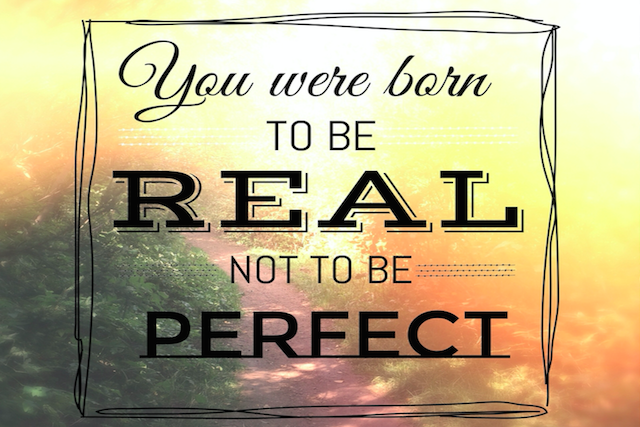
    You Were Born to Be Real

    “Out of your vulnerabilities will come your strength.” ~Sigmund Freud

    If you’re anything like I was, you have an image of yourself that you want other people to adopt. You think people expect that of you or would like you better if that’s who you were, so you pretend to be that person.

    Over time, you put on layers of protection to prevent people from seeing the imperfections that would undermine that perception. You refuse to admit to those imperfections. You may also blame others, the weather, or fate for any perceived failure—anything but yourself.

    As a result, you can’t interact with people in a real way because you can never let your guard down and be yourself. So your relationships are less than they could be.

    And you can’t really grow, because that would involve admitting you have a weakness.

    I’ve been there.

    I spent decades trying to live up to the image I thought people wanted and expected of me: the golden-boy, the successful one, the smart one.

    I am an only child and the oldest kid in my generation in my family. With that came a lot of pressure, mostly self-imposed.

    I got good grades in smart-kid classes, I didn’t drink, I didn’t do drugs, I started on my high school basketball team, I could do things on my own without help, I didn’t make mistakes.

    The problem was I did make mistakes. For example, when I was seventeen I wrecked my friend’s car because I didn’t look before I pulled into traffic, but I blamed the clutch.

    After a basketball game in which I missed a few free throws, at the next practice, our coach put me on the free-throw line and made me shoot until I made two in a row.

    Every time I missed, the whole team had to run except for me. The team ended up running twenty times before I finally hit the free throws. Instead of taking responsibility for not putting in the work to make sure I made the free throws, I blamed the coach for putting me in that “unfair” position.

    When my college relationship broke up, I blamed my girlfriend for being clingy and selfish. But the reality was that we just weren’t right for each other and it had as much, or more, to do with me than it had to do with her.

    What I perceived as clingy and selfish was just her totally reasonable reaction to my fear of commitment and my resulting withdrawal. Not recognizing that it was mostly my issue led to a series of relationships where I made similar mistakes, always concluding my partner was clingy—until I finally took a look in the mirror and recognized the only consistent variable was me.

    In each of these examples, and countless other times, I just ignored my mistake or made some excuse for it and kept moving on because recognizing it wouldn’t fit in with the perfect version of myself I thought everyone expected.

    The more time I spent being this polished up version of myself, the more removed I became from who I actually was. And it just built on itself all throughout adulthood.

    In fact, even when I started being okay doing things I would have perceived as a mistake when I was younger, like drinking socially, I wouldn’t do it around my family. Not even at holiday functions when everyone else was drinking.

    I felt like I needed to live up to the idealized version of myself that I envisioned they had. So I kept up appearances.

    The longer I lived that version of life, the more difficult, almost impossible, it became for me to grow, because to do so meant I had to recognize I did actually make mistakes and had room to grow.

    It may sound like I was conceited and super full of myself, but that wasn’t really it. It wasn’t that I believed I was perfect; I just needed everyone else to believe I was, which meant I had to pretend. I was terrified of anyone finding out it wasn’t true.

    When I finally came to terms with the fact that playing perfect (unsuccessfully, I might add) was a terrible way to go about being happy, having real relationships, and making choices in life, it was terrifying.

    It meant I had to do something I never really had before—admit weaknesses, admit I needed help with things, admit mistakes were my fault, not someone else’s or just bad luck.

    Peeling off the layers of protection is an ongoing process. But it has allowed me to reach out for help and truly grow as a person for the first time in a long time.

    Ironically, becoming vulnerable has allowed me to get closer to being (although certainly not actually becoming) the person I pretended to be for so long.

    It can do the same thing for you.

    You Aren’t Sir So and So, Take Off the Knight-like Suit of Armor

    Being hurt sucks, whether it’s physically, mentally, or emotionally. So we protect ourselves from pain.

    And we are generally good at minimizing the physical kind.

    Our lives are climate-controlled, we rarely feel the pangs of hunger or a desperate thirst, we treat our illnesses and minor aches with medicines that knock them out before they really get started, and we rarely experience the loss of a loved one before old age.

    All of that is great, and a fairly good list of why we should be thankful to live in the modern world rather than any of those that preceded it.

    But we also spend a lot of energy protecting ourselves from the type of emotional pain that comes along with being authentic and vulnerable, admitting our weaknesses.

    And, ironically, that causes us significant emotional pain because having to always be a shined-up, polished version of ourselves is hard and stressful.

    Plus, it cheats us out of the type of emotional pleasure we want because when we aren’t authentic with people, it’s very difficult to have authentic emotional connections.

    It also blocks our growth.

    The longer you act as though you are perfect the way you are, the harder it is for you to see where you need or want to grow.

    You become so used to acting perfect, you start to believe it. Maybe not intellectually, but subconsciously, you think, “I’m pretty good as I am. I just need a lucky break and then I’ll be happy and successful.”

    And when you start putting the focus and power on your future success on something external like “a lucky break,” you fairly quickly lose any motivation for self-improvement and instead just sit around doing what you have been doing, waiting for fortune to smile on you one way or another.

    This is not a great formula for improvement, or success for that matter.

    Also, not being vulnerable makes it is difficult, if not impossible, to recruit anyone else to help you because to do so, you have to admit you aren’t perfect.

    So how do you start this process?

    The first step is to the difference between who you are and the version you show to the people in your life.

    This will take time, because (if you are anything like me) you have been play-acting “super-you” for so long that it’s actually hard to tease out the difference. That’s okay.

    Start small. Just listen to yourself talk to people over the next couple of days. In what situations do you say things you really don’t believe so that you can fit in? Are there particular people that you do it more often with?

    Once you’ve identified your situations where you tend to cover up your flaws, the next step is doing something about it.

    When you find yourself in the situations in which you tend to be less than honest about who you are, be diligent about being true to yourself. Stop yourself, or even correct yourself if you say something dishonest.

    If you can start to be vulnerable in those situations, it will start to be much easier to do it throughout your entire day.

    That has certainly been the case for me.

    For a long time I regularly covered up my faults and weaknesses with my family because I desperately wanted to meet their expectations. So when they asked, everything was always great. School was great, work was great, and my relationship was great, even when they weren’t.

    Once I decided to just be real with my family, my relationships with them, which had previously felt inauthentic, plastic, and rigid, started to warm, soften, and deepen.  

    The other situation where I was rarely, if ever, willing to admit mistakes was in athletics. When something went wrong while I was playing, it was always bad luck or someone else’s fault.

    When I recognized my tendency to be inauthentic in team situations, and embraced it, taking responsibility when things were my fault, a couple things happened.

    One, no one kicked me out and judged me as incompetent (which was my fear), and two, I was able to get help to get better at things.

    Taking strides toward admitting my imperfections in these areas carried over to other situations too.

    For example, I am now much more likely to admit that I did something wrong at home or in my personal relationships.

    When you allow yourself to recognize you aren’t perfect, you will also be able pursue growth, stop making the same mistakes over and over again, and deepen your relationships with everyone you interact with.

    Shedding the layers of protection you have put on over the years is hard, but once you give yourself permission to do it, the freedom will feel tangible. You will breathe an exhilarating sigh of relief.

    And once you’ve started the process, the momentum will carry you. You will start living a life and having relationships that are true to you, not to whatever you thought everyone else wanted from you.

    And it is all within your power. You just have to decide, and then do it.

    You were born to be real image via Shutterstock

  • Moving Beyond Passive-Aggression: Stop Repressing Your Feelings

    Moving Beyond Passive-Aggression: Stop Repressing Your Feelings

    Sad Girl

    “Don’t let the fear of what people might think stop you from speaking your mind. Speak up, you deserve to be heard.” ~Unknown

    I used to suffer from immense communication problems that manifested as passive-aggression. I had no idea how to get what I needed, and I often failed to express my desires.

    My maladaptive response was to remain positive at all times, while burying my feelings and casting them into the back of my mind. It wasn’t the greatest time in my life, but it served as a valuable lesson more than a decade later, when I cleared away the cobwebs of anger and reclaimed my true self.

    I frequently notice passive-aggression in people who are passionate about being positive. Have you ever met someone who seems to radiate with positivity and yet, upon closer inspection, you find out that they’re actually a walking ball of resentment?

    We’re all only human. A person who tries at all costs to maintain a facade of success and happiness is eventually going to have a bad day, and their shield will crack. Once they’re emotionally spent, the feelings that they’ve kept inside for so long will come to the surface.

    Ignoring feelings is never the solution. Accept them, investigate them, and then act.

    I’ve learned that passive-aggression is a form of subtle resistance—we feel that we can’t resist openly, so we use sarcasm, or we flake on people, or we put that little smiley face at the end of our snapchat message to disguise our anger. Other examples include procrastination and intentional inefficiency.

    At some point in your life you’ve probably been on the receiving end of sugarcoated, venomous attacks without even realizing it, and on the opposite end of the spectrum, you’ve probably tried to infect someone with your unconscious passive aggression.

    It’s not necessary. And it’s not healthy.

    Passive-aggressive behavior often has roots in childhood; it has to do with how much attention our parents gave to our desires.

    If your caretakers constantly rejected reasonable wants and needs, you likely felt like an inconvenience to them and learned to stop expressing your desires openly, so as to not create more tension in those relationships.

    Yet you still had wishes. If protesting became impossible, the only other way to resist was through lies and deceit—for example, by doing the complete opposite of what your parents requested, or doing it so badly that you may as well not have done it.

    When you grew up, you likely still maintained the belief that you could not simply outright express your wants and needs to your spouse, colleagues, boss, or anyone else in your life; that’s how it was for me.

    This inability to ask for what we really want is a heavy burden to bear.

    The coping strategy then becomes one of securing outside validation. If we can’t be assertive, then we have to beat around the bush to achieve the same result, and that’s why so many of us suffer from what I like to call people-pleasitis.

    The only way to get out of the mire of people-pleasitis is through acceptance and courage.

    You have permission to feel your feelings. Regardless of what you’re feeling, you’ll discover that nothing bad comes out of catching your emotions as they come. Once you train yourself to observe your emotions, you will see that they are simply feedback.

    You don’t have to inhibit them or judge them or block them. You don’t have to turn on the T.V. so you can distract yourself from what you’re feeling. Acceptance and courage are the keys.

    Accept your emotions. Love them. Embrace them.

    Courage is required to express your true self to other people. This is a choice you can make right now.
    Choose direct communication rather than indirect people-pleasing behavior. Choose to express your needs, wants, and feelings. You may lose some friends by doing this, because people have gotten used to the people-pleasing you. It’s worth it.

    I’ve changed so much simply by having the courage to communicate my needs and wants to the world. It’s scary—it really is—but what lies on the other side is more valuable than gold. You find yourself—and you find people who value and respect your thoughts, feelings, and wishes.

    For many people, this is a lifelong process. But learning to express yourself assertively is one of the greatest gifts you can give to yourself and the world.

    Have you ever noticed how naturally authentic folks seem to attract so many people?

    They’re so comfortable with themselves that they also make you feel comfortable. And you know this because you will feel inexplicably good around them. They are not hiding anything from you, and they don’t produce any queasy feelings in your gut (the same feelings you get with passive-aggressive people).

    Behind passive-aggression lies a valley filled to the brim with anger and hostility. When this valley can no longer support all the pent-up negativity, it will come out in a furious outburst that will leave your friends and family dazed and confused. You see this all the time with people who suppress their feelings.

    Only by freeing yourself from these toxic emotions can you fully reach your potential as a human being.

    I was but a shadow of my true self when I was passive-aggressive, because I wasn’t being authentic with people.

    I unconsciously created distance between myself and others. By far the biggest area of improvement in my life has been relationships. I believe that you can’t reach your greatest potential without the support of people who truly, deeply know you, and I now have people like this in my life.

    If you’re engaging in passive-aggressive behavior, it’s time to have the courage to confront yourself, because what lies on the other side is infinite possibility.

    Sad girl illustration via Shutterstock

  • Drop the Mask: How to Slowly Lower Your Guard and Change Your Life

    Drop the Mask: How to Slowly Lower Your Guard and Change Your Life

    Man with Mask

    “The less you open your heart to others, the more your heart suffers.” ~Deepak Chopra

    The root of my inability to be open stems from my childhood. (I guess much of who we are comes from childhood, right?)

    I remember around the time I was eight years old going to a party at my aunt’s house. Even though I don’t remember the details of the party, I do remember what happened after.

    We got home that night and my dad asked me, ”Don’t you think you should be a little more reserved or have a little mystery to you?”

    I was thinking, “Huh?” What did I say or express at this party that made him say that?

    I’m sure I needed to hear that, because who knows what the heck I was saying. And I do believe having some boundaries is important.

    But I was a little expressive girl sharing my insides and sharing what I saw and experienced. I don’t believe we should share everything with everybody and “emotionally vomit” on people, but for some reason, that moment really defined me.

    I looked up to my father, and since I grew up without a mother, I looked to him for guidance.

    But now as an adult, I realize that my father was a private, closed person himself. So he was projecting that onto me.

    As I got older, I continued little by little closing parts of me off.

    People used to always tell me, “Lisa, you are such a great listener.” And yes, that is one of my best qualities, and I truly do enjoy people and want to see and hear them. But I rarely give people the chance to see me and hear me.

    If someone I don’t know very deeply asks me a question, I usually think before answering and feel uncomfortable talking about myself. Even if there is an opening or opportunity to share one of my experiences in a social setting, sometimes I choose not to.

    Why? Some guesses I have are:

    • I didn’t want to give up the illusion of having it all together.
    • I didn’t want to be seen as weak or needy.
    • I didn’t want to be vulnerable.

    And I’m an extrovert! I have always made friends easily and have always had friends. But recently, I took a look at my adult friendships, and I discovered that I only have a handful of friends that I would consider deep and extremely connected and meaningful, where I can totally be myself and feel comfortable completely trusting them with everything.

    Yes, I know many people say they don’t need a lot of deep relationships and only need a few. But is that BS we tell ourselves? Is that really true?

    Why can’t every relationship we have be as deep and connected? Aren’t most of us mirrors of each other and struggling for the same things?

    The reality is that I don’t want distance between me and anyone in my life. What I really crave is closeness to others and my community and many real connections.

    Being more open at the same time I feel vulnerable is like learning a second language for me.

    I know I will never be the person to spill my guts and be expressive the way others can be, and I’m okay with that.

    But I know it’s possible to open up your blinds for all people to see while remaining authentic.

    Here are a few strategies that have worked for me that may also work for you.

    1. Determine what masks you wear and why you truly are guarded.

    Did you have a bad experience as a child? When you open up, do people receive it negatively? Do you have certain insecurities that hold you back? Are you an introvert and really have a different process for connecting with people?

    Asking yourself these questions will help you get to the root of your insecurities. Just like doctors don’t treat illnesses before they understand the cause of your symptoms, you can’t change yourself without knowing why you are the way you are.

    Take some time—whether it’s just a half hour or a full weekend—to self-reflect. Consider writing down your feelings if you think it will help. Use this time to learn more about yourself and figure out why you’re guarded.

    2. Notice when you become closed, shutdown or guarded.

    Now that you know why you’re guarded, it’s time to become attentive to it.

    A few months ago, I went to a conference and had the opportunity to meet all kinds of amazing people. When the part came toward the end of the first day to “network” and talk and meet people, I ended up going to get a drink with someone I already knew because it was easier and I didn’t have to meet anyone new.

    But what made this time different was that I noticed and became aware of it in the moment. I completely shifted my mindset while I was there, and I can’t say I regret it.

    I met the most amazing people. We got past surface and business talk quickly, and I still keep up with many of them.

    You may find similar experiences equally rewarding. If you can’t work up the courage to take action yet, that’s okay. At this point, it’s about becoming aware of yourself.

    3. Let go of control.

    It sounds counterintuitive. How can you take off your masks if you aren’t in control? Let me explain.

    I’m reading this book called Courage: The Joy of Living Dangerously by Osho. In it, Osho says:

    “If you understand, insecurity is an intrinsic part of life—and good that it is so, because it makes life a freedom, it makes life a continuous surprise. One never knows what is going to happen.

    It keeps you continuously in wonder. Don’t call it uncertainty—call it WONDER. Don’t call it insecurity—call it FREEDOM.”

    It takes courage to dig into who you really are and share that with other people, to completely cut yourself open to others. But it means you have to let go of being in any kind of control and trying to predict the outcome of what happens.

    When you’re in control, fear consumes you, and you follow it. Be courageous and let the situation control itself. Then your fears and masks will subside on their own.

    4. Be unattached to the possible outcomes when sharing your thoughts and feelings.

    It’s one thing to let go of control. It’s another to become unattached to the outcomes.

    It’s tough, I know, but when fears of what might happen next are holding you back, you have to stop worrying about the outcomes.

    It’s not about what people think of you. It’s not about whether they judge you because you are stating a truth and being yourself.

    It’s about your own personal growth. The only outcome that matters is the strength you gain from opening up. Remind yourself of that and all other possible outcomes will worry you less.

    Share yourself and your voice and let go.

    5. Take action in small steps until you become more comfortable.

    The tips above simply won’t happen overnight. You aren’t expected to let your guard down immediately and magically become willing to share your feelings and your voice. It’s going to take time.

    That’s where baby steps can help you.

    Instead of throwing yourself head-on into sharing your feelings or conversing with strangers, start out small:

    • Attend a social event, such as a party or conference, but bring a friend along for support. Make it a point to pitch in a comment or a strong opinion and talk to someone you don’t know.
    • Make it a habit to write in a journal every day for two weeks. Then, read excerpts to someone close to you so you can practice sharing the deeper things that you are thinking about.
    • Join a group where sharing is part of the platform, such as a business mastermind or hobby associated group.

    As you get more comfortable in these situations, take bigger steps:

    • Strike up a one-on-one conversation with a stranger. If this scares you, you can minimize some of your fears by talking to someone you know you’ll never see again. That way, the possible outcomes won’t scare you as much.
    • Share your story with a group of people. Talking with a supportive group of people or to your spiritual leader is a good place to start because these are safe environments where people won’t judge you.
    • Write about your experience and share it online—even if you publish it anonymously or under a pseudonym.
    • Write an article for a community like Tiny Buddha about an experience you want to share.

    Lowering your guard and being completely vulnerable in a meaningful way is incredibly difficult for people like me. But when you have a desire to change and you look inside yourself for courage, becoming the person you want to be is far less frightening.

    Man with mask image via Shutterstock

  • Why We Need to Share Our Honest Feelings

    Why We Need to Share Our Honest Feelings

    Sealed Lips

    “I learned that courage was not the absence of fear, but the triumph over it. The brave man is not he who does not feel afraid, but he who conquers that fear.” ~Nelson Mandela

    She hurt my feelings. She was leaving soon to live in another country for up to six months. I knew that if I held on to my hurt, this resentment would fester, and my best friend would be the recipient of my anger.

    I prayed for courage to find the right words. I didn’t want to hurt her. I knew I had to say something or I would allow my hurt to manifest into something huge.

    The courage came, and I acted immediately. I dialed; my heart pounded. I was so afraid.

    She answered. The lump in my throat made me silent. I began to weep.

    I gently uttered, “I’m calling to tell you that you hurt my feelings. When you didn’t show up for my big event, with no phone call, no communication, it hurt my feelings. When I asked for your opinions on my new gig, you didn’t respond. It hurt my feelings.”

    I stopped and let the silence set it in. Within a few seconds she responded.

    “That was the bravest thing I have ever heard you do. That took so much courage. I’m sorry. I’ve been self-absorbed.” And the story went on.

    She ended by saying that she, too, has been seeking to speak her truth, and that I had just provided the greatest example of how to do it gently and with kindness.

    The woman I called is one of my best friends from childhood. Believe it or not, making that phone call was one of the hardest things I’ve done in my new way of living. I’m a recovering alcoholic, and I’m learning how to feel and how to communicate.

    I spent my first forty-plus years sugarcoating my life and my feelings—putting a beautiful spin on everything and avoiding controversy at all costs. But that didn’t work, and the ultimate cost was I almost lost my life to alcoholism.

    Growing up in a dysfunctional and alcoholic home, I developed the ability to shine things up at an early age. I spit polished every word that came out of my mouth.

    I painted a thick coat of pretty on every fear that besieged me. When asked how I was doing, the simple “fine” or “great” would ward off further inquisition.

    There was a lot at home to worry about back then, but I believed that worry was for the weak and that I was stronger than worry, so I locked it in a steel-cased compartment deep inside of me and threw away the key. Things were just fine.

    And I did not even acknowledge anger. I can’t tell you where or how to access the anger that has burned slowly within me for decades because I have never given it a voice.

    “Aren’t you angry?” a therapist would ask me on occasion. With a genuine and convincing smile on my face, I would nod no. I didn’t feel angry, but the truth is that I really didn’t feel anything.

    I learned at an early age that it was just easier to get along in this world by placating everyone. I didn’t realize that while I was overly concerned about not hurting others with the truth, I was sacrificing my soul.

    I know now that I was an incredible liar. I lied all of the time and to everyone. And while a lie about how I was feeling may have seemed insignificant, it wasn’t. Those lies were the most powerful and did the most damage to my psyche. They continued to reaffirm the idea that I did not matter.

    I had my first drink at thirteen. I was a blackout drinker from the start, and alcohol let me escape from my fraudulent life.

    I was a high-functioning alcoholic for many years achieving much success in my career and personal life despite my drinking patterns. I could mold the veneer of my life into whatever I thought would earn society’s approval.

    After years of heavy drinking, I was graced with the gift of sobriety at forty-four. Let me tell you, getting sober is like growing up all over again, and it’s a rollercoaster of a ride. There are many days when I simply feel like a little kid, paralyzed by fear, overcome with sadness, or gleefully happy.

    One of the many gifts of sobriety has been discovering my true self and creating new habits and patterns for living.

    Over the course of my journey, I’ve regularly struggled with two issues—faith and honesty. I will leave faith for another post, but learning how to be emotionally honest with myself has been a brutal and slow process.

    Like peeling away the skin of an onion, I find that I have to peel away my old habits and walls that I have in place to shield me from the truth. Every time I think I have it mastered, another opportunity arises that challenges my commitment. I find I actually have to practice being honest with myself.

    A good friend of mine who has helped guide me in this new way of life constantly reminds me to pray for and meditate about courage. During my first summer of sobriety, I did this constantly.

    I’ve had some hard conversations. Actually, the terrifying part was imagining how those discussions would unfold, but in reality, they weren’t that difficult. And, I found that people tend to admire and respect someone who can be completely honest.

    These are the steps I take when I face emotional honesty. It’s a simple process.

    • Identify and connect with my emotions.
    • Identify my part in the situation.
    • Pray for the courage to speak honestly, with kindness and authenticity.
    • When courage hits me, act immediately.

    For those who don’t believe in a higher power, meditating on courage will help them find the strength within to be emotionally honest and tell the truth to themselves and others.

    We may think that it’s easy to tell a little white lie to save someone else’s feelings, but is it? Wouldn’t it be easier to just tell the truth?

    It’s funny, but I relish the opportunity to practice honesty now. And, it is becoming more of a natural way of life for me. If I feel overwhelmed by the truth I have to share, I begin praying for courage immediately.

    I also have learned to speak with compassion and without hate or anger.

    When I told my friend that she had hurt my feelings, I was overcome with relief, as well as a feeling of gratefulness for her friendship. By speaking up, it allowed us to grow closer, but I had taken a stand for me first; I had demonstrated to both of us that I matter.

    Each day we are given a precious gift—the gift is that day. What we do with it is up to us. I choose on this day to be authentic to the world. It’s all I can be. It’s freeing just being me. I choose to remain vulnerable by speaking my truth and sprinkling love wherever I go.

    When we learn to speak our truth, we become courageous, we value ourselves, we shine our light from within, we become worthy, and we feel, share, and connect on a more intimate level. We can inspire honesty in others.

    Sealed lips image via Shutterstock

  • Authenticity May Feel Risky But It’s Worth It

    Authenticity May Feel Risky But It’s Worth It

    You Were Born to Be Real

    “Authenticity is the daily practice of letting go of who we think we’re supposed to be and embracing who we are.” ~Brené Brown

    Growing up I experienced a rollercoaster of emotions. One minute I would be on top of the world and the next I felt overwhelmed by anxiety. I didn’t know how to share my difficult emotions in a healthy way with my friends and family, so I started suppressing them instead.

    I realized early on that it felt safe to hide my feelings, because no one could judge me if I kept them to myself. I believed that emotions were a sign of weakness, and there was a reward for keeping it together—I never rocked the boat, and everything around me remained peaceful.

    But I learned that you can’t trade authenticity for safety and expect to stay true to who you are at the core.

    Although it seemed like I was protecting myself, suppressing everything erected walls around my heart and reinforced the belief that it was not safe to share my genuine feelings with anyone else.

    As a result, I started having issues with food, and it soon turned into an eating disorder and resulted in anxiety and depression.

    Rather than being truly authentic with others, I became strategic; everything I said or did was a thought-out plan to gain acceptance. Being truly authentic with others was just too risky.

    I’ve since learned that we cannot truly experience the benefits of a relationship if we are not authentic. To fully feel the love and connection we all yearn for, we have to show people who we really are.

    As I let go of what others thought I should be, feel, and say, I started becoming more authentic with those I trusted most. And as I shared feelings that felt risky to expose, the people who truly cared about me received them with love rather than judgment, and those relationships got stronger.

    Other times, I shared my true feelings and learned I couldn’t trust certain people with them. I had to let go of some relationships because they were holding me back from being my true self. Although not easy, this was necessary in order for me to evolve and grow.

    Authenticity connects us. It is a great gift we give to another person when we let them see behind any masks or the walls of emotional armor.

    Even more so, authenticity is a priceless gift we give to ourselves.

    How do we become authentic in our relationships?

    Begin practicing authenticity with someone who will not judge you, advise you, or try to interrupt your process.

    This person can be a dear friend, family member, mentor, coach, or counselor, who will receive the gift of your authenticity with compassion.

    For me, it started with owning my own story and starting to share it with others. One of the first things I did was write a letter to one of my dearest friends telling her about my struggles, and she embraced all of it with love.

    Develop rituals.

    Rituals teach us to be disciplined and deliberate. Develop rituals that you will use daily to practice authenticity and let go of shame and guilt.

    The first two hours of each day are for me. I exercise, journal, and on a good day, get some meditation in too.

    It allows me to set my intentions for the day, and to say thank you. It allows me to be exactly who I am with myself so that I can be the most authentic person with others. I love my time in the morning and ever since I started consistently doing this, my life has changed.

    Trust your intuition.

    That feeling in your gut that tells you what is right and wrong. Not always easy to do when you’re fighting against the naysayers and those who can’t handle the most authentic you. Trust and follow it anyway.

    This has been a practice for me. I have not always been good at listening to my intuition for fear of standing up, rocking the boat, and being judged. I have learned that my gut is never wrong, and I now listen and trust.

    Forgive yourself.

    If you are holding onto something that isn’t allowing you to move forward, forgive yourself and let it go. Not forgiving yourself will keep you swimming in a swamp filled with your gremlins, and unable to experience healthy and happy relationships.

    I have made many mistakes in life. I followed the wrong crowd, I didn’t always do the right thing, and I held on to that guilt and shame for many years. It didn’t serve me.

    It wasn’t until I was able to forgive myself that I was finally free to move past the mistakes I had made. I was finally able to move forward and become my true authentic self and tell my story.

    Respect and value who you are.

    When you do, you set the standard for how others treat you. You have permission to be you—unapologetically and authentically you. To have strengths and weaknesses and know that those are what make you unique and amazing.

    The truth is that others will treat you with the same respect you show yourself. I didn’t believe I was worthy of having healthy relationships with people who valued who I was, because I didn’t know how to value and love myself. I often sabotaged friendships and relationships with good people.

    When I started my healing journey and practiced self-love, meditation, and positive affirmations, I then started to believe that I was worthy of healthy relationships.

    Know that you are valued and needed by others.

    People need you, and the right people will value who you are and what you stand for when you are authentically you. The world needs to hear your story.

    My healing process started when I shared my story and spoke my truth.

    I learned that it was okay to be vulnerable and authentic. There are people who related to what I had gone through and were inspired and grateful that I could share. It allowed them to be okay with sharing their story and start their own healing journey.

    Just like most skills in life, with practice your ability to recognize and tolerate emotions and be authentically you will improve. Increased self-awareness is the key to having successful, long-lasting, authentic relationships.

  • Let Other People See the Awesome Person You Are

    Let Other People See the Awesome Person You Are

    You Are Awesome

    “Sometimes I panic; what if nobody finds out who I am?” ~Billy Joel

    At home, you want to go out and be social. When you’re out being social, you want to go home and be alone.

    At home you feel free, joyful, and ambitious. You’re smart, funny and insightful. Out in the real world, you’re quiet, non-confrontational, and you struggle to connect with others.

    That person you remember from being home alone is a thousand miles away, and you feel like a shell of yourself.

    Does this sound like you? Why does this happen? Who are you really? How will anyone ever know how you feel on the inside?

    First, some good news: All of those wonderful thoughts you have about yourself? They’re true. How smart, funny, and attractive you are? Yes, yes, and yes. I’m not just blowing smoke. We all are amazing at our core, at our true essence.

    What about the negative thoughts? Are those true, too? Here’s more good news: No, those are misconceptions. Simply misunderstandings and wrong interpretations of life situations.

    You know, and I know, that the real you—you at your core—is awesome. If you feel compelled to read on, then this is ringing true for you. Good.

    For years in my teens and twenties, I felt this wonderful person inside me at all times. I was most able to connect with this person when I was alone. This made me an introvert, I suppose. But put me out with people or in a crowd, and I lost that person.

    He was nowhere to be found—hidden behind a plethora of uneasy thoughts and the desire to escape and be alone again.

    At parties, I was the guy who found a quiet spot and stayed there. Unless, however, I was drunk, which was the only way I let my guard down enough to let people see who I really was.

    And that’s exactly the key here—letting people see who you really are.

    As kids, we all did this quite easily. We had not yet learned to censor ourselves or hide our true feelings. We had not yet learned to fear for our well-being in social situations and cope with that by putting on masks or pretending to be things we’re not.

    I specifically remember as a teenager, that going into tenth grade, I made the firm decision to be someone I was not. I pretended to be more social, more outgoing, and more confident, but it was all an act.

    I felt like a fraud. It wasn’t based on true feelings of confidence and the desire to connect with others. It was based on not wanting to be socially ostracized or bullied. I did my best to imitate the behavior of others, and it was exhausting. I preferred to be alone.

    Due to the positive feedback I received from my peers, however, this new effort became an unconscious habit. I spent years and years automatically hiding who I really was, and giving people only a shell of what I am or how I think.

    Shockingly, many years later, I realized that nobody really knew me. And looking back, whose fault was that? Mine. I took my short-term survival tactic of not being myself and made it a lifestyle. It was a Band-Aid that I adopted as a permanent part of my skin.

    So how do we change this now? It’s a pattern so ingrained in ourselves that many of us aren’t even aware we do this. It’s just “normal.”

    So the first step is to become aware. Are you the same person out and about that you are at home? Do you want to be? Great, we’ve gotten that far.

    Next, what’s preventing that? The awesome person we feel like inside—what’s preventing us from letting others see that? The answer is our fears.

    What are fears? At their core, just thoughts. For example, social ostracism. It feels unsafe to be a social outcast, which is why many people seek to avoid it.

    So what if you change your thought about this? What if you began to think, “It’s okay and it’s safe not to fit in with certain groups”? When you change your thought about this, your fear will dissipate. Sometimes slowly, sometimes quickly.

    Once you reach a certain level of awareness, further thoughts and realizations will dawn on you as never before.

    You’ll realize that it’s emotionally painful to subject yourself to the company of people who won’t accept you for who you are. Shortly after that, you’ll come to understand that the awareness and pain are really first steps toward finding those who will accept and appreciate you.

    And it’s fine that some people won’t accept or appreciate you. That’s just life; nobody is perfect. It’s best to let that go and move on to better things.

    These new understandings will have a momentum all their own, and each one will transform your mind, piece by piece, to a new place and a new feeling.

    If you’re the kind of person that can change their mind wholeheartedly on a dime, you can move forward quickly.

    If you’re the kind of person who has to stick their toe in the pool first to gauge the temperature, then their knee, then their leg, it’ll take some time and trial and error for you to commit to changes in thought.

    But once you’ve changed your thought, once you’ve removed your fear about letting others get to know the real you, you’ve opened doors and windows to who you really are—that wonderful, witty, loveable person you’ve always known yourself to be.

    In time, the gap you feel between when you are alone versus when you are out and about with people will shrink. You’ll even consider thoughts like “maybe I’m not really an introvert,” as your desire to let people connect with the real you grows.

    As a bonus, you’ll make stronger, deeper connections with people, because the connections will be with the real you, not a shallow exterior you’ve held onto for so long.

    Many of your current relationships will change for the better, and you’ll begin other relationships anew. These bonds, and the newfound ability to express the real you and let others see it will increase your enjoyment of life and positively affect your experience of it. Your life will be forever better.

    You are awesome image via Shutterstock

  • Stop Trying to Fit In and Start Embracing Your True Self

    Stop Trying to Fit In and Start Embracing Your True Self

    Stand Out from the Crowd

    “Don’t change so people will like you; be yourself and the right people will love you.” ~Unknown

    I’ve always felt the pressure to fit in. There’s always been a gap between what I want to be and what I think the world thinks I should be.

    I was a tomboy growing up. I climbed trees when other girls played with dolls, I played soccer in my teenage years when other girls wore dresses and went to parties, and even as an adult I preferred to watch the Saturday afternoon game rather than go shopping.

    But the pressure to fit in and be liked turned me into a social chameleon. I tried to be the person I felt I should be so I’d blend in with those around me, whether that meant spending a Friday night at the pub or attending a corporate meeting at the head office.

    Psychologist William James said, “A man has as many social selves as there are distinct groups of persons about whose opinion he cares. He generally shows a different side of himself to each of these different groups.”

    I’ve spent my life trying to fit in. I’ve always wanted to please people, to make my parents proud, and to receive approval from anyone and everyone—my family, friends, partners, bosses, and teachers.

    So without even realizing it I would change myself, my desires, and sometimes even my opinions to fit into whatever mold was required at the time. But if you’re constantly trying to prove your worth to people, it may be true that you’ve already forgotten your value.

    Last year I quit my corporate career to pursue my dream of being a writer and yoga teacher, but it took many years to get to that point. For so long I’d had these dreams in my heart, but the logic of my head overruled.

    There was always a difference between what I wanted and what I thought I should want—my opinion and the norm of society somehow differed—and I’d always assumed I must be the one off beam.

    This leads to a life of sacrificing ourselves to please others, living their dreams at the expense of our own.

    I found the more I listened to, abided by, and fuelled these stereotypes, the more I was defined by them—defined by my career, the clothes I wore, where I was from, how much money I had, and what kind of car I drove. But none of this was really me, so why was I letting it define me?

    We live in a world where we are surrounded by ideals. The media presents us with better versions of just about everything, creating a mindset that we should be striving for more. There’s no wonder so many of us feel like we’re not enough.

    We need to be richer, slimmer, fitter, happier, nicer, different in some way. The point is, we are all different and there is no right or wrong.

    To find true happiness we must be true to ourselves, live our own dreams, and be proud of what makes us unique instead of feeling the pressure to follow the crowd.

    It’s easier said than done, I know. It helped me to ask myself: What makes life worth living? How would you like to be remembered? What do you admire about others?
    It may also help to reflect on what you wanted to do when you were a kid. Often this holds the key to what we held dear before we were influenced by what other people think.

    Take a moment to consider what your strengths are and be clear on your core values. It also helps to seek out like-minded people. Not only do we feel at ease with them, they also help us grow and flourish in accordance with our true selves.

    Remember, everyone has their own version of ‘normal,’ and none of us are right or wrong. We should not expect ourselves to all be alike, but rather respect our differences and value our skills despite them being different.

    When we are comfortable in our own skin, we are not fighting against or with anyone, as we’ve discovered our own true nature and are living in accordance with it. We are courageous enough to live our own truth.

    Unfortunately, there will always be someone more beautiful, clever, talented, or stronger than you, but the reverse is also true. There will always be people less than you in all of these areas.

    So instead of comparing yourself to others, look to see if you’re fulfilling your own potential to the best of your ability. As a nation we seem obsessed with comparing ourselves, but rather than thinking about what you should be like, try just being you. Simply be—as you are.

    You don’t see a sparrow comparing itself with a pigeon, and although we put different prices on timber, none of the trees feel inferior or superior.

    In nature everything is needed and it all has its place. It all fits together and is equal. Whether you’re a blade of grass or a mighty oak tree. it doesn’t matter; you are needed and you have your place in the world.

    The ancient meaning of the word courage is “tell the story of who you are with your whole heart.”

    It is all about being true to yourself.

    Let go of who you think you should be and be who you are. Everyone is coming out of their own closet, emerging to be the person they really are, their true self, and worried about what others may think and if they’ll be accepted.

    That’s why it’s so important to connect with authenticity and compassion, but you can’t be compassionate to others without being compassionate to yourself first. Don’t change so people will like you, be yourself and the right people will love you.

    Stand out from the crowd image via Shutterstock

  • Stop Trying to Blend In: The Simple Secret to Being Yourself

    Stop Trying to Blend In: The Simple Secret to Being Yourself

    Stand out from the Crowd

    “Be yourself—not your idea of what you think somebody else’s idea of yourself should be.” ~Henry David Thoreau

    How many times have people told you to just be yourself? A million times perhaps.

    How many times have you felt able to do this?

    Until a few months ago, I thought this was frighteningly hollow advice, like “Don’t worry.” And I had no clue how to be myself. What does it even mean?

    The Simple Secret to Being Yourself

    My friend continuously tells me that being yourself means doing things you want to do and not caring about what others think.

    I disagree with that definition. It makes “being yourself” too simplistic. I learned what it really means to be yourself after an eye opening incident.

    I always thought parties signified fun, but no matter how much I tried to enjoy them, I couldn’t. I hated the entire process of getting ready, going, dancing, eating, and coming back. I would have preferred to read a book or visit a monument any day.

    For years, I thought I didn’t know how to have fun.

    But I have fun when I read or visit monuments, the same way people have fun when they go to parties.

    I struggled to accept that, because this required me to accept that I didn’t have fun in the conventional sense. It meant accepting that my idea of fun might be boring to many people.

    Being yourself means having the courage to accept yourself. It means having the courage to understand that you are a particular set of characteristic and no matter what you do, there will be a few things that will never be you.

    It’s hard to do this because you have to accept that you’re different from other people. But that difference doesn’t have to depress you or define you.

    You cannot be everything. You don’t have to be everything.

    You simply have to be you. And that is enough.

    3 Steps to Being Yourself

    There are no rules to being you because being yourself is (and has to be) different for everyone. I humbly offer a few guidelines that will help.

    1. Get to know yourself.

    In order to be yourself, you first need to find out who you really are. Are you a party person or not? Do you like starting things or ending them? Do you take small steps or huge steps?

    This involves a lot of soul searching. I did this by asking myself a lot of questions on many different topics.

    This is the only way you will ever get to know who you are.

    Some questions to consider:

    • Am I an early riser or a night owl?
    • Am I comfortable being part of a large group or do I prefer to have a few close friends?
    • Am I an introvert or an extrovert?
    • Do I thrive on adventure or like to keep things low-key?
    • Do I prefer change or consistency?
    • Do I like to jump right in or take things slowly?
    • Do I embrace rules or rebel against them?
    • What makes me unique?
    • How do I want people to remember me when I’m gone?
    • What do I value most in life?
    • What do I like to do with my free time?
    • What makes me excited? Does that make me happy too?
    • Do I value things more than experiences, or vice versa?
    • How do I define success in life?
    • What would I do if money were no object?

    2. Become comfortable with yourself, flaws and all.

    Once you start learning about yourself, it is essential not to judge yourself.

    Judging yourself will create a barrier to embracing who you really are.

    You need to accept all of yourself, flaws and all. We are all imperfect.

    I frequently say things that I regret later. This is a flaw, and I am working on this. But every once in a while I disappoint myself, and then I start judging myself. This leads to a state of mind that isn’t conducive for making positive changes.

    There are other things you’ll discover about yourself that you don’t have to “work on.” I may be tempted to judge myself because I don’t like parties, but that’s not actually a flaw.

    In addition to letting go of your own judgment, you have to stop worrying about what others think about you.

    Don’t be indifferent to other people’s opinions; merely be detached. There is a difference.

    Indifference says, “I don’t care,” whereas detachment says, “I accept whatever others think about me.” It means not hating other people for having different opinions or being influenced by their perception of you.

    3. Stop once in a while to check in with yourself.

    Life is busy. And I love that. I can’t handle slow. I find it painfully boring.

    But the busyness of life can also be an obstacle to being yourself if it means you don’t have time to reflect, or you end up living on autopilot and don’t know what you want anymore.

    We need time to rest and rejuvenate so we can check in with ourselves.

    There are a few easy ways to stop once in a while:

    • Travel alone and don’t read or use your phone.
    • Take ten minutes at night to think about your actions and motivations. (I did that because…)
    • Go for a walk in the park and instead of listening to music, listen to your thoughts.

    All of this might be hard and uncomfortable if you don’t already do these things regularly. You might be tempted to reject yourself and you may need to use your limited supply of courage.

    I was scared too. In the end, though, it was worth it.

    Striving to Be a Better You

    This leaves us with a single question.

    Does being myself mean I do not strive to be a better me?

    The answer is yes. And no. Well, it’s complicated. Yet simple.

    If striving to be better means you constantly focus on your flaws and judge yourself, then it’s stupid to strive to be better. Because however good you get, there will always be room for improvement.

    However, if it means you are happy with who you are and think you could be even more, then yes. Striving to be better is the way to go.

    It takes courage to accept who you truly are, but it’s a lot easier if you remember there’s nothing wrong with who you are—and the only way to be happy is to embrace it.

    Stand out from the crowd image via Shutterstock

  • Embrace Who You Are (Not What People Expect You to Be)

    Embrace Who You Are (Not What People Expect You to Be)

    Man with Arms Up in the Air

    “Authenticity is the daily practice of letting go of who we think we’re supposed to be and embracing who we are.” ~Brené Brown

    Now that the fog of what everyone else wanted for me has lifted, it seems so clear to me that we need to be who we truly are—not what society expects us to be. But it wasn’t always this way.

    For decades, I bought into a model of success that belonged to someone else. I was studying for my MBA, but I didn’t want my friends to think I was weird, so I didn’t reveal that I was a yogi. I didn’t want them to not take me seriously, to laugh at the thought of me doing yoga while wearing a business suit.

    And I wouldn’t tell my yoga students that I liked heavy metal because I feared it would make me look less spiritual. When was the last time you heard the Dalai Lama talk about Ozzy Osbourne?

    I didn’t delve into the artistic sides of my spirit—the parts that painfully wanted to celebrate music, art, or poetry—because I was led to believe it was a distraction from my professional career. I was caught in a catch-22 where I couldn’t be one thing because I was another. Society would only accept me as one.

    Reality Doesn’t Bite

    In fact, I have seen the exact opposite. The more I practice finding, being, and expressing myself, the more prosperity I experience and the better I perform in business. Most importantly, I’m living the advice we give our kids: be yourself.

    By finding our true selves, we can express ourselves internally and to those around us, and that’s when we become aware of this symphony. Today, we often get trapped in the little “self,” or the pain body, as Eckhart Tolle calls it. It’s the false mask we put on to protect ourselves and fit in with others’ expectations.

    Connecting with our true selves is challenging—we often feel a great deal of pressure to meet societal demands of who we should be or what we should look like, often in direct conflict with authenticity. Yet we have the great potential to unveil our true selves and rock the universe.

    Break Past Societal Demands

    Societal demands know no bounds—they impact both men and women, but they affect them in different ways.

    I’ve found that, while self-expression is difficult for everyone, men often put up a different façade of who they think they need to be at work and home; then, they pretend that it’s not a façade. Women, on the other hand, are more aware of this façade.

    Women are also more reluctant to express all the facets of their personalities until they’re comfortable with a group. Men will often put up a façade and stay in it longer. Women need a sense of trust to open up, which takes time. In both cases, inauthenticity can lead to dysfunction, stress, disease, and distance from your highest potential.

    Uncover Your True Identify

    That’s not to say that you must express all facets of who you are at all times for all people. As humans, we must be authentic and true with the aspects of ourselves that we do express in each context. Letting only certain facets of the diamond in you shine in various settings is perfectly fine as long as it’s a facet of the true you—not a false mask.

    Here are some actions you can take to tap into spirit by tapping into your authentic self:

     1. Do yoga.

    I strongly recommend Kundalini Yoga, which works at all levels—physical, psychological, emotional, and spiritual. It gets you out of your head and helps you uncover your unique vibrations without letting your brain or fear take over.

     2. Sit in silence for a few minutes.

    I do this every day. Sit in the space of your greatness and spirit. Do nothing, chant nothing, and don’t worry about how you sit; just be. Sounds easy, right? Try it. It’s one of the hardest things for many people to do, yet it’s the most powerful way to get connected to your true source.

     3. Self-reflect.

    When you think, “I can’t be that way” or “What will they think?” ask yourself where this voice is coming from. Is it fear, the need to be liked, or a need to fit in? Then, adjust your strategy and take a few risks. Find a way to be authentically present and engaged, and let that part of you speak, act, or even stay silent.

     4. Put pen to paper.

    Ask yourself for details of who you are, and write them down. Ask yourself, “Am I authentic in my expression and experience of each of these roles? What is one thing I can do to move closer to my authentic expression in each facet of who I am—my words, my appearance, and my actions?” If you journal first thing in the morning, it propels you to another whole level of self-realization.

    5. Tune out the negativity.

    When you’re watching TV or reading a magazine or a website and you hear the message “you’re not good enough as you are,” turn it off or simply say, “I reject that.” You’re a powerful and divine expression of spirit back to spirit—perfect and complete. The more authentic you are, the more you will know and experience this.

     6. Take action.

    Take one action that’s a true expression of your unique self or your unique note in the symphony of the universe. Just speak or act authentically in a small way when you’re tempted to stay quiet or pretend you’re something else, and see how it feels. Keenly observe how you feel afterward. Are you breathing deeper? Smiling more? Feeling less tense?

    You have the potential to shape a new reality as you discover your true self. You must tune in to the incredibly unique and beautiful kaleidoscope of who you are and let it shine. Experiment a bit, especially around your closest friends and family.

    Embrace your authentic self, and in enacting this positive change, you’ll enact a powerful change in the world around you.

    Man with hands in air image via Shutterstock

  • When You’re Hiding Your Pain: Why It’s Worth Letting People In

    When You’re Hiding Your Pain: Why It’s Worth Letting People In

    Hopeless Man

    “All men are caught in an inescapable network of mutuality, tied in a single garment of destiny. Whatever affects one directly affects all indirectly. I can never be what I ought to be until you are what you ought to be, and you can never be what you ought to be until I am what I ought to be.” ~Martin Luther King, Jr.

    We are all interconnected, and we all need each other. Our ability to see and be seen by each other creates a beautiful depth of connection that we are privileged to experience.

    This has been a great lesson for me. I realized many years back that I had been hiding my struggles from those who wanted to help me.

    One of my close friends died when I was twenty-three. I’d thrown an art event the night before and had just come home from brunch with some friends.

    I was tired and processing something hurtful that had happened to me at the event. And then my phone made this little beep, and I found out that while I was mingling at a party my beloved friend was dying.

    Her sister, in her grief, sent me a text, “Lauren passed away last night. For service information email me…” I fell to the floor and simply stared at the words. I was numb and disoriented. Those words, there weren’t enough of them. It was too simple, too short, too fast.

    As I stared at the phone in shock, it began to ring. My friend and business partner called to talk about the event.

    I answered and told her my friend just died. And here comes the part that I’ve been ashamed of: instead of revealing my pain, I told her I was okay and began to talk about the drama from the previous night.

    In an instant, unconscious choice, I decided that it was easier for me to push aside my grief than to be vulnerable.

    That moment makes me cringe for a couple of reasons.

    First, I’ve held on to the guilt that I wasn’t honoring my friend in having a casual conversation after learning of her passing. Yes, I was in shock, but there was something deeper happening.

    I’ve realized that I wasn’t allowing myself to be authentic in my grief because I was afraid to be seen.

    To be seen by our community is to recognize that we are worthy of being here, of taking up space, of needing support. I was unwilling to allow others to see me in my time of grief because on some level I didn’t believe I was worthy of it.

    In some way it felt too risky. To open up would mean that the friendship was being tested, and what if the other person couldn’t be there for me? I wasn’t willing to find out.

    And now I can see that there were so many more times throughout my life where I didn’t allow people to be there for me. I’d force my friends to take money when they wanted to pay for our meal. If I was sick I’d order take out instead of letting my friend pick up some soup and bring it over.

    The only people I felt comfortable allowing to be there for me were my family members, the people who have known me forever and who accept me as I am.

    When I lost Lauren I took the train to my parents’ house and fell into my mother’s arms sobbing. I knew how my mom would react to me; I knew she would embrace me and show me the love I needed.

    It’s risky to open up to people when we’re not sure the outcome, but it’s important to be willing to be surprised. 

    The beautiful thing is that most people want to do for each other without getting anything in return. It makes us feel good to help someone else. We want to be of service, and we’re actually getting something in exchange.

    We feel good about ourselves, about being alive, about being able to help someone. It gives us value and worth. It reminds us of the beauty in being human; it reminds us that we’re interconnected.

    I want to live in a more authentic world. A place where we can show each other the truth about ourselves. I want to give my friends the privilege of being there to support me, and I hope they give me that same honor in return.

    I hope we learn to stop filtering the parts of ourselves that make us human; because that humanness, that part of you that is unique to you, that is the part of you that you ought to be and the part of me that I ought to be.

    And only when we show that part of ourselves to each other are we really living authentically. We need each other, and we want to need each other. You are no exception.

    So when you’re in pain, share it. When you need help, ask for it. Trust that people will be there for you when you need it. All you have to do is share your truth.

    Hopeless man image via Shutterstock

  • When You’re Afraid to Speak Up and Be Yourself in Relationships

    When You’re Afraid to Speak Up and Be Yourself in Relationships

    Upset Woman

    “Your fear is boring.” ~Elizabeth Gilbert

    It has taken me eighteen years of marriage, two kids, and twenty-plus years of healing to realize I have been afraid of being myself with my husband.

    It has taken me decades to step into my power and become the fiercely alive, joyful, and creative expression I am today.

    I often think about the guy I met at the bar on the beach and wonder about things like fate, purpose, and “The Grand Plan,” meant-to-be sort of stuff. I stare at my two gorgeous children and part of me knows that every morsel of pain was worth it. But I am sad and tired.

    I have everything I am supposed to have, I have done everything I was supposed to do, and I have achieved so much, but still there is a hole in my soul.

    Am I afraid to bring the bigger love into my life, to feel joy? Am I meant to suffer? Do I have the nerve to stick this out, face the mirror, and do the vulnerable work it might take to get where I want to be?

    I have lots of unanswered questions.

    Yet, when I slide out of my confused mind for a bit, into the now of me sitting in the little sanctuary I created, where I sort out my dreams, I am truly at peace.

    The meanings and troubles, the disagreements and polarized values that plague my marriage with tension and keep me from deeper love disappear in a poof of sunrays through my big window.
    I realized, after many years of searching, that I have been afraid to be me, but the me I have been afraid of expressing to my husband isn’t the same me he married.

    I don’t remember feeling afraid when we met, all glistening and sandy on the beach, giving each other those “You’re sexy” and “I dig you” kind of smiles.

    Standing there, gazing into his adoring eyes, at the beginning of my life, my career, and my marriage, I hadn’t arrived yet. The divine, creative, fiercely alive woman and healer would emerge many years later, so now I wonder, who the heck got married?

    And so it goes—the people we marry, the family we grow up with, and the friends we have adventures with are growing, shifting, changing, and transforming, each in their own way, each on their own path, navigating life by our sides for a while until we don’t recognize each other.

    I look up at my husband after he screams at our son for making his sister shriek by sitting on her, and I cower into the three-year-old little girl I have been fighting for forty years to not be. Who is that little girl, and why is she so afraid all of a sudden?

    I am in a place in my life and marriage now where I can no longer tolerate what I feel when the three year old shows up.

    I am braver and have cultivated the awareness it takes and the practices necessary to be with people who are on a different path, who may not be growing along with me, or worse, who criticize me for the way I live.

    It seems like it took forever to get to the place where I am not willing to compromise my self-worth, but the rewards have been great.

    These are the practices that allow me to stay and be me in this relationship.

    1. Get clear about who matters to you, and why.

    It is easy to stay confused about life; confusion doesn’t require making a choice or taking action.

    I had to acknowledge that my marriage meant everything to me before I could commit to staying the course and devote to energy required to do that.

    2. Get help with learning how to move through your fear and speak up for what you want in your relationships.

    You can’t expect the people you love to read your mind, so express yourself, even when you are afraid. I received much help over the years to do this simple thing.

    My rituals and practices have included therapies that opened my heart and energy, enhanced my awareness, and helped me discover my self-worth, such as:

    • John F. Barnes Myofascial Release
    • Acupuncture
    • Meditation
    • Breathwork
    • Emotional Freedom Technique
    • Life Coaching

    A little work on my throat chakra didn’t hurt either. When I opened up the blocks and the fear that kept me from expressing my voice, a whole new world opened up to me.

     3. Discipline your mind.

    Challenge the negative thoughts that sabotage your efforts to speak up, and fight for what you want in your relationships.

    Your fear voice will come up with all sorts of reasons not to speak your mind. Some of them may be valid concerns; if you fear that speaking up may rock the boat, know that it possibly will. Unless you want to repress your true self indefinitely, it’s a risk worth taking.

    As I recognized my fear voice more and more, and got comfortable differentiating her from the me that was the intuitive, joyful healer, I was able to give her a name: Martha.

    Now, whenever that voice pipes up, I call her out. That separates me from the noise going on in my head and the meanings I give to the situations that make me feel powerless. When I notice Martha doing the talking, I detach. With awareness, I choose to believe and act differently in my conversations with people.

    There are many ways to discipline your mind and detach from the negative thoughts that control you.

    • Therapies and books that focused on the mind/body connection were important for my transformation, such as Eckhart Tolle’s book A New Earth. Other authors that changed my perspective and boosted my awareness include Dr. Wayne Dyer, Rhonda Byrne, John F. Barnes, Anthony De Mello, Peter Levine, and Bruce Lipton. The key is to find the resource that wakes you up to the connection between your thoughts and your suffering.
    • Therapeutic writing and journaling helped me sort things out. This is a powerful tool that you can use to reflect and move the thoughts and energy from the inside to the outside, where it’s just words on a page.
    • Talking and connecting with other people can also be powerful. Sometimes a conversation about relationships or the mysteries of life will give you new perspective, and if you are paying attention, they might also provide a mirror to look at your own beliefs and attitudes.

    4. Recognize when you feel fear, and use it as a compass.

    Feel fear as a bodily sensation, keeping you small or preventing you from expressing the you that you desire to be in your relationships.

    Fear can be your compass, giving you an opportunity to move through it and speak your truth.

    To be myself with my husband meant I had to do this over and over again, and I did, learning along the way as the triggers got quieter and my confidence grew. Now, when I feel that tightness in my chest, I know it means I have a chance to express myself and do a tiny bit of healing.

    5. Decide which relationships to let go of and which ones to nurture.

    This is the choice that matters the most. Most days it was easier to just stay confused about this, playing out the foggy drama of my fears. Martha sounded something like, “I just don’t know what to do about this,” or “I just can’t make a decision,” or, my favorite, “I am just not smart/good/strong enough to make this happen.”

    Getting clear about what I wanted, staying awake to my fear, and loving myself enough to make a choice was way more complicated and difficult than being confused. It hasn’t been easy, but it has been worth it.

    I am going to nudge you gently now and ask you to take action on your dreams for big love.

    Get clear about what you want. Start making choices, be aware of your thoughts, and move through the fear by speaking your truth to the people who matter most to you. The simple act of expressing yourself to the world is where the magic begins.

    Upset woman image via Shutterstock

  • Getting Real in a World of Fake

    Getting Real in a World of Fake

    Selfie Image

    “Nobody wants to be lonely. Everybody wants to belong to a group. The crowd is essential for the false self to exist. The moment it is lonely you start freaking out. Particularly in the West they have not discovered a methodology to uncover the real. To be an individual is the greatest courage. It does not matter that the whole world is against me. What matters is that my experience is valid. Don’t die before realizing your authentic self.” ~ Osho

    Authenticity. Courage. Vulnerability. We hear these words so often they’ve become a part of our daily language. But how often do we stop to investigate what they actually mean?

    I grew up within the gates of a fundamentalist religion that didn’t just discourage conformity, it taught us daily to demonstrate our opposition to the status quo. We were trained to speak about the awkward and practice the uncomfortable, sometimes in the face of hostile reactions.

    And so it was that, as a child, I learned the skill of both living boldly and sticking my foot into a person’s door so they would listen to what I had to say.

    Over the years, my vantage point became one of lone observation, both within my own “tribe” and when I was at school.

    I organized most people’s behavior into some variation of a desire for acceptance by their group. They wanted to follow a leader, or less often, to be one, all out of fear that if one is not accepted, one is somehow less worthy.

    At the time, I didn’t understand the great sacrifice people made for acceptance, stuffing away their uniqueness and covering it with a superficiality that was pleasing and likeable.

    Eventually, I left my own cloistered tribe after concluding that true radicalism is one’s ability to be courageously real—not in a bid to be different and unique, and therefore, somehow superior, but only to live according to what one believes.

    If you are on a path of seeking the real and avoiding the fake:

    1. Keep connected with the opposite of your tribe.

    We selected our friends because they make us feel good and they share similar tastes and desires. But with no challenge to our status quo, we risk losing out on vital learning.

    Our brain schemas are designed to accept familiar information and discard what doesn’t fit with our versions of reality. This makes for groupthink that ranges from boring to dangerous.

    Akin to the Facebook feed that caters to more of what we already like and know and creates homogenization, our tribe, bless them, are also prone to unconditionally support us, even when we are being unwise or thoughtless.

    While their support may feel good, it is also a disservice when they reinforce our faulty thinking and don’t question our actions.

    I have come to see a good friend as someone who can hold me kindly but boldly in the space of our relationship and ask, “What on earth are you thinking?”

    So don’t ditch all your old friends (unless you need to), but do challenge your viewpoints by talking and listening to the person you think is weird, reading the book that makes you shift uncomfortably, and exploring the activity that evokes a bit of fear.

    Instead of rejecting new ideas outright, play with them, think them through critically, and then keep or discard them.

     2. Start being real with people.

    The greatest challenge here is that we first have to be real with ourselves. This means becoming unmasked and accepting our strengths and foibles without shame.

    Only then can we begin to be real with others, because there will be nothing of us to hide.

    If we can accept our full, awkward humanity, then we can learn how to extend ourselves openly into what aligns with us and feels right, our purpose.

    We will know when to say “no” and when to say “hell yes.” We will speak our minds and take scary steps not because we have lost all sense of fear, but because we know we can be afraid and do it anyways.

    And we can meet conflict directly, without the misalignments that grow from avoidance, denial, and gossip.

    Speaking of gossip, when we are being real, we won’t do it.

    When we hear it, we will state that if a person has a problem with someone else, they should speak to them directly. And we will have no part in cliques that exclude others. Instead, we will seek other intrepid explorers, who also embrace life with the exclamation, “let’s be free of all of that.”

    3. Be in life instead of capturing it for Facebook, Instagram, or Twitter.

    I don’t know about you, but I reject the idea of capturing all of our sacred moments for social media instead of living them. And I battle with this personally, because I’m a documenter, but I favor tipping the scales toward real.

    In the movie The Secret Life of Walter Mitty, the famous and elusive photographer Sean O’Connell, played by Sean Penn, travels to the Himalayas for a shot of a rare snow leopard. Mitty tracks him down, and the two of them, perched out on a mountaintop, wait for the cat, who finally makes an appearance.

    Instead of taking the shot, O’Connell moves from the camera and watches. When Mitty asks him when he’ll take the photo, O’Connell replies, “Sometimes I don’t. If I like a moment. I mean me, personally, I don’t like to have the distraction of the camera. I just wanna stay… in it… right there. Right here.”

    You likely already know why this moment is valuable: it’s the only thing that’s real.

    You know exactly what you are losing. The tender touch your lover just gave you that you absentmindedly ignored. Lost. The book that lays on your lap unread, your son having placed it there long ago until he tired of waiting. Lost.

    Real time, with all its tastes, smells, and sensations, is irreplaceable. You have a choice each moment about who, and where, you want to be.

    4. Be in nature.

    If where you want to be is real, then immerse yourself in the greatest antidote for fake that we have in a social media obsessed, email-, text-, and like-checking society. Leave your phone alone when you are with the mountains, trees, or by the lake, with your beloved, your friends, or your little ones. It is rude and dismissive of their essence and humanity.

    Besides, at the end you lose out. Because there is no amount of screen time that can rival the pleasure of just one kiss, blowing all the wishes off a dandelion, or a deep breath of mountain pine.

    Selfie image via Shutterstock

  • Take Off the Mask: 6 Tips to Be More Authentic

    Take Off the Mask: 6 Tips to Be More Authentic

    “Being who you are is another way of accepting yourself.” ~Unknown

    Years ago I struggled to be authentic. I was a consultant who worked with senior people in big organizations. As a black female fresh out of graduate school, I was frequently the youngest, the only woman, and the only minority in the room.

    Because I was so different from those around me, at least on the surface, I was concerned about how other might perceive me. So I put a lot of effort into portraying myself in ways that I thought would increase the odds of others accepting me.

    To make sure others wouldn’t underestimate me, I led with my intelligence, saying things to let them know how smart and knowledgeable I was and downplaying my fun-loving side.

    To make sure I wasn’t seen as militant or overly sensitive, I stayed quiet in response to comments that ranged from a little over the line to blatantly offensive.

    To make sure others felt at ease, whenever I was asked to talk about myself, I stuck with the most innocuous and middle-of-the-road stories that I knew were most similar to the other person’s life experiences.

    And here is a small, but classic example: Even though I had been yearning to own a snazzy smartphone case for years, I stayed with a neutral black one so I would be seen as suitably conservative instead of too girly or flamboyant. (Yes, I had it bad!)

    The irony of all of this was that, although this approach caused me to be seen as someone who was bright, competent, and capable, it didn’t exactly help me forge deep connections with other people.

    After all, how could it? The person they were connecting with was only a tiny fragment of who I was and, in some cases, a completely inaccurate portrayal.

    When I reflected on it, I realized that, while it was convenient to be able to say that I was behaving that way due to the demands of being in an unwelcoming corporate environment, the truth is, I did it in other places as well.

    Every time I agreed to do something I didn’t really want to do out of a sense of obligation, I was being inauthentic.

    Every time I didn’t ask for what I needed in a relationship, I was betraying myself.

    Every time I put on an aura of having it all together when in reality, I was feeling vulnerable and scared, I was putting on a mask.

    One day, after biting my tongue for the nth time at work regarding an innovative idea I had that I thought others wouldn’t agree with, I decided enough was enough. At that moment I committed to stop hiding “this little light of mine” under a bushel.

    Instead, I was going to unleash my true self into the world.

    Okay, perhaps unleash is a little inaccurate—it’s not like I became Sasha Fierce over night. But what I did do was take what felt like little risks in displaying my authentic self.

    I experimented by being more assertive and sharing my true opinions.

    I let my humorous side come out and told funny stories about my family and my life when I was at work.

    I said no to things I didn’t feel like doing—even a party that was going to be thrown in my honor that I didn’t really want to attend.

    I put a hot pink rhinestone case on my smartphone.

    So, what happened? Honestly, not much on the negative side of things. There might have been the odd person who felt a bit of discomfort in the moment when I disagreed with him, but it certainly wasn’t anything long-lasting or life-shattering.

    Instead, the results have been overwhelmingly positive.

    I feel lighter and more true to myself. I have deeper relationships, because it’s as if a veil has been lifted, and the people around me get to see who I really am. I’m more likely to get my needs met because I’m not relying on the other person having ESP to figure them out.

    And at work, instead of making others uncomfortable, being more authentic allowed me to build deeper connections. Instead of just seeing me as a brain in a jar, others began to see me as a whole person, a thought leader from whom they could learn, who had interesting things to talk about.

    It has made all the difference in my life and created a richer, happier, more fulfilling existence.

    If you are struggling to let your authentic self shine, here are some tips you might find useful.

    1. Imagine your older self sharing life lessons with you.

    Imagine your older self having a conversation with your present self. Perhaps this older version of yourself is on his or her deathbed, and s/he is giving you advice about how to live a fulfilling life.

    What would s/he say to you? Would s/he suggest that you spend the rest of your life dulling your shine, or would s/he tell you to be true to yourself?

    2. Check in with yourself.

    If you have been behaving inauthentically for a long time, you might feel out of touch with your true feelings and desires. Journal and meditate to get back in touch with yourself.

    Allow yourself to feel your emotions, and be curious about them. What are they telling you that you need to do? How can you become more of your true self?

    3. Start small.

    Commit to taking small steps toward being more authentic. Speak up about things you normally wouldn’t. Assert yourself. Ask for something you want. You don’t have to transform yourself overnight. Recognize that it’s a process.

    4. Be prepared for others’ reactions.

    Remember that others are likely unaware of the extent to which you might be stifling yourself. So, as you behave differently, recognize that they may need to adjust to the new you. While the responses I got were overwhelmingly positive, sometimes others didn’t quite know what to make of it. That’s okay.

    5. Don’t use authenticity as an excuse for bad behavior.

    I have worked with some clients who have been rude or disrespectful to others, and explained it away, saying, “I’m just being honest” or “I have to be authentic.” You can be authentic and kind at the same time. Be respectful.

    6. Recognize you can tolerate discomfort.

    Research shows we tend to overestimate how long and intense our unpleasant feelings will be in response to a negative event. So, even if others don’t respond positively to everything you do, know that it probably won’t be as bad as you are anticipating.

    Finally, keep in mind this wonderful quote by Oscar Wilde, “Be yourself; everyone else is taken.”

  • Why Being Real Matters More Than Being the Best

    Why Being Real Matters More Than Being the Best

    Friends

    “We have to dare to be ourselves, however frightening or strange that self may prove to be.” ~May Sarton

    Have you ever compared yourself to others on social media?

    You’re not alone if you have. It’s human nature to compare, compete, and seek value in the opinions of others. To aspire to the heights others seem to have attained.

    But how real are those people we compare ourselves to really being? The ones who seem to have it all together? Perfect family, ideal job, loving relationship?

    I would venture to guess they’re not being very real at all.

    It’s true they may have a great partner, a great job, and well-behaved kids—some of the time. But like everyone else, they fall, they fight, and they make mistakes. They just don’t talk about it on Facebook.

    That’s where online relationships let us down; they fail to tell the whole story.

    I’m as guilty as the next person. I post pictures of my kids baking cakes, running along the beach, and acing the soccer game on a Sunday. But I neglect to mention how much I yelled at them for their attitude or constant fighting.

    I talk about date night with my husband but don’t mention how we argued all the way home.

    And I post pictures of inspirational life quotes, such as, “Only a life lived for others is a life worthwhile” (Einstein) as though I’m living them every day.

    Because I, like everyone else, want to show the best side of myself. I have an inherent need to be liked and to belong. It’s human nature.

    But what if being liked and belonging is more about being authentic than being the best or getting ahead? What if in sharing who we really are, we are more able to find the connection we crave?

    A few years ago I attended a weekend retreat and workshop for personal development along with about thirty others. Not knowing anyone, I was nervous.

    We met for the introductory session in a large room and had to mingle for about twenty minutes or so before the facilitators arrived.

    What I experienced in that time was eye-opening to me. I watched as eyes darted around the room, each person looking for someone like themselves to identify with, be it through age, appearance, personality type (introverts, extroverts), or physical attraction.

    In this vulnerable state, where each of us was seeking to find favor with the other, we all were quick to disguise our true selves and to judge everyone in the room on appearances and first words.

    And for the first day of that workshop judgment remained, until the facilitators were able to break down our walls and encourage us to see the value in being who we really were—in talking honestly and not trying to be better than the next person.

    To do so required being vulnerable. But once one person began to speak honestly about their fears and their struggles, it gave the next person permission to do the same. This continued until we all let down our guards and spoke honestly about our struggles and fears.

    The result was incredible. The connections I made that weekend were real, honest, and close.

    Once I saw my fellow participants for who they really were, all judgment fell away and I felt nothing but genuine love for them. Because when we see one another in our true light, it doesn’t make us weak; it makes us the same. We see how we are all human and in this thing called life together.

    It’s not being the best or getting ahead that meets our true desires; it’s being real and doing life together.

    What if we were to share our truth on social media? To talk about a bad day instead of always trying to be great?

    And what if instead of saying “I’m fine” to the next friend who asks, “How are you doing?” we could instead respond with “I’ve had a hard time lately”?

    Sometimes that leap of faith in the response is the first step toward living an authentic life and being true to ourselves. Because being anything less than who we really are just isn’t worth it.

    Friends image via Shutterstock

  • Unbecoming Who You Are and Embracing Your True Self

    Unbecoming Who You Are and Embracing Your True Self

    Woman Silhouette Reflection

    “View your life with kindsight. Stop beating yourself up about things from your past. Instead of slapping your forehead and asking, ‘What was I thinking,’ breathe and ask yourself the kinder question, ‘What was I learning?’” ~Karen Salmonsohn

    I’ve never been particularly risk adverse.

    If you asked my friends or family, they’d tell you I’d be the first person to try something new and challenging. I did things in my twenties with very little thought about the consequences and dove headlong into many situations without batting an eyelid.

    Except, I was avoiding one thing and that was the real me. Each time I signed up for the latest challenge, I upped and moved home for the fifteenth time, or I jumped into a new relationship thinking this would be “the one,” I carried one huge secret with me.

    That secret was my overwhelming fear of being vulnerable.

    I know what you are thinking: “How could I take so many risks, dare to do what other people couldn’t, without being vulnerable?”

    It was easy, the whole time I was pretending to be someone I wasn’t. I wore a mask—a mask of someone who pretended to be adventurous, who lived by the seat of her pants, to make herself look interesting, and who in the end couldn’t pretend any more.

    When you try so hard to be someone you’re not, you lose sight of yourself. You end up doing things to please other people, resulting in living by their expectations. In the end, you become what they want you to be, which can lead anyone down the wrong path to self-destruction.

    I didn’t love myself enough to say, “No, this isn’t me” or “No, I won’t do that because that’s not what I want to do.” I just didn’t feel worthy enough to make my own decisions, to be happy with who I was, so I lived in fear never showing my true self.

    Being vulnerable was opposite to who I was. It mean showing myself to the world, even those bits I didn’t like. It meant expressing my true feelings and taking risks, even with no guarantees. When it came to risking it all in love, I just couldn’t do it.

    Then one day I couldn’t pretend anymore. I remember the moment: I was sitting on my bed crying, I was in yet another disastrous relationship, I was doing a job that sucked the very life out of me, I didn’t have the right people around me, and I was heading for a future of more fear.

    It had to stop now, so I did just that.

    I took off the mask. I ended the relationship, I quit my job, I sold nearly everything I owned, and I moved back home to my mother’s house. I knew I had to start over from scratch, to be reborn and learn how to be me again.

    I started exploring what really made me tick, what I was passionate about and what I loved to do. I ended friendships, I moved away from negative environments, and I worked hard at taking care of myself. I had to become “undone” to do that, to go back to basics and start again.

    It wasn’t easy. It has been a lonely journey at times and very painful, but I’ve come out the other side and I have to say I’ve never been happier. I’ve found a side to myself I never knew existed. I am creative, I am passionate, I am happy to be me, and, most of all, I am single and proud of it.

    Here are a few things I had to do to do to get me to this point and what I have learned.

    It’s possible to be single and happy.

    It’s funny, but each time I ended a relationship I always felt a sense of release, like it was always meant to be that way. I guess for years I thought that I had to have someone else to be happy, yet it turns out that it’s not my only avenue for joy and purpose.

    Since I got single, I’ve learned to love myself. I rely on myself and I no longer look to others to decide my future.

    It’s gotten to the point where I am so focused on my own life that I don’t think I’d have time right now for a partner. The main thing is I that I learned to be happy without being in a relationship, and when it does happen, it will be because it’s right.

    Singleness can be celebrated, as it allows us to truly reconnect with who we really are and uncover who we were all along.

    Sometimes we need to go back to our roots.

    I chose to go back home because it just seemed right. I had no money, my mum was happy to have me back, and I knew it would give me time to work out what I wanted to do with my life.

    I still feel this way today, now six months on, but it hasn’t been easy. Old feelings have come up, past resentments and disagreements.

    But what has been most apparent is the reflecting I have done about my relationship with my mum and myself. It has taught me that trying to change people is fruitless, and that if a situation is going to change, it’s up to me and how I respond to it.

    We don’t all need to move back home, but sometimes we need to go back to our roots to move forward. When we heal old wounds, forgive, and let go of the past, we create space for transformation to occur.

    Loneliness can be the beginning of true connection.

    I didn’t choose to be lonely; it just happened. I had no money, so I had to decide where my priorities were—and spending the money I didn’t have on nights out or other such frivolous things weren’t at the top of the list!

    I had to turn down many an invite out with friends, and the more I did that, the fewer people asked until in the end I never went out.

    That period of time was my lowest point. I’d never felt that lonely, but it taught me so many things. It taught me about those who were there for me, and those who weren’t. It taught me about how I dealt with those feelings, to rely on myself more; yet, in the same breath, it also spurred me on to find other people who got me and accepted the person I was becoming.

    I believe that the people we meet come into our lives to teach us things about ourselves. Some stay for the long haul, while others come and then go just as fast. Being lonely is never easy, but if you decide that it’s not forever and it’s all part of the process, then you’ll be at peace with it.

    Today, I still live at home. I am still gloriously single, but now I hardly ever get lonely. I am still on this journey, except now I am no longer unbecoming who I was; I am finally becoming the person I was all along.

    If you feel that you’ve been pretending for too long, fitting in with those around you, perhaps now is the time to take some steps to change that, to un-become who you are.

    My steps where mine alone, they may not be for you. They were, however, the best things I have done, and I am grateful for that.

    Woman and reflection image via Shutterstock