Tag: authentic

  • My Secret to Overcoming the Painful Trap of Perfectionism

    My Secret to Overcoming the Painful Trap of Perfectionism

    “A meaningful life is not being rich, being popular, or being perfect. It’s about being real, being humble, being able to share ourselves and touch the lives of others.” ~Unknown

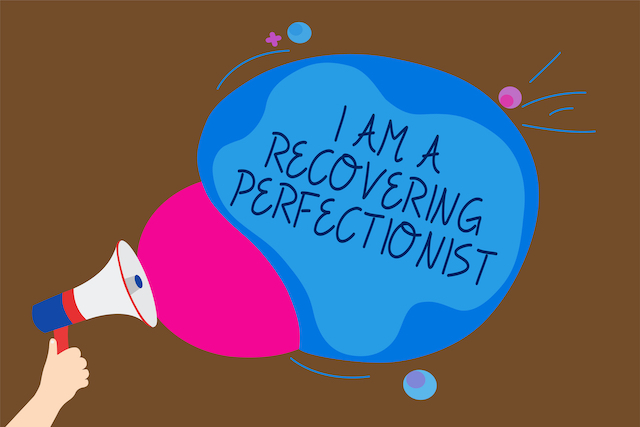
    Hello, I’m Kortney, and I’m a recovering perfectionist.

    Like so many of us, I spent the greater part of my life believing that unless something was perfect, it wasn’t good at all. There was really no in-between. If it wasn’t perfect, it was a failure.

    One of the problems with perfectionism is that it’s common to believe it’s a positive thing. In our society, people tend to value it. If you’re someone that aims for perfection, you must be accomplished. Driven. Smart.

    Have you ever had a sense of pride over being called a perfectionist?

    I have.

    Have you ever thought about why?

    Speaking for my own experience, when someone called me a perfectionist, I felt like even though I didn’t believe I was perfect, it meant that they were perceiving me as being perfect. They saw me as being one of the best, or as someone who was talented. It was validation that I was seen as someone who was good at things.

    My rabid thirst for this sort of validation fed the perfectionist machine for years.

    If you’re wondering what it means to be a perfectionist, here are a few traits:

    • Perfectionists obsess over mistakes, even when it’s not likely that anyone else even noticed.
    • Their self-confidence depends on being perfect.
    • They think in black and white—things are either good or bad. Perfect or failure.
    • They have unrealistic expectations and crazy-high standards for themselves and beat themselves up when they don’t meet them.
    • They put up a front that everything is perfect, even when it’s not, because the thought of someone else seeing their imperfection is unbearable.
    • Despite their quest for perfection, they don’t feel anywhere close to perfect.
    • They can’t accept being second-best at something. That’s failure.
    • They spend excessive time on projects because they’re always perfecting one last thing.
    • They spend a lot of time searching for external approval.
    • No matter what they do, they don’t feel good enough.

    At one point in my life, all of those bullet points described me well. I wasted so much time worrying about approval and validation so that I could feel like I was awesome. But I never felt even close to awesome. I never felt good enough at anything.

    Sure, there were times when I felt like I was good at something, but then I had to raise the bar. Just being good at something wasn’t enough. There was always another level to reach. The bar kept getting higher and higher, which isn’t necessarily a bad thing for people who are striving to make improvements in a healthy way, but for a perfectionist whose self-worth hinges on reaching the bar every time it’s raised, it’s not a positive.

    It was exhausting.

    After a lot of struggle in my life, I knew I needed to explore my perfectionist ways and find a way to be more compassionate toward myself. Perfectionism was holding me back from loving my life. And to be honest, I don’t think I intentionally set out to rid myself of the perfectionist mentality specifically. It came as a byproduct of a great deal of other personal work.

    I began to realize that I had many beliefs that were etched into my brain that weren’t helpful. Beliefs that I never thought to question. These beliefs also severely hindered my ability to be happy and to live the life I wanted to live.

    We all have belief systems that we don’t really think to question. We’ve grown up with them. We’ve learned them from the media, culture and society. But if we actually take a step back to notice that these thought patterns that inhibit our ability to grow and progress are there, we can start to question them.

    Some common limiting beliefs that keep people stuck in perfectionism are:

    • People reward me for having high standards. They are impressed and I gain approval.
    • The only time I get positive attention is when I am striving for big things or achieving.
    • If I make a mistake, I’m a failure.
    • If only I can make so-and-so proud with my achievements, he/she will love me, and I’ll be happy.
    • If I fail, I am worthless. Failing is not okay.
    • If I don’t check over everything multiple times, I’ll miss something and look like an idiot.
    • My accomplishments are worthless if they’re not perfect (i.e.: receiving a “B” instead of an “A” in a class is a failure),
    • If others see my flaws, I won’t be accepted. They won’t like me.

    The good news is that thoughts like these are examples of faulty thinking—faulty belief systems that keep you stuck in perfectionism. By identifying the specific thoughts and beliefs that keep you stuck in perfectionism, you can start to build new, more helpful thought patterns and belief systems.

    I also stumbled upon another secret for overcoming perfectionism.

    The secret is that I became okay with being average. I worked to embrace average.

    If you’re a perfectionist, you know that being called average feels like the end of the world. It’s a terrible word to hear. My inner critic was not having it. “How dare you even think average is okay?” it hissed.

    As a teenager, a twenty-something, and even a thirty-something, my world would have come to an end if I had accepted being average.

    But sometimes life has a way of making you better.

    Life has a way of putting things into your path and it presents opportunities for you to grow. Everyone has these opportunities at one point or another, but you have to notice them and choose to take advantage of them.

    There was a time not too long ago when I went through a really difficult time and had to rebuild my life.

    Looking back, I can see that the situation was an abrupt “lane-changer”—a push in a new direction to make a change. I was not living my best life and I wasn’t meant to stay stuck in that lane. I struggled with depression and anxiety, much of which was triggered by perfectionism.

    By working on thoughts like the ones I listed above, and working to accept lowering my standards—the ones that told me that achievement and success were the only way I would be worth anything—I gradually learned to replace my old standards with this one:

    Just be happy.

    Learning to make this my standard led me to a place where I am okay with being average. Eek! I said it. Average.

    Today, I can honestly say that I’m pretty happy with being average. Do I like to do well? Sure. But it doesn’t define my self-worth. While it’s created more space for me to fail, at the same time it’s created the space for me to succeed.

    The difference is that my self-worth isn’t tied to whether I succeed or fail.

    Here’s how I look at it:

    I’m really good at some things, but I’m not very good at other things. You are really good at some things.  And you aren’t very good at other things too. The good and the not-so-good all average out.

    At the end of the day, we are all just average humans. We are all the same. We’re humans trying to live the best life we can. We are more similar than we are different.

    Don’t you think that if we all ditched our quest to be perfect, or better than everyone else, we’d feel a little happier? Don’t you feel like we’d all be a little more connected?

    If you struggle with perfectionism, I invite you to take a look at the list of limiting beliefs above and see what resonates for you. What evidence can you find that can disprove these limiting beliefs? What would you like to believe instead? Try on those new beliefs and build them up with new evidence to support them.

    And along the way, work on accepting that you are enough, even if you’re average.
  • When You Struggle with Being Yourself, Remember This

    When You Struggle with Being Yourself, Remember This

    “Make the most of yourself… for that is all there is of you.” ~Ralph Waldo Emerson

    Every day, it was more or less the same. I presented an edited version of myself to the world. I felt a deep level of discomfort with the idea of letting myself go. Could I? Should I? The answer was “no” every time, even if it wasn’t always a conscious decision.

    It felt wrong to be myself in a society where we’re conditioned to believe that we have to look and be a certain way to fit in. I believed that no one would accept me as I was. That it would result in my personality being mocked or criticized.

    After all, how can anyone understand someone who’s both quiet and bubbly? The two aren’t said to go together. If you’re bubbly, it means you’re outgoing, fun, lively. On the other hand, a quiet person is likely to be just that—quiet, all the time. At least, that’s what most people think.

    And if you’re both, then there’s something about you that isn’t quite right because you can’t be put into one box.

    As for the side of me that likes to laugh, be silly, and squeal in delight at rainbows, how childish. I need to grow up. I should be more mature like everyone else; play less and get serious about life because that’s how it is as an adult. Less fun, more… boring.

    Those thoughts held me back for years. The “shoulds” I imposed on myself were endless, and they rarely worked in my favor, so parts of me remained hidden like some shameful secret that could never be revealed. It felt like the biggest annoyance to not be able to show all sides of myself.

    As time passed, I started to notice some things about the way I interacted with people. I noticed that on some occasions, I would feel completely relaxed in a person’s presence. Talking to them felt like talking to someone I had known for years.

    There was no tension, no paranoia about what they might be thinking of me, and no unnecessary mind chatter trying to convince me that I looked stupid or weird.

    The second form of interaction was the kind of encounter where I felt judged with every breath I took.

    The vibe was off, a total mismatch, and the conversation was strained. Was it me, and was I the cause of this disconnect? Perhaps, at times, my obvious feelings of awkwardness or self-consciousness left the other person with a feeling of discomfort. Maybe they gave up after hitting the invisible wall I’d built around myself.

    And then, there was and still is the third type of interaction. The kind where I’m happy to talk to someone, but I make a conscious decision to not show all of who I am. It’s not necessarily because I don’t like the person or that I have anything against them. It’s often because I don’t feel a connection with them where I would want to show other sides of myself.

    Sometimes, but not always, I see myself as a prize. The more we get on, the more of me you win. The deeper connection I feel, the more of the prize you get to see, which may come across as pompous to a certain degree. But this isn’t about thinking that I’m better than anyone else or getting to choose someone’s level of deservability.

    It’s the level of connection that matters the most. In my mind, it’s not necessary to show everything to everyone all the time just for the sake of it, and perhaps that’s the introvert in me speaking. But that’s what has helped me to feel more okay with being myself.

    No pressure, no forcing. Just doing it my way and understanding that I get to choose: In interactions, I either reveal more of myself or I don’t. And if my holding back results in my missing out on establishing a deeper connection with someone because they took off due to seeing me as “hard work,” then that’s both of our loss. A loss, however, that won’t break us, unless we let it.

    So, when you struggle to be yourself, remember, you too have a choice. Always. And you don’t need to feel guilty or bad about not being your true self around others, especially when you don’t even want to. Sometimes, it may not even be appropriate.

    Showing up as your full-blown glorious self can feel terrifying, and that’s okay because you’re human. So obvious but so easy to forget.

    As humans, we ride the waves of life every day. Some of the waves are far too tumultuous for us to bear, and we’re left feeling battered, bruised, and shaken.

    We believe that what we’ve experienced is an unshared experience—no one will ever understand; we think that what we’ve done shouldn’t be revealed—people will think ill of us; we presume that what we’ve not done is going to be held against us. That may be the case in some instances, but the rest of the time, we’re safer than we realize.

    Being yourself is important, but forcing yourself to make it happen isn’t. You’re allowed to practice. You’re allowed to take two steps forward and five steps back. You’re allowed to trip up multiple times. You’re allowed to be human.

    So, be patient with yourself and focus on embracing your humanness because that, more than anything, is what we all share. And when we embrace it, we make it easier for ourselves to accept what, who, and how we are.

    It’s the remembering that we’re human and the compassion that we have for ourselves that steer us closer to being ourselves. Trying to be yourself while ignoring your human tendencies and being hard on yourself only leads to more trying.

    It’s time to stop trying, especially if you’ve been trying for years. Instead, spend more time noticing just how human you’re being today. Spend time noticing just how human others are being too. You may not always like what you see, but there’s no getting away from the fact that it all comes back to us being human. Multifaceted humans.

  • How to Avoid a Soul-Crushing Life Crisis

    How to Avoid a Soul-Crushing Life Crisis

    “Sometimes it takes an overwhelming breakdown to have an unbelievable breakthrough.” ~Unknown

    I had hit rock bottom.

    Now that means different things to different people, so let me explain what my rock bottom meant.

    I’ll start with my physical health. I was underweight, about twenty-five pounds. My face looked gaunt and scrawny.

    I was hypertensive, even though I was eating a healthy diet. I also had severe eczema. The itching was so bad that I woke up in the middle of the night with my legs covered in blood from the scratching.

    The only thing that helped make the eczema less itchy was if my wife covered my whole body with bags of frozen peas.

    On top of that, my energy was down the drain. Some weekends I would lie in bed the whole day.

    My emotions were all over the place. Most nights I wept myself to sleep. I was anxious, stressed, depressed, and there were a few times that I wanted to end my life.

    The only thing that kept me from doing it was the potential pain it would cause my wife and family. I couldn’t put them through it.

    I was so ashamed of my state and so afraid of being judged that I completely isolated myself from all relationships. So, I lost connection with all my friends.

    My work performance had also gotten so bad that my employer retrenched and took legal action against me. I can’t blame them though.

    For most of my life, I had been an overachiever. Most of the time, I got what I wanted. I kept asking myself, how did I let things get so bad?

    Here are a few of the lessons I’d like to share in the hope that I can help someone avoid a similar breakdown. When I started applying these lessons, I saw a massive improvement in my life.

    1. Let go of control.

    I have a confession: I’m a bit of a control nut. What kept me from living a fulfilled life was resisting and wanting to control the present moment, especially when it wasn’t in line with my expectations.

    I would do everything in my power to either avoid the situation or change it. I discovered that whatever you resist will persist. So the more I resisted unwanted situations, the more they appeared in my life—because I hadn’t yet learned the lesson.

    Eckhart Tolle wrote, “Life will give you whatever experience is most helpful for the evolution of your consciousness.”

    It took me a while to learn this way of thinking. To say I’m stubborn is an understatement. But I finally learned the secret of surrendering and going with the flow.

    Resistance creates emotional turmoil that zaps you of your energy. You can even see how resistance manifests itself through your body. For example, you might frown, or tighten your chest, stomach, or shoulders. Let it go and let it be.

    We humans are too shortsighted to see the long-term benefit of that supposed horrible situation we’re resisting. But trust me, in the long term, it’ll make you a better version of your old self if you embrace it and let yourself learn and grow from the experience.

    2. Don’t try to do everything on your own.

    Pride can kill you. It almost killed me. Not only am I stubborn, I also used to think I knew better than everyone else. That led me to want to do everything on my own because I didn’t trust anyone.

    Now I’m much more trusting and can let go of a few responsibilities. I still keep my finger on the pulse, though. But instead of having too much on my plate, I know rather find someone that has the results I desire and work with them as a mentor, coach, or consultant. And that’s for all areas of my life. It’s much faster, cheaper, and less frustrating.

    3. Trust your gut.

    If you ignore your gut, you’ll allow people to force their will, beliefs, and opinions onto you. Your gut knows best.

    It’s about building your intuition and your ability to listen to your instincts. Sometimes we know what to do, yet we avoid the situation because we’re afraid to do it or scared of the potential outcome.

    If you avoid your gut for too long it will stop whispering and start shouting. Because it’s also the universe’s way of communicating with you. Telling you that you are not living life according to your highest values.

    It’s cool that we have this built-in tool that can guide us throughout life. And at the same time, it’s heart-breaking that some people don’t know this or refuse to use it. Don’t be one of them.

    4. Give up the “if/then” illusion.

    “If I’m successful, then I’ll be happy.” I know it sounds cliché, but life is all about the journey. Because there is no destination…

    There will always be a new challenge you seek. Think about it, every time you’ve reached a certain milestone you probably asked yourself, “Is this it?” And then you proceeded to chase a new goal, thinking it would give you the fulfillment you desire.

    Trust me, that fulfillment never comes. Fulfillment can only be found in the present moment. The trick is to be grateful for your current blessings, however small they might be.

    And also, detach from specific outcomes. Remember rule #1? Go with the flow!

    Don’t make the mistake I did by saying you’ll be fulfilled when X, Y, or Z happens. The planets are never going to align. The right time is now.

    5. Commit to a routine.

    Routine and structure keep us sane in the face of chaos and uncertainty. There are so many things we don’t have control over. Especially the situations (sometimes unwanted) that life throws our way.

    When we feel overwhelmed, the best way to ground ourselves is through a routine, including a morning routine to start your day right.

    That may include exercise, meditation, journaling, visualizing your ideal future, reading a spiritual book, etc. Doing a morning routine is like exercising. You don’t always feel motivated to do it, but you will feel like a new person afterward.

    6. Build a strong foundation.

    I always used to chase the wrong goals (wealth, success, money) to the detriment of my physical and emotional health and my relationships.

    I learned the hard way that no amount of money can buy those three things. If you don’t have them in place, you have nothing.

    I see so many “successful” people making this mistake. They reach the top of the mountain without those three things and then they get depressed or even commit suicide.

    Trust me, it’s not worth it. Make time for self-care—exercise, eat well, get enough sleep, get outside—and prioritize time with the people you love. Once those three foundational elements are in place, then feel free to chase the more material goals.

    7. Stop chasing happiness.

    So this one is a bit controversial, but hear me out. There is a universal law that keeps balance in the world. It’s like a pendulum.

    If you swing too far to the right, you’ll swing just as far to the left. This happened to me. I was chasing happiness and resisting sadness thinking that I was doing something wrong whenever I felt down.

    I learned that if I swing too far to the right (happiness) the universe will bring me back to center by swinging the pendulum to the left (sadness).

    Do you want to know what’s at the center of the pendulum and how to remain balanced? It’s love and gratitude—two things you can feel no matter what’s going on in your life.

    The universe, in her infinite wisdom, knows this and tries to teach us this. So be sure to do some gratitude journaling whenever you get a chance. Or be grateful for the small things in life whenever they arise. The things we sometimes take for granted.

    8. Be authentic.

    I always admired my grandmother. Not for her baking and cooking skills, but for how honest she can be. She tells it straight. She’s not trying to be something or someone she’s not. And I’ve seen this pattern in many elderly people.

    My best guess is that they have learned that life is too short to be inauthentic and not speak their mind. This is the exact opposite of how I acted.

    I tried to be something someone else wanted me to be. Or worse, I agreed with people because I wanted their approval even though my gut disagreed (rule #3!).

    Anyway, I’ve learned to be honest even if it’s uncomfortable. I now speak my mind (even if it hurts), and people respect me more for it.

    I’m not saying you should go around being mean and insulting people. I’m saying be classy, and be true to yourself. I know it can be hard, but the long-term benefits are worth it.

    9. Live life based on your own values.

    I’ve learned through my experiences that the purpose of life is to live life on your terms. Whatever that might be. The mistake I made was by living life on someone else’s terms. Living life through other people’s values instead of my own. Only we know what’s best for us.

    This allows me to respect other people’s values even if they didn’t align with my own. Even though I think I know what’s best for someone else, I don’t! I have no right to judge them or their situation. Everyone has their own journey. And let me share another secret with you…

    Once you know what you want out of life, give it! If you want love, give love. If you want money (value), give value. If you want respect, give respect.

    10. Choose consistency over intensity.

    I’m very intense, and I’ve always had this ‘go cold turkey’ approach to chasing my goals instead of easing into things.

    Now that might work for some people, but those people are in the minority. What’s helped me more is to be moderately consistent.

    I’ve learned that when I would go all out, I would tend to burn out.

    Take exercise as an example. Let’s say you want to get fit. You’re motivated and you hit the treadmill hard for thirty minutes on day one! The next day you are sore and miserable. That soreness lasts for four to five days.

    Now compare that to the guy who exercises moderately and consistently for ten minutes every day of the week. He isn’t sore and stiff and he gets in seventy minutes of exercise in a week, while the intensity guy only gets in thirty minutes of exercise a week.

    This principle ties in with a great quote from Tony Robbins: “We overestimate what we can accomplish in one year and underestimate what we can accomplish in a decade.” So be the tortoise that wins the race, not the hare.

    The biggest takeaway I want to give you is to focus on love. At the end of the day, that’s all there is. Love others, love what you’re doing, and most of all, love yourself. It’s hard to love others fully if we don’t love ourselves first. You can’t give what you don’t have.

    That being said, I’d LOVE to learn from you! What valuable life lessons have you learned up until this point in your life?

  • When It’s Hard To Be True To Yourself, Remember These 7 Things

    When It’s Hard To Be True To Yourself, Remember These 7 Things

    “Sometimes when you’re in a dark place, you think you’ve been buried, but you’ve actually been planted.” ~Christine Caine

    The phrase “personal growth” has always felt counterintuitive to me. Personal growth feels less like growth and more like stripping away—of peeling back the expectations, fears, and shame that we’ve been conditioned with since birth. Beneath these layers lies our truest nature—our inner divinity—our most aligned selves. I view my work on this Earth as getting as close to that aligned self as I can.

    Despite the barrage of positive affirmations and uplifting memes encouraging us to “live our truth,” learning to live in alignment can be deeply uncomfortable. Hundreds of requisite growing pains accompany the process. We shed skins that no longer serve us, which at first leaves us raw and exposed.

    Over the years, I’ve worked to break addictive patterns and speak my truth against enormous inner resistance. When I began to live in alignment, I experienced seismic discomforts. This new territory was entirely uncharted, and with it came bouts of newfound anxiety, fear, and hyper-sensitivity.

    I worried that these unpleasant emotions were signs of “doing it wrong.” Of course, judging my reactions only exacerbated my discomfort—which eventually passed, on its own, in time.

    At first, living in alignment is tough. It gets harder before it gets easier. Here are eight reminders to help you trust your gut and keep going.

    1. It’s normal to break up with partners, friends, and acquaintances.

    Living in alignment looks different for everyone. For me, it largely meant quitting drinking, changing careers, and setting firmer boundaries around my time, space, and body. The first thing I noticed was how many of my relationships—relationships that fit like puzzle pieces with the old me—now felt inauthentic, empty, or downright wrong.

    One of the most important parts of my journey was leaving relationships that no longer served me. This meant  “breaking up” with four to five friends over the course of a few months, a process that left me feeling guilty and lonesome at first.

    The flipside? Now, relationships formed on the basis of people-pleasing, codependency, obligation, and guilt are not a part of my life. These “breakups” leave room for authentic, nourishing, reciprocal relationships to blossom. Be patient as they form.

    2. It’s normal to feel a boatload of guilt.

    For me, living in alignment meant giving up old people-pleasing behaviors. Suddenly, I wasn’t the person who others could count on to go along with the flow. I spoke up. I set boundaries. I stayed in when I wanted to stay in, cancelled plans when I needed to, and set non-negotiable expectations for my relationships.

    In other words, I no longer prioritized other people’s comfort over my own feelings.

    If you’re not used to putting your own needs first, doing so can spark an avalanche of guilt. You might feel unforgivably selfish. You might wonder if you’re a bad friend/mother/colleague/[insert role here].

    Guilt in the early stage of living in alignment is totally normal. Understanding this helps you to notice and accept the guilt instead of reacting to it. Talk through it with trusted friends, a coach, or a therapist. Learn what it feels like in your body. Write about it in your journal. Over time, meeting your own needs will feel second-nature.

    3. It’s normal to feel hyper-sensitive and/or need more solitude.

    Giving credence to my feelings, emotions, and needs was like breaking a dam. Once they started flooding, they keptflooding. And flooding. And flooding.

    By honoring my anger, I began to realize how painful certain relationships felt. By honoring my need for time and space, I began to realize how energetically draining some environments were. By honoring the ebbs and flows of my body, I began to notice when I needed more sleep or a change to my diet.

    As a result of these sensitivities, I needed more time to myself, more naps, fewer plans, and more space to process my emotions via journaling and meditation. At first, this baffled me. I thought living in alignment with my inner self would make me feel more resilient…. not less!

    Keep in mind that what feels like “hyper-sensitivity” may just be “sensitivity,” and it is a completely normal reaction. You are giving your feelings and needs space to surface, maybe for the first time ever. You might be surprised by how many feelings you have—or by how forcefully they arise—when they’re no longer under lock and key.

    4. It’s normal to freak out after setting a boundary or speaking a difficult truth.

    Once, shortly after I’d made the decision to quit drinking, a housemate of mine made a rude, taunting comment about my sobriety. Instead of brushing it off, I turned to him and said forcefully, “That was really inappropriate. I don’t appreciate it.”

    I had never stood up for myself so confidently. I went upstairs to my bedroom with a grin, feeling righteous and strong. Five minutes later found me hunched over in a sobbing fit. Everything in my body screamed, “You are mean! You’re an *sshole! Take it back!”

    In a frenzy, I ran down the stairs, threw open my housemate’s bedroom door, and gasped “I’m-so-sorry-I-said-that-I-got-out-of-hand-Please-forgive-me.” He accepted my apology, bewildered, and thirty minutes later, back in my bedroom, I threw up my hands in frustration.

    Yes, I redacted an appropriate boundary. Yes, I confused the hell out of my housemate. And yes —it was progress.Baby steps, baby.

    It’s totally normal to freak out after setting a boundary. If you grew up in an environment where you were punished or neglected when you expressed your true feelings, learning the art of honest expression is a radical act. In adulthood, your heart, mind, and nervous system is learning how to process, hold, and express difficult emotions. Fear may accompany this process,  especially fear of retaliation or fear of abandonment.

    Remember: the simple act of setting a boundary may feel like an enormous emotional upheaval. You’ve just done some serious emotional work. After setting a challenging boundary, hold yourself with compassion in those moments and give yourself permission to rest and recuperate. With time, your muscle of authentic expression will strengthen.

    5. It’s normal to experience previously unaddressed trauma.

    When I lived out of alignment, I drank too much, slept around, and chased the reckless highs of my compulsions. In hindsight, it’s easy to understand that, because my reality was so painful, I used any means possible to escape it. Unfortunately, when I began to live in alignment, I realized that the means I had used to numb my pain were painful, too.

    My body and heart carried the scars of my compulsions gone awry. Living in alignment meant giving those buried pains and traumas voice. I was bewildered when my healing journey became home to unexpected triggers, panic attacks, and hypersensitivities. At first, I felt more broken than I’d felt before.

    Little did I know that part of healing it was feeling it in the first place—something I’d never let myself do. As they say: it gets dark before the dawn.

    Especially if you find yourself experiencing previously unaddressed trauma, seek support from your partner, friends, or a therapist. Letting your trauma surface and heal allows you to integrate the many parts of your story that may have been disparate and disconnected before. This is part of your journey to wholeness.

    6. It’s normal to get angry AF.

    For years, I shrunk myself for the sake of others’ comfort. I hid my voice. I settled for less. I participated in imbalanced relationships. I stomached unkindness.

    When I began to live in alignment, I started to see with new eyes all the s%&# I’d settled for over the years. I became resentful and enraged. I felt white-hot anger toward the individuals who had taken advantage of me.

    Like a captive animal released from her cage, I pounced with a vengeance. I vented to my friends. I shook my fist. I wrote searing poetry and wrathful songs. I let it out.

    That anger was holy. It was the righteous indignation of my innermost self coming alive. Over time, feeling it and expressing it led me to an equilibrium: I could hold my anger while also understanding the part I’d played in subjecting myself to these toxic patterns.

    Honor your anger. It will not annihilate you. The more familiar you become with your resentment, the more you can use it as a signpost to set boundaries in the future.

     7. It’s normal for your dreams to shift rapidly.

    As we strip away our conditioning and get in touch with our innermost selves, dreams that others have for us lose their glossy appeal. We may find ourselves bucking opportunities for fame, fortune, and legacy in favor of dreams that illuminate us from within. Our intrinsic desires become paramount.

    That sounds awesome—in theory. But when it happened to me, I had a major identity crisis. I had spent countless hours, thousands of dollars, and a college education following a very specific dream of a career in politics. For years, I’d told anyone who would listen that my dream job was a seat in the Senate. Without this societally sanctioned goal, who would I become?

    Especially for those of us who live out of touch with our innermost selves, we rely heavily on external roles and rewards to feel a sense of purpose and identity. As we begin to live in alignment, those external rewards begin to matter less. Sometimes, we realize we never really wanted them at all.

    It’s normal if your dreams, desires, career, or values shift rapidly. It’s normal if your work suddenly feels deflating, boring, or downright awful. It’s normal if you suddenly feel the need to quit your venture or back out on your business plan. It’s normal to cease your involvement in organizations, boards, or volunteer roles that no longer resonate with you.

    You’re not being impulsive. You’re not “wasting” anything. You’re not crazy. You are adjusting your external world to align with your newfound inner world — and that is an act of self-love and self-respect.

    Despite my work as a life coach and my proclivity for collecting self-help books, the best piece of advice I’ve ever gotten is, simply: You’re right where you’re supposed to be.

    So often, we get in our own way by judging our (very valid) reactions to unfamiliar circumstances. In a culture that lauds the shiny, happy, green-smoothie version of personal growth, we forget that self-care can be fearful, anxious, and downright painful.

    Keep going. That fear, anxiety, and pain is all part of your process. Hold it with compassion and watch who you become when you reach the other side.

  • It’s More Important to Be Authentic Than Impressive

    It’s More Important to Be Authentic Than Impressive

    “The most fundamental harm we can do to ourselves is to remain ignorant by not having the courage to look at ourselves honestly and gently.” ~Pema Chödrön

    All my life I’ve chased after success, as I was encouraged to do from a very young age.

    When I was six, my father got me my first proper study desk as a gift for getting into a ‘good’ school. The type of desk that towered over a little six-year-old—complete with bookshelves and an in-built fluorescent light. In the middle of the shelf frame stuck a white sticky label inscribed with my father’s own handwriting in two languages. It read: “Work hard for better progress.

    Little did I know those words would set the tone for me and my work ethic for the next twenty years—until I finally began to question them.

    Hard work became my ‘safe space’ whenever I felt insecure. When I struggled to make friends at a new school, felt rejected, or felt like I didn’t belong, I would put my head down and drown out my emotions out by working hard. It became my coping strategy.

    My younger self didn’t yet have the emotional resources to deal with moving around, changing schools, and facing social rejection. When it became too painful, it was much easier to stay in my head than to feel vulnerable with my heart.

    So, whenever I struggled to fit in at school, I just worked harder with the misguided belief that if I did well, then I would be celebrated. If I became impressive, then people would finally accept and like me.

    And of course, my parents encouraged this behavior. I was rewarded for my hard work and I got good results for it too.

    But outside of my home, nobody seemed to care about my results. I still wasn’t fitting in at school. I still didn’t have many friends. My strategy didn’t seem to be working.

    So I worked even harder.

    By the time I graduated from University, I had completely bought into society’s definition of being ‘impressive’ without even questioning it once. If it was a prize everyone wanted, I wanted it too.

    My definition of being ‘impressive’ expanded to include looking good, dressing well, staying fit, and making good money in a highly-competitive field, even if I had zero passion for that profession.

    By then, I’d long forgotten the reasons why I wanted to work hard to be impressive in the first place, other than “That’s just who I am.

    I was drifting further and further away from my true self, and I didn’t even know it.

    For the next ten years, I spent a lot of my waking hours working as a financial analyst, studying for more degrees and certification, and chasing after the next shiny thing so I could sound even more impressive to others. Plus, I was making a decent income while doing so. Tick.

    While on the surface I ticked a lot of those “impressive” boxes I had set out for myself, on the inside I felt emptier than ever. On the outside I looked successful, but on the inside, I felt like a complete failure.

    What Happens When Your True Self Calls You to Come Back

    Cracks started to emerge both in my work and in myself. It became challenging to fully show up for work as I increasingly asked myself: “What am I doing here?

    A soft inner voice whispered, “It’s time to get out of here, you’re not meant to be in finance. What are you doing here?” So I began questioning what I was doing with my life. I mean, if not that, what was I meant to do? I’d invested so much of my time and energy into my profession; I couldn’t just change directions. And who was this voice anyway? Where was it coming from?

    My fake enthusiasm became harder and harder to keep up. This sinking feeling became more visceral by the day, and the feeling of not belonging in my workplace became increasingly obvious.

    Yet I swallowed those feelings down with gritted teeth and kept pushing. Because what else was I meant to do if not keep persisting?

    When I suddenly got fired it was an abrupt wakeup call. I needed to challenge everything I believed in and confront those big questions I’d put off answering for so long: “Who am I really?” and “What am I really about?

    What I Learned Through My Four-Year Journey of Self-Discovery

    I spent the next couple of years immersing myself in a whole range of subjects that covered different angles on self-knowledge, in an attempt to answer the question “Who am I?”

    For most of my seeking, I was still trying to find answers as if they resided outside of me. I was still trying to find where I belonged professionally.

    But what started as a business journey quickly morphed into an inner-transformational journey that became deeply personal.

    This deep inner work allowed me to reconnect to my internal guidance system and my true self once more.

    Through this process I was able to take a good look at myself, confront my shadow side, heal my wounds of rejection, and forgive everyone involved, including myself.

    As I’ve come home to my true self, I’ve realized a few things about the cost of chasing impressiveness:

    When we chase after something external, we lose self-connection.

    When I heard that soft, loving voice inside my head, it was a small glimpse of spiritual awakening. It was a momentary connection to my inner mentor’s light that seeped through my deep dark fog of disconnection.

    We all have our own inner mentor, but we have choose to listen to it instead of trying to be who we think we’re supposed to be.

    When we trust others more than we trust ourselves, we can end up giving our personal power away.

    If we believe that the answers we seek lie outside of ourselves, we can forget to check in to see what’s true for us each individually. The more weight we put on other people’s opinions, the less we trust our own inner knowing.

    People can only speak to what they know based on their own perspective, background, and life experiences. When we allow other people’s opinions to overpower the choices our true selves would otherwise make, we end up giving away our personal power.

    I’ve found that it doesn’t matter how many well-meaning opinions we get; we need to find what resonates with us the most by checking in with our inner authority—which means going against what we learned growing up, when we were trained to ignore our inner voice and do what we were told.

    The pursuit of ‘impressiveness’ is a hunger that can never be satisfied.

    When we keep chasing after ‘impressiveness,’ we are in fact on a hedonic treadmill of always wanting more. As soon as we achieve one thing, we fixate on the next. We keep wanting bigger, better, and more.

    As soon as we attain or do something, suddenly what we have isn’t good enough anymore, and so we must now keep up. We fall into the comparison trap. The external goalpost keeps moving. We keep looking over our shoulders to see how we’re tracking against everyone, and it becomes a tireless pursuit of keeping up with the Joneses with no real end in sight.

    Every ‘win’ is temporary.

    We mistakenly see ‘impressiveness’ as proof that we’re worthy of love.

    When we chase after ‘impressiveness’ we’re really chasing after validation, approval, and a sense of belonging. We think, “If I can be impressive then I can be accepted.” We want others to look up to us, praise us, and ultimately, love us.

    However, the pursuit gets dangerous when we buy into the false belief that we have to work hard in order to prove we are worthy of love; that we need to become ‘impressive’ through our accomplishments and produce tangible proof of our worthiness.

    I’ve noticed that a lot of high achievers, like myself, have bought into this belief, possibly due to the achievement-oriented upbringing we were exposed to from a very young age.

    The danger is that it can become an acquisition addiction, and an arms race to get more degrees, more cars, more houses, more shoes, more toys, and so on.

    We can become addicted to buying ‘cool’ things to impress other people, or work ourselves to the bone just to get those long lists of accolades instead of recognizing that we are inherently worthy of love. Regardless of what we have or have achieved.

    We risk losing our individuality.

    When we chase after external validation and approval, we compromise who we really are in exchange for more respect, more likes, more kudos from our peers. We showcase a more curated, ‘acceptable’ version of ourselves to the world, and we hide other parts of ourselves that we think might be rejected by others. Even worse, we end up chasing after things we don’t even really want.

    Some of us inherit strong beliefs about what ‘success’ means and some of us strive toward pre-approved categories of impressiveness as defined by society, without checking in once to see whether these pathways to ‘success’ fit in with our true selves.

    In the end, we lose our individuality—the essence of who we really are.

    It requires self-connection to recognize what is true for us versus what is conditioned into us. It requires even more courage to step outside of these pre-approved paths to ‘impressiveness’ and live a life that aligns with our true selves.

    How to Reclaim Your Authentic Self

    I’ve discovered that breaking free from the illusion of ‘impressiveness’ and reclaiming your true self is really a constant two-step dance between recognition and courage.

    1. Recognition

    To reclaim your authentic self you have to recognize that you have disconnected from who you really are in the first place. Your achievements, your accomplishments, all the cool stuff that you own, and even your toned physique—they’re not who you really are.

    2. Courage to be your true self

    We have to have courage to stand in our truth and be our authentic selves. Recognition alone is not enough. For many of us, it’s the fear of disapproval that holds us back from stepping out of those curated, pre-approved categories that we have created for ourselves, and fully owning who we are, in all our beautiful, strange glory.

    My wish is that this becomes your permission slip to fully step into who you really are and own it. Being your true self requires tremendous courage, but it’s worth it. And having the courage to fully embrace your true individuality in all its quirkiness? That’s impressive.

  • 9 Easy Ways You Can Speak Your Truth Today

    9 Easy Ways You Can Speak Your Truth Today

    “We are constantly invited to be who we are.” ~Henry David Thoreau

    When your circumstances invite you to present your true self to others, do you accept the invitation?

    I think of authentic communication as sharing the unfiltered essence of ourselves with others, including our identities, feelings, needs, boundaries, and desires.

    It’s taken me many years to learn how to communicate this way. I’ve written in prior posts that speaking my truth once felt like an insurmountable challenge, like rolling an elephant up a hill or finding another living being who actually likes Nickelback. (Anyone? No?)

    I was plagued by inauthenticity.

    I would leave conflicts wishing I’d spoken up for myself; leave social settings feeling totally drained; over-commit to obligations and under-commit to activities that brought me joy; agree to be intimate with people, only to later regret my decision; and give more than I received in the majority of my relationships.

    Somewhere beneath the layers of people-pleasing, white lies, and insecurity, I knew there was a bold, confident, self-actualized woman. I wanted, more than anything, to become her.

    On the journey to becoming that woman, I have learned that authentic communication is like working a muscle: hard at first, but ever easier with exercise.

    As with all exercises, you don’t run the 400 meter dash right out the of gates. You stretch; you jog a lap; you warm up.

    Here are nine easy ways you can warm up your authenticity muscle today to prepare for a lifetime of authentic communication.

    1. Name how you feel, right now, as you read this.

    “There is something wonderfully bold and liberating about saying yes to our entire imperfect and messy life.” ~Tara Brach

    Let’s start off on the right foot. Take thirty seconds to reflect on how you feel right now. Notice what’s going on in your heart; notice what type of tension you might be carrying in your neck and shoulders; notice how it feels to let a deep breath land in your chest.

    Perhaps you’ve been operating on autopilot since the moment you woke up and reached for your phone. Perhaps you’ve stumbled down an Internet wormhole, and this is the first time in hours you’ve remembered you have a body. In order to communicate your feelings authentically, you first must know how you feel.

    2. When a friend/family member/barista asks how you are, tell them the truth.

    “The speaking will get easier and easier. And you will find you have fallen in love with your own vision, which you may never had realized you had… And at last you’ll know with surpassing certainty that only one thing is more frightening than speaking your truth. And that is not speaking.” ~Audre Lorde

    Social convention tells us that there are only two acceptable answers to the question “How are you?” “Good” and “Fine.” This is a microcosmic example of our cultural disdain for sharing our authentic feelings. Nonetheless, the habit persists.

    Remember: Inauthenticity breeds inauthenticity. Authenticity breeds authenticity. Give yourself permission to say “I’m a little sad today, but I’m hanging in there” or “I’m fantastic; today’s been an inspiring day” or “I’m so stressed I can’t even feel my face.”

    Whatever’s going on for you, give yourself permission to share it. These small moments of authenticity replace the loneliness of emotional isolation with the belonging of vulnerability, and allow you to receive others’ gifts in the form of compassion and empathy.

    3. If you have nothing to say, embrace the silence.

    “To become authentic, we require a thirst for freedom.” ~Don Mateo Sol

    As a recovering people-pleaser, I spent much of my life believing it was my responsibility to facilitate, or ease the tension in, conversations. For many years, I feared “awkward silences” the way someone else might fear spiders or clowns.

    First dates, group gatherings, work parties, and girls’ nights found me paving endless roads of conversation. For every answer, I had a follow-up question, and in every second-long pause, I rushed to find a story to tell.

    Eventually, I realized that my silence-avoidance only led to 1) complete emotional exhaustion, and 2) many moments where I looked back and wondered, “Why did I even say that? I don’t think cybernetics are interesting at all…”

    Free yourself from the pressure to perform. Embrace the silence. Sometimes, the most authentic response is to say nothing at all.

    4. When someone makes reference to a show, movie, or news story you haven’t seen, tell them you haven’t seen it.

    “I have the right to say ‘I don’t know.’” ~Edmund Bourne

    I warn every new friend that I am pop-culture illiterate. If you name a TV series, movie, actor, actress, or rising pop star, the odds are I have no idea who she/he/they are. (I’m pleased to report that last week, I watched The Godfather, and on my list for next week is Breaking Bad. I’m making progress in this department.)

    Anyhow, in the past, when friends made reference to such icons in conversation, I often feigned familiarity to help the conversation flow more easily. These were totally inconsequential white lies, right?

    I’m not so sure. White lies add up, like small bricks laying the foundation for a falsified persona. I hyperbolized my knowledge because I wanted to feel a sense of belonging. (Nothing malicious about that: we all want to belong!) But presenting a false self in order to feel a sense of belonging doesn’t generate a real sense of belonging. It simply makes our authentic selves feel less acceptable.

    Tell your friends you haven’t seen the most recent episode of Game of Thrones. Liberate yourself from the impossible responsibility of being all-knowing.

    5. When someone asks your preference on a simple matter, tell them the truth.

    “You denying your heart’s desires is not noble. It’s a waste of some damn good desires.” ~Jen Sincero

    If you really pay attention, you’ll find that your daily life is chock full o’ simple, tiny choices, like:

    Where do you want to go for dinner?

    What do you want to watch on Netflix?

    Where should we meet?

    What are you in the mood for?

    In the past, my de facto response was: “I don’t care.” (Can you relate?) But by “I don’t care,” what I really meant was: “I really want a burrito, but what matters more to me is that you’re happy with where we get dinner. I would rather sacrifice that burrito and deal with less-than-satisfying pizza than bear the burden of your disappointment. So can you pick?”

    The truth is, I did have a preference. It was just buried under layers of people-pleasing.

    Get in the habit of honoring your preferences, even if they’re seemingly inconsequential. After all, today it’s what to watch on Netflix, but a year from now, it might be what city to move to, or whether or not to have a second kid, or what to do with your lottery winnings.

    6. Tell someone you care for that you care for them.

    “Courage is like a muscle. We strengthen it by use.” ~Ruth Gordon

    A lot of literature around authenticity and truth-telling centralizes around saying no, boundary-setting, and self-care. That’s all well and good, but true authentic communication addresses both sides of the vulnerability coin: speaking truths that are hard, painful, or have the potential to distance others, and speaking truths that are intimate, loving, and have the potential to bring people closer. Such truths are equally courageous.

    When we communicate care for others, we expose the soft underbelly of our hearts. We acquiesce omnipotence over our own emotional state and give another person the power to affect us, sometimes deeply.

    Today, take a moment to tell someone you care for them. It could be your mom, your coworker, or your mailman. Let that sweet heart of yours peek out from its shell.

    7. Acknowledge one thing you really want.

    “A lot of people are afraid to say what they want. That’s why they don’t get what they want.” ~Madonna

    There are a lot of things I want. I want a new blender. I want to enjoy my own company more. I want more friends. I want to make six figures. I want to spend less time working—on my business and on myself—and more time having fun.

    Our desires are a critical part of who we are. They reflect our values and our identities. When we’re not in touch with our own desires, we’re susceptible to putting others’ needs before our own.

    If you’ve been out of touch with your own desires for a long time, saying even one thing you want—something as life-altering as a new job or as contrived as a new blender—can be scary and revolutionary. For now, give yourself permission not to worry about how you might get it. Just notice how it feels, to really want this thing you want.

    8. For fifteen minutes, be without technology. Bonus points if you’re in nature.

    “If you want more time, freedom, and energy, start saying no.” ~Unknown

    At our core, we humans are intrinsically creative and innovative. However, it’s challenging to summon our deepest, truest, most authentic selves when we’re bombarded with stimuli from every direction. Many of us spend hours every day merely skimming the surface of life, hopping from app to screen to notification.

    In such a state, we’re not thinking deeply. We’re hardly here at all. If we’re constantly in response-mode, how can our inner selves emerge?

    For fifteen minutes, sequester yourself. No phone, no screen, no TV. You can drink your coffee while staring out the window. You can sit on the carpet and stretch your legs. You can go sniff your flowers, or dive nose-first into the green, green grass. Give your mind the space to explore uncharted territory, and watch with curiosity what arises.

    9. If you feel uncomfortable, scared, resentful, sad, angry, or guilty, name it.

    “Don’t light yourself on fire trying to brighten someone else’s existence.” ~Charlotte Erickson

    Make your way to any water cooler or happy hour and you’ll find plenty of folks complaining, comparing, and airing their grievances. But genuine expressions of hurt, discomfort, and sadness are far rarer.

    Growing up, I made it my mission to brighten my loved ones’ days and hold space for their unhappiness. With time (and therapy), I realized that “The bubbly one” was a role I had assigned myself—not my God-given duty.

    After so many years of tampering down my sadnesses as if they were pests, I needed to retrain my brain and body to notice my own discomfort.

    Today, give yourself permission to acknowledge when you feel off. You can write how you’re feeling on a post-it note or simply whisper the words “I feel sad.”

    The inner liberation that comes as a result of this simple acknowledgement can feel enormous. It removes the conflict between what you feel and what you portray to the world around you, which is what authentic communication is all about.

    Authentic communication has made my life simpler. No longer do I spend precious moments juggling my false personas and my little white lies. Working this muscle has been worth every growing pain because it’s enabled me to live in alignment with my inner truth and find freedom, self-respect, and confidence along the way.

  • My Needs Matter Too: How I Started Speaking Up and Setting Boundaries

    My Needs Matter Too: How I Started Speaking Up and Setting Boundaries

    “Setting boundaries is a way of caring for myself. It doesn’t make me mean, selfish, or uncaring just because I don’t do things your way. I care about me, too.” ~Christine Morgan

    In my early twenties, I could shout into a megaphone at a political rally of thousands, but I couldn’t decline drinks from strangers at the bar. I could perform original music for an attentive audience, but I couldn’t tell my friends when I felt hurt by something they’d said. I could start a business, advocate for new laws at City Hall, and share deeply personal poetry on Facebook, but I simply couldn’t speak up for myself in moments of conflict.

    At the time, I had no idea that boundary setting and speaking up were systemic issues millions of people struggled with. I didn’t understand that my inability to set boundaries probably originated in my childhood as the cumulative result of my untended emotional needs.

    I just thought I wasn’t trying hard enough.

    I judged myself mercilessly for being unable set boundaries. I spent many mornings scribbling viciously in my journal, unpacking the previous day’s events. These are unedited excerpts:

    “She asked to reschedule our meeting, and even though I promised myself I’d never schedule an early-morning phone call again, I did—for 7:00am. Ugh. Why didn’t I just ask her to reschedule?”

    “I resent him so deeply for how he treated me, but when I saw him in the coffee shop yesterday, I acted like everything was peachy keen. What the hell? I’m so frustrated. How do I get better at standing up for myself??”

    Woven tightly around my self-judgment was a thick mesh of confusion. I was the type of person who looked forward to therapy, hoarded self-improvement books, and spent evenings with girlfriends unraveling the scrappy tangles of our psyches. I liked understanding myself. You can imagine, then, that I was totally and completely flummoxed by my inability to understand—never mind remedy—my people-pleasing habit.

    Most of the time, the thought of saying no—to friends, family, lovers, and colleagues—simply didn’t enter my mind space. No matter how uncomfortable or unsafe I felt, the only future that felt available to me was one in which I pleased the offending person and later felt victimized and resentful.

    Other times, when I felt brave enough to simply entertain the notion of saying no, I felt a heaviness in my chest and a closing in my throat. The words literally couldn’t escape my mouth.

    My friends who had no issues setting boundaries were wary of my explanations. To them, setting a boundary was like swatting an annoying gnat. But to me, it was like battling a saber-toothed tiger.

    I wish I’d known then what I know now: that boundary setting isn’t a simple box to check off of your self-care to-do list. It represents a complicated matrix of issues related to one’s family of origin, socialization, limiting beliefs, and, most importantly, one’s relationship with oneself. Setting boundaries is the final step on an extensive journey of self-reflection and diligent practice. Had I understood this years ago, I would have been able to reassure myself:

    You are not weak.

    You are not stupid.

    You are doing the best that you can.

    We set boundaries to protect ourselves. In order to protect ourselves effectively, we need to know what we’re protecting. Developing a rich understanding of our own needs, desires, values, and vision gives us the firm sense of identity we need to keep from wavering in our commitment to speak our truth.

    When I didn’t have a clear sense of who I was or what I wanted, it was easy to let others define me; wait for others to speak up for me; resent people who didn’t proactively predict or meet my needs; prioritize others’ needs over my own; and seek value from external sources, like whether others liked me or found me attractive. Combined, these tendencies were painfully disempowering. I often felt like a shadow of myself.

    I first began to build a solid sense of identity after I went through a devastating breakup with a long-term partner. My codependency had been a contributing factor to our separation, and I was finally beginning to understand that I couldn’t expect others—lovers, parents, friends, or colleagues—to be my purpose for living.

    I also couldn’t allow external measures of success—like climbing the career ladder, losing weight, or winning awards—to be the driving forces behind my behavior.

    I had to go deeper. Here’s how I did it.

    Step 1: Meet your fundamental needs.

    At first, I wasn’t sure where to begin. I mean, how do you build an identity?

    In that fragile state of post-breakup unknowing, questions like “Where do you see yourself five years from now?” or “What direction do you want to take your business in?” were enough to reduce me to tears. I didn’t know what direction I wanted my career to go in. I didn’t even know how I would get through the weekend.

    What I did know was that I wanted Kava tea before bed, and that I couldn’t sleep without lavender oil in my diffuser, and that going on long walks around the park with my best friend made my heart feel lighter.

    As I explain in my previous post about discovering what you want when you’re a people-pleaser, these mild, uncomplicated wants were sacred whispers from my innermost self. By pursuing these small desires, I learned to trust myself.

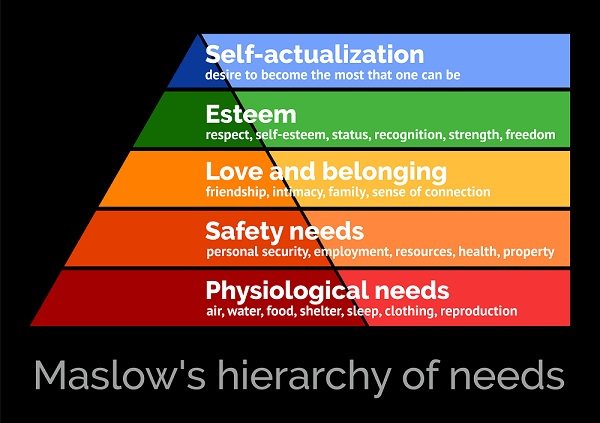
    Maslow’s hierarchy of needs gave me a helpful roadmap as I became more accustomed to taking care of myself.

    Recovering people-pleasers like me rarely meet our own needs and/or prioritize others’ needs instead. Oftentimes, we neglect even our most elementary needs at the bottom of the hierarchy.

    In the past, for example, I regularly cancelled dentist appointments and annual physicals, though I fiercely encouraged others in my life to take good care of themselves. I didn’t get enough sleep and postponed trips to the grocery store.

    Only when I began to meet these primary needs did other, more complex desires arise. We must meet our own fundamental needs on a regular basis in order to construct the firm foundation upon which our sense of identity will be built.

    Step 2: Uncover your core identity.

    Over months, I slowly climbed Maslow’s hierarchy, continuing with basic self-care as more vibrant desires surfaced. I began to crave rich social connections, meaningful bonds with family members, travel, and dancing. My natural curiosity, which I hadn’t felt connected to in years, awakened.

    Ultimately, I found myself considering how I could make the most of my life—how I could self-actualize and “become the most that one can be.” I considered the following questions during my morning journaling sessions:

    • Vision: What do I want my future to look like?
    • Identity: Who am I and what roles do I play?
    • Values: Which principles or morals most resonate with me?
    • Skills: What abilities do I possess?
    • Desires: What do I crave?

    Exploring my identity across multiple planes gave me the chance to learn how expansive I actually was.

    For starters, I possessed far more skills that I’d ever given myself credit for! I was uniquely empathic, a good listener, organized, and great at designing systems.

    I learned that I valued personal freedom, self-expression, financial responsibility, and playfulness.

    As someone who was recovering from a codependent romantic relationship, I was stunned to remember that I was sister, a daughter, a coach, a community leader, a best friend, and more.

    Wide-eyed, I realized that I was so much more than the shadow-self I’d felt like months before.

    I’d spent so much time defining myself by others that this simple exercise—putting my pen to paper and exploring myself for thirty minutes—was a milestone: not only because of what I discovered, but because I took the time for myself to do it at all.

    Take some time to explore your own roles, values, morals, abilities, and desires. It’s easier to set boundaries to protect the things that matter to you most when you’re clear on what those things are.

    Step 3: Bring your authentic self to your relationships.

    In retrospect, that early period of self-discovery was the most profound period of my life to date. It was characterized by the uncompromising commitment to prioritize my innermost self. Most importantly, those months provided me the firm foundation I needed to bring my authentic self to my relationships with others.

    Boundary setting is like working a muscle—difficult and exhausting at first, but eventually, second nature. With this new understanding in hand, I began to tentatively set firm and healthy boundaries in my relationships.

    At first, simply saying no to a party invitation was a challenge. But I did it.

    Not long after, I set non-negotiable work hours and withdrew from a few extracurricular commitments that no longer served me. It was hard, but also felt totally righteous.

    As I pocketed these small successes, setting harder boundaries felt less impossible. Eventually, I told best friends when their actions upset me; terminated romantic partnerships that weren’t meeting my needs; and unpacked old childhood hurts with my parents. I’d be lying if I said I didn’t dance around my kitchen once or twice—okay, definitely twice!—totally overjoyed that boundary setting was coming more easily to me.

    After each difficult conversation, rocky though it may have been, a weight lifted from my chest. In the absence of that weight, I could navigate the world more freely. I noticed that I was more present for my clients, more playful with my friends, and more authentic with my family. Relationships that had once been a source of resentment finally felt nourishing because I was bringing my full self to the table.

    Notice when you’re being inauthentic in your relationships so can you start creating this same freedom for yourself. Practice communicating what you think, want, and need and sharing how you honestly feel. Once you start working this muscle, it becomes much easier to set boundaries in all areas of your life.

    It’s A Lifelong Journey

    Putting my truth into action is a lifelong journey because my truth is always changing. My relationships grow, my needs shift, and my identity—the very bedrock of who I am and what I’m protecting—transforms.

    Years later, I still occasionally find myself challenged by moments of confrontation. In those moments, I always harken back to the fiercely empowering truth that I set these boundaries to protect the vibrant inner self that I’ve come to know and respect.

    I like to remember that this journey may not be linear.

    I like to remember the progress I’ve made so far.

    Most importantly, I like to remember to have patience and compassion for this inner self of mine. She has become so brave. She exposes herself to the elements, and risks being seen, known, and loved by herself and by others.

  • Why I Chose Authenticity Over Fitting In or Standing Out

    Why I Chose Authenticity Over Fitting In or Standing Out

    “To be nobody but yourself in a world which is doing its best, night and day, to make you everybody else means to fight the hardest battle which any human being can fight; and never stop fighting.” ~EE Cummings

    For many years I felt like a fish out of water, but I desperately wanted to belong in the pond. I grew up wanting to be ‘normal,’ to fit in and be like everyone else. As a result, I was not in touch with who I was because I didn’t think there was another choice.

    The blueprint was clear: find a man, settle down, and prepare for a family. Do the career you’ve trained all your life for and climb the ladder because more (status, money, etc.) is always better than less. Buy things because they’ll make you happy. Be busy because this is a sign of success, even if it means you’re stressed and on the verge of a breakdown.

    So I did all those things and it didn’t make me happy, and for many years I denied the things that would. I wanted to feel important and successful, so for many years I put off my dream jobs—writing, yoga, and new age hobbies.

    I didn’t want to be the only gay in the village, so I denied my sexuality.

    I was desperate to shed all these false goals and the materials things I’d collected, which weighed me down.

    We are inherently people pleasers, so we want to fit in—to not rock the boat. But we also want to be successful and be noticed—try to stand out.

    It’s a competing paradigm that tests our authenticity and takes us further away from who we are with this pressure to be something else. Whether we deny ourselves to fit in or push ourselves to stand out, we’re having to be someone else, and that’s exhausting.

    This was certainly true for me, and I tried both!

    Scared of being different, I adopted other people’s styles and opinions and shaped my life to look like everyone else’s—the job I had, the people I hung out with, and the hobbies I pursued. It didn’t make me happy. In fact, it was an exhausting act in a play that didn’t feel like my life at all.

    When I got older, I began to feel pressure in the other direction—to get noticed, to stand out.

    When I started dating there was a pressure to dress up to be noticed and get picked; similarly, at school there was a pressure to try to be top of the class, be noticed, get picked for the team.

    As I climbed the career ladder I felt the pressure to stand out again—to be more extroverted despite my introvert tendencies, to speak up, be the hard-nosed business woman, to chase down the big promotions and be noticed by the bosses, to be picked again.

    Two pressures in opposing directions, but the same results. None of it was me, and both related to my need to please people, conforming and doing what I thought I should, not what was deep in my heart. Hell, I hadn’t even known what that was given how little attention I’d paid to it over the years.

    It can be our people pleasing tendencies that compel us to conform or try to stand out, but our fear of failure is also a huge contributing factor. We don’t want to fall short of society’s ideals, not be like everyone else, not make our parents proud, or not fit the mold for ‘success.’ We don’t want to be left on the shelf or be seen as different, undesirable, or unsuccessful.

    I spent my life doing what I felt I should, what those around me did, what felt ‘normal’ even when it didn’t feel right, even when it disconnected me further and further away from myself. It was only when I felt burnt out and exhausted from a lifetime of acting and feeling desperately unhappy that I thought things must change.

    I wanted to be me and find others who were themselves, but I also needed to find out who that ‘me’ was.

    My resulting action was quite drastic: I quit my corporate career, left my relationship of seven years, and traveled around the world in search of answers. I felt a need to get away from this place I didn’t belong in and wipe the slate clean to rebuild my life in accordance with who I really was.

    A trip around the world isn’t a prerequisite for embracing your authenticity; it’s actually much simpler.

    Ask yourself what you used to dream about as a kid, what is it that you admire most about others, what legacy do you want to leave the world, and what are your values? What do you love to do, and do you currently make time for these things?

    Take a moment to consider what your strengths are and get clear on your values. It also helps to seek out like-minded people. Not only do we feel at ease with them, they help us grow and flourish in accordance with our true selves.

    This need to fit in or stand out can show up in many ways: sending your child to a certain school because it reflects on your status as a family. Taking over the family business because you want to make parents proud. Driving a certain car that reflects your importance and status as a human. Wearing the right clothes because they are ‘in fashion’ and are what everyone around you is buying.

    There is another way, and it involves listening to your heart, not what others say. Follow your own dreams, not those society prescribes. Know who you are and stay in touch with that. Make decisions based on your values and the legacy you want to leave. Rediscover what matters to you instead of worrying about what you think you ‘should’ be doing. And ensure you prioritize your time based on your true priorities—the ones that make your heart sing.

  • It’s Okay to Have Feelings, So Stop Saying “I’m Fine” When You’re Not

    It’s Okay to Have Feelings, So Stop Saying “I’m Fine” When You’re Not

    I’d rather be honest and authentic and disappoint some people than exhaust myself trying to keep up the façade of perfection.” ~Crystal Paine

    So many people walk around each day masking their true feelings because they are considered the “strong one” or “the upbeat, bubbly one,” or, since they give so much of themselves supporting others, they’re not seen as having any emotions other than happy. If you’ve ever felt like you had to hold it together all the time to keep up a façade for others, there’s freedom in letting people know that you have feelings too.

    Keeping it together has always been my thing. You know the phrase “never let ’em see you sweat”? Well, even in my worst moments, I would keep it all in place and poised for the public, but I’d be secretly dying on the inside because of the pain or challenges I was going through.

    It can catch some people off guard to see you be real, revealing that you don’t have it all together, and at times their responses can leave you wounded. I know that feeling all too well.

    A few months back, I attended an event to support a colleague, and I bumped into someone I knew well. He asked me how I was doing, and I responded honestly with, “I’m hanging in there, but I’m fine.”

    He immediately made a face and seemed disturbed by my response. He said, “Woooooah, you gotta change that. You sound too defeated, and that’s not what I want to hear from you.”

    He went on to say, “What you said makes me want to back away from you and go the opposite direction. It’s too much for me. You must always answer with a positive response.” He then went on to provide ways for me to respond in the near future.    

    What this person didn’t know was, I was feeling down and discouraged because I felt I wasn’t as far as I should be in my life and business.

    I had poured all of myself into doing things to get the business running consistently; however, whenever I looked at all the effort I put in and saw things not happening as quickly as I thought they should, I felt as if I’d failed. So, it was a tough time as I sorted through those different emotions.

    At first, I felt lousy about my response, because with me being considered the “upbeat, strong one,” always smiling and helping others to feel better, there is an assumption of how I should be at all times. I thought I had somehow let that person down by revealing my true feelings in that moment. I also felt embarrassed because I’d exposed a small part of myself and felt like I was rejected and told how I should sound.

    But after I thought about it, I realized I was fine with my response because it was a genuine answer. I am on a path of making true connections with others, and I no longer want to “act” and pretend to be fine when I’m not.

    While this person didn’t have any ill intent and actually thought he was being helpful in telling me how I should respond, it clearly made it uncomfortable for me to open up to him the next time around.

    It made me think about why some people try to force others to hide behind a mask. Why do people expect you to always be “on”?

    This was a moment for someone to find out what was truly going on with me, to find out why I seemed so down, and to make a true connection, instead of offering me another mask to wear in his presence.

    This led me to wonder, when we ask people, “How are you doing?” are we really open to an honest response, or are we looking to hear the template response we so often hear, “I’m fine”?

    I also thought about how many people wear a mask every day or keep a façade to avoid showing their humanity and potentially making others feel uncomfortable. The people we interact with every day are carrying worries, concerns, and emotional pain within, and we cannot ask them to put on a fake smiley face and tell them to be on their way. These people need someone to truly see them.

    If you sometimes hide your true feelings behind a mask, here are a few ways to begin opening up.

    Practice honestly connecting with people, even if you start small.

    As psychotherapist Barton Goldsmith wrote, “When you open your mouth, you’re also opening your heart. And knowing that someone truly hears what you are feeling and understands you is soothing to the soul.”

    If you’re not accustomed to opening your heart to people, start small by sharing one thing you’re thinking or feeling but may be tempted to keep inside. Opening up to others will allow you the space to be yourself, and from there you’ll clearly see who’s willing to receive what you have to say with an open heart. You’ll also begin to forge deeper relationships through your honest connections.

    Also, be the person who allows others the space to just be and offer support and guidance as needed. Ask about their lives, and let them know you’re happy to be a nonjudgmental ear. Giving people room to share pieces of themselves lets them know you’re there for them and they can be honest with you.

    Allow yourself space to feel.

    Many times when we avoid sharing our feelings with others, it’s because we haven’t given ourselves space to identify and process our emotions. We try to cover them up or engage in activities to mask the pain, but they don’t go away when we do this. Left unprocessed, our feelings tend to leak out in other ways. For example, we may overreact in unrelated situations.

    Give yourself permission to feel whatever you feel, without judgment, and learn to recognize when you’re lying to yourself, telling yourself you’re “fine” when you’re not. The first step to being honest with others is being honest with yourself.

    Be kind to yourself.

    We tend to beat ourselves up when we do not respond, act, speak, or think how others believe we should. This can put pressure on us to shift to meet everyone else’s needs without truly acknowledging our own.

    Get in the habit of checking in with yourself and meeting your emotional needs, whether that means processing your feelings in a journal or practicing self-care. The more you respect your truth and your needs, the better you’ll be able to communicate them to others.

    It’s a heavy burden to hide behind a façade or wear a mask. Allow yourself to experience the freedom of being authentic in each moment and making genuine connections with people who can receive your feelings.

    There’s power in putting down your superhero cape, being vulnerable, and sharing your truth. You don’t have to hide, pretend, or feel bad about not always being the “strong one.” You’re not weak, you’re human, and you never have to apologize for that.

  • Drop the Mask: The Freedom of Living an Authentic Life

    Drop the Mask: The Freedom of Living an Authentic Life

    “It takes courage to grow up and become who you really are.” ~e.e Cummings

    Here is an unsettling idea: Most of us are not who we think we are. We are not the people we bring to work; we are not the people we show to our parents and children; and sometimes we are not the people we show our friends.

    Most of us go through our entire lives wearing a series of masks.

    We have different masks for different purposes and occasions: the “perfect” mask of someone who’s always strong, positive, and together; the professional mask for today’s meeting; the expert mask that we put on when teaching or advising; the malleable and energetic one we put on when selling our skills or flogging our wares.

    Our masks become so comfortable we lose awareness that we are wearing them. But make no mistake, the masks we wear are not who we are.

    Those masks that we put on to protect ourselves, that we reach for to be taken seriously, that we don because we think we should be that soft-spoken, outgoing, or strong, these masks are not who we are.

    Beneath our masks are real, sentient human beings, people with opinions and passions, people who can be angry and impatient; human beings who can be deeply empathetic and compassionate.

    If we want to be reminded of what a real-life, uncensored human looks like, spend some time with a baby. These little cherubs laugh with their whole bodies, and they do it frequently and loudly. They cry with gusto, their bellies expanding like a balloon when they are building up to a real howl.

    If they are already talking, they voice their opinions clearly and honestly. “Don’t like it. Want more. No, not going.”  

    Their questions are beautiful and profound because of their honesty and completely untarnished way of experiencing the world.

    Most of all, when watching these little humans, we can observe that wherever they are, whatever they are doing, they are fully in it. We work our whole lives to recapture this authenticity and ability to be present.

    Some time early in our development, something tragic happens. Maybe it happens the first time we are given signals that being jealous of a sibling is not appropriate, that crying when we are hurt is being dramatic, or that being loud is annoying. We get signals that the way we are behaving is not making the adults around us happy.

    Little by little, bit by bit, we adopt socially acceptable behaviors, facial expressions, voice volumes, and agreeable ideas that harden into a series of masks.

    In any given moment, our truth lies beneath the masks we wear, sometimes screaming for oxygen. We work really hard to stuff our truth down, to temper ourselves to fit in, to follow the rather rigid rules of social acceptability.

    We need to be authentic to fully express ourselves in the world. When we try to stuff down our inner voice or pretend it doesn’t exist, it fights back. Stuffed inside our body, repressed feelings can lead to depression, insomnia, physical pain, and if we continue, diseases like cancer and heart disease. This is real. Inauthenticity makes us sick.

    Thankfully, our authentic selves have enormous strength. I say thankfully because these breakdowns of our coping mechanisms often lead us to our greatest insights about ourselves.

    The people I know who are fully and authentically themselves have been led there by difficult events, by a crisis that shook their world, by insights that have loosened their masks long enough to reveal the people underneath waiting to breathe and live life fully.

    This has definitely been my experience. My divorce was a crisis point. Although it was over a decade ago, it remains the most transforming single event of my life. In an instant, any ideas that my former life had created were blown to smithereens.

    I saw with glaring clarity how the married person I had become was a role I was playing. For years I had been editing my behavior and my dreams to fit what I thought I was supposed to be. I wasn’t even sure who that person was, but I knew she was more patient and her energy was smaller, and it didn’t overwhelm people.

    Worse, I began to understand that I didn’t even know who I was. I’d been wearing the mask of Olympic athlete, public figure, wife, and mother for so long that I wondered if I was still in there.

    When my marriage blew up, I was possessed with renewed energy. This wasn’t because my husband was a rotten guy who had kept me under his thumb; this was because the pain, the upheaval, and the shock of what had happened broke my mask in one fell swoop. A life crisis put me back on the path of discovering my authenticity.

    If all this sounds a little hokey to you, think about something really difficult you have experienced, like the loss of a loved one, the loss of a job, or the end of a primary relationship. Often in these times of extreme crisis, we make deep connections with others—the friends that support us, the sister who holds our hand by a parent’s deathbed. In crisis, people can drop their masks and simply reach out for one another, human to human.

    There is something so magical and refreshing about this connection that many people never come back fully into their mask-wearing afterward. Life has new meaning, and the desire to live connected and live authentically becomes a motto for life.

    When I shredded the masks I was wearing, I found myself filled with creative energy. It turns out that all that pretending is pretty exhausting. When I stopped trying to be who I thought I was supposed to be, it was like I plugged my soul into a current of electric life energy. I started writing books, taking courses, painting, studying yoga, and doing all sorts of things I didn’t consciously know I wanted to do.

    Through the pain of upheaval and loss, I freed myself of the personas that I’d layered on top of my authenticity for decades.

    Reconnecting with my truth was a new and exciting adventure as well as a coming home. In terms of my mental and physical health, I believe coming home to myself saved my life. It could save yours.

    So say what you really feel. Make the choices you really want to make. Forget who you think you’re supposed to be and let yourself be as you are. At the very least, finding the courage to reconnect with the self inside yourself could be the single most liberating act of your life.

  • It’s Okay to Be Who You Are – Forget Approval and Show Your True Colors

    It’s Okay to Be Who You Are – Forget Approval and Show Your True Colors

    “Don’t trade your authenticity for approval.” ~Unknown

    How often do you find yourself doing things just because you have to and not because you want to? I’m not talking about the hard work we do to improve at our jobs or the responsibilities we have to our families. I’m referring to those things we do just to please others, to project a certain image of ourselves to the world that isn’t in line with who we really are.

    A few years ago, I was searching within myself to find out who I really was.

    I’d been so obsessed with creating a mask that people would love that I could no longer recognize myself in the mirror.

    I am an ambivert, and I don’t express my feelings much. I tend to smile rather than squeal with joy. I fall silent rather than shout with anger.

    Because of these traits, people used to call me “poker face,” and I felt as if something was wrong with me. Determined to shed this label, I forced myself to be loud and attended all social events with my friends inspite of exhaustion. But deep inside all I wanted was a quiet appointment with myself.

    Assuming that being extroverted was the only way to make friends, I pushed myself too hard, which led to an emotional breakdown. As a result, I fell prey to self-destructive habits like skipping meals, binge eating junk food, staying up late at night, and waking up at odd hours, which landed me in the hospital.

    After that, I spent a lot of time reflecting on what had caused that situation and looked inside myself to know what I really wanted.

    Since then, I’ve listened to my inner voice more than I’ve listened to others. I’ve started to be myself without worrying about anyone else’s opinion. And I’ve stopped fulfilling people’s expectations of me and started feeling comfortable in my own skin.

    Some of the lessons I learned during the journey were…

    Face your fears.

    The two words that changed my perspective on life were “What if?” What if I spent my evenings curled up with a book? What if I excused myself from a social gathering when I felt exhausted? What if I chose not to express myself loudly?

    Think about what really scares you. Think about what restrains you from unleashing your true self.

    Is it the possibility of creating conflict between you and your friends? Is it the prospect of being different? Or do you fear your own inner critic?

    Exploring your answers to all these questions will start you on a beautiful journey of self-discovery and open up different sides to your character that you may not be aware of. Spelling out loud what you actually fear is work half done to make it go away, which leads me to the next two steps on how to tackle them.

    Calm your inner critic.

    I discovered that, more than anything else, I was scared of my inner critic.

    There is something inside all of us that alerts us when we go down the wrong path—our conscience. But I’m not talking about our conscience, but rather the voice that stops you from achieving your full potential. The voice that prevents you from doing something even though you know deep inside that it is the right thing. The voice that beats you up for the slightest error.

    This voice inside me grew louder when I did something against the grain, like excusing myself from a party to enjoy a quiet evening. It accused me of being an anti-social, self-centred person. It made me think my friends would drift away if I continued this behavior. I felt controlled by this voice of mine, which turned out to be my vice.

    Remember, this voice, which you’ve trained your mind to believe, is the result of the misconceptions about friends and life in general. So suppressing this voice is not the solution; the more you suppress it, the louder it grows.

    Rather, this voice needs to be answered with reason. When I started explaining to my inner critic that it’s not always possible to be there for everyone else and that caring for myself does not amount to being anti-social, I felt the voice becoming feeble.

    Repeat positive affirmations to yourself when the critic inside you grows stronger.

    Whenever your genuine self feels threatened by others’ opinions, you need to love yourself enough to stand up for it. It’s only by fostering self-respect that you gain the confidence to face the world without a mask. Self-respect acts as a shield that protects your true self from the confusions of the external world.

    Cast away the fear of being different.

    It’s okay to have different wants and desires as long as you don’t hurt anyone. Your perspective on life does not have to be the same as all your friends’ perspectives.

    Don’t pretend to share someone else’s view just to fit in. Understand that being different is not equivalent to being weird.

    Having a different say on the matter brings with it the possibility of conflict. But conflict is not something to fear and be avoided, as it provides a chance to understand the person in front of you better and it can lead to interesting conversations, if you stay civil and open-minded.

    I opened my eyes to the fact that nodding my head in approval at whatever my friend says does not bring me closer to her. When I started sharing my ambiverted views on socializing with my extroverted friend, we started arguing initially, but slowly we came to understand each other.

    I gained insight into how extroverts have a natural tendency to express feelings loudly, and that being around people makes them happy. My friend, on the other hand, understood my need for a weekend at home to energize myself for the week ahead. She recognized that I actually enjoy spending time by myself. It proved to be a learning experience for both of us.

    Only when you convey your opinion calmly, without needing to be right, can you forge a connection with someone. Accept the fact that you are unique just like everyone else.

    Pause before saying yes.

    Before you commit yourself to attending an event or helping someone else, pause and think about why you want to do it. It’s important to ask yourself first before saying yes to others.

    The prospect of saying no often brings with it the fear of coming across as a rude person and potentially losing your friends. This rarely turns out to be true because in healthy relationships, both people understand that they need to provide space for each other.

    When I decided to take a break from social obligations, I noticed that one or two of my friends distanced themselves from me, but nothing changed in my close relationships. They accepted and respected my decision.

    Pushing yourself too hard will eventually lead to resentment. You can only be happy, and share that happiness with others, if you prioritize creating satisfaction from within.

    Find your forte.

    Everyone has a spark inside that needs the right channelling to shine. Experimenting and discovering what you really love doing is a great way to connect with your inner self.

    When you do something that you love and have a natural flair for, you connect with yourself on a deeper level. You see the talents you possess. This gives you the confidence to be yourself without worrying about others’ approval.

    Now, when someone calls me “poker face” it never bothers me because I know I am not an insensitive person with no emotions. I just choose to express them differently than others—through my writing. Writing helps me explore and express my emotions far better than speaking about them.

    Make yourself feel good by taking some time for your favourite pastime. Engage yourself fully in that activity. Enjoy the feeling of getting lost in it.

    Practice your art regularly, not for exhibiting it to the world, but to mirror the artist within you.

    Strengthen your core values.

    Core values are the principles that define us, and we should never compromise them just to please other people. Strong core values help us make choices that are right for us. They show us the path to peace in the midst of chaos. But it can be tough to hold on to our values when faced with outside influences, such as the people around us and the media.

    When I was younger I believed that my work should do most of the talking, and I was confident in what I did. I used to believe that friendships happen, not by searching for them, but by putting myself in situations where I’d meet other people and having an open mind and heart.

    When I started college, the urge to impress people made me forget these basic principles of mine. The idea of fitting in with my peers turned me into someone whom I barely recognized.

    Eventually, I reinforced my basic beliefs by working hard to achieve my study goals and allowing myself to be authentic. I also listened to people with an open mind rather than dominating conversations. These small actions helped me reconnect with myself

    Celebrate your true self.

    Every person in the world has their own strengths and weaknesses. No one is perfect, even if they seem that way. What meets the eye is just the tip of an iceberg. So never beat yourself up for mistakes, embarrassments, or for having negative thoughts. All of these contribute to the uniqueness of your character.

    The moment I started being myself, I noticed a lot of people just like me, lost and isolated in the big world. I actually made new friends who loved me as I am.

    The world wants to know your authentic self, with all your flaws, rather than a staged, perfected version. So never be afraid to show your true colors.

    We must grow and improve to reach great heights, but reach out only for those goals that truly appeal to you. Life has insightful lessons to teach—learn them your way, at your own pace.

    Reveal your genuine self and expose the glorious treasures buried deep inside you to the world. Remove the shadows of self-doubt from your life and let your immaculate self soar high beyond boundaries.

  • Why Cancer Was the Beginning of My Life, Not the End

    Why Cancer Was the Beginning of My Life, Not the End

    “It is health that is real wealth and not pieces of gold and silver.” ~Mahatma Gandhi

    Cancer.

    I’ll never forget the moment the words fell from my doctor’s mouth. In one fell swoop, the “perfect” persona that I’d spent thirty-plus years carefully constructing received what would ultimately become a fatal blow. Following that fateful day of demarcation, my life would never again be the same.

    But let me back up a bit.

    By the time I’d arrived at my early thirties, I was cloaked in all the trappings of outward success: a lucrative career in the high-paced, high-stress world of high-end commercial real estate; a swanky West L.A. apartment filled with pretty things and a closet full of designer clothes; and a perfect size-two body that I’d finally learned how to punish and deprive myself into maintaining.

    At that time, I was what I would now refer to as an expert in applying “Band-Aids.” Desperate to avoid confronting anything uncomfortable—whether in the realm of my body, mind, or emotions—I numbed myself with a creative array of distraction techniques.

    High-carb, sugary desserts were my go-to for suppressing painful feelings—and, soon after, toxic processed foods, diet pills, and eventually drugs became my go-to for managing the resulting weight gain.

    When work became too stressful, I’d buy yet another new outfit, round up my crew of girls, and throw back a few cocktails to drown out my day while rocking the dance floor late into the night.

    If I could hide the not-so-pretty painful stuff behind some slim fit designer jeans, a fresh highlight, and a smile, I thought, all would be a-okay. That I had no energy, got sick all the time, and generally felt like crap most of the time seemed acceptable, even normal.

    I had a collection of Band-Aids to mask those symptoms, too.

    A few weeks after I heard the c-word fall from the mouth of my doctor, I found myself staring up at a bright white light as the doctor cut an incision down the bridge of my nose.

    I felt nothing, but I knew in that moment that my life would never be the same.

    I just didn’t realize at the time how it was going to change. The significance of surgery on my face did not escape me.

    This was not on my ankle, but instead front and center where everyone would see it. My bangs were not going to hide this scar. Nothing could hide this outward reflection of my inner disconnect.

    The truth was there was no more hiding from anything. I knew my body was speaking to me at a whole new level. This was my wakeup call; it was time for the Band-Aids to come off.

    Wake Up!

    My body had finally captured my undivided attention, and I had questions: Why was this happening to me when I was so young? What was I doing wrong? How could I make sure this wouldn’t happen again?

    I had been worrying for so long about outer appearances that I had completely forgotten about my inner being. In an attempt to right my wrongs and heal my body, I started researching foods and other natural remedies to effect a deeper healing for all of the little ailments I’d been masking for years.

    I emptied out my freezer of all its frozen dinners and snacks, started eating whole foods, and began taking a few key supplements. In the beginning, these changes were no picnic; I had embarrassing gas, a rumbly tummy, extremely smelly armpits to the point that I had to get rid of all my shirts, and worse skin outbreaks than when I was a teen.

    But even though I felt utterly terrible, I was equally hopeful at the same time.

    It turns out that when I stopped applying Band-Aids that only concealed deeper imbalances, my body became free to heal and excrete all the physical toxins along with the toxic thoughts and emotions that I had been holding onto for decades.

    It was quite the experience.

    Think of a long-term smoker. While they are still smoking they may have only a small hacking cough, but once they quit, they will start coughing deeply all of the time. This is because once the exterior assault has ended, the body is actually able to start clearing out the damage and repairing tissue from years of daily abuse.

    That was me—the girl that had metaphorically just quit smoking and was now hacking up a lung in more ways that I care to admit. It was a heartbreaking, difficult, beautiful, painful, and everything in between.

    I bow at the feet of the human body. When I gave mine half a chance and a little support, it became a healing machine.

    I Am Awake!

    Changes started happening in my body. I began to have more energy. The detoxification became easier.

    My body felt better and the tinge of depression that I thought was just part of my personality began to fade and make way for a much more joyful existence. It was crazy how good it felt to actually feel good. But the thing I never expected when I started to heal my body is how much of my inner truth would fly up in my face.

    The voice of my inner truth became so darn loud that it pushed me right out of the type “A” designer life I had created and into one that was much more hippy-esque, loving, and accepting.

    I started to see life in new ways, I began to dislike things that I thought that I loved, and at times I barely recognized myself. Of course, this didn’t happen overnight, but it happened pretty quickly, and I knew that I could never go back to the self-punishing way of life that I had been living. Things had changed because I had changed from the inside out.

    In the ten years since c-a-n-c-e-r provided a catalyst for my own awakening, I have realized three powerful gifts that I received from this seemingly tragic experience.

    1. The truth heals.

    We human beings do a lot of crazy things so we don’t have to feel uncomfortable emotions or to run from ugly thoughts.

    We elude ourselves so we don’t have to admit that our relationship sucks, or we feel so painfully insecure that we need liquid courage to go out at night. We tell ourselves stories so we don’t have to face the deepest truths that lie under the surface, and yet those hidden truths are exactly how we heal.

    Cancer gave me the biggest opportunity in my life.

    It woke me up to deeper truths that I had been running from most of my life: Running from the pain of my parents’ divorce when I was ten years old, running from the twenty pounds I gained as a result of eating my feelings, running from the sadness of being a “bigger” girl, and never feeling good enough at anything even if I excelled at it.

    My overachieving size-two designer life was never going to fix these hurts of the past. You can’t run fast enough to escape the truth.

    It is always there whether you choose to acknowledge it and no matter how many Band-Aids you apply in an attempt to escape the inescapable.

    The running, the avoiding, the lying to myself had finally manifested as an illness, and it was going to kill me either literally, figuratively, or both. And I don’t know which one is worse, actually dying or just feeling dead inside. I am glad I never had to find out.

    2. Listen to the whispers of your soul.

    I never would have thought twice about the way I was eating, taking care of myself, or the way I was living my life until illness rattled my cage.
    It caused me to pay attention, to seek new learning and to evaluate my life.

    Sometimes we all need a wake up call. No one wants it to be a diagnosis, but I have come to realize that I had been given so many mini wake up calls, but I refused to listen.

    I was always catching colds and flus, but kept living on fast food and frozen yogurt. I continued my upward climb in a career that gave me anxiety and stressed me out to the point of not sleeping well and having chronic stomachaches. I was having pre-cancerous lesions burned off my legs and arms every time I visited the dermatologist, but I paid no attention, made no adjustments, asked no questions.

    My diagnosis had been building under the surface for years, quietly gaining momentum, and I ignored it all.

    I now know that it always works best to get the lesson at the point of a whisper, but for some of us we just don’t listen until our door gets kicked in. At least that was my experience and now, I have learned to get quiet.

    To listen early on and to make little adjustments as need be. To sense the subtleties, create the space for peace and quiet, and to live in a way that honors health.

    3. Build an authentic life.

    I knew deep down inside I was living a life that was not really reflective of who I was—or of who I was becoming. I knew it.

    I wouldn’t have admitted it, but I knew it.

    Occasionally, I would get these little whispers from my soul that I should make some changes, but my ego won out time and time again until I was diagnosed and I began to reset, re-evaluate, and reconnect to myself, to the true me.

    The person I was before I built this persona. To the little girl inside of me who just wanted to be loved and accepted.

    I found my way back to her and started to build a better life. One that actually felt good inside. It is never too late to discover who you really are, to continually seek to understand yourself better and allow yourself to evolve.

    You are always being supported to return home to you and live an authentic life.

    I have come to realize that we are all here to evolve, and every realization—even those that come about on the heels of illness, loss, or upheaval—is designed to support us in discovering and reclaiming more of our truth and getting used to owning it and expressing it.

    It takes courage. Oh boy, does it take courage.
    Life has its way of pulling you in all kinds of directions, but when you get quiet, when you connect to your soul, you know, you simply know, and all you have to do is muster up the courage to follow that knowing, one step at a time.
    And if you follow it, you will find the pot of gold at the end of the rainbow—or better yet, know that you are it.

    It turns out, the word cancer was not the end of my life; it was the beginning, a gateway to a higher way of living that I may never have found, or even thought to look for, otherwise.

    It was a soul whisper that became loud enough to command my attention, and, as soul whispers always do, it led me right to the perfect place.

    While it was impossible ten years ago to fathom all the ways I would evolve and expand, or the many insights that would open up along the way as my body healed, I now see that this entire experience lead me to a truth—a truth that is so powerful, it heals all.

    When we are willing to listen, illness can be our greatest teacher.

  • Honesty Is a Gift, So We Don’t Have to Hide Our True Feelings

    Honesty Is a Gift, So We Don’t Have to Hide Our True Feelings

    “Never apologize for showing feelings. When you do so, you apologize for the truth.” ~Benjamin Disraeli

    I’ll never forget my progress report from third grade: “Jennifer shows disappointment when she’s not called on.”

    This must have been a bad thing, because my mother sat me down to talk about it. Apparently, when I raised my hand and wasn’t called on, I frowned. I was to work on that, to try to stay neutral, to not show I was upset.

    I also clearly remember the day my dad came over to my mom’s house to tell me his father, my grandfather, had passed away. I was twelve, and I started crying. My father told me to stop crying because it was going to make him cry.

    Once again, I felt as if I was being scolded for having feelings and showing them.

    Years later, when I was very stressed out at a high-pressure job, I was crying in my own private office. The CEO of the tiny company walked by and then came in to talk to me for a few minutes, then left.

    The next time I had a performance review, I was told, in not so many words, that crying was not allowed. If I had emotions to express, I should go outside and walk around the building until I felt better.

    All of these incidents made me feel embarrassed and ashamed. I shouldn’t show my emotions of disappointment or sadness. I shouldn’t allow myself to feel stressed out, especially if it meant shedding tears.

    These experiences seemed to be the world showing me that it was my job to stay still and quiet, and that I should smile even when I didn’t want to, and that I should prevent my messy emotions from ever impacting anyone else.

    The trouble was, and is, that I have a terrible time hiding my emotions. I’m an emotional person, and if I’m sad or overcome with emotion, I cry. If I’m disappointed, I frown. If I’m happy, I smile or laugh.

    Still, I’ve gotten good at trying to moderate my emotions, especially in social or work situations, in order to present myself a certain way. A way that does not allow me to be my true self.

    Luckily, though, something happened that made me realize that trying to mask my emotions was ultimately taking me out of alignment and out of touch with everything I’m here to learn and experience.

    One day, I heard the author and spiritual teacher Martha Beck talking about her “integrity cleanse,” and something clicked in me.

    She said that a couple of years ago she started attempting to live in complete integrity—always telling the truth (in a kind way, of course)—and that it has changed her life in profound ways. She said for her, even if the expression on her face doesn’t match up with how she’s feeling in her body, she’s out of integrity.

    Boom! That’s exactly what I needed to hear.

    I finally realized that showing and expressing my emotions was actually a good thing, probably one of the most important parts of my healing journey and time on this planet.

    Instead of walking through this life pretending I’m okay when really I’m heartbroken, or acting like I’m not offended by a racist joke, or smiling when someone says something that makes upset, I need to honor and express my feelings.

    I’m going to tell you a secret, though: It’s freaking hard. As much as I say I don’t want to hide my true feelings, in many ways it’s a habit.

    Who wants to upset their parent or spouse? Who wants to ruffle feathers at work? Who wants to walk away from a boring conversation and worry about being perceived as rude?

    The thing is, any time we’re hiding our emotions or pretending we do or don’t feel something in order to protect ourselves or someone else, we’re lying. We’re lying to ourselves, and we’re lying to the other person.

    And lying? It’s bad for the body, mind, and spirit. It breaks you down and stresses you out. It causes rifts and gaps in your family and with your friends.

    Here are some things you might want to keep in mind if you decide to allow your true feelings to show no matter who you’re with or what the circumstance.

    Sometimes you’re going to upset people. The thing is, if you always tell the truth, some people are simply not going to like it.

    There are some people in your world who likely want you to stay small, or to stay emotionless. If you are going to start expressing what you feel, know that some people will end up exiting your life.

    You’re not going to be immediately good at this right away, and it’s going to take time to feel comfortable expressing yourself in every situation. I am so, so not there yet. I still find myself smiling politely when really I want to run away, or answering a question in a way that doesn’t feel true to me.

    Yet, in many other ways I’ve created beautiful relationships where I don’t have to say “I’m fine” when they ask me how my day is going. I can tell them the real, scary feelings I’m having.

    I believe the best way to approach this is notice and acknowledge to yourself when you’re denying your emotions, even if you’re not ready to say it out loud. At least you’re telling the truth to yourself, and that’s an incredibly important first step.

    This is going to be very scary. If you’ve been hiding your real self and real emotions for a long time, or if you hide them from a large number of people, this is probably going to be the most frightening thing you ever do.

    Take it slowly. Practice not smiling at that coworker who always insists you smile. Tell him or her “No thanks, not right now.”

    Allow yourself to cry in front of a friend, even if you’re normally too embarrassed to do something like that.

    Let yourself express anger to someone who says something offensive or dishonors you in some way. You can do it.

    If you have kids, start teaching them to express their true emotions as early as possible, as it will make their own emotional lives much easier.

    My daughter is three, and though I sometimes catch myself trying to distract her from negative feelings, she responds so beautifully to me sitting down at her eye level and acknowledging her angry or sad feelings.

    I believe it’s a gift to allow others to feel what they feel, and that it creates honest, open humans.

    Ask for help in being absolutely true to yourself. Ask a friend or your partner to support you in your journey. If it’s in line with your belief system, ask a higher power for help in being open and honest with your feelings.

    Set the intention each morning that you wish to honor your own feelings, emotions, and truth, but that you also wish to do so in the kindest, most loving manner possible.

    You can do this. You deserve to do this, and the people you interact with deserve to know you in your truest form.

    This is not easy, but it does get easier, and I believe it’s the greatest gift we can give to ourselves and each other, even if my third-grade teacher would disagree.

  • How Embracing My Sexuality Helped Cure My Need to People Please

    How Embracing My Sexuality Helped Cure My Need to People Please

    “If you are busy pleasing everyone, you are not being true to yourself.” ~Jocelyn Murray

    The love I felt for her wasn’t like the romantic love our culture idealizes in books or movies. There was no moment where I knew that she was the one for me, and I didn’t feel lots of butterflies when our paths crossed.

    Instead, the love I felt for her was deep and sustaining. While she is one of the most kind, gentle, and loyal people I had ever met, the way she loved me was the most remarkable thing to me. I could be completely vulnerable with her and feel no shame. I felt supported and embraced. Through her love, I felt restored, and it deeply affected my sense of love and belonging.

    I was extremely surprised when I realized that I had romantic feelings for this woman. What fueled this surprise was the fact that I had always identified as being straight. While my mother is very accepting, the South—where I grew up—is not always the most supportive place for homosexuality. I felt shame from my religion, some friends and family, and myself.

    Unfortunately, I soon became aware that there was deep homophobia hidden within me. While most people would always describe me as accepting and liberal, there was a huge part of me that felt absolute shame for liking a female.

    What would all my conservative, religious family and friends think of me? Would they love me anymore? Was I going to hell? These were just some of the questions that ran through my mind.

    I came to a point where I realized that no matter what people thought, if the opportunity ever arose for us to be romantically together, I would seize it. I wouldn’t be ashamed due to her gender; in fact, I would love to shout it from the rooftops (or write about on Tiny Buddha), because even just the act of loving someone so incredibly beautiful has brought me tremendous joy and healing.

    Here are a few lessons I’ve learned through embracing this part of myself about the need to please and letting go of seeking approval.

    1. “You cannot live a brave life without disappointing someone.”

    I was watching an interview with Oprah and Brené Brown recently. Oprah said the exact statement written above. This hit me right in the heart. Surely this couldn’t be true. Do I really have to sometimes disappoint people to be brave? Like many humans, I have this need for people to constantly approve of me.

    I remember when I told one of my best friends about how I felt about this woman. I knew she would not agree with me being confused about my sexuality, and I was so unbelievably terrified. I was afraid I was going to lose one of the people I loved most in world.

    When I finally got the words out, she responded in a very kind way. Though she did make it known that this was not a part that she agreed with, she promised to love and support me through my journey. This brings me to my next lesson.

    2. Some people will not be okay with your decisions. Challenge yourself to be able to accept their position as well as your own.

    I was very aware that I had family and friends who were not going to approve of this part of me, but I was curious if I could still maintain the relationships.

    I realized that if I was not seeking approval, my friendships could continue to grow. I came to the realization that, while it was nice if everyone supported my decision, I really didn’t need every single person to agree with me. As long as they still chose to respect me and love me, their opinion on my choices were their business.

    That being said, I know it’s very difficult when close friends and family don’t agree with something fundamental to your sense of self, especially when it does not seem like they are going to change their opinion.

    I’m still in a process of learning how to handle this in a healthy way. I do know that when I am unfailingly kind and loving toward myself, it helps lessen the weight of other people’s opinions, because how I view myself comes first.

    3. Boundaries, boundaries, boundaries

    This is one of the hardest things for people who seek approval to implement. I have found with this experience, I have to set boundaries for what behaviors I will tolerate concerning other’s reactions. This is applicable to all areas of life. It’s important to set boundaries as to what is okay and not okay in interacting with others.

    I will tolerate questions. I will tolerate confusion. I will tolerate respectful disagreement.

    I will not tolerate blatant rudeness. I will not tolerate ignorance. These are my boundaries. If people cross these boundaries, I will politely inform them that they have overstepped a line and I will not be participating in a discussion with them concerning this topic anymore.

    4. I want to choose to be vulnerable every day no matter how hard it feels.

    There are times in my life that I have regretted not being 100% authentic. But not once when I look back, have I ever regretted being vulnerable.

    Sometimes it doesn’t feel the greatest afterward. I call that a “vulnerability hangover.” It feels like this giant pit in my stomach and I feel tired, but eventually it goes away. While they usually seem scary, the best decisions in my life have usually also been the most vulnerable ones.

    I don’t believe in defining my success on external factors such as getting a job, getting married, and traveling the world. Instead, I aim every day to be more vulnerable and braver than the last. There will be days I will fail and hide behind fear, and that’s okay, because I am imperfect and filled with flaws. On the days that I do choose to be honest and open, I feel like my soul is on fire.

     5. Be willing to refine who you are.

    When I first wrote down this lesson it read, “Be willing to redefine who you are.” But, I realized that I don’t think we can, or even need to, “redefine” who we are. Instead, I believe we should refine the already beautifully imperfect person we have become.

    When I realized that I liked this woman, it made me examine myself differently. I had always seen this picture of me being with a man. All of the sudden that story seemed very fuzzy now. It actually brought a bit at sadness at first and I let it be. This picture of my relationship for the future came shattering down, and I realized that I didn’t want to pick up the broken pieces. Instead, I want to create a new picture. Except this time, I want to refine it day by day and let it be ever-changing.

    6. Do what’s best for you first and everyone will benefit.

    I’ve learned that self-love is like a waterfall. When I am doing what is best for me and feels right in my truth, it trickles down to the people in my life.

    I have found that when I am living authentically and loving myself, my actions toward others are more loving and honest. While I still may not be or act exactly how someone wants me to, if my intention is loving, that’s all that matters. When you act in an authentic way, everybody wins.

    I don’t know what the future holds for me—much less my love life—but I am confident that whatever it holds will be beautiful, because it will be honest, vulnerable, and authentic. More importantly, it will be beautiful, because my decision won’t be based on someone’s opinion of me. It will be my truth and my story.

  • What It Means to Be Loyal to Yourself and Why We All Need to Do It

    What It Means to Be Loyal to Yourself and Why We All Need to Do It

    “This above all: to thine own self be true. And it must follow, as night the day, thou canst not then be false to any man.” ~William Shakespeare

    A little while ago, a friend gave me a compliment that stopped me in my tracks. “I really admire how loyal you are to yourself.”

    In time-honored self-questioning mode, I immediately thought, “Oh my gosh, what does that mean? Does she think I’m selfish?” But once I decided not to go down that road, I started pondering what it might mean to be loyal to one’s self, and how it truly is the basis for a happier and more peaceful life. Here’s why.

    1. When you’re loyal to yourself, you take the time to know yourself.

    Usually we’re great at knowing the people around us—what the kids watch on TV, how the boss likes her coffee, what our partners find sexy—and have very little idea of what actually brings us joy. And even if we do, how often do we give it priority?

    You don’t have to be a raging egotist to value your own happiness as much as you do the neighbors’ kids’ friend’s pet rabbit, but you might think that was the case if you really examined how you allocate your time and energy. Usually it seems that everyone else—everyone—comes ahead of us. Being loyal to yourself means that you not only know what makes you happy, but you actually make sure you get enough of it to feel happy.

    For instance, in my case it means I’ve come to terms with the fact that I’m an introvert, and have stopped trying to make myself behave like an extrovert.

    I’m being loyal to myself when I turn down social opportunities that I know will exhaust me, and then go a step further by refusing to put myself down for being “less than.” This is key! It kind of misses the point if we do something to take care of ourselves but then beat ourselves up for being lazy or selfish or even just different.

    2. You like yourself!

    That’s a stretch for a lot of us. We are often so much harder on ourselves than we would be on anyone else. Listen to how you talk to yourself routinely. Do you encourage and congratulate yourself, or only berate and exhort? Would you ever dream of talking to a child that way?

    Being loyal to yourself means treating yourself gently, being kind and forgiving and generous. Seeing the good, and not just what we wish were different. Why is that so hard for us to do?

    Maybe we think that we’ll never amount to anything if we don’t ride ourselves hard, but honestly, when did you ever find that kind of treatment motivating? We deserve better from ourselves.

    3. You honor your own feelings.

    Again, we are usually overly sensitive to others’ feelings and only too ready to deny or minimize our own. It’s possible to honor your feelings without either acting them out inappropriately or wallowing in them. It simply means that you are willing to pay attention to them, and to let them matter to you at least as much as everyone else’s feelings.

    The biggest problem with prioritizing others’ feelings is that, unlike our own feelings, we have to guess about theirs. How do we really know? I spent many, many unprofitable hours in the past trying to figure out what other people thought about me. For some reason, I didn’t spend nearly as much time asking myself what I thought about them!

    It’s incredibly liberating to get this one straight. When I’m loyal to myself, I care more about how I feel and a lot less about trying to figure out everyone else’s feelings. And strangely, the more I do this, the more other people seem to like me (hence the compliment from my friend).

    There’s something very appealing about people who are simply honest and straightforward with their feelings. Others feel relaxed and at ease around them, because they can trust that there are no hidden agendas to figure out.

    4. This honesty also allows you to be a more authentic version of yourself.

    When you aren’t worrying so much about how others see you, you can show them who you really are. Not everyone will love you, it’s true—but those who do will be loving the real you, not the one you made up for public consumption. This you is actually much more interesting, anyway!

    We lose so much when we trade in authenticity for social approval. We lose our spontaneity and zest for life. We lose confidence in our own judgment and taste. We lose ourselves, sometimes forever. And the world loses the contribution that only we can make.

    When I started being loyal to my true, authentic self, I felt both scared and exhilarated. I wasn’t sure that other people would truly like and accept the strange, quirky person I knew myself to be at heart, but I liked myself ever so much better than when I was playing a phony part.

    It takes a ton of energy to police your every word and action! When I stopped playing the role I thought was expected and started doing what I really wanted to do, I unleashed an incredible flow of creativity and joy.

    5. And here’s the best part: You give other people permission to be loyal to themselves as well.

    This makes the world a better place to be. The authentic self that you show the world calls out to the authentic selves in the people all around you. This is what we’re born for—relationships formed between two people who are being who they really, truly are. This kind of relationship will blow the socks off of any other relationship you’ve had.

    We show others how to treat us by the way we treat ourselves. When you’re loyal to yourself—when you know and like yourself, honor your own feelings, and show up in an authentic way—it only makes you better able to love others as well. Self-love and self-honesty are the necessary foundations for love and honesty in any relationship. As Shakespeare wrote, you can’t be false to others when you remain true to yourself.

    Ask yourself these questions frequently: Is this what I really want? How do I really feel in this situation?

    You might still choose to prioritize a loved one’s needs at times, but it will be a freely made choice, not an obligation, blind habit or manipulative ploy. You will make better decisions, based on who you really are. You will feel happier and more at peace, with yourself and the world.

    All because you have chosen to be loyal to yourself.

  • A Letter to My Exes: I’m Sorry You Never Knew Me

    A Letter to My Exes: I’m Sorry You Never Knew Me

    “Authenticity is a collection of choices that we have to make every day. It’s about the choice to show up and be real. The choice to be honest. The choice to let our true selves be seen.” ~Brené Brown

    To all of my ex-boyfriends, ex-lovers, and especially my ex-husband, I am so sorry.

    I’m sorry because I never gave you the chance to really know me. I hid myself from you. I showed you the smallest version of myself because I didn’t trust you to meet me in my strength, my bigness, and my desire. Well, in truth it was I whom I did not trust with my strength, bigness, and desire. I was scared to be in my full expression, afraid that I would die if I were to really presence myself.

    I didn’t know I thought this; I didn’t know I was driven by fear and shame. But I was.

    I wasn’t courageous enough to be vulnerable and exposed. I needed you to want me, so I tried to fit the mold of what I thought you needed me to be for you. I convinced myself that I was happy to be the object of your desire. I thought I was okay with the way you touched me, and the way you judged my body as an object.

    I didn’t know any other way to be with you, but each time I allowed this to happen, allowed myself to be an object for you, a part of me died.

    This is the irony of being driven by fear. In being afraid that I would die if you saw all of me, I killed parts of myself in the simple act of hiding from you.

    It was a slow, painful death.

    I blamed you.

    If it was your fault that I felt small in the world, I didn’t have to look at my own limitations and flaws. If it were you who weren’t enough for me, then I wouldn’t have to look at my own fear of not being enough.

    My dissatisfaction with you was not your fault. It was mine. I had a fantasy of what a relationship would look like, and I tried to make you into the object of my imagined relationship. No real connection could emerge when I hid myself while trying to make you into the man I thought I needed. I’m sorry for only wanting my wishful version of you, rather than the real you.

    I wanted you to be better, but you seemed happy with this small version of me. I resented you for that. How could you be happy with “small” me?

    I cooked, I cleaned, and I performed well in bed, never expressing my truth, my passion, or my desire. When I felt hurt by you, I led you to believe that I was okay with everything. I never told you. I never let you see my pain or how I was impacted by you. I just tried to be better for you, to be less of who I was and more of who I thought you wanted.

    I took your satisfaction with “small” me to mean you didn’t want me to be big and self-possessed. But I never asked you. I never even let you know that there was more to me. I never gave you the opportunity to know the depth of who I really am, and for this I am so sorry.

    By staying quiet and complicit, I led you to believe that I was my mask. That my body and mind were all that there were, and I hid my soul from you.

    I never let you see the immense bigness of my heart or the power of my spirit. I never let you touch me deeply in these hidden places, and I took your lack of trying as lack of interest. So I pretended that I was okay with this, that a surfaced connection was enough for me.

    It wasn’t.

    I wanted you to know all of me. I wanted you to see the vast and endless range of my being. I wanted you to touch every single part of who I am. I wanted your soul to make love to mine, and I never let you have the chance because I hid all of that goodness from you.

    I am so incredibly sorry.

    From the far reaches of the universe, where my soul touches the hands of the divine mother and father, I am sorry.

    And to my future lovers, I promise to never rob you of the opportunity to really know me. I will be revealed to you, fully and wholly. I promise to let you know who I really am and what I really want. And I promise to meet you there, too, seeing your vastness and immense power. I will gift you the opportunity to lift me up with your masculine strength as I will embrace you with my feminine openness.

    No more games. I am here for real love, a love that is deep and powerful and expansive—a love that is aligned with the greater good.

  • Simple Steps to Live a More Authentic (and More Fulfilling) Life

    Simple Steps to Live a More Authentic (and More Fulfilling) Life

    “When one realizes one is asleep, at that moment one is already half-awake.” ~P.D. Ouspensky

    Growing up, the only truth I believed existed was that of the religion in which I was raised. The truth? The world was ending soon. I left it all behind in my mid-teens.

    Little did I know it would take me another twenty-odd years to figure out my own truth and worse, that knowing this truth would initially leave me feeling disappointed.

    Once I became a mum, that’s all I was—mum.

    The concept of knowing my own truth didn’t even enter my mind. I had never asked myself all the questions that force you to dig deeper: Who am I? What’s important to me? What do I really want?

    As far as I was concerned, I had to just get on with it, so the years consisted of a bit of everything. I went from feeling like I was the luckiest person alive for having two gorgeous children, to wishing someone would come along and take over, to feeling like a complete failure, to feeling proud of myself for coping so well.

    In other words, I did life—a mum’s life. Sometimes really well, other times, not so well, but the fact is, I did it. The only problem is, I still had no idea about my truth let alone the fact that I could have one.

    After many more years, a friend lent me a book, The Magic of Thinking Big. That one book opened my mind to a whole new way of thinking. It helped me realize that I didn’t have to live in hope that my life might change someday. It showed me that I could take charge and steer my life in any direction I chose.

    I read about believing in myself, dropping excuses that hold me back, and how I am what I think I am.

    All of the information was new to me, yet it made so much sense. I was overjoyed to have been introduced to these concepts that I believed were guaranteed to change my life.

    So it’s a shame the excitement I felt and the possibilities I saw in my mind for a happy, fulfilled life were fleeting. I returned the book to its owner and within days, the old adage “out of sight, out of mind” came into play.

    I may have read the book twice, but it made no difference. The humdrum reality of my life took over and consumed my mind. I went back to being mum and justified my life with the very excuses I had been excited about dropping. I had forgotten that they were the reason nothing changed.

    The good thing is, once my mind had been opened, it didn’t quite go back to its same level of thinking. Even though I hadn’t changed any habits, I still knew deep down that life could be very different for me and my kids. And then one day, it hit me.

    I realized the world hadn’t ended and I was still very much alive, so I still had a chance to make things happen.

    One day during a personal development course, I experienced an awkward moment that woke me up to what I had been unaware of all those years. During an exercise, I had to answer the question “Who are you?”

    Silence.

    I was so stuck on the question that not even the word “mum” flowed from my lips. On the seconds went as I struggled to come up with something—anything, but imagine someone asking you to say ‘‘my name is…” in a language you don’t know. I had no idea what to say.

    To say I felt embarrassed would be an understatement. I had no sense of my own identity or awareness of the things that matter to me.

    Thankfully, after a few more years of attending personal development related workshops and seminars, taking courses, reading books, and watching videos, I finally figured out my all important truth.

    The truth is that I’m a bubbly, curious, deep, playful introvert, who currently values freedom, fun, health, creativity, family, and honesty—amongst many other things—and wants to make a difference in people’s lives.

    But there’s also an ebb and flow to that truth. Sometimes I’m not bubbly and don’t even want to be. Sometimes, I don’t feel like being playful and would rather show my serious side whether it’s a necessity or not. These are traits that I embody often but not twenty-four hours per day. And over time, my truth may very well change.

    You could argue that I’m so much more than mere labels, which brings to mind the following quote by French Philosopher, Pierre Teilhard de Chardin:

    “We are not human beings having a spiritual experience; we are spiritual beings having a human experience.”

    But in my human experience, right now, this is what I know to be true. Still, just identifying my truth didn’t change anything. I wasn’t feeling any happier, or more empowered. I was feeling quite the opposite: frustrated, confusied, and stagnant. Then one day, I had an insight.

    I knew my truth but I wasn’t owning it. I would think about who I was and everything that’s important to me, but my habits stayed the same. Knowing I would only accumulate a ton of regret, I decided to start doing more of the things that mattered to me and being more “me” in my everyday life.

    I enrolled in dance classes—something I’d wanted to do for a long time. I then took steps to clean up my diet, which resulted in cutting out refined sugar. I even found myself enrolled in a drama course.

    That’s when things started to shift within me. I felt as though I was finally moving in the right direction. And it’s only going to get better from here, with a few challenges thrown in for good measure, no doubt.

    So that, to me, is the missing key:

    Know what’s important to you now.

    This is where we can ask questions such as: What are my values in different areas of my life right now (for example, family, work/career, health, friendships)? What makes me feel alive? What am I doing when it feels like time goes too quickly?

    Thinking about our current regrets may also give us a clue about what matters to us. The point being, without this knowledge, we can’t understand ourselves properly.

    Own it.

    Then, it’s time to celebrate our newfound knowledge and own it. Once at the forefront of our minds, we can start to look closely at our life and how our choices may or may not align with what we value and who want to be.

    Do something about it.

    Nothing will be different if you don’t make changes. It may feel scary, but which is more freeing: keeping a part of ourselves locked away or figuring out how to adopt a “this is my truth” approach to life?

    Whether we make small or big changes doesn’t matter so much, just as long as we actually take action instead of getting stuck in wishful thinking; and we check in with ourselves from time to time as we grow, change, and adopt new values. We may need courage at times, but the payoff will be worth it.

  • We Don’t Have to Be Confident and Together All the Time

    We Don’t Have to Be Confident and Together All the Time

    “At any given moment, you have the power to say: This is not how the story is going to end.” ~Christine Mason Miller

    Eighth grade was a bit of a bad year for me, if I’m being honest. The dust had settled after the seventh grade popularity battle, and I had some close friends and we were mostly surviving, but there was one class I just could not make a go of.

    I didn’t have any friends in the class, or rather, the one I did have made a choice to hang with the popular girls, and left me to be made fun of. It’s an understandable choice, really, if you can remember high school. I probably would have done the same had it been an option.

    Those girls were pretty horrible. I can’t recall the specifics, but I remember feeling tight across the chest every time I had to walk into that room. Every class I would try my hardest to make myself smaller and more invisible, and yet their unkind words would still find their way, prickling into me.

    So the next year when I took drama class as an elective, I strode into the theater and was horrified to see those girls standing there.

    My drama class! They’d invaded my safe place, the haven for outgoing but also nerdish types like me! Who let them in?

    I was dismayed, but I recall making a decision: I was going to be loud and proud and super-dooper-me all over them. They weren’t going to claim my space and make me feel like rubbish there too.

    I proceeded to do exactly that.

    And it worked. It more than worked: Those girls became my friends. Not hanging out in the schoolyard friends (I’d never be cool enough for that), but in-class-hanging-out-laughing-doing-plays-having-a-ball friends.

    One of them asked me, “Why weren’t you like this last year?”

    The message was clear. Be yourself! Be yourself times fifty and good things will come. You’ll have more fun. Most importantly: people will like you.

    Even Mike McDonald, who relentlessly tortured me in maths class for four years, couldn’t faze me. I just shrugged him off or talked back to him or ignored him with my head held high. Sure, I was scared of him (and clearly I still harbor a minor resentment against him), but he wasn’t going to snuff out my flame.

    And so I continued to be me, pretty much from then on.

    Great story and life lesson, huh?

    Except that it’s not the full story. It’s only a thin story, a half-truth.

    Another truth is that this experience taught me to only be one kind of me: the outgoing, talkative, confident, brave, funny, cool girl who doesn’t take garbage from anyone. The girl who says what she thinks without a moment’s hesitation.

    The girl who is always happy and never miserable.

    The young woman in her twenties who forgot how to cry, and didn’t cry for at least eight years. The woman who had no idea how to be vulnerable, or even what authenticity would feel like. A woman who, as a social worker, could and would help anyone, but didn’t know how to help herself.

    All that changed when a significant relationship ended and I had a mini mental breakdown. Flooded with panic, grief, and an intensity of emotion not experienced before, I was a mess. The confident girl deserted me.

    I remember lying stiff in bed after not being able to sleep for three days. My best friend was lying beside me talking about the relationship. She was trying to be helpful in the ways she usually was, but this time it didn’t work.

    Electricity flooded up and down my body as I began to shake uncontrollably. I felt hot and my heart was thumping. I knew panic was here again, and that I had no control over it. So she simply held my hand and talked me through a meditation, and then something else became clear.

    All I could do was ask for help.

    And help arrived. From family and friends and a great therapist and places unexpected. From nature and mindfulness and a senior manager at work.

    I called my family, and took two weeks off work to stay with my parents in my hometown. My dad took me sightseeing (in my hometown! The most boring place on earth, but I enjoyed it). My mum was a rock, just quietly following family routines, and hugging me when I cried.

    I hardly ate and went on long walks with my beloved dog. I think everyone was worried and bewildered. And I was too. Having no choice in the matter maybe even made it easier to succumb to what my body was telling me. Stop. Be.

    When I went back to work, the tears came as soon as my caseload was being handed back. But the suggestion to take more time off was abhorrent; too much time alone with my thoughts was the last thing I needed.

    The senior then suggested I just come in every day and do all the tasks that usually just sit around and never get done. No clients. It was perfect for a couple more weeks until I found myself naturally drawn back to human contact, and just not so afraid anymore.

    And I continued to be surprised about how thoughtful, supportive, and creative people were in taking care of me.

    It turns out I may actually be lovable without needing the only be one type of person.

    I read books on mindfulness and meditation and practiced every day, sitting by the creek and watching the liquid flow, observing the scary parts disappear around the corner. I saw my counselor more regularly, and with her skilful listening and gentle challenges I began to feel more and more connected to who I was, my history, and what I was feeling.

    It took about a year to fully recover, but I can’t tell you how amazing it was the first time that panic feeling rose, and the mantra “Bring It On” popped into my head. I stopped, breathed slowly, and completely dissipated the feeling before anything else happened. It’s never failed me since.

    And so, amazingly, I came out the other side a much richer person for having been needier, emotional, and human.

    I’ve found a way to be both confident and authentic. I laugh and have fun and freely speak my opinion. But also, tears come easily—sometimes too easily—although these days I am proud of the tears.

    When I’m running a group for women survivors and they share their stories, I find myself getting choked up and I tell them, “What you’re saying has really moved me. I’m so privileged to hear you.” The tears speak to what matters most.

    Being the “confident girl” was useful and gave me a skill for life, and a valuable lesson about being true to who you are and shouting it from rooftops. But it also taught me the lesson that appeared later in life: only being “confident girl” means shutting off from the dark places, from sadness, from grief, and ultimately genuine connection with other humans, and that’s not worth it.

    Finding the girl that can cry and feel and be moody and genuine has allowed me to have richer relationships, connect with lovers, and be myself in all my complications.

    It’s multi-storied, as we all are over our lifetime. One story, one experience, might not mean what you’ve currently chalked it up to.

    I wonder if this particular story will mean something else again in another ten years? I hope so. Because it’s all about a life of meaning-making, and I want that to be as complex and messy and beautiful and human as is possible, for myself and for others.

  • “Nice” Isn’t a Compliment: Letting Go of the Need to Please

    “Nice” Isn’t a Compliment: Letting Go of the Need to Please

    Timid girl

    “Daring to set boundaries is about having the courage to love ourselves even when we risk disappointing others.” ~Brene Brown

    When I was in the seventh grade, I moved to a new city and started a new school. I was terrified and filled with anxiety about navigating this new world without a single friend. What if no one liked me?

    My first week there, I walked through the cafeteria some when two girls called me over to their table. I breathed a sigh of relief, thinking maybe I would be able to make a friend. I went over smiling my best smile, then they said they wanted to ask me a question.

    One of them smiled sweetly and said, “We were just wondering why you walk around with your nose up in the air. Do you think you’re better than everybody else or something?” They sneered and laughed and proceeded to say a few more hateful things to me that I don’t exactly remember.

    I was crushed. I had never been bullied before, and I had no idea how to deal with this kind of situation. I would like to say that I gathered my strength, stood up to these mean girls, and told them where they could shove it. But I didn’t.

    I felt my face flush with heat and the sting of rejection in my chest. And then I told them I was sorry. For what, I’m not exactly sure, but I sputtered out some awkward apology and waited for them to realize that they had made some sort of mistake, and that I was clearly worth their approval after all. But they just looked at me silently like I had three heads.

    This day stands out to me because I remember distinctly feeling that in order to be accepted, I needed to be different. I needed to be careful and do whatever it took to avoid people disliking me. I was well on my way to becoming a chronic people pleaser.

    Fast-forward twenty-five years, and I still have a habit of unconsciously putting a great deal of my energy into people pleasing. I keep the boat steady, navigating carefully so as to not make too many waves.

    From an early age, I was a hater of conflict and uncomfortable situations, an avoider of angry words.

    It’s in my bones to be a peacekeeper. I have always been soft-spoken and decided early that my voice just wasn’t loud enough to compete with all the yelling. I found it easier to smooth things over, and I learned to how to artfully sugarcoat the rough edges of life.

    I could easily meld myself into the background of things, to be an observer, a non-participant. This is my comfort zone. I have been the one who doesn’t make waves, who doesn’t cause trouble, who doesn’t make anyone upset.

    It’s automatic for me to look for the bright side of things, for the cheer in dark situations. It’s a natural instinct to try to smooth and ease the discomfort of others I am around. And if I can’t smooth it out, I tend to retreat because the thought of jumping into the middle of a conflict is exhausting. Basically, I am the anti-anger.

    This way of being has served me well in so many situations. It has made me objective. It has kept me calm and steady. I am acutely perceptive of the moods of people around me in pretty much any situation. I easily absorb the underlying intricacies of interactions. A true introvert in nature, I find more meaning in silence than in a million spoken words.

    I am grateful for this part of me, which I tend to keep largely private. I am also very aware that most people see me as a really “nice” person. But as more and more people have mentioned how nice I am, I have also realized that for me, this is not a compliment.

    I think about it like this: Is “nice” the legacy I want to leave on this world? Is that what I want to be remembered by someday? That I was “nice”? No. I want more than that.  

    Nice is sweet and accommodating and agreeable. Nice is polite. But nice does not describe what we believe in. It does not indicate where our boundaries are.

    When I think of people I admire the most, some genuinely fantastic human beings come to mind. But in all honesty, most of them are not particularly “nice” people. They have character and integrity. They are compassionate and kind. But that is not the same thing as nice. Compassion and kindness require courage and boundaries. Niceness does not.

    For example, there is a person I work with that I have the utmost admiration for. She is a strong and confident woman. She exudes a sense of grace and integrity. She is straightforward and authentic and very clear about her boundaries. She stands firmly in her own truth. She seems to have very little concern about receiving approval or validation from others.

    She knows who she is and appears completely at ease in her own skin. I am in awe how she seems to move through this world in a way that not only commands respect, but also exudes great compassion and kindness. Now that is what I want to be.

    I have learned that to be sincerely kind and compassionate, we must create strong and clear boundaries for ourselves. Otherwise, being “nice” will ultimately lead to resentment, which is the opposite of compassion. 

    How do we go about shifting this way of being, when we are so programmed to please? It’s a gradual process that sometimes means unlearning the rules we have internalized about being polite. It’s about relaxing into your own authenticity and allowing the world to feel the full weight of you.

    Brené Brown, a personal hero of mine, defines authenticity as “the daily practice of letting go of who we think we are supposed to be and embracing who we are.” We must find ways to release our chronic need to please, and the courage to reveal our real and vulnerable selves.

    The first step to reclaiming our own authenticity is to recognize when we are losing sight of it. Are you feeling any resentment? For me, resentment is a red flag. It usually means that I have not been clear about my boundaries in some way. It’s my first sign that I have been using too much of my energy worrying about disappointing others.

    Next, take a look at exactly where that resentment is coming from. What boundary have you been unclear about? Is something bothering you about a situation that you have not fully expressed to someone? Have you held your own feelings back in some way, in order to avoid hurting another’s?

    We must get clear with ourselves about what’s okay and what is not okay so that we can be clear in communicating that to others. Only we can decide exactly what we are willing to accept in our lives. We can use this formula to create a dialogue with ourselves. Write it out. Be specific. 

    1. I feel resentful because….

    2. This means I haven’t been clear about something bothering me. Here is the boundary that has been blurred….

    3. Here’s what’s okay with me….

    4. Here’s what is not okay with me….

    Once I work through this process, I usually find that my feelings of resentment and anger are not actually directed at another person. They are toward myself. I feel disappointment in myself for not staying loyal to my own values, for not giving myself the respect that I so freely give out to others.

    I have learned that self-respect, boundaries, and compassion all go hand in hand. It is difficult to have one without another. Avoiding or running from tough situations does not set clear boundaries. Although it is often the more comfortable path, it also tends to breed more resentment and shame.

    Being authentic takes courage. Learning to wade through the discomfort of setting boundaries takes risk. We risk disapproval. We risk being disliked. But I think the risk is worth it if we ultimately find respect for ourselves.

    So join me in striving to reclaim our authenticity. Let’s be brave and real and imperfect. Let’s be compassionate and kind and honest. Because really, aren’t these so much better than the constraints of being “nice”?