Tag: authentic

  • When Growth Comes with Grief Because People Still See the Old You

    When Growth Comes with Grief Because People Still See the Old You

    “In the process of letting go, you will lose many things from the past, but you will find yourself.” ~Deepak Chopra

    There’s a strange ache that comes with becoming healthy. Not the physical kind. The relational kind. The kind that surfaces when we’re no longer quite so wired to betray ourselves for belonging. When we stop curating ourselves to fit into spaces where we used to shrink, bend, or smile politely through the dissonance.

    Years of hard work and effort, slowly unwrapping all those unhealthy ways of being in the world, cleaning off my lenses to see more clearly through the eyes of an authentic, healthy me, rather than the over-functioning codependent, perfectionistic people pleaser I had become.

    In the process of becoming, it’s felt—at times—like I’ve lost everything. Not just roles or routines but people too. Many of the main characters who once shared the center stage of my life have quietly exited because the script no longer fits. And the scene now looks quite different. The cast has changed, the lighting is softer, the dialogue less frantic.

    I’m no longer that tightly bound version of me, holding the tension of everyone’s expectations like thread in my hands. I’m a freer version. The one who doesn’t perform for applause or connection. The one who lives more from the inside out.

    And while that freedom is hard-earned and beautiful, it doesn’t come without cost. Growth rewrites the story. Sometimes that means letting go of the plotlines that once gave us meaning.

    I’m not going to pretend I’m completely there yet on this journey of healthy growth toward a more authentic, more empowered version of myself, but I’m far enough along to become more of an observer in my life than completely identified with everything that is happening to and around me.

    Sometimes, though, I find myself standing in front of people who still see the old version of me—the compliant one, the helpful one, the emotionally available-on-demand version who made it easy for them to stay comfortable. But I’ve changed. I’ve chosen sovereignty over survival. Truth over performance. And they don’t quite know what to do with me now.

    And to be fair, it must be pretty challenging to be close to a blogging memoirist. To be clear, in the more than ten years I’ve shared my personal growth journey, I have always sought never to “name and shame,” except for my own epiphanies about myself. But I am writing about real life, and I share it so people who are on a similar journey might not feel so alone; they might find pieces of themselves in my words, and it might help.

    The grace, then, in being in the many relationships that surround me, is not in pretending to be who they want me to be. It’s in standing as who I am, without making them wrong for not joining me.

    That’s the razor’s edge.

    To hold my center while others twist away from it. To love people I no longer align with, without making myself small or them bad. To walk with grace among people who are technically close but emotionally far.

    Because it hurts. That contrast between the curated self I used to be—relationally attuned, endlessly accommodating—and the fuller self I’m becoming—boundaried, expressive, sovereign. It’s not just growth, it’s grief. Grief for the roles I’ve shed, grief for the versions of connection that relied on my self-abandonment, and grief for the quiet, persistent hope that maybe one day they’d really see me.

    But not everyone wants to see clearly; to be fair, I used to be one of them. Some are fighting not to be seen at all.

    And after fighting so hard to be seen, that clash doesn’t just sting—it feels like a threat to our core safety. Especially when we were raised, trained, or wired to find security in others’ approval.

    It’s deeply frustrating when people who claim to value honesty and trust really mean “as long as it doesn’t make me uncomfortable or challenge my narrative.”

    When our authenticity gets met with suspicion, when our reflections are seen as risks rather than offerings, we are speaking a language of truth, and they’re replying in code.

    That’s the heartbreak. And the liberation.

    Because here’s the quietly powerful thing: We’re no longer playing by their rules. We’re not trying to control how we’re perceived. We’re just being—thoughtful, expressive, intentional.

    Well, we’re trying anyway; I’m not quite there yet.

    And that, in a world still steeped in performance and image management, is revolutionary.

    We’re no longer seeking connection through appeasement. We’re seeking connection through presence. Through truth.

    Which means letting relationships be what they are, rather than what we wish they were. It means stepping around old dynamics rather than trying to fix them. It means recognizing patterns—like the nurse archetype, competent and respected, but image-bound and risk-averse—and choosing not to collapse in the face of them.

    I’ve been on the other side. I was that person once, not so long ago, really. Carefully curated. Layered in survival. So my clarity now comes with compassion. But it also comes with boundaries.

    Because I’ve earned them.

    This next chapter? It’s not about being alone—it’s about being true. Not hiding behind titles or roles or team identities, but standing in my own voice, even if no one claps. Even if no one comes. Even if they misunderstand.

    I am the Stag now. Poised. Still. Unapologetic.

    My solitude isn’t survival—it’s sovereignty.

    And my anger? That sacred anger that rises in the face of denial and deflection—it’s not a flaw. It’s a signal. It tells me where the firelight is. It reminds me of what matters. It roots me in the truth that even when others retreat into shadow, I don’t have to follow.

    I can stay lit. I can stay me. I can whisper, “This is me, seen or not.”

    And that’s the power. Not in being understood. But in being whole.

  • The Power of Finding Love Without a “How To” Formula

    The Power of Finding Love Without a “How To” Formula

    “Know all the theories, master all the techniques, but as you touch a human soul ,be just another human soul.” ~Carl Jung

    For years, I poured myself into learning about love, relationships, and personal growth. I read every book I could get my hands on, signed up for countless classes, and surrounded myself with affirmations, tools, and techniques that promised me the keys to love. I was on a mission, convinced that with enough knowledge, I could finally unlock the door to a successful, fulfilling relationship.

    But no matter how much I learned, how much I transformed my mindset, or how many positive affirmations I repeated, the pieces never quite fit together the way I expected them to. The advice seemed sound, and the changes I made felt empowering—yet when it came to matters of the heart, the answers were often elusive.

    Despite my best efforts to engineer a perfect love life, I had been trying to control something that ultimately falls beyond any framework, theory, or technique.

    In that moment of realization, I finally understood the true meaning behind Carl Jung’s words. Although he originally used this quote in his work as a psychologist, highlighting the importance of connecting with others on a profound, human level, I now see how deeply relevant it is in romantic relationships. I needed to meet myself on a human level before I could meet others.

    Love, much like life, cannot be mastered through intellect alone. It’s not about perfecting a set of rules or following a specific formula—it’s about surrendering to the mystery of being human together, with all our imperfections and strivings.

    The Pursuit of Perfection

    When I first set out on my journey to “become the one” or to “attract the one,” I was searching for the magic formula that would guarantee my ideal relationship. I believed that if I mastered the right mindset, practiced positive thinking, and applied the latest dating strategies, love would be inevitable.

    But somewhere along the way, I began to lose sight of the fact that love is not a destination—it’s an experience. And that experience doesn’t unfold because I’m the most polished version of myself; it emerges when I allow myself to be authentically human.

    Inadvertently, I became misdirected, shifting from living in the moment to striving to solve a puzzle. The irony was that in my pursuit of perfection, I grew more disconnected from my true self. I wasn’t seeking a genuine connection with another soul; I unconsciously focused on proving to myself that I could solve this.

    The Limitations of the How-To” Guides 

    The more I studied, the more I realized that everything I learned about love came from the perspective of doing. These guides, books, and seminars taught me how to behave, think, or feel in order to attract or maintain love. But none of it resonated with the most important aspect of love: being.

    Love cannot be controlled by a set of principles or techniques. We cannot engineer chemistry, force someone to be the right partner, or create lasting connection through willpower alone. And that’s where I went wrong.

    No matter how much I pushed, tweaked, or optimized myself, something was always missing. And that missing piece wasn’t about improving or refining myself—it was about surrendering to the mystery of love.

    What I needed was a genuine connection to my own heart—raw, messy, vulnerable, and human. It’s about stepping away from our minds and allowing ourselves to engage with each other, body and soul, as the beautiful, complex beings we naturally are.

    Learning the Book Intelligence, But Bringing My Body Along

    I spent years absorbing the wisdom of books, thinking that knowledge would be the key to unlocking love. But while my mind was soaking in all this information, my body was still trailing behind, stuck in old patterns. I realized that no amount of intellectual understanding could transform those deeply ingrained emotional and physical responses.

    And so, I began to lean into them.

    I began to acknowledge my compulsions—those deep, visceral urges I had to seek out drama, romance, and even toxicity. I recognized how I had often fallen into a pattern of addiction to love, driven by an unconscious need to feel validated or to save someone else in order to feel worthy.

    What I came to realize is that we are all, in some way, on the spectrum of addiction shaped by our culture.

    This time, instead of fighting or ignoring those patterns, I chose to work with them. I stopped trying to intellectualize everything and started to listen deeply to my body. I allowed myself to sit with the discomfort—to feel the tension, the longing, the ache—and explore the deeper emotions behind these patterns.

    It felt like I was standing on the edge of the deepest, darkest caverns of my soul, this little girl peering into them, unsure of what I might find. But I knew that to move forward, I had to face what lay within, no matter how frightening it seemed. I allowed myself to feel beyond the fear, pushing past the reflexive bracing that usually stopped me before. Slowly, I began to make peace with them, acknowledging that these were parts of me that needed compassion and companionship.

    By accepting and tending to my body’s responses, I started to shift the emotional energy that had previously held me captive. The more I worked with my body’s sensations, the more I realized that true healing in love doesn’t just come from the mind; it comes from integrating the mind, body, and heart.

    Addiction and the Conditioning of Love

     One huge piece I began to understand as I worked through these emotional patterns was that we are often primed by the world around us to seek out high-intensity emotional experiences, particularly when it comes to love. Our modern world, especially the fast-paced nature of dating today, has trained us to want immediate gratification—both emotionally and physically. We live in such a sensory-driven world that we might not even realize the degree to which we are conditioned to seek intensity in every moment.

    It was like I needed to treat my emotional healing and body healing as a twelve-step process, detoxing from the patterns of seeking quick fixes and instant validation, and instead, focusing on building something deeper and more sustainable.

    It was only when I fully embraced those emotions, instead of avoiding or rushing past them, that a shift occurred. Yes, intellectually I knew the difference, but I had to work with the pulls of my nervous system differently. My body was responding to the signals of “connection” in these instances, but I needed a new discernment about what I was really feeling.

    I began to understand that the addictive pull of romance, drama, and excitement was not the same as true connection. True connection takes time and effort to build—it requires patience, vulnerability, and trust, rather than the constant chase for external validation and peak experiences.

    The Mystery of Divine Timing

    As I began to untangle myself from the addictive cycles of modern romance, I came to realize something even deeper: the magic of divine timing. The pull of romantic desire, with its highs and lows, was no longer the driving force in my life. Instead, I began to see that the beauty of love is not in the chase, but in the quiet, mysterious unfolding of life.

    Divine timing has a way of making us appreciate the journey, the waiting, and the uncertainty of love in a way that we cannot predict. We cannot force love, rush it, or manipulate it into being.

    But when we allow ourselves to be—when we integrate the mind, body, and heart—we create space for the kind of connection that truly resonates with our soul.

    There is sadness in this mystery, yes. The uncertainty, the longing, the waiting—these are all part of the human condition.

    But there is also aliveness in it.

    It is this space of not knowing that teaches us to love harder, to trust deeper, and to embrace the present moment as it is.

    Divine timing is not about waiting passively, but about trusting that when the time is right, love will find us. And when it does, we will be ready—not because we’ve perfected ourselves or our circumstances, but because we’ve learned to lean into the process, to feel every moment deeply, and to trust that love will come when it’s meant to.

    Letting Go of the “How-To” and Embracing the “Being”

    There’s a profound difference between pursuing love through strategies and opening yourself to love by simply being yourself. The former can leave you drained and disconnected from your authentic self, while the latter allows space for genuine connection to flourish naturally.

    When I let go of the idea that I had to do something to make love work, I started to experience relationships in a completely new way. I learned to trust the ebb and flow of connection, allowing the journey to unfold as it was meant to.

    I also began to see love in a more mindful way—no longer limited to romantic love, but as something multidimensional and all around me. Those tender moments of pure kindness, warmth, or generosity from anyone, anywhere, reminded me that I am a human being, not a human striving.

    As I reflect on the lessons I’ve learned, I see that being a human soul” means embracing the unknowns of life—especially in love. No amount of preparation or knowledge will guarantee a perfect relationship.

    What matters most is that we show up as our true, vulnerable selves. And when we do, love will find us—not as a result of our efforts to attract it, but because it’s part of the natural flow of life.

    Simply Be Human 

    Carl Jung’s words ring truer now than ever: we can know all the theories, master all the techniques, but at the end of the day, we must allow ourselves to simply be human. Being a “human soul” also means allowing others to be human souls too—seeing their messiness with grace, accepting their flaws, and not trying to mold them into something they are not.

    It’s about embracing the beautiful chaos of being human, both in ourselves and in others. The journey toward love isn’t about achieving perfection or solving a puzzle. It’s about being present, trusting the process, and embracing vulnerability. It’s about letting go of the need for control and trusting in divine timing.

    The irony is all the “how-to” guides and strategies for love can only take us so far. At some point, we need to move beyond following instructions and allow ourselves to experience love fully—raw, unfiltered, and human, from the inside out.

    I’ve found a deeper connection happens when we integrate our heart, mind, and body—when we stop compartmentalizing and let all parts of ourselves be present.

    It’s about feeling deeply, thinking honestly, and being grounded in our physical experience. When we show up with this kind of alignment, love is no longer something to chase or achieve but something that flows naturally from within.

    I think it’s beautiful—almost transcendent—to think about love this way, as something that exists in the rawness of our true selves, not in some idealized version of who we think we should be or a checklist to be marked, but the power of connection and the incredible expansion it brings when it happens.

  • From Awkward to Authentic: How to Show Up as Your True Self in Love and Life

    From Awkward to Authentic: How to Show Up as Your True Self in Love and Life

    “Don’t make yourself small for anyone. Be the awkward, funny, intelligent, beautiful little weirdo that you are. Don’t hold back. Weird it out.” ~Unknown

    You know that moment when you’re mid-conversation, and your brain throws up a flashing neon sign that says, “Abort mission! Abort mission!”

    Meanwhile, you’re left replaying your words like a bad karaoke performance, cringing at every note.

    Or when you’re swiping through dating profiles and mutter, “Why does everyone here look like they’re auditioning for a toothpaste ad?” We’ve all been there. Here’s the thing… we’re so darn busy trying to present a polished, “perfect” version of ourselves that we forget to actually be ourselves, and that’s where the magic happens. Really!

    Authenticity isn’t just some woo-woo concept; it’s scientifically proven to make you more magnetic! When you show up as the real you, things start to shift—in a good way. Let’s ditch the awkwardness and get real, like, laugh-at-your-own-texts and wear-mismatched-socks real.

    A few years ago, I found myself staring at my reflection, frustrated by the need to always have it all together.

    I’d perfected the art of appearing confident, but inside, I felt disconnected from myself, from others, and even from love. That’s when it hit me—my constant reacting to situations, trying to please people, and molding myself into what I thought would be attractive was working against me.

    First, I stopped reacting and started being proactive. Instead of waiting for people to validate me, I took ownership of how I wanted to show up.

    I made sure my actions matched my words. (That’s the true definition of authenticity after all.)

    If I said I valued deep connections, I wasn’t going to hide behind small talk anymore.

    If I said I was looking for a meaningful relationship, I wasn’t going to waste my time with people who were just looking for something casual.

    Then, I gave my dating profile a reality check. No more vague “I love travel, laughter, and good company” fluff.

    I got specific about who I was, the good, the quirky, and the deal breakers. I made it easy for the wrong matches to filter themselves out before we even got to the first date.

    The result? Instead of random, lukewarm connections, I started attracting men who actually got me…

    Me! The real me! Men who read my profile and thought, “Yes! This is my kind of woman.”

    And you know what? It worked. (Insert my no rhythm happy dance)

    My advice? Get clear on your ‘you-ness.’ What makes you you? Is it your laugh-snort combo? The way you know every word to a nineties boy band song? Whatever it is, own it.

    Authenticity isn’t about being flawless; it’s about being aligned with your values and showing up in a way that feels true. Vanessa Van Edwards calls it your “connection currency,” and trust me, it’s priceless.

    Think of your values as your personal Wi-Fi signal. The stronger it is, the more clearly the right people will find and connect with you. No buffering needed.

    Jot down three values you live by, whether that’s kindness, humor, or never skipping dessert. Now ask yourself: Am I living them loud and proud, or are they stuck in airplane mode?

    Ever felt like you’re auditioning for America’s Got Talent on a first date?

    Nobody’s handing out trophies for Most Impressive Overthinker. The harder you try to impress, the more disconnected you’ll feel. People connect with realness, not rehearsed lines or “look-how-cool-I-am” antics.

    The right people don’t need you to dazzle them. They need you to make them feel comfortable. So, lean into being a little awkward; it’s endearing.

    Remember, connection over perfection!

    Next time you’re meeting someone new, replace “What if they don’t like me?” with “What if I don’t like them?” Now you’re the main character. How good does that feel!

    Here’s a fun fact: Your body language speaks before you do. Slouching and crossing your arms? You might as well wear a sign that says, “Don’t talk to me.” Meanwhile, open, confident body language says, “I’m approachable, and I know where the snacks are.”

    Master the “power pose” before any big moment. Stand tall, hands on hips, channel your inner superhero. Two minutes, and you’ll feel unstoppable (or at least like you can handle small talk).

    Nobody connects over surface-level fluff. People want stories that make them feel something, whether it’s a belly laugh or an “OMG, me too” moment. Share the time you accidentally texted your boss instead of your crush or how you once tried to “play it cool” and tripped over your own feet. Vulnerability wins.

    Vulnerability doesn’t mean oversharing. It means inviting someone into your world, not dragging them into your emotional baggage claim.

    If you’re ever in doubt, ask yourself: Would I enjoy hearing this story? If yes, share away. If no, maybe save it for your diary.

    Perfection is overrated. (And exhausting, to be honest.) Did you spill coffee on your shirt before a date? Laugh about it. Did you accidentally wave at someone who wasn’t waving at you? Congratulations, you’re human. Studies (and common sense) show that people find you more relatable when you own your imperfections.

    Think of your quirks as your personal brand. The spilled coffee? That’s your logo. The laugh-snort? Your tagline. Embrace it. It’s unforgettable.

    My first attempt at online dating was like trying to start a campfire in the rain—awkward, messy, and definitely not warm. My profile had over-filtered photos (hello, Insta face!) and a bio that could’ve been written by an HR bot. It attracted matches, sure, but none who actually matched me. I was looking for MY person.

    Then I stopped trying to be someone else and just showed up as myself: goofy, outdoorsy, and a little obsessed with Nutella. My bio became a reflection of my real personality, and my photos were candid moments that made me smile. It worked. The real, authentic matches started rolling in… real, warm, lovely men! Yes, they exist.

    Showing up as your true self doesn’t mean you’ll click with everyone, and that’s the point. Authenticity isn’t about being liked by the masses; it’s about finding your people (or your person) who love you for you.

    So, go ahead, wear the mismatched socks, tell the terrible joke, and let your quirks shine. Because when you’re real, the right people don’t just notice you; they remember you.

    Because your quirks aren’t just lovable… they’re magnetic.

  • Divorce: A Portal to Reclaiming My Authentic Self

    Divorce: A Portal to Reclaiming My Authentic Self

    “The only journey is the one within.” ~Rainer Maria Rilke

    Navigating life after divorce has been the hardest thing I’ve ever done, but divorce also contained the best gifts I have ever received. My whole world was shaken up and rearranged. The shake-up included a loss of career and becoming a mostly solo parent on top of the divorce.

    From the rubble of my old life, I got the chance to build something new, authentic, and fresh. Divorce was a painful portal to powerfully reclaiming myself and my life. Through the rebuilding process, I found strength and clarity in ways I never expected.

    Before my divorce, I felt anxious all the time, trapped in a constant cycle of wondering if I could be happier and if the problem was me, him, or us. I stayed in an agonizing limbo of “not bad enough to leave, not good enough to stay” for about five years.

    My husband at the time would ask, “Why can’t you just be happy with what you have?” The question hit me like a punch to the gut. Why couldn’t I? I was constantly questioning myself and my worth.

    Looking back on it now, I see that was the wrong question. My husband at the time was largely deflecting from the issues I was bringing to him and making it about me being perpetually unhappy as some kind of default. But it was true that I had inner work to do, and it was up to me to figure out what would make me happy.

    I tried everything to fix myself and the marriage—therapy, couples counseling, countless self-help books, and coaching. But the sense of loneliness persisted, especially around parenting, community, and spirituality.

    The key challenges that made my marriage deeply unsatisfying for me were money, sex, emotional connection, and identity. For the first three we didn’t share the same values and there was constant friction. Underneath all of that misalignment in the relationship, though, was the fact that my identity had been swallowed up.

    First in our company, which was his dream, but I worked tirelessly in it, and then in my role as a mom. But who was I, just for myself? That was the better question.

    Eventually, what gave me the strength to leave the marriage was simply giving myself permission to want what I wanted based on knowing who I truly was and believing that whatever was best for me was also best for everyone in my life. I believe all the models of self-help and self-care that I tried contributed to this realization.

    I had to believe that I could stand on my own, which was terrifying. But as I started taking small steps, each step, even the hardest ones, gave me the energy to keep going. I began to rebuild something real, authentic, and new.

    Of course, it’s impossible to distill the five-year-plus journey into easy steps or “hot” tips. But I want to attempt to narrow it down to the six key insights that got me through, in the hopes it can inspire others too.

    These are the six steps I took to use divorce as a portal to reclaim my authentic self.

    1. I gave myself permission to want what I wanted.

    For so long, I didn’t even know what I wanted. It was buried under years of trying to make everything work and thinking about what others wanted. It felt scary and uncomfortable to give myself permission to truly explore my desires, but once I did everything began to shift.

    I admitted to myself that I was ambitious in my own right, that I wanted my own business, and I wasn’t satisfied playing the key supporting role in the family business. I uncovered the secret longing I had for an exciting and equal romantic partnership where I felt seen and valued for the insights, fun, and hard work I bring to my relationships.

    Letting myself know what I wanted, taking those swirling locked-up longings from deep inside and forming them into solid words to be spoken out loud—that was the first step toward reclaiming my identity.

    2. I identified my core values.

    I took time to reflect on what truly mattered to me. Somewhere along the way I had merged values with my husband and his family. I needed to re-evaluate which ones were truly mine. This meant questioning everything from how I approached money to what emotional connection meant to me.

    My core personal values of wholeheartedness and adventurousness weren’t engrained in my career nor were they present in my day to day.  While there was nothing inherently dishonest about my life with my husband, our family wasn’t living in the deepest integrity that I longed for.

    When I was able to let go of the values that no longer represented me, there was room to discover my true values, which I had suppressed.

    3. I worked through old beliefs that were keeping me stuck.

    The old narratives that had kept me stuck in my marriage for so long didn’t go away overnight. It took time to unpack them and let go of the guilt, fear, and limiting beliefs that were holding me back.

    Particularly sticky was the belief that I was responsible for everyone’s feelings and coping abilities, even grown adults older than myself. Even after we separated, I felt responsible for how my ex was coping and the things he was choosing to do. But once I started working through these mental roadblocks, many of them newly emerging from my subconscious, I felt a sense of freedom I hadn’t experienced in years.

    4. I allowed myself dream big—even when it felt impossible.

    At the height of my separation, I was overwhelmed by tough decisions—parenting, finances, and the legal process. It felt ridiculous to even think about my dreams, but doing so gave me momentum. Dreaming big gave me a vision for a brighter future, one where I could live authentically. So my message for you is to allow yourself to dream, even when life feels heavy.

    5. I set boundaries—both internal and external.

    Learning to set boundaries, especially internal ones, helped me protect my energy and focus on rebuilding my life. Whether it was saying “no” to things that drained me or distancing myself from unhealthy dynamics, boundaries were crucial for me to maintain the new connection I had made with my authentic self. The new connection was tender and needed protection.

    6. I took small, empowering actions.

    Dreaming big was the most important step, but taking small actions was the only way to really feel like things were possible and manageable. Every little action created a ripple effect, surprising me with how much I could accomplish when I started small.

    For example, I wanted to become financially free, a multi-layered goal that would take years, so I started with a one-year goal to read six financial literacy books and make a budget. I committed to the small action of reading for five minutes a day and simply recording current expenses on a spreadsheet. I logged my progress in a daily habit tracker.

    For my big dream of finding an equal partner, I knew that I would need to be grounded and confident, so I committed to meditating ten minutes a day. There were other bigger leaps that had to be taken along the way of course, but those small daily habits really changed me. Now I read and meditate easily for hours a day, and I relish the time, but I remember when I first started how hard it felt to do even five minutes.

    It took me years, close to a decade, to reflect on and finally see the steps I took to get to where I am today. I hope it doesn’t take that long for anyone reading this who is navigating divorce. Please use these and apply them to your own situation. I hope they serve as a reminder that even though the journey is hard, there’s immense strength, growth, and rebirth waiting on the other side. Go get it!

  • How to Turn Shame into Self-Love and Emotional Resilience

    How to Turn Shame into Self-Love and Emotional Resilience

    “The less we talk about shame, the more control it has over our lives.” ~Brené Brown

    The pain and suffering I experienced as a child, which I kept hidden for over a decade, was the very seed that gave me the strength, resilience, empathy, authenticity, and courage that I possess today—but only because I surrendered the old story to embrace a new one. I alchemized my pain into my fuel, my traumas as contributions to my triumphs, and my curses into my greatest blessings.

    But all of this came with a very hefty price.

    Growing up with a single mother who worked two jobs to keep a roof over our heads and food on the table and with an estranged, abusive father who robbed me of my innocence and self-worth taught me that life’s odds were against me. This shaped my identity.

    I believed I couldn’t rely on or be safe around men and that a scarce number of resources were available for me. The abuse plunged me into a world where I felt I wasn’t good enough to be loved, heard, or seen, or to have the shiny life that the “Jones’s” had.

    Over the next decade, this led me down a long, windy path of reckless rebellion. It wasn’t safe to be home, and it wasn’t safe to be in my own body, so I found outlets to continually check out from reality because, back then, reality sucked most of the time.

    I had no concept or actual experience of life having consequences besides being grounded occasionally. While my mother was doing her best to keep the lights on, and without a healthy masculine role model at home, nothing was slowing my self-sabotage down, or so I thought…

    Then one spring day, life came crashing down, and sheer chaos unfolded, all in a flash. A careless moment brought unspeakable chaos. It shattered families, a community, and life as I knew it—my friends, my identity, my safety, my privacy, and what little dignity I had left.

    This was the first time I faced real-life consequences, not from my parents but now from a judge. I was forced to be sober and sit with all my demons. For countless reasons, this was one of my life’s scariest moments. It was a time when I was constantly living in flight-or-fight, hating myself and fearing my own existence.

    Little did I know this hell would be my chrysalis of transformation.

    It was the first time I had no choice but to face what I had been running from. I was forced to stop pretending and face the truth.

    To my surprise, it was only when I had to dig deep into the dark, sticky, monstrous shadow within myself and sit in the excruciating truths that I found what I unknowingly wanted all along—to be accepted and feel worthy. But not the outside acceptance of validation and popularity. I’m talking about the internal acceptance of what I had been through. Realizing that I am still lovable, worthy, bright, and beautiful, even with the shameful experience of being abused and all the hurt I had caused thereafter.

    As this process of healing and transformation unfolded over many years, I learned this: shame cannot live where there is truth.

    When we either hit rock bottom or make the courageous choice to turn inward and face the parts of ourselves that we have denied, abandoned, sabotaged, ignored, or hidden, it is, in fact, the same place where we find inner peace and power.

    This is the most profound paradox of life. The darkness we avoid is precisely where the miracles and healing wait for us.

    So, although I was, as some may say, dealt a crappy hand with a traumatic start to life, it was the fertile soil I needed to grow.

    Here, I found my voice and learned the wild lesson of how hiding is much more painful than being seen. OMG, if I could scream that from every rooftop for everyone to hear, I would! So this is me shouting and sharing, not as a concept but as a lived experience.

    When we lean into making our hardest trials into our greatest attributes, it creates deep internal strength and emotional resilience. It allows us to have a new perspective on what actually matters, enabling us to let trivial things roll off our backs.

    Life is going to have its challenges, and it’s inevitably going to give us uncomfortable experiences. So, the question is, which discomfort do you want to live with? The discomfort of hiding your truth, staying in self-sabotage, and being a victim of your past, or the one of growth, courage, authenticity, and writing your new story?

    If you’re ready for the latter, here is my advice within four practices to ultimately create unshakeable self-love, emotional resilience, and the fearlessness to be seen for who you truly are.

    1. Share your shame.

    It is critical to find a trusted person (or people) to share your shame with.

    When I began sharing, it was first with my brother, my best friend, and then my therapist.

    When you hold on to the shame, it festers. This often leads to chronic feelings of inadequacy and unworthiness, which can turn into self-sabotage and destructive behaviors of self-harm and addiction.

    Shame also creates barriers in relationships because it often comes with a fear of vulnerability and being seen with flaws, which often leads to blaming others and being defensive, and in extreme cases, turns into abusive and toxic behaviors.

    Another way shame shows up is in a professional setting, contributing to imposter syndrome, lack of confidence, and feeling unworthy of success or accomplishment. Overall, holding onto shame can significantly reduce our quality of life, both personally and professionally.

    As I shared earlier, shame cannot live where there is truth because when you shed the light of truth onto the pain, it no longer carries its power over you; it dissolves. It turns from something to hide into a wish for something better.

    When you share with a trusted person, you get to experience being seen, heard, and accepted and feeling that you are still worthy of love.

    2. Seek discomfort.

    Yes, seek it. You’ve got to get out of your comfort zone.

    I first began to do this by sharing my shame, as I mentioned above. I know how excruciatingly uncomfortable it is to share a deep, dark, shameful secret for the first time. It nearly brings me to tears as I write this, because I still remember what it was like. But, speaking from experience, the thought of it is way more terrifying than doing it. I promise that when you do it with that trusted person, you will feel so relieved.

    I also sought out discomfort through embodiment practices like yoga. In the beginning, this was very foreign to me because I was so used to being disconnected from my body, but as time went on, I became obsessed with yoga and got certified as a teacher!

    Lastly, when I was sober from all substances for five years, this was the first time I truly felt the sadness, guilt, confusion, and shame that I carried for over a decade because of the abuse from my father. Talk about discomfort!

    Resiliency and inner strength are not created in your comfort bubble. When you step into new experiences that stretch what you already know about yourself, it not only expands your capacity to be vulnerable, but it also empowers you in new and profound ways.

    3. Be authentic.

    There’s nothing more diminishing to the soul than not being who you truly are, whatever that means for you at this stage in your life. Authenticity breeds authenticity. It is contagious. When people feel you are authentic, it takes the pressure off them to pretend and invites them to let their guard down and be authentic, too. It’s a win/win!

    If you have a hard time being authentic because you fear rejection or judgment, then keep reading because what I’m about to tell you is a hard truth and requires a dose of tough love.

    If your family, friends, co-workers, partner, followers, or whomever rejects you for being truly, authentically you, then they are not meant for you! The world needs your authentic expression. This life is too short and too precious to waste not being your most brave, wild authentic self!

    And as far as judgment goes, another truth bomb here: People are going to judge you no matter what! Literally screaming this in my head as I type. Seriously though, whichever path you pick, people will judge—so you might as well be judged for being you.

    Practice being authentic in a small, low-risk situation first. For example, say no to something that doesn’t align with your values, even if it’s something minor, or wear an outfit that feels more “you,” even if it’s outside your usual style.

    4. Let yourself be seen.

    As I mentioned earlier, hiding is much more painful than being seen. Being seen goes hand in hand with self-acceptance. The more you accept yourself, flaws and all, the more willing you are to be seen. And the more willing you are to be seen, the more you will accept yourself! It is a mirror that shows you how you feel internally. When you allow yourself to be seen for who you are, you disarm other people’s judgments because you have created confidence and embraced yourself.

    If you’re going through hardship now, or the next time life gives you a disguised blessing, come back to these steps. They were not only my saving light in the darkness, but they are also proven tools for creating resilience and living empowered.

    I could have stayed in my destructive behavior, but I chose to lean in when I was at the scariest point of my life because I knew deep down there was something better for me on the other side.

    Remember, we all have crappy hands dealt to us at times, but in the end, it’s how we play our hand that matters most.

  • The Ultimate Guide to Better Boundaries

    The Ultimate Guide to Better Boundaries

    “Boundaries are the distance at which I can love you and me simultaneously.” ~Prentis Hemphill

    I was talking with a friend about some aspect of a challenging relationship (I don’t even remember what it was now), and she lovingly informed me that I needed better boundaries. I nodded in understanding, but later I realized that I didn’t really know what that meant. Like, what do better boundaries actually look like? And how does one go about developing them?

    It’s all fine and dandy to know that “No” is a complete sentence, but how does that apply to a coworker just needing a quick hand (even though I’m already swamped)? Or a friend needing help with a minor crisis (but I’m not feeling so great)? Or a parent needing medical attention (when I’m really not qualified and still trying to get on my own two feet)? Or a new beau asking very reasonably to be accepted as they are (while my core needs aren’t getting met)?

    I didn’t have the answers then, so I just filed that recommendation away, pending further intel. I had already moved halfway across the country to get some distance from both of my (divorced) parents, but I would eventually develop a more diverse toolkit of relational skills.

    Flash-forward a year or two, and I was participating in some structured activities with a group of people who practiced “Authentic Relating” when I encountered what I later realized were healthy boundaries—for the first time in my life.

    These beautiful souls would occasionally turn down an invitation (to an activity as part of the event or perhaps for something after) in the most disarming way I’d ever experienced: They would deliver a no without disconnecting. It was pleasant and friendly without being apologetic or abrasive. It was truthful, and it was immediately clear that it wasn’t personal. It felt surprisingly good, like honesty and mutual respect.

    I realized that I felt safe to be upfront about my nos with them too, trusting that they would appreciate my authenticity (delivered responsibly) and not have their feelings hurt or try to twist my arm in their favor.

    It also dawned on me that if these folks were so comfortable saying no, I could trust the sincerity of their yeses and not fall into my usual pattern of asking “Are you sure?”, worried that they were just being nice and would end up resenting me later. Wow! How freeing is that?!

    Then I was confronted with my own question: What had I been doing all my life, trying to be “nice”? I was thoroughly inspired to enhance the quality of safety and trust in my own relationships. This opening led me to deeper and deeper insights about the nature and nuances of boundaries.

    One of the next revelations on my journey was that our boundaries are essentially our resource limits, and then I found myself confronted by the whole “abundance vs. scarcity” thing. As a recovering people-pleaser, I already wanted to be able to say yes to everything, and having to say no to things felt even scarier with the story that a no could mean limiting myself and putting blocks between me and my dreams. I was supposed to be abundant, damn it, not limited!

    As it turns out, there is a substantial difference between the mindset of abundance or scarcity and the reality of abundance and scarcity in the world.

    There is certainly an abundance of life on this planet, but each one is fleeting. I may have the potential for financial abundance, but at any given moment, the amount of money I have is finite. One of the most fixed resources of all is time. There are only twenty-four hours in each day; in some cases, that might feel abundant, and in others, it might feel scarce.

    Then I noticed that some of the most precious resources on earth, such as gold and diamonds, are valued in large part precisely because of their scarcity. Suddenly, my limited resources became precious to me. My time, money, energy, attention, and care were suddenly like jewels, and I was their honored steward.

    The “oxygen mask rule” was now clearer to me: If we’re not good to ourselves, we’re no good to anyone else.

    When we let our resources become depleted, we have nothing left for the people and causes we care most about; often, we even do them harm when we act out from the survival mode that being under-resourced triggers. In many cases, we end up blaming others for over-taking when we were the ones who were over-giving. (Resentment is almost always the byproduct of a failed boundary.)

    Sometimes, we’ll even get preemptively resentful over being put in the position of having to say no—“How could you even ask me that?!” This happens because we’re holding onto misplaced responsibility for other people’s emotions. We completely lose sight of the option to simply say, “No, thank you.” “Nah, I’m good.” “Nope.” “Sorry, I can’t make it. Maybe next time!” “I can’t help you with that, but I might know someone who can.” “I’ve gotta go now. I love you, and I’ll call you tomorrow.”

    But what if we don’t even know what our limits are?

    What I came to discover next was just how deeply seated my fawning behavior was. There’s talk of “being a yes” to some things and “being a no” to others. It gets tricky, though, for those of us who grew up carrying the misplaced responsibility for other people’s emotional states so that we could feel safe, as this tends to develop a reflexive yes.

    In the moment of a request (or even a perceived need), we are a yes, but it’s to the person—their acceptance of us and their ease. This yes arises before we even hear or process the request because we have an external orientation that makes other people’s acceptance of us (rather than our own) our source of security.

    We are so quick to say yes to them because we just want to relieve them of their burden and avoid the terror of making them wait for us to consider whether we’re a yes to their actual request. Of course, this is all subconscious and so habitual that we’re not even aware that it’s driving us. It’s hard to notice if you’re a no to a request when you’re already a yes to the requester.

    Once we become aware of this pattern, though, we start getting acquainted with our own limits, often for the first time, and then we start to realize how much power we’ve been abdicating.

    On our quest to right the wrongs, most of us encounter the unfortunately prevalent notion that we have to sacrifice our compassion in order to become empowered. After letting our boundaries be trampled for so long, once we find our no, we start to wield it like a sword with the faulty assumption that our only options for boundaries are “flimsy fences” or “spiked walls,”

    Yet, spiked walls are no healthier than flimsy fences. Both of these dysfunctional boundary styles lack the key ingredient of appropriate responsibility. When I finally took full ownership of my limits, there was no one to blame when they were exceeded but myself, and there was no need to be rude about them because they were in my power to care for.

    Then I remembered a piece from my dog training years that was about following a no with a yes, and I combined it with the connected rejections I learned from the “authentic relaters” for a way to ease my fawning response while still being boundaried.

    I started telling people, “I’m not available for that, but I am available for this.” A true no, followed by a true yes.

    >> “I’m sorry, Barb; I can’t help you with that project right now. If you still need help tomorrow, I’ll have some time after lunch.”

    >> “No, I can’t help you move today, Sam, but I might be able to help you unpack this weekend.”

    >> “I’m not sure what those symptoms mean, Mom. Here’s an emergency nurse hotline—please give them a call.”

    >> “You’re right, John. I do want to accept you as you are, so if my requests are outside of your capacity, then this is not going to be a healthy relationship for me, which means it won’t be good for either of us. I really appreciate you, though, and I’d like to stay friends if you’re open to that.”

    These are “selective gates,” and there is no quick fix to getting there. We have to devote time and attention to the uncomfortable transition of rooting our security within ourselves so we have the foundation of self-love and self-acceptance to brave the fear of rejection that is always at risk when speaking our truth.

    Selective gates are not only communicated through not-that-but-this. In our closest relationships, we can offer information about our limits and the consequences of them being exceeded as gifts for our loved ones to understand and support us better.

    It’s important to understand that boundaries are not the same thing as needs. Because they are simply our limits, there’s nothing to request and only self-care to be applied.

    As my foundation got stronger, I stopped asking for others to make adjustments and started simply informing them about what comes up for me under certain circumstances and what I needed to do as a result.

    This model looks like: “When [X] happens, I feel [Y], and so to care for myself, I will [do Z].”

    >> “When it’s early, my brain is not fully online, and I can get grumpy if prodded. You’re welcome to make contact and I will listen without responding, but if you ask me stuff before I’m fully awake, I’ll just grunt.”

    >> “When we’re on our trip, if we want to do different things, rather than one of us getting disgruntled, I’ll just go my own way and meet back up with you after.”

    >> “When I receive harsh criticism, I feel shame, and so to care for myself, I’ll remove myself from the conversation.”

    I call this boundary style “selective gates” because we get to choose how people can have access to us, and they get to know the rules. And since these are defined by behaviors instead of whole people, folks have the option to use the gate or be on their way.

    (Hot tip: These only work if you actually follow through on your end—and be consistent. Also, be prepared to restate your boundaries a few times. Feel free to have a limit there too, but I’d allow two or three repeats for the learning curve.)

    In other cases, we might be a yes to a request, but it needs to be qualified. Here, we need to communicate our boundaries in a more proactive way, and it can be really simple—no lengthy explanations required. The winning strategy with these boils down to explicit clarity, with minimal room left for assumptions, misinterpretations, or “psychic” games.

    Instead of an open-ended yes that is likely to leave us trampled, we can state our conditions outright.

    >> “Sure, I’ve got five minutes.”

    >> “No worries, just let me know by Wednesday.”

    >> “I can do one of those things.”

    Again, consistency is key. We’ve got to stick to our stated limits, or our words will lose their value.

    Boundaries are a service! Others can be bummed by our nos or our conditions, but if they’re a counterpart in a quality relationship with us, they’ll also appreciate our honesty and self-care, for that is how we’re able to show up to the relationship resourced and how trust is built. Conversely, this insight can also help us accept a disappointing no from someone else and truly respect their boundary at the same time.

    Love is unconditional, relationships are not; that’s what boundaries are for.

    Having a big heart is not the problem. Please don’t wall yours off—just mend your fences and install gates. There’s no need to sacrifice your compassion in order to become empowered. Empower your compassion so it’s big enough for yourself as well as others.

    What has worked wonders for me is a regular practice of study, self-reflection, embodiment, interactions, and support. I call it my “peaceful power practice,” and it involves a lot of reading and educational programs, little inspographics that I create and keep on my phone as touchstone reminders, frequently journaling and reviewing my entries, habitual introspection, regular chakra meditations, mindfulness in my connections with fellow humans (especially when triggers are involved), and a core network of trusted people.

    Developing better boundaries has been a challenging road, but it continues to be a deeply rewarding one.

  • Embracing Rejection Helped Me Love Dating and Meet My Husband

    Embracing Rejection Helped Me Love Dating and Meet My Husband

    “Every time I thought I was being rejected from something good, I was actually being redirected to something better.” ~Steve Maraboli

    I think most single people these days dream of meeting someone “in real life.”

    The fantasy is that in “the real world” it’ll be easier.

    I dated BA and AA. Before apps and after apps.

    The sad truth is that technology changed the game whether you’re on apps or not.

    The life skill of walking up to someone in a bar and starting a conversation out of thin air has vanished. The ability to be the receiver of that conversation without the safety net of a screen followed close behind.

    I’m from a small town where everyone says hello to everyone, but do that in the city, and people jump back like you’re an apparition.

    Dating apps are hard, but meeting someone in real life just might be harder.

    You need to be confident enough to walk up and chat with anyone, let everyone know that you’re single and want to be set up (even your work colleague Sue from accounting), and be ready to be rejected to your face.

    It’s a classic “grass is greener” scenario.

    The reason people hate apps so much is because of the rejection, the sheer volume of it.

    You’ll get rejected less in real life simply because you’re probably rarely meeting anyone to get rejected.

    Reframing rejection helped me meet my husband.

    I’d been single for years after leaving a toxic relationship. Sure, there were a few relationships here and there, but like a sitcom with low ratings, none of them lasted too long.

    I worried I’d be swiping left and right forever. I was stood up at 10 a.m. on a Saturday at a Melbourne landmark, I’d been ghosted, and I was constantly rejected.

    I felt the need to bend and shift myself and rewrite my Bumble bio just to be chosen.

    I was born with intuitive abilities, meaning I can see, hear, sense, and know things that others can’t. I always wondered at what point should I share with someone that I know they have a strained relationship with their dad or their boss at work can’t be trusted.

    Obviously, I’d never word it this way. But essentially, I’m not everyone’s cup of tea. People don’t love the idea of dating a human lie detector.

    You might wonder, why tell people? Well, these abilities are my work; they are a massive part of who I am. So it’s pretty unavoidable. It’s like Chad not telling me he works in finance. Or trying to hide the fact I have brown eyes.

    I tried sharing about my abilities early on the apps, or on first dates, or third dates. All to avoid rejection. Thinking I could somehow change the outcome as to whether someone accepted me or not.

    I hated the feeling that something that was a big part of me was being made fun of, or deemed weird, or even that it just wasn’t ‘for someone.’

    This fear of rejection was preventing me from meeting the right person.

    I was wasting SO MUCH time trying to please the wrong people, cloaking myself, and not being authentic. It meant that anyone interested in who I really was would never find me. The real me was nowhere to be found.

    When I shifted my perception of rejection, dating became so much easier and, dare I say, enjoyable!

    I almost encouraged rejection. I put my true self out there and held nothing back—not in a creepy share-every-intimate-detail-about-yourself-on-a-first-date kind of way; I just wasn’t filtering or scared to scare anyone off.

    I had the new mindset that rejection saved me time and energy for the right ones. Rejection freed me up. Rejection was a normal part of dating; it wasn’t a ‘just me’ thing.

    Cut to: I met my husband. Our first date was non-stop talking about everything from J Cole to Arrested Development, to exploring life’s big questions like Where do people go when they die? We got married two years later.

    Just the other day over brunch at our local café we reflected on how embracing rejection changed everything when it came to dating.

    My husband has a disability and could have let that hold him back from putting himself out there. I could have been completely discouraged from countless ‘failed’ dates. But thankfully, we kept going.

    If you’re reading this and you feel deflated by the dating process, but you really want to meet someone, my hope is that you don’t give up.

    Someone out there is looking for you, just as you are, and what a shame it would be if you were nowhere to be found.

  • How I Stopped Feeling Like an Outsider by Being Honest with Myself

    How I Stopped Feeling Like an Outsider by Being Honest with Myself

    “Be who you are and say what you feel, because those who mind don’t matter, and those who matter don’t mind.” ~Bernard M. Baruch

    As a young boy, maybe in fourth or fifth grade, I came to the realization that I was an outsider.

    I didn’t like playing video games after school, I played basketball while the other boys played soccer, and most of all, I didn’t like the unpleasant and sometimes bullying tone that had formed amongst my good friends.

    One good friend in particular—let’s call him Theo—I considered to be my best friend.

    For years, we celebrated birthdays, played together, laughed together, and held each other’s hands walking from school to the after-school club. I was proud to say that he was my best friend, and I was his, but lately I had sensed a change in Theo’s behavior towards me.

    One day, walking the usual half-a-mile-long walk to the afterschool club, our other friend Sebastian tagged along. Sebastian and Theo lived in the same neighborhood, their parents knew each other well, and they even played on the same soccer team.

    Trudging down the narrow sidewalk, I let the two of them walk side by side in front of me as they laughed and pushed each other jokingly as young boys that age do, and suddenly I was hit by a wave of sadness. It felt like they had completely forgotten about my presence.

    I felt invisible.

    I decided to gradually sag behind to see if they would notice that I was no longer walking behind them.

    My assumption had been confirmed. I was invisible, and to make matters worse, I realized in that moment that my best friend was no longer my best friend.

    I detached from the usual route and walked to a small treehouse near the after-school club that we built earlier in the year. The tree house was unoccupied because of a fine rain that quietly fell from the gray clouds that day.

    I threw my bag on the ground and climbed the tree effortlessly. Here, I sat on a branch in silence, watching innocent tears trickle down my cheeks and splash onto the ground. I felt overwhelmed with the realization that I was somehow different.

    Something inside me, very close to the core of who I am, was no longer accepted or appreciated by my closest friends. But why? I was always kind and caring. Patient and tolerant. Compassionate. And now I was lonely—an outsider; an old soul caught in a crowd of young boys.

    So… what do children do when they realize they don’t fit in? They adapt. They become whoever they need to become to “survive.”

    This is a simple defense mechanism that all human beings possess that is deeply rooted in the subconscious mind to protect themselves from additional hurt.

    As a teenager, I recall the daily challenge of fitting in. I altered the way I talked, the clothes I wore, and my opinions and personal values. Depending on who I was talking to, I would change my words to meet their expectations and kept my true self in hiding from myself and the world around me.

    A big part of me feared that if I showed my true, gentle nature, I would be called a wimp, get bullied, or ostracized; it was a profound fear that pushed me to blend in anywhere as best as I could—even if it meant I had to lie, be rude, or a little violent.

    I got so used to putting on different masks that they became my identity, and my true, loving self was concealed behind a hurt child.

    What is interesting is that all of this took place on a subconscious level. I wasn’t overtly telling myself to alter my actions just to fit in. In fact, I didn’t even realize that this was happening until years later.

    It wasn’t until a few months ago that I, like a flash from the past, remembered this image of a young boy sitting in a tree, and I have been thinking about its significance ever since.

    That boy went through something that all people go through sooner or later…

    It’s called heartbreak.

    Heartbreak is an inevitable part of the human experience. It might just be the most important part because heartbreak teaches us how to deal with pain.

    Pain is natural, but pain that we hold on to becomes suffering, and suffering is a choice because we always have the ability to work through the pain.

    As adults, we hold the power and responsibility to examine the pain we experienced as children. We are presented with a choice: To work through the pain or hide behind it? To suppress our internalized fears or express them?

    To heal and reconnect with our true selves again—our “inner child”—we must look inward and courageously face the pain of the past, however uncomfortable this may be.

    Why?

    Because we cannot heal if we do not admit that we are bleeding.

    For me, things changed when I made one transformational decision: I started being brutally honest with myself.

    Suddenly, I started noticing when I altered my behavior simply to meet the expectations of others. I noticed when I twisted a truth to make myself look better. I noticed my overarching fear of exclusion. And then I finally accepted the uncomfortable truth that I was so afraid of what others thought of me, always people-pleasing and seeking acceptance.

    When I didn’t find that acceptance, fear would set in, and enter: defense mechanism.

    The best thing you can do when you feel fear is to question it. Analyze it, and ask: “Why does this harmless thing trigger me so deeply?”

    I also noticed how draining not being my true self was. I would leave conversations energetically drained or avoid certain people because I knew I would have to “put on a show.” Acting is tiring, and I was tired of being tired.

    I got the idea to make a list of all the things that I do during a full day, and I crossed off the things that I knew wasn’t in alignment with the person I wanted to become. I also asked myself which activities bring me peace, passion, and positive energy.

    Journaling, meditation, and yoga became a part of my daily routine, and so did practices like honesty, integrity, and compassion. I found myself in the depths of a spiritual awakening, and the finding of my true self was resurfacing. It felt empowering and inspiring!

    On my growth journey, I discovered many new things about myself that I had never acknowledged before. I learned about my love for music, books, reading, and writing, and my growing passion for sharing my knowledge with the world around me to make a difference—even if it’s just a small one.
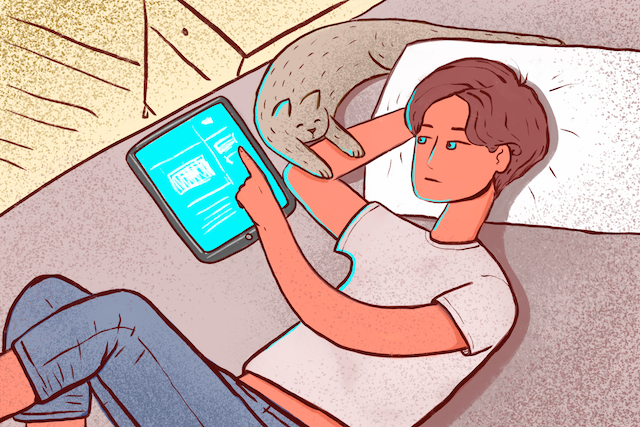
    And finally, I reached the paradoxical truth: The moment I stopped trying to fit in was the moment I stopped feeling like an outsider.

  • How Boundaries Help You Stay True to Yourself (And Two Practices to Try Today)

    How Boundaries Help You Stay True to Yourself (And Two Practices to Try Today)

    “The more you value yourself, the healthier your boundaries are.” ~Lorraine Nilon

    I want to talk about the direct correlation between boundaries and self-love. Because when we truly love ourselves and have a healthy self-worth and self-concept, setting boundaries becomes a natural extension of that.

    Without boundaries, we either become walled off and protect ourselves from others, which creates a sense of deep isolation and loneliness, or we become enmeshed with others. We often find ourselves living on their side of the street, working overtime to manage, fix, caretake, or be needed by them, all while neglecting ourselves and our personal well-being and needs.

    As children, we were often rewarded for being relational, compliant, quiet, agreeable, easy, and invisible. The underlying message was that we didn’t deserve to have ownership of ourselves.

    As long as we did what the big people said, we were in their good graces, but if we crossed that line, then we were in trouble. Because that hurt and brought up so much shame for us, the alternative was to disconnect from our authentic selves. We became people who played a part merely to gain acceptance and approval, but at the detriment of our own needs and desires.

    I personally have been on both sides of the coin. I was boundary-less for much of my life, giving and giving to others, unable to stand up for myself and my own personal needs.  

    A great example of this was when my husband and I went on vacation many years ago. We had a great time, but upon returning home I experienced an almost debilitating sadness and anxiety.

    I remember being uncomfortable in my own body to the point of wanting to crawl right out of my skin. As I sat with the uncomfortable sadness, I realized that it was deep grief.

    While I was on vacation, I felt free. I felt an ease about what I wanted to do each day and how I wanted to spend my time. In my regular ‘not on vacation’ life, I felt stifled and obligated to everyone.

    I realized I was living someone else’s life. I had built a life that others looked at and thought, “Wow, she’s got it all,” but it wasn’t the life that felt true to me. The grief I met that day came from meeting the realization of how I lived for everyone but me.

    I had checked all the ‘right’ boxes of what my parents wanted and what society expected of a good girl, but I was miserable.

    After this experience, it still took me a while to get a handle on my overpleasing and appeasing. Eventually, after having fried adrenal glands twice from my constant over-giving, over-serving, and endless worry of what others thought of me, I flipped the pendulum to the other extreme and began to build a wall. I was tired of everyone taking advantage of me and asking me for my energy.

    “No” became my personal mantra—until I woke up one day realizing how incredibly isolated and alone I felt. I had protected myself to the point of shutting everyone out.

    We are hardwired for connection, for community, for a group of people in which we feel we belong. Our nervous systems operate beautifully when we feel safe with others and are able to experience a dance of co-regulation.

    We want to move toward healthy boundaries, which are flexible, fluid, and give us the chance to shift and change. Healthy boundaries aren’t completely loose and open, but they aren’t to the other extreme of being closed off and guarded. 

    Boundaries and attachment style go hand in hand. Our earliest attachment was with our mothers, or primary caregivers.

    If we had a mother who met us in our time of need with compassion, a friendly face, and consistency, we built what is called a secure attachment.

    If we didn’t have this experience and our mother was unfriendly, shut down, cold, inconsistent, and not able to attune to our feelings and emotions as children, we created something called an insecure attachment. As adults with this deep well of insecurity, there is a good chance we are looking to have another adult meet our needs or fill this hole in our soul.

    My own mother controlled the emotional climate in the home. Just a tightening of her jaw and a furrow of her brows, and I was instantly walking on eggshells. Being raised in such an emotionally shut down and rigid home, I carried the belief with me that I was responsible for everyone else’s feelings, and if someone else was upset, I believed it was my fault.

    I wasted hours, days, and weeks worrying if someone was upset with me or disliked me. I had a huge gaping hole in my soul, and I strived to fill it by using other people’s validation and acceptance.

    It took me decades to learn how to be kind to myself and give my inner child what she needed, which was validation, acceptance, and a ‘kindful’ witness.  (I once heard the term kindful from one of my mentors, and it really stuck—it simply refers to being kind to myself.)

    Developing healthy boundaries requires us to learn that no other person can provide the inner safety and security that we need. Our healing work requires that we learn to reparent ourselves and provide ourselves the internal safety that we need and long for.

    This work isn’t necessarily easy; it takes time to learn how to nurture ourselves and build a rock-solid sense of authenticity and integrity. However, the irony is that when we learn to meet our own needs and recognize that we can create our own internal safety, we build the exact foundation required for better intimate relationships and friendships.

    The best thing we can do is learn to stay with ourselves and be true to who we really are. 

    Your needs, your preferences, your wishes, and your desires are what make you YOU! I know you’ve maybe heard that a million times, but maybe a million and one is what it takes. Really let that sink in. If any relationship requires that you abandon yourself to keep the peace, it’s not a healthy relationship.

    As we begin to build a healthier version of ourselves and recognize our value, we begin to not be so tolerable of those who mistreated us or diminished our worth. Being in our energy is a privilege, not a right. (You might want to repeat that to yourself on the daily.)

    When we believe this, over time, we draw in healthier individuals who respect us because they too respect themselves. As we shed the false self that we once created to gain approval and stay safe, we give ourselves the opportunity to explore what our hearts actually need and desire.

    It’s possible that the people in your life who were always used to you being easy, going with the flow, and not ruffling any feathers will find your newfound boundaries a bit of an inconvenience. I just experienced this situation recently. A friend begged for the old version of me that just wasn’t available to her whims and needs any longer. She loved me when I could be in a one-way friendship for her, but I couldn’t do it anymore.

    My new rule is two-sided relationships are the only relationships for me.

    What I love most about boundary work is that it is so incredibly honest. Because boundaries are grounded in our values and our needs, we are showing people the real and authentic us. 

    We are saying, “This is what I need; this is what I desire—are you able to meet me in this?” Sometimes they can and sometimes they can’t, but the bottom line is that boundaries give us the opportunity to create relationships based on pure honesty and truth.

    Having healthy boundaries requires you to be healthy, whole, and anchored to your truth. It requires you to step up and express this truth to create relationships and a life that you love.

    There are two exercises I want to leave you with to begin working on your boundaries. While these exercises seem simple, they are incredibly potent. One of my favorite current sayings is a little + often = a lot.

    When these practices are worked over and over, they become embodied. We no longer have to think about them so much, as they start to become second nature.

    1. No more auto-yesing.

    From now on, when anyone asks you anything, your immediate response is that you need to give yourself a minimum of twenty-four hours before you respond.

    This exercise is important because it gives you an opportunity to pause and check in with your body.

    If we are accustomed to having codependency, good girl/boy, or people-pleasing patterns, our immediate response is always YES, 150% of the time. This exercise stops that pattern and gives you the pause you need to ascertain what feels expansive and good to you.

    2. Spend some time journaling on the following questions:

    • In what ways/areas/relationships am I giving my power away?
    • What am I tolerating that doesn’t feel good to me any longer?
    • In what ways was I rewarded for not having boundaries as a child?
    • In which current situations/relationships do I have an opportunity to start building my boundary muscle?

    These two exercises are powerhouse tools to help you discover and implement new choices and responses.

    And lastly, if you feel like you are bumping up against a wall when it comes to your boundaries, the only way out is through. Yes, it feels clunky. No, you won’t always get your newfound boundaries ‘right’ (hello, good child), but with practice and support, you’ll make it to the other side.

    Join me where life is so free and expansive, you can’t even imagine.
  • How I Stopped Worrying About What Others Think of Me

    How I Stopped Worrying About What Others Think of Me

    “Live your life for you not for anyone else. Don’t let the fear of being judged, rejected or disliked stop you from being yourself.” ~Sonya Parker
    On August 4, 2022, I buzzed off my long, thick, luscious hair.
    I marched up Sandy Boulevard in Portland, Oregon, walked into Take Pride Barbershop, and sat in the chair with the most badass barber. She quelled my last-minute fears and boldly took the clippers to my never-shorter-than-shoulder-length hair.

    It was instant liberation.

    I had finally worked up the courage to do so after four years of internal debate and worry, which went something like: What will people think? Will people think I’m a man? Will people treat me differently? What if I’m actually ugly and my ugliness will be revealed? What if my head is oddly shaped? Will I have to wear a bunch of makeup?

    My worries and thoughts were clearly steeped deep in societal conditioning about beauty and femininity. We are told that long hair is feminine and beautiful. We are told that young women aren’t supposed to have short hair. We are told that if you are a woman with short hair, be sure to wear makeup and jewelry so you look feminine.

    But I finally stopped all the thinking, broke free from those norms, and I just did it. I said, “Off with the hair!”

    And now I feel free-er, sexier, and prettier.

    I feel more like me.

    It’s as if I shed layers that were actually hiding my true essence. My true essence as an adventurous, empathic, sensual being who sometimes feels soft and tender, and other times feels bold and badass. My true essence as someone who is wary of rules and authority.

    It’s also as if I shed layers of my ego. Because whether I like to admit it or not, my hair was a significant piece of my identity as a woman. Hair is an expert communicator, with the ability to send so many messages through a single glance. Hair communicates gender, sexuality, wealth, age, health, and parts of our personality.

    Now that I have shed my long hair, I think the only part of me that is still communicated via my hair is my personality. For one can no longer look at me and quickly deduce my gender, sexuality, wealth, age, or health. (I do have very toned muscles and glowing skin, so people should be able to make an assumption about my health, but some people only see the short hair and assume I have cancer).

    What is communicated boldly is that I create and live by my own rules. And if people know one thing about me, THAT is exactly what I want them to know. 

    My buzzed hair also lends an air of mystery, as people wonder about all of those other little check boxes (gender, wealth, age, etc.) that are usually communicated via hair.

    While I did shed some layers of my ego, my buzzed head also makes a pretty strong statement, and in full transparency, I get a lot of attention. This attention comes in all forms.

    Sometimes it’s “Excuse me sir…oh! I mean ma’am.”

    Sometimes it’s “You need to wear lipstick to look more feminine.” (Who said I wanted to look more feminine?!)

    Other times it’s “Omg, you’re so beautiful” or “I LOVE your hair.”

    Sometimes I get free guac.

    I get a lot of smiles from passersby on the sidewalk.

    I get a lot of lingering looks at the post office, the coffee shop, and the dance floor.

    And while I do love to be called beautiful (who doesn’t?!), I don’t attach myself to the praise or the criticism because I have decided for myself that I am strong, radiant, and beautiful, from the inside out. I no longer care if people think I look masculine or feminine, ugly, or beautiful. I don’t care if people in Idaho think I have cancer. I don’t care if people think I look like a skinny boy without makeup on. (What’s wrong with looking like a skinny boy?!)

    This level of not caring, of being so confident in who I am, is the ultimate freedom. 

    Plus, I know that when people react one way or the other, it is not really about me and my hair. Their reaction means that I activated something within them. I activated their desire to be free and to stop following the rules that someone else laid out for them.

    In the best cases, I offer others a little permission slip to step into their own boldness. Which is one of my favorite parts of buzzed life—when women tell me I’ve inspired them to buzz their long hair! That they were so worried about what people would think, but after seeing me do it, they now have the courage too. That is powerful.

    So while the hairstyle of one woman may seem like a simple and insignificant thing, it actually plays a small but important role in the liberation and empowerment of women.

    For when a woman has the courage to push back against beauty standards, that courage is ignited, and she also develops the courage to choose freedom in other facets of her life as well. 

    For me, that has looked like more sexual freedom—making me more playful in bed and bolder in sharing my desires—and more confidence in all areas of my life.

    Buzzing my hair has also created more time in my life, as I spend less time getting ready. It’s created more mental space, as I no longer spend inordinate amounts of time thinking about how to style my hair, when to wash it, and whether or not to get it highlighted.

    It has also freed up more money because I no longer spend hundreds of dollars on highlights and cuts. My fiancé buzzes my hair at home and, occasionally, I bleach it myself.

    It’s also led to freedom in how I dress. Sometimes I like to dress to express my femininity. Other times, I dress to express my masculinity. As someone who used to be deeply insecure about her tomboy-ish-ness and lack of desire to wear makeup, I have reclaimed the masculine parts of me with pride, which has been an integral part of my healing and expansion journey.

    It has also deepened my sensuality. In the shower, the water massages my head more intimately. On a summer day, the sun kisses me deeply. On a breezy morning, the wind and I dance a graceful dance. On the dance floor, the softness of my fiancé’s lips activates my crown chakra. I feel less separation between the world and me. I am more integrated. I am more aware of my oneness with the natural world.

    Yes, all of this because of my buzzed hair!

    So I’ll leave you with a few parting words of wisdom:

    1. People are going to talk and have an opinion about you no matter what, so you might as well do what you want and be who you want.

    2. Others’ opinions of you really have more to do with them than they do with you, so don’t take stuff too personally and concern yourself first and foremost with your opinion of yourself.

    3. If you want to buzz your head, do it. If you don’t like it, it’ll grow back. But I bet you will like it!

    So here’s to taking action to live as a more free, wild, and confident you!

  • How to Let People in So You Can Feel Seen, Heard, and Supported

    How to Let People in So You Can Feel Seen, Heard, and Supported

    “We are hard-wired to connect with others, it’s what gives purpose and meaning to our lives, and without it there is suffering.” ~Brené Brown

    In relationships, I have always felt more comfortable being on the sidelines rather than center stage. I liked playing the supporting role to many people’s leading roles. I am good at it; it’s the career I chose for myself as a life coach. However, personally, constantly staying in the role of supporter created resentment.

    I felt unseen and unheard, and many of my relationships began to feel one-sided—with me listening and holding space for them and then feeling there was no room for me to have a turn. It felt like I could not connect with others, and that left me feeling deeply alone.

    At first, I believed that others were to blame. If they didn’t take up so much space and time, it would be easier for me to open up. As time passed, I realized this was an excuse. It was an excuse that gave me permission to stay quiet. Because staying quiet was easier than sharing whatever was heavy on my heart.

    It was painful to constantly stay silent or to question if I should share or not. It felt like I had created brick walls to protect myself, and it began to feel impossible to start sharing more of my personal experiences, thoughts, and realizations.

    I would think, “They won’t get it anyway. What’s the point?” Or “What they’re experiencing is so much harder.” Or “I will just end up hurt by sharing more.”

    At times when I felt the loneliest, I began to wonder, what was I protecting myself from, and why had it gotten so difficult to speak to my closest and trusted people? I felt like I was walking around like a knight covered in steel armor, but there was no one shooting arrows at me; and on the inside, I felt like a volcano was slowly brewing.

    I knew where parts of these habits stemmed from. I am highly sensitive and guard my heart because I feel things so deeply. In the past, there were times when I shared and people either didn’t listen because they weren’t fully present or they didn’t understand where I was coming from, and this hurt.

    Also, I knew that I was a people-pleaser and wanted others to feel good and happy even if it meant that I didn’t. And I’m naturally an observer and introvert, so it came easily to stay quiet.

    Part of my healing came from this basic knowledge. This is the unique way that I am built, and it is not bad or wrong. However, I had to address the brewing storm inside, and that meant having the courage to share and to cry and to be angry—to be seen in front of people I love and trust.

    A friend of mine has consistently modeled what it means to open up by communicating her thoughts, fears, and feelings with me, even if they are vulnerable. Over time she became someone with whom I felt comfortable testing the waters of sharing my own pain.

    I felt a huge sense of relief when I opened my heart to her and shared that I was struggling to feel good enough in my relationships and roles—and I was met with the simple yet powerful impact of thoughtful listening. Not only did she accept me with my messy emotions, I felt more safe, authentic, and comfortable being me.

    Opening up to others is still a practice for me, but each time I do it I find that others are more loving and capable than I imagined, and that my taking a step toward vulnerability leads to the connection I deeply desire.

    I have realized that opening up has less to do with others accepting or understanding me and more to do with me accepting the vulnerable parts of myself.

    I know now that I deserve to be listened to and supported, even if it is messy and more emotional than logical. The only way to do that is to communicate and share what’s going on in my heart with a reliable or committed partner/friend.

    I believe most of us avoid opening up at all costs because we’re afraid of being judged and rejected.

    In any relationship there is a chance that you are going to get hurt. Whether it is intentional or unintentional, whether you guard your heart or not, the possibility is there. The question is, is the sense of connection worth it for you? This is a question that requires discernment.

    Not all relationships require equal sharing. This is the part that you get to choose. Who do you want to talk to, and who is able to hold space for you? What parts are you willing to vulnerably share, and, as Brené Brown asks, “Who has earned a seat at your table?”

    If, like me, you tend to be guarded and not trust the people you are closest to, take a moment to slow down and acknowledge the part of you that wants to be seen and heard.

    Let yourself know that, though safety and security cannot be promised from another, you can promise them to yourself. You can assure yourself that whether other people understand and support you or not, you will maintain a safe space within yourself by validating your own thoughts and feelings.

    Also, remind yourself that even if sharing was painful for you in the past—if people didn’t offer you their full attention, empathy, or understanding—the future can be different. All people are different, and there are many who care and want to be there. You just have to give them a chance.

    Having the courage to be seen in a vulnerable place isn’t easy; however, it is necessary if you long for connection and authenticity.

  • The One Thought That Killed My Crippling Fear of Other People’s Opinions

    The One Thought That Killed My Crippling Fear of Other People’s Opinions

    “Don’t worry if someone does not like you. Most people are struggling to like themselves.” ~Unknown

    For as long as I can remember, I have been deathly afraid of what other people thought of me.

    I remember looking at all the other girls in third grade and wondering why I didn’t have a flat stomach like them. I was ashamed of my body and didn’t want other people to look at me. This is not a thought that a ten-year-old girl should have, but unfortunately, it’s all too common.

    Every single woman I know has voiced this same struggle. That other people’s opinions have too much weight in their lives and are something to be feared. For most of us women, there is nothing worse than someone else judging our appearance.

    After that fear first came to me in third grade, I carried it with me every day throughout high school, college, and into my twenties. This led me to trying every diet imaginable and going through cycles of restricting and binging. I just wanted to lose those pesky fifteen pounds so I could finally feel better about myself and not be scared of attention.

    There was no better feeling than getting a new diet book in the mail and vowing that I would start the next day. Following every rule perfectly and never straying from the list of acceptable foods. I stopped going to restaurants and having meals with friends because I wouldn’t know the exact calorie count.

    All this chasing new diets and strict workouts was because of one simple thought that I carried for years. I just assumed everyone was judging my body and would like me more if I lost weight. I was constantly comparing my body to every other woman around me.

    This fear of what other people thought also led me to have a complicated relationship with alcohol in my late teens and early twenties. At my core I am naturally sensitive, observant, even-keeled, and sometimes quiet. But I didn’t like this about me; I wanted to be the outgoing party girl that was the center of attention.

    The first time I got drunk in high school I realized that this could be my one-way ticket to achieve my desired personality. With alcohol I was carefree, funny, and spontaneous, and I loved that I could get endless attention. I was finally the life of the party, and no one could take it away from me.

    I wanted everyone to think that party-girl me was the real me, not the sensitive and loving person that I was desperately trying to hide. Classmates were actually quite shocked if they saw me at a party because I was so different than how I appeared in school. It was exciting to unveil this persona to every new person I met.

    But the thing with diets and alcohol was that this feeling of freedom was only temporary. When the alcohol wore off or the new-diet excitement faded, I was back to the same feelings. In fact, I found that I was even more concerned about what people thought of me if the diet didn’t work or the alcohol wasn’t as strong. I feared that they would discover the real me.

    The irony was that whenever I drank, I felt worse about myself after the alcohol left my system. I felt physically and emotionally ill from the poison I was putting into my body. I would often be embarrassed about not remembering the night before or fearing that I said something I shouldn’t have. It was a nightmare of a rollercoaster that I no longer wanted to be a part of.

    I decided in my mid-twenties that alcohol would no longer have power over me. That I wouldn’t rely on it to feel confident and instead work on loving the real me. I decided to break up with alcohol and put it on the back burner. I was moving to a new city where I didn’t know anyone, so I figured this would be a good time to start fresh.

    Once I moved and started my new life, those same familiar fears and pangs of shame started to show up again. If I wasn’t the loud party girl, who would I be? What would people think of me if I wanted to stay in and read instead of partying? I wasn’t confident in my authentic self yet, and I was desperately looking for a new personality to adopt. That’s when I turned back to a familiar friend for help: dieting.

    In the span of five years, I tried every major diet out there: paleo, keto, vegetarian, vegan, counting macros and calories, you name it. I dedicated all my free time to absorbing all the information I could so I could perfect my diet even more. At one point I was eating chicken, broccoli, and sweet potatoes for every single meal. My body was screaming at me for nutrients, but I continued to ignore it.

    Then one day I hit that illustrious number on the scale and finally felt happy. Well, I assumed I would feel happy, but I was far from it. I felt like absolute crap. My hair was falling out, I had trouble sleeping for the first time in my life, my digestion was ruined, and I had crippling fatigue. I finally lost the fifteen pounds, but my health was the worst it had ever been.

    I felt betrayed. The scale was where I wanted it, but I wasn’t happy. I was more self-conscious of my body than ever before. I didn’t want people to look at me and notice my weight loss. That little girl that cared about what people thought was still ruling my life. I had to make a change, and I had to start loving the girl in the mirror no matter what I looked like. My life depended on it.

    It was during one of those nights where I felt so confused and lost that I stumbled into the world of self-development. I bought my very first journal and the first sentence I wrote was: “Self-love, what does it mean and how do I find it?” I vowed to myself that I would turn inward and get to know the real me for the first time in my life. 

    This new journey felt uncomfortable and scary and pushed me completely outside my comfort zone. I couldn’t just hide behind external sources anymore like I did with alcohol and strict diets. I had to get to know authentic Annie and show the world who she was.

    It was in this journey that I found my love of writing and inspiring people. I decided to follow my dreams and get certified as a life coach and finally make my writing public. But when I went to hit publish on my first post, that same fear reared its ugly head.

    This time I was deathly afraid of what my coworkers and friends would think. They would see the real me, the sensitive soul that had deep feelings and wanted to inspire other people. This fear caused me to deny who I was for far too long, again.

    I hesitated for years to share my writing because this fear stopped me. But this time I wasn’t going to let it have control over me anymore. One day this thought popped into my head and stopped me dead in my tracks. It was an enormous epiphany and one I couldn’t ignore. The thought was:

    When I am eighty years old and looking back on my life, what do I want to remember? That I followed the same path as everyone else or I followed my heart?

    As soon as that thought came to me it was like I was hit over the head. For the first time in my life, I understood it. I realized that if I kept living my life in fear of other people’s opinions, I wasn’t really living my own life.

    Every human is here to be unique and serve out their own purpose, not to just follow the crowds blindly. I couldn’t live out my purpose if I wanted to hide away.

    Self-acceptance and self-love come from knowing and respecting all parts of myself. It comes from acknowledging my shadow sides and still putting myself out there regardless of opinions. It comes from going after big and scary goals and having fun along the way. Because the absolute truth is this: other people’s opinions are not going to matter in one year. They won’t even matter five minutes from now.

    So now I want you to ask yourself the same question: What do you want to remember most about your life when you are at the end of it?

  • How Not Setting Boundaries Serves Our Primal Need for Acceptance

    How Not Setting Boundaries Serves Our Primal Need for Acceptance

    “When we fail to set boundaries and hold people accountable, we feel used and mistreated.” ~Brené Brown

    I used to believe that others didn’t have healthy boundaries. They didn’t know where to draw the line, and I was the victim of overbearing people. People that would always cross the invisible line.

    When people crossed that line, it left me feeling uncomfortable, exhausted, and resentful. It felt wrong in my gut, but I never knew how to communicate it or change it until later in life. Lack of boundaries seeped into every part of my life, personal, professional, and everything in between.

    For example, an ex-boyfriend assumed it was okay to borrow my car. I wanted to be nice and easygoing, so I let it slide until I found myself walking home in the middle of the day from a long work shift. The same ex-boyfriend also moved in with me during a difficult life transition for him, and I thought being supportive meant letting him stay.

    I struggled with staying up late to talk a friend through her troubles night after night, even though I knew I needed to rest and felt depleted. In many cases, she wasn’t listening and was unaware of how long we had been speaking. I wanted to be helpful and caring and thought that it was the right thing to do.

    I also felt afraid to speak up with friends on subjects I was passionate about and would keep quiet when a friend said something that I didn’t agree with because I didn’t want to rock the boat or receive her judgment of my different opinion.

    In work situations, not setting boundaries meant I made myself overly available and overly responsible.

    I had a boss that would call me during off hours to complete a task he wasn’t able to do during the day. My instinct was to ignore, yet the people-pleaser in me wanted to be a “good” employee. I also went above and beyond finding my own replacements when I left jobs so that the transition would be smooth, and my co-workers wouldn’t have to bear any extra weight with my leaving.

    I’d continuously find myself offering and accepting situations that left me stressed out and resentful and would wonder why other people didn’t notice.

    I blamed others until I realized that it wasn’t anyone else’s job to guess what I was thinking or feeling. It wasn’t their responsibility to change to suit me; it was my responsibility to change to suit myself—my truest self, the part of me that felt confident enough to be honest, communicate, and trust that it was okay to do what was best for me.

    My problem with boundaries wasn’t that other people kept crossing the invisible line. It was that the line was invisible. I needed to start setting boundaries with myself. That meant recognizing that I struggled with setting boundaries because I felt safe and secure when I over-gave. I felt loved and worthy.

    After realizing why I struggled with boundaries and empowering myself to learn more about my unhealthy pattern of people-pleasing, setting boundaries became about facing my fears around others’ approval or disapproval.

    Being able to say no to people I loved or jobs I cared about might come at a cost to me. Would they ultimately love and accept me even if I didn’t meet their needs, or would they abandon me?

    In most cases, the communication or conversation wasn’t so dire; however, the fear I felt was big. After years of habitually putting others first and pleasing, I had to have the courage to disappoint others and even lose relationships that no longer fit.

    Thankfully, when I faced my fear of speaking up and potentially being abandoned, I was mostly met with unconditional love and support. In fact, most of the judgment came from myself and not from others. The pain I felt wasn’t about them, it was about me.

    To overcome my fear, I spent time journaling and listening to my heart. I spent time getting to know myself and accepting myself. I realized it was safe to be myself and that the relationship that mattered most was the relationship with myself. When I started to love and accept myself, I no longer searched for love acceptance through approval of others.

    I had to reach a point when honesty with myself and honoring my deepest desires became non-negotiable. Continuously going above and beyond for others left me angry and lonely. I wasn’t able to be authentic, so even if I was accepted by others, it was impossible for me to feel good.

    If you struggle with setting boundaries, speaking up for yourself, or saying no, begin by asking yourself why. What part of you desires to put others first? What are you truly afraid of? And are you willing to face your fears in order to meet your needs and create more reciprocal relationships?

    In order to communicate our needs to others we need to be clear with what they are first. That means taking the time to understand what is most important to you and what helps you feel your best.

    If, like me, you’re afraid of being abandoned, you can overcome your fear of rejection by understanding where it stems from and taking the time to nurture and soothe it. Then taking initiative and getting clear with what you want (and don’t want) won’t be a problem any longer.

  • How to Live Your Dharma (True Purpose): The Path to Soul-Level Fulfillment

    How to Live Your Dharma (True Purpose): The Path to Soul-Level Fulfillment

    “Dharma actually means the life you should be living—in other words, an ideal life awaits you if you are aligned with your Dharma. What is the ideal life? It consists of living as your true self.” ~Deepak Chopra

    From the moment I finished high school until my late twenties, I had “purpose anxiety.”

    I wasn’t just confused and missing a sense of direction in life; my lack of purpose also made me feel inadequate, uninteresting, and lesser than other people.

    I secretly envied those who had cool hobbies, worked jobs they loved, and talked passionately about topics I often didn’t know much about.

    I even resented them for living “the good life” and kept wondering, “Why not me?”

    Until it was my turn.

    What it took to begin embracing my purpose—or dharma, as I prefer to call it—was one thing: love.

    Let me explain.

    The 4 Keys to Living Our Dharma (Purpose)

    The Sanskrit word “dharma” has many meanings and most commonly translates to “life purpose” and “the life we’re meant to live.” I believe there are four main keys to living our dharma.

    1. Cultivating self-worth: the essential first step.

    I was bullied in high school, and as a result, I had very low self-esteem for many years. Looking back, I realize that feeling that low self-worth prevented me from embracing my dharma.

    Why?

    It was because I was too focused on trying to be liked and too worried about what other people thought of me to be in touch with my authentic self. I put all my energy into doing everything I could to look “cool” and be accepted by others rather than what my soul wanted to do, explore, and experience.

    The essential idea is that embracing our dharma requires living authentically. As Deepak Chopra says, “[dharma] consists of living as your true self.”

    The issue is that it can be difficult to express and live your truth when you feel inadequate, unworthy, and perhaps even unlovable. The risk of being rejected seems too high, and it feels unsafe.

    So the first step to living our purpose, I believe, is cultivating radical self-love. It’s a bit of a “chicken and the egg” situation because having a strong sense of purpose increases self-esteem, but low self-esteem makes it hard to embrace our purpose. It’s best to develop both simultaneously.

    Here are a few ideas to cultivate self-love that have helped me:

    The first one is meditation.

    Part of meditation is about allowing ourselves to become aware of and observe our own thinking. When we meditate, we disidentify from our thoughts and get to experience glimpses of who we truly are—of our essence—which is loving and infinitely worthy. As a result, we naturally start loving and accepting ourselves more. Meditation has undoubtedly been the number one thing that has improved my self-esteem.

    Another thing that has helped me is self-care.

    As I said, I didn’t have many friends in high school and spent much of my time alone. So I started going to the gym after school to do something with my time and be around people (even if I didn’t talk to them). Exercising regularly led to eating healthier and taking better care of myself in several other ways.

    I find that self-care is a practical way to cultivate self-love. When you take care of yourself, you show that you care about yourself. Over time, you start genuinely feeling the self-love you are showing yourself and believing it.

    The last (effective but cringy) thing that helped improve my self-esteem is an exercise that a therapist recommended.

    Here’s how it goes: In the evening, stand in front of the mirror and—looking at yourself in the eyes—say, “I love you, [say your name]. I love [say three things you like about yourself], and you deserve all the good things life has to offer.” Try it for thirty days; it may change your life.

    2. Being in touch with and following your inner compass.

    Jack Canfield says, “We are all born with an inner compass that tells us whether or not we’re on the right path to finding our true purpose. That compass is our joy.”

    Often, we seek purpose outside of ourselves, as if it’s some hidden treasure we need to find. But, as Mel Robbins puts it, “You don’t ‘find’ your purpose; you feel it.” What feels good—expansive, joyful, intriguing, exciting, or inspiring—to you?

    That’s an important question because, according to numerous spiritual books I’ve read, those things we enjoy are clues guiding us to our dharma.

    The main difficulty is usually differentiating our true desires from the ego’s “wants” and the desires that come from conditioning. The ego wants to feel important. It’s afraid of not being “good enough,” so it feels the need to prove its worth.

    The “wants” that come from conditioning consist of what our parents and society have told us we “should” do. If we follow those “shoulds,” even though they don’t align with our authentic selves, we risk waking up one day and realizing that we’ve climbed the wrong ladder and lived our life for others instead of ourselves.

    Here’s something that helps me differentiate those desires.

    Make a list of all the things you want to have, do, experience, and become in the next few years.

    For each item on your list, ask yourself why you want it. Is it because you feel the need to prove something or want to feel important or perhaps even superior to others? That’s the ego. Is it because you think that’s what you “should” do? That’s likely conditioning. Is it because it makes you feel alive? That’s your heart.

    To live our dharma, we must follow our heart’s desires—the things we genuinely love. This requires authenticity and courage.

    3. Savoring the experience of being alive.

    Another aspect of dharma is loving life—living with presence and appreciating the experience of being alive. There are a few things I find helpful here:

    The first idea is to keep a “Book of Appreciation,” as Esther Hicks calls it. Every day, take five minutes to journal about what you appreciate about someone, a situation, or something else in your life.

    To savor life, we must also be present. In A New Earth, Eckhart Tolle states that true enjoyment does not depend on the nature of the task but on our state of being—we must aim for a state of deep presence.

    He recommends being mindful when attending to even our most mundane tasks. I also like to go on long walks and observe (with presence) the natural elements around me—like the clouds passing in the sky, the smell of trees after the rain, and the sensation of the sun’s rays on my face.

    And, of course, having a daily gratitude practice is always a winner!

    4. Extending love through joyful service.

    Dharma is also about sharing—extending love. One of the best ways to contribute to the collective is to share our gifts in a way that’s enjoyable to us.

    We all have natural gifts—things that come easier to us than to others. Some people are good at writing, while others are great leaders or excel at analyzing data. Perhaps you like to create, manage, nurture, delight, support, empower, listen, guide, or organize.

    There’s also another, more profound aspect of contribution that comes from being rather than doing. I remember a passage from a book I read many years ago (I can’t remember what book it was) that went something like this:

    “Your contribution [to the collective] is your level of consciousness.”

    A higher consciousness radiates greater love, and one of the best ways to uplift others is by being a loving presence.

    Dharma: The Bottom Line

    Bob Schwartz, the author of Your Soul’s Plan and Your Soul’s Gift, says, “We are here to learn to receive and give love. That’s the bottom line.”

    This involves loving ourselves, others, and life in general, and also following our heart—doing things we genuinely love.

    I don’t know about you, but this perspective on dharma feels good to me. It has freed me from my “purpose anxiety.”

    I hope it can serve you too.

  • The Exhausted Extrovert: How I Stopped Worrying About How People See Me

    The Exhausted Extrovert: How I Stopped Worrying About How People See Me

    “When we allow ourselves to be vulnerable, we are not pretending, we are not hiding—we are simply present with whatever is going on inside us. Ironically, it is this very feeling of authenticity that draws people to us, not the brittle effort of perfectionism.”  ~Maureen Cooper

    Most people in my life would call me an extrovert, and I often refer to myself with that label as well. On the surface, I appear friendly, talkative, and enthusiastic, and those characteristics became part of my identity at an early age. I enjoy being around other people and value my interpersonal relationships.

    I also participate in a variety of social groups and remain connected to friends near and far despite our busy schedules. I have often attributed my love of people to the fact that I am an only child who always wanted to spend more time with kids my own age.

    Despite my friendly nature, I usually felt drained after social interactions, especially when they involved large groups of people. I dreaded small talk, mingling at parties, and attending events where I was the only new person in the group.

    For example, my anxiety was sky high when I met my husband’s large group of close friends for the first time. I felt intimidated because they had all known each other since preschool, which automatically made me feel like an outsider. As a child and young adult, I tended to avoid situations where I felt uncomfortable, preferring to focus on the environments and people that I already knew.

    Even in familiar social situations, I still often came home feeling depleted. I enjoyed myself during these events but required a lot of downtime to fully recover and feel like myself again. This reaction confused me because I thought extroverts craved and felt energized by social interactions. 

    I struggled to classify myself because neither introvert nor extrovert truly matched my personal experience. I often felt torn between wanting to attend social events and worrying that I would feel exhausted afterward. These conflicting desires prompted me to explore the reasons why being social fed and depleted my soul at the same time.

    This journey would hopefully allow me to develop a deeper level of self-awareness and learn how to take better care of myself. As I paid more attention to my thoughts, feelings, and behavior at social events, I noticed that I was hyper focused on how I came across to others. I wanted to be liked, make a good impression, and be viewed as fun.

    I frequently wondered what people genuinely thought of me, including friends that I had known for years. I also worried a great deal about others’ feelings and wanted to make sure that everyone was having a good time. As the host of parties or gatherings, I went out of my way to ensure that the house was spotless, the food options were plentiful, and the environment was comfortable.

    I avoided choosing group activities out of fear that people would not like my decisions and from a desire to be known as the “easy-going, chill friend.” Even when I wasn’t the host, I found myself studying everyone’s reactions to see if they were happy and had their needs met fully. I made it my responsibility to take care of everyone even though no one asked me to be the superhero.

    If someone wasn’t in a good mood or a conflict arose, I immediately intervened to be the peacemaker or crack a joke to lighten the mood. I also did my best to keep the focus and attention away from me. I acted like an interviewer, asking other people endless questions and rarely sharing about my own life.

    I hated any silence within the conversation and would quickly fill it by bringing up a new topic or giving compliments. I began to realize that even my closest friends didn’t know much about me because I was so guarded with them. My fear of boring others, seeming conceited, or talking too much prevented me from being honest and authentic.

    For most of my life, I thought these behaviors were typical and even smart ways to be a good friend. I wanted others to accept me and enjoy being around me, but my ways of accomplishing these goals left me exhausted at the end of the day. Upon realizing how I navigated social interactions, I chose to examine why I needed these techniques and how they affected my view of interpersonal relationships.

    Up until this point, I believed that my behaviors were simply proof of my strong social skills, compassion, and emotional intelligence. I also assumed that most people thought and acted similarly to me because it was so natural and automatic in my life. In reality, my behavior involved coping strategies that I had developed from an early age due to an intense fear of being left out, disliked, and alone.  

    I came to learn that as an empath, I needed to set emotional boundaries to prevent myself from becoming depleted. A healthy empath holds space for another person’s emotions and experiences without making it their responsibility to fix, save, or protect the person. In order to be accepted and liked, I became a chameleon who adapted to any environment, didn’t speak up, and focused on pleasing everyone else at my own expense.

    In doing so, I didn’t allow people to get close or learn about the real me. My outward focus on how everyone else was thinking, feeling, and acting left me exhausted and overwhelmed because I took on their problems as my own. I remained fearful to share my true opinions, make any decisions, or take up space in social settings.

    Fading into the background felt safer, easier, and more comfortable to me, but it didn’t allow me to relax and be fully present. I constantly scanned the environment for any issues, working to please others and control what people thought of me. On top of that, I made it a priority to appear easy, effortless, and relaxed so that no one would see my internal struggles.

    I didn’t want to appear stressed, tired, or unhappy because I could possibly be viewed as “needy” or “too much.” My hypervigilance only intensified when I was around new people because I desperately wanted to make a good first impression and earn their validation. After a social gathering lasting only a few hours, it was no wonder that I felt so drained and needed to recharge.

    I began to realize that while I do love people and enjoy interacting with others, these situations would be more fun if I slowed down, checked in with myself, and focused on being truly present. I needed to practice turning the spotlight on myself for the first time, making choices and doing activities that worked for me. 

    When I allowed other people to manage their own feelings rather than jumping in to fix, save, and protect them, it freed up more time and energy for me. I also allowed myself to open up and engage fully in conversations, sharing small details at first and allowing other people to carry the conversation. These behaviors showed me that it was safe to take up space and let people get to know me.

    Instead of blending in and always going with the flow, I could practice offering my opinion, choosing a restaurant or a movie for the group, and turning down social opportunities when I was tired or uninterested in the outing.

    I knew that I needed to take these steps slowly because they would require courage, and I didn’t want to give up out of overwhelm. I also begin learning to trust that people wouldn’t abandon or reject me for speaking up and setting boundaries.

    And if I did lose friendships or people didn’t love everything about me, I could handle that reality and survive. My mantra became “I am not for everyone, and that is okay.”  

    Since that time, I have made strides toward relaxing, being present, and releasing control, allowing myself to “just be.” Some days and situations are easier than others to practice this new mindset. But now that I have self-awareness and understanding, I can more easily catch myself when I engage in people pleasing behaviors to earn love, praise, and acceptance.

    I pause, take a deep breath, and remember that I am allowed to take up space, that I deserve to have fun and be myself, and that my needs, feelings, and opinions matter. In doing so, I enjoy social interactions, even with new people, more than I ever did. And that has made all the difference for a social butterfly like me.

  • Why People-Pleasers Lie and What We Gain When We Share Our Truth

    Why People-Pleasers Lie and What We Gain When We Share Our Truth

    “You’re a liar. People-pleasers are liars,” a friend said to me. I felt like I was punched in the gut. “You say yes when you mean no. You say it’s okay when it’s not okay.” My friend challenged me, “In your gentle way, begin to be more honest.”

    I believed the lie that pleasing people would make my relationships better. It didn’t.

    I decided to take my friend’s challenge to tell the truth. People didn’t have a relationship with me; they had a relationship with another version of someone else. They didn’t know me.

    People-pleasing was safe; it was how I hid and protected myself so I could belong. Besides wanting to belong, pleasing-people is a bargain for love. If I kept people happy, I believed I would be loved. If I took care of others, I believed I would be loved.

    Showing up differently in relationships is like learning a new dance. You may feel clumsy and awkward at first, but the old dance, while comfortable, is unhealthy. The old dance creates overwhelm, frustration, and resentment.

    I am now a recovering people-pleaser. My journey started when I faced the truth that I was a liar. The first step in change begins with self-awareness. Once you are aware, you can learn new dance steps. The new dance looked like saying no, tolerating less, and telling my truth.

    As I told the truth, here’s what I noticed in my relationships:

    First, I experienced true intimacy.

    As I was more engaged in being honest, others began to know me, not a fake version of me.

    In his book, Seven Levels of Intimacy, Matthew Kelly describes intimacy as “In-to-me-see.” I started saying things I’d never felt comfortable saying before—like “I see things differently” and “that doesn’t work for me.” Secret-keeping was killing my soul, so I also started opening up about the pain and brokenness I felt regarding my former spouse’s addiction and how I’d protected him at a cost to myself.

    When we share more of who we are with others, then we are known and loved, which is a powerful need in humans. I was not broken as a people-pleaser but broken open. I allowed myself to receive the love of others as I allowed them to see me. As a result, I experienced intimacy in a new way.

    Secondly, when we stop lying to others and ourselves, it builds trust.

    It is hard to love someone when you don’t trust them. Trust is the foundation of all relationships. When we are real, others trust our words and actions, and we become more trustworthy. We are no longer chameleons, adapting and saying what others want to hear when interacting with us, and trust grows.

    Lastly, when we pay attention to being more real, we are more fully engaged in our relationships.

    We are wired for connection. When we are engaged in bringing a greater depth to our relationships, the investment pays off. It’s like we are making a deposit in the relationship when we allow others to “see us,” and they in turn feel closer to us. As I began to share more in my relationships, it helped others to open up. One friend said, “Keep sharing; it helps us too!”

    Being more honest in our relationships is a dance worth learning. It improves intimacy, trust, and closeness in our relationships. After all, the alternative is being called a liar!

  • When Positive Messages Feel Bad: Why I’m Changing How I Use Social Media

    When Positive Messages Feel Bad: Why I’m Changing How I Use Social Media

    “How wonderful that we have met with a paradox. Now we have some hope of making progress.” ~Niels Bohr

    Social media is indeed a paradox in that it has the power to be both good and evil simultaneously. Ironically, one of the most harmful things about social media is the abundance of “positive” messages.

    You’re probably wondering how something that creates so much comparison, self-doubt, and anxiety can be “too positive.” What I mean is that social media messaging is starting to put a lot of pressure on us to be grateful and optimistic about our life no matter what we’re going through—also known as “toxic positivity.” This seems to especially be applied to mothers.

    Optimism and happiness are of course wonderful when they’re authentic for you. However, if you try to pass over your uncomfortable emotions or ignore what you’re going through, it’s similar to spiritual bypassing, where you try to skip over being a human and struggling through life’s challenging times.

    What feels like toxic positivity to one person can feel completely empowering to another. It depends on where you’re at in this moment and how a specific message lands with you.

    There does seem to be an overall trend, however, of emphasizing how grateful and fulfilled we should be without the counter-messaging that sometimes life just sucks.

    One of the hardest things about social media is staying in tune with ourselves. We go to our phone for comfort, distraction, and entertainment. Once we arrive, our brain gets hijacked by the content, and we have to buckle up for whatever ride the algorithm sends us on. Even with the best intentions going in, we can get turned around by one video or post and find ourselves feeling like we aren’t measuring up.

    When I first became I mother I was obsessed with the idea of gentle parenting. I consumed everything I could find on this parenting style. I gave it my best go, but every day I felt like a complete and worthless failure.

    I was bombarding myself with an idealized version of this parenting style that social media made look so easy. After reading any social post, I felt like I was an idiot for sucking at it.

    How hard is it to just speak in a calm voice and not lose your patience with your one-year-old? He’s literally an innocent baby! One that hits the dog, bites you while breastfeeding, or turns and runs into the street with a mischievous smirk on his face.

    In my frustration I would go straight to social media to flagellate myself with messaging that had a toxic effect on me. I pivoted against my husband who had a more relaxed attitude toward parenting and put more pressure on myself to be a “perfect” mom. This created tension in my marriage and physical and emotional burnout for me.

    Don’t get me wrong here’; I don’t think there is anything inherently wrong with social media. The way it connects us with each other is truly wonderful. The current messaging to parents and mothers sounds so beautiful at first glance.

    “Your babies grow up fast, so you should savor each moment.”

    Motherhood is the most challenging job, but so worthwhile.”

    “Your house is a disaster, but you shouldn’t care about that when you have young children.”

    My issue is that we are using social media as a weapon to inflict self-harm. Instead of taking these messages in the way they are intended—to inspire us—we criticize and judge ourselves against them. 

    We can start to feel bad that we actually care if our house is a giant mess or that we don’t enjoy every moment.

    Or we might feel guilty for not feeling grateful. Or bad about feeling sad. Or frustrated because we can’t just “choose to be happy” when we’re feeling down.

    My solution is not to delete all your social media apps (but go for it if that sounds amazing to you). What I recommend is to start actually noticing how each reel, TikTok, or post feels in your body. It doesn’t matter that it has beautiful music, photos, or a positive message.

    If your brain is twisting that message to be used against you, it is not yours to absorb.

    It is easier to spot the types of messages that we instantly don’t agree with. Any time I see a perfectly put-together mom with three kids in matching, neutral-toned outfits, I mentally reject it. It doesn’t matter what the content is; this is always a pass for me. What messaging bothers you or feels toxic is completely personal.

    Our brain gets conflicted when something seems really positive, but doesn’t feel good to us. Since our brain doesn’t like being confused, we unknowingly spend mental energy trying to make sense of the discordance that we feel. Becoming aware of your emotional reactions helps you quickly accept or reject the messaging coming at you, so you aren’t as negatively affected by it.

    We don’t need to villainize the content creators here either. I don’t think anyone (hopefully) is going out there intentionally using pretty messaging to turn us against ourselves. So much of the messaging we see is meant to be inspiring and helpful.

    A lot of times I feel connected and motivated by the positivity I encounter on social media.  Especially content that is less perfected and less filtered.

    When you come across a “positive” message that makes you feel critical of yourself, I suggest you mentally “pass” on it and move on. 

    I like to compare social media messaging to a food sensitivity. Tomatoes are not inherently bad, but if your body doesn’t react well to them, then they aren’t for you right now. You may heal or grow out of some particular food sensitivities and be fine with them in the future.

    Giving yourself the power to pass on or to accept every message that comes your way gives you complete control over your experience on social media, regardless of what you scroll through.

    You get to decide what “positive” things feel good to absorb and what “positive” things aren’t for you right now. My wish for each of you reading this is that you update your relationship with social media to be one that fully empowers and supports you.

  • 10 Signs You’re Being True to Yourself

    10 Signs You’re Being True to Yourself

    “The most confused we ever get is when we try to convince our heads of something that we know in our hearts is a lie.” ~Karen Moning

    It’s painful and stressful to feel like you’re living a lie. Like you’re hiding how you really feel, saying what you think other people want to hear, and doing things you don’t actually want to do—just because you think you’re supposed to.

    But sometimes we don’t recognize we’re doing this. We just know we feel off, or something feels wrong, and we’re not sure how to change it.

    It makes sense that a lot of us struggle with being true to ourselves.

    From a young age, we’re taught to be good, fall in line, and avoid making any waves—to lower our voices, do as we’re told, and quit our crying (or they’ll give us something to cry about).

    And most of us don’t get the opportunity to foster or follow our curiosity. Instead, we learn all the same things as our peers, at the exact same time, and we live a life consumed by the mastery of these things, our bodies restless from long hours of seated study and our minds overwhelmed with memorized facts that leave very little room for free thinking.

    To make things even worse, we learn to compare our accomplishments and progress—often, at things we don’t even really care about—to those of everyone around us. So we learn it’s more important to appear successful in relation to others than to feel excited or fulfilled within ourselves.

    This was my experience both growing up and in my twenties. A people-pleaser who was always looking to prove that I mattered, I was like a chameleon, and I constantly felt paralyzed about which choices to make because all I knew was that they needed to be impressive.

    I never knew what I really thought or felt because I was too busy suffocating my mind with fears and numbing my emotions to develop even a modicum of self-awareness.

    This meant I had no idea what I needed. I only knew I didn’t feel seen or heard. I felt like no one really knew me. But how could they when I didn’t even know myself?

    I know I’ve made a lot of progress with this over the years, and I have a mile-long list of unconventional choices to back that up, as well as a number of authentic, fulfilling relationships. But I’ve recently recognized some areas where I’ve shape-shifted in an attempt to please others, and in some cases, without even realizing it.

    I don’t want to be the kind of person who panders to popular opinion or lets other people dictate my choices. I don’t want to waste even one minute trying to be good enough for others instead of doing what feels good to me.

    I want to make my own rules, live on my own terms, and be bold, wild, and free.

    This means peeling away the layers of fear and conditioning and being true to what I believe is right. But it’s hard to do this, because sometimes those layers are pretty heavy, or so transparent we don’t even realize they’re there.

    With this in mind, I decided to create this reminder of what it looks and feels like to be true to myself so I can refer back to it if ever I think I’ve lost my way.

    If you also value authenticity and freedom over conformity and approval, perhaps this will be useful to you too.

    You know you’re being true to yourself if….

    1. You’re honest with yourself about what you think, feel, want, and need.

    You understand that you have to be honest with yourself before you can be honest with anyone else. This means you make space in your life to connect with yourself, perhaps through meditation, journaling, or time in nature.

    This also means you face the harsh realities you may be tempted to avoid. You’re self-aware when faced with hard choices—like whether or not to leave a relationship that doesn’t feel right—so you can get to the root of your fear.

    You might not always do this right away, or easily, but you’re willing to ask yourself the tough questions most of us spend our lives avoiding: Why am I doing this? What am I getting from this? And what would serve me better?

    2. You freely share your thoughts and feelings.

    Even if you’re afraid of judgment or tempted to lie just to keep the peace, you push yourself to speak up when you have something that needs to be said.

    And you refuse to stuff your feelings down just to make other people feel comfortable. You’re willing to risk feeling vulnerable and embarrassed because you know that your feelings are valid, and that sharing them is the key to healing what’s hurting or fixing what isn’t working.

    3. You honor your needs and say no to requests that conflict with them.

    You know what you need to feel physically, mentally, and emotionally balanced, and you prioritize those things, even if this means saying no to other people.

    Sure, you might sometimes make sacrifices, but you understand it’s not selfish to honor your needs and make them a priority.

    You also know your needs don’t have to look like anyone else’s. It’s irrelevant to you if someone else can function on four hours of sleep, work around the clock, or pack their schedule with social engagements. You do what’s right for you and take good care of yourself because you recognize you’re the only one who can.

    4. Some people like you, some people don’t, and you’re okay with that.

    Though you may wish, at times, you could please everyone—because it feels a lot safer to receive validation than disapproval—you understand that being disliked by some is a natural byproduct of being genuine.

    This doesn’t mean you justify being rude and disrespectful, because hey, you’re just being yourself! It just means you know you’re not for everyone; you’d rather be disliked for who you are than liked for who you’re not; and you understand the only way to find “your tribe” is to weed out the ones who belong in someone else’s.

    5. You surround yourself with people who respect and support you just as you are.

    You understand that the people around you affect you, so you surround yourself with people who respect and support you, which motivates you to continue being true to yourself.

    You may have people in your life who don’t do these things, but if you do, you understand their issues with you are just that—their issues. And you set boundaries with them so that they don’t get in your head and convince you there’s something wrong with you or your choices.

    6. You focus more on your own values than what society deems acceptable.

    You’ve read the script for a socially acceptable life—climb the corporate ladder, have a lavish wedding, buy a big house, and make some babies—but you’ve seriously questioned whether this is right for you. Maybe it is, but if you go this route, it’s because this plan aligns with your own values, not because it’s what you’re supposed to do.

    You know your values are your compass in life, and that they change over time. So you check in with yourself regularly to be sure you’re living a life that doesn’t just look good on paper but also feels good in your heart.

    7. You listen to your intuition and trust that you know what’s best for yourself.

    You not only hear the voice inside that says, “Nope, not right for you,” you trust it. Because you’ve spent a lot of time learning to distinguish between the voice of truth and fear, you recognize the difference between holding yourself back and waiting for what feels right.

    You might not always make this distinction immediately, and you might sometimes be swayed by well-meaning people who want to protect you from the risks of thinking outside the box. But eventually, you tune out the noise and hone in on the only voice that truly knows what’s best for you.

    8. You do what feels right for you, even if that means risking disapproval from the people around you.

    Not only do you trust that you know what’s best for you, you do it. Even if it’s not a popular choice. Even if people question your judgment, vision, or sanity. You recognize that no one else is living your life, and no one else has to live with the consequences of your choices, so you make them for you and let the chips fall where they may when it comes to public perception.

    This doesn’t necessarily mean you have everything you want in life. It just means you hear the beat of your own drum, even if it’s silent like a dog whistle to everyone else, and you march to it—maybe slowly or awkwardly, but with your freak flag raised nice and high.

    9. You allow yourself to change your mind if you recognize you made a choice that wasn’t right for you.

    You may feel embarrassed to admit you’re changing directions, but you do it anyway because you’d rather risk being judged than accept a reality that just plain feels wrong for you.

    Whether it’s a move that you realize you made for the wrong reasons, a job that isn’t what you expected, or a commitment you know you can’t honor in good conscience, you find the courage to say, “This isn’t right, so I’m going to make another change.”

    10. You allow yourself to evolve and let go of what you’ve outgrown.

    This is probably the hardest one of all because it’s not just about being true to yourself; it’s also about letting go. It’s about recognizing when something has run its course and being brave enough to end the chapter, even if you don’t know yet what’s coming next. Even if the void feels dark and scary.

    But you, you recognize that the void can also feel light and thrilling. That empty space isn’t always a bad thing because it’s the breeding ground for new possibilities—for fulfillment, excitement, passion, and joy. And you’re more interested in seeing who else you can be and what else you can do than languishing forever in a comfortable life that now feels like someone else’s.

    As with all things in life, we each exist on a spectrum. Every last one of us lives in the grey area, so odds are you do some of these things some of the time, and probably never perfectly. And you may go through periods when you do few or none of these things, without even realizing you’ve slipped.

    That’s how it’s been for me. I’ve gone through phases when I’ve felt completely in alignment and other times when I’ve gotten lost. I’ve had times when I’ve felt so overwhelmed by conflicting wants, needs, and beliefs—my own and other people’s—that I’ve shut down and lost touch with myself.

    It happens to all of us. And that’s okay. The important thing is that we keep coming home to ourselves, and we eventually ask ourselves the hard questions that decide the kind of lives we lead: What am I hiding? What am I lying about? And what truth would set me free?

  • We Are Allowed to Age: Why I Don’t Care That I Look Old

    We Are Allowed to Age: Why I Don’t Care That I Look Old

    “When there is no enemy within, the enemies outside cannot hurt you.” ~African Proverb

    It is just past ten in the morning on a Tuesday.

    My wet boardshorts and blue tank top are drying at lightning speed in the sweltering South Indian sun.

    I am feeling alive and exhilarated after my surf session in the surreal blue, bathtub-warm Arabian Sea.

    Surfing waves consistently has been my goal for the past two years, and I’m doing it. Which is pretty awesome considering that I never thought I would surf again.

    The trauma and fear from a surfing accident ten years ago, that nearly knocked my teeth out, was still lodged in my body for years, and my life’s focus had shifted from sports to yoga.

    When I landed in Kerala, India, my intention was to do an intensive period of study with my Ashtanga yoga teacher for ten weeks and then return to Rishikesh in Northern India, where I had been basing myself.

    A chance invitation brought me to the coastal town I have been living in for the past two-plus years because of the pandemic.

    And it just so happens there is good surf here.

    My reentry into surfing has been slow and steady.

    For my fiftieth birthday present I gave myself ten surf lessons.

    I decided I needed to start off as a beginner and took basic lessons to ease myself back into things and get comfortable back on a surfboard.

    An Indian man in his mid-thirties who was in my surf class asked, “How old are you?”

    “Fifty,” I replied.

    “I hope I am still surfing at your age,” he said back.

    I think he maybe meant this as a compliment, but I took it self-consciously and wondered why it mattered what my age was.

    It is now two years later.

    I have slowly gone from a beginner to an intermediate surfer.

    As I sipped a hot chai out of a dixie cup on the side of a busy fishing village road, after my morning surf, an older Indian gentleman with grey hair asked me, “What is your age?”

    “Fifty-two,” I replied.

    His jaw dropped and he said, “I thought you were seventy. You have really bad skin.”

    Yes, this really happened.

    And it has happened more than once.

    Every time it’s happened, I have allowed it to knock the wind out of my sails.

    Wow, I think, how is it even possible that I look seventy years old when I feel better than when I was twenty-one?

    In all honesty, good skin genetics are not in my favor. Coupled with my love of the sun and spending most of my life outside, it has left me with the skin of an alligator.

    I lied about my age up until my mid-forties.

    On my forty-sixth birthday, I told a woman who asked about my age that I was forty. She laughed and asked if I was sixty.

    But this chai-guy encounter sparked me to lie in the other direction.

    What if I start telling these men I am eighty-five? I thought to myself as I drove my Mahindra scooter away from the chai shop. This idea made me smile, and I immediately felt more empowered.

    Instead of feeling ashamed of my skin, I decided to hand it right back to them.

    I no longer care what they or you think about how I look, and I put zero energy into my appearance.

    It doesn’t matter to me because inside I feel amazing.

    I practice the whole of Ashtanga yoga’s challenging intermediate series six days a week, which is something I never in my wildest dreams thought would be possible in my forties, and I surf every day.

    The young twenty-something Indian surf guys are now giving me fist pumps and saying, “You are really surfing and catching some big waves now!”

    And they have stopped asking about my age.

    I felt called to share this story because it made me wonder: Why are we not allowed to age?

    Why is it an embarrassment to have old-looking skin?

    Why can’t I have wrinkles and grey hair and own it?

    This is what the body does.

    It ages.

    So then why are we not meant to look our age? Or in my case even older!

    I have decided to take a stand and turn the tides.

    I am claiming my age and my place in the surf line and voicing my truth.

    We are allowed to age.