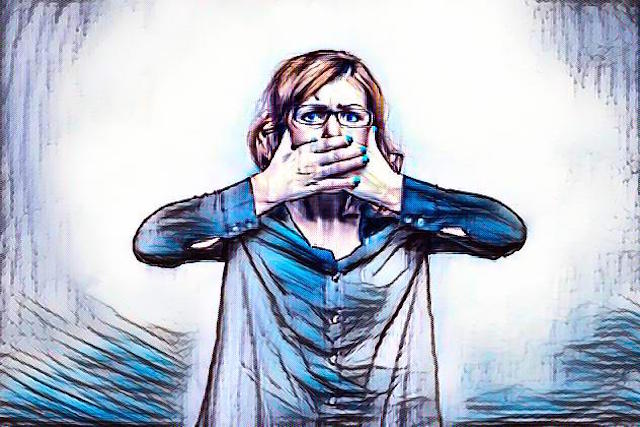
Tag: attack

  • Why Silence Is Often the Best Response to a Verbal Attack

    Why Silence Is Often the Best Response to a Verbal Attack

    “Have the maturity to sometimes know that silence is more powerful than having the last word.” ~Thema Davis

    It all started with the forks.

    “You need to return my forks,” my roommate demanded one morning as I sat in the kitchen attempting to get some work done.

    “I have already said that I don’t have them. We told you that the other roommate has been hiding them,” I replied.

    She began raising her voice at me, “I can’t believe you would accuse her. You’re just a mean, nasty person!”

    I slowly turned around and said calmly, “Today is my birthday, actually. So I don’t really want to have this conversation right now.”

    She retorted, “I don’t care,” and then began to attack my character with a spiel of all the various other things I’ve ever done to upset her.

    Perhaps she felt some kind of underlying hurt, but she would not share this with me. She was not telling me these problems so that we could work on them together to fix the hurt. Instead, she was insulting and attacking my very existence as a human so that I could feel hurt with her.

    I could already foresee that nothing I could say was going to calm her down, so I chose to respond with silence. I suppose my silence pushed her over the edge, because she ended the conversation with “good luck with your miserable life treating people this way!” and stormed out of the room.

    Well, that escalated quickly. All because of some missing forks. I continued on with my birthday as happily as I could.

    Over the next few weeks, I waited for my roommate to come to me in a calm manner to resolve her issues with me, but she never did. Any chance she had, she continued to speak to me in a hateful manner, even though I didn’t engage her.

    For some reason, my respectful silence made her angrier with me. I had held my tongue and kept my negative thoughts to myself, yet she still found a reason to hold on to her anger. This made it seem to me that she did not respect me or wish to resolve our issues.

    One day she shoved me while coming in the front door at the same time as me. She went so far as to spread rumors that I was planning to break up with my boyfriend so that he would break up with me first. I remained silent and still as a tree.

    Looking at things from her point of view, it seems that she was trapped in pain. A pain so severe she wanted someone else to feel it with her. She did not know another way to express her pain to me, so I will never know the true cause of it.

    Luckily for me, she moved out shortly afterward. Though our relationship ended and our issues remained unsolved because of her lack of cooperation, I do not regret my silence for several reasons.

    Silence shows that external factors cannot affect your self-esteem. 

    If you have hurt them, it is okay to acknowledge this and apologize. You are a human who makes mistakes. If they are unfoundedly attacking you, remember that they are speaking from a place of hurt that clouds their judgment.

    In either situation, remind yourself that their negative view of you does not change your self-esteem and value as a person.

    Oftentimes, flinging an insult is a reflection of their hidden insecurities and fears. True maturity comes from letting the hurtful words roll off your back without feeling the need to defend yourself, knowing that they are not a reflection of you.

    Silence is not weakness.

    Silence is harnessing your calm in a heated moment. Silence is a moment of Zen in which you can see the positive and negative coexisting together. Silence is the power to mindfully choose to stay out of the negative space, and not to say hurtful words back.

    It takes true strength to hold your tongue and not succumb to negative energy. With time and practice, it will become easier and easier to ignore negative comments and continue on happily with your day.

    Silence is not ignoring the problem.

    Silence is the way to avoid saying things during a moment’s anger that you may later regret. Of course if the person has cooled off later on and wishes to speak to you calmly and respectfully regarding the matter, you should have a dialogue with them. Rational conversations are the only way to effective conflict resolution.

    Silence is always in your toolbox. 

    When someone has an interpersonal problem that they genuinely wish to fix, they approach the other person from a place within their heart, a place of actual caring and love. If someone immediately attacks your integrity and character, they are not speaking out of love but out of hate. Hatred cannot solve problems, only love can.

    When the other person is being intentionally hurtful, without regard for your feelings, you always have the choice to stay silent and walk away from the conversation. There is a point where no words will calm them down, and they simply want you to join in their anger. Reciprocating their anger and adding fuel to their fire will just make things worse.

    Silence is always there for a moment of clarity.

  • We Are Victors, Not Victims

    We Are Victors, Not Victims

    Victor

    TRIGGER WARNING: This post deals with an account of assault and may be triggering to some people. 

    “You are not a victim. No matter what you have been through, you’re still here. You may have been challenged, hurt, betrayed, beaten, and discouraged, but nothing has defeated you. You are still here! You have been delayed but not denied. You are not a victim, you are a victor. You have a history of victory.” ~Steve Maraboli

    I was about twenty years old. It was a beautiful summer day, and I decided to walk to my parents’ house.

    I usually called them first to let them know I’d be coming, but that day I wanted it to be a surprise. It was a twenty-minute walk there, and I had two bridges to cross, then a small trail close to the woods to walk through and I’d be there.

    I started feeling followed crossing the second bridge, but hey, anyone can take a walk on such a beautiful day, right? So, I continued on and entered the path close to the woods. I was almost there!

    When trees were hiding us from all the passing cars on the road, I felt that the boy following me was getting closer and closer.

    Suddenly, as a cat hunting a mouse, he jumped on me from behind and tackled me to the ground. He started kissing and groping me, and I tried to fight him and fidget my way out to no avail. He was much stronger than I was, even if he looked a bit younger than me.

    I didn’t scream at all; I was subdued! I started to talk to him, plead with him to stop doing this to me. I lied and told him that my parents were waiting for me and would be worried if I didn’t show up soon, and they’d come find me. No reaction.

    He kept abusing me and trying to take my clothes off while pinning me down. He didn’t speak a word. He never looked me in the eye.

    Then, I thought I could talk him out of it by using the psychology I’d learned in college. I started telling him that he must be a good person inside, and that he would feel ashamed if he continued like this.

    I told him that there was no reason to do this since he could certainly have the “real” thing with a consenting woman, and it would be so much more pleasurable than this ugly one-sided aggression.

    Well, I’m not sure what worked. Was it the psychology stunt I pulled or did he just get bored of this stupid young woman who just wouldn’t shut up? He just got up, left me lying there dazed and confused, and ran off never to be seen again.

    I picked myself up, tried to get the dirt off me as much as possible, and walked shakily to my parents’ house.

    Google defines a victim as a person harmed, injured, or killed as a result of a crime, accident, or other event or action. Obviously, the casualties are the only victims that do not have to learn to live with the aftermath of the traumatic event. The others, however, are marked either physically or psychologically by what happened to them.

    The six o’clock news is filled with stories of tragedies, big and small. These can take on so many different forms, but the end result is always the same: victims. They can be victims of Mother Nature’s wrath, victims of a horrific crime or injustice, or victims of some kind of accident.

    So many people feel stuck in their lives after having lived through a traumatic experience. They are paralyzed for months, years, and even decades by the shock, hurt, and fear associated with what they’ve endured.

    Some people have to live with physical reminders of this tragic event, and others have psychological repercussions that limit their ability to live a normal life.

    After my aggression, I felt soiled, tainted. I remember taking shower after shower trying to get my aggressor’s smell off of me. But even when I was sure I was clean of any traces of him, my brain was stuck in the event.

    How can one evolve from being a victim to being a survivor? Doesn’t the term “survivor” give more hope in tomorrow than “victim”? Seems to me that “victim” suggests ongoing pain and suffering, whereas “survivor” is someone who was able to leave the pain and suffering behind him and start living again.

    “I am not what happened to me. I am what I choose to become.” ~Carl Jung

    So the first step is to acknowledge that yes, you were a victim, but who you are and what happened to you are two very different things. You have to learn to establish a separation between the two if you ever wish to distance yourself from the victim you once were.

    I was able to graduate from victim to survivor when I acknowledged that I had been violated—that I had been a victim. I had to work through the guilt of thinking I must have done something to deserve this. I kept re-living the scene over and over again in my mind, wondering where I went wrong and how I could have reacted differently.

    I also felt guilty about the way I had resolved the situation. Why hadn’t I screamed, hit him, hurt him? The very questions that the policemen asked me when I reported the aggression.

    Now I realize that the way I handled the situation (although it didn’t please the policemen) was my way of resolving this. I shouldn’t feel guilty since, in the end, it worked. When policemen are placed in difficult situations, they get to choose how they react. I had to do the same.

    The next step is forgiveness—forgiving the person who hurt you or accepting the fact that nature acts up sometimes and people get stuck in the middle of it. In some instances, people just have to accept that accidents happen; there isn’t always someone to blame or lash out at.

    “Forgiving someone doesn’t mean condoning their behavior. It doesn’t mean forgetting how they hurt you or giving that person room to hurt you again. Forgiving someone means making peace with what happened. It means acknowledging your wound, giving yourself permission to feel the pain, and recognizing why that pain no longer serves you. It means letting go of the hurt and resentment so that you can heal and move on.” ~Daniell Koepke

    Obviously, this is easier said than done.

    In my case, forgiving my aggressor was easier than letting go of my feelings of guilt. Even during the aggression, I felt that this boy was not well. It was clear to me that he was acting this way because he felt alone and unloved.

    He decided that he was going to fill his need for contact and love even if it was in an inappropriate way; his need was just too strong. I’m not saying he was right to do what he did; I’m just saying that I understand and can forgive him.

    But forgiving doesn’t mean forgetting. I believe that surviving a traumatic event changes you forever. You will not react to life the same way that you would have reacted before having lived through this.

    I am more careful now of where I walk when I’m alone, and much less relaxed when being followed by someone.

    Sometimes a situation can trigger me and transport me right back to that very moment to relive the whole thing yet again. Usually this happens when someone playfully restrains me with his hands to tickle me, touch me, or kiss me.

    I will never be the naive and carefree girl that I was before my attack. I have my scars. They are not physical but psychological, yet they are very real.

    However, I have learned not to let this event define me. I have decided that this is but one event among so many others (good and bad) that have helped shape me into the woman that I am today. I am now a “victor.” I have won!

    I can live, I can smile, I can laugh. I can walk, I can run, I can soar. I am stronger than whatever happens to me. And so are you.

    Free woman silhouette via Shutterstock

  • Dealing with Verbal Attacks: 6 Ways to Take the Sting Out of an Insult

    Dealing with Verbal Attacks: 6 Ways to Take the Sting Out of an Insult

    Man Yelling

    “Pain can change you, but that doesn’t mean it has to be a bad change. Take that pain and turn it into wisdom.” ~Unknown

    Sometimes other people’s words can stir up very painful emotions in us.

    Do you remember when you felt so disempowered by someone’s remarks that you froze on the spot and couldn’t think of anything to say back to them?

    Or maybe you did say something, but it was so lame that you wished afterward you’d kept your mouth shut and just sucked it all up.

    This happened to me recently when I was helping someone and, instead of gratitude, I received verbal abuse. I learned a valuable lesson from it that I would like to share with you.

    When Words Make You Speechless

    As part of my job, I provided home care for an elderly lady, and from day one I had a feeling we would clash.

    She was eccentric, quick to judge, and unafraid about voicing her opinions. Being a timid person, I always tried to avoid conflicts with such people.

    One seemingly unremarkable day, as I was finishing my duties at her house, I began to engage in small talk with her. I was stunned when she replied out of the blue, “You are so stupid! Your whole being, and the way you are!”

    Within a split second I was swimming in negative emotions, so shocked that I literally froze in my tracks. I stood there in disbelief, unable to say a single word, wrapped in embarrassment and shame.

    Then came the internal chatter. “How could she be so insensitive? Does she realize how hurt I feel? I should say something back, but I just can’t think what.”

    From deep pain to personal empowerment

    I walked away that day vowing never to feel so weakened by someone’s statements again.

    I went over this episode in my mind, looking for answers. Within a few weeks, I no longer felt hurt. Instead, I had developed a new perspective—I needed this experience to resolve something within myself.

    I have had similar incidents since then, and my reaction is now completely different. I’m freer and stronger.

    You can be, too.

    It can take a while, but determination and conscious effort will bring you the gift of a new perspective, just as it did for me.

    Taking the Sting out of Insulting Words

    Being verbally abused hurts. It’s perfectly natural to react defensively—but once the initial shock has worn off, here are six ways you can turn your reaction into something positive.

    1. Allow yourself to ruminate in a healthy way.

    It’s normal to replay upsetting events in your mind to get a handle on them. Done right, introspection is a valuable device for personal growth and empowerment.

    Thoughts and images from a hurtful episode will pop up time and again as long as it still bothers you. So instead of suppressing them, allow them to surface. Observe them—but without obsessing and getting stuck in a mental loop.

    Then, each time memories of the event surface, ask yourself if you are ready to let go of the shame that accompanies them. Think of this process as using an eraser; every time you rub away, the pain will start to fade and soon only a faint mark will remain.

    2. Identify the other person’s (possible) motive.

    In situations like this, convincing yourself you’ve done something wrong can be an automatic reaction.

    Although you’ll never know for sure why someone gains pleasure from dishing out verbal abuse, you can make some educated guesses. Unless the person is a total stranger, you’ll have some understanding about them and you can figure out if they are intentionally malicious or just thoughtless and not worth wasting your energy on.

    But don’t just rely on your own intuition—get a second opinion. Be a detective and quiz mutual acquaintances. They’ll likely share similar stories, and might even add insights that will help relieve more of your emotional burden. (This is not gossip—it’s for your own peace of mind.)

    When I spoke to friends about my experience, I heard nearly identical tales of how this woman had bullied and intimidated others. I knew that bullies are usually suffering themselves, so these stories confirmed to me that she had acted from a state of pain herself, meaning that her words were not true reflections of me.

     3. Turn the spotlight inward.

    To better prepare yourself for the next time you are insulted, spend a little time reflecting on why you are so affected by the words of others in the first place. What beliefs do you hold that contribute to your reactions?

    Think about how, in the heat of the moment, you are so swallowed up by emotions that you can’t think clearly. What creates this storm inside you?

    For me this answer took a while, but I now think it was about pride—I felt my identity was under threat. I was attached to the idea that everyone should treat me kindly, so my world was shattered when someone didn’t.

    Upon reflection, I figured I’d do myself a favor if I didn’t expect to be liked by everybody and instead embraced the possibility that conflicts might occur.

    What beliefs do you hold that might be counterproductive to your emotional wellbeing?

    4. Know what words really are.

    Another thing I learned on this journey was that words by themselves are not harmful. It’s the meanings they carry that make them powerful.

    Imagine having a conversation with someone who speaks a different language than you. Nothing the other person says to you makes sense. You look at them blankly, trying to piece some meaning together out of the jumble of sounds you hear. It wouldn’t matter if they were cursing or flirting—you wouldn’t know the difference.

    So why is it that once you are aware of what these words mean, they have the potential to hurt? At some point you learned to associate words with meanings, but in reality they are just sounds. It’s up to you what you make of them.

    5. Own your vulnerability.

    Open your heart to the possibility of being wounded by others’ words. Life is never a smooth ride, and sometimes other people will hurt you with what they say. They may even render you silent when you’d rather stand up for yourself.

    Remember that a small bump in the road doesn’t mean you’ve failed or that you have to hide. Accept that you sometimes won’t have the courage to act, but you can change over time.

    The key, I’ve found, is slowly opening up. Share your true self with others. The more you admit your ”imperfections,” the more others will respect and accept you. Talking things over with friends, family, or even someone neutral makes you more human and relatable.

    As researcher, author, and speaker Brené Brown has said, “Shame derives its power from being unspeakable.” Therefore, to prove your shame wrong, go out there and talk about it. After a while it will diminish and go away.

    6. Resolve to speak up next time.

    All this insight can help you deal with past insults, but what about the next time someone verbally attacks you? After all your reflection and internalizing the importance of bravery, will you be ready to stand up for yourself and fight back?

    Sure enough, I didn’t have to wait too long for another round of insults by someone else. She was big, bold, and brash.

    This time the stakes were higher—we were in the company of other people whom I knew and respected. And this woman didn’t just aim a word or sentence at me; it was an entire barrage of accusations intended to undermine my persona.

    I waited until we were in private. Then I said my piece with real force and emphasis. The end result? She never treated me like that again. And I grew enormously in my own eyes.

    You can do this, too.

    Reclaim Your Inborn Power

    We were all born with a perfect system to take on life’s challenges, be that running away from a tiger or standing up for ourselves.

    If you believe you’ve lost the ability to stand firm in the face of insults, it’s never too late to get it back.

    You’re perfect as you are now, warts, vulnerabilities, and all.

    So don’t let a little wobble like someone’s words throw you off track. Take it in stride and remember they are just sounds that you are giving certain meanings to.

    Because insulting words don’t just have the potential for hurt. They also have immense power to change your life for the better.

    The question is, are you ready to use the verbal attacks of others as fuel for personal growth?

    I was a timid person and I did it—so I know you can, too.

    Man yelling image via Shutterstock