Tag: attach

  • Letting Go of Attachment: From A to Zen

    Letting Go of Attachment: From A to Zen

    “Most of our troubles are due to our passionate desire for and attachment to things that we misapprehend as enduring entities.” ~Dalai Lama

    If there’s one thing we all have in common, it’s that we want to feel happy; and on the other side of that coin, we want to avoid hurting. Yet we consistently put ourselves in situations that set us up for pain.

    We pin our happiness to people, circumstances, and things and hold onto them for dear life. We stress about the possibility of losing them when something seems amiss. Then we often get stuck in grief when something changes—a lay off, a breakup, or a transfer.

    We attach to feelings as if they define us, and ironically, not just positive ones. If you’ve wallowed in regret or disappointment for years, it can seem safe and even comforting to suffer.

    In trying to hold on to what’s familiar, we limit our ability to experience joy in the present. A moment can’t possibly radiate fully when you’re suffocating it in fear.

    When you stop trying to grasp, own, and control the world around you, you give it the freedom to fulfill you without the power to destroy you. That’s why letting go is so important— letting go is letting happiness in.

    It’s no simple undertaking to let go of attachment—not a one-time decision, like pulling off a band-aid. Instead, it’s a day-to-day, moment-to-moment commitment that involves changing the way you experience and interact with everything you instinctively want to grasp.

    The best approach is to start simple, at the beginning, and work your way to Zen.

    Experiencing Without Attachment

    Accept the moment for what it is.

    Don’t try to turn it into yesterday; that moment’s gone. Don’t plot about how you can make the moment last forever. Just seep into the moment and enjoy it, because it will eventually pass. Nothing is permanent. Fighting that reality will only cause you pain.

    Believe now is enough.

    It’s true—tomorrow may not look the same as today, no matter how much you try to control it. A relationship might end. You might have to move. You’ll deal with those moments when they come. All you need right now is to appreciate and enjoy what you have. It’s enough.

    Call yourself out.

    Learn what it looks like to grasp at people, things, or circumstances so you can redirect your thoughts when they veer toward attachment—when you dwell on keeping, controlling, manipulating, or losing something instead of simply experiencing it.

    Define yourself in fluid terms.

    We are all constantly evolving and growing. Define yourself in terms that can withstand change. Defining yourself by possessions, roles, and relationships breeds attachment, because loss entails losing not just what you have, but also who you are.

    Enjoy now fully.

    No matter how much time you have in an experience or with someone you love, it will never feel like enough. So don’t think about it in terms of quantity; aim for quality instead. Attach to the idea of living well from moment to moment. That’s an attachment that can do you no harm.

    Letting Go of Attachment to People

    Friend yourself.

    It will be harder to let people go when necessary if you depend on them for your sense of worth. Believe you’re worthy whether someone else tells you or not. This way, you relate to people, not just how they make you feel about yourself.

    Go it alone sometimes.

    Take time to foster your own interests, ones that nothing and no one can take away. Don’t let them hinge on anyone or anything other than your values and passion.

    Hold lightly.

    This one isn’t just about releasing attachments; it’s also about maintaining healthy relationships. Contrary to romantic notions, you are not someone’s other half. You’re separate and whole. You can still hold someone to close to your heart; just remember, if you squeeze too tightly, you’ll both be suffocated.

    Interact with lots of people.

    If you limit yourself to one or two relationships, they will seem like your lifelines. Everyone needs people, and there are billions on the planet. Stay open to new connections. Accept the possibility your future involves a lot of love whether you cling to a select few people or not.

    Justify less.

    I can’t let him go—I’ll be miserable without him. I’d die if I lost her—she’s all that I have. These thoughts reinforce beliefs that are not fact, even if they feel like it. The only way to let go and feel less pain is to believe you’re strong enough to carry on if and when things change.

    Letting Go of Attachment to the Past

    Know you can’t change the past.

    Even if you think about over and over again. Even if you punish yourself. Even if you refuse to accept it. It’s done. The only way to relieve your pain about what happened is to give yourself relief. No one and nothing else can create peace in your head for you.

    Love instead of fearing.

    When you hold onto the past, it often has to do with fear—fear you messed up your chance at happiness, or fear you’ll never know such happiness again. Focus on what you love and you’ll create happiness instead of worrying about it.

    Make now count.

    Instead of thinking of what you did or didn’t do, the type of person you were or weren’t, do something worthwhile now. Be someone worthwhile now. Take a class. Join a group. Help someone who needs it. Make today so full and meaningful there’s no room to dwell on yesterday.

    Narrate calmly.

    How we experience the world is largely a result of how we internalize it. Instead of telling yourself dramatic stories about the past—how hurt you were or how hard it was—challenge your emotions and focus on lessons learned. That’s all you really need from yesterday.

    Open your mind.

    We often cling to things, situations, or people because we’re comfortable with them. We know how they’ll make us feel, whether it’s happy or safe. Consider that new things, situations, and people may affect you the same. The only way to find out is to let go of what’s come and gone.

    Letting Go of Attachment to Outcomes

    Practice letting things be.

    That doesn’t mean you can’t actively work to create a different tomorrow. It just means you make peace with the moment as it is, without worrying that something’s wrong with you or your life, and then operate from a place of acceptance.

    Question your attachment.

    If you’re attached to a specific outcome—a dream job or the perfect relationship—you may be indulging an illusion about some day when everything will be lined up for happiness. No moment will ever be worthier of your joy than now because that’s all there ever is.

    Release the need to know.

    Life entails uncertainty, no matter how strong your intention. Obsessing about tomorrow wastes your life because there will always be a tomorrow on the horizon. There are no guarantees about how it will play out. Just know it hinges on how well you live today.

    Serve your purpose now.

    You don’t need to have x-amount of money in the bank to live a meaningful life right now. Figure out what matters to you, and fill pockets of time indulging it. Audition for community theater. Volunteer with animals. Whatever you love, do it. Don’t wait—do it now.

    Teach others.

    It’s human nature to hope for things in the future. Even the most enlightened people fall into the habit from time to time. Remind yourself to stay open to possibilities by sharing the idea with other people. Blog about it. Talk about it. Tweet about it. Opening up helps keep you open.

    Letting Go of Attachment to Feelings

    Understand that pain is unavoidable.

    No matter how well you do everything on this list, or on your own short list for peace, you will lose things that matter and feel some level of pain. But it doesn’t have to be as bad as you think. As the saying goes, pain is inevitable, suffering is optional.

    Vocalize your feelings.

    Feel them, acknowledge them, express them, and then let them naturally transform. Even if you want to dwell in anger, sadness, or frustration—especially if you feel like dwelling—save yourself the pain and commit to working through them.

    Write it down.

    Then toss it out. You won’t always have the opportunity to express your feelings to the people who inspired them. That doesn’t mean you need to swallow them. Write in a journal. Write a letter and burn it. Anything that helps you let go.

    Xie Xie.

    It means thank you in Chinese. Fully embrace your happy moments—love with abandon; be so passionate it’s contagious. If a darker moment follows, remember: It will teach you something, and soon enough you’ll be in another happy moment to appreciate. Everything is cyclical.

    Yield to peace.

    The ultimate desire is to feel happy and peaceful. Even if you think you want to stay angry, what you really want is to be at peace with what happened or will happen. It takes a conscious choice. Make it.

    Zen your now.

    Experience, appreciate, enjoy, and let go to welcome another experience.

    It won’t always be easy. Sometimes you’ll feel compelled to attach yourself physically and mentally to people and ideas—as if it gives you some sense of control or security. You may even strongly believe you’ll be happy if you struggle to hold onto what you have. That’s okay. It’s human nature.

    Just know you have the power to choose from moment to moment how you experience things you enjoy: with a sense of ownership, anxiety, and fear, or with a sense of freedom, peace, and love.

    The most important question: What do you choose right now?

    Jumping for joy image via Shutterstock
  • We’re Not Against Each Other: Choosing Cooperation Over Competition

    We’re Not Against Each Other: Choosing Cooperation Over Competition

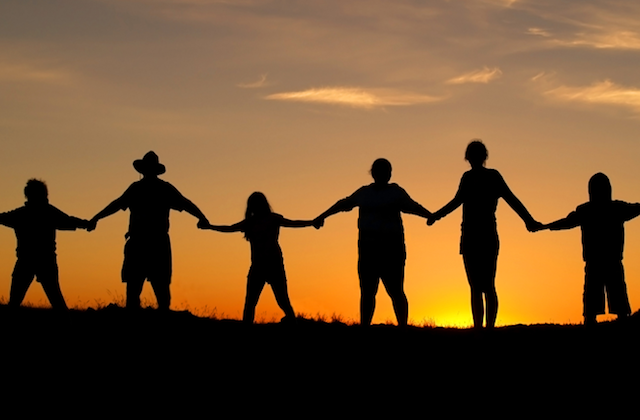
    Holding Hands

    “If you light a lamp for someone else, it will also brighten your path.” ~Buddha

    It’s long been declared that the nature of life is based on survival of the fittest; that we all must constantly compete to survive.

    And maybe, in some ways this is true.

    But what if there were another truth, something that is even more powerful than competition?

    What if cooperation is our true natural state?

    Consider this: love is more powerful than hate.

    Hope is more powerful than fear.

    And if we believe in love and hope, then we believe in the power of unity. We believe in the force of positive energy.

    In my own life, I have experienced the power of cooperation. I know how much better life feels when I choose to work with rather than against the people in my world.

    When I am willing to find ways to communicate, to release blame and criticism, to connect with the people I share this life with, I open myself to more joy and ease.

    When I slip into the mindset of competing with my husband for who has more free time, or who has contributed more to our family, or who has initiated more acts of kindness, I feel detached, separate, and pretty horrible.

    This is the underlying effect of competition; we envision ourselves as separate. We lose touch with our interconnectedness, our wholeness, our oneness.

    I notice this with my children. When my girls are expressing angst toward one another, I recognize that their antagonistic behavior is not so much about being mean or hateful, but rather a request for attention.

    They each want to know that they matter, that they are a valuable part of their family, that they are connected with the people upon whom they rely for nurturing.

    It seems to me that perhaps competitive nature is not so much the natural state of being, but rather a result of feeling disconnected from the security and certainty of being part of something greater than ourselves.

    I think, in fact, that cooperation is our true nature. We must work together to survive, to thrive, to grow, to evolve.

    Not one of us is an island; we know this for sure. But how often do we contemplate the interconnectedness of our lives with every other thing on this planet—even with those from the past and those who will exist in the future?

    In the culture where I live, I have seen the idolization of independence, the heralding of the individual as paramount above community, the applause given to those who stand out. 

    Many claim that these individuals have made their own success and become who they are because of their tenacity and brilliance. And yes, there is something to be said about focus and determination.

    But even more, we must recognize that an individual’s success is the result of being part of community.

    Malcolm Gladwell explained this so eloquently in Outliers: The Story of Success, “No one—not rock stars, not professional athletes, not software billionaires, and not even geniuses—ever makes it alone.”

    The truth is, we are all connected, and this really is a good thing.

    As a mama who practices attachment parenting, I have long believed that creating a strong bond between parent and child is essential to building a foundation of trust, security, and confidence. I did not ever consider that this attachment theory can be expanded to include all of our relationships.

    Recently I read Hold Me Tight, by Dr. Sue Johnson, in which she clearly elucidates how vital it is for humans to create and nurture attachments to the people in our lives. In fact, these attachments are absolutely essential to our wellness, our ability to thrive, our very existence.

    In her writing, Dr. Johnson shatters the notion that being attached to someone, whether a partner, a parent, a child, or a friend, is a negative or weak state of being. Attachment theory teaches us that relying on someone for support and love is the essence of our nature.

    Some wonder if being attached may cause us to suffer, but if we are able and willing to let go of relationships when they run their course, attachment does not have to lead to suffering. Honoring the essential nature of change in our lives will help us surrender to releasing a relationship when the time is right.

    No matter what, it’s good, even necessary, to be attached to others.

    Cooperation truly is our natural state of being.

    This is not to say that competition does not have its place in our experience. Sometimes a competitive attitude can be useful, but for the progress of life on our planet, we must learn to embrace a new truth: we are one.

    Truly, the more we learn to attach to others, to rely openheartedly on our community, to accept our interconnectedness with grace and joy, the more we will thrive as we move forward.

    I remember watching Tom Shadyac’s revolutionary film I Am a few years back and being so moved and excited. This brilliant documentary unveils the truth that even in nature, there is an innate sense of cooperation among animals.

    The film reminds us that as we choose unity, we elevate the energy and consciousness of life on our planet. We give ourselves an opportunity to live in greater harmony with our environment and with one another.

    I know this may be challenging for some to accept. There are many individuals in my life who absolutely disagree with me. And that’s okay, too. Still, I know what I believe. And I release the need to be right. Instead, I invite us all to question what we believe and to ponder what could be rather than what has been.

    So even though a dear relative recently expressed to me that competition will always be the nature of life, that aggression and violence are the most basic actions of all creatures on the planet, that we must know how to protect ourselves in order to stay alive in the midst of any chaos that could ensue from natural disasters…

    I still believe in unity.

    I recognize that the way humans have existed (for the most part) up until this point has been competitive in nature. We have compared, judged, struggled, oppressed, conquered, and still we strive. And yet, there have also been moments of grace and inspiration throughout time.

    Consider the gracious and giving heart of Mother Teresa, the desire to free people from the belief of separateness that MLK, Jr. heralded, of Gandhi’s willingness to put others before his own needs.

    Even consider the everyday people who are living from a place of love—people all over the world are awakening and elevating their consciousness, choosing to be of service, to give, to embody pure love.

    I see it in the communities flourishing around me where people exchange time rather than money for services.

    I see it in the way organizations are shifting their paradigm of business to make giving back a priority.

    I see it in the countless people coming together who recognize the value of caring for our environment and our planet.

    I see it in the kindness people express with a smile as they pass one another on the street.

    Cooperation is anything and everything that helps us feel connected, part of something meaningful. It can be a thought, a touch, a glance, an act, a memory. There are infinite ways of being in this world. Imagine if we made being kind the most important.

    In his interview about the most astounding fact in his studies of astrophysics, Dr. Neil DeGrasse Tyson stated, “We all just want to be part of something bigger than us, to feel that sense of connectivity…”

    And I agree. Life is meaningful when we share it with others.

    So I ask you this: What could happen if we transform our reality, even just our perception of it?

    What could happen if we embody the practice of cooperation? Of giving and receiving with an open heart. Of feeling good enough just as we are. Of practicing kindness. Of sharing love. Of truly being the change we wish to see in the world.

    Most of us want to live in a world where peace prevails, but are we actually practicing peace in our lives?

    Are we aware of when we think critically or judgmentally, about others or ourselves?

    Are we aware of when we pull away from the people we love the most out of anger or fear or frustration?

    And once we raise our awareness, can we embrace a willingness to change and transform our lives from the inside out?

    I invite you to join me on this journey. To choose to see life through the eyes of love. To choose joy and hope over anger and fear. To truly illuminate the light shining brightly within you.

    I dare you. Be a revolutionary. Embrace peace and love and unity.

    I’m right here next to you.

    I believe in us—the daring dreamers, the visionaries, the joy seekers, the love creators.