“Fear is a reaction. Courage is a decision.” ~Winston S. Churchill
In a recent episode involving a field trip my daughter is taking, I found myself at a crossroads, grappling with the fear of expressing concerns early in a conversation. As a parent, I highly value my children’s growth but struggle with the balance of asserting my needs without risking relationships.
The plans felt, on first reading, overly ambitious, so I wanted more information and I wanted to be able to express myself and feel heard. I highly value situations where my kids have opportunities to overcome challenges and build some confidence and resilience, but I also want to make sure they are actually capable of the challenges.
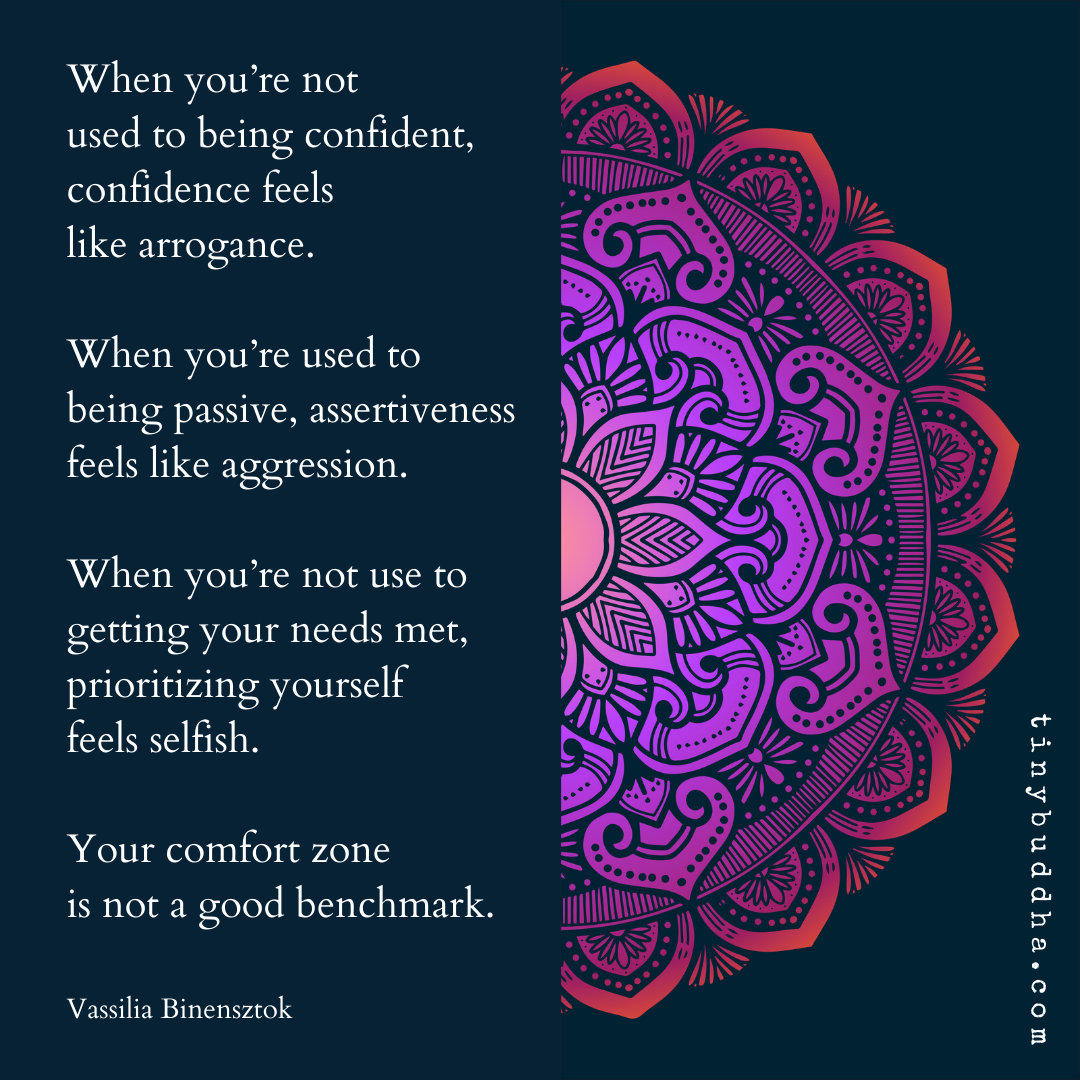
I know that all sounds perfectly reasonable, and it is, except one thing: I’ve never really been good at presenting my needs early in a conversation. Usually I wait in fear of damaging the relationship and only come in confidently once there is really something to complain about.
I’ve read books and taken courses that have taught me practical skills for having hard conversations, but the truth is, in the absence of something that has made me really angry, they have always terrified me.
Now that I have done a lot of inner personal work, I can quite easily see and share that I was hesitant to express myself because I didn’t want to create a rift in the relationship. That person is quite an important figure in my child’s life. I was also hesitant because there was no anger present to fuel my courage.
Yet, as a parent, I know my involvement and advocacy can contribute positively to my children’s development, but I’ve learned it needs a thoughtful approach. That is often much easier when there is space and time for building trust in those relationships with people, where tone, body language, and repeated successful interactions can go a long way.
In this case, the person organizing the itinerary is generally not available for casual conversation because they are incredibly busy. Therefore, any questions are automatically more formal, as they have to be expressed in writing.
The other dynamic going on for me, which is now much easier to see after years of personal work, is that this person has a tendency to be quite bossy and, with being so busy, I fear that any kind of concern raised will be deemed criticism and set off an angry or defensive response and rupture the relationship.
This isn’t because I’ve experienced this with this particular person. It has far more to do with childhood patterning that has been reinforced through other experiences in adulthood.
The fear I feel is an old one, trying to keep me safe. It’s my nervous system and neurobiology saying, “We know these warning signs. The bossy lady will broker no criticism and there will be trouble, and that isn’t good because her relationship is critical to your/your children’s survival.”
Of course that isn’t true, and as an adult, when I look at it through this lens, I can see it’s not a mature response. But I can assure you, even with the knowledge that the inner nervous system responses and chemicals released that once kept me safe are now outdated, and the knowledge that then is not now, the panic still rises.
I spent some time crafting what I wanted to say. I spent even more time revising it so it was balanced, concise, and rational (and thank goodness I now have ChatGPT to help me with this). I then sense-checked it with trusted friends to make sure it expressed my concerns in a balanced, respectful way.
Despite all that, as I went to press the send button, I paused as panic rose. If I could put words to that panic, it would say, “Wait! This could break the relationship, and then you’ll be in trouble.” The implied meaning of “trouble” is unclear, but my nervous system clearly thinks it’s life or death.
This journey to assertiveness then took an unexpected turn when an upsetting incident unfolded right outside my home just as my finger was hovering over the send key.
A father and his two young kids stopped. The kids were maybe three or four years old, and the little girl was crying and protesting at going any further, clearly just wrung out. It was teatime, and the kids were on their little bikes.
The dad, perhaps in his early thirties, was walking. He looked average height—though certainly, to his kids looking up at him from their bikes, he would look like a giant—and looked quite athletic in his build with his T-shirt and cap on.
After a few minutes, the dad lost his temper. Rather than console and provide encouragement to his daughter, he yelled, “Shut up!” at her quite cruelly. He went on to rant and threaten never to bring them out again if this was the way the way they were going to behave. Then he turned to the little girl from his lofty position and pointed at her yelling, “You’re acting like a baby! Stop it!” several times.
I froze, and then I thought, “Do I intervene here?” I knew I was witnessing a dad in his own trauma state, doing to his kids what had likely been done to him. As Dr. Gabor Maté says, “It is often not our children’s behavior but our inability to tolerate their negative responses that creates difficulties. The only thing the parent needs to gain control over is our own anxiety and lack of self-control.”
If I were to intervene, the first thing I would have to do is help the dad regulate his nervous system, to feeler calmer and disarm him.
For that, I would need to call upon my inner Christian Conte, author of Walking Through Anger: A New Design for Confronting Conflict in an Emotionally Charged World. Not at that advanced stage of my communicating journey, I decided to opt for physical presence and a friendly smile to reassure the kids as they continued on their journey around the corner. But when I stepped outside, they’d gone.
I sat and reflected on what had just happened, my own nervous system in a state of flux from overhearing the interaction. I felt deeply upset and realized, as I sat down, I was a bit shaky. I listened as my heartbeat eventually slowed and hearing returned to my ears. I once again felt present and calm in my environment. Then I called a friend to talk it over.
Eventually, as my thoughts turned back to what I’d been doing before that upsetting interruption, I turned back to my email.
Knowing I’m not the helpless child listening to a misdirected outburst from an adult anymore, I did what I knew I had to do to assuage my own inner child and advocate for my daughter. I had to put my big girl pants on for real and be the rational adult. I knew I hadn’t written anything I’d regret. I knew I’d been balanced and clear. I pressed send.
It’s worked out well. My concerns have been addressed, and I feel heard and more confident about the itinerary.
In my fifties, I’m finally learning how to present my needs much earlier in the conversation. My life has been prompting me to learn that lesson over and over in every interaction that went sideward.
I see it in my own children’s experiences in adolescence, the way they are drawn to certain people who are challenging them to learn how to assert themselves respectfully.
It’s taken a while, and it’s taken me stepping back to understand my reactions more and to learn the skills I need to hear myself, calm myself, and be compassionate with myself.
How do you navigate conversations that require assertiveness? What fears or patterns might be holding you back?
Learning to speak up early in the conversation is not just a personal journey but a valuable skill that fosters healthy relationships and gives you the ability to advocate for yourself and your loved ones. And if not now, when?