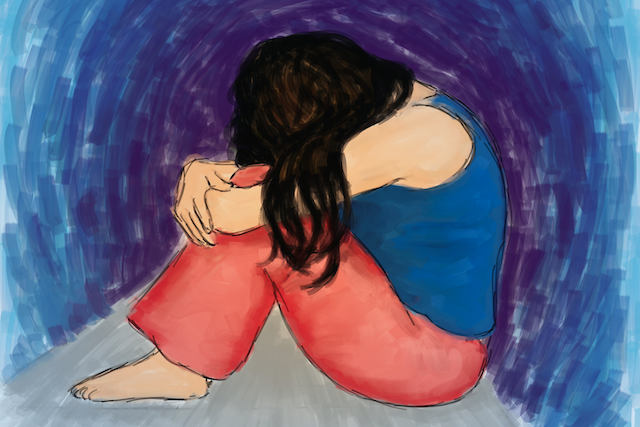
Tag: ashamed

  • Transmuting Shame: None of Us Need to Be Fixed

    Transmuting Shame: None of Us Need to Be Fixed

    “Shame is the intensely painful feeling or experience of believing that we are flawed and therefore unworthy of love, belonging, and connection.” ~Brené Brown, Atlas of the Heart

    This past year, I started the journey of investigating—maybe even befriending—“my” shame.

    I use quotes around the “my” because most of the shame is not mine; much of it is internalized sexism, racisim, anti-blackness and homophobia, and/or intergenerational—it was passed down to me. And while I didn’t choose to internalize or inherit it, it is my responsibility to care for “my” shame, to tenderize it with love and compassion so it may be transmuted. I get to alchemize and grow flowers rooted within the rich compost of my healing journey, fertilized by ancestral gifts.

    Shame is one of the most uncomfortable experiences, so much so that we often project our shame onto others to provide some relief from the discomfort. I learned this at the Mindful Self-Compassion (MSC) teacher training intensive I had the privilege to attend in the fall.

    During the MSC training, I received the blessing of the dharma of shame and learned about its antidote—mindful self-compassion. Five wise practitioners, including Chris Germer, one of the co-founders of the eight-week MSC program, guided about thirty individuals (from across the United States, including some folks from overseas) to experience the power of self-compassion through a week-long workshop.

    Chris shared a wisdom gem I will never forget: shame is rooted in our universal need and desire to be loved. The innocence of shame touched something deep in me; it felt like permission, or an invite, to see the exiled parts of myself battling shame.

    I had never really talked about shame before training to offer mindful self-compassion. It felt like if I talked about the shame, if I named it, you would see the thin film of shame that I felt covered my body for much of my childhood into young adulthood. It felt like if I named it, you would know I was not worthy of the love I felt desperate for.

    There was shame around being a girl, then a woman; there was shame around being expansive in my sexual orientation and gender expression; there was shame in being a survivor of domestic and sexual violence; there was shame around socioeconomic status… the list goes on.

    Mindful self-compassion has helped me look beyond the victim mentality I used to strongly identify with. I see that, like all of us, I have been shaped by early experiences with caregivers and by the environments I have grown in. I see that, like most of us, I have always done the best I could with the tools available to me at the time. And in my experience, I have leaned on—and clung to—many maladaptive tools like using substances to escape.

    Today, I am grateful to know the shame comes from an innocent place and that it can be transmuted into compassion for myself and for all beings everywhere.

    I don’t remember where I first learned this, but Brené Brown also talks about shame’s roots in the universal need for belonging. When we feel we are separate from the rest of the world, when we feel we don’t belong, there is a specific form of pain and suffering that emerges.

    In my experience, feeling like I did not belong, feeling separate, created deep wounds of unworthiness and otherness. Brené goes on to talk about “fitting in” being the opposite of belonging. And in my desperate attempts to belong and be loved, I leaned into the facade of “fitting in,” and the wounding deepened.

    In writing about my lived experience—releasing what’s been floating around for years in my mind-body space—I am reminded of Brené Brown’s Atlas of the Heart.

    She defines shame as “the intensely painful feeling or experience of believing that we are flawed and therefore unworthy of love, belonging, and connection.”

    She offers “shame 1-2-3s”: (1) We all have it. Shame is universal and one of the most primitive emotions that we experience. The only people who don’t experience it are those who lack the capacity for empathy and human connection. (2) We’re all afraid to talk about it. Sometimes we can feel shame when we just say the word “shame.” But it’s getting easier as more people are talking about it. And (3) The less we talk about it, the more control it has over us. Shame hates being spoken.

    So, here is my first writing—likely one of many—on shame, as I continue this sacred journey of becoming a mindful self-compassion teacher and offering one of the mindfulness-based programs for mental health that’s been most impactful for me.

    I’ll close with one more share, offered by a beautiful mentor, one of the facilitators of the teacher training intensive: “No one here needs to be fixed.

    As he shared this at the opening to the week-long intensive, I felt my body soften and exhale. It was received as a love note to little river exiles: I am not bad, I am not unworthy, I do not need fixing. Like all of us, I deserve love, belonging, and connection. We all do; no matter what has happened in the past, no matter what the future holds. Right here, right now, we deserve and are worthy of love, belonging, and connection.

    May we feel love, belonging, and connection. May we know we are loved, we belong, and we are interconnected. May we support each other on the journey of self-liberation.

  • Liberate Yourself: 5 Reasons to Share Your Truth

    Liberate Yourself: 5 Reasons to Share Your Truth

    “When we deny our stories, they define us. When we own our stories, we get to write the ending.” ~ Brené Brown

    Do you ever feel like a character in someone else’s play? More so, a victim in your own story?

    I spent many years of my life this way. I was so consumed with what others thought about me, I didn’t even know how to be myself. I would put on a show I thought everyone else wanted to see. I’ve learned we don’t have to perform in life; we just need to be ourselves. Speaking with openness and honesty from the heart is our most valuable tool for living an authentic life.

    Growing up, I was a ‘sensitive’ kid. I was ridiculed often for simply having feelings. I learned pretty quickly to shut down, numb, and medicate.

    I began to have struggles with anxiety and depression. I didn’t really know this was what it was until it progressed into something much more unmanageable. I tried to talk about my feelings and was often questioned and shunned for them. Eventually, these feelings manifested into a pretty significant eating disorder.

    No one recognized my eating disorder because being thin was ‘in.’ However, to put it into perspective, I was tracking 500 calories a day, working out one to two hours a day, and purging anything I put in my body.

    I was confronted about this by two friends in college. I remember feeling relieved but also ‘found out.’ From my perspective at the time, I thought I was functioning well in life. I was going to school and working full-time while maintaining friendships and a new relationship.

    Even during this intervention, I found myself justifying the behaviors. Keep in mind, they were only confronting me about the eating disorder, not the daily binge drinking I was also engaging in.

    Fast-forward five years. I found myself married and divorced in under a year. Prior to the divorce, I was hiding my drinking of one bottle of wine a night. I was functioning in one area of my life but falling apart in all the others.

    Surprisingly, my addictive patterns never impacted my career. I was living a dual life, providing therapy to others while hardly treading water personally.

    In 2010, I found myself with my first DUI. I never did anything real to rehabilitate from this. And I concealed it to the best of my ability, hoping it would just go away. However, experiences tend to repeat themselves until we learn what we are supposed to learn. I got a second DUI in 2013. After that, I did a bit of rehabilitating but still didn’t stop the drinking. I was just no longer driving after the drinking.

    I paid $10,000 in legal fees simply trying to plead my case of being not guilty when clearly, I was guilty. This was such a moral conflict for me.

    I applied for my therapy license in 2016 and was denied approval. While I was being honest with the board about my recent DUI, they learned I was dishonest with my current employer about my initial one. My integrity was completely destroyed. I was looked at as a liar. I was living a double life, and I was exhausted.

    When the board exposed the truth, I felt shame and liberation at the same time. They showed me that my insides were not matching my outsides.

    I made a commitment to myself then to never hide the truth again. That day, I got sober from alcohol and have been sober for eight years now.

    Recovery taught me to be honest and to focus on doing the next right thing. So I became brutally honest in all areas of my life. More so, I learned if people are uncomfortable about my story, it’s not my problem. I started to see everyone had problems. I also saw a blessing in being open and honest because it created space for others to do the same.

    I’ve been told often that I am “courageous and brave,” but I was simply tired of being ingenuine. I was healing out loud because I nearly died in silence.

    When I decided to be honest, my life became better. I didn’t have to remember my story anymore. All the shame dissipated, and I was able to start making better life choices. People around me respected me more for owning my story. If you tell the truth, no one can hold it against you. The power was lost. The best part of it all was that I began attracting beautiful, like-minded people.

    Many people struggle with authenticity and truth-telling because they are holding onto the fear of judgment. However, sharing your truth also unlocks the potential for self-growth, discovery, and connection. This could lead to profound personal transformation and the development of more meaningful relationships with others.

    This is a game changer. It allows you to say what you want, ask for what you need, express your emotions, and celebrate your achievements. Every time you do, you expand that sense of confidence, growth, and joy. Soon, you’ll see vulnerability as a strength, not a weakness.

    You have the power to change your life, one step at a time. Here’s what will come from you being brutally honest:

    Self-acceptance/Authenticity

    You will learn to no longer run from the painful parts of your story. Your story may be the hope someone else needs. You don’t have to live a double life where you keep changing hats depending on who you are around. You can simply be you.

    Empowerment

    You’ll be able to use your experience to gain autonomy and self-determination. You will be able to give others the tools and resources to do the same.

    Resilience/Growth

    You will continue to strengthen your internal muscle to adapt and recover from challenging life experiences. You can’t gain resilience without walking through hardships.

    Connection

    Your relationships will shift from surface level to a deeper emotional connection. You will take the lead by sharing feelings and being vulnerable, and you will gain a stronger sense of understanding with others.

    Inspiring Others

    You will lead by example. You will be able to impact and create a positive environment. This can be contagious and encouraging to others. You may become a catalyst for positive change.

    Life is a collection of stories, a unique narrative that each of us creates with our experiences, challenges, and choices. Your story is a reflection of your journey. This implies your wins, losses, and everything in-between.

    Owning your story can be daunting because it does require that vulnerability. You will have to look back at your past, which may be uncomfortable or painful. You will have to look at your mistakes, choices, and imperfections. This goes against a culture that often emphasizes perfection and success. Moreover, sharing your story means the possibility of judgment or rejection from others.

    However, embracing your own past allows you to shape your own narrative. You are able to turn adversity into strength. You can recognize your self-worth by forgiving yourself and being more forgiving of others. You learn to love yourself and appreciate your mistakes for what they taught.

    Offer the most precious gift of all—your authentic self—rather than trying to be all things to all people.

    “Owning our story and loving ourselves throughout that process is the bravest thing that we will ever do.” ~ Brené Brown

  • How to Make Shame Your Ally

    How to Make Shame Your Ally

    “Shame is the intensely painful feeling or experience of believing we are flawed and therefore unworthy of love and belonging.” ~Brené Brown

    I was walking to my office one day when one of my colleagues gave me a compliment about what I was wearing. I was a little surprised and, without thinking, said something disparaging about my dress and darted off into my office.

    As I sat down, I noticed an intense wave of discomfort all over my body, and dark churning thoughts started attacking me.

    What is wrong with me? I asked myself. Why did I say such a stupid thing? Why couldn’t I just be normal and say thank you, take the compliment, and move on? Why am I always so awkward? 

    As I sat by my desk, I felt like I just wanted to shrivel up and disappear. If the ground had opened up for me right there, I would have willingly jumped into it.

    The reply I had given my colleague started to replay in my mind, each time bringing fresh waves of nausea in my stomach and icy chills running down my back.

    What was happening to me, and why was such a seemingly innocent event feeling so uncomfortable, so painful even?

    When I started to learn about emotions and the role they play in our lives, I noticed a standout feeling that seemed to be quieter, subtler, more invisible than other emotions, but that had possibly the most powerful force of them all. It felt like this emotion’s impact, and how it affected my life and that of many others, was stronger than gravity.

    That feeling was shame.

    When I talk to people about shame now, many people don’t even recognize they feel it. That’s why I consider it an invisible emotion. It exerts a powerful force in our lives, affecting how we behave and what we think of ourselves, and it leads many of us to get lost in loops of self-blame, punishment, and vicious, nasty, self-hating thoughts. 

    When we don’t recognize that we are feeling shame, not only does it erode our self-confidence, but it’s very hard to do anything about it. It’s hard for us to release ourselves from that vicious voice of an inner critic.

    Shame was what I was feeling in the office that day. Shame that I hadn’t been able to make an effortlessly charming reply to my colleague. Shame that I might have sounded stupid. Shame that I was getting it wrong socially, again.

    When I learned about shame, I realized how natural it was that it arose in a situation like this. How so many people feel shame in social situations—in different ways than perhaps me, but shame around other human beings nonetheless.

    Shame isn’t a useless emotion whose job is solely to torment us; it actually has a positive purpose. Shame can be an incredible guide and ally for us when we learn how it operates and why it shows up in our lives, then learn how to work it.

    The first barrier that we face in working with shame is that most of us are carrying too much of it.

    We have accumulated shame throughout our lives—shame that has perhaps been passed on to us by our families; shame that people have thrown at us because they couldn’t deal with their own; and the continuous drip that many of us experienced of being shamed as children, as our parents and caregivers might have used it as an easy and effective way to get us to do what they needed.

    There are myriad ways we accumulate shame, but we know that we have too much when we have this belief that we just aren’t good enough as human beings.

    When we accumulate too much shame but don’t know how to release it, it stays hidden within us, growing as we hide more of ourselves, judge more of ourselves, and continue to believe in the wrongness of who we are.

    We don’t ‘let shame out’ because shame is perhaps one of the most socially unacceptable emotions. If you are talking to friends and someone says, “Oh, I feel so guilty I missed that text you sent,” it would most likely be considered okay.

    But if you said, “I feel so ashamed of myself that I missed your text,” it would likely make the conversation awkward.

    People don’t talk about shame because that in itself can feel inherently shameful. It can activate other people’s shame, and it can add to our own expanse of shame when not properly handled. 

    There were many areas of my life where shame showed up. In my relationship, how I responded to my kids. I even started to notice intense shame when a childhood back injury would flare up, and I wouldn’t be able to walk properly. I would start feeling shame for not being mobile, like I needed to apologize for my injury.

    When I started learning about emotions, I realized how much I needed to unravel the shame I was carrying. So I made it my mission to learn and share everything I could so that I could start to live a life where I felt proud and free of who I was—not trying to make myself smaller or more acceptable, but brazenly free and confident instead. Here are some ideas to support you on your journey to healing and releasing shame.

    The Purpose of Shame

    Shame is a natural emotion that has a purpose, like all emotions. Shame’s job is to help us stay connected to our group by adhering to the group’s social rules, to keep us safe by being connected, and to ensure we stay in line with both the group and our own values and needs.

    For example, if we were told as children that we should be quiet, and at a family gathering we were very loud, shame might have appeared to remind us that our parents would be unhappy with us, so the shame would come to try to slow us down and not risk our connection.

    It makes sense for us to have these shame activations when we are children because our safety and survival relies on us staying in connection with our caregivers. But all too often we carry this shame from childhood into our adult life, where it inhibits us from thriving.

    Or as an adult, we’re going on holiday with a friend, and they suggest a much more expensive hotel than we’d normally pick. We start to feel uncomfortable and notice shame has arisen, and when we explore it, we see that shame is trying to remind us of our values of not spending our money in ways we don’t feel good about.

    This is where shame is trying to be our guide, our ally, so that we can retain both connection with our group and our ability to be authentic to our own needs and values.

    Of course, these shame activations don’t feel good, but when we learn why shame exists, it can support us to work with this emotion so it doesn’t feel so overwhelming.

    Shame Often Binds with Other Emotions

    Do you notice that when you feel certain emotions like fear or anger or grief, shame can appear as well? Like I feel bad for feeling how I am. That I shouldn’t be feeling angry, sad, lonely, fearful, etc.?

    This is because shame often binds with emotions that we might not have been allowed to feel as children, or we would get into trouble for. We might have been told off for feeling angry and shamed for doing so. So shame comes up to try and reduce the amount of anger we feel so we don’t get into trouble. And that pattern stays on into adulthood if we don’t recognize it and start to dismantle this shame bind.

    For me, I had a strong shame bind with fear. I would often be made fun of for always being a “scaredy cat” by my friends as a child, or told not to feel fear by the adults around me—that I was being silly.

    Shame identified fear as an emotion that caused problems in my relationships, so it would appear when fear came up to try and slow the fear down so I wouldn’t show it to other people, thereby protecting my relationships.

    How to Melt the Shame You Are Carrying

    Recognize it’s shame and not a factual report of all of your wrongdoings.

    For me, the first step in working with shame is recognizing that I am feeling shame, and that I am not getting a long, factual report of all the things I am doing wrong in my life.

    Shame is a lens that distorts our vision of ourselves. We don’t see who we really are when shame is activated within us.

    Ask yourself: What does shame feel like for me?

    Shame can feel like:

    • Being uncomfortable in your body.
    • Feeling shy and pulling away.
    • Having a flushed face.
    • Feeling tightness in your throat or nauseous.
    • Struggling to breathe.
    • Needing to look away; having trouble keeping eye contact.
    • Feeling like the bottom is falling out from underneath you.
    • Freezing, shutting down.
    • Being lost for words.

    What does shame feel like for you? What happens to your body when shame activates?

    The next step for me is noticing what I do when I feel shame. How do I respond?

    Potential reactions to shame include:

    • Putting yourself down.
    • Attacking or blaming others—trying to throw the shame onto someone else.
    • Suddenly forgetting what you are going to say.
    • Going blank or freezing.
    • Denying or avoiding.
    • Using an activity to numb out.
    • Withdrawing and pulling away or pulling in.
    • Wanting to disappear, vanish.

    For me, putting myself down and withdrawing from people are my two biggest reactions.

    When we know what it feels like for us, it’s easier to spot when it arises. And when we can acknowledge the shame we are experiencing, and not judge ourselves for having this very natural and normal human emotion, it can help us move out of the shame activation more quickly.

    Use gentle movement to move out of shame’s freeze qualities and connect to your body.

    When we experience shame, we often have this urge to shrink or disappear. And this comes with some rigid freezing sensations in the body. We can feel stuck in our bodies and find it hard to move.

    To support ourselves with this freezing, rigid state, we can offer ourselves some gentle, slow movement. Making sure we are staying connected to our breathing, and that we are indeed breathing, we can rock, sway, hug ourselves, move our hands, wrists, and arms—whatever feels both possible and positive in the moment.

    It can also feel very supporting to give ourselves some comforting physical touch—stroking our face and arms, putting a hand on our heart and giving ourselves a gentle rub, rubbing our arms and giving ourselves a hug, wrapping ourselves up in cozy scarves or blankets, offering gentle, kind, and loving physical support.

    Connect to your breath.

    Keeping in touch with our breath is vital. When we are emotionally overwhelmed, we can either hold our breath or have very shallow breathing, so taking some short inhales and long exhales can start our breathing again and also give us a sense of calm. (The long exhales activate the ‘rest and digest’ part of our nervous system.)

    Offer empathy, validation, and connection.

    All emotions yearn for empathy and validation. Emotions want to be acknowledged, to be seen, to be felt and heard. When we ignore our emotions, or judge ourselves for having them, we inhibit their ability to integrate and release from our bodies.

    Giving ourselves empathy in acknowledging our experience can be so soothing in the midst of a shame activation.

    “It’s so hard to feel all of the uncomfortableness of shame.”

    “It was so painful to feel so much shame around this experience. It makes so much sense though that I felt that.”

    “Shame isn’t easy for anyone to feel! I am going to stay and support myself while I move through this emotion.”

    Remember that curiosity is an antidote to shame.

    Curiosity is a very powerful tool to start melting shame. Curiosity can help us process and support any emotion, but it really supports us in working with shame.

    It feels pleasurable to be curious, so we can ask questions like: Might anyone else feels like this? What is happening to me? In my body? In my thoughts? How are my past experiences affecting how I am feeling now?

    It breaks some of the rigidity that shame creates with “always” and “never” statements: I am always getting this wrong. I never make any progress. I’m always a terrible person.

    When we start being curious and looking for new ideas, new ways of seeing, it can break us out of the tunnel vision, fixation part of shame. And when our vision expands, it feels better for our whole physiology.

    When we learn how to reduce the amount of shame we are carrying, as well as learn the message it’s trying to deliver, shame can be a powerful ally. It can show us where we are straying away from our authenticity and our own boundaries. It can remind us of what is important to us, and how we can stay in safe connection with each other.

    Learning the messages our emotions are trying to deliver is one of the most empowering journeys we can take toward self-healing, confidence, and authenticity.

  • What Toxic Shame Feels Like: 9 People Share Their Experiences

    What Toxic Shame Feels Like: 9 People Share Their Experiences

    “The curious paradox is that when I accept myself just as I am, then I change.” ~Carl Rogers

    My heart races as I raise my hand, eager to contribute yet terrified of the attention it brings. When the teacher picks me, the entire classroom turns toward me, putting me in the spotlight. I feel exposed. Shame floods over me like hot lava, twisting my stomach into knots and flushing my face with heat. I try desperately to stop it, but the throbbing intensity only grows. 

    I mutter words I can barely comprehend, feeling like a stranger in my own skin.

    In that moment of shame, I was an embarrassment to myself and all I wanted to do was vanish. This forty-year-old memory is as fresh as if it happened yesterday.

    Growing up in a status-oriented, conflicted home where love and connection were both unpredictable and scarce, I learned early on that I wasn’t safe to be myself in this world. I learned that to get my needs met, I had to change myself. That love and connection were unpredictable, and that I couldn’t just relax and be myself; I had to hustle for it.

    So, when the eyes of the classroom turned toward me, I couldn’t just be myself and answer the question. My programming told me that being myself equals abandonment and leads to rejection and pain. So I hustled to do things “right” to control the situation and avoid the pain of being exposed.

    But here’s the thing:

    When we’re disconnected from our authentic selves, we’re like a house on a shaky foundation—insecure, weak, and ready to fall into a mess at any moment.  And we feel that instability deep within. It’s precisely because of this disconnection that we’re overwhelmed with fear and anxiety, stumbling like fools through unfamiliar territory.

    These moments of shame were a regular part of my childhood. And it wasn’t limited to the classroom.

    When my piano teacher made eye contact, I instinctively looked away, wanting to vanish into the bench.

    When police cars passed me on the street, I’d quickly hide behind parked cars, fearing arrest for finding change under a school vending machine.

    I couldn’t explain these feelings; all I knew was the desperate need to escape that painful exposure.

    The constant anticipation of shame, never knowing when I would be engulfed in excruciating humiliation and loneliness, consumed me. It felt like a full-time job, and I fought against it with everything I had, desperate to regain control over the unpredictable.

    At school, I excelled, earning straight-A grades; at home, I became the perfect peacemaker, striving to manage the chaos of conflict. Eventually, I turned inward, seeking solace in a world consumed by counting calories, restricting food intake, and obsessing over numbers on the scale—a world where I exerted absolute control.

    Anorexia, perfectionism, and peacekeeping became my shields against shame for years. Despite the hospitalizations and brushes with death, they seemed like a safer refuge compared to confronting the raw agony of shame head-on, even if it wasn’t a conscious choice.

    There came a turning point in my journey. After years of battling anorexia, perfectionism, and the relentless pursuit of control, I hit a moment of truth. I realized the shields I’d built to protect myself were suffocating me, trapping me in a cycle of self-destruction.

    I then faced my inner turmoil head-on. With my boyfriend’s (now husband’s) support, I dove deep into studying everything I could about shame, healing, and self-discovery, eventually finding the most success with my own mix of radical acceptance, mindfulness, and somatic emotional release.

    Slowly, I started tearing down the walls I’d built, opting for vulnerability and authenticity instead. It wasn’t easy, and was full of setbacks, but it was a journey that enabled me to reclaim my true self from shame’s grip.

    Looking back, I wish I had known that shame is a fundamental part of the human experience—a challenging emotion that is especially prevalent among shame-sensitive individuals and those of us who’ve endured childhood trauma. Perhaps then, I wouldn’t have overlaid my shame with harsh self-judgment, letting those moments of shame carve themselves so deeply into my self-image.

    Instead, I might have understood that shame, while incredibly tough, is a universal emotion, particularly prevalent among those of us who’ve faced childhood traumas.

    As a culture, we need to grow in our collective understanding of shame. It’s high time we engage in open conversations about shame, fostering empathy and support for those struggling with it.

    That’s why I reached out to my newsletter subscribers and asked those who are living with shame to describe how it feels for them. Nine people shared their experiences. I hope through reading their quotes, it will help you deepen your own understanding of shame, and perhaps help you feel less alone. Here’s what they shared.

    1. Im constantly trying to hide how messed up I am.

    Shame feels like a constant pressure to not just do well but to go all out, trying to hide how messed up I am. I’m always worried that if someone sticks around or sees the cracks in my armor, they’ll never really love the true me. It’s like climbing this impossible mountain, always striving for perfection just to deserve love.” —Shelly P., 36

    2. I feel like I dont belong with normal” people.

    I feel like I don’t belong with others. I cringe when I hear myself talking. I read too much into facial expressions and the look in people’s eyes, and it’s a constant reminder that I’m different from everybody else. It’s as if I’m from another species and I don’t belong with ‘normal’ people. I get this overwhelming feeling of being an alien, of being wrong, of being off, of having no right and place to belong. I have the urge to disappear. I want to curl into a ball, be smaller, and evaporate.” —Jen R., 24

    3. Its discrediting any success I have.

    I discredit any success I have as being expected. I view it more asGreat! You did what a normal person should be able to do’ or Wow, am I that far gone in life that I’m celebrating bottom of the barrel normal behavior??’” —Kalisha C., 49

    4. It feels like every setback is deserved, even expected.

    It’s a never-ending feeling of unworthiness, being unwanted, and an overall feeling that I’m utterly disgusting in every conceivable way. It’s feeling like I don’t deserve happiness; that every setback is deserved, even expected, because I’m so terrible. It’s not being able to look in the mirror without cringing, and every photo I see of myself is a reminder of my disappointment and failure.” —Angela H., 52

    5. It’s like Im at war with myself.

    There’s always something that needs to be changed, improved. If I’m shy, something is wrong with my shyness. If I speak up, I sound stupid. If my opinion isn’t popular, my opinion must be wrong. Everything about me is invalidated. It feels like I live in a self-imposed prison of self-hatred.” —Michele L., 50

    6. I’m always curating myself.

    It feels like wanting to hide, to be unseen, unheard, and nonexistent to others. I’m always very cautious about what bit of information about myself I share, and with whom. When people get to know me, they’re often surprised by what I’m really like and they tell me how they had a different image of me in their minds. It’s like how I show up doesn’t match who I really am.” —Tina R., 28

    7. I cant make eye contact.

    It’s very physical for me: My skin feels hot and tingly, especially on my chest, my face, upper back, and the backs of my upper arms. I hunch forward, my head and eyes lower, and I feel frozen. I can’t make eye contact. My mind goes blank, and I struggle to think properly. And I often get angry and start blaming others. I get resentful and bitter. I hate everyone and I hate myself. It’s awful.” —John T., 32

    8. I’m always anticipating more shame.

    Shame feels like being sucked into a black hole. It feels like everyone’s looking at me and judging me because I’m so pathetic. It’s so painful that I’ll do anything to avoid it. Anticipating shame and trying to avoid it causes me a huge amount of anxiety.” —Brianna F., 47

    9. And it feels like it will never go away.

    I’ve done so much work on myself, had so many years of therapy, but it still feels like shame is untouchable, like nothing will ever make it go away  People tell me it’s possible to overcome chronic shame, but I’m not so sure. No matter how hard I try, every day still feels like a struggle. I feel like I’m broken, and nothing can fix me.” —Julia G., 32

    Can You Relate?

    If you’re nodding along with those quotes, rest assured you’re not alone in your journey to heal from shame. It’s entirely possible to heal, though it takes time and dedicated effort. Surround yourself with people, books, or therapists who understand shame from a positive perspective—those who can guide you with empathy and insight.

    It’s crucial to work with professionals who are at peace with their own relationship with shame. Therapists or friends who approach it with fear or condemnation may unintentionally perpetuate the cycle of self-loathing and judgment you’re striving to overcome. Seek out those who offer a non-judgmental space for exploration and healing.

    By engaging with shame compassionately and curiously, you open the door to profound transformation. Embracing shame as a teacher rather than an enemy reveals its hidden wisdom and leads to genuine self-acceptance and empowerment.

    After years of battling shame, I found my way out of the suffocating darkness not by burying or suppressing it, but by turning toward it. Educating myself about shame, I learned that it isn’t merely a byproduct of trauma; it’s a misunderstood yet inherently normal emotion with its own intrinsic value. This new understanding shifted my perspective from fighting against shame to approaching it with curiosity.

    I discovered that, despite its weight, shame holds invaluable power because it can teach us how to love ourselves—even in the darkest of times. When we experience ourselves as inherently flawed, it’s the perfect training ground for cultivating compassion and true self-love. And by caring for ourselves during the hardest moments, we’re reminded that even in our most vulnerable states, we are deserving of love and acceptance.

    Just as we cannot understand light without darkness, we learn to love ourselves through moments of feeling utterly inadequate. These moments, though excruciating, serve as catalysts for profound personal growth and transformation.

    Today, when I raise my hand to speak up in a public forum, I expect to feel a bit awkward and shy, and my face may even blush a little. But it doesn’t stop me from speaking up because I am no longer at war with shame. I know it’s just part of being the exquisitely sensitive human that I am. And I’m okay with that.

    *These quotes have been edited and condensed for length and clarity. 

  • 5 Things I Did Because I Didn’t Feel Good Enough and What I Do Now Instead

    5 Things I Did Because I Didn’t Feel Good Enough and What I Do Now Instead

    You have been criticizing yourself for years and it hasn’t worked. Try approving of yourself and see what happens.” ~Louise Hay

    Since I was a little girl, I believed there was something fundamentally wrong with me.

    So I was always trying to find a way to fix myself and be worthy. To feel good enough.

    No baby is born thinking they aren’t worthy, and neither was I—or you.

    This came from our early beginnings.

    I had a very traumatized dad, who I now understand was struggling with his own pain from his childhood.

    He would lose his temper and torment me. Tell me I was nothing and no one. That I was unlovable. That nothing I did was good enough.

    As children, we just believe our parents. We cannot understand or fathom why they would say these things to us if they weren’t true. So we internalize the belief of not being good enough or not worthy.

    We all find our own way to survive this pain of not being seen or loved for who we truly are.

    These are the five ways I tried to fix feeling unworthy but actually ended up ruining my life instead.

    1. I tried to please and fix people.

    I wanted to please my dad. In fact, I lived for it. Whether I was going to have a good day or bad day was all dependent on my parents’ moods. I was only okay if they were okay.

    As an adult, this meant I gave my power away to people. I allowed them to take out their emotions on me, and I took responsibility for how they felt. I didn’t feel safe when people were upset, and I believed to my core everything was my fault because of this deep shame I was carrying.

    This was all learned in my childhood and has a name—codependency. A great book to read is Codependent No More by Melody Beattie. She explains in detail why we do this!

    2. I got into toxic, codependent relationships. 

    I was a magnet for relationships where it was all about the other person’s needs and feelings. The codependency had left me so needless and wantless that we became the perfect match for each other! They wanted to be chased and adored. I (unconsciously) wanted to ignore my own needs.

    I was used to chasing love in relationships without compassion and kindness and being blamed for how other people felt, so these toxic relationships felt normal for me.

    A codependent’s wounds can attract a narcissist. Narcissists are also traumatized children, and these wounds create a trauma bond. I had this in friendships and romantic love. These relationships were never about me, and my low self-worth got lower and lower as a result.

    They become almost my higher power. I was obsessed with meeting their needs. I thought if I could make them happy, they would choose me and then I would feel good enough.

    Sadly, that never happened, and I just got exhausted and sick in the process.

    3. I obsessed over fixing my body. 

    When your body is criticized in childhood, not just by a parent but by other traumatized family members and society, you conclude that it mustn’t be enough.

    I went from a confident little girl twirling to someone who hid in the corners of a room in baggy clothes. I didn’t want to be seen or noticed in case someone shamed me for what I looked like. That stung!

    So, instead of recognizing that other people had created this issue in me, I spent years abusing my body, through excessive exercise and dieting, to make it perfect. Then, when my body would change, people would still make comments on my imperfections, and I would emotionally eat to numb the pain.

    I also overate because I didn’t really care about nourishing my body. I hated it so much. I felt like it was to blame for all these horrible things people would say about it. I never considered for one moment that hurt people hurt people.

    4. I got myself into debt. 

    I worked from a very young age, but my dad didn’t allow me to access to the money I earned. He controlled how I spent it, which sent the message that I couldn’t be trusted with money. Safe to say, this didn’t create the healthiest relationship with money.

    If I earned it, I felt uncomfortable holding on to it, so I would overspend. I was more comfortable rolling in debt, as that’s what I felt like I was worth. I would always be clearing debt, and then when I would have money again, I would do something to shift the balance once again. It was normal for me to be in these feast-famine cycles with money, kind of like my love life and my relationships with my parents. There one minute and gone the next!

    5. I overworked and overachieved.

    Since I was a little girl, I tried to do whatever I could to get my dad’s approval and love. One way to his heart was through education and achievement, so I went all in as a child and adult. Working long hours to pass my exams, applying for qualifications he wanted me to get, even though I had no interest in the subject areas. I learned very young to work lots because, if I didn’t, he would get angry with me, and that felt scary. So I did what I could to try to keep myself safe.

    My dad has been gone for fifteen years, as he took his life in 2008, yet I still find myself doing this one! It’s part of my unconscious programming. When I feel unsafe or unworthy around work or even my business, I will push harder. I will forgo my own basic needs, like food and water, to meet a deadline.

    All of these characteristics are what we call “trauma adaptations”—ways my little brain learned to survive in an unpredictable environment. Between birth and seven especially, children should be nurtured so they can grow self-worth and self-belief. But children that grew up like me were too busy feeling terrified and surviving, so it’s no wonder we got older and struggled.

    However, I have learned first-hand that no matter what age we are, we can change our adaptations with awareness.

    I began to get curious about how I spoke to myself, and I soon realized that I wouldn’t even speak to an enemy the way I was talking to myself. So I consciously started to speak to myself with kindness and compassion, like I would a friend. I also began listening to affirmations to help me rewrite this negative narrative I had in my mind.

    All of a sudden, I started to unconsciously say the affirmations out loud. I would say things like, ”I am worth so much more than that” and then gasp that I had changed my beliefs.

    I learned, mainly from books and podcasts, how to show myself love and care. I introduced this slowly into my routine. I was learning to become my own nurturing parent, the one I missed out on growing up. Like little seeds, my self-worth began to slowly grow.

    After that, I felt worthy of investing in support from professionals. They provided a safe space for me to explore my story and to get a different perspective. I also found somatic therapy and Internal Family Systems parts work really helpful for healing trauma and growing my self-worth.

    I still had relationships in my life that needed changing, which required boundaries and even walking away from some people, but I had to grow that relationship with myself first. Then I had the confidence to expect more in my relationships. When the relationship with myself was no longer toxic and abusive, I was able to stop chasing the unhealthy ones and walk away from the abusive ones.

    The seeds in my self-worth garden were growing, and my life changed as a result. My reality was a mirror of how worthy I felt within.

    Because I believed I was worthy of true love when it came to me, I didn’t run away; I welcomed it.

    I chose new career paths, as I realized I was worthy of having more money and working a job that fulfilled me, not one I had taken to please my dad.

    My relationship with my body is changing too. I show it love and kindness with how I feed it, speak to it, and treat it. No more extreme behaviors. I’m learning to love it just as it is.

    I realize now that I always had this power to love and care for myself. When I learned to do this, my story changed, and I began to feel more than good enough. It was never about anyone else giving that to me or outside validation. It was about ending the war that began inside of me when I didn’t get my needs met as a kid.

    I lovingly use inner child parts work to tend to my younger self, who sometimes falls back into her survival adaptations. I let my inner child know that she is safe now and that I am here to take care of her needs. That we no longer need to chase, overachieve, or overgive in order to be loved and accepted. That I love and accept her for all of her light and her darkness. For her shadow parts.

    I listen to her fears, her sadness, her grief—the way I wished someone listened to me when I was younger. I attend to her needs with love and compassion so she no longer has to search for love or validation in the wrong places.

    If you can relate to any of what I wrote, start planting seeds in your self-worth garden today and watch your story change.

  • 8 Signs You’re Carrying Deep Shame and How to Start to Heal

    8 Signs You’re Carrying Deep Shame and How to Start to Heal

    “If you put shame in a petri dish, it needs three ingredients to grow exponentially: secrecy, silence, and judgment. If you put the same amount of shame in the petri dish and douse it with empathy, it can’t survive.” ~Brené Brown

    Did you know that one of the biggest causes of suffering is unacknowledged shame? It makes us believe that there’s something wrong with us and we’re not good enough.

    When we have deep shame inside, instead of being true to ourselves, we “dress to impress” so others will like us, which eventually makes us tired, depressed, and anxious because we’ve become disconnected from our true essence.

    Having shame isn’t the issue; the real issue is resisting or trying to cover it up. The more we try to keep shame hidden, the more we live in limitation and self-protection and experience stress in our system.

    We may experience self-hate and a constant critical inner voice. Those parts of us don’t want to be suppressed, forced to change, or told they’re bad or wrong; they want to be seen, heard, and embraced in unconditional acceptance and love.

    Many of us try to hide our shame because we don’t want to feel that deep pain. And if people look at us in a weird way, criticize, judge, or leave us, then what? We’ll be all alone. Well, that may not be true, but that’s what we may have experienced in the past, and we fear it happening again.

    We may want a new relationship and to be intimate, but a part of us may push it away because we’re afraid that they’ll see that we’re not perfect human beings and leave. Then that would re-affirm the false belief that we’re unlovable or unworthy.

    We may want to share our creativity and/or express ourselves in some way, but we’ve been shamed for doing so in the past, so we stop ourselves because we don’t want to be hurt again.

    We may want to do inner healing, but if we do, we’ll get in touch with the parts of us that are hurting, and feeling those feelings may seem overwhelming because we’re used to suppressing them and they’re attached to past pains or traumas.

    Some of us were shamed for making a mistake in the past, even though making mistakes is part of learning. When we fear making mistakes, we tend to self-sabotage or procrastinate.

    Sometimes we use food, drugs, alcohol, or being busy to try to numb and get away from our painful and shameful feelings.

    Sometimes shame manifests as chronic fatigue, self-criticism, depression, low self-esteem or painful sensations in our body. We may feel self-conscious, anxious, and insecure and have a hard time speaking up or receiving gifts and compliments because we don’t feel worthy of them.

    So what is shame really? It makes us believe that we’re bad, wrong, unlovable, or unworthy. Those ideas stem from not meeting other people’s expectations of how we should be, or from experiences that made us feel embarrassed.

    Because we didn’t know how to cope with or process our feelings at the time, we developed a negative lens through which we now see ourselves and others that dictates what we do and don’t do.

    If we were shamed for or felt shame about something as children, we usually try to find a way to compensate for it as adults. What do I mean?

    As a child, I was teased for being fat and ugly, and I blamed my body for me not having any friends and for my father criticizing and teasing me.

    At age thirteen, my doctor told me to go on a diet. When I lost weight I received compliments and recognition; however, I took it to the extreme, and at age fifteen I became a severe anorexic. No matter how many therapists or treatment centers I went to (which were numerous), I wouldn’t let go of the disordered eating behaviors that I thought kept me safe.

    I developed survival strategies, exercising non-stop and eating very little, so I would never be fat and teased again. However, as much as I tried to protect myself from the shame of being fat, I was now being shamed for how and what I ate and what my body looked like.

    My father told me he was embarrassed to be seen with me, and I was made fun of, criticized, and judged from people on the street, the therapists I was seeing, and the those in charge in the treatment centers I was in.

    So, in a sense, I was being shamed for trying to cope, feel safe, and survive.

    At age fifteen I became obsessed with money to try to compensate for the powerless, shameful feelings I was having.

    Money gave me a fleeting, false sense of power and worthiness. If I wasn’t working and earning money, I felt like a horrible person.

    I was trying to hide my deep shame and feel worthy, valuable, lovable, and safe by controlling my food and weight and how much money I made and saved, but none of that ever made me truly feel okay or healed my deep pain and shame. Deep inside, I was still experiencing depression, anxiety, a critical voice, and self-hate, and I was acting in self-harming and self-depriving ways.  

    When people used to say to me, “Debra, you just need to love yourself,” I thought, “Yeah right, what does that even mean? I don’t deserve to be loved and cared for. I’m bad. I deserve to suffer, to be punished, criticized, and deprived, and to struggle in life.”

    This is what unresolved shame does. It creates a shame-based identity. It runs our subconscious programming, disconnects us from our authenticity, and makes us believe that there’s something wrong with us—that we’re unworthy, unlovable, and not good enough.

    We don’t stop loving the ones who shamed and hurt us; we stop loving ourselves, and we start treating ourselves in the same ways they did. The external rejection becomes our own internal rejection.

    It may be helpful  to understand that people who blame, shame, or criticize us are also hurting and have deep wounds that make them feel as if they’re bad, unworthy, and unlovable. Their inner child is saying, “Please love me” just like ours is.

    When we feel a sense of shame, most often our attention is focused on fixing ourselves to fit into the standards of the world so we can be loved and accepted. By doing so, we often deny how we’re truly feeling and instead look for the “right things” to say and do, which keeps us from living our truth.

    Instead of fixing ourselves to cover up how we’re truly feeling, we need to take the time to understand why we’re feeling, thinking, and acting how we do, which may be coming from past traumas, hurts, and wounds. 

    If we keep our shame hidden, we may feel stuck inside, which makes us feel stuck in our lives because our minds and bodies continue to react automatically from the past painful and unresolved experiences.

    Not sure if you’re carrying deep shame? How much of this is true for you?

    • You’re unable to find inner peace. Deep inside you don’t feel good enough, like there’s something’s wrong with you.
    • You need to be loved and approved of by others in order to love and approve of yourself.
    • You feel insecure and unworthy and constantly compare yourself to others.
    • You see yourself and others through the lens of past painful experiences.
    • You’re afraid to try new things, share your creativity, share how you’re truly feeling, or ask for what you want and need because you don’t feel worthy, or you’re afraid of feeling embarrassed or shamed.
    • You mold yourself to try to fit in with what everyone else is doing instead of following what has true, heartfelt meaning for you.
    • You often feel anxious and afraid, and you have a constant critical inner voice.
    • You try to achieve as a way to prove that you’re worthy, valuable, and lovable.

    Since being shamed makes us want to hide those parts of ourselves that were unacceptable, healing happens when we bring those parts into the light of awareness and embrace them with unconditional acceptance and love.

    Healing starts to happen when we recognize and break free from the trance we’re living in. We do this by going to the root cause(s) of the shame and resolving that unresolved pain with compassion, love, and a new understanding.

    Healing starts to happen when we learn how to be more compassionate with ourselves and instead of saying “Why can’t I just…?” We ask ourselves “What keeps me from…? How can I help that part feel seen, heard, understood, and loved?”

    Healing starts to happen when we begin to uncover, discover, and embrace our natural qualities, talents, and abilities and allow those parts of us to be felt and seen.

    Healing starts to happen when we learn how to speak to and treat ourselves in more kind, compassionate, and loving ways, and also believe that we’re worth it.

    Please remember that healing is a process. Our system is conditioned to be a certain way, and our minds and bodies love to stay with what’s familiar. Working with our tender, hurting parts with love and compassion can help us break out of the trance of past hurt and wounds and experience what true love and inner peace really means.

    So, instead of trying to get rid of the shame or cover it up, embrace the parts you’re ashamed of with unconditional acceptance and love. Let yourself and your inner child know that you are beautiful, valuable, and lovable as you are, even with your wounds and scars.

  • 30 Reminders for Sensitive People Who Feel Drained, Ashamed, or Judged

    30 Reminders for Sensitive People Who Feel Drained, Ashamed, or Judged

    “Highly sensitive people are too often perceived as weaklings or damaged goods. To feel intensely is not a symptom of weakness, it is the trademark of the truly alive and compassionate.”~Anthon St. Maarten

    There are some words that get painfully etched into our memories as if with a red-hot poker. For me, growing up, those words were “you’re too sensitive.”

    I often caught this phrase in the fumbling hands of my shame after someone chucked it at me with callousness and superiority as a means to justify their cruelty.

    They may have said something vicious or condescending in private, or told embarrassing stories or outright lies about me in public.

    Either way, the results were the same: I’d take it personally, get emotionally overwhelmed, then either explode in anger or sob.

    But it wasn’t just cruelty that evoked my sensitivity, and I didn’t cry only when obviously provoked.

    Well-meaning people, who generally treated me with kindness, would gently remind me I’m too sensitive when I overanalyzed the smallest things other people did—like taking a while to call me back or “making a face” after I said something I thought sounded stupid.

    Or they might pull out this sage observation of my character when I took criticism to heart, struggled to let go of something painful, or experienced someone else’s pain deeply and intensely, as if it were my own.

    It was as if the whole world could see that there was something glaringly wrong with me. But I couldn’t seem to change the way I perceived, experienced, and reacted to life.

    Little did they know how deep this sensitivity ran, far below the surface.

    They had no idea that my mind was a web of constant reflection, pertaining to not only my own experiences, but also the suffering of everyone around me.

    They had no idea how frequently I felt drained and over-stimulated, and that just showing up to a crowded or loud environment took monumental strength (which I had to muster often growing up in a big Italian family).

    They had no idea how often I felt stressed, anxious, and jumpy because my nervous system was so dialed up.

    And I had no idea there was a biological explanation for all of this. It wasn’t until years later—decades, actually—that I found the term “highly sensitive person” and finally understood that my brain actually processes information and reflects on it more deeply than non-HSP brains.

    Over the years, I’ve learned to accept that some of my traits and behaviors are just part of being a highly sensitive person.

    I’ve learned that HSPs:

    • Are highly perceptive and empathetic
    • Feel everything deeply
    • Absorb other people’s emotions and can tell when something’s wrong
    • Pick up on subtleties other people might miss
    • Have heightened intuition
    • Easily feel drained or overwhelmed in loud, chaotic, or otherwise over-stimulating environments

    I’ve also learned that some of my former behaviors were responses to my sensitivity, for example:

    • Overanalyzing things other people said or did
    • Internalizing judgments as truth
    • Judging myself for my needs instead of honoring them
    • Drinking to numb myself in over-stimulating environments instead of simply avoiding them or making efforts to ground myself
    • Ignoring my intuition about people or situations that weren’t good for me
    • Taking on everyone else’s pain instead of setting boundaries

    Though I am by no means an expert on navigating life as a highly sensitive person, I know I’ve come a long way over the years. I still experience the world and my emotions intensely. But I feel less like a rag doll in a roaring tornado and more like a deeply rooted tree that may lose some of its leaves but can ultimately endure one hell of a storm.

    I’ve learned to take good care of myself, honor my needs, and worry less about what other people think of me. And I generally don’t judge myself as harshly as I once did.

    It helps that I not only have a toolbox for self-care—including meditation, walks in nature, and long baths—but also an arsenal of lessons to remember whenever my sensitivity gets the better of me.

    If you can relate to any of what I’ve shared, and if you frequently feel drained, ashamed, or judged, perhaps these reminders may be helpful to you, now or some time in the future.

    When You Feel Drained

    1. You are only responsible for your own emotions. You can’t take away everyone else’s pain, and if you could, you’d be robbing them of the chance to grow.

    2. You don’t need to fix anyone else’s problems. Just listening is enough—but you can only listen for so long before it gets to be too much.

    3. You don’t need to put yourself in environments that over-stimulate you, and choosing to do something different doesn’t make you weird or any less fun.

    4. It’s not worth forcing yourself to do something if you know you won’t enjoy it and you’ll end up feeling drained.

    5. You can choose to listen to your instincts instead of your anxiety. If you feel you need to leave but you’re worried about how you’ll be perceived, focus on the voice that knows what’s best for you.

    6. Other people and external situations can only drain you if you let them. You have the ability and right to set boundaries at any time.

    7. It’s not selfish to take care of yourself. As the saying goes, you can’t pour from an empty cup.

    8. Sleep isn’t a luxury; you need to get sufficient rest to handle the many parts of life that are emotionally exhausting.

    9. The most important question you can ask yourself, at any time, but particularly when you feel overwhelmed, is “What do I need right now?”

    10. It doesn’t have to be all-or-nothing. Even five minutes of a calming practice, like deep breathing or yoga, can make a huge difference.

    When You Feel Ashamed

    11. You can’t control or change that you have a highly sensitive nervous system, and you can’t help that you process everything deeply and experience emotions intensely. You wouldn’t feel ashamed of your hair or eye color, so why feel ashamed of something else you were born with?

    12. Sensitivity isn’t a weakness; it’s the source of your understanding, compassion, depth, and creativity—which means it’s actually a strength.

    13. There is nothing “wrong” with you, and you’re worthy of love and respect just as you are.

    14. You are not alone. According to psychologist Elaine Aron, who wrote the book on HSPs, highly sensitive people make up fifteen to twenty percent of the population.

    15. If someone else shamed you for your sensitivity, or for coping with it ineffectively because you didn’t know any better, you didn’t deserve it.

    16. Your shame comes from the story you’re telling yourself about yourself—and you can change that story to be more compassionate at any time.

    17. You don’t have to “fix” your emotional intensity. You simply need to observe your emotions so you’re less likely to get caught up in them.

    18. You are not what you do. If you act in a way you regret when you’re feeling emotionally overwhelmed or over-stimulated, you can simply apologize, forgive yourself, learn from the experience, and move on.

    19. Crying isn’t something to be ashamed of. It actually helps release stress and pent up emotions, and it’s a sign of immense courage if you let yourself cry instead of resisting vulnerability.

    20. If you sit with your shame instead of trying to numb it, it will eventually move through you. No emotion lasts forever.

    When You Feel Judged

    21. For every person who might judge you, there’s someone else who’d love, value, and accept you just as you are.

    22. You don’t need everyone to understand or like you; you just need to understand and have compassion for yourself.

    23. What other people think of you is their business, and their opinions and judgments can only hurt you if you let them.

    24. Just because someone else says you’re “too sensitive,” that doesn’t mean you’re doing anything wrong or you need to change.

    25. If other people don’t value you, they’re missing out on the chance for a deep, meaningful relationship with someone who’d always be there and would never hurt or judge them.

    26. If someone judges you, it’s a reflection of where they are in their life and development, not who you are as a person.

    27. Just because someone minimizes your feelings, that doesn’t mean your feelings aren’t valid.

    28. You have the right to end a conversation at any time if someone dismisses your feelings or violates your boundaries.

    29. It’s okay to walk away from a relationship if someone consistently devalues, disrespects, or hurts you.

    30. Just because you think someone is judging you, that doesn’t mean they are. Their silence, distance, or mood may have nothing to do with you.

    Of course, it’s far easier to jot down a list of lessons than it is to remember the most useful one in the moment when it can be most helpful. I’ve struggled to recall these insights many times, both in the distant and recent past. But it’s not about perfection; it’s about awareness and practice, as is everything in life.

    Read this, print it, put it somewhere you’ll see it often, and perhaps you can etch these ideas into your memory, as deeply but not as painfully as the criticisms you’ve likely heard over the years.

    And if you only take one idea into your day, let it be this:

    We are not defective. We don’t need to get harder or grow a thicker skin. We don’t have to “man up” or “suck it up” or stop caring so deeply.

    The world doesn’t need more guarded people, weaponized by apathy and bitterness. The world needs more people who aren’t afraid to reflect, to feel, and to love with hearts so open they overflow with empathy and kindness.

    The world needs us sensitive souls to see beauty others might not see and create beauty where it might never exist if we hadn’t filtered life through the kaleidoscope of our own unique perspective.

    But we can only give the best of ourselves if we take good care of ourselves, even if other people have different needs; if we value ourselves, whether others do or not; and we remember that judgment is inevitable, but it doesn’t have to control or define us.

  • How I Stopped Feeling Embarrassed and Ashamed of Being Single

    How I Stopped Feeling Embarrassed and Ashamed of Being Single

    “Be proud of who you are, not ashamed of how someone else sees you.” ~Unknown

    “When was your last relationship?” my hairdresser asked as she twisted the curling wand into my freshly blow-dried hair.

    “Erm, around two years ago.” I lied.

    “Why did you break up?” she asked.

    “Oh, he had a lot of issues. It wasn’t really working out.” I lied again.

    I had gotten quite good at this, lying to hide my shame over being in my early thirties and never having been in a serious relationship. I had learned to think on my feet; that way, no one would ever call me out. The last thing I needed was people’s pity and judgment.

    I sat in my chair thinking about what she might say. Should I have told her that I have never been in a serious relationship? Would she be compassionate or judgmental? Would she feel sorry for me and think there was something wrong with me? That was a risk I was not willing to take.

    I felt so much shame and embarrassment around my relationship status that I would avoid discussions about it at all costs. Or I’d lie or get defensive with family and friends who would bring it up, to the point that they noticed it was a sore subject and would avoid asking about my love life.

    I learned to recognize how shame manifested in my physical body—the anxiety I felt when someone would ignorantly ask when I would be having children, the rapid heartbeat when asked if I would be bringing a plus-one to gatherings, and the knots in my stomach when I would be invited places that would consist of mainly couples.

    The shame I felt around my relationship status had always prevented me from speaking my truth because I was afraid I would be judged harshly.

    I felt like someone with an addiction who was in denial. I was so ashamed that I couldn’t bring myself to say the words “I’ve never had a serious relationship” to anyone, not even my closest friends and family, despite them knowing deep down.

    The Quest to Find Love

    I felt aggrieved that I had gotten to my early thirties without ever being in a serious relationship. The creator didn’t love me; it had forgotten about me. I desperately wanted a loving relationship, as I was tired of being alone, and I wanted to experience true love.

    I had a warped belief that being in love meant that I would feel happier, content, and life would genuinely be easier. After all, this is what we are told in fairy tales—the princess gets her knight in shining armor and they live happily ever after!

    Over the years, I delved into the dating scene, trying dating apps, and keeping an active social life so I could meet people. Time went by, and I dated multiple unavailable men who ran when they sensed I wanted something serious.

    This eventually got tiresome, and it took a toll on my self-esteem and confidence. I felt undesirable and not good enough.

    I couldn’t understand what I was doing wrong! Was I being punished? I was well-educated, with a good career and prospects, and I wasn’t bad looking at all. And more importantly, I was considered kind, outgoing, and friendly by those who knew me.

    Enough Is Enough

    I was exhausted and frustrated and had no more energy left in me to keep looking for a good match.

    I was so fed up with being met with disappointment and feeling bad about myself that I slowly began to give up on love.

    I convinced myself that I would never find the right partner, that I wouldn’t experience the over-glamorized idea of love I had conjured up in my head from early childhood.

    This only heightened my feelings of shame. It told me that not only was I not good enough to have a partner, I wasn’t capable of seeing something through until the end, and I didn’t possess the courage to ‘tough it out.’ Shame told me I was a bad person, unworthy of love.

    Sulking into my pillow on a Sunday afternoon, I had a sudden thought: Maybe it’s not them, maybe it’s you. I got angry at this thought. How could I possibly be to blame? I’ve done nothing wrong. The only thing I am guilty of is wanting to be loved.

    Another thought came: Maybe you can do something to change your experiences. This thought didn’t get me as angry, and after reflecting on it for a day or two, I concluded that I had to take some responsibility for the kind of men I was attracting.

    I took a step back from finding ‘the one’ and put my energy and focus on working on myself. I concluded that most of the qualities I wanted in a man I didn’t even have in myself—for example, confidence and assertiveness.

    Compassion Over Everything

    I learned that shame can be ‘killed’ when it’s met with compassion, so I started being kinder and less critical of myself. I made a conscious effort to avoid negative thoughts, praised myself as often as I could, and tried not to be too hard on myself.

    I confided in my close friends about the shame I felt around my single status, despite it taking much courage to do so. The more I admitted to people that I had never been in a serious relationship, the better I felt and the more I began to accept it.

    Being vulnerable with those I loved was like a weight being lifted off my shoulders. What’s even better was that I wasn’t judged harshly or pitied as I anticipated, and instead, I was shown love and compassion.

    I remember telling a new colleague that I hadn’t been in a serious relationship, and she said, “Me too.” My fear of how she would react quickly turned to relief that there were people just like me, that I had nothing to be ashamed of.

    I was, however, choosy about whom I told my story to, as not everyone is deserving of seeing me at my most vulnerable. I knew I had to be careful because if I was not met with compassion and was judged and ridiculed, this could have exacerbated the shame I already felt.

    Love is Love, No Matter Where It Comes From

    I began to realize that love is love, and regardless of my relationship status, I had plenty of it. I didn’t need a partner to feel loved, and love isn’t less valuable because it doesn’t come from a relationship.

    We can be shown love by our friends, family, colleagues, ourselves, and even strangers. This love is just as special and meaningful as the love you experience in a relationship.

    With this in mind, I began to cultivate more self-love in order to boost my confidence and self-esteem. After all, the best relationship I’ll ever have is the one I have with myself.

    I started being kind to myself and saying nice things about myself through daily affirmations. I also accepted compliments when I was given them, took time out for self-care, and put boundaries in place where needed.

    As a result, my confidence and self-esteem grew, and I started to understand my worth and value.

    Letting Go of the Need to Find Love

    Over time, I began to let go of the need to find love. I hadn’t noticed that it had completely taken over every part of my being. I wasn’t closed off to finding love; in fact, I was very open about finding a potential partner. Only this time, I was okay with it if it didn’t happen.

    I let go of the idea that someone would be coming to rescue me, and I concluded that I could be my own hero and best friend.

    I let go of the idea that I needed to be in a relationship to be happy and made a conscious decision to be happy at that very moment. As a result, I began to feel free, liberated, and completely content with where I was in life.

    When I let go, I noticed that the shame I felt around my relationship status had stemmed from fear. I was scared of what people would think of me because I wasn’t meeting the status quo. I was scared that I wouldn’t be able to start a family.

    Where I Am Now

    I still haven’t met ‘the one,’ and I’m okay with this. I am now at peace, joyful, and enjoying my life as it is in this present moment.

    I no longer feel the shame I once felt around my relationship status or the fear that I have been left behind. I understand that I don’t have to be ashamed, as there are plenty of others just like me.

    I choose to see my single status as my superpower. I get to use this time to learn and grow. I embrace and appreciate every moment of being single, as I know that when I do get into a relationship (which I will), I will miss moments of being single and having no one to answer to.

    There are, of course, times when negative thoughts and behaviors try to rear their ugly head, but I simply remember who I am and ask myself, “Does this thought or behavior align with what I want or who I want to be?” If it doesn’t, I simply let it go.

    For anyone reading this who’s experiencing feelings of shame and fear because they do not have a partner, remember you’re still worthy single, and you deserve your own compassion and love. Once you give these things to yourself, you set yourself free.

  • Healing from Shame: How to Stop Feeling Like You’re Fundamentally Wrong

    Healing from Shame: How to Stop Feeling Like You’re Fundamentally Wrong

    “If you put shame in a petri dish, it needs three ingredients to grow exponentially: secrecy, silence, and judgment. If you put the same amount of shame in the petri dish and douse it with empathy, it can’t survive.” ~Brené Brown

    There is a special type of shame that activates within me when I am around some family members. It’s the kind of shame where I am back in my childhood body, feeling utterly wicked for being such a disaster of a human. A terrible child that is worthless, stupid, and perhaps, if I am honest, more than a touch disgusting.

    The feeling of shame in my body feels a bit like I am drowning and being pulverized from the inside at the same time. I have a deep, awful nausea too, like a literal sickness about who I am.

    In an effort to save myself from drowning in shame, I might try to ingratiate myself to the person I am talking to. Make myself sound more palatable, more decent, less dreadful. Or maybe become argumentative to try to kill the feeling in my body by drowning out the voice that seems to be activating the sensation.

    These experiences became like shame vortexes in my life. The place where my true spirit, whatever self-love or esteem I had, went to get pulverized in a pit of torment. A reminder of what a truly dreadful and disgusting person I really was.

    Families are such incredible quagmires of emotional activation. Generations of repressed emotions—of blame, shame, guilt, resentment, rage, frustration, etc.—constantly simmering, occasionally boiling up, being thrown at each other, activating more emotion.

    And yet family are often the people we yearn to receive acceptance and unconditional love from the most. But they’re often the people who find it the hardest to give it to each other.

    My journey with shame has been lengthy because, for a long time, I didn’t know how to work with it. For many years I felt like I was bumping into shame in every corner of my life. And there were many corners.

    In my work, I struggled to be seen, to be what I wanted, to do what I wanted.

    In my relationships, I struggled to relax because I was ashamed about being a pudgy woman who wasn’t wild, free, and fascinating.

    In my friendships, I was often the helpful, problem-solving friend—because to be the messy, chaotic human that I was would jeopardize who I thought my friends wanted me to be.

    In my parenting, it was overwhelming. I wasn’t a calm, healthy-eating, active, patient goddess. I was impatient and distracted, and I dreaded having to play with my kids.

    I was terrified of being rejected, resentful of feeling used by people, and scared of going nowhere in my life because perfectionism gripped me so tightly that I struggled to get started on anything.

    I see now that underpinning all of this was shame. Shame that I was getting life wrong on a number of levels, and really, I just wasn’t trying hard enough. But when I tried harder, it never worked. I would lose energy, fall apart, and then I’d want to hide alone in a room, where no one could see me.

    I didn’t even realize that it was shame. I thought I was just self-conscious, a bit shy, needing to get my act together. I was a perfectionist. I had high standards. I wanted to get things right.

    But now that I know more about emotions, I can see I was drenched in shame. Utterly drenched around this basic concept that I was doing it all wrong, and it was all my fault.

    Shame is in that desire to be invisible, to disappear, to remain unseen.

    Shame is in that desire to hide. To not be looked at. Because being looked at means people might see who we are underneath the veneer. The mask we put on.

    Shame often breeds when it becomes unsafe to be who we are, usually as little children, or when things are happening around us that we don’t understand, that don’t feel normal. When we feel we have to hide who we are or who our families are. When our parents don’t feel comfortable being who they are, there we see shame.

    The thing about shame is that we don’t realize how much of it there is around us. As Brené Brown says, it thrives in secrecy and judgment. Most people aren’t walking around saying, “Hey, look at my shame! Come see the deep, dark crevices of my soul that feel so wrong and awful.”

    Many people aren’t aware that shame is even present for them, as it hides underneath other emotions like anger, fear, or sadness.

    But even though it is hiding, even if we can’t see it, it can control our life like gravity controls us on this earth. We don’t think about gravity, but its powerful force keeps us rooted to the ground. Shame can act in a similar way, its force dictating our actions and behaviors, pulling us in directions that work for shame, but not for the authentic, free-spirited people that we yearn to be.

    Shame serves shame, and only shame. Shame doesn’t care about your desire for authenticity and for being calm, zen, peaceful, joyful, and in love with life. That sounds deeply scary and awful to shame.

    Shame wants us to stay small, to stay hidden, and to be inauthentic. That sounds way safer.

    It doesn’t want us to leap up and say, “Look at me! Look at me as an individual, doing things that are new and wonderful!”

    It doesn’t want us to be free and happy and full of love and light.

    It wants to keep us safe by reminding us how terribly awful we really are.

    Shame is at the root of so many things that plague us—a lack of intimacy in our relationships, an inability to go for what we want in life and have relaxed, authentic friendships, and a sense of stuckness in work.

    It can come out as a sense of persistently feeling rejected, drowning in deep wells of inadequacy, lashing out in anger as a way to hide the shame response, or hiding behind crippling shyness or social anxiety.

    Shame is your worst nightmare talking to you all the time about the ever-present list of limitations in your life.

    Shame is your worst critic analyzing your performance in all things.

    The reason shame feels so horrendous is that it’s not like guilt, which induces feelings about what we’ve done wrong. Shame is so much more pervasive than that. Shame is a feeling that we ourselves are wrong.

    To experience shame is a tremendously reducing experience

    How do we get rid of shame? Well, it’s not something that is quick to shift. It’s a process, and it takes time and emotional safety.

    Emotional safety is an awareness in our bodies, brains, and nervous systems that it is safe to have an emotion. Many of us don’t have emotional safety, so we run, hide, suppress, ignore, and distract ourselves or try to propel ourselves in any way away from an emotion. Many of us learned at a young age that certain emotions are not safe, and shame is usually one of them.

    But to work with shame, to reduce its presence in our bodies and our lives, we need to bring it to the light. We need to expose it to love, acceptance, and empathy. Bit by bit, little by little.

    One effective way to do that is to share little bits of our shame with our most trusted and loved people. Once the shame comes out, it’s out! We are free of it.

    We talk about our shame only with people we feel utterly safe with. We don’t talk to people we don’t feel safe with. Not the stranger on the bus, the friend who gossips to everyone, or your blind date.

    You only give people access to your shame if they have shown you that they are completely responsible with your trust; if you can tell them things and they won’t blame or judge you (which is a re-shaming experience). They come with empathy, acceptance, and love.

    They are honored that you would share your deepest secrets with them. They are prepared for the responsibility that that entails.

    And if we don’t have a person like that in our life? Sometimes when we have so much shame it can be hard to form these types of intimate, vulnerable, and trusting relationships. Shame wants to keep us apart, and separate. That’s how it keeps us alive and safe, by never showing anyone who we really are. Because probably once, long ago, we learned that being ourselves wasn’t safe. And so we chose a safer path—to hide.

    So while we work on shame, we can start this journey with ourselves. Talk to ourselves about what we find when we think about our shame. Have tender, generous, and loving conversations with ourselves. Write or record remembrances.

    And we do this when we know we can be empathic with ourselves.

    Because we all know those conversations when we are down in the depths of shame and we talk to ourselves and make it so much worse—we add more shame, more judgment, more guilt.

    “Why did I do that? Why did I sleep with that guy / not show up for work / send that client brief in late? I know why—because I am such a loser. I always do stupid stuff like this. Always.”

    That’s not an empathetic conversation.

    Shame breeds in conversations like that.

    Shame needs this:

    “Why did I do that! I can’t believe it! Oh wow, now that I think about it, I am feeling ashamed that I slept with that guy / didn’t show up for work / was late with that client brief. And this shame really hurts. So you know what, shame? I am going to stay with you, give you some love, some support, some tenderness, because wow, shame. That’s so painful.”

    We can’t de-shame ourselves by constantly re-shaming ourselves.

    We can’t remove shame by improving either. By doing more things, becoming better incarnations of the humans we are. We can only remove shame with empathy, love, acceptance, and connection.

    That is a pill we have to be willing to swallow. That we are worthy of empathy, love, connection, and acceptance.

    We have to start ignoring what the shame is telling us.

    Shame’s advice is that we should just spend the rest of our lives trying to become better humans. But let’s be honest, we’ve followed that advice our whole lives, and look where it’s gotten us—deeper in the shame well.

    So how about instead of castigating ourselves on a constant basis, we try to interrupt our shame spirals with a bit of love and empathy instead?

    How about we decide that maybe it’s just a feeling, and not an indication of a deep flaw in who we are as humans? How about we try out not whipping ourselves for every small transgression.

    Taking a step toward loving ourselves means working with the vicious, judgmental, potent force of shame.

    But it’s work that can be done. It’s completely possible, and I know because I have drained a ton of shame from my body these past few years.

    We need to not abandon ourselves when we are in shame. We need to take a little tiny bit at a time, just a touch, and bring it out into the light. Share with someone, with ourselves, become familiar with it, look at it, feel it, touch it—and hear it.

    We need to bring love and support to our shame. Bring acceptance and understanding.

    That is what our shame is yearning for, and when we shift our way of seeing it, we can start to shift the power it has over our lives.

  • I Was a Bulimic Nutritionist, but I’m No Longer Ashamed or Hiding

    I Was a Bulimic Nutritionist, but I’m No Longer Ashamed or Hiding

    “Shame derives its power from being unspeakable.” ~ Brené Brown

    I felt like a hypocrite. I would tell my nutrition clients to eat a salad with vegetables, then I’d go home and scarf down an entire pizza. After guilt and shame set in, I would purge and throw it up.

    I think I became a nutritionist partly so I could better control my relationship with food. If I learned the secrets behind eating I could biohack my way to putting the fork down, losing weight, and finally being happy. This was back when I thought thinness equaled happiness.

    It’s taken me over ten years to recover from an eating disorder. Years filled with perfectionism, shame, and isolation as I untangled that my worth is not tied to my weight. I share my story in hopes that it sparks a deeper dive into your own relationship with food.

    Growing up I was an over-achieving, people-pleasing perfectionist. Which by itself may have been fine but, paired with a sexual trauma I experienced in early University, it was the perfect storm for developing an eating disorder.

    I used food as a coping mechanism for the trauma I’d endured. It was a way to dissociate from having to feel the shame of being assaulted. I assumed it was my fault this terrible thing happened, and while eating as much and as fast as possible, I could numb out from strong emotions.

    For a short period of time, I was worry-free.

    But then inevitably came the guilt and shame—ironic, since I was trying to numb the shame of my assault with food.

    Why did I have to eat so much? Now I’ll gain weight, and if I gain weight no one will like me. Why don’t I have the discipline to control my food? To control myself? I am truly worthless.

    Somehow my brain had built the association between looking a certain way and being accepted, worthy, and even safe. Having a sense of control over what I ate and how I looked made me feel powerful in a way. And maybe subconsciously it gave me a sense that I could also control what happened to me.

    I knew I needed help in University when after purging for the third time one day I had a sharp pain in my chest. Bent over the toilet, clutching my heart, I realized things had gotten out of control.

    Luckily, before I lost my nerve, I set up an appointment with a counselor. And there began my long and twisty road to recovery from bulimia. A word I would rarely utter in the coming years, instead referring to it as my “food issues,” downplaying the severity of my illness. Bulimia was something only celebrities developed, not something a straight-A student like me could encounter.

    Wow, was I ever wrong! Along this journey I’ve met many others like me, and I discovered we had more similarities than differences. We put immense pressure on ourselves to be perfect, had an insane need to control everything, and we all felt deep shame about our behavior. Many others I met had also experienced trauma and used food to soothe.

    In 2008, when I first sought treatment, I worked in secret on my recovery, only talking with a counselor and a doctor. I needed weekly blood tests to ensure my electrolytes were balanced. Turns out purging is very hard on the body, something my lack of tooth enamel will attest to.

    It was years until I told friends and family, and even now many will be shocked reading this article. It was easy to hide from roommates, as I would binge alone in my room and come up with creative reasons to use the bathroom when needed. Sometimes even purging into bags in my room then disposing of it later.

    In 2013, after a few weeks of some particularly painful binging sessions, a doctor told me I had lesions in my throat. I could barely swallow, having to sip smoothies through a straw. And my first thought was:

    Yay, now I’ll definitely lose weight.

    Thankfully, it was followed by a second thought.

    This is dumb. I’m putting my health at serious risk here… to be thin? That makes no sense.

    That’s when I knew I needed to kick my recovery into high gear. I started out-patient treatment in Toronto and attended support groups with others like me. I learned to sort through complicated emotions and release my need for everything to be perfect. In short, I was on a great track.

    But here’s the thing no one tells you about recovery—it’s not linear. I was settling into my career as a nutritionist, my binging episodes reduced, then someone would make an off-hand comment…

    Wow, you cleaned your plate, you must’ve been hungry!

    And boom, I would spiral out and feel compelled to rid myself of the extra calories. Secretly hunched over the toilet once again, knowing I had failed.

    I didn’t think people would trust my nutritional advice if I gained weight. I was also a yoga instructor at this point and convinced students wouldn’t return to my classes if I didn’t have a lean svelte yoga body.

    I continued the ups and downs of recovery for years. Having to choose recovery every single day was exhausting. Over time, the periods between binges got longer.

    For me, there was no silver bullet cure. It was a combination of using mindfulness to sit with difficult emotions and getting a whole lot of therapy to address the trauma. I never thought I’d get to this place, but eventually I learned to see myself as a worthy person—no matter my past, no matter my size.

    I used to think having an eating disorder was a shameful secret. Now I see that struggle as the source of my strength. It takes an incredible amount of courage to address trauma, and working tirelessly on recovery has taught me how to bounce back over and over again.

    I went through the ringer for many years, having to hide many of my behaviors, and thinking my weight was the most interesting part of me. I share my experience as part of the healing process, to take away the shame that hides in the shadows. I hope it encourages you to examine your relationship with food and your body—and how you might also be using food or another substance to avoid dealing with your own traumas.

    We tend to judge what we’re eating and think of food as something to be controlled, but eating disorders aren’t just about food. They’re a reflection of how we judge ourselves and our need to regain control when we feel we’ve had none.

    If we can come out of the shadows and face our pain and shame, we can start to heal, but it might not happen overnight. It might be two steps forward and one step back, sometimes one step forward and two steps back—and that’s okay. People who struggle with eating disorders are often perfectionists, but we need to accept that we can’t be perfect at healing. It’s a process, and as long as we stick with it, we will see progress over time.

    Now that I’ve worked through the pain of my past, I can finally see that food is something to be enjoyed and celebrated, and I too deserve celebrating, no matter my size. I don’t need to be perfect to be worthy. And neither do you.

  • How I Stopped Feeling Unworthy of Love (And Finally Learned to Receive It)

    How I Stopped Feeling Unworthy of Love (And Finally Learned to Receive It)

    “I hope you find love, but more importantly, I hope you’re strong enough to walk away from what love isn’t.” ~Tiffany Tomiko

    When I was in my early thirties, I briefly dated someone right after my divorce.

    It was one of those fast and furious things that had no label and left me wondering if I made most of it up in my head.

    It wasn’t the first time and it wouldn’t be the last. How many times had I ended up feeling rejected and abandoned? I was trying so hard to impress a partner, but no matter what I did, I only seemed to push them away.

    Tearfully, I shared my pain with a spiritual advisor and psychic and asked for her guidance.

    She suggested I consider the joy that might come out of pleasurable and easeful partnerships. She asked me, “Briana, why don’t you shift your energy and focus to that aim?”

    But it wasn’t so easy. I was attached and hung up on this guy. Why didn’t he love me like I loved him?

    Another thought popped into my head, which I hadn’t realized was there before.

    Before I could voice it out loud, she said, “Oooohhhh, Briana. I can hear you already. You think if you’re not in pain, then your art and other creative works won’t be any good.”

    I burst out into another round of sobs.

    Because it was true. I did think that way.

    I thought I performed at my best when I was at my most miserable, and if you took away my misery, I would not only be common, but worse yet… mediocre. I would truly be the bad artist I always thought I was.

    Every aspect of creative expression would become cliched, trite, and uninteresting. There wouldn’t be anything special about me.

    And so I would become unlovable.

    The drama proved my worth, one way or the other; the drama of performing well enough to earn love. 

    It wasn’t until four years after that conversation that I finally stopped clinging to my pain.

    Because I realized that pain didn’t make something (love) more authentic—it just made it more difficult.

    Maybe you know where I’m coming from. Maybe you feel that you, too, need to “chase” a relationship and suffer for it to really matter. For you to really matter.

    That’s just not true. There is a far better way to build relationships, and that’s what I would previously have called “boring” and “too easy,” but actually is about respecting your own, authentic self and opening up to love.

    Here’s what I’ve learned about letting go of feeling unworthy of love and finally learning how to receive it.

    1. Take off your mask.

    Like me, you might believe that to attract a lover and be worthy of love, you have to pretend to be a perfect partner, through things like making them feel wanted and desired, looking beautiful, and being funny, witty, smart, and interesting all the time.

    All of these tactics might very well appeal to a potential partner. Certainly, it might make them interested enough to get to know you better, and maybe even date you for a while.

    But none of that means it will soften their heart and make them fall into a soul-shaking relationship with you.

    In fact, while I used to think that I needed to pretend that I was something I wasn’t so that I’d be worthy of love, I just kept deterring the other person.

    Why?

    Because while the glitz and glamour are appealing, it also, on a deeper level, left me completely unavailable.

    In the same way, you are pushing away a partner by performing all the time.

    You see, your partner is going to feel as if they have to perform just as well, and while that may be exciting in the beginning, unless the mask comes off, it also gets exhausting very quickly.

    A loving partner will be less concerned about how many degrees you hold or how much you make at your job and more concerned that you’re passionate about what you’re doing.

    A loving partner doesn’t care how many facts you can recite. They may enjoy your company if you’re a great conversationalist, but that won’t necessarily make them feel something for you.

    The way to a partner’s heart is to make them feel safe enough to explore and experience their own authentic self.

    You do that by feeling safe enough to express yourself—without someone else’s permission.

    Because if you don’t communicate that you’re comfortable in your own skin, this partner won’t feel comfortable or safe opening up to you, either.

    And if a person can’t open up to you, warts and all, they can’t fall in love with you. It’s as simple as that.

    When you put on a performance instead of taking off your mask, you unconsciously communicate a fantasy of reality, because that feels safer than vulnerability. And then you energetically and non-verbally tell your partner that you can’t handle their vulnerability, either.

    And isn’t it freeing? You, in all your vulnerability, are the person they want and need in order to be their own, true self.

    2. Get in touch with your own feelings.

    What many of us do when we feel unworthy of love is numb our emotions and pretend we feel something other than we actually do.

    But a loving partner wants to know you’re angry when you’re angry and why you’re angry.

    Guess what happens if you’re acting one way, while feeling something else? That’s right, drama.

    If they think you’re angry, but they are not sure, because you’re trying hard to plaster a smile on your face, say, “I’m fine,” and stuff it down, you’re not really fooling anyone, just confusing them.

    Your energy and your verbal expressions are going to contradict one another, and that is the seed of dramatic conflict.

    And this type of drama is so annoying because you are effectively keeping a partner at bay, and refusing to connect with them, for fear that they wouldn’t like the “real” you.

    But because they can’t access “the real” you, there’s no real glue holding them there, and they wind up leaving you anyway.

    So show them what you feel, while letting go of the fear that they will reject you for doing so. By reconnecting with your emotions, you show up as your authentic self and make it safe for them to love you.

    3. Be open to meeting someone with the same level of consciousness.

    Around the end of August last year, I started dating someone. He wasn’t originally what I would have imagined for myself, but he turned out to be exactly what I need.

    Right from the get-go, things went really well; we talked for hours on end, and I felt an instant connection.

    There were butterflies, yes, but not the kind of gut-twisting, obsessive sensations I have had in the past, which usually means I should run.

    This was more like, “Ah, you fit nicely… and kinda feel like home. What took you so long?”

    He shows up with fresh flowers, texts me “good morning,” and sees the humor in situations like that time my cat got jealous and bit him when he tried to kiss me.

    While before, I would have instantly dismissed this type of relationship as being too easy (and the lack of drama would have shown me that it wasn’t real love), I now see it for what it is:

    A relationship in which partners join together from a place of inspiration, as opposed to a fear-based need to be filled up with the other.

    This is a partner who already has a higher level of consciousness and is looking for purposeful building. There’s no drama, there’s no chasing, and there are no games or acts.

    This is the key to feeling worthy of and receiving love—finding a partner who is open to the same. The criterion for attracting such a partner, however, is that you are ready to meet them.

    I wasn’t ready four years ago. It took me that long to go from believing that relationships had to be a rollercoaster of emotions to opening up to a loving partnership.

    Ultimately, it’s about you finding your authentic self and realizing that this version of you (the real version) is so worthy of love and should be loved. That’s the premise for a relationship that, instead of being soul-sucking and anxiety-ridden, is the perfect space for self-growth and joy.

  • A Surprising but Effective Way to Get Out Of A Shame Spiral

    A Surprising but Effective Way to Get Out Of A Shame Spiral

    “I have found that, among its other benefits, giving liberates the soul of the giver.” ~Maya Angelou

    As an aspiring daily meditator, I’ve been instructed by many a spiritual sage to think of my emotions as clouds drifting across my internal landscape. The idea here is that clouds come and go, so clinging to any one cloud is an exercise in futility.

    I like this metaphor. It overlaps quite nicely with the cloud-classification skills I learned in third grade and haven’t since put to use.

    The more time I spend on the cushion, the more I realize that some of my emotions are cirrus clouds: feathery wisps of humor, annoyance, or connection that drift away as quickly as they came.

    Others are cumulus clouds: hearty puffs of joy, nostalgia, or anger that make themselves known by casting shadows on the ground.

    In my experience, only one emotion is a cumulonimbus cloud: an angry, heaping, blackened pile that trudges sluggishly across the sky. That emotion is shame.

    Shame plants himself down in front of the sun with no intentions of leaving. He makes a god-awful racket with ceaseless thunderstorms and doesn’t move until he’s good and ready.

    Recently, I found myself in the thick of a shame spiral. I had made a series of oversights that were impacting my very new and, as such, very delicate, romantic relationship.

    The mistakes I’d made were honest, but I should have known better, and this became the mantra that fueled hours of self-blame and judgment. My mental movie was like a 1500s tragicomedy, and I was the snarling, callous villain.

    I was feeling like sh*t, and I certainly wasn’t making it any better for myself, but I couldn’t seem to stop. I couldn’t focus on my work, my social life, or even the simple task of taking out my recycling.

    As a person in recovery, I knew that a shame spiral was my one-way ticket to a first drink. So I rang up a trusted mentor for guidance. Over steaming coffee in the hidden back booth of a nondescript coffeehouse, I bemoaned my vivid ruminations.

    What’s Shame?

    Research professor and best-selling author Brené Brown is all over the shame game. She makes clear that guilt is the feeling that you’ve done something bad, while shame is the feeling that you are bad, and as such, “unworthy of love and belonging.”

    As a recovering perfectionist, I get hit with red-hot shame when I do something “wrong.” (As my mom loves to remind me, I sobbed inconsolably when I got an A- instead of an A on my fifth-grade report card.)

    As a recovering codependent person, I get hit with extra shame when I do something “wrong” in the context of relationships. Here cometh the fear of abandonment and the cold sweat of unworthiness!

    Because shame is the feeling that we are intrinsically bad, it’s particularly conducive to spirals—cycles of self-fueling negative energy that perpetuate ad infinitum.

    I know I’m in a shame spiral when I seek reassurance from my friends compulsively; don’t want to leave the house or interact with anyone; don’t feel the need to wear decent clothes, do my dishes, or other acts of self-care; and feel totally uninspired to do the things that generally give me joy.

    In reality, these actions are ways of subconsciously punishing myself. We accept the behavior we think we deserve, and when I’m in a shame spiral, I don’t feel like I deserve much of anything.

    The Solution

    So anyway, back to my conversation with my mentor. I was talking a mile a minute, running my hands through my frizzy (unwashed) hair, and articulating, in great detail, all the ways I’d done my partner wrong.

    It was not a pretty scene. But, as mentors are wont to do, she listened without judgment. When I’d conveyed the whole story, visibly deflated like a sad balloon, I turned to my mentor with wide eyes.

    “How can I fix this?” I asked her.

    She paused, digesting, and replied firmly, “Call someone and ask how they’re doing. Go to the food bank. Volunteer. Be of service somehow.”

    Her suggestion seemed so out-of-left-field that it stopped me in my tracks.

    Call someone and ask how they’re doing? I thought. But that has absolutely nothing to do with my problem or me! (Shame is a very self-referential emotion.)

    I wanted to ruminate, stew, fix! I wanted to call my best friends just one more time and unpack this whole thing, top to bottom. Also, if my intentions for service were self-serving, was it even service anymore? Shouldn’t I only “serve” if I’m really jonesing for some Good Samaritanism?

    I relayed all of this to her. She listened patiently; she’d heard it all before.

    “Hailey, you need to get out of yourself,” she said. “You are driving yourself crazy, cooped up in your mind this way. Give yourself a break.”

    So I did. And it worked. Here’s why:

    1. Shame traps us in our thoughts; service puts us into action.

    In an appearance on Oprah, Brené Brown offers three ways to stop a shame spiral:

    1. Talk to yourself the way you’d talk to someone you love when they feel unworthy.

    2. Reach out to someone you trust.

    3. Tell your story.

    Brené Brown is an absolute sage, and her research on shame and vulnerability has profoundly changed my life. But when I’m in my darkest shame spirals, these three tactics aren’t quite enough for me.

    Because my shame is so self-referential and all-consuming, I cannot think or talk myself out of a shame spiral.

    Every thought—no matter how brilliantly it rationalizes my actions or how warmly it reassures me of my own goodness—is coated with the persistent, underlying certitude that I am bad.

    My shame is like an advanced-stage, resilient bacteria; the first course of antibiotics doesn’t make a dent. I need to prove to myself, with not only my words but my actions, that there is more to me than what I’m so ashamed of. Service is an easy road out of my frazzled mind and into the world around me.

    2. Shame isolates; service connects.

    When I’m ashamed, the idea of being social sounds like torture. I’m normally quite extroverted, but when I’m spiraling, I don’t want to hang out with my closest friends, let alone strangers. In the thick of a spiral, it’s not unusual for me for cancel plans, be unresponsive to friends’ messages, and go dark on social media.

    Isolation enables my shame to fester. It keeps the scope of my world small. Service, on the other hand, does the opposite.

    Service is intrinsically connective. First, I’m connected in real time with the person I’m serving. The newcomer to the twelve-step program I call to check in on, the man whose bowl I fill with soup, the kid I read aloud to.

    Second, I’m connected to my community. Few acts of service exist in a vacuum; typically, I’m at least peripherally involved with a community organization, a church, or a grassroots group of do-gooders determined to make the world a better place. And though the unbridled optimism and rah-rah mentality of service groups can get on my nerves, there’s something heartwarming about being part of something bigger than myself.

    Finally, there’s that universal connectedness; the sensation of being human, of being one of seven billion people dancing their way through this complicated and confusing thing called life. When I’m in service, I’m helping other people with other problems who have baggage of their own. With this perspective in hand, ruminating about my shame suddenly feels far less important.

    3. Shame exhausts; service awakens.

    Self-flagellation takes a lot of emotional energy. It’s exhausting to rewind, fast-forward, and rewind the movie reel of your mistakes. Because it’s our human tendency to defend against threat, a part of us—no matter how small—will fight against the shame. This is the part that will rationalize our behavior, craft a narrative for our actions, and pepper us with positive self-talk.

    These two forces—“I am good!” vs. “I am bad!”—are at odds with each other. The result is an internal Civil War, one that rages as we try to fall asleep, as we stare at the tile wall in the shower, as we drink our coffee on the patio. It can become the soundtrack to our days.

    Service provides a respite from this turmoil. By getting us out of our own minds and into the world around us, it gives the shame soundtrack a much-needed pause. In that silence, we can gain new perspective and peace.

    4. Shame breeds shame; service breeds hope.

    Shame is self-perpetuating; it cycles ‘round and ‘round the same tired litany of self-criticisms and judgments. In such a state, there is little room for anything novel to enter our consciousness. If we respond to our shame by self-isolating and hibernating, we just make the echo chamber smaller. Shame breeds shame.

    Service, on the other hand, connects us with the newness of other people’s stories and challenges.

    Studies have shown that novelty makes us happier whether we’re shame-spiraling or not. Gretchen Rubin, author of The Happiness Project, writes, “Often we’re happier, we feel more energetic, more productive, more creative when we try something new, when we challenge ourselves a little bit, when we kind of go out of that comfort zone. That atmosphere of growth can really boost our happiness.”

    Service gets us out of our own way and offers a new palette of emotions and values to choose from: togetherness, community, connection, service, altruism, and more. It puts our personal challenges into perspective and simultaneously offers us tangible, actionable proof of our own goodness that stands in contrast to our negative self-judgments.

    It was hard for me to realize that my darkest shame spirals were also my most intensely self-indulgent moments. Even though I may have felt totally miserable, at the end of the day, it was still all about me: my wrongness, my badness, my words, my actions, my self-perceptions.

    When I mustered up the will to be of service, I was astounded by the serenity that came from relenquishing my role as the star of the show.

    Becoming a vessel for acts of goodwill opened my eyes to a greater, simpler reality, one I didn’t need to control or micromanage. From that vantage point, I was able to look back on my actions from a distance, and with that distance came the self-compassion, acceptance, and self-forgiveness I’d been hoping for all along.