Tag: argument
-
How I Found Peace After Feeling Disregarded and Disrespected
“Self-care is also not arguing with people who are committed to misunderstanding you.” ~Ayishat A. Akanbi⠀
It was an early evening in late June of 2020. My housemate and I were eating sushi in our backyard while crickets tuned up for their nightly symphony around us.
To our right loomed a voluminous green tree, imposing in height but with a texture (furry and cuddly like a Sesame Street character) that made it seem friendly.
I could’ve really used a friendly creature right then.
Hours earlier we’d found out that our housemate—who’d contracted COVID while on vacation with a fourth housemate—would be returning home the following day.
I’d expressed my discomfort with this, in no uncertain terms; however, my housemates had dismissed me and maintained their plans to return home regardless.
I considered my options. One would be to stay at home. Even if my housemates didn’t transmit the virus, the CDC had advised (when sharing a house with a COVID positive person) to quarantine. I’d pause my life for two weeks, foregoing my income (as a freelance Spanish interpreter my assignments had not yet been moved to Zoom) while living with the anxiety of potentially contracting the virus.
*This was pre-vaccine, when knowledge of COVID and its long-term effects was minimal. People (younger ones included) were dying from the illness daily. I was experiencing mysterious health symptoms at the time, so my health felt especially fragile. Months later I’d discover the cause to have been Celiac disease.
Option two would be to stay at motels. I’d spend some of my savings while continuing to pay rent on the apartment I was leaving behind—but my health would be spared. I’d also be able to continue working, which would help to cover these costs.
I was leaning toward the latter and expressed my line of thinking to my housemate as we ate our meal out back.
There was more nuance to the interaction than I’m able to capture here, but basically, the news of the uninvited COVID house guest hadn’t fazed this housemate, and she seemed visibly annoyed that their decision was causing me anxiety.
Here was the gist of our exchange:
“You could catch COVID from one of the hotel maids,” she said. “Hotels aren’t safe.”
“Less safe than sharing a house with a COVID positive person?” I challenged.
Sensing my frustration and incredulousness, her face hardened. “I don’t want to talk about this anymore,” she said firmly, her tone suddenly icy and sharp.
A butterfly had just landed on my chopsticks. To keep calm, I focused my eyes on its gently fluttering orange wings. I continued focusing on them while my housemate stood up, picked up her sushi debris, and walked back toward the house.
**
After packing my belongings, leaving the house, and relocating, my emotions fluctuated throughout the week. An internal tug-of-war of, “Just accept the decision they made and let it go / No don’t, your needs and feelings are valid and that wasn’t okay,” played out various times.
I’d have understood if either housemate had contracted COVID at work or the supermarket, or under any other circumstance that falls largely outside of one’s control. Or if they’d already been home, I would never have asked them to leave.
That they’d gotten sick in another county though, despite CDC’s strong desperate plea for people to refrain from traveling—and had then knowingly brought it home—made all the difference.
I brought these concerns up again during a video call with my housemates after I’d been gone for five days, only to be dismissed once more. My housemates suggested that if I didn’t like it, then maybe I should find another place to live (no matter that I’d been living there before them and had even chosen them as housemates).
After our call ended, the room around me spun as I sat there processing that nowhere in my housemates’shared consciousness had there seemed to be any acknowledgment of my reality or validation of my perspective.
Moving out indeed seemed like the most sensical and emotionally healthy option.
I’d left a few weeks earlier feeling like I was fleeing a burning building. While gone, I realized that the fire would have continued blazing had I continued living with them—long after my housemate recovered and COVID ceased being a threat.
It would be because my trust and emotional safety were broken for me now. When in place, these things provide light and warmth. When they’re broken, that light turns into flames. I felt like my options would have been to armor up indefinitely, or to leave the burning house behind.
Certain issues (when small enough) can be swept under the carpet. Some are mere annoyances best handled by simply letting go. I’d done that with some of my housemates’ prior behaviors that had bothered me.
But this one felt too big to fit.
**
The day I returned to the house to pack up my belongings, I thought about how different things had been just a few months prior. How at the start of shelter in place, the four of us seemed to be getting along—becoming, if not friends, at the very least friendlier.
How abruptly things had taken a turn.
The emotionally stressful situation brought to light two important lessons for me.
One was that we each have to be our own best protectors.
My housemates had described their decision to come home as a boundary, which I suppose it technically was (in my opinion, a harmful and inconsiderate one). They were entitled to return, and I couldn’t physically stop them.
And while they had a right to that boundary, I had a right to decide I wasn’t safe with people who’d feel okay with setting such a boundary despite the stated impact it would have on a person they were coexisting with. I had a right to decide that their boundary was incompatible with my receiving the care, respect, and consideration that I both need and provide in return.
If others are disrespecting us or disregarding our well-being, we can decide our hearts aren’t safe with them. We can remove them from their reach.
If they’re uninterested in considering your perspective, don’t try harder to explain it in a way they’ll understand. They don’t deserve the ego boost of having you chase their acceptance.
We can’t and won’t change others’ behavior. We can only care for our own selves.
I try now to spend less time attempting to prove the validity of my perspective to people who simply don’t want to hear it. I try to spend more time making decisions that are healthy for my mind, body, and spirit.
More time on surrounding myself with people around whom I don’t even feel tempted to over-explain—because their care and consideration for me keep that impulse from activating to begin with.
We all deserve people like this in our lives. But in order for them to surround us, we must remove ourselves from situations that are harming us.
The second lesson I took was that people who harm us don’t deserve our time or mental energy.
Following what happened, there was so much I wanted to say. There were comments I thought my former housemates deserved to hear. There were character evaluations I felt tempted to launch their way.
Ultimately, though, I saved my energy, communicating only about practical matters such as getting back my deposit (which they initially attempted to withhold from me).
After finding a new living situation, I poured my efforts into friendships; into long phone conversations and Zoom calls.
I immersed myself in my interpreting work.
I cooked healthy meals that nourished me.
I pet the sweet cats who wandered through my backyard.
I wrote, spent time with my nephew, processed what had happened with a therapist, devoured books, and did my best to heal from the emotional pain that the whole situation and its bitter ending had caused me.
I also paid attention to moments of goodness—recalling how the morning I left for the motel, I’d approached my car, bags in hand, to find the back window shattered. The glass littering the surrounding pavement felt symbolic of what was happening with my living situation.
A neighbor had asked if I needed help. Mask on, he came out with a broom and dustpan. He helped me sweep up the glass. Spikes of it still hung from the back window. We broke them off together so that I wouldn’t be driving around with the shards.
A small audience of neighbors beheld the scene. Kids watched the glass shatter and land against the seats of my car. They watched it rain down onto the pavement.
In short, I redirected energy I would have spent on vengeful thoughts onto improving my life.
I want my energy. I want my equanimity and mental stillness. I don’t believe they deserve the satisfaction of taking those things from me.
Because as Carolina de Robertis put it in her novel The President and the Frog:
“Rancor and revenge could keep you mired in the past, a swamp of which he wished to be free; [her character] couldn’t afford that sort of thing, there was too much to do in the here and now.”
Sometimes it’s better to choose peace over righteousness. Above all, it’s your own heart and mind that most stand to benefit.
-
When You Strongly Disagree with Someone: How to Find Common Ground
“The truth you believe and cling to makes you unavailable to hear anything new.” ~Pema Chodron
I was recently having dinner with a group of friends, and I casually mentioned that I’ve been making more effort in my life to help prevent climate change.
Across the table, someone looked straight at me and said, “You know human-induced climate change isn’t real, right?”
I was shocked because I’ve known this person for years, and we’ve always agreed on important topics in the past. I immediately shot back with, “Umm, yes it is!” and proceeded to tell him exactly why he was so wrong.
I’ll spare you the gory details, but let’s just say the rest of the conversation didn’t go well. It gradually got more and more heated until we were the only two people talking (read: yelling) at each other across the table.
In the end, someone shut the argument down by saying, “You’ll just have to agree to disagree.” We both took the hint, retreated into our corners, and glared at each other for the rest of the evening.
A few days later, I was relating the incident to another friend. In all honesty, I was looking for an ally who would help stoke my righteous indignation. But instead of nodding and agreeing with me, she said, “It sounds a lot like you were trying to force your beliefs on him and got mad when he wouldn’t back down.”
This comment stuck with me, and over time I was forced to admit she was correct. I was so caught up in being right that I had refused to accept anyone could believe differently. Even worse, emotion had completely taken over, and I’d made no effort to find common ground or try and see things from a different perspective.
In hindsight, I’ve realized I was missing the larger truth that we all believe we are seeing the world as it should be. Our entrenched beliefs become part of our identity because they help us make sense of the chaotic world we live in. And when someone holds a radically different view to our own, it shakes the foundation of our own beliefs and makes us feel off balance and insecure.
But the good news is, no matter how differently you see the world from someone else, there’s always a way to find some common ground. Here are six tips I’ve learned to help have productive, respectful conversations and open your mind to different perspectives.
1. Focus on the outcome.
When you get bogged down arguing about specifics, take the argument up as many levels as you need until you find common ground.
For example, in the case of climate change, we could have both easily agreed that the environment is important and we want to leave the world a better place for our kids. We just have different views on how to get there. This is a great way to reset the conversation because you’re focused on discussing the outcome rather than winning the argument.
2. Understand their perspective.
Learning the underlying reason why someone believes something can help you see a different side of the issue. It might not change your mind, but it will help you treat the other person with more empathy and give you fresh ideas to discuss.
For example, someone’s refusal to accept climate change might be caused by concern about the negative effects it will have on their life. Maybe transitioning to renewable energy means they will lose their job or be forced to change their lifestyle in ways they don’t want to accept.
If you can understand these underlying concerns, you’ll be much more likely to find common ground and have a productive discussion.
3. Separate emotion from logic.
A stressful argument can hijack the prefrontal cortex—the part of the brain responsible for critical thinking and decision-making. When this happens, you go into “fight or flight” mode and become more likely to react emotionally, think less creatively, and say things without thinking them through.
The next time you find yourself getting angry or defensive in an argument, take a step back and try to de-escalate your emotions by acknowledging them. Once you’re feeling more logical and calm, you can start to look for common ground again.
4. Practice active listening.
Active listening is a communication technique that involves hearing, paraphrasing, and responding to what the other person is saying. It’s an essential skill for finding common ground because it shows that you’re genuinely interested in understanding their perspective.
The next time you’re in an argument, try repeating back what the other person has said in different words to make sure you’ve understood them correctly. Then, add your perspective to what they’ve said. For example, “I can see why you feel that way, but I also think…”
5. Be mindful of your own biases.
We all have biases—it’s part of being human. We want to win arguments, be right, and be liked, so it’s easy to fall into the trap of only listening to information that supports our point of view.
In this case, I was forced to admit that I haven’t actually read any of the climate change research myself. My beliefs are almost entirely based on existing in a bubble with other like-minded people who reinforce those beliefs.
Exposing yourself to different perspectives—even if you don’t agree with them—can help you think more critically about your own beliefs. It might even help you find common ground where you thought there was none.
6. Remember that differing views are important.
If everyone agreed on everything, the world would be a pretty boring place. But even more importantly, differing ideas help to push society forward. They challenge us to think critically about our own beliefs and come up with new solutions to problems.
So the next time you find yourself in an argument with someone, try to see it as an opportunity to learn and grow rather than a chance to prove your point. You might just be surprised at how much common ground you can find.
-
How I Stopped Arguing with People in My Head and Cultivated Calm
“Thoughts fuel emotions. If you don’t like what you’re feeling, step back and examine what you’re thinking. Pain is inevitable, but you’ll suffer a lot less if you disengage from your thoughts.” ~Lori Deschene
The warm droplets from the shower are bouncing off my skin. I could be relishing in the warmth. I could be exhilarated by the cleansing power of this precious water.
Instead, I am entranced by an argument.
I’m animated and tense. Gesticulating wildly and frowning.
In the shower.
There’s no one else there. I’m not shouting or even speaking out loud. This is all happening in my mind.
Over and over, I rehash my position. Imagining my opponent’s rebuttal and conjuring up another defense. Each time I hone my argument feeling more certain that this is the winning strategy.
Finally, I realize I’ve been in the shower for far too long. So I step out and start my day, barely noticing what had just happened.
I’m driving to the shops. I could be singing along to my favorite tunes or discovering a new idea via a podcast.
Instead, I am arguing in my head again.
Yes, I’m paying attention to the road. Driving safely. Yet in the back of my mind the wheels are turning in constant mental warfare.
I’m cozy in my bed, lying next to my beloved partner. I could be enjoying his reassuring presence. I could be calmly drifting off to sleep.
Instead, I am resisting rest by mentally rehearsing conflict. Lost for minutes, hours perhaps? Time slipping away in a fog of hostility.
In these quiet moments that I could be relishing, I’m filled with stress and tension.
Who am I fighting? It doesn’t matter. It could be anyone.
These arguments could be with family members, friends, or even strangers on the internet. If someone, somewhere has said something I disagree with, the mental argument is on!
It took me years to realize how much my mental energy I wasted this way. And once you’ve seen it, you can’t unsee it.
When I realized that these subconscious arguments were occurring, I began to see how frequent they were.
Endless opportunities for calm and clarity were stolen by arguing with people in my head.
Why I Would Mentally Argue with People
In my quieter moments—showering or drifting to sleep—my subconscious thoughts were becoming conscious.
Feeling like my nervous system was on high alert was not a new feeling to me. But realizing how much stress I was creating in my body and mind during these argumentative moments was confronting.
It took so much effort for me to be a calm person, and I had been practicing for years. I thought I was making progress. I thought I was calmer than I had ever been.
But witnessing this internal mental conflict was disheartening. My mind was a merry-go-round of malevolence.
In her seminal book, How Emotions Are Made, neuroscientist Lisa Feldman Barrett outlines a new theory of how emotions work.
Emotions are not a reaction to a stimulus. Emotions are stories that we construct from the internal and external sensory information presented to our brain from moment to moment.
As Lisa says, “An emotion is your brain’s creation of what your bodily sensations mean, in relation to what is going on around you in the world.”
I was constructing arguments to deal with stress I felt on a regular basis.
And that stress? It was from complex trauma.
How My Trauma Gave Rise to Mental Arguments
It’s common to think of trauma as big things. War, violence, abuse, or neglect. But trauma isn’t about the event itself: it’s about how your body processed it.
Trauma is a fundamental feeling of threat. A perceived lack of safety. It is anything that overwhelms your ability to cope. And there’s a lot that can overwhelm a child.
And in the face of overwhelm, without consistent soothing from a calm caregiver, a child will grow up with a model of the world that is unsafe, inconsistent, and uncertain.
Growing up as a highly sensitive person in an insensitive world, coupled with intergenerational trauma, led to a lot of overwhelm, anxiety, and depression for me.
And as a traumatized highly sensitive person, my felt sense of safety was lacking.
So I thought my mental arguments were a way for me to feel safe with other people. If I could get people to agree with me, and think like I did, then I knew they wouldn’t be a threat. We would all get along because we would all agree.
But I misunderstood the purpose of these arguments. I thought I was dress rehearsing conflict in order to create safety.
In reality, I was conflating existing stress with the need to argue.
My body was feeling stress from unresolved trauma, and my brain was constructing stories of similar times I felt stress. During arguments.
I wasn’t stressed because I was arguing, I was arguing because I was stressed.
How I Stopped Arguing with People in My Head
You’ve probably heard the term “safety first.” I couldn’t get to a place of mental calm without first developing a felt sense of safety in my mind and body.
And even though I had been practicing meditation for years, there were a few very specific tools that helped me to find that safe feeling.
1. EMDR
EMDR stands for Eye Movement Desensitization & Reprocessing. It’s an incredible somatic therapy that is at the cutting edge of trauma treatment.
Finding an EMDR therapist was a game changer. She helped me release many traumatic memories and start to feel safer overall.
2. Cultivating calm
The mind-body connection is well established. So, in order to have calm thoughts, I realized I also needed a calm body. In meditation I would practice embodying calm as much as possible.
How much deeper could I make my calm? How much more could I sink into the bed or chair? How much more could I let go?
3. Self-regulation
A well-regulated nervous system can easily shift from stress to calm. And activating calm is a learned skill, called self-regulation.
Learning to self-regulate as an adult was a difficult practice. First, I needed to pay attention to when dysregulation or stress was occurring.
For me, signs I’m becoming dysregulated are talking more loudly, biting my nails, or constant movement like playing with my hair or jiggling my legs.
Learning to recognize my increasing stress and breathe deeply or practice being still helped me to embody calm outside of my meditation practice.
4. Calm relationships
We are hardwired to need each other. And I think this gets overlooked a lot in the self-help world.
Self-regulation is a vital skill. And there’s lots of ways you can learn to self-soothe. But we also need calm relationships. Calm families. Calm communities.
In fact, regulation can happen through relationships. This is called co-regulation. Ideally, it begins in childhood being consistently soothed by our caregivers.
But co-regulation also continues in adulthood. And it happens through secure attachments with our friends and intimate partners. Co-regulation can even exist in a relationship with a trusted therapist.
Having a few close people that I could co-regulate with was vital for helping me to feel safe and calm.
5. Letting go
The final piece of the puzzle was realizing I didn’t need people to agree with me in order to feel safe. I can have strong values and disagree with people and still be okay.
Letting go of the need to be right… of the need to change someone else’s mind… of the need to create safety through validation… was liberating.
I’m no longer as triggered by differences of opinions. I’ve freed up so much mental energy. My creative output has skyrocketed. And I regularly feel a sense of calm clarity.
Takeaway
Becoming a calm person isn’t easy. We are buffeted by chaos and suffering all around us. But learning to feel safe in my body, to let go of mental conflict, and embodying calm has been life changing for me. I hope that by sharing my story, you can find a greater sense of calm in your life too.
-
Hurt by Negative People? How to Stop Taking Things Personally
“Some people are in such utter darkness that they will burn you just to see a light. Try not to take it personally.” ~Kamand Kojouri
The saying goes that money makes the world go round, but of course that’s not true.
It’s our relationships.
How we relate to other people and how they relate to us keeps our world turning. When things go well, all’s right with our world. When things go badly, it can feel as though our world has ground to a halt.
This is exactly how I felt whenever I had a difficult experience with a loved one or friend.
Whenever they lashed out at me for no real reason, it felt as if I couldn’t move on again until their negativity or bad temper had blown over. Until that happened, I replayed the scenarios in my mind, trying to work out where I was to blame for their behavior, and feeling awful in the meantime.
That’s why our relationships will always be the most important thing in our lives—they have such a strong impact on us, both good and bad.
That is also why it serves us well to try to have the best possible relationship with others, as well as ourselves. That includes improving the connections we have with the difficult and less-than-positive people in our lives and strengthening our boundaries in the process.
We probably all have several negative people in our lives—those who criticize, complain, belittle us and other people, and say or do cruel things. They can be the closest to us, people we have known all our lives, and that makes their negativity harder to escape and endure.
I had a family member who was very negative about pretty much everything. Spending time in their company was usually a draining and disheartening experience due to their complaining and sniping comments.
This person made it very clear whenever I met them that they had little time or affection for me, which of course made family get-togethers less than enjoyable.
I was also puzzled as to why they were like that: we’d never argued, and I had never, to my knowledge, done or said anything mean to them. Yet, they still acted in a negative way toward me, especially if I mentioned affirmative life experiences such as a great holiday or a new exciting project.
Unsurprisingly, I responded to their negativity with a sense of apprehension, frustration, and confusion, which stopped me from enjoying the company of my other relatives. It also made me wary about fully expressing myself or talking about my life. And my uneasiness undoubtedly made the atmosphere between my family member and me even more negative.
We all Have Emotional Scars from the Past
I eventually recognized that I was hurt by my relative’s treatment in large part because I took it personally and allowed it to affect my self-image and self-esteem—as if I somehow deserved it. Then I realized something that changed everything for me.
We all have a self-image shaped in large part by other people. Family, friends, and partners, who’ve likely scarred us through anger, resentment, jealousy, judgment, neglect, or even outright abuse. And this affects how we show up in the world.
Everyone, including the people who have wronged you or been negative toward you in some way, has scars from their past too.
Maybe your critical mother doesn’t know any better because her mother was critical. Maybe your absent father never knew his father either. Maybe your backstabbing friend was jealous of you for reasons only known to them. Perhaps your cheating partner had abusive parents, and your partner sabotages relationships because they don’t believe anyone can love them.
Each and every one of us carries around our scars, going out into the world to meet other people who have scars, and when we connect, these combined scars can sometimes tear open.
We all See Ourselves Through Others’ Eyes
We all tend to see ourselves through our loved ones’ eyes—starting with our parents when we’re young—because we assume their perceptions of us are accurate and blame ourselves if they’re not flattering. Our self-image can alter based on their comments, emotions, and actions—positive and negative.
This is a classic case of our relationships shaping our sense of self, an ongoing shaping that begins even before we can fully understand the meanings of what other people say or do to us.
We are each the result of our experiences within our multiple relationships and interactions. How other people relate to us affects our image of ourselves, but that doesn’t mean we are helpless in the face of other people’s behavior toward us.
We may not have had much of a choice as a child, but it’s a different matter once we’re adults. With awareness, we’re now able to protect ourselves far better from others’ negativity toward us and set necessary boundaries.
Learning to Connect in a Different Way
If you’re dealing with a negative or painful relationship that leaves you feeling bad about yourself, you can of course choose to distance yourself from the person and limit contact. Sometimes, however, this isn’t possible, so you have to learn how to connect in a different way while safeguarding yourself from their negative impact on you.
I decided I had to respond differently to my family member and their negativity for the sake of my well-being. I began to look beyond their behavior and actions, and in doing so I started to piece together an idea of what might be the real cause of their pain and unhappiness.
I recalled they had often moaned about how much they hated their job, how they disliked the town they lived in and their neighbors, and they also often complained of tiredness and physical aches and pains.
I began to see that this person’s negativity—even if it was aimed at me, maybe due to their feelings of envy—wasn’t really about me. They were unhappy with their life in general. Negative people are often unhappy on many levels.
It also helped me to remember we all have emotional scars, as mentioned before. When you approach people from a place of understanding, compassion, and empathy, you no longer see them as cheats, liars, betrayers, or “bad” people out to get you—even though they might cheat, lie, or betray you. You instead begin to see beyond their behavior and recognize that they’re in pain.
When you do that a lot of their power over you starts to fade. You begin to see them as vulnerable, like everyone else. You start to realize that their negative actions toward you reflect far more on them than they do on you.
People often hurt each other because of their own deep pain and because they don’t know any other way to act. This is often a painful lesson to learn.
But when you finally grasp this difficult truth, you become more accepting of what happened, more forgiving, and ready to let go and move on. You realize you do not need to take on their negativity, brood about it, or feel you are the cause of it.
That doesn’t mean you have to condone or accept mistreatment. And that’s not to say people’s negativity toward you won’t bother or hurt you ever again, but the effect won’t be so intense. You’ll realize that the situation isn’t really about you at all. Any pain they try to inflict on you is simply a reflection of what they feel inside; it no longer feels so personal.
When I stopped taking my relative’s negativity personally, I was able to interact with them in a different way. I was much more relaxed in their company and able to enjoy family gatherings much more.
When you stop taking other people’s negativity personally, you cease to be so susceptible to creating your self-image through their eyes. In fact, you start to focus far more on how you view them.
Then you’re also free to focus less on their negativity and bad behavior and more on how you respond to it. That might mean setting boundaries and limiting your contact with them, and that’s okay. Sometimes you have to understand and empathize from afar to take good care of yourself.
We’re All in the Same “Life” Boat
Essentially, we’re all in the same “life” boat, bobbing up and down on the vast ocean of existence.
We are all fallible. We all inflict hurt on others, intentionally and unintentionally.
We all experience negative situations and inevitable suffering, and we simply have to accept this. Without pain and suffering we might not value joy or experience spiritual growth. If we never experienced adversity, we might not appreciate our strength.
And without negative people we might not be truly grateful for or cherish the loving, supportive people we have in our lives.
-
How to Confront Someone When You’re Afraid of Conflict
“Peace is not the absence of conflict, but the presence of creative alternatives for responding to conflict.” ~Dorothy Thompson
I used to think that in order to live a completely peaceful existence, there could never be any conflict in my life, so I would do anything possible to avoid it.
That included selling myself short, never sticking up for myself, and effectively compromising my value. That didn’t seem like the road to peace.
The odd time I did say something, it still felt like a losing situation because I never felt I actually gained anything.
Conflict scared me. It made me feel like I was a bad person or not spiritually evolved enough.
About ten years ago, it became apparent that I simply couldn’t maintain a functional relationship with my in-laws, and I was devastated. The relationship became only about conflict, and it was simply too much for me.
After saying goodbye to that dream of being part of one big happy family, I felt traumatized and fearful whenever I was faced with any sort of conflict.
Despite always trying to do the right thing, I have had a falling out with a family member, an argument with a good friend, and a teeny, tiny disagreement with a colleague that became a much bigger drama than it should have.
Each time I tried to learn from the previous situation and handle things differently; each time it didn’t work out for me. I was left wondering, what’s the best way to handle conflict?
When someone does something to upset you, do you say how you feel? Do you ignore it and let it blow over? Is there another option?
First, I decided to question my belief about conflict. Do I have to view conflict as a negative thing?
It’s impossible to be perfectly aligned with everyone in our life so that no conflict ever arises. Expecting that is just going to result in disappointment, or, as in my case, feeling like I was lacking in some way when I couldn’t achieve that.
Sometimes it doesn’t seem right to ignore things either.
When someone is out of line, do we have a duty to make them aware of their impact on others? When someone is being unkind to you, isn’t it showing yourself kindness to put a stop to it? Is potential conflict your opportunity for growth?
If you have a relationship in which you know that sharing your feelings is safe and the other person will respond positively, then you likely don’t even have to contemplate what you should do.
It becomes difficult when you feel unsafe, so you start debating whether to ignore things or tell someone you’re hurt or angry.
If we ignore it, we run the risk of the relationship with that person revolving around how we’re upset with them. We then look for any wrongdoings as evidence; that makes that story true and justified. Things can snowball, and then we can misinterpret everything they do or say in order to support what we believe.
Telling people how we feel sometimes isn’t a good idea either. (Again, I should point out that I am talking about situations where conflict has the potential to increase—maybe with difficult family members, certain acquaintances, or challenging friends).
If we tell people how we feel, there is an expectation for them to accept or at least acknowledge that we feel that way. That might not happen. The other person might not be capable of that, and things then escalate.
Instead, they might go straight to defending themselves. Chances are, the other person did not intend to hurt you, and telling them will make them feel bad, intensifying the situation. This is not the foundation in which to resolve conflict.
Fact and truth are different. Facts aren’t disputable. Truth is.
There is your truth, and then there is what is true for the other person. Both truths are based on perception, which can be completely different.
That doesn’t mean that one is right and the other is wrong. It means that truth can be different for everyone, because it’s influenced by one’s experiences, wisdom, and thoughts.
We expect to feel better by telling someone how we feel and then can blame the other person if that doesn’t happen, making things worse.
So, is there another option? Yes, yes there is. Instead, tell them what you need.
Defining what you need requires a bit of self-reflection, and that allows you to work through what is your ‘stuff.’
If you are angry with the other person and actually can’t whittle it down to being able to ask for something you need from them, then perhaps it is an internal conflict that the other person triggered, and you actually don’t need to involve them.
Focusing on what you need removes “should” and “should not” from your internal dialogue –”they shouldn’t be so insensitive” or “they should be more respectful.” It isn’t true that they should or shouldn’t be a certain way; that’s just something you want.
After determining how their behavior is affecting you, you can then discover what you need or would like to change.
The intention of simply asking for what you need is not to elaborate, but if the other person seeks to understand the situation further, then they might ask questions that lead you to sharing your feelings.
This becomes more of a conversation rather than a confrontation, because the person knows up front what is expected from them and they invited you to share your feelings; therefore, the dynamic in the discussion is different.
Sometimes asking for what you need results in creating boundaries, which are useful and essential in life. (But remember that enforcing boundaries creates separation, which is kind of the point. But if you don’t seek to show your affection within those boundaries, the other person may just feel rejected.)
There is no perfect approach to conflict; there is no surefire way that ensures both parties go through the process without being hurt or upset. And I certainly don’t think that we should never tell people how we feel.
What I am suggesting is that sometimes, in some situations with certain people, it doesn’t help to voice our feelings (and it never accomplishes anything), so taking this approach to only ask for what you need might be more useful.
Unfortunately for me, some of my conflict has resulted in me taking a major step back from certain people, which raises another important question: How do you know when enough is enough? What if there is continual conflict, or you don’t receive what you need?
If grieving that relationship is a less painful option than having that person remain in your life, then that is something for you to consider, especially if it affects your self-worth.
If I had asked my in-laws for what I needed, might things have turned out differently? Maybe.
If I knew what they needed might it have changed things? Probably.
If it didn’t conflict with my boundaries, then I would have accommodated their needs any way I could, had I known what they were.
I know that things would have been very different with my family member if I had just said, “I need your support; I want us to be closer because you matter to me” instead of just feeling rejected, dismissed, and criticized.
Or, if I had just said to my friend who would always cancel our plans at the last minute, “Can we only make arrangements if you are sure you won’t have to cancel, because I really want to see you.”
Or, to my colleague, who I thought was being insensitive when a conflict of interest had arisen, “Maybe we should avoid talking about this topic until there is no conflict of interest, but I really enjoy talking to you, so let’s just focus on other things.”
Asking for what you need, instead of focusing on the other person’s negative behavior and your feelings, is going to make it easier for them to respond to you, especially if you follow your request up with a positive statement.
So, next time you are debating whether to ignore something or say when you have been upset, try asking yourself, “What do I need?”
-

Why Silence Is Often the Best Response to a Verbal Attack

“Have the maturity to sometimes know that silence is more powerful than having the last word.” ~Thema Davis
It all started with the forks.
“You need to return my forks,” my roommate demanded one morning as I sat in the kitchen attempting to get some work done.
“I have already said that I don’t have them. We told you that the other roommate has been hiding them,” I replied.
She began raising her voice at me, “I can’t believe you would accuse her. You’re just a mean, nasty person!”
I slowly turned around and said calmly, “Today is my birthday, actually. So I don’t really want to have this conversation right now.”
She retorted, “I don’t care,” and then began to attack my character with a spiel of all the various other things I’ve ever done to upset her.
Perhaps she felt some kind of underlying hurt, but she would not share this with me. She was not telling me these problems so that we could work on them together to fix the hurt. Instead, she was insulting and attacking my very existence as a human so that I could feel hurt with her.
I could already foresee that nothing I could say was going to calm her down, so I chose to respond with silence. I suppose my silence pushed her over the edge, because she ended the conversation with “good luck with your miserable life treating people this way!” and stormed out of the room.
Well, that escalated quickly. All because of some missing forks. I continued on with my birthday as happily as I could.
Over the next few weeks, I waited for my roommate to come to me in a calm manner to resolve her issues with me, but she never did. Any chance she had, she continued to speak to me in a hateful manner, even though I didn’t engage her.
For some reason, my respectful silence made her angrier with me. I had held my tongue and kept my negative thoughts to myself, yet she still found a reason to hold on to her anger. This made it seem to me that she did not respect me or wish to resolve our issues.
One day she shoved me while coming in the front door at the same time as me. She went so far as to spread rumors that I was planning to break up with my boyfriend so that he would break up with me first. I remained silent and still as a tree.
Looking at things from her point of view, it seems that she was trapped in pain. A pain so severe she wanted someone else to feel it with her. She did not know another way to express her pain to me, so I will never know the true cause of it.
Luckily for me, she moved out shortly afterward. Though our relationship ended and our issues remained unsolved because of her lack of cooperation, I do not regret my silence for several reasons.
Silence shows that external factors cannot affect your self-esteem.
If you have hurt them, it is okay to acknowledge this and apologize. You are a human who makes mistakes. If they are unfoundedly attacking you, remember that they are speaking from a place of hurt that clouds their judgment.
In either situation, remind yourself that their negative view of you does not change your self-esteem and value as a person.
Oftentimes, flinging an insult is a reflection of their hidden insecurities and fears. True maturity comes from letting the hurtful words roll off your back without feeling the need to defend yourself, knowing that they are not a reflection of you.
Silence is not weakness.
Silence is harnessing your calm in a heated moment. Silence is a moment of Zen in which you can see the positive and negative coexisting together. Silence is the power to mindfully choose to stay out of the negative space, and not to say hurtful words back.
It takes true strength to hold your tongue and not succumb to negative energy. With time and practice, it will become easier and easier to ignore negative comments and continue on happily with your day.
Silence is not ignoring the problem.
Silence is the way to avoid saying things during a moment’s anger that you may later regret. Of course if the person has cooled off later on and wishes to speak to you calmly and respectfully regarding the matter, you should have a dialogue with them. Rational conversations are the only way to effective conflict resolution.
Silence is always in your toolbox.
When someone has an interpersonal problem that they genuinely wish to fix, they approach the other person from a place within their heart, a place of actual caring and love. If someone immediately attacks your integrity and character, they are not speaking out of love but out of hate. Hatred cannot solve problems, only love can.
When the other person is being intentionally hurtful, without regard for your feelings, you always have the choice to stay silent and walk away from the conversation. There is a point where no words will calm them down, and they simply want you to join in their anger. Reciprocating their anger and adding fuel to their fire will just make things worse.
Silence is always there for a moment of clarity.
-
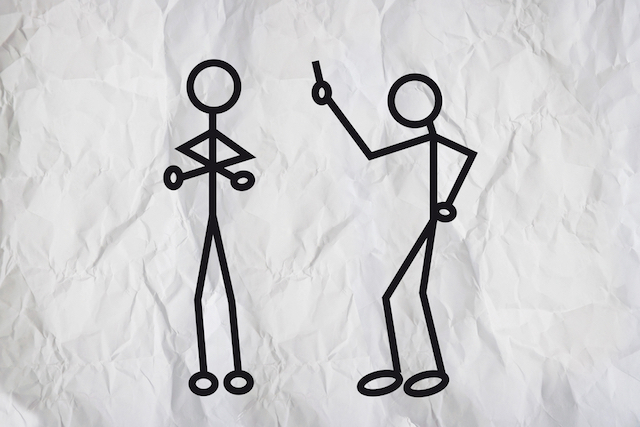
How to Avoid Drama: Stop Taking Things Personally and Needing to Be Right
“Concern yourself not with what is right and what is wrong but with what is important.” ~Unknown
I remember quite distinctly the point where my rational self, less invested in the discussion, took a step back and pointed out that I was descending down the path of needing to prove that I was right.
It was precisely when I started seeing the other commenter as needling my position and attacking the ideas as mine.
What started out as an appeal to respect cultures that celebrate death as a normal part of life, turned into a mud-slinging event the moment I ceased to educate and instead went down the road of righteous anger.
Even if we were to keep our social network to the closest friends and family members, there will inevitably come the time when, as we scroll through our Facebook feed, we encounter something that we disagree with.
If we are not careful about the way we react or respond to these kinds of things, drama will arise.
And oh, such drama it was! Despite not participating any further once some ganging up occurred and outright insults were being flung, I came away from the debacle more furious with myself than anyone else.
In hindsight, it really was hilarious the way it quickly descended into a playground squabble where the crux of the matter was “I’m right, you’re wrong!”
But unlike childhood fights where it is rare that full-blown grudges develop (notice how children make up and play together easily?), the issues that adults tend to have petty fights over are a bit more complicated, simply because we are way more invested in it.
It isn’t over a fire truck belonging to us that can be easily shared with another child. It is occasionally belief systems and ideologies that we think define us, and so we do not take too easily to them being challenged.
I later received a long message from the other person that was essentially an attempt at civility after the earlier descent into childishness. But while the absence of trolling was a nice welcome, here too was another invitation to engage further in another bout of drama.
Ignoring the comments about my character and only clarifying issues I felt were relevant to the earlier discussion, I refused to bite.
What I’m slowly learning, and I am quite a slow learner when it comes to social interactions, is that personal affronts are key to the development of drama, and how we choose to respond to what the other person doles out will determine our state of being.
This isn’t something solely confined to social media interactions, either; Facebook, Twitter, and other sites like them are all just platforms where our interactions take place. Unnecessary drama and squabbles did not appear after the Internet but are simply magnified by it.
If you decide earlier on that personal attacks will not hurt you and that you will not yourself fling insults, you’ll be much more likely to have a discussion that’s conducive for education and sharing of ideas.
These attacks often come out innocuously enough. An adept practitioner of shade can fling one at you with much subtlety, so control is necessary in ensuring that you are always on the right road.
Unfortunately, I have yet to be gracious enough to not throw shade myself, and thus the initial eruption of drama stemmed from my lack of control. We cannot control will perceive or retaliate with, but we can choose how we respond to them.
The moment we choose to take the issues personally, we cease to participate in civil discourse as we insist upon the particular details that we feel attack our characters.
We feel the need to yell that we are right rather than strive to seek and communicate truth.
With that said, I am certainly not excusing those who choose to create conflict rather than communicate peacefully. Once you see things heading down that awful road, it’s best to simply disengage and leave because nothing fruitful will come out of it.
What matters at this point, I feel, is how you resolve your position, and it isn’t about how you appear to other people who may be watching (or reading the thread), but how you now feel about your beliefs and ideas.
Are ad hominem attacks ever conducive to the truth? The moment we associate ego and pride with our various ideologies, we miss the mark.
In a world of multivariate opinions, beliefs, and philosophies, friction is bound to occur when these ideas inevitably collide.
There are certain fields more volatile than others, like politics and religion, and they require careful treading. When in the thick of drama, especially with drama-hungry spectators egging us on, we lose the point and indulge, instead, in a battle of wits over who can yell the loudest in being right.
To keep drama at bay, it is necessary to maintain that, while ideas form much of what we think we are, they are merely constructs that only help us make sense of life and do not essentially form who we are.
If someone attacks what we believe, they’re not attacking us. They’re disagreeing with our opinion because they hold a different point of view. And if they choose to attack us personally, it’s likely not about us, but rather reflective of their fear-based attachment to their beliefs.
It is perhaps worth bearing this in mind whenever we feel the urge to take something personally.
-

Letting Go of Stubbornness: Appreciate Your Loved Ones While You Can
“Before someone’s tomorrow has been taken away, cherish those you love, appreciate them today. “ ~Michelle C. Ustaszeski
My brother Greg and I were the closest of friends growing up, even if you weigh in the occasional tiff or disagreement we sometimes had.
We discovered our favorite toys together as kids, rode bikes side by side, and conquered video games as a two-man team. Even well into our teenage years, we were an inseparable pair, always looking out for one another.
The fact that our father died of a brain tumor when we were young had forged a deep understanding between us. I remember us crying together in our mother’s arms when we got the news, soaking her chest with tears. We both knew without saying a word that we’d need one another to lean on in the years to come.
My Brother’s Keeper
One day Greg and I were out in the woods in the wintertime with our grandfather and uncle when we happened upon a small river. A collapsed tree had fallen over it, which offered the only visible means of crossing. So with the adults behind me and my brother in front, we set about making it to the other side.
Somewhere around the halfway point, Greg slipped and fell into the river. Instinctually, I yelled out, “Hang on, Greg! I’m coming!” and immediately dove in after him. Once in the river, I was able to lift him back toward the fallen tree, where Grandpa pulled him the rest of the way up, followed by me.
The river might not have been deep enough to drown him, but it didn’t really matter to me. My brother was in trouble, and the last place I wanted to be was out of his reach. Jumping in with him put us both in the same predicament, fighting our way out together—the same as it was when our father died.
And Greg more than returned the favor one day, when a kid from the neighborhood pulled a bow and arrow back at pointed it at me. Without even hesitating, Greg stood directly in front of me and said, “If you’re gonna kill my brother, you have to kill me first.” The kid slowly released the bow, dropped his arrow, and ran away.
Two Of A Kind
We were cut from the same cloth, my brother and I. Our love and courage for one another knew no limits or bounds. But like most brothers, we often found ourselves at odds over the most trivial of things.
We argued about toys, had screaming matches over who would get to keep the prize from a cereal box, and even punched each other out once over a video game.
Being cut from the same cloth could also mean a mutual stubbornness during disagreements. And though we always seemed to work things out, a day arrived when we would no longer have that luxury.
Pain Is A Teacher
Greg and I were going through another one of our tiffs in the fall of 1997 (we weren’t exactly burning mad at each other, but we hadn’t been speaking much, either), when I was awoken by a phone call from my grandmother one morning.
She told me that my brother had been hit head-on by a drunk driver the night before…and was killed instantly. I couldn’t believe what I was hearing.
After I hung up the phone, I screamed and wailed for nearly two hours straight. I just couldn’t articulate my pain any other way. There was such a strong bond between me and Greg that I felt like half of my body had been cut in half.
And on top of the pain of losing him, I was reminded of that one final argument we never got to resolve. It took me years before I stopped thinking about it and began to appreciate the valuable lesson life had taught me.
An Open Challenge
I’m a lot more cautious these days about leaving things unresolved with people I love, or with anyone else for that matter. Life is short. We’re all given a set amount of days in which to enjoy this life and appreciate one another—and none of us know just how much time we actually have left.
Today is the time to work out our differences and disputes with the people we love, and to ask ourselves an important question: Is my stubbornness really worth it? Is it possible that I’ve been making a big deal out of something trivial—a position that I’d feel awful about if this person died tomorrow?
I hear stories all the time from people who never got to tell a parent how much they loved them before they passed, and even siblings who never buried the ax before it was too late. Regret is one of the hardest things in the world to live with.
Challenge yourself to resolve an issue with someone you’ve been feuding with for a long time, especially if it’s a family member or friend. Let them know they mean much more to you than your old stubborn position in a past argument.
Photo by Fovea Centralis