Tag: approval

  • How to Reclaim Your Inner Gold

    How to Reclaim Your Inner Gold

    “The cave you fear to enter holds the treasure you seek.” ~Joseph Campbell

    “Our deepest calling is to grow into our own authentic self-hood, whether or not it conforms to some image of who we ought to be. As we do so, we will not only find the joy that every human being seeks—we will also find our path of authentic service in the world.” ~Parker Palmer

    When I was young, I was creative, independent, and assertive. My days were spent climbing trees, building forts, and catching water striders in creek beds.

    My best friend Rita and I were raised by strong feminist women (also best friends)—who laughed loudly, smoked cigarettes, and rolled their eyes at waiters who dared to call them “ladies.” We roamed our neighborhood unsupervised, stood our ground alongside our older brothers, and marched with our moms for equal rights and pro-choice. Life felt boundless and alive.

    But midway through fourth grade, my family moved to a more conservative, upper-class town, and suddenly, I felt out of place. Gender roles were more traditional, the people preppy, their houses spotless, and I—with my dirty nails, shabby clothes, and tomboy energy—didn’t fit in.

    I began to feel awkward, gruff, and insecure in this new environment. I realized that my directness and assertiveness were seen as “unfeminine,” and my expressiveness made me “stick out.” So, I tried to suppress those parts of myself.

    I started trying to be less opinionated, more agreeable, and quieter. I even tried to dress the part, though my limited clothing budget betrayed me—it’s hard to pull off “preppy” when your wardrobe is from Dress Barn. Despite my efforts to fit in, something within me pushed back—and that resistance eventually grew into rebellion.

    By middle school, it took the form of an eating disorder—a self-destructive attempt to gain some sense of control. By high school, my rebellion had evolved into a party-girl persona, seeking validation and freedom in ways far removed from the carefree, confident child I once was—even though my behavior may have appeared carefree and confident on the surface.

    Marshall Rosenberg, the founder of Nonviolent Communication, once said, “Never give them the power to make you submit or rebel.”

    Both submission and rebellion are reactions to external expectations, not authentic expressions of who we truly are. In either case, we allow our conditioning to shape our behavior, dimming our true light. I refused to submit, but my rebellion took its toll, causing me to lose touch with the vibrant and authentic parts of myself.

    I’ve been on a long road of healing, gradually reclaiming the qualities I once rejected and learning to see them as strengths. So, I was surprised recently when a good friend described me as “direct,” and a wave of shame washed over me. Though he intended it as a compliment, that simple moment reminded me of how deeply I had internalized the belief that my directness was “bad.” It brought me back to the years I spent silencing parts of myself that once felt so natural.

    This experience made me reflect on how, as we grow, so many of us lose touch with our unique gifts—those innately radiant qualities that make us who we are. We unconsciously resist embodying these traits, hiding our power to fit in, avoid judgment, and protect ourselves from rejection.

    Jungian scholars often call our hidden positive qualities—our untapped potential, creativity, and strengths—the “Golden Shadow.” While many associate the “shadow self” with darker impulses, the shadow encompasses all parts of ourselves that we’ve repressed or rejected, including our inner gold.

    As children, we absorb countless messages from family, society, and peers about what is acceptable and what is not. Over time, we internalize these messages and suppress the aspects of ourselves that we perceive as undesirable.

    Being direct, assertive, and expressive didn’t align with the ideal feminine image I thought I was supposed to embody. Even as I adopted a more rebellious persona—one that supposedly didn’t care—I still felt deep shame about these qualities and continued to reject them.

    But the positive traits we disown are often the very ones that, when reclaimed, lead to greater agency, wholeness, and connection. Interestingly, we tend to resist these traits more than the ones we view as negative because stepping into our power and potential demands a new level of responsibility—and that can feel intimidating.

    In my journey, I’ve learned that embracing qualities like directness and assertiveness has made me feel more empowered and impactful. I now have greater clarity, am more authentic, and can better support others. But it took years to overcome the resistance and shame these qualities once elicited.

    Embracing our radiant qualities requires stepping into the fullness of who we are, even when it feels uncomfortable. It’s through becoming comfortable with this discomfort that we unlock and express these hidden aspects of ourselves. It all begins with the willingness to look within, acknowledging the qualities we’ve disavowed or projected onto others.

    Here are a few exercises to help:

    Look at What You Admire in Others

    The traits we admire in others often reflect those we most wish we could embody. The next time you feel awe or envy toward someone, ask yourself: What about them draws you in? Are they confident, creative, compassionate, or direct? These qualities are likely part of your Golden Shadow, waiting for you to reclaim them.

    Ask the People Around You

    Reach out to friends and family and ask them what they see as your strengths. Pay attention to the traits they recognize in you that you may not. Sometimes, we need others to reflect our brilliance because we’ve learned to hide it so well.

    Reclaim Through Reflection

    Take moments throughout your day to notice when you feel especially capable or proud of something you’ve accomplished. What strengths were you embodying in those moments? Was it creativity, assertiveness, or perhaps empathy?

    Visualization and Integration

    Once you’ve identified these qualities, bringing them into conscious awareness, you can begin integrating them through visualization. Imagine yourself fully embodying the qualities you’ve rediscovered in your Golden Shadow.

    Notice what emotions come up—embarrassment, fear, self-doubt—and allow them to be present. Welcome those feelings and let them know you are ready to embody these new traits, no longer held back by shame.

    You can also practice a future-self visualization: Picture yourself living out your potential, embracing these golden qualities. Visualizing in vivid detail helps anchor these traits in your mind and prepares you to step into them in real life.

    Take Action

    Start small. Identify one quality from your Golden Shadow that you most want to bring into your life. Take a small step each day toward expressing this quality. For example, to reclaim your directness, practice being straightforward and honest in your communication, even in small interactions. Gradually, it will feel more natural.

    The journey to reclaim our inner gold is one of self-discovery and integration. What parts of yourself have you hidden away? What positive qualities are you ready to embrace, even if it feels uncomfortable? The world is waiting for you to shine in your fullest, most authentic expression.

  • From Pain to Power: Letting Go of Approval to Love Myself

    From Pain to Power: Letting Go of Approval to Love Myself

    “If you love yourself, it doesn’t matter if other people like you because you don’t need their approval to feel good about yourself.” ~Lori Deschene

    For most of my life, I worried about what others thought. Every move I made felt like a performance for someone else. I’d built my life on their approval.

    Then came the losses. Three family members were gone in a matter of years. Each time, the grief hit like a fist to the gut.

    My mother was my pillar of strength; my father, who might not have always been there for me but was still my father, went next, and then my younger brother—a cruel fate.

    Their absence left a void that seemed impossible to fill.

    I felt hollow, like someone had punched all the air out of me. I was left winded and empty. Grief, relentless and heavy, kept knocking me down.

    I tried to keep up appearances, but inside, I was stuck. Couldn’t move. I didn’t know how.

    I remember one day after my younger brother died, I sat alone in the garden. The sun was out, but I felt nothing.

    It was close to Easter, and I had a list of commitments. Things I’d agreed to, people I had to see. Each one felt like a chain around my neck.

    I stared at my phone, anxious and tired. ‘’Where are you?” the message read. My hands were shaking. That’s when I put it down.

    It was a moment of liberation. I realized I didn’t want to do this anymore. I didn’t want to worry about what everyone else wanted.

    It was time to let go. And in that release, I found a new sense of freedom and hope.

    I picked up my phone again and texted, “Sorry, I will not make it today.” And I hit send.

    One message turned into two, then three. “I’m sorry, I won’t be coming.” The words felt strange, as if I were speaking them for the first time.

    One small act, one message, was enough to break the chains. For the first time in years, I felt like I could breathe. The tightness in my chest eased.

    It was a turning point in my journey to self-acceptance.

    I didn’t know it then, but that was the beginning of reclaiming my life. Just a few words and the weight started to lift.

    Grief Changes Everything

    Grief stripped away everything I thought mattered. The “should” and “have to” layers fell away like dead skin. I was left with nothing but raw, aching truth.

    I saw my life clearly for the first time. It was built on everyone else’s expectations. There was no space left for me.

    That was the most challenging part to accept. I had spent so long trying to be what everyone else wanted. And now I didn’t know who I was.

    But the losses kept coming, pushing me deeper into emptiness. Each time, it took something from me. And each time, I was forced to look harder at myself.

    I began to see a pattern. I was living for others, not for myself. It was a painful truth, but grief can uncover what’s hidden.

    The Realization

    One day, I stood in front of the mirror. The reflection, looking back, was a stranger. My face, my clothes, how I stood—it was all for someone else.

    That was the moment when I decided I needed to change. I didn’t want to live like this. I needed to stop.

    I didn’t need the approval of others. I didn’t need to be perfect for anyone but myself. It was time to break free.

    It wasn’t easy. The habit of pleasing others ran deep. But I started with small steps.

    Steps Toward Freedom

    First, I listened to my thoughts. When I found myself worrying about someone’s opinion, I stopped. “Is this helping me?” I’d ask.

    The answer was almost always no! So I let the thought go. It was redemptive.

    Slowly, the worrying and sleepless nights of being a people-pleaser lessened.

    Next, I set boundaries. The most challenging boundary was with me. I had to stop pushing past my limits, physically, emotionally, or mentally.

    I began saying no. I stopped feeling guilty for choosing myself. Setting boundaries was empowering and made me feel more in control of my life.

    It was a declaration of my needs and desires, a step toward asserting my worth.

    I distanced myself from people who drained me and people who made me question myself. It was a gradual process.

    I started by reducing the time I spent with them, and eventually, I found the courage to communicate my need for space.

    I started creating space, which allowed me to breathe and focus on my well-being.

    Slowly, I started doing what felt good: walking in the rain instead of counting steps; I just walked for pleasure.

    I stopped trying to please everyone; instead, I pleased myself.

    This focus on my desires and needs was an essential aspect of my journey to self-acceptance and self-love.

    I stopped playing host because others required it. The first Christmas after my younger brother passed away, I took a vacation with just my children, starting a tradition that centered on what worked for me. Now I only host when it feels right on my terms.

    I also stopped being the one to reach out constantly to family or friends. I realized I didn’t have to check in or hold relationships together single-handedly. Trusting that real friendships wouldn’t crumble without my constant effort was freeing.

    Each small action was a step closer to who I was. Each “no” brought me back to myself. It wasn’t a sudden transformation but a slow, steady shift.

    Healing Through Action

    There’s freedom in not needing anyone’s approval. I started to feel it in my bones. I began to laugh again.

    The weight lifted. I noticed the world again—the way the sky changes colors at dusk, the way the wind feels on my face. Life was waiting for me.

    I started to walk more—no destination, no purpose—just walking. I felt the ground under my feet, solid and real.

    The loss of my loved ones will always be there. But it doesn’t define me anymore. It’s part of the story, not the whole of it.

    Moving Forward

    If you’re stuck seeking approval, start small—one step at a time. You don’t have to change everything at once.

    Ask yourself: What do I want today? Just for today, choose that. It’s enough.

    Reflect on the moments when you felt trapped—times when you felt overwhelmed by external pressures and were trying to meet everyone’s expectations; when you sacrificed your own needs and desires to please others; or when you found yourself constantly worrying about the opinions of others. By reflecting on these moments, you can identify what has been holding you back and take the first step toward living authentically.

    Self-reflection is a crucial part of the journey to self-love and self-acceptance. It’s a mirror that allows you to see yourself more clearly, understand your wants and needs, and be free to fulfill them.

    It takes time to break free. The habits run deep. But each small step chips away at the chains.

    Embracing Self-Acceptance

    Self-acceptance wasn’t easy. It felt foreign, like trying on clothes that didn’t fit. But little by little, I got used to it.

    I stopped chasing what others thought was beautiful. I looked at my imperfections and decided they were mine. The quirks became markers of who I was.

    Writing helped. It was messy and unfiltered, but it was real.

    I saw my patterns. The way I bent over backward to fit in. The way I swallowed my voice to keep others happy.

    So, I began taking small actions. For instance, I started embracing my uniqueness by wearing clothes that made me smile (like a short mini skirt!).

    I spent more time with people who supported me. The ones who made me feel seen. Their encouragement helped me believe that I didn’t have to change to be worthy.

    The Healing Process

    Of course, there were setbacks. Days when I slipped back into old habits. But each time, I chose to keep moving forward.

    It’s not a straight path. There are twists and turns. But each small step makes you stronger.

    There’s freedom in not needing anyone else’s approval. I started to feel it grow. I felt lighter, unburdened.

    Conclusion

    Grief changed everything. But through it, I found strength. I found my worth buried beneath all the noise.

    You don’t need anyone’s approval to feel good about who you are. The only person who can define your worth is you.

    So ask yourself today: Who’s writing my story?

    If the answer isn’t you, it’s time to take the pen back.

  • 4 Fears That Create People-Pleasers and How to Ease Them

    4 Fears That Create People-Pleasers and How to Ease Them

    “It feels good to be accepted, loved, and approved of by others, but often the membership fee to belong to that club is far too high of a price to pay.” ~Dennis Merritt Jones

    Like a lot of people, I grew up putting others’ needs and wants first. I learned early that doing things for other people and accommodating their wishes gained me attention and approval. It was only in those moments that I felt good enough and deserving of love.

    As a child, I liked nothing more than feeling indispensable and being told I was a good and nice girl. This praise was incredibly important to me, as was making others happy. My own happiness did not come into the equation; I was happy because they were happy. I felt loved, safe, and appreciated, in the short term at least.

    As I got older, my people-pleasing went into overdrive. I continually tried to gain people’s approval, make them happy, and help them whenever needed.

    I hated to see loved ones hurt or upset and felt it was my responsibility to come to their rescue and ease their problems and pain. Before long, I became so hyper-aware of others’ feelings that I lost sight of where I ended and where other people began.

    For many years, I didn’t question why I felt I didn’t have the right to say no to people’s demands. I just assumed this was how my relationships were meant to be. By the time I was in my late teens, however, I often felt lost, drained, and empty.

    After a terrifying anxiety attack, I realized I’d been unhappy for years. Trying to please everyone had made me miserable and ill, and my relationships felt draining and one-sided.

    I took a long, hard look at myself and realized I’d become a people-pleaser not simply because I wanted to be a nice person or help others, but due to a specific emotion, an emotion I’d felt since early childhood: fear.

    I realized I’d given control over my life to other people out of fear. I’d let an emotion steal my life and well-being.

    When I examined my past behavior, it was obvious I’d been compelled to people-please due to a fear of certain situations stemming from my childhood. I believe these specific fears are the reason why many of us become people-pleasers.

    Fear of Rejection and Abandonment

    Inside every people-pleaser is a little child who never felt worthy of love and was afraid of being rejected and abandoned by his or her loved ones. Being good and nice and striving for approval is a way to try to suppress the fear.

    Children know instinctively that their survival depends on other people. As a child, I felt I had to be good all the time—one misdemeanor would be enough to make my loved ones reject me.

    That’s not to say my family didn’t love me; they absolutely did. But they were often emotionally distant, worried, stressed out, and very busy with other things. My strategy was to do my best to please them so I wouldn’t feel even more rejected than I already did.

    Many of us take this fear into our adult relationships too. People-pleasers usually believe they cannot disagree, not do as their loved ones want, or displease them in some way because their family or partner will stop loving them and leave. They don’t feel emotionally secure in their relationships.

    Yet how realistic is this belief? Would our loved ones really reject and abandon us if we displeased them? Is our position in their lives so uncertain and fragile that they would do this?

    People-pleasers tend to overestimate other people’s imagined negative reactions to what they do or say. They work hard to gain and keep love and friendship, but assume those ties are easily broken.

    Realistically, it’s highly unlikely your loved ones will reject you if you don’t do what they want. They might be disappointed or upset, but ultimately they’ll be able to cope with their expectations not being met. Regardless of their response, you aren’t responsible for their emotions or actions.

    When we know this, we can feel more secure about saying no to others. And that in turn helps them to respect our boundaries.

    Fear of Conflict and Anger

    People-pleasers try to avoid conflict and others’ anger at all costs and will do anything to defuse a confrontation or argument. This usually means backing down or not disagreeing, even if the other person is in the wrong. It means saying yes when we really want to say no.

    When you fear upsetting someone and causing an argument, you don’t speak up about what’s bothering or hurting you, and you don’t reveal your true feelings. You do all you can to keep the peace, believing mistakenly that conflict of any kind is bad for relationships.

    The truth is, our peacekeeping behavior builds a barrier to intimacy. It stops our relationships from growing and maturing. As a child I feared doing something wrong and being told off and punished, and as I got older I often felt lonely in many of my relationships. I also found trying to keep the peace exhausting.

    The harmony I worked so hard to maintain was nothing more than a false harmony; there was often an undercurrent of anxiety and frustration.

    Healthy relationships aren’t without disagreements because conflict and problems are inevitable in life. But the difference is that good, balanced relationships are able to handle conflict and problems constructively and use them as a way to deepen learning and understanding.

    As a people-pleaser, I wanted to find instant solutions to problems in order to minimize any potential conflict, regain harmony, and soothe any negative feelings. I rarely took my time to find an effective solution, and as a result, the problems were never fully resolved.

    I was also afraid of my own anger and repressed it or directed it at myself, and this no doubt contributed to my anxiety disorder. I mistakenly believed nice people didn’t get angry, not realizing that we cannot change our behavior for the better or improve our well-being unless we feel and recognize all our emotions.

    Fear of Criticism and Being Disliked

    No one likes to be criticized or disliked, especially a people-pleaser. We hold in high regard other people’s good opinions of us. We crave approval and think that accommodating everyone else will somehow protect us, but that’s rarely the case.

    I used to feel a sense of betrayal whenever someone criticized me. Didn’t they know how hard I tried to please them? How hard I tried to be good and nice all the time? Their criticism was like an arrow in the heart.

    When we fear others’ lack of approval and acceptance, we rarely show them who we really are and often live a life that does not feel authentic. We hide ourselves behind a mask of niceness and find it near impossible to separate our self-worth from our actions.

    Fearing others’ bad opinions of you makes you feel you cannot show you are fallible and flawed—basically, a normal human being.

    People-pleasers judge themselves very harshly and often set themselves unrealistic expectations. They feel they need to be perfect in order to be accepted or loved. They feel they cannot make mistakes or risk upsetting or disappointing people.

    If you don’t voice your opinions or needs, people will assume you’re happy to go along with what they want. They’ll also assume you’ll accept disrespectful behavior. Like many people-pleasers, I became an easy target for others’ dissatisfaction and nastiness.

    When we hand so much control over to other people, their criticism can be devastating, but this is only because we vastly overestimate the importance of what they think.

    In time, I realized that someone’s opinion of me is none of my business, and it’s impossible to control their thoughts about me, no matter what I do. It seemed crazy to let their opinions dictate how I lived my life because the only person I needed to seek approval from was myself.

    Fear of Losing Control and Not Being Needed

    People-pleasers need to be needed. It’s their automatic response to help others and try to make others happy, and they very often take other people’s actions, behavior, and emotions personally, believing they’re responsible for making others feel better.

    I grew up in an environment that was often anxious. Many of my loved ones did not handle their anxiety very well, due to their own upbringing. I became a confidante at a young age, before I had the maturity to handle certain problems or others’ anxiety. It was simply too burdensome for my young shoulders, but it didn’t stop me from trying to make things better.

    Because my sense of self was closely tied to how other people felt, I couldn’t bear to see loved ones hurting, and so I tried my hardest to ease any upset. Each time I succeeded, I felt needed and in control, but when I failed, I felt like I had let everyone down.

    I would become anxious if I couldn’t soothe or help someone else. I readily soaked up their negative emotions because I’d become so attuned to how they felt, placing their emotional well-being before my own. Because people-pleasers believe it’s their job to make others happy, they feel they need to control others’ anxiety and pain.

    But it’s not our role to make others happy or their lives problem-free; that’s their job. The sky won’t fall in if you cannot help someone. You can still be there for the people you love and empathize with them, but you don’t need to rush in and rescue them or lose yourself in their business. You don’t have to make their problems your own; you can instead trust them to solve their own issues.

    When I stopped hyper-focusing on other people, I saw that the only thing I needed to control was my half of my relationships. There’s no need to try to control others’ reactions because I’m not responsible for their thoughts or emotions.

    Many of our interactions with people don’t need to have the sort of emotional judgments people-pleasers attach to them. It’s okay to say no and not feel guilty. You aren’t betraying someone if you don’t do what they want or disagree with them. Just because someone doesn’t like you doesn’t mean you’re unlikeable. Just because you sometimes want to focus on yourself, it doesn’t mean you’re selfish.

    You gain this self-empowerment by easing the fear that’s caused your people-pleasing. While much of the fear comes from your childhood, as an adult you now have control over changing aspects of your behavior that don’t serve you.

    This doesn’t involve any self-blame, nor is it about blaming our loved ones. We’re all the products of our upbringing, and we all have scars. Most people try to do the best they can with what they have and know. By changing our behavior, we can often encourage positive change in others too.

    People-pleasing is always linked to self-worth. When you create a strong sense of self, you realize that you aren’t your past, your thoughts, or your emotions. You know your self-worth isn’t linked to another person.

    How to Ease the Fear

    Instead of looking for validation from other people and the outside world, we need to search inward. In order to ease our fear, it’s important to face it, no matter how painful it feels. Understanding our fear helps us to move forward.

    Because our people-pleasing and our fears usually stem from childhood, we need to revisit our child selves. Try this exercise:

    Find somewhere quiet to sit and relax. Close your eyes and take slow, deep, even breaths, and imagine in your mind a time when you felt rejected as a child. Replay the events as you remember them and feel the feelings you experienced at that time.

    Then imagine your present self holding your child self’s hand as they go through that moment of feeling rejected. Tell your child self how much you love them and care for them, and that there’s nothing to fear. Each time your younger self feels afraid or rejected, soothe them and let them know they’re in a safe place.

    Think about what you’d like to say to your child self and what advice you’d like to give them, knowing what you know now. You are now able to protect, support, and encourage your child self. Think about how you want to feel and be treated rather than focus on any negativity.

    When I did this exercise, I told my child self that she was worthy, valuable, and precious. I advised her that what she wanted and needed was valid and important, and she had the right to speak up and say no.

    I told her she would never be rejected because she had my unconditional love and support, and she didn’t need to strive for love from anyone because she was already lovable. I encouraged her to think about her dreams and goals and not stifle them because of others’ opinions. Most of all, I kept repeating that I loved her.

    When you feel ready to end the exercise, bring yourself back to the present moment and think about what the exercise has taught you. Do you understand your child self more and your reasons for people-pleasing? Do you think about those past events in a different way?

    You can do the exercise as many times as you wish. It gives you the time to focus on how you feel about past experiences, and as a result, it also helps you come to terms with what happened and to heal.

    When I stopped basing my identity on my relationships and the past, I stopped hiding myself behind people-pleasing behavior. I started to set boundaries, and as my self-love, self-acceptance, and self-respect grew, my relationships improved too. People soon adapted to my new behavior because I showed them how I wanted to be treated—with respect and consideration.

    Self-love is essential. It isn’t selfish to think about what you want and need. It isn’t selfish to make decisions about your life based on what you want and need rather than to merely please others.

    You owe it to yourself to put your people-pleasing ways behind you. You owe it to yourself to take care of yourself first, because that is the only real way you can truly help other people.

  • 6 Mindset Shifts to Overcome the Need for External Validation

    6 Mindset Shifts to Overcome the Need for External Validation

    “Relying on external validation to understand your worth is not sustainable. If you depend on people to build you up, you also give them the same power to break you down. You are worthy regardless of their opinion.” ~Unknown

    In my heart of hearts, I knew I wasn’t supposed to rely on others for validation. Yet, for the longest time, I found myself seeking external approval to define my worth.

    I was constantly seeking reassurance from friends, family, and even strangers. Their validation became the measure of my self-esteem, leaving me trapped in a cycle of doubt and insecurity.

    I had several achievements under my belt, yet the accolades and praise never felt quite enough. The need for external validation consumed me, overshadowing my own sense of accomplishment and robbing me of genuine pride in my achievements.

    It seemed like I had the best job and everyone admired my success. Despite the external validation pouring in, there was an emptiness within me, a hollowness that reminded me I was seeking validation in all the wrong places.

    I had a nagging feeling that something was amiss.

    But was it the right thing? Is doing anything in life out of a desperate need for validation truly fulfilling?

    Interestingly enough, not only did I know I didn’t want to rely on external validation, but deep down, I also knew that those who constantly sought validation were often less fulfilled.

    I was one of those individuals who would sacrifice their own desires to gain the approval and validation of others. It became clear that this dependence on external validation was holding me back from true self-acceptance and happiness.

    So why did I continue down this path? Why did I keep seeking validation from others when I knew deep down it wasn’t serving me? And most importantly, how can one overcome this toxic need?

    Before I get to the mindsets required to overcome the need for external validation, let’s talk about the mindsets that will almost certainly lead to a dependence on external validation.

    See, it’s often better to figure out what to avoid first instead of trying to navigate through a maze blindly. I know, because these are all mistakes I’ve made myself.

    Mindsets That Lead to a Dependence on External Validation

    1. The Pursuit of Perfection

    For the longest time, I couldn’t escape the allure of perfection. I always had to strive for flawlessness, believing it was the key to validation. But the truth is that perfection is an illusion. It sets an unrealistic standard and creates an insatiable need for external validation.

    We develop a flawless mindset because we’re driven by the fear of being judged or rejected. However, it hinders self-acceptance and prevents us from embracing our authentic selves.

    2. Fear of Failure 

    Fearing failure is closely linked with seeking external validation. That’s the trap we fall into—we perceive failure as a reflection of our worthiness. We think that just because we’ve stumbled, we are somehow lesser. We don’t recognize that we can learn and grow from failure because we’re too afraid of what other people will think.

    3. Comparison Trap

    Seeking validation in comparison leads to a never-ending cycle of frustration. For me, it was having an incessant need to be better than others. For others, it’s simply being acknowledged as equal. Some might siphon validation through getting more social media likes or job promotions than their peers. Whenever we seek validation through comparisons, it tends to be a trap.

    4. Seeking Approval from Everyone

    Even though I didn’t always love being a people-pleaser, seeking approval from everyone and sacrificing my own needs and desires became ingrained in my identity. Then, when the realization hit, I found myself having to build a new life based on my own values and aspirations. Had I established an identity of wholeness rather than seeking universal approval, I wouldn’t have fallen into the trap of constantly trying to please everyone.

    5. External Validation as a Measure of Self-Worth 

    You should get that promotion, those accolades, and the approval of others. Living on external validation is the only way to measure your self-worth, right? You should have a constant stream of praise to feel good about yourself.

    But you shouldn’t. You know the tropes, but here’s the truth: External validation can never truly define your worth. And you’re the only one who can recognize and embrace your inherent value beyond others’ opinions.

    6. Neglecting Inner Reflection

    I was caught up in seeking external validation for so long because I didn’t know who I was. But in the wake of countless disappointments, I completely gave up on that approach.

    For months, I quit searching for approval and turned inward. I got more and more in touch with my values, my passions, and my true self. It’s only through putting ourselves first and nurturing self-awareness that we can cultivate a strong foundation of self-validation.

    So, what mindset can help you overcome the need for external validation?

    I can’t give you any definitive answers because I don’t know you. I’m not a psychology or mental health expert. I’m just a guy who’s tried, failed, lived, failed, and done it all over again.

    So, just like I’ve given you insights about what not to do based on my personal experience, I’m going to give you some insights based on the way I’m living my life now.

    1. Embracing Imperfections

    Every experience I have now is an opportunity for growth. I do my best not to strive for perfection but rather to embrace imperfections as part of being human. I don’t feel sour about my flaws; instead, I see them as stepping stones to becoming a better version of myself.

    I try to look at outcomes as lessons rather than measures of my worth. Instead of using external validation as a benchmark, I’ve become more focused on self-acceptance and personal growth.

    You can’t experience true growth without embracing imperfections. They operate on different ends of the same spectrum and wavelength, shaping us into resilient individuals. If you try to avoid imperfections, you deny yourself the opportunity to learn, evolve, and ultimately become your authentic self.

    2. Self-Defined Success

    This doesn’t mean I don’t care about the opinions of others; I do. But I’m not going to construct an identity around their validation. I’m focused on living a life that aligns with my values and aspirations.

    I’m more than welcome to let people into that experience, and of course, their support and encouragement are valuable. But I’m no longer going to chase external validation or base my self-worth on it. And I’m not going to analyze every comment or reaction as though they’re saying something about who I am. The goal is to be true to myself, define my own success, and find fulfillment from within.

    3. Authenticity and Vulnerability

    I feel no pressure to present a curated version of myself for validation. I could easily mold my image to fit societal expectations, but it just doesn’t matter. I don’t go on a quest for likes and approval. I just do me, unapologetically.

    This isn’t just a mindset I’m using for personal gain; it’s about living authentically. I’m now embracing authenticity and vulnerability as strengths and prioritizing self-expression over seeking validation from others. It’s a path of courage, growth, meaningful connections, resilience, and living with integrity.

    4. Internal Validation Practice

    I learned how to validate myself—who I am, what I enjoy, and my values—because I realized that seeking validation from others was an endless pursuit, and I could never control how others perceived me. I also took time to acknowledge and celebrate my own accomplishments. I took the approach that everything in my life, both big and small, deserved recognition.

    Moving forward, my attitude shifted toward self-appreciation and recognizing my worthiness independent of external validation. This is a never-ending process, but it’s also the most useful process for self-empowerment, self-compassion, intrinsic motivation, balanced self-perception, and authentic self-acceptance.

    5. Constructive Self-Talk

    I’ve had moments of insincerity when I’ve portrayed a persona that doesn’t align with my true self, leading to a feeling of dissonance and self-deception. I’ve also spent a lot of time criticizing myself, doubting my worth and capabilities, without realizing I was viewing myself through a distorted lens.

    Moving forward, I’ve decided I’m going to be honest about who I am. No more pretending to be someone I’m not. And I’ll no longer lie to myself about my worth.

    That’s the hardest part: replacing self-criticism with self-compassion and encouragement. However, fostering a mindset of positive and constructive self-talk is essential for nurturing self-esteem and self-acceptance.

    6. Embracing Supportive Relationships

    The irony is that we often hide who we really are so other people will validate our worth—but how can they if they don’t truly know us? We might also try hard to seek validation from people who are unable or unwilling to give it.

    None of us can do life alone. But instead of changing to please others or fighting for approval from the wrong people, we all need to surround ourselves with supportive and uplifting individuals who value and appreciate us for who we are.

    So, what should you do with these pieces of advice?

    I suggest you analyze them. Discard the ones that don’t resonate with you and keep the ones that do.

    The important thing is that you see what mindsets are guiding your life and release the ones that aren’t serving you so you can be free and present, not controlled by other people’s opinions and the endless pursuit of validation.

  • My New Goal: To Believe in My Inherent Worth

    My New Goal: To Believe in My Inherent Worth

    “I have inherent worth. It cannot be raised by my strengths or lowered by my weaknesses or defects of character.” ~Pia Melody

    Perhaps you’ll resonate with the way I am feeling as of late: I tell myself I am enough. I have always been enough, just as I am, without doing anything at all. But I struggle to accept this truth without feeling like I have to earn it. Like I have to take a zillion steps for self-care, accomplish a certain number of goals, or do enough things to win validation from other people.

    I believe at the core of my being that I am born to be of service. I am a generator, here to bring love and beauty. I am a Capricorn sun—worker bee; Virgo rising—organizer; Cancer moon—deep feeler. All of that makes sense to me. The fact that I am worthy without any of these aspects, that is the part I have a hard time wrapping my mind around.

    My entire life I’ve believed that we should be constantly striving to evolve and do better and feel more and be better. That makes sense. Even checking the box of “work on giving yourself grace” makes sense. What does NOT feel actionable, and perhaps feels even a bit unattainable, is the fact that I am supposed to feel completely worthy just for being alive. For existing. What!?

    All of my astrology charts and tarot readings and apps and friends tell me I should work on living in my worth, and my initial response is “I’m TRYING! I am doing all the things and trying to get there!” I completely miss the fact that it’s not the doing that’s going to get me there, but the knowing, the believing, and the subconscious agreement that I am worthy. 

    My current goal (or maybe not a goal, since it is more of a daily practice) is “knowing, embodying, embracing, and LIVING IN my worth.” So, as of now, I am going to work on not working on this. “The Work” is actually more about rest. Forgiveness. Play. Pleasure. Softness and release and acceptance. That doesn’t sound like something I can make a checklist out of, but okay, challenge accepted.

    “I have nothing to prove” is my motto for this next year, or chapter of my life. In every moment that I feel unworthiness, competition, or judgment, I am choosing to repeat to myself, “I have nothing to prove.” How powerful is that? I have nothing to prove! 

    Everything that needs to be proven by my soul expression is proven already just by my existence. Just by being alive, I have proven myself, and so have you. In fact, my only real goal is to truly believe I am worthy, just as I am.

    But, if that’s it, then what? Is all of life pointless if that is my only goal? If I believe I am worthy just as I am, what will I lose? Will my drive and purpose escape me? No, of course not; in fact, the opposite is true, and I will be able to continue doing what matters to me with more space, joy, and enthusiasm.

    I’ll be able to honor my top values, the things I truly cherish—freedom, creation, growth, and connection—without feeling pulled to do things I believe will bring me praise.

    I’ll be able live a life that feels in alignment with me, live a fuller expression of who I am at my core, and redefine how I view and implement self-love, self-care, and self-worth.

    Yet, it can be incredibly scary to let go of who you have always been, and I have always strived for the gold stars, the “good girls,” and validation from any and every source, in any and every form.

    It’s been exhausting, and I so badly want to put down the weight of needing these unachievable levels of approval, yet I am still learning how. Maybe I will always be learning how, but with each expectation I release, I feel a bit lighter. Each time I choose myself, I open myself up to better things, like bigger love and more peace. 

    I embrace the “let them” theory when it comes to other people’s perceptions of me. They think you are mean? Let them. They don’t like you? Let them. Everyone will have their own truth and story, and if they aren’t interested in hearing your side or do not want to understand your perspective, do not spend your time and energy on what they are doing any longer. It is safe to let it go.

    Focusing on yourself and implementing the “let them” theory is much easier when you remember you are worthy no matter what. When we are living in our worth, we are also much less likely to act in ways that are destructive to ourselves and others.

    The times in my life when I made the biggest mistakes or hurt others were times when I felt unworthy or was struggling with self-worth. This does not excuse poor behavior but can be a reminder of why living in our worth is important not only for ourselves, but for the good we want to do in the world.

    I have slowly made the shift from external to internal validation, yet even that does not feel like true self-worth. Yes, I might have let go (to an extent) of what others think, but I still am telling myself “gold star IF you work out every day this week,” or “good job IF you keep your house perfectly clean,” or “you are an incredible mom IF you make sure to work on these specific skills with your toddler at least three times a day consistently.”

    I tell myself this is better than external validation because the goals and approval are coming from myself, but unfortunately, they are not coming from me at all but from my ego—that part of my humanity that still thinks I need to do and achieve, or be a certain way or look a certain way or show up a certain amount in order to earn my worth.

    So there is another shift I must learn to make. If I have made the shift from external to internal validation, I can make the next shift too. The next shift is believing in my inherent worth regardless of what else I do in life and who approves of me. 

    This is the part where I tell you I have no clear-cut formula for doing this. But I do have an idea of what I need to do that is becoming less vague every day. I am focusing on letting go of limiting beliefs, dreaming in authenticity, and becoming who I believe I am meant to be. Beyond that, I don’t know how yet, and that’s okay.

    I will end by leaving you with these questions: Is there really nothing to DO to become worthy? I just AM, and that’s that? Okay. It is a valid pursuit. I will let you all know how it goes.

  • How Being Alone Made Me Fall in Love with Myself

    How Being Alone Made Me Fall in Love with Myself

    “Solitude is where one discovers one is not alone.” ~Marty Rubin

    “No one invites me to their party.” That’s what middle school was like for me, anyway. No matter how hard I tried, I could never really fit in with any friend groups.

    It seemed like everyone got the instructions on who to hang with and where to sit except me.

    I was the serious, quiet type. And the gossipers and sleepover crews didn’t want serious and reserved. So I bounced around, making a buddy here and there. But I was never fully brought into the social scene.

    At first, I figured it would sort itself out and I’d find my people. But middle school turned into high school. And high school turned into my first year of college.

    I was still on the outside looking in.

    No matter how often I put myself out there to try and squeeze into different circles, I’d end up alone again before long—feeling even more lonely than when I just kept to myself.

    The worst part was when I pretended to be someone else, just trying to fit in. And it would work…for a minute. Then I couldn’t keep up the act anymore.

    I was back to being an outsider. But now I also felt like I lost some inner part of me that made me, me. I was drained. I was bummed.

    Eventually, I realized I had hit rock bottom. I was tired of criticizing myself and trying to contort into someone I was not just to please people who didn’t actually care about me.

    I had already chased after so many groups and friends, desperate for that connection, but all I was left with was emptiness.

    Finally, one day, I asked myself, “Who has been here through it all? The highs and lows, wins and losses?”

    The answer was me, myself, and I. ‘I’ was the constant.

    ‘I’ was the one listening and providing answers when I talked myself through difficult situations. ‘I’ was the one patting myself on the back when I succeeded at something.

    That realization—that I already had the most loyal companion imaginable—brought me more comfort than any superficial friendship or party invite could. I had myself, and I was enough.

    I decided to stop begging for validation or acceptance from others. I was going to validate myself.

    I started actively spending more time alone, without distractions or social media. Reading, writing, and taking myself on solo dates.

    I discovered so much about my interests and strengths. I found inspiration and magic in solitude I had never known before.

    For the first time in ages, I was at peace. I felt whole, not like some fractured version of myself. I was alone but not lonely. I was independent yet fulfilled.

    I became my own best friend. And that made all the difference.

    It taught me that I alone am enough, even if others don’t see my worth. Their approval is meaningless unless I have self-approval first.

    Further, an interesting thing happened once I stopped desperately chasing friendships—I started attracting people who liked me for me. Turns out when you’re confident and self-assured, you give off good vibes that draw others in.

    I made some fantastic friends in college who didn’t care that I was an introvert. And you know what’s the best part? I even found my love partner! Everyone valued my insight and quiet persistence.

    For the first time, I felt like I belonged while still being fully myself.

    I learned four vital lessons from my lonely middle school days:

    1. You are your own best friend or worst critic. How you talk to yourself matters. Build yourself up rather than tear yourself down.

    2. Embrace what makes you different. Don’t hide your unique gifts and talents away in some quest to fit in. The right people will appreciate them.

    3. Connections can’t be forced. Friendships and relationships worth having tend to come when you least expect them. Stop chasing and let things unfold.

    4. It’s better to be “alone” than in bad company. Having toxic or fake friends is far lonelier than having just yourself.

    My middle school self would never believe me if I told him one day, he’d have true friends and a partner who adores his little quirks.

    But by making peace with being alone, I found the relationships I had craved for so long and discovered that all the acceptance I needed was my own.

    I still consider myself an introvert. I enjoy my solo time and quiet hobbies. But now I don’t feel pressured to be someone I’m not just to keep friends around. The connections I do have are based on authenticity from both sides.

    And when I need advice or just someone to listen, I turn inward. I explore my feelings through journaling. I tap into my inner wisdom through long, contemplative walks alone. I’ve become my own counselor and cheerleader.

    I’m so grateful that the younger me kept striving to find his place. All that perseverance led me right where I needed to be—firmly rooted in myself.

    If you’ve been going through something similar, I see you. And I want you to know that you are enough, exactly as you are. You don’t need to earn a spot at anyone’s table for your life to have meaning.

    The people who will love you most deeply are on their way. For now, love yourself. Treat yourself kindly. Pursue your passions unapologetically.

    Speak encouraging words into the mirror each morning. Put in the work to be your best friend.

    And know that wherever you end up in life—surrounded by a tribe of people who adore everything that makes you different or embracing solitude and forging your own singular path—you can’t lose as long as you have yourself.

    I am my own closest companion. You can be your own, too.

    Whatever stage you’re at in your journey of self-discovery, keep going. Know that the loneliness and feelings of not belonging won’t last forever.

    Have faith that things will get better, especially when you nurture your relationship with yourself above all else.

    Maybe today is an awkward day where you’re struggling to find your place. That’s okay. Breathe through it. Tomorrow holds new possibilities.

    Maybe you’re entering a season of solitude that first feels uncomfortable but will ultimately lead to profound growth. Lean into it entirely rather than resist it. There is a treasure to uncover.

    Or maybe you have finally attracted a “tribe” that appreciates the unique shades of who you are. Congrats! But never lose sight of your own worth that exists with or without them.

    Wherever you’re at, you’ve got this. And you’ve got yourself. That’s all you’ll ever really need.

    So stay true to yourself. Don’t shrink parts of you to appease others. Keep taking chances on yourself, even when no one else will.

    Trust that by being loyal to your own soul, you will find both inner fullness and meaningful connections with time.

    For now, chin up, sweet soul. I’m proud of you for how far you’ve come. How far you’ll go from here is breathtaking. Onward.

  • How I Went from Approval Seeking to Authentic Living

    How I Went from Approval Seeking to Authentic Living

    “My life transformed when I stopped caring what people in the stands thought.” ~Brené Brown

    One afternoon, I had coffee with a friend who told me that she and her family all have a garden campfire every Friday night and toast marshmallows. It sounded so rustically idyllic compared to our normal frozen pizza and movie tradition that I asked my husband if we could do the same that evening.

    He sat down to pick up the remote control and casually replied that he was too tired to build a fire, then thought nothing more of it. But I felt devastated and stormed out for my evening run.

    As I pounded the pavement, the ranting in my head about my selfish husband grew, and so did my anger. As I prepared to return home, full of rage, I became aware of the suffering I was creating in myself and realized I was sick of feeling resentful toward my husband when we weren’t doing what I thought we “should” do.

    When I walked through the door, rather than give my husband the silent treatment, I decided to sit and reflect on my anger. At the time, I was a trainee therapist, and I remember being told that anger was a secondary emotion.

    So I asked myself, “What’s underneath my anger?” “Fear” was my response. I inquired further, “What am I scared of?” I knew my husband loved me, so it wasn’t about that, and then it hit me. I was scared of disapproval from others. My anger toward my husband was related to my need for approval from everyone else.

    Something about his refusal to light that fire made me worry that people would think we were boring. Particularly my friend!

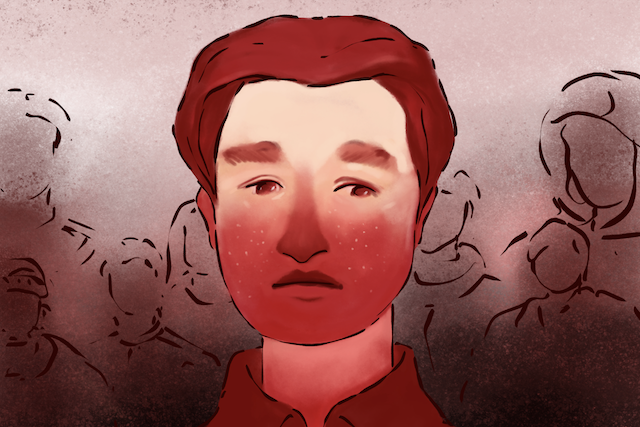
    But why did I need approval so much? The awareness was like waking from a trance. I had zero self-worth.

    I realized that my lack of self-worth and need for approval had impacted my entire life, with extreme consequences.

    For example, I’d ditched nice friends for the cool ones at school only to be bullied by the “cool” ones later on. I pretended I liked certain music and nights out to get boys to like me in my teens, only to end up alone anyway. I spent my twenties and thirties never knowing who I was, always adapting my opinions and lifestyle (even what to wear and eat) depending on who I was with at the time.

    The self-criticism never went away, and my inability to be myself left me isolated and struggling with depression. Meditation and exercise have all been useful in improving my mental health, but before that experience with my husband, I’d never been able to shake the feeling of not being good enough.
    As I had just entered my forties, I was determined things would be different. I embarked on my own “self-worth boot camp.”

    Before I explain the steps I took to improve self-worth and stop seeking approval, it’s helpful to be aware that we all need approval to some degree, as we are evolutionarily designed to seek it.

    In prehistoric times, we relied on being accepted by our tribe for survival, so we have a part of the brain that scans for how we are perceived in the eyes of others. The problem is that if we also struggle with low self-worth, usually due to experiences in childhood, that need to fit in with others takes over and prevents us from knowing ourselves. Until we do the work to get past this, we will lead inauthentic lives and be prone to depression and anxiety.

    Excessive approval seeking is a survival skill you have learned as a means to cope with feeling (not being!) unlovable. Unraveling this means building your self-worth and loving yourself.

    Taking the First Step: Radically Accept Yourself

    My journey to self-worth started with the acknowledgment that constantly putting myself down and changing myself to feel loved hadn’t worked so far. I never felt good enough, as it was a slippery pole I couldn’t get to the top of.

    Something radical was needed, and the phrase “radical acceptance” popped into my head. I thought I had come up with that phrase all by myself, but I later discovered it’s the title of an amazing book on self-compassion by Tara Brach. (I like to think I channeled it through collective consciousness, but I probably just noticed it in my local bookstore and forgot.)

    However, my take on radical acceptance at that time (which is slightly different from the book) was no matter what I was doing, thinking, wearing, being, etc., I 100% accepted myself.

    If I found myself scrolling social media, comparing myself to friends, and thinking I should have done more with my weekend, I paused and said, “It doesn’t matter. I’m still good enough.”

    If I caught myself analyzing social interactions, wondering how I came across, I paused and said, “I don’t care what people think. I’m loveable.”

    If I got upset that a friend had not texted back or I felt excluded from the different cliques in mummy land, I would take a deep breath and say, “It’s okay…you are loveable.”

    Change Your Feelings: Loving Kindness Meditation for Self-Worth

    Obviously, deciding to radically accept yourself is easier said than done, so I supplemented this mindset shift with a powerful self-loving meditation. This was a game changer and made a big difference to how I felt about myself.

    Loving-kindness meditation is an ancient Buddhist practice that involves cultivating well-wishing toward people (including yourself) with certain thoughts and phrases (i.e., “may you be well, happy, and free of suffering”). First you say it to yourself, then a close friend, a stranger, and an enemy before finally expanding the sentiment to the rest of the world.

    I’d dabbled in this before but felt something more intense was needed for my self-worth boot camp.

    I first thought of someone I truly loved, and my kids came to mind. I thought of how much I loved them; that they weren’t perfect, but I knew they were loveable. But crucially, I also made an effort to connect to the effect these thoughts and feelings had in my body.

    My body felt warm, pleasant, and tingly as I mentally offered this unconditional love to them.

    Still holding on to the physical sensations of unconditional love in my body, I replaced this with a vision of myself. I reminded myself that I, too, was imperfect but worthy of love. I felt love toward myself and told myself that I was okay, doing the best I could, and was good enough as I was. I even told myself I loved myself.

    I made sure I practiced this every day, and after about three to four weeks I noticed an internal shift, and my need to please started to fall away.

    Find Out Who You Are: What Would You Do If…

    Another sign of low self-worth was my chronic indecisiveness and self-doubt. I felt on the fence about so many things. Was I into running or yoga? A vegan, vegetarian, or carnivore? Did I love museums or mountains? Whenever I tried to decide something, the white noise of “how would that come across?” clouded my judgment.

    Trying to please people all your life means you’re already disconnected from how you feel about things, but then if each decision continues to be based on what others will think, that path gets well-trodden, leading to inauthenticity and unhappiness.

    Being all things to all people got more stressful as I got older. For example, as a working mum with limited time, I stretched myself thin thinking I should also be a mum who home baked, did crafts, and planned perfect birthday parties. Nobody could be all those things, but God, did I try. This just increased my stress and irritability and, ironically, worsened my presence as a mum.

    My new approach meant that when I found myself stuck in indecision or feeling overwhelmed, I paused and said, “What would I do if I already felt good enough?”

    This led to so many breakthroughs as I let go of the things I thought I should do and did what I wanted and needed instead. Yes, I was interested in yoga, but as I loved running and meditation, I didn’t have time. I accepted I was rubbish at kiddy crafts and would rather take my kids up a hill instead. I also discovered, amongst other things, I loved time on my own, with early nights and herbal tea rather than hangovers and a big social circle.

    I discovered myself, and it felt fantastic.

    Letting Go and Being Courageous: Mindfulness and Self-Compassion

    Moving toward new, authentic living involves letting go of what you think other people want and having the guts to be true to yourself. This is where mindfulness and self-compassion are your friends.

    However, my self-imposed “self-worth” boot camp may not have been possible unless I’d already been practicing mindfulness and self-compassion for a while. In my early thirties, I fell in love with mindfulness and became a teacher after it helped me stop self-critical thoughts from spiraling into depression. But it hadn’t really changed how I felt about myself until I combined it with the steps above.

    When I decided to radically accept myself, mindfulness helped me to pause and notice my automatic thoughts about other people’s (imagined!) opinions long enough to generate some alternatives. The self-compassion practices I’d gained as a mindfulness teacher helped me tune into and accept the uncomfortable feelings that came with fear of rejection and offer myself kindness instead.

    To get started with mindfulness and self-compassion meditations, it’s important to remember you are not trying to clear your mind but rather increasing your ability to notice your thoughts and feelings arising with non-judgmental awareness.

    If you have time for a daily practice, you may notice changes after a few weeks, and an app can help you stay on track. Self-compassion means reminding yourself that you cannot help how you feel while cultivating the courage to respond to your feelings differently. Look up Tara Brach and Kristen Neff for some self-compassion practices to try.

    Self-Worth Is a Journey: How I Feel Now

    Waking up to (what Tara Brach calls) the trance of unworthiness really has been life-changing for me. Ultimately, recognizing that only I can decide I am loveable was key, and then making an effort to believe that myself rather than seeking validation.

    It’s always a work in progress, and although I noticed changes quickly, I continue to use the steps on a regular basis when I notice falling back into old habits.

  • How I’m Learning to Feel Confident Without Approval

    How I’m Learning to Feel Confident Without Approval

    “Children need to feel seen. Adults do, too.” ~Unknown

    As a teenager, I played the flute for about nine years. I never practiced—apart from that guilt-ridden last half hour prior to my weekly lessons. It was important for my parents that their children learned a musical instrument, and so I was given the flute, while my brother played the clarinet (bizarrely, because our grandmother had wanted someone to play Mozart’s clarinet concerto at her funeral).

    Truth be told, I think my brother would have much rather learned the guitar, while I was very envious of his clarinet (he got around playing Mozart at my grandmother’s funeral, by the way).

    Inevitably, we both ditched our instruments as soon as we hit adulthood—except for a few years at university where I played second flute in an amateur orchestra. I had a great time, simply because there is nothing like playing Mussorgsky’s Night on a Bare Mountain as part of an orchestra. It was pure magic.

    When I turned forty, I decided that if I ever did want to learn the clarinet, I ought to do it now, rather than wait until retirement.

    High Expectations

    My clarinet teacher turned out to be a softly spoken man in his fifties, always friendly, ever so polite, someone who had spent his entire career at our local music school and a grammar school for musically gifted children. A fair number of them have been regular (and successful) contestants at the Jugend musiziert competition—a prestigious award for aspiring young musicians here in Germany.

    That aside, I knew nothing about my clarinet teacher, so I googled his name (as one does) and stumbled upon an old newspaper article.

    In it, he was quoted saying that untalented students gave him no real joy.

    Crikey! I was not untalented, I knew that. However, I was quite old to pick up the clarinet, so I reckoned I’d be one of those students he’d rather not teach. Not a nice feeling!

    To be fair to him, I have no idea if those lines were his actual words or something the journalist had concluded from what he had said. I never brought up the subject with him. Either way, right from the start, our lessons weren’t quite going the way I’d expected them to go.

    For instance, we never covered any basic technique. He obviously expected me to figure this out myself. In the beginning, we focused on simple tunes for children. It felt like he wasn’t even trying to teach me anything. By Christmas, I was so bored that I brought along a clarinet concerto that I had nicked from my brother’s stash of sheet music—just to make a statement.

    I will never forget that lesson. The look on his face was priceless. Danzi’s Concerto in C-Major was a million times harder than anything he had ever played with me. Suddenly, I felt like he was treating me a bit more seriously.

    Yes, I admit, a part of me felt very smug at his realization that he had underestimated me. Mainly, though, I still felt awful. I sensed I had climbed his approval ranking purely based on my abilities. It was a shaky victory that could be taken away from me just as soon as I made a mistake.

    Somehow, it reminded me of something from my childhood. I just wasn’t sure what it was.

    Life without Feedback

    I practiced harder than I had ever done before. Frustratingly, I never got any feedback from him. No criticism, no praise, nothing. He remained completely indifferent to me. Every lesson was the same: He’d bring along sheet music, and we’d play together. He’d lecture me about the composer or the piece’s musical merits, but no word regarding my ability or the obvious problems I was having with my clarinet.

    After a while I felt silly, like a frantic child jumping up and down in front of an adult shouting, “Notice me, notice me, please, please notice me!” I had no idea if I was doing well, or if I was a hopeless case. I had no idea where I measured up in comparison to the rest of the world. I was in limbo.

    “I am not learning anything from him,” I kept complaining to my partner, who also happens to be a professional musician. “Well, then talk to him about it or change teachers,” was his pragmatic solution. I didn’t do either, of course.

    A Million Miles Just to Feel Seen

    Instead, I went on a summer course designed for adults who just play music as a hobby. That’ll show my teacher I am serious about the clarinet, I thought.

    I couldn’t find anything suitable in Germany, so I had to go all the way to the UK for that. Even though I don’t regret going (the course was amazing!), I find travel stressful and was already shattered before the course had even started. More than once I asked myself why I was putting myself through all this hassle.

    Was I really doing it because I loved the clarinet and wanted to learn how to play? Or was there another reason, one that I perhaps would not like to admit to myself?

    I remember pondering this while waiting for the course to start. We’d been asked not to turn up before 6 p.m., so I’d spent the day in Cambridge. It wasn’t university term time, but the streets were crowded anyway with tourists and noise and bustle. It was too hectic for me, plus I was lugging around a heavy backpack and a clarinet case. So I fled to Parker’s Piece, a public park between the train station and ancient colleges of Cambridge University.

    As I sat in the grass and watched a local cricket match, it occurred to me that I had literally traveled a thousand miles just to be noticed by someone whose opinion shouldn’t really matter to me. It made no sense to me.

    I thought back to my childhood and why I had stuck to playing the flute, an instrument that I had never cared for to begin with. Suddenly it all became very obvious.

    Ghosts from the Past: Childhood Strategies to Feel Worthy

    Music had been my ticket to recognition. Except that now, apparently, the ticket had expired.

    My parents (and indeed our teachers) had always given my brother and me the impression that we were musically gifted. Consequently, a large proportion of my motivation to play the flute stemmed from the fact that I received a pat on the back for it. My grandparents would attend every single concert, no matter how small my part would be. My parents would be there right next to them, beaming with pride. In those moments, I felt loved.

    I suppose I played my part well to please my parents, who in turn used my achievements to impress theirs. It’s funny how my parents never ceased to be my grandparents’ children.

    Afterward, they would compare my performance to others. Inevitably, my parents concluded that nobody could compete with me. This judgment was seldom correct and entirely unnecessary to boot. It left me with a weird mixture of pride and unease, which I later recognized as my rebellion against the idea that the most important thing in music—or indeed life as a whole—was to be better than everybody else.

    What is more, making your self-worth dependent on achievements is a fragile house of cards, because the very moment somebody better than you shows up, your confidence is in tatters.

    Yet that was what I had grown up with: The expectation to excel and to be better than the rest. In fact, my mother once admitted to me at point-blank she would have had trouble loving me if I had not been intelligent. In her eyes, only achievements made me a worthy person.

    For a child, there is nothing more precious than your parents’ approval. So of course I played the flute, and luckily, I played it well without having to work hard for it.

    Dishing out Achievement, Expecting Love in Return

    They say that if a childhood issue remains unresolved, it will continue to raise its ugly head in adulthood. You will keep rehashing the same old battles—not necessarily with your parents, but other significant people in your life acting as stand-ins for them. In other words, while the people and scenarios may be different, the underlying psychological mechanisms remain the same. You encounter the same difficulties and resort to the same coping strategies that you used as a child.

    My childhood issue was that my parents would only notice their children if we achieved something. Love was not unconditional. It was earned by merit.

    My clarinet teacher was not my father, of course, but it struck me that I was jumping through hoops once again to impress somebody, to gain approval. In fact, not long before I had had a similar situation with my horse-riding instructor, a woman who reminded me of my mother in more ways than I care to admit. She was always a little dismissive of me, and I kept doing the same metaphorical jumping jacks in front of her that I was now doing for my clarinet teacher.

    She proved a hard nut to crack. When I realized I was never going to get her attention with my riding skills, I reverted to an area where I thought I could impress: photography.

    I took photos of her horse-riding events and the horses, hoping she’d like them. She never took much notice, nor did she thank me. When a little while later somebody else started taking photos of her horses, she published them on her website and boasted about them everywhere. I was hurt and jealous.

    It was only in hindsight that I understood it had never really been about the photos or my instructor.

    I was simply treading old grounds, dishing out achievement and expecting attention in return. To my chagrin, neither my horse-riding instructor nor my clarinet teacher were clued in on the rules of this game that I had played so well with my parents.

    I still hadn’t grasped that achievement is no safe route to connecting with others. It was so contrary to anything I had experienced in my childhood.

    You Are Enough

    I wish I could claim that spotting this pattern in my behavior was enough to magically discard my desire to prove myself. That’s not what happened. I still want to feel seen. I still cherish praise. To some extent, that need is quite normal—acceptance by our peers is, after all, a basic need we all share.

    It ceases to be normal, though, when your self-worth is damaged by somebody’s unwillingness or inability to care about you.

    Now, whenever I catch myself frantically playing tricks to get somebody’s attention, whenever I feel the need to justify or defend myself, when I do more than is needed, I take a moment to breathe in and say, “Stop. You know your value. It is enough. You are enough.”

    What is more, when I realize my issue or coping strategy is really a ghost from my past, I try to protect others from becoming part of a problem that is not theirs. My parents’ attitude toward success is not my clarinet teacher’s fault. It is not fair to drag him into this. It is my issue—not his.

    Confidence in the Absence of Approval

    Ironically, ever since giving up waiting for a sign of approval from him, I find I can relax in his lessons a lot more. When things go pear-shaped, I remind myself that mistakes are a part of life. I praise myself for the progress I make. I try to be loving and kind with myself.

    Will I keep him as a teacher? Probably not. I don’t see myself improving if he fails to give advice on how to play the clarinet. But if and when I do change teachers, I want to be sure that it is for the right reasons, and not because I have self-worth issues. For now, I see my teacher as a great sparring partner to practise confidence in the absence of approval.

    In my childhood, I may have felt invisible unless I came home with good grades. However, there is no reason why I should treat myself the same way as an adult. My sense of self-worth is not dependent on achievement or the recognition by others. Or in the words of the wise Buddha:

    Peace comes from within. Do not seek it without.

  • Overcoming Codependency: Breaking the Cycle of Unhealthy Relationships

    Overcoming Codependency: Breaking the Cycle of Unhealthy Relationships

    “A codependent person is one who has let another person’s behavior affect him or her and who is obsessed with controlling that person’s behavior.” ~Melody Beattie

    From a young age, I felt insecure in my own skin. I was a highly sensitive child and, subsequently, struggled with low self-worth for most of my life.

    Although I had many friends and a good family, I consistently looked for approval outside of myself. I grew up believing that the opinions of others were the only accurate representations of my core worth.

    As a teenager, I witnessed the crumbling and eventual demise of my parents’ marriage. During these years, I felt a lot like an island.

    I was often plagued with a dark, mysterious unhappiness. The standard teenage growing pains conglomerated with the trauma of losing my familial identity. In a desperate attempt to counter these negative feelings, I sought the approval of others; when it was not provided, I felt like a failure.

    I was caught up in vicious cycle of seeking outside confirmation that I was good enough.

    At school, I adopted the role of boy-crazy-funny-girl. I wanted to be adored and nurtured and cherished.

    I kept a list of all the cute boys at my school and spent hours daydreaming about a blissful, fairy tale love.

    I consistently focused on seeking happiness outside of myself. This habitual practice, over time, led to an inability to be content unless something or someone was providing validation. Most of the time, I felt like I was not good enough.

    This falsely instilled belief led me into a decade-long struggle with codependency.

    The first codependent relationship I was involved in began when I was nineteen. He was ten years older than I was, and, unbeknownst to me at the time, a cocaine addict.

    Our routine was unhealthy and unproductive. We would spend our weekends drinking and gambling at a local pool hall. More often than not, I spent my entire weekly paycheck by the end of Saturday night.

    He belittled me, called me names, and consistently criticized my appearance and weight. He compared me to his previous girlfriends. I began to see myself as an incomplete person, one who was in need of major repairs and upgrades. I was so emotionally fragile that the wind could’ve knocked me over.

    In a frantic effort to self-preserve, I adopted several fear-based behaviors. I became obsessed with him. I was controlling and jealous. I needed to know everything about his past. I wanted desperately for him to accept me.

    Over the ten months we spent together, I neglected my body and mind. My weight dropped a staggering thirty pounds. I was completely disconnected from my family and friends. I developed severe anxiety and suffered crippling panic attacks. I knew something had to change, so I gathered the courage and left him behind.

    I thought that I was rid of this unhealthy and unsatisfying lifestyle, but the bad habits carried into my next two relationships.

    I spent four years with a person that I loved very much; however, his alcohol dependency brought all of my insecurities and controlling behavior back into play.

    We spent four years flip-flopping between wonderful loving moments and horrific physical fights that left us both numb and depressed.

    When this relationship ended, I sought comfort in yet another unavailable partner, one that could not provide me with the stability that I so badly needed.

    Such is the nature of the codependent person. We seek out what is familiar to us, but not necessarily what is good for us.

    After logging close to a decade-worth of codependent hours, I finally faced myself. I knew that if I didn’t make significant changes, I would be forever trapped in a life that was unconducive to my spiritual and emotional growth.

    In a scene eerily similar to Elizabeth Gilbert’s Eat, Pray, Love bathroom breakdown, I faced the music. I got myself a small apartment and started my recovery.

    The first few days spent alone were absolutely torturous. I cried and cried. I had trouble doing basic tasks, like walking my dog or getting groceries. I had completely turned inward, nurturing my turmoil like an old friend. Anxiety-ridden and lonely, I did the only thing I could think of: I asked for help.

    The first step I took was ordering Melody Beattie’s book Codependent No More. This is probably the most significant self-improvement book I have ever read. I felt a weight being lifted as I read, page by page.

    Finally, I was able to understand all of the behaviors, feelings, and emotions I had struggled with for so long. I was a textbook case, my highlighter affirmed as I completed the “codependency checklist.” Perhaps some of these questions will speak to you, as well.

    • Do you feel responsible for other people—their feelings, thoughts, actions, choices, wants, needs, well-being, and destiny?
    • Do you feel compelled to help people solve their problems or try to take care of their feelings?
    • Do you find it easier to feel and express anger about injustices done to others than about injustices done to you?
    • Do you feel safest and most comfortable when you are giving to others?
    • Do you feel insecure and guilty when someone gives to you?
    • Do you feel empty, bored, and worthless if you don’t have someone else to take care of, a problem to solve, or a crisis to deal with?
    • Are you often unable to stop talking, thinking, and worrying about other people and their problems?
    • Do you lose interest in your own life when you are in love?
    • Do you stay in relationships that don’t work and tolerate abuse in order to keep people loving you?
    • Do you leave bad relationships only to form new ones that don’t work, either?

    (You can read more about the habits and patterns of codependent people here.)

    After acknowleding my codependency, I connected with an online support group for family members of addicts/alcoholics. This gave me a platform to share my story, without judgment, and little by little, I healed my aching heart.

    The most significant things I learned on this journey are:

    1. Without change, nothing changes.

    This is such a simple yet profound truth. It’s reminiscent of Einstein’s definition of insanity: doing the same thing over and over and expecting different results. The cycle of codependency can only be overcome by establishing and nurturing a super-loving relationship with yourself. Otherwise, you will continually find yourself in unhealthy, codependent relationships.

    2. We can’t control others, and it is not our job to do so.

    Over the years, I was constantly trying to control and micromanage other people’s behavior, in an effort to escape my own negative feelings.

    I chose partners with alcohol and drug dependencies. Often, I chose angry and avoidant men. By focusing on what was wrong with them, I could ignore what was empty and unfulfilled in me.

    I thought, naively, that this would give me a feeling of stability. In fact, it did the opposite. Surrendering the need to control other people provides us the necessary space to connect with ourselves.

    3. Love and obsessions are not the same.

    I falsely believed for many years that love and obsession were one and the same. I gave so much of myself to my partners, naively thinking that this was the road to happiness.

    I’ve learned that healthy love requires both partners to have unique, individual identities outside of the romantic relationship. Time alone, time with friends, and time to work on personal projects allows you to really connect when you are together, without feeling suffocated. We build trust when we afford ourselves, and our partners, some breathing room.

    For many years I neglected my own needs. I now prioritize personal time to do individual activities: reading, writing, walking, reflecting. I started to heal once I learned to incorporate self-love rituals into my life. One of my favorite things to do is spend the evening in a warm bubble bath, light some candles and listen to Alan Watts lectures.

    4. Life is not an emergency.

    This is a biggie! I consistently lived in a high-stress vortex—terrified of people, abandonment, and life itself.

    I worried so much about all of the things that were outside of my control—often, other people. I realize now that life is meant to be enjoyed and savored. Good and bad things will happen, but with a centered and balanced heart, we can get over any obstacles.

    The key to balance, for me, is to live fully in every moment, accepting life for what it is. Even when I’m feeling down, I know that the Universe has my back and everything in life is unfolding as it should.

    If you don’t hold this belief, it might help to remember that you have your own back, and you can handle whatever is coming. When you trust in yourself, and focus on yourself instead of others, it’s much easier to enjoy life and stop living in fear.

    I have assembled a group of super-hero coaches and teachers that have helped me significantly over the years in my quest for self-improvement. I have loving support and encouragement from so many sources. It’s my dream to be able to give some of that back to the world. I hope I have done that with this post.

  • How I Stopped Worrying About What Others Think of Me

    How I Stopped Worrying About What Others Think of Me

    “Live your life for you not for anyone else. Don’t let the fear of being judged, rejected or disliked stop you from being yourself.” ~Sonya Parker

    On August 4, 2022, I buzzed off my long, thick, luscious hair.

    I marched up Sandy Boulevard in Portland, Oregon, walked into Take Pride Barbershop, and sat in the chair with the most badass barber. She quelled my last-minute fears and boldly took the clippers to my never-shorter-than-shoulder-length hair.

    It was instant liberation.

    I had finally worked up the courage to do so after four years of internal debate and worry, which went something like: What will people think? Will people think I’m a man? Will people treat me differently? What if I’m actually ugly and my ugliness will be revealed? What if my head is oddly shaped? Will I have to wear a bunch of makeup?

    My worries and thoughts were clearly steeped deep in societal conditioning about beauty and femininity. We are told that long hair is feminine and beautiful. We are told that young women aren’t supposed to have short hair. We are told that if you are a woman with short hair, be sure to wear makeup and jewelry so you look feminine.

    But I finally stopped all the thinking, broke free from those norms, and I just did it. I said, “Off with the hair!”

    And now I feel free-er, sexier, and prettier.

    I feel more like me.

    It’s as if I shed layers that were actually hiding my true essence. My true essence as an adventurous, empathic, sensual being who sometimes feels soft and tender, and other times feels bold and badass. My true essence as someone who is wary of rules and authority.

    It’s also as if I shed layers of my ego. Because whether I like to admit it or not, my hair was a significant piece of my identity as a woman. Hair is an expert communicator, with the ability to send so many messages through a single glance. Hair communicates gender, sexuality, wealth, age, health, and parts of our personality.

    Now that I have shed my long hair, I think the only part of me that is still communicated via my hair is my personality. For one can no longer look at me and quickly deduce my gender, sexuality, wealth, age, or health. (I do have very toned muscles and glowing skin, so people should be able to make an assumption about my health, but some people only see the short hair and assume I have cancer).

    What is communicated boldly is that I create and live by my own rules. And if people know one thing about me, THAT is exactly what I want them to know. 

    My buzzed hair also lends an air of mystery, as people wonder about all of those other little check boxes (gender, wealth, age, etc.) that are usually communicated via hair.

    While I did shed some layers of my ego, my buzzed head also makes a pretty strong statement, and in full transparency, I get a lot of attention. This attention comes in all forms.

    Sometimes it’s “Excuse me sir…oh! I mean ma’am.”

    Sometimes it’s “You need to wear lipstick to look more feminine.” (Who said I wanted to look more feminine?!)

    Other times it’s “Omg, you’re so beautiful” or “I LOVE your hair.”

    Sometimes I get free guac.

    I get a lot of smiles from passersby on the sidewalk.

    I get a lot of lingering looks at the post office, the coffee shop, and the dance floor.

    And while I do love to be called beautiful (who doesn’t?!), I don’t attach myself to the praise or the criticism because I have decided for myself that I am strong, radiant, and beautiful, from the inside out. I no longer care if people think I look masculine or feminine, ugly, or beautiful. I don’t care if people in Idaho think I have cancer. I don’t care if people think I look like a skinny boy without makeup on. (What’s wrong with looking like a skinny boy?!)

    This level of not caring, of being so confident in who I am, is the ultimate freedom. 

    Plus, I know that when people react one way or the other, it is not really about me and my hair. Their reaction means that I activated something within them. I activated their desire to be free and to stop following the rules that someone else laid out for them.

    In the best cases, I offer others a little permission slip to step into their own boldness. Which is one of my favorite parts of buzzed life—when women tell me I’ve inspired them to buzz their long hair! That they were so worried about what people would think, but after seeing me do it, they now have the courage too. That is powerful.

    So while the hairstyle of one woman may seem like a simple and insignificant thing, it actually plays a small but important role in the liberation and empowerment of women.

    For when a woman has the courage to push back against beauty standards, that courage is ignited, and she also develops the courage to choose freedom in other facets of her life as well. 

    For me, that has looked like more sexual freedom—making me more playful in bed and bolder in sharing my desires—and more confidence in all areas of my life.

    Buzzing my hair has also created more time in my life, as I spend less time getting ready. It’s created more mental space, as I no longer spend inordinate amounts of time thinking about how to style my hair, when to wash it, and whether or not to get it highlighted.

    It has also freed up more money because I no longer spend hundreds of dollars on highlights and cuts. My fiancé buzzes my hair at home and, occasionally, I bleach it myself.

    It’s also led to freedom in how I dress. Sometimes I like to dress to express my femininity. Other times, I dress to express my masculinity. As someone who used to be deeply insecure about her tomboy-ish-ness and lack of desire to wear makeup, I have reclaimed the masculine parts of me with pride, which has been an integral part of my healing and expansion journey.

    It has also deepened my sensuality. In the shower, the water massages my head more intimately. On a summer day, the sun kisses me deeply. On a breezy morning, the wind and I dance a graceful dance. On the dance floor, the softness of my fiancé’s lips activates my crown chakra. I feel less separation between the world and me. I am more integrated. I am more aware of my oneness with the natural world.

    Yes, all of this because of my buzzed hair!

    So I’ll leave you with a few parting words of wisdom:

    1. People are going to talk and have an opinion about you no matter what, so you might as well do what you want and be who you want.

    2. Others’ opinions of you really have more to do with them than they do with you, so don’t take stuff too personally and concern yourself first and foremost with your opinion of yourself.

    3. If you want to buzz your head, do it. If you don’t like it, it’ll grow back. But I bet you will like it!

    So here’s to taking action to live as a more free, wild, and confident you!

  • How to Love Mindfully When You’re a Socially Anxious People-Pleaser

    How to Love Mindfully When You’re a Socially Anxious People-Pleaser

    “It’s okay to care about what people think. Just know there’s a difference between valuing someone’s opinion and needing their approval.” ~Lori Deschene

    My date—an attractive student in her twenties—talked away excitedly, but all I could think of was this:

    “How can I make her like me?”
    “How can I impress her?”
    “How can I make her laugh?”

    I agonized over every word that I said, every response from her, every moment of our interaction, and I poured every single detail that I could find—or imagine—under the microscope of my mind… and all of a sudden, the date was over!

    As we said goodbyes and as I walked out of the cafe, I recalled the conversation. Wait. What did we talk about? What did I say?

    To my horror, all I could remember were my anxiety-filled thoughts. I said the wrong thing! She frowned! I mumbled! It got even more awkward!

    At that very moment, I felt trapped in a hell of my own. And I had no idea how I’d ever get out.

    For years, I would remain stuck in the seemingly eternal loop of social anxiety and romantic failure.

    I was mostly unsuccessful in sparking new romantic connections. Even if there were sparks of chemistry, they fizzled out by the end of the first date.

    And when I did have a girlfriend? I sacrificed my needs to please her in any way possible, which led to me eventually resenting the relationship and lashing out (which I’m not proud of at all).

    Desperate for change, I embarked on a multi-year journey of learning and reflection.

    I read dozens of books on relationships and communication. Took multiple mindfulness courses. Journaled and meditated daily. Sought advice from a therapist.

    After four years, here are the four things I’ve learned about loving mindfully, with less worry.

    Loving mindfully is about accepting your insecurities.

    Whether it’s feeling not successful enough, not rich enough, not smart enough, or not attractive enough.

    What’s your biggest insecurity?

    That might just be at the heart of your social anxiety. And when you’re socially anxious, you’re more sensitive toward judgment—especially if it’s about your deepest insecurities.

    For example, if you’re feeling insecure about your looks, a passing comment on your pimple might feel like they are critiquing your entire appearance. The anxiety amplifies the criticism, making it a lot louder and stronger in your mind.

    The stakes? When you aren’t aware and accepting of your insecurities, they can shape the entire dynamic of your romantic relationship. When you don’t feel worthy of love, you might engage in excessive people-pleasing and even hide your true personality.

    Tara Brach, a celebrated clinical psychologist and meditation teacher, calls this the Trance of Unworthiness. In her words:

    “Basically, the familiar message is, “Your natural way of being is not okay; to be acceptable, you must be different from the way you are.”

    When in this trance, we are living in an imprisoning perception of who we are. When strong, our beliefs and feelings of deficiency prevent us from being intimate and authentic with anyone; we sense that we are intrinsically flawed and others will find out. Because the fear of failure is constant, it is difficult to lay down our hypervigilance and just relax. Instead, we are consumed with hiding our flaws and/or trying to be a better person.”

    My biggest insecurity was—and still is—that I’m not successful enough. As a result, I’d say and buy things to please my partner, since I felt that I had to “win” their affection and make up for my inadequacy. When I shared this with Raz, a close friend of mine, she said something profound:

    “You can still date while becoming more successful.”

    The power of what she said is psychological flexibility: accepting your insecurity and your desire to improve without shying away from romance. Rather than an “either or” story, you focus on a  “this and that” story instead.

    Loving mindfully is about accepting disagreement and disappointment.

    For socially anxious people-pleasers like me, disagreement and disappointment can feel like relationship-ending threats. If your partner or date disagrees with you, you might see it as a sign that they dislike you or that you need to change your opinion.

    For example, if you love dancing and your date says, “Nah, I would never try dancing,” you might start thinking, “Are they hinting that we aren’t a good match?” You might even backtrack on what you said: “Actually, I don’t like dancing that much.”

    As a result of your fear of disagreement and disappointment, you avoid conflict, and you often become overly accommodating. Over time, you lose your sense of self in a relationship. You’re no longer the full, vibrant you, and that’s a tragedy, isn’t it?

    I know all this too well, because this was my default mode of interaction for years. Rather than being an equal romantic partner, I became a servant to my partner’s needs and preferences. Now, I’m learning to be okay with letting others down and accept that I will feel bad doing so.

    The truth is, even the best relationships experience disagreement and disappointment. And the reason is simple: no one can 100% agree with each other or meet each other’s needs all the time.

    Loving mindfully is about accepting and respecting their choices.

    Here’s how Hailey Magee, a codependency recovery coach, defines codependency:

    “Codependent relationships exist between partners who rely predominantly on each other for their sense of value or purpose. People in codependent relationships tend to neglect themselves while overprioritizing their partners’ values, needs, and dreams. The result? A painful and tangible loss of self.”

    Sounds kind of like people-pleasing, if you ask me.

    In fact—based on my experience, at least—there’s a lot of overlap between people-pleasing and codependency. When you’re a people-pleaser, you put your romantic partner’s needs above yours, and your happiness depends on their happiness.

    In my case, I took excessive responsibility for my girlfriend’s feelings and problems. If anything wasn’t going right in her life, I tended to assume fault and went out of my way to make her feel better.

    Over time, I learned that love isn’t about helping your partner solve their problems or feel good all the time. Support and encourage them as needed, but never become their babysitter. What does that mean?”

    • Not ‘fixing’ their feelings, as Dr. Aziz Gazipura, a clinical psychologist, would say. (I highly recommend learning from him, by the way.)
    • Not giving unsolicited advice (a telling phrase is “you should…”)
    • Not making their decisions on their behalf

    Loving mindfully is about accepting the possibility of a breakup.

    When your partner breaks up with you, it can feel like a blow to your ego—that you’re not as desirable or lovable as you thought. To many, it’s the ultimate form of rejection. You might be so afraid of a potential breakup that you spend all your time with your partner looking for signs it might be coming and trying to prevent it—and then you might end up creating a self-fulfilling prophecy,

    You might also end up settling for a good-but-not-great relationship. As Eliora Porter, a University of Pennsylvania psychologist, suggested:

    “Socially anxious individuals may be more inclined to stay in a less than optimal relationship for fear of having difficulty finding a new partner if they were to end the relationship.”

    So how do you accept the painful possibility that your relationship might end one day? Accept that a relationship doesn’t have to be permanent to be successful. Even if it doesn’t last forever, you can enjoy each other’s company and help each other learn and grow. Adopting this mindset will enable you to get out of your head and appreciate the relationship for what is in the moment.

    Also, see the silver lining in heartbreak. When a relationship ends because you weren’t a good fit, it gives you another chance to find a better match.

    In the past, I stayed in unsatisfying relationships for much longer than I wanted to, as I was scared that I’d never find someone else. So, what changed my mind? Going on Tinder when I was newly single and getting more matches than I thought I would. That made me realize that, “Hey, I’m not that unattractive after all.”

    To sum it all up, mindful love is about:

    • Accepting your insecurities.
    • Accepting disagreement and disappointment.
    • Accepting and respecting their choices.
    • Accepting the possibility of breakup.

    And above all…

    Mindful love is a dance between your needs and your partner’s.

    While you balance both with empathy, you’re always acting from a foundation of self-awareness and compassion—and that’s what gives you the strength in any relationship.

  • How I’m Overcoming Codependency and the Need to Prove My Worth

    How I’m Overcoming Codependency and the Need to Prove My Worth

    Everywhere you go, there you are.” ~Unknown

    I have heard this quote many times throughout life, but that was it. I heard it, thought hmm, and moved on. Well, here I am at the age of thirty-nine, and I am really starting to see and understand it.

    I first started noticing this idea showing up over and over again recently, at a time of a change in my career. I went from an ER nurse to an RN in the transfer center. So bedside nursing to office work.

    I noticed one day, as I was sitting in my new, quiet office area looking at the board of the ER in epic (which shows how many patients are currently in the emergency room), there were about ninety-eight patients in a forty-four-bed unit. I felt as if I was actually in the ER. I felt horrible on the inside, and felt sorry for the patients, nurses, doctors, etc.

    Then I thought, What the hell am I doing? I am in an office; I am not down in the ER. If I am going to experience the same feelings in this office as I would have in the ER, then why did I change jobs?

    It was at that moment that I was like Katie, you got to heal this wound. Whatever it is, you got to heal it.

    I took a deep breath and consciously chose not to feel that way. I decided to acknowledge that there were long wait times, that workers were overwhelmed, and that patients may not get the care they needed due to the hospital being saturated.

    In that moment I chose to be thankful that I was not one of them. I chose to feel better. I chose to celebrate that I had stepped out of an environment that was unhealthy for me.

    Another time it happened was when we were working on a stroke transfer. Everyone was rush, rush, rush.

    I felt my face get flushed; my chest tightened. The fear and worry were taking over. I thought to myself, What the hell, Katie. You are doing it again. You are feeling as if you are in an emergency room at the bedside. Calm down. Remember, if you are going to feel the feelings you felt in the ER, you should have just stayed in the ER.

    Once again, I took a deep breath. I reminded myself that I am only one person. I was doing all that I could do, as fast as I could, and that was enough. I reminded myself that I don’t have a magic wand and can’t teleport anyone in an instant. I felt better but was really starting to have an awareness of “Everywhere you go, there you are.”

    This happened again on a day of consistent work in the transfer center. I did try to be creative, do some swapping of patients, but, ultimately, all my work led nowhere.

    As I was sending out my email that shows transfers that were complete, it read “zero.” I had thoughts like Omg, they are going to think I did not do anything today. I did not help the ER at all. They have thirty-three admits, and I got no one moved from the hospital.

    The truth is I did my best. There were things out of my control that inhibited the movement.

    At that moment of frustration, I heard in my head, once again, “Everywhere you go, there you are.”

    I started talking about how I was feeling with one of my friends and coworkers. He asked me if I was familiar with codependency, I’m guessing because he could see the signs in me.

    It made me laugh because codependency is definitely something I am working on overcoming. Everywhere I go, there you are, codependency. It does not just show up in relationships; it shows up in all areas of my life.

    In my work, it showed in how I looked to validate my importance by the number of transfers out of the hospital I made, even though there are so many factors involved in transfers, most of them out of my control.

    In my personal relationships, it showed in how I aimed to please everyone but myself, ultimately to feel worthy based on their approval.

    According to Psychology Today, codependency is “a dysfunctional relationship dynamic where one person assumes the role of the giver, sacrificing their own needs for the sake of others.”

    This, in my opinion, is what’s happening in healthcare. So many healthcare providers give, give, give but only receive a paycheck. That is not sustainable, not satisfying to the individual or their spirit.

    Do you find that you often feel responsible and overly invested in the lives of others, abandoning your feelings, thoughts, and identity; feel guilty for asking for a break or just sitting for a minute; have poor boundaries or no boundaries with your friends, family, coworkers, and clients? If so, it might be a good idea to take the time to reflect and see if you are codependent.

    Self-awareness and understanding what role you play in feeling burned out or dissatisfied can lead to a much more fulfilling life and career.

    Pay attention to your thoughts, emotions, and feelings. They are powerful messengers. Take the time to be curious about your reactions and your triggers. When you replace judgment with curiosity, you create space in your brain to learn.

    As I reflect on my nursing career, I have a feeling that many people, especially in healthcare, struggle with codependency. I think perhaps we create most of our problems from unhealthy patterns developed in childhood.  For example, I learned young to neglect my needs, please other people instead of speaking up for myself, and suppress and deny how I felt.

    So, what was I really feeling in that moment—the moment when I felt guilty that there were no transfers? I was feeling like a letdown. I was feeling like I wasn’t good enough, and why? Old habits are hard to break, but I am thankful now because I have awareness. With awareness I can do better, create new habits, and break old patterns. I can pay attention to what follows me everywhere I go.

    Tomorrow is my last day as an RN. I am stepping out on faith and wanting to create a new life and career for myself.

    I am not expecting all rainbows and sunshine. I am aware now that as I embark on this journey there are going to be thoughts, feelings, and emotions that are going to follow me everywhere I go.

    I am going to have to remind myself not to make choices based on the need for validation. I might get insecure when I get just one like on something I posted on social media, or I might worry that my son won’t like me if I don’t buy him everything he wants.

    But I have to remind myself not to allow views and likes to determine my worth, and I also have to remember it’s more important to set a good example for my kid than to win his approval.

    It all starts with questioning my thoughts and trying to get to the root of my behavior.

    With awareness I can grow, heal, and become the person I am destined to be. Perfectly imperfect.

  • Unbecoming the Old Me: How I’m Finally Discovering That Life Can Be Fun

    Unbecoming the Old Me: How I’m Finally Discovering That Life Can Be Fun

    “The definition of insanity is doing the same thing over and over again expecting different results.” ~Albert Einstein

    I woke up one morning and realized that I had no idea who I was. I realized that over the past thirty-something years I had been everyone but myself.

    I was like a chameleon molding into the people that surrounded me. Not wanting to make noise or cause disturbance to others or trigger my own inner wounds.

    My goal was being whoever I thought the person around me wanted me to be. To be accepted, loved, and liked by others. I realize now that I was searching for something external to validate what I needed to give myself. I needed to learn who I was. I needed to like, love, and get to know myself.

    Once you discover that you do not like yourself and that you don’t even know who you are or what you like, change starts to happen. You start to identify areas where you were using people and things to fill a void that only you can fill. Alcohol to numb the pain, sex to feel less alone, to feel valuable. Helping others and fixing external problems so you don’t have to look at yourself.

    I had no clue this is what I was doing. Honestly, I thought I just wanted to help people. Turns out I was projecting externally what I needed to be doing internally. We tend to do this without any awareness. If you find yourself constantly nurturing or encouraging other people but, on the inside, you feel alone, sad, or wondering if this is all life has to offer, you may be doing this as well.

    Pay attention to what you constantly give to others. It’s likely that’s what you need to give yourself. Pay attention to what you say to others because you likely need to say that to yourself. 

    The journey to discovering myself has been a long one. It has been a fun one and a difficult one. I have explored different activities and hobbies—reflecting back on activities that I enjoyed as a child and bringing those back into my life; trying new things that I have always been curious about or wanted to try. I have kept the ones that bring me joy and peace and eliminated the ones that lower my energy.

    I have also done this with people, jobs, and my own thoughts. The voices in my head have been the most challenging to discard. But after years of consistently working with them, my inner dialogue is finally much nicer.

    Yes, the criticism does still arrive, but I see it for what it is and get curious about it. I ask if what my negative inner voice says is true. Ninety-nine percent of the time it is not. I see what it is trying to teach me.

    I often will ask myself: Who said that to you and when? Oddly enough, my thirty-year-old self’s belief system was one I built as a kid, when I concluded that I wasn’t good enough and I was only valuable when I had something to give someone. It’s really funny when you realize you are an adult body carrying around beliefs you developed as a child, with zero awareness. 

    I also had to take the time to reflect on how my actions and thoughts were playing a role in my life. I had to make the decision to basically do the opposite of what I had been doing to get different results.

    For example, instead of waiting for the people around me to start respecting and prioritizing me, I had to start respecting and prioritizing myself. I had to identify my wants, honor my needs, and set boundaries in relationships.

    Instead of sleeping in, I had to start getting up early before my son so we could have a pleasant morning versus running out the door. I had to nurture myself at the beginning of the day before the world had a chance to pull at me.

    Instead of holding my truth in, I had to muster up the courage to speak it. To share my feelings, rock the boat if I had to, and trust I wasn’t “being crazy.”

    Instead of tiptoeing around everyone and trying to please them, I had to understand that this is not even possible.

    Instead of hating myself, I had to start loving myself.

    Instead of being closed off, I had to open my heart—to myself, others, and the world.

    Instead of remaining stuck, I had to start taking baby steps to discover who I am and who I want to be. Like spending time in silence in nature so I could hear my inner voice, making art, saying positive words to myself in the mirror while brushing my teeth, and meditating for just three minutes a day.

    Before I started doing the opposite of what I had been doing, I had no clue that life could be fun. I am here to tell you that life really can be fun, you’re not alone, and by taking one small step you can begin to transform your life into something you didn’t even know was possible for yourself.

    It does take courage, compassion, consistency, and commitment, but if you start today, when you look back in a few years you will not even recognize yourself or your life.

    If you start to believe bigger than your beliefs about yourself and this world, magic will start to happen.

  • Why I Didn’t Trust Myself to Make Decisions (and What If It’s All Okay?)

    Why I Didn’t Trust Myself to Make Decisions (and What If It’s All Okay?)

    “Tell me, what is it you plan to do with your one wild and precious life?” ~Mary Oliver

    Lately, I’ve been taking time to think about what I actually want. Not what I “should” want or what other people want for me.

    One thing I have learned is that mistakes happen when you choose not to follow your inner guidance system. The problem is that, for many years, I chose not to listen to mine.

    Whenever it screamed and pulled at me, desperate to get my attention (“Don’t purchase a car from that shady car dealership! Don’t go out with that person who makes you feel very uneasy! Don’t spend thousands of dollars on a degree that doesn’t make you happy!”), I would simply override it. I would tune out everything my gut was telling me, and instead, justify in my head why doing xyz would be a perfectly fine idea.

    After enough of these experiences piled up, rather than arriving at the realization that I willfully chose to ignore my intuition and that’s what got me into trouble… I arrived at a somewhat different conclusion. I decided that I simply wasn’t good at making decisions.

    So I stopped trusting myself. Before making an important decision about anything, I’d always have another person “validate” it. You know, just in case. My justification was, if I end up making a totally messed up decision, well, I don’t need to feel too badly about it since it was backed by another human being. Evading personal responsibility at its best.

    Now, short term, this sort of worked.

    The people offering guidance and helping me with my decisions were sound-of-mind individuals who cared about me. In fact, some of their guidance was largely beneficial to me, and I’m glad I listened.

    The thing is, while listening to others can be very helpful, it should not be used as a crutch. If someone gently encourages you to make a decision that you know, deep down, is good for you, that is perfectly fine. However, if you are relying solely on input from others because you’re afraid to make the “wrong decision,” that needs to be examined.

    Three problems started to slowly arise for me.

    One, I started to lose my own voice. I started to forget my own taste and what I liked, disliked, agreed with, or disagreed with. I convinced myself that I honestly didn’t know. But oh, I knew. I just was terrified of admitting it to others, much less myself.

    Two, there were occasionally moments where someone’s advice did not resonate with what I wanted. Wait, disagreeing with someone?! Feeling like I might have a separate, completely valid opinion that is different than another human’s?? TOO MUCH TO HANDLE.

    And three, chaos ensued when multiple people had multiple opinions about how I should live my life. And every single person expected me to honor their advice and guidance. And oh my god, what do I even do now?

    After years of dealing with the anxiety caused by trying to do everything everyone wanted, as well as the deep depression that arose as I realized I had become a former shell of who I was, unsure of who I was or what I wanted, I knew that something needed to change. I was lost and slipping away.

    I started making small decisions. It felt terrifying.

    I would like to buy this shirt. I would like to eat sushi for lunch. I would like to stay in this evening, rather than go out.

    Little wins for self-advocacy!

    Then I started making bigger decisions.

    I would like a new job. I would like to stop “hustling” during my non-work hours and just do things that make me happy. I’d like to take more abstract, nature photos than cookie-cutter family photos.

    With each little decision I made, I also made sure to pay close attention to how I was feeling.

    If I felt a tightness in my chest and a feeling of uneasiness, I would pay attention to that. I’d think to myself, “You know what, brain… I know you might object to this for various reasons, but the heart is telling me to steer clear of this decision.”

    I slowly started becoming much more aware of everything my body was feeling at any given moment.

    I also started to realize something else. Maybe there truly are no “shoulds.”

    No matter what decision you make, there will be someone who is all for it and someone who disagrees completely. There are thousands of choices that a person can make in a day. It’s impossible to guarantee that everyone will like or approve of all of these little choices. From the decision to order a cinnamon dulce latte at Starbucks (yes, I see all you Dunkin’ Donuts diehards out there cringing), to the decision to dye your hair purple.

    What about the even bigger decisions? Such as the choice to work a certain job, have a family or not have a family, follow a certain political party, etc.

    What if the whole point is to simply live in accordance with our values, and honor other peoples’ desire to do the same?

    What if it is literally all okay?

    To plant down roots. To fly with wings.

    To be financially abundant and have more than you could need. To have just enough to live happily and comfortably.

    To be tall, short, skinny, fat, lean, muscular, and everything in between.

    To live on your own or to live with others. To be in a relationship or to be single. To work sixty hours a week or five hours a week. To have a job you adore or a job that pays the bills.

    To be a work in progress. To be sure. To be unsure.

    To still be learning. To still be searching. To be saved. To not believe. To be straight, gay, bi, or none of the above. To love men. To love women. To love animals. To simply love.

    What if it is okay to have hard ambition and dreams that are larger than life?

    What if it is okay to have soft ambition and dreams that are just right, which make us happy and honor our capacity?

    What if it is okay to not have any “ambitions,” per se, and to simply focus on cultivating habits rather than reaching goals?

    To experience satisfaction on our own terms without needing to prove anything to anyone, ever.

    What if being enough isn’t about trying to be everything to everyone? Rather, it is about being who you want to be, unstoppably, and nothing more?

  • The One Thought That Killed My Crippling Fear of Other People’s Opinions

    The One Thought That Killed My Crippling Fear of Other People’s Opinions

    “Don’t worry if someone does not like you. Most people are struggling to like themselves.” ~Unknown

    For as long as I can remember, I have been deathly afraid of what other people thought of me.

    I remember looking at all the other girls in third grade and wondering why I didn’t have a flat stomach like them. I was ashamed of my body and didn’t want other people to look at me. This is not a thought that a ten-year-old girl should have, but unfortunately, it’s all too common.

    Every single woman I know has voiced this same struggle. That other people’s opinions have too much weight in their lives and are something to be feared. For most of us women, there is nothing worse than someone else judging our appearance.

    After that fear first came to me in third grade, I carried it with me every day throughout high school, college, and into my twenties. This led me to trying every diet imaginable and going through cycles of restricting and binging. I just wanted to lose those pesky fifteen pounds so I could finally feel better about myself and not be scared of attention.

    There was no better feeling than getting a new diet book in the mail and vowing that I would start the next day. Following every rule perfectly and never straying from the list of acceptable foods. I stopped going to restaurants and having meals with friends because I wouldn’t know the exact calorie count.

    All this chasing new diets and strict workouts was because of one simple thought that I carried for years. I just assumed everyone was judging my body and would like me more if I lost weight. I was constantly comparing my body to every other woman around me.

    This fear of what other people thought also led me to have a complicated relationship with alcohol in my late teens and early twenties. At my core I am naturally sensitive, observant, even-keeled, and sometimes quiet. But I didn’t like this about me; I wanted to be the outgoing party girl that was the center of attention.

    The first time I got drunk in high school I realized that this could be my one-way ticket to achieve my desired personality. With alcohol I was carefree, funny, and spontaneous, and I loved that I could get endless attention. I was finally the life of the party, and no one could take it away from me.

    I wanted everyone to think that party-girl me was the real me, not the sensitive and loving person that I was desperately trying to hide. Classmates were actually quite shocked if they saw me at a party because I was so different than how I appeared in school. It was exciting to unveil this persona to every new person I met.

    But the thing with diets and alcohol was that this feeling of freedom was only temporary. When the alcohol wore off or the new-diet excitement faded, I was back to the same feelings. In fact, I found that I was even more concerned about what people thought of me if the diet didn’t work or the alcohol wasn’t as strong. I feared that they would discover the real me.

    The irony was that whenever I drank, I felt worse about myself after the alcohol left my system. I felt physically and emotionally ill from the poison I was putting into my body. I would often be embarrassed about not remembering the night before or fearing that I said something I shouldn’t have. It was a nightmare of a rollercoaster that I no longer wanted to be a part of.

    I decided in my mid-twenties that alcohol would no longer have power over me. That I wouldn’t rely on it to feel confident and instead work on loving the real me. I decided to break up with alcohol and put it on the back burner. I was moving to a new city where I didn’t know anyone, so I figured this would be a good time to start fresh.

    Once I moved and started my new life, those same familiar fears and pangs of shame started to show up again. If I wasn’t the loud party girl, who would I be? What would people think of me if I wanted to stay in and read instead of partying? I wasn’t confident in my authentic self yet, and I was desperately looking for a new personality to adopt. That’s when I turned back to a familiar friend for help: dieting.

    In the span of five years, I tried every major diet out there: paleo, keto, vegetarian, vegan, counting macros and calories, you name it. I dedicated all my free time to absorbing all the information I could so I could perfect my diet even more. At one point I was eating chicken, broccoli, and sweet potatoes for every single meal. My body was screaming at me for nutrients, but I continued to ignore it.

    Then one day I hit that illustrious number on the scale and finally felt happy. Well, I assumed I would feel happy, but I was far from it. I felt like absolute crap. My hair was falling out, I had trouble sleeping for the first time in my life, my digestion was ruined, and I had crippling fatigue. I finally lost the fifteen pounds, but my health was the worst it had ever been.

    I felt betrayed. The scale was where I wanted it, but I wasn’t happy. I was more self-conscious of my body than ever before. I didn’t want people to look at me and notice my weight loss. That little girl that cared about what people thought was still ruling my life. I had to make a change, and I had to start loving the girl in the mirror no matter what I looked like. My life depended on it.

    It was during one of those nights where I felt so confused and lost that I stumbled into the world of self-development. I bought my very first journal and the first sentence I wrote was: “Self-love, what does it mean and how do I find it?” I vowed to myself that I would turn inward and get to know the real me for the first time in my life. 

    This new journey felt uncomfortable and scary and pushed me completely outside my comfort zone. I couldn’t just hide behind external sources anymore like I did with alcohol and strict diets. I had to get to know authentic Annie and show the world who she was.

    It was in this journey that I found my love of writing and inspiring people. I decided to follow my dreams and get certified as a life coach and finally make my writing public. But when I went to hit publish on my first post, that same fear reared its ugly head.

    This time I was deathly afraid of what my coworkers and friends would think. They would see the real me, the sensitive soul that had deep feelings and wanted to inspire other people. This fear caused me to deny who I was for far too long, again.

    I hesitated for years to share my writing because this fear stopped me. But this time I wasn’t going to let it have control over me anymore. One day this thought popped into my head and stopped me dead in my tracks. It was an enormous epiphany and one I couldn’t ignore. The thought was:

    When I am eighty years old and looking back on my life, what do I want to remember? That I followed the same path as everyone else or I followed my heart?

    As soon as that thought came to me it was like I was hit over the head. For the first time in my life, I understood it. I realized that if I kept living my life in fear of other people’s opinions, I wasn’t really living my own life.

    Every human is here to be unique and serve out their own purpose, not to just follow the crowds blindly. I couldn’t live out my purpose if I wanted to hide away.

    Self-acceptance and self-love come from knowing and respecting all parts of myself. It comes from acknowledging my shadow sides and still putting myself out there regardless of opinions. It comes from going after big and scary goals and having fun along the way. Because the absolute truth is this: other people’s opinions are not going to matter in one year. They won’t even matter five minutes from now.

    So now I want you to ask yourself the same question: What do you want to remember most about your life when you are at the end of it?

  • How Not Setting Boundaries Serves Our Primal Need for Acceptance

    How Not Setting Boundaries Serves Our Primal Need for Acceptance

    “When we fail to set boundaries and hold people accountable, we feel used and mistreated.” ~Brené Brown

    I used to believe that others didn’t have healthy boundaries. They didn’t know where to draw the line, and I was the victim of overbearing people. People that would always cross the invisible line.

    When people crossed that line, it left me feeling uncomfortable, exhausted, and resentful. It felt wrong in my gut, but I never knew how to communicate it or change it until later in life. Lack of boundaries seeped into every part of my life, personal, professional, and everything in between.

    For example, an ex-boyfriend assumed it was okay to borrow my car. I wanted to be nice and easygoing, so I let it slide until I found myself walking home in the middle of the day from a long work shift. The same ex-boyfriend also moved in with me during a difficult life transition for him, and I thought being supportive meant letting him stay.

    I struggled with staying up late to talk a friend through her troubles night after night, even though I knew I needed to rest and felt depleted. In many cases, she wasn’t listening and was unaware of how long we had been speaking. I wanted to be helpful and caring and thought that it was the right thing to do.

    I also felt afraid to speak up with friends on subjects I was passionate about and would keep quiet when a friend said something that I didn’t agree with because I didn’t want to rock the boat or receive her judgment of my different opinion.

    In work situations, not setting boundaries meant I made myself overly available and overly responsible.

    I had a boss that would call me during off hours to complete a task he wasn’t able to do during the day. My instinct was to ignore, yet the people-pleaser in me wanted to be a “good” employee. I also went above and beyond finding my own replacements when I left jobs so that the transition would be smooth, and my co-workers wouldn’t have to bear any extra weight with my leaving.

    I’d continuously find myself offering and accepting situations that left me stressed out and resentful and would wonder why other people didn’t notice.

    I blamed others until I realized that it wasn’t anyone else’s job to guess what I was thinking or feeling. It wasn’t their responsibility to change to suit me; it was my responsibility to change to suit myself—my truest self, the part of me that felt confident enough to be honest, communicate, and trust that it was okay to do what was best for me.

    My problem with boundaries wasn’t that other people kept crossing the invisible line. It was that the line was invisible. I needed to start setting boundaries with myself. That meant recognizing that I struggled with setting boundaries because I felt safe and secure when I over-gave. I felt loved and worthy.

    After realizing why I struggled with boundaries and empowering myself to learn more about my unhealthy pattern of people-pleasing, setting boundaries became about facing my fears around others’ approval or disapproval.

    Being able to say no to people I loved or jobs I cared about might come at a cost to me. Would they ultimately love and accept me even if I didn’t meet their needs, or would they abandon me?

    In most cases, the communication or conversation wasn’t so dire; however, the fear I felt was big. After years of habitually putting others first and pleasing, I had to have the courage to disappoint others and even lose relationships that no longer fit.

    Thankfully, when I faced my fear of speaking up and potentially being abandoned, I was mostly met with unconditional love and support. In fact, most of the judgment came from myself and not from others. The pain I felt wasn’t about them, it was about me.

    To overcome my fear, I spent time journaling and listening to my heart. I spent time getting to know myself and accepting myself. I realized it was safe to be myself and that the relationship that mattered most was the relationship with myself. When I started to love and accept myself, I no longer searched for love acceptance through approval of others.

    I had to reach a point when honesty with myself and honoring my deepest desires became non-negotiable. Continuously going above and beyond for others left me angry and lonely. I wasn’t able to be authentic, so even if I was accepted by others, it was impossible for me to feel good.

    If you struggle with setting boundaries, speaking up for yourself, or saying no, begin by asking yourself why. What part of you desires to put others first? What are you truly afraid of? And are you willing to face your fears in order to meet your needs and create more reciprocal relationships?

    In order to communicate our needs to others we need to be clear with what they are first. That means taking the time to understand what is most important to you and what helps you feel your best.

    If, like me, you’re afraid of being abandoned, you can overcome your fear of rejection by understanding where it stems from and taking the time to nurture and soothe it. Then taking initiative and getting clear with what you want (and don’t want) won’t be a problem any longer.

  • How I Stopped Chasing Men Who Hurt Me and Found Healthy Love

    How I Stopped Chasing Men Who Hurt Me and Found Healthy Love

    “There are two things you should never waste your time on: things that don’t matter and people who think that you don’t matter.” ~Ziad K. Abdelnour  

    “What is wrong with me?” I asked myself. Crying in the dark of the night. “Why doesn’t he love me?”

    I’d tried to fold myself in all the ways I could to be loved and accepted, but it was never enough. I found myself repeating patterns of chasing men who just didn’t want me. Same cry in the night, different men.

    The more I chased them, the more they ran away, and the deeper I lost my self-worth. 

    I was addicted to them. They were my drug. These men who were wounded and just needed a loving, caring woman to come save them. I wanted to be the answer to their pain so then finally, a man would choose me. Finally, I would get the love I had longed for and chased my whole life.

    I always chased men that were unavailable in some way. They may have been addicts, in other relationships, or just not ready for a relationship. The more they didn’t want the relationship, the harder I would chase.

    I would be up late in the night, full of anxiety, obsessing about them. So preoccupied with trying to make them love me that I forgot to take care of myself.

    I had no boundaries and would accept any kind of awful behavior. It would break my heart and I may pull back for a moment, but then they would notice and come toward me, so the pull-push cycle would begin again.

    I lacked self-love and self-worth, and this pattern was destroying what little I had. I felt like nothing and like there was something fundamentally wrong with me.

    My happiness, my everything, was tied up in receiving validation from these unavailable men. The older I got, the worse it got, and the more obvious it was that something was not right. My friends were getting married, having children, and moving forward. But I was stuck ruminating about my latest obsession.
    I even drove my friends mad! No matter what they said to me, it wouldn’t stop me chasing a fantasy. When they stopped listening, I rang a psychic line multiple times a day for validation that the man I wanted was ‘the one.’ So not only did my self-worth disappear but my bank balance with it.

    It was exhausting and brought me to my knees in my mid-thirties.

    Then I noticed something. If someone was interested in me, available, and wanted to move forward, I would feel suffocated and tell myself there was no chemistry. But if someone showed some interest but was not available, I would want them more than anything.

    I felt like there was something really wrong with me because of this pattern, but I was determined to change, so I could have healthy, loving romantic relationships.

    I read You Can Heal Your Life, by Louise Hay, and decided to change my beliefs.

    Here are the five things I did to heal so I could open up to a healthier relationship:

    1. I adopted a daily self-care practice.

    It became painfully obvious to me that I knew how to love others but not myself. So I began with adding some practices to my day to help me build self-love.

    I listened to affirmations on Spotify and read them to myself looking in the mirror. I tried meditation and hot baths to begin my journey. I was always researching new ways to show myself love. In addition to developing a self-care practice, I invested in support to help me get better, including therapy.

    2. I began doing inner child work.

    I went back to my earlier story through meditation and discovered that younger-me was always chasing after my dad’s unavailable love. Trying to help him, to be seen. Trying to fix him so he would tell me I was enough. Seeking his validation, his connection, because he was unavailable due to his own childhood trauma. My inner child had internalized this to means I was unlovable.

    I began to say affirmations to a photo of my younger self. “You are loveable,” “You are enough,” “You are worthy.” I would literally talk to her and ask her how she felt and what she needed. I would imagine playing with her and showing her love.

    I explored my inner child’s story and learned lots about attachment theory. I realized that I had disorganized attachment from my father’s inconsistency, and that this was not my fault but just part of my old programming. The great news was I could change this! A book that helped me was Healing Your Attachment Wounds, by Diane Poole Heller.

    When I recognized why I sought love from men who couldn’t give it to me, that ache for unavailable love lessened.

    3. I set clear intentions.

    I grew up on my dad’s little crumbs of love. It made me feel starved for love and attention, so later in life, I would accept them from any man who showed me interest. Even if they weren’t the right fit for me. I had no idea what that was!

    When I realized this, I compiled a list of what I didn’t want. I tuned into what brought me pain and unhappiness growing up. Things that made me feel unsafe. These became my red flags. For example, emotional unavailability, anger, shouting, gaslighting, denying my reality, and addiction were a few items from my list.

    I became conscious about what I didn’t want so I wouldn’t blindly go into a relationship that made me feel unsafe again.

    I also compiled a list of things I did want—must-haves like kindness and safety.

    4. I ended contact with unavailable men.

    This was a hard one and felt very uncomfortable. I took a step back from my ‘drug.’ I even unfollowed people on social media to allow myself space to heal. Sometimes I would have a bad day and make contact, but slowly my addiction lessened.

    To support myself through this process, I read books, listened to podcasts, and even trained for a marathon to give me another focus. Books like Father Therapy, by Doreen Virtue, and Facing Love Addiction, by Pia Mellody, helped me to understand my pattern. I also found communities where I could share my story and not be judged.

    I learned how to stop numbing the pain from my past with these unhealthy relationships by learning how to soothe myself and let my wounds heal.

    5. I dated myself.

    I stepped back from dating and focused solely on learning to love and date myself. To start, I took myself on a trip for three days in Italy. I took my books, went on tours on my own, and journaled about my story. I  regularly spent time with myself and even found new hobbies. Before, I had been so obsessed with these men that pleasing them was my hobby.

    I found ways to enjoy my own time and have fun! To feel whole and enough on my own. I took myself to restaurants and treated myself to gifts. I became the person I always wanted. Validating, attentive, kind, and fun!

    Sure enough, in time, I found an emotionally available man who chose me and was everything I wrote on my intention list. He had no red flags, unlike any of my previous partners. He makes me feel safe every day, and most importantly, he gives me space to continue the most important relationship in my life. The one with me.

    If you can relate to this pattern of choosing emotionally unavailable partners, just notice the behavior. It is not you. It is just a behavior you are doing to keep safe. Thank this part and know that it is possible to change and find your healthy love.

  • When Positive Messages Feel Bad: Why I’m Changing How I Use Social Media

    When Positive Messages Feel Bad: Why I’m Changing How I Use Social Media

    “How wonderful that we have met with a paradox. Now we have some hope of making progress.” ~Niels Bohr

    Social media is indeed a paradox in that it has the power to be both good and evil simultaneously. Ironically, one of the most harmful things about social media is the abundance of “positive” messages.

    You’re probably wondering how something that creates so much comparison, self-doubt, and anxiety can be “too positive.” What I mean is that social media messaging is starting to put a lot of pressure on us to be grateful and optimistic about our life no matter what we’re going through—also known as “toxic positivity.” This seems to especially be applied to mothers.

    Optimism and happiness are of course wonderful when they’re authentic for you. However, if you try to pass over your uncomfortable emotions or ignore what you’re going through, it’s similar to spiritual bypassing, where you try to skip over being a human and struggling through life’s challenging times.

    What feels like toxic positivity to one person can feel completely empowering to another. It depends on where you’re at in this moment and how a specific message lands with you.

    There does seem to be an overall trend, however, of emphasizing how grateful and fulfilled we should be without the counter-messaging that sometimes life just sucks.

    One of the hardest things about social media is staying in tune with ourselves. We go to our phone for comfort, distraction, and entertainment. Once we arrive, our brain gets hijacked by the content, and we have to buckle up for whatever ride the algorithm sends us on. Even with the best intentions going in, we can get turned around by one video or post and find ourselves feeling like we aren’t measuring up.
    When I first became I mother I was obsessed with the idea of gentle parenting. I consumed everything I could find on this parenting style. I gave it my best go, but every day I felt like a complete and worthless failure.

    I was bombarding myself with an idealized version of this parenting style that social media made look so easy. After reading any social post, I felt like I was an idiot for sucking at it.

    How hard is it to just speak in a calm voice and not lose your patience with your one-year-old? He’s literally an innocent baby! One that hits the dog, bites you while breastfeeding, or turns and runs into the street with a mischievous smirk on his face.

    In my frustration I would go straight to social media to flagellate myself with messaging that had a toxic effect on me. I pivoted against my husband who had a more relaxed attitude toward parenting and put more pressure on myself to be a “perfect” mom. This created tension in my marriage and physical and emotional burnout for me.

    Don’t get me wrong here’; I don’t think there is anything inherently wrong with social media. The way it connects us with each other is truly wonderful. The current messaging to parents and mothers sounds so beautiful at first glance.

    “Your babies grow up fast, so you should savor each moment.”

    Motherhood is the most challenging job, but so worthwhile.”

    “Your house is a disaster, but you shouldn’t care about that when you have young children.”

    My issue is that we are using social media as a weapon to inflict self-harm. Instead of taking these messages in the way they are intended—to inspire us—we criticize and judge ourselves against them. 

    We can start to feel bad that we actually care if our house is a giant mess or that we don’t enjoy every moment.

    Or we might feel guilty for not feeling grateful. Or bad about feeling sad. Or frustrated because we can’t just “choose to be happy” when we’re feeling down.
    My solution is not to delete all your social media apps (but go for it if that sounds amazing to you). What I recommend is to start actually noticing how each reel, TikTok, or post feels in your body. It doesn’t matter that it has beautiful music, photos, or a positive message.

    If your brain is twisting that message to be used against you, it is not yours to absorb.

    It is easier to spot the types of messages that we instantly don’t agree with. Any time I see a perfectly put-together mom with three kids in matching, neutral-toned outfits, I mentally reject it. It doesn’t matter what the content is; this is always a pass for me. What messaging bothers you or feels toxic is completely personal.

    Our brain gets conflicted when something seems really positive, but doesn’t feel good to us. Since our brain doesn’t like being confused, we unknowingly spend mental energy trying to make sense of the discordance that we feel. Becoming aware of your emotional reactions helps you quickly accept or reject the messaging coming at you, so you aren’t as negatively affected by it.

    We don’t need to villainize the content creators here either. I don’t think anyone (hopefully) is going out there intentionally using pretty messaging to turn us against ourselves. So much of the messaging we see is meant to be inspiring and helpful.

    A lot of times I feel connected and motivated by the positivity I encounter on social media.  Especially content that is less perfected and less filtered.

    When you come across a “positive” message that makes you feel critical of yourself, I suggest you mentally “pass” on it and move on. 

    I like to compare social media messaging to a food sensitivity. Tomatoes are not inherently bad, but if your body doesn’t react well to them, then they aren’t for you right now. You may heal or grow out of some particular food sensitivities and be fine with them in the future.

    Giving yourself the power to pass on or to accept every message that comes your way gives you complete control over your experience on social media, regardless of what you scroll through.

    You get to decide what “positive” things feel good to absorb and what “positive” things aren’t for you right now. My wish for each of you reading this is that you update your relationship with social media to be one that fully empowers and supports you.