Tag: Appreciation

  • 20 Inspiring Gratitude Quotes and Tiny Buddha’s Gratitude Journal Giveaway

    20 Inspiring Gratitude Quotes and Tiny Buddha’s Gratitude Journal Giveaway

    Update – the winners for this giveaway are:

    • Marc Remington
    • Kittenpants13

    Hi friends! Happy Thanksgiving to those of you who celebrate.

    I’m so grateful to all of you who share your experiences and insights on the blog, and to those who you who give your time and energy to help others in the comments and community forums. I am endlessly inspired by your openness, your empathy, and your kindness.

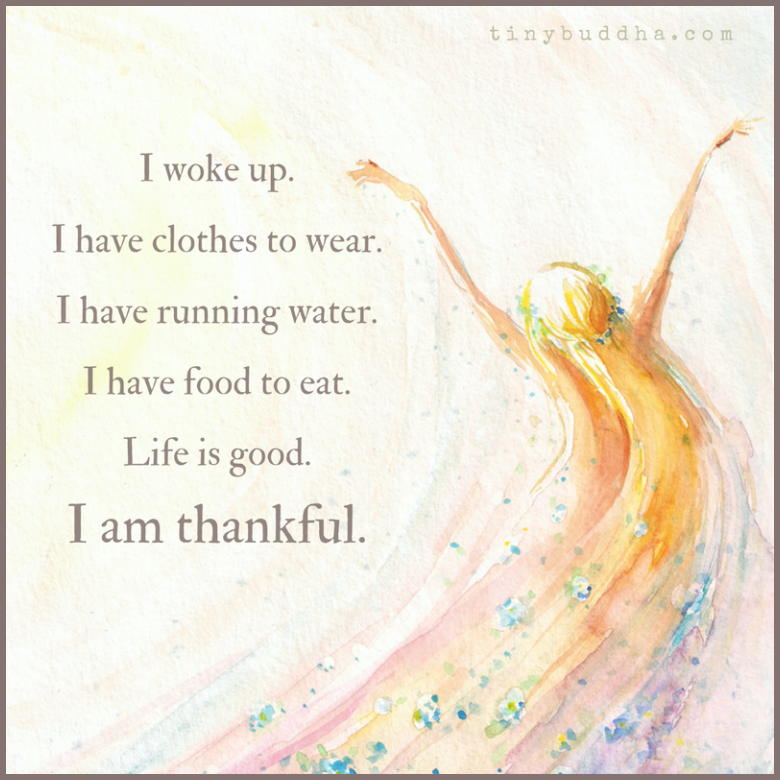
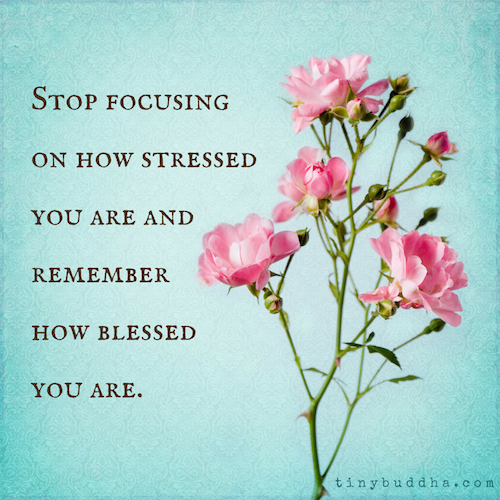
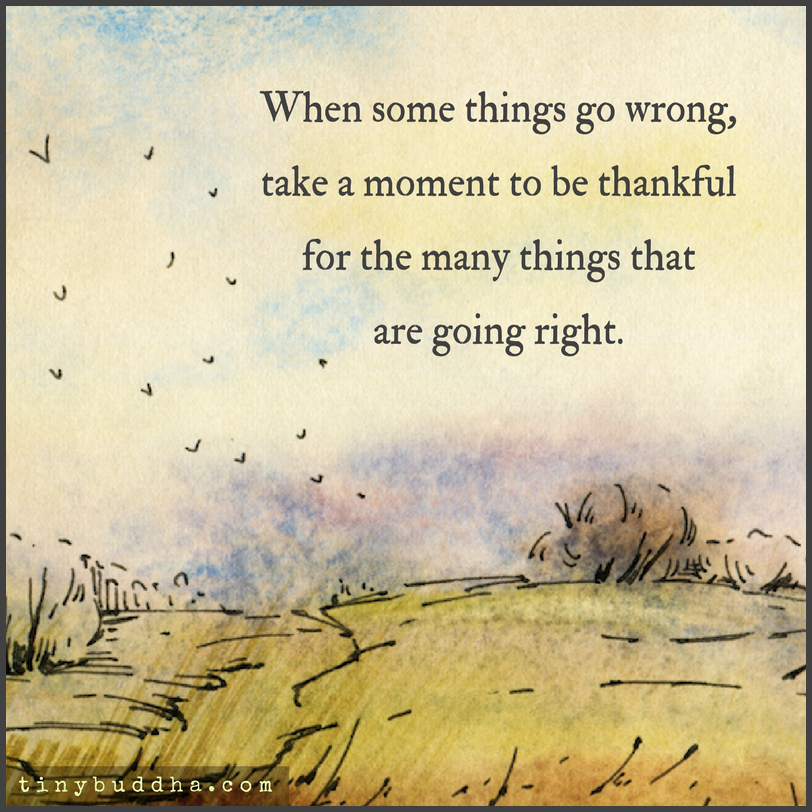
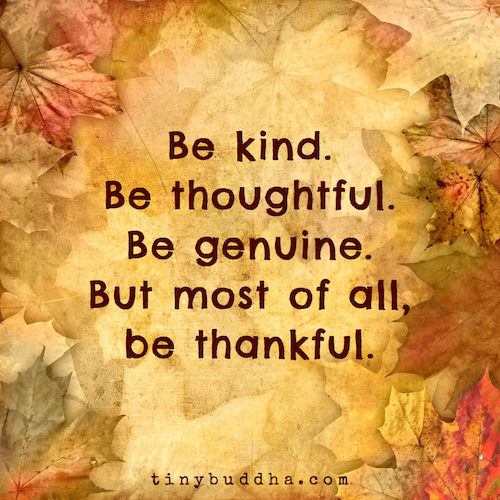
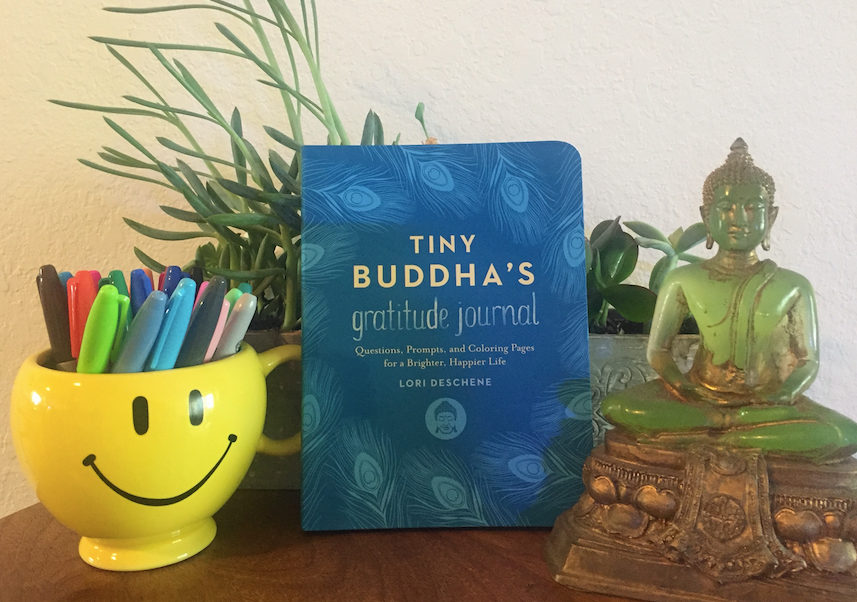
    To celebrate this day, I gathered some of my favorite gratitude quotes (mostly from anonymous sources), and I’ve also put aside two copies of Tiny Buddha’s Gratitude Journal for a special giveaway.

    About the Journal

    Including questions and prompts pertaining to both your past and present, the journal will help you see your life through a new, more positive lens.

    The book also includes fifteen coloring pages, depicting awesome things we often take for granted, like nature and music.

    With space for written reflection, these pages provide all the benefits of coloring—including mindfulness and stress relief—and also guide you to recognize the beauty in the ordinary.

    Whether you’ve been gratitude journaling for years or you’re just giving it a try for the first time, Tiny Buddha’s Gratitude Journal will help you access a state of inner peace, contentment, and joy.

    The Giveaway

    • To enter to win one of two free copies of  Tiny Buddha’s Gratitude Journal, leave a comment below sharing something you’re grateful for today.
    • For a second entry, share this post on one of your social media pages and include the link in a second comment.

    You can enter until midnight, PST, on Thursday, November 30th.

    If you’ve already received your copy, I would appreciate if you’d leave a review on Amazon here. It doesn’t need to be long—even a tiny review can make a big difference.

    The Quotes


    Yes, that last one is my own quote, so it’s probably kind of odd to include it in a list of my favorites. But I wanted to add this one in case you’re going through a tough time right now and not feeling all that grateful. Be good to yourself. Take care of yourself. And know that you are loved and appreciated.

    **One request before you go! Tiny Buddha has been nominated for Healthline’s Most Loved Blogs contest. If Tiny Buddha wins, the entire $1000 prize will be donated to Operation Smile to give new smiles to four children with cleft lips and palates. You can vote once daily until December 6th here. Thank you so much in advance for voting!

  • A Little Appreciation Can Go a Long Way in Your Relationships

    A Little Appreciation Can Go a Long Way in Your Relationships

    Couple on the beach

    “There is more hunger for love and appreciation in this world than bread.” ~Mother Teresa

    I’ve been in a relationship with my boyfriend for over four years. We’ve had our fair share of great times and not so pretty moments, but this summer our relationship was put to the test.

    During that time, I went through some major transitions with my career and personal development, all things that needed to happen for me to be the best version of myself.

    Those months were filled with long hours of working and being alone, solely focusing on creating the future I wanted. I was in deep, chasing my dreams, and wouldn’t let anything get in my way.

    As time went on, I noticed that my partner was slowly slipping away.

    It wasn’t that he wasn’t coming home or was nowhere to be found. He was responding to the fact that I had lost focus on him.

    I was failing my partner in the following ways:

    • I didn’t say thank you for all the little things he did for me.
    • I didn’t ask him how his day was. Instead, I was eager to share how my day went.
    • When I faced an obstacle with my goals, I would be rude and short with him.
    • Instead of greeting him with a smile when he arrived home, I treated him as if he was a burden getting in the way of the work I needed to do.
    • Rather than planning and spending time with him, I would work late into the evening.
    • Lastly, I wasn’t present with him. When I did spend time with him, all I did was think about work.

    My actions and behaviors were so self-centered that I stopping thinking about how he was doing, how his day went, and what he needed support with.

    The end result: he withdrew.

    At first I thought he was no longer interested in me, but I eventually came to realize that I wasn’t even close to meeting his needs. And what he needed was simple: appreciation.

    He had hinted at it several times in his own way, but I’d had blinders on.

    After months of neglect, my boyfriend and I sat at our kitchen table making small talk and slowly tiptoeing into the conversation of what was and wasn’t working in our relationship.

    He said, “All I ever want is for you to appreciate me. I don’t need you to cook for me or get all dressed up or buy me things. All I want is to be appreciated.”

    His honest and vulnerable declaration brought me to tears. I realized then that I had been causing my partner significant pain and suffering for no reason.

    So, with my heart on the table, my eyes swollen from crying, and a common ground of love to move forward on, I told him this: “From now on, I will appreciate you—the big, the small, the silly, and imperfect. I will appreciate it all. I may not be perfect in my practice of appreciation, but I am committed to it, so much so that I have added it to my morning routine.”

    Much like the gratitude journal I write in every morning, I now have a journal dedicated solely to all the things I value about my partner.

    Every morning I set aside time to think of three things I appreciate about him. I do this even when I’m not feeling up for it. I take my time and feel every emotion that comes up as I write down my list of three items.

    I also make an effort so show my appreciation in action. My partner’s love language is “acts of service,” meaning actions speak louder than words. He feels loved when I do things for him coupled with expressing my feelings for him, so I now strive to show him that I love him with acts that require planning and thoughtfulness.

    The Value of Appreciation

    I never thought that simply reminding myself how much I appreciate my partner would cause a ripple effect in how I interact with him, but it has.

    Since starting my appreciation practice…

    I easily forgive his mistakes, such as forgetting to do something I ask him to do to support me, or not being sensitive enough and open to my feelings when I feel overwhelmed. I’ve grown to love his mistakes because they remind me of what it is to be imperfect. After all, I’m not perfect, and I can’t expect him to be either.

    I appreciate his faults and quirks. Like hitting the snooze button when he needs to get out of bed. And forgetting to eat throughout the day because he’s too busy teaching college students. And running behind schedule most of the time. We all have faults. His reminds me all over again why I fell in love with him. In all reality, we complement each other nicely.

    I appreciate his smile and his one of a kind laugh.

    In recognizing all that my partner does for me and my future, I feel a love so powerful that just thinking about it brings me to tears.

    My partner feels appreciated and cared for. He is more eager to engage with me, and more willing to be open and expressive with me. And he talks about the future more than ever.

    What Happens When You Don’t Appreciate the People in Your Life

    When you don’t appreciate others, your relationships suffer in the following ways.

    • The other person feels unimportant and may withdraw from you.
    • When your partner feels unappreciated, any talks of the future will be met with resistance. Would you want to build a future with someone who doesn’t appreciate you?
    • Animosity may build up in the relationship, on both sides.
    • The person feeling unappreciated may find other places, things, or people to seek appreciation from.
    • Being unappreciated can lead to unnecessary arguments and resentment.
    • Lack of appreciation may completely ruin and end the relationship.

    How to Start Appreciating the People in Your Life

    If you’ve recognized that you could make a little more effort appreciating the people in your life, dedicate a notebook solely for this purpose. Start your day by jotting down three things you value about this person. At the end of thirty days, give them your notes of appreciation. Rinse and repeat.

    But appreciation doesn’t just live within the mind. Sure, it’s wonderful to think about all the things you value about someone, but when you don’t vocalize or show your appreciation, it means nothing.

    You can start appreciating others in your life by:

    • Leaving them notes thanking them for who they are and what you appreciate about them.
    • Saying thank you and acknowledging the little things they do every day.
    • Giving specific examples of what they have done and how that has enhanced your own life.
    • Appreciating their flaws and quirks. The little imperfections are what make people unique. They may feel insecure about them. Let them know how you appreciate their imperfections, and why.
    • Giving someone a hug when they help you out or put a smile on your face.
    • Doing something unexpected; brighten their day by buying them a cup of coffee, or stopping by to let them know that you love them and appreciate them for being in your life.

    Like Tony Robbins said, “Trade your expectations for appreciation and your whole world changes in an instant.”

    Appreciation strengthens the bonds you have with others, no matter the relationship. It replaces a mindset of not having enough with being grateful for everything you have. And most of all, it creates space to be thankful for the little things in life.

  • 10 Creative Ways to Express Gratitude

    10 Creative Ways to Express Gratitude

    Thank you

    “Feeling gratitude and not expressing it is like wrapping a present and not giving it.” ~William Arthur Ward

    It’s probably no surprise to you that gratitude is one of the most effective ways to increase your own happiness—and the happiness of others. But did you know that practicing gratitude can also make you healthier, less stressed, and more optimistic? Plus, it’s even been shown to have positive effects on your career and relationships.

    Gratitude is clearly a worthwhile practice, and there are tons of wonderful resources online (even here on Tiny Buddha!) filled with insights, inspiration, and ideas for practicing thankfulness.

    Whether it’s writing in a gratitude journal, sending out a thankful note, or saying “thank you” to people you love, there are countless ways to express appreciation and thankfulness.

    Embracing gratitude might not be so difficult when things are going well, but over the past few years I’ve discovered just how powerful gratitude can be when going through a difficult time.

    After a lifetime of perfectly good health, last autumn I was unexpectedly faced with the challenge of having four surgeries. As someone who battles with extreme anxiety when it comes to anything medical (especially needles!), the prospect of surgery terrified me.

    During this difficult time, I was so fortunate to have friends, family members, and even strangers treat me with kindness, love, and compassion—something that I know wasn’t always easy, given my panicky state of mind!

    One of the ways I coped with my anxiety was transferring my attention from my apprehension to appreciation. Every time I found myself dwelling on my fears, I asked myself: What can I be thankful for? Who can I thank today?

    While I won’t deny that four surgeries (and tons of bed rest!) was an unpleasant experience, it did give me the opportunity to have a life-changing revelation: expressing gratitude can be a transformative experience.

    The more I focused on being thankful (and expressing that gratitude), the less time I had to ruminate on my worries.

    Being thankful not only helped me to better cope with my worries, but expressing my appreciation to others helped me to strengthen my relationships with my friends, family members, and even my surgeon!

    Whether you’re in the midst of one of life’s highs or one of it’s lows, you have a great deal to gain from taking your appreciation and sharing it with the world. Here are some of my favorite ideas for doing just that:

    1. Like every post on friends’ social media feeds

    Pressing a button to like a post might seem like a small thing, but in our digital age, this tiny act can be a great—and easy!—way to express gratitude.

    Silly as it might sound, those little notifications can mean a lot to some people and, unless you actively disagree with what’s being conveyed in the post, why not show your appreciation for the person who shared it by giving it a thumbs-up or a heart?

    2. Forgive someone who has hurt you

    Forgiveness might not sound directly connected to gratitude, but when you forgive someone who has hurt you (with or without an apology), what you’re essentially doing is expressing gratitude for the experience and for the opportunity to experience compassion for someone else.

    Forgiveness, mind you, does not condone the wrongdoing. It merely offers you a chance to free yourself from resentment and anger, which is a way to love yourself.

    3. Connect two friends who might like each other

    Friendships are one of life’s greatest gifts, and what better way to express gratitude for them than to help create more positive relationships?

    If you think two friends might hit it off (either romantically or platonically), introduce them to one another. This is a great way to not only express your gratitude for friendship in general, but also to show these two people that you love and value them.

    4. Donate clothing to your local homeless shelter

    How many articles of clothing to you have that you don’t actually wear? If you sort through your closet and drawers, you’ll probably find tons of items you no longer need to keep.

    Choosing to donate these items to those in need is not only a kind thing to do, but also a way of express gratitude for the time you were able to wear those clothes, for those who made the clothes, and for the opportunity to pass them along to someone in need.

    5. Make and share a list of someone’s good traits

    Do you ever have those moments when you look at a friend or loved one and think about how amazing they are? Don’t keep those thoughts to yourself!

    Every time you notice something wonderful about someone else, write it down. When you have a nice little list gathered, share it with him or her to express how thankful you are for his or her wonderful traits.

    6. Share your positive reviews with others

    More often than not, when people take time to speak to a manager at a shop or restaurant or write an online review, it’s because they’ve had a bad experience and want to vent about it. But imagine what it would be like if people shared every positive they had with a product or service!

    The next time someone is helpful or you enjoy a product, tell others about your experience. Leaving positive reviews and telling managers about positive employees is a fantastic way to express gratefulness.

    7. Put your phone away when you’re with people

    One of the absolute best ways to express your gratitude for others is by doing your best to be fully present in their presence.

    This is not always easy (especially with all of the digital distractions!), but try your hardest to put your phone away when you’re interacting with others. Doing so will allow you to be more appreciative of the experiences you have with them.

    8. Write a handwritten letter (not just a note!)

    You’re hopefully no stranger to the thank you note. A handwritten thank-you is one of the most impactful ways to express gratitude in an era when most people simply jot off an email or a text. But when was the last time you wrote a letter to express you gratitude?

    Break out that loose leaf paper, a pen, and take some time write a full-page letter to a loved one, expressing your gratitude for everything they’ve done for you.

    9. Pick up and throw away litter when you see it

    Big picture gratitude is something that’s often ignored when thankfulness is discussed, but if you’re not spending time appreciating, and caring for, the world around you, you’re missing out on a great gratitude opportunity.

    One simple and effective way to express appreciation for the world is to pick up and dispose of litter whenever you see it. It’s a small act, but if we all did it, the world would be a much better (and cleaner!) place.

    10. Teach someone about something new

    We all have unique skills and talents. Whether it’s something small (like mastering Snapchat) or big (like fully comprehending how quantum physics works), we all have knowledge we can share with others.

    Sharing what we know allows us not only to show appreciation for others (after all, we value them enough to teach them something), but it also is a chance for us to be grateful for our personal knowledge and skills (and for the ways we were able to learn them).

    Whether you choose to express gratitude using one of these creative gratitude tips or all ten, it’s my hope that they’ve inspired you in some way to think outside the box when it comes to showing appreciation for the people and experiences in your life.

    Gratitude is one of the greatest ways to make your world a happier place, and the more you practice it, the more things you’ll find to be grateful for.

    Editor’s Note: Dani has generously offered to give two sets of her two new books, Gratitude and Living in the Moment, to Tiny Buddha readers. To enter to win a free set, leave a comment below sharing something you’re grateful for. For an extra entry, share this post on one of your social media pages and include the link in your comment. You can enter until midnight, PST, on Friday, September 16th.

    Update: The winners for this giveaway are marleyposh and Siege Htrowsdloh.

  • 6 Ways Gratitude Can Improve Your Life and Make You Happier

    6 Ways Gratitude Can Improve Your Life and Make You Happier

    Girl with heart

    “I don’t have to chase extraordinary moments to find happiness—it’s right in front of me if I’m paying attention and practicing gratitude.” ~Brené Brown

    For the longest time I sought after happiness in the wrong place, and I wasn’t always leading with my heart to obtain joy.

    I used to picture myself living in a big house, with nice things to furnish and fill the fantasy home I dreamed of.

    I didn’t obtain this large dream home, and I’ve learned that it’s not important, nor is it what I want. I’ve been fortunate to live in a moderate home with exactly the things I need, and more—a happy, healthy, loving family.

    Prior to gaining the wisdom of wanting less, I spent a lot of money on material items, because, one, I thought I deserved it on a good day, because I was “celebrating,” or I worked too hard not to have it; two, I told myself I had to shop on a bad day, because I needed to cheer myself up; three, I shopped out of boredom; or four, I went shopping as a social activity.

    After collecting these possessions of “happiness,” I realized my life wasn’t totally fulfilling and satisfying.

    In fact, I eventually became short-tempered, overwhelmed, and stressed out. I was overwhelmed with the amount of maintenance these material things required, while caring for my family.

    My belongings took over my life, and, therefore, I lost myself underneath everything. I started to hate what I was becoming—someone who wasn’t consistently happy, and someone that lost track of what mattered most.

    My perspective on life changed when my daughter came into my world in 2014. A few months after her arrival, I made a change that has significantly changed me for the better and brought more happiness by

    Practicing Gratitude and Living Simply

    Being thankful for the essentials—appreciating what I already have—has allowed me to live more simply. It’s also revealed these benefits…

    1. You’re better able to be present.

    Being thankful reminds us of what we have to be grateful for in our current state, and that helps us be more present.

    I used to worry more about what I didn’t have and seemed to constantly strive for these things. That changed when I figured out how to be thankful for what I have and in the most important place—the present.

    There’s no better moment than the now. Practice gratitude to enable yourself to be entirely present.

    2. It boosts confidence.

    When you focus on appreciating what you have, you feel less concerned about what you lack, and that can help boost confidence.

    Now that I’m more accepting of myself and my life, I don’t compare myself to others and I take pride in paving my own path. It’s a great feeling to do things that are best for me and my family, without trying to please the rest of the world.

    3. Being thankful means less worry.

    Practicing gratitude helps lift away worry because you recognize and appreciate that you have enough.

    Knowing that I have the essentials brings me relaxation and eases my mind. I’m also more at peace because I don’t add things that aren’t valuable to my life in order to avoid the stress they carry.

    4. Gratitude improves your sleep.

    Recognizing our blessings and worrying less enables us to sleep better.

    It’s a rare event that I’m up tossing and turning because of stress or worry. If something is keeping you from falling asleep, think of a few thoughts that bring gratitude.

    5. It also improves relationships.

    Showing gratitude toward others goes a long way and creates better connections.

    I’m thankful for my family every day. They’re my favorite people and I love being with them. Prior to practicing daily gratitude, it was easiest to take frustrations out on them first. Why? Because I’m most comfortable expressing myself with them, and they put up with me and love me no matter what.

    Since I’m so thankful for my family, and because they love me without question, I’ve improved how I let anger out and make it a point to convey my love for them on a daily basis.

    I want to leave this world knowing that I tried to give people the best version of who I am, with the hope that they know how thankful I am for them. Being around inspirational and joyful souls is contagious, and I aspire to be this type of individual.

    6. Gratitude leads to generosity, which can be highly rewarding.

    Observing thankfulness helps us identify how fortunate we are, which naturally gives us the desire to give.

    I personally prefer not to give material things, as I don’t find it as rewarding as other forms of giving. Sure, it’s nice to give someone a gift they need, but I believe there is more value in giving time or helping a hand.

    Time is priceless, and these days it seems our schedules are packed to the max. People scurry from one place to another, and at the end of the day, they feel stressed and dissatisfied.

    I’ve discovered immense joy in donating my time or helping someone in need. It’s gratifying being able to help with something as small as holding a door open or as big as helping feed the hungry.

    Discover the benefits of giving by helping a friend, family, or the community.

    Practicing gratitude has led me to greater happiness and a better me. The same can happen for you.

    Allow yourself to live simply and make life less complex, in as many ways possible; remove unneeded possessions, stop doing unimportant tasks, or say “no, thank you” to an activity that doesn’t fit in the schedule.

    Start each day with gratitude. There is always something to be thankful for—family, watching spring bloom, your favorite song, or feeling the warm sun on your face. And don’t forget to smile when thinking about these things; it’s a quick and easy way to fill your heart with gratitude and live in those extraordinary moments.

  • A Simple Practice to Appreciate Our Bodies, Flaws and All

    A Simple Practice to Appreciate Our Bodies, Flaws and All

    Sunset Silhouette

    “Who does not thank for little does not thank for much.” ~Estonian Proverb

    I remember the moment so well: I had been seeing a new guy for a few months and I was staying the night for the first time. Up until that point he hadn’t seen me without heavy makeup, as I was careful to always look completely put together while with him.

    That night I had to make a decision.

    I could fall asleep with my makeup still on, or I could remove it first. Did I feel comfortable enough to let him see me without foundation, eyeliner, or mascara? Would he still like me?

    For many people this might not be a tough decision to make (and truly, I have nothing against makeup or those who wear it), but for over a decade I had worried constantly about anyone seeing me without. I had over a decade of time to build up unhealthy attitudes about my appearance.

    Any time I spent the night away from home, from trips and staying with friends to dating, I would get up around 5am to redo my makeup and get back into bed before “waking up.”

    It was exhausting, but the only way I felt comfortable around other people. Going to the beach or the pool was a real struggle.

    I remember this particular moment so strongly because when he saw me the only thing he said was “you look so different.”

    The comment itself wasn’t outwardly negative, but I also noticed his body language and the look on his face. Let’s just say it didn’t make me feel supported, or beautiful, or seen. It simply made me feel sad.

    Moving Past Crippling Self-Criticism

    Sometimes I feel gratitude for that moment, the weight of my own insecurity so heavy that I knew there was a choice to make.

    Would I repeat this scenario again and again in each new relationship, holding my breath and expecting the worst in that critical moment? Or would I learn to truly accept myself first, as I was?

    Not long after, I stopped wearing makeup completely.

    I had significant difficulty at first, to be honest. I was so used to feeling put together and confident. No makeup left me feeling depressed and deeply unattractive, as I was struggling with significant acne at the time.

    I even had trouble looking up from the ground while I walked, as I was so afraid to be seen.

    I remember thinking to myself during this time have faith, have faith, have faith.

    And then one morning I was drawn to stand in front of the mirror and place one hand on my stomach and the other hand over my heart. I took a deep breath and said to my body, Thank you for taking care of me.

    Then I touched the skin of my cheeks to feel their warmth and said, Thank you for your resilience.

    Then my hands, my fingers, my wrists: Thank you for your strength. 

    And finally my throat, saying, Thank you for your truth.

    I ended the practice with a simple thank you. I love you.

    A Shift in Perspective

    Whenever my critical eye began to get the best of me, I’d return to the mirror.

    Thank you. I love you.

    The most powerful part of the exercise for me has always been the element of touch.

    I’ve always found it so easy to briefly glance in the mirror and only see what I dislike. My flaws become harder to see when I feel the strong beat of my heart and the muscles beneath my skin that make my life as I know it possible. A pimple doesn’t seem as important when my chest rises and falls beneath my hand during a powerful breath.

    I still have mornings when I wake up and am not pleased with what I see in the mirror. However, I now also have mornings when I feel complete gratitude for what my body allows me to do and who I’m able to be.

    I now have mornings when I look at my eyes in the mirror and instead of seeing pale eyelashes I see kindness. I see courage and determination.

    Thank you for taking care of me. Thank you for your resilience.

    It’s incredibly easy to be critical of ourselves, and so incredibly vulnerable to embrace our bodies, acne and all.

    The next time you feel insecure, try reconnecting to yourself with a simple touch. Touch reinvigorates us with the energy that runs through our veins, our skin, our organs.

    Thank you for your strength.

    Place one hand over your heart and the other on your stomach and breathe in and out, feeling the healing impact of your breath on your body.

    Thank you for your truth.

    Stay there for several breaths, eyes open or closed.

    When you’re ready, say thank you.

    When you’re ready, I love you.

    Sunset silhouette via Shutterstock

  • Now Is the Time to Appreciate Each Other and Enjoy Life

    Now Is the Time to Appreciate Each Other and Enjoy Life

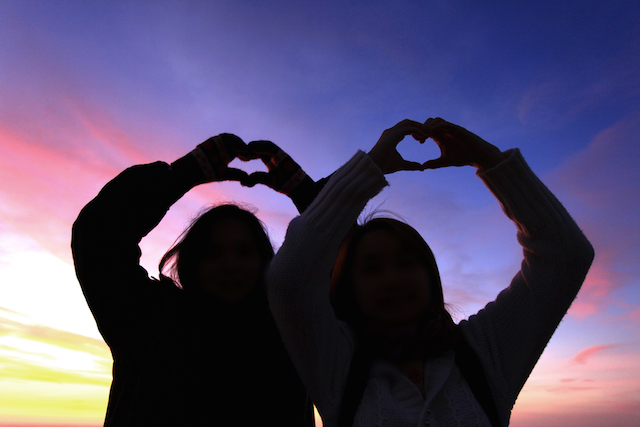
    Friends Making Heart Symbol

    “If your forever was ending tomorrow, would this be how you’d want to have spent it? Listen, the truth is, nothing is guaranteed. You know that more than anybody. So don’t be afraid. Be alive.” ~Sarah Dessen

    It was beginning to get dark. Lightning streaked across the cloudy sky above the ocean. The full force of the wind took the breath out of me as my eyes squinted from the heavy rainfall.

    Waves rolled in to crash down in front of me, as if the ocean was screaming at me.

    “Turn around, human. Go home!”

    “Maybe I should,” I thought. “What am I doing out here in this extreme winter weather?”

    But my intention returned. The news I had received that day continued to stir at the back of my mind. And so, I moved forward.

    The water was ice cold as the waves smashed against my legs. I moved forward.

    Just as I thought I could bear no more, I submerged myself underwater. The sounds and sensations shifted as I merged with the ocean for a brief moment. And then I resurfaced to brave the magnificent storm.

    In this moment, I felt so alive!

    I had awoken to the reality of life—that there is only one thing that holds us to this world. A heartbeat.

    Earlier that day I had received news that my friend, Nick, had tragically and unexpectedly passed away. His heartbeat no longer held him to this world.

    How fragile we truly are. Yet living this truth is where we truly fail.

    My ocean swim in extreme winter weather was a way to remember that I had a heartbeat; that I was alive. It was a reminder that all those I know and care about are mortal, fragile, and finite.

    Why had I ignored this truth? Why had I lived my life to this point in safe denial?

    Reflecting back on this experience, I have come to realize that when we lose someone, it temporarily shifts our internal compass of reality.

    It points us home, toward what some people call our “higher self,” “inner wisdom,” or put simply, our raw humanity.

    These lessons we learn from loss are valuable reminders for our own personal growth. They serve as road signs that lead the way back to our own humanity, which we so easily lose touch with in today’s society.

    In finding my own way back to humanity on that stormy night at the beach, my first road sign pointed toward letting go of judgments.

    Too often we form negative judgments about people based on their mistakes and choices we don’t agree with, and in doing so can’t see the best in them. What a selfish person! What a rude person! How could he do that!

    We create generalizations that cut us off from the people around us. We zoom in on these judgmental labels and before we know it, it’s too late to appreciate the people in our lives.

    I knew my friend who passed as a casual acquaintance for six years. Sometimes I thought he partied too hard. There were times where he even got into trouble with the law.

    Yet, there were so many things I could have appreciated more by simply looking beyond my judgments. 

    He was friendly and known by so many. He had a great sense of humor and was extremely fun to be around.

    His energy and zest for life were contagious. Although he had never been employed, I really admired his courage to live a satisfying life in his own way without worrying what others thought. But I never told him while he was alive because I was too busy judging his choices. And now I’ll never have the chance.

    Which judgments are getting in the way of connecting with people in your life? What would you appreciate about them if you knew your time with them was limited?

    My second road sign back to humanity pointed toward appreciating the present moment. Too often we sleepwalk through life, lost in our own minds with endless thinking. Many times we’re not even present in what we’re doing.

    If you’ve ever taken a shower and realized that you can’t remember whether you have already washed your hair, you will know what I am talking about.

    Perhaps you’ve taken a walk on the beach on a sunny afternoon, but spent the whole time gazing at the ground lost in thoughts about the day.

    The present moment? Before you know it, it’s gone.

    Appreciating the present moment is as simple as noticing the sensations and experiences around you.

    My spontaneous ocean swim allowed me to feel the heavy rainfall on my skin, the sheer force of the wind and waves against my body, and the exhilaration of submerging myself into the ice-cold water.

    What are the things that make you feel alive? What prevents you from fully enjoying those things, and what can you do to start experiencing them more mindfully?

    Oscar Wilde, a nineteenth century Irish writer, remarked that “To live is the rarest thing in the world. Most people exist, that is all.”

    I encourage you to go beyond simply existing. Appreciate the present moment and completely savor the experience. Because that’s what we are all here for, right?

    In sharing my lessons from loss, I hoped that you too will remember that there is only one thing that holds us to this world: a heartbeat.

    Let this truth guide you in your actions every day, and be mindful of life lessons that serve as reminders.

    The moments we have are small grains of sand in an infinitely trickling universe; take time each day to enjoy the present moment before it trickles away.

    The people in our lives are drops in an endless ocean that forever ebbs and flows; take time each day to appreciate them before the waves carry them away.

    Friends making heart symbol image via Shutterstock

  • 19 Simple Daily Habits for a Happier Life

    19 Simple Daily Habits for a Happier Life

    “Hug harder. Laugh louder. Smile bigger. Love longer.” ~Unknown

    Did you ever have it all mixed up?

    Happiness, I mean. I once thought that a university degree and good grades would make me happy. I thought that traveling the world would leave me feeling fulfilled. I thought that moving abroad and getting that top-notch job would make me satisfied and content.

    They all did, but only for a while. They always came with an expiration date.

    Finally, I had to stop and ask myself, “If I’m not able to be truly happy now, will I ever be?” If I couldn’t appreciate everything I already had in my life, would more really be the answer?

    No.

    Then I thought, “If happiness is what I want, why not take a shortcut and go there directly?”

    So, I did. I stopped putting it on hold. I stopped allowing external circumstances to dictate how I felt. And I stopped relying on illusionary destinations of promised happiness and bliss.

    What I realized is that happiness doesn’t happen by chance–it happens by choice. It’s a skill that anyone can develop with the right habits.

    19 Happiness Habits That Could Change Your Life

    1. Appreciate more.

    This morning I woke up feeling appreciative of my bed, my incredible friends, and my mom for being the rock in my life. Appreciation feeds happiness. It highlights and gives value to what matters in our life. And the more you appreciate, the more you’ll find things to be appreciative of.

    When waking up and going to sleep, remind yourself of three things you currently appreciate in your life.

    2. Energize yourself every morning.

    Mornings set the tone for the rest of the day. A good morning routine leaves you feeling centered, energized, and ready to take on the world.

    Meditate, do yoga, write a list of everything you love, watch inspirational YouTube videos, or listen to your favorite song before leaving the house. Simply, set yourself up for a great day!

    3. Practice acceptance.

    Things don’t always go as planned. I used to get frustrated when plans changed or when the bus arrived late. But resisting never changed anything; instead, it just sent me into a downward spiral. When I started accepting whatever happened, I relieved myself from unnecessary suffering.

    Start practicing acceptance. Adjust to the new situation, without fueling it with negative emotions.

    4. Live in the present.

    This is where it all happens, the present moment. It’s the only place where you can experience happiness (or anything else for that matter). It’s the only place worth being. It might sound obvious, but realizing this was life changing for me. In the present I think better, feel better, and act better.

    Whenever you enter a new place, use your five senses—sound, sight, touch, smell and taste—to find more nowness.

    5. Listen attentively.

    Listen with focus and compassion. Give people the gift of your full attention. This is a powerful source of happiness, as it creates strong bonds between people and places you in the now.

    Whether it’s your colleague, partner, or a complete stranger on the street, decide to be more present in all your conversations.

    6. Save money to invest in memories.

    Material things might satisfy us short term, but experiences are what makes us happy long term. For the past year I’ve barely bought anything new. Instead, I’ve used that money to travel. Just thinking about the beach parties in the Caribbean, those sunny days in Central Park, and that festival in Ibiza puts a ridiculously big smile on my face.

    Buy only things you need or fall head-over-heels in love with. Then, use that extra money for experiences that will make you go “Aaah,” “Ohhh,” and “Wow” when you think back of them.

    7. Make new friends.

    Many of us stop making friends after the age of twenty. Make new friends and you’ll grow as a person, be exposed to new experiences, and have a rich social life.

    Have a friendly conversation with a stranger and maybe you make a new friend. Maybe it’s for five minutes, or maybe it’s for a lifetime.

    8. Dream big.

    Dreams are good; they propel us forward. They enliven our heart, awaken our mind, and give us reasons for living. Allow yourself to dream big and trust that it can become a reality for you.

    Dedicate at least five minutes every day to be swept into your dream life. Make it as real as possible: visualize and create the feelings of being, doing and having all that you want.

    9. Take steps toward your dream.

    Now, does your present look like the future you’re dreaming of? If not, put more time and energy on what you want to see grow.

    Take small steps every day to elevate you toward what you want. Tiny steps all add up.

    10. Develop a mindset of abundance, not scarcity.

    How we experience the world depends solely on our perception of it. When you live in lack, you protect and hoard. When you give away, you signal that you have more than enough for yourself.

    Don’t feel like you get enough love? Give love to someone else. Don’t feel like you make enough money? Give money to someone else in need.

    11. Take time to re-charge.

    Even though we live in a society that fosters us to do more, be more, give more, and have more, we need time to re-charge. We need to fuel ourselves with energy. Take short breaks, and why not a power nap?

    What doesn’t get planned usually doesn’t get done, so make sure to plan for downtime.

    12. Make time to play.

    Living isn’t a duty. You didn’t come here to fix something that’s broken or to complete a to-do list. You came for the fun of it, for the exhilaration and magic of being alive.

    Set aside at least fifteen minutes every day for fun-time and make that time non-negotiable.

    13. Be around happy people.

    Attitudes are contagious. If someone’s smiling at you, you’ll probably smile. If someone is rude, then you’ll probably be rude back. Only hang out with people whose attitude you want to catch.

    If happy people aren’t near, go online and watch videos with awesome-attitude people such as Marie Forleo, Tony Robbins and Regena Thomashauer (Mama Gena).

    14. Move slowly.

    Lao Tzu said, “Nature does not hurry, yet everything is accomplished.” Faster doesn’t mean better. Busier doesn’t mean exceeding. Don’t rush through life.

    Slow down. Put your heart and energy into what you’re doing and focus on that (and only that).

    15. Actively soothe yourself.

    What matters isn’t what happens in our lives, but how we choose to deal with it. To make better decisions, we need to become our own lifeguard and sooth ourselves from negative thoughts.

    When I feel bad I usually go running, meditate, or write a list of everything I love about my life. Practice different techniques until you find some that work for you.

    16. Let go.

    Letting go isn’t always easy, but it’s the only way new and better things can come along. When we let go of something, we come to a peace of mind. The struggle is over and new ideas and perspectives can begin to open up.

    Practice letting go of what doesn’t serve you, such as complaining, comparing yourself to others, negativity, and mistakes from the past or worries about the future.

    17. Forgive often.

    Maybe someone was late, maybe someone was rude, or maybe someone forgot to call you back. Forgiveness doesn’t excuse behavior; it frees you from it. It releases resentment and other negative emotions tied to a person or a situation.

    Make a habit of forgiving people, even for the smallest of things.

    18. Attend to the real world.

    Smartphones, tablets, and laptops are constantly screaming for our attention to the world of social media. The digital world is supposed to be a complement to our real life, not the other way around.

    So, take time to be present where you physically are (the Facebook status update can wait).

    19. Care for yourself.

    Our body, mind, and soul are connected. Make a change in one of them and you change the state of all three. Isn’t that nice to know?

    Do something every day to improve your overall state of well-being, such as preparing a good meal, exercising, or watching a good movie. And know that caring for yourself is caring for the world.

    Claim Your Happiness Once And For All

    Not being in charge of your happiness is frustrating. Relying on external events and circumstances to be in a certain way in order to feel good is a recipe for misery. Because, when life doesn’t go as planned or things fall apart, so does our happiness.

    Happiness isn’t about having all the pieces in place. It isn’t about having a problem-free life or reaching a certain goal or objective. Instead, it’s about being able to enjoy where you are, no matter what.

    Don’t leave your happiness to chance. Choose to claim it. Live the life you deserve to live.
  • 5 Lessons on Living Life Fully from a Breast Cancer Survivor

    5 Lessons on Living Life Fully from a Breast Cancer Survivor

    I Survived

    “We all have two lives. The second one begins when we realize we only have one.” ~Confucius

    When I was diagnosed with stage 2 breast cancer in September 2014 I tried to spin this life curveball on its ugly head and find some lessons from this journey.

    That’s how I dealt with the blow.

    The truth is, I didn’t want people to feel sorry for me. I never wanted to be a victim.

    I wanted to be a survivor from day dot.

    Throughout this process I learned five powerful lessons that I’d like to share with you so that you can live life more fully—without a cancer diagnosis.

    The reality: Cancer changed my appearance.

    The treatment for cancer took away my hair, my eyebrows and eyelashes, and my breasts. All the lovely feminine assets I had were tampered with or lost temporarily.

    The lesson: Love goes beyond looks.

    The people who matter love me no matter how I look. One day when I was heading toward the end of my chemotherapy, my five-year-old boy found a picture of me with all my hair and eyebrows and said, “We love you however you look, Mummy.” That makes me feel blessed beyond belief.

    You’re likely blessed in the same way, and that’s something worth acknowledging and celebrating.

    The reality: Chemotherapy is horrible.

    It saves our lives but the process is yuck. I experienced all sorts of symptoms that were pretty uncomfortable. I almost got used to them as time passed by, yet I had to keep going back for more. For five months.

    The lesson: Don’t take health and energy for granted.

    To get up in the morning and feel healthy, comfortable, and full of energy is a beautiful thing. To feel normal is extraordinary. I will never take my health for granted again. I will never again consider normal days, when nothing exciting happens, mundane or time to kill a chore.

    Each morning when you wake up, even if that day seems ordinary, take a moment to appreciate the extraordinary gifts of your health and vitality.

    The reality: Life is short.

    When I was diagnosed with cancer there was a short amount of time while waiting for the test results when there was a possibility my life would come to an end a lot quicker than I thought. My mortality smacked me in the face.

    The lesson: Life is precious.

    Somehow it’s taboo, and I was a little in denial that my life is short and a tremendous gift. Awareness of my mortality gave me a big kick up the bum to live my life fully.

    Every day is a gift.

    The reality: I experienced fear and anxiety like never before.

    As I went through the cancer journey, my mind could easily have been consumed with worry about what the future holds and thoughts about the past—Why me? What did I do to deserve this? I could potentially be filled with a lot of fear and anxiety.

    The lesson: Love always conquers fear.

    I had never experienced such a feeling of presence. I felt so utterly aware of what matters and how much I have to be grateful for.

    When something like this happens all the petty stuff that fills our lives and relationships falls away, and all that is left is love.

    I have never felt fear in the same way that I have in the past few weeks, but the love I have received from friends and family has stepped up to meet me, and my fear has dissolved instantly.

    Whenever fear comes to meet you in life, try to flip it around and find love. Consider all that you love and everyone who loves you. Like me, you may find fear dissipates immediately.

    The reality: I had to create a lot of change in my life.

    As a mother of two small kids, I am so used to putting myself last and forgetting to look after my needs.

    After my diagnosis, I took myself on a journey of healing, immersed myself in creative projects, meditation, kinesiology, sound healing, distant healings, chakra cleansing, Ayurvedic lifestyle changes and supplements, journaling, and getting back to basics with my relationship with food. 

    The lesson: Everything starts with you.

    I really made myself a priority—because I had to. I had to give myself love. I had to nurture myself. In doing so, I realized how important it is. For me and for everyone around me. The ripple effect it has had on my kids, my family, and friends has been profound.

    Everything starts with your relationship with yourself. Accept, love, and be kind to yourself always.

    In some bizarre ways I feel almost grateful to have been through this experience. Somehow it has shown me to step past fear and be invincible. So I hope I can share this with you, in some way, and give you an element of this perspective.

    Your life is a miracle.

    Every birthday is a blessing and every moment is fleeting.

    I survived image via Shutterstock

  • How to Find Joy in Every Day (Even the Hard Ones)

    How to Find Joy in Every Day (Even the Hard Ones)

    Jumping for Joy

    “Being happy doesn’t mean everything is perfect. It means you’ve decided to look beyond the imperfections.” ~Unknown

    It’s the question we’re all trying to answer: What is happiness and how do we get it? We fill our lives with the busyness of searching for happiness in many things, yet it’s possible that the very pursuit is taking us further away from the goal.

    I spent many years following society’s recipe for happiness.

    I was settled with my partner, climbing the career ladder, dining out, buying clothes, and planning nice holidays, but I was so busy chasing happiness, I missed out on moments of joy.

    Everyone is so busy these days. It gives us our sense of self-worth; if we’re busy, we’re successful, we’re accomplishing things, we’re important, and we’re needed.

    As a result we can often be too busy to notice if we are happy, and potential moments of joy pass us by.

    We think happiness arrives at a point in the future when our lives become perfect, with a backdrop of fireworks and fanfare, without any disasters or annoyances. But happiness generally doesn’t come in the form of winning the lottery or marrying from Brad Pitt. It’s often more subtle and smaller.

    For example: a sunny day at the beach, your favorite slippers, lying in the arms of the one you love on a lazy Sunday morning—it’s all happiness. We just need to learn to recognize it, appreciate it, and cultivate it.

    Brené Brown puts it well in her book The Gifts of Imperfection: “Joy is not a constant. It comes to us in moments—often ordinary moments. Sometimes we miss out on the bursts of joy because we’re too busy chasing down extraordinary moments.”

    Happiness is not about a final destination of pure perfection, but more about a journey through life, with moments of perfection sprinkled throughout, if we just stop to notice them.

    So how do we find those moments within our own lives and ensure we can get more of them to create a life full of happiness?

    There are two main ingredients for experiencing joy every day. The first is living in the present.

    How can we be joyful if we’re too busy worrying about the future or going over the past? And how can we be joyful if we’re too busy?

    Take time to smell the roses and be in the now; that’s where the joy is.

    People wait all week for Friday, all year for summer, and all their lives for happiness, but by the same token if we are always rushing to get to the next place, we can’t take time to enjoy where we are.

    The second ingredient for happiness is gratitude. If we appreciate all that we’re fortunate to have, rather than spending our time and energy going after what we don’t have, we’ll experience more joy.

    In our consumer-driven society, we’ve put too much emphasis on having many things—bigger houses, better cars, the latest in fashion.

    It’s easy to make the mistake of thinking that if you have something you want, you’ll be happier with more. And we struggle in the modern world with debt, obesity, and addiction as a result of this mantra.

    We are also prone to comparing ourselves with others and wanting what they have (their house, salary, partner, looks). These are surefire ways to extinguish our gratitude and rob us of our happiness.

    There’s always joy to be found, even in the mundane moments of the day, and we can tap into this by being more present.

    Next time you’re sitting in a traffic jam, rather than becoming resentful of the delay or whisked away in a daydream, why not take a moment to see what you can appreciate?

    Maybe it’s the nature outside, the sound of the birds, the sun shining, or just the fact you have a car to drive in and somewhere to be going.

    I hate winter. I even travel to the other side of the world each year to avoid it. But even on the coldest, wettest, darkest days, I can find joy.

    Maybe it’s the feel of my cozy, warm bed sheets, or being curled up by the fire with the cat and a good book, or the clean crisp look of the landscape after the first snowfall.

    I try to find something to be grateful for every day, even if this is just breathing clean air, being alive, being healthy, or having an abundance of food.

    There are so many people worse off than we are, but we often overlook the small things that others would be so grateful for.

    I’ve also uncovered joy from “happy lists”—lists of all the small things you like to do that make you happy. It’s important to find time to do these things often. It may be a walk on the beach, listening to your favorite music, having a hot bath, or sitting in the garden with a cup of tea.

    As Robert Brault said, “Enjoy the little things for one day you may look back and realize they were the big things.”

    Rather than waiting for happiness to arrive, I’ve changed my perspective to realize that it had been there all along; I just hadn’t noticed. If we look hard enough, we can find moments of joy in every day. Or, if the day is a particularly bad one, reach for your happy list and create your own joy.

    Jumping for joy image via Shutterstock

  • Thanking the Thankless: A Little Praise Can Go a Long Way

    Thanking the Thankless: A Little Praise Can Go a Long Way

    Thank You

    “The roots of all goodness lie in the soil of appreciation for goodness.” ~Dalai Lama

    The school bus driver that I had throughout elementary and middle school was invariably grouchy. She was gruff and intimidating; she had a look affixed to her face that could best be described as a perma-scowl. As far as I could tell, all of the kids on the bus were afraid of her.

    And so it perplexed me each year on the last day before Christmas break when my mom handed me a box of chocolates for me to give to my bus driver as a gift. But she’s so mean, I’d think to myself. Still, I followed my mom’s directions.

    The first time I handed the bus driver those chocolates, she was totally surprised by my mom’s thoughtfulness, and I was left awestruck by the unfamiliar grin on her face. Her hardened exterior seemed to melt right in front of me.

    Each year after that, I came to look forward to the occasion when I could see my bus driver transformed into a smiling, grateful, pleasant person—and to know that my mom’s kindness sparked that reaction in her.

    Over the years, I began to understand what my mom already knew—that this bus driver wasn’t really a mean person. She was just somebody under a lot of stress from working a difficult and thankless job.

    In college, I worked briefly as a customer service representative at a call center for a popular television provider. Never before had I realized how degrading people can be when they are frustrated, and how they may take it out on the first person they speak to.

    My boyfriend, who also worked at the call center, was once called a terrorist by a guy who was unhappy with his bill. But no matter how irate any given customer was, when the conversation ended we had only a few seconds before the next call came in and we’d go through the process again with somebody else.

    Stressful as they were to me back then, I know that the jobs I’ve held barely register on the scale of difficult work done by a multitude of employees with thankless jobs. I couldn’t last longer than a few months at the call center, though I knew workers who were there for years, working hard to provide for their families.

    When we stop to think about it, it’s easy to see how many people work to make our lives better and easier. Just think about buying your groceries, as an example. There are farmers that grow our food, truck drivers who haul our food to the store, stockers who arrange the food on shelves, and cashiers who ring it up.

    Once you get started, it’s difficult to stop thinking of people who work to improve our lives.

    The teachers who taught us to look at life in a new way. The librarian who introduced us to our favorite books—the books we turn to when we need insight or a little pick-me-up. The mail carrier who delivers the birthday card from your grandmother.

    The nurse who calls you back with the test results. The musician who wrote the song that pumps you up with enough swagger to nail that job interview or to ask out that guy. The booth attendant who sells you cotton candy at the fair (because, hey, it’s cotton candy!).

    The bus driver who made sure you got to elementary school safely.

    One day a few years ago, while reading Deepak Chopra’s The Seven Spiritual Laws of Success, I was reminded of my mom’s empathy towards my former bus driver.

    Chopra writes that when he was a child, he was taught to never go to anyone’s house without bringing them a gift—even if the gift was simply a note, a compliment, a smile, or words of thanks.

    Chopra expands upon his childhood lesson, encouraging readers to “make a decision that any time you come into contact with anyone” that we should give them something.

    Later that day while waiting in line at the grocery store, I began to think about how many people that grocery cashier sees on any given day. Some customers are friendly while others don’t seem to even acknowledge that the person behind the cash register is an actual human being.

    Then I thought about how this particular cashier seemed to go above and beyond. He was always helpful and friendly. He asked if people needed assistance to their car.

    Once I even saw him at the store without his uniform, seemingly on his off-day, adjusting the mats in the doorway so that they were easier for others to walk on.

    I remembered Deepak Chopra’s advice to give to everyone we meet. I smiled and thanked this cashier, then went home and wrote a letter to the store manager detailing what a good worker this particular cashier was, and strongly recommended giving the guy a raise.

    I hoped, at the least, that my letter would give the cashier some much-deserved recognition.

    The more I thought of people to thank, the more people I realized I was thankful for. Suddenly I felt indebted to so many people.

    I wrote a thank you letter to an old high school teacher. I wrote to my mail carrier. It was so gratifying that it verged on addicting.

    Aside from writing thank you letters or expressing gratitude, another way of showing appreciation for those who serve you is to compliment them. Start paying attention to whether your restaurant server, taxi driver, or laundromat attendant has or is doing something that is worthy of some admiration.

    Calling your attention to this will most likely evoke a smile and make them feel humanized.

    You are letting them know that you don’t just view them as some background object crunching numbers, reading scripts, or scanning barcodes. They are human beings who are servicing you, and you appreciate it.

    When we thank those that are often engaged in thankless work, we not only help them feel appreciated and respected; we also connect with that which is more human and compassionate within us.

    A 2012 study from the University of Kentucky showed that people who practice gratitude are more sensitive and empathetic, and less likely to respond aggressively toward others.

    We know how nice it feels to have our own work acknowledged. We know how it feels to be thanked, or to receive a compliment. And we know how delightful it feels to catch somebody off-guard with kindness.

    Because, really, who wants to be the guy on the phone yelling at the college-age kid and calling him a terrorist because your bill (which he didn’t make for you) is higher than you want it to be?

    It’s so much more satisfying to be the considerate person who thinks to give a box of chocolates to a bus driver. And, thankfully for us, there are so many people around, working behind the scenes to make our lives better, that are worthy of thanks.

    Thank you image via Shutterstock

  • How to Show Your Friends You Appreciate Them

    How to Show Your Friends You Appreciate Them

    “Life without friendship is like the sky without the sun.” ~Unknown

    You love your friends. They’ve been with you through good times and bad. They are the rare breed of humans that accept your weirdness, accept your authentic self, and even love you for it.

    You wholeheartedly appreciate them. When you’re with them, you get an overwhelming sense of thankfulness that you have this wonderful human being in your life.

    Sometimes, however, you get a sense that you wish you could let that person know just how much they truly mean to you.

    Offering to buy a cup of coffee, giving a sincere compliment, and praising them to others just doesn’t feel like it’s doing them justice.

    Trust me, I’ve been there.

    I’ve felt like the luckiest man on Earth for many years because of the people I’ve been fortunate enough to be surrounded by.

    Some time ago, however, I had the same feeling we all get on occasion—a desire to do more. To appreciate them in a way that will make them truly feel appreciated.

    As a student of happiness, I’ve also known for years the positive impact my friendships have had on my health and mental well-being.

    It’s no surprise that the director of one of the longest studies ever done on human happiness, the Harvard Grant Study, George Vaillant, concluded:

    “Happiness is love. Full stop.”

    The research has confirmed many times over what we’ve all known intuitively for years: our relationships are the biggest contributors to our own long-term happiness.

    For this reason alone, our friends are worthy of more than a simple thank you. Use the following six powerful and simple ways to show your friends you truly appreciate them.

    1. Prioritize them.

    To show your friends you love them, show them that their well-being is a higher priority to you than other things in your life.

    For example, a friend in distress who is in the middle of a big life decision calls you, in tears, and asks for your help. She calls, however, right as you’re about to leave for dinner.

    You must ask yourself which one is truly more important. A true friend deserves to have your attention in this scenario. You don’t have to mention you sacrificed a night out to help them. In time, they may come to learn of the sacrifice you made, and it’ll continue to deepen your relationship.

    2. Communicate like a real human being.

    One of the most concerning sights I’ve seen in the past few years is a group of friends at a restaurant all talking … to people who are not at the restaurant … on their phones, via text.

    If you are physically spending time with a friend, the least they deserve is your very existence. Being lost in your phone or other technologies brings no joy to a meeting, and you might as well not be there at all.

    When I first noticed this pattern emerging in groups, I began to encourage my friends to play a game that I read about online:

    Everyone at the table must put their phones in the middle of the table. The first person to give into the urge to check their phone must then pay the bill for the meal.

    People never want to spend more than necessary, and this game works like a charm.

    3. Believe in your friends and stay by their sides.

    We all have one or two friends with massive goals. As a friend, you can be the one who believes in them, even when most others won’t.

    You can be the one encouraging them to persist in the face of defeat, to reiterate how much of a truly golden heart they have and why they deserve success in whatever venture they may be pursuing.

    For example, I have some friends who are extraordinary artists. Over the years, their journeys of making their passions their careers have been difficult, seeing as we still live in a culture than incorrectly undervalues the importance of art in society.

    I decided a long time ago to always give them a small psychological nudge every time I see them, just to ensure their optimism is maintained.

    I would remark upon their talent, ask them how business was going, and give any advice I was capable of giving, without being intrusive.

    You never know how much resistance and rejection friends are receiving in their desire to live a meaningful and impactful life, and they often highly regard the opinions of friends.

    You can be that friend who never gives up on them.

    Objectivity, of course, is still necessary. It would not be wise, for example, to continue encouraging a friend who is on a clear path to suffering.

    In this instance, you can still be by their side when they decide the doors must close.

    4. Personalize gifts.

    We’re sometimes tempted to get the nicest and newest shiny object when gifting to friends.

    But remember that personalized gifts have always, and will always, be more welcomed than any new object on the marketplace.

    Personalizing gifts shows your friend that you remember the unique things about them and that you value and notice their wonderful wackiness.

    Receiving a gift like this, on every occasion, will open the floodgates of appreciation.

    I once brought a friend a portable smartphone charger for his birthday. This particular friend was notorious for never having sufficient battery left on his phone to make or receive phone calls.

    He greeted the gift with much laughter and gratitude, and it was also the most required and necessary thing he needed at the time.

    A gift like this is simple, inexpensive, and easy to purchase, but most importantly, it’s thoughtful, and that’s what counts.

    5. Ask if your friends need help before they ask you.

    I’m not suggesting that you nag your friends with dozens emails a day with the subject line LET ME CHANGE YOUR LIFE.

    That would be more suited for an article entitled “How to Lose Your Friends in 24 Hours or Less.”

    What does work is being proactive in your desire to be a better friend.

    Whenever you think your friends may be in need of some assistance or guidance, you can casually ask them if they would like a hand, before they realize they might need it.

    This is a wonderful way to show your friends they are in your thoughts outside of the time you see each other in person.

    6. Avoid the trap of required reciprocity.

    This is one of the biggest traps in friendships.

    The belief states the following: If I’m doing this great thing for you, you are required to do something equally great for me.

    It’s a dangerous way of thinking.

    Instead, do great things for your friends simply because they are great.

    Expect nothing in return, and you’ll be surprised what actually comes back to you.

    Yet you may be thinking, what about the ones who will just take advantage of my good nature?

    Well, let them. You’d rather find out they behave this way now rather than later, right?

    When you notice this tendency in another, be strong enough to leave that relationship respectfully and rapidly.

    Going the Extra Mile

    We’ve discussed several ways you can show your friends you love them so they will feel truly appreciated.

    The theme among them all is the importance of putting in that extra effort to value the people who have stuck by you over the years.

    Your friends deserve your time, presence, and companionship, and you are perfectly suited to be the shoulder they may need to lean on in times of distress and despair.

    So enjoy the wonder of relationships in all their emotional color and spiritual zest.

    You are special in your own right, and no one else can provide the love that you do, in your own unique way.

  • Little Girl Brings Police Officers to Tears

    Little Girl Brings Police Officers to Tears

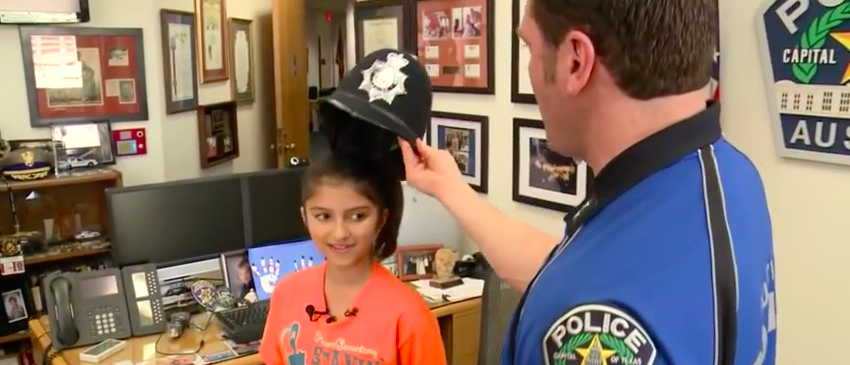
    Many young kids idolize singers, reality stars, and others in the limelight, but not this wise ten-year-old girl from Texas. Savannah reserves her admiration for the dedicated police officers that work to keep their communities safe, and she decided to show her appreciation by delivering hand-written thank you cards, bursting with love and encouragement.

  • Why We Should Look Forward to More of Each Day

    Why We Should Look Forward to More of Each Day

    Excited for the day

    “Use your smile to change the world; don’t let the world change your smile.” ~Unknown

    For most of us the average day includes a mix of things we both look forward to and things we don’t look forward to. We look forward to coffee in the morning, we regret that we have to go to work; we look forward to coming home at the end of the day, we dislike that we have to do laundry.

    But how much of your life are you giving up if you dread, dislike, regret and don’t look forward to, say, 50% of your average day? Logical reasoning says that, based on this estimate, you’re giving up half of your entire life. And you’re giving it up simply because you aren’t looking at your life from a healthy perspective.

    When we don’t look forward to something—when we don’t enjoy it—we aren’t very present in that current moment. It’s like life is just passing by, and we’re just waiting for it to pass so we can get on with the more fun or interesting parts of each day.

    When we get caught up in this waiting-for-better-moments routine, we aren’t actively living, are we?

    We end up passive, joyless, unhappy, and unfulfilled. All because we’re waiting for the good things in life to happen for us.

    Stop waiting.

    You can have crazy amounts of joy and excitement in life if you just change the perspective from which you view things. And you can do it by following this one simple rule:

    Look forward to each day.

    A Life of Looking Forward

    Looking forward to even the smallest parts of your day can not only make that day more enjoyable, but it can also improve your outlook on life, help you appreciate the things you have, keep you from getting stressed out, and help you have better relationships.

    Look forward to each day and you’ll realize the millions of silver linings you’ve been ignoring, if only because you weren’t looking for them.

    Maybe the first time you actively decide to look forward to going to work, you’ll realize how lucky you are to simply have a job. The next day you look forward to work, you might remember a kind act that someone at the office did for you the previous day and look forward to repaying that action.

    Once you start looking forward to things more often, you’ll find more and more reasons to appreciate and be excited for everything that comes your way.

    Look forward to paying your bills. You’re buying a roof over your head—something that other people in the world might never have the luxury to afford.

    Look forward to sitting in traffic during rush hour; think of it as down time to reflect on the events of your day.

    I might sound a little crazy to you right about now if you’re used to hating all of these things. Bills and traffic, after all, are never something to look forward to, right?

    Only if you choose to have that perspective about them.

    How I Started Looking Forward to Every Day

    I won’t say that I’m a naturally negative person. I no longer believe that anyone is “naturally” anything. You can change anything about yourself if you really, really want to. I’ve learned that now.

    I will say, though, that I am a pretty stressed out person most days. At least I was. Between you and me, I still am sometimes.

    But I’ve chosen to stop being negative and to stop being stressed. I only try to enjoy everything. Each day I look forward to all the potential good things that could happen. I don’t lie to myself. I just look at everything in a positive light.

    I used to dislike how I looked. I regretted the things I wasn’t born with. I regretted the opportunities I had never had. I disliked having to work when I didn’t feel like it. Many days I just waited for “this day” to be over, hoping that maybe tomorrow would be better.

    I wish I could say that some life-changing realization struck me suddenly on a windy, mysterious night and that said realization allowed me to live my life positively from that day forward.

    But that would be a lie.

    The truth is, it took many years of me feeling bad about myself and searching for ways to feel better.

    It took many sincere conversations for me to realize how negative I was being, and it took many, many attempts to correct my perspective and my behavior for me to finally, genuinely be positive.

    You know, it’s kind of frustrating the first time that you realize you had the power to make your life drastically more enjoyable just by changing your perspective.

    As soon as I started looking forward to just being me, my life became much happier. Every day is a good day now, because I’ve chosen to see it that way.

    Don’t get me wrong; I still get sad, angry, and stressed. But I experience negative emotions like these much less often because I don’t wake up each day thinking about all the possible ways my day could go wrong.

    Instead, I wake up and focus on all the great opportunities just waiting for me.

    I’m telling you this because I’m hoping that you won’t spend years trying to be happier, and that you’ll simply start looking forward to each new day and feel all the joy that you’ve been missing out on.

    I do understand, though, that it’s kind of hard to just suddenly start looking forward to everything, so here are a few tricks that work for me. Maybe they will help you start to view each day in an optimistic light.

    1. Keep good feelings with you all the time.

    If I watch an inspiring movie, witness a random act of kindness, or even just feel especially happy on a given day, I choose to remember those feelings and keep them in the forefront of my mind as I do whatever I’m doing. It’s like having an extra blanket of positivity in addition to me looking forward to my day.

    Focus on retaining positive feelings and you’ll be a lot stronger when negative things come your way.

    2. Just live.
    If I find that my mind is wandering and that I’m stressing out about things I have to do today or that I’m trying to plan out my day too aggressively, I remind myself that I need to live in the present moment.

    I stop thinking about everything. I just live. If I’m writing, I hone in on how good it feels to be typing. If I’m driving, I make sure to appreciate the scenery with extra attention to detail. I stop trying to control everything, and I just live in the moment.
    3. Think of everything you are grateful for.

    Another trick I’ve learned for suppressing negative thoughts and feelings is to think of everything I have. I think of all the things in that current moment that I can be grateful for, and I swear I find more and more each time.

    I’ll tell you one thing: It’s really hard to be angry about a late rent check when you’re simultaneously grateful for the comfortable home in which you live.

    4. Forgive everything.

    I have to say, I’m still working on this one. But it does help me tremendously when I’m able to do it. My temper can be pretty off-the-handle, and someone cutting me off in traffic is definitely enough to spark it.

    But I’ve gotten a lot better at remembering that I’ve probably done that same thing before, and I get over the issue and move on with my day.

    It’s a lot easier to look forward to everything when you don’t let baggage from the past weigh you down.

    If you take anything away from this today, let it be this: You are you. And that’s all you need to make today awesome. Look forward to it.

    Happy jogger image via Shutterstock

  • More Is Not Always Better: Being Grateful for What Is

    More Is Not Always Better: Being Grateful for What Is

    Gratitude

    “It is not joy that makes us grateful. It is gratitude that makes us joyful.” ~David Rast

    Every New Years Eve I make a list of resolutions that I never keep up with and it just makes me feel guilty every time I don’t. Lose ten pounds, get more involved, go to the gym, develop better relationships.

    Every year I aspire to be more, do more, get more, never living within the present moment.

    My stress to do more comes into play in every aspect of my life. The stress of joining more clubs comes from the competitive environment of school. I am in constant stream of uncertainty. How do I find the balance, solitude, and the calmness in life? 

    I traveled to Puerto Rico with my family for last Christmas. I found that I had been thinking about the semester that lied ahead and what I was going to do to rise above my peers, although I was already involved in four different student organizations and was doing great in school.

    As I sat on the beach, in paradise, on New Year’s Eve, I couldn’t help it. I was starting to form the list I had visited and revisited year after year.

    This was the first time I had spent New Year’s with my family in a while. 

    We enjoyed a fancy dinner of steak and wine and fine desserts, the conversation poured openly as the four of us enjoyed each other’s company. I had missed these times as I was away at college and these moments became few and far between.

    We decided to skip the fancy party the resort provided and went back to our room instead. We watched from our balcony all of the guests in fancy dresses, possibly pretending to have more fun then they actually were having.

    They snapped pictures for Facebook and Instagram, showing everyone at home what they were missing. I asked myself, “What is this all about?” 

    As the thought danced around my head, there came the countdown until the New Year. Ten… nine… eight… I looked around at my family and everything I needed was right there.

    Seven… six… five… I didn’t need to add more to my resume, I didn’t have to join more clubs, I didn’t need to stress about what the future may hold.

    Four… three… two… It finally hit me all I needed was one One thing on my list: to be grateful. 

    Fireworks started to go off over the water. As I looked around at my family and we wished each other a Happy New Year, colors collided and clashed in the sky, the crackles and booming shaking my light heart.

    We are told about appreciating the moment and being truly grateful, I have read countless books about it; however, I never fully grasped it until this very moment. It authenticated what it really meant.

    I was overcome with a sense of comfort and gratitude for everything I had been given in the past year. I had overcome a rough time and I had not allowed myself congratulations for that.

    I had not been able to see clearly all of the things I had been blessed with, like my wonderful family, my great friends I had made at school and the friendships I had kept from home, and especially my health, which had not been the greatest the previous year.

    That is when I made this promise to myself.

    As I watched the fireworks and looked at the loving faces around me, I remembered that in one the books that had changed my life the past summer, it was suggested to practice gratitude every day.

    Make a jar and put one thing you are grateful for in it every night before you go to sleep. That is what I did when I got home; I painted my gratitude jar, along with one for each member of my family.

    Every night I scribble down something I am most grateful for. Sometimes I am grateful for time spent with family, other times I am grateful for my extra ten minutes of sleep in the morning, and sometimes I am grateful for a night out with friends.

    We have so much to be grateful for and so much to honor within ourselves. We just need to take the time to do so.

    Photo by Yoga4Love

  • 60 Things to Be Grateful For In Life

    60 Things to Be Grateful For In Life

    “We often take for granted the very things that most deserve our gratitude.” ~Cynthia Ozick

    How often do you pause to appreciate what you have in life?

    When I was young, I took things for granted. I believe many other kids did so, as well. After all, we were young and we didn’t know what life could be like on the other side.

    One thing we took for granted was education. In my country, it’s compulsory for all kids to go to school, so it was a given. We never thought about how lucky we were to be educated.

    We also took our teachers for granted. We never thought about how lucky we were to have teachers who cared for our growth so much, and poured their heart and soul into their lessons.

    Then slowly as I grew up, I began to appreciate things around me more. As I saw more and more of the world out there, I realized all the things I’d been given are not rights, but privileges.

    I realized that being literate is a not a right, but a gift. I realized there is a lot of war and violence in the world, and I’m lucky to live in a country where it’s safe and peaceful. I realized there are people out there who don’t have their five senses, and to have mine is a gift. (more…)

  • 3 Things You Can Do To Feel Happier, Right Now

    3 Things You Can Do To Feel Happier, Right Now

    Happy Guy

    “The place to be happy is here. The time to be happy is now.” ~Robert G. Ingersoll

    In The Four Noble Truths, the Dalai Lama wrote, “It is a fact—a natural fact of life—that each one of us has an innate desire to seek happiness and to overcome suffering.”

    Regardless of religion or creed or upbringing, I think we can all agree on this most universal of statements. Underneath whatever personalities we project and whatever lives we lead lies a foundational truth that applies to all of us: We want to be happy; we don’t want to suffer.

    So what can we do now, today, to feel happier? Before I describe specific practices, let me explain how I view change and self-improvement. As the old saying goes, there are two sides to a coin, and this positive-negative duality applies just as much here.

    For example, “we want to be happy” is the positive side of the statement above, or what to do, and “we don’t want to suffer” is the negative, or what not to do.

    Any challenge, whether it’s becoming a happier you or dropping a bad habit, gets much easier and gives more lasting results if you focus on the positive aspect of the situation (what you should do) as opposed to the negative (what you shouldn’t do).

    Focusing on the positive creates a set of habits that ultimately lead to a better lifestyle, built by you and around your goals.

    The negative path enforces rules and boundaries that ultimately lead to internal mental resistance and a diminished self-esteem. This realization made all the difference in my pursuit of happiness.

    What You Can Do Today

    Before this insight, I would spend my days trying to figure out what situations to avoid, what habits to control, where to go or whom to see for happiness. After the shift in my thinking, I began asking myself what I should do specifically to live a happier life.

    Much trial and error, many years, and many books later, I uncovered three main conditions under which a person feels truly happy: appreciation of the present moment, hope of future achievement, and service to others.

    These conditions are quite different and imply, in my opinion, different forms of happiness. Some individuals will naturally gravitate toward one or two out of three, or even just one. That’s normal.

    If you can handle all three, go for it. If not, don’t worry. Alone or combined, they all make for a dramatic improvement in quality of life and awaken a happier you.

    1. Appreciation of the present moment

    At its highest level, this means to become intensely focused on the present and, in some cases, to suspend time entirely. If you can do this, great. But not all of us are masters at entering the now. For most of us, leading a lifestyle of gratitude is the best and most practical way to cultivate appreciation for the present moment.

    A fail-proof technique I found was to reflect at the end of each day and express written gratitude for one to three things, events, or whatever I felt grateful for.

    Doing this daily brings about a shift in mentality from “what’s lacking in my life?” to “what is here before me now?” until being grateful eventually becomes second nature. If on certain days you truly can’t find anything worth being grateful for, don’t force yourself.

    That said, there is no shortage of things for which we can be grateful. At the very least you can breathe, and you likely have somewhere to sleep, can see and read this article, and have food to sustain you. Those are all things to be grateful for. Imagine life without them.

    2. Hope of future achievement

    The second condition, hope for future achievement, implies a different, more worldly sort of happiness. This does not always mean monetary gain, although that is usually a product of achievements such as business expansion, securing a job, or earning a promotion. This type of success, within reason, is normal. Our biological need to survive compels us to pursue it.

    But achievement comes in many other forms. It can mean physical feats such as finishing a triathlon, or a personal journey of self-enlightenment, or even little things like becoming more organized and driven.

    All of these endeavors give us end goals to surpass and offer us the promise of due reward should we succeed. This promise is what instills us with a sense of happiness. That’s why dreamers and optimists are often happier than realists. They believe in the promise of a better future.

    I found that daily visualization is a great way to nurture hope for future achievement. Think about a goal you genuinely want to achieve and put it in writing. Then twice daily, visualize yourself experiencing the success associated with whatever achievement you’re focused on. You don’t have to know how you will arrive at the end destination. Just imagine the end destination.

    For me, that means visualizing the day I open my own holistic self-development studio, or the day I sign the contract for publication of my first novel.

    For a detailed look at how and why this technique works, I suggest reading Psycho-Cybernetics by Dr. Maxwell Maltz. But in short, visualization communicates your inner desire to your subconscious mind. Over time, you become what you consistently imagine yourself to be, and you achieve what you consistently imagine yourself achieving.

    3. Service to others

    The third condition, service to others, is what helped me the most. I always knew myself to be a talented and capable person. But time and experience showed me that talent and capacity alone aren’t enough for a happy life.

    I felt like my connection with others lacked strength and authenticity, almost as though I lived at an arm’s length from society. This, I believe, held me back more than anything.

    Service to others changed all of that. Make a conscious attempt each day, as I did, to do one kind thing for someone without telling anyone about it, ever. I highly recommend trying this for at least twenty-one days. It changes your perspective on the profound interconnectedness of all beings and all things.

    It teaches you first and foremost to give without expecting anything in return, to do for the sake of doing and not for the recognition.

    Not telling others about your acts of kindness also builds discipline and becomes a secret between you and yourself, something to be proud of. Third, it teaches you that bringing happiness to others does more for your own happiness than any worldly escape or distraction.

    Start Now

    Do not wait for happiness. Start now. It is within your grasp and you deserve it. It doesn’t have to be elusive. Look for it in the simpler things in life. Express gratitude for something. Visualize success and a better you. Render an act of kindness and keep it to yourself. Implement these practices in your life to feel happier, right now.

    Photo by David Robert Bilwas

  • 3 Ways to Be Kind and Make Someone’s Day

    3 Ways to Be Kind and Make Someone’s Day

    Smiling Together

    “The smallest act of kindness is worth more than the grandest intention.” ~Oscar Wilde

    It’s the small, everyday things that can make or break a day for us.

    While we celebrate the role models who inspire thousands (in person or on Facebook!), for most of us everyday moments—a stranger jostling us in the shops, a driver cutting us up at a light, someone pushing in front of us in line at the post office—can upset us out of all proportion.

    But the flip side is that we can also be disproportionately pleased by the small actions of a stranger.

    On a bad day recently, rushing down the road in Chiang Mai, Thailand, late for an appointment, I dropped my bag and things spilled all over the road. I looked at my possessions spread out in the dust beneath me and held back tears.

    As I stood there, a Thai woman, tending a food cart at the side of the road, walked over and carefully helped me pick everything up. Then she smiled at me, patted my hand, and walked back to her stall.

    This small act of kindness from a stranger reminded me to be kind to myself, and I took a breath before continuing with my day, lighter in heart and mind.

    Be that stranger. Here are three small acts of kindness you can carry out today.

    Offer your help.

    Last year I met someone who challenged himself to offer his help to one person every day.

    One day, I was really ill, in a foreign country, alone. I had no way of getting to the shops. He offered his help and brought me groceries. It was a small thing for him. But I was hugely grateful, and it made a real impact on me, this almost-stranger providing practical help.

    Now I try and offer my help more often.

    At first I used to think no one would be interested in my help, or they’d be suspicious, or dozens of other reasons that stopped me from offering. But even when people don’t need it, they appreciate being offered help.

    I offered someone help with something they were carrying yesterday, and while he turned me down, we exchanged a joke and a few words, and both of us went on our way happier.

    And when people do need the help, you’ll be amazed at the long-lasting impact it can have.

    Be of service. Offer assistance.

    Say thank you.

    You might say thank you 100 times a day. It’s a politeness, a courtesy. But how many times do you actually mean it? How many times are you still engaged in the conversation when you say it, and not turning away toward the next thing?

    I have a friend who doesn’t just write the usual “To Sarah, Happy Birthday, Love Mary,” on birthday cards but instead takes the time to write a more heartfelt message. She includes some of the things she appreciates her friend for doing for her that year.

    Getting a card from her doesn’t feel like a formality, it feels like a true connection. And her cards are the ones I remember.

    Today, say thank you like you mean it. Catch the other person’s eye and say it firmly. “Thank you. I really appreciate your help.” It could be to the girl who serves you your caramel macchiato in Starbucks, or your dad for helping you out by putting that shelf up for you.

    Or, if it feels too personal or intimate to say it face-to-face, write a letter or a card to a friend thanking them for something specific they contributed to the friendship last year—their joy, their lightness of touch, the great presents they always buy you, their sense of humor.

    Be grateful, and share that gratitude with the other person.

    Compliment someone.

    We judge others in our head all the time, just as we judge ourselves all the time. I hate that dress she’s wearing. I look fat in that mirror. I can’t believe she just said that. That nail  polish is awful. He really can’t do that yoga pose… It’s a constant narrative.

    But we also think positive things in the same way: I love that skirt. I wish my hair was that color. Those shoes are great. He does a great downward dog; I wish I was that confident.

    In my last job, particularly when I was feeling negative (and knew it might leak out), I used to push myself to articulate the compliments I usually just said in my head. Sometimes the person I was complimenting was a little taken aback, but they were always pleased.

    Put your focus on the positive by expressing it. Tell someone what you like, admire, and appreciate. Share the love.

    These actions might seem small, but not only do they make others’ lives better, they are also directly nourishing for you. Being kind is good is not only good for your heart, it’s good for your health.

  • Happiness Doesn’t Make Us Grateful; Gratitude Makes Us Happy

    Happiness Doesn’t Make Us Grateful; Gratitude Makes Us Happy

    Thankful

    “In daily life we must see that it is not happiness that makes us grateful, but gratefulness that makes us happy.” ~Brother David Steindl-Rast

    A few years ago, my life was chaotic. I drank too much, slept too little, and always went with the flow. I didn’t look out for myself emotionally and physically. I burned the candle at both ends and eventually wore myself out.

    I often felt depressed. After my parents’ divorce when I was 18, I lost the closeness I used to feel with my family. My entire focus was on what I didn’t have anymore.

    I was in a never ending loop of feeling depressed, turning to alcohol, disappointing the people closest to me, then feeling more depressed. I had envisioned that I would grow up and my parents would still be a part of my life, but instead I felt like everyone was going their separate ways.

    My dreams of my parents being there for my future wedding were dashed. Celebratory events in my life would never include both of my parents. I was frustrated. It was draining and costly to my soul.

    I wasn’t aware of it then, but I also carried around so many regrets and resentment from childhood. When I was 7 years old, a stranger abused me during a field trip with my ballet troupe.

    The shame and confusion I felt from this experience followed me like a dark cloud. I regretted being too scared to tell anyone. I think in some ways I resented the fact that no one was able to help me.

    When my parents divorced I felt abandoned and it brought back a lot of those terrible feelings. It was like I was slowly imploding. I thought about the past and talked about the past while completely missing the present.

    After years of letting this build up inside me, it finally hit a breaking point. The hurt I was causing myself and family had boiled over. Something had to change.

    I was diagnosed with breast cancer in 2011. The world as I knew it came crashing down.  When you’re told you have a life-threatening illness it’s interesting how quickly everything else falls to the side. Time stands still and the past disappears. All you have is now.

    Being thrust into the present I no longer had time for resentments or any negativity at all. I needed all of my energy to fight for my life. Everything I carried with me for so long seemed insignificant to the battle I was about to face.

    Treatment for cancer can have a way of de-humanizing you, at least at first. It strips you down to your basic core self. I felt like a child most of the time. I was completely dependent on my doctors.

    It was like I was scrambling around in the dark, reaching for a hand to pull me out. I was vulnerable and had zero control over the outcome.

    I think sometimes in life we walk around with the illusion we’re in control. To some degree we are, but when faced with an illness you can very quickly be brought to your knees.

    We have a tendency to take life for granted. We just assume we’ll wake up everyday and be healthy. I got so comfortable with the day to day of my life that I forgot what a gift it actually is. It took almost losing that gift for me to finally open my eyes.

    Toward the end of treatment I felt reborn. All of the negative feelings I had about my parents’ divorce faded away. I was finally able to just let it go. My spirit felt calm. I felt optimistic about life again. My spirituality was soaring at heights I had never experienced before.

    Through sickness I found myself. I discovered who I really am and what I’m really about.  I was flooded with forgiveness toward my parents and I was ready to ask for forgiveness for all my crazy behavior.

    During the course of cancer treatment I was able to mend and rebuild my relationship with my parents. I now have happiness that I only dreamed of before. I realize now how much time I wasted being unhappy and I’ll never do it again.

    I wake up every morning grateful to have another day, to have another chance at this wonderful experience called life.

    I make it a priority to eat well and exercise. I rarely drink. I have a disciplined sleep schedule. I go to great lengths to take care of myself on an emotional level, everyday. My body really held up for me during treatment and now I’m paying it forward!

    Recovery from cancer has not always been an easy road. I won’t pretend there aren’t any bumps. My new outlook on life doesn’t allow me to wallow in it; instead, I count all my blessings and keep pushing forward.

    I feel like I turned the most negative experience of my life into a positive experience by taking the lessons I learned while sick and really making the necessary changes in my life. I’m thankful to be given a second chance.

    And, the life I had envisioned for myself? This is what I figured out. I don’t have to hang on so tight for something that isn’t working.

    By letting go of the one that wasn’t working, I naturally created a new vision. This is one of the most freeing things I have ever done for myself. My new vision is attainable, my new vision is already happening. I’m living it now.

    Instead of focusing on what isn’t working in your life, give some love and attention to the things that are. Take a mental inventory each morning of all the things to be grateful for.

    You will soon notice the negative way of thinking will begin to shift and you’ll be able to experience the happiness that is waiting for you.

    Photo by Zaiq Ali

  • Love What’s Right Before You Instead of Hating What’s Missing

    Love What’s Right Before You Instead of Hating What’s Missing

    Friends Jumping

    “I have learned that to be with those I like is enough.” ~Walt Whitman

    I take stuff for granted. I suspect you take stuff for granted.

    It’s almost as if it can’t be helped. When things—family, friends, health, amenities, or money—occupy a place in our lives for years, we naturally begin to view them as commonplace; we assume they’ll forever be, just as they’ve always been.

    Yet this mindset—this “Oh, of course that’s there; that’s always been there” perspective—often seems to prevent us from realizing how much it would mean to us if that something wasn’t there anymore.

    Hello, Asia

    In August of 2013, I moved to Busan, South Korea to teach English for a year to a bunch of elementary school kids (lovable rascals, these kids). Three months later, I can tell you that this experience has been everything I imagined and about 10,000 things I didn’t.

    For a while it was similar to what I’d envisioned—like freefalling through some sort of mythical dreamscape. Everything new and interesting, bright and foreign, so much happening, so much to learn, so much to take in. It was experiential overload, at once intimidating and blissful.

    After a few weeks, though, the feelings of novelty and adventure began to wane slightly; a discord had been created.

    My romanticized visions of my new home were coming into conflict with a feeling I’m sure most of you know very well—the slog of routine, the all-too-familiar, the grind. 

    What happens is this: you begin to get used to the new country; it loses a certain sparkle. You start to notice its flaws, its funny odors, its unsexy idiosyncrasies. You realize that a full-time job in a foreign land is still a full-time job, except 95% of the people around you don’t speak your language.

    You realize, “Wow, I’m going to be gone for a while—a whole year! And I’m going to see exactly zero people I know. Nada. None. For 12 months. Oh.” In terms of culture shock, you’re experiencing the end of what’s known as “The Honeymoon Phase.”

    I had read about these things. I thought I understood that they were going to happen. I thought I knew how long a year was. I thought I knew what I was getting myself into.

    I didn’t. Not really, at least. Turns out it was near-impossible to know what an enormous decision it was to move to a foreign country until I was two months in and questioning what in God’s name I was doing here.

    Lonely? Me?

    As someone who usually enjoys solitude, I’ve been surprised at how lonely I’ve felt at times. You discover a special kind of alienation when you’re in a city of five million people and can’t communicate with anyone. It’s easy to dissociate yourself from your surroundings.

    You start talking to yourself. You feel like you don’t exist. You end up shouting to the music in your headphones (“People will know that I’m here!!”) while walking down the sidewalk as you’re drenched head-to-toe and getting wetter by the second because, as you just found out, there are typhoons here. (Okay, maybe that was just me).

    It’s during those periods that you realize you’d trade your big toe for a few days at home with the people you’ve known for years. To do nothing but laugh a few hours away with those irreplaceable personalities whom you know about as well as your own reflection.

    “Man, that’d be heaven,” you think.

    Sure, you can “connect” with loved ones via Facebook, Twitter, Snapchat, Gmail, and a trillion other online mediums. You can even indulge in a pretty convincing illusion of face-to-face conversation with Skype or a Google Hangout.

    But as you do, it becomes clear that these substitutes can never duplicate a sizable bear-hug, or an eye-contact-followed-by-uproarious-laughter moment, or the glorious interplay of energies when you’re actually in the same room with people.

    While living in Korea, I’ve realized what an invaluable gift I sacrificed to come abroad—namely, being a car ride away from most all of my favorite people in the world.

    Before coming here, I’d known that I loved my family and friends endlessly—that they meant everything to me—but I don’t think I quite realized the extent to which being near them and being able to see them were vital to my well-being (and sanity).

    I feel I’ve gained a renewed appreciation for those precious people who’ve been there for years and will continue to be.

    When I do return home, I’ll love them just the same as before, but I’ll truly cherish the time I get to spend with them. I’ll try to remember what it was like without them.

    Gratitude is Slippery

    Simply imagine for a few moments what it would be like if all of the people you loved were just gone, so far away that you couldn’t see them. It’s likely difficult to put yourself in my situation, but my hope is that you can sense it—how you would miss the familiar comfort of just being with them, of just sharing a space or a smile.

    One wouldn’t think that the good things in our lives need to disappear in order for us to understand their worth, yet so often this is the case.

    It seems a bit of a paradox, that what is nearest our hearts can be hardest to see. I humbly submit to you that we ought to be attentive to what lies just below our oblivious noses, lest we recognize the value of things only after they’ve left us.

    I’d be a fool (more so than I already am) if I didn’t understand that this don’t-take-things-for-granted spiel applies to me right this moment.

    In a few years, I’ll look back on my time in Korea and know what an incredible opportunity I was given and how much was here to love.

    If I overlook the wonders that surround me in this place and constantly pine for my home, I’ll set myself up to feel only a sort of wistful gratitude later on, when all that remains of my time abroad are patchwork memories.

    So while I now grasp more fully what I left behind to come to this country, I’m focusing on remembering that I came here for what I couldn’t find at home—a different environment, new friends, fresh perspectives. And those things are all around, plain to be seen, so long as I’m not looking through them, at what isn’t here.

    I’m reminded of a sentence Vonnegut once wrote: “A purpose of human life, no matter who is controlling it, is to love whoever is around to be loved.” I like the whoever especially, but I’d also add whatever, wherever, whichever. 

    In the end, it seems, loving what’s right before us does far more good than hating what’s missing.

    I’m not always keen at seeing what’s near to be loved (so it goes), but here’s to looking a bit closer. Here’s to noticing the important things, before they’re no longer there to be noticed.

    Photo by Antoine Gady