Tag: appreciate

  • Happiness Doesn’t Make Us Grateful; Gratitude Makes Us Happy

    Happiness Doesn’t Make Us Grateful; Gratitude Makes Us Happy

    Thankful

    “In daily life we must see that it is not happiness that makes us grateful, but gratefulness that makes us happy.” ~Brother David Steindl-Rast

    A few years ago, my life was chaotic. I drank too much, slept too little, and always went with the flow. I didn’t look out for myself emotionally and physically. I burned the candle at both ends and eventually wore myself out.

    I often felt depressed. After my parents’ divorce when I was 18, I lost the closeness I used to feel with my family. My entire focus was on what I didn’t have anymore.

    I was in a never ending loop of feeling depressed, turning to alcohol, disappointing the people closest to me, then feeling more depressed. I had envisioned that I would grow up and my parents would still be a part of my life, but instead I felt like everyone was going their separate ways.

    My dreams of my parents being there for my future wedding were dashed. Celebratory events in my life would never include both of my parents. I was frustrated. It was draining and costly to my soul.

    I wasn’t aware of it then, but I also carried around so many regrets and resentment from childhood. When I was 7 years old, a stranger abused me during a field trip with my ballet troupe.

    The shame and confusion I felt from this experience followed me like a dark cloud. I regretted being too scared to tell anyone. I think in some ways I resented the fact that no one was able to help me.

    When my parents divorced I felt abandoned and it brought back a lot of those terrible feelings. It was like I was slowly imploding. I thought about the past and talked about the past while completely missing the present.

    After years of letting this build up inside me, it finally hit a breaking point. The hurt I was causing myself and family had boiled over. Something had to change.

    I was diagnosed with breast cancer in 2011. The world as I knew it came crashing down.  When you’re told you have a life-threatening illness it’s interesting how quickly everything else falls to the side. Time stands still and the past disappears. All you have is now.

    Being thrust into the present I no longer had time for resentments or any negativity at all. I needed all of my energy to fight for my life. Everything I carried with me for so long seemed insignificant to the battle I was about to face.

    Treatment for cancer can have a way of de-humanizing you, at least at first. It strips you down to your basic core self. I felt like a child most of the time. I was completely dependent on my doctors.

    It was like I was scrambling around in the dark, reaching for a hand to pull me out. I was vulnerable and had zero control over the outcome.

    I think sometimes in life we walk around with the illusion we’re in control. To some degree we are, but when faced with an illness you can very quickly be brought to your knees.

    We have a tendency to take life for granted. We just assume we’ll wake up everyday and be healthy. I got so comfortable with the day to day of my life that I forgot what a gift it actually is. It took almost losing that gift for me to finally open my eyes.

    Toward the end of treatment I felt reborn. All of the negative feelings I had about my parents’ divorce faded away. I was finally able to just let it go. My spirit felt calm. I felt optimistic about life again. My spirituality was soaring at heights I had never experienced before.

    Through sickness I found myself. I discovered who I really am and what I’m really about.  I was flooded with forgiveness toward my parents and I was ready to ask for forgiveness for all my crazy behavior.

    During the course of cancer treatment I was able to mend and rebuild my relationship with my parents. I now have happiness that I only dreamed of before. I realize now how much time I wasted being unhappy and I’ll never do it again.

    I wake up every morning grateful to have another day, to have another chance at this wonderful experience called life.

    I make it a priority to eat well and exercise. I rarely drink. I have a disciplined sleep schedule. I go to great lengths to take care of myself on an emotional level, everyday. My body really held up for me during treatment and now I’m paying it forward!

    Recovery from cancer has not always been an easy road. I won’t pretend there aren’t any bumps. My new outlook on life doesn’t allow me to wallow in it; instead, I count all my blessings and keep pushing forward.

    I feel like I turned the most negative experience of my life into a positive experience by taking the lessons I learned while sick and really making the necessary changes in my life. I’m thankful to be given a second chance.

    And, the life I had envisioned for myself? This is what I figured out. I don’t have to hang on so tight for something that isn’t working.

    By letting go of the one that wasn’t working, I naturally created a new vision. This is one of the most freeing things I have ever done for myself. My new vision is attainable, my new vision is already happening. I’m living it now.

    Instead of focusing on what isn’t working in your life, give some love and attention to the things that are. Take a mental inventory each morning of all the things to be grateful for.

    You will soon notice the negative way of thinking will begin to shift and you’ll be able to experience the happiness that is waiting for you.

    Photo by Zaiq Ali

  • Love What’s Right Before You Instead of Hating What’s Missing

    Love What’s Right Before You Instead of Hating What’s Missing

    Friends Jumping

    “I have learned that to be with those I like is enough.” ~Walt Whitman

    I take stuff for granted. I suspect you take stuff for granted.

    It’s almost as if it can’t be helped. When things—family, friends, health, amenities, or money—occupy a place in our lives for years, we naturally begin to view them as commonplace; we assume they’ll forever be, just as they’ve always been.

    Yet this mindset—this “Oh, of course that’s there; that’s always been there” perspective—often seems to prevent us from realizing how much it would mean to us if that something wasn’t there anymore.

    Hello, Asia

    In August of 2013, I moved to Busan, South Korea to teach English for a year to a bunch of elementary school kids (lovable rascals, these kids). Three months later, I can tell you that this experience has been everything I imagined and about 10,000 things I didn’t.

    For a while it was similar to what I’d envisioned—like freefalling through some sort of mythical dreamscape. Everything new and interesting, bright and foreign, so much happening, so much to learn, so much to take in. It was experiential overload, at once intimidating and blissful.

    After a few weeks, though, the feelings of novelty and adventure began to wane slightly; a discord had been created.

    My romanticized visions of my new home were coming into conflict with a feeling I’m sure most of you know very well—the slog of routine, the all-too-familiar, the grind. 

    What happens is this: you begin to get used to the new country; it loses a certain sparkle. You start to notice its flaws, its funny odors, its unsexy idiosyncrasies. You realize that a full-time job in a foreign land is still a full-time job, except 95% of the people around you don’t speak your language.

    You realize, “Wow, I’m going to be gone for a while—a whole year! And I’m going to see exactly zero people I know. Nada. None. For 12 months. Oh.” In terms of culture shock, you’re experiencing the end of what’s known as “The Honeymoon Phase.”

    I had read about these things. I thought I understood that they were going to happen. I thought I knew how long a year was. I thought I knew what I was getting myself into.

    I didn’t. Not really, at least. Turns out it was near-impossible to know what an enormous decision it was to move to a foreign country until I was two months in and questioning what in God’s name I was doing here.

    Lonely? Me?

    As someone who usually enjoys solitude, I’ve been surprised at how lonely I’ve felt at times. You discover a special kind of alienation when you’re in a city of five million people and can’t communicate with anyone. It’s easy to dissociate yourself from your surroundings.

    You start talking to yourself. You feel like you don’t exist. You end up shouting to the music in your headphones (“People will know that I’m here!!”) while walking down the sidewalk as you’re drenched head-to-toe and getting wetter by the second because, as you just found out, there are typhoons here. (Okay, maybe that was just me).

    It’s during those periods that you realize you’d trade your big toe for a few days at home with the people you’ve known for years. To do nothing but laugh a few hours away with those irreplaceable personalities whom you know about as well as your own reflection.

    “Man, that’d be heaven,” you think.

    Sure, you can “connect” with loved ones via Facebook, Twitter, Snapchat, Gmail, and a trillion other online mediums. You can even indulge in a pretty convincing illusion of face-to-face conversation with Skype or a Google Hangout.

    But as you do, it becomes clear that these substitutes can never duplicate a sizable bear-hug, or an eye-contact-followed-by-uproarious-laughter moment, or the glorious interplay of energies when you’re actually in the same room with people.

    While living in Korea, I’ve realized what an invaluable gift I sacrificed to come abroad—namely, being a car ride away from most all of my favorite people in the world.

    Before coming here, I’d known that I loved my family and friends endlessly—that they meant everything to me—but I don’t think I quite realized the extent to which being near them and being able to see them were vital to my well-being (and sanity).

    I feel I’ve gained a renewed appreciation for those precious people who’ve been there for years and will continue to be.

    When I do return home, I’ll love them just the same as before, but I’ll truly cherish the time I get to spend with them. I’ll try to remember what it was like without them.

    Gratitude is Slippery

    Simply imagine for a few moments what it would be like if all of the people you loved were just gone, so far away that you couldn’t see them. It’s likely difficult to put yourself in my situation, but my hope is that you can sense it—how you would miss the familiar comfort of just being with them, of just sharing a space or a smile.

    One wouldn’t think that the good things in our lives need to disappear in order for us to understand their worth, yet so often this is the case.

    It seems a bit of a paradox, that what is nearest our hearts can be hardest to see. I humbly submit to you that we ought to be attentive to what lies just below our oblivious noses, lest we recognize the value of things only after they’ve left us.

    I’d be a fool (more so than I already am) if I didn’t understand that this don’t-take-things-for-granted spiel applies to me right this moment.

    In a few years, I’ll look back on my time in Korea and know what an incredible opportunity I was given and how much was here to love.

    If I overlook the wonders that surround me in this place and constantly pine for my home, I’ll set myself up to feel only a sort of wistful gratitude later on, when all that remains of my time abroad are patchwork memories.

    So while I now grasp more fully what I left behind to come to this country, I’m focusing on remembering that I came here for what I couldn’t find at home—a different environment, new friends, fresh perspectives. And those things are all around, plain to be seen, so long as I’m not looking through them, at what isn’t here.

    I’m reminded of a sentence Vonnegut once wrote: “A purpose of human life, no matter who is controlling it, is to love whoever is around to be loved.” I like the whoever especially, but I’d also add whatever, wherever, whichever. 

    In the end, it seems, loving what’s right before us does far more good than hating what’s missing.

    I’m not always keen at seeing what’s near to be loved (so it goes), but here’s to looking a bit closer. Here’s to noticing the important things, before they’re no longer there to be noticed.

    Photo by Antoine Gady

  • The Greatest Lesson We Learn When Someone Is Unkind

    The Greatest Lesson We Learn When Someone Is Unkind

    Lonely Girl

    “I have learned silence from the talkative, toleration from the intolerant, and kindness from the unkind.” ~Khalil Gibran

    I recently travelled to Malaysia for a friend’s wedding where I spent four delicious days communing with wild monkeys and feasting on sticky rice. The people were kind and warm, the culture rich, the trip magical.

    On my last day in Kuala Lumpur, I was headed out to buy souvenirs for family and friends when I stumbled across the most beautiful temple—filled with ornate gold and red statues, air thick with sweet-smelling smoke.

    I wandered around, overcome with majesty, trying to breathe it all in. I was still under the temple’s spell when someone spoke to me.

    “Your dress is ugly.”

    I looked to my right where the voice had come from. A woman was sitting on a bench, not looking in my direction.

    “Sorry?”  I said, thinking I must have misheard. She waved me off.

    I stood there for a moment, trying to decide on a course of action. She was American, the first and only other American I’d met during my trip.

    Had she really just said my dress was ugly? It was a simple blue affair, uncomplicated and perfect for traveling. Maybe she said my dress was pretty, I thought. I must have misunderstood.

    The hurt and confusion was rising to a crescendo in my head. But if I’ve learned anything over the last few years, it’s that we all have a choice of how we choose to respond to what we are given. I chose to engage.

    “Did you just say my dress is ugly?” I asked.

    “Yeah,” she said. “I did.”

    I took a deep breath and replied, calmly, “Why would you say that to me?”

    “I’m entitled to my opinion,” she said. “Your dress is ugly; I can tell it’s not well made. Your purse is dirty. I am free to voice my thoughts and those are my thoughts about you.” 

    To say it felt like getting slapped in the face would be an understatement; it was more of a punch to the gut. My blood boiled, my heart raced, and still I kept my voice at an even keel.

    “You are entitled to your own opinion,” I said. “But we also live in congress with other human beings. Why would you say something so aggressive and unkind?”

    At which point she reiterated her insults. Her words sliced coolly into the way I looked and the clothes I wore. That’s when I said the one thing I regret saying.

    “I wish there were fewer Americans like you traveling abroad,” I told her. “You give the rest of us a bad name.”

    I turned and walked away, and she yelled one more barb at my back as I walked out of the temple. I didn’t turn around.

    My hands were shaking as I walked down the street. I felt a strange knot of emotions in my chest: hurt, anger, fear.

    I was irrationally terrified that I would run into her again, that she would be sitting in the seat next to me on my flight home and I would be subjected to seventeen hours of her cruelty, unable to escape.

    But most of all I felt baffled. Why did this woman choose to attack me? Why had she said what she said?

    I couldn’t call my boyfriend, who was back in our sunny home in California, or my best friend in DC—both of whom were sound asleep halfway across the world. So I was left to process what had happened on my own, in a foreign country, without my normal triumvirate of “healthy coping mechanisms”: yoga, conversation, tea.

    And here’s what it all came down to: kindness.

    I had just read the wonderful convocation address given by George Saunders to the Syracuse class of 2013. George talks about something he calls a “failure of kindness,” and those three words were very much on my mind.

    Yes, you could say I had suffered from a failure of kindness. But what I realized was that I, too, had been unkind.

    I wish I hadn’t said what I said to her. That came from a place of being wounded, of feeling the need to fight back. I wish I had said: “I hope the people you meet are kind.”

    Because I do hope that for her. I hope that she is bathed in loving-kindness, that she is inundated with so much that she cannot help but share it with the world.

    While it’s true that kindness engenders kindness, the lack of it can be a powerful teacher.

    For my remaining hours in Kuala Lumpur, I was abundantly kind to everyone I met. I complimented a girl on her joyful spirit, told shop owners how beautiful their merchandise was, smiled widely and genuinely. I made a point to be kind to these warm, generous people who had so kindly shared their country with me.

    And every time I was shown kindness, no matter how small, I felt immeasurably grateful.

    That woman gave me a great gift. She reminded me that we all have a choice to be kind, and we are presented with that choice many times a day.

    Say a kind word to someone you don’t know.

    It doesn’t have to be an eloquent oration—a simple compliment can make someone’s day. If you like a man’s tie or a woman’s necklace, tell them so. And if you are struck by someone’s personality or spirit, thank them for it.

    Write a note to someone you appreciate.

    Tell a co-worker, family member, or friend what you appreciate about them. Don’t hold back. These are the sorts of gifts people treasure, often keeping that little slip of paper (or Facebook post) for many years to come.

    Tip someone who doesn’t normally get tips.

    This was easy in Malaysia, where tipping is rare—one young woman was so happy she went dancing down the hall. Tipping can be a great way to show people you are grateful for their service. I still remember the night I gave $10 to a tired young man at a Taco Bell drive-thru. His eyes lit up like fireflies.

    We’ve all committed failures of kindness when we are hurt, angry, or tired. But each of us holds within us the power to achieve triumphs of kindness every day.

    Photo by Robert Vitulano

  • Letting Go of Stubbornness: Appreciate Your Loved Ones While You Can

    Letting Go of Stubbornness: Appreciate Your Loved Ones While You Can

    friends

    “Before someone’s tomorrow has been taken away, cherish those you love, appreciate them today. “ ~Michelle C. Ustaszeski

    My brother Greg and I were the closest of friends growing up, even if you weigh in the occasional tiff or disagreement we sometimes had.

    We discovered our favorite toys together as kids, rode bikes side by side, and conquered video games as a two-man team. Even well into our teenage years, we were an inseparable pair, always looking out for one another.

    The fact that our father died of a brain tumor when we were young had forged a deep understanding between us. I remember us crying together in our mother’s arms when we got the news, soaking her chest with tears. We both knew without saying a word that we’d need one another to lean on in the years to come.

    My Brother’s Keeper

    One day Greg and I were out in the woods in the wintertime with our grandfather and uncle when we happened upon a small river. A collapsed tree had fallen over it, which offered the only visible means of crossing. So with the adults behind me and my brother in front, we set about making it to the other side.

    Somewhere around the halfway point, Greg slipped and fell into the river. Instinctually, I yelled out, “Hang on, Greg! I’m coming!” and immediately dove in after him. Once in the river, I was able to lift him back toward the fallen tree, where Grandpa pulled him the rest of the way up, followed by me.

    The river might not have been deep enough to drown him, but it didn’t really matter to me. My brother was in trouble, and the last place I wanted to be was out of his reach. Jumping in with him put us both in the same predicament, fighting our way out together—the same as it was when our father died.

    And Greg more than returned the favor one day, when a kid from the neighborhood pulled a bow and arrow back at pointed it at me. Without even hesitating, Greg stood directly in front of me and said, “If you’re gonna kill my brother, you have to kill me first.” The kid slowly released the bow, dropped his arrow, and ran away.

    Two Of A Kind

    We were cut from the same cloth, my brother and I. Our love and courage for one another knew no limits or bounds. But like most brothers, we often found ourselves at odds over the most trivial of things.

    We argued about toys, had screaming matches over who would get to keep the prize from a cereal box, and even punched each other out once over a video game.

    Being cut from the same cloth could also mean a mutual stubbornness during disagreements. And though we always seemed to work things out, a day arrived when we would no longer have that luxury.

    Pain Is A Teacher

    Greg and I were going through another one of our tiffs in the fall of 1997 (we weren’t exactly burning mad at each other, but we hadn’t been speaking much, either), when I was awoken by a phone call from my grandmother one morning.

    She told me that my brother had been hit head-on by a drunk driver the night before…and was killed instantly. I couldn’t believe what I was hearing.

    After I hung up the phone, I screamed and wailed for nearly two hours straight. I just couldn’t articulate my pain any other way. There was such a strong bond between me and Greg that I felt like half of my body had been cut in half.

    And on top of the pain of losing him, I was reminded of that one final argument we never got to resolve. It took me years before I stopped thinking about it and began to appreciate the valuable lesson life had taught me.

    An Open Challenge

    I’m a lot more cautious these days about leaving things unresolved with people I love, or with anyone else for that matter. Life is short. We’re all given a set amount of days in which to enjoy this life and appreciate one another—and none of us know just how much time we actually have left.

    Today is the time to work out our differences and disputes with the people we love, and to ask ourselves an important question: Is my stubbornness really worth it? Is it possible that I’ve been making a big deal out of something trivial—a position that I’d feel awful about if this person died tomorrow?

    I hear stories all the time from people who never got to tell a parent how much they loved them before they passed, and even siblings who never buried the ax before it was too late. Regret is one of the hardest things in the world to live with.

    Challenge yourself to resolve an issue with someone you’ve been feuding with for a long time, especially if it’s a family member or friend. Let them know they mean much more to you than your old stubborn position in a past argument.

    Photo by Fovea Centralis

  • There’s a Gift in Every Problem: Finding the Good in the Bad

    There’s a Gift in Every Problem: Finding the Good in the Bad

    Dark Day

    “Every problem has a gift for you in its hands.” ~Richard Bach

    I bought the magazine because it had pizza on the cover and the headline read: “Yes, you can eat pizza.”

    At that point, the idea that I could eat pizza was as absurd to me as the thought of finding a tiny dinosaur living in my flowerbeds.

    But oh, how I wanted a slice.

    At thirty-two years old, I’d been diagnosed with type 2 diabetes. It scared the hell out of me, and I was determined to take perfect care of myself so I could be the best mom possible for my two-year-old daughter.

    I had unleashed self-discipline previously foreign to me. My doctor and nutritionist praised me incessantly for my dedication.

    And at first, my blood sugar improved.

    But a year and a half after being diagnosed, I was still doing all the right things—eating healthy, counting carbs, exercising like a maniac—and the right things weren’t working. My blood sugar levels (which I monitored religiously) were still too high and getting higher.

    I was drowning in anxiety and I felt like a failure. I would end up blind and on dialysis with no feeling in my feet. My mind ran through catastrophic scenarios by the hour.

    That magazine for diabetics, with its siren’s call of pizza on the cover, saved my life because it also happened to feature an article about latent autoimmune diabetes in adults (LADA).

    It told the story of a woman in her thirties who was thin and diagnosed with type 2. (Type 2 typically strikes older adults who carry extra weight and have a sedentary lifestyle.)

    Gee, I thought, this sounds familiar.

    After months of trying to manage her condition, she ended up in a specialist’s office. The endocrinologist took one look at her—young, thin, with a family history of autoimmune diseases—and diagnosed her with LADA. A blood test found antibodies that confirmed the diagnosis.

    LADA is essentially type 1 diabetes, with an onset in adulthood instead of the more typical childhood onset. The immune system attacks the cells in the pancreas that produce insulin.

    Game over, there’s nothing you can do to reverse it. You’re insulin dependent for life. (Though people with LADA can make at least a little insulin for months or years, which is why diet and exercise can seem to work for awhile.)

    Alarm bells began exploding in my head. If this is what’s going on with me, I thought, it explains everything.

    After a few days, I managed to convince myself I was a hypochondriac. Who was I to think I was special enough to have an obscure form of a rare disease?

    But my increasingly high blood sugar levels still needed to be addressed and that little voice in my head kept nagging me about the possibility of a more serious condition.

    I called my doctor. I told him I wanted a referral to an endocrinologist because I was worried about having LADA. He said he would write the referral for me, but that it was extremely unlikely and I shouldn’t worry.

    I sat and talked with the endocrinologist for about three minutes before I blurted out, “I’m a little worried about LADA.”

    “I think that’s exactly what’s going on,” she said. A blood test confirmed it.

    That evening I injected insulin into my belly and woke the next day to the best blood sugar reading I’d had since I started testing.

    These days I wear an insulin pump, which allows for precise insulin dosing and gets rid of the need for taking multiple shots a day. It’s my favorite piece of technology ever.

    And, I have to tell you, my life is so much better now than it was before I was diagnosed with any kind of diabetes.

    So many gifts come to us through adversity. I challenge you right now to identify your biggest problem and then think through all the good things in your life and see if you can draw a direct line between them.

    I wager that you’ll find relationships strengthened, personal empowerment, and a clearer sense of yourself, all thanks to the scariest thing you’ve even been through.

    And if you don’t find it yet, just hang on, you still can.

    For me, being misdiagnosed with type 2 forced me to learn about diet and exercise. I started caring for my body and tapped into my self-discipline. Yes, there can be blessings hidden in a medical mistake! 

    I learned the power of my intuition, which helped me get the diagnosis and medical care I needed before I ended up with a life threatening case of high blood sugar known as diabetic ketoacidosis.

    Diabetes is also the perfect way to practice vigilance without its all too common companion, anxiety. The constant demands of managing the disease can lead one to a near constant state of panic unless you learn skills to overcome it.

    Not many people realize this, but apart from trying to avoid long term complications, people with type 1 diabetes must constantly work to avoid acute conditions that can cause death—too much insulin can cause a low blood sugar that can kill you and too little insulin causes high blood sugar, which can also kill you.

    Which leads me to the biggest gift of all: an appreciation of my own mortality.

    It’s up to me to infuse every day with meaning—to truly feel the joy of laying in a hammock reading a story with my daughter or exchanging salacious texts with my husband.

    Yes, we all know that in theory, we could get hit by a truck tomorrow. But now I really know.

    And I use that knowledge to make decisions about where to spend my energy. For example, I always wanted to be a writer but I never did one damn serious thing about it until diabetes lit a fire under me. Now my writing is my second career.

    Having type 1 diabetes isn’t easy; in fact, it can be hard as hell. If researchers have a miracle breakthrough tomorrow, I’ll camp out overnight to be first in line for the cure.

    But I cling to the revelation that there are many gifts to be found in facing our biggest challenges and we’d be fools not to accept them because we hate the wrapping paper.

    Photo by Cornelia Kopp

  • 7 Benefits of a Surprisingly Simple Meditation Technique

    7 Benefits of a Surprisingly Simple Meditation Technique

    “Our way to practice is one step at a time, one breath at a time.” ~Shunryu Suzuki

    I blinked my eyes, wiggled my toes, and carefully heaved my right foot out from under me. It had gone completely numb after twenty minutes of meditation. I prodded it tentatively.

    “The idea is to be able to meditate wherever you are,” our teacher said, pouring out some green tea as we stretched, “to be really present in whatever it is you are doing—cutting the lawn, doing the dishes, whatever it is. To simply breathe in…and out…and just be.”

    “You don’t have to sit still,” she continued, “you can do ‘moving meditation.’ It can be done through yoga, or any other form of movement. People do it in many different ways—swimming, cycling… Don’t tell me people who go walking aren’t meditating.”

    I was now rubbing my foot, which was tingling with pins and needles, but was distracted by the revelation.

    Moving meditation! Of course!

    I thought back to all the walks I’d done through the British countryside.

    It was true: walking was meditation, even if I didn’t realize it at the time.

    As I left the class, I thought about how walking had taught me so many important lessons; and most importantly, lessons I learned in my body and not just my mind.

    So if you can, I’d encourage you to get out of the city and go for a walk.

    Here’s why:

    1. You will learn to cope with the ups and downs.

    There are times when the going is easy, where you run for the sheer exhilaration of it.

    But you’ll discover inner reserves of strength to cope with the pouring rain and the difficult climbs, and appreciate the blue skies even more.

    2. You will learn that small steps quickly add up to a big achievement.

    When I was pregnant, I had muscle pain in my hip, which made walking extremely painful. I ended up on crutches, taking the tiniest step after small step in agony.

    It took me forty-five minutes to walk a route that usually took ten.

    But I knew I would get there in the end if I just kept moving, because, as my dad always says, “Just remember, all you have to do is get one foot in front of the other.”

    And then do it again.

    And again.

    It feels like glacial progress when you’re in the middle of it.

    But when you look back, you will marvel at how far you’ve come.

    3. You will learn that sometimes, the path ahead is unclear.

    This is when you have to really be courageous, trusting your intuition and experience to find the right path, and finally coming to a decision, and moving on.

    4. You will learn flexibility.

    Often when walking, you have to change your route because the weather or other unexpected obstacles can dash the best-laid plans.

    You will learn to shrug your shoulders, go with the flow, and adjust.

    5. You will learn to keep going, no matter what.

    It’s called perseverance.

    When the climb uphill seems endless and painful, you remind yourself that the pain is temporary.

    You know from doing this countless times before that it will be so worth it in the end.

    6. You will learn to appreciate every sparkling, unique second.

    When you’re walking, your senses are alert. You are truly alive.

    You notice curious birds hovering overhead, a blade of grass fluttering in the breeze, the sounds of a trickling stream, the shape of the cloud, and the way the wind ripples the water on the lake.

    You will marvel at how the combination of all these things on this particular day at this particular moment will never again be repeated in the entire history of the universe in quite the same way, and feel so grateful.

    Others may be making the same journey as you, but the paths they chose to the top may be different. They’ll see different things, and experience the day uniquely.

    No one will ever experience this moment in the same way as you.

    7. You will learn the importance of the journey.

    They say when you’re having fun, time flies.

    But I think that’s wrong, because when I walk, time seems to slow down.

    I absorb so much, notice so much, simply be so present in the walk that I feel like I’ve been walking for hours when in reality, only a short time has passed.

    Actually, it is when I’m in my normal routine in London that the days whiz by in a flash, and I wonder what I’ve achieved.

    The familiar surroundings, the concrete of the city, the crowds of rushing, stressed out commuters—meditation is certainly possible in these circumstances, but for a stronger will than mine.

    In the city, we are so focused on achieving our goals that our mind is often totally focused on our plans for the future. When we reach one goal, we think “Right, done, what’s next on my to do list?” We rarely sit back and take time to enjoy the journey.

    As my meditation teacher says, “We are human beings. Simply be.”

    Walking is the best way I know to experience this.

    Why not try it?

  • 6 Lessons from a Poor Childhood That Lead to a Rich Life

    6 Lessons from a Poor Childhood That Lead to a Rich Life

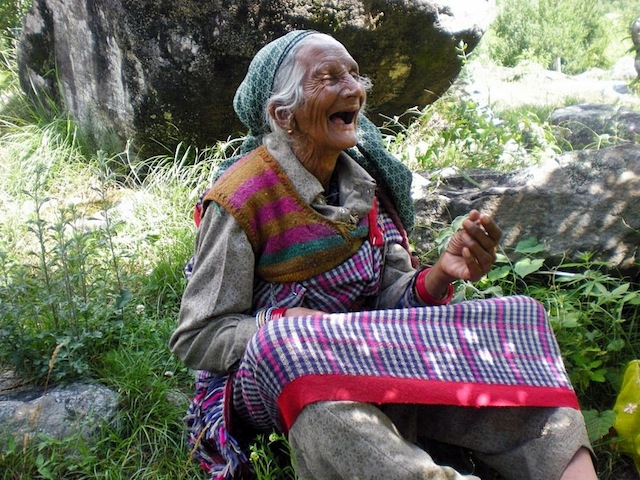
    Happy Old Woman

    “If you want to feel rich, just count the things you have that money can’t buy.” ~Proverb

    I grew up on a farm with a father that was a hired hand and a mother that took care of the elderly.

    I had six siblings and was the fifth in line. We had little money, but I always felt loved, not deprived. In many ways I was a rich person.

    When I was four years old I lived in a two-room house, with two bedrooms built on within the year.

    We had no real kitchen (it was just a room), no running water or indoor bathroom, no TV or telephone. (No, I did not grow up with the dinosaurs). We did have electric lights.

    What did I learn by growing up in these conditions?

    1. I learned to share.

    There were four of us girls and we all slept in the same bedroom—two in one bed and two in another (both twin beds). You name it, and we shared.

    2. I learned to take good care of what little I had and be grateful.

    We each had one pair of shoes, very few clothes, and one toy for Christmas, so we took good care of what little we had and did not take it for granted. For birthdays, there was a cake baked and our present was getting to lick the bowl for the cake and icing.

    3. I learned to use my imagination.

    With very few toys we had to make your own. We walked on tall tomato cans with strips of rubber attached to hold them on our feet. We played with old tires and five gallon barrels by rolling them on their side. And stilts, we made ourselves.

    4. I learned to eat until I was not hungry any more rather that when I was stuffed.

    Food was limited, but balanced. We each got our share because my mother cut it up equally among us. (I never knew you could scoop ice cream out of the carton until I grew up, because my mother always cut a half gallon of ice cream into 10 equal pieces and that 10th piece was cut into 10 more pieces. (My father got the extra piece.)

    I have never had a problem with weight, and this is because of the good eating habits and appreciation for the food we had.

    5. I learned that it was the people that made a home, not the size of a house.

    We may not have had much, but we had each other. We had each other to talk to, play with, and laugh with. (Sometimes to fight with.)

    6. I learned to work together.

    When you live in a small space you have to work as a team. You learn good working skills and what hard work is.

    We earned money by working in the fields for the farmers, helping irrigate when it came to watering the crops, and keeping the four rooms of our house picked up, so there was room to walk.

    As I look back on my childhood and the values it fostered, I realize I was a very lucky child. Yes, things are much better and easier now, but I know what to appreciate and what’s important to be happy.

    It’s the people you share your life with—the memories you build and laughter you share.

    Things are not what make you happy. It’s living in the moment and living everyday with love in your heart.

    I only buy what I need, which controls the clutter. I have food, shelter, and water, air to breathe, and people to love that love me.

    I appreciate what I already have to add comfort to my life. I take good care of my furniture, appliances, and the little things that make life more comfortable and easier.

    We have the choice to change our life if we want. With hard work and a dream anything is possible. Obstacles can always be overcome. We learn from them and keep moving forward.

    True happiness does not come with a price tag. Happiness is something we choose with our own attitude and gratitude.

    I look at people today and all the material things they acquire, thinking they are going to find happiness, but happiness cannot be bought.

    It’s in our attitude. The love in our heart. The people we know and love. The memories life brings.

    When death is knocking at our door, what will be important is the way we loved and the memories we leave for the people left behind. They’re not going to remember the house you lived in or the beautiful things you may have had.

    People will remember the laughter they shared with you, the long talks, lessons they may have learned from you, and most important, the love that was shared.

    In the end it is who we were, how we touched other’s lives, and the love we gave and received that is going to count and be remembered.

    Are you building those kinds of memories? Are people going to smile and laugh when they think of how you touched their life someday?

    Photo by T Sundrup

  • The Secret to Happiness: 5 Tips to Feel More Grateful and Blissful

    The Secret to Happiness: 5 Tips to Feel More Grateful and Blissful

    “The secret of happiness is to count your blessings while others are adding up their troubles.” ~William Penn 

    Did you know that gratitude has been scientifically proven to strengthen your immune system and make you happier and more optimistic, as well as less lonely and isolated? It’s true, and although science has just recently caught up to this fact, the Buddhists have known it for years.

    On a recent trip to Bhutan, my husband and I climbed to the Bumdra monastery and camped at 11,500 feet. The air was pure and clean, and the views were spectacular. And yet when the sun went down, all I could focus on were my frozen hands and feet.

    As we huddled around the fire, I just wanted to climb into my sleeping bag and warm myself. The temperatures had dropped just below freezing, and any joy I might have felt was overshadowed by my chattering teeth.

    Our guide, on the other hand, seemed impervious to the cold. He was wearing a Gho, a traditional knee-length robe that ties at the waist—and yet here I was, bundled in my down coat, freezing.

    I asked him if he was cold, and he replied that he was grateful to be able to camp at this sacred site.

    I kept questioning him, as I couldn’t really believe his answer. I truly couldn’t understand how he could ignore this bone-chilling cold. Didn’t he want a warmer jacket; didn’t he need a heater?

    His reply humbled me: “Rather than focusing on what I don’t have, I focus on what I do—I am lucky to have a fire, I am lucky to have this job, I am lucky to have a tent, and I am lucky to have your company.”

    I realized that he had just shared a very important secret to happiness. Focusing on our blessings allow us to celebrate the present moment and keep our attention on the good instead of the bad.

    Human nature is to want what we don’t have and to dwell on the negatives—instead of celebrating what we do have and focusing on what’s going well.

    My husband and I had planned this trip for months and had spent hours hiking up the mountain. And yet during the hike I had complained about being hot, and now here I was complaining about the cold. But as I listened to our guide share his contagious sense of gratitude, my attitude shifted, and I started to focus on my blessings.

    I began to enjoy the incredible darkness and stillness of the night sky. I began to really focus on the stars, which cannot really be enjoyed living in a city that obscures the light. I began to really listen to this wise man and enjoy his stories.

    Here’s the thing: being grateful has the power to block out negative emotions. You can’t really pay attention to what’s missing or what’s not going well if you only let your mind pay attention to what is.

    As I began to enjoy the peacefulness of the night with my husband, my attitude changed, the cold faded, and I was suddenly filled with joy and gratitude for this incredible experience.

    Weather changes, possessions come and go, and experiences—both good and bad–all come to an end. But our attitude of gratitude allows us to be fully present in every moment and to enjoy every last one.

    Here are a few simple things to try to start feeling a little more blissful on a regular basis:

    1. Keep a gratitude journal.

    Make gratitude a daily habit. Every day, jot down ten great things that happened to you or that you are grateful for. Keeping your focus on the positive will really make a difference.

    2. Practice present moment awareness.

    The habit of being fully present and not wishing for something in the future or the past—but just being grateful for what is—can really shift your perspective. Catch yourself when that moment escapes you, and gently remind yourself to come back.

    3. Think bigger than yourself.

    Become involved in a cause that is important to you. As you become aware of other people who are less fortunate than you, you will start to feel a deeper appreciation for what you do have.

    4. Share the love with your family and friends.

    Cultivate appreciation for others and let them know regularly that you are grateful for them and for what they do for you—whether it be helping around the house or always inviting you out for a fun dinner date. Focusing on the positive will make people want to keep doing it!

    5. Replace complaints with gratitude.

    When you find yourself focusing on what you believe you’re lacking—I wish my car were nicer, my house were bigger, I had more money—replace it with thoughts of what you are thankful for.

    What are you grateful for today?

  • Happiness is Not a Destination: How to Enjoy the Journey

    Happiness is Not a Destination: How to Enjoy the Journey

    Enjoy the Journey

    “Happiness is a direction, not a place.” ~Sydney J Harris

    Being happy is for most of us one of the key aims in life. But where we often go wrong is in figuring out which path to take to achieve that happiness.

    My own path has been a somewhat unconventional one. In my last year at college, most of my peers were busy applying for full-time jobs with large companies, but I knew that wasn’t what I wanted to do. 

    I wanted to see the world, which (long before gap years became so common) was met with disapproval by many. But excited, and somewhat scared, I set off alone on my travels.

    I didn’t return for good until over seven years later, traveling around the world twice over, working as an English teacher in Istanbul and Barcelona, as a fruit picker on a kibbutz in Israel, in a ski resort, on a campsite in France, and in a fairground in Australia.

    I drove across the US, rode the Trans-Siberian railway across Asia, and took precarious bus journeys through the Himalayas and the Andes.

    It was a fantastically exciting time and left me with some amazing memories that will last forever. I knew that by doing this I’d probably be sacrificing any chance of reaching the upper echelons of the corporate tree, but that didn’t hold any appeal to me anyway.

    Of more concern was the pressure I felt from family, friends, and society to settle down and find a “proper” job. But I’m really glad that I resisted that pressure and didn’t stop traveling and working abroad until I’d seen and experienced all that I wanted to.

    I felt that there was plenty of time to have a conventional job after my traveling days were over, and this has proved correct.

    The traveling taught me so much about myself, and life, and made me think about what I wanted from this short time on earth. I realized that I wanted to acquire experiences rather than money, and in my subsequent career that is what I have done.

    I’ve done a variety of jobs: I’ve been a musician, graphic designer, novelist, and journalist. Much of the time, these have been precarious freelance jobs and not well paid, but they’ve all been fantastically interesting and given me a wealth of life experience.

    I always wanted to have no regrets with the way I spent my life, and so far I haven’t. I know that if I’d spent my whole life trying to climb the corporate ladder I wouldn’t have been happy and would now have been lamenting what I hadn’t done in my life.

    I’ve always found it really important to enjoy each step of the journey that I’ve been on and not just hoping to be happier at some point later in my life.

    The path I’ve chosen may not be for everyone, but it is an example of the importance of choosing your own path in life, and ignoring the pressure from family, friends, and society. 

    I’ve seen how some people are pressured into certain jobs, often because they are considered prestigious, but hate the path they have chosen. Others may be pushed to get further up the career ladder, but then find out they hate the managerial responsibility that this generally brings.

    People also often think that when they have more material goods or money they will be happier. But while it may be hard to be happy in the western world with no money (although some people achieve it) making lots of money and buying lots of things may not necessarily make you content.

    Buying a new car or yacht is often only a short-term happiness boost and it seems that after a while, each upgrade to the car, house, or yacht gives less and less extra happiness.

    Surveys have shown again and again that once people reach a certain wage—around the average wage in western countries—happiness levels do not increase much.

    With relationships, it’s also important to find the right path for ourselves, and to be as sure as we can that we have chosen the right partner. And when we’ve hopefully found them, it’s so important to enjoy each moment of that relationship, not always be looking to the future.

    We might think that having children will make us happy, but then when we have them we realize all the responsibilities and difficulties that brings, and may look back on our days without children with fondness. Or if we have young children we might wish they were older, but then they become teenagers!

    The common pattern in all this is choosing the right road for the type of person we are and finding happiness at as many places along that route as we can.

    So it’s important to look at all the good things in our lives and to enjoy them to the full right now. That is much more likely to bring happiness than waiting for it to appear around the corner.

    Photo by woodleywonderworks

  • 5 Tips to Stop Making Comparisons and Feeling Bad About Yourself

    5 Tips to Stop Making Comparisons and Feeling Bad About Yourself

    “The reason we struggle with insecurity is because we compare our behind-the-scenes with everyone else’s highlight reel.” ~Steve Furtick

    I remember one day when I was around six years old, my older brother came home from school with one of those star-shaped highlighters that had a different color on each point. I laid my eyes on it and in that moment I wanted nothing more than I wanted that highlighter.

    It didn’t matter that as a six year old, I had less use for it than paper shoes in rainy weather; I just simply had to have it.

    Being the loudmouth child that I was, with a scream my mum only describes as “hell-breaking loose,” I fought (cried) tooth and nail for that highlighter until my father made my brother give it to me.

    I scribbled an obscure masterpiece of color for a solid five minutes—until my pupils dilated at the new pencil case my brother had pulled out of his school-bag. It’s safe to say my brother sure didn’t like my company for a while. Anything he had, I wanted.

    This wasn’t just an innocent childish trait. It seemed to follow me as I grew a little older too. I found myself wanting many things other people had.

    It didn’t have to be tangible. In fact, most of the time it was a character trait, a skill, or even academic ability. I always wanted something somebody else had.

    The problem was that it was no longer a case of just wanting the highlighter; I was putting myself down and getting frustrated at why I wasn’t given one, or why I wasn’t capable enough to get my own.

    The self-doubt questions start seeping in: Am I good enough? Why can’t I do this or have that? Am I ever going to achieve the things others seem to so easily? Why is it so hard for me to be happy and easy for everybody else?

    The thing with comparing ourselves to others is that it’s something every one of us does, or at least has done in the past.

    Remember coming home with a 95% on an exam? One of the first things our parents would ask is (second to “what happened to the other 5%?”): “How did everybody else in your class do on the test?”

    It seemed like it didn’t matter that we had gotten an A+, not if everybody else did too.

    It is always a comparison. In fact, education boards compare schools, teachers compare students, and employers compare interviewees. It’s just how the world works. It’s inevitable that we will learn to compare.

    At an individual level, we might attend parties or ten-year high school reunions and analyze in fine detail what successes everybody has achieved in their lives, and our drive home consists of brooding, trying to pinpoint where it all went wrong for us.

    If that wasn’t bad enough, enter: Facebook. Correction, social media as a whole has taken the lead in creating an online universal medium for comparisons all day every day!

    Now we know instantly when our friends are lying on a sandy white beach while we’re slaving away at a nine to five, which we have probably loathed for eight years.

    We see our friends getting married, and we can’t help but think about why we haven’t settled down yet. Our Facebook News Feed is filled with photos of couples with their first new-born, and we ask ourselves if we’ve missed our chance at having a family.

    We need to remember that on the outside, things may seem a certain way, but it’s almost always inaccurate. And that leaves our comparisons with very little basis.

    We’ve heard the phrase “Everyone’s fighting their own battle.” I had a friend once tell me that, on the outside, I looked like I lived a princess lifestyle. Princess!

    Apparently, I always had a smile on my face. I joked around, and seemed as though I hadn’t a single worry in the world. After she got to know more about me, she said she would never have guessed I had the problems I was actually dealing with at the time.

    Personally, I don’t recall having a particular incident happen to me that prompted a change. Perhaps it was just my gradual disinterest in other people’s lives and a heightened interest to focus on my own.

    But I realized there was zero benefit from comparing myself to others. Emotionally, it would only bring me down, and mentally, it immobilized me. No progression occurs at a standstill like that.

    Whether it’s something innate that we develop as kids, or something we’ve learned from the nature of our society today, we compare. And although logically we know comparisons are no good for us, we still can’t help doing it.

    So how do we actually stop?

    1. Appreciate what you do have.

    I realized it had never crossed my mind that perhaps someone out there could be looking at me, wishing for something that I had. When you’re lost in a world of comparisons, your focus is always outward, analyzing others. You forget that you already have a million and one things to be forever grateful for.

    2. It’s not a fair game.

    As our man Einstein says, “Everybody is a genius. But if you judge a fish by its ability to climb a tree, it will live its whole life believing that it is stupid.”

    We’re all different, we see things differently, we’ve all had different experiences and come from different backgrounds. So comparing ourselves to others is synonymous to comparing a fish to a monkey.

    3. Things aren’t always what they seem.

    For some odd reason, we tend to make up our own judgments on people just on the way they look on the outside. You may look at two people working at the same firm, judge them both, and wish to have their position, but what you don’t know is while one may have got the job through his father’s connections, the other had worked twenty years at the bottom of the gutter to get where he is now.

    4. If you must compare, compare to yourself.

    Some people use comparisons and convert it into motivation. And for those who can do that, go for it. It’s definitely a positive spin; perhaps seeing someone’s success drives you to do the same.

    I often use this one, but I also believe that the best person to compare yourself to is you. Compare the present you to the past you. It’s a much fairer scale and a sure way to progression and peace of mind.

    5. Accept what you can’t change and change what you can’t accept.

    Leading on from the last tip, change the things you want to and when you have, compare back to yourself and see how much you changed for the better. And with the things you can’t change, accept that it was how you are supposed to be—own it, live it, love it.

    If you want to take one thing from this post, take my favorite: The only person you should be comparing yourself to is the person you were yesterday.

  • Knowing Better and Doing Better: How Are You Fortunate?

    Knowing Better and Doing Better: How Are You Fortunate?

    Enjoying the Day

    “Give thanks for a little and you will find a lot.” ~Hausa Proverb

    Gratitude, the level of gratitude that one has, varies greatly by person. You have those that are grateful for every single thing in their lives, and those that know what the word means on paper yet never practice it in their own lives.

    Then you have so many others (like myself), I call them the “in-betweeners.” We are grateful for so much but often forget this because life takes over, or so many other things are going on at once that you barely have five minutes to yourself to even drink a glass of water, let alone practice gratitude.

    And so you continue on in your day and life with thoughts and good intentions to give back more to those who are unfortunate or volunteer more—and then it doesn’t happen.

    I can vouch for this; I did this all the time. I meant well and really did want to help others, yet life takes over.

    As I ate my lunch at my desk, mindlessly reading a celebrity gossip blog, I came across something in passing. This one blogger in particular was rallying all of her followers to support her for an event she was taking part in that would help support homeless youth.

    As I read further, I came to see that this event was a sleep out, where she would sleep on the street and experience homelessness firsthand. I’m not sure why exactly, but I promised that if that event ever came to New York City I would do the same—and it did.

    With a day of hesitation that was filled with thoughts of me leaving my children overnight and questioning if I really wanted to do this, I signed up—fast, before I could change my mind.

    And so there I was, rallying my family, friends, and coworkers to help me reach the $1,000 minimum in two short weeks. I never realized how many people would actually support me; I exceeded the minimum by $200.

    Fast forward to the night of the event: I had two sick children at home and felt guilty for leaving them, but still, I walked into this event on my own without knowing a soul there.

    The organization had a schedule for the evening prior to the sleep out, when we got to meet some of the kids that we were helping that night. I met some of the most amazing kids that I have ever encountered.

    These people have endured and survived so much. Listening to their stories and having them sit directly across from me was life changing. I now had a face to associate with homeless youth and, in some instances, their homeless children.

    I heard stories of sleeping near a hospital for fear of giving birth on the streets, finding their own mother dead at the age of 16, and leaving adoptive parents that abused them and suffering a stroke at the age of 18, due to stress.

    The life experiences of these kids cannot compare to so many of us, and yet I felt so connected and privileged to be able to help them in any way.

    After our meetings, we retreated to the sidewalk that we would be sleeping on, which emulated what so many face nightly. We got our cardboard boxes, sleeping bag, and trash bag for insulation and laid down to sleep.

    And that is when it happened—my “aha” moment. As I laid there among strangers who were all doing this for the same cause, it hit me: I am more than fortunate! I have healthy children, a loving husband, a warm bed that is ours, a refrigerator that, thankfully, is filled with food, a home—the list goes on and on.

    These are things that I have almost have come to expect, yet they are not owed to any of us.

    My entire perspective changed. How dare I complain about not having those shoes I saw at some store or that the grocery store didn’t have the one item I needed or whatever thing it is that annoyed me and wasted my time.

    I see things differently, because from this experience I am different now. I am more mindfully grateful for everything, and in turn I have seen the beauty in so much that I have missed before.

    I am a new person on the inside. I am grateful and more determined to make the time I am given much more meaningful. Now that I know better, I need to do better.

    This event was just the start for me. I am actively looking for new and inventive ways to give back.

    Look around and be grateful for the smallest things. Once you become more mindful of it, your world starts to change.

    Photo by Hartwig HKD

  • The Blessings in Disguise We Don’t Realize We’ve Received

    The Blessings in Disguise We Don’t Realize We’ve Received

    Looking

    “The unthankful heart discovers no mercies; but the thankful heart will find, in every hour, some heavenly blessings” ~Henry Ward Beecher

    I’m a calm person by nature, but like everybody else, there are a few things that get my blood, at the very least, simmering. One of them used to be inconveniences.

    Our daily lives are filled with delays, missed opportunities, setbacks, and outright nuisances. It happens to us all.

    Missing a bus and being late for work. Being locked out of the house for four hours when you have an urgent exam to prepare for, with all your notes on the other side of the door. Having your new, shiny Blackberry slip out of your pocket on the bus and only realizing half an hour after stepping off.

    Yes, these have specifically happened to me. And there’s plenty more where they came from too.

    They may not seem like the end of the world, because of course, they aren’t. But at the time, they always feel like a big deal and they always happen at the worst possible time. Right on cue, I suppose.

    A few years ago while in my second year at university in my home city, London, I experienced a small inconvenience that made me change my outlook altogether. That academic year, I had taken up a language class, but rather than being at my usual campus in London Bridge, it was at the Strand.

    I would take the Underground to my evening Arabic class at the Strand campus every Thursday. I took the same route from London Bridge every week. And on my journey home, I would go via the renowned Victoria train station every week at exactly the same time. (more…)

  • How We Appreciate Life More When We Stop Making Assumptions

    How We Appreciate Life More When We Stop Making Assumptions

    “Joy is what happens to us when we allow ourselves to recognize how good things really are.” ~Marianne Williamson

    Our 12th floor apartment overlooks Cape Town’s city bowl and harbor. The view is such that even on overcast days I’m drawn to the window each morning to breathe it in.

    There’s a sense of being both a part of the world and entirely removed from it when you’re that high up.

    It’s how I move through my life too; I’m either immersed in it or off on my own. This contrary nature is not without its challenges, especially when I’m called upon to be one thing when I’m clearly feeling another.

    It’s precisely these moments, however, where if I lean forward in spite of my reluctance, that growth occurs.

    That’s what happened to me the other morning. I was at the window enjoying the view when I noticed a man lying on the narrow concrete island that separates the two lanes of the busy road below.

    His appearance led me to believe he was down on his luck, most likely homeless. I watched as he tried to pull himself into a sitting position. After a few attempts, he eventually gave up and just lay down on his back.

    Cape Town has its share of street people, a lot of them with obvious substance abuse issues. As a result, whenever I see someone lying on the ground, I immediately assume they’re passed out from drinking too much.

    Watching this man below, I figured him for a drunk too. It’s not a judgment call; alcoholism is an illness like any other. I’m simply pointing out how quick I was to pigeonhole him, and from 12 stories up no less.

    Ordinarily, I would simply have gone on with my day, but something compelled me to call the city’s emergency number and ask them to send help. I’m not sure why.

    Maybe it was because the man was lying precariously close to a drop that would land him squarely in the face of oncoming traffic if he fell. I don’t know—all I can say is that, in this instance anyway, I couldn’t ignore the fact that a fellow human being needed help. (more…)

  • How to Turn Pain to Joy: 11 Tips for a Powerful Gratitude Journal

    How to Turn Pain to Joy: 11 Tips for a Powerful Gratitude Journal

    “Give thanks for a little and you will find a lot” ~Hausa Proverb

    In my early, dark days of first acquiring a disability, I didn’t feel I had an awful lot to be thankful for.

    It was like I had spent my whole life getting to the point where I had a thriving holistic therapy practice I loved, an amazing social life with great friends, and my beautiful dog, who I would regularly take into the country for long walks and my adrenaline pumping exercise routine.

    Life was perfect. I had so much to be grateful for, but then it was suddenly snatched away.

    I was left with constant pain, immobility, and three children who I felt I couldn’t care for properly. So what did I have to be grateful for, right?

    Well, I was alive, yes. Some people may say that’s enough, but they are probably either people not dealing with chronic pain on a daily basis or those with a far more positive mindset than I had at that time.

    I thought back to all the advice I had given to my therapy clients over the years on healing emotional pain and moving forward, but even though I knew it worked from the positive feedback I’d received, I couldn’t apply it to myself.

    The problem was that I was very good at talking it, but, as I had always felt good about my life, I had never actually had to put it into practice.

    The previous ten years had been the best I had ever experienced, and I was naturally appreciative of all I had. After my accident, appreciativeness soon turned to hurt, anger, self-pity, and eventually self-loathing.

    I caused myself more pain by resisting the enforced lifestyle change and couldn’t see a purpose in anything. It was at this point I knew I had to make a change.

    I looked at the handout sheets I had previously given to clients (practical tips for living a positive life), and since I love writing, gratitude journaling seemed to be an obvious starting point.

    That night I sat with my journal, intending to start with three things I was grateful for that day. Just three. Piece of cake, right? After an hour, I gently closed the cover on the tear-stained, still blank first page and cried myself to sleep, mentally adding “failure at journaling” to all my other perceived shortcomings. (more…)

  • Appreciate or Change the Game Instead of Blaming It

    Appreciate or Change the Game Instead of Blaming It

    “Have respect for yourself, and patience and compassion. With these, you can handle anything.” ~Jack Kornfield

    Imagine these three scenarios:

    Scenario 1: You wake up in the middle of the night and your baby is crying. You feel annoyed that you have to wake up in the middle of your sleep.

    Scenario 2: Your goal is to finish your first marathon, so you have to practice consistently. However, you don’t feel like exercising today. It’s raining and you’d like to watch television instead.

    Scenario 3: You hate your job. You snap at your boss and you procrastinate on the work you are supposed to do.

    What do these scenarios have in common? If you haven’t figured it out yet, then keep reading.

    It’s About You, Not About Them

    These three seemingly different scenarios have one thing in common: You are blaming the game even though you made a decision to play it.

    In many of these situations, we jump in without really knowing what we are dealing with.

    When we jump into situations with wrong expectations, it creates wrong attitudes. We expect things to follow a certain path, but the reality is different. And when the reality and our attitudes collide, it’s natural that we feel frustration.

    For instance, a new world opened to me and my wife when we had our first baby. Although we had prepared for this a bit, the reality was completely different.

    In the beginning, our son was constantly waking up in the middle of the night and his sleeping patterns were quite irregular. This led us as parents to be very tired in the beginning.

    At the same time, we knew that this was part of the reality when you have a baby. Sure, it wasn’t nice to feel tired all day because of the lack of sleep in the night, but we also understood that the start could be challenging until things smoothed out.

    You Are Not a Victim—Far from It!

    All this inner resistance leads to a “victim” mentality. When you find yourself in a situation that you don’t like, you feel like you have been mistreated.

    If you feel like this, then understand that you can change it by taking responsibility for your actions. (more…)

  • Now is the Time to Appreciate the People Who Have Helped You

    Now is the Time to Appreciate the People Who Have Helped You

    “No duty is more urgent than that of returning thanks.” -James Allen

    Recently, my mom told me that my beloved piano teacher had passed on. She had reached a high age and died peacefully in her sleep. This news, delivered to me via Facebook, hit me harder than I could have prepared myself for.

    Sitting there in front of my computer, I remembered the circumstances of my meeting her. Originally, it was because my sister wanted to learn how to play piano.

    It was by pure chance that I decided to go with her for her first lesson and I instantly fell in love with the teacher. She was the same age as my grandma, which was great because back then younger people terrified me. We hit it off right away.

    I must have been around thirteen years old back then and I was in a really dark place of my young life. My eating disorder, which I had developed at the age of about ten, was starting to get more serious.

    I lost weight rapidly and my exercising got out of hand. I was a shadow of myself and I was terribly insecure and weary of life.

    Spending one hour a week with this unusually large, brilliant lady was like my sanctuary. When I closed the door of her tiny piano room, I knew I was in a safe place.

    She listened to me when no one else did. If I showed you my piano skills today, you’d agree with me that we probably talked more than we practiced playing. Being with her was like the counseling I desperately needed.

    I treasured each and every moment with her. I was more open to her about my anorexia, about my problems with the family, and my terrifying fear of my brother than I had ever been with somebody else. I trusted her. No matter how caught up I was in my illness, I never skipped a lesson.

    Then, I went to the US and our ways separated. Over the years, I would hear frequent updates of how she was doing and I would send her the occasional letter.

    When driving by her house, I would make a mental note to schedule some time for a visit sometime in the future. I never did.

    My piano teacher had often told me that she had seen the vulnerability in my eyes and my posture when we first met. She saw that I was a broken soul and she knew that she was there to guide me and to help me through some of the hardest years of my life. (more…)

  • 50 Ways to Show Gratitude for the People in Your Life

    50 Ways to Show Gratitude for the People in Your Life

    “Feeling gratitude and not expressing it is like wrapping a present and not giving it.” –William Arthur Ward

    The holiday season generally brings us closer to people. Sometimes that closeness reminds us how much we love each other. Sometimes it reminds us that we drive each other crazy, as family often does.

    At the heart of it, Thanksgiving in particular calls us to see people with the deepest appreciation for the gifts they’ve given us. Some gifts are more immediately obvious than others—the type that come with praise, affection, and genuine esteem.

    Others push us, stretch us, test us, and make us wonder if there’s anything to be grateful for at all.

    There’s no denying that certain relationships are more challenging than others, but through each we have an opportunity to grow and help others do the same. Every relationship teaches us something about loving, trusting, forgiving, setting boundaries, taking care of ourselves, and taking care of each other.

    From the people who love you, to the people who challenge you, to the people who support you at work, here’s how to show your gratitude.

    Show Gratitude to People Who Love You

    1. Share a specific example of something they did for you and how it made a difference in your life.

    2. Do something little but thoughtful for them—like clean up after Thanksgiving dinner!

    3. Give a long, intimate hug; or if you know they don’t like hugs, stick out your hand for a handshake to cater to their preferences and make them smile.

    4. Tell them you’re there if they have anything they want to talk about—and let them know they have your full attention.

    5. Give them something of yours that you think they would enjoy, and let them know specifically why you want them to have it.

    6. Invite them to do something you know they’ve always wanted to do.

    7. Encourage them to try something you know they want to try but haven’t yet because they’re scared.

    8. Offer to do something you know they don’t enjoy doing, like organizing their closet or mowing their lawn.

    9. Compliment them on a talent, skill, or strength that you admire.

    10. Look them straight in the eyes and say, “You make the world a better place.”

    Show Gratitude to People Who Challenge You

    11. Fully listen to what they have to say instead of forming your rebuttal in your head and waiting to speak.

    12. Thank them for introducing you to a new way to look at things, even if you still don’t agree.

    13. Pinpoint something you admire about their commitment to their beliefs—even if you don’t hold them as well.

    14. Resist the urge to tell them they’re wrong.

    15. Challenge them right back to be the best they can be, with love and positive intentions.

    16. If they inspired you to push outside your comfort zone, thank them for inspiring you to take a risk, and let them know how it paid off.

    17. Write a blog post about how they helped you see things differently and dedicate it to them.

    18. Use the lesson this person teaches you through your interactions, whether it’s patience, compassion, or courage.

    19. Introduce them to someone who may challenge them and help them grow, as they’ve done for you.

    20. Let them know how you appreciate when they challenge you in a loving, non-confrontational way—and if they don’t do that, be calm and kind when you ask them to do that going forward.

    Show Gratitude to People Who Serve You

    21. Give a larger tip than usual.

    22. If they have a tip jar, include a thoughtful note of appreciation along with your coins or bills.

    23. Smile when you order or enlist their assistance. Smiles are contagious, so give one away!

    24. If they serve you regularly, acknowledge something they always do well—like work efficiently or stay calm under pressure.

    25. Exhibit patience, even if you’re in a hurry.

    26. Let their supervisor know they do an outstanding job.

    27. Keep their workplace clean—for example, at a coffee shop, clean up after yourself at the sugar stand.

    28. Offer to get a coffee for them, if it’s someone working in or outside your home.

    29. If you have their contact information, send an email of appreciation—and let them know you just wanted to express your gratitude, so they don’t need to write back.

    30. Praise them in a review on Yelp and/or recommend them to people you know.

    Show Gratitude to People Who Work with You

    31. Write a handwritten thank-you note, acknowledging things you value about them and their work.

    32. Offer to lighten their workload in some way if you are able.

    33. Bring back lunch for them if you know they’re working hard and likely haven’t had a chance to grab something.

    34. If you’re running a meeting, keep it short to show them you appreciate and respect their time.

    35. Ask them about their lives instead of always being all business. This doesn’t mean you need to pry into personal matters; it just means showing an interest in who they are as people.

    36. Be the calm, light voice in a stressful situation.

    37. Give them flowers to brighten their desk.

    38. Let their boss know how they’re doing a great job and contributing to the company.

    39. Listen fully if they’re having a difficult day, and recognize if they need space to figure things out on their own, not advice or help.

    40. Remember that the little things can make a big difference!

    Show Gratitude for Yourself

    41. Make a list of ways you’ve impressed yourself lately.

    42. Treat yourself to something you enjoy, like a pedicure or a massage.

    43. If someone compliments you, thank them and let them know you’re proud of that skill, talent, or accomplishment.

    44. Compliment yourself—say it while looking in the mirror, write it in a journal, or jot it on a sticky note and put it on your refrigerator.

    45. Give yourself time to enjoy a passion you’re sometimes too busy to fit in.

    46. Take an inventory of all the good things you’ve done for other people and the world.

    47. Write yourself a love letter. Seriously, start with “Dear Lori” (but insert your own name) and describe all the things you admire about yourself.

    48. Let go of any conditions you have for being kind to yourself—meaning you appreciate even if you didn’t accomplish or do anything specific.

    49. Schedule a date with yourself—an afternoon or evening that’s all about you.

    50. Share the beauty that is you with the people around you, knowing they’re fortunate to have you in their lives.

    I am fortunate to have you in mine. You make the world a better place!

    **Update: Since I wrote this post, I launched a gratitude journal/coloring book that people seem to be really enjoying! If you’re interested, you can learn more here.

  • The Joy and Peace That Gratitude Brings

    The Joy and Peace That Gratitude Brings

    “Gratitude is the memory of the heart.”  -Jean Baptiste Massieu

    Several months ago I was invited by the man I was newly seeing to come to one of his meditation classes. He’d been going through an incredibly tumultuous and painful time in his personal life; he realized that his family unit, which he had always seen as perfect, was human and flawed. That seemed to break something in his spirit.

    He turned to meditation as a source of re-centering himself. In addition to the deep breathing, one of the cornerstones of meditation practice is gratitude—finding at least one thing every day to be thankful for.

    He had told me it was a “bring a friend day.” After entering, we saw three other pairs of people and the group leader gathered around a table.

    The first pair was two women in their forties. They had been best friends since college and had remained close for over 20 years.

    One of them shared how through past illness and family strife her friend had never left her side. They laughed about margarita nights until dawn and how the other always picked up the phone. Where one woman stopped, the other picked up. They were grateful for their cultivated and cared for sisterhood.

    The second pair was two older men. They were neighbors and friends who had grown up together. One wanted to share his gratefulness for the other’s steadfast support through his divorce, and for always offering a welcome place for Christmas and Thanksgiving.

    He spoke about the difficulties he faced in not being with his children and his appreciation for having his friend to turn to. Face to face he turned to his friend and thanked him for his family’s constant support, for without them he didn’t feel he would have made it.

    The third pair was a mother and son. The mother wanted to remind her son how special and important he was, not only to her but to everyone around him. She recognized that his recent past had been marred with difficulties and let downs. She knew he felt broken and hurt; she held his hand as she thanked him for letting her be a support and nurture him. She was grateful to see her son’s smile again.

    The last pair was me and the man I’d been seeing for only a couple months. He wanted to appreciate our growing trust and support in each other.

    He appreciated that I showed patience in his slow approach to communication and that I encouraged him. He’d had a different experience growing up than I did—my family said everything on their mind the moment they felt it—so it meant the world to me that he wanted to communicate with me, and he acknowledged his gratitude in this way.

    The man who was going through so much in his own life took the time to reach out and show me thanks, simply for caring. I was blown away by the unexpected validation.

    I’d recently dealt with a series of blows that had left me feeling weak: the passing of a friend, numerous graduate school rejections, and building anxiety towards next life steps. His taking the time to share his gratitude with me pulled me up and opened my eyes. (more…)

  • The Days Will Run Out

    The Days Will Run Out

    “If we are not fully ourselves, truly in the present moment, we miss everything.” ~Thich Nhat Hanh

    I heard this story recently while listening to a favorite radio show of mine. It was about this homeless man who was detailing some of his experience with homelessness.

    He told stories of sleeping outside in the rain and waiting for hours to get into an overcrowded shelter. He even told a story about another homeless man, who could speak no English, who told him about how he had spent a sleepless night in a trash compactor because he felt safer and was drier than sleeping out on the street.

    He didn’t get much sleep, however, because all night he kept worrying that someone might press “the button.”

    The single story he told that stood out in my mind, however, was the story of the time he was offered the job of house-sitting for a friend.  As you could imagine, the thought of existing somewhere safely, of being sheltered from the weather, of being able to relax on a couch and watch TV was overwhelming for him.

    He was excited like a child might be excited before being told that his parents had decided to go out and buy him a brand new bicycle.

    There was no doubt that he was thrilled about all these things, and he certainly had a right to be. With all that he was about to experience, however, the thing that he looked forward to the most was sleeping. 

    Really? Sleeping? I wondered, how could he be excited about sleeping when he had a house all to himself?

    The thing is, sleeping in a warm bed, to most of us, is something we take for granted. Something we don’t ever think about. But, as this man detailed, sleeping is tough when you’re homeless.

    You don’t get much sleep when the cold and wet are invading every inch of your body. Most of the time, when you do sleep, you sleep with one eye open for fear of having something stolen, or being attacked.

    So when he first fell like a rough heavy stone into the softness of his friend’s bed that first night, all he could do was lay there looking at the dark quiet ceiling and feel grateful. Then he said something that was special to me. Something that resonated inside me like the assertive crisp ring of a bell.  (more…)