Tag: appreciate

  • Whatever Is Taken for Granted Will Eventually Be Taken Away

    Whatever Is Taken for Granted Will Eventually Be Taken Away

    “They say ‘you don’t know what you’ve got until it’s gone.’ The truth is, you knew exactly what you had. You just didn’t think that you were going to lose it.” ~Unknown

    She was a mother of eight children. She lived with her family in a small village in the countryside.

    Living in a poor family, with eight mouths to feed, she worked every possible job from dawn till dusk, from working in her family’s own rice field to accepting gigs from anyone who’d hire her.

    Many people told her not to put her children in school so she could have some help with work. But she insisted on letting her children be educated so that they could have a shot to live a better life than hers. It meant working ten times extra, but she did it anyway.

    She lived more strictly than a monk. She didn’t eat enough, because the less she ate, the more her children could eat.

    Fast forward nearly forty years later, she suffered from heart disease, blood pressure problem, and many serious illnesses. According to the doctor, the main reason was that she’d neglected herself for so long.

    In the last couple months of her life, she couldn’t walk or talk. She became paralyzed and she forgot her children and grandchildren. Later she died in the arms of her family.

    That was the life story of my grandmother, the woman who sacrificed her entire life to take care of other people and expected nothing in return. And everyone took her for granted.

    It’s not because we didn’t love her. But we were just too busy with our lives. And most importantly, our society raised us not to express our love and feelings to others, because it was considered a sign of weakness.

    I remember just a couple hours before she died, we were all expecting it and we gathered together to be with her.

    My mom said, “Grandma is so weak.” I hugged her.

    It was the first time I saw her cry.

    A couple years later, my aunt told me she never hugged my grandma and told her how much she loved her. She didn’t know better at that time. She does now, but she’ll never have that chance again.

    They took her for granted. And now she’s gone.

    My grandma’s love and sacrifices seem to repeat themselves—with my mom.

    A mother of four children, she found herself in a familiar situation.

    She raised her four children herself while her husband was away to work for many years. She never had good food because she tried to save money to provide for her family.

    And honestly, I also took her for granted.

    She was always there for me when I needed her. She never left me when I got sick. She fixed my clothes and bought me some pretty shoes when I asked for them, even though money was tight. She provided me with everything I’ve ever needed. And magically, she still managed to do the same for my siblings.

    She was a superwoman to me.

    It was not uncommon for her to do all the household chores while we just sat around, studying, chatting, or playing.

    I knew she worked hard, but I also thought that’s how all moms were. I never remembered to say “thank you” to her. She plays a huge part in my life, and for a long time I just didn’t realize it. Until she was diagnosed with cancer.

    My world collapsed. Life was so brutal.

    When she was in the chemo, the house was a mess. No one cared to clean, cook, or talk. My family and I only talked about Mom, who was becoming weaker by the day.

    I remember when she finally came home after the first chemo session, we kept asking her what food she could eat and how she felt. That was the first time she received so much attention.

    I also remember she got up, ran outside the room, stood in the dark, and cried. She cried not because she was scared of death, but because she was scared that no one would take care of her children.

    I had taken her for granted, but I still had a chance. Since then, I learned to take care of her as well as she took care of me.

    Even after my mom was cured, the fear of losing her still scared me to death. But it also makes me realize that we all tend to take people around us for granted, especially the people who are closest to us. We only remember to cherish them when we are about to lose or after we lost them.

    I now make it a goal to never take anyone for granted. I make sure I appreciate everyone around me. If you think you might also be guilty of taking people for granted…

    Remind yourself that nothing is permanent.

    Nothing you have today will last forever. Not your job, your house, or your car. Not the people who are closest to you. Not even the people who vowed to never leave your side.

    Take a moment and accept the fact that life is short and you don’t have a lot of time to be with your loved ones. Someday all those people will no longer be around you, and you can’t possibly know when. Cherish them while you can.

    Expect nothing. Appreciate everything.

    No one is responsible for you and your life. No one is obligated to show you affection and kindness. Even if they are the people you love, it doesn’t mean they must love you back. They don’t have to do anything for you, even the smallest things.

    So when they do, recognize their efforts and thank them for everything they do for you. Everyone appreciates knowing they’re appreciated.

    Express your love with little gestures.

    Born in a third world country, I wasn’t raised to express my feelings for other people. Many times I struggled to tell my mom how much I love her. I thought she knew because she is my mom. But it doesn’t mean she would not feel happier if I chose to share how much I cared.

    It was strange at first, but now I call her every day and kiss her over the phone camera. I send her random text to tell her I love her and arrange flowers to be delivered to her house.

    Even if you’re busy, put in the effort to show how much you care. It doesn’t have to be anything big. As Robert Brault said, the little things are often the big things.

    Stay in the moment.

    Sometimes we are so busy with our work, our hobbies, and our relationship problems that we don’t focus on the people who are right in front of us.

    But if you don’t, when you look back on those moments, you will regret not being in the moment and enjoying time with your loved ones.

    Make a commitment to yourself today: Stop worrying about things you have no control over. And if you can’t stop worrying altogether, at least vow to put your worries aside for a while every day so you can be there for your loved ones, both physically and spiritually.

    It is easy to get used to all the sweet and kind gestures people do for you. But don’t take them for granted.

    Go ahead. Call your mom, dad, or someone else you love. Tell them how much you love them and thank them for everything they do.

    Send a text to your significant other, if you have one. Thank them for cooking a big breakfast for you, or even just for listening.

    Buy a bouquet of flowers and send it to your spouse or friend, along with a note to tell them how much you appreciate the little things they do for you every day.

    “Smile big. Laugh often. Never take this life for granted.” ~Unknown

  • Life Is Better When We Focus on What We Appreciate, Not What’s Lacking

    Life Is Better When We Focus on What We Appreciate, Not What’s Lacking

    “Wisdom is merely the movement from fighting life to embracing it.” ~Rasheed Ogunlaru

    Recently a friend told me a story about taking her seven-year-old to the circus. It was a wonderful mother-daughter outing. Just the two of them, no pesky brothers or dad tagging along and getting in the way.

    They had the best time. They watched acrobats and clowns and all manner of brand new delights, gasping at one another gleefully at every new feat. They bathed in each other’s company without interruption, laughing and having fun. Literally all the things.

    After this magical afternoon, as the two of them were leaving, my friend’s daughter spied the merchandise stand and wanted her mum to buy her a plastic fairy wand. My friend gently but firmly said no.

    In the car on the way home, her daughter was quiet.

    “What did you like the most? What was your favorite thing today?” my friend asked her.

    She was sulking. “I’m just thinking about the wand I didn’t get.”

    I’m just thinking about the wand I didn’t get.

    How many of us fixate on the wands we didn’t get, even amidst the most wonderful experiences?

    How often do we home in on the one negative comment, or the thing that isn’t right instead of what is positive or right?

    How can we just see what is rather than disproportionately focusing on what isn’t?

    For myself, the wands I didn’t get loom most darkly now that we are in the age of the Internet. As much as I am a huge advocate for the awesomeness of online life, something that sucks me into a vortex of wishing for what ‘isn’t’ are reviews.

    I read reviews like others might read a newspaper. Cover to cover, looking for bias or bad writing or things I might not like, as well as things I’m sure I will. Inevitably this can lead to disappointment when I finally get to experience the actual thing I’ve been reading about for months.

    I turn up to a new café or a guesthouse and find myself honing in on what isn’t:

    “It said in the review that there was a 180 degree view, but this is only front-on.”

    “It said in the review they had lots of vegetarian dishes, but I can only see three and they don’t look that great to me.”

    “This house manager is frowning at me. The review said they were like family by the end of trip. How is that possible with this grump?”

    When my friend shared this anecdote about her daughter and the wand she didn’t get, it was very timely.

    A much-needed slap in the face, really.

    Here’s what I began thinking about:

    Which practices drag me into a space of entitlement and loaded expectations, and which practices make available a stronger sense of appreciation for what Is rather than what Isn’t?

    One thing is to be less obsessed with reviews, obviously.

    Another is to really spend some time reflecting on how I experienced life before the Internet. How I traveled, what behaviors, what choices opened up a sense of wonder about the every day world?

    In the last few months of digital nomad life, I’ve been much more inclined to just show up and try stuff out rather than worrying about what lots of folks thought.

    Here are my rules:

    1. A brief skim of a review is handy, but it’s time-limited. I now spend only a few minutes checking others’ thoughts, and look for basic practical things that are important.
    2. Get there and see. Make eye contact. Look Up. Be.
    3. Slow down and take my time so I am able to fully appreciate what’s in front of me. What’s the rush?
    4. Trust my gut. Give it a go.
    5. Talk to people in person, ask for recommendations.
    6. Be okay with imperfection. Enjoy what is good about what is happening.

    You know what?

    It’s working.

    I discovered a wild beach, and while it was unswimmable (which would normally drive me crazy), it was pretty much deserted and the waves were mesmerising, provoking an infinite number of thoughts.

    I also talked with a woman walking her dog there and found out about another beach closer to our new home. I then learned that even though the Indian restaurant doesn’t deliver at 3am she can get a box made up to pick up for her night shift (which might come in handy one day in a town where occasionally everything shuts by 8pm).

    I unwittingly drank the best coffee of my life.

    I lay in the still and stifling heat of the night in a tent, initially angry that I hadn’t known how hot it was going to be. But then I reminded myself there was nothing to be done but just accept it, lie very still, and I actually fell asleep, awaking refreshed and excited about the day ahead.

    I jumped on buses after asking locals which ones, and they were always right, even though there were a few scary “where the hell are we?” moments.

    After receiving a difficult email, I stopped. I listened to music and physically felt myself calm down (as well as rediscovered a few albums) instead of freaking out, scanning social media, and increasing my anxiety.

    I’m finding myself naming the things I like first:

    This room has great airflow.

    There are fascinating trees on the headland.

    Dogs are allowed in (!)

    The music is fantastic.

    The people crowding in the pool are smiling a lot and having fun, which is making me smile.

    These flowers are beautiful.

    The mist (obscuring the view) is mysterious and atmospheric.

    I’m learning something weirdly interesting from the radio interview I’m listening to instead of a podcast after my device died.

    That part of the meal was lush.

    I can hear birdcalls piercing through the heavy rain.

    Now that I’m making a habit of focusing on the good around me, I’m finding that I’m more apt to put good into the world, for example, by:

    Showing up alone at a community event.

    Sending a friend with a broken leg a card in the post.

    Taking extra time to offer quality information and support to people in need.

    Holding back a knee-jerk reaction and choosing a wiser response in a stressful situation.

    The wands I didn’t get are, slowly, fading from memory as I replace them with what I did get—with what is—and here’s what I’m learning: Acceptance and contentment are bringing me more joy and also strengthening a sense of bravery and connection while on this adventure of rediscovering daily life.

    You know what else?

    That wand would have been the highlight of my day… for all of five minutes. Then I’d be back to feeling bad and annoyed about the ice cream I didn’t get, the criticism I received over the praise, and the rain that came after the sun (and appeared to last so much longer).

    Wands we didn’t get only add up to seeking more wands, and then more, and then more, until our whole lives are made up of resentment for what we don’t have.

    We end up living life constantly seeking external pleasures and validations.

    Most of us really do have a lot. And while it’s great to acknowledge sadness and disappointment (especially when it’s more than warranted), and to speak up when something really is wrong, it’s equally important to get on board with what is.

    To know when it’s just a plastic wand and nothing more.

    And then get on with the business of appreciating that amazing day at the circus.

    Coz you just never know when you’ll be here again.

  • Life Is Fragile: Make Time for What Matters and Let Go of What Doesn’t

    Life Is Fragile: Make Time for What Matters and Let Go of What Doesn’t

    “Life is precious as it is. All the elements for your happiness are already here. There is no need to run, strive, search, or struggle. Just be.” ~Thich Nhat Hanh

    I lost one of my very best friends when we were both just twenty-nine years old. In the time since, I’ve thought about him on most days.

    Thinking about him sometimes makes me well up and feel sad. Sometimes it makes me think about the hole him not being here has left. Selfishly, perhaps, I think about how much I miss him.

    Sometimes I laugh aloud at the thought of a funny moment we shared, or a personal trait he had. I often draw inspiration from the zest for life he had, his drive to succeed.

    Although he died at a relatively early age we had been firm friends since we were twelve when, realizing he lived on my street, I walked up to him in class and introduced myself and we started to walk to and from school together.

    That was the beginning of a wonderful friendship. As kids, we spent the evenings hitting tennis balls until it got dark or listening to music and talking about girls. As we grew, we shared lots of firsts together—first holidays away without parents, first serious girlfriends, first homes, first relationship heartbreaks. In his case, him becoming a father.

    We celebrated, we laughed, we cried, we got into mischief, we supported each other. We did all the things really close friends do for each other over the course of many years.

    Brad had a zest for life. Always the first up on the dance floor at a party. Always ready with a funny anecdote or story. He had a genuineness that most people warmed to. I was, and am, lucky to call him my friend.

    Sometimes I think how unfair it is that was cut short so early, even though I am aware that cancer is no respecter of age or what type of person you are.

    Most often, though, thinking about him now brings a clarity and peace to my thoughts. Problems I had been focused on melt away. I gain a fresh perspective because I become acutely aware of how precious this life is.

    The Fragility of Life

    We all lose people we’re close to if we stick around long enough ourselves. This is an inconvenient truth of life. There is a fragility to it.

    There are no guarantees. No order or set amount of time our loved ones will be there for us. No promise that how we feel, and what we can do today, will be how we feel and what we can do tomorrow. No promise that the health and relative wealth we enjoy today will be with us in the morning.

    Facing up to the fragility of life can be scary. It can also be empowering. It can help us hold onto a perspective that supports us living a life rich with positive experiences. It can leave us with a conviction to make the most of our days.

    Applying Focus to Our Days

    One of the great ironies of our lives is that so many of us choose to stay busy, but then we complain that we don’t have time for our passion projects and goals. We put things off until tomorrow, as if we have unlimited time to make our dreams happen.

    The book we promised to write.

    The new skill we put off another year to learn.

    The dream trip we promised ourselves and our family for the last five years.

    We all do it, too much of the time.

    When we view life through the lens of having a finite amount of time, we are more likely to make better use of that time.

    Gratitude for the Way Things Are

    While striving for new goals is to be admired, we also need to learn to enjoy the present moment. To make time to enjoy our successes, small and big, and celebrate the way things are.

    Traveling has become a passion for me, mostly because I married someone that has the travel bug who has opened up the world to me, literally. I get to travel more than most—it’s a priority in our lives. Dream trips have become a reality for me. However, I don’t take this for granted.

    Every time I travel and visit somewhere new for the very first time, I’ll take a moment to pause and reflect on how lucky I am to experience this new adventure. I pause to think about the friend I lost, and others that are not so lucky. I try to embrace this feeling of gratitude fully. It helps me experience this new place on a deeper level.

    I try to hold onto this feeling and let it spill over into other areas of my life. When I gain some perspective, I realize that many of my problems are fairly minor.

    My train is running late, and when it turns up it’s packed.

    The coffee machine has broken, and I can’t get my regular latte from my favorite café on the commute into work.

    What do all of the above ‘problems’ have in common? They are, of course, first world problems. There are so many people in the world worse off than I am—people that endure unimaginable hardships on a daily basis, just trying to live their lives.

    I try to remember this so I don’t overlook the precious gifts I already have in my life, and so I don’t complain about “how tough I have it,” when really, I’m only dealing with minor annoyances and inconveniences.

    I’m not always successful of course. I still get in my own way more often than I should, as we all do from time to time. I’m a work in progress, but practicing gratitude has helped me keep perspective.

    Learning to Let Things Go

    Anger, hate, regret, envy, disappointment. All can become toxic emotions that eat us up.

    None of these emotions are really useful, or get us very far, yet we hold onto them, as if they are fuel.

    In my own case, I can, and do, take inspiration from others, but I am aware that if I start to compare too much, envy can follow. I have to watch this.

    If I even come close to feeling envy for someone else that I perceive to have more success than me, or be somewhere I want to be, I try to remind myself that I don’t know how these people actually feel.

    I don’t know what their story is or how much they have had to sacrifice. I don’t know if they are truly happy, or they’re just masking deep insecurity or self-doubt with lies and a smile. This helps me let go of the desire to compare and simply commit to my own journey.

    The same is true of regret. It’s an emotion I have done my best to distance myself from. I’m human and I make mistakes, mistakes I don’t want to repeat. I’ve hurt people close to me that I never want to hurt again with foolish acts or careless words at times. But beating myself up again and again for those mistakes is futile. It’s a waste of the precious life I am lucky to live.

    I’m someone that believes in living life. I have lessons to learn, and can use those to fuel me trying to be a better version of me.

    Maybe this outlook and approach to life is all part of the aging and maturing process. Or maybe it’s because I’ve gained a rounder perspective of who I am and how lucky I am, and learned to let go of these emotions. Seeing them for what they are, a waste of my focus.

    And to be totally transparent, I am very much still a work in progress. I’m far from Zen-like calm all of the time. I still get frustrated at things I shouldn’t. I can still overreact to situations at times. I can still carry a grudge more than I would like to. I still feel the bitter feeling of disappointment in others at times, even though I know this is more about my own expectations than them. I’m getting better at letting things go but I still have a way to go.

    When we truly embrace the fact that our lives are precious, we can choose to leave the negativity behind. We can choose to let go of the things that don’t matter so much, on closer inspection.

    Making Time for Those That Matter Most

    A finite amount of time in this world means we have to prioritize. We have to say no to some things so we can say yes to those things that matter most to us.

    This means ensuring there is quality space in our days for our families, our friends, and ourselves. I’m not talking about five minutes snatched here and there while staring at a screen; I’m talking about quality time where we are fully present with those around us and our surroundings.

    In the case of time for ourselves, quality time checking in with ourselves can involve a long walk, some meditation, any other act of self-care.

    Fleeting Moments in Time

    Facing up to the fact that we all have a temporary place in this world should be reason enough to apply a degree of clarity and purpose to our days.

    We need to make time for the people that matter most to us.

    We need to make time for ourselves.

    We need to make time to dream out loud.

    It’s wonderful and admirable to work hard, but we need to ensure we’re making ample time to celebrate our successes and enjoy our journeys.

    These are fleeting and precious moments in time. Let’s make the most of them.

    Note: This article is dedicated to Brad, always the first one up on the dance floor, consistently the greatest ally you could wish to have. I miss you, my friend.

  • Why I Thanked My Ex and Now Appreciate the Heartbreak

    Why I Thanked My Ex and Now Appreciate the Heartbreak

    “How thankful I am today, to know that all my past struggles were necessary for me to be where I am now.” ~Unknown

    I met my ex-boyfriend, let’s call him Derek, through work. We were introduced through mutual co-workers, and then we hit it off and began dating.

    We had a connection right away, partly based on physical attraction, but also we laughed a lot together, and I felt cared for by him.

    We lived in different cities at the time, but would see each other every other weekend. We dated this way for a year and then talked about moving in together.

    We decided that I would uproot myself and move to his city because he had a steady, stable career and could not leave it. I had extreme anxiety about moving away from my friends and my life, but for several reasons, the fear of being alone being the major one, I decided to move.

    Living together was tough at first. We had different ways of doing things, but we figured it out—or so I thought.

    A few months in, I became severely depressed and my past anxiety came back in full force. I’d gained twenty pounds in four months due to extreme emotional eating. I used food in a desperate attempt to feel better, trying to fill the void any way I could.

    Six months after moving in together, Derek broke up with me one day when I got home from work. I was emotionally and mentally unstable and completely blindsided. I felt totally alone and given up on, and I had no idea what to do. I packed a suitcase, put my cat in her carrier, and left.

    There wasn’t one person I knew who didn’t support me during this time. I moved back to the city I had left six months earlier and lived with my sister for a month while borrowing money from my mom.

    I talked to my friends and family every day to try to feel better, and they offered their help as best they could.

    Support from most people though meant bashing Derek, the breaker-upper, and letting me know why I shouldn’t have been with him or why we weren’t meant for one another. For some reason, though, I knew in my heart that focusing on his negatives was not the way I needed get over him.

    Derek was not a bad person; after all, I had fallen in love with him not that long beforehand. He was not evil, nor selfish, nor a coward. He was necessary. He was in my life for a very specific purpose, which I now know was to crack my wounded, scared, anxious heart wide open for healing.

    The depression wasn’t enough to get my attention, and neither was the anxiety, nor the extreme weight gain I had experienced. I needed him to guide me toward an opening that I was completely blind to.

    Had I not felt my heart break a thousand times over at the end of that relationship, I don’t know what torture I would have put myself through or how long it would have taken for me to begin the healing journey I have been on since then.

    In putting myself back together, I knew I needed help. I knew I could not do what I needed to do by myself, nor did I want to. I wanted support, I wanted tools other than medication, and I wanted a different life than the one I had been living.

    I began seeing a spiritual counselor who helped me heal and learn to listen to my heart. We worked extensively on my wounds from childhood and my fear of abandonment, which came from losing my father to suicide at a very early age.

    I needed to come face to face with my inner self and recognize she was crying out for attention and love.

    In the past five years since getting help I’ve also changed my diet, the way I exercise, my view on my body, my friends, my relationships with my family, and view on romantic relationships.

    I now believe that every single person we come in contact with shows up in our lives for a reason. Had I not dated Derek, I would not have woken up to my life. I would have stayed asleep and continued to live in a way that did not nourish my soul.

    I never would have healed enough to allow another beautiful soul into my life—a man who is now my partner, who supports me in a way I would haven’t thought possible five years ago.

    Two years after my relationship with Derek ended, I was back working for the same company where he and I met and we had our annual meeting coming up. I would see him for the first time since I moved out two years before.

    I was nervous but knew the healing I had done around our relationship would help me. I had also practiced, in meditation, what I wanted our meeting to feel like when I saw him again.

    As I sat down in the restaurant and got settled at our annual meeting, I felt someone behind me come around for a big hug. It was Derek, and nervously smiling at me.

    I opened my arms and hugged him warmly, my heart beating out of my chest. I was scared I was going to get emotional, and that all of our co-workers would see me break down and get upset. Instead, I hugged him, smiled at him, and asked him how his family was.

    We chatted pleasantly for a few minutes and then I paused. I looked him in the eyes, feeling a fondness and said, “I need to thank you.”

    He looked at me with shock and asked what for. I told him about the journey I had been on since our breakup, the healing I had done, and the forgiveness I was able to feel. I owned up to my part in our relationship being unhealthy and told him if it hadn’t been for him, I may not be alive today, happy, and connected to myself.

    He had no words for a moment. Then he said he was afraid that I was going to be upset, and that he felt extreme guilt for how things ended, but he didn’t know what else to do at the time. He also shared that he’d learned since then that he needs to communicate better with people and work on understanding.

    I know some people hear my story and think there’s no way they could ever forgive their ex or be friendly or open to them again. And please understand that forgiveness does not mean condoning. I chose to forgive Derek for me. I needed to forgive him in order to properly learn and grow from our experience together, but that doesn’t mean I don’t recognize there were things he could have done differently.

    If you were treated badly, cheated on, talked down to, or lied to, I understand the pain, but I also invite you to open up to the idea that we are in charge of our lives and what we get from our experiences.

    We each have the opportunity to look under the surface of our pain and see the end of one thing as an opportunity for another. We can take our heartbreak and turn it into heart growth. It’s begging for us to do so, in fact.

    If we can infuse gratitude into our pain, we will experience miraculous shifts in our lives. My hope for you is this: that you can move through your pain, heal your heart, and one day, when you run into that person you once dreaded seeing, you can look at them, recognize yourself, and say “thank you.”

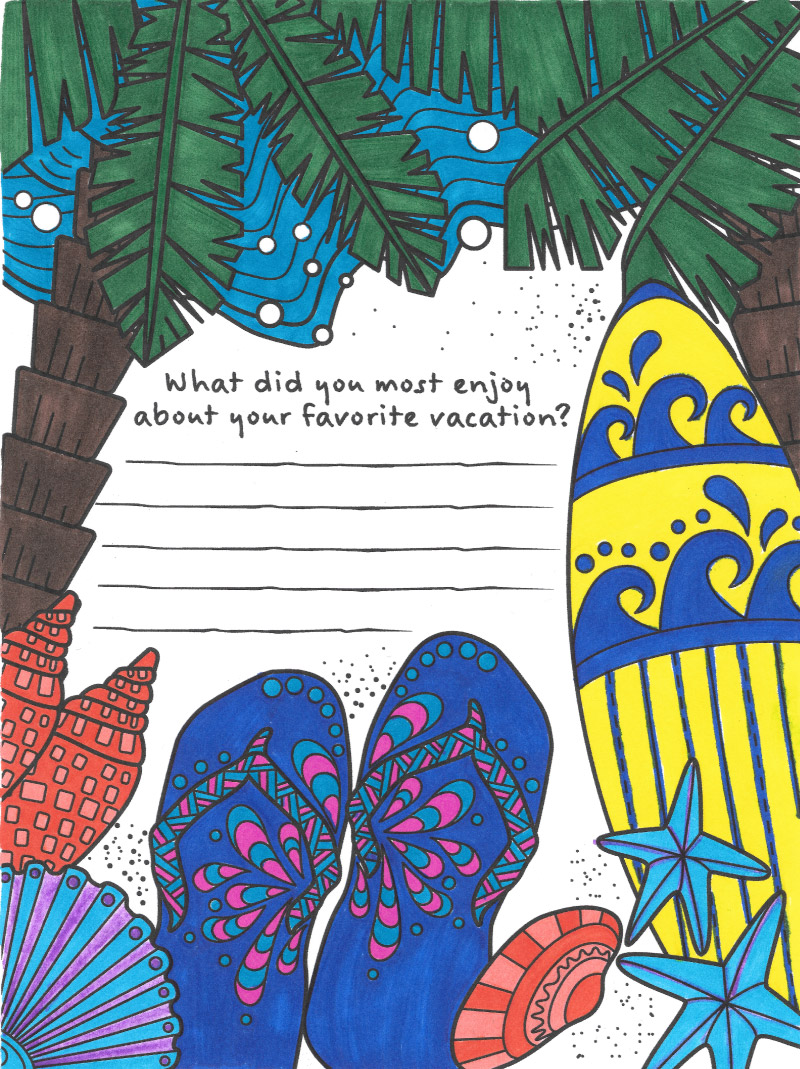
  • Vacation Coloring Page from Tiny Buddha’s Gratitude Journal

    Vacation Coloring Page from Tiny Buddha’s Gratitude Journal

    Last week I shared the nature coloring page from Tiny Buddha’s Gratitude Journal, which launches in June and is now available for pre-order. I’m having a blast coloring my way through the book, and I’m excited to share a second page with you now!

    How would you answer the question in the middle? (If you’re reading this in your inbox, click here to comment on the site.)

    My favorite vacation happened four years ago, when I went to Italy with my boyfriend and our families. Though it may be hard to believe given my fair skin and light hair, I’m actually 50% Italian, so it’s always been a dream of mine to see Rome with my family.

    It was the first time we’d ever traveled overseas together, and my siblings’ first time leaving the country, so that made it even more magical.

    But that wasn’t what I most appreciated about this trip. I come from one of those families that spends a lot of time close to home, crammed together in a kitchen too small to fit us, endlessly entertained by each other’s company. And yet I have an insatiable explorer inside me, who never tires of discovering new places, people, and ways of being.

    Dining al fresco on a cobblestone street with my siblings and parents to my left, my boyfriend and his parents across from me, and the Coliseum mere miles away, I felt whole. For that brief week, family and adventure overlapped, and I’ve never felt more happy or complete.

    Stay tuned for another page next Wednesday. Getting my markers out now!

    If you haven’t already, pre-order your copy of Tiny Buddha’s Gratitude Journal here, and you’ll instantly receive three free bonus gifts.

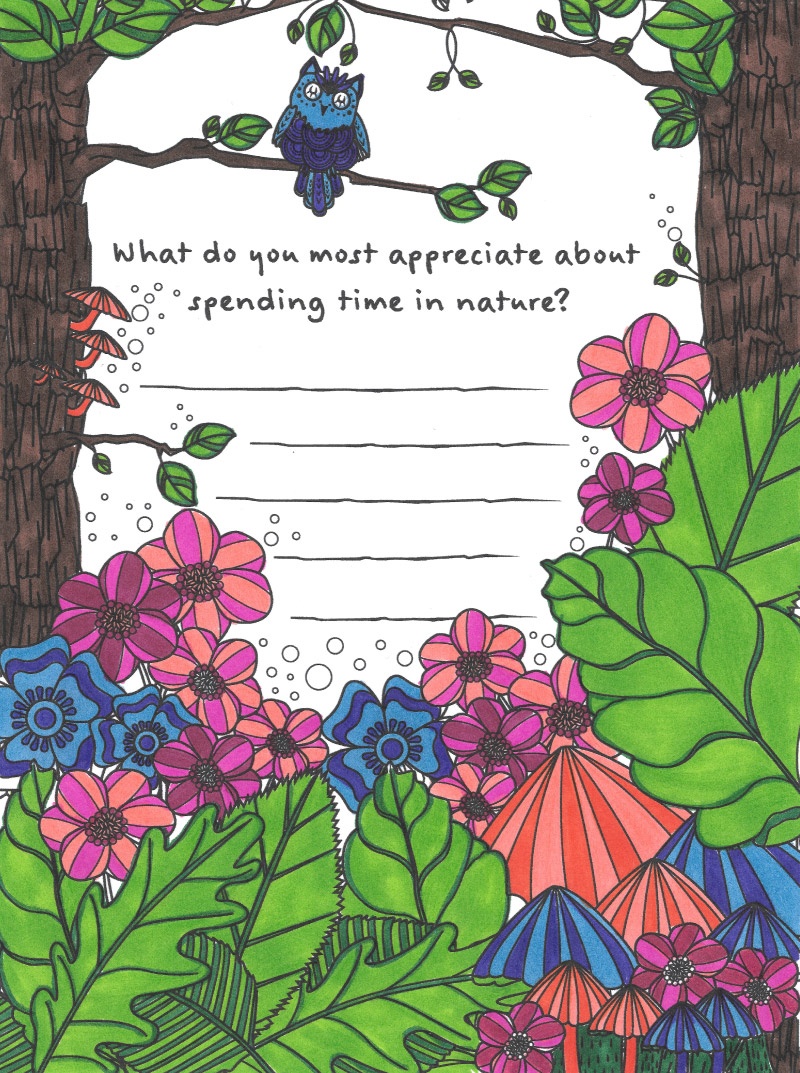
  • Nature Coloring Page from Tiny Buddha’s Gratitude Journal

    Nature Coloring Page from Tiny Buddha’s Gratitude Journal

    Hi friends! I’ve decided to share the fifteen coloring pages from Tiny Buddha’s Gratitude Journal (colored by yours truly), one every week for the next fifteen. I’m a huge fan of coloring because it’s fun and relaxing, and also serves as an excellent practice for mindfulness and stress relief.

    How would you answer the question in the middle? (If you’re reading this in your inbox, click here to comment on the site.)

    What I most appreciate is how calm and grounded I feel whenever I’m in nature, particularly when I’m on the beach. Something about the rhythmic sound of the waves crashing softens the voice in my head and brings me fully into the present moment.

    If you haven’t already, pre-order your copy of Tiny Buddha’s Gratitude Journal here, and you’ll instantly receive three free bonus gifts!

  • Love Is In the Little Things

    Love Is In the Little Things

    “Enjoy the little things, for one day you may look back and realize they were the big things.” ~Robert Brault

    Valentine’s Day has never been a big deal to me. It always felt commercialized, so forced. I’ve never felt I needed Hallmark to remind me to do something special for my husband, or vice versa.

    This certainly isn’t a reflection of how we felt about, treated, or appreciated one another; it just wasn’t a priority to us.

    In our more than seventeen years together, some years I would receive a card, flowers, or chocolates, but other years it would pass by like any other day. I’ll admit on a couple of those occasions I felt a little hurt, even slightly unappreciated.

    In November 2009 my husband Bill was diagnosed with an aggressive form of leukemia. It was a total shock, as cancer always is. Breaking the news to our three children was almost as devastating as the diagnosis itself.

    Bill was a very involved father, never missing a special event or game. He coached our ten-year-old son’s hockey team at the time. His life was his family.

    While Bill had a very successful and demanding career as an electrical engineer, he always put us first. Sometimes that meant staying up until 3am to do work, just so he could make it to our daughter’s soccer game.

    After Bill was admitted to hospital, his concerns were still about the kids and me. He was actually worried that I had to put out the garbage myself and shovel the driveway. He liked taking care of things like that. He was always trying to make things easier for me.

    During Bill’s time in hospital we did a lot of reminiscing. We laughed, we cried—more laughing than crying. Bill and I shared an unusual sense of humor, sometimes making light of things that weren’t funny. It was our little way of coping.

    Life with three kids is busy, especially without any family nearby. Couple time was hard to come by, and as sad as our situation was, it gave us a chance to reconnect.

    Bill began an intense four-week cycle of chemotherapy. The first cycle would prove to be unsuccessful, and a second cycle was also a failure.

    On New Year’s Eve, Bill’s hematologist told us things didn’t look good. The doctors said they could make one more attempt at a very risky, experimental treatment. We decided to go ahead with the treatment, despite the risks.

    A few weeks later Bill developed fungal pneumonia, a very dangerous situation for someone with a compromised immune system. On February 13, Bill’s doctor asked to speak with me privately. I was told he was dying, maybe only having a week or so left.

    I was heartbroken and devastated. What was worse, he didn’t know. We decided it was best not to tell him since he was already so sick.

    I spent that night at his bedside, and the following day he deteriorated quite quickly. He was struggling to speak and breathe. The medical team increased his medication to make him as comfortable as possible.

    Bill remained in and out of sleep that day. He briefly woke up and asked me, “Am I going home tonight?” I said,  “No, not tonight honey.” He responded, “Wouldn’t it be cool if I went home tonight?”

    I told him I loved him, and he whispered the same. I spent the rest of the night holding his hand while he slept. Then it hit me: it was Valentine’s Day. The realization brought me to tears, tears I had been fighting back for weeks.

    I didn’t give a damn about roses, chocolates, or jewelry. I just wanted my husband to live. He was only forty years old and I was thirty-seven. We had so many things we wanted to do together as a family and a couple, so many dreams for our future.

    I didn’t sleep a wink that night; I just held his hand and prayed. The next afternoon while standing at Bill’s bedside, I placed my hand on his chest to feel his heartbeat. Moments later it stopped. He was gone.

    It hasn’t been an easy seven years since Bill’s passing, but I am grateful we had the opportunity to say what we needed to say and have a real understanding of how much we truly appreciated each other.

    Now when Valentines Day rolls around, it’s a reminder of how life’s tender moments have the most impact on us.

    It’s the feeling of contentment that I miss most. I had no idea what an underrated emotional state it really is. We don’t need a dozen roses once a year to make us feel loved. It’s the little, everyday things that give us that feeling… even taking out the garbage.

  • A Little Appreciation Can Go a Long Way in Your Relationships

    A Little Appreciation Can Go a Long Way in Your Relationships

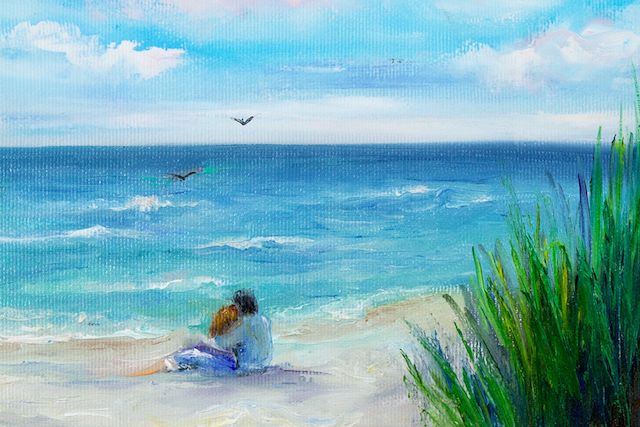
    Couple on the beach

    “There is more hunger for love and appreciation in this world than bread.” ~Mother Teresa

    I’ve been in a relationship with my boyfriend for over four years. We’ve had our fair share of great times and not so pretty moments, but this summer our relationship was put to the test.

    During that time, I went through some major transitions with my career and personal development, all things that needed to happen for me to be the best version of myself.

    Those months were filled with long hours of working and being alone, solely focusing on creating the future I wanted. I was in deep, chasing my dreams, and wouldn’t let anything get in my way.

    As time went on, I noticed that my partner was slowly slipping away.

    It wasn’t that he wasn’t coming home or was nowhere to be found. He was responding to the fact that I had lost focus on him.

    I was failing my partner in the following ways:

    • I didn’t say thank you for all the little things he did for me.
    • I didn’t ask him how his day was. Instead, I was eager to share how my day went.
    • When I faced an obstacle with my goals, I would be rude and short with him.
    • Instead of greeting him with a smile when he arrived home, I treated him as if he was a burden getting in the way of the work I needed to do.
    • Rather than planning and spending time with him, I would work late into the evening.
    • Lastly, I wasn’t present with him. When I did spend time with him, all I did was think about work.

    My actions and behaviors were so self-centered that I stopping thinking about how he was doing, how his day went, and what he needed support with.

    The end result: he withdrew.

    At first I thought he was no longer interested in me, but I eventually came to realize that I wasn’t even close to meeting his needs. And what he needed was simple: appreciation.

    He had hinted at it several times in his own way, but I’d had blinders on.

    After months of neglect, my boyfriend and I sat at our kitchen table making small talk and slowly tiptoeing into the conversation of what was and wasn’t working in our relationship.

    He said, “All I ever want is for you to appreciate me. I don’t need you to cook for me or get all dressed up or buy me things. All I want is to be appreciated.”

    His honest and vulnerable declaration brought me to tears. I realized then that I had been causing my partner significant pain and suffering for no reason.

    So, with my heart on the table, my eyes swollen from crying, and a common ground of love to move forward on, I told him this: “From now on, I will appreciate you—the big, the small, the silly, and imperfect. I will appreciate it all. I may not be perfect in my practice of appreciation, but I am committed to it, so much so that I have added it to my morning routine.”

    Much like the gratitude journal I write in every morning, I now have a journal dedicated solely to all the things I value about my partner.

    Every morning I set aside time to think of three things I appreciate about him. I do this even when I’m not feeling up for it. I take my time and feel every emotion that comes up as I write down my list of three items.

    I also make an effort so show my appreciation in action. My partner’s love language is “acts of service,” meaning actions speak louder than words. He feels loved when I do things for him coupled with expressing my feelings for him, so I now strive to show him that I love him with acts that require planning and thoughtfulness.

    The Value of Appreciation

    I never thought that simply reminding myself how much I appreciate my partner would cause a ripple effect in how I interact with him, but it has.

    Since starting my appreciation practice…

    I easily forgive his mistakes, such as forgetting to do something I ask him to do to support me, or not being sensitive enough and open to my feelings when I feel overwhelmed. I’ve grown to love his mistakes because they remind me of what it is to be imperfect. After all, I’m not perfect, and I can’t expect him to be either.

    I appreciate his faults and quirks. Like hitting the snooze button when he needs to get out of bed. And forgetting to eat throughout the day because he’s too busy teaching college students. And running behind schedule most of the time. We all have faults. His reminds me all over again why I fell in love with him. In all reality, we complement each other nicely.

    I appreciate his smile and his one of a kind laugh.

    In recognizing all that my partner does for me and my future, I feel a love so powerful that just thinking about it brings me to tears.

    My partner feels appreciated and cared for. He is more eager to engage with me, and more willing to be open and expressive with me. And he talks about the future more than ever.

    What Happens When You Don’t Appreciate the People in Your Life

    When you don’t appreciate others, your relationships suffer in the following ways.

    • The other person feels unimportant and may withdraw from you.
    • When your partner feels unappreciated, any talks of the future will be met with resistance. Would you want to build a future with someone who doesn’t appreciate you?
    • Animosity may build up in the relationship, on both sides.
    • The person feeling unappreciated may find other places, things, or people to seek appreciation from.
    • Being unappreciated can lead to unnecessary arguments and resentment.
    • Lack of appreciation may completely ruin and end the relationship.

    How to Start Appreciating the People in Your Life

    If you’ve recognized that you could make a little more effort appreciating the people in your life, dedicate a notebook solely for this purpose. Start your day by jotting down three things you value about this person. At the end of thirty days, give them your notes of appreciation. Rinse and repeat.

    But appreciation doesn’t just live within the mind. Sure, it’s wonderful to think about all the things you value about someone, but when you don’t vocalize or show your appreciation, it means nothing.

    You can start appreciating others in your life by:

    • Leaving them notes thanking them for who they are and what you appreciate about them.
    • Saying thank you and acknowledging the little things they do every day.
    • Giving specific examples of what they have done and how that has enhanced your own life.
    • Appreciating their flaws and quirks. The little imperfections are what make people unique. They may feel insecure about them. Let them know how you appreciate their imperfections, and why.
    • Giving someone a hug when they help you out or put a smile on your face.
    • Doing something unexpected; brighten their day by buying them a cup of coffee, or stopping by to let them know that you love them and appreciate them for being in your life.

    Like Tony Robbins said, “Trade your expectations for appreciation and your whole world changes in an instant.”

    Appreciation strengthens the bonds you have with others, no matter the relationship. It replaces a mindset of not having enough with being grateful for everything you have. And most of all, it creates space to be thankful for the little things in life.

  • 30 Trillion Reasons to Be Grateful: An Ode to the Awesome Human Body

    30 Trillion Reasons to Be Grateful: An Ode to the Awesome Human Body

    neon-body

    “What spirit is so empty and blind, that it cannot recognize the fact that the foot is more noble than the shoe, and skin more beautiful than the garment with which it is clothed?” ~Michelangelo

    “Stop hunching! Stand up straight!” This is what I heard as a young child.

    A running commentary on my appearance continued throughout my childhood. It was well intended, but not entirely helpful.

    I grew self-conscious. If you’ve ever decided you’re too tall or too short or too fat or too thin, or that some parts of your body look unsatisfactory, you’ll understand.

    Then I went to medical school. For a couple of years we studied the normal structure and functions of the body.

    Over the next few years we studied tens of clinical subjects, peered down microscopes, learned about drugs and surgery, and examined thousands of patients. We were learning to diagnose and treat.

    Studying the human body was a revelation. The more detailed our study grew, the more awesome the body seemed.

    Most people take their bodies for granted. Only when a leg is broken or amputated, for example, do we start appreciating how amazing a normal leg is.

    We often use the word “awesome” for food or music or other delightful stuff. However, your body truly puts the awe into “awesome.”

    Think of a dazzling galaxy in space, or the most sophisticated machine you can imagine. Your body is even more awe-inspiring than either of those. And it constantly self-heals!

    I think the human body deserves a love letter. I’m grateful for all these parts of me, and more:

    1. Brain

    It allowed me, as a little baby, to take a tangled jumble of strange syllables and assemble them into a language. It keeps my body going whether I’m asleep or awake. It will allow me to recall a childhood friend’s face vividly, even when I’m old and beautifully wrinkled.

    Miraculously, it enables mere atoms and molecules to form opinions, have subjective experiences, make choices, fall in love, and forgive. I’ve fallen in love with many inanimate objects, from pianos to favorite chairs to gadgets to majestic mountains, but they’re unable to fall in love.

    My brain helps me to separate fact from fiction, to solve problems, to enthuse, to grieve, to empathize, to create fanciful things such as new musical compositions, and to keep learning throughout my life.

    Even when I’m asleep, it’s busy filing away memories, giving me vivid dreams, solving problems, and restoring me for the next day. It constantly heals and reforms itself, responding to my choices and habits.

    It allows me to keep defining myself in new ways, coping with setbacks, escaping from the prison of past mistakes, focusing on the present, finding meaning and purpose, and greeting the future with hope and optimism.

    I thank my brain by looking after my heart and blood vessels, which supply it with blood. I use a seatbelt when driving and a helmet when riding a bike to avoid damaging my brain. I also try to focus calmly on doing the next small step that is important and good in my life instead of anxiously trying to control whatever is unpredictable.

    2. Heart

    It started beating when I was less than six weeks in my mother’s womb. It will keep beating, lub-dup, lub-dup, lub-dup, for as long as it can. I fall asleep, wake up, feel happy, feel sad, succeed at some things, fail at other things, sometimes agree with people and sometimes disagree.

    Through everything, my heart keeps pumping life-giving blood to my toes, brain, fingertips, and every part of my body. It responds to every situation, from the extreme stress of battle or danger, to the calm glow of relaxed affection, or the complete rest of deep sleep.

    I can mistreat it easily, by eating or drinking sugary stuff or processed snacks, and neglecting my need for dietary fiber or physical activity. It still keeps working tirelessly. It will keep going until it’s forced to stop.

    Not even the most faithful dog can match my heart for devoted service. If I could see it, and it could hear me, I’d fall to my knees and thank my heart, probably with tears of gratitude streaming down my face.

    Meanwhile, I thank my heart by making time for nourishing meals, and by being physically active.

    3. Lungs and diaphragm

    They work non-stop to expel waste air and refuel my body with oxygen.

    Even if I mistreated them, by inhaling polluted air, or smoking stuff, or accumulating way too much body fat, they would keep doing their best. Only if I persistently sabotaged them with unhelpful habits would they start struggling.

    I thank them by consciously breathing deeply, several times a day, and by walking or cycling in nature, where the air is rich in negative ions.

    4. Cranial nerves

    These are the nerves that connect my eyes, ears, face, mouth, digestive system, voice, and internal organs to my brain. They allow me to hear, read, and sing Handel’s “Messiah,” to smell and taste delicious cuisine, to smile, to tell my loved ones how precious they are to me, to speak words of comfort and healing, to keep all my internal organs working day and night, and to use my breathing to calm myself when I’m upset.

    Without them, I would face significant challenges.

    I thank my cranial nerves by not subjecting them to overly loud sounds, by not looking directly at the sun, and by looking after my general health.

    5. Immune system

    This is my sophisticated defense system that recognizes and remembers every micro-enemy. It protects me against infections, cancers, foreign objects, toxins, and more.

    There was once no effective treatment for the human immune-deficiency virus (HIV). In those days, people infected by HIV would die.

    Without my immune system, microbes would invade me as easily as they invade a corpse, and cancers would flourish. I’m grateful for my immune system, despite the small risk of it getting confused and attacking me.

    I thank my immune system by staying calm, optimistic, and motivated despite the setbacks of life. When I focus fully on doing the next little step that is important and good in my life, I can more easily stay calm, optimistic and motivated.

    6. Liver

    This is the world’s most sophisticated “detox” machine and factory. It works quietly, removing harmful molecules or transforming them into harmless ones, and making molecules that are crucial for my survival.

    If I drink too much alcohol or take toxic drugs, my liver dies a bit. It keeps doing its best despite abuse, and even regenerates itself partly.

    I thank it by limiting my alcohol intake to no more than a small glass of red wine in a day, and avoiding drugs that my doctor considers unnecessary.

    7. Kidneys

    These are my body’s balancing stations. They extract unhelpful or excess molecules from my blood and expel them in my urine. However, they retain useful molecules in my blood.

    Without my kidneys, I would die. My blood pressure, blood acidity, salt levels, protein levels, and waste levels would be out of control. To survive, I would need a dialysis machine or a replacement kidney from a donor.

    I thank my kidneys by trying to prevent diabetes. I do this by eating nourishing meals instead of grazing on sugary and processed snacks, and by exercising regularly.

    I also make sure that any urinary infections are promptly treated, before the problem ascends to my kidneys.

    8. Muscles

    They enable me to breathe, move, keep a good posture, speak, sing, and achieve many things that I take for granted.

    If they grew too weak, I might start falling over and become confined to a wheelchair. Professor Stephen Hawking has a condition affecting the nerves that activate his muscles. He still makes spectacular contributions to the world. I hope to use my fully functional muscles to keep contributing to others.

    I show my gratitude to my muscles by doing exercises that strengthen them, by stretching them regularly, and by using a work chair that is kind to my lower back and neck. When my muscles get sore, I stretch them and allow them time to rest and recover.

    9. Circulatory system

    These blood vessels carry good stuff to every part of my body. They carry unwanted stuff, like carbon dioxide, to where it can be passed out of my body.

    If my blood vessels get blocked, parts of me will eventually die of starvation. Even my heart relies on these blood vessels to supply it with blood.

    I thank my blood vessels by avoiding smoking, by eating nourishing meals instead of sugary or processed snacks, by avoiding sitting continuously for long periods, and by exercising regularly.

    10. Endocrine glands

    These provide me with tiny, but indispensable, amounts of hormones. The hormones fine-tune the way I function and make me a sexual being.

    If my glands malfunctioned, my body would lapse into various illnesses.

    I thank my endocrine glands by eating nourishing meals, calming myself when distressed, and remaining physically active.

    11. Bones and joints

    These allow me to stand, move, and fulfil my chosen purposes. Without them, I’d be an immobile blob of jelly. My brain, heart, and lungs would have no protection. I’d soon bleed to death from internal or external wounds, because I’d lack the clot-forming platelets that my bones manufacture.

    My bones are also a factory for blood cells and some hormones. They help keep my mineral levels steady.

    I thank my bones and joints by walking and doing strengthening exercises for my muscles, and eating nourishing meals. I keep my weight within healthy limits to spare the cartilage in my knee joints. I always use a seatbelt in a car, and minimize the need to speed.

    12. Digestive system

    This is the astonishing system which takes what I eat and drink and turns part of it into me. Its associated glands produce enzymes that break the food and drink into smaller molecules. These small molecules pass through the wall of my digestive system into my blood.

    Whether I’m asleep or awake, my digestive system works to supply my body with nutrients, while moving waste along to where it can be expelled.

    There’s a huge variety of ingredients I can ingest. Some of them are harmless, some are healthy, and some are downright harmful. My digestive system copes with them all as best it can. It also hosts trillions of useful microbes.

    I thank my digestive system by avoiding polluted or toxic food and drink, by creating pleasant meal-times, and by eating healthy-sized portions of nourishing meals.

    13. Skin

    This is my amazing built-in, self-repairing raincoat and blanket, which responds to a lover’s touch as no other fabric can. It helps keep my body at just the right temperature, while keeping my insides in and the weather out.

    I thank my skin by protecting it from over-exposure to the sun’s ultra-violet rays. I keep it clean, but without using excessively hot water, which would wash away its natural oils. If it gets broken, I disinfect the wound quickly and seal it with a layer of petroleum jelly.

    14. Peripheral nerves

    These are the command system for my muscles, the nerve supply for my skin, and my protective warning system. Without them, I could accidentally hold my hand in a fire and not know it. I could be bitten by insects, or devoured by rats, and still feel nothing.

    Thanks to my peripheral nerves, my hand springs back automatically if I accidentally touch a candle flame or hot kettle. I have no choice in the matter. My nerves carry the pain to my spinal cord and then instantaneously carry the command back to my muscles: jump away from the source of pain!

    Once, a famous hand surgeon asked medical students to volunteer for a peripheral nerve to be anesthetized. Within hours, all the volunteers found wounds and blisters on their skin. They didn’t know how the wounds happened, since they were temporarily deprived of pain in the affected skin.

    I thank my peripheral nerves by eating nourishing meals instead of sugary or processed snacks, and by exercising regularly. I also avoid smoking and limit my alcohol intake to a small glass of red wine a day.

    15. Reproductive system

    This is the magical part of me that prompted and allowed me to seek a loving partner in life and make babies. I look at our grown children and marvel that half of each child originated in me.

    Imagine if you had a machine that would follow all the instructions of a super-delicious but complicated and fiddly recipe. You know, the kind of recipe that involves pre-cooking some ingredients, then adding others at the right time, then adding a dash of this followed by straining it all and keeping it at just the right temperature for a precise number of minutes. Well, your reproductive system does far more complex things for you.

    Your body self-regulates all the hormonal and other changes required for two half-cells to be formed, in a man and woman respectively. These can eventually come together and be nurtured until a baby is born—ready to be cherished, and apparently determined to keep its parents awake all night.

    I thank my reproductive system by avoiding infections, loving my partner, and making the time and space to be playful together.

    That just skims the surface of a few things we know about the human body. Each of the points could be expanded into several large libraries. The thirty trillion inter-related cells of the human body will keep scientific researchers busy for centuries to come.

    You and I are awesome, in the best sense of the word.

    Whenever you begin to criticize your body, pause to remember that your body is even more awesome than a galaxy. If you find the Milky Way awe-inspiring, then remember that your body is even more awe-inspiring.

    The more grateful I become for my body, the greater grows my respect for others. I will bow to an Olympic athlete, but also to the most impoverished or disabled or aged person you can imagine. Because our bodies are awesome temples, regardless of our appearance.

    Respect your body and tend it with love.

    I’ve signed up for organ donation after I die. These organs that have served me so well can continue their amazing service, but to others who need them. On my deathbed, I’ll be willing a message to my beloved organs: “Thank you, my faithful friends. Thirty trillion times over, thank you.”
  • How to Stop Taking Things for Granted and Feel Blessed

    How to Stop Taking Things for Granted and Feel Blessed

    Happy Kids

    “I count my blessings every day, quite honestly, because I take nothing for granted.” ~Mario Andretti
    You know that feeling.

    When you feel bad about yourself for not being grateful enough. Maybe not often, but surely sometimes.

    You are busy working hard, trying to make things work. Busy at life.

    But then you see a nine-year-old painting a picture holding a brush with his toes. He has no hands.

    And it hits you: You’re so busy trying to make your life better, you forget that it is already beautiful. You feel guilty for not being happy enough.

    How I Found My Hidden Blessing in Life

    When I left for college it was the first time I went away from home to a different city. My parents were concerned about how I would adjust to life in New Delhi. But I was excited. I wanted to do this.

    As my college life began, I faced a problem: I was bad at managing my expenses. I had no idea how to spend money reasonably. Until then, my parents took care of everything.

    The unspoken message had been, “You focus on your studies, and we’ll take care of your needs.”
    Middle class families don’t lack in money, but the expenses are always modest. So when I ran out on my monthly share in ten days, I was horrified. Exploring the city with new friends, eating delicious meals in restaurants, buying a pair of Nike trousers all contributed to my downfall. Expecting a scolding, I told them what had happened.

    But there was no scolding, just a reassuring “I’ll put more money in account today.”

    A few weeks later, the same thing happened. I was sure this time they would get angry. But they didn’t. They simply poured in more money.

    And that is when I realized: My parents truly loved me, but I had been taking it for granted.

    They had always been there for me. Taking care of me. Loving me.

    I wasn’t a spoiled child, and I knew they cared about me. But now I felt blessed. Their presence was a gift I cherished. The fact that they loved me unconditionally brought my ignorance to light.

    Why Do We Take Things for Granted?

    Our minds run around unchecked all the time, either waiting for a better future or regretting the past.

    We’re always waiting for the perfect vacation, next promotion, more money, more whatever. We think, “Someday when X happens, I’ll be happy.”

    Or we regret the past, like the end of a relationship, a lost job, or financial setbacks. We think, “If only X hadn’t happened, my life wouldn’t be a mess.”

    But whether in the future or past, there is one place our minds are not.

    The present.

    And this is where our blessings reside.

    How to Stop Taking Things for Granted and Feel Blessed

    When I catch a cold, I realize how nice it feels to be healthy. When there are thunderstorms on the day I plan to go out, I realize the joy of a cheery, sunny day with a cool breeze blowing across my face.

    Because our minds are so used to running around uncontrollably, we don’t realize that our focus isn’t where we are. It is almost always somewhere else.

    But hidden blessings are available right now, if you can take a step back and notice where you are.

    Seriously, do this.

    Look at yourself reading this post. Notice the environment around you. I’ll give you a moment.

    ….

    This is your real life. Here are the blessings hidden from your incessant mind.

    Ask yourself: What good things have brought me where I am today?

    You can start with the fact that you can read. You’re smart enough to follow blogs like Tiny Buddha. What about your wonderful friends? Your pet? Your health?

    What else?

    Just like time, blessings are relative.

    Growing up, I went to a school with lots of children who came from rich families. It would have been easy to focus on what other students had that I lacked, such as new lunch boxes and fancy bags.

    However, I was nothing close to sad or miserable. In fact, I had fun at school. Why did I have fun, despite having less than others? I recognized how I was fortunate.

    My parents grew up in villages and received modest educations. And yet, they were smart enough to understand the importance of a good education, and made sure that my sister and I studied in the best English school of the city.

    Now, that is a blessing.

    I didn’t feel unlucky. I feel my parents did their part wonderfully.

    It’s time I do mine.

    Hidden in life challenges are some wonderful blessings. The difference lies in how you look at them.

    You can list all the things you don’t have and feel sad about it.

    Or you could put those very same things as your goals, chase them with passion, and build tremendous character.

    Time to Thank, Time to Love

    Yes, there will always be things you want to accomplish. There are goals yet to be realized. The future surely does promise better things.

    But you know what?

    The present, too, is a portal to hidden gifts.

    Underneath your routine life is a hidden treasure trove of countless blessings. Each of those blessings has helped you reach where you are today. They played a crucial role in molding your life into the masterpiece it is right now.

    So go right now.

    Tell your mother you love her.

    Pat you pet.

    Thank your friends for showing up.

    Celebrate life. Right here. Right now.

    Go live.