Tag: anxious

  • How to Calm Anxiety That’s Rooted in Childhood Wounds

    How to Calm Anxiety That’s Rooted in Childhood Wounds

    “Anxiety is a response to a nervous system that learned early on it had to protect itself.” ~Dr. Hilary Jacobs Hendel

    Anxiety shaped much of my life—how I showed up, how I held myself back, and how I connected with others. For years, I didn’t even know what it was. I just knew the pounding heart, the tight chest, the trembling hands. I knew the shame that followed every “failure,” big or small, and the fear I would never be enough.

    For a long time, I thought I was the problem. But anxiety isn’t a moral failing. It’s a part of me that learned to survive in environments where my emotional needs weren’t met, where fear and shame felt louder than safety.

    Where It Started

    The roots of my anxiety began in childhood.

    I was in first grade when I brought home my school report card and saw that I ranked seventh in my class. At that age, I didn’t know if that was good or bad. I was just excited to tell my dad.

    When he came to pick me up, I smiled and shared the news innocently. Instead of a hug or encouragement, his eyes glared at me. His sharp, aggressive tone cut through me as he shouted, “It’s bad!”

    Looking back, I can see his reaction came from fear—that my performance might limit my future and that shaming me would push me to improve. But as a child, I couldn’t see that. I felt shocked and humiliated. My small body trembled, and my younger brain concluded:

    “I’m only worthy of love if I perform better.”

    The next semester, I ranked third. My dad bragged about it to everyone, and I felt brief relief. But the fear returned quickly:

    “What if I can’t keep this up?”

    That was the beginning of a belief that no matter how much I achieved, I was never “enough.”

    This pattern followed me for decades, surfacing in unexpected places. As an adult, I would freeze with anxiety at gas stations, trembling as I pushed my motorbike forward even when no one was rushing me.

    Eventually, I connected it to another childhood memory: my dad shouting at me to move faster in line at a gas station, his glare and sharp tone burning into me again. When processing this as an adult, I realized he had a good intention—to move things along for the other people waiting. But before I began my healing process, my nervous system was wired to react to the present as if I were reliving the past.

    Even years later, the anxiety lived on in my body, and I didn’t know how to process it.

    The Breaking Point

    I carried this unprocessed anxiety into adulthood. When I was five weeks pregnant, my partner was in a tragic accident that left him in a coma for two weeks before he passed away. Suddenly, I was alone, grieving, and without money to survive.

    I didn’t have the privilege of avoidance anymore. Grief, financial instability, and the responsibility of carrying a child forced me to face emotions I had buried for years.

    This was when I learned the practices that helped me stop spiraling and regain my composure.

    10 Tips That Help Me Prevent and Manage Anxiety

    Important note: These tips are not a substitute for therapy, medication, or professional diagnosis. They are complementary practices to help restore balance and create a sense of safety in the body.

    1. The gratitude shift—turn anxiety into information.

    Instead of berating the intense sensations anxiety brings, I now try meeting it with gratitude. Anxiety is my body’s built-in alarm system.

    When I feel it rising, I say, “Hi, anxiety. I see you doing your job. Thank you for showing up.”

    Then I ask:

    What is this sensation trying to tell me?

    Where is this coming from in my history?

    What action can I take now to feel safer and more supported?

    This small act of acknowledgment makes space to feel more in control and invites curiosity instead of fear.

    2. Slow down and simplify your life.

    Too many distractions can block memories and emotions from surfacing. Simplifying my life gave me mental space for self-awareness.

    I released unnecessary obligations, overpacked schedules, and numbing habits like endless scrolling. When I slowed down, I could finally hear myself and recognize what was driving my anxiety.

    3. Trace the roots through quiet observation (and fasting).

    Closing my eyes and observing the first persistent memories that surface often reveals the root of anxiety.

    When I couldn’t afford therapy, I used intentional fasting to access clarity. (If you decide to give this a try, I recommend consulting with your doctor first. This is my personal spiritual practice, not a universal recommendation.) I started slowly with:

    • A twelve-hour fruit and vegetable fast, then
    • A twelve-hour water fast, then
    • A full-day fast (6 a.m. to 6 p.m.)

    Each time hunger arose, I named my intention out loud through prayer or journaling: “Please show me the root cause of this anxiety and how to release it.”

    Fasting, for me, was a deliberate way to quiet external noise so buried memories and insights could surface.

    4. Catch the first emotion—shock.

    My body often stores layers of pain, and shock is usually the first overwhelming emotion. If I can name it quickly, I can interrupt the spiral.

    For example, when I was feeling overwhelmed as a mother, I’d sometimes snap at my daughter. I’d get frustrated and angry with myself, but after fasting, the memory of my parents snapping at me came up quite vividly.

    Remembering this, I allowed myself to see, acknowledge, experience, and accept how painful and shocking it was for me to be treated that way.

    5. Write in detail what shocked you (and other emotions).

    After naming shock, I write the exact details of what triggered it: the sudden glare, the change in tone, the clenched jaw, the slammed door.

    Then I name the other emotions as honestly as possible: fear, humiliation, sadness, anger, or betrayal—whatever is true in that moment.

    Being radically honest in this process helps me release the experiences that I previously stored as trauma.

    6. Grieve the losses.

    Once I release the shock, I let myself grieve. I cry for the safety, compassion, and respect I needed but didn’t receive.

    Sometimes I use music to amplify the sadness so it can move through me. This isn’t weakness—it’s how the body processes pain instead of storing it.

    7. Name the unmet needs.

    Grief opens the door to understanding my needs.

    “When I was shouted at by my dad after making mistakes, I felt unsafe and ashamed. My need for emotional security was violated.”

    “When I was only praised for achievements, I felt unseen. My need for consistent acceptance was neglected.”

    Naming needs clarifies what’s important so I can ask for it clearly and assertively as an adult. It’s empowering to name the hurt and see how it helps me understand my emotional needs better.

    8. See the context—compassion for your parents’ limitations.

    Fasting and becoming a mother helped me understand the hardship my parents faced. Parenting a neurodivergent child with limited resources, little support, and financial stress is overwhelming.

    This doesn’t excuse the harm, but it helps me hold two truths:

    1. Their actions hurt me.
    2. They were also struggling humans who lacked the tools to parent better.

    This perspective softens resentment and breaks cycles.

    9. Write down the worst-case scenarios.

    While processing the past experiences that have contributed to my anxiety can help decrease anxious feelings in the present, it also helps to challenge how I think about the future.

    When I spiral, my brain floods me with worst-case scenarios. Positive thinking never helped—it only deepened my fear.

    Instead, I confront the fears by writing down every possible worst-case outcome, even the most extreme. I’ve lived through homelessness, earthquakes, and tragic losses. Pretending they couldn’t happen again didn’t work.

    By naming them, I strip them of their power.

    10. Prepare intuitive actions and identify help.

    After writing the worst cases, I ask:

    What is the first intuitive action I can take to prevent or reduce the impact?

    Who is the first person I can contact for help? Who else could I reach out to?

    Writing these down gives me agency. It tells my nervous system, “I’m not helpless. There are things I can do and people I can ask for help.”

    Anxiety is a part of me. Experiencing the spiral because I didn’t know how to name, process, and communicate it sucks.

    I’m still a work in progress when it comes to maintaining composure consistently, but I feel empowered knowing that I’m mastering emotional intelligence—skills I can pass down to my child.

    Healing is not linear, and some steps will feel harder than others. But with consistency, these practices can help you restore a sense of safety, reclaim your agency, and soften the belief that you must always be on high alert.
  • How I’m Learning to Live with Anxiety, Not Against It

    How I’m Learning to Live with Anxiety, Not Against It

    “Your anger? It’s telling you where you feel powerless. Your anxiety? It’s telling you that something in your life is off balance. Your fear? It’s telling you what you care about. Your apathy? It’s telling you where you’re overextended and burnt out. Your feelings aren’t random, they are messengers. And if you want to get anywhere, you need to be able to let them speak to you and tell you what you really need.” ~Brianna Wiest

    For half of my life, anxiety has been my constant companion. I went from a confident, fiery, and fearless girl to a woman plagued by self-doubt and paralyzed by fear.

    My struggle with anxiety began in college. A sudden shift in my living situation flipped a switch in my brain, leaving me unrecognizable to myself. I found myself living in a toxic environment with roommates who caused so much chaos that I no longer felt safe in my own home.

    This constant state of unease triggered the anxiety that would follow me for years. Instead of acknowledging it, I tried to outrun it. I looked outward for solutions, turning to the law of attraction and other quick-fix spiritual practices, but they only made me feel worse about myself.

    Chronic stress and anxiety wreaked havoc on my body. I experienced severe digestive pain, tingling in my hands and feet, dizziness, nausea, and a myriad of other symptoms. I sought help from doctors, naturopaths, and specialists, but no one could find anything wrong with me.

    Deep down, I couldn’t accept that anxiety might be the cause. I convinced myself that there had to be something seriously wrong with my health. Because I didn’t acknowledge that anxiety was behind it all, the symptoms only intensified.

    I would go months without symptoms, only to be hit by a new wave of terrifying sensations. The anxiety always returned, stronger than before. It felt like a never-ending cycle.

    Then, COVID-19 hit, a perfect storm for my anxiety. Not only was I navigating a global pandemic with a young child, but we were also in the middle of building a new home—a process delayed by the pandemic. We were moving to a completely different city, living out of boxes in a rental house while waiting for our new home to be completed.

    My anxiety surged as I dealt with virtual school for our six-year-old. And then came the most devastating news: My mother was diagnosed with bladder cancer.

    My parents moved into the rental house with us because their house had flooded. Watching my mom deteriorate from cancer only intensified my anxiety. My mother’s diagnosis wasn’t the only encounter I had with cancer; it started to feel like it was everywhere. The constant presence of illness and death heightened my anxiety, making me hyper-aware of every ache and pain.

    Insomnia became my nightly companion, lasting nearly a year. Some nights, I wouldn’t sleep at all.

    Anxiety about not sleeping became as overwhelming as my general anxiety. As bedtime approached, my chest grew heavy with dread. I cried all night, feeling utterly alone. When the world sleeps and you’re wide awake, the loneliness is crushing. It was just me and my millions of thoughts.

    Desperate to shut off my brain, I turned to a nightly glass of wine. I tried various supplements, but they only wreaked havoc on my body, causing my liver enzymes to rise and bringing a host of other health issues.

    Anxiety didn’t just change me; it affected every part of my life, especially my marriage. My husband, who was always calm and patient, started to become stressed and short-tempered because of my constant worry and fear.

    My anxiety created tension between us, and we were no longer the carefree couple we once were. Our conversations often revolved around my fears, and I could see how much it was weighing on him.

    As a mother, my anxiety took away the joy of being with my son. Instead of enjoying time with him, I found myself snapping at him, my patience worn thin by the constant state of unease I was in.

    I spent every day researching, desperate to find a magic cure. I tried cognitive behavioral therapy, tapping, and affirmations. But nothing worked. Though CBT has helped many, it wasn’t right for me.

    Trying to replace my negative thoughts with positive ones felt like plastering over cracks in a crumbling wall. The positive thoughts didn’t feel genuine; they felt like a temporary mask.

    Then I discovered Jon Kabat-Zinn. His books became my lifeline, introducing me to mindfulness and meditation. Slowly, these practices became a part of my daily life. I learned to befriend my emotions instead of running from them or burying them deep inside.

    I invited my anxiety to tea and listened to her worries. I hugged my fear and told her she’s not weak. I asked my anger what she’s holding onto and allowed her to scream and cry. I wrote letters to each of my emotions, and they wrote back.

    We cried together, and for the first time, my emotions felt seen and heard. I was no longer afraid of them; they became a part of me—a part of what makes me human.

    For the past five years, meditation and mindfulness have been my anchors. No, they haven’t cured my anxiety, but they’ve changed my relationship with it. Anxiety no longer controls my life. Instead of spiraling into panic, I ask myself, “What am I feeling? Where in my body do I feel this emotion?”

    These simple questions ground me, bringing me back to the present moment. By labeling the feeling, I strip away much of its power. I tell myself, “I’m feeling anxious, and that’s okay.” I repeat this until I feel calm.

    Sometimes, I even picture my anxiety as a physical presence—a person who needs love, patience, and understanding. I ask this person, “What do you need at this moment?” More often than not, the answer is simple: love.

    My anxiety, like all emotions, wants to be recognized, to be heard without judgment. Sometimes, it just needs a moment to be, to exist without being pushed away.

    Another tool that has been incredibly helpful for me is the STOP method by Jon Kabat-Zinn. Whenever I feel anxiety creeping in, I pause and STOP: Stop what I’m doing, Take a deep breath, Observe what’s happening inside and around me, and then Proceed with awareness. This simple technique helps break the cycle of anxious thoughts, grounding me in the present moment.

    I believe all our emotions seek acknowledgment and understanding. They want to be recognized without judgment. Sometimes they just need a moment to breathe, to exist in a safe space where they can shift from overwhelming to understood. They want to know you won’t abandon them but rather guide them gently toward clarity.

    Looking back, I realize that anxiety has changed me in ways I never expected. It has made me more empathetic toward others who are struggling with their own battles. I’ve learned that everyone is carrying something heavy, even if they don’t show it on the outside.

    My anxiety has also taught me the importance of self-compassion. I used to be my own harshest critic, but now I’m learning to be kinder to myself, to give myself the grace to be imperfect.

    Even though I’ve learned tools to manage my anxiety, it’s still a part of my life. There are days when the anxiety feels overwhelming, and the old fears creep back in. On those days, I remind myself that healing isn’t a straight line—it’s okay to have setbacks.

    When I feel the familiar wave of anxiety, I turn to the practices that I’ve learned. Mindfulness, the STOP method, and self-compassion. I let myself feel what I’m feeling without judgment, and I focus on small, actionable steps to bring myself back to the present moment.

    What keeps me motivated is knowing that I’ve come this far. Every setback is a chance to practice the tools I’ve learned, and each time I do, I’m reminded of my strength and resilience. My journey with anxiety is ongoing, but with each day, I grow more capable of handling whatever comes my way.

    Your emotions don’t define you—they are a part of you. A sign that you are alive and deeply human. Embracing them, rather than battling them, has brought me peace, and I hope it can do the same for you.

  • The Amazing Healing Power of Talking About Our Anxiety

    The Amazing Healing Power of Talking About Our Anxiety

    Letting go gives us freedom, and freedom is the only condition for happiness. If, in our heart, we still cling to anything—anger, anxiety, or possessions—we cannot be free.” ~Thich Nhat Hanh

    I have dealt with anxiety for as long as I can remember. There are times when I don’t experience it and times when it seems unbearable. It’s sort of like a rollercoaster that just never stops. And I am the first person to admit that anxiety can take over your life if it goes unmanaged.

    The toughest part about anxiety is that it can be hard to pinpoint what is causing it. For me, there isn’t just one common recurring thing that starts it; rather, it stems from an underlying issue or insecurity that I am trying to ignore.

    What I have learned about anxiety over the years is this: The worst thing you can do is ignore it or run away from it. Anxiety is there to teach you a lesson so you can continue to evolve and grow.

    I recently had a rough encounter with anxiety that left me feeling isolated and scared. I had these recurring thoughts that wouldn’t go away. It was also confusing because I hadn’t experienced anxiety at that level for a very long time. I was feeling happy and content with life, and then it came back with a vengeance.

    This time, when my anxiety appeared, I pretty much ignored all my own advice and the years of learning I had accumulated on the subject. All I wanted to do was numb myself with distractions, wishing it would go away on its own.

    I tried to pretend that everything was fine and nothing bothered me. This made the situation so much worse; running from the anxiety caused it to become loud and persistent until I was able to learn from it.

    This recent experience reminded me that the best way to deal with stress is something most people aren’t using.

    Disclaimer: I am not a doctor or a therapist and can’t support my advice with any medical studies. But I am someone who has lived with anxiety all my life and can recognize what helps me move past it and not let it completely derail me.

    When it comes to anxiety, the best and fastest way to find relief is by talking it out. Yes, it really can be that simple.

    In my experience, talking through your anxiety with a trusted friend, partner, or therapist can be instantly therapeutic.

    So why do most people not talk about their anxiety? Let’s look at the main reasons why.

    Judging the anxiety

    Have you ever thought, “My feelings are stupid, and my thoughts sound ridiculous; why are they making me anxious?” Our judgments about anxiety block us from sharing with other people because we’re afraid of what they might think. This, in turn, gives us more anxiety!

    Next time you feel anxiety creep in, remind yourself that you are not weak for having anxious thoughts. Talk them through with a trusted friend, and you will soon be reminded that you are safe, loved, and protected.

    Dismissing the anxiety

    While our judgments can make anxiety worse, dismissing it altogether can be just as detrimental.

    So many people spend their day distracted, going from work straight into numbing with TV and social media, to avoid sitting with their thoughts.

    Dismissing anxiety does not make it go away; it only makes it stronger. When we stuff down emotions, we give them way more energy than we would if we simply talked through them in the moment.

    Also, repressed emotions can lead to physical ailments and block our ability to feel happiness.

    Whenever I feel weighed down, like a dark cloud is over me, I know it’s because I am ignoring a thought or emotion. When I talk it through, it soon takes away all the energy needed to store the anxiety, allowing me to find happy feelings once again.

    Isolating yourself because of anxiety

    Anxiety can make us feel completely alone, as if no one else feels how we feel. But with eight billion people on this planet, there’s no way you have a unique thought. I promise you, if you’re dealing with it, there are thousands of other people going through it too.

    The majority of us are waiting for someone else to be vulnerable first before we feel comfortable sharing. So have the courage to share what you’re going through, and I guarantee you that there is someone who can relate to you, making you feel less alone. Vulnerability is the fastest way to find courage and dismantle what anxiety is trying to keep you stuck with.

    The truth is that anxiety wants your attention, even if it’s just to tell you to take better care of yourself or set some boundaries. Whatever the message is, it’s better to listen and talk it out rather than suppress it.

    Understanding this has been instrumental in helping me release anxiety. Here’s what happened when I talked about my anxiety with someone I trusted:

    My body physically relaxed.

    That chest tightness that grabs ahold of me when anxiety is at its worst instantly went away. It’s like I could feel my body physically melt into the present moment as the anxiety eased. All that stored tension was able to exit my body. After, whenever the anxiety came back, I remembered to focus on my breathing and remind myself that I was safe in that present moment.

    My mind stopped swirling.

    The number one way I know that my anxiety is escalating is when my mind just won’t stop with swirling thoughts. They seem to only get louder and more pronounced the more I try to ignore them. So, when I finally sat down and talked it through, the clouds lifted, and I was able to think more clearly. I took away their power by voicing my fears and worries because I wasn’t holding them in anymore. Which leads me into the greatest perk of calming my anxiety, which is:

    My creativity came back.

    Anxiety causes us to be in constant fight-or-flight mode, where the body only focuses on survival tactics. Even anxiety about a non-life-threatening situation, like an important work meeting, can cause our body to go into survival mode. And when we are in fight- or-flight, our ability to access our creativity will be diminished.

    This happened to me with my writing. I was stalling on writing and tried to work on one article for over two months. Usually when I get inspiration, I can sit down and write an article in a couple of hours. This was a major warning sign that I was not in balance, and I was letting fear take over.

    When I got real with myself and voiced my anxiety, my creativity and this article quickly came to me, and I was able to find my voice once again.

    I know that talking about anxiety can feel scary, especially if you have never done it. So here is a little grounding exercise I like to do before I talk about it or if my anxiety comes back:

    Place your hand on your heart and close your eyes. Take a deep breath in and repeat to yourself, I am safe and loved. I am not my anxiety or my fears; they are not in control of me. I have the power to feel happy and free, and sharing my fears with someone I trust reminds me that I am not alone. I have all the support I need, and I will not let this fear take over.

    Do your soul a favor and release yourself from the constraints of anxiety. This may not be a magic pill or what works for everyone, but I do know this: Talking about your anxiety will give you the relief you are seeking. Anxiety can be debilitating, but you don’t have to suffer. You have all the power to take back control and love your life again.

  • Healing Anxious Attachment Patterns to Create Space for Love

    Healing Anxious Attachment Patterns to Create Space for Love

    “Anxious attachment stems from a deep sense of inner instability where old wounds make people anticipate that they will be abandoned again and again.” ~Jessica Baum

    I have recently met the love of my life. Yay!!! He is the person I’ve been imagining for as long as I can remember, hoping and praying that one day I would find him.

    It took such a long time that I began to suspect I was delusional for imagining that such a love was possible, and I almost gave up on the idea of him. But now he is here, and we share the most incredibly beautiful love and my soul is so vibrantly happy to be next to him.

    But the story isn’t so simple because my soul shares this space with my conditioned mind (old parts of myself that developed their own ways of being). To these parts of my ego mind, love feels alien and threatening. When these parts take over, I fall out of alignment with the frequency of our love and tumble back into the fears and worries that trigger me to play out old patterns.

    Until quite recently, I believed myself to be unworthy of loving or of being loved. I was born into a toxic family, to parents who were mentally and emotionally unwell, and as a result, I experienced much neglect and abuse. As is usual after such childhood trauma, I developed a deeply ingrained insecure attachment style, a deep mistrust and fear of others, and a consuming sense of unworthiness.

    For decades, these wounds led me unconsciously down the same paths I had witnessed around me as a child. My idea of love was deeply confused. I sought validation and reassurance of my worth continuously, while feeling in my core that I was unworthy of love. I was only attracted to unavailable men who couldn’t, didn’t, or wouldn’t love me, confirming my idea that I was unlovable and unwanted.

    As a therapist, I knew enough to try to manage my thoughts and feelings and work on myself. But in all truth these patterns of being anxiously and obsessively codependent continued to play out, making me both deeply miserable and also ashamed of my inability to fix, change, or manage them well enough.

    After my divorce four years ago I was so broken, vulnerable, and devastated and so tired of these repeated patterns within myself that I made the decision to invest wholeheartedly into my relationship with myself. I wanted to heal these old childhood wounds that still haunted me so powerfully.

    While these old parts still nudge me with their thoughts and feelings of being unlovable, of not feeling safe, of needing to remain vigilant and needing to perform as they always did, they are now way less consuming. I’ve healed enough that I’ve been able to find my love, and I’m able to separate enough from them that I can see them as they arise and support myself as they do.

    I want to share with others the things I do to ride this inevitable wave of oscillating between the old patterns and the new emerging, more securely attached version of myself.

    Last week our plans changed because his daughter was sad and needed him. It meant that I didn’t hear from him for the rest of that day and a little through the next one.

    I imagined that he would realize that he had been neglecting his daughter, hence her sadness, and that he would decide that he needed to end our love so that he could better focus on his important role of being a good father to her. I felt so saddened by the thought of him leaving that I cried as the anxiety coursed through my body and the old familiar feelings of abandonment threatened to overwhelm me.

    The good news is that I knew that I could soothe and support myself, so I stepped into the following action.

    I listened.

    I spent a good hour or so writing about my thoughts, feelings, and fears and letting this part of myself know that I was there and I was listening.

    I gave her (this young part of myself) space to process what she was experiencing without jumping in to judge her. I approached her with open, compassionate curiosity by asking her a variety of what, why, how, and when type questions.

    I let her write and share and come up with a plan to deal with what might happen (in the worst-case scenario), and I sat with all the heavy feelings it brought with it.

    I offered reassurance.

    I told her that it would be okay, that whatever happened I would be there and I would support and love her through this.

    I asked her to breathe and be in this moment with me—to just breathe.

    I reminded her that whatever happened was for our highest good.

    I reminded her of the journey we had been on and how far we’d come to get to this loving self relationship.

    I reminded her that she was just a ghost from the past, that she had already served her time in trying to protect me from harm, and that she could relax now because she was safe.

    I refocused my attention.

    All this managed to ease my anxiety a little so I could get on with my day; seeing friends, doing a little work, and keeping myself busy. While I could feel the panic and anxiety within, it wasn’t debilitating, not like it used to be. But it was definitely still there. I couldn’t quite shift the sense that I should pay attention to the uneasy feelings in my body.

    I resisted the urge to text him seeking reassurance. I simply gave him space (with some phone stalking) and respected that he was having a process.

    I planned to talk with him, when he was ready, to shift our connection so that we could stay together and make more space for his important connection with his daughter. If that was what he wanted too. By now I was pretty sure he wouldn’t, and I reminded myself that if he didn’t, I would be okay.

    He arrived later that day, and I was ready for whatever was about to happen, but not actually what did happen.

    He was just the same—happy to see me, feeling good in our love—and absolutely nothing had changed for him. His daughter was fine, and he had none of the problems or concerns that I imagined he had had.

    And I was completely thrown!

    I had gotten so involved in the story, with a whole plan of how we could move forward from this place, that it took me completely by surprise that NONE of it was real or necessary.

    I just wasn’t able to see that the part of me that learned to be so vigilant of hurt or harm had imagined the whole thing.  I was so focused on practicing self-compassion and support that I hadn’t really stopped to question its validity.

    I guess the next level of my process is about recognizing when it is important and necessary to offer myself gentle compassion and support and when is it time for a tougher kind of loving compassion by saying “That’s enough, no more!” I’m pretty certain that both have their place and are necessary!

    What I’m learning is that loving and being loved is a huge process for the old parts of my ego mind, and maintaining the frequency of love is going to take some practice. And that my mind is really, really tricky!

    For now, I am oscillating in and out of higher and lower states of energy, thoughts, and feelings about intimacy, love, and connection. I am both in the process of becoming a higher vibrational version of myself AND of releasing the old ways of being that no longer serve me.

    I am choosing to remind myself that all these old energies, thoughts, feelings, and patterns are coming up in order to be released, and as long as I don’t believe in them, they will eventually pass.

    I want to detach completely from any shame I have about my humanness, so I am leaning into my humor and watching myself with loving curiosity as these energies pass by.

    For now, I am choosing to commit more fully to my daily mindfulness practice so that I can train my traumatized mind to stay present and enjoy this beautiful love.

    I write this for all of us who are brave enough to face our own ghosts so that we can love and be loved, just as we deserve. My hope is that by sharing my journey, it will help you with yours. 

  • Why I’m Now Welcoming My Anxiety with Open Arms

    Why I’m Now Welcoming My Anxiety with Open Arms

    “You are not your feelings. You just experience them. Anger, sadness, hate, depression, fear. This is the rain you walk in. But you don’t become the rain. You know the rain will pass. You walk on. And you remember the soft glow of the sun that will come again.” ~Matt Haig

    I have been anxious for as long as I can remember.

    All of my earliest memories are ones where I was worrying or fearful for one reason or another.

    Thinking back, the first memory I have that is akin to that of an actual anxiety disorder, meaning that the anxiety was interfering with my day-to-day life, was when I was in the first grade and I simply refused to use the computers in the computer lab at school because I was scared of breaking them. It wasn’t just a fear of breaking it; it was the full-blown rabbit hole that my thoughts took me down because of it.

    I worried that if I used the computer, then it would break, then the teacher would yell at me, then I would get suspended, then I would get in trouble with my parents, then they would get into a fight, and then they would break up, and then it would be my fault. And that’s not even the end of the cycle! There were other twists and turns that led to other irrational potential consequences as well.

    I never thought to talk to anybody about troubling thoughts that I was having because I assumed it was normal, that all of my classmates felt the same.

    I have always been a quiet and reserved person. The people around me never let me forget about it either. Even in high school classes, the attention would get focused on me and why I wasn’t talking and laughing with the rest of the kids during group work. Class presentations? Forget about it.

    I always took the failing grade on those assignments.

    I finally saw a psychiatrist when I was sixteen because I did eventually open up to my mother about my issues. There have been numerous medication changes over the years, as sometimes I would get nasty side effects from them, or they just plain didn’t work.

    To be honest, I have never been entirely sure that they have been effective at all. When I voiced this concern to my psychiatrist, she told me flat out that given my history, trauma, and personality, my anxiety was most likely going to be a lifelong condition. I instantly went into denial mode.

    However, she did set me up with a therapist who worked in the outpatient clinic whom I met with several times. Because it was only a short-term thing, we didn’t get to delve deep into my issues, but he gave me tools that actually helped. Even though I have struggled to implement them off and on over the years, I do believe they hold weight.

    All of the brief and very infrequent periods of relative calmness in my life were achieved from remembering these two things.

    The only way to beat anxiety is to accept it and face it. If there was one thing that the therapist made sure to cement in my mind, it was to never run away from it. In fact, he encouraged me to invite it on purpose. At the time I was too immature to understand it. It sounded like a terrible idea. Why would I want to purposely feel like that?

    If you do wind up avoiding the things or situations that trigger your anxiety, it will grow over time and become even harder to contain.

    I remember leaving that appointment feeling like there was some type of parasite living inside my mind. A parasite that feeds on fear, and if I wasn’t careful it would grow into this giant monster that would swallow me whole!

    Flash-forward a few years to when I have a little bit more life experience, some jobs under my belt, some education to complete, a.k.a. real chances to face my anxiety… and I have come to understand what he was talking about.

    Today, I have fully accepted that I am an anxious person. I fully accept that I will always be a little reserved and cautious and live with a tendency to overthink things.

    For example, just last week at work my manager took a phone call and I immediately thought it was about me. My mind led me down that all too familiar rabbit hole. Instantly, the thoughts began flooding my mind.

    It went like this: They have finalized the decision. I am a horrible employee and am about to get fired. I will no longer have an income, and I will lose my apartment. Next, my girlfriend will break up with me, and after that I will die alone on the street, and no one will ever remember me.

    Of course there were other scenarios and weird consequences that my mind conjured up. I liken the experience to some twisted “choose your own adventure story.”

    In reality, the phone call didn’t even have anything to do with me, and the rest of my day just went on as normal. I didn’t die. The world didn’t explode. I didn’t lose my mind. And I didn’t get screamed at.

    It was just the anxiety talking, and I accept that.

    I now know that it can’t hurt me, and it doesn’t make me a bad person. I know that I can be successful in whatever endeavors I embark on in life. I will just have to work a little harder than some people to overcome my own worst enemy… my mind.

    Just like the therapist had explained all those years ago, accepting my anxiety has weirdly taken away its power. It no longer has the grip on me that it once had. It is what it is. It is never EVER going away, so why fight it? I have already hit rock bottom several times thanks to my anxiety, and did it kill me? No, I survived and got back up and kept pushing.

    The best mindset that I have adopted for myself is that my thoughts simply do not define me. Plain and simple. I know that I am going to be anxious whether I DO, and I know that I will be anxious whether I DON’T, so, what the hell, I might as well DO.

    And that right there is the key! Despite that terrible, gut-wrenching sense of terror and unease, you still have control. You have the power to act in opposition to how you feel.

    It’s easier said than done, believe me. But whatever it is that you are scared of facing, don’t put it off any longer. Just do it. It’s the only way that you will eventually realize that in the end, everything will be okay.

    Sure, you might still be anxious, but it will slowly and surely lose its grip on you.

    I forget where I read it, but I saw a quote where somebody said that anxiety is the disease of missed opportunity, and I have never related to anything more in my life.

    I have missed out on countless opportunities in life, some potential life-long memories that I will forever regret missing out on.

    Life is short. It is too beautiful to shy away from. I don’t want to miss any more. From here on out, I am choosing to fight my anxiety by welcoming it with open arms.

  • 3 Popular Myths Around Having and Healing Anxiety

    3 Popular Myths Around Having and Healing Anxiety

    “Never fear shadows. They simply mean there’s a light shining somewhere nearby.” ~Ruth E. Renkel

    Before I started healing my anxiety, I thought there was something seriously wrong with me. Every panic attack, every morning filled with dread, every social event that I would mentally prepare myself for made me feel like I had some inner deficiency that no one else had.

    I used to work as a cashier at a grocery store and would avoid hanging out with people twenty-four hours before my shift. Yep. That means if I worked on Saturday morning, I wouldn’t hang out with anyone from Friday afternoon to the evening.

    Why? Because I had to “prepare” myself for my entry-level position at the grocery store. I had to “make sure I felt okay,” as if the whole world was watching to see if I didn’t smile for an hour.

    I was extremely critical of myself and felt that if I wasn’t drenched in positivity, I was useless to the world. And that if I wasn’t exuding confidence every moment of my life, people would think I wasn’t good enough.

    When I started on my journey to healing my anxiety, I uncovered a few life events that had had a major effect on my inner world. One of them occurred during a dance competition that I was a part of at a young age. I was maybe ten years old when I was a part of a Bhangra group, which is a style of folk dance that originated in Punjab, India.

    Bhangra is a highly energized style of dance, and when you watch a performance, you’ll see that the dancers are smiling really wide and having the time of their lives. This is an important part of the performance, as you’re meant to bring this high energy to the stage so that the audience has a good time.

    At one of my dance competitions, my group had just finished performing, and the judges were ready to say their piece. All of the judges had great things to say, except for one that decided to point out a flaw in my personal part of the performance. He said, “Everyone did such an amazing job and were smiling so big and having fun, but you” (points to me, younger Raman) “didn’t seem to be smiling so wide. Why was that?”

    As a ten-year-old, my heart dropped as every eyeball in that auditorium looked straight at me. I can’t quite remember what I responded with, but if I’m being honest, I don’t think I said much. I tried to keep it “chill.” I’m pretty sure I just shrugged and said, “I don’t know” while my soul exited my body out of embarrassment, and then eventually walked off the stage with my dance group.

    We were young, and we were just having fun with this dance competition. We weren’t trying to win a national championship, and we weren’t even trying that hard to impress the judges. Even though we did end up winning a prize, the critique from that one judge ended up dampening my spirits.

    Being singled out from the rest of the group really had an impact on me. Though our mind doesn’t understand why we might experience certain anxieties and fears as we get older, the child that experienced that pain still lives within us.

    And the judge from a dance competition becomes an inner judge that critiques us before a work shift as a cashier. “Smile bigger!!!” he says.

    It’s both the small moments and big moments of pain that stick around with us. And as much as our adult mind can dismiss the experience by thinking, “Oh, it was just one thing someone said, that’s not a big deal,” to that little kid, it is. It’s a really big deal!

    And that leads me to the first myth we have about anxiety: that there’s something wrong with us.

    If you have experienced any form of anxiety, there’s nothing wrong with you. Actually, your internal system is working exactly as it was designed! To avoid a possible future “threat” (in this case, the embarrassment from the judge in my story), we create an inner judge to “fix” what was wrong (in this case, not smiling big enough at the dance performance), which will hopefully avoid having someone critique us from the outside (at work).

    It’s a weird way that our inner world works, but it’s doing its job. Because the truth is, yes, if you spend twenty-four hours before a work shift to mentally prepare yourself for smiling big at work, then you’ll most likely smile big at work and no one will critique you for being a downer.

    Now, when it starts to get really difficult is when you stop having the energy to perform for the world. It becomes extra challenging when your inner critic makes you feel like you’re not enough. It’s usually around this time that people start looking for some help, because even though their inner world is doing its job, it becomes exhausting to keep up with it.

    Which leads me to the second myth around having anxiety: that if you have anxiety, you’ll have it forever.

    A lot of people believe that if someone gives you a label, that label has to last forever. Not me, though. For example, when my doctor told me I had moderate generalized anxiety disorder, I decided that it wasn’t going to be like that for the rest of my life and that I would do what I needed to do to heal the anxiety.

    Anxiety isn’t something you need to “cope” with. I recently suggested a tool to a client, a young woman, and she said, “Oh, yay another coping mechanism!” As excited as she was to try something new, I had to be authentic and let her know that her anxiety wasn’t something she merely had to cope with; it was something that could be transformed.

    The first step to transforming your anxiety is getting aware of what your dominant thoughts are. Oftentimes, it’s the hypercritical thoughts that are causing the anxiety. When we can become aware of these thoughts, we can then ask where they originated from.

    Just like how I have an origin story for my anxiety, you do too! Oftentimes, there’s more than one origin story—a culmination of origin stories—but it helps to start with one.

    The more open you are to healing through your story, and the more willing you are to transform, the more you’ll shift. Your anxiety doesn’t have to be in the driver’s seat of your life forever. It’s even allowed to be a passenger.

    And that leads us to the third and final myth around anxiety: that to heal, you must be completely anxiety-free and completely at peace at all times.

    The truth is, in my six years of healing, anxiety has popped its head up from time to time. The first time I offered workshops, I was a nervous wreck for weeks.

    I’ll still feel anxious if I’m trying something new, but the way I respond is different.

    When we start to heal, it creates a strength within us that allows us to show up differently in our life. Even though I felt really nervous to put myself out there in my career, I had the inner strength to go for it! That’s because anxiety was no longer steering the vehicle of my life.

    It became a welcome passenger.

    The truth is, if anxiety comes from that inner kid and her experiences, then I don’t want to kick her out of the car. That little girl deserves a safe space in my life.

    When anxiety pops her head up, I say hello. I journal from her voice, I talk to her, and I let her know it’s going to be okay.

    I remind her that I’m the opposite of that judge from that day, and that I will be the one to uplift and empower her. That she is welcome on my journey to show up whenever she wants to. And that I’d love to have her join me for the ride.

    I’m here to show her all of the magic that’s inside of her. And I’m here to remind her of her gifts and talents—the ones that no one can take away from her. She is a welcome passenger, and I will be driving the car to our greatest good.

    My experience with anxiety and the healing that came along with it has taught me to be kinder to myself, to see the human behind their mask, and to be a walking example of inner peace.

    Perhaps the more difficult moments of our life are also the ones that shape us into more of who we’re meant to become.

  • How I Healed My Anxiety with Simple Mindfulness Practices

    How I Healed My Anxiety with Simple Mindfulness Practices

    “Every step taken in mindfulness brings us one step closer to healing ourselves and the planet.” ~Thich Nhat Hanh

    When I returned from an extended stay in India at the beginning of this year, I was full of worries and uncertainty. Since I was coming back to a very different life, I had no idea what was next.

    I was without a job but determined to build my coaching business full-time. However, I felt lost as to where I was going to be within the next few months and how I was going to figure things out.

    Eventually, I settled down and started to think. I desperately wanted to go back, but I knew I had to take care of my responsibilities in the states before I could leave again.

    I started to work on my business and was lucky to get a few yoga classes to teach. However, the uncertainty of finances was weighing on me.

    I was always a person who planned my life and took only the safest steps. Suddenly, I was living day by day, not knowing what was going to happen or how I was going to take care of myself. It felt incredibly liberating and scary at the same time.

    After a few months, I got a severe infection in my tooth. Since, at that time, I was without insurance, I did anything I could to avoid visiting a dentist. One night it got so bad, I almost ran to an emergency room.

    At the same time, I developed tremors in my body while becoming increasingly fatigued and lethargic. This got me worried. At first, I thought it was due to the infection in my tooth. However, once the tooth was out, lethargy, fatigue, and shaking persisted.

    A couple of weeks later, my entire chest and face developed some allergic reaction that had no logical explanation.

    Due to all these unexpected and unexplainable health events, I felt desperate and powerless. One day, after another episode of intense tremors and lethargy, I drove to my friend to measure my blood pressure. After she told me my pressure was in perfect condition, I broke down crying. I had no idea what was going on.

    Although I knew that googling my symptoms was the last thing I should do, I did it anyway. No matter what I put in a search, anxiety seemed to be on the top of the list. I reflected on the past couple of months and realized I had been under tremendous pressure. I became increasingly pessimistic and afraid, always turning to a worst-case scenario.

    It was no surprise that this took a toll on my body.

    Since I had some knowledge and understanding of neuroscience and how negative thoughts affect the body, I realized something. If I can make myself sick and anxious by thoughts alone, I can make myself healthy, can’t I?

    Here is what I decided to do.

    1. I began a daily mindfulness practice.

    I knew that to heal my anxiety, I had to be super conscious of what was going on in my head. One thing I understood was that anxiety is worrying about the future, which hasn’t happened yet.

    To sharpen my awareness, I set an alarm for every hour of the day to check in with myself. Once the alarm went off, I asked myself, “How am I feeling? What am I thinking?”

    This allowed me to become more aware of subtle thoughts of worries and negativity.

    Through this daily exercise, I realized how negative I could be. The moment things didn’t go as I wanted them to, it threw me off course and created internal panic.

    I also incorporated mindfulness meditation and pranayama into my daily yoga and meditation practice. First, I would do different breathing exercises I learned in India to activate my parasympathetic nervous system, which is responsible for relaxation. Then, I would sit in silence while focusing on my breath and observing my thoughts.

    Every time a thought of worry entered my mind, I reminded myself that this was only a thought, and it wouldn’t have a meaning unless I gave it one.

    2. I focused on possibilities instead of obstacles.

    Although I was less than thrilled about my fear and anxiety, I understood that these emotions were here to tell me something. If it wasn’t for them, I would never have begun paying such close attention to the way I think.

    After recognizing how I was bringing myself down, I decided to create a more uplifting and positive environment around me.

    I have a big chalkboard above my worktable that I use to write positive affirmations, simple reminders, or quotes that feel empowering. I took a sock from my drawer and wiped everything on it clean.

    Then I grabbed my white chalk marker and wrote in giant letters, “What is the BEST thing that could happen?”

    This question was a reminder for me every day that where my focus goes, energy flows. If I wanted to heal my anxiety, I had to learn to better self-regulate.

    I also understood that instead of pushing my ‘negative’ thoughts away, I could attune to them, listen to them, and understand where they were coming from. They weren’t barriers but healing opportunities.

    For example, I had lots of negative thoughts regarding finances. I felt like a victim because my parents weren’t able to support me through difficult times. Once I ended my pity party, I realized I was holding many limiting beliefs about money and that I didn’t believe I was worthy of having more. So I started learning about investing and the mindset needed for financial health, and it’s changed the way I view and handle money ever since.

    3. I welcomed solitude.

    After realizing that anxiety has been a big part of my life for years, I decided to spend more time in solitude.

    The interesting thing about this was that it felt natural. I didn’t feel as if I was missing out on something. As a matter of fact, it gave me space to reflect on my past. I realized there were so many wounds I’d never healed and pains I’d never acknowledged.

    I also understood that living in a state of anxiety was my normal way of being. My mind and body were accustomed to feeling the emotions of stress and worry, and I didn’t even know it.

    My time in solitude allowed me to see when my anxiety spiked and what kept it alive. Aside from understanding the link between anxiety and my thoughts, I noticed other situations that brought stress. For example, I worried about what people thought of me, placed my worth on reaching my goals, was inauthentic to be liked, or wanted to control things outside of myself.

    When I uncovered these blind spots, I fell in love with solitude. It also gave me more space and time to practice mindfulness and become much better at recognizing when anxiety was creeping in.

    4. I incorporated mindfulness into my regular tasks.

    One of my habits was scrolling through recipes on social media while eating. Although I live alone and there isn’t anyone to distract me with conversations, I realized that I wasn’t mindful of eating at all.

    I decided to put my phone down and observe the taste of the food, the texture, how many times I chewed it, and how I enjoyed it.

    When I went for my evening walk, instead of listening to music or an audiobook, I simply walked. I observed my breath, heartbeat, and the world around me—houses I passed by or palm trees, which were everywhere.

    This intentional mindfulness practice helped me grasp the present moment while realizing that now is all that’s here. As my guru often says, we can’t change this moment; we can only accept it. However, the next moment contains a million possibilities, and if we are present and aware, we can choose how to proceed.

    After about a month of following these steps, something amazing happened.

    I realized that my anxiety was almost gone and my skin rash had completely disappeared, and I was full of energy and optimism. Although my outside situation hadn’t changed much, the way I perceived life and how much I trusted myself had.

    Since then, I sometimes sense anxiety wanting to come in. I immediately feel a slight vibration in my limbs, and my heartbeat rises.

    The moment I observe it, I know it’s time to pause and turn inward because that’s where my healing always takes place.

  • How I Calm My Anxiety Octopus at Home with My Aquaponics Zen Zone

    How I Calm My Anxiety Octopus at Home with My Aquaponics Zen Zone

    “Stay in the moment. The practice of staying present will heal you. Obsessing about how the future will turn out creates anxiety. Replaying broken scenarios from the past causes anger and sadness. Stay here, in this moment.” ~Sylvester McNutt

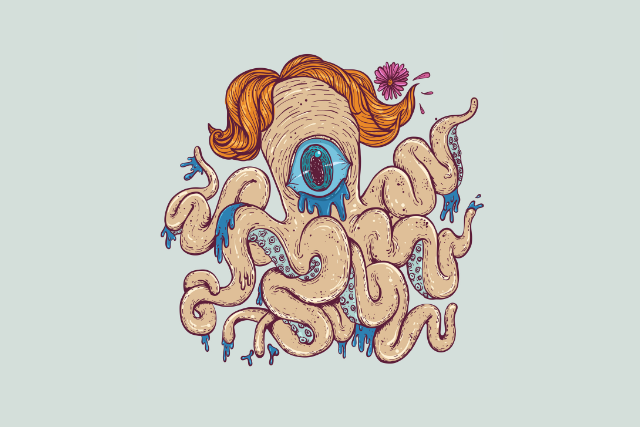
    Like many people, I have an anxiety disorder that twists my thoughts and feelings. I call it my “anxiety octopus,” as it feels like there are tentacles in my brain triggering fear-based reactions for no reason. In everything, even things that I am confident in, I suddenly feel insecure and unsure.

    It takes time to realize that the “anxiety octopus” has woken and is stretching, almost testing my powers of resilience that day.

    Today was one of those days where my resilience was low, and it took time to notice that the octopus had woken.

    There was nothing that triggered it, nothing special about today. Just a cold morning with the sun popping its head out, a morning that I normally love the briskness of, yet today, it was hard to get started. My feline alarm clocks kept meowing, even when I gave a morning pat.

    They wanted me up. The “anxiety octopus” didn’t.

    Sometimes when your heart races so hard, you fear that you are going to have a heart attack. That’s how it was this morning. Heart racing, inability to think, sweating profusely, your breathing becomes shallow, and you feel this intense fear, for no reason.

    This is the point where my doctors say, “Take medication.” This is where I think to myself, “Connect with my Zen.”

    You’ve probably heard of the power of garden therapy, which is incredible. But I’m an Aries woman, a fire sign that loves to flare; the Earth doesn’t actually calm me down or help with my anxiety. It does for many, but not for me. I need water to balance me out.

    My Zen Zone is my aquaponics systems. Yes, I have more than one. Truth be told, I have five and two more planned. Aquaponics is a form of gardening that you can do in any space; however, unlike soil gardening, it is growing food with water constantly cycling through it in a sustainable way. 

    Not to be confused with hydroponics, which also grows food with water and synthetic nutrients in an artificial system, aquaponics in a man-made (or woman-made, in my case) ecosystem. We have freshwater fish (mine are friends, not food) that provide fertilizer for the veggies, and the veggies filter the water for the fish. They both have their own space within an aquaponics system, and being closed-looped, the water is fully recycled.

    With constant fertilizer from the fish and water continuously flowing through the system, the veggies are in plant heaven. They grow faster in this system that is replicating nature. This is not a new fad; in fact, it’s a concept dating back 4000 years BC.

    Other than being a food growing system, which is totally awesome and in a changing world, necessary, it is also my Zen Zone.

    It helps to balance my fire energy and calm me down. Sitting outside by my little courtyard aquaponics system, powered by goldfish, this morning, I sat watching the fish swim and the veggies that are thriving, and I could finally breathe again.

    It’s as if hearing that water flowing gently through the aquaponics system was a signal for the “anxiety octopus” to go back to sleep. As if it connected with the water and found its peace.

    Obviously, there is no octopus in my mind, and this is how I manage my anxiety with these thoughts, but it is what works for me.

    I find peace in hearing the water, seeing the fish swimming, and smelling the herbs that are right there. I have a lot growing in this small system; you can get so much produce in a small space because the water filled with fertilizer passes through it all, whereas soil gardens are more limited.

    It makes me smile, as I know I have food security in my small space, no matter what happens.

    I think the best part is this little system costs me $10 per year to run based on the watts of the water pump. That is the cost to help control the “anxiety octopus” in my mind.

    It’s always fascinating to watch people’s reaction when they come to my home. I’m very private, and at times people visit for various reasons. Not one to be normal, my home is not just filled with animals (both living and artwork), but my unique aquatic family.

    As people move down the hallway, talking about what is going on in their life, I watch as they enter the dining room, where I have four very special aquariums. My first aquatic family. I see the excitement in their eyes, and I realize that my aquatic family are being better hosts than I am. I have a passion for the Murray-Darling Basin, so all my fish are native to the region. My Murray Cod, Eel-tailed catfish, Bass, and even my turtles are natives and mostly extroverts.

    However, the excitement changes as I take them out back to my main aquaponics system and courtyard aquaponics system. I watch them take a deep breath and, in that moment, I see something they are often unaware of.

    As they breathe deeply watching the fish and veggies moving slowly in the breeze, I see their “anxiety octopus” go to sleep too. Everything about them changes. It’s like they come home to a place within themselves that they had forgotten.

    In that moment, I feel I have done something I have been put here on this Earth to do. To help another person breathe again. Just by showing them my aquaponics systems and how they work. I reconnect them with nature too, as well as help them to find their flow.

    Sometimes no words are needed; just listening to the water and seeing something else being in balance, which is what aquaponics is all about, helps them to balance themselves out too.

    It’s not your conventional form of garden therapy. In fact, this only takes me ten minutes a day to maintain, so I have a lot of time to spend relaxing by the flowing water.

    There is something incredibly special about aquaponics, something that is often known but forgotten: Everything is interconnected, just as all things in life are.

    The fish cannot live without being in an ecosystem where the bacteria convert their waste into useable fertilizer, and the plants need to filter the water using the fertilizer. In that system, everything is interconnected.

    The lesson here is that when my “anxiety octopus” awakens, this interconnectedness ceases to happen. At this point, I need to trigger my awareness of this, and reconnect with everything. For me, as I sit by my aquaponics systems, feeling myself breathe a bit deeper, feeling my heart rate slow a little, I start to reconnect to the interconnectedness of myself—how my body works, how my mind works, and how I am an amazing soul put on this earth for a reason.

    You need to find what works for you to be able to do this. But no matter what you find to bring peace and balance into your life, remember this: We are all here for a reason. It doesn’t feel like it sometimes, and as life hits us in the gut it can feel like we can never get up. Feel like “What’s the point?” I’ve been there.

    For me, it was seeing aquaponics in a different way that got me up. Seeing that I didn’t have to hold onto others’ beliefs, that I could let go of everyone’s crap that I was conditioned to believe. That I could reconnect to the deepest part of myself and my purpose—to share the beauty and power of my Zen Zone and inspire people like yourself to find their own zen and purpose.

  • Navigating Social Anxiety: 10 Powerful NLP Tools for Personal Growth

    Navigating Social Anxiety: 10 Powerful NLP Tools for Personal Growth

    “We need each other, deeper than anyone ever dares to admit even to themselves. I think it is a genetic imperative that we huddle together and hold on to each other.” ~Patch Adams

    A few years ago, I was invited to a work event. When I received the invitation a few months before, the idea seemed fun—a friendly gathering with colleagues, filled with vibrant conversations and laughter, enabling me to create human connections in the workplace.

    As the day approached, a familiar knot tightened in my stomach, I couldn’t breathe deeply, and an overwhelming sense of unease took hold. I was caught in the hand of social anxiety.

    Close to the event, the mere thought of attending sent my mind spiralling into millions of anxious thoughts and self-doubt. The fear of being judged, saying something embarrassing, or feeling awkward became all-consuming. Every scenario played out in my mind, each one more terrifying than the last. My mind went to “making up excuses” mode: from getting sick to imagining the event would be boring—anything to cancel.

    As the day of the event arrived, the intensity of my anxiety escalated. The butterflies in my stomach intensified, my heart raced, and I battled against the urge to retreat into the safety of my home and decline the invitation.

    During the event itself, I found myself on an emotional rollercoaster. Every interaction became a high-stakes performance. My mind raced, searching for the right words, the funny words, the smart words, analyzing every gesture and facial expression.

    My ability to express myself authentically was numbed by a fear of judgment and rejection. I felt like an outsider, trapped in a room filled with people who seemed to effortlessly navigate social situations, which felt utterly foreign to me. This masking left me mentally exhausted and emotionally drained.

    After the event, a wave of relief washed over me as I finally escaped the social arena. I retreated back home, alone, to my safe haven. Unfortunately, my mind was not done racing, as it replayed every conversation and interaction. Self-doubt and self-criticism crept back in, overshadowing any moments of genuine connection or enjoyment I may have experienced.

    Luckily, my story doesn’t end there. This is not me today. I’ve learned to regain control over my inner state and find genuine enjoyment in social interactions with others (even at work). I am also very clear on which social interactions I actually want to join and which are not for me, and I am connected enough to my body that I can choose to say no to fun events on days I need to rest.

    It was through my journey of self-discovery and exploration with the approaches I now coach with, teach, and live by—neuro-linguistic programming (NLP) techniques, yoga, and energy healing—that I began to accept, explore, and then transcend my social (and general) anxiety. Of course, there are still days I have to work harder on it, but overall, I feel in control of my state of being.

    A therapist once gave me this definition of anxiety, which I love and keep using in my life and coaching:

    Anxiety is your level of perceived stress or “danger” over your perceived ability to handle that situation.

    When you perceive a situation as dangerous or stressful and you don’t believe you can handle it, your anxiety will be high and your nervous system in fight-or-flight mode…. potentially chronically.

    Therefore, navigating social anxiety is about lowering your level of perceived stress and strengthening your confidence in your ability to handle life and social interactions, however nourishing or awkward they might be.

    Here are the most important insights I’ve formed, and some practical techniques rooted in NLP and mindfulness that have helped me navigate social anxiety.

    1. Practice self-awareness.

    The first step in overcoming social anxiety is developing self-awareness. Take time to reflect on the situations that trigger your anxiety. Is it speaking in public, meeting new people, or being at work or in general? Or being the center of attention? By clearly identifying these triggers and their contexts, you can begin to understand the underlying thought patterns and beliefs that contribute to your anxiety.

    Practice somatic awareness: Where do you feel those sensations in your body? What colors are they and what texture do they have, if any? Are they warm or cold, stuck or moving? Take a deep breath and allow those feelings to be felt and flow, without judging them.

    Be compassionate with yourself, with your emotions, with the different parts showing up in those moments. Overcoming social anxiety takes time, compassion, and the willingness to change!

    2. Get curious about your habitual thinking patterns and limiting beliefs.

    There are underlying beliefs and habitual thinking patterns underneath the fear of being around people. Ask yourself:

    • What about being around others makes you anxious? Is it a fear of judgment or rejection?
    • Are you imagining the worst that could happen?
    • What beliefs are creating this internal response?
    • What do you think it would it say about you if you could not form a good connection with others during interactions?
    • Do you trust others?
    • Do you trust yourself to be able to handle the situation and whatever comes up? If not, what limiting beliefs underly your mistrust?

    When you recognize that your fear stems from untrue beliefs, it reduces the perceived danger of the social interaction and increases your perceived ability to handle it.

    3. Reframe unhelpful self-talk.

    Unhelpful self-talk can be a relentless companion for individuals with social anxiety. NLP encourages us to challenge and reframe these negative thoughts and limiting beliefs into more empowering ones.

    For instance, instead of thinking, “Everyone will judge me,” reframe it as, “People are just people, looking for real connection just like me.”

    Instead of imagining the worst that could happen, see the interaction’s potential: an opportunity for fun, learning, and connection.

    Transcend your internal dialogue with outward curiosity: What am I interested in learning from this or that person?

    After a social interaction, instead of ruminating about the potential silliness of the things you said or did not say, and how people might have judged you, release the need to be validated by others. And celebrate that you put yourself out there and the moments when you were present and had fun. Replace your inner critic with your inner cheerleader, your inner best friend.

    The next suggestions are approaches to learn to master your state of being and therefore increase your perceived ability to handle the social interactions.

    4. Use mindful awareness and breathing techniques.

    During the social event or interaction, if you feel triggered or overwhelmed, stay tuned in to your body, your breath. If you need a short break, take the time to recharge alone for a few minutes (in an outdoor area, on a patio, maybe in the restroom…). Take a few deep breaths. Remember your reframes, set an intention for joy and connection, remember people are just people, and go back in there!

    5. Access and develop your self-confidence.

    NLP utilizes the concept of anchoring to associate a specific physical or mental state with confidence and calmness.

    Identify a moment when you felt truly confident and at ease. Relive that experience vividly in your mind and body, focusing on the positive emotions and sensations associated with it. Amplify that state by adding colors, sound, and smells to the movie you are creating in your mind. Then, create an anchor, such as touching your thumb and index finger together, to trigger those feelings whenever you need them before or during the social event.

    6. Try mental rehearsal visualization.

    This is a powerful tool in NLP that allows us to mentally rehearse social situations and build confidence. Imagine yourself engaging in a social event with ease, grace, and enjoyment. Visualize positive interactions, with you feeling relaxed and radiating confidence. By repeatedly practicing this visualization exercise, you can train your mind to associate social situations with positive outcomes.

    7. Adopt a powerful body language.

    Our body language communicates more than words ever can. In social situations, pay attention to your posture, breathing, and facial expressions. Stand tall, maintain relaxed breathing, and make eye contact. By adopting a powerful physiology, you not only project confidence to others but also influence your own state of mind.

    8. Gradually increase your exposure to social situations.

    While it may be tempting to avoid social situations altogether, facing your fears is crucial for overcoming social anxiety and living a full life. You want to allow yourself to enjoy the social interactions that you actually deeply want to be part of.

    Gradually expose yourself to increasingly challenging social scenarios. Start with small steps, such as striking up conversations with strangers or attending social gatherings with trusted friends. As you accumulate positive experiences, your confidence will naturally grow.

    9. Be mindful of your language patterns.

    NLP emphasizes the importance of using language patterns that establish rapport and foster positive connections. Practice active listening, ask open-ended questions, and show genuine interest in others. By focusing on the needs and perspectives of those around you, you shift your attention away from your own anxiety and create a supportive social environment.

    10. Nourish your nervous system.

    Remember that anxiety in the body is created by your thought patterns and beliefs, which are creating a chronic fight-and-flight mode within your nervous system. It is paramount that you regulate your nervous system with activities that nourish it on a daily basis: yoga, nature, walks, sleep, nourishing food… Make this a priority if it’s not already. This will make a huge difference in your life and how you manage your perceived stress and, therefore, your anxiety.

    Even the most deeply introverted personalities need social interaction. We are humans. We need others; we need connection to live wholesomely. It is a basis for our well-being and happiness, so it’s important to learn to transcend your social anxiety and balance your need for solitude with social connection.

    This might be hard to do on your own, and that’s okay. You can always find a therapist or coach to support you in your journey to freedom from your limiting beliefs and mind patterns.

    Take a deep breath, implement these strategies, be kind to yourself, and get out there!

  • Hungry and Panicked? The Link Between Food and Anxiety

    Hungry and Panicked? The Link Between Food and Anxiety

    “Take care of your mind, your body will thank you. Take care of your body, your mind will thank you.” ~Debbie Hampton

    4:00 p.m. I am suddenly aware of my heartbeat. It feels more insistent than normal. Is it faster? Is it jagged? Am I out of breath?

    I try to reason with myself: I’ve just done a brisk walk pushing the stroller over some hills.

    My anxiety responds: Those hills were awhile back… you wouldn’t be out of breath from that.

    Anxiety sufferers have a heightened sense of, well, a lot of things. For me, I am acutely aware of shifts in sensation in my body.

    Having practiced and taught yoga for most of my life contributes to this, and in many ways, it’s a great skill. I instinctively check in with my shoulders—are they up around my ears? Then my jaw—are my top teeth away from my bottom teeth? And perhaps the most important of all—am I holding my breath? I can’t help but observe when people walk with an imbalanced gait or sit with their spines slouched.

    But the heightened awareness is also pathological. A slight tingling in my hand instantly makes me think heart attack. Dizziness, which I ended up learning was caused by my vision changing, made me run to get screened for a brain tumor.

    4:30 p.m. I’m at the library with my two-year-old daughter. I still feel weird—“off.” I periodically place my hand on my chest—is my heart beating more intensely than normal? It seems normal. But what if it’s not normal?

    I press my hand into myself harder, searching for something to panic about. I find comfort in the two librarians a few feet away. I think, “If I have a heart attack, they’ll keep my daughter safe. They’ll call 911.” 

    I check in with my breath. It feels reassuring that I can take deep, unencumbered breaths.

    5:00 p.m. My eight-year-old son offers to look after his little sister. I feel like I need to lie down, to calm the strange rhythm of my heart. Something reminds me that I have leftovers from last night’s dinner.

    I made a really delicious Thai larb gai. It is a “safe” meal of ground turkey, vegetables, and rice. I hope my family didn’t notice that I avoided eating the rice last night.

    I reheat the leftovers, including a spoonful of rice. I am careful to avoid eating any rice—starch is bad, my disordered thinking will never let me forget. I take my first bite and burst into tears.

    A few months ago, this pattern of crying started when I would finally eat after going too many hours without food. It would catch me by surprise because I hadn’t intentionally been avoiding food. I hadn’t intentionally been punishing myself. It would just happen.

    I’d miss breakfast because mornings are busy. A coffee would usually follow, masking my body’s ability to communicate its hunger—my hunger.

    I typically only have three hours to myself without any kids, three hours to do way more than is possible during that timeframe. I can’t possibly waste that time eating. And then once I reunite with my kids, my own needs all but get completely forgotten.

    On these types of days, when I would finally take a bite of something, almost always around 5:00 p.m., the tears would rush up and out.

    Why was I crying over a bite of chicken breast?

    Eating my leftover larb gai, I wonder, when did I last eat? 9:00 a.m. with a friend. It is 5:00 p.m. now. An eight-hour window.

    “But I ate my daughter’s leftover applesauce!” I hear myself say. I instantly recognize this rationalization. The voice of the disorder.

    I realize I am once again inside the well-worn grooves of avoiding eating. I cry because my body is relieved it is getting sustenance. I cry because I am angry that I am still beholden.

    I try to work out what happened. It has been a busy day. But when is it not a busy day? This is not an excuse.

    At breakfast, I noticed that the person next to me was eating avocado toast, but she had scraped the avocado off the bread. Because bread is bad, my disordered thinking affirmed.

    I scanned the menu and noticed that the calories were listed next to each item. I don’t normally count calories. I try to focus on the description of each menu item and decide that Papa’s Breakfast Bowl sounds great: roasted potatoes, bourbon bacon jam, a sunny-side-up egg, and sliced avocado served with chipotle aioli. I would ask for no jam or aioli, obviously, but otherwise, this is a meal I would easily make myself.

    And then I saw the calories: 1100. 1100?! I panic.

    My friend arrived and asked what I was going to have. I casually said, “I’ll probably just have an omelet.”

    This friend is one of those women who pops out babies and bounces back. I don’t know how she does it—maybe it’s just genetic—but her body holds no visible remnants of having made babies. She was wearing skinny jeans and a fitted sweater; there are no rolls, her arms are firm and slender.

    I held my arms across my stubbornly squishy stomach. I calculated that her baby is younger than mine, but she is in much better shape. I didn’t know that I was doing it, but I chastised myself for being bigger than I used to be, than I should be. I deserved some sort of punishment for this failing, my evident gluttony and certain laziness. 

    I didn’t register when she told me, “You look amazing. What workouts are you doing these days?” My disordered, dysmorphic brain told me, “She’s just saying that to be nice because she feels sorry for how horrible you actually look.”

    Another friend has unwittingly become my eating disorder sponsor. I send her a confessional text: “Dang it. I ate at 9 a.m. And then I didn’t eat for eight hours. I didn’t even realize how long it had been until I took my first bite and teared up.”

    We’ve talked about what the crying signifies. We both know it’s meaningful, pointing to some lesson.

    It is in talking to her that I put it all together. The 1100 calories. The scraped avocado toast. My slender friend.

    I also realize I had been triggered by another friend who had recently stayed with us. She does intermittent fasting, and she is an example that it works because she is an enviable (to me) size 0. My ED brain is so eager to jump on any restrictive, rule-based eating regimen. “See? She avoids eating and look at the result! Don’t you want to be a size 0 again?”

    But I also have an inner voice of wisdom. This is the voice that reminded me that nourishing myself so I could breastfeed was more important than losing the baby weight quickly. This is also the voice that instantaneously gets silenced when my eating disorder asserts itself.

    My visiting friend touted the benefits of intermittent fasting, “Our bodies aren’t meant to eat constantly. When we were cavemen, we didn’t have refrigerators and pantries.” She claimed, “My organs function better when they are free from having to digest food.” (Sounds ideal, but how does she know this is true?) She reasoned, “And when I do eat, I eat anything! Of course I always eat healthy foods, but I don’t avoid bread, as long as it’s good, artisanal bread, and I’ll have a pudding if I feel like it.”

    My eating disorder: You need to do this too.

    My inner wisdom: Any controlled eating is a slippery slope to starvation for you. Focus on three meals of day, that’s it. That’s your work. 

    After I connect the dots of all these triggers and finish my leftovers, I promptly pass out on the couch, still sitting upright. I am relieved I (probably) am not having a heart attack and I need a minute to absorb it all.

    They say that you never recover from an eating disorder. You are in recovery. It is an active state that requires your conscious awareness and participation.

    In that sense, it seems no different to being an alcoholic. An alcoholic can’t just have one drink. They may struggle if they’re around people who are drinking. It may feel like an invisible force is pulling them to that ice cold beer or elegant glass of wine.

    I feel this invisible force, too. Except for me, it is pulling me toward starvation, deprivation, urging me to shrink into nothingness, to zero.

    But the cost is simply too high. I do not want to forgo my mental steadiness and inner ease for a smaller number on the scale or on my clothes. I’ve been there before, and it was not worth it.

    And for me, there is a clear correlation between starving myself and anxiety. I’ve learned that anxiety is actually the voice of wisdom, my inner child, piping up to grab my attention, reminding me to take care of myself.

    No, it’s not a heart attack, it’s not even a panic attack, it’s just—you’re hungry! You forgot about you. You’ve been criticizing yourself for being too big, for looking different to how you looked pre-motherhood or when you were eighteen. You’re not eighteen! And what a gift that is, to be given this opportunity to live, to age. To have children. 

    And they, my children, really are a huge motivation for me. I see how they take everything in, especially from us, their parents. I know how much I unconsciously absorbed from my mother. Babies are not born hating their thighs; you learn to hate your thighs.

    I know I cannot control everything in my children’s lives and psyches but my actions, my behavior, the way I talk about myself—these things I can control.

    I want my children to experience joy and gratefulness in the food we are all lucky enough to eat. I want them to get to know flavors, to have fun cooking, and to revel in shared meals with loved ones. I love when I make something that they love that they know their mommy made for them. Even if it’s just mac and cheese out of a box; I’ll take it when my son exclaims that nobody makes better mac and cheese than his mom does. (I do sometimes add toppings!)

    I do not want to be at the whim of my weight. I do not want to fear food. I most certainly do not want to pass any of this on to my children.

    So I will keep fighting for freedom. Freedom to eat—and enjoy!—three meals a day. Freedom to eat the damn bread (I ate the rice that was with my leftovers, by the way). Freedom, even, to make mistakes because these habits are deeply embedded, and the freedom to then celebrate the remembering, realizing, and resetting.

    I don’t know if this is the case for other people with anxiety, but I would invite you to take a look at any possible connections between your eating habits and symptoms of anxiety, particularly if you are prone to dieting.

    If you restrict your eating by skipping meals or by enforcing a tight eating window and you happen to find yourself experiencing symptoms of anxiety or depletion, zoom out and consider the bigger picture. Are you truly taking care of yourself?

    We are complex, layered beings and all the different facets of who we are intermingle and influence each other. It’s not just segregated compartments of well-being. Physical health and mental health are inextricably linked.

    Anxiety makes me feel untethered, shaky, uncertain, and afraid. Having that on empty exacerbates it all. I have no body or brain fuel to process it.

    Those tears that erupt with that first bite of food after denying myself—they ground me in relief, offer release, and ultimately, are a practice of compassion for myself. I wish good health and food freedom for us all. Because we are worth being fed, nourished, and sustained.

  • 3 Lifestyle Changes I Made to Overcome Dissociative Panic Attacks

    3 Lifestyle Changes I Made to Overcome Dissociative Panic Attacks

    “There is no greater wealth in this world than peace of mind.” ~Unknown

    A few years ago, I had what could safely be deemed a “bad year.” My live-in partner left me out of the blue, I became un(der)employed and racked with debt, I got in a car accident that totaled my car, and then…my dog died.

    After the year that I’d had, the death of that dog, my most treasured friend, was the final straw. It was the final straw for believing that things might turn around soon, and it was the final straw for my mental health.

    Shortly after her death, I started experiencing what I now know were dissociative panic attacks. At the time, however, I thought that I was going crazy, dying, and that my spirit was detached from my body. A feeling you can probably only understand if you, too, experience panic attacks and have felt derealization before.

    For a long time, I suffered. And wallowed. And gave up. But after about six months of living in this nightmarish state of near-constant dissociation and depersonalization, I had a moment of clarity. I knew that I had to give it my all to get better, no matter how long it took, because the alternative was bad.

    A panic attack is the ultimate manifestation of feeling a lack of control—feeling like you’re going to die, like you’re going crazy, like you’re disembodied… and there’s nothing you can do about it.

    So I started my healing process by looking for ways to take back dribs and drabs of control in my life.

    It didn’t happen overnight, but I am extremely grateful to say that it’s been over two years since I’ve had a panic attack. Something I never thought I’d be able to say when I was in the throes of the disorder. So how did I do it? I would love to share that with you here.

    These are the three tools that I believe had the biggest impact on healing my dissociative panic disorder.

    Adopting an Anti-Inflammation Diet

    Inflammation is the response our bodies have to foods that irritate our digestive system, and the amount of inflammation in your body has a direct impact on brain-functioning. According to Psychology Today, there is an undeniable correlation between inflammation in the gut and mental health disorders like anxiety, bi-polar disorder, and depression.

    I cut out gluten and alcohol completely (both notoriously inflammatory) and would have cut out dairy too except that I’d already done that a few years earlier for other reasons.

    Looking back, I think adopting this new diet was effective in more than one way… Cutting out alcohol was not only helpful in soothing inflammation, but it also allowed me to become much more clear-headed right out of the gate. I was never a huge drinker, but eliminating the ten to twelve weekly drinks I did have was enough to notice an instant improvement in the evenness of my emotional state throughout the day.

    Another surprise benefit was that making an intentional choice about the guidelines of my diet gave me back a sense of agency in my life because with every meal, I knew I was making an intentional choice about what would go in my body and why.

    Progressive-Overload Weight Training

    Unfortunately, weight training still seems to feel “off-limits” to many of us. There’s a rampant gym culture in our society, and it feels like either you’re in or you’re out. However, I learned during this journey to mental health that once you get “in,” it becomes clear that nothing and no one was ever really keeping you out!

    But why did I decide it was important to find my way “in” in the first place? To be honest, this one was a happy accident. I knew that it was important to start moving my body again, but it was January 2021, which meant it was too cold to exercise outside, and group fitness was still not an option thanks to the pandemic. Going to the gym, however, wearing a mask, was.

    What I discovered from my religious gym routine, and my dedication to learning how to weight train as a means to overcome feeling so awkward and uncomfortable during every workout, is that weight training has the powerful effect of connecting your mind to your body. Something I didn’t realize had been lacking for me.

    It’s impossible to lift heavy weights without becoming deeply aware of the connection between your mental cues, your breath, and your muscles.

    Dissociative panic disorder is a nasty feedback loop of feeling dissociated and disconnected, which is scary, and leads to our body trying to overcome that fear by dissociating and disconnecting. Developing a weightlifting routine created an interruption in that debilitating cycle and, over time, reminded me that I am firmly rooted in my body and that I have control over my physical reality.

    Meditation 

    When I first started experiencing dissociation, depersonalization, and derealization, meditation was absolutely not the right answer for me. In fact, attempting to meditate only made me feel worse—like I was on the brink of leaving my physical body behind entirely.

    However, once I regained a little bit of trust with my mind and body through other practices and knew that I would, in fact, not float away, I started using meditation to further the work I was doing in other places.

    Since I had discovered through weightlifting the importance of strengthening my connection to my body, the first meditations I employed were for deepening that body-awareness (also called somatic awareness or interoceptive awareness.) My entire goal was to become more familiar and friendly with my body so that I could remain grounded in my physical self throughout the day.

    Later, once I was feeling healthier and more optimistic about a panic attack-free future, I also began to employ meditations for future-visualization. I would tune into and sit with the feelings of connection, safety, and purpose as I allowed my mind to create pictures of my future life. In this way, I began to rewire my brain to understand, look for, and create positive emotions again.

    Now, more than two years after I made the life-changing decision to do anything it took to heal my panic disorder, I still fall back on all three of these tools to keep me healthy. I avoid inflammatory foods, I hit the gym regularly (and move my body in other ways), and I try to meditate every single morning.

    I know it can feel overwhelming to start a new routine, but none of these lifestyle changes will do anything but enhance your life. It’s worth it to try. I hope that a few months from now you, too, can look back at your panic attack days as just a difficult, but closed chapter in your life.

  • 6 Things to Remember When You Feel Anxious in Your Relationships

    6 Things to Remember When You Feel Anxious in Your Relationships

    “Our anxiety does not come from thinking about the future, but from wanting to control it.” ~Kahlil Gibran

    Relationships have always been anxiety-inducing for me, and I know it stems from my childhood.

    As a kid I would often silently mouth words I’d just said, hearing them in my mind and evaluating whether I’d said something stupid or wrong. I was always afraid of saying something that might make someone upset.

    Junior high was a particularly rough time in my life. I was insecure and had low self-esteem, and I was desperate for approval from other kids, which made me an easy target for bullying.

    To make matters worse, an authority figure in my life told me, “If I was your age, I wouldn’t be your friend.”

    I had always believed there was something wrong with me, but at that point I was certain that no one would like me, let alone love me, if they really knew me. But I also felt deeply lonely in my little bubble of self-loathing and envied the popular kids. The likable kids. The kids who didn’t seem so clingy and awkward, who seemed to easily fit in.

    Thus began an internal battle I’m guessing many of you know all too well: the deep desire to feel seen and secure juxtaposed with the feared being judged and rejected.

    As I got older, I found myself in all kinds of unhealthy relationships, making friends with other emotionally damaged, self-destructive women, thinking they’d be less likely to judge me, and dating emotionally unavailable men, whose behavior reinforced that I didn’t deserve love.

    I was always afraid they were mad at me. That I did something wrong. That they might realize I was too needy and eventually walk away.

    And it wasn’t just in my closest relationships that I felt insecure. I also felt a deep sense of unease around their friends—when we all went to a party or bar, for example. It all felt like a performance or a test, and I was afraid of failing.

    Constantly in fight-or-flight mode, I tried to numb my anxiety in social situations with alcohol. Far more times than I care to admit, I ended a night black-out drunk, only to wake up the next morning to mortifying stories of things I’d done that I didn’t recall.

    The irony is that this jeopardized my relationships—because people had to babysit and take care of me—when I was binge-drinking mainly because I was scared of being rejected.

    Maybe you can relate to the extreme anxiety I felt in relationships. Or maybe for you, it’s less debilitating, but you worry, nonetheless.

    Whatever your personal experience, perhaps it will help to read these six things—things I wish I understood sooner.

    1. Your anxiety is likely about more than just this one relationship.

    Even if the other person has said or done things that have left you feeling insecure, odds are, your anxiety stems from your past, as was true for me.

    We all form attachment styles as children; many of us become anxiously attached as a result of growing up with abusive, neglectful, or unreliable caregivers who aren’t responsive to our needs. If you often feel anxious in relationships, you might be stuck in a pattern you formed as a kid.

    2. If the other person is emotionally unavailable, it’s not your fault, and not within your power to change them.

    It’s tempting to think that your behavior is responsible for theirs, and if you do everything right, they’ll give you the love you crave. On the flipside, you might constantly blame yourself when they withdraw. You said something wrong. Or did something wrong. Or it’s just you being you—because you are wrong.

    But emotionally unavailable people have their own painful pasts that make them act the way they do. It started way before you, and it will likely continue when your relationship inevitably breaks under the strain of too much tension.

    Instead of trying to earn their love and prove you’re worthy, remind yourself that you deserve love you don’t have to work for. And that it’s worth the wait to find someone who is willing and able to give you their all.

    3. Things might not be as they seem.

    While some people truly are pulling away and looking for an easy exit, other times we just think they are.

    When we fear abandonment, we often read into little things and assume the worst. We over-analyze text messages, worry about a change in tone or facial expressions, and generally look for signs that we might have upset someone. But there’s a good chance that thing you’re worrying about has nothing to do with you.

    Maybe they’re not texting back right away because they’re afraid of writing the ‘wrong’ thing to you. Maybe they haven’t called recently because they’re going through something hard. Whatever you’re interpreting as proof of imminent rejection, consider that you might have it all wrong.

    4. Sometimes anxious behavior creates a self-fulfilling prophecy.

    When you’re feeling anxious, you might cling, act controlling, or argue over minor issues that make you feel neglected or rejected—all behaviors that can cause someone to withdraw. I can’t even count the number of times I caused unnecessary drama because I assumed that because I felt insecure, someone else had done something to make me feel that way.

    Everything changed when I recognized I could pause, recognize how I was feeling (and why), and then choose to respond from a place of calm awareness.

    If you can learn to recognize when you’re feeling triggered, you can practice regulating your own nervous system—through deep breathing, for example—instead of inadvertently pushing the other person away.

    5. Often, the best thing you can do is sit with your anxiety.

    This one has been hard for me. When I feel anxious, my instinct is often to seek reassurance from someone else to make it go away. But that means my peace is dependent on what someone else says or does.

    Ultimately, we need to believe that our relationships are strong enough to handle a little conflict if there truly is a problem–and that if our relationship isn’t strong enough to last, we’re strong enough to handle that.

    6. Sometimes when someone is pulling away, it’s actually in your best interest.

    People with an anxious attachment style will often try to do everything in their power to hold onto a relationship, even if someone isn’t good for them.

    In my twenties I spent many nights crying over emotionally abusive men, some of them friends with benefits who I hoped would eventually want more; others, men I was dating who thought even less of me than I thought of myself.

    The wrong men always left me because I didn’t see my worth and wasn’t strong enough to leave them first. And the pain was always unbearable because it reinforced that I wasn’t lovable—just as I’d feared all along.

    Though it can be agonizing when someone triggers an old abandonment wound, letting the wrong person walk away is the first step to believing you deserve more.

    As someone with deep core wounds, I still struggle with relationship anxiety at times. I don’t know if it will ever go away completely. But I know I’ve come a long way and that I’m a lot stronger now.

    I also know that when I inevitably feel that familiar fear—the racing heart, the sense of dread, the triggered shame coursing through my trembling veins—I will love myself through it. I won’t judge myself or put myself down or tell myself I deserve to be hurt. I may fear that someone might abandon me, but no matter what happens, I won’t abandon myself.

  • Anxiety Sucks, But It Taught Me These 7 Important Things

    Anxiety Sucks, But It Taught Me These 7 Important Things

    “Anxiety is the dizziness of freedom.” ~Soren Kierkegaard

    Let’s be clear:

    This isn’t an article about positive thinking.

    This isn’t an article about how silver linings make everything okay.

    This isn’t an article about how your perspective on anxiety is all wrong.

    The kids call those things “toxic positivity.”

    No toxic positivity here.

    This is an article about my lifelong relationship with anxiety and what I’ve learned from something that won’t go away. At times the anxiety spikes and feels almost crippling. I have a hard time appreciating the learning at those times, but it’s still there.

    That is what this article is all about.

    Please do not confuse me learning things from something that won’t go away with me endorsing that thing or saying it’s a good thing. I would trade everything I’ve learned from anxiety for less anxiety. I don’t even like writing about it because focusing on it this much gives me anxiety. But I want to write things that help people.

    How a Bare Butt Sparked My Anxiety

    Stranger Things has shown how cool the eighties were. For the most part, this is true. I miss arcades and the music. I miss the freedom I had as a kid that I don’t see kids having these days. I miss some of the fashion. I don’t miss people not knowing anything about mental health.

    We used to play football every day after school at a baseball field/park in our little town. This was unsupervised tackle football with kids a lot older than me.

    I remember one time a guy broke his finger. It was pointing back at him at a ninety-degree angle. He took off sprinting toward his house. One of the older kids said, “He’s running home to mommy!” and we all went back to playing.

    Oddly enough, possibly breaking my finger didn’t worry me. What did worry me was one day when a kid was running for a touchdown, and another kid dove to stop him. He only caught the top of his pants, pulling them down and exposing his bare butt. He made the touchdown anyway, but while everyone else thought it was hilarious, it scared me to death.

    What if that happens to me?

    I started tying my pants up with a string every day, pulling it tight enough to make my stomach hurt (remember, this was the eighties—I was wearing those neon-colored pajama-pant-looking things). I started to feel sick before we played football, before school, and before everything.

    You would think it was obvious that I was dealing with anxiety, but you have to remember that in the eighties and nineties, we did not talk about mental health like we do now. We didn’t throw around terms like anxiety and depression. I was just the weird kid that threw up before he went to school.

    The anxiety has gotten a little more noticeable over the past few years. It seems to have gotten worse since having COVID in 2020 and 2021. I don’t know if that’s a thing, but it feels like it is. It has forced me to deal with it mindfully and with more intention. It’s never pleasant, but I’ve learned a few things.

    1. Anxiety has taught me to be present.

    The crushing presence of high anxiety forces me to be exactly where I am at that moment. I’m not able to read or write. I cannot play a video game or watch a movie with any kind of enjoyment. There’s nothing I can do.

    This roots me in the moment in a very intense, authentic way. That might seem bad since I’m anxious, but there’s another layer to it. When I can be completely present with the physiological sensations of anxiety, I recognize that they are energy in the body. When I’m super present, I can see how my mind is turning those sensations into the emotion we call anxiety, and that’s where my suffering comes from.

    2. Anxiety has taught me about control.

    I’ve been told that my hyper-independence and need to be prepared for anything is a trauma response. I was a therapist for ten years, and I still don’t know what to do with this information. I do know that anxiety gives me a crash course in what I can control and what I cannot control.

    The bad news is that I can’t control any of the things that I think are creating anxiety. The good news is that I can control my response to all those things. Anxiety forces me to do this in a very intentional way.

    Anxiety also puts my mind firmly on something bigger than myself. Maybe it’s that higher power we hear about in AA meetings and on award shows. It’s good for me to get outside my head and remember that I’m not in charge of anything. It’s helpful to only box within my weight class.

    3. Anxiety teaches me to have good habits and boundaries.

    I’m bad about allowing my habits and boundaries to slip when times are good. I start eating poorly, I stop exercising, I stay up too late, and I watch a bunch of shows and movies that beam darkness and distraction directly into my head.

    I also start to allow unhealthy and even toxic people to have a more prominent role in my life. This is all under the guise of helping them because people reach out to me a lot. Over the years, I’ve learned I have to limit how close I let the most toxic people get to me, no matter how much help they need.

    When I’m feeling good, I start thinking I can handle anything, and my boundaries slip. Anxiety is always a reminder that the unhealthiness in my life has consequences, and I clean house when it spikes.

    4. Anxiety reminds me how important growth is.

    Once I clean house, I start looking at new projects and things I can do to feel better. I start taking the next step in who I want to be. This has been difficult over the past three years because the waves of anxiety have been so intense, but I see the light at the end of the tunnel as the good habits I put in place and the new projects and things I started are beginning to come to fruition.

    I chose to let my counseling license go inactive and focus on life coaching because it’s less stressful, and I’m better at it. This would not have happened without anxiety. I have changed my diet and exercise in response to blood pressure and anxiety, and these are good habits to have whether I am anxious or not.

    5. Anxiety taught me to be gentle.

    I’ve written and spoken a lot about my desire to be gentler with people. I’m not unkind, and I have a lot of compassion for people, but this is often expressed gruffly or too directly. It’s how I was raised, and I often feel like I am patronizing people if I walk in verbal circles when I’m trying to help them with something.

    When I’m experiencing high anxiety I feel fragile, which helps me understand how other people might feel in the face of my bluntness. I started working on being gentler around 2018, and I was disappointed in my progress.

    It was also around that year that anxiety began to become a fixture in my life again. As I look back now, I can recognize that I am a lot gentler with everyone around me when I’m anxious. Being a little fragile helps me treat everybody else with a little more care.

    6. Anxiety taught me to slow down and ask for help.

    When I started experiencing increased anxiety, it led me to make quick decisions and change things to try to deal with it. This makes sense. Evolutionarily, anxiety is meant to prompt us to action.

    The problem was that these decisions rarely turned out to be my best ones and often led to other consequences I had to deal with down the line. Because of this, I’ve learned that an anxiety spike is not the time to make big decisions.

    If I have to make a decision about something, I slow down and try to be very intentional about it. I’ve also learned I need to talk it out with somebody else, something I’ve never been inclined to do. Asking for help is a good thing.

    7. Anxiety helps me speed up.

    Yeah, yeah, yeah, this is the opposite of what I just said.

    Let me clarify.

    One of the most important quotes I’ve ever read came from the folk singer Joan Baez: “Action is the antidote to anxiety.” (Years later, I learned she might have said despair instead of anxiety, but I heard it the first way).

    Some tasks bring anxiety that I do not want to deal with. These usually involve phone calls or emails to bureaucratic organizations or errands that I find unpleasant and anxiety-inducing (avoiding these also makes sense—our evolutionary legacy cannot understand why we would do something that may feel dangerous).

    Over the years, I’ve learned that anxiety diminishes if I take the steps I need to take to address these tasks. The cool thing is that this has translated over to many of my day-to-day tasks.

    By acting in the face of anxiety, I’ve gotten pretty good about doing things when they need to be done. I mow the lawn when it needs to be mowed, take out the trash when it needs to be taken out, put the laundry up when it needs to be put up, and get the oil changed in my truck when it needs to be changed.

    Once we start addressing tasks immediately, it becomes a habit. Anxiety helped me do this.

    Anxiety Still Sucks

    So there you go. Seven things anxiety has taught me. I’m grateful for these lessons, but they don’t make anxiety any less difficult in the moment.

    Anxiety is meant to suck. It’s meant to make things difficult and uncomfortable for us until we do something to address the problem. The problem, unfortunately, is often un-addressable these days.

    We worry about things like losing our job, not having enough money, divorce, and the general state of the world. Anxiety did not develop to address any of these things, so sometimes being comfortable with discomfort is the best we can offer ourselves.

    Maybe that’s the last thing anxiety is teaching me.

  • How Yoga Helped Heal My Anxiety and Quiet My Overactive Mind

    How Yoga Helped Heal My Anxiety and Quiet My Overactive Mind

    “The privilege of a lifetime is to become who you really are” ~Carl Jung

    Yoga is often celebrated for its physical benefits: greater flexibility, increased strength, improved circulation, and so on. But nothing could have prepared me for the transformational effect that yoga has had on my mental health and well-being.

    I was diagnosed with anxiety and depression when I was fourteen, and I have struggled with both for most of my life. My mind was my worst enemy, constantly worrying and criticizing to the point where it became hard to do anything. Even the things I really wanted to do became too overwhelming.

    I knew about the positive impact of exercise and healthy living on mental health, and I had dabbled in yoga classes at the gym for years in an attempt to drag myself out of this hole I was in.

    I did notice some small changes in my mood and energy levels. I couldn’t explain it, but I would always feel a certain buzz after a great yoga class.

    So, in 2022, I decided to take this yoga thing seriously. I began practicing daily and even studied for a yoga teacher training qualification.

    Since then, I have noticed significant changes in not only my physical body and well-being but in my mental health too. Most notably, my anxiety levels have significantly decreased. Of course, I still have moments of anxiety, but I feel better equipped to cope with them and less likely to allow them to pull me into a downward spiral.

    Disclaimer: This is not medical health advice; it is simply my own experience. If you are struggling with your mental health, please seek a medical health professional.

    How Yoga Can Help with Anxiety

    Yoga helps you recognize your emotions and triggers.

    The first thing to know about yoga is that it is not a series of complicated poses used to make you look a certain way or increase your flexibility.

    Instead, it is an inner practice where we unite our body, mind, and spirit and become one with the universal life force energy that sustains all of life.

    Meditation and breathwork are just as important parts of yoga as the poses (known as asana).

    With this knowledge, yoga has the power to transform your mental state from a place of stress and anxiety to complete peace with yourself and the world around you.

    It allows you to notice how you’re feeling and what you’re thinking without judging yourself. It allows you to understand your body, how it works, and what messages it’s trying to communicate to you about your health and your needs.

    By learning to recognize when I felt anxious and why, yoga provided a safe space to release those triggers and emotions that I would ordinarily suppress.

    Yoga regulates your nervous system.

    When we experience high levels of anxiety, we are constantly living in fight-or-flight mode. The fight-or-flight response is designed to switch on in moments of danger and stress to protect you and then return to homeostasis once the threat has gone.

    However, in this day and age, many people are experiencing an overactive fight-or-flight response due to an increasingly stressful lifestyle. And many live in a constant state of hypervigilance as a result of trauma or abuse.

    Living in fight-or-flight mode takes up an enormous amount of energy, and our bodies cannot keep up with the demands long term. Over time, the body and mind begin to shut down and we get illness and disease as a result.

    This is what happened to me. My body could not cope with the pressure I was putting it under daily, so my mental health suffered.

    Practicing yoga allows you to calm your nervous system and creates a space where the mind and body feel safe to exit fight-or-flight mode and actually relax.

    One way to do this is through practicing breathwork, also known as pranayama.

    Yogic philosophy believes that the breath is how we can harness our energy and the energy of the universe. We can alter our emotions, energy levels, and even physiological responses, such as the fight-or-flight response, with just the breath.

    When I notice I am starting to feel anxious, I breathe deeply into my stomach for the count of four, hold it for four, and then slowly exhale for the count of four, also known as belly breathing.

    While this may sound trivial, it really helps me to feel calm in moments of stress and anxiety.

    Breathing slowly and deeply activates our parasympathetic nervous system. This sends signals to the brain that there is no danger here and the fight-or-flight response does not need to be activated.

    Yoga teaches you new coping mechanisms.

    Yoga taught me different techniques to cope with my anxiety and panic attacks.

    Firstly, yoga teaches that you are not your mind. You are not your thoughts, your beliefs, or even your body.

    When we study the five koshas (layers of the self) we can see our physical being is just a vehicle to navigate this world in; it is not who we are as a whole. For example, the koshas teach us that our essence cannot be entirely in our physical body because physical bodies are subject to change, yet who we are remains.

    This mindset applies to our thoughts too. Once I started acknowledging that my thoughts did not always come from me, they began to hold less weight. Most of our thoughts are just ‘re-runs’ of things we are told as a child or things we repeatedly hear from society that get internalized. They are not necessarily representative of who we truly are.

    This knowledge allowed me to distance myself from my anxious thoughts instead of letting them consume me.

    Secondly, through pranayama and meditation, both essential aspects of yoga, I learned to recognize how I was feeling and allow those feelings to exist within me, without trying to change them or distract myself from them.

    When we don’t allow our emotions space to be there, we are instead rejecting that aspect of ourselves. We push these feelings deeper and deeper down as a way to avoid dealing with them, without realizing we are actually ingraining them deeper into our psyche.

    By giving our emotions space to be felt, we can release them from our mind and body so we don’t have to carry them with us through our life.

    Yoga helps you be more present.

    To practice yoga, you need to be focused and in the present moment. To hold balance poses like tree pose or to get into the correct alignment of warrior 1, you need to be paying attention to what is happening around you right now.

    If your mind drifts while you’re holding a balance pose, you can bet your body will lose all balance too.

    Yoga forces you to be in the present moment, to be fully engaged in what you are doing, and doesn’t allow room to think about anything else.

    For me, this is exactly what I needed to get out of my anxiety-ridden head. One of my main struggles with anxiety was that I could not stop myself from thinking. The incessant noise of my own mind was exhausting to live with.

    However, when I am in a yoga flow, the noise stops. The mind chatter about future scenarios that will probably never happen is no longer there, as I am using all my focus to get into the proper alignment of the pose.

    The more you practice focusing, the easier it is to apply this in your daily life. I can now notice when my mind is overactive and instead re-direct it to the task at hand. By giving our full attention to the thing we are doing, we can quieten that anxious voice within and begin to enjoy the present moment.

    Yoga has so many incredible benefits physically, mentally, and spiritually. Since sticking to a consistent yoga practice, I have noticed my anxiety decrease dramatically and I am able to live a full and happy life without my mind controlling me.

  • The Agony of Anxious Attachment and How to Attract Better Relationships

    The Agony of Anxious Attachment and How to Attract Better Relationships

    “If you don’t love yourself, you’ll always be looking for someone else to fill the void inside you, but no one will ever be able to do it.” ~Lori Deschene

    There are four attachment styles including anxious, avoidant, anxious/avoidant, and secure.

    Attachment theory teaches us that the way in which we attach ourselves to our romantic partner mimics the relationship we had with our primary caregivers growing up.

    So, if you were like me and had parents who were not physically or emotionally present, you grew up feeling a void within yourself and always worrying if you were lovable. Because of this void, you feel unlovable and unworthy of love, which causes you to be drawn to partners who are considered avoidant.

    An avoidant partner is someone who believes their independence is more important than being in any relationship. They feel uncomfortable opening up to others. They prefer a casual hook up over an intimate relationship. And the moment they begin to feel vulnerable or like they like you too much, they ghost.

    Suddenly that super cute date you both planned gets canceled or pushed back with no explanation, and you are left questioning your worth and what you possibly did wrong. I know because I have been there before.

    In a way, your subconscious is trying to recreate the experiences you had growing up. If, for example, you told your parents you loved them and tried to hug them, and they responded with “Stop being so touchy” and “Get off of me,” you began to normalize being rejected when you expressed love. So now, your subconscious is drawn to avoidant partners who react in the same way your primary caregivers did.

    Our attachment styles play a huge role in our relationships, and our relationships impact our mental health. If you are a person with an anxious attachment style and you’re subconsciously drawn to avoidant partners, you will go from one toxic relationship to the next.

    If you are someone who is anxious, you tend to:

    • Quickly attach; you go from 0 to 100 when you like someone.
    • Worry constantly if they will stop loving/liking you.
    • Worry they don’t feel as deeply for you as you do for them.
    • Fear if they get to know the real you, they will no longer love you and will leave.
    • Think “I will never ever find anyone else” or “This is as good as it gets” when thinking about your relationship, even though you know deep down inside you’re not getting your needs met.

    Back in 2018, I decided to seek out therapy for the first time. I was a young grad student with a bright academic future ahead of me, but this was also the time I decided I was ready to date—and oh boy, did that open a can of worms.

    I went from being this super cool, calm, and collected young woman to constantly feeling anxious. “Why hasn’t my date texted me yet?” “It’s been four hours since I texted him.” “Does he not like me anymore?” These were just some of the ruminating thoughts that kept echoing in my head. I was losing it.

    I didn’t know it at the time, but I kept attracting men who were avoidant, and the more I felt them trying to put distance between us, the more obsessed I became with closing the gap. I wanted to feel close to them; I wanted them to love me because if they didn’t, it meant something was wrong with me.

    You know how people say, “If they’re not into you, it’s their loss?” To me, it didn’t feel that way. To me, it felt that I had to win their love, and if I didn’t win it, it meant I wasn’t worthy of their time and attention. I began to hyperfocus on every detail of our interactions. I began to notice if they texted me back with a period at the end of a sentence or if they added an emoji.

    I would even time how long it took for them to reply to me. If I was dating someone and they usually responded to my texts within two hours, that meant that I was able to feel safe and relaxed for that first hour, but as soon as it was getting closer to hitting that two-hour mark, I would feel the anxiety creep up.

    I could feel the anxiety in my body, starting with my stomach. It would feel tense and tender, then my shoulders would feel tense and my appetite would disappear. I lost about twenty pounds during this time in my life from the stress and anxiety I couldn’t get under control.

    I even developed a bald spot at the top of my head. I was baffled at the quick deterioration of my mental and physical health. A few months ago, I had been a new grad student, excited about life and building a successful career, and now I was barely holding on and smiling to seem sane.

    I have an anxious attachment style, so I become hypersensitive to the tiniest of shifts within somebody’s tone, body, facial movements, the words they use, etc. If my date said, “I love you” one day and the next “I like you a lot,” that was enough for me to ruminate on for the rest of the week.

    I knew that something was wrong and that I needed to get my emotions back under control, so I began to look for help online. I landed on Tiny Buddha many times, and it was extremely helpful to read other people’s experiences so I could better navigate my situation.

    Since I couldn’t force my romantic partners to meet my needs, I thought, It must be me. I need to chill out and not expect so much from them. I can change. And change, I tried. I read countless articles on how to let go of expectations.

    I convinced myself that I was the problem, that I was expecting too much from a boyfriend. I thought that men were just incapable of meeting my needs and showing up for me the way I did for them. Because up to this point in my life, I had never experienced a man being consistently loving. At one point, I even tried to cleanse myself of my “bad energy” by doing a Limpia (cleansing).

    I really wanted to be the issue, because if I was the issue, I could be in control and fix it. But the harder I tried to change and loosen my expectations, the more deeply I fell into a depression.

    As you can see, the way we attach ourselves to romantic partners can affect our mental health, and if we’re not aware of the type of partners we are attracting, we can fall into a cycle of going from one toxic relationship to the next.

    Going to therapy and seeking help was the best decision I made for myself. I was able to have someone point out to me the toxic cycle I found myself in. If you find yourself in this same toxic cycle and are ready to break out of it, there are a few things you can do.

    1. Admit to yourself that you are ready to break the cycle.

    Be honest with yourself. Identify the ways in which you have betrayed yourself by choosing partners that only hurt you. Be committed to ending this cycle.

    2. Begin to do inner child work.

    When you feel hurt and lonely and want to reach out to those toxic partners, instead, visualize the you that you were at five to seven years old and connect with the little you. Write them a letter. What would you tell little you if you were feeling hurt and lonely? I would tell myself  I love you. You are safe. I will always be here for you.

    3. Write a list of all the negative feelings and emotions your partner triggered within you.

    Write a list of all the reasons why you need to stay away from this person and reference it anytime you feel like you want to reach out to them.

    4. Regulate your nervous system.

    When our sympathetic nervous system becomes activated, our fight-or-flight response turns on and that makes it so hard for us to tolerate the discomfort of separation from the person we’re anxiously attached to. A breakup can feel like imminent danger, so we begin to panic and go back to our comfort zone, staying in a toxic relationship.

    Some simple ways to regulate your nervous system include taking a barefoot walk in nature, doing a moderate to intense workout, practicing breathing exercises, and/or listening to music that soothes you.

    5. Begin to develop a self-love and self-care routine.

    You can begin to journal daily for ten minutes as a way to reconnect with yourself, work through your feelings, and identify thought and behavior patterns. You can make a list of your physical, mental, and emotional needs and identify small ways to meet them each day. You can go on weekly dates with yourself; go out to eat and watch a movie.

    Do whatever it is that will make you feel happy and full. When you feel better about yourself and more comfortable being alone with yourself, you’ll be less apt to turn to another person to fill a void inside yourself.

    You get to create the life and experiences you want to live. And while it may feel like you will never find the right partner for you because of your anxious attachment style, that is simply not true. When you begin to fill yourself up with love, even if you attract an avoidant partner, you will leave at the first sign of trouble rather than staying and trying to fix it.

    Eventually, you will meet a partner who is secure and/or willing to become securely attached to you.

    You will find someone to whom you can voice your anxiety, and instead of them dismissing you and telling you to “stop being so sensitive,” they will respond with “What can I do to ease some of the anxiety you’re feeling?” or “What can I do to help you feel safe?” Remember that you are always in control of creating the reality you want to live in.

  • Addiction Is Messy, But These Things Help Me Stay Clean

    Addiction Is Messy, But These Things Help Me Stay Clean

    “Staying sober really was the most important thing in my life now and had given me direction when I thought I had none.” ~Bradley Cooper

    I remember that exact feeling of shame that washed over me when I was filling Yeti water bottles with 100 proof vodka instead of water. Then I chugged it, all while knowing it was the worst idea. Yet, I couldn’t stop.

    Addiction is messy.

    My social outings were with the wealthiest in the town, always with plenty of other alcoholics in my midst. I surrounded myself with people who drank like me because why on earth would I want to associate with someone who doesn’t drink? It looked like I was living the life when, in reality, I was dead inside.

    The truth is, sometimes your soul has to die before you decide to actually be alive. My soul died, but my body continued living, and I wore a shield, defending myself from people. I wanted them to see the person I was projecting; the person I wanted to be.  

    I wanted to be all of the things that I was showing them, but I was truly depressed, anxious, troubled, and lost.

    My addiction started with a boy. I was addicted to him, to love, to the idea of love, and eventually, to his drugs. He became my dealer, my controller, my manipulator, and my life.

    He introduced me to hard drugs, and I immediately latched on. He completely stripped me of any sort of normal life.

    But I would do anything for him. The occasional use turned into daily use.

    At the time, I was in college, and I was still managing to do well. However, he got a job offer in another city thousands of miles away. He said if I didn’t come with him, we were done.

    I went into a depression I had never known before. I remember sleeping for days in my parents’ basement. The thought of being apart from this boy completely broke me.

    So I moved with him. My messy addiction was getting worse.

    It wasn’t long before he found someone in our new city who knew a dealer. I got excited knowing there was something else to try, so I dove right in. These drugs led to complete destruction. 

    I was now failing school. Me, a straight-A honor student. My mom came out to visit for my twenty-first birthday. She could tell something was off, but I had been lying for so long.

    I wasn’t ready to tell anyone.

    I knew I was only in the relationship because he got me drugs. I was scared to leave because he was my first love, and I didn’t know anything else. My life was a mess.

    I dropped out of college, claiming an “emotional breakdown.” I didn’t have a job. I had no idea what I was doing with myself.

    I was completely lost.

    A few months after my birthday, I called my mom and told her I needed to come home. Of course, the next morning I regretted it, but it was too late. My parents were on their way to get me.

    My soul finally completely died because of the mess I was in.

    I broke up with the boy.

    I quit drugs cold turkey. Looking back, I have no idea how I did this; I don’t remember withdrawals or cravings. I was determined to start cleaning up my life, but addiction is messy, cunning, baffling, and powerful. So I replaced drugs with alcohol.

    I always drank to get drunk. I felt that I had missed out on college life, and I needed to make up for it. I had been controlled for too long; I was finally free.

    I did what I thought was normal for someone in her early twenties. I drank every day, starting at 5 p.m. That’s what adults do, right?

    I didn’t think I had a problem until I realized how much more alcohol I needed compared to my friends. Every time we went out, they were completely hammered, and I barely had a buzz. I started bringing my own shooters in my purse so that I could have extra on hand.

    I would pour vodka into mini shampoo bottles so that it wasn’t evident that it was alcohol. I’d buy 100 proof to get the job done quicker.

    I thought it was fun. It was my secret, and I liked hiding it. It was like a game.

    When people saw me drink three glasses of wine, they had no idea about the water bottles filled with vodka that I had chugged earlier. I’d gauge how much I was drinking by counting the number of gulps I took or by seeing how many shampoo bottles were empty.

    I hid how much I was drinking very well. I was a functioning alcoholic. I had a great husband, amazing friends, and a stable job. 

    In my mind, there was no way I was an alcoholic because I had all of these things.

    There were several incidents that should have been the end, but I was never ready. It took years of looking at myself in the mirror, thinking, Ellen, this has to stop. You can’t continue drinking like this. So, I would try drinking a different way.

    Only wine during the week.  Vodka on weekends. Svedka instead of 100 proof Smirnoff.

    Anything.

    The only thing that stayed consistent was that I never allowed anyone to see how much I was truly drinking. I knew it deep down in my dead soul that I would either die drinking or that I would have to admit out loud that I had a problem.

    The day finally came, the day I had been putting off for years because I was so scared. My last drink.

    I learned later that my last day drinking was one of my “yets.” The things that make you convince yourself that you are not an alcoholic. “I haven’t gotten a DUI… yet.” Or “I haven’t lost my job… yet.” Mine was “I’ve never brought alcohol into work… yet.”

    My last drink was really a continuation of several days of drinking. I had finished everything that was hidden in the closet by 6 a.m. before heading to work.

    I took my lunch break early (like 9:15 early) and drove to the first liquor store. It didn’t open until 10:00. I thought to myself “only an alcoholic would be caught waiting for a liquor store to open; I can’t do that.”

    So I went to another one nearby. Yes! It was open!

    I went in and got my usual. The cashier rang me up and said, “Why are you here so early today?” I was so embarrassed.

    Little did he know I needed this to calm my shakes, feel better, and make it through the morning.

    I had basically woken up still drunk and was just continuing the drunk in order to feel okay. I was completely wasted by lunch.

    I knew I would be fired if anyone noticed. I had to get out of the building.

    I called my husband. I knew he’d be upset, but I have the most supportive and compassionate husband. He picked me up from work.

    He was scared, confused, and completely sad. Why was I wasted at work on a Thursday by noon? On the drive home before passing out, I finally knew that something needed to change.

    I knew that I was the only person who could make that change. I didn’t want to live this way anymore.

    For me. The only way getting sober works is when you realize you have to do it for yourself.  No one else can do it for you.

    And that was it. I started my journey in recovery that day.

    My sober life is amazing. Yes, I still have regular life problems, but everything is so much more manageable without the haze. I can do things now that I never did before, and everything makes a little more sense.

    I’m back to being Ellen.

    I have amazing things in my life that keep me clean and sober. Addiction is messy, but we do recover. First and foremost, I have a strong program of recovery.

    It wasn’t until I went to a rehab center that I learned that people in this world could teach me how to live a sober life and develop healthy coping mechanisms. I know how to soothe myself without substances and how to navigate this world without numbing myself.

    I work a recovery program that includes meetings, steps, and constant interaction with like-minded people. I have mostly sober friends and have cultivated lifelong relationships that matter.

    Secondly, I was able to get pregnant and start a family once sober; I have twins! I believe that the Universe had all of this lined up for me. I could never have done any of these things in any different order.

    Finally, I have good relationships with loved ones and peers. I am not lying to them every day, hurting them, and treating them terribly. I know I am loved, and I am not alone.

    Everything is perfectly in place the way it is supposed to be according to my journey. And now I can actually see that clearly.

    Addiction is messy, but it made me who I am today. Without this mess, I would not have this life. Now that I am clean, my soul has been brought back to life.

  • How I Stopped Carrying the Weight of the World and Started Enjoying Life

    How I Stopped Carrying the Weight of the World and Started Enjoying Life

    “These mountains that you are carrying, you were only supposed to climb.” ~Najwa Zebian

    During a personal development course, one of my first assignments was to reach out to three friends and ask them to list my top three qualities. It was to help me see myself the way others saw me.

    At the time, my confidence was low and I couldn’t truly see myself. I didn’t remember who I was or what I wanted. The assignment was a way to rebuild my self-esteem and see myself from a broader perspective.

    As I vulnerably asked and then received the responses, I immediately felt disappointed. All three lists shared commonalties, specifically around responsibility. The problem was, I didn’t see responsibility as a positive trait. In fact, I didn’t want to be responsible; I wanted to be light, fun, and joyful.

    Though I understood that my loved ones shared this trait in a positive light—as in I was trustworthy and caring—intuitively, I knew responsibility was my armor. I used it to protect and control while, deep down, I wanted to be free and true to myself.

    I didn’t trust life. I found myself unable to let go out of fear of what may or may not happen to myself and others. I let my imagination run loose in dark places and believed if I thought my way out of every bad scenario or was on guard, I could somehow be prepared to meet the challenges that arose.

    I thought that if I oversaw everything, it would get taken care of correctly and then I’d be safe from the pain of life. The pain in life was not only my own, but my family’s, the local community’s, and the world’s. I wanted to plan and plot a way to fix everything so that everything would be perfect.

    I saw myself as a doer—a person that takes actions and makes stuff happen. I relied heavily on pushing myself and coming up with solutions and, at times, took pride in my ability to work hard, multi-task, and be clever. With time, however, I felt resentful and exhausted.

    Over the years it became too heavy a burden. My shoulders could no longer carry the weight of the world, and I was incapable of juggling so many balls. I had to let go.

    There were so many things that were out of my control, including situations that had nothing to do with me, and yet there were so many people I loved and so many dangerous possibilities.

    Living in a state of constant responsibility meant I had to be alert; I had to be on guard. I was never present and thus unable to have fun. I didn’t understand how to enjoy life while being responsible. I saw these as competing desires and ended up avoiding joy totally.

    I believed I could save joy for a vacation or that wedding coming up next month. I always postponed joy until later so that I could resume being responsible.

    However, being a doer and taking responsibility for things that were not in my direct control had consequences. I was unhappy and drained, constantly wondering why I couldn’t just relax and enjoy life.

    Even when I went away on a vacation, I was unable to calm my mind and have fun. I told myself once x,y,z was taken care of, then I’d feel calm, but then something new would come up and I’d be thinking about that instead of enjoying my trip.

    This left me with a powerful realization: I felt safer feeling anxious and tense than I did feeling happy.

    In some twisted way, it served me. At the time, being happy was too vulnerable, while being on guard for the next catastrophe felt safer. This was not how I wanted to continue living life.

    I wanted to remove the armor. I wanted to trust and enjoy life, and I wanted to believe that whether or not I was on top of everything, things would work out.

    I knew that I could be responsible without carrying the weight of the world on my shoulders. That I could be dependable and caring without being stressed or serious. Those were expectations I had falsely placed on myself, and it was up to me to remove them.

    Once I realized that solving the world’s problems was harming my health and that I was choosing fear over joy out of a false sense of security, I decided to give myself permission to feel the discomfort and vulnerability of happiness. In doing so I found the courage to let go, trust, play, and love life.

    I began setting boundaries with myself. The person that had placed the badge of responsibility on my shoulders was me, and I had chosen to do it out of fear, not love. I had to let go of knowing everything that was going on in other people’s lives and the world and take space from social media, friends, and family to make space for me.

    I began to cultivate joy by practicing presence daily and taking the time to do things I enjoyed doing.

    I took yoga classes, watched comedy shows, went to the beach, and continued personal development courses.

    I learned that although I was great at multi-tasking and pushing through, it wasn’t what I wanted. I wanted to courageously follow my dreams and enjoy my precious life.

    That meant that I had to feel the uncertainty, sadness, and danger of life’s circumstances without jumping in to fix anything. I had to take a step back and bring awareness to my thoughts so I wouldn’t unconsciously join the merry-go-round of solving problems.

    I was a beginner at all these things, but the more I practiced, the more joy I experienced, and this spread onto others. Surprisingly, friends would tell me how I inspired and helped them—not by solving their problems but by being bold enough to enjoy my life.

    If you want to enjoy your life but stress yourself out trying to save everyone from pain, begin to set boundaries with yourself. Stay in your lane and focus on the areas you have direct control over—your attitude, your daily activities, and your perspectives.

    Try slowing down, investing time and energy into activities that light you up. You can’t protect anyone from what’s coming in the future, but you can enjoy your present by letting go and opening up to joy.

  • 4 Anxiety-Calming Techniques I Wish I Used When I Freaked Out on a Plane

    4 Anxiety-Calming Techniques I Wish I Used When I Freaked Out on a Plane

    “When thinking about life, remember this: No amount of guilt can solve the past, and no amount of anxiety can change the future.” ~Unknown

    I was buckled in on a small, twenty-person airplane, and we were heading toward the runway, when I looked out the window and saw the airplane wheel was wobbling.

    I gathered my courage, unbuckled my seatbelt, and approached the flight attendant, who told me to sit back down.

    “I think there’s something wrong with the wheel,” I said.

    He looked out the window and said, “It’s fine.” But then he radioed the pilot, who turned the plane around.

    They checked it out, and it turns out the wheel was fine.

    In retrospect, I recognize I wasn’t responsible for the pilot turning the plane around. That was his decision, based on the information I’d provided. But the wheel wasn’t, in fact, wobbling. My anxious mind was just playing tricks on me.

    I felt guilty that one passenger, a surgeon, had to miss his scheduled surgery and that others were delayed. And the ironic thing was that I was on the flight to attend the somatic psychotherapy program where I was learning to reduce my anxiety and how to help others.

    I learned a lot from this experience and wanted to share the techniques that have helped me calm my anxiety since then.

    1. Move your body.

    Anxiety is part of the fight-or-flight response, which is designed to keep your body safe. The trigger for the anxiety is external, but you must complete the stress cycle on the nervous system level.

    In her New York Times bestselling book Burnout, Dr. Emily Nagoski shares that the stress cycle has a beginning, a middle, and an end. If you get stuck in the middle, you need to help your body complete the stress cycle.

    In the past, you would be chased by a lion, and then hopefully a neighbor would open the door and you’d run in, slamming the door behind you.

    It may seem like you’d feel better because the lion was gone, but on a scientific level, we now know you’d feel better because you ran and the endorphins helped you complete the stress cycle.

    If you’re feeling anxious, go for a walk around the block or put on your favorite song and dance. Even on the plane I could have pushed my feet into the floor and squeezed the arm rests to process some of my anxiety physically, but I didn’t.

    2. Feel your anxiety

    As best you can, detach from the thoughts and welcome the physical sensations of anxiety into your body. Notice where your anxiety is located in your body and what it feels like. Describe it: “I feel a buzzing in my chest.” “I feel a tightness in my throat.” And as best you can, welcome this vibration into your body. All humans get anxious; nothing has gone wrong, and you can handle this.

    When you believe that anxiety shouldn’t be happening, you actually create more anxiety about your anxiety. Welcoming it in reduces that.

    On the plane, I wasn’t at all aware of what was happening in my body. I was stuck in my mind, worrying about whether or not to say something. And thinking that I’d really regret if I didn’t say something and the plane crashed. I was completely detached from my body and fully overwhelmed by the feeling of panic.

    If I’d noticed where the anxiety was in my body, perhaps I’d have made a different decision. Or maybe I wouldn’t have; it’s hard to know…

    But what I know for sure now is, when I welcome the sensations in physically, I feel better afterward. So try this out.

    3. Voice your anxiety.

    Simply saying “I’m feeling anxious” can help you feel calmer. A recent study showed that putting your feelings into words reduces activity in the amygdala, the part of the brain that regulates emotions and stress.

    On the plane, a classmate had been sitting right behind me but moved so she could have her own row. After the plane landed, she wondered, if I had been able to tell her that I was feeling anxious about the wheels, would that have been enough for me to regulate my nervous system? Again, we can’t know for sure, but according to the research, that’s probably true.

    So if you’re feeling anxious, say out loud to yourself or someone else, “I’m feeling anxious.” This will help you observe and detach from the emotion just a little bit so it’ll feel less overwhelming.

    4. Make physical contact.

    If a child was scared or anxious, you’d instinctively hold their hand or pick them up to soothe the fear. And there’s research that hugging and self-soothing touch, like putting a hand on your heart, can lead to lower cortisol levels after a stressful situation.

    If I’d had a loved one to hold my hand or give me a hug, this would have soothed my anxiety to a degree.

    So hug your friend or your dog. And if you’re alone, put a hand on your heart to assure your nervous system that you’re safe.

    After this incident, I had to process the shame around making this mistake. At first I felt completely terrible, like a total nutcase and an out-of-control loser.

    But now I see it differently. I see myself as someone who experienced trauma in her childhood, who was on her healing journey and genuinely doing her best at that time. I’m proud that I stood up and used my voice and did what I thought was right in the moment.

    And also, I regret the negative impact it had on some of the passengers and crew. The surgeon was understandably upset. And others were probably too, even though they didn’t say anything.

    The pilot was super friendly and talked to me after checking out the wheel to reassure me that everything was fine. And one passenger came up to me at the end of the flight and thanked me for keeping an eye out and being brave, even though in this case everything was fine. His stance was that it’s better to be safe than sorry.

    Life is complex. I now fully forgive myself this even though I do see it as a mistake. I know I was doing my best at the time and I’ve learned from it.

    I still get anxious sometimes, but it’s reduced significantly. The more I get to know my body and the different techniques that help complete the stress cycle, the less my anxiety controls my life.

    I’m happy to report I haven’t turned around any airplanes or cruise ships since applying these techniques, so I wholeheartedly recommend you use them to reduce your anxiety too!!

  • My Dad Died From Depression: This Is How I Coped with His Suicide

    My Dad Died From Depression: This Is How I Coped with His Suicide

    “Grief is really just love. It’s all the love you want to give, but cannot. All that unspent love gathers up in the corners of your eyes, the lump in your throat, and in that hollow part of your chest. Grief is just love with no place to go.” ~Jamie Anderson

    When I was seventeen, my dad died from depression. This is now almost twenty-two years ago.

    The first fifteen years after his death, however, I’d say he died from a disease—which is true, I just didn’t want to say it was a psychological disease. Cancer, people probably assumed.

    I didn’t want to know anything about his “disease.” I ran away from anything that even remotely smelled like mental health issues.

    Instead, I placed him on a pedestal. He was my fallen angel that would stay with me my whole life. It wasn’t his fault he left me. It was the disease’s fault.

    The Great Wall of Jessica

    But no, my dad died by suicide. He chose to leave this life behind. He chose to leave me behind. At least, that’s what I felt whenever the anger took over.

    And boy, was I angry. Sometimes, I’d take a towel, wrap it up in my hands, and just towel-whip the shit out of everything in my room.

    But how can you be angry with a man who is a victim himself? You can’t. So I got angry at the world instead and built a wall ten stories high. I don’t think I let anyone truly inside, even the people closest to me.

    How could I? I didn’t even know what “inside” was. For a long time, my inside was just a deep, dark hole.

    Sure, I was still Jessica. A girl that loved rainbows and glitter. A girl that just wanted to feel joyful.

    And I was. Whenever I was out in nature. I didn’t realize it at the time, but whenever I was on the beach, in a forest, or even in a park, I’d be content and calm.

    Whenever I was inside between four walls, however, I felt restless, lonely, and agitated. This lasted for a very long time. I’d say for about twenty years—which, according to some therapists, is a pretty “normal” timespan for some people to really make peace with the traumatic death of a parent.

    But during that time, alcohol and partying were my only coping mechanisms. I partied my bum off for a few years. I’d drink all night until I puked, and then continue drinking. Couldn’t remember half of the time how I got home or what happened that night.

    Hello Darkness, My Old Friend

    Unfortunately, all that alcohol came with a price. I had the world’s worst hangovers—not only physically but also mentally. At twenty-one, hungover and alone at home, I had my first panic attack. Many more followed, and I developed a panic disorder.

    I became afraid of being afraid. I didn’t tell anyone, because I was scared they would think I was crazy.

    Those periods of anxiety never lasted longer than a few months. But they were usually followed by a sort of winter depression. In my worst moments, I felt like the one and only person that understood me was gone. I felt like nobody loved me, not as much as my dad did. And I did think about death myself. Not that I actually wanted to die, but at times, it seemed like a nice “break” from all the pain.

    Acceptance and Spiritual Healing

    Finally, in my mid-twenties, I went to see a therapist. She helped me tremendously and made me realize that the panic attacks were nothing more than a physical reaction to stress. Yet, it wasn’t until I did a yoga teacher training a few years later that I finally learned how to stop those panic attacks for good.

    Wanting to know more about the mechanisms of the body and mind, I dove into mental and physical well-being, and started researching and writing about mental health.

    I understand now that self-love, or at least self-acceptance, and a solid self-esteem are crucial for our mental health. And I know that people with mental health issues find it so, so hard to ask for help. Their lack of self-love makes them think they are a burden.

    I understand that, at that moment, my dad didn’t see any other solution for his suffering than stepping out of this life. It did not mean that he didn’t love me or my family.

    The pain from losing my dad actually opened the door for me to spiritual healing. It brought me to where I am now. It taught me to live life to the fullest.

    It taught me to follow my heart because life is too precious to be stuck anywhere and feel like crap. And it made me want to help others by sharing my story.

    I have accepted myself as I am now. I know that I’m enough. I’ve learned what stability feels like, and how to stay relaxed, even though my body is wired to stress out about the smallest things due to childhood trauma.

    Let’s Share Our Demons and Kill Them Together

    But honestly, the pain from losing him will stay with me for the rest of my life. And sometimes it’s as present as it was twenty years ago. I don’t feel like covering that up with some positive, “unicorny” endnote.

    I feel like being raw, honest, and open instead. Depression and suicide f@cking suck. What I do want to do, however, is to help open up the conversation about this topic. I want to make it normal to talk about our mental health, as normal as it is to talk about our physical health.

    There are way too many people living in the dark, due to stigmatization and fear. Life is cruel sometimes. And every single human on this planet has to deal with shit. It would be so good if we could be real about it and share our stories so other people can relate and find solace.

    I do hope that my story helps in some way.

  • How Mindfulness Made Me an Empowered Introvert (and How It Can Help You)

    How Mindfulness Made Me an Empowered Introvert (and How It Can Help You)

    “Introverts live in two worlds: We visit the world of people, but solitude and the inner world will always be our home.” ~Jenn Granneman, The Secret Lives of Introverts: Inside Our Hidden World

    Never at any point in my life did I think I was an introvert. I always thought I was just a regular kid flowing with life’s experiences just like everyone else, and there was nothing strange about me.

    That was until I started being told I was too quiet, serious-faced, shy, and a nerd. I liked, and still do like, my own space and doing things by myself or with a very close friend. Spending time at home surfing the web, learning new things, and obsessing over the latest technology has always been my thing.

    I never liked the idea of being around groups of people, attending parties, and socializing for long periods of time because I felt weighed down and lacked energy for such activities.

    I would always feel anxious and self-conscious walking outside, and whenever someone approached and started talking to me, things would end up being awkward no matter how hard I tried to keep a steady conversation going.

    Such was my life. As I kept growing, it became so much of a bother that it started affecting how I perceived myself.

    I became more anxious—stressed about socializing and being outside, making friends, and even expressing myself in serious situations like job interviews.

    I also had a bad temper back then, and whenever I got angry, I turned into this ugly and angry bear that could not be calmed down by anyone. After my moments of anger, regret would slowly creep in, and I would chew myself up for all the mean things I’d said and done to others.

    “This is not the kind of life I want to live to my old age,” I thought to myself. Being the introverted nerd I was, I decided to do deep research and look for permanent solutions to change the situation for the better.

    In the research phase I stumbled upon the practice of mindfulness. The idea of training your mind to remain in the present moment and being aware of your thoughts, feelings, and sensations was kind of interesting to me, and I felt it could work for me.

    So, I took up the responsibility of learning about mindfulness and how I could get started and use it to improve upon myself.

    A few years down the line, after immersing myself in the practice and doing it daily, I have seen much improvement in my life and how I do things, and I couldn’t be prouder of myself.

    I have become more empowered and equipped to handle the aspects of my life that I had problems with before, and I’ve seen good results with them.

    5 Ways Mindfulness Empowered Me as an Introvert

    Here are the five ways mindfulness changed and improved my life for the better.

    1. Mindfulness made me feel comfortable in my introvert skin.

    Initially, I thought the only way my life was going to improve was by training myself to be extroverted.

    I had even created a strategy of how I would slowly become more talkative and vulnerable—how I would force myself to attend more social events, talk to as many people as I could, and tell them everything about my life. Then they would feel I’m being open with them and in turn open up to me, and life would become amazing.

    Looking back, that strategy was designed to help me live a lie. It was supposed to teach me to be everything besides myself, and I’m glad I didn’t get to execute the plan because I discovered mindfulness shortly after considering it.

    After practicing mindfulness for a while, I became aware of my nature as an introvert and how I did things in my life. I noticed that while there were many drawbacks to introversion, there were also many advantages.

    And extroverts face problems that spring from their extroversion just as introverts get criticized for their introversion.

    As an introvert, I often appeared to be boring and quiet, so many people disliked me, but a friend told me that because he was an extrovert, he had many fake friends who hurt him.

    That’s when I discovered no side is better than the other. Introversion and extroversion both had advantages and disadvantages.

    With that realization, I became comfortable being the introvert I was, and I thought to myself, “I’m going to hold onto my nature as an introvert. It may not be perfect, but at least I won’t be living a lie by pretending to be someone I’m not.”
    2. Mindfulness made me more confident.
    Self-acceptance is perhaps the best thing I got from mindfulness because it helped me feel comfortable with who I was, and as a result, my confidence increased.

    I no longer believed that it was bad to be an introvert and instead, focused more on the positive side of it. I also came to learn that extroverts envied me just as I envied them.

    While I thought being an extrovert was cool, I remembered that extroverted friends had once told me they wished they were like me. They thought my quietness gave me a mysterious personality, and being comfortable staying alone for long periods also made me powerful and independent. Remembering this added to my overall confidence and self-acceptance.

    I went from “Man, I wish I was more social and talkative!” to “Man, I love how I’m quiet and comfortable being alone!”

    Also, being aware of the anxious and stressful thoughts and feelings I had when I was among people helped me realize that they were baseless, and they were just that—thoughts and feelings. Things that would keep coming and going.

    They were neither the reality nor the truth.

    I had created exaggerated scenarios in my mind, which made me feel anxious and awkward around people. By simply being aware of them, without doing anything, they became powerless and the social anxiety slowly disappeared from my life.

    3. Mindfulness gave me mental clarity and focus.

    By learning to be aware of my thoughts, sensations, and feelings in the present moment, I had fewer thoughts and was also able to have more control over my feelings. Fewer thoughts, especially the anxiety-inducing thoughts, translated to more mental clarity and focus.

    Instead of having negative thoughts about how other people perceived me when I was interacting with them, or about how awkward I felt talking to them, I became more open and aware of the experience of speaking with people, and began going out more without overthinking it.

    That slight change of approach made it possible for me to look people in the eye when talking to them and keep a normal and steady conversation without someone realizing I was once a “socially disabled” introvert.

    On top of that, the reduction of distracting thoughts and the emotional control I got from the practice helped me improve my level of productivity in my education and work.

    It turns out when you have fewer thoughts to explore, your mind can maintain focus for a long period and your attention span increases.

    4. Mindfulness increased my self-awareness.

    By being constantly mindful throughout the day, I was able to understand myself better. I discovered the specific areas in my life I was good at as well as those I needed to work on.

    For instance, I noticed that when speaking to people, I would think before I spoke. This helped me avoid the embarrassment of saying thoughtless words that would make me look like a fool or hurt the person I was conversing with.

    I also realized that while I was strong with my communication, I lacked when it came to taking action. I took many thoughtless actions, which got me into trouble.

    With the tiny observations I made, and through the reflection of better approaches combined with determined and disciplined effort, I was able to improve and became a better person.

    5. Mindfulness brought me peace and inner harmony.

    Within a couple of years, I went from a socially awkward, constantly anxious, self-loathing person to a self-loving, more confident, mentally and emotionally stable person, which helped me feel more peaceful and in sync with myself.

    I didn’t have to pretend or think and do things from an extrovert’s point of view so that I would be accepted. I accepted myself as I was and discovered how other people love my introverted traits, and this brought me a feeling of satisfaction with myself.

    Moreover, I was free to think and act according to my nature, and that has made everything in my life work in harmony.

    How I Made Mindfulness Work in My Life (And How You Can Too)

    After researching and reading articles, watching videos, and listening to podcasts and teachings on mindfulness, I decided to take action.

    I began with mindfulness meditation because it is the easiest and most rewarding first step to mindfulness. It not only helps you learn how mindfulness feels and how to cultivate it but also trains you to be mindful without much effort.

    It is even more rewarding when you use guided meditations for mindfulness meditation. I worked with guided meditations for a couple of months before I could begin meditating on my own, and I saw good results.

    A guided mindfulness meditation will walk you through your whole experience, with the help of an expert who’ll explain how to relax your mind and body so you can have a fulfilling session.

    It’s simply the best place to start building mindfulness in your life.

    I began meditating for one or two minutes and increased the duration to five minutes, then ten, and then twenty as I felt more at ease with the practice.

    After I got comfortable with meditating, I started incorporating mindfulness into my daily life, practicing while eating, listening and speaking, showering, walking, and working.

    These techniques really improved my level of mindfulness and helped me be more aware of myself. The best approach is to begin incorporating these techniques into your life one by one. Begin with the one you feel is easiest to work with and stick to it for a few weeks. Then take up another technique and do the same until you find it natural to do all of them throughout the day.

    The goal is to do the regular activities more mindfully, and as a result, increase your moments of mindfulness through the day.

    I have seen mindfulness turn my life around as an introvert, and if I was able to become that empowered through it, I believe you can too. I invite you to work closely with mindfulness and see how it can spice up your life.