“Your body is precious. It is your vehicle for awakening. Treat it with care.” ~Buddha
Not that long ago, I ate meat every single day. Every. Single. Day. For breakfast, I used to have fried eggs with feta or cottage cheese and turkey ham. My lunch consisted of minced beef or chicken with veggies. My dinner was then either leftovers from lunch or more meat/fried eggs/sometimes fish with veggies and cheese.
I followed an intense workout routine, went to the gym five to six times per week to lift weights, and on top of that did another two cardio sessions per week in a beautiful park close to my apartment.
The best I could do for my health, according to my personal trainer, was to stick to a high-protein, low-carb diet with lots of animal protein and avoid refined sugar. That also meant to drink one or two whey shakes per day.
For some people, this might sound exhausting or even brutal. At the time, though, I loved my fitness lifestyle and was proud to be as lean as I was.
For two years, this was my life, until I was offered a job abroad, which I accepted totally thrilled. This new opportunity was so exciting and full of possibilities! Sadly, I had to reduce my workouts and started to lapse when it came to my diet, meaning I ate significantly more carbs than before.
I worked non-stop around the clock. Soon, I started to get sick more often. Despite a job change, things got worse.
There was always something wrong with my body, either infections or injuries, which prevented me then from working out. The lack of exercise in turn led to feeling weaker. On top of that, I had to deal with a very toxic work environment, constant stress, internal gossip, difficult clients, and a lack of professional structure to only name a few unpleasant job-related factors.
Whenever I was feeling slightly better, I used to fall ill again. I started to gain weight and lost muscle mass. It was like a vicious circle with no way out.
The biggest support came from my boyfriend, who was there to take care of me. He was and still is my emotional rock. I don’t know what I would have done without him.
Once you move abroad, your social circle shrinks considerably (at least mine did), thus making it hard to not feel lonely at times. Most of my closest friends who are my social support system live either in my home country or in other parts of the world making it difficult to connect.
This state of mental and physical exhaustion lasted for a year and a half until I found the courage to walk away and quit my job. Once I had done that, I’d gotten rid of one of my biggest stress factors. Finally, I had time to focus on taking care of my health, body, and mind again.
As a documentary lover, I started watching food and health related documentaries. They all had one strong message in common: the promotion of a plant-based diet. According to those documentaries, following a whole-food, plant-based diet solves a lot of environmental and, to my surprise, health issues. I was intrigued!
I had a couple of friends following a plant-based diet already, so the idea wasn’t entirely new to me. A few weeks before quitting my job, I had suffered another internal infection and, therefore, reduced my meat intake to only once a month, following the advice of my gastroenterologist.
Questions started popping up in my mind: What if I could get rid of all infections by cutting out animal products completely? What if my body could recover from all the diseases?
I made my boyfriend watch those documentaries as well. He was shocked about the impact of animal products on our health. It took us a split second to decide that we were more than ready to give the plant-based diet a go!
The change was easier than expected; there was not a lot we had to get rid of in our kitchen and not a lot of new ingredients to buy either. Cooking and preparing healthy dishes has always been one of our favorite hobbies, and having things like quinoa or amaranth in our kitchen has been normal.
I quit drinking milk in 2013 and have loved almond milk since then, (Did you know that humans are the only animal species drinking milk from another animal, though this hormonal drink is only intended for baby calves to grow?)
The only dairy products left in our fridge were five cups of Greek yogurt, a piece of butter, and a variety of cheese. Together with our last organic eggs, everything found a new home in a friend’s kitchen.
Since the change, I feel so much better. It turned out that my new lifestyle wasn’t as complicated and hard to follow as I first imagined it would be. (I have to admit, having a special someone by your side doing the exact same thing makes it a whole lot easier.)
The infections in my body have decreased, and I don’t get sick as easy and often as before. Finally, I’m able to go to the gym to work out again. Not as intense as I used to, but on a regular basis.
I’ve consumed a high amount of animal products in the past, which is kind of the norm in our society. However, triggered by the lack of exercise and paired with a high stress level, it’s likely, that among other things, my high-animal-protein diet led to the many infections, a high level of inflammation, and a variety of illnesses I was struggling with.
The change to a plant-based diet isn’t a magic bullet, but it plays a big part when it comes to living a healthy life, in my opinion.
Sure, there are more things to consider like surrounding yourself with loving and compassionate people, regular exercise, being kind to yourself and others, and practicing gratitude, forgiveness, and mindfulness. Having said that, it would go beyond the scope of my post to delve into those topics.
There’s this cliché and certain image that comes to everyone’s mind as soon as you mention the word “vegan.” Unfortunately, it’s often seen as being difficult or just plain weird.
That’s why one thing has been very important to me right from the start: I don’t want to be defined by the diet I follow. What does that mean? I simply don’t broadcast it and especially don’t use it to strike up a conversation. What I choose to eat and what not is not that big of a deal. Even some of my friends still haven’t noticed yet.
However, when the subject comes up, the questions from friends, family, and sometimes complete strangers are often similar. Some people are really interested in my choice; others judge me for it. That’s the reason I felt compelled to write an honest Q&A, including the challenges I face in my everyday life and the personal benefits of my food choice.
Being vegan and following a healthy whole-food, plant-based diet shouldn’t come with a stigma in our society. Let’s encourage an open, respectful, and honest conversation instead.
Honest Q&A
Why did you change to a vegan diet?
Mostly because of health issues I was facing. I wanted to know if my health would improve with a plant-based diet. The high amount of animal products that our society consumes increases the likelihood of getting type 2 diabetes, cancer, strokes and heart attacks. All those diseases run in my family.
What did you have to change in your everyday life?
Not much, since I ate veggies and fruits lately most of the time anyway. I don’t cook with regular cheese or eggs anymore, which was the most difficult part in the beginning, because I truly was a cheese-aholic. There’s a scientific explanation for that, though. Long story short: Cheese triggers the same receptors in our brains as heroin, which is why I never met someone who doesn’t like cheese. Our society is simply addicted to it.
Ok… what documentary did you watch?
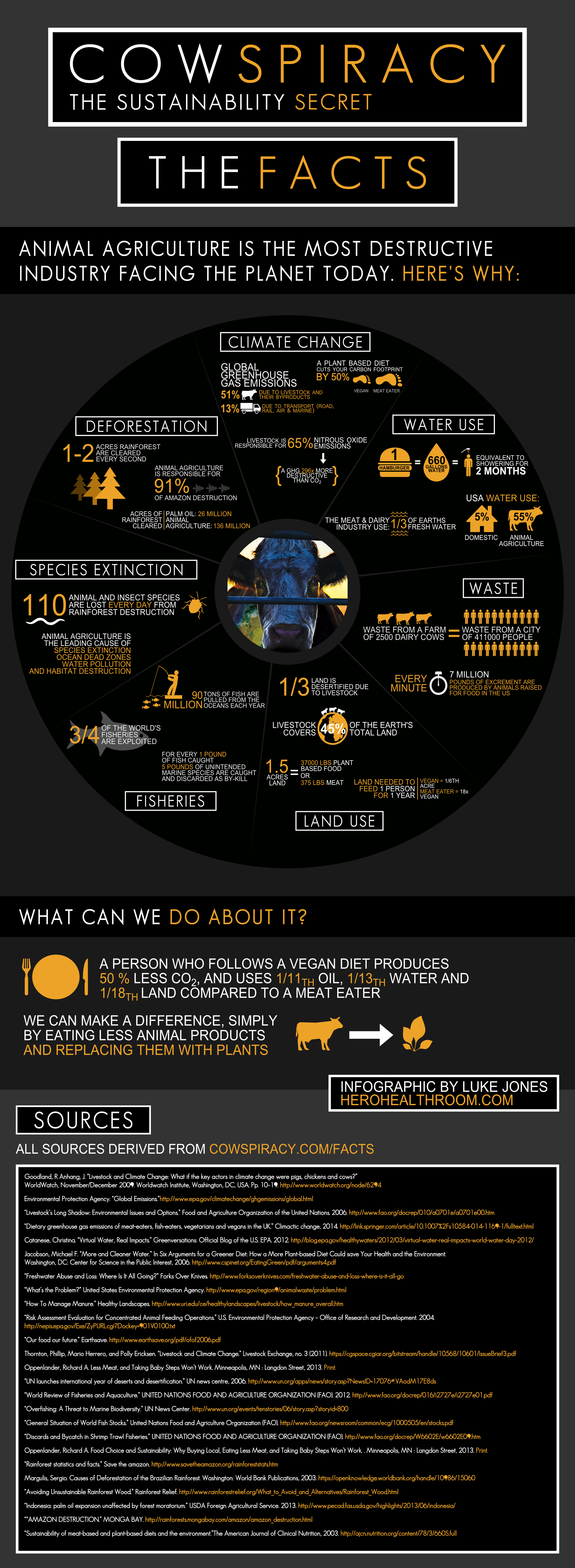
The first documentary I watched was Cowspiracy, followed by Food Matters and What the Health? The most comprehensive and objective one, in my opinion, is Forks over Knives. If you’re interested in the topic, I recommend to watch that one first. All documentaries are available on Netflix.
Will you never eat meat again?
I’m not entirely sure about that. Right now, being on a plant-based diet is definitely the right thing for me. However, a certain diet doesn’t mean that you have to be abstinent or else you’ll relapse and you have to start from zero again. Everybody should decide that individually since diets are such a personal topic.
But you’re so limited now! What do you eat? There’s nothing left!
At first glance, it might seem that way, especially if you’re used to eat only animal products. But there’s so much variety in all kind of different cuisines. So here’s what I eat:
- Fruits
- Vegetables
- Whole-food options
This Vegan Food Pyramid breaks it down nicely.
My usual breakfast consists of:
- Oatmeal with berries, banana, and almond milk
- Or smashed avocado on dark bread
For lunch I often have:
- Stir-fried veggies with brown rice or quinoa
- Sometimes I order veggie pad thai without any egg
- Veggie sushi with brown rice (there are many different options at our local sushi stores)
- A yummy salad with steamed vegetables, nuts, avocado, and pomegranate seeds
For dinner, I love to make for example:
- Zoodles (zucchini noodles)
- Whole-wheat pasta with tomato sauce or pesto
- Pineapple curry with dhal
- Guacamole with sweet potato fries
- A fresh tomato soup
I currently live in the Middle East, so I also indulge in the local cuisine e.g.:
- Hummus, one of my favorite dips made of cooked, mashed chickpeas, tahini, and olive oil
- Falafel, deep-fried balls made of ground chickpeas
- Baba ghanoush, a dip made of grilled eggplants and diced vegetables
- Moutabal, another grilled eggplant based dip mixed with tahini
- Loubieh bil zeit, green beans in olive oil with ripe cooked tomatoes and garlic cloves
- Mouhammara, a spicy paste-like dip consisting of mashed hot peppers, olive oil, and ground walnuts
- Alayet banadoura, super yummy sautéed tomatoes stewed with garlic, pine seeds, and olive oil
There’s a ton of plant-based desserts as well that can be made at home easily. If I ever need a sugar fix, I get a piece of 90% dark chocolate, which also is vegan.
But what about proteins? You need meat to cover that!
Yep, I get that a lot. While this is wrong, it’s a strong belief in our society. But here’s a thought experiment: Where do the animals that we eat get their protein from? They eat plants; it’s as simple as that. High protein plant sources for example are lentils or edamame.
You can’t eat pizza anymore. Or burgers. Don’t you crave those sometimes?
I do crave pizza and burgers. And I eat them. The funny thing is that I don’t crave the meat or the cheese, but the comforting experience eating with my hands.
There are vegan pizza ordering options or great recipes for easy plant-based pizza dough and vegan cheese. Same thing with burgers: There often are vegan patties available when ordering in. It’s also easy to make them at home e.g. crispy quinoa patties. And yes, they’re really yummy!
Isn’t a plant-based diet expensive?
Surprisingly, it’s not. The most expensive things we used to get at the supermarket were meat and eggs followed by cheese. Now we save up to 30% when we do our grocery shopping.
I’m sure you’re not getting all your vitamins and nutrients without animal products.
I hear this often, but it’s not true. A plant-based diet provides a ton of vitamins and minerals. I only take one supplement, which is Vitamin B12. Not only vegetarians and vegans suffer from Vitamin B12 deficiency, though, but also people consuming meat. Apart from that, I don’t lack anything.
Sometimes, I read that you have to get Vitamin D supplements as well. Vitamin D however is produced by our own body as soon as our skin gets exposed to the sun and not by eating animal products. Other people believe they need to drink milk in order to get their calcium intake for a healthy bone structure.
Surprisingly, studies confirm that a higher calcium intake leads to weaker bones and a higher amount of bone fractures. If you’re interested in those findings, please read here for further information.
Don’t you miss anything?
Surprisingly, not as much as I thought I would.
What do you miss most?
One of my favorite drinks was Baileys on ice, which I don’t drink anymore. Sometimes I miss that. And chocolate ice-cream.
Are you now also a hippie-kumbaya-singing activist who only showers once a week and chains herself to train tracks?
Okay, I made that one up. But unfortunately that’s the image a lot of people have once you mention being “vegan.” Let’s change that together!
So you don’t eat fish?
No, I also don’t eat fish or seafood anymore. But I do eat sushi stuffed with vegetables and avocado.
Challenges I Face in Everyday Life
Restricted choice of dishes in restaurants. Some restaurants only offer food options with animal products, and every dish contains at least butter or cheese. I only noticed that once I started studying the menu more intensively, and was really in disbelief.
The wait staff gets often confused as soon as you mention “plant-based” or “vegan.” So I usually avoid it whenever I can and order instead the vegetarian option “without [insert animal product].”
Depending on the country you live in, there’s a limited availability of some products. I’ve never seen the vegan Ben & Jerry’s ice-cream, for example, or any vegan cheese options in the U.A.E. In my home country Germany, however, there are even vegan supermarket chains.
Few coffee shops offer milk substitutes like almond and coconut milk. Okay, this is kind of a first-world problem, but I need to get my daily coffee fix. Some coffee shops offer soy milk as the only milk alternative, but I don’t like the taste of it. Also the many controversial studies regarding soy simulating estrogen in our bodies confuse me, so I try to avoid larger amounts like a cup full of soy milk.
Endless discussions with so-called friends or acquaintances who feel entitled to judge my food choices. It saddens me.
Encounters with people who offer their unsolicited advice on how veganism is bad for my health (without having a nutritional background or an interest for healthy diets in general).
I never try to educate people without them asking me first, but rather respect the choices everybody makes. Sadly, I rarely come upon the same behavior. However, if someone is genuinely interested in my choice, I’m happy to tell them about it and share my experience. I strongly believe in the saying ‘live and let live’.
Noticeable Benefits of My Whole-Food and Plant-Based Diet:
I sleep like a baby.
My digestion improved significantly.
My life got simpler. I always read the ingredients table on the food packaging in the past. Most of the time, I was worried about the origin of animal products. Did that hen live in a tiny cage in the midst of her feces? What did she eat and where did she lay her eggs? Does “organic” really mean organic? What about antibiotics? Is that really grass-fed beef?
Since I cut out animal products, I only have to worry about the origin of fruits and veggies. Most of what we buy has organically grown in the U.A.E. or has been imported from Asia. I don’t like the thought of fruits or vegetables being flown around the globe, often only ripening on the plane, so we humans can indulge in whatever is not in season at the moment (or never) in the country we live in.
My skin got a lot better.
I feel healthier and more energized.
I cook and bake more and love it.
Some people claim that going vegan helps with weight loss. I’d say it depends from which weight and lifestyle you’re starting. I didn’t lose any weight, but my weight and body composition are also considered normal. Still, my goal is to fit into my jeans and tight dresses from my lean past with more ease, thus to reduce body fat. The journey is the destination.
We spend less money on grocery shopping.
I believe, that my choice reduces animal cruelty and environmental pollution.
My action alone might not make much of a difference, but the actions of a lot of people do.
Have you ever struggled with your health? What was your approach toward getting better?