Tag: angry

  • 5 Tips to Help You Stop Being a People Pleaser

    5 Tips to Help You Stop Being a People Pleaser

    “One of the most freeing things we learn in life is that we don’t have to like everyone, everyone doesn’t have to like us, and it’s perfectly okay.” ~Unknown

    I have a confession to make: I am a recovering people pleaser.

    If I had a dollar for every time I did something that I didn’t want to do because I didn’t want people to be angry or disappointed if I said no, I would be a rich woman.

    I say that I am recovering because, as with any ingrained pattern, sometimes I slip back into the tendency to put other people’s wants before myself and my needs.

    When I talk about putting other people’s needs before your own as a pleaser, I don’t mean being there for someone or helping someone in a way that you want to. If you want to help someone, or you compromise with someone that you care about to come up with a solution that works for both of you, that’s healthy.

    Pleaser behavior goes beyond this and becomes unhealthy when:

    • You say yes to something that you really don’t want to do just to keep someone happy and have an ‘easy’ life
    • You feel uncomfortable about a situation that you’re in but carry on regardless; for example, being asked to do something dishonest or that isn’t in line with your values
    • You feel exhausted and depleted from putting everyone else’s needs before your own and not taking the time out to practice self-care
    • If you do say no (for whatever reason) then you make excuses and spend a lot of time feeling guilty afterwards.

    Luckily, there are some ways that you can start to manage your people pleaser tendencies. Here are five of the most effective actions and mindset shifts that have worked for me:

    1. Make peace with the fact that not everyone is going to like you—and actually, that’s okay.

    The quote at the start of this article says it all. It certainly set my own mindset shift into motion a few years ago when I decided enough was enough and that I was going to start putting myself first.

    When I feel my own pleaser instincts kick in, I always take the time to remember that it’s okay for people not to like me; I don’t like everyone and everyone isn’t going to like me.

    As a pleaser your main drive will be to do everything in your power to make someone like you. For me, and for many other pleasers, this comes from a place of severe low self-esteem. Basically, when people like you, you like yourself; when they don’t, your opinion of yourself drops.

    The best way to lessen the need for validation from others is to start working on loving yourself and increasing your self-esteem.

    As a starting point list all of the things that you love about yourself. Aim for at least ten things initially, and refer back to it and add to it regularly. Also, start treating yourself as you would a loved one or really good friend, and start connecting with people who love and accept themselves as they are. Model their behavior until it becomes your own.

    2. Learn to say no in a way that feels okay to you. (No making excuses allowed!)

    “No” is a word that many of us could stand to use a little more often. How many times have you said no only to go back on your decision when put under a little bit of pressure from another person?

    I used to do that all the time, or I would say no and then make a number of excuses to justify my decision (many of these were white lies to make saying no more feasible).

    The thing with making excuses rather than offering a firm and honest no, complete with a truthful reason that you can stick to, is that it opens up the possibility of negotiation with the other person. If that happens, your inner pleaser is likely to give in and you’ll once again find yourself doing things that you don’t want to do and putting yourself last.

    So, how do you stop this behavior? Say no in a way that feels good to you, but in a way that is strong.

    You don’t have to use a one-word answer, but you should be truthful; for example, “I would love to help, but unfortunately I have booked a me day that day,” or “That sounds like a great opportunity, but I think someone else would be better placed to help.”

    Stick to the original answer and if someone tries to enter into negotiation them simply but firmly repeat it.

    3. Accept that you will feel guilty when you say no to something the first few times.

    Pleasers often feel guilty when they say no to a request. You probably feel that you are being selfish or that you have let someone down. This is misplaced guilt. You have done nothing wrong, and that person will most likely find another solution to their problem.

    When you feel guilty, honor the feeling, but think about how much worse you would feel if you said yes to yet another thing that you didn’t want to do. The likelihood is that this would feel worse. Remember that the guiltily feeling will fade quickly.

    If you feel that bad, grab your journal and list all the pros and cons of your decision. I bet the pros list is longer!

    4. Start setting some boundaries.

    It’s okay to put yourself first. In fact, you will be a happier, more productive, and more amazing person for it. The best way to do that? Set some boundaries. When we stand for nothing, we will fall for everything, as they say!

    Find somewhere quiet, where you won’t be distracted or interrupted, and list all of the things that you’ve done over the past three to six months that you didn’t want to do.

    Once you have your list, go through and write down the reasons that you didn’t want to do each thing. You will probably notice some recurring reasons; for example, it cut into my time with my family, it made me too tired, it wasn’t something I was comfortable doing because…

    Use these reasons to start setting some boundaries for yourself. For example:

    • Getting enough sleep is important to me. If it stops me getting eight hours a night I will say no.
    • I don’t want to be around negative energy. If something is going to expose me to negative energy, I will say no.
    • If something goes against my values of honesty and integrity, I will say no.

    Start by setting yourself four or five boundaries at first, and then practice upholding these over the next few months. You can then add more and gradually build up knowing what you will and will not accept in your life.

    5. Let go of the people who use your people pleaser tendencies on purpose.

    As with anything in this life, there are people who will try to take advantage of your good nature.

    As you begin to raise your levels of self-esteem and start to assert yourself, you will begin to see those who are trying to trigger your inner people pleaser for their own benefit.

    They will be the ones who deliberately try to push your buttons, no matter how many times you say no. They will continue to overstep the boundaries that you set.

    The best thing to do here is to let them fall away from your life and accept the lessons that they’ve taught you about who you are and what you want in life.

    If it’s not possible to let someone go completely, if they are a family member for example, simply create some healthy distance and prepare for any meetings that you may have with them by reaffirming your boundaries to yourself.

    Remember, this is a process and if you slip back into old behaviors don’t be too hard on yourself. But do keep going and making progress, your life and self-esteem will be much better as a result!

  • How to Let Go of the Pain of Anger and Blame

    How to Let Go of the Pain of Anger and Blame

    Sad Woman Crying

    “Resentment is like drinking poison and then hoping it will kill your enemies.” ~Nelson Mandela

    Has anger ever filled you up so completely that you felt you’d explode?

    Two months after I had a baby I suddenly found myself inextricably angry. Yes, I felt the joy and happy stuff that everyone tells you about.

    But having a daughter also triggered a flash flood of buried anger, blame, and resentment. And it was all directed to one person—my mother.

    A therapist told me once that my mother had “verbally abused” me. That launched a fifteen-year process of rehashing and blaming my plethora of emotional issues on my mother.

    But no matter how many therapists or coaches told me that she “didn’t form a proper attachment” or whatever, I always defended her. That is, until I became a mother myself.

    When my own nurturing instinct kicked in, I realized what I’d missed out on as a child. I was overwhelmed by “how coulds.” How could anyone treat a little girl that way?

    The anger overtook me. It was like a well of blame had opened up and I had fallen in. Something had to shift.

    In truth, it happened fast. You might think it would take years to let go of anger and blame so strong it feels like it’s coming out of your eyeballs.

    But once I realized how to let it go, all at once, poof, I was free. Now years later, I’ve never looked back.

    How did I do it? I discovered the profound meaning of two words: perspective and compassion.

    Life is Like a Box of Hair Dye

    My mother grew up in the South in the sixties. I’ve watched enough Mad Men to know that life for women in my mother’s generation was very different.

    Women’s value was heavily dependent on their looks and the look of their houses. Combine that world-view with a heaping helping of stress from an overwhelming job and you get a picture of my mother.

    Think of an uber stressed-out Betty Draper. At thirteen, when my blonde hair started fading to light brown, she started dying it. “Boys won’t like you with brown hair,” she said.

    Yelling was the norm and more I cried the more she yelled. I was an only child, lost in a world where my looks and image were tantamount to survival and nothing I did was enough.

    The Blame-Spin Cycle

    Getting stuck in blame feels like walking through an endless maze, looking for cheese that doesn’t exist. That’s what therapy felt like.

    The more I re-counted the past, the madder I became and the more hopeless I felt. I was spinning in an endless cycle of blame, anger, and resentment.

    What is the end game? What do I do with the fact that my mother’s behavior may have caused me pain later in life?

    It was a well-meaning friend who finally cracked the code, over wine and panic one afternoon. I had called her over because I felt too emotionally unstable to be alone with my infant daughter.

    “Why don’t you just ask her why she did it?” she asked.

    That had never occurred to me.

    I’d Like Perspective with a Side of Compassion Please

    “It was the only way I knew…” she explained, after I found the courage to ask her why she had treated me so harshly.

    My mother then went on to recount tales of her childhood. You know the beginning of Cinderella, when she spends her hours cleaning endlessly at the whim of a demanding mother?

    That’s the image that came to mind as my mom recounted years of cleaning and re-cleaning my grandmother’s house. The family was not allowed to leave the house to do any activities until the house was spotless.

    And of course, the cleaning always took up the entire day, disappointing my mom and her sister every time. My grandmother, it turned out, had been an even stronger product of her environment.

    Why are people the way they are? If you can ask yourself that question before passing judgment, you can save yourself tremendous mental energy.

    When I started understanding the world for my mother and grandmother, I was flooded with intense compassion. Think of Biff in any Back to the Future movie, when manure was inevitably dumped on his head—that was what happened to me with compassion.

    Suddenly I realized that no one is to blame. If I blame my mother for my problems, then I have to blame my grandmother for my mother’s problems. And then I’d have to blame the Great Depression and society for my grandmother’s problems.

    I just don’t have enough space for all of that anger.

    Getting perspective on a situation and fully understanding the whole story is like pulling back the curtain and finding the little man with the booming voice in The Wizard of Oz. It loses its power over you.

    Could my mother have made different choices? Of course she could have. Did she do the best she could with who she was back then? Yes, I believe she did.

    Setting Yourself Free

    What happened happened. No amount of blame, resentment, or anger at my mother will make it not have happened. It is just what happened.

    We can let what happened control us and we can live in blame and anger, or we can let it go and free ourselves. When you hold on to anger, it’s you who suffers. You’re the one who has to live in your head.

    Forgiveness has nothing to do with the other person. You don’t have to tell him that you forgive him, or even talk to her again if you don’t want to.

    This process is simply about changing the way you see someone so that you can stop wasting valuable emotional energy. If you are holding onto resentment or anger, today is the day to set yourself free.

    Right now, think of one person who isn’t safe to walk down the streets of your mind without being attacked.

    Picture your story about that person. Then try to tell the story again from her perspective.

    What is the back-story? Think about her childhood; when did she get hurt?

    Find some way to see the story that allows you to feel compassion. It may not be easy at first, but there is always an answer.

    The forgiveness journey is worth taking 1,000 times over. I can’t even begin to describe how much this idea shifted my experience in life.

    Letting go of the anger feels like flying. By getting perspective on the story and uncovering compassion, you have the power to set yourself free.

    Sad woman image via Shutterstock

  • Letting Go of Anger: Forgiveness Is a Choice and a Process

    Letting Go of Anger: Forgiveness Is a Choice and a Process

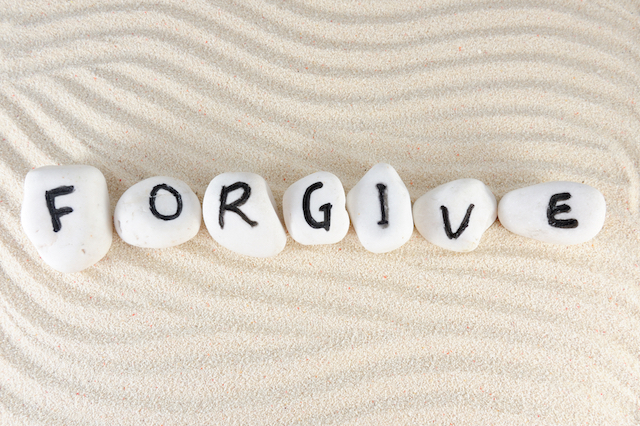
    Forgive on Stones

    “Forgiving someone doesn’t mean condoning their behavior. It doesn’t mean forgetting how they hurt you or giving that person room to hurt you again. Forgiving someone means making peace with what happened. It means acknowledging your wound, giving yourself permission to feel the pain, and recognizing why that pain no longer serves you. It means letting go of the hurt and resentment so that you can heal and move on. ~Daniell Koepke

    My father leaned back in his overstuffed recliner, eating the double-chocolate raspberry gelato I had just bought for him as he stared entranced at the television.

    His feeble body was bent over in pain and his feet were as swollen as sausages. A wave of sadness mixed with acceptance rolled through me and I felt peaceful.

    My father is slowly deteriorating from Parkinson’s disease, and at the age of eighteen, it’s a difficult experience for me to go through. Heck, going through death at any age is difficult.

    For years, my relationship has been very tense with my father. I used to have major “daddy issues” and held onto a lot of pain from my childhood.

    When I was younger, he wasn’t always the nicest man, especially when it came to disciplining. I can remember him screaming at me to get on the ground and do push-ups for back-talking my mother.

    His eyes were full of hate and anger, and for the next ten years I would hold a deep resentment for him centered around memories such as those.

    This past May, I graduated from high school and was faced with the path of choosing a school. I’m a very serious musician, so I auditioned at eight schools all over the country, and got accepted to six.

    It was a major accomplishment. But, as my anger continued to brew for my father and his health deteriorated, I realized that he wouldn’t be here much longer. If I wanted to make things right and receive closure, I had to act now.

    I decided to take a gap year to spend time with my father and take some much needed time for myself. Most importantly I wanted to learn about ultimate forgiveness.

    Giving up all those schools and scholarships was difficult, but what I realized would be more difficult was giving up the healing process I could go through right now regarding my past relationship with my dad.

    So here are three lessons I have learned from going through this process with my father. I’m sure I will learn much more in the year to come, but I believe I have learned some valuable lessons thus far.

    1. Life is too short to hold onto regrets.

    When a life or death situation happens, you soon realize that some things really don’t matter. I could easily hold onto resentment for my father’s actions, but you know what? I don’t want to be thirty-five or sixty-two regretting that I never made peace with him while he was still alive.

    I could wait, because forgiveness doesn’t require his participation, but why prolong my unhappiness? An added bonus has been my ability to enjoy getting to know him a bit from a loving perspective.

    2. Forgiveness is a process; it’s not magic.

    This is a common misconception. Saying, “I’m sorry,” and expecting everything to fade away and be sunshine and roses is ridiculous. You will be angry and feel those resentful feelings again and again. But, you have a choice.

    When you have those feelings, you can question them. Is it really worth it? Can you see it another way? Are these hurtful thoughts bringing you peace? I choose peace.

    3. Real forgiveness does not require two people.

    My father has no clue that I am going through this process or even that I have held some major resentment. If I felt sharing with him would help the forgiveness process, I would share. But in my opinion, it all has to do with me giving up blame.

    My, father, like many people, had a very hard life and abusive parents as role models. He honestly did the best he could.

    This is not excusing his behavior. However, I realize that holding blame just eats me up in the inside. I would rather forgive his behavior and look at how it has benefited me than hold resentment.

    I appreciate the sacrifices he has made for me and realize he was the exact father I needed for my self-growth process. If it weren’t for him, I probably would not have developed such a positive, meaningful relationship with my mother.

    I know his sickness will only get worse from here and I’m at peace with that. I’m happy that my sweet father is transitioning to a better place and am thankful for all of the life lessons he has taught me.

    Remember that life has an expiration date, which should push you to live the fullest every day. And it should be an even greater reminder to love deeply and always, always forgive.

    Forgive on stones image via Shutterstock

  • 40 Ways to Let Go of Anger Right Now

    40 Ways to Let Go of Anger Right Now

    “You will not be punished for your anger, you will be punished by your anger.” ~Buddha

    Anger is merciless.

    It leaves you feeling torn up inside.

    Your head pounds. Your jaw locks. And your muscles scream. Every inch reels in pain with the electric shock that shoots through you.

    You can’t eat, or sleep, or function like a rational human being.

    You’ve good reason to be afraid of unleashing that screaming monster of rage lurking inside you. You’ll likely lose control, lash out, and retaliate.

    Even though you have been wronged, you’ll end up feeling guilty, ashamed, even horrified by your reaction. That’s one more regret your peace of mind wouldn’t stand.

    But sometimes the person you’re enraged with is yourself. That’s a doubly painful blow of anger and self-disgust.

    Being angry is exhausting . . . and yet you’ve found the energy to keep it alive for months, even years.

    I have too. Oh sure.

    I devoted the first half of my life to being angry, silently seething, and ever resentful. I’d periodically explode in rage and then be consumed with shame for losing control and screaming words I could never retract.

    I lived on nerves that felt like they were constantly fried with 40,000 volts. That was a hideous way to be.

    And for the longest time, that burning fury that raged inside me seemed totally justified. All that bitter resentment, well, “what else should I feel?” my thoughts screamed. No chance to be a kid, no carefree years, blissfully unaware of some of the bad things that could happen in life. They were right there, every day. They stole my childhood.

    Growing up in an unpredictable, unhappy environment was the pits. I hated it, hated not being able to escape, and hated everyone involved because they were old enough to know better. They denied me my childhood.

    My anger was borne out of having had no control of those events; my resentment grew out of a sense of loss. Oh boy, bitterness is so corrosive.

    All that anger, all that resentment had to go for me to have any chance of happiness.

    So with a newfound rationality, I learned to listen to my angry thoughts. I heard the pain and sadness wrapped in every one. I recognized the self-harm my anger was inflicting. I realized I’d been the one keeping alive those events and people that had hurt me, and I alone had the power to decide their time was over.

    And that feels incredible.

    I very much want that for you too. To be free. To let go of all that resentment, anger, and rage.

    How? With one small anger-conquering action at a time.

    40 Ways to Let Go of Anger

    1. Look at your rulebook.

    If you never explained your rules to the person who angered you, how can you be upset that they broke them? Maybe their rules are different.

    2. Use aromatherapy to create a calm environment.

    Candles and diffusers alleviate stress and anxiety. Or try a couple of calming drops of essential lavender oil on your pillow.

    3. Buy a recordable alarm clock.

    Wake up to a soothing self-recorded message. Alternatively, use an app.

    4. Recognize that others say and do harsh things out of jealousy.

    Change your anger to compassion because they are obviously struggling with their own negative emotions.

    5. Personalize a keep-calm mug.

    Choose some anger-defeating text for your mug. Use it at work or home.

    6. Let your anger fizzle out with a bath-bomb.

    Relax in a warm bath as you watch the bath-bomb and your anger fizzle away.

    7. Quiet your anger.

    If you’re likely to fall into a rage when speaking up, say nothing at all. “Silence is sometimes the best answer.” ~Dalai Lama

    8. Visualize your anger as a drop of water.

    Close your eyes and see your mind as a crystal-blue ocean of calm. See your anger as a single drop of water falling into your calm ocean, barely causing a ripple before being absorbed.

    9. Create a universe of peace in your bedroom.

    Make a night sky with luminous stars and planets. Lie on your bed with the lights off, and pick a star to project your anger onto. Now re-focus to see the whole galaxy with your anger as a tiny dot among a universe of peace.

    10. Put your anger to bed.

    Anxiety and irritability are instigated by lack of sleep. More sleep can be as effective as conscious meditation. “Sleep is the best meditation.” ~Dalai Lama

    11. Take responsibility for your anger.

    Someone can influence your anger response, but only you control it.

    12. See your anger as a boiling kettle.

    Flick the switch to off as if you were turning off your anger. Let your temper cool down like the kettle.

    13. Look at who you’ve become.

    See how letting go will allow you to be true to yourself and finally at peace.

    14. Paint an angry mouth on an hourglass egg timer.

    Now paint a happy mouth on the other half. Turn your angry mouth upside down and watch the happy mouth fill.

    15. Understand that you are only hurting yourself.

    “Holding onto anger is like taking poison and waiting for the other person to die.” ~Unknown

    16. Recognize their inner angst.

    This is the real reason they acted like they did. Heal your anger by setting out to help them feel better about themselves.

    17. Blow up a dozen balloons.

    Write an angry thought on each one and step on them until they pop, leaving only the shredded remnants of your deflated anger.

    18. See your anger as a runaway horse.

    Imagine it trying to break out of your “mind paddock.” Rein it in.

    19. Use wise words to halt angry words.

    In confrontational situations, remember: “Speak in anger and you will have made the best speech you will regret.” ~Dr. Laurence J. Peter

    20. Wear a calming color.

    Avoid confrontational colors like red and black. Instead wear calming blue or soothing green.

    21. Have a calming message engraved on a ring.

    Avoid anger by playing with your ring and thinking of those soothing words.

    22. Use a mirror for self-reflection.

    Look in the mirror and let your anger out. “The more you hide your feelings, the more they show. The more you deny your feelings, the more they grow.” ~Unknown

    23. Shred a physical representation of your anger.

    Take those hurtful letters, print off those emails, or write out your angry thoughts. Push the pages through a shredder, and reduce your anger to tatters.

    24. Record yourself describing your anger.

    Capture your angry thoughts on your phone or computer. Listen back to this as if it were a good friend telling you theirs. Offer yourself the empathetic advice you would give a friend.

    25. Repeat a happy mantra.

    Regain control of your emotions by repeating, “I’m a happy person who does not see the benefit of staying angry.”

    26. Choose a positive, healthy outlet.

    Use feel-good endorphins to dispel anger by going for a run or singing loudly and dancing energetically.

    27. Express your anger to a friend.

    A supportive environment can be hugely beneficial in getting your emotions out safely.

    28. Use a self-hypnosis video.

    Hypnosis can help you get your anger under control. Alternatively, try a registered hypnotherapist.

    29. Shift your perspective.

    If you cannot change the events that have made you angry, change your perspective for the sake of your peace of mind.

    30. Take a soothing shower.

    Wash away your anger with calming ylang ylang or chamomile shower gel.

    31. Personify your anger.

    Imagine it as a fiery-tempered troll in your path. Push it away.

    32. Remind yourself that you have a choice.

    Between stimulus and response there is a space. In that space is our power to choose our response.” ~Viktor E. Frankl. Decide that your response will not be anger.

    33. Keep this quote on you at all times:

    “He who angers you, conquers you.” ~Elizabeth Kenny. Repeat it to yourself when you feel anger rising, or pull it out and read if possible.

    34. Take a step back.

    In a confrontational situation, physically take a step back.

    35. Be honest with yourself.

    What are you achieving by holding on to anger? Is it a case of injured pride that you would really love to swap for forgiveness?

    36. Picture angry thoughts as bitter, poisonous seeds.

    Stop these from taking root in your mind. Instead, raise a happy, forgiving “mind garden” by populating your thoughts with anger-defeating quotes.

     37. Plant a garden of compassion.

    Take the idea above a step further with a flower border or window box. For your own well-being, plant a flower for anyone who has angered you to signify your wish to forgive them.

    38. Weed out your anger.

    When you tend your Garden of Compassion, picture each weed you root out as further uprooting your anger.

    39. Seek help to defeat your anger.

    If you feel stuck in a cycle of resentment and anger, consider taking a course.

    40. Laugh at your anger.

    “People are too serious. All the time, too serious.” ~Dalai Lama. Anger is sometimes just injured self-pride. It’s not easy, but try not taking yourself so seriously.

    Beat Your Inner Anger Monster for Good

    Being angry has stolen your happiness for too long.

    It’s eaten you up from the inside and shattered your peace of mind.

    It’s even affected your health.

    But worse still, it’s allowed the person or events that caused your anger to have power over you.

    Just imagine getting through a whole day without losing your temper.

    Imagine that seething resentment disappearing, leaving you feeling liberated of all those toxic thoughts.

    Imagine being able to react with forgiveness instead of rage and being able to respond by letting go rather than clinging on to old hurts and wrongs.

    By taking small, simple actions, you can take great leaps in beating your anger monster for good.

    Try to be open-minded in letting these ideas speak to you. Pick the ones that shout loudest.

    Put yourself back in charge of your emotions, your life, and your happiness.

    Happy woman image via Shutterstock

  • How To Stop Being A Slave To Your Emotions

    How To Stop Being A Slave To Your Emotions

    Emotions

    “I don’t want to be at the mercy of my emotions. I want to use them, to enjoy them, and to dominate them.” ~ Oscar Wilde

    Would you describe yourself as emotional?

    Do you feel like your mood can change instantly according to what happens in your day?

    Then you may be a slave to your emotions.

    Being an emotional person and leading with the heart can both be great qualities. Leaning into our feelings allows us to be more self-aware and helps connect us to others. But if we allow our emotions to dictate how we live our lives, it can lead to anxiety, depression, and even have a negative impact on our health and relationships.

    As an empathetic person who feels things deeply, I have learned this lesson the hard way.

    It took me many years to grasp the concept that all emotions stem from thought. As a young woman with low self-esteem, I didn’t realize that my negative self-talk and sensitivity to others’ opinions were having a profound effect on my emotions and moods.

    After years of faulty thinking about who I was and what I had to offer in life, I found myself in my doctor’s office clutching a prescription for anti-depressants. My emotions had officially taken control of my life.

    At the time I had no idea that each negative thought was having a compound effect on how I viewed myself and my life.

    The older and wiser me has learned to be very aware of my emotions and to check in with myself on several levels before allowing them to have the final say.

    Here are some of the lessons I’ve learned over the years to help me manage my emotions rather than allowing them to lead the way. 

    Validate your emotions first.

    When you find yourself riding the wave of emotion, it’s important not to dismiss those feelings. Emotions can be a lot like unruly children in need of attention. Once we validate them, we allow them to be seen and have a voice.

    Feeling our emotions is an important part of life; it’s what we do with them that can create problems.

    For example, if I’m feeling bored, sad, or lonely, I tend to turn to food for comfort. This usually doesn’t end well. As I gain weight I then feel even worse because now my self-esteem suffers. Leaning into my emotions instead of numbing them with food has been a huge part of my process.

    When we validate our emotions, we become more aware and accepting of them, and we begin to understand where they come from. It’s only in this place of awareness that we can see what power they may hold over us. 

    Be aware of your triggers.

    If you know you struggle with specific emotions, such as anger, jealousy, or fear, try to become aware of the circumstances that trigger them.

    In my own life, I have learned that I often feel angry when I am disrespected or unappreciated. So if I ask my kids several times to do something and they ignore me, I feel anger beginning to rise inside.

    Not too long ago I would have given in to the emotion and started to shout, whereas nowadays I’m able to tune in to the preceding thought—they don’t respect me—recognize that it isn’t true, and avert the anger. 

    Awareness is power; it gives us the control to choose how we respond.

    Always remember that emotion is derived from thought. If we find ourselves experiencing strong emotions, it’s helpful to examine the thoughts that preceded them. Then ask the question, are these thoughts based on truth, or my perception of the truth? 

    Write it down.

    One of the biggest tools in helping me deal with my emotions has been to write them down. I have been journaling daily for about three years now, always asking questions about my emotions and trying to dig beneath the surface-level thoughts.

    If I feel at the mercy of my emotions, I’ll ask a simple question in my journal, such as, why do I feel so overwhelmed today? From there I can work back through the sequence of events and thoughts that have led me there.

    I will then ask a positive action question to engage with another emotion, such as, what is one positive thing I can do for myself right now?

    If you don’t have time to write, try to at least ask the questions.

    Take responsibility.

    How many times have you told someone that his or her actions made you feel a certain way? For example, “You made me angry when you were late.”

    It’s true that other people’s words and actions affect us, but we also need to take responsibility for the emotions we feel in response to those words and actions. No one can make you feel anything; it’s always your choice.

    So often the reactive emotions we feel are based on our own perception of the truth, and on the things that matter to us. Being late may be one of your triggers for anger, but for someone else it may be their norm and no big deal.

    Consider also that people act a certain way based on many influences that differ from your own, such as culture, upbringing, beliefs, and life experiences.

    Take time away.

    When you’re strongly connecting with a negative reactive emotion, it’s important to take time away from the person or situation you are reacting to. Never act on strong emotion. Wait until you are feeling calm and have given yourself time to rationalize and think. Only then should you act. 

    Even if the emotion is a positive one, it can still lead you down a destructive path. How many times have you done something you later regret in the name of love?

    Create your mantra.

    It’s easy to say, “Take time away,” but hard to do in the heat of the moment. If I find myself beginning to anger and I’m not able or quick enough to remove myself from the situation, I try to connect with my mantra. A mantra is just a word or short phrase that helps you become aware of your emotion and not be controlled by it.

    The word I use is “soft” because I associate this with a gentle temperament. For you it may be something completely different, depending on the emotion you are most reactive to.

    Ultimately, it’s important to remember that you are not your emotions—you have the ability to decide if they lead you or if you lead them.

    As you build awareness and learn to recognize your triggers, you will become increasingly savvy about when your emotions are serving you well and when you may need to take charge of them.

    Emotions image via Shutterstock

  • Dealing with Anger Storms Without Causing Destruction

    Dealing with Anger Storms Without Causing Destruction

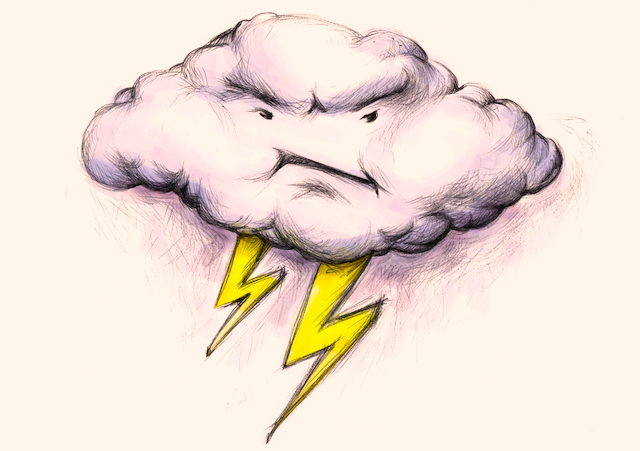
    Angry Thundercloud

    “Anger is like a storm rising up from the bottom of your consciousness. When you feel it coming, turn your focus to your breath.” ~Thich Nhat Hanh

    There is an elderly lady—I’ll call her Ms. A—living in my mum’s village. She regularly shouts at people as they pass by her house walking their dogs.

    She can be quite intimidating really. She even followed my mother up the road on one occasion, much to Mum’s alarm. My mum, unlike me, now avoids walking past her house, even though it’s a good route for her to take when walking her dog.

    Ms. A has also shouted at me and called me names on a number of occasions. The thing is, I know Ms. A has mental health issues, and I have remarked to my mum how much she must be suffering, poor lady, and needs our understanding rather than our condemnation.

    But on this particular day, all my good thoughts and intentions went right out the window.

    I’m embarrassed to say that when she came over to shout at me, instead of walking by like I usually do, I went right up to her and shouted angrily back.

    I became the intimidator then, telling her, in no uncertain terms, that she really must leave my mum alone and also stop shouting at me and calling me rude names when I walk by on the public road. I said I would report her for harassment if she didn’t stop.

    She shouted back at me, of course. She also looked rather alarmed.

    After I finished my rant, I resumed my walk, shaking. I felt absolutely rotten—guilty, ashamed, sad, and embarrassed. I was horrified at my reaction.

    It was an uncomfortable walk home to my mum’s that day. I knew I hadn’t helped the situation at all. So much for my understanding and compassion!

    So what went wrong? When I looked within, I realized I’d approached the house thinking a number of unhelpful thoughts due to my desire to protect my mum and my perception of being wronged. Some of my thoughts included:

    How dare this woman intimidate my mum?! I really should put her in her place and stop her from doing it again. And how dare she say those rude things to me?!

    It’s a public road; I’m doing nothing wrong by walking here. She’s the one in the wrong, not me, so I have the moral high ground! Yes, I’ll sort this situation out once and for all—I’ll tell her!

    All these stormy thoughts were racing around my head as I neared her house. Looking back, I also realize how much I always dreaded walking by there. I didn’t like getting shouted at, but I didn’t want to change my route either, as that seemed unfair.

    All this was a heady mix of thoughts and emotions, and more than enough to initiate a storm.

    By the time I reached her house, where she was standing, seemingly waiting for me, the storm hit, and I was lost to it.

    It certainly wasn’t my finest hour, but I learned a lot about myself in the subsequent analysis of the whole sorry incident.

    I realized that my reaction had come from a place of darkness, a place where my own distress lurked, and that shining a light on it would help to illuminate a much better way to respond in the future.

    I also realized that it had been a premeditated outburst, in the sense that my thoughts had helped whip it up. I saw too that I had gotten it all wrong: my thinking and perceptions were faulty. Ms. A was limited in her ability to control herself, due to her mental illness, and she really wasn’t a threat to either my mum or to me.

    I could also see and understand why this storm had arisen and what was at the root of it. This led to me feel more compassion for myself, which in turn helped me to face, and also own up to, my angry outburst.

    I once wrote about a tree I had walked by in the forest. It was crowded by other trees, and it had curved its way around them to reach up to the available sky. I realized that this curved tree hadn’t gotten caught up in how unfair the situation was; it had just gotten on with things and found the light it needed.

    This nature lesson advises us to ‘curve around’ more when a situation calls for it.

    By this I mean refusing to get caught up in a “that’s not fair!” mentality or get worked up over things that are of little consequence in the big scheme of things. This isn’t a helpful way to live our lives: it causes a lot of unnecessary stress.

    I’m not saying that we should just roll over or back down all the time; rather that it would be much better for us to not rush into situations without thinking things through carefully and dispassionately beforehand. I’m all for being (calmly) assertive when it’s required.

    It’s about looking at the bigger picture and taking a more balanced and less inflexible approach to life.

    Thinking about Mother Nature and anger storms, another lesson occurs to me: nature doesn’t take revenge.

    Even though we can sometimes think that nature must be angry with us and is hitting back at us with devastating storms, floods, and hurricanes, in reality it is just in the process of bringing balance back to the planet.

    Please note, I am not denying the immense human and animal suffering such events cause. My point is that nature bears no dark ulterior motive—it isn’t taking its revenge on us.

    Nature doesn’t think to itself that we need bringing down a peg or two; that we are getting out of hand and need to be punished. It isn’t reacting from a place of aggression. It just does what it needs to do to survive the best way it can. These storms are not sent as a personal attack on us.

    And that’s the problem with our own angry reactions; they often come about because we take things so personally.

    We can feel that we are personally under attack in some way and then go on the attack ourselves. Tit for tat. Not a good idea, as things escalate—they always do!

    If we can learn to step back and realize that someone’s anger has everything to do with their own suffering, rather than with us, we may be able to take things less personally and not feel the need for revenge.

    We may (or may not) need to take some action, but if we do, we can do it from a place of non-aggression, like Mother Nature. We can also do it from a place of clarity and calm. For this, we need to stop, focus on our breath, and let the storm clouds pass.

    I learned a lot about myself that day, stuff I didn’t really want to own up to. But I did, and I’m grateful for the lessons.

    Next time I will be more mindful of my thoughts and not let them whip up an unnecessary storm. And if storm clouds start to rise up, I’ll focus on my breath and walk on by. I’ll look at what’s happening inside me and remember, too, to take on board the other person’s distress.

    I’ll also take a leaf out of nature’s book on responding to stressful situations: I’ll curve around when I think it’s the best approach and try not take things so personally.

    Angry thundercloud image via Shutterstock

  • How To Respond When Someone Takes Advantage of You

    How To Respond When Someone Takes Advantage of You

    Sad Woman

    “You may not control all the events that happen to you, but you can decide not to be reduced by them.” ~Maya Angelou

    Several months ago, I moved into a new house. During the inspection of my old house, I was expecting to receive my whole security deposit back.

    I didn’t. The landlady took advantage of the situation and withheld part of my deposit.

    She charged me the price of cleaning the whole house even though I was only renting a room in the house. And she charged for me something that was already damaged when I moved in, falsely claiming that I was the one who damaged the item.

    There really wasn’t much I could do. The amount of money she was keeping wasn’t enough to make legal action worthwhile. Nor, obviously, could I force her to give me the money.

    What made the situation even worse is that I had repeatedly gone out of my way to help the landlady. Whenever she asked me for a simple favor, I did my best to oblige.

    The truth is that I considered her a friend. Yet in the end, all she cared about was money.

    Anyone who knows me knows that I’m a calm, easy-going person. It takes a lot to get me upset.

    This got me upset. I ranted. I raved. I yelled. All to no avail.

    I was completely powerless to change the situation, which is probably what caused me to react the way I did.

    I’m not proud of how I acted in this situation. I obviously felt quite frustrated and my feeling of powerlessness fueled my anger.

    At the same time, I know that I could have handled the situation better, that I could have behaved in a more mature way.

    Since this happened several months ago, I’ve had plenty of time and emotional distance to think through what I could have done differently.

    When possible, prepare ahead of time for the worst.

    I was caught off guard. Before the meeting with my ex-landlady, I never considered the possibility that she might withhold part of my deposit.

    If I had a do-over, I would have mentally prepared myself ahead of time for this possibility. The benefit of preparing for the worst is that I would have overestimated the amount she might withhold.

    I still would have been upset about not getting my full deposit back, but much less so.

    Advocate for yourself without losing control.

    Even if you’re in a situation in which the other person has control, you can still advocate for your position. You can try to get the other person to see your point of view and perhaps negotiate an agreement.

    Losing control, however, doesn’t allow the other person to hear our point of view and rarely gets us what we want.

    Instead, losing control can cause situations to degenerate quickly and can lead us to act in ways that we later regret.

    If you calmly advocate for yourself, there’s no guarantee you’ll get your way. But losing control does guarantee that you won’t get what you want.

    Take the higher road and preserve your integrity.

    If the other person has complete or almost complete power over the situation and they refuse to compromise or negotiate, you’re probably best off taking the higher road and preserving your integrity.

    Be the bigger person. Just because someone else chooses to act without integrity, that doesn’t mean that we have to follow them.

    My yelling and ranting and raving accomplished nothing, except to make myself look foolish. And to lower my opinion of myself.

    I don’t want to be the type of person who yells and rants and raves. I want to be the type of person who can assert my position calmly. That’s where my integrity is.

    Acknowledge your own imperfections.

    The truth is that I’m far from perfect.

    Have I ever engaged in similar behavior, being less than honest with someone else, taking advantage of someone else? The answer is yes.

    In Byron Katie’s The Work, she asks us to do “turnarounds” in which we look inward at our own behavior rather than focus outward on other people’s behavior.

    When I did this, I was able to generate a list of times when I’ve taken advantage of other people, just like my ex-landlady took advantage of me.

    If we want others to be honest in their dealings with us, we need to start by changing our own behavior first. Treat others the way you want to be treated.

    Forgive the other person.

    You don’t have to like the other person’s behavior. But you can still forgive them for the choices they’ve made.

    Forgiveness isn’t about the other person; forgiveness is about maintaining our own peace of mind. Forgiveness allows us to let go of anger and return to a state of peace.

    On the other hand, holding onto anger gains us nothing, causes us more pain, and keeps us stuck in the path.

    Get help or eliminate the person from your life.

    In my situation, there was no need to have ongoing contact with the woman who took advantage of me.

    But that’s not always the case. You might be in a situation where someone who is a regular part of your life is taking advantage of you.

    If you are, then you need to take a good hard look at the situation and decide how you want to handle it.

    You might choose to eliminate the person from your life if they’re unwilling to accept responsibility and change their behavior.

    If you can’t eliminate the person from your life, then another option is to elicit help or support from someone else. Someone who has more power to change the situation then what you have.

    Chances are, at some point in your life, you’ve been taken advantage of by someone you trusted. And you felt powerless to do anything about it.

    In the end, we can’t control others’ behavior, but we can control our own. We do have power over our own choices.

    We might feel helpless in these situations, but the reality is that we’re anything but helpless. The next time you’re in a situation where someone is taking advantage of you, I encourage you to take a pause and mindfully decide how you want to handle the situation.

    Sad woman image via Shutterstock

  • Pacing Yourself When You Want the Pain to Stop

    Pacing Yourself When You Want the Pain to Stop

    Pace Yourself

    “The intensity of the pain depends on the degree of resistance to the present moment.” ~Eckhart Tolle

    I was in pain.

    My legs hurt, I felt nauseated, my heart thumped hard and fast, and I labored for every breath.

    I was halfway up a steep, three-mile hill, and I was so exhausted I could barely keep my bike upright.

    My mind tried desperately to solve this problem: “Should I stop? I should stop. No! I’ve done this hill in the past without stopping—what’s the problem this time? I hate this! Why is this so painful?”

    I glanced over at my riding buddy, Keila. She was pedaling slowly and methodically. I couldn’t hear her breathing at all. Of course, it was hard to hear over my loud gasps.

    I uttered an expletive.

    I kept going. The road stayed the same, but I suffered more and more.

    After twenty more minutes of cardiovascular hell, we reached the top of the hill.

    I unclipped from my pedals and stood over my bike, elbows on the handlebar, head hanging as I tried to regain my breath.

    In the middle of a wheeze I looked over at Keila. She was standing over her bike, too. But she was on her phone texting someone. No sign of struggle there.

    After a few minutes, I was able to stand upright and Keila was done texting. We had climbed this hill together many times. Today had been a bad, bad day for me.

    Still panting, I said to Keila, “That was awful. I wonder why it was so hard this time?”

    A wise and observant young woman, Keila softly replied, “It’s because when you start to suffer, you speed up. And then you get mad.”

    I looked at her for a moment and then, despite my still thudding heart, I laughed.

    She was right.

    An experienced cyclist, Keila acted as my coach when I first started riding. One of the things she always had a hard time getting me to understand was how to pace myself, especially going uphill.

    I had actually become fairly good at it, but today I had forgotten the lesson. Today, when I came to a very steep section of the challenging hill, I tried to speed up to make the pain stop.

    But then I didn’t have enough energy for the rest of the climb and really struggled.

    Out of fuel and suffering, I got angry and swore at the pain and myself.

    After I recovered from the ride, I started thinking about what Keila said:

    When you start to suffer, you speed up. And then you get mad.”

    I began to wonder if this manifested itself in my life off the bike, too.

    It didn’t take long to see the pattern.

    • Averse to being in conflict with anyone, I often sped up during disagreements, either acquiescing to the other person or abruptly cutting them out of my life.
    • Times of confusion or indecision also caused me to speed up such that I would make impulsive choices just so I wouldn’t have to suffer any longer with being unsettled.
    • At the beginning of a long period of deep and heavy grief, I quickly latched onto someone I thought would help me get past the pain only to have that person bring me more heartache and sadness.
    • And, during some of these times of indecision, confusion, conflict, or sadness, I used anger as a motivator to propel me into action, but again, usually in a rash, compulsive manner.

    Inevitably, these “speed up maneuvers” backfired on me. I ended up regretting choices I made, cut off people I would have enjoyed keeping in my life, and lost myself in the process of getting the pain to stop.

    But I also noticed that as I’ve aged and become more conscious of my speed up maneuvers, I’ve learned to pace myself more. To move more slowly and with greater awareness of my actions and their outcomes.

    And I’ve learned that pacing myself doesn’t mean that it doesn’t hurt.

    When I’m on my bike and climbing a hill, I still get to a point that I’m suffering no matter what I do.

    But when I pace myself rather than try to outrace the pain, I have confidence that I can both tolerate the suffering and make it to the top of the hill.

    So now, when I pace myself during life’s struggles, I don’t hold on to illusions that it’s not going to hurt in some way.

    I have confidence in the knowledge that slowing down and moving forward with awareness will allow me to manage the suffering so that I can make it to the top of whatever emotional hill lies in front of me.

    I encourage you to identify your speed up maneuvers.

    What do you do when you’re suffering?

    What are the ways you try to get the pain to stop that only drain your energy and cause you to struggle even more?

    How can you pace yourself so that, even though moving forward may still hurt, you can make it to the top of the hill?

    On our next ride, I told Keila about my insights that sprang from her quiet observation of my cycling struggles.

    She laughed gently and said, “Everything that happens on the bike relates to what happens off the bike, Bobbi.”

    Amen to that, Keila.

    Amen to that.

    Tired man image via Shutterstock

  • How to Use Your Anger to Help Yourself

    How to Use Your Anger to Help Yourself

    “Everything that irritates us about others can lead us to a better understanding of ourselves.” ~Carl Jung

    I’ve experienced many degrees of anger throughout my life.

    There’s the fleeting and mild kind of anger that hit me when I realized I forgot to pack my toothbrush, or when a friend was tardy again for our morning hike.

    Then, there’s the corroding and strong kind of anger that I felt when I discovered that my husband had been lying to me for months.

    Half-truths about his after-work activities and the people he met during those activities led to an affair, and the affair led to more half-truths and bigger lies.

    I was angry with my husband for lying, but also with myself for not having noticed the first signs of dishonesty. Later, I was irate for being so naïve to give him multiple chances to change his behavior, only to be deceived again.

    Angry thoughts would materialize seemingly out of nowhere, and every time the Angry Monster attacked, I felt the urgent need to hide it away before anyone would realize that I had become prey to this negative emotion.

    If I am a good person, I thought, I shouldn’t feel anger.

    We grew up hearing that anger is a weakness. Anger is shameful. Anger is like one of those buzzing mosquitoes that must be squashed before it bites us. Anger is a monster. But now I know that’s not all there is to anger.

    I’ve learned that anger can actually be helpful if we know how to manage it. How? Read on.

    Anger can help you know yourself better.

    I understood that the intense anger I experienced when my husband lied to me shows I deeply value honesty and openness. This allowed me to prioritize these qualities in future relationships.

    Keep in mind that when someone does something that makes you angry, you have the opportunity to learn what your personal values are.

    Also, when anger strikes, take a step back and ask yourself why you’re angry. Are you offended by something that was said to you? This might mean that there is a hint of truth in what the other person said.

    Contemplate offensive comments with an objective mind. If you realize there’s some truth in the statement, use it as an opportunity to become a better person. If you conclude that the comment has no real basis, then you can send it to the trash folder of your mind.

    Anger can help you raise your energy level and move out of depression and despair.

    Based on scientific studies of the energy associated with human emotions, anger calibrates at a higher energy level than hopelessness, apathy, or despair.

    My anger propelled me to try new activities and meet new people to show the world I was reclaiming my dignity and my future.

    Next time anger surfaces, let it drive you to take positive action and to change the unpleasant circumstances in your life.

    You can choose to reject the labels society has assigned to anger.

    When you feel ashamed for being angry, as society says you should feel, you let yourself sink to low energy emotions.

    Your shame and guilt, coupled with repressed anger, can negatively affect your body and create conditions such as heart disease, digestive problems, and weakness of the immune system. Worst of all, you’ll be unable to experience authentic joy.

    One day I asked myself why being angry was such a source of shame. That’s when I realized I had been judging my emotions based on the messages I had received from my environment. These messages were not helping me feel good enough to let go of my anger.

    Instead of becoming a victim of society’s expectations, choose to see anger as an emotion that is part of the human experience and a tool that can help you become a better person.

    You have the power to select how to express your anger.

    Angry people are portrayed as bitter or aggressive, but this doesn’t have to be the case for you.

    Kickboxing became my physical outlet to release any residual angry feelings. You could choose to express your anger through journaling, sharing your feelings with a trusted friend, or going for the fastest three-mile run of your life!

    You decide how long to be angry.

    I realized that although I could use anger in positive ways, it was stealing my ability to be happy.

    I knew I deserved to be happy again, so I reminded myself that I had a choice to let go every time my angry thoughts surfaced. Over time, it became easier to return to a state of peace and contentment.

    You can choose to take advantage of the lessons in your anger, and then let the feelings go. Tell your anger that you’re too busy making the best out of your time to allow him in your life for long!

  • 5 Simple Ways to Quickly Resolve Conflict with Your Partner

    5 Simple Ways to Quickly Resolve Conflict with Your Partner

    “Don’t make a permanent decision for your temporary emotion.” ~Unknown

    You have a small disagreement with your partner, and before you know it, it escalates into a big fight. Sound familiar?

    You then get dreadfully grumpy. You stick your head in the ground like an ostrich and ignore your partner. You think that you have the right to be grumpy or even angry.

    You’re in “war” mode now, and you want to win the battle. You dig a trench, jump into it, and arm yourself with weapons.

    You barely listen to a word your partner says, and all you want is for him or her to say, “I’m so sorry, you’re right.”

    Perhaps this is something that you can relate to. Maybe you find yourself responding in this way at times. But I have to admit, this particular example is referring to myself.

    This was me on a lot of occasions when confronted by a small disagreement with my partner, and something that I still struggle with today.

    It became a bit of a habit. I would get offended quickly, and I’d turn what could have been something that was easily resolved into a big war.

    Why?

    Well, here goes… because I was proud. I didn’t want to admit that I was wrong.

    I have come to realize that not only was my response incredibly damaging for my relationship, it was not very loving or caring.

    It the heat of an argument, it’s easy to forget that and we let our pride get the best of us.

    Every time you give into your pride and start a war, you make a little crack in your relationship. It may not seem to have a big impact at first, but slowly, the crack will get bigger.

    You can compare it to a crack in the window of your car. If you don’t fix it, the crack will become bigger and bigger until it is so big, it can’t be repaired anymore.

    So, is it really worth it? For me, it’s an easy no. Holding onto my pride is not worth putting a crack in my relationship.

    More than anything, I want my relationship to be successful, fulfilling, and full of love.

    5 Ways to Quickly Resolve Conflict with Your Partner

    We all know that it’s not easy to turn off the “pride switch” when we are in the heat of an argument. We don’t want to give in.

    The key is to find tools and strategies to help you respond better when in the heat of the moment. Here are some simple but effective tools to help you have productive conflict, rather than destructive conflict.

    1. Stop in your tracks and choose your response.

    When you are just on the verge of having an argument, you need to make a decision. You need to decide: Am I going to choose to respond positively and productively, or am I going to let myself get angry and annoyed?

    Often, we get angry without even thinking about it. It’s our natural response when confronted with conflict. But once our body jumps into that fight or flight mode, it’s very difficult to turn back.

    The key is to get in the habit of asking yourself quickly, before you get angry: How am I going to choose to respond at this moment? Just challenging yourself quickly might be enough to push you in the other direction.

    2. Ask yourself these questions before you get angry.

    • When I wake up in the morning, will I agree with the way I responded?
    • Will I regret my response?
    • Would I want my partner to respond in the same way?

    These are all questions that can help you to make the choice to respond productively, rather than giving into your pride or anger.

    3. Acknowledge the other person’s feelings.

    A lot of the time when we have arguments, they seem to just go around in circles. 

    “Yes but, no but, yes but, okay but” are words that you tend to hear a lot!

    Acknowledging the other person rather than saying “but” after their every sentence will virtually guarantee that the conversion will make progress. This will also mean that you won’t go around in circles, and, therefore, get more frustrated and angry as the minutes and even hours go by.

    Acknowledging sounds pretty simple, but how do you actually do it?

    It’s more complicated than you think, because overtime we have programmed ourselves to defend ourselves, and not acknowledge the other person during an argument.

    Here’s an important truth to help you break away from that habit: Acknowledging the other person’s feelings does not mean that you agree with what they have done. It does not mean that you are giving in either.

    It simply involves saying something like “I can understand how you have come to feel that way,” not “You are right for feeling that way, and I am wrong.” 

    If you can learn the skill of acknowledgment, you will be amazed at how much less often a small disagreement will turn into a war.

    4. Avoid using rhetorical questions to get what you want.

    It will only aggravate the situation to ask rhetorical questions, such as “Why do you always do that?” or “Why can’t you just be more loving?” or “Why do you only ever think about yourself?”

    It’s not productive at all because it attacks the other person. Rather, you should be specific with what you want. For example, instead of saying,“Why do you always do that?” you could say, “I really don’t like it when you shout at me; can you please stop shouting?”

    Learning to have productive conflict is so important for a happy and successful relationship.

    5. Say sorry.

    Just do it!

    Chances are, during an argument, you are going to say or do things you shouldn’t have. Maybe you got angry, maybe you raised your voice, or maybe you said something nasty.

    The point is, no one is perfect.

    Apologizing for your part does not mean that you agree with the other person’s behavior; however, someone has got to say it first, right?

    So, maybe you can choose to be the person who just sucks it up and apologizes.

    Why? Because you would rather get over the conflict sooner, and enjoy your relationship with your partner.

    In my relationship, I have learned that apologizing more freely has led to significantly fewer arguments and very few fights.

    Rather than fighting with my partner, I can laugh with her, have fun with her, and enjoy her company. And we don’t have to worry that our day or night will be ruined by a silly little argument.

    Pride is a powerful thing that can wrap itself around you and suck you in. Once you’ve crossed that line and have gotten angry, it’s difficult to go back. To help you turn that around and have productive conflict with your partner, be sure to use these tools.

    They have helped me significantly in choosing a better response when at the verge of an argument, and my relationship is much better off for it.

  • When Someone Blames You: How to Cope with Misdirected Anger

    When Someone Blames You: How to Cope with Misdirected Anger

    Blaming man

    “Life becomes easier when you learn to accept an apology you never got.” ~Robert Brault

    My ex-boyfriend is angry with me.

    I met him soon after he had broken up with his then fiancée, and he thought he was ready to move on, but wasn’t. After many months of messing me about, we ended it. I cut off contact because it still hurt me and I still cared for him.

    Eventually, I wrote to him to see if I could get some closure and to consider if we could salvage a friendship. His reply was scathing, vitriolic, angry. He blamed me for the fact that his ex-fiancée would not give him another chance.

    Yet, he had made those decisions. He insisted that it was my fault, and that I had cost him everything, despite the fact that all I had done was support him and respond to his interest in me. I hadn’t even known him before their breakup.

    Beyond that, we had also been, I had thought, really good friends that had connected on a level that is rare to come across in life. It hurt that the person I thought I had connected with like this now felt so much anger and hate toward me.

    It was difficult not to be affected by that, and it hurt me deeply. I fell into a bit of a depression, and even though I knew I hadn’t done anything to warrant such vicious verbal attacks, I still questioned myself and my actions.

    Maybe I did deserve his anger. Maybe I was worthy of hatred.

    Then it dawned on me. This was not my issue. This was his issue and his inability to accept responsibility for his choices. I had not wanted nor asked for any of it! But how was I going to disentangle myself from the hate he was sending my way? I came to rely on five things.

    1.Know your truth.

    I know deep down that I am not the person he sees me as, that I did not set out to ever hurt or destroy him, that I gave so much more than most would have given to a relationship that was not good for me.

    I know that I am a good person. I know with certainty that his anger is misdirected; it’s not my truth. I’m honest with myself to a fault, and I take on what I deserve to and accept blame and mistakes when I make them. This was not my mistake to accept.

    2. Accept that people won’t see your reality.

    People won’t always see things the way that you do. You cannot make someone see what you believe to be a rational truth, nor will you see it from their point of view. Don’t try to; accept that we all think differently.

    3. Let go.

    It’s not worth your constant wondering and worrying. It isn’t good for you to hold onto it and over-analyze it. Let it go; visualise yourself blowing it all into a balloon, tying it off, and letting it drift away. Feel lighter because of it!

    4. Remember, all actions are based in either fear or love.

    Base yours in love. Realize their actions are based in fear. Often, these fears are ones that no one can reach because they are too deep-seated for the person to acknowledge. Accept that, and continue to operate from your own base of love.

    5. Surround yourself with people and things that make your soul sing.

    Let the angry be angry. Don’t let yourself live that way, and don’t deprive yourself of the things that make you happy because you’re giving time to something out of your control.

    See friends, indulge in books or art or physical activity—whatever makes you feel good. You’re not who they think you are; you’re a good person who deserves to live a bountiful, peaceful, happy life. Go and get it!

    Arguing couple image via Shutterstock

  • How Forgiveness Enables Us to Stop Hurting Ourselves

    How Forgiveness Enables Us to Stop Hurting Ourselves

    Healing

    “To forgive is to set a prisoner free and realize that prisoner was you.” ~Lewis B. Smedes

    I was planning a seminar event with one of my good friends. (Let’s call her “Randi.”) It was a great match; she had event planning and design expertise, and great energy in front of an audience. I understood the structure of such an event, and I authored much of the content.

    It was a powerful presentation and we were going to be a great team bringing the material to life. We spent months putting the seminar together: rehearsing, setting the date, booking the venue, designing the graphic announcements, and buying advertising. With only a few weeks to go, everything was in place.

    Then I got an email from Randi. She was still going to do the seminar, just not with me.

    She had a new boyfriend whom she felt he was more suited to her vision of how to present the material. Without consulting me, Randi changed the graphics for the presentation, one of the presenter names, and charged ahead with her new version of the seminar.

    To be honest, I was shocked. I had spent a significant amount of time and money up to this point, and leveraged all of my contacts. I thought we made a great team, and I trusted her without question to carry out the tasks we had agreed upon to make the seminar a reality.

    I immediately called Randi but she didn’t answer my calls (probably a wise thing since I was mad). I wrote to her explaining that a great deal of the content in the seminar was my original material, and she had no right to use it.

    I demanded that she refund my share of the money we had spent on advertising and the venue deposit. She wrote back that she was sorry, but the answer to all my demands was no.

    I was outraged and felt betrayed! I developed a story that I repeated endlessly in my head about what she did, why it was wrong, and how it violated every agreement we made.

    Gathering all my evidence I headed to court: not legal court but the court of public opinion. I went to all my friends and laid out the facts—the evidence—and asked them for a verdict. The verdict was unanimous. Guilty!

    Now I had plenty of evidence that I was right. In my mind the betrayal was not clouded in shades of grey but was black and white: We had an agreement, I trusted her, and she had violated that trust.

    I was right, and yet being right was making me miserable. The more I told the story of what she did, and why it was so wrong, the more unhappy I became.

    Simply put, I was using her to abuse myself. But as long as I kept telling the betrayal story—to myself or anyone that would listen—I couldn’t let it go.

    Eventually the stubborn attitude, “I can’t get past this,” was no match for the awareness that every time I engaged in my story it was like hovering too close to a hot stove. It was unmistakably clear to me that my insistence on being right was burning me.

    Being right (my intellectual interpretation of the event) was a dead end I could never resolve. Repeating my story was like hitting my finger over and over again with a hammer.

    It took a while, but the awareness of what I was doing revealed that there was only one choice I could make to get the emotional turmoil to stop.

    What finally healed me was forgiveness. In the end I didn’t forgive her because it was the right thing to do. My intellect was too strong and the facts too compelling.

    I didn’t forgive her because that’s what good people do. I couldn’t forgive her even though I agreed with what the famous poet Alexander Pope said: “To err is human: to forgive, divine.”

    I could never come to a resolution weighing the pros and cons. I simply chose to give up my story, let the whole thing go, and forgave her because it felt good. Forgiveness was the only medicine that would heal the wound I created.

    When we can’t forgive someone for an offense, and justify being right about it, we are only using them to hurt ourselves. It’s a trap, a maze of suffering without end.

    Being right and getting all worked up about it—our national pastime—only hurts us.

    To heal any hurt caused by the perception that you’ve been abandoned, betrayed, disappointed, misunderstood, or unfairly treated takes a double dose of the sweetest medicine of all: forgiveness.

    Photo by Neal Fowler

  • How to Keep Our Thoughts from Making Us Miserable

    How to Keep Our Thoughts from Making Us Miserable

    Dark Clouds

    “Nothing is either good or bad but thinking makes it so.” ~William Shakespeare

    I thought I knew what happiness was. I experienced it, and did so for a while—that is, what I thought was happiness.

    What I was calling happiness was merely an emotion. Emotions, feelings that arise in the body, come into existence when we have thoughts related to them.

    When I have certain thoughts having to do with anger, then I will feel, actually physically feel, angry. When I have thoughts that are positive, then I will feel the feeling, or emotion, that we call happiness.

    In the past, whenever I felt that feeling, I thought, well I am happy. And how sweet it was. The world seemed perfect, in harmony; nothing needed to change. And I felt it most of the time. When I did, everything was good. But then the feeling would leave. The world wouldn’t seem so balanced or peaceful anymore.

    The feeling would be gone, and I wouldn’t know why.

    I would be able to guess why—maybe I had spent a lot of money recently and didn’t have much left, or a relationship with a woman I liked a lot ended, or maybe I was feeling fearful of the future for whatever reason. I would guess that things like these were the reasons for my lack of happiness.

    I looked closely at my mind. I tried to figure out the patterns. But they weren’t so clear-cut. Sometimes, good things were happening in my life, yet I didn’t feel happy. And then sometimes when things weren’t go so well for some reason, I felt that everything was all right.

    It didn’t make sense. To add to the mess, I couldn’t always control if things were going well or not. Sometimes, I did everything I could, the same things I did when I was happy, and yet the feeling of happiness would escape me. The patterns escaped me until I read an article that told me to look toward thought.

    I looked at what impact my thinking had on my happiness. The article suggested that the thoughts arising in my head were only thoughts and to let them quiet softly.

    I practiced this and new patterns emerged.

    This time, the patterns were easy to see. Every time I was down, it was because I was thinking so much. The voice in my head would ramble uncontrollably, and I would listen to everything as if it were fact.

    The thoughts would pressure me to live and act in a way that would benefit me in the future. They would focus on things I needed to do, things that I wanted, things that would make me happy if I did or attained them.

    They would tell me that I was uncomfortable, to change this, to change that; when I was driving, to drive fast so I could hurry up and get to where I was going; when somebody said something mean, the thoughts would be about how awful this person was.

    But sometimes I would meditate. I’d become aware that thoughts are only thoughts and let them quiet.

    I set time to meditate, but also I tried to do it when I was amongst the regular activities of my life. When I would do this, there would be a period of time when my thoughts became slower, less loud, and they didn’t seem so important that I needed to listen and obey them at all costs.

    Those were the times when I was happiest.

    But then again there were some times in my life when things were going really well. I was on fire. I was killing it in my career; I had good relationships with friends and a woman I came to love. Everything was great. When things went well, I would feel happy for sure.

    I had a hunch, however, that I shouldn’t get too happy just because things were going well. I knew that they could easily change, and they would often; and when things weren’t going great, I would feel miserable. I didn’t want my happiness to become dependent on the circumstances of my life.

    Still, it was hard. The way things were going made me feel happy or didn’t. I couldn’t help it. They would bring about the way I felt.

    When I looked closely, I saw that this was because my thoughts reflected how I was doing. I realized that however I was doing, if I let go of the thoughts about the circumstances of my life, the feelings would go away. I tried to do this even when things were going well and I felt happy.

    I did this because I felt that the happiness that came from the times when I quieted and slowed my thoughts was deeper and more complete than happiness based on my circumstances. It felt more real and less easily shaken.

    And so that brings us to the present. I still struggle to stay centered and avoid becoming connected to my thoughts.

    I try not to focus my energy on making sure things are going well, but I still struggle with this too. When things do go well, I feel happy, but I try not to get too excited about that happiness. I have seen circumstances change in my life so often that it seems silly to be too caught up in them.

    I see others who seem to be going through the same cycles. They seem to get wrapped up in their thoughts, which affects their moods. I see friends whose normal states of mind I know, but when they get caught up in what is going on in their lives and start thinking about it too much, they seem to morph into different people.

    We are all in the same boat. We all have this struggle to stay centered instead of responding emotionally to life in a way that pulls us from the present moment.

    But if we can try to remember that our thoughts are just thoughts, they will fade away and grow silent, and we’ll be filled with a deep feeling of peace and joyousness.

    Photo by Visit Greenland

  • Release Your Anger by Choosing to Lose

    Release Your Anger by Choosing to Lose

    Surrender

    “Genuine forgiveness does not deny anger but faces it head-on.” ~Alice Miller

    I was quietly watching a documentary with my wife when the phone rang. An icy voice informed me that I was supposed to be at work at 6:00; it was already 7:00 PM. It was my boss.

    Great, that’s all I needed—an unexpected night shift with a resented supervisor.

    In my worst mood, I jumped in my pants at quantum speed and then ran toward the train station on the other side of the street.

    Although the road seemed clear, a car was approaching and the driver didn’t see me. Blame it on the text-and-drive trend. Things went in slow motion, the car wasn’t going to stop, and I was right in front of it. I heard a screeching noise.

    The driver, a guy in his thirties, had managed to stop just in time. His face was livid with shock, and he apologized as much as a man’s pride can decently allow it. But adrenaline had gotten me too furious to listen, and there I was, cursing the hell out of a dude I didn’t even know, very close to starting a fight.

    Sometimes you wonder where so many years of meditation have gone…

    Fortunately, I woke up to my senses. My rational brain got back in control; what was I going to do anyway? The poor guy had apologized, I didn’t get hurt, and no real harm had been done. I decided to give up and let him go.

    Now I was alone in the street. Alone, late for work, and still mad. And I only had thirty minutes to blow off steam before starting my shift. It was time to recall what I had learned about stress reduction. 

    I’d like to share the mindfulness tricks that I used that day to recover from this short burst of insanity. I hope they inspire those among you who unleash the dogs of anger a little too quickly, like me.

    Ground yourself.

    When angry, stop whatever you’re doing and fully open up to your sensations. Give yourself a minute to experience the physical buzz of anger—shaking hands, cold sweat, racing heart. Breathe deeply and bring your awareness down to each part of your body.

    Don’t worry too much if you experience confusion; meeting face to face with the brutality of anger is confusing. The first seconds of doing this exercise will be awkward, yet you’ll regain balance faster than usual.

    Learning to reconnect mind and body is the simplest way to pacify yourself. If you train that skill often enough, it becomes a sane instinct that brings you back to normal quickly.

    Watch the mental firework.

    Anger is a red comet leaving a trail of resentful thoughts. It often stirs up your own habitual rumination, and it’s easy to let it carry you away. Just remember that mental agitation is totally harmless as long as you don’t follow it.

    Let thoughts go, don’t engage in the “How could he be so…?” or “I should have told him…” type of thoughts. The chatter can happen without you, in freewheeling mode.

    Inner peace is not so much a matter of keeping your mind quiet; it’s about how comfortable you become with your own thoughts, regardless of how inappropriate they sound.

    Witness the show anger is giving and let it vanish slowly. Once again, it can’t harm you if you don’t take part in it.

    Offer a little compassion.

    The Buddha said that compassion is the best antidote against anger, but ideally you want to verify that claim for yourself. Your own experience will speak louder than a teaching given centuries ago.

    When you’re upset, practicing compassion means having the curiosity to watch your pain and the pain of those who made you angry.

    In my case, it was easy to relate to the distress of someone who almost ran over a pedestrian, even if I was the pedestrian.

    To put it simply: slip your feet in the other person’s shoes and imagine how it feels to be in their position. It’s probably the best way to dissolve hard feelings.

    Win by losing.

    While we’re often advised to be “stronger than that,” the macho approach doesn’t work too well with anger.

    Actually, anger intensifies when you try to dominate it. Your attempts at fighting aversion will strengthen it, so let it be.

    And when I say let it be, I mean decide to lose the battle, surrender. It sounds obvious, but the key to serenity is to stop the struggle—including the struggle to feel peaceful.

    I guess I should have started with that last piece of advice when scolding a car driver, on a nasty day. I’ll try to remember my own advice next time.

    Photo by Minoru Nitta

  • 4 Steps to Process Your Emotions So They Don’t Zap Your Energy

    4 Steps to Process Your Emotions So They Don’t Zap Your Energy

    Smiling Buddha

    “Your emotions are the slaves to your thoughts, and you are the slave to your emotions.” ~Elizabeth Gilbert

    I felt zapped. Depleted. Drained. Out of gas. And I wasn’t sure why.

    • Enough sleep? Check.
    • Enough exercise? Check.
    • Enough nutritious food and vitamins? Check.
    • Health check-ups and tests up to date? Check and check.
    • Reasonable schedule? Check.

    I thought I felt this way because I’d recently had surgery to remove a sizeable tumor.

    But that had gone smoothly, and I was fully recovered and back to my regular schedule.

    However, there was one thing that I noticed since the surgery: I was angry and couldn’t seem to shake it. I don’t think I realized the grip it had on me until I started trying to figure out the source of my low energy.

    I began to wonder if my anger and inability to let go of it could be the cause. I also wondered why I was so angry when the surgery and recovery had gone so well. I should have been happy that the tumor was benign.

    I was in it, but not necessarily conscious of it and not realizing what it was doing to me. The best way to describe it would be an automatic emotional reaction coupled with a lack of awareness.

    I had been zapped by my emotions!

    How we manage and deal with our emotions affects our energy big time.

    Here are four steps to process your emotions so they don’t zap your energy.

    1. Be mindful and consciously aware of your emotions.

    Before we can manage anything, we need to be aware of it instead of acting on autopilot. Awareness puts us in the driver’s seat and allows us to not only engage in the experience, but also decide how we want to respond to it. In this case, we need to realize how the energy of our emotions affects us.

    I noticed that I had been low in energy, and by the process of elimination and observing my behavior, I realized I had been stuck in anger. I had been irritable, argumentative, and overreacting to the smallest things. Once I had observed my behavior, I acknowledged that anger was becoming my main emotional state.

    The next time you catch yourself in an emotional experience, try to notice your behavior and identify the feeling behind it. This will give you insight and a new ability to manage it.

    2. Identify what thoughts are triggering the emotions. 

    Once you’ve observed your behavior and identified the emotion that’s zapping your energy, you need to see what thoughts may be triggering it.

    After I identified that I was stuck in anger, I kept thinking about the surgery and the events that led up to it. I had felt pain in my abdomen, so I went to the doctor and told her this.

    She did a regular check-up and said there was nothing wrong. I was relieved to hear this, and went home and didn’t give it another thought—until I started feeling pain again.

    I went back and told her that I felt pain and I was sure there was something wrong. It was a very strong intuitive feeling. This time she did a quick check and said, once again, “There is nothing wrong with you.”

    I questioned her about the pain, but she rolled her eyes and said, “Ignore it. At a certain age everything starts to hurt.”

    I asked if I should get a test or an ultrasound, but she said it wasn’t necessary, so, despite my intuition, I went home.

    A few days later, I was in pain again and began to think it was my imagination, because a doctor that I trusted said, “Don’t worry; nothing is wrong.”

    My intuition kept telling me I needed to get a second opinion. So I went to another doctor who immediately sent me for a test and quickly scheduled me for surgery after having found a tumor.

    Having gone back through the events, I realized that the few days before the surgery I was livid about what had happened. What if it was cancer? I let precious months slip by because I didn’t listen to my intuition.

    After the surgery, I was so focused on recovering that I guess I just put it out of my mind. After I recovered, the anger set in again, but it wasn’t until I started searching for the cause of my low energy that it started to make sense.

    The thoughts running through my mind post-surgery were: Why didn’t she take me seriously?  How dare she blow me off like that? Why didn’t I challenge her and insist on a test? All these thoughts were triggering anger. I was stuck in it, but not aware enough to figure it all out.

    Always try to connect your thoughts to the emotion you’re expressing. In recognizing the thoughts, you’re able to address them to move through the emotion.

    3. Lean into the emotion and learn from it.

    When we suppress our emotions, we send that energy underground, with toxic effects.

    Don’t suppress your emotions, but also don’t get caught in the energy of them. When we let our emotions hijack us, it’s like we’re on a runaway train. We are not in control. We may get addicted to the surge of emotion and get stuck in it.

    This is what happened to me when I was angry after my surgery; my emotion dictated my behavior, which depleted my energy. When I acknowledged what was happening and leaned into the emotion, I was able to identify the problem instead of just suppressing it.

    When we lean into an emotion, we can learn from it.

    4. Respond proactively to the emotion and transition from it.

    When an emotion lingers, we don’t have to get stuck in it.

    Now when I feel a powerful surge of emotion that I think will hijack my energy and time, I take a deep breath. I then visualize a simple picture with the cause, the emotion I’m feeling, and the action I can take to shift out of it and deal with what caused my reaction.

    For example, if something makes me angry, I visualize anger in a red circle with an arrow pointing to what caused it and another arrow pointing to the releasing action.

    The releasing action usually has two parts: The first part deals with the energy shift. For example, if I’m angry about something, I absolutely have to fit in some form of exercise as soon as possible. Even if I don’t have time and it’s just twenty sit-ups or a quick walk. This releases the energy in a healthy way and clears my mind.

    The second part deals with the cause and what action I can take to address it. In this instance, I promised myself I would always be my own advocate and insist on a test if I feel it is necessary.

    Make this process a habit and it will have a great effect on your energy, happiness, and productivity.

    You can only manage your emotions to the extent that you’re aware of them. Creating awareness gives you the chance to maximize and manage your experience. And by doing so, you can avoid getting stuck and depleting your most valuable resource: energy!

    Have you ever felt like your energy was zapped by your emotions? What helped you move past it?

    Photo by AlexanderStein

  • Forgiving In a Situation That Feels Unjust

    Forgiving In a Situation That Feels Unjust

    Sad

    “When something bad happens you have three choices. You can let it define you, let it destroy you, or you can let it strengthen you.” ~Unknown

    There I was: numb from a conclusion of a dismissal based on a finding that there was “no reasonable prospect of success.”

    Harassed, bullied, victimized, stalked both in-person and online, the Human Rights Tribunal tossed me into another discarded pile of victims to be ignored by the courts because a group of goons were cleaver enough to hide the body of proof.

    My assailants comprised of four individuals. One was a divorced teacher of two children who engaged in inappropriate sexual relationships with three of his immediate students—the most recent being only 18 years old when the relationship began.

    Another was his female co-worker who heinously accused me of threatening her fetus despite never detailing the exact threat, the manner in which the threat was executed, or when the alleged threat occurred.

    The others were a male co-worker who accused me of “staring at him,” despite photo evidence of his flashing the genital regions of another male co-worker, and the presently 22-year-old student who exchanged sexual favors with her teacher and attempted to spread a malicious rumour that I was arrested by local police. 

    Why did I become their target? Because I rejected the sexual advances of the teacher without knowing of his previous sexual encounters within the college program or his current relationship with a student, and filed an internal complaint with the college.

    Most of the information I know today was discovered months after my departure from the academic institution.

    I still have yet to learn of the nature of these alleged death threats I made or what exactly I threatened.

    The accusation of threatening a fetus was most troubling, as there has never been an account of what the exact threat was, how a fetus can be threatened, and when this situation occurred.

    I have been an educator for most of my career and presently assist students with learning disabilities to improve their literacy levels. To have such blatant lies against someone like me who has dedicated so much to assist in the growth of others, and for others to actually believe these lies, was horrendous.

    Local police were baffled that the courts would dismiss what they saw for themselves, and were more than obliging to provide further assistance in obtaining restraining orders against the respondents, as a school employee threatened to physically assault me.

    I understood that a dismissal did not mean that the vice-chair of the Tribunal thought that I was a liar, or thought that none of these actions transpired, or thought that the respondents were innocent of the things of which I accused them.

    It meant that the body of proof and the actions which lead to my victimization were hidden so well that there was reason to doubt the existence of a victim at all—a horrific regularity in today’s world of anonymous online accounts: distorted images, fake lives, pseudonyms used by unknown figures.

    Yes, I know of karma. Yes, I know what goes around comes back around. Yes, I know a guilty soul eats away a person from within until the truth emerges. However, these thoughts and words of attempted condolence did not help.

    Longing and questioning filled my mind in the minutes that followed.

    When would karma come? Did the boomerang miss these people during an attempt for a universal justice? Could cosmetics continue to conceal their ugliness from the world, or worse, could their ugliness actually form a mask onto me for the world to be fooled that I was the perpetrator?

    I needed to find those words that would bring peace.

    Strangely, the source of victimization also served as a means of finding personal salvation: a Google search for the terms dealing with disappointment.

    My first search was fruitful with an anonymous quote from this very website: “Do not let today’s disappointments cast a shadow on tomorrow’s dreams.”

    The satisfaction I gained from this quote was fleeting, as the notion that I still had dreams to hold onto was always true, even during the ordeals with my tormentors. Also, even monsters dream.

    The article (4 Steps to Deal with Disappointment by Raeeka) followed with a useful list of four: Let it out, get some perspective, know your own heart, and practice acceptance.

    While I could recognize the usefulness of this list in my future, it still failed to complete the emotional journey I was presently in.

    I had already accepted what the courts decided and could already devise the rationality behind the decision. Excusing myself for being a bit too logical for the emotions I was experiencing, I continued in my search.

    It was my second search that brought me to a new list from the same website, and a sentence that changed my perspective on everything: “Consider that there is nothing to forgive” (3 Unconventional Tips for Forgiving and Letting Go by Lisa Esile).

    These words made me realize that my complaint filed with the tribunal was an act of telling these respondents that they needed to change for the better and giving them the opportunity to enrich themselves.

    However, if they cannot see how they wronged me and others, how can they ever see the need for change?

    I filed a complaint with the intention of assisting them in improving their current means of treating others when they weren’t open to improvement.

    It would be similar to using such a tactic on a rabid dog; the dog cannot realize that it has rabies, which is bad for it, or that when biting other living things that it causes greater harm than usual. It would be pointless to reason with the creature that it has an illness that needs to be rectified.

    A teacher who abuses his position and shames the education system, not once, not even twice, but three times is clearly someone not on a path I wish to follow. It’s not worth the energy to wait for him to change his course of behavior, let alone to wait for his supporters to change their respective paths to grow from their situations.

    I, on the other hand, have nothing to change in my foundation: I have told no lies; I have not shamed myself in my journey; I have not harmed the progress of others or their education; and I have not disrespected the education system by abusing my position with my students. I can only grow from my experiences.

    Forgiveness has become a term that we use as a sword and a parachute.

    For some, looking for a reason to forgive becomes a journey for revenge—if something bad happens to that hurtful person, then I can forgive them. For others, forgiveness becomes an escape route for their inconsiderate behavior—an “oh well, time heals all wounds” mentality, so why worry about any harm inflicted?

    Forgiveness can only be given to someone or something that you can truly believe would have chosen differently if they had more understanding or different circumstances.

    From what I know, my assailants are similar to the rabid dogs in that they cannot see the problem, so it’s pointless to expel my energy on them. And should they change from their current circumstances, it would be such a change that forgiveness would not be required from me, as they would no longer be the people who inflicted this harm.

    In an unjust situation we sometimes need to accept that the other person is simply incapable of distinguishing right from wrong. And it’s that acceptance that can help us understand and find peace.

    Photo by Casey Muir-Taylor

  • 5 Steps to Learn from Anger

    5 Steps to Learn from Anger

    Anger

    “Don’t wait for your feelings to change to take the action. Take the action and your feelings will change.” ~Barbara Baron

    How do you feel about anger? Growing up, I always felt that anger was “bad.” In school and at home I learned that anger made people do “bad” things, and anger was a source of “evil” in the world.

    I didn’t want any part of that! So, when things happened that made me angry (for example, getting bullied at school), I’d ignore the feelings of anger until they “went away.” I’d go home and cry, feeling these emotions build up inside of my body.

    It felt like I would explode. And I’d sit there, trying to breathe, praying for the wave of anger to pass. Eventually my headache would go away, and I’d be able to breathe easily, but the feelings never quite left my body.

    What I didn’t know then was that those feelings would later transform into deeper feelings of anger and resentment.

    Later, as a young professional, I found that those feelings of resentment turned into paralyzing beliefs and actions that held me back from my deeper calling. I would take the bus or the subway and find myself getting angry if the person next to me was breathing too heavily, or glanced at me.

    I interpreted constructive criticism on the job as personal insults, and I would leave interactions with co-workers feeling angry, frustrated, and hurt.

    When I finally had an emotional breakdown and accessed that anger, I was afraid that it would consume me. What actually happened: I used those feelings of anger as a teacher and means of transforming my life.

    I use these steps to process anger whenever I feel it come up in my body, and I repeat as often as necessary.

    1. Acknowledge it.

    I think about my feelings of anger as being a child who is acting out. That child could be hurt, sad, frustrated. or lonely, but right now anger is the only way it knows how to express those deeper emotions.

    If not acknowledged, short term frustration could lead to long term resentment, with physical effects like tight muscles, insomnia, headaches, and bloating. (I experienced all of these!)

    If something recent has happened, allow yourself to be angry for a set amount of time (15 minutes is usually enough). Yell, punch a pillow, call a trusted friend and vent, or listen to some music that may help you access that emotion.

    2. Understand it.

    If you let it, anger can be one of your greatest teachers. That pure emotion can be a connection to our soul’s deepest desires, and understanding the anger can be the key to moving past it and creating meaningful change in your life.

    Get silent for a few minutes, and have a conversation with that anger. It could be as simple as “What are you here to show me?” or “What am I truly upset about—what is my deeper desire?” The process of questioning the feelings (without judging them) creates space for deeper emotions to come forth.

    3. Move through it.

    It’s important to take action on anger in ways that promote your growth.

    For example, if a stranger was rude to you, you can acknowledge that the stranger’s actions were based on whatever they were dealing with, and had little to do with you. If a family member, co-worker, or friend is constantly irritating you, is there a boundary that you can set? Can you limit your interactions with that person?

    Creating action steps around anger is essential because it puts you back in control of your emotions. We cannot always control what happens to us, but we can always control how we react.

    4. Monitor it.

    Take a step back for a moment. How often do you get angry? Is your anger directed at a specific person, or are there specific situations that get you angry? If so, it may be time to set a boundary.

    It is normal and healthy to have some non-negotiables in your life—things that you will not tolerate. If you don’t like people touching your hair without asking, let them know. If there are events (for example, family gatherings) that are a source of your anger, limit them.

    You have the option to decline those events. People will treat you the way you teach them to treat you; make sure you set clear guidelines around what you will and will not accept.

    5. Be grateful for it.

    You can never truly let go of something unless you do so with love. Love in this sense doesn’t necessarily mean wanting to be best friends with someone who caused you pain, but it does mean accepting the experience, focusing on the positive, and leaving the rest behind.

    One of the easiest ways to connect with love is to express gratitude. When it comes to anger, expressing gratitude can be one of the fastest ways to push the anger out of your system while honoring it.

    If you have a difficult co-worker, or parents that may not fully support your dreams, take some time and be thankful for what they represent in your life. It could be that these challenging individuals have helped you to develop the strength, confidence, and determination to continue on your path.

    As I incorporated these steps into my life and started teaching them to my patients, I started to have a much deeper appreciation for anger.

    All of our emotions—like fear, anger, sadness, and joy—can be valuable teachers along our path, showing us what we truly desire and illuminating our path to further personal development.

    Photo by RenaudPhoto

  • Forgiving the Unforgivable and Ending Your Own Suffering

    Forgiving the Unforgivable and Ending Your Own Suffering

    Man Thinking

    “Resentment is like taking poison and waiting for the other person to die.” ~Malachy McCourtro

    I was completely unprepared for the emotional hailstorm that bombarded me when, back in 2001, I learned that my wife had been having an affair with my best friend of twenty-plus years.

    My normal, predictable life (which I absolutely loved, by the way) had been virtually shattered overnight. Not only did it culminate in a very bitter war (see: divorce), it also marked the onset of a toxic poison that had begun to work its way into my veins: resentment.

    It began with crippling depression—depression so bad that I no longer had the appetite to eat or a desire to care for myself. I spent untold hours (and days) under the protective shield of a comforter in bed, drifting into a slumber of numbness. Sleeping meant that I didn’t have to feel.

    And with an empty house now all to myself, I made a decision to lock the front door and refuse to answer it for anyone.

    Having just had a proverbial knife twisted into my spine by the two people I loved and trusted the most, what good could come from anyone knocking on the door with a smile on their face? People hid vicious claws behind their backs, and I refused to be stuck with them again.

    Signs Of Life

    Then, suddenly but slowly, I began to crawl back to life. I spent less time in bed, began to eat on occasion, and even reached out to talk to family. Calling around to local churches, I learned about a divorce support group that met on Wednesdays, and forced myself to attend.

    The people at this group, mostly other men, served to reassure me that I wasn’t the only one facing the frightening task of putting a broken life back together.

    And even though I cried my way through the first few meetings, a footprint for recovery began to take shape. But the poison of resentment was an entirely different monster—one that would take me a full decade to exorcize.

    Sentenced To Suffer

    Despite acquiring a new set of coping skills, I began to suffer through obsessive thoughts about the affair between my ex-wife and ex-best friend. I tortured myself with the painful details of their intimacy, imagining it over and over again throughout the day.

    And when I slept at night, my mental participation was no longer even required—those obsessive thoughts became a box of terrifying toys that came out to play on their own.

    In my paralyzing condition, I came to believe that having an apology from the both of them was the only way to exhale. But neither of them had any intention of doing so. The affair had already been going on for so long before I discovered it that they could never rightly offer any explanation of value—and therefore, never did.

    So much for exhaling.

    After a whopping ten years of this sort of self-inflicted torture—long after my divorce had been finalized—I realized it was well overdue that I look inward for the answer. No one was going to offer the apology I wanted or felt entitled to.

    I could either choose to forgive regardless, or continue in the pattern of resentment and anger that swallowed my current quality of life.

    Making A Decision To Forgive

    I chose to forgive. To let go, and to recognize the past as a dead era I’d never be able to change.

    Forgiving is a hard thing to do when you feel like the recipient is undeserving—even more so when they have no clear intention of ever apologizing. You’d rather they feel the full weight of your hurt and pain, that they suffer as you suffered, and come to know the same meaning of anguish and sorrow that you have.

    But in refusing to forgive, we wrongly assume that we are dealing out due punishment to a deserving party—neglecting to see the poison we’ve sentenced ourselves to continue ingesting.

    The Weight Of A Grudge

    Refusing to forgive can sometimes become so paramount to our existence that we let it define our life. It reflects in our language, in the stories we tell people, and in our attitudes. And since the pain is familiar, we bask in it, subconsciously teaching ourselves to see the negative in everyone.

    We miss the opportunity to form relationships and build healthy bridges with people under the faulty logic that, since one person hurt us, they’re all out to hurt us.

    Research shows that psychological stress accumulated over a period of years begins to settle as physical pain in the body—pain we can literally feel taking a toll on our well-being. Mindful meditation has worked wonders in alleviating that burden for me since I chose to forgive.

    The final stage of forgiveness, at least for me, was to pray for the people who had wronged me—and I find myself doing so a lot, whenever old feelings start to surface. I pray for their health and happiness in a sort of radical act of kindness—a spiritual adoption, if you will.

    Forgiving is one of the greatest gifts I’ve ever given myself, since with it came freedom and the permission to move on and enjoy what life has to offer in the present moment. A shackle has been removed from my ankle, and I’m free to move about now.

    I was, after all, the only person who could ever remove it to begin with.

    Photo by Will Foster

  • How My Anger Led Me to Forgiveness and Peace

    How My Anger Led Me to Forgiveness and Peace

    “Genuine forgiveness does not deny anger but faces it head-on.” ~Alice Duer Miller

    As an adult survivor of childhood sexual abuse at the hands of a relative, I had become accustomed to keeping secrets. Silence, I was taught, was a good thing. It protected people that I loved.

    So for over a decade, I carried the dark and overbearing weight of my past in secrecy and in silence, believing I was the only one in the world who’d ever experienced such abuse—until I learned from a college workshop that one in four women and one in five men fall victim to sexual abuse by the time they are eighteen.

    Shocked and convicted, a surge of emotions overwhelmed me.

    Later, for the first time, I was able to share my secret with my mother. She was devastated and we cried, but the conversation ended on a peculiar note: “You can’t ever tell your dad,” she said, “because it will destroy him.”

    It felt as if I’d finally surfaced for air after drowning my entire life, and now I was being pushed back underwater, but sadly I accepted it. As aforementioned, silence was a good thing, wasn’t it? It protected people that I loved.

    The seven years that followed proved to be the most tumultuous of my life. I battled suicidal ideation, clinical depression, anxiety, panic attacks, plummeting self-esteem, immeasurable anger and resentment, and the take-home prize of the millennia: unforgiveness.

    I was a highly-trained victim at this point, putting on an Oscar-worthy performance.

    And then one day, I’d had enough. I did what I’d always wanted to do: I got angry!

    Now before you take a baseball bat to your ex’s four-by-four, I’m not talking about the type of anger that features fist fights and flying chairs on daytime talk shows. This type of anger is a process through which you can access the power and peace that can only come from forgiveness.

    There are four steps I have experienced in this process:

    1. Give yourself permission to get angry.

    I was accustomed, as I’ve emphasized, to the golden rule of “silence.” Skeletons were better left in the closet, I thought. Unfortunately, mixed with my already existent people-pleasing ways, this was a recipe for disaster.

    In my journey toward esteeming others above myself, as many of the world’s wisest sages have taught, I inadvertently evolved into a doormat. Talk about regressive Darwinism!

    I wanted to be a good person, and so when I felt anger, resentment, and unforgiveness, I beat myself up over it. I truly believed that I was a horrible person for being angry over what had happened to me. Further, I didn’t want to be the “villain” in others’ eyes or the black sheep in the family who just couldn’t let go of the past.

    But at long last, I finally gave myself permission to feel that anger to the fullest. I gave myself permission to own my anger, and in doing so, I validated myself. I acknowledged that I wasn’t an unfeeling robot or a mindless drone—I was a flesh-and-blood human being with a deep spiritual wound that deserved proper treatment.

    I allowed myself to acknowledge that I was in pain, that it didn’t feel good, and that I was angry about it. As such, a process could then—and only then—begin. I could now travel into the deepest and darkest parts of my soul and bring light to those forgotten caverns.

    2. Share your story.

    There was a time when I believed I would never share my story with a single soul. I could’ve never imagined those long years ago how untrue that would become.

    Every time I share my story, I feel more and more powerful. I’m no longer a victim—I’m a survivor! Sharing your story is not about incriminating the wrongdoer. It’s about validating yourself, owning your experience, and committing to living your best life.

    There may be someone reading this right now who has never shared the life story that’s so burning inside their heart. Whether it’s writing down the story in your personal journal or finally telling a trusted, long-time friend, take this bold step forward. You will feel freedom like never before.

    Your story is nothing to be ashamed about. Come forth from that dark corner into the light. The weight feels lighter with every word you speak, and the story will become easier to share with each telling.

    I believe that if more people realized how liberating it feels to finally share their story, more people would in turn experience the love, freedom, and peace that they so desire and so deserve.

    3. Seek support and wisdom.

    Dealing with anger while bearing the goal of forgiveness in mind requires a life support team. You need to surround yourself with loving people who care about your personal growth and want the best for you.

    And while these people will support your need to validate yourself and feel angry, they mustn’t be people who will talk you out of forgiveness. Instead, ensure that your life support team is stocked with people who understand the power and love that comes from forgiveness and why it’s vital to your permanent joy.

    These people should also be able to ensure that you don’t act out on your anger. Getting angry doesn’t mean treating people unkindly and it’s not a “Get Out of Jail Free” card for nasty behavior and cruel words.

    You’re not excused from characterizing love just because you’re wounded. Trust me: you don’t want to live like that anyway. I can personally attest that it will only leave you feeling more deflated and defeated.

    Whether it’s friends or professional help, your support will be a safe space where you can share your struggles, open yourself up to the insight and guidance of others, and apply their suggestions to your life toward more positive and empowered living.

    4. Have the conversation.

    Once you have progressed through the above steps, there will come a time when you will want to have “the conversation” with the person who has hurt you. If you’re like me, you might be shaking your head, declaring that it won’t happen. I thought the same—until it did.

    And when it did, fists didn’t fly. Neither did chairs.

    Because I’d journeyed through the previous steps, I was able to come from a place of perfect peace. I was in control of my emotions. And I was able to lovingly explain to this individual how they had hurt me, how it had made me feel, and why I therefore struggled with extending forgiveness.

    Six months later, the process came around full circle and I was finally—finally—able to let go of the past and forgive. This didn’t mean forgetting about what happened. It meant reclaiming my life and deciding that the past wasn’t going to have any control of my happiness or my future.

    All because I’d made the choice to stop denying my anger and instead face it head on.

    What about you? Has denying anger kept you from moving toward forgiveness and peace? Try the four steps above. Go ahead, get angry (constructively)! Freedom’s waiting on the other side.