Tag: Anger

  • How to Mend a Broken Friendship (Even if You’re Not on Speaking Terms)

    How to Mend a Broken Friendship (Even if You’re Not on Speaking Terms)

    Two Friends

    “If you judge people, you have no time to love them.” ~Mother Teresa

    I kept thinking about how many years had passed by. Did I really waste four years by not contacting my best friend?

    You see, I had a falling out with my close cousin. Growing up together since childhood, we became best friends—more like brothers through the years.

    That was until we had a huge disagreement. We didn’t speak for what seemed like forever.

    Admittedly, I was the one to blame. Though at that time, I didn’t see it that way.

    When someone means a lot to you and then disappears, it leaves this huge void in your life—and possibly all because you couldn’t admit any wrongdoing. It’s something you can’t sweep under the rug so easily.

    During that time, I wondered what he was up to. Should I try to contact him? It had been so long, I didn’t know if I should even try any longer.

    Sometimes we take a sole stand, even if it’s against close friends. Maybe we won’t budge because we know we’re right (or refuse to admit we’re wrong). And if we can’t make sense of it all, maybe we wonder if we should let it be.

    After four long years, our paths crossed once again. I heard he wanted to get in touch with me. I felt the same and was eager to finally meet up and talk in person.

    It just so happened he also wondered how I was and what I was up to. After our talk, it’s like we never lost a beat. We took some time to bring ourselves up to speed, but we ultimately fixed our friendship.

    Reflecting on my experiences taught me some valuable lessons about how to fix friendships. These may work for you too, if you apply them wholeheartedly:

    1. Let the dust settle first.

    If the argument was recent, allow some time for the psychological wounds to heal. If you do anything now, you may cause more harm than good.

    Tempers flared, and hurtful things were said. Let both of you gain your senses first and reflect on what happened.

    If you get back into the mix too soon before you’ve both had a chance to cool off, you risk experiencing a repeat episode of the same argument.

    Time is your ally, so wait a while.

    2. Purge your frustrations.

    Frustrations can and will arise from time to time, so you’ll need an outlet to release stress and keep them from accumulating. Otherwise, they may undermine your good intentions.

    Sometimes you’ll feel the need to vent and validate your hurt feelings, and that’s okay. It’s not healthy to hold your feelings in and pretend you’re okay, so vent away.

    But at the same time, don’t badmouth your friend to anyone who’ll listen. Instead. Limit your diatribe to just one person you can confide in and trust.

    It’s actually about working through your feelings. Talking out loud about your frustrations not only can make you feel better but can also give you more focus and perspective in the rebuilding process.

    3. Give your ego a break.

    An ego may have good and bad parts, but one thing’s for certain:

    The ego is a projection of how we want people to see us. Sometimes, we go out of our way to protect this projection, but this costs us, because we often don’t allow ourselves to be vulnerable.

    When attempting reconciliation, both your egos are just additional obstacles both of you have to bore through to make meaningful communication between your pure selves.

    Remove any defensiveness you’re harboring and open your heart, exposing your vulnerability.

    Face your fear of unpredictability even if you don’t know if your friend will accept or reject you.

    Keep in mind that your friend needs to vent as well; you must mentally prepare yourself to listen to whatever opinions are thrown your way.

    Lastly, be mindful not to criticize, judge, or complain. These will definitely close the doors to communication. Be sure to keep an open mind.

    Your goal, by withdrawing your ego, is to get your friend to withdraw their ego as well and open up, thus removing barriers in order to reconnect.

    4. Don’t be afraid to reach out first.

    Get over that initial hump. It’s not as difficult as it appears.

    Want to email them? Don’t be afraid to push that send button. That button won’t bite you back.

    Afraid they won’t reply to you? You haven’t spoken to them for a while anyway, so what’s to fear?

    Be fearless, take the leap, and go for it. Go ahead and find a way to contact them. Believe me, you’ve got absolutely nothing to lose, because your current situation can’t get any worse.

    5. End the blame game once and for all.

    Still figuring out who’s to blame? That means you’re still dwelling in the past.

    Blaming something on anyone brings back up your fighting stance. Definitely counterproductive in fixing any relationship.

    Accept the situation for what it is even if it doesn’t make any sense at the moment.

    No one’s perfect in this world, and the last thing you want to do is stir the proverbial pot when trying to fix your friendship.

    Find a way to climb on top of that and gain the advantage of seeing over your obstacles.

    6. Visualize forgiveness before you utter a single word.

    Whatever wrongdoings your friend has committed against you, picture yourself forgiving them, and envision those misdeeds dissolving into nothingness. Let this mindset envelope your soul right before you speak.

    It’s like a golfer visualizing the ball moving through the green into the hole. He has his predetermined path planned in his head leading to his goal. All this visualization before he’s even putted the ball.

    By foreseeing your goal, you’ve already set the right tone from the get-go.

    Whatever the outcome, good or bad, you want your friend to know your intentions originated from peace, not hate.

    7. Apologize for your part in what happened.

    Saying sorry not only eases their pain but also shows that you’re giving a peace offering to the other side.

    Even if you don’t feel you’re at fault, please know you still had some part to play in the fight.

    Say sorry for anything incidental. For example, you took so long to contact them, or you weren’t able to hear their side of it.

    8. Avoid asking “Why?”

    Why is a tiny three-letter word that can cause more damage than good. When asking “Why?” you’re pretty much pinning them in a corner and making them feel trapped.

    It’s like saying, “Explain yourself; you’re guilty!” They’ll get defensive, shut down, or stay silent.

    You can change the question around so that it shows you care rather than appear demanding. Instead of asking, “Why did you act like that?” say, “Did I do anything that made you feel like you had to defend yourself?”

    Asking it this way seems less confrontational and more inquisitive.

    9. Avoid trying to force reciprocity.

    If they’re the perpetrator, don’t feel entitled to an apology, and don’t fish for feedback.

    Expecting something brings your ego back into play. It may cause unnecessary tension and create false expectations that can hinder any improvement.

    Also, it’s possible they may never come around and may never be sorry at all. This is about unconditional love by giving only from your point of view, so it’s best to not expect anything in return.

    If they truly wish to make it work, they’ll come around to explain their reasoning and let you know they’re sorry.

    Doing it this way allows them to learn and grow themselves.

    10. Be prepared to move on.

    This is all about creating peace. However, if after all that you’ve done it does not come to fruition, don’t despair. Know in your heart that you’ve taken the initiative and freed yourself from guilt.

    Why? Because you did everything you could possibly do. Now the ball is in their court.

    Don’t burn any bridges and keep that door open to friendship, but use your best judgment. If you’re treated horribly or abused, after all of your best intentions, then it would be in your best interests to close that door.

    Make That Friendship Even Stronger Than Before

    The positive thing coming out of breaking and fixing a friendship is that both of you know each of your boundaries once you have crossed them.

    It’s like playing with fire and getting burned.

    You now know what not to cross, but at the same time, you’ll have a closer connection from having experienced it. A deeper understanding you couldn’t get any other way.

    Your fixed relationship is sort of like an irreplaceable, cracked heirloom vase carefully glued back together. It may not look the same as it did before, but you can still value it for what it is and fully embrace it for what it represents.

    One thing that I know for sure: if you value this friendship, the time you lose with them can never, ever be replaced. Life is short, and the clock is ticking.

    Get the ball rolling. Make a conscious choice now. Remember, you have nothing to lose and only a friend to gain.

    Friends image via Shutterstock
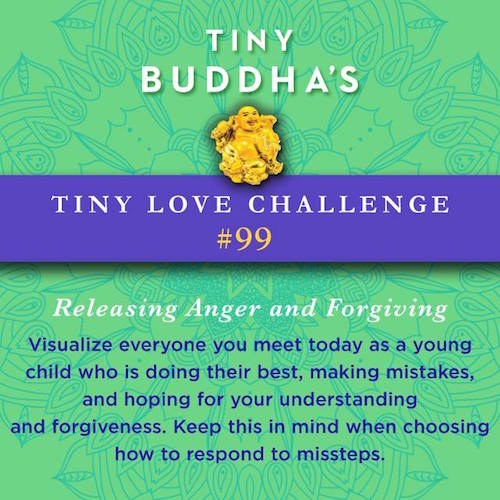
  • Love Challenge #99: Responding to Other People’s Mistakes

    Love Challenge #99: Responding to Other People’s Mistakes

    Doing Their Best Challenge

    How do you respond when a child makes a mistake? Do you respond differently when it’s an adult?

    (This challenge comes from the upcoming book Tiny Buddha’s 365 Tiny Love Challenges. Pre-order before October 6th and get $300+ in free bonus gifts!)

  • Two Steps You Might Be Missing If Forgiveness Doesn’t Stop the Pain

    Two Steps You Might Be Missing If Forgiveness Doesn’t Stop the Pain

    Isolated Man

    “To forgive is to set a prisoner free and realize that prisoner was you.” ~Lewis B. Smedes

    When someone you care about hurts you in some way, most people tell you that to move on, you have to forgive.

    They say forgiveness is a gift you give to yourself. You have to understand what happened from their point of view. Life is too short to hold a grudge or be angry.

    Well, what if you do all that?

    You forgive. You understand that they really didn’t mean to hurt you or if they did mean to, you understand where they were coming from.

    You seek to let go for your own sake, your own peace of mind.

    And it still doesn’t work.

    You still hurt.

    That’s where I was.

    My parents divorced when I was a toddler. As I grew older, I rarely saw him. I mostly tricked myself into believing that I didn’t care, but it hurt. I didn’t feel loveable or worth the effort, and it colored my future relationships with men.

    As part of my healing journey, I sought out talk therapy. During one session, my father’s absence came up as a topic. It was during that time that I allowed myself to even consider some form of reconnection.

    I decided to write my father a letter, sharing how hurt I felt by his absence and asking all of the questions I always wanted to know. That letter started a reconciliation process that has been under way for the past few years.

    As we got to know each other better, I got to understand why he didn’t come around and what he was going through.

    And when my grandfather died in April, 2014, I got to learn even more about my father’s upbringing and feel compassion for the little boy that he was and how the things he went through led him to become the man he became, including him not being around as my father.

    But something still wasn’t right. I tried to reason away my feelings of pain, anger, and hurt.

    “If you had the same kind of upbringing that he did, you probably would have done the same thing. His absence had nothing to do with you or your worthiness as a person. That’s all in the past, just let it go.”

    But that didn’t help me. I was missing something, so I set out to find it. I read, I wrote, I cried, I punched my mattress, and ultimately discovered two things that were missing that may help you too.

    First, I needed to grieve.

    The adult me needed to allow that little girl in me to mourn what was lost. I never got to know what it feels like to be loved by a man as a little girl.

    Somewhere in me I was holding out hope that by reconciling with him, I would fill those needs, but those moments are gone; there is no way that I can completely fill that void as an adult. I had to mourn the loss.

    When we think about mourning, we most often think of death. There are many other losses in life that we need to mourn—loss of health or a relationship or a job, and I would add to that loss of a relationship you wish you had.

    When we forgive someone and try to maintain a relationship with them post-forgiveness, it is tempting to try to get what we didn’t get before. It’s like we’re trying to redo the past in the present, when the past is gone. All this does is cause more suffering.

    What we’re building with this person is new. We must mourn what we didn’t get, mourn what we wanted, that’s the only way to start letting it go.

    And by let it go, I don’t mean that how you feel disappears. I mean that we no longer let it lead our lives in the present even if the feelings are still faintly there.

    There are as many ways to grieve as there are people. If it works for you, do it. You might try:

    • Crying
    • Writing (journaling, letters that you didn’t send, poetry)
    • Watching movies and listening to songs that help bring out deep feelings
    • Talking to a therapist
    • Finding healthy ways to release anger (punching your mattress, boxing, screaming into a pillow)
    • Reading helpful books

    Mourning is a process that takes time and can’t be rushed. It’s best done in a spirit of allowing whatever comes up, without judgment and with great self-care. The more I really allowed myself to grieve and truly feel everything I’d been holding onto, the better I felt.

    In addition to mourning, the second thing I did was to find ways to fill the needs I still had within that I was looking to my father (and other people in my life) to fill.

    Forgiveness and reconciliation should involve open communication of what is needed to move forward with the relationship and a stated commitment from the person who did wrong to change their behavior in a positive way.

    With that said, there are certain things that we need to feel good as humans that we need to give to ourselves and cannot outsource to others, especially if we want to avoid suffering.

    We must take responsibility for the following things:

    • Our belief in our own inherent worth and deservingness of good things
    • How we feel (emotionally and physically) in a given moment
    • The direction our life is going and how we choose to respond to what happens.

    We can trick ourselves in the short term to believe that other people make or break these things, but we are the only ones who can make lasting change in these areas.

    Reconciling with someone will not change these things in a sustainable way.

    Reconnecting with a parent will not make you love yourself more. Reconnecting with a partner will not make you feel like you deserve good things. You may get a boost of good feelings for a little while, but they won’t last without you dedicating the time and effort it takes to build yourself up from the inside.

    This may feel daunting, but you don’t have to make these changes overnight. Baby steps are not just for babies; they can make a huge difference in your life when taken consistently.

    Taking responsibility for your life and how you feel about yourself is worth the effort, especially when you consider that you are the one person you spend the most time with every day. Why not make that relationship the best it can be?

    And if you feel like you’ve been unloving to yourself and don’t know where to begin, one of my favorite exercises I use to help me figure out where to start is to ask “What actions would someone who loved themselves take?” Use your answers to give you a list of first steps and commit to taking one today.

    This may also feel unfair. You might think, “Why do I have to work on myself? I wasn’t the one who did anything wrong!” Just think how powerful you will be when you are not bound by the whims of another person.

    If your friend chooses to be hurtful and you get all your feelings of worth from that friend, then what? That seems like the less fair option.

    I’ve come to believe that the purpose of forgiveness is freedom. Freedom to love yourself and others again (or for the first time) and freedom to live from a place of power. I hope that what I’ve shared helps you continually free yourself.

    Isolated man image via Shutterstock

  • Your Feelings Have Messages for You (So Stop Ignoring Them)

    Your Feelings Have Messages for You (So Stop Ignoring Them)

    Emotions Talking

    “But feelings can’t be ignored, no matter how unjust or ungrateful they seem.” ~Anne Frank

    As a sensitive person, I have a complicated relationship with my feelings. They are the sensors I extend out into the world, to pull it in. They are the guides that help me decide what works or doesn’t work for me. But there are also times when my feelings rise with such force that I am left gasping for breath.

    Then, I am tempted by the thought that not feeling so much would have definitely made things easier.

    And yet, I don’t feel all my feelings. Parts of my emotional life feel numb. For a long time, like many people, expressing anger was extremely difficult for me.

    We’re all like this, whether we think of ourselves as sensitive and emotional or logical and rational. Our emotional lives are a patchwork made up of beliefs we have internalized and things that we have seen modeled.

    We are never taught how to relate to our emotions, and so, we must make our own way through.

    Here are some things I have learned that might help you:

    There is no such thing as a negative emotion.

    We are trained to think of emotions as positive and negative. But in truth, every emotion serves an important function. What would we be without anger to protect our boundaries? Where would we be without fear that tells us that something is wrong? How can we let go of things if we never allow ourselves to feel sad?

    We confuse a negative or destructive expression of a feeling with the feeling itself. Yes, unhealthy expressions can be harmful. But if we banish some feelings and don’t allow them to move through us, we get stuck in places that we belonged to a long time ago.

    These are no longer our reality, but we go on living as if they are.

    Giving up the belief that certain emotions are okay to feel and certain emotions are not okay is the first step to help us process our emotions.

    But many of us don’t even know what is it that we are feeling. How are we supposed to channel something that we can’t even name?

    Expanding our emotional vocabulary can tell us where we are in our emotional lives.

    Think about what happened when you first started learning new words. You had access to a whole new universe. You had a way of naming your experience more precisely than you had before.

    Cognitive psychologists are now finding that a more precise vocabulary (for example, having specific names for light blues and dark blues, as Russian speakers do) helps make people quicker at identifying subtle differences.

    In a similar way, if we can name our emotions precisely, we can identify subtle nuances and hone into what exactly we are feeling. That can help us take the most effective emotional action.

    Karla McLaren, the author of the wonderful The Language of Emotions talks eloquently about the different forms in which one single emotion can show up. Did you know that indifference can be a form of anger? So can coldness, resentment, and impatience.

    In its mood state, anger can show up as sarcasm and arrogance. And of course, we know anger when it erupts in rage and violence. But bitterness is also an intense form of anger, albeit a hardened, calcified form.

    Seeing that anger shows up in different degrees and forms can help us get straight to the heart of the problem.

    McLaren tells us that the question anger poses is: What must be protected? What must be restored? If we are feeling resentful or cold, where have we given too much of ourselves away? What can we do to enforce limits that will make us feel protected?

    If we do this, we catch anger before it morphs into an even stronger form and becomes harder to deal with. We also stay on course instead of getting lost and disoriented about the direction of our lives. For me, the belief that “Nice people don’t get angry” meant that I stayed in an exploitative work situation for several years.

    As soon as anger came up for me, I dropped it. I would work harder, be better till someone noticed me. But what I didn’t realize was that the increasing fear and shakiness that I was feeling was a direct result of rejecting my anger.

    How can you not feel scared and insecure when you have opened yourself up to harm?

    The fear had risen because I had banished the protective energies of anger. I was, indeed, in undefended psychic territory.

    So, fear, another so-called “negative” emotion comes bearing its own important messages.

    My fear took the form of confusion and disorientation. Your fear might take some other form, depending on what the situation is.

    In its diffuse form, McLaren tells us, fear can be experienced as our caution, uneasiness, or instinct. You might feel disconcerted, doubtful, or concerned that something is off. You might feel jumpy, nervous, or suspicious.

    At the root is the same feeling. It’s showing up in different ways, and asking you to probe for answers.

    Is the fear natural? Is it tied to something that is happening around you? What can you do about it?

    But what if you get stuck in one feeling? What if you have repetitive fearful thoughts that don’t track back to real dangers? Then, it’s likely that your feeling response is locked in place.

    This often happens when we have experienced trauma in the past. We remain hyper-vigilant long after the traumatic event is over. If this is the case, we need professional help to release the traumatic material.

    But in the normal course of our days, feelings naturally ebb and flow. They direct our attention to what is happening in our lives. They urge us to take action.

    Venting and repressing feelings are not the only choices we have.

    But what action should we take? Isn’t that the trickiest part of dealing with feelings?

    One of the reasons that I didn’t allow myself to feel anger in my work situation was because I was not sure what I could do with it. Expressing it felt dangerous, because I had stored up so much emotion. Repressing it felt like the only other thing to do.

    Many of us get stuck in this tricky space.

    We keep hearing that the only way out is through the feeling, but doing that doesn’t seem viable without expressing it and hurting someone or harming something in the process.

    One of the ways that I am learning to work with my feelings is to first consciously experience the feeling myself. One way to safely release anger, for example, is to beat pillows for ten minutes or so. That lessens the intensity of the rising emotion.

    Another practice that McLaren suggests is called “conscious complaining.” You sit all by yourself and complain loudly about all the things that are going wrong in your life. Again, we are attempting to use up some of the energy of the feeling, and move it out of our systems.

    For fear, we can put on some music and imitate the shaky energy of the feeling, and lessen the burden that it is putting on us physically.

    Remember that emotions, by their very definition, are energies that move us to take some action. So, a physical release is important.

    Something is rising, and we are letting it move us. We are now just choosing that movement consciously.

    Once we have released some of the energy of the emotion, we can then think of what action we can take to address the issue that it has brought up. For example, if we are angry, how can we restore the boundary?

    One important realization I had about anger was after reading Harriet Lerner’s book The Dance of Anger. In it, she tells us that venting anger is often ineffective. We are trying to convert someone else to our point of view. If they don’t agree to what we are saying, we often get stuck in the space of trying to get them to agree.

    Believing that we need agreement is what keeps us stuck. We are, in effect, maintaining the status quo.

    If it’s something important to us, a limit we are choosing to place, then we don’t need permission. What we need is the clarity and courage to enforce this limit and to deal with the anxiety that rocking the boat often brings.

    This emotional process has been a learning curve for me. It is not easy and I often falter. But whenever I can experience my feelings and move through them, I feel a sense of ease.

    I guess it’s because I am not invalidating my experiences. I am owning them, letting them speak their truth.

    What about you? What will opening to all your own feelings do for you?

    People talking image via Shutterstock

  • Choose to Forgive and Grow from Your Pain, Because You Deserve to Be Happy

    Choose to Forgive and Grow from Your Pain, Because You Deserve to Be Happy

    Sad Man

    “Bad things do happen; how I respond to them defines my character and the quality of my life. I can choose to sit in perpetual sadness, immobilized by the gravity of my loss, or I can choose to rise from the pain and treasure the most precious gift I have—life itself.” ~Walter Anderson

    “Are you really okay?” I lost count of how many times my immediate family and friends asked me this question.

    My positive, light-hearted attitude seemed to be difficult for people to comprehend, but for me it was the only option and means for survival.

    I remember the situation like it just happened yesterday.

    I was driving home during a holiday weekend after hanging out with a couple of friends and received a text message stating, “This is his girlfriend.”

    At that precise moment, it felt like my heart stopped beating for a minute.

    I had to pull over at a gas station to catch my breath and allow the tears to flow down my cheeks so that the road could be visible again.

    I responded to the text and told her to call me. I spent over an hour listening to another woman cry and try to understand what was happening.

    The man that I had been dating for over a year had been with this woman for over five years and to put the icing on the cake, they live together.

    Fact vs. Fiction

    Imagine meeting your dream guy at a wedding party mixer. He was handsome, ambitious, athletic, family-oriented, fun, and the list goes on.

    He was the epitome of a typical “perfect mate” list so many people draft hoping to find that person.

    We had amazing chemistry, always laughing and enjoying good conversations. We spent a lot of time talking about our dreams, ambitions, family, and personal obstacles. It just seemed so easy, perfect in a sense.

    He and I both lived in different states, so we made travel arrangements to see each other.

    I would complain about us not seeing each other as often as I would have liked to, but his gentle reminder about the nature of his demanding job would quickly stroke my compassionate, understanding side.

    It was not until I moved closer that I began to question his behaviors.

    Originally, we lived over ten hours apart, but after I relocated due to a job promotion, we were now three hours apart. The excuses about not being able to travel due to his work schedule were a tad irrelevant at this point.

    His stories about his car being in the shop, which restricted his travel, and the story about his coworker moving in with him temporarily due to some personal problems did not seem to make sense after a while, but sometimes you want to believe the best in a person despite what your instincts are telling you.

    It was not until my hour-long conversation with his live in girlfriend of five years that I realized the extent of the lies he’d told. This dream guy was not the person I thought he was. I had been awakened from the dream.

    You Have a Choice

    It was at this moment, I had to make a decision. Did I want to react from an emotional, hurt place and focus on my pain? Or did I want to help this woman who had plans to marry this man, who lives with him, who has made many more sacrifices than I ever did to be with him?

    See, this woman had been with him to aid him while he transitioned careers, when his family disowned him, when he had nothing. Listening to her story tugged at my heartstrings and made me for a brief minute forget about my feelings.

    So many times in life we get so focused on ourselves and do not lend ourselves to be in the moment and hear others. Yes, what happened to me was like a scene out of your favorite Lifetime movie, but my situation was nothing in comparison to hers.

    I had the option to easily remove myself from the situation and allow time to heal the wound, while she had to literally undergo a complete lifestyle change.

    Life is about choices.

    You can choose to stay in bad circumstances.

    You can choose to listen to your instincts and your gut feelings that tell you something is not right.

    You can choose to support a complete stranger and be the listening ear during their time of need.

    You can choose to release a situation—the pain, the hurt, the sadness, the anger.

    And more importantly, you can choose to forgive someone you never received an apology from. Forgiving an individual who you feel may have hurt you initiates the healing process.

    The first step in the healing process was being able to truly address how I felt about the situation. Unfortunately, I did not have the opportunity to speak to this person to get an explanation or an apology, and I had to learn how to process my feelings without internalizing them.

    Using techniques such as journaling and exercising, as well as speaking to close friends and family about the situation, really helped with getting my thoughts out.

    However, I believe allowing myself to learn and grow from the experience is what helped me to move forward.

    It’s so easy for us to embrace the victim mentality and place blame on other people for their wrongdoing, but this is the very type of mentality that keeps us angry, bitter, and hurt.

    There is healing in accepting your role in each situation, and for me that was accepting the fact that I chose to avoid the signs.

    I wanted to believe that this person truly loved and cared about me and would never hurt me, so I chose to look the other way, and that is not a demonstration of self-love.

    Over the course of time, I was able to embrace the fact that every being is flawed and we all make mistakes. By no means was I or am I perfect, so who am I to hold this grudge and anger toward another being?

    At times, I thought to myself this man is delusional and absolutely crazy for trying to live a double life. However, for a brief moment, I realized he was probably miserable and seeking an escape from his reality and at that moment, I felt bad for him.

    For me, forgiving this man was pivotal for my life and well-being, because I was able to learn the value of self-love again.

    I found strength, joy, overwhelming gratitude, and peace. I also learned one bad relationship is not an indication that every relationship will be horrible.

    Choose to grow from your pain and learn to forgive, because you deserve to be happy.

    Sad man image via Shutterstock

  • Lashing Out is Losing Control; Calmness Is Strength and Power

    Lashing Out is Losing Control; Calmness Is Strength and Power

    Calm Man

    “Self-control is strength. Right thought is mastery. Calmness is power.” ~James Allen

    I would like to share something personal with you. It’s the story of how I first glimpsed what true strength and power is and where they come from. I hope this story helps to further illuminate your journey through life.

    I remember one day when I was in the back seat of my parents’ car. I was probably about thirteen years old. We were parked in a hotel driveway, waiting, though I can’t recall why.

    After a few minutes, another car pulled up behind ours and the driver began to impatiently honk at us. Soon he began to scream and curse as well. I turned and saw a man whose face was bright red, scarred deeply by wrinkles of rage and bitterness.

    The driver had obviously lost control of his emotions, as it was impossible for us to go anywhere with his car blocking us in. It was as clear as day that we were stuck until he moved. What on earth did he want us to do?

    My father sat in the driver’s seat, gazing into the rearview mirror. His face was strained with confusion, trying to figure out how to process what was happening.

    My father is a great man, always striving to do what is right, strictly honest and keen to help others. Finally, somewhat frustrated, my father opened the door so he could go and speak with the impatient man in the car behind us.

    I remember feeling afraid when he stood up because I knew that the other person was really angry.

    I watched my father begin to walk toward the other car. As the car horn continued to blow, my father abruptly stopped and paused. He seemed to be contemplating something, and it appeared as if his entire being softened.

    Slowly, he returned to the car and sat back down. My father’s expression was one that I had never seen before on him: a look of straining and struggle with a hint of shame. Eventually, the other man drove off and that was the end of the incident.

    The image of my father’s face profoundly affected me and was forever tattooed in my memory. I was just a young child and, in my mind, my father was perfect. He was my hero and I idolized him.

    He is not a large man and I have never known him to fight; yet I felt a tinge of disappointment that he hadn’t stood his ground and confronted the other man. I felt that he had retreated. And my impression was that he felt the same way.

    A few days later my father shared with me a dream that he had the night before. In his dream, I had beaten up the man who was honking the horn.

    At the time, despite being young, I was a black belt in Taekwondo. I remember wishing that I really had beaten him up. I wanted to get even with the man who had embarrassed my father.

    I became full of anger. I imagined myself beating him up again and again yelling, “This is for my father!”

    I was angry, partly because he had hurt my father, but mostly because he had hurt me. He revealed to me a flaw in my father’s character: he was afraid and perhaps not strong enough to fight back. It left me bewildered and, for the first time, I realized that my hero wasn’t perfect.

    Something deep inside me was forever changed.

    Years later, as a college student, a friend and I went out for a meal. While eating, an acquaintance of ours lost his temper and began yelling at my friend. My friend listened silently, showing no change in his demeanor.

    Eventually, the man finished yelling and my friend quietly stood up and walked away without saying a word. I was so impressed by how calm he was.

    Later, I asked him how he managed to keep his cool. He smiled and told me, “A strong person is not one who knocks other people down; it is one who does not let his anger get the better of him.”

    I was stunned. I knew that he was completely right. Who demonstrated more strength: the person who had lost control of his temper or my friend who had kept his?

    These words touched my soul and aroused in me an understanding of where true power comes from: it comes from within. And inner strength dwarfs physical strength.

    That night, this realization lingered in my mind. As I was digesting this lesson, suddenly I remembered the incident with my father and the horn-honker, many years before.

    A voice within me asked, “Who was the stronger man?” and chills slowly crept up my spine as I realized that it was, in fact, my father. While the other man had allowed his rage to overcome him, my father had controlled himself.

    The other man had lost; he lost to himself when he allowed his emotions to take over. My father, on the other hand, had stood victorious over himself, conquering his own emotions, commanding them down. The other man was a slave to his passions; my father was the master of his.

    It was then that I saw my father for the truly strong and courageous man that he is. The weak and easy path would have been to return anger with anger, yelling with yelling. But my father had the strength to resist this; he had the power to calm his mind while a tempest raged about him.

    It was in this moment, that my own path became a bit clearer. I realized that I must embark on a journey of conquering myself, because I now knew that I did not want to be a slave. The only other option was to master myself, to command the hidden forces within.

    When you feel negative emotions rising, threatening to overcome you and make you into their puppet, remember that the strength and power needed to maintain calmness lie forever within you.

    Calm man image via Shutterstock

  • How to Let Go of the Pain of Anger and Blame

    How to Let Go of the Pain of Anger and Blame

    Sad Woman Crying

    “Resentment is like drinking poison and then hoping it will kill your enemies.” ~Nelson Mandela

    Has anger ever filled you up so completely that you felt you’d explode?

    Two months after I had a baby I suddenly found myself inextricably angry. Yes, I felt the joy and happy stuff that everyone tells you about.

    But having a daughter also triggered a flash flood of buried anger, blame, and resentment. And it was all directed to one person—my mother.

    A therapist told me once that my mother had “verbally abused” me. That launched a fifteen-year process of rehashing and blaming my plethora of emotional issues on my mother.

    But no matter how many therapists or coaches told me that she “didn’t form a proper attachment” or whatever, I always defended her. That is, until I became a mother myself.

    When my own nurturing instinct kicked in, I realized what I’d missed out on as a child. I was overwhelmed by “how coulds.” How could anyone treat a little girl that way?

    The anger overtook me. It was like a well of blame had opened up and I had fallen in. Something had to shift.

    In truth, it happened fast. You might think it would take years to let go of anger and blame so strong it feels like it’s coming out of your eyeballs.

    But once I realized how to let it go, all at once, poof, I was free. Now years later, I’ve never looked back.

    How did I do it? I discovered the profound meaning of two words: perspective and compassion.

    Life is Like a Box of Hair Dye

    My mother grew up in the South in the sixties. I’ve watched enough Mad Men to know that life for women in my mother’s generation was very different.

    Women’s value was heavily dependent on their looks and the look of their houses. Combine that world-view with a heaping helping of stress from an overwhelming job and you get a picture of my mother.

    Think of an uber stressed-out Betty Draper. At thirteen, when my blonde hair started fading to light brown, she started dying it. “Boys won’t like you with brown hair,” she said.

    Yelling was the norm and more I cried the more she yelled. I was an only child, lost in a world where my looks and image were tantamount to survival and nothing I did was enough.

    The Blame-Spin Cycle

    Getting stuck in blame feels like walking through an endless maze, looking for cheese that doesn’t exist. That’s what therapy felt like.

    The more I re-counted the past, the madder I became and the more hopeless I felt. I was spinning in an endless cycle of blame, anger, and resentment.

    What is the end game? What do I do with the fact that my mother’s behavior may have caused me pain later in life?

    It was a well-meaning friend who finally cracked the code, over wine and panic one afternoon. I had called her over because I felt too emotionally unstable to be alone with my infant daughter.

    “Why don’t you just ask her why she did it?” she asked.

    That had never occurred to me.

    I’d Like Perspective with a Side of Compassion Please

    “It was the only way I knew…” she explained, after I found the courage to ask her why she had treated me so harshly.

    My mother then went on to recount tales of her childhood. You know the beginning of Cinderella, when she spends her hours cleaning endlessly at the whim of a demanding mother?

    That’s the image that came to mind as my mom recounted years of cleaning and re-cleaning my grandmother’s house. The family was not allowed to leave the house to do any activities until the house was spotless.

    And of course, the cleaning always took up the entire day, disappointing my mom and her sister every time. My grandmother, it turned out, had been an even stronger product of her environment.

    Why are people the way they are? If you can ask yourself that question before passing judgment, you can save yourself tremendous mental energy.

    When I started understanding the world for my mother and grandmother, I was flooded with intense compassion. Think of Biff in any Back to the Future movie, when manure was inevitably dumped on his head—that was what happened to me with compassion.

    Suddenly I realized that no one is to blame. If I blame my mother for my problems, then I have to blame my grandmother for my mother’s problems. And then I’d have to blame the Great Depression and society for my grandmother’s problems.

    I just don’t have enough space for all of that anger.

    Getting perspective on a situation and fully understanding the whole story is like pulling back the curtain and finding the little man with the booming voice in The Wizard of Oz. It loses its power over you.

    Could my mother have made different choices? Of course she could have. Did she do the best she could with who she was back then? Yes, I believe she did.

    Setting Yourself Free

    What happened happened. No amount of blame, resentment, or anger at my mother will make it not have happened. It is just what happened.

    We can let what happened control us and we can live in blame and anger, or we can let it go and free ourselves. When you hold on to anger, it’s you who suffers. You’re the one who has to live in your head.

    Forgiveness has nothing to do with the other person. You don’t have to tell him that you forgive him, or even talk to her again if you don’t want to.

    This process is simply about changing the way you see someone so that you can stop wasting valuable emotional energy. If you are holding onto resentment or anger, today is the day to set yourself free.

    Right now, think of one person who isn’t safe to walk down the streets of your mind without being attacked.

    Picture your story about that person. Then try to tell the story again from her perspective.

    What is the back-story? Think about her childhood; when did she get hurt?

    Find some way to see the story that allows you to feel compassion. It may not be easy at first, but there is always an answer.

    The forgiveness journey is worth taking 1,000 times over. I can’t even begin to describe how much this idea shifted my experience in life.

    Letting go of the anger feels like flying. By getting perspective on the story and uncovering compassion, you have the power to set yourself free.

    Sad woman image via Shutterstock

  • Letting Go of Anger: Forgiveness Is a Choice and a Process

    Letting Go of Anger: Forgiveness Is a Choice and a Process

    Forgive on Stones

    “Forgiving someone doesn’t mean condoning their behavior. It doesn’t mean forgetting how they hurt you or giving that person room to hurt you again. Forgiving someone means making peace with what happened. It means acknowledging your wound, giving yourself permission to feel the pain, and recognizing why that pain no longer serves you. It means letting go of the hurt and resentment so that you can heal and move on. ~Daniell Koepke

    My father leaned back in his overstuffed recliner, eating the double-chocolate raspberry gelato I had just bought for him as he stared entranced at the television.

    His feeble body was bent over in pain and his feet were as swollen as sausages. A wave of sadness mixed with acceptance rolled through me and I felt peaceful.

    My father is slowly deteriorating from Parkinson’s disease, and at the age of eighteen, it’s a difficult experience for me to go through. Heck, going through death at any age is difficult.

    For years, my relationship has been very tense with my father. I used to have major “daddy issues” and held onto a lot of pain from my childhood.

    When I was younger, he wasn’t always the nicest man, especially when it came to disciplining. I can remember him screaming at me to get on the ground and do push-ups for back-talking my mother.

    His eyes were full of hate and anger, and for the next ten years I would hold a deep resentment for him centered around memories such as those.

    This past May, I graduated from high school and was faced with the path of choosing a school. I’m a very serious musician, so I auditioned at eight schools all over the country, and got accepted to six.

    It was a major accomplishment. But, as my anger continued to brew for my father and his health deteriorated, I realized that he wouldn’t be here much longer. If I wanted to make things right and receive closure, I had to act now.

    I decided to take a gap year to spend time with my father and take some much needed time for myself. Most importantly I wanted to learn about ultimate forgiveness.

    Giving up all those schools and scholarships was difficult, but what I realized would be more difficult was giving up the healing process I could go through right now regarding my past relationship with my dad.

    So here are three lessons I have learned from going through this process with my father. I’m sure I will learn much more in the year to come, but I believe I have learned some valuable lessons thus far.

    1. Life is too short to hold onto regrets.

    When a life or death situation happens, you soon realize that some things really don’t matter. I could easily hold onto resentment for my father’s actions, but you know what? I don’t want to be thirty-five or sixty-two regretting that I never made peace with him while he was still alive.

    I could wait, because forgiveness doesn’t require his participation, but why prolong my unhappiness? An added bonus has been my ability to enjoy getting to know him a bit from a loving perspective.

    2. Forgiveness is a process; it’s not magic.

    This is a common misconception. Saying, “I’m sorry,” and expecting everything to fade away and be sunshine and roses is ridiculous. You will be angry and feel those resentful feelings again and again. But, you have a choice.

    When you have those feelings, you can question them. Is it really worth it? Can you see it another way? Are these hurtful thoughts bringing you peace? I choose peace.

    3. Real forgiveness does not require two people.

    My father has no clue that I am going through this process or even that I have held some major resentment. If I felt sharing with him would help the forgiveness process, I would share. But in my opinion, it all has to do with me giving up blame.

    My, father, like many people, had a very hard life and abusive parents as role models. He honestly did the best he could.

    This is not excusing his behavior. However, I realize that holding blame just eats me up in the inside. I would rather forgive his behavior and look at how it has benefited me than hold resentment.

    I appreciate the sacrifices he has made for me and realize he was the exact father I needed for my self-growth process. If it weren’t for him, I probably would not have developed such a positive, meaningful relationship with my mother.

    I know his sickness will only get worse from here and I’m at peace with that. I’m happy that my sweet father is transitioning to a better place and am thankful for all of the life lessons he has taught me.

    Remember that life has an expiration date, which should push you to live the fullest every day. And it should be an even greater reminder to love deeply and always, always forgive.

    Forgive on stones image via Shutterstock
  • 40 Ways to Let Go of Anger Right Now

    40 Ways to Let Go of Anger Right Now

    “You will not be punished for your anger, you will be punished by your anger.” ~Buddha

    Anger is merciless.

    It leaves you feeling torn up inside.

    Your head pounds. Your jaw locks. And your muscles scream. Every inch reels in pain with the electric shock that shoots through you.

    You can’t eat, or sleep, or function like a rational human being.

    You’ve good reason to be afraid of unleashing that screaming monster of rage lurking inside you. You’ll likely lose control, lash out, and retaliate.

    Even though you have been wronged, you’ll end up feeling guilty, ashamed, even horrified by your reaction. That’s one more regret your peace of mind wouldn’t stand.

    But sometimes the person you’re enraged with is yourself. That’s a doubly painful blow of anger and self-disgust.

    Being angry is exhausting . . . and yet you’ve found the energy to keep it alive for months, even years.

    I have too. Oh sure.

    I devoted the first half of my life to being angry, silently seething, and ever resentful. I’d periodically explode in rage and then be consumed with shame for losing control and screaming words I could never retract.

    I lived on nerves that felt like they were constantly fried with 40,000 volts. That was a hideous way to be.

    And for the longest time, that burning fury that raged inside me seemed totally justified. All that bitter resentment, well, “what else should I feel?” my thoughts screamed. No chance to be a kid, no carefree years, blissfully unaware of some of the bad things that could happen in life. They were right there, every day. They stole my childhood.

    Growing up in an unpredictable, unhappy environment was the pits. I hated it, hated not being able to escape, and hated everyone involved because they were old enough to know better. They denied me my childhood.

    My anger was borne out of having had no control of those events; my resentment grew out of a sense of loss. Oh boy, bitterness is so corrosive.

    All that anger, all that resentment had to go for me to have any chance of happiness.

    So with a newfound rationality, I learned to listen to my angry thoughts. I heard the pain and sadness wrapped in every one. I recognized the self-harm my anger was inflicting. I realized I’d been the one keeping alive those events and people that had hurt me, and I alone had the power to decide their time was over.

    And that feels incredible.

    I very much want that for you too. To be free. To let go of all that resentment, anger, and rage.

    How? With one small anger-conquering action at a time.

    40 Ways to Let Go of Anger

    1. Look at your rulebook.

    If you never explained your rules to the person who angered you, how can you be upset that they broke them? Maybe their rules are different.

    2. Use aromatherapy to create a calm environment.

    Candles and diffusers alleviate stress and anxiety. Or try a couple of calming drops of essential lavender oil on your pillow.

    3. Buy a recordable alarm clock.

    Wake up to a soothing self-recorded message. Alternatively, use an app.

    4. Recognize that others say and do harsh things out of jealousy.

    Change your anger to compassion because they are obviously struggling with their own negative emotions.

    5. Personalize a keep-calm mug.

    Choose some anger-defeating text for your mug. Use it at work or home.

    6. Let your anger fizzle out with a bath-bomb.

    Relax in a warm bath as you watch the bath-bomb and your anger fizzle away.

    7. Quiet your anger.

    If you’re likely to fall into a rage when speaking up, say nothing at all. “Silence is sometimes the best answer.” ~Dalai Lama

    8. Visualize your anger as a drop of water.

    Close your eyes and see your mind as a crystal-blue ocean of calm. See your anger as a single drop of water falling into your calm ocean, barely causing a ripple before being absorbed.

    9. Create a universe of peace in your bedroom.

    Make a night sky with luminous stars and planets. Lie on your bed with the lights off, and pick a star to project your anger onto. Now re-focus to see the whole galaxy with your anger as a tiny dot among a universe of peace.

    10. Put your anger to bed.

    Anxiety and irritability are instigated by lack of sleep. More sleep can be as effective as conscious meditation. “Sleep is the best meditation.” ~Dalai Lama

    11. Take responsibility for your anger.

    Someone can influence your anger response, but only you control it.

    12. See your anger as a boiling kettle.

    Flick the switch to off as if you were turning off your anger. Let your temper cool down like the kettle.

    13. Look at who you’ve become.

    See how letting go will allow you to be true to yourself and finally at peace.

    14. Paint an angry mouth on an hourglass egg timer.

    Now paint a happy mouth on the other half. Turn your angry mouth upside down and watch the happy mouth fill.

    15. Understand that you are only hurting yourself.

    “Holding onto anger is like taking poison and waiting for the other person to die.” ~Unknown

    16. Recognize their inner angst.

    This is the real reason they acted like they did. Heal your anger by setting out to help them feel better about themselves.

    17. Blow up a dozen balloons.

    Write an angry thought on each one and step on them until they pop, leaving only the shredded remnants of your deflated anger.

    18. See your anger as a runaway horse.

    Imagine it trying to break out of your “mind paddock.” Rein it in.

    19. Use wise words to halt angry words.

    In confrontational situations, remember: “Speak in anger and you will have made the best speech you will regret.” ~Dr. Laurence J. Peter

    20. Wear a calming color.

    Avoid confrontational colors like red and black. Instead wear calming blue or soothing green.

    21. Have a calming message engraved on a ring.

    Avoid anger by playing with your ring and thinking of those soothing words.

    22. Use a mirror for self-reflection.

    Look in the mirror and let your anger out. “The more you hide your feelings, the more they show. The more you deny your feelings, the more they grow.” ~Unknown

    23. Shred a physical representation of your anger.

    Take those hurtful letters, print off those emails, or write out your angry thoughts. Push the pages through a shredder, and reduce your anger to tatters.

    24. Record yourself describing your anger.

    Capture your angry thoughts on your phone or computer. Listen back to this as if it were a good friend telling you theirs. Offer yourself the empathetic advice you would give a friend.

    25. Repeat a happy mantra.

    Regain control of your emotions by repeating, “I’m a happy person who does not see the benefit of staying angry.”

    26. Choose a positive, healthy outlet.

    Use feel-good endorphins to dispel anger by going for a run or singing loudly and dancing energetically.

    27. Express your anger to a friend.

    A supportive environment can be hugely beneficial in getting your emotions out safely.

    28. Use a self-hypnosis video.

    Hypnosis can help you get your anger under control. Alternatively, try a registered hypnotherapist.

    29. Shift your perspective.

    If you cannot change the events that have made you angry, change your perspective for the sake of your peace of mind.

    30. Take a soothing shower.

    Wash away your anger with calming ylang ylang or chamomile shower gel.

    31. Personify your anger.

    Imagine it as a fiery-tempered troll in your path. Push it away.

    32. Remind yourself that you have a choice.

    Between stimulus and response there is a space. In that space is our power to choose our response.” ~Viktor E. Frankl. Decide that your response will not be anger.

    33. Keep this quote on you at all times:

    “He who angers you, conquers you.” ~Elizabeth Kenny. Repeat it to yourself when you feel anger rising, or pull it out and read if possible.

    34. Take a step back.

    In a confrontational situation, physically take a step back.

    35. Be honest with yourself.

    What are you achieving by holding on to anger? Is it a case of injured pride that you would really love to swap for forgiveness?

    36. Picture angry thoughts as bitter, poisonous seeds.

    Stop these from taking root in your mind. Instead, raise a happy, forgiving “mind garden” by populating your thoughts with anger-defeating quotes.

     37. Plant a garden of compassion.

    Take the idea above a step further with a flower border or window box. For your own well-being, plant a flower for anyone who has angered you to signify your wish to forgive them.

    38. Weed out your anger.

    When you tend your Garden of Compassion, picture each weed you root out as further uprooting your anger.

    39. Seek help to defeat your anger.

    If you feel stuck in a cycle of resentment and anger, consider taking a course.

    40. Laugh at your anger.

    “People are too serious. All the time, too serious.” ~Dalai Lama. Anger is sometimes just injured self-pride. It’s not easy, but try not taking yourself so seriously.

    Beat Your Inner Anger Monster for Good

    Being angry has stolen your happiness for too long.

    It’s eaten you up from the inside and shattered your peace of mind.

    It’s even affected your health.

    But worse still, it’s allowed the person or events that caused your anger to have power over you.

    Just imagine getting through a whole day without losing your temper.

    Imagine that seething resentment disappearing, leaving you feeling liberated of all those toxic thoughts.

    Imagine being able to react with forgiveness instead of rage and being able to respond by letting go rather than clinging on to old hurts and wrongs.

    By taking small, simple actions, you can take great leaps in beating your anger monster for good.

    Try to be open-minded in letting these ideas speak to you. Pick the ones that shout loudest.

    Put yourself back in charge of your emotions, your life, and your happiness.

    Happy woman image via Shutterstock

  • How To Stop Being A Slave To Your Emotions

    How To Stop Being A Slave To Your Emotions

    Emotions

    “I don’t want to be at the mercy of my emotions. I want to use them, to enjoy them, and to dominate them.” ~ Oscar Wilde

    Would you describe yourself as emotional?

    Do you feel like your mood can change instantly according to what happens in your day?

    Then you may be a slave to your emotions.

    Being an emotional person and leading with the heart can both be great qualities. Leaning into our feelings allows us to be more self-aware and helps connect us to others. But if we allow our emotions to dictate how we live our lives, it can lead to anxiety, depression, and even have a negative impact on our health and relationships.

    As an empathetic person who feels things deeply, I have learned this lesson the hard way.

    It took me many years to grasp the concept that all emotions stem from thought. As a young woman with low self-esteem, I didn’t realize that my negative self-talk and sensitivity to others’ opinions were having a profound effect on my emotions and moods.

    After years of faulty thinking about who I was and what I had to offer in life, I found myself in my doctor’s office clutching a prescription for anti-depressants. My emotions had officially taken control of my life.

    At the time I had no idea that each negative thought was having a compound effect on how I viewed myself and my life.

    The older and wiser me has learned to be very aware of my emotions and to check in with myself on several levels before allowing them to have the final say.

    Here are some of the lessons I’ve learned over the years to help me manage my emotions rather than allowing them to lead the way. 

    Validate your emotions first.

    When you find yourself riding the wave of emotion, it’s important not to dismiss those feelings. Emotions can be a lot like unruly children in need of attention. Once we validate them, we allow them to be seen and have a voice.

    Feeling our emotions is an important part of life; it’s what we do with them that can create problems.

    For example, if I’m feeling bored, sad, or lonely, I tend to turn to food for comfort. This usually doesn’t end well. As I gain weight I then feel even worse because now my self-esteem suffers. Leaning into my emotions instead of numbing them with food has been a huge part of my process.

    When we validate our emotions, we become more aware and accepting of them, and we begin to understand where they come from. It’s only in this place of awareness that we can see what power they may hold over us. 

    Be aware of your triggers.

    If you know you struggle with specific emotions, such as anger, jealousy, or fear, try to become aware of the circumstances that trigger them.

    In my own life, I have learned that I often feel angry when I am disrespected or unappreciated. So if I ask my kids several times to do something and they ignore me, I feel anger beginning to rise inside.

    Not too long ago I would have given in to the emotion and started to shout, whereas nowadays I’m able to tune in to the preceding thought—they don’t respect me—recognize that it isn’t true, and avert the anger. 

    Awareness is power; it gives us the control to choose how we respond.

    Always remember that emotion is derived from thought. If we find ourselves experiencing strong emotions, it’s helpful to examine the thoughts that preceded them. Then ask the question, are these thoughts based on truth, or my perception of the truth? 

    Write it down.

    One of the biggest tools in helping me deal with my emotions has been to write them down. I have been journaling daily for about three years now, always asking questions about my emotions and trying to dig beneath the surface-level thoughts.

    If I feel at the mercy of my emotions, I’ll ask a simple question in my journal, such as, why do I feel so overwhelmed today? From there I can work back through the sequence of events and thoughts that have led me there.

    I will then ask a positive action question to engage with another emotion, such as, what is one positive thing I can do for myself right now?

    If you don’t have time to write, try to at least ask the questions.

    Take responsibility.

    How many times have you told someone that his or her actions made you feel a certain way? For example, “You made me angry when you were late.”

    It’s true that other people’s words and actions affect us, but we also need to take responsibility for the emotions we feel in response to those words and actions. No one can make you feel anything; it’s always your choice.

    So often the reactive emotions we feel are based on our own perception of the truth, and on the things that matter to us. Being late may be one of your triggers for anger, but for someone else it may be their norm and no big deal.

    Consider also that people act a certain way based on many influences that differ from your own, such as culture, upbringing, beliefs, and life experiences.

    Take time away.

    When you’re strongly connecting with a negative reactive emotion, it’s important to take time away from the person or situation you are reacting to. Never act on strong emotion. Wait until you are feeling calm and have given yourself time to rationalize and think. Only then should you act. 

    Even if the emotion is a positive one, it can still lead you down a destructive path. How many times have you done something you later regret in the name of love?

    Create your mantra.

    It’s easy to say, “Take time away,” but hard to do in the heat of the moment. If I find myself beginning to anger and I’m not able or quick enough to remove myself from the situation, I try to connect with my mantra. A mantra is just a word or short phrase that helps you become aware of your emotion and not be controlled by it.

    The word I use is “soft” because I associate this with a gentle temperament. For you it may be something completely different, depending on the emotion you are most reactive to.

    Ultimately, it’s important to remember that you are not your emotions—you have the ability to decide if they lead you or if you lead them.

    As you build awareness and learn to recognize your triggers, you will become increasingly savvy about when your emotions are serving you well and when you may need to take charge of them.

    Emotions image via Shutterstock
  • Dealing with Anger Storms Without Causing Destruction

    Dealing with Anger Storms Without Causing Destruction

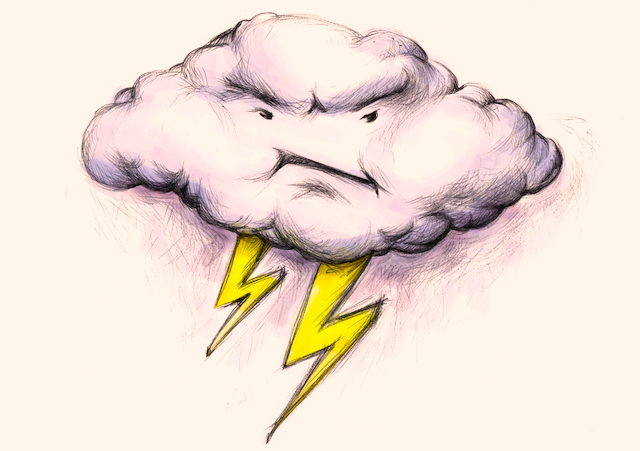
    Angry Thundercloud

    “Anger is like a storm rising up from the bottom of your consciousness. When you feel it coming, turn your focus to your breath.” ~Thich Nhat Hanh

    There is an elderly lady—I’ll call her Ms. A—living in my mum’s village. She regularly shouts at people as they pass by her house walking their dogs.

    She can be quite intimidating really. She even followed my mother up the road on one occasion, much to Mum’s alarm. My mum, unlike me, now avoids walking past her house, even though it’s a good route for her to take when walking her dog.

    Ms. A has also shouted at me and called me names on a number of occasions. The thing is, I know Ms. A has mental health issues, and I have remarked to my mum how much she must be suffering, poor lady, and needs our understanding rather than our condemnation.

    But on this particular day, all my good thoughts and intentions went right out the window.

    I’m embarrassed to say that when she came over to shout at me, instead of walking by like I usually do, I went right up to her and shouted angrily back.

    I became the intimidator then, telling her, in no uncertain terms, that she really must leave my mum alone and also stop shouting at me and calling me rude names when I walk by on the public road. I said I would report her for harassment if she didn’t stop.

    She shouted back at me, of course. She also looked rather alarmed.

    After I finished my rant, I resumed my walk, shaking. I felt absolutely rotten—guilty, ashamed, sad, and embarrassed. I was horrified at my reaction.

    It was an uncomfortable walk home to my mum’s that day. I knew I hadn’t helped the situation at all. So much for my understanding and compassion!

    So what went wrong? When I looked within, I realized I’d approached the house thinking a number of unhelpful thoughts due to my desire to protect my mum and my perception of being wronged. Some of my thoughts included:

    How dare this woman intimidate my mum?! I really should put her in her place and stop her from doing it again. And how dare she say those rude things to me?!

    It’s a public road; I’m doing nothing wrong by walking here. She’s the one in the wrong, not me, so I have the moral high ground! Yes, I’ll sort this situation out once and for all—I’ll tell her!

    All these stormy thoughts were racing around my head as I neared her house. Looking back, I also realize how much I always dreaded walking by there. I didn’t like getting shouted at, but I didn’t want to change my route either, as that seemed unfair.

    All this was a heady mix of thoughts and emotions, and more than enough to initiate a storm.

    By the time I reached her house, where she was standing, seemingly waiting for me, the storm hit, and I was lost to it.

    It certainly wasn’t my finest hour, but I learned a lot about myself in the subsequent analysis of the whole sorry incident.

    I realized that my reaction had come from a place of darkness, a place where my own distress lurked, and that shining a light on it would help to illuminate a much better way to respond in the future.

    I also realized that it had been a premeditated outburst, in the sense that my thoughts had helped whip it up. I saw too that I had gotten it all wrong: my thinking and perceptions were faulty. Ms. A was limited in her ability to control herself, due to her mental illness, and she really wasn’t a threat to either my mum or to me.

    I could also see and understand why this storm had arisen and what was at the root of it. This led to me feel more compassion for myself, which in turn helped me to face, and also own up to, my angry outburst.

    I once wrote about a tree I had walked by in the forest. It was crowded by other trees, and it had curved its way around them to reach up to the available sky. I realized that this curved tree hadn’t gotten caught up in how unfair the situation was; it had just gotten on with things and found the light it needed.

    This nature lesson advises us to ‘curve around’ more when a situation calls for it.

    By this I mean refusing to get caught up in a “that’s not fair!” mentality or get worked up over things that are of little consequence in the big scheme of things. This isn’t a helpful way to live our lives: it causes a lot of unnecessary stress.

    I’m not saying that we should just roll over or back down all the time; rather that it would be much better for us to not rush into situations without thinking things through carefully and dispassionately beforehand. I’m all for being (calmly) assertive when it’s required.

    It’s about looking at the bigger picture and taking a more balanced and less inflexible approach to life.

    Thinking about Mother Nature and anger storms, another lesson occurs to me: nature doesn’t take revenge.

    Even though we can sometimes think that nature must be angry with us and is hitting back at us with devastating storms, floods, and hurricanes, in reality it is just in the process of bringing balance back to the planet.

    Please note, I am not denying the immense human and animal suffering such events cause. My point is that nature bears no dark ulterior motive—it isn’t taking its revenge on us.

    Nature doesn’t think to itself that we need bringing down a peg or two; that we are getting out of hand and need to be punished. It isn’t reacting from a place of aggression. It just does what it needs to do to survive the best way it can. These storms are not sent as a personal attack on us.

    And that’s the problem with our own angry reactions; they often come about because we take things so personally.

    We can feel that we are personally under attack in some way and then go on the attack ourselves. Tit for tat. Not a good idea, as things escalate—they always do!

    If we can learn to step back and realize that someone’s anger has everything to do with their own suffering, rather than with us, we may be able to take things less personally and not feel the need for revenge.

    We may (or may not) need to take some action, but if we do, we can do it from a place of non-aggression, like Mother Nature. We can also do it from a place of clarity and calm. For this, we need to stop, focus on our breath, and let the storm clouds pass.

    I learned a lot about myself that day, stuff I didn’t really want to own up to. But I did, and I’m grateful for the lessons.

    Next time I will be more mindful of my thoughts and not let them whip up an unnecessary storm. And if storm clouds start to rise up, I’ll focus on my breath and walk on by. I’ll look at what’s happening inside me and remember, too, to take on board the other person’s distress.

    I’ll also take a leaf out of nature’s book on responding to stressful situations: I’ll curve around when I think it’s the best approach and try not take things so personally.

    Angry thundercloud image via Shutterstock
  • 9 Tips To Tame Your Temper: Anger Management Made Easy

    9 Tips To Tame Your Temper: Anger Management Made Easy

    Angry Women

    “Anger is an acid that can do more harm to the vessel in which it is stored than to anything on which it is poured.” ~Mark Twain

    I am in serious danger, and I think you might be too.

    I am in danger of becoming a grumpy old person. I get angry easily. I operate on a short fuse, ready to snap or explode at the littlest thing.

    I could blame it on a combination of genetics and environment. My father seems to have only two moods, and one of them is angry.

    He is like a volcano and can explode at any moment. And I don’t mean he’s just cranky or that he yells.

    No. When he loses it, he really loses it. Emotionally and physically.

    He tenses every muscle in his body, clenches his fists, sticks his jaw out, and says things like, “Eeeoourgh!!!”

    He is a fireball of white-hot fury. Irrational, unreasonable, and perverse.

    As a child, I never knew whether I would be hugged or hit. I desperately wanted his approval and love, but often I incurred his wrath.

    As a teenager, I learned to fight back, yell as loudly, and be as demanding as he was. As an adult, I learned two key components that comprise anger.

    There’s the emotion that can envelope you in a moment, instantly causing you to become irrational and almost uncontrollable. And there are the situations or environments that have the potential to lead to anger, if we let them.

    I could let anger rule my life, but I refuse to do that, damn it! So I employ some simple anger management techniques instead.

    I am still in serious danger, but with these tools, I think I’ve found a way out.

    1. Follow a process.

    Create a process for managing situations that often trigger anger. When someone does something that upsets you, take a deep breath and trust in the process.

    One process I use to express my feelings calmly is to describe the behavior and explain my emotional response.

    So, I’d say something like, “When you yell at me, I feel hurt and upset,” or, “When you behave this way, I feel really angry.” It helps identify the problem and my emotions. It also helps me feel in control and prevents me from resorting to useless, blaming behavior.

    2. Tap it out.

    Try a little tapping, or Emotional Freedom Technique (EFT). EFT is a healing tool that helps reduce deep emotional responses so we can manage our lives more calmly.

    The whole EFT process includes a tapping routine and a mantra, but I find a simplified version just as effective.

    When you feel an intense emotion, just use your first two fingers and tap your collarbone until you feel calmer. If you start tapping quickly and then gradually slow your rhythm, you’ll find yourself calming down.

    Sometimes, when I feel like tensing up and yelling, “Eeeoourgh!” myself, I go to the bathroom and tap until I feel calmer. Then I can handle the situation rationally.

    3. Think about your belly button.

    Centering is a super-simple technique that even a child can use. All you do is focus your mind on your belly button, or rather, just a smidge below your belly button.

    As you focus, tense those muscles and draw your belly button in toward your spine. If you’ve done any Pilates or yoga, you’ll be familiar with these deep abdominal muscles.

    Doing this exercise is truly calming and empowering. It puts you in a state of calm control, so you’re less likely to react and lash out. I sometimes close my eyes for a moment and focus on my belly button. When I open my eyes and continue centering, I can operate more calmly and coherently.

    4. Lighten up.

    Anger appears when we’re frustrated, but if you stand back from the situation a little, you might see it’s quite ludicrous. Not always, but often. Before you blow your stack, stand back and see if you can find something silly about what’s happening.

    I remember being frustrated by an organization I worked for when they arranged a breakfast for us to discuss strategies to improve our work-life balance.

    They wanted us to get up hours earlier than usual and spend extra time with our colleagues so we could talk about ways we could spend less time with them. How ridiculous!

    5. Practice daily calm.

    We can experience anger and frustration almost daily, and the more we experience it, the more it becomes our way of operating.

    When you commit to practicing daily calm, you counteract the anger. You practice something much more beneficial to your health and well-being.

    This doesn’t have to be hard. Just spend a moment or two doing nothing, whenever you can. Sit quietly and realize that you’re doing nothing, and see how calming it is.

    6. Get curious. 

    The next time you find your anger rising, divert your energy into curiosity. Get really curious about the other person’s perspective.

    Keep asking questions until you fully understand the other person’s opinion. Once you do, you’ll be in a better position to discover a solution that suits everyone.

    Recently, my daughter was extremely trying, and I saw red. I drew in my breath, preparing to yell at her. But somehow, in the split second of inhaling, I thought, I just need to follow the process.

    Instead of yelling, I reflected her feelings to get to the bottom of why she was behaving so poorly. I got curious about the cause of her behavior, and together we created a solution to the problem.

    Instead of an angry interaction that would rip our relationship apart, we had a truly productive, useful talk that brought us together.

    7. Hug a tree.

    If you feel yourself spinning out of control with anger, you can become grounded by literally grounding yourself. Hug a tree, lay on the ground, or sit with your back to a large, solid oak.

    Connecting yourself to the ground in this way will make you feel both physically and emotionally supported, calm, and stable.

    Grounding strategies help you detach from strong emotions. They help you gain control over your feelings so that you can get back in control.

    If you need a more portable strategy than an oak tree, try putting a small stone in your pocket. When you start feeling overwhelmed by emotion, reach into your pocket and focus on the stone—notice its texture, size, and temperature. This action focuses you on reality and stabilizes your emotions.

    8. Close the argument room.

    There’s a Monty Python skit where Michael Palin pays for an argument in the argument room. We often do the equivalent of asking for an argument by starting discussions that go nowhere or pushing our opinions onto people who don’t want them.

    We should always ask ourselves if going into the argument room is worth it.

    When my father rants, I often let him go. I don’t want to engage with him because I’d be entering the argument room, and for what? I’d end up cranky and frustrated, without achieving anything.

    9. Look beneath the anger.

    Anger is often a secondary emotion that masks the true feelings beneath it. The next time you feel angry, look inside and see if your anger is masking another deeper emotion.

    If you can discover the underlying emotion, you can address the real reason behind your emotional response.

    Think about the last time someone cut you off when you were driving. The moment it happens a chill of fear runs through you, and then it’s quickly replaced by frustration and resentment.

    Or, consider the last time you were running late and someone seemed to be delaying you. Underneath your anger may be self-loathing regarding how you didn’t prepare better, guilt for making someone wait, or fear of the consequences of your late arrival.

    Anger is the secondary emotion.

    The Truth About Anger

    It’s a powerful, all-encompassing emotion.

    Well harnessed, it can drive us to achieve great things. We can use it to fight injustice, increase confidence, and create focus. Think Erin Brockovich, Alanis Morissette, and Steve Jobs.

    But it can also ruin our relationships, damage our reputations, and make us hard to love. Think Naomi Campbell, Mel Gibson, and Charlie Sheen.

    That grumpy old person we talked about? Their anger is unchecked, and it’s become a front.

    A way of interacting with people. A mask to hide behind.

    And no one can live a great life if they’re hiding.

    It’s far better to have the courage to face the world, and your problems, head on. To discover what’s really under that anger, and address the true problem.

    The next time you feel your anger flare up, you can hide behind it, or you can dig deep into self-reflection and deal with what you find.

    Which will you choose?

    Angry woman image via Shutterstock
  • Letting Go of Difficult Emotions eBook (Name Your Own Price!)

    Letting Go of Difficult Emotions eBook (Name Your Own Price!)

    Letting Go of Difficult Emotions

    “If you let go a little, you will have a little peace. If you let go a lot, you will have a lot of peace.” ~Ajahn Chah

    Growing up, I often felt emotionally overwhelmed, causing others to call me “too sensitive.”

    It was very clear to me from a young age that emotion was a sign of weakness, but try as I may, I couldn’t escape mine.

    I believed there was something wrong with me for feeling so deeply—that I was fundamentally bad because of it—then I felt bad about my inability to change.

    As the years went on and life got harder and more complex, I struggled with severe anxiety and depression. I wasn’t equipped with the tools to manage the natural emotions I felt after others mistreated me, so instead, I learned to numb them.

    I numbed them with food, alcohol, and men, to name a few crutches, but my efforts often backfired.

    With so much pain repressed under layers of fear and shame, I often exploded in hysterics after one drink too many, unleashing on some defenseless friend or boyfriend a dramatic story of anguish and an eruption of despair.

    Coupled with the aftermath of bullying, this tendency to lose control of my emotions led me to fear social situations.

    Even if I didn’t drink—which I often did, to ease my anxiety—I couldn’t be certain something wouldn’t trigger painful feelings and I wouldn’t embarrass myself with my response.

    What if I obsessed and looked neurotic? What if I attacked and looked combative? What if I cried and looked unstable?

    Judgment seemed inevitable—from others and myself—but even worse I’d have to hear three seemingly patronizing words: let it go.

    As if it were that easy. As if I could just roll all my feelings into a neat little snowball and toss it out into the distance.

    I felt this was incredibly insensitive—that someone who clearly didn’t understand the depth of my pain would suggest that moving beyond it was as simple as “letting it go.”

    As if “letting it go” was an easy, one-time decision, like pulling off a Band-Aid.

    “Let it go” seemed like advice from the disinterested and lazy. At least, that’s what I thought back then.

    After spending years of my life trapped in a maze of disempowering stories, I’ve realized dwelling, complaining, and analyzing my life does very little to help my emotional state.

    I now know I don’t need to be a prisoner inside my own mind.

    I can’t help that I’m emotionally sensitive—and having leveraged my sensitivity to create this site, I now know I wouldn’t want to change that—but I can choose not to keep myself miserable and stuck.

    It turns out “let it go” is pretty helpful advice. But it’s such an abstract concept. What I wished someone told me back then was how.

    How do you let go of anger when your first thought in the morning, the last one at night, and the majority of the ones in between revolve around how you were hurt?

    How do you let go of resentment when it feels like you’ll never be able to change the things that you resent?

    How do you let go of frustration when you feel stuck, stagnant, and completely powerless to change it?

    How do you let go of worries when even the thought of letting them go fills you with worry?

    And how do you let go of your disappointment with yourself when you try your best to “just let it go” and continually struggle to do it?

    I’ve devoted much of the last decade to studying the art of letting go—a skill that’s helpful to all of us, not just those of us who are highly sensitive people.

    In this time, I’ve learned a few things that help with all disempowering emotions and a few things to address some of the specific ones that are the most difficult to release.

    In my new 54-page eBook, Letting Go of Difficult Emotions, I’ve tackled them one by one, addressing how to let go of:

    • Anger
    • Resentment
    • Frustration
    • Anxiety
    • Self-Judgment

    Each section offers a few simple things you can do to release the feelings, come back to the present moment, and find a sense of peace.

    And best of all, I’ve decided to release this eBook with a “name your price” model. The suggested payment is $10; however, you can pay as little as $1 or give more than that, if you’ve gotten a lot from Tiny Buddha and would like to give more back.

    [gravityform id=”10″ title=”false” description=”false”]

    I hope you find this eBook helpful, and I welcome any feedback at email(AT)tinybuddha.com.

  • 5 Crippling Lies About Forgiveness (and the Truths That Set You Free)

    5 Crippling Lies About Forgiveness (and the Truths That Set You Free)

    “Forgiveness has nothing to do with absolving a criminal of his crime. It has everything to do with relieving oneself of the burden of being a victim.” ~C.R. Strahan

    It’s not fair, is it?

    Getting hurt. All over again.

    It wasn’t so bad forgiving them the first time. You rose to the occasion. You became the bigger person. You tried to move on.

    You thought you had to. After all, they did ask nicely.

    You just knew you’d be BFFs again and go right back to, “Let’s go for Jamba Juice!”

    But it didn’t go down like that, did it?

    No BFFs. No Jamba Juice. Not even a check-in text.

    You put it all on the line and forgave them. Now they’ve let you down again, and you can’t help but think it was the biggest mistake you ever made. And on top of it all, you can’t stop wondering why it all happened to you.

    I used to wonder that too.

    When I was fourteen, my mom sent me away. She thought it would be nice if there were a nun in the family. And I was going to be it.

    I had never been further than my Mamaw’s house. I had just shaved my legs for the first time and gotten my room back after the toddlers moved into the new add-on.

    Now, I’d be sharing a room with three other postulants over 1,100 miles away—sleeping on used hospital beds. In silence. For six years.

    My life, as I knew it, had ended.

    I wasn’t allowed to spend holidays at home. I never got another birthday present. And for six years, all I wore was a homemade blue habit with a plastic collar I had to scrub with a toothbrush.

    But then I got out. And my life ended all over again.

    Where do you fit when you don’t fit anywhere? I didn’t know anyone. No one knew me. My little brothers and sisters were all teenagers by then. My dad had married the woman he’d had an affair with. And to top it all off, my mom wouldn’t let me come home.

    I just wanted to move on. I thought forgiving everyone would make it okay. Forgive my family for giving me away. Forgive the nuns for going all American Horror Story on me. Forgive the Catholic church for expecting me to make up something to say in confession every week. Forgive my parakeet for dying while I was gone.

    The more I told myself to stop being angry, the angrier I got. The more I tried to let it go, the more it haunted me at every turn.

    After six years, I should have been an expert at forgiveness. But in reality, I was as clueless as a homeless kid trapped in a grown-up twilight zone.

    In the end, forgiveness actually became my ultimate game-changer. But only after I saw through the lies people led me to believe.

    Can You Trust Everything You Believe About Forgiveness?

    There’s a whole lot of noise out there about forgiveness. And you know what noise does? It chats up your Inner Victim and distracts you. The louder the noise gets, the quicker you need to call in your Inner Skeptic. Because some of the noise is nothing but big, fat lies.

    Lying to yourself while you forgive someone is worse than not forgiving them at all.

    If you want to open your heart to freedom, you must open your eyes about forgiveness. Here are some crippling myths about forgiving that leave you victimized and the truths that will set you free.

    Lie: When I forgive, I have to forget what happened and move on.

    Truth: Remembering how you got hurt empowers you to forgive and create the life you deserve.

    When I got home, I tried to forgive my mom for making me grow up isolated and alone. I thought I had to forget that I’d never been allowed to talk to a guy who wasn’t a relative.

    The one awkward time I got asked to dance at a happy hour, I freaked out and started picking an imaginary bug out of my drink. Right then, I wanted nothing more than to crawl into that cup and float around with the ice cubes.

    Acting like the convent never happened was like walking through a minefield with my eyes shut and a great big target on my back. When you forget, you don’t know how to navigate. When you can’t navigate, you fake it.

    Faking it is not forgiveness. Faking it does not set you free and keep you safe.

    That’s why it’s important to remember. Remembering what happened gives you a compass for where you want to be. It lets you go easy on yourself while you design how it’s going to be from now on.

    Remembering how I was kept isolated told me that I didn’t deserve to be lonely any longer. Once I knew I could surround myself with loving relationships in my life, I was open to forgiving my mom.

    Honoring your reality lets you build the life you deserve and empowers you to forgive.

    Lie: Forgiveness wipes the slate clean and gives them another chance to hurt me.

    Truth: Forgiveness doesn’t invite you to get hurt again. Forgiveness empowers you to teach others how to treat you differently.

    Forgiving someone takes a lot of honesty. Honesty about yourself and how you deserve to be treated, and honesty about the one who hurt you and how they’re inclined to act around you.

    You don’t cause the way someone else acts, but you can invite them to act differently with you. If they don’t want to play nice, you get to change the way you show up around them.

    When my brother texted me that they all changed their minds about picking me up at the airport, I got frantic. It was Christmas. Mom’s house was an hour away. And all the rental cars were taken.

    When you trust people to be exactly who they are, you can adjust your expectations of them accordingly.

    I told my family that I wanted control over my travel arrangements and would get my own room and join them for dinner.

    The long drive gave me time to think and see them honestly after they let me down. Right then, I decided that I wouldn’t rely on unreliable people any longer. Suddenly, I wasn’t expecting them to rescue me. And I was able to forgive them.

    Forgiveness lets you see your offender honestly and puts you in charge of how you’re treated.

    Lie: I have to forgive someone or they won’t heal and be forgiven.

    Truth: When someone asks for forgiveness, they want their own peace back. And that’s not even something you can give them.

    One of the biggest truths I learned is that forgiveness heals me. I can’t do someone else’s healing for them.

    The only time my mother ever asked me to forgive her was late at night, in the privacy of her own living room, at the bottom of a bottle of Sandeman’s Port.

    “Will you forgive me? For everything?”

    “Sure. Yeah. Of course,” I’d say. But next year would only find her crying at the bottom of another bottle. I wanted her to be happy. But I couldn’t go there for her.

    Setting people free to walk through their own darkness is the truest test of your own freedom.

    Lie: I can’t forgive someone who doesn’t deserve to be forgiven.

    Truth: Forgiveness doesn’t give others what they deserve. Forgiveness gives you the only chance of ever getting what you truly deserve—your freedom.

    Freedom means you let go of hurting and decide to take the good stuff for a change.

    Letting yourself feel better takes a lot of trust. Trust that there’s enough good stuff out there for you. Trust that even if the bad guy gets some, there’s still always plenty for you.

    My early phone chats with Mom always ended badly. She’d start in with, “Remember when you guys used to—” And I’d cut in that, “No, Mom. I don’t remember. I never lived in that house. I was in a convent.” As soon as she’d come back with, “Well, I hope you don’t think that was my idea!” the F-bombs would hit the fan.

    I thought I never could forgive her if she wouldn’t admit all that happened to me. Truth is, I don’t think she’ll ever understand all that happened to me. And eventually, it didn’t matter. I stopped waiting for her to deserve it and just gave myself the good stuff anyway.

    Forgiveness isn’t about balancing the scales of justice. Forgiveness is about attaining your own freedom along the way.

    Lie: I can’t forgive until I know the reason this happened to me.

    Truth: You may never know the reason anything happened. But you can create your own reason for everything that happens now.

    What happened to you wasn’t fair. But “why?” is a question you could be chasing to your grave.

    Why torture yourself trying to make sense of what didn’t make sense? You already suffered through what actually happened to you. Why keep feeding the story with endless possibilities of terrible endings?

    I wasted a lot of time wondering why. I wanted it all to somehow make sense. If it wasn’t my fault, it had to be somebody else’s. Because what’s more pointless than thinking that I sacrificed my entire youth for absolutely no reason at all?

    Finally, I gave myself my own reason. I needed a reason to live now.

    If I was going to live, I was going to love living.

    The day I gave myself a reason to live was the day I stopped looking for the reason my youth had died.

    That was the day that I became free.

    Freeing yourself from the burden of “why?” sets you free from an eternal blame game with no end in sight.

    How to Break Free Once and for All

    Can I get real with you for a second?

    We’ve all got an inner victim. Our own personal champion of lies and no way out. And it needs us to believe it.

    Here’s the thing—lies get bigger when you believe them. But so does the truth.

    Stop pointing fingers at the lies you’ve been led to believe.

    You are not a victim. You are strong. And free. And powerful in your truth.

    There’s not a thing standing in your way.

    Set yourself free already! Take the good stuff for a change.

  • A Reason to Forgive Your Parents (And How to Soften Your Anger)

    A Reason to Forgive Your Parents (And How to Soften Your Anger)

    “If you cannot forgive and forget, pick one.” ~Robert Brault

    I used to hate my parents.

    I despised them. I blamed them for most of my issues.

    I couldn’t do what I wanted to do in life because they would disapprove of it. I couldn’t be a cop or firefighter because those professions didn’t make enough money. I could only study a major that would be beneficial in getting me a job and not one that they thought was pointless, such as psychology or sociology.

    I hated my dad for never being there when I was a child. I hated him for always getting angry with me and yelling at me and making me go to my room to cry by myself.

    I hated my mom for not sticking up for me. I hated her for not sticking up for herself when my dad would yell at her. I loathed her for her laziness and blamed her for my own because she didn’t teach me to work hard on a task and to persevere through the tough times.

    For a few years I felt this intense dislike of them and never told them. My anger kept building and building, and you know who had to live with it and deal with it? I did.

    I smiled happily toward them and the outside world, but inside I was dying a slow death.

    Dwelling in anger and hate is like drinking a poison that slowly destroys your insides and kills you. There’s a reason why the Jedis in Star Wars say that anger and hate lead you to the dark side.

    The reason is because it will eventually cause you to lash out and cause damage to the people around you.

    And that’s what happened to me. My façade of happiness crashed down upon me after a few rough weeks during my junior year of college. I had a meltdown and attempted suicide.

    Most people will not act as extremely as I did, but that doesn’t mean their pain is any less than mine. I see others who carry lifelong anger and hatred toward their parents because of their childhoods.

    It’s a burden they carry with them, and they cope with it different ways, whether it’s through addiction, working too much, or something else that slowly erodes their insides because they fail to address the anger and hatred there.

    I struggled immensely after my suicide attempt. That first year, though, was when I started to realize something that would change my life for the better.

    Anger and hatred mainly affect the person holding them because they are the one who destroys their life and relationship because of it. You don’t forgive for others’ sake; you forgive for your own.

    When I realized this, I started on the long journey that is forgiveness.

    I wish I could say it is like the movies, but it isn’t, at least not in my experience.

    I have found that forgiveness takes a continual effort over weeks, sometimes months. It’s something you have to consciously do every time your anger arises.

    Your anger and hatred fade away over time as you consciously reframe your thoughts and feelings to ones of forgiveness.

    I started by first writing in my journal about what my parents didn’t give me when I was a child. I don’t mean things; I mean love, affection, and guidance.

    I then started to give myself those things.

    And then I learned how to see things from my parents’ angle and have compassion toward them.

    I realized that their parents didn’t give them all that they needed. I saw that they were just trying their best and they were human like me, which meant that they had flaws and made mistakes.

    I saw that they were every bit as lost as most of us are at times, because life has no guidebook.

    I saw the little child within them.

    As I started to forgive them, I became warmer toward them and appreciated them more. I started to say “I love you” to them, and surprisingly my dad started to say it back. He had never really said it to me before.

    I eventually had a semi-movie moment with my father after months of working on myself. I told him that I hated him for the longest time, that I know he was just trying his best, and that I forgave him for his mistakes. I told him I understood that I was an adult now and was responsible for my future and myself.

    My relationship with him changed dramatically after that moment.

    It isn’t super intimate but it’s better than it ever was. My father has said “I love you” to me without me saying it first. We smile at each other and have made each other laugh.

    I have become close with my mother after forgiving her. I trust her and confide in her about the struggles I go through. I am so grateful to have her in my life.

    I love them both very deeply and none of this would have happened if I didn’t learn to forgive.

    Learn to forgive others if not for their sake, for yours.

    I have learned that as I change for the better, so do all of the relationships in my life.

  • How to Use Your Anger to Help Yourself

    How to Use Your Anger to Help Yourself

    “Everything that irritates us about others can lead us to a better understanding of ourselves.” ~Carl Jung

    I’ve experienced many degrees of anger throughout my life.

    There’s the fleeting and mild kind of anger that hit me when I realized I forgot to pack my toothbrush, or when a friend was tardy again for our morning hike.

    Then, there’s the corroding and strong kind of anger that I felt when I discovered that my husband had been lying to me for months.

    Half-truths about his after-work activities and the people he met during those activities led to an affair, and the affair led to more half-truths and bigger lies.

    I was angry with my husband for lying, but also with myself for not having noticed the first signs of dishonesty. Later, I was irate for being so naïve to give him multiple chances to change his behavior, only to be deceived again.

    Angry thoughts would materialize seemingly out of nowhere, and every time the Angry Monster attacked, I felt the urgent need to hide it away before anyone would realize that I had become prey to this negative emotion.

    If I am a good person, I thought, I shouldn’t feel anger.

    We grew up hearing that anger is a weakness. Anger is shameful. Anger is like one of those buzzing mosquitoes that must be squashed before it bites us. Anger is a monster. But now I know that’s not all there is to anger.

    I’ve learned that anger can actually be helpful if we know how to manage it. How? Read on.

    Anger can help you know yourself better.

    I understood that the intense anger I experienced when my husband lied to me shows I deeply value honesty and openness. This allowed me to prioritize these qualities in future relationships.

    Keep in mind that when someone does something that makes you angry, you have the opportunity to learn what your personal values are.

    Also, when anger strikes, take a step back and ask yourself why you’re angry. Are you offended by something that was said to you? This might mean that there is a hint of truth in what the other person said.

    Contemplate offensive comments with an objective mind. If you realize there’s some truth in the statement, use it as an opportunity to become a better person. If you conclude that the comment has no real basis, then you can send it to the trash folder of your mind.

    Anger can help you raise your energy level and move out of depression and despair.

    Based on scientific studies of the energy associated with human emotions, anger calibrates at a higher energy level than hopelessness, apathy, or despair.

    My anger propelled me to try new activities and meet new people to show the world I was reclaiming my dignity and my future.

    Next time anger surfaces, let it drive you to take positive action and to change the unpleasant circumstances in your life.

    You can choose to reject the labels society has assigned to anger.

    When you feel ashamed for being angry, as society says you should feel, you let yourself sink to low energy emotions.

    Your shame and guilt, coupled with repressed anger, can negatively affect your body and create conditions such as heart disease, digestive problems, and weakness of the immune system. Worst of all, you’ll be unable to experience authentic joy.

    One day I asked myself why being angry was such a source of shame. That’s when I realized I had been judging my emotions based on the messages I had received from my environment. These messages were not helping me feel good enough to let go of my anger.

    Instead of becoming a victim of society’s expectations, choose to see anger as an emotion that is part of the human experience and a tool that can help you become a better person.

    You have the power to select how to express your anger.

    Angry people are portrayed as bitter or aggressive, but this doesn’t have to be the case for you.

    Kickboxing became my physical outlet to release any residual angry feelings. You could choose to express your anger through journaling, sharing your feelings with a trusted friend, or going for the fastest three-mile run of your life!

    You decide how long to be angry.

    I realized that although I could use anger in positive ways, it was stealing my ability to be happy.

    I knew I deserved to be happy again, so I reminded myself that I had a choice to let go every time my angry thoughts surfaced. Over time, it became easier to return to a state of peace and contentment.

    You can choose to take advantage of the lessons in your anger, and then let the feelings go. Tell your anger that you’re too busy making the best out of your time to allow him in your life for long!

  • When Someone Blames You: How to Cope with Misdirected Anger

    When Someone Blames You: How to Cope with Misdirected Anger

    Blaming man

    “Life becomes easier when you learn to accept an apology you never got.” ~Robert Brault

    My ex-boyfriend is angry with me.

    I met him soon after he had broken up with his then fiancée, and he thought he was ready to move on, but wasn’t. After many months of messing me about, we ended it. I cut off contact because it still hurt me and I still cared for him.

    Eventually, I wrote to him to see if I could get some closure and to consider if we could salvage a friendship. His reply was scathing, vitriolic, angry. He blamed me for the fact that his ex-fiancée would not give him another chance.

    Yet, he had made those decisions. He insisted that it was my fault, and that I had cost him everything, despite the fact that all I had done was support him and respond to his interest in me. I hadn’t even known him before their breakup.

    Beyond that, we had also been, I had thought, really good friends that had connected on a level that is rare to come across in life. It hurt that the person I thought I had connected with like this now felt so much anger and hate toward me.

    It was difficult not to be affected by that, and it hurt me deeply. I fell into a bit of a depression, and even though I knew I hadn’t done anything to warrant such vicious verbal attacks, I still questioned myself and my actions.

    Maybe I did deserve his anger. Maybe I was worthy of hatred.

    Then it dawned on me. This was not my issue. This was his issue and his inability to accept responsibility for his choices. I had not wanted nor asked for any of it! But how was I going to disentangle myself from the hate he was sending my way? I came to rely on five things.

    1.Know your truth.

    I know deep down that I am not the person he sees me as, that I did not set out to ever hurt or destroy him, that I gave so much more than most would have given to a relationship that was not good for me.

    I know that I am a good person. I know with certainty that his anger is misdirected; it’s not my truth. I’m honest with myself to a fault, and I take on what I deserve to and accept blame and mistakes when I make them. This was not my mistake to accept.

    2. Accept that people won’t see your reality.

    People won’t always see things the way that you do. You cannot make someone see what you believe to be a rational truth, nor will you see it from their point of view. Don’t try to; accept that we all think differently.

    3. Let go.

    It’s not worth your constant wondering and worrying. It isn’t good for you to hold onto it and over-analyze it. Let it go; visualise yourself blowing it all into a balloon, tying it off, and letting it drift away. Feel lighter because of it!

    4. Remember, all actions are based in either fear or love.

    Base yours in love. Realize their actions are based in fear. Often, these fears are ones that no one can reach because they are too deep-seated for the person to acknowledge. Accept that, and continue to operate from your own base of love.

    5. Surround yourself with people and things that make your soul sing.

    Let the angry be angry. Don’t let yourself live that way, and don’t deprive yourself of the things that make you happy because you’re giving time to something out of your control.

    See friends, indulge in books or art or physical activity—whatever makes you feel good. You’re not who they think you are; you’re a good person who deserves to live a bountiful, peaceful, happy life. Go and get it!

    Arguing couple image via Shutterstock
  • How to Stop Hurting When You Feel Like You’ve Been Wronged

    How to Stop Hurting When You Feel Like You’ve Been Wronged

    “At any given moment, you have the power to say: This is not how the story is going to end.” ~Christine Mason Miller

    Several months ago my partner’s father (we’ll call him D) verbally attacked me. A couple weeks later it happened again, except this time it was more aggressive and more personal.

    When I calmly told him that his behavior was unacceptable, he became angry and spent the next several months using every tool in his vast arsenal to put space between my partner and me.

    And for a while it worked.

    Suddenly I found myself constantly obsessed over the confrontation, playing it back in my head like a bad movie that wouldn’t quit. I was sad all the time over the continued aggression, as well as the loss of the illusions I had unconsciously subscribed to. (“But we’re a family!” and “It’s supposed to be different than this!”)

    Most importantly, though, I found myself removed from the happy, joyful person I was before. Instead, I was consumed by feeling angry, wronged, and resentful, seemingly unable to climb out of the hole of alienation and anger.

    We all want to be accepted, seen, and loved, but it’s hard to feel any of those things when we’re too busy feeling victimized or picked on.

    There’s no doubt that my partner’s father was out of line and that his behavior was disrespectful and hurtful, but there’s also no doubt that I allowed myself to be affected by it.

    We’ve all heard that nothing ever goes away until it’s taught us what we need to know, and now that I’ve learned my lessons, I can tell you about some of the ways I was able to move past the anger and hurt:

    1. Remember that people who seek to make others miserable are miserable themselves.

    Most of us couldn’t imagine consciously attempting to tear down another human being through our words, and that’s because most of us are not in a place of such deeply rooted despair and self-loathing.

    I had a very hard time understanding the hurtful things D said to me, and for many months I insisted on making it about my own inadequacy and wondering why I wasn’t good enough for him.

    This went on until I came to understand that a person who is so accustomed to violence from within does not know how to function without creating external violence as well.

    Understanding this does not excuse the action of the aggressor, but by recognizing the source of the aggression, we can choose to extend compassion and understanding rather than returned aggression and venom.

    2. Just do right.

    As D’s attacks continued to get more and more violent, my partner’s family began to push me to appease D in order to smooth things over. The thing about this approach, however, is that although smoothing things over would’ve been expedient, it wasn’t exactly right; and as such, I didn’t want to do it.

    I wanted to hold out. I wanted to insist upon better treatment, yes, but mostly I felt the need to stay true to myself and to uphold my own moral standards. As author Maya Angelou has said, “Right may not be expedient, it may not be profitable, but it will satisfy your soul. It will give you the kind of protection that bodyguards cannot provide.” And, of course, she’s right.

    Part of freeing ourselves from the anger and resentment that surrounds negativity is to not allow ourselves to be altered by negativity. We may experience great external pressure to “go along to get along,” but, at the end of the day, it’s more important to act in a way that you can look back upon proudly.

    3. Set boundaries.

    It may seem like an oxymoron, but it is possible to establish and maintain compassionate boundaries. I couldn’t completely walk away from D because of his proximity and relationship to my partner, but I could make it very clear that I would not accept such attacks in the future.

    By making our mental, emotional, and physical space into a safe harbor, we can carefully control what is allowed to enter our hearts and minds.

    We might not be able to transform the person trying to harm us, and indeed it is not our job to do so, but by insisting upon the creation of a safe space, we make the tiny spot of earth upon which we stand a better place and consequently, we render ourselves less available for hurtful attacks in the future.

    4. Stay calm; stay true.

    I had to fight to stay calm many times during the months following D’s attacks. Part of me wanted so badly to return venom, but looking back, I’m glad I never did.

    As we all know, it’s easy to lose our heads when we are faced with an intensely emotional situation, especially one that feels like an assault on our dignity. But returning aggression for aggression ultimately does not serve us and, indeed, only serves to fuel the fire of the aggressor.

    The best thing we can do when we feel overwhelmed with intense emotion is to transport ourselves mentally to a place five years down the road, look back at the situation, decide what type of action would make us proud in the future, and then act that way.

    Getting angry might feel like a release in the moment, but that’s a false sense of righteousness. It’s better to state your truth quietly and calmly and remove yourself from the situation. By doing this, we refuse to allow ourselves to be transformed by the intensity of the emotions; instead, we act in a way that allows us to feel good about our actions, which is the first step to healing from the initial hurt.

    5. Only do the work that is yours.

    One of the toughest lessons I learned is that I couldn’t “fix” the situation, because the situation involved a lot more than just me. I wanted my partner to protect me. I wanted his family to respect me for standing my ground. I wanted a lot of things, and I made myself crazy trying to get them for months.

    It was only after I realized that I was waiting for someone else to “fix it” that I was finally able to let go.

    I realized, finally, that if I was going to feel safe and respected and loved, it had to come from within.

    If the boundaries were going to be set, I had to be the one to set them. If the safe space was going to be created, I had to be the one to create it. If a demand for better behavior was going to be made, I had to be the one to make it. Furthermore, I had to be the one to behave better.

    So, I started actively chasing the things that made me feel happy and safe: I invested myself fully in the beginning steps of a career that I love. I spent more time with friends and my family. I cooked huge meals for nobody but myself. I read ravenously. I went to therapy. I took long walks. And this is where the healing came from.

    It’s inevitable that other people will hurt us. We can’t avoid it, and we don’t even need to understand it entirely; all we need to do is learn to take care of ourselves when it does happen. We cannot change the actions or perceptions of other people, but we can change how we respond to them.

    We can choose not to harbor anger and resentment; we can choose to forgive and to walk away. We can focus on the things that make us feel safe and happy and devote ourselves to nurturing those relationships and hobbies.

    We can use the negativity of others to become stronger, happier, and more complete. We can rewrite the ending.

  • How Forgiveness Enables Us to Stop Hurting Ourselves

    How Forgiveness Enables Us to Stop Hurting Ourselves

    Healing

    “To forgive is to set a prisoner free and realize that prisoner was you.” ~Lewis B. Smedes

    I was planning a seminar event with one of my good friends. (Let’s call her “Randi.”) It was a great match; she had event planning and design expertise, and great energy in front of an audience. I understood the structure of such an event, and I authored much of the content.

    It was a powerful presentation and we were going to be a great team bringing the material to life. We spent months putting the seminar together: rehearsing, setting the date, booking the venue, designing the graphic announcements, and buying advertising. With only a few weeks to go, everything was in place.

    Then I got an email from Randi. She was still going to do the seminar, just not with me.

    She had a new boyfriend whom she felt he was more suited to her vision of how to present the material. Without consulting me, Randi changed the graphics for the presentation, one of the presenter names, and charged ahead with her new version of the seminar.

    To be honest, I was shocked. I had spent a significant amount of time and money up to this point, and leveraged all of my contacts. I thought we made a great team, and I trusted her without question to carry out the tasks we had agreed upon to make the seminar a reality.

    I immediately called Randi but she didn’t answer my calls (probably a wise thing since I was mad). I wrote to her explaining that a great deal of the content in the seminar was my original material, and she had no right to use it.

    I demanded that she refund my share of the money we had spent on advertising and the venue deposit. She wrote back that she was sorry, but the answer to all my demands was no.

    I was outraged and felt betrayed! I developed a story that I repeated endlessly in my head about what she did, why it was wrong, and how it violated every agreement we made.

    Gathering all my evidence I headed to court: not legal court but the court of public opinion. I went to all my friends and laid out the facts—the evidence—and asked them for a verdict. The verdict was unanimous. Guilty!

    Now I had plenty of evidence that I was right. In my mind the betrayal was not clouded in shades of grey but was black and white: We had an agreement, I trusted her, and she had violated that trust.

    I was right, and yet being right was making me miserable. The more I told the story of what she did, and why it was so wrong, the more unhappy I became.

    Simply put, I was using her to abuse myself. But as long as I kept telling the betrayal story—to myself or anyone that would listen—I couldn’t let it go.

    Eventually the stubborn attitude, “I can’t get past this,” was no match for the awareness that every time I engaged in my story it was like hovering too close to a hot stove. It was unmistakably clear to me that my insistence on being right was burning me.

    Being right (my intellectual interpretation of the event) was a dead end I could never resolve. Repeating my story was like hitting my finger over and over again with a hammer.

    It took a while, but the awareness of what I was doing revealed that there was only one choice I could make to get the emotional turmoil to stop.

    What finally healed me was forgiveness. In the end I didn’t forgive her because it was the right thing to do. My intellect was too strong and the facts too compelling.

    I didn’t forgive her because that’s what good people do. I couldn’t forgive her even though I agreed with what the famous poet Alexander Pope said: “To err is human: to forgive, divine.”

    I could never come to a resolution weighing the pros and cons. I simply chose to give up my story, let the whole thing go, and forgave her because it felt good. Forgiveness was the only medicine that would heal the wound I created.

    When we can’t forgive someone for an offense, and justify being right about it, we are only using them to hurt ourselves. It’s a trap, a maze of suffering without end.

    Being right and getting all worked up about it—our national pastime—only hurts us.

    To heal any hurt caused by the perception that you’ve been abandoned, betrayed, disappointed, misunderstood, or unfairly treated takes a double dose of the sweetest medicine of all: forgiveness.

    Photo by Neal Fowler

  • Why Forgiveness Is a Gift to Yourself and How to Release the Past

    Why Forgiveness Is a Gift to Yourself and How to Release the Past

    “Forgiveness does not change the past but it does enlarge the future.” ~Paul Boese

    On a snowy winter day in the dark month of January, I got hit by a car. My left leg was immediately amputated. A darkness started growing in my seventeen-year-old heart that day.

    Harvey was the man driving the car that hit me.

    Because of Harvey’s decisions, I didn’t have my leg. Because of Harvey, I walked in pain. Because of Harvey, I lost my confidence as an attractive woman.

    At the trial two years later, Harvey and I weren’t allowed to talk to each other. I saw him at the defendant’s table with his head cast down in shame. He never looked me in the eye. In fact, Harvey never apologized to me.

    I was a strong woman who didn’t let my disability keep me down. I tried to pretend that I was as capable as two-legged people. I learned how to ski, kayak, rock climb, backpack, scuba dive, and sky dive.

    I spent just as much energy stuffing my anger, depression, and grief. I was terrified that, if given half a chance, they would eat me alive.

    I felt like two women. The one the world saw was capable, strong, independent, and inspirational. The other woman I reserved for myself. She was sad, insecure, and boiling with anger.

    During my twenties, I had three significant romantic relationships. Although each one of those men told me how amazing I was and how much they loved me, none of them wanted to marry me. I assumed it was because of my leg.

    Harvey took marriage from me as well.

    When I was truly honest with myself, I had a vague understanding that my depression and anger, which I usually expressed inappropriately, could have contributed to my failed relationships. I decided it was time for counseling.

    Therapy was a time for me to finally grieve. I realized how fear controlled me and how post-traumatic stress dictated my life. I started to understand the magnitude of my negative feelings—toward the Universe, toward life, and toward Harvey.

    Over many months, I learned appropriate ways to express sadness, anger, and resentment. My emotions didn’t eat me alive as I had feared. Actually, I became alive when I started to truly feel them.

    On the fifteenth anniversary of the accident, I was alone in my apartment, nursing my depression with some wine. My thoughts turned to Harvey. Did he know what today was? Does he remember me? Then I was struck by a bolt of brilliance. I’ll call him!
    If he isn’t going to call me to apologize, then I’ll call him and rub it in his face how he ruined my life.

    I didn’t think twice. I jumped up off the couch, found his number, and dialed. The phone rang once. Twice. Five times. I ended up leaving a message.

    At work the next day I could hardly concentrate, and by the time I got home from work, I was a bundle of nerves. Would he call?

    And then the phone rang.

    “Hi Colleen, this is Harvey.”

    I screamed at him, “Do you know who I am? Do you know what yesterday was?”

    “Oh yes,” he said through his sobs. “I remember you. I think about you all the time.”

    My heart lurched. He thought about me all the time? Then why didn’t he contact me?

    Harvey and I conversed and connected and ended the call with an agreement to meet.

    In preparation for our visit, I spent a number of sessions with my therapist preparing to give Harvey a verbal lashing. I was ready to shame him for what he had done to me.

    When the day finally came, Harvey and I saw each other across the hotel lobby. Tears welled up in his eyes as he walked toward me.

    “Hello Colleen,” his arms opened wide. “Can I give you a hug?” What? You want me to give you a hug? Wouldn’t a good chest beating be more appropriate? The nice girl in me gave him a hug.

    During the four hours we spent together, instead of screaming at him for everything he had taken from me, I listened. I heard how the accident happened from his perspective—and he heard how it happened from mine.

    We rehashed every moment leading up to the impact and, in doing so, we realized that, given all the same conditions, given our mutual naiveté, if placed in the same position again, we may very well make the same decisions.

    I listened as he talked about how his life was impacted by the accident. He was just a twenty-one-year-old married guy at the time of the accident. Afterward, anytime he saw someone who reminded him of me, he broke down and cried—or became mean. His marriage suffered; he and his wife eventually divorced.

    At the end of the visit, when Harvey and I parted, I gave him a hug. That time I wanted to.

    Back home, when I realized I was able to see the situation through Harvey’s eyes, I felt a freedom I had never known before.

    When I made the choice to let go of the past and forgive Harvey, I felt empowered. I didn’t see it then, but looking back I can see that when I harbored bitter feelings toward Harvey, I was hurting myself more than anyone.

    Harvey and I saw each other a year later when I was visiting his town for a conference. While at dinner, instead of re-hashing the accident again, we talked about our lives. We came to the table ready to pick each other up off that roadway that had held us captive for so long.

    I don’t think it’s a coincidence that just a year later I finally met the man who would become my husband. We married a year later and soon started our family. When I was able to let go of the past, I was finally able to create the future I had always wanted.

    Do my bitter feelings and resentments still surface? Absolutely. But now I don’t allow them to define me as a victim. I allow them to remind me to forgive. Again. And again. And again.

    I’ve learned that forgiveness is a journey. When our heart becomes too heavy with the burden of our bitterness, there are distinguishable steps we can take that lead us to inner peace.

    What about you? Is there something in your past that is hard to forgive? Do you want to let this go? Do you want to live more fully into your potential by releasing the past? If so, try these steps:

    1. Acknowledge your feelings related to the situation and actually feel them.

    Move through them. For fifteen years anger, depression, resentment, and bitterness were subversive hijackers of my life. Once I learned how to acknowledge and feel these emotions, they not only lost their power, they subsided.

    2. See the situation from the other person’s perspective.

    Our myopic view of the situation keeps us stuck in the past. If possible, have a conversation with your perpetrator. If that’s not possible, imagine the situation from your perpetrator’s point of view. What story can you tell that might explain the situation from his or her perspective?

    3. Release your bitter feelings.

    Remember, you were not born angry, sad, or vindictive. Let go of these accumulations and allow yourself to return to your pure humanity.

    4. Make the choice to forgive.

    Yes, forgiveness is a choice. It doesn’t just happen. And you may need to forgive a transgression again and again until that becomes your new normal.

    Forgiveness is not about condoning another’s actions. When forgiving another, we are not absolving them of restitution. Forgiveness isn’t even about the other person. The choice to forgive is always a gift we give ourselves.

    Photo by Okinawa Steve