Tag: Anger

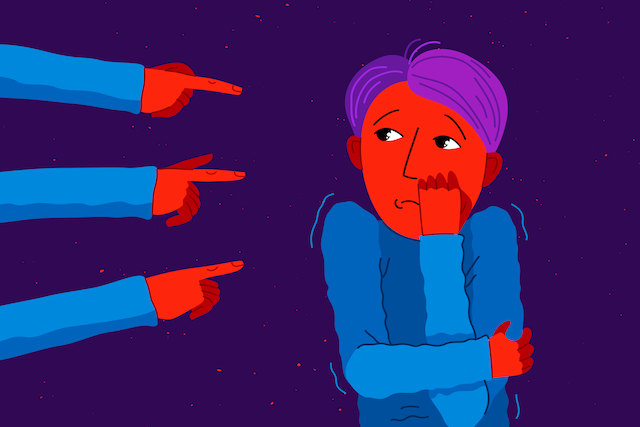
  • Are You Pathologizing Normal Emotions? It’s Not Always a Mental Illness

    Are You Pathologizing Normal Emotions? It’s Not Always a Mental Illness

    “Don’t believe everything you think.” ~Unknown

    Society is becoming more accepting of mental illness. That’s great, but there’s a downside that we need to talk about. Not everything is mental illness. We need to stop pathologizing every single thing that we feel.

    What I mean by pathologizing everything is jumping to diagnosing yourself after every tough feeling you have. It’s great to be self-aware, but I think we are taking that a little too far, and it’s causing more depression and anxiety.

    Yes, I said we are taking self-awareness too far. I stand by that, but I’ll explain the reasoning behind my belief. We are supposed to feel a range of emotions. It is normal to experience sadness, anger, irritability, anxiety, grief, or any of the feelings that exist from time to time.

    Since society is more accepting of mental health issues, we now want to label any uncomfortable feeling as mental illness. We diagnose ourselves with whatever mental illness we believe we have at the first sign of emotional pain.

    That leaves us feeling like we are so screwed up. We don’t need anything additional to make us feel like we’re screwed up! Most of us already feel this often enough as it is.

    Before you start listing all the reasons I’m wrong or how my view could be damaging, let me give you some examples. If you read them and agree, this could help you see that you and your feelings are more “normal” than you may think.

    Recently, I was talking to somebody who was in the process of buying a house for the first time. He was telling me that he was having a lot of anxiety related to the process and everything that he needed to get done.

    I could see the stress in his body and face.

    He has a history of generalized anxiety disorder, so when he feels even a little anxiety, he starts fearing that his disorder will return in full force.

    That’s a logical and valid fear. Anybody who has ever experienced clinical anxiety knows how scary it is to consider its return.

    However, he was missing something incredibly important. Buying a house, especially your first house, will always come with some “anxious-type” feelings.

    We need to learn how to normalize feelings that most people would have in the same situation. Panicking at the first sign of difficult feelings can turn those feelings into something much larger than they actually are.

    Just a couple of weeks ago, I slept twelve hours straight one night. I woke up with no energy or motivation whatsoever. I still didn’t want to get out of bed after twelve hours of sleep.

    That is incredibly abnormal for me. Typically, I wake up at about 4:00 am to write and do stuff for my other job. This gives me time to work while my family is asleep.

    That morning I woke up when my husband did, a few hours later than my normal. I told him I was just so tired and didn’t feel like doing anything, which is uncharacteristic of me.

    I felt “blah” and just wanted to stay in bed all day doing nothing. So, thirty minutes after waking up, that’s exactly what I did.

    My husband had to convince me to eat because nothing sounded good to me. I didn’t even want my normal glass of wine that evening.

    The next morning, I woke up feeling blah again and couldn’t shake it. I forced myself to function and play with my baby.

    He seemed to be feeling like me. That concerned me because he is so incredibly intuitive. I even thought maybe he was picking up on my feeling down and blah.

    When I got back in bed after lunch, I started worrying that I was depressed. From childhood and throughout my twenties, I was severely depressed. I did a lot of work to heal and haven’t had symptoms of depression in about ten years. A little bit of panic started rising with my negative self-talk.

    “What is wrong with you? Why can’t you just get out of bed? Maybe you should do some yoga instead of being so damn lazy.”

    I started telling myself that my depression was coming back, and in full force. Thankfully, I was able to put a stop to those thoughts pretty quickly.

    For some reason, my mind and body needed to rest. I just needed to allow myself to do that. Just because I was tired and didn’t feel like doing anything for a couple of days did not mean that I was depressed again.

    It was hard for me to acknowledge that I might actually have been sick, that there might have been a medical reason that I was so exhausted and didn’t feel well.

    The next morning, I went to an urgent care office. Well, what do you know? I had an ear infection in both ears and a fever, and my throat looked awful according to the nurse practitioner.

    Immediately my mind was put to rest. Major depressive disorder hadn’t reared its ugly head again. I was physically sick. My body was fighting an infection.

    For any of you who have experienced mental illness, you may also have this fear that one day it might return to say, “Hello. Remember me? I’m back!” Any time we get a hint of a difficult feeling, we jump to the conclusion that our anxiety, depression, or whatever we had is returning.

    This happened recently for a friend of mine. She has a history of major depressive disorder that plagued her for many years. She went to therapy and has been doing really well the last few years.

    She is an introvert who works in sales. Her company had a week-long meeting with all the managers and sales representatives. If you’ve ever been in sales or know somebody who has attended a company-wide meeting for several days, you know how much extroverted energy that takes.

    A few days after her meeting, she and I were on the phone. I asked her how her day was going. She told me that she just felt down and not motivated to do the things she needed to do.

    She had even scheduled an appointment with her psychiatrist for the next week to see if her medications needed to be adjusted. She was labeling herself as depressed and feeling scared.

    After we got off the phone, I started thinking about how I just didn’t think that she was depressed.

    I know her well and knew that being around a bunch of people for a week was exhausting for her, since she’s an introvert. I texted her about this and asked her if she thought her “depression” could simply be her needing to rest after having to be “on” for a week at her meetings.

    Quickly, she responded that she agreed and that it probably wasn’t her depression coming back to haunt her again. She recognized that she needed time to decompress from having been around so many people for several days.

    That’s just another example of how we pathologize feelings that are normal. We want to immediately label what we’re feeling as “wrong” or “unhealthy” and catastrophize it when it’s not actually a catastrophe. It’s often just a normal reaction to what we’ve experienced.

    It’s wonderful that society is becoming more aware and accepting of mental health and getting help. However, not everything is a symptom of mental illness. We need to stop diagnosing ourselves with mental illnesses based on social media memes or things we read or see.

    Also, we need to realize that it is perfectly normal to experience sadness and anxious feelings. That does not mean that we are suffering with mental illness.

    When we jump to diagnosing ourselves or others, we’re actually causing harm because we aren’t allowing ourselves to experience our feelings or normal things. Instead, we are trying to find a pathological reason we feel a certain way so we can eliminate it as soon as it pops up.

    That is not healthy. What is healthy is allowing ourselves to experience the feelings that come up, learning how to navigate those feelings in a healthy way, and choosing not to shame ourselves for having feelings that aren’t “positive.”

    So, the next time you’re going through a difficult time and you’re tempted to label it as mental illness or something that has to be stopped and “fixed” immediately, pause and ask yourself a few questions.

    Is this something that many people experience? If yes, then give yourself some grace and time to recover.

    Are the feelings I’m having normal based on my circumstances? If yes, then you don’t need to label them as mental illness or something that you should be gravely concerned about.

    Is this preventing me from completing the tasks I need to complete? If so, is it lasting for more than a week or two? Mental illness diagnoses require alterations from “normal” functioning.

    Have other people noticed me struggling, and are they concerned? If not, then you are probably experiencing normal feelings for the experience you’ve had.

    Use these questions as a guide and give yourself a little more grace when you have appropriate feelings and reactions to difficult experiences. Also, keep in mind that most of what you read that tells you that you have a mental illness probably isn’t truly qualified to do so.
  • How I Overcame Shame from Sexual Assault and Began to Love Myself

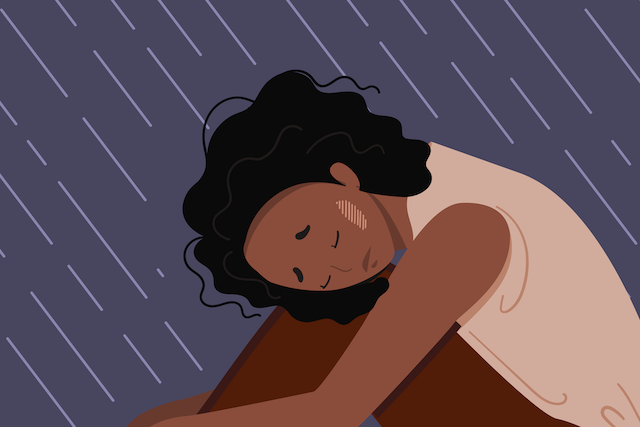
    How I Overcame Shame from Sexual Assault and Began to Love Myself

    “Our lives begin to end the day we become silent about things that matter.” ~Martin Luther King Jr.

    It was Saturday, August 29th, 2020, when I admitted to myself, for the very first time, that I was a victim of sexual assault as a child.

    Twenty-five years of complete denial that this ever happened, and suddenly all I could think of was the fact that my innocence was taken at the age of five. “Why now?” I wondered. “Why does it suddenly matter? Was I so resentful of my trauma that I denied its existence altogether?”

    Between the ages of five and eight, I was repeatedly molested by a family member. Although I wasn’t sure what was happening, I knew two things: This felt pleasurable, and therefore, there was something inherently wrong with me.

    I carried this shameful image of myself into adulthood, unaware of how it impacted my self-esteem, my sexuality, and my overall perception of myself as a woman.

    As the sexual abuse eventually ended, so did any thoughts about it. No one knew that it had ever happened, and I planned for it to stay that way.

    From the time I became sexually active, I struggled. I never felt safe while being intimate, even when I was with my ex-husband. I always carried this feeling of shame, and the more pleasure I felt from having intercourse, the more shame I experienced.

    When I finally stopped denying that I was a victim of sexual assault, I knew there was no coming back. Once I became brave enough to admit the truth and accept the discomfort of it, I remembered all those times when the assault took place. It was terrifying and intimidating.

    I felt disgusted, shameful, and angry. I was upset that this event was suddenly present in my life. My plans were to build my online business, make money, and have fun with friends, while making sure I consistently whitened my teeth and maintained my Florida tan.

    Instead, I was forced to face my demons and address the truth I’d buried so well. All I could think of was “What’s wrong with me?”

    For many victims of sexual assault, especially young children who can’t comprehend what’s happening, it’s easy to develop a belief that we are sick, dirty, undeserving, and not enough. We develop a strong survival mechanism where we pretend, guard up, in some cases become promiscuous while self-sabotaging any real connection with anyone else.

    Our trauma supports the belief that we can’t trust anyone, everyone is out to get us, and that feeling any pleasure for ourselves is bad and sinful.

    What I couldn’t wrap my head around, and what also brought unbearable shame, was the pleasure I felt when the assault happened. Logically, it didn’t make sense to me.

    These were my thoughts: “I didn’t do anything about it, and there wasn’t any force or rebuttal present. I let it happen over and over, and in a sense, I enjoyed it. How can I ever say that I am a victim of sexual assault? If it was wrong, I would do something. Instead, I did nothing. There must be something wrong with me.”

    What you just read is a common thought process for many victims of sexual assault. It is why we stay silent; why we let the shame grow each day and exercise self-hate full force. Many of us truly believe that there is something inherently wrong with us, and this is where speaking your truth and seeking help comes into play.

    Shame was probably the most intense emotion I observed, but I wasn’t sure how to deal with it. So, as a master in denial, I let it go, again. Or so I thought.

    A year went by, and nothing happened. I kept the truth hidden and didn’t talk about it too much while convincing myself that I’d already addressed it and all this messiness was behind me.

    Then a few months ago one of my friends mentioned the nonprofit RAINN—the nation’s largest anti-sexual violence organization that helps survivors and victims of sexual assault heal and recover.

    I knew this information showed up in my life for a reason. My shame was still present, and my sense of unworthiness wasn’t subsiding. It was time to call their hotline and get help.

    I dialed and hung up four times before I was brave enough to stay on the phone. The process was easy, and I was able to get a counselor within a few days, at no cost.

    It was time for my first session. I was nervous and guarded, but I clicked with my counselor, so it eventually became easier to open up and start sharing.

    At first, we started addressing the elephant in the room: How could I feel pleasure while being sexually assaulted, and would my shame ever go away?

    I learned in my recovery that arousal during a sexual assault is common. It is one of the best-kept secrets that prevent us from speaking up, sharing our trauma, and breaking the shame once and for all.

    We are terrified that no one will understand us and will judge us instead. Considering the amount of judgment and shame we already exercise daily, the idea of criticism and more shame is just too much to bear. Therefore, we stay silent and often let the shame get out of control.

    Although I am not a doctor and can’t impress you with some Ph.D. explanation, here is what I now understand:

    Being aroused during any form of sexual assault doesn’t mean we want it, it doesn’t mean we consent, and it certainly doesn’t mean there is anything wrong with us. Physical pleasure is a natural bodily reaction, even during sexual assault.

    As I progressed with my sessions, I was able to open up about things I never said out loud. Things like excessive masturbation during childhood or using self-pleasure and intercourse in my adult life to punish myself and feel disgusted. Without seeking help and getting a counselor, I might have never been able to overcome my self-destructive beliefs.

    This is the best part about therapy: it provides a safe space to say the things you’ve kept inside. And that, in and of itself, provides healing.

    During my therapy, I learned some powerful coping skills. Things like recognizing my triggers, soothing myself with compassion while drowning in self-hate, pausing, taking a step back, and reevaluating the situation before it gets out of control. These skills were especially useful when I spiraled into one of my shame attacks, wanted to punish myself, or felt overwhelmed by self-judgment.

    I learned the importance of self-love in this process; how to approach myself when feeling defeated, sad, upset, or shameful. Mostly, I understood the universal truth every victim of sexual assault needs to understand and focus on: Recovery requires us to stop questioning what’s wrong with us and instead face what happened to us.

    At the time of this writing, my therapy sessions are coming to an end. If I were asked what’s been the most impactful part of my recovery, I would say it’s the ability to speak up and share my story while exercising empathy and compassion for myself.

    As Brené Brown said, the best way to break the shame is to speak about it with those who deserve to hear our story—people we trust, people who have been through the same or similar situations, and people who are educated enough to understand our trauma. People who aren’t afraid to offer empathy and hold space while withstanding the discomfort of the conversation.

    Although my therapy is ending and the time to run solo is approaching, I know that to heal, I must commit and stay committed to my recovery. I understand now that healing is available to all of us, and all it takes sometimes is five minutes of courage to make a phone call and say, “I need help.”

    As my recovery progresses, my hope for living a happier life grows each day. I am beginning to understand that no matter what I go through or how deep my trauma is, I can make different choices and live my life from the most empowering place that’s available to me—from within.

  • How to Better Manage Stress So Little Things Don’t Set You Off

    How to Better Manage Stress So Little Things Don’t Set You Off

    “It’s not stress that kills us, it’s our reaction to it.” ~Hans Selye

    I was driving home from work, minding my own business, when a car cut in front of me.

    Pretty common in Sydney traffic, right? Normally, I would just brush it off.

    But not today. For some reason I couldn’t explain, that simple event set me off. I got so irritated that I pressed both my hands on the horn and started shouting at the other driver—who just gave me the finger and continued on his merry way.

    That’s when I lost it. How dare he do something like this?

    I was determined to get even. To teach him a lesson.

    I was so immersed in rage that I almost caused an accident just to prove a point.

    Not my proudest moment, I know.

    Have you ever been through something like this? Something trivial suddenly escalating to a new level of crazy?

    Well, the other day I witnessed my neighbor screaming from his balcony at a dude passing by, just because he had gangster rap blasting out of a speaker. Okay, I can understand that you don’t agree with his musical preferences, but is this a reason to pick a fight with a stranger?

    Or, one Christmas Eve at a crowded parking lot of the local supermarket, I had a lady lash out at me for touching her car door with mine, when I was trying to hop in while holding a couple of grocery bags. I had to use all my self-control not to jump down her throat.

    I guess this sort of things happen to all of us. You know, you lose your cool and end up shouting at your kids in the food court of the shopping center. Or, you snap at your partner for loading the dishwasher the “wrong way.”

    It is as if we all have a Mr. Hyde waiting to come out.

    But why does this happen? And most importantly, how can we control the impulse to kill someone?

    The thing is that the “event” in itself is never the root cause of a rage fit. It is just the last drop on a very full cup.

    For instance, the day of my road rage episode, I was going home from a day that didn’t go as planned. While driving, I was ruminating on the things that didn’t work and I was already on edge.

    So, when the other driver cut me off, it just unleashed something that was already in the making. And if it wasn’t this event, it would have been something else.

    I was simply stressed out and unable to be my best self.

    And you know what? All of us are continually exposed to stressors. From our worries and anxieties, relationship conflicts, existential crises, and poor lifestyle choices to background noises, overstimulation, and information overload.

    Which means that our cups are constantly full. And if we don’t deal with it, we’ll always be one drop away from overflow.

    But is it realistic to think that you can completely eliminate stress from your life?

    Heck no. This type of expectation would only create more stress. You’d be stressing about not getting stressed.

    So what can we actually do to live better?

    Well, you have two options: you can empty your cup on regular basis, or you can upgrade your cup size (if you work on both, even better).

    Emptying your cup is what is known as stress-relief strategies. Those are the things you do on regular basis to blow off steam, like going for a jog or taking a bubble bath.

    These activities help you take your mind off your problems, creating space for your body to calm down. During this time, your body shifts from “fight or flight” to “rest and digest” mode, which is necessary to replenish your energy and recover from stress.

    But the key word here is REGULAR.

    Because these strategies are not likely to work when you are already bursting at the seams (you know what I mean if you ever tried meditating when you had a lot in your mind).

    Nope. They need to be part of your daily self-care routine. My suggestion is to create the habit of blocking off space in your calendar for a little “me time.”

    I know what you’re thinking. “Are you kidding? I don’t have time for that.”

    Seriously, self-care is not a luxury. It is a necessity. For your sanity, and the safety of others around you.

    Now, there will be times in which you may not be able to relax even after a whole hour of deep tissue massage. Those are the times you get restless, lose sleep, and can’t function properly. That’s why you need to build a bigger cup (or a bucket) so that you’re better able to tolerate potential stressors.

    Upgrading your cup simply means investing time in building mindset skills. Skills to help you manage stress, deal better with adversity, and become a problem solver. As a result, you’ll be able to take more on without going cuckoo.

    It’s like developing a superpower.

    How? Here’s a little framework that can help you respond more wisely to stressful situations and minimize unnecessary stress.

    1. Becoming aware

    Awareness means noticing (without judgment) what is going on in your mind and body. It’s learning to identify emotions and feelings, thought patterns, and responses (how you react when something happens).

    This way you’ll be able to discover what sets you off and put a stop on knee-jerk reactions that you may have on autopilot.

    For instance, noticing that you get irritated when you feel disrespected, which leads to an acid remark from your part. Awareness gives you the opportunity to pause and choose a better way to respond.

    2. Practicing mental hygiene

    Mental hygiene means going through our mental rules and deciding on what is useful and what only causes us stress.

    The mind creates mental rules based on array of past experiences. The thing is that these mental rules end up defining how you’ll respond to an event in the future. That’s how we get stuck in vicious cycles.

    We create rules about how things “should” be done, how people “should” act, how they “should” respond in certain situations, how the world “should” work… With so many ideas of how things should be, we end up living in defense mode, constantly fighting against everything our mind judges as “wrong.”

    To move on, you’ll need to learn to let go.

    For example, I made a rule in my head that said that things needed to be neat all the time after growing up with a neat father. This was totally fine while I lived on my own. But when I moved in with my partner, it became a constant source of attrition. My Mr. Hyde often came out when my partner’s behaviors went against my internal rules. So, I decided to let go of this rule in order to have a peaceful home life.

    3. Rewriting the rules

    The truth is that all beliefs serve a purpose. They are the code of conduct that guides our behaviors. So when we decide to get rid of a rule, we need to make sure that the unconscious need behind is being met in another way.

    For instance, to be able to let go of the rule I mentioned above, I had to ask myself why it was so important to have things organized. With a little bit of soul searching, I came to realize that when my environment was neat and orderly, I could process thoughts and emotions more efficiently, which meant that I felt more in control of my life. This helped me put things into perspective and develop new guidelines.

    Now, I allow myself to make things neat, but I don’t obsess about it anymore. That means that I don’t get upset when my husband leaves a dirty sock here and there. I just remind myself that having a peaceful environment is more important. And I developed other ways to feel in control of my mind and body like adopting a meditation practice and building an exercise routine.

    So now I ask you, how full is your cup? And most importantly, what can you do to prevent spillage?

    If this’s all very new to you, you could start by creating a self-care routine that helps you empty your cup on regular basis. And if you already have one, then work on upgrading your cup. This way you’ll be less likely to explode over little things.

    Oh, and don’t get put off if you have slip-ups. Keep in mind that stress management is a skill that gets better (and easier) with practice.

  • What Your Anger Is Trying to Tell You and How to Hear It

    What Your Anger Is Trying to Tell You and How to Hear It

    “When we embrace anger and take good care of our anger, we obtain relief. We can look deeply into it and gain many insights.” ~Thich Nhat Hanh

    It just took a few words from my husband before I felt my body move from calm to a boiling cauldron of rage. My whole being was alight, in flames. Energy felt like it was moving through me and shattering everything inside me.

    I hated it. Anger is so intense, and so big, that most of us can’t bear to feel it in our bodies.

    I wanted to do a lot of things—shout at him, throw things, scream the house down, offer rageful thoughts to anyone who would listen.

    I wanted this anger out of my body. NOW.

    In the past I have reacted to these inner sensations and launched arguments that could last hours or even days. I would rarely get anything other than anger back from my husband, and a continuous wrangling over who was wrong and why.

    It was painful and corroding to our relationship, feeling like a bomb would go off and we would spend days dealing with the damage.

    Until I learned that the source of my anger wasn’t my husband. Or my kids, or that person on Facebook, or politicians or corrupt business people.

    The source of my anger wasn’t outside of me, but within. And it was situations that were activating this anger. Until I learned how to deal with the anger, it would keep coming up over and over again, in ways that felt too overwhelming and painful for me.

    I was suppressing anger most of the time because I didn’t feel safe letting it out, but when it did come out it felt too strong and too damaging. It felt repulsive, overwhelming, dominating.

    Boiling rage. Painful flames of righteous anger tearing through my body. A sensation that the anger was smashing bits inside me.

    Anger is a hard emotion for most of us to feel. It’s got so much energy, so much force, so much intensity to it. And as an emotion, if we express anger, we usually get the most negative response back.

    Anger is frightening. It’s unbearable to hear, it sends shivers through us if we walk past someone angry and fuming.

    But when we suppress anger, when we don’t allow it to come up it gets trapped in our bodies, the energy of it creating havoc inside. For me it felt like it was trapped in my jaw, which was so often sore from clenching and squeezing my muscles.

    I didn’t want to feel overwhelmed by anger anymore. I wanted to be a woman who could be with it, feel it, and not explode or fall apart or trap its tension in my body.

    I started to become intimate and friendly with my anger. I started to recognize when it was coming up in my body—in small doses sometimes, activating minor annoyances in my life.

    “Oh, anger! There you are, I see you lurking there in the shadows.”

    And the times when I would feel a huge surge of it in my body, when my kids would say something, or I’d receive an unpleasant email or read something on Facebook.

    “Oh, lots of anger here now! Okay, I see your anger. You’re here, I understand.”

    And by noticing when it came up inside of me, I began to see how often it was a thread in my life. And by noticing it I started, in a small way, to provide some relief for myself.

    The thing that I would then do, which made such a beautiful and healing difference, especially when huge surges of anger came my way—like when my husband said that thing and I wanted to shout shout shout at him—is to give myself time, space, love and support

    I stay with myself and don’t react externally.

    I don’t blame what I see as the source of my anger, but really isn’t.

    I tend to myself with a loving touch of my heart. (When touch on the body lasts over twenty seconds it releases oxytocin, the love hormone.)

    I give myself loving words—Di, I see this anger is really painful. It’s so big, so overwhelming.

    I ask myself, where is this in my body, how is it feeling?

    All of this attention on myself, at my reactions and how I am feeling, gives my body the signal that I am being deeply and lovingly cared for. I am safe to feel this feeling.

    I might do some relaxing breathing, giving a short inhale, followed by a long exhale which activates the rest-and-relax mode.

    I stay with myself as long as the emotion is there. “I’ve got you, Di! I can be with you through this feeling. I love you, Di.”

    And if I need to move and do something to help the energy pass through me, I do. I go for a walk, smash some rocks, squeeze or punch a pillow.

    Why this is so very important, why this makes so much of a difference in how we handle our emotions, is that it gives us the chance to let the energy of the emotion pass through. And when we do this repeatedly, we teach our system that emotions like anger are safe to be experienced, that we can hold and support ourselves through what life brings us.

    It also doesn’t make the situation worse by exploding at the person who may or may not have said or done something you didn’t like.

    If this is a situation that needs to be sorted out, if what was said or done needs discussion, it is infinitely more effective to wait for your anger to move through you until you are out the other side, than to talk to someone when you are in a rage.

    That’s because you are highly likely to activate their anger, as anger in others can feel like an attack on ourselves.

    And when we are deeply emotional, we can’t truly hear and empathize with other people, so we are just giving a speech, which the other person can’t hear if they’re also emotional!

    We risk escalating the situation further by saying and doing things we deeply regret. And, of course, we can also put ourselves in danger.

    If we want to be truly heard by someone, and if we want to create change, we have to wait until the emotion has passed. Then we have the best possible chance of coming to a positive agreement with someone else about what we didn’t like or want.

    Anger, like all emotions, can give us a unique understanding of what needs we have that aren’t being met. When we see the roots of what has activated the anger, we can see that there are often unmet needs to explore.

    For me, after that big rageful explosion, after I moved through the flames of anger and out the other side, I saw that I wanted more private space for myself to work uninterrupted so I could fully concentrate.

    It was a need I had been thinking about on and off for a while, but that I hadn’t really realized that it was upsetting me. It gave me the sense that I was last on the priority list as everyone else in the family had a space for private time.

    And so seeing that, I could then work on meeting that need, and reducing the chances of anger being activated around that subject again.

    Anger, what are you trying to tell me? I asked, and it told me.

  • Why Your Anger Is the Key to Maintaining Your Boundaries

    Why Your Anger Is the Key to Maintaining Your Boundaries

    “Boundaries define us. They define what is me and what is not me. A boundary shows me where I end and someone else begins, leading me to a sense of ownership. Knowing what I am to own and take responsibility for gives me freedom.” ~Henry Cloud

    Late last night, I once again found myself unable to sleep, and boy was I angry. So, in order not to disturb my other half, who is always asleep the moment his head touches the pillow, I dragged myself off to the sofa. Once there, sat seething in the dark, I listened to my emotion and asked it to speak to me, and guess what it screamed?! Boundaries!

    Now please bear in mind that I have been on this journey for a while and had also been discussing boundaries earlier in the day, so my inner knowing came out loud and clear. For you this may not be the case, and that’s okay.

    Practical Tip 1: When you feel angry, take yourself away and write down all those racing thoughts. No judgment, just get pen to scrap piece of paper and write it all down. Do not, I repeat DO NOT, take it out on the person you feel has caused this anger.

    So, where was I? Oh yes, boundaries! Those joyful and challenging rules. That is what they are after all, rules.

    If you think back to being a child, when you broke a rule, an adult got cross. Therefore, it’s hardly surprising that anger is a messenger for when you have overstepped your boundaries, or you have let someone else break a boundary you consciously or unconsciously set.

    This is probably where I should explain the difference between internal and external boundaries.

    Internal boundaries are the rules and limits that you set for yourself. They don’t have to be shared with anyone else, but they are for you to follow. They may sound like:

    • When I finish work for the day I will take ten minutes to meditate/for myself.
    • I respect my body, so today is a non-chocolate or non-alcohol day.
    • To protect my time and mental health, I will limit time scrolling through social media to one hour a day.
    • Because I value my family, I will not take on any projects that require me to work nights or weekends.
    • To help myself let go and move on, I will do something healthy for myself every time I start dwelling on my ex and our breakup.

    External boundaries are the ones you set with the outside world. These do need to be shared, unfortunately, and can be challenging in that respect. They outline how you will allow others to treat you. They may sound like:

    • I would love to help you with this project; however, I can only give you one hour a week.
    • Please give me ten minutes when I get in from work for me to settle before we start chatting or planning dinner.
    • I enjoy seeing you, but it’s important to me that you call before coming over.
    • This topic is upsetting to me, so I would rather not discuss it with you.
    • I hate to see you two fighting, but I can no longer be the middleman in your arguments.

    Practical Tip 2: Take that page of anger thoughts and identify any boundaries, internal or external, that have been messed with.

    Have you let yourself down in some way? Or did you let someone break a boundary without gently reminding them it was there?

    Strong boundaries help us protect our time, our energy, and our physical and mental health, so it makes sense we’d feel angry when they’re violated. But oftentimes our boundaries are unclear or fuzzy, or we negotiate them without conscious awareness because we’re tempted to give in to our impulses or we don’t want to make other people feel uncomfortable.

    This is why we need to practice self-awareness and recognize which boundaries we’ve allowed to be crossed and why.

    Seething on the sofa, there I was, scolding myself for breaking a boundary that I have set and reset many times over the past few years—allowing myself at least thirty minutes of quiet wind down time before bed, with no distractions, no talk of work or anything that might get my highly sensitive nature all stimulated, making it hard to sleep.

    Practical Tip 3: Once you understand the boundaries that were crossed, the first step is forgiveness. You are a human being doing the best you can right now, and it’s okay that at times you forget to uphold boundaries with others or yourself.

    Thank the anger for drawing it to your attention, forgive yourself and resolve to do a little better each time. If you are alone, I recommend doing this out loud a few times.

    This first stage is powerful and really calmed me down, enough that I could crawl back into bed with a snoring partner and finally drift off. However, that is not the end of this lesson, dear reader. In the morning light, sat at my desk, I reviewed the boundary I’d crossed and asked myself a few questions, just like the ones in the next tip.

    Practical Tip 4: Time to review your boundaries and ask yourself:

    • Is this an internal or external boundary? Did I let myself down, or did I not uphold a boundary with someone else?
    • Why did I not maintain this boundary? How did neglecting it negatively impact me?
    • Is this a boundary I want to have? Is it time to set a different boundary? Or is there something I need to change or address to better maintain this boundary?
    • If internal, what is the purpose for this boundary? Is it in alignment with who I want to be?
    • If external, have I communicated my boundaries clearly to this person? What kind things can I say to remind them of my boundaries when they start to cross the line?

    The results of my review were that I want a balance around this boundary, as I love staying up late into the night chatting with my partner or watching TV, yet sleep is crucial to my well-being. Therefore, I have resolved that Monday to Thursday I will uphold my boundary, and the weekend is the time to relax the boundary a little.

    Over dinner I will discuss this with my partner and get his buy-in and most importantly ask for his support in helping me to uphold the boundary during the week, just until it becomes a new habit!

    Remember:

    Boundaries are just rules we set ourselves.

    Boundaries are yours to uphold regardless of if they are external or internal.

    Anger is a great messenger for boundaries you have allowed to be crossed.

    Communicate why you have a boundary with others and ask for their support.

    It is all within your control.

  • Forbidden Emotions: The Feelings We Suppress and Why They’re Not Bad

    Forbidden Emotions: The Feelings We Suppress and Why They’re Not Bad

    “The truth is that there is no such thing as a negative emotion. Emotions only become ‘bad’ and have a negative effect on us when they are suppressed, denied, or unexpressed.” ~Colin Tipping

    Emotions are constantly and powerfully guiding our lives, even when we are not aware of them, even when we do not feel them or are convinced that we can exclude them from our experiences.

    Emotions give us precious, sometimes indispensable information about what is best for us, about the best choices we can make, about how to behave. They give us information that we often do not listen to because we devalue them or simply because we have not learned to identify or understand them.

    In many families, however, some emotions are forbidden.

    Without even realizing it, some parents naturally teach their children not to feel certain emotions. Growing up, were you told “Don’t be angry!”, “Don’t cry!”, or “You are just a child, you shouldn’t feel sad”? Or you were criticized after expressing a certain emotion?

    If so, you learned from your childhood that the specific emotion—the forbidden emotion—was dangerous, inappropriate, and disapproved of.

    As you grew up, you perfected the art of excluding it from your emotional repertoire to the extent that today you might be referred to, for example, as someone who never gets angry or never cries, and so on. Parents can massively influence their children’s mindset, and if trauma from childhood is not healed, we carry it with us into adulthood. We are like children wearing adult suits.

    If you think about how you feel when you get triggered, do you recognize that your reactions might be similar to how you used to react when you were a child? I recognized it in myself, especially since making the decision to finally listen to my emotions years ago.

    I grew up having my emotions dismissed on a daily basis. Feeling sad, anxious, or angry was forbidden in my family life. But those feelings didn’t go away, they kept piling up until I couldn’t take it anymore.

    I remember one time when I was a child, I had a difficult day at school because my usual bully was mean to me. When I went home, I wanted to vent about what had happened to my parents, as I was feeling sad and anxious. I wanted to be heard and understood, but most of all I wanted to be able to express my feelings freely so that I could find some level of comfort.

    The words I was told in that very moment were “Don’t worry about it, it’s not that bad,” “Stop feeling anxious,” and ‘You will be fine.” Not being heard as a child, especially on that occasion, instilled the belief in me that I wasn’t worthy of being listened to, and unfortunately the feeling of anxiety stayed with me over the years that followed.

    As I got older, I felt guilty every time I felt sad or anxious and tried to suppress those feelings, like I was taught. For example, in my early twenties, one of my dearest friends decided to end her life. She was young, and there had been no apparent signs of her deep unhappiness and the desire to not be in this world anymore.

    When I heard the news, I was in shock. Sadness and anxiety came up, but I had this paralyzing feeling telling me that I couldn’t be sad, I couldn’t be anxious, I couldn’t cry, I had to let it go straight away because it was the ‘right’ thing to do. Unfortunately, as a result, I didn’t grieve her death, and it took me many years before I finally accepted her loss.

    It was only after I made the decision to consciously embrace and face my emotions and improve my life that I started to feel better.

    My parents are lovely people, but they were (and still are) hurt from their own childhood trauma, and they instilled in me their own beliefs, emotions, and behavior, whether it was positive or negative. Whether they did it intentionally or unintentionally, they did the best they could.

    I spent years being angry at them until I made the decision to forgive them, also readying myself for when I have children, so that they’ll learn to embrace and manage the forbidden emotions I mentioned earlier.

    There is nothing we can do about how our parents raised us, but our well-being is our responsibility to sort out.

    Just as there are forbidden emotions or categories of emotions in every family, there are also encouraged ones. Having learned to suppress awareness of certain emotions, a child will find compensation in expressing what has been allowed instead.

    In one family, for example, anger might be forbidden but sadness is allowed and encouraged. The child in this family will learn that sadness will receive attention, whereas anger will be punished, criticized, or ignored.

    Over time, the child may replace sadness with anger and manifest it indiscriminately, for example, when following a loss, when it is natural to feel sad.

    Regaining possession of the forbidden emotions then becomes a necessity. One can finally make sense of confused and apparently inappropriate and misplaced feelings. And they can start making better decisions, since authentic emotions guide authentic choices, providing a sense of fulfilment and reducing the possibility of feeling empty, frustrated, and insecure.

    Being free to feel means being free to choose how to act, rather than feeling overwhelmed by others and events and powerless in situations in our work, love, and family lives.

    Identify Your Forbidden Emotions

    Were you not allowed to experience a certain emotion as a child? What is your forbidden emotion?

    I will leave you with two hints that may help you identify it:

    What emotion do you struggle to understand or embrace when you see it in others?

    What emotion do you tend to criticize or minimize when someone else expresses it?

    Reflecting on this can be complicated, but it can also help you make sense of a discomfort that probably depends on a prohibition that you made your own and believed to be true and legitimate for a long time.

    A prohibition that you can now, if you wish, transform into permission.

  • How to Stop Reacting in Anger When You’re Triggered

    How to Stop Reacting in Anger When You’re Triggered

    “Freedom is taking control of the rudder of your life.” ~Yukito Kishiro

    “What’s for dinner?” It’s a simple enough question. Yet it’s one that has made me lose my mind at my husband on more than one (or ten or twenty) occasions.

    It’s not the question itself. It’s a valid question and one that needs an answer (at least by one of us).

    A trigger of mine is being asked to answer a question when I’m already in the middle of something, feeling overwhelmed, emotionally exhausted, or just sick of answering questions.

    So then I snap and overreact.

    I’ve come a long way in my personal growth journey, but I’m by no means perfect. I still react in anger but to a lesser extent and less often. I get mad, but I don’t stay there. I screw up, but I can apologize with humility and forgive myself.

    When we’re in reaction-mode to life’s challenges, we aren’t in control. We react in ways that are not in tune with how we want to be.

    Learning to navigate our triggers not only enables us to take back control and enjoy life more, it has an amazing trickle-down effect to those around us too. It better connects us in our relationships and models for others or our children what it looks like to be gracefully resilient so those in our circles can mimic the same.

    So, what does it look like to react in anger?

    Someone at work criticizes you and you instantly get defensive.

    Your partner asks you to do something when you clearly have your hands full, so you immediately get pissed.

    Plans change unexpectedly, and you panic or get irritated.

    Someone in your life is controlling or manipulative, so you either get scared and shut down, or feel livid and lash out.

    Someone does something that goes against your core values like being mean or inconsiderate or lying, and you explode.

    It can also mean reacting to your own thoughts or actions and getting angry with yourself for “doing it again,” being lazy, or failing.

    And all that leads to feeling guilty for saying things you don’t really mean or making a mountain out of a molehill, or maybe even rehashing past events.

    It can lead you to beat yourself up again for how you handled things in the past.

    And it can leave you feeling misunderstood because you recognize that your reaction stems from something deeper than this one incident;  a culmination of events, or some underlying fear created this trigger for you.

    Why We Are Reactive in the First Place

    We are reactive or over reactive when our stress response is triggered sending us into fight, flight, or freeze mode.

    We react on autopilot. In this space, we aren’t in full control, and it’s hard to see things clearly and objectively.

    Sometimes our triggers relate to events from the past. For example, you may get triggered when someone ignores you because your parents frequently neglected you when you were a kid, causing you to feel unimportant. Other times, our triggers are events that make us feel out of control.

    For example, one of my triggers used to be slow drivers on the highway. I would instantly snap into fight mode and get angry. I’d drive too close to them or shake my fist (or special finger) at them, honk my horn, or speed past them in a fit of rage.

    Sitting here calmly as I reflect back on my past, reactive self, I’m a little embarrassed and shocked remembering the actions I took while angry. That’s because I’m in a calm place and my fight mode is not initiated, so I have full control at the moment. I wouldn’t do any of those things when I’m in a healthy mental space—those choices don’t reflect the kind of person I want to be.

    When we react from a place of fear and anger, we rarely feel good about the things we say and do.

    How to Stop Being So Reactive and Respond to Stress More Calmly

    We don’t have to let our fear and anger control us. At any time, we can make a choice to respond to life from a calmer place. Here’s how.

    Prioritize self-care so you’re less likely to feel overwhelmed, exhausted, or on the verge of snapping.

    If you overextend yourself or regularly neglect your needs, you’ll likely feel triggered by even minor annoyances because your default state will be imbalance and agitation. And you’ll find it nearly impossible to handle major issues because you won’t have the inner strength to handle them. Take good care of yourself, mentally, physically, and emotionally, and everything will feel more manageable.

    Set yourself up to not be reactive by identifying your stress triggers.

    What things lead you to react in anger or fear? Awareness is key here! Create a list of things that you know trigger you, and why.

    Then describe how you typically react when those triggers occur.

    For example, a trigger of mine has always been other people getting angry at little things that I don’t think warrant being angry about.

    Funny enough, my reaction to their anger was anger! I would get mad that they are angry and yell at them to be calm. Obviously, this strategy didn’t work for me.

    Then ask yourself, “How do I want to respond instead”?

    As I reflected on how I usually reacted to my triggers, I realized I would rather remain composed than lose my cool and flip out. If I could pick any response to other people being angry, it would be for me to stay calm and in control.

    And that’s one of the main reasons I realized I have such a strong reaction to other people’s anger. I think that the “right” way to be in this world is to be calm, kind, and compassionate. When someone reacts in the polar opposite way, it conflicts with my values, and ironically, I end up getting angry with them.

    This is why this step is so important. We often react in ways that are not in tune with our values when emotions are running high, so we need to consciously decide, in advance, how we want to respond in stressful situations.

    From there, think about what you are trying to control that you have no control over.

    At a certain point, I realized that some people are going to get angry, and I won’t agree with their behavior. My anger stemmed from judging their reactions and wanting to control how they were feeling and behaving. I have no control over other people. I may be able to influence them, but I will never be able to control them.

    If traffic triggers you, you may be trying to control your time because being delayed makes you feel anxious. If chaos triggers you, you may be trying to control your environment to create a sense of safety. If angry people trigger you, you may be trying to control how other people react and experience stressful situations.

    Now, ask yourself, “What do I have control over?

    Since I don’t have control over what other people do, and wanting to control them was creating anger within me, in order to reach my desired response of staying calm and in control I had to shift my focus to myself. Because the only thing I have control over is what I do.

    So when someone else is angry and I think they’re overreacting, I can take some deep breaths, step away from the situation, and ask the other person how I can help (in an effort to help calm them), or just sit back and allow them to process the situation however they need to in that moment.

    I started to notice that as I stopped reacting to anger with anger, the people around me showed less anger over time. And when they did get angry, they didn’t stay angry as long.

    I started to realize that they were often mimicking me, whether they realized it or not. Of course, part of it was that I was no longer adding to the anger and fueling it from my end too. But seeing what it looks like to stay calm and in control is an important skill to witness. It shows others what it looks like so they can do the same.

    We all get triggered at times, but we don’t have to say and do things we regret, which will ultimately damage our relationships and leave us feeling bad about ourselves. With a little self-awareness, we can stop reacting on autopilot and start responding to life from a calm, neutral place. Maybe not all the time, but more often than not, and we’ll feel a lot more peaceful and in control as a result!

  • How I Stopped Putting Everyone Else’s Needs Above My Own

    How I Stopped Putting Everyone Else’s Needs Above My Own

    “Never feel sorry for choosing yourself.” ~Unknown

    I was eleven years old, possibly twelve, the day I first discovered my mother’s betrayal. I assume she didn’t hear me when I walked in the door after school. The distant voices in the finished basement room of our home drew me in. My mother’s voice was soft as she spoke to her friend. What was she hiding that she didn’t want me to hear?

    I leaned in a little bit closer to the opening of the stairs… She was talking about a man she’d met. Her voice changed when she spoke of him. The tone of dreamy wonder when you discover something that makes your heart race. She talked about the way they touched and how she felt being with him.

    I felt my body go weak. I could not tell if it was sorrow or rage. All I knew was, she had lied to me.

    Several months prior, my parents had announced their divorce. My mother told me the decision was my father’s choice. She told me he was the one breaking up our family. She told me she wanted nothing more than to stay with us and be together.

    And now I heard her revealing that was not true. She wanted to leave. She was not choosing me. She was choosing him.

    Since I was nine months old, my mother had been in and out of doctor’s offices, hospitals, psychiatrist’s and therapist’s offices trying to find the cure of her mental and emotional instability.

    When I was a young child, she began to share her frustrations and sorrows with me. I became her support and the keeper of her pain. She had nicknamed me her “little psychiatrist.” It was my job to help her. I had to. I needed her stable so I could survive.

    I don’t remember when or if she told us that she was seeing someone. I just remember she was gone a lot after that day. She spent her time with her new boyfriend out of the house. As the parentified child who she had inadvertently made her caretaker, it felt like she was betraying me. She left me for him.

    I was no longer the chosen one—he was.

    I hated him for it. When my mother moved in with him, I refused to meet him. I didn’t want to get to know or like this man she left me for.

    I saw them one day in the parking lot outside of a shopping plaza. I watched them walking together and hid behind a large concrete pillar so they wouldn’t see me. The friend I was with asked if I wanted to say hello. I scowled at the thought. I despised him.

    Within the same year, his own compromised mental health spiraled, and they broke up. He moved out of their apartment. I didn’t know why or what happened. I only knew my mother was sad. Shortly after their breakup, he took his own life. From what we heard, he had done so in a disturbingly torturous way. It was clear his self-loathing and pain was deep.

    My mother was devastated. She mourned the loss of her love and the traumatic way he exited. She stopped taking her medication, and her own mental health began to spiral. My father received a phone call that her car had been abandoned several states away. I’m unsure what she was doing there, but she had some issues and took a taxi back home.

    He later received a call stating that my mother had been arrested for playing her music too loud in her apartment. Perhaps to drown out the voices in her head. She was later taken to the hospital without her consent and was admitted due to her mental instability.

    After several days of attempting to rebalance her brain chemistry with medication, my mother began to sound grounded again. The family decided she would move in with her parents a few states away from us and live with them until she was stable again.

    A few days after Christmas she called me to tell me how sad she was. She grieved her dead boyfriend. I was short with her. I was still angry for her betrayal. I didn’t want to continue being used as her therapist. The imbalance in our relationship was significant, and my resentment was huge.

    I loved her, but I could not fall back into the role of being her support without any support back. It was life-sucking. And I didn’t care that he was dead. She chose him over me. I was fine with him being gone.

    I don’t recall feeling any guilt when I got off the phone that day. I felt good that I had chosen myself and put a boundary in place to not get sucked into her sorrow. I was fourteen years old, less than a week shy of fifteen. I just wanted to be a kid.

    The next day, my mother chose to make more decisions for me and for herself. These were more final. She told her parents she was taking a nap and intentionally overdosed on the medication meant to save her. She died quietly to relieve herself from her pain and left me forever.

    That choice—my own and hers—would change the course of my life.

    The day my mother freed herself from this world was the same day I learned to become imprisoned in mine. I was imprinted with a fear that would dictate my life. I became quietly terrified of hurting other people. I feared their discomfort and feeling it was my fault. From that day forward I would live with the silent fear of choosing myself.

    My rational mind told me it was not my fault. I did not open the bottle. I did not force her to swallow the pills. I did not end her life. But I also did not save it.

    I learned that day that creating a boundary to preserve myself not only was unsafe, it was dangerous. When I chose me, people not only could or would abandon me, they could die.

    Of course, I never saw this in my teenage mind. Nor did I see it in my twenties, thirties or the beginning of my forties. I only saw my big, loving heart give myself away over and over again at the cost of myself.

    I felt my body tighten up when I feared someone would be mad at me. I heard myself use words to make things okay in situations that were not okay. I said yes far too many times when my heart screamed no. All because I was afraid to choose myself.

    The pattern and fear only strengthened with time. I learned to squirm my way out of hurting others and discovered passive-aggressive and deceptive approaches to get my needs met. My body shook in situations where conflict seemed imminent, and I learned to avoid that too.

    What I didn’t see was that this avoidance had a high price. I was living a life where I was scared to be myself.

    On the outside I played the part. The woman who had it all together. Vocal, passionate, confident, and ambitious. But on the inside, I held in more secrets than I knew what to do with. I wasn’t living as me. My fear of being judged and rejected or not having my needs met was silently ruling my life.

    So many have developed this fear over time. Starting with our own insecurities of not feeling good enough and then having multiple experiences that solidified this belief. The experiences and memories differ, but the feelings accompanying them are very much the same.

    The fear of choosing ourselves, our desires, our truths, all deeply hidden under the masks of “I’m fine. It’s fine.” When in reality, we learn to give way more than we receive and wonder why we live unsatisfied, resentful, and with chronic disappointment. Nothing ever feels enough, and if it does, it’s short-lived.

    The memories and feelings become imprints in our bodies and in our minds that convince us we can’t trust ourselves. That we can’t trust others. That we must stay in control in order to keep us safe. We learn to manipulate situations and people to save ourselves from the opinions and judgments outside of us. We learn to protect ourselves by giving in, in order to not feel the pain of being left out.

    We shelter ourselves with lies that we are indifferent or it’s not a big deal in order to shield ourselves from the truth that we want more. We crave more, but we are too scared to ask for it. The repercussions feel too risky. The fear of loneliness too great.

    In the end, our fear of choosing ourselves even convinces us we can live with less. That we are meant to live with less, and we need to be grateful for whatever that is.

    Do we? Why?

    What if we learned to own our fear? What if we accepted that we were scared, and it was reasonable? What would happen if we acknowledged to our partners, families, friends, and even strangers that we, too, were scared of not being good enough? Of being discarded, rejected, and left behind.

    What would it be like if we shared our stories and exposed our insecurities to free them instead of locking them up to be hidden in the dark shadows of ourselves?

    I’m so curious.

    Where in your past can you see that choosing yourself left a mark? What silenced you, shamed you, discouraged you from choosing your needs over another’s? When were you rejected for not doing what someone else wanted you to do? And how has that fear dictated your life?

    Choosing ourselves starts with awareness. Looking at the ways you keep quiet out of fear or don’t make choices that include your needs. Seeing where this fear shows up in your life gives you the opportunity to change it. The more you see it, the more you can make another choice.

    Start with looking at the areas of life where you hold on to the most resentment and anger. Who or what situations frustrate you? Anger often indicates where imbalances lie or when a boundary has been crossed. It shows us where we feel powerless.

    Make a list of the situations that annoy you and then ask yourself, what’s in your control and what’s not? What can you directly address or ask for help with?

    Note the ways you may be manipulating others to get your needs met in those situations and how that feels. Note also what you may be avoiding and why.

    How would it feel to be more direct and assertive? What feelings or fears come up for you?

    Then start with one small thing you could do differently. Include who you could ask for help with this step, if anyone.

    As for me, I have found myself in situations where I lied or remained silent to avoid being judged, in an attempt to manipulate how others see me. I have felt my body cringe with sadness and shame each time. It doesn’t matter how big or small the lie, it assaults my body the same.

    I have learned that speaking my truth, no matter how seemingly small or insignificant, saves my body from feeling abused by the secrets it must keep. Choosing me is choosing self-honesty; identifying what is true for me and what is not based on the way my body responds. I am not in control of others’ judgments of me, but I am in control of the way I continue to set myself up to judge myself.

    I have also found myself agreeing to do things I didn’t want to do in order to win the approval of others, then becoming resentful toward them because I refused to speak up for myself.

    Choosing me in these scenarios is honoring the fact that I will still be scared to ask for what I need, as my fears are real and valid, but asking anyway, even when the stakes feel high. It’s scary to feel that someone may abandon us if we choose ourselves, but it’s scarier to lose ourselves to earn a love built on a brittle foundation of fear.

    l cannot control the past where I have left myself behind, but I can control today, the way I forgive myself for falling victim to my human fear, and the way I choose to love myself moving forward. When I choose me, I have more love to give to others. Today I can take a small step toward change.

    Taking these small steps and building on them will help us to show ourselves that we can make progress in bite size amounts and prove to ourselves we are going to be okay. The small bites are digestible and give us proof that we can do it. This helps us build our ability to do more over time, while also decreasing our fear.

    If we look at our past, we will see the majority of our big fears do not come to fruition, and if they did, we survived them and gained knowledge or strength in the process.

    It’s not the action holding us back, but the memory of the discomfort we still live with. The more we move through these fears, the more that discomfort will decrease, and the more we will trust that we will be okay no matter what.

  • How I Stopped Feeling Angry with Everything and Everyone (Including Myself)

    How I Stopped Feeling Angry with Everything and Everyone (Including Myself)

    “Tears of despair can be fuel. Thunders of anger can be light.” ~Maxime Lagacé

    Let’s talk about rockets.

    This is going somewhere, I promise.

    If you ever watch a rocket launch, you’ll see a large cylinder fall off once it gets to a certain height. Breaking earth’s gravity is not easy, so the cylinder is filled with a high-powered propellant that helps the rocket gain altitude.

    The thing is, once all the propellant is gone, the cylinder becomes dead weight, so it has to be jettisoned. Otherwise, the rocket would fall back to earth, and all of that work would have been for nothing.

    Now for an abrupt segue.

    I entered my twenties as a very angry young man. I was angry at the world for being difficult and not doing what I wanted it to do.

    I was angry with a lot of my close friends because they had the nerve to go on with their lives and do normal things like graduate college and have long-term relationships. They had even stopped drinking every day.

    I was angry with my family and people who cared about me because they were always pointing out all the things I was doing that were not going to turn out well.

    More than anything, though, I was angry with myself. My drinking and drug use were completely out of control, but I could not figure out what I needed to do about it.

    I was angry with myself because I had dropped out of high school and then been kicked out of college a few times, and I had no idea what I wanted to do with my life. I wouldn’t have had the skill set necessary to do what I wanted even if I had known what it was.

    There was this one James who wanted to do good things with his life and be responsible and all that good stuff. Then there was another James who always showed up and wrecked everything.

    Good James was fighting an uphill battle because not-so-good-James could torpedo months of work with one decision. He was an elite assassin: one shot, one kill, and he always had my life in his crosshairs.

    I couldn’t seem to get traction. I knew I was in a hole, but for some reason I kept digging. When I finally hit rock bottom, I decided it was time to get a jackhammer.

    Feeling Like a Loser

    There’s a particular frustration with being a loser that’s hard to explain to people who’ve never been one. People look at you a certain way, people treat you a certain way. You tend to treat yourself poorly because it feels like you’re going to waste any opportunity that comes your way.

    It’s frustrating and infuriating and debilitating all at once.

    We could dive into all the reasons for this and the psychology behind it, but the simple fact was that I had just turned twenty, and I felt like I had already made irreparable mistakes. The consequences felt insurmountable.

    After a few car wrecks and trips to jail, I moved to West Texas to try again. I was about to be a dad. I knew that things needed to be different, but I didn’t quite understand how to make that happen.

    I talked a little bit about how going to the library and getting into things like meditation made a huge difference in another post, but I’m not sure anything changed my life as much as becoming a father.

    Now, it shouldn’t be surprising for me to say that I was not the kind of guy you want caring for a baby. I was emotionally immature, entitled, self-destructive, and I had zero insight. And those might have been my better qualities.

    I didn’t think about what I did as anything I was actually doing. It was just the way things were. My self-absorption was near 100%, so seeing outside myself was near impossible.

    I remember holding my son for the first time and thinking, “I’m sorry, kid, but you got screwed in the dad lottery.” I’m not being self-deprecating here when I say that. He had gotten screwed in that lottery. But that thought was followed by another thought that I had never really had before: “What if I did something different”?

    I had definitely thought about doing something different many times, but I’d never taken it seriously. People like me didn’t change, so it was always one of those thoughts that floats through your brain that you don’t pay much attention to.

    I don’t know why, but this time was different.

    A weird thing happened at this point. All that anger from being a loser for so long stopped paralyzing me and became rocket fuel for me to do better (I told you the rocket thing was going somewhere).

    All those years of feeling like people were looking down on me and being told that I had potential that I wasn’t living up to, gave me focus and energy that I’d never had before.

    I quit drinking and using drugs and burned through a bachelor’s degree in a few years. I even quit smoking cigarettes, which ended up being a lot harder than I thought it would be compared to everything else.

    I worked as a social worker for a few years and then went back and got a master’s in sociology. It was great information but wasn’t a useful degree without a doctorate, so I went and got a master’s in counseling as well.

    Through all of that, my desire to show people that I wasn’t a loser, my desire for the people who had looked down on me to see success and know they were wrong, drove me.

    Crashing Back to Earth

    Anger was a great propellant until it wasn’t.

    Anger had driven me to make a lot of good decisions and invest in myself and do some things that were good for me, but all of these changes had also changed the world I lived in. I was now able to pass as a healthy person, so I was working and spending time in healthy environments.

    I didn’t need all of that anger to keep driving me forward, and much like the empty propellant tank, it began to drag me back down.

    I still saw most of the people around me as untrustworthy and threatening. I was militantly dedicated to protecting my time and making sure I took care of the things I needed to take care of.

    If I’m honest, there was a deep fear that if I stopped sprinting forward, I was going to start sliding backward, and I’d be a loser again before I knew it. That’s one of the tough things about being a loser—I’m not sure the feeling ever goes away completely.

    Looking back now, I can see where I alienated what would have been some good people in my life, and I was a more difficult employee than I needed to be. On top of this, other people could leverage my middle-finger attitude for their own good, and I made some decisions in my work that I regret now.

    I would have treated a few people differently and handled quite a few situations with more respect if I had recognized that anger could no longer be the driving force in my life sooner than I did.

    None of this is to say that anger is bad or that we should pathologize it or pretend like we don’t get angry. That being said, I don’t know that it’s ever the best option.

    Everything I accomplished was within my grasp the entire time. Anger just gave me the motivation to do it. I wonder what it would have been like to go through college and make all the changes I made without the anger.

    I would have had more friends, and I would not have pushed away some of the people who tried to help and mentor me. God forbid, I might have even enjoyed that time in my life.

    Anger Never Shows Up Alone

    The thing with anger is that it’s a secondary emotion. It never shows up on its own. I tell people that anger carpools, and it’s never the driver.

    Anger is usually our attempt to take a vulnerable emotion and transform it into something a little tougher and more actionable. Things like fear, disappointment, sadness, rejection, and all those other icky, vulnerable emotions leave us feeling helpless.

    Anger, while being destructive, can make us feel empowered and powerful.

    This is especially true for men since we’re not really allowed to experience emotions apart from anger in any real way. I think we’re allowed to laugh at things and people, and we get to cry a little when our dog dies or something, but most of the rest is out of bounds.

    There’s always something under anger. If you can see what emotion you’re actually experiencing, life opens up in a whole new way.

    Looking back, I can recognize that I was anxious and fearful all the time but being angry allowed me to skip over those things and believe I was still in charge of my own life. If I got rejected or felt disappointed, anger would let me blame the situation, not myself.

    I could get lost in complaining about all the things that should have been different or about why the other person sucked instead of allowing myself to feel those things, and maybe change the things about myself that led to them.

    The ego fears change, and anger is a great way to keep us stuck where we are.

    Jettison the Unnecessary

    I don’t get angry a whole lot these days. Don’t get me wrong—it still arises, but I’m pretty good about identifying what’s actually going on and addressing that instead.

    I don’t try to pretend that I don’t have anger, and I definitely don’t suppress it, but I try to allow it to be present without taking over the world. It’s the difference between anger being in the audience and it being the keynote speaker.

    There are a few things that have been more difficult since I’ve started engaging things more honestly. Situations involving conflict or confrontation are a little scarier without my anger.

    It was all definitely easier when I lived in a castle made out of middle fingers, but I’m also able to engage these things in a more honest way and learn from them. A castle protects, but it also isolates.

    I don’t think that I experience more fear or anxiety than I used to, I’m just aware that that’s what I’m experiencing instead of being angry. This has made me a better friend, a better husband, a better father, a better son, and an all-around easier person to deal with.

    I even like myself a little bit these days as well, which is nice.

    Anything we are attached to can become a deadweight if we aren’t willing to cut it loose at the right time. Anger not only has the potential to drag us back down to the earth, but we’ll die in a fiery explosion as well.

    We have to let it go if we want to break the gravity of all the things trying to pull us back down.

  • How 10 Minutes of Daily Meditation Can Calm Your Mind and Relax Your Body

    How 10 Minutes of Daily Meditation Can Calm Your Mind and Relax Your Body

    “Peace. It does not mean to be in a place where there is no noise, trouble or hard work. It means to be in the midst of these things and still be calm in your heart.” ~Unknown

    I began the morning with a meditation. After taking my dog out and brewing the coffee, I sat in my sunny living room, my little dog Frankie nestled beside me. I perched cross-legged, a blue pillow on my lap for warmth. I closed my eyes and began to focus on my breath.

    When ten minutes passed, I raised my hands in appreciation. “Thank you for this day. Thank you for my family and for our health. Give me strength, wisdom, and love.” Then I extended my hands forward, “So that I may give strength, wisdom, and love.” Finally, I stretched both arms out sideways, wiggling my fingers in my peripheral vision, a reminder to be fully aware. This is how I start every day.

    It wasn’t always this way. My older brother Marc tried to get me to meditate when I was fourteen. Although he was a patient teacher, I didn’t understand the point of the exercise.

    “Let’s sit together. Close your eyes and concentrate on your breath.”

    “Why do I have to do this?

    “Just sit, Lise. It’s good for you to learn. We will do it together.”

    “OK, but why?”

    Marc tried, but I resisted. I stopped meditating as soon as he went back to college.

    Years later, as part of my psychology training, I took classes which touted meditation as a stress-reducing technique. During the classes, there were demonstrations which I always enjoyed. I sat back, breathed deeply, and felt a deep flow of relaxation inside me. But, back home, I had no follow-through. Once the classes were over, so was my meditation.

    My breakthrough into daily meditation happened in 2020, one of the few good things that arose from that dreadful year. I was home, virtually every minute of my life. I didn’t have to dash from of the house, brave traffic, and arrive at the office by 9:00. Mornings stretched more languidly. It was easier to find those ten minutes to breathe every morning.

    Now I sit every day. I scan through my body, noting points of tension, areas of pain and pressure. Simple awareness of the tension shifts any pain, and my body settles.

    My mind, free from my constant to-do lists, drifts along, as if floating on the waves of a gentle sea. I hear the sounds of the house around me, the heater outside, working mightily to warm our home; Frankie the dog beside me, sighing. My stomach muscles unclench. I notice thoughts drifting in. I don’t attend to them. The thoughts fade away. Peace.

    Of course, that’s when meditation goes well. Sometimes every minute slogs on. My scalps itches. “I forgot to return that phone call,” I think, and my body tenses into high alert. “Oh no, I have to write that woman back!” My throat tightens. “What if that editor doesn’t like my submission?” My stomach jams into a knot. I cannot let these thoughts go. “I suck at meditation. Why can’t I just breathe? When will these ten minutes be over?”

    Sometimes meditation goes like this. It isn’t always peaceful, and it doesn’t always feel good. The key, I’m told, is to keep at it. Like any skill, the more we practice, the better we get at it. It is no accident that we say one “practices meditation.” I didn’t get decent at writing in one year either.

    If you are like the fourteen-year-old me, you might be asking, why meditate at all? There are so many benefits I don’t even know where to begin; here is a partial list. Meditation…

    • Soothes anxiety: When you learn to focus the mind, your thoughts don’t spin off into anxious “what-ifs,” spiraling into anxious ruminations.
    • Calms anger: Focusing on breathing calms the mind, stopping our internal tirades over people who have wronged us.
    • Improves the immune system: The body is not designed to be in a constant “fight or flight” mode. When we are tense, our immune system works poorly. When we relax, our immune system resumes its work.
    • Lowers blood pressure: Meditation is a proven technique for improving hypertension.
    • Manages emotional reactivity: This is a big one. It is easy for me, sensitive soul that I am, to feel hurt and wounded by other people. Meditation allows me to detach from the provocations of the moment, and to tap into inner peace. Once I have calmed myself, I find freedom from reacting emotionally. I can bring more thoughtfulness and wisdom to my relationships.

    Happily, the benefits of meditation extend past the ten minutes into the whole day.

    Now that I practice regularly, I notice when my shoulders leap to attention. With mindfulness, I can lower those shoulders down.

    I notice when my stomach tenses up, and I can breathe that tension away.

    I notice when my mind anxiously swirls around my to-do list and I can tell my mind to relax.

    The awareness that comes from a regular ten-minute mediation follows me throughout my day, helping me stay calmer and more serene.

    A while ago, I was getting ready for a radio interview, as part of my recent book promotion. I had an hour to spare, and I thought I’d make a quick phone call to an insurance company.

    This “quick” phone call dragged into an infuriating forty minutes. I was on hold, listening to inane music, on some incessant torture loop. Finally, the customer service rep came on, but we had with a terrible connection. I could barely hear her, as she was undoubtedly on another continent, and I couldn’t understand her either.

    After a brief exchange, which I barely fathomed, she declared she couldn’t help me. I got off the phone in disgust.

    “I’m so aggravated! I just wasted an hour on the phone with this stupid company and now I have an interview in fifteen minutes. What a colossal waste of time! I have this radio interview and I am so upset I can barely think!”

    My husband gazed at me. “Why don’t you do your meditation thing?”

    I glared at him. I really just wanted to righteously complain. But my husband was right; I was a wreck.

    I sat in my bedroom and closed my eyes, focusing on my breath. Immediately I sensed my body’s distress. My heart rate was elevated. I breathed rapidly. My shoulders were raised and my stomach was in spasm.

    “My god,” I thought. “My body is completely dysregulated, all from one stupid phone call.”

    Quietly, I focused. I felt my muscles relaxing and my heart rate slowing. I ended the meditation, feeling like a different woman, and started the interview with a smile on my face.

    That is the power of a regular ten-minute meditation practice.

    Let’s be clear. Everyone, no matter how busy, has ten minutes to spare. You can do this, and build yourself a calmer, more peaceful life, in a healthier body.

    One final tip: it is best to find a regular time of day for your meditation practice. Do your breathing every morning, or every bedtime, or every evening after work. Otherwise, you will keep putting it off until later. If you are like me, you might even put it off for forty years.

  • When You Lose a Loved One to Suicide: Healing from the Guilt and Trauma

    When You Lose a Loved One to Suicide: Healing from the Guilt and Trauma

    “You will survive, and you will find purpose in the chaos. Moving on doesn’t mean letting go.” ~Mary VanHaute

    I was ten years old when I discovered the truth. He didn’t fall. He wasn’t pushed. It wasn’t an accident.

    He jumped.

    Suicide isn’t a concept easily explained to a six-year-old, much less her younger siblings, so I grew up believing that my father’s drowning was an unfortunate freak accident. It was “just one of those things,” the cruel way of the world, and there was nothing anyone could have done about it.

    This explanation more than satisfied me and, other than a fear of open water and a slight pang of sadness whenever he was mentioned, I suffered no grievous trauma for the rest of my early childhood.

    But at ten years old I learnt the truth—that it wasn’t some divine entity or ill-fated catastrophe that took him from me. He had, in fact, ripped himself from the earth and left everyone he loved behind. Left me behind.

    Was it something I did?

    That’s the first question I asked.

    “Of course not,” my mother said. “He was just sad.”

    The idea that suicide was a simple cure for sadness became the first of many dangerous cognitive distortions I adopted. It would take no more than a dropped ice-cream cone or trivial friendship fall-out for me to declare my sadness overwhelming, to the point where, at the age of eleven, I drank a whole bottle of cough medicine in the belief that it would kill me.

    I was sad, I said, just like him. And if he could do it, why couldn’t I?

    As I grew into my teenage years, the possibility that I was the driving force behind my father’s suicide began to plague me, albeit subconsciously. I reasoned that the bullies at school hated me so, naturally, my father must have hated me too.

    Maybe I wasn’t smart enough or polite enough. Maybe I was unlovable. Maybe everyone I loved would leave me eventually.

    This pattern of thinking would slowly poison my mind, laying the foundations for what would later become borderline personality disorder. I suffered from intense fears of abandonment, codependency, emotional instability, and suicidal ideation, believing that I was an innately horrible person who drove people away.

    I refused to talk about my problems and allowed them to fester, harboring so much anger, guilt, shame, and sadness that eventually it would erupt out of me. It was only in my mid-twenties that I realized just how deeply my father’s suicide had affected me and the course of my whole life.

    I sought help and, slowly, I began to heal.

    Coping with The Stigma

    “Mental illness is nothing to be ashamed of, but stigma and bias shame us all.” ~Bill Clinton.

    Selfishness, cowardice, and damnation are toxic convictions that permeate the topic of suicide, adding to the anger, guilt, shame, and isolation that survivors feel. Growing up, I hid the truth of how my father died under fear of judgment or ridicule, scared that the knowledge would not only tarnish his humanity, but paint me with the same black brush.

    I still remember the words of a girl in high school, “Well, you shouldn’t feel sorry for people who do it, it was their choice after all.”

    Understanding the intricacies of mental illness and just how destructively they can distort the mind allowed me to come to terms with my father’s death. I was able to accept that his suicide was born not out of selfish weakness, but from lengthy suffering and pain, carried out by a mind that was consumed by darkness and void of the ability to think rationally.

    Letting Go of The Need for Answers

    “Why?”

    It is a question that only the person who took their life can answer—but they often leave us without any sense of understanding. In the absence of a detailed note or some definitive explanation we find ourselves trapped in an endless spiral of rumination, speculating, criticizing, and self-blaming, to no avail.

    It becomes a grievance, a desperate yearning for closure that weighs heavily on our hearts. After all, not only did they leave us, but they left us in the dark.

    It is completely natural to want an answer to the question of “why.” We feel as though an answer will provide closure, which in turn will ease our confusion, pain, and guilt. However, because there is usually no singular reason for a suicide attempt, we will always be left with questions that will go unanswered.

    Fully accepting that I was never going to get the answers I craved freed me from the constant rumination of “why.”

    Releasing the Guilt

    To quote Jeffery Jackson, “Human nature subconsciously resists so strongly the idea that we cannot control all the events of our lives that we would rather fault ourselves for a tragic occurrence than accept our inability to prevent it.”

    As survivors, we tend to magnify our contributing role to the suicide, tormenting ourselves with “what if’s,” as though the antidote to their pain lay in our pockets.

    We feel guilty for not seeing the signs, even when there were no signs to see. We feel guilty for not being grateful enough or attentive enough, for not picking up the phone or pushing harder when they said, “I’m fine.” Even as a child I felt an overwhelming guilt, wondering whether I could have prevented my father’s suicide simply by saying please-and-thank-you more often than I had.

    It wasn’t my fault. And it isn’t yours either.

    The truth is that we cannot control the actions of others, nor can we foresee them. Sometimes there are warning signs, sometimes there are not, but it is an act that often defies prediction. It is likely that we did as much as we could with the limited knowledge we had at the time.

    Healing takes acceptance, patience, self-exploration, and a lot of forgiveness as you navigate your way through a whirlwind of emotions. However, there is a light at the end of the tunnel of grief. Although we may never fully move on from the suicide of a loved one, in time we will realize that they were so much more than the way in which they died.

    To quote Darcie Sims, “May love be what you remember most.”

  • The Magic of Rewriting Our Most Painful Stories

    The Magic of Rewriting Our Most Painful Stories

    “When you bring peace to your past, you can move forward to your future.” ~Unknown

    It amazes me how things that happen in our childhood can greatly impact our adult lives. I learned the hard way that I was living my life with a deep wound in my heart.

    My father was a very strict man with a temper when I was little, starting when I was around seven years old.

    He had a way of making me feel like all my efforts were not enough. If I scored an 8 in a math exam, he would say, “Why 8 and not 10?” and then punish me. It was a time when some parents thought that beating their children was a way to “put them in place” and teach them a lesson. All this taught me, though, was that I was a disappointment.

    His favorite phrase was “You will never be better than me.”

    As I got older, his temper cooled down a bit, but one thing didn’t change: his painful remarks. “At your age, I was already married, had a house, a car, two daughters, and a piece of land… what have YOU accomplished? See? You will never surpass me.”

    It was his way of “inspiring me” to do better with my life, but it had the opposite effect on me. It was slowly killing my self-esteem.

    When my father passed away, I was seven-year-old Cerise all over again. At the funeral, I asked him, “Daddy, did I finally make you proud? Did I do good with my life?”

    This was the trigger that made me rethink what I was doing with my life. I had to stop for a moment to look at the past. This can be very difficult to do, but sometimes we need to face those painful events in order to understand the nature of our poor decisions and behavior.

    It helped me realize that, unconsciously, I was looking for my father’s approval in the guys I dated. And you know what? It got me nothing but disappointment and heartache, because I was looking for something that they couldn’t give me.

    Inside, I was still that little girl looking for her father’s love.

    When you are a child, you are considered a victim, but when you are a grown up, it is your duty to heal from what was done to you. You just can’t go through life feeling sorry for yourself and complaining about the hand you were dealt. This just keeps you stuck in a sad, joyless life and jeopardizes your relationships.

    In my case, I had to give that little girl the love she so needed in order to stop feeling lonely and stop making the same mistakes.

    The only approval that I needed was my own! When I realized that, I started learning to love myself—regardless of my accomplishments—and I also developed compassion toward my father because I recognized that he was raised the same way he raised me.

    He probably also felt he needed to be the best at everything he did in order to win his parents’ approval. And maybe he thought if I wasn’t the best at everything I did I would never be valued or loved by anyone else.

    Understanding this enabled me to forgive him, break the cycle, and finally let him go.

    So, what makes us slaves to anger, resentment, and abandonment issues? I think it’s the way we keep telling the story in our heads, and this is something that we can transform.

    Don’t get me wrong, I am not suggesting we sweep things under the rug and pretend like nothing happened. We cannot change the past, and certainly we cannot turn a blind eye to it, but we can modify the way we retell the story to ourselves, and this can be a step toward inner healing.

    I decided to give the difficult parts of my childhood experience another meaning. I edited the way I tell myself the story, and this is how it sounds now:

    “My father was a strict man because he wanted me to succeed in life. He taught me to give my best in every task assigned to me; he didn’t make things easier for me because he wanted me to become strong in character and to find a solution in every situation. Daddy constantly challenged me because he wanted me to develop my potential to the fullest so I could face life and its difficulties.

    I’m certain that when my father departed from this world, he did it in peace knowing that he left behind a strong and brave daughter.”

    This is now the story of my childhood, and you know what? I think I like this version better! It’s helped me close the wound I had in my heart. My childhood left a scar, but it’s not hurting anymore.

    My gift to you today is this: Close your eyes and picture a pencil. Do you know why a pencil has an eraser? To remove the things we don’t like, giving us the freedom to rewrite them into something that we feel more comfortable with.

    You can’t change the facts from your past, but you can change how you interpret them, so feel rewrite as much as you need.

    Your wounds will hurt a lot less when you broaden your perspective, try to understand the people who hurt you, and change the meaning of what you’ve been through.

  • If You Expect a Lot and You’re Tired of Being Disappointed

    If You Expect a Lot and You’re Tired of Being Disappointed

    “Letting go gives us freedom, and freedom is the only condition for happiness. If, in our heart, we still cling to anything—anger, anxiety, or possessions—we cannot be free.” ~Thich Nhat Hanh

    Almost universally, many of the problems we face in life are tied to our own expectations.  Expectations of ourselves. Expectations of others. Expectations of situations. Expectations of the world at large.

    We may expect ourselves to be perfect and successful in all our pursuits. We may expect to feel constantly happy with our lives. We may expect others to think and react like we do. We may expect life to always go to plan, and the world to be uncompromisingly fair.

    To be clear, some expectations are perfectly healthy and reasonable. For example, it’s reasonable to expect that the people we love will not intentionally hurt us, or that they’ll care when we share our feelings. On the flipside, it might not be reasonable to expect they will show their care in a specific way, since we are all different.

    Holding onto expectations can cause us much harm internally.

    It can eat us up, from inside out. It can lead us to frustration, anger, and resentment. We may blame others and ourselves for the way things are. Or perhaps we feel so hurt that we retreat into a shell to try to protect ourselves, withdrawing from those that care about us and the world at large.

    We can then become indifferent to all that life has to offer. Flat, uninspired, and deeply unhappy. At their worst, these festering emotions can lead us to some very dark places.

    To avoid falling into depression and improve our quality of life, we have to look for ways to let go of our unreasonably high expectations.

    This isn’t easy to do, old habits die hard. Letting go of anything can be tough. We grow attached to objects, habits, people, behavior, and everything in between. But it is possible if we practice self-awareness, continually work at letting go, and have patience with ourselves when it’s hard.

    Personal Experiences: Expectations of Others That Have Only Hurt Me

    Over the years, my expectations of others have brought me much frustration, and some degree of hurt. I’ve left myself open to disappointment when others haven’t seemed to give something that’s important to me equal priority, as I perceive it. As I type this, I realize how trite it sounds. I understand this is entirely about my perspective and expectations, but it’s also something I have had to fight hard against at times.

    This outlook has not been reserved purely for those closest to me, either. A former manager (and something of a mentor in a work setting) once said to me, “Carl, you know your problem is you expect too much out of people.”

    And in that succinct sentence is a very large element of truth. Something I have had to wrestle with.

    I’ve recognized that I hold expectations of others in various circumstances, and it always leads to disappointment. It could be frustration with a good friend for pulling out of plans last minute (even if they had a good reason). It could be a work colleague missing a deadline, that I believe they should have taken more seriously. It could even be related to a stranger not acknowledging the fact that I just held the door open for them.

    Any disappointment I feel in any of these cases is entirely about my own expectations. What I expect others to do, or how I expect them to react. Nevertheless, emotions don’t always make perfect sense, so I’ve had to be mindful of when I’m falling into this harmful pattern.

    Bizarrely, I can also get frustrated at my own frustration—because I expect myself to be better. I’m someone who values calm in my life and sees himself as being pretty rational and reasonably emotionally intelligent. When I let any perceived ‘infringements’ shake this calm, I inevitably reflect on how far I still have to come.

    Self-Examination Without Judgment

    Experiences like these, and how I react to them, have made me confront myself.

    Why did I feel slighted or hurt? Is it all ego, or is something deeper at play? If there is something deeper, what can I do to address the bigger issue instead of stewing in my feelings?

    What good did it do me to carry this energy for any length of time? What good would it do my relationships if I voiced my frustrations?

    Was I guilty of not walking my talk and acting in an adult fashion? Is this the person I want to be? Can I do better?

    Do I expect so much of other people because I expect so much of myself? Would cutting myself some slack enable me to do the same for others?

    This self-inventory is an important step for all of us if we wish to develop ourselves in any way.

    We all have our strengths, and we all have areas that need attention. Without beating ourselves up, we need to ask some tough questions of ourselves at times. If we want to avoid negative reactions in the future and get better at handling expectations and emotions, we also need to have an understanding of them.

    In my case, I’ve realized what a waste of precious life it is to hold onto negative energy. I don’t want to be the person that holds a grudge. I don’t want to carry any anger or resentment with me. I don’t want to be the person that becomes bitter. So now I learn a lesson, if there is one to learn, but then release the negative energy so it doesn’t weight me down.

    I’ve realized that some of my frustrations indicate areas of my life that may need attention.

    If it’s related to a friend who keeps breaking promises, maybe we just need to broach the subject directly, have an open chat, and clear the air. Or maybe, that’s just not the friend for me. We can grow in and out of relationships, as much as we may attach ourselves to them.

    I’ve also realized my ego is often at play in these scenarios. I feel slighted because I take things personally—that someone is cancelling on me, or not honoring something important to me, and therefore, they must not value our time as much as I do. But often, when people disappoint me it has little to do with me and everything to do with their own life circumstances.

    This is something I need to watch and work on. I’m far from perfect, but I am getting better, and now less of my behavior is ego-led.

    I have also made peace with the fact that I may not always be as Zen as I’d like to be, but that’s okay.  My journey is my journey. The important thing is for me to recognize what I am and work on being the best version of me I can be.

    Besides, I’m sure even the Zenist of monks are not immune to the odd expectation and frustration, creeping into their day.

    I have also tried to develop a practice and habit of gratitude in my life to offset the pain of unmet expectations.

    When we feel gratitude, true appreciation and joy for something, it’s hard to stay in a negative space.

    Gratitude enables us to celebrate others for who they are instead of vilifying them for not being who we want them to be. We can embrace the fact that we are all different, we are all fallible. We all have our own little weird and wonderful ways. This is what it is to be human. We can choose to judge less. We can choose to accept and move on.

    We can choose to let go.

    Letting Go Is a Journey

    Expectations are a natural part of life. Not all are necessarily negative, but they often need balancing. If our expectations are causing us pain or making us a person we do not wish to be, we must learn to let them go.

    It doesn’t happen overnight. It’s a journey. It means taking the time to ingrain new habits—like self-reflection, ego-challenging, and gratitude—that will support new ways

    And paradoxically, sometimes our unmet expectations signal something else we need to let go—like friendships that are consistently draining or a career path that is persistently unfulfilling. This means we need to check in with ourselves occasionally to make sure we’re on the right path for us. And we need to be brutally honest with ourselves about what it is we truly hold dear in our lives.

    Letting go not only means confronting ourselves and making challenging choices, it also involves facing down some of our biggest internal fears and perceptions. What we thought we needed may not be what we actually need to nourish ourselves fully. For example, we may realize we need to validate ourselves instead of looking to other people for validation and interpreting every perceived slight as proof of our own unworthiness.

    Learning to let go of our expectations is hard, no doubt, but it’s also necessary to maintain our relationships, our peace, and our sanity and become the best versions of ourselves.

    Are you ready to let go?

  • The Unexpected Impact of Growing Up with a Difficult Mother

    The Unexpected Impact of Growing Up with a Difficult Mother

    “Difficulties in your life do not come to destroy you, but to help you realise your hidden potential and power, let difficulties know that you too are difficult.” ~Abdul Kalam

    Do you sometimes daydream that your mom is gone, and all your troubles disappear along with her?

    I used to imagine that, too.

    When Mom was in intensive care, swaying between life and death, I sat outside, shell-shocked, trembling all over my body, trying to comprehend the doctor’s words: “Her condition is critical, and only time will show if she will make it. I’m sorry.”

    For a moment, I imagined that Mom was going to die right there, in that old hospital building with rotundas, pylons, and stucco ceilings.

    And the thought of her not returning into my life felt like a relief. It felt terrific: finally, I could relax and live my own life… Then, the moment passed, and the muscles tightened around my chest, suffocating me with the energy of a rested beast.

    My mom was a fighter, and she survived against the odds. We had thirteen more years together, drifting between bad and awful. Then, close to the end, it all changed unexpectedly. It was nothing less than a miracle… or was it?

    Don’t Throw the Baby Out with the Bath Water

    The thing is, you can run away or go incommunicado, and it might bring you temporary relief. But sooner or later, history will catch up with you unless you stop running and heal yourself.

    Don’t misunderstand me—in extreme cases, the only way to save yourself is to get away from your tormentor. But in the majority of cases of family tension, it’s about a cavalcade of unhappy, struggling women who never felt loved by their mothers and don’t know how to love us as a result. Generations of unhappiness and needless suffering.

    It’s like being a part of the machinery, a gear in a wound-up clock that keeps running till either someone forgets to wind the clock, or one gear gets out of synchronicity and sabotages the entire mechanism.

    You can be that irreverent, rebellious gear and break out of a generational pattern of mistreatment as long as you have the will to heal. But don’t throw the baby out with the bathwater.

    What on earth do you mean? 

    Let me explain.

    You Are YOU Because of Your Mom

    I’m guessing your mother never really listens, or if she does, she turns it against you. She is critical, hurtful in her remarks, and she controls your life with a hard hand. And she loves to complain about her life all the time, how hard it is, how lonely and unappreciated she feels, and how tired she is, being left without help.

    These complaints drive you crazy—you have enough worries of your own. You may be still too angry and resentful to find understanding and empathy for your difficult mother. I get it.

    At your core, I know that you are kind and sensitive, a good listener, and an empathetic person. You understand the pain of others because you have been there, too. Even if you do not always know what to say, you know how to be there for another person.

    But you are also a fighter. You have to be because your mom tries to run your life according to her plan, but you won’t let her. This life is yours, you are a separate person, and only you know what’s right for you, so you have to prove to her and yourself that you can be happy on your own.

    You fight for your dreams and make them come true, one by one. You don’t wait for a fairy to come and give you everything you need to be happy served on a plate. Instead, you try to change your life for the better, bit by bit.

    You are strong and resilient, more than you give yourself credit for.

    You see, the “side effect” of being criticized and chastened, of having another’s will imposed on you, is your ability to think for yourself. You see that your mother’s behavior is irrational and confusing, and you question her judgment and decisions. You can sense people who potentially can hurt you, and you avoid getting involved with them when you listen to your inner voice.

    Always remember that that resilient and robust part of you is in there, and you can connect with it at any time. It may feel like being angry for a good reason—that anger gives you the energy to stand up for yourself. Use it to protect yourself and grow.

    You may not see it right now, but your trials are gifts to help you become a better person. Just zoom out, and you will see it—the bigger picture of your existence.

    As the Steel Was Tempered

    Each experience we live through is valuable because it teaches us a lesson we need to learn.

    Your mother was responsible for you when you were a kid. Well, you’re not a kid anymore. How you feel about yourself is your responsibility now. Take it, and you will be able to change your life.

    And what has to be done?

    Healing.

    It takes time, but that doesn’t mean you should be on a treadmill working hard all the time. You should live and enjoy your life here and now; doing so will help speed up the healing itself.

    Thinking back, the most important milestones of my healing were:

    #1 Undergoing therapy.

    Before therapy, I didn’t remember much of my childhood, and those memories that I still had were the memories I would rather forget. But the truth is, I didn’t want to remember any good stuff because it wouldn’t support the image of a terrible mother I had back then. My pain and fear so absorbed me that I couldn’t see any good in Mom at all.

    Therapy helped me to clear the anger from my heart, and doing so unfroze the good memories of my childhood: Mom reading goodnight stories for me every night; Mom making pretty dresses for me or buying me an outfit she hardly could afford; Mom spending her vacation at home so that I could take a friend to the Black Sea.

    In time, I realized that pure good and evil don’t exist—we are all mixed up, cocktails of light and darkness. Owning our shadows helps us get off a high horse of righteousness and stop pointing the finger at others. We are all humans, and that means being faulty.

    #2 Studying trauma.

    Educating myself about childhood abuse and other trauma-related topics helped me understand the cause of the problem. It also showed me that I wasn’t crazy, and none of it was my fault. That healing was possible and necessary if I wanted to live a happy life of my own. But probably the biggest takeaway was learning that I wasn’t alone in this situation.

    #3 Getting curious about my family’s history.

    Exploring my mom’s background and understanding her wounds helped me forgive her later and move on with my life.

    #4 Building boundaries and keeping my distance.

    Distancing myself emotionally from Mom helped me rebuild myself as an independent person and not an extension of her, and set up healthy boundaries.

    #5 Becoming a better daughter.

    Learning better communication skills allowed me to connect with Mom at another level, minimizing new hurt. Better communication means choosing your fights and avoiding some of the unnecessary ones.

    For example, if your mother complains about being lonely, you can validate her experience—just like that! After all, she may live alone, and if she feels lonely despite all your help, she has the right to her feelings. So by saying, “I understand, Mom, it must be tough for you,” you can prevent an attack and help her hold on to her feelings.

    P.S. You have to sound empathetic and authentic to get the response you want.

    #6 Continuing with the effort.

    Keeping up your efforts to keep contact alive to the very end, always trying to reach her, can pay off later when you least expect a change.

    Not at all costs, however. Use your judgment. In cases where there is a very malignant relationship, it’s up to you to keep your distance or avoid contact altogether.

    #7 Cultivating positive relationships.

    Making friends with emotionally healthy people can allow you to enjoy sane, healthy relationships and learn better ways of interacting.

    Is it easy? Not in the beginning, but you can learn. It can be scary, I know, but it will be rewarding, too. So, give it a chance.

    Do the Work Only You Can Do

    Losing my mom back in 2005 would probably have made my life easier in some ways, but would it have contributed to my healing and growth? Maybe not.

    And I would’ve missed the opportunity to meet a different Mom that last year of her life—that one who beamed with a smile of delight on her face when she saw me, bottomless love and appreciation in her eyes. Our mutual forgiveness and hugs—she had never hugged me before!

    All the pain and anger toward my mom are gone, and I finally feel at peace. Believe it or not, I miss her. I have pictures of her and Dad that I took from her apartment after she died; they are now in my office. I say “Good morning” to them every day when I step in.

    There’s work that only you can do. Do it not just for you, but for the next generations of your family, and also for the world, which needs kindness and acceptance more than ever. Stop trying to change your mother and use the energy to build yourself up.

    Be angry, sad, and hurt—feel it all. Then, let go and move on. If anyone can do it, it’s you, because thanks to your difficult mother, you are strong, resilient, and have a strong will to change your life for the better.

    Do it!

  • How I Forgave When Life Felt Painful and Unfair

    How I Forgave When Life Felt Painful and Unfair

    “Forgiving someone doesn’t mean that their behavior was ‘OK.’ What it does mean is that we’re ready to move on. To release the heavy weight. To shape our own life, on our terms, without any unnecessary burdens. Forgiveness is pure freedom—and forgiveness is a choice.” ~Dr. Suzanne Gelb

    It happened, again.

    I was sitting opposite one of my closest family members. The irritation coming from me could almost be felt and touched in the room. One comment from him and boom, it was like pouring gasoline on a fire. I couldn’t help myself, I used to get so upset in these situations that I could barely manage them.

    How could this happen? I was a grownup now. Also, I had worked on forgiving this person and moving past this. But then, why was I always falling back into old patterns?

    Have you ever had one (or even several) of these moments? An infected relationship with a close family member that just can’t seem to heal? And you beat yourself up for not being able to resist getting into a fight?

    Let me share my story. One of the closest people in my life when I was growing up was an alcoholic. That has been extremely painful. My childhood was amazing in many ways, but the fact that this person drank too much made the shiny surface fade.

    Due to this, I’ve felt like a victim my whole life. Why did this happen to me? What did I do to deserve growing up with an alcoholic? Why did I have to battle embarrassment and shame because of something he did? 

    It all seemed so unfair.

    During my childhood it was the same routine every evening: looking at the wine bottle that slowly but surely got more and more empty. Going to bed, carefully listening to sounds; was there an argument starting or not? Will there be yelling and screaming? Will I be able to sleep the whole night through?

    I had so much resentment towards him. How could he do this to me and the rest of my family? His drinking and behavior triggered me in so many ways, and most of the time I felt disconnected, irritated and separated from him.

    I wanted to be able to forgive and forget, and to move on, but how?

    I tried to forgive him, believe me, I really tried. But at the end of the day, nothing changed. The anger, resentment, and sense of separation was still there.

    But then one day something unexpected happened. I suddenly shifted my approach to forgiveness, and it was unlike anything I had done before. Finally, I set myself free. (I’ll explain soon how I did that).

    What I realized was this: a shift within me, not him, had to take place. This shift was the key to my forgiveness, and in the below steps I’ll take you through how I did it.

    1. I stopped thinking and started feeling.

    I used to battle with the situation from my head. I tried to “trick” my mind to forgive and forget. But this strategy only kept me further from the root cause, and thus further away from liberation.

    Eventually, I realized that I had to go deeper, to feel the hidden emotions underneath it all. I had spent so many years believing that I was angry, frustrated, and upset. My go-to state with him was attack, hatred, and resentment.

    But underneath those emotions were the true feelings that I had not been able nor willing to feel. What I really felt was disappointment, hurt, and rejection.

    Turns out it was easier to feel hatred and irritation than rejection and unworthiness. What I know today is that I couldn’t heal the situation from a place of anger and blame. I could only heal it by connecting to those deep and painful emotions that were hiding underneath.

    At the time, I promised myself never to be vulnerable again. Unknowingly, at that point in time, I signed a lifelong contract of suffering. I built a thick wall around myself in order to protect myself. A wall between me and my family member (and eventually between me and other men).

    But to forgive, I had to open up to vulnerability again. That was the door opener to true forgiveness. It is scary to go there, I know. But this is where the liberation lies. Go there, go to where it hurts the most and let these feelings come to greet you.

    2. I connected with my younger and wounded self.

    In the process of forgiving, one clear memory came back to me. It was the first time that I met him drunk and upset. I was fourteen years old and up until that point I had felt unconditionally loved. That night he said something that turned everything around. This was the painful night that changed how I viewed myself and our relationship.

    Previously, I had been aware of this memory, but not willing to connect to my younger self. I had not been willing to hear her out. I imagined my fourteen-year-old self in my mind. I imagined her talking to me, telling her side of the story.

    She put into words what I had truly felt that evening. All the suffering, feelings of rejection and unworthiness. Tears started pouring down my cheeks. I cried so hard. So much suffocated longing to feel love and connection revealed itself.

    By listening to her and welcoming the painful emotions something powerful happened – I reclaimed my vulnerability.

    Often, we fight so hard to keep ourselves from feeling the most painful emotions. But the fact is that they are the doorway to our liberation. We have to feel them to release them. In my experience, ignoring and pushing away painful feelings only leads to them controlling you even more. Only when you allow yourself to feel them are you able to set yourself free.

    3. I realized everyone acts to the best of their ability.

    I used to think this person did this because he was ignorant, insensitive, and selfish. But I couldn’t have been further from the truth. What I realized was that he acted to the best of his ability. I also realize that he, in turn, has his own trauma, tragic memories, and difficulties in life.

    It hit me that I would have acted in the exact same way if I had his upbringing (his parents, experiences, and trauma etc). And that shift made it so much easier to forgive him. No one is perfect and neither am I. He did the best he could.

    This is when I replaced anger with compassion. A wave a love washed over me, literally entering every cell of my body. In a moment I realized that this person had always loved me, and still does to this day.

    This was when my triggers vanished. Left was love, empathy, and compassion.

    This person isn’t perfect, and neither am I. I love my children more than anything in the world, but I also mess up. I’m also human. And not only does that insight make it easier for me to connect to my family member, but also to myself. I’m less harsh and judging of myself today than before thanks to that realization.

    4. Forgiveness doesn’t mean acceptance of bad behavior.

    To me, the word forgiveness used to feel foreign. As something that was given to the perpetrator in order to create peace of mind for that person. I resented the word and the meaning of it.

    But forgiveness is not about accepting or approving bad behavior. I can still forgive and objectively oppose certain behaviors. To me, forgiveness didn’t include approval of my family member’s destructive drinking behavior. Instead, forgiveness was an act of service to myself.

    I learned that forgiveness is, in a positive way, an act of egoism. You forgive to set yourself free from chains of suffering and from the past. Years later I told him because I wanted to give him the gift of my forgiveness. But it was never a necessity. It’s now been four years and our relationship is better than ever before.

    Make sure that you forgive, not to help someone else, but to help yourself. Give yourself the gift of letting go so that you can move into the future you desire.

    Set Yourself Up for True Liberation

    Living a life where you hold on to resentment, anger, and frustration toward someone is painful. Anger, bitterness, and resentment doesn’t change the past; it keeps you stuck in it.

    You deserve better. You deserve to free yourself from grudges and painful feelings. Use this article as your guide to move into forgiveness. Start with one of the points above and follow the steps outlined. Don’t force or beat yourself up for not being able to forgive or heal straight away. Just by reading this article, you have taken a step in the right direction and have faith that your timing will be perfect for you.

    Remember to feel, not to think, your way to forgiveness. Gather courage to go deeper, to feel the hidden emotions underneath it all. And most of all: remind yourself that this is something you’re doing for yourself, not for anyone else.

    Our traumas and difficulties in life can leave us feeling hopeless, resentful, and like a victim. They can be our excuse to stay stuck and not create the life we desire. Or the painful experiences in life can be your greatest gift. By learning to forgive someone once and for all, you tap into the blessings in disguise that come with any problem.

    Perhaps, thanks to your experience, you learned to tune up your emotional intelligence, empathy, and compassion. In short, make sure that your greatest problem becomes your greatest gift.

  • How Resentment Affects Your Health and How to Forgive

    How Resentment Affects Your Health and How to Forgive

    “If one by one we counted people out for the least sin, it wouldn’t take us long to get so we had no one left to live with. For to be social is to be forgiving.” ~Robert Frost 

    There are two things that may come to mind when you think about forgiveness.

    The many spiritual healers and gurus that talk about its importance, including but not limited to Buddha quotes.

    And the person you think you will never forgive.

    Forgiveness has a largely religious or spiritual connotation.

    In Buddhist teachings, grudges are likened to holding onto hot coal, in that it only ends up burning you. In Hinduism, the Vedas associate holding grudges with carrying a bag of negative memories and feelings, leading to anger and unresolved emotions that affect the present and the future. In Christianity, mercy is only shown to those who practice forgiveness when others have sinned against them.

    What’s least likely to come to mind, ironically, is the condition of your actual brain when faced with the conundrum of forgiving.

    Only recently has the scientific community begun studying the effects of forgiveness from a neurological standpoint.

    A plethora of studies have found links between the daily practice of forgiveness and improved psychological and physical health.

    Apart from lowering blood pressure, heart rate, and overall stress, the act of forgiveness has also been scientifically proven to improve sleep and reduce fatigue.

    Rarely has a subject garnered nods of agreement from both the scientific and religious community together. The results of these studies, along with several others, dovetail perfectly into what many spiritual leaders and religious teachings have concluded about forgiveness.

    Psychologist Charlotte Witvliet conducted one such study, asking her patients to recall an old grudge.

    She found that when they did so, it not only affected them mentally, but the bitterness manifested physically as well. Their blood pressure and heart rate increased, leading to increase in anxiety. Ruminating about over a past betrayal was stressful, uncomfortable, and anxiety-inducing.

    The only way out, says says Dr. Frederic Luskin, cofounder of the Stanford Forgiveness Project, is through forgiveness.

    Your brain has a happiness gauge called the nucleus accumbens. Throughout your life, your happiness meter might bounce back and forth on a scale of one to ten—ten being most happy.

    As you go about your daily routine (breakfast, work, social activities), the nucleus accumbens sends messages to the amygdala—the pleasure center of the brain—to stimulate it when something pleasant happens (e.g.: a good meal) or negatively stimulate it when something unpleasant happens (from minor infractions and small disagreements to larger fights and nasty altercations).

    As humans, we have two options in how we choose to respond to negative interactions and experiences.

    We can either ruminate in our misery over the boss that fired us or the roommate that betrayed our trust or choose to let it go.

    It’s natural for us to ruminate. It’s what comes most easily to us. What we don’t realize is that when we choose to ruminate, the mere name or any hint of the offence can cause a reaction in our nervous system. The amygdala gets activated in 27th of a second, releasing cortisol, the stress hormone. The same reaction that you would have if you were being chased by a wild animal.

    Those hormones stay in your system for a few hours, until they are metabolized out. Frequent activation of these pain sensors reduces serotonin levels and can even cause depression.

    On the other hand, letting go of the emotion, or forgiving, deflates the power of the situation and releases dopamine in the brain.

    For a while, I was one of the few who couldn’t experience a positive impact from practicing forgiveness.

    Despite my best efforts, I wasn’t able to let go of a deep betrayal by a close friend and roommate who had caused traumatic events in my life through derogatory rumors, lies, and homophobic comments.

    When faced with the past, I practiced what Dr. Luskin describes as “decisional forgiveness.” I consciously forgave my offender without releasing the emotion attached the event.

    For years, I told myself that I had let go of those memories, but I never let go of the sting attached to them. This led to a temporary reduction in hostility. It was only much later that I realized I was living my present life through the lens of the past, filling in reality with incidents from my betrayal.

    If left unchecked, those frequent recollections of our betrayal/past pain can cause the incident to form a part of our identity.

    Instead, what Dr Luskin suggests is to “emotionally forgive.” This would require one to release the bitterness, shedding their perception of the offence and leaving it in the past.

    In most cases, it is only emotional forgiveness that creates long lasting change in one’s personal life and mental health.

    Emotional forgiveness, for many, is laborious, mainly due to the unrelenting desire to hold the offender accountable for what they’ve done. We’re hardwired to seek vengeance, or justice, misunderstanding it to be the only thing to bring us peace.

    Forgiving garners the narrative that the person “got away with the crime.”

    The real crime, however, is the fact that the resentment lives on in you, for months or years, festering in your psyche. The proverbial poison that you drink and expect your offender to die.

    Assessing your damage and releasing your long-held grudges has nothing to do with your offender, and therefore doesn’t require you to reconcile with them. Real forgiveness doesn’t require two people. It only requires you to take your attention off your offender, quite simply because energy flows where attention goes.

    Emotional forgiveness requires three steps.

    Grieve

    This happens when we openly recognize the hurt that we’re feeling. Reflect instead of reacting. Learn from the experience instead of writing it off through blame. It sometimes takes months to simply bring one’s attention to the ‘grief elephant’ in the room.

    Empathize

    An integral part of emotional forgiveness, as hard as it might be, is to cultivate empathy or compassion for the offender. I am reminded, most often, of the phrase, “hurt people, hurt people” It’s almost circular in nature, it denotes a balance. It brings me comfort to know we’re all in this eternal cycle of passing down our personal pains to another.

    The only way to break that cycle is something that our ego strongly resists. Empathy. Putting yourself in the perpetrator’s shoes, asking why they could have done what they did can help. This doesn’t justify their actions; instead ,it satisfies the mind’s need to understand. As Neale Donald Walsh writes, “In the mind of the master, understanding replaces forgiveness.”

    When you understand, you realize everyone, despite their best efforts, is a slave to their conditioned past.

    When you understand, you realize a person’s actions are hardly their own and they reacted the best way their ego knew how.

    When you understand, you realize the number of times you might have reacted the best way your ego knows how.

    Let go

    The final act requires you to release the attachment from your story, keeping the memory and the lessons of the incident without the negative emotion that comes with the memory.

    This can be hard because memories are always better conjured up when you remember how they felt.

    In letting the negative emotion go, you might be able to see the incident from an outside perspective; a picture without the fogginess of emotion provides more clarity. You might find that viewing a memory without the bitter emotions attached to it leads you to insight and wisdom.

    Letting go enables one to bow to the past without being bound to it. Next time you’re faced with forgiveness, you don’t think of the person that hurt you; instead, you think about yourself.

    When neuroanatomist Jill Bolte Taylor had a stroke at thirty-seven, she was tasked with rewiring her entire brain from scratch, including re-learning how to read and write. Despite this, she felt happier after the stroke because she says, “I couldn’t remember who I was supposed to be mad at.”

  • Deconstructing Shame: How to Break Free from Your Past

    Deconstructing Shame: How to Break Free from Your Past

    “We cannot grow when we are in shame, and we can’t use shame to change ourselves or others.” ~Brené Brown

    “I don’t deserve to be happy.”

    “I’ll never be good enough.”

    “I’m not worthy of love.”

    Sound familiar?

    I hear phrases like this all the time in my work helping women walk through divorce. I heard it for years while I was working in women’s ministry. And it echoes back to me from my own experience. I’ve walked through a lot of broken stories from numerous aching souls.

    These phrases all boil down to one core emotion: shame.

    Throughout my life, I have been all too familiar with that emotion. I spent almost seventeen years in a destructive marriage, had multiple miscarriages, was diagnosed with cancer, had a hysterectomy because of the cancer, almost lost my mind, and had a mild heart attack from all the stress. On top of that, my mother committed suicide—she shot herself in the head.

    And then I went through a high-conflict divorce. It was so costly, my net worth plummeted and I was left with very little.

    I was a single mom and I had to choose whether or not I was going to go back to corporate and never see my kids because of the unspoken price tag of working in corporate (eighty-plus hours a week—a steep price to pay). So I went to countless interviews and couldn’t land a job because, even though I was an executive level that had managed multimillion dollar initiatives and people globally, I didn’t have that magic sheet of paper—a degree that made people think I was smart enough.

    For as long as I can remember, I bought the lie that I wasn’t enough, and I believed that I deserved abuse, pain, and grief. For most of my life I was ashamed of breathing. I apologized for everything—for other people’s disapproval, for the wrong mixture of words, for my entire being. I thought I deserved every bad experience I had, thanks to my former conditioning.

    We humans are good at gathering shame inside us. Victims of trauma and abuse experience a tremendous amount of toxic shame, and if that is not your story, odds are you have internalized feelings of unworthiness from shaming messages you’ve received from parents, teachers, and peers in your formative years.

    Beliefs of unworthiness, then, often stem from childhood, when you have a heightened vulnerability to experience shame that either results from a harsh self-critical inner dialogue, the belittlement of efforts, achievements, or ideas, or physical, sexual, or emotional abuse.

    Experiences, good or bad, initiate neural firing in the brain. Over time, with repetition, especially when accompanied by emotional intensity, neural circuits form our habitual responses to experience. In other words, the more we engage in certain thoughts and behavior, the more we become prone to having such thoughts. Any state of mind can become reality with reinforcement.

    So, if in our childhood our efforts to be loved were met with negative responses, our brain structure would respond by developing patterns that reinforce our feelings of unworthiness. We would be conditioned to perceiving everything through a shame filter.

    When we view ourselves through such a filter, we are tempted to cover ourselves for fear of exposure. We become a chameleon of sorts, adapting to identities that others place on us.

    We then live in a constant state of fight or flight; from a physio-biological/physio-neurological standpoint, there’s so much cortisol pumping through the body that the brain gets foggy and you experience fatigue, frustration, angst, and dis-ease (which becomes disease). Your adrenals are in overtime.

    When we cover ourselves like that, because of our shame, we tend to disconnect, isolate, and hide. We create a protective insulation of sorts.

    When my kids were little they were scared of the dark, just like most kids. As a new parent I tried all the techniques to get rid of the “monster” they were afraid of so that they would go to sleep. I tried a nightlight, and I even put water in a spray bottle, claiming it was “monster deterrent” and sprayed their room to allegedly keep the monsters away.

    It was stupid of me to play that game with them; young as they were, they were too smart to fall for it.

    So I finally sat them down and said, “Look. Here’s the deal… if you see a monster, he’s coming to you for a reason. Next time he comes into your room, instead of being scared, welcome him in and say, ‘Hey man what’s up?’ And then you’re welcome to go downstairs and share cookies and milk with your new monster friend.”

    My son was so excited. He couldn’t wait to see the monster so that he could bring him downstairs for cookies.

    Every morning he’d wake up and say, “Mom, I tried staying up all night, but the monster never came…” Because he wasn’t fearful anymore, he slept all night long.

    Combating shame is kind of like that. It starts with pulling back the curtain and getting real and raw, looking it square in the face. When you bring it into the open it loses its power over you. When you bring it into the light, you can deconstruct it, recalibrate, reconstruct your story, and reemerge.

    Lasting change occurs in your fundamental belief system, which can be updated. The term “plasticity” refers to this capacity to change the brain. That means it is possible to “flip the script” and engage in new, empowering thoughts and behavior. Thus, transformation occurs by confronting limiting beliefs you’ve built about yourself and identities others have given you.

    You can literally rewire the shame memory with new experiences of self-empathy, and inner compassion.

    You can break free from shame. And, your story can become a catalyst; you can leverage your loss to serve others like I did. But first you need to own your power, and that starts with shifting your mindset, especially if you’d holding a victim mentality, as I once did.

    When I was deep in the pit, I had a friend who said, “You don’t wear that look well.” I burned with shame, but it was true. I had allowed myself to become a victim who focused on how unfair life was for me.

    So I started taking inventory of my life and began practicing gratitude. Before my feet hit the ground in the morning, I sit in gratitude. I’m grateful that my clients allow me to help them walk in complex situations and they trust me to guide them. I’m grateful for a chance to slow down and catch my breath.

    The power of choice is the one thing that separates us from all the animals on the planet. At any moment you can choose joy, love, and gratitude. Or you can choose anger, resentment, and powerlessness.

    Does this mean that you won’t have challenges? Absolutely not. You’re going to get the challenges you need that will help you live your purpose.

    When I started obsessing with gratitude my life began to shift, and yours can too.

    Anger and powerlessness create negative energy that attracts more negative energy. When you move into gratitude, you instantly move things into your energy that you can become more grateful for. The faster I come into gratitude the better I feel. Gratitude is a healing energy. 

    Of course, it took a lot more than gratitude to help me break free from shame, especially the shame that was thrust upon me. My transformation was the result of shifting mentality, understanding emotions, and changing habits. Through it all I learned we have to give up the story of not being enough. We are enough. We have to bring your shame into the light. We can create a new rulebook for yourself.

    Listen, when you awaken one person you awaken generations and a tectonic shift occurs and nobody is the same. A dark room can’t remain dark when a bright light comes into it.

    It’s scary bringing shame to light, but the minute you do that you step into a newfound freedom, you learn who you are outside of the identities everyone else has given you, you fully become yourself. The worthy, deserving, more-than-enough you that you have always been.

  • What to Do If You Can’t Forgive

    What to Do If You Can’t Forgive

    “Your heart knows the way. Run in that direction.” ~Rumi

    “I know I should forgive but I can’t.” I squirmed in my seat as I said this to my teacher.

    I said this immediately after I explained all that I’d experienced during our meditation exercise.  In the meditation I’d had a vivid recollection of the constant verbal and emotional abuse I’d received from my dad.

    It had been ten years since I’d lived at home, but I was still angry, still carrying all of those emotions from years ago. Instead of telling me all the virtues of why it’s important to forgive, my teacher asked me one question.

    “Are you ready to forgive?”

    “No,” I said.

    “Then don’t.”

    When he said that I burst into tears of relief.

    At that time in my life so many people had been telling me about the virtues of forgiveness, suggesting different methods. When they’d see my resistance to forgiveness, they’d just tell me the same platitudes over and over again:

     Forgiveness isn’t about excusing the other person’s behavior.

     Forgiveness is for you not the other person.

     Forgiveness frees you.

    I intellectually understood what they meant. But I still couldn’t do it. I didn’t know why I couldn’t. I had started to feel guilty and shameful that I wasn’t able to do this one thing that so many people agreed I should do.

    My teacher giving me space to not forgive gave me the permission to observe myself and my pain without judgment. This meant I could explore the subtle feelings and beliefs that I didn’t even know I had. I uncovered my resistance by asking myself:

    How was not-forgiving keeping me safe?

    At the time I was a perfectionist and was excelling in my career. I had risen quickly through the ranks of my organization because I pushed myself hard and did a great job.

    At the same time there would be moments where I would go into extreme procrastination. I had learned that I procrastinated because I felt like what I should be doing was going to harm me. I stopped and went into avoidance mode whenever I was afraid that I was going to experience burnout or if I thought I would fail and be rejected.

    I looked at my reaction to not forgiving my dad in the same way. I was avoiding forgiveness because something about the idea of it made me feel unsafe.

    I sat down and wrote about why not forgiving my dad was keeping me safe. In my journaling I was surprised to see that I felt safe with the power I had in not forgiving.

    Through a family member who had told my dad I wasn’t willing to forgive him I’d heard that he was upset that I didn’t. That knowledge, that small thing that I had control of when I hadn’t felt in control of anything regarding my dad, felt like vindication.

    I wrote deeper:

    Why was it so important for me to hold that power? 

    I realized that inside of me was still a teenaged girl living in the experience—she hadn’t graduated high school and moved out. She was still in that pain right now. In this moment. And that feeling of power was the only thing keeping her together.

    It was shocking that I could feel her so strongly in my body. Mostly in my chest and in my stomach. The feeling was heavy and like sand  I couldn’t leave that girl feeling powerless while she was still actively in the moment of pain. I had to give her something to hold onto so she could survive.

    I didn’t try to correct my perception or be more positive. I just listened to me. I finally connected with the depth of pain I had been feeling all along and how often it was there without me even noticing. I wasn’t used to connecting with my body  I wasn’t used to listening to myself without judging.

    My teacher asked me if it was okay if instead of forgiving my dad if we released the energy that I was feeling from my body. I said yes, so he led me through a guided meditation.

    In it I took several deep breaths and visualized that I was sending all of my dad’s energy and the energy of situation through the sun and back to my dad. By moving the light through the sun my dad would only receive pure light back, not any of the pain he’d projected.

    I then took back my own energy, my authentic power, whatever I felt had been taken from me or whatever power I felt I’d given away. I visualized that energy moving through the sun and being cleansed so that all I received was my own pure light.

    Then I visualized all the other people who had heard my story or actually witnessed what went on with my dad letting go of all their judgments and attachments, like streams of light rising into the sky.

    After the meditation was done my body felt good. I felt lighter. I didn’t feel a part of me was caught in the past.

    Suddenly I had a strong urge to forgive my father. And I did.

    Over time I found that I still had more forgiving to do, but it was easier. I didn’t have to be convinced to forgive, I naturally wanted to.

    What helped me the most when I couldn’t forgive was finally recognizing that forgiveness is more than making a mental choice and saying words. Forgiveness is a decision that’s made with the body and the soul. It comes naturally when it is ready. 

    If you just can’t forgive, I invite you to explore what worked for me:

    1. Accept that you aren’t ready to forgive and trust your decision.

    2. Ask yourself how not-forgiving is keeping you safe and listen to your truth without minimizing or correcting your beliefs.

    3. Be present and feel where those beliefs are still active in your body,

    4. When you are ready (and only when you’re ready) releasing the energy that does not belong to you and reclaim what does using the process I wrote above.

    When we are willing to stop forcing ourselves to do what we ‘should’ do and actually listen to our truth in the moment, we expand our capacity for healing in ways we can’t even imagine.  Including forgiving the impossible.