Tag: alcoholism

  • When the Person You Love Is Disappearing into Addiction

    When the Person You Love Is Disappearing into Addiction

    “Boundaries are the distance at which I can love you and myself at the same time.” ~Prentis Hemphill

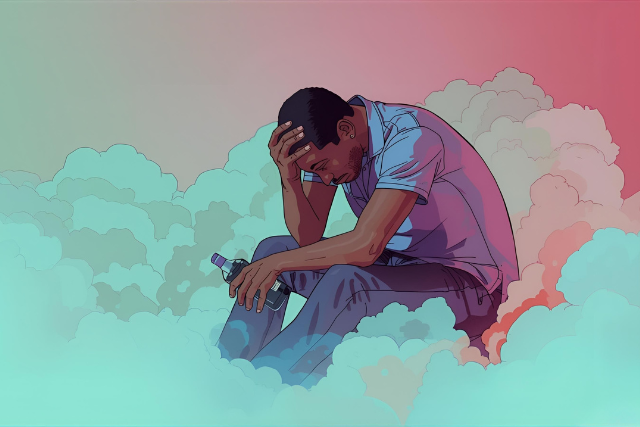
    I thought I had seen the worst of it. I thought I knew what it meant to watch someone you love disappear into addiction. My mother taught me that lesson long before I was old enough to truly understand it.

    Growing up, I saw her sink deep into heroin. I learned to read the signs before she even spoke. I knew when she was high. I knew when she was lying. I knew when she was gone, even when she was sitting right in front of me. And there was nothing I could do to stop it. I was just a child, powerless in the shadow of a disease that stole her piece by piece.

    Now, decades later, I am living that heartbreak again. Only this time, it’s my husband.

    It’s a different substance—alcohol instead of heroin—but the same slow disappearance. The same unpredictable moods. The same sense of walking on eggshells, wondering which version of him will walk through the door. And the same helplessness, watching someone I love unraveling, knowing I cannot save him.

    But there is one thing that’s different this time: me.

    The Moment That Broke Me Again

    It was just another night that should have been nothing. That night we had gone out to a comedy show, and at first, everything was great. Good times, laughing, reminiscent of the old times, and yes, drinks were flowing, and everyone was in good spirits.

    But as the night went on and he had a few too many, things shifted. He started acting out a bit—being loud, joking in ways that felt disrespectful. There was a couple sitting in front of us, the woman also drunk, and her partner looked embarrassed and frustrated.

    Somehow, he and that couple’s energy fed off each other, and before long, he started flirting with her right in front of me.

    Later that night, when I brought it up and told him how hurtful it was, he said, “Why are you upset? None of this matters.” He explained that it didn’t matter because, in his mind, I wasn’t going to do anything about it anyway—that I wouldn’t leave or hold him accountable.

    That was the moment that really broke me, because it showed me exactly how little respect or value he placed on my feelings and boundaries.

    Those words stopped me cold. At first, rage flared, hot and bright. But then something in me shifted.

    I heard not just the words, but the pattern behind them—the pattern I’d been ignoring.

    I realized this wasn’t the first time he’d humiliated me, embarrassed me, or disrespected me. It wasn’t the first time he’d gotten drunk, lashed out, and expected me to sweep it under the rug. And it wouldn’t be the last—not unless I changed something.

    Boundaries, Therapy, and the Pushback

    We are still together, but the way we are now is not the way we were before. We are doing the work.

    Therapy has been instrumental in addressing the root cause of his alcoholism—unpacking generational patterns and confronting the reality of what we’d normalized.

    For me, it meant recognizing that many behaviors I tolerated weren’t love but survival mechanisms shaped by my childhood. For him, it meant accepting that seeking help wasn’t weakness but courage.

    The first hurdles were admitting the problem and agreeing to seek help—both met with pushback.

    As an African American man, my husband struggled with the stigma around vulnerability, especially regarding mental health and addiction. Generational beliefs had taught him that asking for help threatened his sense of strength.

    Early therapy sessions were marked by defensiveness and silence, but patience and difficult conversations slowly shifted his perspective, especially when his mother told him that he was mirroring his father. She began telling him stories of how his father’s drinking affected their marriage. Even though she stayed with him, if things were different, she would have left.

    She also told him that I am not her, and if he doesn’t make a change, I won’t stay because I don’t have to. He realized that he was choosing alcohol over our relationship, but he didn’t know how to separate it from himself, as it has been a part of how he functions for so long.

    It is an inner struggle he is facing, but with honesty, strength, and dedication, he will continue to fight to become the true man he and I know he can be.

    The Work We’re Doing

    Therapy has helped me understand that contrary to what I experienced growing up, love without respect isn’t love at all.

    On my end, it’s been about patience and empathy, without excusing harm. On his end, it’s been about acceptance, accountability, and a willingness to face the truth, even when it’s ugly.

    We’ve set clear boundaries. If he crosses those lines, there are consequences.

    One boundary he must not overstep is respect. I love my husband, but I love myself just as much. I also told him if it comes to separation, just know I didn’t leave—you did when alcohol became more important than our relationship.

    We both understand this is a difficult situation that requires understanding and compassion, but consequences are final and forever life-changing. This mustn’t continue because this isn’t living. It’s just existing, and I choose to live.

    The progression is day by day. We still encounter stalemates, and we embrace them and push through them together. I know he truly wants to get better, not just for us but mainly for his own well-being.

    We have agreed that the cycle stops here, even if it means rebuilding everything from the ground up.

    Choosing Myself Without Leaving

    Choosing myself doesn’t mean walking away right now. For me, it means staying without losing myself. It means protecting my peace, even in the same home. It means no longer excusing disrespect just because it comes from someone I love.

    I am not the same person who silently absorbed my mother’s chaos. I know now that I can’t heal someone else by destroying myself.

    Some days, it’s still heavy. Some days, I still see my mother’s shadow in the bottom of his glass. But I’m learning to separate his fight from mine.

    I love him, but I love myself too. And I am finally learning that those two things can exist together—as long as I hold the line.

    If you are in a relationship touched by addiction, know this: you are allowed to choose yourself. You are allowed to demand respect. And you are allowed to break the cycle, even if you stay.
  • How My Mother’s Alcoholism Shaped Me and How I’m Healing Now

    How My Mother’s Alcoholism Shaped Me and How I’m Healing Now

    “The journey of the perfect daughter is not about perfection; it’s about finding the courage to be imperfect, to be human.” ~Robert Ackerman, Perfect Daughters

    Growing up in a home shadowed by addiction is like living in a house with no foundation. The ground beneath you is unstable, the walls feel fragile, and the roof could collapse at any moment. For me, this was my reality. My earliest memories of my mother’s alcoholism are tied to confusion and worry—a child’s attempt to make sense of an adult world filled with unpredictability and silence.

    Her moods were erratic, swinging from one extreme to another, I recall. I remember one night, she came into my room, woke me up, and told me not to worry, but she was going back to work. The way she spoke, her entire presence, was off. It wasn’t her usual self. I didn’t understand she was drunk. I just felt pure, childlike concern.

    This confusion was only the beginning. As I grew older, the challenges multiplied. The embarrassment of comparing my home life to my friends’, the isolation of a family that never spoke about the elephant in the room, and the lack of safety in my own home left me feeling utterly alone.

    I didn’t feel comfortable reaching out to any adult. My dad wasn’t approachable, and my mom wasn’t emotionally available. I felt like I had to solve everything on my own.

    The Roles We Play 

    In the chaos of addiction, children often take on roles to survive. For me, these roles became my identity. I became the peacemaker, mediating between my mother and younger sister. I became a second mother, guiding my sister in ways my mom couldn’t. And I became the “good daughter,” believing that if I loved my mother enough, I could save her.

    I thought that by loving her more, investing my attention in her needs, and avoiding confrontations, I could make her feel better. But it was an impossible burden.

    My relationship with my father also suffered. I blamed him for allowing my mom to continue her behavior and for not doing anything for us. He became the enemy, and I pushed him out of my life.

    The Long Shadow of Childhood Trauma 

    The impact of my mother’s alcoholism didn’t end in childhood. As an adult, I found myself repeating patterns in friendships and romantic relationships. I’ve struggled with codependency, boundaries, and trust issues. I’ve had manipulative partners and found myself drawn to selfish, narcissistic people.

    But my journey toward healing began when I hit rock bottom. I was drinking excessively, showing up to work after long nights out, and even driving drunk. I dated a partner who was emotionally abusive and almost physically violent—and my parents had no idea.

    A pivotal moment came during a surprise party my sister organized before I left to study abroad. I arrived hungover and exhausted, and when everyone shouted “surprise!” I had an anxiety attack. It was the first time I realized how many feelings I’d buried—sadness, frustration, anger, and underneath it all, a deep, overwhelming grief I had never allowed myself to feel.

    The Path to Healing 

    Healing didn’t happen overnight. It began with therapy—though my first experience was far from ideal. That therapist was deeply narcissistic, mirroring the types of people I’d been drawn to all my life. But I didn’t give up. I found another therapist, and she’s been my steady guide for seven years.

    Through our work, I learned that I was not alone and that I could reach out for help—and trust that help. I also learned to recognize what trust feels like, to move away from extremes, to distinguish love from codependency, and to take responsibility for my part in my experiences. At twenty-seven, I was finally ready to stop blaming others and take accountability—not just for my present, but for all the years I had abandoned myself. I began to reframe my past, not through the lens of a victim, but from the perspective of the self-aware adult I’d become.

    One of the most profound breakthroughs came when I decided I was ready to confront my mother. Preparing for that moment shifted everything—it marked the beginning of reclaiming my voice and stepping into my own power.

    Support groups like Al-Anon also played a crucial role. When I arrived at Al-Anon, I started crying within minutes. For the first time, I heard people speak openly—almost casually—about having a loved one with alcoholism. I had never experienced that kind of openness in such a “normal” environment.

    Listening to the speaker share their story, I realized I wasn’t alone. We were all carrying the same grief, frustration, and helplessness. In that room, I felt seen. I felt like I belonged.

    Through therapy, meditation, exercise, and books, I began to rebuild my sense of self. I learned to be with myself in a peaceful, serene way. I stopped looking at my mom as someone weird or lost and started seeing her as someone with a disease. I took off the impossible burden of having to save her.
    Surrendering to Hope 

    One of the most profound lessons I learned was the power of surrender. For me, surrender meant admitting I needed help—that my own resources weren’t enough to handle the situation I was facing at home. It meant being humble enough to admit that this was bigger than me, that trying to fix my mother was not only ineffective but was also destroying me.

    In my daily life, surrender meant walking away from arguments, especially when my mother was drinking, letting go of the exhausting mission to make her happy, and accepting that her happiness wasn’t something I could guarantee.

    There’s a phrase in Al-Anon that became my mantra: “I didn’t cause it. I can’t control it.” I surrendered my expectations of who I wished my mother would be and allowed myself to grieve the mother I didn’t have. That surrender saved my life.

    My journey is a testament to the resilience of the human spirit. When you choose to surrender, everything will start feeling better. It’s a leap of faith, and trust me, you’re not alone.

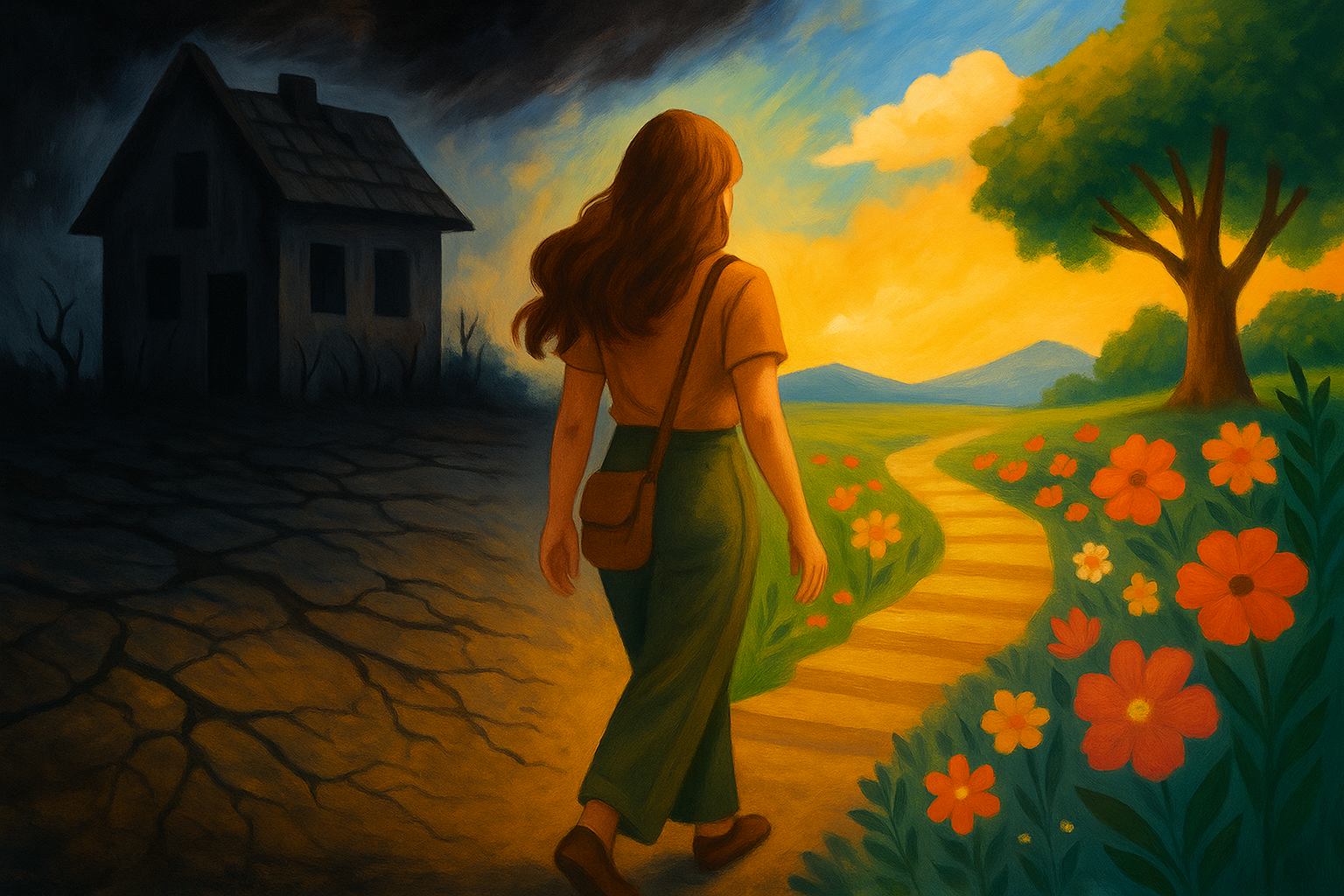
    Today, I’m still on my healing journey, but I’m no longer defined by my past. I’m learning to trust myself, set boundaries, and embrace my worth. My story is a reminder that even in the darkest moments, there is hope—and that healing is possible, one step at a time.

  • How I Healed from Addiction One New Belief at a Time

    How I Healed from Addiction One New Belief at a Time

    “Recovery is all about using our power to change our beliefs that are based on faulty data.” ~Kevin McCormick

    I struggled with what I would consider a disconnect with myself from a very young age. I was born a free spirit, curious and interested in so many things. I was also very shy and sensitive. I was not the type to be put in a box or expected to conform to the norm. That just wasn’t me. I needed to be accepted and supported for who I was.

    Instead, my well-meaning parents attempted to “domesticate” me, especially my father. I experienced severe mental abuse by him and was told repeatedly that I was no good, that I would never amount to anything, and that I was stupid, as well as many other negative statements. Due to his behavior, I rebelled in every way.
    Unfortunately, I believed everything he said to me, and I struggled for many years with feeling that I was not good enough and not worthy of anything good. I honestly thought something was wrong with me. I tried to be and do what was expected, but it was not who I was. Quite frankly, I did not know who I was.

    At age fifteen, I discovered drugs and alcohol. Using substances helped me get out of myself, my pain, and numb all my feelings and check out. I had created beliefs about myself that simply were not true, and I continued to live from the faulty belief that I was not good enough.

    Well, that didn’t work out well for me, as you can imagine. It seemed to be a great solution at first, or so I thought because I didn’t have to feel, but things continued to spiral out of control.

    I chose men that didn’t always treat me well, and I didn’t excel to my potential because I did not believe I deserved anything good or that I was good enough or smart enough to do anything great with my life.

    I had to work very hard to overcome my addiction and then heal my life as well. It took a lot of work with therapy and life coaching to help me heal and accept myself for who I am. I had to work on getting to know my “real” self and to learn how to like and then love myself, which meant working on changing beliefs that were stored in my subconscious mind without my realizing it.

    Someone once asked me why I was abusing drugs and alcohol, and I told him that I didn’t like who I thought I was, which was true, but my thoughts and beliefs about myself were not true.

    As I progressed in the work I did on myself and through my studies, I learned that my thoughts and beliefs were not set in stone, and they were most likely someone else’s beliefs, things I’d heard as a child and identified as my own. When I realized that I could decide for myself what thoughts I wished to think and, therefore, what beliefs I chose to live by—that I could make my own rules—well, that was an eye-opener and a game changer.

    I stopped using drugs, alcohol, and cigarettes. I went back to school to expand my knowledge, to obtain a degree to become a drug and alcohol counselor, and to focus on understanding the root causes of addiction. The drugs and alcohol were simply a way to avoid getting to the deeper issues and healing my whole self.

    Today, I can honestly say that I have a healthy relationship with myself. Was this an easy journey for me? No, it took work and perseverance. I worked with a counselor who was in recovery, I attended AA meetings, and I worked through the twelve steps of the program, which I continue to use today. I then discovered life coaching and hired a coach, which was how I learned to examine and identify my beliefs about myself.

    At first, I was afraid to look at myself and my life. I was afraid I would not like what I found inside. But once I began to see things unfold and learned that my thoughts and feelings stemmed from my faulty belief system, which I developed at a very young age, it helped me put things into perspective.

    I began to enjoy the journey of learning who I am and have continued to learn and grow every day. I became curious and began to identify and create my own belief system. I learned to pay attention to what I was thinking and feeling.

    Today, I have tools that support me on my journey, such as gratitude, focusing on my goals, identifying fear-based thoughts, understanding my triggers, connecting with my higher self, practicing self-love and self-care, journaling, and living in the present moment. I’ve learned to appreciate each day and have the utmost gratitude for all that I’ve been through because my life experiences have brought me to where I am today.

    I continue to study every day, as there are still so many things to learn. After all, we are all here on this earth to learn, experience life, and grow.

    If you too are battling with addiction, practice self-awareness around your struggles so you can get to the root of your issues. I like the quote, “Life is happening for us, not to us.”

    When you can look at a situation objectively and with curiosity, you are much more equipped to make good, healthy decisions instead of harshly judging yourself. This is how we heal—by empathizing with ourselves and all we’ve been through and supporting ourselves every step of the way.

  • How I Embraced Alcohol-Free Living: 4 Things That Made It Easier

    How I Embraced Alcohol-Free Living: 4 Things That Made It Easier

    “What is necessary to change a person is to change his awareness of himself.” ~Abraham Maslow

    A few years ago I decided to take a break from alcohol, and I also decided I would probably be lonely, miserable, and boring for the duration of my break.

    I’d allowed a lot of social conditioning to affect me, and I was sure people who didn’t drink either had no friends, had hit a drastic rock bottom, or had no fun. I didn’t know if I was going to find happiness or even contentment on the other side of my drinking career, and this worried me.

    I began to examine those thoughts and feelings around my drinking and brought my behaviors into a sharper focus. It led me to…

    Awareness (of my drinking habits)

    I look back and can now clearly see that I was, for a very long time, a gray area drinker.

    A gray area drinker is someone who falls into the bracket between never drinking and physical alcohol dependency.

    Society tends to view problematic drinking in black and white terms. “You’re an alcoholic and you need to be fixed, or you’re not an alcoholic and are therefore okay.” Well, I think it’s more nuanced than that. There’s a spectrum between the extremes of rock bottom and every now and again drinking, and it’s a long spectrum.

    A gray area drinker could be consuming a couple of glasses of wine each evening or could be someone who binge drinks on the weekend or someone who can abstain for a month at a time to prove they haven’t got a problem.

    I was capable of any of those behaviors, and, looking back, I fit the description of a gray area drinker very neatly. I wasn’t physically dependent on alcohol, but I might have been emotionally dependent. I used it to help me alter my state of mind into relaxation/fun on a regular basis.

    This can be a confusing place to be when you first start to see alcohol for what it is. I’d say, “But I’m not doing anyone any harm. I’m sinking a couple of glasses of wine on the sofa, and then I’m going to bed—what’s the problem with that?”

    In the past I moved along the gray scale; different ages, different friendship groups, different jobs, different circumstances, different seasons, and different living arrangements all led to different drinking patterns. Apart from the periods in my life where I was pregnant or breastfeeding, I didn’t ever choose to have a really extended time (more than thirty days) away from alcohol.

    Acceptance (that I wanted something different)

    I came to realize that the more I moved along the grayscale, the more or less colorful other areas of my life became. If my joy was a rainbow, the vibrancy of that rainbow either faded or shone brightly depending on how much I was drinking.

    I stopped myself from making a change around my drinking for a long time because I didn’t want anyone to define me as “having a problem.”

    The movies would have you believe that the end of your drinking career needs to be very dramatic, with a family intervention and a massive rock bottom, but this doesn’t need to be the case.

    What if you chose for your drinking days to end with a quiet fizzle out instead of a big firework or massive drama? That’s how it was for me.

    My gray area drinking changed shades of gray over a couple of years, and by the time I was ready to try my alcohol-free life experiment, I was moderating my drinking and never drinking more than two drinks at one time. However, the shades of gray no longer felt good, and I wanted a full-on technicolor rainbow, and I knew that to get one I had to do away with the other—so I did.

    Those gray clouds parted, and one by one all the other areas in my life that had, up until then, been a bit less than joyful started to shine a bit brighter.

    Action (taking steps toward what was next)

    Once I had made the decision to have a break from alcohol for one year, I took action steps to make it more likely to happen.

    I set myself up for success by choosing a time frame I wanted to work toward, educating myself on the harm alcohol does, downloading an app to help me to stay focused, looking for other inspiring people who were already doing what I wanted, and asking for support where I needed it.

    I had assumed that once I made the decision to have a break from drinking, it would be easy to execute, but I was surprised to find it wasn’t. I realize now that this is one of the reasons there are so many amazing sober communities out there—we need each other, and we want to look out for those who we can serve.

    I used to joke that the early days of sobriety constituted a full-time job because I got very focused on a morning routine that supported my needs, I read more than I ever have, I listened to podcasts, and I used distraction techniques in the early days. But actually it wasn’t a full-time job; it was simply learning a new way of being.

    Alignment (and a feeling of contentment or peace)

    Now that I don’t drink, I’ve had to face some truths. Some of them have been uncomfortable. Some have become less uncomfortable over time, and some, well, they are still uncomfortable.

    Deciding to have an alcohol-free year threw me into a bit of an identity crisis. I was mostly okay about changing my home drinking identity but really struggled with my social identity. Shared boozy experiences were a big part of my life and of who I was, or who I thought I was.

    I’ve ended up piecing together a bit of a new identity over time. I’ve reflected not only on who I had been but also on who I wanted to be in the future. I took time to explore what I enjoyed and also consciously began to move away from activities I had stopped enjoying.

    I also looked more closely at my relationships. Who did I want to see more of, and who did I need to move away from a bit? Some of the most surprising support came from the least expected places.

    I discovered that chaos had been a default position for so long that calmness was too unfamiliar. To start with, I had to move slowly toward the identity that I wanted. I’ve accepted that some friendships have changed and some have stayed the same. I’ve also made new friends since becoming sober and a business owner.

    Who am I sober? I’m just someone who chooses not to drink alcohol. I want that to be the least interesting thing about me.

    Who am I sober? I am an improved version of myself, more relaxed, more peaceful, more patient, kinder, and more content. These were not words I would have used to describe myself when I was drinking. Internal chaos reigned.

    Who am I sober? Well, probably the most surprising thing for me is to find myself working as a coach. I spent twelve years as a youth worker, and a large portion of my time was spent talking to young people about their substance use without ever considering my own. When I had gotten sober and completed my coach trainings and certifications, I couldn’t believe what I had achieved. None of this seemed possible a short time ago.

    I recognize now that a large part of the “woohoo, let me lead the charge to the pub/bar/dance floor” part of my personality looked like an extrovert but was indeed an introvert using alcohol as a coping mechanism in situations where I didn’t feel comfortable.

    I’m really happy to lay claim to my more introvert nature now—let me have all the fun, but please can it be in pairs or small groups, please can it be in the morning or afternoon, and please can I go home and have a lie-down afterward? Thank you!

    If you’re struggling to visualize/think about who the sober version of you might be, then follow good role models to get ideas—read books, listen to podcasts, and take action. If you’re thinking of taking someone’s advice, consider if they are currently where you might like to be. Have they been in a similar place to you now, and have you seen them act with care and kindness toward others they are helping?

    Sobriety hasn’t been a ‘one and done’ experience for me; it’s been a process over the last few years, and I’m so grateful to acknowledge that I’m still a work in progress, as I believe we all are.

    Bring awareness, acceptance, action, and alignment into focus as you go, and it might just make things a little bit easier for you.

  • How I’ve Stopped Letting My Unhealed Parents Define My Worth

    How I’ve Stopped Letting My Unhealed Parents Define My Worth

    “Detachment is not about refusing to feel or not caring or turning away from those you love. Detachment is profoundly honest, grounded firmly in the truth of what is.” ~Sharon Salzberg

    A few months ago, my father informed me that he’d been diagnosed with prostate cancer. Although he seemed optimistic about the treatment, I knew that hearing such news was not easy.

    After a few weeks, I followed up with him. He ignored my message and went silent for a couple of months. Although his slight ghosting was common, it made me feel ignored and dismissed.

    In the meantime, I went to India for a couple of months. A few weeks before I returned, he reached out, saying he needed to talk. Although he wasn’t specific, I knew something was happening and immediately agreed to speak to him.

    It was Sunday afternoon when he called. After I picked up, I immediately asked about his health. He went on to explain the situation and the next steps of the treatment.

    The call took one hour and twenty-six minutes. I learned everything about his health, where he goes hiking, what food he eats after the hike, what time he wakes up, the fun he and his girlfriend have, what his relationships with his students is like, and where he goes dancing every Saturday night.

    The only thing he knew about me was that my trip to India was great. He didn’t ask me what I did there or why I even decided to take such a radical step.

    Right after the call, somewhat discouraged because of his lack of interest, I received a call from my mom.

    Since my parents are divorced, I must divide these calls and often keep them secret in front of each other.

    The call with my mom went pretty much the same way. The only difference was that she repeated things numerous times without realizing it since she is on anti-depressants, often accompanied by alcohol.

    After both calls were over, thoughts of unworthiness started hitting me. At first, I judged myself for expecting my father to care about my life and used his health as a justification for his treatment. Then I realized I always made excuses for my parents. It was the way I coped with their behavior.

    Although talking to them was more of a duty than anything else, I knew not having contact wouldn’t resolve the issue. However, I didn’t know how to deal with these feelings. It felt as if every phone call with them reminded me how unworthy and unimportant I was to them.

    While growing up, my mother struggled with alcohol, and my father abused the entire family. When I began dating, I naturally attracted partners that reflected what I thought of myself: I was unworthy and unlovable.

    Although I wasn’t sure how to handle it, I knew there must have been a solution to this emotional torture.

    Typically, when I ended my calls with my parents, I would reach for thoughts of unworthiness and inadequacy. However, this Sunday, I chose differently. For the first time, I stopped the self-destructive thoughts in their tracks and asked myself the fundamental question that changed everything: How long will I let my unhealed parents define my worth and how lovable I am?

    After sitting in awe for about ten minutes and realizing the healthy step I just took, I asked myself another question: How can I manage these relationships to protect my mental health and, at the same time, maintain a decent relationship with them?

    Here is how I decided to move forward.

    1. Setting boundaries while finding understanding

    I always dreamed of how it would be if my mom didn’t drink. I remember as a fourteen-year-old kneeling by the couch where she lay intoxicated, asking her to please quit drinking. As a child and as an adult, I believed that if she could stop the alcohol abuse, everything would be better. She wasn’t a bad mother but an unhealed mother.

    Today, I understand that this may not be possible. Although watching someone I love destroying themselves almost in front of my eyes is painful, after working through my codependency, I understand that it’s impossible to save those who have no desire to change their life.

    Therefore, emotional distance for me is inevitable. I decided to use the skills I learned as a recovering codependent when appropriate. If I feel guilty that I moved far away, stopped financially supporting my mom since she drinks, or that I am not there to deal with her alcohol issue, I pause. Then, I forgive myself for such thoughts and remind myself that the only power I hold is the power to heal myself.

    If I find myself secretly begging for the love of my father, I reflect on all those loving and close relationships I was able to create with people around me.

    Another self-care remedy I use when feeling sad is a loving-kindness meditation to soothe my heart, or I talk with a close friend.

    2. Accepting and meeting my parents where they are

    Frankly, this has been the hardest thing for me to conquer. For years, the little girl inside me screamed and prayed for my parents to be more present, loving, and caring.

    Because I secretly wished for them to change, I couldn’t accept them for who they were. I wanted my father to be more loving and my mom to be the overly caring woman many other mothers are.

    When I began accepting that the people who caused my wounding couldn’t heal it, I dropped my unrealistic expectations and let go.

    I also realized that instead of healing my wounded inner child, I used her to blame my parents. Therefore, I was stuck in a victim mentality while giving them all the power to define my value.

    Today, I understand that expecting change will only lead to disappointment. Frankly, my parents are entitled to be whoever they choose to be. Although it takes greater mental power and maturity, I try to remind myself that this is what their best looks like while considering their unhealed wounds. This realization allows me to be more accepting and less controlled by their behavior. It allows me not to take things too personally.

    3. Practicing detachment

    Frankly, I felt exuberant when I chose not to allow my parents to define how I felt about myself when we last spoke. It wasn’t anger or arrogance; it was detachment. I remember sitting there with my phone in hand, mentally repeating: “I won’t let you define my worth anymore.” After a couple of weeks of reflecting on this day, I can say that this was the first time I took responsibility for my feelings concerning my parents.

    Although this story doesn’t necessarily have a happy ending, it feels empowering, freeing, and unbelievably healing. Breaking the emotional chains from the two most important people in my life is the healthiest decision I could have made.

    After my first victory in a years-long battle, I feel optimistic that this is the beginning of immense healing. Although I know that thoughts of unworthiness will creep in when interacting with them in the future, now I understand that I hold in my hands the most powerful tool there is—the power of choice.

  • How Getting Sober Healed My Dating Life (When I Thought It Would Ruin It)

    How Getting Sober Healed My Dating Life (When I Thought It Would Ruin It)

    “Sometimes we motivate ourselves by thinking of what we want to become. Sometimes we motivate ourselves by thinking about who we don’t ever want to be again.” ~Shane Niemeyer

    When I faced the prospect of no longer drinking anymore (at age twenty-one!), after eight years of heavy boozing, I had so many questions about my dating life.

    Will I be fun anymore? Will I have FOMO? How will I cope with stress? What will I drink on dates? Will anyone want to be with me? What will sober sex be like? Omg!

    These questions paralyzed me, as I couldn’t imagine my life without alcohol, yet I couldn’t imagine my life with it either. I put down the drink and with it, I thought I surrendered my desirability and compatibility as a potential partner.

    That couldn’t have been further from the truth.

    Over time, I’ve realized plenty of people don’t mind that I’m sober; some even like it or are sober too. Ultimately, I found I didn’t really care what others thought because I was okay with myself.

    The reality was, slowly but surely, getting sober healed my dating, sex, and love life for good. Here’s how.

    Feeling My Feelings

    Gosh, alcohol seemed to solve everything. Stressed? Drink. Excited? Drink. Sad? Drink.

    I’m face-to-face with reality without picking up the bottle every time I have a feeling. I don’t get to check out. It’s a good thing, honestly. It means I feel the spectrum of feelings and am present with them, which helps me work through those feelings in a healthy way.

    I recently went through a breakup, and it destroyed me emotionally. Even though I was the initiator, I felt so many feelings.

    I spent the first few weeks running from my feelings by trying to meet people on dating apps (what a joke that was at such a raw point!), but I quickly realized this wouldn’t serve me. I had to face my feelings head-on.

    Now, it’s been almost two months, and I’m still sad, but I’m feeling the sadness. I’m leaning in to let the sadness visit, then leaning out when I’ve let it visit for long enough. I know now that the best way to move through sadness is to let it unfold within me, not fight it.

    Owning and Releasing My Stuff

    Alcoholism stunted my growth as a human. I think when I got sober, mentally, I was like sixteen instead of twenty-one. What sobriety has given me is a chance to catch up with that emotional maturity.

    I can take responsibility for my actions, knowing when something is my fault and when I owe someone an apology. For example, if I raised my voice at my ex-partner, I owed him amends or an “I’m sorry,” and I apologized promptly.

    I can also own when I don’t have a part in things and, instead, have to figure out what isn’t mine to carry. For example, I felt some guilt and shame about the traumatic aspects of my childhood, but this is not my stuff. I’ve learned that I need to let that go.

    Emotional maturity teaches me to make sense of what to own and what to reject as not mine.

    Becoming Okay with Being Alone

    When I was drinking, I was terrified of being alone. I was cheating on my partner because I couldn’t be with him but couldn’t be without him either.

    Once I got sober, I spent many years practicing being by myself. I took myself on dates to beaches and bookstores, learned proper self-care through relaxation and gentle but necessary productivity like doing my laundry, and learned that I’d be okay no matter what happened.

    I realized I was a lovable human being and that I could love myself.

    I’m alone again a few years later, and although I don’t love it, I’m thriving in solitude. I’m rediscovering my passions, such as yoga, writing, and spending time with loved ones. I’m embracing myself because I’m realizing I’m worth it.

    I can’t be with another person until I’m whole again, and I’m just not there yet. Today, I try not to use other people to escape my feelings through rebounding. So alone time it is.

    Engaging in More Communicative Sex

    When drinking excessively, it can be challenging to have consistent consent. I was assaulted several times during my drinking days, and although I never deserved that, I put myself at risk by blacking out and drinking to excess.

    Now, I have incredibly communicative sex. I don’t settle for anything less than enthusiastic consent.

    When I sleep with someone, we talk about it before it happens and make sure we know each other’s boundaries and needs. We communicate clearly during and even after. It’s magical! Sure, you don’t need sobriety for this, but with my drinking habits, I did.

    Getting Additional Support

    Getting sober in an alcohol twelve-step program made me realize I needed another twelve-step program for sex and love. I came to find out that, although getting sober did a lot for my sex and love life, more healing was necessary to level up. So I joined Sex & Love Addicts Anonymous, where they taught me self-love and how to date in a healthy way.

    They taught me how to avoid behaviors that harmed me, like having sex with randos and chasing unavailable people. In the evolved part of my life with my ex-partner, they taught me how to set boundaries and accept love. Now that I’m alone, I’m learning again how to face it.

    Final Thoughts for Others

    I have nothing against alcohol; it just didn’t work for me anymore. I was binge drinking, blacking out, cheating when I got too drunk, waking up in strange places, and just generally making an ass of myself. I was most definitely ruining my relationships!

    If you think you have a problem with alcohol, there are many resources for the non-drinker. I personally found Alcoholics Anonymous to be the most helpful, but whatever works for you is what you should do. It might just heal you and your relationships.

  • How I’ve Navigated My Grief and Guilt Since Losing My Narcissistic Father

    How I’ve Navigated My Grief and Guilt Since Losing My Narcissistic Father

    “One of the greatest awakenings comes when you realize that not everybody changes.  Some people never change.  And thats their journey.  Its not yours to try and fix it for them.” ~Unknown

    In 2021 my father died. Cancer of… so many things.

    Most of the events during that time are a blur, but the emotions that came with them are vivid and unrelenting.

    I was the first in my family to find out.

    My mother and sister had gone on an off-grid week-long getaway up the West Coast of South Africa, where there’s nothing but sand, shore, and shrubs.

    I was living in China (where I continue to live today), and we were under Covid lockdown.

    He called me on WhatsApp (which was rare) from the Middle East, where he lived with his new wife. Asian and half his age.

    The cliche of the aging white man in a full-blown-late-midlife crisis. Gaudy bling and all.

    He looked gaunt and ashen-faced. That’s what people look like when they’re delivering bad news. He dropped the bomb.

    “I have cancer.”

    What I am about to admit haunts me to this day: I cared about him in the way one human cares for the well-being of any other human. But at the time, I never cared at the level that a son should care for a father. I had built a fortress around myself that protected me from him over the years.

    He’d never really been a parent to me. He wasn’t estranged physically, but emotionally, he’d never been there.

    He was emotionally absent. He always had been.

    I was the weird gay kid with piercings, tattoos, and performance art pieces.

    He was a military man. The rugby-watching, beer-drinking, logically minded man’s man.

    We were polar opposites—opposite sides of completely different currencies.

    I sat with the bomb that had just been delivered so hastily into my arms and ears. Information that I didn’t know what to do with. It felt empty. I didn’t know how to feel or how to respond. 

    Six years earlier, in 2015, I had flown back to South Africa to sit with my mother on her sofa for two weeks while she grappled with the complexity of the emotions of being recently divorced after forty-something years of marriage.

    My mother and I always had been close. She had spent her life dedicated to a narcissistic man who had cheated on her more than once, who was absent a lot of the time during our childhood because of his job in the Navy, and from whom she had shielded my sister and me.

    He had hurt her again. And I hated him for it.

    She had been devoted to him. Committed to their marriage. Gave him the freedom to work abroad while she kept the home fires burning. She’d faithfully maintained those home fires for over a decade already. She had planned their whole future together since she was sixteen years old and pregnant with my sister, who’s five years old than me.

    And this is how he repaid her.

    He’d taken it all away from her and left her alone in the house they’d built together before I was born.  Haunted by the shadows of future plans abandoned in the corners.

    She descended into a spiral of anxiety and depression, resulting in two weeks of inpatient care at a recovery clinic with a dual diagnosis of depression and addiction (alcoholism) that wasn’t entirely her fault.

    He caused that.

    I remember lying in bed when I was about six or seven years old; I was meant to be asleep, the room in deep blue darkness. Hearing my father in the living room say, “That boy has the brains of a gnat.”

    I assume I hadn’t grasped some primary math homework or forgotten to tidy something away. Things that I was prone to. Things that annoyed him to the point of frustrated outbursts and anger.

    “Ssh! He can hear you,” my mother replied. I still hear the remorseful tone of her voice.

    He was logical and mechanical. I am not.

    I don’t remember my crime that day, but I still suffer the penalty of negative self-talk, a lack of confidence, and a fear of being considered “less than” by others.

    It’s one of my earliest memories.

    And there, in 2021, I sat with the news of his diagnosis. I didn’t know what to feel.

    Guilty for not having the emotional response I knew I was meant to be having?

    Shouldn’t I be crying? Shouldn’t I be distraught?

    How do other people react to this kind of news?

    I’ve always been a highly sensitive person. It’s my superpower. The power of extreme empathy. But there I sat, empty.

    I felt trapped.

    I was in China in 2021, and we were under Covid lockdown. There were zero flights.

    I was emotionally and physically trapped.

    Gradually, more feelings started surfacing.

    At first, I felt compassion for a fellow human facing something utterly devastating.

    Then I started to feel fear for my mom, who had held onto the idea that maybe, one day, they’d get back together.

    I was terrified about how she would take this news when she returned from her holiday.

    Within a few weeks, a “family” Facebook group was set up—cousins, uncles, people I’d never met before, myself, my sister, and my mother.

    And the “other woman” and her kids from previous relationships, none of whom we’d ever met.

    Phrases like “no matter how far apart we are, family always sticks together” were pinging in the group chat.

    I didn’t know how to absorb those sentiments.

    Family always sticks together? Didn’t you tear our family apart? Where were you when I was lying in a hospital bed in 2011 with a massive abdominal tumor?  Family always sticks together? What a convenient idea in your hour of need.  

    More guilt. How could I be so jaded?

    A month later, in January 2021, he passed away.

    It happened so quickly, and for that, I am grateful. No human should ever suffer if there is no hope of survival.

    That’s when the floodgates of emotions opened.

    I cried for weeks.

    I cried for the misery and suffering he caused my family, my mother’s despair, and my sister’s loss. I shed tears for my grandfather, who had lost two of his three sons and wife. I wept for my uncle, who had lost another brother.

    I cried for the future my mom had planned but would never have.

    And I cried for the father I never had and the hope of a relationship that would never be.

    I sobbed from the guilt of not crying for him.

    Then I got angry. Really, really angry.

    I got angry with him for never being the father I needed. I got mad for the hurt he caused my mom. I blamed him for never accepting me for me. I was angry with him because I was the child, and he was the adult.

    Being accepted by him was never my responsibility.

    In the weeks and months that followed, the wounds got deeper. My mother’s drinking got worse, to the point of (a very emotional and ugly) intervention.

    We found out that my father had left his military pension (to the tune of millions) to his new, younger wife of less than a year and her four children from different men. 

    While I want to take the moral high ground and tell you it’s not about the money—it’s solely about the final message of not caring for his biological children in life or death—I’d be lying.

    My sister and I have been struggling financially for years, and that extra monthly money would’ve offered us peace of mind, good medical insurance, or just a sense that he did care about our well-being after all.

    But there’s no use ruminating on it.

    Accept the things you cannot change.

    It’s been two years since he passed away.

    I’ve bounced between grief, anger, and acceptance, like that little white ball rocketing chaotically around a pinball machine, piercing my emotions with soul-blinding lights and sound.

    The word “dad” never meant anything to me. To me, it was a verb, not a noun. It never translated into the tangible world.

    My mother once said, “Now I know you were a child who needed more hugs.”

    She hugged me often.

    But I also needed his hugs.

    I’ve found a way to accept that he would never have been the father I needed. I will never have a relationship with my father. Even if he were still alive, he would never have been capable of loving us the way we needed him to.

    You cannot give what you don’t have.

    He was a narcissist. Confirmed by a therapist in the weeks and months after their sudden divorce.

    He was never going to change. He didn’t know how to.

    Using NLP (neuro-linguistic programming) techniques, I’ve been able to reframe the childhood memories I have about my father.

    That fateful night all those years ago, lying in bed, hearing those words that have undermined my confidence and self-worth for thirty-four years: “That boy has the brains of a gnat.”

    Through visualization and mental imagery, I’ve found a pathway to healing.

    Through NLP, I became the observer in the room of that memory. I could give that little boy lying in bed, his head under the sheets, the comfort, protection, and acceptance he needed.

    I wrapped golden wings around that little boy and protected him.

    I became my own guardian angel.

    During the same session, my NLP coach gently encouraged me to look into the living room where my father sat that night.

    What I saw in my mind’s eye took my breath away.

    I saw a broken and withered man. His legs were drawn up close to his chest. I saw the pain inside him. I saw a man who didn’t know how to love or be loved.

    I saw a man who was scared, confused, and deprived.

    In that moment of being the observer, the guardian angel in the next room, a brilliant light forcefully rushed from me and coiled around him. A luminous cord of golden energy.

    I don’t know if the surge of energy wrapped around him was to heal or restrain him. Frankly, it doesn’t matter. It was pure love, compassion, and light. And it was coming from me: I was my own Guardian Angel.

    At that moment, all the past yearning for his love, acceptance, and approval dissipated. I didn’t need it from him; I needed to give it to him—filled with empathy and compassion. I needed to release him from the anger, hurt, and pain he had caused.

    I needed to do it for myself, but I also needed to do it for him.

    I’ve accepted him for who he was.

    It took a lot of journaling, visualization, mindfulness and meditation, listening to Buddhist teachings (Thich Nhat Hanh in particular), and sitting with the emotions.

    It took the desire to heal myself and him—to be happy and whole again.

    He was painfully human. But aren’t we all?

    He was a narcissist. He drank too much, cheated on his wife, never took the time to have any meaningful connection with his kids, and loved Sudoku.

    He caused my mother pain that still haunts her to this day.

    She still dreams about him.

    I like to think that if he had one more chance to reach out from The Great Beyond, he might say something along the lines of what Teresa Shanti once said:

    “To my children,  I’m sorry for the unhealed parts of me that in turn hurt you.  It was never my lack of love for you.  Only a lack of love for myself.”

    He was a deeply flawed man—but he was my father.

  • One Missing Ingredient in My Recovery and Why I Relapsed

    One Missing Ingredient in My Recovery and Why I Relapsed

    “The Phoenix must burn to emerge.” ~Janet Fitch

    Many people were shocked when I relapsed after twenty-three years of recovery. After all, I was the model of doing it right. I did everything I was told: went to treatment, followed instructions, prayed for help, and completed the assignments.

    After returning home from treatment, I joined a recovery program and went to therapy. Once again, I followed all the suggestions, which worked when it came to staying sober. I had no desire to drink or do drugs—well, at least for a long while.

    When I went to treatment, I was an emotional wreck. I would have done anything to get rid of the pain. But substances only intensified the pain and prevented healing.

    The worse I felt, the more I needed to medicate those emotions, but it was only causing the ache in my heart to be prolonged, driving me to suicidal thoughts. The moment I stopped using substances, the pain immediately subsided. I’d gone from struggling to get out of bed to engaging in my life fully.

    But going to treatment was only the tip of the iceberg. There was something much deeper underneath my addiction that I wrongly thought a relationship could fix. There was an underlying malaise and sense of shame I couldn’t identify. I knew something was wrong, so I kept searching for answers but couldn’t find the magic formula.

    Without the solution, relapse was inevitable.

    Most recovery programs address a single addiction, but I had many. After two years of sobriety, I stopped smoking but then started compulsive exercising. I didn’t eat right, spent too much, was codependent with needy people, and went from one addictive relationship to the next, never healthy enough to attract someone who could problem solve with me.

    I didn’t realize I was still substituting addictions for love.

    I wanted to make up for my troubled childhood, and I thought getting married and having kids would fix the problem, but after several attempts, it only made me feel more inadequate. Worse, I was a therapist and felt like a hypocrite. It wasn’t like I didn’t work at getting better; self-help was like a part-time job

    I spent decades in different kinds of therapy, not only as a patient but expanding my education in other modalities. I attended dozens of workshops and seminars doing inner-child work. I fully immersed myself in over twenty years of therapy, including psychoanalysis. My toolbox was overflowing, but I still felt disconnected for some reason.

    I didn’t realize those tools weren’t teaching me how to love myself.

    My journey took me on a lifelong spiritual quest. I found a higher power in recovery. I attended various churches and did some mission work in Haiti. I went to Brazil to be healed by John of God (later convicted of multiple cases of sexual abuse), on to a spiritual quest in Peru, on a visit to the Holy Land in Israel, and to Fiji to find my destiny but still felt something was missing.

    I read every spirituality book I could get my hands on and studied A Course in Miracles, but I was still disconnected from myself and others.

    Discouraged, I began to drift further away from all sources of help. I resigned myself to being an unhealed healer.

    I didn’t realize that all the therapy and spirituality were simply another form of addiction for me.

    Relapse began when I got breast cancer and was prescribed opiates after surgery. I got a taste of that forgotten high and made sure I took all the pills, whether I needed them or not. I also forgot how mood-altering substances affected my judgment.

    Instead of facing my fears about being ill and moving forward with my life, I reconciled with my ex-husband. I had little to no regard for how this affected my children. Like a piece of dust suctioned into a vacuum, despite feeling uncomfortable, I allowed my thoughts to suck me back into unhealthy choices—all the while in therapy.

    The next seven years were dark. Another divorce was followed by my former husband’s death, though I was grateful to bring him to our home and care for him until he passed. Then, a fire turned our newly renovated home into a mass of black and burnt-out walls, forcing another relocation for myself and youngest. Soon after, one of my businesses suffered severe damage from another fire resulting in six months of work and restoration.

    Three devastating hurricanes over two years damaged our home and business. One caused the foyer ceiling to cave in, another landed a large tree on our roof, and the third made our yard look like it had been run through a giant blender. One of my businesses was twice flooded and everything had to be thrown away.

    Soon after, our home was ransacked and burglarized. The stress of managing repairs, insurance claims, child-rearing, and working full-time felt like I was repeatedly set on fire and drowned.

    I kept trying to get better but felt emotionally shredded from the struggle. Desperate for support, poor decisions kept me in a whirlwind of insanity—more bad relationships. I was tired of trying, sick of hurting, and anger brewed within me.

    I stopped therapy, recovery meetings, and my spiritual quest, and decided to throw it all away. I went on a rebellious rampage. I’d been married at age sixteen and had a child, and now I was entirely alone. I decided to return to my pre-recovery lifestyle and live it up.

    Looking back, I lived a dual life of selfishness and a thirty-year career of helping others. I was self-will run riot but couldn’t see myself. I’d lived a life of making things happen and simultaneously wondered why my higher power didn’t deliver everything I wanted.

    Spirituality is a tricky thing. It’s so easy to think that God or some higher power is in control, but I believe, with free will, it’s a collaborative effort. Do the footwork and wait… if only I’d waited; impatience was my Achilles heel.

    My party life added a new heap of problems: disappointed children, bad judgment, and wrecked relationships. It didn’t take long to wind up in the same place that took me to treatment twenty-three years earlier, an emotional bottom. But this time, I was ready for the miracle of change.

    I finally found the missing ingredient to a happy life.

    The night was pitch black as I drove around emotionally deranged from grief and substances. After a near accident, I pulled into a parking lot and sobbed uncontrollably. I railed, “Whatever you are out there, why did you abandon me? Why haven’t you helped me? Why don’t you love me?”

    Immediately, a thought shot through my brain like an arrow through a cloud. “It’s not me that doesn’t love you. You don’t love yourself.” And for the first time in my life, I realized two things: I didn’t love myself and didn’t know what loving myself even meant.

    How would I learn to love myself? It never occurred to me that I didn’t. But now, I was armed with the missing ingredient to my happiness, and I intended to figure it out.

    Psychoanalysts are taught the importance of an infant’s basic needs for nurturing and bonding, but I’d never applied any of those concepts to myself. There were some missing parts in my childhood, so I had to learn how to provide for my physical, emotional, and spiritual needs,  as well as get proper nutrition, rest, and activity, in addition to responsibilities, play time, creative and quiet time, gratitude and appreciation, and loss of tolerance for unkind behavior (to and from others), all of which places I started the journey to self-love.

    I let go of what I wanted and focused on doing the next right thing for myself and others. The results were miraculous; peace engulfed me for the first time. By being the love I’d always wanted, I felt loved.

    I was always a doer and thought that spirituality was like getting a degree. Follow the steps, and everything will be okay. Whether or not that’s true, there’s a lot more to staying sober than following a set of directions. It’s important to find a higher power, clean up our act, apologize to those we’ve hurt, and stop using, but that won’t keep us sober if we don’t know how to love ourselves. My higher power became love.

    Correct behavior and self-love are not the same. Loving oneself starts with giving thanks to the sunrise and the sunset, cuddling with your pillow and those you love, acknowledging a universal intelligence and trusting guidance from your conscience, discovering and loving your mission, and nourishing your body, mind, and soul.

    Feed your body with nontoxic food; feed your mind with positive, stimulating information; and feed your soul with nature, good friends, healthy partners, and a higher power (of your own understanding) that inspires and uplifts you.

    If you’ve struggled with staying sober, you probably haven’t learned to love yourself. It’s never too late to start. When I started loving myself like a small child, I lost all substitutes for that godly love, and I finally began to blossom and grow.

    It took decades of failure to discover the missing ingredient to staying sober. I had to learn that love isn’t something I get. Love is an action I give to myself and others.

    Through being the love that I want, I then receive love. There’s a difference between staying sober and recovering. For all like me, who failed to stay sober, learn how to love yourself and then you will recover from the lack of self-love at the root of this tragic disease.

    It’s not enough to just stay sober, and life without happiness makes no sense. You were meant to have a life of love and joy. If you’ve tried everything and something’s still missing, try learning how to love.

  • How I Started Appreciating My Life Instead of Wanting to End It

    How I Started Appreciating My Life Instead of Wanting to End It

    “When I started counting my blessings, my whole life turned around.” ~Willie Nelson

    Few things have the power to totally transform one’s life as gratitude. Gratitude is the wellspring of happiness and the foundation of love. It is also the anchor of true faith and genuine humility. Without gratitude, the toxic stew of bitterness, jealousy, and regret boils over inside each of us.

    I would know. As a teenager and as a young man, I lived life without gratitude and experienced the terrible pain of doing so.

    Outwardly, I appeared to be a friendly, happy, and gracious person. I could make any person laugh and I was loyal to my friends through thick and thin. However, beneath the surface an intense fire raged within me.

    Despite receiving boundless love and attention from my wonderful family, I was inwardly resentful about my adoption as a child. For many years, three bitter questions ran on repeat in my mind:

    • Why did my birth mother give me up for adoption when I was only months old?
    • Why did I try so desperately hard to win acceptance from others when it was clear that I just didn’t fit in anywhere?
    • Why did I have to experience the pain and confusion of not truly belonging?

    As I allowed these questions to dominate my thoughts, I began to experience a range of negative and unpleasant emotions as a result. Among the worst of these feelings was that I came to see myself as a victim of circumstance. Of course, as I would later realize, this couldn’t have been further from the truth. Far from being a victim of circumstance, I was a blessed recipient of grace. But at the time I couldn’t see that.

    Eventually, my sense of resentment at being adopted contributed to destructive behaviors like heavy drinking.

    Throughout the entirety of my early adulthood, I filled my desperate need for belonging with endless partying and a hedonistic lifestyle. During those years, I found myself in many unhealthy romantic relationships with women, partook in too many destructive nights of drinking to count, and frequently got into brushes with police.

    During that difficult time in my life, I also seriously contemplated suicide. I even got to the point where I meticulously planned how I would carry it out: through overdosing on pills and alcohol. And I even purchased both the bottle of booze and pills for the act.

    Had it not been for the last-second torturous thoughts of inflicting such an emotional toll on my family, I am quite certain that I would have followed through on taking my own life. 

    On into adulthood, my own refusal to put in the long hours on myself and address my adoption led me in a downward spiral. I was fired from several full-time teaching jobs, continued to battle with alcohol abuse, frequently lashed out in fits of anger at others, and I restlessly moved from one place or another every year or two believing that a change in location would somehow translate into my finally finding a semblance of inner peace.

    For the better part of my twenties and early thirties, my mind’s demons continued to get the best of me. This cycle of discontent persisted until a dramatic turning point happened in my life. While on a trip to Maui, Hawaii, with family, I experienced an unforgettable moment of healing while hiking in the transcendent beauty of that mystical island.

    On the third or fourth day of the trip, I found myself wandering alone on a little trail that unexpectedly led to the edge of a breathtaking cliff overlooking the crystal blue ocean. While standing there, I felt so overwhelmed with joy that I instantly tore off all my clothes and let out a great big primal yell! For the first time since childhood, I felt undulating waves of peace wash over me.

    Today, when I reflect on what I truly felt in that moment, I recognize it was gratitude. I felt pure gratitude to be alive. And I felt pure gratitude to finally know that I was a part of something infinitely greater than my mind could ever comprehend. While standing there in awe of the Earth’s glorious wonder, I also experienced overflowing feelings of gratitude for my adoption.

    Suddenly, everything about my adoption made perfect sense.

    It was my destiny to be adopted into the family I was. It was also an incomprehensibly high and selfless act of love for my birth mother to give me up for adoption, knowing that I would have more doors opened to me in America. And of course, it was also an incomprehensibly high and selfless act of love for my adoptive mother to endure horrific physical abuse and an exhausting legal battle just to get me out of Greece.

    In that moment, I feel like I was catapulted into a higher realm of consciousness, where the boundary dissolved between who it was that thought they were the knower and the subject they thought was being known. In that moment, there was no me. There was no birth mother. There was no adoptive mother and father. We were all just one perfect expression of love.

    The point of this somewhat long-winded story is that no spiritual breakthrough for me would have even been possible without the power of gratitude. For it was at the root of that profound glimpse of reality I experienced in that indescribably perfect moment. Since that life-altering day, I have tried to make gratitude the cornerstone of the inner walk that I do on myself.

    Each evening just before going to bed I make it a point to write down at least two things that I was grateful for from that day. The idea of starting a gratitude journal may sound cliché to some, but it has helped me navigate life with more gratitude. Since starting the journal, I also feel like I am starting to have greater appreciation for those blessings that I used to take for granted, like good health and access to clean water, air, and food.

    From my own experience with the adoption, I have come to believe that one of the greatest benefits from starting a gratitude journal is that it helps pull us out of our own egoic way of thinking that sees ourselves as victims of circumstance.

    When we consciously set out to cultivate gratitude in our day-to-day lives, we come to see the ample opportunities for personal growth that emerge out of our trying life experiences.

    Now, whenever I hear someone complain that they are a victim of this or that circumstance, I listen quietly with an open heart to their predicament. But when they finish telling their story and ask me for my thoughts and advice, I reply with the following questions:

    But what are you grateful for? And what are the lessons that you learned through your adversity?

    Gratitude profoundly transforms our relationship with suffering. When we acknowledge the feelings of gratitude within us, we come to re-perceive even the worst events in our lives as grist for the mill.

    It is not at all necessary for you to travel to some faraway paradise like Hawaii to cultivate gratitude. We all have the innate capacity to experience this same profound sense of gratitude where we are now in this moment.

  • Beyond Dry January: 5 Benefits of Extending Your Break from Alcohol

    Beyond Dry January: 5 Benefits of Extending Your Break from Alcohol

    “Define success on your own terms, achieve it by your own rules, and build a life you’re proud to live.” ~Anne Sweeney

    So many people make the positive choice to have a sober start to the year in January, whether it’s a New Year’s resolution, a detox, another wellness goal, or part of a fresh start program, but perhaps it’s worth considering prolonging the benefits further into the year ahead.

    A break from alcohol is always a good thing, whether it’s a few days, a week, a month, or longer, and the bigger the break, the more you get a chance to reconsider whether alcohol is helping you to achieve your plans, intentions, or goals in life.

    There are many benefits of extending your sober break beyond thirty days.

    You’ll get more (and better quality) sleep, which will lead to you having more energy, both emotionally and physically.

    As you get into better sleep habits and patterns, with extended periods of REM sleep, you will likely find your mood improving, and you may also find that you have more time for hobbies or projects that you want to focus on. I used to enjoy reading but could never find the time to do it; now I have time in the evenings to read, and time in the early mornings before the rest of my household wakes.

    You’ll find it easier to stay focused on your other health and wellness goals.

    You will find it easier to get hydrated and eat in line with your nutrition plans when you’re not side-lined by a morning carb fest or caffeine overload. I no longer need to drink sugar-laden drinks to give me energy, and I find that I’m much more mindful about what my body needs during an average day to fuel it efficiently, while enjoying what I eat and drink.

    You might have more diverse, fun experiences with friends.

    You can plan and enjoy lots of alcohol-free activities together throughout the spring. I’ve found that some of my newer friendships are not based upon drinking activities at all. We walk, we go for brunches, coffees, movies, and day trips to new places. All social activities I wouldn’t have thought about instigating when I was still drinking.

    You’ll see progress across all areas of your life by spring or early summer.

    The habits that you formed through the first quarter of the year will really start to pay off by the time the days are longer. You will have found new and different ways to relax, to have fun, and to process your emotions, which can positively impact your work and relationships, and you will be so glad that you did.

    You may be inspired to develop a list of things you want to enjoy through the year now that you have the time, energy, and money.

    There may be simple pleasures such as watching the sunrise, hiking, baking, or creating, or more ambitious plans to execute. Perhaps you’ll discover a new hobby or direction that fills you with pride and purpose.

    Alcohol feeds your short-term rewards system (it gives you a dopamine hit) but ultimately acts as a depressant. Your brain wants immediate gratification for the least amount of effort, and alcohol can provide this, but I urge you to find some balance or a more sustainable way of living.

    I spent a considerable amount of time drinking very little alcohol before I decided to have an alcohol-free year as a little life experiment to see how I got on, and cutting down my alcohol consumption was a brilliant introduction to a sober lifestyle. I found new ways to spend my time that I never would have considered before and rekindled old hobbies.

    I now get an amazing sense of satisfaction from achieving my medium and long-term goals—these are the rewards I work toward.

    Achieving my intentions helps me develop and maintain the habits I want to keep. I work toward the long-term goals by ticking off the short term ones, which gives me immediate gratification while helping me develop my purpose on this planet. Alcohol made me act on impulse; now I act on carefully made plans, good intentions, and bold dreams.

    A sober month is a good thing at any time of the year, not just January, but please remember, we don’t have to stick to neat months or rules. We can choose whatever chunk of sober time we like to enhance our lives and find joy in the alcohol-free corners of our worlds whenever we want to.

    This year I’m choosing another year of sober living, and I cannot wait to see what I get to achieve by the end of it.

    How about you? If you started the year with a break from alcohol, can you consider extending your  intention into the spring or even into the year ahead?

  • How I Got Sober and What I Now Know About the Impacts of Alcohol

    How I Got Sober and What I Now Know About the Impacts of Alcohol

    “Sometimes deciding who you are is deciding who you’ll never be again.” ~Anonymous

    May 13th, 2011. I finally surrendered to the fact that I had a drinking problem and desperately needed help. The comments from acquaintances, the concern from friends, the complaints from my flatmates, the intensity of my depression, the conversations with my therapist—they all culminated in the decision that I had to break the chains from my liquid abuser.

    It was one of the hardest decisions of my life, one that entailed waving goodbye to the life that I had led before and diving into a new one where I didn’t have any points of reference and safety handles to grasp.

    At that time, the only option I thought was available to me was AA, so I emailed their helpline on that Friday at 2:43 p.m. Only an hour later I received a response from someone who seemed to care and understood my turmoil and despair, who took the time to share some of her own story, which I could relate to.

    I began going to meetings right away, and my friend Federica held my hand for the first two. I felt blessed to have her calming and loving presence next to me while I was full of fear and confusion. I will forever be grateful to her.

    Stopping

    I stopped drinking as soon as I joined AA. I started going to three meetings a week. I was aware that my levels of drinking were quite below the average threshold of most of the fellowship members, but I was advised to look at the similarities, not the differences, so I did.

    My quiver was now equipped with shimmering new arrows: I had the strength of my resolution, my meetings to go to, the opportunity to mix and match them when I wanted to, a whole community of people I could connect with, and, very quickly, a steady group of friends to go out with after our regular meetings and on weekends.

    I had found almost everything I was lacking and more in the space of a few weeks. I know that finding those people was what made it so easy for me to stay sober, because we enjoyed each other’s company and everything we did was not alcohol-related; also, I was never physically dependent. I was an “emotionally dependent” drinker.

    What I didn’t know then was that this bubble I had created was a very fragile one because it lacked my personal foundations of sobriety.

    Nine months after I quit drinking, on a dating website, I met the man that would become my beloved life companion and husband. I made space for him in my bubble, and he opened up to me the portal to his life.

    I became part of an outside world that I had not interacted with and had unintentionally kept at distance since I had quit drinking. I started to feel like the odd one out, and I began to resent everyone else who “could” drink.

    I could recognize other people who were problem drinkers but had not made the same decision as me, and I felt it was unfair that they got away with it, that they were the ones considered normal, and that I was the one with the problem.

    I was a ball of anger that was seeping out toward everyone, but I didn’t know how to process it. I had also started a job that was very demanding, and most of the time I was out of my depth.

    Gradually, I convinced myself that I could revisit that decision I made on that day in May and that I was ready to welcome alcohol back into my life, but in smaller and more reasonable doses.

    The day I decided to drink again was so uneventful that I don’t even remember it. I know it was almost two years after I had quit and that I had a small glass of wine. I didn’t even enjoy the feeling of being tipsy, and I took that as an assurance that alcohol would have never turned into my nemesis, but a presence that I could keep at bay and out of my life when I wanted to. I was proved wrong. Again.

    Breaking

    After approximately six months, those synaptic pathways had been retriggered. I was self-medicating my stress and depression caused by a job that I could not stomach, and the familiar shortcut was in a liquor store.

    What I later learned is that I didn’t start drinking again because I had a disease. I started for the same reason that I was able to ride a bike years after I last rode one.

    On one hand, I had learned through repetition that the quickest way to find relief from my problems was to drink alcohol, and that the pleasure I gained from it activated the reward circuit in my brain; this motivated me to repeat that behavior over and over again by reactivating the neuropathways that had already been established many years before.

    On the other hand, I had not built new, healthier ways to address those problems, I had not created new habits, and that’s why I was back standing in the alcohol aisle.

    I don’t know how I managed to drink heavily, still holding down that job successfully and completing a one-year life coaching training program. But I did both, and when I moved from London to a smaller town on the coast, I solemnly promised myself and my husband that my drinking would change.

    I had left the job I hated so much, and I was studying, searching for employment, and living in a town that I loved. I had no more excuses this time. But, instead of decreasing, my drinking increased because I didn’t have the constraints and responsibility of a job, and that freed up more time.

    My Way Out

    This time around, though, I knew I didn’t want to resort to AA because I felt that it wasn’t the right solution for me. I saw AA as a Band-Aid to stem the bleeding of my alcohol use, and if it were torn off, the wound would start bleeding again.

    AA also did not delve into the reasons I was making these poor decisions, nor did it prepare the future me for an alcohol-free life. I also was not comfortable with the idea of being in recovery and going to meetings forever; I wanted to be free.

    I didn’t know what my solution was going to look like, but I was open to trying other ways. I made a decision to stop and contacted a local organization. I got myself an appointment, had a brief assessment, and was invited to attend groups and activities there.

    I attended a women’s group a handful of times, but I felt in my bones that it wasn’t an environment where my sobriety would have thrived. But by contacting them, I had made the official step to accept and see my problem in full scale before my eyes, and, in my mind, I could not backtrack after that.

    The second step was to educate myself on what alcohol really was, and I dove into anything I could find—books, podcasts, courses, videos, and online communities—like a fish to water.

    I learned the impact alcohol has on our physical and mental health; the extent to which it interferes with the neurotransmitters in our brain and affects our central nervous system; how, as a consequence, it causes anxiety and depression; how it kills our confidence bit by bit under the mask of giving us “courage.”

    I understood that it’s a solution to a problem, and that the problem can be different for any one of us. And that some people decide to suppress their problem with alcohol, others with food, shopping, or other substances.

    I learned that alcohol is a toxin, a carcinogenic psychoactive drug, and a highly addictive substance, and that the reason we get emotionally addicted to it is because it taps on the reward system in the brain.

    I came to understand that the effect it had on me was the result of a chemical reaction, not a disease, and it is explained by science, and that it developed into a problem because it was the easiest shortcut I had to solve my issue.

    The third step was attending to my emotional recovery and looking at the problems that alcohol had solved for me. This, for me, was the key where freedom from alcohol truly lay.

    Setting my sobriety against something that was outside of me and being dependent on a structure to maintain it was one of the things that pushed me away from AA. So, for me, there was only one thing to do. Go back to the source, me, and understand where the pull of alcohol came from.

    A few months before I stopped drinking, as part of my endeavor to find a career that had purpose and meaning for me, I had completed the EFT (Emotional Freedom Techniques) certification. As part of my training, I had to carry out practice sessions with other certified colleagues.

    I met a lady who introduced me to the concept of being a “highly sensitive person” and realized that I was one too. I finally found the validation of my being “too emotional,” “too intense,” and “too sensitive,” epithets that had been used to describe me and that made me feel wrong.

    In my sessions with her, she helped me to uncover layer after layer of emotions, thoughts, and memories that were connected to my drinking and to the pain that I was trying to erase with it.

    We started with the most superficial ones, then reached the deeper and most ancient, which is the safest and recommended protocol to use EFT.

    The work I did by myself, with her, and with other colleagues along the way helped me to relieve my cravings when I had them and release the triggers that used to make me run to the liquor store like a brainless bullet. It also helped me recognize when I’d started to believe that alcohol turned me into the confident and self-assured person I struggled and strived to be.

    I experienced numerous shifts along the way. One of them is that I no longer resent people who drink. I can still recognize when someone has an unhealthy relationship with alcohol, but instead of feeling like they got away with it, my perception has changed. I feel like I am the lucky one who got away because alcohol has no place in my life, and there is not one tiny cell of me that would ever want to drink again.

    I know that there is nothing positive that alcohol can add to my life and that all I need is within me.

    I would like to show this to people who struggle with alcohol and tell them how wonderful, rich, rewarding, fun, and relaxing life is without it. And that their body has the capability to do all of the above without it, and that the fun, the excitement, or the relaxation they find in it is short-lived, but the consequences are not.

    But I know that we all have our own journeys, and it’s not my place to interfere with theirs.

    I already told the most important person I needed to tell, and that is my younger self.

    When I went to find her in my memories, I told her that she didn’t need alcohol to be the amazing and lovely girl that she was. I told her that I loved her with all my heart, and that she had all the resources she needed within her to find her way back to herself.

    She cried, then she smiled and thanked me for reminding her and for believing in her.

  • The One Thought That Killed My Crippling Fear of Other People’s Opinions

    The One Thought That Killed My Crippling Fear of Other People’s Opinions

    “Don’t worry if someone does not like you. Most people are struggling to like themselves.” ~Unknown

    For as long as I can remember, I have been deathly afraid of what other people thought of me.

    I remember looking at all the other girls in third grade and wondering why I didn’t have a flat stomach like them. I was ashamed of my body and didn’t want other people to look at me. This is not a thought that a ten-year-old girl should have, but unfortunately, it’s all too common.

    Every single woman I know has voiced this same struggle. That other people’s opinions have too much weight in their lives and are something to be feared. For most of us women, there is nothing worse than someone else judging our appearance.

    After that fear first came to me in third grade, I carried it with me every day throughout high school, college, and into my twenties. This led me to trying every diet imaginable and going through cycles of restricting and binging. I just wanted to lose those pesky fifteen pounds so I could finally feel better about myself and not be scared of attention.

    There was no better feeling than getting a new diet book in the mail and vowing that I would start the next day. Following every rule perfectly and never straying from the list of acceptable foods. I stopped going to restaurants and having meals with friends because I wouldn’t know the exact calorie count.

    All this chasing new diets and strict workouts was because of one simple thought that I carried for years. I just assumed everyone was judging my body and would like me more if I lost weight. I was constantly comparing my body to every other woman around me.

    This fear of what other people thought also led me to have a complicated relationship with alcohol in my late teens and early twenties. At my core I am naturally sensitive, observant, even-keeled, and sometimes quiet. But I didn’t like this about me; I wanted to be the outgoing party girl that was the center of attention.

    The first time I got drunk in high school I realized that this could be my one-way ticket to achieve my desired personality. With alcohol I was carefree, funny, and spontaneous, and I loved that I could get endless attention. I was finally the life of the party, and no one could take it away from me.

    I wanted everyone to think that party-girl me was the real me, not the sensitive and loving person that I was desperately trying to hide. Classmates were actually quite shocked if they saw me at a party because I was so different than how I appeared in school. It was exciting to unveil this persona to every new person I met.

    But the thing with diets and alcohol was that this feeling of freedom was only temporary. When the alcohol wore off or the new-diet excitement faded, I was back to the same feelings. In fact, I found that I was even more concerned about what people thought of me if the diet didn’t work or the alcohol wasn’t as strong. I feared that they would discover the real me.

    The irony was that whenever I drank, I felt worse about myself after the alcohol left my system. I felt physically and emotionally ill from the poison I was putting into my body. I would often be embarrassed about not remembering the night before or fearing that I said something I shouldn’t have. It was a nightmare of a rollercoaster that I no longer wanted to be a part of.

    I decided in my mid-twenties that alcohol would no longer have power over me. That I wouldn’t rely on it to feel confident and instead work on loving the real me. I decided to break up with alcohol and put it on the back burner. I was moving to a new city where I didn’t know anyone, so I figured this would be a good time to start fresh.

    Once I moved and started my new life, those same familiar fears and pangs of shame started to show up again. If I wasn’t the loud party girl, who would I be? What would people think of me if I wanted to stay in and read instead of partying? I wasn’t confident in my authentic self yet, and I was desperately looking for a new personality to adopt. That’s when I turned back to a familiar friend for help: dieting.

    In the span of five years, I tried every major diet out there: paleo, keto, vegetarian, vegan, counting macros and calories, you name it. I dedicated all my free time to absorbing all the information I could so I could perfect my diet even more. At one point I was eating chicken, broccoli, and sweet potatoes for every single meal. My body was screaming at me for nutrients, but I continued to ignore it.

    Then one day I hit that illustrious number on the scale and finally felt happy. Well, I assumed I would feel happy, but I was far from it. I felt like absolute crap. My hair was falling out, I had trouble sleeping for the first time in my life, my digestion was ruined, and I had crippling fatigue. I finally lost the fifteen pounds, but my health was the worst it had ever been.

    I felt betrayed. The scale was where I wanted it, but I wasn’t happy. I was more self-conscious of my body than ever before. I didn’t want people to look at me and notice my weight loss. That little girl that cared about what people thought was still ruling my life. I had to make a change, and I had to start loving the girl in the mirror no matter what I looked like. My life depended on it.

    It was during one of those nights where I felt so confused and lost that I stumbled into the world of self-development. I bought my very first journal and the first sentence I wrote was: “Self-love, what does it mean and how do I find it?” I vowed to myself that I would turn inward and get to know the real me for the first time in my life. 

    This new journey felt uncomfortable and scary and pushed me completely outside my comfort zone. I couldn’t just hide behind external sources anymore like I did with alcohol and strict diets. I had to get to know authentic Annie and show the world who she was.

    It was in this journey that I found my love of writing and inspiring people. I decided to follow my dreams and get certified as a life coach and finally make my writing public. But when I went to hit publish on my first post, that same fear reared its ugly head.

    This time I was deathly afraid of what my coworkers and friends would think. They would see the real me, the sensitive soul that had deep feelings and wanted to inspire other people. This fear caused me to deny who I was for far too long, again.

    I hesitated for years to share my writing because this fear stopped me. But this time I wasn’t going to let it have control over me anymore. One day this thought popped into my head and stopped me dead in my tracks. It was an enormous epiphany and one I couldn’t ignore. The thought was:

    When I am eighty years old and looking back on my life, what do I want to remember? That I followed the same path as everyone else or I followed my heart?

    As soon as that thought came to me it was like I was hit over the head. For the first time in my life, I understood it. I realized that if I kept living my life in fear of other people’s opinions, I wasn’t really living my own life.

    Every human is here to be unique and serve out their own purpose, not to just follow the crowds blindly. I couldn’t live out my purpose if I wanted to hide away.

    Self-acceptance and self-love come from knowing and respecting all parts of myself. It comes from acknowledging my shadow sides and still putting myself out there regardless of opinions. It comes from going after big and scary goals and having fun along the way. Because the absolute truth is this: other people’s opinions are not going to matter in one year. They won’t even matter five minutes from now.

    So now I want you to ask yourself the same question: What do you want to remember most about your life when you are at the end of it?

  • Children’s Movies are Obsessed with Death, but Don’t Show Healthy Grief

    Children’s Movies are Obsessed with Death, but Don’t Show Healthy Grief

    “Grief is really just love. It’s all the love you want to give, but cannot. All that unspent love gathers up in the corners of your eyes, the lump in your throat, and in that hollow part of your chest. Grief is just love with no place to go.” ~Jamie Anderson

    I knew my son was watching me. We were inhaling fistfuls of popcorn while Frozen 2 played on the screen above. (Spoiler alert…)

    Anna has just realized her sister, Elsa, is dead, frozen solid at the bottom of a river. Anna must carry on life without her.

    My son turned his body and looked directly at me, ignoring the film. He knew what was coming. I began to weep. This is what he expected. He patted my arm with his little hand, which was buttery from popcorn and sticky from sour gummy worms.

    Anna’s body slumps over, and her broken voice begins a haunting song of grief: You’ve gone to a place I cannot find. This grief has a gravity. It pulls me down.

    I’m frozen, too, within memories of the death of my brother Dave by suicide just months earlier. Cartoon Anna and I together mourned our lost siblings. 

    My young son comforted me while I cried. As I think about it, it is such a twisted scene. Can’t we just go to the movies, eat a bunch of crappy food, have a couple of laughs, and call it a night?

    None of us intended for me to have a grief spiral in an animated film with a talking snowman and a plot line featuring a guy who is enmeshed with his reindeer. But the film is all about grief.

    It is about one daughter’s quest to heal intergenerational trauma and right the wrongs of the past. It is about another daughter trying to learn the stories of her lost parents, and in so doing, she enters a space that is unsafe and threatens her life, too.

    I guess it is completely predictable that this story would remind me so much of my own family.

    Six months before Dave killed himself, our dad had died of esophageal cancer. My son certainly saw my tears coming. He’s nine now. He knows that he has a mother who lives in grief. He knows that his mother has a wound where her brother and father once were and that the wound gets reopened from time to time. He’s seen me cry more than I ever imagined he would.

    Have you ever thought about how many children’s films feature the death of a parent or sibling? Here are the ones that come to mind off the top of my head: The Lion King, Frozen, Big Hero 6, The Land Before Time, Finding Nemo, How to Train Your Dragon 2, Bambi, Abominable, Vivo, Batman, the entire Star Wars franchise. This year’s Lightyear. You get the picture.

    Death is so pervasive in children’s films that a team of Canadian researchers looked at the prevalence of death in this genre and concluded that two-thirds of kids’ movies depicted the death of an important character while only half of films for adults did.

    The researchers also found that the main characters in children’s films were two and a half times more likely to die, and three times more likely to be murdered than the main characters in films marketed to adults.

    So, if my kids watched a movie a week, they’d see thirty-four deaths a year—usually the death of a parent or close family member. What is up with that?

    It is an easy plot device. What better way to thrust a character into a scenario in which they heroically redeem a terrible tragedy by going on a journey, taking back the throne, restoring the family name, and so on? The point of the movie becomes the main character rising again in the face of loss. It is the quintessential hero’s journey.

    I don’t have issues with kids being exposed to death. I’ve had lots of open conversations about it with my kids. When children’s films show children thriving after terrible events, there may be some psychological benefit to that, by helping kids know that there is indeed life after death.

    But I am worried about how the pervasiveness of these stories is shaping our expectations about grief.

    It’s an important conversation to have, especially when more than one million Americans have so far died from COVID. The impact on children has been immense. From April 1, 2020 to June 30, 2021, data in Pediatrics estimated more than 140,000 children under age 18 in the U.S. lost a parent, custodial grandparent, or grandparent caregiver.

    Children see death over and over, but there is very little treatment of grief in popular culture. In most instances, a film shows the hero standing with head bowed beside an open grave. The audience may observe a tear or a nod toward a period of sadness, but the character is back in action within sixty seconds, fighting the dragon, building the robot, or saving the world. 

    The other alternative is that prolonged grief drives one to become a villain. If loss is not quickly translated into action, it seems to fester into vengeance and evil. I’m thinking of the Kingpin from Spiderman, Dr. Callaghan from Big Hero 6, Anakin Skywalker (a.k.a. Darth Vader) from Star Wars, Magneto from X-Men, among others.

    These films are telling a story about grief that is a disservice to us all. Our society counts on a bereaved person bouncing back to action almost immediately. And if they don’t, in a prompt, timely manner, the suspicion is that the grief has ruined them.

    These films help craft a society that has no model for the emotion of loss. For the slowness of it. For the darkness of it. Especially in the lives of children.

    During the season of my loved ones’ deaths, my children were twelve, eight, and eight. They were tender and sweet. And young. But also, old enough.

    There was a lot of talk about cancer at our house. The kids knew the science. They shared a house with my dad while he went through his first round of chemo. They knew it was miserable.

    Early on I let them know that this cancer would probably cause Grandpa to die. I explained the size and location of the various tumors. I let them know that our time with him would probably be two or three years.

    I believe in being honest with children in a way they can understand. I didn’t want them to be afraid that Grandpa would die. I wanted to let them in on the secret that Grandpa was going to die. No need to keep anyone in suspense.

    I was with my dad when he died in California. My children were at home in Minnesota. A few minutes after he died, I called them on the phone. My husband, Rob, sat with them, and I told them one by one. I talked to them while Rob held them.

    When my brother died, Rob and I both sat with the children. We told the youngest and the oldest together. They were once again tender and fearful. Surprised. Wide eyed. We held them.

    They didn’t say much. Uncharacteristically, they didn’t ask any questions. They knew that Uncle Dave was mysteriously sick.

    My brother’s death was much more difficult to talk about with my children. They knew that he struggled with alcohol. They knew the word addiction. They knew that he had been in and out of the hospital. The problem with suicide is that there’s no good way to make the logic work for children.

    I can just imagine the torrent of questions: How much sadness is too much sadness? How much pain is too much pain? When the cat dies? When my best friend is mad at me? What makes your heart hurt so much that dying is the logical step? When does one reach that point?

    Psychologically speaking, talking with my children about Dave’s death was so hard because it threatened to dismantle their basic assumptions about the goodness, safety, and predictability of the world.

    In my conversation with my children, I didn’t want their sense of goodness, justice, and safety to be shattered. The world is no longer a predictable, good place when someone kind and loving experiences such darkness and ultimately a horrible, self-inflicted death.

    The world is no longer meaningful when there is no simple, rational explanation for how such a thing happened. The self may no longer be worthy of happiness and joy if someone like Uncle Dave could not find happiness and joy.

    Everything in me is organized against my children understanding this logic. I didn’t want it to enter their minds or their hearts.

    But it has. It will. They will come to know the full story of their soft-spoken uncle with the beautiful blue eyes. They will remember him on our couch and in the park and in the kitchen and at the lake. They will know the truth about him and how he was lost.

    And there is no way around the reality of suicide, the reality that the truth is beyond the careful, thoughtful, simple explanations of their mother. I can’t make it neat or easily digestible for them. It is too messy.

    My children have been up close and personal with grief these past years. They’ve held human ashes in their hands. They anticipate that I will cry during a movie scene in which a character loses a sibling. They know all about cancer. They’ve attended memorials

    It isn’t what I would have chosen for them—to be in a movie theater, comforting Mommy because the cartoon reminds her of her dead brother. That isn’t what I ever pictured when

    I first held their tiny baby bodies in my arms and my heart swore to protect them with every cell in my body. Sometimes I apologize to them in whispers: “I’m sorry that our lives have unfolded like this.”

    There is a way to use the deaths of children’s movies to facilitate conversations about grief and loss.

    A 2021 study in Cognitive Development found that animated films may provide the opportunity for parent-child conversations about death, because parents often watch these films with their children. However, according to researchers, few parents take advantage of this opportunity to talk about death with their children. I encourage parents to take advantage of these teachable moments.

    For my children, who have seen grief up close, my only hope is that they are learning about the reality of grief. They are seeing a more realistic picture than Disney will show them. They’re seeing me go to work, make pancakes, drive the carpool, laugh with my friends. They are seeing me live. And they’re seeing me cry.

    They are also seeing that the duration of grief is not five minutes of screen time but that it is years.

    When they came into my world, I didn’t anticipate that grief would be such a prominent lesson in their childhood. But after watching Dave implode, alongside the loss of our dad, perhaps grief, real grief, is a more essential lesson that I anticipated.

    Perhaps watching me slog through it will help my children navigate out of their own darkness one day. Disney is introducing them to death. It’s my job to show them the reality of grief.

  • How My Trauma Led Me to the Sex Industry and What’s Helping Me Heal

    How My Trauma Led Me to the Sex Industry and What’s Helping Me Heal

    “The wound is the place where the Light enters you.” ~Rumi

    The hardest battle I’ve fought is an ongoing one. It’s an all-consuming shadow of dread that never leaves, only resting long enough for me to catch my breath.

    I know what it feels like to be depressed. I know the feeling of pain and hopelessness so well it almost feels like home.

    I remember being around eleven years old and thinking, wow, this all seems so meaningless. I had become awakened by my consciousness and overwhelmed by emptiness. I knew then that there was more to life than what I was perceiving. These moments were brief but continuous.

    I grew up in an unstable family and took turns living with each and every family member. Everything was temporary and nothing made sense. As I grew older, my depression grew stronger. I did not experience love or security, and I felt like a burden to everyone around me. Each day I was disgusted with myself for still existing.

    How It All Began

    I was drawn to the sex industry because I was part of the wrong crowd, and by the time I hit my early twenties I had completely lost all will to live. I had no desire to even try to function in society as a “normal person” should. It was a place where I could indulge my self-hatred by abusing drugs, alcohol, and my body.

    The pain I carried with me was heavy and overwhelming. I wanted to be around people who I could relate to. People who had also given up on life. Although we had no direction, we had a sense of belonging and a feeling of home, which was something we craved. Our pain had brought us together, and that was all that mattered.

    We were bound by our trauma and our secrets. It was a place where it was acceptable to be angry at the world. It was my home, and these were my people.

    There is a great myth that women enjoy being sex workers. The pay is incredible, the hours are short, and sometimes it’s just one big party. I can’t speak for others, but from my experience I can tell you it is nothing like Pretty Woman. There is no one coming to save you.

    No little girl ever dreamed of growing up to be a sex worker. Most women working as escorts were victims of some form of sexual abuse as a child, including myself.

    I know you’re probably wondering why I would do something so extreme and thinking that surely I had other options. My depression was paralyzing, so this seemed like the ideal option for me. I was the ideal candidate. I couldn’t get the help I needed, and keeping a job or getting out of bed was almost impossible.

    I believed for so long that I was lazy; I was useless and good for nothing else. Gosh, I could hardly pull off being a decent prostitute!

    We don’t do this because we love sex or for that matter even like it; we do this because we feel trapped financially, or we’re desperate to survive our addictions and mental state.

    And sometimes we’re so consumed by our desperation that we’re oblivious to the dangers of being raped, attacked, or even murdered—and the worst part is that we don’t even care. We have been brainwashed to believe that no one cares.

    How I Changed My Mindset and Found My Purpose

    When I felt alone and had no one to call, I began to write and uncover my creative spirit. Writing was no longer just a form of cheap therapy but a way home to myself. It was a safe space that wasn’t invaded. It was a space where I could process the thoughts and emotions that had consumed me.

    I wrote about how ashamed, unworthy, and unlovable I felt. I thought no one would love me after the dark life I’d lived. And worse, I thought I deserved to be treated badly after everything I’d done.

    I wrote about feeling abandoned, alone, and rejected and desperately wanting to be normal and live a normal life.

    I could no longer continue to run from myself or sit back and watch as my life fell apart. I had hit rock bottom, and my suicide attempts had been endless. Something had to change, and that was my mind.

    I began reading books and listening to podcasts about who I wanted to be, as well as anything self-help related.

    I stopped abusing substances and started to see a little more clearly. It was the hardest thing I’d ever done, especially without any professional help, but I did it.

    I learned that I’d made the choices I’d made based on how I viewed myself, so that had to change.

    I forced myself into a healthy routine and began meditating and practicing gratitude to start reprogramming my brain.

    I also forced myself to cry, which I’d hardly ever done because I’d been so numb.

    I removed everything from my life that was doing me harm and didn’t serve the future I was trying to create.

    I started taking better care of my body by getting more sleep, eating better, exercising, and even pampering myself.

    I learned to be grateful for my experiences and I gave myself permission to heal.

    After doing all these things consistently for a while, I started experiencing little bits of joy, and that was what kept me going. I now listen to my body and observe my mind. When negative thoughts pop up, I send them away.

    I stopped fighting the world and running from my trauma, took a deep breath, and realized that the world wasn’t out to get me. It was me all along; I was my own worst enemy. I had to accept that I deserved to be alive and embrace being human, in all its beauty and ugliness combined.

    I know that it won’t be completely smooth sailing from here, but I know now that, despite everything, I am worthy.

    Being in such a dark industry I’ve always had to fight. Fight for my voice to be heard, fight for my safety, fight to survive, and fight to be seen as a human being. I no longer need to fight; I can just be.

    I now believe that my suffering was my spiritual teacher, and these experiences happened for a reason—so I could help others somehow, even if just one person.

    The real cure to trauma is courage, and the opposite of depression is expression.

    So here I am, brave enough to not only own up to my past but tell my story. By doing so I let the light in, the light that I can now share with you.

  • Addiction Is Messy, But These Things Help Me Stay Clean

    Addiction Is Messy, But These Things Help Me Stay Clean

    “Staying sober really was the most important thing in my life now and had given me direction when I thought I had none.” ~Bradley Cooper

    I remember that exact feeling of shame that washed over me when I was filling Yeti water bottles with 100 proof vodka instead of water. Then I chugged it, all while knowing it was the worst idea. Yet, I couldn’t stop.

    Addiction is messy.

    My social outings were with the wealthiest in the town, always with plenty of other alcoholics in my midst. I surrounded myself with people who drank like me because why on earth would I want to associate with someone who doesn’t drink? It looked like I was living the life when, in reality, I was dead inside.

    The truth is, sometimes your soul has to die before you decide to actually be alive. My soul died, but my body continued living, and I wore a shield, defending myself from people. I wanted them to see the person I was projecting; the person I wanted to be.  

    I wanted to be all of the things that I was showing them, but I was truly depressed, anxious, troubled, and lost.

    My addiction started with a boy. I was addicted to him, to love, to the idea of love, and eventually, to his drugs. He became my dealer, my controller, my manipulator, and my life.

    He introduced me to hard drugs, and I immediately latched on. He completely stripped me of any sort of normal life.

    But I would do anything for him. The occasional use turned into daily use.

    At the time, I was in college, and I was still managing to do well. However, he got a job offer in another city thousands of miles away. He said if I didn’t come with him, we were done.

    I went into a depression I had never known before. I remember sleeping for days in my parents’ basement. The thought of being apart from this boy completely broke me.

    So I moved with him. My messy addiction was getting worse.

    It wasn’t long before he found someone in our new city who knew a dealer. I got excited knowing there was something else to try, so I dove right in. These drugs led to complete destruction. 

    I was now failing school. Me, a straight-A honor student. My mom came out to visit for my twenty-first birthday. She could tell something was off, but I had been lying for so long.

    I wasn’t ready to tell anyone.

    I knew I was only in the relationship because he got me drugs. I was scared to leave because he was my first love, and I didn’t know anything else. My life was a mess.

    I dropped out of college, claiming an “emotional breakdown.” I didn’t have a job. I had no idea what I was doing with myself.

    I was completely lost.

    A few months after my birthday, I called my mom and told her I needed to come home. Of course, the next morning I regretted it, but it was too late. My parents were on their way to get me.

    My soul finally completely died because of the mess I was in.

    I broke up with the boy.

    I quit drugs cold turkey. Looking back, I have no idea how I did this; I don’t remember withdrawals or cravings. I was determined to start cleaning up my life, but addiction is messy, cunning, baffling, and powerful. So I replaced drugs with alcohol.

    I always drank to get drunk. I felt that I had missed out on college life, and I needed to make up for it. I had been controlled for too long; I was finally free.

    I did what I thought was normal for someone in her early twenties. I drank every day, starting at 5 p.m. That’s what adults do, right?

    I didn’t think I had a problem until I realized how much more alcohol I needed compared to my friends. Every time we went out, they were completely hammered, and I barely had a buzz. I started bringing my own shooters in my purse so that I could have extra on hand.

    I would pour vodka into mini shampoo bottles so that it wasn’t evident that it was alcohol. I’d buy 100 proof to get the job done quicker.

    I thought it was fun. It was my secret, and I liked hiding it. It was like a game.

    When people saw me drink three glasses of wine, they had no idea about the water bottles filled with vodka that I had chugged earlier. I’d gauge how much I was drinking by counting the number of gulps I took or by seeing how many shampoo bottles were empty.

    I hid how much I was drinking very well. I was a functioning alcoholic. I had a great husband, amazing friends, and a stable job. 

    In my mind, there was no way I was an alcoholic because I had all of these things.

    There were several incidents that should have been the end, but I was never ready. It took years of looking at myself in the mirror, thinking, Ellen, this has to stop. You can’t continue drinking like this. So, I would try drinking a different way.

    Only wine during the week.  Vodka on weekends. Svedka instead of 100 proof Smirnoff.

    Anything.

    The only thing that stayed consistent was that I never allowed anyone to see how much I was truly drinking. I knew it deep down in my dead soul that I would either die drinking or that I would have to admit out loud that I had a problem.

    The day finally came, the day I had been putting off for years because I was so scared. My last drink.

    I learned later that my last day drinking was one of my “yets.” The things that make you convince yourself that you are not an alcoholic. “I haven’t gotten a DUI… yet.” Or “I haven’t lost my job… yet.” Mine was “I’ve never brought alcohol into work… yet.”

    My last drink was really a continuation of several days of drinking. I had finished everything that was hidden in the closet by 6 a.m. before heading to work.

    I took my lunch break early (like 9:15 early) and drove to the first liquor store. It didn’t open until 10:00. I thought to myself “only an alcoholic would be caught waiting for a liquor store to open; I can’t do that.”

    So I went to another one nearby. Yes! It was open!

    I went in and got my usual. The cashier rang me up and said, “Why are you here so early today?” I was so embarrassed.

    Little did he know I needed this to calm my shakes, feel better, and make it through the morning.

    I had basically woken up still drunk and was just continuing the drunk in order to feel okay. I was completely wasted by lunch.

    I knew I would be fired if anyone noticed. I had to get out of the building.

    I called my husband. I knew he’d be upset, but I have the most supportive and compassionate husband. He picked me up from work.

    He was scared, confused, and completely sad. Why was I wasted at work on a Thursday by noon? On the drive home before passing out, I finally knew that something needed to change.

    I knew that I was the only person who could make that change. I didn’t want to live this way anymore.

    For me. The only way getting sober works is when you realize you have to do it for yourself.  No one else can do it for you.

    And that was it. I started my journey in recovery that day.

    My sober life is amazing. Yes, I still have regular life problems, but everything is so much more manageable without the haze. I can do things now that I never did before, and everything makes a little more sense.

    I’m back to being Ellen.

    I have amazing things in my life that keep me clean and sober. Addiction is messy, but we do recover. First and foremost, I have a strong program of recovery.

    It wasn’t until I went to a rehab center that I learned that people in this world could teach me how to live a sober life and develop healthy coping mechanisms. I know how to soothe myself without substances and how to navigate this world without numbing myself.

    I work a recovery program that includes meetings, steps, and constant interaction with like-minded people. I have mostly sober friends and have cultivated lifelong relationships that matter.

    Secondly, I was able to get pregnant and start a family once sober; I have twins! I believe that the Universe had all of this lined up for me. I could never have done any of these things in any different order.

    Finally, I have good relationships with loved ones and peers. I am not lying to them every day, hurting them, and treating them terribly. I know I am loved, and I am not alone.

    Everything is perfectly in place the way it is supposed to be according to my journey. And now I can actually see that clearly.

    Addiction is messy, but it made me who I am today. Without this mess, I would not have this life. Now that I am clean, my soul has been brought back to life.

  • How I Healed from Childhood Trauma and Stopped Sabotaging My Happiness

    How I Healed from Childhood Trauma and Stopped Sabotaging My Happiness

    “We can all make powerful choices. We can all take back control by not blaming chance, fate, or anyone else for our outcome. It’s within our ability to cause everything to change. Rather than letting past hurtful experiences sap our energy and sabotage our success, we can use them to fuel positive, constructive change.” ~Darren Hardy

    I parked my car and began to walk toward the mall while covering my puffy eyes with black sunglasses. I was fresh out of a session with my therapist, where I had hit a breaking point. We both came to the conclusion that I use self-punishment as an approach to almost all of life.

    As I was crossing the parking lot, all I could think of was: “How could I not see it? How could I be so oblivious to my inner dialogue and the actions I take to punish myself? Am I a hidden masochist without any sense of awareness? I should do better than this!”

    Considering that I used self-sabotage as one of my survival behaviors, coming down on myself for not doing better wasn’t the healthiest next step I could take. This time, I was able to recognize it and had one of the biggest epiphanies about how my trauma impacts my life. It was scary and liberating at the same time.

    When we grow up believing that we don’t deserve a lot, or at least not a lot of good stuff, we will subconsciously sabotage anything that creates a vision of a brighter future. Since the subconscious is programmed to validate any limiting beliefs we hold about ourselves, without awareness, our self-sabotaging behavior thrives.

    For the longest time, I couldn’t wrap my head around it. The logical part of my brain understood what was best for me. However, I still chose the self-destructive road of drama, self-judgment, complaining, victimization, and never walking my talk. 

    For example, to walk away from a marriage that mentally drained me would be a healthy thing to do. However, I stayed in a toxic partnership for as long as I could bear until I got so numb that I couldn’t feel anything. Since self-love was a concept I wasn’t familiar with, I found my significance in being disrespected, controlled, and emotionally abused.

    My logic told me to pack my stuff up and run as far as I could, but my survival mode kept me in. Although I was highly uncomfortable and most of the time in pain, at least I was familiar with the discomfort. I knew this place of constant self-sabotage and self-hatred.

    To the outside world, it didn’t make sense. To the left hemisphere of my brain, it didn’t make sense either. But to my trauma wiring, it felt like home. It was all that I knew existed and was available to me.

    When we experience domestic violence, whether as a direct victim or as a witness, our subconscious mind adopts self-destructive beliefs about ourselves and the world. Feelings of unworthiness and self-punishment paralyze us, and therefore keep everything the same.

    Although I kept tolerating situations I didn’t like far more than I felt comfortable admitting, I couldn’t let one question go: “Why do so many of us want to change, but no matter what we do, always end up in the same place with the same drama and same people? Why isn’t logic enough, and what defines true transformation?”

    I set out on a mission and began researching everything about domestic violence and its impact on children. I knew that my childhood wasn’t the best foundation for a happy and healthy life, but this time I decided to go deeper and get to the root of the problem.

    I learned that seeing my mum covered in bruises created feelings of fear, that struggling with her alcohol abuse brought feelings of unworthiness, and that the rough side of my father with his overly disciplined attitude, that lacked empathy, made me believe I wasn’t enough to be loved by him.

    As children, we interpret these experiences differently than adults. For the most part, an adult can step back and reevaluate whether this behavior is about them or the other person. Unfortunately, children don’t have this ability since their brains aren’t fully developed to understand it. Instead, they internalize these experiences and begin to believe that they are unlovable, not enough, and never safe, and they start to hustle for love.

    Since I grew up with these beliefs and didn’t address them for most of my life, I subconsciously sabotaged things I wanted because I didn’t believe I deserved them.

    On the outside, I wanted to build my business and position myself as a coach, while on the inside, I procrastinated because I highly doubted that I could ever make it. Or I would seek toxic relationships full of drama and toxicity. Since I didn’t believe that I was good enough for anything healthy and loving, I would stick around to validate my limiting beliefs of unworthiness. Self-sabotage and self-punishment were my way of life.

    After I began to understand the importance of our brain’s wiring in everything we do and how traumatic experiences define our lives if we let them, I knew that only thinking and understanding wouldn’t cut it. I would need to take serious action if I wanted to stop the self-sabotage and significantly transform my life.

    If you grew up in a household with domestic violence, you’ve experienced trauma of some sort that impacts the healthy development of your brain. You may find yourself in a constant battle between knowing what is good for you and doing the complete opposite.

    Although the trauma’s impact on our well-being is inevitable, so is the healing that takes place if we commit to it and work through it. Here’s how I did just that.

    1. Combining meditation and science to rewire my brain

    I was familiar with the work of Dr. Joe Dispenza for a while. After I read one of his first books, You Are The Placebo, I started to understand the power and importance of rewiring my brain.

    I learned that when we meditate, we lower our brain waves and become present. Once our mind is relaxed, almost half asleep, we can use visualization to bring up emotions such as love or compassion, which promotes healing. Or, we can visualize our desired goals while feeling the excitement and confidence that comes from achieving them.

    Since meditation allows us to go deeper and access the mind on a subconscious level, over time we can change or create new neuropathways, form new habits, and transform our belief system.

    Many scientific studies have shown how meditation improves sleep, reduces stress, and allows us to self-regulate, which is especially useful when working through trauma.

    I started practicing Joe Dispenza’s meditations and set a goal: Every day for the next thirty days, I must do a forty-minute meditation. No excuses, no procrastination. The game was on, and I knew that I had to commit fully to this process.

    It’s been eight months since I started, and I haven’t stopped my meditations since. Occasionally, I skip a day or two, but then I remind myself of the mission I am on and how important it is to stay committed to healing. It’s not a secret that self-discipline is the highest form of self-love.

    2. Getting a therapist

    To understand why I use self-sabotage, I decided to get a therapist. I needed to address my past and use self-awareness as a stepping stone to change.

    From the beginning, we focused on addressing the sexual assault I experienced. The biggest highlight of my therapy was understanding that I subconsciously punish myself and live in deep states of guilt and shame. For the first time, I started learning about my self-destructive tendencies and how to stop them.

    My favorite part of therapy was learning self-soothing techniques. One that I use regularly is wrapping myself into a blanket while drinking peppermint tea and breathing deeply.

    Many of us who have experienced domestic violence or other forms of trauma and abuse don’t know what love or compassion is. Since we hustled for survival and discounted ourselves as worthless and not enough, self-soothing is a foreign concept to us. Although you may find it weird and uncomfortable at first, it will gradually change how you see and take care of yourself.

    3. Practicing self-awareness and challenging myself

    A few months ago, I decided to take a three-day intense self-development course that many of my friends were raving about. I didn’t expect any significant transformation until the second day of the workshop, when everything started to shift.

    I became aware of stories I have created about my parents, who I am as a person, how I see myself, and how I live in a deep place of victimization and inauthenticity.

    Although I grew up with domestic violence, so did my mother and father. It was time to break the generational curse and take full ownership of my triggers, insecurities, desperation, and toxic tendencies that resulted from the abuse. I couldn’t play the victim card anymore since the only person I was playing was myself.

    4. Addressing my shadows

    Befriending parts of my personality that I despised was probably the biggest challenge, and frankly, it’s still in the making. However, I found the courage to look at my self-sabotaging behaviors—how I dislike disrespect and abuse but willingly go for more, and how I manipulate people or fear connections. That’s when I began to defeat the monster of self-sabotage and recognized the opportunity of healing.

    We are so eager to find the light that we forget about the dark side of ourselves that often holds us back. We want to look away and forget about everything traumatic that happened to us since our resilience to face the truth may be weakened at first. However, learning to accept those shameful and hurtful experiences and love who we became as a result of a trauma or abuse provides us an opportunity to grow into the warrior we never thought we could become.

    After two years of intense healing and personal growth, I concluded that the only thing that can save us and truly heal us is to learn how to love ourselves, not in spite of what we’ve been through or who we are but because of it.

    Today I understand that the resilience I had as a child who faced horrific or traumatic experiences is the same resilience that’s available to me now to help me heal and thrive in life. I am learning every day what it means to live from the inside out and how the power and strength I often looked for on the outside has been within me all along.

  • My Dad Died From Depression: This Is How I Coped with His Suicide

    My Dad Died From Depression: This Is How I Coped with His Suicide

    “Grief is really just love. It’s all the love you want to give, but cannot. All that unspent love gathers up in the corners of your eyes, the lump in your throat, and in that hollow part of your chest. Grief is just love with no place to go.” ~Jamie Anderson

    When I was seventeen, my dad died from depression. This is now almost twenty-two years ago.

    The first fifteen years after his death, however, I’d say he died from a disease—which is true, I just didn’t want to say it was a psychological disease. Cancer, people probably assumed.

    I didn’t want to know anything about his “disease.” I ran away from anything that even remotely smelled like mental health issues.

    Instead, I placed him on a pedestal. He was my fallen angel that would stay with me my whole life. It wasn’t his fault he left me. It was the disease’s fault.

    The Great Wall of Jessica

    But no, my dad died by suicide. He chose to leave this life behind. He chose to leave me behind. At least, that’s what I felt whenever the anger took over.

    And boy, was I angry. Sometimes, I’d take a towel, wrap it up in my hands, and just towel-whip the shit out of everything in my room.

    But how can you be angry with a man who is a victim himself? You can’t. So I got angry at the world instead and built a wall ten stories high. I don’t think I let anyone truly inside, even the people closest to me.

    How could I? I didn’t even know what “inside” was. For a long time, my inside was just a deep, dark hole.

    Sure, I was still Jessica. A girl that loved rainbows and glitter. A girl that just wanted to feel joyful.

    And I was. Whenever I was out in nature. I didn’t realize it at the time, but whenever I was on the beach, in a forest, or even in a park, I’d be content and calm.

    Whenever I was inside between four walls, however, I felt restless, lonely, and agitated. This lasted for a very long time. I’d say for about twenty years—which, according to some therapists, is a pretty “normal” timespan for some people to really make peace with the traumatic death of a parent.

    But during that time, alcohol and partying were my only coping mechanisms. I partied my bum off for a few years. I’d drink all night until I puked, and then continue drinking. Couldn’t remember half of the time how I got home or what happened that night.

    Hello Darkness, My Old Friend

    Unfortunately, all that alcohol came with a price. I had the world’s worst hangovers—not only physically but also mentally. At twenty-one, hungover and alone at home, I had my first panic attack. Many more followed, and I developed a panic disorder.

    I became afraid of being afraid. I didn’t tell anyone, because I was scared they would think I was crazy.

    Those periods of anxiety never lasted longer than a few months. But they were usually followed by a sort of winter depression. In my worst moments, I felt like the one and only person that understood me was gone. I felt like nobody loved me, not as much as my dad did. And I did think about death myself. Not that I actually wanted to die, but at times, it seemed like a nice “break” from all the pain.

    Acceptance and Spiritual Healing

    Finally, in my mid-twenties, I went to see a therapist. She helped me tremendously and made me realize that the panic attacks were nothing more than a physical reaction to stress. Yet, it wasn’t until I did a yoga teacher training a few years later that I finally learned how to stop those panic attacks for good.

    Wanting to know more about the mechanisms of the body and mind, I dove into mental and physical well-being, and started researching and writing about mental health.

    I understand now that self-love, or at least self-acceptance, and a solid self-esteem are crucial for our mental health. And I know that people with mental health issues find it so, so hard to ask for help. Their lack of self-love makes them think they are a burden.

    I understand that, at that moment, my dad didn’t see any other solution for his suffering than stepping out of this life. It did not mean that he didn’t love me or my family.

    The pain from losing my dad actually opened the door for me to spiritual healing. It brought me to where I am now. It taught me to live life to the fullest.

    It taught me to follow my heart because life is too precious to be stuck anywhere and feel like crap. And it made me want to help others by sharing my story.

    I have accepted myself as I am now. I know that I’m enough. I’ve learned what stability feels like, and how to stay relaxed, even though my body is wired to stress out about the smallest things due to childhood trauma.

    Let’s Share Our Demons and Kill Them Together

    But honestly, the pain from losing him will stay with me for the rest of my life. And sometimes it’s as present as it was twenty years ago. I don’t feel like covering that up with some positive, “unicorny” endnote.

    I feel like being raw, honest, and open instead. Depression and suicide f@cking suck. What I do want to do, however, is to help open up the conversation about this topic. I want to make it normal to talk about our mental health, as normal as it is to talk about our physical health.

    There are way too many people living in the dark, due to stigmatization and fear. Life is cruel sometimes. And every single human on this planet has to deal with shit. It would be so good if we could be real about it and share our stories so other people can relate and find solace.

    I do hope that my story helps in some way.

  • How Befriending My Anxiety and Depression Helped Ease My Pain

    How Befriending My Anxiety and Depression Helped Ease My Pain

    “‘What should I do?’ I asked myself. ‘Spend another two miserable years like this? Or should I truly welcome my panic?’ I decided to really let go of wanting to block, get rid of, or fight it. I would finally learn how to live with it, and to use it as support for my meditation and awareness. I welcomed it for real. What began to happen was that the panic was suspended in awareness. On the surface level was panic, but beneath it was awareness, holding it. This is because the vital first step to breaking the cycle of the anxious mind is to connect to awareness.” ~Yongey Mingyur Rinpoche

    I have suffered with anxiety and depression for at least fifteen years. I can’t remember a time when I didn’t. They both almost killed me, but I have learned that living with them, rather than fighting them, is far more fortuitous in bringing relief.

    Fortunately, at no stage did I act on suicidal thoughts, but I would be a liar if I said I never had them. Not in terms of making plans, but the general idea did creep up on me, and for a while it was all-consuming. I also reached a stage where I didn’t care if I died.

    Alcohol became a crutch and, in a strange way, beer actually may have been responsible for saving my life. The one day I ever seriously had intentions of ending everything, I walked past a pub after leaving work, went in, and proceeded to get exceedingly drunk. I reached a stage where I was incapable of doing anything worse to myself, and my inebriated state led to my wife telling me I needed to get urgent help.

    Trying to put my finger on precisely why I started feeling anxious and depressed would be like trying to pick up mercury with a fork. It would be equally impossible to pinpoint at what age I began to suffer. I think I was always a worrier, even from early childhood.

    In many ways I had a blessed upbringing. I had loving parents; we weren’t a wealthy family, but we didn’t struggle either. There was always enough food, and I was warm, clothed, and felt cherished.

    That said, things weren’t perfect, as my dad worked away from home a lot. He did it to provide for his family, us; I am proud of him and in no way resentful. It did leave a hole in the home, though, and put a lot of extra responsibility on my mum, and maybe I have separation issues as a result.

    My parents had high standards when it came to behavior. I recognize this now as having made me the person I am today. They gave me strong principles, for which I am grateful.

    It wasn’t always easy to live up to my mum and dad’s expectations, though. I remember being stressed quite often about this and having a fear of being shouted at. In comparison with what some children sadly have to tolerate, I feel a little silly saying that, but I’m trying to give an explanation for my anxiety in later life.

    Bullying was also an unwelcome companion throughout my childhood. Ridiculing, name-calling, and physical abuse all left their indelible mark. I can clearly remember the indignity of being drowned in another, older, bigger, stronger child’s spit.

    The main focus of my tormentors was that I was “ugly”, “nobody would ever fancy me,” and that I would “never find a girlfriend.” I managed to disprove all three as an adult. Well, maybe I am “ugly,” but, frankly, as a happily married man, as long as my wife doesn’t think I am, I’m not sure it matters all that much.

    What does matter, though, are the scars this taunting left. I’ve never really regained my confidence after them. I’m not sure I can, and they cause me to be hard with myself, leading to anxious and depressed thinking.

    Maybe it was the bullying that really fed my depression and anxiety. I’ve been the victim of domineering, abusive behavior as an adult too, and there is a fragility inside me when faced with such onslaughts. I also have a very keen idea of justice and don’t enjoy seeing it being compromised.

    Notwithstanding, I have never felt able to definitely put my finger on bullying as the cause of my, at times, poor mental health. Without the ability to do that, I believe I’m destined for anxiety and depression to be lifelong companions. That may sound defeatist, but my reality isn’t as gloomy as that last sentence might suggest, and the reason for this is something I can definitely point to.

    GPs treated me for years for depression and made no mention of anxiety. The day following my escapism from suicidal thoughts through inebriation, my wife made me go to the A&E Department at our local hospital. There, finally, a doctor listened attentively, made a first, tentative diagnosis of anxiety leading into depression, and suggested things I could do alongside taking medication to aid real recovery.

    Of all the advice that medic gave me, the suggestion that has been most instrumental in regaining my health was to meditate. I’d dismissed meditation in the past as “hocus pocus,” laughing at and pouring scorn on it. Something in me reacted positively to the suggestion that day, and I am eternally grateful for that.

    The hospital, among other things, gave me a list of places where I could find helpful tools for meditating. Apps, recordings, videos. I decided I had nothing to lose and everything to gain, so I started following their guidance.

    I burned through the resources the doctor gave me within a few days. That was enough to convince me that this could really help. I still felt anxious and depressed, but for the period of time while I meditated I got, for the first time in years, a real sense of relief that wasn’t alcohol-fueled.

    Unsure of where else I could find guided meditations, something triggered in my brain and a thought emerged: “I am sure Buddhism has something to do with meditating.” I went onto YouTube and typed in “Buddhist meditation” and got a huge number of results. So began my real journey with mindfulness practice.

    Meditation didn’t miraculously cure my anxiety and depression. As I said, I still live with them. But it offered a glimmer of light through which I felt certain I could better learn to cope and give a quality to my life that had been missing for years.

    I can’t say specifically how meditation has changed things for me. I just know it has. I have read that the brain is plastic. That it can develop and change over time. The idea that activities like meditation help develop new, healthier, neural pathways makes sense to me. It’s almost as if the change has happened subconsciously. What I do know is that, as a result of meditating regularly, I’m calmer and better able to deal with crises than I had previously been.

    As I made meditating a daily practice, I began looking more into Buddhist philosophies. They are what worked for me and it is eminently possible to get the same benefits from other philosophical teachings, both religious and not. One idea I hit on was the concept of not fighting negative emotions but rather befriending them.

    This sounds counter-intuitive. When we get a feeling we don’t like, whether it be anxiety, depression, or anything else uncomfortable, we naturally want to run from it. This only strengthens the emotion, though, and does nothing to relieve it.

    Perhaps that’s why people get locked in cycles of negativity. They fight the uncomfortable feeling, thereby strengthening it, so they fight it all the more. Round and round goes the vicious circle.

    Instead, by accepting the emotion, letting it be, and recognizing that the feeling isn’t inherently wrong, that it’s just a sensation, it somehow softens it.

    The first person I ever heard talking about this process was Yongey Mingyur Rinpoche whose quote I have cited above. He often speaks about how revelatory it was for his panic attacks, and so it has proven to be for me with my anxiety and depression.

    It was this charming, charismatic Nepalese Buddhist who got me hooked on meditation. I specifically remember the moment I found his video “A Guided Meditation on the Body, Space, and Awareness with Yongey Mingyur Rinpoche,” on YouTube. With his gentle and humorous approach, I could almost feel his arms holding me as he guided me through the process. Despite meditating daily for the last four years, I still return to this video when I feel I need to get back to basics.

    The belief that somehow anxiety and depression will up sticks and leave me is not something I possess. However, they don’t frighten me anymore, and I have learned to cope with them. I would wish them “good riddance” if they did pack their bags and go, but they don’t dominate me anymore. I live with them and they aren’t going to prevent me from enjoying a positive existence.

    There is a wealth of resources available online that both talk through this novel concept and provide guided meditations on it. Some are religious or spiritual, though plenty of others are purely secular. It is an idea that can be used by anyone in whatever format they wish.

    My life has changed because of these few, simple practices. I’m more content than I can ever remember being and like to think of this transformation as proof that anyone who suffers similarly can regain happiness. I would be lying if I said it isn’t hard work, or that there aren’t periods that are more difficult than others, but it is so worth it.

    As a result of these improvements, I was able to kick my alcohol habit over three years ago, something that has also benefitted my mental health. Again, I found I felt better from not drinking, but this is not to say that being teetotal is an elixir for wellness. Plenty of people find a beer or a glass of wine actually helps how they feel, and if this is you, go for it.

    This article is not prescriptive. I don’t believe anyone can offer a recipe for wellness, as it is dependent on the individual, and I strongly doubt that two people would ever find that what works for one, works exactly the same for the other. If the above text offers hope and nothing else, the writing of it will have been worthwhile.

  • Sick of Toxic Relationships? Love Yourself Enough to Walk Away

    Sick of Toxic Relationships? Love Yourself Enough to Walk Away

    “There comes a time in your life when you walk away from all the drama and people who create it. You surround yourself with people who make you laugh. Forget the bad and focus on the good. Love the people who treat you right, pray for the ones who do not. Life is too short to be anything but happy. Falling down is a part of life, getting back up is living.” ~José N. Harris

    Letting go of relationships that impact your well-being and make you feel unsafe may seem like a simple act for many, but for those of us who are cut off from our emotions, it is a challenge even to know how we feel around other people.

    Some of us have lived with a feeling of unsafety since birth. It was our normal from the beginning. It was in our first homes and in our first relationships.

    This was my experience for most of my life.

    I was born into a house where my mum had felt unsafe while pregnant with me. That fear she felt living with her in-laws and my dad was real. She had an arranged marriage at twenty-two and had no idea her father-in-law was an alcoholic.

    Her first experience of alcoholism was mine too, but I was a newborn. I have memories of her being too scared to go into the house. My body still remembers how this feels.

    So I came into this world on high alert, waiting for an eruption to occur at any given moment. I remember being terrified in my crib. This experience wired me to be sensitive to energy. As a baby I could feel the tension and would almost hold my breath around my family.

    I learned early that people were unsafe. I learnt about fear and how to contract my body. For me, fear was normal, and I felt constantly on the lookout for any perceived threat.

    My poor little body didn’t know how to survive, and my parents were preoccupied with dramas in our house, so I learned survival skills like freezing, not speaking, and pleasing my adult caregivers to keep the peace. When they were calmer, I got connection and love and was able to survive.

    We all learned young how to survive in the family we were born into, and our nervous systems were wired accordingly.

    As I got older and came in contact with people I felt unsafe with, I would do the same—freeze, rescue, or please others and silence myself. It crushed my self-esteem and made me quite the doormat for other people’s drama.  It made me suicidal, as I wanted to escape the pain yet felt trapped in these patterns.

    I let people talk to me awfully. I let people work out their trauma on me. I saw my parents doing the same and didn’t know it wasn’t normal. I thought being a punch bag for other people’s trauma was okay.

    I didn’t know how to express my truth or have boundaries.

    As I got older it became obvious to me that I had become a magnet for toxic relationships. I was constantly reliving these unsafe feelings from my childhood.

    I gravitated toward people who needed me to help them with emotional regulation, just as I’d learned to do as a child. These relationships drained me and kept me in a constant cycle of pain, yet I was almost addicted to these interactions

    I had become so needless and wantless myself that I didn’t know who I was without these people. I would get a dopamine high from getting their love and acceptance for a small moment after making them feel better.

    I was always chasing the love and safety I longed for in my childhood home. 

    I was attracted to people who required rescuing due to their own trauma and addictions. I was either trying to save them or letting them persecute me.

    I would say nothing when they blamed and shamed me without justification, internalizing their blame—just as I had as a child when my dad persecuted me for all the stress he felt. “If Dad says everything is my fault, then it must be,” I thought.

    I saw it as my job to take care of other people’s emotions. If they were sad, I would help them feel better, and if they were angry, I let them take it out on me, as I always had done. If someone was angry with me, I believed it must have been my fault.

    One day, I came across the drama triangle, and it made me look at my relationships in a whole new way. A drama triangle has three points:

    Persecutor: blames others for their pain

    Victim: feels powerless to a persecutor

    Rescuer: tries to rescue others to manage their emotions

    I found myself in the role of victim and rescuer for many of my relationships. I felt powerless to other people’s emotions and behaviors. Like I just had to accept them.

    The time came for me to take responsibility for my own happiness and build my strength to end this pattern I had been in my whole life. No more being a victim to other people’s trauma. 

    After hitting rock bottom, I finally started to invest my time, money, and energy in myself. I started small with little acts of love—walking in nature, meditating, exercising, and cooking myself healthy, nutritious meals.

    I started to notice feeling calm and relaxed in my body. I became aware of my own feelings and needs. I began to connect with the voice within me, which I couldn’t hear previously. It was always overpowered by other people’s voices.

    This voice guided me to begin to say no to certain events and prioritize my own time. This voice guided me to get therapy, read books on healing, and join support groups.

    There was no way I could make my relationships healthier until I had a healthier, more stable relationship with myself. Building this foundation is what gave me the strength to make more difficult decisions further down the line.

    Over time I became more grounded in my own energy, something I had never experienced before. I noticed which relationships felt safe and when I was getting what I was giving.

    It also became apparent which relationships didn’t feel good and negatively affected my well-being. 

    When I began this journey, I was in a workplace where, unknowingly, I was highly triggered on a daily basis. Once I started to incorporate self-care before and after work and during my lunch breaks, it became apparent that this job had to go!

    I had never expressed my truth in relationships, not even the ones I felt safe in. I just kept it all in and came up with my own stories and assumptions about how the other people felt about me. I drove myself crazy like that.

    I began to change this behavior by expressing my feelings in relationships I felt safe in. I realized how communication can make relationships healthier and more fulfilling.

    Self-expression in relationships created true Intimacy. I had always hidden my true self away.

    I had been single for most of my life because of my previous patterns, but after building a foundation of self-love, I was able to form a relationship with a man who is now my fiancé, who gave me what I’d learned to give to myself—unconditional love and safety.

    As my relationship with myself grew, so did my strength to walk away from relationships that felt unhealthy for me. Some of these were easier than others. I had never been okay with hurting people’s feelings, putting my needs first, or causing trouble.

    I was always the good girl. It took courage not to be.

    I became the one who was seen as selfish or the troublemaker in the family.

    After growing and experiencing relationships in which boundaries are respected, you cannot accept it when people ignore your boundaries and have complete disregard for your feelings. I realized it’s not healthy for someone else to avoid taking responsibility for their actions, blame you, and focus solely on winning an argument.

    You cannot ignore the drama in a drama triangle when you step outside of it.

    Some people just do not want to respect your boundaries because of where they are in their own healing journey.

    You will realize that walking away from some people you have loved your whole life is essential for your own well-being, whether it be for a short period of time or forever. You cannot keep putting yourself last to continue a relationship that does not feel good for your health, no matter who they are. Especially when your inner voice is shouting at you to walk away.

    Many family systems run on the drama triangle with us each taking on our role. But when we step out of it, we give others the opportunity to grow and emotionally regulate themselves.

    It is natural for your family to have a reaction to changes to the family dynamics. But it is not your responsibility to ease that discomfort for them. That is down to each individual.

    My self-love journey empowered me to heal my nervous system from past trauma and stress. My body did not function properly anymore because of the wear and tear from my relationships. I finally listened.

    I invested in body-based treatments such as cognitive breathing, craniosacral therapy, trauma-release exercise, and qi gong. These modalities helped my nervous system heal from the past.

    It took bravery and courage to step away from the toxic relationships in my life, but it’s been my greatest act of self-love to date.

    Begin to tune into the relationships in your life. How do they make your body feel? What is your body telling you? Is it time to set a boundary, express your truth, or step away?

    If that all feels too scary right now, just focus on building that foundation of self-love. And recognize that you don’t deserve to be blamed or shamed for someone else’s issues, and it’s not your responsibility to fix or save them.

    In time, as your love for yourself grows, so will your strength to put yourself first and no longer accept relationships in which you are not treated with kindness, love, and respect.

    You are worthy of relationships that make you feel loved, energized, and happy. Most importantly, you are not responsible for rescuing anyone else or being the place where they project their pain.

  • Toxic Masculinity and the Harmful Standards We’re All Expected to Meet

    Toxic Masculinity and the Harmful Standards We’re All Expected to Meet

    Recently I woke up uncharacteristically early for a Saturday to meet a friend and her baby for coffee. I am embarrassed to say that by “uncharacteristically early” I mean 8:30am, which is not that early. I get it.

    As I walked by two chipper twenty-something-year-old girls in skintight leggings either in route to or on their way back from a workout class, I found my mind reeling.

    Why is it that I see so many more women in New York City whenever I wake up early on the weekends? Why do they seem so much more productive than men?

    I first noticed this trend when I graduated from college. I would be out way too late at a local watering hole and overhear a couple girlfriends talking about their plans to wake up in six hours and meet for a workout class. My only plans for the next day were to sleep in till noon and order a bagel (with scallion cream cheese, obviously).

    Reflecting today, I noticed that this tiny, little behavioral difference is so emblematic of society’s varying expectations of men and women.

    Toxic masculinity has bred men to be the life of the party. Drink hard. Smoke cigarettes. Do drugs. Be indomitable. This behavior always necessitates sleeping in to recover afterward and lower productivity.

    For women, on the other hand, there is more of an emphasis on looks, composure, and output. Essentially, on being perfect.

    This may sound misogynistic, backward, and antiquated, but unfortunately, these expectations still affect our society, though they are slowly changing. And the result is not very positive for men or women.

    Women often burn the candle at both ends, affecting their stress levels and happiness, while men try to be tough and unbridled, which often leads in behaviors that are severely damaging to physical and mental health. In fact, toxic masculinity is often linked to why men have a shorter life expectancy than women.

    Looking at these two women this morning, I felt a twinge of envy. I wish I was more of a morning person. I wish I took my fitness so seriously. I wish I was more productive. But I suspected I was zeroing in on the perceived positive side effects of the expectations of women.

    Perhaps these girls were extremely tired from the night before and trying to please everyone and do it all and look beautiful and never complain. Or, perhaps, they did not go out and genuinely are morning people. Perhaps this is simply their way of practicing self-care. Why must I try to define them?

    Nevertheless, I did feel envious. I am still unlearning habits formed at an early age.

    In high school, when I was closeted and trying to fit in, I found one of the easiest ways to do so was to drink. Even more, I would be rewarded for drinking heavily. It was a demonstration of my masculinity. Even worse, the escapism that this provided me from the haunting mental occupation with my sexuality made alcohol even more seductive and compounded the drinking. The habit was forming, the instructions clear. I should drink a lot. The benefits are endless.

    What they don’t talk about is the anxiety and laziness that is birthed from a lifestyle of partying to prove something. Most of my twenties, I would waste my weekends and leisure time imbibing like it was the night before the apocalypse, then feeling sad the next few days. I was stuck in this cycle.

    It took getting cancer to become more reflective on these feelings of depression, due in large part to drinking, to cut alcohol out of my life. And the difference is major. My productivity has skyrocketed. (Though, I still decidedly am not a morning person).

    Seeing these thin, legging-clad women bright and early brought me back to my twenties. Reminded me of this toxicity that I am unlearning. Reminded me that I have made changes, and that it is okay not to live up to the standards someone else put on me. But this morning also reminded me that women have it no easier in terms of what society asks of them. The grass is always greener.

    We all need to come to the middle and find some balance. These expectations on everyone are too much. We all need to define what is meaningful for ourselves—this should not be up to society.

    Who knew Lululemon could trigger me so much?