Tag: aging

  • How I Found My Midlife Roar in the Beautiful Mess of Perimenopause

    How I Found My Midlife Roar in the Beautiful Mess of Perimenopause

    “Menopause is a journey where you rediscover yourself and become the woman you were always meant to be.” ~Dr. Christiane Northrup

    I recently had a healing session with a dear client of mine.

    “Before we begin,” she asked, “how are you?”

    I blinked and said, “Oh, you know, the usual. Just navigating perimenopause. Hallucinating about living alone without my partner one minute and panicking about dying alone the next.”

    She burst into laughter.

    “Oh, thank God,” she said. “I find myself browsing apartment listings weekly. Good to know I’m not the only one.”

    Ah, yes, the sacred scrolls of apartment listings, or how I see it, midlife porn for the spiritually exhausted woman who just wants to drink tea in silence without someone breathing in her direction in the morning.

    Another friend, a psychologist, recently told me her partner kept his old studio even after they moved in together. Every month, during her hormonal spikes, he retreats there for a few days. Sometimes, they upgrade to one night per week in addition to that.

    Brilliant! I call that preventative medicine. Maybe the couple that gives each other space stays together and doesn’t make weird headlines in the “Relationships Gone Wrong” subreddit.

    Because here is the truth no one prepared me for: perimenopause is not just a hormonal rollercoaster; it’s a full-blown existential rave. One moment, I’m craving solitude like it’s a basic human right; the next, I’m sobbing at a dog food commercial and wondering if I’ll end up alone in a nursing home run by AI robots.

    And then there’s the fog that makes my brain feel like a group chat with no admin and everyone talking at once. My short-term memory, once razor-sharp, now resembles a moth-eaten scarf. Entire thoughts evaporate mid-sentence, names disappear like ghosts, and I have started writing everything down so I don’t forget.

    Add to that the sleepless nights, the 3 a.m. existential spirals, and the relief that I’m not suffering from the other fifty-plus perimenopausal symptoms. At least for now…

    It reminds me of my teenage years when I slammed my door (multiple times, one after another, because once wasn’t enough to make my point!), rolled my eyes, and decided everyone was annoying.

    Well, welcome to perimenopause: the reboot. Only now, you can’t blame puberty. And yet, you are expected to function, hold a job, maybe raise a human or two.

    My partner, bless him, is a genuinely kind, grounded man. He cooks. He shops. He walks our Shiba Inu pup. He supports my business and all my spiritual rants. And yet, lately, his mere existence makes me want to silently pack a bag and join a women-only monastery in the Pyrenees.

    My midlife journey is wrapped in complexities. I have an estranged father and a mother with Parkinson’s disease who lives in the UK. Thanks to Brexit, I can’t just pack up and live with her. Nor does she want to leave the UK.

    And I? I’m nomadic by nature. My roots are in motion, more like driftwood than oak, so even if she wanted to join me, there is no permanent place I call home.

    Recently, I signed a power of attorney for my mum’s health and finances. The doctor had suggested it after suspecting early signs of dementia. “It’s best to get your affairs in order now,” she said.

    I nodded. And then, I woke up with a frozen right shoulder the next morning. My body had declared mutiny, and I knew this wasn’t random. My right shoulder was reacting to the invisible weight, the pressure, the emotional inheritance of being the one who holds it all.

    And I can’t help but wonder: how many of us in midlife are carrying too much? How many of us have aching backs, inflamed joints, tight jaws, and no idea that our bodies are the ones screaming when we don’t?

    Our generation inherited the burnout of our mothers and the emotional silence of our fathers. And now, our bodies are saying, “Enough.” And through it all, my body shows up. Even when aching or confused. Even when the wiring feels off. She—this body—keeps holding me. Keeps asking me to come home.

    But amid the aches and obligations, something else began to stir beneath the surface, and I realized that not all is negative. I also recognize midlife for what it is: a powerful transition. A threshold. A sacred invitation to step into deeper sovereignty.

    I believe that beneath the hormonal rollercoaster lies something deeper: A quiet, seismic shift from performing to becoming. What if midlife isn’t just about loss or exhaustion but also a portal: a wild, fiery, phoenix-shaped portal to something richer and more meaningful?

    In mythology, there is a sacred archetype we rarely talk about: the Crone. The word comes from Old Norse and Celtic roots and was reclaimed by Jungian analyst Marion Woodman and feminist scholars to signify the wise elder woman—she who sees in the dark, who knows, who no longer needs to be pretty or polite.

    She is bone and truth and howl, and what’s even better, she is awakening inside of us, taking up more and more space inside our minds, hearts, and souls.

    Midlife is when we begin to embody her. It’s when we stop whispering and start roaring. It’s when we say, “Actually, no, I won’t do that. I don’t want to. I’m tired. And I need silence, space, and possibly a cabin in the woods with good Wi-Fi and nobody talking.”

    We begin to reclaim our right to be contradictory, to change our minds, to speak from the fire in our bellies instead of the scripts we memorized to be loved.

    I’m proud to announce that my people-pleasing days are over. Gone is the spiritual language I used to soften my rage, to be accepted in the love-and-light circles. I started questioning toxic positivity years ago, but now I am fully allergic to it.

    Don’t tell me “Everything happens for a reason” when there are genocides unfolding as we speak. Don’t tell me to raise my vibration while I’m caring for a mother who might forget my name in the near future. Don’t tell me that anger is a “low frequency” emotion when it’s a healthy response to witnessing atrocities happening everywhere.

    My anger, or sacred rage as I like to call it, is what fuels me to speak up, to raise my voice, to speak about what’s important to me.

    Midlife isn’t just a phase; it’s a rite of passage that comes with many gifts and also responsibilities.

    One: Grounded power.

    While my thirties were spent floating in “ascension” mode—channeling, visualizing, forever raising my frequency—my forties have been a lesson in descension: in landing fully in my body, in the mess, in the moment. In letting my roots grow deep and wild and unafraid. I no longer want to float or ascend.

    Two: Embodied truth.

    Midlife strips us of our masks. I no longer pretend. I tell the truth in my podcast, in my sessions, in my writing. I don’t want clients who expect me to be their guru. I want kinship. I want real, authentic connections.

    And yes, I still have moments of spiraling. I still fantasize about living alone. But I also know now, deeply, that those longings aren’t escapism. They are calls to return to myself, and this return to self needs some form of silence and solitude.

    Three: Fierce compassion.

    I no longer hold back what I feel. But I also no longer feel the need to carry everyone else’s pain. Right now, I am learning to care deeply without losing myself.

    As Anaïs Nin said, “And the day came when the risk to remain tight in a bud was more painful than the risk it took to blossom.”

    Midlife, for me, is the season of blooming open even if the petals are a little singed. I might not go and live alone any time soon, but I will spend a month alone traveling through China this September. And my partner, the understanding man that he is, will stay with my mum to take care of her that month.

    So if you, too, are hallucinating about renting a solo flat, crying over a parent’s future, snapping at your beloved for simply blinking, and wondering who you even are right now, you are not broken. And you are also not alone. You are becoming.

    Welcome to the middle. It’s messy and holy and completely yours. This season isn’t meant to break you. It’s meant to reintroduce you to the version of yourself that was always waiting.

    And if your shoulder or your back starts acting up: Pause. Breathe. Put your hand on your heart and whisper, “I hear you.”

    Then, slowly, powerfully, roar. Because your voice—raw, ragged, and real—was never meant to whisper.
  • Walking My Mother Home: On Aging, Love, and Letting Go

    Walking My Mother Home: On Aging, Love, and Letting Go

    “To love someone deeply is to learn the art of holding on and letting go—sometimes at the very same time.” ~Unknown

    Nothing has softened me—or challenged me—like caring for my ninety-six-year-old mother as she slowly withdraws from the world. I thought I was strong, but this is a different kind of strength—one rooted in surrender, not control.

    She once moved with rhythm and faith—attending Kingdom Hall for over sixty years, sharp in mind and dressed with dignity. She’s a fine and good Christian woman, often compared to Julie Andrews for her beauty and radiant grace. But now, she rarely gets out of her robe. She sleeps through the day. The services she once cherished are left unplayed. She says she’s tired and feels ‘off.’ That’s all.

    I ache to restore her to who she was. But no encouragement or gesture can bring that version of her back. Something in me keeps reaching for her past, even as she settles into her present.

    As someone used to teaching, creating, and mentoring, I’ve built a life around helping others move forward. I’m solution-oriented. I try to inspire change.

    But I can’t fix this. I can’t lift her out of time’s embrace. Viktor Frankl, the psychiatrist and Holocaust survivor, wrote, “When we are no longer able to change a situation, we are challenged to change ourselves.” That quote feels especially personal now. Because I can’t change what’s happening to my mother—but I can soften my resistance. I can change the way I show up.

    Walking Each Other Home

    There’s a beautiful quote by Ram Dass that returns to me in this quiet moment: “We’re all just walking each other home.” I think about that when I bring her a bowl of soup, hold her hand, or whisper, “I love you.”

    I’m not here to bring her back to life as it was. I’m here to walk beside her—gently, imperfectly, faithfully—as she lets go of this chapter.

    I think often of Pope John Paul II, who remained remarkably compassionate while bedridden in the last days of his life. As his body failed, he interpreted his suffering not as a burden, but as solidarity with the poor and the sick. His vulnerability became a doorway to greater understanding. That vision moved me deeply. Because that’s what I hope to do—not just care for my mother but be transformed by the act of caring.

    I’ve studied meditation. I’ve written and taught about presence in filmmaking. But this—daily care, raw emotion, the unknown—is the deepest form of mindfulness I’ve ever known.

    Thich Nhat Hanh teaches that “When you love someone, the best thing you can offer is your presence.” So I try to be there. Not fixing. Not explaining. Just breathing. Just sitting beside her.

    In Buddhism, impermanence is not a punishment—it’s a truth. Everything beautiful fades. Clinging brings suffering. Peace comes from loving without grasping. That’s what I’m learning, slowly, as I witness her journey unfold.

    Some days, I feel like I’m failing. I lose patience. I say too much, and I say it too loudly. But I show up again. I apologize. I soften. I learn.

    There’s a quiet kind of love growing in me. It doesn’t look like grand gestures. It looks like warming her tea with honey. Adjusting her blanket. Noticing she’s cold before she says a word. This is slow-burning compassion—the kind that asks nothing in return. It’s not about being a hero. It’s about being human.

    I used to think wisdom came from those who spoke the most. But now I see that some of the greatest teachers say little at all. My mother, mostly silent now, is teaching me about humility, aging, and surrender.

    Like Pope John Paul II, I want to turn my suffering into understanding. To feel my heart break open—not shut down—and to know that this is not just her time of transition, it’s mine too.

    Lately, my own health has begun to shift—macular degeneration, diastolic heart failure, near-blindness, persistent fatigue, and a growing sense that I, too, am aging. At first, I resisted. I wanted to stay useful and strong. But now, I see these changes as reminders: to live gently, to love fully, and to be present. My body is not the problem—it’s the messenger. And its message is simple: this isn’t about me. It’s about how well I show up for her.

    So what is it that I’m learning here in this strange, quiet space between caregiving and grief?

    • You don’t have to be perfect to be present.
    • Love doesn’t always look like joy. Sometimes it looks like patience.
    • Letting go isn’t failure—it’s an expression of grace.
    • Even in loss, there is growth.
    • The end of one life chapter can open your heart to all of humanity.

    A Whisper Before Sleep

    Each night, I make sure she’s ready to sleep. Sometimes she’s dozing. Sometimes she’s half-aware. Sometimes she’s just staring at the TV. But every night, I whisper, “I love you, Mom.” Maybe she hears me. Maybe not. But I say it anyway—because love, at this point, is more about presence than response.

    And now, another quiet miracle has entered her world. Nugget—the small, grey-furred cat who is super cute and equally crazy—has become her closest companion. My mother never cared much for animals. She found them messy, distant. But Nugget changed all that.

    This tiny creature curls at her feet, climbs into her lap, and purrs without question. And my mother responds—stroking her fur, talking softly, calling her ‘my little kitty.’ It’s pure, surprising, and profound. Nugget brings her back to the present in ways I cannot. She opens a door to tenderness that has long remained closed.

    My mother still shares vivid stories from the distant past, though she forgets what happened an hour ago. Still, she knows me. She knows Nugget. And for that, I am grateful.

    I still wish I could do more. But I show up—quietly, imperfectly, with love. I walk her home the best I can.

    And in that walking, in that surrender, I’m beginning to understand what it really means to be alive.

  • How I Learned to Love the (Aging) Girl in the Mirror

    How I Learned to Love the (Aging) Girl in the Mirror

    The most profound personal growth happens when we stop running from our pain and start listening to what it’s trying to teach us.

    For years, I didn’t recognize the woman staring back at me in the mirror.

    Her body felt foreign—betraying her with weight she couldn’t lose, hot flashes that set her skin on fire, and exhaustion so deep, it felt like her soul was crumbling. Her mind, once sharp and confident, was now clouded with doubt, anxiety, and brain fog so thick she could barely think.

    But the hardest part?

    She didn’t just feel different. She felt invisible.

    I was that woman.

    A pharmacist. A mother. A wife. A woman who had spent decades helping others navigate their health, only to find myself drowning in my own. I was in my forties, staring down the barrel of perimenopause, but I didn’t know that at the time. All I knew was that my body was breaking down, my emotions were unraveling, and no one—not even my doctors—could tell me why.

    So, like any overwhelmed, desperate woman, I did what I thought I was supposed to do.

    I went to my doctor.

    And, like so many women before me, I left with a handful of prescriptions that did nothing but mask my symptoms and a vague, dismissive diagnosis:

    “You’re just getting older. It’s normal. You’ll be fine.”

    But I wasn’t fine. And I knew, deep down, that this wasn’t just “aging.”

    That was the moment I realized: If I wanted answers, I was going to have to find them myself.

    Breaking Up with the Lies I Believed About Myself

    It took years for me to unlearn what I had been taught about women’s health.

    I was a pharmacist, after all. I had spent my entire career dispensing medications, trusting the guidelines, believing that if something was truly wrong, there would be a pill to fix it.

    But what I never learned in pharmacy school was how to truly heal.

    That healing doesn’t come in a prescription bottle. That it isn’t about “powering through” or “sucking it up.”

    It’s about listening to your body instead of fighting against it.

    And that meant I had to start seeing my body, not as something that was failing me, but as something that was trying to speak to me.

    The weight gain? That was my body saying, “Something isn’t right. Pay attention.”

    The hot flashes? “Your hormones are shifting. Don’t ignore me.”

    The anxiety and depression? “Your body is in survival mode. Let’s figure out why.”

    For the first time in my life, I stopped fighting myself.

    I started learning about functional medicine, hormone balance, and the intricate ways our bodies change as we age. I discovered that perimenopause wasn’t just “the beginning of the end” but a crucial transition that—if supported properly—could actually lead to my healthiest, most vibrant years.

    I realized that hormones rule everything, and when they’re out of balance, nothing works the way it should.

    But more than that, I started to see how deeply my self-worth was tied to my physical body.

    I thought if I gained weight, I was less valuable.

    I thought if I struggled, I was weak.

    I thought if I couldn’t figure it out, I was failing.

    I had to break up with those beliefs.

    The Hardest (and Most Important) Lesson

    The hardest part of my healing journey wasn’t changing my diet, adjusting my lifestyle, or even balancing my hormones.

    It was learning to love the girl in the mirror again.

    Not just when she looked “good.”

    Not just when she felt confident.

    Not just when she fit into her favorite jeans.

    But when she was struggling.

    When she was exhausted.

    When she was bloated, broken out, and sobbing on the bathroom floor because she felt like she was losing herself.

    Because the truth is, healing doesn’t start with a diet plan or a hormone protocol. Healing starts when you decide you are worthy of feeling better. And that means learning to love yourself—even when you don’t feel lovable.

    Even when your body is changing.

    Even when your energy is gone.

    Even when your reflection doesn’t match the way you feel inside.

    Because you are not broken.

    And menopause? Perimenopause? The hormonal rollercoaster that makes you feel like you’re losing your mind?

    It’s not the end of you.

    It’s the beginning of a new version of you. A wiser, bolder, stronger you. A version that doesn’t shrink herself for others. A version that doesn’t put herself last. A version that knows she is still powerful, radiant, and worthy—at any age.

    And when you finally see her—really see her—you’ll never let her go again.

    If You’re Struggling Right Now, Read This

    If you are sitting in your car after a doctor’s appointment where they dismissed your symptoms…

    If you are staring at your reflection, feeling like a stranger in your own skin…

    If you are exhausted, overwhelmed, and wondering if you will ever feel like yourself again…

    Please hear me when I say:

    There is hope. You are not crazy. You are not imagining things. Your body is speaking to you, and it’s time to start listening.

    Do the research.

    Ask the hard questions.

    Get the right testing.

    Eat the foods that fuel you.

    Move your body in ways that bring you joy.

    But most of all, love yourself through it.

    Because this is not the end.

    It’s just the beginning.

    And you, dear, are just getting started.

    And that is how I started learning to love the girl in the mirror.

  • Embracing Aging: I Want to Be Shiny from the Inside

    Embracing Aging: I Want to Be Shiny from the Inside

    “Beautiful young people are accidents of nature, but beautiful old people are works of art.” ~Eleanor Roosevelt

    Yesterday my son called me from college and asked about my day. I told him about my morning, which entailed celebrating my friend’s birthday with her daughter.

    My friend passed away almost two years ago. Her daughter reached out to me a couple weeks ago and asked if I would share my morning with her to honor her mom. What a privilege and honor. Hands down YES to that.

    The celebration was full of smiles, laughs, tea, stories, tears, yoga mats, birds, fresh air, and tight hugs. As I told my son the story, he asked if my friend’s daughter is cute. (Let’s acknowledge the fact that he asked zero questions about how my friend’s daughter is doing and said nothing about the depth of the meeting.)

    “Yes. She’s very cute,” I said. “And I think she’s a bit old for you.”

    “How old?” he asked.

    “Hmm, I think twenty-eight or twenty-nine,” I replied.

    “Oh my god, Mom, she’s a dinosaur.”

    My son is twenty. I giggled to myself. If she’s a dinosaur, then I’m…

    My friend died because cancer ravaged her body. She fought so hard and had the best attitude, and sprinkled it with humor, which was even more admirable. I miss her every day. I also had cancer, but I am a lucky one. It is now gone, in my rearview mirror, and I’m very grateful. What happened to my perspective along the way is still gnawing at me, though.

    I received a breast cancer diagnosis in 2019. I endured chemo, radiation, being bald, living with a port installed inside of my body, chemo pills, and surgery.

    What happened after all of my treatments was probably even more challenging. I kept getting sick. One thing after another—diverticulitis, which causes excruciating stomach pain and generally requires antibiotics to cure, UTIs, severe brain fog, reflux, the flu, food poisoning…

    It was clear to me that my body was very compromised after cancer due to my immune system getting challenged by all the protocols, and of course the cancer itself. I have been working with an integrative practitioner to clean up my system and to get strong and hardy. This has been hard and arduous work, but I’m not afraid of working.

    I started working when I was nine years old, delivering papers in the snow, sleet, and ice in Colorado. I paid for my college and worked three to four jobs the entire time so that I could graduate and get a degree.

    My amazing, helpful husband and I raised three boys who went through a myriad of large, not tiny, struggles. I have run six marathons. I consider myself pretty resilient, but this work I have done to get back to homeostasis after cancer has been the most challenging thing I’ve endured. It has been more taxing than the cancer.

    There were at least seven days, probably more like twice that number, when I truly thought I was dying. My body was sapped of energy and was fighting to rid itself of the bacteria, mold, metals, candida, and H. pylori. I would lie in bed and try to meditate, but my brain fog was so severe that this was challenging. My body would finally succumb to sleep, only to do it all over the next day.

    I woke up feeling horrible for two years. I was preoccupied with my health. It was almost all I thought about. I had not been sick all my life until my diagnosis, at age fifty-two.

    I used to feel sorry for friends and for my boys and husband when they were sick. I didn’t even understand it. How could people get sick so often? When I was sick, though, I realized being sick changes everything.

    It’s hard to concentrate; it’s hard to focus on others and/or reach out; it’s hard to care. Yes, it is hard to care. It was hard to care about anything other than trying to feel better and hoping I would. Many days I lost hope by the end of the day. My brain did not work right, so I felt numb most of the time. There were a few days when I would not have been upset if I didn’t make it through the night.

    I am still working daily with food, supplements, breath, yoga, walking, running, and meditation. I am elated to say I haven’t had that feeling of imminent death in months. My brain fog is gone. I’m sleeping well, and all the other things that were really messed up are now going swimmingly well. I often joke that we are all just big babies because poop and sleep are everything, and baby, I’m pooping and sleeping.

    Lately, I’m noticing a new set of thoughts that have entered my brain daily. I am certain it is because I have so much room and time now that I’m not working hard to stay alive. I am not worried about the cancer returning or dying from being so sick anymore.

    I have now started noticing how I look. Before cancer, I cared enough to drag myself to Target to get a few items to wear so that I didn’t look like I was living in another decade, or I would order clothes online once in a while. I have always worked out, so I stayed in shape, but I actually glean more from the mental effects of working out, rather than the physical benefits.

    I’ve always brushed my hair and teeth and put on some mascara, but I’ve been a “less is more” person. Now I’m realizing that it all worked well when I was younger and didn’t have the lines, wrinkles, and saggy skin.

    It’s so interesting to me that during all of my health struggles I never thought about how I looked. Don’t get me wrong, I did not get excited about being bald, but I plopped a wig and a baseball hat on my conehead and kept moving.

    Currently, I seem to think about my looks way too often. I do not like it at all. I like to think about how I can make a difference in my little world, how to help others, and how to be a better mom, wife, friend, and teacher. I do not enjoy the thoughts about my extra skin from surgery and from age.

    What makes it even worse is that I have an inner compass that is not interested in doing one thing to my body or face. I actually think it’s interesting to see new lines on my face. I’m not saying I like them, but I find it fascinating when they show up out of nowhere.

    I think I’m grappling with this because 99% of my friends do botox, fillers, and/or face lifts. When I am around them, I notice their shiny pulled back foreheads, their plump cheeks, and their jacked-up lips.

    I actually do not like this look at all. To me, everyone that does this starts to look the same—alien-like. However, I also do not love the look I sport (old and tired). What a weird place that I don’t want to do anything about it and I don’t enjoy how I look.

    When I meet up with a friend that I haven’t seen in a bit, I’m sure she is thinking, “Good lord, she looks old. Why doesn’t she do botox at least?” But I’m thinking, “Geez, you don’t look like yourself anymore.”

    I notice actresses that possibly share the same thoughts I have, and I get so excited to see natural older women. I feel for them because they are in the public eye. When I saw Dear Edward I thought Connie Britton looked so beautiful and real. I saw some lines, and she looked so natural. Yay. I wanted to thank her for looking like a real female in her fifties. It warmed my heart.

    This new internal battle of mine won’t get the best of me. I feel like it’s helpful to even get it all out on paper. Now I get to work on my mind. I am intrigued by the amount of work we can do if we can rein in our thoughts and feelings. This is one of the many reasons that I teach yoga, breath, and meditation. They all can help us with our monkey minds.

    This is not easy work, but I’m up for it. I want to be so shiny from the inside that people don’t even notice my looks, and I don’t either.

    You know when someone walks into a room and their energy and light draws you to them? Many times, that person isn’t even pretty or handsome, but they exude such a peace that you want to be in their presence.

    For me, that is being fully aware of my uniqueness, completely vulnerable, and keeping my heart and soul open to every person I encounter and everything that arises. I am not there yet, but I’m acknowledging the struggle. Isn’t that the first step?

    After every class I teach, we end with “namaste,” which translates to the light in me honors and salutes the light in you. If you’re also grappling with your aging face and body, I honor your light. Shine on!

  • You’re Never Too Old To Feel Inspired, Excited, and Alive

    You’re Never Too Old To Feel Inspired, Excited, and Alive

    “I do not want to get to the end of my life and find that I just lived the length of it. I want to have lived the width of it as well.” ~Diane Ackerman 

    I’m in the business of watching people take risks. I observe them tackling challenges, fear, and discomfort, and sometimes, “making firsts” in their life.

    I observe a lot as a flight attendant, and sometimes wonder if my official title should rather be “Human Observer,” or “Social Experimenter.” It feels more accurate, or at least it’s the part that I typically enjoy the most. I’m also what’s called a “Death Doula” and hospice volunteer, both of which I consider to be more of a passion rather than a kind of “job” or “position.”

    I not only enjoy observing and assisting people through their living process, but also through their dying process. That includes everything in between. My interest in humans isn’t just with the young (who the media unfortunately tells us are the only “relevant ones”), but I rather have a special spot in my heart for the old and the dying.

    I experienced a rather benign interaction a couple of weeks ago, walking to my gate in the Salt Lake City Airport at the beginning of my work trip. As I was passing the TSA security area, a hunched elderly woman, slightly ahead of me, dropped all of her belongings. Her belongings included a small rollaboard and a large tote purse. Her bags were ripping at the seams with the items I’m sure she diligently chose ahead of time.

    My husband, who also happens to be a “Human Observer” with the same Human Observing company, was walking with me. The timing aligned perfectly—she dropped her bags, resulting in several items spilling out, and we, following right behind her, were ready to help pick up the pieces.

    It was just the interaction I needed at that time.

    As with any job, position, or career, it’s easy to feel “burnt out,” rundown, or simply uninspired, given the right circumstances. No matter how exciting your job or life may seem to other people, it’s your “normal,” but likewise, it’s your individual responsibility to keep that flame of inspiration burning.

    A similar idea can be true for what may seem like a “boring” life or “boring” job: it may be your ultimate passion and inspiration. Either way, life and circumstances ebb and flow. Sometimes you just need to get out of your own head and stop thinking about the same day-in, day-out rudimentary topics of your life.

    At the time, I had been feeling fairly lackluster. I’d been working more than normal and had barely had time to myself to contemplate and be introspective (which I desperately need on a regular basis), let alone time to even be home. This interaction changed things for me in that moment and has stuck with me since.

    It was clear that she was traveling solo. I helped pick up her dropped rollaboard luggage as my husband started helping with her tote bag. I noticed that some of the items that dropped from her bags were French language and culture-related books. She was disorganized, no rhyme or reason for any items’ place, and you could tell she used every inch of space possible.

    “I’m going to Paris for a month, and I’ve never traveled before! This is everything I’m bringing!” She exclaimed, her smiling face closely looking up at me. I’ll never forget her look—that wrinkled, rough face with a peeling nose, disheveled short hair, and haphazardly put-together outfit. She was ecstatic, and it almost seemed as if she had been waiting to tell someone—anyone—about what adventures she was about to embark upon.

    As my husband worked on putting some items back in order, quietly talking to himself (“these will just fall out again if we don’t put them here”), I told her how excited I was for her and how amazing it is that she is doing this—going for it. Her excitement radiated onto me, and I couldn’t help but feel absolutely elated for her.

    We exchanged some additional niceties, and we helped her find her departure gate. For the next several minutes after parting ways, I had the biggest, dumbest smile stuck on my face.

    I would have loved to have been a fly on the wall (plane “wall” or otherwise) throughout her journey—to see her sense of wonder and curiosity with everyone and everything she was to encounter. I think about her now, conscious of the fact that she’s exactly halfway into her journey.

    This entire interaction then made me wonder, “What was it in her life that served as the catalyst for this decision of hers?” What made her decide, “Yep, this is the time. I’m just going to go for it. What have I got to lose?” She didn’t look like your stereotypical “adventurer.” She wasn’t trying to be anyone but herself.

    In a modern world where the young, adventurous ones are on Tik Tok, YouTube, or Instagram, it was refreshing to see a normal, mature person just going for it. I see and experience examples of this kind of thing on a regular basis, but I guess I just wish that perhaps someone from a younger generation who may be insecure about the direction of their life could experience these things with me.

    As much as I’ve experienced those who are brave and taking up hobbies or doing things that inspire them, I’ve also seen the opposite: those who are afraid of the new. It seems as if people get settled in their ways and end up saying to themselves, “Welp, this is it. This is my life now.”

    But why do we do that? It seems so counterintuitive to how life should be: full of exploration and wonder. I don’t think this is a particularly new or modern concept. I don’t think it’s because of social media that more mature folks aren’t taking risks or taking up hobbies they genuinely enjoy.

    This is not to say that I think everyone should get on a plane and go to Paris. Traveling isn’t inspiring for everyone. For some, perhaps the exhaustion or the stress outweigh any benefit. To each their own. Perhaps your version of exploring curiosity or wonder is creating a garden, deciding to read more, finally getting into stand-up comedy, going outside more, or digging into that sourdough bread kit.

    Deciding to lead a life full of exploration and wonder doesn’t need to fit a particular theme. It’s getting out there (or staying in there) and doing what inspires you. It’s doing it for you—no one else. And sometimes it may take a catalyst against your will to make something happen.

    I can’t assume that it was something perceived as “negative” that happened to our Parisian friend that made her, for the first time ever, embark on a month-long trip across the world. But I find it fun to explore the possibilities.

    Many may also say they have a fear of “failure,” but what are we defining as “failure?” Does “failure” even exist if you’re actively enjoying yourself and not doing it for anyone else? You’re never too old to find inspiration—whether it be through a hobby, an activity, or through others. Our lives and deaths are constantly in cycle. That cycle is always in motion. You’ve got to keep moving.

    I think Ms. Paris, who I admire so, knew this. We didn’t need to have this particular conversation for me to know that.

  • Growing Old Gratefully: How to See Each Year as a Gift

    Growing Old Gratefully: How to See Each Year as a Gift

    Growing old gratefully. Yes, you read that right. Gratefully. Why on earth would I be grateful for getting older, less youthful, and more wrinkly with every passing year?? I hear you cry. Let me tell you why I’m trying hard to do just that.

    One bright Saturday afternoon some years back, while chatting with my uncle, he reminded me that my fortieth birthday was fast approaching. I rolled my eyes and said, “Yes, Uncle, thanks for the reminder.”

    He looked at me for a minute and then said, “You know, you should be grateful for every year of life you get. Some people don’t get to see their fortieth birthday.” That remark was quite sobering, and I felt humbled.

    That conversation made me think. Why do we have such a fear about getting older? Why the almost shameful stigma attached to it?

    Apart from the obvious slowing down, loss of vitality, and general “nearer to deathness,” I realized that much of our fear of aging is set in vanity. We equate youth with beauty, desirability, and happiness. We attach the opposite traits to old age; in fact, we fear that as we get older, we become almost obsolete.

    In a society that worships beauty and vitality, it’s little wonder that we are all panic-buying anti-aging serums, trying anti-aging diets, following anti-aging fitness regimes, and generally trying our utmost to stave off any sign that we are getting older.

    The problem with all of this is, well, we age. It’s a fact of life and it will happen whether you fight it or just allow it. This leads me to wonder… what if I just stop fighting and fearing the inevitable?

    Does that mean I will retire myself to Dr. Scholl’s sandals and elasticated waists? Never!! But what if I just accepted, embraced, or even, dare I say it, was grateful to still be here, enjoying life on our beautiful planet? I mean, really, who—apart from greedy, capitalist, big business—benefits from our aging phobia anyway?

    It’s funny that we use the word anti-aging too. We use that word for things that are considered unacceptable in society like anti-bullying or anti-social, as if we had any control over getting older. Using that small, four-lettered word subtly feeds us the message that aging is not only unwanted, it’s down right unacceptable. How ridiculous!!

    I propose that we change our own narrative. That we embrace aging as a privilege not granted to everyone. To see it as a gift.

    In Japanese culture, the mindset is quite different. Japanese conceptions of aging are rooted in Buddhist, Confucian, and Taoist philosophical traditions that characterize aging as maturity. Old age is thus understood as a socially valuable part of life, even a time of “spring” or “rebirth” after a busy period of working and raising children” (Karasawa et al., 2011).

    That really appeals to me. See each year as it is—a celebration that we are still here, still enjoying life, still with our loved ones, still with a future, in another phase of our beautiful existence with new and exciting opportunities still ahead.

    I believe that grateful and positive aging is all about the mindset, which is true of so many things that affect our attitudes.

    If we cultivate a mindset where we grow older with a grateful heart, living each day to its fullest in our natural bodies and our natural skin, happy that we still get to watch the sunset and feel the warm embrace of those we love and are still a living breathing part of our wonderful universe; then I believe we stand a chance of drowning out the negative messages put out into society that getting older is something to be ashamed of. That we should go and find a rock to crawl under until we die unless we can claw back some semblance of youth, or at least die trying.

    I propose that with a healthy mindset towards growing older, we give ourselves the right to grow old gratefully.

  • The Secret to Eternal Youth: How to Feel Excited About Life Again

    The Secret to Eternal Youth: How to Feel Excited About Life Again

    “To be fully alive, fully human, and completely awake is to be continually thrown out of the nest. To live fully is to be always in no-man’s-land, to experience each moment as completely new and fresh. To live is to be willing to die over and over again. ” ~Pema Chödrön, When Things Fall Apart

    I am forty-nine years old, and I’ve never felt so young in my life. Many people my age feel old. Many people younger than I am feel old, while many people who are older than I am still feel young.

    What makes someone feel young? I can assure you it has nothing to do with how many wrinkles you have. It is something much deeper than that and yet something very simple.

    Most of us get serious about life around the time we are thirty. We devote ourselves to building our career, building our family, or both. From young people who care mostly about having fun, we become responsible adults. We need to prove ourselves, to make money, to buy a house, and to secure our future.

    “Along the way, I forgot to get excited about things. Everything became a project, something I had to deal with,” a friend told me when I asked her if she was thrilled about buying a new house.

    When we build our home, our career, our family, and our reputation, there is a part of us that we leave behind. When we enter the world of mortgages, insurance, and pension funds, fun goes out the window. And when that happens, we lose our fire.

    Fire is fun; it’s freedom, it’s joy. Fire is courage and boldness. Fire is passion and excitement. Fire is being spontaneous, taking risks, and saying your truth. Fire is exercising and moving energy.

    Fire is fighting for what you believe in. Fire is believing in yourself, believing in life, believing that you deserve to fulfill your wildest dreams. Fire is having wild dreams. Fire is learning new things and teaching them to others. It’s being inspired and inspiring.

    So often we are overwhelmed with life’s demands, and we forget to have fun; we forget to keep our fire alive, and we lose our mojo. Some of us got burnt by our fire when we were younger. Fun led to addictions and other destructive behaviors. We have learned to fear our fire and avoid it at all costs.

    During a few wild years when I lived in New York City, a friend once said to me, “In our twenties we have to do crazy things so that we have something to talk about in our thirties.”

    This is how we live, feeling that from this point onward, life is going downhill toward decay. We feel like our prime years were left behind. We try to reduce the signs of aging to feel better when we look in the mirror or at pictures of ourselves. But no matter what we do, we won’t look like we did in our twenties.

    About three years ago, I started feeling old. I’d always looked younger than my age, but I lost in the Botox race, as I did not do any. I lost my passion; I lost my desire to have fun and enjoy myself; everything was very serious.

    I hated looking at my pictures. All I saw was the lack of charm and beauty that I once possessed. I tried to convince myself that these were external, irrelevant, and unimportant concerns, but they were not; they reflected something deep that was going on in my life.

    Don’t get me wrong. During this time, I was already working at something I loved with all my heart. I loved mothering my son more than anything in the world. I loved my husband and was very grateful for our marriage. But except for my work and my family role, I didn’t care about anything. There was absolutely no time or ability to enjoy life.

    Then things got even worse. I got sick and was forced to constantly deal with my health and nutrition. My diet became more limited than it ever was; I could not enjoy food anymore. I thought I was going to die. I was already older than my mother when she passed away at the age of forty-four, and it just made sense that I would follow in her footsteps to heaven.

    But I was also lucky. I was lucky because there was something inside of me that was stronger than all of this. An inner voice told me that I was still alive and that I should not take it for granted. Every day I got to live was a gift. What was I going to do with this?

    Was I going to look back and cry for not being as beautiful as I once was? Or was I going to look forward and make my life the way I wanted it to be? I realized that it was all up to me. I could continue sinking down into my dietary limitations, my homework struggles, and my aging looks, or I could ignite my fire.

    I decided that it was time to make a big move, from Israel to the US, where I’ve always wanted to live. In order to be fully alive, I had to throw myself out of the nest.

    Even though my husband had no desire to make this move, I knew it was a matter of life and death for me and that I had to take the lead. It was my truth, and it required taking a huge risk.

    During the pandemic we could not even make a preliminary visit, nor could we know for sure if our son would be accepted to school, but we had to take our chances.

    Once we settled in Asheville, NC, I bought new colorful clothes. After years of wearing black bamboo jumpsuits, I added some flair to my wardrobe.

    I took some courses with great teachers who inspired me. I got back to practicing yoga and became a part of the local yoga community. I got back to listening to music that made me want to dance.

    I started writing and publishing my work. I started telling my truth more often. I had some big talks with important people in my life. I said some things I’d never dared say before. What did I have to lose? What does anyone have to lose?

    That’s the beauty of being older. You are wiser, more experienced, you know yourself, and you understand life better than ever before. You are mature enough to deal with your fire in a healthy way.

    You already know that there is no point in pretending or hiding. You can live your truth, you can be who you really are, and you can work toward the fulfillment of your dreams. And it’s rejuvenating, so rejuvenating, despite the wrinkles and the fact that your body is no longer in its prime.

    You can live like you’ve died and come back to life. What will you do differently? Do it. Do it today. Don’t wait.

    If your life does not excite you, make it exciting. If life is not fun, make it fun. Obviously, you can’t control everything. The human experience is not always fun, but no matter what your circumstances are, you can always make things better for yourself, even if it’s just a change of attitude.

    People, especially those on the spiritual path, dismiss fun, and I am the first one to admit that I do this. There are always more important things to do. It’s so hard to find time to mother, to be a partner, to work, to cook, to write, to meditate, to practice. Alcohol is bad, drugs are bad, and sugar is bad. All the things you used to have fun with in your twenties are bad.

    For years I prepared all of my family’s meals. When you eat out, the food does not have your loving energy and is not made with the same organic, local, and fresh ingredients. This is all true, but the pressure to constantly cook had a counterproductive effect on my health.

    Today, sometimes I eat out or order in, and it makes me so happy. I am more flexible, more open, and I am much healthier. It’s all about finding the middle path. If your path puts out your fire, it means that something is wrong.

    It’s not that igniting my fire has solved all my problems. The human experience is still hard. I am still facing many challenges, in some ways even more challenges. When you change, or say your truth, it’s usually not so easy for the people around you to deal with. But I am empowered to deal with my problems. I feel fully alive and beautiful.

    Today I love the way I look. I love the way inspiring aging women and men look. When you live out of passion, courage, and truth, you radiate beauty.

    If you are willing to look beyond the anti-aging ads, you can see that aging is a beautiful process. I’m excited to age. I want to get old. My mother did not have the chance to be old. I have so many dreams to fulfill, and I am grateful for every moment given to me to fulfill them.

    One thing is for sure: I will never lose my healthy fire again.

  • “Old” Isn’t a Bad Word: The Beauty of Aging (Gracefully or Not)

    “Old” Isn’t a Bad Word: The Beauty of Aging (Gracefully or Not)

    “Mrs. Miniver suddenly understood why she was enjoying the forties so much better than she had enjoyed the thirties: it was the difference between August and October, between the heaviness of late summer and the sparkle of early autumn, between the ending of an old phase and the beginning of a fresh one.” ~Jan Struther, Mrs. Miniver

    As an adolescent, I was always keen on looking and acting older than my age.

    As the youngest amongst three, I always felt that my siblings held more power and their grown up lives seemed more glamorous to me. They would prance off to college or to high school, carrying their own bags and packing their own lunches, while I had to wait for my mother to drop me off, holding her hand as we crossed the street!

    Naturally, I looked forward to my birthday each year, waiting for a sense of “grownup”ness to take me over even as I got giddy at the thought of opening gifts. Yet, over the past few years, my birthday gifts have come wrapped in a vague fear, that of becoming invisible.

    In a society that values youth to the point of insanity, reaching that terrible “middle age” seems like a ticket to the circus of Forget-Me Land!

    As I journal and reflect my way through all this, I wonder why this is a big deal at all. In fact, in many families across nature, growing older is a good sign. It’s a symbol of status and respect.

    Take the example of the silverback gorilla: all that gray hair on their back gives them the authority to make decisions for the group! Wolf leaders, elephant mothers, and older dolphins are all instances where nature favors age.

    Why, then, are humans obsessed with youth? From creams that remove wrinkles to references like “well-maintained” (as if we were a car!), we are told repeatedly that being younger is somehow better.

    Personally, growing older has taught me a few things, and I wish I could go back in time and share them with my younger self. However, that’s not possible unless we invent a time machine, so I’ll list them here and you can take what you will.

    To begin with, don’t obsess over beauty. Or rather, what society tells you beauty is.

    All through my growing up years, I pursued being beautiful even at the cost of my true talents. I underplayed my reading habit, and I acted meek so men would perceive me as “more beautiful.” I have no idea where I received these ideas, but they were debilitating. I wanted to be beautiful so I would be chosen by men, but I never stopped to ask myself: Which man?

    It is sad that I desperately wanted to be chosen by someone even as I rejected myself, day in and out. After battling toxic relationships and severe blows to my self-esteem, I realized that the pursuit of beauty has been absolutely useless.

    What really helped me during difficult times was my sheer bullheadedness and foolish optimism. Surprisingly, being myself, with gray hair, crooked teeth, and a few extra pounds, is easy to do and has also earned me some beautiful friendships, with men and women alike.

    Secondly, age is really just a number.

    My dog doesn’t know how old she is, so she is free to act as she pleases. She jumps on beds, goes crazy over sweets, and gets jealous. She runs if she wants and as much as her body allows. It’s easy for her to do all this and more because she doesn’t have that limiting belief called “age.”

    Ellen Langer, a Harvard psychologist, conducted an unusual experiment where elderly subjects were asked to live like it was twenty years earlier, in a simulated environment. The men who underwent the experiment supposedly showed improvement in memory, cognition, and much more.

    Even if the experiment seems outlandish to you, there’s an important takeaway: How you perceive your age makes a huge difference in how you approach it. So why not approach it with positivity?

    A few months ago, I read a very powerful quote, and it made a huge impression on me: Do not regret growing older; it’s a privilege denied to many.

    How true! My mind immediately goes to my own father, who passed away before he fulfilled many of his dreams. I am sure he would have welcomed many more years with open arms, warts and all.

    For a patient with a terminal illness, each day growing older can only be a blessing, even when the body feels frail. We don’t have to wait for something like this to feel grateful for our age. We have that opportunity each day and in each moment.

    You don’t have to ‘maintain’ yourself.

    You don’t have to look younger.

    You can be thin, overweight, or anything in between or beyond.

    Don’t hold yourself back from things you love just because you feel older/younger.

    Don’t feel the pressure to age gracefully or anything else that society tells you to do. You have the freedom to age messily if you like. Heck, it’s your life, and it’s in chaos that order is born!

    Maybe you don’t have a head full of black hair, but so what? You probably sucked your thumb at six, but you don’t do that anymore, do you? It’s the same thing.

    Nostalgia is only helpful if it uplifts you. If it’s taking you on a downward spiral of “how I wish I was that age again!”, then it’s high time you closed that album of old photos. New sunrises and sunsets await you. Make yourself some frothy cold coffee and move on!

    There’s nothing that you need to tick off by a certain age. We all have our own trajectories and our own truths to learn. Take inspiration from plants and animals. They don’t strive; they just are and their lives pan out beautifully! Be courageous enough to own your messy self and your messy life.

  • Adapting to Feeling Unseen: How I’m Navigating a World That Overlooks the Aging

    Adapting to Feeling Unseen: How I’m Navigating a World That Overlooks the Aging

    Older
    Beautiful inside and out—
    Invisible

    I gave a little start when those words flashed onto the screen during a presentation by the poet Elizabeth Bradfield. Liz was in the process of describing six-word memoirs, modeled on Hemingway’s heartbreaking story For sale: Baby shoes. Never used.

    The photograph showed a wall from the 6 Words Minneapolis project, in which city residents were asked to briefly describe themselves. This entry spoke directly to an experience I’d been having of late but hadn’t quite been able to name.

    Consider: I smile at a young couple who are walking with their baby out of the grocery store as I enter. Their eyes flit briefly over my face and body without expression.

    Waiting in a loose group of people for service at a food truck—there doesn’t seem to be a line—the fellow taking orders looks straight at me and then asks the guy in back of me what he’d like.

    In a park a young couple finishes a photo shoot for their engagement pictures and walk toward me on a narrow gravel path. I smile and say, “Beautiful day.” They squint and pass by as if they’ve heard a noise but can’t place what it might be.

    Every time this happens, it shocks me. I’m not that old! A little wrinkled, yes, but not even close to elderly.

    True, I can’t know exactly what was going on in each of these instances. Maybe the couple with the baby were in the middle of an argument. Maybe the man behind me at the food truck had somehow gotten there first. The couple in the park—that one’s hard to explain away. I was right in front of them. But maybe they didn’t hear me.

    Still, this kind of thing happens to me a lot now, and I’ve got to think it’s because, as a somewhat older woman, people routinely overlook me.

    I guess I have no right to be surprised, because at a younger age I behaved exactly the same way. Working for newspapers in my twenties, I counted myself among the young reporters who were (we flattered ourselves) the only ones doing cutting-edge journalism.

    We paid scant attention to articles by our colleagues older than forty—who, I realize now, had a great deal they could have taught us. The same was true in my thirties and even forties when I was a freelance writer. Like many of my contemporaries, I wished the old fogeys would get out of the way and give us youngsters room to forge new ground.

    I should have seen this coming.

    Still, my new membership in society’s invisible masses comes as a shock. While I don’t have any studies to back this up, I suspect that older women are overlooked more frequently than older men. No surprise there. But am I overreacting?

    On a subway one day Jeff, my guy, nudges me and nods toward two gray-haired women who stand hanging onto a pole, deep in conversation. There’s something about them—their stances, their passion as they talk—that exudes strength.

    “Are they invisible?” he asks. He’s been skeptical of my complaints and insistent that lots of women older than me are anything but unseen. I have to admit: he’s got a point with these two. I can’t hear their conversation, but I’d bet they’re talking about something important, maybe a social issue that they feel passionately about. I wonder how I can get some of what they’ve got. Whatever it is, I want it.

    Or maybe I already have it. While aging has made me a little less sure of myself in some ways, I trust my instincts more, and I’m much more grounded in my beliefs. I’m more aware of what’s going on around me. I wouldn’t make the same dumb mistakes I might have made at the height of my sex appeal—say, walking into a dark alley with a man I didn’t know well because I was too polite to object.

    I can take solace in the fact that older women have a more vibrant role in society than ever before. Look at the number of women in Congress who are over seventy. Many writers, artists, and actresses continue to work into their seventies and eighties, even their nineties. I don’t have to quietly fade away unless I choose to. And something tells me I won’t.

    I wish I could meet the woman who penned that six-word story. There’s a lot more to it than the word “invisible,” and I find myself nodding my head each time I reread it.

    Yes, I’m beautiful now inside and out, in a way I’ve never been before. I’m calmer and more forgiving of those around me, and of myself. I’m better at not getting dragged into the drama of others’ lives. I often say I wouldn’t trade this body for my twenty-year-old self unless I could retain all the lessons life has taught me. Beauty without wisdom holds no appeal.

    In recent years I’ve tried to move a bit more humbly through the world, letting others go before me. Watching and loving, rather than taking control.

    I think back to the times in junior high and high school when I did everything possible to blend in, mostly from an insecurity I no longer feel. There’s a freedom to being unremarkable, I suppose. It just never occurred to me that as I aged, this role would be handed to me, rather than chosen by me.

    Even if society’s default mode is to relegate me to the background, I still have plenty of options. I can find ways to push myself forward—like I did last week at a seminar, when a well-known horticulturist dismissed me after I’d said hello to him. He smiled at me and turned to greet the older man beside me.

    “I have a question,” I announced firmly, which brought the horticulturist up short and his attention graciously back to me.

    Or, depending on my mood, I can settle for the contentment that I’ve earned. I’ve fought on the front lines in plenty of battles. I’ll probably insert myself into a few more before my days here are through.

    To my surprise, though, most of the time now I find that I’m happy for someone else to steer this starship. This goes hand-in-glove with one of the lessons that keeps getting thrown at me: Acceptance of what life presents me with—and forgiveness of those who overlook me—is a lot easier than fighting things I have no chance of changing.

    Back here I can quietly take stock of each new situation. I more readily notice people like me and other overlooked folks. What can they teach me? Calmer, quieter, and no longer constantly seeking the spotlight, I find I have nothing to prove. I can simply be. Isn’t this peacefulness what I longed for in my earlier years? How can I use it now to do the kinds of things I couldn’t accomplish with energy and verve in my younger life?

    This is my heart’s new work—part of it, anyway. The rest is encompassed in my own six-word story:

    Forgiveness begets peace. Infuriating, but true.

  • How to Cope with the Fear of Aging

    How to Cope with the Fear of Aging

    “Age is an issue of mind over matter. If you don’t mind, it doesn’t matter.” ~Mark Twain

    Time is the most precious asset we’ve got. It means life, and it’s never coming back.

    In a world where everyone seems to be in a rush, it feels like time is flying. Not sure about you, but when I was a child, I felt like I had all the time in the world. Much later, as a grown-up woman, always busy to do more and achieve more, I had to sign up for time management courses so that I could cope with stress and learn how to manage my hours.

    In April this year, I turned thirty-nine, and I was happy to witness a major transformation in myself: no more panic knowing that soon I’m going to be forty. No more sadness or fear of getting older.

    This year, the only thing I wanted for myself was to celebrate a new year and feel grateful for everything I’ve learned so far at the school of life. To look at the future as an excellent opportunity to learn more and grow from my experiences.

    Beautiful…but it wasn’t always like that. Like many other people I know, both women and men, I was terrified of the idea of growing older. I could feel this fear in my bones years ago, when I “changed the prefix” and turned thirty.

    At the time, I didn’t express that out loud and pretended everything was okay, but, deep inside, I was terrified. To me, such a change was a powerful mental, psychological transition that came with high pressure on my chest, followed by painful beats of my heart. I wasn’t ready, and I can recall that I wanted all my youngest years back.

    So I’ve been asking myself this question: Where does this fear come from? What makes so many people scared of aging?

    One explanation I’ve found comes from societal norms and culturally inherited limiting beliefs that influence our way of thinking and don’t serve us well.

    If you grow up preparing yourself for the aging process as if it will be a burden, that’s exactly how it will feel. It’s all about self-perception and the story we tell ourselves about whom we are becoming with passing time.

    Take my example:

    I grew up in Eastern Europe. In my home country, Romania, I often heard things like “Of course I’m sick. I’m sixty-eight now. I’m not young any longer, so that should be expected.” Or “My time has gone now; I’m seventy-five!”

    Of course, not everyone thinks like this, but it’s common. Growing old is supposed to bring suffering and pain. With no savings, many people feel unprepared, both mentally and financially, for retirement, and it’s quite common for retired people to get support from their children to pay their utilities and buy medicine or food.

    I am grateful for the four years I spent living in Sweden—a time that shifted my perception around aging. I still remember the beautiful yearly concerts I gave with my choir. Performing made my heart sing. And many members of that choir were over sixty!

    You see, that was a different culture, mentality, and system of belief—and a much richer country. When we are financially stable and secured, it is much easier to be happy, right? But it’s not always about money; small moments of happiness don’t have to cost much, and often come for free.

    In Sweden, I got to meet grandmothers who were learning new languages and discovering new hobbies for themselves. Some started to paint; others were enhancing their computer skills. They were thrilled to finally have all the time in the world for themselves, their wants, and their needs after they’d dedicated a high amount of time and energy to their families or employers.

    I found that inspiring. That’s exactly how I want to experience my life once I grow older: as a new opportunity to learn, when every morning is a fresh start, despite the number of my years.

    If you’re afraid of aging and everything that will entail, I can empathize, as I’ve been there. Here’s what helped me heal this fear, move on, and enjoy my everyday life in the only reality there is—the present moment:

    1. Shifting perspective.

    What would open up for you if you knew your age was nothing but a number? Once I decided to look at the process of growing older with compassion and see it as a gift not everyone receives in life, everything changed.

    We create our own reality through the way we think and the story we tell ourselves about each and every experience.

    I know there will be lots of good things for me to enjoy once I grow old. Firstly, I will have all the time in the world for myself and I will make sure to fill it up beautifully, doing things I enjoy, traveling more, spending more quality time with friends, learning new things, and practicing new hobbies.

    Most people complain about spending too many hours at work and not having enough time for themselves. But once they retire, they get the time they’ve always wanted and don’t know what to do with it. Interesting.

    We need to revise how we think of aging. The old paradigm was: You’re born, you peak at midlife, and then you decline into decrepitude. Looking at aging as ascending a staircase, you gain well-being, spirit, soul, wisdom, the ability to be truly intimate and a life with intention.” ~Jane Fonda

    2. Knowing that I am not what I do.

    The truth is, societies generally value the younger generations, seen as a much-needed force in the working field.

    Aging means wisdom and experience, but often much suffering as well. Many people hold the belief that, the older they get, the worse their quality of life will be, as if their worthiness in the world will vanish or fade. I’ve heard of people who got severely depressed when they retired because they felt their lives had no meaning apart from working.

    One of the most common questions people ask when they make new acquaintances is “What do you do for a living?” In a world that evaluates human worth through status and how well we do things in life, they lost their identity when left with no job.

    Work is where we spend most of our time, so if we’re not happy at work, we’re ultimately not happy with most of our lives. Most of us need a job, and money is a much-needed instrument for us to survive. But is life supposed to be all about our jobs? Is there no other way to be happy?

    What if the ultimate purpose of us being here were just to be happy?

    I can think of so many different kinds of activities that can bring us tremendous joy and fulfillment once we retire! Spending quality time with our dear ones, enjoying the small pleasures of life, traveling, practicing our hobbies, learning new skills, being involved in charity projects, making a difference in the world, and so on.

    “You are a human being, not a human doing.” ~Wayne Dyer

    3. Loving myself: mind, body, and soul.

     In the same way that I am not what I do, I am not my body. My spirit refuses to be put in a box or labeled. If I identify my human value through my physical appearance, the process of aging turns into a burden.

    In today’s society, the concept of beauty often gets associated with youth, with having no wrinkles. Social media, women magazines, Photoshop, beauty contests—all these put tremendous pressure on people (and women especially) to fit particular requirements and parameters that sometimes are not even real. For many industries, that’s an excellent source of income. That is why anti-aging cosmetics sell well, and plastic surgery is booming. It’s all based on fear.

    No matter our age, our bodies are the vehicles of our spirit—the temple of our souls and the only ones we’ve got. I have started to take care of my body: I exercise more and give it nutritious food and plenty of water. I make sure I find the time for those necessary doctor appointments and yearly health checks. When we invest in our physical health, we make a long-lasting investment in our future.

    According to research, the people who live longest are located in Okinawa, Japan. I visited that place recently and wanted to learn more about their lifestyle.

    People there eat healthily and exercise. They don’t stress much and have a social life, despite their age. That’s what I also got to see during the years I lived in China and South Korea: older people exercising, doing tai-chi or chi-gong, dancing or singing in the parks of Seoul or the big squares of Shanghai. They were keeping themselves active and spending quality time with like-minded people in their communities.

    Descartes defined human as “social animals.” No matter our personality, extroverted or introverted, we all need a tribe, a sense of belonging to a group or community. That is a basic human need.

    Happiness is a mental and emotional state of being; it comes as a result of the choices we make. It’s all about attitude, perspective, and what we make age mean to us. We all are what we believe.

    So next year I’m turning forty—nothing but a new beautiful number, a time for brand new opportunities and a gift from life. Getting older is a reality, and I have decided to embrace myself with love, despite my age. I know I’m going to end up with more wrinkles and I’ll love them, too. True self-love is valid at any age; there’s no expiration date to that.

    Dr. Christiane Northrup, author of Goddesses Never Age, expressed it so beautifully: Growing older is inevitable; aging is optional.”

    And now, I would like to hear from you. Have you ever felt scared of the idea of getting older?

  • How to Love Your Life at Every Age

    How to Love Your Life at Every Age

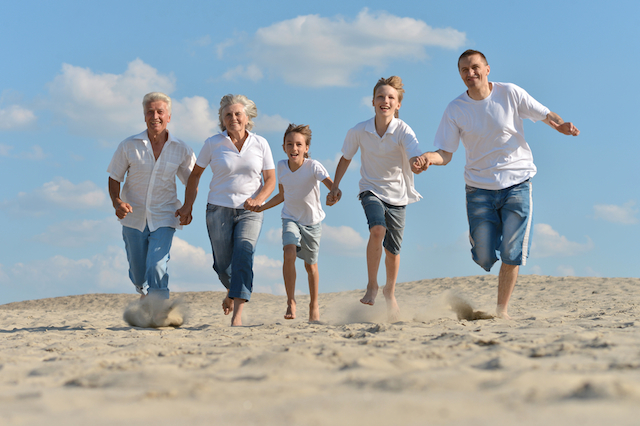
    Family Running

    “The future is completely open, and we are writing it moment to moment.” ~Pema Chodron

    When I was twenty-seven, a wave of dread swept over my life.

    As I looked to the future, all I could see was the beginning of the end. Pretty soon, it would all be downhill.

    Why the doom and gloom? I was approaching thirty!

    Like many young people in their teens and twenties, I regarded “The Big 3-0” as the end of the party.

    I would become uncool (or perhaps more accurately, even less cool than I already was). I feared turning into my parents.

    One day, I was expressing my anxiety to an older friend of mine (she was all of thirty-three).

    She put her arm around me, looked at me with one of those oh-you-poor-clueless-thing expressions, and said, “Your thirties will beat your twenties hands down! You’ll have your act together more, earn more money, but still be youthful enough to do all the things you want to do.”

    She was right, of course.

    Soon after I turned thirty, I met the partner with whom I would share my life for the next twelve years. My career took off, I bought a house, and I was able to afford some vacations. Most important, I gained some maturity and focus on my life.

    My thirties were terrific. They did, in fact, beat my twenties hands down.

    Since then, I have never dreaded the approach of a “milestone” birthday—or any birthday, for that matter. Each passing year, and each stage of life, brings its own joys and its own opportunities to grow and adapt.

    My forties brought plenty of opportunities to grow and adapt. I went through a break-up and numerous dating misadventures, my career took off in new directions, and I met my current husband. In spite of (or probably because of) all the change, adaptation, and growth, my forties were terrific.

    We’re often reminded that we should live in the present moment, and that we shouldn’t worry about tomorrow or hold on to regrets from yesterday.

    That’s great advice, but I also believe that we need to maintain a positive focus on the future.

    To me, this is not a contradiction. We can fully live in the present and plan for the future. To live only for today is to risk wandering without direction.

    Our dreams, hopes, and goals keep us growing and moving forward. We are happiest when we are on our journey to reach a destination we have envisioned and are excited about.

    I’m now fifty-seven and embarking upon a slightly early retirement. I’ve had challenges and adjustments, but that’s okay. So far, my fifties are terrific.

    I’ve decided that it’s time to retire the word “retirement.” I prefer to think of my remaining decades as my “Renaissance”—a time for redefining, rebuilding, and rebranding myself.

    You can embark upon your own personal Renaissance at any point in your life.

    Regardless of whether your horizon is your thirties, forties, fifties, or retirement, here are some steps you can take to bring more meaning and enjoyment to your life today, while setting the stage for a terrific tomorrow:

    1. Pursue things you don’t think you have time for.

    Write down the things that truly make your heart sing. Include pursuits you don’t have time for now. Think about activities from your youth that have fallen aside due to the demands of adulthood.

    You should find that one or two of these items will resonate with you more than anything else. Try to find at least one or two hours a week to devote to your passion.

    I love jazz and playing my trombone. For much of my adult life, I’ve played in a band that rehearses one night a week. Sometimes I’ve been so busy that I haven’t had time to play any more than that, but at least I played once a week.

    Now, I have time to play in more ensembles and practice as often as I like. If I had abandoned playing my trombone entirely throughout my working years, it would have been much harder for me to pick it up again. And I would have deprived myself of enjoyment for all those years.

    2. Define your legacy. What do you want to leave behind?

    What do you want to be remembered for? How do you want to make a lasting contribution to the world? It could be a book, artwork, music, a service organization you establish or contribute your time and talent toward, or perhaps the impact you have on the lives of others through coaching, mentoring, or leadership.

    Even if you an hour or two is all you can devote to your true passion today, you’ll still be making a difference, and you’ll be setting yourself up for more fulfillment in your coming years.

    3. Decide where you truly want to live, and make plans to move there.

    Where would you live if you didn’t care where your job is located? Write down the possibilities that excite you the most.

    Many people wait until they retire to move to where they truly want to live. Maybe it’s not practical to move now, especially if you like your job but not where you live. Can you shape your future to live where you belong?

    As I approached forty, I decided that I had had enough of cold winters, heavy traffic, and the high cost of living in the Washington, D.C. area, so I decided to move to Arizona.

    It was the smartest move I’ve ever made. I’m glad I didn’t wait twenty years to move to the warmth and sunshine I so enjoy now.

    4. Travel to the places you’ve always wanted to visit.

    While I try to live my life with no regrets, I wish I had traveled more in my twenties and thirties. I now know that exploring new lands and cultures is one of the richest and most memorable experiences you can have.

    In addition to beholding the breathtaking beauty of our planet, seeing how other people live will enrich your understanding of humanity and expand your worldview.

    You’ll also expand your range of possibilities for where you might like to live.

    5. Re-examine your perceptions about aging.

    When you think about reaching your next milestone birthday, what sort of feelings does that trigger?

    If I could write a letter to my twenty-seven-year-old self, I would tell him that worrying about how miserable my life would be after I turned thirty only served to make me unhappy when I was twenty-seven.

    If my friend hadn’t shared her wisdom and changed my view, my thirties probably would have been miserable—because that’s what I would have expected.

    Replace your anxieties about getting older with an appreciation for all the possibilities you can create.

    Is it time for you to embark upon your Renaissance?

    That may mean making that career change you’ve been contemplating. It may mean eliminating unfulfilling activities to free up time to truly follow your passion. Maybe it means moving to that place you know you belong.

    Whatever your Renaissance looks like, defining it and making it happen won’t occur overnight. It’s a process that will unfold over time.

    Envisioning a brighter future and embarking upon the journey to make that happen will bring focus and happiness to your life today.

    Running family image via Shutterstock

  • Giveaway and Interview: Aging as a Spiritual Practice

    Giveaway and Interview: Aging as a Spiritual Practice

    Update: The winners for this giveaway have been chosen. Subscribe to Tiny Buddha to receive free daily or weekly emails and to learn about future giveaways!

    The winners:

    Have you noticed there are certain things you can’t do as easily as you could when you were younger? Have you ever felt resistant to the inevitable changes that come with age? Have you put thought into your own mortality?

    And have you considered that perhaps all of this can contribute to a greater sense of spirituality?

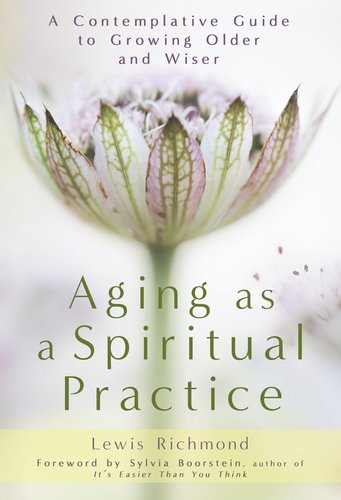
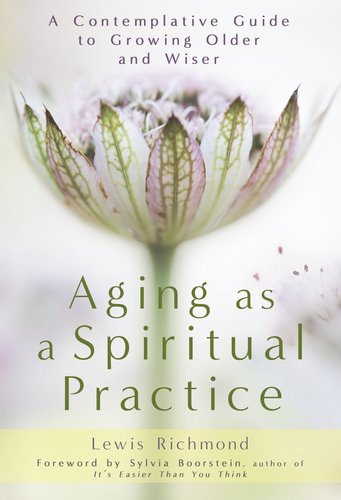
    Buddhist author and teacher Lewis Richmond tackles these questions and more in his book Aging as a Spiritual Practice: A Contemplative Guide to Growing Older and Wiser.

    Although I am in my thirties and not yet approaching my senior years, I was interested to read this book because I often feel this desire to cling to youth, coupled with a fear of what it will be like when it inevitably slips away.

    I appreciated Richmond’s refreshing perspective on the benefits of growing older, and his honesty about his own experiences with illness, aging, and transformation.

    From the book jacket:

    Incorporating illuminating facts from scientific researchers, doctors, and psychologists on aging’s various challenges and rewards; Richmond explores the tandem of maintaining a healthy body and healthy relationships infused with an active spiritual life. Using this information, we can pay attention to our own experience of aging through the lens of our emotions, and adapt accordingly, inspiring opportunities for a joy that transcends age.

    The Giveaway

    To enter to win one of three free copies of Aging as a Spiritual Practice:

    1. Leave a comment below.

    2. Tweet: RT @tinybuddha GIVEAWAY and Interview: Aging as a Spiritual Practice http://bit.ly/wgW7zs

    If you don’t have a Twitter account, you can still enter by completing the first step. You can enter until midnight PST on Friday, January 20th. (more…)