Tag: advice

  • Trusting Yourself to Make Decisions Instead of Always Seeking Advice

    Trusting Yourself to Make Decisions Instead of Always Seeking Advice

    “To thine own self be true.” ~William Shakespeare

    No one knows the real you but you. Sometimes it is true that we don’t know ourselves. That’s because we’ve lost ourselves, or maybe because we never knew ourselves to begin with.

    I grew up a long time ago on a hill on Bentley road in Puyallup, Washington. I was a very quiet, shy, and reserved little girl. Today, I am a forty-two-year-old woman. I am still introverted, but I am learning to be more assertive.

    As a co-dependent people pleaser, I grew up with a lot of self-doubt and shame. I didn’t have a sense of self at all. I was like a leaf that the wind blows away, and I needed to be more of a tree with deep roots, grounded and rooted in love.

    Growing up, I received a lot of conflicting and negative messages from my family, such as “you are loved but you are flawed.” I was hungry for the approval of others.

    I learned not to trust my ability to make a good decision because the people in my life did not validate my view of reality. My brother used to tease me a lot. I tried speaking up about the mistreatment, but my parents didn’t take my complaints seriously.

    They did little to address the situation because of their high levels of shame. It just got swept under the rug, and so I got the message that it wouldn’t matter if I spoke up, because those in authority would not protect me.

    It took me a long time to see that I could have a different opinion than other people and still be loved and accepted.

    When I did make a decision, I got the impression that people are in your life to change your mind, and guilt and shame were good tactics to achieve that.

    This has made it extremely difficult for me to make and stick to decisions.

    If you think you aren’t qualified to make a good choice then you’re going to be afraid to make any choice.

    I have often run around asking multiple people, “What should I do? What should I do?” I invited them to give me input. But then I was angry with them for “telling me what to do.”

    What I was really telling myself is that my opinion didn’t matter. I valued other people’s opinions far above my own. I disowned myself. Somewhere in my mind I thought that they must have known better. After all, what in the world could I know? I grew up believing that if you think you know something then you are very proud.

    But there is no shame in speaking from a place of truth.

    You do know something and that is not a bad thing. In fact, you probably know more than you think you know. But thinking you don’t know anything keeps you from taking the good advice you would give yourself. And it keeps you dependent on other people.

    People seem to lose respect for people who are wishy-washy and can’t make their own decisions. In other words, people who can’t think for themselves are also people who don’t respect themselves because they don’t respect their own opinions.

    It takes a lot of courage to stand up and take personal responsibility for your life and actually “own” your decisions.

    I have let others play the scapegoat by allowing them to be my decision makers. For example, because of my lack of assertiveness in my marriage, I was handing over my brain and responsibilities to my husband.

    I think it was because of fear but also laziness on my part. But no one can really be happy this way. You won’t be happy, and the other people won’t be either when they hear you blame them for your choices.

    Ask for advice if you feel you need it, but take it with a grain of salt. In the end, you are the one who needs to live with your decision. The gurus won’t be the one with the consequences of your choice.

    Don’t be so afraid of making mistakes. Fear of the choice being “bad” keeps you stuck. Accept that you are human. As far as I know, all humans make mistakes. The only ones that won’t give you grace are the ones that have no grace for themselves. So lighten up a bit.

    I know some truths that I need to stop denying and start accepting. That unsettled feeling in my gut is there for a reason.

    It’s time for me to stop sweeping things under the rug and start having the courage to speak up. I need to tell myself that I am relevant and my opinions matter, and that by standing my ground I can be a positive force for change, because I have something to say that someone out there may need to hear.

    I have come to the conclusion that I need to trust my best judgment, stick to my decision, follow through, and let the cards fall where they may.

    I think the important thing to realize is that life has a way of working out. Even if we make the worst possible choice, we still have the freedom to make adjustments.

    So let yourself try what feels right for you, and don’t worry about making the “wrong” decision. One of the best things I have learned is that the world is a place to explore, and it will embrace you if you embrace it.


  • Kid President’s Letter to a Person on Their First Day Being Alive

    Kid President’s Letter to a Person on Their First Day Being Alive

    It’s hard to be a person sometimes. That’s where Soul Pancake’s Kid President comes in. In this short video, he lays it all out–everything we need to know to be an awesome person. No matter how far is from your first day on Earth, this is one worth watching!

  • Why Empathy Can Sometimes Help More Than Advice

    Why Empathy Can Sometimes Help More Than Advice

    Hug

    “I have just three things to teach simplicity patience compassion these three are your greatest treasures.” ~Lao Tzu

    I have two teenagers. Anyone with children knows these years can bring their challenges. One minute they behave like a four year old and the next they are as mature as an adult. These fluctuations can pose difficult times.

    One day, after a particularly emotional and tough interaction with my son, I called my mother for advice. She had by all accounts raised three successful sons.

    After a long and detailed discussion of what had happened, she said, “Oh honey, I’m so sorry. It’s so hard.”

    That was it, not a single word of advice—just some empathy. I pictured her on her old fashioned phone with the rotary dial and the wires just making a simple statement. I was frustrated. I wanted advice; I wanted some magical activity or action plan that I could use to make it better.

    In my opinion this interaction with my mom was useless.

    Feeling frustrated, I called a very dear friend who has two teenage children and whose mother is a PHD psychiatrist. With children the same age, we had been sharing child-rearing stories for many years.

    I figured with that level of education his mother must have some advice. I gave him a short synopsis of the story and asked if he thought his mother could provide some any advice. “Oh yeah…” he responded, in a way that I knew there was a story to follow.

    He told me that a couple of weeks earlier he had been working on a project in London that required working sixteen hour days. Exhausted from both the hard work and plane ride home, he landed in the US after a long flight home.

    When he landed he turned on his phone and saw an email from his mother. Delighted to hear from her, since he had not corresponded with in a while, he read the email immediately.

    The email was very a long description of her concern for him. While the email was articulate and detailed, it was full of detailed changes of he “should” make for both his children and his family.

    He interpreted the message from his mom as criticism that he was not doing what he should, and his own mother was telling him he needed to change. Before deleting the email he responded to his mother, “Please don’t send any more emails like this.” 

    Even as he retold the story I could hear how much the email had hurt his feelings.

    My dear friend is thoughtful, articulate, kind, hardworking, good looking, and brilliant. My own wife often says that she wishes I were more like him. In short, he’s a great dad and a wonderful husband.

    Advice Is Not Always What We Need

    After hearing this story, I realized there wasn’t anything my mother could say that was going to help me in my situation with my son. Advice from her about what I “should” do differently was going to feel like criticism or be impossible to act on.

    I had created my own problems and could create my own solutions like most of us can. Often times we simply lack the confidence or the self-respect to make the necessary changes.

    Even though I did not know it at the time my mother’s simple empathy and acknowledgement of the difficult situation was the thing I needed.

    I wanted a magical solution, but it didn’t exist. Her empathy and acknowledgement of the challenge was all I needed. Like most advice, we seldom know we need it when we receive it. If it’s truly useful we absorb it and use it without thinking about it.

    Today when I have problems with my teenagers, I hear her voice telling me, “Oh honey. It’s so hard.” Sometimes it is, and that’s okay.

    How to Remember

    Remember, when someone calls for personal advice the most valuable thing we can do is acknowledge the situation without judgment and remind them that we care deeply. My mother does it with a Bostonian’s paucity of words. Most of us need to say more.

    In an effort to remind myself of this lesson, I have created a simple picture of the old fashion telephone my mother used until very recently. I post the picture in my workspace where I receive the majority of my calls.

    It’s there to remind me that most people do not want the instructions on “what to” or “how to” fix their problems, but rather to be reminded we care, are willing to listen and understand that sometimes life’s problems are not easy to solve.

    Photo by Anant Rohankar

  • What Seems Obvious to You Could Help Someone Else

    What Seems Obvious to You Could Help Someone Else

    Friends

    “We are not what we know but what we are willing to learn.~Mary Catherine Bateson

    Despite being a professional blogger, I am not particularly adept at technology.

    I don’t have a data plan on my phone. I don’t have an iTunes account. I have no idea how people do that thing where they connect their computer to the TV. What is this witchery?!

    But because of my age and my profession, people frequently assume that I’m a computer genius. They are sadly mistaken. One day, my significantly-more-tech-savvy BFF was looking over my shoulder as I checked email. She glanced at my screen and said off-handedly:

    “You know you can just click on that little arrow to read the next email, right? You don’t have to keep going back to your inbox.”

    Whhhhaaaaat?! My email-reading life = changed. Productivity = upped. With an afterthought of a comment, my friend significantly improved my work life.

    And I’m sure she nearly didn’t tell me because she thought her suggestion was too obvious.

    We’re all guilty of this, right? Discounting our knowledge because it has become so ingrained in our everyday life that we assume everybody else knows that thing or has that skill set.

    Or we worry that we’ll offend someone by telling them something that seems so incredibly, painfully obvious.

    But here’s the thing: what’s obvious to you is helpful to me. What’s old news to me might be fresh and mind-blowing to you.

    And really, we can apply this to just about every arena of life.

    It’s obvious (to me) that my friend is amazing/intelligent/double-take good looking. But after a series of terrible dates, maybe she needs reminding.

    It’s obvious (to me) that I should @mention people on Twitter when I write about them on my blog. But maybe my clients don’t know that.

    It’s obvious (to me) that when I travel, I should use packing cubes and Airbnb.com. But if you’re not an experienced traveler, you probably have no idea that your suitcase could be revolutionized by some zippered cubes.

    It’s obvious (to me) that I should buy my favorite jeans and tank tops in pairs when they go on sale. But if you’ve never experienced the wonder of Old Navy Rock Star jeans, maybe you don’t know.

    It’s obvious (to me) that I should end blog posts with questions to engage my readers and create a sense of community. You haven’t been blogging for five years? It’s not your fault you don’t know.

    For ages, I didn’t share these obvious insights with anyone. It seemed insulting to state what (to me) seemed readily apparent! 

    But after the fateful day of Email Management Epiphanies I’ve changed my tune.

    If you phrase it correctly, you won’t offend anybody, even if you’re telling them something they already know.

    Here are a few phrases you can use to point out (what you believe to be) obvious:

    “You already know about _________, right?”

    “I’m sure this is old news to you, but ___________”

    “You probably already know this but I always like to err on the side of providing too much information.”

    “Have you tried_______________?”

    And even if these things are obvious? Maybe your friend just needs reminding. Or maybe your comment will be the gentle push they need to make see things differently.

    “You already know about that website that coordinates ads for blogs, right?”
    Yes. And I’ve been putting off signing up and dealing with HTML editing. But I should really join.

    “I’m sure this is old news to you but Hipmunk.com is a great airfare search website.”
    Yup. I was sort of confused by the interface but if you think it’s good, I’ll give it another try.

    “Have you tried giving up coffee?”
    Ugh. No. But I know I need to and I know it’ll help me sleep better.

    And you know what? There are certain obvious things that can never, ever be  said too frequently.

    Things like:

    “You’re so insanely clever.”
    “Gosh, you’re good at that!”
    “You throw great parties!”
    “You really have a gift for this.”
    “That color looks great on you!”
    “You’re so good at handling tough situations.”

    Just because you think a solution is obvious, doesn’t mean it is. Just because you think someone’s talents are self-evident, doesn’t mean they are. Just because you think a best-practice is common sense, doesn’t mean it is.

    So go ahead. State the obvious. We’ll all be grateful.

  • Listen Instead of Correcting Others: What We Gain and Give

    Listen Instead of Correcting Others: What We Gain and Give

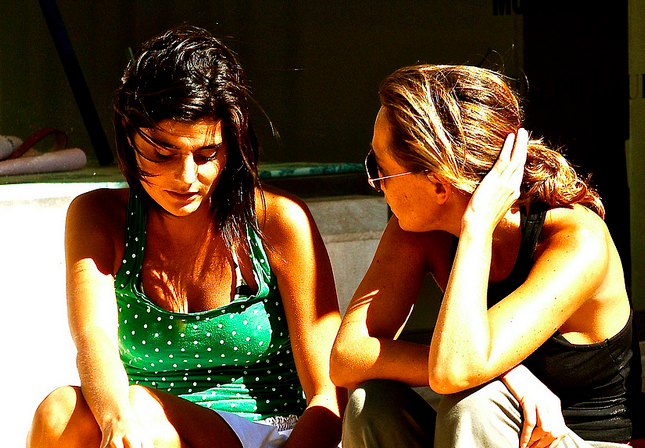
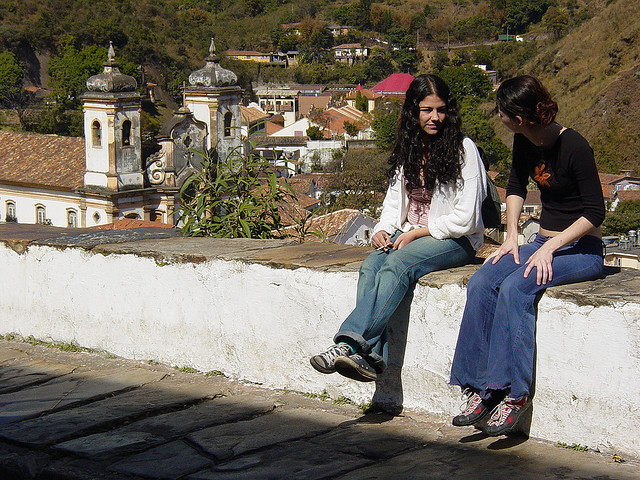
    Two friends talking

    “When you judge another, you do not define them. You define yourself.” ~Wayne Dyer

    I have a tendency to want to show off what I know, and in the worst cases, correct other people.

    Instead of listening and connecting I unconsciously try to sell to others an image of myself that I wish to project. Some part of me believes that if people are impressed with me then they’ll like me and be interested in my knowledge and point of view.

    In this way I fall into the trap of constructing the false self. This is the person I wish for others to see, a person without vulnerabilities, incorrect knowledge, or who makes mistakes. A thing that is more of a product than a person.

    Many of us fashion these false selves not only as an idealized version of ourselves, but also to keep other people’s judgments of us at bay. Before we realize what has happened, we have made our skills and knowledge into weapons that we wield on others while all the while we hide our true selves behind a shield. Without planning to, we have declared war.

    The constructed, false self is a one-way gate. Like a character in a stage play, the false self puts sights and sounds out to the audience while all the while it stands behind the fourth wall of separation from the observers. The audience sees the character, but the character doesn’t see the audience.

    I have someone in my life who deals with a fairly severe mental illness. Through most of my life I have tried to help him by showing him what was “wrong” with his thinking and actions. I wanted to use my logic and knowledge to set his perceptions straight.

    I didn’t realize it at the time, but I was mostly lecturing him. I did not listen and understand his point of view, but instead stayed behind my shield and wielded my weapons of logic at him. I thought I was being a good influence.

    Constructive influence, though, flows through positive human connections. When we judge others we sever those connections and directly destroy our chances of influencing others with our best information and ideas.

    But real, positive influence travels in both directions. Discovering wisdom works best as a collaboration formed through the conduit of relationships. There is give and take and neither person needs to be “the right one.”

    When we give others space to make mistakes, to have different skills and expertise than our own, then we also give ourselves space for the same things. No one of us is an expert at everything, but when we come together we close the gaps into a working whole.

    A few years ago, while preparing for a volunteer program, I took some training in listening. I learned that it’s more valuable to reflect back what people say, and to show understanding of them without judgment.

    I learned that if I showed understanding of the other person’s feelings and thoughts, that alone would ease their burden and do worlds of good.

    I learned that acceptance and understanding aren’t necessarily the same things as approval and agreement.

    We needn’t be afraid that we are compromising our own views or knowledge when we simply choose to understand another’s. In fact, the openness of understanding can strengthen our own point of view.

    We must receive what we wish to give and give what we wish to receive. If we want to be listened to, then we must listen to others. If we want to be valued for what we know, then we must value others for what they know.

    And if we want to be forgiven and loved, then we must forgive and love others.

    Lately I’ve been applying my new listening skills in conversations with my mentally ill loved one. I allow myself to relate to difficult things he experiences and have even tried to be brave enough to be honest when I see a bit of myself in him, when I see the same passions, fears, and mistakes.

    The funny thing is that by backing off I’ve gained more of his trust. By not pretending to have all the answers for him, I’ve strengthened our bond.

    Now I only give him my opinion if he asks for it. Sometimes this comes after a long spell of silence, when we are simply being together. And I’m honest enough to tell him when I don’t have a clue how to answer his question.

    And you know, I’ve learned a whole lot from him, too.

    Photo by pedrosimoes7

  • Making Tough Decisions: 7 Steps to Hear Your Own Inner Wisdom

    Making Tough Decisions: 7 Steps to Hear Your Own Inner Wisdom

    Thinking

    “Nobody can give you wiser advice than yourself.” ~ Cicero

    “I don’t know what to do.” “I can’t figure it out.” “How do I know which choice to make?” “Which one is right for me?”

    Sound like someone you know? Here’s one thing I know for sure: You’ve got the power. You’ve got the love.

    You’ve got the innate talent—you gorgeous, loveable soul—to know without a doubt what is right for you. You’ve got the power to know what to do, to figure it out, to know which choice to make. Your soul is calling. And all you need to do is listen.

    At one time not so long ago my innate talent was ignoring my soul. I had developed an acute ability for lasering ahead no matter what my essential self was saying—even when it was “Wrong way!”

    I set goals and made plans and went for it no matter what—and soon I was a stressed-out, exhausted insomniac. So that was fun.

    In fact, fun was exactly what was missing from my life. I put external touchstones ahead of inner happiness. I let my ego tell me what to do, based on what I thought the standards for success were.

    I bought into the mantra: Work, work, work and then work more. You can enjoy your life when you’re retired. It was no wonder my entire system went into revolt; it’s no wonder our systems do that. They’re designed to tell us when we’re off track.

    They’re designed to tell us when we’re on track, too. It’s like magic—except scientifically-proven. The verbal part of our brain processes about forty bits of information per second. That’s pretty impressive.

    The non-verbal part of our brain processes about eight to eleven million bits of information per second. Eight to eleven million!

    That means that the thoughts we hear from the verbal part of our brain actually know less than the physical sensations and emotions that we feel coming from the non-verbal part of our brain.

    So if “I don’t want to make this one choice but everyone tells me I should” seems logical, but every physical sensation or emotion about it just feels so wrong, it probably is. Wrong, that is.

    Wondering how to tap into your own innate talent for knowing how to live the life that’s right for you and be who you want to be? Start small.

    7 Steps for Hearing Your Own Inner Wisdom

    1. Start small.

    Begin with simply noticing physical sensations. Check in with your body from time to time. What physical sensations are you noticing right now?

    2. Fine tune.

    Once you start to check in with your body, you’ll probably also notice emotions, and associations with whether or not the emotions you’re feeling are good or bad. It’s normal—but in this case it’s not all that helpful. Keep on fine-tuning your radar until you’re paying attention to only physical sensations.

    3. Benchmark your “yes.”

    Make a list of times that you knew things were right for you, or felt that things were exactly as they were meant to be, really great, going well, etc. Then do a body scan: What physical sensations do you feel? Write ‘em down and then label them.

    4. Benchmark your “no.”

    Make a list of times that you knew things were not right for you, or felt that things were not as they were meant to be, not going great or well, etc. Then do a body scan: What physical sensations do you feel? Write ‘em down and then label them.

    5. Practice.

    You’ve just created your body compass. Using it is fun. Orange or apple? Imagine making each choice and then see what physical sensations come up—closer to “yes” or closer to “no”?

    6. Trust.

    The verbal part of your brain might come up with all sorts of reasons why you shouldn’t trust your body compass. Practicing on the little things helps to build up enough trust to use it on the big decisions.

    7. Live it in the moment.

    Once you’ve got your compass down pat, keep on using it. Living it in the moment is about remembering your innate talent for knowing, and using it with reckless abandon and firm intention.

    What’s your inner wisdom telling you?

    Photo by mynameisharsha

  • Introducing Tiny Buddha’s Community Forums!

    Introducing Tiny Buddha’s Community Forums!

    Tiny Buddha 2

    After much time and planning with Joshua Denney of Think Web Strategy, I’m thrilled to announce that Tiny Buddha now has a new responsive design and community forums!

    The new design enables for a better reading experience on mobile devices, and also gives you access to forum-related information right on the homepage.

    Why Join The Tiny Buddha Community Forums?

    The forums are a place to connect with the community, to share ideas, and to give and receive support. You’ll find topics related to:

    • Art
    • Crafts
    • Emotional Mastery
    • Fun
    • Health & Fitness
    • Parenting
    • Purpose
    • Relationships
    • Spirituality
    • Tough Times
    • Work

    Since site authors officially started using the forums two days ago, there are already quite a few conversations going on over there. I hope you’ll set up a free account to join one or start your own!

    To Set a Free Account on the Tiny Buddha Forums

    1. Click on the “Join the Forums” link at the top right-hand corner of the site.

    2. On the register page, enter a username, your name, your email address, and your password, and then hit “complete sign up.”

    3. You will receive a confirmation email to verify your account. Once you’ve done that…

    4. Login at http://www.tinybuddha.com/login

    Once you’re logged in, you can use the forum link in the main menu, at the top of the site, or check out on some of the popular forum conversations listed on the new homepage.

    Since this is a new site feature, there may be some bugs. If you notice any issues, please let us know in the technical support section, here: http://dev.tinybuddha.com/forum/site-feedback-support/technical-support/

    Thank you for being part of the Tiny Buddha community! 🙂

  • Writing a Letter to Your Future Self: Love Who You’ll Become

    Writing a Letter to Your Future Self: Love Who You’ll Become

    Time

    Tension is who you think you should be.  Relaxation is who you are.” ~Chinese Proverb

    Yes, I had reached the age of twenty-five. Still, I doubted this letter from my past would make it to me, all these years later. It was a simple creative writing assignment from when I was fifteen.

    The teacher collected our letters to our future ourselves in self-addressed envelopes with stamps and promised to mail them ten years later. But, so much time had passed; would he keep his word? Would he even remember?

    Thinking back on the letter, I tried to remember writing it. I vaguely recalled giving my future self some advice.

    In my recollection, my fifteen-year-old self wanted to make sure I would continue to write and figure skate, and she probably assumed I’d be married and have a baby by now.

    When you’re fifteen years old, twenty-five seems like a grown-up age, but I wasn’t feeling as grown up as I believed my younger self expected me to be.

    Then, on a family vacation in San Diego, my parents brought me the mail from home. And in scrawled ink, there was a letter addressed to myself. I knew it was the one! I laughed delightedly and could not believe what was in my hands. I opened it eagerly and was astounded by the results.

    The letter began in true, snarky fifteen-year-old fashion: “How much do you bet that this letter will never get to you?”

    It continued to greet me casually as if we were having an IM chat.

    Here are two key nuggets from the essence of the letter, which I found salient and beautiful: (more…)

  • 5 Simple Ways to Help Make Someone’s Life Better

    5 Simple Ways to Help Make Someone’s Life Better

    “We choose our destiny in the way we treat others.” ~Wit 

    Growing up as a high-level swimmer, I used to be a very self-centered individual. Just about everything in my life revolved around becoming the best swimmer I could be.

    I spent countless hours training, getting ready for workouts, and visualizing my future success. Helping others wasn’t on my radar. The idea of contribution was still foreign to me.

    Fortunately, I was passionate about swimming and I had a purpose to my life, so I was happy.

    But eventually my swimming career ended, and all of a sudden I started feeling a profound lack of fulfillment in my life.

    I did what most college students do to fill the void: I turned to alcohol and constant partying. I was having fun, sure, but deep down I knew something was missing.

    I started diving into Buddhist philosophy, and the concepts of compassion, contribution, and oneness started making their way into my consciousness.

    When I graduated college, I landed a “prestigious” corporate job, and although I was making good money, something was still missing.

    I had this lingering feeling that my work wasn’t truly serving others and didn’t have a real impact on the world.

    I quickly realized that this job wasn’t my dharma, so against everyone’s advice I just said, “Screw it” and I quit.

    After a few months of confusion about what to do next, I decided to move to the other side of the world. I packed up my bags and relocated to Perth, Australia.

    My intention? Discover my true self and my life’s purpose.

    As I started going further down the rabbit hole of personal development and spirituality, I realized that the best way to achieve happiness and success is through helping others in meaningful ways.  

    As Gandhi said, “The best way to find yourself is in the service to others.”

    I decided it was time to start contributing on a bigger scale, and to share all this wonderful wisdom I was discovering through a blog. Eventually, I decided to “go pro” and become a Peak Performance Coach. (more…)

  • Knowing Which Advice is Right

    Knowing Which Advice is Right

    “Believe nothing, no matter where you read it, or who said it, no matter if I have said it, unless it agrees with your own reason and common sense.” ~Buddha

    The old cliché, “I say tomayto, you say tomahto,” has been popping up in my head recently, mainly because of a lesson I recently learned after years of trial and error.

    For the last several years, I have been closely listening to and reading the advice of “experts” on subjects related to life, love, business, and the pursuit of happiness. I have come to an astonishing (for me, anyway) conclusion: Everybody is right, and everybody is wrong.

    Confused? Allow me to explain with an example.

    About 18 months ago, I changed careers from newspaper journalism to insurance sales. When I first started in the insurance industry, my boss told me that to be successful I would have to not let “no” bother me. Just keep trucking, let that rejection roll like water off a duck’s back, he would say.

    He also told me persistence was a major key to selling life insurance. Keep calling clients, even if they blow you off a few (or in one case, many) times.

    His advice worked with one client. I literally called her a dozen or more times. She bought insurance, and then canceled.

    I scheduled a follow-up appointment to find her some more affordable insurance. She canceled. Another follow-up appointment scheduled. Another canceled. This literally went on for three months.

    Finally, we were able to get the insurance she was looking for at a price she could afford.

    After writing that application, my boss (let’s call him Jay) said, “Let this be a lesson on the power of persistence.”

    A few weeks later, my boss’s boss (let’s call him Brent) gave me some very different advice: “Never call a potential client more than five or six times. It makes you look desperate.”

    I have learned that, in many cases, this advice is also true. Calling too many times will certainly not work on a lot of clients. But, in the above-mentioned example, it did work.

    So, I asked myself, “Whose advice is right, and whose is wrong?” (more…)

  • When (and When Not) to Take Advice

    When (and When Not) to Take Advice


    “Advice is what we ask for when we already know the answer but wish we didn’t.” ~Erica Jong

    I’ve received all kinds of advice in my life, both welcome and unwelcome. Most of this advice is easy to divide into two piles: “good” or “bad.”

    “Good” advice: when somebody makes a suggestion and I think, “Oh, of course!” It might be advice about how to improve a poem, or how to peel a mango. This kind of advice is easy to take.

    “Bad” advice: when somebody makes a suggestion and I have a clear sense that I don’t agree with it. I might not respect their opinions, or I might know they have their own agenda which clashes with mine. I might understand their point of view but simply disagree with it. This kind of advice is easy to ignore.

    Sometimes, it’s trickier.

    A while ago decided I might change my career. I started the process of signing up for the three-year training I needed. Lots of my friends and family thought it was a great idea.

    I asked one person’s advice—someone I admired a great deal, who cared a great deal about me. To my surprise, they said they didn’t think it was the right thing for me to be doing. They thought I was doing it to run away from a career that would be more risky, but more fulfilling.

    I could understand why they gave me this advice. They’d had a risky career themselves, and they were invested in this having been the “right” decision for them. They were biased. I didn’t agree with their advice. I didn’t think it was about what was best for me.

    Still, I couldn’t stop thinking about it. It niggled at me. I continued applying for the training, and talking to other people about my new career choice. They were all supportive and encouraging. Why did it matter so much that this one person had given me the opposite advice?

    Eventually, I sat down and reflected upon what this person was saying to me. (more…)

  • 10 Tips to Advise Wisely: How to Give Advice That Actually Helps

    10 Tips to Advise Wisely: How to Give Advice That Actually Helps

    Two Friends

    “If you propose to speak, always ask yourself, is it true, is it necessary, is it kind.” ~Buddha

    Nothing appears to be going right. The worst part? No one gets it, even though they might claim to.

    Even though you know this is all temporary—it always is—you feel the need to ask other people what you should do. If they say what you want to hear, you’re relieved. But it doesn’t usually work that way. In fact, oftentimes you’re more frustrated than you were before once they put their two cents in.

    We’ve all been there before.

    Think back real hard—what in particular helped or irked you about advice people gave you? Did they say you should have done something differently (which wasn’t very useful after the fact)?

    Did they tell you to stop feeling sorry for yourself because other people have bigger problems? Did they offer some platitudes or cliche advice that sounded impossible to follow?

    When friends have problems that seem incurable and never-ending, you can sense that hopelessness. And you want to fix it, which always seems so simple when you’re sitting on the outside. (more…)

  • 5 Pieces of Advice That Aren’t Cliches

    5 Pieces of Advice That Aren’t Cliches

    Advice

    “It is easy when we are in prosperity to give advice to the afflicted.” ~Aeschylus

    Earlier this year I got some feedback from the ‘tween magazine I wrote for: “It sounds like good advice, but kids probably won’t do any of that.”

    In my head it all sounded logical but I didn’t consider whether I’d have taken that advice as a kid. Or now, for that matter.

    People do it all the time: look at a situation from a removed, non-emotional place and hurl suggestions that are far easier said than done. And sometimes, just plain unrealistic.

    I’ve listed five of these hard-to-follow, cliché pieces of advice, along with alternative suggestions you may actually be inclined to take. (more…)