Tag: advice

  • Beyond Cliché Advice: What Helped When I Was Struggling Financially

    Beyond Cliché Advice: What Helped When I Was Struggling Financially

    “When you are in uncertainty, when you feel at risk, when you feel exposed, don’t tap out. Stay brave, stay uncomfortable, stay in the cringy moment, lean into the hard conversation, and keep leading.” ~Brené Brown

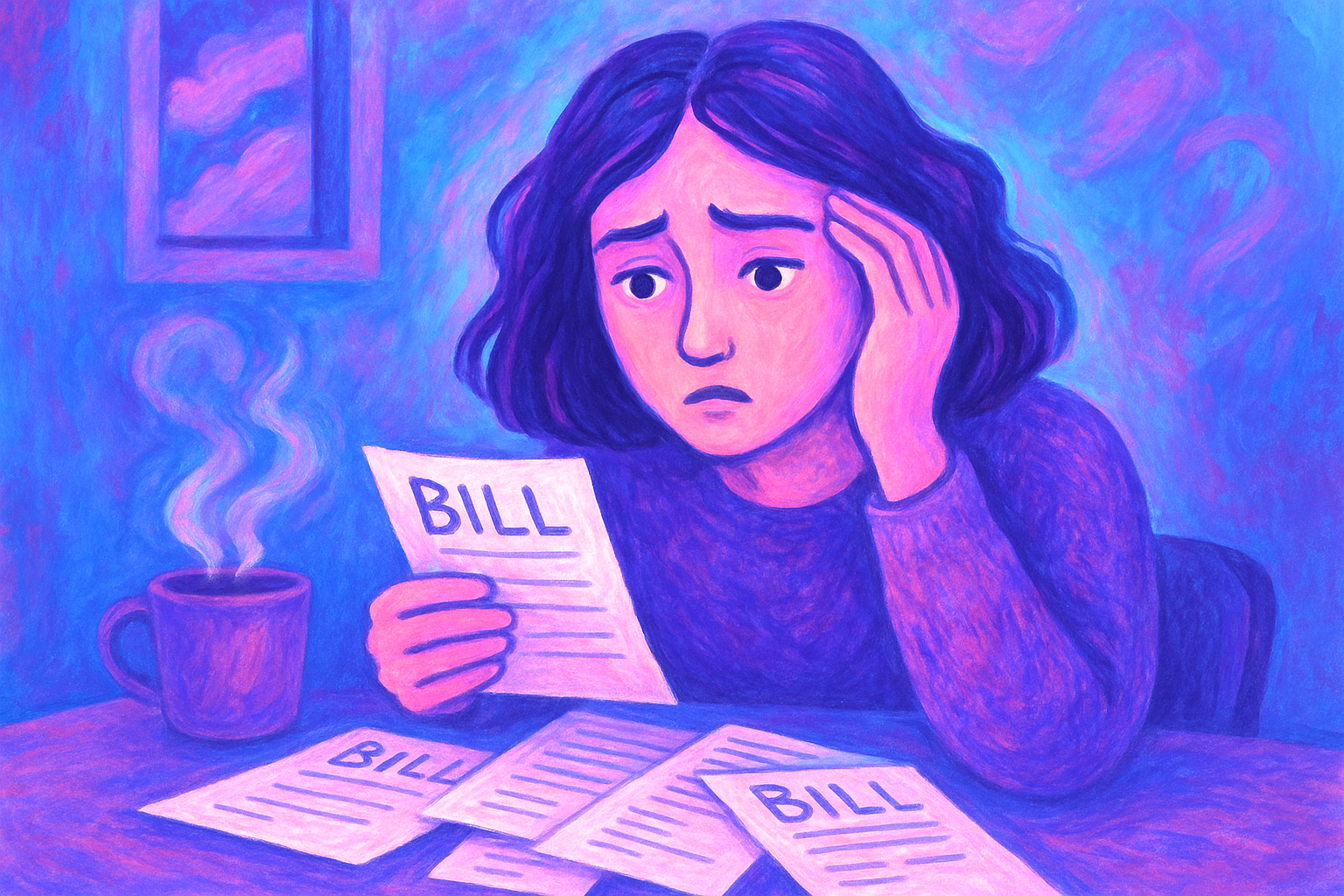
    When you think of someone who’s struggling financially, you might picture someone who’s barely making ends meet, living paycheck to paycheck, just getting by. But money trouble doesn’t always look like that.

    I was struggling even though it didn’t seem that way. I had a six-figure salary. I owned a home in one of the most expensive cities in the world, having bought a half-million-dollar property in my late twenties. From the outside, I had it all.

    But a year into homeownership, my partner backed out of our financial agreement, leaving me to manage everything alone. Then COVID-19 hit. The government responded to the national deficit by doubling mortgage rates. Suddenly, nearly every penny I earned went toward my skyrocketing payments, insurance, maintenance fees, and property taxes. Selling my home at the right time became an anxiety-inducing gamble.

    That’s the thing about financial struggles—they look different for everyone. And at some point in our lives, most of us will experience them.

    During those years, the weight of my financial burden crushed dreams I hadn’t even had the chance to imagine. Along with my dreams, my mental and physical well-being and vitality were exchanged with mere survival.

    Well-meaning family and friends tried to offer support, but their words often missed the mark. Telling me to “trust the universe” or just stay positive only made me feel more isolated, like I wasn’t truly understood. I struggled to explain why my financial hardships felt like a barrier to my dreams, why I couldn’t simply shake them off and believe everything would work out.

    While I did make it through my financial struggles, I have reflected on this period of my life. Maybe easy was never an option, but did it all have to be so hard? I also realized there’s a massive gap between the complex challenges and struggles that can arise from prolonged financial struggles and the solutions, support, and advice that we receive from others in combating them.

    What Not to Say to Someone Struggling Financially

    “The struggle will end when you learn your lesson.”

    This idea—that struggles repeat until we find meaning in them—might be comforting in some situations, but it doesn’t apply to financial hardship. The idea that I was somehow failing to learn my “lesson” only added to my stress.

    The truth is, sometimes life throws challenges at us that have no lesson attached. Some things just happen. Our job isn’t to decipher a hidden message—it’s to keep moving forward, however we can.

    “You’re strong; you can handle it.”

    While meant as encouragement, this statement often feels dismissive. Financial stress is relentless, affecting not just the big picture but the daily grind of survival. Instead of pushing someone to be strong, ask how you can lighten their load. Let them vent. Acknowledge their exhaustion. Strength isn’t the absence of struggle—it’s surviving in spite of it. And even strong people need a break.

    “Money is just energy—align yourself with abundance.”

    A positive mindset is valuable, but financial hardship isn’t a spiritual failing. People don’t struggle because they’re “out of alignment” with abundance; they struggle because of real-life expenses, job markets, and economic systems. No amount of positive thinking can pay the mortgage.

    “When something changes inside you, your external world will reflect it.”

    After years of financial struggle, I had no aha moment, no inner transformation or miracle, or even a slight mindset shift before my financial circumstances changed. The only thing that counted was my consistent preparation, planning, and execution of all the logistical tasks that were completed over a very long period of time. In my case, it was hard work that paid off. There was no magical moment of liberation.

    “Just work on your passion after your day job.”

    When you’re financially drowning, exhaustion is constant. My job required intense mental energy. Coming home and using the same cognitive muscle to work on passion projects was nearly impossible. It’s like telling a personal trainer to do intense workouts morning, noon, and night—they’ll burn out or get injured. Sometimes, survival means setting dreams aside until you can pursue them without harming yourself.

    What Actually Helps

    Love through Listening

    As someone who has gone through a period of financial struggle, it is even impossible for me not to bring my bias, experience, and perspective into the conversation when someone shares their struggles with me. The key is to remind ourselves that we are not an expert on somebody else’s life. They are, but we can be powerful listeners. It is in our listening that we express love.

    Get Into the Specifics

    One of the most helpful things I experienced was having real conversations about my financial situation. Talking through an overwhelmingly large number of concerns helped me gain clarity and relief. If you want to support someone struggling, ask about their specific plans and course of action. It will help them declutter their mind and ground themselves in something they can actually control.

    Provide Resources

    Support doesn’t have to be financial. Helping someone find a reputable accountant, connect with another homeowner, or compare mortgage rates were all incredibly useful for me. A friend once helped me break down different bank rates and calculate my options—a simple act that made a huge difference. Another friend helped me with repairs and paints. They helped move the plan along.

    Help with Decision Fatigue

    Financial struggles come with endless decisions—which bills to pay first, whether to downsize, how to negotiate better rates. The questions are endless. Having someone to talk through those choices with can be a game-changer.

    Remind Them of Their Leadership

    One piece of advice that truly stayed with me came from Brené Brown:

    “When you are in uncertainty, when you feel at risk, when you feel exposed, don’t tap out. Stay brave, stay uncomfortable, stay in the cringy moment, lean into the hard conversation, and keep leading.”

    At a time when I felt anything but a leader—let alone a good one—these words resonated deeply. They didn’t focus on what should have been or could have been, but on what was: a whole lot of discomfort. My job wasn’t to crumble under pressure or lose my footing with every new challenge. It was to keep leading—myself and everyone involved—through the uncertainty, no matter how difficult it felt. That was my only job.

    My financial struggles are now behind me—something I once thought was impossible. If you’re struggling, know that you are not alone. The weight of it may feel unbearable, but the leader inside you, the people who shoulder the journey with you, and a benevolent force greater than you can see will carry you through. As I recently read, “The horrors will persist, but so will you.”
  • How I Got Healthy & Overcame My Food/Body Issues by Ignoring Conventional Advice

    How I Got Healthy & Overcame My Food/Body Issues by Ignoring Conventional Advice

    I was an award-winning personal trainer and nutrition and wellness coach for over eight years.

    I also spent close to three decades struggling with my own weight and food issues—trying to “stick to” diets and/or healthy eating and lifestyle goals. And many years struggling with binge eating, bulimia, and (what I thought at the time was) an uncontrollable sugar addiction.

    During the years I was working in the fitness and nutrition industry, whenever I’d get new clients, I’d find out what their health and fitness goals were, and I’d give them the perfect plan to help them get there.

    And I made sure to remind them, it’s not a diet, it’s a lifestyle.

    I did that because it’s what I learned to do. It’s what everyone does.

    Because that’s what we’re taught—that eating, living, or being healthy requires us to make choices that others have told us are healthy and not do the things they’ve told us are unhealthy.

    You know… the perfect healthy lifestyle that constantly reminds you to:

    • Eat this, not that… or you’ll get sick, disease-ridden, and die early.
    • Weigh this amount and not more…. or you’ll get sick, disease-ridden, and die early.
    • Move this amount each day, in these ways… or you’ll get sick, disease-ridden, and die early.
    • And… you’re not dieting. You’re just eating healthy. You’re creating a healthy lifestyle.

    The perfect healthy eating and living plans constantly remind you that you must always be fighting, resisting, ignoring, and controlling yourself, your body, your hunger, and your cravings.

    And always doing more, working harder, being disciplined, having motivation, building willpower, etc.

    There’s a predictable formula for this supposedly “healthy” eating and living culture.

    The formula insists that we conform to a socially acceptable, mythical, perfect body size and shape.

    The formula treats our health as though it’s a future goal or accomplishment that we can only achieve later if we’re “good” now.

    The formula must be followed with no excuses. When it’s not, the problem is you and your obedience, willpower, discipline, motivation, and commitment.

    The formula is primarily concerned with optics rather than actual health. As long as we portray the “picture of health” and the behaviors we’re engaging in appear healthy, it doesn’t matter if the pressure, fear, and shame created by trying to stick to them are actually destroying us behind the scenes.

    The formula requires us to trust the rules and advice of others over our own bodies.

    It’s a mass-marketed, templated, “easy” model that allows no room for our own inner knowing, logic, self-trust, or personal power.

    It’s easy to sell because it preys on fear and always sounds so shiny and tempting.

    And this is what we’re taught it takes to eat and live healthy lives.

    Multi-billion-dollar-a-year industries have taught us how to “get healthy.”

    “Lose weight, feel great. Gain confidence. Get fit. Be healthy and happy. Live your best life.” But the unspoken truth is that it’s only “…as long as you follow our rules.”

    But you’re not going to be able to stick to this plan, and when you can’t, you’re going to waste your entire life at war with yourself, promising to “get back on track.”

    “On track,” of course, meaning doing all the things they say you’re supposed to.

    It’s a paradigm that promotes constant fear and oppressive attempts to control ourselves and our bodies in order to follow one-size-fits-all, arbitrary prescriptions.

    Nothing proves this more than how we’ve become so completely conned into believing the lie that healthy eating is hard work that requires willpower, discipline, commitment, and constant vigilance.

    That’s horrible and not a healthy way to live at all!

    We’ve been sold this message because it’s highly profitable for us to believe that we cannot trust ourselves and our own bodies and we must rely on others to tell us what to do.

    And we’ve bought it—hook, line, and sinker.

    But it forces us to go through life literally fighting with ourselves and our bodies, trying to follow their rules.

    It forces us to live disembodied, detached, disconnected from, distrusting, and fully ignoring the wisdom of our own bodies and our own inner knowing.

    Living in all that fear, disconnection, and distrust is so harmful.

    For me, it resulted in bulimia, binge eating, anxiety disorder, panic attacks, chronic clinical depression, self-loathing, crippling shame, and what I was fully convinced was a sugar/food addiction so severe that I often went to bed at night afraid I would die in my sleep because I’d eaten so much.

    I lived in a constant state of being completely consumed by not only the number on my scale but also fear and shame every time I “screwed up” and ate something “bad.” For decades of my life.

    Eventually, my mental, emotional, and physical health deteriorated so badly that I recognized my only choice was to learn how to heal because I couldn’t keep living that way—it was killing me.

    I finally recognized that my suffering was in large part the result of everything I was taught to do to maintain this supposedly healthy eating and lifestyle plan.

    And all I really wanted was peace.

    So I turned my back on it all.

    I stopped exercising every day and started a little light, mindful walking and mobility work instead— whatever helped my body heal.

    I released the need for my body to look a certain way or be a certain size and worked on healing my relationship with it instead of fighting to shrink, change, or control it.

    I stopped trying to make myself “eat healthy” and allowed myself to not only eat whatever I wanted, whenever I wanted, but I even allowed myself to binge. I know that sounds crazy, but it’s truly the first step that helped me stop binge eating.

    I shut out every single message I’d ever gotten in my life about what it takes to eat or live “healthy,” and I started reconnecting with myself so I could figure out what actually helped me best support my overall well-being, right now, in this moment.

    I even eventually quit being a trainer and (traditional) nutrition and wellness coach.

    I tuned out everything I knew about what “healthy” eating and living looks like, and instead I turned inward and started connecting with myself. I started getting to know myself, understanding the patterns that were driving all those unhealthy choices in the first place and learning to change those.

    I started asking, how do I feel right now? How do I want to feel? What do I need (mentally, emotionally, or physically) in order to bridge the gap between the two, if there is one?

    It’s changed everything in the most glorious ways.

    I haven’t binged in many years. That’s a pattern that simply no longer exists in me.

    I’m not scared of and don’t feel addicted to or out of control around sugar (or any food) anymore.

    Food no longer controls me… not even sugar.

    I crave things that help me feel my best, including water, which I never used to drink before.

    I treat (and speak to) myself and my body with love and kindness.

    All of the “unhealthy” choices we make, all the unhealthy things we do to ourselves—even binge eating and supposed “sugar addictions”—it’s all merely the result of our conditioning. The stuff going on inside us.

    My external world, my lifestyle, my unhealthy choices, they were all symptoms of what was going on inside me—all the self-abuse I heaped on myself, ironically, because I couldn’t “stick to” a healthy living plan.

    When I changed that, when I stopped focusing on what I was doing and started changing my inner world, who I was being, my outer world (and the choices I was making for myself and my body) naturally changed.

    Healthy eating and living should never be the goal; they’re the result of how we’re being.

    Because here’s the thing: your body doesn’t care about the “health” goals you hope to meet in the future.

    It only knows what it needs right now, in this moment, and whether you’re making choices that help support that or not.

    If you’re trying to make yourself be consistent with some plan that’s supposed to help you reach some goal at a later date, you are, by definition, disconnected from your body and what it’s trying to tell you it actually needs right now.

    That’s a recipe for not making healthy choices and ignoring your body’s cues and messages.

    Supporting our health requires supporting our overall well-being, and we can only do that when we’re deeply connected to ourselves through what I call wholehearted being: being present, connected, curious, and intentional about our unique moment-to-moment needs and loving ourselves and our bodies enough to want to honor them.

    When you do that, making choices that best support yourself and your body right now becomes the natural result.

    Not some arbitrary goal that you can’t ever stay consistent enough to reach.

    If you’re reading this and can relate to any parts of my struggles with weight, overeating, binge eating, and sugar addiction, I want you to know that you, at your core, instinctively know what you and your body need to feel and live your best.

    You’ve just been conditioned out of that inner knowing after a lifetime of learning from everyone else that the only way to be healthy is to control yourself and your body and follow their advice instead of trusting your own inner knowing.

    With wholehearted being, I’ve gone from binge eating, bulimia, obsessive and compulsive thoughts and patterns around food and exercise, self and body hate and distrust…

    …to kindness, compassion, self and body love and trust, and learning to genuinely want to eat in ways that best support and nurture me.

    A New Path to Healthy Eating and Living

    Healthy eating and living through wholehearted being helps you build a foundation rooted firmly in your own self-love, trust, and worthiness because how we feel about ourselves impacts every aspect of our lives, including how we treat ourselves and our bodies.

    From there, you learn to make choices for yourself and your body through four main pillars of being:

    Present in this moment and in your body so you can break the conditioning that drives unhealthy behaviors

    Connected to your inner world—your thoughts, feelings, and communication from your body about what you need

    Curious about your inner experiences in this moment, with gentle awareness, self-compassion, and non-judgment

    Intentional with your thoughts, behaviors, and responses—intentionally choosing from kindness, gratitude, and love

    This process is incredibly powerful because it does two things that are required for lasting change:

    1.It helps you learn to love, trust, and value yourself enough to care how you treat your body.

    2. It allows you to put space between your triggers and the conditioned, autopilot behaviors that drive unhealthy choices in the first place. This allows you to get to know yourself, your patterns, and your needs and learn new tools and practices that better support your overall well-being. Tools and practices that also help you learn to better understand and nurture, not only your physical needs, but your mental and emotional needs as well. And that’s vital because our thoughts and emotions are major components of our overall well-being. They drive the choices we make.

    It’s a powerful and simple process but not an easy one. It takes courage to relearn to trust yourself with food, to learn new ways of being, and it takes a lot of practice, repetition, and support, but it’s so very worth it.

    After eight years in the fitness, nutrition, and wellness industry (and almost thirty years of dieting), I finally got healthy and broke my sugar addiction by choosing to start focusing on my life instead of my weight or food choices.

    By learning to tune out the external messages trying to tell me what I “should” eat or do and turn inward to start making choices for myself that best nurture my whole being, moment to moment—choices that are grounded in love, self and body trust, connection, and kindness.

    And it’s changed everything.

  • How My Dad’s Advice to Let Someone Else Shine Created My Fear of Success

    How My Dad’s Advice to Let Someone Else Shine Created My Fear of Success

    “Sometimes what you’re most afraid of doing is the very thing that will set you free.” ~Robert Tew

    Everyone has fears. It is not an emotion that is only for a chosen few. One’s fear may seem irrational to the outside world, but I guarantee to that person it is debilitating. So much so, that it shapes their perspective and how they see the world. My fear is of success.

    I know what you’re thinking. “That doesn’t make sense at all. Who doesn’t want to be successful?” Well, let me explain what I mean.

    You see, I am an introvert, so I don’t really want to draw attention to myself at all. My “success” is a personal gain, not a flashy show of pride to the world.

    I wasn’t quite sure where this fear of success began until this year when I was talking to my wife. Our discussions brought up a memory that I am sure started this fear.

    When I was twelve years old, I loved basketball. It was my all-time favorite sport. You had to be good individually but also as a team.

    Being introverted, I had to work hard at the latter, but it was a challenge I was willing to take on because I loved the game so much. I practiced all day every day. My grandma even brought me a basketball hoop to put in her driveway so I could practice. (This was a big deal because she loved her yard and thought the hoop made it look less appealing.)

    Nonetheless, I got good and made the basketball team. So now I could work more on the team aspect.

    One day I was at my cousin’s house, and we were playing basketball. A teammate lived across the street. After my game with my cousin, she came over and challenged me to a game one on one. I agreed

    As we were playing, I noticed she became more intense and aggressive. I didn’t pay much attention to it and just kept playing. When I won the game, I went toward her to say, “nice game.”

    She threw the ball at me and ran toward her house crying. I was so confused. My dad saw and made me go with him to her house, where she was sitting on the porch.

    He asked her what was wrong. She said, “Why does she have to be so good? She always wins. I’m not even a starter because of her.”

    My dad pulled me to the side and said, “You don’t have to be good all the time. Why don’t you let her win sometimes?” 

    I remember being confused. My twelve-year-old mind couldn’t understand why my dad would want me to lessen myself so that someone else could achieve, even though I worked hard. But he was my dad, and she was crying.

    Later, I found out that the girl was the niece of my dad’s future wife. I guess he was trying to impress her. But that’s a story for a different blog.

    From that time on I questioned the results of my success. If I succeeded would people be upset? Would I be taking someone else’s spot? Would this person hate me? Should I not try my best?

    This fear of success became a big deal in my twenties. At that time, I decided to make good on a goal I set for myself when I was in high school—to become a poet like Maya Angelou and Nicki Giovanni and a writer like John Grisham.

    At that time, I was working at a tutoring center, and there was this nice older gentleman name GW. He always saw me writing in my journal, and one day he invited me to an open poetry mic night that he held on Fridays in a barn.

    I didn’t think much of it. When I went home, I looked up the guy and learned that he was a famous poet. So, I decided to take him up on his offer to attend.

    It was great, everyone was kind and just wanted to share their work. After a couple of visits as a spectator, GW asked me when I was going to share my work. The thought was scary for me.

    It took so much for me to even attend. I told him I was just enjoying being there. He then said something that I hold on to even to this day.

    He said, “When you are a writer you have to become two people: the author Nesha and the regular Nesha. The regular Nesha can be afraid and introverted. But the author Nesha needs to be strong, confident, and want success, not fear it.”

    He then told me he was going to feature me as the poet of the night, where I would do a set of my poems for fifteen minutes for everyone. I reluctantly agreed.

    It took so much for me not to cancel. I had to constantly tell myself, “This is author Nesha.” I had to work on being in a room where all the attention was on me. It was a lot, but I’m glad I did it

    This fear of success is tough to deal with, especially as I continue to pursue my writing career.  I feel as though I have multiple personalities. “Author Nesha” wants success. I want to be a famous writer with people reading my books.

    “Regular Nesha” is introverted and just wants to write because I love it. “Regular Nesha” is afraid. I am afraid that I will get successful, and everyone will criticize my art that I worked so hard on.

    Will people say I shouldn’t be where I am because I am not good enough? Will I be taking someone’s spot? Will people want to meet me, touch me, speak to me?

    This fear of success has also morphed a bit into social anxiety. When I do open mics (which is rare because of my fears) I need to have my wife by my side.

    I remember one time I did an open mic, and as I was speaking, I noticed this woman crying and staring intently at me. My mind began to swirl with so many questions. Why is she staring at me? Does she think my work is bad? Will she want to talk to me?

    When I was done, I walked to my seat near my wife. The woman came and sat behind us. She touched my shoulder, which brought fear to my heart. I turned around. She was still crying.

    She said, “Your words brought me so much joy. I am crying because I recently lost my mom and your poem reminded me of her.” It was happening! Someone was talking to me!

    All I could think was, this is going to spiral into a full-blown conversation. All I could muster up was “I’m glad you liked the poem, and I’m sorry for your loss.”

    That night was difficult and exhilarating. Difficult because so many people came up to me and wanted to talk and shake my hand, and I was so afraid and had so many thoughts flying through my head. Exhilarating because OH MY GOD! People liked me!

    This battle between “Author Nesha” and “Regular Nesha” is something I deal with daily. Not only in my pursuit of being a writer but in other aspects of my life.

    I am an English teacher by day. In my staff meetings, I’m afraid to share my ideas because what if I succeed and some people like them? Will they expect me to always have good ideas? What if others are upset at me or think less of me because of my ideas?

    But then again, I want to share my thoughts because I worked hard on them and feel like they are worthy to be shared.

    I know you’re thinking, how do you survive? Well, first, I had to acknowledge that what my dad did when I was twelve was not right. He may have thought he was doing the right thing, but he should never have told me to dim my light so someone else could shine.

    Second, I try to do things out of my comfort zone. For example, in my staff meeting we were discussing how to improve student motivation. Usually, I don’t speak, but I pushed myself to share what I do in my class, and they loved it.

    Of course, I couldn’t help but question If they really loved it, or if someone was upset about my idea, but I pushed those thoughts aside and focused on what I can actually see and hear.

    Finally, success is relative. My idea of success may not be someone else’s idea of success, and that’s okay. By learning these things, I can now follow through on things that scare “Regular Nesha,” and that is me facing my fear of success.

  • Please Don’t Fix Me: What True Empathy Is (And Isn’t)

    Please Don’t Fix Me: What True Empathy Is (And Isn’t)

    “No one mentioned until I was in late middle age that—horribly!—my good, helpful ideas for other grown-ups were not helpful. That my help was in fact sometimes toxic. That people needed to defend themselves from my passionate belief that I had good ideas for other people’s lives. I did not know that help is the sunny side of control.”  ~Anne Lamott

    I’m a well-meaning empath.

    If you share your problems with me, I’ll quickly make them my own. I’ll listen intently, feel deeply, and want to help. I’ll give you advice and solutions you didn’t ask for, then be annoyed when you don’t do what I suggest.

    I used to think this was being helpful.

    When my partner told me his joints were aching, I thought he wanted me to teach him yoga poses to ease the pain. When my friend told me how much she hated her job, I thought she wanted me to tell her how to find a career she’s passionate about. When my colleague told me about his breakup, I thought he wanted me to encourage him to get back out there.

    Now I know better.

    We Don’t Want Advice (Unless We Ask for It)

    Most people who call themselves “empaths” also suffer from this affliction.

    We think because we feel another’s pain as if it were our own—and find it easy to put ourselves in other people’s shoes—that it’s our responsibility to fix that pain. We believe we need to offer a solution because sitting with the pain is uncomfortable for us and for them. We want to rescue them. We think advice is what they need.

    Turns out, this isn’t true. I learned this lesson when my sister told me about a big argument she was having with her best friend.

    As we sat eating noodles over dinner, she shared how hurt she felt and how unsure she was about whether their friendship would recover. I offered a few suggestions: “Have you tried calling her instead of texting? Could you ask her to meet for coffee so you can talk it out? Maybe when you do, you should take it in turns to speak to each other, while the other listens without interrupting?”

    She looked at me with a flash of annoyance.

    “Becki, I don’t need you to fix this for me. Please don’t give me advice about it. I just want you to listen.”

    Admittedly, this took me aback. She just wants me to listen? As in, sit there and say… nothing?

    “Yes, that’s exactly what I want,” she said. “Maybe you can tell me what you heard so I know you’ve been listening. But I don’t want any tips. Thanks.”

    Honestly, this was a total revelation. Since my sister is pretty direct, she has no problem asking for what she wants and needs from me (or anyone else). But most of us are too polite—or too scared—to ask for what we really want.

    When I thought about it, I realized that when I share my inner world with someone, I don’t want a solution, unless I explicitly ask for one.

    What I actually want is to be heard.

    Wait, so just listening is enough?

    We don’t share parts of ourselves with others in an effort to receive tips and tricks. When that’s what we want, Google has us covered.

    Personally, I share with people because I want to receive support. That support can be as simple as someone looking me in the eye and saying, “I get it.” Letting my pain exist between us and letting it be okay that it’s there. Making me feel less alone.

    The need to be seen, heard, and understood—the need to matter—is universal.

    Ironically, when we try to help others by rescuing them, we don’t meet this need at all. In fact, what we’re saying is, “I don’t believe you have the resources you need to find your own solution to this. Here’s what I know, so do this instead.”

    We’re saying their pain isn’t okay. That it needs fixing.

    I’m also ashamed to say that, more often than not, I make someone else’s problems about me. If they tell me what’s on their mind, I might share my experience of a similar situation (and how I dealt with it) or emotionally react to what they’ve said (so they end up taking care of me instead of the other way around).

    Recently, my partner said he’s having an issue with our relationship.

    “I want to tell you this, but it would be great if I could talk without you reacting to it,” he said. “If you could just listen—without sharing your thoughts—and give me space to be open about this with you. Then we can have a dialogue afterwards. Is that okay?”

    Now, let me be clear. It’s been years since my sister taught me to quit giving advice and calling it “empathy.” I thought I’d become so much better at listening. As it turns out, I’m better at not trying to fix people. But I still have a tendency to react to people’s stories with my own thoughts and opinions, instead of showing that I’m actually hearing them.

    “He knows I’m an emotional creature, though,” I said to myself. “What the hell does he expect?!”

    On some level, this is true. We empaths are emotional creatures. It’s how we’re wired.

    But I decided not to use this as an excuse. If I wanted to experience the kind of love, intimacy, and connection I really craved, I needed to learn how to be there for people—without inserting myself into their problems.

    What True Empathy Is—and Isn’t

    In my studies, ranging from the work of Marshall Rosenberg and Nonviolent Communication to everything by Brené Brown, here’s what I’ve learned about empathy so far.

    First of all, empathy is something we do. Not something we are.

    Yes, some of us are more naturally empathic and find it easier to relate to others. But true empathy is a skill. It’s something we can learn and improve at. Plus, many of us who call ourselves “empaths”—myself included—think we don’t need to work on these skills. Trust me, we do. We all have blind spots.

    Let’s say a friend comes to us and says they’re having a hard time right now. They’re in piles of credit card debt and feel like they’re drowning. They’re working extra hours and even started a side hustle to pay it off, but they still feel stressed, overwhelmed, and burnt out.

    Feeling the urge to offer advice already? Yeah, me too.

    Instead, let’s pause and think about what our friend wants. They might be feeling ashamed, so it’s vulnerable for them to share this with us. Since they’re already actively working to solve the problem, they probably don’t need our best debt-clearing tips, either.

    Here’s what true empathy might look like in this situation:

    • Consciously staying centered, grounded, and present with our friend
    • Paying attention to what they’re saying and reminding ourselves it’s about them, not about us
    • Maintaining eye contact, nodding, and offering non-verbal cues so they know we’re listening (“mmm”)
    • Reflecting what they’ve told us (“I’m hearing you feel really stressed about this and you’re worried about paying your rent next month”)
    • Using this magic question: “Is there more you want to say about that?”
    • Asking before offering advice and being okay with hearing a “no” (“I have an idea that might help. Do you want to hear it?”)
    • Asking before jumping in with our thoughts (“I’d like to share my perspective on this with you. Are you open to hearing it?”)

    And here’s what it wouldn’t look like:

    • Offering judgments, analyses, or opinions on what they could—or should—be doing differently (“You should read this great personal finance book.”)
    • Dismissing their feelings and therefore invalidating them (“It will be fine.” Or “Yes, but at least you have enough money to get by; some people don’t even have that.”)
    • One-upping them by sharing a personal experience which seems worse (“I know what you mean, I got myself into twice that amount of debt a few years ago…”)
    • Explaining why we think it’s happening and trying to pinpoint the reasons (“Your parents never taught you how to manage your money.”)
    • Sympathizing with them (“Oh, you poor thing, what a mess you’re in.”)
    • Educating them about what we’ve learned and how this can be applied to their situation (“I started by saving 20% of my paycheck; that might work for you.”)
    • Sneakily “coaching” or interrogating them—especially if we’re qualified coaches (“How are you getting in your own way here? How has been in debt kept you feeling safe in some way?”)

    Looking at these two lists, it’s clear what I’d like to receive from another human in response to the debt situation. The first list feels far more intimate, affirming, and nourishing. Despite this, I still find myself doing things on the second list all the time.

    Luckily, I get tons of practice to develop my empathy skills.

    I get daily practice with my partner, my family, and my friends. I even get it with the elderly woman who sits next to me on the bus, the friendly barista at my local coffee shop, and the cashier at my nearest supermarket. I don’t always do it perfectly, and that’s alright.

    I’m just trying to remember that people don’t need me to fix them. They’re not broken.

    What they need is for me to present with them. To be with them—to listen—without the need to do anything. For us to dance in the pain, together. And maybe, just maybe, that’s more than enough.

  • Why “Find Your Purpose” is Bad Advice and What to Do Instead

    Why “Find Your Purpose” is Bad Advice and What to Do Instead

    “The meaning of life is to find your gift. The purpose of life is to give it away.” ~Pablo Picasso

    I was fifty-two when I found my purpose. I wasn’t even looking. It literally just smacked me upside the head. That’s a funny thing about life. It throws things your way, and you either grab them and run with them or you turn a blind eye and walk on by.

    I used to turn a blind eye. I don’t anymore. These days I’m taking in all that life tosses my way. The good, the bad, and the ugly.

    How My Purpose Found Me

    I had just left an abusive relationship and declared bankruptcy. You could say my life was a complete mess. I had also just hit rock bottom and was starting the grueling climb out. It was frustrating and exhausting.

    During my healing and self-discovery journey I did something that changed the entire course of my life. I started volunteering at a homeless shelter.

    I’ll be honest with you, I did that for two reasons. One was selfish. The other, humanitarian (and sincere).

    I desperately needed to take my mind off all my problems, and I figured the only way to do that was to surround myself with people whose problems were way bigger than mine. And it worked. But something else happened.

    I fell in love with the homeless people I met and found a deep sense of purpose. Phew! I sure didn’t see that coming.

    I then made it my mission to do more of that. Help people, all people, even animals. I just wanted to help everyone and everything anyway I could, as often as I could.

    I had found my purpose, and that was to do my part to make the world a better place.

    I Never Understood the Meaning of “Find Your Purpose”

    I honestly thought that phrase was overrated and overused.

    It seems to suggest purpose is something outside ourselves that we miraculously stumble upon someday. “Oh, did you hear? Mary found her purpose today.”

    And it also creates a lot of stress and pressure to hurry up and figure it out. “I’m still looking for my purpose, and I’m frustrated that I’m having such a hard time with this.”

    I couldn’t understand why everyone was desperately seeking their purpose. I was just trying to navigate life the best way I knew how in order to have inner peace and be happy, while others were searching for this holy grail.

    I questioned myself. Should I be looking for this too? Do I need to find it before I die? Will my life be incomplete if I don’t? Will I die with regret then?

    I was confused. What’s the big deal about finding your purpose? It was starting to freak me out.

    My Aha Moment

    After my first night at the homeless shelter, I knew without a shadow of a doubt that I wanted to do that for the rest of my life. Just give and serve and make people happy. I wanted to turn frowns upside down and get hugs and make people’s lives better, any way I could.

    Did I finally discover my purpose without even realizing it? Was this what everyone was talking about?

    I assumed it was. I assumed that this was it! I’d found my purpose and now my life was complete. Or was it?

    I was puzzled by something.

    Isn’t This Everyone’s Purpose?

    I couldn’t understand why me serving homeless people and helping humans and critters in any way I could was some special purpose.

    Shouldn’t we all be doing that? As humans sharing the same planet in the galaxy, shouldn’t we all be doing our part to help other human beings (and critters)?

    It’s more than that, though. It’s so much bigger than that. It’s about finding joy and peace in knowing you did your part to make the world a better place.

    That’s what the definition of purpose should be.

    Stop Looking for Your Purpose

    Maybe we should just ditch the word purpose and replace it with something that doesn’t sound so foreboding. Maybe instead of saying, “I’m trying to find my purpose in life” we should try saying, “I’m doing my part to make the world a better place.”

    It just has a nicer ring to it.

    There’s so much anger, hurt, hatred, and frustration in the world today. The world needs more love. People need more love. When we see things and people through the eyes of love and compassion something magical happens.

    We understand, we don’t judge, we feel for each other, and it brings us all one step closer to having inner peace and joy.

    So how can you make the world a better place?

    What special gift, talent, or skill do you have that you can offer the world?

    It doesn’t have to be what you do for a living, though that’s clearly the ideal, since we spend so much time at our jobs. Maybe it starts as something you do on the side and grows over time. Or maybe it doesn’t, but maybe having something that fills you up will help make your 9-5 more tolerable.

    The important thing is that you find some way to help people that leverages your unique passions and interests. Then even if you don’t love your job, you’ll feel a sense of meaning, and you’ll feel good about yourself and the difference you’re making.

    Maybe you love animals and can volunteer at a shelter.

    Maybe you make people feel good about themselves by simply sharing kind words to strangers.

    Or maybe you’re passionate about  knitting or sewing or singing and you can find ways to use those talents to brighten other people’s lives. I mean, the possibilities are endless.

    We need to do more things that spread joy, hope, and love to the people around us, even if it’s something small. Sometimes it’s the smallest acts that have the biggest impact.

    If you’re stressing about the fact that you are getting older and haven’t found your purpose yet, stop. It’s overrated. Instead, find ways to serve and in turn, inspire others to serve.

    It’s not about finding your purpose. It’s about living your life to the fullest and knowing at the end of the day that you did your very best to make someone else’s day brighter and better. It’s about doing that every day until you die. That’s a life well-lived. And if you want to call that your purpose, so be it.

  • 5 Life-Changing Pieces of Advice I Would Give to My Younger Self

    5 Life-Changing Pieces of Advice I Would Give to My Younger Self

    “I’d go back to my younger self and say, ‘Lighten up. Take it easy. Relax. Don’t be so anxious about everything. Try not to have today stolen from you by anxiety about yesterday or tomorrow.’” ~Bill Nighy

    I believe there is great power in looking back at our past to learn from our experiences, mistakes, and regrets.

    The Spanish philosopher George Santayana remarked, “Those who do not learn history are doomed to repeat it.” I might add that the history we need to study the most is our personal history so that we don’t keep making the same mistakes over and over again in our lives.

    If I had the option to go back to my past, this is the advice I would give my younger self.

    1. Express yourself freely and work to overcome your shyness.

    In the past, there were many opportunities that I didn’t take and many friendships that I failed to make because I was shy and often felt uncomfortable and self-conscious. Some people would interpret my shyness as rudeness, so it was crippling to me in many ways.

    Advice to myself:

    Make a conscious effort to interact and express yourself freely around others, no matter how uncomfortable it may make you feel in the moment. If you struggle, take deep breaths to relax yourself and calm your irrational thoughts.

    Nobody is judging you and analyzing you as thoroughly as you may think. Everybody is too absorbed in their own world to spend time caring about every little thing you say and do.

    Try to do the opposite of what a shy person would do in any given situation. Easier said than done, I know, but if you do that long enough, you’ll start creating a new identity for yourself in your mind. That’s really all you have to do to overcome being shy. The more you do it, the easier it gets and the more confident you’ll become, and soon it will feel natural.

    2. Stop fighting your negative feelings.

    For the longest time, I would try to resist and battle my negative emotions, like anxiety,  hoping they would go away somehow. If I felt that familiar knot in my stomach and started thinking anxious thoughts, I’d tell myself I should be positive because our thoughts create our reality.

    A couple of years ago, I finally realized that the way to free yourself of negative emotions, as counter-intuitive as it sounds, is to accept them.

    The more we try to fight our feelings with the underlying thought “I shouldn’t be feeling this way,” the worse we feel. However, these feelings pass much faster when we allow ourselves to feel them without judging them or thinking that they shouldn’t be happening.

    Advice to myself:

    Let go of the need to try and fix your negative emotions with your mind.

    Accept your unpleasant feelings and focus your attention fully on the sensations these emotions invoke instead of thinking thoughts like “I shouldn’t be feeling this way,” “This shouldn’t be happening.”

    When you do this, you will find that the unpleasant feelings dissolve much more quickly, and you will stop making things worse by feeding them with more energy.

    View your feelings as visitors, for they always come and go. Like most visitors, all they want is your attention and acknowledgement, and once you give them what they want, they will be on their way.

    3. Embrace uncertainty.

    In college, I spent a long time desperately trying to figure out my future, wishing for clarity on what I should be doing with my life.

    Many of us have a compelling need to have our whole lives all figured out. We hate not knowing where life may take us, and we seek the comfort of knowing what the future has in store for us.

    But no amount of mental analysis of our future can provide us with the answers. And that’s okay, because we don’t always need to know what we will be doing a year from now.

    Sometimes the only thing you can do is trust in life. Because when we are not trusting, we automatically start worrying, because that’s our mind’s default tendency.

    Advice to myself:

    Know that it’s okay to be confused and not have all the answers. Learn to be okay with not knowing and make room for surprise and mystery, because that’s a big part of what makes life exciting and interesting.

    Most of your fears and worries about the future, if you closely examine them, are nothing more than mental fabrications and do not exist anywhere else than in your mind. Most of the things you worry about won’t actually happen, and even if they do, you might learn and grow from those experiences. Hence there is no need to take your fears so seriously and get worked up over them.

    4. Stop trying to run away from discomfort.

    Our mind tends to prefer the known and comfortable and likes to seek out the easiest way to feel good.

    We’re often hesitant to do things that require effort or make us feel uncomfortable, since our natural tendency is to avoid feeling any discomfort.

    But many of the things that are beneficial for us and worth doing in life will require enduring some kind of discomfort. To run away from discomfort is to run away from growing and evolving as a person.

    That’s exactly what I did for most of my life. I avoided meditating, exercising, journaling, and spending time alone without technology—habits that have all had a positive impact on my life—during the times when I would have benefited from them the most because I felt resistance whenever I tried to get started.

    I also avoided being vulnerable with other people. But I’ve noticed over the last two years that if I stay with the discomfort of interacting with new people instead of running away, as I used to do, the interactions ultimately become rewarding and enjoyable.

    This is true of most things—reward lies on the other side of discomfort, but first we have to push through.

    Advice to myself:

    The mind can be very persuasive and convincing and come up with an endless list of reasons to procrastinate or avoid feeling any discomfort. But don’t let your mind deceive you.

    Discomfort often points toward what you should be doing, not what you should be avoiding. Be willing to dive deep into discomfort and learn to embrace it. It will help you more than you know.

    5. Accept yourself and stop judging yourself.

    When I was in college, I used to judge myself a lot because many of my interests, such as spirituality and metaphysics, were very different from all my friends’ interests.

    It was a few years later that it finally dawned on me that I needed to stop looking outside for validation and permission to accept myself.

    Once you learn to accept yourself, it doesn’t matter what others may or may not think. Other people’s opinions may bother you fleetingly, but you will need to live with what you think about yourself every day, so don’t make it hard by judging yourself.

    Advice to myself:

    You don’t need to judge yourself or feel embarrassed about wanting to spend your free time journaling, meditating, reading books, or enjoying spending time alone by yourself.

    Don’t feel compelled to be like everyone else, and there is absolutely no reason to be apologetic for following and doing what lights you up.

    Because the truth is, it’s okay to be different and unique. Imagine how boring the world would be if we were all the same.

    If you could talk with your younger self, what would you say? What do you think you would have done differently? What advice would you have for them?

  • Why I Ignored Morgan Freeman’s Advice on How to Live My Best Life

    Why I Ignored Morgan Freeman’s Advice on How to Live My Best Life

    “Don’t be pushed around by the fears in your mind. Be led by the dreams in your heart.” ~Roy T. Bennett

    When I was a college senior, God, or the voice of God (aka Morgan Freeman) came to my campus to give a talk. At the end of the talk, I beelined toward the mic set up in the aisle of the auditorium, excited to ask my question and for him to share his wisdom with me.

    “Hi, thanks so much for being with us today! As a college senior trying to figure out what to do next, I was wondering if you have words of advice for me and other people in my shoes?”

    “Follow your heart.”

    I’d be lying if I said that I wasn’t disappointed by his answer. “Follow your heart” sounded trite, and I felt like my next-door neighbor could’ve told me that. There was definitely a feeling of, “Tell me something I don’t know.” I was expecting a lot more, especially from a man who has played God!

    That was almost a decade ago. Now, with hindsight, I can see that those three words were packed with complexities, and though a seemingly simple ask, people have trouble following through. Why is that?

    Based on my experiences and what I’ve witnessed in others around me, the main reason is as follows: Despite knowing what it is that we truly want, we let our fears get in the way. Whenever fear crops up, our mind, which is evolutionarily designed to protect us from any form of perceived danger, kicks into high gear, drowns out the inner voice that stems from our heart and rationalizes going down a different path instead.

    For most of us, we abandon our dreams and end up following a path of “certainty”—one that usually comes with some sort of financial stability.

    Case in point: When I was a college senior, what I really wanted to do was apply to law school so that I could become a public interest lawyer.

    I had taken (and enjoyed) several law classes and interned at the Legal Aid Society, helping clients fight eviction cases against their landlords. I found the work to be incredibly meaningful and wanted to continue doing it. However, as a first-generation low-income college student, I didn’t know how to reconcile the cost of law school with a public interest lawyer salary, in addition to the expectation that I was going to come out and make “good” money because I went to a “good” school.

    This is when my brain kicked in and convinced me to go into consulting instead. I rationalized this decision by telling myself that consulting would expose me to different industries and enable me to learn, and that after two years, if I wanted to, I could still apply to law school. (In case you were wondering, I ended up hating consulting and never applied to law school, though for several years, I wondered what life would’ve been like had I went down that path.)

    Having gone through this experience and reflecting on Morgan Freeman’s response to my question, I’d like to share some steps that you can take to make it easier for you to follow your heart:

    1. Determine your values and live your life accordingly.

    When you know what your values are, any time you make a decision, you’ll know it’s the right one if it aligns with your values. Take a moment to reflect on the following questions:

    What are three to five values that are important to you? You can find a list of core values here.

    How can you incorporate your values into your day-to-day life?

    For example: One of my core values is personal growth. There have been times when I’ve been scared to take on new opportunities (e.g.: pursue a consulting gig in Zimbabwe). In those situations, in deciding what to do, my guiding question was, “Which decision will allow me to grow?”

    I said yes to Zimbabwe, despite the fears of traveling solo and staying for an extended period of time in a developing country with which I had zero familiarity. However, in choosing to take on the opportunity, I discovered how I had hyped up the fears in my mind and my experience in Zimbabwe instilled in me the courage to buy a one-way ticket to India a few years later.

    2. Do the things that make you happy.

    This seems like a no-brainer; however, it’s actually very easy for us to skip out on the things that bring us joy because other things in life get in the way (working too much, taking care of other people around us, etc.)

    When you actively carve out the time to do the things that make you happy, you are then able to access a different state of mind where new ideas and ways of thinking (that are authentic to you) will pop up because in your happy state, you’re not bogged down by your day-to-day anxieties and worries that stem from the mind.

    Some of the things that make me happy include taking long walks, handwriting letters, and playing with dogs. When I do these things, I’m not only happier, I also get flashes of inspiration for work. New ideas come to me when I let myself do the things that I enjoy—this phenomenon is akin to having shower thoughts.

    3. Pursue your interests and take it step-by-step.

    Maybe you’re considering taking that writing class? Perhaps you’re not sure because you don’t consider yourself a writer and are worried that everyone else in the class will be better than you. Ignore the voice of judgment and follow your intuition—sign up for that class!

    It’s easy to feel discouraged when we look at other people around us who are fifty steps ahead of us at the thing that we’re interested in pursuing and think, “Why bother?” However, the reality is that everyone starts somewhere. If you don’t start today, time will pass anyway and a year from now, you’ll be exactly where you are today if you don’t try.

    The more steps you take toward what speaks to you, the more likely they’ll add up and lay the path for you to follow your calling.

    As an example, in 2017, I rediscovered yoga, something I had first tried several years ago, but didn’t enjoy. Slowly, I built up my yoga practice—I was going to yoga classes, which then turned into yoga retreats and festivals. Before long, I had a strong desire to go to India to complete Yoga Teacher Training (YTT).

    I had no idea what would result from YTT—I wasn’t even sure if I wanted to be a yoga instructor. However, I knew that, at the very least, I wanted to complete YTT for myself because that’s how much I valued yoga! Through the process of YTT, I discovered that I do, in fact, want to teach yoga to others.

    “Follow your heart” is a short and simple phrase, yet it may seem like a tall order for many. May these three steps help guide you to pursue the dreams in your heart.

  • No Piece of Advice Is Right for Everyone, at All Times

    No Piece of Advice Is Right for Everyone, at All Times

    “The test of a first-rate intelligence is the ability to hold two opposed ideas in the mind at the same time, and still retain ability to function.” ~F. Scott Fitzgerald

    Ever been inspired by a quote or an article you read on a self-improvement site like Tiny Buddha?

    I mean so inspired that you instantly and wholeheartedly started to apply the advice—no questions asked.

    Not only that, but in your inspiration, you started to brag about your newfound wisdom to all your friends.

    You just couldn’t shut up about this new piece of wisdom!

    If a friend was going through a breakup, you now knew just what to say.

    If a friend was complaining about an annoying person, again, you now knew just what to say.

    The piece of wisdom seemed perfect not just for every situation, but also for everyone!

    Well, at least you believed this to be true.

    So you applied the advice for a few weeks and everything was great in the world. This is, of course, until it wasn’t.

    As time went on, you began to have that dreadful feeling that something felt off.

    Oh no!

    In fact, a small, dreadful thought started to cross your mind—that the knot you felt in your guts was due to the advice you’d been wholeheartedly following.

    “But it can’t be,” you told yourself.

    You held on to the piece of advice for dear life. I mean, it became part of your identity!

    And after all, you’d already raved about the advice to all of your friends.

    You were then reminded of another piece of advice that spoke about discipline.

    Ah, that’s what it was.

    You felt a small sense of hope that it was just you and not the advice that was erred.

    Phew. You just have to be more disciplined, that’s totally what it was.

    So you ignored that feeling that something was missing for a bit longer. 

    Until one day, you came across another inspiring article on Tiny Buddha—one that seemingly conflicted with the advice you’d been such a big advocate of.

    “How can this be?” you wondered.

    Gulp.

    Before you knew it, you knew something had to change.

    But it couldn’t be tossing out that one piece of advice you’d been crazy about for the last few months.

    But then it hit you like a Bruce Lee kick to the face.

    You eventually started to realize, maybe the single piece of advice wasn’t the cure-all for that eternal feeling of fulfillment that you had hoped for.

    So what did you do?

    Conflicting Advice that Makes You Ignore One or the Other

    I once got inspired by a piece of social advice that not only inspired me, but worked!

    The advice talked about learning to genuinely become interested in all types of people because absolutely everyone has something interesting to share.

    So true.

    I talked to so many people and learned so many things!

    Along the same time, I also got inspired by another piece of advice that I got from the improv community. The advice talked about a philosophy called “Yes and…” which essentially talks about always keeping an open mind and to start every sentence with agreement—hence “yes and…”

    Those pieces of advice together worked beautifully. I started to see everyone as somebody worthy of learning from.

    Life became more beautiful when I didn’t easily get annoyed at everyone and instead saw everyone as someone who could help me on this journey called life.

    The advice seemed to be the best thing ever! At the time, I bragged to everyone about my new philosophy. I felt happy and didn’t think I’d ever stop practicing my newfound wisdom.

    All was good and beautiful.

    This is until it wasn’t.

    At this point in my life, I was spending a lot of time socializing, which at first was all great. However, after a couple months I realized I hadn’t done anything worthy of being proud of toward my career goals. This is when I started to feel like something was off.

    Now to add to it, around this time I came across an inspiring article on valuing my time and about the power of saying no. Super inspiring and made total sense. So what did I do?

    After some reflection, I decided to completely ditch the other seemingly contradicting advice that no longer served me.

    I started to find myself so much more productive. The advice was working. Once again, I was on cloud nine.

    “Just the advice for me!” I thought.

    I remember even hating that I’d spent so much time following the other piece of advice. At the time, I was staying at a hostel and remember I would secretly judge people who spent a lot of time socializing like I used to. I would say stupid things to myself like “These people are so not driven. How can they always be drinking?”

    I was very content with my new ability to say no and stay productive. All was good once again.

    Until, you guessed it… it wasn’t.

    The newfound wisdom, mixed with the fact that I had already slowly started becoming less interested in people, made a beautiful recipe for becoming antisocial. Not only that, but I was excusing my antisocial behavior with “I’m just valuing my time.”

    Then it hit me: Yeah, I was more productive, but I was feeling disconnected. I grew unhappy. Before I’d felt connected, but not productive. I’d grown unhappy then too.

    I now realized, for myself at least, there’s no single piece of advice that is good on its own.

    I had taken the social advice to the extreme and then taken the seemingly conflicting productivity advice to another extreme.

    Both made me happy in the short term, but not in the long-term.

    I now realize, both pieces of the conflicting advice are true and good, just not all the time.

    Conflicting Advice Working in Beautiful Harmony

    I came to learn that valuing my time was good. However, giving others my time is invaluable.

    Learning to say yes and being open-minded to everything is good. However, learning to say no is invaluable.

    Having great pride in myself is nice, but having extreme humility is very rewarding.

    Learning that I’m important and should learn to put myself first was nice, but learning that others are also important and that it’s nice to put others first sometimes is also very rewarding.

    Ironically, I think the single best piece of advice is that there is no single best piece of advice.

    Embracing Each Other’s Unique Experiences

    Just because following a piece of advice doesn’t exactly work for me anymore, doesn’t mean the advice was wrong or unrealistic.

    This is what I allowed myself to believe.

    One had to be right and the other had to be wrong.

    Now I see it happen quite often and especially when I reflect on my own life:

    Someone follows a piece of advice like “follow your heart” until they realize that following their heart has repeatedly gotten them into trouble. Then they start bitterly bashing that advice to friends and promoting decisions purely based on logic. The thing is, we have to learn when it’s appropriate to follow your heart and when it’s just plain dumb.

    But it’s still good advice; it just depends on where you are in life and the experiences leading you to the moment.

    Imagine a man known for boring people with endless rambles comes across an article on the importance of being able to lead a conversation. This advice is neither good nor bad, but in context, probably not the best piece of advice that this specific man should be listening to.

    Make Mistakes and Let Others Do The Same

    I’ve realized life is never black and white.

    There isn’t a one-size-fits-all piece of advice.

    And this, in my opinion, makes life beautiful because it encourages us to let go of judgment.

    In fact, I’d argue that what makes life beautiful is the lack of right and wrong. The courage to explore what you think will make you happy, even if others will judge you, is beautiful. Heck, even if you yourself will judge you!

    I’m sure that in two years, I’ll have to learn to adjust again as I continue to grow. Maybe I’ll look back at this article and not agree with some of my own points.

    It doesn’t mean any of my points are less true or more right.

    The belief that there is rarely an exact right or wrong has also helped me become more understanding of others. In any given situation, someone’s idea of right might be my idea of wrong and vice versa—as should be, because we all hold different values and aspirations.

    Looking back, I’m embarrassed at the way I would spend so much time judging others. I will go as far as admitting that many things I used to judge were actually things that I was subconsciously jealous of.

    Today, I hold a lot of traits that the five-year-younger version of me would judge. In fact, some of these traits are now my favorite things about myself.

    So, here’s a fun game to play with yourself:

    The next time you feel the inclination to say something is either right or wrong, bite your tongue for just a few seconds.

    I mean literally bite your tongue.

    Is there even just a 1% chance that your judgment of what is right or wrong is only subjective?

  • You Can’t Change or Fix People, So Listen Instead

    You Can’t Change or Fix People, So Listen Instead

    “When people talk, listen completely. Most people never listen.” ~Ernest Hemingway

    The chances are good that at some point in your life you had to deal with a loved one who consistently frustrated you. They were caught in a destructive pattern of behavior that made life difficult for them and everyone around them. How do you cope when this happens?

    Perhaps you start avoiding them. And when that’s not possible, you choose to check out of any difficult conversation or interaction you’re having with them. You resign yourself to the belief that your loved one cannot and will not change their behavior.

    Or perhaps you attempt a more active approach to the situation. You try to analyze your loved one the way a therapist might. You develop what you believe are perfect solutions for their problems and present them in the most convincing way you know how. Then you get frustrated when they reject your sage advice out of hand.

    Here’s the thing: It’s not about changing or fixing them; they are your parents, siblings, or partners, after all—not broken machines in need of repair. And the best thing you can do in these situations is to give your loved one the space to expand their capacity for change.

    I learned this the hard way with my mother. She’s struggled throughout her life with unchecked anxiety. She’s caught in a pattern of pessimism, which she frames as “realism.”

    There’s rarely a day that goes by when she’s not consumed by one worry or another. And once she latches on to a concern, she can’t seem to let it go. It has to run its course. She’ll vent endlessly about her latest worry to any family member who happens to be available.

    As a problem solver by nature, I’ve tried to offer advice and suggestions that I believe will help her to deal with her anxiety more effectively. Unfortunately, it’s an approach that has often backfired. My mother can get extremely defensive and lash out in ugly ways when confronted with the negative consequences of her behavior.

    I remember a time when I suggested she’d benefit from the support of a counselor or therapist. Her memorable—and intensely hurtful—response was, “Therapy? Look at you! Ten years of talking to a shrink, and you’re still a crazy bipolar!”

    After a number of these unpleasant interactions, I decided enough was enough. I had to step back, if only to preserve my sanity and well-being. I avoided getting into anything but the most mundane conversations with my mother. I didn’t talk about politics, religion, or other potentially divisive issues. And when she chose to rant about the way the world was conspiring against her, I’d tersely say, “Okay, Mom” or “Whatever” before recusing myself from the discussion.

    But this coping mechanism was only viable for a limited time and had diminishing returns. I certainly didn’t want to see my mother in a near-constant state of emotional distress, trying to swim against an overwhelming tide of anxiety.

    I had to do something different than what I’d done in the past. So instead of jumping back into the fray, I paused. I used the time to examine how my behavior in our past interactions contributed to the problem. I took ownership of the part I’d been playing.

    I realized that a lot of it came down to the way I’d been listening to my mother. Or, more accurately, the fact that I wasn’t listening to her. Here’s what I needed to learn: sound listening skills can give a loved one the room to change destructive behaviors that adversely impact their lives—and yours.

    Are you listening?

    Do you think of yourself as a good listener? I certainly did. Unfortunately, if you’re anything like me, odds are that you overestimate how much listening you do during a conversation.

    Here’s a test. The next time you find yourself in a difficult conversation with a loved one, approach it mindfully. When they are speaking, are you really paying attention? Or are you formulating your response before they’ve even finished their sentence?

    If you catch yourself doing this, don’t be too hard on yourself. It’s natural to want to share insights and suggestions that we believe will help loved ones in emotional distress. Unfortunately, our caring and concern can become impediments to the best, and often only, help we can offer them—our ability to listen.

    When my mother would pour out a tale about her latest worry, I’d too often be preoccupied with crafting solutions for her problems.

    Sometimes I’d interrupt in an attempt to keep her from dwelling on negative thoughts. I thought I could save her from getting caught in a downward spiral by offering suggestions for better managing her anxiety; for example, “Hey Mom, instead of fixating on the inevitability of worst-case scenarios, why not concentrate on what’s happening right now?”

    I couldn’t understand why my advice was often met by resistance (“That will never work, I know it”) or even defiance (“That’s easy for you to say! You’re not the one dealing with this terrible situation.”).

    But here’s what I had failed to understand in that interaction and many others: My mother wasn’t asking for advice. She just wanted me to listen. And she absolutely did not want to be lectured about managing her emotional reactions to anxiety.

    I learned some important lessons when I took the time to examine my actions, and I knew that my behavior had to change if I expected my mother to embrace change as well. And I needed to start by listening more effectively.

    Message Received, Loud and Clear

    When my mother is in the grip of anxiety and reaches out to me, I’ve learned to remind myself that in many cases, the less said, the better. It’s about being present, being mindful; this is what listening is all about.

    Here are just a few ways to improve your ability to listen to a loved one:

    1. Acknowledge and validate.

    Sometimes a simple nod of the head can be a powerful and validating signal of support for your loved one. The same goes for a well-placed “Mm-hmm.” These seemingly small acts show that you’re focusing on what they are saying. They also indicate that, at least for the moment, you are prioritizing their feelings over your own. And they are subtle enough expressions to avoid interrupting their train of thought.

    I’ve found it helpful to remember that validation does not equal approval. I’ve learned that I don’t have to agree with my mother or approve of her behavior to effectively acknowledge her feelings.

    2. Take a breath.

    Notice your breath as you interact with your loved one. Are you holding it in as you anxiously await your turn to speak? If you’re out of breath when you respond, it can change your tone and perceived meaning. There’s a good chance you’ll sound harsher or more impatient than you intend to be.

    In the past, I’ve noticed myself running out of oxygen in the middle of challenging conversations with my mother. I’ve since learned to take it as a sign that I need to take a step back and bring myself into the present.

    3. Sometimes the best advice is none at all.

    It’s not easy to resist the temptation to dispense advice to a loved one who we perceive as needing the benefit of our counsel. But the danger of offering unsolicited advice to a loved one is this: it shows a lack of faith in them. And the more advice you dispense, the more you are suggesting that your ideas and solutions are better than any they can come up with themselves. You also risk condescension, no matter how noble your intentions may be.

    My well-intentioned but untimely suggestions for my mother came across as directives and judgments. My mother interpreted them as challenges to her competency and doubts in her ability to manage her life. I was indirectly telling her that I didn’t believe in her capacity to change.

    As I learned, our faith or lack thereof in our loved ones changes our behavior, often in significant yet subtle ways. And a change in our behavior can lead to a corresponding change in our loved one. When they know we are in their corner, they begin to develop a belief in their ability to grow.

    Seeing is Believing

    I’ve seen some encouraging signs of growth in my mother since I decided to examine and adapt my behavior. While she still struggles with anxiety, she’s taken some big steps toward better managing it. She’s taken up meditation. She has a yoga practice. And yes, she’s even been willing to talk to a therapist.

    I certainly can’t claim credit for her decision to take her emotional and mental health more seriously. But I don’t think it’s a coincidence that these developments have come during a period in which I’ve given her the room to change.

    So pause. Take a breath. Relax. And the next time a loved one is about to drive you out the door, give them some space to speak and express their emotions. Listen and be present. Trust your loved one to do the best they can at that moment. Embrace the notion that just like anyone else, they can change, and yes, they even have a right to do so. Just like you.

  • Why No One Wants Unsolicited Advice (and What Actually Helps)

    Why No One Wants Unsolicited Advice (and What Actually Helps)

    “To meet complaint with unrequested council earns for the advisor a fortune of hidden contempt.” ~Greek Proverb

    When people start dumping their complaints and woeful stories on you, how do you respond?

    Do you see it as your golden opportunity to be of help to them?

    Do you make it your mission to put your wealth of knowledge and wisdom to good use by coaching them through their difficulties?

    I mean, isn’t this a great chance to share the extent of your wisdom and understanding, and also be of help to someone in their time of need?

    But the most important question of all is this:

    When you’ve encountered this situation, did they ask you for your assistance before you started advising them?

    When people dumped their complaints on me, there was a time when I took the initiative and voluntarily started counseling them on their problem, even though they never asked me for my guidance.

    I thought I was being helpful.

    But then I made an important breakthrough discovery in maintaining the connections I had with others without accidentally destroying them.

    Let me start at the beginning of my story…

    When someone used to dump their problems on me, I used to think:

    “Oh, they have this problem. I have the answers. I’ll be a good friend or family member and help them solve it, all because I care about them.”

    I remember this one time, a friend of mine was having trouble dating women and he would complain about it to me.

    Guess what I did?

    Did I listen and seek to understand him, where he was coming from, and how he felt about the situation?

    Nope.

    What did I do?

    I started right in on giving him unsolicited advice about how he could get better at dating women.

    I thought I was being helpful.

    But you know what?

    I noticed a very curious thing happening as I did this…

    I observed that his body language and voice tone started showing signs of irritation. I could tell he wasn’t welcoming and responding positively to my advice, even though I knew it was solid, and even though he was verbally agreeing with what I was saying.

    Later, I started to wonder why this was.

    Here he had a problem, I thought. Didn’t he want a solution?

    Surely, he wanted one, right?

    After all, why gripe about something if it’s not going to lead to a constructive outcome that brings about the desired results?

    This investigation led me to question how I reacted when I shared my own problems with people and they responded by giving me unsolicited advice—which, incidentally, only happened for the first time after the incident with my friend and his dating problems.

    Isn’t it funny how we sometimes don’t know that something’s annoying and maybe even condescending until we’ve been on the receiving end of the very same behavior ourselves?

    I find it interesting that we often don’t know that we’re acting in ways that are turn-offs to others until we’ve had someone behave or treat us in the exact same way.

    Isn’t it often only then that we have the epiphany?

    Well, that’s what I learned about giving people unsolicited advice, especially in response to them dumping their problems on me—it’s patronizing and condescending.

    Reacting to people who complain by telling them how they should solve their problems “forcibly” places us in the “superior” role to them. It frames us as the person with the “higher social rank” in the interaction, and lowers the complainer down into an inferior role.

    And who likes to feel inferior to others?

    But what do we think?

    Isn’t it this:

    “Oh, aren’t I being a great friend? I’m helping them out!”

    But is it possible that we’re actually sending them a completely different message from the one we think we are?

    Could it be possible that what they end up hearing is something else?

    And could it also be possible that that message is something offensive and insulting to them?

    Want to know what the recipient of unsolicited advice really hears?

    I’ll warn you…

    It’s not too flattering, and you may be ashamed of yourself to discover the true message behind your actions.

    Between the lines, they hear you saying this to them:

    “I think you’re inadequate and incompetent, and you require my superior knowledge and wisdom to make progress here. Without my help and intervention, you are a helpless victim incapable of dealing with your own problems. You should feel lucky that I’m even putting in my precious time and effort to give you some assistance. Furthermore, I don’t accept you the way you are. I’m making it my mission to change you so that you fit into my ideal of who I think you should be instead of accepting you as you are.”

    Now imagine if someone said that directly to your face.

    How would you feel?

    Probably not very good, right?

    Well, guess what?

    That’s exactly how you’re making people feel when you give them unsolicited advice in response to their complaints.

    So wouldn’t it greatly improve your ability to connect with people and win their esteem if you stopped making them feel this way?

    For what’s more important than earning the love and respect of others?

    Or, would you rather sacrifice their love and respect just so you can have your chance in the spotlight to prop yourself up as a “knowledgeable” and “wise” person?

    And all for what?

    Just to get an ego boost, at someone else’s expense?

    After all, what does it profit us to share our “superior” wisdom and guidance with someone if all it earns us is their contempt?

    And how does that really benefit us and our relationship with that person?

    It doesn’t, does it?

    Now let me ask you this:

    Have you ever asked yourself why people dump their problems on others in the first place?

    What do you think they really want by doing so?

    Do you think they do it because they want a solution to their problem?

    Do you think they do it because they want your help?

    After all, isn’t that what we tell ourselves is the truth of the matter?

    But are those the real reasons?

    After all, if they wanted a solution and some help, wouldn’t they ask us for our feedback, opinions, or advice somewhere in there?

    But do they?

    Well, guess what?

    Almost every time people complain, they’re not doing it because they actually want a solution to their problems. They’re not doing it because they want our help. They’re doing it for another reason altogether.

    And what do they want exactly?

    Simply this:

    To be understood and receive sympathy.

    That’s what they really want.

    And more specifically, what they want is for someone to understand how difficult what they’re going through is for them.

    That’s the response they really want from us.

    Not unsolicited advice.

    Trust me, that’s the last thing they want.

    I mean, are you aware that people secretly hate and resent unsolicited advice, even though they’ll probably never tell us that to our face?

    Instead, they’ll just put on a polite smile while perhaps they secretly fume about it behind their cordial mask.

    I’ve discovered an important lesson in fostering healthy relationships is to stop trying to help people with their problems when they complain about them—unless they specifically ask for it. Instead, I’ve found it much wiser to seek to understand what they’re going through and what they must be feeling.

    Then focus on that.

    What people really want when they complain is to have their feelings not only understood but at the same time validated.

    In short, people simply want affirmation on how much whatever they’re going through sucks and how hard it is.

    If what you want is to connect with people in these types of situations instead of earning their resentment, don’t treat them like they’re a useless person who can’t do anything for themselves with your unrequested guidance.

    Instead, identify the emotion they’re feeling, and then ask them about that.

    Let me give you an example…

    If someone is complaining that a person in their life isn’t giving them enough attention, instead of advising them and giving them tips on how they can get more attention from that person, try to identify what they must be feeling and then ask them about that.

    In this case, you might say:

    “So you’re feeling unloved?”

    Their eyes will probably light up as if you’ve just read their mind, as they exclaim, “Yeah! That’s exactly it!”

    Then you might follow-up with some kind of affirmation and then maybe even tell a very short story that relates to their situation.

    Perhaps you might say:

    “That really sucks, and I think I know what you’re going through. I once had a partner who would only pay me attention when they wanted something from me. I felt like I didn’t really matter to them, like they didn’t really care about me as a person.”

    Why not let people work through their own problems and issues—even if you can see the error of their ways, and even if the solution seems obvious to you.

    Why not respect them and let them figure it out on their own time, on their own terms, and in their own way unless they ask you for help?

    When people dump their complaints and problems on you, if you really care about them, why patronize them with your unsolicited advice?

    Why add fuel to the fire?

    Aren’t they probably already feeling stuck or down enough as it is to have to endure someone’s condescension on top of it?

    So why not try this approach to dealing with others’ complaints?

    I encourage you to test this out the next time you find yourself in a situation where someone is dumping their problems on you.

    Instead of “jumping to their rescue” with your saving grace and advice, seek to discover the emotion they must be feeling.

    Then ask them if that’s how they feel.

    If they confirm your suspicion, affirm how bad that must be, and maybe even share your own short story about the same or similar experience.

    Then I suggest changing the subject at the first opportunity. Maybe even use your story to lead into it—because I wouldn’t advise focusing an entire conversation around how negative something is.

    I believe in nurturing a positive outlook on life, yet at the same time being realistic, honest, and understanding that, yes, life does sometimes suck and it’s wise to accept that rather than living in an illusion where the world is filled with rainbows and lollipops.

    There are, of course, ways of truly helping people with their problems without giving them unsolicited advice, but that’s an article in itself.

    Ultimately, it all comes down to this…

    What would you rather have:

    A strong connection with the people in your life, or the certain knowledge that they harbor hidden feelings of resentment toward you due to your unwanted, condescending advice?

    The choice is yours.

  • Why No One Needs “Fixing” or Wants Unsolicited Advice

    Why No One Needs “Fixing” or Wants Unsolicited Advice

    Woman chatting

    “People take different roads seeking fulfillment and happiness. Just because they’re not on your road doesn’t mean they’re lost.” ~Dalai Lama

    Have you ever felt the urge to fix someone? And by fix I mean observe their circumstances and tell them what you think they’re doing wrong and exactly how you think they should fix it?

    We’ve all done it. We’re all guilty.

    Especially with close friends or family.

    “If he would only listen to me and do what I say then everything would work out just fine!”

    Sound familiar?

    I was having tea with a good friend the other week (let’s call her Sally), and she was relating with much exasperation the story of how her sister was wasting her life in her corporate job when she was SO creative and should be working for herself in a creative role. And then she would be happy (according to Sally). Which apparently she’s not (according to Sally).

    Sally went on further to say (with as much exasperation) that she had called her and conveyed this opinion to her sister. Because Sally felt she was right and that her sister needed saving. Not surprisingly, it was not very well received. In fact, Sally’s sister was pretty miffed. And didn’t take the advice. Or speak to her for ages.

    I’m willing to bet Sally’s sister didn’t even consider the advice. Not for a minute. And not because she disagrees but more likely because she’s offended at being told what to do. After all, she didn’t ask Sally for an opinion.

    And there’s the first problem.

    If someone doesn’t ask for your opinion, they’re likely not open to it hearing it.

    It’s quite simple really.

    When you ask a question it’s because you’re interested in hearing the answer.

    Which means you’re interested in the topic being discussed.

    Which further means you’re going to consider the answer with interest and (hopefully) decide from an unemotional stance as to whether you agree with it or not.

    The opposite applies when an opinion—however well intended—is provided without your consent.

    Had Sally’s sister called and asked for advice, the outcome may have been quite different.

    In my early twenties I remember having tea with my mom and enthusing excitedly about a new business idea I’d had. Now, my mom was from the “old school” where job security was your first priority, and in her world it was safest to find a “nice” job in a “nice” company and stay there until you retire or die (whichever comes first).

    Unsurprisingly, her response to my idea was one of complete skepticism and doubt. Which she verbalized immediately. Very loudly. And critically.

    In those days I didn’t have the awareness I have now. I didn’t see that this was simply her own fears being transferred onto me and had absolutely nothing to do with me. Nope, I reacted. Badly. And took it personally.

    After all, I hadn’t asked her for her opinion. I was just sharing an idea.

    I had expected her to be enthusiastic about my enthusiasm. To be supportive. To trust my judgment.

    Instead, I felt incredibly crushed. And I started doubting myself.

    And I felt a lot of anger toward her.

    But most importantly, I stopped sharing my dreams with her. And over the years I told her less and less. Because I knew she’d give me her (fearful) opinion. For which I had never asked.

    The second problem is, you’re assuming the person needs fixing, that what they’re doing is “wrong.”

    Our journey in this lifetime is our own. We’re the only ones who know what is best for us. And only we have a full perspective of all the elements of our lives and how they serve us.

    Even when we’re facing challenges, they are ours to face down. Our way. And when we see fit.

    Yes, we need to take responsibility for any fall-out, but isn’t that where our growth lies? Making choices and then dealing with the consequences? Good or bad?

    Maybe Sally’s sister is comfortable in her current corporate position. Maybe she feels secure with her stable income. And maybe she uses her creativity in a different way within her current position.

    Maybe from her perspective she doesn’t have a problem.

    My parents had a terrible relationship. At least that’s what I always told myself.

    They argued. Constantly.

    There was little or no affection. Ever.

    I always wondered why they stayed together. Surely they would both be happier apart? This relationship was simply wrong.

    In my view it epitomized the very essence of all the things you shouldn’t do or be in any relationship. And I told my mom this. Even though she hadn’t asked.

    Shortly after they both retired they moved to the coast to be closer to their grandchild. My dad had always been a workaholic and in his career he had travelled a lot. Not surprisingly, this really suited my mom. She loved her own company. Now in retirement he was home. All the time. And followed her around like a puppy.

    She was unhappy. Incredibly so. And would vent this to me at any opportunity.

    From my perspective, the answer was obvious. It was time to end this sham of a union. And I told her just that. With abundant justification and a healthy dose of righteousness.

    It was simple. If she would just Do. As. I. Say.

    But she didn’t. I don’t even think she really heard me. She did what we all do when we get uninvited “solutions” to our perceived problems: She got defensive. Really defensive. About her marriage and my dad.

    And we argued quite aggressively and loudly. And then we didn’t speak for many weeks as we both simmered in quiet indignation. I absolutely believed I was right.

    And yet, now that I’m older and wiser, I can look back and see that in my parents’ world it was right.

    For them.

    It worked.

    For her. And him.

    We can never know how someone else’s circumstances (however bad they seem) will serve them in the bigger picture of their life’s journey.

    We can never know what someone else’s perspective is around an event that we may judge as bad. Or wrong.

    Maybe in their world it’s right. Or good.

    It’s hard (really hard) to watch people we love go through hardship. Our instinct is to help. Or fix.

    But remember.

    In any relationship our only obligation is to show up and bear witness. Unconditionally. That’s all. We only ever want to fix someone because ultimately it’ll make us feel better.

    Why do we feel uncomfortable when someone close is facing challenges? Maybe that’s the question we need to ask ourselves.

    Sometimes feeling discomfort is what provides the momentum that’s needed for that person to make some changes. In their own time. Not ours.

    Trust that their judgment will serve them irrespective of whether we agree with it or not.

    Respect their journey.

    Try it next time you feel the urge to fix.

    That’s your growth right there.

  • Why We Shouldn’t Force Advice on People & What Actually Helps

    Why We Shouldn’t Force Advice on People & What Actually Helps

    What helps

    “Most people do not listen with the intent to understand; they listen with the intent to reply.” ~Stephen R. Covey

    This is a post about listening.

    I know it’s really unsexy. It’s a topic that’s like the sun; nobody looks directly at it. But you want to create deep and lasting connections with others, and real changes for your loved ones, right?

    Right. Stick with me.

    Think about your typical day. How often do you listen in a conversation with others without being fully present?

    Go on, be honest.

    You find that you float in and out of awareness. Certain aspects grab your attention, and then you key in. Other times you drift off and start mulling on what you’ll be having for lunch in an hours’ time.

    At times you only catch the intonation at the end of the sentence, snap to the present moment, and suddenly panic-notice the other’s face. Okay. Her eyebrows suggest shock, and she’s looking at me expectantly, so this is a good bet: “Oh my! No way did that happen!” and then you shrink back and cross your fingers that it was the right response.

    This is how we are. It’s the easy stuff, but we’re already on the back foot.

    How about when someone you care for is going through something really difficult? As in, the kinds of life-changing dilemmas that keep them up at night—affairs, stormy or failed relationships, career changes, betrayal, death, those inexplicable inner demons that manifest into all their life choices.

    When it comes to these kinds of important and deep-diving discussions, you may listen more intently, but maybe you have already made the decision about which course the conversation will take before it has had a chance to open out in front of you.

    You find yourself formulating the end of the other’s thought before they have even completed it themselves, so halfway through their sentence, your answer is ready to ship: “You don’t want to do that,” you say, perhaps interrupting, “I tried it for months last year. It doesn’t work,” shaking your head in disapproval.

    Or, “What are you waiting for? Call him back! He’s obviously interested!” And so on and so on.

    It’s understandable. We navigate the world based on our learned experiences and personalized schema of how the world works.

    We’ve made it this far; something must be working. So we are attentive for those things that fit in with our views and subconsciously dismissive of those things that do not—and we advise those we care about accordingly.

    We do deeply want our loved ones to feel better, but we also want to justify the validity of our own experiences and our own decisions in life. We end up corralling, convincing with logic, until perhaps, finally, they reluctantly concede and we get that satisfying but short-lived dopamine hit from them: “I see your point.” Glorious!

    Then why is it that we walk away feeling an emptiness in our gut? Did that conversation have any lasting impact at all?

    In doing this, we may have the best intentions to help, but we’ve missed the subtleties.

    We’ve leapt for the obvious answer but failed to notice it was a red herring, a distraction from what is really going on beneath the surface, or really just a mirror of what we had hoped to hear.

    We’ve overlooked the cry for help that lay in the mundanities of speech, in that word that repeats, in that quick diversion from the sore spot, the dismissal of boredom that is actually, in the end, hitting on the truth.

    There is a better way to approach conversations, particularly emotional ones, that is unlike this traditional way of interacting.

    It will test your patience, your listening skills, and your ability to put yourself and your biases aside and care enough to pay real attention. It touches that part of us that understands:

    “I don’t have the answers for you, my love, you’re going to have to venture within and find it yourself.”

    It is a process of questioning called “guided discovery.”

    Guided discovery has no set start, and the end is unclear. There is no direction and no specific outcome sought. It’s a process that allows the answers to lie hidden in the questions, where they can then slowly unfold by virtue of both people being fully present in the conversation.

    Three years ago I entered therapy due to my extreme level of skittishness when it came to romantic relationships. On one hand I craved relationships and intimacy, but on the other hand it would fill me with a disproportionate level of terror.

    I originally hoped my therapist would bestow me with a formula for changing my outlook and behavior and erase all my demons. (Not much to ask!) Instead, she grounded our discussion and connection in guided discovery. Over time I found a means to create my own personalized tools so that I could move forward in my own best and personal way.

    You can engage this process anywhere, at any time, but it’s particularly effective in one-to-one conversations where there is a particular problem at hand, even if the other is unable to articulate or pinpoint their issue.

    A particular tone will exude from a conversation that is grounded in guided discovery. You create it, and you will feel its qualities weave gently through the conversation:

    • A full and loving presence in the conversation
    • A listening ear that has a deep level of empathy
    • The development of a trusting relationship and secure environment, which facilitates personal strength and courage to find a way through the problem

    With this tone held throughout, here’s how the structure of guided discovery works:

    1. Ask questions to bring into awareness information that is known and concrete.

    Start your questions based on factual information, or observed and clarified from facial expressions, the tone of voice, and body tension. For example, “You sound disappointed. Are you disappointed?” This is to ensure you make it known that you are concerned and you care.

    2. Listen.

    Step into their shoes. Listen for reactions. Notice words or phrases that repeat. Seek clarity and unpackage the thought. “I notice you keep saying how ridiculous you are to think this way. I wonder, has something led you to believe this way of thinking is ridiculous?”

    You do not need to lead, but you may need to help the other explore a thought in more depth. Be open to the unexpected, even if you anticipate a specific answer.

    You should be regularly surprised if you are truly being open and allowing the other to explore their own thoughts.

    3. Summarize.

    Sometimes it feels awkward to repeat back what you’ve just heard, but it shows the other that you are deeply hearing and understanding them. It also gives you a chance to make sure you’re both in agreement as to the progress and content of the interaction, and to see the conversation as a whole.

    “You think being in a relationship will make you happier, but you are equally terrified to turn around one day and find yourself trapped in a loveless relationship you cannot escape. Have I heard you correctly?”

    4. Synthesize.

    Finally, you need to synthesize all the information you’ve uncovered into a question or (series of questions) that allows them use the insights they’ve gained to find meaning in the original problem.

    For example, my synthesis in therapy went more or less like this:

    Therapist: “What would you do differently in your relationships if you felt less disappointed in yourself and you believed in the importance of love?”

    Me: I’d probably be more courageous on dates and relationships, and not let the fear of being less than perfect stop me from being who I am.

    Therapist: Are these things you could do now?

    Me: I guess I could, even though it’s quite scary. I worry about being rejected. But yes, I suppose I could do it.

    Therapist: Do you think it might make you feel good, to try to be yourself?

    Me: It would certainly be less stressful and tiring than all this being on edge and running away. I don’t know if it would work, though.

    Therapist: How could you find out?

    Me: I suppose I could try to be fully myself on the next date. It won’t kill me, even though I panic! I might even learn something new, relax, maybe even enjoy myself!

    Not knowing the answer herself, my therapist allowed me to tie my answers and discoveries together in a meaningful way.

    The guided discovery process brought my coping mechanisms into plain view. It also provided me with an opportunity to test my beliefs and use my insights to think creatively about moving beyond my skittish behavior into a place of calm and love.

    Four months ago my partner Mike got down on one knee and proposed to me on Primrose Hill in London, the place of our first date.

    I was scared at first, but then time slowed down. I could feel the qualities of the guided discovery connection I had made, and the deep wounds I had uncovered and began to heal in the process. It gave me the courage I needed in the moment to say yes and step forward into his arms.

    Slowly but surely, guided discovery enabled me to turn around my whole outlook on romantic love. Because I have experienced the effectiveness of this technique first-hand, I use it with others as much as I can, and there are multiple times in the week where opportunities present themselves.

    Each time, it creates an inner sense of empathy, compassion, patience, and love that exudes not only outward to those I am conversing with, but inward.

    It re-enforces the lessons I’ve learned and helps me appreciate the magnitude of the hurdles I’ve overcome and continue to contend with in life. In this way, guided discovery helps you connect and facilitate change for others, but you might also learn a thing or two about yourself on the journey.

    As much as you wish to compel deep and lasting change upon our loved ones, it cannot be forced. Guided discovery allows the other’s story to be vocalized and heard from all the most important and relevant angles, and provides an opportunity for them to think creatively about different approaches to their problems.

    Through this gentle process, change will then happen in its own time, facilitated through connection, exploration, trust, and openness to the unexpected.

  • Why Advice Doesn’t Help When We’re Hurting (and What Does)

    Why Advice Doesn’t Help When We’re Hurting (and What Does)

    Couple Hugging

    “Listening is a magnetic and strange thing, a creative force. The friends who listen to us are the ones we move toward. When we’re listened to, it creates us, makes us unfold and expand.” ~Karl A. Menninger

    I remember my first call like it was yesterday.

    I answered the phone, heart beating out of my chest, hand firm on a sheet of local emergency phone numbers.

    The voice on the other end was full of… meek embarrassment.

    Not exactly what I was expecting.

    “Uhh, I’m really sorry… I’m not, uhh… I’m not suicidal…. I just… I just had a huge fight with my girlfriend…. I just… I really need to talk to someone…. Is that okay?”

    If you’re like I was before I became a volunteer in 2011, when you think about a suicide hotline you imagine circumstances so traumatic and unbearable that they bring people to consider ending life.

    But, I soon discovered that everything I expected to be true—everything from what the callers would be like, all the way up to how I would handle them—was completely wrong.

    And what I learned forever changed the way I think about pain.

    My First Big Surprise About Pain

    I became a volunteer because I wanted to help people who were hurting.

    But looking back, I realize that I had a big misconception about what those people would look like.

    I imagined two discreet groups: “normal” people living with minor ups and downs in one bucket; and “broken” people struggling with trauma and unrelenting emotional upheaval in the other.

    (I had imagined I was in the “broken” category, but that is a story for another day.)

    I was sure callers to the hotline would fall into the latter bucket, too.

    Which is why I was very surprised when I found myself speaking with “normal” people over and over again, people who I might easily have met behind my local coffee shop counter or in the grocery store aisle.

    I began to see that we are all vulnerable to pain so big that we might reach out to an anonymous ear in order to pour out our hearts.

    I realized that some of us may struggle with mental illness, but none of us are “broken.” Feeling extreme pain is simply part of the human condition.

    But that was just the very beginning of what I was to learn.

    What We All Need More Than Anything Is to Be Seen

    I thought my work at the hotline was going to be about giving advice. Indeed, I looked forward to it.

    I imagined helping callers develop coping techniques.

    I pictured using my keen insights to help identify root problems.

    I fantasized about offering guidance toward self-transformation.

    But, although I didn’t understand at first, all of these things were actually forbidden at the hotline. My role was to be an attentive listener.

    That’s it.

    This only began to make a little bit of sense when I realized that there was just one thread running through each of the hundreds of stories shared with me by callers: a lack of a trusted confidante.

    What each and every caller had in common was a deep craving to share themselves with a caring listener. Our job as volunteers was to offer this.

    Okay, that made sense to me. In a world filled with busy, stressed out people, it’s too easy to feel like we don’t really matter to anyone beyond fulfilling our obligations, if at all.

    Maybe it was this feeling—the feeling of being invisible—that was bringing so many callers to the brink of despair and onto our phone-lines.

    “Mmm, it sounds like you feel…”

    This simple string of words was taught to volunteers in order to make callers feel deeply seen and acknowledged.

    But are you wondering (as I did) how simple parroting is supposed to do anything substantial?

    Didn’t the callers also need help?

    Yet I found that callers were indeed substantially moved when they received undivided and caring attention.

    Someone might begin a call in a frantic tone of desperation only to end it with a sense of peace and hope, all because a volunteer fully acknowledge their complete being.

    Eventually, I even began to see that well-meaning “help” (like advice or personal anecdotes) could actually be damaging.

    Telling someone in pain about ideas based on our experiences crowds out what a distressed person really needs—a reflection, pure acknowledgement, to be seen.

    We Are All Profoundly Resourceful

    Despite callers’ uplifted moods, for a time I was still skeptical about the usefulness of empathetic listening.

    But if I am being honest with myself, my problem was that it made me feel unimportant.

    If all I was doing was holding up a mirror for callers, how was I supposed to get satisfaction out of my work? Didn’t some of them need my hard-won wisdom?

    But I soon noticed something interesting.

    Since most callers lacked a sounding board for their deepest feelings—buried anger, forgotten hopes, disappointments—many of them started to lose touch with those feelings until they bubbled over into a catastrophe.

    Callers often didn’t even know they were calling the hotline to talk about their uncomfortable feelings.

    They called the hotline to talk about tangible problems—major relationship conflicts, getting fired, losing a friend.

    I started to notice that it was only after having the chance to speak without interruption for several minutes, receiving only empathetic sounds of understanding and reflection in reply, that they would even begin to unpack the twisted mass of pain in their hearts.

    And that’s when I caught a glimpse of the magic beginning to happen.

    Once the mirror I offered allowed callers to glimpse hidden corners of their inner worlds, they were empowered to keep exploring.

    Soon, they were clearing away cobwebs and dusting off all kinds of rusty tools and insights, all as I sat, phone propped on my shoulder and mouth gaping at the miraculous turnarounds that had virtually nothing to do with me.

    The truth was that callers didn’t need to hear about how I fixed my own kinda-similar problem.

    They didn’t need to hear about what my friend did in the same situation.

    Indeed, hearing my own musings would have interrupted the magic process.

    My ego was disappointed at first, but watching someone else regain their footing is immensely more satisfying than patting yourself on the back.

    Instead of my wisdom, I begin to take pride in my ability to convey empathy and ask questions, encouraging callers to dig deeper.

    I was truly happy to be doing my small part in helping callers tap into their immense personal resources.

    Having Our Feelings Validated Is Transcendent

    I was thrilled to be witnessing this new power—the power of skilled and empathetic listening. I saw that it was emotionally replenishing for callers and empowered them to calmly analyze their hearts and their worlds.

    But there was something else going on, too. Something that seemed almost spiritual.

    I felt it, too. When I got off of a call, I sometimes felt a little dizzy, a little euphoric.

    But why was I feeling so uplifted by conversations that started because someone had been feeling hopeless and alone?

    What I came to realize is that empathetic listening offers a lot more than soothing companionship.

    Empathetic listening and acknowledgement also means giving someone the chance to feel like they fit into the order of the world.

    It means allowing someone to feel like a puzzle piece slotting perfectly and seamlessly into something bigger than themselves, like they belong. It is truly transcendent.

    And since the act of empathizing deeply with another person means becoming one with them for a short time, as a volunteer I was experiencing the transcendence, too.

    With every call I felt a part of a bigger whole. I felt connected.

    And by the way the callers often thanked us volunteers, sometimes even through tears of relief, I knew they felt connected, too.

    Connection is the Ultimate Emotional Pain Pill

    Volunteering at the suicide hotline convinced me that listening and connection are so powerful that they can relieve even the deepest pain.

    I might not have found my chance to shine as a skilled sage, but discovering that even the most troubled among us can begin to regain footing was infinitely more satisfying.

    “Yes, absolutely, it’s okay.” I said to my first caller. “It sounds like you feel really, really upset. Tell me more about that.”

    Couple hugging image via Shutterstock

  • There Is No Expert on You

    There Is No Expert on You

    Confused Woman

    “Believe nothing no matter where you read it, or who said it, no matter if I have said it, unless it agrees with your own reason and common sense.” ~Buddha

    Sometimes it seems to me that we are collectively obsessed with expert advice.

    In some cases, it makes sense to consult an authority.

    When you’re planning for retirement, it’s smart to seek out a financial planner. When you’re starting a business, by all means, sit down with someone who’s done what you aspire to do. And when your dog gets sick, it’s probably smart to call your veterinarian instead of relying on your gut instincts.

    But when it comes to the decisions we need to make for ourselves, the experts can easily become a crutch.

    When I first arrived in San Francisco, I accepted my first full-time writing job for a company that published senior care guides. I was new to blogging, and so were my employers.

    After a few months of writing polished articles that received hardly any traffic, the editor-in-chief decided the key to attracting a wider audience was to create a panel of experts who would cover a wide variety of relevant topics.

    What struck me is that readers often asked questions when they needed to make a difficult decision and were looking more for validation than information. The best example was when a woman with an aging mother asked if seniors with no prior mental health issues frequently get depressed in nursing homes.

    It seems to me that what she was looking for was less about statistics—which she could also have found by Googling—and more about confirmation that her elderly mother wouldn’t be unhappy if she moved her into a home.

    But no expert can provide that answer. Sometimes there isn’t an answer, and there won’t be until we act and then learn the consequences of our choices.

    I can understand the allure of confirmation. (more…)

  • When Self-Help Doesn’t Help: Doing What’s Best for You

    When Self-Help Doesn’t Help: Doing What’s Best for You

    Man Reading

    “Your inner knowing is your only true compass.” ~Joy Page

    Are you someone who devours self-help books, blogs, and articles?

    Do you take pleasure in checking out the latest advice from this “expert” or that “guru”?

    Are you someone who puts into play the advice proposed but are still left feeling somewhat unfulfilled afterward?

    The Trouble with Self-Help

    The trouble with self-help advice is that sometimes it leads us down the path of us not helping ourselves at all. Sometimes we get so caught up in someone else’s vision that we lose sight of our own.

    Truth be told, what I consider to be a great life may leave you wanting for more (or perhaps less). What you consider to be extremely ethical I may consider less so. And that’s as it should be.

    Our value system, beliefs, ideas, and ideals should be our own—informed by the outside, without a doubt, but we need to process and own them for ourselves.

    Part of the problem with self-help type advice is that we can start to lose sight of what we really see as success or a successful outcome. We get so caught up in what we’re reading that we can start viewing it as the Holy Grail.

    If I lose weight, then I should feel like this.

    If I simplify my life, then I should be immediately happier.

    If I run a marathon, I should feel the greatest sense of achievement I ever have.

    Sometimes these areas do live up to expectation and leave us with a deep sense of accomplishment. However, sometimes they don’t and can lead us all the way back to square one, or actually make us feel worse than we did originally.

    Falling into the Trap

    I personally have fallen into the trap of overdosing on self-help and self-development books, blogs, and writers over the years—reading book after book but then not implementing the changes suggested, or implementing them but feeling underwhelmed by how I felt afterward. This often led me in circles.

    I take my self-development seriously and I love to read about simplicity and lifestyle redesign, in particular. In fact, left unchecked, I could quite happily bury myself in books and blogs that fall under these categories all day.

    However, in my quest for perfection, I have taken paths that were anything but perfect for me.

    One example would be trying to be more minimalist than I am happy being. Reading about others living as minimalists, giving away most of what they own, or living with only fifty items, I had envisioned myself leading a similar life.

    That vision helped me to a certain point on my own version of simpler living, but then I tried contorting myself a little bit too much.

    I liked some of the stuff, even it was just stuff. I like the convenience of a car. I love going away on exotic travels as often as I can afford. I realized a little minimalist suited me, but not too much. Sounds contradictory, perhaps, but hey, that’s me!

    Another example would be working on being more mindful. I read the work of people who sound like they live in a permanent state of calm. I liked this as an ideal.

    I consider myself a pretty calm and patient person most of the time and see those as personal strengths, but I also have my limits, and I’m not above losing my cool at times.

    Rather than accepting this as part of me, I tried to “fix” it. It didn’t work.

    We’re human, not robots, and sometimes we lose our cool. I’m perfectly fine with that now but wasn’t for a time, as I saw it as a weakness. My expectations were unrealistic, and the advice, as well meaning as it might have been, didn’t completely fit me.

    Although these experiences left me a little dejected at the time, they led me to a better place overall. I came to realize that I am the best master of my own destiny with regard to my goals. I learn and take from external sources, of course, but I own the goals.

    I make the output suit me and know that no one person has all the answers. The result is a happier me, and something that I can implement into my own life, making any changes I make more likely to remain lifestyle changes rather than a five-minute fix that then gets discarded.

    Through the above process I started to realize the problem wasn’t the books or authors themselves, but me and my own expectations. Sometimes I was guilty of falling into the author’s view of what a good outcome would be rather than being focused on my own needs and wants. I worked on that.

    These days, I can still regularly be found leafing through books that fall neatly into the self-development area. And my bookshelves are full of such books. I still love the genre and indeed write in that genre myself.

    However, now I am very clear about what it is I want to get from each read. I’m more selective about who and what I read. I’m clearer on the version of my life I’m trying to get to. If someone else’s experience can help me get there quicker, all the better.

    What Does Success Look Like for You?

    To answer this question, we first need to know:

    • What it is and who it is we value most
    • Who it is we want to be in life
    • What kind of life we want for ourselves
    • How we want to feel when we see ourselves staring back in a mirror

    Only we can truly know what that version of ourselves and our lives looks like.

    Self-help should help. Make it your own and it just might do that.

    Make sure you’re building and supporting your own unique vision of what a great life is and are doing your best to make that your reality. Use what helps along the way, but don’t get caught up in comparisons or in someone else’s vision of what your life should look like.

    Set your own compass and live a life very much in line with your own terms.

    Man reading image via Shutterstock