Tag: adversity

  • Does It All Feel Too Hard? Tiny Buddha’s Inner Strength Journal Can Help

    Does It All Feel Too Hard? Tiny Buddha’s Inner Strength Journal Can Help

    Do you ever feel like calling into the day? And I don’t just mean work. I mean everything. I mean turning it all off for a while. Freezing the full gamut of this messy human experience—the regrets, the fears, the adulting, the drama. The constant onslaught of anxiety-inducing news and personal problems to face.

    When everyone needs you and everything worries you and nothing helps you feel better, it’s tempting to disconnect. To numb out, shut down, or give up.

    But we can’t, at least not for long. And really, that’s not what we want. Or at least, that’s not what I want when I’m overwhelmed by it all. I don’t really want life to stop.

    When my relationships are triggering, my workload is mounting, and my kids’ needs feel hard to meet, I don’t really want to escape it all. I want to rise above it all. I want to respond wisely and make best of what’s in front of me instead of reacting impulsively and only making things worse.

    I don’t want to disconnect; I want to reconnect—with the still voice inside me that reminds me, if I listen, to breathe, take a step back, and take care of my needs so I can handle whatever life throws at me.

    Because I know I can. After all I’ve overcome, I know I’m strong, and I know you are too. I know, like me, you have stories of trauma, tragedy, and terror. But I also know we all have the capacity to not only handle life’s stressors and challenges but also learn from them and be better for it.

    That’s why I created Tiny Buddha’s Inner Strength Journal: Creative Prompts and Challenges to Help You Get Through Anything.

    I started working on this journal during the height of the pandemic, when I was exhausted from nights with a poor-sleeping toddler, drained from a high-risk, “geriatric” pregnancy, and overwhelmed by a new work project that ultimately failed in the end. And that’s not to mention all the Covid-related concerns and challenges we all had to face.

    I also knew from emails and comments that many of you were grappling with intense challenges and feelings of your own and struggling to get through each day.

    Since working things through on paper has always helped me feel less stressed, more confident, and more in control—all well-known benefits of journaling—I focused on prompts and questions that can help us access our personal power. Exercises that can help us protect our energy, manage our emotions, and take good care of ourselves so we feel our best—and feel prepared for the worst.

    I also put together a companion eBook—a free gift when you pre-order, for a limited time only—with forty of the site’s most helpful posts on overcoming hard times.

    The process of creating this journal was deeply healing to me, as I did each exercise as I went, and I have a feeling it can help you too. This isn’t a book of answers; it’s a framework to help you create your own personal roadmap to resilience so you can not only get through anything but also get the most out of life.

    As a mother to two young children, I’ve often wished I could prevent them from struggling. I’ve spent hours thinking about how I can insulate them from pain and ensure they never hurt as I have.

    But I realized a while back that if I protected them from pain, I’d also prevent them from gaining the wisdom and growth that accompany it. They’d live a flat, one-dimensional life, without the pride and confidence that come from doing hard things; and they’d never feel the sense of purpose we often find when we overcome something that once felt insurmountable and feel a burning need to help others do the same.

    What I really want for my sons, and for anyone I love—including myself—is the strength to handle life’s greatest challenges and the capacity to recycle their pain into something beautiful. Something meaningful. Something that makes all the darkness in life feel like a pathway to the light.

    I believe we all have that strength inside us, even if sometimes it all feels too hard. Even if sometimes we need to shut down for a while. We just need to learn how to access it.

    Whether you’re hurting, healing, or somewhere in between, I believe Tiny Buddha’s Inner Strength Journal can help you do just that. Click here to pre-order and get instant access to Tiny Buddha’s Guide to Overcoming Hard Times: Stories and Tips to Help You Cope with Life’s Biggest Challenges.

  • How I Turned My Disability into Desirability with a Simple Perspective Change

    How I Turned My Disability into Desirability with a Simple Perspective Change

    “Stop thinking in terms of limitations and start thinking in terms of possibilities.” ~Terry Josephson 

    I was affected by the deadly poliovirus when I was six months old. Most people infected with it die. Even today, there is no cure for it. I miraculously survived, but lost my ability to walk.

    During the first twenty years of my life, I evolved through crawling on the floor, lifting my leg with my hands, wearing prosthetics, using canes, and finally learning to walk, painfully, with crutches. As I grew up, I experienced post-polio syndrome, which weakened the other parts of my body.

    Some forty-five years ago, there were no educational or medical facilities in the remote area of India where I lived. That slimmed my chances of getting any education. When I reached the age to go to school, the only way possible was to wear prosthetic braces weighing forty-five pounds on my leg, which was more than my weight. It was incredibly painful to walk while wearing them. In those braces, I could barely take one baby step at a time.

    Experiencing Victim Mode

    The result was me being bullied, left behind, and teased by my classmates all the time. There were times when I had to drag my iron-casted leg back home alone for over a mile using the strength of my stomach muscles. It used to take me two hours, which felt like a lifetime. That cycle repeated for many years, and my emotional pain grew more and more.

    Every time, I asked, “Why me?” The more I asked, the more unpleasant the answers got in my mind.

    Stepping into Fighter Mode

    That misery got me into a fighter mode. I remember that many of the motivational books I read stressed one thing: “Break the walls.” So I secretly subjected myself to the harshest physical exercises, torturing myself, hoping someday I would get better at my disability. But the more I tried, the more my emotional and physical problems escalated—to the point of a breakdown. Charged with much willpower, I did not realize that perhaps I was fighting against the wrong wall. I failed.

    As I see it now, the actual wall that was limiting me was less my physical disability and more my self-limiting beliefs. I had made up unreal, perceived walls in my mind, thinking that I wouldn’t be accepted unless I walked like ordinary people.

    These made-up walls were the ones that were actually stopping me. I was doubly disabled—externally and internally.

    Spotting the Windows

    Every time I was left behind, I made a pact with myself: If I couldn’t walk with my legs, I would walk faster with something else. But the big question was: with what? But then, a simple perspective shift I call “windows through the wallschanged my life and put me on the path of personal transformation to achieve excellence.

    I gradually realized that my disability gave me some gifts I did not recognize earlier. I had no social interruptions, no spoiler friends, and not much mobility. Because of those three things, I had plenty of distraction-free time at my disposal, which was a gifted environment. What could I do with this unique leverage?

    Reading books was the best thing I could do while being contained in a chair. I remember the first book I read, by Dale Carnegie, was much ahead of my age. Soon I mastered poetry, physics, palmistry, psychology, and philosophy while reading any book I could afford to buy or borrow.

    By rigorous reading and learning through science books, I became an engineer at the age of twenty-one, and a year later, I became a technology scientist. It stunned the people who never believed I could do so. The hunger to learn faster led me to earn two doctorates, more than 100 international credentials, and some of the world’s highest certifications.

    “I couldn’t walk with legs—now I teach people how to walk faster in what they do.”

    My lack of speed made me obsessed with gaining it in another area. That became the unique expertise that took me places. I became a performance scientist, helping people speed up their learning and performance skills.

    Not only this, I leveraged my ability to learn and started sharing my learnings with others. My social isolation did not persist, and soon I had one of the largest friendship circles around.

    With my circumstances, I could engage in daydreams that developed my vivid imagination. Soon, a writer inside me woke up. I wrote dramas, stories, poetry, articles, and many things at a very young age. While I could not afford to buy one book then, I have authored twenty books now.

    While glued to that chair, I had similar leverage as other kids—that is, my hands. I developed my skills in painting, drawing, and sketching and received an international award for my art from back then.

    As I reflect back on it, my disability hardly ever got in my way while achieving these things. Rather, it helped me go faster. When I saw my crisis, my disability, my limitations, I did not see them as walls that I should break. Instead, I chose to spot windows among them—windows of opportunities, leverages, and advantages. I’ve leveraged everything my limitations ever offered me.

    Two Important Lessons

    I learned two important lessons in my journey.

    First, not all the walls that seem to be limiting us are real. We need to find the wall that indeed is limiting us and then break it.

    Second, we don’t always need to break every wall because some have windows. No matter the circumstances, we all should focus on spotting the windows.

    Once we change our perspective, we will be surprised at the number of advantages we find in our adversities, desirability in our disabilities, and leverages in our limitations.

    Are We Enough?

    When we experience a loss, we may feel less than others. That’s okay. Sometimes, the crutch I use as an aid for walking reminds me of what I lack. But that’s okay because I wouldn’t be where I am today if it was not for my disability. I think my loss, my disability, defines who I was yesterday, who I am today, and who I am going to be tomorrow.

    However, some of us have been groomed to chant motivational mantras like “I am enough.” It is like convincing our minds that the glass is full, so our minds might stop looking for possibilities.

    But when we realize our glass is half-empty, we become hungry to find windows of leverages in our misfortunes or limitations to fill it up somehow. That’s when we create new possibilities for ourselves.

    Leverage Your Losses

    Think about the losses that you have experienced due to your adversities, failures, or misfortunes. How could you leverage these losses to go from feeling less than others to being a lesson for others?

  • The One Thing You Need to Make the Best Decisions for You

    The One Thing You Need to Make the Best Decisions for You

    “If you are not living your truth, you are living a lie.” ~Joseph Curiale

    Her sobs break my heart. We have all been there. When the relationship starts feeling like a war-torn city as opposed to home.

    I close in for a hug. “You can’t go on like this,” I whisper.

    “Well, I don’t know what to do. Please don’t tell me to break up,” she looks up pleadingly. “I can’t do it. I won’t be able to bear it. I am not as strong as you.”

    A familiar musical refrain from Tina Turner comes to mind albeit with a slight word twist…

    “What’s strength got to do, got to do with it?

    The Oxford Dictionary defines strength as “the emotional and mental qualities necessary in dealing with difficult or distressing situations.” It almost seems as if these set of qualities are innate—something you are born with, like blue eyes or curly hair.

    Those in possession of strength flit about larger than life, surmounting all obstacles without a strand of bother, achieving Herculean glory. They can do just about anything, bear just about anything. Nothing stands in their way.

    That was my assumption as well until I realized some people actually considered me part of this mythical group. My response to that? Utter incredulity.

    I am scared of literally everything. I am scared of public speaking. I am scared of the dark. I am scared of ants. I am scared of meeting new people (I have been known to hide behind bookshelves at loud parties). Most of the time before I start something new or need to do something confrontational, I spend hours under my duvet or eating an entire chocolate fudge cake from Sainsbury’s to soothe my nerves.

    If anything, fear has been my faithful partner since Day One. Yet, despite this, I have made what can be considered difficult decisions; taken risks, explored the paths less traveled, moved myself out of comfort zones, acted contrary to advice from friends and family, etc. And that’s not because I am strong. But it is because I choose courage.

    And courage, my friend, is not strength.

    Courage is Simply Your Truth

    According to American author and professor Brené Brown, an early definition of courage is “To speak one’s mind by telling all, one’s heart.”

    The root word of courage offers a telling clue. “Cor” in Latin or “coeur” in French means—the heart. So being courageous is nothing more than being true to your heart, or in other words, telling your truth.

    But speaking your truth is tough since most of the time, we often aren’t on good terms with our own truths. We get caught up with keeping up appearances, where or who we ought to be, what others expect of us, what is socially acceptable, what is convenient, etc. Our truths wander lost amongst this crowded landscape.

    A long, long time ago, when I was still in the corporate world, my then-boss asked me where I saw myself in a year’s time. I knew he was keen to promote me. And I was convinced I wanted to be promoted as well. After all, I was due one, and well, who says no to a promotion? All I had to do was give the ‘right’ answer—something about wanting to grow further, taking on more responsibilities, I was ready, etc.

    Yet that afternoon sitting across from him, an unanticipated response sprung to my mind instead—“Anywhere but here.

    That floored me. Until that point, it never had dawned on me that I was that dissatisfied at work. I mean, was I deliriously fulfilled? No, but I wasn’t never expecting fulfillment.

    I was comfortable, I loved my colleagues; the money was good and enough to support a lifestyle that I loved. I thought that I had struck a sweet spot; a happy compromise I was willing to put up with for the rest of my life. But my heart apparently seemed to disagree. This sweet compromise started to feel like a huge mistake—as if I was on the wrong train.

    Sometimes when faced with an inconvenient truth, our first reaction is to will it away. And that’s exactly the strategy I adopted. I pleaded with this feeling; tried to cajole it into disappearing. But it never did. It stood, simple and unwavering in the deep cave of my being.

    And that’s what you will realize about The Truth. It comes from the reservoir of wisdom, and like everything from those parts, it never shouts or screams. Your fears do. Your ego will screech. Panic attacks will roll like devastating hurricanes through you. But your truth is like a meditating monk, sitting quietly, waiting for you to catch up with it. A steadfast signal for your life.

    Courage is a Navigation System

    Courage is not a set of qualities. You don’t pursue courage. Courage beckons you. It is your life sat nav or true north (to use a Martha Beck term). A lighthouse that guides you through the sea that is your life.

    It is true what they say, you cannot serve two masters. When you orient your decision-making around what is true to you, fear stops factoring in. It doesn’t disappear from the landscape completely, but it gets more muted in the distinct light of your truth. You will stop moving to whirlwinds of opinions and projected futures. Your life will instead be propelled by your unique, sacred truths.

    I hate having my writing read by other people. It feels like someone has peeled off all the skin on my body, and I stand facing the world with nothing to protect me. Yet I continue to write despite my fear of the cauldron pot of criticism, judgments, and embarrassment because that’s what my heart wants. Writing is what I have do to fully inhabit myself. It is more necessity than a want. Everything else such as my fear and shame fades in significance.

    The Path of Courage

    The path of courage is usually not one of grand feats; it is woefully undramatic. It will never demand you break up today, or else. Instead, it will guide you to go and sleep, sign up for a retreat, dance to Kate Bush, sit quietly to watch the clouds, or even watch a particular YouTube video.

    The path is gentle because your heart is all about love, and gentleness is the language of love. Unsurprisingly, walking the path of courage will also soften you and make you gentler.

    The path of courage is also utterly simplifying. When I centered my life around my heart, I stopped hankering after certain things I had previously assumed I liked or would make me happy like learning a new language, doing tango, traveling, going out with friends, etc.

    It became easier to admit that these activities never actually fed me, and I wasn’t really enjoying them that much. With clarity, no became an easier word to articulate. So did my needs.

    There is no guarantee that the path of courage will lead you to a happily-ever-after. Oftentimes, it will lead you to situations where you will struggle to find meaning. It will drag you through the mud, tempt you to promising roads, and then fling you against a dead-end. But I promise, even when you wander with no map in sight, you will never feel led astray. Or that you are on the wrong train.

    What is courage calling on you to do right now?

  • How to Increase Your Sense of Control and Boost Your Resilience

    How to Increase Your Sense of Control and Boost Your Resilience

    “You may encounter many defeats, but you must not be defeated. In fact, it may be necessary to encounter the defeats, so you can know who you are, what you can rise from, how you can still come out of it.” ~Maya Angelou

    When I look back, I am amazed at how differently I dealt with adversity the first few decades of my life.

    Growing up in a stressful home primed me to experience life with caution. Whether it was being afraid of physical harm, loneliness, or failure, I’ve lived my life with an exaggerated fight-flight response to everything. Adversity seemed around every corner, and no one was ever there to save me.

    I developed maladaptive mechanisms to minimize, avoid, or go around the things I was afraid of.

    I became a quiet and obedient kid to avoid my father’s anger.

    I accepted whatever sliver of love my chronically overwhelmed mother was able to give me.

    I settled for the last pick on the team. I quit afterschool theater after I was assaulted on the way home one evening.

    I gave up on art school because my father wanted me to be a teacher.

    I went to a music school as he wanted and quietly accepted my instructor’s abuse.

    On and on, hurt and disappointment became my constant companions, and I learned to just take it. No one seemed to care that I struggled. No one saw me.

    Over time, I learned to accept that the world was just cruel and indifferent to my pain. I learned that I have little control over my circumstances. I learned that I can either fight and fail or stay quiet and survive. I learned helplessness.

    I know now that my childhood wasn’t that unique, but for a kid, it was isolating and debilitating. I thought I was the only one who struggled like this. I felt different, alone, and somehow deficient. I developed low self-esteem and anxiety that soon morphed into this chronic feeling of impending doom.

    I carried that sense of dread and defeat into adulthood. Hypersensitive to stress, I avoided things that would challenge and overwhelm me. I looked to others for permission, approval, and validation. I allowed things without a fight, latched onto any good thing that came my way, and accepted crumbs from others never daring to stand up for myself and ask for more.

    They say that what doesn’t break you makes you stronger but for many—those without a healthy foundation—life’s big and small traumas build up and eventually show up as anxiety, depression, substance abuse, or PTSD. I developed most of these.

    Resilience Can Be Strengthened

    We all respond to adversity differently. Research shows that a loving, emotionally responsive, and supportive environment during childhood fosters psychological resilience throughout life. But even if we didn’t get that strong foundation growing up, we can still build resilience now.

    We can learn to overcome helplessness by increasing our sense of control.

    Finding Peace in the Present Moment

    The most significant practice that allowed me to shift out of state of helplessness and offer me some sense of control was mindfulness.

    Instead of reliving the past—the pain, resentments, and disappointments—or worrying about the future, I could find peace in this moment, right now. I couldn’t change what happened and can’t control what’s to come, but I can decide how I move now. In this very moment, I can control how I respond to life.

    A deep inhale, noticing my child’s smile, the scent of garlic as I cook dinner—I can focus on here and now, fully absorbing life through all my senses, knowing that in this moment I am okay.

    And, if I’m feeling stressed or unsettled, I become curious instead of trying to outrun it. I start paying attention to my body, tracking sensations, observing where I’m feeling tightness, consciously releasing the tension as I breathe in and out. This way, I can help regulate my nervous system and shift the patterns of reactivity. I remind myself to breathe as I ride the wave, trusting the discomfort will eventually pass.

    Learning to Move Through Negative Thoughts

    Once I allowed myself to feel what was going on in my body in times of high stress, I began noticing what I’m thinking and feeling in the midst of turmoil.

    It can be difficult to not get overwhelmed by the negative thought patterns engraved deeply in our minds, patterns we’ve been falling into for decades, without much conscious examination. Looking at those now, I realized how detrimental my mental scripts were to my well-being.

    With the help of my journal, I learned to reframe negative events, bring perspective into my experiences, and focus on what I could learn from them.

    For example, I’ve carried with me this feeling of failure as a young parent. For those first few years, I was living in a constant state of overwhelm, and there was a lot of guilt for not being good enough of a mom, feeling like a fraud and a failure. When I took a step back, I realized there was a multitude of circumstances going against me that made this part of my life extremely difficult, and I was just doing my best.

    I had three children super close together (three under three), which in itself was a Sisyphean task. I had just moved across the country and had no real friends or family to support me. My husband worked long hours, many weekends, often out of state. It was a lot to take on, and I was virtually on my own.

    Looking at this part of my life, I realized I had unrealistic expectations of what it meant to be a good parent. I also realized my perfectionist tendencies and the relentless pressure I put on myself stemmed from my fears of perpetuating generational trauma.

    This way of thinking wasn’t constructive—it was making me miserable. Slowly, I began noticing when these tendencies showed up, and instead of feeding them, I’d just watch them come and go.

    Mindfulness allowed me to move through negative thoughts and memories instead of getting stuck in them. I would observe what was going on inside my mind, breathe through the turbulence offering myself compassion for my struggles, and remind myself that I was doing the best I can. Over time I stopped being so hard on myself, and eventually shifted out of the habit of ruminating for good.

    Enjoying Something That You Do Well

    Spending time doing something that I can do well reminds me how it feels to succeed.

    I have always enjoyed gardening. It is my escape from the hustle and stress of today’s fast-paced world—my garden is my sanctuary.

    Watching my garden transform over the decade from a lot of dirt to where it is today—with all the fruit trees, veggie boxes, shrubs, grasses, and blooming annuals—brings me a sense of accomplishment and fulfillment.

    Finding something that you do well, and practicing it regularly builds confidence, self-esteem, and fortifies a healthy ego. It is imperative to have hobbies that you excel at and can turn to in times of stress or unpredictability.

    Spending Time in Nature

    We live in a world of chronic stress and anxiety. We are always plugged in and on the go, constantly planning, thinking, and doing, all the while feeling disconnected from ourselves and the world around us.

    Modern-day life means living in our heads a lot. To counter that, we need a practice that will ground us and bring us back to balance. And nature is one of the most grounding elements that we have.

    Being in nature down-regulates our nervous system and brings about relaxation. Even a short walk can improve our mood and reduce anxiety. Disconnecting from our daily grind this way—all the responsibilities, worries, and electronics—rebalances our body, mind, and soul. Our problems become less significant and impending. We can exhale, if only for now.

    There are many ways we can ground ourselves in nature this way. Gardening, walking, or even taking care of houseplants can be grounding. I like watering my garden in the evening, repotting plants on Saturdays, and long walks around a lake on Sunday mornings. Find your own natural zen. Soak in nature’s energy as often as you can—it’s healing.

    Caring for and Nourishing Your Body-Mind-Soul

    We can’t be resilient if we are depleted.

    When my kids were little, I barely had time and energy for self-care. I neglected my needs—whether physical, emotional, or mental—just like I was raised to ignore them growing up. Self-neglect is a trauma response, and years went by before I realized I was just perpetuating old wounds.

    As a result, I felt chronically depleted and anxious. Every little mishap or challenge would stress me out, whether it was a kid’s tantrum or packing up for a weekend trip. I was living in a state of chronic overwhelm, emotional dysregulation, and low-grade depression.

    As kids grew older and more independent, my healing turned a corner. I could finally go beyond basic self-care like showers and eating well, and focus on truly nourishing my body, mind, and soul. I now prioritize self-care like my life depends on it because it does.

    Focusing on the basics, I prioritize sleep, movement, and practices that nourish and relax me—long baths, longer walks, healthy food, reading, gardening, music. I rely on boundaries to protect my energy and inner peace. I practice mindfulness and do things with intention. I plan ahead to avoid rushing or multitasking. I fill my own bucket.

    With so much out of our control, caring for ourselves—body, mind, and heart—is the one thing we can do.

    ——

    While challenging times are a given in life and we can’t always change our circumstances, we can have a different relationship with what’s going on outside of us. We can learn to surf the waves if we stay mindful of practices that strengthen resilience. And that is empowering.

  • The Six Ps: What to Do and Not to Do When Dealing with Setbacks and Failure

    The Six Ps: What to Do and Not to Do When Dealing with Setbacks and Failure

    “Sometimes you get what you want. Other times, you get a lesson in patience, timing, alignment, empathy, compassion, faith, perseverance, resilience, humility, trust, meaning, awareness, resistance, purpose, clarity, grief, beauty, and life. Either way, you win.” ~Brianna Wiest

    “Good as gold,” the cab driver replied as I nervously handed him the $20 bill and asked, “Okay?” He jumped in his cab and drove off.

    I was pleasantly surprised by his politeness, as I was expecting him to argue with me for extra money because we’d gone around in circles searching for the address that I had given him at the airport. These were the pre-GPS days, of course!

    This was the start of my emotional rollercoaster upon arrival in New Zealand as a new migrant.

    The first few days were filled with excitement and happiness. Discovering a new country, meeting friendly people, learning new things—all these experiences made me a wide-eyed migrant seduced by the charms of my new surroundings.

    After a few weeks, the rollercoaster took a downward dive as I started getting frustrated with a spate of rejections. All my job applications brought forth polite rejection letters. The message I was getting was that my lack of local experience made me very unappealing to prospective employers. Nobody was willing to even interview me.

    How was I going to break out of this Catch-22 situation? I couldn’t get local experience without a job, but I couldn’t get a job without local experience!

    After months of fruitless searching, the rollercoaster finally took an upward turn. Driven to despair by the unwillingness of employers to grant me an interview, I decided to enroll in a university to acquire a local qualification in the hope that it might open a door for me. This out-of-the-box thinking got me my first job through a contact from the university. At last, a feeling of joy!

    I felt that my problems had ended, and now I was set for a long and successful career in my adopted country. How wrong I was! It was time for the emotional rollercoaster to start its downward journey again.

    Within a few months, my joy turned to confusion when my employer went from being very pleased with me to finding fault with everything I did almost overnight. I struggled to understand what had changed.

    A little while later I realized that my employer had hired me only to take advantage of a government scheme that subsidized (for a fixed term) employers who hired new migrants.

    My employer blamed me for things that had nothing to do with me and attributed other people’s mistakes to me. His cunning plan was to make my life so difficult that I would quit. That way there wouldn’t be any awkward questions from the government department about hiring me and then firing me within a few months.

    I felt an overarching sense of sadness and disappointment when I realized that my initial thoughts of everyone in my new country being friendly was just an illusion. I learned the lesson that people were people, some good and some not-so-good, no matter what part of the world they were in. I parted ways with my first employer in rather unpleasant circumstances.

    The long period of unemployment that followed created self-doubts in my mind.

    “Did I do the right thing by moving to another country?”

    “Will I ever succeed in finding decent employment?”

    Feelings of regret began to run riot in my mind.

    “Why didn’t I find out more about my employment prospects in this country before deciding to move here lock, stock, and barrel?”

    “I shouldn’t have taken such a big risk.”

    Every time I heard about someone that I knew doing well back home, I felt sorry for myself. I started feeling like I’d made a mistake by moving to New Zealand. As I had burned bridges before migrating, I felt there was no way of going back and restarting from where I had left off.

    By the time the rollercoaster took another upward turn, I had already been in the country for quite a while. It took four to five years for my career to stabilize and for me to start feeling satisfied with my decision to move. When you migrate to a new country, it’s not just the flight that is long-haul!

    I’ve shared the story of my emotional rollercoaster so I can also share my consequent learnings with you. My hope is that if you ever find yourself in a similar situation, you might be able to alleviate your feelings of hopelessness with the realization that you’re not alone and you can get out of any difficult situation with the right mindset.

    THE SIX Ps

    I’d like to encapsulate this journey of going from where you are to where you want to be in terms of “The Six Ps”—three Ps for what one shouldn’t do, and three Ps for what one should do.

    Let’s first take a look at the three Ps to avoid.

    1. Don’t take setbacks or adversities PERSONALLY.

    It’s important to separate your failures from your identity.

    If we take every rejection, setback, and problem personally, our self-esteem takes a beating and we can easily go down the rabbit holes of despair and depression.

    I was rejected over 200 times, without even getting an interview, before I got my first job. While I would never want to be in that situation again, or ever wish that upon anyone, I realize that I was fortunate not to allow myself to get dragged deep into the swamp of feeling worthless. In hindsight, I believe that this tough phase played a key role in building my resilience.

    2. Don’t allow a failure to become all-PERVASIVE.

    A failure or setback in one area of your life should remain contained to that area and not spill over into other areas.

    When my emotional rollercoaster was on a downward slope, it felt natural for me to start linking my failure in landing a job to every other aspect of life in the new country. Negative thoughts started doing the rounds in my mind.

    “I’m a misfit here.”

    “This place is not right for me.”

    “I am doomed.”

    The unfortunate consequence of such pervasive thinking is that it becomes a self-fulfilling prophecy unless you stop this vicious cycle before it becomes too late. Enrolling in a course was the best step I took at that time as it gave my mind something else to focus on.

    3. Don’t think of any adversity as PERMANENT.

    Every crisis in the history of the world has ended. However difficult your challenge might seem, there will always be light at the end of the tunnel. You may not be able to see it from where you are now, but take comfort in the history of the world and assure yourself that your crisis will also have an end.

    My challenge with finding a job as a migrant went on for a long time, but eventually, it did end. If I had adopted a mindset of permanence with thoughts like “I’m never going to succeed here,” my efforts would have waned. When our efforts start to taper off, the desired results start moving further away from us.

    Now for the three Ps to adopt!

    1. Have PATIENCE.

    I’m sure you’ve heard the expression “good things take time.” Have faith in that!

    Some things take longer than we would like. That’s just life. Have the willingness to wait as you keep following the process. Dedicate yourself to the process and allow the results to happen.

    2. Develop PERSEVERANCE.

    Too often people give up just before they’re about to crack the code. The ability to continue our efforts in the face of difficulty or forge through delay in the way of their success is what separates the winners from the also-rans.

    Life is like an obstacle race. Get better at tackling the obstacles and continuing your journey toward your objectives. Take help, reach out for support—do whatever it takes to keep going.

    3. Find your PURPOSE.

    I believe that this third P underpins the other two Ps that you should do to achieve success.

    Without a strong purpose, it becomes easy to give up when the going gets tough. Purpose provides the fuel for motivation.

    Figure out why you want what you want. What is driving you? Go deep, look beneath the surface—sometimes your real WHY can be hidden under superficial WHYs.

    It can be difficult to have patience and perseverance if you don’t know the true purpose behind your goals.

    Life is a journey of ups and downs. Realizing and accepting this fact puts us in a much better position to handle adversities. Most of our disappointment in life comes from having unrealistic expectations.

    If you’re ready to handle the ups and downs of this rollercoaster of life, buckle yourself in and enjoy the ride!

  • How I Get Through Hard Times Using Curiosity, Compassion, and Challenge

    How I Get Through Hard Times Using Curiosity, Compassion, and Challenge

    “Sometimes the worst things that happen in our lives put us on the path to the best things that will ever happen to us.” ~Unknown

    Until I was thirty-seven, I thought I’d led a pretty charmed life: I had a supportive family and good friends, I’d done well academically, always got the jobs I’d applied for, and met and married the perfect man for me.

    In 2013, when I was thirty-five weeks pregnant with my second child, I was diagnosed with stage 3 breast cancer. My baby was induced at thirty-seven weeks, and my chemo started ten days later. In a funny way I was relieved; Okay, I thought, I’ve been seriously lucky up until now that no one has been ill in my life, so if I can survive this, then this is as bad as it gets.

    And that year was bad—moving home, caring for a toddler and a newborn, and going through aggressive cancer treatment was horrendous, but I hunkered down, tried not to think too much about it, and survived.

    In December 2014, literally as we were clinking champagne glasses to celebrate my all-clear results, my husband had a devastating call from his mum in New Zealand. She had just been diagnosed with a rare and incurable cancer. Early the following year my dad was diagnosed with stage 4 bowel cancer, and my mother-in-law died that spring.

    It was at this point I started to feel weighed down with a heaviness. This wasn’t the deal… I’d taken the cancer hit for the team, everyone else was supposed to stay well. I started to lose my trust in the world.

    My urge to control everything and everyone around me, which I now realize I have had since childhood, went into overdrive. I became fearful of change and made list upon list to organize and reorganize my life until I had anticipated everything that might go wrong and put things in place to deal with it.

    My brave dad endured a variety of invasive and aggressive treatments, but his health continued to decline. I could not control what was happening or the sense of loss and grief that at times I felt were swamping me.

    Something had to change: I started journaling, yoga, and meditation. Slowly I felt my anxiety and my panicked grip on my life begin to lessen. I looked inward and I started to notice familiar feelings and patterns, recognized myself responding to roles and labels that I no longer felt to be true.

    There were shifts; very, very small shifts, but with two small children, a husband working long hours, and a dad with rapidly declining health, even small shifts made a difference to my capacity to cope.

    Toward the middle of 2015 my husband started to get awful headaches, nausea, and dizzy spells. He was in a very stressful job, so decided to leave work at the beginning of 2016 to get his health back and decide what he really wanted to do with his life. However, in the spring of 2016 he was diagnosed with an incurable brain tumor. At that stage my children were three and five.

    The next couple of years were consumed by medical appointments for my dad and my husband, alongside the busyness that goes hand in hand with raising young children, but I continued my inner work. I examined my feelings. Was that really how I felt? Had I felt that way before? What helped then, what might help now? Is the story I’m telling myself about this true? What do I need right now?

    In spring 2018 my dad died, in spring 2019 my husband died, and in spring 2020 the UK went into its first lockdown due to Covid-19.

    Every year since 2014 I’ve said to myself, well surely the worst has happened, this year has to be better, and yet each year something else monumental and life-changing has happened. The past seven years have been relentless, and at times I have been overwhelmed by the responsibility of caring for the people I love most in the world.

    People used to hear my story open mouthed and ask, “How do you cope?” I would reply in a way designed to brush them off, remove their focus of attention, and minimize my pain by saying, “Oh well, you know, you just deal with what life throws at you.” I knew that this wasn’t true, but a flippant reply was easier than the truth. After years of continual inner work however, this is my honest reply:

    To boost your resilience, to heal, and to ultimately thrive you have to be prepared to turn over the picture-perfect patchwork quilt of your outer life that you present to the world and take a good look at the messy stiches on the underside.

    You need to be prepared to look at the messiest of those stiches and painstakingly unpick them so that you can find the knots, the tangles, and the imperfections. It’s only when you connect with your authentic self that you’re able to respond to your unique needs in times of crisis and learn what you need to do to foster your own resilience.

    The way of doing this will be different for everyone, but if I could boil it down to one pithy statement it would be to always keep in awareness the 3 C’s: curiosity, compassion, and challenge.

    Here are some ways I’ve applied this in the last seven years to help me, and perhaps these ideas might help you too.

    Allow your feelings.

    Other people are allowed to feel uncomfortable about this, but that is not your responsibility. Your responsibility is to embrace your emotions so you can process them and work through them instead of repressing, denying, or numbing them with substances and distractions.

    In my life this idea of numbing or distracting has taken shape in many ways. One is the compulsion to check my phone rather than sit with feelings of restlessness, boredom, or uncertainty. Sometimes I find myself opening my fridge or cupboard, not because I’m hungry, but because I’m anxious or agitated.

    Recently, I’ve needed to work on sitting with my feelings when I say “no” to someone and worry there will be painful repercussions if I don’t keep other people happy.

    These are all hugely uncomfortable realizations, but offer an opportunity to spot patterns—do I always reach for food after a specific event, do I always reach for my phone when I feel a certain way in my body?

    Once I’ve shown a curiosity about my choices, I can have understanding and compassion for why and challenge myself to do something else. Instead of food can I do some rounds of a breathing exercise? Instead of the phone can I practice some simple yoga poses? Can I pause before saying “yes” to something I know won’t serve me and think of the times I’ve said “no” and there haven’t been negative repercussions?

    Key questions here are: What do I really need, what am I afraid of, and how can I soothe my threat system in that moment before reacting?

    Put your needs first.

    I learned that however much I was needed by other people (and with a dying dad, a dying husband, and two small children I was needed a lot), I had to start the day knowing that at some point I was going to make time to put my needs first.

    Sometimes that was getting up early to enjoy a hot chocolate in peace, often it was taking some quiet time in nature. I joined a gym with a pool because swimming is something I find hugely supportive for my mental health, and I joined an online yoga site as I no longer had the lengthy chunks of time I needed to get to a class in person.

    Embrace ritual and routine.

    Decision fatigue contributes massively to how overwhelmed I can become; routines provide a secure framework for my family to feel supported and give me more energy for the unexpected things that life inevitably throws at me.

    My routine includes:

    • Planning my week ahead on a Sunday—I have a simple document with columns for appointments, reminders, to-do list, and well-being
    • Putting out school clothes and making lunches the night before
    • Having a grocery delivery booked in for the same day and time each week
    • Menu planning and pre-preparing simple meals for the nights of the week that I know will be busy or I am working late

    Put together a well-being toolkit.

    Explore ideas and suggestions that you might find supportive, but don’t feel beholden to it. You don’t need to use all of the tools all of the time. Learning to listen to what you need in the moment (and giving yourself permission to act on it!) is really empowering.

    My well-being toolkit includes…

    • Breathing exercises
    • Journaling
    • Yoga
    • Reading
    • Running
    • Meeting friends for tea
    • Trying out new recipes
    • Sitting still—either meditating, focusing on my breath, or just letting my mind wander

    Build a supportive team around you and know their individual strengths.

    No one person can deliver everything you need. Manage your expectations about what each treasured person can bring to your life and learn who to go to for what.

    Challenge the narratives, expectations, and labels in your life (my 3 C’s).

    Do they still serve you or feel true; where do they come from; what do you need in order to let some of them go

    There were ways I perceived myself and labels others had given me that only addressed the way I presented myself outwardly. By turning over the quilt and looking at the stiches that made up these labels with curiosity and compassion I was able to challenge them.

    For example, am I really “standoffish,” or is that just my defense against crippling social anxiety? Am I really “bossy,” or am I just frightened of how unsafe the world will feel if I lose control? Am I really “capable” or just terrified of asking for help and being rejected?

    I would never suggest this is a simple process, and reaching even a modicum of self-awareness is a daily and never-ending challenge for me. There are no black-and-white answers, so it’s important to become accepting of living in the grey area.

    Ultimately, I believe that approaching each day, every response, every feeling with curiosity invites compassion and understanding, which helps us challenge and address underlying insecurities and outdated narratives that keep us down and stuck.

    Supporting ourselves to see beyond the labels, roles, and responsibilities layered on through our lives allows for the possibility of the emergence of the authentic self.

    This is a work in progress, I am a work in progress, and always will be.

    Some days I am overwhelmed with sadness, a heavy heart, and a sense of loss; some days I awaken already infused with a sense of gratitude and joy. Every day, however, I wake up prepared to be curious and interested, to approach all interactions with myself and others with compassion, and to do what I can to challenge thoughts and beliefs that I don’t want to take into my future. I just know that next year will be a better year.

  • The Wind That Shakes Us: Why We Need Hard Times

    The Wind That Shakes Us: Why We Need Hard Times

    “The pessimist complains about the wind; the optimist expects it to change; the realist adjusts the sails.” ~William Arthur Ward

    I live in the windiest city in the world—Wellington, New Zealand. Perched between the North and South Island, this colorful little city gets hammered by wind. The winds from the south bring cold, and the winds from the northwest seem to blow forever. My body is regularly under assault. But amid all that blustering lies the answer to one of life’s great questions: How do we feel at home in the wind? Or better phrased, how do we live with the hard things that blow our way?

    This research can shed some light.

    The Biosphere 2 was a scientific experiment in the Arizona desert conducted in the eighties and nineties. A vast (and I mean massive) glass dome housed flora and fauna in a perfectly controlled environment. It held all of nature: trees, wetlands, deserts, rainforests. Animals, plants and people co-existed in what scientists thought was the perfect, optimal environment for life—purified air, purified water, healthy soil, filtered light.

    Everything thrived for a while.

    But after some time, the trees began to topple over. When the trees reached a certain height, they fell to the ground.

    This baffled the scientists at first. That is until they realized that their perfect environment had no wind, no stormy torrential weather. The trees had no resistance. The trees had no adversity.

    The scientists concluded that wind was needed to strengthen the trees’ roots, which in turn supported growth. The wind was the missing element—an essential component in the creation of tall, solid, and mighty trees.

    What can this science experiment teach us about real life?

    Everything.

    A life without storms is like the Biosphere 2. Sure, it sounds idyllic. But that’s just a perception. And I fell for it hook, line, and sinker.

    I thought a perfect life would make me happy. And it did, for a while. Good job, great husband, lovely home. But I knew deep down that something was missing. I always had a sense that life was incomplete. I longed for something; I just didn’t know what. It baffled me, just like it baffled the scientists.

    Without knowing it, I, too, had placed a biosphere around my heart. If any pain, any resistance, blew my way, my biosphere stopped it from penetrating. That is until I was diagnosed with blood cancer, and things began to crack. 

    Sitting in the office of a psychotherapist a few months after my diagnosis, nervously hunched and with hands under my thighs, I simply said, “I am really scared about my cancer.”

    That moment that I assumed was weakness turned out to be the exact moment my biosphere, my armor, began to crack.

    My diagnosis, my adversity, was nothing more than an opportunity to step outside of comfort and tell someone I’m scared. It jolted me enough to put me on an unexpected path of inner enquiry.

    Was it scary to open up? Hell yes! I wanted to stay in the biosphere. I really did. I kept searching for comfort within it, but I was unsatiated, and the wind crept in anyway and just grew stronger: I lost someone I loved to cancer, a close friend backstabbed me, my postpartum body broke, more wind, more pain, all while dripping in very small children. Just like those felled trees, I, too, toppled to the ground.

    When I could no longer withhold the wind, when I had to step out of the comfort of my biosphere and talk about my fears and look at my darkness, only then did I grow tall enough to find what I was looking for: I was longing to know the fullness of myself.

    I knew my old habits of perfecting and controlling life to avoid pain, numbing pain, or distracting myself from pain no longer worked. Those strategies did not lead me to the thing I wanted most: completeness. I had to go through the pain. Sit in it. Let it wash over and into me. I had to feel what it’s like to have cancer, be lonely, get hurt, lose someone I love, have a broken body. Only by going through it did I realize I could transcend it.

    Liberation was on the other side of pain. It existed outside of my biosphere. One therapy session at a time, one book at a time, one podcast at a time, one meditation at a time, one hard conversation at a time, slowly, things began to crack. Inch by vulnerable inch, eventually (like, years later), my biosphere crumbled to the ground.

    Brené Brown calls life outside the biosphere “living in the arena.” She said, “When we spend our lives waiting until we’re perfect or bulletproof before we walk into the arena, we ultimately sacrifice relationships and opportunities that may not be recoverable.”

    She also said, “I want to be in the arena. I want to be brave with my life. And when we make the choice to dare greatly, we sign up to get our asses kicked. We can choose courage or we can choose comfort, but we can’t have both. Not at the same time.”

    The courage to be vulnerable is the springboard out of the biosphere.

    If you’re in adversity right now—in lockdown, or the doctor’s office, or separated from a loved one— perhaps your biosphere, too, can no longer protect you from pain. COVID-19 has cracked open our collective armor and shown us how little control we have. It’s hard. It’s painful. But it is also an opportunity. When the outside world is crumbling, the only way is inward.

    When I look back, I see that pain or resistance only ever asked one thing of me—to look at it. It was a nudge (or a shove in my case) to look inward, get vulnerable, talk about my feelings, unpack my darkness, cry, unearth, read, listen, meditate, move forward in my awareness, expand my consciousness.

    And with time, I grew beyond the safety of the biosphere to a height that was inconceivable while I was in it. Without the wind, I would never have seen the height I could reach.   

    This process of unearthing all my fears and darkness eventually lead to a place of power. Now I have the awareness and power to choose when to act from fear and when to ignore it. The wind no longer rules me. I am at home in it—figuratively and literally.

    Living in the middle of Middle Earth has proven one thing: the wind is constant. We can’t avoid hardship any more than we can avoid day turning into night. The hard things in our life will keep on coming—more lockdowns, more sickness, more hurt—and the only way to be at home in the wind is not to fight it, to learn to live with it.

    We have a saying here in Wellington: You can’t beat Wellington on a good day. It’s true. When the sun is shining, Wellington is the most glorious city on earth. The wind has blown away the cobwebs, and majesty remains. The craggy coastlines glitter and the city’s heartbeat thumps and vibrates and enters the hearts of all who live here. On these days, the thrashing wind is forgiven, and we fall in love with our city again. And again. And again.

    Without the wind, there’d be nothing to forgive. There’d be no falling in love process. Life would exist on a flatline. Yes, there would be no gale. But we’d also miss out on awe. Life is both wind and sun, pain and beauty. By staying in the biosphere, we risk missing the magic that sits outside of it.

    I’m so glad I took that first vulnerable leap of faith all those years ago. Life outside the biosphere isn’t scary like I imagined. I didn’t remain on the ground like a rotting felled tree. I grew.

    I grew to a place where the air is clearer. I can breathe. Frustration or hurt or pain isn’t held onto for any sustained length of time. The waves of emotions come in, then go out. I observe it all without a sense of lasting entanglement. Fear is in the backseat. Pain is softened. Beauty is heightened. Love is everywhere, even in the wind.

    Deepak Chopra said, “The best way to get rid of the pain is to feel the pain. And when you feel the pain and go beyond it, you’ll see there’s a very intense love that is wanting to awaken itself.”

    That’s what is waiting for you outside the biosphere.

  • 10 Powerful Quotes on Overcoming Adversity (and a Book Giveaway)

    10 Powerful Quotes on Overcoming Adversity (and a Book Giveaway)

    UPDATE: The winners for this giveaway have been chosen. They are Kristie St. Germain and Suzanne Hermary.

    As the year is coming to a close, now seems like a perfect time to shine a spotlight on one of my favorite books of 2017.

    Tiny Buddha contributor Harriet Cabelly has crafted a masterpiece in her book Living Well Despite Adversity: Inspiration for Finding Renewed Meaning and Joy in Your Life.

    Harriet’s faced her share of personal challenges in life, from going through a life-threatening medical crisis with her daughter to rebuilding her life after divorce. But this book isn’t just about her own journey. It features interviews with dozens of people who’ve learned to thrive despite illness, loss, and other tragedies.

    Uplifting and empowering, Living Well Despite Adversity offers hope and inspiration for anyone who’s struggling in life.

    The stories are raw, the lessons powerful, and the messages universal. While some of the names are well known—including Cheryl Strayed and Meredith Viera—many were new to me; and I couldn’t have been more grateful for the chance to learn a little about their journeys and what’s helped them heal and grow.

    I’ve shared below some of my favorite excerpts from the book, but first…

    The Giveaway

    Harriet has generously offered to provide two copies of Living Well Despite Adversity to Tiny Buddha readers. To enter the giveaway:

    • Leave a comment below. You don’t have to write anything specific. ”Count me in” is sufficient. But if you feel inclined, please share your favorite quote on overcoming adversity or something that’s helped you get through tough times.
    • For an extra entry, share this giveaway on one of your social media pages and post the link in a second comment.

    You can enter until midnight, PST, on Monday, December 17th.

    The Quotes

    From Michael Hingson, who was born blind, later survived 9-11 with the help of his guide dog, and then wrote the bestselling memoir Thunder Dog:

    “If I were to suggest to other people what they ‘should’ do if they’re going through a tragedy or any kind of unexpected change I would say you must start with accepting the fact that the change happened, especially if you didn’t have control over it. And even if you did and it took an unexpected turn where you were left in a quandary, you must start with ‘All right, where am I?’ Get over the fact that it happened—‘Now where do I go from here?’ I don’t care what the challenge is, we all can start with that.”

    From Amy Morin, who lost her mother, husband, and father-in-law in quick succession and then wrote the book 13 Things Mentally Strong People Don’t Do:

    “It’s tempting to try to avoid the sadness and distress associated with grief—but if there’s one thing I’ve learned, it’s that you have to face your emotions head-on. Other people will try to cheer you up because they’re uncomfortable with you being sad, but let yourself feel sad and angry and lonely. Time doesn’t heal anything. It’s what you do with that time that matters. So it’s important to use your time to heal—and part of healing means experiencing a wide variety of emotions. And don’t be afraid to ask for help from friends, family, and professionals. Your connections with other people can make all the difference in the world.”

    From Natalie Taylor, who lost her husband, Josh, while pregnant with their first child:

    “One thing I try to say to myself when I hit a bad patch is this idea that ‘it will pass.’ I won’t feel this way the whole day or the whole week. So I sort of embrace it and go through it because it will pass. It’s not that I ignore it. When I do get sad I remind myself that I’ll be happy again, eventually, or I’ll do something else in the day that will make me happy. I just know that things change quickly, although with grief they don’t change so quickly. At this point, four years out, my day-to-day attitude is so much more positive than it was three or four years ago obviously.

    From Meredith Viera, journalist, TV personality, and caregiver to her husband Richard Cohen, who’s been living with MS for more than thirty years:

    “Build that group of friends, that support system around you. Go for it. Don’t be afraid. Don’t feel that you’re a burden to other people. And don’t be ashamed of illness. What you’ll discover is everybody else has their own thing. People don’t like to talk about stuff. They hide it, but if you’re open and you say you need help, people will be there for you. It’s important to know they’re there. It’s like it takes a village; when there’s illness it takes a village too. Most people have been phenomenal.”

    From Laverne Bissky, who started the No Ordinary Journey Foundation to help children, like her daughter, who struggle with Cerebral Palsy:

    “For me coping is about balance: not static balance but dynamic balance because life is always in a state of flux. It’s about knowing when to push hard and when to rest. When to fight and when to let go. When to use and when to conserve resources. When to work hard and when to have fun. Practicing mindfulness helps me to know when to shift between these. It’s about paying attention to what is going on inside of you.”

    From Natasha Alexenko, sexual assault survivor and founder of Natasha’s Justice Project, whose mission is to ensure rape kits are tested and investigated quickly:

    “You don’t always have to be productive. You’re biggest responsibility is to yourself and making sure you’re OK. If you are not feeling well emotionally or mentally, you should treat yourself almost like you’re ill. If you had a cold you wouldn’t necessarily mop your floors or do your laundry. You’re allowed to take a moment to smell the roses and not be hard on yourself.”

    From Julie Genovese, who wrote the memoir Nothing Short of Joy to share her story of living with a physically and emotionally challenging form of dwarfism:

    “I didn’t realize I had a choice of how to see my challenges. When I turned it around to see those challenges as adventures or as mountains to climb so that I could see a fantastic view, my attitude changed; that shift in perspective would change all of it. I realized I did have more of this inner divine power than I had realized in the past. It’s a universal quality that keeps us moving forward. It’s that desire to be our own truth, to be our whole self. We are all born into these different handicaps, visible or invisible, and they are the catalyst to wake us up and remind us that we came here for growth and awareness. Our hardship and struggles are that springboard to appreciate what we can have here if we look at it differently, or if we experience it with new senses—like jumping into a pool after a horribly hot day is ten times better than jumping into a pool every day when you’ve never really gotten hot. As humans we have these catalysts to keep prodding us forward and to keep remembering there’s a greater and more beautiful truth than maybe what we’re living.”

    From Dr. Daniel Gottlieb, psychologist, author, and radio show host, who’s been paraplegic since a car accident three decades ago:

    “When I’m in a dark hole, I want someone who loves me enough to sit there next to me and not tell me there’s light on the other side. Words are not going to do anything and 90% of the time they’re going to be patronizing. They’re also going to be a byproduct of your own anxiety and helplessness. Just sit with me. Just have the courage to try to fathom what I’m experiencing.”

    From Judy Shephard, who lost her son to an anti-gay hate crime and then founded the Matthew Shephard Foundation to help erase hate:

    “In my personal experience, as well as that of many very close friends and family members, you don’t ‘emerge.’ The darkness is always there; it just gets different. It becomes something you can look at with some objectivity. We still have joy and happiness in our lives; it’s just different. At least, that is what it has been for my family to date. My advice is not to let anyone tell you the accepted time limit for grief—it is limitless. That being said, it must also become something you embrace rather than fear. We’ve encouraged our friends and family to still share memories of Matt, not to shy away from remembering him. He will always be a part of our lives and that is a good thing.”

    From Julia Fox Garrison, stroke survivor and author of the memoir Don’t Leave Me This Way:

    “I think we are conditioned to say the word ‘can’t’ which closes all doors to possibilities. I have discovered that if you include the word ‘yet’ then the door to opportunity remains ajar. I used to say ‘can’t’ so often that it became second nature in conversation. Now I avoid saying ‘can’t’, but when I need to say it, I always include the qualifier, ‘yet’. So I can’t rollerblade yet, but I plan on it someday, maybe.”

    You can learn more about Living Well Despite Adversity: Inspiration for Finding Renewed Meaning and Joy in Your Life on Amazon here.

    FTC Disclosure: I receive complimentary books for reviews and interviews on tinybuddha.com, but I am not compensated for writing or obligated to write anything specific. I am an Amazon affiliate, meaning I earn a percentage of all books purchased through the links I provide on this site. 

  • How to Boost Your Resilience So Nothing Can Keep You Down

    How to Boost Your Resilience So Nothing Can Keep You Down

    “No matter how much falls on us, we keep plowing ahead. That’s the only way to keep the roads clear” ~Greg Kincaid

    How is it that some people can breeze through physical and emotional pain, whereas others wince at the mere thought of it?

    Is it their genes? Their individual circumstances? Their support network?

    Or is it a certain strength of character, something each and every one of us can develop with the right tools and training?

    Two years ago I found myself needing to answer these questions.

    I was sitting in a cafe in East London, wiping the tears from my cheeks with a napkin. To my boss, who’d just informed me she no longer needed me, it would’ve looked a little overdramatic. But at least an hour had passed since she’d left.

    It was uncertain whether or not I’d be paid the previous month’s wages. I needed it to cover last month’s rent, to buy food for the following weeks, and now to call my mom. I’d moved to London only a month prior, giving up a good job and a bright future in a good company to work on a new, small but promising community project.

    Despite the words of warning and concern from my family, I believed this was going to be the start of something great. Those tears were not for losing the position or even a month’s worth of hard work, but for the excruciating feeling of having to admit I was wrong and call my parents to take me in.

    I was a mess. I felt like a failure to myself and to all those who’d been looking out for me.

    Today when I think about that unfortunate time, I realize I wouldn’t be where I am now without it. I learned an early and somewhat easy lesson in resilience.

    Resilience: ”An individual’s ability to properly adapt to stress and adversity.”

    Resilience is not something you either have or don’t have. It’s a set of behaviors, thoughts, and actions that can be learned and developed by anyone. And the great thing is, you don’t need to lose your job, money, or pride to cultivate it.

    There are three keystone habits to master in order to become a temple of strength and resilience in times of adversity. I’ve spent the past several years practicing them, and they’ve completely transformed my life, so naturally, I now want to share them with you.

    Some of the tips may appear simple, but they take a concerted effort to put into practice and master. Start little by little today, and they’ll soon become a part of your body’s natural stress response.

    Focus on Finding the Good

    To be resilient, you need to be able to find reasons to be optimistic—some way your circumstances may actually be beneficial to you in the long run. It’s nearly impossible to bounce back when you’re focusing on how horrible a situation is. It’s much easier when you can find blessings in disguise within difficult times or identify lessons that can help you going forward.

    But this doesn’t mean you don’t experience difficulty or distress. In fact, those who are highly resilient have a much more diverse repertoire of emotions than those who are not. They feel pain, mourn losses, and endure frustrations, but they understand that pain is temporary, and they focus on identifying the positive in the negative and opportunities in challenges.

    If we don’t learn to look for the positive, we quickly become victims to the negativity bias—which means that even when the positives and negatives of a situation are of equal intensity, the unpleasant and traumatic thoughts and emotions affect us most. This is toxic because as soon as we start to complain, we become victims. If we smile and refuse to get caught up in negative interpretations of events, we are simply experiencers.

    It took me a while to see what good could come of being left in East London with no money, job, or clue as to what I was going to do next. It was only several months later, when my life took an unexpected turn for the better, that I would start to question the whole idea of positive and negative experiences and see that each brings their own unique possibilities.

    That’s often how it happens; at first, it seems there’s only one way to interpret adversity. In retrospect, though, we often find that a chain of seemingly negative events put us directly on the path to something worthwhile. Resilient people remember this when everything seems bleak.

    Question Your Thoughts and Feelings

    One major difference between those who are resilient and those who are not is self-awareness—the ability to identify their emotions and question the thoughts that preceded them.

    We know highly resilient people still experience reactive emotions from adversity like fear and worry, but they approach them in an active manner, identifying the thoughts that led to these emotions, challenging them, and quickly adapting. This is how they’re able to bounce back and summon confidence at will.

    The best way to avoid getting caught up in emotional reactions is to practice meditation in small bouts every day.

    Traditional meditation is great, but come 3 p.m. when you’re tired and hungry and in the middle of a heated debate with a colleague, it’s easy to forget the twenty minutes of calm and tranquil bliss you experienced that morning. Incorporating small bouts of meditation into your day allows you to regularly regulate your emotional state.

    Today, I don’t actively seek out difficult conversations or sticky situations, but when they do appear on my radar, I’m fully prepared and equipped to handle them. Of course, this is easier said than done, and recently this belief was challenged when a call from a family member completely knocked me off my trajectory.

    I hadn’t seen my grandma for years, not because I didn’t care but because I got busy with life, and I unwittingly convinced myself that she wouldn’t get sick again. So when it happened, it hit me hard.

    The subsequent feelings of depression and woe that consumed me at first felt inevitable, but before I knew it, I was focusing on my breath, questioning my thoughts, and reframing the situation in a positive light.

    At first, the situation seemed to have no upsides. Then I realized this was a reminder that life is short, and I need to be in touch with my grandmother more regularly. This same reminder also rekindled her appreciation for life. Pain wasn’t the only thing that could come from this situation, but growth, opportunity, and greater meaning.

    Run Toward the Pain

    As human beings, we naturally seek refuge in comfort.

    Our minds and bodies are content following familiar patterns and routines, conserving energy and hiding from the scary unknown.

    Unfortunately, that means we become dependent on external aids like smartphones to do difficult tasks and any strenuous thinking for us. This discomfort-avoiding behavior rubs off onto other areas of our lives: one minute you’re avoiding the pain of being alone by scrolling through Facebook, and the next you may be avoiding your feelings after losing someone close to you, inhibiting your ability to move forward.

    Resilient people accept painful situations and face them head-on, trusting that they can get through them.

    Rethink the little moments of discomfort and anxiety in your day as signposts to resilience and optimal health, from setting limitations on checking your phone to having that awkward conversation with a loved one.

    Whenever I catch myself feeling even an ounce of discomfort, I stop and think, “What is the next course of action that will make me feel most satisfied: avoidance or plowing straight ahead?”

    The same characteristics that make us resilient are the same traits that allow us to live stronger and more enriched lives. So look on the bright side, challenge your reactive thoughts and emotions, and learn to lean into discomfort. Then even if life gets you down, it won’t be able to keep you there.

  • When Life Takes a Detour: Turning Uncertainty Into Joy

    When Life Takes a Detour: Turning Uncertainty Into Joy

    Happy Woman

    “I will love the light for it shows me the way, yet I will endure the darkness because it shows me the stars.” ~Og Mandino

    You know when you get a major wake up call that shakes you to the core and gets you to focus on what’s truly important? That’s what 2014 was for me.

    My boyfriend and I had gotten married in May 2014 after moving from Toronto to a small town to be closer to his aging mother.

    I was working thirteen-hour days to re-establish my wellness business, and things were slowly picking up. I was finally adjusting to the quiet country night and whinnying horses across the road. I envisioned a “happily ever after.”

    Life, however, had other plans.

    In August, three months after our wedding, my husband had a debilitating stroke that almost killed him. Actually, it was his third stroke. The first two left him speechless for a few weeks, but the last one paralyzed him on his left side.

    Boom! Life changed forever, in an instant. He had to learn how to eat, walk, and adjust to the possibility of not being able to use his left hand again. I had to adjust to the idea of being a thirty-four-year old caregiver, and felt so very alone in my new surroundings.

    Between driving back and forth to the hospital every day for three months, the song and dance of having to buy a new car, and having to find a new accessible place to live, in a new town (even farther from my family and friends), I completely lost myself.

    I didn’t know who I was as a wife, and I didn’t know what I wanted in life anymore. There was too much “newness,” and I felt like a boat with no anchor. The transition to the “new normal” was a challenge, to say the least.

    I often dipped back into my memory of how things used to be and stressed out about things I’d never really given a second thought: As a caregiver, would I be able to leave the house at all? How would we cope being farther away from friends and family? What if he had another debilitating stroke and had no choice but to live in a nursing home?

    Thankfully, our adjustment to our new situation and surroundings got better as the months rolled on. After a while, I was able to slowly turn my uncertainty into joy. That is what I want to share with you today.

    Step 1: Make space to process your “now.”

    When you’re dealing with new challenges and uncertainty, it can be disorienting and overwhelming. It almost feels like you’re driving along a familiar route, and in the blink of an eye you’re on a completely different street. You have no clue where you are and how to get back to where you were.

    The first question you may ask yourself is, “What the heck just happened?!”

    When adversity and uncertainty present themselves and you’re left trying to re-establish a life that’s comfortable and familiar, it’s easy to dwell on should, woulda, coulda or bury yourself in distractions.

    This, however, is the perfect opportunity to carve out some time to process how you’re really feeling in the present moment. For me, this was a daily routine of meditation and talking to friends. Make it a point to connect with your body and emotions every day so you can move forward with a clearer head.

    There’s no shame in getting support to process your current situation, either.

    Step 2: Define what a joyful life looks and feels like to you.

    Going with the same analogy above, you can try to find a way to get back to the street you were on, but did that path truly make you happy?

    Before trying to “fix the problem,” it’s important to sit down with yourself and have an honest conversation. What was missing in your life before? What would have to be in place for you to live the joyful version of yourself, every day?

    What I realized through my husband’s health crisis was that I wasn’t making time to actually live. To me, living meant working hard but also making time for family and fun.

    I became committed to unplugging in the evenings to spend time with my husband and ditching my computer every afternoon for daily walks. I now feel more active and connected to my spirit.

    It may take less than you think to make your vision a reality.

    Step 3: Take care of your body to minimize the blues.

    The stress that comes with adversity and uncertainty sometimes leads to unhealthy coping mechanisms. For me, stress leads to carb and sugar binging, which leads to weight gain, which leads to lowered energy and lowered self-esteem.

    Making a date with a friend, your partner, or yourself every day to get outside for ten to twenty minutes might be all you need to boost your mood, energy, and overall health. Exercise is a great mood booster too.

    Step 4: Let go of limiting thoughts around not knowing or not being in control.

    If you’re Type-A like me, you actually beat yourself up for not being able to think up a clever solution. I tried to be the drill sergeant reminding him to do his daily exercises, but this only stressed him out. I put a lot of pressure on myself to make money quickly, but having limited opportunities to leave the house shut that down almost 90% of the time.

    There’s no shame in not being able to fix a situation. Sometimes it’s a matter of being patient instead of fixing.

    Once you let go of the idea of having to control everything and accept yourself for what you are (human, that is), it becomes easier to connect with yourself, others, and your desires from a calmer, joyful place.

    Step 5: Stay curious and explore something new.

    Whether or not you’ve figured out what your perfect scenario would be—the big picture of your what you really want in life—it’s important to stay open to unexpected opportunities that pique your interest. This will help you infuse your day with tiny pieces of joy.

    After my husband’s stroke, I had no clue what I wanted to do, and that was really scary for me.

    Eventually, with some help from a social worker and friends, I started to trust the universe and view my limbo as an opportunity to try something I’ve always wanted to try: drawing. It was soothing for me, low cost, and brought me more joy than I ever thought it could. My ideas and energy started to flow again, and it eventually led me to start a new business.

    Never underestimate the power of exploration with intention.

    What’s in your box?

    You can’t predict the way your life will unfold. There isn’t a book you can read that will prepare you for what you’ll actually experience and feel if the rug is pulled from under you.

    Uncertainty can be a big package of overwhelm and fear. But, actively looking for and believing that there are other things in the box, like gratitude and joy, can make the package you’ve been given a whole lot more rewarding.

    Happy woman image via Shutterstock

  • Bounce Back and Thrive: The Secret to Turning Adversity into Opportunity

    Bounce Back and Thrive: The Secret to Turning Adversity into Opportunity

    Man with Arms Up

    “Sweet are the uses of adversity which, like the toad, ugly and venomous, wears yet a precious jewel in his head.” ~William Shakespeare                                                                        

    It’s hard for me to write about this. I suppose it stems from being a mutt of Italian and Irish ancestry, two cultures famous for intense pride and keeping personal things “in the family.”

    I wonder if my parents ever loved each other.

    By the time I was eight years old, it was clear they did not get along. I never witnessed them getting along, or even being affectionate toward one another. But I always felt loved.

    My parents told my younger brother and me that they loved us every day, most days multiple times. We never struggled for anything.

    My father had sold his garage door business years earlier, but that money seemed to be drying up. We lived in a 3,000 square foot house that my father had built six years prior. Six years later, it was in foreclosure.

    I’m sure the pressure was tough on them. My mother was not herself either. She was acting erratically. Inconsistent.

    One minute she was playful and full of life, the other she was angry and depressed. We soon found out that she was battling bipolar disorder, and she was forced to spend time in the hospital for evaluation and recovery.

    Shortly thereafter, my parents officially separated, we lost the house, and my brother and I split time between my grandparents’ house (where my dad was crashing) and the apartment where my mom was placed after her treatment.

    Memories of the apartment are vivid. Maybe it was because of the impact it had on me, or maybe it was because, at eight years old, I was beginning to have a strong sense for my environment. Maybe it was both.

    The house was daunting from the street. It was big and blue with white trim. It looked like an old New England colonial that was turned into an apartment building. At the time, it had about eight or nine units.

    Our unit was one room, about 400 square feet, with one bed. When my brother and I stayed with Mom, we didn’t have enough room for all of us to sleep on the bed. I would volunteer to sleep on the floor, so that my mom and Jesse could get a comfortable night sleep.

    There was no kitchen in any of the units. The kitchen was downstairs on the first floor, in a common area, of which all the tenants would share. At dinnertime, it would become crowded, noisy, and often overwhelming for our family…and I am willing to guess most of the other families, too.

    I remember, at eight years old, thinking to myself, “This can’t be all we deserve. There must be something more to our lives than this.”

    It was an intense time, and it would turn out to be one of the key moments of impact in my life. A moment in time that would serve as a reminder, and beacon, for the person I strive to become every day.

    I don’t share this story to gain pity. Nor do I share it as something to compare to your life, and the situations you’ve encountered. I share it to demonstrate how this moment in time is one of a series of moments that I choose to use to my advantage. Without it, I would argue that I would be less full as a human being.

    My adversity is my advantage. The story I tell myself about the adversity I face is that advantage.

    Why? Perspective and practice.

    Think about the first time you tried to hit a baseball. You didn’t know what to expect. You hadn’t developed any muscle memory. No hand/eye coordination. The first pitch you tried to hit was most likely a miss. You failed.

    However, there was something that came along with that miss. You began to get perspective. You tried out skills that you never used before, like self-awareness. Did you swing too late? How about rotating your hips?

    Next time, you made an adjustment. You may have failed again, but each time you did, you were gaining experience that, with the right mental skillset and approach, would better prepare you for the next pitch.

    The same approach applies to adversity. I was able to get early “at bats” with adversity.

    Those early “at bats” were failures, but I was beginning to develop the right mindset to deal with the next pitch. We never become perfect at this, but what you must control is taking advantage of as many “at bats” with adversity as it reveals itself.

    Why Adversity is Critical To Growth

    “In this world nothing can be said to be certain, except death and taxes.” ~Benjamin Franklin

    Benjamin Franklin was wrong. There is one other certainty: adversity.

    We all face adversity in our lives. Adversity does not just show itself in dramatic ways, like cancer and car accidents. It also shows itself each day, in small ways, through highway traffic or arguments with our significant others.

    Each adversity moment is a learning moment in its own right. We miss countless opportunities to grow because we don’t know how to appreciate and identify these moments.

    Call it what you want: adversity, failure, struggle, obstacles, or barriers. Many of us are taught, at a young age, to avoid these things. Why? Because they are hard. Because our parents, and people who care about us, are hardwired to protect us from harm.

    However, by avoiding these situations we are being harmed in other ways.

    A multiyear study, published in the Journal of Personality and Social Psychology, surveyed 2,400 subjects who experienced negative life events.

    These events included serious illness, violence, natural disasters, and other major moments. The study found that “those who experienced negative life events reported better mental and overall well-being than those who did not.” This is significant.

    There is also a downside to adversity. Without the right supports or mental skillsets, adversity can cause stress, affecting decision-making and physical health.

    Dr. Nadine Harris, founder of the Center for Youth Wellness in San Francisco, found that adults who were exposed to high levels of stress as children had higher rates of cancer, heart disease, emphysema, and significantly higher suicide rates.

    We can control our response to adverse situations. We can turn them into opportunities. We just need the right set of principles to turn adversity into opportunity.

    Building a Growth Mindset

    Mindset is the cornerstone—the keystone habit—to using adversity to your advantage. Mindset allows you the mental flexibility to find the seeds of growth within the (badly packaged) fruit.

    Mindset is the first step—and the most important one—in getting everything right. Your mind sets you up for action. The right mindset is the infrastructure for sustainable growth through adversity. Without it, we are approaching struggle like a house of cards: Success can happen, but over time, it won’t last.

    One can find the best case for mindset in Carol Dweck’s research. Dweck, a professor of psychology at Stanford University, had a simple question: Why did some kids crash and burn in response to failure when others embraced it and thrived?

    Her evidence suggested that students who responded negatively to failure believed they just weren’t meant to succeed at the challenge. Students who responded positively believed that the failure was a learning moment: an opportunity to understand what caused the failure and how to improve for the next try.

    Consequently, it was the beliefs that the students held about their intelligence that informed how well they actually did—more so than their intelligence alone. Some students felt that their intelligence was a fixed constant. Others rightfully believed that their intelligence had room to grow.

    What Dweck carefully clarified was that there were two distinct mindsets that set students apart—a fixed mindset and a growth mindset—and the research was conclusive: A growth mindset was seminal in facilitating personal growth, while a fixed mindset hindered potential.

    The students with a fixed mindset didn’t believe they could do better. Each failure was devastating and demoralizing. And for learners, this becomes a problem.

    On the other hand, a growth mindset actively encourages students to enjoy challenges and seek improvement.

    This research reveals an amazing opportunity for us as human beings. In the face of failure, challenge, and adversity, a growth mindset gives us the ability to build and act on resilience. We can build mental strength to break through walls in pursuit of what excites us.

    How to Take Action

    Right now, you may be saying to yourself, “Sounds great Nick, but I don’t know the first thing about how to apply this in my life.”

    I understand. Application is often the most important, but most difficult aspect to skill development.

    Let’s focus on the power of “small wins,” thanks to Charles Duhigg in the The Power of Habit. This theory can help us reduce overwhelm and improve our confidence one step at a time. Here is one action step you could take today to start building or strengthening your growth mindset:

    Finding Your Fixed Mindset “Voice”

    What does a fixed mindset thought sound like? Thoughts such as “What if I fail?”, “I’ll be a failure,” and “It’s not my fault; it’s someone else’s” are fixed mindset questions and statements.

    The goal is to achieve consistency. With time, you’ll be able to develop the ability to catch yourself during a fixed mindset thought, reset, and apply a growth mindset perspective. Here is an exercise to identify your fixed mindset voice: record yourself for a day.

    This may sound extreme. However, think about if you were trying to improve your finances. Your accountant or financial advisor would tell you to record your expenses over the course of a day, week, or even a month.

    By performing this exercise, you are providing an unbiased record of all activities—some that you would remember anecdotally and others you wouldn’t believe you spent money on. Doing this inventory with your self-talk provides a sometimes scary but accurate look at how you respond to events during a day in the life.

    Steps:

    • Every hour, put together a minute-long recording of the events of that hour and your feelings. NOTE: For iPhone users, you can use the “voice memo” app on the device. For Android users, you can download Smart Voice Recorder right from the Google Play store. Here is the link.
    • Work to be honest with yourself. Some hours may not include anything exceptional, but building the habit consists of doing the task consistently.
    • When you have a moment at the end of the day or in the morning, listen to your recordings. Try to identify fixed mind-set and growth mind-set “voices.”
    • Then, ask yourself, “How can I improve this reaction?”
    • Write it down.

    Even if you do this exercise for a day, the goal is to start to develop an awareness of what your “voice” is. This provides us the opportunity to revise this inner voice with growth mindset thoughts, which then turn into positive actions.

    Over time, you’ll hone this muscle, which becomes the foundation of approaching adversity when it shows itself.

    No one’s perfect. I still struggle every day with applying the right principles. I try to remind myself that each day, and each step in our journey, is a chance to get a little better.

    Best of luck with the next step in your journey!

    Man with arms up image via Shutterstock
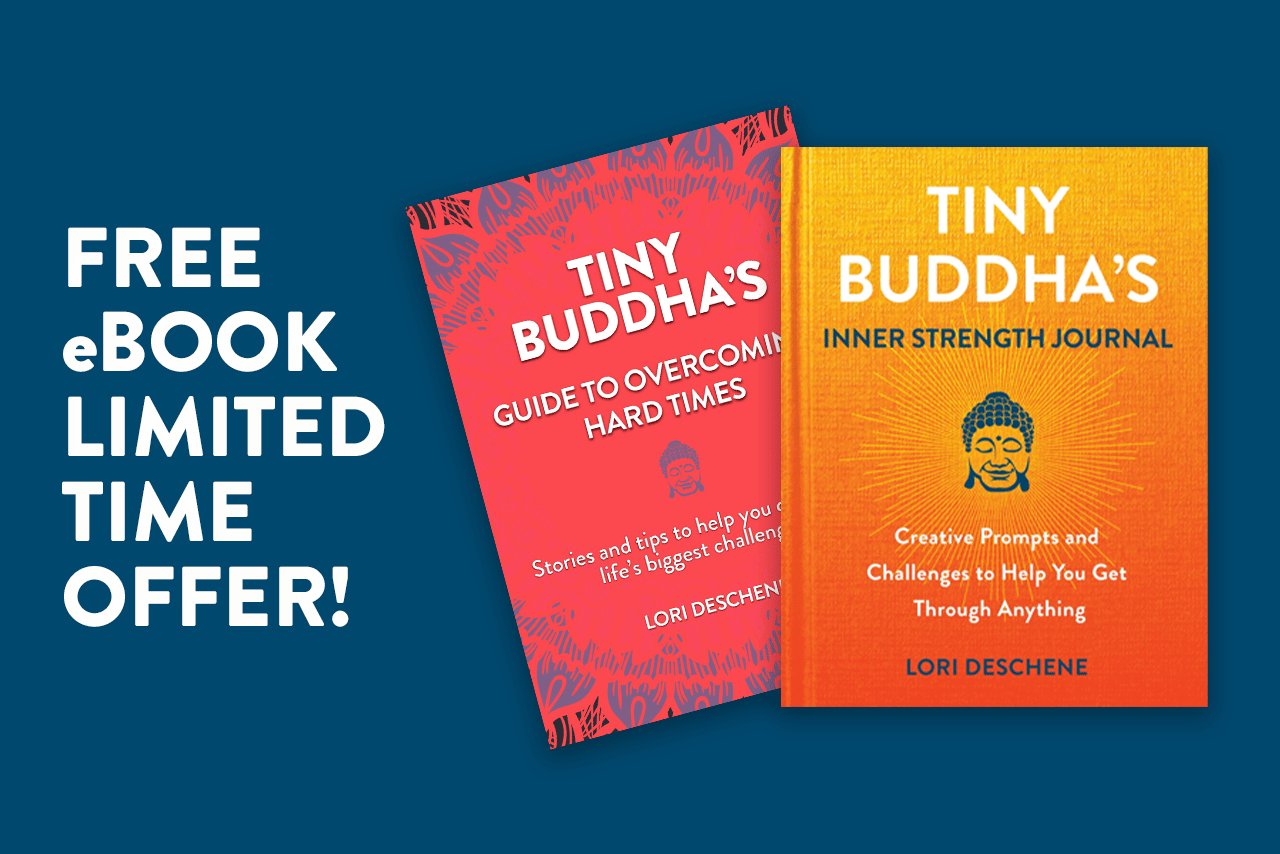
  • Interview and Book Giveaway: 10 Habits of Truly Optimistic People

    Interview and Book Giveaway: 10 Habits of Truly Optimistic People

    Smiley

    Update: The winners for this giveaway are:

    I have a confession to make—I sometimes cringe when someone tells me to “just be positive.” I’ve often assumed this really means, “Your sadness is making me uncomfortable, so please stop talking about it.”

    To be fair, I wouldn’t classify myself as a negative person—not now, anyways—though I have my moments. I do, however, feel for anyone who might be classified that way, as I know from experience that deep negativity often comes from deep pain.

    We all face our own battles in life, some more overwhelming than others. And sometimes it seems nearly impossible to nurture a positive attitude.

    But it is possible. And sometimes, it’s the only thing that keeps us going when it seems unlikely we’ll find our way through the darkness.

    Optimism is a powerful thing. When you’re optimistic, you don’t deny that you’re going through a hard time. You don’t suppress your feelings or pretend you’re happy. You simply believe that something good could come from your struggles—even if you can’t yet fathom what that might be.

    You believe that life is happening for you, not to you, and that you’re not a victim but rather someone with immense potential to overcome your odds and thrive.

    Because you believe, you’re able to keep moving forward—learning, growing, and making the best of your circumstances—when it would be easier to give up.

    I’m always inspired to read stories from people who’ve found silver linings in tragedy because it reminds me that we have immense power to shape our lives through our perceptions and responses. This is what brought me to Dave Mezzapelle’s new book 10 Habits of Truly Optimistic People.

    Dave’s on a mission to get people to “power their lives with the positive.”

    In this follow-up to his bestselling book Contagious Optimism, he’s collected more than 100 stories from amazingly resilient individuals, and compiled them into 10 chapters based on—you guessed it—the habits of optimistic people.

    I’m grateful that Dave took the time to answer some questions about himself and his book, and that he’s provided two copies for Tiny Buddha readers.

    10 Habits of Truly Optimistic PeopleThe Giveaway

    To enter to win one of two free copies of 10 Habits of Truly Optimistic People:

    • Leave a comment below.
    • For an extra entry, tweet: Enter the @tinybuddha giveaway to win a free copy of 10 Habits of Truly Optimistic People http://bit.ly/1DEk1RR

    You can enter until midnight PST on Wednesday, April 8th.  Two winners will be chosen at random on April 9th.

    The Interview

    1. Tell us a little bit about yourself and what inspired you to create this series.

    I have always been a positive, upbeat person and very optimistic. And, I always made it a point to find the bright side of a problem, which I found made it easier to surmount. In addition, I have always loved people’s stories.

    Over the course of the past twenty years, my alma mater, Fairfield University in Connecticut, had suggested that I write a book on optimism in business. This was based on the way I ran my company for seventeen years.

    I didn’t have an interest in writing something like this until 2010. I literally woke up one day and said, “I will do it. But let’s not just make it about me. Let’s make it about lots of people. And let’s not just make it about business. Instead, let’s make it about many of life’s themes including business.”

     2. What have you learned about the benefits of optimism?

    After spending years collecting silver lining stories from around the globe, one of the most powerful facts I learned is that being a positive, optimistic person not only allows people to achieve greatness, but it has numerous mental and physical benefits as well.

    From a biological standpoint, we benefit from the release of neurotransmitters such as serotonin, oxytocin, and dopamine when we are happy, positive, and optimistic.

    Mentally, we find ourselves in a good place that makes everything else seem easier (or at least less difficult for those that are going through tough times).

    People have nothing to lose from being positive versus the stress they definitely gain from being negative. Don’t run away from obstacles and adversity but be positive in your ability to address and surmount them.

    And when we are feeling good about ourselves and optimistic about our future, we tend to look better as well. Our skin tone, our posture, and our confidence all shine. And, even our physique improves when we combine optimism with a workout or exercise schedule.

    3. The book features more than 100 true stories from people who’ve learned the power of optimism. I’m sure you found all of them inspiring in different ways, but is there one that really stuck with you—and why?

    They all have affected me. In addition to the 100 stories you referenced in this book, we have thousands in our essay bank for future volumes. It has been nothing shy of awesome being able to read these stories and learn about these people.

    What sticks with me is not one particular story but the fact that everyone has a silver lining story to share. However, I will share an amazing story about Yvette Pegues.

    Yvette was an employee of IBM in their global patent office. She traveled the world and knew many languages. She also has two young boys and a terrific husband.

    One day Yvette had terrible headaches and was rushed to the hospital to find that she had a genetic brain malformation. They performed emergency surgery, which caused a brain stem stroke that left her in a wheelchair for life.

    Instead of letting this bring her down, she was a first responder to the earthquake in Haiti (the same year of her stroke—2010). She also competed in and won Miss Wheelchair Georgia and, in 2014, Miss Wheelchair USA where I was the keynote speaker.

    Today, Yvette has devoted her life to helping children worldwide improve their literacy skills.

    4. In one of your previous interviews, you talked about the steps you believe people should follow to help them embrace optimism when facing hurdles, with the acronym “GSM.” Can you tell us more about those three steps?

    GSM stands for Gratitude, Stories, and Magnet.

    Gratitude—you need to be grateful for even the smallest things in life. This can be something simple like the sunrise, a glass of water, your pet, or the smell of the ocean. Simple gratitude makes everything feel special, big or small.

    Stories—When people are going through tough times, they tend to think that they’re alone. However, when they hear or read stories of how others have persevered, it gives them hope. And, hope is that important foundation of optimism.

    Magnet—“Optimism is a happiness magnet.” ~Mary Lou Retton. I love this quote. You want to surround yourself with good, uplifting people. Their happiness and positive attitude is certainly contagious. It brings you up and adds light to your day.

    But, conversely, sometimes it’s difficult to avoid the negative people, the naysayers, and the cynics. Unfortunately, their negativity is contagious as well. They may be in your office, your classroom, or your apartment.

    In those cases, just ignore their chatter and simply tolerate them. It doesn’t mean you need to absorb their energy. Don’t take their negative opinions to heart and don’t let them influence you.

    5. Conventional wisdom about becoming more positive suggests we should avoid “negative people,” but in my experience, “negative people” often need our love and support the most. Have you learned anything that can help us find a middle ground so that we’re minimizing the negative effects of spending time with pessimists, but not just writing them off so that we may actually be able to help them?

    Yes. We never suggest ignoring or isolating pessimists. We just assert that what others do or say is a reflection of their own reality, so don’t take it personally and don’t let it bring you down.

    Some people are just naturally pessimistic and it is not our job to change them but at least being a ray of sunshine around them can bring them light without allowing their nature to pull us down.

    I believe that true success in everything comes from combining effort, reality, and positive thinking. Optimism alone will keep you in the clouds. And oftentimes reality alone will prevent you from getting passed first base.

    However, when you combine all three, things happen in a big way! And this is based on our extensive experience of interviewing people and capturing their silver lining stories.

    6. What do you believe is the biggest obstacle to optimism, and what’s one thing we can do to overcome it?

    Outside influences are the #1 obstacle. This can be a negative friend, family member, coworker or boss, or even the media. An outside influence can reduce or eliminate optimism.

    The best way to overcome it is to make it a point to minimize your exposure to the naysayers and cynics. In addition to watching or reading the news, try to follow positive stories and positive programming as well.

    Look in the mirror and remember that what others do or say is a reflection of their own self, not a reflection of you.

    Don Miguel Ruiz, in his book The Four Agreements, asserts, “Don’t take anything personally. Nothing others do is because of you. What others say and do is a projection of their own reality, their own dream. When you are immune to the opinions and actions of others, you won’t be the victim of needless suffering.”

    Conversely, appreciating those around you that appreciate who you are and what you stand for is tantamount for your own optimism and for making it contagious for others.

    7. Of the ten habits shared in the book, which do you think is the most difficult to form, and what’s one simple practice anyone can use to begin cultivating it today?

    Everyone is different so this is a difficult question. For example, some people struggle with embracing change (chapter one).

    Others have a difficult time appreciating those around them (chapter two).

    And, I have also noticed that many people do not believe in themselves and the value they possess (chapter five).

    So, in my opinion, the one simple practice is to take a deep breath and concentrate on the fact that others have had it so much worse and have made it through. And, the best way to prove that to yourself is to either read books like Contagious Optimism and Chicken Soup For the Soul and/or connect with others that have been in the same boat.

    It is very powerful to learn about the patience, persistence, and perseverance of others.

    8. What’s the main message that you hope readers take from this book?

    We all have stories. What you think may be boring or uneventful is actually inspirational and motivational to others around the globe. So, considering sharing your stories and remember, we are all naturally mentors just by the sheer impression of our footsteps.

    You can learn more about 10 Habits of Truly Optimistic People here.

    FTC Disclosure: I receive complimentary books for reviews and interviews on tinybuddha.com, but I am not compensated for writing or obligated to write anything specific. I am an Amazon affiliate, meaning I earn a percentage of all books purchased through the links I provide on this site. 

    Smiley face image via Shutterstock

  • There’s a Gift in Every Problem: Finding the Good in the Bad

    There’s a Gift in Every Problem: Finding the Good in the Bad

    Dark Day

    “Every problem has a gift for you in its hands.” ~Richard Bach

    I bought the magazine because it had pizza on the cover and the headline read: “Yes, you can eat pizza.”

    At that point, the idea that I could eat pizza was as absurd to me as the thought of finding a tiny dinosaur living in my flowerbeds.

    But oh, how I wanted a slice.

    At thirty-two years old, I’d been diagnosed with type 2 diabetes. It scared the hell out of me, and I was determined to take perfect care of myself so I could be the best mom possible for my two-year-old daughter.

    I had unleashed self-discipline previously foreign to me. My doctor and nutritionist praised me incessantly for my dedication.

    And at first, my blood sugar improved.

    But a year and a half after being diagnosed, I was still doing all the right things—eating healthy, counting carbs, exercising like a maniac—and the right things weren’t working. My blood sugar levels (which I monitored religiously) were still too high and getting higher.

    I was drowning in anxiety and I felt like a failure. I would end up blind and on dialysis with no feeling in my feet. My mind ran through catastrophic scenarios by the hour.

    That magazine for diabetics, with its siren’s call of pizza on the cover, saved my life because it also happened to feature an article about latent autoimmune diabetes in adults (LADA).

    It told the story of a woman in her thirties who was thin and diagnosed with type 2. (Type 2 typically strikes older adults who carry extra weight and have a sedentary lifestyle.)

    Gee, I thought, this sounds familiar.

    After months of trying to manage her condition, she ended up in a specialist’s office. The endocrinologist took one look at her—young, thin, with a family history of autoimmune diseases—and diagnosed her with LADA. A blood test found antibodies that confirmed the diagnosis.

    LADA is essentially type 1 diabetes, with an onset in adulthood instead of the more typical childhood onset. The immune system attacks the cells in the pancreas that produce insulin.

    Game over, there’s nothing you can do to reverse it. You’re insulin dependent for life. (Though people with LADA can make at least a little insulin for months or years, which is why diet and exercise can seem to work for awhile.)

    Alarm bells began exploding in my head. If this is what’s going on with me, I thought, it explains everything.

    After a few days, I managed to convince myself I was a hypochondriac. Who was I to think I was special enough to have an obscure form of a rare disease?

    But my increasingly high blood sugar levels still needed to be addressed and that little voice in my head kept nagging me about the possibility of a more serious condition.

    I called my doctor. I told him I wanted a referral to an endocrinologist because I was worried about having LADA. He said he would write the referral for me, but that it was extremely unlikely and I shouldn’t worry.

    I sat and talked with the endocrinologist for about three minutes before I blurted out, “I’m a little worried about LADA.”

    “I think that’s exactly what’s going on,” she said. A blood test confirmed it.

    That evening I injected insulin into my belly and woke the next day to the best blood sugar reading I’d had since I started testing.

    These days I wear an insulin pump, which allows for precise insulin dosing and gets rid of the need for taking multiple shots a day. It’s my favorite piece of technology ever.

    And, I have to tell you, my life is so much better now than it was before I was diagnosed with any kind of diabetes.

    So many gifts come to us through adversity. I challenge you right now to identify your biggest problem and then think through all the good things in your life and see if you can draw a direct line between them.

    I wager that you’ll find relationships strengthened, personal empowerment, and a clearer sense of yourself, all thanks to the scariest thing you’ve even been through.

    And if you don’t find it yet, just hang on, you still can.

    For me, being misdiagnosed with type 2 forced me to learn about diet and exercise. I started caring for my body and tapped into my self-discipline. Yes, there can be blessings hidden in a medical mistake! 

    I learned the power of my intuition, which helped me get the diagnosis and medical care I needed before I ended up with a life threatening case of high blood sugar known as diabetic ketoacidosis.

    Diabetes is also the perfect way to practice vigilance without its all too common companion, anxiety. The constant demands of managing the disease can lead one to a near constant state of panic unless you learn skills to overcome it.

    Not many people realize this, but apart from trying to avoid long term complications, people with type 1 diabetes must constantly work to avoid acute conditions that can cause death—too much insulin can cause a low blood sugar that can kill you and too little insulin causes high blood sugar, which can also kill you.

    Which leads me to the biggest gift of all: an appreciation of my own mortality.

    It’s up to me to infuse every day with meaning—to truly feel the joy of laying in a hammock reading a story with my daughter or exchanging salacious texts with my husband.

    Yes, we all know that in theory, we could get hit by a truck tomorrow. But now I really know.

    And I use that knowledge to make decisions about where to spend my energy. For example, I always wanted to be a writer but I never did one damn serious thing about it until diabetes lit a fire under me. Now my writing is my second career.

    Having type 1 diabetes isn’t easy; in fact, it can be hard as hell. If researchers have a miracle breakthrough tomorrow, I’ll camp out overnight to be first in line for the cure.

    But I cling to the revelation that there are many gifts to be found in facing our biggest challenges and we’d be fools not to accept them because we hate the wrapping paper.

    Photo by Cornelia Kopp

  • Uplifting Depression: 15 Unexpected Lessons from Adversity

    Uplifting Depression: 15 Unexpected Lessons from Adversity

    “Whenever something negative happens to you, there is a deep lesson concealed within it.” ~Eckhart Tolle

    Two years ago, reading this quote, I would smirk and think, “What a cliché.”

    In the last two years, I would read this quote and be in utter disbelief that anything can be learned when one is in the depths of hell.

    Today, I read this quote and resonate confidently, that yes, even though I tried to end my life, even though I had to quit a high paying job, even though I still suffer from major depression, good has come out of my negative experience, and I have learned the lesson to take care of myself and listen to my body, albeit the hard way.

    Around November 2009, my doctor said to me, “Noch, I think you are burned out. Your migraines are most probably due to stress. Please go see a psychologist.”

    My fiancé dragged a reluctant me into the shrink’s office, and I came out, diagnosed with major depression. I had no idea what it meant or what would become of me. I just felt extremely unmotivated, had no appetite, only had negative thoughts in my little head, and was excruciatingly tired of life.

    I was immensely frustrated with myself. I didn’t know why I was depressed, or burned out. I thought I had it all: the executive job, high on the corporate ladder at the young age of twenty-eight.

    I spoke a few languages, lived all around the world, had a man who loved me for who I was, had my few soul mates and a wide network of friends. So what happened to me?

    Indeed, I felt really ungrateful to be sick at all.

    All the people who passed me everyday in the misty smog of Beijing seemed to live much harder lives, scraping by the wayside. So, who was I to be unhappy about my life? I had no answer. And the more I thought about it, the more I got caught in my web of negative thoughts and unreasonable reasoning of life.

    I closed myself off from the rest of the world and disappeared off the social radar. I was forced to take medical leave from work, being physically unable to do any work or concentrate.

    The few close friends who knew of my plight tried to console me.

    “It’s a challenge and test, to make you stronger,” they’d say. They gave me examples of all these great leaders of the world who had to go through trials and tribulations to get to where they were. There was something in store for me, and it would end up a positive life changing experience, they reassured me. (more…)