Tag: addiction

  • He Broke My Heart But Taught Me These 5 Things About Love

    He Broke My Heart But Taught Me These 5 Things About Love

    “Sometimes the only closure you need is the understanding that you deserve better.” ~Trent Shelton 

    I’ll never forget the day we met.

    It was a classic San Francisco day. The sky was a perfect cerulean blue. The sun sparkled brightly.

    I ventured from my apartment in the Haight to Duboce Park to enjoy the Saturday. Dogs chased balls in the dog park. Friends congregated on the little hill. They giggled, listened to music, and ate picnic food. Kites flew high in the breeze. Adults tossed Frisbees in their t-shirts and bare feet.

    And I sat, bundled up in my scarf, zippered fall jacket, warm wool socks, and cable-knit sweater.

    This was summer in San Francisco. I had recently moved to the city at the end of May from the east coast with steamy eighty-degree weather, and now in July I sat on a hill and shivered. The famous saying fit perfectly, “The coldest winter I ever spent was the summer I spent in San Francisco.”

    I decided to venture to a nearby café, a French café called Café du Soleil (The Café of the Sun) and warm up with a hot beverage. I loved their outdoor seating.

    When I arrived, the café was packed. Every seat in the patio and the whole place was taken, except for one free stool at the bar next to a tall, handsome man.

    I sat down next to him with my hot chocolate and commented on how crowded the café was. He smiled and agreed, no longer interested in his salad or his glass of white wine. He was interested in me instead. His eyes sparkled.

    Fireworks!

    He was an artist, a photographer. He was a creative like me. Recently, he purchased his first house in Oakland, which included a lovely garden and was close to his work at a fine Japanese restaurant. Our conversation flowed easily, but from the moment I met him, I noticed a dark cloud over his head.

    “Are you married?” I asked.

    He jiggled his left fingers to show an empty hand.

    “No. No ring,” he said.

    “Kids?” I asked.

    “No,” he said, “but I would like some.”

    Our eyes locked. He sighed.

    “But… I’ll never have kids,” he said.

    I pressed my lips.

    “Oh, I think you’ll have kids one day,” I said in a lulling voice, looking sweetly into his eyes.

    He melted.  He really saw me. His eyes were full of adoration, love, and awe.

    We started dating immediately. It was fun and easy. He came to see me perform in Berkeley and I visited him in Oakland (in Fruitvale where he lived), where it was warmer and sunnier. He cooked me meals at his home with fresh fish and vegetables from his garden.

    Hummingbirds danced in the air when we were together. We drove to romantic rendezvous, danced, and he introduced me to the important people in his life: his best friend and his boss.

    The more time we spent together the sunnier and brighter he became, the happier we both were.

    Later, he admitted that he actually made most of his money selling drugs, followed by bartending, and that photography was only a hobby, not a profession. Also, he confessed that he had an alcohol and drug addiction. This was the reason his previous relationship ended even though they were both in love.

    I became sober before I moved to California. I overlooked the red flags because of our remarkable chemistry. Since I didn’t drink, he only drank one glass of wine with me at dinner and didn’t seem to want another. Because I didn’t do drugs, he never did drugs around me and he never talked about missing them.

    Everything was going perfectly, or so I thought. We never fought. Then Malik took his annual vacation to an event called Burning Man in Nevada while I stayed in San Francisco looking for a new apartment. Burning Man was very popular among the San Francisco locals and I was intrigued, but my sublet was up and I had to find a new place fast.

    Described as the “biggest party on earth” or “the only place where you can truly be yourself without judgment,” Burning Man was where people could party all day and night, dress up in outrageous costumes, see fantastic art and performances, and be completely uninhibited.

    When Malik returned from Burning Man, the storm cloud over his head reconvened above him and overshadowed him. He was jittery and paranoid. In fact, I didn’t recognize him; he became distorted and ugly. His eyes were glassy and darted back and forth like Gollum in The Hobbit. Hunched over, he tapped his fingers incessantly.

    “Everything happened too fast,” he blurted. “I told you, I don’t want to fall. I just wanted to have fun. I didn’t want to fall. I can’t sustain a relationship longer than two years. You want more than that. You should have kids. You’re getting older. You’d be a great mother. You need to have kids while you still can. You deserve that. You’re beautiful. There are plenty of handsome men in San Francisco. Why would you pick me? Pick one of them!”

    “Malik… we are having fun. I won’t let you fall. Let’s glide. Why are you talking about marriage and kids?”

    “You want more. I know it. I see it.”

    “We’ve never talked about the future.”

    “It’s not going to work. It’s over.”

    “Why are you breaking up with me? It makes no sense. Things were good before you left. We never fought. You were only gone a week. You mentioned having fun with a girl. Did you meet someone else?”

    His jaw hung open; his eyes bugged, and he took a large melodramatic step backward and gasped. He was shocked by my directness and accusation. But perhaps he was also stunned by my keen intuition.

    Sure enough, over the magical week, he met a beautiful redhead from Arizona, a single mother, who was interested in doing drugs with him in the desert, to escape her demons.

    They had so much fun together, isolated in a made-up city, laughing in the temptress of the sweltering heat. They experimented with Molly on the floor of his tent and “died together.”  Like Romeo and Juliet.

    I was devastated. Malik was no longer the person I thought he was. I had envisioned a life together. I had imagined traveling the world together.

    He told me he didn’t want me to text him any longer, and I didn’t. But the pain seared inside of me. and I held on for hope that he would see his faults and come back to me. How would he maintain a long-distance relationship with someone he did drugs with in the desert for a week? It made no sense. But that was how much he valued drugs over me.

    I never felt closure. I never felt that I was able to express all of my feelings. I wondered if I had been more vulnerable with him, if he knew how much I cared, if he would have had second thoughts and returned to me. He never came back. He never texted. It took me a long time to let him go. He was a big love for me.

    Looking back today (years later), I learned:

    1. Trust a soulmate connection.

    I felt it deep in my heart. I had met a soulmate. There was no denying it. Even though it didn’t work out, he opened my heart to love.

    2. See the red flags.

    I didn’t understand it at the time, but now I know that you can’t help anyone get over drug addiction. They have to want it for themselves.

    3. Don’t cling to love.

    Don’t cling in a relationship and don’t cling once it’s over for it to return. This was a hard lesson for me because when I love, I love hard.

    I have learned if you love someone and they cannot commit, do not hold on. If you love someone and they don’t want to be in a relationship with you, don’t think that in time, they will come to their senses and see how great you were and regret it and come back apologetically. People sometimes move on fast. Set them free. Holding on only hurts you. Allow yourself some peace too.

    4. Value honesty.

    A relationship without honesty is not a deep relationship. One shouldn’t have to drag it out of someone that they are dating someone else or that they have a drug addiction.

    5. Be with someone who has the same vision of the future.

    If you don’t have the same vision of the future, it’s not going to work. It shouldn’t be assumed that you know their wishes or that you have the same vision. It must be communicated.

    Meeting Malik opened my heart. Even though our time together was brief, it changed me forever. After overcoming the grief of losing a soulmate, it taught me not to settle, that I deserve better, and to trust that I will experience an even greater love next time.
  • What Happened When I Stopped Drinking Alcohol Every Night

    What Happened When I Stopped Drinking Alcohol Every Night

    “First you take a drink, then the drink takes a drink, then the drink takes you.” ~F. Scott Fitzgerald

    I love Sophia Loren. There’s a picture of her in my home looking eternally youthful and refreshed. From what I’ve been told, it’s due to her nine to ten hours of sleep each night.

    When I look at this picture, I see someone who revels in the delights of life. Food, laughter, sex, work, motherhood, and self-care. Not long ago I stared at that picture thinking, “How could I admire someone so much and live my life in such a different way from hers?”

    Have you heard of the halo effect? It’s when you do the things you know are right for your body, mind, and spirit, and in doing so you begin to exude this powerfully beautiful and enticing energy others can’t get enough of. I now realize my relationship with the daily habit of alcohol was actually diminishing the glow of my halo. It was essentially stealing my joy, time, money, looks, well-being, and especially my slumber.

    Who knew that for so long my beauty sleep was being hijacked by alcohol!

    Puffy face, dark circles, dry mouth, red eyes, weight gain, and not to mention the headache, elevated heartbeat, anxiety… these are just a few of the lovely side effects I experienced with overindulging in the bottle.

    In trying to reduce overwhelm, I inadvertently was fueling it through interrupted sleep and the fuzzy feeling the following day. 

    Do I think alcohol is bad or that drinking is off-limits? No.

    I do know for myself that the daily two, sometimes three, glasses of wine took a toll. It stole any type of focus and motivation the next day to follow through on all the things I said I would accomplish the night before, basking in the embrace of my main squeeze, Mr. P (Pinot Noir, that is.)

    My relationship with alcohol was stealing my ability to step into the life I claimed to desire.

    I wanted to release weight.

    I wanted to make more money.

    I wanted to write my book.

    Until I released the hold Mr. P had on me, I knew deep down I would never come close to achieving any of those dreams.

    Every morning I wake up and ask myself three things:

    1. How do I want to feel today?
    2. What is one thing I can do to love myself today?
    3. What can I give to others today?

    My answer to #2 was often…

    “Drink more water.”

    “Start weight training.”

    “Let go of gluten.”

    The truth was the one true voice within was quietly and patiently saying day after day, “Take a break from alcohol.”

    I just wasn’t ready to listen.

    A phone call eventually prompted an experiment in courage.

    For ninety days I promised a friend I would join her on an alcohol reset. After I hung up that fateful Sunday, I went to the calendar to mark the ninetieth day. Immediately fear crept in with thoughts like “You’ve tried this before, and it didn’t work” and “You won’t even make it through tonight.”

    Fortunately, in that moment, something other than myself took over. It was as if I was whisked into something beyond my own comprehension, because the next 120 days flew by. In fact, after day twenty-one I stopped counting. I no longer was ticking off the calendar to when I could finally have a drink. Why? Probably because I knew in my heart the steady drip of wine each night was simply not serving me, my purpose, my body, or my pocketbook.

    Why was this time different? Because I looked at it as something I “got” to do rather than “had” to do. I viewed it as a gift rather than a cleanse.

    What is on the other side of a toxic relationship with alcohol? More than I could imagine. Every morning I wake up and think, “I am so lucky.” It’s as though I’ve captured more time in my day, and each moment holds a sense of sacredness.

    I’ve seen sunrises by candlelight, baked banana bread before bed, and gotten more done by 8am than I ever did after 5pm.

    I’ve finished a Netflix show without falling asleep… and actually remembered what I watched.

    I’ve released twenty pounds.

    I wake up hydrated.

    My skin seems to have reversed in time a la Benjamin Button.

    The list goes on and on.

    The other day my mother gave me a compliment that made me cry… in a good way.

    She said, “You know, it’s like your skin, your hair… you look like you used to look when you were younger.”

    For so long I was using wine to push down the unwanted feelings of anxiety and overwhelm. While I thought I was “taking the edge off,” I was actually making myself edgy!

    These days, I plan my fun based on how I want to feel the next morning. What I’ve discovered is that taking a break from happy hour can literally transform not only the other twenty-four hours of your day but your life as well.

    When you have enough energy and vitality to embrace the day, you start to find little miracles everywhere in the form of simple pleasures, a pleasant conversation with a friend, or a moment that might have sent you into a tailspin… but now you breathe through it with patience and grace.

    People often ask me, “Do you ever have a glass of wine… ever?”

    Probably every two weeks or so if I am being social (and socially distancing) with family or friends. Do I enjoy it? Yes and no. In fact, the few times I have had a glass or two, it no longer held any energy for me. It’s now a “take it or leave it” kind of thing.

    In fact, it’s as if moderation moves you toward abstinence.

    Why? Because I am no longer willing to sacrifice how good I feel the next morning for alcohol.

    I also revel in the reduction of anxiety! Why would I want to go back to something that was creating the exact experience that was causing me to emotionally suffer?

    Yes, there are people who can drink daily and function fine, and there are those who can’t drink at all. And then there are people like me who know alcohol isn’t the kind of friend they want to hang out with every day but perhaps in very small doses every so often.

    Drinking is marketed as sexy, elegant, and unifying.

    Is slurring your words sexy? Is stumbling out of a restaurant elegant? Is not remembering the conversation you had with a friend unifying?

    The reality for me was alcohol made me feel drained, grumpy, and even a wee bit nauseous. How you feel is creating your day and, in essence, your life. So, if you feel cluttered and haphazard waking up, you are creating a cluttered and haphazard day. 

    I used to wake up and run to the kitchen. Waiting for me was the one thing that would decide if I needed to beat myself up or pat myself on the back. Like the scale, the opened bottle of wine oftentimes determined if I was “good” or “bad” the previous day.

    Only one-fourth of the bottle left? Bad girl!

    Three-quarters left? Good girl!

    So much time, energy, and thinking put into the act of drinking!

    In the end, bedtime is the best of all.

    Four hours of alcohol-free sleep is WAY more rejuvenating than nine hours of alcohol-infused sleep. Waking up feeling your body buzzing (in a good way!) is the best high of all.

    If your inner voice is asking for a break, maybe it’s time to listen.

    Sweet dreams.

  • Tips from a Former Addict: How I Made a Change for Good

    Tips from a Former Addict: How I Made a Change for Good

    I was a drug addict. Yes, I did it all. No, my childhood was not full of abuse, I was actually a pretty lucky kid, and I had it no worse and no better than anyone else, except for maybe some “daddy issues.”

    I am not much for blame. I know who was smoking, sniffing, and popping, and it wasn’t the bad angel on my shoulder who made me do it, it was just me.

    I can give you the exact reason why I started doing drugs. I was afraid to just be myself, simple enough. Everyone else’s thoughts of who I needed to be or what made me cool was more important than embracing my authentic self.

    Drugs were a huge part of my life, and they influenced the places, people, and pain I endured, but again, this was still all a choice.

    I had wonderful opportunities at my fingertips but let them go for a long-term abusive relationship.

    I lost jobs, burned bridges, and hurt my family.

    I stole, lied, and fought.

    Had random sex, lost respect, and wanted to die.

    On a good note, I still maintained a relationship with my higher power. Even though I checked out on him, he was always there to check in on me, and I always had my mother’s, sister’s, and best friend’s support. This is major because we are not meant to do this alone.

    Change Is a Brewin’

    Before any change happens, most people need something extreme to take place, like a near-death experience or hitting rock bottom.

    Unfortunately, I had to hit rock bottom—a couple of times.

    The first time, I had started doing heroin for a good three weeks, and as my whole world was spiraling out of control—like breaking my boyfriend’s hand for what looked like a piece of black tar heroin… only to find out it was just a piece of stepped-on gum on the floor—a glimpse of light still managed to show through, and I made a decision right there.

    I quit… for good. Yes, it happened that fast. Turns out I’m not about that life.

    The second time, I was homeless with my sister. My mom was tired; who could blame her? She had two daughters she loved with all her heart who continued to make the worst choices, despite what she taught us. So, she kicked us out.

    Subconsciously, I was desperately seeking a better path. My actions would say otherwise, but deep down we all know what we really need. I was finally ready to make the choice to make a change.

    Change for Good

    “No matter how hard the past, you can always begin again.” ~Buddha

    If you want change, if you truly want it, it will be so. Don’t say I’m “trying.” That implies you are still holding resistance, and as Buddha also says:

    “Change is not painful, only resistance to change is painful.”

    A drug addict, or anyone who has ever been addicted to anything in their lives, knows they will stop when they want to. This is at no one else’s will but their own. That doesn’t mean it will be easy or they won’t need help. Just that it starts with a choice—their own.

    If you have ever seen the show Intervention, you know it is very rare that someone who was brought to rehab by the petition of their family ever stays away from drugs for good.

    This is a dire truth, but I can tell you from experience that when you don’t make this commitment for yourself, the decision loses its empowering effect, and you won’t know the feeling of having sovereignty over your own life.

    Whether you are a drug addict or just know you need something to change, accept that you need change and start searching (like you’re doing now, and luckily it brought you to me).

    I am not perfect now… or am I, since I am finally being me? There are days I still get stuck in a mood, but the difference now is I have learned to acknowledge it.

    Acknowledge It… Whatever You’re Feeling

    After I stopped doing drugs completely, and I mean completely, I realized my anxiety was at an all-time high every day. What I needed to do first was acknowledge it, but I kept trying to hide it. Like I was trying to convince myself that I didn’t feel the way I was feeling. I guess because I hadn’t realized yet that I really didn’t know who I was without drugs.

    Say it out loud, even if it’s weird, “I feel so anxious right now” or “I am feeling sad”—it dissipates faster, and maybe if you say it to someone you trust, they can help dig up what the issue is. My boyfriend and I do this with each other and found that sometimes a hug does the trick.

    Once you start admitting that you’re not feeling okay—right when your body is signaling you—you can search deeper into why and find out by paying attention to patterns.

    First, I started acknowledging that I was feeling crappy. I began to also pay attention to the thought patterns that led up to the feeling, or what happened just before the feeling commenced.

    This gives you glimpse into the type of thoughts you are ruminating on. Is there something you have not let go? Is there an irrational thought that keeps coming up? Is your self-talk demeaning?

    When you suppress it, it comes out in lots of different ways, trust me.

    I am the queen of looking crazy because I blew up randomly at a co-worker, overreacted completely to a joke (and made it awkwaaaard), yelled at my boyfriend when he wasn’t giving me the right responses to a story I was telling, and my favorite phrase as the broken girl was, “No one gets me…” Acting like a victim is not the same as admitting what you are really feeling, though it may be easier.

    Find the Good, and Self-Love Will Follow

    During your search, you will find an abundance of “ways to make yourself happy” and outlandish claims of instant happy pills or whatever.

    The important thing right now is to adopt good habits—go toward good and good things will follow. The key is learning to love yourself. The hard part is finding ways to apply this.

    There are two main ways I’ve learned to be good to myself: yoga and meditation.

    This dynamic duo is popular for a reason, guys.

    I recommend Yoga with Adriene, all day. She is amazing. She always says, “Find what feels good.” To a drug addict like me, I/m like, that’s what got me in this mess, Adriene, but if you insist.

    All joking aside, if you have ever done something like drugs, impulse buying, or even eating a donut, it makes you feel good for a short period of time, right?

    And then you seem to need more, feel guilty, or crash (maybe all three). Finding what feels good, in Adriene’s terms, is listening to your body, not your impulses.

    For example, you know when you stretch after you’ve been sitting down for a while, you just seem to know exactly how and which way to move because you know what feels good? Start there. If you practice both yoga and meditation, take all your expectations and trash them. Just listen to whomever is teaching you and follow their guidance.

    Turn Those Good Habits into a Ritual

    After I found yoga and meditation, I started to enjoy taking care of myself. This was more than an addiction; it soon became second nature.

    I recommend you start with:

    • Yoga in the morning. Yoga with Adriene has a ton of beginner videos I started with
    • Mediate whenever you can. I recommend Dr. Tara Brach, who teaches mediation and emotional healing so you can learn easily to do it on your own
    • Make time to do something you really love. Mine was drawing and painting.

    You would think eating healthy would be on the list, right?

    Stopping drugs cold turkey made me lose my appetite, so I was proud if I ate anything at all. But, before I knew it, the chemicals in my brain changed and I started to crave healthy food, and in abundance.

    I didn’t just jump into some random diet because I was “doing everything good for me” now. I knew I needed to take things step by step when making such a big life change and let healthy habits naturally build on top of each other. When we try to do too much at once, and try to form new habits without intrinsic motivation, we often fail.

    Inc.com explains about 60% of us make New Year’s resolutions but only about 8% of us actually achieve them. We are humans, not technology; we can’t click on a software update and “you are now equipped to achieve your goals”—in my best Google Home voice.

    Give yourself some time and be kind to yourself. Once you start making healthy choices, you will naturally want to make more. Honestly, I was proud of myself for already achieving what I had, and my soul couldn’t get enough. I was treating myself with respect, then came love, and then came a deep connection to everything and everyone around me.

    Though you might start feeling happier with yourself and your life, this doesn’t mean you’ll be happy all the time.

    If you need to cry, let the tears flow. There were some days I would ball my eyes out non-stop but feel so cleansed afterward. Actually, there are even some days now when I feel I need to cry and I just do it. And you know what? My anxiety disappears when I didn’t even realize it was building up in the first place.

    Learn Your Triggers and Avoid Them for Now

    During my transformation I had to start identifying my triggers and avoiding situations I knew would start the cycle all over. I realized this meant the difference between change for now and change for good.

    Whatever you are struggling with, identify what triggers you the most into doing it. This will involve you really being honest with yourself, and not judging yourself for what you find out. Right now is not the time to be your own worst critic.

    I hope you know that just reading through this shows how strong you are and how capable you are of living life as yourself and truly at peace.

    I am the first to call myself out, beat myself up, and feel guilty as hell. Don’t do this to yourself.

    This is a vulnerable time, and you need all the love you can get—giving yourself love is the only way to conquer what is causing you pain.

    So instead of going out when everyone else was, I stayed home because I knew that social scenes would make me want to grab a drink; I would start smoking a cigarette (which I also quit), and then who knows what I would want to get my hands on once I was on a roll.

    I waited months before I trusted myself to get out and hang. The power you attain when you realize you can say no—without FOMO—is greater than any feeling you are chasing by giving in.

    If I can do it, so can you.

    You have a whole support system available to you, and yeah, maybe it’s full of strangers in a meeting. But once you get in touch with yourself, you will realize we’re not really strangers at all; we all come from the same energy, and we all mean way more to each other than you’ve ever thought.

    If you ever need support from somewhere, you can always get it from me. The real me. Without drugs. Finally unafraid to be myself, because I finally love myself.

    **This post represents one person’s personal experience and may or may not reflect your unique situation. Especially f you’ve experienced trauma or abuse, you may need professional help to address the root cause of your addiction. There is no shame in getting help, or in struggling as you work toward recovery. Be good to yourself, be patient with yourself, and keep reaching out if you’ve yet to find the right people to help you!

  • How to End the Cycle of Addiction in Your Family

    How to End the Cycle of Addiction in Your Family

    “You could have grown cold, but you grew courageous instead. You could have given up, but you kept on going. You could have seen obstacles, but you called them adventures. You could have called them weeds, but instead you called them wildflower. You could have died a caterpillar, but you fought on to be a butterfly. You could have denied yourself goodness, but instead you chose to show yourself some self-love. You could have defined yourself by the dark days, but instead through them you realized your light.” ~S.C. Lourie

    I recently read a message written by Kirk Franklin: “Two twin boys were raised by an alcoholic father. One grew up to be an alcoholic and when asked what happened, he said, ‘I watched my father.’ The other grew up and never drank in his life. When he was asked what happened, he said, ‘I watched my father.’ Two boys, same dad, two different perspectives. Your perspective in life will determine your destiny.”

    In a study, it was reported that a child of an alcoholic is eight times more likely to develop an addiction than a child who doesn’t grow up with an alcoholic parent.

    I have spoken with various people who have said something along the lines of “My grandpa struggled with an addiction, my dad struggled with an addiction, so it was inevitable that I would too.”

    Let me stop you right there and tell you that you absolutely have the power to stop the cycle.

    I grew up with a dad who battled substance abuse, and I learned at an early age that I had a choice when it came to how I was going to live my own life.

    Would I step into the same habits and live with a victim mentality believing that I had no other options? Or, would I step forward knowing I have the power to create my life for myself?

    I don’t know who needs to hear this today, but it needs to be known that the struggle you have seen in your family does not need to be your own.

    For many families across the country, the struggle of addiction is a difficult cycle to break, but it’s not impossible.

    Don’t allow the world to make you believe that just because your parent, grandparent, uncle/aunt struggled that means you have to live out your days struggling too. It doesn’t need to define who you are and what you do. You have the power to break the cycle and start a new beginning for your family. Here’s how.

    Focus on the things you can control.

    Each day we have a choice. We can take steps to move forward with purpose or stay rooted in past hurt. We may not have control over everything that happens in our life, but we do have control over how we respond.

    You may not be able to control the person you love who struggles with the addiction, but you are in charge of yourself—and how you allow it to impact you.

    No matter how much you want to, you cannot change the people around you. You can only control your own thoughts, actions, and reactions.

    Recognize that you can choose to respond to the pain of living with an addict by continuing the cycle of addiction—or you can be the one who ends it. You can learn from their mistakes, find healthier ways to cope with your feelings, and live a life of your own choosing.

    Let other people in.

    Seeing a loved one struggle with an addiction can leave a lasting impression and impact your life in many ways you may not realize. You may even attempt to sweep your feelings under the rug. Instead of trying to erase painful memories, seek professional guidance from an individual or group who can relay to you that you’re not alone and you have support.

    For many years, I felt as though I was the only person I knew who had a parent struggling with an addiction. When I finally garnered up the courage, I decided to attend a community event for families impacted by addiction.

    It was incredibly eye-opening to better understand my dad’s battle with substance abuse. It also allowed me to connect and learn from other people my age on a deeper level, while releasing the belief that I was alone in what I had experienced.

    Turn your pain into purpose.

    Your family’s history of addiction can cause embarrassment, pain, and confusion. Witnessing someone you love fall victim to substance abuse can fuel an array of emotions—from anger to disbelief and disappointment. If you don’t address your feelings head on, you’re likely to look for ways to suppress them.

    So, instead of numbing your pain, turn it into purpose.

    It takes a lot of strength to stop the cycle of addiction and start fresh. Sharing your experience with others can help inspire those standing in your shoes. Your story has a message of courage and hope that can make a difference in many lives.

    It took me nearly thirty years to get to a place where I knew it was time to share my story about my dad’s struggle with substance abuse. I held it inside because of shame, guilt, and a fear that others would judge me because of the stigma of addiction.

    When I found myself in a space of being able to share my story, many people began openly sharing their experience with it too. We never know what someone else is struggling with. and we never know how our story might help or inspire them. Those words “me too” offer others peace of mind, reminding them they aren’t alone.

    Let go to set yourself free.

    One of the greatest traits a person can have is the ability to forgive themselves and others. Unfortunately, what happens all too often is a person will go through life carrying extra baggage that has been weighing on them for years, and at times, even decades.

    I have spoken with many people who battle addiction, and they often talk about how much hurt they feel someone inflicted on them and how they turned to their addiction to numb the pain.

    Resentment and unwillingness to forgive will keep you locked in the past and prevent you from moving forward with your life. Remember: When you forgive, you aren’t doing it for the other person; you’re doing it to set yourself free.

    I know what you are thinking: “But you don’t know what they’ve done to me.”

    Forgiveness does not mean that you are excusing their behavior; it means you quit replaying it in your mind and giving it time and emotional energy.

    You can carry unforgiveness, but it will cost you joy.

    You can carry bitterness, but it will cost you peace.

    You may think they don’t deserve to be forgiven, maybe not, but you deserve relief.

    As Carl Jung said, “I am not what happened to me. I am what I choose to become.”

  • How to Love an Addict (Who Doesn’t Love Themselves)

    How to Love an Addict (Who Doesn’t Love Themselves)

    I grew up in a family of high-functioning addicts. We looked like the perfect family, but as we all know, looks can be deceiving. No one was addicted to drugs, so that obviously meant that we had no problems. Cigarettes, alcohol, food, and work don’t count, right?

    I have come to realize that what we are addicted to is nowhere near as important as the admission that we’re addicted to something. When we try to make ourselves feel better by telling ourselves that gambling or porn or beer is nowhere near as bad as crack or heroin, we are merely lying to ourselves. In the recovery movement, we call this denial.

    Denial was the foundation my life was built on. We did not speak of my grandfather’s abusive behavior and alcoholism. We did not question my grandmother’s chain-smoking habit. We did not mention my other grandfather’s drunken falls and injuries. We never tried to help my aunt who was eating anything she could get her hands on. No one questioned the countless hours my father spent working.

    There were so many things we just never talked about. There were so many things that were secrets. Things I had to hide. The unspoken family rule.

    I loved my family members. I still do. They were good people. They tried really hard. They just didn’t know how to look after themselves, to value themselves, to love themselves.

    They did the best they could under the circumstances and with the lack of awareness, information, and support at the time, and I don’t think it’s ever fair to judge that from the outside.

    I have gone through my stages of anger, judgment, and resentment and come out the other side. All that is left is sadness and love.

    I loved my family members. I loved them so much and all I ever wanted, even as a little girl, was for them to be happy.

    I wanted my granddad to not drink come 4pm so he would stay the lovely man that he was. I didn’t want to see him shout and cry and fall over. I didn’t want to be scared like that and watch my grandmother cry while helping him up and cleaning away the blood. He was a good man, but he had seen the worst of World War II and I don’t think he ever recovered from that.

    Maybe he would have been an alcoholic without those experiences; I will never know, and it really doesn’t matter because he was not just that.

    He was kind and generous. He played with me and made me laugh. He cuddled me in bed and told me story after story. We had so much fun together. Remembering those happy times will warm my heart for the rest of my life. I will be forever grateful for those happy memories and the time I had with him. I guess that he is the first addict I ever loved.

    My grandmother was the kindest person I have ever met. In my eyes, she couldn’t have been any more perfect. I wish that she had lived longer so that I could have had the opportunity to get to know her as an adult.

    What would I have seen? Would I have seen a woman who didn’t set any boundaries? Would I have seen someone who gave and gave without ever really getting anything back? I don’t know. I cannot say. But she was definitely the love of my life. And maybe that’s because she might have been codependent and treated me like a little princess, or maybe it is that she was just one of the kindest people the world has ever seen. It might even be both.

    It doesn’t matter who it was and what they were addicted to, I loved them. I truly loved them. I loved them then and I love them now even though they are no longer alive and haven’t been for decades.

    Addiction may change how they behaved at times, but it didn’t change the essence of them. And that’s what I have always loved. It doesn’t mean that I was blind to everything that was wrong. It doesn’t mean that I didn’t sense that something was terribly wrong.

    Today, I love the addicts in my life from a greater distance. The pain of loving someone who doesn’t love themselves is too much to bear. We speak and we care, but there is an emotional depth we can never reach. A depth I craved then and I depth I will crave if I let myself forget who I am loving.

    Because that’s what I found to be my solution for maintaining relationships with people I love but who struggle to love themselves:

    I can love them, but I can only do so by accepting that there is an emotional distance I will never be able to bridge. I have to accept that the closeness I seek, I can never get. I may get a hint of it every now and then, but I can no longer allow myself to be lured into wishing and hoping that things will change how I want them to change.

    I can love them and I can hold space for them, but I cannot change them. What I can do is remove my expectations and hopes and dreams for them and their relationship with me by accepting the reality of our situation.

    This gives me freedom. It gives me freedom to love them while being true to myself and honest about my feelings.

    It allows me to enjoy the contact and connection that exists while having healthy boundaries in place that protect me from sacrificing my own well-being and peace of mind in a misguided attempt to save them from themselves. It is that separation that finally allows us to connect.

    It gives us space to respect our struggles and each other as individuals. As long as I failed to see that, I tried to change them, and that’s what stopped us from connecting.

    And so. learning that I cannot change another person and that only they have the power to do so, opened me up to actually being able to love them.

    I also learned that I cannot love another person into loving themselves. I used to believe that meant that my love wasn’t good enough—that I wasn’t enough—but I now know that the love they needed and the love they sought was the one that only comes from within.

    Because if my love could have saved them, it would have. I loved them that much.

    But love that comes from the outside needs to be able to connect with the love that’s on the inside, and that love, they just hadn’t connected with.

    That love they never found during their lifetime.

    And so, they couldn’t teach it to anyone else either. No one knew about it, and everyone just coped with their pain in the only way they knew how to.

    I wanted them to look after themselves and be happy so very much. I wanted them to be healthy for me. I wanted them to stay alive for me. I didn’t understand that I couldn’t save them. I didn’t really comprehend that part for most of my life, which paradoxically has cost me a lot of my life.

    I know the yearning and the craving. The wishful thinking. The rollercoaster of hope and crestfallen disappointment. The believing in them and cheering them on only to watch them fall again.

    But I was always on the outside. It was never in my control. It never really had anything to do with me or meant anything about me.

    I just happened to be born into my family and love them.

    For most of my life I wondered if I did really love them or if I just loved what they did for me, but I can now say with absolute certainty that I loved them.

    The things I loved doing with them, I haven’t done in decades and yet the love is still as strong as ever. As is the gratitude.

    I am grateful for the kindness they’ve shown me and the lessons they’ve taught me. I am grateful for their perseverance and their endurance. I am grateful for the thousand things they were, because they were more than addicts.

    They had dreams and aspirations when youth was on their side. They had things they liked and favorite clothes they wore. They had friends and social lives. They danced and they had fun. They kissed and made up. They tried really hard to be the best people they could be, and how could anyone ever say that that wasn’t good enough?

    They never did anything to intentionally purposefully hurt or harm anyone because they were good people. Good people who never hurt or harmed anyone but themselves. And witnessing that was painful. Knowing that that is what happened and continues to happen is still painful.

    It is a reality I wish wasn’t true. If there was something I could do to change that, I would. But I know I can’t. And that is the reason why I can love the addicts in my life.

    When I thought that I could change them or save them, I couldn’t love them. Love accepts people as they are. It does not seek to change someone so they fit in with your idea of them. Love is inherently respectful. Trying to change someone isn’t.

    I could never really control them or their substances, and I have lived with the panic of not being able to. But I have made friends with it. I now know how to soothe myself and in that way, I take care of myself. I have achieved what they never could.

    I cannot control what my addicts do to themselves. I cannot control the choices they make. But I can control my choices.

    And I choose health, growth, and love. I will not continue the family heirloom of addiction and self-abandonment.

    Instead, I have learned to love in healthy ways. And that includes me. I have learned to take care of myself and dare I say it, like myself. But I couldn’t have done it if it wasn’t for my family.

    While they provided me with my challenges and relational struggles, they also provided me with kindness, love, and strength. For some reason, they managed to love me enough to let know that there is another way of  being because that is what has kept me going.

    I always knew there was something wrong. I just didn’t know what it was. And I also always knew that there was a better life out there, and I was right. I just wish that my addicts could have also had that experience. I wish we could have had it together, and I don’t think that I will ever stop wishing that.

    But I accept the reality that is and I will continue to do for myself what they could not do for themselves so my children will not share the struggles of the past. I focus on what I can control, and I take full responsibility for my own life. I look after myself how I wish they had looked after themselves. I do it for me. I do it for my children. And I do it to honor them.

    Because I know that they would want for me what I wanted for them. The difference is that I am able to give it to them. And I do so with all my love.

  • My Life with an Alcoholic Parent (and 6 Addiction Myths)

    My Life with an Alcoholic Parent (and 6 Addiction Myths)

    “Be the person who breaks the cycle. If you were judged, choose understanding. If you were rejected, choose acceptance. If you were shamed, choose compassion. Be the person you needed when you were hurting, not the person who hurt you. Vow to be better than what broke you—to heal instead of becoming bitter so you can act from your heart, not your pain.” ~Lori Deschene

    Take a moment to look around where you are right now. Look at the people surrounding you, whether you’re in your office, a waiting room, or the line at the post office.

    Statistically, one out of every eight American adults in your space is suffering with a substance abuse disorder.

    This person could be your next-door neighbor, your family doctor, your teacher, or a co-worker.

    Out of more than 15 million people struggling, less than 8% reportedly have received treatment, according to the National Institute of Alcohol Abuse and Alcoholism.

    Television shows and movies often lead us to believe that the people who suffer from addiction are the homeless, jobless people on the street who beg for money to feed their habit.

    In some circumstances, this unfortunately is true, but I’ve learned that addiction can also be found in the people around you in your day-to-day life. Addiction doesn’t care which zip code you live in or what skin color you have. It doesn’t matter how much money you have in your bank account or what kind of position you hold within a company.

    I was around five or six years old when I first recognized that my dad had a problem. I didn’t know what the word “addiction” meant; however, I knew his actions made me feel that our family was different than others.

    It would be summertime and I would see neighbors sitting outside laughing together and barbecuing, and being that it was starting to get late in the day, my dad had already drank a few too many and would be inside for the night.

    The National Institute on Drug Abuse estimates that a quarter of children in the U.S. grow up in households where there is substance abuse.

    Growing up with a parent who has an addiction isn’t easy. You see them transform into a different person before your eyes. Within hours. You wonder why they choose to spend time with the addiction instead of with you.

    You can cry, scream, and slam your bedroom door to try to make a point of how much it hurts you, but it never seems to be enough. And it doesn’t mean this person doesn’t love or care about you, although it can make you feel that way.

    At a young age, I remember experiencing the ups and downs of a parent with an addiction. Each day would be different than the last. Some days he would joke and laugh, and others, we would do anything to avoid him because we knew he’d take out on us the weight of whatever he had been carrying that day.

    My dad was considered a “functioning alcoholic.” I don’t recall him ever missing one day of work, even when he had the flu or after spraining his ankle.

    By trade, he was a carpenter and scaffolder, and to this day, he is the hardest working man I’ve ever known. He’d wake up before the sun to get to work so he could provide for us. He went above and beyond to care, love, and protect us, but after a certain time of day, we knew that would all come to an end.

    The classic picture of an alcoholic is someone who drinks too much and whose life is falling apart because of it. But that’s not always reality.

    A functioning alcoholic might not act the way you would expect them to act. They might be responsible and productive. They could even be a high achiever and in a position of power. In fact, their success might lead people to overlook their drinking.

    Alcohol and drugs steal away the person you love. They rob you of time you should be spending with them. They turn them into someone else—a person who says and does hurtful things. And in turn, you might say hurtful things back. Not because you want to, but because you simply don’t know what else to do. You begin thinking of what you can do to turn this person around. What will make them stop?

    I grew up with a parent who had an addiction to numbing his feelings.

    There were times when he would open up briefly about the hardships he had experienced growing up and how hurt and angry they made him feel. Rather than forgiving those who’d caused him pain, to free himself of what he kept bottled up inside, he would drink to relieve it.

    It hurts to see someone you love hurting. It hurts to not know what to do to help them.

    My dad never admitted to having a problem. Not once. Not even when we poured the cans of beer we’d found down the sink and he became excessively angry.

    Admitting to having a problem is the first step, and the next would be to make a change. And it wasn’t something he believed he could do.

    Sometimes it feels easier to stay the same than do what’s needed to rid yourself of the addiction. You feel ‘safe’ where you are, and you can easily justify maintaining the status quo. My dad had a job, a family, a nice home. In his mind, why would he need to change? That wasn’t what rock bottom looks like. So everything must have been fine how it was.

    I recently heard a story by Kirk Franklin:

    “Two twin boys were raised by an alcoholic father. One grew up to be an alcoholic and when asked what happened he said, ‘I watched my father.’ The other grew up and never drank in his life. When he asked what happened he said, ‘I watched my father.’ Two boys, same dad, two different perspectives. Your perspective in life will determine your destination.”

    I was a young girl when I realized that I had two choices when it came to my dad’s addiction: to forgive or to hold onto the hurt, as I saw him do. I saw what it looked like to hold on to anger and resentment, so I decided that no matter what my dad might say or do, I would show forgiveness. 

    This wasn’t easy because at the end of the day, you just want that person to stop, but I chose to focus on the dad I had when he wasn’t under the influence of alcohol. The dad who would shoot hoops with me in the backyard, who would fill the oil up in my car without asking if I needed it, who would keep letters I wrote to him in the pocket of his jeans years after I had given them to him.

    I’ve learned that it is our decision to create the life we want to live and the mindset we want to have. I could have held on to the hurtful things my dad said or how he refused to get help. But I believe we have the power to overcome any circumstance by focusing on what lifts us up rather than what pulls us down.

    “I am not what happened to me. I am what I choose to become.” ~Carl Jung

    Today I am choosing to share my story with you as a way to honor my dad, who kept himself in a cage for his entire life. Was it out of fear of judgment or discomfort? I’m not sure. But I do know for the last twenty-nine years, I’ve been conditioned to do the same.

    The stigma related to addiction causes us to feel shame. And I have felt shame for having a parent who had this disease. We keep our stories inside because we are afraid of how people will view us or our loved one. But in reality, it’s sharing that sets us free—free to make a difference in the life of someone else who is struggling.

    Today is the day I open the door to my own cage, after nearly thirty years, to set myself free and break the cycle. I hope that my story will connect with someone who needs it—a person who, like me, has buried their past deep inside and pushes forward, not realizing the power and strength found in release.

    I also hope to shed some light on what it’s like to struggle with addiction, based on my observations of my father, because I believe we’re better able to help the people we love when we let go of these common myths:

    Addicts can stop if they want to.

    Research shows that long-term substance use alters brain chemistry. These changes can cause intense cravings, impulse control issues, and the compulsion to continue to use. Due to these chemical changes, it is very difficult for a true addict to quit solely by willpower and determination.

    Addiction only affects those who are weak, uneducated, or have low morals.

    Addiction does not discriminate. It affects people of all ages, ethnicities, cultures, religions, communities, and socioeconomic statuses. Addiction is not a result of low morals, though often addicts behave in ways that violate their personal beliefs and values. Addiction is an equal opportunity disease.

    Addiction is a disease, so there is nothing you can do about it.

    If your doctor told you that you had cancer, would you not begin the necessary treatment and make the necessary lifestyle changes? Addiction isn’t much different if you believe in the research that suggests that addiction is a disease of the brain.

    Just because you have the disease of addiction doesn’t mean you throw in the towel. Research shows that the brain damage resulting from substance use can sometimes be reversed through abstinence, therapy, and other forms of treatment.

    Addicts who relapse are hopeless.

    Addiction is a chronic disorder. Addicts are most prone to relapse in the first few months of being clean and sober. A relapse does not constitute failure.Processing the events surrounding a relapse can be healthy and aid in preventing future relapses.

    Alcohol and drug use cause addiction.

    There are several factors that contribute to a person becoming addicted. While alcohol and drugs may trigger a substance use problem for some, there are those who can drink alcohol and experiment with drug use and never become addicted. Factors that contribute include environment, emotional health, mental health, and genetic predisposition.

    Addicts should be excused from negative behaviors.

    Some may believe since addiction is a disease, addicts should not be held accountable for their actions. This is not true. An addict may not be responsible for their disease, but they are responsible for their choices and their recovery.

    It’s easy to judge and criticize what we don’t understand. You don’t have to walk a mile in an addict’s shoes to understand addiction and addictive behaviors. You just have to educate yourself and want to help so you can break the cycle of pain. And remember: whether you’re an addict or you love one, there’s nothing to be ashamed of, and you are not alone.

  • Why Speaking My Truth Is the Cornerstone of My Recovery

    Why Speaking My Truth Is the Cornerstone of My Recovery

    “When I loved myself enough, I began leaving whatever wasn’t healthy. This meant people, jobs, my own beliefs and habits—anything that kept me small. My judgment called it disloyal. Now I see it as self-loving.” ~Kim McMillen

    I like to think of my inner self as a curly-haired stick figure who lives inside my chest cavity. Like most inner selves, mine has a simple, childlike quality. She smiles when she’s happy and cries when she’s sad. She has an intuitive sense of what is right and wrong. She speaks her needs simply, the way a young girl might.

    My inner self and I are on good terms nowadays, but it hasn’t always been this way. When I was addicted to booze, food, and relationships, I treated my inner self like a prisoner.

    For years, I dazed her with whiskey and wine and snuck away to make rash decisions under the light of the moon. Through a groggy haze she would slur warnings: “Don’t drive! Don’t sleep with him! It’s dangerous!” But I had abandoned her, lost in the sweet abyss of another blackout, and left her alone to handle the consequences that met the body I’d left behind.

    As I got older, I sought love in the way the women of my family had for generations: by getting thin. I fed my inner self rations and scraps, barely enough to get by. Her hungry cries were met with six almonds, a tall glass of water, one slice of bread.

    As my eating disorder progressed, I purged after most meals, eyes watery and kneecaps bruising against the linoleum floor. I monitored my inner self with scornful eyes. She shrunk under my gaze.

    As you might imagine, playing captor to my inner self got very tiring. I felt a wave of relief when I became romantically involved with a partner and could focus my attention on him instead.

    Finally, a respite! I was no longer trapped alone with my inner self and her incessant whining, her needs, her uncontrollable feelings! By contrast, he seemed uncomplicated. Unbroken. Better than I could ever be.

    Over the next two years, my visits to my inner self became more and more infrequent. She gathered dust like a china doll.

    Sometimes—after particularly debilitating hangovers, tortured binges, or grueling arguments with my partner—I would recognize, with a sharp burst of clarity, the unmanageability of my predicament.

    Remorsefully, I would vow to do better. I would rush back to my inner self and pant, out of breath, “This is the last time. I won’t treat you so badly again.” But those promises quickly collapsed under the weight of my shame.
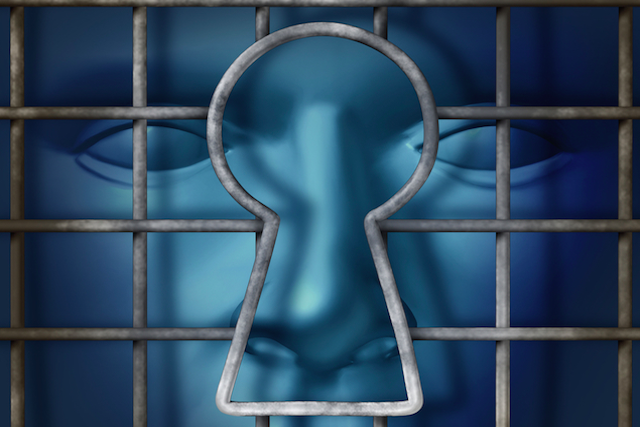
    To alleviate my self-loathing, I cracked the whip above my inner self, desperate to improve. “Work harder!” I shouted. ”Do more!” “Be better!” “Fix yourself!”

    Around the addiction carousel I went, stumbling from drinking to eating disorder to codependency to perfectionism. My inner self bore the brunt of my cruelty. Eventually, she stopped trusting me entirely.

    Years of therapy and self-reflection later, I reached an impasse.

    By most definitions of the word, I was utterly free; I made my own work schedule, enjoyed financial security, and could travel any time, anywhere. In the presence of friends, I radiated enthusiasm and laughed straight from my belly. But in my own company, when the afternoon sunlight cast shadows across my carpet and the muted sounds of the city came through my open window, I felt utterly alone.

    I couldn’t deny the truth: I was trapped in a life dictated by vicious, anxious cycles. The life I wanted—the liberated, peaceful, inspired life—would be unattainable until I confronted my addictions. Not just one of them, but all of them. I had to tug the weed from the soil at the very root.

    And so I took a deep breath and stepped off of the addiction carousel. Squinting and dizzied beneath the carnival lights, I took a hard and honest look at my inner self—the first I’d taken in years.

    She had become unrecognizable. Emaciated, exhausted, fearful. Anxiety ran through her veins, rich and red as blood. She was afraid of me. And her voice—the voice that had called out:

    “I’m overwhelmed. Can we slow down for a second?”
    “I’m tired. Can we go home and sleep?”
    “I’m so fucking sad today.”
    “Don’t sleep with him! You don’t even know him!”
    “I’m doing the best that I can.”
    “Can you hear me?”

    That voice had disappeared entirely. Like newborn babies whose cries go unanswered, my inner self’s voice had died. My heart broke as I reflected on the years of neglect I’d shown her.

    I realized then that my newfound sobriety was much more than a refusal to pick up the bottle. It was an uncompromising commitment to rebuild trust with my inner self. After years of neglect, I had to show her, with my words and actions, that I would care for her

    Since then, I’ve come to learn that each of us enters recovery with a traumatized inner self. Every time we acted addictively by taking that drink, or eating all three pints, or spending our savings, or losing ourselves entirely in our lovers, we neglected that quiet voice that was always there, that knew we were harming ourselves, that begged to be treated with love.

    I have been untangling my myriad addictions for almost three years, and this conception of my inner self has been my greatest tool in my recovery. Every time my inner self speaks up, I am presented with a choice. I can listen and act accordingly. Or I can disregard her wishes and begin another cycle of neglect.

    In recovery, my work is to rebuild trust with my inner self by feeling and speaking her truth by:

    • Naming and feeling my feelings instead of numbing them
    • Prioritizing my reality over others’ perceptions
    • Setting boundaries with others

    Naming and Feeling My Feelings

    During my addictions, I became an expert at self-medicating my anxiety, shame, fear, and sadness. A hearty glass of cabernet, I believed, was the respite I deserved after a long, weary day of trying not to feel my feelings.

    When I woke up the next morning with a headache and drinker’s remorse, anxiety was the only emotion accessible to me. Grief, loss, anger, and sadness were buried under layers of shame that hardened over time. I effectively exiled my full spectrum of human emotion.
    Recovery, especially early recovery, has been a process of reclaiming the sensitivities that make me human. Without the vices that numbed my heart like Novocain, my feelings arise swiftly, uncensored and colorful. Not just the painful ones, but the happy and beautiful ones, too. I cry most days with equal parts sadness and joy.

    At times, I feel like there must be something wrong with me, as if someone cranked the volume dial on my emotions to the max and left it there.

    My work in recovery is learning to sit with, and work with, those feelings. What makes this challenging work possible—enjoyable, even—is the relief my inner self feels when, for the first time in ages, her simple truth travels from her heart to my lips without interruption. With every potent emotion comes an opportunity to make her feel seen and heard.

    Prioritizing My Reality Over Others’ Perceptions

    When I was in the throes of my addictions, I became an expert at keeping up appearances. Nightly, my inner monologue went something like this:

    Can I get away with sneaking another drink? I wonder if Joe saw me pour the last two… Probably better to put this one in my water bottle…

    I wonder if this bathroom has a fan to hide the sounds of my purging… I better turn the water on. And fake a sneeze or two to explain my watery eyes…

    Did they notice that I blacked out at the party last night? God, I hope not… How can I find out what I said without seeming suspicious?

    Managing appearances became my part-time job. I cared more about others’ perceptions of my reality than my own reality. White lies and half-truths flooded my conversations, even when I had nobody to impress and nothing to prove. Every time I distorted my story, I became more distant from my inner self.

    In recovery, I uncompromisingly follow my inner self’s judgment. I am accountable to her first and foremost. My friends’, family, and colleagues’ opinions of me are secondary because, at 1AM when I’m sleeplessly staring at the ceiling, my inner self is the one I’m stuck with.

    In recovery, when I’m swept away by the cacophony of others’ needs and wishes –

    “Will you sign up for this?”
    “Want to go back to my place?”
    “Can you help?”
    “Call me back”
    “I need—”
    “Will you—”
    “I want—”

    I get quiet. I listen. And I whisper, “What do you really need right now?”

    And this time, I really listen.

    Setting Boundaries With Others

    As a recovering people-pleaser, I hate disappointing others. I spent most of my life avoiding it as much as possible. As a result, my calendar was packed with tedious obligations and my relationships were all give and no take. I left social interactions to massage the corners of my mouth, which ached from forcing a smile. I hooked up with people I didn’t even like. Basically, I felt like a shadow of myself.

    In recovery, the reason why I say no to that beer is the same reason I don’t go to the party, or don’t sleep with that stranger, or don’t call during my lunch break. The same reason I say “No thanks, I don’t drink” is the same reason why I say “I felt hurt when you said that” or “No, I won’t.”

    Boundaries are honesty in action. Every time I set one, I teach my inner self that she can trust me.

    When I get nervous to set a particular boundary, I remember that my inner self is gaining strength under my protection and care. In this delicate stage of early recovery, she is fragile, like a seedling. She requires a safe, secure, reliable environment in which to grow. If I’m committed to bringing her to life, it’s my responsibility to shape that environment—even if that means erecting a fence to keep the pests out.

    My addiction was characterized by living out of alignment with my inner self. My recovery, by extension, must be characterized by the opposite. For me, recovery and speaking my truth are inseparable.

    I’ve heard folks describe addiction as one’s isolation from others. I think that first and foremost, addiction is one’s isolation from one’s self.

    The more we treat our inner selves with compassion, the less important it becomes to please others and manage appearances. Our emotions thicken, arise, and depart. When we break the cycle of abusing our inner selves, our own company becomes bearable. And when our own company becomes bearable, sobriety becomes possible.

  • Why Social Media and My Addictive Personality Don’t Mesh

    Why Social Media and My Addictive Personality Don’t Mesh

    Twitter didn’t give me the flu or bronchitis, but it made me sick. Unhealthy. Ill-feeling. And it could have been any social media platform that did it, I just happened to have chosen Twitter.

    For years I avoided creating any sort of social media account. I complained to companies the old-fashioned way: calling or emailing customer service. I didn’t need to know what people I wasn’t in touch with in real life were doing.

    As someone who was married and not dating, there simply wasn’t the requirement to be on any kind of social media. With two kids, I spent my (little) free time watching TV or texting with a few friends. I would proudly state, “I don’t even have Facebook” when people discussed it.

    Then in January 2018, I decided to open a Twitter account, mostly to rant about things, as I had done a few years prior on a blog. Not big-issue political rants or anything, more “Why isn’t the first car on an advanced green turning?? YOU HAVE A RESPONSIBILITY, MAN” type stuff.

    I had conveniently blocked from memory the reason I had stopped blogging about all my anger-inducing experiences: I had felt like it was poisoning me. To always be posting something negative, it builds over time. As much as I liked expressing my anger, I didn’t like the feeling it created.
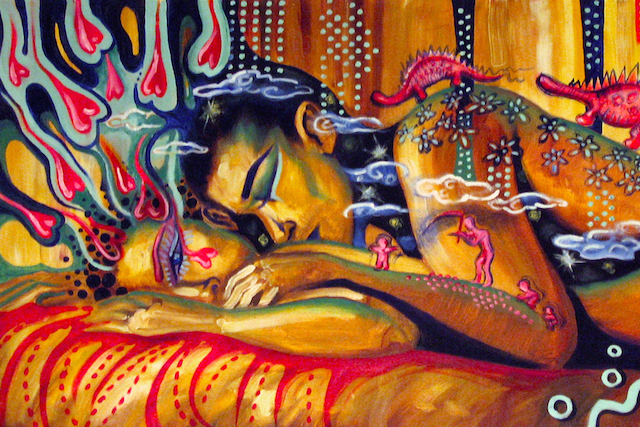
    Fast forward to the beginning of 2018 and I have a Twitter account. All fine and dandy for a bit: I build a little network of like-minded parent Twitter accounts, we follow the same accounts, and it’s fun to see people living the same type of kid-related dramz as I was.

    Then I realize that with Twitter, I have access to breaking news way faster than say, my husband (a complete non-social media user). So that’s fun. Then I realize I have easy access to celebrities—wow! Now I can communicate directly with them! And businesses! To celebrate or chastise them! Fun! Then I’m excited when I gain followers. Cool! But some are random accounts who I don’t ever see post anything, or weird corporations. Okay… still fun?

    Then I interact a few times with some celebrities. That goes to my head quickly—now I assume every tweet I send will result in some retweet or like by them. But no, it doesn’t. “Well, that’s crappy,” I think on more than one occasion, when I obsessively check my account to see if they liked what I wrote.

    I see parenting-related tweets by other users who gain hundreds or thousands of likes for some inane comment, and I think “But that’s not even funny or very observant.” I develop a never-ending circle of thought in my head, consumed by potential tweets.

    I start to feel what many people before me have felt: the highs and lows of social media. When it’s good, it’s good—your self-esteem is high, you’re feeling well liked, and well received. And when it’s low, it sucks.

    “Why didn’t anyone agree with what I said?” I would question. “How come my tweets don’t garner that much attention?” It started to become too much. I was turning into someone I had never thought I would be: feeling validated by the number of likes I got.

    Soon, it became obsessive. I was checking when I woke up (my phone having never been beside me at night), considering checking in the middle of the night when I woke up, checking while driving (something I had shamed people for doing previously), being logged in all day while at work. It was all day every day. I had become consumed.

    And it wasn’t lucrative; I had 200-ish followers and maybe 20 I actually interacted with. It had quickly turned from something “neat” into something destructive. Everything I was living I was thinking could be a potential tweet. Which meant in turn, while I was physically there, I wasn’t really present in my actual life.

    Along with parenting woes, I used Twitter to talk about my sobriety. I found it to be an awesome support network for the ups and downs and also to help others.

    Over the past year of sobriety, I, like many others in the same situation, have connected much more with myself, learning who I am more in the past year than ever in my whole life. I recognize when I am feeling sad, toxic, anger, jealous. I feel everything now. And so when I started to feel weird with Twitter, I didn’t ignore it. I looked at what was happening.

    And I realized it: as I now know, I have an addictive personality. I had become addicted and consumed by Twitter. It was now controlling my day. From wake up, to work, to driving, to watching TV, I was one tap away from seeing “what’s happening.” With strangers. And not actually paying attention to what I was living.

    Instead of living what was happening, I was typing it, sharing it, obsessing over who saw it and interacted with me. Instead of alcohol, I was now consumed by Twitter.

    So last week, I promised myself I would stop tweeting, stop checking it, and back away. Unfortunately you can’t hide your account. Either you have it and you just don’t use it, or you deactivate.

    This weekend I looked at it here and there to see if I had any likes or DMs. To get a sense of what I was missing. I had a few likes from some tweets posted last week, oddly enough a number of new followers (even after doing nothing for days, which is so bizarre)—nothing earth shattering. I didn’t scroll through at all, and I didn’t engage with anyone.

    And I realized: Nothing in my life actually changes if I am “connected.” In fact, I realized that being “connected” actually made me feel more isolated than ever. I was relying on something very independent to feel part of something. When in reality, it was very secluded.

    I found it serves as a distraction and delivers information that just makes me angry or depressed. And there’s already enough of that in life. I am quite happy to go back to using reality TV to unwind and let my sister being my sounding board for my road rage.

    I will give it another day or so and I will deactivate it completely. And luckily, goodbyes are not necessary. A nice clean break. I will miss some elements of it, but I know myself enough to know I cannot keep it. Like trying to moderate alcohol, it’s too much of a slippery slope.

  • Loving Yourself When You’ve Become Addicted to Self-Improvement

    Loving Yourself When You’ve Become Addicted to Self-Improvement

    “Whatever purifies you is the right path.” ~Rumi  

    I’m tired of being good. It’s time to be deliciously free.

    How I wish I could say that without rushing in to assure you that I promise I’ll still be good.

    The truth is, I worry. Less than I used to, but still, I do.

    I’ve probably had every kind of worry you could imagine. There’s the kind about things that haven’t happened yet, things that didn’t but very nearly could have, things that are highly unlikely if not impossible, things that are commonplace; I’ve worried about the things I want and the things I don’t, the purpose and the impermanence of life.

    Underneath, they all seem to stem from the same big fear that I am not good enough.

    This worry manifests itself as indecision, overthinking, holding grudges, and comparison. My expectations and criticisms originate there.

    Peek inside my head in my most afraid moments and you’re sure to find a motivational poster gone horribly wrong:

    We all have the same twenty-four hours, so what’s your excuse? Hustle! No pain, no gain! Stop playing small. Take massive action, go all-in. They’re crushing it, why aren’t you? The steps to success are quick, easy, and proven. Do whatever it takes. You miss 100% of the shots you don’t take. The universe loves speed. #YOLO. 

    I’ve spent a lot of time and mental energy on what I thought was self-improvement. Now, I’m seeing it for what it really was: self-medicating. The pressure to always be moving, always be achieving, faster, faster, hurry up and keep up was an addiction.

    This addiction was a symptom of losing trust in my own worth.

    I’d wear the way I treated myself like a badge of honor as if it somehow made me more worthwhile. Yet, I criticized myself about it, too. “Don’t be so rigid,” I’d command myself, followed up quickly by, “But be more disciplined.”

    I thought for a while that my worries were about control, but now I’m seeing that control was never the problem. I thought maybe it was perfection I sought. That wasn’t it, either.

    This was never really about success or approval, and certainly not improvement. What I’ve been seeking all along is freedom, and that’s what scared me the most.

    My indecision wasn’t about the decision itself, it was about doubting my ability to decide freely. Staying in relationships even though they hurt me wasn’t about the love or the loss, it was about doubting my right to choose myself, freely.

    Underneath every fear, every worry, every grudge and comparison was doubt in who I am, what I’m worth, and what right I had to take up the time and space to figure this out.  

    And now that I see things more clearly, I am clear about what I truly want. I want liberation.

    I want to free myself from the ghosts of the past and fears of the future. I long to be free from shame and the barriers I’ve built against my own peace. I want to use my voice freely and heal my steadfast heart. I want to freely and lovingly inhabit this body that’s stood by me no matter how much I’ve abused it.

    I want to rise up, thank the day, and carry on. Freely.

    Even as I’m writing these words to you, I’m learning what I need to do to stop the cycle.

    I need to practice making different choices and voicing different beliefs: Time is not money, it’s medicine. I need not be so disciplined but discerning. Not productive but perceptive.

    I’m learning the difference between moving quickly and moving honestly, and I’m replacing “should” with “I can if I so desire.”

    Oh, and I feel the resistance to this. The resistance is withdrawal, and it’s a natural part of the recovery process.

    But even with this insight, the fear of the unknown and the craving of familiarity are still there.

    Who will I become if I were truly free?  
    What value will I have?
    What if I fail?
    What if I disappoint? 

    Each time I set myself free, I will fly back to my cage until I trust the process of healing and love myself unconditionally.

    This is the painful part about finding and expressing yourself that no one really talks about. Loving yourself and trusting fully in your inherent worth is risky.

    You will surely fail at your previous rules and fall short of your old expectations as you explore new, more open ways of being. Someone is bound to be disappointed when you start existing as yourself, for yourself. The people who thought they knew you when you were only a fraction of yourself will say you’ve changed. They may not know what to do with you anymore.

    There may be judgment and misunderstanding. There may be rejection. You may feel lost. You may get less done, things may take longer, your work may be less popular or less profitable.

    And there will be the trappings of who you said you were everywhere. I still have a drawer full of makeup and hair products, perfume, and high heels that I will never use again. Maybe it’s time to let that version of me go.

    As you move closer to freedom, the ghost of who you tried to be will linger, haunting you. It will show up as a craving for likes and shares, for affirmation from someone else of your worth.

    Little by little, as you shed the security blankets put down over the years, you will move away from the conditions of your worth. Through forgiveness, setting and enforcing boundaries, more authentic yes’s and no’s, and growing more clear in what you want and where your true priorities lie, you will find new depths of freedom and space. It will be empowering and terrifying.

    What I’m discovering now is that you need to meet these challenges with grace and compassion.

    Letting go gives you space, but it needs space, too. Space brings solace and allows expansion. If you need to, stabilize. There’s no need to feel like a complete stranger in your own skin. Seek comfort and familiarity, but do it consciously. If you fall into old patterns, treat yourself with kindness, not judgment.  And then carry on, consciously.

    Have the courage to ride the cravings out. Resist the habit of proving your worth and earning your freedom. The doubts will try to convince you that they’re making you better, more worthy. Remember that it never worked that way before.

    I’m seeing now that what I do or don’t do, how far I do or don’t go, what I do or don’t achieve has never been the question. The question is, what frees me?

    I may not know what my freedom holds, and I may still face that uncertainty with some degree of fear, but I’m learning to trust that the pins and needles of waking up are the cure to what’s really ailing me.

    The greatest opportunities are not found in safety or certainty. Just as in facing any fear, the old beliefs about your worth need to be threatened in order to be changed.

    Each time we practice asking ourselves what will set us free, we’ll learn to speak the language of our intuition that much more fluently.

    Each time we practice validating our own perspective, we’ll learn to distinguish between wisdom and sound bites that much more naturally.

    One layer at a time, we will build a foundation of trust in ourselves and our inherent worth, and I have to believe that this will set us free.

  • In Search of the Sacred: Escaping Facebook’s Sticky Web

    In Search of the Sacred: Escaping Facebook’s Sticky Web

    “You leave the present moment every time you check your phone.” ~Deirdre Jayko

    Facebook was driving me to distraction! One late-winter evening, I prepped for a mood-saving hike in the snow. Magic happened on the trails in the moonlight. I decided to check Facebook for a friend’s answer to a message.

    Who knows what caught my attention, but I ended up skipping from post to post. Once I emerged from my Facebook haze, I realized it was too late to walk safely. What had I accomplished in place of my hike? What did I even read about?

    As I put away my warm clothes and went to bed, I promised myself I was going to change my Facebook usage. It was eating away at my life. I was driving myself to distraction.

    Social media usage bothers people for a variety of reasons. Drilling down on those reasons reveals a larger theme of loss of control. In spite of ourselves, we spend way too much time scrolling through mindless content. Seemingly against our best intentions (sometimes, against our will), we waste countless hours on the site.

    My frustration level only escalated once I made the decision to torch my Facebook profile. Getting off the site seemed impossibly complex! What about people I only had contact with through Facebook? What about seeing photos of relatives and friends? What about the writings and photos I loved to share? Each time I planned on hitting “delete,” I would give up and decide it was too complicated.

    Every morning, I would roll out of bed and check Facebook. The silly thing was: I didn’t want to check Facebook. It was a subconscious habit. I didn’t even realize I was doing it.

    A red notification of some type would fuel my addictive response. Someone liked my post. Someone commented on a post. A close friend posted something new or had messaged me! That little red symbol is addicting, especially if your life is stressful. It gives your monkey mind an unsatisfying play date with the inane.

    One of my passions has always been escaping to the woods for a solo hike. One cold, crisp February morning, I chucked my smart phone into the trunk and set off down the trail into the woods. I was the only human on the prowl, and it felt great.

    Clambering along, I took a hard look at my Facebook addiction. I was bothered by the unhealthy anxiety reliever and the gambling-like satisfaction of the red-symbol jackpot. Yet, it seemed something deeper was bothering me about my Facebook use. I wanted to explore this feeling in more detail.

    I sat watching squirrels scampering through the tree heights. I reflected on that slightly sick feeling accompanying social media usage. We become caricatures of ourselves on Facebook. The nature of the beast is such that experiences are condensed into soundbites for public broadcast—an exaggerated and polished version of a moment. My real-time sharing with family and friends was much different than this public sharing.  Online interactions lacked substance and depth. On some level, they are not authentic.

    Thesaurus.com shares some synonyms for caricature: cartoon, parody. distortion… mockery? And (ouch): travesty and sham. Maybe too harsh in some situations, but, honestly, these words reflect my feelings about posting.

    Instead of chilling with my squirrel friends, I would scroll mindlessly as time slipped away, as my life slipped away. I made a pact with myself to delete my Facebook account. I created a statement of intent in my journal, signed and dated it.

    I still didn’t get off of Facebook.

    A few weeks later, I cruised to work, jamming to my favorite Gordon Lightfoot songs. The open road and dreamy music made me feel young, wild, and free. Suddenly, texts from my kids began interrupting the music. I had notifications coming in on Messenger.

    As a result of some of those messages, I began fighting the urge to check my work email before I arrived. I cursed silently that I had not taken the time to learn how to disconnect the damn phone, so I could just hear my music. Constant bombardment of stimuli. Not only irritating but also unsafe.

    I turned my phone off and threw it in the back seat. SILENCE. As I watched the trees and fields skimming by, I thought about my life before all this technology. I was beyond revolted with perpetual connectivity. I drifted back to my resolve to delete Facebook.

    I practice my spirituality in the woods. My nature time is sacred time, my interface with the Great Mystery. As I added gadgets, my secret, unique, sacred relationship with the earth had seemed harder to access. Would I ever feel that connection again? A hypothesis began shaping in my mind. Would I feel more spiritual and be able to access a deeper level of awareness if I got off of Facebook?

    I thought about the sticky web that is Facebook. Not only did I have over 200 “friends” of varying levels of intimacy, I had hundreds of photos and memories all neatly time-lined for my reminiscence. I felt the stress of giving up a potential audience for my creative works.

    I was stuck in an uncomfortable spot for several weeks. I wanted to get off Facebook to test my hypothesis, but I inexplicably felt trapped on the social media. I began to realize how I was being manipulated in an unhealthy way.

    I couldn’t torch my Facebook despite my great desire to plunge deeply into my spirituality. I was hooked. I hate being hooked or controlled by anything. So, I redoubled my efforts.  I developed a plan to get off Facebook in steps.

    In the first step, I deleted people I really didn’t know. I quickly deleted about thirty people. It felt good to finally start on my goal. I focused on being more in tune, being more aware, being more spiritual.

    As I whittled down my friends, the people became more intimate. People that mattered in my “real” life. I started getting confused about who to delete next and how to delete them. Should I send them a note? Would that be strange? Should I make a public post?

    I stalled for another couple of weeks. I was acutely aware that social media traps people and creates a labyrinth of complexities, a maze of prisons. I didn’t like how that made me feel.

    A few weeks later, I opened my journal to write. My signed pact stared back at me, forcing me to address this disturbing phenomenon of being trapped on Facebook.

    That evening, I curled up on the couch with a cup of coffee. My sole intent was to reduce my social media presence. I sent a private message to select people, explaining I was leaving Facebook and providing my contact information.

    A few wrote back, asking, “What’s wrong? Are you okay?” My ego raised up a bit. Wow, they think something has gone wrong in my life. I should stay on Facebook to prove nothing is wrong. I slayed that ego dragon and pressed on with my quest.

    As I mass deleted my friends, Facebook acted like a real creature, bombarding me with more “people I may know” than ever before. It made me wonder if the site is programmed to recognize when someone starts deleting friends. Maybe not…but the new potential friends were very intriguing.

    How did they manage to target my profile with these people? I was tempted to click on some of the new profiles but moved on towards the goal. At times, the process of deleting friends felt great, but mostly I felt a sense of loneliness.

    Eventually, I had no friends. I experienced a mix of relief, sadness, and anxiety.

    Even the shell without friends proved a sticky trap. I belonged to groups that only posted on Facebook. I also had “liked” very entertaining pages. Could I give up Randy Rainbow videos, and adorable pictures of cows and elephants from the Gentle Barn and the Elephant Sanctuary? Yes, I can access their websites when I need a fix. I ‘unliked’ all my awesome pages.

    The hardest sacrifice was abandoning all my kids’ pictures and my life experiences neatly time-ordered. I pressed on because I wanted a deeper, more authentic life.

    I was ready for the final step—deletion! I couldn’t find the deletion button. Deactivation is not the same as deletion. All your info is stored and ready to be resurrected. I didn’t like this privacy issue, and I didn’t want the option to reactivate! I found it easier to google “delete Facebook account” and follow a link from a separate website, than try to find the instructions on Facebook.

    Finally, I found the delete account button and smelled freedom. Like a creepy, ex-partner who decides he isn’t going to be rejected, Facebook notified me deletion would take two weeks, and I could hop back on anytime in that two weeks.

    Thinking back on all the sticky traps of Facebook and the recent media attention on privacy breaches, I thought, “Why do we allow this? Why are we okay with this?” It is not authentic or satisfying to live this way.

    The first afternoon free of Facebook felt super!  A few days later, I felt similar to when I left home for a new job in a new city. Kinda lonely and lost, but ready for a new adventure. I definitely missed my friends back in Facebookland. I wondered if I would ever talk to some of them again.

    I jokingly asked my kids, “Do I still exist?” Sometimes, I caught myself clicking through news sites more often, simply out of habit. I realized some of my clicking provided a method of anxiety relief. The other sites just didn’t have the addictive quality of Facebook, and I eventually quit the mindless clicking.

    As the days move on, I notice subtle differences in my thinking. I feel a soft, calm sensation as I drive to work or create projects. I notice light patterns as the day shifts to dusk. I am more present in my own life. I feel a novel sense of boredom from time to time. Surprisingly, I really like feeling bored. It has stimulated my creativity and my humor. You have to work a little harder when there is nothing to do.
    One morning, I was goofing around with my dogs on the couch, playing with their paws, scratching their ears. I had not really connected with them in that manner in a long time. A kind of bored goofiness came over me that had been destroyed by the constant clicking. I felt like a little kid, lazing on Saturday afternoon. Boredom is not a bad thing.
    I also became really aware when my loved ones were ‘hooked up.’ It seemed weird that they would be so intent on staring at screens. It should seem weird, shouldn’t it? We’ve been deconditioned to this insanity.

    Occasionally I have moments of discomfort about my exodus. What about when my son graduates? Or, I have an article published? Or I travel to an exotic location? What if I take a killer photograph or observe a rare animal in the woods? Who will know?

    I guess I’ll share these experiences, successes, and photographs during lunch with my close friends and around the table with my family. At this point in my life, that feels so right to me. My smoother, more relaxed, unplugged mind is savoring the days I have left.
    I went to the woods today. I walked quietly and softly on the earth. I left my iPhone at home. The perfect scene for a photo and an unexpected animal sighting went uncaptured. With no phone to grab, these snapshots won’t be shared with the masses. How refreshingly beautiful.

    A little squirrel scampered on a tree, chattering to me. It was so quiet, so calm in the woods. I became lost in the moment. I felt that deep, sacred connection with nature that is so precious to me. I transcended into that other world, the world that remains hidden from a noisy mind. A place void of anxiety, of ego, of caricature. A place rich with connectedness, with earthiness, with authenticity.

  • Loving Yourself Through Addiction and Relapse: Be Patient with the Process

    Loving Yourself Through Addiction and Relapse: Be Patient with the Process

    “The greatest glory in living lies not in never falling, but in rising every time we fall.” ~Nelson Mandela

    It’s a cold winter day. As I plunge my hand down into the wax paper bag, I fully expect to find another bite or two. But, alas, there are only crumbs.

    A distinct wave of sadness shoots through my heart. The chocolate scone is gone. And I don’t even remember eating it.

    It is in this moment that I wake up. I quickly shake my head from side to side, as if rousing myself from a long night of troubled dreams.

    What have I just done? What about the vow I’ve made to myself, again and again?

    For years I have known that the best thing for my body’s healing process is to eat fresh, whole, organic foods (lots of leafy greens, fruits, and nuts!) and to avoid ingredients that overstimulate my endocrine and nervous systems, such as sugar and wheat flour.

    And yet, today, here I am again. Eating some stupid, cheap scone I picked up on impulse at the local bakery. Full of who-knows-what ingredients.

    Here I am again. Ignoring my own wisdom. Falling back into the food addiction that has plagued me since childhood.

    Today I have lost control.

    I pull my car over into a parking lot. (Yes, I have been mindlessly scarfing that darned scone while driving!) I take a deep breath.

    Now is definitely the time for some self-love.

    Addiction is a Dirty Band-Aid 

    Whether you struggle with a food addiction like I do or you deal with drug or alcohol addiction, every addiction is the same. An addiction is a loss of control over one’s behavior.

    Our addictive behaviors don’t just randomly happen for no reason. They are a symptom of a deeper issue.

    Why do we get addicted?

    That scone or that cocktail or that cigarette brings about a temporary cessation of suffering. They block sadness, tension, fear, pain, boredom, and anger. They numb any and all negative emotions.

    To put it simply, an addiction is a coping mechanism. It allows us to trudge onward in life, but without really looking toward the deeper issues.

    An addiction may be a short-lived, temporary cure for the pain—but, as we all know, it’s not a long-term solution.

    Running to our addiction is like slapping a Band-Aid on the wound—a Band-Aid that is dirty. Over time, the wound gets infected with the dirt and grime, and it worsens rather than heals.

    The Addiction is Not the Problem

    Here’s the thing about addiction, dear friends: The addiction is not really the problem. The addiction is the glaring symptom.

    If we can look deeper than the symptom and see the situation from a holistic point of view, then we may begin to bring about a resolution to much of the suffering in our lives.

    So, what is the deeper issue? What lies at the root of addiction?

    Ultimately, all addiction—no matter the type or the severity—stems from a lack of connection. When we feel disconnected from other people, from our society, from our deepest hopes and dreams, and from a sense of love, then this disconnection brings about powerful emotions. These emotions hurt, and so we run to the seeming solace of the addiction.

    The addiction may seem, on the surface, as if it’s the problem, but actually it’s not. The addiction is, in reality, a helpful pointer, showing us that there’s some internal healing we need to do.

    The wonderful thing about addiction is that it is a powerful red STOP sign. It screams loudly: “Look! There’s a problem!”

    Addictions help us get in touch with our inner self. Just like a cough helps us connect with the needs of our lungs (do I need fresh air? do I need more exercise? do I need to take certain herbs?), an addiction helps us get in touch with the needs of our heart.

    Our heart is the seat of all emotion. Our heart is where feelings arise, are felt, and then released.

    When we feel a lack of connection and love, we do not feel safe. We do not feel safe enough to explore the many emotions that can arise as a human being in our daily lives.

    When we feel disconnected, negative emotions can feel overwhelming and scary. This is particularly true for those with abuse or trauma in their life history.

    The addictive behavior is a misguided attempt to self-soothe. We believe that if we eat that scone or we drink that beer, then those scary emotions will stop and we will somehow be safe, somehow feel connected again.

    But we all know that doesn’t work. What ends up happening is that, once the temporary high wears off, we are left feeling crappier than ever.

    The addiction is not the problem. The problem, rather, is the false perception that there is no love, no connection.

    Rising from Bottom

    The cliché of the “rock bottom” is a cliché because it’s true. Most addicts eventually experience it.

    Rock bottom looks different for everyone. It will have varying levels of intensity and consequences.

    For some, the bottom is drastic: a suicide attempt, an illness, or a hospitalization. For some, it will simply be a very sad day when they realize that the time has come to change.

    This time of rock bottom is the moment when we begin to wake up. It’s the time when the healing can truly begin.

    For me, my rock bottom with food addiction came when my body had disintegrated nearly to the point of death.

    I was on my perhaps my tenth round of antibiotics that year and having a severe allergic reaction to the medication. Delusional with a high fever, unable to lift myself from bed and barely able to call for help, I realized I probably would not live much longer if I did not change just about everything in my life. Shortly after, I began to explore the world of alternative medicine and began to clean up my diet.

    We can think of this rock bottom—this intense realization that things need to shift—as the bottom of a spiral. This spiral begins at ground zero, and it moves upward through time.

    As the days, weeks, and months pass, and we dedicate ourselves to a new way of being, we will have various challenges that arise. We will learn and grow and allow our emotions to be felt, rather than running from them. We will heal old wounds from childhood that have been lurking for many years.

    Over time, with patience, we will be slowly shifting our perspective. We will become a new and better version. We will be moving from contracted perceptions of disconnection, lack, and fear, into expanded perspectives of connection, abundance, and love.

    Through the adoption of various healing practices such as meditation, support groups, therapy, prayer, Reiki, or exercise, we come into greater harmony within ourselves. We learn to love ourselves.

    Relapses and the Spiral of Evolution

    In my struggle with addiction (not just with food, but with many other substances over the years), I have realized I am grateful to addiction. Addiction has played a very powerful role in my spiritual evolution.

    Addiction is a powerful point of change. It is a journey inward. It the journey of becoming aware and conscious.

    As we humans make this journey, and break the cycles of addiction, it’s so important to remember that change is not linear and it’s often not easy. Relapses happen.

    The spiral analogy can be helpful. If we imagine that we are travelling upwards in consciousness, to greater and greater levels of joy, power, and self-awareness, then we can avoid traps of self-blame when we do occasionally relapse.

    That day when I woke up to find scone crumbs on my lap was a challenging day indeed. I’d just had a disagreement with my roommate and was struggling with money issues. When I stopped at the bakery that day, intent on buying some tea, those scones whispered sweet love songs to me and I could not find the willpower to resist.

    In that relapse, I temporarily lost sight of my own truth: That I want to avoid sugar and wheat flour in order to heal my body.

    In that relapse, I was returning to the particular side of the spiral that was so known and comfortable: running to unhealthy food for comfort.

    And yet, even though I had returned to that old familiar side of the spiral, I actually experienced this relapse from a greater height! In other words, in this relapse, I was able to more quickly move past it and get back to my own power.

    It took just a few minutes and I forgave myself and moved into self-acceptance. I did not beat myself up.

    In that cold car on that cold winter day, I placed my hands on my heart, and whispered some words of love and reassurance to myself. In the past, in the beginning of my healing journey with food, I might have added a cookie or a brownie on top of the scone, as a way to escape the terrible emotions of self-judgment and guilt. But—this time I didn’t! 

    Love Yourself and Heal 

    A relapse is nothing to be ashamed of. It happens.

    If you or someone you love has been healing a pattern of addiction, please know that patience is key.

    The spiral of evolution will bring you situations that will test your courage and self-awareness. Sometimes you will succumb. And that’s okay!

    If you wake up and suddenly find yourself acting in a way that you know is not your highest good, then congratulate yourself for waking up. Take stock of your long-term changes and pat yourself on the back for coming this far.

    Notice how you can more quickly bounce back from the relapse, with greater levels of patience and self-love. Notice how awesome you are!

    Ultimately, the journey of addiction recovery is a journey of healing. And it’s a journey all humans go through, as we refine to greater and greater levels what it means to love and care for ourselves.

  • Why I Was Addicted to Attention, Lies, and Drama

    Why I Was Addicted to Attention, Lies, and Drama

    I’ve done a lot of things for attention that I’m not proud of. I’ve created drama. I’ve bragged. I’ve exaggerated. I’ve hurt people. I’ve hurt myself. I’ve lied and lied and lied.

    No one wants to be labeled as an “attention seeker.” When people say, “She’s just doing it for attention,” they don’t mean it as a compliment. I knew this. And I knew that people said these things about me.

    And still, I couldn’t stop.

    I spend a lot of time around animals, especially cats. It’s easy to see which ones have experienced starvation. They have constant anxiety about food. They meow and meow when it’s feeding time. They scarf their portions down without breathing. If the bowl is left full, they’ll eat whatever’s there—even if it’s a week’s worth of food!

    I was that cat with attention. I could never get enough.

    But compulsive behaviors aren’t about what we’re consuming. Attention seeking isn’t about attention. Food addiction isn’t about food. Really, it’s about control.

    When you’ve been starved of something, you develop a fear of losing it. You begin to cling to every morsel of what you’re desperately afraid to live without. Survival mode.

    That’s what it was like for me: constant survival mode. I felt like, at any moment, I was going to be abandoned, left alone, forgotten. I fought to be noticed. Fought to be heard. Fought to be “loved.”

    But despite my constant attention-seeking efforts, I never got what I truly wanted. I never felt loved for exactly who I was because I never showed her to anyone! I showed the world the person I thought it wanted to see, and I used other people as characters in my personal drama.

    So that is the biggest irony: because I was so desperately hungry for love, I couldn’t have it. Because I so deeply craved attention, I repelled people away from me. Then, these experiences reaffirmed my biggest fear: there wasn’t enough. I wasn’t enough. So I’d grasp more, cling more, lie more.

    Too often, people talk about attention seeking like it’s a character flaw. I see it as an addiction.

    When we’re trying to fill a love-sized hole, it doesn’t matter what we’re trying to stuff into it: drugs, money, alcohol, approval, sex. If it’s not love, it won’t truly satisfy us. We’ll keep wanting more and more.

    My journey of healing my attention-seeking patterns has been long and painful. One of the most painful things has been realizing that most people weren’t reacting to me the way I thought they were.

    I used to brag loudly in public, imagining people around me admiring and envying me. Now, I realize that most of them were either ignoring me or annoyed by my antics.

    I used to stretch every accomplishment, imagining people respecting me. If it was two, I’d say five. If it was 100, I’d say 300. If it was one minute, I’d say an hour. Now, I realize that most people either didn’t believe me or used my lies to reinforce their own insecurities.

    I used to make a tragedy out of every pain and a drama out of every inconvenience, imagining people pitying me. Now, I know that most people either felt stuck in the cloud of toxicity that surrounded me (because of their own unhealed traumas), or they avoided that cloud like the plague.

    The world, I’ve discovered, isn’t quite the place I thought it was.

    I was so busy talking and talking, lying and lying, that I never sat down just to listen. And that is what helped me heal: looking within myself, looking around me, and embracing reality.

    Attention seeking, for me, was a kind of self-protection. On my journey of healing myself, I’ve found that self-love and self-protection aren’t the same thing. I had to remove my armor and my mask. I had to face the truth.

    Beneath my defense mechanisms, I found a fragile, wounded part of me that was traumatized by childhood experiences—by emotional starvation. But this part of me wasn’t fragile because of the wounds I incurred as a kid. It was fragile because I tried to protect it.

    After I got hurt, I tried to hide myself away. I tried to create an elaborate fantasy world to protect myself from rejection and abandonment. I piled layers and layers of bandages on top of my wounds, but wounds need air to heal. I tried to keep myself safe, but I ended up suffocating myself instead.

    I wasn’t lying and creating drama “just for attention.” I was doing it to survive. I was grasping for scraps of approval to replace my desperate hunger for real love, for authenticity, for happiness.

    On the outside, it seemed like I wanted other people’s attention. That’s what I thought I needed too. But what I really needed was to pay attention—to be able to just exist in each moment without struggling. To be able to look at myself without running away. To look at people without being afraid of them. To have peace of mind.

    Maybe you know someone who’s stuck in these patterns. Maybe that someone is you. However this applies to you, I hope to communicate one important thing: attention seeking is a symptom of a bigger cause.

    It’s not something to be dismissed. It’s also not something to be judged and criticized. It’s something to be accepted, understood, unraveled, and forgiven.

    Healing these patterns takes time. Every step along the way, it’s been difficult for me to invite reality to replace my delusions. It’s been hard to allow myself to be raw and open instead of trying to protect myself from pain.

    But this healing journey has also allowed me to enjoy real affection: from myself and from others. And that has been worth all the hard work.

  • When You’re Hooked On an Abusive Partner and Scared to Walk Away

    When You’re Hooked On an Abusive Partner and Scared to Walk Away

    “We set the standard for how we want to be treated. Our relationships are a reflection of the relationship we have with ourselves.” ~Iyanla Vanzant

    I’ll be honest. I knew my ex was a screwed-up guy. My head told me that not long after we met. The alarm bells were screeching. Could I hear them? Of course! Did I listen to them? No. My heart told my head to sod off and I agreed.

    Here was a charismatic, gorgeous man focusing all his attention on me. I was the only one in his universe. Fireworks that would rival Sydney’s New Year’s Eve were going off. The sexual chemistry was intense. He was the best drug ever.

    The high of being with him was intoxicating. Nervous butterflies were on a rampage in my stomach, which did a bit of a flip every time I saw him. And that’s how I knew he was the one. Yeah, right.

    Like most narcissists, it took a while for his darker side to kick in. But when it did I was already way too hooked on him; I needed more. So, I ignored all the warning signs. The ones that were there in front of my face, with bells on.

    When Mr. or Mrs. Charisma has hooked you in, they have you. Then their dark side starts to come out. They start to become a bit moody. To pick a fight, usually over something “you’ve done.” So, you start to change your behavior in anticipation.

    If his anger was over something you wore, you change your wardrobe to clothes less “slutty.” If she doesn’t like your friends, you stop seeing them. But no matter what you try, nothing works. The goal posts just get moved. They find another reason to blame you for their anger.

    Abusive people have all the answers as to why they treat you poorly. Past girlfriends or boyfriends have betrayed them. They’ve had a difficult childhood; bad luck has let them down. So, you believe them and keep ignoring the warning signs.

    To you, this is still that gorgeous person who swept you off your feet. You can still see the good beneath the dark side. You think: all they need is someone like you to take care of them, to bring that charming side back to the fore. And that makes you feel needed, secure.  

    But then the abuse gets worse. When they go into a rage now, they may storm out and disappear for days. They may even show the first signs of physical abuse. A push or a shove. Something that shocks you, as it comes out of the blue. (Something they’ll later dismiss as not being violence).

    But the thought of breaking up and never seeing them again terrifies you even more than how they’re treating you. Hooked in as you were by the drug of when they basked you in their sunshine, you can’t or don’t want to see the real person they are. You ignored the early warning signs, now you deny the reality. It’s true what they say. Love can be blind.

    When their rage has calmed down and they reappear, you’re relieved to see them again. It helps that the remorse they now show is equal to the severity of their latest abuse. They say how sorry they are. They sob in your arms. They’re “ashamed” of what they’ve done. They’ll “never do it again.” Blah, blah, blah.

    They admit that they need you more than ever to help them change. And of course, this is music to your ears. But this honeymoon period never lasts. The verbal and / or physical abuse, followed by remorse, repeats itself. Over and over, in a cycle.

    This cycle of violence (emotional and/or physical) is a toxic turning of unpredictable highs and lows. With each spin, it breaks you down. Any shred of self-esteem you have starts to erode.    

    You feel worthless and almost deserving of their anger. You start to believe it when they say you’re to blame for it. But you somehow rationalize it all by thinking that all they need is you to fix them to make the abuse go away. All you need to do is to love them more.

    You don’t realize it, but loving them has become an addiction for you. You’re addicted to an unavailable person—someone who is not there for you and who doesn’t care for you. They may even be more focused on their own addiction, to alcohol and/or drugs.

    Your head might be screaming at you to leave. But you just can’t. In your heart, you feel you love you them. “They need me,” you rationalize. You might even feel guilty if you abandon them.

    You are just like an addict. If you admit that your life has become out of control and walk away, you’ll lose the very thing you are addicted to. That high you get from their charismatic, remorseful, attentive side. What you need to make you feel good again. After each dreadful low, you are desperate for a fix, that high, again.

    But at some point, you will reach rock bottom—the abuse will become extreme. If they’re physically abusive, they may have even tried to kill you. My ex did, by strangling me. He wrapped his hands around my throat when I was seven months pregnant and with a demonic look in his eyes he screamed, “Die, you c***! Die.”

    Like many women, even after that, I still loved him! My heart kept screaming at me not to leave him. Yes, even after he almost killed me.

    If you’re lucky your head will start to outweigh your heart. You’ll stop denying that this person is no good for you. Finally, you’ll dig deep and find the courage to walk away. I did. But not before going back to him many, many times.  The drug-like pull back toward him was so great. The high, after we first reunited again, was better than the pain I felt when I was without him, alone.

    When you leave an abusive person, the withdrawal feels as agonizing as, I imagine it might be, weaning off heroin. It did for me, at least. You’ve been numb for so long that a gamut of emotions pour out at once. Shame, anger, loneliness, guilt—you name it, you feel it. It hurts.

    I have never sobbed like that before in my life. I was so overwhelmed by the rawness of them. But you need to feel these emotions, as painful as they are. You need to thaw out. To go cold turkey in order to recover.

    Unless you look hard at why you were addicted to an unavailable person in the first place, you risk going back to them. Or replacing them with a different drug, in the form of another abusive person. Either way, like any addict, you risk losing your life.  

    You need to ask yourself the same questions I did:

    Why is it I still love someone who abuses me? Why is it I need to numb myself with someone who is like a drug to me? Someone you know is no good for you, but is the only thing that will make you feel good again. Hopefully, like me, you’ll realize your addiction started way before you ever met this person.

    I’m sure you know already that it has something to do with low self-esteem. If we don’t love ourselves, we’re attracted to those who treat us as though we are unlovable. But it’s not enough to just tell someone they need to “love themselves more.” “You need to work on your self-esteem!” That’s easier said than done. Believe me, I know.

    First, you need to understand why it is that you feel you are unlovable, or not good enough. How you came to be so low in self-esteem that you let a person abuse you. Only then can you break the cycle of addiction to them and recover.

    You may be like me, having grown up in a comfortable, happy home. Never having experienced verbal or physical abuse before in your life. Or you may have suffered it in your family and be repeating the negative patterns of your past. Either way, the root of low self-esteem is if, in some way, your emotional needs were not met as a child.

    It might be, for example, that one of your parents had an addiction say, to work or to alcohol. The other parent was then so focused on rescuing them that neither could meet your emotional needs.

    It may be as simple as having a parent who was controlling. You weren’t allowed an opinion or any feelings of your own. And if you voiced them, they shut you down, so you learned to mistrust your gut instincts over time. Or it might have been they were such perfectionists, the only way to gain approval was to be perfect in every way.

    Our experiences are unique to us, so only you will know. But try to work it out.

    If our emotional needs aren’t met as a child, we grow up to have that fear we’re “not good enough.” We also fear abandonment, as we know how painful that is already.

    Our parents may have been there when we were kids, but couldn’t deal with us on an emotional level. So, we choose a partner whose baggage matches ours. Someone whose needs weren’t met as a child either and who is as insecure as we are. Even better if they have problems that we can rescue them from—an addiction or a traumatic past.  For if they need us, if they depend on us, then in our subconscious minds, they’re less likely to abandon us. To do what we fear most.

    Besides, if we can be their rescuer, then we can focus all our attention onto them. By doing so we can deny, ignore, we can even numb our own feelings of insecurity and fears inside. It’s them that has the problem, not us! And it’s such an effective drug, we might not even be aware those feelings exist at all. I wasn’t.

    The trouble is, this is a dysfunctional dance. The steps feel familiar, of course, as you’re recreating scenes from childhood to master them. But two people who are insecure are incapable of fulfilling each other’s needs.

    To feel secure, both have the pathological need to feel in control. While I was ‘rescuing’ my ex, I felt in control and confident he wouldn’t leave me. But that left him feeling vulnerable, afraid I would see his flaws and walk away. So, he would need to push me away to regain his power.

    Now I was the vulnerable one. Terrified he would abandon me, I would forgive him anything to get him back again. If I couldn’t, it would reinforce those painful childhood feelings I had of being unlovable. It would reveal the depth of my insecurity and fears.

    And so, I tried to please him, to prove I was worthy of his love and my weakness gave him strength again. The love he then showered onto me was just the drug I needed to numb those fears away and gave me security to start rescuing him again. And so, the cycle begins.

    But is this love? I had to ask myself the same. He was a man who treated me as worthless, I knew that. Yet I couldn’t leave him. I still “loved him.” Or so I thought. Until I understood that this is not love, but an addiction. An addiction to someone who could never love me, who could never meet my emotional needs.

    He said he loved me all the time. But he never showed me I was lovable. I told myself, too, that I loved him. But in fact, I just wanted to rescue him, to turn him into something I had projected him to be, not who he was. A pity project, perhaps, that could distract me from how f***ed up I was.

    When I finally left, I had to treat my addiction to this unavailable man the way any addict does. Go cold turkey. Thaw out. I had to feel all those painful feelings of inadequacy and insecurity. Those hideous emotions that poured out.  But that was the only way to heal.

    I had to go back to the root cause of my lack of self-esteem, where it was seeded in my childhood. Not to judge my parents. Like me, they were doing the best they could at the time. But to understand how I’d come to be this way.   

    As painful and as hard as this is, once you get it and face those fears down, your insecurity will start to melt away.  And little by little you begin to love yourself.  I started by doing one nice thing for myself each day. Eventually, I found that self-esteem that everyone had been going on about.

    You only attract someone equal to what you think you are worth.  Abusive people, who previously saw a chink in your armor, will now see you and run a mile. They’ll see that you get they’re not good enough for you.

    Those people who are self-confident and don’t need you to rescue them, will no longer terrify you.  And among them will be the one, like I have since found. The person who treats you with kindness and respect. The person who meets your emotional needs and brings out the best in you.  The person who allows you to be vulnerable, but safe. They’ll never use that vulnerability as a weapon against you.

    Sure, they could walk away any day. But you’ll no longer fear that. For if they do, you’ll just figure it’s not meant to be. You’ll still be there. And you’ll be enough to meet all your own emotional needs, with or without a partner.

  • 5 Things I Wish I Did When Dating an Addict

    5 Things I Wish I Did When Dating an Addict

    “Don’t let people pull you into their storm. Pull them into your peace.” ~Kimberly Jones

    I was finally in a solid place when I met my now-ex-boyfriend earlier this year. I had created some healthy habits for myself and was fully recovered from the eating disorder that had ruled my life for eight years prior.

    Things had turned around completely for me, as now I was getting my first novel published and had a flourishing greeting card line.

    When I first met my ex, who I’ll call Alex, it was love at first sight. I was completely infatuated with this talented individual from Seattle who made beautiful paintings and music. The art he made truly resonated with my soul, and he could say the same thing about my writing.

    Needless to say, it felt like a match made in heaven. So after our courtship, I was more than willing to move up to Seattle from Los Angeles and live with him.

    I was heartbroken when four months into living together, he revealed he was addicted to meth. He admitted that he’d been addicted the past two and half years and had been using every day up to five times.

    I was blindsided, stunned, and overwhelmed with a twister of emotions. How could I have not known? I scolded myself. He was always hyper and created much more art in such a short time frame than I’d ever seen any other human do.

    Well, they say hindsight is 20/20. I didn’t know he was on meth because I didn’t know what signs to look for, and I’d personally never tried meth myself.

    When Alex admitted this to me, I cried in fear, certain that our lives would change for the worst. I knew this betrayal of trust would be difficult for me to recover from, as I became vigilant at his capacity for dishonesty.

    I also worried that he wouldn’t love me the same after he quit meth and that the only reason that he’d fallen in love with me so easily was because he was high! But I had already invested so much in this relationship, moving states and all. I wasn’t ready to just throw what we had away.

    It was ironic because I remembered feeling so happy that I had met him when I was in a “good place” in my life, but all of that seemed so distant now. We can all morph into the worst versions of ourselves when we become clenched in fear.

    When Alex was in the process of attempting to quit, it became difficult to detach myself from the turmoil he’d ooze every evening.

    Like clockwork, every night around nine, he’d get this vacant look in his eyes and begin to pace around. It was like a dark cloud had come over him and I wasn’t even there anymore. I began to feel that I wasn’t enough for him.

    The love I had for him and the idea of us kept me in that relationship for several months after the revelation about his addiction, and I eventually realized why Alex had admitted his meth use to me. He thought he could rely on me to be the “strong one” in the relationship, since I was sober, but in actuality, I was just as fragile as he was.

    And I felt too awkward setting boundaries for this recovering addict, afraid he’d feel infantilized or patronized every time I questioned him about his drug use or nagged him to stop. I felt like I lost myself again, when just months before I was so certain about my identity.

    Alex continued to relapse for the next six months, never staying sober for more than a few weeks at a time, and I began to feel extremely helpless.

    Those fits of restlessness and angst that overwhelmed him every night felt too close to home, and just like him, I had yet to master how to tolerate those uncomfortable feelings.

    Some evenings I found strength in myself and was able to tolerate the uncomfortable emotions he was experiencing without reacting. Other nights, we’d get into fights when he’d want to go on a “drive” (buy meth).

    This lovely relationship we once had devolved to one of raw, dark emotions that neither of us really knew how to get a grip on. And worst, we both relied on the other person to get it together!

    Eventually, despite the fact that I loved this man with all my heart, I knew I had to set myself free from this relationship. I had enough insight to know that even though I’d recovered from my eating disorder, I still wasn’t strong enough to resist getting pulled into his troubled psyche. I needed to pull back to create my own peace again, because I sure as hell wasn’t going to get it from this guy.

    It’s been about a couple of months since we’ve been officially broken up and I’ve moved back to Los Angeles to live with my family.

    Many days I have guilt and regrets for leaving and not being able to help him out of his addiction. It was like all of the meaningful talks we had, trips to the psychiatrist, and meditative walks in nature were for nothing. In all honesty, I felt pretty useless to his recovery.

    In retrospect, I know I would have done things differently if I knew the things I know now. Here’s what I wish I would have done as soon as I found out I was dating an addict:

    1. Encourage him to get help

    When he first revealed he was addicted to meth, I could have been honest and told him I had no clue what to do and somehow convey the depths of helplessness I felt. Then I would have pointed him to professional support sooner and wouldn’t have taken his relapses so personally, as if I was at fault because I was solely responsible for helping him.

    2. Get support for myself

    I should have attended Al-Anon meetings and attempted to have my own support group in Seattle instead of letting anxiety take such a strong hold over me and then isolating myself from meeting new people.  Supporting an addict can be draining, and no one should have to carry that alone.

    3. Take good care of myself

    I should have made time every day to reconnect with myself in some way, whether it be meditation, exercise, or prayer. I should have taken time every day to reflect on my own journey and the progress I’d made instead of becoming so fixated on helping him with his.

    Relationships often become unbalanced when one person is an addict, but both people need time and space to focus on themselves and their needs.

    4. Set clear boundaries

    I wish I had clearer boundaries for myself going in so that I didn’t stay as long as I did and watch the love we had sour. For instance, it would have been more helpful if I told myself that if I saw him using while we were together, I would have distanced myself from him.

    I could have communicated this to him, as well, by saying something like “I’m all for your recovery and supporting you through your journey. But using drugs while being together is unacceptable to me, and if I find out you are using, I will have to distance myself from you for my sake.”

    Setting boundaries earlier on may have prevented my unintentional enabling, which created behaviors in him that I later resented.

    5. Prioritize my own happiness

    I shouldn’t have let guilt keep me in a relationship that was making me unhappy. Like many others, I felt pretty paralyzed by fear of hurting the other person. I wished I had more strength to leave this person I was in love with because he was self destructing and refusing to really help himself.

    As one can surmise, these are all lessons and wisdom you gain after an experience like this, not before, but perhaps they will be helpful to someone who’s right now standing where I once stood.

    Now I am taking time to find peace in myself every day so that I am better equipped to handle another person’s baggage (because we all have it) the next time I attempt to date.

  • The Key to Letting Go of Your Ex: Love Them More

    The Key to Letting Go of Your Ex: Love Them More

    woman-with-broken-heart

    “The more anger towards the past you carry in your heart, the less capable you are of loving in the present.” ~Barbara De Angelis

    My first love broke my heart into microscopic little pieces. I honestly didn’t think I’d survive. Losing him was like losing a limb. I couldn’t function.

    Yet, by the time that he and I had parted ways, our connection was already severed, bleeding, broken—hanging on by threads we both imagined were there.

    When we met, we were idealistic, open-hearted, trusting teenagers. Three years later, we were both addicts, self-harming in our own ways, and both in the habit of using words—those words first uttered in times of gentle intimacy—like weapons against each other. We were at war—with each other and with ourselves.

    Together, we had become the worst versions of ourselves. But this is what made it so much harder to let go. Sure, we were sick, mentally and emotionally, but we were sick together.

    I kept thinking I was “over him” until, three years later, I realized I hadn’t thought about him for a whole week. Until then, I thought of him multiple times a day, especially when I walked by places we had frequented together. The city around me was a minefield.

    In those three years, I was with someone else. He was the polar opposite of my ex. I realize now that I subconsciously thought choosing someone I was incompatible with would protect me from future harm. Maybe it did. But it also kept me from passion and intimacy.

    Maybe it sounds like my broken heart healed organically, naturally, over time. It didn’t. About a month before I finally stopped thinking about my ex every day, I had an epiphany.

    I can’t remember what sparked it, but I remember exactly how I felt when I realized: He and I were not going to be together again. The only thing more shocking was my subsequent realization that I’d spent three years expecting that we would be!

    I realized that he and I had done horrible things to each other and that, regardless of our initial connection, I didn’t want memories like that with someone. I didn’t want to remember my partner voicing all my worst self-judgments. I wanted someone to feel safe with. And we could never feel safe together.

    Shortly after the dissolution of my second relationship, I had another epiphany: I was an addict. I smoked cigarettes. I drank too much. And I’d been using mind-altering substances in a way I thought was social, but was, truly, escapist and excessive.

    It wasn’t until I rid myself of my other addictions, and faced the demons I had without those crutches, that I realized I didn’t really love my ex. I was addicted to him.

    I thought I needed to learn to love again, but I didn’t. I had never truly loved. I got high on idealizing him, crafting him into this perfect savior who would save me from all my pain and all my insecurities. Then, I stewed in villainizing him, blaming him for tearing up my life, my innocence, my confidence. But he was just a human being, and I never saw that.

    I did to him what I did to myself. I expected perfection, and when I realized it wasn’t coming, I poured hot, thick judgment all over everything. I couldn’t face my authentic, real, natural self, so I couldn’t face him that way either.

    When I began to greet the woman in the mirror with open-minded, open-hearted acceptance of what was there, I suffered. I suffered because she wasn’t like TV, because she had flaws, because she would never be perfect. I suffered because I realized how much time I’d wasted trying to be perfect.

    A time came when my reflection no longer triggered revulsion within me. That was my first experience of what I call “love.” I saw someone whose beauty surpassed the pictures on the magazines. I saw a woman who was beautiful because she was a raw, real, organic part of everything.

    When I saw myself that way, I could see the rest of reality that way. I finally saw my ex that way—flaws and all, beautiful because he was a part of this interconnected moment. Beautiful because he was real, human, flawed, just like everyone else.

    That was the first time I ever really loved him. I loved him that way where I wanted him to be happy, with or without me—that way I’d heard people talking about, but never understood what they meant.

    When I finally loved him that way, I didn’t need him to be mine. I didn’t need him to be a part of my sad story anymore. He had his own story. He was more important than the role he’d played in my own, personal melodrama.

    I realized that I had spent years craving love with all my being, and I had been translating those cravings into desires for my ex. I thought I was heartbroken about losing him, but I wasn’t. I was heartbroken about losing this “love” thing that I thought came from him.

    But love didn’t come from him. Love came from me. It was always inside of me, this feeling of being connected to the world. I mentally hired him as the deliveryman of that feeling and suffered for years, because he wasn’t coming and bringing it.

    I didn’t need to learn to love again. I needed to learn to love.

    Now, I can experience the feeling of love when looking at a sunset. I can feel it while having a really good conversation with a friend. I feel it often while writing. I feel it sometimes in crowds of people.

    I feel love in those places because I let myself feel it, because I’ve come to define love as an awareness of my connection to the world, and I allow that connection to take endless forms. Because of that, I’m no longer begging, pleading, desperately for people to love me, and I am not obsessing about past relationships lost.

    Our relationships are just vessels for something bigger—for real love, for an awareness of our connection to life. Of course, each relationship is different, so we will experience that connection uniquely with each person, but we are experiencing connection all the same.

    I have come to believe that heartbreak is an incredible opportunity. It’s a chance to observe the difference between true love and addiction.

    It’s a chance to separate our desire for love from our expectations about where love comes from. Heartbreak is an opportunity to look at what we believe we’ve lost and realize that, maybe, we’ve never actually found it.

    Maybe this seems counterintuitive, but if you’re trying to stop loving a person in order to get over them, try loving them more. Try loving them so much that you don’t need them to be yours. Try loving them so much that you see the real human being instead of just idealizations and villainizations.

    Try loving yourself this way too.

    Of course, it will still hurt, because pain is a part of loss. At best, you will have lost a relationship, and that is still painful. But if you allow yourself to lose a relationship without losing love—without losing your awareness of your connection to the world—then your healing process will open doors to profound self-discovery rather than suffering, and eventually, to a higher level of intimacy with others.

    Learning to love showed me how much I have to give, and it’s more than I could have ever imagined. If, like me, you move onto another relationship after healing, your capacity for intimacy and connection will far surpass what you experienced in past relationships.

    Like this, heartbreak can actually strengthen your future relationships—but only if you take that opportunity to look within yourself.

    As Gangaji said, “let your heart break, for your breaking heart only reveals a core of love unbroken.”

  • 7 Tips to Help You Scale Back on Social Media & Reclaim Your Time

    7 Tips to Help You Scale Back on Social Media & Reclaim Your Time

    Social Media Addiction

    “Time is the most valuable thing a man can spend.” ~Theophrastus

    We’ve all been there.

    We’re supposed to write a paper, send an email, do our job!

    We have deadlines, places to see, people to meet, and yet we find ourselves (for the umpteenth time) perusing our Facebook timeline, scrolling our Instagram feed, or catching up on Twitter updates.

    Whether it’s YouTube, Facebook, or Twitter, we are all experts at self-distraction, and we wonder where all that time goes!

    It’s actually getting a bit scary. Social media addiction is a real thing, and research from the University of Maryland shows that approximately four out of five students experience negative side effects when disconnecting from technology for a day.

    More research has shown that too much social media and smartphone use is affecting our happiness, stunting development in children, and decreasing academic potential in students.

    Social media rehab programs are available now, but like everything I believe we can avoid going to rehab by implementing some simple but necessary practices into our daily lives. Let’s be proactive about curbing our social media use.

    Now, before you get all self-righteous, let me just stop you. I love social media like it’s my job. In fact, it is!

    I am a social media manager and spend much of the day creating content and engaging communities on social platforms. Not to mention spending my free time maintaining my personal social profiles and interacting with friends online.

    Not so long ago, I was not practicing any of the “rules” below, I was constantly online, and my sleep, stress levels, and relationships were the worse for it.

    I had to learn to be disciplined and use the tools available to stay focused and do the work without getting sucked into the proverbial black hole.

    Here’s how!

    7 Social Media Rules

    1. No laptops or cellphones in the bedroom.

    There was a time when I charged my phone beside my bed every night. Checking Facebook or Twitter became the first and last thing I did every day. I did not want to miss that important news tidbit or mention.

    But here’s the thing! It’s really bad for you. The technology itself, the light given off by our screens to be precise, prevents our brains from releasing melatonin, a hormone that tells our bodies it’s nighttime.

    A recent study published last year in the Science Translational Medicine journal found that the amount of caffeine you’d get in a double espresso has a smaller effect on your sleep schedule then the light off of our smartphones and laptops. So while you may not be drinking coffee in the evenings anymore, it turns out your sleep is way worse off because you are using your smartphone in the evenings.

    This means it takes us longer to fall asleep, but science is also showing us that it has more and more negative, and even dangerous long-term effects—not getting enough sleep or only getting poor quality sleep has been linked to obesity, cardiovascular disease, diabetes and an increased risk of certain cancers.

    And guess what, checking Twitter that one last time is not going to change your life or even your next day one little bit!

    Practical Tip: Buy an alarm clock! You do not need to use your smartphone to wake you up every morning.

    2. Create a morning ritual.

    I don’t really care what it looks like, as long as you need to finish it before you get online every morning.

    If you’re really ambitious you might try to “sign on” after you have eaten breakfast, but I know that is unrealistic for a lot of us.

    Other ideas could include: meditation, (or if you are religious, a daily devotional), a work out, or walking your dog.

    Knowing that you cannot access your smartphone or laptop first thing will free your brain up for other things and is a much better start to your day.

    Practical Tip: This practice of creating a ritual can be used at any time throughout the day. For example, you might decide you want to read a book for thirty minutes a day during your lunch break. Leave your smartphone at your desk when you go for lunch.

    Whatever ritual you decide on, make sure you commit to yourself that these “me” moments are smartphone-free.

    3. Social time means NO social media.

    This works if you have a significant other, a roommate, or live at home. If you live alone this is more difficult, but there are still practical applications.

    My wife and I have a rule: When we are spending time together, whether that is on the couch reading, at the table eating, or in front of the TV, our phones and computers are not allowed. This can be applied when you meet friends for a drink or to watch sports.

    Practical Tip: You might want to keep your chargers in a room that you aren’t often in, that way when your smartphone needs a charge it has to leave the room. You would be surprised what happens, out of sight, out of mind!

    4. Get a watch.

    This one is dead simple! I actually have to thank my wonderful wife for this particular tip. For her birthday this year she asked for a watch; that way she could stop needing to use her phone to check the time.

    Not only is a watch a stylish, fashion accessory that not many people use anymore, but it actually works to reduce smartphone (and social media) use. So many of us use our smartphones as our alarm clock (direct violation of rule 1), we check it to make sure we catch the bus on time or to count down the minutes in our class.

    Just because our smartphones have the ability to do something doesn’t mean we should rely on them for it.

    Practical Tip: Reduce your reliance on your smartphone for things you need (like knowing the time) and you will check social media less.

    5. Take tech breaks.

    Use a stopwatch during the day. After you have checked your social profiles and have caught up on emails, set it for fifteen minutes and then turn your phone off.

    This is what Dr. Larry D. Rosen of California State University suggest continuing this until we don’t feel the need to constantly check in. Dr. Rosen is a Professor of Psychology, author of iDisorder, and one of the world’s experts in the “Psychology of Technology.”

    “Increase your tech break by five minutes every week or so, and soon you will be able to not check in for an hour or more without getting anxious about what you may have missed,” Rosen advises. “It also trains your friends, family and colleagues to not expect that immediate Pavlovian response!”

    6. Turn off notifications.

    Social notifications are the enemy of everything this post is trying to achieve. If your smartphone pings, vibrates, lights up, or does a dance every time you get a new follower or “like,” then it is distracting you from whatever you may be doing at the time, whether you check it or not!

    In the last sixteen years, the average attention span of humans has dropped from twelve to eight seconds. We now have a shorter attention span than a goldfish. The age of social media and smartphones has resulted in hyperactive attention spans that can’t rival our pets!

    Practical Tip: Turn off Facebook and Twitter notifications on your laptop and smartphone. I guarantee you that you’ll still check your profiles often enough that you do not have to worry about giving your followers timely responses, and this way you can stay focused and in the moment.

    7. You can’t do it alone.

    It is not weakness to fail; after all, the science shows that social media is addictive. So don’t rely solely you’re your own will power to accomplish the above.

    There are multiple apps now which block social media sites, apps and other time-wasting online activity of your choosing. For Apple users you can even block websites on iPads or iPhones via Settings à General à Restrictions and then pick which apps or websites you would like to block.

    Other softwares that can help us battle our need for social media “hits” include:

    Unfortunately, this is only relevant to Google Chrome users, but this app has been a game changer for me and my fight to stay productive.

    Basically it allows you to limit the daily time you spend on any website. I allow ten minutes daily on Facebook. You would be astonished at how long ten minutes on a social media platform actually is.

    At the beginning, I ran out of time before lunch, which freed my mind and time up for more productive and often more important things. Now, I never even reach my ten-minute limit. I have realized how little I need to check Facebook on a daily basis.

    The great thing about this app is that you can dictate how long your daily limit is, which particular sites that you limit and then it will warn you as you near your limit on said sites. Try it out, it might surprise you.

    A Challenge

    I wanted to leave you with a bonus thought that may be completely unrealistic but at least will give you something to think about before you go off to check Facebook. Smartphones are the biggest facilitator of our addiction to social media.

    A report from Informate Mobile Intelligence found that people in the U.S. check their social media accounts seventeen times a day. That’s at least once every waking hour, and American’s are not even close to the biggest culprit.

    Smartphone users in Asia and South America checked social media at least forty times a day. Generation Z might be the most unsettling trend. Some teenagers in the U.S. check their social media feeds more than 100 times a day.

    I don’t know about you, but even while writing this I find myself getting all defensive about my smartphone use. I tell myself I need it for work, or that I will lose touch with my friends, or even that my social presence will suffer for it.

    But the fact is, they are all lies. People had thriving careers and social lives long before smartphones. And as for my social media presence, if it is that important to me I will make it work via my laptop or tablet. But the fact is we don’t need to be connected 24/7.

    I know it is very counter culture and a scary thought, but I challenge you to at least think about whether you need your smartphone. The process of thinking about it will make the rest of the “rules” listed above seem way more important, and even doable, and surely that is worth it.

    Go Out and Live

    Yes, we have all been there.

    But it doesn’t mean we have to stay there. Life is more than RTs and Likes, even if it is your job.

    Your home should always be a refuge and a place where you can unplug, at least a little.

    Since I have been using these rules in my life, I got married and have a happy, healthy relationship with my wife, I read more, I work out regularly, and I have started a personal yoga practice. All things which I can attribute, in part, to not being so plugged in at home.

    You are going to mess up! Heck, while writing this article I must have checked my smartphone a dozen times. But using the above household rituals and rules will make sure that your life revolves less around social media then it once did.

    Try the above suggestions for a week, and I promise that you will notice a difference!

  • Overcoming Sugar Addiction: A Guide to Breaking the Sweets Cycle

    Overcoming Sugar Addiction: A Guide to Breaking the Sweets Cycle

    Donut Smiley Face

    “Its not until your eyes adjust to the dark that you can finally grasp—and if you let it—be astonished, by the light of your own being.” ~Andréa Balt

    Sugar was my best friend, my confidant, and my (not so secret) love. She provided me comfort and companionship. I went to her when I was happy, sad, anxious, excited, celebratory, scared, and broken-hearted. Social gatherings were centered around my infatuation with her.

    I loved the taste, the experience, the social aspect. I loved the visual experience, the artistry, the display case of the perfectly frosted cupcakes and dusting of sprinkles. The colors and rows of smooth, rounded, crunchy on the outside and chewy, gooey deliciousness on the inside pistachio macaroons.

    I loved sugar, but she didn’t love me back.

    We fought, every day. I hated myself for the way I would feel when I woke up the morning after eating a box of cookies. I carried that struggle with me to every birthday, every look in the mirror, and even into my dreams and career aspirations.

    The impact of sugar destroyed my confidence. I knew that my inner self was so much brighter and alive than what my outside appeared to be.

    In my early twenties, I dated someone who was trying to quit smoking. I saw her struggle and recognized in it my own.

    For the first time in my life, I said out loud that I was addicted to sugar. I told her that I couldnt go a day, let alone a few hours, without eating it. That every time I said I was going to stop eating sugar, I would only be drawn in even more.

    She dismissed me and my pain, and I felt belittled. She didn’t understand that my struggle was real too. I didn’t speak of it again, to anyone, for years. When we eventually broke up, I turned to my “real friend” Nutella, and she helped me dry the tears.

    The winter after my thirtieth birthday was especially long, and filled with many mornings of food hangovers from overindulgences. One night I decided to watch a documentary that I had heard about the year before.

    I sat on the bed, obviously with a pint of vegan chocolate cherry ice cream in hand, and started the movie. Within the first hour, it became very apparent to me that I needed to make a change.

    I was watching heartbreaking stories of obese children being made fun of and struggling, devastatingly, without success to lose weight. And it wasn’t for lack of determination but for lack of education.

    They were eating a “low-fat diet” and were completely oblivious to the high content of sugar they were ingesting.

    The documentary summed up the nation’s disconnect of low-fat versus low-sugar, highlighting the suffering of the miseducated. But the difference between those kids and myself was that I knew what I was doing and I was still choosing the option that kept me feeling horrible about myself.

    The pain of being the biggest girl in the room, feeling left out of shopping at cool stores, and having peers call you fat really tugged on my heartstrings. Tears streamed down my face. I knew that I owed it to myself—my younger and current self—to know what my life and my body would be like without the go-to comfort of a treat.

    Here’s what my next few minutes, hours, and days looked like. Hopefully if you too have struggled with this attachment to sugar, this little plan I set out for myself will help you:

    1. Put down the treat, right now. Don’t take another bite.

    What if it’s that simple? What if putting down the treat really is all that needs to happen to change your life? In theory, yes, it is that simple. In reality, you’ll probably need to follow these next few steps.

    But putting down the treat right now is a great start. Good for you!

    2. Open up the dialogue with yourself, but come from a place of love.

    If you’ve struggled with an attachment to sugar your whole life, as I have, think back to when you were a little kid. What were the dreams you had for yourself? Are you honoring them today by the choices you make?

    If you wrote your inner child a letter, would you be proud of the person that you are today? It’s so easy to be mean and harsh with yourself, but your body is the only vessel that will keep you strong and healthy well past 100, so start your sweet-talking now, so to speak.

    If you wouldn’t say it to your eight-year-old self, don’t say it to your forty-year-old self. Be your own best friend, cheerleader, and dream maker.

    3. No is just an answer. But a series of no’s is…

    A series of no’s will leave you feeling successful. One day at a time.

    Next time you are shopping at the grocery store, keep walking past that container of peanut butter cups calling your name. The first time you do it, give your inner-self a high five, and take a moment to recognize that saying no was actually kind of easy. Empower yourself to keep walkin’!

    4. Eliminate all sugar.

    Yep, eliminate all sugar. Except fruit. Step aside, sugar, fruit is your new best friend. I had been in the habit of finishing dinner (and most lunches) with dessert.

    Frozen fruit (specifically dark sweet cherries) was a godsend. It helped me transition my taste buds to a healthier, still satiating option. No alcohol, no honey, no stevia, no maple syrup. You don’t want to taste anything sweet. Your brain chemistry will light up like the fourth of July and you’ll be left wanting more.

    Watch out for sauces, breads, pretty much anything packaged; companies love adding sugar to those guys.

    Eventually you won’t find yourself needing something sweet after every meal and the cycle will break!

    5. Keep perspective.

    The fulfillment and satisfaction you receive from sugar is so momentary. You taste it, chew it, swallow it, and it’s gone. Remember this when you’re out to dinner. This will save you when the plates are cleared and the dessert menus are dropped.

    If your friends order dessert in front of you, order a tea. Peppermint tea is a great option! This will keep your hands, mouth, and brain busy.

    6. Replace your go-to. For good.

    Go for a walk. Take up a new hobby. Stream of consciousness write for five or ten minutes until the craving goes away. Brush your teeth. Meditate. Call up a friend to chat. Put on your favorite song and dance!

    I went to sugar to bury anxiety. Think about your behavior and relationship with sugar; is it a medication, a habit, a crutch so you don’t have to deal with something or someone? Tune in to your inner voice and see what it’s saying.

    7. Mark the date on your calendar.

    March 23rd. I remember it like it was yesterday. I made the decision to eliminate sugar from my life. It wasn’t a “fad diet” or “challenge for X number of days.”

    While it was very exciting to say that it had been one week or one month since my last scoop of chocolate cherry, at no point was I looking to the future. It was purely about making good choices today, for this meal, at this moment.

    As the days go on, you will find within yourself a strength you didn’t know you had simply by honoring yourself, your true self.

    As time moves forward you will begin to feel a difference in the clarity of your thoughts and your confidence, and your body will follow suit. The weeks will pass, and it will be a series of good choices that will lead to your success.

    For me, weeks turned into months and here we are, twenty-six weeks since that last bite of ice cream.

    I don’t know what future me will decide when it comes to treats.

    Right now there isn’t a place for frivolous foods that don’t enrich my body, but I can say for sure that present me is really happy. I have made room for myself to grow in so many ways, without the dark cloud of my sugar addiction weighing down on me.

    I hope that this will give you the courage that you are seeking to make a change!

    Donut smiley face image via Shutterstock

  • When Your Mind Feels Like a Prison and You Zone Out to Escape

    When Your Mind Feels Like a Prison and You Zone Out to Escape

    Mental Prison

    “All the suffering, stress, and addiction comes from not realizing you already are what you are looking for.” ~Jon Kabat-Zinn

    I’m currently obsessed with Orange is the New Black. As a binge TV watcher, I find dramas at least three seasons long and watch them like a prisoner eating a box of contraband donuts. I’m glued to the iPad in every spare moment, while I cook, exercise, or eat.

    Then it’s over. And all I have left are wasted hours and a tidal wave of guilt. I always make the same promise to myself—no more binge watching.

    I punish myself. I cook and eat in silence, avoiding the TV. I put myself into the mental equivalent of solitary confinement, criticizing and shaming myself.

    But always after the punishment, I’m overwhelmed with the most powerful desire to rebel. I inevitably find myself again lost in the beautiful bliss of screen time, obsessed with yet another show.

    I watched the entire 144 episodes of Buffy the Vampire Slayer in a month and a half during one of my worst rebellions.

    Whether it’s TV, alcohol, drugs, or food, most of us use something to escape. We take the edge off, relax, and zone out.

    But at some point, all of this zoning out can start to become hazardous to our mental and physical health.

    I’m addicted to zoning out. Zoning out has trapped me in my own personal mental prison.

    And I want out.

    My Iron Mind

    We get addicted to escaping and zoning out because we create minds worth escaping from. My mental prison is a foggy and grey place.

    The leader of my mind runs a very tight ship, full of strict and unrealistic rules. When I inevitably fail, I punish myself.

    In my former life as a lawyer I remember not letting myself pee until I finished an email, in punishment for surfing the Internet and wasting 0.2 of a billable hour.

    All of this constant punishment and self-criticism then puts me in such a bad place emotionally that the only way out is an escape route. I binge-watch TV, have too many glasses of wine, pot, or an entire German chocolate cake.

    The War on Binge TV

    The war on drugs tried to teach us that the drugs are the problem. We were told that drugs hijack our brain and force addiction.

    But research now proves that it’s actually not the drug’s fault at all. Two different people exposed to the same drug don’t get addicted the same way.

    In other words, your propensity to addiction to anything is directly related to the circumstances you are in—your life.

    When you live in a mental prison full of punishment and internal criticism, for example, you escape to survive. You escape to not go crazy.

    So if you want to stop escaping with food, drugs, alcohol, or OITNB, you must work to make your mind a happier place.

    I must find a way to dissolve my internal prison.

    Your Inner Bubble Wrap

    Now I’m no expert here, obviously. But I have to think that if I created this mental prison, I can let myself out of it.

    First, I have to stop doing what I’m doing—stop this never-ending pattern of punish-rebel-punish-rebel.

    Whatever your pattern is, try this:

    Stop engaging in it. Just accept what has already happened and then cover the whole thing in compassion.

    So when I watch too much TV, for example, engaging with my pattern is to punish myself with a crap ton of guilt and shame, and then escape that criticism by watching more TV.

    Another way to engage with your pattern is to fight with it. Like for me, arguing with my inner critic to plead my case actually gives it more power.

    Inner criticism is particularly mean and tricky. Try too hard to stop criticizing yourself and you will start criticizing yourself for criticizing yourself.

    Instead of fleeing or fighting, just accept what happened and accept yourself in spite of what happened. Like, if you drew a circle around all of the behavior that you accept for yourself, draw a bigger one.

    I like to look right at my inner critic (in my head) and say, “Yea, so what? So what if I watched too much TV?”

    This opens you up to self-compassion. When you accept yourself no matter what you did, you can start to dissolve even the most powerful mental prison-y pattern.

    Next, you need to replace the negative pattern with a positive one. Plant a garden of positive feelings in your mind, like gratitude and joy.

    I like a “grow” analogy because new thoughts and patterns are like little seeds. At first they may seem small, but if we continue to water them and feed them with our attention, they will grow.

    So start finding ways to create a feeling of gratitude and joy.

    Every time you can remember to do it, find something you love about your life and acknowledge it. Most of us think of gratitude as “I’m thankful for mommy and the dog.”

    But gratitude is so much bigger and more powerful than that. Your mission is to cultivate the ability to find gratitude in any given situation.

    Even if the only gratitude you can find is in your breath, find it. Gratitude is about the feeling state that it creates. Gratitude is inextricably tied to joy.

    This process won’t necessarily free you overnight. But it will start to wrap you in mental bubble wrap, protecting you from the guilt, punishment, and shame that lead to your pattern.

    Strive to become the softest place for you to land. Dream of becoming your own most supportive and accepting friend.

    When you can let go of the way you think you must run your mind, you can embrace what is already a perfect system.

    Mental prison image via Shutterstock

  • When You Love an Addict: Stop Enabling and Help Yourself

    When You Love an Addict: Stop Enabling and Help Yourself

    “Some people believe holding on and hanging in there are signs of great strength. However, there are times when it takes much more strength to know when to let go and then do it.” ~Ann Landers

    I fell in love for better or worse. First came the better and then the worst.

    My prince charming, over time, became a raging alcoholic. I watched an amazing man become, well less amazing.

    There are endless books and information you can read about addiction, but I am going to break the rule, skip to the end of those books, and tell you the ending—the solution. Spoiler alert!

    Let go.

    The most complex two words a person can say.

    Odds are, the addictive (insert type of addiction here—can be drugs, sex, gambling; it’s all the same) personality type found you because you are a helper, better known in the addict world as an enabler.

    When my alcoholic fell off the wagon, I read every book, attended AA and Al-Anon meetings, got several counselors, and was an active participant during one of his several trips to rehab. A star student.

    With each fall, I designed and created a plan that would surely fix the problem. I was so well educated on the topic, I could have written a book myself, taught a class, or ran a meeting.

    The problem was it was always my plan, not his.

    When to let go?

    Set boundaries.

    When they are crossed, stick by the consequences you have predetermined. No more, “one more chance” scenarios. The boundaries need to be your boundaries. Some people will have a high level of tolerance, others will not. Set what you can live with and be happy.

    For example, I had set a boundary of no legal issues. When that was crossed in the form of yet another DUI, it was time to file for divorce. Though it will not be easy, be prepared to follow through.

    How do you let go?

    Do the opposite of what comes naturally.

    I was talking to my counselor and she said you are going to have to go against your gut to get this right.

    I thought, you are crazy; I live and die by my gut feelings.

    Then she the said words that would both sting and profoundly change my life. “You make the plans, you write the checks, you do all of it to make yourself feel better.”

    She was right. I didn’t want to feel embarrassed, sick, or upset. I wanted the pain to go away and the healing to begin, and I wanted it to happen fast. Hadn’t we hit rock bottom?

    Let them feel consequences of their actions.

    Have a fine to pay? Pay it yourself.

    You lose your driver’s license? Walk, ride a bus, or bike to where you need to go.

    Need money for an attorney, or need to be bailed out of jail? Figure it out on your own.

    Literally help them with nothing. Support, love, and encouragement are great, but stop there.

    It is the most terrible and effective thing you, as a helper, can do—stop helping. If I had one regret it would be that I enabled him. I allowed him to not feel the consequences and robbed him of the opportunity to build his self-esteem through addressing his mistakes himself.

    Educate yourself.

    Even though you know the ending to the story and the secret has been revealed, there is a lot to be said about the journey.

    I was in an Al-Anon meeting, and I listened as a beautiful, confident woman announced to the group she was going to go home and give her addict a piece of her mind, force him to stop, lay down the law. I thought, well that won’t work.

    Then I realized, I was just like that woman. I had threatened, cried, yelled, and punished. It did not and would never work. I would learn more in those meetings than I ever believed possible.

    So read the books, go to meeting, get that counselor, take the online course; it is worth the investment. One Ah-Ha moment can be life changing. I did the same for my children.

    Build and use your circle of support.

    I kept my addict’s secret. I felt I owed it to him to protect and defend his honor. There was some truth to that, but I was also protecting me.

    Once I opened up about the issue, love, support, and some judgment came flooding in. Take what you need and leave the rest. You live with your decisions. The person giving you the advice does not.

    Find the new you.

    My life, my future everything was built around this man and the beautiful children we had created. When I accepted my reality had changed, I embraced it!

    I began to build a new life, and dusted off some old dreams until they were new and shiny. I learned where the sprinkler control box was, unclogged the garbage disposal, and bought a step stool so I could reach anything I wanted, whenever I wanted. (He is 6’6” and I am 5’4”.) I hired a handyman. I asked for help, it almost killed me but I did ask and it did help. Create a life you can love!

    I have and will always have compassion for addicts. It is my personal belief that it is disease. I often switch the word addict for cancer. You would most likely not be mad that friend of loved one had cancer, but you can be upset that they have opted to not follow any of the doctors orders.

    The addict gets one day at time. So should you. There will be days you go backward and there will be days you make amazing leaps forward. In the end you will prevail.

  • The Difference Between True Love and Love Addiction

    The Difference Between True Love and Love Addiction

    “We often say ‘love’ when we really mean, and are acting out, an addiction—a sterile, ingrown dependency relationship, with another person serving as the object of our need for security.” ~Stanton Peele

    When I was sixteen, I fell in love. At least I thought I did. I had all the symptoms—quickened pulse, butterflies, and a head so full of him that all my pain and all my problems magically disappeared when we were together.

    I called this love.

    And why wouldn’t I? Why wouldn’t any young girl? Isn’t that what love is—when you can’t live without each other, when you can’t think about anything else, when it hurts to be apart?

    Up until that first relationship, I’d already been through about a dozen different relationships with a dozen different people.

    My first whirlwind romance was with a boy named Andrei in the first grade of Regional School #17 in Donetsk, Ukraine. I remember when he got up during naptime and, with a mischievous look on his face, peed all over the carpet. So rebellious, I sighed.

    My romance with Andrei ended when we got on the plane to Toronto. I cried. I cried for the country I was leaving, for the friends I left behind, and I cried for Andrei. Andrei who had never spoken to me or held my hand. Andrei who was just a character inside a story in my mind.

    One day, my eight-year-old self thought through her thick tears, I’ll love again.

    After I got to Canada, I got into a very complicated, semi-violent relationship with Eminem. When it looked like he was getting back together with his ex wife (which broke my heart, obviously), I went on to Nathan, who was two grades above me at school, who had bleach blonde hair, just like Eminem. He was a rebound.

    Neither of them ever knew I existed.

    I couldn’t approach Nathan or any other boy I liked, but I knew what I had to do. By this time, I’d watched enough television to know—I was too ugly for a boyfriend. Too fat. And what was this cellulite? These pimples? These stretch marks? The girls with boyfriends didn’t have that—not the ones on TV and not the ones in my school.

    I started wearing makeup in grade six. I still remember someone asking me why I had weird beige stuff on my eyebrows. My face turned red (or, as red as it could turn underneath the concealer cream that I’d literally just spread all over my entire face).

    I just want to be pretty. I just want a boy to like me.

    As my hormones raged hard, and my social anxiety raged harder, I started having relationships with guys on the Internet. It seemed like a step in the right direction. At least these were real people talking to me.

    But that didn’t work and that got dangerous. I went back to making up relationships in my head.

    All I wanted was a real boy. A real-life boy to call my own.

    I’ll have to work extra hard to get him, I thought.

    By the time I got to high school, I’d tried a handful of different crash diets and, soon enough, every moment of my day was devoted to maintaining 400 calories a day and exercising them all off.

    I was exhausted. I weighed less. In the mirror, I looked no different.

    When am I going to feel pretty? When will I fall in love?

    And, one day, it happened. He was in my grade ten math class. I asked him for batteries. Since his Discman could have been considered an extra limb, it seemed like a safe bet. And it was.

    One year later, we were inseparable. I thought it was finally happening. The relationship of my dreams was finally coming true.

    I knew, at the time, that it was love because every time we were around each other, my head was clear. All the rest of the time, I was obsessing about my calorie intake and my skin. Around him, there was only him—nothing else.

    With him, I felt euphoria. With him, I felt safe. With him, I felt alive. With him, I felt pretty.

    How could I live without that?

    And, soon enough, I couldn’t. The moments without him became torture as the inner voices screaming criticisms that echoed through each part of my psyche became louder and angrier from being suppressed. The moments with him became riddled with anxiety about when we’d next have to be apart.

    I was hooked.

    I called this love.

    As the novelty wore off and real life set in, I couldn’t bear to lose that feeling. I came apart at the seams. And, in my mind, it was all his fault.

    My journals from that time are filled with questions scribbled with ferocious pain on tear-stained pages.

    Why doesn’t he love me anymore? Why can’t things feel like they used to? Why does love hurt so much?

    No matter what he tried to do to make me happy, it wasn’t enough. Nothing was enough.

    I was hooked on a feeling of euphoria that drowned out my inner demons and, after a while, he no longer produced that feeling. He couldn’t give me what I wanted, because I didn’t want him. I wanted a feeling that the novelty of obsession in human form had brought me.

    I was so full of anger, so full of rage at him for not loving me. It wasn’t until I had a breakdown and almost killed myself four years after we broke up, the demons in my head having become so powerful that I had to learn to accept myself or die, that I realized it wasn’t him that didn’t love. It was me.

    I didn’t love him, because I didn’t love myself. I didn’t love him, because that’s not love. Needing someone, using them to get away from your problems, acclimatizing to the good feelings so you need more and more, becoming psychotic when they’re away—that’s not love. That’s addiction.

    I used him and abused him, like a drug, and when he couldn’t give me the feelings I was addicted to, I threw him away. He was a character in my fairy tale, an idea in my head, just like the others who came before him. There was no room for him to be a human being, because I didn’t give myself that room.

    The more I’ve learned to love myself, stretch marks and all, the more I’ve been able to love other people, to forgive those who hurt me, to support my current partner through his light and his darkness.

    When I gave myself the room to be imperfect, to be a human being, I could give other people that room. And, in that newly created space, the feeling of love has crept in and permeated each moment.

    I’ve learned the hard way that love isn’t something we get from other people. It’s not even a feeling.

    Love is a kind of awareness we have about ourselves, about people, about life.

    Love is when we see ourselves and others for what we are, not what we think we should be. Love is when we stop trying to protect ourselves and open up to what’s here—the pain, the joy, the beauty, the darkness, everything.

    Love is a decision to be open and stay open, to receive the beauty of what’s all around us instead of pushing fake beauty down our throats.

    Love is a way of life, a state of mind.

    It’s taken me a while to forgive myself for not knowing better all those years ago, for hurting the boy I thought I loved. While I can’t take back what I’ve done, I can do my best to share what I’ve learned so that it might help feed that love hunger in the world that used to torment me, that led me to torment other people.

    And I can hope that whatever self-protective shields my ex built up from our messy romance are now disassembled. I hope that he’s found a way to let go, to be free, to open back up and learn to trust again, against all odds.

    And I hope that you—no matter if you’re single or in a relationship, no matter if you’ve been hurt once or twenty times—I hope that you take that plunge into this moment, into the beauty and the suffering, even if it hurts, just one more time. And know, this is what true love is all about.

    Heart eyes image via Shutterstock