Tag: addict

  • How I Healed My Strained Relationship with My Addict Mother

    How I Healed My Strained Relationship with My Addict Mother

    “We come to love not by finding a perfect person, but by learning to see an imperfect person perfectly.” ~Sam Keen

    Like so many of us, my relationship with my mother throughout my life is best described as complicated.

    We’ve had our fair share of turbulent times in our journey, and her alcoholism and drug abuse while I was growing up fueled great dysfunction on every level: literal physical fighting when I was a teenager (yep, Jerry Springer-style), seemingly continual acts of rebellion, a total lack of understanding, deep mistrust, unwillingness (or likely even an inability at the time) to change, and ultimately a total separation when I was thirteen years old that would take decades to shift.

    Today, I’m forty-eight years old, and my mother and I have been rebuilding our relationship for over twenty years.

    I deeply acknowledge how her decision to get sober and stay sober in 2001 laid the foundation for me to develop the willingness to try and have a relationship. To get to where we are today has required a lot of deeply personal internal work for me, and it is my hope that by sharing my story, you may feel hope and even inspiration on your journey.

    My mother was just twenty years old when I was born, and by the time my sister was born two years later, my parents were already divorced. My mother grew up in fourteen foster homes and became the first cycle breaker in our family by deciding to walk away from the system at eighteen and not seek contact with her family. (It’s so clear to me now how truly ill-equipped she was to be a parent.)

    My sister and I lived with my mother, and we saw our father some weekends but there was never a consistent schedule, as consistency wasn’t a word that could describe any part of our childhood. I lived briefly with my father when I was five for one year, and my sister stayed with my mom.

    Because of the inconsistent contact with my father, over the years I idealized him and his life, which was often a bone of contention with my mother.

    By the age of thirteen, I had grown extremely tired of life with my mother and fantasized daily about creating a new one. After a particularly awful experience where she came to my school drunk and dragged me out of the school dance by my hair, I decided to take action and to seek refuge for me and my little sister by living with my father an eight-hour drive away (my paternal grandmother helped to facilitate this).

    When we left my mother’s house, we didn’t have any contact with her for a few years. She moved away from California, and I turned my focus to my new and exciting life with my father. Boy, was I in for a surprise and more excitement than I could have ever wanted!

    My father worked in the blossoming tech industry when we moved in with him in Southern California in 1989. He had a house built for us in a swanky new development, and at first, it really felt like life was taking a turn for the better.

    Until it wasn’t. It really, really wasn’t.

    One fateful day, my father went out for a haircut and didn’t return for three days, leaving us with our stepmother, who never wanted kids or for us to come and live with them. When he returned, he was disheveled—no haircut—and extremely quiet.

    Through the angrily clenched teeth of my stepmother’s whisper in my ear, I found out that my father was a barely functioning drug addict who enjoyed cocaine, heroin, and eventually to his demise, crack cocaine (crack is definitely whack).

    As my grandmother would say, we jumped from the frying pan into the fire, and after living with him for not quite two years, he committed suicide when I was just fifteen. Since we had no relationship with my mother and didn’t want one, my paternal grandmother graciously took us in, and I again turned my focus to starting a new life.

    At the tender age of sixteen, I decided that both of my parents were losers and I only wanted to move forward with my new life with my grandmother. I turned my focus toward school but made plenty of room for recreational drinking, experimenting with LSD and mushrooms, and going to metal concerts in the Bay Area.

    I went off to college at eighteen (with a decent GPA, considering), the first in my immediate family to do so, determined that I would be the next cycle breaker by being and doing better than where I came from.

    Until it appeared that I wouldn’t be or do any better.

    I got unexpectedly pregnant with my son when I was twenty (just like my mom) while in college, and this news was not well received by my grandmother, who “thought I was going to be different.” I was still determined to break the cycle, and my grandmother’s comment would fuel years of overachieving in an effort to prove myself (my story of incredible burnout is one for another day!).

    I extended a tentative and boundaried-up olive branch to my mother, allowing her to come to the hospital when my son was born as long as she was sober (amongst other rules). It would take another four years, a second child for me, and a fateful DUI for her to choose sobriety. This was the fragile beginning of deep healing and transformation for me that would take many, many years.

    “As traumatized children we always dreamed that someone would come and save us. We never dreamed that it would, in fact, be ourselves, as adults.” ~Alice Little

    I can share four things that I did (and do) that helped me to come to the place where I am able to have a positive relationship with my mother after all of the dysfunction that defined our relationship for most of my life.

    1. I looked at pictures of my mother as a child and committed them to memory.

    Seeing my mother as a child helped me to view her as more than just my mother. I looked at photos of my mother when she was younger and imagined the trauma she experienced as a child and how much pain and suffering that little girl endured that affected how she evolved into an adult and a parent.

    This practice gave me insight and helped me to develop compassion for her and her journey.

    I learned that I had the ability to consciously choose another perspective, another way of looking at her. Picturing her as a young child and thinking of the experiences she has slowly shared with me over the years gave me a new light and new eyes with which to see her.

    I still use this practice when I need to cultivate compassion for her, as we are not in the same place when it comes to our healing journeys, and sometimes I need this reminder when I interact with her.

    2. I made a conscious decision to let go of my story about the mother I wished she was and my victim mentality around my childhood.

    First, I had to become deeply aware of the story I told myself about my mother and my childhood. Writing in my journal about it helped me the most, knowing that this was my private and sacred place that I didn’t have to share with anyone if I didn’t want to.

    I asked and responded to questions like “Who is my mother to me? How do I feel about my mother? Who did I wish my mother to be? How do I wish things were different when I was growing up? What were the best parts of my childhood? What were the worst parts?”

    Once I developed deep awareness of my thoughts, feelings, and perspectives on my experiences, I made the conscious decision to let go of the story of the mother that I wished I had and how I felt like I was dealt a terrible hand in the parent department. I consciously decided that I was not a victim of my childhood, nor a victim of my mother. I embraced and eventually accepted that all of my experiences helped me to be who I am today.

    On my spiritual and healing journey, I discovered that some people believe we actually choose our parents before our souls incarnate into this life, and that we choose the parents that can teach us the most in our lifetime.

    This idea helped me to look at my mother and my childhood in a different way. I now deeply know that she is the perfect parent for me because I have never liked being told what to do, and she was absolutely the best at teaching me what I didn’t want so I could forge my own path (she always did say when we were kids that “I’m a warning not an example!”).

    3. I let go of the expectations that I had created for her as a mother.

    Society, family, the media, and movies all paint pictures for us about what parents and families should and shouldn’t be. We are both subtly and overtly programmed with certain expectations for how we and others should be and should behave, especially in specific roles, like that of a parent.

    I realized by looking deeply that I had a lot of expectations for how my parents should be that were not realistic and not even fair given who they actually were. Recognizing my expectations and making a conscious decision to let them go allowed me to create space for my mother to just be who she is without me getting disappointed when she couldn’t be or do what I wanted her to.

    4. I created boundaries for myself for our relationship from a place of love and compassion for both of us.

    I looked deeply at what I needed as a conscious adult to have a positive relationship with my mother, and I created boundaries to support myself. It was important to me that these boundaries came from a place of love and compassion for the both of us, with the intention to keep our relationship positive.

    One boundary that has really helped me with our relationship is to be mindful of what we talk about and how I choose to respond.

    We don’t often share the same views on politics, for example, so I’ve set the boundary that we just don’t talk about this. If she happens to say something political that I don’t agree with, I usually just don’t say anything, as it’s really not that important to me to die on that hill (and I try to find a kind way to shift the topic of conversation without engaging).

    My mother feels differently, but I believe that she still has deep healing to do around the trauma she experienced as a child. This topic has become a boundary for me because we are not yet in the place to have deep conversations about this, and that’s okay. I’ve accepted that we can’t go there right now (and maybe never will), so I choose to let it go.

    It also helps me greatly to remember that we are all doing the best we can with our current level of consciousness, and that no matter where we are in the journey, there is always more to be learned. This reminder helps me to cultivate patience and grace with and around my mother (and others).

    While I wouldn’t classify our relationship as perfect by any stretch, I’ve come to learn that there is no such thing as a perfect relationship, but there are times when making an effort to have an imperfect relationship is the perfect medicine for healing.
  • How I Embraced Alcohol-Free Living: 4 Things That Made It Easier

    How I Embraced Alcohol-Free Living: 4 Things That Made It Easier

    “What is necessary to change a person is to change his awareness of himself.” ~Abraham Maslow

    A few years ago I decided to take a break from alcohol, and I also decided I would probably be lonely, miserable, and boring for the duration of my break.

    I’d allowed a lot of social conditioning to affect me, and I was sure people who didn’t drink either had no friends, had hit a drastic rock bottom, or had no fun. I didn’t know if I was going to find happiness or even contentment on the other side of my drinking career, and this worried me.

    I began to examine those thoughts and feelings around my drinking and brought my behaviors into a sharper focus. It led me to…

    Awareness (of my drinking habits)

    I look back and can now clearly see that I was, for a very long time, a gray area drinker.

    A gray area drinker is someone who falls into the bracket between never drinking and physical alcohol dependency.

    Society tends to view problematic drinking in black and white terms. “You’re an alcoholic and you need to be fixed, or you’re not an alcoholic and are therefore okay.” Well, I think it’s more nuanced than that. There’s a spectrum between the extremes of rock bottom and every now and again drinking, and it’s a long spectrum.

    A gray area drinker could be consuming a couple of glasses of wine each evening or could be someone who binge drinks on the weekend or someone who can abstain for a month at a time to prove they haven’t got a problem.

    I was capable of any of those behaviors, and, looking back, I fit the description of a gray area drinker very neatly. I wasn’t physically dependent on alcohol, but I might have been emotionally dependent. I used it to help me alter my state of mind into relaxation/fun on a regular basis.

    This can be a confusing place to be when you first start to see alcohol for what it is. I’d say, “But I’m not doing anyone any harm. I’m sinking a couple of glasses of wine on the sofa, and then I’m going to bed—what’s the problem with that?”

    In the past I moved along the gray scale; different ages, different friendship groups, different jobs, different circumstances, different seasons, and different living arrangements all led to different drinking patterns. Apart from the periods in my life where I was pregnant or breastfeeding, I didn’t ever choose to have a really extended time (more than thirty days) away from alcohol.

    Acceptance (that I wanted something different)

    I came to realize that the more I moved along the grayscale, the more or less colorful other areas of my life became. If my joy was a rainbow, the vibrancy of that rainbow either faded or shone brightly depending on how much I was drinking.

    I stopped myself from making a change around my drinking for a long time because I didn’t want anyone to define me as “having a problem.”

    The movies would have you believe that the end of your drinking career needs to be very dramatic, with a family intervention and a massive rock bottom, but this doesn’t need to be the case.

    What if you chose for your drinking days to end with a quiet fizzle out instead of a big firework or massive drama? That’s how it was for me.

    My gray area drinking changed shades of gray over a couple of years, and by the time I was ready to try my alcohol-free life experiment, I was moderating my drinking and never drinking more than two drinks at one time. However, the shades of gray no longer felt good, and I wanted a full-on technicolor rainbow, and I knew that to get one I had to do away with the other—so I did.

    Those gray clouds parted, and one by one all the other areas in my life that had, up until then, been a bit less than joyful started to shine a bit brighter.

    Action (taking steps toward what was next)

    Once I had made the decision to have a break from alcohol for one year, I took action steps to make it more likely to happen.

    I set myself up for success by choosing a time frame I wanted to work toward, educating myself on the harm alcohol does, downloading an app to help me to stay focused, looking for other inspiring people who were already doing what I wanted, and asking for support where I needed it.

    I had assumed that once I made the decision to have a break from drinking, it would be easy to execute, but I was surprised to find it wasn’t. I realize now that this is one of the reasons there are so many amazing sober communities out there—we need each other, and we want to look out for those who we can serve.

    I used to joke that the early days of sobriety constituted a full-time job because I got very focused on a morning routine that supported my needs, I read more than I ever have, I listened to podcasts, and I used distraction techniques in the early days. But actually it wasn’t a full-time job; it was simply learning a new way of being.

    Alignment (and a feeling of contentment or peace)

    Now that I don’t drink, I’ve had to face some truths. Some of them have been uncomfortable. Some have become less uncomfortable over time, and some, well, they are still uncomfortable.

    Deciding to have an alcohol-free year threw me into a bit of an identity crisis. I was mostly okay about changing my home drinking identity but really struggled with my social identity. Shared boozy experiences were a big part of my life and of who I was, or who I thought I was.

    I’ve ended up piecing together a bit of a new identity over time. I’ve reflected not only on who I had been but also on who I wanted to be in the future. I took time to explore what I enjoyed and also consciously began to move away from activities I had stopped enjoying.

    I also looked more closely at my relationships. Who did I want to see more of, and who did I need to move away from a bit? Some of the most surprising support came from the least expected places.

    I discovered that chaos had been a default position for so long that calmness was too unfamiliar. To start with, I had to move slowly toward the identity that I wanted. I’ve accepted that some friendships have changed and some have stayed the same. I’ve also made new friends since becoming sober and a business owner.

    Who am I sober? I’m just someone who chooses not to drink alcohol. I want that to be the least interesting thing about me.

    Who am I sober? I am an improved version of myself, more relaxed, more peaceful, more patient, kinder, and more content. These were not words I would have used to describe myself when I was drinking. Internal chaos reigned.

    Who am I sober? Well, probably the most surprising thing for me is to find myself working as a coach. I spent twelve years as a youth worker, and a large portion of my time was spent talking to young people about their substance use without ever considering my own. When I had gotten sober and completed my coach trainings and certifications, I couldn’t believe what I had achieved. None of this seemed possible a short time ago.

    I recognize now that a large part of the “woohoo, let me lead the charge to the pub/bar/dance floor” part of my personality looked like an extrovert but was indeed an introvert using alcohol as a coping mechanism in situations where I didn’t feel comfortable.

    I’m really happy to lay claim to my more introvert nature now—let me have all the fun, but please can it be in pairs or small groups, please can it be in the morning or afternoon, and please can I go home and have a lie-down afterward? Thank you!

    If you’re struggling to visualize/think about who the sober version of you might be, then follow good role models to get ideas—read books, listen to podcasts, and take action. If you’re thinking of taking someone’s advice, consider if they are currently where you might like to be. Have they been in a similar place to you now, and have you seen them act with care and kindness toward others they are helping?

    Sobriety hasn’t been a ‘one and done’ experience for me; it’s been a process over the last few years, and I’m so grateful to acknowledge that I’m still a work in progress, as I believe we all are.

    Bring awareness, acceptance, action, and alignment into focus as you go, and it might just make things a little bit easier for you.

  • How I’ve Stopped Letting My Unhealed Parents Define My Worth

    How I’ve Stopped Letting My Unhealed Parents Define My Worth

    “Detachment is not about refusing to feel or not caring or turning away from those you love. Detachment is profoundly honest, grounded firmly in the truth of what is.” ~Sharon Salzberg

    A few months ago, my father informed me that he’d been diagnosed with prostate cancer. Although he seemed optimistic about the treatment, I knew that hearing such news was not easy.

    After a few weeks, I followed up with him. He ignored my message and went silent for a couple of months. Although his slight ghosting was common, it made me feel ignored and dismissed.

    In the meantime, I went to India for a couple of months. A few weeks before I returned, he reached out, saying he needed to talk. Although he wasn’t specific, I knew something was happening and immediately agreed to speak to him.

    It was Sunday afternoon when he called. After I picked up, I immediately asked about his health. He went on to explain the situation and the next steps of the treatment.

    The call took one hour and twenty-six minutes. I learned everything about his health, where he goes hiking, what food he eats after the hike, what time he wakes up, the fun he and his girlfriend have, what his relationships with his students is like, and where he goes dancing every Saturday night.

    The only thing he knew about me was that my trip to India was great. He didn’t ask me what I did there or why I even decided to take such a radical step.

    Right after the call, somewhat discouraged because of his lack of interest, I received a call from my mom.

    Since my parents are divorced, I must divide these calls and often keep them secret in front of each other.

    The call with my mom went pretty much the same way. The only difference was that she repeated things numerous times without realizing it since she is on anti-depressants, often accompanied by alcohol.

    After both calls were over, thoughts of unworthiness started hitting me. At first, I judged myself for expecting my father to care about my life and used his health as a justification for his treatment. Then I realized I always made excuses for my parents. It was the way I coped with their behavior.

    Although talking to them was more of a duty than anything else, I knew not having contact wouldn’t resolve the issue. However, I didn’t know how to deal with these feelings. It felt as if every phone call with them reminded me how unworthy and unimportant I was to them.

    While growing up, my mother struggled with alcohol, and my father abused the entire family. When I began dating, I naturally attracted partners that reflected what I thought of myself: I was unworthy and unlovable.

    Although I wasn’t sure how to handle it, I knew there must have been a solution to this emotional torture.

    Typically, when I ended my calls with my parents, I would reach for thoughts of unworthiness and inadequacy. However, this Sunday, I chose differently. For the first time, I stopped the self-destructive thoughts in their tracks and asked myself the fundamental question that changed everything: How long will I let my unhealed parents define my worth and how lovable I am?

    After sitting in awe for about ten minutes and realizing the healthy step I just took, I asked myself another question: How can I manage these relationships to protect my mental health and, at the same time, maintain a decent relationship with them?

    Here is how I decided to move forward.

    1. Setting boundaries while finding understanding

    I always dreamed of how it would be if my mom didn’t drink. I remember as a fourteen-year-old kneeling by the couch where she lay intoxicated, asking her to please quit drinking. As a child and as an adult, I believed that if she could stop the alcohol abuse, everything would be better. She wasn’t a bad mother but an unhealed mother.

    Today, I understand that this may not be possible. Although watching someone I love destroying themselves almost in front of my eyes is painful, after working through my codependency, I understand that it’s impossible to save those who have no desire to change their life.

    Therefore, emotional distance for me is inevitable. I decided to use the skills I learned as a recovering codependent when appropriate. If I feel guilty that I moved far away, stopped financially supporting my mom since she drinks, or that I am not there to deal with her alcohol issue, I pause. Then, I forgive myself for such thoughts and remind myself that the only power I hold is the power to heal myself.

    If I find myself secretly begging for the love of my father, I reflect on all those loving and close relationships I was able to create with people around me.

    Another self-care remedy I use when feeling sad is a loving-kindness meditation to soothe my heart, or I talk with a close friend.

    2. Accepting and meeting my parents where they are

    Frankly, this has been the hardest thing for me to conquer. For years, the little girl inside me screamed and prayed for my parents to be more present, loving, and caring.

    Because I secretly wished for them to change, I couldn’t accept them for who they were. I wanted my father to be more loving and my mom to be the overly caring woman many other mothers are.

    When I began accepting that the people who caused my wounding couldn’t heal it, I dropped my unrealistic expectations and let go.

    I also realized that instead of healing my wounded inner child, I used her to blame my parents. Therefore, I was stuck in a victim mentality while giving them all the power to define my value.

    Today, I understand that expecting change will only lead to disappointment. Frankly, my parents are entitled to be whoever they choose to be. Although it takes greater mental power and maturity, I try to remind myself that this is what their best looks like while considering their unhealed wounds. This realization allows me to be more accepting and less controlled by their behavior. It allows me not to take things too personally.

    3. Practicing detachment

    Frankly, I felt exuberant when I chose not to allow my parents to define how I felt about myself when we last spoke. It wasn’t anger or arrogance; it was detachment. I remember sitting there with my phone in hand, mentally repeating: “I won’t let you define my worth anymore.” After a couple of weeks of reflecting on this day, I can say that this was the first time I took responsibility for my feelings concerning my parents.

    Although this story doesn’t necessarily have a happy ending, it feels empowering, freeing, and unbelievably healing. Breaking the emotional chains from the two most important people in my life is the healthiest decision I could have made.

    After my first victory in a years-long battle, I feel optimistic that this is the beginning of immense healing. Although I know that thoughts of unworthiness will creep in when interacting with them in the future, now I understand that I hold in my hands the most powerful tool there is—the power of choice.
  • How Getting Sober Healed My Dating Life (When I Thought It Would Ruin It)

    How Getting Sober Healed My Dating Life (When I Thought It Would Ruin It)

    “Sometimes we motivate ourselves by thinking of what we want to become. Sometimes we motivate ourselves by thinking about who we don’t ever want to be again.” ~Shane Niemeyer

    When I faced the prospect of no longer drinking anymore (at age twenty-one!), after eight years of heavy boozing, I had so many questions about my dating life.

    Will I be fun anymore? Will I have FOMO? How will I cope with stress? What will I drink on dates? Will anyone want to be with me? What will sober sex be like? Omg!

    These questions paralyzed me, as I couldn’t imagine my life without alcohol, yet I couldn’t imagine my life with it either. I put down the drink and with it, I thought I surrendered my desirability and compatibility as a potential partner.

    That couldn’t have been further from the truth.

    Over time, I’ve realized plenty of people don’t mind that I’m sober; some even like it or are sober too. Ultimately, I found I didn’t really care what others thought because I was okay with myself.

    The reality was, slowly but surely, getting sober healed my dating, sex, and love life for good. Here’s how.

    Feeling My Feelings

    Gosh, alcohol seemed to solve everything. Stressed? Drink. Excited? Drink. Sad? Drink.

    I’m face-to-face with reality without picking up the bottle every time I have a feeling. I don’t get to check out. It’s a good thing, honestly. It means I feel the spectrum of feelings and am present with them, which helps me work through those feelings in a healthy way.

    I recently went through a breakup, and it destroyed me emotionally. Even though I was the initiator, I felt so many feelings.

    I spent the first few weeks running from my feelings by trying to meet people on dating apps (what a joke that was at such a raw point!), but I quickly realized this wouldn’t serve me. I had to face my feelings head-on.

    Now, it’s been almost two months, and I’m still sad, but I’m feeling the sadness. I’m leaning in to let the sadness visit, then leaning out when I’ve let it visit for long enough. I know now that the best way to move through sadness is to let it unfold within me, not fight it.

    Owning and Releasing My Stuff

    Alcoholism stunted my growth as a human. I think when I got sober, mentally, I was like sixteen instead of twenty-one. What sobriety has given me is a chance to catch up with that emotional maturity.

    I can take responsibility for my actions, knowing when something is my fault and when I owe someone an apology. For example, if I raised my voice at my ex-partner, I owed him amends or an “I’m sorry,” and I apologized promptly.

    I can also own when I don’t have a part in things and, instead, have to figure out what isn’t mine to carry. For example, I felt some guilt and shame about the traumatic aspects of my childhood, but this is not my stuff. I’ve learned that I need to let that go.

    Emotional maturity teaches me to make sense of what to own and what to reject as not mine.

    Becoming Okay with Being Alone

    When I was drinking, I was terrified of being alone. I was cheating on my partner because I couldn’t be with him but couldn’t be without him either.

    Once I got sober, I spent many years practicing being by myself. I took myself on dates to beaches and bookstores, learned proper self-care through relaxation and gentle but necessary productivity like doing my laundry, and learned that I’d be okay no matter what happened.

    I realized I was a lovable human being and that I could love myself.

    I’m alone again a few years later, and although I don’t love it, I’m thriving in solitude. I’m rediscovering my passions, such as yoga, writing, and spending time with loved ones. I’m embracing myself because I’m realizing I’m worth it.

    I can’t be with another person until I’m whole again, and I’m just not there yet. Today, I try not to use other people to escape my feelings through rebounding. So alone time it is.

    Engaging in More Communicative Sex

    When drinking excessively, it can be challenging to have consistent consent. I was assaulted several times during my drinking days, and although I never deserved that, I put myself at risk by blacking out and drinking to excess.

    Now, I have incredibly communicative sex. I don’t settle for anything less than enthusiastic consent.

    When I sleep with someone, we talk about it before it happens and make sure we know each other’s boundaries and needs. We communicate clearly during and even after. It’s magical! Sure, you don’t need sobriety for this, but with my drinking habits, I did.

    Getting Additional Support

    Getting sober in an alcohol twelve-step program made me realize I needed another twelve-step program for sex and love. I came to find out that, although getting sober did a lot for my sex and love life, more healing was necessary to level up. So I joined Sex & Love Addicts Anonymous, where they taught me self-love and how to date in a healthy way.

    They taught me how to avoid behaviors that harmed me, like having sex with randos and chasing unavailable people. In the evolved part of my life with my ex-partner, they taught me how to set boundaries and accept love. Now that I’m alone, I’m learning again how to face it.

    Final Thoughts for Others

    I have nothing against alcohol; it just didn’t work for me anymore. I was binge drinking, blacking out, cheating when I got too drunk, waking up in strange places, and just generally making an ass of myself. I was most definitely ruining my relationships!

    If you think you have a problem with alcohol, there are many resources for the non-drinker. I personally found Alcoholics Anonymous to be the most helpful, but whatever works for you is what you should do. It might just heal you and your relationships.

  • One Missing Ingredient in My Recovery and Why I Relapsed

    One Missing Ingredient in My Recovery and Why I Relapsed

    “The Phoenix must burn to emerge.” ~Janet Fitch

    Many people were shocked when I relapsed after twenty-three years of recovery. After all, I was the model of doing it right. I did everything I was told: went to treatment, followed instructions, prayed for help, and completed the assignments.

    After returning home from treatment, I joined a recovery program and went to therapy. Once again, I followed all the suggestions, which worked when it came to staying sober. I had no desire to drink or do drugs—well, at least for a long while.

    When I went to treatment, I was an emotional wreck. I would have done anything to get rid of the pain. But substances only intensified the pain and prevented healing.
    The worse I felt, the more I needed to medicate those emotions, but it was only causing the ache in my heart to be prolonged, driving me to suicidal thoughts. The moment I stopped using substances, the pain immediately subsided. I’d gone from struggling to get out of bed to engaging in my life fully.

    But going to treatment was only the tip of the iceberg. There was something much deeper underneath my addiction that I wrongly thought a relationship could fix. There was an underlying malaise and sense of shame I couldn’t identify. I knew something was wrong, so I kept searching for answers but couldn’t find the magic formula.

    Without the solution, relapse was inevitable.

    Most recovery programs address a single addiction, but I had many. After two years of sobriety, I stopped smoking but then started compulsive exercising. I didn’t eat right, spent too much, was codependent with needy people, and went from one addictive relationship to the next, never healthy enough to attract someone who could problem solve with me.

    I didn’t realize I was still substituting addictions for love.

    I wanted to make up for my troubled childhood, and I thought getting married and having kids would fix the problem, but after several attempts, it only made me feel more inadequate. Worse, I was a therapist and felt like a hypocrite. It wasn’t like I didn’t work at getting better; self-help was like a part-time job

    I spent decades in different kinds of therapy, not only as a patient but expanding my education in other modalities. I attended dozens of workshops and seminars doing inner-child work. I fully immersed myself in over twenty years of therapy, including psychoanalysis. My toolbox was overflowing, but I still felt disconnected for some reason.

    I didn’t realize those tools weren’t teaching me how to love myself.

    My journey took me on a lifelong spiritual quest. I found a higher power in recovery. I attended various churches and did some mission work in Haiti. I went to Brazil to be healed by John of God (later convicted of multiple cases of sexual abuse), on to a spiritual quest in Peru, on a visit to the Holy Land in Israel, and to Fiji to find my destiny but still felt something was missing.

    I read every spirituality book I could get my hands on and studied A Course in Miracles, but I was still disconnected from myself and others.

    Discouraged, I began to drift further away from all sources of help. I resigned myself to being an unhealed healer.

    I didn’t realize that all the therapy and spirituality were simply another form of addiction for me.

    Relapse began when I got breast cancer and was prescribed opiates after surgery. I got a taste of that forgotten high and made sure I took all the pills, whether I needed them or not. I also forgot how mood-altering substances affected my judgment.

    Instead of facing my fears about being ill and moving forward with my life, I reconciled with my ex-husband. I had little to no regard for how this affected my children. Like a piece of dust suctioned into a vacuum, despite feeling uncomfortable, I allowed my thoughts to suck me back into unhealthy choices—all the while in therapy.

    The next seven years were dark. Another divorce was followed by my former husband’s death, though I was grateful to bring him to our home and care for him until he passed. Then, a fire turned our newly renovated home into a mass of black and burnt-out walls, forcing another relocation for myself and youngest. Soon after, one of my businesses suffered severe damage from another fire resulting in six months of work and restoration.

    Three devastating hurricanes over two years damaged our home and business. One caused the foyer ceiling to cave in, another landed a large tree on our roof, and the third made our yard look like it had been run through a giant blender. One of my businesses was twice flooded and everything had to be thrown away.

    Soon after, our home was ransacked and burglarized. The stress of managing repairs, insurance claims, child-rearing, and working full-time felt like I was repeatedly set on fire and drowned.

    I kept trying to get better but felt emotionally shredded from the struggle. Desperate for support, poor decisions kept me in a whirlwind of insanity—more bad relationships. I was tired of trying, sick of hurting, and anger brewed within me.

    I stopped therapy, recovery meetings, and my spiritual quest, and decided to throw it all away. I went on a rebellious rampage. I’d been married at age sixteen and had a child, and now I was entirely alone. I decided to return to my pre-recovery lifestyle and live it up.

    Looking back, I lived a dual life of selfishness and a thirty-year career of helping others. I was self-will run riot but couldn’t see myself. I’d lived a life of making things happen and simultaneously wondered why my higher power didn’t deliver everything I wanted.

    Spirituality is a tricky thing. It’s so easy to think that God or some higher power is in control, but I believe, with free will, it’s a collaborative effort. Do the footwork and wait… if only I’d waited; impatience was my Achilles heel.

    My party life added a new heap of problems: disappointed children, bad judgment, and wrecked relationships. It didn’t take long to wind up in the same place that took me to treatment twenty-three years earlier, an emotional bottom. But this time, I was ready for the miracle of change.

    I finally found the missing ingredient to a happy life.

    The night was pitch black as I drove around emotionally deranged from grief and substances. After a near accident, I pulled into a parking lot and sobbed uncontrollably. I railed, “Whatever you are out there, why did you abandon me? Why haven’t you helped me? Why don’t you love me?”

    Immediately, a thought shot through my brain like an arrow through a cloud. “It’s not me that doesn’t love you. You don’t love yourself.” And for the first time in my life, I realized two things: I didn’t love myself and didn’t know what loving myself even meant.

    How would I learn to love myself? It never occurred to me that I didn’t. But now, I was armed with the missing ingredient to my happiness, and I intended to figure it out.

    Psychoanalysts are taught the importance of an infant’s basic needs for nurturing and bonding, but I’d never applied any of those concepts to myself. There were some missing parts in my childhood, so I had to learn how to provide for my physical, emotional, and spiritual needs,  as well as get proper nutrition, rest, and activity, in addition to responsibilities, play time, creative and quiet time, gratitude and appreciation, and loss of tolerance for unkind behavior (to and from others), all of which places I started the journey to self-love.

    I let go of what I wanted and focused on doing the next right thing for myself and others. The results were miraculous; peace engulfed me for the first time. By being the love I’d always wanted, I felt loved.

    I was always a doer and thought that spirituality was like getting a degree. Follow the steps, and everything will be okay. Whether or not that’s true, there’s a lot more to staying sober than following a set of directions. It’s important to find a higher power, clean up our act, apologize to those we’ve hurt, and stop using, but that won’t keep us sober if we don’t know how to love ourselves. My higher power became love.

    Correct behavior and self-love are not the same. Loving oneself starts with giving thanks to the sunrise and the sunset, cuddling with your pillow and those you love, acknowledging a universal intelligence and trusting guidance from your conscience, discovering and loving your mission, and nourishing your body, mind, and soul.

    Feed your body with nontoxic food; feed your mind with positive, stimulating information; and feed your soul with nature, good friends, healthy partners, and a higher power (of your own understanding) that inspires and uplifts you.

    If you’ve struggled with staying sober, you probably haven’t learned to love yourself. It’s never too late to start. When I started loving myself like a small child, I lost all substitutes for that godly love, and I finally began to blossom and grow.

    It took decades of failure to discover the missing ingredient to staying sober. I had to learn that love isn’t something I get. Love is an action I give to myself and others.

    Through being the love that I want, I then receive love. There’s a difference between staying sober and recovering. For all like me, who failed to stay sober, learn how to love yourself and then you will recover from the lack of self-love at the root of this tragic disease.

    It’s not enough to just stay sober, and life without happiness makes no sense. You were meant to have a life of love and joy. If you’ve tried everything and something’s still missing, try learning how to love.

  • How Grieving My Parents’ Divorce (20 Years Later) Changed Me for the Better

    How Grieving My Parents’ Divorce (20 Years Later) Changed Me for the Better

    “There are years that ask questions and years that answer.” ~Zora Neale Hurston

    At the age of thirteen, my childhood as I knew it came to an end. My parents sat my brother and me down at the kitchen table and told us they were getting a divorce. In that moment, I could acutely feel the pain of losing the only family unit I knew.

    Although my teenage self was devastated by this news, it would take another twenty years for me to realize the full extent of what I had lost. And to acknowledge that I had never fully grieved this loss.

    While divorce is so common in the United States, it is not a benign experience for children or adolescents. In fact, divorce is even considered a type of adverse childhood experience, or childhood trauma, that can have long-term behavioral, health, and income consequences. Children of divorced families have an increased risk of developing psychological disorders, attaining lower levels of education, and experiencing relationship difficulties.

    However, not all divorce is equal and will impact children in the same way. And if the children still feel loved, protected, and supported by the parents following the divorce, this can act as a buffer against long-term harm.

    But in many cases following a divorce, parents are not in an emotional or financial state to continue meeting the children’s needs at the same level as prior to the divorce. In these circumstances, children are less likely to receive the emotional support needed to properly grieve—which is what I personally experienced.

    After receiving news that my parents were planning to divorce, I did begin the grieving process. I was in denial that they would actually go through with it. Then I felt anger that they were uprooting my entire world. And then after the anger settled, I remember pleading with them for weeks to stay together. But I think I got stuck somewhere in the stage of depression, never being able to fully reach acceptance.

    Then, twenty years later, after a series of stressful life events, I realized how much the divorce of my parents still impacted me—and how I still had grieving to do. So, at thirty-two years old, I faced a childhood head-on that I had spent my entire adult life attempting to avoid. And I gave myself everything that the thirteen-year-old me had needed twenty years ago but had never received.

    I gained social support through my husband, friends, and therapist. I showed myself compassion. And after two decades, I finally gave myself permission to grieve the childhood and family of origin that I never had and never will.

    I believe the reason that divorce can be so harmful for children is because there is a prevalent belief that children are resilient and they’ll always bounce back. When provided the right support and care, this may be true. However, children don’t have the emotional maturity to manage their emotions on their own when experiencing such an intense loss. This is particularly true when the divorce precipitates or is accompanied by other types of adverse childhood experiences.

    Since divorce can oftentimes lead to intense upheaval and disruption in the family structure, this makes children more susceptible to other types of trauma. Financial difficulties, abuse from stepparents, or a parent suddenly becoming absent can all amplify an already distressing situation for a child. And since children are programmed to rely on their parents for survival, what may seem like a mildly stressful incident for an adult could feel life-threatening for a child.

    I never fully grieved and accepted my parents’ divorce because I lacked the social support I needed to do so. And since the breakdown of the family also led to a breakdown in parenting, I was focused on survival, not grieving. However, it took me many years to realize that my parents were also focused on survival, which can take precedence over ensuring your children are prepared for adulthood. 

    I know my parents did the best they could with the tools they had at the time. But it has been difficult to understand why a parent wouldn’t do everything in their power to shield their child from trauma.

    I was not old enough to understand that it was mental illness and substance abuse that caused a parent’s partner to go into violent rages. My parents had to pretend everything was normal for their own survival—all while neglecting to consider the long-term impacts of trauma during such formative, developmental years.

    To avoid the instability and chaos of the post-divorce homes, from the age of fourteen, I bounced around living from friend’s house to friend’s house. And by the age of sixteen, I had left school and was working nearly full-time in restaurants.

    I didn’t have any plans for my life, but working gave me a sense of safety and an alternate identity. No one had to know that I was a teenager from a broken home living in a trailer park. They only cared that I came in on time and did the job.

    Looking back, it’s clear that my desire to leave school and work was very much a means to gain some control over my chaotic and troubled home life. I felt as though I had to support and protect myself because I had no one to fall back on. And this has been a consistent feeling throughout my life.

    When I began the process of grieving my parents’ divorce as an adult, I realized how many of my beliefs about the world and myself were connected to the aftermath of this traumatic experience.

    My early years instilled beliefs in me that the world is not a safe place—and that I’m not worthy of safety or protection. And it was through the process of grieving that I realized that the thirteen-year-old girl that feared for her safety was still inside me wanting to be heard and comforted.

    I wanted to tell her that she had nothing to fear. But that wouldn’t be the truth. Because the decade following the divorce would be filled with intense distress and tumult. And she would be expected to endure challenges beyond her years.

    While I couldn’t tell her that she would have nothing to fear, I could tell her that she would get through it with courage. And she would become an adult with the ability to love, and a devotion to the health and preservation of her own marriage. And that she would put herself through college and grad school and have a professional career and travel the world.

    I could tell her that some stressful life experiences in her early thirties would open up wounds that she had kept closed for decades. But that she would be strong enough to constructively deal with her past and accept the loss of a childhood cut too short. And that through this journey, she would learn to forgive and show compassion—to herself and to others.

    Grieving my parents’ divorce changed me. I’m no longer waiting for the other shoe to drop. And I’m no longer blaming myself for a truncated childhood. I’m also learning that the world is not as scary and unpredictable as I’ve spent my entire adult life thinking it was.

    I’ve discovered that while there was a point in my young life when I experienced hardships that exceeded my ability to cope, I now have all the tools I need inside of me. And I know that it is possible to reach a point in life where you are no longer focused on surviving but rather on thriving.

  • Beyond Dry January: 5 Benefits of Extending Your Break from Alcohol

    Beyond Dry January: 5 Benefits of Extending Your Break from Alcohol

    “Define success on your own terms, achieve it by your own rules, and build a life you’re proud to live.” ~Anne Sweeney

    So many people make the positive choice to have a sober start to the year in January, whether it’s a New Year’s resolution, a detox, another wellness goal, or part of a fresh start program, but perhaps it’s worth considering prolonging the benefits further into the year ahead.

    A break from alcohol is always a good thing, whether it’s a few days, a week, a month, or longer, and the bigger the break, the more you get a chance to reconsider whether alcohol is helping you to achieve your plans, intentions, or goals in life.

    There are many benefits of extending your sober break beyond thirty days.

    You’ll get more (and better quality) sleep, which will lead to you having more energy, both emotionally and physically.

    As you get into better sleep habits and patterns, with extended periods of REM sleep, you will likely find your mood improving, and you may also find that you have more time for hobbies or projects that you want to focus on. I used to enjoy reading but could never find the time to do it; now I have time in the evenings to read, and time in the early mornings before the rest of my household wakes.

    You’ll find it easier to stay focused on your other health and wellness goals.

    You will find it easier to get hydrated and eat in line with your nutrition plans when you’re not side-lined by a morning carb fest or caffeine overload. I no longer need to drink sugar-laden drinks to give me energy, and I find that I’m much more mindful about what my body needs during an average day to fuel it efficiently, while enjoying what I eat and drink.

    You might have more diverse, fun experiences with friends.

    You can plan and enjoy lots of alcohol-free activities together throughout the spring. I’ve found that some of my newer friendships are not based upon drinking activities at all. We walk, we go for brunches, coffees, movies, and day trips to new places. All social activities I wouldn’t have thought about instigating when I was still drinking.

    You’ll see progress across all areas of your life by spring or early summer.

    The habits that you formed through the first quarter of the year will really start to pay off by the time the days are longer. You will have found new and different ways to relax, to have fun, and to process your emotions, which can positively impact your work and relationships, and you will be so glad that you did.

    You may be inspired to develop a list of things you want to enjoy through the year now that you have the time, energy, and money.

    There may be simple pleasures such as watching the sunrise, hiking, baking, or creating, or more ambitious plans to execute. Perhaps you’ll discover a new hobby or direction that fills you with pride and purpose.

    Alcohol feeds your short-term rewards system (it gives you a dopamine hit) but ultimately acts as a depressant. Your brain wants immediate gratification for the least amount of effort, and alcohol can provide this, but I urge you to find some balance or a more sustainable way of living.

    I spent a considerable amount of time drinking very little alcohol before I decided to have an alcohol-free year as a little life experiment to see how I got on, and cutting down my alcohol consumption was a brilliant introduction to a sober lifestyle. I found new ways to spend my time that I never would have considered before and rekindled old hobbies.

    I now get an amazing sense of satisfaction from achieving my medium and long-term goals—these are the rewards I work toward.

    Achieving my intentions helps me develop and maintain the habits I want to keep. I work toward the long-term goals by ticking off the short term ones, which gives me immediate gratification while helping me develop my purpose on this planet. Alcohol made me act on impulse; now I act on carefully made plans, good intentions, and bold dreams.

    A sober month is a good thing at any time of the year, not just January, but please remember, we don’t have to stick to neat months or rules. We can choose whatever chunk of sober time we like to enhance our lives and find joy in the alcohol-free corners of our worlds whenever we want to.

    This year I’m choosing another year of sober living, and I cannot wait to see what I get to achieve by the end of it.

    How about you? If you started the year with a break from alcohol, can you consider extending your  intention into the spring or even into the year ahead?

  • Children’s Movies are Obsessed with Death, but Don’t Show Healthy Grief

    Children’s Movies are Obsessed with Death, but Don’t Show Healthy Grief

    “Grief is really just love. It’s all the love you want to give, but cannot. All that unspent love gathers up in the corners of your eyes, the lump in your throat, and in that hollow part of your chest. Grief is just love with no place to go.” ~Jamie Anderson

    I knew my son was watching me. We were inhaling fistfuls of popcorn while Frozen 2 played on the screen above. (Spoiler alert…)

    Anna has just realized her sister, Elsa, is dead, frozen solid at the bottom of a river. Anna must carry on life without her.

    My son turned his body and looked directly at me, ignoring the film. He knew what was coming. I began to weep. This is what he expected. He patted my arm with his little hand, which was buttery from popcorn and sticky from sour gummy worms.

    Anna’s body slumps over, and her broken voice begins a haunting song of grief: You’ve gone to a place I cannot find. This grief has a gravity. It pulls me down.

    I’m frozen, too, within memories of the death of my brother Dave by suicide just months earlier. Cartoon Anna and I together mourned our lost siblings. 

    My young son comforted me while I cried. As I think about it, it is such a twisted scene. Can’t we just go to the movies, eat a bunch of crappy food, have a couple of laughs, and call it a night?

    None of us intended for me to have a grief spiral in an animated film with a talking snowman and a plot line featuring a guy who is enmeshed with his reindeer. But the film is all about grief.

    It is about one daughter’s quest to heal intergenerational trauma and right the wrongs of the past. It is about another daughter trying to learn the stories of her lost parents, and in so doing, she enters a space that is unsafe and threatens her life, too.

    I guess it is completely predictable that this story would remind me so much of my own family.

    Six months before Dave killed himself, our dad had died of esophageal cancer. My son certainly saw my tears coming. He’s nine now. He knows that he has a mother who lives in grief. He knows that his mother has a wound where her brother and father once were and that the wound gets reopened from time to time. He’s seen me cry more than I ever imagined he would.

    Have you ever thought about how many children’s films feature the death of a parent or sibling? Here are the ones that come to mind off the top of my head: The Lion King, Frozen, Big Hero 6, The Land Before Time, Finding Nemo, How to Train Your Dragon 2, Bambi, Abominable, Vivo, Batman, the entire Star Wars franchise. This year’s Lightyear. You get the picture.

    Death is so pervasive in children’s films that a team of Canadian researchers looked at the prevalence of death in this genre and concluded that two-thirds of kids’ movies depicted the death of an important character while only half of films for adults did.

    The researchers also found that the main characters in children’s films were two and a half times more likely to die, and three times more likely to be murdered than the main characters in films marketed to adults.

    So, if my kids watched a movie a week, they’d see thirty-four deaths a year—usually the death of a parent or close family member. What is up with that?

    It is an easy plot device. What better way to thrust a character into a scenario in which they heroically redeem a terrible tragedy by going on a journey, taking back the throne, restoring the family name, and so on? The point of the movie becomes the main character rising again in the face of loss. It is the quintessential hero’s journey.

    I don’t have issues with kids being exposed to death. I’ve had lots of open conversations about it with my kids. When children’s films show children thriving after terrible events, there may be some psychological benefit to that, by helping kids know that there is indeed life after death.

    But I am worried about how the pervasiveness of these stories is shaping our expectations about grief.

    It’s an important conversation to have, especially when more than one million Americans have so far died from COVID. The impact on children has been immense. From April 1, 2020 to June 30, 2021, data in Pediatrics estimated more than 140,000 children under age 18 in the U.S. lost a parent, custodial grandparent, or grandparent caregiver.

    Children see death over and over, but there is very little treatment of grief in popular culture. In most instances, a film shows the hero standing with head bowed beside an open grave. The audience may observe a tear or a nod toward a period of sadness, but the character is back in action within sixty seconds, fighting the dragon, building the robot, or saving the world. 

    The other alternative is that prolonged grief drives one to become a villain. If loss is not quickly translated into action, it seems to fester into vengeance and evil. I’m thinking of the Kingpin from Spiderman, Dr. Callaghan from Big Hero 6, Anakin Skywalker (a.k.a. Darth Vader) from Star Wars, Magneto from X-Men, among others.

    These films are telling a story about grief that is a disservice to us all. Our society counts on a bereaved person bouncing back to action almost immediately. And if they don’t, in a prompt, timely manner, the suspicion is that the grief has ruined them.

    These films help craft a society that has no model for the emotion of loss. For the slowness of it. For the darkness of it. Especially in the lives of children.

    During the season of my loved ones’ deaths, my children were twelve, eight, and eight. They were tender and sweet. And young. But also, old enough.

    There was a lot of talk about cancer at our house. The kids knew the science. They shared a house with my dad while he went through his first round of chemo. They knew it was miserable.

    Early on I let them know that this cancer would probably cause Grandpa to die. I explained the size and location of the various tumors. I let them know that our time with him would probably be two or three years.

    I believe in being honest with children in a way they can understand. I didn’t want them to be afraid that Grandpa would die. I wanted to let them in on the secret that Grandpa was going to die. No need to keep anyone in suspense.

    I was with my dad when he died in California. My children were at home in Minnesota. A few minutes after he died, I called them on the phone. My husband, Rob, sat with them, and I told them one by one. I talked to them while Rob held them.

    When my brother died, Rob and I both sat with the children. We told the youngest and the oldest together. They were once again tender and fearful. Surprised. Wide eyed. We held them.

    They didn’t say much. Uncharacteristically, they didn’t ask any questions. They knew that Uncle Dave was mysteriously sick.

    My brother’s death was much more difficult to talk about with my children. They knew that he struggled with alcohol. They knew the word addiction. They knew that he had been in and out of the hospital. The problem with suicide is that there’s no good way to make the logic work for children.

    I can just imagine the torrent of questions: How much sadness is too much sadness? How much pain is too much pain? When the cat dies? When my best friend is mad at me? What makes your heart hurt so much that dying is the logical step? When does one reach that point?

    Psychologically speaking, talking with my children about Dave’s death was so hard because it threatened to dismantle their basic assumptions about the goodness, safety, and predictability of the world.

    In my conversation with my children, I didn’t want their sense of goodness, justice, and safety to be shattered. The world is no longer a predictable, good place when someone kind and loving experiences such darkness and ultimately a horrible, self-inflicted death.

    The world is no longer meaningful when there is no simple, rational explanation for how such a thing happened. The self may no longer be worthy of happiness and joy if someone like Uncle Dave could not find happiness and joy.

    Everything in me is organized against my children understanding this logic. I didn’t want it to enter their minds or their hearts.

    But it has. It will. They will come to know the full story of their soft-spoken uncle with the beautiful blue eyes. They will remember him on our couch and in the park and in the kitchen and at the lake. They will know the truth about him and how he was lost.

    And there is no way around the reality of suicide, the reality that the truth is beyond the careful, thoughtful, simple explanations of their mother. I can’t make it neat or easily digestible for them. It is too messy.

    My children have been up close and personal with grief these past years. They’ve held human ashes in their hands. They anticipate that I will cry during a movie scene in which a character loses a sibling. They know all about cancer. They’ve attended memorials
    It isn’t what I would have chosen for them—to be in a movie theater, comforting Mommy because the cartoon reminds her of her dead brother. That isn’t what I ever pictured when

    I first held their tiny baby bodies in my arms and my heart swore to protect them with every cell in my body. Sometimes I apologize to them in whispers: “I’m sorry that our lives have unfolded like this.”

    There is a way to use the deaths of children’s movies to facilitate conversations about grief and loss.

    A 2021 study in Cognitive Development found that animated films may provide the opportunity for parent-child conversations about death, because parents often watch these films with their children. However, according to researchers, few parents take advantage of this opportunity to talk about death with their children. I encourage parents to take advantage of these teachable moments.

    For my children, who have seen grief up close, my only hope is that they are learning about the reality of grief. They are seeing a more realistic picture than Disney will show them. They’re seeing me go to work, make pancakes, drive the carpool, laugh with my friends. They are seeing me live. And they’re seeing me cry.

    They are also seeing that the duration of grief is not five minutes of screen time but that it is years.

    When they came into my world, I didn’t anticipate that grief would be such a prominent lesson in their childhood. But after watching Dave implode, alongside the loss of our dad, perhaps grief, real grief, is a more essential lesson that I anticipated.

    Perhaps watching me slog through it will help my children navigate out of their own darkness one day. Disney is introducing them to death. It’s my job to show them the reality of grief.

  • The False Comfort of Having More: Finding Peace in Living with Less

    The False Comfort of Having More: Finding Peace in Living with Less

    “Be a curator of your life. Slowly cut things out until you’re left only with what you love, with what’s necessary, with what makes you happy.” ~Leo Babauta

    As a kid, I remember begging my dad to take me to Burger King, Wendy’s, McDonalds, and any other number of fast food restaurants. Their food was okay, but that’s not the main reason I went. The toys were what beckoned me.

    Each chain offered different ones, some of which interested me more than others. The Mini Nintendos at Taco Bell? I was there. Assemble your own Inspector Gadget at McDonalds? Count me in on that Happy Meal.

    I remember gleefully jotting my Christmas lists inside the Grinch who Stole Christmas ornament-shaped notepad I’d extracted from beneath a soggy container of fries at the bottom of my Wendy’s kids’ meal bag.

    When Burger King came out with Pokemon toys, I raced on over. My goal was to get enough Poke balls to strap to every belt loop—because people in class, pedestrians sharing the street with me, and my family at home all needed to know how serious, esteemed, and accomplished of a Pokemon trainer I was.

    Meanwhile, the neglected burger and the remainder of fries glistened untouched beneath the fluorescent lights, off to the side.

    Ever since I was little, surplus brought me comfort.

    An all-in kind of girl when it came to my belongings and collections, I threw myself into the hobby of collecting and amassing—everything from Archie comics to souvenir pennies to Pepsi cans featuring photos of different Star Wars characters (which my mom hated and my cat enjoyed swatting around, only to be startled by the noise whenever they crashed against the ground).

    My room contained surplus—whether that was after a trip to the library with my mom, or from Beanie Babies scattering the floor. Bobbleheads crowded my shelves. Shot glasses that I used as cups for my dolls and stuffed animals during our play tea parties did as well.

    So did the pages of my angsty adolescent diary. One poster of Aaron Carter or a single pin-up of J.T.T. didn’t cut it for me—I had to fill the entire wall. How I managed to not feel unsettled falling asleep under the watch of so many prepubescent boy eyes still mystifies me.

    Material surplus as a child became surplus of a more abstract kind as a young adult. People, experiences, a large social circle, and nonstop activities took the place of physical objects. These grown-up versions of childhood collections served the same function my clutter once did.

    I scheduled back-to-back activities, unnerved by the thought of banking on solely one interaction to sustain me though the day. My schedule was constantly full.

    Where Does the Drive for More Come From?

    Reasons for “hoarding mentality” are numerous. I can see looking back now how surplus brought me comfort as a kid. Material excess likely allayed feelings of solitude.

    At one point I even wrote in my journal: “I believe many of us collect to fill voids. More means never going without, never living in scarcity. More confers safety. More means escaping alone-ness. If I just keep accumulating more more more, maybe at some point I can let out all this breath I’ve been holding in.”

    Our cultural climate likely also contributed. It capitalizes upon low self-worth and generalized ennui to sell the message that solutions and relief lie in consumption—consume more to fill the emptiness, may as well be their mantra.

    Additionally, I believe we create surplus when we don’t trust. We don’t trust what we have is enough. Or we don’t trust it’s good enough.

    I think about all the unfinished drafts on my computer over the years. Littering the pages were paragraphs of clumsy prose and scattered ideas, all chucked into the document and then abandoned.

    One paragraph on racial inequality. Introduction, scattered thoughts…  abandoned.

    Two paragraphs of a fiction piece on a one-night stand. Introduction, rising action… abandoned.

    I didn’t trust the voice. I didn’t trust the content. I didn’t trust the direction the piece was going in. I didn’t trust anything about it—so abandoning it felt like the comfortable, somewhat logical option.

    After fleeing it and attempting to start anew, I didn’t trust in the voice of this draft either, so I fled that one as well. Abandonment seemed the common trend, syntactically if not thematically. And over time all these abandonments, fueled by lack of trust, left surplus in its wake.

    I once compared the scatter-focused to the hyper-focused work style: More cups for the scatter-focused worker means less likelihood of failure—because if one’s not working, they can always shift focus to another. A half-finished project isn’t a failure. It just hasn’t been completed yet.

    Or think of it as putting your eggs into different baskets. You don’t want to put too much pressure on any one friend; instead, you spread your efforts onto multiple so that no one gets overwhelmed.

    It’s similar to the way some scatter-focused workers might view tasks. Dividing our attention amongst various simultaneous assignments takes pressure off any single one of them, reducing the likelihood of “botching it.” Because if one’s not working, they can always shift attention to another.

    Some of us who allow surplus into our lives may have difficulty with letting go.

    I grow attached to the things I write, for instance, even if I know they’re bad. A weak sentence, or a paragraph wherein the phrases are all jumbled together and not working in unison—even as this clunky tangle of words on the screen makes my head spin, I still fear hitting that delete button and watching my ideas vanish completely.

    I fear hitting it because even in their imperfect expression, they were still my ideas, born in a moment of generativity. I was adding something to the world, however small and insignificant, when I spawned them.

    Is Surplus Bad?

    I’m not trying to say that surplus is inherently bad; many people not only can successfully juggle multiple commitments, but likely even have to in order to stay afloat in this increasingly demanding world.

    What I am saying is that sometimes the hoarding mentality can prevent us from mindfully attending to what’s directly in front of us.

    As I came to find through my own later life experiences, “‘more” can sometimes feed disconnection.

    I once drove a Lyft passenger who, together with his wife, fostered twenty-two cats—a number he said was a “manageable amount.” He said that he didn’t think he could take in any more.

    “It’s very hard, because we want to say yes to all of them,” Jacob said, “But we’ve also got to think about how many we can realistically care for.”

    He then quipped, “Crazy cat ladies get a bad rap because they’re too idealistic. They’re in over their heads even, is what I’d say. She’s crossed the threshold from cat lover to cat addict.”

    We talked about the point at which a loving impulse turns into an addiction. About how even if the addicted person started out loving the thing they’re now addicted to, once compulsion has replaced it, love may no longer be at the center of the equation anymore.

    Jacob’s saying that he “wouldn’t be able to love fifty-six cats” resonated with me. I recalled how back when I had only one or two Pez dispensers, I really treasured them. They meant more to me. We had as close to an intimate connection as is possible for a human and a chunk of plastic to have with one another.

    The more my supply multiplied though, the less connection I felt with any single one of them.

    Looking back now, I’m just glad those Pez were inanimate objects rather than living creatures with needs and pain receptors—because they surely would have felt the sting of negligence under my care.

    ~~

    Becoming more aware of the roots of these tendencies has helped me to gradually shift them.

    The past few years I’ve slowly and steadily fengshui-ed many of the items accumulated throughout my past. The Pez dispensers were the first to go—to a customer through eBay.

    Next it was 1,050 of my 1,075 Archie comics (I kept a few as souvenirs from childhood, for nostalgic purposes). Writing I’d always found too difficult to part with, I’ve slowly recycled as well (after salvaging whichever remnants I saw some potential value in).

    I’ve sought more one-on-one interactions, careful to not plan too many in too short a period of time—both to preserve my energy and give each encounter the attention I feel it deserves.

    As minimalist Youtuber Ronald Banks said, “Minimalism is living with more of what matters by choosing to want less of what doesn’t.”

    When I do find myself starting to accumulate—be that material items or events on my social calendar— I ask myself questions now. Questions like, Am I saying yes to have one more item to add to my stash? Or because I genuinely connect and derive meaning from it?

    Are my motives extrinsic and escapist—tied more to bolstering my image or avoiding an uncomfortable emotion? Or are they intrinsic and self-actualizing—aimed toward the purpose of connecting?

    I wouldn’t say I’m a minimalist now, but I have become a bit more intentionally resistant toward what I now regard as the false comfort brought by surplus. I realize now I don’t need more things, more friends, more projects, more commitments. I just need to recognize when I’m trying to fill a void and instead focus more on the things I value most.

  • 10 Easy Responses to Use When People Ask Why You Aren’t Drinking

    10 Easy Responses to Use When People Ask Why You Aren’t Drinking

    Embracing the holiday season can sometimes mean embracing alcohol with gusto… or not. Fortunately for those who choose the former, “Dry January” has caught on over the years and it’s a fantastic concept. Going through a refresh is a perfect way to rid the toxins and melt the bloat away.

    I’d like to throw out a radical idea, or should I say a radical self-care opportunity!

    How would your holidays feel without alcohol?

    You might gasp looking for a chair to sit down as you frantically wonder how on earth you would get through the parties, relatives, house guests, and cooking without the comfort of your old friend Chardonnay or Mr. P (Pinot Noir!)

    Before you race to the fridge confirming you have enough Prosecco from the stress of the idea I just offered up, please stay with me! I’d like you to try an exercise my community members often call their favorite strategy in tweaking their relationship with alcohol.

    Imagine it’s Christmas Eve. What if you decided not to drink?

    How would you feel going to bed knowing you wouldn’t be waking up at 2am for water and aspirin?

    Would it feel inspiring to know the next morning would be one where perhaps you might see the sunrise or get up before everyone else to read or bake cinnamon rolls as a surprise?

    How marvelous would it be not to feel hung over, exhausted, and impatient with your loved ones? What would it mean for them to experience you as truly calm and present in conversations?

    I often say four hours of no-alcohol-infused sleep is far better than ten hours of drunk sleep. Yes, you may be tired in the morning even if you don’t drink, but oh my goodness, how good it feels not to layer on the fogginess and headache!

    Now, let’s flash forward to New Year’s Eve. Envision that instead of popping open another bottle of champagne at midnight, you created a sacred ritual for yourself and loved ones. A beautiful and energetically calm meditation space with candles, wishes written out for the new year, tea, treats, and cozy blankets.

    As the clock strikes midnight your wishes for the 2022 are released to everyone and everything in the universe as you breathe with eyes closed and smiles wide.

    You might be sighing with a sense of pleasure looking at this vision.

    The voices in your head, however, may be slowly speaking up the concern of “But what will everyone think if I’m not drinking? Will they put me on the spot in front of others, and what will I say? Will the events be boring or worse yet, will I be boring? How will I handle the overwhelm and/or social anxiety without my ever-faithful wingman called alcohol?”

    When someone in my community complains about certain friends or family being nosey about why they aren’t drinking, I smile and say, “it’s not about you… it’s about them.” It’s been my experience when people make the fact that you aren’t drinking “a thing,” it’s simply because something within them, consciously or subconsciously, is calling them to examine their own relationship with alcohol.

    I should know. Back when my drinking habit was a few glasses of wine every night in addition to a martini or two on the weekends, I was hyper aware of who was drinking, what they were drinking, and how many drinks they had had. It gave me anxiety when someone was still on their first glass of chardonnay while I had already gulped down a Manhattan and on to my second.

    When I decided to go on an extended break from alcohol during quarantine, it was easy peasy to sail through the weekends and happy hours pleasantly content in my nightgown with Netflix. It was not as simple, however, when the small outdoor picnic dinners with friends started that summer.

    I was thrown back into the “real world” for little bursts of time, and it was humbling. I experienced anxiety around the thought of people judging me, talking about me, wondering if I “had a problem,” and so on. I was worried life would be boring, or more importantly, that I would be boring.
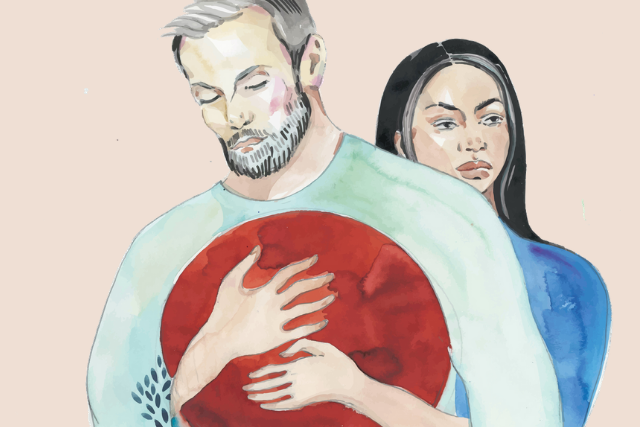
    Little did I know the exact opposite would come to fruition. Life, and I, became more colorful, brighter, happier, calmer, and more present. Still, however, it helped to have a few scripts in my back pocket for when I was caught off guard with the out-of-the-blue question around my beverage of choice.

    Recently, I posted a list of responses for that awkward moment at a dinner party or event when someone says (oftentimes in front of others) “Why aren’t you drinking?” I thought my “Live More Drink Less” members would find them helpful for future use. Instead, I was happily surprised when the comments started rolling in about the responses they already use, which I must say are far better than the ones I created!

    The reality is, just because someone asks you a question does not mean you owe them a response. You do not need to explain anything you are doing for the well-being of your mind, body, and soul.

    However, if you are more into mocktails than mojitos and seriously dread the curious comments, here are some great comebacks that will end the discussion around your drinking, some that may bring a giggle to you and others in earshot.

    1. It makes me drowsy, and I don’t want to fall asleep in your arms right now.

    2. I’m driving.
    3. Alcohol is just not something I am attracted to at the moment because it wakes me up at 2am with a dry mouth and headache.

    4. I’m doing a self-care program and it includes the release of alcohol, and I don’t want a hangover stealing my joy tomorrow.

    5. It fuels my anxiety and steals my peace.

    6. I like to get up early to see the sunrise.

    7. It’s more fun for me to create alcohol-free memories.

    8. “Wine Face” is not my friend. (Otherwise known as dark circles under eyes, puffy face, bloodshot eyes, etc.)

    9. I make decisions for my Saturday nights based upon how I want to feel Sunday morning.

    10. Because… I… Am… Not… but thanks for asking, Nosey Posey 🙂

    If, at this moment, you are feeling inspired to do a hangover-free holiday, that’s your soul speaking to you. Are you ready to listen?

    Taking a break is not about taking anything away but instead putting so much more into your life. Even just a short break from alcohol can create a ripple effect of joy, success, and well-being throughout the year.

  • The Profound Joy That’s Possible on the Other Side of Addiction

    The Profound Joy That’s Possible on the Other Side of Addiction

    “When you do things from your soul, you feel a river moving in you, a joy.” ~Rumi

    As I stood on the doorstep of that rehab facility, I felt completely empty except for the overwhelming weight of anxiety and shame. In that moment, I wondered what all the normal people were doing today. How did they cope? And how was it that I couldn’t hack life and that things had spiraled so far down?

    It’s hard to admit you have a problem. To be honest with yourself when you’ve numbed everything out for so long seems ridiculous. To finally share it with the people around you is also daunting for so many reasons, not the least of which is actually having to give up your most trusted coping mechanism.

    At that doorstep, I felt at some strange in-between place. On one hand, I knew I had to leave the past behind me, and yet my future was something I couldn’t even begin to imagine. I had no wish for the future. No agenda. I was just desperate.

    What had led me here was a brutal struggle with alcohol that had consumed my entire life. I had spent years trying to meet everyone else’s expectations and maintain the illusion of perfection in order to feel loved and accepted. I had never learned to feel my feelings or cope with tough situations in healthy ways, so when faced with uncomfortable emotions and circumstances, I numbed myself out. But this came at a huge price.

    My job hung in the balance as did my closest relationships. And I couldn’t remember what it felt like to experience joy because you can’t selectively numb emotions. When you numb any, you numb all.

    The other thing that had led me to this threshold was a very small and almost inaudible voice. I had this message that I needed to “come home” and that “I needed to do this by myself, for myself.” While I didn’t understand this message at the time, there was an odd comfort and something that got enough of my attention to get me here.

    What struck me most as I found my sea legs there was that in this setting, I could finally be honest. I could say out loud that I had a real problem with alcohol, that my life was in shambles, that I was scared and that I felt hopeless. To be seen and understood is quite possibly the greatest gift that any person can receive.

    That facility was filled with a cast of characters, but I was in no position to judge. I just saw the raw, authentic beauty of people owning up to their life thus far and genuinely trying to create some meaningful change. This was humanity laid bare. It was full of trauma and distress, and also humor, knowing, and compassion.

    We were on a tight schedule with regular urine tests, limited exposure to the outside world, and no access to sharp objects. While I physically felt incredibly confined, my heart and my mind were gaining a freedom they hadn’t had in a long time. It’s funny how that happens.

    I was beginning to feel things. I felt a lot of anger, shame, resentment, and fear. I learned that I was angry about a lot of things, including all the times I’d compromised myself to please other people. I was deeply ashamed, embarrassed, and sad that my life had spiraled so far out of control. I was also full of fear because my future was not something I could begin to imagine.

    But I also started to feel freedom and hope, and we had some seriously good laughs. (Addicts do really ridiculous things!) I began to understand that feelings are big, and I’d only ever managed them by drowning them out.

    I began to learn that when I feel these big uncomfortable feelings, I can let them move through me.  And, when I make room to feel the crap, I also make room for joy, bliss, and a lot of gratitude.

    I never thought I’d say it, but my recovery has, hands down, been my greatest teacher. When I removed alcohol, I was able to come home to a deep place within myself. I was able to make peace with her and even start to love her.

    Self-love came slowly. It felt foreign to me. But, the prospect of it had a gentle quality to it. It felt inviting and hopeful. I could look at myself in the mirror and see past the puffiness and sadness into a part of me I knew more deeply. I felt like it was possible to reclaim the parts of me that made me feel alive. I started to ask myself questions like: What do I like about myself? What activities and people would bring me joy? How do I want to show up in my life?

    I began to see that I’d put so much energy into avoiding my life, numbing out, and trying desperately to hide my addiction. I wondered what I might be able to do if I used that energy to create a life that I actually enjoyed. I also decided that if I was going to go to all of this trouble to turn my life around, I wanted to be deeply happy and create a life that brought me a deep amount of joy.

    I began to make the tiniest daily choices to be on my own side. I started to take care of myself. That body that I had ravaged, I started to treat with compassion by nourishing it, hydrating it, moving it, and letting it rest. I came to understand that it was actually wise, and not only should I listen to it, I could trust it.

    I sought out the help of doctors, therapists, energy healers, spiritual leaders, and anyone who could help me excavate everything I wanted to numb out—feelings of inadequacy, unhappy relationships, anxiety, and a deep sense of disconnection from myself—and release me to a future full of possibility. I just decided to be on my own side, love myself a little harder, and show up as my messy authentic self. That felt good, freeing and often, amusing.

    Going to rehab was one of the best/worst things I’ve ever had to do. It was the worst because it felt like a last stop. It was the best because it absolutely saved me and was a gateway to a future I never could have remotely imagined. Recovering from addiction has been an incredible gift.

    If you think going to rehab sucks, entering the real world sober isn’t a whole lot better. There are many times I remember why I wanted to numb this place out. We live an intense world that thrives on numbing out. Choosing to be mindful, conscious, and authentically happy is not for the faint of heart.

    The difference now is that I am in charge of my choices. The voice in my head is a lot more like that whisper—gentle, encouraging, and compassionate. I reminds me that I am in the driver’s seat and that the simple, mindful choices I make in every moment have a profound and transformative impact over time. How I take care of myself, how I show up in the world, and all of my intentional actions can make a very big difference.

    I realized that when I was saying “no” to alcohol, I was saying “yes” to me. I was saying “yes” to my health and vitality. I was saying “yes” to my mental health, my joy, and my peace of mind. I was also saying “yes” to the people that I loved and the kind of life I wanted to create. I was now living from a place of reverence for this human experience. Now, I wanted to celebrate it, savor it, and enjoy it.

    We all have raw material in our lives, and it’s what we choose to do with it that matters. We can let the past torment us or we can meet it, acknowledge it, and choose to create a different future. We can breathe life into this new way of being.

    Today, I make my well-being my top priority. I try to infuse my moments with joy. For me, this means simple things like listening to music I enjoy, getting outside, wearing my favourite color. It also means doing things that bring my mind, body and spirit joy—these things include yoga, meditation, journaling, getting a good night’s sleep, and drinking lots of water. I’m also sure to surround myself with good people. I believe that joy is a choice, and we need to open our hearts and our minds to let it in.

    Recovery is possible, and so is joy.

  • 10 Reasons Why I Ditched the Drink & What Happened When I Quit Alcohol

    10 Reasons Why I Ditched the Drink & What Happened When I Quit Alcohol

    “When I got sober, I thought giving up was saying goodbye to all the fun and all the sparkle, and it turned out to be just the opposite. That’s when the sparkle started for me.” ~Mary Karr

    Growing up I thought alcohol meant adulthood. As a child I eagerly watched the cacophony of advertisements, commercials, TV shows, and movies swirling, mixing, swigging, sipping, and smelling those delicious drinks that the beautiful and the sexy preferred.

    Alcohol was literally the forbidden fruit—a mystery and an abomination that not my parents, nor anyone in my family—really had anything to do with. I assumed this was due to my family’s lack of class or sophistication. Wine, beer, and spirits meant pairing with palates and inclusion in the upper reaches of society. It was beyond us, and it seemed foreign and fun. I couldn’t wait to try it.

    I remember my first full beer at around twelve or thirteen. I snuck away with my best friend Mimi to guzzle a couple of Coronas in the woods behind my house. It made my head spin and we giggled, but it left me feeling confused and dirty.

    Even as a teenager, alcohol failed to prove its glory. The glamour that I’d read about in Hemingway, Fitzgerald, and Dorothy Parker’s Jazz Age novels never manifested in the desperate high school parties or back seat sessions I had available to me, so I gave it up, opting for other types of drugs like marijuana and LSD.

    Fill the Void

    I stayed busy striving academically during my years at university, so alcohol never played a starring role. I drank a few glasses of red wine on a Friday night when I cleaned my apartment and learned how to chug an Irish Car Bomb with my friends at our local pub, but it never disrupted my flow.

    It wasn’t until I graduated and started working in the “real” world that alcohol became my dearest friend. And looking back, I realize that I only get chummy with alcohol when I’m not feeling fulfilled or satisfied with life.

    I finished my degree in 2002, a year after September 11, 2001. The US economy was in a downward spiral, and I had serious doubts about my place in the world. It was hard enough being twenty-two, but twenty-two trying to find a decent-paying job with a BA in Historic Preservation was almost impossible. I landed a paying internship and then a part-time gig as an assistant archivist and filled in my extra hours working as a paralegal at my friend’s dad’s law firm.

    After a lifetime of school and four years of university, I couldn’t believe the adult life and the freedom I was promised consisted of desk work for eight hours a day that didn’t pay enough for me to move out of my parents’ house. The prestige and the career I assumed was waiting for me failed to be a possibility. My life was nothing but a rebooted version of monotony from my school age years, so I started drinking to escape it.

    I remember needing to go out during my early twenties—like needing it so bad. Staying home alone on a Friday night was akin to suicide. I had my weekend planned and sorted by Wednesday, my friends assembled, outfits purchased, and possible bars and clubs all picked out.

    I needed the release. I needed to ring out the chaos and the comfort and the elation those sixty hours away from work could bring me. I needed to dress up, go out, get as drunk and insane and wild as I possibly could to get all that balled up energy and anger out of me so I could stuff down my disappointment at life from Monday to Friday. Even when I worked a Saturday shift at a clothing boutique, I was either still drunk or hungover.

    I remember how being drunk made me feel. It made me feel alive, energetic, magnetic, magical, powerful, fun, charismatic, fearless, hilarious, untouchable, and sexy. Alcohol gave me what I could not seem to muster at all during the weekdays sober, but what I so desperately craved.

    Looking back, I see now that what alcohol gave me was an undiluted, raw version of myself. What was happening after two or three drinks was what should have been happening sober—I felt like myself.

    But years of child abuse and learning to people-please and put others first had forced my authentic self into the backroom. Alcohol was the only way I could feel like myself. But I didn’t know that then and I never stopped at three drinks. I stopped at stumbling, mumbling, passing out at 4am drunk.

    Alcohol was an escape from a life and a person I didn’t like, but nonetheless, both I had created.

    Finding Freedom

    At twenty-six, I did something radical. I cancelled my wedding to a lovely man and decided to leave the US and travel to Australia. After four years of steady alcoholism, I finally realized that the life I was living was a prison not a life.

    As soon as I made the decision to leave, I stopped drinking. I started working more and saving money. I had somewhere to go and someone to be. I wanted a future.

    By the time I was twenty-eight, I was married, in love, and pregnant with my first child. Happy and healthy, alcohol had no room in my life. It didn’t come to stay again until after my second child was born, and I realized my husband wasn’t happy. Then, alcohol settled in while I drank myself into ignorance as a mother, wife, homeowner, and business-owner who didn’t want to admit that she had again constructed a prison instead of a life.

    Alcohol kept me alive during my subsequent divorce. The pain was so severe that, looking back, I’m grateful I had something to numb it. But two years after my divorce I realized that I was thirty-eight and totally free.

    It was time to finally live the life I knew I wanted. I was old enough to know myself and know what I needed to feel creative, alive, and happy. So, on 1 April 2019, I made a list of all the things that were not actively contributing to my life. Alcohol was number one on that list.

    Now, two years after giving alcohol (and all other drugs and addictions) up, I can easily say that I am so much happier and healthier without alcohol in my life. I don’t miss it at all. In fact, I wish more people would jump on the sober bandwagon.

    If you think you might be keen to join me, consider these ten ways giving up alcohol changed my life for the better. I hope these reasons are enough to convince you to ditch the drink.

    1. I learned how to feel my emotions.

    Instead of numbing myself, I had to learn how to feel all the feels. This led to learning how to feel and clear emotions as well as deal with my childhood trauma head on. Healing my trauma was the best thing I ever did.

    When hiding my true self, I had invited alcohol into my life in an attempt to numb the pain I was carrying around in my body, but it also allowed me to be my authentic self without fear. Healing trauma allows you to present your true self to the world.

    2. I learned how to play.

    Not drinking alcohol leaves more space for you to be a kid again. Instead of sitting at the bar complaining about your problems, you are free to ride a bike, swim at the beach, splash in the pool, run, jump, explore, and learn because life becomes a wonderland again. Living alcohol-free just invites in more of those rare, beautiful, and innocent moments.

    3. I lost weight.

    Alcohol is pure sugar, people. There ain’t nothing good about it. Bad for your liver, bad for your insulin levels, and bad for your brain. Not one good thing. At forty, I am thinner than I was during my twenties when I was binging all weekend long.

    4. I balanced my hormones.

    As a female, I can attest to having very disrupted hormone levels. After quitting alcohol, my PMS symptoms drastically improved. Alcohol is sugar, which disrupts your insulin. Because it disrupts sleep, it also throws off your cortisol. Studies have also proven that increased alcohol intake increases your estrogen levels. If you want balanced hormones, say goodbye to alcohol.

    5. I slept better.

    Alcohol massively disrupts REM sleep. Take a few nights off from your evening wine and see how well you hit the sack. While we mistakenly believe alcohol relaxes us and eases stress, it actually has the opposite effect. Not getting proper deep sleep leaves you feeling worse and worse.

    6. I saved money.

    Alcohol is expensive, and when you’re drunk you want more and will stupidly spend it. Saving money creates the actual freedom you seek. Not going out to bars and sipping on fancy cocktails is one of the easiest ways to save money.

    7. I developed hobbies.

    Instead of using alcohol as a hobby, I started to play tennis, learned sailing, and started up a side hustle. As a result of not drinking, I’m much more interesting.

    Quitting alcohol sadly means losing a few friends. You’ll instantly notice which friends do have alcohol hobbies. But that’s okay. Having actual friends and real hobbies is much more rewarding.

    8. I’m happier.

    I’m not as stressed, tired, worried, or angry. Alcohol seems to take away the pain of life momentarily, but it comes back to bite you tenfold the next day. Alcohol is like a health and wellness credit card. You don’t have to pay now, but you will have to pay later, plus interest.

    Not needing alcohol to numb or feel comfortable in scary situations is such a relief. My mind is clear and calm, and that brings me immense pleasure and joy.

    9. I don’t need alcohol to talk to people.

    Instead of running straight for the wine at networking events, I just sip on water and make casual conversation. I am who I am. I also try to make sure that I ask interesting questions.

    No more “So what do you do?” I want to know who you are, what you’re about, and I dig around and see what interesting facts about you I can unearth. People become much more fascinating sober.

    10. I’m leading by example.

    My kids are witnessing firsthand that their mother does not need alcohol, so neither do they. I’m sure they remember when I drank, but I also want them to see me sober.

    While I don’t villainize alcohol and I know that they will most likely experiment with it, I want to be sure that they know that they can live a happy and fulfilling life without it.

    Bottom Line and Disclaimer

    I’m not advocating for the abolition of alcohol by any means. What I am advocating for is more responsible representations of alcohol in advertising, movies, and film. Being exposed to such blatant subconscious programming at a young age gave me the belief that alcohol would add something to my life that I felt it was missing.

    And while I know that I used alcohol as medication to treat my unhealed childhood trauma, I know that teaching kids why people use drugs and alcohol would be more effective. If someone told me during my teenage years that people abuse drugs and alcohol to cover up the pain they are in, that could have changed everything for me.

    I never sought out treatment from AA because I believed my consumption of alcohol was not irregular or excessive by society’s standards. Looking back, this greatly disturbs me. I needed help. What I really needed was to heal my trauma much sooner. It took many, many years to find the right help to heal.

    If you are consuming more than two glasses of alcohol on more than two subsequent nights per week, then you most likely have a problem.

    If you need alcohol or any drugs just to get by, then you have a problem.

    Drugs and alcohol are ways for us to cope with pain. The best advice I can offer you is to seek help for the underlying issue and heal the reason why you need to drink. I wish you all the best and know that you are more interesting, powerful, and fun sober.

  • How to Get Through Your Darkest Days: Lessons from Addiction and Loss

    How to Get Through Your Darkest Days: Lessons from Addiction and Loss

    “You are never stronger…than when you land on the other side of despair.” ~Zadie Smith

    In the last years of my twenties, my life completely fell apart.

    I’d moved to Hollywood to become an actor, but after a few years in Tinsel Town things weren’t panning out the way I hoped. My crippling anxiety kept me from going on auditions, extreme insecurity led to binge eating nearly every night, and an inability to truly be myself translated to a flock of fair-weather friends.

    As the decade wound to a close, I stumbled upon the final deadly ingredient in my toxic lifestyle: opiates. A few small pills prescribed for pain unlocked a part of my brain I didn’t know existed: a calm, confident, and numb version of myself that seemed way more manageable than the over-thinking mind-chatter I was used to.

    At first the pills were like a casual indulgence—I’d pop a few before a nerve-wracking audition or first date, the same way other people might have a few drinks before going out on the town. But my casual relationship to opiates was short-lived: soon the pills were no longer reserved for awkward dates or nerve-wracking auditions, and instead necessary for any type of outing or interaction.

    I knew I’d crossed an invisible line when I began to feel sick without a “dose” of medication. The physical pain they’d been prescribed for had long subsided, but they’d created a need that only grew with more use. Soon I became sick if I didn’t take any pills, which is when I began going to any lengths to get more.

    I wanted so much to stop but felt trapped on a terrible ride: I’d wake hating myself for what I’d done the day before, and with deep shame I’d vow earnestly to quit—then afternoon would come and with it, withdrawal symptoms. As my stomach would turn and my head would spin, I’d lose the resolve to stop and begin searching for my next fix. With that fix would come a few hours of relief, followed by another cycle of self-loathing, a vow to quit, and more failure.

    It was a spin cycle that likely would have killed me had life not intervened in ways that at the time felt devastating; in a span of two weeks my “normal” façade collapsed and, with it, most pillars in my life. Like a house of cards toppling, I lost my job, car, relationship, and was evicted from my home.

    It felt like a cliché country song where the singer loses everything, except in those songs that person is usually likeable and innocent—but in my story, I felt like the villain.

    As I watched my entire life crumble around me, I felt no choice other than to return home and seek the shelter of the only person who had always been there for me—my mom.

    The mom who had raised me with morals like honesty, accountability, and kindness, although I hadn’t been living them for a while. The mom who had struggled raising two kids alone, gotten us off food stamps by going to nursing school, and who watched helplessly as I descended into the same cycle of addiction that had taken the life of my father.

    She told me I could stay if I was sober; I vowed to try, though I’d stopped believing my own promises long before.

    In the recovery program I found soon after, there was an oft repeated saying on every wall: “it’s always darkest before the dawn.” If taken literally, it makes you think about how dark the night sky is before dawn breaks… how heavy, looming, and consuming. Before the light returns, it can feel like the darkness will never end.

    That was how my early days sober felt.

    But as I cobbled together a few weeks and then a few months, I began to feel the faintest bit of trust in myself. Through abstinence and therapy, mindfulness and a sober community, the hopelessness that had seemed so all-consuming began to crack open and let in some light.

    I moved out into my own apartment, returned to school to complete a long-sought college degree, and had a waitressing job that I loved. Then, just after I achieved one year sober, I got a phone call from my brother that would change everything.

    “Melissa, you need to come home,” he said, his voice thick with tears. “It’s mom.”

    My stomach dropped as I gripped the phone, suddenly feeling about five years old. I’d find out later it was a heart attack.

    I felt the darkness descend again.

    In the days that followed her death I felt like a dependent child that was unable to care for myself. I dragged myself through brushing my teeth, dressing, and arranging her funeral; it felt like my heart had stopped along with hers.

    The same thought kept circling the drain of my head—how can I live the rest of my life without my mother?

    I couldn’t imagine not having her at my graduation, wedding, or when I became a parent. Her disappearance from my future brought up a dread much worse than that of the previous year— but as I began to settle into my grief, I realized I had a path through this moment, if I were willing to take it.

    The tools I’d forged in sobriety would prove to be useful in the dark days that followed. I share them below as an offering for anyone who travels through a dark night of the soul: simple steps to keep in mind when you can’t see a path forward.

    Take things one day at a time.

    In sobriety, you learn that imagining your whole life without another drink or drug can be so daunting that you just give up and get loaded. So instead of borrowing future worry, you learn to stay in the week, the day, and the moment.

    I didn’t have to know what having a wedding without my mother would be like—I just needed to eat breakfast. I didn’t need to imagine my graduation—I just needed to get myself through one more class. As I pieced my future together one moment at a time, I found that I could handle the emptiness in bite size pieces. I didn’t have to figure it all out—I just had to keep going.

    Allow feelings to come and trust that they will go.

    Much of what I’d been running from as an addict was the discomfort of my feelings. I didn’t want to feel rejection, so I contorted myself to be liked; I didn’t want to feel sadness, so I busied myself with the next activity. In recovery I learned that we can run from feelings all we want, but eventually they catch up to us in some form. Instead of running I’d learned to allow; instead of busying myself I’d been taught to turn toward pain and trust that it wouldn’t last forever.

    Though this was easier said than done, some part of me knew that running from the grief of my mom’s death would only snowball into a freight train later. I’d scream in my car as I seethed with the unfairness of it all; I’d rock with sobs on my couch when the sadness became too much. It wasn’t pretty and it felt terrible, but when I let the grief shake through me. I found that there would always be an end… that at the bottom of my spiral a thread of mercy would appear, and I would be able to go on.

    Tell the truth.

    From a young age, I felt much more comfortable in a mask of smiles and jokes than sharing how I was actually doing at any given moment. Though getting sober had helped me shed layers of the mask, I still found myself trying to likeable, approved-of, and “good.” But as grief zapped my energy and ability to make myself palatable, when people asked how I was doing I started to be honest.

    Sharing the pain I felt after my mom’s death was like standing naked in the middle of the street—I wasn’t used to crying in front of people and didn’t think they’d like me when they found out I wasn’t always “fun and easy going.” But it was exactly this type of vulnerability that allowed true friends to materialize, old connections to deepen, and the support I longed for to appear.

    Allow yourself to be forever changed.

    In recovery from addiction, I began to think of my sobriety date as a second birthday—the start of an actual new life. Though the way my former life had burned to the ground was painful, I welcomed the chance for a new start.

    But when my mom died, I didn’t realize that losing her would again scatter me into a thousand unrecognizable pieces—pieces I kept trying to fit back together but weren’t ever going to be the same, because I wasn’t.

    Once I allowed my life, relationships, and priorities to be changed by my grief, I found a self that was stronger, more resilient, and somehow more tender. I never would have chosen the form of this lesson, but I came through these experiences a more authentic version of myself… an overarching goal of my life.

    *

    It’s now been seven years since my mom’s death, and I’ve been sober for eight. As my journey continues to unfold, I never lose sight of how broken I once was and how dark things seemed. I also know that the struggles of life aren’t over; they’re part of being human and living a full life.

    But something I now keep in mind is that it’s always darkest before the dawn—I know I don’t have to always see the light…

    I just have to keep going.

  • He Broke My Heart But Taught Me These 5 Things About Love

    He Broke My Heart But Taught Me These 5 Things About Love

    “Sometimes the only closure you need is the understanding that you deserve better.” ~Trent Shelton 

    I’ll never forget the day we met.

    It was a classic San Francisco day. The sky was a perfect cerulean blue. The sun sparkled brightly.

    I ventured from my apartment in the Haight to Duboce Park to enjoy the Saturday. Dogs chased balls in the dog park. Friends congregated on the little hill. They giggled, listened to music, and ate picnic food. Kites flew high in the breeze. Adults tossed Frisbees in their t-shirts and bare feet.

    And I sat, bundled up in my scarf, zippered fall jacket, warm wool socks, and cable-knit sweater.

    This was summer in San Francisco. I had recently moved to the city at the end of May from the east coast with steamy eighty-degree weather, and now in July I sat on a hill and shivered. The famous saying fit perfectly, “The coldest winter I ever spent was the summer I spent in San Francisco.”

    I decided to venture to a nearby café, a French café called Café du Soleil (The Café of the Sun) and warm up with a hot beverage. I loved their outdoor seating.

    When I arrived, the café was packed. Every seat in the patio and the whole place was taken, except for one free stool at the bar next to a tall, handsome man.

    I sat down next to him with my hot chocolate and commented on how crowded the café was. He smiled and agreed, no longer interested in his salad or his glass of white wine. He was interested in me instead. His eyes sparkled.

    Fireworks!

    He was an artist, a photographer. He was a creative like me. Recently, he purchased his first house in Oakland, which included a lovely garden and was close to his work at a fine Japanese restaurant. Our conversation flowed easily, but from the moment I met him, I noticed a dark cloud over his head.

    “Are you married?” I asked.

    He jiggled his left fingers to show an empty hand.

    “No. No ring,” he said.

    “Kids?” I asked.

    “No,” he said, “but I would like some.”

    Our eyes locked. He sighed.

    “But… I’ll never have kids,” he said.

    I pressed my lips.

    “Oh, I think you’ll have kids one day,” I said in a lulling voice, looking sweetly into his eyes.

    He melted.  He really saw me. His eyes were full of adoration, love, and awe.

    We started dating immediately. It was fun and easy. He came to see me perform in Berkeley and I visited him in Oakland (in Fruitvale where he lived), where it was warmer and sunnier. He cooked me meals at his home with fresh fish and vegetables from his garden.

    Hummingbirds danced in the air when we were together. We drove to romantic rendezvous, danced, and he introduced me to the important people in his life: his best friend and his boss.

    The more time we spent together the sunnier and brighter he became, the happier we both were.

    Later, he admitted that he actually made most of his money selling drugs, followed by bartending, and that photography was only a hobby, not a profession. Also, he confessed that he had an alcohol and drug addiction. This was the reason his previous relationship ended even though they were both in love.

    I became sober before I moved to California. I overlooked the red flags because of our remarkable chemistry. Since I didn’t drink, he only drank one glass of wine with me at dinner and didn’t seem to want another. Because I didn’t do drugs, he never did drugs around me and he never talked about missing them.

    Everything was going perfectly, or so I thought. We never fought. Then Malik took his annual vacation to an event called Burning Man in Nevada while I stayed in San Francisco looking for a new apartment. Burning Man was very popular among the San Francisco locals and I was intrigued, but my sublet was up and I had to find a new place fast.

    Described as the “biggest party on earth” or “the only place where you can truly be yourself without judgment,” Burning Man was where people could party all day and night, dress up in outrageous costumes, see fantastic art and performances, and be completely uninhibited.

    When Malik returned from Burning Man, the storm cloud over his head reconvened above him and overshadowed him. He was jittery and paranoid. In fact, I didn’t recognize him; he became distorted and ugly. His eyes were glassy and darted back and forth like Gollum in The Hobbit. Hunched over, he tapped his fingers incessantly.

    “Everything happened too fast,” he blurted. “I told you, I don’t want to fall. I just wanted to have fun. I didn’t want to fall. I can’t sustain a relationship longer than two years. You want more than that. You should have kids. You’re getting older. You’d be a great mother. You need to have kids while you still can. You deserve that. You’re beautiful. There are plenty of handsome men in San Francisco. Why would you pick me? Pick one of them!”

    “Malik… we are having fun. I won’t let you fall. Let’s glide. Why are you talking about marriage and kids?”

    “You want more. I know it. I see it.”

    “We’ve never talked about the future.”

    “It’s not going to work. It’s over.”

    “Why are you breaking up with me? It makes no sense. Things were good before you left. We never fought. You were only gone a week. You mentioned having fun with a girl. Did you meet someone else?”

    His jaw hung open; his eyes bugged, and he took a large melodramatic step backward and gasped. He was shocked by my directness and accusation. But perhaps he was also stunned by my keen intuition.

    Sure enough, over the magical week, he met a beautiful redhead from Arizona, a single mother, who was interested in doing drugs with him in the desert, to escape her demons.

    They had so much fun together, isolated in a made-up city, laughing in the temptress of the sweltering heat. They experimented with Molly on the floor of his tent and “died together.”  Like Romeo and Juliet.

    I was devastated. Malik was no longer the person I thought he was. I had envisioned a life together. I had imagined traveling the world together.

    He told me he didn’t want me to text him any longer, and I didn’t. But the pain seared inside of me. and I held on for hope that he would see his faults and come back to me. How would he maintain a long-distance relationship with someone he did drugs with in the desert for a week? It made no sense. But that was how much he valued drugs over me.

    I never felt closure. I never felt that I was able to express all of my feelings. I wondered if I had been more vulnerable with him, if he knew how much I cared, if he would have had second thoughts and returned to me. He never came back. He never texted. It took me a long time to let him go. He was a big love for me.

    Looking back today (years later), I learned:

    1. Trust a soulmate connection.

    I felt it deep in my heart. I had met a soulmate. There was no denying it. Even though it didn’t work out, he opened my heart to love.

    2. See the red flags.

    I didn’t understand it at the time, but now I know that you can’t help anyone get over drug addiction. They have to want it for themselves.

    3. Don’t cling to love.

    Don’t cling in a relationship and don’t cling once it’s over for it to return. This was a hard lesson for me because when I love, I love hard.

    I have learned if you love someone and they cannot commit, do not hold on. If you love someone and they don’t want to be in a relationship with you, don’t think that in time, they will come to their senses and see how great you were and regret it and come back apologetically. People sometimes move on fast. Set them free. Holding on only hurts you. Allow yourself some peace too.

    4. Value honesty.

    A relationship without honesty is not a deep relationship. One shouldn’t have to drag it out of someone that they are dating someone else or that they have a drug addiction.

    5. Be with someone who has the same vision of the future.

    If you don’t have the same vision of the future, it’s not going to work. It shouldn’t be assumed that you know their wishes or that you have the same vision. It must be communicated.

    Meeting Malik opened my heart. Even though our time together was brief, it changed me forever. After overcoming the grief of losing a soulmate, it taught me not to settle, that I deserve better, and to trust that I will experience an even greater love next time.

  • What Happened When I Stopped Drinking Alcohol Every Night

    What Happened When I Stopped Drinking Alcohol Every Night

    “First you take a drink, then the drink takes a drink, then the drink takes you.” ~F. Scott Fitzgerald

    I love Sophia Loren. There’s a picture of her in my home looking eternally youthful and refreshed. From what I’ve been told, it’s due to her nine to ten hours of sleep each night.

    When I look at this picture, I see someone who revels in the delights of life. Food, laughter, sex, work, motherhood, and self-care. Not long ago I stared at that picture thinking, “How could I admire someone so much and live my life in such a different way from hers?”

    Have you heard of the halo effect? It’s when you do the things you know are right for your body, mind, and spirit, and in doing so you begin to exude this powerfully beautiful and enticing energy others can’t get enough of. I now realize my relationship with the daily habit of alcohol was actually diminishing the glow of my halo. It was essentially stealing my joy, time, money, looks, well-being, and especially my slumber.

    Who knew that for so long my beauty sleep was being hijacked by alcohol!

    Puffy face, dark circles, dry mouth, red eyes, weight gain, and not to mention the headache, elevated heartbeat, anxiety… these are just a few of the lovely side effects I experienced with overindulging in the bottle.

    In trying to reduce overwhelm, I inadvertently was fueling it through interrupted sleep and the fuzzy feeling the following day. 

    Do I think alcohol is bad or that drinking is off-limits? No.

    I do know for myself that the daily two, sometimes three, glasses of wine took a toll. It stole any type of focus and motivation the next day to follow through on all the things I said I would accomplish the night before, basking in the embrace of my main squeeze, Mr. P (Pinot Noir, that is.)

    My relationship with alcohol was stealing my ability to step into the life I claimed to desire.

    I wanted to release weight.

    I wanted to make more money.

    I wanted to write my book.

    Until I released the hold Mr. P had on me, I knew deep down I would never come close to achieving any of those dreams.

    Every morning I wake up and ask myself three things:

    1. How do I want to feel today?
    2. What is one thing I can do to love myself today?
    3. What can I give to others today?

    My answer to #2 was often…

    “Drink more water.”

    “Start weight training.”

    “Let go of gluten.”

    The truth was the one true voice within was quietly and patiently saying day after day, “Take a break from alcohol.”

    I just wasn’t ready to listen.

    A phone call eventually prompted an experiment in courage.

    For ninety days I promised a friend I would join her on an alcohol reset. After I hung up that fateful Sunday, I went to the calendar to mark the ninetieth day. Immediately fear crept in with thoughts like “You’ve tried this before, and it didn’t work” and “You won’t even make it through tonight.”

    Fortunately, in that moment, something other than myself took over. It was as if I was whisked into something beyond my own comprehension, because the next 120 days flew by. In fact, after day twenty-one I stopped counting. I no longer was ticking off the calendar to when I could finally have a drink. Why? Probably because I knew in my heart the steady drip of wine each night was simply not serving me, my purpose, my body, or my pocketbook.

    Why was this time different? Because I looked at it as something I “got” to do rather than “had” to do. I viewed it as a gift rather than a cleanse.

    What is on the other side of a toxic relationship with alcohol? More than I could imagine. Every morning I wake up and think, “I am so lucky.” It’s as though I’ve captured more time in my day, and each moment holds a sense of sacredness.

    I’ve seen sunrises by candlelight, baked banana bread before bed, and gotten more done by 8am than I ever did after 5pm.

    I’ve finished a Netflix show without falling asleep… and actually remembered what I watched.

    I’ve released twenty pounds.

    I wake up hydrated.

    My skin seems to have reversed in time a la Benjamin Button.

    The list goes on and on.

    The other day my mother gave me a compliment that made me cry… in a good way.

    She said, “You know, it’s like your skin, your hair… you look like you used to look when you were younger.”

    For so long I was using wine to push down the unwanted feelings of anxiety and overwhelm. While I thought I was “taking the edge off,” I was actually making myself edgy!

    These days, I plan my fun based on how I want to feel the next morning. What I’ve discovered is that taking a break from happy hour can literally transform not only the other twenty-four hours of your day but your life as well.

    When you have enough energy and vitality to embrace the day, you start to find little miracles everywhere in the form of simple pleasures, a pleasant conversation with a friend, or a moment that might have sent you into a tailspin… but now you breathe through it with patience and grace.

    People often ask me, “Do you ever have a glass of wine… ever?”

    Probably every two weeks or so if I am being social (and socially distancing) with family or friends. Do I enjoy it? Yes and no. In fact, the few times I have had a glass or two, it no longer held any energy for me. It’s now a “take it or leave it” kind of thing.

    In fact, it’s as if moderation moves you toward abstinence.

    Why? Because I am no longer willing to sacrifice how good I feel the next morning for alcohol.

    I also revel in the reduction of anxiety! Why would I want to go back to something that was creating the exact experience that was causing me to emotionally suffer?

    Yes, there are people who can drink daily and function fine, and there are those who can’t drink at all. And then there are people like me who know alcohol isn’t the kind of friend they want to hang out with every day but perhaps in very small doses every so often.

    Drinking is marketed as sexy, elegant, and unifying.

    Is slurring your words sexy? Is stumbling out of a restaurant elegant? Is not remembering the conversation you had with a friend unifying?

    The reality for me was alcohol made me feel drained, grumpy, and even a wee bit nauseous. How you feel is creating your day and, in essence, your life. So, if you feel cluttered and haphazard waking up, you are creating a cluttered and haphazard day. 

    I used to wake up and run to the kitchen. Waiting for me was the one thing that would decide if I needed to beat myself up or pat myself on the back. Like the scale, the opened bottle of wine oftentimes determined if I was “good” or “bad” the previous day.

    Only one-fourth of the bottle left? Bad girl!

    Three-quarters left? Good girl!

    So much time, energy, and thinking put into the act of drinking!

    In the end, bedtime is the best of all.

    Four hours of alcohol-free sleep is WAY more rejuvenating than nine hours of alcohol-infused sleep. Waking up feeling your body buzzing (in a good way!) is the best high of all.

    If your inner voice is asking for a break, maybe it’s time to listen.

    Sweet dreams.

  • Tips from a Former Addict: How I Made a Change for Good

    Tips from a Former Addict: How I Made a Change for Good

    I was a drug addict. Yes, I did it all. No, my childhood was not full of abuse, I was actually a pretty lucky kid, and I had it no worse and no better than anyone else, except for maybe some “daddy issues.”

    I am not much for blame. I know who was smoking, sniffing, and popping, and it wasn’t the bad angel on my shoulder who made me do it, it was just me.

    I can give you the exact reason why I started doing drugs. I was afraid to just be myself, simple enough. Everyone else’s thoughts of who I needed to be or what made me cool was more important than embracing my authentic self.

    Drugs were a huge part of my life, and they influenced the places, people, and pain I endured, but again, this was still all a choice.

    I had wonderful opportunities at my fingertips but let them go for a long-term abusive relationship.

    I lost jobs, burned bridges, and hurt my family.

    I stole, lied, and fought.

    Had random sex, lost respect, and wanted to die.

    On a good note, I still maintained a relationship with my higher power. Even though I checked out on him, he was always there to check in on me, and I always had my mother’s, sister’s, and best friend’s support. This is major because we are not meant to do this alone.

    Change Is a Brewin’

    Before any change happens, most people need something extreme to take place, like a near-death experience or hitting rock bottom.

    Unfortunately, I had to hit rock bottom—a couple of times.

    The first time, I had started doing heroin for a good three weeks, and as my whole world was spiraling out of control—like breaking my boyfriend’s hand for what looked like a piece of black tar heroin… only to find out it was just a piece of stepped-on gum on the floor—a glimpse of light still managed to show through, and I made a decision right there.

    I quit… for good. Yes, it happened that fast. Turns out I’m not about that life.

    The second time, I was homeless with my sister. My mom was tired; who could blame her? She had two daughters she loved with all her heart who continued to make the worst choices, despite what she taught us. So, she kicked us out.

    Subconsciously, I was desperately seeking a better path. My actions would say otherwise, but deep down we all know what we really need. I was finally ready to make the choice to make a change.

    Change for Good

    “No matter how hard the past, you can always begin again.” ~Buddha

    If you want change, if you truly want it, it will be so. Don’t say I’m “trying.” That implies you are still holding resistance, and as Buddha also says:

    “Change is not painful, only resistance to change is painful.”

    A drug addict, or anyone who has ever been addicted to anything in their lives, knows they will stop when they want to. This is at no one else’s will but their own. That doesn’t mean it will be easy or they won’t need help. Just that it starts with a choice—their own.

    If you have ever seen the show Intervention, you know it is very rare that someone who was brought to rehab by the petition of their family ever stays away from drugs for good.

    This is a dire truth, but I can tell you from experience that when you don’t make this commitment for yourself, the decision loses its empowering effect, and you won’t know the feeling of having sovereignty over your own life.

    Whether you are a drug addict or just know you need something to change, accept that you need change and start searching (like you’re doing now, and luckily it brought you to me).

    I am not perfect now… or am I, since I am finally being me? There are days I still get stuck in a mood, but the difference now is I have learned to acknowledge it.

    Acknowledge It… Whatever You’re Feeling

    After I stopped doing drugs completely, and I mean completely, I realized my anxiety was at an all-time high every day. What I needed to do first was acknowledge it, but I kept trying to hide it. Like I was trying to convince myself that I didn’t feel the way I was feeling. I guess because I hadn’t realized yet that I really didn’t know who I was without drugs.

    Say it out loud, even if it’s weird, “I feel so anxious right now” or “I am feeling sad”—it dissipates faster, and maybe if you say it to someone you trust, they can help dig up what the issue is. My boyfriend and I do this with each other and found that sometimes a hug does the trick.

    Once you start admitting that you’re not feeling okay—right when your body is signaling you—you can search deeper into why and find out by paying attention to patterns.

    First, I started acknowledging that I was feeling crappy. I began to also pay attention to the thought patterns that led up to the feeling, or what happened just before the feeling commenced.

    This gives you glimpse into the type of thoughts you are ruminating on. Is there something you have not let go? Is there an irrational thought that keeps coming up? Is your self-talk demeaning?

    When you suppress it, it comes out in lots of different ways, trust me.

    I am the queen of looking crazy because I blew up randomly at a co-worker, overreacted completely to a joke (and made it awkwaaaard), yelled at my boyfriend when he wasn’t giving me the right responses to a story I was telling, and my favorite phrase as the broken girl was, “No one gets me…” Acting like a victim is not the same as admitting what you are really feeling, though it may be easier.

    Find the Good, and Self-Love Will Follow

    During your search, you will find an abundance of “ways to make yourself happy” and outlandish claims of instant happy pills or whatever.

    The important thing right now is to adopt good habits—go toward good and good things will follow. The key is learning to love yourself. The hard part is finding ways to apply this.

    There are two main ways I’ve learned to be good to myself: yoga and meditation.

    This dynamic duo is popular for a reason, guys.

    I recommend Yoga with Adriene, all day. She is amazing. She always says, “Find what feels good.” To a drug addict like me, I/m like, that’s what got me in this mess, Adriene, but if you insist.

    All joking aside, if you have ever done something like drugs, impulse buying, or even eating a donut, it makes you feel good for a short period of time, right?

    And then you seem to need more, feel guilty, or crash (maybe all three). Finding what feels good, in Adriene’s terms, is listening to your body, not your impulses.

    For example, you know when you stretch after you’ve been sitting down for a while, you just seem to know exactly how and which way to move because you know what feels good? Start there. If you practice both yoga and meditation, take all your expectations and trash them. Just listen to whomever is teaching you and follow their guidance.

    Turn Those Good Habits into a Ritual

    After I found yoga and meditation, I started to enjoy taking care of myself. This was more than an addiction; it soon became second nature.

    I recommend you start with:

    • Yoga in the morning. Yoga with Adriene has a ton of beginner videos I started with
    • Mediate whenever you can. I recommend Dr. Tara Brach, who teaches mediation and emotional healing so you can learn easily to do it on your own
    • Make time to do something you really love. Mine was drawing and painting.

    You would think eating healthy would be on the list, right?

    Stopping drugs cold turkey made me lose my appetite, so I was proud if I ate anything at all. But, before I knew it, the chemicals in my brain changed and I started to crave healthy food, and in abundance.

    I didn’t just jump into some random diet because I was “doing everything good for me” now. I knew I needed to take things step by step when making such a big life change and let healthy habits naturally build on top of each other. When we try to do too much at once, and try to form new habits without intrinsic motivation, we often fail.

    Inc.com explains about 60% of us make New Year’s resolutions but only about 8% of us actually achieve them. We are humans, not technology; we can’t click on a software update and “you are now equipped to achieve your goals”—in my best Google Home voice.

    Give yourself some time and be kind to yourself. Once you start making healthy choices, you will naturally want to make more. Honestly, I was proud of myself for already achieving what I had, and my soul couldn’t get enough. I was treating myself with respect, then came love, and then came a deep connection to everything and everyone around me.

    Though you might start feeling happier with yourself and your life, this doesn’t mean you’ll be happy all the time.

    If you need to cry, let the tears flow. There were some days I would ball my eyes out non-stop but feel so cleansed afterward. Actually, there are even some days now when I feel I need to cry and I just do it. And you know what? My anxiety disappears when I didn’t even realize it was building up in the first place.

    Learn Your Triggers and Avoid Them for Now

    During my transformation I had to start identifying my triggers and avoiding situations I knew would start the cycle all over. I realized this meant the difference between change for now and change for good.

    Whatever you are struggling with, identify what triggers you the most into doing it. This will involve you really being honest with yourself, and not judging yourself for what you find out. Right now is not the time to be your own worst critic.

    I hope you know that just reading through this shows how strong you are and how capable you are of living life as yourself and truly at peace.

    I am the first to call myself out, beat myself up, and feel guilty as hell. Don’t do this to yourself.

    This is a vulnerable time, and you need all the love you can get—giving yourself love is the only way to conquer what is causing you pain.

    So instead of going out when everyone else was, I stayed home because I knew that social scenes would make me want to grab a drink; I would start smoking a cigarette (which I also quit), and then who knows what I would want to get my hands on once I was on a roll.

    I waited months before I trusted myself to get out and hang. The power you attain when you realize you can say no—without FOMO—is greater than any feeling you are chasing by giving in.

    If I can do it, so can you.

    You have a whole support system available to you, and yeah, maybe it’s full of strangers in a meeting. But once you get in touch with yourself, you will realize we’re not really strangers at all; we all come from the same energy, and we all mean way more to each other than you’ve ever thought.

    If you ever need support from somewhere, you can always get it from me. The real me. Without drugs. Finally unafraid to be myself, because I finally love myself.

    **This post represents one person’s personal experience and may or may not reflect your unique situation. Especially f you’ve experienced trauma or abuse, you may need professional help to address the root cause of your addiction. There is no shame in getting help, or in struggling as you work toward recovery. Be good to yourself, be patient with yourself, and keep reaching out if you’ve yet to find the right people to help you!

  • How to Survive a Breakup with an Addict and Heal Your Heart

    How to Survive a Breakup with an Addict and Heal Your Heart

    “The positive cannot exist without the negative.” ~Alan Watts

    My heart was empty. It had never felt that empty before. Sometimes I felt a gap gnawing at my chest making everything around me feel like half of a whole. I felt like a piece of me had died.

    I painted my childhood bedroom grey that summer, picking out the color carefully after taping paint samples on the wall and pondering them for hours.

    The old color gave me a headache; it glowed neon green and looked dirty now from years of feet on the walls. Hidden above the moldings, I found pencil drawings from when I was younger. Quotes and such that had meaning to me at one time, but now the point was lost.

    These distractions were welcomed. They shifted my eyes from all the stuff I’d crammed in my parents’ dining room: a pile of boxes, a desk, a lamp, and some pictures that I had framed from old magazines I found at flea markets with him. This was all that was left of that life that I ended abruptly one night in April.

    He was passed out drunk on the living room floor and I was alone. I had been for a while. So why was I waiting, hoping he’d wake up and be with me? Hoping to see a glimpse of that person that wasn’t consumed by the addiction.

    That person was gone and that part of me, gone with it. I made extra noise packing my bag that night so that I would wake him. Tired and groggy, he got up and stood near the stove, squinting at me. Then crossing his arms, he turned away to stare out the window.

    He was angry that I woke him. Never wake a sleeping drunk. They won’t care (even if they really do care). I don’t know why I woke him. I wanted to sling my bag over my shoulder and slam the door behind me, and I wanted him to see me do it. He threw his hands up at me—“Just go.” And he went back to the floor. Don’t wake a drunk and expect them to care.

    The tears came out heavy as soon as my car door closed. I’m surprised I could drive through it. After eight years I was back at my parents’ house. Even if I knew deep down this was the best decision for me, it felt like defeat.

    I had trouble doing even the smallest of tasks. I moped around in my bathrobe smoking cigarettes and lying on the brown leather couch for hours. Skipping meals and flipping through meaningless TV channels. It affected my work as well. I started taking more days off and I couldn’t focus. I had a plan to move forward, but the pain had rendered me paralyzed.

    The thing about losing your best friend is that your best friend is not there to help you through it.

    After I left, pieces of his old self started to appear to me in sober mid-day conversations. He didn’t ask me to come back, he knew I wouldn’t. And I knew not to be tempted by this side of him while the alcoholic still lurked around his mind.

    The transformation into addict was so quick. Around year four we were both drowning in this addiction and consumed by it. Sometimes I wonder how it had even started. It was as though I woke up suddenly from a nightmare. I knew something had to change.

    He had alcoholism in his family and had avoided it for years, and still it had come to this. I quit drinking around our sixth year. After two years of sober vs. drunk rivalry, he finally told me the truth. He would never quit.

    It was like being stabbed in the chest; I couldn’t breathe.

    After you leave alcohol behind, you realize how meaningless it is. In my eyes, he was choosing a stupid bottle over me. My self-esteem started to plummet rapidly.

    I felt for a long time I was a broken person incapable of being fixed. But no one is broken forever. We are all capable of healing and moving forward into better phases of our lives.

    This will be the hardest decision you ever half to make, to stay or go. When you are in love and have invested your time in someone, when you start to contemplate a different life, your emotions will be like a cruel game of tug of war.

    You will start by downplaying how bad the problem is. If you are covering or lying to your family and friends for the addict, then there is a problem. I isolated myself for years just because I was embarrassed to admit how bad it had actually gotten.

    I can’t tell you how many times I told my family my partner was just too tired or sick to come when in reality he was drunk or hungover. I wasn’t ready to face the reality that I needed to make a change. It took me a long time before I made the decision for myself.

    You will feel guilty and you will be tempted to go back. You are leaving the person you love alone in the most vulnerable stage of their life. But you have to understand that you are not responsible for what they do with their life. You are not doing anything for them by staying with them while they choose to do this to themselves.

    In many cases, people make the best decisions when they are at their lowest. The only thing you have to do is to make good choices for yourself. You should never feel guilty about removing yourself from a situation that is harming you.

    You will feel anger. It’s been hiding underneath that unconditional love for a while, and it will surface. It is completely natural to feel angry. You hear all these stories about addicts who quit for love, who quit to save the relationship. But this is not always the case.

    Just because this doesn’t happen to you doesn’t mean there is something wrong with you. To a person looking from the outside into the addiction it’s frustrating, because it seems like such a simple solution that benefits both sides—all they have to do is quit. But to someone that is in the addiction it’s so much more than that.

    It’s as though the addict is blind, and he or she is the only one who can decide whether to see again. Quitting is a scary decision and it will be one of the hardest things they will ever do. The honest truth is it has nothing to do with you. You can beg and plead with them, but it’s still up to the addict to get help to release himself from the addiction. You are just an unfortunate casualty.

    Through all the pain I felt from the breakup there was not any part of me that regretted the decision I made for myself. All of my experiences have made me who I am, and I have learned to love that person more than I ever thought possible.

    Here are four tips on how to heal and become the best version of yourself.

    1. Take the time you need to heal and get past the relationship.

    I think a lot of people have expectations on how long it takes to grieve a relationship, but we all heal at our own pace. I often felt that my healing process was taking too long, but every step was necessary for me to become the person I am today.

    I don’t care if it takes you years, as long as you realize that you will get over this.

    Take time every day to meditate and allow yourself to feel anything you want, without guilt. These thoughts and feelings do not define you, these are things you can experience and then let go.

    Express your concerns and fears to the people you are close to, who will listen to you. Talk to yourself, even out loud. Sometimes talking it out can help you work through your inner struggles and make sense of it all.

    Be kind to yourself. Some days it may feel like you are not making any progress, but you are. Even if the healing is slow, you are moving forward with each day.

    Listen to your needs and question your fears. Take the time to invest in you. Take the love you have and pour it back into yourself and your life. You will start to see your mind set changing as you allow yourself to be your true self.

    2. Forgive them and create closure for yourself.

    Everyone deserves forgiveness, and holding onto anger is only hurting yourself. This anger you feel toward the person, and the addiction that is consuming them, will make relationships harder in the future.

    I learned this the hard way and carried a lot of resentment into potential new relationships. I also pushed a lot of people away because I was scared to open up. I had put so much of myself into my past relationship and I wasn’t sure if I could go through the heartache again.

    Assuming that every new relationship would be like the last one was ruining anything that was potentially positive.

    If you want to eventually find a healthy new relationship, it’s important to work through your feelings from your old relationship.

    One thing that really helped me was telling my ex-partner how I felt. When I realized this, I was halfway across the world, but I knew I had to do something. So I wrote him a letter. There was something really freeing about writing everything I felt to him, and then hearing his response helped me heal on a different level.

    Sometimes I think we are afraid to tell people how we actually feel, but it can be necessary for our growth. Be kind and be honest and let go of the outcome. You may get the response you’re hoping for, but it’s possible you won’t, and that’s okay. Even if your ex doesn’t give you closure, it is important to create closure for yourself.

    3. Let go.

    I believed for years that my ex would be in my life for the rest of my life. I had this idea in my head about the happy ending we would have. The addiction felt like a roadblock that I couldn’t tear down. I was frustrated that I couldn’t control it. I didn’t realize I was spending my energy trying to remove a roadblock from the wrong path.

    We spend a lot of time and energy trying to control things when in fact it is impossible. We have this idea of how we would like things to be, but sometimes that is not the best path for us. Learning to let go of things I wanted to control freed me from the anxiety I was feeling and lifted a big burden from my shoulders.

    Learning to let go takes time. We are wired to control and plan everything in our lives. For me, meditation, traveling, and writing helped.

    By traveling, I was able to face my fears and get out of my comfort zone. Traveling put me in situations that I could not control. It helped me learn to trust the flow of life, knowing that there would be good things and bad things, and no matter what happened I would make it through.

    Mediation helped even when I was still struggling in my relationship. It brought me to a world beyond the stress and helped root me when I felt my world was spinning in all directions. It helped me to understand that releasing control was the key to peace. It meant that I no longer was tied to worry about what was going to happen, or what happened in the past, and helped me focus on the present.

    Writing has always been an outlet for me. When I write my worries and fears out, they seem to transfer from me to the page. Sometimes reading back after I’ve written them, the problems don’t seem so big anymore and I can take a step back and see more solutions.

    Everyone has a different outlet that helps them let go. You just need to find what works for you. Whatever your outlet is, make sure you are passionate about it and you will you watch your worries fade away.

    4. Follow your dreams.

    It’s time to get excited about life! There’s a good chance that you put your personal growth on hold while in this relationship. Go back and find yourself again.

    About a month after the relationship I realized I was so focused on the negative aspects of the breakup that I wasn’t seeing the potential path in front of me. Realizing that there may be something better out there for me was important for moving forward.

    Separate yourself from the path that you had with your ex-partner and focus on the new path in front of you. Don’t worry too much about finding another relationship. Focus on finding purpose and passion, and love will find you.

    Be someone who is hopeful and excited about the future. Remember, your experiences have made you strong and capable of creating endless possibilities for yourself and the future.

  • How to Love an Addict (Who Doesn’t Love Themselves)

    How to Love an Addict (Who Doesn’t Love Themselves)

    I grew up in a family of high-functioning addicts. We looked like the perfect family, but as we all know, looks can be deceiving. No one was addicted to drugs, so that obviously meant that we had no problems. Cigarettes, alcohol, food, and work don’t count, right?

    I have come to realize that what we are addicted to is nowhere near as important as the admission that we’re addicted to something. When we try to make ourselves feel better by telling ourselves that gambling or porn or beer is nowhere near as bad as crack or heroin, we are merely lying to ourselves. In the recovery movement, we call this denial.

    Denial was the foundation my life was built on. We did not speak of my grandfather’s abusive behavior and alcoholism. We did not question my grandmother’s chain-smoking habit. We did not mention my other grandfather’s drunken falls and injuries. We never tried to help my aunt who was eating anything she could get her hands on. No one questioned the countless hours my father spent working.

    There were so many things we just never talked about. There were so many things that were secrets. Things I had to hide. The unspoken family rule.

    I loved my family members. I still do. They were good people. They tried really hard. They just didn’t know how to look after themselves, to value themselves, to love themselves.

    They did the best they could under the circumstances and with the lack of awareness, information, and support at the time, and I don’t think it’s ever fair to judge that from the outside.

    I have gone through my stages of anger, judgment, and resentment and come out the other side. All that is left is sadness and love.

    I loved my family members. I loved them so much and all I ever wanted, even as a little girl, was for them to be happy.

    I wanted my granddad to not drink come 4pm so he would stay the lovely man that he was. I didn’t want to see him shout and cry and fall over. I didn’t want to be scared like that and watch my grandmother cry while helping him up and cleaning away the blood. He was a good man, but he had seen the worst of World War II and I don’t think he ever recovered from that.

    Maybe he would have been an alcoholic without those experiences; I will never know, and it really doesn’t matter because he was not just that.

    He was kind and generous. He played with me and made me laugh. He cuddled me in bed and told me story after story. We had so much fun together. Remembering those happy times will warm my heart for the rest of my life. I will be forever grateful for those happy memories and the time I had with him. I guess that he is the first addict I ever loved.

    My grandmother was the kindest person I have ever met. In my eyes, she couldn’t have been any more perfect. I wish that she had lived longer so that I could have had the opportunity to get to know her as an adult.

    What would I have seen? Would I have seen a woman who didn’t set any boundaries? Would I have seen someone who gave and gave without ever really getting anything back? I don’t know. I cannot say. But she was definitely the love of my life. And maybe that’s because she might have been codependent and treated me like a little princess, or maybe it is that she was just one of the kindest people the world has ever seen. It might even be both.

    It doesn’t matter who it was and what they were addicted to, I loved them. I truly loved them. I loved them then and I love them now even though they are no longer alive and haven’t been for decades.

    Addiction may change how they behaved at times, but it didn’t change the essence of them. And that’s what I have always loved. It doesn’t mean that I was blind to everything that was wrong. It doesn’t mean that I didn’t sense that something was terribly wrong.

    Today, I love the addicts in my life from a greater distance. The pain of loving someone who doesn’t love themselves is too much to bear. We speak and we care, but there is an emotional depth we can never reach. A depth I craved then and I depth I will crave if I let myself forget who I am loving.

    Because that’s what I found to be my solution for maintaining relationships with people I love but who struggle to love themselves:

    I can love them, but I can only do so by accepting that there is an emotional distance I will never be able to bridge. I have to accept that the closeness I seek, I can never get. I may get a hint of it every now and then, but I can no longer allow myself to be lured into wishing and hoping that things will change how I want them to change.

    I can love them and I can hold space for them, but I cannot change them. What I can do is remove my expectations and hopes and dreams for them and their relationship with me by accepting the reality of our situation.

    This gives me freedom. It gives me freedom to love them while being true to myself and honest about my feelings.

    It allows me to enjoy the contact and connection that exists while having healthy boundaries in place that protect me from sacrificing my own well-being and peace of mind in a misguided attempt to save them from themselves. It is that separation that finally allows us to connect.

    It gives us space to respect our struggles and each other as individuals. As long as I failed to see that, I tried to change them, and that’s what stopped us from connecting.

    And so. learning that I cannot change another person and that only they have the power to do so, opened me up to actually being able to love them.

    I also learned that I cannot love another person into loving themselves. I used to believe that meant that my love wasn’t good enough—that I wasn’t enough—but I now know that the love they needed and the love they sought was the one that only comes from within.

    Because if my love could have saved them, it would have. I loved them that much.

    But love that comes from the outside needs to be able to connect with the love that’s on the inside, and that love, they just hadn’t connected with.

    That love they never found during their lifetime.

    And so, they couldn’t teach it to anyone else either. No one knew about it, and everyone just coped with their pain in the only way they knew how to.

    I wanted them to look after themselves and be happy so very much. I wanted them to be healthy for me. I wanted them to stay alive for me. I didn’t understand that I couldn’t save them. I didn’t really comprehend that part for most of my life, which paradoxically has cost me a lot of my life.

    I know the yearning and the craving. The wishful thinking. The rollercoaster of hope and crestfallen disappointment. The believing in them and cheering them on only to watch them fall again.

    But I was always on the outside. It was never in my control. It never really had anything to do with me or meant anything about me.

    I just happened to be born into my family and love them.

    For most of my life I wondered if I did really love them or if I just loved what they did for me, but I can now say with absolute certainty that I loved them.

    The things I loved doing with them, I haven’t done in decades and yet the love is still as strong as ever. As is the gratitude.

    I am grateful for the kindness they’ve shown me and the lessons they’ve taught me. I am grateful for their perseverance and their endurance. I am grateful for the thousand things they were, because they were more than addicts.

    They had dreams and aspirations when youth was on their side. They had things they liked and favorite clothes they wore. They had friends and social lives. They danced and they had fun. They kissed and made up. They tried really hard to be the best people they could be, and how could anyone ever say that that wasn’t good enough?

    They never did anything to intentionally purposefully hurt or harm anyone because they were good people. Good people who never hurt or harmed anyone but themselves. And witnessing that was painful. Knowing that that is what happened and continues to happen is still painful.

    It is a reality I wish wasn’t true. If there was something I could do to change that, I would. But I know I can’t. And that is the reason why I can love the addicts in my life.

    When I thought that I could change them or save them, I couldn’t love them. Love accepts people as they are. It does not seek to change someone so they fit in with your idea of them. Love is inherently respectful. Trying to change someone isn’t.

    I could never really control them or their substances, and I have lived with the panic of not being able to. But I have made friends with it. I now know how to soothe myself and in that way, I take care of myself. I have achieved what they never could.

    I cannot control what my addicts do to themselves. I cannot control the choices they make. But I can control my choices.

    And I choose health, growth, and love. I will not continue the family heirloom of addiction and self-abandonment.

    Instead, I have learned to love in healthy ways. And that includes me. I have learned to take care of myself and dare I say it, like myself. But I couldn’t have done it if it wasn’t for my family.

    While they provided me with my challenges and relational struggles, they also provided me with kindness, love, and strength. For some reason, they managed to love me enough to let know that there is another way of  being because that is what has kept me going.

    I always knew there was something wrong. I just didn’t know what it was. And I also always knew that there was a better life out there, and I was right. I just wish that my addicts could have also had that experience. I wish we could have had it together, and I don’t think that I will ever stop wishing that.

    But I accept the reality that is and I will continue to do for myself what they could not do for themselves so my children will not share the struggles of the past. I focus on what I can control, and I take full responsibility for my own life. I look after myself how I wish they had looked after themselves. I do it for me. I do it for my children. And I do it to honor them.

    Because I know that they would want for me what I wanted for them. The difference is that I am able to give it to them. And I do so with all my love.

  • My Life with an Alcoholic Parent (and 6 Addiction Myths)

    My Life with an Alcoholic Parent (and 6 Addiction Myths)

    “Be the person who breaks the cycle. If you were judged, choose understanding. If you were rejected, choose acceptance. If you were shamed, choose compassion. Be the person you needed when you were hurting, not the person who hurt you. Vow to be better than what broke you—to heal instead of becoming bitter so you can act from your heart, not your pain.” ~Lori Deschene

    Take a moment to look around where you are right now. Look at the people surrounding you, whether you’re in your office, a waiting room, or the line at the post office.

    Statistically, one out of every eight American adults in your space is suffering with a substance abuse disorder.

    This person could be your next-door neighbor, your family doctor, your teacher, or a co-worker.

    Out of more than 15 million people struggling, less than 8% reportedly have received treatment, according to the National Institute of Alcohol Abuse and Alcoholism.

    Television shows and movies often lead us to believe that the people who suffer from addiction are the homeless, jobless people on the street who beg for money to feed their habit.

    In some circumstances, this unfortunately is true, but I’ve learned that addiction can also be found in the people around you in your day-to-day life. Addiction doesn’t care which zip code you live in or what skin color you have. It doesn’t matter how much money you have in your bank account or what kind of position you hold within a company.

    I was around five or six years old when I first recognized that my dad had a problem. I didn’t know what the word “addiction” meant; however, I knew his actions made me feel that our family was different than others.

    It would be summertime and I would see neighbors sitting outside laughing together and barbecuing, and being that it was starting to get late in the day, my dad had already drank a few too many and would be inside for the night.

    The National Institute on Drug Abuse estimates that a quarter of children in the U.S. grow up in households where there is substance abuse.

    Growing up with a parent who has an addiction isn’t easy. You see them transform into a different person before your eyes. Within hours. You wonder why they choose to spend time with the addiction instead of with you.

    You can cry, scream, and slam your bedroom door to try to make a point of how much it hurts you, but it never seems to be enough. And it doesn’t mean this person doesn’t love or care about you, although it can make you feel that way.

    At a young age, I remember experiencing the ups and downs of a parent with an addiction. Each day would be different than the last. Some days he would joke and laugh, and others, we would do anything to avoid him because we knew he’d take out on us the weight of whatever he had been carrying that day.

    My dad was considered a “functioning alcoholic.” I don’t recall him ever missing one day of work, even when he had the flu or after spraining his ankle.

    By trade, he was a carpenter and scaffolder, and to this day, he is the hardest working man I’ve ever known. He’d wake up before the sun to get to work so he could provide for us. He went above and beyond to care, love, and protect us, but after a certain time of day, we knew that would all come to an end.

    The classic picture of an alcoholic is someone who drinks too much and whose life is falling apart because of it. But that’s not always reality.

    A functioning alcoholic might not act the way you would expect them to act. They might be responsible and productive. They could even be a high achiever and in a position of power. In fact, their success might lead people to overlook their drinking.

    Alcohol and drugs steal away the person you love. They rob you of time you should be spending with them. They turn them into someone else—a person who says and does hurtful things. And in turn, you might say hurtful things back. Not because you want to, but because you simply don’t know what else to do. You begin thinking of what you can do to turn this person around. What will make them stop?

    I grew up with a parent who had an addiction to numbing his feelings.

    There were times when he would open up briefly about the hardships he had experienced growing up and how hurt and angry they made him feel. Rather than forgiving those who’d caused him pain, to free himself of what he kept bottled up inside, he would drink to relieve it.

    It hurts to see someone you love hurting. It hurts to not know what to do to help them.

    My dad never admitted to having a problem. Not once. Not even when we poured the cans of beer we’d found down the sink and he became excessively angry.

    Admitting to having a problem is the first step, and the next would be to make a change. And it wasn’t something he believed he could do.

    Sometimes it feels easier to stay the same than do what’s needed to rid yourself of the addiction. You feel ‘safe’ where you are, and you can easily justify maintaining the status quo. My dad had a job, a family, a nice home. In his mind, why would he need to change? That wasn’t what rock bottom looks like. So everything must have been fine how it was.

    I recently heard a story by Kirk Franklin:

    “Two twin boys were raised by an alcoholic father. One grew up to be an alcoholic and when asked what happened he said, ‘I watched my father.’ The other grew up and never drank in his life. When he asked what happened he said, ‘I watched my father.’ Two boys, same dad, two different perspectives. Your perspective in life will determine your destination.”

    I was a young girl when I realized that I had two choices when it came to my dad’s addiction: to forgive or to hold onto the hurt, as I saw him do. I saw what it looked like to hold on to anger and resentment, so I decided that no matter what my dad might say or do, I would show forgiveness. 

    This wasn’t easy because at the end of the day, you just want that person to stop, but I chose to focus on the dad I had when he wasn’t under the influence of alcohol. The dad who would shoot hoops with me in the backyard, who would fill the oil up in my car without asking if I needed it, who would keep letters I wrote to him in the pocket of his jeans years after I had given them to him.

    I’ve learned that it is our decision to create the life we want to live and the mindset we want to have. I could have held on to the hurtful things my dad said or how he refused to get help. But I believe we have the power to overcome any circumstance by focusing on what lifts us up rather than what pulls us down.

    “I am not what happened to me. I am what I choose to become.” ~Carl Jung

    Today I am choosing to share my story with you as a way to honor my dad, who kept himself in a cage for his entire life. Was it out of fear of judgment or discomfort? I’m not sure. But I do know for the last twenty-nine years, I’ve been conditioned to do the same.

    The stigma related to addiction causes us to feel shame. And I have felt shame for having a parent who had this disease. We keep our stories inside because we are afraid of how people will view us or our loved one. But in reality, it’s sharing that sets us free—free to make a difference in the life of someone else who is struggling.

    Today is the day I open the door to my own cage, after nearly thirty years, to set myself free and break the cycle. I hope that my story will connect with someone who needs it—a person who, like me, has buried their past deep inside and pushes forward, not realizing the power and strength found in release.

    I also hope to shed some light on what it’s like to struggle with addiction, based on my observations of my father, because I believe we’re better able to help the people we love when we let go of these common myths:

    Addicts can stop if they want to.

    Research shows that long-term substance use alters brain chemistry. These changes can cause intense cravings, impulse control issues, and the compulsion to continue to use. Due to these chemical changes, it is very difficult for a true addict to quit solely by willpower and determination.

    Addiction only affects those who are weak, uneducated, or have low morals.

    Addiction does not discriminate. It affects people of all ages, ethnicities, cultures, religions, communities, and socioeconomic statuses. Addiction is not a result of low morals, though often addicts behave in ways that violate their personal beliefs and values. Addiction is an equal opportunity disease.

    Addiction is a disease, so there is nothing you can do about it.

    If your doctor told you that you had cancer, would you not begin the necessary treatment and make the necessary lifestyle changes? Addiction isn’t much different if you believe in the research that suggests that addiction is a disease of the brain.

    Just because you have the disease of addiction doesn’t mean you throw in the towel. Research shows that the brain damage resulting from substance use can sometimes be reversed through abstinence, therapy, and other forms of treatment.

    Addicts who relapse are hopeless.

    Addiction is a chronic disorder. Addicts are most prone to relapse in the first few months of being clean and sober. A relapse does not constitute failure.Processing the events surrounding a relapse can be healthy and aid in preventing future relapses.

    Alcohol and drug use cause addiction.

    There are several factors that contribute to a person becoming addicted. While alcohol and drugs may trigger a substance use problem for some, there are those who can drink alcohol and experiment with drug use and never become addicted. Factors that contribute include environment, emotional health, mental health, and genetic predisposition.

    Addicts should be excused from negative behaviors.

    Some may believe since addiction is a disease, addicts should not be held accountable for their actions. This is not true. An addict may not be responsible for their disease, but they are responsible for their choices and their recovery.

    It’s easy to judge and criticize what we don’t understand. You don’t have to walk a mile in an addict’s shoes to understand addiction and addictive behaviors. You just have to educate yourself and want to help so you can break the cycle of pain. And remember: whether you’re an addict or you love one, there’s nothing to be ashamed of, and you are not alone.

  • 5 Things I Wish I Did When Dating an Addict

    5 Things I Wish I Did When Dating an Addict

    “Don’t let people pull you into their storm. Pull them into your peace.” ~Kimberly Jones

    I was finally in a solid place when I met my now-ex-boyfriend earlier this year. I had created some healthy habits for myself and was fully recovered from the eating disorder that had ruled my life for eight years prior.

    Things had turned around completely for me, as now I was getting my first novel published and had a flourishing greeting card line.

    When I first met my ex, who I’ll call Alex, it was love at first sight. I was completely infatuated with this talented individual from Seattle who made beautiful paintings and music. The art he made truly resonated with my soul, and he could say the same thing about my writing.

    Needless to say, it felt like a match made in heaven. So after our courtship, I was more than willing to move up to Seattle from Los Angeles and live with him.

    I was heartbroken when four months into living together, he revealed he was addicted to meth. He admitted that he’d been addicted the past two and half years and had been using every day up to five times.

    I was blindsided, stunned, and overwhelmed with a twister of emotions. How could I have not known? I scolded myself. He was always hyper and created much more art in such a short time frame than I’d ever seen any other human do.

    Well, they say hindsight is 20/20. I didn’t know he was on meth because I didn’t know what signs to look for, and I’d personally never tried meth myself.

    When Alex admitted this to me, I cried in fear, certain that our lives would change for the worst. I knew this betrayal of trust would be difficult for me to recover from, as I became vigilant at his capacity for dishonesty.

    I also worried that he wouldn’t love me the same after he quit meth and that the only reason that he’d fallen in love with me so easily was because he was high! But I had already invested so much in this relationship, moving states and all. I wasn’t ready to just throw what we had away.

    It was ironic because I remembered feeling so happy that I had met him when I was in a “good place” in my life, but all of that seemed so distant now. We can all morph into the worst versions of ourselves when we become clenched in fear.

    When Alex was in the process of attempting to quit, it became difficult to detach myself from the turmoil he’d ooze every evening.

    Like clockwork, every night around nine, he’d get this vacant look in his eyes and begin to pace around. It was like a dark cloud had come over him and I wasn’t even there anymore. I began to feel that I wasn’t enough for him.

    The love I had for him and the idea of us kept me in that relationship for several months after the revelation about his addiction, and I eventually realized why Alex had admitted his meth use to me. He thought he could rely on me to be the “strong one” in the relationship, since I was sober, but in actuality, I was just as fragile as he was.

    And I felt too awkward setting boundaries for this recovering addict, afraid he’d feel infantilized or patronized every time I questioned him about his drug use or nagged him to stop. I felt like I lost myself again, when just months before I was so certain about my identity.

    Alex continued to relapse for the next six months, never staying sober for more than a few weeks at a time, and I began to feel extremely helpless.

    Those fits of restlessness and angst that overwhelmed him every night felt too close to home, and just like him, I had yet to master how to tolerate those uncomfortable feelings.

    Some evenings I found strength in myself and was able to tolerate the uncomfortable emotions he was experiencing without reacting. Other nights, we’d get into fights when he’d want to go on a “drive” (buy meth).

    This lovely relationship we once had devolved to one of raw, dark emotions that neither of us really knew how to get a grip on. And worst, we both relied on the other person to get it together!

    Eventually, despite the fact that I loved this man with all my heart, I knew I had to set myself free from this relationship. I had enough insight to know that even though I’d recovered from my eating disorder, I still wasn’t strong enough to resist getting pulled into his troubled psyche. I needed to pull back to create my own peace again, because I sure as hell wasn’t going to get it from this guy.

    It’s been about a couple of months since we’ve been officially broken up and I’ve moved back to Los Angeles to live with my family.

    Many days I have guilt and regrets for leaving and not being able to help him out of his addiction. It was like all of the meaningful talks we had, trips to the psychiatrist, and meditative walks in nature were for nothing. In all honesty, I felt pretty useless to his recovery.

    In retrospect, I know I would have done things differently if I knew the things I know now. Here’s what I wish I would have done as soon as I found out I was dating an addict:

    1. Encourage him to get help

    When he first revealed he was addicted to meth, I could have been honest and told him I had no clue what to do and somehow convey the depths of helplessness I felt. Then I would have pointed him to professional support sooner and wouldn’t have taken his relapses so personally, as if I was at fault because I was solely responsible for helping him.

    2. Get support for myself

    I should have attended Al-Anon meetings and attempted to have my own support group in Seattle instead of letting anxiety take such a strong hold over me and then isolating myself from meeting new people.  Supporting an addict can be draining, and no one should have to carry that alone.

    3. Take good care of myself

    I should have made time every day to reconnect with myself in some way, whether it be meditation, exercise, or prayer. I should have taken time every day to reflect on my own journey and the progress I’d made instead of becoming so fixated on helping him with his.

    Relationships often become unbalanced when one person is an addict, but both people need time and space to focus on themselves and their needs.

    4. Set clear boundaries

    I wish I had clearer boundaries for myself going in so that I didn’t stay as long as I did and watch the love we had sour. For instance, it would have been more helpful if I told myself that if I saw him using while we were together, I would have distanced myself from him.

    I could have communicated this to him, as well, by saying something like “I’m all for your recovery and supporting you through your journey. But using drugs while being together is unacceptable to me, and if I find out you are using, I will have to distance myself from you for my sake.”

    Setting boundaries earlier on may have prevented my unintentional enabling, which created behaviors in him that I later resented.

    5. Prioritize my own happiness

    I shouldn’t have let guilt keep me in a relationship that was making me unhappy. Like many others, I felt pretty paralyzed by fear of hurting the other person. I wished I had more strength to leave this person I was in love with because he was self destructing and refusing to really help himself.

    As one can surmise, these are all lessons and wisdom you gain after an experience like this, not before, but perhaps they will be helpful to someone who’s right now standing where I once stood.

    Now I am taking time to find peace in myself every day so that I am better equipped to handle another person’s baggage (because we all have it) the next time I attempt to date.