Tag: achievements

  • Rethinking Productivity: Less Hustle, More Harmony, More Energy

    Rethinking Productivity: Less Hustle, More Harmony, More Energy

    “The flame that burns twice as bright burns half as long.” ~Lao Tzu

    I can hear the voices now:

    “You should be disappointed in yourself” (for not taking the SATs in seventh grade).

    “Don’t be lazy like [fill in a not-so-studious sibling/cousin]!”

    “You need to work harder or else you’ll fall behind.”

    “Always be analyzing, analyzing, analyzing!”

    “We need to improve our operational efficiency or ELSE.” Or else what?

    My mind became a boiling stew of negative self-talk, heavy thoughts, and beliefs that didn’t serve me. Throughout my entire life, from an immigrant Asian family to corporate leaders fixated on metrics, the voices have been consistent:

    You’re not doing enough.

    From a young age, I’ve been indoctrinated (without consent) into the school of thought that “you better work hard or you’ll get left behind.” I got sucked into the hustle and grind culture and became fixated on productivity.

    But it never felt enough. The promotions, the raises, the accolades, the praise—they never satisfied the part of me that felt like I was never enough. There was the constant, compulsive need to do MORE.

    As the productivity gurus say, you need to master time management. But while striving to manage time, I realized this:

    Time was really managing me.

    Any time I freed up from being more efficient, I’d fill up with more busyness. I constantly spent my energy on the past or the future. Never in the present moment.

    Eventually, I burned out. Life became miserable. It sucked the joy out of life.

    During my lowest point, one evening, I sat at a local park and stared into the abyss. Questioning the meaning of existence and why I wasn’t enjoying life anymore.

    In a miraculous moment, a two-year-old toddler waddled toward me with boundless joy and hugged me. It’s a moment I’ll never forget.

    The toddler’s mother apologized to me. With a softened heart, I reassured her, “Please don’t apologize. I needed that.”

    The greatest teacher I could have had at that moment was a two-year-old who barely knew his right hand from his left. The lesson? My achievements don’t define my self-worth. Self-acceptance isn’t determined by how much I’ve accomplished. Love is unconditional.

    And that began the journey of rethinking my life. And rethinking productivity.

    It wasn’t until I began examining my inner world more consciously that I was able to rewire my programming and shift the paradigm completely.

    Through individual therapy work, meditation, and letting go of old beliefs, I learned the very thing so innate to each and every one of us:

    We are enough.

    Nothing more to do. Nothing more to be. Just enough. Always enough.

    The next truth I gained along the journey was that I could still be “productive” and enjoy my life.

    In the rough landscape of hustle culture, we often find ourselves racing against the clock, trying to squeeze an extra drop of efficiency out of every second. As a result, it sucks the soul out of our lives.

    If this were a cooking show, we’d be moving around the kitchen at a frantic pace strictly following the ultimate recipe: “success.

    Yet somehow, through all our hustling and bustling, we lose sight of the most important ingredient: energy.

    Energy is everything.

    It’s how we show up in the world. How we show up for each other. How a two-year-old toddler joyfully embraces a stranger. 

    Without our vital energy, we can’t be our best selves and do our best work. We can’t create that culinary masterpiece that evokes joy in the world.

    While it’s something kids have naturally, we adults need to relearn what this feels like.

    As reality has it, the relentless push toward productivity often leads us to a paradoxical outcome: burnout; a state of emotional, physical, and mental exhaustion; and working from a depleted place (no energy) that creates work that feels… lifeless. 

    Following the cooking metaphor, let’s consider a more harmonious approach to getting things done.

    Sprinkling Life Energy into the Productivity Stew

    If you had more energy in your mind, body, and spirit, how could that change the dynamic of your work? Whether that be launching a new side hustle, finally writing that book swimming in your head, or striving toward that next promotion at work, how could more energy serve you?

    Like savoring each sip of an aged pinot noir, we can fully experience the gift of the present moment. And through this embodied place, we create from a place of inspiration filled to the brim with energy.

    Here’s how we can sprinkle this goodness into our day-to-day.

    Pause for a Breath

    Before diving into the deep end, take a moment to just breathe. A deep breath can be like a mini vacation for your brain, and it’s much cheaper than a flight to the Bahamas.

    Focus on the Entrée and Prepare Fewer Side Dishes

    By zeroing in on what truly matters, we can devote our full attention to fewer, more meaningful tasks. Consciously doing less can create more impact. Surprise!

    Balance, The Secret Ingredient

    In the recipe for success, “doing nothing” (aka rest)  is the unsung hero, rejuvenating our minds and preventing us from becoming crispy around the edges.

    Self-Compassion, The Essential Seasoning

    It’s okay if we don’t create our best work at first. It’s okay to not meet our own personal expectations when we’re trying something new. Sprinkle a little self-compassion and patience into the mix and remember that every chef has burnt a dish or two.

    Find Joy in the Cooking Process

    Life can be messy. We’re human after all. Embracing the mess in the kitchen leads to creativity and, sometimes, the most delightful surprises. Did you know chocolate chip cookies were created by mistake?!

    We need to understand that our life journey is not linear. When we make mistakes, it might feel like we’ve failed or gotten off track. We might feel incredibly confused. But it’s the experience of moving through this confusion that leads us to clarity.

    So be open to making mistakes. Be open to making a mess, and try to have fun while doing it. This might lead you closer to your goals than you’d expect—or open up new possibilities you didn’t even know to imagine.

    Stirring in Small Changes

    Remember, it takes time to develop new habits. Adapting this new recipe of productivity doesn’t mean a menu overhaul overnight. Start with small, incremental steps—perhaps a morning ritual that includes a moment of gratitude, a new activity that allows you to disconnect and recharge, or a three-minute dance party with yourself. Anything that brings you back to presence.

    Change simmers slowly but once established, it can create sustainable results: a sense of peace, fulfillment, and harmony—and it’s well worth the effort.

    The Balanced Plate of Productivity and Well-Being 

    By incorporating moments of mindfulness, rest, and self-care, we create a more sustainable approach to work and life. And as a byproduct, we’re gifted with longevity.

    By letting go of the fixation of time management and producing results, we paradoxically earn more quality time in our lives to do the things we love and truly care about. Because we have more energy for them.

    After over twelve years of working in the corporate world, I’ve decided to step away from the nine-to-five job and enter the world of entrepreneurship. As you might know, starting your own business is like walking into uncharted territory. It can be both exciting and scary, simultaneously. And unlike a corporate job, which defines the parameters of how productive you are, as an entrepreneur, you create your own.

    This paradigm shift has led me to embrace the tips I’ve mentioned here in this article. Not only has rethinking productivity saved my sanity, I’m actually enjoying the work I do for the first time in a long time. I feel more alive. Fueled with more energy. And I’m having more fun. Now that’s a recipe worth keeping.

    If you’re ever finding yourself lost and confused in this world so fixated on productivity, do what a two-year-old toddler does and see the wondrous world with curiosity, wonder, and awe. And remember you are worthy regardless of what you achieve.

  • How I Created Opportunities in a World Full of Obstacles

    How I Created Opportunities in a World Full of Obstacles

    “I really want to, but I can’t because [add semi-valid reason here].”

    That’s a template sentence to let yourself off the hook.

    It’s not copyrighted, so feel free to use it any time you want to let go of your dreams and not feel bad about it.

    Honestly, it hurts me every time I hear someone say it. I see it for what it is—an excuse.

    Every single one of us has ambitions, hopes, dreams, and goals. We fantasize about them on our commutes to work and before we sleep. We talk about how we will one day achieve them, but when it comes time to put them to action, we use that template sentence.

    I had every reason to use the template sentence. I live in a third-world country in the Middle East. We suffer from a lack of water, electricity, security, and opportunities—especially for girls.

    In the Western world, if you want to learn a new skill, you sign up for a training course, get a book, find articles online, or join a club. It’s different here. Here, we don’t have training courses, libraries, or clubs, and the internet is slower than a snail crawling through peanut butter.

    During my teen years, I felt stuck in my life. I wanted to learn so many things and achieve my wildest dreams, yet I couldn’t. How was I supposed to impact people when I would only leave the house to go to school on the weekdays and grocery shopping on the weekends?

    I read stories of kids my age winning science fairs and inventing devices to solve the world’s leading issues. Yet, there I was, wasting my time at home, waiting five minutes for a single webpage to load.

    I had always imagined what my life would be like, and this is not what I had pictured. Time was passing me by, and my talents and ambitions were going to waste.

    I wanted to have an impact, but I couldn’t because I didn’t have the opportunities to learn and gain experience and feedback. (Notice the template sentence.)

    This way of thinking was eating away at my soul. Day after day, I found myself sinking into a pit of misery. I would spend my days lying in bed, staring at the ceiling. There was nothing I could do to change my life, so why try?

    One day, I had had enough. I had been lying in bed for days. It had been years since anything amazing had happened to me. I couldn’t take it anymore. I couldn’t accept the fact that this would be my life. There was an itch under my skin to make my life worth living.

    “Life is too short to waste it moping about the hand of cards life had served me,” I thought. I didn’t care what it would take. I would do whatever I could to get myself out of the hole I was in.

    I decided to use the resources I had to create the future I dreamed. “Bloom where you are planted” became my life motto. What I had access to at the time was the internet.

    In order to get out of the country I was in, I concluded that I’d need a scholarship. I set my mind on getting the Japanese Monbusho Scholarship. I found blogs, articles, and books online to become fluent in Japanese. I practiced day in and day out. I tried a plethora of different methods to learn new words and perfect my grammar. In a few months, I was able to hold a simple conversation in Japanese.

    I also realized that I would need money. I wasn’t allowed to go out and get a job. This was an obstacle I had trouble accepting. I tried to convince my parents to let me work, but they refused for my safety. My mother introduced me to the concept of passive income and showed me blogs that were making six figures every month!

    I set out to build a hedgehog care website. Every day, after school, I would research hedgehogs and write detailed articles about how to feed them, groom them, play with them, and anything else one would need to know. I went on like this for 3 years, studying Japanese and writing about hedgehogs.

    I’m sure you’re expecting a spirit-lifting ending where I travel to Japan and live off my flourishing website. That’s not how this story ends.

    I didn’t get the scholarship. The fact is, I didn’t even get the chance to apply. I ended up studying in my third-world country. I was crushed. I didn’t want to, but it was either study here or not study at all. Unwilling to accept the facts, I started an online university the next year. I now study at two universities simultaneously.

    As for the hedgehog website, it made me a total of $60 for the three years of work I put into it.

    I can stand here and tell you that I tried, but it didn’t work out. That’d be a lie. It did work out—just not the way I expected.

    I’m not in Japan, but I know how to speak Japanese and have met many interesting people along the way. I learned from them and gained experience just as I hoped I one day would. And instead of one major, I now have two, both of which I enjoy learning about.

    My hedgehog website didn’t succeed, but I created a new one that’s even better with the expertise I gained. I interact with my readers often, helping them find ways they can live their dreams. I love hearing their stories and learning how I helped them build better habits or make their goals a reality.

    I still live in the same country I did before. I still have to wait five minutes for a webpage to load. However, I know that even though the obstacles are always there—and always will be—they have nothing to do with happiness, fulfillment, success, peace, and satisfaction. Some people have it better than others, and some have it worse, but every single person, regardless of circumstance, can control their mindset.

    I didn’t let my obstacles stand in my way, and I created my own opportunities when I found none. In an instant, anyone can decide to embrace the cards they’ve been dealt and create their own unique way to shuffle, redistribute, alter, or mold them into a winning hand.

  • How I Stopped Being Busy and Why I’m Now More Fulfilled

    How I Stopped Being Busy and Why I’m Now More Fulfilled

    “Sometimes doing less is more than enough.” ~Kris Carr

    Two years ago I made a radical lifestyle shift.

    Prior to this change, I was constantly striving to do more, to achieve more, to be more. I was squeezing as much as I could into any given day. I was in conflict between building a business, working, studying, and having time for pleasure and fun. I was taking on way too much and losing myself in the process.

    Building a business is a lot of work, far more than I had imagined, and it takes time to generate consistent revenue that you can live off. In order to make ends meet it was necessary for me to have paid employment. I often had multiple part-time jobs, and at times I worked full-time running my business on the side.

    I studied and studied and studied for over a decade. When I completed one course I would start another. I have multiple certificates, diplomas, and even a master’s degree.

    I obsessively compared myself to others. Their achievements all seemed bigger and better than mine. This constant comparing made me feel inadequate and dissatisfied with my own successes. So I worked even harder to do more, achieve more, and be more.

    I felt guilty taking time to relax and play. I didn’t enjoy downtime because I felt like I was being lazy, and having a quiet moment also highlighted just how fatigued I was from living my workaholic lifestyle.

    Friends admired how much I was achieving, always commenting, “I don’t know how you do it all.” Quite frankly, neither did I. All I knew was that I was completely exhausted, I wasn’t happy, and I was becoming disconnected from the people I cherished the most.

    My life needed to change. I couldn’t continue to push through the fatigue anymore because I was beyond worn out. I wanted more joy and happiness in my life. I wanted to be more connected with those closest and dearest to me. I realized then I had to do less.

    Before I could start reducing my commitments, I had to first identify what was really important to me. These were the questions I asked myself:

    • What do I love to do?
    • What energizes me?
    • What brings me joy?
    • What do I really want?
    • What do I absolutely have to do?

    In an ideal world we’d get to only do what we love to do. But in reality, there are things we are obliged to do whether we want to or not. We can delegate some activities we don’t like doing, but other tasks only we can do.

    After identifying what was truly important to me and what I absolutely had to do—spending time with those closest and dearest to me, using my business as a way to teach and support others, engaging in activities that aided my physical and mental health so I could be my best self—it was time to stop doing things.

    There was a lot of discomfort with letting go. It was certainly an odd and unusual feeling to have space in my day, and I had to really fight the temptation to fill my days with an ever expanding to-do list.

    Next, I established boundaries to support doing less. Boundaries such as:

    • Not working after a set time each day
    • Not working weekends
    • Not checking emails or messages or looking at social media after a set time in the evening
    • Not checking emails, messages, or looking at social media in the morning until after breakfast
    • When on vacation, not working and limiting my screen time

    Setting boundaries meant I needed to get comfortable with saying no. I said no to being around people and in social situations that drained my energy, I said no to business opportunities that were not aligned with my overall business vision, I said no to further study and more qualifications because my ten-years plus of study and numerous qualifications were more than enough, and I said no to things that I really did not want to do.

    This was not easy for me. It is far easier for me to say yes, as I don’t like to let people down, and I don’t like to miss out on opportunities. But it was time for me to focus only on the essential and what would make the most impact to my life and business. I could no longer try to do everything.

    I had to remind myself that saying no was not actually a no, it was simply my prioritization, and by saying no I was saying yes to the things I really wanted and creating space for what matters the most to me.

    I also made a big mindset shift around my comparison with others. Instead of feeling less than others because of their success and achievements, I began to see others’ wins as an inspiration and reminder of what is possible.

    Additionally, it occurred to me that we only get to see other people’s highlights in life, work, and business, and this is a very inaccurate view. All we see is what they want us to see—their successes and achievements. We don’t get to see the hard work and failures they may also have experienced. Regardless of success and amazing wins, everyone experiences highs and lows.

    Much to my surprise, I also found out that successful people don’t say yes to everything; they’re much more strategic and only say yes to what will enhance themselves, and they’re very good at delegating. This knowledge changed my perspective around trying to do it all.

    By doing less I found I had more time, energy, and enthusiasm for the things most important to me. I felt more alive and joyful. The quality of my work I improved. And I became more present to life and people around me, which improved my relationships enormously.

    Occasionally I have moments where I feel like I should be doing more, but the happiness and fulfillment I feel from doing less overrides those moments. I can’t go back to how things used to be and experience the unhappiness and fatigue that resulted from constantly striving for more.

    Before anything gets on my calendar or I say yes to requests or tasks now, I ask myself these questions to guide my decisions:

    • How important is this to me?
    • Will this energize or exhaust me?
    • Do I absolutely have to do this?

    Doing less does not mean I do nothing; doing less means I spend more time doing what matters most to me, which makes my life happier and more fulfilling.

  • How I Stopped Chasing Happiness and Started Enjoying My Imperfect Life

    How I Stopped Chasing Happiness and Started Enjoying My Imperfect Life

    “I want to live my life without stress and worries. I don’t need to be rich or famous. I just want to be happy.” ~Unknown

    Have you ever set a goal and then become obsessed with it, making it the center of your life and arranging everything else around it? Did you think that only after you achieved your goal would you be totally relaxed and happy?

    I’ve done this many times before.

    Throughout my life, I’ve measured my happiness by my achievements. I pushed to get good grades in school, then focused on going to a good college, then getting a high-paying job.

    However, even after getting all of those things, I was not happy. After attaining them, they felt ordinary, not as extraordinary as I thought they were.

    The feeling of achievement was not that awesome after all.

    I blamed my achievements for my dissatisfaction—that they were not tremendous enough for me to feel happy. So I thought I had to do more. I found a new goal, and I fell into the trap again.

    I always had something to pursue, and I could never feel happy until I achieved everything.

    I abandoned other things in my life to pursue them. My excuses always were “I can’t rest right now. I am busy doing [x]. I will do that after I achieve [x]. I will be relaxed and enjoy my life only after [x].”

    My [x] constantly changed from one thing to another. And I never let myself rest. I deferred my life to the future. Now was never a good time to enjoy life.

    Even when I went out with my husband for a date night, I could never really enjoy my time.

    The feeling of guilt was always there to haunt me, to blame me for ditching my work, for being relaxed and lazy. Only when I felt miserable and exhausted did that guilt fade away.

    That was when I realized something was not right.

    The Problem with Measuring Your Happiness by Your Achievements

    In the next couple days, I attempted to stop thinking of how to achieve my goals and paid full attention to how I was feeling. I took time out for myself, just to think about my life.

    And it was a painful realization that not only I did not enjoy my life, I missed out so many things in the process.

    I Forgot the Ultimate Goal of My Life

    Everyone wants to be happy, including me. My ultimate goal is to enjoy my life. But I constantly postponed my happiness while working toward other short-term goals.

    I thought I was in charge of my life and my happiness, but I wasn’t. I let those short-term goals control of my life. As a result…

    I separated myself from my loved ones.

    In my vision of a happy life, I was always there with my family and for my family. But the hard truth was, I was not.

    In fact, I turned them down when they showed concern about me. I felt like they didn’t understand my choices.

    The whole reason I needed to achieve more was to be with them when they would be happy and proud of me. But that was not what they wanted. They wanted me, not my titles.

    Whenever I achieved something, they were happy for seeing me happy, not for anything else.

    A part of my happy ending was already with me, but I did not see it.

    I hurt my own feelings.

    As I was busy chasing the idea of my perfect life, measuring my worth by my achievements, I wasn’t fond of myself

    When I did not meet my target, I felt unworthy and I beat myself up.

    When I earned something, it wasn’t extraordinary enough to be proud of. I even beat myself up for not trying harder to receive something bigger.

    I had a rough relationship with myself. I thought I was never good enough for my own love, or for anyone else’s.

    It’s painful believing that you are unloved.

    I damaged my health.

    Because I was fixated on achieving my goals above all else, I ignored my body when she screamed for rest. I thought I only deserved to rest when I could no longer work, when all of my energy was gone.

    If I rested before my energy ran out, I thought I was a loser. A loser would not achieve anything.

    I worked my way to exhaustion just to earn myself some rest. I physically drained my immune system until just a simple cold would easily break me.

    Learning to Be Happy with My Imperfect Life

    We all have the tendency to compare ourselves with others. I grew up believing life is a race, and I tried to be the fastest horse.

    Social media has made this worse. We see other successful people and we crave their achievements. We think if we were as successful as they are, as rich as they are, as talented as they are, we would be as happy as they are.

    Only this isn’t the case.

    The truth is that we are different people, we have different goals and desires, but those are not factors that determine our happiness.

    Happiness is not the result of our effort. It cannot be measured by our accomplishments.

    Happiness is the direction we choose and the way we live our lives. For some, happiness is to hear your mom’s voice on the phone every day. It may also be hearing all the funny things that happened to your one-year-old niece. Or the look in your husband’s eyes when you spend quality time with him.

    Happiness probably can be measured by laughter. Deep down, happiness is love and self-love. It’s realizing how beautiful your life actually is.

    Here are few things I have done to discover my happiness.

    Meditation

    Meditation allows me to catch my breath, slow down, and look at my life with a totally different perspective.

    I used to think I could never meditate because I could not sit still and not think of anything. But I started small with eight minutes a day, and I’ve surprised myself.

    I finally learned that meditation is not about clearing your mind and thinking of nothing; it is about truly accepting who you are and not letting your wild thoughts control you. It helps me recognize and detach from my thoughts; to let go of all the chaos in my life.

    Stay in the moment

    After I started practicing meditation, I began to accept the moment more fully. It was not easy at first, as my mind was always wandering around, making up stories about my life. But as soon I surrendered to the present, I began to show up and truly live in the moment.

    I no longer try to read a book while having lunch. I no longer think of my work while cooking or taking a shower. Instead, I try to taste the food in every single bite, to listen to different noises I make in the kitchen, to feel the warm water running over my body and let it wash off all of the stress and anxiety.

    Needless to say, I have never felt more alive. I now recognize how beautiful and colorful my life is.

    Start writing a gratitude journal

    I end my day by writing a gratitude journal. It felt silly at first. But writing down all the beautiful things brightens my life and makes me appreciate them even more.

    No matter how hard we try, we can never feel positive all the time. Life is brutal sometimes. Still, a gratitude journal helps me to let go of the negativities and feel grateful for the things I have.

    Self-love affirmations

    I start my day by telling myself how beautiful life is, and how much I love myself. Before I get out of my bed, I smile and tell myself, “Thank you for another wonderful day. I love you.”

    When I put my feet on the floor, I thank myself and tell myself “I love you” again. I affirm this fifty times a day, and as a result, I’ve started to believe in myself.

    It is eye-opening and life-changing to see how wonderful it is to have another day to live, to feel love and to enjoy life to the fullest.

    “Today might not be perfect, but it’s a perfect day to feel happy.” ~Lori Deschene

    Happiness is not something to pursue in the future. Happiness is available right now, right where you are. When we stop chasing the shadow of happiness, we begin to recognize that all the things we need to to be happy have been with us all along.

    I still set goals to pursue, but I no longer arrange my life around them. I’ve stopped comparing myself with others. I’ve stopped trying to become a person whom I think will be happy someday. And I now realize what truly matters to me.

    I put myself in the center and I surrender to my heart, my soul. I let my heart tell me who I really am. I see, hear, smell, and taste like I never have before.

    I enjoy all the quality time I have with my husband, I enjoy calling my mom every night just to hear her voice. I enjoy sitting quietly and listen to what my soul has to say.

    Even though life has ups and downs, I now know all the emotions are different colors in my happy-ever-after picture. I appreciate that I can still feel them.

    And I know my life is not perfect, but today is a perfect time to feel happy.

  • How to Stop Measuring Your Worth in Achievements

    How to Stop Measuring Your Worth in Achievements

    “The better you feel about yourself, the less you feel the need to show off.” ~Robert Hand

    The first vivid memory I have of anxiety is when I was only seven years old. I sat in math class, gripped with fear that I wouldn’t get a perfect score on my test. If I got even one answer wrong, I would feel worthless.

    This striving for achievement followed me all the way through college. I not only graduated with a 4.0 grade point average, but I had an impressive Curriculum Vitae filled with awards, extra curricular activities, publications, honor societies, and more. Each time I added something to my list of achievements, I felt a surge of worthiness.

    Yet, this satisfaction with myself didn’t last long. Soon, I was on to the next task to prove to myself (and others) that I am worthy. 

    I fell into the same trap in graduate school: commuting each night, taking extra classes, making all A’s, working a part-time job—until the panic attacks hit. I couldn’t control my brewing anxiety anymore, and I developed debilitating panic disorder and agoraphobia. I could barely function, so I made the decision to drop out of my graduate courses.

    I believe the panic attacks were my body’s and mind’s way of screaming out for help. Their way of saying, “I’ll make you stop since you won’t listen,” of letting me know that perfection isn’t healthy or possible.

    During those anxiety-ridden days, the panic made it impossible for me to live a successful life according to my previous definitions. Suddenly, my biggest accomplishment was simply making it through the day or going to the grocery store alone. I felt antsy and worthless without academics or a steady job.

    I was forced to redefine my ideas of self-worth. I realized that chasing my worth based on one accomplishment after another was making me miserable.

    I had to learn that my worth runs so much deeper than what I can prove through achievement. I had to learn that I am worthy simply because I exist, and nothing more.

    Here are four ways that I have started overcoming the need to base my worth on accomplishments.

    1. Make a list of all the things you love about yourself that have nothing to do with achievement.

    This may sound silly or trivial, but making a list of the things you adore about yourself is actually a lot harder than you’d think. The first time I sat down to write this list, nothing came to mind that wasn’t linked to my accomplishments.

    Slowly, I opened up to the fact that I love how genuinely good-hearted I am. I’m compassionate and sensitive, and I love that about myself. I love that I’m a good listener. I love that I’m soft-spoken and not confrontational. From there, the list just kept flowing.

    If you have a difficult time with this, it can be helpful to ask your loved ones to write a list of all the things they love about you. This can be a wonderful way to remind you that you are more than what you do.

    2. Redefine your idea of success.

    Recently, I felt twinges of worthlessness as I perused social media and found that my peers were accomplishing seemingly great things in their high-paying, full-time jobs. They looked successful, and I felt very unsuccessful teaching my low-paying yoga classes and publishing my writing for free.

    But then I stopped and asked myself what a successful life would look like to me. For me, a successful life would be spending the day doing things I love. It would be having loving relationships that teach me and help me grow. It would be making a positive impact, however small, with my work. Success doesn’t have to mean money or recognizable accomplishment.

    After I defined what success looks like to me, I realized I’m already living that life. I spend my days teaching yoga and writing, the two things I absolutely love to do. I have beautiful relationships. I’m making a positive impact with my teaching and my words.

    As I was busy chasing some unattainable dream of success, I didn’t realize I had it all along.

    When you find yourself gripped with unworthiness, ask yourself what success would look like to you, and you alone. Are there ways in which you’re already living a successful life, based on your own definition? The answers might surprise you.

    3. Meditate on the part of you that never changes.

    When I was going through my yoga teacher training, I came across this idea in Nicolai Bachman’s The Path of the Yoga Sutras, and my heart skipped a beat. Meditate on the part of you that never changes.

    This meant the part of me that stayed the same whether I got a good grade, or I failed a test. The part of me that will stay the same whether I win an award, or I’m housebound with agoraphobia.

    As I meditated on this idea, I came to realize that the part of me that never changes is pure love. There is a space of infinite love, peace, and understanding that has been with me all along.

    Chasing validation of my worth through outside, visible accomplishments had only served to take me further away from the fact that I am love. Achievements don’t change, and never will change, who I am at my core.

    4. Practice unconditional self-love.

    A light bulb went off in my head while I was playing with my dog recently. I love that little rascal inside and out, and he doesn’t have to do a single thing to deserve it or be worthy of my love.

    It’s the same with babies. Babies don’t try to prove themselves to you. They don’t have to accomplish something in order for you to love them. You love them unconditionally simply because they exist.

    What if you didn’t have to do anything or prove anything to be worthy of your own love? What if you deserved your own unconditional love, just like you give to your pets or to your children?

    Practice extending unconditional love to yourself by forgiving yourself when you’re not perfect, and recognizing that you deserve love no matter what you achieve.

    Letting go of perfectionism and the need to base our worth on external validation is a continual process. But, with time, we can begin to shed our layers of conditioning that taught us we are not worthy, and see ourselves for the beautifully deserving beings we are.

  • Our Proudest Accomplishments Are Often the Quiet Ones

    Our Proudest Accomplishments Are Often the Quiet Ones

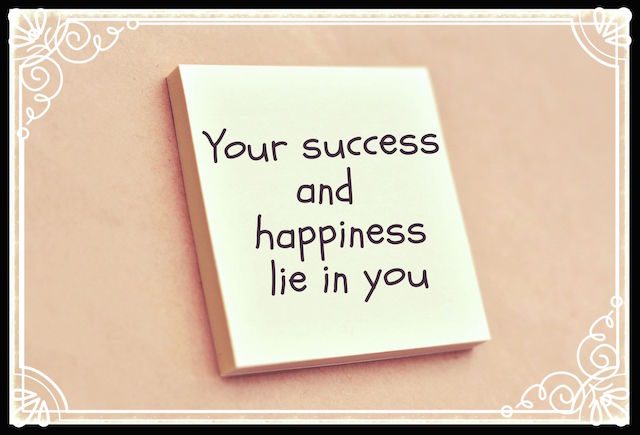
    Your Success and Happiness Lie in You

    “…I kept trying to run away. And I almost did. But it seems that reality compels you to live properly when you live in the real world.” ~Kenzaburō Ōe, A Personal Matter

    Recently I listened to an interview with author Kenzaburō Ōe, who won the 1994 Nobel Prize for literature. Ōe, who is now eighty-one, is a major figure in Japanese contemporary literature as well as playing an active role in the Pacifist and anti-nuclear movements.

    When asked what accomplishment he was most proud of over his long and distinguished career, he answered, without hesitation, that for the past forty years he has been home every night to tuck his mentally disabled son into bed.

    His answer hit me like a physical blow. For a good part of my adult life I was driven by my career.

    Of course, I had a family to support. I had to work. But at times I was so focused that I put my own ambitions ahead of my family.

    My work was in academia, and for more than twenty years I pursued the elusive tenure-track position. Nearly every professional move I made was carefully calculated to bring me closer to fulltime job security.

    I attended conferences, wrote papers, taught overseas, and continually worked on my teaching methods. Then I found it—my dream job teaching English at a small community college in a small town.

    About the same time I achieved what for many in the university world is the crème de la crème: a Fulbright research scholarship.

    For six months I would live in northern India where I would research, write, and work on building a teaching exchange between the university in India and the college where I taught.

    If anything, I thought the Fulbright would help secure my employment.

    It didn’t. In a move I will probably never understand, three weeks before I was scheduled to fly home from India, the college ousted me.

    At an age when most people are starting to think about retiring with some security, my career and financial stability were swept out from under my feet.

    I felt betrayed, angry, devastated, and afraid. My spiritual practice of compassion and acceptance was put to the test. To this day, I have trouble forgiving colleagues who turned on me.

    We humans are amazingly resilient creatures, though, and life has a way of presenting us with the lessons we need to learn. In the process of rebuilding a new career, I learned that my most important accomplishments have nothing to do with my resume.

    What about you? Are your ambitions outside of yourself?

    Job security, a nicer home to live in, good schools for our children are all valid ambitions, but alone they’ll only bring superficial happiness.

    In a moment any one of them can disappear.

    Instead ask yourself:

    It’s not easy to redefine yourself outside of a career. Often the first thing we tell a new acquaintance is what we do. I’m a teacher, an artist, a scientist, an entrepreneur, or clerk at a grocery store. It’s almost as if just being human isn’t enough.

    Eventually, I was able to look back at the job I’d lost more dispassionately. I saw former colleagues burnt out before the semester started and a climate of vicious college politics. At least four different instructors came and went in three years as they tried to fill the position they’d kicked me out of.

    Then I quit paying attention.

    After a short stint with the local newspaper, I moved to a quiet, isolated place on the high desert away from town. An online teaching job at a different college gave me enough money to get by, and I began selling some articles and photographs.

    Sometimes I still struggle with the underlying feeling that I’m not living up to my potential. After all, I spent years and a lot of money to get a Masters degree. Teaching was my career.

    Had I really given it up to live in a dusty little town that looked like it had slipped off the side of the highway?

    Time and a meditation practice helps, and whenever those feelings that I should be doing more arise, I have to admit something else as well. I am far less stressed than I have been in years and creatively I’m flourishing.

    After listening to the interview with Kenzaburō Ōe one summer afternoon when it was too hot to go outside, I began to read some of his work.

    He writes about displacement, about the lies we tell others and the lies we tell ourselves to survive. And he writes about quiet triumphs and living well and with integrity. He writes about the way his mentally disabled son brings unimagined depth to his love.

    Today my accomplishments are quiet ones. I try to live as well as I can, practice forgiveness, especially when it’s hard, and to be there when others need me. I try to love well.

    My life is far from perfect and there are many things I would still like someday: a home by the ocean, a fireplace, a car with a working air conditioner, and a bottle of Shalimar perfume. But I don’t base my happiness on these things, and if I never get any of them, it won’t matter.

    Even though all my work is online, I still sometimes get tired from grading papers or finishing an article at the last minute, but it doesn’t stress me out in the same way it used to because I work on my own schedule.

    We probably all know the maxim it’s the journey, not the destination that matters, and this may be the most important lesson losing my dream job reinforced.

    The meaning of accomplishment has changed. I have less money but more control over my time. And the time I do have, I never feel is wasted even if I’m just sitting and staring out the window.

    There’s beauty in simplicity, and peace can be found when we’re happy with what we have instead of what we want.

    What do you want to accomplish most in life?

    Success and happiness image via Shutterstock

  • Why Happiness and Purpose Cannot Be Found In A Bucket List

    Why Happiness and Purpose Cannot Be Found In A Bucket List

    “There is no need to reach high for the stars. They are already within you. Just reach deep into yourself!” ~Unknown

    Bucket lists. One hundred things to do before you die. Twenty-five-before-twenty-five. Thirty-before-thirty. New Year’s resolutions.

    You name a goal-setting list, I’ve written it.

    In fact, I can remember writing a list of yearly goals in my journal as young as nine years old. (I can even remember what some of them were, but that’s a secret between me and my younger self, bless her heart.)

    Universal wisdom teaches that one of the keys to a beautiful life is to set and reach goals.

    And setting goals is what I did, year after year.

    I learned to sew my own dresses. Took up photography. Mastered the art of cooking. Traveled across Europe. Read the classics. Started yoga classes. And documented every bit of it on social media (reaffirming my ‘success.’)

    So why did the cup of my soul feel so empty? Why did my life feel so uncomfortable and constraining, like an ill-fitting, itchy sweater? Why did the grey days merge into one long blur, until another year was over with little improvement in my overall happiness?

    Because I was taking my lead from the status quo, my peers, and the media as to what constituted happiness and success instead of following my intuition and inner guide.

    Because I was making my way through a random and disjointed collection of activities and achievements rather than stepping back and looking at the overall picture of who I wanted to be and how I wanted to live my life.

    Because I was putting my happiness off until a day in the future where I had ticked off a suitable number of goals in my life rather than realizing that the present day was already filled with so much magic, excitement, beauty, simple joys, and goodness. And I had absolutely every reason and means to be happy and overflowing with contentment right here and now.

    But above all, I always ended up feeling empty, despite my ambition and goal-kicking, because of one major misunderstanding about the nature of life: I was looking to external sources for happiness and a sense of fulfilment instead of anchoring my happiness and meaning within.

    It’s not that goals and achievements are bad to have or even unnecessary, but they are the icing on the cake of life. And so, while they are nice-to-haves, your happiness and self-worth should not be dependent on them.

    I realized that your value as a person shouldn’t fluctuate up and down based on whether you have a relationship, a house, an esteemed career, a slim figure, or a Facebook list full of friends.

    You are inherently worthwhile and enough, and you win at life simply by being here. By being you in this very moment, a once-in-a-humankind combination of natural aptitudes, interests, passions, and quirks.

    With this kind of thinking, it dawned on me that, while goals and dreams are incredibly positive and worthwhile, maybe they should be seen as secondary to your higher purpose in life: to be you.

    To get in touch with your soul through life experience, meditation, movement, being in nature, service, and being lost in the flow of doing things you love.

    To fall deeply in love with who you are.

    To grow into the highest embodiment of you.

    To love and accept and give to and forgive everyone you encounter.

    To pick yourself back up and try again whenever you fall short of that highest version of you.

    To eat your favorite foods, dance to your favorite music, laugh to your favorite jokes, wear your favorite clothing, read your favorite books, and work, date, live, create, indulge, and adventure in ways that feel good to you.

    To become fully alive and benefit the world with your gifts.

    The most surprising thing was, the more I let go of external goals and focused on self-love, soul-care, and the field of diamonds within me, the more external success seemed to come more naturally.

    As a kind of by-product of taking care of my internal world, my external world has continually transformed in beautiful and amazing ways.

    We need not fear that by giving up some of our goal-chasing time for self-discovery, time alone, and soul-nourishing activities, we’ll end up living a lesser life. My experience has shown me that the exact opposite is true.

    I urge you to take a moment today to shift your focus away from reaching for the stars, to the stars already within you. Feel them. Breathe them. Embrace them. Thank them. And remember them as you go about the rest of your day.

  • How to Stop Tying Your Worth to Things Outside Yourself

    How to Stop Tying Your Worth to Things Outside Yourself

    Woman Relaxing

    “If you find yourself constantly trying to prove your worth to someone, you have already forgotten your value.” ~Unknown

    There’s nothing like being one of the few black kids in your school to make you feel like the odd person out.

    Well, that was my experience, anyway. I appreciate my parents’ desire to provide my brother and me with a safe neighborhood to live in and a good education, but growing up in a predominantly white area really affected me. I very rarely felt like I fit in among my peers.

    That didn’t stop me from trying, though. I did all I could to get people to like me—to feel accepted. Perfectionism quickly became my best friend.

    The pressure I put on myself to be perfect wasn’t completely unproductive. I ended up earning the honor of being my school’s first black valedictorian. I also lost seventy pounds and became a renowned soloist in my school district.

    But those accomplishments still weren’t enough to make me feel worthy. Deep down, what I really wanted was a boyfriend. Maybe if I could find a boy to like me, I thought, I wouldn’t feel so different from my peers.

    Unfortunately, finding a boyfriend proved to be difficult. It wasn’t until I was twenty-one years old that I had my first kiss and met my first serious boyfriend. Finally, I felt normal—all because a man believed I was special.

    The problem with connecting my relationship status with my self-worth is that I desperately clung to my boyfriend, despite the many red flags present within our relationship. It took nearly four years before I accepted that his behavior toward me was rather abusive and that I needed to leave.

    By the time I left that relationship, my sense of worth was pretty shot. It’s ironic that low self-worth is what led me to the relationship, kept me in the relationship, and what I had to deal with once I left the relationship.

    I learned the hard way that when we connect our worth with anything outside of ourselves, we’re setting ourselves up for failure.

    Yes, it’s a common trap many of us find ourselves in, but it’s a dangerous one. During the last five years of healing from abuse, I’ve eventually come to realize that my worthiness is an entity separate from my appearance, relationship status, and success.

    Yours is too.

    These days, I firmly believe that a deep sense of self-worth is the foundation each person needs to fully thrive in his/her work, relationships, and other life endeavors. Despite what society likes to tell us, weight loss, engagement rings, and becoming the CEO of your company aren’t what make us worthy. Such things just don’t have that power in the long-term.

    On the contrary, it is because we are worthy that we’re able to accomplish and enjoy such wonderful things. And when we believe we’re worthy, we bring more of our light into the world. We tend to attract similar light too.

    So, how exactly does one develop a deep sense of self-worth?

    That is the question—and the challenge.

    Here are a few tips to keep in mind when you’re looking to deepen your self-worth. The following list is certainly not a formula, but it just might get you thinking about how you can get in touch with your own worthiness.

    Acknowledge when you are seeking external validation.

    It’s common to seek validation from others, so I wouldn’t expect you quit that habit cold turkey. You’re human!

    That said, it’s important to at least acknowledge when you’re seeking it. “I’m looking for people to validate me so I feel worthy” might sound like a silly thing to say aloud, but you can’t address a problem until you acknowledge its existence.

    Then, think about why external validation is so important to you.

    Sometimes, when I find myself pining for more Facebook likes or a quick compliment from my husband, I stop myself and think. There’s certainly nothing wrong with wanting people to appreciate my work or my husband to tell me I’m attractive, but if I’m wrapping up my entire well-being in either of those things, I’m in for some major disappointment.

    Other people weren’t created to make me feel good about myself; that’s my own issue that I need to work on.

    Usually, when we’re urgently seeking external validation, there’s a fear underlying our desperation. Getting in touch with those fears is important because then we can determine whether our fears are reality or just fears. Most of the time, they’re just fears, and we shouldn’t give them more power than they deserve.

    Practice self-love by caring, comforting, and soothing yourself.

    Often, when we’re longing for validation, it’s because we’re in need of attention. Caring, comforting, and soothing ourselves, particularly during hard times, need to become common practices. A lot of times we can give ourselves the attention we’re yearning for; we just have to get used to doing so.

    I’m not suggesting that individuals can replace the role of community in their own lives; we still need loved ones to share life with us. But when we really value something, we treat it well. And you deserve to be at the top of the list of things you value, especially if you haven’t been for a significant period of time.

    In other words, treat yourself like you know you’re worth it and one day, you just might believe it.

    Be willing to believe you are worthy.

    You might not have a whole lot of self-worth today, but that doesn’t mean you never will. So, while you’re doing the work of deepening your self-worth, believe that you are capable of doing so too. Otherwise, what’s the point?

    Commit to the journey.

    Deepening your sense of self-worth is no easy feat. It is, indeed, a journey. And because of all the topsy-turvy feelings this journey might invoke, it’s wise to commit to it prior to taking the first step.

    Humans make significant decisions every day that require displays of commitment (i.e.: getting married, buying a house, adopting a pet). While I don’t think you have to plan a wedding ceremony for yourself (unless you really want to), I do think the decision to deepen your self-worth should be viewed as a significant one requiring the utmost commitment.

    In fact, I’d say deepening your self-worth is one of the most significant commitments any person can make. Don’t you?

    Grasping the connection between my self-worth and the way I treat myself was life-changing for me. If you’re struggling to believe in your own worthiness, I strongly suggest that you embark on your own journey towards doing so. That journey just might change your life too.

    Besides, you’re worth it.

    Woman relaxing image via Shutterstock

  • When Things Go Right: Dealing with Success with Humility

    When Things Go Right: Dealing with Success with Humility

    Jumping for Joy

    “We cannot live only for ourselves. A thousand fibers connect us with our fellow men.” ~Herman Melville

    Recently I experienced a triumph in my career. The details are not important and frankly, many people might even consider it a trivial accomplishment, but it was important to me.

    Usually when things go our way there are two ways someone might react: humility or boasting. I decided to try something completely different.

    Boasting isn’t really part of who I am. Raised to be humble, take praise with many grains of salt, I play down accomplishments. But, this course never seems to get me anywhere.

    Humility leads to self-doubt and self-deprivation. It also gets in the way of future success.

    In the past when I’ve experienced success I told no one, because that might be bragging. What happens then is no one knows of my accomplishments; therefore, I lack credibility, which undermines future efforts. Being too humble is self-sabotage.

    It minimizes my accomplishments in my own eyes. When I say things like, “Gee, it was nothing,” or “Anybody can do that,” what I’m really telling myself is I’ve accomplished nothing.

    So instead, I sit back and watch the loud girl or guy tell everyone how they saved the day or how much their boss loved their report or how smart their dog is, while I sit quietly buying the hoopla and then thinking how mediocre I am.

    This time, however, I had no space in my mind for either humility or boasting. Instead, I was filled with gratitude. And gratitude allowed me to sing praises, not for my own awesomeness alone, but for everyone who assisted in helping me reach my goal.

    From my husband to casual acquaintances, I told each person the part they played in helping me realize this success. I’m not kidding, and I didn’t just do this in my head.

    I told my yoga instructor how her guidance helped me relax in my body so my mind could do its work. I thanked my Facebook friends for giving me small entertaining distractions to lighten my days. I thanked the members of my meditation group for helping me find strength to put myself out there.

    I gave thanks with sincerity, and not just to let people know I’d achieved my goal, but to help others too. I publicly gave recognition to the company that had shown appreciation for my work, besides helping promote their business would ultimately promote my work.

    As I doled out this gratitude, I did lose one thing. I lost the feeling of being alone in my awesomeness. Me, myself, and I! I did it! Instead I felt I was part of a bigger community.

    My small achievement strengthened my connection in the world. Things really had gone right. Even if for one small blip in the history of the world. At that moment, all the people connected to me and I got it right.

    These feelings of love and gratitude paid off like no amount of humility or self-back-patting ever could. Gratitude encouraged me to keep working and keep reaching for accomplishments.

    No One Gets There Alone

    Sometimes we might think accomplishments come only from our effort and hard work. “If you want something done right, you gotta do it yourself.” But the truth is, none of us ever reaches any accomplishment without others.

    You might be inspired by the encouragement of others, or by the poor actions of others. Good or bad, like it or not someone helped you.

    Start being grateful and you’ll feel like you’re running downhill laughing with freedom.

    1. Thank yourself.

    You deserve it. You really do.

    Don’t knock yourself down by minimizing your accomplishments, no matter how small. Doing so constricts your soul with underlying disbelief or inferiority.

    2. Thank the person/entity who recognized your work.

    Outside of yourself, those who appreciate your work are the first you should thank. Without their light being spotlighted onto you, there would be no accomplishment.

    3. Thank all the supporting players.

    When we think of the ways others support us, our hearts open to love. We become encouraged to offer equal support to others.

    You might be grateful for the mechanic who keeps your car in working condition, which allows you to get to work. The barista who makes your morning coffee supports you by helping start your day.

    Being grateful for everyone who assisted your success is true humility.

    Photo by Rama V

  • 10 Life-Changing Lessons I Wish I Learned Sooner

    10 Life-Changing Lessons I Wish I Learned Sooner

    “Learn from yesterday, live for today, hope for tomorrow.” ~Albert Einstein

    I recently turned thirty-eight.

    Birthdays and new years always make me quite reflective and, for a long time, critical about my achievements—what I’ve done and what I have to show for it.

    This time, though, there was finally a wonderful difference.

    Over the past twelve months what’s mattered has been about the people I’ve met, the places I’ve seen, the experiences I’ve had, and the things I’ve discovered about myself—none of which have brought me anything physical to show for it.

    I’ve learned character building life lessons, the kind that have changed my life forever and, to be honest, I wish I’d learned sooner. Perhaps these will help you too.

    1. Being happy is not about what we achieve.

    I had to start with this one, as someone who has spent so much of her life achieving, striving to achieve, and competing to win. The first half of my life I strived to ride for my country and compete in the Olympics, then to achieve in business, then academically, and always in relationships.

    It doesn’t matter what I achieve. No job, promotion, money, relationship, house, highest mountain, or gold medal will ever change how I feel about myself.

    Achievement is the icing on the cake, so it’s important to learn to like the cake that’s the sum of who we are first, so we have something to ice.

    2. We are all doing our best.

    I used to hold myself to the highest scrutinizing criticism and moral compass.

    I was excellent at delivering self-punishment as judge, gaoler, and executioner for every small flaw, mistake, or underachievement.

    However, I would forgive other people for every fallibility, choice, and indiscretion. I expected so little accountability or responsibility from other people and so much from myself.

    I’ve learned to balance it out by being more lenient, forgiving, and loving toward myself and accepting that we’re all doing our best—and this rule applies to me too.

    3. We have to know and respect our deal breakers.

    Self-worth is an action, so I got clear about my relationship deal breakers. Sadly, I’ve let a lot of people throughout my life treat me with disrespect—lie, cheat, take liberties, bully, blame, shame, and even abuse. I didn’t stand for anything. I couldn’t say no.

    Without no, my yes had no value.

    Now my deal breakers are respect, honesty, and responsibility.

    When we know our deal breakers, we don’t accept mistreatment because we know we’re worth more.

    4. Other people’s actions aren’t about us.

    When I was in my twenties, my ex fiancé cheated on me. For a long time I believed it was my fault, that it must have been something I did or didn’t do—that I wasn’t good enough.

    I realize now that how any other adult chooses to behave is about them, not me. My ex felt there was a problem in the relationship, and in response, he chose to be the kind of person who lies and cheats.

    We’re only responsible for our own actions, feelings, and words, which means the buck stops here, but this also frees us from wasting energy and time cleaning up other people’s messes.

    5. We need to trust our intuition.

    I’ve made many mistakes in my life because I didn’t trust my intuition, nature’s gift of survival, which helps us thrive.

    I got involved with the wrong people, relationships, and jobs, ignoring that I knew they weren’t right for me from the start, and then paid the price by wasting time and energy trying to make them work.

    Intuition can be as loud as someone shouting in your ear, and other times, it’s subtler.

    When we slow down, take our time, allow it to get clearer, and listen, we save ourselves a whole lot of trouble.

    6. All the studying in the world will never be enough.

    I’ve spent years studying, seeking to understand people and the meaning of life, love, and the universe. I have letters after my name to prove it, and much of it was a waste of time.

    Most things are just stepping-stones to somewhere else, often on a cyclical path back to what you knew already.

    Knowledge is power, but experience in using it, applying it, seeing how it feels, and making mistakes trumps everything, because that’s wisdom.

    Good old-fashioned hands on living and having the courage to get involved and experience makes you wise. Then you have a beautiful lesson to share.

    7. Face the scary stuff.

    I wasted so much time hiding from the boogie monster, the scary truth inside of me. I just had to be brave and come face to face with how I felt and what I desired.

    I had to feel all that I had hidden, repressed, and buried instead of trying to unlock it all through my head with knowledge, or getting someone else to tell me what to do.

    Only then was I free; I could I stop caring if other people approved of me or not and just love myself and know what matters to me.

    We travel through life alone, and by becoming our own best friend we no longer have to fear being unloved.

    8. Accept that life and people are inconsistent.

    When I was little, like everyone, I was reliant on others and needed them to be consistent so I could feel safe in the world. Unfortunately, they weren’t, so I got stuck needing to please other people so they would take care of me, but I always felt let down and disappointed.

    I was like a drowning young woman at sea, battered around by the force of the waves with nothing to hold onto, because I had nothing of substance to rely on.

    Change is the only consistent thing there is. Accepting this empowers us to learn to depend on ourselves.

    9. We can be our own best friends.

    By facing the scary stuff, getting clear about my deal breakers, starting to trust my intuition, and forgiving myself, I began to like, love, and respect myself.

    I turned my curiosity toward finding out about myself and what I actually like, enjoy, and don’t want. I became my own best friend and I’ve got my back if there’s a problem.

    I came to know me, inside and out, and what matters to me, so I built a boat of substance and I’m no longer drowning. The world around me can be wild and changeable like the sea, but now I can ride out the waves without fear. The same can be true for you.

    10. We are enough.

    I never needed to strive to be anyone’s best friend, girlfriend, or wife by keeping a tidy house, cooking like a chef, and making wild passionate love every night, or by being a CEO, earning a fortune, or having a gold medal or a PhD.

    It sounds exhausting just writing it, but that was how I used to live my life.

    Yes, I sometimes do some cool, fun, interesting stuff; I am curious about the world and enjoying my life. But sometimes I can’t be bothered.

    I like to slob around in my PJs watching old movies. I get morning breath and matted hair, but can scrub up well and attend the ballet.

    I now know who I am, what makes me happy, and the value I can bring to any relationship or situation not because of what I do, but who I am.

    We’re unique, priceless, and irreplaceable, and the sum of every experience.

    Our greatest relationship is with ourselves, because it’s through that relationship that we learn how to truly love other people, including our children. And when we demonstrate how to love us, we can get the most joy out of our lives.

  • Give Yourself Some Credit!

    Give Yourself Some Credit!

    “Always concentrate on how far you’ve come, rather than how far you have left to go.” ~Unknown

    After pitching an idea to an international online magazine a month ago, I recently sent the article to the editor. I was quite nervous. It had taken me more than a month. Every time I sat down to write, I didn’t know how to begin.

    I typed and then deleted my paragraphs. I typed again, and then deleted the whole document. I wasn’t happy with what I had written.

    Eventually, I said to myself, I had to submit something because it had taken too long. So in the flurry of two hours, I hammered out the article, sent it to a friend for comments, and went about perfecting it.

    I revised my writing, taking a few of my friend’s suggestions, but still I wasn’t completely satisfied with what I had produced. Yet, I didn’t know how else I would improve it anymore. By then, I was tired of reading, re-reading, and re-re-reading, so I sent it off.

    For three days I waited gingerly by my computer, causing myself needless anxiety over whether or not the article would be accepted.

    This was crucial for me as I was taking the first step in testing the market to see if it was receptive to my thoughts, and perhaps a book about the experiences of a Generation Y female executive overcoming depression.

    Plus, the website was authoritative in its own right and it would give me some exposure and signs as to whether my direction was in on track.

    I was more than ecstatic that the editor came back and said they had already published the post and gave me a link to it.

    You might think I felt proud of myself for this achievement. (more…)

  • 5 Tips To Help You To Discover Your Maximum Potential

    5 Tips To Help You To Discover Your Maximum Potential

    “You do not become good by trying to be good, but by finding the goodness that is already within you.” ~Eckhart Tolle

    Don’t doubt yourself. You are more than enough.

    You are good enough. If no one else tells you that, I will reaffirm that you are good enough to do whatever you want in life. Life is too short for you to paralyze yourself with doubts.

    I used to doubt my capabilities, and I was so unhappy and frustrated with life. I tried to bury myself in self-help books to find the answers to achieve success and happiness. One book after another, I kept reading, but I had little results to show for it.

    The pain became unbearable, particularly when my friends made fun of the books that I read.

    But I didn’t give up. I kept on searching for answers by listening to audio books, reading books, and attending seminars by revered masters in the topic of personal development. One baby step at a time, I started to apply the knowledge I had gained.

    That’s when things started to change around me. Once I started applying what I learned, I: (more…)