Tag: accomplishments

  • 5 Practical Tips for Overcoming the Pressure to Do More

    5 Practical Tips for Overcoming the Pressure to Do More

    “In the midst of movement and chaos, keep stillness inside of you.” ~Deepak Chopra

    There was a time in my life when chaos seemed to have the upper hand. I tried so hard to keep things together, but it felt like the more I tried to control things, the more they spiraled. I had goals and dreams, sure, but the stress of not being “there” yet always consumed me.

    I remember one night sitting on the edge of my bed, feeling completely drained. I’d just had a tough conversation with a close friend, one of those exchanges where every word hits harder than the last. It wasn’t about the conversation itself; it was about what it represented—a mirror reflecting my own struggles with self-worth.

    I had been so busy chasing success, comparing my progress to others, and pushing myself to meet society’s invisible benchmarks that I lost sight of what was truly important.

    That night was my breaking point. I realized I wasn’t living for myself anymore—I was living for everyone else’s expectations. I felt like I was stuck in a loop, playing the same scenes over and over, always waiting for the big “win” to feel validated. It was time for a shift, but the problem was, I had no idea where to start.

    The Lucky Meeting that Changed Everything

    Around this time, I had a chance encounter with a hypnotherapist. I was skeptical, but something about their approach intrigued me, and I decided to give it a try. That session introduced me to the alpha state—a state of deep relaxation and mental clarity that I had never experienced before.

    The alpha state became my sanctuary. It felt like being connected to a deeper part of myself, a place where the chatter of my mind quieted down, and I could simply be. The hypnotherapist guided me to let go of control, to trust the process, and to embrace a state of calm presence. It was in this space that I realized how much of my life I had been living on autopilot, constantly reacting to external pressures.

    This lucky meeting wasn’t just a one-time experience—it was a turning point. I began incorporating practices that allowed me to access the alpha state on my own, using self-hypnosis techniques and guided visualizations to reconnect with my core. The more I practiced, the more I noticed a shift in how I approached challenges. Instead of reacting from a place of stress, I began responding from a place of clarity and calm.

    The Power of Stillness Amidst the Chaos

    That moment of stillness became the key to everything. I realized I had been running at full speed, not because I had to, but because I believed that slowing down meant failure. But stillness isn’t defeat; it’s clarity. By taking a step back, I began to see how much of my stress was self-created—driven by unrealistic timelines, external comparisons, and the pressure to “have it all together.”

    In that pause, I asked myself a question that changed everything: “What if my worth has nothing to do with my achievements?”

    I realized that taking breaks from the stress of constant striving slowly relieves the pressure to do more. Connecting with our true selves through stillness allows us to recalibrate and find peace without needing to chase validation. We can trust that we’re enough, just as we are, without having to “do” more to prove it.

    Breaking the Loop

    My first practical step? Setting boundaries with myself. I started by noticing when I was acting out of fear or the need for approval. Each time I felt that pang of “I’m not doing enough,” I reminded myself to stop and breathe. This simple shift allowed me to recognize that my worth is inherent, not something to be earned or proven.

    One of the biggest lessons I learned from this period of my life is that peace doesn’t come from achieving more; it comes from accepting where you are. I had to stop running on autopilot and start listening to myself. That meant embracing my flaws, imperfections, and everything in between.

    Practical Tips for Overcoming Self-Pressure

    1. Create space for stillness.

    Set aside time every day where you’re not actively doing anything. Just be. This is a chance to reconnect with your true self, away from the noise of social media, emails, or to-do lists.

    Taking intentional breaks allows us to relieve the pressure of constant striving and remember who we are beyond our achievements.

    2. Catch your inner critic.

    Notice your thoughts, especially when you’re feeling overwhelmed. Are you being overly critical of yourself? If so, take a step back and try reframing those thoughts with compassion.

    Remember, kindness toward yourself isn’t something you need to earn—it’s a choice available to you at any time. And remember, too: You are not your thoughts, and you are not your feelings. They are simply passing experiences, not reflections of who you are.

    3. Shift from achievement to alignment.

    Instead of measuring success by what you’ve done, focus on how aligned you feel with your values. When making a decision for your future, ask yourself, “Am I being true to myself?”

    This helps you connect with your deeper purpose rather than chasing goals that may not truly fulfill you.

    4. Celebrate progress, not perfection.

    Give yourself credit for the small wins. Life isn’t about checking off boxes; it’s about growth and evolution. Celebrate the fact that you’re on the journey, learning and evolving with each step.

    5. Stay present.

    When we focus too much on future outcomes, we lose sight of the present moment and end up missing out on life. Practice being present by grounding yourself in the here and now. Whether it’s through mindfulness, meditation, or simply taking a deep breath, presence is your most powerful tool.

    The Journey Back to Yourself

    Through this process, I discovered that real peace and fulfillment come when we stop defining ourselves by external success. It’s about knowing that you are enough as you are right now. This doesn’t mean giving up on growth or ambition—it means allowing those things to evolve naturally, rather than forcing them to fit a specific timeline or expectation.

    The lesson here? Your worth isn’t tied to your achievements or productivity. You don’t need to “prove” anything to anyone. Sometimes the most important thing we can do is pause, reflect, and trust that we’re exactly where we need to be.
  • Rethinking Productivity: Less Hustle, More Harmony, More Energy

    Rethinking Productivity: Less Hustle, More Harmony, More Energy

    “The flame that burns twice as bright burns half as long.” ~Lao Tzu

    I can hear the voices now:

    “You should be disappointed in yourself” (for not taking the SATs in seventh grade).

    “Don’t be lazy like [fill in a not-so-studious sibling/cousin]!”

    “You need to work harder or else you’ll fall behind.”

    “Always be analyzing, analyzing, analyzing!”

    “We need to improve our operational efficiency or ELSE.” Or else what?

    My mind became a boiling stew of negative self-talk, heavy thoughts, and beliefs that didn’t serve me. Throughout my entire life, from an immigrant Asian family to corporate leaders fixated on metrics, the voices have been consistent:

    You’re not doing enough.

    From a young age, I’ve been indoctrinated (without consent) into the school of thought that “you better work hard or you’ll get left behind.” I got sucked into the hustle and grind culture and became fixated on productivity.

    But it never felt enough. The promotions, the raises, the accolades, the praise—they never satisfied the part of me that felt like I was never enough. There was the constant, compulsive need to do MORE.

    As the productivity gurus say, you need to master time management. But while striving to manage time, I realized this:

    Time was really managing me.

    Any time I freed up from being more efficient, I’d fill up with more busyness. I constantly spent my energy on the past or the future. Never in the present moment.

    Eventually, I burned out. Life became miserable. It sucked the joy out of life.

    During my lowest point, one evening, I sat at a local park and stared into the abyss. Questioning the meaning of existence and why I wasn’t enjoying life anymore.

    In a miraculous moment, a two-year-old toddler waddled toward me with boundless joy and hugged me. It’s a moment I’ll never forget.

    The toddler’s mother apologized to me. With a softened heart, I reassured her, “Please don’t apologize. I needed that.”

    The greatest teacher I could have had at that moment was a two-year-old who barely knew his right hand from his left. The lesson? My achievements don’t define my self-worth. Self-acceptance isn’t determined by how much I’ve accomplished. Love is unconditional.

    And that began the journey of rethinking my life. And rethinking productivity.

    It wasn’t until I began examining my inner world more consciously that I was able to rewire my programming and shift the paradigm completely.

    Through individual therapy work, meditation, and letting go of old beliefs, I learned the very thing so innate to each and every one of us:

    We are enough.

    Nothing more to do. Nothing more to be. Just enough. Always enough.

    The next truth I gained along the journey was that I could still be “productive” and enjoy my life.

    In the rough landscape of hustle culture, we often find ourselves racing against the clock, trying to squeeze an extra drop of efficiency out of every second. As a result, it sucks the soul out of our lives.

    If this were a cooking show, we’d be moving around the kitchen at a frantic pace strictly following the ultimate recipe: “success.

    Yet somehow, through all our hustling and bustling, we lose sight of the most important ingredient: energy.

    Energy is everything.

    It’s how we show up in the world. How we show up for each other. How a two-year-old toddler joyfully embraces a stranger. 

    Without our vital energy, we can’t be our best selves and do our best work. We can’t create that culinary masterpiece that evokes joy in the world.

    While it’s something kids have naturally, we adults need to relearn what this feels like.

    As reality has it, the relentless push toward productivity often leads us to a paradoxical outcome: burnout; a state of emotional, physical, and mental exhaustion; and working from a depleted place (no energy) that creates work that feels… lifeless. 

    Following the cooking metaphor, let’s consider a more harmonious approach to getting things done.

    Sprinkling Life Energy into the Productivity Stew

    If you had more energy in your mind, body, and spirit, how could that change the dynamic of your work? Whether that be launching a new side hustle, finally writing that book swimming in your head, or striving toward that next promotion at work, how could more energy serve you?

    Like savoring each sip of an aged pinot noir, we can fully experience the gift of the present moment. And through this embodied place, we create from a place of inspiration filled to the brim with energy.

    Here’s how we can sprinkle this goodness into our day-to-day.

    Pause for a Breath

    Before diving into the deep end, take a moment to just breathe. A deep breath can be like a mini vacation for your brain, and it’s much cheaper than a flight to the Bahamas.

    Focus on the Entrée and Prepare Fewer Side Dishes

    By zeroing in on what truly matters, we can devote our full attention to fewer, more meaningful tasks. Consciously doing less can create more impact. Surprise!

    Balance, The Secret Ingredient

    In the recipe for success, “doing nothing” (aka rest)  is the unsung hero, rejuvenating our minds and preventing us from becoming crispy around the edges.

    Self-Compassion, The Essential Seasoning

    It’s okay if we don’t create our best work at first. It’s okay to not meet our own personal expectations when we’re trying something new. Sprinkle a little self-compassion and patience into the mix and remember that every chef has burnt a dish or two.

    Find Joy in the Cooking Process

    Life can be messy. We’re human after all. Embracing the mess in the kitchen leads to creativity and, sometimes, the most delightful surprises. Did you know chocolate chip cookies were created by mistake?!

    We need to understand that our life journey is not linear. When we make mistakes, it might feel like we’ve failed or gotten off track. We might feel incredibly confused. But it’s the experience of moving through this confusion that leads us to clarity.

    So be open to making mistakes. Be open to making a mess, and try to have fun while doing it. This might lead you closer to your goals than you’d expect—or open up new possibilities you didn’t even know to imagine.

    Stirring in Small Changes

    Remember, it takes time to develop new habits. Adapting this new recipe of productivity doesn’t mean a menu overhaul overnight. Start with small, incremental steps—perhaps a morning ritual that includes a moment of gratitude, a new activity that allows you to disconnect and recharge, or a three-minute dance party with yourself. Anything that brings you back to presence.

    Change simmers slowly but once established, it can create sustainable results: a sense of peace, fulfillment, and harmony—and it’s well worth the effort.

    The Balanced Plate of Productivity and Well-Being 

    By incorporating moments of mindfulness, rest, and self-care, we create a more sustainable approach to work and life. And as a byproduct, we’re gifted with longevity.

    By letting go of the fixation of time management and producing results, we paradoxically earn more quality time in our lives to do the things we love and truly care about. Because we have more energy for them.

    After over twelve years of working in the corporate world, I’ve decided to step away from the nine-to-five job and enter the world of entrepreneurship. As you might know, starting your own business is like walking into uncharted territory. It can be both exciting and scary, simultaneously. And unlike a corporate job, which defines the parameters of how productive you are, as an entrepreneur, you create your own.

    This paradigm shift has led me to embrace the tips I’ve mentioned here in this article. Not only has rethinking productivity saved my sanity, I’m actually enjoying the work I do for the first time in a long time. I feel more alive. Fueled with more energy. And I’m having more fun. Now that’s a recipe worth keeping.

    If you’re ever finding yourself lost and confused in this world so fixated on productivity, do what a two-year-old toddler does and see the wondrous world with curiosity, wonder, and awe. And remember you are worthy regardless of what you achieve.

  • How a Simple Action Word Can Guide You Through Even the Hardest Days

    How a Simple Action Word Can Guide You Through Even the Hardest Days

     “Our intention creates our reality.” ~Wayne Dyer

    What if you only had one thing you needed to accomplish today? One over-arching objective that encapsulates the multiple items on your to-do list or the meetings on your calendar? One word that you set in the morning and carry throughout the day to stay in focus and on purpose?

    Actors know that in order to convey a story well, they have to play an action versus an emotion. There has to be a verb involved in order to act. This might include something like provoke, seduce, destroy, or flatter, versus trying to portray an adjective such as humble, confident, or sad, which read neither truthful nor clear on stage or film.

    Simple action words, kept at the forefront of thought, can be powerful allies in keeping our thoughts, intentions, and actions clear as we move throughout the day.

    If you have a morning meditation, study, or stillness practice, the action word can come out of inspiration gained there and can be targeted to what the need of the day is calling for. Words might include focus, bless, or harmonize to name a few.

    What matters is that the word sits as an overlay atop the to-dos and the schedule for the day so that it infuses all of those seemingly disparate actions with a unified purpose, intent, and energy.

    If you hold a verb like harmonize at the top of your mind as you go about the activities of your day, you’ll see how the action of that verb seeps through in your tone, what you say, and how you treat people.

    I have seen action words come in handy when working with public speakers and executives giving presentations because they help to focus the energy, the intention, and the message.

    Most people don’t get up in front of others just to hear themselves speak. Most have an objective that is often obscured by data or too many slides. Identifying an action word at the outset of content creation, and keeping it top of mind as the story develops, is a simple and powerful way to keep a talk on track and achieve the objective the talk wants to achieve.

    Examples might include: motivate them to make their number, inspire them to serve in their community, or educate them on the hazards of too much sitting.

    I remember a time pre-Covid, where holding one word simply helped me to breathe through a perfect storm week of overwhelm and over-scheduling.

    I was in the middle of a tight-turnaround project with a grueling Fortune 10 client that demanded late nights. I was in tech week for a play opening in Silicon Valley. I was preparing a talk for an L.A. entertainment company, which required air travel, and I was trying to be present for a much-needed (and non-refundable) workshop getaway with my husband.

    While all of these commitments were of my choosing and were essentially positive when viewed separately, they were crashing and colliding in my mind. I couldn’t find the hours or the space that each seemed to need.

    My habitual physical reaction to such overwhelm is to lie awake in bed consecutive nights ruminating, catastrophizing, and fixing. And we all know that fixing anything in the middle of the night or during a day following a night of no sleep is about as effective as pouring hot water into a chocolate teapot.

    The word I leaned on? Surrender. I had to surrender the outcomes I wanted, or believed I needed, in order to relax and breathe.

    A wise mentor once used a golfing analogy to say that all we can do is execute the perfect swing and let the ball go where it will. By surrendering, I was allowing the balls to go where they would. I would show up and do the best I could do with each piece one by one as the demands arose and release the outcomes. The word surrender is also a powerful antidote to cortisol surges of stress. And it’s a great word to hold before bed if sleep stress is an issue.

    Holding an action word in mind can be applied to problems and demands as they crop up during the day. Try applying a word like release to traffic jams, cranky customers, or impatient bosses. Calling up the word to the forefront of thought can re-focus how you want to show up in the world. Or the moment. Scribble it on a post-it note and stick it to your monitor, workspace, or dashboard where you can prominently see it to be reminded throughout the day.

    In our distracted, hyper-connected world, sometimes the simplicity of one little word can help to cut through the mental static.

    Be.

    Serve.

    Listen.

    Simple in form, powerful in practice. Choose a word and lean on it for a full month. Or pick three verbs that define your year. Or change your mind at lunchtime and come up with a new verb for the second half of your day. The only rules are to choose something, keep it alive in your thinking, and ensure it is a verb so that it’s actionable.

    My favorite three verbs right now? Connect. Release. Love.

    What are yours?

  • There’s More to Life Than Work: Goodbye Hamster Wheel, Hello Balance

    There’s More to Life Than Work: Goodbye Hamster Wheel, Hello Balance

    “Most of us try to do too much because we are secretly afraid we will not be able to do anything at all.” ~Rick Aster

    I’m standing in my art studio. My palette is loaded with paint. My canvas has been prepped and ready. There is a paintbrush in my hand, but I can’t move. I don’t know what color to pick or what shape to make. I start questioning my color selection, the size of my canvas… and everything else under the sun.

    A few months ago, I wrote myself a reminder to allow my art to flow through me. Making art is a refuge for my mind—a mind that struggles with anxiety, depression, and “Hamster Wheel Syndrome.” You’re not familiar with that malady? Let me explain it to you with an example of what my brain sounds like when hamster wheel syndrome kicks in:

    “Do people really like pinks and greens together? Is it too feminine? Should I make my shapes big and bold to contrast against the girlie palette? Maybe I should do a test on a smaller canvas first? Maybe I should just pick a different pallet. It’s cold in here. I’ll get a hoodie. I think I need more coffee… Man, this art table is messy. I’ll organize it first… I only have three hours until my dentist appointment… The grocery is near by the dentist. I’ll plan on going there too…” And on and on it goes.

    According to UrbanDictionary.com, hamster wheel syndrome is “when someone just keeps running in circles (and making the same mistakes) in their life instead of progressing.”

    I believe that this only really scratches the surface about what it truly means to feel my wheels spinning, with no break in sight, for days at a time.

    When I’m in my studio, brush in hand and ready to go but I can’t move forward due to my brain throwing ten different options at me every three seconds, I feel paralyzed.

    I am a highly efficient person with a creative mind. I’m an abstract painter, essay writer, and fastidious business owner. I can get more done in two hours than many get done in a day. And I’m not saying this to brag. It is a blessing and a curse.

    If you’re like me, you know how exhausting this type of hamster wheel efficiency can be. IT NEVER STOPS. If I’m not checking things off my to do list, I’m compiling them into spreadsheets, using new methods of organization that I thought of while I was trying to sleep at 3am.

    I am addicted to efficiency. It makes me feel productive and useful. But as there can be too many cooks in the kitchen, there can also be too many ideas and tasks to process at once.

    When the multitude of ideas leads to overwhelm, paralysis is the result, and for a person like me, when I’m stagnant, I get even more anxious. If I stay in that state for too long, depression kicks in. Then I’m really in trouble.

    I begin to feel guilty that I’m not getting enough done; like rest is a failure. Sometimes it’s hard for me to sit down at the end of the day, so the pace continues until bedtime, even though I know where it will lead.

    Now I’m no psych major, but I believe hamster wheel syndrome is a compulsive disorder that at first makes me feel efficient, but then yields the same negative result every time—an inability to move.

    I’m so addicted to coming up with things that will keep me busy in order to have a feeling of accomplishment and, more importantly, for others to see me as accomplished. I put a lot of pressure on myself!

    I am a wonder of time management and productivity. I get up early in order to exercise before making breakfast and getting everyone off to work and school. Then I’m in my office at 8:00am, checking off tasks from my to-do list, and yes, I’m the type that if I’ve done something not on the list, I’ll add it just so I can cross it off.

    Then, when I’m nauseated because I forgot to eat, I shove food down my throat and move to the art studio where I now have to flip into thoughtful and creative mode, and there I stay until 5:00pm.

    The problem is that when I’m not moving at that horrendously cray cray pace, I’m comatose, lying on the sofa, binge watching Law & Order and denying the fact that I will, indeed, have to get up and be productive again. And if I get to this point I’m happy, because it means that hamster wheel syndrome hasn’t reduced me into a tornado of indecision, just that it has made me too tired to function.

    I have two speeds: To-Do List Annihilator and DEAD.

    After just coming out of about a four-month depressive period due to over working myself, I realize that this pace isn’t healthy or sustainable. So, what do I do? Well, I’m way too fired up about my art and my business to slow down. I think the solution is to be rigid about both my work time and my relax time.

    I work with a business coach and recently, she has put us into three-people “accountability groups.” These groups are meant to help us stay on task. I realize that a common problem for artists is that they just can’t get themselves out of the art studio to give their art business attention. This is not my problem.

    At first, the others in my accountability group were proposing only evenings and weekends for our weekly meetings. Since diving into my own business, I’ve heard many people say that I’ll now be working twenty-four hours a day and through the weekends. That entrepreneurs have to work longer hours to yield any sort of progress. That we are supposed to eat and breathe our work all the time.

    I have one thing to say about that: SCREW THAT.

    I didn’t start my own business to hamster wheel myself into a constant, walking panic attack.

    I am passionate about my art and I want it out there, but I also love my family. I love to surf and hike. I love to watch movies and lollygag at coffee shops. What I don’t like is the exhaustion that hamster wheeling causes and the expectation that in order to be successful, I don’t have a choice in the matter. I’ll say it again: SCREW THAT.

    So, in an effort to calm the rodent, here are five ways to slow the hamster wheel down:

    1. Exercise, yoga, get outside and play

    This really is on every single list I write. It is so important for me that when I don’t get up to do something active four or five days a week, I can feel myself getting wound up internally and eventually depressed. Just moving my body releases the bound-up thoughts and allows more grace to seep into my day-to-day life.

    It’s easy to get caught up in our heads when we spend all our time staring at work or screens. Getting outside and being active transfers all that energy from our brains to our bodies so we can feel energized and balanced.

    2. Meditation

    I would think that due to my hamster wheel, seated meditation would be hard for me, but it’s not. I relish in the fifteen minutes when I sit, breathe, and be still. I’m pretty good about being consistent with it, but I’m also human, so I try not to be hard on myself when time goes by and I haven’t been active in this practice. I’ll start to notice that wound up feeling after a few weeks and start a daily meditation practice again.

    The beautiful thing about meditation is that we can do it many different ways. If not seated meditation, try walking meditation or deep breathing exercises, even painting or gardening.  Any mindfulness practice can help pull us from big picture overwhelm to a present state of calm and relaxation.

    3. Lists, lists, and more lists

    It helps me go into my day with less anxiety by simply knowing what I would like to accomplish in the next eight hours.

    I have a huge master to-do list that I update on Mondays. Each morning when I get up, I make a daily list from that list.

    Now, before you roll your eyes at me, hear me out: My daily to-do list is only time-sensitive items that need to be accomplished that day and pieces of larger projects that I’ll give some attention to knowing that it won’t be completed as a whole. The result is a slow and steady progress.

    It’s so easy for us to get overwhelmed by the litany of to do’s associated with the big picture.  By breaking it down into smaller pieces, we are able to look at projects in more manageable baby steps.

    4. Stick to a realistic work week.

    My workday is from 8:00am to 5:00pm. I put everything down at 5:00pm, with few exceptions. My weekends are my own. I shut down the computer on Friday evening and don’t turn it back on until Monday morning.

    I simply refuse to allow my business to take over my whole life. My art is my work and I’m lucky I feel so passionate about it. When I stop on the weekends, it allows excitement to build for Monday morning. Plus, playtime is an important recharge!

    Being passionate about our work is a gift, but when that passion takes over everything else, our self-care, family, and friends tend to get neglected. Playtime is important to recharge and we should all prioritize it as much as we prioritize our work.

    5. Judge progress in years, not weeks.

    For a while, I was thinking about growth in terms of what I’ve accomplished in the past month or two, and I felt a need to cram as much as possible into my days because it didn’t seem like much. As a result, I was living in a constant state of fear, overwhelm and a feeling of failure.  It wasn’t until I compared my current situation to where I was at this time last year, that I realized how far I’ve come.

    We don’t need to work ourselves to the bone to see progress. Slow and steady wins the race, and it’s much easier to see accomplishments built over long periods of time than in the seeds planted over just the past couple of weeks.

    I think that the above can be applied to anyone, in any type of work.

    In the end, we all want the same things: success in our work life and a healthy, happy home life. I have absolutely no doubt that stay-at-home moms, lawyers, restaurant workers—really anyone—can fall prey to hamster wheel syndrome. We must take care of ourselves, mind, body, and soul. Otherwise, we fall out of balance and fall prey to anxiety, depression, and a host of physical ailments.

    I yearn for the day that I don’t have to give so much attention to being a balanced person. However, I also want a career, to spend time with my loved ones, to go surfing and skiing, to cook my own meals, and to be able to tend to all the errands that come with life. That’s a lot to want, and so I have to put equal attention to the activities that will feed my energy.

    I have to remember that the hamster is not in charge! The wheel doesn’t have to spin twenty-four hours a day. In fact, it isn’t reasonable to think that it can. The hinges that support that wheel will burn out quickly if they don’t get a break and some oil.

    While I like to burn bright, I must remember that fires need to be fed. And with that, I’ve just reminded myself that I’m hungry, and so I stop. To be nourished so I can nourish.

  • How to Stop Measuring Your Worth in Achievements

    How to Stop Measuring Your Worth in Achievements

    “The better you feel about yourself, the less you feel the need to show off.” ~Robert Hand

    The first vivid memory I have of anxiety is when I was only seven years old. I sat in math class, gripped with fear that I wouldn’t get a perfect score on my test. If I got even one answer wrong, I would feel worthless.

    This striving for achievement followed me all the way through college. I not only graduated with a 4.0 grade point average, but I had an impressive Curriculum Vitae filled with awards, extra curricular activities, publications, honor societies, and more. Each time I added something to my list of achievements, I felt a surge of worthiness.

    Yet, this satisfaction with myself didn’t last long. Soon, I was on to the next task to prove to myself (and others) that I am worthy. 

    I fell into the same trap in graduate school: commuting each night, taking extra classes, making all A’s, working a part-time job—until the panic attacks hit. I couldn’t control my brewing anxiety anymore, and I developed debilitating panic disorder and agoraphobia. I could barely function, so I made the decision to drop out of my graduate courses.

    I believe the panic attacks were my body’s and mind’s way of screaming out for help. Their way of saying, “I’ll make you stop since you won’t listen,” of letting me know that perfection isn’t healthy or possible.

    During those anxiety-ridden days, the panic made it impossible for me to live a successful life according to my previous definitions. Suddenly, my biggest accomplishment was simply making it through the day or going to the grocery store alone. I felt antsy and worthless without academics or a steady job.

    I was forced to redefine my ideas of self-worth. I realized that chasing my worth based on one accomplishment after another was making me miserable.

    I had to learn that my worth runs so much deeper than what I can prove through achievement. I had to learn that I am worthy simply because I exist, and nothing more.

    Here are four ways that I have started overcoming the need to base my worth on accomplishments.

    1. Make a list of all the things you love about yourself that have nothing to do with achievement.

    This may sound silly or trivial, but making a list of the things you adore about yourself is actually a lot harder than you’d think. The first time I sat down to write this list, nothing came to mind that wasn’t linked to my accomplishments.

    Slowly, I opened up to the fact that I love how genuinely good-hearted I am. I’m compassionate and sensitive, and I love that about myself. I love that I’m a good listener. I love that I’m soft-spoken and not confrontational. From there, the list just kept flowing.

    If you have a difficult time with this, it can be helpful to ask your loved ones to write a list of all the things they love about you. This can be a wonderful way to remind you that you are more than what you do.

    2. Redefine your idea of success.

    Recently, I felt twinges of worthlessness as I perused social media and found that my peers were accomplishing seemingly great things in their high-paying, full-time jobs. They looked successful, and I felt very unsuccessful teaching my low-paying yoga classes and publishing my writing for free.

    But then I stopped and asked myself what a successful life would look like to me. For me, a successful life would be spending the day doing things I love. It would be having loving relationships that teach me and help me grow. It would be making a positive impact, however small, with my work. Success doesn’t have to mean money or recognizable accomplishment.

    After I defined what success looks like to me, I realized I’m already living that life. I spend my days teaching yoga and writing, the two things I absolutely love to do. I have beautiful relationships. I’m making a positive impact with my teaching and my words.

    As I was busy chasing some unattainable dream of success, I didn’t realize I had it all along.

    When you find yourself gripped with unworthiness, ask yourself what success would look like to you, and you alone. Are there ways in which you’re already living a successful life, based on your own definition? The answers might surprise you.

    3. Meditate on the part of you that never changes.

    When I was going through my yoga teacher training, I came across this idea in Nicolai Bachman’s The Path of the Yoga Sutras, and my heart skipped a beat. Meditate on the part of you that never changes.

    This meant the part of me that stayed the same whether I got a good grade, or I failed a test. The part of me that will stay the same whether I win an award, or I’m housebound with agoraphobia.

    As I meditated on this idea, I came to realize that the part of me that never changes is pure love. There is a space of infinite love, peace, and understanding that has been with me all along.

    Chasing validation of my worth through outside, visible accomplishments had only served to take me further away from the fact that I am love. Achievements don’t change, and never will change, who I am at my core.

    4. Practice unconditional self-love.

    A light bulb went off in my head while I was playing with my dog recently. I love that little rascal inside and out, and he doesn’t have to do a single thing to deserve it or be worthy of my love.

    It’s the same with babies. Babies don’t try to prove themselves to you. They don’t have to accomplish something in order for you to love them. You love them unconditionally simply because they exist.

    What if you didn’t have to do anything or prove anything to be worthy of your own love? What if you deserved your own unconditional love, just like you give to your pets or to your children?

    Practice extending unconditional love to yourself by forgiving yourself when you’re not perfect, and recognizing that you deserve love no matter what you achieve.

    Letting go of perfectionism and the need to base our worth on external validation is a continual process. But, with time, we can begin to shed our layers of conditioning that taught us we are not worthy, and see ourselves for the beautifully deserving beings we are.

  • How Your Expectations Can Hold You Back and Keep You Unhappy

    How Your Expectations Can Hold You Back and Keep You Unhappy

    Sad Face

    “My happiness grows in direct proportion to my acceptance, and in inverse proportions to my expectations.” ~Anonymous

    I used to be quite the model student. I thrived at university and seemed to be meeting all the expectations of our milestone-society.

    Having chosen a Business Masters at a well-established university in the Netherlands, I was being schooled for a corporate career in a multinational firm, which I thought was what I wanted for myself.

    I was led to believe that a shiny-bright future was waiting for me as soon as I acquired this magical piece of paper, and who doesn’t want that? I never even gave it a second thought and just pushed myself through my studies as best as I could.

    Sure, being a financially challenged student and having to pay for my own education had its struggles, but it also had its charming moments. Besides, studying came easily to me. The achievement gave me a purpose and a great sense of self-worth.

    I couldn’t wait to graduate and finally start ‘real life.’ I was eager to be able to make good money, and I imagined myself happy, together with my boyfriend, living that grown-up life with all the perks that come with it.

    Little did I know what was waiting for me. There was this something called an economic crisis and, although I’d put my resume online, my phone wasn’t ringing off the hook with companies begging me to work for them. Quite the opposite, actually.

    I was receiving rejection after rejection, unable to get a job that was suitable for my education, and I ended up working at a coffee store for minimum wage.

    I’d get up every morning at 4am to serve cappuccinos to people who were on their way to university or their grown-up jobs. I had to face those strangers covered in milk foam, feeling like I had “underachiever” written on my forehead. I felt like an absolute failure.

    When I got home from work, cranky and sleep-deprived, I searched for jobs I could apply for. I would catch myself, while I was desperately applying for the jobs I’d spent so much time studying for, feeling resentment toward those jobs at the same time.

    They all seemed either boring or extremely stressful, didn’t sit with my moral practices, and, above all, seemed so meaningless to me. I started to realize that getting into this corporate treadmill would set me up for a life that would make me downright unhappy and empty.

    So there I was, finally graduated, my income barely covering my rent, with a big fat student loan debt and absolutely no clue what I actually wanted to do in life. Shortly thereafter, I got physically sick and, just when I thought things couldn’t get any worse, my relationship ended, leaving me on my own, devastated, clueless, and broke.

    There it was: the ever-widening gap between my expectations and reality. To say that I was dissatisfied would be a massive understatement. It is safe to say that I was having a full-blown mental breakdown.

    My entire self-worth was dependent on achievement and the love of someone else, yet now I had none of that left to cling to. I absolutely loathed myself and felt ashamed of where I was in life, convinced that there had to be something terribly wrong with me.

    So how do you even begin to deal with that? I can tell you what definitely does not help (because I tried them all):

    • Spending your days at home scrolling through Facebook and comparing yourself to everyone who seems to have his or her life together.
    • Watching Netflix while binging on chocolate and pretending that the reality doesn’t exist.
    • Indulging in alcohol, drugs, and cigarettes only to wake up feeling like absolute crap.
    • Spending hours on end dwelling on the situation, overthinking and analyzing it over and over, wondering “Why me?’
    • Being too hard on yourself for not being where you want to be, talking negatively to yourself, and feeling worthless because of it.
    • Throwing yourself in the arms of the next man (or woman) who is clearly not the right partner for you, hoping he (or she) will fix you, or at least ease the pain. This leads down the path of even more drama and very ugly break ups.

    These kinds of activities may lead you to think you are helping yourself, as it does bring momentary relief, but you only end up causing more damage.

    I got stuck in a deep, dark depression and I had no clue how to get out of it. I spent hours lying on the floor crying my eyes out, praying for this to be over.

    I decided that working on myself was the only potential course of action to get out of this mess. I started reading piles of books about personal development, I got back to my yoga practice, and I started to turn inward and practice mindfulness in my daily life.

    I followed a mindfulness course and would sit down for at least thirty minutes in silence every day to practice my mindfulness meditation. It’s what turned my whole world around.

    Not right away, but slowly and steadily, my mindset and perspective began to shift and, with that, my outside world changed too.

    By practicing mindfulness I learned to accept what is instead of resenting and fighting it. I stopped judging both my situation and myself, which helped me to stop beating myself up over not being where I wanted to be.

    It gave me the strength to let go of all my long-held expectations (many of which weren’t mine to begin with) and just be present with whatever there is now.

    Before my mindfulness journey, the idea of accepting and not judging the situation sounded like defeat to me, like being passive . In university I was programmed to compete, to analyze, to strive… everything but accept.

    Though it might seem like the easier way out, fully accepting the present can be quite a challenge. Yet it is the only way to move forward.

    That’s the paradox, which can be sometimes hard to grasp. Only by accepting A are we able to move to B, and only by practicing this day by day did I start to experience and understand that.

    That’s when you start to enjoy the journey and stop wishing you were at your end goal already. It doesn’t suddenly make the gap between what you have and what you want disappear, but it does allow you to regain your happiness.

    It also creates space in your head. Space that’s no longer absorbed by negative emotions and hostile thoughts. When you learn to let go of your expectations, a big open road suddenly unfolds right in front of you. One full of new possibilities, ready and waiting for you to create your own path.

    They say that every difficult experience holds a blessing within, which is so true when I look back at my situation now.

    I can clearly see how this dark period in my life was a necessity for me to grow into the person that I really am. To start living the life I always wanted and pursue happiness instead of social status or material wealth.

    I have now found my sweet spot and live a healthy and happy life driven by passion and love. When you trade expectations for acceptance miracles will truly happen.

    Sad face image via Shutterstock

  • Our Proudest Accomplishments Are Often the Quiet Ones

    Our Proudest Accomplishments Are Often the Quiet Ones

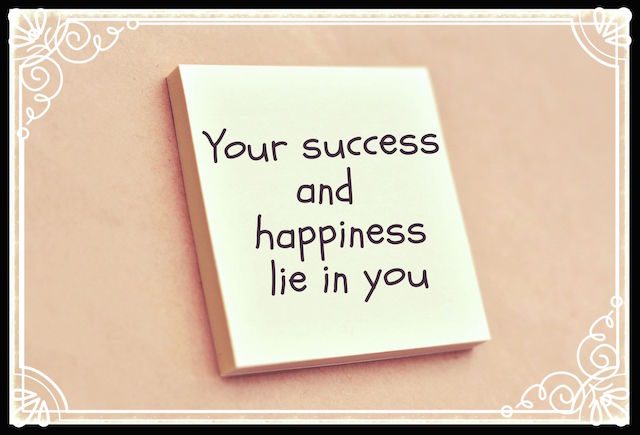
    Your Success and Happiness Lie in You

    “…I kept trying to run away. And I almost did. But it seems that reality compels you to live properly when you live in the real world.” ~Kenzaburō Ōe, A Personal Matter

    Recently I listened to an interview with author Kenzaburō Ōe, who won the 1994 Nobel Prize for literature. Ōe, who is now eighty-one, is a major figure in Japanese contemporary literature as well as playing an active role in the Pacifist and anti-nuclear movements.

    When asked what accomplishment he was most proud of over his long and distinguished career, he answered, without hesitation, that for the past forty years he has been home every night to tuck his mentally disabled son into bed.

    His answer hit me like a physical blow. For a good part of my adult life I was driven by my career.

    Of course, I had a family to support. I had to work. But at times I was so focused that I put my own ambitions ahead of my family.

    My work was in academia, and for more than twenty years I pursued the elusive tenure-track position. Nearly every professional move I made was carefully calculated to bring me closer to fulltime job security.

    I attended conferences, wrote papers, taught overseas, and continually worked on my teaching methods. Then I found it—my dream job teaching English at a small community college in a small town.

    About the same time I achieved what for many in the university world is the crème de la crème: a Fulbright research scholarship.

    For six months I would live in northern India where I would research, write, and work on building a teaching exchange between the university in India and the college where I taught.

    If anything, I thought the Fulbright would help secure my employment.

    It didn’t. In a move I will probably never understand, three weeks before I was scheduled to fly home from India, the college ousted me.

    At an age when most people are starting to think about retiring with some security, my career and financial stability were swept out from under my feet.

    I felt betrayed, angry, devastated, and afraid. My spiritual practice of compassion and acceptance was put to the test. To this day, I have trouble forgiving colleagues who turned on me.

    We humans are amazingly resilient creatures, though, and life has a way of presenting us with the lessons we need to learn. In the process of rebuilding a new career, I learned that my most important accomplishments have nothing to do with my resume.

    What about you? Are your ambitions outside of yourself?

    Job security, a nicer home to live in, good schools for our children are all valid ambitions, but alone they’ll only bring superficial happiness.

    In a moment any one of them can disappear.

    Instead ask yourself:

    It’s not easy to redefine yourself outside of a career. Often the first thing we tell a new acquaintance is what we do. I’m a teacher, an artist, a scientist, an entrepreneur, or clerk at a grocery store. It’s almost as if just being human isn’t enough.

    Eventually, I was able to look back at the job I’d lost more dispassionately. I saw former colleagues burnt out before the semester started and a climate of vicious college politics. At least four different instructors came and went in three years as they tried to fill the position they’d kicked me out of.

    Then I quit paying attention.

    After a short stint with the local newspaper, I moved to a quiet, isolated place on the high desert away from town. An online teaching job at a different college gave me enough money to get by, and I began selling some articles and photographs.

    Sometimes I still struggle with the underlying feeling that I’m not living up to my potential. After all, I spent years and a lot of money to get a Masters degree. Teaching was my career.

    Had I really given it up to live in a dusty little town that looked like it had slipped off the side of the highway?

    Time and a meditation practice helps, and whenever those feelings that I should be doing more arise, I have to admit something else as well. I am far less stressed than I have been in years and creatively I’m flourishing.

    After listening to the interview with Kenzaburō Ōe one summer afternoon when it was too hot to go outside, I began to read some of his work.

    He writes about displacement, about the lies we tell others and the lies we tell ourselves to survive. And he writes about quiet triumphs and living well and with integrity. He writes about the way his mentally disabled son brings unimagined depth to his love.

    Today my accomplishments are quiet ones. I try to live as well as I can, practice forgiveness, especially when it’s hard, and to be there when others need me. I try to love well.

    My life is far from perfect and there are many things I would still like someday: a home by the ocean, a fireplace, a car with a working air conditioner, and a bottle of Shalimar perfume. But I don’t base my happiness on these things, and if I never get any of them, it won’t matter.

    Even though all my work is online, I still sometimes get tired from grading papers or finishing an article at the last minute, but it doesn’t stress me out in the same way it used to because I work on my own schedule.

    We probably all know the maxim it’s the journey, not the destination that matters, and this may be the most important lesson losing my dream job reinforced.

    The meaning of accomplishment has changed. I have less money but more control over my time. And the time I do have, I never feel is wasted even if I’m just sitting and staring out the window.

    There’s beauty in simplicity, and peace can be found when we’re happy with what we have instead of what we want.

    What do you want to accomplish most in life?

    Success and happiness image via Shutterstock

  • You Are Not A Fraud and You Deserve the Praise You Receive

    You Are Not A Fraud and You Deserve the Praise You Receive

    Woman Taking Off a Man's Mask

    “If you are what you should be you will set the whole world ablaze.” ~St. Catherine of Siena

    My usual morning routine consists of arriving at work, making a cup of tea, reading a daily inspirational quote, and then getting started with the days’ assignments.

    Every thirty minutes or so, my brain snaps away from the task at hand into a deep craving for advice. It’s the reason I read a daily quote and the reason I get my daily Tiny Buddha articles. It’s what I spend the majority of my free time exploring.

    So, every thirty minutes or so I pull up the Internet browser and type in the search bar something along the lines of “practicing positivity,” “overcoming self-doubt,” “finding forgiveness,” or “letting go of the past.”

    The war I am fighting with the negative tendencies of my brain is never-ending and largely supported by the online communities of people who feel much like I do.

    The most important and influential people in my life are the ones who aren’t afraid to show me their vulnerability. I like to hear their stories and learn from their experiences.

    Now, that seems to go against my own goal to be absolutely perfect. I don’t admire anyone who is “perfect.” Only those who are quite imperfect and willing to admit it.

    Still, I have a hard time trusting that someone would enjoy being in my company for more than an afternoon. I’ve pushed away the people who love me because I don’t feel like I deserve their affection. Any admiration received is for some woman I cannot identify with.

    If they stick around long enough, they’ll realize just how wrong they’ve been and sprint off in the other direction, leaving me here alone and utterly inadequate.

    I am very much aware that I need to approve of myself before anyone else can. All of my free time is dedicated to cultivating self-love. My inner critic makes this journey a long and difficult one, though.

    Today’s Internet search on self-love brought me to a new diagnosis, if you will.

    Imposter Syndrome.

    Now, I’ve never heard of this, so I read an article or two to catch up. Basically, it’s the idea that what other people are seeing when you accomplish great things is not actually you. It is an imposter or fraud.

    Someday they’ll discover it and realize that you are just average…or even less than that. You are not worthy of the attention, awards, or affection. When they wake up and see the real you, you will be cast aside.

    This is particularly common among high achieving women. We feel so unworthy of our accomplishments that we refuse to accept the praise. We push it off saying that others just don’t really know us.

    We refuse to accept compliments.

    Sound familiar?

    Many successful women in our society have been shown to exhibit these feelings of inadequacy. Maya Angelou, Tina Fey, and Marilyn Monroe, among many others, have all admitted to feeling as though they don’t deserve the positive reactions to their work at some point or another.

    And what about me? From the outside looking in, I’m not the unlovable failure that I so often believe myself to be.

    I graduated from a major university with outstanding grades.

    I moved across the country without a job or a clue and still managed to support myself.

    I have won the appreciation from my boss and am regarded as an asset in my company.

    I was recently invited to serve in the Peace Corps and plan on moving to Africa in August.

    I volunteer with the Red Cross and teach English to immigrants.

    I am beautiful and strong and intelligent and kind.

    Still, I manage to attribute my accomplishments to a little bit of luck and a lot of misinterpretation.  

    These positive things aren’t happening to me because I went out and followed my dreams. It’s because a scared little girl has been dog-paddling her way through life, head barely above water, and has managed to portray herself in a way that is pleasing to others.

    I think this does come from the constant need to impress others.

    We start to project a version of ourselves that doesn’t feel natural simply because we think that’s who we have to be. We may end up being motivated solely by praise and approval, not from the wisdom and longing of our hearts.

    If we don’t open up to the vulnerability of being real, the feeling of falseness will linger over all that we accomplish.

    Many people don’t know themselves well enough to even recognize if they are following their heart.

    Being comfortable in your own skin requires you to dig deep and take the time to learn what makes you joyful.

    We have to be serious about getting to know ourselves if we want to love who we are.

    In the case of Imposter Syndrome, who is right? Me or the rest of the world?

    My opinion about myself is my only truth. It doesn’t matter how many truckloads of affection can be dumped onto my lap. If I can’t see it, it does not exist.

    How are we supposed to change our perceptions? We can start with the human folly of comparison.

    We judge ourselves compared to perfection, not other people. We imagine Oprah and Mother Teresa to be shining beacons of perfection, but they aren’t. They are human.

    We don’t have to be perfect to bring something meaningful to the world. In fact, perfection is an indescribable state because it does not even exist. We should take a stand to delete that devilish word from our vocabulary.

    What human, animal, or plant exists in flawlessness?

    Even the most beautiful flower may have a single petal that is misshapen or browned, but does that make it unworthy of praise? Should it go unnoticed?

    In contrast, have you ever know anything to be 100% bad? You can find fatherly love in a dictator if you are willing to look for it.

    When humanity can wake up and realize that we are as much the good as we are the embarrassing and painful mistakes, maybe we won’t worry if people are only seeing one side of us. We cannot accept parts of ourselves and deny others without becoming only half of a person.

    Usually, I move forward with the idea that as long as I am alive, there is time to learn more. As long as I am curious about something, anything, that is one thing more important than feeling sorry for myself.

    Luckily for me, curiosity burns strong in my heart. Today, I’m curious about self-love and confidence mixed together with wonder about our Universe and scientific discoveries.

    The more I focus on the things that I have, the less I worry about the things I am missing. That is what practicing gratitude is all about and why it is recommended almost anywhere in the self-help community.

    Upon closing, I find it relevant to say that writing this has been therapeutic for me, especially when I took the time to list some of my accomplishments. It really felt like I was writing about someone else. I’m not an imposter, though.

    Somewhere along the lines we were told it is sinful to feel pride. However, it is only when you allow yourself to feel the pride that comes with accomplishing mighty works that you can start to see the inner beauty shining through.

    Now it is your turn. Identify five or more things you have accomplished and for which you have received some sort of recognition. Write out what compliments were given and then sit with it. Try to relax into the feeling.

    Maybe you are a single mother working hard to provide for your family when you have no idea how.

    Maybe you are a musician or artist unsure if your style will make it out there in the critical world.

    Maybe you’re a young writer submitting your first piece, oblivious if your words will have meaning to another.

    None of us know. That’s part of the beauty that connects us. Your bravery is admirable, even when you feel like a failure.

    Be open to the possibility that even though you are not perfect, you can still be remarkable. And you are.

  • How to Stop Tying Your Worth to Things Outside Yourself

    How to Stop Tying Your Worth to Things Outside Yourself

    Woman Relaxing

    “If you find yourself constantly trying to prove your worth to someone, you have already forgotten your value.” ~Unknown

    There’s nothing like being one of the few black kids in your school to make you feel like the odd person out.

    Well, that was my experience, anyway. I appreciate my parents’ desire to provide my brother and me with a safe neighborhood to live in and a good education, but growing up in a predominantly white area really affected me. I very rarely felt like I fit in among my peers.

    That didn’t stop me from trying, though. I did all I could to get people to like me—to feel accepted. Perfectionism quickly became my best friend.

    The pressure I put on myself to be perfect wasn’t completely unproductive. I ended up earning the honor of being my school’s first black valedictorian. I also lost seventy pounds and became a renowned soloist in my school district.

    But those accomplishments still weren’t enough to make me feel worthy. Deep down, what I really wanted was a boyfriend. Maybe if I could find a boy to like me, I thought, I wouldn’t feel so different from my peers.

    Unfortunately, finding a boyfriend proved to be difficult. It wasn’t until I was twenty-one years old that I had my first kiss and met my first serious boyfriend. Finally, I felt normal—all because a man believed I was special.

    The problem with connecting my relationship status with my self-worth is that I desperately clung to my boyfriend, despite the many red flags present within our relationship. It took nearly four years before I accepted that his behavior toward me was rather abusive and that I needed to leave.

    By the time I left that relationship, my sense of worth was pretty shot. It’s ironic that low self-worth is what led me to the relationship, kept me in the relationship, and what I had to deal with once I left the relationship.

    I learned the hard way that when we connect our worth with anything outside of ourselves, we’re setting ourselves up for failure.

    Yes, it’s a common trap many of us find ourselves in, but it’s a dangerous one. During the last five years of healing from abuse, I’ve eventually come to realize that my worthiness is an entity separate from my appearance, relationship status, and success.

    Yours is too.

    These days, I firmly believe that a deep sense of self-worth is the foundation each person needs to fully thrive in his/her work, relationships, and other life endeavors. Despite what society likes to tell us, weight loss, engagement rings, and becoming the CEO of your company aren’t what make us worthy. Such things just don’t have that power in the long-term.

    On the contrary, it is because we are worthy that we’re able to accomplish and enjoy such wonderful things. And when we believe we’re worthy, we bring more of our light into the world. We tend to attract similar light too.

    So, how exactly does one develop a deep sense of self-worth?

    That is the question—and the challenge.

    Here are a few tips to keep in mind when you’re looking to deepen your self-worth. The following list is certainly not a formula, but it just might get you thinking about how you can get in touch with your own worthiness.

    Acknowledge when you are seeking external validation.

    It’s common to seek validation from others, so I wouldn’t expect you quit that habit cold turkey. You’re human!

    That said, it’s important to at least acknowledge when you’re seeking it. “I’m looking for people to validate me so I feel worthy” might sound like a silly thing to say aloud, but you can’t address a problem until you acknowledge its existence.

    Then, think about why external validation is so important to you.

    Sometimes, when I find myself pining for more Facebook likes or a quick compliment from my husband, I stop myself and think. There’s certainly nothing wrong with wanting people to appreciate my work or my husband to tell me I’m attractive, but if I’m wrapping up my entire well-being in either of those things, I’m in for some major disappointment.

    Other people weren’t created to make me feel good about myself; that’s my own issue that I need to work on.

    Usually, when we’re urgently seeking external validation, there’s a fear underlying our desperation. Getting in touch with those fears is important because then we can determine whether our fears are reality or just fears. Most of the time, they’re just fears, and we shouldn’t give them more power than they deserve.

    Practice self-love by caring, comforting, and soothing yourself.

    Often, when we’re longing for validation, it’s because we’re in need of attention. Caring, comforting, and soothing ourselves, particularly during hard times, need to become common practices. A lot of times we can give ourselves the attention we’re yearning for; we just have to get used to doing so.

    I’m not suggesting that individuals can replace the role of community in their own lives; we still need loved ones to share life with us. But when we really value something, we treat it well. And you deserve to be at the top of the list of things you value, especially if you haven’t been for a significant period of time.

    In other words, treat yourself like you know you’re worth it and one day, you just might believe it.

    Be willing to believe you are worthy.

    You might not have a whole lot of self-worth today, but that doesn’t mean you never will. So, while you’re doing the work of deepening your self-worth, believe that you are capable of doing so too. Otherwise, what’s the point?

    Commit to the journey.

    Deepening your sense of self-worth is no easy feat. It is, indeed, a journey. And because of all the topsy-turvy feelings this journey might invoke, it’s wise to commit to it prior to taking the first step.

    Humans make significant decisions every day that require displays of commitment (i.e.: getting married, buying a house, adopting a pet). While I don’t think you have to plan a wedding ceremony for yourself (unless you really want to), I do think the decision to deepen your self-worth should be viewed as a significant one requiring the utmost commitment.

    In fact, I’d say deepening your self-worth is one of the most significant commitments any person can make. Don’t you?

    Grasping the connection between my self-worth and the way I treat myself was life-changing for me. If you’re struggling to believe in your own worthiness, I strongly suggest that you embark on your own journey towards doing so. That journey just might change your life too.

    Besides, you’re worth it.

    Woman relaxing image via Shutterstock

  • Why I Don’t Need Success and Validation to Be Happy

    Why I Don’t Need Success and Validation to Be Happy

    “The way you treat yourself sets the standard for others.”~ Sonya Friedman

    Five years ago I was driven, determined, and thriving. I was in the middle of a career in financial services that had started in sales, led to management, and, at that point, had me pushing myself and competing as a director in the retail banking business.

    I was proud of what I had achieved and what I intended to achieve. I had the trappings of success as I saw them—the house, the car, the salary, and job title that reflected my level of achievement—and I had a huge and very sensitive ego to accompany all of this.

    When I refer to my ego, I really mean that my self-esteem was dependent upon my accomplishments. I perceived that the external and visual signs of success were directly linked to the person I was inside.

    Then, one day, I heard voice saying, “You must leave, you have to get out of this place…”

    Before you imagine that I was hearing things, I’ll add that this was my boss. He was telling me that the company was in a “change process” and I was one of the casualties. At that moment I saw my career leave the room, out the window, with my self-esteem jumping after it.

    Over the weeks that followed, my family and friends, seeing my distress, sought to comfort me with words similar to “Don’t worry, we still love you whether you are refuse collector or a chief executive.”

    While I smiled at these words, my internal dialogue was something different. It went something like: “It doesn’t matter what you think of me. I won’t love myself unless I show how successful I can be.”

    At that time I did not know how true that statement was. I also did not realize that this was both my greatest motivator and, at the same time, the greatest barrier to long-term happiness.

    My Awakening

    Over the years I had been interested in my personal development and had read quite widely. I often came across the concept of loving myself and dismissed it as fluffy, ephemeral, and completely non-masculine.

    Then I started to read about my emotional needs, the needs that I expect the rest of the world to meet in order for me to be happy, such as my need to be loved, respected, validated, and listened to.

    As I reflected, I realized that I used a lot of “needy” behavior in order to manipulate the environment to meet my needs. I would act the victim and the martyr on social media in order to get sympathy and attention. I would over assert myself (aggressively) in order to be respected.

    I would outperform other directors in order to get the validation and appreciation from my boss and peers that I desperately needed. I would tell my wife I love her in order to get the response “I love you, too.”

    I had been relying on everyone else and making it their responsibility to make me happy. If they responded to my hints and nudges, then I was happy and they topped up my self-esteem.

    “What’s the problem?” I hear you ask. “People meet your needs, you feel good, problem solved.”

    Here’s the issue: unhealthy self-esteem is like a monster that grows the more you feed it.

    A four-bedroom detached house with a double garage, once achieved, becomes too small, and you need a five-bed with a pool. Job title inflation becomes the norm, and you must upgrade the ultimate status symbol, the car, as often as possible.

    Soon, I get to the point where telling me you love me is not enough. You have to prove it, and guess what? The more you prove it, the more you have to. Every effort, thought, and gift has to be better than the last one; otherwise, you obviously don’t care.

    Those of you imagining this is a caricature, please examine your own behavior. What little tactics and strategies do you use to get the attention you crave? How do you manipulate your environment to get your needs met?

    So what changed for me?

    I slowly started to take responsibility for my happiness and meeting my own needs. I started to like myself and moved on to respecting myself, and I eventually lost my reliance upon others for validation.

    As I started this slow transformation, a funny conundrum revealed itself to me. When I used to demand respect, validation, and love, I never got enough of them. As I started to respect myself, I found others respected me more, and now I have an abundance of respect, love, and validation.

    Does that sound smug?

    I hope not. By taking responsibility for my needs, I am now able to have healthy, giving relationships that are not based upon giving in order to receive. By having a healthy relationship with myself, I have healthy relationships with others.

    Start with You

    It started for me with a seismic shock wave that rocked my world. It does not have to happen like that.

    Start by raising your awareness.

    Observe the needy, manipulative behaviors in others; it’s easier that way. Then start to notice them in yourself and identify what need you’re trying to get others to meet for you.

    From there, ask yourself: What does it really mean to like and respect myself?

    For me, this means that I make myself a priority, give myself the time I need for my interests, and set clear boundaries around my work and life.

    Next, close your eyes and ask yourself: How would that look? How would that feel? What would I see myself doing and hear myself saying?

    I can see myself setting clear space in my diary and feeling in control, and taking clear steps to make space for family time. I can hear myself saying, “Thanks for the offer, but I have other commitments that day. I can offer you two other alternatives.”

    Finally, ask yourself: What small steps could I take now to start this process?

    My first small step was to set time aside to make sure I was not overcommitted and my time was protected.

    I started this post by sharing that I was successful. This may imply that I no longer am.

    My measurements of success may have changed a little, but I am comfortable with that.

    I am not worried about job titles, and I prefer to measure success by the impact my work has. I drive a twelve-year-old car because I like it. When I tell my wife I love her, it’s because I do and she deserves to hear that.

    In case you are reading this and wondering if meeting my own needs makes me less ambitious, absolutely not. I have great ambitions and plans. Whether those ambitions and plans are successful or not will not be a factor in my happiness.

    To put it another way, I am happy and will be so whether or not I realize my plans and aspirations.

  • When Things Go Right: Dealing with Success with Humility

    When Things Go Right: Dealing with Success with Humility

    Jumping for Joy

    “We cannot live only for ourselves. A thousand fibers connect us with our fellow men.” ~Herman Melville

    Recently I experienced a triumph in my career. The details are not important and frankly, many people might even consider it a trivial accomplishment, but it was important to me.

    Usually when things go our way there are two ways someone might react: humility or boasting. I decided to try something completely different.

    Boasting isn’t really part of who I am. Raised to be humble, take praise with many grains of salt, I play down accomplishments. But, this course never seems to get me anywhere.

    Humility leads to self-doubt and self-deprivation. It also gets in the way of future success.

    In the past when I’ve experienced success I told no one, because that might be bragging. What happens then is no one knows of my accomplishments; therefore, I lack credibility, which undermines future efforts. Being too humble is self-sabotage.

    It minimizes my accomplishments in my own eyes. When I say things like, “Gee, it was nothing,” or “Anybody can do that,” what I’m really telling myself is I’ve accomplished nothing.

    So instead, I sit back and watch the loud girl or guy tell everyone how they saved the day or how much their boss loved their report or how smart their dog is, while I sit quietly buying the hoopla and then thinking how mediocre I am.

    This time, however, I had no space in my mind for either humility or boasting. Instead, I was filled with gratitude. And gratitude allowed me to sing praises, not for my own awesomeness alone, but for everyone who assisted in helping me reach my goal.

    From my husband to casual acquaintances, I told each person the part they played in helping me realize this success. I’m not kidding, and I didn’t just do this in my head.

    I told my yoga instructor how her guidance helped me relax in my body so my mind could do its work. I thanked my Facebook friends for giving me small entertaining distractions to lighten my days. I thanked the members of my meditation group for helping me find strength to put myself out there.

    I gave thanks with sincerity, and not just to let people know I’d achieved my goal, but to help others too. I publicly gave recognition to the company that had shown appreciation for my work, besides helping promote their business would ultimately promote my work.

    As I doled out this gratitude, I did lose one thing. I lost the feeling of being alone in my awesomeness. Me, myself, and I! I did it! Instead I felt I was part of a bigger community.

    My small achievement strengthened my connection in the world. Things really had gone right. Even if for one small blip in the history of the world. At that moment, all the people connected to me and I got it right.

    These feelings of love and gratitude paid off like no amount of humility or self-back-patting ever could. Gratitude encouraged me to keep working and keep reaching for accomplishments.

    No One Gets There Alone

    Sometimes we might think accomplishments come only from our effort and hard work. “If you want something done right, you gotta do it yourself.” But the truth is, none of us ever reaches any accomplishment without others.

    You might be inspired by the encouragement of others, or by the poor actions of others. Good or bad, like it or not someone helped you.

    Start being grateful and you’ll feel like you’re running downhill laughing with freedom.

    1. Thank yourself.

    You deserve it. You really do.

    Don’t knock yourself down by minimizing your accomplishments, no matter how small. Doing so constricts your soul with underlying disbelief or inferiority.

    2. Thank the person/entity who recognized your work.

    Outside of yourself, those who appreciate your work are the first you should thank. Without their light being spotlighted onto you, there would be no accomplishment.

    3. Thank all the supporting players.

    When we think of the ways others support us, our hearts open to love. We become encouraged to offer equal support to others.

    You might be grateful for the mechanic who keeps your car in working condition, which allows you to get to work. The barista who makes your morning coffee supports you by helping start your day.

    Being grateful for everyone who assisted your success is true humility.

    Photo by Rama V

  • Learning to Enjoy the Process and Stop Worrying About the Outcome

    Learning to Enjoy the Process and Stop Worrying About the Outcome

    Happy

    “Slow down and everything you are chasing will come around and catch you” ~John De Paula

    Remember the Tasmanian Devil?

    That crazed Loony Tunes cartoon character spinning out of control, crashing into everything in his path? Arriving in a blur. Leaving chaos in its wake.

    That was pretty much me and my approach to “living my passion.”

    This is hard to write but here goes (deep breath)…

    Not too long ago I was seriously trying to accomplish all of these things at the same time:

    • Play in a rock and roll band of middle aged men living in New York City, rehearse regularly, play live shows, tour, and still play dad to a family of four.
    • Engineer and produce our own albums while simultaneously attempting to produce other artists to help them realize their artistic vision
    • Start my own blog to inspire awesomeness in other creators
    • Guest post for major blogs and write epic content regularly to help their audience and build up my own blog audience
    • Shoot my own videos, create graphics, and edit them (though I have little to no skills in any of these areas) for my blog
    • Write a novel and multiple eBooks
    • Design cool music themed apps
    • Stay gainfully employed (a day job I desperately wanted to quit to make more time for all of the above)
    • Practice meditation and find the deeper meaning to my life

    The idea was that my brilliant plan would eventually pay off and sustain my family completely so that I could:

    • Pay a New York City mortgage
    • Put food on the table
    • Make time for my two young children
    • Spend some quality alone time with my wife and stay married
    • Have the freedom to create more awesome art

    So how did that all work out, you might ask. Total disaster. Here’s a glimpse into my crazy Tazmanian lifestyle:

    I would commute to my day gig and write blog posts while standing up on crowded subway cars. I’d come home and have a quick dinner, hang out with the children, and pretend to listen as they would excitedly recount their day. But I wasn’t really present. Then I would dash off after their bedtime to my studio man cave to work on my music until the wee hours.

    Then I would collapse into bed every night, only to get up a few hours later and do it all over again. At the end of my self-imposed exile of several months, I would finally return home victorious, the proud father of a shiny new CD.

    But there was no applause in my household. Only a very chilly reception from an ever more distant wife who understood my passion but couldn’t accept its all-consuming nature or my many frazzled creative endeavors.

    Then I would spend the next few months trying to stitch back together our relationship. But the chasm between us was growing and heading to the point of no return, having repeated this scenario at least three times before since we had known each other.

    I knew something needed to change, and quickly, if I was going to try and stay married.

    How did I arrive here, you might ask.

    Simply put, I became a casualty of the Digital Revolution. A world where faster is better, multi-tasking is the national anthem, and technology will set you free to be more productive and make you more intelligent.

    Where you don’t need human interaction anymore. You can simply “connect” to your global audience, which was almost as good as being there with them.

    Except that it’s not.

    I was duped into believing that I could accomplish so many more tasks with all this technology and achieve incredible feats by simply sitting in front of a computer screen.

    I was also following several successful bloggers and online marketers and learning everything I could from them. But this only amplified the delusion that I could accomplish all these things at once because they had done it.

    Only all those marketers seemed very focused on just one thing and they were doing it really well. The problem for me was that I had many irons in many different fires and none of them were getting very hot.

    I call this The Flailing Effect.

    But thank God (or Buddha as it were) that somewhere in the midst of all this chaos I began practicing meditation. You could say I finally caught my breath. I quickly began to slow down and see a different perspective.

    It didn’t happen overnight. There were no tectonic shifts in my crazy lifestyle. In fact, I had to get up even earlier to now fit my meditation into my already insane schedule.

    But it was the best thing I ever could have done.

    Slowly, through the practice of quieting my mind, I began to find clarity.

    I clearly saw my attachment to this desperate need to accomplish something important in this life and be recognized by the world for it; and how these external accomplishments would somehow validate me as a person, as though who I was already wasn’t enough.

    It didn’t take long before I recognized the insanity in my ways.

    It became clear that I really needed to define what I wanted my life to stand for. Then I needed to eliminate everything else that didn’t serve that end.

    But the most important discovery was learning to finally let go of all expectations that any of these aspirations needed to come true. Or if they were meant to be, I needed to stop worrying about when they were going to happen, which it turns out was a huge source of frustration.

    Attachment, worry, frustration—these things don’t exist in nature. Things unfold as they are supposed to in nature.

    Sometimes the rains come. Sometimes they don’t. Sometimes one storm can change the course of millions of lives in just a few minutes.

    A river runs its course based on the lay of the land. When it meets an obstacle, it doesn’t fight with it. It simply goes around it…eventually.

    How long it takes is of little consequence. After some six million years or so, it might carve something as magnificent as the Grand Canyon. Nobody’s watching the clock in nature.

    A tree is happy wherever it grows. It doesn’t secretly wish to sprout legs and run off to some other more happening part of the forest. (Robert Frost wrote a pretty great poem on this subject.)

    In Buddhism, they call this patient acceptance.

    Life happens in spite of your wishes. This is the nature of all things. When I began to accept this, my frustrations started to melt away.

    When you can see yourself as a part of that nature, not separate from it, and start behaving as nature does, you will become more peaceful.

    I’ve learned to embrace the work now.

    The day to day. Nothing else matters, except my family. When I’m with my kids or my wife now, I try to really be present, to enjoy the now in each moment.

    When I finish a post or a song after many hours of editing and polishing it to a fine shine, I can stand back and smile. Another child is born. Then I put it out into the world.

    I do wish for it a happy, prosperous life as any father would. I just don’t worry so much any more about how it all turns out.

    It all turns out fine.

    Photo by Nguyen ST

  • 7 Tips to Love Where You Are Right Now

    7 Tips to Love Where You Are Right Now

    Smiling Woman Outside

    “Happiness is not a station you arrive at, but a manner of traveling.” ~Margaret B Runbeck

    It had been months since I’d gotten a good night’s sleep.

    I’d wake up gasping from bad dreams throughout the night, and I’d feel an immediate knot in my stomach as soon as it was time to get up and face the day.

    When the morning beckoned, all I wanted to do was hide under the covers.

    But even when hiding from the physical world, my thoughts could still find me, belaboring on in an incessant stream of “have-tos” and “should-bes.”

    I’d wake up feeling guilty about all the things I hadn’t done the day before, and overwhelmed by the mounting goals that still loomed before me.

    I’d roll out of bed and go straight to the computer, with a frazzled and weary mind, to start attempting to do all the work that all those thoughts kept reminding me about.

    My work was stressing me out to the point where I felt depressed, always anxious, and completely unhappy with where I was in my life.

    If you looked at it all on paper, you might have thought I was living a pretty awesome life: married to my best friend, living in a town I adore in a great little house that we own, successfully self-employed for more than five years, with the freedom to decide how I want to spend my time each day.

    Problem was, I wasn’t present enough to truly enjoy any of it. Instead, I was stuck in my head, wrapped up in a big ball of expectation.

    Caught in a spiral of all the things I had to do so I could be who I should have been, I forgot about the things I wanted to do so I can be who I am.

    I felt jealous of where others were in comparison, weighed down by self-doubt that I wasn’t good enough to accomplish all the things I wanted, and so scrambled, with my energy dispersed into too many things at once.

    Then, I went and saw Ms. Renee, an empath who could see right through me.

    She could see the anxiety, overwhelm, and self-imposed burdens that I had created. She reminded me that I needed to take care of myself in order to have the energy to do this work, and that all I had to do to get out of my head was to get into my body.

    I came home with a whole new attitude and belief in myself, and got dedicated to making some real shifts in my life.

    I made it a priority to meditate regularly, exercise, and get my veggies. I changed course with my business to escape the stressful elements and get closer to what my heart really wanted all along. (more…)

  • Give Yourself Some Credit!

    Give Yourself Some Credit!

    “Always concentrate on how far you’ve come, rather than how far you have left to go.” ~Unknown

    After pitching an idea to an international online magazine a month ago, I recently sent the article to the editor. I was quite nervous. It had taken me more than a month. Every time I sat down to write, I didn’t know how to begin.

    I typed and then deleted my paragraphs. I typed again, and then deleted the whole document. I wasn’t happy with what I had written.

    Eventually, I said to myself, I had to submit something because it had taken too long. So in the flurry of two hours, I hammered out the article, sent it to a friend for comments, and went about perfecting it.

    I revised my writing, taking a few of my friend’s suggestions, but still I wasn’t completely satisfied with what I had produced. Yet, I didn’t know how else I would improve it anymore. By then, I was tired of reading, re-reading, and re-re-reading, so I sent it off.

    For three days I waited gingerly by my computer, causing myself needless anxiety over whether or not the article would be accepted.

    This was crucial for me as I was taking the first step in testing the market to see if it was receptive to my thoughts, and perhaps a book about the experiences of a Generation Y female executive overcoming depression.

    Plus, the website was authoritative in its own right and it would give me some exposure and signs as to whether my direction was in on track.

    I was more than ecstatic that the editor came back and said they had already published the post and gave me a link to it.

    You might think I felt proud of myself for this achievement. (more…)

  • 5 Tips To Help You To Discover Your Maximum Potential

    5 Tips To Help You To Discover Your Maximum Potential

    “You do not become good by trying to be good, but by finding the goodness that is already within you.” ~Eckhart Tolle

    Don’t doubt yourself. You are more than enough.

    You are good enough. If no one else tells you that, I will reaffirm that you are good enough to do whatever you want in life. Life is too short for you to paralyze yourself with doubts.

    I used to doubt my capabilities, and I was so unhappy and frustrated with life. I tried to bury myself in self-help books to find the answers to achieve success and happiness. One book after another, I kept reading, but I had little results to show for it.

    The pain became unbearable, particularly when my friends made fun of the books that I read.

    But I didn’t give up. I kept on searching for answers by listening to audio books, reading books, and attending seminars by revered masters in the topic of personal development. One baby step at a time, I started to apply the knowledge I had gained.

    That’s when things started to change around me. Once I started applying what I learned, I: (more…)