Tag: abuse

  • My Mother’s Abuse and the Two Things That Have Helped Me Heal

    My Mother’s Abuse and the Two Things That Have Helped Me Heal

    “I love when people that have been through hell walk out of the flames carrying buckets of water for those still consumed by the fire.” ~Stephanie Sparkles

    I have a tattoo on my back of Charles Bukowski’s quote “What matters most is how well you walk through the fire.” It spoke to me as I had been walking, often crawling, through a fire for much of my life.

    At times, I took different paths, skipping through fields of flowers, but eventually I would find my way back to what I knew, which gave me a strange sense of comfort—the fire whose roots had begun in childhood, with my abusive mother.

    I used to be consumed by this fire. I have another tattoo on my foot that reads “Breathe.” For years I lived with a very dysregulated nervous system, constantly alerting me to the threats of the flames forming around me, and breath was something that eluded me.

    How could I breathe when at any moment she could walk up the stairs and find something to lash out at me over?

    How could I breathe when no one wanted to hear how I felt, and my emotions were something I did not understand, nor know how to handle?

    How could I breathe when everything was so frightening?

    How could I breathe when no one ever showed me how?

    Those entrusted to my care were in their own fires that they had never learned to come out of. So of course, as I grew, I felt unsafe and uneasy. And I learned to ignore my breath, ignore that others were able to feel it move through their body, and learned to see only flames everywhere. 

    I grew up in a traditional home as a child of immigrants who had come to the USA for work and to give their children a better life. I went to Catholic school, where I threw myself into academics as a way to be seen, and excelled. My parents were excellent cooks and displayed their love for us through the kitchen table. I had all of my physical and academic needs met.

    I spent my early childhood playing with my brother, who I latched onto as a support system. My mother’s inability to soothe us as babies and toddlers created very sensitive, shy children, deeply afraid of the world around us and deeply connected to each other.

    Unfortunately, my brother and I began to distance during our preteen years. We had created different survival strategies to navigate my parents, and he began to view me as the problem, as my mother was teaching him. I then began to view myself through the same lens.

    I was ridiculed, abandoned emotionally, shamed, and made to believe the dysfunction of the family lay entirely on me. There was a period of physical abuse as well, but during these situations, I at least felt seen.

    I was gaslit to question everything I believed to be true and found myself in imposed isolation in my childhood and teen years, later self-imposed. The world felt too frightening to face. As I grew older, I rebelled against the isolation by looking to others to help soothe me, especially romantic relationships.

    If they didn’t soothe me as I wanted, I grew angry and hurt, isolating myself more and more, or lashing out internally or externally.

    I looked to ease the suffering inside with external gratifications, shopping, traveling, and sex. Unfortunately, nothing could soothe the pain I was feeling.

    In my early twenties I went to a therapist and could do nothing but cry. After a few months of not being able to communicate, she insisted I take benzodiazepines or we would be unable to continue working together.

    My symptoms worsened both emotionally and physically, and I now needed “saving” from both. The helplessness I learned early on continued, as did my need to have others make me feel safe. Both my body and brain became impossible to withstand, and proved to me that I was a victim of life and no one cared about me.

    I found relationships to validate this idea, with addicts, narcissists, and codependents who all eventually grew tired of my need to be loved and soothed out of my pain.

    I was attracting the familiar in these people, who could not show me the love and safety I needed. In other words, I was attaching myself to others to regulate, but they too were stuck in a cycle of dysregulation.

    I found various ways to hurt myself, overspending, starving myself, overexercising, and on more than one occasion taking too many medications to calm myself down, and finding myself in an emergency room. The familiar was living in my nervous system and demanded to be entertained.

    After decades of chronic health issues due to emotional and physical trauma, they finally hit a peak when I was forty-seven and no longer able to work, the one area of my life I’d had some control of. I had to learn to breathe or be completely extinguished by the flames. During this time, I began to learn how to put out the fires.

    I worked hard on retraining my nervous system out of the fight-or-flight state it had entered when I was not soothed as a baby, and rewiring thoughts and behavior patterns created as an extension of that state. In this process, I found the authentic part of myself, the inner child, which brought a deep peace, the peace of integration.

    An integral part of my healing came from practices of forgiveness and compassion. As I rewired old patterns living in my nervous system, I learned about how the brain works, how trauma is stored there, and how our realities are shaped by early experiences.

    Each day in my practices I discovered new associations, when new thoughts and behaviors had started, and had to look at these strategies and their results with self-compassion and forgiveness.

    At first, this was difficult, as it was new to my brain, but as I practiced it became easier, and I started feeling self-compassion and self-love for the first time.

    As I worked with my own toxic personality in these practices, I experienced deep grief for the past and what I was not able to enjoy as a result. Anger was holding on, and I knew it was time to let go. So, I began a practice of curious empathy for the woman who had started my fires, my mother. Awareness of my own dysfunction, self-compassion, and now self-forgiveness allowed me to do the same for others, including her.

    In this case, curious empathy meant becoming aware of her patterns and where they came from by connecting to my own experiences and empathy.

    I had observed her throughout my life to learn about what I was experiencing and how to navigate her, as well as others in the world. I also read tons of self-help books about personality disorders and toxic people, but cognitive knowledge wasn’t enough to understand my mother.

    I watched, listened, and heard stories from my father about my mother’s childhood. I drew upon my own strategies and where they originated. I opened myself up to curiously knowing her, at first from a distance (during this time of healing), and then I incrementally exposed my healing nervous system to her with empathy.

    When I felt balanced and regulated enough, I rejoined our relationship, but with strict boundaries—for both of us. And I found a somewhat different human in front of me, one who had softened in her old age but still retained old behaviors when “triggered.”

    I began to identify her triggers and remained strong when she reacted. I now knew no other way; my nervous system and heart had been retrained into compassion.

    I came to understand that she had created toxic survival strategies because of an inability to communicate and soothe emotions and needs in an effective way. She had been stuck in a fight-or-flight state that prevented her from seeing the world as it was, and seeing the motivations of others clearly.

    And I had learned (and now unlearned) similar methods of interacting with the world.

    I often pictured her as a child or a teen and connected with this version of her through my own inner child. In the moment, I was able to change the hurt and anger I felt to compassion for the way she was trying to get what she needed. This was followed by an inner forgiveness and releasing of the negative emotions.

    I made it clearly known what I would accept, and often joked with her about the way she was acting. She responded with smiling or laughter.

    It became clear that she reacted when she felt vulnerable, and I understood that throughout her childhood, vulnerability was not acceptable, and she was shamed in it. 

    In identifying her methods of showing love, I felt loved and seen, and it was easier to react to her with forgiveness and compassion. It became natural to me to speak as the “parent” (adult) when her old armor of defense came up.

    In daily forgiveness and compassion practices, I find enormous love for the woman still stuck in a fight-or-flight state created in her childhood. There are times I pull away to reinforce that her behavior is unacceptable, but these times are not as prevalent as before.

    As I changed my behavior toward her, she began to change hers toward me. As I regulated my nervous system into safety, it seemed to soothe hers, and she inched closer to the idea of vulnerability with me.  As I let go and replaced the anger with compassion, she felt safe. It is with this safety that she is able to chip away a tiny piece of her armor in our interactions.

    I cannot ever change her, and she will pass with the trauma state she is in as her identity. But, for my own well-being, I chose forgiveness and compassion, to bring her a small drop of water each time I see her. Remaining in the fire with her, by being angry, was not an option any longer. 

    I found my way out of a fire that had nearly taken my life and hope to continue sharing my experience of healing. These days I find myself skipping through fields of flowers on a regular basis, and feel it is a blessing to share it with those who have not yet gotten there—and those who may never.

    **I am not suggesting that anyone should keep people in their lives that they feel are “toxic.” We all need to do what we feel is best for us based on our own unique experience.
  • Abuse is Like an Iceberg: The Cruelty and Pain You Never See

    Abuse is Like an Iceberg: The Cruelty and Pain You Never See

    “What we see is only a fractional part of what really is.” ~Unknown

    On the surface, in the public eye, it can seem trivial. It might look like the seemingly harmless teasing of a child or romantic partner, joking about words they have mispronounced or silly mistakes they have made. Inane mistakes like putting on a shirt backward, burning something in the oven, or losing their keys. Mistakes that everyone makes.

    Abuse might sound like judgmental comments that appear to come from a place of compassion. Comments like:

    My daughter doesn’t apply herself; she’s lazy, and I wish she would care about her education so she can make something of herself.
    At the moment she likes girls, but I’m sure she’ll grow out of it because I just want her to be happy and get married and have a family.
    I wish he would make plans and stick to them instead of changing careers every five minutes; he would be so much happier.

    Sometimes on the surface abuse can sound like frustration:

    I wish she would just pick up after herself; it annoys me that I have to live in a pigsty.
    She doesn’t do well in school, which is embarrassing for me because I am a teacher.
    He never has any time for me; he’s so selfish, and all he thinks about is his work.

    Abuse can also sound like statements of compassionate control:

    If she doesn’t do better in school, I’m not going to pay for her cello lessons.
    If he doesn’t help out around the house, I’m not going to make time for him.
    If she doesn’t try to dress nicely, then why would I make time for date night?

    I’m not saying that all teasing or comments expressing frustration necessarily mean that someone is being abused. I am only drawing your attention to them and encouraging you to look closer.

    The victim might give you subtle hints. Hints like:

    My parents really don’t care what I do; my parents only care if I do well in school and that’s all.
    My partner is only happy when I’m doing things for him.
    I don’t get a lot of me-time because me-time is selfish.

    The victim might show you emails or texts the abuser has written. Oftentimes, these emails or texts may seem benign or contain subtleties that can be easily overlooked. They might have a few verbally abusive comments and a handful of demands, or they might even be disguised as messages of concern.

    Sometimes these messages may be written so persuasively you might find yourself siding with the abuser or wondering why the victim is so upset about something so trivial.

    Beneath the teasing, the frustration, and the deprecating comments disguised as compassion lies a world of abuse that you are not looking for.

    Behind closed doors teasing turns into putdowns and verbal abuse:

    You will never amount to anything.
    You are incompetent.
    You are lazy.
    You are fundamentally a failure.
    You will never be able to support yourself.
    You’re a fag.
    How can you be so dumb?

    These harsh words may come with physical violence, but even on their own, they can be devastating.

    Compassionate control that appears on the surface may be an indicator of neglect or financial abuse.

    I have the money for music lessons, but you’re not doing what I want, so I’m not going to support you. I’m not giving you money for shampoo because it wouldn’t change the fact that you look ugly.

    You have not become the person I had hoped you would become, so I’m not going to pay for your educational opportunities.

    Sometimes you might look at abuse victims, like me, and wonder why we don’t wear better clothes, get regular haircuts, or take better care of ourselves. However, many times these simple choices were not within our power to make.

    Victims of abuse often make self-deprecating comments. Comments like:

    It was no big deal; anyone could have done it.
    I’m not good at a lot of things.
    I can’t do anything right.

    Over the years we have been groomed to put ourselves down before you do. We have internalized the abuse narratives to the point where we no longer see our lack of self-esteem, or our talents.

    Victims of abuse often don’t know how to accept a compliment and at times can feel uncomfortable in the spotlight. We’ve learned to make ourselves small and build you up so that we can keep ourselves safe. We downplay the favors we have given to you or the kindness we have shown you because we have learned the needs of others matter much more than our own.

    We become overly anxious when we made a mistake, when we’ve expressed an opinion contrary to yours, or when we think we might have offended you.

    We put your needs first, and we act overly agreeable and easy to please. We don’t mind where we go or what we eat when we are out with you. We don’t tell you if we’re feeling tired or cold, and we hyperfocus on you because we have learned that our needs don’t really matter to anyone.

    Because we have been gaslit and our reality has been denied over and over, we have learned to downplay the abuse and even to deny it. We might say contrary things about our abuser, such as:

    My mother loves me; she just doesn’t know how to express it.
    Yes, that was a nasty thing that he said, but if I had been kinder to him or done a better job, he wouldn’t have felt the need to say that.

    You might occasionally hear us expressing frustration about the way our parents have treated us. You might hear our longing for love and acceptance, but in response you may find yourself saying:

    Your mother really loves you; she just wants what’s best for you.
    I know you’re frustrated with your dad, but you should really try and forgive him.

    You might hear us expressing frustration about our partners and you may find yourself saying:

    You should be grateful for all that they have provided for you and done for your family.
    I don’t believe you; he or she doesn’t seem like the type of person to do a thing like that.

    Your comments leave us feeling invalidated, so we become silent.

    Abuse was always there in plain sight, but like an iceberg you only saw the tip. A tip you could easily normalize, rationalize, and dismiss.

    If you suspect that someone is being abused, here are some small steps you can take to protect them.

    First, realize that the victim may not know that they are being abused or that the way they are being treated is wrong.

    Oftentimes, they have been groomed to believe that they deserve to be treated poorly and that the abuse is somehow their fault. If they do realize that they are being abused, they may not be in a position to do anything about it; therefore, their denial serves as a temporary coping mechanism. The best thing that you can do is to treat them with kindness and compassion.

    Ask questions that encourage the person to get in touch with their feelings or needs. For example, I noticed that your mother makes a lot of negative comments about your abilities. How does this make you feel? Or, last night when we were out your partner said some harsh things about your appearance. How did you feel about this? I notice that you look thirsty. Would you like some water?

    By encouraging them to get in touch with their feelings, you validate their lived experiences and help them recognize that the way they have been treated is not appropriate or healthy. By encouraging them to focus on their needs, you help them to prioritize self-care even if only in a small way. This allows them to take back the power they have lost and helps them realize that they deserve to be treated better.

    Sometimes the simplest compassionate questions can help them take small steps to decrease the amount of abuse they are exposed to and eventually take drastic actions to remove the abusers from their lives entirely.

    If you witness someone being teased or shamed during a social event, firmly tell the perpetrator that their behavior is not kind or appropriate. If the perpetrator does not stop, invite the victim to walk with you to another part of the room or engage in a different activity to give them a break.

    Never join the perpetrator in teasing or criticizing the victim even if you believe that the teasing is just for fun.

    When you join the perpetrator in teasing you are engaging in a benign form of abuse and reinforcing their power and control. You are unknowingly teaching the perpetrator that you are a person they can use against the victim. Additionally, you are affirming and normalizing the perpetrator’s opinions of the victim, making it hard for the victim to break free from toxic narratives and limiting beliefs.

    Never engage in discussions about the victim with the perpetrator. Oftentimes, abusers use people who are close to the victim to convince them to do things they are not comfortable doing. Sometimes these conversations are disguised as concern for the victims, their well-being, or their financial future. If you suspect that you are being used in this manner, make it clear that you are not comfortable engaging in these sorts of conversations. Keep your communications with them brief yet firm.

    Never confront the abuser or tell them that you think their behavior is abusive. This may prompt them to encourage the victim to cut you out of their life. If you need to call the abuser out on their actions, talk specifically about why you do not like their behavior or why it is not appropriate. If you suspect that the victim is in serious physical danger, contact the police, a social worker, or a local women’s shelter for professional advice.

    Abusers tend to isolate their victims in order to maintain control over their lives. Invite them to activities you both enjoy so you can spend quality time together and give them a break from their home life.

    If you have a friend or family member who cancels plans at the last minute or frequently declines invitations, they may not be making this choice of their own free will. It is important not to take this personally or wall the victim out of your life. This is what the abuser wants you to do.

    Instead, continue to call your friend and invite them to social events even if you  think that they will not attend. Knowing that you are in our lives even in some small way can make us feel less isolated.

    Make it clear to your friend or family member that you are always there if they need to talk and frequently remind them of this. If you feel comfortable you can also let them know that they are always welcome to stay at your home if they ever need a safe place to go. You can also offer to help them create a safety plan should they ever feel unsafe.

    By taking these small steps you are choosing to see the abuse that lies beneath the tip of the iceberg and helping your loved one make it safely to the surface.

  • If You’re Afraid to Ask for Help Because You Don’t Trust People

    If You’re Afraid to Ask for Help Because You Don’t Trust People

    “Ask for help. Not because you are weak. But because you want to remain strong.” ~Les Brown

    I sat in the doctor’s office, waiting—linen gown hanging off me, half exposed—while going through the checklist in my mind of what I needed help with. I felt my breathing go shallow as I mentally sorted through the aches and pains I couldn’t seem to control.

    Fierce independence and learning to not rely on others are two of the side effects of my particular trauma wounds, stemming from early childhood neglect and abandonment. During times of heightened stress, my default state is one of significant distrust.

    Letting people in and asking for help has never been my strong suit.

    Not only did it prove painful at times, asking for help has also proven to be unsafe. I’ve been given poor and damaging advice from people I assumed knew more than me. I’ve emotionally attached to people who disappeared when I least expected it. I’ve been lied to, betrayed, and left behind when my help was no longer useful.

    I’ve been injured both physically and emotionally when relying on others to care for me and have been let down more times than I can possibly recall.

    I have plenty of reasons to convince myself that no one can help me. That I’m in this life all alone. Some days I feel just that.

    Other days, I sit in my doctor’s office ready to make myself vulnerable one more time looking for support that I’ve been unable to give myself. Hoping, fingers crossed, that maybe this time I’ll be seen, heard, and cared for.

    When the doctor walked in, I was writing a note on the depression screening form justifying why I feel sad some days. I know it’s normal to feel sad doing the work I do as a mental health therapist. Working with people’s sad can be sad. I wanted to be upfront.

    And also, I’ve been focusing on healing the trauma in my body that injured my nervous system starting in infancy. Actively inviting my body to retrieve its pain to set it free and regulate my system to a state that is considered normal. Except I don’t know what normal feels like.

    Her very first questions to me: “Are you getting back what you put into your work? Is it worth it?”

    I blink, unsure if I heard her correctly.

    “Are you asking me if the work I’m doing is more depleting than rewarding? Am I receiving as much as I’m giving?” I ask.

    “Yes,” she responds assuredly.

    I exhale.

    She sees me. She actually sees me. I ask myself this very question every day.

    This one question cracks me wide open. I know I can trust her.

    I hear words pouring out of my mouth explaining the work I’ve been doing with myself. My intention to heal my nervous system and my body, how hard it’s been to feel all the emotional pain that’s come up and the subsequent physical pain that comes and goes to remind me just how deep all this stuff runs.

    I shared with her my most recent discovery—my earliest known physical trauma at nine months old, when my mother gagged me to make me throw up to “protect” me.

    When her behavior was discovered, she was admitted to a hospital for psychiatric services for over a month. My brother and I were placed in the care of anyone who was available to watch us.

    At the most important time for healthy attachment and trust to form, I was taught that survival meant staying clear of those who are assigned to protect you. They can hurt you. And the world was not a safe place.

    This was the first of many experiences in my life that would drill in the same belief. My body spent years trying to protect me by tensing up, shaking, or wanting to flee when I sensed any kind of danger—being trapped, pressured, controlled, or trusting authority figures was high on my list of subconscious nos.

    To me, there was no logic to the way my body reacted to what seemed the smallest threat, so I shamed myself for it.

    I couldn’t understand why driving on the highway put me in an instant state of hypervigilance. Why I would wake up in the middle of the night unable to breathe. Why the bright lights and enormous amount of stimuli in the grocery store made me freeze the moment I walked in. Why perceived conflict made me want to curl up into myself or attack and bail.

    All I knew was I was not “normal,” and I felt like I had no control over it.

    I recall the first infomercial that serendipitously came across the screen during a sleepless night while I was traveling in my early twenties. At the time I always slept with the television on to drown out the noise of my thoughts in the silence of night. A woman talked about her struggle with anxiety and the way it internally took over her life. I immediately tuned in.

    She was talking about me. She was talking about so many of us. I couldn’t believe someone understood what I desperately tried to hide and despised about myself.

    It was the first of many books, programs, methodologies, and practices I would try. It was the first time I felt seen and sought help.

    It wasn’t that I didn’t want help. I just didn’t trust it, nor was I comfortable with being vulnerable enough to ask for it. Particularly because I had proof that when I did rely on people, they could turn on me, or even worse, leave.

    And then there was the cultural push to just “suck it up” or accept that “it is what it is.” Key words to encourage us to abandon ourselves.

    Sucking it up is exhausting, and it doesn’t help. It doesn’t change what’s hard, and from what I can tell, years of sucking it up never made me stronger. Just more certain I was stuck in this mess of myself alone.

    Even though I help people for a living, and fully understand that I am the help I encourage people to seek, I forgot that I, too, was able to ask for help.

    This meant I had to have the courage to let my guard down. To let go of the feeling of burden I was afraid to put on another. To remember that every single one of us has our hardships, and we actually want to be needed and helpful to another when we have the space.

    It’s why we are here as humans. To give love and receive it. When I give someone the opportunity to love or support me, it gives them the chance to feel the fullness of my gratitude. To receive love back from me in return and feel needed and wanted as well. It is also the most solid reminder for both of us that we are never actually alone.

    We need each other.

    It is a practice for me to remember this. It’s also a practice to remind myself that I have been cared for far more often than I’ve been hurt. That those who have harmed me or left me had their own burdens to bear that I was not meant to be a part of. And that every time I do ask for help, like in my doctor’s office, and receive it wholeheartedly, I am able to keep myself filled and balanced to be able to help the people I care about even more.

    I exhaled when my doctor acknowledged me. I knew it was safe to let her in, yet I still swallowed tears while I did so. Her validation of my challenge felt comforting; her support, the extra oxygen I needed. Knowing the value of support has never made it easy for me to ask, but it has made it easier.

    As humans we are regularly encouraged to give, yet it is equally important to learn to receive. We need both to keep ourselves balanced and in flow so we can be the love we want to feel. To give is a powerful feeling, while receiving can make us feel a little vulnerable. That’s okay. The more courage we use to ask for help, the more strength we have to give out in return.

    If you are feeling resistance to seeking help, ask yourself where your fear lies. Is it a current concern or is it one from the past? Does vulnerability make you uneasy or bring up insecurities you have around being judged or feeling like a burden? Or do you feel it’s hard for you to let your guard down and trust another?

    When resistance lingers, choose people who’ve been loyal and consistently supportive in the past. If you don’t have any relationships like that, or if involving your personal relationships feels too uncomfortable, consider professional support. There are affordable and even free resources available, if money is an issue.

    The key is to remember that you, too, deserve a place to be you and invite in the help that everyone needs at times. To release your burdens so you can stand back up and move forward with more ease and a lighter load. So you have the strength to be a support for others and also for yourself.

    When feeling weighed down, ask for help—whatever that looks or feels like for you. The past may have taught you what you don’t want, but you have the power to choose what you do want in the present. There are people out there who you can rely on and who want to be there for you. They are simply waiting for you to ask.

    So go ahead and let someone in. No one needs to or is expected to navigate this wild life alone. Not even you.

  • How I Stopped Feeling Sorry for Myself and Shifted from Victim to Survivor

    How I Stopped Feeling Sorry for Myself and Shifted from Victim to Survivor

    “When we deny our stories, they define us. When we own our stories, we get to write a brave new ending.” ~Brené Brown

    There was a time when I felt really sorry for myself. I had good reason to be. My life had been grim. There had been so much tragedy in my life from a young age. I had lost all my grandparents young, lived in a home with alcoholism and domestic abuse, and to top it all off, my dad killed himself.

    I could write you a long list of how life did me wrong. I threw myself a pity party daily in my thirties, with a load of food and wine. The story I was telling myself was that all this bad stuff had happened and I was unlucky in life and love. I told myself my life was doomed.

    I believed if there was a God, he must have hated me because everybody around me had a perfect-looking life compared to me.

    I felt like I was the only person who felt like this and couldn’t see any goodness in my life. I kept telling myself I was destined to be lonely and unfulfilled in my work life because I was just not good enough.

    I took care of others in my family to give myself purpose, but inside I loathed it. It made me bitter and resentful. I didn’t do these things because I wanted to. I did them because I felt like I had to.

    I thought this was who I was meant to be—the side act in everyone else’s story.

    My peers were moving on with their lives, getting married, having babies, and buying houses. I was stuck in my pity party, in the sadness of the past, unable to move on. I felt like I did as a child—powerless, out of control of my life, and sad.

    For as long as I could remember I felt anxiety and sadness. I would distract myself from these uncomfortable feelings with other people, TV, busyness, food, and later in life, alcohol.

    I was a victim in childhood and then I continued to live as a victim into my thirties, blaming everyone else and God for my poor start in life. I blamed myself as well. If only I was enough, then my life would better.

    There came a time when I couldn’t carry on the way I had been and had to take responsibility for my own life. My own story. It was time to get out of my own way. I was hitting rock bottom, and the time had come to either fight for my own happiness or follow the road my dad had taken.

    My life felt pointless, but I finally listened to a voice within me that told me there was a way forward and got out of my own way.

    This was the start of my spiritual and healing journey.

    It all started with a simple internet search on how to feel better—mind, body, and soul.

    Amongst the tips I found was the suggestion to practice daily gratitude. I started by writing down everything I had in that moment.

    For a long time, I focused on all I didn’t have rather than what I did. But I had so much—great friendships, travel, love, a well-paid job, a nice home, and so much more. I ignored all the good stuff and it robbed me of what I did have. The present moment. But now my eyes were opening to all the light in my life.

    I began to see and appreciate sunsets and sunrises. I looked for the good everywhere. Even in the darkness. I was searching for the light in every day. The more I looked the more I found.

    I practiced gratitude when I found new information and practices. Podcasts, books, teachers, healers, therapy, and so much more. The more I said thank you, the more good things I found.

    The story I was telling myself was changing.

    Then I added meditation and mindfulness to my daily routine and began hearing my intuition more.

    Before all I could hear was my fear, but this inner whisper was getting louder. Ideas would pop into my head like “I just don’t love myself,” and then I would see a quote from Louise Hay that resonated on social media. One led me to her book You Can Heal Your Life. I implemented the strategies in her book and then more tiny steps occurred to me in the quiet.

    I said thank you every single time. I felt more supported by myself and the universe and less like a victim in my story.

    The better I felt on the inside, the more opportunities I noticed.  I saw a job I liked advertised and rather than letting fear stop me, I listened to my intuition, which guided me “to just try.”

    In the past I would have ignored it and thought “I wish.” This time I just went for it. Just like that I left a toxic work environment for a job more aligned with my values, offering more money.

    I attracted better relationships and in time found love. After searching for more ways to feel good on the inside and change the way I saw my life and my world, I incorporated daily affirmations and walks in nature.

    My reality kept changing as I changed within.  

    Have you ever noticed how your body feels when you say, “My life is crap”? Your body contracts and you can almost feel the fear rising. But when you tell yourself, “There’s a lot of good in my life,” your body almost expands, and you can breathe.

    Our words have a profound impact on us. Changing that narrative we tell ourselves changes everything.

    The new information that I discovered through my personal quest helped me to understand my past. I found people like Gabor Maté who explained concepts such as intergenerational trauma and addiction. This information helped me change the story I told myself around my childhood. It helped me understand my trauma.

    I remember knowing from my intuition that my relationship with my dad needed my attention. Then I saw an advertisement for a new book, Father Therapy, by Doreen Virtue, which led me to inner child work. This helped me heal my younger self.

    As I continued my quest to heal and feel better, I found new healing modalities like breathwork, EFT (emotional freedom tapping technique), and eye movement techniques.

    I said thank you again and again and again.

    All those years I spent as a victim to my story kept me stuck and unable to move forward. But now I was ready to change and expressing gratitude for the process. More was always finding its way to me. I now had so many tools that I never knew existed in the depths of my pity party.

    It was not easy. I cried. Fear took over some days and I couldn’t access my intuition. But I would just start my quest again the next day, journaling to connect with myself and see what had happened the day before. What my feelings were and what I needed.

    I showed myself love and compassion for my bad days and celebrated the good ones. No longer was I a victim of childhood abuse but a powerful survivor.

    Yes, bad things happened to me. But they are not who I am; they are just part of my story. That story is what led me here, to this place where I’m now writing to you. I hope to inspire you and show you that it is possible to change your story, whatever it is; that there is so much guidance and support available to you when you are ready to find it. You really will see it everywhere when you start paying attention.

    You too will see you also have an inner voice guiding you and access to everything you need to heal. When you start recognizing all the tools available to you, you’ll feel less alone and supported on your journey.

    I no longer feel bitter about my experiences in my childhood, but proud. They made me who I am and have allowed me to help many others on their journey to heal from their past.

    I have found forgiveness, love, and compassion for the people that hurt me, like my dad, which helps me feel happier. I didn’t have to forgive him. He did awful things, but I understand now they came from his trauma. This has given me great inner peace.

    It takes courage and time to transform on the inside and become a trauma cycle breaker in your family. This means that your children will have a different experience. How amazing is that? What a great gift to give them.
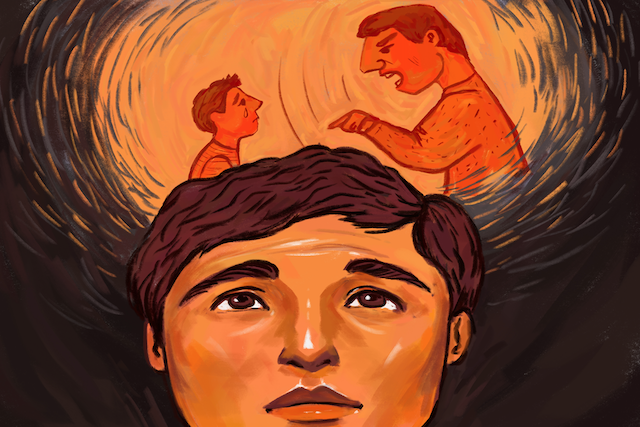
    The information, tips, guidance, and light are waiting for you to discover them. You just need to take the first step and decide to become the hero of your story and find your own heart’s happiness.

  • What Is Stress-Induced Illness? How Trauma Can Cause Physical Pain

    What Is Stress-Induced Illness? How Trauma Can Cause Physical Pain

    “Wisdom is merely the movement from fighting life to embracing it.” ~Rasheed Ogunlaru

    Three years ago, I fell into the blind spot of medicine: America’s unknown epidemic.

    After numerous tests, scans, scopes, and too many doctors to count, modern medicine could not find anything seriously wrong with me. I also consented to have my gallbladder removed. My first and only surgery at age forty, an “experiment” of sorts.

    Six months into the worst nightmare of my life, my spiraling health started to take a huge toll on me physically, mentally, and emotionally. I didn’t want to live anymore, but I was too chicken to take my own life.

    They Cannot See the Forest for the Trees

    If just one doctor had paid closer attention to my backstory and probed it further, the diagnosis would have been obvious and the treatment plan effective. Here’s the problem: My doctors were only focused on my presenting symptoms and not on my whole being.

    Instead, thoughts of the following conditions (in this exact order) became my daily companions: colon cancer, GERD, IBD, IBS, pancreatic cancer, small intestinal bacterial overgrowth, gluten sensitivity, celiac disease, Meniere’s disease, interstitial cystitis, chronic pelvic pain, pelvic floor dysfunction, motor neuron disease, multiple sclerosis, bladder cancer, thoracic outlet syndrome, pudendal neuralgia, peripheral vascular disease, bile reflux, and a few other conditions I’ve surely forgotten. I was one big, hot mess.

    Of the twenty-six symptoms I experienced, the constant bladder pain was the most excruciating and difficult to deal with. Imagine a UTI that never goes away. Nothing could knock it down.

    The pain took me to the edge of wanting to take my life many times. At one point, I told a doctor that I would give him my entire 401k savings if he could make the pain go away.

    It’s Time to Surrender and Trust the Process

    In September 2021, I surrendered to the pain and requested a referral to an academic medical center after fighting it for nearly two years. Somewhere along the way, I made the conscious choice to walk with the pain instead.

    I quickly learned that doctors specializing in pain medicine do not try to cure pain, but they try their best to equip patients with strategies to cope with their pain. Along with the things my pain psychologist taught me, he encouraged me to reacquaint myself with Curable, an app I had actually loaded onto my phone almost a year prior but had quickly dismissed. Stupid mistake on my part.

    Addressing pain at an emotional and psychological level did not make any sense to me. After all, I had a structural problem, not a brain problem—or so I thought.

    Fortunately, during my second round of trying the Curable app, I discovered Howard Schubiner MD and one of his colleagues, Alan Gordon LCSW, a psychotherapist specializing in the treatment of chronic pain through pain reprocessing therapy (PRT).

    Dr. Schubiner is the founder and director of the Mind Body Medicine Program at Providence Hospital in Southfield, Michigan. His program uses the most current research methodologies to treat individuals who suffer from the mind body syndrome (MBS) or tension myositis syndrome (TMS), as described by Dr. John Sarno.

    What is mind body syndrome? I’m going to answer this in a second, but first I need to take this story back to my childhood. This is where the story gets very interesting and revealing.

    The Haunting Effects of a Bad Childhood

    As I started to dig deeper, I was introduced to the landmark 1998 ACE study that, as its abbreviation indicates, explored “adverse childhood experiences.”

    The ACE research concluded that the more adversities a person experienced as a child—whether it be a parental death or incarceration, poverty, neighborhood violence, or abuse—the more likely that person would be to suffer from serious physiological disorders as an adult. I had six childhood adversities: a household with substance misuse, violence, divorce, severe poverty, neglect, and incarceration of a parent, all at or before the age of ten.

    I also discovered a recent meta-analysis showing that individuals with a history of psychological trauma, regardless of the type of trauma, were almost three times more likely to have chronic pain than those who had experienced no trauma.

    Bingo! Just call me Sherlock Holmes.

    Translation: As a child, I was threatened repeatedly—not physically, but emotionally—causing my body to have a stress response. This prepared my body to fight or flee. Because my body stayed in this stress response mode for an extended period of time, crucial neural connections in my developing brain most likely suffered damage, causing me to be hypersensitive to stressful events.

    In other words, my alarm switch is always “on,” unless I can lower the perceived danger in my brain. My divorce was just the tipping point to my spiraling health.

    The Day the SWAT team Visited My Home

    To illustrate how inept society was in the early nineties at addressing emotional trauma, I only need to point to one early morning when the SWAT team jumped my backyard fence and pointed their submachine guns at me while I was feeding our family dog, Smokey. Their target was my dad (he sold drugs), but he was nowhere to be found.

    He had been out partying all night and had yet to return home. I was the only person home at the time. A scared shitless ten-year-old boy. I liked watching the reality show Cops, but this was completely surreal.

    This is the crazy part. The SWAT team left me in the backyard and told me to go to school, like nothing had happened. I never spoke to a counselor or therapist about this frightening event.

    I grew up thinking it was normal to not talk about emotions—or scary things like being stuck in the middle of a drug raid, alone and helpless. I grew up real fast that day.

    Mind Body Syndrome, Anyone?

    Mind body syndrome, or psychophysiologic disorder (PPD), is a certain diagnosis arising the majority of the time in the absence of tissue or structural damage in the body, when nerve pathways become continuously or intermittently activated by past or current life stressors.

    The Psychophysiologic Disorders Association states that the symptoms of PPD are due to altered nerve pathways in the brain that affect the body. Symptoms can include headache, back pain, chest pain, muscle or joint pain, abdominal or pelvic pain, constipation, diarrhea, bloating, nausea, irritable bowel syndrome, discomfort in the bladder or during urination, fibromyalgia, chronic fatigue syndrome, and many other symptoms.

    To illustrate how inept today’s doctor is at diagnosing a psychophysiological disorder, I only need to point to my first-ever encounter with a board-certified gastroenterologist in March 2019. Gastroenterologists are doctors who are highly trained to diagnose and treat problems in the gastrointestinal (GI) tract and liver.

    Basically, they get paid handsomely to look up people’s butts and take pictures all day long. If you ask me, it sounds pretty mundane and not all that creative. The best news you can receive after getting one of their colonoscopies is that you really didn’t need the procedure after all.

    Emotional Tone Deafness

    To help remedy my bowels that had gone haywire (the first of my many symptoms), I anxiously took the slot of the next available doctor at a nearby GI clinic. While on the examination table, I related that I was smack dab in the middle of a horrible divorce and in a lot of emotional distress after being in a dysfunctional marriage for the last ten years.

    The doctor’s response? Nothing. Zip. Nada. You could have heard a pin drop in the room. Instead of acknowledging my unfortunate circumstances, this dimwit doctor went about the rest of his examination and acted like what I had shared with him was the most benign, most boring thing he had ever heard in his life. By my definition, this was a moral injustice.

    News flash: The Holmes-Rahe Stress Scale indicates that divorce is the second highest stressor for humans, second only to the death of a spouse.

    Searching High and Low

    I had secretly wished that my doctor was going to validate my emotional trauma and scars and identify them as the cause of my bowel changes, but his lack of a response only reinforced the fact in my brain that something was structurally wrong with me. And so that’s the path I went down for nearly three years, trying to find something structural to explain one unexplainable symptom after another.

    When I say I turned over every stone, I really did.

    I went as deep as internal pelvic floor therapy to try to cure my bladder pain. That’s right. My physical therapist and I mapped out and explored every nook and cranny of my pelvic floor via my anal canal. As a bonus, I had homework to complete with a funky wand apparatus.

    Remember, I was desperate and willing to try almost anything. Everything except the butt gas. It’s basically ozone therapy gas that is administered into the body. In my case, I would have given it to myself through my butt.

    I can’t help but laugh when I recall the day I was first presented with this option. This is what my life had become. Wacky alternative therapies.

    In my career, I get paid to find solutions and fix problems. Fixing my health was no different, I thought. In my futile attempt to fix my health, I flushed thousands of dollars down the drain in the process and just about lost my sanity.

    Can This Really Be Real?

    At this point, one might ask if PPD symptoms are real or imaginary. The symptoms are real. In fact, the symptoms can be just as severe as those from any other disease. Some patients with PPD are ill enough to be hospitalized.

    Experts like David Clarke MD, a retired gastroenterologist and president of the Psychophysiologic Disorders Association, like to point out that one in six adults and 30–40% of primary care patients suffer from pain symptoms and chronic conditions that are “medically unexplained.” This is America’s unknown epidemic.

    But wait. There is a silver lining that comes with all this unfortunate news. Once PPD is recognized, treatment is available and is often effective in alleviating symptoms. Dr. Schubiner likes to ask: “Why manage your pain when you can cure it?”

    The Best Treatment Around

    So how effective is the mind body syndrome treatment? Dr. Schubiner and his colleagues published an article not too long ago demonstrating that emotion-focused therapy was superior to cognitive behavioral therapy (CBT) for dramatic pain reduction in people with fibromyalgia, many of whom had experienced childhood trauma.

    Dr. Schubiner and Alan Gordon also helped lead the recent study at the University of Colorado–Boulder that showed that not only can chronic back pain be managed, it can be cured using a mind body approach. In their study of 151 total participants, 66% randomized to PRT were pain free or nearly pain free at post treatment.

    Once I heard this, I started to tackle my pain at the emotional and psychological levels. Along with somatic tracking, expressive writing, mindfulness, and reprogramming the brain, my favorite treatment activity has been intensive short-term dynamic psychotherapy (outlined in Dr. Schubiner’s book, Unlearn Your Pain), where deeply buried emotions of anger, resentment, guilt, shame, sadness, and grief are uncovered and released. Healing often occurs rapidly once these emotions are stabilized.

    During this process of intensive short-term dynamic psychotherapy (ISTDP), I have taken several of my most incompetent doctors, and even my dad, behind the proverbial woodshed, and I have given them the worst tongue lashing they’ve surely ever received in their lives. Cursing is highly recommended and encouraged.

    While I couldn’t literally slash the tires of the doctor who appeared earlier in this story, this was the next best thing. And it felt so good.

    You might be wondering what happened to my dad. He eventually turned his life around, and I am so grateful for this.

    Today, while my pain is not completely gone yet, it’s generally at about a two or three instead of a six or seven. I will take this any day.

  • Why Other People’s Comments Hurt Us and How to Let Them Go

    Why Other People’s Comments Hurt Us and How to Let Them Go

    “It’s not the events of our lives that shape us, but our beliefs as to what those events mean.” ~Tony Robbins

    Sticks and stones may break my bones, but words will never hurt me.

    Wow. That one takes me waaay back. All the way to the elementary school playground. A place where I attempted to use it as a shield. As juvenile as this saying is, I would search for comfort in its words for years to come.

    In the end, it doesn’t matter how old we get. It’s good to feel a part of something, to be understood, and to be accepted, and it hurts when we feel we’re not good enough to belong.

    Whether it’s due to the words of a schoolyard bully (with a flat-chested joke), a passing remark from a stranger (“your arms are hairy”), or an observation by a loved one (“you’re too shy), we begin to transform into a guarded version of ourselves.

    Daily interactions with others thicken our skin a bit, allowing some words to roll off our backs. But the ones that stick around change our inner landscape.

    For many of us, the physical pain we suffer come from accidents, adventures, or clumsiness. They are unpredictable events that originate from nowhere in particular. They don’t feel personal.

    Words, on the other hand, always stem from people. And they almost always feel personal. For a species that thrives on connection, acceptance, and love, words are a primary source of information about where we stand within our tribe.

    With words, we define ourselves, find our people, and take a stand. Words reinforce who we are. Words inspire. Words make us giants. With words, we feel pain, loneliness, or betrayal. Words cut us down. Words keep us small. Words plant seeds of doubt. Words deflate.

    Words are powerful. Choose them wisely.

    When it comes to delivering a message, how we say things matters.

    Words can be positive, negative, or neutral. Imagine how using the very same word creates different outcomes.

    “Quiet!”

    Spoken at a surprise birthday party, this gets everyone excited. The guest of honor is coming!

    Spoken to a questioning child, this makes her feel small, unimportant, hurt.

    Even an adult can suffer at this word. Imagine a man watching a football game. His wife runs in to share an exciting piece of news. He shouts “quiet,” and just like that she feels diminished and robbed of joy.

    Words are powerful. But is all the power reserved for the speaker?

    When it comes to receiving a message, we can feel powerless. Just as a spider’s web catches much more than dinner, our minds become cluttered with a lot of word debris. I have spent years unpacking my pain and my past, and the ickier parts are born from comments, passing phrases, and direct attacks.

    So, here’s my question: Why do some things go in one ear and out the other, while others have a way of following us around? Why do some words so profoundly affect us that we give up our joy and opt not to dance, sing, or speak?

    Here’s my revelation. Those who know me have heard me say it before: What we believe matters.

    It seems that words can become seeds planted in my brain. The ones that stick around begin to grow into something messy that tangle with my very being.

    After a lot (and I mean a lot) of soul searching, I have found my common denominator—two actually. My hurt is born from the truth or from my fear of what might be the truth. The pain is my feelings of lack that get amplified.

    Whew. That’s a bitter pill to swallow. None of us want to believe that we think we’re not smart, beautiful, fun, cool, lovable, or funny. But I’ll say it again. Almost all the remarks that have hurt me are ones I thought were true. Or ones I feared might be true. That’s it.

    When our truth is revealed or challenged it is painful. Our truth is often a part of us that we cannot or feel we cannot change. Whether it’s our laugh, our bodies, or our dreams, we are exposed.

    What do we do with this? The only thing we can—accept ourselves. Just. The. Way. We. Are.

    This doesn’t mean we cannot continue to grow and evolve as humans. It means that we are always being and becoming.

    Most of us go out into the world as ourselves and slowly withdraw into our shells as we feel less and less safe to be who we are. We become a watered-down version of our colorful selves to avoid vulnerability.

    But I’m here to challenge the idea that vulnerability has to be painful. Uncomfortable, yes, but maybe not painful. Our best defense is knowing and embracing who we really are so that when someone questions our character or motive it is either true or not true—and if it is true, being okay with that.

    If I find myself ruminating on a comment, it’s an opportunity, a chance for me to know myself better.

    Now, when a word stings, I approach the discomfort differently. I ask myself: Why am I hurt? Is this true? Is this something I can change? Do I want it to be true? If it is me, can I do more than accept it—can I love this part of me?

    I used to think my problem was that I wasn’t enough ‘this’ or needed to be more of ‘that.’ I used to think that if I could just take the best parts of other people and become those things, I would feel secure, confident, and untouchable.

    But it was exhausting, and I would inevitably fall short of my goal. My life was like a house of cards, ready to crash at any moment. Living in fear is draining. I also began to feel like I couldn’t make any forward progress. It was like treading water when I could be swimming.

    It wasn’t until I took a break and developed faith in myself that I found my full energy, optimism, and confidence return. Because in the end, we can never be great at being anything but ourselves. There is no trying anymore, only being. And the knowing that I don’t need to be all things. Just myself. Regardless of what other people have to say about that.

    And you know what? The strangest things have begun to happen. I have found new strengths, new joys, and new opportunities. When I let go of mimicking others’ successes, I have found more of my own. The kind that I’m not afraid to lose. The kind that doesn’t make me feel like a fraud.

    Sharing my voice has gone from scary and nerve-wracking to a way to create connection and joy. The transition feels like nothing short of miraculous. If you would’ve told me all this several years ago, I would never have believed that I could achieve this kind of peace and confidence. But I have come to believe in believing. And I highly recommend it.
  • How I Overcame Shame from Sexual Assault and Began to Love Myself

    How I Overcame Shame from Sexual Assault and Began to Love Myself

    “Our lives begin to end the day we become silent about things that matter.” ~Martin Luther King Jr.

    It was Saturday, August 29th, 2020, when I admitted to myself, for the very first time, that I was a victim of sexual assault as a child.

    Twenty-five years of complete denial that this ever happened, and suddenly all I could think of was the fact that my innocence was taken at the age of five. “Why now?” I wondered. “Why does it suddenly matter? Was I so resentful of my trauma that I denied its existence altogether?”

    Between the ages of five and eight, I was repeatedly molested by a family member. Although I wasn’t sure what was happening, I knew two things: This felt pleasurable, and therefore, there was something inherently wrong with me.

    I carried this shameful image of myself into adulthood, unaware of how it impacted my self-esteem, my sexuality, and my overall perception of myself as a woman.

    As the sexual abuse eventually ended, so did any thoughts about it. No one knew that it had ever happened, and I planned for it to stay that way.

    From the time I became sexually active, I struggled. I never felt safe while being intimate, even when I was with my ex-husband. I always carried this feeling of shame, and the more pleasure I felt from having intercourse, the more shame I experienced.

    When I finally stopped denying that I was a victim of sexual assault, I knew there was no coming back. Once I became brave enough to admit the truth and accept the discomfort of it, I remembered all those times when the assault took place. It was terrifying and intimidating.

    I felt disgusted, shameful, and angry. I was upset that this event was suddenly present in my life. My plans were to build my online business, make money, and have fun with friends, while making sure I consistently whitened my teeth and maintained my Florida tan.

    Instead, I was forced to face my demons and address the truth I’d buried so well. All I could think of was “What’s wrong with me?”

    For many victims of sexual assault, especially young children who can’t comprehend what’s happening, it’s easy to develop a belief that we are sick, dirty, undeserving, and not enough. We develop a strong survival mechanism where we pretend, guard up, in some cases become promiscuous while self-sabotaging any real connection with anyone else.

    Our trauma supports the belief that we can’t trust anyone, everyone is out to get us, and that feeling any pleasure for ourselves is bad and sinful.

    What I couldn’t wrap my head around, and what also brought unbearable shame, was the pleasure I felt when the assault happened. Logically, it didn’t make sense to me.

    These were my thoughts: “I didn’t do anything about it, and there wasn’t any force or rebuttal present. I let it happen over and over, and in a sense, I enjoyed it. How can I ever say that I am a victim of sexual assault? If it was wrong, I would do something. Instead, I did nothing. There must be something wrong with me.”

    What you just read is a common thought process for many victims of sexual assault. It is why we stay silent; why we let the shame grow each day and exercise self-hate full force. Many of us truly believe that there is something inherently wrong with us, and this is where speaking your truth and seeking help comes into play.

    Shame was probably the most intense emotion I observed, but I wasn’t sure how to deal with it. So, as a master in denial, I let it go, again. Or so I thought.

    A year went by, and nothing happened. I kept the truth hidden and didn’t talk about it too much while convincing myself that I’d already addressed it and all this messiness was behind me.

    Then a few months ago one of my friends mentioned the nonprofit RAINN—the nation’s largest anti-sexual violence organization that helps survivors and victims of sexual assault heal and recover.

    I knew this information showed up in my life for a reason. My shame was still present, and my sense of unworthiness wasn’t subsiding. It was time to call their hotline and get help.

    I dialed and hung up four times before I was brave enough to stay on the phone. The process was easy, and I was able to get a counselor within a few days, at no cost.

    It was time for my first session. I was nervous and guarded, but I clicked with my counselor, so it eventually became easier to open up and start sharing.

    At first, we started addressing the elephant in the room: How could I feel pleasure while being sexually assaulted, and would my shame ever go away?

    I learned in my recovery that arousal during a sexual assault is common. It is one of the best-kept secrets that prevent us from speaking up, sharing our trauma, and breaking the shame once and for all.

    We are terrified that no one will understand us and will judge us instead. Considering the amount of judgment and shame we already exercise daily, the idea of criticism and more shame is just too much to bear. Therefore, we stay silent and often let the shame get out of control.

    Although I am not a doctor and can’t impress you with some Ph.D. explanation, here is what I now understand:

    Being aroused during any form of sexual assault doesn’t mean we want it, it doesn’t mean we consent, and it certainly doesn’t mean there is anything wrong with us. Physical pleasure is a natural bodily reaction, even during sexual assault.

    As I progressed with my sessions, I was able to open up about things I never said out loud. Things like excessive masturbation during childhood or using self-pleasure and intercourse in my adult life to punish myself and feel disgusted. Without seeking help and getting a counselor, I might have never been able to overcome my self-destructive beliefs.

    This is the best part about therapy: it provides a safe space to say the things you’ve kept inside. And that, in and of itself, provides healing.

    During my therapy, I learned some powerful coping skills. Things like recognizing my triggers, soothing myself with compassion while drowning in self-hate, pausing, taking a step back, and reevaluating the situation before it gets out of control. These skills were especially useful when I spiraled into one of my shame attacks, wanted to punish myself, or felt overwhelmed by self-judgment.

    I learned the importance of self-love in this process; how to approach myself when feeling defeated, sad, upset, or shameful. Mostly, I understood the universal truth every victim of sexual assault needs to understand and focus on: Recovery requires us to stop questioning what’s wrong with us and instead face what happened to us.

    At the time of this writing, my therapy sessions are coming to an end. If I were asked what’s been the most impactful part of my recovery, I would say it’s the ability to speak up and share my story while exercising empathy and compassion for myself.

    As Brené Brown said, the best way to break the shame is to speak about it with those who deserve to hear our story—people we trust, people who have been through the same or similar situations, and people who are educated enough to understand our trauma. People who aren’t afraid to offer empathy and hold space while withstanding the discomfort of the conversation.

    Although my therapy is ending and the time to run solo is approaching, I know that to heal, I must commit and stay committed to my recovery. I understand now that healing is available to all of us, and all it takes sometimes is five minutes of courage to make a phone call and say, “I need help.”

    As my recovery progresses, my hope for living a happier life grows each day. I am beginning to understand that no matter what I go through or how deep my trauma is, I can make different choices and live my life from the most empowering place that’s available to me—from within.

  • Why Belonging Is So Difficult for Survivors of Domestic Abuse

    Why Belonging Is So Difficult for Survivors of Domestic Abuse

    “Our sense of belonging can never be greater than our level of self-acceptance.” ~Brené Brown

    Sitting there watching The Greatest Showman, with tears pouring down my face, I asked myself why does this song, in fact this whole film, make me cry so much? Why does it evoke so much emotion in me?

    “I am brave,

    I am bruised,

    I am who I’m meant to be.

    This is ME.”

    “Look out cos here I come,

    And I’m marching on to the beat I drum,

    I’m not scared to be seen,

    I make no apologies.

    This is ME.”

    I am brave, I am bruised, and I know, after many years of working on myself, that I am who I am meant to be. But if I am honest, I am still not marching to the beat of my drum, I am still scared to be seen, and I am still apologizing.

    The reason why this film makes me so emotional is because it brings up emotional scars that have still not fully healed. It highlights a part of me that still needs work. I watch these people who have lived their lives as outcasts and have never before found somewhere they belong, and I empathize.

    I have never been cast out of anywhere. I grew up in a stable, loving family, but I am familiar with the feeling of not belonging because for many years I have been scared to show the real me.

    This fear or inability to be me started the minute my ex pushed me over for voicing my opinion and trying to argue my point. It grew with every punch, kick, threat, humiliation, criticism, and brush off. It grew as the secrets I was keeping mounted up, as the lies I was telling became bigger and bigger.

    From the moment my relationship became abusive I did not belong anywhere because I was no longer free to be me.

    I hid what was going on, and when it was obvious something was happening because of the bruises, I made light of it and played it down.

    I withdrew from myself, becoming just a shell of a person. When I was at home with my partner, I was who he expected me to be; when I was with my family, I tried to be just like them. When I was at work, I was who I thought they wanted me to be.

    I found some sense of belonging when I gave birth to my first son. As I lay there in hospital with him in my arms this new feeling came over me—nothing else mattered apart from this wonderful little person. However, I quickly learned to be the mum my partner wanted me to be rather than the mum I wanted to be, and that broke my heart.

    Friends disappeared, work colleagues were unsure how to treat me, and on the one occasion I reached out for help (to one of my son’s teachers), I was brushed off. It was a private school, and domestic abuse was not something that was part of their agenda. I did not belong there.

    When I finally left for good, I turned up to a women’s refuge, with my seven-year-old son, in a place that I did not know, miles away from my family and friends. I thought that was it, that all my pain was going to stop. While the physical pain obviously stopped, the pain on the inside has taken much longer to heal.

    Over fifteen years later, after years of inner work and a happy marriage, I still do not feel that I belong in many places. This is because I am still holding myself back from being me.

    My self-preservation tendencies, which were once so vital for my survival, are now holding me back. The fear that kept me on high alert, that helped me to evaluate my words and actions before speaking or acting, to keep me safe, was so strong that even after all these years, it is still there.

    What if I do something to upset my husband, will he leave me?

    If I voice an opinion that is different to someone else’s, will they brush me off and think I am stupid or stop liking me?

    What if I say something and open myself up and no one cares or listens? That will just make me feel worthless and unimportant again.

    If I do what I really want to do and get it wrong or fail, others will think I am useless.

    Why would anyone want to listen to what I say?

    Making decisions that everyone agrees with means I am doing the right thing, even if I am not sure that is what I want.

    This fear has prevented me from finding places I belong.

    Yes, I fit in wherever I go because I speak and act in a way that suits the situation, that ties in with everyone else. I sit on the fence and do my best to understand and accept everyone’s point of view without voicing my own because then everyone will like me, and I will not get hurt.

    But just fitting in is not good for your self-esteem. It just cements the belief that you need to hide the real you.

    Being a good communicator involves adapting to suit the environment and situation that you are in, but it should not be at the expense of your own values and opinions, which are just as important as everyone else’s. Pleasing everyone else at the expense of yourself means that you are not giving them the best of you, because that can only come from being wholly and truly YOU.

    As a result of domestic abuse, I suffer from low self-esteem. It has got a lot better over the years, but it still pops up now and again.

    I go through times when my self-love and self-worth are purely based on what others think of me. One unkind word, one difference of opinion, one moment of feeling ignored has me plummeting into the depths of self-hatred and self-doubt.

    It normally happens when I meet someone new or join a new group. I am overly concerned with what they think of me, so I mold myself into someone I think they want me to be, ensuring that they like me. I still hold back now and again with my husband, preventing a disagreement that could potentially result in him deciding he doesn’t love me anymore.

    The truth is, everyone who meets you genuinely wants to meet the real you. The best you is the authentic, bruised, brave, perfectly imperfect you.

    There are times when I genuinely feel that I belong, when I feel comfortable being my funny, hyper, jokey self, when I can speak up and voice my opinion, when I have the confidence to make a mistake and to listen to and act on my intuition.

    At these times I feel content, my head is not working on overdrive trying to figure out what I should say and do, my heart is open, and I feel safe to be me. And I know that during these times I am able to give the best of me. These are the times when I feel I am just as important as everyone else. When I feel that I am an equal.

    I want to feel like this all of the time! I don’t want to just fit in. I want to belong wherever I go. I want to march to the beat of my own drum. I want to fulfill my potential and be all I can be.

    I know, however, that there is only one place I truly need to belong and feel safe to be me, and that is within.

    I need to know who I am, what I want, what I like, and what I don’t like. I need to be clear on what my values are and what my dreams and aspirations are. I need to be honest with myself about how I am feeling. I need to work on that overpowering self-preservation mode that is still on autopilot by recognizing that I am safe, that I will not get hurt if I open up and let my true self out.

    I need to give myself a break from the ridiculously high expectations I have of myself and treat myself with compassion and respect. I need to love and accept myself for who I am, not just when I have achieved something.

    Only then will I truly belong, will I be able to unapologetically be me and shout from the rooftops “THIS IS ME!”

  • How Our Parents Impact Us: The Childhood Wounds That Shape Our Lives

    How Our Parents Impact Us: The Childhood Wounds That Shape Our Lives

    “The way we treat our children directly impacts what they believe about themselves.” ~Ariadne Brill

    Growing up, I always felt odd. I often wondered what was wrong with me. I compared myself to my friends and always thought they had a better life than me. They had both parents still together, went on family vacations. It was not that I was jealous or bitter, it was just that they seemed to be ‘normal’ and happy. Whatever that means.

    I never remember my parents being together. My parents divorced when I was two. I lived with my mother and older sister, who was eight years older than me.

    My mother was a nurse, and we grew up in various nurses’ residences, as she did not have money to buy a house.

    She was diagnosed with depression, and I remember nights and weekends with her being totally detached from us. She often seemed like a statue just sitting in the lounge chair or lying on her bed watching TV.

    She was morbidly obese and ate to control her emotions. She never went out except to go to work and back home. When we did go out, she was anxious and always worried about everyone around her.

    She was the kindest person I have ever known—she would give her last cent to help a needy person or animal. She was also the most intelligent person I have ever come across. She knew about everything. Her general knowledge was exceptional. But she never believed she was good enough and never had any self-confidence. She was insecure and self-conscious.
    My father was an alcoholic womanizer. Unlike my mother, he needed to be out and about and to be seen. He appeared confident, had hordes of women falling at his feet, and he never seemed shy or insecure. He was the love of my life. I adored him and couldn’t wait for him to fetch me on a weekend to get away from my mother and sister. It was an escape for me.

    My mother would constantly put my sister and I down. She would say we were too fat and could not go out “looking like that.” Or we were too thin—both my sister and I had anorexia nervosa at a stage in our lives.

    Our clothes had to match perfectly. I can still remember her saying that no decent woman goes out without matching shoes and bag. She would say that only prostitutes wore makeup and ask why we would want to degrade ourselves in that way.

    When we did well at school, she told us we needed to work harder and that we would never get anywhere in life if we didn’t. She told us that men were Satan’s children who only ever wanted sex from a woman and that they never loved anyone but themselves. A woman’s place was to just make a man happy while he went off to have affairs.

    Starting when I was a young age, she would say, “You can never trust a man, Samantha. They are all the same.” When we got injured, she would be angry with us for showing emotion. She would say only weak people cried. She would never hug us or tell us she loved us.

    My father, on the other hand, treated me like a princess. He detested my sister and excluded her from everything. I never understood this behavior until many years later. He had written her off as she had bipolar disorder, and he couldn’t deal with that.

    Everything I did was perfect in his eyes. He took me everywhere with him when he fetched me. This would include going to his numerous girlfriends’ houses, bars, clubs. But I loved every minute with him and never felt unsafe. I remember begging him to let me stay with him to avoid going to my mother.

    Unlike many people in this world who blame their parents for how they turn out, I have never done that.

    I know my mother tried her best under the circumstances. She was brought up in a toxic environment herself, so she did not have any positive role models to base her experiences on.

    My father grew up with alcoholic parents who beat the children almost daily. He never had positive role models either.

    My sister committed suicide in 2007, as she was too wounded to carry on in this life.

    I had never thought about how my childhood had affected my adult life until I left a toxic relationship in March this year and finally realized that perhaps it is true that the way I was treated as a child has directly impacted how I am in adulthood. How the choices I have made have been a direct result of my upbringing.

    At forty-eight, I can confidently say the following about myself:

    I trust no one, I am insecure, I have zero self-confidence and self-image. All my clothes are a size bigger to hide my body. The only time I ever wore makeup was the day I got married.

    I push myself beyond my limits to achieve perfection in my work.

    I am terrible at managing my finances.

    My relationships have all been disastrous—I have just had toxic people all around me all my life.

    The only good thing that has come out of my life are my two precious boys.

    When I had my first son, I promised myself that I would not be my mother with him. I hugged him and told him constantly that I loved him. I told him he was good enough, clever enough, that he was doing his best. I did the same with my second son.

    With my new understanding and mindfulness, I am trying daily to shift my thinking and telling myself that I too am good enough and that I too deserve love and kindness.

    We can only try our best, and while it is not easy, we have a choice to break free of our childhoods and become the best version of ourselves. No matter how old we are.

    We have a choice to recognize how our upbringing affected us, heal the wounds they gave us, and break the cycle so we can raise children who believe they’re worthy of love—and treat themselves with love.

  • Dear Mom and Dad, Thank You for the Years of Trauma

    Dear Mom and Dad, Thank You for the Years of Trauma

    “When you finally learn that a person’s behavior has more to do with their own internal struggle than you, you learn grace.” ~Allison Aars

    I’m writing this to say thank you for the trauma you caused me since I was born. You might be thinking that I’m being sarcastic, but that’s far from the truth.

    Let me explain why I have such gratitude for the pain and trauma you created in my life. Also, please understand that I forgive you.

    Dad, I want to start with you because you’re no longer living. I know you’re now able to see the pain you caused.

    When I witnessed the violence between you and mom, it caused years of anxiety and depression. I was no longer able to have friends at our house for fear violence and your drunken, angry rages might happen again.

    That caused me difficulty in making friends, and that stayed with me for many years. It also taught me to pretend everything was okay and that we had a “good” family. I learned to live a lie.

    Your depression made me believe there was something wrong with me. I thought I was the reason you rarely wanted to be around us. I falsely learned I was unlovable.

    Your portrayal of being the victim in all of life’s situations taught me that others are always to blame for anything that goes wrong in life. Your self-hatred taught me to hate myself too.

    The explosions of anger taught me that’s how you handle life. For years, I blew up on people when I was angry, then pretended it never happened. That cost me romantic and friend relationships for many years.

    The embarrassment of your drunk episodes in public caused me a tremendous amount of shame. Not until I got much older, did I realize I shouldn’t be ashamed of something I had no control over.

    Your absence throughout my teenage years resulted in seeking negative, unhealthy attention from men. When you attempted a return in my early twenties, you shamed me for being emotionally and physically scared of you.

    Every new friendship or romantic relationship I had brought such dread. I knew at some point I’d be asked about my family.

    Since I was emotionally unhealthy, I attracted unhealthy people. So, explaining how my alcoholic father wasn’t in my life was never received well.

    The shame I had was only increased as I was told, “that’s your father. You should forgive him. Let him be in your life.”

    Oh, how that brings up such sadness. I think about all the times I attempted to reconnect with you throughout my twenties. Each time I had high hopes that you’d changed, only to be let down further each time.

    To say I had “Daddy Issues” was putting it lightly. Those “Daddy Issues” showed up in very harmful ways. I struggled with men in authority in work environments because of you. I don’t even have to mention again how much you affected my dating life.

    Now, it’s time to address Mom and the trauma she caused. Also, I’m going to tell you how the two of you as a unit, also caused a lot of my trauma.

    Mom, I have so much to say about the deep, emotional pain you caused and continue to cause. I used to think many of my struggles were a result of Dad. The older I get, the more I realize you’re responsible for more of my pain than Dad ever was.

    Since I was just talking about the trauma Dad caused me, let’s talk about how you handled that. You taught me to pretend bad things never happened. Pretend everything is okay and no matter what, never talk about it.

    The fear, shame, depression, and anxiety that caused was more than any child should ever endure. Not only that, but when I told you I was depressed as a young teen, you belittled me. Your response was that I had nothing to be depressed about and “to get over myself.”

    All of that was incredibly painful, but there’s much more. Your inability to love me and show me affection was the biggest pain of all. Still to this day, even after having done so much healing, I’m still uncomfortable if somebody tries to hug me, other than my husband or baby.

    You taught me to never show others that life is hard. Instead, act like we have a good life and that we’re the perfect family. I cringe just even typing that because it’s far from the truth.

    As you know, because I’ve told you many times, marrying the man you chose after the divorce was also incredibly traumatic. Your happiness was your priority, not me.

    I was a teenager. I still needed my mom, even though we had our issues. It appeared that I was tossed aside for him. You gave up on me. I was free to do anything I wanted to do because you were occupied with him.

    I thought that was so much fun. Looking back, I realize how unhealthy and out of control I was. I had no rules and could do anything I wanted, and I did.

    I’m still amazed that you married another alcoholic, but you refuse to acknowledge that. On top of that, he despises me and your entire family. I still remember having to load my little nieces up in their pajamas with no shoes to escape one of his childish tantrums aimed at them.

    I could go on about my major life events you chose to miss because of him. As I mentioned, he made it clear that he hated me. I even remember you saying, “If you ever make me choose between him or you, I will always choose him.”

    That still brings such sadness and pain. Being a mother now, I can’t imagine any circumstance where I’d choose anybody over my child. However, I see how different we are.

    Mom and Dad, it’s now time to talk about how your unhealthy, dysfunctional marriage caused such pain. I never saw love between you.

    What I saw was the two of you growing further and further away from each other. I saw that neither of you attempted any healing or got me help for the trauma you created.

    Instead, we were supposed to ignore all the bad stuff. Never talk about it, no matter what. When I attempted to talk about my struggles and feelings, I was labeled as “dramatic” and “ridiculous.”

    Healthy love and healthy relationships are two of the most important things parents should teach their children. Yes, I’m aware that very few parents actually do that.

    That gets me to the gratitude I have for you both. The trauma you created is something in which I’ll forever be thankful.

    Yes, you wouldn’t think that based on all that I have written thus far. I’m just asking that you bear with me.

    For years, I was an angry person and mad at the world. Underneath that anger was depression and a belief that I was unlovable, not good enough for anything.

    Due to my childhood trauma, I needed deep healing and years of therapy. I started that in my late twenties.

    That process took me several long, hard years. I’m so grateful for the pain you caused. Also, your never getting help gave me guidance in how to do things differently.

    The generational trauma has stopped with me. I will not pass on the behaviors that you both taught me.

    As I continue my healing work, I can easily see the pain that both of you endured. I know that pain resulted in your hurting me. So, I’ll address you both individually for that.

    Dad, I have such love and compassion for you. I know your father was an incredibly abusive alcoholic. He put so much of his not good enough stuff, those feelings of never being good enough, on you, which left you swimming in your insecurities.

    I am pretty certain that your father hated himself. That’s probably how you learned to hate yourself, as I did from you.

    When I think about your true soul identity, I see a soul with such love. Your true soul was kind and loving.

    I remember you driving a girl home on my soccer team that you coached. It was always seemed odd that you dropped me off at home before taking her home.

    Now, I know why. She lived in a dangerous area for us to be in, especially at night. The only way she could play soccer was if she had transportation.

    You risked yourself driving her home but made sure I was safe. I know I have your loving nature. I love that about myself.

    The reason you were an alcoholic was your own childhood. Sadly, you didn’t learn a better way. You repeated what you were shown.

    It may seem odd but thank you for the life you chose resulting in my “daddy issues.” That was a beautiful gift that I needed.

    Without that, I wouldn’t have married a loving, emotionally healthy man. Also, I wouldn’t have started my healing journey. Self-love would’ve never existed.

    As for the childhood trauma you had, I know now you’re at peace. I know you’re proud of what I’m doing in life to heal the generational trauma you left and helping others do the same with my work. Just know the generational trauma will not continue.
    Mom, it’s taken a lot more time to have gratitude for the emotional pain you caused. That’s probably because that pain is more recent and still occurs.

    However, I now see the reasons you did all you did and continue to do. Acknowledging reality would be too much for you. You would crumble.

    Also, I’m aware that your mother was unable to nurture and show you affection. You truly didn’t know how to love me in a healthy way.

    I know that you’re not well emotionally. For that, I have such love and compassion. I’ve been there. It’s miserable.

    Mom, I also know that you were taught that your image was the most important thing in life. Your behaviors to “protect” your image were simply your way of trying to prove to yourself and others that you were happy.

    Due to the trauma, I had from both of you, I was able to learn how to create a life I truly love. Seeing both of you being so miserable showed me that I wanted more for myself.

    The pain you two caused resulted in many beautiful things for me. The two things I’m most proud of in my life are results of learning to do things in a different way than I was shown.

    Finding an emotionally available, loving, supportive husband was one of my biggest struggles. Fortunately, you two gave me a blueprint for what I didn’t want.

    Many people follow in their parents’ footsteps when choosing a partner. Since the two of you showed me how an unhealthy marriage can destroy your life, I did a lot of healing before deciding to marry.

    My gratitude for the emotional pain I endured from you two, led me to a promise to myself. I’d never have a child until I was in a good place with the ability to be a loving, nurturing, emotionally available mother.

    Without that pain, I’d have never known how to meet my child’s emotional needs. There would’ve been no knowledge of what my baby needs from me.

    For me, that’s the most beautiful gift you could have given me. Raising a baby who experiences unconditional love, acceptance and nurturing ends that generational trauma.

    Yes, there are times where intense sadness and anger still pop up. However, I’ll continue to do my healing work that allows me to come back to this place of gratitude for you both.

    So, hopefully you both see how much love and gratitude I have for you. At your soul levels, I know you have love for me. Showing that was not easy for either of you. Being lost in your own traumas meant you had no clue how to heal.

    I truly thank you for creating the pain that led me to this beautiful life. Not only was I able to heal, but I’m now able to pass that on to the world through the work I do and raising my baby.

    It’s taken me many years to say and truly mean this, but I wish you both peace and love. You both deserve that.

    I know that neither of you intentionally caused me such pain. Also, apologies aren’t something either of you’ve ever been capable of giving.

    That’s okay. Again, I know your own trauma prevents that. I forgive you anyway.

    In conclusion, I love you both. Thank you for all you put me through because I now have a wonderful, happy life. That’s not something many can say.

    Thank you for the hard lessons. Thank you for creating me. Thank you for being who you were or weren’t to me.

    That was needed for me to now sit here with love in my heart for you. Forgiveness and gratitude are two things you both deserve.

    Love,

    Mary Beth

  • When a Mother Fails to Love: What’s Helped Me Move On

    When a Mother Fails to Love: What’s Helped Me Move On

    “You keep meeting the same person in different bodies until you learn the lesson.” ~Brandon Tarot

    Like most girls in junior high school, I tried out for all the cheerleading squads every time tryouts came around—basketball, football, even wrestling. And like 95% of the girls, I never made the squad.

    My kicks weren’t high enough, my splits weren’t split enough, my arms weren’t board-straight enough, I couldn’t jump high enough—and, let’s be real here: I wasn’t pretty enough and I wasn’t popular enough. After all, we are talking about junior high school.

    But eventually, the one tryout came around that I had half a chance at: the pom-pom squad. Even at thirteen years old, I knew I could dance. Pom pom was the group of ten to twelve girls that performed choreographed routines to music at half-time during basketball games, and rarely during the period breaks at hockey games, on ice (I grew up in North Dakota, where hockey was a big deal).

    To try out for pom pom, you usually got together with two or three of your best girlfriends who also wanted to make the team, picked a song you all liked, and tried to choreograph a dance routine to that song.

    Picking the right song was crucial: it had to be a popular song that everyone would immediately recognize (Top 40, currently getting radio play time was best!), and it had to have the right rock-and-roll beat that was not too slow so that it would be boring to dance to, yet not too fast so that we would have a hard time making spins, kicks, or coordinated moves in time with the beat.

    So it came to pass: Eighth grade, tryout date was announced, and teams signed up to compete. It turned out to be myself and my friends Diane and Becky who agreed we were going to go for it that year.

    We had no experience whatsoever in coming up with a dance routine; all we had ever done was watch the previous year’s dance team do their thing, and we figured we might be able to copy a few moves from them. This was 1970, and I believe we chose an Elton John song that was getting a lot of airtime that year.

    We pulled my bright orange record player out to my back concrete patio and set it up, where we played that song over and over as we practiced sequences of turns, kicks, fancy footwork, arm movements, and hip action.

    This patio was right off the back door leading from our kitchen, and in retrospect I’m sure hearing that song play endlessly must have driven my mother insane, because even after my friends left for the day, I continued to practice, practice, practice.

    Finally, the day of tryouts arrived! It was long and nerve-wracking, as we had to watch everyone else’s performance until our turn came around.

    We watched as their nerves got the better of them—as the plastered smiles froze and then faded completely, their eyes widening like deer in the headlights. We saw them forget their steps; turn in opposite directions; one girl ran off before her routine was even over. A few routines went smoothly, and you could hear the collective sigh of relief from those of us still waiting, but the disastrous ones unnerved us completely.

    I actually have no memory whatsoever of how our routine went. I remember our names being called, scampering up onto the gym floor, hearing the scratching of the needle on the record, and shaking like a leaf until the music started. Then I remember sitting down and the polite applause afterward. That’s it.

    We watched as the final teams competed, and waited for the judges to make their picks. This was the worst part of all. The gym was full of girls who all wanted a shot, and they would hear in front of everyone whether they would get that shot or not.

    It was already getting late and the judges seemed to be taking a long time. This event had taken place on a school night, so by now it was past 9:30 p.m.

    One by one, they started to call the girls’ names who had made it onto the dance team. When they eventually said “Gail …” and hesitated on the last name, I knew it was me they were referring to! (I had a Polish last name that always seemed to get massacred.)

    I leapt to my feet and ran out onto the gym floor in complete shock—OH MY GOD OH MY GOD!! My girlfriends pounded me on the back on my way out to the floor and shrieked and clapped for me. Finally, the ONE thing I knew I was good at, and I got my chance to be a part of this group. I was over-the-top euphoric!

    I lived a little more than a mile from my junior high school and had to walk back home that night. Well, I practically ran all the way home; I was so excited and couldn’t wait to tell my mom that I had made the pom pom team! I burst into the back door about 10:30 p.m.

    I yelled out, “Mom!”

    She stormed through the living room and into the kitchen, furious and screaming at me, “Where the HELL have you been??”

    Taken aback, I said, “You know I was at pom pom tryouts. I made it!”

    She said, “I don’t give a damn. You know your curfew is 10 o’clock. What the hell have you been doing this whole time?”

    Dumbfounded, I tried again. “Ma, you know where I was. It went late. It wasn’t my fault. Ma, didn’t you hear me? I made the squad.”

    “I don’t care about that. Next time you call if you’re going to be late.” Then she turned around and went to bed.

    I was stunned. If she had slapped me in the face, it wouldn’t have hurt worse. Literally the only thing I’d ever competed for, and they had said “Yes, Gail, you have talent, and we want you on our team,” and my own mother didn’t give a damn.

    If I ever needed a message that in her mind, my accomplishments meant nothing, she delivered it loud and clear that night. Unfortunately, it left a scar so deep that it remained with me for rest of my life, as the same message continued to be delivered, over and over.

    That night I could not get to sleep. Waves of excitement kept washing over me as I couldn’t believe my good fortune in being picked for this elite team. I remember literal chills going through my body; I simply could not relax. Then I would remember my mom’s reaction and a feeling of incredulity would take over.

    How could someone do that to their own daughter? How could someone do that to anyone who had such great news to tell—be such a horrible wet blanket?

    I never forgave her for how she treated me that night. At the end of that school year, the teacher/advisor who was the head of the pom pom squad thought it would be nice to host a mother-daughter night. The girls would choreograph a special routine, showing the mothers what they had learned all year long, and the teachers would prepare a special buffet for the mothers. This would take place after school one night. I didn’t even tell my mom about it.

    The day arrived, and I just told my mom I had a performance after school and would be home late. When I got home several hours later, she tore into me, furious. One of the other mothers had called her up, offering her a ride to the mother-daughter night. Of course this caught my mom off-guard because she didn’t know anything about it, and it embarrassed her as well. She declined the ride, seeing as she wasn’t ready to go out.

    Obviously, I got yelled at again because of the embarrassing phone call. But this time I didn’t care. I just tossed my head and said, “I didn’t tell you about it because I knew you wouldn’t want to go anyway.” And I walked away.

    The following year, as I was transitioning into high school, I tried out again for the high school pom pom squad. That year, I was the only one from my entire junior high school who made the team. For all three years of high school, I continued to try out and make the team. My senior year, I was the only senior on the squad.

    All this is to say that I was good at what I did. And for the four years I was performing with these girls, my mother never came once to watch me dance.

    I think her ugly dismissal of my winning a spot on the team, and my response by keeping her away from the mother-daughter night, created a gulf between us that never got repaired. The battle lines between us were already drawn, but that incident firmly entrenched them for many decades to come.

    When the most important people in my life essentially told me that I didn’t matter, that my accomplishments didn’t matter, two things resulted: I stopped “putting my pearls before swine,” and I started to seek validation from the wrong people and in the wrong places.

    By pearls before swine, I mean this: I protected my heart by not including her in the big celebratory events of my life. I felt that because of her lack of support, she didn’t deserve to be there and wouldn’t really appreciate what I’d accomplished anyway.

    We started to live a tit-for-tat existence. One day I came home from high school to find out that she’d given away my dog—she left a note for me on the kitchen table. The explosive fight we had when she came home that evening was epic, as was the silent treatment around the house that lasted for weeks afterward.

    She tried to prevent me from attending college, telling me I’d only be wasting money and was only going there to “chase boys” anyway. Four years later when I earned my B.S. degree, I purposely didn’t walk the graduation ceremony to spite her, thus robbing her of her day in the sun. “Why should she get any credit for that,” I thought? Several years later when I earned my M.S. degree, I didn’t invite her to that ceremony either, which I did participate in.

    The most far-reaching decision I made, as early as high school, was that I would never have children. I was the youngest of seven in my family and the only one who never had kids. I was so afraid I would turn out to be a mother just like her, and I didn’t want to inflict that kind of misery on any child.

    Where was my father in all of this? When I was in junior high school, my father had an operation for a brain tumor and its removal was successful. But a few days later he had a stroke that left him paralyzed on his right side and unable to speak. He remained in this state, wheelchair-bound, for the rest of his life.

    This was our alcoholic father who was unfaithful to my mother and physically abusive to her and to his seven children. Our mother, being the righteous Catholic martyr that she was, insisted it was her duty to now care for him at home. I am convinced it was this intensive caregiving for a man she did not love and who had been horrible to her that turned her into the bitter woman who was doing battle with me.

    It took decades of hindsight and therapy for me to see and understand this, but in the thick of our day-to-day dogfights, all I saw was a woman who would do everything in her power to hold me back. If she couldn’t be happy, no one was going to be happy.

    I’ve had three failed marriages, the final one lasting only nine months. My therapist helped me to see that I chose the same personality type each time: three overachievers, three brilliant and talented individuals, three bright and shiny objects. And by doing that, I was seeking my own validation—they reflected well on me, and surely they must see the same qualities in me.

    What I didn’t realize was that in these types of partnerships with high-achieving individuals, there is only room for one successful person, and that person would not be me. Megalomaniacs do not share the spotlight.

    Finally, in my sixties now, I understand that aloneness does not mean loneliness. I am more content and fulfilled than I’ve ever been in my life, as I pursue as many passions and dreams as the remaining years will allow. To finally achieve self-acceptance and self-esteem through rigorous study and therapy has been the greatest gift imaginable.

    It all started with understanding that my mother’s mistreatment had nothing to do with me. She let her pain shape her life. I won’t do the same. And I won’t spend my time seeking validation from anyone else, as I once did with my mother and three husbands. It’s natural to want approval from other people, but all that really matters is that we approve of ourselves.

  • Ending My Toxic Relationship with My Mother Was an Act of Self-Love

    Ending My Toxic Relationship with My Mother Was an Act of Self-Love

    “It’s okay to let go of those who couldn’t love you. Those who didn’t know how to. Those who failed to even try. It’s okay to outgrow them, because that means you filled the empty space in you with self-love instead. You’re outgrowing them because you’re growing into you. And that’s more than okay, that’s something to celebrate.” ~Angelica Moone

    I was taught to love my family and to just accept the love they give. With the passage of time and the dawning of maturity, I began to doubt this kind of unquestioning love. The chronic emotional and mental stress of the relationship with my mother came into a new light after the birth of my youngest daughter.

    I could no longer avoid and just accept a toxic relationship that was void of emotion and affection. I began to look at the dysfunctional familial relationship with her through the eyes of a new parent and started to see things differently.

    I started asking myself questions like “Would I ever purposely treat my child with such indifference and disregard them so callously?” So many more questions I asked myself were met with “no.” So, why would I just accept this behavior? Why was I allowing this constant stress to take up so much energy in my life?

    I can look back and see now that I was holding out hope for a grand gesture while craving to receive maternal feelings of love and security.  My inner child was holding out for love from the person that gave birth to her, but the adult in me sees that the love I was truly needing was love for myself. 

    The walls to unquestioning family loyalty came tumbling down around me about five years ago. My husband and I had been living in the Bay Area and felt strongly that it would be nice to raise a family near family. So, before the birth of our youngest, we decided after fifteen years of living in California to move across the country to Connecticut.

    During our plans to move, I held on to the delusion that if I lived closer, my mother would want to be part of our lives. She even called me while packing up our last few moving boxes to tell me how thrilled she was that we were moving back and that she could not wait to visit us all the time. She never came to visit; I had built up the illusion that she wanted to be part of our lives.

    The coup de grace was when she called me out of the blue on her drive up from Florida, where she vacations in the winter, tell me she was planning on stopping for a quick visit on her way home to Massachusetts. Giving me a time frame as to when she would be arriving.

    As the week passed, she did not call or visit. However, I did receive an out of the blue message three months later to say hi, which never acknowledged the previous plan to visit.

    It was after this final act of indifference that I made the decision, I could no longer allow the hurt and manipulation to continue. What was I teaching my children about boundaries if I was not creating healthy boundaries?

    My therapist once asked me “Would you go shopping at a clothing store for groceries”? When I answered, no, it dawned on me that I wouldn’t, so why was I expecting something different from my mother?

    I once read that people can change, but toxic people rarely do. Toxic individuals, according to this adage, seldom change. Because if someone isn’t accepting responsibility for their acts and lacks self-awareness, how can you expect them to alter their ways? The change I was waiting for was not her to change but my willingness to change.

    At first, I questioned my decision to end this relationship. Was it cruel of me to not allow my children to know their grandmother? However, at the same time the realization came that she was not really a part of our lives.

    Unraveling this toxic tie has been an act of self-love. For myself, for my inner child who is still healing, and for my children, so they can witness their mother loving herself enough to quit letting someone else harm her.

    Since this decision, I have had family try and talk to me about my decision. Telling me stories of how their friends severed their relationship with a family member and regretted it after their passing. When that time happens, I will grieve, I will grieve for what never was.

    Instead of clinging to this toxic relationship, I am teaching my children so much more by ending the cycle of neglect and creating healthy boundaries. I am showing my children how to love themselves.

  • Why I Felt Broken and Unworthy of Love and What Changed Everything

    Why I Felt Broken and Unworthy of Love and What Changed Everything

    “How people treat other people is a direct reflection of how they feel about themselves.” ~Paulo Coelho

    He used to tell me no one else would love me because I’m damaged goods.

    And I believed him.

    Because I received messages for most of my life that there was something wrong with me.

    I wasn’t good enough. Too sensitive. Too weak. Too sickly. Too different.

    I realize now those messages were passed on to me by concerned parents who saw in me parts of themselves they didn’t fully accept.

    And those messages were from parents whose own parents had used criticism as a way to motivate them to do better. They didn’t know another way. They were just trying to help me succeed.

    But my little HSP soul took it to heart. I took it literally.

    Then I ventured into the world as an adult choosing romantic partners who confirmed every single belief I’d held about myself since my developmental years.

    This is a common cycle we perpetuate when we’re not aware that programmed conditioning is running the show.

    I attracted romantic partners that played out all the emotional dysregulation from my family of origin—to confirm to me that everything my caregivers had told me was indeed true.

    But I was also looking for someone to give me the love and acceptance I felt I had been lacking my whole life. I thought that would finally make me feel “normal.” I thought I would finally feel whole.

    Almost a decade ago, when I was in the worst (and most dangerous) romantic situation of my life, I tried to leave.

    Looking back, my friends told me they were truly concerned for my safety and my life while I was in that relationship.

    I had stayed because I felt that I deserved the treatment I received. That if someone who said they loved me spoke to me the way that he did, there must be a good reason.

    Although deep down inside, I had an inkling that this didn’t feel right. That perhaps being on my own was better than feeling terrible in this relationship.

    When I finally stood up for myself, he made sure I knew that if I left, I’d be destined to suffer alone forever because no one else would be willing to love a broken soul like me, and that I would indeed suffer greatly.

    He told me over and over again until I broke. Until I believed him.

    It took two whole years to finally free myself.

    In the end, what helped was seeking professional support—a wonderful counselor who helped me see that the situation I was in was harming me.

    Truly, my soul was dying. I was becoming a shell of who I was, and I hate to think where I’d be now had I stayed.

    The counselor helped me come to a new agreement with myself of what I was willing to tolerate in my life.

    It was the first step in an awakening to some important truths I hadn’t seen before.

    And I then committed to the inner healing.

    I spent many a moment in a sobbing mess on my yoga mat.

    I sat with the emotions that came up, even if they were uncomfortable. The fear, shame, guilt, anger. All of it.

    I listened to the messages these tough emotions had for me. And there were many.

    I met and befriended my inner child and realized she was scared. And that the only person that could really give her the assurance and comfort she truly desired was me.

    I had a dark night of the soul. My second (of three to date). Just as uncomfortable as the first.

    Just as the initial one had, this dark night delivered a deep realization that the path I was on was not leading me in a direction of my truth. I was moving away from my own inner light, not toward it.

    It was the jolt I needed to change. It was then that I finally mustered the strength to leave and not turn back.

    I didn’t yet know where I was going, but I knew it was going to be a different direction than where I had been. It had to be.

    I had changed my perspective about myself, and as a result, my life changed completely

    The people who then showed up were of a completely different caliber. Supportive, encouraging, and accepting of me for who I am: quirks and all.

    Or rather, I stopped letting in the wounded who didn’t accept me in all my bright, shiny perfect imperfection. I created new boundaries that prevented those uncomfortable with my light from trying to destroy it.

    As a result, I created more room around me for people who shine themselves.

    I’m now in a healthy, emotionally stable, and incredibly supportive relationship. It’s like night and day. I can see the difference now, and the contrast is remarkable.

    I now see that those manipulations and insults my ex threw at me were his way to control me because he didn’t feel in control himself. It was his coping mechanism.

    This behavior was most likely modeled to him from his own family of origin. This is how wounds are passed down.

    But at the time I didn’t understand, because I was taking in those comments from a completely different perspective.

    I was hearing those comments from the belief that there was something wrong with me, and so I assumed what he was saying to me was the truth.

    Please know, beautiful soul, that you are worthy of love in every way—especially and most importantly love from yourself.

    Anyone who tells you otherwise is coming from a place of woundedness. Do not let them pull you into their wounds.

    Stay in your light. Stay strong to your truth.

    Some may think your light is too bright, but that’s because it illuminates the wounds they’re not yet ready to face.

    As a result, they’ll try to dull your light to protect themselves.

    The ones who are meant for you will love your unique brightness and encourage more of it.

    Because they also live their truth and shine their light bright, and they understand the importance of supporting others to do the same.

    My love does this every single day.

    He doesn’t think I’m broken—he thinks I’m beautiful, inside and out.

    He knows I have wounds.

    And the lessons I’ve learned and strength I’ve gathered because of those wounds makes me wiser.

    He loves that about me. The emotional maturity I’ve gained through my journey makes me that much more appealing to him.

    And I’ve also come to realize on my journey that I don’t need his love or anyone else’s in order to find my own within. That’s the most important lesson of them all.

    You’re not broken, lovely human. Don’t let anyone convince you otherwise.

  • Breaking the Toxic Cycle: My Family Dysfunction Stops with Me

    Breaking the Toxic Cycle: My Family Dysfunction Stops with Me

    TRIGGER WARNING: This post references physical abuse and may be triggering to some people.

    “Forgive yourself for not knowing better at the time. Forgive yourself for giving away your power. Forgive yourself for past behaviors. Forgive yourself for the survival patterns and traits you picked up while enduring trauma. Forgive yourself for being who you needed to be.” ~Audrey Kitching 

    I will never forget, when I was twelve years old, I went to sit on my father’s lap and he told me, “No! You’re too heavy to sit on my lap!” What does an adolescent girl do with a comment like that? She hides it away and adds it to the ammunition she has begun to store up in her arsenal of self-flagellation. Shame knows no boundaries.

    My father was never intentionally cruel to me. He had demons of his own. I knew that he had been physically abused as a boy and he used to tell us, or rather proclaim, “I vow to NEVER hit any of my kids!” He neglected to realize that words can hurt even more than a physical slap. And even more hurtful was when nothing was said at all.

    Silence is a killer that there are no words for.

    His father used a leather razor sharpening strap to beat him, and my father hung it in the kitchen of our house. I would wonder if it was a reminder of what happened to him, or was it a warning of what could happen to us? I made sure I toed the line so I would never find out. The beginning of my perfectionism.

    Growing up, the one message that was crystal clear to me was that my body was not acceptable. It was reinforced in so many ways. The times my father would suggest I attend Weight Watchers meetings with my mother. But the biggest reinforcement was once a month when the Playboy Magazine would arrive in the mail. That was what a real woman’s body was supposed to look like! And the only point of reference I had.

    I dealt with this by going within. I hid food and binged in secret. I used running and sports to try to counter the caloric intake. I became the perfect daughter on the outside, knowing it didn’t matter because I would never be acceptable. I fought a battle that there was no way to win. I just didn’t know it at the time. I was a teenager trying to find love in all the wrong places, with all the wrong people. In all the wrong ways.

    And I wasn’t the only one. I was the oldest of four children, and my siblings all had their own demons they were fighting as well. Some people would say that the family that plays together stays together. I would add that the dysfunction in a family can not only rip a family apart, but it can also pick them off one by one.

    My father was the first to fall victim. He died when I was thirty-six from pancreatic cancer after suffering a massive stroke. I am convinced that his stroke was a direct cause of his drinking and lifestyle.

    My youngest sister died when I was thirty-nine years old. She was in a physically abusive relationship for nine years. Her partner and the father to her two children beat her to death.

    The hardest loss was my mother, who died when I was fifty-two. She had suffered from dementia for years. but ultimately it was lung cancer that caused her death.

    At fifty-six, my second sister died of an accidental overdose of heroin. She was fifty-five.

    And lastly, my only brother, who is still living, is recovering from laryngeal cancer and now uses an artificial voice box.

    For the longest time, I would wonder when my time was coming. People would tell me that my family was cursed, and the temptation to fall into that camp was appealing. Just let the chips fall where they may! But the truth of the matter was that, like for us all, there are consequences for our choices. I know that sounds harsh considering that I have lost most of my family, but I cannot make it be anything it is not. And believe me, I’ve tried!

    My codependency was strong, and I tried to save them all! And in the process, I was losing myself. I was tired. I was sad, I felt defeated. But enough was enough.

    I had made the decision, when my husband and I adopted our only daughter, that the dysfunction was going to stop with me.

    I had a lot of work to do on myself. I had to uncover all the lies I had believed about myself. About my life. And then I had to choose new things to believe. I had to unearth all the ammunition I had used to build the walls I had cemented around myself. The walls that would have strangled me if I had let them.

    But that is my work to do now. And because I made the decision to do that work, my daughter is a healthy, well-adjusted young woman in her third year of college.

    I don’t say that to pat myself on the shoulder necessarily, but why not? I chose to walk a different path then my biological family. And choosing that different path also offered me different choices. And it will also my daughter different choices.

    I learned about the boundaries I needed to place around my own family unit, and I was not popular for that. Those boundaries were not popular, and I was ostracized and called out for them.

    My work was to take the box down from the closet. You know the one, where the secrets hide. And if I just keep it up there, no one needs to know. But I knew I had to open that box and take them all out. Then I could decide which were real and which were imagined. Which ones had to go and which ones I could work with.

    Life is a series of turning points. And we get to decide, at any time whether we keep moving forward or whether it’s time to turn around and begin again. We are never too old to keep moving forward. And we have never made a mistake that cannot be forgiven. A wrong that cannot be made right. I have forgiven myself for many mistakes. Many hurts I have caused. I have made amends. I keep taking the next right step.

    I am fifty-eight. I have forgiven those who have needed to be forgiven. I have grieved the family I wished I had. And I continue to grieve the loss of those who have died far too young. And the relationships that will never be.

    I no longer run from the loneliness that catches up to me from time to time. I just don’t stay wrapped in it for too long. I have shed the shawl of shame I have carried around me and work everyday to find the light and the beauty within.

    And I continue to remind myself, every single day, that it is not too late to become who I was created to be. My work is to keep doing the work and find my way home. Home is a place within. A place of wholeness. A place where self-forgiveness and self-acceptance merge. And beauty abounds.

  • Who Are You Protecting? Why Telling Your Story Is Powerful

    Who Are You Protecting? Why Telling Your Story Is Powerful

    “There is no greater agony than bearing an untold story inside you.” ~Maya Angelou

    Throughout my childhood experiences I did what every child does and rejected parts of myself. It makes sense because kids depend on adults for survival, so I was in no position to reject my parents. But as an adult I feel it is now my job to reclaim those parts of myself.

    While I had two parents that loved me and what I’d describe as a normal childhood, nonetheless I became hyper-attuned to others, over-sensitive to criticism, and a perfectionist, particularly under stress. It led to all sorts of pain within relationships and, upon becoming parent, I could see I needed to address some things. I had little sense of self and had to learn about having and holding healthy boundaries.

    I have been fortunate not to have been directly subjected to any of the more readily recognized trauma (sometimes known as big-T trauma), like addiction, violence, or sexual abuse. But my childhood was dominated by the kind of trauma that descends from the big stuff.

    The aspects of my dysfunctional persona I mention above come under the heading of developmental trauma. I think it’s important to expose these aspects of who we become in the world as they have been getting perpetuated subtly throughout families all over the world for generations and they prohibit our collective growth.

    Yet, for all the personal experiences I have shared, one I have never spoken of until recently is probably the one that shaped me more than anything else. Simply put, I had a mother who did not cope well when looking after us kids on her own. I learned to think ten steps ahead and project into the future in order to avoid any major meltdown. It drove perfectionist behavior in me, and I learned to choose my words carefully.

    Why have I never spoken about it? I suspect this is multifaceted and ranges from things like not wanting to air dirty laundry, so to speak, to knowing that both my parents (like most parents) did the best they could with what they knew and the resources they had available to them at the time. Yet these were my experiences, for better or worse they shaped me, and if I tell my story it might help someone else.

    To be more specific, mum used to often drop into this hyper tense state when she was alone with my brother and me; something I now readily recognize as a trauma state. She would say she was “up to high doh” (an old Scots expression) with our behavior, then snap at us, scream and yell, and chunter on afterward for a period of time somewhere else in the house.

    When she would yell at me or chunter afterward, I now know it was most likely a deflection of her own pain. As my bedroom was above the kitchen I could hear the aggressive slights about me “being a bitch” or a “slut” or “a selfish cow” even though I was only a child.

    When my father got home she would immediately approach him using a baby voice, another thing I could hear from my bedroom, conveying just how stressed she was (we kids usually being at fault). In the evenings Mum would then sit in front of the TV sucking her thumb, which I suspect were signs that she was likely regressing into her child self.

    Watching this cycle, at the time, made me feel disgust and anger on top of the fear I already felt in being under her watch each day. My nervous system was under constant alert not knowing what aspect of her would show up.

    Everything was our fault because we had broken the rules. With hindsight, and far more knowledge of children’s development, I now know we were just going through the normal growth and development cycles that kids go through rather than being bad kids.

    Because it was probably a dissociative state that emerged when my mother was in flight-or-fight mode, it is possible (especially since Mum never did any meditation or therapy around this) that she had no clear memory of acting like that, or the frequency with which it occurred. I expect she was too identified with the thoughts of how bad we were and how bad it made her feel.

    Dr. Gabor Maté’s words ring true: “It is often not our children’s behavior, but our inability to tolerate their negative responses that creates difficulties. The only thing the parent needs to gain control over is our own anxiety and lack of self-control.”

    My mother was not able to do that, and nor are most people to be fair. It is far easier to blame people or circumstances than take a good hard look at ourselves and have a willingness to explore the hidden depths that we are held hostage to.

    All this was unspoken with my mum. It is like it never happened, as if my brother and I somehow lived in a parallel universe.

    Likely looking after young kids on her own was overwhelming and activated the trauma stored within her, perhaps in response to her own father’s violence and/or possibly the disgust at my grandmother’s passivity about it, or her own guilt in not doing something more (even although she was incredibly young at the time and couldn’t possibly have intervened).

    However, when she was diagnosed with cancer my mum did say, “You know how I like to stick my head in the ground” when I tried to share with her the metaphysical possibilities related to the disease. Since my mother was most often too open with her opinions and usually gave us direct answers to questions we asked, sticking her head in the proverbial sand wasn’t something I immediately associated with her.

    But now in retrospect I wonder whether, on some level, she may have been acknowledging her dissociative behavior when bringing us up, and the effects it may have had on us kids. Certainly it wasn’t something she ever directly acknowledged.

    Though she did not readily share details during her life, she was simply what I would have called very dark on her father and her eldest brother. Just before she died I discovered her father was an abusive alcoholic. I also knew her eldest brother, a half sibling, abandoned the family as his father before him had abandoned him.

    My mum, like a lot of people, never saw any value in revisiting those childhood experiences; she couldn’t fathom why anyone would partake in coaching never mind counseling, perhaps because she felt herself adequate enough and externalized her feelings. She certainly did not believe she was in any way held hostage to her experiences, which is what most of us would like to believe I expect.

    As a result, I felt very alone and invalidated. My parents had each other, whereas my brother and I were left to deal with our emotions alone. Certainly it often felt our needs were not important (which was the predominant theme of the “do as I say and do not argue/we know best” approach to childrearing that had gone on for centuries).

    While, like anyone, I could express many more things in my childhood that have stuck with me, experiencing my mother’s own trauma when we were alone with her, which was for significant amounts of our early life, elicited a feeling of constantly being on edge.

    As I grew I spoke up more, unwilling to accept the emotional load being put on me, which resulted in a lot of raging arguments in my teenage years.

    No one except my brother would have much of an appreciation for this, because around others my mother was quite different. In fact, around others, especially my father, she would have felt safer and, therefore, calmer. This Jekyll and Hyde behavior obviously made it very difficult for me to bond with a mum who, for all that I knew loved me, because my internal shields were well and truly up.

    While I did not have the words for any of this back then, having caught myself descending into this chuntering state with both my partner and our own kids at times was a red flag for me. I knew I had to address my own reactions to break the cycle.

    All that said, I feel blessed with my experiences because they helped shape me and to relate to others’ struggles and other dysfunctional behavior. I feel strongly that I have come into this life to shine a light on this more insidious type of trauma, one that lives in all of us in various guises, and help break the chain of pain that is occurring in pretty much every home across the planet. So in this sense, um was the perfect mother for me.

    I also recognize that this was but one facet of my mum, one I have come to see with compassion, and she had many more that were far more positive. As a grandparent she was generous and loving, as a friend she was insightful and loyal, and as my parent she was all those things too; I always knew I was wanted and loved, it just did not always feel that way, especially when she was “up to high doh.”

    It seems to me that through shame, guilt, and pain very few of us talk about our experiences, not realizing the person next to us is living their own twisted version of the same. The systemic issues we face in society today are all fed by the ongoing cycles of trauma within us and can only be solved by bringing them into the light. 

    We don’t all have to share our stories publicly. Even just opening up to a trusted friend or therapist can help us understand what we experienced, chip away at our shame, and break the cycle of pain so we don’t unknowingly repeat the same patterns.

    So who are you protecting? What trauma shaped you? Is it time to tell your own story? Maybe sharing is the key to your healing, or helping heal someone else.

  • How I’m Healing from Codependency After Growing Up with an Alcoholic Parent

    How I’m Healing from Codependency After Growing Up with an Alcoholic Parent

    “The only person you can now or ever change is yourself. The only person that it is your business to control is yourself.” ~Melody Beattie

    In 2019, I decided to leave my marriage and start over. Although my relationship with my ex-husband brought deep pain and many months of suffering, I felt content with my decision.

    In a short time, I began to feel great. I developed a healthy routine, exercised regularly, began meditating every day, spent time in nature, maintained healthy and deep connections with people, and tried to focus on the positive.

    For a few months, it seemed to be working. Until I met a man and got emotionally involved with him. I realized then I’d really been living in denial.

    The moment I began dating or seeing someone more intimately, my life felt unmanageable. Suddenly, I would abandon my daily routine and spend days preoccupied with what this person was doing or why it would take them thirteen minutes to respond to my message. I’d become obsessed and wonder, “What’s wrong with me?”

    I was quick to throw a tantrum to create more drama and fights. In some twisted and weird way, it felt exciting. I had something to resolve and take care of. I was feeding off the extreme lows and highs with people I dated.

    As an adult child of an alcoholic, I didn’t understand what it meant to be addicted to excitement, as stated in the famous laundry list. Now I do.

    My need to control the other person, the fear of abandonment, my obsession over people’s feelings, and my desire to fix their problems while ignoring mine brought an unbearable pain I couldn’t ignore anymore.

    It all broke down this year. I met someone who once again triggered my codependency and challenged my trauma wounds. Shortly after we started talking, I began to feel crazy again. Constant anxiety, fear of loss, desire to control and manipulate situations, were coming to the surface until the relationship ended. Another failed attempt to be in a relationship.

    What followed was intolerable emotional pain. I never felt so lost in my entire life. I couldn’t function properly, I couldn’t eat, I couldn’t work, and I was paralyzed by desperation, hopelessness, and loneliness.

    Meanwhile, somewhere between my pain and inability to see my worth, I broke through. 

    For the very first time, I was forced to feel my emotions. Although it felt brutal at times, I was at least feeling. The pain cracked me open in my core and didn’t allow me to numb anymore. Anger, worthlessness, guilt, shame, fear of loss, the pain of believing I am hard to love—it all came pouring out full force.

    Who would have ever thought that a broken heart, or at least what I perceived as a broken heart, would uncover my codependency and lead to emotional healing and more authenticity?

    For the next couple of months, I would come home, lie on the floor in the middle of my bedroom in a fetal position, and brace myself for the emotional outburst that was about to come. I was processing and releasing my emotions, and there was no coming back.

    I would breathe heavily and cry uncontrollably for days and weeks to come. I would cry at work, at the store while picking avocados, when I was falling asleep, or watching a TikTok video. It didn’t matter. For the first time in my life, I was feeling my feelings and didn’t push them away.

    Honestly, I wasn’t quite sure what was happening. I had no logical explanation for this emotional rollercoaster until I talked to one of my good friends, Gaia. She mentioned a book she was reading, Codependent No More, and suggested I check it out.

    I never considered myself codependent. By definition, I was the opposite of it. I had my apartment, paid my bills, lived on my own, worked while building my business, and took care of myself.

    However, I decided to give it a shot and read it. What followed was epiphany after epiphany and a few A-ha moments. I began to understand why I felt crazy when entering any intimate relationship or a possibility of one. I began to see how the pain from my codependency allowed me to open up.

    As I was sitting in my studio apartment while contemplating everything I’d learned and now understood about codependency, I knew that this was about to significantly transform my life if I did the work and didn’t stop.

    Living with a person with chemical dependency shapes you into a control freak with unhealthy survival mechanisms. Codependency is one of them. The only way to change is to be willing to face the truth and commit to deep inner healing. 

    So, the question was, “What is the next best step I can take right now to heal and recover?”

    At first, I needed to take personal inventory and be honest with myself. Who am I? What are my toxic traits, and when does my codependency step in? When do I manipulate people? Am I trying to fix people’s problems to increase my value and prove my worth? How can I stop doing that and rely on myself for approval and validation?

    I remember the day when my mum called and let me know that our dog, Aida, had suddenly passed away. Shortly before her call, I’d had one of my emotional relapses and picked a fight with a person I was seeing at that time. I then used this disturbing news and my sadness as a tool to manipulate the other person. The victim façade I put on made them forget about my toxic behavior and feel sorry for me instead. What can I say? Manipulation at its best.

    Honestly, it was not easy, admitting to myself that I manipulated people, that I was emotionally dependent on them and wanted to control them. This was not the type of resume I would want to show around, but at least it was real.

    I was standing in my authenticity, and it felt incredible.

    Once I became aware of my behavior, it was time to forgive.

    The tricky part about growth and healing is that once you become aware of your shortcomings and trauma sabotaging techniques, it is easy to move from practical awareness to self-judgment. 

    So, I needed to forgive, forgive, and forgive some more. Therefore, I incorporate forgiveness into my meditation practice. I didn’t understand how utterly guilty I felt until I sat down to practice forgiveness through meditation for the first time.

    After I closed my eyes and said out loud, “I forgive myself,” I had to pause the recording. My emotions came pouring out. It felt as if I had been holding my breath and finally exhaled after many years of keeping things inside. The guilt and shame came washing over me, and I began to release them.

    I finally gave myself a break and instead of harsh judgment and criticism, I offered myself acceptance and empathy.

    One of the most common patterns of codependent people is that we constantly feel guilty and not enough, and we limit ourselves from anything good or loving since we don’t believe we deserve it. The only way through this madness is to use compassion and understanding toward what we have done or who we believe we are. It’s about empathizing with our past, becoming aware about what happened to us and the impact it had.

    No one is born to manipulate and control. It’s not who we are. It’s who we become as a survival mechanism. We adopt these toxic traits until we are brave enough to look in the mirror, admit to our mistakes, and break our patterns. And the only way is through self-forgiveness.

    I started to work the 12-step program for codependents. I also learned that recovering from codependency is a journey, not a destination. Healing codependency is about self-control, constant self-care, practicing detachment, surrendering, and developing a healthy relationship with power.

    As I learned from Melody Beattie, an author of numerous books on codependency, recovery is the only way to stop the pain.

    Growing up in a household with chemically dependent people or in a home that doesn’t provide safety and proper nurturing, you may develop an unhealthy relationship with power as a coping mechanism. You may believe that if you can control and predict everything and fix people’s problems, you’ll be fine. You’ll be in control. You’ll be loved and enough.

    But the only thing you can fully manage is yourself. Any time you try to control things or people, you’ll experience pain when they don’t meet your expectations. As you may already know, people do what they want, and many situations don’t play out the way we envision. 

    One of the biggest lessons I’ve learned this year is to find my power by looking into a mirror. Stopping the pain is about practicing detachment, letting go, working on my recovery to overcome the fear of loss and abandonment, and giving myself as much love as I possibly can.

    The need to control often results in desperation that brings suffering, while practicing detachment and caring for yourself brings peace and allows healing.

    Today, I say with confidence, “I am codependent.”

    I am aware that to live healthier, I must stay truthful to my recovery. Sometimes I win, and sometimes I fail. Over time, there will be fewer losses and more wins. It comes with practice. I am mindful of the emotional and mental relapse that comes with the process. I know that I will fall into my old patterns and then struggle to get back on track.

    However, I know I have the power to make different choices. When things seem to fall apart on the outside, it’s time to go inside, feel, process, and forgive. That’s my new way of life. Although it challenges and triggers wounds I need to heal, it gives me hope to believe those good things can happen for me too.

  • Why I Couldn’t Find Love and What Helped Me (That Might Help You Too)

    Why I Couldn’t Find Love and What Helped Me (That Might Help You Too)

    “You can’t go back and change the beginning, but you can start from where you are and change the end.” ~C.S. Lewis 

    It was a dark January day in 2008 when my auntie called with the news “He did it.”

    I felt so confused. “Did he try? Or did he succeed?” I asked as my body moved into shock.

    “He succeeded,” she said. And in that moment my whole life changed.

    This was a moment I often wished for—my dad was gone.

    Dad had taken his life on January 8th, 2008, two days after my twenty-sixth birthday. He had even told me of his plans, I just didn’t believe him. I thought he was far too selfish to ever kill himself. 

    How wrong I was. I was consumed by guilt, but I felt like maybe my life would get easier now that he was gone.

    My mum had left him after twenty-six years of marriage, just months before his suicide, after reaching the brink of a breakdown. She couldn’t handle his behavior anymore. The putdowns. The nasty comments. Not just to her but to her children too.

    She stayed all those years for us. And we stayed for her. To protect her from him, as he could be a really mean drunk. We kept telling each other he didn’t hit us, so it wasn’t that bad.

    I had gotten used to holding my breath around him, not knowing what I would do to set him off.

    Maybe I didn’t shut the door. Maybe I wasn’t working hard enough for him. Or sometimes I was just in the room where he would lose his temper.

    I grew up walking on eggshells since I was a little girl. I thought that was normal. Living in constant fear of an outburst.

    I learned from a young age to do whatever he wanted so that he would not shout. I lived to please him. I did the studies he wanted. Was on track to find a groom he would like. Literally everything I did was to please this man.

    And just like that, one day he took his life.

    As a young girl I would fantasize about the moment when it would be just me, my mum, and my brother. It would be quiet, it would be calm, and there would be no shouting. I got my wish, but I was wrong that life would get easier without him.

    I had literally lost my reason for living.

    Unconsciously, I had lived to please my dad, and without him I became so very lost. I was numb to the core, and I wouldn’t allow myself to grieve him. After all, he had caused me so much pain right until the end.

    As I moved into my thirties things got much worse. I was the world’s biggest people-pleaser after years of perfecting this skill with my dad. I was always seeking outside approval and validation but was full of self-loathing.

    He may have been gone, but it was his voice I heard inside my head. You’re too fat. You’re ugly. No one will want you. 

    I was desperate for love and affection, yet I looked in all the wrong places, often chasing men who didn’t show me love back. I was always single but would obsess over unavailable men.

    Maybe he was in an unhappy relationship or had issues with drugs and alcohol or depression. These men were my drug! I found them every time and tried my best to fix them with my endless love and kindness, getting very little back.

    I took any small crumb of love someone would give me and then hated myself for it. Sometimes I even wished I could die.

    I didn’t just do this with men, I also did this with friendships, spending so much time trying to save others and resenting it. I felt worthless and like I was here for everyone else and just a spectator of other people’s happiness.

    I felt unfixable. Like I was some broken human. And I loathed myself for feeling that way.

    Everyone around me was getting married and having children, and I was just stuck. Obsessing about some guy, losing weight and then putting it back on, in this constant cycle of unhappiness. I’d numb the pain with my fantasies, food, people-pleasing, and wine, keeping myself stuck in it all.

    I felt so trapped in my own pain.

    One day I read somewhere that self-love was sexy, and that was the way to get the man you loved to leave their relationship. So I bought The Miracle of Self-Love by Barbel Mohr and Manfred Mohr and began to do some of the exercises in the book—affirmations and asking myself questions like “What do I enjoy?” I soon discovered I had no idea who I was, what I liked, or what I needed.

    This kicked off my journey of healing, self-discovery, and learning how to love myself.  

    I discovered that I was super co-dependent and began to attend CODA (co-dependents anonymous) meetings. I tried to stop pleasing-people, learn to say no, and have boundaries.

    At the beginning this would cause a full-on panic attack. Turns out years of living in fear with my dad had given me complex PTSD.

    I discovered Melody Beattie’s books on codependency and began doing all the exercises so I could stop self-medicating with addictive behaviors and make real changes. I learned how to incorporate daily self-care including rituals like affirmations, meditation, and grounding my feet to the earth.

    The shock was I didn’t think I had ever been abused. But I soon learned, by working with various therapists and healers, that I had suffered emotional abuse, gaslighting. and some narcissistic abuse.

    The way I felt wasn’t my fault. I wasn’t a broken human. I was a traumatized child in a grown-up body.

    Living in a home where my dad abused my mum had pushed me into a caretaker role. I was always protecting her. It was like I was trying to save both my parents in some way.

    Such a heavy weight I had carried my whole life.

    Their example made me terrified of relationships, which is why I unconsciously sought love from unavailable men—I was afraid of how toxic relationships were. That was all I knew. So I found relationships that wouldn’t go anywhere. To keep myself safe.

    I chased their love like I did with own dad. My first unavailable love. 

    I began to recover from the codependency, love addiction, and disordered eating by investing my time, money, and energy in myself. I was so good at showering others with love but didn’t ever show it for myself. So I worked hard to change this and began to shine that light within.

    I connected with my inner child through self-healing and reparenting practices, and this was life-changing for me.

    I found it hard to love and accept adult-me, but the little girl in my childhood pictures, I could love her. I put pictures of her everywhere and talked to her daily, telling her that I loved her.

    I would do inner child meditations and write letters to her. Someway, somehow, I began to build a connection to my younger self, and through that my self-love grew. I found a way back to myself.

    I became fiercely protective of the little girl within me. No more unavailable men for her. My little girl deserved the best. 

    Before finding romantic love, though, I needed to find love and forgiveness for myself regarding my dad and his suicide. I had to allow myself to grieve him. When I did, I realized how much I truly loved him. I was heartbroken without him. His darkness was only one side of him; there was so much love he gave me too. He was such a Jekyll and Hyde.

    To learn to forgive him and all the awful things he had done to me, I began to connect to his inner child and the trauma he had faced. I realized that unhealed trauma had been repeating for generations.

    My dad too was traumatized by his parents, and he survived by projecting that pain onto others. I had learned to please to survive, and he had learnt to fight. His dad was physically abusive and an alcoholic. Even my mum was repeating patterns in her own family by allowing herself to suffer domestic abuse.

    Learning about intergenerational trauma helped me to forgive and understand those who caused me pain. They were just repeating patterns and behaviors, but I decided to change them and heal.

    Slowly, relationships got easier as I became more conscious of my relationship with my dad and the impact he’d had on me. I found love with a healthy man who has my dad’s best qualities, is 100% available and no drama. I didn’t even know love like this existed. Just like that, I was no longer attracted to unavailable men.

    For those of you who struggle in relationships with others and yourself, the magic ingredient is connecting to your inner child and reparenting them. Give them all the things they need. The validation. The love. The comfort. Learn to emotionally regulate so you can teach them how to self-soothe. Be the parent you longed for.

    Be honest with yourself about the behavior that keeps you stuck and causes you pain. Then invest your energy in yourself to slowly change these behaviors and heal the wounds beneath them.

    Just sit there and listen to your feelings and your pain. Give yourself what you need. Validate yourself.

    You’ll soon find the power within and learn that anything is possible.

    As C.S Lewis wrote, “You can’t go back and change the beginning, but you can start from where you are and change the end.” That is what reparenting your inner child does.

    You learn to give yourself the life your little one deserves—a life that is safe and full of joy, where their voice can be heard, allowing them to be their authentic self.

    Choose different than the generations before you and the repeating patterns of unhealed trauma. Choose to let love and light in.

    My dad let the darkness ruin his life. He sabotaged his family life and his relationships by projecting his pain onto us, using alcohol to push it down, and then it exploded in his suicide.

    I hope his story and mine inspire you to keep going and to find love for the child within you so you can find your own heart’s happiness.

  • How I Stopped Arguing with People in My Head and Cultivated Calm

    How I Stopped Arguing with People in My Head and Cultivated Calm

    “Thoughts fuel emotions. If you don’t like what you’re feeling, step back and examine what you’re thinking. Pain is inevitable, but you’ll suffer a lot less if you disengage from your thoughts.” ~Lori Deschene

    The warm droplets from the shower are bouncing off my skin. I could be relishing in the warmth. I could be exhilarated by the cleansing power of this precious water.

    Instead, I am entranced by an argument.

    I’m animated and tense. Gesticulating wildly and frowning.

    In the shower.

    There’s no one else there. I’m not shouting or even speaking out loud. This is all happening in my mind.

    Over and over, I rehash my position. Imagining my opponent’s rebuttal and conjuring up another defense. Each time I hone my argument feeling more certain that this is the winning strategy.

    Finally, I realize I’ve been in the shower for far too long. So I step out and start my day, barely noticing what had just happened.

    I’m driving to the shops. I could be singing along to my favorite tunes or discovering a new idea via a podcast.

    Instead, I am arguing in my head again.

    Yes, I’m paying attention to the road. Driving safely. Yet in the back of my mind the wheels are turning in constant mental warfare.

    I’m cozy in my bed, lying next to my beloved partner. I could be enjoying his reassuring presence. I could be calmly drifting off to sleep.

    Instead, I am resisting rest by mentally rehearsing conflict. Lost for minutes, hours perhaps? Time slipping away in a fog of hostility.

    In these quiet moments that I could be relishing, I’m filled with stress and tension.

    Who am I fighting? It doesn’t matter. It could be anyone.

    These arguments could be with family members, friends, or even strangers on the internet. If someone, somewhere has said something I disagree with, the mental argument is on!

    It took me years to realize how much my mental energy I wasted this way. And once you’ve seen it, you can’t unsee it.

    When I realized that these subconscious arguments were occurring, I began to see how frequent they were.

    Endless opportunities for calm and clarity were stolen by arguing with people in my head.

    Why I Would Mentally Argue with People

    In my quieter moments—showering or drifting to sleep—my subconscious thoughts were becoming conscious.

    Feeling like my nervous system was on high alert was not a new feeling to me. But realizing how much stress I was creating in my body and mind during these argumentative moments was confronting.

    It took so much effort for me to be a calm person, and I had been practicing for years. I thought I was making progress. I thought I was calmer than I had ever been.

    But witnessing this internal mental conflict was disheartening. My mind was a merry-go-round of malevolence.

    In her seminal book, How Emotions Are Made, neuroscientist Lisa Feldman Barrett outlines a new theory of how emotions work.

    Emotions are not a reaction to a stimulus. Emotions are stories that we construct from the internal and external sensory information presented to our brain from moment to moment.

    As Lisa says, “An emotion is your brain’s creation of what your bodily sensations mean, in relation to what is going on around you in the world.”

    I was constructing arguments to deal with stress I felt on a regular basis.

    And that stress? It was from complex trauma.

    How My Trauma Gave Rise to Mental Arguments

    It’s common to think of trauma as big things. War, violence, abuse, or neglect. But trauma isn’t about the event itself: it’s about how your body processed it.

    Trauma is a fundamental feeling of threat. A perceived lack of safety. It is anything that overwhelms your ability to cope. And there’s a lot that can overwhelm a child.

    And in the face of overwhelm, without consistent soothing from a calm caregiver, a child will grow up with a model of the world that is unsafe, inconsistent, and uncertain.

    Growing up as a highly sensitive person in an insensitive world, coupled with intergenerational trauma, led to a lot of overwhelm, anxiety, and depression for me.

    And as a traumatized highly sensitive person, my felt sense of safety was lacking.

    So I thought my mental arguments were a way for me to feel safe with other people. If I could get people to agree with me, and think like I did, then I knew they wouldn’t be a threat. We would all get along because we would all agree.

    But I misunderstood the purpose of these arguments. I thought I was dress rehearsing conflict in order to create safety.

    In reality, I was conflating existing stress with the need to argue.

    My body was feeling stress from unresolved trauma, and my brain was constructing stories of similar times I felt stress. During arguments.

    I wasn’t stressed because I was arguing, I was arguing because I was stressed.

    How I Stopped Arguing with People in My Head

    You’ve probably heard the term “safety first.” I couldn’t get to a place of mental calm without first developing a felt sense of safety in my mind and body.

    And even though I had been practicing meditation for years, there were a few very specific tools that helped me to find that safe feeling.

    1. EMDR

    EMDR stands for Eye Movement Desensitization & Reprocessing. It’s an incredible somatic therapy that is at the cutting edge of trauma treatment.

    Finding an EMDR therapist was a game changer. She helped me release many traumatic memories and start to feel safer overall.

    2. Cultivating calm

    The mind-body connection is well established. So, in order to have calm thoughts, I realized I also needed a calm body. In meditation I would practice embodying calm as much as possible.

    How much deeper could I make my calm? How much more could I sink into the bed or chair? How much more could I let go?

    3. Self-regulation

    A well-regulated nervous system can easily shift from stress to calm. And activating calm is a learned skill, called self-regulation.

    Learning to self-regulate as an adult was a difficult practice. First, I needed to pay attention to when dysregulation or stress was occurring.

    For me, signs I’m becoming dysregulated are talking more loudly, biting my nails, or constant movement like playing with my hair or jiggling my legs.

    Learning to recognize my increasing stress and breathe deeply or practice being still helped me to embody calm outside of my meditation practice.

    4. Calm relationships

    We are hardwired to need each other. And I think this gets overlooked a lot in the self-help world.

    Self-regulation is a vital skill. And there’s lots of ways you can learn to self-soothe. But we also need calm relationships. Calm families. Calm communities.

    In fact, regulation can happen through relationships. This is called co-regulation. Ideally, it begins in childhood being consistently soothed by our caregivers.

    But co-regulation also continues in adulthood. And it happens through secure attachments with our friends and intimate partners. Co-regulation can even exist in a relationship with a trusted therapist.

    Having a few close people that I could co-regulate with was vital for helping me to feel safe and calm.

    5. Letting go

    The final piece of the puzzle was realizing I didn’t need people to agree with me in order to feel safe. I can have strong values and disagree with people and still be okay.

    Letting go of the need to be right… of the need to change someone else’s mind… of the need to create safety through validation… was liberating.

    I’m no longer as triggered by differences of opinions. I’ve freed up so much mental energy. My creative output has skyrocketed. And I regularly feel a sense of calm clarity.

    Takeaway

    Becoming a calm person isn’t easy. We are buffeted by chaos and suffering all around us. But learning to feel safe in my body, to let go of mental conflict, and embodying calm has been life changing for me. I hope that by sharing my story, you can find a greater sense of calm in your life too.

  • Why It’s Not Your Fault You’re in a Toxic Relationship

    Why It’s Not Your Fault You’re in a Toxic Relationship

    I remember the first time it dawned on me that I was in an unhealthy relationship. Not just one that was difficult and annoying but one that could actually be described as “toxic.”

    It was at a training event for a sexual abuse charity I worked for. I immediately felt like a fraud!

    How could I be working there, helping other women get out of their unhealthy relationships and process their pain and trauma, but not realize how unhealthy my own relationship was?

    How did I not know?

    Typically, as I had always done, I beat myself up over it.

    I should have known, I’m a professional. How could I even call myself that now?’

    Shame.

    It was always there lurking in the background.

    Maybe deep down I had known … consciously, most definitely not.

    And so, while someone talked us through the “cycle of abuse,” I sat there seeing my relationship described to perfection.

    We had a nice time until something felt off. The atmosphere changed, and I could sense the tension building. No matter what I tried, no matter how hard I went into people-pleasing mode, I couldn’t stop it from escalating.

    There was always a huge argument of some sort, and we’d end up talking for hours, going round in circles, never finding any kind of solution.

    Just more distance and disconnection.

    I never felt heard. Just blamed. It didn’t even matter what for. Somehow everything was always my fault. And most of that time, that ‘everything’ was nothing at all. Just made up problems that seemed to serve as an excuse to let off some steam, some difficult feelings.

    We never resolved anything. We just argued for days … and nights. It was exhausting.

    Then came the silence. I knew it well, had experienced it throughout my childhood too.

    “If you don’t give me exactly what I want or say exactly what I need you to say, I’ll take all my ‘love’ away and treat you like you don’t exist or matter to me.”

    Looking back now, that may have been the most honest stage in our relationship because that’s how I felt constantly— insignificant, unloved, and like I didn’t matter.

    But somehow, out of the blue, we made up. We swiped it under the invisible rug that became a breeding ground for chronic disappointment and resentment. It was a very fertile rug.

    I guess it also helped us move into the next stage of the cycle: the calm before the storm … until it all started up again.

    So how come I didn’t realize that I was (and had been!) in an unhealthy relationship?

    Was I stupid? Naive? Uneducated?

    None of those things. I was successful, competent, and a high achiever.

    I was highly educated, had amazing friendships, and made it look like I had the perfect life.

    Because it’s what I wanted to believe. It’s what I needed to believe.

    But most of all, it’s all I knew.

    The relationship I was in was like all the others that had come before.

    I never felt loved or wanted, sometimes not even liked, but that’s just how it was for me. Somehow, my partners would always find something wrong with me.

    My mother too.

    According to them, I was too sensitive, took things too personally, and couldn’t take a joke.

    I said the wrong things, set them off in strange ways, or didn’t really understand them, and was too selfish or stubborn to care deeply enough for them.

    Which is funny because all I did was care.

    I cared too much, did too much, and loved too much, just not myself.

    And so, I stayed. Because it felt normal.

    It’s all I’d ever known.

    I didn’t get hit, well, not in the way that police photos show. And pushing and shoving doesn’t count, right?

    (Neither does that one time I got strangled. My partner at the time was highly stressed at work, and I said the wrong thing, so it definitely didn’t count …).

    Being shouted and sworn at was also not real abuse. It was just “his way.” I knew that and still stayed, so how could I complain?

    See, I paid attention to different signs, the ones portrayed in the media. Not the everyday ones that insidiously feel so very normal when you’ve grown up in a household in which you didn’t matter either.

    The point is that we repeat what we know.

    We accept what feels familiar whether it hurts us or not. It’s like we were trained for this, and now we run the marathon of toxic love every day of our lives completely on autopilot.

    Most of the time we don’t even question it. It just feels so familiar and normal.

    The problem with this is that we stay far too long in situations that hurt us. And so, the first part of leaving is all about educating yourself on what is healthy and what isn’t so that you know.

    Because once you know, you can’t unknow, and you’ll have to start doing something about it.

    And that’s what I did.

    I learned all about unhealthy relationships and how to have healthy ones. This required me to heal my own wounds, let go of beliefs and habits that kept me choosing people that just weren’t good for me, and learn the skills I needed to know to have healthy relationships such as being connected to my feelings, needs, and wants or setting boundaries effectively.

    Relationships are difficult and painful when no one has taught you how to connect in healthy ways that leave you feeling liked, respected, and good about yourself.

    And so, it’s not really our fault when our adult relationships fail or feel like they’re breaking us.

    But we need to put ourselves back in charge and take responsibility for learning how to create the relationships we actually want to be in.

    So let me reassure you and tell you that that is possible.

    I did it, and so I know that you can do it too.

    But it all starts with deciding that you’re done with the painful relationship experiences you are having and that you’re committed to making EPIC LOVE happen.

    A love that leaves you feeling appreciated and satisfied.

    A love that feels safe.

    A love that lets you rise and thrive.

    A love in which you feel better than “good enough.”

    Decide, choose that kind of love and say yes to yourself.

    That’s the first act of real love.

  • How a Simple Morning Routine Helped Me Heal from PTSD and Grief

    How a Simple Morning Routine Helped Me Heal from PTSD and Grief

    “If there is no struggle, there is no progress.” ~Frederick Douglass

    In an eighteen-month window, I had a landslide of firsts that I would not wish on my worst enemy.

    I ended my first long-term relationship with someone I deeply cared for but did not love. She had borderline personality disorder, and I was not mentally strong enough nor mature enough to be what she needed in a partner. Within five minutes of me saying our relationship was over, she slit her wrist as we sat there in bed. This was the beginning of it all.

    Drug overdoses, online personal attacks, physically beating me, calling and texting sixty-plus times a day, coming to my work, breaking into my home to steal and trash the place, and general emotional abuse followed over the next ten months.

    Day after day, week after week, month after month.

    My heart started racing, and my breathing spiked every time my phone went off, and I mean EVERY time. I woke each morning to multiple alerts that someone had tried to hack my social media and bank accounts and people I barely knew messaging me saying, “Hey, don’t know if you saw this, but your ex is…”

    In the midst of this, my parents called a family meeting, and that’s when they told us that dad’s doctor thought he might be showing the first signs of Parkinson’s disease.

    I didn’t know at the time what this news would mean long-term for him and us as a family, but I soon found out.

    Dad slowly started deteriorating mentally and physically. Within a year, he had aged twenty years and wasn’t able to be left alone. The man I had once known to be the picture of health and courage was gone.

    I, too, was changing for the worse.

    Happiness was a feeling I couldn’t relate to anymore. I was constantly in a state of duress, from twitching fingers to a tightness in my chest. The most notable change in my life was the constant breaking down as I would shower in the morning.

    After I woke, I would kneel, resting my head on my shoulders and cry, in fear for what the day ahead had in store and disbelief that my life had come to this.

    Even as I huddled there under the warm stream of water, I would feel my eyes shifting back and forth, a mile a minute, it seemed. The effects of my anxiety, depression, and PTSD were touching all areas of my body.

    I did not know what to do.

    I couldn’t believe my life had turned out like this.

    How could this be happening to me?

    But the scariest thought that came to mind, as I knelt in the shower each morning, was how do I stop this? No one had taught this in school.

    I remember staring at my ceiling one afternoon (as I often did, not having any desire to do anything that I once loved or cared about) and saying to myself, “If I don’t take action, I’ll be like this till I’m fifty.” And this was the truth; I knew it wasn’t going to go away without consistent work to better myself.

    Over the following weeks to months, I started working on my morning routine, something that had never been part of my life before this. Most mornings had me showering and getting dressed as I scrolled through the gram, looking at negative posts, adding more unhealthy thoughts to my already full mind.

    It was a slow process.

    Most days I only lasted five minutes before I gave up and went back to bed, but slowly, over time, with two steps forward then five steps back, I created a routine that felt comfortable and achievable each day.

    The routine went like this:

    • Wake up at the same time each day, no matter weekday or weekend.
    • Hop into the shower right away and finish off the last thirty seconds with a full blast of cold water.
    • Make my bed after I get changed.
    • Make a glass of hot lemon water.
    • Sit and drink the lemon water in silence as I look out the window.
    • Finish the time on the chair by saying five things that I am grateful for, no matter how small—”I am grateful for this tree outside my window.”
    • Put on a pot of coffee.
    • Write in my journal as the coffee brews, exploring how I am feeling at the moment or how I felt yesterday and why.

    Not until I had my coffee in my hand, around forty-five minutes after waking up, would I get my phone and flick it open to see what I had missed overnight.

    I had created a morning routine that put me ahead of everything else going on in life. There were no sudden jolts of unease or stress from outside sources like a text message, email, or social media post. 

    I was in control of my life for at least forty-five minutes every morning.

    I would use that confidence to extend those positive vibes further and further into my days. At first, they didn’t last very long, but over time I was able to look at the clock and see mid-day was here, and I hadn’t given up on being productive.

    My morning routine saved me. It gave me the confidence to add other tools to my mental health toolbox. I started eating healthier foods, working out more often, reading in bed instead of watching TV, and going to therapy. All of these things aided me in battling my mental health struggles.

    I’ve learned that sometimes, when our challenges feel daunting and unbeatable, we need to think big and act small, taking it one day at a time, or one morning at a time, or one breath at a time.

    Sometimes one small positive choice can have a massive ripple effect and change everything—especially when it enables us to tune out the noise of the world and reconnect with ourselves. Life will always be chaotic; if we want calm in our lives we have to consciously choose to create it.

    I write this to you three years after creating this morning routine, still doing it every damn day.

    It has evolved and adapted as I have grown as a human from these life experiences that shook me to the core.

    But I still make sure of one thing. I keep my phone out of my hands until my morning routine is done.

    This is my time.