Tag: abuse

  • 10 Ways to Calm Anxious Thoughts and Soothe Your Nervous System

    10 Ways to Calm Anxious Thoughts and Soothe Your Nervous System

    “Everything you want is on the other side of fear.” ~Jack Canfield

    Freezing in fear is something I have done since I was a child.

    My first home was an unsafe one, living with my alcoholic granddad. Once upon a time, I didn’t know life without fear.

    I learned young to scan for danger. How were everyone’s moods? Were the adults okay today? I would freeze and be still and quiet in an attempt to keep myself safe and control an eruption.

    Unknown to me, between the ages of conception and seven years old, my nervous system was being programmed. The house I grew up in was shaping how safe I felt in my body.

    Living in a house with domestic abuse and alcoholism and losing my beautiful grandmother, who cared for me at five, was enough to make that foundation within me shaky.

    I learned to be on high alert, scanning for danger always, and became incredibly hypervigilant and super sensitive to the moods of others.

    Sometimes this superpower of mine kept me safe as a child. My dad wouldn’t always lose his temper if I was quiet enough. My mum would be available to me if I sensed her mood and provided her with comfort.

    As I grew, this superpower of mine caused me issues.

    I would worry all of the time about the thousand different ways something could go wrong.

    I couldn’t enjoy the moment and what I had right now, as my brain would be scanning for the next problem.

    I couldn’t sleep.

    My anxiety was like this monster in my mind, consumed by all the what-if scenarios, and as a result, I just couldn’t move forward.

    Life didn’t feel safe. Even though I no longer lived in an unsafe environment, my body and my brain were still there.

    This anxiety stopped me from applying for new jobs, challenging myself, dating, healing from the past, changing, and growing.

    I would be frozen by the fear of all that could go wrong. I felt stuck, frustrated with myself, and full of self-hate for living a life that made me miserable.

    The penny dropped one day. I finally realized that this fear was all in my head—99% of the things I worried about didn’t manifest into reality. My anxious thoughts didn’t make anything any better, but they were ruining what I had right now.

    Here are the ten steps that have helped reduce anxiety, fear, and overwhelm and help foster a life of happiness.

    1. Give that anxious, worrying voice in your head a name.

    This creates separation between you and the voice. You are not your thoughts. This is a voice from your ego concerned with survival, and you have the choice to listen or choose a more empowering thought. However, this voice could be sensing real danger, so listen to see if it is a risk to you right now or a potential risk that could happen.

    If real, then of course take action after some deep breaths. Otherwise, continue with the steps.

    2. The minute you hear the voice, recognize it is a sign that your nervous system is dysregulated and moving into fight-or-flight mode.

    Then choose to pause and take a few deep breaths. Coherent breathing can help calm down this response. This means take deep breaths in through your nose, inflating your belly for five seconds, and exhale while deflating your belly for five.

    3. Create a list of tools you can use when your mind and body are about to go down the what-if train.

    This might mean lying on the grass, dancing to your favorite song, EFT (emotional freedom technique) tapping, doing a yoga pose, or journaling to discharge fear. The minute you notice the voice, do something off the list.

    4. Repeat a mantra to calm your nervous system.

    Find a statement that helps calm you down and repeat it when the anxiety voice is back. My favorite is “If X happens, then I will deal with it.”

    5. Get in the present moment.

    What can you hear? What can you see? What can you smell? What can you feel? I like to get outside when I do this. Feel my feet on the grass and take in the moment.

    6. Place your hand on your heart and remind yourself you are safe.

    It probably doesn’t feel that way. But feelings aren’t facts, and your thoughts can only hurt you if you let them.

    7. Notice if you have moved into a freeze state.

    When we first start to worry, our nervous systems go into fight-or-flight mode, and adrenaline and stress hormones pump into our bodies. Then when it all feels too much, we freeze. We’re literally not able to do anything and go into despair.

    You can find the tools that work for you to move from freeze and slowly back up to fight or flight and then up to your calm state. It is a ladder with freeze at the bottom and calm at the top. (It’s called the polyvagal ladder.)

    You can split the list in point three into what helps you through freeze and what helps you out of fight/flight. A great way out of freezing is movement. Even five minutes of jumping jacks will get those stress hormones pumping. Then do something to calm you down, like deep breathing.

    8. Choose to trash the thought.

    Is this something that is a worry for another day? Imagine putting it in a trash bin. Or you can even write it down and put it in the bin physically.

    9. Start to notice your mental state throughout the day.

    Are you calm or triggered by worry? Are you frozen? Or is your heart pumping so your stress response is turned on and you are in fight-or-flight mode? What tool can bring you back to calm or move you up the ladder?

    10. Write what you are grateful for in this moment.

    Noticing what’s going well right now can disarm fear.

    Slowly, these steps can help you to regulate, discharge fear, and allow your nervous system to heal. You may not have been safe as a child, but you have the power to feel safe now.

    You have the power to change your circumstances and remove triggers that are recreating that feeling of unsafety.

    Your fear in your body could be very real and giving you information that maybe a particular relationship, job, or environment is not safe for you. Take notice and make baby steps to create a life that makes you feel safe, as this is the foundation for happiness. Give yourself what you longed for as a child.

    Yes, hypervigilance may be something that got programmed into your nervous system young to help you survive, but you don’t have to let it hold you back now.

    Changing, growing, and healing can feel scary and unsafe, but as you take those baby steps to create a healthier you, your confidence and self-esteem will grow. Your brain will get new evidence that you are safe, and those worrying thoughts will slowly disappear. A new worry may come, but then you can just repeat the process.

    These steps helped me stop living life small and in fear and allowed me to go after my big dreams—finding love, progressing in my career, and even buying a house.

    Anxious thoughts no longer hold me back. I just watch them with curiosity and know the steps I need to take to move through them. I took back the power I lost as a child, and I know you can too!

  • Why I Had to Stop Judging Myself to Start Healing from Childhood Trauma

    Why I Had to Stop Judging Myself to Start Healing from Childhood Trauma

    “I now see how owning our story and loving ourselves through that process is the bravest thing that we will ever do.” ~Brené Brown

    A few years ago, when I began recovering from childhood trauma, the first thing I learned was that I needed to master the skill of self-awareness.

    However, becoming aware came with some pretty hard truths about who I was, what I did, and how I acted because of what had happened to me.

    Although I eventually found the courage to face some challenging experiences from my past, I wasn’t ready to forgive and accept myself.

    When I acknowledged the impact of my past trauma and abuse on my current life, I immediately started blaming myself. It was difficult to accept that I pleased people to gain validation and stayed in toxic relationships since I didn’t feel worthy or lovable. Therefore, I went straight for what I knew and was accustomed to—judgment, guilt, and shame.

    As Bessel van der Kolk explained in his book The Body Keeps the Score:

    “While we all want to move beyond trauma, the part of our brain that is devoted to ensuring our survival (deep below our rational brain) is not very good at denial. Long after a traumatic experience is over, it may be reactivated at the slightest hint of danger and mobilize disturbed brain circuits and secrete massive amounts of stress hormones. This precipitates unpleasant emotions, intense physical sensations, and impulsive and aggressive actions. These posttraumatic reactions feel incomprehensible and overwhelming. Feeling out of control, survivors of trauma often begin to fear that they are damaged to the core and beyond redemption.”

    Although self-awareness is the first step toward nurturing change in our lives, many of us reach for judgment when faced with uncomfortable truths about ourselves and our past experiences. Ironically, the lack of self-acceptance blocks us from healing and moving past what happened to us.

    Is it possible we sabotage our healing by being overly hard on ourselves?

    For example, victims of sexual assault are often held hostage by the shame they carry around. Since speaking about the assault is terrifying, they remain silent while secretly taking responsibility for the abuse.

    If guilt and shame are predominating emotions we carry inside, how can we move toward successful recovery and accept our wounded inner child?

    We do it by letting go of judgment for what happened to us and, instead of taking responsibility for the harm we experienced, we become responsible for our recovery.

    I remember when I was about seven years old, my father got angry because my brother and I were playing around the house and making noise. He slammed our bedroom door so hard that the glass shattered. As he was moving toward me with his face red and furious, I urinated.

    Any time I looked back at this experience, I felt an overwhelming sense of shame and promised myself that I would never get weak and scared of anyone.

    As I got older, I adopted a survival mechanism of being a toughie. I would put on the mask of a strong woman while suffocating on the inside since I felt fragile, weak, easily offended, and anxious.

    However, I couldn’t stand facing my weaknesses.

    Anytime I felt sad, vulnerable, or emotional, I would judge myself harshly. In a sense, I became my biggest internal abuser.

    After I got divorced, I was haunted by self-judgment and felt worthless because of what I allowed while being married. Disrespect, pain, neglect, and lies. How can a worthy person allow such things? I couldn’t stop judging myself.

    Eventually, I began working on my guilt through writing and daily forgiveness meditations. Although I started to understand the importance of acceptance and forgiveness in my healing and recovery, I was only scratching the surface.

    The real challenge arose when I confronted who I was because of what happened to me. My focus started to shift from blame to self-responsibility. Although it was a healthy step forward, it was a long and intimidating process. Since I was deeply absorbed in my victim mentality and filled with shame and judgment, accepting myself seemed like a dream I would never reach.

    It was difficult to admit that I had stayed in a toxic relationship by choice, manipulated people with my tears, and created chaos and drama in my closest relationships to gain attention and feel loved. However, the discomfort I felt was a sign that I was on the right track. If I was willing to keep my ego at bay, I could achieve progress.

    Here’s how I overcame self-judgment and began healing my childhood wounds.

    1. I began to open up and speak the truth.

    At first, I had to face how disgusted I felt with myself. Once I began talking about what happened to me while finding the space of refuge with my therapist, coach, and close friends, judgment began subsiding and acceptance took over.

    My favorite piece of advice from Brené Brown is to share our story with people who deserve to hear it. Whether you speak to a therapist, a coach, a support group, or a very close friend or a family member, make sure this person has earned the right to hear your deepest and most vulnerable feelings and memories.

    Speaking our truth in the space of acceptance is one of the most beautiful ways to heal and process traumatic memories and experiences. A safe space and deep connections are fundamental when healing ourselves, especially if we get hurt within interpersonal relationships.

    2. I acknowledged what happened to me.

    The breakthrough during my recovery happened after I read a book by Oprah Winfrey and Dr. Bruce Perry titled What Happened to You? Suddenly, so much of my behavior started to make sense.

    I wasn’t the sick, disgusting, heartless human being I considered myself to be. I was a wounded adult who didn’t address her traumatic experiences from her childhood while acting from a place of survival and fear.

    When we begin healing ourselves and find the causes behind our (often) unconscious and self-sabotaging behaviors, we become more understanding of who we are and move away from judgment. There is a power in asking, “What happened to me?” instead of “What is wrong with me?”

    Understanding yourself from an open and compassionate place allows you to reach for the love and acceptance your inner child craves. I don’t believe that we are broken or need to be fixed. We are worthy and whole souls whose purpose is to find our way back to ourselves and reconnect with who we are at our core.

    3. I learned to silence my inner critic.

    Learning to recognize the little mean voice inside my head was challenging. My thoughts of judgment were so subtle that they passed by me without awareness.

    The easiest time to spot critical thoughts was when I was meditating. Even during meditation, I judged myself: “Sit up, make sure you focus on your breath. Oh, come on, Silvia, do it better. You aren’t good at meditating. Your mind just wandered again!”

    Since we have about 60 000 thoughts in a day, I decided to focus on my feelings. By observing my emotional state, I became better at identifying what I was thinking and was able to step in to change it .

    I remember one particular night when I was feeling very depressed and hopeless. I asked myself, “What am I thinking that’s making me feel this way?” The answer I observed was, “No one will ever truly love you.” It was the first time I decided not to believe these thoughts. I sat down and made a list of people who showed me love, care, and compassion.

    If you often judge yourself, you may need some practice  and loving patience. However, if you are working on your healing, understanding and accepting yourself is a way of telling your inner child, “I love you, I am here for you, and there is nothing wrong with you.”

    Once I discovered the positive effects of self-acceptance on my recovery, I realized that being overly hard on myself had nothing to do with healing but everything to do with the trauma I’d experienced.

    Today I understand that the little voice inside my head giving me all the reasons to stay stuck in survival mode is my inner child screaming, “Someone please love me.” And I am ready to do just that.

  • Why Codependents Don’t Trust Themselves to Make Decisions and How to Start

    Why Codependents Don’t Trust Themselves to Make Decisions and How to Start

    “Slow, soulful living is all about coming back to your truth, the only guidance you’ll ever need. When you rush, you have the tendency to follow others. When you bring in mindfulness, you have the power to align with yourself.” ~Kris Franken

    Codependency previously created a lot of pain and agony in my life. One of the ways it manifested was in my inability to trust myself. I would overthink decisions to death, fearful that I would choose the “wrong one” or upset someone if they didn’t agree or were disappointed by my choice.

    I was terrified of “making a mistake,” and I exhausted myself trying to collect everyone’s opinion (to ensure they would be pleased with me) before finally settling on a choice.

    As annoying as it was, for me and everyone around me, I couldn’t seem to stand firm in my decisions. I longed to be more confident in my choices but couldn’t understand why it was so hard for me.

    Growing up with an authoritative, controlling parent, I didn’t have the opportunity and support I needed to feel my feelings and let my intuition guide my choices. I didn’t get to learn from my mistakes. When I made a mistake, it felt like death. I was often blamed, shamed, and criticized, all too much for my empathetic system to bear.

    I learned that if I placated and pleased, others were happy. And because I became so others-focused from such an early age, I never learned how to build my muscle for good decision-making.

    Feelings and emotions were not welcome in my world, so my only way through was to disconnect from feeling at all—though I felt responsible for others’ mood swings and feelings. I learned that sharing my needs or opinions was triggering for others, and I didn’t have the skills to navigate the weight of that. All this combined felt mentally paralyzing, so I began to look outside of myself to others for advice and guidance eventually.

    When you’re reliant on other people’s opinions and guidance, you’re much like a feather in the wind—susceptible to any small or big gust that comes along. You aren’t in control of your life, and you give others way too much power over how you feel.

    One of the best ways to begin to build self-trust and heal from codependency is to begin feeling your feelings again, living from the neck down as I like to say. Moving from our cognitive thinking brain (because I know you know making decisions shouldn’t be this hard) to the wisdom of our bodies.

    I believe that in order for us to really build this self-trust muscle, we have to learn how to trust our feelings. And that requires us to build a sense of awareness around why we might be codependent in the first place.

    Perhaps, like me, you were programmed from an early age not to trust your inner knowing, or intuition. This results in low self-worth. And this happens for a number of reasons.

    • You were abused or neglected (physically and/or emotionally).
    • Your feelings and needs were minimized.
    • You were judged, shamed, or mocked for your feelings, maybe even being called “too sensitive.”
    • Your feelings and needs weren’t as important as other people’s.
    • You didn’t have at least one parent or caregiver validating your feelings and sense of worth. You didn’t have someone mirroring back to you your value.

    If you experienced any amount of neglect, or had emotionally unavailable parents, like me, you probably learned to suppress your feelings in order to survive. And what we resist persists, so those feelings that we try to shove down only intensify.

    3 Tools to Build Self-Trust

    These three tips might help you learn to trust your inner wisdom so you can make decisions from an empowered place.

    TOOL #1: Do a daily check-in of your feelings.

    When we check in with our feelings regularly so we can meet our needs, we learn to trust in our ability to do what’s best for ourselves.

    When I first started doing this, I would set four alarms on my phone. When the alarm went off, I would do a quick check-in by asking myself, “What am I feeling? What am I experiencing right now?”

    Often, we run through life, not checking in to see how we are doing and feeling (especially if we struggle with people-pleasing and codependency). We do a lot of things every day, all day—go to work, make decisions, parent our kids—but we often don’t check in with ourselves and ask if we need to shift something.

    This is a big part of self-love, checking in and asking, before I have this conversation with my child, my partner, my boss, or customer service rep for my computer, what’s going on with me? Oh, I’m feeling ornery or hungry; here’s how I can address that before I have this conversation.

    You can also do this by journaling. Keeping track of your feelings in a journal can be a beautiful way to understand, process, and look back on your experiences.

    Here are some journaling questions to help you get started:

    • What do I need to hear from myself?
    • What do I need to do for myself to feel my best?
    • What do I love about my life right now?
    • Today I woke up feeling (fill in the blank).
    • Am I living a life aligned with my values?

    TOOL #2: Reparent your inner child.

    Reparenting your inner child is a beautiful way of giving your inner little one the things that he or she needed and never received in childhood. You become the parent you needed when you were a child. And, by giving to yourself what you didn’t receive then, you free yourself from the past.

    So much of reparenting yourself is about making choices every day in your own best interest. It’s becoming aware of your patterns and behaviors, understanding why you do what you do, and carving out time to give yourself what you really need. When you give yourself what you need, you start worrying less about other people abandoning you because you know you won’t abandon yourself.

    One of my favorite ways to reparent myself is to give myself the words I never got to hear as a small young child.  Words like:

    • I love you.
    • I hear you.
    • You are perfect and complete.
    • You didn’t deserve that.
    • I see that really hurt you.
    • What do you need right now?
    • That must have been very difficult for you.
    • I’m so sorry that happened to you.
    • You are smart.
    • You did your best.

    TOOL #3: Practice creating safety within.

    Because we, as codependents, were raised by either emotionally unavailable or narcissistic caregivers/parents, we developed what I refer to as “a hole in the soul.”

    Our parents’ responsibility is to mirror back to us our worth and value, but when they fail to do that, we will look to someone or something outside of ourselves to show us our worth and, in essence, feel safe.

    It’s an endless battle of trying to fill that hole. Low self-worth, self-value, self-esteem, and self-regard are typical for codependents. We look outside of ourselves for safety and approval, becoming dependent on that next hit or rush. That safety might last for five minutes, five hours, and if we’re lucky, a whole day.

    One of my trusted and reliable systems for safety was shopping. I would spend frivolously, buying things we didn’t need with money we didn’t necessarily have. This created a lot of stress and conflict between my husband and me, and further decreased my self-trust.

    He couldn’t understand why I had this insatiable push to spend, and I didn’t either. I just knew that my system felt safe and relaxed once I made my purchases—until the excitement wore off, which usually happened quite quickly, and I was back in the store, searching and spending, trying to get my next fix.

    I had a lot of stress and guilt because I knew what I was doing wasn’t healthy. Yet it was compulsive. I couldn’t stop.

    I longed for the connection and safety that I never received as a child but didn’t know how to get it in healthy ways. So I suppressed my needs in relationships and tried to fill that hole with shopping.

    It didn’t happen overnight, but once I learned how to create that feeling of safety within myself (with lots of support through trauma-informed coaching, therapy, breathwork, meditation, and proper nutrition, and after learning to speak up for myself), my codependent strategies (shopping, relationship addiction) slowly seemed to disappear.

    I no longer needed to rely on my old strategies because I knew how to trust myself and offer myself what I truly needed.

    I invite you to try this: Close your eyes and imagine something that makes you feel at ease, calm, and safe (maybe your favorite forest or beach, perhaps a little cabin nestled in the woods). Notice where the sensation of ease lives in your body. Be with it for a moment—just sit with and experience it. That feeling you just created was created by you. It is yours.

    Every time you do this exercise you release the belief that you can’t create this feeling alone. That you can’t be trusted, and that you must rely on things outside of you to create safety.

    When I first started this practice, I had to implement it every time I entered a store. I took a few moments while I sat in my car and created that feeling of safety within. That way, I felt a sense of calm and ease as I was shopping, keeping my prefrontal cortex online so that I could make rational purchases that I felt confident and good about.

    I started to build evidence that I could, in fact, trust myself to make healthy decisions. It was incredibly empowering and freeing to walk into a shop and simply admire the textures, patterns, scents, and products without feeling an overwhelming compulsion to put things in my cart that I simply didn’t need.

    Every time we connect with ourselves this way, we prove to ourselves that we can create safety within. And every time we make healthy choices from that place of internal safety, we deepen our trust in our ability to discern and do what’s best for us.

  • After the Assault: What I Now Know About Repressed Trauma

    After the Assault: What I Now Know About Repressed Trauma

    TRIGGER WARNING: This article details an account of sexual assault and may be triggering to some people.

    The small park down the street from my childhood home: friends and I spent many evenings there as teenagers. We’d watch movies on each other’s MP3 players and eat from a bag of microwave popcorn while owls hooted from the trees above.

    Twigs lightly poked against our backs. Fallen leaves graced skin. Crickets hummed in the darkness. The stars shone bright through the branches of the redwoods.

    Eight years later at a park in Montevideo, Uruguay, darkness again surrounded me. Leaves and twigs once more made contact with my skin. This time, though, I couldn’t hear the crickets or notice the stars. Details of nature were dimmed out, replaced by the internal clamor of a rapidly beating heart and shock flooding through me.

    By day, Parque Rodo bustled with life. Later that year I would ride paddle boats there with my girlfriend of the time. I would feed crumbles of tortas fritas to the ducks alongside my Uruguayan housemate, while he shared with me his dream to become a dancer in New York City. I would do yoga on the grass with fellow English teacher friends. It would become a place of positive memories.

    That night, though, it was anything but.

    ~~~

    One week earlier, I’d moved to Montevideo to teach English and become fluent in Spanish.

    My first week passed by in a whir of exploratory activity. I traversed cobblestone streets past colorful houses resembling Turkish delights; past pick-up soccer games in the middle of some roads; past teenagers walking large groups of varied species of dogs.

    I learned Spanish tongue-twisters from native Uruguayans while drinking mate on the shores of the Rio de la Plata. I sand-boarded for the first time and became accustomed to answering the question “De donde sos?” (“Where are you from?”) in nearly every taxi I took and confiteria (pastry shop) I set foot in.

    Now that it was the weekend, I wanted to experience the LGBTQ+ night life (which I’d heard positive things about). Located on the periphery of the expansive Parque Rodo, Il Tempo was one of Montevideo’s three gay clubs, catering mostly to lesbians.

    I hadn’t eaten dinner yet, so my plan before heading in was to grab a chivito sandwich (one of Uruguay’s staple foods). Chiviterias abounded across Montevideo, present on nearly every corner, so I imagined I wouldn’t have to walk far to find one.

    After taxi-ing from my hostel, I asked the bouncer if he could direct me to the closest chiviteria. Pointing down the street, he told me to walk for half a block. I’d then make a right and continue down 21de septiembre until reaching Bulevar General Artigas.

    ” Y alli encontrarás una” (“And there you will find one”), he said.

    A few blocks didn’t sound like a lot, so off I went.

    I walked for what felt like a while, without crossing paths with any other pedestrians.

    Isnt this supposed to be a major street? I wondered. Also, shouldn’t there be some streetlamps?

    It was then that another pedestrian—a young man wearing a backward baseball cap—came into view.

    He was walking briskly toward me from the opposite direction. Pretty much the minute I saw him, I knew my evening wouldn’t be playing out as I’d envisioned. A chivito was no longer on the table. I wouldn’t be dancing with a cute Spanish-speaking lesbian at Il Tempo.

    “Adonde vas?” (“Where are you going?”) the man asked me as he got closer. Tension immediately took hold of my body, which I did my best to hide while quickly responding that I was on my way to a chivito spot.

    Yo sé donde comprar un chivito” (“I know where to get a chivito”), he said, gesturing toward the park. “Te muestro” (“Ill show you”).

    My heart hammered, but I again tried to obscure any signs of fear. Maybe if I exuded only niceness and naivety, it would buy me more time—because the grim truth (that there was nowhere within eyesight to run to) was quickly becoming apparent. The foggy pull of disassociation came for me, wrapping its wispy arms around my heart and mind.

    Similar to how Laurie Halse Anderson wrote in Shout: “The exits were blocked, so you wisely fled your skin when you smelled his intent.”

    I chose not to run—because who knew how long it would be before I found a more populated road, or even a passing car? And how far could I flee before the man caught up? He’d likely become angry and violent if and when he did. Also, flip-flops make for pretty dismal running shoes…

    Maybe if I kept walking with him, we’d cross paths with another person, went my reasoning at the time. No one else was present on that dimly lit street, but maybe in the park someone would be—a couple taking a late-night stroll, or a cluster of teenagers cutting through on their way to the next bar; or someone, anyone who could step in and become a buffer. Parque Rodo’s website had, after all, mentioned that many young people hang out there at night.

    ~~~

    I don’t remember what the man and I talked about as we walked. I do remember a half-eaten chivito lying atop a trash can off to the side of the path; the sound of my flip-flops crunching against the gravel; that we continued to be the only pedestrians on our path; and that after a minute or two, the man announced, “Weve almost made it to the chivito place.” I nodded in response, my appetite now completely nonexistent.

    Part of me still hoped I could buy time. That I could pretend I didn’t know what was about to happen, for long enough so that someone, or something, could intervene—so that maybe it wouldn’t.

    Nothing and no one did though. When the man finally grabbed me and pushed me against a tree, my feigned composure broke. Noticing the shift, he used both his hands to cover my mouth while whispering that he would kill me if I raised my voice (“Te mataré,” he repeated three times in a low hiss).

    Over those next few minutes, I kept trying to hold eye contact in attempt to get through to his humanity. I desperately and naively hoped that at any moment he would awaken to what he was doing and feel ashamed enough to stop.

    He didn’t though.

    When he tried to take my shorts off, a disorienting sequence of imagined future scenarios swiped through my mind like sinister serpants.

    They showed me dealing with an STD.

    Taking a pregnancy test.

    Getting an abortion.

    Doing all of these things on my own in a country 6,000 miles from home and from everyone who knew me.

    My fear of those imagined outcomes pushed me to speak up.

    ”You don’t want to go down there,” I warned, feigning concern for his well-being.

    He reached for my shorts anyways.

    And so I tried again, this time while looking him in the eye. Though I wouldn’t know the Spanish word for STD until years later when taking a medical interpreter certification course, I did have others at my disposal. Enough to explain that I’d once had “a bad experience” that left me with algo contagioso (something contagious).

    If this man cared at all about his health, he’d stop what he was doing, I explained.

    Maybe I was imagining it, but I thought I saw the slightest bit of uncertainty begin to share space with the vacancy in his eyes.

    Whether or not he believed me, he stopped reaching down and settled on a non-penetrative compromise.

    Afterwards he snatched up my shorts and emptied their pockets of the crumpled pesos inside them (the equivalent of about fifty U.S. dollars). Then after tossing them into a nearby bush, he ran off into the night.

    ~~~~

    As I stood up a dizziness overtook me, my soul quavering and disoriented in its return from the air above to back inside my skin.

    Still shaking, I found my way to the closest lighted path, walking quickly until I reached Il Tempo—the club I’d started at.

    I asked the bouncer if I could use the bathroom.

    Once inside I washed my mouth with soap—one time, two times, five then six. No number of times felt like enough.

    After returning to my hostel, I fell asleep, telling not a single soul. I wouldn’t for another six months.

    ~~~

    Part of it was that I didn’t want to bother anyone. What had happened was heavy, but it was over now. I was fine—and what was there to say about it? Telling people, this soon into the start of my year abroad, would just be needlessly burdening them. Not to mention disrupting the momentum of what I’d wanted to be a chapter of growth and new beginnings.

    Another aspect of it was that I feared the questions people might ask, even if just in their own heads:

    Why were you walking on your own at night? Why didnt you take a taxi? Why were you wearing shorts? Why didnt you run? Scream? Why did you follow him into the park? Why werent you carrying mace? Why didnt you…?

    I too had asked myself these questions. And I had answers to them.

    I was walking on my own because Id just moved here and didnt know anyone; I didnt take a taxi because I thought the walk would be quick, and taking one every time you need to walk even just a block or two gets expensive; I wore shorts because it was a hot summer night; I followed him into the park for the reasons outlined in my thought process above, and perhaps because fear was clouding and constricting my rational thinking.

    Still, I couldn’t shake free from the shame.

    The people I confessed to months later turned out to be wonderfully supportive. Looking back, I can see that though I’d worried about them judging me, I was the one judging myself—then projecting that self-judgment onto them.

    Still, even though my support group didn’t, I was also aware that society does lean toward placing accountability on victims—even more so in the years before the Me Too movement. Often, even now, the knee-jerk reaction is to question victims.

    After determining that the best way forward was to put the incident behind me, I then locked it away into a mental casket and began the burial process. I covered over it with mate and dulce-de-leche; with invigorating swims through the Rio de la Plata; with meeting lively souls in the months that followed.

    Though unaddressed, at least safely buried the memory couldn’t harm me. Or so went my thinking at the time.

    ~~~

    Following the assault, I began my teaching job at the English academy. I assimilated to Uruguayan culture as best as I could, all while providing positive updates to friends and family back home.

    The pushed-down trauma manifested in other ways though—in stress, depression, and near constant irritation. As Tara Brach put it, “The pain and fear don’t go away. Rather, they lurk in the background and from time to time suddenly take over.”

    I drank unhealthy amounts of alcohol (not just in groups, but also when alone). Many things overwhelmed me. Countless triggers seemed to set me off.

    The Uruguayan girl I’d been dating even said to me once, “Te enojas por todo” (“You get irritated by everything”). I ended up getting banned from that lesbian club I’d gone to the night of the assault, after arguing with the bouncer one night.

    Nightmares plagued me. I’d learned in my college psych class that one of the functions of sleep is to escape from predators. I wondered why, then, I came face to face with my predator every night in my dreams.

    ~~~

    I’d had other traumatic experiences prior to this one—many of which I’d stuffed away.

    The pain pile-up will level off, if only you just stop looking at it, I often tried to tell myself.

    It didn’t level off though. I’d flown down to Uruguay with the pile still smoldering, my conscious mind numbed to the fumes (having been trained to forget they were there). Following the assault, the pile grew—and continued to grow well into my return to the U.S.

    When we avoid processing, the traumas form a backlog in our hearts and minds, queuing up to be felt eventually. Numerous studies have found avoidance to be “the most significant factor that creates, prolongs, and intensifies trauma-reaction or PTSD symptoms.”

    It was only when I began inching closer toward my pain that I began to slowly heal the parts I’d stuffed down for so long.

    Healing took place when I began opening up to people. It took place in therapy and through getting a handle on my drinking. It took place when restructuring my network, prioritizing the friendships that were better for my soul, while trimming the ones that had served more of a distracting and numbing purpose.

    It took place in redirecting care to my relationship with myself—spending more gentle one-on-one time with her, out in nature or in a quiet room.

    Every time I run barefoot on a beach, my heart heals a little.

    Every time I leave a meaningful interaction (with either a human or the planet), my soul inches closer toward realignment.

    I practiced turning toward my truer self in all these ways—until eventually, as phrased beautifully by Carmen Maria Machado, “Time and space, creatures of infinite girth and tenderness, [had] stepped between the two of [the traumatic incident and me], and [were] keeping [me] safe as they were once unable to.”

    Though I want this for everyone who’s survived an assault, or any other serious trauma, it’s only within judgment-free space that true healing is possible. This means letting go of self-judgment, and surrounding yourself with people who can validate you.

    May the idea be wiped from our collective consciousness: that the choice to wear a particular item of clothing, or to consume a few drinks, or to seek out a snack late at night—basic things men can do without fearing for their safety—are responsible for what happened to survivors.

    May the prevailing understanding become that what is responsible—100%—is a person’s decision to assault. Full stop.

    May all of these things become true—because no survivor should have to experience shame alongside the pain that’s already so difficult to bear on its own. Because every survivor deserves a space to heal and reclaim what was taken from them: the ineffable sense of emotional safety that should be our birthright. We deserve a viscerally felt “you are okay” coursing through our veins. We deserve to feel completely at home inside our skin.

    May we arrive there some day.
  • You Can Be the Cycle Breaker: 9 Ways to Heal After Childhood Trauma

    You Can Be the Cycle Breaker: 9 Ways to Heal After Childhood Trauma

    “It’s up to us to break generational curses. When they say, ‘It runs in the family,’ you tell them, ‘This is where it runs out.’” ~Unknown

    I never even knew what I experienced was trauma. It was my normal. I was born into a world where I had to walk on eggshells, always on high alert for danger.

    I held my breath and always did my best to be good and to not cause an eruption of my dad’s temper. He literally controlled my every move through fear. I agreed to anything just to feel safe and to please him.

    I grew up with the example from my mum and my grandmothers that women were submissive to men. That men could do whatever; get drunk, not pay bills, blame, shame, and abuse their wives, and they would stay no matter what.

    They would allow their children to be hurt, as men were on this pedestal. I didn’t grow up in a violent home, but there was always the threat of it.

    It was the words that really haunted me for decades. They diminished my self-worth and self-esteem.

    I was terrified of men as a result. I unconsciously stayed single as an adult because the belief I had deep within my unconscious mind was that men were not safe.

    Any men I met reconfirmed that belief. I was determined that I wouldn’t bring children into a home like the one I grew up in. But I was not attracted to healthy men, so staying single kept me safe.

    This belief and my need for safety kept me very lonely. I just didn’t trust myself to not repeat the cycle I grew up watching. Especially since any men I was drawn to had some subtle abusive tendencies or emotional unavailability like my dad.

    I so wanted to be loved, but I was scared. So I began to take baby steps to become the cycle breaker in my family. My dream was to have a family, but I wanted a home that was safe and nourishing, with no tolerance for abuse.

    But I had no idea what that was. It was normal for me to experience the silent treatment or verbal abuse if I didn’t do as Dad wanted. He would be loving at times, giving me a crumb of love if I performed as he wanted.

    A crumb of love was normal for me. Having no boundaries and getting walked all over and treated badly was normal for me. I had to go on a healing journey to heal the wounds of the past and discover what normal and healthy actually was, as I had no idea.

    Here are my top tips for becoming a cycle breaker.

    1. Understand the generational trauma in your story.

    As small children we blame ourselves for how we are treated, but there are many reasons why our parents behave the way they do. It’s not our fault.

    Look at each parent and grandparent and review what traumas, big and small, they experienced. Look at the country your family is from to understand the bigger traumas your grandparents experienced like wars, poverty, political issues, etc. What happened in each person’s life to make them feel unsafe?

    It’s likely that your parents and grandparents didn’t seek help and therefore remained stuck in survival mode. This is the place in which you were born and brought up.

    This exercise helps you to understand their story. You don’t have to forgive them if you don’t want to because you deserved way better. But they brought you up the only way they knew how. They didn’t know how to regulate their nervous systems and take care of themselves, and that is what they taught you.

    2. Reparent your inner child.

    Take a close look at what you experienced as a child from birth to age seven. These are the years when your brain and nervous system were being developed. Your brain was taking in information on what was a perceived ‘threat’ and what felt unsafe.

    For example, I grew up around a lot of arguing, so raised voices overwhelm my body with fear. This is a childhood wound.

    Rather than being frozen by that fear in my adult life, I now reparent my inner child. I visualize going back in time to the memory where I felt unsafe or afraid and giving my inner child what she needed. Maybe some reassurance, validation, or love. I just let her know she is safe.

    This calms down the nervous system and helps heal wounds of the past.

    3. Review the family survival plan.

    We all have a survival program, as do our parents. For example, my dad learned to shout and control when he felt unsafe or his nervous system was dysregulated; I learned to be frozen and please in attempt to feel safe. We didn’t have any choice but to use these survival programs as children. We needed them.

    But as adults they could be causing us issues with loving ourselves, having healthy relationships, and maintaining our overall well-being.

    Take a moment and reflect on each family member’s survival programs. What is each person doing or what did they do during your childhood when emotions were triggered or that feeling of unsafety was intense?

    These behaviors are learned, not genetic! The first step is becoming aware of the behaviors that are not actually helping you to survive but are keeping you stuck.

    Examples of behaviors that are a nervous system response are:

    • Fight – control to connect and rage to feel safe e.g., narcissistic, explosive, controlling, entitled; a bully, a sociopath; demands perfection
    • Flight – perfect to connect and be safe e.g., OCD; adrenaline junkie, busy-aholic, workaholic; rushing, worrying, overachieving; compelled by perfectionism
    • Freeze – avoids connection and hides to be safe e.g., dissociative, hiding; hermit, couch potato; achievement-phobic, relationship avoidant
    • Fawn – merge with others to connect and grovel to be safe e.g., codependent, slave, doormat, domestic violence victim, parentified child, little adult, people-pleaser, relationship addict

    4. Work on behavior change.

    Once we’re aware of our unconscious toxic behaviors we can begin to take baby steps to change them. As we take small steps every day, over time, we’ll create new positive habits.

    First, we need to look at the behavior we are trying to change. For example, people-pleasing, which is a fawn nervous system response. We could introduce a new habit to pause for a half-hour before saying yes to someone. In this pause we can do something that makes us feel good and then make a decision if we authentically want to say yes instead of doing it just to please others.

    5. Get support.

    When we stop using old behaviors to numb feelings, pain from the past can rise up. When we sit and feel our feelings, they can pass in ninety seconds. But at the beginning this can feel scary and overwhelming.

    Create a support system to help you. This might include therapy, coaching, support groups, or working with a mentor. It doesn’t matter how you get support, just that it makes you feel safe. Working with people who are healing on the same journey can be helpful, as they can share tools with you.

    6. Cultivate daily practices to heal nervous system.

    This is one of the most important steps. A daily practice provides a moment in your day when your nervous system feels calm. Pick activities that make you feel safe and at ease. We are all different, so what works for one person may not work for another.

    Start small with just fifteen minutes and build as you need. You could try breathing, meditating, dancing, listening to your favorite music, journaling, repeating affirmations, or lying on the grass as examples.

    When you introduce a daily practice, you will notice what is triggering you to move you out of your calm state. Is it overworking? Or a particular relationship? When we are unconsciously moving through life we can’t tell!

    You can then start to bring in tools to help you calm your emotions when you get triggered. Maybe breathing or reparenting your inner child to get you back into balance rather than falling into old behaviors.

    7. Practice self-compassion.

    The transition from old toxic behaviors to new healthier behaviors is imperfect and bumpy. You may regress. You may get frustrated with yourself. Be kind to yourself through it all. You’re trying to unlearn generations of behaviors. Your subconscious mind does a lot of behavior automatically; it takes time to reprogram it, but slowly, you will notice you are getting there.

    Celebrate every tiny win, like “I did my breathing today,” and notice how these new behaviors make you feel.

    8. Learn to love yourself.

    When we grow up in dysfunctional families, we are desperate for external validation, as we may not have received this growing up. But all that love we want from others, we can give it to ourselves. By speaking to ourselves with kindness and love. By validating ourselves. By taking care of ourselves, mind, body, and soul.

    If you are great at loving others but not yourself, imagine your inner child and visualize yourself taking care of them. Nurture them, hold them, and show them love.

    9. Clear away beliefs that are not yours.

    We hold a lot of beliefs from our families. For example, a belief that I got from my childhood was “failure is not an option” because it was quite literally unsafe to fail! When I noticed that voice in my head a few times, I realized this was not my own but my dad’s.

    My belief is different. Failure is a part of growth and healing. This belief feels much better in my body, so I repeat this often with my hand on my heart to embed it.

    What beliefs do you hold that are not yours? What is a more empowering belief to support you and your journey? Repeat it as often as you can so it gets embedded in your subconscious mind.

    No matter what you experienced in the past, you can create a different future.

    Join me and become a cycle breaker. It’s where the happiness is at.

  • 5 Ways to Start Healing from the Grief of Betrayal and Domestic Abuse

    5 Ways to Start Healing from the Grief of Betrayal and Domestic Abuse

    “If your heart hurts a little after letting go of someone or something, that’s okay. It just means that your feelings were genuine. No one likes ends. And no one likes pain. But sometimes we have to put things that were once good to an end after they turn toxic to our well-being. Not every new beginning is meant to last forever. And not every person who walks into your life is meant to stay.” ~Najwa Zebian

    It’s hard to describe what betrayal feels like. Unless you’ve experienced it, I mean, in which case you’ll know. You’ll know that moment—the punch to the gut, which in my case, even though I was standing in an empty room all on my own, literally knocked me to the floor. I’d seen something, you see.

    Proof that my partner had been cheating.

    It was a beautiful day, the sun was shining. I think I’d been listening to music, probably something upbeat in the hope it would squash the worry that something wasn’t quite right. Maybe (most likely, knowing me) dancing, to carry some of the nervous energy away. Scrolling on social media, distracting myself with other people’s realities, to stop me thinking about my own.

    And then something—something—made me look. A pull. An inexplicable urge. And so, of course, I did.

    There it was. What I’d known in my gut, but had been told repeatedly couldn’t be true. Labelled as “over-reacting,” “seeing things that aren’t there,” “being too sensitive.” What I now know to be gaslighting, that abuse isn’t always physical (even though in my case it was that too). Tangible evidence for all to see.

    And so here I was, in a heap. Collapsed to the ground like a house of cards that had been caught by a gush of air. But it wasn’t air that had taken my legs from underneath me. It was the end of a relationship.

    To this day, I don’t know how long I was lying there. I can picture it in my head even all these years later.  Like a boat that’s adrift. Wind knocked out of my sails. Listless.

    The night drew in, and with it came this incredible wave of noise. Like I was sitting in a busy café, and someone had turned the music up to try and compensate, but you couldn’t make anything out. Except no one could hear this noise, because it was all happening in my head. Thoughts about “what if?” and “if only,” ironically contributing to the din.

    I wanted a hand to reach out from the darkness and give me the answers. To say “It’s going to be fine.” But it wasn’t fine. It was painful. Distressing. Desperate.

    And then, something. A message. A friend. He had no idea what was going on; I hadn’t told a soul. But he knew. At least, he sensed it. So he had messaged me and gently reminded me that I have a right to be here.

    I look back on this moment in my life now as if it was another person. I’m still me, of course, but different, like we all are when we go through grief. Because grief doesn’t just belong to death. We experience it for anything that mattered to us that’s no longer there.

    A divorce.

    A redundancy.

    Even a child leaving for college.

    Endings mean we go through this process; not in stages, but a journey that takes as long as it takes.

    Here are a few insights and tips that might help if you’re on this journey now.

    1. Grieving is a unique experience.

    It’s raw at first; it can be messy, but it does look different to everyone. Some people feel rage, others feel numb. I felt completely lost for a while. There is no right way to mourn a loss; we just find our own way, hopefully with the support of others who get it. Even then, people need to resist the urge to cheer us up or “silver line” what’s happened.

    We don’t always need to find the “upside” of pain or be told “at least you can always get remarried” (sigh). What helped me that night was the generosity of a friend, a simple act of kindness in the willingness to just hold space with me.

    But of course my journey to recovery didn’t end there. Allowing myself to be open to the idea that I didn’t need “fixing”—that I just needed to go at my own pace, finding healthy ways to cope—was hugely beneficial.

    2. Feel what you feel.

    Sometimes we numb out with booze, food, or mindless scrolling so that we don’t have to feel the pain we’re enduring, and I get it; grief can be gnarly. But the reality is, whether we give our feelings a name or not, they’re there anyway. Sure, we can push them down for a while, but if we keep putting pain on top of pain, eventually it rises up and grabs us metaphorically by the throat.

    Give yourself permission to sit with your emotions when you can, or with someone else if it helps.

    3. Reach out.

    I am so grateful in my case that someone reached in, but in the weeks that followed I went in search of people and services that I knew would be able to help. I got in touch with a therapist to sit with my grief and found a mindfulness teacher—a Buddhist monk as it happens. He trained me to be still with the painful thoughts of rejection and abandonment I was having, and the trauma I had been through.

    I also found agencies who could offer practical help with housing and finances, as I literally had nowhere to go, having been isolated from friends and work, what I know now to be a common sign in these cases.

    If you or someone you know has been affected by domestic abuse or are suffering with difficult thoughts, find what services are available in your local area.

    4. Share what you know.

    I do not see what happened to me as a “lesson.” I didn’t need to experience trauma in order to be a “better” person; I was good enough before all this happened actually.

    Having said that, I did find meaning in these moments. I decided to use what happened to me to help others; I became accredited to work with victims of crime and now volunteer my time in a women’s refuge. I also work as an independent advisor to police authorities to help raise awareness of what helps (and what doesn’t), as well as writing and supporting people in other ways.  When you’re ready, you could use the benefit of your experience to help others too.

    5. Take care of yourself.

    I cannot emphasize enough how important it is that when you’re going through a difficult time, your needs matter too. You’re not saying “me first” to the people in your life; you’re just saying “me included.”

    For me, this meant making sure I was eating, getting enough sleep, and yes, even dancing round my kitchen—it all helps.

    I’ve always believed self-care is in the little things, like changing your bedding, putting out clean towels, and getting fresh air. But it can be other things, like spending time in nature, chatting with a friend, or learning new ways to cope healthily with what life throws at you.

    It doesn’t have to be expensive; in fact, restorative acts of self-care don’t have to cost a penny. I love taking myself off somewhere to enjoy a cup of tea and reading a book. You’re allowed to have and do nice things that can help lift your spirits. Give yourself permission to say no and make sure your tribe includes people that help you rise, not bring you down.

    We deal with endings all the time in life, and some might seem inconsequential, but that doesn’t mean we have to forget or pretend they didn’t happen. We can honor our experiences in helpful ways; we might just need to figure out how to do that for a while.

    Allow yourself time and space to discover what helps you best. This might mean taking time out or just taking a deep breath, revisiting your values to understand what really matters to you, setting new boundaries, or distancing yourself from those who don’t help. As Elizabeth Gilbert once so beautifully said, “We can love everybody, but some we must love from a safe distance.”

  • How My Trauma Led Me to the Sex Industry and What’s Helping Me Heal

    How My Trauma Led Me to the Sex Industry and What’s Helping Me Heal

    “The wound is the place where the Light enters you.” ~Rumi

    The hardest battle I’ve fought is an ongoing one. It’s an all-consuming shadow of dread that never leaves, only resting long enough for me to catch my breath.

    I know what it feels like to be depressed. I know the feeling of pain and hopelessness so well it almost feels like home.

    I remember being around eleven years old and thinking, wow, this all seems so meaningless. I had become awakened by my consciousness and overwhelmed by emptiness. I knew then that there was more to life than what I was perceiving. These moments were brief but continuous.

    I grew up in an unstable family and took turns living with each and every family member. Everything was temporary and nothing made sense. As I grew older, my depression grew stronger. I did not experience love or security, and I felt like a burden to everyone around me. Each day I was disgusted with myself for still existing.

    How It All Began

    I was drawn to the sex industry because I was part of the wrong crowd, and by the time I hit my early twenties I had completely lost all will to live. I had no desire to even try to function in society as a “normal person” should. It was a place where I could indulge my self-hatred by abusing drugs, alcohol, and my body.

    The pain I carried with me was heavy and overwhelming. I wanted to be around people who I could relate to. People who had also given up on life. Although we had no direction, we had a sense of belonging and a feeling of home, which was something we craved. Our pain had brought us together, and that was all that mattered.

    We were bound by our trauma and our secrets. It was a place where it was acceptable to be angry at the world. It was my home, and these were my people.

    There is a great myth that women enjoy being sex workers. The pay is incredible, the hours are short, and sometimes it’s just one big party. I can’t speak for others, but from my experience I can tell you it is nothing like Pretty Woman. There is no one coming to save you.

    No little girl ever dreamed of growing up to be a sex worker. Most women working as escorts were victims of some form of sexual abuse as a child, including myself.

    I know you’re probably wondering why I would do something so extreme and thinking that surely I had other options. My depression was paralyzing, so this seemed like the ideal option for me. I was the ideal candidate. I couldn’t get the help I needed, and keeping a job or getting out of bed was almost impossible.

    I believed for so long that I was lazy; I was useless and good for nothing else. Gosh, I could hardly pull off being a decent prostitute!

    We don’t do this because we love sex or for that matter even like it; we do this because we feel trapped financially, or we’re desperate to survive our addictions and mental state.

    And sometimes we’re so consumed by our desperation that we’re oblivious to the dangers of being raped, attacked, or even murdered—and the worst part is that we don’t even care. We have been brainwashed to believe that no one cares.

    How I Changed My Mindset and Found My Purpose

    When I felt alone and had no one to call, I began to write and uncover my creative spirit. Writing was no longer just a form of cheap therapy but a way home to myself. It was a safe space that wasn’t invaded. It was a space where I could process the thoughts and emotions that had consumed me.

    I wrote about how ashamed, unworthy, and unlovable I felt. I thought no one would love me after the dark life I’d lived. And worse, I thought I deserved to be treated badly after everything I’d done.

    I wrote about feeling abandoned, alone, and rejected and desperately wanting to be normal and live a normal life.

    I could no longer continue to run from myself or sit back and watch as my life fell apart. I had hit rock bottom, and my suicide attempts had been endless. Something had to change, and that was my mind.

    I began reading books and listening to podcasts about who I wanted to be, as well as anything self-help related.

    I stopped abusing substances and started to see a little more clearly. It was the hardest thing I’d ever done, especially without any professional help, but I did it.

    I learned that I’d made the choices I’d made based on how I viewed myself, so that had to change.

    I forced myself into a healthy routine and began meditating and practicing gratitude to start reprogramming my brain.

    I also forced myself to cry, which I’d hardly ever done because I’d been so numb.

    I removed everything from my life that was doing me harm and didn’t serve the future I was trying to create.

    I started taking better care of my body by getting more sleep, eating better, exercising, and even pampering myself.

    I learned to be grateful for my experiences and I gave myself permission to heal.

    After doing all these things consistently for a while, I started experiencing little bits of joy, and that was what kept me going. I now listen to my body and observe my mind. When negative thoughts pop up, I send them away.

    I stopped fighting the world and running from my trauma, took a deep breath, and realized that the world wasn’t out to get me. It was me all along; I was my own worst enemy. I had to accept that I deserved to be alive and embrace being human, in all its beauty and ugliness combined.

    I know that it won’t be completely smooth sailing from here, but I know now that, despite everything, I am worthy.

    Being in such a dark industry I’ve always had to fight. Fight for my voice to be heard, fight for my safety, fight to survive, and fight to be seen as a human being. I no longer need to fight; I can just be.

    I now believe that my suffering was my spiritual teacher, and these experiences happened for a reason—so I could help others somehow, even if just one person.

    The real cure to trauma is courage, and the opposite of depression is expression.

    So here I am, brave enough to not only own up to my past but tell my story. By doing so I let the light in, the light that I can now share with you.

  • How I Stopped Chasing Men Who Hurt Me and Found Healthy Love

    How I Stopped Chasing Men Who Hurt Me and Found Healthy Love

    “There are two things you should never waste your time on: things that don’t matter and people who think that you don’t matter.” ~Ziad K. Abdelnour  

    “What is wrong with me?” I asked myself. Crying in the dark of the night. “Why doesn’t he love me?”

    I’d tried to fold myself in all the ways I could to be loved and accepted, but it was never enough. I found myself repeating patterns of chasing men who just didn’t want me. Same cry in the night, different men.

    The more I chased them, the more they ran away, and the deeper I lost my self-worth. 

    I was addicted to them. They were my drug. These men who were wounded and just needed a loving, caring woman to come save them. I wanted to be the answer to their pain so then finally, a man would choose me. Finally, I would get the love I had longed for and chased my whole life.

    I always chased men that were unavailable in some way. They may have been addicts, in other relationships, or just not ready for a relationship. The more they didn’t want the relationship, the harder I would chase.

    I would be up late in the night, full of anxiety, obsessing about them. So preoccupied with trying to make them love me that I forgot to take care of myself.

    I had no boundaries and would accept any kind of awful behavior. It would break my heart and I may pull back for a moment, but then they would notice and come toward me, so the pull-push cycle would begin again.

    I lacked self-love and self-worth, and this pattern was destroying what little I had. I felt like nothing and like there was something fundamentally wrong with me.

    My happiness, my everything, was tied up in receiving validation from these unavailable men. The older I got, the worse it got, and the more obvious it was that something was not right. My friends were getting married, having children, and moving forward. But I was stuck ruminating about my latest obsession.

    I even drove my friends mad! No matter what they said to me, it wouldn’t stop me chasing a fantasy. When they stopped listening, I rang a psychic line multiple times a day for validation that the man I wanted was ‘the one.’ So not only did my self-worth disappear but my bank balance with it.

    It was exhausting and brought me to my knees in my mid-thirties.

    Then I noticed something. If someone was interested in me, available, and wanted to move forward, I would feel suffocated and tell myself there was no chemistry. But if someone showed some interest but was not available, I would want them more than anything.

    I felt like there was something really wrong with me because of this pattern, but I was determined to change, so I could have healthy, loving romantic relationships.

    I read You Can Heal Your Life, by Louise Hay, and decided to change my beliefs.

    Here are the five things I did to heal so I could open up to a healthier relationship:

    1. I adopted a daily self-care practice.

    It became painfully obvious to me that I knew how to love others but not myself. So I began with adding some practices to my day to help me build self-love.

    I listened to affirmations on Spotify and read them to myself looking in the mirror. I tried meditation and hot baths to begin my journey. I was always researching new ways to show myself love. In addition to developing a self-care practice, I invested in support to help me get better, including therapy.

    2. I began doing inner child work.

    I went back to my earlier story through meditation and discovered that younger-me was always chasing after my dad’s unavailable love. Trying to help him, to be seen. Trying to fix him so he would tell me I was enough. Seeking his validation, his connection, because he was unavailable due to his own childhood trauma. My inner child had internalized this to means I was unlovable.

    I began to say affirmations to a photo of my younger self. “You are loveable,” “You are enough,” “You are worthy.” I would literally talk to her and ask her how she felt and what she needed. I would imagine playing with her and showing her love.

    I explored my inner child’s story and learned lots about attachment theory. I realized that I had disorganized attachment from my father’s inconsistency, and that this was not my fault but just part of my old programming. The great news was I could change this! A book that helped me was Healing Your Attachment Wounds, by Diane Poole Heller.

    When I recognized why I sought love from men who couldn’t give it to me, that ache for unavailable love lessened.

    3. I set clear intentions.

    I grew up on my dad’s little crumbs of love. It made me feel starved for love and attention, so later in life, I would accept them from any man who showed me interest. Even if they weren’t the right fit for me. I had no idea what that was!

    When I realized this, I compiled a list of what I didn’t want. I tuned into what brought me pain and unhappiness growing up. Things that made me feel unsafe. These became my red flags. For example, emotional unavailability, anger, shouting, gaslighting, denying my reality, and addiction were a few items from my list.

    I became conscious about what I didn’t want so I wouldn’t blindly go into a relationship that made me feel unsafe again.

    I also compiled a list of things I did want—must-haves like kindness and safety.

    4. I ended contact with unavailable men.

    This was a hard one and felt very uncomfortable. I took a step back from my ‘drug.’ I even unfollowed people on social media to allow myself space to heal. Sometimes I would have a bad day and make contact, but slowly my addiction lessened.

    To support myself through this process, I read books, listened to podcasts, and even trained for a marathon to give me another focus. Books like Father Therapy, by Doreen Virtue, and Facing Love Addiction, by Pia Mellody, helped me to understand my pattern. I also found communities where I could share my story and not be judged.

    I learned how to stop numbing the pain from my past with these unhealthy relationships by learning how to soothe myself and let my wounds heal.

    5. I dated myself.

    I stepped back from dating and focused solely on learning to love and date myself. To start, I took myself on a trip for three days in Italy. I took my books, went on tours on my own, and journaled about my story. I  regularly spent time with myself and even found new hobbies. Before, I had been so obsessed with these men that pleasing them was my hobby.

    I found ways to enjoy my own time and have fun! To feel whole and enough on my own. I took myself to restaurants and treated myself to gifts. I became the person I always wanted. Validating, attentive, kind, and fun!

    Sure enough, in time, I found an emotionally available man who chose me and was everything I wrote on my intention list. He had no red flags, unlike any of my previous partners. He makes me feel safe every day, and most importantly, he gives me space to continue the most important relationship in my life. The one with me.

    If you can relate to this pattern of choosing emotionally unavailable partners, just notice the behavior. It is not you. It is just a behavior you are doing to keep safe. Thank this part and know that it is possible to change and find your healthy love.

  • No One Was Coming to Save Me: The Insignificance I Felt as a Kid

    No One Was Coming to Save Me: The Insignificance I Felt as a Kid

    Never make the mistake of thinking you are alone—or inconsequential.” ~ Rebecca McKinsey

    I can still remember it as vividly as if it happened yesterday.

    Our kitchen was small. Only enough room for a few people, and there were four of us kids scrounging to get our hands on the rest of the leftovers. It wasn’t a fight, but I can say with certainty that there was an underlying assumption that whoever got their hands on it first was able to claim it, so there was competition.

    I grabbed my spoon first and then went to the fridge to get my food when my dad grabbed the spoon out of hand.

    “Dad! Give it back!” I said in my most rude teenage voice.

    Not a second passed and his hand met my cheek with a blow that knocked me to the floor. There must have been a loud noise as I flopped to the floor, hitting the dishwasher, because my mom, who was doing laundry, came running inside to see what was going on.

    I lay there helpless on the floor, not struggling but also not fighting.

    I looked up at my mom, who looked back at me, then at my dad. She gave a sigh of disapproval, turned the corner, and walked away.

    Still on the floor, I looked up at my brother who was eating at the bar that faced where I was lying. He looked at me chewing his food, continued to eat, and said nothing.

    This was the first time I remember feeling alone. It was a reminder that hit me like a ton of bricks that nobody was coming to save me… nobody. 

    Of course, this reality check didn’t come without consequences. It most certainly left a hole in my heart and closed off parts of me that later became nearly impossible to break. But I survived. I just learned to survive without the parts of me that were open to love and compassion.

    While the trauma of getting hit by a parent has repercussions, I believe it was the ignoring of suffering that had more catastrophic consequences for me.

    Having both parents fail me at the same moment and then looking up to see my brother carrying on with his life as if nothing was out of the ordinary was complete devastation for me.

    In that moment, it was a reminder of my worth, and it was a reminder of my insignificance within my family. 

    And that became my voice for a large part of my life.

    It’s funny, though, because I never remember feeling alone as a kid, and it’s probably just because I never understood what that even looked like. It took years of trying hard to sit with my feelings to understand that what I was feeling was insignificance. Years.

    Not having the vocabulary around my feelings made normalizing them so difficult. Now I can look at what I was feeling with confidence and not give it more weight than it deserves. I can label it, feel it, look at it objectively, and move on without taking it personally.

    Today I realize that feeling lonely, unseen, and insignificant was simply a product of emotionally immature parents, not a reflection of who I was. But as a kid, I internalized it as a problem with myself because I couldn’t properly label it and assign meaning to it. Instead, I made what I was feeling a part of my character, and thus I subconsciously became a magnet for all the things that would validate that “character flaw” in myself.

    I dated people who treated me like crap and sought out mean guys. I had friends who were hurtful. And all the while I felt like I had a problem that made me unlovable.

    And I’m not gonna lie, I’m a lot of “too-much-ness” for a lot of people, but emotionally mature people cannot just handle me, they can love me too. Because while I am a lot, I’m also full of a lot of love too.

    I tell this story because I realized that naming our feelings is foundational to learning to communicate without projecting blame onto others. This isn’t just true for children going through a difficult time. This is true for many of us adults who just never learned the vocabulary around what certain feelings even look like.

    When we own our feelings, we’re less likely to blame other people for causing them because we understand where they originated and know it’s our responsibility to work through them.

    My feelings of insignificance will probably never go away when it comes to my relationship with my family. Mother’s Day was difficult for me this year because it brought back those same feelings of loneliness (and a bit of sadness), but they no longer hold the same weight. I now can see my feelings at face value without judging myself and my character as a result.

    Instead, I know that…

    I am not insignificant, and I am worthy of love. And that is why I have created a life full of love and meaning in my own family.

    My “too-much-ness” is only “too much” for those that don’t have the ability to see the beauty in me. And that is why I surround myself with only those who see me through a lens of love.

    There is value in learning what our feelings are, defining them, recognizing what they look like, and realizing how they can run us ragged if left unchecked. If you do one thing this year, learn about your feelings so they no longer can control you.

  • How I’m Healing from Abuse After Going in Circles for Years

    How I’m Healing from Abuse After Going in Circles for Years

    TRIGGER WARNING: This post deals with an account of sexual abuse and may be triggering to some people.

    “Recovery is a process. It takes time. It takes patience. It takes everything you’ve got.” ~Unknown

    We are often told in therapy that we need to dig deep and explore our feelings until we find the root of our problem, as though we’ll finally have peace and relief just because we’ve found the “Nugget of Trauma.”

    The problem with long-term childhood trauma is that there was not just one Nugget, or one moment that we were left reeling from. For many of us abused as children, trauma encompassed our entire childhood and adolescent life.

    When I was in my early twenties my memories became a deluge, flooding into my mind all at once. I started with talk therapy, and it seemed like the one recurring question being asked of me was, “What’s the issue or event that you are struggling with?”

    So, thinking that they must know more than me about how to deal with the chaos in my mind, I would focus on one aspect of my childhood to try an work through it with them.

    I had a lot to pick from: beatings, torture, rape, sodomy, abduction, neglect, and the big pulsing mass of guilt and shame.

    I was ashamed that I could not protect my brothers and that, each time I was raped, it was because of something I had done that required punishment, like not wringing out a wash rag tightly enough. All of my abuse and the abuse of my brothers was, according to my father, my fault because I wasn’t good enough.

    Sound familiar? For many of us, the manipulation of how we think about the abuse and ourselves is the most painful and long-lasting trauma, but going into detail about this in therapy is exhausting, mentally and physically, and can cause a spiral into deeper depression.

    I didn’t know all this when I was in my twenties, and I barely understood the concept of talk therapy, which was: You talk about something that happened to you, and then the therapist tells you about the side effects of that experience to help you understand your feelings and behavior.

    It took me a long time to learn that having a realization about a certain event and learning how it’s affecting me in the present doesn’t mean the problems associated with it go away. And, unfortunately, the clinical view that I was making progress with those realizations, or “breakthroughs,” was false.

    For many of us, having a “breakthrough” doesn’t even mean that in two years we’ll remember it, and we may go through the same cycles of dealing with the abuse all over again. Like a big Wheel of Trauma.

    It took me years to recognize I was cycling through the Wheel of Trauma:

    • A deep dive into depression
    • Leading to anger at being depressed and feeling “sick of living with this”
    • Then the realization of how a specific past experience was affecting me
    • Cue the tsunami of relief and giddy hopefulness and a false belief that I was getting better
    • The relief soon wears off
    • A deep dive back into depression where the realization is forgotten

    I may never have recognized it if a friend hadn’t pointed it out to me. To find out I’d been going in circles was devastating.

    After doing some independent research on the neurological damage caused by early childhood trauma, I have begun to wonder if my brain was cycling just so I could have those moments of relief as a way to feel something positive and hopeful. That might be wishful thinking, but this is one example of why it is so important to write things down and keep track of what is going on in your head, especially in dark times.

    Trust me, I know so well how scary it can be to put things down on paper and suddenly find yourself looking at something that your brain put away a long time ago to protect you.

    I’m not going to say it’s easy or fun. I’m not going to say that I haven’t been triggered by writing. I have been, but I also came through it, and the memories I was so afraid of, while painful, aren’t as scary now.

    If you’re like me, your mind protected you when you were too young to process what was happening to you. But you aren’t that child anymore; you’re older, your mind is more mature, and you’re better equipped to deal with those experiences now.

    Be gentle with yourself, but also have faith that you will come out the other side if you have to come face to face with a horrible memory, or what I have dubbed a Nugget of Trauma.

    I’ve also learned that you can grab a Nugget of Trauma and pull it into the light, metaphorically. I don’t mean to take it out and analyze every detail. The goal isn’t to hurt yourself with old trauma; the goal is to learn how to move forward with it, and figure out some basic reactions you may have to that memory Nugget.

    Do you recognize the feelings that memory, or Nugget, has entwined with it?

    Do you behave in a certain way every day based on those feelings?

    Do you avoid certain people or places because they trigger that feeling?

    Do you feel this every day or just in certain situations or around certain people?

    How does it affect how you react to other people?

    How does it get triggered, and does it send you spiraling into depression?

    How do you feel about yourself?

    The goal isn’t to make it go away because it may never go away completely. But you can learn how to take care of yourself with this knowledge in hand and create new habits to counter the poison of the trauma.

    If something happens and you begin to feel a certain way, you will more likely recognize that feeling as something that is not associated with the present, and you can make a plan to take care of yourself in that situation.

    For example, I have come to recognize a sensation I sometimes feel when I’m with one or more people in an enclosed space, like a conference room or office. It is a physical, slimy, crawly feeling that I have to focus on and consciously control until I can make an excuse and leave.

    I’ve learned to recognize it so I can take care of myself in those situations. I leave, usually to a bathroom, and allow time for it to go away so I can feel safe again. If I can’t leave, I will hold a notepad or something in front of my chest as a barrier.

    Other things that may work for you are saying some soothing mantras, making a cup of tea, or taking a break and just writing it out. Smells can be a great way to break through a triggered response. Maybe keep some lotion or something else scented to help calm yourself and bring you back to the present. I love VapoRub for this.

    Your knowledge of yourself is the key to taking care of yourself, lessening past’s hold on you, and breaking the cycles.

    This means being completely honest with yourself and observing things you say and do without judging.

    When you can really see yourself without all the rationalizations, defenses, and excuses you cover your psyche with, you can better recognize your triggers, behavior patterns, and reactions.

    In my case, I am badly triggered by any cinama-graphic representation of rape. I will get up and walk out of the room, usually in a state of high agitation, and get really catty with anyone who tries to touch me or invade my personal space, which at that moment is about 1000 meters wide.

    It’s not a surprising trigger, and it doesn’t require a lot of analysis to figure out why it’s upsetting to me, but that isn’t really the point. The point is to truly be with myself in those moments to keep myself from spiraling down to the depths or physically harming myself.

    I’ve had to learn how to deal with my brain being doused in visual memories of rape and all the skin-crawling feelings that come with them. For me, this is where self-comfort and care has become vital.

    It’s almost like I have to be two people at the same time; while a huge part of me is freaking out, I have to be able to step outside of that, see myself in pain, and comfort myself back to safety and calm. And considering that I perceive most other people as threats when I’m triggered, I really only have myself.

    This was originally a hard lesson because I could listen to advice from friends or doctors or people on TV, but it was hard for me to take those ideas from “yeah, that sounds logical and smart” to actually living with those tools at my disposal and using them when I needed them.

    The first step was learning how to get myself to a mental state where I could use them. When you’re in the dark in your own mind and you can’t see the reality in front of you there is no logic that can break through.

    The damage isn’t logical, so it’s not an issue of logic or understanding; it’s a matter of taking care when your mind is in that painful moment and getting yourself back to the point where you have more control and are able to use those tools.

    It takes a lot of practice, patience, and honesty to develop self-care routines based on self-love and understanding. That understanding can’t always come from other people telling you what’s going on or why you’re reacting in a certain way. It’s best when understanding comes from caring enough about yourself to get your hands dirty and learn what’s really going on in your head.

    Admittedly, I have had long runs of not knowing what to make of the chaos in my mind, sometimes not even knowing what I was feeling, or what was real, or what was an attack from my past. In some moments of terror, not even knowing how old I was. It can be really bad at times, and I totally get that.

    The best course of action is to write as much as you possibly can every day about everything that is going through your mind. This gives you some idea of what your brain is fighting with.

    When you’re done writing, get some sleep or cry or go for a walk or talk to yourself on a voice recorder, or do something that will help calm your thoughts a bit. Later, you can look at what you’ve written and really see what you’re going through.

    This can be harsh at times, so be prepared for what comes out of your head. One of my dark writing sessions showed a seething self-hatred that was quite frightening.

    A lot of people take this journey with a therapist, and that can be a safe way to venture into the sometimes-ugly reality of our thoughts and being, like having someone with a life preserver waiting to pull us out of the muck if we get too deep and can’t get back out. I’ve had hit-or-miss experiences with therapists, but as mental health knowledge around early childhood trauma expands and improves, it is becoming a more viable option for some people.

    If you haven’t tried it yet, do some research and make an appointment. It takes time to build trust with someone, so be patient and remember to be kind to yourself.

    When I went to my last therapist I made a list of boundaries. I had been placed with a male against my noted preference, but I wanted to give it a shot, so I made a list letting him know things that would make sessions more difficult for me, like having him stand between me and the door. Little things to some people, but triggers for me.

    Don’t be ashamed of letting people know how best to help you. And know what helps you might change over time.

    After doing this for so many years I have learned that a method of self-care that worked for me in the past may not work for me today. Or a method that never sounded quite right for me before might now make sense. Allow yourself time and space to learn and grow and regress and progress.

    First priority: be good to yourself.

  • The Truth About Mr. S.: The Sexual Predator from My High School Band

    The Truth About Mr. S.: The Sexual Predator from My High School Band

    TRIGGER WARNING: This post deals with accounts of sexual harassment and assault and may be triggering to some people.

    “There can be a deep loneliness that comes from not having a family that has your back. I hope you can find supportive people who show up for you.” ~Laura Mohai

    I feel and have felt extreme sadness, anger, isolation, and fear over several sexual harassments and assaults in my life.

    The first time I was sexually assaulted I was seven. I was at a friend’s birthday pool party. My friend’s dad put his hand down my swimsuit and grabbed my undeveloped chest, then said that once “these” grow, I’d be irresistible and a hot f*ck. I was seven.

    After that, my stepfather bought the first pair of “sexy” underwear I ever had, when I was ten, and made me model them for him, among other things.

    From these early formative experiences, I wanted to hide from the world.

    My mom was cruel and never protected me. She knew my stepdad would leer after me and that I hid in my closet. She just sneered and told me that I wasn’t special or that pretty. As a result, I learned from a young age that I didn’t matter, that I wasn’t going to be protected, and that I wasn’t special. This backward thinking allowed me to be prey to other men, one of whom was a teacher.

    I was sexually harassed and assaulted numerous times by a “valued” community member. Mr. S was my band director during my junior and senior years of high school. His behavior with me during my years as a student was completely inappropriate. He should be in jail. Yes, jail. I am certain I am not the only female who experienced his advances.

    Mr. S, as the students called him, preyed on the fact that I was very naïve and beaten down, came from a single-parent household, didn’t have much of a relationship with my father, and wanted to be a professional musician.

    My senior year of high school, I had early release but didn’t have a car. My mom worked, so I often had to stay very late after school to wait to be picked up. I would go to the band hall to practice during early release. Every single day, Mr. S would hide my clarinet somewhere so I’d have to come and ask him where it was. It was his way of making sure he got to see me, to control and harass me.

    He would leave lengthy typed “love” letters and lifesavers in my case every day. I was appalled. I told him to please stop. I never reciprocated and did not want this kind of attention. I just wanted to practice my clarinet, and he knew this, but preferred to toy with me.
    Before he would “allow” me to take my clarinet from him and go practice, he would make me sit with him in his office. He would pull his chair up to me and sniff my hair, telling me to never change my use of Finesse shampoo, as he associated me with that “lovely” smell.

    He would ask me if I read his love letters, and then he’d pester me as to why I never replied or reciprocated. I was very shy and didn’t say anything. I was scared. I felt ashamed, though I didn’t do anything wrong. I was embarrassed and knew many kids noticed that he gave me “special” attention, and I hated it.

    He controlled when I could leave his office. He knew I had no transportation of my own, so if I tried to leave to go to a practice room or to the library, he would tell me that I couldn’t because I still had lots of time to be with him.

    He would sometimes help me with my music, as it appeared that I was just in his office for that purpose. It wasn’t. He was obsessed with me. I am now closing in on middle age, and until last night, I had never told anyone that he used to come to my Spanish class and pull me out to take me places. How this was allowed, I will never know.

    Mr. S would tell my Spanish teacher that I had Drum Major duties, and that it was urgent, and then she would allow him to whisk me away. I hated it.
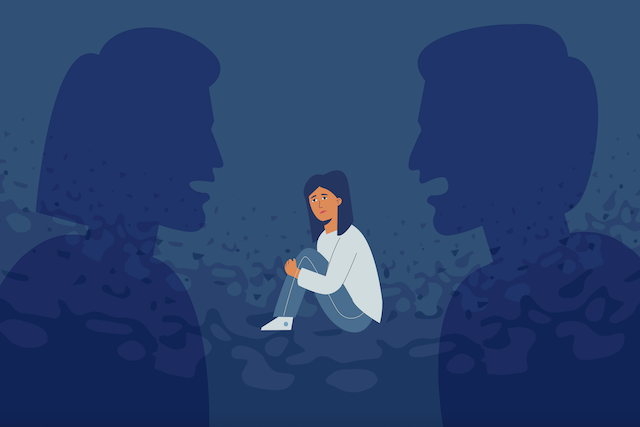
    He would often take me to Lake Lewisville, where he and his wife owned a sailboat. He would make me get in the boat, and then he would tell me how he wanted to sail the world with me. Again, I was silent. I was afraid.

    He would force me to sit leg-to-leg with him and would kiss my cheek, putting his arm around me. I would sit there like a statue, then I would try to pull away, but he would forcefully pull me back and tell me that it was mean to deny his advances and affection.

    Typing this now makes me want to vomit. It’s repugnant. The woman I have grown to be would never allow this behavior. However, I was sixteen and had no guidance and not much self-esteem.

    Looking back, I cannot understand how a man who had a wife and three daughters could be so disgusting, cross so many boundaries, and be so creepy.
    The time he crossed the line in the most extreme way was when he pulled me to him, held me next to his body, and forced a mouth-to-mouth kiss on me, while pressing his hard-on into my stomach, in San Antonio at All State. I was terrified, and pulled myself away from him, ran back to the hotel, and cried the entire night.

    I wanted someone to rescue me from his nastiness. “Can’t everyone tell he’s a creep and I’m miserable?” I would think to myself.

    You are probably thinking, “Why didn’t you tell someone?” I was afraid. He brainwashed me into thinking that if I told anyone, he wouldn’t write any recommendation letters for me and no one would believe me (I know this is not true now). And he would remind me that I didn’t want to stress out my mom, who already worked a lot. He guilt-tripped me and shamed me.

    It wasn’t until college that I eventually told someone, a childhood friend who attended the same school I went to. I showed him the letters Mr. S had written and told him about it. My friend was livid and then threw all the letters away. (I now wish I had kept the disgusting letters so that I could have them published.)

    Mr. S would call me at college and tell me he missed me. I told him to never call me again, but he continued until I stopped picking up the phone.

    Mr. S was a child predator who never should have taught children. He tried to Facebook friend me several years ago. I immediately shut that down. The gall, the nerve. No shame, no conscience. I am tired of being silent. I will not spare his peace to keep this quiet any longer. I can only imagine how many other teenagers and young girls were forced to be at the mercy of his sickness. I will be silent no more.

    The above abuses and others caused my judgment to be clouded and for me to take routes that weren’t always best for me. For example, I turned down a full scholarship from Baylor University to attend Eastman because I was terrified of my stepfather and Mr. S. I wanted to get as far away as possible from them. I jeopardized my financial future by taking out loans to pay for flights and college in order to escape Texas.

    I have beat myself up too many times over some of my poor decisions and my methods of survival. I won’t continue to vilify myself for finding ways, good or bad, to try to be and feel safe. I did the best I could, and I can now see that I am proud of myself for surviving. As a child and as a young adult, I should have been protected, cherished, loved, and guided, but I received none of those necessities.

    To those who have experienced abuse, who were not protected, who were not valued or cherished, you should have been. You matter. Find your truth. Abusers gaslight to disorient you. You are smart, you are brave, and you can proceed with life.

    I give myself kindness and love now. You deserve that too. You should have had those things before, but now you must give them to yourself. Be your own biggest cheerleader and know you are not alone.

  • 10 Signs You’re in a Toxic, Unhealthy Relationship and How to Help Yourself

    10 Signs You’re in a Toxic, Unhealthy Relationship and How to Help Yourself

    “Love is never any better than the lover. Wicked people love wickedly, violent people love violently, weak people love weakly…the lover alone possesses his gift of love.” ~Toni Morrison

    Not all relationships are created equal. Some rage in like a storm and leave you far weaker than you were before. As you try to process the wreck that is now your reality, you wonder, how did I end up here?

    I found myself in a toxic and addicting relationship in my mid-late twenties. Now that some time has passed and allowed for reflection, I want to pass on some signs from my previous relationship that I should have paid more attention to, in hopes that this may help others who are in a similar situation.

    Signs a Relationship Has Become Unhealthy and Toxic

    1. You are putting in most of the effort, and your needs aren’t being met.

    Emotionally, I felt drained and exhausted. This frequently happened when I tried to communicate my wants and needs to my former partner. Most of the time, it felt like my efforts were in vain.

    2. You constantly feel like you are walking on eggshells.

    I never knew when I would say something that would be too much for my former partner to talk about and he would shut down emotionally. It made me nervous to bring up my concerns about the relationship, as I felt like he had a wall built around him that I just couldn’t knock down.

    3. You hang on because you think that’s what you are supposed to do when you love somebody.

    Blame it on Disney, romantic comedies, or countless love songs, but how many of us stay in unhealthy relationships because we feel like we owe it to that person to be there for them? But what do we owe ourselves?

    Looking back on my past relationship, I stayed in it for far too long because I thought that’s what you do when you love somebody. You stick with them when they are hurting. But what if it’s one-sided and it’s hurting you most of the time? Is that really love, or is it an unhealthy attachment to that person?

    4. You get addicted to the highs of the relationship.

    When things are bad, they are bad. But when they are good, you forget about the bad. The on-and-off-again pattern makes it passionate and addicting, almost like a game. It also makes it incredibly unstable. I felt like I was taking one step forward and two steps backward, constantly preparing for the next big crash.

    5. You are always giving in the relationship.

    I gave most of my time and energy to my previous relationship because I didn’t think I deserved to be on the receiving end of love. Now I know how wrong I was.

    6. You’re trying to solve problems that aren’t yours to solve.

    I tried too hard to solve my ex’s problems and didn’t focus on myself. I was overwhelmed by huge life transitions like moving and starting a new career, so it seemed easier to try to help him even though he didn’t ask me for help.

    This also allowed me to avoid admitting our relationship was deteriorating. It hurt too much to accept that our relationship was over and that I’d given 100% to someone who no longer cared about my feelings or well-being. After all, to admit is to acknowledge, and who wants to become aware that their relationship has become incredibly unhealthy?

    7. You get stonewalled.

    When I would be vulnerable and try to communicate how I felt, my former partner would go silent on me for long periods of time. This was pure mental torture. It was one of the most excruciating things I had ever experienced emotionally.

    Stonewalling was also incredibly confusing and traumatic. I would feel ignored, helpless, abandoned, and disrespected. This in turn would make me want to try to communicate more. Eventually we would start to talk again, and we got into an unhealthy cycle of me becoming anxious and him being avoidant.

    8. You lose a sense of who you are.

    At the end of the relationship, I felt broken and like a doormat that got stomped on incessantly. The person that I’d been before our relationship was no more, and all I was left with was a deep sense of shame for losing myself.

    I felt like I had fallen like Humpty Dumpty. No matter how much I tried, I couldn’t put all my pieces back together.

    It was hard to admit that I’d enabled my ex to treat me disrespectfully over and over again. I’d worried so much about him that I stopped focusing on myself and became entwined in trying to save a relationship that had fallen apart long ago. I didn’t want to accept that after all the years we were together this was the way that it would end.

    9. You feel like you are in limbo and things are out of your control.

    When my ex stonewalled me, I felt like I was waiting on someone else for my future to start. Everything got placed on pause. I gave him all of the power in the relationship, and I felt like I was waiting for answers that I’d likely never receive.

    10. You feel disrespected.

    My former partner stopped caring about my feelings the moment the stonewalling started. I felt so hurt, shocked, and betrayed. I think part of me stayed in the relationship so long because I couldn’t admit that this person who cared about me in the beginning had stopped showing concern for me and treated me without any kind of dignity.

    That loss of love, communication, and affection was really hard to face. His apathy and lack of compassion made me feel like I was a piece of garbage that he threw out. I felt invisible, degraded, and unheard.

    To get a clearer sense of how an unhealthy relationship is impacting you, ask yourself these questions: 

    • Why am I staying in this relationship? Am I staying because I am scared to be alone and deal with my own problems?
    • How much of the time do I initiate communicating? Am I the one putting in all the effort in the relationship?
    • Am I enabling the toxicity in the relationship by continuing to allow this person to treat me in a disrespectful way? Are there boundaries in the relationship for disrespectful and inappropriate behavior?
    • Am I trying to save my partner? Am I constantly worrying more about them than myself?
    • Why do I want to fix things in the relationship so badly? Do I feel like a failure for having the relationship end?
    • Am I trying to control something that has run its course? Do we both want different things?
    • Am I co-dependent? Am I staying in a one-sided relationship to help care for this person even when my needs are not being met?
    • Am I living the life I want to live? Does this relationship make me feel loved and fulfilled?

    Ending and walking away from a relationship that is unhealthy and toxic may be one of the hardest things that you ever do. Know that you are not alone and that you are worthy of being in a loving and healthy relationship. You deserve a relationship full of mutual respect, love, and healthy boundaries.

    Some activities and resources that have helped me on my journey to self-empowerment and growth have been:

    1. Express yourself; find your voice.

    Holding in all of the hurt from a toxic relationship isn’t going to make it go away. Talk openly to trusted loved ones or friends about what you’ve experienced. It may surprise you to hear that others have similar stories. Talking to a counselor, who can give you tools, strategies, and resources to help you navigate this difficult time, may also be helpful.

    Write in a journal or compose a mock letter to the person who hurt you, or to your past or future self. I wrote a letter to myself ten years into the future in hopes of where I wanted my life to be and found it to be inspiring and motivating.

    2. Educate yourself on codependency.

    I was familiar with the term codependency, but I didn’t truly understand what it was until I heard a podcaster mention the book Codependent No More by Melody Beattie. This book put words to everything that I felt during this turbulent relationship.

    It made me realize that I put all of my energy into a relationship that wasn’t mutual or healthy and lost myself on that journey. The book helped reinforce the notion that we only have control over our actions and not others. It motivated me to always be the driver of my life.

    3. Spend time alone.

    After things ended, I didn’t realize how addicted to the relationship I was and how challenging it would be to not reach out to my ex. It felt like I was going through withdrawal. It was intense and frustrating because, rationally, I knew it was for the best, but when I stopped contact, it was a visceral experience.

    I forgot how important it was to be alone, which is also the hardest and scariest thing. The healing truly began when I was able to sit with myself and all of my thoughts. Meditating and participating in yin yoga helped me recenter and decrease my anxiety while also decreasing built-up stress and tension in my body.

    4. Take responsibility for your part.

    I wasn’t just a victim in the relationship; I was also an enabler. I stayed in something that became incredibly unhealthy and allowed my ex to treat me in an inconsiderate and unkind way. I enabled this pattern to continue, which was the hardest thing to admit to myself.

    5. Be gentle with yourself.

    We are all human and are learning. Be patient and kind with yourself.

    When this relationship was finally over, I wanted to rush through all of my grief and uncertainty in order to move on because it hurt too much. It was too real.

    I knew deep down that this would take time to heal, and I wanted to fast-forward through that phase. Give yourself time and grace. Some days will be worse than others. Just know that eventually you will have many more good days than bad days.

    6. Forgive yourself.

    Initially, I wanted to forgive my ex and felt an urgency to do so because I thought it would stop the pain. However, the person that I was most upset with was myself. How did it take me so long to realize this relationship was unhealthy? Why did I allow someone to treat me so poorly emotionally?

    The person that I really needed to forgive was myself for allowing someone to walk all over my feelings for such a long amount of time. Once that process starts, everything gets easier. You may never get closure from your former partner after things end, but you can find it on your own.

    7. Use this experience as a lesson.

    Every relationship is a lesson. Even if it was a difficult time, learn what worked and what didn’t work. What you want and don’t want. Decide what are acceptable and unacceptable boundaries in a relationship so that the cycle doesn’t get repeated in the future.

    8. Take control of your life and be the author of your own story.

    Don’t wait for someone to change to start living your life. Hit the play button and start focusing on your goals and dreams and where you want to be in the future. You may not be able to put all of your broken pieces together in the same way they were before the relationship, but take time to figure out what person you want to become and rebuild yourself.

    9. Love and believe in yourself.

    Take good care of yourself because if you don’t, nobody will. Have high standards for what you deserve in a relationship and don’t accept less. Practice positive affirmations about your worth. How you perceive yourself will impact how others perceive you.

    We might not have control over others’ actions, but we do have control over our own. It’s time to empower ourselves to live the life we want to live.

    If we take time to truly understand why a relationship was unhealthy and toxic, we can vow to break the pattern and not allow it to happen again. We can love in a secure and healthy way and in turn attract partners who do the same. After all, we deserve to be in a healthy, fulfilling, and happy relationship, with ourselves and with others.

  • How Trauma Can Cause Mental Illness (It’s Not Just a Chemical Imbalance)

    How Trauma Can Cause Mental Illness (It’s Not Just a Chemical Imbalance)

    “What seems to be clear is that we humans are an accumulation of our traumatic experiences, that each trauma contributes to our biology, and that this biology determines, to some extent, how we respond to further traumatic events as they emerge in our lives.” ~Shaili Jain

    The stigma of mental health is decreasing. That’s wonderful, but the way we’re doing it is wrong and damaging. We are ignoring the trauma that is so prevalent and pervasive in our society.

    Think about how many times you’ve read something equating mental illness to cancer or some other disease. People say that taking medication for mental illness should be considered the same as taking medicine for blood pressure, cholesterol, or other medical issues.

    The phrase “chemical imbalance” is used quite often when referring to mental illness. There is a connection, but there’s so much more to mental illness than that.

    When we say that mental illness is simply a result of a chemical imbalance, we are pretending our trauma isn’t what causes so many of our mental health struggles. Most of us have had more than enough of others invalidating our trauma and the mental illnesses resulting from it.

    Now, before anybody starts screaming that their mental illness is purely a result of a chemical imbalance, hear me out. I do believe it is possible to have a genetic chemical imbalance.

    At the same time, I think that possibility needs to include a look at epigenetics. I’m not going into detail about that. Take yourself on over to Google for that.

    What I will say about epigenetics is that I believe these “genetic chemical imbalances” come from trauma that is inherited from each generation. It has been proven that trauma can change our DNA.

    That is probably why scientists have shown that some have a genetic predisposition to mental illness. The brain has a chemical imbalance as a result of epigenetics.

    Now, back to simply labeling mental illness as a chemical imbalance. I suppose it feels like a softer blow for some to believe that’s why they have a mental illness.

    This allows them to think that they and/or their experiences have nothing to do with their mental illness. Let me just take this pill to fix my brain.

    When I hear or read that anywhere, I get incredibly frustrated. It is minimizing or completely ignoring the fact that mental illness is typically a result of trauma.

    My father was a depressed alcoholic who died of cirrhosis nine years ago. I experienced a good bit of trauma as a result of his drunken rages on top of him being absent for a large part of my childhood.

    Not only that, but I had the additional trauma of my mother pretending there was nothing wrong with him. I was also taught to pretend the violence wasn’t a big deal.

    It was incredibly confusing for me as a little girl because my mind and body knew those experiences were traumatic, but I heard otherwise.

    I got a double whammy when it came to mental illness. Unfortunately for me, my mother was not emotionally available. I needed a parent who would validate my feelings and allow me to express what I was feeling.

    So, I had the genetic predisposition to depression from my father and probably my mother as well since she stayed with him for many years. However, I also had severe depression and anxiety as a result of my childhood trauma.

    I believed my depression was simply genetic and a chemical imbalance until I began therapy. As it became clearer that my childhood trauma was the biggest reason I struggled with my mental health, that way-too-simple theory began to piss me off.

    If a genetic chemical imbalance was the sole reason I was depressed and had anxiety, that meant my trauma shouldn’t have affected me the way it did. That didn’t sit well with me.

    How could a genetic chemical imbalance result in my thinking that I was worthless and unlovable? How could it be the reason I never felt safe, emotionally or physically? It just was not possible in my mind!

    A genetic chemical imbalance wouldn’t cause those negative, false beliefs. It would make me feel depressed or anxious overall, but not linked to any particular event.

    Witnessing violence in my home was the reason I had anxiety. I never felt physically safe after the first episode. I was always creating plans of what I could do to be safe if this or that happened.

    When I was little, there was a roof over a storage shed outside my window. If I heard my father throwing furniture or screaming violently, I could go out my window, slide down the roof, and run into the woods behind my house.

    I had escape plans for every room in my house. I also used to sleep with a portable phone so that I could call 911 if I was ever somehow brave enough to do that.

    Hearing that the violence I witnessed was not a big deal and being told not to talk to anybody about it resulted in a very confused little girl.

    I felt intense sadness because I believed that my father didn’t love me enough to quit drinking. When I would voice that sadness, I was told that I didn’t have a reason to be sad. So then I thought there was something really wrong with me.

    Why am I so sad if I don’t have a reason to be? Why should I feel unlovable if that’s stupid to say or feel?

    Once I began therapy, I learned that all of those thoughts and feelings resulted from my trauma. So, even if I didn’t have that predisposition to a genetic chemical imbalance, I would still have had depression and anxiety.

    Any child who experienced anything similar to what I experienced would have depression and anxiety. That genetic chemical imbalance garbage was keeping me from acknowledging the fact that trauma was the cause.

    As I mentioned earlier, I hear a lot of people saying they need medication for mental illness simply because they have a chemical imbalance. In my opinion, that is incredibly dangerous and prevents people from healing.

    It typically results in people thinking a pill will solve all of their mental health struggles. I’ve yet to hear about anybody who took a pill that completely removed all symptoms of mental illness.

    Now, I’m not saying the medication does not help. It most certainly does for many people. However, there is much more to mental illness.

    Not only that, but the chemical imbalance can also be a result of trauma. There is much more needed to heal trauma than just a pill.

    In my late teens and into my early twenties, I tried tons of different medications for depression, but I knew I needed more than that.

    Also, each medication only helped a little bit, and only with the day-to-day functioning to get my work done. I was just going through the motions, though. I never even had moments of peace or happiness.

    There was no medication that changed my feelings of worthlessness. I still felt unlovable. If I heard or saw certain things, I would get triggered with anxiety. Quickly, my mind would return to that childhood fear that I wasn’t safe emotionally or physically.

    If my mental illness wasn’t a result of trauma, then the medications would’ve cured it all.

    Oh, how I wish those medications would’ve been the answer for me. That would’ve saved me a lot of time, energy, and money in therapy.

    Therapists wouldn’t even exist if mental illness were nothing but a simple chemical imbalance. Medications for mental illness truly would be “happy” pills.

    It just doesn’t work that way. Mental illness typically results from years of trauma, covered up or not processed.

    Trauma needs intense therapy in order for the brain to get rewired. Trauma also needs to be acknowledged and validated for people to function in a healthier way and begin the healing process.

    Saying mental illness is just a chemical imbalance sends the message that your brain is just screwed up and some loose screws need to be tightened.

    Equating mental illness to cancer or any other medical illness or disease is denying the major damage trauma causes.

    For me, I had enough people downplay my childhood trauma. I’ve also heard way too many people downplay their own.

    So, let’s stop doing that. Let’s start naming trauma as equally damaging, if not more, than a simple chemical imbalance.

    Name the traumas that resulted in your mental illness. Acknowledge the significant impact that trauma has had on your life and the ways it continues to affect you on a daily basis. And find a good therapist who can guide you through processing your trauma, as I did, so you can heal. Your mind, body, and soul need you to do that.

  • How My Narcissist Ex Was a Catalyst to My Healing and Self-Love

    How My Narcissist Ex Was a Catalyst to My Healing and Self-Love

    “It’s okay to let go of those who couldn’t love you. Those who didn’t know how to. Those who failed to even try. It’s okay to outgrow them, because that means you filled the empty space in you with self-love instead. You’re outgrowing them because you’re growing into you. And that’s more than okay, that’s something to celebrate.” ~Angelica Moone

    I thought I had married the love of my life. I had never felt a connection so strong before. I was sure he was my soul mate, and I thoroughly believed he was my twin flame—my one and only.

    I can’t even begin to tell you the horror that started to unfold after we got married. The accusations that my beloved other started to hurtle at me. That I didn’t care about him and I didn’t love him enough. He was convinced I was having affairs behind his back, and conspiring against him, and was clearly out to take his money.

    I was not just perplexed by this, I was shattered. How could he not see that I loved him unwaveringly, without question, and that I never even considered having eyes for anyone else? And trying to take his money? That was incredibly bizarre because I discovered, contrary to his initial proclamations, that he hardly had any.

    Yet I didn’t care. I loved him. I tried to love him, and I was convinced that my love would be enough—that he would know that I loved him, and we would soon return to the comfort and the knowing that our love for each other was real, safe, and forever.

    No matter how much I tried to love him, things were spiraling out of control. I couldn’t be five minutes late from the supermarket without suffering his wrath. Life outside of “us” was getting smaller and smaller.

    If I looked out the window, I was thinking the wrong thing or looking at something the wrong way. If I didn’t take his hand when we were together, I was advertising that I was single. Visiting friends or family or working outside of the property became as possible as flying to the moon.

    Eventually it happened: I stopped trying to love us back to unity and fought back. Initially to try to stop the despair that he didn’t trust me, then for my literal sanity, freedom, and autonomy. Without these things I was losing my soul.

    None of it worked. As my attachment to him became more panicked and devastated and I was losing control of my reactions, his abuse accelerated, and then I realized I was coming close to losing my life.

    I had complicated post-traumatic stress disorder. I shook. I sweat. I couldn’t eat. I could barely sleep. Everything and everyone I cared about was turning away from me.

    I had married a narcissist. I didn’t realize it at first, because back then, fifteen years ago, not many people were talking about narcissism.

    I had always believed that narcissists were arrogant people who were “up on themselves.” I had no idea that they were people who presented in our lives offering the love, total acceptance, validation, and “life” that we thought we had wanted our entire life. I had no idea that someone like this could enter my life and they would feel so right to fall in love with.

    The day that the word “narcissist” popped into my head, and I googled it, I nearly fell off my chair. I was ticking every point that was so “him” off a list of traits and behaviors. I was in shock.

    Entitled—tick. Can’t take personal responsibility for wrongdoings—tick. Has hair-trigger reactions to things that most adults don’t get bent out of shape about—tick. Argues in circles in ways that make your head spin—tick. Pathologically lies while looking you straight in the eye—tick … and on and on the list went. I needed to get to the punch line: Could a person like this be fixed? Could they get well from this disease?

    I searched high and low; I turned over every possibility and read all the research I could find. The answer was a flat “no.” Then, believing there is always a solution, I was determined to heal him, to fix our marriage, to return to the dream of the “one and only” that I just knew he must have been.

    It didn’t turn out well. In fact, it turned out terribly. Now I was experiencing things I never believed I could or would: Mental and emotional abuse that had me curled up in a corner. Physical abuse that had me fearing for my life. Financial abuse that was ripping my life to shreds. At times, for self-preservation, I had to escape. Eventually, I left him and relocated.

    But I wasn’t getting better away from him. I was totally unprepared for feeling so haunted. By the fact that he was in the home I had bought, seeing other women and seemingly having a great life while I was so empty, devastated, and traumatized that it hurt to breathe, it hurt to live, and I thought that I was going to die.

    I returned to him countless times. Either because he would contact me and promise to change, or I missed him so much I couldn’t function.

    Every time I returned, it got worse. The makeup periods were briefer, and the explosions more damaging and horrifying. Then, I broke. I had a complete psychotic and adrenal breakdown. I was told I would never heal from it and would need three anti-psychotics to be able to function, but I would never be the same again. I was told I now had permanent brain and nervous system damage.

    Of course, he didn’t care. He did what he had always done when I needed him—he discarded me. It was then that I decided to die. So, I started trying to formulate how to do this in the kindest way for my family and son.

    However, my soul had a different idea for me. A voice in my head kept insisting, “No, there is another way.” I thought it was just my madness speaking. I argued with it, but it wouldn’t let up. In desperation I walked into my bathroom, fell on the mat, put my hands in the air, and shrieked, “Help me, I can’t do this anymore!”

    In that moment the most incredible thing happened. It was like my head parted and the blinding truth entered me. I had never known such clarity in my entire life. Maybe you have to be “out of your mind” to really know the truth?

    The voice in my head told me that my husband was a catalyst. He was never meant to grant me my “self” and my “life”; rather he had come into my life to show me the parts of myself that were unhealed, that I hadn’t healed yet, to generate my true self and true life.

    A whirl of incidents and truths flashed into my mind. The ways I was so hard on myself and was always needing more, saying to myself, “Melanie, I can’t even like you (let alone love you) if you don’t get your to-do list all done, if you don’t lose ten pounds, if you don’t look like this or that … “ and how he had treated me the same—as not good enough, right, or acceptable.

    How I had always kept busy rather than “be” with myself, care, validate, and love myself. How I had terminally self-avoided and self-abandoned my inner being, and how I had yelled at him, “You don’t even know who I really am!” yet had never taken the time to have a real relationship with myself.

    On and on, the realizations came hard and fast. And I knew, he hadn’t treated me how I had treated him; he had treated me how I had really felt about and treated myself.

    I knew that if I let go of him, healed, and came home to my inner self, I would recover. I would save my sanity, life, and soul. I knew I could heal, get better, and do better. I knew that finally my life and love could be real and work.

    I knew this because in this divine intervention experience, I had been thrust into a vision in the future where I was healed and whole, and I had felt it for real. I saw who I was. I saw what I had and most importantly, I felt who I had become.

    He wasn’t the healer of my wounds; he was the messenger of them instead.

    I let go. I turned inward. I healed.

    This I now know at the highest level of truth: A twin flame, as the nemesis who reflects back to us our unhealed parts in intensely painful ways, offers the greatest love of all—the returning home to ourselves. From there my life has blossomed, from this true relationship with myself, life, and others in ways that I could never have previously imagined.

    I am love. I am self-acceptance. I am free.

  • How I Healed from Childhood Trauma and Stopped Sabotaging My Happiness

    How I Healed from Childhood Trauma and Stopped Sabotaging My Happiness

    “We can all make powerful choices. We can all take back control by not blaming chance, fate, or anyone else for our outcome. It’s within our ability to cause everything to change. Rather than letting past hurtful experiences sap our energy and sabotage our success, we can use them to fuel positive, constructive change.” ~Darren Hardy

    I parked my car and began to walk toward the mall while covering my puffy eyes with black sunglasses. I was fresh out of a session with my therapist, where I had hit a breaking point. We both came to the conclusion that I use self-punishment as an approach to almost all of life.

    As I was crossing the parking lot, all I could think of was: “How could I not see it? How could I be so oblivious to my inner dialogue and the actions I take to punish myself? Am I a hidden masochist without any sense of awareness? I should do better than this!”

    Considering that I used self-sabotage as one of my survival behaviors, coming down on myself for not doing better wasn’t the healthiest next step I could take. This time, I was able to recognize it and had one of the biggest epiphanies about how my trauma impacts my life. It was scary and liberating at the same time.

    When we grow up believing that we don’t deserve a lot, or at least not a lot of good stuff, we will subconsciously sabotage anything that creates a vision of a brighter future. Since the subconscious is programmed to validate any limiting beliefs we hold about ourselves, without awareness, our self-sabotaging behavior thrives.

    For the longest time, I couldn’t wrap my head around it. The logical part of my brain understood what was best for me. However, I still chose the self-destructive road of drama, self-judgment, complaining, victimization, and never walking my talk. 

    For example, to walk away from a marriage that mentally drained me would be a healthy thing to do. However, I stayed in a toxic partnership for as long as I could bear until I got so numb that I couldn’t feel anything. Since self-love was a concept I wasn’t familiar with, I found my significance in being disrespected, controlled, and emotionally abused.

    My logic told me to pack my stuff up and run as far as I could, but my survival mode kept me in. Although I was highly uncomfortable and most of the time in pain, at least I was familiar with the discomfort. I knew this place of constant self-sabotage and self-hatred.

    To the outside world, it didn’t make sense. To the left hemisphere of my brain, it didn’t make sense either. But to my trauma wiring, it felt like home. It was all that I knew existed and was available to me.

    When we experience domestic violence, whether as a direct victim or as a witness, our subconscious mind adopts self-destructive beliefs about ourselves and the world. Feelings of unworthiness and self-punishment paralyze us, and therefore keep everything the same.

    Although I kept tolerating situations I didn’t like far more than I felt comfortable admitting, I couldn’t let one question go: “Why do so many of us want to change, but no matter what we do, always end up in the same place with the same drama and same people? Why isn’t logic enough, and what defines true transformation?”

    I set out on a mission and began researching everything about domestic violence and its impact on children. I knew that my childhood wasn’t the best foundation for a happy and healthy life, but this time I decided to go deeper and get to the root of the problem.

    I learned that seeing my mum covered in bruises created feelings of fear, that struggling with her alcohol abuse brought feelings of unworthiness, and that the rough side of my father with his overly disciplined attitude, that lacked empathy, made me believe I wasn’t enough to be loved by him.

    As children, we interpret these experiences differently than adults. For the most part, an adult can step back and reevaluate whether this behavior is about them or the other person. Unfortunately, children don’t have this ability since their brains aren’t fully developed to understand it. Instead, they internalize these experiences and begin to believe that they are unlovable, not enough, and never safe, and they start to hustle for love.

    Since I grew up with these beliefs and didn’t address them for most of my life, I subconsciously sabotaged things I wanted because I didn’t believe I deserved them.

    On the outside, I wanted to build my business and position myself as a coach, while on the inside, I procrastinated because I highly doubted that I could ever make it. Or I would seek toxic relationships full of drama and toxicity. Since I didn’t believe that I was good enough for anything healthy and loving, I would stick around to validate my limiting beliefs of unworthiness. Self-sabotage and self-punishment were my way of life.

    After I began to understand the importance of our brain’s wiring in everything we do and how traumatic experiences define our lives if we let them, I knew that only thinking and understanding wouldn’t cut it. I would need to take serious action if I wanted to stop the self-sabotage and significantly transform my life.

    If you grew up in a household with domestic violence, you’ve experienced trauma of some sort that impacts the healthy development of your brain. You may find yourself in a constant battle between knowing what is good for you and doing the complete opposite.

    Although the trauma’s impact on our well-being is inevitable, so is the healing that takes place if we commit to it and work through it. Here’s how I did just that.

    1. Combining meditation and science to rewire my brain

    I was familiar with the work of Dr. Joe Dispenza for a while. After I read one of his first books, You Are The Placebo, I started to understand the power and importance of rewiring my brain.

    I learned that when we meditate, we lower our brain waves and become present. Once our mind is relaxed, almost half asleep, we can use visualization to bring up emotions such as love or compassion, which promotes healing. Or, we can visualize our desired goals while feeling the excitement and confidence that comes from achieving them.

    Since meditation allows us to go deeper and access the mind on a subconscious level, over time we can change or create new neuropathways, form new habits, and transform our belief system.

    Many scientific studies have shown how meditation improves sleep, reduces stress, and allows us to self-regulate, which is especially useful when working through trauma.

    I started practicing Joe Dispenza’s meditations and set a goal: Every day for the next thirty days, I must do a forty-minute meditation. No excuses, no procrastination. The game was on, and I knew that I had to commit fully to this process.

    It’s been eight months since I started, and I haven’t stopped my meditations since. Occasionally, I skip a day or two, but then I remind myself of the mission I am on and how important it is to stay committed to healing. It’s not a secret that self-discipline is the highest form of self-love.

    2. Getting a therapist

    To understand why I use self-sabotage, I decided to get a therapist. I needed to address my past and use self-awareness as a stepping stone to change.

    From the beginning, we focused on addressing the sexual assault I experienced. The biggest highlight of my therapy was understanding that I subconsciously punish myself and live in deep states of guilt and shame. For the first time, I started learning about my self-destructive tendencies and how to stop them.

    My favorite part of therapy was learning self-soothing techniques. One that I use regularly is wrapping myself into a blanket while drinking peppermint tea and breathing deeply.

    Many of us who have experienced domestic violence or other forms of trauma and abuse don’t know what love or compassion is. Since we hustled for survival and discounted ourselves as worthless and not enough, self-soothing is a foreign concept to us. Although you may find it weird and uncomfortable at first, it will gradually change how you see and take care of yourself.

    3. Practicing self-awareness and challenging myself

    A few months ago, I decided to take a three-day intense self-development course that many of my friends were raving about. I didn’t expect any significant transformation until the second day of the workshop, when everything started to shift.

    I became aware of stories I have created about my parents, who I am as a person, how I see myself, and how I live in a deep place of victimization and inauthenticity.

    Although I grew up with domestic violence, so did my mother and father. It was time to break the generational curse and take full ownership of my triggers, insecurities, desperation, and toxic tendencies that resulted from the abuse. I couldn’t play the victim card anymore since the only person I was playing was myself.

    4. Addressing my shadows

    Befriending parts of my personality that I despised was probably the biggest challenge, and frankly, it’s still in the making. However, I found the courage to look at my self-sabotaging behaviors—how I dislike disrespect and abuse but willingly go for more, and how I manipulate people or fear connections. That’s when I began to defeat the monster of self-sabotage and recognized the opportunity of healing.

    We are so eager to find the light that we forget about the dark side of ourselves that often holds us back. We want to look away and forget about everything traumatic that happened to us since our resilience to face the truth may be weakened at first. However, learning to accept those shameful and hurtful experiences and love who we became as a result of a trauma or abuse provides us an opportunity to grow into the warrior we never thought we could become.

    After two years of intense healing and personal growth, I concluded that the only thing that can save us and truly heal us is to learn how to love ourselves, not in spite of what we’ve been through or who we are but because of it.

    Today I understand that the resilience I had as a child who faced horrific or traumatic experiences is the same resilience that’s available to me now to help me heal and thrive in life. I am learning every day what it means to live from the inside out and how the power and strength I often looked for on the outside has been within me all along.

  • The Childhood Wounds We All Carry and How to Heal Our Pain

    The Childhood Wounds We All Carry and How to Heal Our Pain

    “As traumatized children, we always dreamed that someone would come and save us. We never dreamed that it would, in fact, be ourselves as adults.” ~Alice Little

    Like most people, I used to run away from my pain.

    I did it in lots of different and creative ways.

    I would starve myself and only focus on what I could and couldn’t eat based on calories.

    I would make bad choices for myself and then struggle with the consequences, not realizing that I had made any choice at all. It all just seemed like bad luck. Really bad luck.

    Or I would stay in unhealthy relationships of any kind and endure the stress that was causing. Again, I didn’t see what I was contributing or how I was not only keeping my pain going but actually adding to it.

    These are just a few examples of the many ways I ran away from my pain. The real pain. The one below it all. The one that started it all. The core wound.

    The wound of unworthiness and unlovability.

    The wound that stems from my childhood.

    And my parents’ childhoods.

    And their parents’ childhoods.

    But this is not a piece on how it all got started or who is to blame.

    No. This is about me wanting to share how I got rid of my pain.

    Because discovering how to do that changed my life in ways I never thought possible.

    It is something I would love for you to experience too because life can be beautiful no matter what has happened in the past. I don’t want you to miss out on this opportunity. Especially because I know it is possible for you too.

    Hands on the table, I am a psychotherapist and I have been for almost ten years. I also train and supervise other psychotherapists, so I should know what I’m talking about.

    But, let me fill you in on this: There are plenty of professionals who haven’t done ‘the work’ on themselves. I know, I’ve met them.

    And I have met hundreds of people who don’t have any qualifications, but they have done the work on themselves. I know, I’ve felt them.

    Doing the work, in the shortest possible summary, is all about facing your pain. It’s when you stop—or when you’re forced to stop, which is so often the case—and you’re done with running away from it.

    It’s when you finally give up.

    Sounds like a bad thing, right? But it isn’t.

    To heal, you have to see the pain.

    We all think we see it or feel it or know it, but we don’t.

    We know what it feels like to run away from it and the pain and stress that causes. The constant anxiety, the pressure, the breathlessness, the numbness. That’s what we know.

    But that’s not the pain, not the pain of the core wound. Those are the symptoms of not dealing with the wound, of not healing it because you’re too afraid to even look.

    It’s fear that stops us from healing.

    It’s not the process of healing itself that scares us; it’s what we imagine healing means. And it usually is nothing like we imagine it to be!

    Healing just means facing the pain.

    Let me try to make it more practical:

    Do you remember a time when you were very little, maybe three or five, or maybe a little older?

    Do you remember, in your body, how it felt to be misunderstood? How to want something and then not get it? How to be punished for something you didn’t do? How to be shouted at for no reason at all just because someone else was stressed out and couldn’t control themselves?

    Do you remember how that felt?

    I do.

    That’s the origin. All those little incidents when we were too young to understand what was going on, but we made it mean something negative about ourselves.

    Because what was reflected back to us by the world, by the people we loved the most, was that something was wrong with us, that in some way we were flawed, wrong, or bad.

    Our brains were too young to take a different perspective, to defend ourselves from unfair judgments and punishments, and so we took it all in.

    And believing something horrible about yourself that isn’t true hurts. Believing that you’re not good enough hurts. Believing that you’re unlovable hurts.

    It also scares us, and so we no longer feel safe.

    Safe to be ourselves. Safe to love. Safe to be loved.

    We start to hide from ourselves and our pain. We start to hide our truth and inhibit the great humans that we actually are.

    Because in those moments, those moments of misunderstanding, we receive the wrong message—that we are not worthy of being heard, trusted, held, or loved.

    We are pushed away, through being ignored, threatened, or punished.

    And then we start doing that to ourselves.

    We want or need something—just like we needed it then when it was inconvenient to a parent who shouted at us and invalidated what we wanted or needed—and we deny it or minimize it.

    We want to say “enough” and set a boundary with someone—just like we wanted to when we were little but were told we didn’t know what was good for us—but we don’t do it.

    We want to choose what we like or are excited by—just like we tried to when we were young but were told we were being stupid, childish, or silly—but then go for the boring, reasonable option instead.

    We carry the pain on.

    We don’t stop to ask ourselves whether that’s actually what we should be doing.

    We try to avoid re-experiencing the pain from our childhood by treating ourselves in exactly the same ways as we were treated back then.

    We don’t realize that we’re keeping that usually unconscious pattern going.

    The most obvious example I can give you from my life is that I didn’t grow up surrounded by emotionally available adults. So obviously I didn’t become one either. I wasn’t emotionally available to myself, and I didn’t choose emotionally available partners in my relationships.

    As a result, I got to relive my childhood experiences over and over again while not understanding why I kept feeling so depressed, unloved, and worthless.

    I kept the pain going by being closed off to how I was feeling and by choosing partners who would shame, reject, or ignore me and my feelings the same way my parents had.

    But I broke that cycle.

    I broke it when I faced my pain.

    I broke it when I stayed within myself when I felt something, no matter what it was.

    When I felt disappointed that I didn’t get the grade I wanted on an important university assignment, I stayed with that disappointment.

    I didn’t talk myself out of it. I didn’t talk down to myself and tell myself what a useless waste of space I was. I didn’t pity myself or blame my lecturer. I didn’t numb myself by binge-watching Netflix and eating chocolate.

    No, I stayed with the disappointment.

    It was like I was sitting opposite my disappointed three-year-old self, and I stayed with her.

    I didn’t shout, mock her, invalidate her, leave her, or make her wrong for feeling how she was feeling.

    I stayed with her. I saw her disappointment. I saw her pain. I knew what she was making it mean and I stayed with her.

    I didn’t push her away. I didn’t push the pain away.

    And guess what happened?

    It started to speak to me! And it made sense!

    It wasn’t scary or weird or awkward or crazy! It made complete sense.

    And it needed me to hear it, to understand it, and to parent it.

    Just like I parent my children.

    “Of course, you feel disappointed. You have put so much work into this, and you didn’t get the result you wanted. I get it. I’m here to listen to you. I want to understand you.”

    Do you know what that does? It calms you down. Truly.

    It calms you down. It’s such a relief!

    Finally, someone wants to listen! Finally, someone doesn’t turn away from me like I am the biggest threat they have ever encountered. Finally, someone looks at me with understanding and compassion.

    This is what I do with all of my feelings.

    If there is jealousy, I am there for it. I’m not shaming it, not judging it—I’m just here to listen, to soothe, to understand, and to act on it if it feels like that’s what it needs.

    So I turn toward the pain, the feeling; I try to understand what it’s all about and see if there is anything it needs from me, something more practical.

    Does my disappointment need me to ask my lecturer for feedback to improve my work for the next assessment?

    Does my jealousy need me to remind myself how worthy and lovable I am? Or does it need me to choose something beautiful for me to wear because I’ve not really paid that much attention to my appearance recently? Or does it need to speak to my partner because he’s much friendlier with other women than he is with me?

    A lot of the time the pain tries to alert us to doing something we need to do for ourselves.

    By not facing the pain, by not tending to it, we can’t know what it is that it needs us to do—and it’s always something that’s good for us.

    And so we go without what we want and need, and the pain only grows bigger and louder like the tantruming toddler that is only trying to express herself in an attempt to be heard, held, soothed, and taken care of by their parent.

    It’s time to stop doing that to ourselves.

    I did many years ago, and I feel like a different person. The way I live my life is different. The way I feel about myself is different. I no longer go without what I want and need.

    That can’t happen as long as you use up all your energy to run away from the pain.

    The pain is your invitation to do the healing work. It invites you to stay and listen, to find out what’s really going on below all distractions and symptoms.

    What is the feeling that needs to be felt?

    What is the pain that needs to be witnessed and understood?

    And what does it need you to do for it so the core wound can finally heal?

    You have the power to heal it. You are the only one you need to heal it. But you have got to stay and learn to be there for it, learn to be there for yourself.

    That’s it.

    Unlike other people, you don’t walk away. You don’t say no to yourself. You don’t go against yourself and make yourself wrong.

    You stay. You feel it. You give it what it needs.

    And that’s when it heals.

  • Why Stability Feels Unsettling When You Grew Up Around Chaos

    Why Stability Feels Unsettling When You Grew Up Around Chaos

    “Refuse to inherit dysfunction. Learn new ways of living instead of repeating what you lived through.” ~Thema Davis

    For anybody that experienced a chaotic childhood, stability in adulthood is unfamiliar territory.

    When you grow up in an environment where shouting is the norm, unstable relationships are all you observe, and moods are determined by others in your household, it’s hard to ever feel relaxed.

    As an adult dealing with the long-term effects of childhood instability and chaos, I jump at the slightest sound now.

    And I know I’m not alone when I say instability is all I have experienced.

    I recall one recent occasion when my flatmate asked jokingly, “What’s wrong with you? I live with you!” as she came out of her bedroom, and I was startled again.

    Stability, peace, and quiet are all unfamiliar to me.

    When chaos really is all you know, all that you are familiar with, stability is actually unsettling.

    Sabotaging Stability

    Stability can feel so unsettling to me that I’ll unconsciously sabotage its presence in my life, for example, by overthinking and causing myself anxiety over things being ‘calm.’

    If everything seems to be going well, I’ll subconsciously look to create some sort of problem in my life.

    Perhaps a friend texts me a message that seems less friendly than usual, but we’ve been close and getting on for months. I may choose to cause an issue with them and bring it up, simply because things feel stable.

    My mind is an expert at creating problems that really aren’t there.

    The battle against stability is most prevalent in my relationships. Of course, I’ve done the necessary work (in therapy and beyond) and know that this is largely due to complex trauma and my disorganized attachment style, but it doesn’t make things easier.

    In fact, sometimes knowing all of this can make it even more challenging, as everything seems so complex and difficult to overcome.

    Why Stability Is an Unpleasant Experience

    My therapist told me that in adulthood, we often recreate the family dynamics we experienced as children. For me, this has been very true.

    I have entered relationships where I have had to fight to be loved and accepted. I’ve also recreated the abusive cycle many times by accepting and tolerating emotional and sometimes physical abuse.

    It was only a year or so ago that I realized this. As you can probably imagine, it was quite an epiphany moment.

    For me, it’s taken a lot of courage to move away from drama-fueled relationships and to look instead for stability.

    Since we’re hardwired to expect instability and chaos when we have a turbulent background, stability can often feel boring. More often than not, this is the case for me.

    Without the drama, shouting, and familiar abuse, many adults struggle to function. Simply put, their identity or relationships are threatened when there is stability, as they aren’t sure how to behave or feel when the instability is taken away.

    How I’m Learning to Grow Comfortable with Stability

    It’s a process for sure for many of us, but not an impossible one. Or at least that’s what I remind myself.

    Sometimes I find it totally baffling that I’m more comfortable with instability rather than stability. However, I do know that our brains are powerful enough to be trained, and we can always learn new ways as humans.

    Once we gain greater self-awareness and realize we do not have to engage in abusive or chaotic relationships, we are ready to accept stability.

    It takes a lot of inner work to understand why we often choose emotionally unavailable or abusive partners. There is indeed such a thing as love addiction, which involves seeking out abusive relationships in order to ‘save’ or be a ‘savior.’

    One book I’ve found to be extremely insightful and useful for exploring the concept of love addiction is Women Who Love Too Much, by Robin Norwood. Written for those, like me, who have found themselves repeating toxic patterns in relationships, the book recalls various case studies involving women who enter unhealthy relationships in order to intentionally face chaos and abuse.

    Interestingly, the author also explores why women do this and how they are recreating familiar experiences from childhood, along with affirming their low sense of self-worth. Again, something I can relate to.

    Why Self-Love Is Key to Healing

    When we begin to love ourselves and put in the work to get to know ourselves, we start to recover and heal. In order to accept and attract stability into your life, it must first come from within.

    For me, I’m still not fully healed and try to sabotage stability in many ways. However, I am far healthier and content than I’ve ever been—and all of this has come from revisiting and confronting my childhood to gain an understanding of who I am and what has shaped my life, along with my relational tendencies.

    When you continually pour love into yourself and work to understand how your past has shaped you, you’re in a better position to create a brighter future.

    I’m finally beginning to accept the love I give to myself and the love from others. While I still get urges to sabotage or feel bored without drama, I can see and understand when I’m entering such a state.

    For me, this means I’m able to better prevent the sabotaging behavior, give myself love, and accept the stability that I deserve.

  • Dear Everyone Who Tells Me I Should Reconcile with My Parents

    Dear Everyone Who Tells Me I Should Reconcile with My Parents

    “You are allowed to terminate your relationship with toxic family members. You are allowed to walk away from people who hurt you. You don’t owe anyone an explanation for taking care of yourself.” ~Unknown

    You might think I’m a monster because I don’t have a relationship with my parents. I don’t spend holidays with them; I don’t call them and reminisce; they don’t know pertinent details about my life, my friends, my family, my work, or even the person I have become. Do these facts shock you?

    It is possible that you have only known loving, supportive parents. Parents who were open to discussing and negotiating your relationship, respecting your boundaries, and truly being a part of your life. That’s probably why you can’t understand how I don’t feel the same way about my parents.

    When you learn that I don’t have a relationship with my parents your instinct is to deny my reality. You try to tell me that my parents love me unconditionally, that my mother still cares about me, and that my parents acted out of love for me. You assert that I should try and reconcile with my family, and tell me over and over that I will regret it if I don’t.

    I don’t agree that they love me unconditionally, that they still care about me, that their actions are based on good intentions, or that they abused me in order to make me a better person. I am sorry if this upsets you or challenges your understanding of what a family looks like.

    You become aggressive telling me that I should try harder, that I should adapt and be accommodating and compassionate toward my parents. You tell me that I should forgive them for the things I claim they have done to me and tell me over and over that forgiveness will lead to peace and healing.

    But you don’t get it; I have already healed by not having them in my life, by accepting my painful reality.

    You think that I should call my parents and have a reasonable conversation that would magically lead to a Hollywood ending filled with apologies, validation, love, and reconciliation. You believe that if I do this, I will have the family I have always wanted, and our relationship will be stronger, healthier, and more supportive.

    I need to stop you and be firm. Your lack of understanding about my situation is re-traumatizing me. I cannot contact my parents and reconcile with them. Do you think I didn’t try to have the conversations that you’re suggesting? Don’t you realize that I tried so hard to adapt, to do what they wanted, to apologize and accommodate my parents, yet nothing ever changed? I was never enough!

    Each interaction affirmed how much they despised me, how little they thought of me, and how reluctant they were to listen to me, get to know me more, or even to take the time to understand where I am coming from. Over and over, I tried harder and harder, my heart breaking each time. The picture of the perfect family shattering off the wall and the reality of my family becoming clearer and clearer.

    These were not parents who loved me unconditionally the way parents should love their child. These were parents that might love me if I was better at school, did more for them around the house, and accomplished something they could brag about to elevate their own social position.

    These were not parents who could be bothered to get to know the person I had become, because they believed they knew the flawed, evil monster they had conjured up in their minds. Yet I was not the evil monster; I was an adult child desperate to have a healthy relationship with my parents. I was a teenager who made a few mistakes, and finally I was an adult who saw and understood the family dynamics clearly and accurately.

    Cutting contact with my parents was one of the hardest choices I have ever had to make in my life. Contrary to what you may think, I did not wake up one morning and decide that I did not want to have a family anymore. Rather, I woke up one morning and realized that if I didn’t end the relationship, I would continue to get hurt by my parents for the rest of my life.

    Cutting contact with my parents, formally known as estrangement, allowed me to accept the reality of my situation and build a life that led to self-validation and healing.

    This path has been painful, and there are times when I question whether I did the right thing. However, there are also times when I realize how much better my life is without my parents’ lack of compassion, respect for my boundaries, or willingness to work with me to have a healthy relationship.

    Each time you cling to the Hollywood notion of reconciliation, you traumatize me. I know that I can’t have a relationship with my parents because this relationship will never be healthy. Yet each time you suggest I reconcile you cause me to question myself.

    Questioning myself is something I have grown good at over the years because society does not affirm my choice as socially acceptable, nor does it condone the reasons I chose to cut contact in the first place.

    Questioning myself and my own self-worth is something my parents helped me to become very good at over the years. You see, I couldn’t be doing what was best for me because to them, I was wrong, I was a bad person, and I never remembered situations and events accurately.

    Maybe you don’t mean to cause me to question myself, but each time you bring up reconciliation and the notion that the relationship with my family could be fixed it takes me back into that space. I’m forced to remind myself of all the reasons why I had to cut contact. I’m forced to relive the painful conversations and the intense, overwhelming longing for apologies, validation, and love I know I will never get from my parents.

    Before you tell me I need to see things differently and that most relationships can be fixed, I’m going to stop you. I’m going to remind you that it is hard for people to change. It is much easier for people to say that they have changed in order to save face or absolve themselves of any feelings of guilt and anguish.

    People don’t change for others; they change for themselves because they realize that there are benefits to adjusting their behavior. An uncaring, disconnected parent is not likely to change for a child they never really could love.

    I know that my choices make you feel uncomfortable. I took your family picture and I broke it into a million pieces, pieces that can never be put back together. I challenged your notions of the loving, supportive, forgiving family because that is not my reality, although for your sake, I am glad if that is yours.

    Don’t tell me that time can heal all wounds or that time fixes relationships. Time has taught me that I made the right choice.

    Incredible longing still washes over me when I see some of you interacting with your parents. You have support, love, and mentorship from your family that I will never know. Instead, I will look through the window at the seemingly perfect family, at your family, longing to know what it feels like to be loved and supported the way that you are.

    I will always feel the pain of not having that picture as my own. Part of me will always question why I was not worthy enough to have it in the first place. A piece of my heart will ache with pangs of longing, longing I have learned and accepted is a natural part of life when you don’t have parents who are loving and supportive.

    Don’t downplay my pain or deny my lived experiences. Don’t tell me that how I feel now will not be the same way I feel six months or six years from now. I don’t mean to be harsh, but you have not lived my life or walked in my shoes, and I am relieved for you.

    Don’t remind me that my siblings have a great relationship with my parents, so therefore, I might be able to improve my relationship with them.

    Let me remind you that in families like mine, not all children are treated the same way

    Some children are the golden children, showered with love and support, while others are the neglected children who are barely noticed yet continue to maintain contact in the hopes that one day the relationship will improve. Other children within the toxic family system are scapegoats. Scapegoats are not really loved, and are blamed for things beyond their control.

    In adulthood, some children in these families choose to deny the reality of the dysfunction because society teaches us that everyone needs a family. They choose to hang on and stay in touch with uncaring parents because the alternative choice is so stigmatizing and painful.

    Stop! Don’t remind me of the way my mother acted when you were over at my house growing up. Don’t tell me that she treated you well over the years and was very interested/invested in your life. Please don’t tell me she asks about me every time she sees you or that she has no idea why I cut contact with her.

    I don’t want to hear about how kind my father was. I don’t want to relive backyard barbecues where my parents acted kind and hospitable. You see, they acted.

    Toxic parents can often be kind, compassionate, and caring to everyone else except for their own children. Behind closed doors, when you and the rest of the world were not watching, they were very different people.

    You may have seen them treating me with kindness or pretending that they cared. This was all an act. I don’t want to show you who they really were behind closed doors because I doubt that you will believe me. I know this makes it harder to understand my perspective, but I don’t want to live in the pain of the past. I want to dwell in the present and look to the future with an open heart and an optimistic mind.

    Let me reiterate this: the choice not to have family is both stigmatizing and painful. The pain and stigma flow from not being understood. From assumptions that there must be something wrong with me for cutting contact, that I must be inherently bad or have done something catastrophic to deserve to be cast out of the family.

    Let me shatter that picture again. The only thing I did wrong is challenge your understanding of a loving supportive family.

    Let me ask you something: If your friend criticized and judged everything you did and did not accept you as a person, would you stay friends with that person?

    What if I told you that after interactions with that friend you were anxious, your entire body hurt, you felt like you did something wrong, you couldn’t sleep, and you questioned your judgment? You replayed the interaction over and over in your head each time, remembering more of the abusive comments, the judgmental actions, and the dismissive words you had endured during your visit.

    Could you really stay friends with that person? No, you couldn’t. So why are you encouraging me to reconcile and stay in contact with my parents given that this is how they make me feel? Is it so hard for you to grasp that an unhealthy relationship can occur between family members?

    Hold on tight to your family picture, but don’t ask me to repair mine. Instead, understand and accept my shattered picture.

    Don’t ask me to cut myself with the shards of glass through forgiveness, reconciliation, and false hopes of unconditional love and acceptance. I’m sorry if what I’ve said makes you feel uncomfortable. Society makes me feel uncomfortable each time I am asked to deny my reality, pick up a piece of glass, and expose my family wound that you could easily help me heal by accepting it.

  • How I Healed My Mother Wound and My Daughters Are Healing Theirs

    How I Healed My Mother Wound and My Daughters Are Healing Theirs

    “Your children are not your children. They are the sons and daughters of Life’s longing for itself… You may give them your love but not your thoughts, for they have their own thoughts. You may house their bodies but not their souls, for their souls dwell in the house of tomorrow…” ~Kahlil Gibran

    Now that my daughters are in therapy trying to heal their relationship with me, I have more compassion than ever for my mom. I haven’t felt angry at her in years. But when I was a teen, I earnestly desired to kill her more than once.

    I was in my forties when my mom died. Afterward, I had frequent dreams about her chasing me around, telling me I wasn’t good enough. The dreams lasted nightly for about six months and occurred for a few more years when I felt stressed. The last one I remember, she was chasing me under the covers of the bed, screaming my worst fears—that I was unlovable and unworthy—reinforcing my wounded child.

    About twelve years after she died, I was able to come to a place of comfort with her. While in deep meditation I saw a vision of her spirit bathed with light and love. Freed from her mental and physical sufferings, I saw her as I had seen her when I was a child—my universe.

    Unfortunately, she couldn’t see herself as I did in those days. I knew that she was beautiful. I remember thinking about it as a young child, and when she was dying. How often I’d searched her face, looking for her to see me.

    Like my dad, I have prominent facial features. I wished I had her cute small nose and her pretty lips that always looked beautiful in her Berry Berry Avon lipstick. She had blue eyes, which I rarely saw straight on. She was uncomfortable with her looks. I don’t remember any direct eye contact with her unless she was angry, though I realized there must have been.

    She was born with a crossed eye. Her story was that her parents were accused of having a sexually transmitted disease that caused it, which brought great shame. My mom was also dyslexic. Sometimes at school, she had to wear a dunce cap and stand in the corner or hall because she couldn’t spell. These challenges shaped her self-worth from a young age.

    I loved looking at pictures of her in her twenties with long dark wavy hair, stylish glasses, and a beautiful smile.

    When she died, I didn’t cry. I proclaimed that her reign of terror had ended, and I held on to my anger for twelve more years. That day in meditation, when I was able to break through the veil of outrage that kept me in my darkness, I saw her as a bright light in my life. 

    I had known for years that some of my healing depended on letting go of the story of my time with my mom—one of mental health issues, abuse, and unhappiness. I needed to take time to process our relationship and see her beyond her earthly life. When I was finally able to, I felt better than I expected.

    Through my experience and my work with other women, I’ve learned that the mother wound—our unresolved anger at the flawed woman who birthed or raised us—is two or threefold.

    Our first challenge is processing the actual events that happened as we were growing up.

    The second is letting go of our reluctance to be fully responsible for our mental and physical health as adults.

    And, if we have children, the third is not wounding ourselves—realizing that there was never a scenario where we could be the perfect parent we had hoped to be, no matter how self-sacrificing we were.

    Processing Our Childhood

    Our work as adults is to make a conscious effort to process the hurt, anger, and betrayal that we endured from the female authority figure that raised us (or the figure who was our primary caregiver).

    Even if we resolve that our mother did her best, we are still left to sort through our shame over not feeling loveable or good enough, and the feeling that we missed out on the experience we should have had growing up. Processing and healing could mean seeing a therapist, journaling, or even stopping all contact with our mother.

    I moved far away from my mom, which minimized my contact and gave me space to process. But I kept the past alive in my thoughts. Now when I look back, I see that holding on to my anger well into adulthood added to the years of feeling like I was missing out on a normal life. In the end, I was responsible for my own healing, and it didn’t happen overnight.

    Now, at this place in my life journey, I see the hard parts of my life as the foundation for my life’s purpose, and I don’t feel like I’m missing out.

    I’ve met enough people to know that even those who had the perfect parents—like we all wanted—also have challenges as adults. My work to heal has led me to a deep understanding of the human condition and fueled my passion to love and to help uplift the suffering of all.

    How Our Commitment to Self-Care Helps Heal Our Mother Wound

    We looked to our mother to provide emotional and physical nourishment. Her inability to do this (or do it consistently) created our feeling that we were wronged by our mother. Now, as adults, we need to let go of thinking our mother will take care of us and do our own nurturing work for ourselves. That might seem like a harsh statement, but it enables us to move on.

    The second part of healing my mother wound was letting go of the part of me that doesn’t take care of myself. That little voice in my head that apathetically whispers, “I don’t care” about little things that would improve my health, help me sleep better, or feel successful.

    That little voice doesn’t have as much power over me anymore. So instead of overeating in the evening, which would affect my ability to sleep well, I can override it—most days. I’m also able to notice that when I don’t take care of myself, I open myself up to being the wounded child again.

    We didn’t have a choice when we were young, but now the choice is ours. We need to decide when and how we take up the torch.

    When Our Mother Wound Becomes a Mothering Wound

    My mother wound turned into a mothering wound when I didn’t live up to my hopes of being a perfect parent. Of course, I had intended to be the loving, nurturing, protecting mother, who produced adults without any challenges, but alas, I was not. How could this happen? I tried so hard. 

    I was able to find alternatives to the punitive, violent punishments, shaming, and blaming tactics that my mother used, but as a young parent, I was still challenged with low self-worth issues and an eating disorder.

    Although some of the things that occurred during the three marriages and two divorces that my daughters and I experienced together were horrific, we were luckily able to process a lot of them in real time with therapy and tears.

    Now, with their adult awareness, my daughters are processing their childhood, including my addictions, insecurities, and mistakes. It is almost torture to watch them do that, even though I know they must. And they are so busy with their lives now—as they should be. I miss them.

    To weather this time of my life and continue to grow, I need to employ my practices of understanding, compassion, and detachment, and take deep care of myself. Continuing to love my daughters deeply, to be on call whenever they need me, and at the same time be detached from needing them, has called me to deeper depths of my character.

    We all deserve to be treated respectfully and kindly. As daughters and mothers, we can role model compassion—empathy in action—and boundaries with our mother and our children. We can strive to create relationships that mutually nourish loving-kindness.

    We can focus on healing our past and taking care of our future. We all need to communicate this clearly to our mothers, partners, and children. And, although we can’t walk away from our underage children, we can set boundaries that facilitate healthy relationships now.

    We can be clear—our children don’t need their lives or their mother to be perfect. They need to know that they are loved, and they need to see us love ourselves. Holding on to this love for them and for ourselves when our children are troubled, distant, or even estranged is one of our biggest tests as parents. My heart goes out to any mother dealing with these challenges, especially if you are dealing with them alone.

    I never stopped wanting my mom to be happy. She is now at peace, maybe even joyful. I strive to let myself be at peace. I let myself live in this place of deep tenderness for her—and now for me. I understand that my experience is universal. I needn’t feel alone.

    I realized that this confident and peaceful version of me is the best I can do for my daughters as they heal their mother wounds and take care of themselves, as I am doing for myself.

    To heal our mother wound is to remember that it is ultimately a spiritual journey. Not only are we trying to figure out the depths of our own purpose, but we are bound to the journeys of our kin.

    As with all spiritual journeys, there will be rough passages that tear our heart open and ask us to become more. The journey of the mother is the journey of love. We need to remember, no matter what rough journey is behind us, we are the designers of the path ahead.