Category: Peace

  • Tiny Wisdom: Be Good to Yourself

    Tiny Wisdom: Be Good to Yourself

    “Be gentle first with yourself if you wish to be gentle with others.” -Lama Yeshe

    All too often we’re unforgiving and cruel to ourselves in a way we’d never treat our friends.

    We’d never look a friend in the eyes and tell her she’s not good enough. We’d never beat a friend up over one mistake he made years ago. We’d never expect a friend to move mountains when she’s exhausted and clearly needs a rest.

    Why do we sometimes do these things to ourselves?

    So often when we think about self-love, we think about the big picture—forgiving ourselves for past mistakes and accepting ourselves, imperfections and all.

    But in much the same way we show love in relationships through tiny acts of appreciation and consideration, we can love ourselves through small, maybe even random acts of kindness.

    For me, that means allowing myself to relax if I need to, even if I feel like I should be productive. It means treating myself to a nice lunch every now and then, even if I feel I should save money. It means responding to negative thoughts in my head with the same uplifting advice I’d give my sister.

    Sometimes it also means seeing in the mirror that little girl who I used to be—the little girl who always did her best and wanted nothing more than to have someone hug her and tell her it was good enough. It’s my job to do that now.

    It’s all of our jobs.

    Today, give yourself the consideration and kindness you’d extend to the people you love. If you’re dissatisfied with your progress, remind yourself of all you’ve accomplished. If you made a mistake, cut yourself from slack. If you’re tired, take it easy.

    All the goodness you put out into the world starts with how you treat yourself.

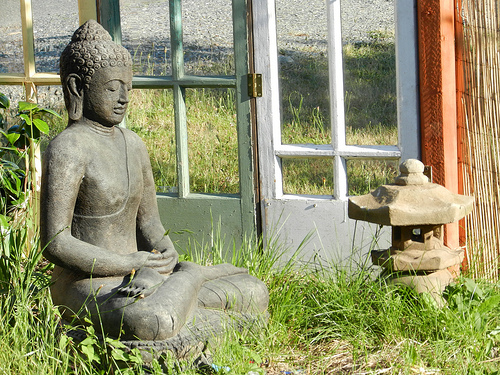
    Photo by AlicePopkorn
  • Tiny Wisdom: Keep Your Head Clear

    Tiny Wisdom: Keep Your Head Clear

    “Keep your head clear. It doesn’t matter how bright the path is if your head is always cloudy.” -Unknown

    Some days seem to start with a proverbial rain cloud dripping above our beds.

    I had one of those days on Sunday. I didn’t sleep well on Friday or Saturday because I have a medical condition that sometimes wakes me in the middle of the night, so I woke up on Sunday feeling irritable and grouchy.

    My boyfriend’s voice sounded like nails down a chalkboard. To be clear, I love him dearly, and I also love the sound of birds chirping. But in that moment, I wished I had a mute button because everything annoyed me.

    I argued with him over something silly, and then felt horrible. Both of us work through the weekends, and despite my honest apology, I felt unhappy with myself and resistant to doing anything.

    But doing nothing was not an option, so I pushed myself. I started our laundry, opened my computer, and then pulled out my to-do list.

    Right then I realized: this is not the energy I ever want to bring to my work. Since I was feeling off-balanced and moody, the only option was to stop. To do nothing. To take a break, take a breath, and give myself space to create a better state of mind.

    Sometimes it feels like there’s no time for this. We have responsibilities, people depending on us, things that need to get done. It can be tempting to just plow through, even if we’re not in a great headspace—after all, we don’t want to compromise our productivity.

    The irony, though, is that taking 5–10 minutes for a short walk or some grounding breaths can make a profound difference in our efficiency.

    We do everything more effectively when we come to it from a place of calmness—which means making time to take care of ourselves can actually be the best thing for our work and our goals.

    But more importantly, taking time to clear our heads is a kind thing to do, for ourselves and other people. We live up there all day, every day, and whether we realize it or not, our thinking affects everyone around us.

    So today I invite you to join me in prioritizing composure. Take the time you need. You deserve it—and so do your work and your relationships.

    Photo by Wonderlane

  • Tiny Wisdom: What You Need to Give Yourself

    Tiny Wisdom: What You Need to Give Yourself

    “Man stands in his own shadow and wonders why it’s dark.” -Zen Proverb

    I’ve recognized that I come to my computer to write for one of two reasons:

    Either I feel the need to explore something that’s relevant to my life, and in doing so, start a conversation about it; or there’s something bothering me that I haven’t fully addressed, and I’m hoping the conversation will make me feel better about it.

    Last week an old friend wrote to congratulate me on my book. She started the email by joking that she wouldn’t “sell my secrets if the tabloids called.”

    Though I doubt she was referring to anything specific, this struck a nerve with me because I’ve shared a lot of my personal experiences, but there are some stories I haven’t told.

    Some of them I’ve worked through and simply don’t want to share; others I haven’t completely addressed, and I’m still working through them privately.

    After I read her email, I started to write a post about the difference between authenticity and transparency. I realized three paragraphs in that my sole intention was to receive confirmation that I am not a fraud for keeping certain things to myself.

    So I decided to sit with this, and give myself the reassurance and acceptance I hoped you’d give me.

    I realized then that this same idea applies in everyday life, as we engage with other people and, consciously or unconsciously, look to them to give us what we’re not giving ourselves.

    If we’re feeling down on ourselves, we may look to other people to validate us. If we’re feeling drained, we might look to other people to give us permission to take a break.

    If they don’t give us what we need, we can end up feeling frustrated, and direct that at them. Ironically, even when people say what we think we want to hear, it tends to fall flat if we don’t truly believe they’re right.

    What makes it all the more complicated is that we don’t often realize we’re doing this. It’s far more comfortable to search outside than it is to look within.

    But if we want to fully feel the warmth of light, we need to first access our own. That starts with asking ourselves: What do I really need—and how can I give it to myself?

    Photo by Wonderlane

  • Tiny Wisdom: When Enough Is Better Than More

    Tiny Wisdom: When Enough Is Better Than More

    “If you concentrate on what you don’t have, you will never, ever have enough.” -Oprah Winfrey

    When I’m not working on Tiny Buddha, I write for ‘tween girls, both as a contributor for a magazine and a ghost writer for a website.

    Recently, I wrote several blog posts about the holiday season. One girl commented that she was excited to have received a $50 gift card and a few clothing items.

    Everything changed for her when she read that another girl received a $500 gift card and an iPad, among other presents. Suddenly her gifts seemed completely inadequate.

    While there’s a lesson in here about our consumer culture, and its effects on our children (the collective “our” since I don’t even have pets, let alone kids), this got me thinking about the comparison game we often play as adults.

    It can be challenging to identify what we believe is enough and then feel satisfied with that if we consistently weigh our choices against other people’s.

    In my book, I referenced some research that reveals we often adjust our spending based on the earners just above us, whether we can afford to or not. When the rich get richer and buy bigger houses, the earners just below them feel the need to go bigger—and this cascades down the economic ladder.

    We end up with a lot of people buying houses farther away from work to get more value for their dollar, commuting longer hours, borrowing more, saving less, and spending beyond their means—which ultimately can decrease our overall life satisfaction. It’s largely because of that instinct to “keep up with the Jonses.” Not doing so can feel like defeat.

    But is it really? What does it mean to succeed—to fill a life with things based on what other people think they need, or to fill our time with experiences based on what we truly want?

    I’m not going to suggest we stop comparing ourselves to other people, because I prefer to work with human nature than against it. But maybe the trick is to be mindful of what we’re comparing, so it’s less about having the same things as people we imagine are happy, and more about making similar choices to people who truly are.

    Those choices rarely have to do with anxiously chasing bigger and better in tomorrow, and everything to do with peacefully creating and appreciating enough today.

    Photo by Mala Imports

  • Tiny Wisdom: Seeing the Good in the Bad

    Tiny Wisdom: Seeing the Good in the Bad

    “Instead of complaining that the rose bush is full of thorns, be happy the thorn bush has roses.” -Proverb

    I once read that people who journal to identify lessons from painful situations generally move on more quickly and easily than people who write merely to vent their emotions.

    In discovering opportunities for growth, we empower ourselves to see whatever we’ve been through as something that can be ultimately beneficial, even if it’s tremendously uncomfortable in the short-term.

    It’s not always easy to do that, particularly because there are so many things that happen that we may never understand—and plenty of events that seem downright unfair.

    Why do some people retain their health despite poor choices, while others wake up seriously ill one day with no reason or warning? Why do some people enjoy great fortune without having to expel much effort, while others struggle all their lives without ever enjoying rewards or stability?

    When you look at the world through this lens, it’s easy to be bitter. We want there to be order—to know that if we’re good, good things will happen, and bad things won’t. But that’s just not a guarantee.

    What is a guarantee is that we can always decide how to interpret what we see.

    Over the past two years, countless readers have submitted posts for this site, many of them sharing stories about overcoming sickness and loss, among other personal challenges.

    There’s nothing as inspiring as seeing the world through the eyes of someone who is determined to see something good.

    After a blood vessel ruptured in Brian Webb’s brain, he couldn’t walk for months—but after running his first marathon he realized his injury taught him to appreciate life.

    Brandy Harris renamed her Crohn’s Disease “Crohn’s Teacher,” and uses her feelings about her symptoms as fuel for writing and sketching.

    Alexandra Heather Foss decided that there’s beauty in her scars—that her past struggles contributed to the strong, wise woman she is today.

    Life is always going to contain a little darkness, but we get to decide whether or not we recognize and appreciate the light.

    Photo by PrescottFoland

  • Tiny Wisdom: When Things Aren’t Fair

    Tiny Wisdom: When Things Aren’t Fair

    “Peace and justice are two sides of the same coin.” Dwight Eisenhower

    The other night, my boyfriend drove me to the airport for a cross-country flight. After he took a wrong turn, we ended up in a mess of traffic that pushed me dangerously close to my departure time.

    When I entered, I saw two lines to check baggage: a long, winding one, and another that was oddly short. I assumed this was for “even more legroom” passengers and decided to upgrade my ticket so I’d be on time.

    I made it to the agent within minutes, at which point a man at the front of the other line became vocally upset. Apparently, JetBlue opened this new line to better handle the mass of travelers, instead of filtering the existing line to the two agents working.

    This other passenger was irate—not for his own inconvenience, since he was next, but for the injustice in general. He scolded everyone in my line for being inconsiderate; he berated the agents behind the desk for their horrible mistake; and then he walked, fuming, to the security line, where I ended up standing right behind him.

    Even though his back was turned, I could feel his anger like the hot sun beating down on my face.

    He was right: it wasn’t fair that some people had to wait for a long time, and other people completely bypassed them. I could relate to that feeling of annoyance and powerlessness. But his attempts to remedy this situation fell flat because of his rage and hostility.

    Life is not always fair. There’s nothing wrong with addressing injustices when we recognize them—in fact, it’s imperative that we speak up when it comes to the big issues if we want to live in a world where everyone has a chance to thrive. But we’re far more effective at creating positive change when we challenge our instinctive emotional response and then act from a calm, deliberate place.

    People tend to shut down when we come at them with fury. That’s not to say they’ll always be receptive because we approach them rationally, but it certainly increases the odds.

    Today if you find yourself fuming over something that seems unfair, take a deep breath and remember: You’re best able to communicate your point when you remain calm and clear-headed.

    Photo by Etsy Ketsy

  • Tiny Wisdom: How We Pit People Against Us

    Tiny Wisdom: How We Pit People Against Us

    “When you live on a round planet, there’s no choosing sides.” -Wayne Dyer

    I’ve read a lot of articles about achieving your dreams and creating the life you want. There is a common message that always creates a disconnect in me: Many otherwise empowering articles lose me when the authors suggest we should “tune out our haters.”

    This seems to imply that there are people out there who want us to fail–who purposely act hateful with the intention of pulling us down.

    I know the world is a lot simpler when we view things in black and white terms–good and bad; right and wrong; for us and against us. But labels can hurt us far more than they people to whom we assign them because they generally come from fear. Fear keeps us from seeing things as they really are. Very little is as it seems.

    Some people may seem to be purposefully hurtful, but in all reality, they’re dealing with their own struggles and insecurities, and that translates as a lack of support. Some people may seem to be negative or judgmental, but in all likelihood, they’re simply trying to help you see things from a different perspective.

    This doesn’t mean that people always have good intentions; it just means far fewer have poor intentions than we think.

    It might be a lot quicker and simpler to put people into narrow little boxes. It certainly takes a lot less energy to assume certain people are on your side and certain people aren’t.

    But we end up seeing people as enemies and allies instead of realizing we’re all on the same team. It is possible to tune out words that don’t serve us without labeling the people who speak them as bad and assuming they want us to fail.

    This leaves us with a choice: We can shut other people, assuming they’re not on our side; or we can break down a wall by trying to see where they’re coming from, so that sides no longer exist. The world becomes a far more  understanding and supportive place when we choose to be understanding and supportive.

    Photo by igb

  • Tiny Wisdom: On Being Happy with What You Have

    Tiny Wisdom: On Being Happy with What You Have

    “Until you make peace with who you are, you will never be content with what you have.” -Doris Mortman

    When I was a little girl, before I learned to question myself or my abilities, I decided that one day I would have it all.

    I imagined I’d be a famous actress, I’d marry the man of my dreams, and we’d have and adopt lots of children that we’d take around the world, à la Brad and Angelina.

    As I got older and allowed my failures to chisel away at my self-confidence, I slowly stopped believing I could have anything I wanted, let alone “it all.” As my self-worth decreased, my drive increased to compensate.

    It was a horrible catch 22. I strove for greatness because I felt so inadequate, yet because I didn’t believe in myself, it was nearly impossible to accomplish anything. If I did achieve something, it felt wholly unsatisfying because I was too busy dreaming of “it all” to appreciate and enjoy its parts.

    There are still days when I catch myself running like a chicken with its head cut off, trying to mold reality into a fantasy. That’s when I remember what that starry-eyed little girl hadn’t yet learned: I don’t want it all. I want to believe that I already possess all that I need to be happy.

    I do. We all do.

    We just forget sometimes, when we get so wrapped up in what we want that we forget to give ourselves what we need, both for our minds and bodies.

    Happiness and self-love are moment-to-moment choices. There will inevitably be times when we don’t make them. The beautiful thing is that every moment is a new opportunity to choose again. Every moment is a chance to apply what we’ve learned.

    Maybe not all of it all at once. Maybe that’s okay. We don’t need to have it all. We don’t need to do it all. We don’t need to be it all. We just need to have the courage to do what we can, and be happy with that.


    Photo by Chez Casver

  • Tiny Wisdom: It’s Not All About You

    Tiny Wisdom: It’s Not All About You

    “When you are immune to the opinions and actions of others, you won’t be the victim of needless suffering.” -Miguel Ruiz

    Years back, in a group therapy circle, I met a man who provided an interesting definition for paranoia: It’s when you’re sitting in the bleachers at a football game, watching the players in a huddle, convinced they’re talking about you.

    While I’ve never suspected professional athletes were secretly laughing at me between plays, I have taken responsibility for a lot of things that likely had nothing to do with me.

    Just recently, I emailed a friend of mine from back home, only to question myself when days went by and she didn’t respond. I wondered if I’d somehow written the wrong thing. Or if there was something offensive I’d done previously that I completely forgot about.

    I created all types of needless drama in my head about her opinion of me, when in all reality, it’s highly unlikely her slow response time had anything to do with me. People get busy, and most of us have way too many online accounts to check on a given day.

    Even if her actions did have something to do with me, it was pointless speculate about it. She’d either tell me what was bothering her, or she wouldn’t–and if she didn’t, it was on her, not me.

    I don’t know if it’s possible to be immune to other people’s opinions and actions. Because we value our relationships, we care about what those people think. But there is a difference between respecting what people think and worrying ceaselessly about what they think of us.

    As a recovering people-pleaser, I often need to remind myself that what really matters is what I think of me–and that I’ll think far more of me if I resist the urge to create stories about other people’s actions.

    Today if you start reading into something another person has done and stressing about his opinion of you, remember: There’s a distinct possibility it’s not about you. Until you know, it’s pointless to worry about it.

    Photo by hildgrim

  • Tiny Wisdom: On Making Peace with Time

    Tiny Wisdom: On Making Peace with Time

    “Every day brings a choice: to practice stress or to practice peace.” -Joan Borysenko

    The other day, as I approached the street I needed to cross to visit the Coffee Bean near my apartment, I noticed there were only 5 seconds left on the walk signal. Instinctively, I ran. With a laptop. And a purse. In the heat. And why?

    If I missed the walk signal, there would be another one in a little over a minute. The president wasn’t waiting on me with lattes getting cold. And there wasn’t a baby in the middle of the road who needed rescuing. It was like some type of Pavlovian response to the ticking countdown. I saw it, and I decided to accept the challenge of making it (which I did).

    Ridiculous though this admission may be, I noticed that lots of us struggle to beat the clock when it’s completely unnecessary.

    We speed up to make green lights, even though it would be far less stressful to just wait for the next one.

    We try to squeeze additional tasks into small unexpected windows of time, instead of simply appreciating the extra ten minutes that result when someone is late to a meeting.

    We set ourselves up to struggle with time even though there’s no rational reason to do it. It’s far more useful to save the energy it takes to rush than it is to save two minutes. It’s much more productive to recharge during unexpected downtime than to scurry to get things done.

    It’s just that sometimes we forget that saving time and filling it are not the same as using it well.

    Today if you find yourself rushing and cramming activities into your minutes, remember: It’s a lot easier to live in the moment when you choose not to make the moment stressful.

    Photo by Lara604

  • Tiny Wisdom: On Realizing It’s Never All Dark

    Tiny Wisdom: On Realizing It’s Never All Dark

    “Turn your face toward the sun and the shadows will fall behind you.” ~Māori Proverb

    People often comment that the Tiny Buddha emails come at just the right time for them, and I think there’s a simple explanation for that. They all address universal challenges–things we all deal with, and often. They’re the things we sometimes forget connect us.

    We all deal with pain, heartache, disappointment, frustration, fear, anxiety, and loss. We don’t deal with it at the same times, in the same ways, or for the same reasons, but we all experience the same emotions–over and over again.

    Just when we think everything is perfect, something changes and we realize nothing is permanent. Just when we think we have everything figured out, we realize how much we don’t understand, and maybe never will.

    But we also have something else in common: No matter how dark things can seem in our lives, we always have at least a little light–and sometimes far more than we realize. Very rarely is all lost.

    If things aren’t going great with work, you may still have amazing friends who remind you that you are so much more than what you do for a living. If you don’t have the relationship you dream about, you might have family members there to remind you that you are never alone.

    We always have good things in our lives. It’s just that sometimes we get too distracted by what’s lacking to recognize what’s going right.

    Yesterday I asked on Facebook, “What advice would you give to yourself, 10 years ago?” I would tell myself to stop worrying that I was missing out on the good life, because I was actually missing out on life because of all the worrying.

    Though none of us can go back and do things differently, we can remember what we’ve learned and use it.

    Today I commit to enjoying the light, wherever it may be. What light is there in your life?

    *This is an updated version of a post from 2009. Photo by law_keven

  • Tiny Wisdom: On Living in Peace

    Tiny Wisdom: On Living in Peace

    “He who lives in harmony with himself lives in harmony with the world.” -Marcus Aurelius

    Yesterday I read an article that described how several hundred people got together to kick off the summer season by practicing yoga in the middle of Times Square. I felt a bit nostalgic in reading this because I did the very same thing exactly five years ago.

    We were all crammed together, mat to mat, raised 10 feet off the ground. It’s a surreal feeling to ease into downward dog within such a chaotic, electric, commercial environment. It’s the ultimate challenge in centering yourself–with thousands of people maintaining a frantic pace around you, buying things, rushing toward things, and staring peripherally at the spectacle of your stillness.

    But isn’t that kind of the challenge we face every day? On most days, we all bob and weave our way through all kinds of chaotic situations. There are problems to solve. And confrontations to avoid. And confusions to clear up. And relationships to mend.

    Just when you think you’ve found your center, you find one more fire that needs to be put out. It’s implicit in the definition of balance that you could potentially fall–which means there is never a better opportunity to practice peace than when your external environment could compromise it.

    Today if things get overwhelming, take a deep breath and remind yourself: Your circumstances are temporary, but your peace can endure if you focus on what’s going on within you, instead of stressing about what’s going on around you.

    Photo by benswing

  • Tiny Wisdom: On Realizing You’re Complete

    Tiny Wisdom: On Realizing You’re Complete

    “On a deeper level you are already complete. When you realize that, there is a playful, joyous energy behind what you do.” -Eckhart Tolle

    In The Power of Now, Eckhart Tolle explores how people attach their happiness to achievements in the future. A perfect relationship. A promotion. A salary increase.

    Since all of these things exist somewhere other than now–and they’re all impermanent, even if you do achieve them–this thinking creates pain on multiple levels.

    First, in the present, when you’ve yet to achieve what you think you need. Next in the acquisition, when you realize even though you’ve met your goal, you’re still wired to look for happiness somewhere in the future. And later, when life changes, and you no longer have exactly what you had.

    Life always changes. Nothing is permanent.

    That doesn’t mean we shouldn’t pursue goals. It’s just that we’d experience a deeper sense of joy on the journey if we realized there’s nowhere to get to. There’s no someday when I’m someone, or someday when I’m happy. There’s no salvation in the future. It’s an illusion that strips the present of joy and makes it a stressful experience.

    Life is now. It will always be now. At some point we have to decide now is a perfect time to be happy, peaceful, satisfied, and complete.

    As you work toward your goals today, tune into your underlying motivations and ask yourself: Am I focusing all my energy on a happy tomorrow to the detriment of my today?

    Photo by jamiehladky

  • Tiny Wisdom: On When to Hold and When to Fold

    Tiny Wisdom: On When to Hold and When to Fold

    “All the art of living lies in a fine mingling of letting go and holding on.” -Havelock Ellis

    Sometimes it’s difficult to know when to keep plowing ahead and when to accept that it’s time to move on.

    You don’t want to give up on someone you love if you can make a positive difference in their life; but sometimes you need to let go and let them learn their own lessons.

    You don’t want to give up on a dream when you’ve put your heart and soul into it; but sometimes you need to let go of the outcome you’ve been fantasizing about to open yourself up to something even better.

    I’ve been in both of these places, and similar ones, many times before. I’ve wondered what a strong person would do. Or what a brave person would do. Or what a determined person would do. Because that’s what it always came down to–what I thought I should do, and what might increase my chances of getting something I wanted.

    What I’ve realized is that there is no should. There is no simple answer. And there aren’t any guarantees. You can never know for certain if the day after you stop trying could have been the day everything came together. You can never be sure that if you keep going, you’ll eventually get what you’re shooting for.

    All you can do is know your true intentions, listen to your instincts, and then make the best choice based on what you feel is right. They key is to listen to your instincts. Not what you think you should do, or what you think other people would do, or what you think looks good. But what you know in the still, quiet place within.

    Today if you feel conflicted about whether you should hold on or let go, ask yourself: If you cleared away your fears and self-judgments, what choice would you make?

    Photo by Frames-of-Mind

  • Tiny Wisdom: On Beautiful Things

    Tiny Wisdom: On Beautiful Things

    “The most beautiful things in the world cannot be seen or even touched. They must be felt with the heart.” -Helen Keller

    Gratitude. Kindness. Joy. Vulnerability. Passion. Hope. Inspiration. Motivation. Loyalty. Awe. Authenticity. Selflessness. Thoughtfulness. Patience. Understanding. Trust. Simplicity. Serenity. Relaxation. Purpose. Peace. Generosity. Honesty. Integrity. Balance. Bravery. Love.

    Look around. It’s a beautiful day, and because of all the good you do and create, you’re a beautiful part of it.

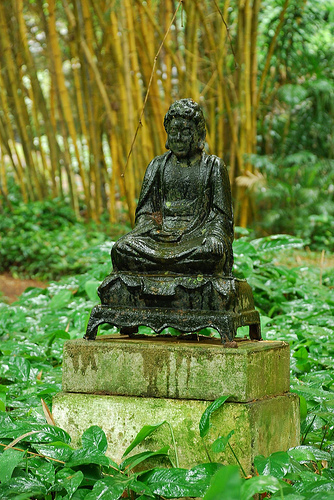
    Photo by AlicePopkorn
  • Tiny Wisdom: On the Power of Trusting

    Tiny Wisdom: On the Power of Trusting

    “You may be deceived if you trust too much, but you will live in torment if you don’t trust enough.” -Frank Crane

    I had one of the most disheartening experiences of my life when I was 24. Some people I trusted conned me out of a huge chunk of my savings and then dropped off the face of the earth.

    Later, I  questioned if I was being naive whenever an incident looked slightly similar. I instinctively mistrusted a lot of people, projecting past hurts onto them before they even had a chance to show their good intentions.

    It was like everyone was guilty until proven innocent. And worse, I was constantly defensive and bitter. I didn’t want to be caught off guard when someone inevitably disappointed me again.

    A couple years back, I found a blog post that offered an interesting perspective on trust. The author described how a cab driver tricked her to steal her backpack, including her wallet and $500 worth of possessions. Her friend concluded that they should trust people less.

    But the author, she decided that losing faith is far worse than losing stuff.

    She wrote, “Spending $500 every once in a while is a small price to pay to be able to continue trusting people…I consider the loss to be part of the optimism tax.”

    It just plain hurts to suspect everyone. It hurts to hold onto past disappointments, as if it’s only a matter of time until other people let you down. That’s not to say we shouldn’t trust our instincts when we suspect we’re in harm’s way. But the world is a far more peaceful place when you believe in people.

    Today if you mistrust someone, remember: You tend to find what you’re looking for. Are you more invested in finding reasons to doubt or reasons to believe?

    Photo by Alice Popkorn
    **Clearly, we migrated the site to the new server without a hitch. (Let me know if you notice any problems!) Thank you to the amazing Joshua Denney who handled the switch. And though I believe I emailed everyone personally, thank you so much to everyone who donated to help with upgrades. Your kindness made a huge difference!

  • Tiny Wisdom: On Conflict

    Tiny Wisdom: On Conflict

    “Peace of mind is not the absence of conflict from life, but the ability to cope with it.” -Unknown

    There are some days when I want everything to stop.

    I want the calls to stop, the emails to stop, the requests to stop, the expectations to stop, the confrontations to stop, and the struggles to stop. Essentially, I want everything to feel quiet and easy.

    Then I realize that if everything stopped, life would be boring, uneventful, and static.

    If everything stopped, I wouldn’t have any opportunities to create, grow, learn from other people, or share what I’ve learned with them. Life would not be peaceful–life just wouldn’t be happening.
    What I really want on those chaotic days isn’t for the world to stop. I just want to stop seeing the world as a million fires I need to put out. I want to stop interpreting everything as a conflict or crisis. I want to stop living life in a constant state of reaction, and instead focus on the actions that matter to me.

    I suspect that’s what we all want: the ability to nurture a sense of peace that doesn’t crumble every time our circumstances get challenging.

    The truth is we can access that on any day we choose to. We just need to choose–and then keep choosing instead of responding with stress, fear, and angst.

    Today if your world seems less than peaceful, remind yourself: I can deal with whatever happens outside me. It starts by taking responsibility for what happens inside.

    Photo by mahalaie

  • Tiny Wisdom: On Giving Peace Away

    Tiny Wisdom: On Giving Peace Away

    “If you wish to experience peace, provide peace for another.” -Dalai Lama

    Most of the time when I feel overwhelmed, stressed, frustrated, or angry, it’s because I’m obsessing about my circumstances–everything that feels unfair or insurmountable and all the ways I feel powerless to change them.

    In this state of mind, I inevitably stress other people out, whether I talk about my challenges or not.

    It’s there, spoken or unsaid. It gets in the way of my ability to really be present with the people I love, and it affects their state of mind.

    I’ve realized that the surest path to feeling more peace is recognizing when I’m challenging other people’s–when I’m drowning my interactions with my personal struggles instead of creating a positive space for myself and the people I encounter.

    We’ll always have problems in life, and if we’re not careful, they can suffocate our relationships.

    Today if you feel burdened by your struggles, realize that stressing won’t create solutions–it will just create more problems, for you and others.

    The alternative is to breathe–to value collective peace in the present more than individual control over the future. Ironically, this often makes it a lot easier to identify solutions.

    Photo by Wonderlane

  • Tiny Wisdom: On Impermanence

    Tiny Wisdom: On Impermanence

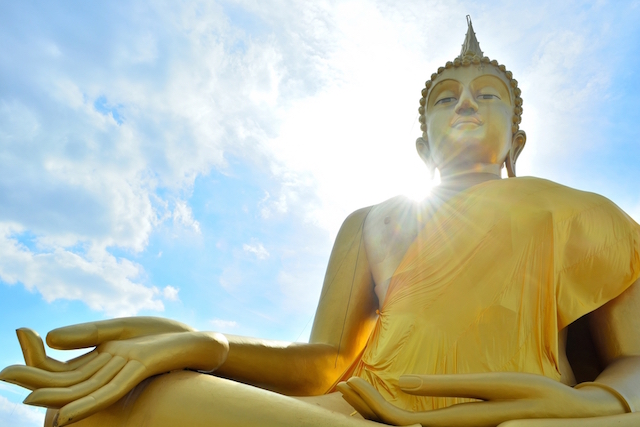
    Huge Golden Buddha

    “No feeling is final.” ~Rainer Maria Rilke

    Most of the time, when we feel something overwhelming, it’s not just the feeling that weighs on us; it’s also the fear that it may persist.

    That the deep sense of loss or longing will burrow a permanent hole in our hearts and we’ll never feel loved again. Or the disappointment will harden into an aching regret and we’ll never feel proud and excited again. Or the sadness will etch itself into our being and we’ll never feel happy again.

    But everything eventually transforms. Happiness gives way to sadness gives way to happiness again. It’s a constant cycle we can’t ever pause. Even if we decide to avoid change at all costs, change will eventually find us.

    Today, if you feel something you wish would go away, know that you won’t need to carry the weight of it forever. You just need to find the strength and patience to get through the difficult days as the feelings transform.

    Huge golden Buddha image via Shutterstock

  • Tiny Wisdom: On Being Fully What You Are

    Tiny Wisdom: On Being Fully What You Are

    “By accepting yourself and being fully what you are, your presence can make others happy.” ~Jane Roberts

    I suspect we all want permission to be exactly who we are—to accept ourselves instead of feeling unsure of ourselves, and then somehow find a balance between being and improving.

    When we see someone else who appears to do that, despite their weaknesses and flaws, it’s immensely inspiring and gratifying. Why? Because we all want to believe that even if we can be better, there’s nothing wrong with being exactly who we are.

    Yet only we can give that feeling to ourselves. No one else can validate us, support us, love us, inspire us, or motivate us to believe that we are enough. If we can find that magical feeling of being okay with being, we can give so much to the world around us, whether we realize it or not, because everyone wants to let themselves relax and simply be.

    Today if you question yourself, doubt yourself, or otherwise feel down on yourself, remember: everyone does, but the moment when one of us finds the courage to stand strong, it has a ripple effect on everyone else. The question remains: which ones of us will be brave enough to love who we are today?

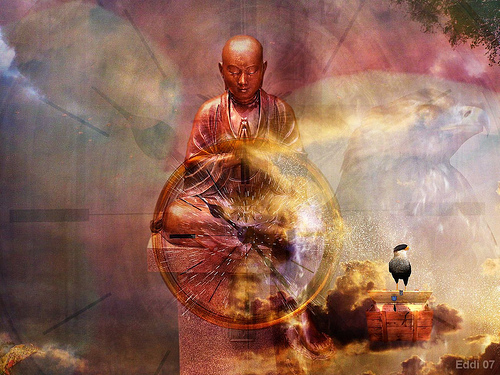
    Photo by Eddi van W