Category: Pain

  • Tiny Wisdom: Cling Less, Enjoy More

    Tiny Wisdom: Cling Less, Enjoy More

    “Most of our troubles are due to our passionate desire for and attachment to things that we misapprehend as enduring entities.” ~Dalai Lama

    My boyfriend and I spent a couple of days in Las Vegas for Valentine’s Day. These days I get excited about the buffets and shows, but formerly, I found the city a little depressing.

    First, I felt sad for the people who seemed a little lost, either for having lost vast quantities of money, or for having lost a part of themselves (something I know all too well).

    Secondly, I felt the inevitable crash that follows overstimulation and excess of any kind. (I had a love/hate relationship with both).

    But there was more to it than that. When I first went to Vegas years back, I felt like I was standing smack dab in the middle of a lifestyle I couldn’t afford. Amid the sea of tight designer dresses, in my cheap, modest clothes, I feared I looked out of place.

    I also found the luxurious ambiance of most casinos stressful. Every time I passed a majestic fountain, or a fancy velvet couch, or a store full of lavish spa items, I thought about how simple my own apartment was. I couldn’t simply enjoy my surroundings because I was too busy wishing I could own it all.

    During one trip, though, something occurred to me: the world is full of beauty I can take in, regardless of what I have—but I will never be able to appreciate it if I’m too busy trying to hold onto it.

    This isn’t only true of all that glitters. It’s true of all the sights, sounds, and moments we may want to bottle and carry with us forever.

    We can’t fully appreciate a picturesque sunset if we’re wishing it would never rain again.

    We can’t fully enjoy a moment of true connection if we’re wishing we’d never feel alone again.

    We can’t fully savor a relaxing day if we’re wishing we’d never be busy again.

    Maybe the key to happiness is to focus less on making moments last and more on making them count.

    We do that by choosing to fully experience them instead of wishing they wouldn’t end.

    It’s human nature to wonder if we’d be happier with more. Perhaps the key is to work with that instinct and realize we can have more joyful experiences if we’re willing to cling to less.

    Photo by {maira.gall}
  • Tiny Wisdom: Your Feelings Are Real and Valid

    Tiny Wisdom: Your Feelings Are Real and Valid

    Screen shot 2013-04-06 at 8.49.00 PM

    “Feelings are real and legitimate.” -Unknown

    One of the most frustrating things in the world is feeling something painful and having other people tell you that you shouldn’t be upset.

    That it’s no big deal that relationship didn’t work out, or that opportunity didn’t pan out—that it’s all in your head, so you should let it go, suck it up, and move on.

    A while back, a friend of mine got fired from a new job after her first day. We were out in a group when she got the call, and several of us watched her emotions slowly build to gut-wrenching tears.

    Naturally, everyone wanted to console her, but that quickly turned into a rapid fire succession of reminders that it really was no big deal—no one died—and she shouldn’t feel so crushed.

    I understand it can be helpful to put things in perspective, and I know there were good intentions behind those words, but I found myself wondering if it ever helps to tell someone that they should be feeling something else.

    No matter what someone else thinks about our circumstances and how we should respond, our feelings are not imagined.

    If you’re mourning a loss of any kind, you don’t have to pretend you’re not hurt. Know that your feelings are real and valid.

    If you’re missing the way things were, you don’t have to pretend you’re not sad. Know that your feelings are real and valid.

    If you’ve been betrayed, disrespected, or violated in any way, you don’t have to pretend you’re not angry. Know that your feelings are real and valid.

    We are only human, and we are going to have times when we feel wounded, sometimes over events that would challenge anyone’s sense of composure, and sometimes over things that may seem insignificant to everyone but us.

    In those moments, we may feel an overwhelming surge of emotion without really knowing the words to express it. Maybe the key is to simply feel it, without stressing about whether that’s right or wrong, and then give ourselves some time to understand what’s going on in our heads and our hearts.

    We can either judge our emotions, telling ourselves we should be stronger, or accept them for what they are, and then allow ourselves space to recognize what we can think and do to feel stronger.

    Photo by The Wandering Angel

  • Tiny Wisdom: Learning from Pain from the Past

    Tiny Wisdom: Learning from Pain from the Past

    “Wisdom is nothing more than healed pain.” –Robert Gary Lee

    In a college acting class, my teacher had my peers surround me in a circle so that I could toss my body in various directions, while improvising a scene based on my past. She did this because I had no access to my feelings about certain events.

    I could recount the most painful events in my life without a shred of actual emotion—which meant that I was often play-acting when I got into another character’s head, because in many ways, I was shut down.

    When I’d thrust myself at another student, she’d push me across the circle to another one who would push me to someone else, and this would stir something in me. I’d start to feel angry, and agitated, and alive—things I didn’t feel very often back then.

    I’d slowly start reliving the moments that hardened me, and actually connecting with the feelings they inspired. That circle of people felt both harsh and safe, because I was both terrified and desperate to go back—to understand what hurt me so that I could heal.

    Not everyone has trauma in their past, but we’ve all been hurt before–and it can be tempting to move on without every really addressing it. It’s not always comfortable to look backwards, and many times we convince ourselves it’s smart not to do it since life happens in the now. But we can only thrive in this moment if we understand and work through the emotions we avoided to survive in the past.

    We can only address what keeps us stuck if we understand why it feels safe that way—what we gain by ignoring what happened—and then recognize that we gain far more by working through it, learning from it, and then making smart choices based on what we learned.

    We have an amazing ability to lie to ourselves—to say that we’ve moved on when we haven’t, and to say that we’re fine when we’re not. We may even convince ourselves these things are true.

    But if we want to truly let go and feel free, we need to create that circle for ourselves—to address whatever hurt us before and why and how it did—so that we don’t just forget about the past; we shape the future with the wisdom we’ve gained from having lived it.

    Photo by zeze57

  • Tiny Wisdom: Avoiding the Urge to Numb Pain

    Tiny Wisdom: Avoiding the Urge to Numb Pain

    “Suffering is not caused by pain but by resisting pain.” -Unknown

    The other day I was watching TV when one of those pharmaceutical commercials came on.

    You know, the kind that shows a blissful looking woman running through a field of flowers while a voiceover extols the virtues of some drug—and then concludes with a list of possible side effects, including tremors, agitation, drowsiness, nausea, diarrhea, hair loss, blurred vision, night sweats, blood clot, stroke, and in some cases, death.

    It might have been for psoriasis or restless syndrome; regardless, I found myself wondering if solving one of these unpleasant but non-life threatening problems was actually worth the risk of so many more uncomfortable, and in some cases, dangerous ones.

    Then I started to think about how this type of thinking often prevails in everyday life, when a drink, a cigarette, or a bucket of chicken can seem like a quick fix for an unpleasant feeling.

    While any of these things might provide relief in the present, they open us up to a great deal of potential pain in the future.

    I’ve turned to all of these crutches at different points in my life; and despite making tremendous progress over the years, sometimes it still takes a conscious effort to resist instant gratification when I’m hurting.

    It can feel like a reflex—I want this feeling to end, and I know exactly the fix that will numb it.

    What we don’t always remember in that moment when we reach for the pill—whatever it may be—is that dulling the symptom rarely removes the cause. It’s really just an avoidance tactic. It’s a way to feel better right now without doing anything to help you feel better on the whole.

    It may dull the pain of a fight, but it doesn’t change that there’s conflict. It may soften the blow of a loss, but it doesn’t change that someone or something is gone.

    It may cloud the reality of what is, but in no way makes it different.

    Oftentimes we feel the need to do something to make pain go away, but most often what we really need is to sit with it, learn from it, and then act on what we’ve learned.

    It might be uncomfortable to go against what we usually do, but it’s the only way to create the possibility of feeling better than we usually feel.

    Photo by Wonderlane

  • Tiny Wisdom: The Lessons That Hurt

    Tiny Wisdom: The Lessons That Hurt

    “Don’t postpone joy until you have learned all of your lessons. Joy is your lesson.” -Alan Cohen

    There have been times when I’ve hurt tremendously and then felt a strong need to punish myself for my part in causing that pain. Usually it’s when I’ve made a mistake, and I feel ashamed, like I should have known and done better.

    This is kind of ironic when you think about it—clearly I wanted to know and do better to avoid hurting, and yet instead of letting it go, I’ve continued to make myself feel bad.

    When I was younger, someone once told me the more we hurt, the more we learn. While I agree that pain can be one of our greatest teachers, I’d like to challenge the presumption that there’s a direct correlation between learning and pain.

    I think a better belief about pain is that each time we hurt, we learn a little about hurting less. I’m not suggesting there will ever be a time when we stop experiencing pain. We’re human, and we will always feel the full range of emotions—which is a good thing, since there would be no light without a little dark.

    But every time we deal with something painful, we have an opportunity to learn how to decrease our suffering.

    With each difficult experience we can learn how to more effectively let go, forgive ourselves, and move on.

    With each challenge, we can learn how to think about things a little more positively and respond a little more proactively.

    With each struggle, we can learn to attach to our feelings less so that they do not define or control us.

    We can live our lives feeling frustrated with ourselves for having room for improvement, or we can accept that life is constant growth and give ourselves as much room as possible for joy.

    Photo by Esme_Vos

  • Tiny Wisdom: The Sacrifices That Lead to Happiness

    Tiny Wisdom: The Sacrifices That Lead to Happiness

    “As long as you make an identity for yourself out of pain, you cannot be free of it.” -Eckhart Tolle

    This weekend, a reader presented an interesting question about letting go of old beliefs and attitudes to make room for happiness and open up to a relationship.

    He suggested that this would require a lot of sacrifice on his part, and would leave him humbled and lost—as if he’s somehow “giving in” and losing touch with who he really is.

    He asked how he can reconcile the instinct to change with his resistance to becoming something he is not.

    I suspect a lot of us struggle with this. We know we want to transform our lives, but we’ve thought and behaved in certain ways for so many years that we identify ourselves with those ideas and actions.

    For a long time, I believed people were basically selfish, which made me feel constantly defensive. I thought I “earned” this belief because I had been hurt. Letting go of it felt like letting the people who’d hurt me off the hook—like saying they didn’t cause my pain, I did.

    But the reality was that my defensiveness hurt me more than anything anyone else had ever done—and for far longer. Sacrificing it might have been humbling, but the alternative was (and is) to sacrifice my potential for joy.

    We are not the beliefs that we, at one point, decided serve and protect us. We are not the thoughts that, if we’re honest, we know only cripple us. We are not the sum of our internal workings.

    Of course letting go of these will feel like giving in if we believe they define us. It will feel like a sort of death—like acknowledging there’s something wrong with us, and the only way to find happiness is to essentially rid ourselves of ourselves.

    Freedom is realizing that letting go isn’t losing anything—it’s gaining everything. It’s stepping into the present moment free from limiting thoughts, beliefs, memories, fears, and judgments, to see what’s in front of us with clear eyes.

    We have the potential to become anything—in fact, if we learn to let go, we will never stop becoming. But that means we need to want presence and happiness more than we want to cling to the past and our pain.

    Photo by Aschaf

  • Tiny Wisdom: The Triggers That Lead to Pain

    Tiny Wisdom: The Triggers That Lead to Pain

    “The world is full of suffering. It is also full of overcoming it.” -Helen Keller

    There’s a child wailing five feet away from where I’m sitting in the Farmer’s Market at The Grove. This is my least favorite sound in the world, and I often tear up when I hear it.

    While I realize children often cry for reasons that have nothing to do with danger, I associate hysterics with fear and powerlessness, and it makes me want to do something. Since I generally can’t, it manifests in my body as anxiety–a fight or flight response with no outlet.

    I’ve had full-on panic attacks when confronted with a hysterical child. It’s an emotional trigger–and a strong one.

    We all have these triggers, though some of us don’t have such overpowering reactions. Maybe you lost someone you love on a rainy day, so you feel angry when the clouds turn gray. Or maybe you sustained a serious injury at the beach, so the sound of the ocean makes you feel ill.

    These associations can be limiting, and sometimes downright paralyzing. They can cause physical and mental sensations that are completely unrelated to our present circumstances. In short, they divorce us from the present and thrust us into a painful past.

    There are times when we need professional help to fully release traumatic associations. But other times we only need a modicum of self-awareness and a willingness to breathe and let go.

    The past is over. What happened, happened. Today is a new day, and freedom comes from seeing it with new eyes. It comes from recognizing what’s going on in our minds, and then choosing to release those thoughts and feelings. We all deserve to feel peaceful, but no one else can do it for us.

    Today if you get lost in a trigger that thrusts you to a painful event, take a deep breath and remember: we can’t change that we’ve hurt before, be we can choose not to suffer now.

    Photo by ZeePack

  • Tiny Wisdom: Letting Go of Painful Memories

    Tiny Wisdom: Letting Go of Painful Memories

    “Pain is inevitable. Suffering is optional.” ~Unknown

    Recently, I’ve been listening to a guided healing meditation I found online. I searched for it because I sensed something was wrong with my body, a couple weeks before a doctor confirmed it.

    I didn’t expect it would bring up old wounds, but it has. There’s one part where the soothing voice instructs the listener to think back to the confidence of childhood. When I hear this, it reminds me that I wasn’t confident then, and that many painful events chipped away at my self-esteem.

    At this point in the meditation, I usually shift my thoughts to a moment when I felt self-assured performing onstage, but yesterday something different happened. Instead, I cried. And shook. And shivered. Right then, it all came back–anger, shame, and a sense of powerlessness.

    I was surprised to feel those raw emotions, after so many years of healing and forgiving. It reminded me that letting go truly is a journey, not a one-time choice.

    A while back, in an interview, someone asked me if I think letting go is easy. I think she was surprised when I said, “No.” In theory, it is. Just like you would simply drop your arms and release something heavy you’re holding onto, letting go feels freeing.

    The hard part is that we often need to let go over and over again. It isn’t like pulling off a band-aid. Old wounds have a way of resurfacing as we stumble, learn, and grow.

    This doesn’t make us weak. It makes us human. We don’t need to let go of anything forever. We just need to learn what it means to let go in a moment, and then remember what that looks and feels like to do it again when necessary.

    It may mean practicing mindfulness, or reminding yourself that it wasn’t your fault, or revisiting what you learned through the experience. What matters isn’t that we find letting go to be easy; it’s that we find it to be possible.

    Today if you find yourself clinging to a painful memory, ask yourself: How can I focus on healing in the present, instead of living in the past?

    Image by Sofan Chan, The Art of Happiness Gallery

  • Tiny Wisdom: It’s Not All About You

    Tiny Wisdom: It’s Not All About You

    “When you are immune to the opinions and actions of others, you won’t be the victim of needless suffering.” -Miguel Ruiz

    Years back, in a group therapy circle, I met a man who provided an interesting definition for paranoia: It’s when you’re sitting in the bleachers at a football game, watching the players in a huddle, convinced they’re talking about you.

    While I’ve never suspected professional athletes were secretly laughing at me between plays, I have taken responsibility for a lot of things that likely had nothing to do with me.

    Just recently, I emailed a friend of mine from back home, only to question myself when days went by and she didn’t respond. I wondered if I’d somehow written the wrong thing. Or if there was something offensive I’d done previously that I completely forgot about.

    I created all types of needless drama in my head about her opinion of me, when in all reality, it’s highly unlikely her slow response time had anything to do with me. People get busy, and most of us have way too many online accounts to check on a given day.

    Even if her actions did have something to do with me, it was pointless speculate about it. She’d either tell me what was bothering her, or she wouldn’t–and if she didn’t, it was on her, not me.

    I don’t know if it’s possible to be immune to other people’s opinions and actions. Because we value our relationships, we care about what those people think. But there is a difference between respecting what people think and worrying ceaselessly about what they think of us.

    As a recovering people-pleaser, I often need to remind myself that what really matters is what I think of me–and that I’ll think far more of me if I resist the urge to create stories about other people’s actions.

    Today if you start reading into something another person has done and stressing about his opinion of you, remember: There’s a distinct possibility it’s not about you. Until you know, it’s pointless to worry about it.

    Photo by hildgrim

  • Tiny Wisdom: On Showing Your True Feelings

    “Never apologize for showing feelings. When you do so, you apologize for the truth.” -Benjamin Disraeli

    As I’ve been preparing my presentation for the Wanderlust Yoga and Music Festival, I’ve been watching a lot of powerful speeches related to my topics of authenticity and connection. I found my way to Dr. Brené Brown, who researches vulnerability.

    In her inspiring talk, Brené explains how shame can be one of the biggest barriers to connection. If you believe there is something wrong with you—that you are somehow unworthy—you may hide who you are in fear of being judged and rejected.

    This is why I spent most of my early and mid-20s completely isolated. Because I felt overwhelming shame for mistakes I’d made, and I believed that they defined me, I chose to fester in a prison of my own making to avoid people’s judgment.

    Though I have now joined the land of the social, there are still times when I think my true feelings are an admission of weakness. I get a lot of emails from readers who seem to feel the same way—that they shouldn’t be feeling angry, or frustrated, or hurt, or whatever. They think they should be stronger or more evolved than that.

    This only exacerbates the pain because you pile guilt on top of the initial feeling.

    There is no shame in having emotions. And as Brené points out, it’s nearly impossible to numb the uncomfortable ones without also diluting the positive.

    If we want to know joy, elation, excitement, and everything else that makes life worth living, we need to give ourselves permission to feel the full range of emotions. And if we want to connect with each other, we need to accept and love ourselves in every moment, even when our truth feels heavy.

    Today if you start judging what you’re feeling, remind yourself: Everyone deals with difficult feelings. What separates us is what we do with them.


  • Tiny Wisdom: On Conflict

    Tiny Wisdom: On Conflict

    “Peace of mind is not the absence of conflict from life, but the ability to cope with it.” -Unknown

    There are some days when I want everything to stop.

    I want the calls to stop, the emails to stop, the requests to stop, the expectations to stop, the confrontations to stop, and the struggles to stop. Essentially, I want everything to feel quiet and easy.

    Then I realize that if everything stopped, life would be boring, uneventful, and static.

    If everything stopped, I wouldn’t have any opportunities to create, grow, learn from other people, or share what I’ve learned with them. Life would not be peaceful–life just wouldn’t be happening.

    What I really want on those chaotic days isn’t for the world to stop. I just want to stop seeing the world as a million fires I need to put out. I want to stop interpreting everything as a conflict or crisis. I want to stop living life in a constant state of reaction, and instead focus on the actions that matter to me.

    I suspect that’s what we all want: the ability to nurture a sense of peace that doesn’t crumble every time our circumstances get challenging.

    The truth is we can access that on any day we choose to. We just need to choose–and then keep choosing instead of responding with stress, fear, and angst.

    Today if your world seems less than peaceful, remind yourself: I can deal with whatever happens outside me. It starts by taking responsibility for what happens inside.

    Photo by mahalaie

  • Tiny Wisdom: On Suffering

    Tiny Wisdom: On Suffering

    “It isn’t what happens to us that causes us to suffer; it’s what we say to ourselves about what happens.” -Pema Chodron

    We all have stories we tell ourselves about the events in our lives. Many of them are negative: My boyfriend left me because I’m not good enough. I didn’t get that job because people think I’m incompetent. My parents were too hard on me because they don’t really love me.

    We often give far more meaning to events than they actually had, allowing them to control us and our actions.

    Your stories can either leave you feeling helpless or empowered.

    Martin Seligman, who coined the term “positive psychology” suggests that we can learn optimism and change those stories using the ABC model. When an adversity (A) happens, we can identify beliefs (B) and the undesirable consequences (C) they create.

    So if your boyfriend left you and you believe it’s because you’re not good enough, that will likely leave you feeling down on yourself, and as a consequence, shut down to joy and people.

    The alternative is to dispute that story to create a sense of possibility. Instead of believing that you’re not good enough, you can think, “This one relationship didn’t work out, and I can learn from this, but lots of people love me, just as I am, and many more will in the future if I keep putting myself out there.”

    This story won’t completely take away the pain, but it will remind you that it’s temporary–and that you are not helpless.

    We never are unless we choose to be.

    Photo by kelp1966

  • Tiny Wisdom: On Impermanence

    Tiny Wisdom: On Impermanence

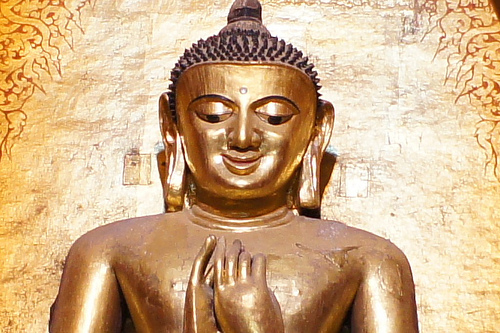
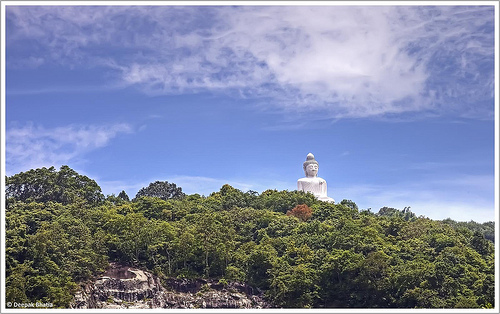
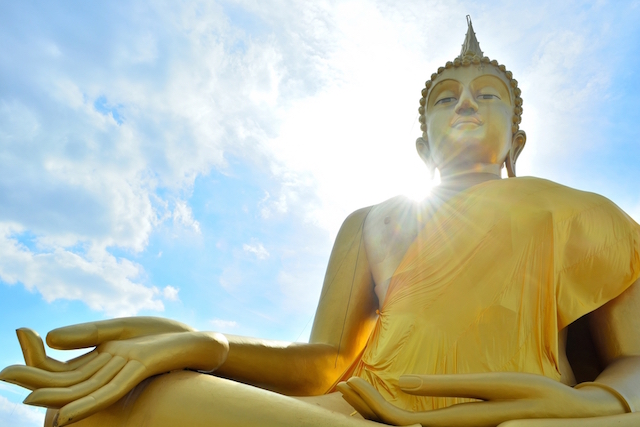
    Huge Golden Buddha

    “No feeling is final.” ~Rainer Maria Rilke

    Most of the time, when we feel something overwhelming, it’s not just the feeling that weighs on us; it’s also the fear that it may persist.

    That the deep sense of loss or longing will burrow a permanent hole in our hearts and we’ll never feel loved again. Or the disappointment will harden into an aching regret and we’ll never feel proud and excited again. Or the sadness will etch itself into our being and we’ll never feel happy again.

    But everything eventually transforms. Happiness gives way to sadness gives way to happiness again. It’s a constant cycle we can’t ever pause. Even if we decide to avoid change at all costs, change will eventually find us.

    Today, if you feel something you wish would go away, know that you won’t need to carry the weight of it forever. You just need to find the strength and patience to get through the difficult days as the feelings transform.

    Huge golden Buddha image via Shutterstock

  • Tiny Wisdom: On What We Create

    Tiny Wisdom: On What We Create

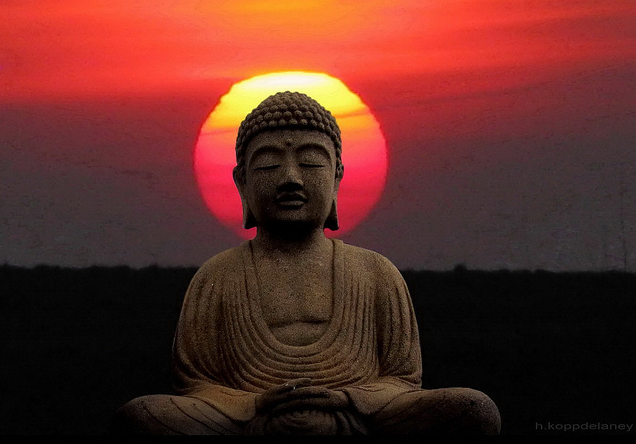
    Buddha

    “Life will bring you pain all by itself. Your responsibility is to create joy.” ~Milton Erickson

    It’s inevitable we’ll hurt in life, and in it’s inevitable we’ll want more of the good times, less of the bad, and more control over the distribution.

    We can’t change that pain is a part of life, but we can choose to  be responsible for joy instead of sitting around waiting for it, wondering when someone will change or something will change and happiness will seem less elusive.

    We can do the things we love a little every day. And tell the people we love how we feel every day. And try something that scares us every day. We can live bold, passionate lives by deciding to be bold and passionate, right now.

    Every day won’t be easy, but on any moment we can let go and start anew.

    What can you do today to create joy for yourself and the people around you?

    Photo by h.koppdelaney

  • Tiny Wisdom: On Starting Anew

    Tiny Wisdom: On Starting Anew

    New Day

    “No matter how hard the past, you can always begin again.” ~Buddha

    One of the greatest misconceptions in life is that we are somehow powerless to let go of what’s behind us. That we have to carry regret, shame, or disappointment, and that is has to dictate how today will unfold, at least on some level.

    It doesn’t. At any moment, you can let go of who you’ve been and decide to be someone new—to do something differently. It won’t always be easy, but it is always a choice you can make.

    You can either dwell and stay stuck, or let go and feel free. Give yourself space to fill with good feelings about the beautiful day in front of you—and the beautiful tomorrow you’re now creating.

    Photo here