Category: Knowledge

  • Tiny Wisdom: Take a Deep Breath and Remember

    Tiny Wisdom: Take a Deep Breath and Remember

    “Wisdom is the right use of knowledge.” -Charles H. Spurgeon

    Someone recently asked me in an interview why I choose to revisit ancient wisdom in my writing. I responded that there is very little new wisdom; there are just new ways of understanding and applying what we already know.

    That’s not always so easy to do. We have an amazing ability to drown out our inner guidance with worries, stresses, fears, and judgments.

    If you find yourself doing that today, take a deep breath and remember:

    It’s okay to be down sometimes. Once we accept and understand how we feel, we can discover what we need to do to feel better.

    It’s okay to feel lost and confused. Acknowledging this is the first step to finding direction and clarity.

    It’s okay to make mistakes. So long as we learn and grow from them, it’s the same as making progress.

    It’s okay to disagree. This is how we learn to honor our values and priorities without negating someone else’s.

    It’s okay to feel terrified. Feeling scared and uncomfortable is often a sign we’re doing what we really want to do.

    It’s okay to enjoy this moment, even if you have things to accomplish. There will always be more to do—this is much is guaranteed. Time beyond this moment is not.

    It’s okay to take time for ourselves. We are the only ones who can recharge our minds, bodies, and spirits.

    It’s okay to struggle with all of these things. Peace is accepting that we are imperfect, and doing the best we can with what we know right now.

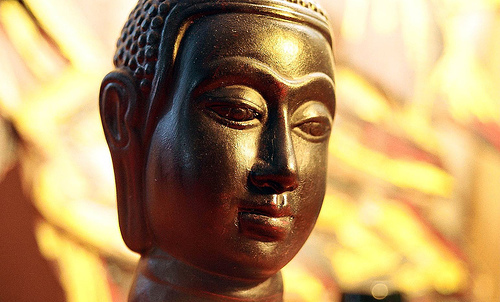
    Photo by erix
  • Tiny Wisdom: Asking Ourselves the Right Questions

    Tiny Wisdom: Asking Ourselves the Right Questions

    “Sometimes questions are more important than answers.” -Nancy Willard

    A friend of mine once told me she frequently asked herself, “When is the other shoe going to drop?”

    Whenever things were going well for her, she braced herself for an impending fall so that it wouldn’t be too devastating when things changed, as they often do.

    Despite her intentions, this didn’t protect her from pain; it just kept her from fully enjoying what might have been some of the most fulfilling experiences of her life.

    I realized then that I was also living my life around fearful, defeatist questions.

    What if I never find love? What if I don’t have what it takes? What if I messed up my one big chance?

    They always danced around fears of uncertainty and inadequacy—and because they frequently dominated my thoughts, I consistently acted from a tense, frightened place. These questions felt like self-preservation, when really they were emotional self-mutilation.

    And they repeatedly instigated a self-fulfilling prophecy. When you frequently look for answers to questions about worst case scenarios, you tend to find them, real or imagined.

    It reminds of this time I read about a woman who feared for years that she had cancer, even though she had no symptoms and doctors saw no medical proof to corroborate her suspicions. Many years later, when she received a cancer diagnosis, she said she almost felt relief because she finally knew she was right.

    She attached to her panic over the potential for sickness, and in doing so began suffering long before there was a physical cause.

    We can’t change that some things might not last, and things might happen that we wouldn’t have chosen. But the reality is there are just as many positive possibilities as there are negative ones.

    We get to choose where we focus our energy—whether we dwell on everything that might go wrong, or imagine everything that could go right. What we think dictates what we’ll do, and that plays a big role in what we create.

    It all starts with asking ourselves the right questions. What are those? I don’t know—I don’t have all the answers. But I can tell you mine:

    What if I let myself enjoy this moment? How can I appreciate myself and other people in action today? What’s good around me, and how can I contribute to it?

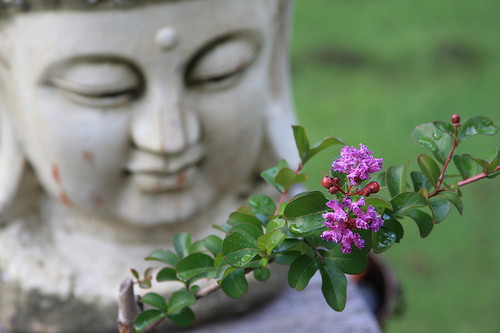
    Photo by Wonderlane

  • Tiny Wisdom: The Lessons That Hurt

    Tiny Wisdom: The Lessons That Hurt

    “Don’t postpone joy until you have learned all of your lessons. Joy is your lesson.” -Alan Cohen

    There have been times when I’ve hurt tremendously and then felt a strong need to punish myself for my part in causing that pain. Usually it’s when I’ve made a mistake, and I feel ashamed, like I should have known and done better.

    This is kind of ironic when you think about it—clearly I wanted to know and do better to avoid hurting, and yet instead of letting it go, I’ve continued to make myself feel bad.

    When I was younger, someone once told me the more we hurt, the more we learn. While I agree that pain can be one of our greatest teachers, I’d like to challenge the presumption that there’s a direct correlation between learning and pain.

    I think a better belief about pain is that each time we hurt, we learn a little about hurting less. I’m not suggesting there will ever be a time when we stop experiencing pain. We’re human, and we will always feel the full range of emotions—which is a good thing, since there would be no light without a little dark.

    But every time we deal with something painful, we have an opportunity to learn how to decrease our suffering.

    With each difficult experience we can learn how to more effectively let go, forgive ourselves, and move on.

    With each challenge, we can learn how to think about things a little more positively and respond a little more proactively.

    With each struggle, we can learn to attach to our feelings less so that they do not define or control us.

    We can live our lives feeling frustrated with ourselves for having room for improvement, or we can accept that life is constant growth and give ourselves as much room as possible for joy.

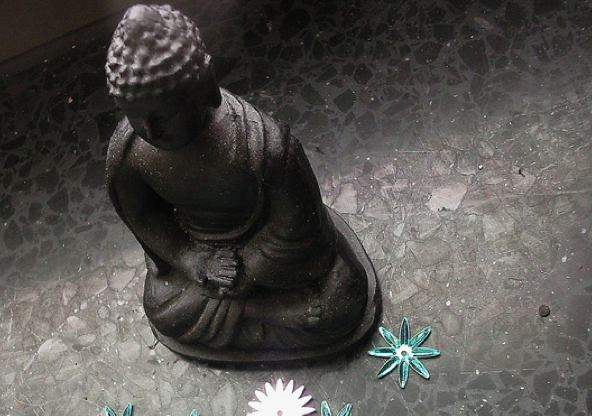
    Photo by Esme_Vos

  • Tiny Wisdom: Learning to Read What We Need

    Tiny Wisdom: Learning to Read What We Need

    “Information is not knowledge.” -Einstein

    It’s an interesting time to be a publisher. Before magazines had online counterparts, choosing articles to feature was a much more selective process, as there was no need to solicit more pieces than you could feasibly fit in an issue.

    Now that page views are dollars, quality hasn’t necessarily become less important, but publishers are certainly more focused on providing more to readers—more links to click on, more posts to tweet, and more places to get involved in conversations.

    Recently, I’ve received a few requests from larger sites asking if I’d like to participate in content share programs—meaning they’d republish Tiny Buddha posts to keep readers on their sites, and I could do the same with their content to keep readers here.

    I realize that larger publishers have greater needs, since they have a product to sell and employees to pay. But still, I can’t help but feel that providing content readers could find elsewhere solely to increase page views—particularly when it’s related to personal development or happiness—somehow misses the point.

    I’d even go so far as to say it’s contrary to the intention, since we’re generally happiest when we read what we need and then focus on applying what we’ve learned (as opposed to continually searching for more answers outside ourselves).

    Still, I think the new era of information overload provides benefits as well as challenges. For one, it gives us countless opportunities to practice choosing what information we simply don’t need.

    Conventional wisdom says that knowledge is power, which implies that the more we learn, the better equipped we are to make positive changes in our lives and the world. But sometimes not needing new information is power.

    There is power in knowing when to stop reading and start doing. There is power in learning to recognize when you actually need guidance, and when you’re seeking answers solely to avoid doing what you know in your heart is right. There is power in learning what to tune out and what to allow in.

    The web will continue to grow, and more and more sites will compete for our attention. This means we have countless opportunities to practice using information instead of letting information use us, and limitless chances to expand our awareness instead of focusing on learning more.

    Photo by Big Mind Zen Center

  • Tiny Wisdom: Knowing Why We Pull Out Our Gadgets

    Tiny Wisdom: Knowing Why We Pull Out Our Gadgets

    “Self knowledge is the beginning of self improvement.” –Spanish Proverb

    As you may remember from my post on Monday, I recently received an invitation to attend a live taping of an Oprah’s Life Class webcast.

    I knew it was an interactive self-help experience, involving questions from the audience and people who Skyped in. It sounded right up my alley.

    Before the taping, a woman led me and other bloggers to a reserved row and then gave us network information so we could tweet or Facebook from our iPads, iPhones, or laptops.

    I only own a laptop, and I didn’t bring it with me. Particularly because I write for a living, the last thing I wanted to do was distract myself from this experience with a glaring screen. In that moment I felt conflicted: It was obvious I was invited to share on the spot, and I was not delivering.

    Since the first webcast guest was Eckhart Tolle—who wrote the book on being present—I found this conundrum ironic.

    Then I realized this is the challenge of our time. We’re fortunate to have tools that connect us and enable us to spread messages far and wide; and yet we always have to balance our instinct to share with our need to fully focus on what’s in front of us.

    I realize there isn’t a one-size-fits-all solution for this, as there rarely is. I suspect it really comes down to knowing ourselves, and understanding why we’re doing what we’re doing.

    According to Doug Firebraugh of SocialMediaBlogster.com, there are seven psychological needs we may be looking to meet when we log onto a social media site: acknowledgment, attention, approval, appreciation, acclaim, assurance, and inclusion.

    We’re wired to want to be seen, and it’s tempting to chase that instant fix of validation or connection. That’s not to say these are the only motivations, but they’re potential driving forces. If we can check ourselves to understand why we’re tempted to share, we’ll be better equipped to meet our needs beyond the world of tweets and updates.

    Sharing can be a beautiful thing if we’re genuinely inspired to do it. But it’s up to us to know ourselves, so that we connect from a place of wholeness, not from a place of lack.

    Photo by Sarah Depper

  • Tiny Wisdom: See, Do, Explore, Learn

    Tiny Wisdom: See, Do, Explore, Learn

    “When you’re curious, you find lots of interesting things to do.” -Walt Disney

    One of my high school teachers once said that a truly intelligent person is never bored because there are always things to see, do, explore, and learn.

    I’ve noticed that my creative process depends highly on my willingness to be curious. On a day when I feel as though I have nothing to share, it’s generally because I shut down in some way. I didn’t get out of my comfort zone, or out of my head, or maybe even out of my house.

    When there’s no image to paint, or story to share, or lesson to offer, it’s a sign I disconnected from the day and myself. I didn’t engage with the world.

    Now that doesn’t mean I always need to be doing something active or pushing myself in some way.

    You can be completely still and yet fully involved in the world around you. Or you can be fully withdrawn and yet still present.

    The point is to stay in the moment and let it somehow captivate you. The goal is to stay open, and interested, and enthralled—by yourself, by other people, by ideas, by the world.

    There are inevitably going to be times when we retreat into ourselves, to regroup, to recharge, or to heal. There’s nothing wrong with that as long as we don’t dwell in that place.

    The best things in life happen when we consent to participate. The biggest opportunities find us when we’re open to receiving them.

    What does it mean to be open? It means heading into the day, prepared to answer these questions: What can I see? What can I do? What can I explore? What can I learn?

    Photo by AlicePopkorn

  • Tiny Wisdom: On Choosing for Yourself

    Tiny Wisdom: On Choosing for Yourself

    “Believe nothing no matter where you read it, or who said it, no matter if I have said it, unless it agrees with your own reason and common sense.” ~Buddha

    Every now and then, someone writes to me to inform me that something I’ve written doesn’t align with Buddhism. I can understand this instinct. After all, the site is called Tiny Buddha, and Buddhists who come here likely expect to find information that will reinforce their beliefs and strengthen their practice.

    My response is always the same: I don’t write to help people become better Buddhists; I write about ideas that often come from the Buddhist tradition because I believe they can help us become better people.

    If my personal feelings or thoughts sometimes fall outside the scope of Buddhist thought, it’s because I explore and apply the ideas that make sense to me, regardless of whether or not they align with a specific belief system.

    If we’re being honest with ourselves, I suspect we’ll recognize that we very rarely fit perfectly within any one group or label. If you consider yourself a Democrat, odds are there are some policies that you support and others that you disagree with.

    If you were raised to follow a certain religion, you’ve probably realized there are some ideas that make sense to you and others you strongly question.

    Maybe this is a good thing. When we allow ourselves to be more multifaceted than our labels, we’re better able to stay open-minded. Also, it compels us to really listen to our instincts instead of questioning what collective belief dictates.

    There’s something to be said for identifying with a group. In his book The Art of Happiness in a Troubled World, the Dalai Lama wrote that we need both a sense of individual identity and belonging to feel balanced and happy.

    I suspect, however, that we’ll allow ourselves a lot more room for growth if we let our affiliations enhance our lives instead of allowing them to limit or define them.

    Of course, that’s just what I believe. What makes sense to you?

    Photo by permanently scatterbrained

  • Tiny Wisdom: When Beliefs Are Not Facts

    Tiny Wisdom: When Beliefs Are Not Facts

    “The truth you believe and cling to makes you unavailable to hear anything new.” -Pema Chodron

    Most people have areas where they’re willing to accept new information and others where they just won’t budge.

    An overweight friend of mine used to believe she needed a relationship to be happy, but that no one could love someone her size. She also believed she was too mentally weak to stick to a diet. The sum of her beliefs: She was stuck in a situation she couldn’t change, and, therefore, would always be alone–and as a consequence, unhappy.

    Because she believed all those things were facts, she never tried to make any of the positive changes she really wanted. She just accepted that they weren’t possible.

    I suspect we do this to ourselves all the time. I know I have. For a long time, I believed that I needed to hide my flaws or people wouldn’t respect me. As a result, I failed to give anyone the chance–and in the process, made it really difficult to respect myself.

    Our beliefs can often limit us, sometimes in small ways, and other times on a much larger scale. Religious beliefs have vastly limited our ability to connect with, hear, and learn from others who happen to see things differently. They’ve even led us to harm them.

    Oftentimes, we’d rather cling to what we think is right and cut off 95% of the possibilities available to us than admit we could be wrong. We could always be wrong.

    Very little in life is immutable, least of all your limiting beliefs about who you are and what you can become.

    Today when you come up against a belief that limits you or the people around you, ask yourself:  What possibilities would I open up if I accepted that this might not be true?

    This is an updated version of a post from September, 2009. Photo by The Fayj.

  • Tiny Wisdom: On Everyday Teachers

    Tiny Wisdom: On Everyday Teachers

    “If we learn to open our hearts, anyone, including the people who drive us crazy, can be our teacher.” -Pema Chodron

    Many people go through their days collecting moments that annoyed them. How another driver turns without signaling. How your coffee barista moves at a glacial pace—so slow she has to ask twice what you ordered. The way a coworker talks loudly on her cell phone, even though you practically share the same cubicle.

    Things like this happen all the time. We live, work, and play on top of each other—people we know, don’t know, want to know, and don’t know we want to know. We’re bound to get in each others way.

    What we don’t often realize is that all those different people can enrich our way if we let them.

    That careless driver reminds you to stay alert. Your greatest power in an unpredictable world is your ability to respond well to things that happen around you.

    The barista teaches you to take a deep breath and slow down. Nothing is so important that a late arrival justifies an ulcer.

    Your coworker provides an opportunity to practice effective communication under stress—an invaluable skill both in work and in life.

    Today if you encounter someone who presents a challenge to your plan for the day, ask yourself: What can I learn from this experience that will help me in the future?

    Photo by The Fayj

  • Tiny Wisdom: On Hard Times

    Tiny Wisdom: On Hard Times

    “Whenever something negative happens to you, there is a deep lesson concealed within it.” -Eckhart Tolle

    Things might not happen for a reason, but we can always find a reason to move on enriched.

    We can let disappointments devastate us, or we can move on in humility, finding opportunities within the hardship.

    We can let frustrations consume us, or we can foster a sense of peace and balance, choosing not to live in a constant state or reaction to our circumstances.

    We can let dissatisfaction gnaw away at our spirits, assuming it’s too late to create life as we want to experience it, or we can live powerfully in the now, choosing every day to do something that makes us feel fulfilled.

    These are the options we’re given in life—to drown in our sorrow about what we can’t control, or soar in the possibilities of everything we can.

    What do you choose today?

    Photo by zackzen