Category: Greatness

  • Tiny Wisdom: Believe in What You Can Do

    Tiny Wisdom: Believe in What You Can Do

    by Lori Deschene

    “When you believe something can be done, really believe, your mind will find ways to do it.” -Dr. David Schwartz

    In 1957, Dr. Robert Merton introduced an idea known as the Galatea Effect, which suggests we tend to do what we expect we’ll do.

    If you think you can run a marathon, you’re more likely to push yourself through training and eventually cross the finish line. If you expect that you’ll make friends easily, you’ll likely be relaxed enough to make people around you feel at ease.

    It also works the other way around. If you believe you don’t have the leadership skills to run a meeting, your insecurity will undermine your authority. If you expect you’ll clam up around the person you’re attracted to, you’ll find yourself sweating whenever you meet eyes.

    What if we woke up and expected not only the best of ourselves and our efforts, but also the best in the unexpected? What if we expected that the things we can’t predict will somehow turn out for the best? What if we didn’t just believe in ourselves; we believed in our ability to adapt to the unknown?

    We can never know exactly what’s coming, but we can know that no matter what happens, we can turn it into something good. We can know that no matter where our aspirations lead us, we can meet all our needs through our interpretations, attitude, and actions.

    If you’re feeling stressed about the things you’re trying to accomplish, choose to expect the best in yourself–but more importantly, remember that you can find joy in tomorrow, no matter what it brings.

    Photo by Casbr
  • Tiny Wisdom: Challenging the Fear of Criticism

    Tiny Wisdom: Challenging the Fear of Criticism

    “The final proof of greatness lies in being able to endure criticism without resentment.” -Elbert Hubbard

    Sometimes criticism can feel like a ticking bomb that needs to be disposed.

    Case in point: I receive emails about every comment left on the site. While I’ll glance at them peripherally to be sure they’re not spam that made it through the filter, I generally let them accumulate so I can respond to many all at once.

    But sometimes, I’ll notice a harsh criticism, and suddenly feel this need to respond to it right now.

    I’m not sure if it’s because I feel vulnerable having been publicly criticized, or because I feel the need to clear up misconceptions in order to feel a sense of control, but something in me shouts, “This is bad. Do something about it, and fast!”

    Replying in a timely fashion is, of course, not problematic, but reacting with a Pavlovian fear response is a whole different story—one that raises the question: What is about criticism that feels so scary?

    Have you ever felt a sense of anxiety over someone else’s opinion, as if you feared it would somehow hurt you? Have you ever felt a strong need to defend yourself against negative feedback, as if you couldn’t relax until you cleared things up?

    Or how about this: Have you ever been so busy responding to criticism that seemed destructive that you didn’t have time to consider if there was something constructive in it?

    The reality is we all judge and criticize, if not publically, than in our heads. It’s a natural human instinct to form opinions about things. Hopefully, we have the tact to not to be cruel, but it will happen to all of us from time to time. Usually, it will only be as disastrous as we make it.

    One harsh comment on this site won’t change anything in the grand scheme of things—even if other people read it, too. One harsh comment from a coworker won’t change your talent, potential, or prospects.

    It never feels comfortable to be critiqued, especially if someone attacks your character or clearly misjudges your intentions. But we make the best use of our energy if we look for positive takeaways, and then challenge the voice inside that says, “Something is wrong.”

    Nothing’s wrong, so long as we learn, respond calmly, and move on, feeling balanced and empowered.

    Photo by Miheco

  • Tiny Wisdom: It Starts with Believing

    Tiny Wisdom: It Starts with Believing

    “Your belief determines your action and your action determines your results, but first you have to believe.” -Mark Victor Hansen

    In my early 20s, I got involved with a pyramid scheme that I mistook for an ethical company.

    I didn’t realize it at first, but most people were only pretending to make money because they believed they eventually would.

    Since the revenue came mostly from attracting new recruits, the head of my young team had rented out an office suite, largely to establish a sense of credibility. This made it look less like a risky network marketing business, and more like a lucrative career path. Of course, I didn’t realize this at the time. I wanted to believe, so I did.

    On one of my first days after joining, right before a scheduled presentation with 30 potential recruits, we got kicked out of our office because of a dispute with the rent.

    In that moment, I had this vision of our entire 40+ person team setting up shop in the tiny Starbucks downstairs. I grabbed all the marketing materials and overflowed with earnest enthusiasm as I told everyone, “We don’t need an office. We just need to bring our heads and our hearts!”

    In the movies, this kind of thing always seems to work. Things fall apart, and yet they somehow come together simply because people care, they’re determined, and they find a way.

    I learned from this scenario that we need to be discerning about what we choose to believe, and clear about why we care. But I also realized that it isn’t naive to believe we can create miracles when we recognize our passion is our greatest asset.

    In most situations, it’s not smoke and mirrors that create the magic—it truly is the people who believe in it and as a result never consider giving up on it. People run the companies. People create the brands. People change the world.

    People just like you and me. It’s not a fancy office that does it. It’s not a massive paycheck. It’s not even the best laid business plans.

    When it comes to building anything worthwhile, it starts with a willingness to believe in ourselves, each other, and what we can create when we have good intentions and keep going.

    Photo by Scottfeldstein

  • Tiny Wisdom: Peacefully Imperfect

    Tiny Wisdom: Peacefully Imperfect

    “Don’t let the perfect be the enemy of the good.” -Voltaire

    Last week I got sick. Really sick. Head-spinning, stomach-retching, body-trembling sick, and just before the holidays, while visiting my family.

    I completed a radio interview for my book through a brain fog so thick my thoughts felt trapped in quick sand. Needless to say, I got behind with freelance work, and come Christmas Eve, I hadn’t yet prepared anything for this week on the site.

    Since I knew the next several days would be busy, with holiday festivities, wedding dress shopping with my engaged sister, and last-minute get-togethers with friends before I return to California, I realized that morning was my last chance to prepare three days worth of content.

    So I decided to focus solely on what’s important: preparing the blog posts other people had previously submitted. Usually, I spend a great deal of time looking for the “perfect photo” to go with each post—but I decided instead to find a good one and go with it.

    I generally go through each post and insert multiple links back to other posts on the site. But I decided to skip that too since it wasn’t completely necessary.

    These details may seem inconsequential from an outside perspective, but for me, they fall under the umbrella of the “right way” to do things—and oftentimes my perfectionism tells me it’s that way or nothing.

    It’s a limiting way of operating that does nothing but create unnecessary stress, and yet it takes a conscious effort for me to fight this perfectionist instinct.

    Ironically, you as a reader may not even have noticed the things I didn’t do if I didn’t point them out—which is just another reminder that generally speaking, we are the only ones who know how things “should” be or look. Sometimes the best thing to do is do our best and resist the urge to judge it.

    So today, on the tail-end of this sickness I’ve been struggling to shake, I share with you this, my highly imperfect blog post. It didn’t involve deep thought or research. I didn’t spend a ton of time self-editing this.

    And yet, as always it’s my truth. I’ve decided that’s good enough.

    Wishing you a peacefully imperfect day and the capacity to recognize and appreciate the good.

    Photo by Two Roses

  • Tiny Wisdom: 3 Truths for Purpose and Success

    “Great acts are made up of small deeds.” -Lao Tzu

    “‘Tiny’ is the new big. I’ve seen this phrase used in context with iPods, cell phones, purses, cars, businesses, and even houses. It might not be a phrase you’d think to apply to purpose and success, but I’ve found that the smallest of things can sometimes have the most power. Today I’d like to share with you a little of my journey to Tiny Buddha, as well as three tiny truths for a meaningful, successful life.”

    And thus began my presentation for Bonfire Heights in September. I’ve been waiting to share this video because my name is misspelled in the opening, but I’ve decided to embrace my inner Lorie and share it with you now. If you’ve been struggling to create a sense of purpose, these three tiny truths may help:

    (Note: This is around 23 minutes, so it might be best to watch later if you’re at work!)


    Parts of this presentation came directly from my book Tiny Buddha: Simple Wisdom for Life’s Hard Questions.

  • Tiny Wisdom: Make the Most of Yourself

    Tiny Wisdom: Make the Most of Yourself

    “Make the most of yourself, because that’s all there is of you.” -Ralph Waldo Emerson

    I recently started yoga again after an extended period of time away from my mat. People once knew me for my flexibility and my passion for downward dog; but over the past couple of years, I somehow reduced my practice from six days per week, to four, to two, to sporadically deep breathing while touching my toes.

    When I learned my new apartment community offers classes by the pool, I decided to jump back in. I felt excited to start again, but I imagined I’d feel frustrated in realizing my core had weakened, my balance had become shaky, and my overall endurance had decreased.

    Yet, when I moved into warrior two and felt my legs trembling, I found myself thinking, “Thank you.”

    In that moment, I remembered all the things my legs have allowed me to do over the years. I thought about how miraculous it is that every day, I am mobile—I can stand, and walk, and bring myself to places I enjoy, and run toward people I love, even when I haven’t exercised regularly.

    From there, I felt grateful for my mind. As a lifelong pusher who once exhausted and dehydrated myself into the ER, I appreciated that I’d somehow developed the mental capacity to value my body for what it does for me instead of always berating it for how it fails me.

    We live in a world that often promotes unrealistic physical standards while simultaneously encouraging the type of busyness that can leave little room for self-care.

    Sometimes it can feel near impossible to be satisfied with ourselves in mind and body. It can feel like there isn’t enough time to fit everything in—to do the work we love, spend time with the people we cherish, and do what we need to do to feel healthy and comfortable in our skin.

    We’re always going to want to stretch a little further and do more with the time we have. But maybe making the most of ourselves isn’t about how much we do or how well we do it.

    Maybe it’s about allowing ourselves to feel good about where we’re at and what we’ve done. When we honor ourselves, we don’t need to push quite as hard, because we’re motivated less by dissatisfaction and more by a deep self-love that reminds us just how much is possible.

    Photo by collegekid

  • Tiny Wisdom: Being Self-Aware and Minimizing Drama

    Tiny Wisdom: Being Self-Aware and Minimizing Drama

    “Our greatness lies not so much in being able to remake the world as being able to remake ourselves.” -Gandhi

    This past weekend, I took a break from writing at Starbucks to visit the nearby Fall Festival, which featured a petting zoo, face painting, and food samples.

    This is one of my favorite events because it encompasses many things I love, including farm animals, giddy children, and food on toothpicks (yes, that’s in my list of favorite things).

    Much to my excitement, I saw there was also a large makeover event set up in the vicinity. Since I had time, I decided to get in line—except there wasn’t one. It was more like a group of women positioned haphazardly in front of the two stylists.

    So I asked one of the women, “Are you in line?”

    Her response caught me off guard, because she snapped kind of defensively, “Yes. This is the line. Behind me—I’ve been waiting!”

    Instinctively, I felt annoyed. I’d asked to be considerate, but I gathered it didn’t come across that way.

    I realized then that I often feel angry when I have positive intentions that others don’t seem to receive as such; and I can easily get frustrated when I sense hostility that I feel I “don’t deserve.”

    Sometimes, because of that, I take things personally that simply aren’t personal—and also aren’t a big deal.

    While this was a brief encounter with little significance in the grand scheme of things, it got me thinking about the importance of self-awareness.

    So often in life, we feel things that have little to do with what’s actually happening and everything to do with the stories we’re telling ourselves in our head—stories that involve assumption, blame, and defensiveness.

    But we don’t have to fall victim to our instinctive emotional reactions. At any time, we can stop, assess what’s going on in our heads, and decide to respond a little more wisely based on what we know about ourselves.

    Today if you feel yourself getting all worked up over something that isn’t a big deal, ask yourself, “What can I learn about myself that will help me going forward?”

    Photo by Melissa Gray

  • Tiny Wisdom: The Benefits of Slow Progress

    Tiny Wisdom: The Benefits of Slow Progress

    “It is better to take many small steps in the right direction than to make a great leap forward only to stumble backward.” ~Proverb

    Sometimes it can be challenging to operate with complete integrity in business—particularly because bigger and faster can be seductive.

    Case in point: I have a strong aversion to many traditional marketing methods, as I find much of it to be psychologically manipulative.

    I feel it’s wrong to sell people things by playing to their deepest fears and insecurities, and implying my book or product will be the magic bullet they’ve been waiting for all their lives.

    I also feel uncomfortable with the idea of personal branding, since a brand is an idea or image of a product or service, and human beings are neither of those things. We may sell products or offer services, but we are not commodities—even if consumers often buy based on who is selling to them.

    But statistically, products and books presented as ultimate solutions, by individuals with polished personas generally sell better.

    Now you might not hold the exact same perspective as I do, but you likely have your own set of beliefs and values that inform the decisions you make professionally—and they may occasionally hinder your progress.

    When we act in complete integrity, we often end up advancing at a slower pace.

    I remember when I was 23, knee-deep in a corrupt multi-level marketing company, oblivious to my team’s unethical practices. Everything changed the day I heard our leader suggest we look for “ignorance on fire”—new recruits who never questioned, but merely plowed straight ahead on the path of most profitability.

    Thinking and questioning can slow progress—but maybe slow progress is exactly what we need. Slow progress allows us to adapt as necessary, learn at each step of the journey, and ensure that we’re honoring our ideals and actual desires, instead of pushing ourselves blindly in the pursuit of success.

    I realize this idea isn’t universally applicable. When it comes to advancements that save lives, I absolutely support rapid progress. They couldn’t possibly come out with cures for cancer fast enough.

    But when it comes to our own personal goals and ambitions, sometimes the most satisfying results come from a slow but steady journey with unwavering commitment to what we believe is right.

    Photo by Akuppa

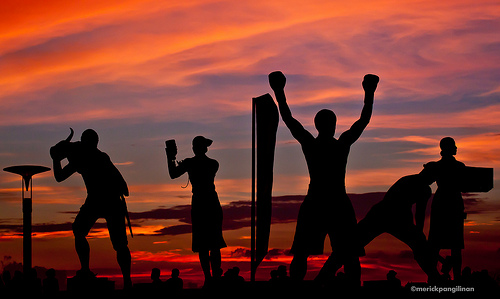
  • Tiny Wisdom: Choose to Be a Hero

    Tiny Wisdom: Choose to Be a Hero

    “A hero is a man who does what he can.” -Romain Rolland

    Two weeks ago, a group of brave bystanders in Utah banded together to lift a burning car and save a man trapped beneath it.

    In 2009, a passenger on Northwest Flight 253 leapt onto a burning man to prevent him from detonating an explosive device on Christmas Day.

    Four years ago, a 50-year old man threw himself onto the subway tracks in Manhattan, just as a train was arriving, to save a man who had fallen after having a seizure.

    These men and women all had one thing in common: they were ordinary people, just like you and me, and they decided in an instant to do something heroic.

    According to renowned psychologist Dr. Phil Zimbardo, famous for his Stanford prison experiment, we can all be heroes—and it doesn’t require us to put our lives at risk.

    Dr. Zimbardo has dedicated his career to studying the darker side of human nature to understand what causes some people to act kindly and others to act cruelly. His research has revealed that we all have the potential for good and bad, and it’s largely influenced by our situations.

    So what exactly makes a hero? Simply put, a hero is someone who chooses not to watch and wait in the face of a crisis.

    A hero puts compassion into action by helping someone in need—whether it’s a friend or a stranger.

    A hero decides to speak out against injustice, instead of assuming someone else will do it.

    A hero supports the causes that matter to him or her, without expecting reward.

    It’s easy to feel powerless when it comes to righting the biggest wrongs in our world. But stronger than our fear that we can’t make a difference is our instinct to try.

    Today I commit to doing what I can—being there for those who need me, standing up for what I believe in, and choosing not to ignore my instincts when I feel that something isn’t right.

    How will you be a hero?

    Photo by merick.fightBoredom

  • Tiny Wisdom: Let Your Light Shine Bright

    Tiny Wisdom: Let Your Light Shine Bright

    “As we let our own light shine, we unconsciously give other people permission to do the same.” ~Marianne Williamson

    We all have it: a little voice inside that tries to hold us back.

    It tells us not to say what we feel so we won’t make any waves. It tells us not to define what we want so that things can stay predictably easy. It tells us not to go for our dreams because we may not be good enough.

    It may also tell us that it’s selfish to focus on our own desires and goals–that good people are more concerned with giving than getting. But giving and receiving are two sides of the same coin. And sometimes the best thing we can give to others is a reminder that we all deserve to live passionate, fulfilling, engaged lives–and we all have the capacity to do it.

    So today, let your light shine.

    Make your own needs and wants priorities.

    Make time for the things you love to do, even if they feel silly, or superficial, or extravagant. If it’s within your means to do it and it doesn’t hurt anyone, don’t worry about justifying–just enjoy!

    Use your gifts and talents in the way you want to use them–not the way you think you should.

    Speak directly from your heart, without fear of reproach.

    If you believe in something, stand behind it, even if you stand alone.

    Keep your heart open to the world around you so you can be moved and inspired–and then use that internal illumination to create something that will move and inspire the people around you.

    Play. Laugh. Love. Leap. And remember that you have nothing to prove. There’s nothing you have to do, and there’s no one you have to be other than exactly who you are, because who you are is beautiful. Who you are is full of light–and the world deserves to see it.

    Photo by Missie Graham

  • Tiny Wisdom: Are You Afraid of Success?

    Tiny Wisdom: Are You Afraid of Success?

    “Success will never be a big step in the future; success is a small step taken just now.”  ~Jonatan Mårtensson

    We often talk about releasing the fear of failure to create motivation and momentum, but I’ve found that there’s another obstacle that can keep us from taking risks: the fear of success.

    Success in any pursuit requires responsibility. At one point, I decided this was one thing I didn’t want. I didn’t want people to depend on me. I didn’t want to create conditions in my life that I needed to maintain with consistency, both in effort and earning.

    I wanted the freedom to drop everything in a heartbeat so that I never had to feel trapped. This felt safe to me. If I never chose to rise too high, I’d never have to fall too far if I messed up; I’d never had to worry about disappointing anyone; and I’d never have to consider that maybe I didn’t deserve any attention or acclaim I might receive.

    Perhaps you can relate. Maybe a part of you feels resistant to the changes that might ensue if you advance professionally or personally. Maybe you’re afraid that you’re not good enough, which makes you want to sabotage yourself when opportunity arises. Or maybe you just plain don’t want things to be any different than they are now.

    If the last one is true—you truly don’t want to lose the weight, or get the job, or start the business, or whatever it is that success might mean to someone else—then you’re in a good place. You’re not afraid of success; you’re simply content with the way things are.

    But if you are scared, and somewhere inside you a quiet voice is begging for growth, you owe it to yourself to question what’s really holding you back.

    We all deserve to live lives that feel passionate and purposeful. And the world needs for us to find the courage to do the things we want to do—not because we’re chasing success, but because we want to make a difference, and we know we deserve and can handle whatever that entails.

    My success is learning and writing every day, regardless of how Tiny Buddha grows. What is success to you—and are you going for it?

    Photo by Frames-of-Mind

  • Tiny Wisdom: You Make a Difference

    Tiny Wisdom: You Make a Difference

    “Act as if what you do makes a difference.  It does.”  -William James

    Last year, someone emailed me Seth Godin’s inspiring blog post You Matter. That one act made a huge difference in my day, so I’d like to build on that now.

    • When you show up for the people in your life, even though you’re having a hard day, you make a difference.
    • When you share what you’re dealing with, even though it makes you feel vulnerable, and help other people through your honesty, you make a difference.
    • When you practice what you preach, you make a difference.
    • When you honor your needs to create a sense of inner calm and well-being that permeates your interactions with others, you  make a difference.
    • When you cut yourself some slack so you can use your energy to love, create, and inspire, you make a difference.
    • When you give people the benefit of the doubt, you make a difference.
    • When you listen fully, instead of waiting to talk, you make a difference.
    • When you focus more on being kind than being right, you make a difference.
    • When you find beauty in the world around you and help other people see it, you make a difference.
    • When you realize that your everyday actions are your greatest legacy, you make a difference.

    Photo by Brent 2.0

  • Tiny Wisdom: What Is Truly Great

    Tiny Wisdom: What Is Truly Great

    “To become truly great, one has to stand with people, not above them.” -Charles de Montesquieu

    There is a very specific type of post I look for when reading guest contributions. It’s not expert advice, though clearly it helps to have a thorough knowledge of a topic. It’s not beautiful prose, though obviously it’s enjoyable to receive a post that reads like poetry.

    What I look for is bravery in honesty. You can clarify the wording and expand on the advice, but you can’t create authenticity through editing.

    I’d far prefer to read a post about depression from someone who admits their own experiences than from someone who only discloses where they received their PhD. I’d be much more interested in a post about fear from someone who admits what terrifies them than a well-crafted article from an author who seems to be without struggles of his own.

    I haven’t always written vulnerably because once upon a time I thought this undermined my authority–and I wanted people to trust me. Then I realized that the people I trust the most in life are the ones who aren’t afraid to show me that they, too, are fallible.

    We, as a society, often set ourselves up for massive falls from grace by catapulting ourselves and our public figures onto pedestals, where we’ll inevitably fall.

    We are all only human. And none of us have it all figured it out–not even the people we trust to lead, guide, inspire, and blaze a trail for us. No matter how much we have to teach, we still have much to learn.

    Admitting this isn’t insecurity; it’s honesty. Of course, there’s a balance to be struck. If we hope to be a force for good, we have to be good to ourselves so that being humble doesn’t preclude us from being strong.

    The point is that we can’t reach other people by extending a hand from 1,000 miles above them. We have to acknowledge that we’re in the same boat in order to help steer each other straight.

    I may not know you, but I know I am a lot like you, and that we can relate to each other. I know that we are not alone with our challenges and feelings. And knowing that is truly great.

    Photo by Akuppa

  • Tiny Wisdom: Knowing What You Stand For

    Tiny Wisdom: Knowing What You Stand For

    “Aim above morality. Be not simply good, be good for something.” -Henry David Thoreau

    An old friend of mine used to say she hated when people pushed their causes on her. She saw this as pestering and judgment–that she somehow wasn’t good enough because she ate meat, or didn’t help preserve endangered species, or didn’t send money to starving children in third-world countries.

    She later told me that she felt disconnected from it all because she hadn’t found something that really moved her personally. Whenever someone told her about a fundraiser, she realized that she didn’t have an intrinsic motivation to offer her support, other than wanting to look good.

    She wanted to make a positive difference in the world, but she felt so overwhelmed by the things that mattered to everyone else that she had a hard time identifying what mattered to her.

    It made a lot of sense to me. While there’s something to be said for selfless giving, we’re more apt to make a consistent positive difference, whether through charity or work, if we discover what moves us and then let that lead the way. Then it’s not just about supporting a cause–it’s about having a cause to do it.

    We all need to stand for something. We need to understand how we fit into the larger picture and how we can leave the world a better place than we found it. We need to feel that we can make a difference–that there’s something we can create, change, or improve to help other people.

    Studies show that a sense of purpose is one of the strongest indicators of happiness. It’s not only beneficial to others; it’s also essential to our well-being that we find a way to give back. But we need to find it for ourselves–not because we should, or we want to look good, but because we genuinely care.

    For me that cause is helping people let go of their pain. It matters to me deeply because I know firsthand how life can pass by when you hold onto the past. What do you stand for–and why?

    Photo by bencrowe

  • Tiny Wisdom: How Criticism Helps You Excel

    Tiny Wisdom: How Criticism Helps You Excel

    “Criticism is something you can easily avoid by saying nothing, doing nothing, and being nothing.” -Aristotle

    No matter what you’re trying to do, someone somewhere has a harsh opinion.

    Maybe it’s a virtual stranger. Since the advent of the Internet, people can easily vent their judgments behind a cloak of anonymity. Most of the world’s successful people have a Google trail laced with negativity.

    Or maybe it’s someone who’s supposed to have faith in you—your father doubts your aptitude for the legal profession, or your friend thinks your singing belongs in the shower.

    Either way, it hurts. And you may lose steam as a result.

    Don’t.

    Barbra Streisand’s mother told her she wasn’t pretty enough to be an actress and her voice was inadequate, to boot.

    Peers criticized Albert Einstein about everything from his looks to his intelligence as a child, yet he grew up to become the father of modern physics.

    Many people in France considered Gustav Eiffel’s tower design an eyesore and wanted it torn down.

    “They” aren’t always right.

    If you come against criticism today, realize it’s a gift. Whether it’s a valid suggestion to help you improve, or a harsh judgment that reminds you to develop a thicker skin, it can help you get closer to your dreams.

    *This is an updated version of a post from September, 2009. Photo by Jen and a Camera.

  • Tiny Wisdom: On Creating Change

    Tiny Wisdom: On Creating Change

    “To get something you never had, you  have to do something you never did.” -Unknown

    There’s a reason we often take the path most traveled: Seeing all the footprints on the well-trodden road creates the illusion of certainty, especially when many are your own.

    When it’s familiar,  it feels safe. You know what’s at the end; you’ve been there before. You know how to get there, so you don’t need to pay too much attention to your steps or the details along the way. You can just kind of put yourself on auto-pilot and go.

    But there’s something kind of ironic about living on auto-pilot.

    We generally do the things we’ve always done because they require less mental effort; you know what’s around you, so you don’t need to worry as much. But instinctively, we still find things to stress about. Even if we follow the path that feels comfortable, we generally end up thinking about the possibility of things we can’t control. There are always things we can’t control. Nothing is ever certain.

    If you inevitably need to embrace the discomfort of knowing the future is uncertain, why not choose the discomfort that might push you one inch closer to the possibilities you dream about?

    Why not reach out to someone you admire, or go to that event you’re scared to attend, or pitch that idea you’re afraid isn’t great? Life is bound to be messy and occasionally scary. Why not actively choose your changes, instead of waiting for them to choose you?

    Today as you go about your day, if you find yourself doing what you’ve always done, ask yourself: What would make me feel excited about today? Then do it. That tingling sense of fear and possibility–it’s the feeling of being alive.

    Photo by C.Davenby

  • Tiny Wisdom: On How Much You’re Worth

    Tiny Wisdom: On How Much You’re Worth

    “The real measure of your wealth is how much you’d be worth if you lost all your money.” -Unknown

    Before I started this site, I found myself in a horrible financial situation. I lost two well-paying jobs within the same week, and I quickly realized my unemployment benefits would just barely cover my rent. At 28 years old, I felt like I should have been a lot more established and financially secure.

    But something kind of beautiful happened. I began forming close relationships with people who also got laid off due to the economic meltdown. Since we were in the same boat, we had a new sense of camaraderie, and a reason to bond over our shared need for ingenuity.

    With fewer distractions and abundant time to fill, we also had a mutual opportunity to discover how we could feel more purposeful and make a difference in other people’s lives. Somehow, without having much money to spend, we became incredibly valuable to each other–and to the world.

    In a capitalist society, it’s easy to play the comparison game and assume you’re somehow failing if you’re not amassing wealth.

    But when you take an inventory of the people who’ve made a big difference in your life, how frequently do you visualize their net worth alongside their smiling faces? When you look back at your happiest memories, how many of them required massive financial backing?

    It would be irresponsible to suggest we don’t need money to live. But if there’s one thing economic times have taught us, it’s that we are far more valuable than the numbers on our checks. And sometimes the greatest joy comes from the simple things that don’t require a dime.

    Today if you find yourself fixating on money, ask yourself: What makes me feel rich in my heart, and what can I do with that today?

    *This is an extension of a post published in September, 2009. Photo by joven12th

  • Tiny Wisdom: On Getting

    Tiny Wisdom: On Getting

    “In the long run we get no more than we have been willing to risk giving.” -Sheldon Kopp

    Fear tells us to hold on for dear life or else something bad might happen.

    Fear tells us to cling to the people we love so that we will not lose them. Fear tells us not to share what we have or else we might not have enough. Fear tells us not to spend any money because we might need what we give up.

    Fear is the voice that says, “Don’t let go,” but it’s only when we release and free our arms that we’re ready to receive.

    It’s not because giving always equals getting–it’s because we generally don’t open ourselves to what might be when we’re cowering in fear, clutching onto what is.

    There is always going to be the possibility of loss in life. Some risks don’t pay off, and there’s no way to get around that. But the only way to get to the ones that do pay off is to decide the possibility is worth the risk.

    I haven’t always been trusting in love. I haven’t always been generous with what I have. I haven’t always been bold with my resources. But today I choose possibility over fear. Do you?

    Photo by harminder dhesi photography

  • Tiny Wisdom: On Flaws

    Tiny Wisdom: On Flaws

    Flawed

    “A beautiful thing is never perfect.” ~Proverb

    The vintage couch pillows that don’t even slightly match. The homemade scarf that’s a little too long and yet just the right size. The worn T-shirt that looks like trash but holds too much nostalgia to toss. The hand-made card depicting a child’s version of a happy family—not even slightly realistic and yet precise in all the right ways.

    Imperfect beauty surrounds us, and without realizing it, we also own it, with our diverse colors, shapes, sizes, and smiles; in our varying tastes, skills, perceptions, and quirks.

    All those little things that make us completely different despite our universal sameness endow us with a beauty we’d never choose to lose if only we could recognize it. That seems to be the hard part: realizing that because the paintings of our lives are a few strokes away from perfect, we are so undeniably beautiful.

    The things we see as flaws are often just a reminder we are whole and wholly unique.

    If you choose to do something to improve yourself today, which in itself is a positive thing, remember: you have a lot less to change than you think.

    photo by linh.ngan

  • Tiny Wisdom: On Building

    Tiny Wisdom: On Building

    “Almost everything comes from nothing.” -Henri F. Amiel

    No matter where you are now in the pursuit of your dreams, know that people who’ve done what you’d like to do started right where you stand.

    You have limitless power to create the future you visualize if you’re willing to dream, plan, and work.

    Don’t worry about what you don’t know. You’ll learn. Don’t stress about how much you’ll have to do. You can only do it one thing at a time.

    Just start where you are, take the first step, and then watch your nothing evolve.

    Photo by Josep Ma. Rosell