Category: Forgiveness

  • Tiny Wisdom: Be Good to Yourself

    Tiny Wisdom: Be Good to Yourself

    “Be gentle first with yourself if you wish to be gentle with others.” -Lama Yeshe

    All too often we’re unforgiving and cruel to ourselves in a way we’d never treat our friends.

    We’d never look a friend in the eyes and tell her she’s not good enough. We’d never beat a friend up over one mistake he made years ago. We’d never expect a friend to move mountains when she’s exhausted and clearly needs a rest.

    Why do we sometimes do these things to ourselves?

    So often when we think about self-love, we think about the big picture—forgiving ourselves for past mistakes and accepting ourselves, imperfections and all.

    But in much the same way we show love in relationships through tiny acts of appreciation and consideration, we can love ourselves through small, maybe even random acts of kindness.

    For me, that means allowing myself to relax if I need to, even if I feel like I should be productive. It means treating myself to a nice lunch every now and then, even if I feel I should save money. It means responding to negative thoughts in my head with the same uplifting advice I’d give my sister.

    Sometimes it also means seeing in the mirror that little girl who I used to be—the little girl who always did her best and wanted nothing more than to have someone hug her and tell her it was good enough. It’s my job to do that now.

    It’s all of our jobs.

    Today, give yourself the consideration and kindness you’d extend to the people you love. If you’re dissatisfied with your progress, remind yourself of all you’ve accomplished. If you made a mistake, cut yourself from slack. If you’re tired, take it easy.

    All the goodness you put out into the world starts with how you treat yourself.

    Photo by AlicePopkorn

  • Tiny Wisdom: Let Go

    Tiny Wisdom: Let Go

    “If you let go a little, you will have a little peace. If you let go a lot, you will have a lot of peace.” -Ajahn Chah

    It’s hard to feel peaceful if you dwell on why you should be angry. If you want to feel free, let the story go.

    It’s hard to feel good if you feel like you deserve to feel bad. If you want to feel happy, let your self-judgment go.

    It’s hard to feel satisfied if you feel like everything needs to be perfect. If you want to feel content, let your perfectionism go.

    It’s hard to feel balanced if you like you need to be busy. If you want to feel centered, let the pressure go.

    It’s hard to feel relaxed if you’re clinging to fear or anxiety. If you want to feel at ease, let your worries go.

    It’s hard to feel loved if you mistrust everyone else. If you want to feel connected, let your suspicions go.

    It’s human nature to cling to things that don’t serve us from time to time. But every moment is a new opportunity to let go and be free. Take a deep breath and let go.

    Photo by gtall 1

  • Tiny Wisdom: You Need to Forgive Yourself

    Tiny Wisdom: You Need to Forgive Yourself

    “Love yourself—accept yourself—forgive yourself—and be good to yourself, because without you the rest of us are without a source of many wonderful things.” -Leo F. Buscaglia

    There’s a scene in the movie Good Will Hunting where a therapist named Sean repeatedly tells the wayward genius Will, “It’s not your fault.” This comes on the heels of a conversation about the severe abuse Will suffered from his foster father, which led him to a life of legal battles and underachievement.

    The first time Sean says, “It’s not your fault,” Will responds with a nonchalant, “Yeah, I know.”

    But as he repeats it, over and over again, the words penetrate through Will’s tough exterior, and eventually break him down, until he’s crying in his therapist’s arms. This scene gets to me every time, because I know that “Yeah, I know.” And I also know that lost, vulnerable feeling of realizing that I really don’t know—and it’s holding me back.

    There are certain things that most of us understand are true. We know that no one can love us if we don’t love ourselves. We know we shouldn’t blame ourselves for things other people have done. We know we need to accept ourselves or else we’ll never be happy.

    But sometimes despite knowing these things intellectually, we forget them internally. Sometimes we need to take a deep breath and remember we’re doing the best we can—and our best is good enough.

    Today if you’re tempted to get hard on yourself over that situation that didn’t pan out, or that relationship that didn’t work out, or the bad habit you didn’t cut out, cut yourself some slack instead. We all have room for improvement; it’s called being human.

    But also, we all have gifts and talents that can make the world a better place. We can only share them if we realize that who we are is worth sharing.

    Photo by eschipul

  • Tiny Wisdom: Stop Over-Apologizing

    Tiny Wisdom: Stop Over-Apologizing

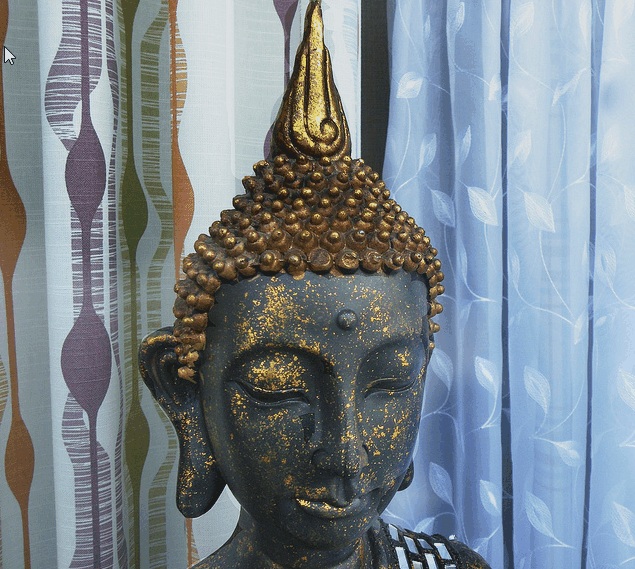
    Buddha

    “We must remember that an apology isn’t an apology unless it’s meaningful.” -Unknown

    An old friend of mine used to apologize almost once during every sentence. If she interrupted me, she apologized. If I interrupted her, she apologized. If she asked me for the time, she apologized. If I tripped on her shoe, she apologized.

    I found this somewhat annoying, and I realized quickly why: I did this, too, and I didn’t enjoy recognizing that.

    I’ve noticed that many of us say we’re sorry when it isn’t actually necessary. In my case, it was mostly a people-pleasing tendency–I wanted to be sure I never mistakenly offended or annoyed someone, so that I wouldn’t lose their approval. But this is only one potential cause for rapid-fire remorse.

    Psychologist Linda Tillman suggests we may do this to fill gaps in awkward social situations, for example, by saying, “I’m sorry, I didn’t hear you,” instead of asking someone to speak up. According to Livestrong, we may do this often around certain people who aim to provoke guilt as a way to manipulate others.

    While we can never know other people’s intentions, we can recognize that our words influence our state of mind–and apologizing when we’ve done nothing wrong needlessly creates guilt and undermines our confidence.

    It can also create an imbalance in our relationships, since it tells other people we think we are always responsible for any potential conflict or miscommunication; and also sends the message that we’re more interested in being agreeable than being honest.

    We don’t need to always agree with each other. We don’t need to always please each other. And we don’t need to always couch it with contrition when we need something from someone else. That doesn’t mean we shouldn’t apologize when we generally feel we’ve done something wrong. It means it would serve us well to recognize that more often than not, there is no reason for anyone to take blame.

    Today if you find yourself apologizing repeatedly, ask yourself, “Did I actually do something wrong?” And if not, “Do I really want to communicate that I think I did?”

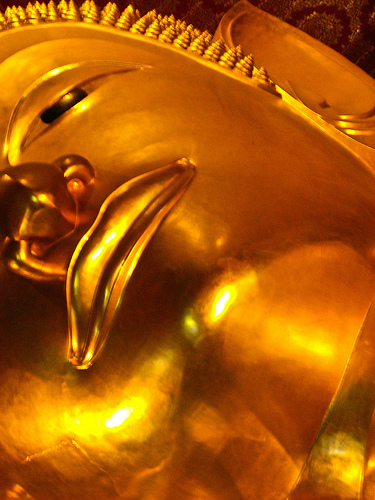
    Buddha image via Shutterstock


  • Tiny Wisdom: How to Say You’re Sorry

    Tiny Wisdom: How to Say You’re Sorry

    “Never ruin an apology with an excuse.” -Kimberly Howard

    Yesterday I wrote about realizing that we don’t need to justify our feelings–but there is another side to that coin: we need to realize that having difficult feelings does not justify poor choices.

    This is something I have often struggled with. Though I have made massive improvements through the years, when I feel overwhelmed by fear, grief, stress, or anything else that hurts, my instinct is often to numb it or do something with it.

    Most times I consciously ignore that instinct and simply sit in the messiness of my emotions. My adolescence and twenties taught me that this is vital to my survival. But sometimes, when I feel especially powerless, I resist.

    That’s what I did yesterday after a doctor gave me some bad news, that may, in fact, be far less scary than it seems. I resisted. And then I went to a restaurant with my boyfriend, where one margarita led to another, and ultimately magnified my emotions.

    I made a bad choice, and then I felt bad about that and the surgery I may need to have.

    I realized after apologizing to my boyfriend that I also needed to apologize to myself. I owed myself an apology for using the severity of my fear to justify an unhealthy choice; and also, for being hard on myself instead of learning from the experience and letting go.

    That’s what a strong apology often does: it allows us to move on.

    So today I apologize to myself with no excuses. I used poor judgment yesterday. It’s humbling to admit it, especially since I know people expect more from me. I expect more from me. I also know this isn’t the most flattering story to share.

    But I am a work-in-progress. We all are. We can never change what we’ve already done, but we can continue to learn and grow if we’re willing to be honest with ourselves.

    Today if you find yourself making excuses for a bad decision, remember: what’s done is done, but you can move on and forgive yourself if you take responsibility and learn.

    Photo by kurisuuu

  • Tiny Wisdom: On Forgiveness

    Tiny Wisdom: On Forgiveness

    “The weak can never forgive. Forgiveness is the attribute of the strong.” ~Mahatma Gandhi

    Someone wronged you. Maybe they treated you thoughtlessly without your feelings or best interests in mind. Or maybe they hurt you with full awareness in a moment of anger orfrustration.

    Your pride’s bruised, and your expectations destroyed. Why should you extend compassion to them when they didn’t offer you the same? Why should you reach out to them when you’re not the one who was wrong?

    You could easily come up with a laundry list of excuses to stay righteous and unyielding. Unfortunately, no one benefits when we fester in anger, bitterness, or negativity—least of all, ourselves.

    It takes tremendous fortitude to acknowledge we all make mistakes and let go of our pain. The alternative is to hold it close to our hearts, where we can feel right and hurt over and over again.

    The Buddha said that, “Holding on to anger is like grasping a hot coal with the intent of throwing it at someone else; you are the one who gets burned.”

    Put this way, it makes a lot of sense. We can’t possibly feel better if we choose to hurt ourselves. And yet it can still be so hard to forgive and move on.

    Psychologists suggest we don’t do anything unless there’s a payoff in doing it. We’re wired to seek pleasure and avoid pain; we’d only cling to a hot coal if we feared a worse pain in dropping it.

    But that’s the thing: We can’t possibly know how it will feel to let go until we muster the strength to do it. We can’t even fathom the transformative and healing power of forgiveness until we challenge ourselves to embrace it.

    Many times, it will be a challenge—perhaps the greatest we’ve ever known. It might take time, and it might require a sense of compassion we don’t feel someone deserves. Regardless, we deserve that relief.

    In giving it to ourselves, we may finally feel the peace to consider that someone else does, as well.

    Not all relationships can be healed, but all pain can transform into healing. That means it’s up to us to decide whether it’s time to let go of the person, or let go of the story that keeps us in anger.

    It’s only in doing what we need to do to forgive that we’re able to set ourselves free.

    Photo by mhaller1979

  • Tiny Wisdom: On Strength

    Tiny Wisdom: On Strength

    “Some people think it’s holding that makes one strong—sometimes it’s letting go.” -Unknown

    Sometimes admitting that something is over can feel like defeat. After all, we hear a lot of messages that tell us to never give up–to hold on and keep fighting at all costs.

    But if you’re honest with yourself, you’ll know when it’s time to move on.

    You’ll know when a relationship no longer serves you, and you’re just staying because you’re too scared to leave. You’ll know when a job no longer makes you happy, but you’re staying because you think it will be hard to find something else. You’ll know when a business idea didn’t work, and it’s time to cut your losses and start the next thing.

    Somewhere inside you, you always know.

    You just have to stop ignoring the symptoms of your awareness or discontent, and decide it’s time to let go–of the relationship, the friendship, the job, the hobby, the idea, the religion, and in some cases, the illusion of something that you never even had to begin with.

    Today if you’re unsure whether you should hold on or let go, create space and stillness and then ask yourself: If you were fully honest about your motivations and needs, and not letting your fear choose for you, which choice would you make?

    Now all you need is the strength to make it. So the real question is: Are you strong enough to choose for your happiness?

    Photo by zedmelody

  • Tiny Wisdom: On Forgiving

    Tiny Wisdom: On Forgiving

    Ocean and Sky

    “To forgive is to set a prisoner free and realize that prisoner was you.” -Lewis B. Smedes

    Nothing hurts more than resentment. When you sit around reliving painful stories, feeling angry and justified, it doesn’t right past wrongs. It doesn’t teach people how to treat you. It doesn’t in any way heal you.

    All anger does is force you to relive a moment that’s come and gone. And all that dwelling can actually cause you emotional and physical disease—stress, anxiety, depression, high blood pressure, stomach ulcers, and even heart attack.

    Every day we have a choice as to what we see in the world, and it starts in where we focus our thoughts. Forgiveness sets you free. It allows you to experience all the kindness in front of you without the weight of the hurtful behind you.

    Only we can open our eyes to what’s good in our today by releasing the bad in yesterday. What do you need to let go of today to create space for peace?

    photo by Atilla1000

  • Tiny Wisdom: On Understanding

    Tiny Wisdom: On Understanding

    “Forgiveness does not change the past, but it does enlarge the future.” ~Paul Boese

    Sometimes resentment and anger may seem involuntary, like reactions you have to indulge for a length of time proportionate to how badly you were wronged. It might even feel like your anger is a justified retaliation, and you’d be weak if you let it go.

    The irony is that after we’ve been hurt, we choose to continue hurting ourselves. Bitterness never feels good, no matter where it’s rooted.

    Psychologists suggest that when other people make mistakes, we tend to assign them character flaws (i.e.: he’s selfish, or she doesn’t care who she hurts) whereas when we make mistakes, we more frequently cite external causes (i.e.: I’ve been overworked, or I haven’t been getting enough sleep.)

    It’s almost as though we’re willing to let ourselves off the hook because we have to live with ourselves, but when it comes to other people we’re quick to condemn and slow to forget.

    You might not be able to forget what happened yesterday, but you can choose not to let it suffocate today. We all have character flaws and we’re all affected by external causes. Today if you have a hard time forgiving, ask yourself this question: do you want to feel bitter or better?

    photo by gautsch.