Category: Confidence

  • Tiny Wisdom: Stop Over-Apologizing

    Tiny Wisdom: Stop Over-Apologizing

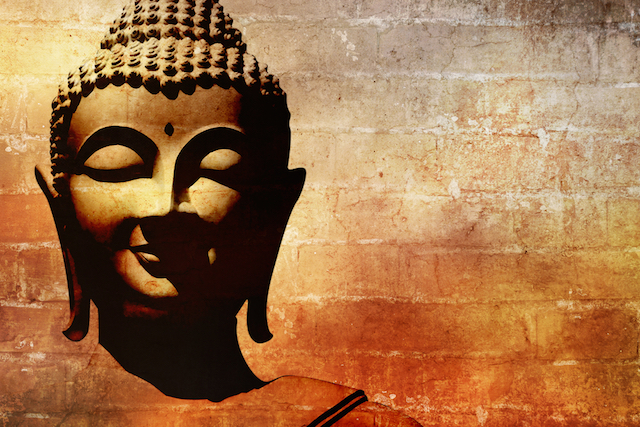
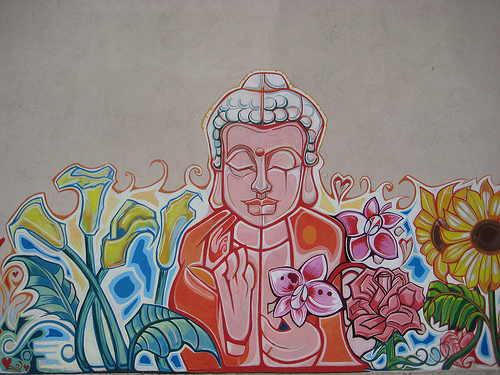
    Buddha

    “We must remember that an apology isn’t an apology unless it’s meaningful.” -Unknown

    An old friend of mine used to apologize almost once during every sentence. If she interrupted me, she apologized. If I interrupted her, she apologized. If she asked me for the time, she apologized. If I tripped on her shoe, she apologized.

    I found this somewhat annoying, and I realized quickly why: I did this, too, and I didn’t enjoy recognizing that.

    I’ve noticed that many of us say we’re sorry when it isn’t actually necessary. In my case, it was mostly a people-pleasing tendency–I wanted to be sure I never mistakenly offended or annoyed someone, so that I wouldn’t lose their approval. But this is only one potential cause for rapid-fire remorse.

    Psychologist Linda Tillman suggests we may do this to fill gaps in awkward social situations, for example, by saying, “I’m sorry, I didn’t hear you,” instead of asking someone to speak up. According to Livestrong, we may do this often around certain people who aim to provoke guilt as a way to manipulate others.

    While we can never know other people’s intentions, we can recognize that our words influence our state of mind–and apologizing when we’ve done nothing wrong needlessly creates guilt and undermines our confidence.

    It can also create an imbalance in our relationships, since it tells other people we think we are always responsible for any potential conflict or miscommunication; and also sends the message that we’re more interested in being agreeable than being honest.

    We don’t need to always agree with each other. We don’t need to always please each other. And we don’t need to always couch it with contrition when we need something from someone else. That doesn’t mean we shouldn’t apologize when we generally feel we’ve done something wrong. It means it would serve us well to recognize that more often than not, there is no reason for anyone to take blame.

    Today if you find yourself apologizing repeatedly, ask yourself, “Did I actually do something wrong?” And if not, “Do I really want to communicate that I think I did?”

    Buddha image via Shutterstock


  • Tiny Wisdom: Stop Justifying Your Feelings

    Tiny Wisdom: Stop Justifying Your Feelings

    “What other people think of me is none of my business.” -Wayne Dyer

    You’re visibly anxious before a performance evaluation, but you don’t want your coworker to think you’re neurotic—so you tell her about everything that’s riding on this promotion.

    You feel subdued at a party, but you don’t want your new girlfriend to think you’re antisocial—so you tell her you have a lot on your mind.

    You feel frazzled after a stressful day at work, but you don’t want your friend to think you’re a negative person—so you tell him it’s highly unlike you to let things get to you this way.

    We often feel the need to justify our feelings, like everyone outside is watching and forming judgments. The truth is they often are. We all watch other people—it’s hard not to; they surround us. And we all judge other people on occasion—it’s often a reflection of how harshly we judge ourselves.

    Knowing these things are inevitable, we’re left with two options:

    • Constantly explain ourselves to preserve how we’d like to be seen, even though we can’t actually control that.
    • Focus instead on feeling and learning from our emotions, since that’s something within our power.

    Instead of pretending you feel fine—and explaining why it may seem otherwise—let yourself feel your emotions to so you can discover what you need to do to move past them. Instead of explaining why you don’t seem perfect, let yourself be human without apologies. We’re all imperfect; why hide it?

    Sometimes it makes sense to explain yourself—when someone misunderstands, or when you hurt someone accidentally. But most often the only person who needs an explanation is you so you can ascertain, accept, and work through whatever is on your mind.

    Today if you’re tempted to justify your emotions, remember: You can’t control what other people think. But if you can accept yourself in this moment, you may discover what you need to do to feel better–instead of just trying to look better.

    Photo by wat suandok

  • Tiny Wisdom: How You Know You’re on the Right Track

    Tiny Wisdom: How You Know You’re on the Right Track

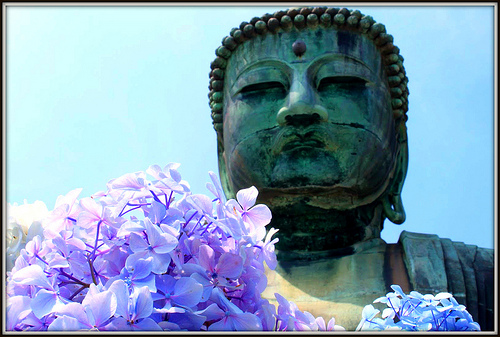
    Buddha

    “If you are never scared, embarrassed, or hurt, it means you never take chances.” -Julia Soul

    If you think you may have made mistakes, you are probably on the right track. That means you’re doing things even though you’re not perfect at them, which is the only way to learn and grow.

    If you think you may have looked stupid, you are probably on the right track. That means you’re letting yourself be vulnerable, which is the only way to fully experience something new.

    If you think you may have said the wrong thing, you are probably on the right track. That means you’re talking to people you don’t feel completely comfortable around, which opens you up to new relationships and possibilities.

    If you think you may have failed, you are probably on the right track. That means you put yourself out there, instead of waiting for the perfect time, which doesn’t actually exist.

    If you think you may have blown your one opportunity, you are probably wrong.

    This is what keeps us from taking risks: the fear that we may somehow suffer for trying and doing poorly. Not just that we’ll experience uncomfortable feelings, but that we’ll ruin our only chance.

    We’ll have countless chances in our lives, if we’re willing to take them. We’ll have limitless possibilities to seize, if we remember all those uncomfortable feelings are worth the possible rewards.

    Today if you find you feel scared, embarrassed, hurt, or vulnerable, remember: feelings eventually fade, but what you create in spite of them can change your life forever.

    Buddha image via Shutterstock
  • Tiny Wisdom: It’s Not All About You

    Tiny Wisdom: It’s Not All About You

    “When you are immune to the opinions and actions of others, you won’t be the victim of needless suffering.” -Miguel Ruiz

    Years back, in a group therapy circle, I met a man who provided an interesting definition for paranoia: It’s when you’re sitting in the bleachers at a football game, watching the players in a huddle, convinced they’re talking about you.

    While I’ve never suspected professional athletes were secretly laughing at me between plays, I have taken responsibility for a lot of things that likely had nothing to do with me.

    Just recently, I emailed a friend of mine from back home, only to question myself when days went by and she didn’t respond. I wondered if I’d somehow written the wrong thing. Or if there was something offensive I’d done previously that I completely forgot about.

    I created all types of needless drama in my head about her opinion of me, when in all reality, it’s highly unlikely her slow response time had anything to do with me. People get busy, and most of us have way too many online accounts to check on a given day.

    Even if her actions did have something to do with me, it was pointless speculate about it. She’d either tell me what was bothering her, or she wouldn’t–and if she didn’t, it was on her, not me.

    I don’t know if it’s possible to be immune to other people’s opinions and actions. Because we value our relationships, we care about what those people think. But there is a difference between respecting what people think and worrying ceaselessly about what they think of us.

    As a recovering people-pleaser, I often need to remind myself that what really matters is what I think of me–and that I’ll think far more of me if I resist the urge to create stories about other people’s actions.

    Today if you start reading into something another person has done and stressing about his opinion of you, remember: There’s a distinct possibility it’s not about you. Until you know, it’s pointless to worry about it.

    Photo by hildgrim

  • Tiny Wisdom: How Criticism Helps You Excel

    Tiny Wisdom: How Criticism Helps You Excel

    “Criticism is something you can easily avoid by saying nothing, doing nothing, and being nothing.” -Aristotle

    No matter what you’re trying to do, someone somewhere has a harsh opinion.

    Maybe it’s a virtual stranger. Since the advent of the Internet, people can easily vent their judgments behind a cloak of anonymity. Most of the world’s successful people have a Google trail laced with negativity.

    Or maybe it’s someone who’s supposed to have faith in you—your father doubts your aptitude for the legal profession, or your friend thinks your singing belongs in the shower.

    Either way, it hurts. And you may lose steam as a result.

    Don’t.

    Barbra Streisand’s mother told her she wasn’t pretty enough to be an actress and her voice was inadequate, to boot.

    Peers criticized Albert Einstein about everything from his looks to his intelligence as a child, yet he grew up to become the father of modern physics.

    Many people in France considered Gustav Eiffel’s tower design an eyesore and wanted it torn down.

    “They” aren’t always right.

    If you come against criticism today, realize it’s a gift. Whether it’s a valid suggestion to help you improve, or a harsh judgment that reminds you to develop a thicker skin, it can help you get closer to your dreams.

    *This is an updated version of a post from September, 2009. Photo by Jen and a Camera.

  • Tiny Wisdom: On Being Openly You

    Tiny Wisdom: On Being Openly You

    “What I am is good enough if I would only be it openly.” -Carl Rogers

    When I was in high school, it was trendy to be “alternative.” It was a time of Green Day, grunge, and wallet chains, and everyone and their brother did their best to blend in by pledging nonconformity.

    It was an ironic time for self-expression–we were unified by our mutual declaration of individuality, underscored by an unspoken need to belong.

    Though it’s been a long time since I wore a thermal shirt with self-cut thumb holes, I still feel tempted on occasion to shapeshift to please people. Generally, the change is subtle–more of a gloss than a mask. Still, it’s a choice that reinforces that I need to be something other than what I am.

    I suspect that if we’re honoring our authentic selves, we will occasionally, and maybe even often, feel rejected.

    We will sense that some people don’t get, understand, or appreciate us for who we really are. It’s inevitable when we’re being our true selves that some people will dislike what they see and judge.

    Perhaps the key to accepting ourselves is accepting that it’s perfectly OK if other people have negative opinions.

    In fact, it’s actually a positive choice to allow other people to think what they will, knowing there are plenty of people who love you, just as you are–and that you are one of those people.

    Today if you feel tempted to censor yourself for fear of not being accepted, remember: It’s better to be judged for something you are than to be accepted for something you’re not.

    Photo by beggs

  • Tiny Wisdom: On Feeling Good

    Tiny Wisdom: On Feeling Good

    “No one can make you feel inferior without your consent.” -Eleanor Roosevelt

    My boyfriend makes me feel unworthy. My mother makes me feel inadequate. My sister makes me inferior. My boss makes me feel incompetent.

    Have you said something like this recently? We all do it sometimes–give our power away to other people as if they have complete control over what we feel.

    For a long time, I believed it was impossible to change how I responded to certain events. If someone said something hurtful, I had no choice but to feel sad and rejected–and it was all their fault. If someone judged me, the only possible response was to feel self-conscious and angry–and it was all their fault.

    I almost felt obligated to feel these things.

    I’d sit around stewing in my instinctive emotional response, rehashing the event and feeling bad about it, as if that was my only choice. Soon I realized that most of my life was one giant negative reaction, mixed with righteousness and blame. If I didn’t start to take responsibility for my feelings, that’s all I’d ever know.

    It’s a whole lot easier to dwell on what someone else did wrong than it is to let go and create a more positive state of mind. Sometimes I still struggle with this–it’s not an easy to skill to master. But as with everything, it gets easier with practice.

    Today if you struggle with uncomfortable feelings and believe someone else is to blame, ask yourself: Would it be worth completely letting go of that story if it allowed you to feel good?

    Photo by Orin Zebest

  • Tiny Wisdom: On Simple Confidence

    Tiny Wisdom: On Simple Confidence

    “Confidence is preparation. Everything else is beyond your control.” -Richard Kline

    People often think confidence means knowing you can create the outcome you desire. To some extent it does, but this idea isn’t universally true for anyone. No matter how talented, smart, or capable you are, you cannot predict or control everything that happens in your life.

    Even confident people lose jobs, relationships, and even their health.

    Confidence comes from knowing your competence but acknowledging it’s not solely responsible for creating your world. When you take that weight off your shoulders and realize that sometimes the twists and turns have nothing to do with what you did or should have done, it’s easier to feel confident in what you bring to the table.

    Today if you feel insecure about something you’re working toward, pull your focus away from the outcome and back to your output. Focus on what you have to offer and how well you can use it. Do your homework, do the legwork, and then know you’re doing everything you possibly can.

    There’s a lot we can’t control in life, but we can know we’re doing our best with the things that are within our control.

    Photo by TimShoesUnited

  • Tiny Wisdom: On Moving Forward

    Tiny Wisdom: On Moving Forward

    “Doing your best means never stop trying.” -Unknown

    For years, I stressed over the possibility that my best was not good enough. I realized that I couldn’t possibly do better than my best, but as a type-A overachiever, this logic wasn’t sufficient permission to feel proud when I put all my heart into something.

    I didn’t want to do my best–I wanted to do the best that anyone could do. I wanted to achieve greatness, as recognized by lots of people. I wanted it to be undeniably true that I was someone worth admiring and respecting.

    What I have since realized is that no one’s admiration and respect will ever feel like enough until I admire and respect myself. And that doesn’t come from obsessing about perfect outcomes–it comes from knowing I am strong enough and brave enough to keep going, even knowing I’ll never be perfect.

    If you are doing something that scares you, know that you are doing your best. If you’re doing something you’ve failed at before, know that you are doing your best. If you are doing something that you feel like you’re failing at now, know that you are doing your best.

    And more importantly, regardless of what you achieve, know that you deserve your own respect and admiration for being a person who is willing to try.

    Photo by retardoricardo

  • Tiny Wisdom: On Living

    Tiny Wisdom: On Living

    “It is not uncommon for people to spend their whole life waiting to start living.” -Eckhart Tolle

    You might not think to compare beloved children’s writer Dr. Seuss to spiritual teacher Eckhart Tolle, but there’s a common message about happiness in both their works: We can only experience joy through action in the now, not by waiting to get it some day, when everything works out and makes sense.

    From Seuss’ Oh the Places You Will Go:

    The Waiting Place…for people just waiting.

    Waiting for a train to go or a bus to come, or a plane to go or the mail to come, or the rain to go or the phone to ring, or the snow to snow or waiting around for a Yes or No or waiting for their hair to grow. Everyone is just waiting.

    Waiting for the fish to bite or waiting for wind to fly a kite or waiting around for Friday night or waiting, perhaps, for their Uncle Jake or a pot to boil, or a Better Break or a string of pearls, or a pair of pants or a wig with curls, or Another Chance. Everyone is just waiting.

    He then writes: No! That’s not for you!

    But I’m going to alter that slightly since we’re all adults now. That very well might be you. I know that it’s been me. I’ve waited for the right time to make a change, the ideal time to tell someone how I feel, the safest time to try something new, and the easiest time to take care of myself.

    The only problem is that it rarely feels right, ideal, safe, or easy. Those words are merely excuses to let the moment slip away. And it does. Over and over again until they have run out.

    This moment is a chance to do something differently, no matter how small it may seem. Every big change starts with one small choice.

    The best way to stop waiting and start living is to decide that life happens now, and to ask yourself: If you knew time was running out, what would you stop waiting to do?

    Photo by scion_cho

  • Tiny Wisdom: On Doubts

    Tiny Wisdom: On Doubts

    “When you doubt your power, you give power to your doubt.” -Honore de Balzac

    When you think that you don’t know, know that somewhere inside you, you do. When you think you can’t go on, know that you absolutely can and will. When you aren’t sure that you can make a difference, know that you already do, and you will continue to if you just keep going.

    It’s not about having all the answers. It’s about how boldly you’re willing to act, knowing full there’s a lot you don’t know.

    Today if you doubt yourself, remember: You are far more powerful than you think. You just need to believe it.

    Photo by Accidental Beauty Photography

  • Tiny Wisdom: On Creating

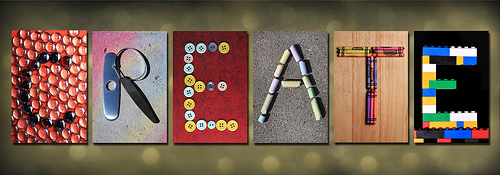
    Tiny Wisdom: On Creating

    “Creativity is inventing, experimenting, growing, taking risks, breaking rules, making mistakes, and having fun.” -Mary Lou Cook

    To be fully alive is to always be creating, whether it’s love, joy, connection, purpose, passion, or possibilities. What are you creating today?

    Photo by gfpeck

  • Tiny Wisdom: On What We Believe

    Tiny Wisdom: On What We Believe

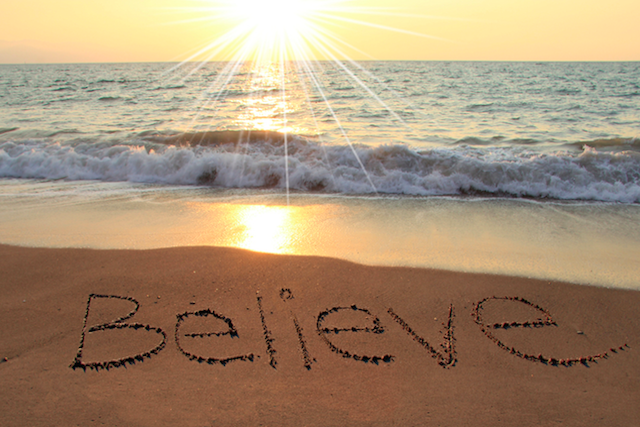
    Believe

    “The future belongs to those who believe in the beauty of their dreams.” ~Eleanor Roosevelt

    Today I used the Twitter search functionality, looking for the phrase, “I believe in.” Here’s what I found:

    “I believe in love.”

    “I believe in magic.”

    “There must be another way because I believe in taking chances.”

    “I believe in people like me.”

    “I believe in life itself.”

    “I believe in dreams and that we control our destiny through our actions.”

    “I believe in the sun even if it isn’t shining.”

    “I believe in the words ‘never say never.’”

    There’s something kind of beautiful about watching affirmations of life stream down the page, one after the other, from people all over the world. Our beliefs shape everything we see, try, risk, and create.

    Our beliefs shape who are and who we might become.

    I believe love can transform almost anything. I believe in possibilities. I believe in impossibilities that suddenly don’t look that way anymore. I believe that it’s never over until it’s over. And I believe that every moment is a new opportunity to change your life.

    What do you believe in?

    Believe image via Shutterstock
  • Tiny Wisdom: On Being Fully What You Are

    Tiny Wisdom: On Being Fully What You Are

    “By accepting yourself and being fully what you are, your presence can make others happy.” ~Jane Roberts

    I suspect we all want permission to be exactly who we are—to accept ourselves instead of feeling unsure of ourselves, and then somehow find a balance between being and improving.

    When we see someone else who appears to do that, despite their weaknesses and flaws, it’s immensely inspiring and gratifying. Why? Because we all want to believe that even if we can be better, there’s nothing wrong with being exactly who we are.

    Yet only we can give that feeling to ourselves. No one else can validate us, support us, love us, inspire us, or motivate us to believe that we are enough. If we can find that magical feeling of being okay with being, we can give so much to the world around us, whether we realize it or not, because everyone wants to let themselves relax and simply be.

    Today if you question yourself, doubt yourself, or otherwise feel down on yourself, remember: everyone does, but the moment when one of us finds the courage to stand strong, it has a ripple effect on everyone else. The question remains: which ones of us will be brave enough to love who we are today?

    Photo by Eddi van W

  • Tiny Wisdom: On Risks

    Tiny Wisdom: On Risks

    “It’s not because things are difficult that we dare not venture. It’s because we dare not venture that they are difficult.” ~Seneca

    Taking the path of least resistance actually requires a lot of resistance. It’s human nature to want to soar! To venture out, explore the world, expand ourselves and our minds and live with passion, enthusiasm, and abandon.

    You might be doing that already, whatever that means to you. Or you may be containing yourself into a safe, predictable box, assuming everything outside it is far beyond your reach.

    It’s not—it’s not nearly as far away as you think.

    We’d be kidding ourselves if we pretended the world is without obstacles; but we’d be cheating ourselves if we didn’t acknowledge a lot of them are in our heads.

    Today, dare beyond your self-imposed limitations. It’s a lot easier to venture out of your comfort zone when you decide to stop fighting yourself.

    Photo by Wonderlane