Category: Change

  • Tiny Wisdom: The Same, But Different

    Tiny Wisdom: The Same, But Different

    “What you do today is important, because you are exchanging a day of your life for it.” -Unknown

    My boyfriend, who is an aspiring screenwriter, has told me that the film industry and moviegoers essentially want “the same, but different.”

    We want the same themes, but with different people; the same humor, but in different circumstances.

    We want to see good rewarded, and for love to conquer all; we want the hero to change for the better, and the villain to reap what he sows.

    We want action, excitement, adventure, and romance; we want to feel terrified and then relieved; we want to doubt and then believe.

    We want to see people fall and survive—struggle and thrive. We want to feel the full spectrum of emotions, from low to high. We want to be moved, inspired, and maybe even in some small way, changed.

    In the real world there are no happy endings, since we’re perpetually in the middle—and often, there’s gravity where filmmakers would insert levity, and unfairness where they would create justice.

    Still, this is all very similar to life: from one day to the next, it’s often the same, but different.

    We experience fears, insecurities, and emotions that we’ve known and felt for years. We deal with challenges that seem so familiar they may even seem like a part of us.

    We might make mistakes we’ve made many times before. We might come against the same resistance we’ve been battling all our lives.

    We may repeat the same patterns in relationships that we’ve known since we were young. And we may find ourselves receiving guidance that seems like nothing new.

    And yet it’s always new. It’s always different. Even if the days are similar, we come to each one totally new people.

    We come to our struggles with new insights. We come to each other with new understanding. And we come to each moment with new potential to be that hero—to make a different choice, to change for the better.

    Sometimes it can seem like nothing ever changes and nothing ever will. But everything changes, in tiny shifts, every day. The real question is whether or not we’ll recognize the tiny shifts within us and act on what we feel.

    Regardless of our circumstances, we always have a choice. We can choose more of the same; or we can recognize this moment is different—and that we can be, too.

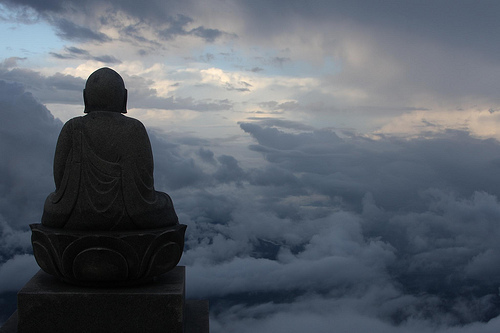
    Photo by malfet_
  • Tiny Wisdom: Plant Tiny Seeds for Joy

    Tiny Wisdom: Plant Tiny Seeds for Joy

    “The grass is always greener where you water it.” –Unknown

    The first time I heard the phrase “the grass is always greener on the other side,” I was 12 years old—and I heard it in song.

    I didn’t know at the time that this was from the play Woman of the Year, because two women in my theater group sang it as part of a musical review. Still, it made a deep impression on me.

    One of the characters is a housewife, and the other is a famous TV news personality—and yet they both feel certain they’re missing out on amazing experiences because of the lifestyle they’ve chosen.

    The celebrity sings, “I can see you planning picnics. That’s wonderful!”

    The housewife responds, “What’s so wonderful? Eating at the White House! That’s wonderful!”

    And the song goes on like this, with two women comparing their lives, and assuming the other has it better.

    Back then, I felt painfully envious of my sister, who frequently won starring roles and also had a boyfriend. It didn’t occur to me that focusing on everything she had wasn’t a proactive way to create the life I wanted.

    Comparing my talent to hers didn’t help me land any roles. It just made me feel inadequate—which showed in my auditions. Comparing my looks to hers didn’t help me feel better about myself. It just made me feel unattractive—which showed in the way I carried myself.

    I also didn’t realize her life wasn’t perfect, and she had plenty of her own challenges.

    I’ve since learned that there is always going to be someone else who appears to have everything we want, especially in the digital age, where many of us narrate all the fun we’re having through updates, photos, and videos online.

    But we tend to overestimate other people’s happiness and forget that in every life, there is a little sunshine and a little rain.

    No matter how perfect someone else’s life seems, they still have their own struggles. And they still deal with the natural human instinct to wonder what else is out there, and if there’s something else they should be doing.

    We can either focus on other people’s perceived good fortune, or focus our energy on recognizing and fostering our own.

    We do that by planting tiny seeds for joy, and then watering them with our attention.

    What seeds will you plant today?

    Photo by onecog2many

  • Tiny Wisdom: Take This Moment and Start Anew

    Tiny Wisdom: Take This Moment and Start Anew

    “Many fine things can be done in a day if you don’t always make that day tomorrow.” -Unknown

    When I was younger, an adult I was staying with told me, “The diet starts tomorrow. Let’s eat everything we can before midnight.”

    So we did. We ate grilled cheeses, leftover Chinese food, Twinkies, and anything else that called to us from her cabinets.

    It was then or never, that was the message, and tomorrow would be different—which of course it wasn’t.

    For years, I started each morning intending to make healthy choices, and then after failing to meet my perfectionist standards, decided to turn over a new leaf the following day.

    I justified chain smoking by telling myself I’d quit tomorrow. I allowed myself to remain inert by rationalizing that the day was “ruined” because I missed my morning workout.

    It was impossible to make big change because I always had an excuse to avoid making different choices.

    I eventually gave up Marlboros and binge fests, but I still deal with all-or-nothing thinking at times, particularly when it comes to leaving my comfort zone—and if I’m not careful, it can be paralyzing.

    Perhaps you can relate. Maybe you’ve rationalized that you’ll start dieting after the holidays, instead of cutting back just a little starting now. Or maybe you’ve put off looking for more fulfilling work, assuming it would be easier next week, next month, or next year, when you feel less frustrated or overwhelmed.

    We delude ourselves when we rationalize that tomorrow we’ll excel at what we aren’t willing to start today. We may never feel fully prepared or confident when it comes to our ability to change—and that’s okay, so long as we’re willing to try, starting now.

    That means accepting we may not do things perfectly.

    We may feel like we’re making progress and then fear we’re right where we started. More likely, we will have taken two steps forward and one step back—which means we are moving forward.

    I don’t believe that life is short; most of us will have abundant opportunities to experience all this world has to offer. Whether or not we actually do that is largely dependent on how we spend our time.

    We can sabotage our days by imagining tomorrow will be better; or we can seize our moments by forgiving ourselves when we struggle and doing the best we can right now.

    Photo by zedmelody

  • Tiny Wisdom: How Far We’ve Come

    Tiny Wisdom: How Far We’ve Come

    “Always concentrate on how far you’ve come, rather than how far you have left to go.” -Unknown

    Though I write a lot about mindfulness, focusing on here and now, I think there’s something empowering about looking back and realizing how far we’ve come. I’m not just talking about our big accomplishments. I’m referring to the many tiny personal victories we often achieve without taking time to honor them.

    The other day, after I arrived at my local coffee shop to work, my computer died. No battery, no power from the cord, no explanation—and no backed up files.

    I have an entire unpublished book in my saved documents. Forget for a minute how foolish it was to not have saved this somewhere else. (I know!)

    What mattered to me in that moment was that I did not freak out. I did not catastrophize as if it were a person I love who died, not just a computer. I didn’t need someone else to drive me to Office Max so I could have a panic attack in the passenger seat. At one point, I would have.

    Once upon a time, when anything went wrong, I fell apart.

    Responding calmly, for me, is a huge victory. So I decided to stop and celebrate that, to rejoice in how far I’ve come.

    Life is always going to entail challenges, both expected and unforeseen. We can choose to measure our progress based on the circumstances we’ve improved—the benchmarks, the goals, the professional successes. There’s nothing wrong with recognizing the big external changes we’ve created.

    But we can also celebrate our many personal successes—those times when we respond better and more wisely to a difficult situation than we would have years ago—and in doing so increase our odds of finding a solution.

    My computer wasn’t completely dead. It turns out the battery and the cord both need to be replaced. There was a solution, but I was prepared to accept and deal if there wasn’t one, instead of getting down on myself.

    So today I honor how far I’ve come in maintaining my composure when things go wrong. In what area of your life have you made significant progress, and have you taken time recently to celebrate it?

    Photo by Jan Kromer

  • Tiny Wisdom: The Beauty of Starting Over

    Tiny Wisdom: The Beauty of Starting Over

    “Celebrate endings, for they precede new beginnings.” -Jonathan Lockwood Huie

    Yesterday I spent more than an hour writing something I intended to publish today—and then I lost it. Since I hadn’t slept much the night before, I wasn’t completely attentive and somehow, I must have closed out the Word document before I titled or saved it.

    That same exhaustion made it somewhat difficult to communicate my thoughts clearly when writing. But I did—after an hour, I’d expressed everything I wanted to share. Then it was gone.

    Initially, I considered rewriting the post, and trying to remember exactly what I’d written before. Then I decided that maybe the lesson was to let go and start anew.

    In college, teachers and peers had to fight me to change even one word in my writing, let alone a full sentence. When they did get me to edit, I’d likely only change a small portion, without allowing that new train of thought to further shape the entire piece.

    I was stubbornly attached to every first draft. After putting so much thought and effort into it, I was afraid that making changes would be like picking thread on a sweater—the whole thing would unravel and I would be left with nothing. I would essentially have to start over.

    I eventually realized this tendency translated into my everyday life. Once I set a goal, I was afraid to revise it—even if it became clear that was no longer what I wanted—because I was afraid to start over.

    Once I got into a new relationship, I was afraid to walk away from it—even if wasn’t healthy or satisfying—because I was afraid I’d have to start over.

    Ironically, I wasted a lot of time clinging to things that had run their course simply to avoid feeling like I’d wasted time.

    It’s human nature to get attached when we’ve invested a lot of time in something. But an investment is only as valuable as its return—meaning we owe it to ourselves to recognize when we can get a better one by wiping the slate clean and starting over.

    Letting go can feel like a loss. That’s because it is. But every loss paves the way for a gain, if we’re willing to receive it. Every time we let something go, we open ourselves up to something better.

    Photo by beggs

  • Tiny Wisdom: Not Choosing Is a Choice

    Tiny Wisdom: Not Choosing Is a Choice

    “When you have to make a choice and don’t make it, that is in itself a choice.” -William James

    “I don’t know—what do you think?”

    Recently I find myself asking this when my boyfriend asks what I want to do—what movie I want to see, where I want to eat, or how I’d like to spend an off-day.

    At first I thought this was just a residual people-pleasing tendency from a time when I measured my worth in approval. But when I look at this more closely, I realize it’s actually about relinquishing the tiny decisions, since inevitably there are lots of large ones that I simply have to make.

    Every day we make countless choices that affect our lives in major ways. Do we stay with a job or take a risk and follow our dreams? Do we tell someone how we feel, or do we wait for a better time?

    Then there are the decisions we make by making no choice at all—when we remain in a relationship that we really want to end, or we stay in a location even though our heart’s pulling us somewhere else.

    Life is a constant stream of choices. That can be overwhelming and sometimes downright exhausting—if we put pressure on every decision, in fear of doing the wrong thing, or making a choice and then somehow missing out because of it.

    These big life choices may seem completely divorced from the tiny decisions we make about how we spend our time, but it all comes down to the same question: Do we want to take responsibility for now?

    We’re the only ones who can identify what we want and then do something about it, whether it’s what we do with our evenings, what we do with our vacations, or even what we do with our lives.

    We can see this as something stressful, and wait it out, hoping someone or something else will tell us what’s the best course of action. Or we can tune into what we want in any given moment, knowing that no matter how things turn out, we will be happy for finding the strength to follow our instincts and choose.

    Photo by David Offf

  • Tiny Wisdom: The Myth of the After Picture

    Tiny Wisdom: The Myth of the After Picture

    “Life is a process of becoming. A combination of states we have to go through. Where people fail is that they wish to elect a state and remain in it. This is a kind of death.” -Anais Nin

    It’s a seductive image—the idea of when you “get there.” What you’ll look like when you lose the weight. How your life will change when you achieve success. How everything will improve when you’re finally happy.

    I first began chasing “after pictures” when I was a chubby 12 year old kid. I was convinced that slim felt like peace, and I found lots of photographic confirmation—particularly in advertisements.

    I remember buying 7 mammoth bottles of weight loss juice for $100. The “before” picture in the ad didn’t just show a larger woman; she also had messy hair, a disheveled appearance, and an overall air of despair.

    The woman in the “after picture,” however, seemed to have everything together. It was like she’d arrived at perfect, and now there was nothing that hurt. I wanted that. I wanted permanently better.

    Years later, when I recognized I was attaching to “someday” to avoid being in today, I unintentionally shifted to another “after picture”—the day when I’d become perfectly present. It was the same self-rejection, just disguised as something spiritual.

    I now realize the “after picture” is an illusion, as it pertains to weight loss, success, enlightenment, or anything else we think is permanent happiness. And it’s not because we can’t make major changes in our lives. It’s because even when we do, we are constantly transforming and evolving, inside and out.

    Our bodies are constantly changing—even if we’re healthy, our weight fluctuates at least a little, and we inevitably age.

    Our minds are constantly changing—we learn, unlearn, and then relearn over and over again as we discover more about ourselves and the world.

    Our feelings are constantly changing. We hurt, we’re humbled, we heal, we’re strengthened, and then we do it all over again, because that’s what it means to be human.

    Not only is there nowhere to get to, there is nowhere we will stay. There is just the choice of this moment: to be present and comfortable in our skin, to forgive ourselves if we struggle, and to remember that as long as we’re breathing, there is always a new opportunity to choose.


    Photo by iBrotha

  • Tiny Wisdom: All Is Never Lost

    Tiny Wisdom: All Is Never Lost

    “In this world of change, nothing which comes stays, and nothing which goes is lost.” -Anne Sophie Swetchine

    I used to make a wish whenever it turned 11:11. It was something I started doing with friends in high school, and I kept doing it in college, a time when I depended on magical thinking to get me through difficult days.

    I remember when my first long-term relationship ended, after three tumultuous years. I felt like I lost a part of me—the best part, to be more specific. My saving grace was the hope that we’d eventually get back together, if only I never gave up.

    Night after night, at 11:11, I’d wish that he’d come back. I don’t know if I really believed this would influence what happened, but it made me feel a little less powerless. Ironically, every time I expressed this longing, it was like adding another two-ton link to the chain that kept me stuck.

    One night, out of nowhere, I wished for happiness instead.

    While I recognize that wishing for happiness and creating it are two different things, this was an epiphany for me. Suddenly, I realized that what I really wanted wasn’t my old relationship. I wanted to feel good, and until that moment I assumed I needed to be in that relationship to do that.

    I thought I’d lost my chance. I hadn’t—I just lost that one possibility.

    There’s something incredibly empowering about realizing that what we really want doesn’t require us to cling to specific people and things—that we can experience the feelings we want over and over again in different relationships and circumstances.

    Suddenly, the world seems more expansive and individual losses seem less catastrophic, because we know that no matter what, all is not lost. We can and will feel happy again.

    Instinctively, we are going to get comfortable with the people and situations we love. And we’re going to want to fight for them. That’s not necessarily a bad thing. It keeps us passionately committed to who and what we believe matters.

    But loss is undeniable part of life. Embracing that means realizing that every time we let go, we make room for something else. All is never lost.

    Photo by mbstock

  • Tiny Wisdom: Addicted to Change

    Tiny Wisdom: Addicted to Change

    “You change your life by changing your heart.” -John Porter

    I’m addicted to new and different.

    I’ve been like this all my life. In my mid-20s, I toured the United States with marketing companies, in large part because everything was always new.

    New cities. New work venues. New yoga studios. New restaurants. New hotels. New beds. New people. And I thought, a new me in each new environment.

    It felt much easier to be present in my daily life when my surroundings and circumstances were constantly changing.

    If ever there was something that weighed on me, I could metaphorically leave it behind with the heap of towels on the bathroom floor. If I ever did something I wasn’t proud of, I could release my negative feelings like exhaust from my rental car as I fled one town for another.

    I thought of this the other day I explored my new apartment community, where my boyfriend and I will move at the end of the month. This is my seventh home since moving to California four years ago.

    In my defense, I’d had valid reasons for changing apartments each time—from moving closer to work, to downsizing, to cohabitating. But there’s no denying the excitement I’d felt with each massive change.

    Change can be seductive, particularly if you’re hurting, or feeling frustrated, and looking for a distraction.

    Change can create the illusion of progress where really there’s just resistance to doing what actually needs to be done.

    Like sticking with a solid plan. Or sitting in the discomfort of an emotion. Or working on a strained relationship. Or challenging an instinctive response. Or recognizing what you really want to change, in your situation or in yourself.

    It’s a big world out there, and there’s a lot to see, explore, and enjoy. It never benefits us to stagnate in a routine that’s only holding us back. But sometimes we need to ask ourselves: Do I really want big change, or is there some greater need underneath it?

    Photo by iBrotha

  • Tiny Wisdom: Being Self-Aware and Minimizing Drama

    Tiny Wisdom: Being Self-Aware and Minimizing Drama

    “Our greatness lies not so much in being able to remake the world as being able to remake ourselves.” -Gandhi

    This past weekend, I took a break from writing at Starbucks to visit the nearby Fall Festival, which featured a petting zoo, face painting, and food samples.

    This is one of my favorite events because it encompasses many things I love, including farm animals, giddy children, and food on toothpicks (yes, that’s in my list of favorite things).

    Much to my excitement, I saw there was also a large makeover event set up in the vicinity. Since I had time, I decided to get in line—except there wasn’t one. It was more like a group of women positioned haphazardly in front of the two stylists.

    So I asked one of the women, “Are you in line?”

    Her response caught me off guard, because she snapped kind of defensively, “Yes. This is the line. Behind me—I’ve been waiting!”

    Instinctively, I felt annoyed. I’d asked to be considerate, but I gathered it didn’t come across that way.

    I realized then that I often feel angry when I have positive intentions that others don’t seem to receive as such; and I can easily get frustrated when I sense hostility that I feel I “don’t deserve.”

    Sometimes, because of that, I take things personally that simply aren’t personal—and also aren’t a big deal.

    While this was a brief encounter with little significance in the grand scheme of things, it got me thinking about the importance of self-awareness.

    So often in life, we feel things that have little to do with what’s actually happening and everything to do with the stories we’re telling ourselves in our head—stories that involve assumption, blame, and defensiveness.

    But we don’t have to fall victim to our instinctive emotional reactions. At any time, we can stop, assess what’s going on in our heads, and decide to respond a little more wisely based on what we know about ourselves.

    Today if you feel yourself getting all worked up over something that isn’t a big deal, ask yourself, “What can I learn about myself that will help me going forward?”

    Photo by Melissa Gray

  • Tiny Wisdom: The Benefits of Slow Progress

    Tiny Wisdom: The Benefits of Slow Progress

    “It is better to take many small steps in the right direction than to make a great leap forward only to stumble backward.” ~Proverb

    Sometimes it can be challenging to operate with complete integrity in business—particularly because bigger and faster can be seductive.

    Case in point: I have a strong aversion to many traditional marketing methods, as I find much of it to be psychologically manipulative.

    I feel it’s wrong to sell people things by playing to their deepest fears and insecurities, and implying my book or product will be the magic bullet they’ve been waiting for all their lives.

    I also feel uncomfortable with the idea of personal branding, since a brand is an idea or image of a product or service, and human beings are neither of those things. We may sell products or offer services, but we are not commodities—even if consumers often buy based on who is selling to them.

    But statistically, products and books presented as ultimate solutions, by individuals with polished personas generally sell better.

    Now you might not hold the exact same perspective as I do, but you likely have your own set of beliefs and values that inform the decisions you make professionally—and they may occasionally hinder your progress.

    When we act in complete integrity, we often end up advancing at a slower pace.

    I remember when I was 23, knee-deep in a corrupt multi-level marketing company, oblivious to my team’s unethical practices. Everything changed the day I heard our leader suggest we look for “ignorance on fire”—new recruits who never questioned, but merely plowed straight ahead on the path of most profitability.

    Thinking and questioning can slow progress—but maybe slow progress is exactly what we need. Slow progress allows us to adapt as necessary, learn at each step of the journey, and ensure that we’re honoring our ideals and actual desires, instead of pushing ourselves blindly in the pursuit of success.

    I realize this idea isn’t universally applicable. When it comes to advancements that save lives, I absolutely support rapid progress. They couldn’t possibly come out with cures for cancer fast enough.

    But when it comes to our own personal goals and ambitions, sometimes the most satisfying results come from a slow but steady journey with unwavering commitment to what we believe is right.

    Photo by Akuppa

  • Tiny Wisdom: We Get to Decide if Today Counts

    Tiny Wisdom: We Get to Decide if Today Counts

    “The future is completely open, and we are writing it moment to moment.” -Pema Chodron

    A while back, a reader commented that it’s easy for me to suggest tomorrow is full of possibilities, since I am relatively young. An older woman, she believed her options were far more limited, and that even if she could do the things she wanted to do, they wouldn’t count–not at her age.

    My first instinct was to start a conversation about mindfulness, since no one is ever guaranteed more than the present. Even young people don’t know for certain that they have decades more to live, so all we can ever really do is use this moment well.

    But then I thought about her comment about the future not counting.

    I interpreted this to mean she couldn’t enjoy the rest of her days because she felt they would somehow be defined by the “wasted” ones that had passed–like a smile wouldn’t be as joyful as it could be because there were fewer than she wanted before it, or helping someone wouldn’t be as meaningful as it could be because it wouldn’t contribute to a lifelong legacy.

    It seemed like she felt that life had passed her by, even though it was still going. I could relate to that feeling. I’ve wasted many days worrying about the days I thought I wasted. It’s a vicious cycle, and it only stops when we decide to use the present to the best of our ability.

    If we worry about everything we wish we did, or could do with our lives, we will miss out on the opportunity to really live them–right here and right now. Regardless of our age, we all have two things in common: we get to decide whether or not we think this moment matters; and we get to decide what exactly it means to make it count.

    The present is completely open, and we are living it, right now. What do you want to make of it?

    Photo by Two Roses

  • Tiny Wisdom: When You’re Not Sure If You’ve Changed

    Tiny Wisdom: When You’re Not Sure If You’ve Changed

    “Change is not a process for the impatient.” -Barbara Reinhold

    A while back, a Tiny Buddha contributor commented that she was feeling like a fraud for struggling to take advice she’d offered in an article. I told her I could relate. I’ve written more than 600 wisdom-themed blog posts over the past few years, meaning there is abundant potential for me to contradict something I’ve previously explored in my writing.

    Sometimes when I am not mindful, or kind, or stress-free, or clearly happier and more peaceful than I once was, I start to wonder if I’ve even changed at all. My black-and-white thinking kicks in, and I question my growth all because of one moment of weakness or struggle (or sometimes, two or three).

    Then I remind myself: Change isn’t something that happens in an instant and then makes everything permanently different. Change is a moment-to-moment choice.

    Inevitably, we’ll make poor choices from time to time. Occasionally, we’ll fail to do the things we know are good for us. Or we’ll give advice to someone else and then struggle to follow it. Or we’ll fall back into ways of being that we thought we’d abandoned for good.

    In those moments, we can beat ourselves up for being imperfect, or we can be kind to ourselves, increasing our odds of making positive choices in the moments to follow.

    I don’t know about you, but I find it a lot easier to let go of a difficult moment and get back on track when I accept that struggle is inevitable, and then forgive myself when it happens.

    We will never feel happy with ourselves if we pressure ourselves to do everything perfectly, because that just isn’t possible. It is possible, however, to choose change more often than not–to strive every day for more positive choices than negative ones so that we never let one setback devalue all our progress and potential.

    Today, if you start wondering if you’ve even changed at all, remember: What really matters is what you choose to do right now.

    Photo by antwerpenR

  • Tiny Wisdom: On Changing How You See Problems

    Tiny Wisdom: On Changing How You See Problems

    “If you don’t like something change it; if you can’t change it, change the way you think about it.” -Mary Engelbreit

    In a recent response to my blog post about dealing with difficult people, an anonymous commenter mentioned that she has a negative team member, an irrational supervisor, and an ineffective HR manager. Since she feels that leaving her job isn’t an option, she asked for advice about what she should do.

    I could relate to that feeling of being stuck–when you’re in a situation you don’t like, but you feel powerless to change it.

    When I’ve been in those circumstances, the last thing I wanted to hear was that I should change my perceptions and responses. After all, other people were causing problems–why should I have to change?

    In fact, I spent years stubbornly fighting with people who I thought were in the wrong. Because I felt confident in my judgments–that they needed to be more considerate, or less abrasive, or whatever–I essentially justified a negative attitude by bemoaning their negativity.

    Instead of actively seeking workable solutions, I sat around complaining about how other people caused the problems.

    In doing so, I became the problem. The victim mentality was the problem. My stubborn righteousness was the problem. These were the things that were keeping me stuck–not what other people did.

    We’re going to feel powerless sometimes. Sometimes we’ll have to stay with difficult roommates, even if just temporarily. Sometimes we’ll need to work thankless jobs just to make ends meet. We can either fight what is, or choose to see opportunities within it.

    Today if you feel stuck in a situation you don’t love, ask yourself: Do I have the power to change this, and, if not, how can I respond positively and proactively in a way that can help me grow?

    Photo by Mark Mrwizard

  • Tiny Wisdom: On Creating Change

    Tiny Wisdom: On Creating Change

    “To get something you never had, you  have to do something you never did.” -Unknown

    There’s a reason we often take the path most traveled: Seeing all the footprints on the well-trodden road creates the illusion of certainty, especially when many are your own.

    When it’s familiar,  it feels safe. You know what’s at the end; you’ve been there before. You know how to get there, so you don’t need to pay too much attention to your steps or the details along the way. You can just kind of put yourself on auto-pilot and go.

    But there’s something kind of ironic about living on auto-pilot.

    We generally do the things we’ve always done because they require less mental effort; you know what’s around you, so you don’t need to worry as much. But instinctively, we still find things to stress about. Even if we follow the path that feels comfortable, we generally end up thinking about the possibility of things we can’t control. There are always things we can’t control. Nothing is ever certain.

    If you inevitably need to embrace the discomfort of knowing the future is uncertain, why not choose the discomfort that might push you one inch closer to the possibilities you dream about?

    Why not reach out to someone you admire, or go to that event you’re scared to attend, or pitch that idea you’re afraid isn’t great? Life is bound to be messy and occasionally scary. Why not actively choose your changes, instead of waiting for them to choose you?

    Today as you go about your day, if you find yourself doing what you’ve always done, ask yourself: What would make me feel excited about today? Then do it. That tingling sense of fear and possibility–it’s the feeling of being alive.

    Photo by C.Davenby

  • Tiny Wisdom: On Helping Yourself

    Tiny Wisdom: On Helping Yourself

    “The best place to find a helping hand is at the end of your own arm.” ~Swedish Proverb

    Helping yourself is telling people what you need, even though you’re afraid to acknowledge it.

    It’s forgiving yourself for your mistakes, even though you feel like dwelling.

    It’s taking responsibility for your problems, even though someone else may have played a large part in them.

    It’s breaking a problem into tiny, manageable pieces, even though you feel overwhelmed.

    It’s living in accordance with your values, even when they stand in the way of something you think you want.

    It’s allowing yourself to dream, and then focusing on creating instead of arriving.

    Every one of these choices enables you to help yourself. And when you make the effort to help yourself, you can better help other people—and the world.

    What do you need to do to help yourself today, and can you start right now?


  • Tiny Wisdom: On Getting Un-stuck

    Tiny Wisdom: On Getting Un-stuck

    “What you are is what you have been. What you’ll be is what you do now.” -Buddha

    We all have goals–things we’d like to accomplish and ideas of who we’d like to become through the process. But sometimes we get so bogged down in fears and self-doubt that it’s hard to commit to the changes we want to create and then work toward them consistently.

    It’s not easy to do. When you’re faced with obstacles, you might get stuck. When you feel unmotivated or unsure, you might get stuck. When your goal seems too far out of reach, you might get stuck.

    And you can stay stuck if you want to. You can get sidetracked by other people’s opinions. You can talk yourself out of what you want, fearing failure or maybe even fearing success. You can limit yourself with stories of things that didn’t work out in the past.

    Or you can let go of everything that’s paralyzing you and decide that you’re not willing to let the now slip away and rob you of possibilities.

    Tomorrow has limitless potential if you’re willing to act today. It may even become something better than you knew to imagine, but it can only happen if you start and keep going.

    What tiny actions can you take today to contribute to that vision you want to create?

    Buddha nature

    This is an updated version of a post published on 9/14/2009. Photo by AlicePopkorn.

  • Tiny Wisdom: On Constant Change

    Tiny Wisdom: On Constant Change

    “When you’re finished changing, you’re finished.” -Benjamin Franklin

    A few years back, I reconnected with an old friend from high school. Years after we met, we both struggled with depression and dealt with messy, public recoveries.

    He said that seeing me was disheartening because I seemed like an after picture, whereas he felt like he had so much more work to do.

    While I recognized that I had come a long way, I knew he formed this conclusion partly because he wasn’t seeing a complete picture. He was seeing confidence and a smile within an isolated moment in time and assuming this was a static final destination.

    The truth was (and is) that I am not done changing and I will never be. None of us will. We will never feel like we have arrived and there is nothing left to learn, challenge, or change.

    In a world where transformation sells–and sells well–it’s easy to believe that there will be a point in time when everything gets good and stays that way, but happiness is not about arriving. It’s about accepting that the journey is endless, and that it is not only OK but beautiful to have more room to grow.

    Today if you’re feeling frustrated about a change you’ve been struggling to make, remind yourself: Happiness is not where you’re headed; it’s being good to yourself on the way there.

    Photo by chatzle

  • Tiny Wisdom: On Being Who You Want to Be

    Tiny Wisdom: On Being Who You Want to Be

    “It is never too late to be what you might have been.” -George Eliot

    I’ve talked to a lot of people who say that this is a lot easier to believe when you’re young–that it’s near impossible to believe anything is possible when there appears to be a lot less time left.

    But do we ever really know how much time we have? When we’re young, we’re not as conscious of our mortality and the unpredictability of life, but that doesn’t mean we’re immune from unexpected hardships. It just means that we don’t yet know to focus on them.

    The truth is that we change our mindset at any time. At any moment, we can focus solely on the experience of today, and decide that we deserve the joy and fulfillment of doing precisely what we want to do.

    On any day, we can stop fixating on the ticking clock that we can’t possibly control, and make this day count, regardless of what we’ve done on the days that have passed.

    We are the only people who can decide that we are not powerless, and we are the only people who can use our power to make today count.

    Who do you want to be today?

    Photo by Wonderlane

  • Tiny Wisdom: On Why We Change

    Tiny Wisdom: On Why We Change

    “You change for two reasons: Either you learn enough that you want to, or you’ve been hurt enough that you have to.” -Unknown

    What are you waiting for?

    Photo by Mary Sherman