Author: Lori Deschene

  • Forget Yourself

    Forget Yourself

    Hugging

    “When someone receives us with open-hearted, non-judging, intensely interested listening, our spirits expand.” ~Sue Patton Theole

    Whether you’re talking to your mother or your coworker, odds are you don’t always give your complete attention, without formulating thoughts of your own. Even the most Zen person sometimes waits to talk instead of really listening.

    It happens all the time.

    As your sister recounts her afternoon and the hassle she encountered at the DMV, you feel the temptation to interrupt and one-up her—your afternoon was even crazier.

    While your boyfriend tells you about his interview, you half-listen and half prepare your own monologue, entitled My Long Day at the Office.

    And let’s not forget your daughter’s after-school recap, when it takes everything inside you to not finish her sentence, rush her to the point, and start doling out chores. Without realizing it, you’ve given a subtle cue she doesn’t deserve your time and full attention. (more…)

  • 8 Ways to Stay Present & Focused in a Tech-Driven World

    8 Ways to Stay Present & Focused in a Tech-Driven World

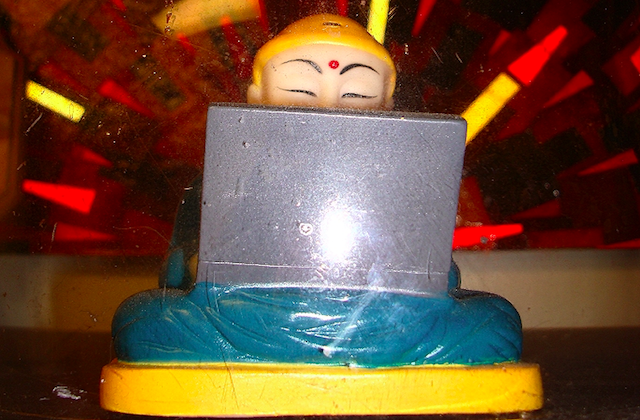
    Buddha on a Computer

    “Be present. It is the only thing that matters.” ~Peaceful Warrior

    Technology pervades our world. From cell phones and laptops to iPods and digital cameras, the average person owns an arsenal of gadgets that, in many ways, simplify life.

    You can increase your productivity, connect with people quickly, and access information instantaneously—while documenting your every move via tweets and photos to upload to Twitpic or Facebook.

    Which begs the question: At what point does technology stop enhancing life and start detracting from it?

    When you feel tied to your phone and enslaved by your email, can you pull away, center, and take a tech-vacay outside the shadow of your laptop?

    Does it stress you out to disconnect in an always-on world where everything moves at the speed of light?

    And lastly, do the people in your life suspend their sense of urgency long enough to allow you a break?

    The technology itself is not to blame; just like guns don’t cause violence, gadgets don’t obliterate our mindfulness. We’re in control of the tools we use. Still, it isn’t easy to stay present and focused in a world that’s always plugged in—and to every available outlet.

    The possibility of mindfulness underlies almost everything we publish at Tiny Buddha in an attempt to harness technology for personal growth and wisdom. With this in mind, I couldn’t be more delighted to learn about the Wisdom 2.0 Conference, which will take place this month in Mountain View, California.

    Soren Gordhamer, who wrote a book also called Wisdom 2.0, has secured some amazing speakers, who each have their own unique perspectives on wisdom in the tech age. Twitter, Facebook, and Google will all have a presence, not to mention Yoga Journal, Whole Foods, and a number of wellness-focused organizations.

    While meeting with Soren last week to discuss the event and my possible involvement, I thought of some ideas to stay present in a world dominated by gadgets. Here’s what I came up with: (more…)

  • Look Longer

    Look Longer

    Eye

    “Could a greater miracle take place than for us to look through each other’s eyes for a minute?” ~Henry David Thoreau

    You’re riding on the subway, immersed in a book. You’re running in the park, lost in your iPod. You’re waiting in line at Starbucks, fixated on the menu.

    Sometimes we act like we’re completely alone, even when  surrounded by lots of people. It’s like we’re following an unspoken rule that suggests we shouldn’t look at each other, at least not for too long.

    It happens all the time…

    You suddenly make eye contact with someone you don’t know and your discomfort compels you to avert your eyes. If you do manage a smile it’s probably perfunctory, without real joy and affection behind it. Those are emotions you reserve for people you  know—people you’re more intimate with.

    Some studies have indicated people who live in cities are less apt to make eye contact with strangers than people who live in suburbs. This may be a response to crowding; when you feel you don’t have enough personal space, you’re more protective of it.

    If there’s truth to that hypothesis, it’s somewhat ironic. You move to a city to experience the life that pulsates through it, and then respond by shutting down in everyday situations.

    Resist the urge to shutdown. Instead of walking with your eyes glued to your feet, hold your head high and connect with people. Really see them and let them see you. If you’re not a confident person, connecting for more than one second may feel incredibly difficult. Just try. (more…)

  • 7 Ways to Get Past Tough Situations Quickly

    7 Ways to Get Past Tough Situations Quickly

    Smiling in the Rain

    “Life is 10% what happens to you and 90% how you respond to it.” -Charles Swindoll

    One day everything seems great in your world—maybe not perfect, but overall things are going to plan. And then something happens.

    You lose your job, or someone you love, or your home, or maybe even your health.

    It isn’t fair. You don’t deserve it. You didn’t see it coming. You didn’t plan for it. You have so many feelings and frustrations you don’t know what to do first, or if you want to do anything at all.

    It would be easier to sit around feeling bad, looking for people to blame and complain to, rehashing what you could have done to make things happen differently. Or what you would have done if you only realized before. Or what other people should have done to help you.

    All great options if you want to maximize your misery and feel justified in doing it. Not so great if what you want is to deal and move on.

    You have to do this eventually when something bad happens, and the faster you do it, the sooner you’ll improve your situation.

    There is no shortage of opportunities to practice dealing well. If you’d like to work on improving the 90% of life that is how you respond, you may find these tips helpful: (more…)

  • How to Let Go and Embrace an Uncertain Future

    How to Let Go and Embrace an Uncertain Future

    “Uncertainty is the only certainty there is, and knowing how to live with insecurity is the only security.” ~John Allen Paulos

    I used to love uncertainty. I wandered my way all around this country with little more than a suitcase and a journal. Committing to anything felt limiting, suffocating even.

    One day I realized it wasn’t enlightenment that pushed me to embrace the unknown; it was a paralyzing fear of creating something certain. You can’t disappoint people when you don’t form relationships with them, and you can’t fail when you never start.

    One day I decided to do the scariest things I could imagine: settle into one place, get a steady job, and start forming real relationships.

    This lasted for a while until the economic meltdown rocked my world. Now I’m back in a place of uncertainty, like so many other people.

    Almost everyone I know has had to make at least a few changes to their life because of the economy. People have lost their jobs, homes, and in some cases, their sense of identity.

    It’s both terrifying and exciting to have a blank page in front of you. Sometimes we need reminders to see it as the latter.

    Here’s how I’m learning to let go without losing what I felt I’ve gained these past few years: (more…)

  • Stop Doing

    Stop Doing

    Relaxation

    “The only Zen you find on tops of mountains is the Zen you bring up there.” ~Robert M. Persig

    We live in a fast-paced, achievement-oriented society. At the end of a busy, to-do-list-focused day, we often find ourselves mentally and physically exhausted and uncertain whether we’re actually moving in the right direction in “the pursuit of happiness.”

    Perhaps this explains our fascination with all things Zen. It’s become a buzzword in pop culture, branding products that have little to do with peace and enlightenment—and oftentimes, represent ideas that are diametrically opposed.

    Zen Dharma Teacher Rev. Lynn “Jnana” Sipe takes an interesting look at Zen in titles in print publications, on all topics from automobiles to music. Some notable titles include: Engine Zen, The Zen of Contractor Relations, and Zen and the Art of Propane Safety.

    Then there’s the vast world of products branded with Zen: tea, candles, rakes, fans, stones, books, eye masks, pillows, fountains, wind chimes, bath products, incense, oils, and home décor. All intended to soothe our harried minds. It’s ironic that their acquisition requires more doing and earning—and possibly more stress. (more…)

  • 5 Pieces of Advice That Aren’t Cliches

    5 Pieces of Advice That Aren’t Cliches

    Advice

    “It is easy when we are in prosperity to give advice to the afflicted.” ~Aeschylus

    Earlier this year I got some feedback from the ‘tween magazine I wrote for: “It sounds like good advice, but kids probably won’t do any of that.”

    In my head it all sounded logical but I didn’t consider whether I’d have taken that advice as a kid. Or now, for that matter.

    People do it all the time: look at a situation from a removed, non-emotional place and hurl suggestions that are far easier said than done. And sometimes, just plain unrealistic.

    I’ve listed five of these hard-to-follow, cliché pieces of advice, along with alternative suggestions you may actually be inclined to take. (more…)

  • 10 Tips to Balance Self-Interest & Sacrifice for a Wonderful Life

    10 Tips to Balance Self-Interest & Sacrifice for a Wonderful Life

    George Bailey

    “It’s really important to be able to receive love and receive compassion. It is as important as being able to give it.” ~Pema Chodron

    Yesterday morning two of the correspondents on the news in Boston (where I’m home for the holidays) had an interesting conversation about the classic It’s a Wonderful Life.

    One of them said he’s not a big fan of the movie, which instilled a sense of complete outrage in me.

    How dare he take George Bailey’s name in vain! It’s such an inspirational film! From saving Harry’s life to finding Zuzu’s petals, every scene gets my little heart aflutter with renewed hope in our ability to make a difference and find happiness.

    When the initial offense faded, I listened to what clearly-heartless news guy was saying—and he actually had a point.

    The main character, George Bailey, sacrificed everything he wanted in life for the people around him. If he continued to operate in a constant state of self-sacrifice, he’d likely always have regrets where other men have dreams.

    And why should he not have the chance, at some point, to feel satisfaction that isn’t hinged upon having saved someone else’s life?

    At the end of the movie he receives the ultimate assurance that his life is best lived with everyone else’s interests before his own: a party where he receives all the gratitude and admiration he clearly felt had been lacking prior.

    The implication seems to be that he should continue on this path because everyone’s life would have fallen apart if he didn’t come to their rescue.

    The movie critique got me thinking about the sacrifices we make for other people. If you know me, you may find it off that I, ever the eternal optimist, have chosen to dissect the act of selflessness right before a holiday that often inspires it.

    This is precisely why I have.

    Holidays generally bring out the best in people. When we pull out the tear jerkers that remind us people care and miracles happen, we’re motivated to be the change we want to see in the world. To express and show our feelings. To care in action.

    But what’s more important than an epiphany shouted from a balcony on Christmas morning is an understanding of healthy giving—both to others and ourselves—that’s sustainable all year long.

    I, for one, would find this information invaluable, as I’m somewhat of a George Bailey, ever willing to consider someone else’s feelings and interests before my own.

    On some level it’s because I want to be kind, but often I’m motivated by the desire to feel important and useful. Or to please other people. Or even to avoid facing my own needs.

    If you can relate on any level, consider these reasons to find a balance between doing for others and yourself:

    Too much sacrifice can harm relationships.

    According to Ted Hagen, PhD, “The give and take between two people creates mutual respect. It strengthens a relationship.”

    Excessive giving can create internal resentment.

    If you continually put everyone else first, you may eventually resent everyone for expecting so much of you, when in all reality, you had the choice to give less at any time.

    Sacrificing is not always helpful.

    We often give because we think it’s the right thing to do, but sometimes it’s just plain not. People (children especially) need to learn to take care of themselves and to accept the world won’t always meet their every wish, whim, and need.

    To truly give yourself, you need to take care of yourself.

    Your daily car ride may make someone’s life easier, but your bond as a healthy, happy person is far more valuable. You can only offer that if you take care of your own needs, as well.

    WonderfulLife2

    We all deserve a life that involves doing and resisting, and giving and taking, and being selfish and selfless at times. I recommend the following steps to find a balance with all of the above:

    1. Identify your current give/take ratio.

    If you’d like to find a balance you have to know how off-balance you currently are. Is it fifty-fifty? Or seventy-thirty?

    2. Establish your reason for imbalance.

    Are you overextending yourself to feel powerful? Or to please everyone? You need to figure this out to address the next part.

    3. Find an alternative plan.

    If your goal is to feel powerful and helpful, start mentoring a child on the weekend. If you’d like to be well-liked, nurture qualities and skills that attract people to you—other than your tendency to say yes. This is a far better approach to gaining respect anyway.

    4. Take a piece of the pie.

    You can’t give everyone in your life 100%, so you likely give your parents, friends, and significant other a percentage of your energy. Consider a piece of that your own, and honor that in your choices.

    5. Think of taking as another form of giving.

    Everything you get from giving, the people who love you will get the same if you give them a chance to reciprocate. Why not allow them the opportunity to feel helpful and important, too?

    6. Take a drama-free look at your relationships.

    Do some people take more than give? The goal isn’t to blame, attack, or make yourself a victim, but rather to establish which relationships need to change.

    7. Make attempts to repair unbalanced relationships.

    If the give/take ratio is off-kilter, you need to address this, either by asking for what you need when you need it or initiating a constructive conversation. If the bond is worth saving, the other person will be at least a little receptive.

    8. Make a habit of expressing your needs.

    People won’t always anticipate them and step up to the plate, even if you operate that way. If you state your expectations, it will be easier for people to meet them. (Trust that they’ll want to! That’s how healthy relationships work.)

    9. Check in without an even-Steven philosophy.

    You don’t need to keep an internal scorecard of how much people are doing for you, but you should feel that, on the whole, they’re there for you physically and emotionally as much as you’re there for them.

    10. Ask yourself, “Would I need a George Bailey moment of gratitude and admiration to justify all I’ve sacrificed?”

    If the answer is yes, you know you’re not living a completely fulfilling life—one in which you look out for yourself, and honor your wants and needs as much as other people’s.

    This makes now the perfect time to ask yourself: How can I accept where the choices I’ve made have taken me, but make more balanced choices from here on out for a truly wonderful life?

    Photo by mrlerone.

  • 5 Ways to Make a Big Difference in Someone’s Day

    5 Ways to Make a Big Difference in Someone’s Day

    Holding Hands

    “Act as if what you do makes a difference. It does.” ~William James

    There’s this saying I used to love that doesn’t resonate with me anymore:

    “Go big or go home.”

    I understand the allure of doing big things.

    Life seems more meaningful when you’re pursuing a passion that could feasibly improve life for masses of people; and at the end of the day, most of us want to create a legacy—something that lives on beyond our own ripple-in-the-ocean life spans.

    I’m not arguing the benefits of going big if that’s what you want to do, especially since I have a few big plans of my own. But there are a couple of implications here I would like to debunk:

    If you’re playing small, you’re not playing smart.

    Wrong. Determine what makes you happy and gives you a sense of purpose, and then live it, whether that means finding a cure for cancer or finding your son’s favorite toy for the fifteenth time in a day.

    Play by your own rules, no one else’s. (more…)

  • 50 Ways to Show You Care Without Spending a Dime

    50 Ways to Show You Care Without Spending a Dime

    “Friendship isn’t a big thing. It’s a million little things.” ~Unknown

    This hasn’t been an extravagant holiday season for me. Like everyone and their mother, I lost a lot of income last year and I just don’t have the means to give expensive presents.

    Yet I feel I’ve received a lot of gifts this year. Most notably, I’ve realized how many of the people in my life mean more to me than any of the things I’m trying to accomplish.

    The friends and family members whose love and support far eclipse the achievement of any goals I set. The people who are my home, whether I can afford a pricey apartment or not.

    I’ve come up with fifty ways to show them how much I care within my current means.

    If you’re looking for a few meaningful gifts that don’t require a debit card, you may find these creative ideas helpful this season: (more…)

  • Start Late

    Start Late

    Time

    “It is never too late. Even if you are going to die tomorrow, keep yourself straight and clear and be a happy human being today.” ~Lama Yeshe

    There’s a common misconception that there comes a point when it’s too late to do things you want to do. Maybe one of these statements sounds familiar to you:

    “I can’t become a designer. I’m far too old to change my career path.”

    “I’ll never get married. It’s too late in the game for that.”

    “I couldn’t possibly start yoga. That’s for people much younger than me.”

    We choose arbitrary windows of time when we imagine we should have tried something and then believe it’s not possible once those days have past.

    The saddest part of this way of thinking is that we’re generally right. Not because it can’t be done, but because we can only do what we believe we can.

    If you don’t think it’s possible to begin a new profession, you won’t take a training course, send out resumes, or make the connections you need to succeed. (more…)

  • 10 Questions to Ask Yourself Before Giving Up on Your Dream

    10 Questions to Ask Yourself Before Giving Up on Your Dream

    “Commitment in the face of conflict produces character.” ~Unknown

    We all face obstacles in pursuing our goals, whether they’re professional or personal.

    We think we’re on the right track but realize we’ve chosen the wrong approach. We’re enthusiastic and hard-working, but our support system disintegrates when we need them the most. We’re just about to make significant progress when we run out of time or funding.

    Tenacious as we may be, we all have our breaking points—that moment when the potential rewards stop justifying the effort. Usually, that’s the hump that separates your best shot and your best reality.

    Before you throw in the towel and go back to something safe and far less taxing, ask yourself the following questions:

    1. Why did you want to pursue this goal to begin with, and has anything changed?

    You had a good reason for committing to this plan. Maybe you visualized a financially free future once you started this new business, or you realized you’d live longer and healthier if you lost forty pounds.

    Odds are, you still want those things as much as you did before; you just stopped believing you could have them because your attempts have yet to yield results. Now you have to ask yourself: If you push through the discomfort, will it be worth it in the end?

    2. Have you been operating with too much information?

    With so much information at our fingertips on the good ole World Wide Web, it’s easy to overwhelm yourself with more knowledge than you can apply. You read e-books and blogs, participate in teleconferences and coaching sessions, and join user forums to talk about getting things done.
    One of two things happen as a result: You spend more time planning to act than acting, or you devote minimal energy to multiple plans instead of committing to one solid approach. Instead of drowning in all the data, why not narrow it down and start again from a less overwhelming space?

    3. Did you set a smart goal? SMART goals are:

    • Specific—you know exactly what your world will look like when you achieve this goal.
    • Measurable—you have a specific plan to mark your progress as you go.
    • Attainable—you have the attitude and aptitude to make your goal reality.
    • Realistic—you’re willing and able to do the required work.
    • Time-bound—you’ve set a concrete timeframe for completion to create a sense of urgency.

    If you didn’t set a SMART goal, you may have set yourself up for failure. How can you possibly make something happen if you don’t know exactly what you want, or didn’t really believe you could do it? Are you really willing to walk away when you didn’t give yourself every opportunity to succeed?

    4. What’s the worst that will happen if you keep going and don’t reach your goal?

    Often when I want to turn around it’s because I’m afraid of failing—afraid other people will be disappointed in me or judge me, or afraid I’ll have wasted my time. In all reality, no one ever judges us like we judge ourselves, and we always grow and learn through the process of striving, regardless of what we attain.

    If you don’t keep going, you’ll never know how far you could have gone and you’ll miss out on being the person you’d become through the effort itself. If you do keep going, well, it’s like this quote: “Shoot for the moon, for even if you miss you’ll land among the stars.”

    5. Are you afraid of succeeding?

    One of my biggest problems is that I don’t like responsibility. There are many things I’d like to do, but I resist because I don’t want the power to impact, hurt, or disappoint other people. That doesn’t mean that I don’t have dreams. It’s just that I’m just scared of what achieving them will entail.

    If you can relate to this feeling, perhaps you’ll respond well to the mantra I’ve been repeating: Great power comes with great responsibility, but it also brings great rewards. If you play it safe you won’t hurt or disappoint anyone, but you also won’t help or inspire anyone. And equally important, you won’t help or inspire yourself.

    6. Are you acting on impulse or emotion instead of thinking things through?

    Sometimes our emotions give us hints about what we want and what we should do, but other times they’re just responses to stress, and maybe even indications we’re on the right track. If you act in that moment of intense emotion—be it anger, fear, or frustration—you may regret it once the wave has passed.

    So sit back. Take note of what you’re feeling. Feel it fully, without judging it or yourself. Then act when you’ve gotten to the other side. At least then you’ll know you made your decision in a moment of peace and clarity.

    7. Would you enjoy giving a loved one the honest explanation for why you gave up?

    And I mean honest.

    Would you like telling your daughter, “I stopped trying to quit smoking because cigarettes are more important to me than having more golden years to spend with you?”

    Would it be fun to tell your mother “I decided not to go to school because I’d rather spend all my time with my boyfriend of three months than prepare for a career that will ensure I won’t end up jobless and homeless?”

    If you lay it out like this, odds are you’ll realize you had a really good reason for doing this difficult thing, and no matter how challenging the process is, it’s worth plowing ahead.

    8. Would your life be better if you gave up on this goal?

    This may not sound motivational, but sometimes giving up is actually good thing. Perhaps you set a completely unrealistic goal and the pursuit of it is filling you with a constant sense of inadequacy and anxiety. Or maybe the goal isn’t in your or your family’s best interest, and it’s better to get out before you invest so much time it’s near impossible to walk away.

    You could easily use this as a justification to delude yourself, so think about it carefully. Is this goal really a good thing, when you weigh all the consequences of its fulfillment?

    9. How much have you already put in?

    A concept studied in social psychology called “the sunk cost principle” indicates the more we’ve invested in something, the less likely we are to prematurely walk away.

    How invested are you? How much money and time have you devoted? How many sacrifices have you made? Are you really willing to chalk it all up as a loss because you’re not feeling confident in your abilities?

    10. What would you tell someone else if they were in your shoes?

    Would you tell your best friend to throw in the towel because she can’t possibly reach her goal? Or would you practice your finest motivational speech and help her see what you see in her potential? Unless you’re secretly a frenemy who hopes she fails in life, odds are you’d push her to be her best—so why not push yourself?

    It may sound kind of cheesy, but you need to be your own best friend. You, more than anyone in this world, deserve your belief and motivation.

    If you’ve gone through all these questions and still feel resolute about the decision to give up, you have my blessing to abandon your goal. (Bet you feel so relieved!)

    If you don’t—if there’s some lingering doubt—keep working toward that dream that fills you with passion.

    Take a different approach if you need to. Enlist new assistance. Scale back your time commitment to something you can more easily maintain. But whatever you do, don’t give yourself a reason to one day utter the words, “I quit because I was scared.”

  • Un-side for a While

    Un-side for a While

    Choosing Sides

    “When you live on a round planet, there’s no choosing sides.” ~Wayne Dyer

    Research shows that rooting for a team, identifying with a group and enjoying the camaraderie you feel with other fans, can increase your sense of personal happiness.

    While it’s satisfying to feel a sense of belonging, it can be dangerous to carry this us-against-them philosophy into other areas of your life. We do it all the time.

    A man connects so deeply to his heritage that he puts up walls with people from different backgrounds.

    Or a woman believes something with so much conviction that people who disagree become immediate adversaries.

    In this way, we shut ourselves into little boxes of people and relate to everyone else as outsiders. The Dalai Lama says we don’t need to give up our sense of belonging to communities; we just have to recognize various levels—the highest connecting us by a fundamental human bond.

    So, rather than relating to others based on what makes us different, we relate based on what characteristics we share.

    If there’s one common theme on this site, and in Buddhism, in general, it’s that people aren’t all that different. We all want to feel good and purposeful. We all want to avoid feeling pain.

    Ironically, it’s painful to see other people as sitting on the other side, believing or expecting the worst in them, holding up a guard, ever-ready for an attack. (more…)

  • Connect Without Complaining

    Connect Without Complaining

    rose

    “Instead of complaining the rose bush is full of thorns, be happy the thorn bush has roses.”~Proverb

    Complaining can be a bonding experience.

    You meet up with your friends after work and immediately start rehashing frustrations with your boss. You have dinner with your siblings and commiserate about confrontations with your black-sheep uncle. Or you release tension on a blind date by noticing the wait staff’s shortcomings.

    Commiserating is a great way to immediately establish rapport. In that moment you feel connected—you  both have grievances, problems, and wishes for a better world.

    It’s even easier to do in a challenging economy, where anxiety is de rigueur. In one study of complaining in a group situation, subjects averaged fifty expressions of dissatisfaction per hour—close to one complaint per minute.

    But, despite your initial bonding experience, complaining does more harm than good.

    According to Will Bowen, author of A Complaint Free World, complaining exacerbates individual and collective problems because our thoughts create our world. In focusing on everything that’s wrong, we create a world dominated by those ideas.

    Stopping that cycle isn’t easy because you can’t dictate how other people will behave. If they continue to vent and you refuse to engage, your whole social dynamic will start to shift, right? Maybe not. (more…)

  • Choose to Lose

    Choose to Lose

    Two Friends

    “Being right is highly overrated. Even a stopped clock is right twice a day.” ~Unknown

    We all know someone who always needs to be right.

    She turns everything into an argument worthy of a courtroom, complete with counter arguments and below-the-belt accusations. She finds holes in everything you say, even if you were actually agreeing with her. And in the end she needs the last word, even if means belittling you or ignoring your feelings.

    Not everyone acts this righteous all the time, but we’ve likely all tried to win in an argument at least once before.

    Maybe it’s the rush of feeling like the more powerful or intelligent person, or perhaps it’s just a stubborn resistance to bending. Whatever the case, we all play to win in conversations on occasion.

    The irony here is that winning rarely feels as sweet as the fighter imagines it will. Research shows competitve people take less pleasure in their successes than their less combative counter parts because they’re rarely satisfied with their accomplishments, ever-ready to seek the next win. (more…)

  • 5 Rules for Life

    5 Rules for Life

    5-rules-for-life

    Jumping

    When I first sat down to write this piece for 5 Rules for Life, I wrote “Live without rules” five times, each followed by a reason to keep your approach to life flexible.

    The way you live is largely a reflection of where you’ve been, who you’ve been, and the beliefs you’ve formed. Who am I to create a cookie-cutter hard-and-fast code that makes sense for everyone?

    That’s when I realized I’d need to make a sixth rule to introduce these ideas: judge my words, and anyone else’s, against your own reason and moral code.

    Buddha said, “Believe nothing, no matter where you read it, or who said it, no matter if I have said it, unless it agrees with your own reason and common sense.”

    The Dalai Lama echoed that sentiment with, “The ultimate authority must always rest with the individual’s own reason and critical analysis.”

    Be critical. I invite it. These ideas help me, and they may or may not help you.

    With that, I give you five guidelines that have helped me feel happy, fulfilled, and meaningful: (more…)

  • Assume the Best

    Assume the Best

    Smiling

    “We must never assume that which is incapable of proof.” ~Unknown

    You can never truly know someone else’s intentions.

    If a coworker offers to cover your shift, she may be trying to ease your stress—or she could be vying for your job. If your sister-in-law offers to pay for your meal, she may want to help you out during tough times—of she could be trying to remind you that you’re inferior.

    You can always find a negative assumption that allows you to believe the worst in people. Or you can give that person the benefit of the doubt and believe they have your best interests at heart.

    When you assume someone is being kind and not selfish, you may occasionally be wrong, but for the most part you’ll feel appreciative and peaceful with the people in your life. The alternative is to believe people are bad, seek and find proof everywhere, and walk around feeling bitter and critical.

    When you have no proof, it’s a judgment call: assume the best and feel good and grateful, or assume the worst and feel bad and suspicious. (more…)

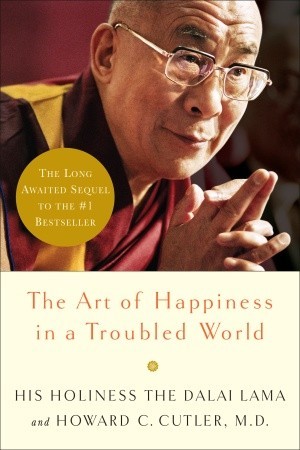
  • Review and Giveaway: The Art of Happiness in a Troubled World

    Review and Giveaway: The Art of Happiness in a Troubled World

    The Art of Happiness in a Troubled WorldUpdate: The winners have already been chosen for this giveaway:

    • Cynthia Atkins
    • Kevin Costillo
    • Tracey Sullivan
    • Stephanie (@Omgitsafox)
    • Brenda Sue

    Is it possible to be happy in a world marred by prejudice, violence, and global disharmony—in a time when people often feel isolated from their communities, even in the most heavily populated places?

    That’s the main question presented in The Art of Happiness in a Troubled World; and the answer is a resounding yes.

    The fourteenth Dalai Lama has known tremendous adversity in his lifetime—having been exiled from his homeland of Tibet when communist China invaded in 1959—and yet he still believes that human nature is intrinsically good.

    But that’s not the crux of The Art of Happiness; it’s far more than just Buddhist wisdom.

    The book follows a series of conversations between psychiatrist Dr. Howard C. Cutler and His Holiness, creating a guideline for happiness that reflects eastern philosophy without ignoring western reality. (more…)

  • 40 Ways to Let Go and Feel Less Pain

    40 Ways to Let Go and Feel Less Pain

    “If you let go a little, you will have a little peace. If you let go a lot, you will have a lot of peace.” ~Ajahn Chah

    Eckhart Tolle believes we create and maintain problems because they give us a sense of identity. Perhaps this explains why we often hold onto our pain far beyond its ability to serve us.

    We replay past mistakes over and over again in our head, allowing feelings of shame and regret to shape our actions in the present. We cling to frustration and worry about the future, as if the act of fixation somehow gives us power. We hold stress in our minds and bodies, potentially creating serious health issues, and accept that state of tension as the norm.

    Though it may sound simple, Ajahn Chah’s advice speaks volumes.

    There will never be a time when life is simple. There will always be time to practice accepting that. Every moment is a chance to let go and feel peaceful. Here are some ways to get started: (more…)

  • Let Go

    Let Go

    Balloon in the Sky

    Some people think it’s holding on that makes one strong—sometimes it’s letting go.” ~Unknown

    Maybe your life doesn’t look like you want it but you’re not sure how to change it or even if you can, so you feel hopeless, frustrated, and even a little bitter.

    Or maybe someone hurt you so deeply that you don’t know if you can trust them anymore, so you feel angry, defensive, and indignant.

    Every day we can find a million and one reasons to feel discouraged, or incompetent, or vulnerable, or harried—all things that hurt when we hold them inside like a tight fist we refuse to unclench. And yet we do it anyway.

    Until we decide to stop. (more…)