Author: Lori Deschene

  • How to Let Go of a Past Relationship: 10 Steps to Move On Peacefully

    How to Let Go of a Past Relationship: 10 Steps to Move On Peacefully

    “The amount of happiness that you have depends on the amount of freedom you have in your heart.” ~Thich Nhat Hanh

    Nine years ago my heart was in a million little pieces that formed the basis for a million regrets.

    I had my first serious relationship in college, when all my insecurities came to a head. My ex-boyfriend had to juggle multiple roles, from therapist to cheerleader to babysitter.

    The whole relationship revolved around holding me up. I realized this soon after it ended—that I’d spent three years expecting someone else to love me when I didn’t love myself. The guilt and shame kept me single for almost a decade.

    I dated, but it was always casual. I’d start getting close to someone and then find a way to sabotage it.

    Long after I let go of the man, feelings about the relationship held me back. I was afraid of being vulnerable. I was afraid of being hurt. But mostly I was afraid of hurting someone else again and having to live with that.

    If you’ve been holding onto an old relationship, now is the perfect time to let go. Here’s how you can start moving on. (more…)

  • 8 Ways to Be More Confident: Live the Life of Your Dreams

    8 Ways to Be More Confident: Live the Life of Your Dreams

    “With realization of one’s own potential & self confidence in one’s ability, one can build a better world.” ~Dalai Lama

    For the vast majority of my life I didn’t believe I could do most of the things I wanted to do.

    I knew I wanted to be in a relationship, but I feared that if I got into one I’d do something to mess it up.

    I wanted to perform on Broadway, but even moving to New York City didn’t give me the courage to audition.

    I wanted to be a writer, but I thought it was far too difficult to get published and therefore didn’t even try until my late twenties.

    Maybe you’ve never been as unsure of yourself as I used to be, but you can likely relate to that feeling of wanting to do something but feeling terrified to start. This not only limits your potential in life; it also minimizes your ability to make a positive impact on the world around you.

    There’s a lot that goes into overcoming those fears. You may need to challenge limiting beliefs formed years ago, or take yourself out of a situation where other people undermine your abilities. One thing that will definitely help is working on your confidence.

    Not sure if confidence can be learned? I asked this question on the Tiny Buddha Facebook page to see what readers had to say and then used some of their responses to shape the steps outlined below: (more…)

  • 9 Ways to Get Better Sleep and Prevent Exhaustion

    9 Ways to Get Better Sleep and Prevent Exhaustion

    Sleeping

    “A good rest is half the work.” ~Proverb

    I don’t always do everything I know I should do.

    I know I can only do so much, yet I often feel compelled to say yes to every exciting project that comes my way, even if it means working more than is ideal.

    I know I shouldn’t over-stimulate my mind at night, yet I frequently postpone shut-eye for just a little more writing time.

    I know I shouldn’t worry about things I can’t control, but sometimes as I lay in bed I go over and over the same thoughts and concerns in my head.

    And then there’s the whole eight-hours-of-sleep-a-night thing. I know it’s ideal for my well-being and that it probably won’t happen if I’m overworked, overstimulated, or caught up in over-thinking.

    But sometimes I set myself up for exhaustion because sleep rarely seems like a priority. Not when there’s stuff to do, stuff to learn, or stuff to think about.

    I know I’m not alone in my battle with the bed.

    According to a 2009 National Sleep Foundation survey, the number of people reporting sleep problems has increased by 13% since 2001. Two out of every ten Americans sleep less than six hours per night.

    Most of them are less effective at work, less alert when driving, and more susceptible to sickness as a result. (more…)

  • Tiny Wisdom: On Starting Anew

    Tiny Wisdom: On Starting Anew

    New Day

    “No matter how hard the past, you can always begin again.” ~Buddha

    One of the greatest misconceptions in life is that we are somehow powerless to let go of what’s behind us. That we have to carry regret, shame, or disappointment, and that is has to dictate how today will unfold, at least on some level.

    It doesn’t. At any moment, you can let go of who you’ve been and decide to be someone new—to do something differently. It won’t always be easy, but it is always a choice you can make.

    You can either dwell and stay stuck, or let go and feel free. Give yourself space to fill with good feelings about the beautiful day in front of you—and the beautiful tomorrow you’re now creating.

    Photo here

  • Book Review & Giveaway: You Cannot Be Serious (Tips for Balance)

    Book Review & Giveaway: You Cannot Be Serious (Tips for Balance)

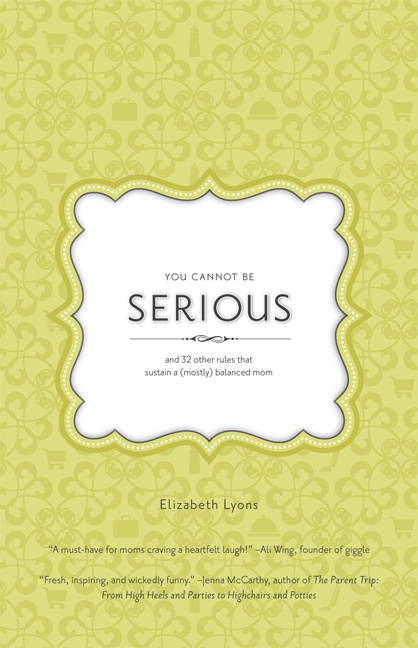
    You Cannot Be SeriousUpdate: The winners for this giveaway have already been chosen:

    • Laurie from Cuddle Hugs
    • Cyndi from So Much More Than a Mom

    I have the utmost respect for mothers.

    Their daily lives require an aptitude for all the qualities that make us good people: love, kindness, patience, generosity, and, perhaps most importantly, a sense of balance. If anyone knows chaos, it’s a mom.

    With this in mind, I was thrilled to read Elizabeth Lyons’ book You Cannot Be Serious and 32 Other Rules That Sustain a (Mostly) Balanced Mom.

    Make no mistake: I don’t have any children. Or friends with children. Or even access to children—there appear to be none in a fifteen-mile radius.

    What I do have is a need for balance in a world that is never predictable and rarely calm.

    Elizabeth’s book provides just the right anecdote, and it was so easy to relate to her reading it.

    She’s not the high-waisted jeans kind of mom who fills her days with baking and gardening (through she does both). She’s the mom who runs her own business, writes her own rules, and still manages to run a household without any hired help. (more…)

  • 40 Amazing Everyday Successes That Are Worth Celebrating

    40 Amazing Everyday Successes That Are Worth Celebrating

    “To laugh often and much; to win the respect of intelligent people and the affection of children; to leave the world a better place; to know even one life has breathed easier because you have lived. This is to have succeeded.” ~Ralph Waldo Emerson

    My father is my hero, and one of the most successful men in the world.

    When I was a kid he worked two full-time blue-collar jobs to support me and my siblings. He didn’t have a college degree—he attended briefly on a golf scholarship and then got hurt—but he compensated with hard work.

    Though many people wouldn’t be happy with that type of life, I never once heard him complain. Being someone who prefers a simple routine over ambition, he stayed in the printing industry until he got laid off last year.

    Though he’s inspired me in a million ways, he’s done two things exceedingly well: enjoy his life and treat everyone with kindness and respect.

    I thought about this the other day while flipping through Time Magazine’s 100 Most Influential People list. As I read about leaders and luminaries who’ve made huge impact on the world, I started to think about the important little things we all do on a daily basis.

    You may not have won the Nobel Peace Prize, but that doesn’t mean you’re not influential in making the world a peaceful place. You may not have created a tool that connects millions of people the world over, but you’re still the glue that holds people together in more ways than you even realize.

    I haven’t always given myself credit for all the good I do. If you can relate, you may enjoy this reminder of all the ways you make the world a better place. (more…)

  • 30 Ways to Live Life to the Fullest

    30 Ways to Live Life to the Fullest

    “Begin at once to live and count each separate day as a separate life.” ~Seneca

    At times, it’s seemed as though life contains an endless supply of days.

    I thought this for sure when I was younger. It didn’t matter how long I held a grudge or how long I waited to do something I wanted—there would be an unlimited pool of other opportunities. At least, that’s what I thought back then.

    Maybe it’s a rite of passage from childhood to adulthood, the moment when you realize life happens now and that’s all you’re guaranteed. It doesn’t really hit you when you merely know it intellectually, like you know your ABCs, state capitals, and other concrete facts.

    It hits you when somehow you feel it. Your health declines. You lose someone you love. A tragedy rocks your world. It isn’t until you realize that all life fades that you consider now a commodity, and a scarce one at that.

    But maybe that’s irrelevant. Maybe living a meaningful, passionate life has nothing to do with its length and everything to do with its width.

    With this in mind, I recently asked Tiny Buddha’s Facebook friends, “How do you live life to the fullest?” I was inspired by what they had to say, so I’ve used them to create this list: (more…)

  • 25 Little Changes to Make the Day More Exciting

    25 Little Changes to Make the Day More Exciting

    “All appears to change when we change.”~Henri-Frédéric Amiel

    I admit it, I’m a change addict. I love new cities, apartments, jobs, and friends. This can be both a strength and a weakness.

    On the one hand, I never shy away from a new experience or opportunity. On the other hand, it takes a strong effort for me to stick with anything once the novelty wears off.

    So today I started thinking about all the ways I can make a day exciting without changing any of the big things that need to stay constant if I’m to make progress on my larger goals. Here’s what I’ve come up with.

    1. Start the day with a blank piece of paper and the question: “What if today were my last?”

    Write down what you’d do differently and then try to do at least five of those things.

    2. Wear something much bolder than you usually do.

    This gives people the opportunity to see you in a new light, which means they may interact with you differently.

    3. Take a different path when you walk to work.

    Maybe you’ll pass a restaurant you’d like to try sometime or a gym that’s offering free classes.

    4. If you drive, park your car a mile away and take the bus the rest of the way.

    I did this one time and met a man on the bus who I dated for a month. Well worth the detour!

    5. If you take public transportation for your commute, make the time meditative or educational.

    Practice deep breathing, listen to soothing music, or download an audio book for the ride.

    6. Take pictures of things that catch your eye throughout the day.

    You’ll notice a lot more than you usually do—and new people will likely talk to you to figure out what you’re doing.

    7. Change your workspace.

    Bring new pictures and candles, or move your desk if you’re able. Rearranging furniture always makes my space more exciting.

    8. Start collecting something you often see throughout the day.

    It will make the whole day more interesting if you have your eyes peeled for rare coins, specific pens, and odd food labels.

    9. Make it a goal to talk to five people you don’t know.

    And I mean real conversations. Ask them what they do on the weekends, what their favorite memory is, and whether or not they like spam. (Okay, the last one is less interesting, but I think it says a lot about you if you eat unidentifiable lunch meat.)

    10. Commit to complimenting everyone you encounter on something.

    Sometimes it will be easy; sometimes it will be challenging. Every time it will brighten someone’s day and fill you with joy.

    11. Take a class during your lunch break.

    Head to the gym, learn to do pottery, start guitar lessons. You can always eat a sandwich at your desk later.

    12. Eat lunch at a different time than usual.

    You never know what you’re missing in the office when you head out at the same time every day.

    13. Make lunch and bring enough for two people.

    Then offer some to someone in your office.

    14. Give yourself a challenge.

    Maybe it’s to find a lower car insurance rate or talk to someone you secretly admire. I get a big kick out of little victories like these.

    15. Read about a topic that’s completely new and interesting to you.

    Then start a conversation about it. It’s always fun to share a new passion, especially if the other person gets excited, too.

    16. Learn ten new words from a thesaurus and then use them all twice during the day.

    Maybe I’m just a dork, but I get excited about stretching my vocabulary!

    17. Practice mindfulness during a boring activity.

    In Buddhist monk Thich Nhat Hanh’s book The Miracle of Mindfulness, he explains how he stays fully present when washing the dishes—and enjoys it. Anything can be interesting if you get curious about how it works.

    18. Count risks.

    See how many (smart) risks you can take throughout the day, like accepting a difficult assignment or committing to something you’ve never done before.

    19. Say yes to everything.

    In the movie Yes Man, Jim Carrey said yes to absolutely everything, even an intimate moment with someone’s grandma. I’m not suggesting you go to that extreme, but you’ll likely have an exciting day if you say yes to most things you’re asked.

    20. Commit random acts of kindness.

    You’ll get a warm fuzzy feeling and you’ll create some good karma for yourself. You never know when that kindness will come back to you and open up your world.

    21. Bet on things.

    Once on The Office everyone bet on stupid things, like how long it would take Kelly to explain Netflix to Ryan, or whether Creed would notice they replaced his apple with a potato. If you’re pulling an all-nighter, this could be a fun way to hold onto your sanity.

    22. Set up a profile on a dating site (if you’re single).

    I was on Match.com for a while, and I have to admit I kind of watched my email like a kid counting down ‘til Christmas.

    23. Ask someone to come out to play.

    Kids are always willing to jump around, get messy, and give get their blood pumping. You still have legs and endorphins—tap into that. Play basketball after work, go bike riding, or spend some time on the swings.

    24. Learn something new during all your routine activities.

    When you buy coffee, ask the barista how long the shop has been there. When you make copies, pay attention to how the machine works.

    25. Swap apartments with a friend for a night.

    Assuming you trust each other, why not? A change of scenery can work wonders; and it’s always fun to see how someone else lives.

    I once read that intelligent people are never bored because they’re always curious. You’re smart—start exploring! If you keep your mind engaged and fresh during your downtime, you’ll have far more passion and focus when it’s time to get productive. And equally important, you’ll enjoy more of the minutes that would otherwise just pass by.

  • 10 Ways to Let Go of Work on the Weekend

    10 Ways to Let Go of Work on the Weekend

    “One day your life will flash before your eyes. Make sure it’s worth watching.” ~Unknown

    Sometimes, for me, it’s not a matter of if I’ll work on the weekend; it’s a matter of how.

    On the one hand, I’m committed to being mindful and creating balance in my life.

    On the other hand, I have a lot of dreams and goals and I enjoy giving my all to pursuing them. Even if it sometimes means I write on a Saturday or edit on a Sunday.

    I’ve decided that what’s most important is not to create a black-and-white understanding of which days I work and which days I don’t, but instead, to be sure I have sufficient time for play and to focus on fully enjoying it.

    This way, I may devote a couple hours in the morning to work, but it doesn’t dominate my thoughts through the afternoon and evening.

    There are no rules to this whole life thing. There’s no choice that’s good or bad. But there are choices that cause more pain than others. For example: obsessing over work, clients, contacts, and colleagues instead of truly enjoying your downtime, however short or long it may be.

    If you sometimes let work-related stresses bleed into Saturday and Sunday, these tips might help you let go and relax, even if just for pockets of time: (more…)

  • 7 Tips to Keep Technology from Taking Over Your Life (from Wisdom 2.0)

    7 Tips to Keep Technology from Taking Over Your Life (from Wisdom 2.0)

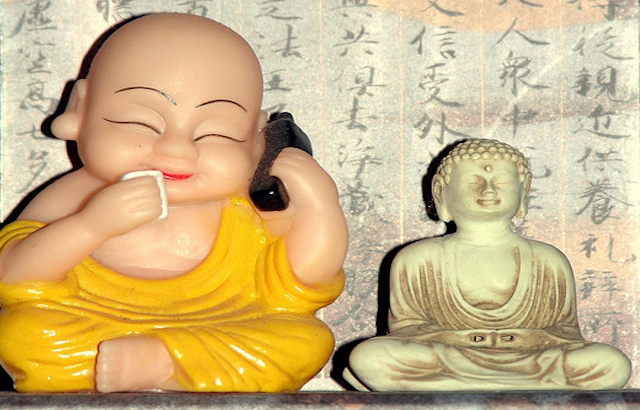
    Buddha on the Phone

    “To change the world we need to combine ancient wisdom with new technologies.” ~Paulo Cohelo

    This weekend I was honored and grateful to speak at Wisdom 2.0, a conference that addressed the question:

    How can we use the technologies of our age, from cell phones to social media, with mindfulness, meaning, and wisdom?

    Organizer Soren Gordhamer, author of Wisdom 2.0: Ancient Secrets for the Creative and Constantly Connected, created nothing short of magic by attracting participants from all sides of the conversation, from Twitter and Facebook to Yoga Journal and Samovar Tea.

    If you’ve ever sat in a room with people who love you, want the best for you, and respect your words and needs, you have a fraction of an idea of what it felt like to attend this conference. There was just that much positive energy radiating from every direction.

    During the first panel of the first day, Chris Sacca (Strategic Advisor for Twitter) joked he’d never, through all his experiences in tech conferences, had so many people pay such close attention to him.

    It was just that sort of crowd: people who want to bring a sense of presence and gratitude to every moment, harnessing technology to meet those needs instead of letting technology hinder them.

    I kept an ear out for the most practical suggestions to manage the constant flow of data through tweets, texts, and emails without letting it consume our lives. Since I missed some of the second day, these mostly come from the first:

    1. Make deliberate choices about time.

    Though most of us probably receive far less email than Chris Sacca, we can all benefit from his conclusion about email: He’s only willing to spend so much time reacting to communication from people instead of creating life as he wants to experience it. For Chris, this means only responding to emails that absolutely require his response.

    He cited some fascinating research that reveals we actually receive a little dopamine rush when we see something new in the inbox.

    My suggestion: realize it’s worth potential guilt over ignoring non-essential messages if it means allowing you more time to be as you’d like to be, and find the dopamine in a healthier way, by doing something new instead of waiting for a new message.

    2. Box out time to put technology away.

    Brad (Google VP of Products) offered this simple advice, perhaps one of the most important ideas: plan for specific times when you won’t engage with technology in any way. When you are using technology, aim to create a new type of flow so you don’t lose yourself or feel anxious when dealing with what’s in front of you.

    3. Remember: the most precious thing you can give someone is your presence.

    Roshi Joan Halifax made this beautiful observation: Though social networking can bring us closer together, nothing can replace warm hand-to-warm-hand contact.

    If you keep in mind that your presence—your attention—is the most precious thing you can give someone else, perhaps you’ll be less tempted to multi-task face-to-face encounters by tweeting, Facebooking, or emailing. It’s this type of simple but powerful understanding that can help us tame the compulsion to connect digitally when it compromises physical connection.

    4. Be mindful of your reasons for connecting to technology.

    Tami Simon, of Sounds True, made some insightful observations about her instinct to pull out a piece of technology. Others from the panel chimed in, creating this list:

    • For stimulation
    • For confirmation of importance (as in, I got so many emails, I must be important!)
    • To connect with other people
    • To have something to do when anxiety creeps in
    • To find an escape from the rawness of an experience or to feel in control

    Self-awareness is such an important step. If you realize why you’re turning to technology in times when connection or learning new information isn’t critical, you’ve made the first step to reconnecting with yourself.

    5. Get the most important things done and let go of the rest.

    If you don’t live in a world where you’re in control of your tasks and schedule, this might be challenging. Still, there are probably a handful of tasks you don’t really need to complete but feel obligated to do for one reason or another.

    Instead of assuming you have an endless list of things to do, which probably leaves you with little time at the end of the day, be clear about what’s important to you and what you can leave undone. It’s okay not to do everything. It’s okay to have emails in the inbox. It’s okay to not update your blog for a day. You deserve time to disconnect.

    6. Make minimal commitments to yourself for a clear mental space.

    Many of us don’t consistently honor what we need to do to maintain physical and emotional well-being because we get sucked into  technology and to-do lists. Gopi Kallayil (from Google) suggests making minimal commitments: one minute of meditation, or five minutes of exercising.

    It’s easier to honor a minimal commitment, and odds are, you’ll find the time so enjoyable you’ll end up increasing it. Gopi also recommends making “non-negotiable commitments” to yourself. For example, he does yoga every Tuesday, and nothing changes that.

    This is what I like to call homework for being a good human being—the things you need to do on your own before you show up to play with others if you’re to be your best, most balanced self.

    7. Track your day’s presence in battery life.

    Leah Pearlman (from Facebook) had some of the most practical suggestions for living peacefully in a technology-driven world. Her main advice was to make it fun instead of considering it another chore.

    I enjoyed her clever realization about cell phone battery life. If your phone’s about to die at the end of the day (or if you need to charge it multiple times) you’re clearly sucked into your gadget. If you can get to the end of the day with some life left, though, you’ve probably lived the day mindfully.

    This is just a brief sampling of what went on at Wisdom 2.0. I didn’t even touch upon my favorite moment from Day 1: when Tony Hsieh explored the culture of kindness and happiness he created at Zappos (as further explored in his book, Delivering Happiness.)

    Instead of giving you the play-by-play, I’ve decided to share the most valuable perspectives I can offer: ones that come from all the good people who lent their hearts to Wisdom 2.0.

    If you’ve blogged about the Wisdom 2.0 conference, let me know and I will add the link here!

    Photo here and here.

  • The Dalai Lama’s Little Book of Wisdom: Review & Giveaway

    The Dalai Lama’s Little Book of Wisdom: Review & Giveaway

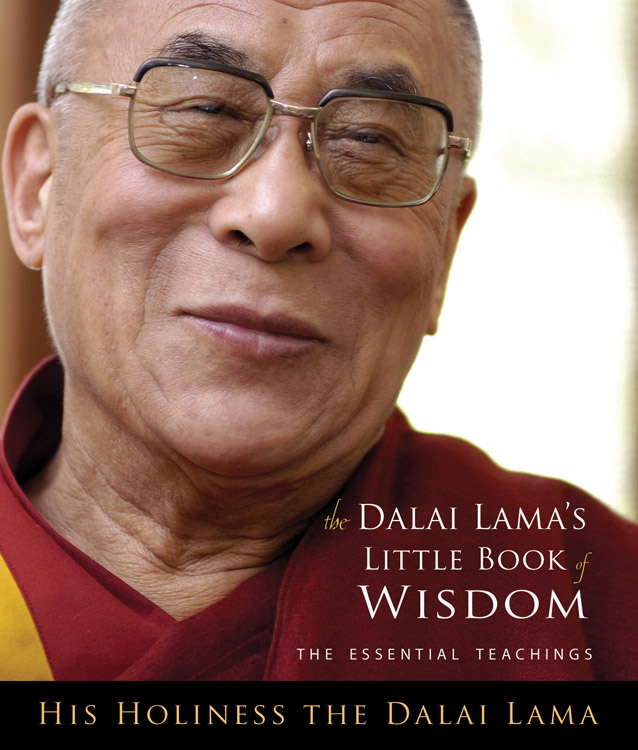
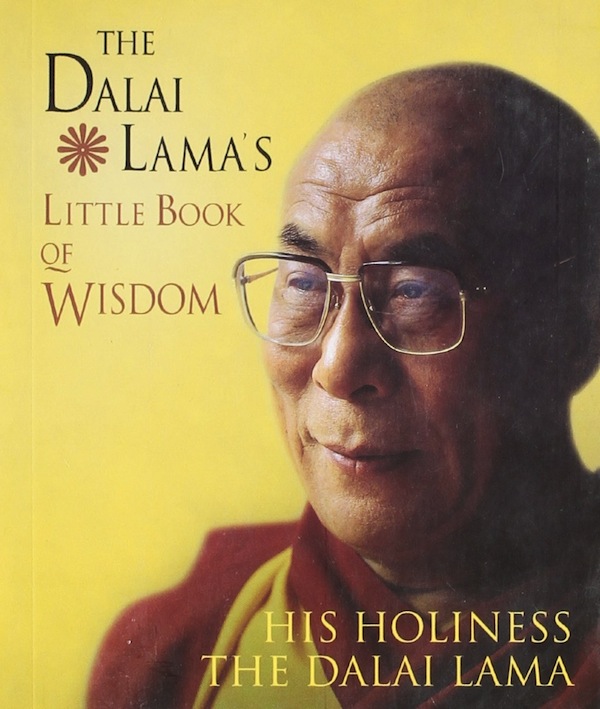
    The Dalai Lamas Little Book of WisdomUpdate: The winners have already been chosen for this giveaway:

    • Josh Kimbell
    • Rob Ruddle
    • Nathan Atkinson

    One of the founding principles behind Tiny Buddha is that simple wisdom, when applied, can have a huge effect on happiness, mindfulness and peace—not just for you, but also for the people around you.

    The most helpful ideas might not seem so simple in the context of our complex lives; but oftentimes, we make things more complicated than necessary by filtering them through a negative attitude or thinking too much and applying too little.

    That’s makes The Dalai Lama’s Little Book of Wisdom so compelling: it’s simultaneously profound and simple. It provides some of the most helpful of the Dalai Lama’s teachings in palatable, bite-size chunks.

    Having had a copy on my nightstand for over a year, I couldn’t have been more excited to receive three copies to give away to readers.

    The book offers insights about finding contentment, dealing with anger and emotions, transforming the mind, and more; and concludes with a question and answer section that addresses how to apply Buddhist wisdom to real life.

    Many of the highlighted passages in my copy have come to you via the Tiny Buddha Twitter stream, and more likely will down the line.

    As the book flap reads: (more…)

  • How to Want Less and Be Happy About It

    How to Want Less and Be Happy About It

    “Happiness is a way station between too little and too much.” ~Channing Pollock

    The vast majority of my life has been a giant race to get things I’ve assumed would make me happy.

    More money so I could do what I want when I want. A more meaningful career so I could feel both fulfilled and proud of myself. More connections so I could feel loved and worthy. And mostly, more distractions so I could avoid acknowledging why I was unhappy with myself.

    “I’m making progress,” I’d delude myself. “I’m pushing myself to accomplish big things that will help people all over.”

    While those things may have been true, what I was really doing was chasing the possibility of happiness as it existed in an elusive tomorrow.

    Tomorrow, when I’ve made a name for myself. Tomorrow, when I can be proud of making a difference. Tomorrow, when the stars align just right.

    Though I still have to make a conscious choice to root myself in today, I’ve realized nothing I want will ever bring me joy if I consistently attach happiness to something just out of my reach. In fact, more often than not, attaining those things will just make me feel emptier because it will remind me of the void nothing can fill—nothing, that is, except me. (more…)

  • 20 Ways to Let Go of Regrets

    20 Ways to Let Go of Regrets

    “Every new day is another chance to change your life.” ~Unknown

    You know the moment. It happens right after you realize you did something you wish you didn’t do. Maybe you broke someone’s trust and now the guilt is overwhelming you. Maybe you compromised your job in some way and now you’re terrified your world will come crashing down.

    Regardless of what you did, you can feel your anxiety like a stack of red hot bowling balls surgically implanted in your stomach. (Dramatic? Yes. Regret is rarely reasonable!)

    It’s that dreaded “Good God! Oh no! What was I thinking? Why me?” moment when you think one of two things:

    • I did something I shouldn’t have and I might not be able to fix it.
    • I did something I shouldn’t have, so I’m going to lose something important.

    Both of those things might be true. In fact, they often are. Actions do have consequences. We do lose things—all through life. Nothing is permanent, not even the most secure relationship. But none of this has to be catastrophic.

    Sometimes losing one thing opens you up to something else. It might be a lesson that helps you be more effective and happier in the future, or it could be a new possibility you never even thought to seek (like that dream you put off to work the job you just lost).

    Or maybe it won’t benefit you in any discernible way right away. Let’s call a spade a spade—maybe you’ll wish you went a different way, grieve what you lost, and then eventually let it go and move on.

    The point is you will eventually let go and move on.

    And because you’re a strong, smart, capable person, you’ll find ways to make this new direction meaningful for you. To make up for what you lost by gaining something equally important in the aftermath, whether it’s a new understanding of your strengths, a new idea of who you want to be, or a new opportunity to try again a little wiser. (more…)

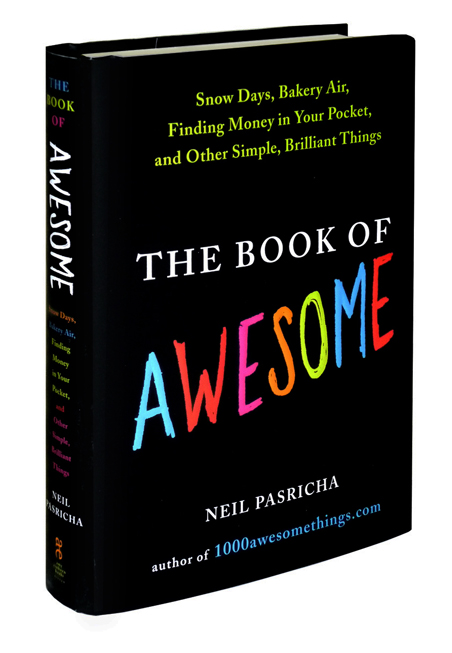
  • The Book of Awesome: Review & Giveaway (Autographed Copies!)

    The Book of Awesome: Review & Giveaway (Autographed Copies!)

    The Book of AwesomeUpdate: The winners have already been chosen for this giveaway:

    We all know the old adage “enjoy the little things,” but how many times throughout the day do you stop to actively enjoy them? Not just notice them, but absorb yourself in them, without letting your thoughts wander to something else you need or want to do?

    When a baby unclenches his chubby fist and gives you high-five. When you see someone barbecuing and really selling it, like his skewers are his paintbrush and your burger the Mona Lisa. When you catch someone singing in the car next to you, and you both laugh and connect more than strangers usually do.

    How often do you let go of everything else and submit to small pockets of awesome?

    The Book of Awesome (adapted from the award-winning blog 1000awesomethings.com) identifies hundreds of these moments.

    But Neil Pasricha does more than just list them; he notices more awesome details in each experience than most people observe or remember.

    He doesn’t just appreciate all-you-can-eat buffets; he explains how to navigate them for maximum enjoyment. He doesn’t just acknowledge it’s cool when the parking meter still has time on it; he explains the different types of meter-feeding styles, and how awesome it is that they all exist.

    The result is an encyclopedia of joy, from observations to interpretations to experiences. Some moments are silly, some poignant, some nostalgic—but everything is familiar. The book is a brilliant reminder of everything that inspires a smile without treading into saccharine-sweet, Pollyanna territory.

    Despite my instinct to read a few entries each morning to start the day with a smile, I read the entire book in one weekend. Curled up in bed, hunched over on the elliptical, immersed in a hot tub, riding shot gun to a family function, and late at night, when I should have been sleeping.

    I know I’ll read it again—and I’m thrilled Neil has donated two autographed copies so you can enjoy it, too.

    The Giveaway

    To enter to win one of two autographed copies of The Book of Awesome comment below telling us what’s awesome to you!

    For an extra entry, tweet the following:

    RT @tinybuddha Giving away 2 autographed copies of The Book of Awesome! Comment on site & RT to enter http://bit.ly/97VVig

    Readers can enter until midnight, PST on Wednesday, April 15th (when the book is available in stores). I will announce the winners in a post on Thursday. If you can’t wait, order a copy now!


    FTC Disclosure: I receive complimentary books for reviews and interviews on tinybuddha.com, but I am not compensated for writing or obligated to write anything specific. I am an Amazon affiliate, meaning I earn a percentage of all books purchased through the links I provide on this site.

  • 10 Ways to Let Go and Overcome a Bad Mood

    10 Ways to Let Go and Overcome a Bad Mood

    Happy Woman

    “Every day may not be good, but there’s something good in every day.”  ~Unknown

    We all get in bad moods, no matter how positive we try to be.

    Maybe you didn’t get enough sleep last night. Or you feel overworked and overwhelmed. Or perhaps something happened and you keep dwelling on it, going over and over in your head how you froze up in a meeting or spoke too aggressively to someone you love.

    Whatever the case may be, you feel something you don’t want to feel and you’re not sure how to change it. You just know you need to do something before acting on that feeling.

    The reality is you don’t have to act on everything you feel. Still, emotional responses happen so quickly that it becomes challenging to put space between feeling and doing.

    It may seem like the answer is to stop responding to life emotionally, but that’s just not realistic. Paul Ekman, one of the foremost researchers on emotion, suggests it’s near impossible to bypass an emotional response because of the way our brains are set up.

    Perhaps the best goal is to identify negative feelings quickly and improve your state of mind instead of responding to feelings with more feelings. Odds are, if you choose the latter, you’ll do something you’ll regret later.

    I’ve come up with ten ways to overcome a negative state of mind: (more…)

  • How to Release the Fear of Failing: 20 Inspiring Definitions for Failure

    How to Release the Fear of Failing: 20 Inspiring Definitions for Failure

    “All that we are is the result of what we have thought. The mind is everything. What we think we become.” ~Buddha

    You didn’t get the job. You couldn’t raise the money. You missed the deadline. You hired the wrong person.

    You didn’t ask for help. You let someone you love down. You failed to plan in advance. You bit off more than you could chew. You forgot something important.

    Worst of all, whatever the case, you set the stage for a million questions about what it means and what you should have done.

    When you don’t do something you wanted to do, oftentimes your disappointment has less to do with the results you failed to create and everything to do with your interpretation of what that failure means. That you’re not talented enough. Or competent enough. Or confident enough. Or good enough in general.

    The only way to change your reaction to failure is to challenge the beliefs that create it—those ideas about what failure means. And the best way to change those beliefs is to change the thoughts that shape them. (more…)

  • 50 Things You Can Control Right Now

    50 Things You Can Control Right Now

    crystal ball

    “Why worry about things you can’t control when you can keep yourself busy controlling the things that depend on you?” ~Unknown

    CNN reports that psychic businesses are thriving in this challenging economy, and the clientele has expanded to include more business professionals who are worried about their financial future.

    According to Columbia Business School’s Professor Gita Johar, who studies consumer behavior, the greatest motivation for visiting a psychic is to feel a sense of control.

    Sure, there are lots of things we can’t control: businesses may fold, stocks may plummet, relationships may end—the list is infinite, really. But wouldn’t we be far more effective if we focused on all things we can control instead; if we stopped worrying about the indefinite and started benefiting from the guaranteed?

    Right now, you can control:

    1. How many times you smile today.
    2. How much effort you exert at work, or, if you’re not working, how you think about your time off.
    3. Your level of honesty.
    4. How well you prepare, mentally or physically.
    5. How you act on your feelings.
    6. How often you say “thank you.”
    7. When you pull out your wallet for luxuries.
    8. Whether or not you give someone the benefit of the doubt.
    9. How you interpret situations.
    10. Whether or not you compete with people around you.
    11. How often you notice and appreciate small acts of kindness.
    12. Whether you listen or wait to talk.
    13. When you walk away from a conversation.
    14. How nice you are to yourself in your head.
    15. Whether you dwell on negative thoughts or let them go.
    16. Whether or not you form expectations of people.
    17. Whether you eat healthy or unhealthy food.
    18. How you respond to someone’s question or email or call.
    19. How much time you spend worrying.
    20. Whether you try new things or do what you’ve always done.
    21. How often you move your body (if you have the privilege of being mobile).
    22. How many times you swear in traffic (if you’re fortunate enough to own a car).
    23. Whether or not you plan for the weather.
    24. How much time you spend trying to convince people you’re right.
    25. How often you think about your past.
    26. How many negative articles you read.
    27. The attention you give to your loved ones when you see them.
    28. How much you enjoy the things you have right now.
    29. Whether or not you communicate things that are on your mind.
    30. How much physical stuff you accumulate.
    31. What books you read.
    32. Whether you honor your values or not.
    33. How deeply you breathe when you experience stress.
    34. How many times you admit you don’t know something—and then learn something new.
    35. How often you use your influence to help people instead of focusing on building your influence.
    36. When you ask for help.
    37. Which commitments you keep and cancel, or, if you have to cancel many for health reasons, how kind you are to yourself when you do it.
    38. How many risks you take.
    39. How creative/innovative you are in your thinking.
    40. How clear you are when you explain your thoughts.
    41. Whether you formulate a new plan or act on your existing one.
    42. How much information you get before you make a decision.
    43. How much information you share with people.
    44. Whether you indulge unhealthy habits or work to replace them with healthy ones.
    45. Whether or not you judge other people.
    46. How often you tune into your senses to pull yourself into the moment.
    47. How much of what other people say you believe.
    48. How quickly you try again after you fall.
    49. How many times you say, “I love you.”
    50. Whether you focus on what’s going right or what seems to be going wrong.

    Odds are, some of these resonate with you more than others, and that’s okay. You can’t do fifty things at once anyway.

    And some of these things may not be in your control, if, for example, you’re struggling with a debilitating illness. But I’m willing to bet the majority of these things are still within your grasp. The point is to focus on what you personally can control, even if your list differs from mine.

    When I start fixating on something I can’t control, I pick just one of these to think about instead. Minor changes in thinking, I’ve found, lead to major changes in my reality. Do you have any to add to the list?

    Photo by Steve Dean

    **This post has been revised to incorporate valuable feedback from a Tiny Buddha community member.

  • Embarrass Yourself

    Embarrass Yourself

    Dancing

    “To get something you never had, you  have to do something you never did.” ~Unknown

    You’d like to start presenting to clients, but you’re afraid of looking like a deer in the headlights if they ask questions you can’t answer. So you keep thinking about it, waiting for a time when you feel more prepared. More ready. More in control.

    You’ve considered telling your friends you want to publish your novel, but you can’t stand them knowing you failed if things don’t pan out. So you keep it inside, protecting your ego but reinforcing to yourself that you likely can’t do it.

    You’ve decided you don’t want that job you dreamed of as a kid, but the thought of everyone thinking you gave up makes you queasy. So you keep chasing a rainbow that no longer excites you—half in it, half curious what else is out there, but wholly sure you’ll look better if you stay the course.

    The potential for embarrassment motivates people to do and avoid all kinds of things against their better judgment. Statistics show more people fear public speaking than death—meaning they’d rather be hit by a bus than potentially look foolish in front of a crowd.

    Research also indicates a majority of the people who get divorced had a strong feeling before getting married it wasn’t a good idea but honored their promise to avoid embarrassment. (more…)

  • Undecide

    Undecide

    Open Door

    “Open minds lead to open doors.” ~Unknown

    We start forming opinions at an early age and continue all through life.

    We decide what we think is right and wrong, what’s good and what’s bad—not just on a larger scale (religion, politics, ethics) but also in every-day interactions.

    How people should act. What people should think in certain situations. What it’s okay to feel and express, and when it’s smart or polite to do so.

    We develop ideas about how the world should be to support our beliefs and views—things we learned from our environment and experiences—and inevitably feel a sense of internal conflict when a person or situation doesn’t fall in line.

    They won’t always. In fact, they won’t more often than they will.

    Sometimes our opinions have nothing to do with fact, logic, or common sense. It’s just a matter of what feels right, what our gut tells us, because our gut’s always right. Isn’t that what we’ve been told? To trust our instincts against all odds? We don’t often stop to consider what educated our gut; when we learned what to trust and what to fear.

    That’s usually what it comes down to. What’s familiar and safe and supports our sense of order versus what’s unknown and unpredictable and reminds us of how little we can control. (more…)

  • 50 Ways to Be More Peaceful and Mindful Throughout Your Day

    50 Ways to Be More Peaceful and Mindful Throughout Your Day

    “Peace is not something you wish for. It’s something you make, something you do, something you are, and something you give away.” ~Robert Fulghum

    Recently I’ve been spending a lot of time visiting 1000 Awesome Things, a blog devoted to the many simple pleasures in life. Some of them remind me of being a kid, like this one about celebrities on Sesame Street. Others remind of me I’m stronger than I think, like this one about getting through difficult situations.

    With that in mind, you can imagine how excited I am to receive a copy of Neil’s upcoming book, aptly named The Book of Awesome. I’m even more excited that I’ll be able to give away two autographed copies when I write my review. (Coming soon!)

    In the meantime, as a way to pay tribute to this awesome book and my awesome new friend, I’ve decided to create my own awesome list, tinybuddha style.

    Here are fifty peaceful things to help you be mindful and happy throughout the day: (more…)